EP2716005B1 - Verfahren und system zur sicherung eines datenaustauschs zwischen einem clientmodul und einem servermodul - Google Patents
Verfahren und system zur sicherung eines datenaustauschs zwischen einem clientmodul und einem servermodul Download PDFInfo
- Publication number
- EP2716005B1 EP2716005B1 EP12731659.4A EP12731659A EP2716005B1 EP 2716005 B1 EP2716005 B1 EP 2716005B1 EP 12731659 A EP12731659 A EP 12731659A EP 2716005 B1 EP2716005 B1 EP 2716005B1
- Authority
- EP
- European Patent Office
- Prior art keywords
- module
- data
- token
- client
- security
- Prior art date
- Legal status (The legal status is an assumption and is not a legal conclusion. Google has not performed a legal analysis and makes no representation as to the accuracy of the status listed.)
- Not-in-force
Links
Images




Classifications
-
- H—ELECTRICITY
- H04—ELECTRIC COMMUNICATION TECHNIQUE
- H04L—TRANSMISSION OF DIGITAL INFORMATION, e.g. TELEGRAPHIC COMMUNICATION
- H04L63/00—Network architectures or network communication protocols for network security
- H04L63/04—Network architectures or network communication protocols for network security for providing a confidential data exchange among entities communicating through data packet networks
-
- G—PHYSICS
- G06—COMPUTING OR CALCULATING; COUNTING
- G06F—ELECTRIC DIGITAL DATA PROCESSING
- G06F21/00—Security arrangements for protecting computers, components thereof, programs or data against unauthorised activity
- G06F21/60—Protecting data
- G06F21/606—Protecting data by securing the transmission between two devices or processes
-
- H—ELECTRICITY
- H04—ELECTRIC COMMUNICATION TECHNIQUE
- H04L—TRANSMISSION OF DIGITAL INFORMATION, e.g. TELEGRAPHIC COMMUNICATION
- H04L63/00—Network architectures or network communication protocols for network security
- H04L63/08—Network architectures or network communication protocols for network security for authentication of entities
-
- H—ELECTRICITY
- H04—ELECTRIC COMMUNICATION TECHNIQUE
- H04L—TRANSMISSION OF DIGITAL INFORMATION, e.g. TELEGRAPHIC COMMUNICATION
- H04L63/00—Network architectures or network communication protocols for network security
- H04L63/08—Network architectures or network communication protocols for network security for authentication of entities
- H04L63/0807—Network architectures or network communication protocols for network security for authentication of entities using tickets, e.g. Kerberos
-
- H—ELECTRICITY
- H04—ELECTRIC COMMUNICATION TECHNIQUE
- H04L—TRANSMISSION OF DIGITAL INFORMATION, e.g. TELEGRAPHIC COMMUNICATION
- H04L63/00—Network architectures or network communication protocols for network security
- H04L63/08—Network architectures or network communication protocols for network security for authentication of entities
- H04L63/0853—Network architectures or network communication protocols for network security for authentication of entities using an additional device, e.g. smartcard, SIM or a different communication terminal
-
- H—ELECTRICITY
- H04—ELECTRIC COMMUNICATION TECHNIQUE
- H04L—TRANSMISSION OF DIGITAL INFORMATION, e.g. TELEGRAPHIC COMMUNICATION
- H04L9/00—Cryptographic mechanisms or cryptographic arrangements for secret or secure communications; Network security protocols
- H04L9/32—Cryptographic mechanisms or cryptographic arrangements for secret or secure communications; Network security protocols including means for verifying the identity or authority of a user of the system or for message authentication, e.g. authorization, entity authentication, data integrity or data verification, non-repudiation, key authentication or verification of credentials
- H04L9/3247—Cryptographic mechanisms or cryptographic arrangements for secret or secure communications; Network security protocols including means for verifying the identity or authority of a user of the system or for message authentication, e.g. authorization, entity authentication, data integrity or data verification, non-repudiation, key authentication or verification of credentials involving digital signatures
Definitions
- the present invention relates to a method for securing the exchange of data between a client module and a server module. It also relates to the corresponding system for exchanging data between a client module and a server module.
- the figure 1 illustrates an example of a method for securing data of known type.
- An issuer or client makes a request for authentication to a receiver.
- the receiver verifies the identifier and a possible code such as a PIN code (personal identification number, in English "PIN" for "personal identification number”). If the identity is recognized, the receiver sends the sender the relevant data, such as data corresponding to a bank account, or any other type of user account. As long as the connection is not interrupted, the transmitter can make requests to the receiver, which sends the requested data.
- PIN code personal identification number, in English "PIN” for "personal identification number”
- the document FR 2 806 229A1 describes a method of interaction or transaction between a user and a supplier of products or services, via a data transmission network accessible to third parties.
- This method is of the type requiring prior authorization, subject to the presentation by the user of the means of proof of his authorization, including authorization coordinates, and a control of these coordinates.
- the method provides for passing through the network only a portion of said coordinates, which alone is insufficient to authorize the provision of products or services, after having previously stored the other party in an intermediary security organization, and brings together for said control the two parts of coordinates.
- Such a method is binding because it involves the establishment of a trusted third party, which involves hardware, operating costs, risks of malfunction and unreliability, etc.
- the document FR 2 828 309A1 discloses a transaction method using a client terminal, a provider terminal, a central server and a management center connected by the telephone network.
- the transaction is secured by the fact that the customer communicates to the provider his phone number, which provider communicates to the central server this phone number and the data of the proposed transaction, the central server managing the further exchange of information by requesting confirmation to the customer, and then addressing the management center to obtain a mini validation message which is then transmitted on the provider terminal.
- This ensures the security of customers who do not transmit their credit card number, providers who are insured for a valid transaction, and management centers such as banks that are assured of a customer agreement.
- This method involves a manager, with corresponding hardware and steps dedicated to communication with this third party.
- the document WO 03/015370 discloses a method and a device for performing an electronic signature of data.
- the device provides a server centralizing the private keys of a plurality of users. Users use a workstation to contact the signing server. According to the method described, the workstation contacts the signature server, which in turn contacts an authentication server. The latter transmits a password or a token on the one hand to the user via a communication link separate from the workstation, and on the other hand to the signature server. In the latter case, the password or token transmitted is a variant of that sent to the user.
- the user passes the password or token received to the signature server. The latter performs a comparison of the passwords or tokens received by the authentication server and by the user.
- the signature server performs an electronic signature of the data provided by the user.
- the authentication server contacts the user by a separate element or module of the workstation, for example by SMS sent to a mobile phone. Indeed, this server would not be able to initiate itself a communication with the workstation.
- This method is not in itself a data transmission method, but only a data signature method.
- the signature is performed on the central server so as to avoid the user to keep his signature private key securely.
- neither the user nor the workstation generates a token. If a token is generated, it comes from the authentication station which transmits it to the user.
- This method has the disadvantage of being sensitive to the possible attacks of a man in the middle ("Man in the Middle").
- the document WO 01/23980 discloses a method and a device in which a client platform is adapted to secure use of data received from a server, and the server is adapted to verify that the client platform for receiving data is properly configured according to the secure mode provided before transmitting the data via a secure link.
- the invention provides various technical means.
- a first object of the invention consists in providing a method and a system for securing data exchange between a user or client module and a server module making it possible to fight effectively against different types of intrusion, piracy or attack from known sources or not.
- Another object of the invention consists in providing a system and a method for securing data exchange between a user or client module and a server module making it possible to fight effectively against both "MITM” type attacks and against phishing.
- Yet another object of the invention consists in providing a system and a method for securing data exchange between a user or client module and a server module making it possible to achieve a very high level of security, without requiring heavy and expensive infrastructures to set up, or having to resort to specific equipment.
- Yet another object of the invention consists in providing a system and a method for securing data exchange between a user or client module and a server module making it possible to achieve a very high level of security, without slowing transfer speeds. of data significantly.
- Yet another object of the invention consists in providing a system and a method for securing the exchange of data between a user module and a server module making it possible to achieve a very high level of security, without the need for maneuvering or complex operations for the users.
- the invention provides on the one hand a truly triangular approach, with on the one hand a client module ensuring all the exchanges with the server, and on the other hand a generation of token by the client module before the beginning of transmissions of data exchanges.
- the method further provides that the token is transformed each time the data change module.
- the fact that the exchanges are planned from the user to the server, then in the opposite direction, and again from the user to the other module of the server allows to perform a check of the token both by the first server module only by the client module, and finally by the second module of the server.
- a "MitM" type attack occurs, it is detected by one or other of the modules during the verification of the token.
- the method ensures that the tokens come from authorized sources.
- the separation of the exchanges between a plurality of security modules makes it possible to obtain a level of security in adequacy with the risks inherent to the attacks of the MITM type and / or "phishing".
- the answer (s) of the recipient module can be transmitted in various ways, depending on the case.
- the recipient module responds to the second security module which transmits the relevant data to the client module.
- the recipient module responds directly to the client module.
- the server token is initialized or transformed by the second data security module and transmitted to the first data security module.
- the token is transformed or reset.
- the token is transformed by integrating or using a user code as a transformation parameter.
- the data exchanged between the client module and the server module comprise an electronic signature, making it possible to raise the level of security.
- said client module after sending the recipient data to the client module, said client module performs at least one further sending of the data to the second data security module of the server module.
- the last data sent from the recipient comprises a separate token of the previous token.
- the client module and the second data security module of the server module exchange data, in turn, with each exchange loop, an intermediate exchange between the second data security module and the destination module.
- the client module and the recipient module exchange data in turn.
- the client module before allowing the client module to send the message containing a token, the client module receives a user code (PIN). A verification is then performed by the verification module.
- PIN user code
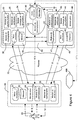
- the figure 2 illustrates an example of a system for securing data between a client module and a server module according to the invention.
- a client module 20 allows a user to communicate with a server module 60, in order to perform data exchanges.
- the client module 20 comprises a calculation unit such as a microprocessor 21 and a working memory 22, a communication module 23 and a token module 24.
- the calculation unit 21, just like the memory 22 can be centralized for the entire client module 20, or be arranged externally, with connection to the different modules, or distributed within each of the communication modules 23 and token 24.
- a verification module 26 allows to check the identifier, such as an identifier inserted in the message from the client module, and a possible signature of the message data.
- the communication module 23 is designed to carry out data transfers between the client module 20 and one or more servers 60 located remotely, and connected by a wired network 70, wireless or otherwise.
- the token module 24 is designed to generate and / or transform and / or reset tokens. According to the intended embodiment, the tokens can take various forms and / or formats. In a preferred embodiment, the tokens are random numbers.
- the server 60 comprises two security modules: an initialization module 30 and an interface module 40.
- the initialization module 30 comprises a calculation unit such as a microprocessor 31 and a working memory 32, a communication module 33, a verification module 35, and a security exchange module 34.
- the computing unit 31, just like the working memory 32 can be centralized for the entire module. 30, or be arranged externally, with connection to the different modules, or distributed within each of the communication modules 33, verification 35 and security exchange 34.
- the verification module 35 makes it possible to verify the identifier, such as for example an identifier inserted in the message from the client module, and a possible signature of the message data.
- the module 34 makes it possible to exchange specific data with the interface module 40.
- the interface module 40 comprises a computing unit such as a microprocessor 41 and a working memory 42, a communication module 43, a verification module 45, and a security exchange module 44.
- the computing unit 41, as well as the working memory 42 may be centralized for the entire interface module 40, or else be arranged externally, with connection to the different modules, or distributed within each of the communication modules 43 , verification 45 and security exchange 44.
- the verification module 45 makes it possible to check the identifier and a possible signature of the data of the message.
- the module 44 makes it possible to exchange specific data with the initialization module 30.
- the server module 60 includes or is connected to a destination module 50, also provided with a computing unit such as a microprocessor 51 and a working memory 52, independent, or shared with other modules.
- This module is generally the final recipient with which the client module 20 enters into communication, either to validate the launch of an application, or to perform a data exchange.
- a user 90 having access to the client module 20 for example by means of a user interface, can perform the manipulations provided for launching the method.
- each module comprises a cryptographic module 25, 36, 47, in order to increase the level of security of the system, by encryption and / or electronic signature of message data.
- the implementation of the various modules previously described is advantageously achieved by means of implementation instructions, allowing the modules to perform the operation or operations specifically provided for the module concerned.
- the instructions may be in the form of one or more software or software modules implemented by one or more microprocessors.
- the module (s) and / or the software are advantageously provided in a computer program product comprising a recording medium or recording medium usable by a computer and comprising a programmed code readable by a computer integrated in said medium or medium, allowing an application software execution on a computer or other device comprising a microprocessor such as a "smartphone" type telephone, or other.
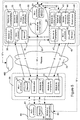
- the figure 3 shows an alternative embodiment in which the human user 90 of the figure 2 is not required.
- the client module 20 then provides an automated operation, not requiring the intervention of an external user or human, for example to decide the launch of the process.
- an automated module or method, managed by the client module automatically manages the operations, so that the exchanges between the client module 20 and the server module 60 are performed automatically, at the appropriate time.
- the module 20 may be autonomous, or be integrated into a more complex entity, such as a computer, a machine, a system, etc. It can also be included in a simple physical entity such as a smart card, a USB key, a keychain, a car key head, etc.
- the figures 4 and 5 present variant embodiments of figures 2 and 3 , in which the detailed steps of the method according to the invention are represented by means of arrows numbered from 1 to 13. These figures are presented in greater detail in the following, in connection with the figure 6 .
- the cryptography modules 25, 36 and 47 of the various modules offer the possibility of encrypting and / or electronically signing the content of the exchanged messages.
- the figure 6 presents the basic principle of the method of securing data exchange according to the invention.
- the client module 20 sends client data to the initialization module 30 of the server module 60, as shown by the arrow 1 of the figure 2 or from figure 3 .
- the customer data includes at least one unique identifier to identify the issuer of the message or user.
- it also contains a token, generated by the token module 24.
- the token is known only by the client module.
- the communication modules 23 and 33 make it possible to carry out the communication links between the client module 20 and the initialization module 30.
- the initialization module 30 and the interface module 40 exchange security data with each other in the step 102.
- This step is illustrated by arrows 2 and 3 of figures 2 and 3 .
- the initialization module 30 sends at least the identifier data to the interface module 40.
- the reception of these data by the interface module 40 indicates that client data has been received by the initialization module 30 from the user. corresponding to the unique identifier received.
- the interface module 40 sends at least one token generated by a token module 46 (arrow 3 of FIG. figure 2 or from figure 3 ).
- step 103 the initialization module 30 sends response data to the client module 20, as shown in arrow 4 of the figure 2 or from figure 3 .
- These data contain at least one token generated (or transformed or reset) by the token module 46.
- client module 20 After receiving this data, client module 20 sends client data to interface module 40, in step 104, illustrated by arrow 5 of FIG. figure 2 or from figure 3 . These data contain at least one token. Finally, in step 105, the interface module 40 sends the client module 20 response data. According to the embodiments of the invention, the nature and / or the content of these data may vary according to the needs. For example, for a configuration where the method aims to secure a single data exchange, the response data of the interface module 40 may contain the requested data. For a configuration where the process aims to launch secure a given application, the answer may consist in the launch of said application itself. Arrow 8 of figures 2 and 3 illustrates this step.
- the figure 7 schematically illustrates the steps of producing an advantageous variant of the process presented in FIG. figure 6 .
- the client module 20 sends client data to the initialization module 30 of the server module 60, as shown by the arrow 1 of the figures 2 and 3 .
- the customer data comprises at least a unique identifier for identifying the sender of the message or user.
- it also contains a token, generated by the token module 24.
- the token is known only by the client module 20.
- the communication modules 23 and 33 make it possible to carry out the communication links between the module client 20 and the initialization module 30.
- the identifier of the user is checked. If this identifier is recognized and authorized, the method continues in step 203, in which the initialization module 30 and the interface module 40 exchange security data with each other. This step is illustrated by arrows 2 and 3 of figures 2 and 3 .
- the initialization module 30 sends at least the identifier data to the interface module 40 and / or any initialization token from the client module.
- the receipt of these data by the interface module 40 indicates that client data has been received by the initialization module 30 from the user corresponding to the received identifier.
- the interface module 40 sends at least one token generated or modified or reset by the token module 46 of the server (arrow 3 of the figures 2 and 3 ).
- step 204 the initialization module 30 sends server data in response to the client module 20, as shown in arrow 4 of the figures 2 and 3 .
- This data contains at least the token generated by the token module 46 of the server.
- the client module 20 After receiving this data from the server, the client module 20 sends client data to the interface module 40, in step 205, illustrated by the arrow 5 of the figures 2 and 3 .
- These data contain at least the previously received token, preferably transformed or reset.
- the interface module 40 receives the client data and verifies the token, for example by performing a compatibility comparison between the received token and that generated in step 203. If the token is acceptable, it is preferably transformed or reset.
- the interface module 40 and the destination module 50 exchange data (arrows 6 and 7 of the data between them). figures 2 and 3 ).
- the nature and / or the content of these exchanges may vary depending on the needs.
- the interface module 40 requests the destination module 50 by a specific request, and the destination module responds by sending the relevant data.
- the response of the client module may comprise the response data to a request, or else, for a configuration where the method aims at securely launching a given application, the response may consist in the launching of said application itself. even.
- the following steps may vary, depending on the recipient of the response data of the client module, and depending on the continuation or not of exchanges for one or more additional loops.
- Step 208 relates to the case where the response data of the destination module 50 is transmitted directly to the client module 20, as shown in the arrow 8 '+ of the figures 2 and 3 , with or without continuation of the exchanges, as the case may be.
- the data is transmitted to a third entity 400, with or without exchange, as shown in the figure in relation to the arrow 8 "+ and the third entity 400.
- the data exchanges with a third entity 400 transit through the interface module 40.
- Step 209 relates to the case where the response data of the destination module 50 is transmitted to the interface module 40 before being then forwarded to the client module 20, as shown by the arrows 7 and 8 of the figures 2 and 3 , with or without continuation of the exchanges, as the case may be.
- Step 210 of the figure 7 illustrates an example in which trade is not pursued.
- Step 220 of the figure 7 illustrates an example of continued trade. The process then continues by resuming step 205 of the figure 7 , as shown on the diagram.
- the figure 8 in relation to the figures 4 and 5 schematically illustrates the steps of producing an advantageous variant of the process.
- the client module 20 prepares and formats client data for the initialization module 30 of the server module 60, as shown by the arrow 1 of the figures 4 and 5 .
- the client data comprises a unique identifier for identifying the sender of the message or user, and a token generated by the token module 24.
- the token is known only by the client module 20.
- the communication modules 23 and 33 enable communication links to be made between the client module 20 and the initialization module 30.
- step 302 the client module 20 sends the client data to the initialization module 30, as shown by the arrow 2 to figures 4 and 5 .
- the initialization module 30 receives the client data, checks the identifier, and if this identifier is recognized and authorized, it transmits the identifier and the token to the interface module 40, as shown by the arrow 3 of the figures 4 and 5 .
- the receipt of this data by the interface module 40 is a reliable indication that a client message has been received by the initialization module 30 from the user corresponding to the received identifier.
- the interface module 40 performs the verification of the unique identifier and / or the token, and if it accepts, transforms or resets the token and sends it to the module initialization 30 (arrow 4 of figures 4 and 5 ).
- the initialization module 30 receives the data from the interface module 40, prepares and formats the data comprising the token, and sends the data to the client module 20, as shown in the arrow 5 of the figures 4 and 5 .
- step 306 the client module 20 receives the data, and in particular the token, and verifies the token.
- the client module requests the user 90 or the control module 80 a user code (for example a PIN code) and receives the data corresponding to this code.
- a user code for example a PIN code
- the client module 20 prepares and formats the client data, this time not for the initialization module 30, but for the interface module 40.
- These data include the possible user code (PIN ).
- the token received from the server is preferably transformed or reset and attached to the data to be transmitted.
- the data is then transmitted to the interface module 40. This transfer is symbolized by the arrow 8 of the figures 4 and 5 .
- the token is transformed by integrating or using the user code as a transformation parameter.
- the interface module receives the client data, verifies the token and the possible PIN code, for example by performing a comparison between the received token and the previously generated token. If the data is acceptable, the token is preferably transformed or reset.
- the interface module 40 and the destination module 50 exchange data (arrows 9 and 10 of the data between them). figures 4 and 5 ).
- the nature and / or the content of these exchanges may vary depending on the needs.
- the interface module 40 requests the destination module 50 by a specific request, and the destination module responds by sending the relevant data.
- the response of the client module may comprise the response data to a request, or else, for a configuration where the method aims at securely launching a given application, the response may consist in the launching of said application itself. even.
- the following steps may vary, depending on the recipient of the response data of the client module, and depending on the continuation or not of exchanges for one or more additional loops.
- Step 311 relates to the case where the response data of the destination module 50 is transmitted directly to the client module 20, as shown in the arrow 11 '+ of the figure 4 and the arrow 13+ of the figure 5 , with or without continuation of the exchanges, as the case may be.
- the data is transmitted to a third entity 400, with or without continuation of the exchanges, as shown in FIG. figure 4 in relation to the arrow 11 "+ and the third entity 400 and on the figure 5 in connection with the arrow 13 "+ and the third entity 400.
- the data exchanges with a third entity 400 pass through the interface module 40.
- the data exchanges continue directly with the control module 80, as shown by the arrow 13 '+.
- Step 312 relates to the case where the response data of the destination module 50 is transmitted to the interface module 40 before being then forwarded to the client module 20, as shown by the arrows 10 and 11 of the figures 4 and 5 , with or without continuation of the exchanges, as the case may be.
- Step 320 of the figure 8 illustrates an example in which trade is not pursued.
- Step 330 of the figure 8 illustrates an example of continued trade. The process then continues by resuming step 306 of the figure 8 , as shown on the diagram.
- Arrow 12 figures 4 and 5 shows the subsequent sending of the relevant data to either the user 90 or the control module 80.
- the exchanged data are signed and / or encrypted by the cryptographic modules 25, 36 and 47 provided for this purpose within the various modules.
- the figure 9 shows schematically an example of application of the method according to the invention for the identification of vehicles at a toll station.
- the client module 20 in this case an RFID module placed in a vehicle 600, circulates in a toll zone 610 specially arranged.
- the first data exchanges are made between the client module 20 and the initialization module 30. For example, the driver's toll identification number or subscription number, as well as an initialization token are transmitted to the initialization module 30.
- the initialization module 30 and the interface module 40 then exchange the relevant data between them, as explained above, and, if the identifier is recognized, the initialization token is transformed and then transmitted. 20.
- the vehicle continues during this time its advance in the toll lane 610, then passes close to the interface module 40.
- An exchange between the customer module 20 of the vehicle 600 and the interface module 40 can then be performed.
- the interface module 40 receives the server token previously transmitted by the initialization module 30. If the token is accepted, the recipient module 50 can accept the passage and control the opening of the barrier 620.
- the destination module 50 can then generate the possible toll transactions, so that the holder of the subscription identified during the passage can be billed the corresponding amount.
- the method and the system according to the invention make it possible to secure the data in relation to the electronic payment, while ensuring the security of the data, and allowing a quick implementation, so that the circulation at the level of the toll station is as fluid as possible.
- the use of tokens between the different modules and the multiple verifications make it possible to detect a possible intrusion of the Middle Man type.
- the method can then either be interrupted or provide for the sending of an intrusion alert.
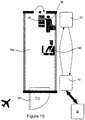
- the figure 10 shows schematically another example of application of the method according to the invention for use of an electronic ticket, in this case to ensure the opening of a door giving access to a controlled access area.
- a controlled access zone 710 such as for example a platform for loading a terminal.
- a control zone 700 in the form of a corridor is completed by the presence at the input of an initialization module 30 and to the output, of an interface module 40, able to exchange security data between them.
- a client module 20, in this example provided in the mobile phone of a user 90 sends the electronic ticket data to the initialization module 30 provided near the input of a first control area.
- this first zone allows a security officer to carry out the usual checks before being able to access an aircraft.
- the ticket data are transmitted to the interface module 40. If the data are acceptable, a token is sent to the client module 20, which then communicates with the interface module 40. If the data are validated , the door 720 is unlocked to allow the passenger to access the restricted area 710.
- the module 50 can record the fact that the passenger is present in a restricted area, and can report to his aircraft in a timely manner.
- the method and the system according to the invention make it possible to secure the data relating to authentication of an electronic ticket holder, and facilitate the automated management and use of the ticket.
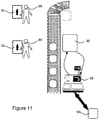
- the figure 11 shows schematically another example of application of the method according to the invention for a secure payment application to a checkout of a supermarket or other type of business.
- a user 90 has a client module 20, in this example provided in a payment card.
- the identifier data is transmitted to the initialization module 30, in connection with an interface module 40, in this example provided in connection with an electronic payment device. If the identifier data are accepted, the amount to be paid is transmitted to the customer module 20.
- the user confirms his payment agreement by entering a personal code (PIN code) for example using a keyboard provided for this effect.
- PIN code personal code
- the payment can be made, in relation to the destination module 50, for example a commercial payment center, which can, if necessary, communicate with a third party, for example to debit an account of the user.
- a payment receipt can then be transmitted to the customer module 20 to complete the transaction.
- the method and the system according to the invention make it possible to secure the data in relation to the payment, to prevent a third user 95 from paying unintentionally in place of the user 90, or that a user 90 pays a transaction other than that provided, for example for the benefit of a third party 95 near the payment area.
- the method and system according to the invention can be used to monitor a site to detect a possible intrusion, to control domotic elements such as air conditioning or heating, shutters, lights, etc.
- a client module 20 may be integrated or associated with various types of devices, such as a computer, a mobile phone, a smart card, a USB key with microprocessor, a smart label. It should be noted that the client module 20 does not necessarily include an integrated power supply.
- the invention can be extended to other embodiments in which, in variants, it is expected that the recipient module 50 is attached to or integrated with the interface module 40. Still according to another variant , the three modules are integrated or joined, although the mode of operation of the process remains similar to that previously described.
- an additional exchange of data takes place between the initialization module and the destination module 50. For example, in the embodiment illustrated at figure 10 such an exchange with the recipient module could be used to operate the opening of the first door, for a first level of security.
- the method then continues with data exchanges between the initialization module 30 and the client module 20, then to the interface module 40, as previously described.
Landscapes
- Engineering & Computer Science (AREA)
- Computer Security & Cryptography (AREA)
- Computer Hardware Design (AREA)
- General Engineering & Computer Science (AREA)
- Signal Processing (AREA)
- Computer Networks & Wireless Communication (AREA)
- Computing Systems (AREA)
- Theoretical Computer Science (AREA)
- Health & Medical Sciences (AREA)
- Bioethics (AREA)
- General Health & Medical Sciences (AREA)
- Software Systems (AREA)
- Physics & Mathematics (AREA)
- General Physics & Mathematics (AREA)
- Computer And Data Communications (AREA)
Claims (10)
- Verfahren zur Sicherung eines Datenaustauschs zwischen einem Clientmodul (20) mit einem Token-Modul (24), einem Servermodul (60) und einem Empfangsmodul (50), worin das Servermodul (60) eine Vielzahl von Sicherungsmodulen umfasst, mit mindestens einem ersten und einem zweiten Sicherungsmodul (30, 40), wobei das Verfahren die folgenden Schritte umfasst, worin:- das Token-Modul (24) des Clientmoduls ein Token initialisiert, und das Clientmodul (20) die Daten mit einer einmaligen Kennung und dem initialisierten Token an ein erstes Sicherungsmodul (30) des Servermoduls sendet;- das erste Sicherungsmodul (30) des Servermoduls empfängt die Daten und überprüft die einmalige Kennung und das erhaltene Token;- das erste Sicherungsmodul (30) und das zweite Sicherungsmodul (40) tauschen bilateral zwischen ihnen die Sicherungsdaten;- das Servermodul (60) wandelt das erhaltene Token um;- das erste Sicherungsmodul (30) des Servermoduls sendet die Daten mit dem umgewandelten Token an das Clientmodul;- das Clientmodul (20) empfängt die das umgewandelte Token enthaltenden Serverdaten, überprüft das Token, und falls es akzeptiert wird, wandelt Letzteres nochmals um;- das Clientmodul (20) sendet die Daten mit der einmaligen Kennung und dem umgewandelten Token an das zweite Sicherungsmodul (40) des Servermoduls;- das zweite Sicherungsmodul (40) des Servermoduls empfängt die Daten, überprüft die Kennung und das umgewandelte Token;- das zweite Sicherungsmodul (40) kommuniziert mit dem Empfangsmodul (50);- das Empfangsmodul (50) antwortet.
- Verfahren zur Sicherung eines Datenaustauschs gemäss Anspruch 1, worin das Empfangsmodul (50) dem zweiten Sicherungsmodul (40) antwortet, welches die relevanten Daten dem Clientmodul (20) übermittelt.
- Verfahren zur Sicherung eines Datenaustauschs gemäss Anspruch 1, worin das Empfangsmodul (50) dem Clientmodul (20) direkt antwortet.
- Verfahren zur Sicherung eines Datenaustauschs gemäss einem der Ansprüche 1 bis 3, worin das Token durch das zweite Datensicherungsmodul (40) initialisiert oder umgewandelt und an das erste Datensicherungsmodul (30) übermittelt wird.
- Verfahren zur Sicherung eines Datenaustauschs gemäss einem der Ansprüche 1 bis 4, worin nach dem Empfang eines Tokens durch ein Modul, das Token umgewandelt oder neuinitialisiert wird.
- Verfahren zur Sicherung eines Datenaustauschs gemäss einem der Ansprüche 1 bis 5, worin die zwischen dem Clientmodul (20) und dem Servermodul (60) ausgetauschten Daten eine elektronische Unterschrift aufweisen.
- Verfahren zur Sicherung eines Datenaustauschs gemäss einem der Ansprüche 1 bis 6, worin nach dem Senden der Empfangsdaten an das Clientmodul (20), das besagte Clientmodul mindestens eine weitere Sendung der Daten an das zweite Datensicherungsmodul (40) des Servermoduls durchführt.
- Verfahren zur Sicherung eines Datenaustauschs gemäss Anspruch 6, worin während einer Iteration zwischen dem Clientmodul (20) und dem zweiten Datensicherungsmodul (40) die letzten an den Empfänger gesandten Daten ein vom vorherigen Token verschiedenes Token umfassen.
- Verfahren zur Sicherung eines Datenaustauschs gemäss einem der Ansprüche 7 oder 8, worin das Clientmodul und das zweite Datensicherungsmodul des Servermoduls abwechselnd Daten austauschen, wobei an jeder Austauschschleife ein Zwischenaustausch zwischen dem zweiten Datensicherheitsmodul und dem Empfangsmodul stattfindet.
- Verfahren zur Sicherung eines Datenaustauschs gemäss einem der Ansprüche 1 bis 6, worin das Clientmodul und das Empfangsmodul abwechselnd Daten austauschen.
Applications Claiming Priority (2)
| Application Number | Priority Date | Filing Date | Title |
|---|---|---|---|
| FR1101652A FR2975855B1 (fr) | 2011-05-27 | 2011-05-27 | Systeme et procede de securisation d'echanges de donnees entre un module client et un module serveur |
| PCT/IB2012/001028 WO2012164368A1 (fr) | 2011-05-27 | 2012-05-24 | Procede et systeme de securisation d'echanges de donnees entre un module client et un module serveur |
Publications (2)
| Publication Number | Publication Date |
|---|---|
| EP2716005A1 EP2716005A1 (de) | 2014-04-09 |
| EP2716005B1 true EP2716005B1 (de) | 2017-07-12 |
Family
ID=46456939
Family Applications (1)
| Application Number | Title | Priority Date | Filing Date |
|---|---|---|---|
| EP12731659.4A Not-in-force EP2716005B1 (de) | 2011-05-27 | 2012-05-24 | Verfahren und system zur sicherung eines datenaustauschs zwischen einem clientmodul und einem servermodul |
Country Status (4)
| Country | Link |
|---|---|
| US (1) | US9246881B2 (de) |
| EP (1) | EP2716005B1 (de) |
| FR (1) | FR2975855B1 (de) |
| WO (1) | WO2012164368A1 (de) |
Families Citing this family (14)
| Publication number | Priority date | Publication date | Assignee | Title |
|---|---|---|---|---|
| US9619497B2 (en) | 2012-10-30 | 2017-04-11 | Elwah LLC | Methods and systems for managing one or more services and/or device data |
| US9749206B2 (en) | 2012-10-30 | 2017-08-29 | Elwha Llc | Methods and systems for monitoring and/or managing device data |
| US10091325B2 (en) | 2012-10-30 | 2018-10-02 | Elwha Llc | Methods and systems for data services |
| US20140123300A1 (en) | 2012-11-26 | 2014-05-01 | Elwha Llc | Methods and systems for managing services and device data |
| US9088450B2 (en) | 2012-10-31 | 2015-07-21 | Elwha Llc | Methods and systems for data services |
| US20140123325A1 (en) * | 2012-11-26 | 2014-05-01 | Elwha Llc | Methods and systems for managing data and/or services for devices |
| US9704153B2 (en) * | 2013-01-14 | 2017-07-11 | Conduent Business Services, Llc | System and method for enabling transactions on an associated network |
| CN106200891B (zh) | 2015-05-08 | 2019-09-06 | 阿里巴巴集团控股有限公司 | 显示用户界面的方法、装置及系统 |
| US10419401B2 (en) | 2016-01-08 | 2019-09-17 | Capital One Services, Llc | Methods and systems for securing data in the public cloud |
| US10404703B1 (en) | 2016-12-02 | 2019-09-03 | Worldpay, Llc | Systems and methods for third-party interoperability in secure network transactions using tokenized data |
| US10402808B1 (en) | 2016-12-02 | 2019-09-03 | Worldpay, Llc | Systems and methods for linking high-value tokens using a low-value token |
| US11140154B2 (en) * | 2019-09-26 | 2021-10-05 | Bank Of America Corporation | User authentication using tokens |
| US11303629B2 (en) | 2019-09-26 | 2022-04-12 | Bank Of America Corporation | User authentication using tokens |
| US11329823B2 (en) | 2019-09-26 | 2022-05-10 | Bank Of America Corporation | User authentication using tokens |
Family Cites Families (6)
| Publication number | Priority date | Publication date | Assignee | Title |
|---|---|---|---|---|
| GB9922665D0 (en) * | 1999-09-25 | 1999-11-24 | Hewlett Packard Co | A method of enforcing trusted functionality in a full function platform |
| FR2806229A1 (fr) | 2000-03-13 | 2001-09-14 | Mathieu Schnee | Procede d'interaction ou de transaction entre un utilisateur et un fournisseur de produits ou de services et systeme pour la mise en oeuvre de ce procede |
| US6938017B2 (en) * | 2000-12-01 | 2005-08-30 | Hewlett-Packard Development Company, L.P. | Scalable, fraud resistant graphical payment indicia |
| FR2828309B1 (fr) | 2001-08-02 | 2005-08-26 | Ascom Monetel | Procede et dispositif de securisation des transactions |
| GB0119629D0 (en) * | 2001-08-10 | 2001-10-03 | Cryptomathic As | Data certification method and apparatus |
| US7886156B2 (en) | 2006-09-18 | 2011-02-08 | John Franco Franchi | Secure universal transaction system |
-
2011
- 2011-05-27 FR FR1101652A patent/FR2975855B1/fr not_active Expired - Fee Related
-
2012
- 2012-05-24 EP EP12731659.4A patent/EP2716005B1/de not_active Not-in-force
- 2012-05-24 US US14/119,077 patent/US9246881B2/en not_active Expired - Fee Related
- 2012-05-24 WO PCT/IB2012/001028 patent/WO2012164368A1/fr not_active Ceased
Also Published As
| Publication number | Publication date |
|---|---|
| WO2012164368A1 (fr) | 2012-12-06 |
| FR2975855B1 (fr) | 2013-09-20 |
| FR2975855A1 (fr) | 2012-11-30 |
| US20140122890A1 (en) | 2014-05-01 |
| US9246881B2 (en) | 2016-01-26 |
| EP2716005A1 (de) | 2014-04-09 |
Similar Documents
| Publication | Publication Date | Title |
|---|---|---|
| EP2716005B1 (de) | Verfahren und system zur sicherung eines datenaustauschs zwischen einem clientmodul und einem servermodul | |
| US10366250B1 (en) | Systems and methods for protecting personally identifiable information during electronic data exchanges | |
| US20090172402A1 (en) | Multi-factor authentication and certification system for electronic transactions | |
| US9092778B2 (en) | Bank account protection method utilizing a variable assigning request string generator and receiver algorithm | |
| US12500874B2 (en) | Secure and accurate provisioning system and method | |
| EP2950256B1 (de) | Identifizierungsverfahren, entsprechende vorrichtung und entsprechendes programm | |
| EP3991381B1 (de) | Verfahren und system zur erzeugung von chiffrierschlüsseln für transaktions- oder verbindungsdaten | |
| EP2824625A1 (de) | Methode zur Ausführung einer Transaktion, Endgerät und entsprechendes Computerprogramm | |
| EP3857413B1 (de) | Verfahren zur verarbeitung einer transaktion, vorrichtung, system und zugehöriges programm | |
| EP3963823A1 (de) | Verfahren zur sicheren verbindung eines bordnetzdienstes und entsprechende vorrichtung | |
| FR2922669A1 (fr) | Dispositif electronique portable pour l'echange de valeurs et procede de mise en oeuvre d'un tel dispositif | |
| FR2973909A1 (fr) | Procede d'acces a une ressource protegee d'un dispositif personnel securise | |
| EP0995172A1 (de) | Mit einer gesicherten datenverarbeitungsanlage kommunizierendes individuelles datenendgerät sowie ein durch dieses endgerät durchgeführtes beglaubigungsverfahren | |
| FR3053548B1 (fr) | Procede d'authentification de donnees de paiement, dispositifs et programmes correspondants. | |
| EP3757832B1 (de) | System und verfahren zur fernauthentifizierung einer person in besitz eines ausweises durch einen dritten | |
| EP1354288B1 (de) | Verfahren mit elektronischen bankdaten zur durchführung sicherer transaktionen | |
| EP2131318A1 (de) | Verfahren und Vorrichtung für elektronische Einheiten zum Austausch und zur Verwendung von Rechten | |
| CN115456614B (zh) | 里程计费数字货币支付方法及系统 | |
| EP4107706B1 (de) | Verfahren und system zur kontaktlosen authentifizierung | |
| WO2017077210A1 (fr) | Procédé de verification d'identité lors d'une virtualisation | |
| FR3138541A1 (fr) | Procédé de création d’un avatar d’un utilisateur | |
| FR3020166A1 (fr) | Procedes de traitement de donnees transactionnelles, dispositifs et programmes correspondants | |
| WO2002065411A2 (fr) | Methode et systeme de securisation d'une transaction commerciale au moyen d'une carte a memoire | |
| FR2976385A1 (fr) | Procede pour definir une transaction a effectuer au moyen d'un serveur | |
| WO2016108017A1 (fr) | Procédé de vérification d'une requête de paiement comprenant la détermination de la localisation du provisionnement d'un jeton de paiement |
Legal Events
| Date | Code | Title | Description |
|---|---|---|---|
| PUAI | Public reference made under article 153(3) epc to a published international application that has entered the european phase |
Free format text: ORIGINAL CODE: 0009012 |
|
| 17P | Request for examination filed |
Effective date: 20140102 |
|
| AK | Designated contracting states |
Kind code of ref document: A1 Designated state(s): AL AT BE BG CH CY CZ DE DK EE ES FI FR GB GR HR HU IE IS IT LI LT LU LV MC MK MT NL NO PL PT RO RS SE SI SK SM TR |
|
| DAX | Request for extension of the european patent (deleted) | ||
| GRAP | Despatch of communication of intention to grant a patent |
Free format text: ORIGINAL CODE: EPIDOSNIGR1 |
|
| STAA | Information on the status of an ep patent application or granted ep patent |
Free format text: STATUS: GRANT OF PATENT IS INTENDED |
|
| INTG | Intention to grant announced |
Effective date: 20170104 |
|
| GRAS | Grant fee paid |
Free format text: ORIGINAL CODE: EPIDOSNIGR3 |
|
| GRAA | (expected) grant |
Free format text: ORIGINAL CODE: 0009210 |
|
| STAA | Information on the status of an ep patent application or granted ep patent |
Free format text: STATUS: THE PATENT HAS BEEN GRANTED |
|
| AK | Designated contracting states |
Kind code of ref document: B1 Designated state(s): AL AT BE BG CH CY CZ DE DK EE ES FI FR GB GR HR HU IE IS IT LI LT LU LV MC MK MT NL NO PL PT RO RS SE SI SK SM TR |
|
| REG | Reference to a national code |
Ref country code: GB Ref legal event code: FG4D Free format text: NOT ENGLISH |
|
| REG | Reference to a national code |
Ref country code: CH Ref legal event code: EP |
|
| REG | Reference to a national code |
Ref country code: AT Ref legal event code: REF Ref document number: 909299 Country of ref document: AT Kind code of ref document: T Effective date: 20170715 |
|
| REG | Reference to a national code |
Ref country code: IE Ref legal event code: FG4D Free format text: LANGUAGE OF EP DOCUMENT: FRENCH |
|
| REG | Reference to a national code |
Ref country code: DE Ref legal event code: R096 Ref document number: 602012034431 Country of ref document: DE |
|
| REG | Reference to a national code |
Ref country code: NL Ref legal event code: MP Effective date: 20170712 |
|
| REG | Reference to a national code |
Ref country code: LT Ref legal event code: MG4D |
|
| REG | Reference to a national code |
Ref country code: AT Ref legal event code: MK05 Ref document number: 909299 Country of ref document: AT Kind code of ref document: T Effective date: 20170712 |
|
| PG25 | Lapsed in a contracting state [announced via postgrant information from national office to epo] |
Ref country code: SE Free format text: LAPSE BECAUSE OF FAILURE TO SUBMIT A TRANSLATION OF THE DESCRIPTION OR TO PAY THE FEE WITHIN THE PRESCRIBED TIME-LIMIT Effective date: 20170712 Ref country code: HR Free format text: LAPSE BECAUSE OF FAILURE TO SUBMIT A TRANSLATION OF THE DESCRIPTION OR TO PAY THE FEE WITHIN THE PRESCRIBED TIME-LIMIT Effective date: 20170712 Ref country code: LT Free format text: LAPSE BECAUSE OF FAILURE TO SUBMIT A TRANSLATION OF THE DESCRIPTION OR TO PAY THE FEE WITHIN THE PRESCRIBED TIME-LIMIT Effective date: 20170712 Ref country code: AT Free format text: LAPSE BECAUSE OF FAILURE TO SUBMIT A TRANSLATION OF THE DESCRIPTION OR TO PAY THE FEE WITHIN THE PRESCRIBED TIME-LIMIT Effective date: 20170712 Ref country code: FI Free format text: LAPSE BECAUSE OF FAILURE TO SUBMIT A TRANSLATION OF THE DESCRIPTION OR TO PAY THE FEE WITHIN THE PRESCRIBED TIME-LIMIT Effective date: 20170712 Ref country code: NO Free format text: LAPSE BECAUSE OF FAILURE TO SUBMIT A TRANSLATION OF THE DESCRIPTION OR TO PAY THE FEE WITHIN THE PRESCRIBED TIME-LIMIT Effective date: 20171012 Ref country code: NL Free format text: LAPSE BECAUSE OF FAILURE TO SUBMIT A TRANSLATION OF THE DESCRIPTION OR TO PAY THE FEE WITHIN THE PRESCRIBED TIME-LIMIT Effective date: 20170712 |
|
| PG25 | Lapsed in a contracting state [announced via postgrant information from national office to epo] |
Ref country code: ES Free format text: LAPSE BECAUSE OF FAILURE TO SUBMIT A TRANSLATION OF THE DESCRIPTION OR TO PAY THE FEE WITHIN THE PRESCRIBED TIME-LIMIT Effective date: 20170712 Ref country code: BG Free format text: LAPSE BECAUSE OF FAILURE TO SUBMIT A TRANSLATION OF THE DESCRIPTION OR TO PAY THE FEE WITHIN THE PRESCRIBED TIME-LIMIT Effective date: 20171012 Ref country code: LV Free format text: LAPSE BECAUSE OF FAILURE TO SUBMIT A TRANSLATION OF THE DESCRIPTION OR TO PAY THE FEE WITHIN THE PRESCRIBED TIME-LIMIT Effective date: 20170712 Ref country code: GR Free format text: LAPSE BECAUSE OF FAILURE TO SUBMIT A TRANSLATION OF THE DESCRIPTION OR TO PAY THE FEE WITHIN THE PRESCRIBED TIME-LIMIT Effective date: 20171013 Ref country code: PL Free format text: LAPSE BECAUSE OF FAILURE TO SUBMIT A TRANSLATION OF THE DESCRIPTION OR TO PAY THE FEE WITHIN THE PRESCRIBED TIME-LIMIT Effective date: 20170712 Ref country code: RS Free format text: LAPSE BECAUSE OF FAILURE TO SUBMIT A TRANSLATION OF THE DESCRIPTION OR TO PAY THE FEE WITHIN THE PRESCRIBED TIME-LIMIT Effective date: 20170712 Ref country code: IS Free format text: LAPSE BECAUSE OF FAILURE TO SUBMIT A TRANSLATION OF THE DESCRIPTION OR TO PAY THE FEE WITHIN THE PRESCRIBED TIME-LIMIT Effective date: 20171112 |
|
| REG | Reference to a national code |
Ref country code: DE Ref legal event code: R097 Ref document number: 602012034431 Country of ref document: DE |
|
| PG25 | Lapsed in a contracting state [announced via postgrant information from national office to epo] |
Ref country code: CZ Free format text: LAPSE BECAUSE OF FAILURE TO SUBMIT A TRANSLATION OF THE DESCRIPTION OR TO PAY THE FEE WITHIN THE PRESCRIBED TIME-LIMIT Effective date: 20170712 Ref country code: RO Free format text: LAPSE BECAUSE OF FAILURE TO SUBMIT A TRANSLATION OF THE DESCRIPTION OR TO PAY THE FEE WITHIN THE PRESCRIBED TIME-LIMIT Effective date: 20170712 Ref country code: DK Free format text: LAPSE BECAUSE OF FAILURE TO SUBMIT A TRANSLATION OF THE DESCRIPTION OR TO PAY THE FEE WITHIN THE PRESCRIBED TIME-LIMIT Effective date: 20170712 |
|
| PLBE | No opposition filed within time limit |
Free format text: ORIGINAL CODE: 0009261 |
|
| STAA | Information on the status of an ep patent application or granted ep patent |
Free format text: STATUS: NO OPPOSITION FILED WITHIN TIME LIMIT |
|
| REG | Reference to a national code |
Ref country code: FR Ref legal event code: PLFP Year of fee payment: 7 |
|
| PG25 | Lapsed in a contracting state [announced via postgrant information from national office to epo] |
Ref country code: EE Free format text: LAPSE BECAUSE OF FAILURE TO SUBMIT A TRANSLATION OF THE DESCRIPTION OR TO PAY THE FEE WITHIN THE PRESCRIBED TIME-LIMIT Effective date: 20170712 Ref country code: SM Free format text: LAPSE BECAUSE OF FAILURE TO SUBMIT A TRANSLATION OF THE DESCRIPTION OR TO PAY THE FEE WITHIN THE PRESCRIBED TIME-LIMIT Effective date: 20170712 Ref country code: SK Free format text: LAPSE BECAUSE OF FAILURE TO SUBMIT A TRANSLATION OF THE DESCRIPTION OR TO PAY THE FEE WITHIN THE PRESCRIBED TIME-LIMIT Effective date: 20170712 Ref country code: IT Free format text: LAPSE BECAUSE OF FAILURE TO SUBMIT A TRANSLATION OF THE DESCRIPTION OR TO PAY THE FEE WITHIN THE PRESCRIBED TIME-LIMIT Effective date: 20170712 |
|
| 26N | No opposition filed |
Effective date: 20180413 |
|
| PG25 | Lapsed in a contracting state [announced via postgrant information from national office to epo] |
Ref country code: SI Free format text: LAPSE BECAUSE OF FAILURE TO SUBMIT A TRANSLATION OF THE DESCRIPTION OR TO PAY THE FEE WITHIN THE PRESCRIBED TIME-LIMIT Effective date: 20170712 |
|
| PG25 | Lapsed in a contracting state [announced via postgrant information from national office to epo] |
Ref country code: MT Free format text: LAPSE BECAUSE OF FAILURE TO SUBMIT A TRANSLATION OF THE DESCRIPTION OR TO PAY THE FEE WITHIN THE PRESCRIBED TIME-LIMIT Effective date: 20170712 |
|
| REG | Reference to a national code |
Ref country code: CH Ref legal event code: PL |
|
| REG | Reference to a national code |
Ref country code: BE Ref legal event code: MM Effective date: 20180531 |
|
| PG25 | Lapsed in a contracting state [announced via postgrant information from national office to epo] |
Ref country code: MC Free format text: LAPSE BECAUSE OF FAILURE TO SUBMIT A TRANSLATION OF THE DESCRIPTION OR TO PAY THE FEE WITHIN THE PRESCRIBED TIME-LIMIT Effective date: 20170712 |
|
| REG | Reference to a national code |
Ref country code: IE Ref legal event code: MM4A |
|
| PG25 | Lapsed in a contracting state [announced via postgrant information from national office to epo] |
Ref country code: LI Free format text: LAPSE BECAUSE OF NON-PAYMENT OF DUE FEES Effective date: 20180531 Ref country code: CH Free format text: LAPSE BECAUSE OF NON-PAYMENT OF DUE FEES Effective date: 20180531 |
|
| PG25 | Lapsed in a contracting state [announced via postgrant information from national office to epo] |
Ref country code: LU Free format text: LAPSE BECAUSE OF NON-PAYMENT OF DUE FEES Effective date: 20180524 |
|
| PG25 | Lapsed in a contracting state [announced via postgrant information from national office to epo] |
Ref country code: IE Free format text: LAPSE BECAUSE OF NON-PAYMENT OF DUE FEES Effective date: 20180524 |
|
| PG25 | Lapsed in a contracting state [announced via postgrant information from national office to epo] |
Ref country code: BE Free format text: LAPSE BECAUSE OF NON-PAYMENT OF DUE FEES Effective date: 20180531 |
|
| PG25 | Lapsed in a contracting state [announced via postgrant information from national office to epo] |
Ref country code: TR Free format text: LAPSE BECAUSE OF FAILURE TO SUBMIT A TRANSLATION OF THE DESCRIPTION OR TO PAY THE FEE WITHIN THE PRESCRIBED TIME-LIMIT Effective date: 20170712 |
|
| PG25 | Lapsed in a contracting state [announced via postgrant information from national office to epo] |
Ref country code: PT Free format text: LAPSE BECAUSE OF FAILURE TO SUBMIT A TRANSLATION OF THE DESCRIPTION OR TO PAY THE FEE WITHIN THE PRESCRIBED TIME-LIMIT Effective date: 20170712 Ref country code: HU Free format text: LAPSE BECAUSE OF FAILURE TO SUBMIT A TRANSLATION OF THE DESCRIPTION OR TO PAY THE FEE WITHIN THE PRESCRIBED TIME-LIMIT; INVALID AB INITIO Effective date: 20120524 |
|
| PG25 | Lapsed in a contracting state [announced via postgrant information from national office to epo] |
Ref country code: MK Free format text: LAPSE BECAUSE OF NON-PAYMENT OF DUE FEES Effective date: 20170712 Ref country code: CY Free format text: LAPSE BECAUSE OF FAILURE TO SUBMIT A TRANSLATION OF THE DESCRIPTION OR TO PAY THE FEE WITHIN THE PRESCRIBED TIME-LIMIT Effective date: 20170712 |
|
| PG25 | Lapsed in a contracting state [announced via postgrant information from national office to epo] |
Ref country code: AL Free format text: LAPSE BECAUSE OF FAILURE TO SUBMIT A TRANSLATION OF THE DESCRIPTION OR TO PAY THE FEE WITHIN THE PRESCRIBED TIME-LIMIT Effective date: 20170712 |
|
| PGFP | Annual fee paid to national office [announced via postgrant information from national office to epo] |
Ref country code: DE Payment date: 20210507 Year of fee payment: 10 Ref country code: FR Payment date: 20210422 Year of fee payment: 10 |
|
| PGFP | Annual fee paid to national office [announced via postgrant information from national office to epo] |
Ref country code: GB Payment date: 20210514 Year of fee payment: 10 |
|
| REG | Reference to a national code |
Ref country code: DE Ref legal event code: R079 Ref document number: 602012034431 Country of ref document: DE Free format text: PREVIOUS MAIN CLASS: H04L0029060000 Ipc: H04L0065000000 |
|
| REG | Reference to a national code |
Ref country code: DE Ref legal event code: R119 Ref document number: 602012034431 Country of ref document: DE |
|
| GBPC | Gb: european patent ceased through non-payment of renewal fee |
Effective date: 20220524 |
|
| PG25 | Lapsed in a contracting state [announced via postgrant information from national office to epo] |
Ref country code: FR Free format text: LAPSE BECAUSE OF NON-PAYMENT OF DUE FEES Effective date: 20220531 |
|
| PG25 | Lapsed in a contracting state [announced via postgrant information from national office to epo] |
Ref country code: GB Free format text: LAPSE BECAUSE OF NON-PAYMENT OF DUE FEES Effective date: 20220524 Ref country code: DE Free format text: LAPSE BECAUSE OF NON-PAYMENT OF DUE FEES Effective date: 20221201 |