EP2719178B1 - Quantification adaptative au niveau du macrobloc dans une optimisation vidéo prenant en charge la qualité - Google Patents
Quantification adaptative au niveau du macrobloc dans une optimisation vidéo prenant en charge la qualité Download PDFInfo
- Publication number
- EP2719178B1 EP2719178B1 EP12727763.0A EP12727763A EP2719178B1 EP 2719178 B1 EP2719178 B1 EP 2719178B1 EP 12727763 A EP12727763 A EP 12727763A EP 2719178 B1 EP2719178 B1 EP 2719178B1
- Authority
- EP
- European Patent Office
- Prior art keywords
- quantization parameter
- macroblock
- encoded
- quantization
- output
- Prior art date
- Legal status (The legal status is an assumption and is not a legal conclusion. Google has not performed a legal analysis and makes no representation as to the accuracy of the status listed.)
- Active
Links
Images



Classifications
-
- H—ELECTRICITY
- H04—ELECTRIC COMMUNICATION TECHNIQUE
- H04N—PICTORIAL COMMUNICATION, e.g. TELEVISION
- H04N19/00—Methods or arrangements for coding, decoding, compressing or decompressing digital video signals
- H04N19/10—Methods or arrangements for coding, decoding, compressing or decompressing digital video signals using adaptive coding
- H04N19/102—Methods or arrangements for coding, decoding, compressing or decompressing digital video signals using adaptive coding characterised by the element, parameter or selection affected or controlled by the adaptive coding
- H04N19/124—Quantisation
-
- H—ELECTRICITY
- H04—ELECTRIC COMMUNICATION TECHNIQUE
- H04N—PICTORIAL COMMUNICATION, e.g. TELEVISION
- H04N19/00—Methods or arrangements for coding, decoding, compressing or decompressing digital video signals
- H04N19/10—Methods or arrangements for coding, decoding, compressing or decompressing digital video signals using adaptive coding
- H04N19/102—Methods or arrangements for coding, decoding, compressing or decompressing digital video signals using adaptive coding characterised by the element, parameter or selection affected or controlled by the adaptive coding
- H04N19/115—Selection of the code volume for a coding unit prior to coding
-
- H—ELECTRICITY
- H04—ELECTRIC COMMUNICATION TECHNIQUE
- H04N—PICTORIAL COMMUNICATION, e.g. TELEVISION
- H04N19/00—Methods or arrangements for coding, decoding, compressing or decompressing digital video signals
- H04N19/10—Methods or arrangements for coding, decoding, compressing or decompressing digital video signals using adaptive coding
- H04N19/134—Methods or arrangements for coding, decoding, compressing or decompressing digital video signals using adaptive coding characterised by the element, parameter or criterion affecting or controlling the adaptive coding
- H04N19/136—Incoming video signal characteristics or properties
-
- H—ELECTRICITY
- H04—ELECTRIC COMMUNICATION TECHNIQUE
- H04N—PICTORIAL COMMUNICATION, e.g. TELEVISION
- H04N19/00—Methods or arrangements for coding, decoding, compressing or decompressing digital video signals
- H04N19/10—Methods or arrangements for coding, decoding, compressing or decompressing digital video signals using adaptive coding
- H04N19/134—Methods or arrangements for coding, decoding, compressing or decompressing digital video signals using adaptive coding characterised by the element, parameter or criterion affecting or controlling the adaptive coding
- H04N19/146—Data rate or code amount at the encoder output
-
- H—ELECTRICITY
- H04—ELECTRIC COMMUNICATION TECHNIQUE
- H04N—PICTORIAL COMMUNICATION, e.g. TELEVISION
- H04N19/00—Methods or arrangements for coding, decoding, compressing or decompressing digital video signals
- H04N19/10—Methods or arrangements for coding, decoding, compressing or decompressing digital video signals using adaptive coding
- H04N19/134—Methods or arrangements for coding, decoding, compressing or decompressing digital video signals using adaptive coding characterised by the element, parameter or criterion affecting or controlling the adaptive coding
- H04N19/154—Measured or subjectively estimated visual quality after decoding, e.g. measurement of distortion
-
- H—ELECTRICITY
- H04—ELECTRIC COMMUNICATION TECHNIQUE
- H04N—PICTORIAL COMMUNICATION, e.g. TELEVISION
- H04N19/00—Methods or arrangements for coding, decoding, compressing or decompressing digital video signals
- H04N19/10—Methods or arrangements for coding, decoding, compressing or decompressing digital video signals using adaptive coding
- H04N19/169—Methods or arrangements for coding, decoding, compressing or decompressing digital video signals using adaptive coding characterised by the coding unit, i.e. the structural portion or semantic portion of the video signal being the object or the subject of the adaptive coding
- H04N19/17—Methods or arrangements for coding, decoding, compressing or decompressing digital video signals using adaptive coding characterised by the coding unit, i.e. the structural portion or semantic portion of the video signal being the object or the subject of the adaptive coding the unit being an image region, e.g. an object
- H04N19/176—Methods or arrangements for coding, decoding, compressing or decompressing digital video signals using adaptive coding characterised by the coding unit, i.e. the structural portion or semantic portion of the video signal being the object or the subject of the adaptive coding the unit being an image region, e.g. an object the region being a block, e.g. a macroblock
-
- H—ELECTRICITY
- H04—ELECTRIC COMMUNICATION TECHNIQUE
- H04N—PICTORIAL COMMUNICATION, e.g. TELEVISION
- H04N19/00—Methods or arrangements for coding, decoding, compressing or decompressing digital video signals
- H04N19/40—Methods or arrangements for coding, decoding, compressing or decompressing digital video signals using video transcoding, i.e. partial or full decoding of a coded input stream followed by re-encoding of the decoded output stream
-
- H—ELECTRICITY
- H04—ELECTRIC COMMUNICATION TECHNIQUE
- H04N—PICTORIAL COMMUNICATION, e.g. TELEVISION
- H04N19/00—Methods or arrangements for coding, decoding, compressing or decompressing digital video signals
- H04N19/10—Methods or arrangements for coding, decoding, compressing or decompressing digital video signals using adaptive coding
- H04N19/169—Methods or arrangements for coding, decoding, compressing or decompressing digital video signals using adaptive coding characterised by the coding unit, i.e. the structural portion or semantic portion of the video signal being the object or the subject of the adaptive coding
- H04N19/17—Methods or arrangements for coding, decoding, compressing or decompressing digital video signals using adaptive coding characterised by the coding unit, i.e. the structural portion or semantic portion of the video signal being the object or the subject of the adaptive coding the unit being an image region, e.g. an object
- H04N19/172—Methods or arrangements for coding, decoding, compressing or decompressing digital video signals using adaptive coding characterised by the coding unit, i.e. the structural portion or semantic portion of the video signal being the object or the subject of the adaptive coding the unit being an image region, e.g. an object the region being a picture, frame or field
-
- H—ELECTRICITY
- H04—ELECTRIC COMMUNICATION TECHNIQUE
- H04N—PICTORIAL COMMUNICATION, e.g. TELEVISION
- H04N19/00—Methods or arrangements for coding, decoding, compressing or decompressing digital video signals
- H04N19/10—Methods or arrangements for coding, decoding, compressing or decompressing digital video signals using adaptive coding
- H04N19/169—Methods or arrangements for coding, decoding, compressing or decompressing digital video signals using adaptive coding characterised by the coding unit, i.e. the structural portion or semantic portion of the video signal being the object or the subject of the adaptive coding
- H04N19/182—Methods or arrangements for coding, decoding, compressing or decompressing digital video signals using adaptive coding characterised by the coding unit, i.e. the structural portion or semantic portion of the video signal being the object or the subject of the adaptive coding the unit being a pixel
-
- H—ELECTRICITY
- H04—ELECTRIC COMMUNICATION TECHNIQUE
- H04N—PICTORIAL COMMUNICATION, e.g. TELEVISION
- H04N19/00—Methods or arrangements for coding, decoding, compressing or decompressing digital video signals
- H04N19/10—Methods or arrangements for coding, decoding, compressing or decompressing digital video signals using adaptive coding
- H04N19/169—Methods or arrangements for coding, decoding, compressing or decompressing digital video signals using adaptive coding characterised by the coding unit, i.e. the structural portion or semantic portion of the video signal being the object or the subject of the adaptive coding
- H04N19/184—Methods or arrangements for coding, decoding, compressing or decompressing digital video signals using adaptive coding characterised by the coding unit, i.e. the structural portion or semantic portion of the video signal being the object or the subject of the adaptive coding the unit being bits, e.g. of the compressed video stream
Definitions
- quantization is a lossy compression technique achieved by compressing a range of values to a single quantum value.
- a video frame is quantized in any system, information is lost.
- typical video encoders e.g., MPEG-2, MPEG-4, H.264, VC-1, etc.
- quantization noise The difference between the original and the decompressed video resulting from quantization. The amount of information discarded during encoding depends on how the video stream is quantized.
- Each video compression format defines a discrete set of quantization settings, and each quantization setting has an abstract identifier, denoted as a quantization parameter (QP).
- QP can be arbitrarily defined as, for example, an integer that indexes an array of quantization settings such that quantization noise introduced by a smaller QP value of X is less than the quantization noise introduced by a larger QP value of X+1.
- the quantization settings indexed by a given QP value can be different for each video codec.
- the video stream may appear distorted when it is decompressed during playback. This captures the relationship between quantization and perceptual quality.
- the QP may be used as an indicator of perceptual quality since the QP indicates how much information is discarded when encoding a video stream. In particular, when the QP value is smaller, more information is retained. As the QP value is increased, however, more information is discarded because some of the information is aggregated so that the bit rate drops, which results in some loss of quality and some increase in distortion.
- bitrate refers to a number of bits used per unit of playback time to represent a continuous video after encoding (data compression).
- Different sections of a video stream can naturally require a different number of bits to be represented even when they consist of the same number of pixels and are encoded with the same QP.
- a given section of a video stream quantized with a higher QP value of X+1 will never require more bits than the same section quantized with a smaller QP value of X, assuming all other encoding parameters are held constant and assuming a higher QP value represents a coarser quantization (more information loss). In practice, this means that average bitrate requirement decreases when the QP is increased.
- bitrate 4 shows how the bitrate of an encoded video stream decreases as the QP increases.
- the bitrate numbers and the QP values in FIG. 4 are just examples. In practice, the numbers and the values can be different and correlation between QP values and bitrate can vary for different video sequences.
- the value of QP can be dynamically changed throughout the video stream by the video encoder. For example, each frame within the video stream can be assigned its own QP value, and that value will be used to quantize all pixels within that frame. Frames assigned higher QP values would therefore undergo coarser quantization and result in fewer encoded bits than similar frames quantized with lower QP values.
- Changing the QP value at a frame level is used by some video encoders, for example, for maintaining an average bitrate of the encoded stream at a relatively constant level - when the bitrate starts to exceed a predefined level, QP value(s) for subsequent frames(s) can be increased, and vice versa, when the bitrate falls below the predefined level, QP value(s) for subsequent frame(s) can be decreased.
- Frame-level QP modification does not take into account the fact that the visual information included in a given frame is rarely equally distributed across the frame.
- a video frame would have some "flat" regions with relatively constant color and brightness (e.g., sky, grass, water, walls) while other regions would be have more details (e.g., a person's face, a text, or any other object characterized with abrupt color and/or brightness changes). Regions characterized by different levels of detail or pixel variance may also differ significantly in terms of compressibility, that is, to what degree they can be compressed without significant degradation of perceptual quality.
- WO 2010/117432 discloses a computer-implemented method which includes receiving an encoded video frame, decompressing the received encoded video frame, extracting a first quantization parameter (QP) from the decompressed video frame, and acquiring a delta QP based on the first QP. The method also includes acquiring a second QP based on the delta QP and the first QP, compressing the decompressed video frame based on the second QP, and providing the compressed video frame.
- the first QP corresponds to quantization settings originally used for compressing the encoded video frame.
- the second QP corresponds to quantization settings for compressing the decompressed video frame.
- Exemplary embodiments disclosed herein are directed to methods and systems for macroblock-level quality-aware video optimization.
- Macroblock-level quality-aware video optimization is a technique to modify an encoded video stream on a macroblock level so that the byte size (the bitrate) of the encoded video stream is reduced as much as possible, while simultaneously limiting the perceptual quality degradation to a controllable level.
- the invention is defined in the appended claims and is directed to a method of optimizing an encoded video stream as defined in independent claim 1, to a corresponding computer readable medium as defined in independent claim 9 and to a video optimizer for optimizing an encoded video stream as defined in independent claim 10.
- Dependent claims 2-8 and 11-15 define preferred embodiments.
- a framework for macroblock-level quality-aware video optimization can adjust image quantization, allowing, through empirical testing, the fine control of the quality degradation in the byte-reduced content. Through further empirical testing, it is also possible to apply the quantization adjustment optimizations to transcoding scenarios, where the input and output compression formats are different.
- a macroblock is a block of pixels within a frame, for example, a block of 16x16 pixels.
- Video encoders and decoders can divide a frame into multiple adjacent non-overlapping macroblocks and then process (encode or decode) the frame one macroblock at a time.
- Encoding a macroblock includes, for example, "predicting" the macroblock based on a similar pixel data within the same frame (in intra-prediction mode) or previous/future frame(s) (in inter-prediction mode), obtaining the difference between the prediction and the actual pixel data, transforming the difference into a frequency domain using, for example, a discrete cosine transform (DCT), quantizing the transformed data using a fixed quantization matrix and an adjustable QP value, entropy encoding the quantized data, etc.
- DCT discrete cosine transform
- the encoded data is then stored or transmitted together with the coding parameters that were used to encode it.
- the coding parameters include, for example, a QP value that was used for quantizing the macroblock, one or more motion vectors indicating the location of the prediction block(s) in inter-prediction, and any additional information that may be subsequently required by the video encoder to reliably decode the macroblock's encoded data.
- the video decoder can decode the encoded data contained in the macroblock using the coding parameters.
- Decoding the macroblock includes, for example, performing entropy decoding, de-quantizing the entropy-decoded data using the same fixed quantization matrix and the same adjustable QP value, transforming the de-quantized data back to the spatial domain using, for example, inverse discrete cosine transform (IDCT), obtaining and adding back the prediction data, and any additional steps required or optional under a given compression standard.
- IDCT inverse discrete cosine transform
- FIG. 1 illustrates a block diagram of an exemplary system 100.
- Exemplary system 100 may be any type of system that provides video content over a local connection or a network, such as a wireless network, Internet, broadcast network, etc.
- Exemplary system 100 may include, among other things, a user device 102, a gateway 104, one or more networks 106 and 110, a video optimizer 108, and one or more media servers 112-114.
- User devices 102 can be a hardware device such as a computer, a PDA, a cell phone, a laptop, a desktop, a VCR, a Laserdisc player, a DVD player, blue ray disc player, a television set including a broadcast tuner, or any electronic device capable of accessing a data network and/or capable of playing video.
- User device 102 can include software applications that allow user device 102 to communicate with and receive video content from a data network, e.g., network 106.
- user device 102 may send request data to a media server to download a particular video streaming file, and the media server can transmit the video streaming file to user device 102.
- the video streaming file may be routed through video optimizer 108.
- User device 102 may provide a display and one or more software applications, such as a media player, for displaying the video stream to a user of the user device.
- user device 102 can also be or include a storage device for storing or archiving video content.
- the storage device can be provided as a video CD, DVD, Blu-ray disc, hard disk, magnetic tape, flash memory card/drive, volatile or non-volatile memory, holographic data storage, and any other storage medium.
- Gateway 104 is one or more devices that serve as an entrance or a means of access and may or may not convert formatted data provided in one type of network to a particular format required for another type of network.
- Gateway 104 may be a server, a router, a firewall server, a host, or a video optimizer.
- gateway 104 may have the ability to transform signals received from user device 102 into signals that network 106 or 110 can understand and vice versa. This transforming ability, however, is not required in some data network, for example, Fourth-Generation (4G) or Worldwide Interoperability for Microwave Access (WiMAX).
- Gateway 104 may be capable of processing audio, video, and T.120 transmissions alone or in any combination, and is capable of full duplex media translations. Further, gateway 104 can include video optimizer 108 for quality-aware video optimization.
- Networks 106 and 110 may include any combination of wide area networks (WANs), local area networks (LANs), or wireless networks suitable for packet-type communications, such as Internet communications, or broadcast networks suitable for distributing video content.
- WANs wide area networks
- LANs local area networks
- wireless networks suitable for packet-type communications such as Internet communications, or broadcast networks suitable for distributing video content.
- Video optimizer 108 can be implemented as a software program and/or hardware device that provides quality-aware video optimization.
- Video optimizer 108 is a server that provides communication between user device 102 and media servers 112-114.
- Video optimizer 108 can perform single-pass, on-the-fly, quality-aware optimization to a previously encoded video frame sequence, as described below. Since the video optimization method only requires one pass over the video frame sequence, video optimizer 108 is well suited to operate in a wide variety of environments.
- video optimizer 108 can be part of any of media servers 112-114, or any network device between user device 102 and media servers 112-114. In this way, video optimizer 108 optimizes live video feeds before they traverse a low-capacity network segment.
- Video optimizer 108 can also be installed in front of a storage array to optimize surveillance video before it is archived, thereby saving storage space.
- Video optimizer 108 can have one or more processors and at least one memory for storing program instructions.
- the processor(s) can be a single or multiple microprocessors, field programmable gate arrays (FPGAs), or digital signal processors (DSPs) capable of executing particular sets of instructions.
- Computer-readable instructions can be stored on a tangible non-transitory computer-readable medium, such as a flexible disk, a hard disk, a CD-ROM (compact disk-read only memory), and MO (magneto-optical), a DVD-ROM (digital versatile disk-read only memory), a DVD RAM (digital versatile disk-random access memory), or a semiconductor memory.
- the methods can be implemented in hardware components or combinations of hardware and software such as, for example, ASICs, special purpose computers, or general purpose computers.
- Media servers 112-114 can be computer servers that receive a request for video content from user device 102, process the request, and provide video content to user device 102 through, in some embodiments, video optimizer 108.
- media servers 112-114 can be web servers, enterprise servers, or any other type of computer servers.
- Media servers 112-114 can be computers programmed to accept requests (e.g., HTTP, RTSP, or other protocols that can initiate a video session) from user device 102 and to serve user device 102 with video stream.
- requests e.g., HTTP, RTSP, or other protocols that can initiate a video session
- media servers 112-114 can be PDAs, cell phones, laptops, desktops, or any devices configured to transfer video content to user device 102 through, in some embodiments, one or more networks 106 and 110.
- media servers 112-114 can be broadcasting facilities, such as free-to-air, cable, satellite, and other broadcasting facilities, for distributing video content to user device 102 through, in some embodiments, video optimizer 108.
- media servers 112-114 can be video sources, such as surveillance devices configured to capture videos and transfer the captured videos to user device 102 through, in some embodiments, video optimizer 108.
- any of media servers 112-114 can include video optimizer 108 for quality-aware video optimization.
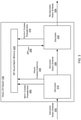
- FIG. 2 is a block diagram illustrating an embodiment of the invention of a macroblock-level quality-aware video optimizer 108 in the exemplary system of FIG. 1 .
- FIG. 2 only illustrates a video optimizer 108, encoded video stream 202 as input, and re-encoded video stream 204 as output.
- Video optimizer 108 includes, among other things, a decoder 210, a QP adjustment module 220, and an encoder 230.
- the illustrated configuration of video optimizer 108 is exemplary only, and can be modified to provide discrete elements or combine multiple elements into a single one, and be provided as any combination of hardware and software components.
- Decoder 210 can be a software program and/or a hardware device configured to decode the incoming encoded video stream 202.
- One second of video stream can contain, for example, 30 such frames, i.e., 244,800 macroblocks.
- decoder 210 decodes the incoming encoded video stream 202 one macroblock at a time. Extracting input information embedded within the encoded macroblock (this input information further described below), decoder 210 decodes encoded video stream 202 macroblock by macroblock and forwards the decoded macroblocks to encoder 230.
- some decoded macroblocks can be temporarily stored in a data storage (not shown), such as a database or a cache. The data storage can store decoded macroblocks that may be required for decoding future encoded macroblocks, for example, for obtaining intra- or inter-prediction information. Decoder 210 can also provide the input information (including any information derived therefrom) to QP adjustment module 220.
- QP adjustment module 220 can be a software program and/or a hardware device having the capability to adjust the input QP value received by video optimizer and output an adjusted QP value.
- the input QP value can be adjusted according to the input information received from decoder 210, the output information (further described below) received from encoder 230, and measured information (further described below) generated during the video optimization process.
- QP adjustment module 220 After adjusting the QP value, QP adjustment module 220 provides the output QP value (i.e., adjusted QP value) to encoder 230.
- Encoder 230 can be a software program and/or a hardware device configured to re-encode a video stream, macroblock by macroblock, after receiving the decoded video stream from decoder 210 and the output QP value from QP adjustment module 220. After re-encoding a macroblock of the video stream, encoder 230 outputs the re-encoded macroblock as part of re-encoded video stream 204. Encoder 230 also provides the output information to QP adjustment module 220.
- FIG. 3 is a functional diagram illustrating an exemplary process flow in the embodiment of FIG. 2 .
- the exemplary process flow can be altered to delete steps, change the order of steps, or include additional steps.
- video optimizer 108 can direct the encoded video stream 202 to decoder 210.
- Decoder 210 decodes the encoded video stream one macroblock at a time and extracts input information embedded within each encoded macroblock.
- the input information can include input coding parameters 302 and visual characteristics 304. Upon extraction, the input information is transferred to QP adjustment module 220.
- Input coding parameters 302 can include any compression-related information contained in an encoded macroblock, such as the original QP values ("QP Input ") that were used to quantize the macroblock when it was first encoded, or one or more motion vectors indicating relative positions of one or more prediction blocks, if the macroblock was encoded using inter-prediction. Input coding parameters 302 can also include compression-related statistical information, such as the number of bits that were used to encode the encoded macroblock.
- decoder 210 while decoding the encoded macroblock, also extracts visual characteristics 304, which are then transferred to QP adjustment module 220.
- Visual characteristics 304 include any information pertaining to the actual (decoded) pixel data of the macroblock, such as the variance or the average brightness of macroblock's pixels.
- QP adjustment module 220 can also receive output information.
- Output information can include output coding parameters 310 extracted from the re-encoded video stream 204.
- encoder 230 transfers to QP adjustment module 220 output coding parameters 310 extracted from the re-encoded macroblocks that make up the re-encoded video stream 204.
- Output coding parameters 310 include any compression-related information incorporated by encoder 230 into re-encoded macroblocks, such as QP Output values, motion vectors, prediction modes, and so forth. (Instead of receiving previously computed QP Output values from encoder 230, in some embodiments, QP adjustment module 220 can temporarily store the values, for example, in an internal buffer).
- Output coding parameters 310 can also include statistical information related to the compression of re-encoded macroblocks, such as the number of bits occupied by the re-encoded macroblocks .
- the types of parameters included in input coding parameters 302 may or may not match the types of parameters included in output coding parameters 310, depending on which types of parameters were used in encoded video stream 202 and are used in re-encoded video stream 204, and depending on what kind of information is requested by QP adjustment module 220.
- encoded video stream 202 may have been encoded using a compression standard that does not support macroblock-level QP adjustment, while it is supported by the standard being used by encoder 230 for re-encoded video stream.
- input coding parameters 302 can only include a frame-level QP value (repeated for each decoded macroblock, as explained below), while output coding parameters 310 can include all the individual macroblock-level QP values, if requested by QP adjustment module 220.
- encoded video stream 202 does not include individual QP values for its macroblocks, but only includes frame-level QP values, where each frame is assigned a single QP value, and that value is used to quantize all macroblocks within that frame.
- decoder 210 can still provide QP Input value as part of input coding parameters 302 for each decoded macroblock, by transferring the same frame-level QP value for each macroblock that belongs to that frame.
- QP adjustment module 220 can also preprocess input coding parameters 302 received from decoder 210. For example, QP adjustment module 220 can perform a statistical analysis and obtain an average value of QP Input or an average motion vector length, across all previously decoded macroblocks belonging to a certain frame. Similarly, QP adjustment module 220 can calculate, for example, an average number of bits per encoded macroblock, across all previously-decoded macroblocks belonging to a certain frame.
- QP adjustment module 220 can also preprocess output coding parameters 310 received from encoder 230. For example, QP adjustment module 220 can perform a statistical analysis and obtain an average number of bits per macroblock, across all previously re-encoded macroblocks belonging to a certain frame. Similarly, QP adjustment module 220 can calculate an average value of QP Output values (obtained either from an internal buffer or from encoder 230) across all previously re-encoded macroblocks belonging to a certain frame.
- QP adjustment module 220 can also preprocess visual characteristics 304 received from decoder 210. For example, QP adjustment module 220 can perform a statistical analysis and obtain an average value of pixel variance and/or brightness of all previously decoded macroblocks that belong to a certain frame.
- QP adjustment module 220 can include a database (not shown) for temporarily storing a predefined number of recently received parameters.
- the preprocessing of input coding parameters 302, output coding parameters 310 and/or visual characteristics 304 can occur outside QP adjustment module 220.
- some or all preprocessing of input coding parameters 302 and/or visual characteristics 304 can be performed by decoder 210 and transferred to QP adjustment module 220.
- some or all preprocessing of output coding parameters 302 can be performed by encoder 230 and transferred to QP adjustment module 220.
- QP adjustment module 220 computes macroblock-level QP Output values to be used by encoder 230 for quantizing macroblocks of decoded video stream 206.
- QP Output value can be computed based on any combination of the following data: input coding parameters 302, visual characteristics 304, and output coding parameters 310.
- QP adjustment module 220 derives QP Output for a given macroblock based on the QP Input of that macroblock, which can be received in input coding parameters 302. Since a relationship can be established between a QP value used to quantize a macroblock and perceptual quality of the macroblock, and also between the QP value and the bitrate (number of bits used to encode the macroblock), QP adjustment module 220 can use the difference between QP Input and QP Output to simultaneously control the bitrate reduction and perceptual quality degradation of the macroblock in re-encoded video stream 204.
- QP adjustment module 220 can choose a ⁇ QP value to derive a QP Output that can satisfy the requirement of byte size reduction and preserve, to the extent possible, the original perceptual quality.
- encoder 230 can re-encode decoded video stream 206 using a completely different compression standard than the one with which encoded video stream 202 was originally encoded. In other embodiments, encoder 230 can use the same compression standard that was originally used, but it may choose a completely different set of coding features or coding decisions. For example, encoded video stream 202 may have been encoded with half-pixel precision for motion compensation, while encoder 230 may choose to re-encode the stream using a quarter-pixel ("Qpel") precision. In some embodiments not covered by the claimed invention , encoder 230 can also change the stream's frame rate.
- the result of any such discrepancies between original encoding and the re-encoding techniques may be that for a given macroblock, a different pixel data is being quantized by encoder 230 than the pixel data that was quantized by the original encoder. Therefore, quantizing the macroblock with the same QP value will not necessarily result in the same bitrate and perceptual quality degradation. Consequently, to reduce the probability of unwanted degradation of perceptual quality, QP adjustment module can sometimes select a negative ⁇ QP, i.e., choose a QP Output value that is lower than the value of QP Input .
- QP adjustment module 220 will select higher ⁇ QP (i.e., output higher QP Output values) for lower values of QP Input .
- QP adjustment module 220 can compare QP Input to one or more predefined threshold values. Alternatively, QP adjustment module 220 can compare the QP Input to an average value of QP Input , for example, across all macroblocks that belong to a certain frame.
- QP adjustment module 220 when computing QP Output for a macroblock, considers how many bits were used to encode the macroblock in encoded video stream (202). For example, for macroblocks that have already been encoded with very few bits, ⁇ QP ⁇ 0 can be selected in order to avoid further degradation of perceptual quality.
- the number of encoded bits is considered in conjunction with the QP Input value of the macroblock.
- QP adjustment module 220 determines that a macroblock was quantized with a low QP Input (which could prompt a high QP Output ) but the macroblock nevertheless resulted in a small number of encoded bits, QP adjustment module 220 "overrides" the QP Inpuc -based selection and selects ⁇ QP ⁇ 0. Conversely, when QP adjustment module 220 determines that a high QP Input value resulted in an unusually large number of encoded bits, a positive ⁇ QP (high QP Output ) is selected.
- QP adjustment module 220 can compare it, for example, to one or more predefined threshold values, or to an average number of bits used to encode a macroblock belonging to one or more of previously encoded frames.
- QP adjustment module 220 can take into account pixel variance of a macroblock (i.e., variance among the pixel values of the macroblock), which can be received from decoder 210 as one of visual characteristics 304.
- High pixel variance can indicate that the macroblock can be further compressed with minimal degradation of perceptual quality, and vice versa, compressing macroblocks with low pixel variance is more likely to degrade perceptual quality.
- the edge between two macroblocks with low pixel variance is more likely to become visible when quantization for both macroblocks is increased, which can lead to image degradation in the form of "blocking" artifacts.
- macroblocks whose pixel variance is, for example, lower than a predefined threshold, or significantly lower than average pixel variance of previously encoded macroblocks can be quantized with QP Output lower than macroblocks with high variance.
- QP adjustment module 220 takes into account the average brightness of macroblock's pixels, which can be received from decoder 210 as one of visual characteristics 304. Quality defects may be more easily perceived in bright areas of the image. Therefore, QP adjustment module 220 may requantize the macroblock more aggressively (with a higher QP Output ) when the average brightness of macroblock's pixels is low, and vice versa.
- QP adjustment module 220 takes into account the motion vectors of a macroblock, which can be received from decoder 210 as part of input coding parameters 302. For example, very short motion vectors indicate a low-movement area within the video stream, which QP adjustment module 220 may choose to process with care by selecting, for example, ⁇ QP ⁇ 0.
- Output coding parameters 310 can also be considered by QP adjustment module 220 when computing QP Output -
- QP adjustment module 220 can monitor the resulting bitrate of re-encoded video stream 204 and adjust subsequent QP Output computations accordingly.
- QP adjustment module 220 can start compressing subsequent macroblocks more aggressively by choosing higher QP Output values, and vice versa, if the average bitrate of re-encoded video stream 204 is too low (e.g., lower than a second predefined target bitrate), QP adjustment module 220 can start compressing subsequent macroblocks less aggressively by choosing lower QP Output values .
- QP adjustment module 220 by analyzing the information obtained from output coding parameters 310, can improve the accuracy of its subsequent QP Output computations. For example, it may calculate how many bits, on average, result from applying a certain QP Output to a macroblock with a certain number of originally encoded bits. QP adjustment module 220 can then use that information to adjust its QP Output computations, for example, for similar subsequent macroblocks. Generally speaking, QP adjustment module 220 can use information obtained from output coding parameters 310 to analyze past quantization decisions and modify its future quantization decisions based on that analysis. One way of modifying future decisions is by adjusting the various threshold values mentioned above.
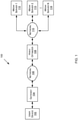
- FIG. 5 is a flowchart representing a method of a macroblock-level quality-aware video optimization according to an embodiment of the invention. Without departing from the exemplary embodiments, the exemplary process flow can be altered to delete steps, change the order of steps, or include additional steps.
- a video optimizer After receiving 502 an encoded macroblock, a video optimizer (e.g., video optimizer 108) decodes 504 the encoded macroblock and extracts input coding parameters (e.g., input coding parameters 302) in the process.
- the video optimizer can extract 506 visual characteristics (e.g., visual characteristics 304) from the decoded macroblock, if the visual characteristics are considered when computing QP Output at step 510.
- the video optimizer can extract 508 output coding parameters (e.g., output coding parameters 310) from macroblocks previously re-encoded by the video optimizer, if output coding parameters are considered when computing QP Output at step 510.
- the video optimizer computes QP Output based on the input coding parameters extracted at step 504.
- the input coding parameters include QP Input - a quantization parameter that was used when the macroblock was originally encoded.
- QP Input corresponds to the QP of the frame, which has been applied to all macroblocks of that frame.
- the video optimizer can, for example, increase QP Output when QP Input is low (e.g., lower than a predefined low threshold) and decrease QP Output when QP Input is high (e.g., higher than a predefined high threshold). In some cases, for example, when QP Input is very high, the video optimizer can set QP Output to a value equal to or lower than QP Input .
- the input coding parameters further include the number of bits consumed by the encoded macroblock.
- the video optimizer can decrease QP Output when the number of bits is low (e.g., lower than a predefined low threshold) and increase QP Output when the number of bits is high (e.g., higher than a predefined high threshold). In some cases, when the number of bits is very low, the video optimizer can set QP Output to a value equal to or lower than QPInput.
- the video optimizer considers the number of bits in conjunction with the QP Input value, for example, decreasing QP Output when both QP Input and the number of bits are low, and increasing QP Output when both QP Input and the number of bits are high.
- the input coding parameters can include the variance among pixels of the encoded macroblock.
- the video optimizer can decrease QP Output when the variance is low (e.g., lower than a predefined low threshold) and increase QP Output when the variance is high (e.g., higher than a predefined high threshold). In some cases, when the variance is very low, the video optimizer can set QP Output to a value equal to or lower than QP Input ..
- the input coding parameters can include the motion vectors used to originally encode the encoded macroblock.
- the video optimizer can decrease QP Output when the motion vectors are short (e.g., shorter than a predefined low threshold) and increase QP Output when the motion vectors are long (e.g., longer than a predefined high threshold). In some cases, when the motion vectors are very short, the video optimizer can set QP Output to a value equal to or lower than QP Input .
- the video optimizer when computing QP Output , can take into account the visual characteristics extracted at step 508.
- the visual characteristics can include, for example, the average brightness of the encoded macroblock's pixels.
- the video optimizer can decrease QP Output when the average brightness is high (e.g., higher than a predefined low threshold) and increase QP Output when the average brightness is low (e.g., lower than a predefined high threshold).
- the video optimizer when computing QP Output , can take into account the output coding parameters extracted at step 508.
- the output coding parameters can include, for example, the average bitrate of previously re-encoded macroblocks.
- the video optimizer can increase QP Output when the average bitrate is higher than a predefined target bitrate, and decrease QP Output when the average bitrate is lower than a predefined target bitrate.
- the video optimizer can also use the output coding parameters of previously re-encoded macroblocks to analyze, based on actual results, the relationship between the input coding parameters, the visual characteristics, the selected QP Output , and the resulting output coding parameters.
- the video optimizer can analyze how many bits, on average, were obtained when a macroblock having a certain number of originally encoded bits was re-encoded using a certain QP Output value. As a result of that analysis, the video optimizer can adjust its subsequent QP Output computations to achieve higher accuracy. The adjustment can be accomplished, for example, by modifying the various thresholds mentioned above.
- the video optimizer can re-encode 512 the decoded macroblock by encoding it based on quantization setting corresponding to the computed QP Output .
- the re-encoding can optimize the decompressed macroblock so that the byte size of the compressed macroblock is reduced as much as possible, while simultaneously limiting the perceptual quality degradation to a controllable level.
- the video optimizer can transmit 514 the re-encoded macroblock to a destination. The method can then end 516.
- the methods disclosed herein may be implemented as a computer program product, i.e., a computer program tangibly embodied in an information carrier, e.g., in a machine readable storage device, for execution by, or to control the operation of, data processing apparatus, e.g., a programmable processor, a computer, or multiple computers.
- a computer program can be written in any form of programming language, including compiled or interpreted languages, and it can be deployed in any form, including as a standalone program or as a module, component, subroutine, or other unit suitable for use in a computing environment.
- a computer program can be deployed to be executed on one computer or on multiple computers at one site or distributed across multiple sites and interconnected by a communication network.
- a portion or all of the methods disclosed herein may also be implemented by an application specific integrated circuit (ASIC), a field-programmable gate array (FPGA), a complex programmable logic device (CPLD), a printed circuit board (PCB), a digital signal processor (DSP), a combination of programmable logic components and programmable interconnects, a single central processing unit (CPU) chip, a CPU chip combined on a motherboard, a general purpose computer, or any other combination of devices or modules capable of performing quality-aware video optimization disclosed herein.
- ASIC application specific integrated circuit
- FPGA field-programmable gate array
- CPLD complex programmable logic device
- PCB printed circuit board
- DSP digital signal processor
- CPU central processing unit
Landscapes
- Engineering & Computer Science (AREA)
- Multimedia (AREA)
- Signal Processing (AREA)
- Compression Or Coding Systems Of Tv Signals (AREA)
Claims (15)
- Procédé d'optimisation d'un flux vidéo codé comprenant une ou plusieurs images vidéo, chaque image vidéo comprenant une pluralité de macroblocs, chaque macrobloc comprenant une pluralité de pixels, le procédé comprenant :la réception (502) d'un macrobloc codé ;le décodage (504) du macrobloc codé ;l'extraction (504) d'un premier paramètre de quantification, le premier paramètre de quantification correspondant à des réglages de quantification initialement utilisés pour la compression du macrobloc codé ;le calcul (510) d'un deuxième paramètre de quantification sur la base au moins en partie du premier paramètre de quantification ;le recodage (512) du macrobloc décodé sur la base du deuxième paramètre de quantification ; etla fourniture (514) du macrobloc recodé,le calcul du deuxième paramètre de quantification comprenant la définition d'un premier seuil et d'un deuxième seuil en fonction de paramètres de quantification d'entrée passés, les paramètres de quantification d'entrée passés correspondant à des réglages de quantification initialement utilisés pour la compression d'une pluralité de macroblocs codés précédemment reçus,le réglage du deuxième paramètre de quantification pour qu'il soit inférieur ou égal au premier paramètre de quantification lorsque le premier paramètre de quantification est supérieur au premier seuil, et le réglage du deuxième paramètre de quantification pour qu'il soit supérieur au premier paramètre de quantification lorsque le premier paramètre de quantification est inférieur au deuxième seuil,le calcul du deuxième paramètre de quantification étant en outre basé en partie sur un nombre de bits occupés par le macrobloc codé,si le premier paramètre de quantification est inférieur au deuxième seuil et s'il est déterminé que le nombre de bits occupés par le macrobloc codé est inférieur à un troisième seuil, le réglage du deuxième paramètre de quantification pour qu'il soit inférieur ou égal au premier paramètre de quantification et, si le premier paramètre de quantification est supérieur au premier seuil et s'il est déterminé que le nombre de bits occupés par le macrobloc codé est supérieur à un quatrième seuil, le réglage du deuxième paramètre de quantification pour qu'il soit supérieur au premier paramètre de quantification.
- Procédé selon la revendication 1, dans lequel le calcul (510) du deuxième paramètre de quantification (308) est basé en partie sur des caractéristiques visuelles (304) du macrobloc.
- Procédé selon la revendication 2, dans lequel les caractéristiques visuelles (304) du macrobloc comportent :une variance des valeurs de la pluralité de pixels du macrobloc ; ouune luminosité moyenne de la pluralité de pixels du macrobloc.
- Procédé selon la revendication 2, dans lequel le deuxième paramètre de quantification est déterminé sur la base en outre d'au moins un vecteur mouvement associé au macrobloc codé.
- Procédé selon la revendication 1, dans lequel le calcul (510) du deuxième paramètre de quantification (308) est basé en partie sur des paramètres de codage de sortie (310) reçus depuis un codeur (230) utilisé pour recoder le macrobloc décodé.
- Procédé selon la revendication 5, dans lequel les paramètres de codage de sortie (310) comportent un ou plusieurs paramètres de quantification de sortie passés qui correspondent à des réglages de quantification utilisés pour le recodage de macroblocs codés précédemment reçus.
- Procédé selon la revendication 5, dans lequel les paramètres de codage de sortie comportent un débit binaire de sortie, le débit binaire de sortie correspondant à un nombre moyen de bits occupés par une pluralité de macroblocs précédemment recodés.
- Procédé selon la revendication 7, dans lequel le calcul (510) du deuxième paramètre de quantification (308) comprend l'augmentation du deuxième paramètre de quantification si le débit binaire de sortie est supérieur à un premier débit binaire cible prédéfini, et la diminution du deuxième paramètre de quantification si le débit binaire de sortie est inférieur à un deuxième débit binaire cible prédéfini.
- Support lisible par ordinateur stockant des instructions qui, lorsqu'elles sont exécutées par un ordinateur, amènent l'ordinateur à réaliser le procédé selon l'une quelconque des revendications précédentes.
- Optimiseur vidéo (108) destiné à optimiser un flux vidéo codé (202) comprenant une ou plusieurs images vidéo, chaque image comprenant une pluralité de macroblocs, chaque macrobloc comprenant une pluralité de pixels, l'optimiseur vidéo comprenant :un décodeur (210) configuré pour recevoir un macrobloc codé, pour décoder le macrobloc codé et pour extraire un premier paramètre de quantification, le premier paramètre de quantification correspondant à des réglages de quantification initialement utilisés pour la compression du macrobloc codé ;un module d'ajustement de paramètre de quantification (220) configuré pour calculer un deuxième paramètre de quantification sur la base au moins en partie du premier paramètre de quantification ; etun codeur (230) configuré pour recoder le macrobloc décodé sur la base du deuxième paramètre de quantification et pour fournir le macrobloc recodé,le module d'ajustement de paramètre de quantification étant configuré en outre pour définir un premier seuil et un deuxième seuil en fonction de paramètres de quantification d'entrée passés, les paramètres de quantification d'entrée passés correspondant à des réglages de quantification initialement utilisés pour la compression d'une pluralité de macroblocs codés précédemment reçus,le calcul du deuxième paramètre de quantification comprenant le réglage du deuxième paramètre de quantification pour qu'il soit inférieur ou égal au premier paramètre de quantification lorsque le premier paramètre de quantification est supérieur au premier seuil, et le réglage du deuxième paramètre de quantification pour qu'il soit supérieur au premier paramètre de quantification lorsque le premier paramètre de quantification est inférieur au deuxième seuil,le calcul du deuxième paramètre de quantification étant basé en partie sur un nombre de bits occupés par le macrobloc codé,si le premier paramètre de quantification est inférieur au deuxième seuil et s'il est déterminé que le nombre de bits occupés par le macrobloc codé est inférieur à un troisième seuil, le deuxième paramètre de quantification étant réglé pour être inférieur ou égal au premier paramètre de quantification et, si le premier paramètre de quantification est supérieur au premier seuil et s'il est déterminé que le nombre de bits occupés par le macrobloc codé est supérieur à un quatrième seuil, le deuxième paramètre de quantification étant réglé pour être supérieur au premier paramètre de quantification.
- Optimiseur vidéo selon la revendication 10, dans lequel le calcul du deuxième paramètre de quantification (308) est basé en partie sur des caractéristiques visuelles (304) du macrobloc.
- Optimiseur vidéo selon la revendication 11, dans lequel les caractéristiques visuelles (304) du macrobloc :une variance des valeurs de la pluralité de pixels du macrobloc codé ; ouune luminosité moyenne de la pluralité de pixels du macrobloc codé.
- Optimiseur vidéo selon la revendication 10, dans lequel le deuxième paramètre de quantification (308) est déterminé en outre sur la base en partie de paramètres de codage de sortie (310) reçus depuis le codeur (230).
- Optimiseur vidéo selon la revendication 13, dans lequel les paramètres de codage de sortie (310) comportent un ou plusieurs paramètres de quantification de sortie passés qui correspondent à des réglages de quantification utilisés pour le recodage de macroblocs codés précédemment reçus.
- Optimiseur vidéo selon la revendication 13, dans lequel les paramètres de codage de sortie (310) comportent un débit binaire de sortie, le débit binaire de sortie correspondant à un nombre moyen de bits occupés par une pluralité de macroblocs précédemment recodés, le calcul du deuxième paramètre de quantification (308) comprenant de préférence l'augmentation du deuxième paramètre de quantification si le débit binaire de sortie est supérieur à un premier débit binaire cible prédéfini, et la diminution du deuxième paramètre de quantification si le débit binaire de sortie est inférieur à un deuxième débit binaire cible prédéfini.
Applications Claiming Priority (2)
| Application Number | Priority Date | Filing Date | Title |
|---|---|---|---|
| US201161495951P | 2011-06-10 | 2011-06-10 | |
| PCT/US2012/041691 WO2012170910A1 (fr) | 2011-06-10 | 2012-06-08 | Quantification adaptative au niveau du macrobloc dans une optimisation vidéo prenant en charge la qualité |
Publications (2)
| Publication Number | Publication Date |
|---|---|
| EP2719178A1 EP2719178A1 (fr) | 2014-04-16 |
| EP2719178B1 true EP2719178B1 (fr) | 2022-02-16 |
Family
ID=46298724
Family Applications (1)
| Application Number | Title | Priority Date | Filing Date |
|---|---|---|---|
| EP12727763.0A Active EP2719178B1 (fr) | 2011-06-10 | 2012-06-08 | Quantification adaptative au niveau du macrobloc dans une optimisation vidéo prenant en charge la qualité |
Country Status (4)
| Country | Link |
|---|---|
| US (2) | US9621896B2 (fr) |
| EP (1) | EP2719178B1 (fr) |
| CN (2) | CN108769693B (fr) |
| WO (1) | WO2012170910A1 (fr) |
Families Citing this family (32)
| Publication number | Priority date | Publication date | Assignee | Title |
|---|---|---|---|---|
| WO2010117432A2 (fr) | 2009-03-31 | 2010-10-14 | Bytemobile, Inc. | Cadre permettant une optimisation vidéo en fonction de la qualité |
| US9749713B2 (en) | 2009-10-15 | 2017-08-29 | Citrix Systems, Inc. | Budget encoding |
| US20130058410A1 (en) | 2010-05-13 | 2013-03-07 | Sharp Kabushiki Kaisha | Encoding device, decoding device, and data structure |
| EP2719178B1 (fr) * | 2011-06-10 | 2022-02-16 | Citrix Systems, Inc. | Quantification adaptative au niveau du macrobloc dans une optimisation vidéo prenant en charge la qualité |
| US8976857B2 (en) * | 2011-09-23 | 2015-03-10 | Microsoft Technology Licensing, Llc | Quality-based video compression |
| US20150063461A1 (en) * | 2013-08-27 | 2015-03-05 | Magnum Semiconductor, Inc. | Methods and apparatuses for adjusting macroblock quantization parameters to improve visual quality for lossy video encoding |
| US9294766B2 (en) | 2013-09-09 | 2016-03-22 | Apple Inc. | Chroma quantization in video coding |
| US10356405B2 (en) | 2013-11-04 | 2019-07-16 | Integrated Device Technology, Inc. | Methods and apparatuses for multi-pass adaptive quantization |
| KR102071580B1 (ko) * | 2014-11-03 | 2020-01-30 | 삼성전자주식회사 | 이미지 재부호화 방법 및 그 장치 |
| US10356428B2 (en) | 2015-04-13 | 2019-07-16 | Qualcomm Incorporated | Quantization parameter (QP) update classification for display stream compression (DSC) |
| US10284849B2 (en) | 2015-04-13 | 2019-05-07 | Qualcomm Incorporated | Quantization parameter (QP) calculation for display stream compression (DSC) based on complexity measure |
| US10244255B2 (en) | 2015-04-13 | 2019-03-26 | Qualcomm Incorporated | Rate-constrained fallback mode for display stream compression |
| US9936203B2 (en) | 2015-04-13 | 2018-04-03 | Qualcomm Incorporated | Complex region detection for display stream compression |
| WO2016199409A1 (fr) * | 2015-06-07 | 2016-12-15 | Sharp Kabushiki Kaisha | Systèmes et procédés d'optimisation de codage vidéo basés sur une fonction de transfert de luminance ou des valeurs de composantes de couleur vidéo |
| KR101742258B1 (ko) * | 2016-02-29 | 2017-05-31 | 경희대학교 산학협력단 | 웹 기반 가상 데스크탑 프로토콜을 이용한 컨텐츠 제공 방법 및 장치 |
| CN106101706B (zh) * | 2016-06-30 | 2019-11-19 | 华为技术有限公司 | 一种图像编码方法及装置 |
| CN106231315B (zh) * | 2016-08-05 | 2019-06-14 | 北京数码视讯科技股份有限公司 | 一种视频编码系统和应用该系统的视频编码方法 |
| CN117896532A (zh) * | 2017-01-15 | 2024-04-16 | 上海天荷电子信息有限公司 | 调整帧内最近位移矢量数组的元素的图像压缩方法和装置 |
| US10917644B2 (en) * | 2017-02-23 | 2021-02-09 | Netflix, Inc. | Iterative techniques for encoding video content |
| CN107864379B (zh) * | 2017-09-28 | 2021-07-02 | 珠海亿智电子科技有限公司 | 一种应用于视频编解码的压缩方法 |
| CN111819848B (zh) | 2018-02-17 | 2023-06-09 | 谷歌有限责任公司 | 用于图像压缩和解压缩的方法和装置以及存储介质 |
| US11997275B2 (en) * | 2018-08-27 | 2024-05-28 | AT Technologies ULC | Benefit-based bitrate distribution for video encoding |
| US11368692B2 (en) * | 2018-10-31 | 2022-06-21 | Ati Technologies Ulc | Content adaptive quantization strength and bitrate modeling |
| US11115661B2 (en) * | 2019-03-17 | 2021-09-07 | International Business Machines Corporation | Low delay content disarm and reconstruction (CDR) of live streaming video |
| CN109803146B (zh) * | 2019-04-04 | 2021-05-25 | 网易(杭州)网络有限公司 | 视频的二次压缩方法、装置、介质和设备 |
| CN110062230B (zh) * | 2019-04-29 | 2022-03-25 | 湖南国科微电子股份有限公司 | 图像编码方法及装置 |
| CN110784716B (zh) * | 2019-08-19 | 2023-11-17 | 腾讯科技(深圳)有限公司 | 媒体数据处理方法、装置及介质 |
| CN112752101B (zh) * | 2019-10-29 | 2022-02-22 | 北京新唐思创教育科技有限公司 | 一种视频质量优化方法、装置及存储介质 |
| CN113453001A (zh) * | 2020-03-24 | 2021-09-28 | 合肥君正科技有限公司 | 一种利用isp信息自适应分配qp提高h264编码效率的方法 |
| CN116800967A (zh) * | 2022-03-15 | 2023-09-22 | 华为技术有限公司 | 一种图像编码方法、装置及设备 |
| CN116095320B (zh) * | 2022-12-30 | 2025-06-24 | 杭州海康威视数字技术股份有限公司 | 量化参数调整方法、装置、设备及存储介质 |
| CN119815019A (zh) * | 2024-11-28 | 2025-04-11 | 中国电子科技集团公司第五十四研究所 | 一种适用于低速同步接口的图像码流控制方法 |
Citations (1)
| Publication number | Priority date | Publication date | Assignee | Title |
|---|---|---|---|---|
| US20050232354A1 (en) * | 2004-04-14 | 2005-10-20 | Yi-Kai Chen | Rate controlling method and apparatus for use in a transcoder |
Family Cites Families (23)
| Publication number | Priority date | Publication date | Assignee | Title |
|---|---|---|---|---|
| US6529631B1 (en) | 1996-03-29 | 2003-03-04 | Sarnoff Corporation | Apparatus and method for optimizing encoding and performing automated steerable image compression in an image coding system using a perceptual metric |
| US6115420A (en) | 1997-03-14 | 2000-09-05 | Microsoft Corporation | Digital video signal encoder and encoding method |
| US6574274B2 (en) | 1998-02-27 | 2003-06-03 | Sony Corporation | Picture signal processing system, decoder, picture signal processing method, and decoding method |
| KR100433516B1 (ko) | 2000-12-08 | 2004-05-31 | 삼성전자주식회사 | 트랜스코딩 방법 |
| US7356079B2 (en) | 2001-11-21 | 2008-04-08 | Vixs Systems Inc. | Method and system for rate control during video transcoding |
| US20040141732A1 (en) | 2003-01-22 | 2004-07-22 | Kenji Sugiyama | Moving-picture code amount control method, moving-picture recording method, moving-picture code amount control apparatus and moving-picture recording apparatus |
| US7675970B2 (en) * | 2004-01-12 | 2010-03-09 | General Instrument Corporation | Method and apparatus for processing a bitstream in a digital video transcoder |
| US7447978B2 (en) | 2004-11-16 | 2008-11-04 | Nokia Corporation | Buffering packets of a media stream |
| EP1727371A1 (fr) | 2005-05-27 | 2006-11-29 | Thomson Licensing | Méthode pour réguler le débit de sortie dans un codeur vidéo par blocs, et dispositif vidéo correspondant |
| JP4649347B2 (ja) * | 2006-02-28 | 2011-03-09 | 株式会社東芝 | 情報処理装置及び情報処理装置の動画像復号方法 |
| CN101039432A (zh) * | 2006-03-16 | 2007-09-19 | 华为技术有限公司 | 在编码过程中实现自适应量化的方法及装置 |
| JPWO2008029640A1 (ja) | 2006-09-05 | 2010-01-21 | パナソニック株式会社 | 低ビットレートフォーマットのビデオデータ再生に適したプレヤーにより高ビットレートフォーマットのビデオデータを再生する方法及び装置 |
| WO2008098249A1 (fr) | 2007-02-09 | 2008-08-14 | Dilithium Networks Pty Ltd. | Procédé et appareil d'adaptation de contenu multimédia dans des réseaux de télécommunications |
| US8635360B2 (en) | 2007-10-19 | 2014-01-21 | Google Inc. | Media playback point seeking using data range requests |
| US8542730B2 (en) | 2008-02-22 | 2013-09-24 | Qualcomm, Incorporated | Fast macroblock delta QP decision |
| WO2009114111A2 (fr) | 2008-03-12 | 2009-09-17 | Packetvideo Corp. | Système et procédé pour reformater du contenu multimédia de diffusion numérique pour un dispositif mobile |
| CN101325711A (zh) * | 2008-07-16 | 2008-12-17 | 上海大学 | 基于时空掩盖效应的自适应码率控制方法 |
| CN101621687B (zh) * | 2008-08-18 | 2011-06-08 | 深圳市铁越电气有限公司 | H.264到avs视频码流转换方法及其装置 |
| CN102172020B (zh) | 2008-09-09 | 2014-09-03 | 爱移通全球有限公司 | 用于发送视频的方法和设备 |
| US20100166060A1 (en) | 2008-12-31 | 2010-07-01 | Texas Instruments Incorporated | Video transcoder rate control |
| WO2010117432A2 (fr) * | 2009-03-31 | 2010-10-14 | Bytemobile, Inc. | Cadre permettant une optimisation vidéo en fonction de la qualité |
| US9749713B2 (en) | 2009-10-15 | 2017-08-29 | Citrix Systems, Inc. | Budget encoding |
| EP2719178B1 (fr) * | 2011-06-10 | 2022-02-16 | Citrix Systems, Inc. | Quantification adaptative au niveau du macrobloc dans une optimisation vidéo prenant en charge la qualité |
-
2012
- 2012-06-08 EP EP12727763.0A patent/EP2719178B1/fr active Active
- 2012-06-08 US US13/492,619 patent/US9621896B2/en active Active
- 2012-06-08 CN CN201810947569.7A patent/CN108769693B/zh active Active
- 2012-06-08 CN CN201280039090.4A patent/CN103828369B/zh active Active
- 2012-06-08 WO PCT/US2012/041691 patent/WO2012170910A1/fr not_active Ceased
-
2017
- 2017-04-10 US US15/482,931 patent/US10123015B2/en active Active
Patent Citations (1)
| Publication number | Priority date | Publication date | Assignee | Title |
|---|---|---|---|---|
| US20050232354A1 (en) * | 2004-04-14 | 2005-10-20 | Yi-Kai Chen | Rate controlling method and apparatus for use in a transcoder |
Also Published As
| Publication number | Publication date |
|---|---|
| CN103828369B (zh) | 2018-09-07 |
| CN108769693B (zh) | 2022-07-08 |
| EP2719178A1 (fr) | 2014-04-16 |
| WO2012170910A1 (fr) | 2012-12-13 |
| US10123015B2 (en) | 2018-11-06 |
| US9621896B2 (en) | 2017-04-11 |
| CN103828369A (zh) | 2014-05-28 |
| US20170214918A1 (en) | 2017-07-27 |
| CN108769693A (zh) | 2018-11-06 |
| US20120314764A1 (en) | 2012-12-13 |
Similar Documents
| Publication | Publication Date | Title |
|---|---|---|
| EP2719178B1 (fr) | Quantification adaptative au niveau du macrobloc dans une optimisation vidéo prenant en charge la qualité | |
| US10412388B2 (en) | Framework for quality-aware video optimization | |
| US9756326B2 (en) | Video coding method using at least evaluated visual quality and related video coding apparatus | |
| US8848788B2 (en) | Method and apparatus for joint quantization parameter adjustment | |
| US12192523B2 (en) | Method and apparatus for image encoding/decoding | |
| US10827201B2 (en) | Video encoding method, video encoding device, video decoding method, video decoding device, program, and video system | |
| EP3284253B1 (fr) | Mode de repli à débit contraint pour la compression d'un flux d'affichage | |
| US8064517B1 (en) | Perceptually adaptive quantization parameter selection | |
| US20160234496A1 (en) | Near visually lossless video recompression | |
| AU2016231584A1 (en) | Method, apparatus and system for encoding and decoding video data | |
| JP2011514056A (ja) | 早いマクロブロック・デルタqpの決定 | |
| US20130083840A1 (en) | Advance encode processing based on raw video data | |
| WO2023083245A1 (fr) | Procédé de décodage, procédé de codage, et appareils | |
| US12470704B2 (en) | Picture processing method and video decoder | |
| EP4723631A1 (fr) | Échelle de débit binaire sensible à l'énergie | |
| US20260101036A1 (en) | Offset and quantization interval for cross component sample offset | |
| KR101533051B1 (ko) | 블록별 양자화 레벨을 이용한 인코딩 방법 및 그 시스템 | |
| WO2025250367A1 (fr) | Prédiction pondérée adaptative de niveau de bloc compatible avec le matériel | |
| HK1170614A (en) | A method for quality-aware video optimization and a video optimizer | |
| HK1170614B (en) | A method for quality-aware video optimization and a video optimizer |
Legal Events
| Date | Code | Title | Description |
|---|---|---|---|
| PUAI | Public reference made under article 153(3) epc to a published international application that has entered the european phase |
Free format text: ORIGINAL CODE: 0009012 |
|
| 17P | Request for examination filed |
Effective date: 20140108 |
|
| AK | Designated contracting states |
Kind code of ref document: A1 Designated state(s): AL AT BE BG CH CY CZ DE DK EE ES FI FR GB GR HR HU IE IS IT LI LT LU LV MC MK MT NL NO PL PT RO RS SE SI SK SM TR |
|
| DAX | Request for extension of the european patent (deleted) | ||
| RAP1 | Party data changed (applicant data changed or rights of an application transferred) |
Owner name: BYTEMOBILE, INC. |
|
| RAP1 | Party data changed (applicant data changed or rights of an application transferred) |
Owner name: CITRIX SYSTEMS, INC. |
|
| STAA | Information on the status of an ep patent application or granted ep patent |
Free format text: STATUS: EXAMINATION IS IN PROGRESS |
|
| 17Q | First examination report despatched |
Effective date: 20171129 |
|
| RIC1 | Information provided on ipc code assigned before grant |
Ipc: H04N 7/26 20181130AFI20130107BHEP |
|
| RIC1 | Information provided on ipc code assigned before grant |
Ipc: H04N 7/26 20060101AFI20130107BHEP |
|
| REG | Reference to a national code |
Ref country code: DE Ref legal event code: R079 Ref document number: 602012077685 Country of ref document: DE Free format text: PREVIOUS MAIN CLASS: H04N0007260000 Ipc: H04N0019176000 |
|
| GRAP | Despatch of communication of intention to grant a patent |
Free format text: ORIGINAL CODE: EPIDOSNIGR1 |
|
| STAA | Information on the status of an ep patent application or granted ep patent |
Free format text: STATUS: GRANT OF PATENT IS INTENDED |
|
| RIC1 | Information provided on ipc code assigned before grant |
Ipc: H04N 19/176 20140101AFI20210623BHEP Ipc: H04N 19/124 20140101ALI20210623BHEP Ipc: H04N 19/136 20140101ALI20210623BHEP Ipc: H04N 19/146 20140101ALI20210623BHEP Ipc: H04N 19/154 20140101ALI20210623BHEP Ipc: H04N 19/40 20140101ALI20210623BHEP |
|
| INTG | Intention to grant announced |
Effective date: 20210708 |
|
| GRAJ | Information related to disapproval of communication of intention to grant by the applicant or resumption of examination proceedings by the epo deleted |
Free format text: ORIGINAL CODE: EPIDOSDIGR1 |
|
| STAA | Information on the status of an ep patent application or granted ep patent |
Free format text: STATUS: EXAMINATION IS IN PROGRESS |
|
| INTC | Intention to grant announced (deleted) | ||
| GRAP | Despatch of communication of intention to grant a patent |
Free format text: ORIGINAL CODE: EPIDOSNIGR1 |
|
| STAA | Information on the status of an ep patent application or granted ep patent |
Free format text: STATUS: GRANT OF PATENT IS INTENDED |
|
| INTG | Intention to grant announced |
Effective date: 20211125 |
|
| GRAS | Grant fee paid |
Free format text: ORIGINAL CODE: EPIDOSNIGR3 |
|
| GRAA | (expected) grant |
Free format text: ORIGINAL CODE: 0009210 |
|
| STAA | Information on the status of an ep patent application or granted ep patent |
Free format text: STATUS: THE PATENT HAS BEEN GRANTED |
|
| AK | Designated contracting states |
Kind code of ref document: B1 Designated state(s): AL AT BE BG CH CY CZ DE DK EE ES FI FR GB GR HR HU IE IS IT LI LT LU LV MC MK MT NL NO PL PT RO RS SE SI SK SM TR |
|
| REG | Reference to a national code |
Ref country code: GB Ref legal event code: FG4D |
|
| REG | Reference to a national code |
Ref country code: CH Ref legal event code: EP |
|
| REG | Reference to a national code |
Ref country code: DE Ref legal event code: R096 Ref document number: 602012077685 Country of ref document: DE |
|
| REG | Reference to a national code |
Ref country code: AT Ref legal event code: REF Ref document number: 1469634 Country of ref document: AT Kind code of ref document: T Effective date: 20220315 |
|
| REG | Reference to a national code |
Ref country code: IE Ref legal event code: FG4D |
|
| REG | Reference to a national code |
Ref country code: NL Ref legal event code: FP |
|
| REG | Reference to a national code |
Ref country code: FR Ref legal event code: PLFP Year of fee payment: 11 |
|
| REG | Reference to a national code |
Ref country code: LT Ref legal event code: MG9D |
|
| PGFP | Annual fee paid to national office [announced via postgrant information from national office to epo] |
Ref country code: NL Payment date: 20220523 Year of fee payment: 11 |
|
| REG | Reference to a national code |
Ref country code: AT Ref legal event code: MK05 Ref document number: 1469634 Country of ref document: AT Kind code of ref document: T Effective date: 20220216 |
|
| PG25 | Lapsed in a contracting state [announced via postgrant information from national office to epo] |
Ref country code: SE Free format text: LAPSE BECAUSE OF FAILURE TO SUBMIT A TRANSLATION OF THE DESCRIPTION OR TO PAY THE FEE WITHIN THE PRESCRIBED TIME-LIMIT Effective date: 20220216 Ref country code: RS Free format text: LAPSE BECAUSE OF FAILURE TO SUBMIT A TRANSLATION OF THE DESCRIPTION OR TO PAY THE FEE WITHIN THE PRESCRIBED TIME-LIMIT Effective date: 20220216 Ref country code: PT Free format text: LAPSE BECAUSE OF FAILURE TO SUBMIT A TRANSLATION OF THE DESCRIPTION OR TO PAY THE FEE WITHIN THE PRESCRIBED TIME-LIMIT Effective date: 20220616 Ref country code: NO Free format text: LAPSE BECAUSE OF FAILURE TO SUBMIT A TRANSLATION OF THE DESCRIPTION OR TO PAY THE FEE WITHIN THE PRESCRIBED TIME-LIMIT Effective date: 20220516 Ref country code: LT Free format text: LAPSE BECAUSE OF FAILURE TO SUBMIT A TRANSLATION OF THE DESCRIPTION OR TO PAY THE FEE WITHIN THE PRESCRIBED TIME-LIMIT Effective date: 20220216 Ref country code: HR Free format text: LAPSE BECAUSE OF FAILURE TO SUBMIT A TRANSLATION OF THE DESCRIPTION OR TO PAY THE FEE WITHIN THE PRESCRIBED TIME-LIMIT Effective date: 20220216 Ref country code: ES Free format text: LAPSE BECAUSE OF FAILURE TO SUBMIT A TRANSLATION OF THE DESCRIPTION OR TO PAY THE FEE WITHIN THE PRESCRIBED TIME-LIMIT Effective date: 20220216 Ref country code: BG Free format text: LAPSE BECAUSE OF FAILURE TO SUBMIT A TRANSLATION OF THE DESCRIPTION OR TO PAY THE FEE WITHIN THE PRESCRIBED TIME-LIMIT Effective date: 20220516 |
|
| PGFP | Annual fee paid to national office [announced via postgrant information from national office to epo] |
Ref country code: GB Payment date: 20220517 Year of fee payment: 11 Ref country code: FR Payment date: 20220517 Year of fee payment: 11 |
|
| PG25 | Lapsed in a contracting state [announced via postgrant information from national office to epo] |
Ref country code: PL Free format text: LAPSE BECAUSE OF FAILURE TO SUBMIT A TRANSLATION OF THE DESCRIPTION OR TO PAY THE FEE WITHIN THE PRESCRIBED TIME-LIMIT Effective date: 20220216 Ref country code: LV Free format text: LAPSE BECAUSE OF FAILURE TO SUBMIT A TRANSLATION OF THE DESCRIPTION OR TO PAY THE FEE WITHIN THE PRESCRIBED TIME-LIMIT Effective date: 20220216 Ref country code: GR Free format text: LAPSE BECAUSE OF FAILURE TO SUBMIT A TRANSLATION OF THE DESCRIPTION OR TO PAY THE FEE WITHIN THE PRESCRIBED TIME-LIMIT Effective date: 20220517 Ref country code: FI Free format text: LAPSE BECAUSE OF FAILURE TO SUBMIT A TRANSLATION OF THE DESCRIPTION OR TO PAY THE FEE WITHIN THE PRESCRIBED TIME-LIMIT Effective date: 20220216 Ref country code: AT Free format text: LAPSE BECAUSE OF FAILURE TO SUBMIT A TRANSLATION OF THE DESCRIPTION OR TO PAY THE FEE WITHIN THE PRESCRIBED TIME-LIMIT Effective date: 20220216 |
|
| PG25 | Lapsed in a contracting state [announced via postgrant information from national office to epo] |
Ref country code: IS Free format text: LAPSE BECAUSE OF FAILURE TO SUBMIT A TRANSLATION OF THE DESCRIPTION OR TO PAY THE FEE WITHIN THE PRESCRIBED TIME-LIMIT Effective date: 20220616 |
|
| PG25 | Lapsed in a contracting state [announced via postgrant information from national office to epo] |
Ref country code: SM Free format text: LAPSE BECAUSE OF FAILURE TO SUBMIT A TRANSLATION OF THE DESCRIPTION OR TO PAY THE FEE WITHIN THE PRESCRIBED TIME-LIMIT Effective date: 20220216 Ref country code: SK Free format text: LAPSE BECAUSE OF FAILURE TO SUBMIT A TRANSLATION OF THE DESCRIPTION OR TO PAY THE FEE WITHIN THE PRESCRIBED TIME-LIMIT Effective date: 20220216 Ref country code: RO Free format text: LAPSE BECAUSE OF FAILURE TO SUBMIT A TRANSLATION OF THE DESCRIPTION OR TO PAY THE FEE WITHIN THE PRESCRIBED TIME-LIMIT Effective date: 20220216 Ref country code: EE Free format text: LAPSE BECAUSE OF FAILURE TO SUBMIT A TRANSLATION OF THE DESCRIPTION OR TO PAY THE FEE WITHIN THE PRESCRIBED TIME-LIMIT Effective date: 20220216 Ref country code: DK Free format text: LAPSE BECAUSE OF FAILURE TO SUBMIT A TRANSLATION OF THE DESCRIPTION OR TO PAY THE FEE WITHIN THE PRESCRIBED TIME-LIMIT Effective date: 20220216 Ref country code: CZ Free format text: LAPSE BECAUSE OF FAILURE TO SUBMIT A TRANSLATION OF THE DESCRIPTION OR TO PAY THE FEE WITHIN THE PRESCRIBED TIME-LIMIT Effective date: 20220216 |
|
| REG | Reference to a national code |
Ref country code: DE Ref legal event code: R097 Ref document number: 602012077685 Country of ref document: DE |
|
| PG25 | Lapsed in a contracting state [announced via postgrant information from national office to epo] |
Ref country code: AL Free format text: LAPSE BECAUSE OF FAILURE TO SUBMIT A TRANSLATION OF THE DESCRIPTION OR TO PAY THE FEE WITHIN THE PRESCRIBED TIME-LIMIT Effective date: 20220216 |
|
| PLBE | No opposition filed within time limit |
Free format text: ORIGINAL CODE: 0009261 |
|
| STAA | Information on the status of an ep patent application or granted ep patent |
Free format text: STATUS: NO OPPOSITION FILED WITHIN TIME LIMIT |
|
| 26N | No opposition filed |
Effective date: 20221117 |
|
| PG25 | Lapsed in a contracting state [announced via postgrant information from national office to epo] |
Ref country code: MC Free format text: LAPSE BECAUSE OF FAILURE TO SUBMIT A TRANSLATION OF THE DESCRIPTION OR TO PAY THE FEE WITHIN THE PRESCRIBED TIME-LIMIT Effective date: 20220216 |
|
| REG | Reference to a national code |
Ref country code: CH Ref legal event code: PL |
|
| REG | Reference to a national code |
Ref country code: BE Ref legal event code: MM Effective date: 20220630 |
|
| PG25 | Lapsed in a contracting state [announced via postgrant information from national office to epo] |
Ref country code: SI Free format text: LAPSE BECAUSE OF FAILURE TO SUBMIT A TRANSLATION OF THE DESCRIPTION OR TO PAY THE FEE WITHIN THE PRESCRIBED TIME-LIMIT Effective date: 20220216 |
|
| REG | Reference to a national code |
Ref country code: DE Ref legal event code: R081 Ref document number: 602012077685 Country of ref document: DE Owner name: BYTEMOBILE INNOVATIONS, LLC, ASHEVILLE, US Free format text: FORMER OWNER: CITRIX SYSTEMS, INC., FORT LAUDERDALE, FL, US Ref country code: DE Ref legal event code: R081 Ref document number: 602012077685 Country of ref document: DE Owner name: OPTIMORPHIX, INC., MINNEAPOLIS, US Free format text: FORMER OWNER: CITRIX SYSTEMS, INC., FORT LAUDERDALE, FL, US |
|
| REG | Reference to a national code |
Ref country code: NL Ref legal event code: PD Owner name: BYTEMOBILE INNOVATIONS, LLC; US Free format text: DETAILS ASSIGNMENT: CHANGE OF OWNER(S), ASSIGNMENT; FORMER OWNER NAME: CITRIX SYSTEMS, INC. Effective date: 20230317 |
|
| PG25 | Lapsed in a contracting state [announced via postgrant information from national office to epo] |
Ref country code: LU Free format text: LAPSE BECAUSE OF NON-PAYMENT OF DUE FEES Effective date: 20220608 Ref country code: LI Free format text: LAPSE BECAUSE OF NON-PAYMENT OF DUE FEES Effective date: 20220630 Ref country code: IE Free format text: LAPSE BECAUSE OF NON-PAYMENT OF DUE FEES Effective date: 20220608 Ref country code: CH Free format text: LAPSE BECAUSE OF NON-PAYMENT OF DUE FEES Effective date: 20220630 |
|
| PG25 | Lapsed in a contracting state [announced via postgrant information from national office to epo] |
Ref country code: BE Free format text: LAPSE BECAUSE OF NON-PAYMENT OF DUE FEES Effective date: 20220630 |
|
| REG | Reference to a national code |
Ref country code: GB Ref legal event code: 732E Free format text: REGISTERED BETWEEN 20230511 AND 20230517 |
|
| PG25 | Lapsed in a contracting state [announced via postgrant information from national office to epo] |
Ref country code: IT Free format text: LAPSE BECAUSE OF FAILURE TO SUBMIT A TRANSLATION OF THE DESCRIPTION OR TO PAY THE FEE WITHIN THE PRESCRIBED TIME-LIMIT Effective date: 20220216 |
|
| REG | Reference to a national code |
Ref country code: NL Ref legal event code: MM Effective date: 20230701 |
|
| GBPC | Gb: european patent ceased through non-payment of renewal fee |
Effective date: 20230608 |
|
| PG25 | Lapsed in a contracting state [announced via postgrant information from national office to epo] |
Ref country code: NL Free format text: LAPSE BECAUSE OF NON-PAYMENT OF DUE FEES Effective date: 20230701 Ref country code: HU Free format text: LAPSE BECAUSE OF FAILURE TO SUBMIT A TRANSLATION OF THE DESCRIPTION OR TO PAY THE FEE WITHIN THE PRESCRIBED TIME-LIMIT; INVALID AB INITIO Effective date: 20120608 |
|
| PG25 | Lapsed in a contracting state [announced via postgrant information from national office to epo] |
Ref country code: MK Free format text: LAPSE BECAUSE OF FAILURE TO SUBMIT A TRANSLATION OF THE DESCRIPTION OR TO PAY THE FEE WITHIN THE PRESCRIBED TIME-LIMIT Effective date: 20220216 Ref country code: CY Free format text: LAPSE BECAUSE OF FAILURE TO SUBMIT A TRANSLATION OF THE DESCRIPTION OR TO PAY THE FEE WITHIN THE PRESCRIBED TIME-LIMIT Effective date: 20220216 Ref country code: GB Free format text: LAPSE BECAUSE OF NON-PAYMENT OF DUE FEES Effective date: 20230608 |
|
| PG25 | Lapsed in a contracting state [announced via postgrant information from national office to epo] |
Ref country code: FR Free format text: LAPSE BECAUSE OF NON-PAYMENT OF DUE FEES Effective date: 20230630 |
|
| PG25 | Lapsed in a contracting state [announced via postgrant information from national office to epo] |
Ref country code: MT Free format text: LAPSE BECAUSE OF FAILURE TO SUBMIT A TRANSLATION OF THE DESCRIPTION OR TO PAY THE FEE WITHIN THE PRESCRIBED TIME-LIMIT Effective date: 20220216 |
|
| PGFP | Annual fee paid to national office [announced via postgrant information from national office to epo] |
Ref country code: DE Payment date: 20250520 Year of fee payment: 14 |
|
| PG25 | Lapsed in a contracting state [announced via postgrant information from national office to epo] |
Ref country code: TR Free format text: LAPSE BECAUSE OF FAILURE TO SUBMIT A TRANSLATION OF THE DESCRIPTION OR TO PAY THE FEE WITHIN THE PRESCRIBED TIME-LIMIT Effective date: 20220216 |
|
| REG | Reference to a national code |
Ref country code: DE Ref legal event code: R081 Ref document number: 602012077685 Country of ref document: DE Owner name: OPTIMORPHIX, INC., MINNEAPOLIS, US Free format text: FORMER OWNER: BYTEMOBILE INNOVATIONS, LLC, ASHEVILLE, NC, US |