EP2721897B1 - Accès de ressources basé sur la contention dans un réseau sans fil - Google Patents
Accès de ressources basé sur la contention dans un réseau sans fil Download PDFInfo
- Publication number
- EP2721897B1 EP2721897B1 EP11726766.6A EP11726766A EP2721897B1 EP 2721897 B1 EP2721897 B1 EP 2721897B1 EP 11726766 A EP11726766 A EP 11726766A EP 2721897 B1 EP2721897 B1 EP 2721897B1
- Authority
- EP
- European Patent Office
- Prior art keywords
- priority
- wireless communication
- priority setting
- transmitted
- wireless
- Prior art date
- Legal status (The legal status is an assumption and is not a legal conclusion. Google has not performed a legal analysis and makes no representation as to the accuracy of the status listed.)
- Active
Links
Images


Classifications
-
- H—ELECTRICITY
- H04—ELECTRIC COMMUNICATION TECHNIQUE
- H04W—WIRELESS COMMUNICATION NETWORKS
- H04W72/00—Local resource management
- H04W72/04—Wireless resource allocation
- H04W72/044—Wireless resource allocation based on the type of the allocated resource
- H04W72/0446—Resources in time domain, e.g. slots or frames
-
- H—ELECTRICITY
- H04—ELECTRIC COMMUNICATION TECHNIQUE
- H04W—WIRELESS COMMUNICATION NETWORKS
- H04W74/00—Wireless channel access
- H04W74/08—Non-scheduled access, e.g. ALOHA
- H04W74/0833—Random access procedures, e.g. with 4-step access
- H04W74/0841—Random access procedures, e.g. with 4-step access with collision treatment
-
- H—ELECTRICITY
- H04—ELECTRIC COMMUNICATION TECHNIQUE
- H04W—WIRELESS COMMUNICATION NETWORKS
- H04W74/00—Wireless channel access
- H04W74/08—Non-scheduled access, e.g. ALOHA
- H04W74/0866—Non-scheduled access, e.g. ALOHA using a dedicated channel for access
- H04W74/0875—Non-scheduled access, e.g. ALOHA using a dedicated channel for access with assigned priorities based access
Definitions
- the present invention generally relates to the accessing of resources by wireless communication devices in wireless networks. More particularly the present invention relates to a method for contention based accessing of resources by a wireless communication device, a wireless field device as well as a computer program product for such a wireless communication device.
- Wireless sensor networks are known to be used in process control systems. Examples on such networks are ZigBee and WirelessHart, ISA100, WIA-PA and Bluetooth. There also exist some WLAN based sensor networks.
- These networks typically employ a time division communication scheme where a wireless communication device in the form of field device may access resources in the form of time intervals of the scheme for communication with the process control system.
- Some wireless networks use a fixed allocation of the time interval to field devices. This requires a network manager or radio resource manager that manages the resources.
- WO 2010/088578 discloses techniques for use in contending for a portion of a television channel spectrum.
- a back-off value is used to decide whether a contender's contention number will be transmitted when the contention channel is free, and the back-off value is determined based on the contention number.
- a contender monitors the contention channel and withdraws from contention if it detects from the contention channel that a higher priority contender is in contention.
- EP 2077693 discloses a method and apparatus for dynamic interference management.
- a frequency channel is partitioned into a plurality of groups. Two or more groups are assigned weights reflecting degrees of disadvantage of a node. Each group is further partitioned into a plurality of tones.
- a node experiencing interference determines a group, selects a tone within the group, and transmits a wireless signal using the selected tone.
- a receiving node receives a plurality of tones including the selected tone, identifies active tones from the received tones, and determines a response based on the weights of the active tones.
- US 2003/0033394 describes an ad hoc network that organizes itself to provide communications without need for an a priori designated central control mechanism or base stations through the use of a Synchronous Collision Resolution (SCR) protocol and a Node State Routing (NSR) protocol.
- SCR Synchronous Collision Resolution
- NSR Node State Routing
- Another mentioned approach is to let the field devices listen on a channel for a time proportional to these priorities, where a high priority involves a short listening period. A field device then starts to transmit at the end of the interval if no other field device has already started to transmit.
- Yet another approach mentioned is to have a bit-wise priority scheme through providing one time slot for each priority bit.
- the field devices will then transmit in the interval of the priority, where the highest priority is first. As soon as a field device with a lower priority receives a signal from a field device of higher priority, it gives up.
- the present invention is directed towards providing an improved contention-based access of resources in a wireless communication network.
- One object of the present invention is to provide an improved method for contention based accessing of resources by a wireless communication device in a wireless network.
- This object is according to a first aspect of the present invention achieved through a method for contention based accessing of resources by a wireless communication device in an industrial wireless sensor and actuator network employing a wireless time division communication structure, the method being performed by the wireless communication device communicating wirelessly with and having data for transmission to a gateway and comprising the steps of:
- Another object of the present invention is to provide a wireless communication device, which wireless communication device operates with an improved contention based accessing of resources in a wireless network.
- This object is according to a second aspect of the present invention achieved through a wireless communication device for an industrial wireless sensor and actuator network employing a wireless time division communication structure, where the wireless communication device communicates wirelessly with and has data to be transmitted to a gateway and comprises:
- Another object of the present invention is to provide a computer program product for a wireless communication device, which computer program product provides the wireless communication device with an improved contention based accessing of resources in a wireless network.
- a computer program product for a wireless communication device of an industrial wireless sensor and actuator network employing a wireless time division communication structure, where the wireless communication device communicates wirelessly with and has data to be transmitted to a gateway and comprises a wireless transmitter and a wireless receiver,the computer program product comprising a data carrier with computer program code which when run on a processor forming an access control unit of the wireless communication device, causes the access control unit to:
- the present invention has a number of advantages.
- the invention allows low latency/delay and deterministic wireless communication with a combination of event driven and periodic communication. No scheduling of the wireless network is necessary, while at the same time determinism and real-time properties are retained.
- the invention thereby provides "bus" arbitration. This in turn allows a full utilization of bandwidth, since no retransmissions and routes have to be pre-scheduled.
- the invention also opens up for the use of several different priorities on the wireless network, which allows predictable event driven real-time communication.
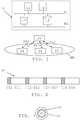
- Fig. 1 schematically shows a control system 10 for a process, i.e. a process control system.
- the process may be an industrial process and may furthermore be any of a number of different types of processes such as a pulp and paper production process, an oil refining process, an electric power transmission process or an electric power distribution process.
- the control system 10 may for instance be an object based computerised system for controlling the process.
- the process control system 10 includes a number of operator terminals 12 and 14 connected to a first bus B1. There is furthermore a second bus B2 and between the first and second busses there are connected a server 16 providing control and monitoring of the process and a database 18 where data, like historical data relating to control and monitoring of the process is stored. To the second bus B2 there is furthermore connected a gateway 20, which gateway is in turn connected to a wireless network WN.
- the wireless network WN may be an industrial network and may also be a wireless communication network. It may more particularly be a wireless sensor and actuator network (WSAN) and may thus be an industrial wireless sensor and actuator network.
- the wireless network may also use a time division communication scheme.
- the field devices are devices that are interfaces to the process and they communicate wirelessly with the gateway 20.
- the field devices 24, 26, 28 may typically be responsible for performing some type of control activity of the process, such as measuring a process parameter like a physical property of the process or providing a control activity in the process, such as actuating a valve, operating a pump, a switch etc.
- the actual control of the field devices is performed by the server 16.
- Communication in the wireless network is contention based. Because of this the field devices have different priority settings which they use to decide which of them has a right to communicate with the gateway 20.
- the third field device 28 here has a first priority PR1
- the first field device 24 has a second priority PR2
- the second field device 26 has a third priority PR3.
- all field devices are furthermore communicating directly with the gateway 20 which in turn is another wireless communication devioe.
- the field devices are communicating with the gateway 20 in a communication structure of the wireless network.
- a communication structure of the wireless network is schematically shown in fig. 2 .
- This structure is an uplink or upstream structure.
- the uplink structure comprises a superframe SF, which may comprise a number of data intervals DI1, DI2, DI3 and DI4, often also denoted time slots. Before each data interval there is furthermore a contention interval CI. All the intervals, the contention intervals and data intervals, are furthermore time intervals and may have fixed lengths. However, the contention interval is typically much shorter than the data interval.
- the exemplifying superframe SF thus here begins with a first contention interval CI1, after which follows a first data interval DI1.
- the first data interval DI1 follows a second contention interval CI2, which in turn is followed by a second data interval DI2.
- second data interval DI2 follows a third contention interval CI3, which is followed by a third data interval DI3.
- fourth contention interval CI4 followed by a fourth data interval DI4. It can thus be seen that there are contention and data interval pairs following sequentially after each other. It can also be seen that directly after each contention interval there is a corresponding data interval. A data interval thus follows immediately after a corresponding contention interval.
- the number of time intervals is here only exemplifying and it should be realized that there may exist more and fewer contention and data interval pairs.
- the above described superframe SF is thus an uplink superframe.
- Such a downlink superframe may not need to include contention intervals if all downlink communication is via the gateway, but may also be provided in the same way if more entities need to communicate in the downlink.
- there is no downlink or uplink superframe but a single communication structure or a single frame with contention intervals and data intervals, which structure all transmitting entities or all wireless communication devices in the wireless network employ. This structure is thus used by the field devices and the gateway.
- Fig. 3 schematically shows a period of a number of sinus waves of different frequencies for showing the principle of how priority is assigned according to the invention.
- a first priority PR1 having the shortest period and thus having a highest frequency is in this example a highest priority
- a second priority PR2 having a longer period and thus having the second highest frequency is the second highest priority
- a third priority PR3 having an even longer period and thus having the third highest frequency is the third highest priority.
- a fourth priority PR4 having an even longer period and thus having the fourth highest frequency and thus having the fourth highest priority is shown.
- a higher frequency thus provides a higher priority.
- Priorities may also be provided in other ways, where for instance a centre frequency in a frequency range would have the highest priority.
- Fig. 4 shows a block schematic of units in the first field device 24 that are relevant for the present invention.
- the first field device 24 here comprises an access control unit 30, which is connected to a transmitter circuit 32 or wireless transmitter.
- the transmitter circuit 32 is in turn connected to an antenna 34, which is also connected to a receiver circuit 38 or wireless receiver, which in turn is connected to a transforming unit 40, which may be a Fourier transforming unit such as a Discrete Fourier Transformer (DFT) unit.
- the transforming unit 40 is also connected to the access control unit 30.
- a modulation unit 42 which is connected to the access control unit 30, to a transmission buffer 43 as well as to the transmitter and receiver circuits 32 and 38.
- the transmitter and receiver circuits 32 and 38 here each comprise an oscillator and a radio circuit, where the oscillator may be controlled by the access control unit 30. It should here be realized that also the second and third field devices will have the same or similar structure.
- the structure mentioned above is a full duplex structure. However, it should here be realized that as an alternative it is possible with two antennas one for transmitting and one for receiving. As an alternative it is possible that the same units are provided in a gateway as well.
- fig. 5 shows a flow chart of a number of method steps being performed in the first field device 24.
- Industrial Wireless Sensor and Actuator Networks In the area of Industrial Wireless Sensor and Actuator Networks, a lot of different kind of data may need to be transmitted, ranging from process values and actuator set points to configuration and maintenance information.
- Industrial WSANs have a limited bandwidth today, compared to wired field buses, and using pre-defined communication schedules both increases delays as well as results in poor bandwidth utilization. The main reason for this is that a pre-defined communication schedule more or less has to account for the worst case scenario, taking into account bursts of events, configuration updates, etc., that due to limited bandwidth ends up in long delays that are undesirable or unacceptable in large scale industrial settings.
- the field devices 24, 26, 28 are assigned different priorities and when they have data to be transmitted to the gateway 20 they will compete with each other in order to determine among themselves which has a right to the resources in the form of data intervals.
- a field device having data for transmission therefore waits until a contention time interval appears and then competes with other competing field devices having data for transmission. The one having the highest priority then gets the right to transmit in the following data interval. This determination is thus done through arbitration among the field devices. There is no higher instance assigning a data interval.
- the first field device 24 has the second priority PR2, the second field device 26 has the third priority PR3 and the third field device 28 has the first priority PR1.
- the access control unit 30 orders the transmitter circuit 32 to transmit a priority setting of a field device competing for resources, which competing field device in this first embodiment is the first field device 24 itself.
- the access control unit 30 of the first field device 24 thus orders the transmitter circuit 32 to transmit an own priority setting PS in the contention interval, step 44, and here in the first contention interval CI1. This is done through controlling the oscillator of the transmitter circuit 32 to oscillate at a frequency corresponding to the priority setting.
- the transmitter will thus transmit a carrier wave having the frequency of the second priority PR2 for the first field device 24.
- the access control unit 30 orders the receiver circuit 38 to receive other priority settings in the contention interval, step 46, i.e. priority settings of other competing field devices. It may do this through making the oscillator of the receiver circuit 38 scan a frequency range within which priority frequencies may appear and any signals received in this range may then be received by the receiver circuit 38. If the second and third field devices 26 and 28 have data they want to transmit, they will therefore in the same way transmit carrier waves representing their priority settings. The second field device 26 would therefore transmit a carrier with a frequency representing the third priority PR3, while the third field device 28 would transmit a carrier with a frequency representing the first priority PR1. It is possible that the priorities are provided at discrete frequencies. In this case the access control unit 40 may make the oscillator tune the receiver 38 to these discrete frequencies.
- the received frequencies are time domain signals and are also forwarded to the transforming unit 40, which transforms the time domain signals into frequency domain signals. These frequency domain signals are then provided to the access control unit 30.
- the access control unit 30 already has access to a frequency domain version of the own priority setting and may therefore not need to transform this frequency.
- the access control unit 30 compares the own priority setting with the received priority settings, step 48, i.e., it compares the transmitted priority setting with the received priority settings from other competing field devices. If the own priority setting is highest, step 50, then the access control unit 30 seizes the following data interval, step 54. This may be done through instructing the modulator 42 to modulate data in the buffer 43 on a carrier used in the data intervals of the communication structure, which data is then transmitted via the transmitter circuit 38 and transmitting antenna 34.
- this thus means that if the first field device with the priority setting PR2 had the highest priority in the first contention interval CI1, then the first data interval DI1 would be seized by the first field device 24, which is the case if the first field device 24 competed with the second field device 26, which has the priority setting PR3.
- step 52 which may be done through inhibiting the modulator 42 from modulating any data in the transmission buffer 43 and stopping the transmitter circuit 32 from transmitting. This would be the case if the first field device 24 were competing with the third field device 28, which has the highest priority setting PR1.
- all the field device may perform arbitration for accessing the data intervals. It can here be seen that since different frequencies are used it is possible to have several priority levels without increasing the time required for the arbitration. Furthermore since different frequencies are used it is also possible for a field device to transmit and receive at the same time. The size of the contention interval may therefore only be limited by the ability of the field devices to scan the frequencies. However, also this limitation may in fact also not need to be a problem through using several parallel receiving circuits.
- the first embodiment of the invention all field devices were communicating directly with the gateway. However, it is possible to employ hop and multihop technique.
- a field device acting as a relay will use the priority setting of the field device having data for transmission.
- fig.6 shows the wireless network WN with the first, second and third field devices 24, 26 and 28 communicating with the gateway 20.
- the field devices have the same priority settings as in the first embodiment.
- the difference is that the first field device 24 is acting as a relay node for the second field device 26.
- the second field device 26 communicates with the gateway 20 via the first field device 24. Therefore the first field device 24 employs the priority setting of the second field device 26, here the third priority PR3, when acting as a relay for this second field device 26. It thus transmits the priority setting of the second field device 26 when competing for resources and when determining if to seize a data interval or to back off.
- the main problem solved by this invention is low latency/delay and deterministic wireless communication with a combination of event driven and periodic communication.
- This is solved by using a Wireless Media Access Arbitration scheme instead of other schemes such as a classical Collision Avoidance or Collision Detection mechanisms.
- packets can be prioritized on the wireless media, allowing full bandwidth utilization, deterministic and fair real-time properties, while enabling both event driven and periodic communication.
- the invention has several further advantages. No scheduling of networks is necessary, while at the same time determinism and real-time properties are retained.
- the invention thus provides "bus" arbitration before every data interval instead of pre-scheduled data intervals. This in turn allows a full utilization of bandwidth, since no retransmissions and routes have to be pre-scheduled.
- all field devices may have different priorities on the wireless network, which allows predictable event driven real-time communication.
- the system is fair in case of overload due to message prioritization, since low priority messages will miss their deadlines.
- the invention also enables event driven communication without reserving bandwidth. There is also a low latency since nodes, for instance field devices, do not have to wait for a scheduled slot. As can be seen in fig. 6 the invention also works even in mesh and multi-hop networks.
- the access control unit may be realized in the form of a discrete component, such as an Application Specific Integrated Circuit (ASIC) or Field-Programmable Gate Array (FPGA) circuit, which may also comprise the other units and circuits of the first field device.
- ASIC Application Specific Integrated Circuit
- FPGA Field-Programmable Gate Array
- the access control unit may also be realized through a processor with an associated program memory including computer program code for performing the functionality of the access control unit when being run on the processor.
- This computer program product can be provided as a data carrier such as one or more CD ROM discs or one or more memory sticks carrying computer program code, which provides the above-described access control unit when being run by said processor.
- One such data carrier 56 in the form of a CD ROM disk with a computer program 58 carrying such computer program code is schematically shown in fig. 7 .
- the present invention can be varied in a multitude of ways.
- one variation is a single recurring structure used by all devices communicating wirelessly.
- the gateway and the field devices may all be wireless communication devices competing for the network resources in the single recurring communication structure, which may be a recurring frame structure. It shall consequently be realized that the present invention is only to be limited by the following claims.
Landscapes
- Engineering & Computer Science (AREA)
- Computer Networks & Wireless Communication (AREA)
- Signal Processing (AREA)
- Mobile Radio Communication Systems (AREA)
- Small-Scale Networks (AREA)
Claims (15)
- Procédé d'accès par contention à des ressources par un dispositif de communication sans fil (24) dans un réseau de capteurs et d'actionneurs sans fil (WN) industriel employant une structure de communication par répartition dans le temps sans fil (SF), le procédé étant exécuté par le dispositif de communication sans fil qui communique en mode sans fil avec une passerelle (20) et détient des données à transmettre à celle-ci et comprenant les étapes consistant à :- transmettre (44), dans un intervalle de contention (CI1), un réglage de priorité (PR2 ; PR3) du dispositif de communication sans fil (24 ; 26) en conflit pour obtenir une ressource, ledit réglage de priorité étant transmis sous forme d'onde porteuse ayant une fréquence représentant le réglage de priorité,- recevoir (46), dans l'intervalle de contention, des réglages de priorité transmis par d'autres dispositifs de communication sans fil en conflit communiquant en mode sans fil avec la passerelle et ayant des données à transmettre à celle-ci, lesdits réglages de priorité étant reçus sous forme d'ondes porteuses ayant des fréquences représentant ces réglages de priorité (PR3, PR1),- comparer (48) le réglage de priorité transmis aux réglages de priorité reçus, et- saisir (54) un intervalle de données (DI1) qui suit immédiatement l'intervalle de contention si le réglage de priorité transmis est supérieur aux réglages de priorité reçus et- transmettre lesdites données dans l'intervalle de données suivant.
- Procédé selon la revendication 1, comprenant en outre le retrait (52) de l'intervalle de données suivant si un réglage de priorité reçu quelconque est supérieur au réglage de priorité transmis.
- Procédé selon la revendication 1 ou 2, dans lequel une haute fréquence désigne une haute priorité.
- Procédé selon l'une quelconque des revendications précédentes, dans lequel les étapes de transmission et de réception sont exécutées simultanément.
- Procédé selon l'une quelconque des revendications précédentes, comprenant en outre la transformation des signaux reçus dans le domaine fréquence et l'exécution de la comparaison dans le domaine fréquence.
- Procédé selon l'une quelconque des revendications précédentes, dans lequel le réglage de priorité transmis est un réglage de priorité propre (PR2).
- Procédé selon l'une quelconque des revendications 1-5, dans lequel le réglage de priorité transmis est le réglage de priorité (PR3) d'un autre dispositif de communication sans fil (26).
- Dispositif de communication sans fil (24) pour un réseau de capteurs et d'actionneurs sans fil (WN) industriel employant une structure de communication par répartition dans le temps sans fil (SF), le dispositif de communication sans fil communiquant en mode sans fil avec une passerelle (20) et détenant des données à transmettre à celle-ci et comprenant :- un émetteur sans fil (32),- un récepteur sans fil (38), et- une unité de commande d'accès (30) configurée pour :- ordonner à l'émetteur sans fil de transmettre, dans un intervalle de contention (CI), un réglage de priorité (PR2 ; PR3) du dispositif de communication sans fil (24 ; 26) en conflit pour obtenir des ressources, ledit réglage de priorité étant transmis sous forme d'onde porteuse ayant une fréquence représentant le réglage de priorité,- ordonner au récepteur sans fil de recevoir, dans l'intervalle de contention, des réglages de priorité transmis par d'autres dispositifs de communication sans fil en conflit communiquant en mode sans fil avec la passerelle et ayant des données à transmettre à celle-ci, lesdits réglages de priorité étant reçus sous forme d'ondes porteuses ayant des fréquences représentant ces réglages de priorité (PR3, PR1),- comparer le réglage de priorité transmis aux réglages de priorité reçus, et- saisir un intervalle de données (DI1) qui suit immédiatement l'intervalle de contention si le réglage de priorité transmis est supérieur aux réglages de priorité reçus pour transmettre lesdites données dans l'intervalle de données suivant.
- Dispositif de communication sans fil selon la revendication 8, dans lequel l'unité de commande d'accès est configurée pour exécuter un retrait de l'intervalle de données suivant si un réglage de priorité reçu quelconque est supérieur au réglage de priorité transmis.
- Dispositif de communication sans fil selon la revendication 8 ou 9, dans lequel une haute fréquence désigne une haute priorité.
- Dispositif de communication sans fil (24) selon l'une quelconque des revendications 8 à 10, dans lequel l'unité de commande d'accès est configurée pour simultanément ordonner à l'émetteur sans fil de transmettre le réglage de priorité et ordonner au récepteur de recevoir des réglages de priorité d'autres dispositifs de communication sans fil en conflit.
- Dispositif de communication sans fil (24) selon l'une quelconque des revendications 8 à 11, comprenant en outre une unité de transformation (40) configurée pour transformer les signaux reçus avec des réglages de priorité dans le domaine fréquence et les fournir à l'unité de commande d'accès pour permettre l'exécution de la comparaison dans le domaine fréquence.
- Dispositif de communication sans fil selon l'une quelconque des revendications 8 à 12, dans lequel le réglage de priorité transmis est un réglage de priorité propre (PR2).
- Dispositif de communication sans fil (24) selon l'une quelconque des revendications 8 à 12, dans lequel le réglage de priorité transmis est le réglage de priorité (PR3) d'un autre dispositif de communication sans fil (26).
- Produit de programme informatique pour un dispositif de communication sans fil (24) pour un réseau de capteurs et d'actionneurs sans fil (WN) industriel employant une structure de communication par répartition dans le temps sans fil (SF), le dispositif de communication sans fil communiquant en mode sans fil avec une passerelle (20) et détenant des données à transmettre à celle-ci et comprenant un émetteur sans fil (32) et un récepteur sans fil (38),
le produit de programme informatique comprenant un porteur de données (56) à code de programme informatique (58) qui, à son exécution sur un processeur formant une unité de commande d'accès (30) du dispositif de communication sans fil, amène l'unité de commande d'accès à :- ordonner à l'émetteur sans fil (32) de transmettre, dans un intervalle de contention (CI), un réglage de priorité (PR2 ; PR3) du dispositif de communication sans fil (24 ; 26) en conflit pour obtenir des ressources, ledit réglage de priorité étant transmis sous forme d'onde porteuse ayant une fréquence représentant le réglage de priorité,- ordonner au récepteur sans fil (38) de recevoir, dans l'intervalle de contention, des réglages de priorité transmis par d'autres dispositifs de communication sans fil en conflit communiquant en mode sans fil avec la passerelle et ayant des données à transmettre à celle-ci, lesdits réglages de priorité étant reçus sous forme d'ondes porteuses ayant des fréquences représentant ces réglages de priorité (PR3, PR1),- comparer le réglage de priorité transmis aux réglages de priorité reçus, et- saisir un intervalle de données (DI1) qui suit immédiatement l'intervalle de contention si le réglage de priorité transmis est supérieur aux réglages de priorité reçus pour transmettre lesdites données dans l'intervalle de données suivant.
Applications Claiming Priority (1)
| Application Number | Priority Date | Filing Date | Title |
|---|---|---|---|
| PCT/EP2011/060149 WO2012171586A1 (fr) | 2011-06-17 | 2011-06-17 | Accès de ressources basé sur la contention dans un réseau sans fil |
Publications (2)
| Publication Number | Publication Date |
|---|---|
| EP2721897A1 EP2721897A1 (fr) | 2014-04-23 |
| EP2721897B1 true EP2721897B1 (fr) | 2017-02-01 |
Family
ID=44627373
Family Applications (1)
| Application Number | Title | Priority Date | Filing Date |
|---|---|---|---|
| EP11726766.6A Active EP2721897B1 (fr) | 2011-06-17 | 2011-06-17 | Accès de ressources basé sur la contention dans un réseau sans fil |
Country Status (10)
| Country | Link |
|---|---|
| US (1) | US9532354B2 (fr) |
| EP (1) | EP2721897B1 (fr) |
| CN (1) | CN103621172B (fr) |
| AU (1) | AU2011370773B2 (fr) |
| BR (1) | BR112013032340A2 (fr) |
| CA (1) | CA2839697C (fr) |
| PL (1) | PL2721897T3 (fr) |
| RU (1) | RU2568880C2 (fr) |
| WO (1) | WO2012171586A1 (fr) |
| ZA (1) | ZA201309129B (fr) |
Families Citing this family (4)
| Publication number | Priority date | Publication date | Assignee | Title |
|---|---|---|---|---|
| US20140274181A1 (en) * | 2013-03-15 | 2014-09-18 | Rosemount Inc. | Resource optimization in a field device |
| DE102015213680A1 (de) * | 2014-07-23 | 2016-01-28 | Bayerische Motoren Werke Aktiengesellschaft | Zugriffsverfahren mit Zugriffsschlitzen und Prioritätsauflösung |
| US10735554B1 (en) * | 2017-09-26 | 2020-08-04 | Amazon Technologies, Inc. | System for controlling use of a network |
| CN113038538B (zh) * | 2021-03-01 | 2024-02-20 | 许昌学院 | 智能配电网WSNs通信数据传输带宽的优化分配方法及装置 |
Citations (2)
| Publication number | Priority date | Publication date | Assignee | Title |
|---|---|---|---|---|
| US6169744B1 (en) * | 1998-01-07 | 2001-01-02 | 3Com Corporation | Method and protocol for a medium access control layer for local area networks with multiple-priority traffic |
| US20090227277A1 (en) * | 2008-03-06 | 2009-09-10 | Qualcomm Incorporated | Resolving contention for communication resources |
Family Cites Families (7)
| Publication number | Priority date | Publication date | Assignee | Title |
|---|---|---|---|---|
| EP1386432A4 (fr) | 2001-03-21 | 2009-07-15 | John A Stine | Protocole d'acces et d'acheminement pour reseaux ad hoc, dans lequel la resolution de collision et la dissemination d'etats de noeuds sont utilisees |
| US9001800B2 (en) * | 2004-02-06 | 2015-04-07 | Koninklijke Philips N.V. | System and method for an ultra wide-band medium access control distributed reservation protocol |
| US7254399B2 (en) * | 2004-10-12 | 2007-08-07 | Nokia Corporation | Techniques for interference reduction in wireless communications networks |
| US20090175324A1 (en) * | 2008-01-04 | 2009-07-09 | Qualcomm Incorporated | Dynamic interference control in a wireless communication network |
| US8787266B2 (en) | 2008-06-13 | 2014-07-22 | Infineon Technologies Ag | Medium access control in industrial and automotive wireless with combined wired and wireless sensor networks |
| US8675623B2 (en) * | 2009-02-01 | 2014-03-18 | Qualcomm Incorporated | Distributed prioritized contention for spectrum sharing |
| CN101635965B (zh) * | 2009-07-30 | 2011-11-30 | 广州海格通信集团股份有限公司 | 一种Ad Hoc电台网络中多优先级话音接入方法 |
-
2011
- 2011-06-17 EP EP11726766.6A patent/EP2721897B1/fr active Active
- 2011-06-17 CN CN201180071674.5A patent/CN103621172B/zh active Active
- 2011-06-17 RU RU2014101308/08A patent/RU2568880C2/ru not_active IP Right Cessation
- 2011-06-17 AU AU2011370773A patent/AU2011370773B2/en active Active
- 2011-06-17 CA CA2839697A patent/CA2839697C/fr active Active
- 2011-06-17 PL PL11726766T patent/PL2721897T3/pl unknown
- 2011-06-17 BR BR112013032340A patent/BR112013032340A2/pt not_active Application Discontinuation
- 2011-06-17 WO PCT/EP2011/060149 patent/WO2012171586A1/fr not_active Ceased
-
2013
- 2013-12-04 ZA ZA2013/09129A patent/ZA201309129B/en unknown
- 2013-12-13 US US14/106,121 patent/US9532354B2/en active Active
Patent Citations (2)
| Publication number | Priority date | Publication date | Assignee | Title |
|---|---|---|---|---|
| US6169744B1 (en) * | 1998-01-07 | 2001-01-02 | 3Com Corporation | Method and protocol for a medium access control layer for local area networks with multiple-priority traffic |
| US20090227277A1 (en) * | 2008-03-06 | 2009-09-10 | Qualcomm Incorporated | Resolving contention for communication resources |
Also Published As
| Publication number | Publication date |
|---|---|
| EP2721897A1 (fr) | 2014-04-23 |
| US20140098801A1 (en) | 2014-04-10 |
| CN103621172B (zh) | 2017-07-28 |
| AU2011370773A1 (en) | 2013-12-05 |
| WO2012171586A1 (fr) | 2012-12-20 |
| CA2839697A1 (fr) | 2012-12-20 |
| BR112013032340A2 (pt) | 2016-12-20 |
| PL2721897T3 (pl) | 2017-08-31 |
| CN103621172A (zh) | 2014-03-05 |
| RU2568880C2 (ru) | 2015-11-20 |
| CA2839697C (fr) | 2017-06-13 |
| ZA201309129B (en) | 2016-08-31 |
| US9532354B2 (en) | 2016-12-27 |
| RU2014101308A (ru) | 2015-07-27 |
| AU2011370773B2 (en) | 2015-10-08 |
Similar Documents
| Publication | Publication Date | Title |
|---|---|---|
| Bilstrup et al. | Scalability issues of the MAC methods STDMA and CSMA of IEEE 802.11 p when used in VANETs | |
| US8879573B2 (en) | Media access control (MAC) protocol for cognitive wireless networks | |
| JP5089323B2 (ja) | 通信システム | |
| CN108141882B (zh) | 基于竞争的系统中的具有不同优先级的数据流和竞争窗口参数的调整 | |
| US20090067448A1 (en) | Contention-Based Communication | |
| JP2011120231A (ja) | ノードのネットワークを使用して車両環境に関連するメッセージをブロードキャストするための方法 | |
| US7835383B2 (en) | Method and system for providing a modified timed division multiple access (TDMA) for reduced delay | |
| JP2009246955A (ja) | 無線通信ネットワークのタイムスロット共有プロトコル | |
| EP3269197B1 (fr) | Accès asynchrone et transmission synchrone pour la coexistence de normes sans fil | |
| EP2721897B1 (fr) | Accès de ressources basé sur la contention dans un réseau sans fil | |
| JP2018525953A (ja) | データ伝送方法及び装置 | |
| CN116158167A (zh) | 媒体接入控制的方法、装置和系统 | |
| EP2651171B1 (fr) | Protocole d'accès hybride pour des n'uds de réseau | |
| Peón et al. | A wireless mac method with support for heterogeneous data traffic | |
| JP3004243B2 (ja) | 無線パケットアクセス方法 | |
| KR20220036406A (ko) | 무선 네트워크에서 시분할 다중 접속 자원 스케줄링을 위한 방법 및 장치 | |
| US20240259859A1 (en) | Methods and apparatus for supporting operator device sharing of time and frequency resources in a band | |
| Al Attal et al. | Dynamic Open Spectrum Sharing (DOSS) MAC Protocol with Back-off Algorithm. | |
| McGarry et al. | Access control in heterogeneous multichannel wireless networks | |
| Ke | MAC Layer Protocol Fairness in Ultraviolet Self-organizing Networks | |
| EP1698111B1 (fr) | Procedes et appareils permettant de reduire le temps d'attente de transmission dans des systemes de communication sans fil | |
| Gotzhein | Medium Access Schemes | |
| Siwamogsatham | On Backoff Timer Scheduling for Smart-DCF and Performance Evaluation | |
| JP2022521255A (ja) | 無線通信システムにおいてリソースを配分するための方法 | |
| HK1190265B (en) | Hybrid access protocol for network nodes |
Legal Events
| Date | Code | Title | Description |
|---|---|---|---|
| PUAI | Public reference made under article 153(3) epc to a published international application that has entered the european phase |
Free format text: ORIGINAL CODE: 0009012 |
|
| 17P | Request for examination filed |
Effective date: 20140117 |
|
| AK | Designated contracting states |
Kind code of ref document: A1 Designated state(s): AL AT BE BG CH CY CZ DE DK EE ES FI FR GB GR HR HU IE IS IT LI LT LU LV MC MK MT NL NO PL PT RO RS SE SI SK SM TR |
|
| DAX | Request for extension of the european patent (deleted) | ||
| 17Q | First examination report despatched |
Effective date: 20151005 |
|
| GRAP | Despatch of communication of intention to grant a patent |
Free format text: ORIGINAL CODE: EPIDOSNIGR1 |
|
| INTG | Intention to grant announced |
Effective date: 20160916 |
|
| GRAS | Grant fee paid |
Free format text: ORIGINAL CODE: EPIDOSNIGR3 |
|
| GRAA | (expected) grant |
Free format text: ORIGINAL CODE: 0009210 |
|
| AK | Designated contracting states |
Kind code of ref document: B1 Designated state(s): AL AT BE BG CH CY CZ DE DK EE ES FI FR GB GR HR HU IE IS IT LI LT LU LV MC MK MT NL NO PL PT RO RS SE SI SK SM TR |
|
| REG | Reference to a national code |
Ref country code: GB Ref legal event code: FG4D |
|
| REG | Reference to a national code |
Ref country code: CH Ref legal event code: EP Ref country code: AT Ref legal event code: REF Ref document number: 866434 Country of ref document: AT Kind code of ref document: T Effective date: 20170215 |
|
| REG | Reference to a national code |
Ref country code: IE Ref legal event code: FG4D |
|
| REG | Reference to a national code |
Ref country code: DE Ref legal event code: R096 Ref document number: 602011034785 Country of ref document: DE |
|
| REG | Reference to a national code |
Ref country code: SE Ref legal event code: TRGR |
|
| REG | Reference to a national code |
Ref country code: NL Ref legal event code: MP Effective date: 20170201 |
|
| REG | Reference to a national code |
Ref country code: LT Ref legal event code: MG4D |
|
| REG | Reference to a national code |
Ref country code: AT Ref legal event code: MK05 Ref document number: 866434 Country of ref document: AT Kind code of ref document: T Effective date: 20170201 |
|
| PG25 | Lapsed in a contracting state [announced via postgrant information from national office to epo] |
Ref country code: LT Free format text: LAPSE BECAUSE OF FAILURE TO SUBMIT A TRANSLATION OF THE DESCRIPTION OR TO PAY THE FEE WITHIN THE PRESCRIBED TIME-LIMIT Effective date: 20170201 Ref country code: GR Free format text: LAPSE BECAUSE OF FAILURE TO SUBMIT A TRANSLATION OF THE DESCRIPTION OR TO PAY THE FEE WITHIN THE PRESCRIBED TIME-LIMIT Effective date: 20170502 Ref country code: HR Free format text: LAPSE BECAUSE OF FAILURE TO SUBMIT A TRANSLATION OF THE DESCRIPTION OR TO PAY THE FEE WITHIN THE PRESCRIBED TIME-LIMIT Effective date: 20170201 Ref country code: IS Free format text: LAPSE BECAUSE OF FAILURE TO SUBMIT A TRANSLATION OF THE DESCRIPTION OR TO PAY THE FEE WITHIN THE PRESCRIBED TIME-LIMIT Effective date: 20170601 Ref country code: NO Free format text: LAPSE BECAUSE OF FAILURE TO SUBMIT A TRANSLATION OF THE DESCRIPTION OR TO PAY THE FEE WITHIN THE PRESCRIBED TIME-LIMIT Effective date: 20170501 |
|
| PG25 | Lapsed in a contracting state [announced via postgrant information from national office to epo] |
Ref country code: NL Free format text: LAPSE BECAUSE OF FAILURE TO SUBMIT A TRANSLATION OF THE DESCRIPTION OR TO PAY THE FEE WITHIN THE PRESCRIBED TIME-LIMIT Effective date: 20170201 Ref country code: LV Free format text: LAPSE BECAUSE OF FAILURE TO SUBMIT A TRANSLATION OF THE DESCRIPTION OR TO PAY THE FEE WITHIN THE PRESCRIBED TIME-LIMIT Effective date: 20170201 Ref country code: RS Free format text: LAPSE BECAUSE OF FAILURE TO SUBMIT A TRANSLATION OF THE DESCRIPTION OR TO PAY THE FEE WITHIN THE PRESCRIBED TIME-LIMIT Effective date: 20170201 Ref country code: BG Free format text: LAPSE BECAUSE OF FAILURE TO SUBMIT A TRANSLATION OF THE DESCRIPTION OR TO PAY THE FEE WITHIN THE PRESCRIBED TIME-LIMIT Effective date: 20170501 Ref country code: AT Free format text: LAPSE BECAUSE OF FAILURE TO SUBMIT A TRANSLATION OF THE DESCRIPTION OR TO PAY THE FEE WITHIN THE PRESCRIBED TIME-LIMIT Effective date: 20170201 Ref country code: PT Free format text: LAPSE BECAUSE OF FAILURE TO SUBMIT A TRANSLATION OF THE DESCRIPTION OR TO PAY THE FEE WITHIN THE PRESCRIBED TIME-LIMIT Effective date: 20170601 Ref country code: ES Free format text: LAPSE BECAUSE OF FAILURE TO SUBMIT A TRANSLATION OF THE DESCRIPTION OR TO PAY THE FEE WITHIN THE PRESCRIBED TIME-LIMIT Effective date: 20170201 |
|
| PG25 | Lapsed in a contracting state [announced via postgrant information from national office to epo] |
Ref country code: EE Free format text: LAPSE BECAUSE OF FAILURE TO SUBMIT A TRANSLATION OF THE DESCRIPTION OR TO PAY THE FEE WITHIN THE PRESCRIBED TIME-LIMIT Effective date: 20170201 Ref country code: CZ Free format text: LAPSE BECAUSE OF FAILURE TO SUBMIT A TRANSLATION OF THE DESCRIPTION OR TO PAY THE FEE WITHIN THE PRESCRIBED TIME-LIMIT Effective date: 20170201 Ref country code: RO Free format text: LAPSE BECAUSE OF FAILURE TO SUBMIT A TRANSLATION OF THE DESCRIPTION OR TO PAY THE FEE WITHIN THE PRESCRIBED TIME-LIMIT Effective date: 20170201 Ref country code: SK Free format text: LAPSE BECAUSE OF FAILURE TO SUBMIT A TRANSLATION OF THE DESCRIPTION OR TO PAY THE FEE WITHIN THE PRESCRIBED TIME-LIMIT Effective date: 20170201 Ref country code: IT Free format text: LAPSE BECAUSE OF FAILURE TO SUBMIT A TRANSLATION OF THE DESCRIPTION OR TO PAY THE FEE WITHIN THE PRESCRIBED TIME-LIMIT Effective date: 20170201 |
|
| REG | Reference to a national code |
Ref country code: DE Ref legal event code: R097 Ref document number: 602011034785 Country of ref document: DE |
|
| PG25 | Lapsed in a contracting state [announced via postgrant information from national office to epo] |
Ref country code: SM Free format text: LAPSE BECAUSE OF FAILURE TO SUBMIT A TRANSLATION OF THE DESCRIPTION OR TO PAY THE FEE WITHIN THE PRESCRIBED TIME-LIMIT Effective date: 20170201 Ref country code: DK Free format text: LAPSE BECAUSE OF FAILURE TO SUBMIT A TRANSLATION OF THE DESCRIPTION OR TO PAY THE FEE WITHIN THE PRESCRIBED TIME-LIMIT Effective date: 20170201 |
|
| PLBE | No opposition filed within time limit |
Free format text: ORIGINAL CODE: 0009261 |
|
| STAA | Information on the status of an ep patent application or granted ep patent |
Free format text: STATUS: NO OPPOSITION FILED WITHIN TIME LIMIT |
|
| 26N | No opposition filed |
Effective date: 20171103 |
|
| PG25 | Lapsed in a contracting state [announced via postgrant information from national office to epo] |
Ref country code: MC Free format text: LAPSE BECAUSE OF FAILURE TO SUBMIT A TRANSLATION OF THE DESCRIPTION OR TO PAY THE FEE WITHIN THE PRESCRIBED TIME-LIMIT Effective date: 20170201 |
|
| REG | Reference to a national code |
Ref country code: CH Ref legal event code: PL |
|
| GBPC | Gb: european patent ceased through non-payment of renewal fee |
Effective date: 20170617 |
|
| PG25 | Lapsed in a contracting state [announced via postgrant information from national office to epo] |
Ref country code: SI Free format text: LAPSE BECAUSE OF FAILURE TO SUBMIT A TRANSLATION OF THE DESCRIPTION OR TO PAY THE FEE WITHIN THE PRESCRIBED TIME-LIMIT Effective date: 20170201 |
|
| REG | Reference to a national code |
Ref country code: IE Ref legal event code: MM4A |
|
| REG | Reference to a national code |
Ref country code: FR Ref legal event code: ST Effective date: 20180228 |
|
| PG25 | Lapsed in a contracting state [announced via postgrant information from national office to epo] |
Ref country code: LU Free format text: LAPSE BECAUSE OF NON-PAYMENT OF DUE FEES Effective date: 20170617 Ref country code: GB Free format text: LAPSE BECAUSE OF NON-PAYMENT OF DUE FEES Effective date: 20170617 Ref country code: CH Free format text: LAPSE BECAUSE OF NON-PAYMENT OF DUE FEES Effective date: 20170630 Ref country code: IE Free format text: LAPSE BECAUSE OF NON-PAYMENT OF DUE FEES Effective date: 20170617 Ref country code: LI Free format text: LAPSE BECAUSE OF NON-PAYMENT OF DUE FEES Effective date: 20170630 |
|
| PG25 | Lapsed in a contracting state [announced via postgrant information from national office to epo] |
Ref country code: FR Free format text: LAPSE BECAUSE OF NON-PAYMENT OF DUE FEES Effective date: 20170630 |
|
| REG | Reference to a national code |
Ref country code: BE Ref legal event code: MM Effective date: 20170630 |
|
| PG25 | Lapsed in a contracting state [announced via postgrant information from national office to epo] |
Ref country code: BE Free format text: LAPSE BECAUSE OF NON-PAYMENT OF DUE FEES Effective date: 20170630 |
|
| PG25 | Lapsed in a contracting state [announced via postgrant information from national office to epo] |
Ref country code: MT Free format text: LAPSE BECAUSE OF NON-PAYMENT OF DUE FEES Effective date: 20170617 |
|
| PG25 | Lapsed in a contracting state [announced via postgrant information from national office to epo] |
Ref country code: HU Free format text: LAPSE BECAUSE OF FAILURE TO SUBMIT A TRANSLATION OF THE DESCRIPTION OR TO PAY THE FEE WITHIN THE PRESCRIBED TIME-LIMIT; INVALID AB INITIO Effective date: 20110617 |
|
| PG25 | Lapsed in a contracting state [announced via postgrant information from national office to epo] |
Ref country code: CY Free format text: LAPSE BECAUSE OF NON-PAYMENT OF DUE FEES Effective date: 20170201 |
|
| REG | Reference to a national code |
Ref country code: DE Ref legal event code: R081 Ref document number: 602011034785 Country of ref document: DE Owner name: HITACHI ENERGY SWITZERLAND AG, CH Free format text: FORMER OWNER: ABB RESEARCH LTD., ZUERICH, CH Ref country code: DE Ref legal event code: R081 Ref document number: 602011034785 Country of ref document: DE Owner name: ABB SCHWEIZ AG, CH Free format text: FORMER OWNER: ABB RESEARCH LTD., ZUERICH, CH Ref country code: DE Ref legal event code: R081 Ref document number: 602011034785 Country of ref document: DE Owner name: ABB POWER GRIDS SWITZERLAND AG, CH Free format text: FORMER OWNER: ABB RESEARCH LTD., ZUERICH, CH |
|
| PG25 | Lapsed in a contracting state [announced via postgrant information from national office to epo] |
Ref country code: MK Free format text: LAPSE BECAUSE OF FAILURE TO SUBMIT A TRANSLATION OF THE DESCRIPTION OR TO PAY THE FEE WITHIN THE PRESCRIBED TIME-LIMIT Effective date: 20170201 |
|
| PG25 | Lapsed in a contracting state [announced via postgrant information from national office to epo] |
Ref country code: TR Free format text: LAPSE BECAUSE OF FAILURE TO SUBMIT A TRANSLATION OF THE DESCRIPTION OR TO PAY THE FEE WITHIN THE PRESCRIBED TIME-LIMIT Effective date: 20170201 |
|
| PG25 | Lapsed in a contracting state [announced via postgrant information from national office to epo] |
Ref country code: AL Free format text: LAPSE BECAUSE OF FAILURE TO SUBMIT A TRANSLATION OF THE DESCRIPTION OR TO PAY THE FEE WITHIN THE PRESCRIBED TIME-LIMIT Effective date: 20170201 |
|
| REG | Reference to a national code |
Ref country code: FI Ref legal event code: PCE Owner name: ABB POWER GRIDS SWITZERLAND AG |
|
| REG | Reference to a national code |
Ref country code: DE Ref legal event code: R081 Ref document number: 602011034785 Country of ref document: DE Owner name: HITACHI ENERGY SWITZERLAND AG, CH Free format text: FORMER OWNER: ABB SCHWEIZ AG, BADEN, CH Ref country code: DE Ref legal event code: R081 Ref document number: 602011034785 Country of ref document: DE Owner name: HITACHI ENERGY LTD, CH Free format text: FORMER OWNER: ABB SCHWEIZ AG, BADEN, CH Ref country code: DE Ref legal event code: R081 Ref document number: 602011034785 Country of ref document: DE Owner name: ABB POWER GRIDS SWITZERLAND AG, CH Free format text: FORMER OWNER: ABB SCHWEIZ AG, BADEN, CH |
|
| REG | Reference to a national code |
Ref country code: FI Ref legal event code: PCE Owner name: HITACHI ENERGY SWITZERLAND AG |
|
| REG | Reference to a national code |
Ref country code: DE Ref legal event code: R081 Ref document number: 602011034785 Country of ref document: DE Owner name: HITACHI ENERGY SWITZERLAND AG, CH Free format text: FORMER OWNER: ABB POWER GRIDS SWITZERLAND AG, BADEN, CH Ref country code: DE Ref legal event code: R081 Ref document number: 602011034785 Country of ref document: DE Owner name: HITACHI ENERGY LTD, CH Free format text: FORMER OWNER: ABB POWER GRIDS SWITZERLAND AG, BADEN, CH |
|
| P01 | Opt-out of the competence of the unified patent court (upc) registered |
Effective date: 20230527 |
|
| REG | Reference to a national code |
Ref country code: DE Ref legal event code: R082 Ref document number: 602011034785 Country of ref document: DE Representative=s name: DENNEMEYER & ASSOCIATES RECHTSANWALTSGESELLSCH, DE Ref country code: DE Ref legal event code: R082 Ref document number: 602011034785 Country of ref document: DE Representative=s name: DENNEMEYER & ASSOCIATES S.A., DE Ref country code: DE Ref legal event code: R081 Ref document number: 602011034785 Country of ref document: DE Owner name: HITACHI ENERGY LTD, CH Free format text: FORMER OWNER: HITACHI ENERGY SWITZERLAND AG, BADEN, CH |
|
| REG | Reference to a national code |
Ref country code: FI Ref legal event code: PCE Owner name: HITACHI ENERGY LTD |
|
| REG | Reference to a national code |
Ref country code: DE Ref legal event code: R082 Ref document number: 602011034785 Country of ref document: DE Representative=s name: DENNEMEYER & ASSOCIATES RECHTSANWALTSGESELLSCH, DE |
|
| PGFP | Annual fee paid to national office [announced via postgrant information from national office to epo] |
Ref country code: FI Payment date: 20250627 Year of fee payment: 15 |
|
| PGFP | Annual fee paid to national office [announced via postgrant information from national office to epo] |
Ref country code: PL Payment date: 20250606 Year of fee payment: 15 Ref country code: DE Payment date: 20250618 Year of fee payment: 15 |
|
| PGFP | Annual fee paid to national office [announced via postgrant information from national office to epo] |
Ref country code: SE Payment date: 20250618 Year of fee payment: 15 |