EP2724732A1 - Instrument zum erfassen freier thromben - Google Patents
Instrument zum erfassen freier thromben Download PDFInfo
- Publication number
- EP2724732A1 EP2724732A1 EP12803268.7A EP12803268A EP2724732A1 EP 2724732 A1 EP2724732 A1 EP 2724732A1 EP 12803268 A EP12803268 A EP 12803268A EP 2724732 A1 EP2724732 A1 EP 2724732A1
- Authority
- EP
- European Patent Office
- Prior art keywords
- instrument
- capturing free
- compound
- free thrombi
- thrombi
- Prior art date
- Legal status (The legal status is an assumption and is not a legal conclusion. Google has not performed a legal analysis and makes no representation as to the accuracy of the status listed.)
- Withdrawn
Links
Images

Classifications
-
- A—HUMAN NECESSITIES
- A61—MEDICAL OR VETERINARY SCIENCE; HYGIENE
- A61F—FILTERS IMPLANTABLE INTO BLOOD VESSELS; PROSTHESES; DEVICES PROVIDING PATENCY TO, OR PREVENTING COLLAPSING OF, TUBULAR STRUCTURES OF THE BODY, e.g. STENTS; ORTHOPAEDIC, NURSING OR CONTRACEPTIVE DEVICES; FOMENTATION; TREATMENT OR PROTECTION OF EYES OR EARS; BANDAGES, DRESSINGS OR ABSORBENT PADS; FIRST-AID KITS
- A61F2/00—Filters implantable into blood vessels; Prostheses, i.e. artificial substitutes or replacements for parts of the body; Appliances for connecting them with the body; Devices providing patency to, or preventing collapsing of, tubular structures of the body, e.g. stents
- A61F2/01—Filters implantable into blood vessels
- A61F2/013—Distal protection devices, i.e. devices placed distally in combination with another endovascular procedure, e.g. angioplasty or stenting
-
- A—HUMAN NECESSITIES
- A61—MEDICAL OR VETERINARY SCIENCE; HYGIENE
- A61L—METHODS OR APPARATUS FOR STERILISING MATERIALS OR OBJECTS IN GENERAL; DISINFECTION, STERILISATION OR DEODORISATION OF AIR; CHEMICAL ASPECTS OF BANDAGES, DRESSINGS, ABSORBENT PADS OR SURGICAL ARTICLES; MATERIALS FOR BANDAGES, DRESSINGS, ABSORBENT PADS OR SURGICAL ARTICLES
- A61L31/00—Materials for other surgical articles, e.g. stents, stent-grafts, shunts, surgical drapes, guide wires, materials for adhesion prevention, occluding devices, surgical gloves, tissue fixation devices
-
- A—HUMAN NECESSITIES
- A61—MEDICAL OR VETERINARY SCIENCE; HYGIENE
- A61B—DIAGNOSIS; SURGERY; IDENTIFICATION
- A61B17/00—Surgical instruments, devices or methods
-
- A—HUMAN NECESSITIES
- A61—MEDICAL OR VETERINARY SCIENCE; HYGIENE
- A61F—FILTERS IMPLANTABLE INTO BLOOD VESSELS; PROSTHESES; DEVICES PROVIDING PATENCY TO, OR PREVENTING COLLAPSING OF, TUBULAR STRUCTURES OF THE BODY, e.g. STENTS; ORTHOPAEDIC, NURSING OR CONTRACEPTIVE DEVICES; FOMENTATION; TREATMENT OR PROTECTION OF EYES OR EARS; BANDAGES, DRESSINGS OR ABSORBENT PADS; FIRST-AID KITS
- A61F2/00—Filters implantable into blood vessels; Prostheses, i.e. artificial substitutes or replacements for parts of the body; Appliances for connecting them with the body; Devices providing patency to, or preventing collapsing of, tubular structures of the body, e.g. stents
- A61F2/95—Instruments specially adapted for placement or removal of stents or stent-grafts
-
- A—HUMAN NECESSITIES
- A61—MEDICAL OR VETERINARY SCIENCE; HYGIENE
- A61L—METHODS OR APPARATUS FOR STERILISING MATERIALS OR OBJECTS IN GENERAL; DISINFECTION, STERILISATION OR DEODORISATION OF AIR; CHEMICAL ASPECTS OF BANDAGES, DRESSINGS, ABSORBENT PADS OR SURGICAL ARTICLES; MATERIALS FOR BANDAGES, DRESSINGS, ABSORBENT PADS OR SURGICAL ARTICLES
- A61L31/00—Materials for other surgical articles, e.g. stents, stent-grafts, shunts, surgical drapes, guide wires, materials for adhesion prevention, occluding devices, surgical gloves, tissue fixation devices
- A61L31/08—Materials for coatings
- A61L31/10—Macromolecular materials
-
- A—HUMAN NECESSITIES
- A61—MEDICAL OR VETERINARY SCIENCE; HYGIENE
- A61L—METHODS OR APPARATUS FOR STERILISING MATERIALS OR OBJECTS IN GENERAL; DISINFECTION, STERILISATION OR DEODORISATION OF AIR; CHEMICAL ASPECTS OF BANDAGES, DRESSINGS, ABSORBENT PADS OR SURGICAL ARTICLES; MATERIALS FOR BANDAGES, DRESSINGS, ABSORBENT PADS OR SURGICAL ARTICLES
- A61L31/00—Materials for other surgical articles, e.g. stents, stent-grafts, shunts, surgical drapes, guide wires, materials for adhesion prevention, occluding devices, surgical gloves, tissue fixation devices
- A61L31/14—Materials characterised by their function or physical properties, e.g. injectable or lubricating compositions, shape-memory materials, surface modified materials
- A61L31/16—Biologically active materials, e.g. therapeutic substances
-
- A—HUMAN NECESSITIES
- A61—MEDICAL OR VETERINARY SCIENCE; HYGIENE
- A61L—METHODS OR APPARATUS FOR STERILISING MATERIALS OR OBJECTS IN GENERAL; DISINFECTION, STERILISATION OR DEODORISATION OF AIR; CHEMICAL ASPECTS OF BANDAGES, DRESSINGS, ABSORBENT PADS OR SURGICAL ARTICLES; MATERIALS FOR BANDAGES, DRESSINGS, ABSORBENT PADS OR SURGICAL ARTICLES
- A61L33/00—Antithrombogenic treatment of surgical articles, e.g. sutures, catheters, prostheses, or of articles for the manipulation or conditioning of blood; Materials for such treatment
- A61L33/0005—Use of materials characterised by their function or physical properties
- A61L33/0011—Anticoagulant, e.g. heparin, platelet aggregation inhibitor, fibrinolytic agent, other than enzymes, attached to the substrate
- A61L33/0041—Anticoagulant, e.g. heparin, platelet aggregation inhibitor, fibrinolytic agent, other than enzymes, attached to the substrate characterised by the choice of an antithrombatic agent other than heparin
-
- A—HUMAN NECESSITIES
- A61—MEDICAL OR VETERINARY SCIENCE; HYGIENE
- A61L—METHODS OR APPARATUS FOR STERILISING MATERIALS OR OBJECTS IN GENERAL; DISINFECTION, STERILISATION OR DEODORISATION OF AIR; CHEMICAL ASPECTS OF BANDAGES, DRESSINGS, ABSORBENT PADS OR SURGICAL ARTICLES; MATERIALS FOR BANDAGES, DRESSINGS, ABSORBENT PADS OR SURGICAL ARTICLES
- A61L33/00—Antithrombogenic treatment of surgical articles, e.g. sutures, catheters, prostheses, or of articles for the manipulation or conditioning of blood; Materials for such treatment
- A61L33/06—Use of macromolecular materials
-
- A—HUMAN NECESSITIES
- A61—MEDICAL OR VETERINARY SCIENCE; HYGIENE
- A61L—METHODS OR APPARATUS FOR STERILISING MATERIALS OR OBJECTS IN GENERAL; DISINFECTION, STERILISATION OR DEODORISATION OF AIR; CHEMICAL ASPECTS OF BANDAGES, DRESSINGS, ABSORBENT PADS OR SURGICAL ARTICLES; MATERIALS FOR BANDAGES, DRESSINGS, ABSORBENT PADS OR SURGICAL ARTICLES
- A61L33/00—Antithrombogenic treatment of surgical articles, e.g. sutures, catheters, prostheses, or of articles for the manipulation or conditioning of blood; Materials for such treatment
- A61L33/06—Use of macromolecular materials
- A61L33/064—Use of macromolecular materials obtained by reactions only involving carbon-to-carbon unsaturated bonds
-
- A—HUMAN NECESSITIES
- A61—MEDICAL OR VETERINARY SCIENCE; HYGIENE
- A61L—METHODS OR APPARATUS FOR STERILISING MATERIALS OR OBJECTS IN GENERAL; DISINFECTION, STERILISATION OR DEODORISATION OF AIR; CHEMICAL ASPECTS OF BANDAGES, DRESSINGS, ABSORBENT PADS OR SURGICAL ARTICLES; MATERIALS FOR BANDAGES, DRESSINGS, ABSORBENT PADS OR SURGICAL ARTICLES
- A61L33/00—Antithrombogenic treatment of surgical articles, e.g. sutures, catheters, prostheses, or of articles for the manipulation or conditioning of blood; Materials for such treatment
- A61L33/06—Use of macromolecular materials
- A61L33/068—Use of macromolecular materials obtained otherwise than by reactions only involving carbon-to-carbon unsaturated bonds
-
- A—HUMAN NECESSITIES
- A61—MEDICAL OR VETERINARY SCIENCE; HYGIENE
- A61F—FILTERS IMPLANTABLE INTO BLOOD VESSELS; PROSTHESES; DEVICES PROVIDING PATENCY TO, OR PREVENTING COLLAPSING OF, TUBULAR STRUCTURES OF THE BODY, e.g. STENTS; ORTHOPAEDIC, NURSING OR CONTRACEPTIVE DEVICES; FOMENTATION; TREATMENT OR PROTECTION OF EYES OR EARS; BANDAGES, DRESSINGS OR ABSORBENT PADS; FIRST-AID KITS
- A61F2/00—Filters implantable into blood vessels; Prostheses, i.e. artificial substitutes or replacements for parts of the body; Appliances for connecting them with the body; Devices providing patency to, or preventing collapsing of, tubular structures of the body, e.g. stents
- A61F2/01—Filters implantable into blood vessels
- A61F2002/018—Filters implantable into blood vessels made from tubes or sheets of material, e.g. by etching or laser-cutting
-
- A—HUMAN NECESSITIES
- A61—MEDICAL OR VETERINARY SCIENCE; HYGIENE
- A61F—FILTERS IMPLANTABLE INTO BLOOD VESSELS; PROSTHESES; DEVICES PROVIDING PATENCY TO, OR PREVENTING COLLAPSING OF, TUBULAR STRUCTURES OF THE BODY, e.g. STENTS; ORTHOPAEDIC, NURSING OR CONTRACEPTIVE DEVICES; FOMENTATION; TREATMENT OR PROTECTION OF EYES OR EARS; BANDAGES, DRESSINGS OR ABSORBENT PADS; FIRST-AID KITS
- A61F2230/00—Geometry of prostheses classified in groups A61F2/00 - A61F2/26 or A61F2/82 or A61F9/00 or A61F11/00 or subgroups thereof
- A61F2230/0002—Two-dimensional shapes, e.g. cross-sections
- A61F2230/0004—Rounded shapes, e.g. with rounded corners
- A61F2230/0006—Rounded shapes, e.g. with rounded corners circular
-
- A—HUMAN NECESSITIES
- A61—MEDICAL OR VETERINARY SCIENCE; HYGIENE
- A61F—FILTERS IMPLANTABLE INTO BLOOD VESSELS; PROSTHESES; DEVICES PROVIDING PATENCY TO, OR PREVENTING COLLAPSING OF, TUBULAR STRUCTURES OF THE BODY, e.g. STENTS; ORTHOPAEDIC, NURSING OR CONTRACEPTIVE DEVICES; FOMENTATION; TREATMENT OR PROTECTION OF EYES OR EARS; BANDAGES, DRESSINGS OR ABSORBENT PADS; FIRST-AID KITS
- A61F2230/00—Geometry of prostheses classified in groups A61F2/00 - A61F2/26 or A61F2/82 or A61F9/00 or A61F11/00 or subgroups thereof
- A61F2230/0063—Three-dimensional shapes
- A61F2230/0067—Three-dimensional shapes conical
-
- A—HUMAN NECESSITIES
- A61—MEDICAL OR VETERINARY SCIENCE; HYGIENE
- A61L—METHODS OR APPARATUS FOR STERILISING MATERIALS OR OBJECTS IN GENERAL; DISINFECTION, STERILISATION OR DEODORISATION OF AIR; CHEMICAL ASPECTS OF BANDAGES, DRESSINGS, ABSORBENT PADS OR SURGICAL ARTICLES; MATERIALS FOR BANDAGES, DRESSINGS, ABSORBENT PADS OR SURGICAL ARTICLES
- A61L2300/00—Biologically active materials used in bandages, wound dressings, absorbent pads or medical devices
- A61L2300/40—Biologically active materials used in bandages, wound dressings, absorbent pads or medical devices characterised by a specific therapeutic activity or mode of action
- A61L2300/42—Anti-thrombotic agents, anticoagulants, anti-platelet agents
-
- A—HUMAN NECESSITIES
- A61—MEDICAL OR VETERINARY SCIENCE; HYGIENE
- A61L—METHODS OR APPARATUS FOR STERILISING MATERIALS OR OBJECTS IN GENERAL; DISINFECTION, STERILISATION OR DEODORISATION OF AIR; CHEMICAL ASPECTS OF BANDAGES, DRESSINGS, ABSORBENT PADS OR SURGICAL ARTICLES; MATERIALS FOR BANDAGES, DRESSINGS, ABSORBENT PADS OR SURGICAL ARTICLES
- A61L2400/00—Materials characterised by their function or physical properties
- A61L2400/18—Modification of implant surfaces in order to improve biocompatibility, cell growth, fixation of biomolecules, e.g. plasma treatment
-
- A—HUMAN NECESSITIES
- A61—MEDICAL OR VETERINARY SCIENCE; HYGIENE
- A61L—METHODS OR APPARATUS FOR STERILISING MATERIALS OR OBJECTS IN GENERAL; DISINFECTION, STERILISATION OR DEODORISATION OF AIR; CHEMICAL ASPECTS OF BANDAGES, DRESSINGS, ABSORBENT PADS OR SURGICAL ARTICLES; MATERIALS FOR BANDAGES, DRESSINGS, ABSORBENT PADS OR SURGICAL ARTICLES
- A61L2420/00—Materials or methods for coatings medical devices
- A61L2420/02—Methods for coating medical devices
Definitions
- the present invention relates to an instrument for capturing free thrombi.
- aortic diseases employs percutaneous procedures such as insertion/placement of various instruments including artificial blood vessels and stents in the lesion through a catheter introduced into a human body from a site of incision of an arterial vessel.
- percutaneous procedures there is a risk of releasing of a thrombus from a fragile inner wall of a blood vessel in the lesion to cause clogging of a narrow blood vessel in the distal side, leading to necrosis of a tissue downstream thereof.
- clogging of the carotid artery extending to the head with a thrombus may threaten the life.
- an instrument for capturing free thrombi for capturing thrombi released from a blood vessel which instrument is transiently placed in the distal side rather than the lesion in which an instrument such as an artificial blood vessel is to be placed, is being developed (Patent Document 1).
- the instrument for capturing free thrombi comprises a filter section composed of a mesh material or the like in order to capture the released thrombi.
- the blood coagulation reaction involved in the formation of a thrombus is a very complex reaction in which various blood coagulation factors are involved, and it has been considered that the stage of primary hemostasis, in which platelets are involved, and the stage of coagulation thrombus formation, in which blood coagulation factors such as thrombin are involved to stabilize and strengthen fibrin, are especially important.
- No specific compound has been developed that can inhibit the blood coagulation reaction in both the stage of primary hemostasis, in which platelets are involved, and the stage of coagulation thrombus formation, in which blood coagulation factors are involved.
- the blood coagulation reaction is indispensable for achieving hemostasis upon bleeding caused by injury or the like, there is a danger that contacting of blood with an instrument such as an artificial blood vessel in a percutaneous procedure using the instrument may promote the blood coagulation reaction, causing inhibition of blood flow by formation of a blood clot or coagulation thrombus.
- the present invention aims to provide an instrument for capturing free thrombi that inhibits the blood coagulation reaction at the stage of primary hemostasis, in which platelets are involved, and at the stage of coagulation thrombus formation, in which blood coagulation factors are involved, thereby securely capturing free thrombi and extending the available time of the instrument.
- an instrument for capturing free thrombi comprising a compound having an antithrombin activity immobilized on a surface(s) thereof shows a remarkable anticoagulant action, and that the compound having an antithrombin activity is strongly immobilized on the surface(s) of the instrument for capturing free thrombi.
- the present invention provides an instrument for capturing free thrombi, comprising a compound having an antithrombin activity immobilized on a surface(s) thereof. Further, the present invention provides the above-described instrument of the present invention for use in capturing free thrombi. Further, the present invention provides a method for capturing free thrombi, the method comprising capturing free thrombi in blood in a living body using the instrument of the present invention.
- the compound having an antithrombin activity is preferably immobilized on the surface(s) of the instrument for capturing free thrombi as a conjugate with a macromolecular compound, preferably a macromolecular compound mainly constituted by units derived from at least one type of monomers selected from the group consisting of ethylene glycol, vinyl acetate, vinyl pyrrolidone, propylene glycol, vinyl alcohol and siloxane.
- a macromolecular compound mainly constituted by units derived from at least one type of monomers selected from the group consisting of ethylene glycol, vinyl acetate, vinyl pyrrolidone, propylene glycol, vinyl alcohol and siloxane.
- the instrument for capturing free thrombi is preferably an instrument for capturing free thrombi comprising a conjugate immobilized on the surface(s), which conjugate is formed between the compound having an antithrombin activity and a macromolecular compound, preferably a compound mainly constituted by units derived from at least one type of monomers selected from the group consisting of ethylene glycol, vinyl acetate, vinyl pyrrolidone, propylene glycol, vinyl alcohol and siloxane.
- the compound having an antithrombin activity is preferably a compound represented by the General Formula (I) below: [wherein R 1 represents a (2R,4R)-4-alkyl-2-carboxypiperidino group, and R 2 represents a phenyl group or a fused polycyclic compound residue, which fused polycyclic compound residue is optionally substituted by a lower alkyl group(s) and/or lower alkoxy group(s), and/or by an amino group(s) substituted by a lower alkyl group(s)].
- R 1 represents a (2R,4R)-4-alkyl-2-carboxypiperidino group
- R 2 represents a phenyl group or a fused polycyclic compound residue, which fused polycyclic compound residue is optionally substituted by a lower alkyl group(s) and/or lower alkoxy group(s), and/or by an amino group(s) substituted by a lower alkyl group(s)].
- the macromolecular compound is preferably one or more types of compounds selected from the group consisting of polyether-modified silicones, vinyl acetate-vinyl pyrrolidone copolymers and partially saponified polyvinyl alcohols.
- the macromolecular compound is especially preferably an amino-polyether-modified silicone.
- the compound represented by General Formula (I) is preferably (2R,4R)-4-methyl-1-((2 S )-2- ⁇ [(3 RS )-3-methyl-1,2,3,4-tetrahydroquinolin-8-yl]sulfonyl ⁇ amino-5-guanidinopentanoyl)piperidine-2-carboxylic acid.
- the instrument for capturing free thrombi preferably comprises a bag-shaped filter section, more preferably comprises: a ring-shaped section; a core section penetrating the ring-shaped section; a bag-shaped filter section whose open end is attached to the ring-shaped section and whose closed end is attached to a part of the distal side of the core section; and a support wire section arranged between the core section and the ring-shaped section.
- the material of the filter section is preferably one or more types of compounds selected from the group consisting of polyesters, polyalkyl(meth)acrylates, polyurethanes, polyvinyl chloride and polycarbonate, and the material is especially preferably polyethylene terephthalate.
- the present invention can provide an instrument for capturing free thrombi comprising a compound that remarkably inhibits the blood coagulation reaction at the stage of primary hemostasis, in which platelets are involved, and at the stage of coagulation thrombus formation, in which blood coagulation factors are involved, which compound is strongly immobilized on the surface(s) of the instrument while maintaining its anticoagulant activity.
- the instrument for capturing free thrombi of the present invention enables secure capturing of free thrombi and remarkable extension of the available time of the instrument, thereby reducing the burden of the physician who performs a percutaneous procedure using an instrument such as an artificial blood vessel.
- instrument for capturing free thrombi means a medical instrument also called a filter instrument, and comprises a filter section composed of a mesh material and/or the like for capturing free thrombi.
- Examples of the filter section of the instrument for capturing free thrombi include a filter section prepared by forming a sheet having a large number of pores into a bag shape, and a filter section prepared by forming a sheet, interweaved with fibers in the form of a mesh or net, into a bag shape.
- Examples of the material of the filter section include polymer materials, for example, polyesters such as polyethylene terephthalate (hereinafter referred to as "PET”); polytetrafluoroethylene; cellulose; cellulose acetate; polycarbonate; polysulfone (hereinafter referred to as "PSf”); polyether sulfone; polyalkyl (meth)acrylates (the alkyl moiety is preferably C 1 -C 4 lower alkyl, especially preferably methyl) such as polymethyl methacrylate (hereinafter referred to as "PMMA”); polyamides; polyvinylidene fluoride; polyvinyl chloride; polyacrylonitrile; polyurethanes; polystyrene; polyethylene; polypropylene; polymethylpentene; and polyimides.
- PET polyethylene terephthalate
- PSf polytetrafluoroethylene
- PSf polysulfone
- PMMA polyether sulfone
- PMMA polymethyl me
- polyesters polyalkyl(meth)acrylates, polyurethanes, polyvinyl chloride, polycarbonate and polytetrafluoroethylene are preferred, and, because of its high flexibility and in vivo stability, polyesters, especially PET, are more preferred. These materials may be used individually, or two or more of these materials may be used in combination.
- the filter section is composed of an organic fiber prepared with the above-described polymer materials
- the filter section has a fiber diameter of preferably not more than 40 ⁇ m, more preferably not more than 35 ⁇ m, still more preferably not more than 30 ⁇ m, in order to obtain a thinner filter section and to allow easy folding of the filter section.
- the lower limit of the fiber diameter is not limited, and, from the viewpoint of strength, the fiber diameter is usually not less than 20 ⁇ m.
- the organic fiber constituting the filter section may be either a monofilament or a multifilament, and is preferably a monofilament since it is smoother and less likely to activate the blood coagulation reaction.
- the material of the filter section may also be a metal such as stainless steel or a nickel-titanium alloy in view of the durability and the shape retention property.
- a metal such as stainless steel or a nickel-titanium alloy in view of the durability and the shape retention property.
- the conjugate that remarkably inhibits the blood coagulation reaction can be strongly immobilized by, for example, using a coupling agent that can be adsorbed or bound to the metal, or coating the surfaces of the metal with the polymer material.
- the spread ring-shaped section 12 is supported by the support wire sections 14, so that the direction of the central axis can be easily adjusted nearly to the direction of blood flow. Therefore, even with a simple structure, free thrombi can be stably and securely captured into the filter section 13 without missing it to the distal side. Further, when the ring-shaped section 12 comes into contact with the inner wall of a blood vessel, the elasticity of the ring-shaped section 12 allows appropriate bending of the ring-shaped section 12 following contraction of the blood vessel, so that free thrombi can be stably and securely captured into the filter section 13 without missing the free thrombi to the distal side.
- the open end of the ring-shaped section 12 is made narrower and compactly folded, so that the filter instrument A can be appropriately delivered in such a folded state to a predetermined site in a blood vessel by insertion of the instrument into a catheter or the like, while the filter instrument A in the state where thrombi are captured in the filter section 13 can be recovered, without missing the thrombi, by folding the ring-shaped section 12 and thereby narrowing the open end.
- Examples of the core section 11 of the filter instrument A include thin, flexible wires made of stainless steel or a nickel-titanium alloy, which is excellent in the elastic recoverability.
- the core section 11 may be constituted by a plurality of wires joined together, but the core section 11 is preferably constituted by a single wire.
- Examples of the ring-shaped section 12 of the filter instrument A include a wire that is composed of the same material as the core section 11 and formed into a circular ring shape having a diameter of about 4 to 12 mm.
- Examples of the filter section 13 of the filter instrument A include those prepared by forming a flexible, firm, triangular and porous sheet into the form of a conical bag.
- the size of each pore provided in the filter section 13 is preferably 70 to 200 ⁇ m, and, in view of increasing the accuracy of capturing free thrombi while suppressing the blood coagulation reaction, the sizes of the pores are more preferably uniform. More specifically, the sizes of the pores are preferably within the range of the mean value ⁇ 20%.
- the ratio of the area of the pores provided per unit area of the filter section, the pore ratio, is preferably not less than 30%, more preferably not less than 40%, still more preferably not less than 50%, in view of reducing inhibition of blood flow.
- the pore ratio is, of course, less than 100%, and, in view of the strength, the pore ratio is usually not more than 90%.
- Examples of the support wire section 14 of the filter instrument A include wires made of an appropriate material having high strength, whose tension can be increased by the action of an external force, such as metallic wires, and threads and wires made of polymer materials, that may be the same as, or different from, the material of the core section 11.
- compound having an antithrombin activity means a compound having a high binding affinity to thrombin.
- the compound having an antithrombin activity is preferably the "compound represented by General Formula (I)" [wherein R 1 represents a (2R,4R)-4-alkyl-2-carboxypiperidino group (the alkyl is preferably lower alkyl), and R 2 represents a phenyl group or a fused polycyclic compound residue, which fused polycyclic compound residue is optionally substituted by a lower alkyl group(s) and/or lower alkoxy group(s), and/or by an amino group(s) substituted by a lower alkyl group(s); the lower alkyl is C 1 -C 4 alkyl] described above that is a compound comprising a compound comprising a guanidino structure, more preferably (2 R ,4 R )-4-methyl-1-((2 S )-2- ⁇ [(3 RS )-3-methyl-1,2,3,4-tetrahydroquinolin-8-yl]sulfonyl ⁇ amino-5-guanidin
- Argatroban is a pharmaceutical compound synthesized in 1978 having the selective antithrombin activity of an arginine derivative. Since argatroban is commercially available as an antithrombotic drug, a commercially available product may be used.
- the term "having the selective antithrombin activity" herein means to have a high binding affinity to thrombin. Examples of the index for evaluating the antithrombin activity of a compound include the inhibition constant (hereinafter referred to as "Ki") calculated from the Lineweaver-Burk plot based on the absorbance of the test solution. A lower Ki indicates higher binding affinity to thrombin, that is, higher antithrombin activity.
- Ki is preferably not more than 10 ⁇ M, more preferably not more than 1 ⁇ M, still more preferably not more than 500 nM.
- a single compound having an antithrombin activity may be used, or two or more compounds having an antithrombin activity may be used in combination.
- the compound having an antithrombin activity is preferably immobilized on the surface(s) of the instrument for capturing free thrombi as a conjugate with a macromolecular compound mainly constituted by units derived from at least one type of monomers selected from the group consisting of ethylene glycol, vinyl acetate, vinyl pyrrolidone, propylene glycol, vinyl alcohol and siloxane.
- the "conjugate" formed by binding of the compound having an antithrombin activity with the macromolecular compound is preferably hydrophilic in cases where its aqueous solution is prepared.
- mainly constituted means that not less than 90 mol%, preferably not less than 95 mol%, still more preferably not less than 98 mol% of the total constitution units (repeating units) constituting the macromolecular compound are constituted by the above-described units, and that a unit(s) other than the above-described units may be contained at a content of not more than 10 mol%, preferably not more than 5 mol%, more preferably not more than 2 mol%, as long as the unit(s) do/does not adversely affect the effect of the present invention.
- the macromolecular compound is more preferably a copolymer of monomers selected from the group consisting of ethylene glycol, vinyl acetate, vinyl pyrrolidone, propylene glycol, vinyl alcohol and siloxane, especially preferably a copolymer of at least two types of monomers selected from these monomers.
- the molecular weight of the macromolecular compound is not limited, and usually about 5,000 to 2,000,000, preferably 10,000 to 1,500,000, in terms of the weight average molecular weight.
- hydrophilicity means that a compound is soluble in water, or, even in cases where a compound is insoluble in water, the compound interacts with water molecules by electrostatic interactions and/or hydrogen bonds.
- Preferred examples of the macromolecular compound that is bound to the compound having an antithrombin activity to constitute the above-described conjugate especially the "copolymer of monomers selected from the group consisting of ethylene glycol, vinyl acetate, vinyl pyrrolidone, propylene glycol, vinyl alcohol and siloxane" (hereinafter referred to as an "anti-platelet adhesion copolymer"), include: polyvinyl alcohol; polyvinyl pyrrolidone; polyethylene glycol; polypropylene glycol; and macromolecular compounds composed of polyether and polysiloxane; and copolymers and graft polymers of monomers of these macromolecular compounds and other monomers.
- the macromolecular compound is preferably a macromolecular compound composed of polyether and polysiloxane, partially saponified polyvinyl alcohol, or a copolymer of vinyl pyrrolidone and vinyl acetate, having high hydrophilicity. Since these are commercially available, a commercially available product may be used.
- the commercially available products used in the Examples below are examples of the macromolecular compound that can be used in the present invention. These may be used individually, or two or more of these may be used in combination.
- Examples of the "macromolecular compound composed of polyether and polysiloxane” include copolymers, polymer complexes and polymer blends of polyether and polysiloxane.
- the copolymer of polyether and polysiloxane is composed of a polyether unit(s) and a polysiloxane unit(s), and the form of the copolymer may be any of a random copolymer, block copolymer and graft copolymer.
- a polyether-modified silicone is especially preferred since it has high hydrophilicity.
- polyether examples include structures derived from polyethylene oxide or polypropylene oxide.
- the "polyether” herein means a structure represented by General Formula (II) (wherein R 3 represents an alkyl group having not more than 6 carbon atoms), and the "structure derived from polypropylene glycol” as an example of the polyether means a structure represented by General Formula (III).
- polyether-modified silicone means a silicone comprising a polyether unit bound to a side chain of the silicone chain, and may be a polyether-modified silicone that is additionally amino-modified or carboxy-modified.
- the amino group or carboxyl group given by the amino modification or carboxy modification may also be used for covalent bonding with the compound having an antithrombin activity.
- the amino-modified polyether-modified silicone used in the Examples below is a preferred example of commercially available hydrophilic polyether-modified silicones.
- the degree of saponification is preferably 50 to less than 100 mol%, more preferably 74 to 99.9 mol%, still more preferably 78 to 95 mol%, in view of ease of handling and achievement of preferred hydrophilicity.
- the content of vinyl pyrrolidone units is preferably not less than 50 unit mol%, more preferably not less than 60 unit mol%, in view of ease of handling and achievement of preferred hydrophilicity.
- the content of vinyl pyrrolidone units is preferably less than 100 unit mol% in view of achievement of a preferred amount of immobilization to the instrument for capturing free thrombi.
- the ratio of vinyl pyrrolidone units in the copolymer of vinyl pyrrolidone and vinyl acetate (unit mol%) can be calculated by subjecting the copolymer to 1 H-NMR measurement (solvent: CDCl 3 ).
- the binding between the compound having an antithrombin activity and the macromolecular compound is preferably achieved by a covalent bond(s) in view of preventing loss of the compound having an antithrombin activity.
- the covalent bond(s) can be easily formed by performing coupling reaction that forms an amide bond(s) and/or ester bond(s) between a functional group(s) such as a free amino group(s), carboxyl group(s) and/or hydroxyl group(s) in the compound having an antithrombin activity and such a functional group(s) in the macromolecular compound.
- the coupling reaction can be carried out by, for example, a conventional method using a commercially available well-known coupling agent such as dicyclohexylcarbodiimide (DCC), and the reaction is also specifically described in the Examples below.
- DCC dicyclohexylcarbodiimide
- the antithrombin activity needs to be exerted even after the covalent bonding. Whether or not the antithrombin activity is exerted even after the covalent bonding can be investigated by measuring the antithrombin activity of the conjugate after the covalent bonding by the above-described method.
- the compound having an antithrombin activity is a compound represented by the above-described General Formula (I)
- the compound comprises a free amino group at the left end of General Formula (I), and a free carboxyl group in R 1 .
- the antithrombin activity is still exerted even after binding with the macromolecular compound via the amino group and/or the carboxyl group.
- a polyether-modified silicone that is additionally amino-modified or carboxy-modified can be used to form an amide bond or ester bond between the amino group or carboxyl group and the free carboxyl group or amino group of the compound of General Formula (I) (Examples below).
- an amide bond can be formed between the carboxyl group in the vinyl acetate unit and the amino group in the compound of General Formula (I) (Examples below).
- an ester bond can be formed between the carboxyl group in the compound of General Formula (I) and the hydroxyl group in the vinyl alcohol unit (Examples below).
- the amount of the anti-platelet adhesion copolymer adsorbed on the surface(s) of the filter section of the instrument for capturing free thrombi is preferably not less than 0.1 pg/mm 2 , more preferably not less than 1 pg/mm 2 , still more preferably not less than 10 pg/mm 2 .
- the upper limit of the amount of adsorption is not restricted, and the amount of adsorption is usually not more than 10 ng/mm 2 .
- the amount of adsorption described above is measured by the following method. First, an untreated sensor chip (Sensor Chip Au; GE Healthcare) is pretreated (distilled water at 25°C; flow rate, 20 ⁇ l/min.; 10 minutes) using a surface plasmon resonance apparatus (hereinafter referred to as "SPR") (BIACORE 3000; GE Healthcare), and the signal value (RU: resonance unit) is measured.
- SPR surface plasmon resonance apparatus
- the material for the filter section of the instrument for capturing free thrombi that is, the target material of immobilization
- a solvent to prepare a 0.5wt% solution of the target material of immobilization.
- a drop of the solution of the target material of immobilization is added to the center of the gold film area of the pretreated sensor chip attached to a spin coater, and the sensor chip is then immediately coated with the target material of immobilization at room temperature by rotation at 3000 rpm for 1 minute.
- the sensor chip After confirming that no droplet is present on the sensor chip, the sensor chip is washed with distilled water using the SPR (25°C; flow rate, 20 ⁇ l/min.; 10 minutes), and the sensor chip is then washed 3 times with 0.025 wt% Triton-X100 solution (25°C; flow rate, 20 ⁇ l/min.; 1 minute), followed by measuring the signal value 10 minutes after completion of the washing.
- a sensor chip wherein the difference between the signal values observed before and after the spin coating is within the range of 3000 to 8000 is selected, and the selected sensor chip is washed with distilled water (25°C; flow rate, 20 ⁇ l/min.; 10 minutes), followed by 3 times of washing with 0.025 wt% Triton-X100 solution (25°C; flow rate, 20 ⁇ l/min.; 1 minute)
- the sensor chip is washed with distilled water (25°C; flow rate, 20 ⁇ l/min.; 2 minutes) and then washed 3 times with 0.025 wt% Triton-X100 solution (25°C; flow rate, 20 ⁇ l/min.; 1 minute), further followed by injection of the aqueous solution of the macromolecular compound to be immobilized (concentration, 100 ⁇ g/ml) (25°C; flow rate, 20 ⁇ l/min.; 1 minute).
- the same operation is repeated to calculate the signal difference a total of 5 times (difference between the signal value A and the signal value B), and the average of the obtained values is regarded as the amount of adsorption of the anti-platelet adhesion copolymer to the instrument for capturing free thrombi.
- Examples of the method for immobilizing the above-described conjugate on the surface(s) of the instrument for capturing free thrombi include a method wherein a solution comprising the conjugate as an effective component(surface treatment agent) is brought into contact with the instrument for capturing free thrombi and then a radiation is irradiated thereto, and a method wherein the conjugate dissolved in an organic solvent is applied or sprayed onto the instrument for capturing free thrombi, followed by drying the instrument.
- the type of the radiation to be irradiated is preferably an electron beam or ⁇ -ray.
- the concentration of the macromolecular compound solution to be brought into contact with the surface of the instrument is determined using as an index the antithrombin activity.
- index of the antithrombin activity examples include the concentration in term of argatroban, and the concentration in term of argatroban of the solution of the conjugate to be brought into contact with the surface of the instrument for capturing free thrombi is about 10 to 200,000 ppm by weight, more preferably about 50 to 100,000 ppm by weight, still more preferably about 1,000 to 100,000 ppm by weight.
- the conjugate is preferably immobilized on at least the filter section of the instrument for capturing free thrombi.
- the instrument for capturing free thrombi of the present invention is placed in a blood vessel of a living body when it is used.
- the instrument is preferably retained in a catheter, and placed in a blood vessel by insertion of the catheter into the blood vessel.
- anhydrous dimethylformamide hereinafter referred to as "anhydrous DMF"
- anhydrous DMF anhydrous dimethylformamide
- the argatroban hydrochloride/anhydrous DMF solution was placed in a two-necked flask in an amount shown in Table 1, and dicyclohexylcarbodiimide (hereinafter referred to as "DCC”)/anhydrous DMF solution and 4-hydroxybenzotriazole (hereinafter referred to as "HOBt”)/anhydrous DMF solution were added thereto with stirring under ice-cooling, followed by further adding an amino-modified polyether-modified silicone (X-22-3939A; Shin-Etsu Chemical) to the resulting mixture and then allowing the reaction to proceed at room temperature for 3 days.
- DCC dicyclohexylcarbodiimide
- HOBt 4-hydroxybenzotriazole
- Example 1 conjugate a conjugate (hereinafter referred to as the "Example 1 conjugate")
- the measurement was carried out using ECA-T Kit (HaemoSys). To 100 ⁇ L of the Example 1 conjugate, 900 ⁇ L of distilled water was added, to prepare an aqueous Example 1 conjugate solution. Thereafter, 30 ⁇ L of the aqueous Example 1 conjugate solution was collected and mixed with 100 ⁇ L of ECA prothrombin buffer and 25 ⁇ L of ECA-T substrate, and the resulting mixture was incubated at 37°C for 60 seconds. The mixture was then placed in an apparatus (COATRON M1 (code 80 800 000); Production) and 50 ⁇ L of ECA ecarin reagent was further added thereto, followed by performing measurement.
- COATRON M1 code 80 800 000
- Production 50 ⁇ L of ECA ecarin reagent was further added thereto, followed by performing measurement.
- Example 2 to 13 were obtained in the same manner as Example 1 except that the molar ratios of DCC, HOBt and/or the polyether-modified silicone (X-22-3939A) to the argatroban hydrochloride, and/or the volume ratio of anhydrous DMF to the polyether-modified silicone, were changed. The antithrombic activity was measured for each of these compounds.
- the molar ratios of DCC, HOBt and the polyether-modified silicone (X-22-3939A) to argatroban hydrochloride, and the result of measurement of the antithrombin activity of each of the compounds of Examples 2 to 13 are shown in Table 1.
- Example 1 Compound Molar ratio to argatroban hydrochloride (1.00) Volume ratio of anhydrous DMF to polyether-modified silicone (1) Concentration in term of argatroban (ppm by weight) DCC HOBt X-22-3939A
- Example 1 1.07 1.06 0.060 - 1494.3
- Example 2 1.04 1.04 0.060 - 831.2
- Example 3 0.20 0.20 0.060 1.4 6610.7
- Example 4 0.20 0.20 0.030 3.9 8393.3
- Example 5 1.29 1.27 0.493 1.8 505.3
- Example 6 1.29 1.27 0.203 4.3 771.7
- Example 7 1.29 1.27 0.101 8.6 606.7
- Example 8 1.29 1.27 0.067 13.0 441.7
- Example 9 1.29 1.27 0.049 17.6 436.7
- Example 10 1.29 1.27 0.020 42.9 738.9
- Example 11 1.29 1.27 0.010 88.2 895.0
- Example 12 1.00 1.00 0.060 - 6000.0
- Example 13
- the polyether-modified silicone (X-22-3939A) was similarly subjected to measurement of the antithrombin activity, the obtained value was not different from the value for distilled water as the blank, so that it was confirmed that the polyether-modified silicone itself does not have antithrombin activity.
- aqueous bovine thrombin solution 0.05 M Tris, 0.1 M NaCl, 1 mg/mL bovine serum albumin (BSA), pH 7.4
- BSA bovine serum albumin
- Ki was also calculated for the polyether-modified silicone (X-22-3939A), but Ki of the polyether-modified silicone, which has no antithrombin activity, was the same as that of the blank, as expected.
- Ki was found to be 39.1 nM, which was not less than 3 times higher than Ki of the Example 1 conjugate.
- the screw bottle was immersed, with stirring, in a hot water bath at 60°C for 1 hour and then in a hot water bath at 70°C for 6 hours, to allow copolymerization reaction of vinyl acetate and vinyl pyrrolidone.
- 80 mL of methanol was added, and the resulting mixture was added to about 5 volumes of ether, followed by removal of the supernatant.
- the operation of adding fresh ether and removing the supernatant was repeated 3 times, and the resultant was dried under reduced pressure, to obtain a vinyl acetate-vinyl pyrrolidone copolymer.
- the obtained vinyl acetate-vinyl pyrrolidone copolymer was subjected to 1 H-NMR measurement (solvent; CDCl 3 ), and, as a result, the content of vinyl pyrrolidone units was found to be 60.6 unit mol%.
- the reaction liquid after dialysis was filtered, and the solvent of the obtained filtrate was evaporated with a rotary evaporator, followed by drying the resultant overnight in a vacuum drier, to obtain a conjugate (hereinafter referred to as the "Example 14 conj ugate").
- Example 14 conjugate/methanol solution concentration, 20 wt%.
- Bis-Tris (Dojindo Laboratories) and sodium chloride were dissolved in ultrapure water such that their final concentrations were 0.25 M and 0.5 M, respectively, and 6 N hydrochloric acid was added dropwise to the resulting solution to adjust the pH to 5, to prepare 5 ⁇ Bis-Tris buffer.
- a PET mesh (fiber diameter, 27 ⁇ m; mesh size, 100 ⁇ m) was formed into a 6-cm square.
- the Example 1 conjugate at a concentration in term of argatroban of 50,000 ppm by weight, propylene glycol, 5 ⁇ Bis-Tris buffer and distilled water were mixed together at a volume ratio of 8/50/20/22, to obtain a treatment liquid.
- the formed PET mesh was rolled into a cylindrical shape and inserted into a polypropylene centrifuge tube, followed by adding 5 mL of the treatment liquid thereto. After irradiation of ultrasonic waves to the tube in a warm bath at 40°C for 1 hour, ⁇ -ray was further irradiated thereto with an absorbed dose of 25 kGy for 3 hours.
- the treatment liquid in the centrifuge tube was removed, and 15 mL of 0.025 wt% aqueous polyoxyethylene octylphenyl ether solution was added to the centrifuge tube, followed by shaking the centrifuge tube for 10 minutes to wash the PET mesh. Thereafter, the aqueous solution in the centrifuge tube was removed, and 15 mL of fresh 0.025 wt% aqueous polyoxyethylene octylphenyl ether solution was added to the centrifuge tube, followed by 10 minutes of shaking. This washing operation was repeated a total of 3 times.
- PET mesh L a PET mesh to which the Example 1 conjugate was immobilized
- PET meshes M to P were prepared by the same operation as in the preparation of the PET mesh L except that the treatment liquids prepared with the volume ratios shown in Table 2 were used instead of the above treatment liquid.
- Table 2 PET mesh Mixing volume ratio Example 1 Compound at concentration in term of argatroban of 50,000 ppm by weight Propylene glycol 5 ⁇ Bis-Tris buffer Distilled water L 8 50 20 22 M 0.2 50 20 29.8 N 2 30 20 48 O 4 30 20 46 P 16 50 20 14
- the PET mesh Q was prepared by the same operation as in the preparation of the PET mesh L except that distilled water was used instead of the above treatment liquid.
- the PET mesh L formed into a 6-mm square was placed in a polystyrene round tube (Code: 352054; BECTON DICKINSON), and 5 mL of human blood plasma was added thereto, followed by shaking the tube for 4 hours.
- the concentration of the Example 1 conjugate in the human blood plasma after shaking was below the detection limit of the ECA-T kit used for the measurement, and hence no elution of the Example 1 conjugate from the PET mesh L was found. This result indicates that the above conjugate can be strongly immobilized on the instrument for capturing free thrombi.
- VA copolymer As examples of the copolymer of vinyl pyrrolidone and vinyl acetate (hereinafter referred to as "VA copolymer") to be used as the anti-platelet adhesion copolymer constituting the above conjugate, PVP(K-90), VA73, VA64, VA55 and VA37 (all of these were obtained from BASF) were provided. Similarly, as examples of the partially saponified polyvinyl alcohol to be used as the anti-platelet adhesion copolymer, PVA217, PVA417 and PVA205c (all of these were obtained from Kuraray Co., Ltd.) were provided.
- polyether-modified silicones F114, F244, F303, F3031, F348, F350s, F502, F506 and X-22-3939A (all of these were obtained from Shin-Etsu Silicone, Co., Ltd.) were provided.
- Each of the VA copolymers, partially saponified polyvinyl alcohols and polyether-modified silicones provided was diluted with distilled water to prepare its aqueous solution at 10,000 ppm by weight.
- PEG2000, PEG4000, PEG6000 and PEG20000 were obtained from Nacalai Tesque
- PEG-em PEG methyl ether
- PEG-dm PEG dimethyl ether
- Each macromolecular compound provided was diluted with distilled water to prepare its aqueous solution at 10000 ppm by weight.
- a PMMA weight average molecular weight, 93000; Sigma-Aldrich
- PSf UDEL (registered trademark), manufactured by Solvay; P-3500
- polyvinyl chloride weight average molecular weight, 80000; Sigma-Aldrich
- polystyrene Wako
- chloroform solution polycarbonate (weight average molecular weight, 20000; TEIJIN Ltd.)/chloroform solution
- the anti-platelet adhesion copolymer constituting the above-described conjugate is not limited to the polyether-modified silicone (X-22-3939A), and that strong immobilization on the instrument for capturing free thrombi is possible.
- the PET mesh L formed into a 1-cm square was placed in an arbitrary well of a 24-well plate, and 1 mL of phosphate buffered saline (hereinafter referred to as "PBS(-)”) was added to the well, followed by incubation of the plate at 37°C for 30 minutes.
- PBS(-) phosphate buffered saline
- Platelet rich plasma (hereinafter referred to as "PRP") was prepared by mixing 3.2 wt% aqueous sodium citrate solution with human volunteer blood at a volume ratio of 1/9 and then centrifuging the resulting mixture at 20°C at 1000 rpm for 15 minutes.
- the platelet number in PRP was preliminarily measured using Automated Hematology Analyzer XT-1800i (Sysmex Corporation).
- the PET mesh L after incubation was transferred to an empty well, and 1 mL of the prepared PRP was added thereto, followed by additional incubation of the mesh at 37°C for 2 hours.
- This PET mesh L was held with tweezers and placed in another well containing 1 mL of PBS(-), followed by gently washing the mesh. This washing operation was repeated a total of 3 times. The whole PBS(-) used in the washing was collected in an empty well.
- the reaction liquid after termination of the reaction was subjected to measurement of absorbance at a wavelength of 490 nm using a spectrophotometer.
- the PRP was diluted with PBS(-) to concentrations of 1/10, 1/20, 1/50, 1/100, 1/500 and 1/1000.
- Each diluted PRP solution was collected into an empty well ofa 24-well plate in an amount of 200 ⁇ L, and 200 ⁇ L of 1% polyoxyethylene octylphenyl ether /PBS(-) was added thereto, followed by incubating the resulting mixture at 37°C for 15 minutes.
- Each solution after the incubation was collected into an empty well in an amount of 200 ⁇ L, and 400 ⁇ L of Solution C immediately after preparation was added to the well.
- the well was covered with aluminum foil, and the mixture was left to stand at room temperature for 30 minutes.
- the platelet number in each reaction liquid was calculated.
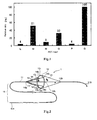
- the platelet number in the reaction liquid obtained by the treatment with the PET mesh Q was defined as 100%, in order to calculate the ratios of the platelet numbers in the other reaction liquids (hereinafter referred to as "relative ratios").
- the results are shown in Fig. 1 .
- Blood collected from a volunteer was mixed with citric acid at a volume ratio of 9/1, to prepare citrated blood.
- a cuvette NON-ACTIVATED CLOTTING TEST KIT
- 18 ⁇ L of physiological saline was placed, and 14.8 ⁇ L of Calcicol was added thereto, followed by further adding 342 ⁇ L of the citrated blood to the resulting mixture.
- the mixture was then subjected to measurement using a Sonoclot coagulation & Platelet Function Analyzer (IMI Corporation), and the obtained ACT ONSET value was regarded as the whole blood clotting time.
- the whole blood clotting time of the blood collected from the volunteer was 545 seconds.
- a nitinol wire was bent and turned a plurality of times into a ring shape, to prepare a ring-shaped section 12 that is a circular ring having a diameter of 6 mm.
- a polyester mesh sheet having a 100- ⁇ m mesh size was formed into a conical-bag shape having a height of 15 mm, to prepare a filter section 13.
- the bottom of the cone corresponds to the open end 13a
- the top corresponds to the closed end 13b.
- a stainless-steel wire was used as the core section 11 (including an operation member 15). At one end of the wire, a guide section 11b composed of a flexible wire gently curving to form an arc was formed.
- the core section 11 was made to penetrate the ring-shaped section 12, and the closed end 13b of the filter section 13 was attached to the core section 11 at a position in the proximal side of the guide section at the distal end of the core section 11. Further, the open end 13a of the filter section 13 was attached to the ring-shaped section 12.
- a position on the core section 11 that is proximal to the ring 12 was used as a support section 14a, and each of the positions defined by dividing the circumference of the ring-shaped section 12 into four equal parts was defined as a support section 14b. As shown in Fig.
- each of the four support wire sections 14 was fixed to the support section 14a and the support section 14b by adhesion or the like, to complete a filter instrument A.
- a dividing point 12 1 , dividing point 12 2 , dividing point 12 3 and dividing point 12 4 were set at the midpoints of the support sections 14b, and a folding property was preliminarily given to the ring-shaped section 12 such that the dividing point 12 1 and the dividing point 12 3 , a pair of the dividing points facing each other, become the bottoms of valleys when these dividing points are bent by an external force in the direction of the proximal end 15a of the core section, while the dividing point 12 2 and the dividing point 12 4 , the other pair of the dividing points, become the tops of mountains when these dividing points are bent by an external force in the direction of the distal end of the core section, that is, such that the ring-shaped section 12 shows a w
- the state of the filter instrument A changes from the spread state shown in Fig. 2 to the folded state by a process in which the support wire sections 14 are bundled with the core section 11 as shown in Fig. 3 by the action of an external force to cause bundling of the support sections 14b with the core section, which makes the two pairs of dividing points that face each other, that is, the pair of the dividing point 12 1 and the dividing point 12 3 , and the pair of the dividing point 12 2 and the dividing point 12 4 , become the bottoms of valleys and the tops of mountains, respectively, while the filter section 13 is folded as the ring-shaped section 12 is gradually folded until the paired dividing points come into contact with each other by the folding of the ring-shaped section 12 as shown in Fig. 4 .
- the open end 13a of the filter section 13 is almost completely closed.
- Example 1 conjugate at a concentration in term of argatroban of 50,000 ppm by weight, propylene glycol, 5 ⁇ Bis-Tris buffer and distilled water were mixed together at a volume ratio of 8/50/20/22, to obtain a treatment liquid.
- the filter instrument A was transferred to a polypropylene centrifuge tube containing 15 mL of 0.025 wt% aqueous polyoxyethylene octylphenyl ether solution, and the 10-cm portion at the was immersed in the aqueous solution, followed by leaving the instrument to stand for 10 minutes. Thereafter, the aqueous solution in the centrifuge tube was removed, and 15 mL of fresh 0.025 wt% aqueous polyoxyethylene octylphenyl ether solution was added thereto, followed by leaving the instrument to stand for 10 minutes. This washing operation was repeated a total of 4 times.
- a filter instrument A separately prepared was subjected to only EOG sterilization, to provide a filter instrument A to which the Example 1 conjugate is not immobilized (hereinafter referred to as the "instrument for capturing free thrombi Y").
- the instrument for capturing free thrombi X was contracted to a diameter of 3 Fr, and stored in a catheter.
- a dog (hybrid beagle) was subjected to measurement of the whole blood clotting time (hereinafter referred to as "ACT"), and 1500 units of a heparin injection was administered to the dog. Thereafter, ACT was measured again to confirm that ACT was within the range of 200 to 300 s.
- a 7-Fr sheath catheter was inserted, and a 6-Fr guide catheter was further inserted, followed by administration of a contrast medium to determine the blood vessel where the instrument for capturing free thrombi X was to be placed.
- the instrument for capturing free thrombi X stored in the catheter was then delivered to the carotid artery of the dog (blood vessel diameter, 6 mm).
- the filter section of the instrument for capturing free thrombi X delivered to the desired site was opened to begin indwelling of the instrument for capturing free thrombi X.
- a contrast medium was administered to see whether or not blood was passing through the filter section of the instrument for capturing free thrombi X.
- Administration of an anticoagulant, such as heparin was not carried out at all.
- ACT of the dog became a normal value about 2 hours after the administration of a heparin injection.
- inhibition of blood flow by the placed instrument for capturing free thrombi X was not observed, and blood was capable of stably passing through the instrument for capturing free thrombi X for not less than 5 hours after the beginning of indwelling.
- anhydrous DMF anhydrous dimethylformamide
- Example 15 conjugate The reaction liquid after dialysis was filtered, and the solvent of the obtained filtrate was evaporated with a rotary evaporator, followed by drying the resultant overnight in a vacuum drier, to obtain a conjugate (hereinafter referred to as the "Example 15 conjugate").
- Example 15 conjugate solution was prepared by aqueous Example 15 conjugate solution. Thereafter, 30 ⁇ L of the aqueous Example 15 conjugate solution was collected and mixed with 100 ⁇ L of ECA prothrombin buffer and 25 ⁇ L of ECA-T substrate, and the resulting mixture was incubated at 37°C for 60 seconds. The mixture was then placed in an apparatus (COATRON M1 (code 80 800 000); Production) and 50 ⁇ L of ECA ecarin reagent was further added thereto, followed by performing the measurement.
- COATRON M1 code 80 800 000
- Production 50 ⁇ L of ECA ecarin reagent was further added thereto, followed by performing the measurement.
- Example 15 conjugate at a concentration in term of argatroban of 344 ppm by weight, propylene glycol, 5 ⁇ Bis-Tris buffer and distilled water were mixed together at a volume ratio of 10/50/20/20, to obtain a treatment liquid.
- the filter instrument B was transferred to a polypropylene centrifuge tube containing 15 mL of 0.025 wt% aqueous polyoxyethylene octylphenyl ether solution, and the 10-cm portion at the distal end was immersed in the aqueous solution, followed by leaving the instrument to stand for 10 minutes. Thereafter, the aqueous solution in the centrifuge tube was removed, and 15 mL of fresh 0.025 wt% aqueous polyoxyethylene octylphenyl ether solution was added thereto, followed by leaving the instrument to stand for 10 minutes. This washing operation was repeated a total of 4 times.
- the instrument for capturing free thrombi X was contracted to a diameter of 3 Fr, and stored in a catheter.
- a dog (hybrid beagle) was subjected to measurement of the whole blood clotting time (hereinafter referred to as "ACT"), and a heparin injection was administered to the dog. Thereafter, ACT was measured again to confirm that ACT was not less than 300 s.
- a 7-Fr sheath catheter was inserted, and a 6-Fr guide catheter was further inserted, followed by administration of a contrast medium to determine the blood vessel where the instrument for capturing free thrombi X was to be placed.
- the instrument for capturing free thrombi Z stored in the catheter was then delivered to the carotid artery of the dog (blood vessel diameter, 6 mm).
- the filter section of the instrument for capturing free thrombi Z delivered to the desired site was opened to begin indwelling of the instrument for capturing free thrombi Z.
- a contrast medium was administered to see whether or not blood was passing through the filter section of the instrument for capturing free thrombi X.
- an anticoagulant such as heparin was administered to maintain an ACT of not less than 300 s.
- the present invention can be used as an instrument for capturing free thrombi having excellent anticoagulant action in the field of medicine.
Landscapes
- Health & Medical Sciences (AREA)
- Life Sciences & Earth Sciences (AREA)
- Animal Behavior & Ethology (AREA)
- Veterinary Medicine (AREA)
- Public Health (AREA)
- General Health & Medical Sciences (AREA)
- Engineering & Computer Science (AREA)
- Surgery (AREA)
- Epidemiology (AREA)
- Heart & Thoracic Surgery (AREA)
- Vascular Medicine (AREA)
- Biomedical Technology (AREA)
- Chemical & Material Sciences (AREA)
- Hematology (AREA)
- Materials Engineering (AREA)
- Oral & Maxillofacial Surgery (AREA)
- Transplantation (AREA)
- Cardiology (AREA)
- Molecular Biology (AREA)
- Medicinal Chemistry (AREA)
- Nuclear Medicine, Radiotherapy & Molecular Imaging (AREA)
- Medical Informatics (AREA)
- Materials For Medical Uses (AREA)
- External Artificial Organs (AREA)
- Surgical Instruments (AREA)
Applications Claiming Priority (2)
| Application Number | Priority Date | Filing Date | Title |
|---|---|---|---|
| JP2011140076 | 2011-06-24 | ||
| PCT/JP2012/065867 WO2012176841A1 (ja) | 2011-06-24 | 2012-06-21 | 遊離血栓捕獲器具 |
Publications (2)
| Publication Number | Publication Date |
|---|---|
| EP2724732A1 true EP2724732A1 (de) | 2014-04-30 |
| EP2724732A4 EP2724732A4 (de) | 2015-07-29 |
Family
ID=47422672
Family Applications (1)
| Application Number | Title | Priority Date | Filing Date |
|---|---|---|---|
| EP12803268.7A Withdrawn EP2724732A4 (de) | 2011-06-24 | 2012-06-21 | Instrument zum erfassen freier thromben |
Country Status (9)
| Country | Link |
|---|---|
| US (1) | US20140142613A1 (de) |
| EP (1) | EP2724732A4 (de) |
| JP (1) | JPWO2012176841A1 (de) |
| KR (1) | KR20140023286A (de) |
| CN (1) | CN103764182A (de) |
| CA (1) | CA2840043A1 (de) |
| RU (1) | RU2014102166A (de) |
| TW (1) | TW201304755A (de) |
| WO (1) | WO2012176841A1 (de) |
Cited By (3)
| Publication number | Priority date | Publication date | Assignee | Title |
|---|---|---|---|---|
| EP2724735A4 (de) * | 2011-06-23 | 2015-01-21 | Toray Industries | Medikamentenabgabe |
| EP3141213A4 (de) * | 2014-05-09 | 2018-01-10 | Toray Industries, Inc. | Hilfe zur endovaskulären behandlung |
| EP3521328A4 (de) * | 2016-09-30 | 2020-05-27 | Toray Industries, Inc. | Copolymer und medizinisches material damit |
Families Citing this family (6)
| Publication number | Priority date | Publication date | Assignee | Title |
|---|---|---|---|---|
| CA2946527C (en) * | 2014-05-08 | 2023-01-24 | Toray Industries, Inc. | Hollow fiber membrane module and manufacturing method thereof |
| TWI660722B (zh) * | 2014-05-09 | 2019-06-01 | 日商東麗股份有限公司 | 血管內治療輔助器具 |
| RU2735601C2 (ru) * | 2016-08-05 | 2020-11-05 | Торэй Индастриз, Инк. | Сополимер и разделительная мембрана, устройство медицинского назначения и устройство для очистки крови, в котором используют этот сополимер |
| JP6817894B2 (ja) | 2017-05-19 | 2021-01-20 | Ntn株式会社 | 三相交流用絶縁型スイッチング電源 |
| JP6840030B2 (ja) | 2017-05-19 | 2021-03-10 | Ntn株式会社 | 三相交流用絶縁型スイッチング電源 |
| JP6800098B2 (ja) | 2017-06-23 | 2020-12-16 | Ntn株式会社 | 三相交流用絶縁型スイッチング電源 |
Family Cites Families (19)
| Publication number | Priority date | Publication date | Assignee | Title |
|---|---|---|---|---|
| US5695489A (en) * | 1991-09-30 | 1997-12-09 | Baxter International Inc. | Blood filtering container |
| US20070203520A1 (en) * | 1995-06-07 | 2007-08-30 | Dennis Griffin | Endovascular filter |
| US5879697A (en) * | 1997-04-30 | 1999-03-09 | Schneider Usa Inc | Drug-releasing coatings for medical devices |
| JPH114883A (ja) * | 1997-06-18 | 1999-01-12 | Toray Ind Inc | 抗血栓性医療材料 |
| US6371971B1 (en) * | 1999-11-15 | 2002-04-16 | Scimed Life Systems, Inc. | Guidewire filter and methods of use |
| GB9928071D0 (en) * | 1999-11-29 | 2000-01-26 | Polybiomed Ltd | Blood compatible medical articles |
| US7875283B2 (en) * | 2000-04-13 | 2011-01-25 | Advanced Cardiovascular Systems, Inc. | Biodegradable polymers for use with implantable medical devices |
| DE10102878A1 (de) * | 2001-01-23 | 2002-08-01 | Haemosys Gmbh | Oligo- oder Polyalkylengekoppelte Thrombininhibitoren |
| JP5073891B2 (ja) * | 2001-07-16 | 2012-11-14 | 川澄化学工業株式会社 | ステント及びステントグラフト |
| WO2003030740A1 (en) * | 2001-09-28 | 2003-04-17 | Kanji Inoue | Free thrombus capturing tool |
| US8647359B2 (en) * | 2002-01-10 | 2014-02-11 | Boston Scientific Scimed, Inc. | Distal protection filter |
| US20060149313A1 (en) * | 2004-12-30 | 2006-07-06 | Edward Arguello | Distal protection apparatus with improved wall apposition |
| US20070005097A1 (en) * | 2005-06-20 | 2007-01-04 | Renati Richard J | Intravascular filter |
| CN103071192B (zh) * | 2006-09-15 | 2016-04-27 | 东丽株式会社 | 基材及其制造方法 |
| US8017141B2 (en) * | 2006-12-15 | 2011-09-13 | Advanced Cardiovascular Systems, Inc. | Coatings of acrylamide-based copolymers |
| JP5343377B2 (ja) * | 2008-03-19 | 2013-11-13 | 東レ株式会社 | 基材およびその製造方法 |
| EP2518100B1 (de) * | 2009-12-24 | 2015-02-18 | Toray Industries, Inc. | Hydrophile polymerverbindung mit gerinnungsverhindernder wirkung |
| TW201311774A (zh) * | 2011-06-23 | 2013-03-16 | Toray Industries | 具有抗血液凝固作用的疏水性高分子化合物 |
| TW201309354A (zh) * | 2011-06-23 | 2013-03-01 | Toray Industries | 醫療材料 |
-
2012
- 2012-06-21 KR KR1020137024728A patent/KR20140023286A/ko not_active Ceased
- 2012-06-21 JP JP2013521616A patent/JPWO2012176841A1/ja active Pending
- 2012-06-21 US US14/128,315 patent/US20140142613A1/en not_active Abandoned
- 2012-06-21 WO PCT/JP2012/065867 patent/WO2012176841A1/ja not_active Ceased
- 2012-06-21 CN CN201280031214.4A patent/CN103764182A/zh active Pending
- 2012-06-21 RU RU2014102166/15A patent/RU2014102166A/ru not_active Application Discontinuation
- 2012-06-21 EP EP12803268.7A patent/EP2724732A4/de not_active Withdrawn
- 2012-06-21 CA CA2840043A patent/CA2840043A1/en not_active Abandoned
- 2012-06-22 TW TW101122330A patent/TW201304755A/zh unknown
Cited By (6)
| Publication number | Priority date | Publication date | Assignee | Title |
|---|---|---|---|---|
| EP2724735A4 (de) * | 2011-06-23 | 2015-01-21 | Toray Industries | Medikamentenabgabe |
| EP3141213A4 (de) * | 2014-05-09 | 2018-01-10 | Toray Industries, Inc. | Hilfe zur endovaskulären behandlung |
| EP3521328A4 (de) * | 2016-09-30 | 2020-05-27 | Toray Industries, Inc. | Copolymer und medizinisches material damit |
| US11000636B2 (en) | 2016-09-30 | 2021-05-11 | Toray Industries, Inc. | Copolymer and medical material containing the same |
| EP3845573A1 (de) * | 2016-09-30 | 2021-07-07 | Toray Industries, Inc. | Copolymer und medizinisches material damit |
| RU2757274C2 (ru) * | 2016-09-30 | 2021-10-12 | Торэй Индастриз, Инк. | Сополимер и медицинский материал, содержащий его |
Also Published As
| Publication number | Publication date |
|---|---|
| TW201304755A (zh) | 2013-02-01 |
| JPWO2012176841A1 (ja) | 2015-02-23 |
| CN103764182A (zh) | 2014-04-30 |
| US20140142613A1 (en) | 2014-05-22 |
| WO2012176841A1 (ja) | 2012-12-27 |
| CA2840043A1 (en) | 2012-12-27 |
| EP2724732A4 (de) | 2015-07-29 |
| KR20140023286A (ko) | 2014-02-26 |
| RU2014102166A (ru) | 2015-07-27 |
Similar Documents
| Publication | Publication Date | Title |
|---|---|---|
| EP2724732A1 (de) | Instrument zum erfassen freier thromben | |
| US6143354A (en) | One-step method for attachment of biomolecules to substrate surfaces | |
| JP5673525B2 (ja) | 抗血液凝固作用を有する親水性高分子化合物 | |
| US20140121181A1 (en) | Hydrophobic polymer compound having anticoagulant effect | |
| US20090274737A1 (en) | Implant comprising a surface of reduced thrombogenicity | |
| EP0947205A2 (de) | Verfahren zur Herstellung von biokompatiblen medizinischen Erzeugnissen | |
| KR20160133442A (ko) | 이식 가능한 의료 기기 | |
| JPWO2012176861A1 (ja) | 医療材料 | |
| WO2004037310A2 (en) | Surface coating comprising bioactive compound | |
| JP2013006922A (ja) | 抗血液凝固作用を有する高分子化合物 | |
| KR20240155186A (ko) | 혈관 내 스텐트용 생체모방 코팅 | |
| JP2013006921A (ja) | 抗血液凝固作用を有する高分子化合物 | |
| JP2019213842A (ja) | インプラント用の医療材料 | |
| RU2388495C1 (ru) | Способ получения тромборезистентных полимерных материалов | |
| JPH0341963A (ja) | 人工血管およびその製造方法 |
Legal Events
| Date | Code | Title | Description |
|---|---|---|---|
| PUAI | Public reference made under article 153(3) epc to a published international application that has entered the european phase |
Free format text: ORIGINAL CODE: 0009012 |
|
| 17P | Request for examination filed |
Effective date: 20131217 |
|
| AK | Designated contracting states |
Kind code of ref document: A1 Designated state(s): AL AT BE BG CH CY CZ DE DK EE ES FI FR GB GR HR HU IE IS IT LI LT LU LV MC MK MT NL NO PL PT RO RS SE SI SK SM TR |
|
| DAX | Request for extension of the european patent (deleted) | ||
| RA4 | Supplementary search report drawn up and despatched (corrected) |
Effective date: 20150625 |
|
| RIC1 | Information provided on ipc code assigned before grant |
Ipc: A61L 31/00 20060101AFI20150619BHEP Ipc: A61B 17/00 20060101ALI20150619BHEP |
|
| STAA | Information on the status of an ep patent application or granted ep patent |
Free format text: STATUS: THE APPLICATION IS DEEMED TO BE WITHDRAWN |
|
| 18D | Application deemed to be withdrawn |
Effective date: 20140126 |
|
| R18D | Application deemed to be withdrawn (corrected) |
Effective date: 20160126 |