EP2725620A2 - Transistor à effet de champ et dispositifs associés - Google Patents
Transistor à effet de champ et dispositifs associés Download PDFInfo
- Publication number
- EP2725620A2 EP2725620A2 EP13185519.9A EP13185519A EP2725620A2 EP 2725620 A2 EP2725620 A2 EP 2725620A2 EP 13185519 A EP13185519 A EP 13185519A EP 2725620 A2 EP2725620 A2 EP 2725620A2
- Authority
- EP
- European Patent Office
- Prior art keywords
- gate
- memory device
- memory
- silicide layer
- silicide
- Prior art date
- Legal status (The legal status is an assumption and is not a legal conclusion. Google has not performed a legal analysis and makes no representation as to the accuracy of the status listed.)
- Granted
Links
Images












Classifications
-
- H—ELECTRICITY
- H10—SEMICONDUCTOR DEVICES; ELECTRIC SOLID-STATE DEVICES NOT OTHERWISE PROVIDED FOR
- H10D—INORGANIC ELECTRIC SEMICONDUCTOR DEVICES
- H10D30/00—Field-effect transistors [FET]
- H10D30/60—Insulated-gate field-effect transistors [IGFET]
- H10D30/62—Fin field-effect transistors [FinFET]
- H10D30/6219—Fin field-effect transistors [FinFET] characterised by the source or drain electrodes
-
- G—PHYSICS
- G11—INFORMATION STORAGE
- G11C—STATIC STORES
- G11C11/00—Digital stores characterised by the use of particular electric or magnetic storage elements; Storage elements therefor
- G11C11/21—Digital stores characterised by the use of particular electric or magnetic storage elements; Storage elements therefor using electric elements
- G11C11/34—Digital stores characterised by the use of particular electric or magnetic storage elements; Storage elements therefor using electric elements using semiconductor devices
- G11C11/40—Digital stores characterised by the use of particular electric or magnetic storage elements; Storage elements therefor using electric elements using semiconductor devices using transistors
- G11C11/41—Digital stores characterised by the use of particular electric or magnetic storage elements; Storage elements therefor using electric elements using semiconductor devices using transistors forming static cells with positive feedback, i.e. cells not needing refreshing or charge regeneration, e.g. bistable multivibrator or Schmitt trigger
- G11C11/413—Auxiliary circuits, e.g. for addressing, decoding, driving, writing, sensing, timing or power reduction
- G11C11/417—Auxiliary circuits, e.g. for addressing, decoding, driving, writing, sensing, timing or power reduction for memory cells of the field-effect type
- G11C11/419—Read-write [R-W] circuits
-
- H—ELECTRICITY
- H10—SEMICONDUCTOR DEVICES; ELECTRIC SOLID-STATE DEVICES NOT OTHERWISE PROVIDED FOR
- H10B—ELECTRONIC MEMORY DEVICES
- H10B10/00—Static random access memory [SRAM] devices
- H10B10/12—Static random access memory [SRAM] devices comprising a MOSFET load element
-
- H—ELECTRICITY
- H10—SEMICONDUCTOR DEVICES; ELECTRIC SOLID-STATE DEVICES NOT OTHERWISE PROVIDED FOR
- H10D—INORGANIC ELECTRIC SEMICONDUCTOR DEVICES
- H10D30/00—Field-effect transistors [FET]
- H10D30/60—Insulated-gate field-effect transistors [IGFET]
- H10D30/62—Fin field-effect transistors [FinFET]
-
- G—PHYSICS
- G11—INFORMATION STORAGE
- G11C—STATIC STORES
- G11C11/00—Digital stores characterised by the use of particular electric or magnetic storage elements; Storage elements therefor
- G11C11/21—Digital stores characterised by the use of particular electric or magnetic storage elements; Storage elements therefor using electric elements
- G11C11/34—Digital stores characterised by the use of particular electric or magnetic storage elements; Storage elements therefor using electric elements using semiconductor devices
- G11C11/40—Digital stores characterised by the use of particular electric or magnetic storage elements; Storage elements therefor using electric elements using semiconductor devices using transistors
- G11C11/41—Digital stores characterised by the use of particular electric or magnetic storage elements; Storage elements therefor using electric elements using semiconductor devices using transistors forming static cells with positive feedback, i.e. cells not needing refreshing or charge regeneration, e.g. bistable multivibrator or Schmitt trigger
- G11C11/412—Digital stores characterised by the use of particular electric or magnetic storage elements; Storage elements therefor using electric elements using semiconductor devices using transistors forming static cells with positive feedback, i.e. cells not needing refreshing or charge regeneration, e.g. bistable multivibrator or Schmitt trigger using field-effect transistors only
Definitions
- the invention relates to a field effect transistor (FET) and a fin field effect transistor (FET) arrangement and to related devices such as a memory device, a memory cell array, a memory controller, a memory system, a memory card, a solid state drive, and a system-on-chip (SoC).
- FET field effect transistor
- FET fin field effect transistor
- the invention solves this problem by providing a field effect transistor having the features of claim1, a finFET arrangement having the features of claim 4, a memory device having the features of claim 7, a memory controller having the features of claim 12, a memory system having the features of claim 14, a memory card having the features of claim 15, a solid state drive having the features of claim 16, a system-on-chip having the features of claim 17, and a memory cell array having the features of claim 18.
- Embodiments according to the invention may provide FETs including asymmetrical silicide structures and related devices.
- a field effect transistor can include a first silicide layer on a source of the FET where the first silicide layer can be separated from a gate of the FET.
- a second silicide layer can be on a drain of the FET and the second silicide layer can be separated from the gate and at least one contact layer can be on each of the first and second silicide layers.
- An aspect ratio of at least one of the first and second silicide layers can be adjusted so that the first and second silicide layers are asymmetric to one another.
- a memory device can include a memory cell array that includes a plurality of memory cells.
- a peripheral circuit can be configured to access the memory cells, where each of the memory cells can include a plurality of field effect transistors.
- the field effect transistors can include a first silicide layer on a source of the FET, where the first silicide layer can be separated from a gate of the FET.
- a second silicide layer can be on a drain of the FET, where the second silicide layer can be separated from the gate and have an area with respect to the gate, which has an asymmetric relation with an area of the first silicide layer with respect to the gate.
- At least one contact can be positioned on each of the first and second silicide layers.
- a memory controller can include a memory device and a microprocessor that can be configured to control operation of the memory device.
- the memory device can include a memory cell array with a plurality of memory cells each of which each can include a plurality of field effect transistors, an access control circuit that can be configured to access the memory cell array to perform a read operation or a write operation, and a control signal generation circuit that can be configured to generate a control signal for controlling an operation of the access control circuit.
- an system-on-chip can include a central processing unit (CPU), a memory controller that can be configured to access an external memory to read or write data according to the control of the CPU, and a memory device that can be configured to store the data to be read or written according to the control of the CPU.
- the memory device can include a memory cell array including a plurality of memory cells and a peripheral circuit that can be configured to access the memory cells.
- Each of the memory cells can include a plurality of field effect transistors.
- Each of the field effect transistors can include a first silicide layer positioned on a source and separated from a gate.
- a second silicide layer can be positioned on a drain and separated from the gate, the second silicide layer can have an area with respect to the gate which has an asymmetric relation with an area of the first silicide layer with respect to the gate.
- At least one contact can be positioned on each of the first and second silicide layers.
- a fin Field Effect Transistor can include a source region and a drain region of the finFET.
- a gate of the finFET can cross over a fin of the finFET between the source and drain regions.
- First and second silicide layers can be on the source and drain regions respectively.
- the first and second silicide layers can include respective first and second surfaces that face the gate crossing over the fin, where the first and second surfaces are different sizes.
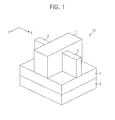
- FIG. 1 is a perspective view of a field effect transistor (FET);
- FIG. 2 is a detailed perspective view of a FET
- FIG. 3 is a perspective view of a silicide at a first end of the gate in the FET illustrated in FIG. 2 ;
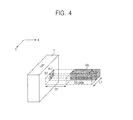
- FIG. 4 is a perspective view of the silicide at a second end of the gate in the FET illustrated in FIG. 2 ;
- FIG. 5 is a cross-sectional view of silicide and contact layers viewed from the first end of the gate in the FET illustrated in FIG. 2 ;
- FIG. 6 is a cross-sectional view of silicide and contact layers viewed from the second end of the gate in the FET illustrated in FIG. 2 ;
- FIG. 7 is a graph showing gate-silicide capacitance and source/drain surface resistance with respect to the silicide length in a unit transistor
- FIG. 8 is a circuit diagram of parasitic capacitance and resistance in a bit cell array including a unit transistor
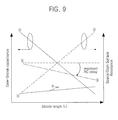
- FIG. 9 is a graph showing gate-silicide capacitance, source/drain surface resistance, and resistance-capacitance (RC) delay with respect to the silicide length in the unit transistor of the bit cell array illustrated in FIG. 8 ;
- FIG. 10 is a circuit diagram of a unit transistor
- FIG. 11 is the voltage-current graph of a pass transistor illustrated in FIG. 10 ;
- FIG. 12 is a graph of current versus current according to a pass transistor and a drive transistor in a static random access memory (SRAM) bit cell manufactured using a planar process in a comparison example;
- SRAM static random access memory
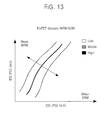
- FIG. 13 is a graph of current versus current according to a pass transistor and a drive transistor in an SRAM bit cell including a FET in a comparison example;
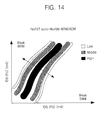
- FIG. 14 is a graph of current versus current according to a pass transistor and a drive transistor in an SRAM bit cell including a FET;
- FIG. 15 is a circuit diagram of a 6-transistor (6T) memory cell
- FIG. 16 is a circuit diagram of an 8-transistor (8T) memory cell
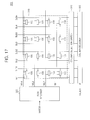
- FIG. 17 is a block diagram of a memory device including a transistor
- FIG. 18 is a block diagram of a memory system including the memory device illustrated in FIG. 17 ;
- FIG. 19 is a block diagram of another memory system including the memory device illustrated in FIG. 17 ;
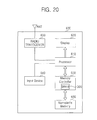
- FIG. 20 is a block diagram of a mobile device including the memory device illustrated in FIG. 17 ;
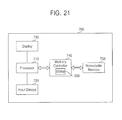
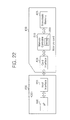
- FIG. 21 is a block diagram of an electronic system including the memory device illustrated in FIG. 17 ;
- FIG. 22 is a block diagram of memory card including the memory device illustrated in FIG. 17 ;
- FIG. 23 is a block diagram of an imaging system including the memory device illustrated in FIG. 17 ;
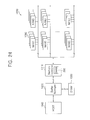
- FIG. 24 is a block diagram of another memory system including the memory device illustrated in FIG. 17 ;
- FIG. 25 is a block diagram of a system-on-chip (SoC) including the memory device illustrated in FIG. 17 .
- SoC system-on-chip
- Example embodiments of the invention are described herein with reference to cross-sectional illustrations that are schematic illustrations of idealized embodiments and intermediate structures of example embodiments. As such, variations from the shapes of the illustrations as a result, for example, of manufacturing techniques and/or tolerances, are to be expected. Thus, example embodiments of the invention should not be construed as limited to the particular shapes illustrated herein but include deviations in shapes that result, for example, from manufacturing.
- FIG. 1 illustrates a field effect transistor (FET) 10 which includes a substrate 5, an insulating layer 4, a source 2, a drain 3, and a gate 1.
- the insulating layer 4 is formed on the substrate 5 (e.g., a Si substrate) and the FET 10 is formed on the insulating layer 4 (e.g., a SiO 2 layer).
- the FET 10 usually includes a fin (between the source 2 and the drain 3) formed of silicon or other semiconductor material and the gate 1 formed of polysilicon or other semiconductor material to cover the fin.
- a channel is formed at a part of the fin extending below the gate 1 between the source and region drain.
- the FET 10 has a double-gate structure surrounding the channel.
- FIG. 2 illustrates the FET 10 according to corresponding embodiments of the invention.
- the FET 10 includes the gate 1, the source 2, the drain 3, silicide layers 6a and 6b, one or more contact layers 7a, 7b, 8a, and 8b, and one or more metal lines 9a and 9b.
- the FET 10 may be implemented in a fin structure formed by etching a semiconductor substrate to form silicon fins, filling a space (or a trench) between adjacent silicon fins with insulating material to electrically isolate the adjacent silicon fins from each other, and exposing a side wall of the silicon fins.
- the gate 1 is between the source 2 and the drain 3 and the silicide layers 6a and 6b, the contact layers 7a, 7b, 8a, and 8b, and the metal lines 9a and 9b are separated from the gate 1.
- the contact layers 7a, 7b, 8a, and 8b are stacked to connect the source 2 and the drain 3 to the metal lines 9a and 9b, respectively.
- the contact layers 7a, 7b, 8a, and 8b electrically connect the source 2 and the drain 3 with the metal lines 9a and 9b, respectively.
- the silicide layers 6a and 6b are between the contact layers 7a and 7b and the upper surfaces of the source 2 and the drain 3, respectively, to decrease the surface resistance of the source 2 and the drain 3 relative and adjust the heights of the source 2 and the drain 3 to the height of the gate 1.
- the FET 10 with the fin structure may have parasitic capacitance between each of the layers (i.e., silicide and contact) and the gate 1.
- the alternating current (AC) performance of the FET 10 may degraded due to the parasitic capacitance.
- the parasitic capacitance between each of the layers and the gate 1 is given by Equation 1: D ⁇ 1 ⁇ ⁇ where C is the respective parasitic capacitance, A1 is an area of a layer facing the gate 1, D1 is a distance between the layer and the gate 1, and ⁇ is a dielectric constant.
- the area A1 of the layer (e.g., a contact or silicide layer) facing the gate 1 may be reduced or the distance between the layers and the gate 1 may be increased. Alternatively, both the area and the distance may be adjusted.
- the distance is an average distance from the face of the layer to the gate.
- the degradation due to parasitic capacitance is reduced by adjusting the aspect ratio of the silicide layers 6a and 6b at the respective two sides of the gate 1 in the FET 10.
- the aspect ratio of the first silicide layer 6a at the side of the source 2 may be adjusted so that the first silicide layer 6a and the second silicide layer 6b at the side of the drain 3 are asymmetric in the FET 10.
- the aspect ratio of the second silicide layer 6b at the side of the drain 3 may be adjusted so that the first silicide layer 6a at the side of the source 2 and the second silicide layer 6b are asymmetric in the FET 10.
- the aspect ratio of both the first and second silicide layers 6a and 6b is adjusted so that the first and second silicide layers 6a and 6b are asymmetric.
- FIG. 3 is a perspective view of the gate 1 and the silicide layer 6a at a first end of the gate 1 in the FET 10 illustrated in FIG. 2 .
- FIG. 4 is a perspective view of the gate 1 and the silicide layer 6b at a second end of the gate 1 in the FET 10 illustrated in FIG. 2 .
- FIG. 5 is a cross-sectional view of the silicide layer 6a and the contact layers 7a and 8a viewed from the first end of the gate 1 in the FET 10 illustrated in FIG. 2 .
- FIG. 6 is a cross-sectional view of the silicide layer 6b and the contact layers 7b and 8b viewed from the second end of the gate 1 in the FET 10 illustrated in FIG. 2 . It is assumed that the aspect ratio of the second silicide layer 6b at the side of the drain 3 is adjusted so that the first silicide layer 6a and the second silicide layer 6b are asymmetric in the FET 10.
- the aspect ratio of the first silicide layer 6a is not adjusted and the surface of the first silicide layer 6a facing the gate has an area of A1 with respect to the gate 1 and is separated from the gate 1 by a distance of D1.
- the aspect ratio of the surface 60 of the second silicide layer 6b is adjusted and the second silicide layer 6b has an area of B1 with respect to the gate 1 and is separated from the gate 1 by the distance D1.
- the area A1 is larger than the area B1.
- the lateral and longitudinal lengths of the surface 50 of the first silicide layer 6a are L1 and L2, respectively, the lateral length L1 of the area B1 of the surface 60 of the second silicide layer 6b is reduced to L3 so that the areas A1 and B1 are different from each other, i.e., asymmetric.
- the length L2 of the first and second silicide layers 6a and 6b may be not adjusted because may affect the height between the contact layers 7a and 8a or 7b and 8b and the source or drain 2 or 3.
- the invention is not restricted to the embodiments discussed so far.
- the aspect ratio of each of the surface of the silicide layers 6a and 6b facing both sides of the gate 1 may be adjusted in the FET 10, so that the degradation due to parasitic capacitance may be reduced.
- the first and second silicide layers 6a and 6b may be arranged asymmetrically around the gate 1 by adjusting the aspect ratio of the surface 50 of the first silicide layer 6a at the side of the source 2 in the FET 10.
- first and second silicide layers 6a and 6b may be arranged asymmetrically around the gate 1 by adjusting both the aspect ratio of the surface 50 of the first silicide layer 6a at the side of the source 2 and the aspect ratio of the surface 60 of the second silicide layer 6b at the side of the drain 3 in the FET 10.
- FIG. 7 is a graph showing gate-silicide capacitance and source/drain surface resistance with respect to a silicide length L in a unit transistor according to some embodiments of the inventive concept.
- the gate-silicide capacitance decreases linearly.
- the surface resistance R is inversely proportional to the area A1 of the silicide facing the gate 1 and is proportional to the distance D1 between the gate 1 and the silicide. Accordingly, when the area of the silicide is decreased from A1 to B1 by adjusting the lateral length of the silicide, the source/drain surface resistance increases.
- FIG. 8 is a circuit diagram of parasitic capacitance and resistance in a bit cell array including a unit transistor, i.e., the FET 10 according to corresponding embodiments of the invention.
- FIG. 9 is a graph showing gate-silicide capacitance, source/drain surface resistance, and resistance-capacitance (RC) delay with respect to the silicide length L in the FET 10 of the bit cell array illustrated in FIG. 8 .
- RC resistance-capacitance
- R sd denotes source-drain parasitic capacitance
- R ch denotes parasitic resistance occurring in a channel of the FET 10
- R TS denotes gate-silicide resistance
- C TS denotes gate-silicide capacitance
- R CA and Rso denote gate-contact resistance
- C CA and C S0 denote gate-contact capacitance
- C S1 and R S1 respectively denote gate-metal capacitance and gate-metal resistance.
- the total resistance R Total is substantially influenced by the gate-silicide resistance R TS .
- a plurality of gate-silicide capacitances C TS are connected in parallel.
- FIG. 10 is a circuit diagram of a unit transistor according to the invention.
- FIG. 11 is the voltage-current graph of a pass transistor illustrated in FIG. 10 .
- the bit cell when a bit cell including the FET 10 is modeled, the bit cell includes a total resistance R Total , a pass transistor TR PASS , and a drive transistor TR Drive .
- the pass transistor TR PASS and the drive transistor TR Drive are turned on. According to the operation, a source-drain direction is determined as shown in Table 1.
- the pass transistor TR PASS has a node Q1 as a source and a node Q2 as a drain.
- a drain voltage drops due to the total resistance R Total an d a drain-source voltage V DS decreases.
- a read current I read flows from the node Q2 to the node Q1.
- the pass transistor TR PASS is in a saturation area since a gate-source voltage hardly changes (6) even through the drain-source voltage V DS decreases (8 ⁇ 9), as shown in FIG. 11 .
- the decrement in the read current I DS is very slight.
- the current flows in an opposite direction to program data to the FET 10, so the node Q1 becomes a drain and the node Q2 becomes a source.
- a source voltage drops due to the total resistance R Total and the gate-source voltage V GS decreases (6 ⁇ 7).
- the decrement in the write current I DS may occur due to the total resistance R Total , as shown in FIG. 11 .
- the decrease in write current has a very limited affect on the overall write operation speed of the memory device.
- FIG. 12 is a graph of current versus current according to a pass transistor and a drive transistor in a static random access memory (SRAM) bit cell manufactured using a planar process in a comparison example.
- FIG. 13 is a graph of current versus current according to a pass transistor and a drive transistor in an SRAM bit cell including an FET in a comparison example.
- FIG. 14 is a graph of current versus current according to a pass transistor and a drive transistor in an SRAM bit cell including an FET according to the invention.
- SRAM static random access memory
- a static noise margin (SNM) (or a read margin) and a writability margin (WRM) have dispositions toward opposite directions, respectively.
- SNM static noise margin
- WRM writability margin
- a bit cell yield is highest when the strength of the pass transistor is similar to that of the drive transistor according to the threshold voltage of each transistor, the effective width of a fin, and the length of the fin.
- SNM read stability
- WRM write stability
- bit cell yield depending on the strength of each transistor has a discrete distribution.
- bit cell stability i.e., WRM and SNM
- WRM and SNM bit cell stability
- bit cell stability i.e., WRM and SNM
- WRM and SNM can be tuned in a wider range in processes.
- FIG. 15 is a circuit diagram of a 6-transistor (6T) memory cell 100.
- FIG. 16 is a circuit diagram of an 8-transistor (8T) memory cell 100'.
- the memory cell 100 includes two cross-coupled inverters formed by electrically connecting a first pull-up transistor 105, a first pull-down transistor 109, a second pull-up transistor 107, and a second pull-down transistor 111 with one another. Drains of the first pull-down transistor 109 and the first pull-up transistor 105 are electrically connected with gates of the second pull-up transistor 107 and the second pull-down transistor 111. Drains of the second pull-up transistor 107 and the second pull-down transistor 111 are electrically connected with gates of the first pull-up transistor 105 and the first pull-down transistor 109.
- the memory cell (e.g., SRAM cell) 100 also includes a first pass-gate transistor 101 and a second pass-gate transistor 115.
- Pass-gate transistors such as the first pass-gate transistor 101 and the second pass-gate transistor 115 may have a longer gate length than pull-down devices such as the first pull-down transistor 109 and the second pull-down transistor 111.
- Gates of the pass-gate transistors 101 and 115 are connected to a word line WL that controls an access to read data from or write data to the memory cell 100.
- the first pass-gate transistor 101 is connected to a bit line BL and the second pass-gate transistor 115 is connected to a complementary bit line BLB.
- the first pass-gate transistor 101 is connected to a common node between the first pull-down transistor 109 and the first pull-up transistor 105.
- the second pass-gate transistor 115 is connected to a common node between the second pull-down transistor 111 and the second pull-up transistor 107.
- data is written into the memory cell 100 by turning on the first pass-gate transistor 101 and the second pass-gate transistor 115 by applying a high voltage to the word line WL.
- the pass-gate transistors 101 and 115 are turned on, both the bit line BL and the complementary bit line BLB may be used to write data to the memory cell 100.
- the memory cell 100' illustrated in FIG. 16 further includes a read buffer 200.
- the memory cell 100' including 8 transistors provides individual read and write paths for a bit of data that has been stored.
- the read buffer 200 includes a read pass-gate transistor 203 and a read drive transistor 201.
- the read pass-gate transistor 203 and the read drive transistor 201 are connected in series between a read bit line RBL and a ground voltage.
- the read pass-gate transistor 203 is gated by a read word line RWL and individually reads a data cell according to the read bit line RBL.
- a gate of the read drive transistor 201 is connected to the gate of the second pull-up transistor 107 to generate a read current from the data cell.
- FIG. 17 is a block diagram of a memory device 300 including a transistor according to the invention.
- the memory device 300 includes a column selection switch 310, a column decoder 320, a row decoder 330, and a bit cell array 350.
- the bit cell array 350 includes a plurality of bit cells 100.
- Each bit cell 100 may be implemented by an SRAM cell including the FET 10, as shown in FIG. 15 or 16 .
- the row decoder 330 decodes a row address XADDR and enables a word line WL corresponding to it.
- the column decoder 320 decodes a column address YADDR and enables bit lines BL and BLB corresponding to it.
- the column selection switch 310 switches the enabled bit lines BL and BLB. Although there are four word lines WL1 through WL4 and four bit lines BL1 through BL4 and BLB1 through BLB4 in FIG. 17 , the inventive concept is not so restricted.
- FIG. 18 is a block diagram of a memory system 400 including the memory device 300 illustrated in FIG. 17 according to the invention.
- the memory system 400 includes a non-volatile memory device 450, the memory device 300, and a central processing unit (CPU) 410 controlling the operations of the memory device 300 and the non-volatile memory device 450.
- the CPU 410 may be a microprocessor.
- the memory device 300 may be used as an operating memory of the CPU 410.
- the memory device 300 may be implemented by SRAM.
- a host connected to the memory system 400 may perform data communication with the non-volatile memory device 450 through a memory interface (I/F) 420 and a host I/F 440.
- I/F memory interface
- an error correction code (ECC) block 430 may detect an error in data received from the non-volatile memory device 450 through the memory I/F 420, correct the bit in error, and transmit the corrected data to the host through the host I/F 440.
- the CPU 410 may control data communication among the memory I/F 420, the ECC block 430, the host I/F 440, and the volatile memory device 300 via a bus 401.
- the memory system 400 may be implemented as a flash memory drive, a universal serial bus (USB) flash memory drive, an inter-chip USB (IC-USB) memory drive, or a memory stick. Other implementations are also within the scope of the invention.
- USB universal serial bus
- IC-USB inter-chip USB
- FIG. 19 is a block diagram of a memory system 500 including the memory device 300 illustrated in FIG. 17 according to the invention.
- the memory system 500 includes an input unit 510, a controller 520, a non-volatile memory device 530, a memory controller 540 including the SRAM 300, a dynamic RAM (DRAM) controller 550, a DRAM 560, and an output unit 570.
- DRAM dynamic RAM
- the input unit 510 can receive an external command.
- the controller 520 generates a control signal for executing the command received through the input unit 510.
- data stored in the non-volatile memory device 530 is transmitted to the memory controller 540 and stored in the SRAM 300 included in the memory controller 540.
- the memory controller 540 stores data from the non-volatile memory device 530 in the SRAM 300 functioning as a buffer memory before transmitting the data to the DRAM 560, thereby conducting delay that may occur when directly storing the data output from the non-volatile memory device 530 in the DRAM 560.
- the DRAM controller 550 stores data output from the SRAM 300 in the DRAM 560.
- the data stored in the DRAM 560 may be output through the output unit 570 according to the control of the controller 520.
- FIG. 20 is a block diagram of a mobile device 600 including the memory device 300 illustrated in FIG. 17 according to the invention.
- the mobile device 600 may be implemented as a cellular phone, a smart phone, a tablet personal computer (PC), a personal digital assistant (PDA) or a radio communication system.
- PC personal computer
- PDA personal digital assistant
- the mobile device 600 includes the non-volatile memory device 660 and a memory controller 650 controlling the operations of the non-volatile memory device 660.
- the memory controller 650 may control the data access operations, e.g., program operations, erase operations, and read operations, of the non-volatile memory device 660 according to the control of a processor 610.
- the memory controller 650 includes the SRAM 300 for storing the data output from the non-volatile memory device 660.
- the SRAM 300 temporarily stores the data output from the non-volatile memory device 660.
- the data stored in the SRAM 300 may be transmitted to the processor 610.
- a radio transceiver 630 transmits or receives radio signals through an antenna ANT.
- the radio transceiver 630 may convert radio signals received through the antenna ANT into signals that can be processed by the processor 610. Accordingly, the processor 610 may process the signals output from the radio transceiver 630 and transmit the processed signals to the memory controller 650 or the display 620.
- the memory controller 650 may program the signals processed by the processor 610 to the non-volatile memory device 660.
- the radio transceiver 630 may also convert signals output from the processor 610 into radio signals and transmit the radio signals to an external device via the antenna ANT.
- An input device 640 enables control signals for controlling the operation of the processor 610 or data to be processed by the processor 610 to be input to the mobile device 600.
- the input device 640 may be implemented by a pointing device such as a touch pad or a computer mouse, a keypad, or a keyboard.
- the processor 610 may control the operation of the display 620 to display data output from the memory controller 650, data output from the radio transceiver 630, or data output from the input device 640.
- the memory controller 650 which controls the operations of the non-volatile memory device 660, may be implemented as a part of the processor 610 or as a separate chip.
- the memory controller 650 and the non-volatile memory device 660 may be implemented as single package, for example, a multi-chip package
- FIG. 21 is a block diagram of an electronic system 700 including the memory device 300 illustrated in FIG. 17 according to another embodiment of the invention.
- the electronic system 700 may be implemented as a personal computer (PC), a tablet PC, a netbook, an e-reader, a personal digital assistant (PDA), a portable multimedia player (PMP), an MP3 player, an MP4 player or the like.
- PC personal computer
- PDA personal digital assistant
- PMP portable multimedia player
- MP3 player MP3 player
- MP4 player MP4 player
- the electronic system 700 includes the non-volatile memory device 750 and a memory controller 740 controlling the data processing operations of the non-volatile memory device 750.
- the memory controller 740 includes the SRAM 300.
- the memory controller 740 temporarily stores data output from the non-volatile memory device 750 in the SRAM 300.
- the data stored in the SRAM 300 may be transmitted to a processor 710.
- the processor 710 may display data stored in the non-volatile memory device 750 through a display 730 according to data input through an input device 720.
- the input device 720 may be implemented by a pointing device such as a touch pad or a computer mouse, a keypad, or a keyboard.
- the processor 710 may control the overall operation of the electronic system 700 and the operations of the memory controller 740.
- the memory controller 740 which may control the operations of the non-volatile memory device 750, may be implemented as a part of the processor 710 or as a separate chip.
- the memory controller 740 and the non-volatile memory device 750 may be implemented as single package, for example, a multi-chip package
- FIG. 22 is a block diagram of a memory card 800 including the memory device 300 illustrated in FIG. 17 according to the invention.
- the memory card 800 may be implemented as any type of memory card, such as a smart card.
- the memory card 800 includes the non-volatile memory device 805, a memory controller 810, and a card interface 820.
- the memory controller 810 may control data exchange between the non-volatile memory device 805 and the card interface 820.
- the card interface 820 may be a secure digital (SD) card interface or a multi-media card (MMC) interface, but the inventive concept is not so restricted.
- the card interface 820 may interface to a host 830 and the memory controller 810 for data exchange according to a protocol of the host 830.
- the memory controller 810 temporarily stores data output from the non-volatile memory device 805 in the SRAM 300.
- the data stored in the SRAM 300 may be transmitted to the card interface 820.
- the card interface 820 may support a universal serial bus (USB) protocol, an interchip (IC)-USB protocol or other protocols.
- USB universal serial bus
- IC interchip
- the card interface 820 may indicate a hardware supporting a protocol used by the host 830, a software installed in the hardware, or a signal transmission mode.
- a host interface 850 of the host 830 may perform data communication with the non-volatile memory device 805 through the card interface 820 and the memory controller 810 according to the control of a microprocessor 840 (other processors may be used).
- FIG. 23 is a block diagram of an imaging system 900 including the memory device 300 illustrated in FIG. 17 according to the invention.
- the imaging system 900 may be implemented as an image processor included in a digital camera, a cellular phone equipped with a digital camera, a smart phone equipped with a digital camera, a tablet PC equipped with a digital camera, or in some other electronic device.
- the imaging system 900 includes the non-volatile memory device 980 and a memory controller 970 controlling the data processing operations, such as program operations, erase operations, and read operations, of the non-volatile memory device 980.
- the memory controller 970 includes the SRAM 300 for temporarily storing data output from the non-volatile memory device 980 or data to be output to the non-volatile memory device 980.
- An image sensor 920 included in the imaging system 900 converts optical images into digital signals and outputs the digital signals to a processor 910 or the memory controller 970.
- the digital signals may be controlled by the processor 910 to be displayed through a display 930 or stored in the non-volatile memory device 980 through the memory controller 970.
- Data stored in the non-volatile memory device 980 may be displayed through the display 930 according to the control of the processor 910 or the memory controller 970.
- the memory controller 970 which may control the operations of the non-volatile memory device 980, may be implemented as a part of the processor 910 or as a separate chip.
- FIG. 24 is a block diagram of a memory system 1000 including the memory device 300 illustrated in FIG. 17 according to the invention.
- the memory system 1000 may be implemented as a data storage system like a solid state drive (SSD).
- SSD solid state drive
- the memory system 1000 includes a plurality of non-volatile memory devices 1050 (such as NAND devices), a memory controller 1010 controlling the data processing operations of the non-volatile memory devices 1050, a dynamic random access memory (DRAM) 1030, and a buffer manager 1020 controlling data transferred between the memory controller 1010 and a host 1040 to be stored in the DRAM 1030.
- non-volatile memory devices 1050 such as NAND devices
- memory controller 1010 controlling the data processing operations of the non-volatile memory devices 1050
- DRAM dynamic random access memory
- buffer manager 1020 controlling data transferred between the memory controller 1010 and a host 1040 to be stored in the DRAM 1030.
- the memory controller 1010 includes the SRAM 300.
- the SRAM 300 may temporarily store data output from the non-volatile memory device 1050 and transmit the data to the DRAM 1030 according to the control of the buffer manager 1020.
- FIG. 25 is a block diagram of a system-on-chip (SoC) 1100 including the memory device 300 illustrated in FIG. 17 according to the invention.
- the SoC 1100 includes a CPU 1101, the memory device 300, an I/F 1102, a graphics processing unit (GPU) 1103, a display controller 1104, and an external memory controller 1105.
- the CPU 1101 which controls the overall operation of the SoC 1100 may control the operations of the elements 300, 1102, 1103, 1104, and 1105.
- the external memory controller 1105 may control the operations when transmitting data to and receiving data from an external memory 1130 connected to the SoC 1100.
- GPU 1103 processes data that the memory controller 1105 has read from the external memory 1130 to provide signals suitable for display.
- the display controller 1104 controls whether to transmit the processed signal to a display device 1120.
- the aspect ratio of a silicide layer on a source/drain is adjusted to reduce a total capacitance in a FET, thereby increasing the read and write stability of a memory device.
Landscapes
- Engineering & Computer Science (AREA)
- Microelectronics & Electronic Packaging (AREA)
- Computer Hardware Design (AREA)
- Semiconductor Memories (AREA)
- Thin Film Transistor (AREA)
- Electrodes Of Semiconductors (AREA)
- Metal-Oxide And Bipolar Metal-Oxide Semiconductor Integrated Circuits (AREA)
Applications Claiming Priority (1)
| Application Number | Priority Date | Filing Date | Title |
|---|---|---|---|
| KR1020120107381A KR20140040543A (ko) | 2012-09-26 | 2012-09-26 | 핀 구조의 전계효과 트랜지스터, 이를 포함하는 메모리 장치 및 그 반도체 장치 |
Publications (3)
| Publication Number | Publication Date |
|---|---|
| EP2725620A2 true EP2725620A2 (fr) | 2014-04-30 |
| EP2725620A3 EP2725620A3 (fr) | 2014-09-24 |
| EP2725620B1 EP2725620B1 (fr) | 2023-01-25 |
Family
ID=49212709
Family Applications (1)
| Application Number | Title | Priority Date | Filing Date |
|---|---|---|---|
| EP13185519.9A Active EP2725620B1 (fr) | 2012-09-26 | 2013-09-23 | Transistor à effet de champ et dispositifs associés |
Country Status (6)
| Country | Link |
|---|---|
| US (1) | US9299711B2 (fr) |
| EP (1) | EP2725620B1 (fr) |
| JP (1) | JP6333530B2 (fr) |
| KR (1) | KR20140040543A (fr) |
| CN (1) | CN103681865B (fr) |
| TW (1) | TWI610440B (fr) |
Families Citing this family (9)
| Publication number | Priority date | Publication date | Assignee | Title |
|---|---|---|---|---|
| WO2018004521A1 (fr) * | 2016-06-27 | 2018-01-04 | Intel Corporation | Contact à bande interdite cassée |
| US10236057B2 (en) * | 2017-05-25 | 2019-03-19 | Globalfoundries Singapore Pte. Ltd. | Memory cells and methods for writing data to memory cells |
| CN107680969B (zh) | 2017-11-13 | 2018-12-11 | 长鑫存储技术有限公司 | 非对称鳍内存晶体管及其形成方法、半导体器件 |
| US10510883B2 (en) | 2017-11-28 | 2019-12-17 | Taiwan Semiconductor Manufacturing Co., Ltd. | Asymmetric source and drain structures in semiconductor devices |
| US11205478B2 (en) * | 2019-07-01 | 2021-12-21 | Globalfoundries Singapore Pte. Ltd. | Memory device and a method for forming the memory device |
| CN116487349A (zh) | 2022-01-13 | 2023-07-25 | 长鑫存储技术有限公司 | 一种半导体结构及其制备方法 |
| CN114361165A (zh) | 2022-01-13 | 2022-04-15 | 长鑫存储技术有限公司 | 半导体结构及半导体结构的制作方法 |
| US12228619B2 (en) | 2022-03-02 | 2025-02-18 | Changxin Memory Technologies, Inv | Through silicon via detection circuit and method |
| KR102854883B1 (ko) * | 2024-12-23 | 2025-09-04 | 고려대학교 세종산학협력단 | 3차원 반도체 게이트 적층 구조에서 수직 측벽에 대한 전기적 특성을 평가하는 분석 방법 및 장치 |
Family Cites Families (30)
| Publication number | Priority date | Publication date | Assignee | Title |
|---|---|---|---|---|
| JP2000138369A (ja) | 1998-10-30 | 2000-05-16 | Sharp Corp | 半導体装置の製造方法 |
| TW503586B (en) | 2001-10-29 | 2002-09-21 | Macronix Int Co Ltd | MOSFET structure with low junction capacitance |
| JP4050663B2 (ja) * | 2003-06-23 | 2008-02-20 | 株式会社東芝 | 半導体装置およびその製造方法 |
| JP4504214B2 (ja) * | 2005-02-04 | 2010-07-14 | 株式会社東芝 | Mos型半導体装置及びその製造方法 |
| DE102005007822B4 (de) * | 2005-02-21 | 2014-05-22 | Infineon Technologies Ag | Integrierte Schaltungsanordnung mit Tunnel-Feldeffekttransistor |
| JP5017795B2 (ja) | 2005-04-13 | 2012-09-05 | 日本電気株式会社 | 電界効果トランジスタの製造方法 |
| KR100680291B1 (ko) | 2005-04-22 | 2007-02-07 | 한국과학기술원 | H자형 이중 게이트 구조를 갖는 다중비트 비휘발성 메모리소자와 이의 제조 방법 및 다중비트 동작을 위한 동작방법 |
| US7348642B2 (en) | 2005-08-03 | 2008-03-25 | International Business Machines Corporation | Fin-type field effect transistor |
| WO2007063990A1 (fr) * | 2005-12-02 | 2007-06-07 | Nec Corporation | Dispositif semi-conducteur et son procédé de fabrication |
| JP4933776B2 (ja) | 2005-12-07 | 2012-05-16 | ラピスセミコンダクタ株式会社 | 半導体装置およびその製造方法 |
| US7446001B2 (en) | 2006-02-08 | 2008-11-04 | Freescale Semiconductors, Inc. | Method for forming a semiconductor-on-insulator (SOI) body-contacted device with a portion of drain region removed |
| JP5229587B2 (ja) * | 2006-04-04 | 2013-07-03 | マイクロン テクノロジー, インク. | 成長型ナノFinトランジスタ |
| JP2008028263A (ja) | 2006-07-24 | 2008-02-07 | Toshiba Corp | 半導体装置 |
| US7537994B2 (en) * | 2006-08-28 | 2009-05-26 | Micron Technology, Inc. | Methods of forming semiconductor devices, assemblies and constructions |
| US7456471B2 (en) * | 2006-09-15 | 2008-11-25 | International Business Machines Corporation | Field effect transistor with raised source/drain fin straps |
| JP4445521B2 (ja) * | 2007-06-15 | 2010-04-07 | 株式会社東芝 | 半導体装置 |
| US8952547B2 (en) * | 2007-07-09 | 2015-02-10 | Taiwan Semiconductor Manufacturing Company, Ltd. | Semiconductor device with contact structure with first/second contacts formed in first/second dielectric layers and method of forming same |
| US7915670B2 (en) | 2007-07-16 | 2011-03-29 | International Business Machines Corporation | Asymmetric field effect transistor structure and method |
| JP4455632B2 (ja) * | 2007-09-10 | 2010-04-21 | 株式会社東芝 | 半導体装置 |
| US7982269B2 (en) | 2008-04-17 | 2011-07-19 | International Business Machines Corporation | Transistors having asymmetric strained source/drain portions |
| JP2010016100A (ja) * | 2008-07-02 | 2010-01-21 | Toshiba Corp | 半導体記憶装置 |
| US8227867B2 (en) | 2008-12-23 | 2012-07-24 | International Business Machines Corporation | Body contacted hybrid surface semiconductor-on-insulator devices |
| US7906802B2 (en) | 2009-01-28 | 2011-03-15 | Infineon Technologies Ag | Semiconductor element and a method for producing the same |
| US8138030B2 (en) | 2009-09-15 | 2012-03-20 | International Business Machines Corporation | Asymmetric finFET device with improved parasitic resistance and capacitance |
| US8399931B2 (en) | 2010-06-30 | 2013-03-19 | Taiwan Semiconductor Manufacturing Company, Ltd. | Layout for multiple-fin SRAM cell |
| US20120086054A1 (en) * | 2010-10-12 | 2012-04-12 | Tzyy-Ming Cheng | Semiconductor structure and method for making the same |
| KR20120096212A (ko) * | 2011-02-22 | 2012-08-30 | 삼성전자주식회사 | 비휘발성 메모리 장치, 메모리 컨트롤러, 및 이들의 동작 방법 |
| US8772874B2 (en) | 2011-08-24 | 2014-07-08 | International Business Machines Corporation | MOSFET including asymmetric source and drain regions |
| JP5754334B2 (ja) * | 2011-10-04 | 2015-07-29 | 富士通セミコンダクター株式会社 | 半導体装置及び半導体装置の製造方法 |
| US9231106B2 (en) * | 2013-03-08 | 2016-01-05 | Taiwan Semiconductor Manufacturing Company, Ltd. | FinFET with an asymmetric source/drain structure and method of making same |
-
2012
- 2012-09-26 KR KR1020120107381A patent/KR20140040543A/ko not_active Ceased
-
2013
- 2013-09-20 US US14/032,769 patent/US9299711B2/en active Active
- 2013-09-23 EP EP13185519.9A patent/EP2725620B1/fr active Active
- 2013-09-25 TW TW102134548A patent/TWI610440B/zh active
- 2013-09-26 CN CN201310445019.2A patent/CN103681865B/zh active Active
- 2013-09-26 JP JP2013200207A patent/JP6333530B2/ja active Active
Non-Patent Citations (1)
| Title |
|---|
| None |
Also Published As
| Publication number | Publication date |
|---|---|
| CN103681865B (zh) | 2018-03-27 |
| CN103681865A (zh) | 2014-03-26 |
| TWI610440B (zh) | 2018-01-01 |
| EP2725620A3 (fr) | 2014-09-24 |
| EP2725620B1 (fr) | 2023-01-25 |
| TW201421691A (zh) | 2014-06-01 |
| JP6333530B2 (ja) | 2018-05-30 |
| JP2014068017A (ja) | 2014-04-17 |
| KR20140040543A (ko) | 2014-04-03 |
| US9299711B2 (en) | 2016-03-29 |
| US20140085966A1 (en) | 2014-03-27 |
Similar Documents
| Publication | Publication Date | Title |
|---|---|---|
| EP2725620B1 (fr) | Transistor à effet de champ et dispositifs associés | |
| US10878889B2 (en) | High retention time memory element with dual gate devices | |
| US9627376B2 (en) | Semiconductor device with active fins separated by shallow and deep trench isolations and method for fabricating the same | |
| US7710765B2 (en) | Back gated SRAM cell | |
| US9306070B2 (en) | Semiconductor device and method of fabricating the same | |
| US20170170075A1 (en) | Semiconductor device and method for fabricating the same | |
| US20190355712A1 (en) | Semiconductor device | |
| US9659130B2 (en) | Layout design system for generating layout design of semiconductor device | |
| US9875791B2 (en) | Semiconductor device | |
| US11640962B2 (en) | Semiconductor structure | |
| US20140246724A1 (en) | Memory devices | |
| KR102111738B1 (ko) | 메모리 장치, 메모리 시스템 및 이의 동작 방법 | |
| US6985380B2 (en) | SRAM with forward body biasing to improve read cell stability | |
| US12593472B2 (en) | Integrated circuit including gate-all-around transistor | |
| CN118160424A (zh) | 存储器单元及缠绕数据线结构 | |
| Kim et al. | DRAM circuit and process technology | |
| KR20240140158A (ko) | 메모리 디바이스 및 이를 형성하는 방법 | |
| US20150171215A1 (en) | Semiconductor device having wave gate | |
| US12106795B2 (en) | Memory device having sub wordline driver | |
| TWI818716B (zh) | 動態隨機存取記憶體結構 | |
| KR20080089190A (ko) | 엑세스 디바이스 | |
| CN120814350A (zh) | 具有多个部分的存储器单元栅极结构 | |
| KR20260058014A (ko) | 비대칭 메탈 게이트들을 갖는 otp 메모리 셀 및 otp 메모리 장치 |
Legal Events
| Date | Code | Title | Description |
|---|---|---|---|
| PUAI | Public reference made under article 153(3) epc to a published international application that has entered the european phase |
Free format text: ORIGINAL CODE: 0009012 |
|
| 17P | Request for examination filed |
Effective date: 20130923 |
|
| AK | Designated contracting states |
Kind code of ref document: A2 Designated state(s): AL AT BE BG CH CY CZ DE DK EE ES FI FR GB GR HR HU IE IS IT LI LT LU LV MC MK MT NL NO PL PT RO RS SE SI SK SM TR |
|
| AX | Request for extension of the european patent |
Extension state: BA ME |
|
| PUAL | Search report despatched |
Free format text: ORIGINAL CODE: 0009013 |
|
| AK | Designated contracting states |
Kind code of ref document: A3 Designated state(s): AL AT BE BG CH CY CZ DE DK EE ES FI FR GB GR HR HU IE IS IT LI LT LU LV MC MK MT NL NO PL PT RO RS SE SI SK SM TR |
|
| AX | Request for extension of the european patent |
Extension state: BA ME |
|
| RIC1 | Information provided on ipc code assigned before grant |
Ipc: H01L 29/417 20060101AFI20140819BHEP Ipc: H01L 29/78 20060101ALI20140819BHEP Ipc: H01L 27/11 20060101ALI20140819BHEP |
|
| 17P | Request for examination filed |
Effective date: 20150324 |
|
| RBV | Designated contracting states (corrected) |
Designated state(s): AL AT BE BG CH CY CZ DE DK EE ES FI FR GB GR HR HU IE IS IT LI LT LU LV MC MK MT NL NO PL PT RO RS SE SI SK SM TR |
|
| STAA | Information on the status of an ep patent application or granted ep patent |
Free format text: STATUS: EXAMINATION IS IN PROGRESS |
|
| 17Q | First examination report despatched |
Effective date: 20190606 |
|
| GRAP | Despatch of communication of intention to grant a patent |
Free format text: ORIGINAL CODE: EPIDOSNIGR1 |
|
| STAA | Information on the status of an ep patent application or granted ep patent |
Free format text: STATUS: GRANT OF PATENT IS INTENDED |
|
| INTG | Intention to grant announced |
Effective date: 20221102 |
|
| GRAS | Grant fee paid |
Free format text: ORIGINAL CODE: EPIDOSNIGR3 |
|
| GRAA | (expected) grant |
Free format text: ORIGINAL CODE: 0009210 |
|
| STAA | Information on the status of an ep patent application or granted ep patent |
Free format text: STATUS: THE PATENT HAS BEEN GRANTED |
|
| AK | Designated contracting states |
Kind code of ref document: B1 Designated state(s): AL AT BE BG CH CY CZ DE DK EE ES FI FR GB GR HR HU IE IS IT LI LT LU LV MC MK MT NL NO PL PT RO RS SE SI SK SM TR |
|
| REG | Reference to a national code |
Ref country code: GB Ref legal event code: FG4D |
|
| REG | Reference to a national code |
Ref country code: CH Ref legal event code: EP |
|
| REG | Reference to a national code |
Ref country code: DE Ref legal event code: R096 Ref document number: 602013083250 Country of ref document: DE |
|
| REG | Reference to a national code |
Ref country code: AT Ref legal event code: REF Ref document number: 1546444 Country of ref document: AT Kind code of ref document: T Effective date: 20230215 Ref country code: IE Ref legal event code: FG4D |
|
| REG | Reference to a national code |
Ref country code: NL Ref legal event code: FP |
|
| REG | Reference to a national code |
Ref country code: LT Ref legal event code: MG9D |
|
| REG | Reference to a national code |
Ref country code: AT Ref legal event code: MK05 Ref document number: 1546444 Country of ref document: AT Kind code of ref document: T Effective date: 20230125 |
|
| P01 | Opt-out of the competence of the unified patent court (upc) registered |
Effective date: 20230520 |
|
| PG25 | Lapsed in a contracting state [announced via postgrant information from national office to epo] |
Ref country code: RS Free format text: LAPSE BECAUSE OF FAILURE TO SUBMIT A TRANSLATION OF THE DESCRIPTION OR TO PAY THE FEE WITHIN THE PRESCRIBED TIME-LIMIT Effective date: 20230125 Ref country code: PT Free format text: LAPSE BECAUSE OF FAILURE TO SUBMIT A TRANSLATION OF THE DESCRIPTION OR TO PAY THE FEE WITHIN THE PRESCRIBED TIME-LIMIT Effective date: 20230525 Ref country code: NO Free format text: LAPSE BECAUSE OF FAILURE TO SUBMIT A TRANSLATION OF THE DESCRIPTION OR TO PAY THE FEE WITHIN THE PRESCRIBED TIME-LIMIT Effective date: 20230425 Ref country code: LV Free format text: LAPSE BECAUSE OF FAILURE TO SUBMIT A TRANSLATION OF THE DESCRIPTION OR TO PAY THE FEE WITHIN THE PRESCRIBED TIME-LIMIT Effective date: 20230125 Ref country code: LT Free format text: LAPSE BECAUSE OF FAILURE TO SUBMIT A TRANSLATION OF THE DESCRIPTION OR TO PAY THE FEE WITHIN THE PRESCRIBED TIME-LIMIT Effective date: 20230125 Ref country code: HR Free format text: LAPSE BECAUSE OF FAILURE TO SUBMIT A TRANSLATION OF THE DESCRIPTION OR TO PAY THE FEE WITHIN THE PRESCRIBED TIME-LIMIT Effective date: 20230125 Ref country code: ES Free format text: LAPSE BECAUSE OF FAILURE TO SUBMIT A TRANSLATION OF THE DESCRIPTION OR TO PAY THE FEE WITHIN THE PRESCRIBED TIME-LIMIT Effective date: 20230125 Ref country code: AT Free format text: LAPSE BECAUSE OF FAILURE TO SUBMIT A TRANSLATION OF THE DESCRIPTION OR TO PAY THE FEE WITHIN THE PRESCRIBED TIME-LIMIT Effective date: 20230125 |
|
| PG25 | Lapsed in a contracting state [announced via postgrant information from national office to epo] |
Ref country code: SE Free format text: LAPSE BECAUSE OF FAILURE TO SUBMIT A TRANSLATION OF THE DESCRIPTION OR TO PAY THE FEE WITHIN THE PRESCRIBED TIME-LIMIT Effective date: 20230125 Ref country code: PL Free format text: LAPSE BECAUSE OF FAILURE TO SUBMIT A TRANSLATION OF THE DESCRIPTION OR TO PAY THE FEE WITHIN THE PRESCRIBED TIME-LIMIT Effective date: 20230125 Ref country code: IS Free format text: LAPSE BECAUSE OF FAILURE TO SUBMIT A TRANSLATION OF THE DESCRIPTION OR TO PAY THE FEE WITHIN THE PRESCRIBED TIME-LIMIT Effective date: 20230525 Ref country code: GR Free format text: LAPSE BECAUSE OF FAILURE TO SUBMIT A TRANSLATION OF THE DESCRIPTION OR TO PAY THE FEE WITHIN THE PRESCRIBED TIME-LIMIT Effective date: 20230426 Ref country code: FI Free format text: LAPSE BECAUSE OF FAILURE TO SUBMIT A TRANSLATION OF THE DESCRIPTION OR TO PAY THE FEE WITHIN THE PRESCRIBED TIME-LIMIT Effective date: 20230125 |
|
| REG | Reference to a national code |
Ref country code: DE Ref legal event code: R097 Ref document number: 602013083250 Country of ref document: DE |
|
| PG25 | Lapsed in a contracting state [announced via postgrant information from national office to epo] |
Ref country code: SM Free format text: LAPSE BECAUSE OF FAILURE TO SUBMIT A TRANSLATION OF THE DESCRIPTION OR TO PAY THE FEE WITHIN THE PRESCRIBED TIME-LIMIT Effective date: 20230125 Ref country code: RO Free format text: LAPSE BECAUSE OF FAILURE TO SUBMIT A TRANSLATION OF THE DESCRIPTION OR TO PAY THE FEE WITHIN THE PRESCRIBED TIME-LIMIT Effective date: 20230125 Ref country code: EE Free format text: LAPSE BECAUSE OF FAILURE TO SUBMIT A TRANSLATION OF THE DESCRIPTION OR TO PAY THE FEE WITHIN THE PRESCRIBED TIME-LIMIT Effective date: 20230125 Ref country code: DK Free format text: LAPSE BECAUSE OF FAILURE TO SUBMIT A TRANSLATION OF THE DESCRIPTION OR TO PAY THE FEE WITHIN THE PRESCRIBED TIME-LIMIT Effective date: 20230125 Ref country code: CZ Free format text: LAPSE BECAUSE OF FAILURE TO SUBMIT A TRANSLATION OF THE DESCRIPTION OR TO PAY THE FEE WITHIN THE PRESCRIBED TIME-LIMIT Effective date: 20230125 |
|
| PG25 | Lapsed in a contracting state [announced via postgrant information from national office to epo] |
Ref country code: SK Free format text: LAPSE BECAUSE OF FAILURE TO SUBMIT A TRANSLATION OF THE DESCRIPTION OR TO PAY THE FEE WITHIN THE PRESCRIBED TIME-LIMIT Effective date: 20230125 |
|
| PLBE | No opposition filed within time limit |
Free format text: ORIGINAL CODE: 0009261 |
|
| STAA | Information on the status of an ep patent application or granted ep patent |
Free format text: STATUS: NO OPPOSITION FILED WITHIN TIME LIMIT |
|
| 26N | No opposition filed |
Effective date: 20231026 |
|
| PG25 | Lapsed in a contracting state [announced via postgrant information from national office to epo] |
Ref country code: SI Free format text: LAPSE BECAUSE OF FAILURE TO SUBMIT A TRANSLATION OF THE DESCRIPTION OR TO PAY THE FEE WITHIN THE PRESCRIBED TIME-LIMIT Effective date: 20230125 |
|
| REG | Reference to a national code |
Ref country code: CH Ref legal event code: PL |
|
| PG25 | Lapsed in a contracting state [announced via postgrant information from national office to epo] |
Ref country code: LU Free format text: LAPSE BECAUSE OF NON-PAYMENT OF DUE FEES Effective date: 20230923 |
|
| REG | Reference to a national code |
Ref country code: BE Ref legal event code: MM Effective date: 20230930 |
|
| GBPC | Gb: european patent ceased through non-payment of renewal fee |
Effective date: 20230923 |
|
| PG25 | Lapsed in a contracting state [announced via postgrant information from national office to epo] |
Ref country code: LU Free format text: LAPSE BECAUSE OF NON-PAYMENT OF DUE FEES Effective date: 20230923 Ref country code: IT Free format text: LAPSE BECAUSE OF FAILURE TO SUBMIT A TRANSLATION OF THE DESCRIPTION OR TO PAY THE FEE WITHIN THE PRESCRIBED TIME-LIMIT Effective date: 20230125 Ref country code: MC Free format text: LAPSE BECAUSE OF FAILURE TO SUBMIT A TRANSLATION OF THE DESCRIPTION OR TO PAY THE FEE WITHIN THE PRESCRIBED TIME-LIMIT Effective date: 20230125 |
|
| REG | Reference to a national code |
Ref country code: IE Ref legal event code: MM4A |
|
| PG25 | Lapsed in a contracting state [announced via postgrant information from national office to epo] |
Ref country code: IE Free format text: LAPSE BECAUSE OF NON-PAYMENT OF DUE FEES Effective date: 20230923 |
|
| PG25 | Lapsed in a contracting state [announced via postgrant information from national office to epo] |
Ref country code: GB Free format text: LAPSE BECAUSE OF NON-PAYMENT OF DUE FEES Effective date: 20230923 |
|
| PG25 | Lapsed in a contracting state [announced via postgrant information from national office to epo] |
Ref country code: CH Free format text: LAPSE BECAUSE OF NON-PAYMENT OF DUE FEES Effective date: 20230930 |
|
| PG25 | Lapsed in a contracting state [announced via postgrant information from national office to epo] |
Ref country code: IE Free format text: LAPSE BECAUSE OF NON-PAYMENT OF DUE FEES Effective date: 20230923 Ref country code: GB Free format text: LAPSE BECAUSE OF NON-PAYMENT OF DUE FEES Effective date: 20230923 Ref country code: FR Free format text: LAPSE BECAUSE OF NON-PAYMENT OF DUE FEES Effective date: 20230930 Ref country code: CH Free format text: LAPSE BECAUSE OF NON-PAYMENT OF DUE FEES Effective date: 20230930 |
|
| PG25 | Lapsed in a contracting state [announced via postgrant information from national office to epo] |
Ref country code: BE Free format text: LAPSE BECAUSE OF NON-PAYMENT OF DUE FEES Effective date: 20230930 |
|
| PG25 | Lapsed in a contracting state [announced via postgrant information from national office to epo] |
Ref country code: BG Free format text: LAPSE BECAUSE OF FAILURE TO SUBMIT A TRANSLATION OF THE DESCRIPTION OR TO PAY THE FEE WITHIN THE PRESCRIBED TIME-LIMIT Effective date: 20230125 |
|
| REG | Reference to a national code |
Ref country code: DE Ref legal event code: R079 Ref document number: 602013083250 Country of ref document: DE Free format text: PREVIOUS MAIN CLASS: H01L0029417000 Ipc: H10D0064230000 |
|
| PG25 | Lapsed in a contracting state [announced via postgrant information from national office to epo] |
Ref country code: BG Free format text: LAPSE BECAUSE OF FAILURE TO SUBMIT A TRANSLATION OF THE DESCRIPTION OR TO PAY THE FEE WITHIN THE PRESCRIBED TIME-LIMIT Effective date: 20230125 |
|
| PG25 | Lapsed in a contracting state [announced via postgrant information from national office to epo] |
Ref country code: CY Free format text: LAPSE BECAUSE OF FAILURE TO SUBMIT A TRANSLATION OF THE DESCRIPTION OR TO PAY THE FEE WITHIN THE PRESCRIBED TIME-LIMIT; INVALID AB INITIO Effective date: 20130923 |
|
| PG25 | Lapsed in a contracting state [announced via postgrant information from national office to epo] |
Ref country code: HU Free format text: LAPSE BECAUSE OF FAILURE TO SUBMIT A TRANSLATION OF THE DESCRIPTION OR TO PAY THE FEE WITHIN THE PRESCRIBED TIME-LIMIT; INVALID AB INITIO Effective date: 20130923 |
|
| PGFP | Annual fee paid to national office [announced via postgrant information from national office to epo] |
Ref country code: NL Payment date: 20250814 Year of fee payment: 13 |
|
| PGFP | Annual fee paid to national office [announced via postgrant information from national office to epo] |
Ref country code: DE Payment date: 20250730 Year of fee payment: 13 |
|
| PG25 | Lapsed in a contracting state [announced via postgrant information from national office to epo] |
Ref country code: TR Free format text: LAPSE BECAUSE OF FAILURE TO SUBMIT A TRANSLATION OF THE DESCRIPTION OR TO PAY THE FEE WITHIN THE PRESCRIBED TIME-LIMIT Effective date: 20230125 |