EP2729199B1 - Dialyseverfahren zur entfernung proteingebundener toxine aus dem blut von akut oder chronisch-niereninsuffizienten patienten - Google Patents
Dialyseverfahren zur entfernung proteingebundener toxine aus dem blut von akut oder chronisch-niereninsuffizienten patienten Download PDFInfo
- Publication number
- EP2729199B1 EP2729199B1 EP12740082.8A EP12740082A EP2729199B1 EP 2729199 B1 EP2729199 B1 EP 2729199B1 EP 12740082 A EP12740082 A EP 12740082A EP 2729199 B1 EP2729199 B1 EP 2729199B1
- Authority
- EP
- European Patent Office
- Prior art keywords
- blood
- dialyzer
- ions
- salts
- purified
- Prior art date
- Legal status (The legal status is an assumption and is not a legal conclusion. Google has not performed a legal analysis and makes no representation as to the accuracy of the status listed.)
- Not-in-force
Links
- 210000004369 blood Anatomy 0.000 title claims description 77
- 239000008280 blood Substances 0.000 title claims description 77
- 238000000034 method Methods 0.000 title claims description 10
- 238000000502 dialysis Methods 0.000 title description 26
- 239000003053 toxin Substances 0.000 title description 17
- 231100000765 toxin Toxicity 0.000 title description 17
- 108700012359 toxins Proteins 0.000 title description 17
- 208000020832 chronic kidney disease Diseases 0.000 title description 5
- 230000001154 acute effect Effects 0.000 title description 3
- 208000009304 Acute Kidney Injury Diseases 0.000 title description 2
- 208000033626 Renal failure acute Diseases 0.000 title description 2
- 150000002500 ions Chemical class 0.000 claims description 69
- FAPWRFPIFSIZLT-UHFFFAOYSA-M Sodium chloride Chemical class [Na+].[Cl-] FAPWRFPIFSIZLT-UHFFFAOYSA-M 0.000 claims description 68
- 150000003839 salts Chemical class 0.000 claims description 64
- 210000002381 plasma Anatomy 0.000 claims description 47
- 239000011780 sodium chloride Substances 0.000 claims description 33
- 239000012528 membrane Substances 0.000 claims description 20
- 239000000126 substance Substances 0.000 claims description 14
- 230000007717 exclusion Effects 0.000 claims description 8
- 239000008151 electrolyte solution Substances 0.000 claims description 6
- 238000001631 haemodialysis Methods 0.000 claims description 5
- 230000000322 hemodialysis Effects 0.000 claims description 5
- 229910001415 sodium ion Inorganic materials 0.000 claims 5
- 102000004169 proteins and genes Human genes 0.000 description 31
- 108090000623 proteins and genes Proteins 0.000 description 31
- WLJVXDMOQOGPHL-UHFFFAOYSA-N phenylacetic acid Chemical compound OC(=O)CC1=CC=CC=C1 WLJVXDMOQOGPHL-UHFFFAOYSA-N 0.000 description 27
- 239000000243 solution Substances 0.000 description 24
- BXFFHSIDQOFMLE-UHFFFAOYSA-N indoxyl sulfate Chemical compound C1=CC=C2C(OS(=O)(=O)O)=CNC2=C1 BXFFHSIDQOFMLE-UHFFFAOYSA-N 0.000 description 22
- 239000002441 uremic toxin Substances 0.000 description 21
- 229960003424 phenylacetic acid Drugs 0.000 description 13
- 239000003279 phenylacetic acid Substances 0.000 description 13
- 208000037157 Azotemia Diseases 0.000 description 11
- 230000017531 blood circulation Effects 0.000 description 9
- WGNAKZGUSRVWRH-UHFFFAOYSA-N p-cresol sulfate Chemical compound CC1=CC=C(OS(O)(=O)=O)C=C1 WGNAKZGUSRVWRH-UHFFFAOYSA-N 0.000 description 9
- 208000009852 uremia Diseases 0.000 description 8
- 238000009792 diffusion process Methods 0.000 description 7
- 230000000694 effects Effects 0.000 description 7
- 102000004506 Blood Proteins Human genes 0.000 description 5
- 108010017384 Blood Proteins Proteins 0.000 description 5
- 125000003118 aryl group Chemical group 0.000 description 5
- 238000001802 infusion Methods 0.000 description 5
- 239000011734 sodium Substances 0.000 description 5
- 230000002209 hydrophobic effect Effects 0.000 description 4
- 230000003993 interaction Effects 0.000 description 4
- IWDCLRJOBJJRNH-UHFFFAOYSA-N p-cresol Chemical compound CC1=CC=C(O)C=C1 IWDCLRJOBJJRNH-UHFFFAOYSA-N 0.000 description 4
- 239000011148 porous material Substances 0.000 description 4
- 238000001542 size-exclusion chromatography Methods 0.000 description 4
- 238000012546 transfer Methods 0.000 description 4
- 108010088751 Albumins Proteins 0.000 description 3
- 102000009027 Albumins Human genes 0.000 description 3
- 229940021013 electrolyte solution Drugs 0.000 description 3
- 210000003734 kidney Anatomy 0.000 description 3
- ZMHLUFWWWPBTIU-UHFFFAOYSA-N p-hydroxyhippuric acid Chemical compound OC(=O)CNC(=O)C1=CC=C(O)C=C1 ZMHLUFWWWPBTIU-UHFFFAOYSA-N 0.000 description 3
- 206010003210 Arteriosclerosis Diseases 0.000 description 2
- DHMQDGOQFOQNFH-UHFFFAOYSA-N Glycine Chemical compound NCC(O)=O DHMQDGOQFOQNFH-UHFFFAOYSA-N 0.000 description 2
- 230000000274 adsorptive effect Effects 0.000 description 2
- 208000011775 arteriosclerosis disease Diseases 0.000 description 2
- 238000004587 chromatography analysis Methods 0.000 description 2
- 208000022831 chronic renal failure syndrome Diseases 0.000 description 2
- 230000034994 death Effects 0.000 description 2
- 231100000517 death Toxicity 0.000 description 2
- 230000007423 decrease Effects 0.000 description 2
- 238000001514 detection method Methods 0.000 description 2
- 238000001914 filtration Methods 0.000 description 2
- 239000000203 mixture Substances 0.000 description 2
- 230000008569 process Effects 0.000 description 2
- 238000000926 separation method Methods 0.000 description 2
- 210000002700 urine Anatomy 0.000 description 2
- WLJVXDMOQOGPHL-PPJXEINESA-N 2-phenylacetic acid Chemical compound O[14C](=O)CC1=CC=CC=C1 WLJVXDMOQOGPHL-PPJXEINESA-N 0.000 description 1
- 208000030090 Acute Disease Diseases 0.000 description 1
- 208000024172 Cardiovascular disease Diseases 0.000 description 1
- 208000017667 Chronic Disease Diseases 0.000 description 1
- 239000004471 Glycine Substances 0.000 description 1
- 238000012404 In vitro experiment Methods 0.000 description 1
- 238000005411 Van der Waals force Methods 0.000 description 1
- 230000009471 action Effects 0.000 description 1
- 230000008901 benefit Effects 0.000 description 1
- 238000011088 calibration curve Methods 0.000 description 1
- 230000001684 chronic effect Effects 0.000 description 1
- 238000007796 conventional method Methods 0.000 description 1
- 230000002950 deficient Effects 0.000 description 1
- 230000029142 excretion Effects 0.000 description 1
- 238000002474 experimental method Methods 0.000 description 1
- 239000000706 filtrate Substances 0.000 description 1
- 231100001261 hazardous Toxicity 0.000 description 1
- 230000036541 health Effects 0.000 description 1
- 238000004128 high performance liquid chromatography Methods 0.000 description 1
- 229910052739 hydrogen Inorganic materials 0.000 description 1
- 239000001257 hydrogen Substances 0.000 description 1
- 238000000338 in vitro Methods 0.000 description 1
- 238000011835 investigation Methods 0.000 description 1
- 239000007788 liquid Substances 0.000 description 1
- 238000005374 membrane filtration Methods 0.000 description 1
- 210000000056 organ Anatomy 0.000 description 1
- 230000007119 pathological manifestation Effects 0.000 description 1
- 230000001991 pathophysiological effect Effects 0.000 description 1
- 231100000572 poisoning Toxicity 0.000 description 1
- 230000000607 poisoning effect Effects 0.000 description 1
- 239000002244 precipitate Substances 0.000 description 1
- 230000001105 regulatory effect Effects 0.000 description 1
- 238000004007 reversed phase HPLC Methods 0.000 description 1
- 230000002441 reversible effect Effects 0.000 description 1
- 208000037921 secondary disease Diseases 0.000 description 1
- 238000006467 substitution reaction Methods 0.000 description 1
- 230000002485 urinary effect Effects 0.000 description 1
- 208000019553 vascular disease Diseases 0.000 description 1
- XLYOFNOQVPJJNP-UHFFFAOYSA-N water Substances O XLYOFNOQVPJJNP-UHFFFAOYSA-N 0.000 description 1
Images



Classifications
-
- A—HUMAN NECESSITIES
- A61—MEDICAL OR VETERINARY SCIENCE; HYGIENE
- A61M—DEVICES FOR INTRODUCING MEDIA INTO, OR ONTO, THE BODY; DEVICES FOR TRANSDUCING BODY MEDIA OR FOR TAKING MEDIA FROM THE BODY; DEVICES FOR PRODUCING OR ENDING SLEEP OR STUPOR
- A61M1/00—Suction or pumping devices for medical purposes; Devices for carrying-off, for treatment of, or for carrying-over, body-liquids; Drainage systems
- A61M1/14—Dialysis systems; Artificial kidneys; Blood oxygenators ; Reciprocating systems for treatment of body fluids, e.g. single needle systems for hemofiltration or pheresis
- A61M1/16—Dialysis systems; Artificial kidneys; Blood oxygenators ; Reciprocating systems for treatment of body fluids, e.g. single needle systems for hemofiltration or pheresis with membranes
-
- A—HUMAN NECESSITIES
- A61—MEDICAL OR VETERINARY SCIENCE; HYGIENE
- A61M—DEVICES FOR INTRODUCING MEDIA INTO, OR ONTO, THE BODY; DEVICES FOR TRANSDUCING BODY MEDIA OR FOR TAKING MEDIA FROM THE BODY; DEVICES FOR PRODUCING OR ENDING SLEEP OR STUPOR
- A61M1/00—Suction or pumping devices for medical purposes; Devices for carrying-off, for treatment of, or for carrying-over, body-liquids; Drainage systems
- A61M1/14—Dialysis systems; Artificial kidneys; Blood oxygenators ; Reciprocating systems for treatment of body fluids, e.g. single needle systems for hemofiltration or pheresis
- A61M1/16—Dialysis systems; Artificial kidneys; Blood oxygenators ; Reciprocating systems for treatment of body fluids, e.g. single needle systems for hemofiltration or pheresis with membranes
- A61M1/1601—Control or regulation
- A61M1/1615—Control or regulation using measurements made at different flow rates
-
- A—HUMAN NECESSITIES
- A61—MEDICAL OR VETERINARY SCIENCE; HYGIENE
- A61M—DEVICES FOR INTRODUCING MEDIA INTO, OR ONTO, THE BODY; DEVICES FOR TRANSDUCING BODY MEDIA OR FOR TAKING MEDIA FROM THE BODY; DEVICES FOR PRODUCING OR ENDING SLEEP OR STUPOR
- A61M1/00—Suction or pumping devices for medical purposes; Devices for carrying-off, for treatment of, or for carrying-over, body-liquids; Drainage systems
- A61M1/34—Filtering material out of the blood by passing it through a membrane, i.e. hemofiltration or diafiltration
- A61M1/342—Adding solutions to the blood, e.g. substitution solutions
- A61M1/3424—Substitution fluid path
- A61M1/3431—Substitution fluid path upstream of the filter
-
- A—HUMAN NECESSITIES
- A61—MEDICAL OR VETERINARY SCIENCE; HYGIENE
- A61M—DEVICES FOR INTRODUCING MEDIA INTO, OR ONTO, THE BODY; DEVICES FOR TRANSDUCING BODY MEDIA OR FOR TAKING MEDIA FROM THE BODY; DEVICES FOR PRODUCING OR ENDING SLEEP OR STUPOR
- A61M1/00—Suction or pumping devices for medical purposes; Devices for carrying-off, for treatment of, or for carrying-over, body-liquids; Drainage systems
- A61M1/34—Filtering material out of the blood by passing it through a membrane, i.e. hemofiltration or diafiltration
- A61M1/342—Adding solutions to the blood, e.g. substitution solutions
- A61M1/3455—Substitution fluids
- A61M1/3458—Substitution fluids having electrolytes not present in the dialysate
-
- A—HUMAN NECESSITIES
- A61—MEDICAL OR VETERINARY SCIENCE; HYGIENE
- A61M—DEVICES FOR INTRODUCING MEDIA INTO, OR ONTO, THE BODY; DEVICES FOR TRANSDUCING BODY MEDIA OR FOR TAKING MEDIA FROM THE BODY; DEVICES FOR PRODUCING OR ENDING SLEEP OR STUPOR
- A61M1/00—Suction or pumping devices for medical purposes; Devices for carrying-off, for treatment of, or for carrying-over, body-liquids; Drainage systems
- A61M1/36—Other treatment of blood in a by-pass of the natural circulatory system, e.g. temperature adaptation, irradiation ; Extra-corporeal blood circuits
- A61M1/3607—Regulation parameters
- A61M1/3609—Physical characteristics of the blood, e.g. haematocrit, urea
- A61M1/3612—Physical characteristics of the blood, e.g. haematocrit, urea after treatment
-
- A—HUMAN NECESSITIES
- A61—MEDICAL OR VETERINARY SCIENCE; HYGIENE
- A61P—SPECIFIC THERAPEUTIC ACTIVITY OF CHEMICAL COMPOUNDS OR MEDICINAL PREPARATIONS
- A61P13/00—Drugs for disorders of the urinary system
- A61P13/12—Drugs for disorders of the urinary system of the kidneys
-
- A—HUMAN NECESSITIES
- A61—MEDICAL OR VETERINARY SCIENCE; HYGIENE
- A61P—SPECIFIC THERAPEUTIC ACTIVITY OF CHEMICAL COMPOUNDS OR MEDICINAL PREPARATIONS
- A61P7/00—Drugs for disorders of the blood or the extracellular fluid
- A61P7/08—Plasma substitutes; Perfusion solutions; Dialytics or haemodialytics; Drugs for electrolytic or acid-base disorders, e.g. hypovolemic shock
-
- A—HUMAN NECESSITIES
- A61—MEDICAL OR VETERINARY SCIENCE; HYGIENE
- A61M—DEVICES FOR INTRODUCING MEDIA INTO, OR ONTO, THE BODY; DEVICES FOR TRANSDUCING BODY MEDIA OR FOR TAKING MEDIA FROM THE BODY; DEVICES FOR PRODUCING OR ENDING SLEEP OR STUPOR
- A61M2205/00—General characteristics of the apparatus
- A61M2205/33—Controlling, regulating or measuring
- A61M2205/3317—Electromagnetic, inductive or dielectric measuring means
-
- A—HUMAN NECESSITIES
- A61—MEDICAL OR VETERINARY SCIENCE; HYGIENE
- A61M—DEVICES FOR INTRODUCING MEDIA INTO, OR ONTO, THE BODY; DEVICES FOR TRANSDUCING BODY MEDIA OR FOR TAKING MEDIA FROM THE BODY; DEVICES FOR PRODUCING OR ENDING SLEEP OR STUPOR
- A61M2205/00—General characteristics of the apparatus
- A61M2205/33—Controlling, regulating or measuring
- A61M2205/3324—PH measuring means
Definitions
- Dialysis is the instrument of choice for relieving the acute and chronic disease and for bridging the time until a suitable donor organ is available. Dialysis is based on the principle of mass transfer by filtration or diffusion. The currently used membranes act as pure filter and / or diffusion membranes and ensure that the blood to be purified substances are withdrawn that do not exceed a certain size. Currently used high-flux dialysis membranes have an exclusion limit of 14,000-17,000 Da, for example.
- Uraemic toxins which may be present in a protein-bound form, are, for example, phenylacetic acid, p-cresylsulfate, p-hydroxyhippuric acid and indoxylsulfate.
- Uraemic toxins which may be present in a protein-bound form, are, for example, phenylacetic acid, p-cresylsulfate, p-hydroxyhippuric acid and indoxylsulfate.
- the substances in question accumulate in the patient's organism and cause sequelae of acute and chronic renal insufficiency.
- this means that increasingly secondary diseases such as cardiovascular diseases, and consequently an increased mortality rate, occur.
- Dialysis accelerates z. B. the emergence of arteriosclerosis. Vascular diseases such as arteriosclerosis cause the most common deaths in this patient population.
- Aromatic, hydrophobic uremic toxins have low water solubility. Therefore, it usually occurs between these substances and plasma proteins to form adsorptive effects. These adsorptive effects are due to different interactions. In particular, hydrogen bonds, ionic bonds and dipole-dipole interactions (van der Waals forces) should be mentioned. By binding to plasma proteins, such as. As albumin, the effective molecular weight of the urinary substances can be increased so that effective molecular weights of significantly greater than 17,000 Da are achieved. The combined molecular weight of the protein bound Uremia toxins are then usually above the exclusion limit of the dialysis membranes used and these can not be effectively removed during dialysis.
- the present invention has the object to reduce or avoid at least one disadvantage of the described prior art.
- it is an object of the invention to provide means by which protein-bound uremic toxins can be effectively removed from the blood of dialysis patients.
- the present invention discloses a use of preferably naturally occurring in blood plasma ions or salts thereof in a method for dialysis by means of a dialyzer for mass transfer, in particular for hemodialysis or hemodiafiltration, characterized in that the blood to be purified before the beginning and / or during the Passage through the dialyzer one or more naturally occurring in blood plasma ions or salts thereof are added, so that the blood to be purified at the beginning and / or during passage through the dialyzer or in the course of Dialysator devisaires at least with respect to one of these ions or salts of which has a concentration which is increased in relation to the physiological concentration of the ion or salt in blood plasma.
- the invention is based on the finding that the bonds between certain uremia toxins and plasma proteins are not covalent chemical bonds, but are reversible hydrophobic or / and ionic bonds. These bonds are essentially based on the electrostatic properties and interactions of the molecules involved. It has been found that the strength of these bonds or interactions can be reduced according to the invention by increasing an ion concentration above a physiological concentration. Through this step, the proportion of protein-bound uremic toxins can be significantly reduced during dialysis. In the context of conventional dialysis performed in clinical practice, the release rate of protein-bound uremic toxins from the protein binding can be increased by additionally introducing ions or salts naturally occurring in the blood plasma prior to the passage of the blood to be purified through the dialyzer.
- uremic toxins can thus be increasingly and effectively dialyzed.
- the addition of added to the blood to be purified ions or salts thereof are also dialyzed effectively in the dialyzer from the blood, so that the blood after passage through the dialyzer with respect to all naturally occurring in blood plasma ions or salts thereof a physiological concentration or at least tolerable Concentration and the patient can be returned without undue risk.
- a dialyzer is used for mass transfer.
- the task of the dialyzer is to remove uremia toxins as effectively as possible from the blood to be purified.
- the dialysate In the dialyzer to be purified blood and a liquid to be dialyzed, the so-called dialysate, separated by a semipermeable membrane.
- the dialysate is passed in a dialysate countercurrent to the blood flow in the bloodstream.
- a guidance of blood and dialysate through the dialyzer in the DC is also possible, however, such an arrangement is usually less effective than an arrangement in the countercurrent principle.
- the substance exchange between blood on one side and dialysate on the other side of the membrane takes place via the semipermeable membrane of the dialyzer.
- the mass transport of the uremic toxins via the membrane by diffusion (hemodialysis) or diffusion and convection (hemodiafiltration).
- the selectivity of the mass transfer is on the one hand by the properties of the membrane, such.
- Suitable dialyzers are in State of the art described and their use is known in the art. Usually capillary dialysers are used.
- the dialyzer preferably comprises a semipermeable high-flux membrane having a size exclusion limit of ⁇ 10,000 Da, preferably a size exclusion limit selected from the range of 10,000 to 20,000 Da, more preferably 14,000 to 17,000 Da.
- a dialyzer can be used which has a semipermeable membrane with a size exclusion limit which is suitable for allowing the ions or salts added to the blood to be purified to pass through the membrane before the start and / or passage through the dialyzer with a size exclusion limit of ⁇ 10,000 Da.
- the blood to be purified is mixed with one or more ions or salts naturally occurring in the blood plasma before the passage through the dialyzer and / or during the passage through the dialyzer, so that the blood to be purified at the beginning and or during passage through the dialyzer at least with respect to one of these ions or salts thereof has a concentration which is increased in relation to the physiological concentration of the ion or salt in blood plasma concerned.
- the blood to be purified is usually mixed after removal from the patient and before the beginning and / or during the passage through the dialyzer with ions or salts. Administration of these ions or salts prior to removal of the blood from the patient is ruled out for the sole reason that increased concentrations in the patient with respect to these ions or salts compared to the physiological concentration would be achieved, which may possibly be hazardous to health.
- these ions or salts thereof may be added in a concentration such that the blood to be purified at the beginning of the Passage and / or during the passage through the dialyzer with respect to one, several or all added ions or salts thereof has a concentration which is increased compared to the physiological concentration of the ions or salts in blood plasma.
- the concentration of an ion or salt thereof is particularly effective when the concentration of the ion or salt thereof in the blood to be purified is at the beginning and / or during the passage of the dialyzer has a concentration which is increased by at least a factor of 1.2 relative to the physiological concentration of the ion or salt thereof in blood plasma, preferably by a factor ⁇ 2, particularly preferably by a factor ⁇ 1.5 to 10, very particularly preferably from ⁇ 2 to 8.
- the physiological concentration of an ion naturally occurring in blood plasma is considered to be a concentration that is within a range in which the ion in question is usually detected in healthy people.
- a physiological concentration is preferably the higher limit of the physiological concentration range specified for the particular ion.
- the ion Na + or the salt NaCl is added to the blood to be purified before the beginning and / or during the passage through the dialyzer, so that the blood to be purified at the beginning and / or during at least part of the passage through the dialyzer at least With respect to this ion or salt has a concentration which is increased compared to the physiological concentration of this ion or salt in blood plasma.
- the ion Na + or the salt NaCl may be added to the blood to be purified such that the blood to be purified at the beginning and / or during the passage has a Na + or NaCl concentration by the dialyzer of ⁇ 0.25 M, preferably of ⁇ 0.3 M, more preferably of ⁇ 0.25 M to 1.5 M, most preferably of ⁇ 0.3 M to 1 M.
- the blood to be purified is preferably after removal from the patient and before the beginning of the passage through the dialyzer with naturally occurring in blood plasma ions or salts thereof added. Ie. At the time of the first contact, if any, between the blood to be cleaned and the semipermeable membrane of the dialyzer, at least one of these ions or salts is present in the blood to be purified in a concentration which is higher than the physiological concentration of the particular ion or salt.
- This has the advantage that the solution of the uremic toxins from the protein binding already takes place at the beginning of the passage through the dialyzer and thus the full capacity of the dialyzer for the exchange of substances with the dialysate is available.
- the blood to be purified for example, be mixed with a solution containing the ion in question or salt thereof contains appropriate concentration.
- concentration in the solution ie the initial concentration, depends, for example, on the concentration in which the ion or salt in question is to be present in the blood to be purified at the beginning and / or during the passage through the dialyzer, ie the target concentration and flow rates Blood circulation and dosing the solution in question.
- the flow rates may vary on a case-by-case basis and depend on individual patient parameters as well as device-specific parameters or desired diffusion and / or convection rates. Suitable starting concentrations in the solution and suitable flow rates can be determined reliably and without undue effort for the individual case by the person skilled in the art.
- dialysate or substitution solutions are used in hemodialysis and hemodiafiltration, which have physiological concentrations, in particular with regard to their ionic or salt composition.
- physiological electrolyte solutions can also be used to introduce ions or salts naturally occurring in blood plasma in the use according to the invention, wherein the physiological electrolytic solution must contain at least one ion naturally occurring in blood plasma or salt thereof in a concentration that is physiological Concentration of the ion or salt is increased.
- the blood to be purified after removal and before the onset and / or passage through the dialyzer, may be supplemented with an electrolyte solution having a concentration in relation to one or more ions or salts naturally occurring in the blood plasma, which is higher than that physiological concentration of the ions or salts in blood plasma is increased, while the electrolyte solution may additionally contain other naturally occurring in blood plasma ions or salts thereof in physiological concentration.
- the removal of the uremic toxins from the blood to be purified takes place during passage through the dialyzer by diffusion or convection and diffusion at the semipermeable membrane of the dialyzer.
- the semipermeable membrane of the dialyzer is permeable to the naturally occurring in blood plasma ions or salts, so that in the dialyzer not only effective removal of uremia toxins takes place but also excess amounts of previously added ions or salts are dialyzed.
- the purified blood after passage through the dialyzer for all naturally occurring in blood plasma ions or salts thereof again substantially a physiological concentration or at least a concentration that is tolerable for the patient.
- certain parameters of the blood are measured before the blood is returned to the patient and checked for the exceeding of limit values.
- provision may be made in particular for the recirculation of the purified blood to be permitted only as long as a previously defined limit value for such a measured parameter has not been exceeded.
- An example of such a parameter is the conductivity of the blood. If a conductivity is measured in the purified blood after passage through the dialyzer and before returning to the patient, which exceeds a certain threshold, for example a limit of 15 mS / cm, then the return of the blood in the patient interrupted and / or a warning message will be issued.
- a method for operating a dialysis machine, wherein the method comprises steps for carrying out the use according to the invention.
- the use according to the invention can thus take place by means of a conventional dialysis machine, wherein the solution to be purified before the start and / or during passage through the dialyzer, a solution is metered controllable and / or controllable, so that the blood to be purified before the beginning and / or during passage through the dialyzer one or a plurality of ions or salts thereof naturally occurring in blood plasma may be added so that the blood to be purified has a concentration at the beginning and / or during passage through the dialyzer at least with respect to one of these ions or salts thereof the physiological concentration of the ion or salt in blood plasma is increased.
- Such a dialysis machine generally comprises a dialysate circuit, a blood circulation and a dialyzer for the exchange of substances between blood to be purified of the blood circulation and dialysate of the dialysate cycle.
- dialysate In the dialysis cycle, the dialysate is moved against which the blood to be purified is to be dialyzed.
- dialysate is understood to mean a line arrangement in which the dialysate from a reservoir z. B. by a pump so directed through the dialyzer can be moved so that the dialysate the dialyzer is passed in countercurrent to the blood to be purified on the blood side facing away from the membrane of the dialyzer.
- the dialysate takes through the semipermeable membrane of the dialyzer diffused substances such. B. uremia toxins but also naturally occurring in the blood plasma ions or salts, and leads them from the dialyzer.
- the "spent" dialysate can be removed and optionally collected and collected in another container. Alternatively, the dialysate can be fed to the dialysate circuit for a further passage of the dialyzer.
- blood circulation or “extracorporeal blood circulation” is understood to mean a line arrangement in which the blood to be purified is taken from the patient and z. B. by a pump so directed through the dialyzer can be moved so that the blood to be purified is passed to the dialyzer in countercurrent to the dialysate on the side facing away from the dialyzate of the semipermeable membrane of the dialyzer.
- dialysate and blood After passage through the dialyzer, the purified blood is returned to the patient.
- dialysate and blood it is also possible for dialysate and blood to be moved in the dialyzer in a parallel flow direction, but such an arrangement is generally less effective than an arrangement in the counterflow principle.
- the ions or salts are supplied to the blood to be purified in the bloodstream at a suitable location after the removal and before the entry of the blood into the dialyzer and / or in the dialyzer.
- the dialysis machine can have an additional access or connection in the blood circulation between the inlet for the blood to be purified and the entry into the dialyzer.
- the dialysis machine may optionally have a reservoir for holding a solution containing one or more naturally occurring in blood plasma ions or salts thereof, wherein the reservoir is connected in fluid-conducting with the bloodstream.
- the dialysis machine may have a control and / or control unit for the targeted delivery of solution from the reservoir.
- control and / or control unit is designed such that in addition also parameters of the dialysis circuit and / or the blood circulation, such.
- parameters of the dialysis circuit and / or the blood circulation such.
- the protein-bound fraction decreases by about 50% (see data points at 4 mM PAA). That is, at higher ionic strengths, plasma protein binding of PAA decreases.
- FIGS. 4 and 5 This effect can also be observed for the uremic toxins p-cresylsulfate and indoxylsulfate. The effect is therefore not limited to a particular uremia toxin, but can be reproduced for various protein-bound uremic toxins.
- the nominal pore size of the filter with which the free or protein-bound fraction of uraemia toxin iS (indoxyl sulfate) has been separated has been varied. Only at a nominal pore of> 50,000 do significant amounts of protein-bound toxin pass into the filtrate. This indicates that the toxin is also predominantly bound to HSA in plasma.
- Example 3 Use by the example of a hemodiafiltration
- the flow of the blood pump and the dialysate pump was varied with constant infusion of a 5 M aqueous NaCl solution.
- the flow of the 5 M aqueous NaCl solution was varied in each case so that an effective NaCl concentration of 0.5 M was established at the dialyzer inlet.
- the respective resulting conductivity at the dialyzer output was determined.
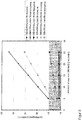
- FIG. 7 the course of conductivity is shown when infusing a 5M NaCl solution at different blood pump speeds. It turns out that by varying the flow rates at the dialysis output conductivities can be easily adjusted as in the untreated plasma.
- the shaded area below a conductivity of 15 mS / cm and above a conductivity of 10 mS / cm indicates the range of conductivity that purified blood may have in order to be safely returned to the patient.
Landscapes
- Health & Medical Sciences (AREA)
- Heart & Thoracic Surgery (AREA)
- Life Sciences & Earth Sciences (AREA)
- Engineering & Computer Science (AREA)
- Veterinary Medicine (AREA)
- Public Health (AREA)
- General Health & Medical Sciences (AREA)
- Animal Behavior & Ethology (AREA)
- Hematology (AREA)
- Vascular Medicine (AREA)
- Anesthesiology (AREA)
- Urology & Nephrology (AREA)
- Biomedical Technology (AREA)
- Chemical & Material Sciences (AREA)
- Emergency Medicine (AREA)
- General Chemical & Material Sciences (AREA)
- Chemical Kinetics & Catalysis (AREA)
- Nuclear Medicine, Radiotherapy & Molecular Imaging (AREA)
- Medicinal Chemistry (AREA)
- Pharmacology & Pharmacy (AREA)
- Organic Chemistry (AREA)
- Bioinformatics & Cheminformatics (AREA)
- Diabetes (AREA)
- Cardiology (AREA)
- Physics & Mathematics (AREA)
- Fluid Mechanics (AREA)
- External Artificial Organs (AREA)
- Medicines Containing Material From Animals Or Micro-Organisms (AREA)
- Medicines That Contain Protein Lipid Enzymes And Other Medicines (AREA)
Description
- Primäre Aufgabe der Nieren ist die Ausscheidung harnpflichtiger Substanzen, den sogenannten Urämie-Toxinen. Nieren chronisch-niereninsuffizienter Patienten können diese Aufgaben nicht mehr erfüllen, was im unbehandelten Zustand rasch zur Vergiftung des Patienten und damit zum Tod führt. Die Dialyse ist das Instrument der Wahl zur Linderung der akuten und chronischen Erkrankung und zur zeitlichen Überbrückung bis ein geeignetes Spenderorgan zur Verfügung steht. Die Dialyse beruht auf dem Prinzip des Stoffaustauschs durch Filtration bzw. Diffusion. Dabei wirken die derzeit verwendeten Membranen als reine Filter- und/oder Diffusionsmembranen und sorgen dafür, dass dem zu reinigenden Blut Stoffe entzogen werden, die eine bestimmte Größe nicht überschreiten. Derzeit gebräuchliche High-flux Dialysemembranen haben eine Ausschlussgrenze von beispielsweise 14.000-17.000 Da. Durch die derzeit angewandten Dialysetechniken ist aber im Regelfall eine vollständige Abtrennung der Urämie-Toxine nicht möglich, da ein Teil der harnpflichtigen Substanzen proteingebundenen vorliegen. Hierbei handelt sich unter anderem um niedermolekulare, aromatische Substanze. Urämie-Toxine, die in der Regel proteingebunden vorliegen können, sind beispielsweise Phenylessigsäure, p-Cresylsulfat, p-Hydroxyhippursäure und Indoxylsulfat. In der Folge akkumulieren die betreffenden Substanzen im Organismus des Patienten und bedingen dort Folgeerkrankungen der akuten und chronischen Niereninsuffizienz. Bei chronisch niereninsuffizienten Patienten treten dadurch bedingt zunehmend Folgeerkrankungen wie Herzkreislauferkrankungen, und daraus resultierend eine erhöhte Sterblichkeitsrate auf. Die Dialyse beschleunigt z. B. die Entstehung von Arteriosklerose. Gefäßerkrankungen wie Arteriosklerose verursachen die häufigsten Todesfälle bei dieser Patientengruppe.
- Ein Grund dafür sind niedermolekulare, hydrophobe und aromatische Urämie-Toxine. Aromatische, hydrophobe Urämie-Toxine weisen eine geringe Wasserlöslichkeit auf. Daher kommt es zwischen diesen Substanzen und Plasmaproteinen meist zur Ausbildung adsorptiver Effekte. Diese adsorptiven Effekte gehen auf unterschiedliche Wechselwirkungen zurück. Hierbei sind vor allem Wasserstoffbrückenbindungen, lonenbindungen und Dipol-Dipol-Wechselwirkungen (van-der-Waals-Kräfte) zu nennen. Durch die Bindung an Plasmaproteine, wie z. B. an Albumin, kann das effektive Molekulargewicht der harnpflichtigen Substanzen derart erhöht werden, dass effektive Molekulargewichte von deutlich größer als 17.000 Da erreicht werden. Das kombinierte Molekulargewicht der proteingebundenen Urämie-Toxine liegt dann meist oberhalb der Ausschlussgrenze der verwendeten Dialysemembranen und diese können somit bei der Dialyse nicht effektiv entfernt werden.
- Durch die Dialyse kann folglich nur der nicht-proteingebundene Anteil des betreffenden Urämie-Toxins abgetrennt werden. Der proteingebundene Anteil (bis zu 95 % der Gesamtmenge des Urämie-Toxins) wird dadurch nicht grundlegend verändert. Aufgrund des Gleichgewichts gemäß des Massenwirkungsgesetz zwischen proteingebundenen und nicht-proteingebundenen Urämie-Toxinen werden unmittelbar nach der Dialyse wieder im Wesentlichen die initialen, nicht-proteingebundene Urämie-Toxinkonzentrationen im Plasma chronisch-niereninsuffizienter Patienten erreicht. Da die pathophysiologischen und pathochemischen Wirkungen im Besonderen von nicht-proteingebundenen Urämie-Toxinen bedingt werden, wird durch diese Gleichgewichtseinstellung ein für die Patienten fataler Prozess initiiert. Dieser circulus vitiosus ist Ursache für die vielfältigen pathologischen Erscheinungsformen der chronischen Niereninsuffizienz. Bis zum heutigen Tag sind keine konventionellen Methoden verfügbar, durch die auch proteingebundene Urämie-Toxine während der Dialyse effektiv aus dem zu reinigenden Blut entfernt werden können.
- Der vorliegenden Erfindung liegt die Aufgabe zugrunde mindestens einen Nachteil des geschilderten Standes der Technik zu vermindern oder zu vermeiden. Insbesondere ist es eine Aufgabe der Erfindung Mittel und Wege zur Verfügung zu stellen, mit denen proteingebundene Urämie-Toxine effektiv aus dem Blut von Dialysepatienten entfernt werden können.
- Die Aufgabe wird gelöst durch die in den Ansprüchen definierten Gegenstände.
- Insbesondere offenbart die vorliegende Erfindung eine Verwendung von vorzugsweise natürlicherweise in Blutplasma vorkommenden Ionen oder Salzen davon in einem Verfahren zur Dialyse mittels eines Dialysators zum Stoffaustausch, insbesondere zur Hämodialyse oder Hämodiafiltration, dadurch gekennzeichnet, dass dem zu reinigenden Blut vor dem Beginn und/oder während der Passage durch den Dialysator ein oder mehrere natürlicherweise in Blutplasma vorkommende Ionen oder Salze davon zugesetzt werden, so dass das zu reinigende Blut zu Beginn und/oder während der Passage durch den Dialysator bzw. im Verlaufe des Dialysatordurchlaufs mindestens in Bezug auf eines dieser Ionen oder Salze davon eine Konzentration aufweist, die gegenüber der physiologischen Konzentration des Ions oder Salzes in Blutplasma erhöht ist.
- Der Erfindung liegt die Erkenntnis zugrunde, dass die Bindungen zwischen bestimmten Urämie-Toxinen und Plasmaproteinen keine kovalenten chemischen Bindungen sind, sondern es sich um reversible hydrophobe oder/und ionische Bindungen handelt. Diese Bindungen beruhen im Wesentlichen auf den elektrostatischen Eigenschaften und Wechselwirkungen der beteiligten Moleküle. Es wurde gefunden, dass die Stärke dieser Bindungen oder Wechselwirkungen erfindungsgemäß durch die Erhöhung einer lonenkonzentration über eine physiologische Konzentration hinaus herabgesetzt werden kann. Durch diesen Schritt kann während der Dialyse der Anteil proteingebundener Urämie-Toxine deutlich reduziert werden. Im Rahmen der konventionellen, im klinischen Alltag durchgeführten Dialyse kann durch zusätzlichen Eintrag von natürlicherweise im Blutplasma vorkommenden Ionen oder Salzen davon vor der Passage des zu reinigenden Blutes durch den Dialysator die Freisetzungsrate protein-gebundener Urämie-Toxine aus der Proteinbindung erhöht werden. Dadurch wird während der Dialyse eine vermehrte Freisetzung proteingebundener urämischer Toxine erreicht und damit in Folge eine verbesserte Abtrennung dieser Substanzen aus dem Blut des Patienten erreicht. Die betreffenden Urämie-Toxine können somit vermehrt und effektiv dialysiert werden. Die zusätzlich dem zu reinigenden Blut zugesetzten Ionen oder Salze davon werden im Dialysator ebenfalls effektiv aus dem Blut dialysiert, so dass das Blut nach der Passage durch den Dialysator in Bezug auf alle natürlicherweise in Blutplasma vorkommenden Ionen oder Salzen davon eine physiologische Konzentration oder mindestens eine tolerierbare Konzentration aufweist und dem Patienten ohne unzumutbare Gefährdung zurückgeführt werden kann.
- In dem Dialyseverfahren der erfindungsgemäßen Verwendung wird ein Dialysator zum Stoffaustausch verwendet. Aufgabe des Dialysators ist es, dem zu reinigenden Blut Urämie-Toxine möglichst effektiv zu entziehen. Im Dialysator sind zu reinigendes Blut und eine Flüssigkeit, gegen die dialysiert werden soll, das sog. Dialysat, durch eine semipermeable Membran voneinander getrennt. In der Regel wird im Dialysator das Dialysat in einem Dialysatkreislauf im Gegenstrom zum Blutfluss im Blutkreislauf geführt. Grundsätzlich ist eine Führung von Blut und Dialysat durch den Dialysator im Gleichstrom auch möglich allerdings ist eine solche Anordnung in der Regel weniger effektiv als eine Anordnung im Gegenstromprinzip. Über die semipermeable Membran des Dialysators erfolgt der Stoffaustausch zwischen Blut auf der einen Seite und Dialysat auf der anderen Seite der Membran. Dabei erfolgt der Stofftransport der Urämie-Toxine über die Membran durch Diffusion (Hämodialyse) oder Diffusion und Konvektion (Hämodiafiltration). Die Selektivität des Stoffaustausches wird einerseits durch die Eigenschaften der Membran, wie z. B. die Porengröße, bestimmt, andererseits durch die Zusammensetzung des Dialysats. Geeignete Dialysatoren sind im Stand der Technik beschrieben und deren Verwendung ist dem Fachmann bekannt. Üblicherweise werden Kapillardialysatoren eingesetzt. Der Dialysator umfasst bevorzugt eine semipermeable High-flux Membran mit einer Größenausschlussgrenze von ≥ 10.000 Da, bevorzugt einer Größenausschlussgrenze die ausgewählt ist aus dem Bereich von 10.000 bis 20.000 Da, besonders bevorzugt von 14.000 bis 17.000 Da. Insbesondere kann ein Dialysator zum Einsatz kommen, der eine semipermeable Membran aufweist mit einer Größenausschlussgrenze, die geeignet ist, die vor dem Beginn und/oder während der Passage durch den Dialysator dem zu reinigenden Blut zugesetzten Ionen oder Salze durch die Membran passieren zu lassen, bevorzugt mit einer Größenausschlussgrenze von ≥ 10.000 Da.
- Im Rahmen der erfindungsgemäßen Verwendung wird das zu reinigende Blut vor dem Beginn der Passage durch den Dialysator und/oder während der Passage durch den Dialysator mit einem oder mehreren natürlicherweise in Blutplasma vorkommenden Ionen oder Salzen davon versetzt, so dass das zu reinigende Blut zu Beginn und/oder während der Passage durch den Dialysator mindestens in Bezug auf eines dieser Ionen oder Salze davon eine Konzentration aufweist, die gegenüber der physiologischen Konzentration des betreffenden Ions oder Salzes in Blutplasma erhöht ist. Dabei wird das zu reinigende Blut in der Regel nach der Entnahme aus dem Patienten und vor dem Beginn und/oder während der Passage durch den Dialysator mit Ionen oder Salzen versetzt. Eine Verabreichung dieser Ionen oder Salze vor der Entnahme des Blutes aus dem Patienten scheidet allein schon deswegen aus, weil damit in Bezug auf diese Ionen oder Salze gegenüber der physiologischen Konzentration erhöhte Konzentrationen im Patienten erreicht werden würden, die ggf. gesundheitsgefährdend sein können.
- Werden dem zu reinigenden Blut vor und/oder während der Passage durch den Dialysator mehr als ein natürlicherweise in Blutplasma vorkommendes Ion oder Salz davon zugesetzt, so können diese Ionen oder Salze davon in einer Konzentration zugesetzt werden, so dass das zu reinigende Blut zu Beginn der Passage und/oder während der Passage durch den Dialysator in Bezug auf eines, mehrere oder alle zugesetzten Ionen oder Salze davon eine Konzentration aufweist, die gegenüber der physiologischen Konzentration der Ionen oder Salze in Blutplasma erhöht ist.
- Als gegenüber der physiologischen Konzentration in Blutplasma erhöht gilt die Konzentration eines Ions oder Salzes davon insbesondere dann, wenn die Konzentration des betreffenden Ions oder Salzes davon im zu reinigenden Blut zu Beginn und/oder während der Passage des Dialysators eine Konzentration aufweist, die gegenüber der physiologischen Konzentration des Ions oder Salzes davon in Blutplasma mindestens um einen Faktor 1,2 erhöht ist, bevorzugt um einen Faktor ≥ 2, besonders bevorzugt um einen Faktor ≥ 1,5 bis 10, ganz besonders bevorzugt von ≥ 2 bis 8.
- Bei den natürlicherweise in Blutplasma vorkommenden Ionen oder Salzen davon, die erfindungsgemäß verwendet werden können, handelt es sich um das Ion Na+ oder das Salz NaCl.
- Als physiologische Konzentration eines natürlicherweise in Blutplasma vorkommenden Ions wird eine Konzentration angesehen, die sich in einem Bereich bewegt, in dem das betreffende Ion üblicherweise bei gesunden Menschen nachgewiesen wird. Im Folgenden sind Beispiele für den Bereich einer physiologischen Konzentration für ausgewählte natürlicherweise in Blutplasma vorkommende Ionen dargestellt:
Ion physiologische Konzentration Na+ 136 bis 146 mmol/l K+ 3,8 bis 5,2 mmol/l Ca2+ 2,3 bis 2,7 mmol/l Mg2+ 0,8 bis 1,2 mmol/l Cl- 96 bis 106 mmol/l HCO3 - 24 bis 28 mmol/l PO4 3- 1,0 bis 1,4 mmol/l Glycin 250 µmol/l - Bevorzugt handelt es sich bei einer physiologischen Konzentration um die höhere Grenze des für das jeweilige Ion angegebenen physiologischen Konzentrationsbereichs.
- Erfindungsgemäß wird dem zu reinigenden Blut vor dem Beginn und/oder während der Passage durch den Dialysator das Ion Na+ oder das Salz NaCl zugesetzt, so dass das zu reinigende Blut zu Beginn und/oder während mindestens eines Teils der Passage durch den Dialysator wenigstens in Bezug auf dieses Ion oder Salz eine Konzentration aufweist, die gegenüber der physiologischen Konzentration dieses Ions oder Salzes in Blutplasma erhöht ist. Insbesondere kann dem zu reinigenden Blut das Ion Na+ oder das Salz NaCl derart zugesetzt werden, dass das zu reinigende Blut zu Beginn und/oder während der Passage durch den Dialysator eine Na+- oder eine NaCI-Konzentration aufweist von ≥ 0,25 M, bevorzugt von ≥ 0,3 M, besonders bevorzugt von ≥ 0,25 M bis 1,5 M, ganz besonders bevorzugt von ≥ 0,3 M bis 1 M.
- Das zu reinigende Blut wird bevorzugt nach der Entnahme aus dem Patienten und vor dem Beginn der Passage durch den Dialysator mit natürlicherweise in Blutplasma vorkommenden Ionen oder Salzen davon versetzt. D. h. zum Zeitpunkt des ggf. ersten Kontaktes zwischen zu reinigendem Blut und semipermeabler Membran des Dialysators liegt mindestens eines dieser Ionen oder Salze im zu reinigenden Blut in einer Konzentration vor, die gegenüber der physiologischen Konzentration des betreffenden Ions oder Salzes erhöht ist. Dies hat den Vorteil, dass die Lösung der Urämie-Toxine aus der Proteinbindung bereits zu Beginn der Passage durch den Dialysator erfolgt und somit die volle Kapazität des Dialysators für den Stoffaustausch mit dem Dialysat zur Verfügung steht.
- Um das zu reinigende Blut vor dem Beginn und/oder während der Passage durch den Dialysator mit einem natürlicherweise in Blutplasma vorkommenden Ion oder Salz davon zu versetzen, kann das zu reinigende Blut beispielsweise mit einer Lösung versetzt werden, die das betreffende Ion oder Salz davon in geeigneter Konzentration enthält. Die tatsächliche Konzentration des Ions oder Salzes in dieser Lösung hängt von verschiedenen Parametern ab. Die Konzentration in der Lösung, also die Ausgangskonzentration, hängt beispielsweise davon ab, in welcher Konzentration das betreffende Ion oder Salz im zu reinigenden Blut zu Beginn und/oder während der Passage durch den Dialysator vorliegen soll, also von der Zielkonzentration, und welche Flussraten im Blutkreislauf und bei der Zudosierung der betreffenden Lösung herrschen sollen. Die Flussraten können im Einzelfall variieren und hängen sowohl von individuellen Parametern der Patienten ab als auch von gerätespezifischen Parametern oder gewünschten Diffusions- und/oder Konvektionsraten. Geeignete Ausgangskonzentrationen in der Lösung und geeignete Flussraten können durch den Fachmann zuverlässig und ohne unzumutbaren Aufwand für den Einzelfall bestimmt werden.
- Üblicherweise werden in der Hämodialyse und der Hämodiafiltration Dialysat- oder Substitutionslösungen eingesetzt, die insbesondere in Bezug auf ihre lonen- oder Salzzusammensetzung physiologische Konzentrationen aufweisen. Solche physiologischen Elektrolytlösungen können auch zum Eintrag von natürlicherweise in Blutplasma vorkommenden Ionen oder Salzen davon bei der erfindungsgemäßen Verwendung eingesetzt werden, wobei die physiologische Elektrolytlösung mindestens ein natürlicherweise in Blutplasma vorkommendes Ion oder Salz davon in einer Konzentration enthalten muss, die gegenüber der physiologischen Konzentration des betreffenden Ions oder Salzes erhöht ist. Insbesondere kann das zu reinigende Blut nach der Entnahme und vor dem Beginn und/oder während der Passage durch den Dialysator mit einer Elektrolytlösung versetzt werden, die in Bezug auf ein oder mehrere natürlicherweise in Blutplasma vorkommende Ionen oder Salze davon eine Konzentration aufweist, die gegenüber der physiologischen Konzentration der betreffenden Ionen oder Salze in Blutplasma erhöht ist, während die Elektrolytlösung zusätzlich andere natürlicherweise in Blutplasma vorkommende Ionen oder Salze davon in physiologischer Konzentration enthalten kann.
- Die Entfernung der Urämie-Toxine aus dem zu reinigenden Blut erfolgt während der Passage durch den Dialysator durch Diffusion oder Konvektion und Diffusion an der semipermeablen Membran des Dialysators. Die semipermeable Membran des Dialysators ist permeabel für die natürlicherweise in Blutplasma vorkommenden Ionen oder Salze, sodass im Dialysator nicht nur eine effektive Entfernung von Urämie-Toxinen erfolgt sondern gleichzeitig auch überschüssige Mengen an vorher zugeführten Ionen oder Salzen dialysiert werden. Damit weist das gereinigte Blut nach der Passage durch den Dialysator für alle natürlicherweise in Blutplasma vorkommenden Ionen oder Salze davon im Wesentlichen wieder eine physiologische Konzentration auf oder wenigstens eine Konzentration, die für den Patienten tolerierbar ist. Im Rahmen der erfindungsgemäßen Verwendung kann vorgesehen sein, dass bestimmte Parameter des Blutes vor der Rückführung des Blutes in den Patienten gemessen und auf Überschreitung von Grenzwerten hin überprüft werden. So kann insbesondere vorgesehen sein, die Rückführung des gereinigten Blutes nur zu erlauben solange ein vorher festgelegter Grenzwert für einen solchen gemessenen Parameter nicht überschritten worden ist. Ein Beispiel für einen solchen Parameter ist die Leitfähigkeit des Blutes. Wird bei dem gereinigten Blut nach der Passage durch den Dialysator und vor der Rückführung in den Patienten eine Leitfähigkeit gemessen, die einen bestimmten Grenzwert übersteigt, beispielsweise einen Grenzwert von 15 mS/cm, so kann die Rückführung des Blutes in den Patienten unterbrochen und/oder eine Warnmeldung ausgegeben werden.
- Vorliegend wird auch ein Verfahren offenbart zum Betrieb eines Dialysegerätes, wobei das Verfahren Schritte zur Ausführung der erfindungsgemäßen Verwendung umfasst.
- Die erfindungsgemäße Verwendung kann also mittels eines herkömmlichen Dialysegerätes erfolgen, wobei dem zu reinigenden Blut vor Beginn und/oder während der Passage durch den Dialysator eine Lösung regel- und/oder steuerbar zudosierbar ist, so dass dem zu reinigenden Blut vor dem Beginn und/oder während der Passage durch den Dialysator ein oder mehrere in der Lösung enthaltene und natürlicherweise in Blutplasma vorkommende Ionen oder Salze davon zugesetzt werden, so dass das zu reinigende Blut zu Beginn und/oder während der Passage durch den Dialysator mindestens in Bezug auf eines dieser Ionen oder Salze davon eine Konzentration aufweist, die gegenüber der physiologischen Konzentration des Ions oder Salzes in Blutplasma erhöht ist.
- Ein solches Dialysegerät umfasst in der Regel einen Dialysatkreislauf, einen Blutkreislauf und einen Dialysator für den Stoffaustausch zwischen zu reinigendem Blut des Blutkreislaufs und Dialysat des Dialysatkreislaufs.
- Im Dialystkreislauf wird das Dialysat bewegt, gegen welches das zu reinigende Blut dialysiert werden soll. Dabei wird unter dem Begriff "Dialysatkreislauf" eine Leitungsanordnung verstanden in der das Dialysat aus einem Reservoir z. B. durch eine Pumpe derart gerichtet durch den Dialysator bewegt werden kann, so dass das Dialysat den Dialysator im Gegenstrom zum zu reinigenden Blut auf der dem Blut abgewandten Seite der Membran des Dialysators geführt wird. Das Dialysat nimmt durch die semipermeable Membran des Dialysators diffundierte Stoffe, wie z. B. Urämie-Toxine aber auch natürlicherweise im Blutplasma vorkommende Ionen oder Salze, auf und führt diese aus dem Dialysator ab. Nach der Passage durch den Dialysator kann das "verbrauchte" Dialysat abgeführt und ggf. in einem weiteren Behälter aufgefangen und gesammelt werden. Alternativ dazu kann das Dialysat dem Dialysatkreislauf für eine weitere Passage des Dialysators zugeführt werden.
- Im Blutkreislauf wird das zu reinigende Blut nach der Entnahme (also "extrakorporal") bewegt. Dabei wird unter dem Begriff "Blutkreislauf" oder "extrakorporaler Blutkreislauf" eine Leitungsanordnung verstanden, in der das zu reinigende Blut dem Patienten entnommen wird und z. B. durch eine Pumpe derart gerichtet durch den Dialysator bewegt werden kann, so dass das zu reinigende Blut den Dialysator im Gegenstrom zum Dialysat auf der dem Dialysat abgewandten Seite der semipermeablen Membran des Dialysators geführt wird.
- Nach der Passage durch den Dialysator wird das gereinigte Blut dem Patienten wieder zurückgeführt. Grundsätzlich ist es auch möglich, dass Dialysat und Blut im Dialysator in paralleler Flussrichtung bewegt werden, allerdings ist eine solche Anordnung in der Regel weniger effektiv als eine Anordnung im Gegenstromprinzip.
- Dabei werden die Ionen oder Salze dem zu reinigenden Blut im Blutkreislauf an einer geeigneten Stelle nach der Entnahme und vor dem Eintritt des Blutes in den Dialysator und/oder im Dialysator zugeführt. Dazu kann das Dialysegerät einen zusätzlichen Zugang oder Anschluss im Blutkreislauf zwischen dem Einlass für das zu reinigende Blut und dem Eintritt in den Dialysator aufweisen. Das Dialysegerät kann ggf. ein Reservoir zur Aufnahme einer Lösung enthaltend ein oder mehrere natürlicherweise in Blutplasma vorkommende Ionen oder Salze davon aufweisen, wobei das Reservoir mit dem Blutkreislauf flüssigkeitsleitend verbunden ist. Zusätzlich kann das Dialysegerät eine Regel- und/oder Steuereinheit aufweisen zur gezielten Abgabe von Lösung aus dem Reservoir. In einer bevorzugten Ausführungsform ist die Regel- und/oder Steuereinheit derart ausgebildet, dass sich darüber zusätzlich auch Parameter des Dialysekreislaufs und/oder des Blutkreislaufes, wie z. B. die Flussgeschwindigkeit des zu reinigenden Blutes und/oder des Dialysats, durch einen Benutzer regeln und/oder steuern lassen.
- Im Folgenden wird die Erfindung anhand von Ausführungsbeispielen näher erläutert.
- Figuren:
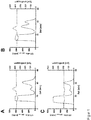
- Figur 1
- zeigt den Effekt von NaCl auf die Plasma-Proteinbindung unterschiedlicher Urämie-Toxine mittels Größenausschlusschromatographie, A: Plasma mit p-Cresol, 0,5 M NaCl, B: Plasma mit p-Hydroxyhippursäure, 0,5 M NaCl, C: Plasma mit Indoxylsulfat, 0,3 M NaCl.
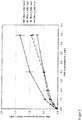
- Figur 2
- zeigt den Anteil proteingebundener Phenylessigsäure (PAA) am Gesamtge-halt PAA in % bei steigenden NaCI-Konzentrationen.
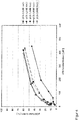
- Figur 3
- zeigt die Mengenverhältnisse an proteingebundener und freier PAA in Abhängigkeit der NaCI-Konzentration.
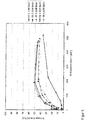
- Figur 4
- zeigt den Anteil freien p-Cresylsulfates in % bei einem bestimmten Gesamtge-halt an p-Cresylsulfat in Abhängigkeit der NaCI-Konzentration.
- Figur 5
- zeigt den Anteil freien Indoxylsulfat in % bei einem bestimmten Gesamtgehalt an Indoxylsulfat in Abhängigkeit der NaCI-Konzentration.
- Figur 6
- zeigt die Konzentration von Indoxylsulfat bei Einsatz von in Indoxylsulfat in 1.) einer wässerigen NaCI-Lösung, 2.) in Hämofiltrat, 3.) in einer 4.5%igen Albuminlösung sowie 4.) in einer Lösung aus Hämofiltrat, in einer 4.5%igen Albuminlösung im Dialysat in Abhängigkeit des Porendurchmessers des verwendeten Hämodialysefilters.
- Figur 7
- zeigt den Verlauf der Leitfähigkeit bei Infusion einer 5M NaCI-Lösung bei einer Dialysatflußrate QD von 500ml/min sowie unterschiedlichen Blutpumpengeschwindigkeiten (200ml/min bzw. 500 ml/min) an unterschiedlichen Stellen im Blutkreislauf mit Blod bag = Blut bei Aufnahme in den Blutkreislauf, Dialyzer in = unmittelbar vor dem Eintritt des Blutes in den Dialysator, Dialyzer out = unmittelbar nach dem Austritt aus dem Dialysator.
- Figur 8
- zeigt den Verlauf der Leitfähigkeit bei Infusion einer 5M NaCI-Lösung bei einer Dialysatflußrate QD von 800ml/min sowie unterschiedlichen Blutpumpengeschwindigkeiten (200ml/min bzw. 500 ml/min) an unterschiedlichen Stellen im Blutkreislauf mit Blod bag = Blut bei Aufnahme in den Blutkreislauf, Dialyzer in = unmittelbar vor dem Eintritt des Blutes in den Dialysator, Dialyzer out = unmittelbar nach dem Austritt aus dem Dialysator.
- In in-vitro-Versuchsreihen wurde der Einfluss von Kochsalz auf den proteingebundenen Anteil von Urämietoxinen untersucht. Plasma gesunder Probanden wurde mit repräsentativen Toxinen aus der Gruppe der proteingebundenen, hydrophoben und aromatischen Urämietoxine versetzt und mit Hilfe chromatographischer Verfahren bis zur Homogenität aufgereinigt. Unter Verwendung von Größenausschlusschromatographie (SEC) wurden proteingebundene und freie Urämietoxine voneinander getrennt (siehe
Figur 1 ). Verwendung fanden folgende Kochsalzkonzentrationen: 0,154 M (0,9 %) Kochsalz als physiologischer Wert und Ausgangspunkt für die weitere Untersuchung, 0,308 M (1,8 %), 0,5 M und 1 M Kochsalz. Die quantitative Bestimmung der Urämietoxinmenge erfolgte chromatographisch durch Vergleich mit Kalibrierkurven. Der Effekt ansteigender NaCI-Konzentration auf den Anteil protein-gebundener Phenylessigsäure als beispielhaftes aromatisches, nierdermolekulares Urämie-Toxin ist inFigur 3 gezeigt. - Um den proteingebundenen und freien Teil der Toxine in proteinhaltigen Medien schneller als über die Größenausschlußchromatographie quantifizieren zu können, wurde eine Methode entwickelt, die einerseits über ein Membranfiltrationsverfahren den freien Anteil abtrennt, und in der Hitze das Protein ausfällt, so dass der vorher proteingebundene Anteil nun über RP-HPLC bestimmt werden kann. Im Experiment, das in
Figur 3 wiedergegeben ist, wurden steigende Mengen PAA zu Plasma dazugegeben und der proteingebundene Anteil nach Filtration der freien PAA mittels HPLC bestimmt. Dabei markiert die Kurve für 0.15M NaCl die physiologische lonenstärke im Plasma. Die PAA-Konzentration in uremischen Plasma liegt bei etwa 4 mM. Erhöht man durch Zugabe von Kochsalz die lonenstärke auf ≥ 0.25 M NaCl, sinkt der proteingebundene Anteil um etwa 50% ab (siehe Datenpunkte bei 4 mM PAA). D. h., dass bei höheren lonenstärken die Proteinbindung von PAA im Plasma abnimmt. Wie inFiguren 4 und5 dargestellt, kann dieser Effekt auch für die Urämie-Toxine p-Cresylsulfat und Indoxylsulfat beobachtet werden. Der Effekt ist also nicht auf ein bestimmtes Urämie-Toxin beschränkt, sondern kann für verschiedene proteingebundene Urämie-Toxine reproduziert werden. InFigur 6 ist die nominale Porengröße des Filters variiert worden, mit dem der freie bzw. der proteingebundene Anteil des Urämie-Toxins iS (Indoxylsulfat) getrennt worden ist. Erst bei einer nominalen Pore von > 50.000 gehen nennenswerte Anteile an proteingebundenem Toxin in das Filtrat über. Dies spricht dafür, dass das Toxin auch im Plasma vorwiegend an HSA gebunden vorliegt. - Zur Gewährleistung einer physiologischen NaCI-Konzentration am Dialysatorausgang, wurde bei konstanter Infusion einer 5 M wässerigen NaCI-Lösung der Fluss der Blutpumpe und der Dialysatpumpe variiert. Der Fluss der 5 M wässerigen NaCI-Lösung wurde jeweils so variiert, dass sich am Dialysatoreingang eine effektive NaCI-Konzentration von 0,5 M einstellt. Die jeweils resultierende Leitfähigkeit am Dialysatorausgang wurde bestimmt.
- In der
Figur 7 ist der Verlauf der Leitfähigkeit bei Infusion einer 5M NaCI-Lösung bei unterschiedlichen Blutpumpengeschwindigkeiten gezeigt. Es zeigt sich, dass durch Variation der Flussgeschwindigkeiten am Dialyseausgang problemlos Leitfähigkeiten wie im unbehandelten Plasma eingestellt werden können. Der schraffierte Bereich unterhalb einer Leitfähigkeit von 15 mS/cm und oberhalb einer Leitfähigkeit von 10 mS/cm gibt den Bereich der Leitfähigkeit an, den gereinigtes Blut aufweisen kann um gefahrlos an den Patienten zurückgeführt werden zu können. Ein Weg die lonenstärke am Ende des Dialysators auch bei sehr hohen Blutflußraten niedrig zu halten, stellt die Erhöhung der Dialysatflußrate dar. Dies ist aus dem Vergleich derFiguren 7 und8 zu sehen. Während inFigur 7 die Dialysatflußrate QD 500ml/min betrug, so ist inFigur 8 eine Dialysatflußrate von QD 800ml/min verwendet worden.
Claims (8)
- Ionen oder Salze davon zur Verwendung in einem Verfahren zur Hämodialyse oder Hämodiafiltration mittels eines Dialysators zum Stoffaustausch, dadurch gekennzeichnet, dass dem zu reinigenden Blut vor dem Beginn und/oder während der Passage durch den Dialysator ein oder mehrere natürlicherweise in Blutplasma vorkommende Ionen oder Salze davon zugesetzt werden, so dass das zu reinigende Blut zu Beginn der Passage durch den Dialysator mindestens in Bezug auf eines dieser Ionen oder Salze davon eine Konzentration aufweist, die gegenüber der physiologischen Konzentration des Ions oder Salzes in Blutplasma um einen Faktor ≥ 1,5 bis 10 erhöht ist,
wobei es sich bei den Ionen oder Salzen davon um das Ion Na+ oder das Salz NaCl handelt. - Ionen oder Salze davon nach einem der vorhergehenden Ansprüche, wobei dem zu reinigenden Blut vor dem Beginn der Passage durch den Dialysator das Ion Na+ oder das Salz NaCl zugesetzt werden, so dass das zu reinigende Blut zu Beginn der Passage durch den Dialysator mindestens in Bezug auf das Ion Na+ oder das Salz NaCl eine Konzentration aufweist, die gegenüber der physiologischen Konzentration des Ions oder Salzes in Blutplasma um einen Faktor von ≥ 2 bis 8 erhöht ist.
- Ionen oder Salze davon nach einem der vorhergehenden Ansprüche, wobei das zu reinigende Blut zu Beginn der Passage durch den Dialysator eine NaCI-Konzentration aufweist von ≥ 0,25 M, bevorzugt von ≥ 0,3 M, besonders bevorzugt von ≥ 0,25 M bis 1,5 M, ganz besonders bevorzugt von ≥ 0,3 M bis 1 M.
- Ionen oder Salze davon nach einem der vorhergehenden Ansprüche, wobei das zu reinigende Blut vor dem Beginn der Passage durch den Dialysator mit einer Elektrolytlösung versetzt wird, die in Bezug auf das Ion Na+ oder das Salz NaCl eine Konzentration aufweist, die gegenüber der physiologischen Konzentration in Blutplasma erhöht ist, während die Elektrolytlösung zusätzlich andere natürlicherweise in Blutplasma vorkommende Ionen oder Salze davon in physiologischer Konzentration enthält.
- Ionen oder Salze davon nach einem der vorhergehenden Ansprüche, wobei der Dialysator eine semipermeable Membran aufweist mit einer Größenausschlussgrenze, die geeignet ist, die vor dem Beginn der Passage durch den Dialysator dem zu reinigenden Blut zugesetzten Ion Na+ oder Salz NaCl durch die Membran passieren zu lassen, bevorzugt mit einer Größenausschlussgrenze von ≥ 10.000 Da.
- Ionen oder Salze davon nach einem der vorhergehenden Ansprüche, wobei das Blut nach der Passage durch den Dialysator und vor einer Rückführung in den Patienten daraufhin überprüft wird, ob ausgewählte Parameter des Blutes vorher festgelegte Grenzwerte überschreiten und wobei, sollte ein solcher Grenzwert überschritten sein, die Rückführung des Blutes in den Patienten unterbunden wird.
- Ionen oder Salze davon nach Anspruch 6, wobei die Parameter die Leitfähigkeit umfassen.
- Ionen oder Salze davon nach Anspruch 7, wobei eine Überschreitung eines Grenzwertes vorliegt, wenn die Leitfähigkeit des Blutes eine Leitfähigkeit von 15 mS/cm übersteigt.
Applications Claiming Priority (2)
| Application Number | Priority Date | Filing Date | Title |
|---|---|---|---|
| DE102011078700A DE102011078700A1 (de) | 2011-07-05 | 2011-07-05 | Dialyseverfahren zur Entfernung proteingebundener Toxine aus dem Blut von akut oder chronisch-niereninsuffizienten Patienten |
| PCT/EP2012/062658 WO2013004605A1 (de) | 2011-07-05 | 2012-06-29 | Dialyseverfahren zur entfernung proteingebundener toxine aus dem blut von akut oder chronisch-niereninsuffizienten patienten |
Publications (2)
| Publication Number | Publication Date |
|---|---|
| EP2729199A1 EP2729199A1 (de) | 2014-05-14 |
| EP2729199B1 true EP2729199B1 (de) | 2018-06-27 |
Family
ID=46581916
Family Applications (1)
| Application Number | Title | Priority Date | Filing Date |
|---|---|---|---|
| EP12740082.8A Not-in-force EP2729199B1 (de) | 2011-07-05 | 2012-06-29 | Dialyseverfahren zur entfernung proteingebundener toxine aus dem blut von akut oder chronisch-niereninsuffizienten patienten |
Country Status (4)
| Country | Link |
|---|---|
| EP (1) | EP2729199B1 (de) |
| JP (2) | JP2014524794A (de) |
| DE (1) | DE102011078700A1 (de) |
| WO (1) | WO2013004605A1 (de) |
Citations (2)
| Publication number | Priority date | Publication date | Assignee | Title |
|---|---|---|---|---|
| WO1991006326A1 (en) * | 1989-10-31 | 1991-05-16 | The Regents Of The University Of California | Continuous hemodialysis using citrate |
| US20100096329A1 (en) * | 2008-10-16 | 2010-04-22 | Fresenius Medical Care Holdings, Inc. | Method of Removing Protein-Bound Deleterious Substances During Extracorporeal Renal Replacement Treatment |
Family Cites Families (13)
| Publication number | Priority date | Publication date | Assignee | Title |
|---|---|---|---|---|
| US4581141A (en) * | 1978-02-27 | 1986-04-08 | Purdue Research Foundation | Dialysis material and method for removing uremic substances |
| GB8919766D0 (en) * | 1989-09-01 | 1989-10-18 | Schwitzer Europ Ltd | Sealing devices |
| DE4309410A1 (de) * | 1993-03-19 | 1995-02-16 | Stange Jan | Material, Verfahren und Einrichtung zur selektiven Trennung frei gelöster und stoffgebundener Stoffe aus flüssigen Stoffgemischen sowie Verfahren zur Herstellung des Materials |
| JP3608745B2 (ja) * | 1994-08-11 | 2005-01-12 | 旭化成メディカル株式会社 | 体液処理装置 |
| JPH09327511A (ja) * | 1996-06-12 | 1997-12-22 | A S A Sangyo Kk | 腹膜透析液の回収・再生方法並びにそのための処理装置及び付属器具 |
| AU7696198A (en) * | 1997-05-22 | 1998-12-11 | Medtrain, Inc. | Apparatus and method for high efficiency hemofiltration |
| DE19746377C1 (de) * | 1997-10-21 | 1999-07-01 | Fresenius Medical Care De Gmbh | Blutbehandlungsvorrichtung mit einer Einrichtung zur kontinuierlichen Überwachung des Blutdrucks des Patienten |
| US7067060B2 (en) * | 2000-01-11 | 2006-06-27 | Nephros, Inc. | Ionic enhanced dialysis/diafiltration system |
| EP1362605A1 (de) * | 2002-05-14 | 2003-11-19 | Bernhard Dr. Kreymann | Dialysevorrichtung zur Entfernung proteingebundener Substanzen |
| US8133194B2 (en) * | 2006-02-22 | 2012-03-13 | Henry Ford Health System | System and method for delivery of regional citrate anticoagulation to extracorporeal blood circuits |
| US8211048B2 (en) * | 2006-02-22 | 2012-07-03 | Henry Ford Health System | System and method for delivery of regional citrate anticoagulation to extracorporeal blood circuits |
| GB0608444D0 (en) * | 2006-04-27 | 2006-06-07 | Binding Site The Ltd | Dialysis |
| WO2009071103A1 (en) * | 2007-12-03 | 2009-06-11 | Hepa Wash Gmbh | Dialysate regeneration unit |
-
2011
- 2011-07-05 DE DE102011078700A patent/DE102011078700A1/de not_active Ceased
-
2012
- 2012-06-29 JP JP2014517725A patent/JP2014524794A/ja active Pending
- 2012-06-29 EP EP12740082.8A patent/EP2729199B1/de not_active Not-in-force
- 2012-06-29 WO PCT/EP2012/062658 patent/WO2013004605A1/de not_active Ceased
-
2017
- 2017-04-12 JP JP2017078988A patent/JP6337175B2/ja not_active Expired - Fee Related
Patent Citations (2)
| Publication number | Priority date | Publication date | Assignee | Title |
|---|---|---|---|---|
| WO1991006326A1 (en) * | 1989-10-31 | 1991-05-16 | The Regents Of The University Of California | Continuous hemodialysis using citrate |
| US20100096329A1 (en) * | 2008-10-16 | 2010-04-22 | Fresenius Medical Care Holdings, Inc. | Method of Removing Protein-Bound Deleterious Substances During Extracorporeal Renal Replacement Treatment |
Also Published As
| Publication number | Publication date |
|---|---|
| JP2014524794A (ja) | 2014-09-25 |
| EP2729199A1 (de) | 2014-05-14 |
| JP6337175B2 (ja) | 2018-06-06 |
| JP2017153972A (ja) | 2017-09-07 |
| WO2013004605A1 (de) | 2013-01-10 |
| DE102011078700A1 (de) | 2013-01-10 |
Similar Documents
| Publication | Publication Date | Title |
|---|---|---|
| DE69929555T2 (de) | Verwendung einer Flüssigkeit zur Herstellung einer Dialyselösung für die kontinuierliche rezirkulierende Peritonealdialyse | |
| EP2934619B1 (de) | Vorrichtung zur entfernung proteingebundener toxine aus blutplasma | |
| EP1534359B1 (de) | Vorrichtung zur entfernung proteingebundener substanzen | |
| DE2827256C2 (de) | Hämodialyse-Vorrichtung | |
| EP2934620A1 (de) | Hämodiafiltrationsverfahren | |
| DE3101159C2 (de) | Verfahren zur Reinigung von Blut und künstliche Niere zur Durchführung des Verfahrens | |
| EP2190498A1 (de) | Verfahren und vorrichtung zur einsparung von diafiltrat | |
| DE1791186B1 (de) | Dialysator fuer den Gebrauch als Kuenstliche Niere | |
| EP3417937B1 (de) | Hämokompatibler adsorber zur dialyse proteingebundener urämietoxine | |
| AT12072U1 (de) | Dialysemembran zur behandlung von multiplem myelom | |
| EP2941283B1 (de) | Vorrichtung und verfahren zur entfernung proteingebundener toxine aus dem blut von patienten unter einsatz eines hochfrequenten, elektromagnetischen feldes und eines elektrostatischen gleichfeldes | |
| EP2729198B1 (de) | Dialyseverfahren zur entfernung proteingebundener toxine aus dem blut von patienten unter einsatz hochfrequenter, elektromagnetischer felder | |
| DE19854338B4 (de) | Verfahren und Einrichtung zur Nierenersatztherapie | |
| EP2440265B1 (de) | Dialysevorrichtung | |
| DE102008010691A1 (de) | Bioäquivalenzdialyse | |
| EP2729199B1 (de) | Dialyseverfahren zur entfernung proteingebundener toxine aus dem blut von akut oder chronisch-niereninsuffizienten patienten | |
| WO2020207992A1 (de) | Verfahren und vorrichtung zur reinigung von blut | |
| WO2013004776A1 (de) | Zufuhr von substanzen vor der hämodialysemembran, z. b. von acetylcystein, in dialyseverfahren zur entfernung proteingebundener toxine aus dem blut | |
| DE19624250A1 (de) | Einrichtung zur Entfernung von Substanzen aus Blut durch rezirkulationsbedingte Filtration bei der Hämodialyse | |
| EP3762065B1 (de) | Vereinfachte regeneration von apheresesäulen | |
| DE102013021957A1 (de) | Verfahren zur Entfernung proteingebundener Urämietoxine durch Adsorption an dialysierbare Hilfsstoffe | |
| DE29825200U1 (de) | Einrichtung zur Nierenersatztherapie |
Legal Events
| Date | Code | Title | Description |
|---|---|---|---|
| PUAI | Public reference made under article 153(3) epc to a published international application that has entered the european phase |
Free format text: ORIGINAL CODE: 0009012 |
|
| 17P | Request for examination filed |
Effective date: 20140131 |
|
| AK | Designated contracting states |
Kind code of ref document: A1 Designated state(s): AL AT BE BG CH CY CZ DE DK EE ES FI FR GB GR HR HU IE IS IT LI LT LU LV MC MK MT NL NO PL PT RO RS SE SI SK SM TR |
|
| RAP1 | Party data changed (applicant data changed or rights of an application transferred) |
Owner name: MEMBRANA GMBH |
|
| DAX | Request for extension of the european patent (deleted) | ||
| RAP1 | Party data changed (applicant data changed or rights of an application transferred) |
Owner name: 3M INNOVATIVE PROPERTIES COMPANY |
|
| 17Q | First examination report despatched |
Effective date: 20160502 |
|
| STAA | Information on the status of an ep patent application or granted ep patent |
Free format text: STATUS: EXAMINATION IS IN PROGRESS |
|
| GRAP | Despatch of communication of intention to grant a patent |
Free format text: ORIGINAL CODE: EPIDOSNIGR1 |
|
| STAA | Information on the status of an ep patent application or granted ep patent |
Free format text: STATUS: GRANT OF PATENT IS INTENDED |
|
| INTG | Intention to grant announced |
Effective date: 20180115 |
|
| GRAS | Grant fee paid |
Free format text: ORIGINAL CODE: EPIDOSNIGR3 |
|
| GRAA | (expected) grant |
Free format text: ORIGINAL CODE: 0009210 |
|
| STAA | Information on the status of an ep patent application or granted ep patent |
Free format text: STATUS: THE PATENT HAS BEEN GRANTED |
|
| REG | Reference to a national code |
Ref country code: FR Ref legal event code: PLFP Year of fee payment: 7 |
|
| AK | Designated contracting states |
Kind code of ref document: B1 Designated state(s): AL AT BE BG CH CY CZ DE DK EE ES FI FR GB GR HR HU IE IS IT LI LT LU LV MC MK MT NL NO PL PT RO RS SE SI SK SM TR |
|
| REG | Reference to a national code |
Ref country code: GB Ref legal event code: FG4D Free format text: NOT ENGLISH |
|
| REG | Reference to a national code |
Ref country code: AT Ref legal event code: REF Ref document number: 1011740 Country of ref document: AT Kind code of ref document: T Effective date: 20180715 |
|
| REG | Reference to a national code |
Ref country code: DE Ref legal event code: R096 Ref document number: 502012012949 Country of ref document: DE |
|
| REG | Reference to a national code |
Ref country code: IE Ref legal event code: FG4D Free format text: LANGUAGE OF EP DOCUMENT: GERMAN |
|
| PG25 | Lapsed in a contracting state [announced via postgrant information from national office to epo] |
Ref country code: SE Free format text: LAPSE BECAUSE OF FAILURE TO SUBMIT A TRANSLATION OF THE DESCRIPTION OR TO PAY THE FEE WITHIN THE PRESCRIBED TIME-LIMIT Effective date: 20180627 Ref country code: LT Free format text: LAPSE BECAUSE OF FAILURE TO SUBMIT A TRANSLATION OF THE DESCRIPTION OR TO PAY THE FEE WITHIN THE PRESCRIBED TIME-LIMIT Effective date: 20180627 Ref country code: FI Free format text: LAPSE BECAUSE OF FAILURE TO SUBMIT A TRANSLATION OF THE DESCRIPTION OR TO PAY THE FEE WITHIN THE PRESCRIBED TIME-LIMIT Effective date: 20180627 Ref country code: NO Free format text: LAPSE BECAUSE OF FAILURE TO SUBMIT A TRANSLATION OF THE DESCRIPTION OR TO PAY THE FEE WITHIN THE PRESCRIBED TIME-LIMIT Effective date: 20180927 Ref country code: BG Free format text: LAPSE BECAUSE OF FAILURE TO SUBMIT A TRANSLATION OF THE DESCRIPTION OR TO PAY THE FEE WITHIN THE PRESCRIBED TIME-LIMIT Effective date: 20180927 |
|
| REG | Reference to a national code |
Ref country code: NL Ref legal event code: MP Effective date: 20180627 |
|
| REG | Reference to a national code |
Ref country code: LT Ref legal event code: MG4D |
|
| PG25 | Lapsed in a contracting state [announced via postgrant information from national office to epo] |
Ref country code: GR Free format text: LAPSE BECAUSE OF FAILURE TO SUBMIT A TRANSLATION OF THE DESCRIPTION OR TO PAY THE FEE WITHIN THE PRESCRIBED TIME-LIMIT Effective date: 20180928 Ref country code: RS Free format text: LAPSE BECAUSE OF FAILURE TO SUBMIT A TRANSLATION OF THE DESCRIPTION OR TO PAY THE FEE WITHIN THE PRESCRIBED TIME-LIMIT Effective date: 20180627 Ref country code: LV Free format text: LAPSE BECAUSE OF FAILURE TO SUBMIT A TRANSLATION OF THE DESCRIPTION OR TO PAY THE FEE WITHIN THE PRESCRIBED TIME-LIMIT Effective date: 20180627 Ref country code: HR Free format text: LAPSE BECAUSE OF FAILURE TO SUBMIT A TRANSLATION OF THE DESCRIPTION OR TO PAY THE FEE WITHIN THE PRESCRIBED TIME-LIMIT Effective date: 20180627 |
|
| PG25 | Lapsed in a contracting state [announced via postgrant information from national office to epo] |
Ref country code: NL Free format text: LAPSE BECAUSE OF FAILURE TO SUBMIT A TRANSLATION OF THE DESCRIPTION OR TO PAY THE FEE WITHIN THE PRESCRIBED TIME-LIMIT Effective date: 20180627 |
|
| PG25 | Lapsed in a contracting state [announced via postgrant information from national office to epo] |
Ref country code: CZ Free format text: LAPSE BECAUSE OF FAILURE TO SUBMIT A TRANSLATION OF THE DESCRIPTION OR TO PAY THE FEE WITHIN THE PRESCRIBED TIME-LIMIT Effective date: 20180627 Ref country code: SK Free format text: LAPSE BECAUSE OF FAILURE TO SUBMIT A TRANSLATION OF THE DESCRIPTION OR TO PAY THE FEE WITHIN THE PRESCRIBED TIME-LIMIT Effective date: 20180627 Ref country code: PL Free format text: LAPSE BECAUSE OF FAILURE TO SUBMIT A TRANSLATION OF THE DESCRIPTION OR TO PAY THE FEE WITHIN THE PRESCRIBED TIME-LIMIT Effective date: 20180627 Ref country code: IS Free format text: LAPSE BECAUSE OF FAILURE TO SUBMIT A TRANSLATION OF THE DESCRIPTION OR TO PAY THE FEE WITHIN THE PRESCRIBED TIME-LIMIT Effective date: 20181027 Ref country code: EE Free format text: LAPSE BECAUSE OF FAILURE TO SUBMIT A TRANSLATION OF THE DESCRIPTION OR TO PAY THE FEE WITHIN THE PRESCRIBED TIME-LIMIT Effective date: 20180627 Ref country code: RO Free format text: LAPSE BECAUSE OF FAILURE TO SUBMIT A TRANSLATION OF THE DESCRIPTION OR TO PAY THE FEE WITHIN THE PRESCRIBED TIME-LIMIT Effective date: 20180627 |
|
| REG | Reference to a national code |
Ref country code: CH Ref legal event code: PL |
|
| PG25 | Lapsed in a contracting state [announced via postgrant information from national office to epo] |
Ref country code: ES Free format text: LAPSE BECAUSE OF FAILURE TO SUBMIT A TRANSLATION OF THE DESCRIPTION OR TO PAY THE FEE WITHIN THE PRESCRIBED TIME-LIMIT Effective date: 20180627 Ref country code: SM Free format text: LAPSE BECAUSE OF FAILURE TO SUBMIT A TRANSLATION OF THE DESCRIPTION OR TO PAY THE FEE WITHIN THE PRESCRIBED TIME-LIMIT Effective date: 20180627 |
|
| REG | Reference to a national code |
Ref country code: BE Ref legal event code: MM Effective date: 20180630 |
|
| REG | Reference to a national code |
Ref country code: DE Ref legal event code: R097 Ref document number: 502012012949 Country of ref document: DE |
|
| PG25 | Lapsed in a contracting state [announced via postgrant information from national office to epo] |
Ref country code: MC Free format text: LAPSE BECAUSE OF FAILURE TO SUBMIT A TRANSLATION OF THE DESCRIPTION OR TO PAY THE FEE WITHIN THE PRESCRIBED TIME-LIMIT Effective date: 20180627 Ref country code: LU Free format text: LAPSE BECAUSE OF NON-PAYMENT OF DUE FEES Effective date: 20180629 |
|
| REG | Reference to a national code |
Ref country code: IE Ref legal event code: MM4A |
|
| PG25 | Lapsed in a contracting state [announced via postgrant information from national office to epo] |
Ref country code: IE Free format text: LAPSE BECAUSE OF NON-PAYMENT OF DUE FEES Effective date: 20180629 Ref country code: LI Free format text: LAPSE BECAUSE OF NON-PAYMENT OF DUE FEES Effective date: 20180630 Ref country code: CH Free format text: LAPSE BECAUSE OF NON-PAYMENT OF DUE FEES Effective date: 20180630 |
|
| PLBE | No opposition filed within time limit |
Free format text: ORIGINAL CODE: 0009261 |
|
| STAA | Information on the status of an ep patent application or granted ep patent |
Free format text: STATUS: NO OPPOSITION FILED WITHIN TIME LIMIT |
|
| GBPC | Gb: european patent ceased through non-payment of renewal fee |
Effective date: 20180927 |
|
| PG25 | Lapsed in a contracting state [announced via postgrant information from national office to epo] |
Ref country code: DK Free format text: LAPSE BECAUSE OF FAILURE TO SUBMIT A TRANSLATION OF THE DESCRIPTION OR TO PAY THE FEE WITHIN THE PRESCRIBED TIME-LIMIT Effective date: 20180627 Ref country code: BE Free format text: LAPSE BECAUSE OF NON-PAYMENT OF DUE FEES Effective date: 20180630 |
|
| 26N | No opposition filed |
Effective date: 20190328 |
|
| REG | Reference to a national code |
Ref country code: AT Ref legal event code: MM01 Ref document number: 1011740 Country of ref document: AT Kind code of ref document: T Effective date: 20180629 |
|
| PG25 | Lapsed in a contracting state [announced via postgrant information from national office to epo] |
Ref country code: SI Free format text: LAPSE BECAUSE OF FAILURE TO SUBMIT A TRANSLATION OF THE DESCRIPTION OR TO PAY THE FEE WITHIN THE PRESCRIBED TIME-LIMIT Effective date: 20180627 |
|
| PG25 | Lapsed in a contracting state [announced via postgrant information from national office to epo] |
Ref country code: GB Free format text: LAPSE BECAUSE OF NON-PAYMENT OF DUE FEES Effective date: 20180927 |
|
| PG25 | Lapsed in a contracting state [announced via postgrant information from national office to epo] |
Ref country code: AL Free format text: LAPSE BECAUSE OF FAILURE TO SUBMIT A TRANSLATION OF THE DESCRIPTION OR TO PAY THE FEE WITHIN THE PRESCRIBED TIME-LIMIT Effective date: 20180627 |
|
| PG25 | Lapsed in a contracting state [announced via postgrant information from national office to epo] |
Ref country code: AT Free format text: LAPSE BECAUSE OF NON-PAYMENT OF DUE FEES Effective date: 20180629 |
|
| PG25 | Lapsed in a contracting state [announced via postgrant information from national office to epo] |
Ref country code: MT Free format text: LAPSE BECAUSE OF FAILURE TO SUBMIT A TRANSLATION OF THE DESCRIPTION OR TO PAY THE FEE WITHIN THE PRESCRIBED TIME-LIMIT Effective date: 20180627 |
|
| PG25 | Lapsed in a contracting state [announced via postgrant information from national office to epo] |
Ref country code: TR Free format text: LAPSE BECAUSE OF FAILURE TO SUBMIT A TRANSLATION OF THE DESCRIPTION OR TO PAY THE FEE WITHIN THE PRESCRIBED TIME-LIMIT Effective date: 20180627 |
|
| PG25 | Lapsed in a contracting state [announced via postgrant information from national office to epo] |
Ref country code: HU Free format text: LAPSE BECAUSE OF FAILURE TO SUBMIT A TRANSLATION OF THE DESCRIPTION OR TO PAY THE FEE WITHIN THE PRESCRIBED TIME-LIMIT; INVALID AB INITIO Effective date: 20120629 Ref country code: PT Free format text: LAPSE BECAUSE OF FAILURE TO SUBMIT A TRANSLATION OF THE DESCRIPTION OR TO PAY THE FEE WITHIN THE PRESCRIBED TIME-LIMIT Effective date: 20180627 |
|
| PG25 | Lapsed in a contracting state [announced via postgrant information from national office to epo] |
Ref country code: MK Free format text: LAPSE BECAUSE OF NON-PAYMENT OF DUE FEES Effective date: 20180627 Ref country code: CY Free format text: LAPSE BECAUSE OF FAILURE TO SUBMIT A TRANSLATION OF THE DESCRIPTION OR TO PAY THE FEE WITHIN THE PRESCRIBED TIME-LIMIT Effective date: 20180627 |
|
| PGFP | Annual fee paid to national office [announced via postgrant information from national office to epo] |
Ref country code: IT Payment date: 20220518 Year of fee payment: 11 Ref country code: FR Payment date: 20220519 Year of fee payment: 11 Ref country code: DE Payment date: 20220518 Year of fee payment: 11 |
|
| REG | Reference to a national code |
Ref country code: DE Ref legal event code: R119 Ref document number: 502012012949 Country of ref document: DE |
|
| PG25 | Lapsed in a contracting state [announced via postgrant information from national office to epo] |
Ref country code: DE Free format text: LAPSE BECAUSE OF NON-PAYMENT OF DUE FEES Effective date: 20240103 |
|
| PG25 | Lapsed in a contracting state [announced via postgrant information from national office to epo] |
Ref country code: FR Free format text: LAPSE BECAUSE OF NON-PAYMENT OF DUE FEES Effective date: 20230630 |
|
| PG25 | Lapsed in a contracting state [announced via postgrant information from national office to epo] |
Ref country code: IT Free format text: LAPSE BECAUSE OF NON-PAYMENT OF DUE FEES Effective date: 20230629 |