EP2731065A1 - Procédé de traitement d'un paiement et système et dispositif électronique pour la mise en oeuvre de ce procédé - Google Patents
Procédé de traitement d'un paiement et système et dispositif électronique pour la mise en oeuvre de ce procédé Download PDFInfo
- Publication number
- EP2731065A1 EP2731065A1 EP13184208.0A EP13184208A EP2731065A1 EP 2731065 A1 EP2731065 A1 EP 2731065A1 EP 13184208 A EP13184208 A EP 13184208A EP 2731065 A1 EP2731065 A1 EP 2731065A1
- Authority
- EP
- European Patent Office
- Prior art keywords
- electronic device
- end electronic
- transaction platform
- seller
- buyer
- Prior art date
- Legal status (The legal status is an assumption and is not a legal conclusion. Google has not performed a legal analysis and makes no representation as to the accuracy of the status listed.)
- Withdrawn
Links
Images



Classifications
-
- G—PHYSICS
- G06—COMPUTING OR CALCULATING; COUNTING
- G06Q—INFORMATION AND COMMUNICATION TECHNOLOGY [ICT] SPECIALLY ADAPTED FOR ADMINISTRATIVE, COMMERCIAL, FINANCIAL, MANAGERIAL OR SUPERVISORY PURPOSES; SYSTEMS OR METHODS SPECIALLY ADAPTED FOR ADMINISTRATIVE, COMMERCIAL, FINANCIAL, MANAGERIAL OR SUPERVISORY PURPOSES, NOT OTHERWISE PROVIDED FOR
- G06Q20/00—Payment architectures, schemes or protocols
- G06Q20/38—Payment protocols; Details thereof
- G06Q20/40—Authorisation, e.g. identification of payer or payee, verification of customer or shop credentials; Review and approval of payers, e.g. check credit lines or negative lists
- G06Q20/401—Transaction verification
- G06Q20/4012—Verifying personal identification numbers [PIN]
-
- G—PHYSICS
- G06—COMPUTING OR CALCULATING; COUNTING
- G06Q—INFORMATION AND COMMUNICATION TECHNOLOGY [ICT] SPECIALLY ADAPTED FOR ADMINISTRATIVE, COMMERCIAL, FINANCIAL, MANAGERIAL OR SUPERVISORY PURPOSES; SYSTEMS OR METHODS SPECIALLY ADAPTED FOR ADMINISTRATIVE, COMMERCIAL, FINANCIAL, MANAGERIAL OR SUPERVISORY PURPOSES, NOT OTHERWISE PROVIDED FOR
- G06Q20/00—Payment architectures, schemes or protocols
- G06Q20/02—Payment architectures, schemes or protocols involving a neutral party, e.g. certification authority, notary or trusted third party [TTP]
- G06Q20/027—Payment architectures, schemes or protocols involving a neutral party, e.g. certification authority, notary or trusted third party [TTP] involving a payment switch or gateway
Definitions
- the invention relates to a method, system and electronic device for executing a payment, more particularly to a method, system and electronic device for executing a payment with enhanced security.
- the payment can be done using physical money, such as coins and/or banknotes, or can be done using plastic money (in the form of a physical card, e.g., a credit card, a debit card, etc.).
- physical money such as coins and/or banknotes
- plastic money in the form of a physical card, e.g., a credit card, a debit card, etc.
- face-to-face transactions such payments can be also processed online.
- Plastic money is only usable in a limited environment that supports usage of plastic money (e.g., that accepts credit cards and that is equipped with a card reader), and may have various security problems, such as credit card fraud.
- Online transaction also involves plastic money, and further involves online transmission of highly important information such as a card number, an expiration date and a card security code (CRC). Such information may be intercepted by a malicious third party during transmission, thereby exposing a holder of the credit card to risk of monetary loss.
- CRC card security code
- one object of the present invention is to provide a method for processing a payment that does not involve physical cards to implement, and that provides enhanced security for the payment.
- a method for processing a payment of the present invention may be implemented by a payment processing system.
- the payment processing system includes a buyer-end electronic device, a seller-end electronic device and a transaction platform operable to communicate with the buyer-end electronic device, the seller-end electronic device and a bank terminal.
- the method comprises the following steps of:
- Another obj ect of the present invention is to provide a payment processing system that is configured to execute the aforementioned method so as to process a payment for a transaction.
- a payment processing system of the present invention comprises a buyer-end electronic device, a seller-end electronic device coupled to a payment card having a personal identification number (PIN) stored therein, and a transaction platform that is coupled to the buyer-end and seller-end electronic devices, and that is operable to communicate with a bank terminal.
- PIN personal identification number
- the seller-end electronic device is configured to transmit, to the transaction platform, payment information that is associated with a transaction between users of the buyer-end and seller-end electronic devices.
- the transaction platform is configured to transmit an authentication code to the seller-end electronic device.
- the buyer-end electronic device is configured to allow the user thereof to input a verification code that is provided by the user of the seller-end electronic device and that is associated with the authentication code, and to transmit the verification code thus received to the transaction platform.
- the transaction platform is further configured to transmit the payment information to the buyer-end electronic device when it is determined by the transaction platform that the verification code conforms with the authentication code.
- the buyer-end electronic device is further configured to instruct the user thereof to input the PIN, and to transmit a confirm signal to the transaction platform when it is determined by the buyer-end electronic device that the received PIN is correct.
- the transaction platform is further configured to communicate with the bank terminal to process a payment for the transaction according to the payment information.
- Still another object of the present invention is to provide a buyer-end electronic device that is configured to execute the aforementioned method.
- a buyer-end electronic device of the present invention is operable to communicate with a transaction platform for processing a payment for a transaction between a user of the buyer-end electronic device and a user of a seller-end electronic device.
- the buyer-end electronic device is coupled to a payment card having a personal identification number (PIN) stored therein.
- the buyer-end electronic device comprises a signal transceiving module configured to communicate with the transaction platform, a display module, and a control module coupled to the signal transceiving module, the display module and the payment card.
- the signal transceiving module is controlled by the control module to transmit to the transaction platform payment information that is associated with the transaction, and to receive from the transaction platform an authentication code.
- the signal transceiving module is further controlled by the control module to allow the user thereof to input a verification code that is provided by the user of the seller-end electronic device and that is associated with the authentication code, and to transmit the verification code thus received to the transaction platform.
- the display module is controlled by the control module to display the payment information and to instruct the user of the buyer-end electronic device to input the PIN.
- the signal transceiving module is further controlled by the control module to transmit a confirm signal and the PIN to the transaction platform, such that the transaction platform is configured to communicate with a bank terminal to process the payment for the transaction according to the payment information.
- the payment processing system 100 comprises a buyer-end electronic device 10, a seller-end electronic device 20, and a transaction platform 20 that is coupled to the buyer-end and seller-end electronic devices 10 and 20, and that is operable to communicate with a bank terminal 200.
- the method is used for processing a payment for a transaction between the users of the buyer-end electronic device 10 and the seller-end electronic device 20, and the payment processing system 100 supports both online transactions and face-to-face transactions.
- the buyer-end electronic device 10 is a mobile device (e.g., a smart phone, a tablet computer, etc.).
- the buyer-end electronic device 10 may be, for example, a personal computer.
- the buyer-end electronic device 10 is coupled to a payment card 12 (e.g., a specific product named "X card") having a personal identification number (PIN) stored therein, and includes a signal transceiving module 11, a display module 13, and a control module 14 coupled to the signal transceiving module 11, the display module 13 and the payment card 12.
- a payment card 12 e.g., a specific product named "X card”
- PIN personal identification number
- the signal transceiving module 11 is configured to communicate with the transaction platform 30.
- the payment card 12 may be a memory card module selected from a secure digital (SD) card, a mini SD card, a micro SD card, and a compact flash (CF) card, is verified by the bank terminal 200, and is configured to provide the function of conventional plastic money, although various card formats can be employed in other embodiments of this invention.
- SD secure digital
- CF compact flash
- the payment card 12 has a data chip (not shown in the Figures) that stores the PIN and a virtual account number and that conforms with FISC II standard.
- the virtual account number may be a codename designated by and associated with the user of the buyer-end electronic device 10.
- the virtual account number corresponds to a specific bank account that belongs to the user of the buyer-end electronic device 10, and rather than the actual bank account number, the virtual account number is transmitted between the buyer-end electronic device 10 and the bank terminal 200.
- the PIN is a default number assigned by the bank terminal 200, and can be changed by the user using the buyer-end electronic device 10.
- various virtual account numbers that correspond respectively to various bank accounts owned by the user of the buyer-end electronic device 10 can be stored in the payment card 12, and the user of the buyer-end electronic device 10 may be offered the choice to select one of the bank accounts for making the payment.
- the display module 13 is configured to provide information regarding the transaction to the user.
- the control module 14 includes an application for processing the transaction, and is configured to generate control signals to control operation of the signal transceiving module 11 and the display module 13 based on instructions of the application.
- the seller-end electronic device 20 is located in a common store (e.g., a department store, a convenience store, etc.) and includes a payment system (e.g. a shopping website server, a point of sale system, etc.) and an application programming interface (API) configured to allow communication with the transaction platform 30.
- a payment system e.g. a shopping website server, a point of sale system, etc.
- API application programming interface
- the transaction platform 30 can be located in a bank or an arbitrary third location to communicate with the buyer-end and seller-end electronic devices 10 and 20.
- Figure 1 illustrates steps of the method for processing a payment that is implemented by the payment processing system 100. The method will be executed when the payment processing system 100 is to process the payment for the transaction between users of the buyer-end and seller-end electronic devices 10 and 20 (being hereinafter referred to as a buyer and a seller, respectively).
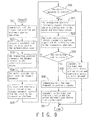
- step S01 when powered on, the seller-end electronic device 20 is operable to execute the API so as to communicate with the transaction platform 30. Specifically, the seller-end electronic device 20 performs a sign on operation with the transaction platform 30. The sign on operation is required by the transaction plat form 30 in order to ensure the seller-end electronic device 20 is a legitimate cooperating partner of the trans action plat form 30.
- the transaction platform 30 may be configured such that only the devices that complete the sign on operation are allowed to communicate therewith.
- the seller-end electronic device 20 performs a sign off operation for terminating the communication with the transaction platform 30.
- step S02 when a transaction is to occur (i.e., the buyer is to purchase a product and/or service), the control module 14 executes the application, which in turn generates an authentication interface on the display module 13. The method requires the buyer to enter an authentication code in order to proceed with the payment.
- the seller then operates the API to request a candidate code that is to be used as the authentication code.
- the transaction platform 30 is operable to generate and transmit a plurality of candidate codes to the seller-end electronic device 20 in step S03.
- Each of the candidate codes may have a predetermined length (e.g., 8 bits, 16 bits, etc.) and may be composed of alphabets, numerals, or a combination thereof.
- the seller inputs payment information associated with the transaction, and selects one of candidate codes received from the transaction platform 30 as the authentication code via the seller-end electronic device 20.
- the seller-end electronic device 20 is operable, in step S04, to transmit the payment information and the selected one of the candidate codes to the transaction platform 30.
- the seller may provide the buyer with the selected one of the candidate codes.
- Each of the candidate codes selected for a particular transaction will not be selectable for subsequent transactions.
- the payment information includes a name of the product to be purchased, a store name and/or a merchant serial number, a specific method of payment, and a total amount of the payment.
- the merchant serial number is designated by the seller, andmayhave a default value.
- the total amount can be manually inputted by the seller, or obtained using a barcode scanner to scan barcodes that are attached to the products involved in the transaction. It is noted that additional relevant information may be incorporated to serve as the payment information in other embodiments of this invention.
- the seller-end electronic device 20 is automatically operable, after the buyer purchases a product, to obtain the name of the product, the merchant serial number and the total amount of the payment as the payment information, to select one of the candidate codes, and to transmit the selected one of the candidate codes to the buyer-end electronic device 10.
- parts of the payment information can be provided by the buyer.
- the seller-end electronic device 20 is also operable to receive the parts of the payment information provided by the buyer.
- the seller-end electronic device 20 may be operable to actively request the transaction platform 30 to transmit a plurality of candidate codes to the seller-end electronic device 20.
- the predetermined situation may be that a number of remaining ones of the candidate codes (i.e., that are not selected by the seller yet) is lower than a specific number (e.g., 10).
- the seller-end electronic device 20 then automatically transmits the request to the transaction platform 30, which generates and transmits a new set of candidate codes to the seller-end electronic device 20 in response to the request, in order to neutralize the predetermined situation.
- such requests can be transmitted by the seller-end electronic device 20 periodically.
- step S05 the application stored in the control module 14 is operable to generate a code input interface and to control the display module 13 to display the code input interface, as shown in Figure 3 .
- the buyer-end electronic device 10 is then operable to allow the buyer to input a verification code that is provided by the seller and that is associated with the authentication code, and to transmit the verification code thus received to the transaction platform 30.
- step S06 the transaction platform 30 is operable to determine whether the verification code received from the buyer-end electronic device 10 in step S05 conforms with the authentication code received from the seller-end electronic device 20 in step S04. When such determination is affirmative, the flow proceeds to step S07. Otherwise, the flow proceeds to step S20, in which the transaction platform 30 transmits an error message to the buyer-end and seller-end electronic devices 10 and 20 for notifying the parties of the transaction that the verification code was not correct, and the method is terminated.
- step S07 the transaction platform 30 is operable to transmit the payment information and a validating code to the buyer-end electronic device 10, enabling the display module 13 of the buyer-end electronic device 10 to display a confirmation interface to the buyer.
- the reason for requiring the buyer to input the validating code is to confirm that the buyer-end electronic device 10 is actually operated by the buyer and is not hijacked and controlled by malicious software.
- the validating code is a completely automated public Turing test to tell computers and humans apart (CAPTCHA).
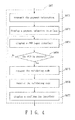
- Figure 4 illustrates detailed sub-steps of step S07.
- the transaction platform 30 is operable to transmit the payment information to the buyer-end electronic device 10, from which the correct verification code is received.
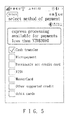
- the display module 13 of the buyer-end electronic device 10 displays a payment selection interface for allowing the buyer to select from a number of ways to make the payment.
- An exemplary payment selection interface is shown in Figure 5 , in which the ways to make the payment includes cash trans fer, micropayment, a credit card/debit card that is previously set by the buyer, and other credit cards/debit cards that are acceptable to the seller.
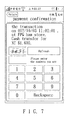
- sub-step S073 the display module 13 displays a PIN input interface that instructs the buyer to input a PIN (as shown in Figure 6 ).
- the control module 14 of the buyer-end electronic device 10 is then operable to determine whether the PIN is correct (i.e., conforms with the PIN stored in the payment card 12) in sub-step S074. If the PIN is not correct, the control module 14 controls the display module 13 to display an invalid PIN message, and sub-step S073 is repeated. In some examples, when an incorrect PIN is inputted a number of times in succession, the method is terminated.
- sub-step S073 When the PIN received in sub-step S073 is correct, the flow proceeds to sub-step S075, in which the control module 14 requests the validating code from the transaction plat form 30 through the signal transceiving module 11. In response to the request, the transaction platform 30 generates the validating code and transmits the same back to the buyer-end electronic device 10 in sub-step S076.
- the buyer-end electronic device 10 then generates a confirmation interface for display by the display module 13 in sub-step S077.
- the confirmation interface includes the payment information, and requires the buyer to input the validating code that is received from the transaction platform 30 for confirming the payment.
- the confirmation interface is provided with an option to regenerate the validating code (the flow thus goes back to sub-step S075).
- the confirmation interface may include a virtual keyboard displayed on the display module 13.
- the virtual keyboard may include a randomly generated keyboard layout for security reasons.
- the keyboard layout may be randomly generated each time the buyer touches a key for further enhancing security.
- step S08 the control module 14 controls the signal transceiving module 11 to transmit a confirm signal and the validating code to the transaction platform 30.
- the confirm signal is for notifying the transaction platform 30 that the buyer has confirmed the payment and that the transaction platform 30 may proceed to process the payment.
- the PIN is only stored in the payment card 12 instead of the buyer-end electronic device 10, and is not transmitted across the devices of the payment processing system 100. Accordingly, any third party is prevented from intercepting the PIN during the data transmission. Moreover, once the payment card 12 is detached from the buyer-end electronic device 10, the PIN cannot be obtained from the buyer-end electronic device 10.
- step S09 the transaction platform 30 is operable to determine whether the validating code received in step S08 is correct, and to execute step S10 when the determination is affirmative. Otherwise, the flow goes back to step S08 to instruct the buyer to input the validating code again. In some embodiments, the flow goes back to sub-step S075 to regenerate another validating code. In some embodiments, the method is terminated when the determination made in step S08 is negative.
- step S10 the transaction platform 30 is operable to communicate with the bank terminal 200 to process the payment for the transaction according to the payment information.
- step S11 when the payment is successfully processed, the transaction platform 30 is operable to transmit, to the buyer-end electronic device 10 and/or the seller-end electronic device 20, a notifying signal notifying that the payment has been processed.
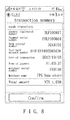
- a notifying signal transmitted to the buyer-end electronic device 10 can be that shown in Figure 8 .
- the notifying signal may include a payment serial number, a bank receipt number, a bank account of the buyer associated with the payment, date/time of the payment, the merchant serial number/store name, and the total amount of the payment. Additional relevant information may be included in the notifying signals in other embodiments of this invention.
- the method further informs the buyer of the details regarding the payment, and allows the buyer to confirm the payment using the buyer-end electronic device 10 before processing the payment.
- each payment processed using the method is authorized by the buyer, and cannot be launched by a malicious third party who is not in possession of the buyer-end electronic device 10.
- the method provides enhanced security.
- the method does not involve a card reader and the credit card and/or the debit card of the buyer being given to the seller, related security risks can be significantly reduced.
- the seller-end electronic device 20 may acquire the authentication codes from the transaction platform 30 using a number of ways.
- the transaction platform 30 may transmit a plurality of the authentication codes to the seller-end electronic device 20 as soon as a connection is established between the transaction platform 30 and the seller-end electronic device 20.
- the seller-end electronic device 20 may actively request the transaction platform 30 to transmit a plurality of the authentication codes to the seller-end electronic device 20. Such request may also be transmitted to the transaction platform 30 periodically.
- the virtual account number corresponding to a specific bank account that belongs to the buyer is transmitted in place of the actual bank account number of the buyer, and the correspondence of the virtual account number and the actual bank account number is only known to the buyer and the bank terminal 200.
- the virtual account number is exposed to threat for being intercepted by a third party, personal information of the buyer is still made relatively secure.
- the second preferred embodiment of the method for processing a payment according to the present invention is similar to the first embodiment.
- the main difference between this embodiment and the first preferred embodiment resides in the following.
- step S21 when powered on, the seller-end electronic device 20 is operable to execute the API so as to communicate with the transaction platform 30. Similar to the previous embodiment, the seller-end electronic device 20 performs the sign on operation with the transaction platform 30 in order to ensure the seller-end electronic device 20 is a legitimate cooperating partner of the transaction platform 30.
- step S22 when a transaction is to occur (i.e., the buyer is to purchase a product and/or service), the control module 14 executes the application, which in turn generates an authentication interface on the display module 13. The method requires the buyer to enter an authentication code in order to proceed with the payment.
- the seller may then operate the API so that the seller-end electronic device 20 requests a dynamic password, which is to be used as the authentication code, in step S22.
- the dynamic password is a one-time password (OTP) that is generated by the transaction platform 30 upon request of the seller-end electronic device 20.
- OTP one-time password
- the seller-end electronic device 20 is further operable to allow the seller to input the payment information, and to transmit the payment information and the request to the transaction platform 30.
- the transaction platform 30 is operable, in step S23, to dynamically generate the dynamic password according to the payment information, and to transmit the dynamic password to the seller-end electronic device 20 as the authentication code in step S23.
- the dynamic password may have a predetermined length and may be composed of alphabets, numerals, or a combination thereof.
- buyer-end electronic device 10 in turn allows the buyer to input the dynamic password via the code input interface ( Figure 3 ) as the authentication code, and transmits the dynamic password thus received to the transaction platform 30.
- step S25 the transaction platform 30 is operable to determine whether the dynamic password received from the buyer-end electronic device 10 in step S24 is correct. When the determination is affirmative, the flow proceeds to step S26. Otherwise, the flow proceeds to step S40, which is similar to step S20 of the first preferred embodiment.
- steps s26 to S30 are similar to steps S07 to S11, respectively. Therefore, details thereof are omitted herein for the sake of brevity.
- the second preferred embodiment has the same advantages as those of the first preferred embodiment.
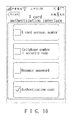
- a number of options that can be used as the authentication code may be provided the buyer.
- An exemplary authentication interface may be as shown in Figure 10 . Accordingly, the buyer may choose to input one of a personal account number associated with the payment card 12 ("X card account number"), a combination of a phone number of the buyer-end electronic device 10 and a security code, and the authentication code (that includes the candidate codes and the dynamic password). Once the seller acknowledges the selection made by the buyer, the seller can operate the API to make an associated request.
- X card account number a personal account number associated with the payment card 12
- the authentication code that includes the candidate codes and the dynamic password
- the seller-end electronic device 20 may be a mobile device.
- the payment processing system 100 may comprise a plurality of the seller-end electronic devices 20, and a central server that is coupled to the seller-end electronic devices 20. Data transmission between each of the seller-end electronic devices 20 and the transaction platform 30 can be processed through the central server.
- a payment processing system 100 is applicable in larger stores (e.g., a warehouse store, a wholesale store, etc.).
- embodiments of this invention allow a number of ways for the buyer to authenticate the payment, and subsequently generate the corresponding verification code for the buyer, thus enhancing the security of the payment.
- the payment card 12 according to embodiments of this invention has the PIN and the virtual account number stored therein.
- personal information of the buyer is not transmitted among the devices of the payment processing system 100, further providing enhanced security for the payment.
- the buyer since the physical card of the buyer is not actually given to the seller in the transaction, the buyer does not need to bring the credit card/debit card, and the seller does not need to prepare an additional card reader for implementing the method of this invention.
Landscapes
- Business, Economics & Management (AREA)
- Engineering & Computer Science (AREA)
- Accounting & Taxation (AREA)
- Computer Security & Cryptography (AREA)
- Strategic Management (AREA)
- Physics & Mathematics (AREA)
- General Business, Economics & Management (AREA)
- General Physics & Mathematics (AREA)
- Theoretical Computer Science (AREA)
- Finance (AREA)
- Financial Or Insurance-Related Operations Such As Payment And Settlement (AREA)
- Cash Registers Or Receiving Machines (AREA)
Applications Claiming Priority (1)
| Application Number | Priority Date | Filing Date | Title |
|---|---|---|---|
| TW101141543A TW201419185A (zh) | 2012-11-08 | 2012-11-08 | 行動裝置、付款交易系統及付款交易方法 |
Publications (1)
| Publication Number | Publication Date |
|---|---|
| EP2731065A1 true EP2731065A1 (fr) | 2014-05-14 |
Family
ID=49165585
Family Applications (1)
| Application Number | Title | Priority Date | Filing Date |
|---|---|---|---|
| EP13184208.0A Withdrawn EP2731065A1 (fr) | 2012-11-08 | 2013-09-12 | Procédé de traitement d'un paiement et système et dispositif électronique pour la mise en oeuvre de ce procédé |
Country Status (5)
| Country | Link |
|---|---|
| US (1) | US10108958B2 (fr) |
| EP (1) | EP2731065A1 (fr) |
| JP (1) | JP2014096140A (fr) |
| CN (1) | CN103810597B (fr) |
| TW (1) | TW201419185A (fr) |
Families Citing this family (15)
| Publication number | Priority date | Publication date | Assignee | Title |
|---|---|---|---|---|
| US10373149B1 (en) | 2012-11-12 | 2019-08-06 | Square, Inc. | Secure data entry using a card reader with minimal display and input capabilities having a display |
| JP2015087429A (ja) * | 2013-10-28 | 2015-05-07 | 日立化成株式会社 | 感光性樹脂組成物、感光性エレメント及びレジストパターンの形成方法 |
| US9613353B1 (en) | 2013-12-26 | 2017-04-04 | Square, Inc. | Passcode entry through motion sensing |
| US9483653B2 (en) * | 2014-10-29 | 2016-11-01 | Square, Inc. | Secure display element |
| US9430635B2 (en) * | 2014-10-29 | 2016-08-30 | Square, Inc. | Secure display element |
| US10673622B2 (en) | 2014-11-14 | 2020-06-02 | Square, Inc. | Cryptographic shader in display hardware |
| CN106157020B (zh) * | 2015-04-17 | 2019-10-18 | 杨建纲 | 移动支付方法及移动支付设备 |
| US10475011B1 (en) | 2015-04-30 | 2019-11-12 | Square, Inc. | Automatic invoice notification |
| US10055769B1 (en) | 2015-04-30 | 2018-08-21 | Square, Inc. | Automatic invoice generation |
| US12400209B2 (en) * | 2015-11-20 | 2025-08-26 | Afirma Consulting & Technologies, S. L. | Dynamic multilayer security for internet mobile-related transactions |
| CN110197409A (zh) * | 2018-02-26 | 2019-09-03 | 张藤耀 | 网络商城的身份验证方法 |
| WO2019169470A1 (fr) | 2018-03-09 | 2019-09-12 | Moneris Solutions Corporation | Système et procédés de vérification d'identité électronique |
| JP7305976B2 (ja) * | 2019-02-13 | 2023-07-11 | 京セラドキュメントソリューションズ株式会社 | 表示装置、及び表示制御プログラム |
| TW202032402A (zh) * | 2019-02-19 | 2020-09-01 | 華東科技股份有限公司 | 交易驗證方法 |
| FR3115625B1 (fr) * | 2020-10-22 | 2024-07-26 | Idemia France | Transactions sans présence de la carte avec une valeur de vérification de carte choisie par le titulaire de la carte |
Citations (4)
| Publication number | Priority date | Publication date | Assignee | Title |
|---|---|---|---|---|
| EP1326187A1 (fr) * | 2000-09-28 | 2003-07-09 | James Jay Skinner | Systeme de commerce electronique |
| WO2006055002A1 (fr) * | 2004-11-17 | 2006-05-26 | Byz Tek Inc. | Systeme et procede d'execution de transactions commerciales securisees |
| US20110093351A1 (en) * | 2009-10-19 | 2011-04-21 | Faber Financial, Llc | Mobile Payment Station System and Method |
| EP2521081A1 (fr) * | 2011-05-04 | 2012-11-07 | Chien-Kang Yang | Procédé de transaction mobile et dispositif électronique portable pour transaction mobile |
Family Cites Families (19)
| Publication number | Priority date | Publication date | Assignee | Title |
|---|---|---|---|---|
| US5445295A (en) * | 1992-01-17 | 1995-08-29 | Brown; Graham | Automated vending machine system for recorded goods |
| JP2502914B2 (ja) * | 1992-07-31 | 1996-05-29 | インターナショナル・ビジネス・マシーンズ・コーポレイション | デ―タ転送方法及び装置 |
| JP4697911B2 (ja) | 2000-11-14 | 2011-06-08 | 大日本印刷株式会社 | 無線通信機能付きカード収納具 |
| US8326754B2 (en) * | 2001-02-05 | 2012-12-04 | Oracle International Corporation | Method and system for processing transactions |
| JP2002297939A (ja) | 2001-03-30 | 2002-10-11 | Casio Electronics Co Ltd | 取引認証方法、取引認証システム及び取引認証プログラム |
| JP4865205B2 (ja) | 2004-10-05 | 2012-02-01 | 貴生 朝山 | 代引電子決済代行サービスシステム |
| US20060080232A1 (en) * | 2004-10-08 | 2006-04-13 | Randy Epps | Cellular telephone based payment apparatus and method for use in purchase of good and services |
| US20060089903A1 (en) * | 2004-10-22 | 2006-04-27 | Breakthrough Tools, Llc | Multi-party-transaction information access system |
| JP2006155430A (ja) | 2004-11-30 | 2006-06-15 | Macro Plus Kk | 情報管理装置、情報管理システム、情報管理プログラムおよび情報管理方法、並びに、ネットワークショッピングシステム、ネットワーク募金システム、商品販売システム、広告物、自動販売機、電子ロッカーシステム、電子キーシステム、テレビショッピングシステム、料金精算システム、電子マネー授受システム |
| AU2006309231B2 (en) * | 2005-08-09 | 2011-11-24 | Cardinalcommerce Corporation | Web terminal and bridge that support passing of authentication data to acquirer for payment processing |
| US7512567B2 (en) * | 2006-06-29 | 2009-03-31 | Yt Acquisition Corporation | Method and system for providing biometric authentication at a point-of-sale via a mobile device |
| CN101165716A (zh) * | 2006-10-16 | 2008-04-23 | 祁勇 | 一种基于交易代码的电子支付方法 |
| US20090099947A1 (en) * | 2007-10-16 | 2009-04-16 | Wachovia Corporation | System and method for electronic funds payment |
| US7630937B1 (en) * | 2008-04-30 | 2009-12-08 | Intuit Inc. | Method and system for processing a financial transaction |
| CN101727705B (zh) * | 2008-10-23 | 2012-06-06 | 中兴通讯股份有限公司 | 电子支付应用关闭和开启的方法 |
| CN101651675B (zh) * | 2009-08-27 | 2015-09-23 | 飞天诚信科技股份有限公司 | 通过认证码对客户端进行验证的方法和系统 |
| US20120203632A1 (en) * | 2011-02-07 | 2012-08-09 | Marc Blum | Tracking and summarizing purchase information |
| CN102368338A (zh) * | 2011-04-09 | 2012-03-07 | 冯林 | 一种对atm机上交易者身份进行验证的方法和系统 |
| US8538845B2 (en) * | 2011-06-03 | 2013-09-17 | Mozido, Llc | Monetary transaction system |
-
2012
- 2012-11-08 TW TW101141543A patent/TW201419185A/zh unknown
- 2012-12-19 CN CN201210553618.1A patent/CN103810597B/zh not_active Expired - Fee Related
-
2013
- 2013-08-06 US US13/959,971 patent/US10108958B2/en active Active
- 2013-09-12 EP EP13184208.0A patent/EP2731065A1/fr not_active Withdrawn
- 2013-09-26 JP JP2013199252A patent/JP2014096140A/ja active Pending
Patent Citations (4)
| Publication number | Priority date | Publication date | Assignee | Title |
|---|---|---|---|---|
| EP1326187A1 (fr) * | 2000-09-28 | 2003-07-09 | James Jay Skinner | Systeme de commerce electronique |
| WO2006055002A1 (fr) * | 2004-11-17 | 2006-05-26 | Byz Tek Inc. | Systeme et procede d'execution de transactions commerciales securisees |
| US20110093351A1 (en) * | 2009-10-19 | 2011-04-21 | Faber Financial, Llc | Mobile Payment Station System and Method |
| EP2521081A1 (fr) * | 2011-05-04 | 2012-11-07 | Chien-Kang Yang | Procédé de transaction mobile et dispositif électronique portable pour transaction mobile |
Also Published As
| Publication number | Publication date |
|---|---|
| US20140129445A1 (en) | 2014-05-08 |
| CN103810597B (zh) | 2019-02-26 |
| TW201419185A (zh) | 2014-05-16 |
| JP2014096140A (ja) | 2014-05-22 |
| US10108958B2 (en) | 2018-10-23 |
| CN103810597A (zh) | 2014-05-21 |
Similar Documents
| Publication | Publication Date | Title |
|---|---|---|
| US10108958B2 (en) | Method for processing a payment, and system and electronic device for implementing the same | |
| EP2688024A1 (fr) | Procédé pour le paiement en ligne et système et dispositif électronique pour la mise en ýuvre de ce procédé | |
| US9589265B2 (en) | Mobile payment method | |
| JP6128565B2 (ja) | 取引処理システム及び方法 | |
| EP3232386B1 (fr) | Procédé d'exécution de transactions avec des dispositifs de paiement sans contact utilisant des opérations de pré-prise et à deux prises | |
| CN106462842B (zh) | 用于非接触式通信的增强型数据接口 | |
| EP2380149B1 (fr) | Utilisation de carte à puce améliorée | |
| US9292870B2 (en) | System and method for point of service payment acceptance via wireless communication | |
| US20190066089A1 (en) | Secure transactions using digital barcodes | |
| US9098845B2 (en) | Process of selling in electronic shop accessible from the mobile communication device | |
| AU2025200629A1 (en) | Remote transaction system, method and point of sale terminal | |
| WO2016183508A1 (fr) | Procédés et systèmes pour utiliser une identité de consommateur pour effectuer des transactions électroniques | |
| US20250053964A1 (en) | Secure contactless credential exchange | |
| TWI625684B (zh) | Mobile payment method and mobile payment device | |
| CN114207578A (zh) | 移动应用程序集成 | |
| TWI529640B (zh) | Action payment method and action payment equipment | |
| EP3082087B1 (fr) | Procédé de paiement mobile | |
| TWM502910U (zh) | 行動支付設備 | |
| HK1230323B (en) | Mobile payment method | |
| HK1230323A1 (en) | Mobile payment method | |
| WO2011132025A1 (fr) | Procédé de vente dans un magasin électronique accessible depuis un dispositif de communication mobile |
Legal Events
| Date | Code | Title | Description |
|---|---|---|---|
| PUAI | Public reference made under article 153(3) epc to a published international application that has entered the european phase |
Free format text: ORIGINAL CODE: 0009012 |
|
| 17P | Request for examination filed |
Effective date: 20130912 |
|
| AK | Designated contracting states |
Kind code of ref document: A1 Designated state(s): AL AT BE BG CH CY CZ DE DK EE ES FI FR GB GR HR HU IE IS IT LI LT LU LV MC MK MT NL NO PL PT RO RS SE SI SK SM TR |
|
| AX | Request for extension of the european patent |
Extension state: BA ME |
|
| STAA | Information on the status of an ep patent application or granted ep patent |
Free format text: STATUS: THE APPLICATION IS DEEMED TO BE WITHDRAWN |
|
| 18D | Application deemed to be withdrawn |
Effective date: 20141115 |