EP2731941B1 - Antagonistes ccr2, nouveaux et sélectifs - Google Patents
Antagonistes ccr2, nouveaux et sélectifs Download PDFInfo
- Publication number
- EP2731941B1 EP2731941B1 EP12733144.5A EP12733144A EP2731941B1 EP 2731941 B1 EP2731941 B1 EP 2731941B1 EP 12733144 A EP12733144 A EP 12733144A EP 2731941 B1 EP2731941 B1 EP 2731941B1
- Authority
- EP
- European Patent Office
- Prior art keywords
- amino
- quinazoline
- phenyl
- chloro
- methoxy
- Prior art date
- Legal status (The legal status is an assumption and is not a legal conclusion. Google has not performed a legal analysis and makes no representation as to the accuracy of the status listed.)
- Active
Links
- SNJLZRUWPKQPDE-SXOMAYOGSA-N Cc1c(N(CC2)Cc3c2cc(C(F)(F)F)cc3)nc(C2CCOCC2)nc1C(N(CC1)CCC1N[C@H](CCOC1)[C@H]1OC)=O Chemical compound Cc1c(N(CC2)Cc3c2cc(C(F)(F)F)cc3)nc(C2CCOCC2)nc1C(N(CC1)CCC1N[C@H](CCOC1)[C@H]1OC)=O SNJLZRUWPKQPDE-SXOMAYOGSA-N 0.000 description 1
- CVHRAVPCVZISQF-QIYZQFGVSA-N Cc1c(N2Cc3cc(C(F)(F)F)ccc3CC2)nc(C2CCOCC2)nc1C(N1CCC(CN[C@H](CCOC2[F]C(c3ccc(CCN(C4)c5nc(C6CCOCC6)nc(C(N(CC6)CCC6/N=C(\CCOC6)/[C@@H]6OC)=O)c5C)c4c3)(F)F)[C@H]2OC)CC1)=O Chemical compound Cc1c(N2Cc3cc(C(F)(F)F)ccc3CC2)nc(C2CCOCC2)nc1C(N1CCC(CN[C@H](CCOC2[F]C(c3ccc(CCN(C4)c5nc(C6CCOCC6)nc(C(N(CC6)CCC6/N=C(\CCOC6)/[C@@H]6OC)=O)c5C)c4c3)(F)F)[C@H]2OC)CC1)=O CVHRAVPCVZISQF-QIYZQFGVSA-N 0.000 description 1
- SNJLZRUWPKQPDE-SSYAZFEXSA-N Cc1c(N2Cc3ccc(C(F)(F)F)cc3CC2)nc(C2CCOCC2)nc1C(N(CC1)CCC1NC(CCOC1)[C@@H]1OC)=O Chemical compound Cc1c(N2Cc3ccc(C(F)(F)F)cc3CC2)nc(C2CCOCC2)nc1C(N(CC1)CCC1NC(CCOC1)[C@@H]1OC)=O SNJLZRUWPKQPDE-SSYAZFEXSA-N 0.000 description 1
- UDQBDKSQHPVZGN-UHFFFAOYSA-N Cc1c(Nc(cc2)cc(Cl)c2Cl)nc(CF)nc1C(N(CC1)CCC1N1CCOCC1)=O Chemical compound Cc1c(Nc(cc2)cc(Cl)c2Cl)nc(CF)nc1C(N(CC1)CCC1N1CCOCC1)=O UDQBDKSQHPVZGN-UHFFFAOYSA-N 0.000 description 1
- JRLXWBZPSLEITK-RBUKOAKNSA-N Cc1c(Nc(cc2)cc(Cl)c2Cl)nc(CF)nc1C(N(CC1)CCC1N[C@H](CCOC1)[C@H]1F)=O Chemical compound Cc1c(Nc(cc2)cc(Cl)c2Cl)nc(CF)nc1C(N(CC1)CCC1N[C@H](CCOC1)[C@H]1F)=O JRLXWBZPSLEITK-RBUKOAKNSA-N 0.000 description 1
- VHMHULULZQPJIJ-NJLIQCMYSA-N Cc1cc(-c2nc(N3Cc4cc(C(F)(F)[F]C([C@@H]5OC)OCC[C@H]5NC(CC5)CCN5C(c5nc(CF)nc(Nc(cc6)cc(Cl)c6Cl)c5C)=O)ccc4CC3)c(C)c(C(N(CC3)CCC3N[C@H](CCOC3)[C@H]3OC)=O)n2)n[o]1 Chemical compound Cc1cc(-c2nc(N3Cc4cc(C(F)(F)[F]C([C@@H]5OC)OCC[C@H]5NC(CC5)CCN5C(c5nc(CF)nc(Nc(cc6)cc(Cl)c6Cl)c5C)=O)ccc4CC3)c(C)c(C(N(CC3)CCC3N[C@H](CCOC3)[C@H]3OC)=O)n2)n[o]1 VHMHULULZQPJIJ-NJLIQCMYSA-N 0.000 description 1
- MYJQGGALXPHWLV-UHFFFAOYSA-N NC(CCC1)C1N Chemical compound NC(CCC1)C1N MYJQGGALXPHWLV-UHFFFAOYSA-N 0.000 description 1
- SSJXIUAHEKJCMH-UHFFFAOYSA-N NC(CCCC1)C1N Chemical compound NC(CCCC1)C1N SSJXIUAHEKJCMH-UHFFFAOYSA-N 0.000 description 1
- YMHQVDAATAEZLO-UHFFFAOYSA-N NC1(CCCCC1)N Chemical compound NC1(CCCCC1)N YMHQVDAATAEZLO-UHFFFAOYSA-N 0.000 description 1
- ILVXOBCQQYKLDS-UHFFFAOYSA-N [O-][n+]1ccccc1 Chemical compound [O-][n+]1ccccc1 ILVXOBCQQYKLDS-UHFFFAOYSA-N 0.000 description 1
- JUJWROOIHBZHMG-UHFFFAOYSA-N c1ccncc1 Chemical compound c1ccncc1 JUJWROOIHBZHMG-UHFFFAOYSA-N 0.000 description 1
- PBMFSQRYOILNGV-UHFFFAOYSA-N c1cnncc1 Chemical compound c1cnncc1 PBMFSQRYOILNGV-UHFFFAOYSA-N 0.000 description 1
Classifications
-
- C—CHEMISTRY; METALLURGY
- C07—ORGANIC CHEMISTRY
- C07D—HETEROCYCLIC COMPOUNDS
- C07D413/00—Heterocyclic compounds containing two or more hetero rings, at least one ring having nitrogen and oxygen atoms as the only ring hetero atoms
- C07D413/14—Heterocyclic compounds containing two or more hetero rings, at least one ring having nitrogen and oxygen atoms as the only ring hetero atoms containing three or more hetero rings
-
- A—HUMAN NECESSITIES
- A61—MEDICAL OR VETERINARY SCIENCE; HYGIENE
- A61P—SPECIFIC THERAPEUTIC ACTIVITY OF CHEMICAL COMPOUNDS OR MEDICINAL PREPARATIONS
- A61P13/00—Drugs for disorders of the urinary system
- A61P13/12—Drugs for disorders of the urinary system of the kidneys
-
- A—HUMAN NECESSITIES
- A61—MEDICAL OR VETERINARY SCIENCE; HYGIENE
- A61P—SPECIFIC THERAPEUTIC ACTIVITY OF CHEMICAL COMPOUNDS OR MEDICINAL PREPARATIONS
- A61P25/00—Drugs for disorders of the nervous system
-
- A—HUMAN NECESSITIES
- A61—MEDICAL OR VETERINARY SCIENCE; HYGIENE
- A61P—SPECIFIC THERAPEUTIC ACTIVITY OF CHEMICAL COMPOUNDS OR MEDICINAL PREPARATIONS
- A61P29/00—Non-central analgesic, antipyretic or antiinflammatory agents, e.g. antirheumatic agents; Non-steroidal antiinflammatory drugs [NSAID]
-
- A—HUMAN NECESSITIES
- A61—MEDICAL OR VETERINARY SCIENCE; HYGIENE
- A61P—SPECIFIC THERAPEUTIC ACTIVITY OF CHEMICAL COMPOUNDS OR MEDICINAL PREPARATIONS
- A61P37/00—Drugs for immunological or allergic disorders
-
- A—HUMAN NECESSITIES
- A61—MEDICAL OR VETERINARY SCIENCE; HYGIENE
- A61P—SPECIFIC THERAPEUTIC ACTIVITY OF CHEMICAL COMPOUNDS OR MEDICINAL PREPARATIONS
- A61P9/00—Drugs for disorders of the cardiovascular system
-
- C—CHEMISTRY; METALLURGY
- C07—ORGANIC CHEMISTRY
- C07D—HETEROCYCLIC COMPOUNDS
- C07D401/00—Heterocyclic compounds containing two or more hetero rings, having nitrogen atoms as the only ring hetero atoms, at least one ring being a six-membered ring with only one nitrogen atom
- C07D401/02—Heterocyclic compounds containing two or more hetero rings, having nitrogen atoms as the only ring hetero atoms, at least one ring being a six-membered ring with only one nitrogen atom containing two hetero rings
- C07D401/06—Heterocyclic compounds containing two or more hetero rings, having nitrogen atoms as the only ring hetero atoms, at least one ring being a six-membered ring with only one nitrogen atom containing two hetero rings linked by a carbon chain containing only aliphatic carbon atoms
-
- C—CHEMISTRY; METALLURGY
- C07—ORGANIC CHEMISTRY
- C07D—HETEROCYCLIC COMPOUNDS
- C07D401/00—Heterocyclic compounds containing two or more hetero rings, having nitrogen atoms as the only ring hetero atoms, at least one ring being a six-membered ring with only one nitrogen atom
- C07D401/14—Heterocyclic compounds containing two or more hetero rings, having nitrogen atoms as the only ring hetero atoms, at least one ring being a six-membered ring with only one nitrogen atom containing three or more hetero rings
-
- C—CHEMISTRY; METALLURGY
- C07—ORGANIC CHEMISTRY
- C07D—HETEROCYCLIC COMPOUNDS
- C07D405/00—Heterocyclic compounds containing both one or more hetero rings having oxygen atoms as the only ring hetero atoms, and one or more rings having nitrogen as the only ring hetero atom
- C07D405/14—Heterocyclic compounds containing both one or more hetero rings having oxygen atoms as the only ring hetero atoms, and one or more rings having nitrogen as the only ring hetero atom containing three or more hetero rings
Definitions
- the present invention relates to novel and selective antagonists for CCR2 (CC chemokine receptor 2), the method for producing the same, and their use for providing medicaments for treating conditions and diseases where activation of CCR2 plays a causative role, especially pulmonary diseases like asthma and COPD, neurologic disease, especially of pain diseases, immune related diseases, especially diabetes mellitus including diabetes nephropathy, and cardiovascular diseases, especially atherosclerotic disease.
- CCR2 CC chemokine receptor 2
- COPD chronic cytoplasmic chemokine receptor 2
- neurologic disease especially of pain diseases, immune related diseases, especially diabetes mellitus including diabetes nephropathy, and cardiovascular diseases, especially atherosclerotic disease.
- the chemokines are a family of small, proinflammatory cytokines, with potent chemotatctic activities. Chemokines are chemotactic cytokines that are released by a wide variety of cells to attract various cells, such as monocytes, macrophages, T cells, eosinophils, basophils and neutrophils to sites of inflammation. Chemokine receptors, such as CCR2 or CCR5 have been implicated as being important mediators of inflammatory and immunoregulatory disorders and diseases as well as autoimmune pathologies such as rheumatoid arthritis and atherosclerosis. Accordingly, agents which modulate chemokine receptors such as the CCR2 and CCR5 receptor would be useful in such disorders and diseases.
- monocytes are characterized by, e.g., a high expression of membrane-resident CCR2, whereas the CCR2 expression in macrophages is lower.
- CCR2 is a critical regulator of monocytes trafficking, which can be described as the movement of the monocytes towards an inflammation along a gradient of monocyte chemoattractant proteins (MCP-1, MCP-2, MCP-3, MCP-4).
- CCR2 antagonists which modulate chemokine receptors such as the CCR2 and CCR5 receptor are disclosed by WO 2010/070032 .
- WO 2011/073154 discloses Pyrimidine-4-carboxamides as CCR2 antagonists for use in therapy of diseases such as inflammatory diseases, COPD, pain, immune related diseases and diabetic nephropathy.
- CARTER P H ET AL “Advances in the Discovery of CC Chemokine Receptor 2 Antagonists", ANNUAL REPORTS IN MEDICINAL CHEMISTRY, ELSEVIER INC, pages 211 - 228, 1 January 2007 , is a review article on CCR2 antagonists.
- WO 2009/043747 discloses benzamides, pyridine and pyrimidine carboxamides as CCR2 antagonists.
- WO 2011/141477 discloses Pyrimidine-4-carboxamides as CCR2 antagonists for use in therapy of diseases such as inflammatory diseases, COPD, pain, immune related diseases and diabetic nephropathy.
- the present invention provides compounds selected from the group consisting of or a pharmacologically acceptable salt thereof.
- Such compounds as herein before or below defined could be used as a medicament. It has been found that such compounds as herein before or below defined could be used for making a medicament for the treatment of inflammatory diseases. It has been found that such compounds as herein before or below defined could be used for making a medicament for the treatment of inflammatory diseases, wherein the inflammatory diseases are selected from inflammatory diseases of the respiratory tract. It has been found that such compounds as herein before or below defined could be used for making a medicament for the treatment of inflammatory diseases, wherein the inflammatory diseases are selected from chronic obstructive pulmonary disease, asthma, and cystic fibrosis.
- such compounds as herein before or below defined could be used for making a medicament for the treatment of neurologic diseases, preferably for the treatment of pain diseases especially for the treatment of inflammatory and neuropathic pain disease, especially for the treatment of chronic pain. It has been found that such compounds as herein before or below defined could be used for making a medicament for the treatment of immune related diseases, preferably for the treatment of diabetes mellitus. It has been found that such compounds as herein before or below defined could be used for making a medicament for the treatment of cardiovascular diseases, preferably for the treatment of peripheral atherosclerotic disease. It has been found that such compounds as herein before or below defined could be used for making a medicament for the treatment of diabetic nephropathy.
- the present invention discloses compounds as herein before or below defined as medicaments. It also discloses compounds as herein before or below defined as medicaments for the treatment of inflammatory diseases. It also discloses compounds as herein before or below defined as medicaments for the treatment of inflammatory diseases, wherein the inflammatory diseases are selected from inflammatory diseases of the respiratory tract. It also discloses compounds as herein before or below defined as medicaments for the treatment of inflammatory diseases, wherein the inflammatory diseases are selected from chronic obstructive pulmonary disease, asthma, and cystic fibrosis. It also discloses compounds as herein before or below defined as medicaments for the treatment of neurologic diseases, preferably for the treatment of pain diseases especially for the treatment of inflammatory and neuropathic pain disease, especially for the treatment of chronic pain.
- such compounds as herein before or below defined could be used for the treatment of inflammatory diseases, wherein the inflammatory diseases are selected from chronic obstructive pulmonary disease, asthma, and cystic fibrosis. It has been found that such compounds as herein before or below defined could be used for the treatment of neurologic diseases, preferably for the treatment of pain diseases especially for the treatment of inflammatory and neuropathic pain disease, especially for the treatment of chronic pain. It has been found that such compounds as herein before or below defined could be used for the treatment of immune related diseases, preferably for the treatment of diabetes mellitus. It has been found that such compounds as herein before or below defined could be used for the treatment of cardiovascular diseases, preferably for the treatment of peripheral atherosclerotic disease. It has been found that such compounds as herein before or below defined could be used for the treatment of diabetic nephropathy.
- aryl-C 1 -C 3 -alkyl- means an aryl group which is bound to a C 1 -C 3 -alkyl-group, the latter of which is bound to the core or to the group to which the substituent is attached.
- 3-carboxypropyl-group represents the following substituent: wherein the carboxy group is attached to the third carbon atom of the propyl group.
- the terms "1-methylpropyl-", “2,2-dimethylpropyl-” or “cyclopropylmethyl-” group represent the following groups:
- the asterisk may be used in sub-formulas to indicate the bond which is connected to the core molecule as defined. Many of the following terms may be used repeatedly in the definition of a formula or group and in each case have one of the meanings given above, independently of one another.
- substituents are independent of one another. If for example there might be a plurality of C 1 -C 6 -alkyl groups as substituents in one group, in the case of three substituents C 1 -C 6 -alkyl, one may represent methyl, one n-propyl and one tert-butyl.
- the atom of the substituent which follows the linking point is referred to as the atom in position number 1.
- the groups N -piperidinyl (Piperidin-A), 4-piperidinyl (Piperidin-B), 2-tolyl (Tolyl-C), 3-tolyl (Tolyl-D), and 4-tolyl (Tolyl-E) are shown as follows: If there is no asterisk (*) in the structural formula of the substituent, each hydrogen atom may be removed from the substituent and the valency thus freed may act as a binding site to the rest of a molecule.
- (Tolyl-F) may represent 2-tolyl, 3-tolyl, 4-tolyl, and benzyl
- substituted means that any one or more hydrogens on the designated atom is replaced with a selection from the indicated group, provided that the designated atom's normal valence is not exceeded, and that the substitution results in a stable compound.
- lower-molecular groups regarded as chemically meaningful are groups consisting of 1-200 atoms. Preferably such groups have no negative effect on the pharmacological efficacy of the compounds.
- the groups may comprise:
- branched or unbranched, saturated or unsaturated C 1 -C 6 -carbon chain it is meant a chain of carbon atoms, which is constituted by 1 to 6 carbon atoms arranged in a row and which can optionally further comprise branches or one or more hetero atoms selected from N, O or S. Said carbon chain can be saturated or unsaturated by comprising double or triple bonds.
- carbon chain is to be substituted by a group which together with one or two carbon atoms of an alkylene chain forms a carbocyclic ring with 3, 5 or 6 carbon atoms, this includes the following examples of the rings:
- C 1 -C n -alkyl wherein n is an integer from 2 to n, either alone or in combination with another radical denotes an acyclic, saturated, branched or linear hydrocarbon radical with 1 to n C atoms.
- C 1 -C 5 -alkyl embraces the radicals H 3 C-, H 3 C-CH 2 -, H 3 C-CH 2 -CH 2 -, H 3 C-CH(CH 3 )-, H 3 C-CH 2 -CH 2 -CH 2 -, H 3 C-CH 2 -CH(CH 3 )-, H 3 C-CH(CH 3 )-CH 2 -, H 3 C-C(CH 3 ) 2 -, H 3 C-CH 2 -CH 2 -CH 2 -CH 2 -, H 3 C-CH 2 -CH 2 -CH(CH 3 )-, H 3 C-CH 2 -CH(CH 3 )-CH 2 -, H 3 C-CH(CH 3 )-CH 2 -, H 3 C-CH(CH 3 )-CH 2 -, H 3 C-CH(CH 3 )-CH 2 -, H 3 C-CH(CH 3 )-CH 2 -, H 3 C-CH 2 -C(CH
- C 1 -C 6 -alkyl (including those which are part of other groups) means branched and unbranched alkyl groups with 1 to 6 carbon atoms and the term “C 1 -C 4 -alkyl” means branched and unbranched alkyl groups with 1 to 4 carbon atoms. Alkyl groups with 1 to 4 carbon atoms are preferred.
- C 1 -C 3 -alkyl means branched and unbranched alkyl groups with 1 to 3 carbon atoms and the term “C 2 -C 4 -alkyl” means branched and unbranched alkyl groups with 2 to 4 carbon atoms.
- alkyl groups with 1-6 carbon atoms examples include: methyl, ethyl, n -propyl, iso -propyl, n -butyl, iso -butyl, sec -butyl, tert -butyl, n -pentyl, iso -pentyl, neo -pentyl or hexyl.
- the abbreviations Me, Et, n -Pr, i -Pr, n -Bu, i -Bu, t- Bu, etc. may also be used for the above-mentioned groups.
- propyl, butyl, pentyl and hexyl include all the possible isomeric forms of the groups in question.
- propyl includes n -propyl and iso -propyl
- butyl includes iso -butyl, sec -butyl and tert -butyl etc.
- C 1 -C n -alkylene wherein n is an integer 2 to n, either alone or in combination with another radical, denotes an acyclic, straight or branched chain divalent alkyl radical containing from 1 to n carbon atoms.
- C 1 -C 4 -alkylene includes -CH 2 -, -CH 2 -CH 2 -, -CH(CH 3 )-, -CH 2 -CH 2 -CH 2 -, -C(CH 3 ) 2 -, -CH(CH 2 CH 3 )-, -CH(CH 3 )-CH 2 -, -CH 2 -CH(CH 3 )-, -CH 2 -CH 2 -CH 2 -, -CH 2 -CH 2 -CH(CH 3 )-, -CH(CH 3 )-CH 2 -CH 2 -, -CH 2 -CH(CH 3 )-CH 2 -, -CH 2 -C(CH 3 ) 2 -, -C(CH 3 ) 2 -CH 2 -, -CH(CH 3 )-CH(CH 3 )-, -CH 2 CH 3 )-, -CH(CH 2 -CH 2 -, -CH(CH 2
- C 1 -C 8 -alkylene (including those which are part of other groups) means branched and unbranched alkylene groups with 1 to 8 carbon atoms.
- C 1 -C 6 -alkylene means branched and unbranched alkylene groups with 1 to 6 carbon atoms.
- C 2 -C 8 -alkylene means branched and unbranched alkylene groups with 2 to 8 carbon atoms.
- C 2 -C 6 -alkylene means branched and unbranched alkylene groups with 2 to 6 carbon atoms.
- C 4 -C 5 -alkylene means branched and unbranched alkylene groups with 4 to 5 carbon atoms.
- C 2 -C 6 -alkylene means branched and unbranched alkylene groups with 2 to 6 carbon atoms.
- C 1 -C 4 -alkylene means branched and unbranched alkylene groups with 1 to 4 carbon atoms.
- C 1 -C 2 -alkylene means branched and unbranched alkylene groups with 1 to 2 carbon atoms.
- C 1 -alkylene means an alkylene groups with 1 carbon atom.
- C 5 -alkylene means branched and unbranched alkylene groups with 5 carbon atoms.
- C 0 -C 4 -alkylene means branched and unbranched alkylene groups with 0 to 4 carbon atoms, thus also a single bond is encompassed.
- C 0 -C 3 -alkylene means branched and unbranched alkylene groups with 0 to 3 carbon atoms, thus also a single bond is encompassed.
- C 1 -C 3 -alkylene means branched and unbranched alkylene groups with 1 to 3 carbon atoms.
- C 1 -C 8 -alkylene examples include: methylene, ethylene, propylene, 1-methylethylene, butylene, 1-methylpropylene, 1,1-dimethylethylene, 1,2-dimethylethylene, pentylene, 1,1-dimethylpropylene, 2,2-dimethylpropylene, 1,2-dimethylpropylene, 1,3-dimethylpropylene, hexylene, heptylene or octylene.
- the definitions propylene, butylene, pentylene, hexylene, heptylene and octylene include all the possible isomeric forms of the groups in question with the same number of carbons.
- propyl also includes 1-methylethylene and butylene includes 1-methylpropylene, 1,1-dimethylethylene, 1,2-dimethylethylene.
- a -C 1 -alkylene group which is linked to a structure on two neighbouring ring atoms such that an annellated ring is formed, results to a C 3 -carbocycle.
- a -C 2 -alkylene group which is linked to a structure on two neighbouring ring atoms such that an annellated ring is formed, results to a C 4 -carbocycle.
- a -C 4 -alkylene group which is linked to a structure on two neighbouring ring atoms such that an annellated ring is formed, results to a C 6 -carbocycle.
- a -C 5 -alkylene group which is linked to a structure on two neighbouring ring atoms such that an annellated ring is formed, results to a C 7 -carbocycle.
- carbon chain is to be substituted by a group which together with one or two carbon atoms of the alkylene chain forms a carbocyclic ring with 3, 5 or 6 carbon atoms, this includes the following examples of the rings:
- C 2 -C n -alkenyl is used for a group as defined in the definition for "C 1 -C n -alkyl” with at least two carbon atoms, if at least two of those carbon atoms of said group are bonded to each other by a double bond.
- C 2 -C 6 -alkenyl (including those which are part of other groups) means branched and unbranched alkenyl groups with 2 to 6 carbon atoms and the term “C 2 -C 4 -alkenyl” means branched and unbranched alkenyl groups with 2 to 4 carbon atoms, provided that they have at least one double bond. Alkenyl groups with 2 to 4 carbon atoms are preferred.
- C 2 -C 6 -alkenyls include: ethenyl or vinyl, propenyl, butenyl, pentenyl, or hexenyl. Unless stated otherwise, the definitions propenyl, butenyl, pentenyl and hexenyl include all the possible isomeric forms of the groups in question. Thus, for example, propenyl includes 1-propenyl and 2-propenyl, butenyl includes 1-, 2- and 3-butenyl, 1-methyl-1-propenyl, 1-methyl-2-propenyl etc.
- metal means a group with 1 carbon atom, provided that it is linked by a single bond as well as on the other side by a double bond.
- asterisks (*) in the structural formula is to be understood as being the linking points to the rest of the molecule, whereas the valency of the rest of the molecule be freed thus a single and a double bond can be formed by replacement of further hydrogens at the binding site if applicable:
- C 2 -C n -alkenylene is used for a group as defined in the definition for "C 1 -C n -alkylene” with at least two carbon atoms, if at least two of those carbon atoms of said group are bonded to each other by a double bond.
- C 2 -C 8 -alkenylene (including those which are part of other groups) means branched and unbranched alkenylene groups with 2 to 8 carbon atoms and the term “C 2 -C 6 -alkenylene” means branched and unbranched alkenylene groups with 2 to 6 carbon atoms, provided that they have at least one double bond.
- C 3 -C 6 -alkenylene means branched and unbranched alkenylene groups with 3 to 6 carbon atoms, provided that they have at least one double bond.
- C 4 -alkenylene means branched and unbranched alkenylene groups with 4 carbon atoms, provided that they have at least one double bond.
- C 1 -C 2 -alkenylene means alkenylene groups with 1 to 2 carbon atoms, provided that they have at least one double bond, whereas the term “C 1 -alkenylene” means "methenylene".
- C 2 -C 8 -alkenylenes include: ethenylene, propenylene, 1-methylethenylene, butenylene, 1-methylpropenylene, 1,1-dimethylethenylene, 1,2-dimethylethenylene, pentenylene, 1,1-dimethylpropenylene, 2,2-dimethylpropenylene, 1,2-dimethylpropenylene, 1,3-dimethylpropenylene, hexenylene, heptenylene or octenylene.
- propenylene, butenylene, pentenylene and hexenylene include all the possible isomeric forms of the groups in question with the same number of carbons.
- propenyl also includes 1-methylethenylene and butenylene includes 1-methylpropenylene, 1,1-dimethylethenylene, 1,2-dimethylethenylene.
- a -C 6 -alkenylene group which is linked to a structure on two neighbouring ring atoms such that an annellated ring is formed, results to a C 8 -carbocycle.
- substituents which are linked to such C 3 -C 6 -alkenylene groups forming a C 5 -C 8 -carbocycle, it is to be understood that any of the atoms of the resulting C 5 -C 8 -carbocycles could be the linking point for such a substituent.
- C 2 -C n -alkynyl is used for a group as defined in the definition for "C 1 -C n -alkyl” with at least two carbon atoms, if at least two of those carbon atoms of said group are bonded to each other by a triple bond.
- C 2 -C 6 -alkynyl (including those which are part of other groups) means branched and unbranched alkynyl groups with 2 to 6 carbon atoms and the term “C 2 -C 4 -alkynyl” means branched and unbranched alkynyl groups with 2 to 4 carbon atoms, provided that they have at least one triple bond.
- C 2 -C 6 -alkynyls examples include: ethynyl, propynyl, butynyl, pentynyl or hexynyl.
- propynyl, butynyl, pentynyl and hexynyl include all the possible isomeric forms of the groups in question.
- propynyl includes 1-propynyl and 2-propynyl
- butynyl includes 1-, 2-, and 3-butynyl, 1-methyl-1-propynyl, 1-methyl-2-propynyl etc.
- C 2 -C n -alkynylene is used for a group as defined in the definition for "C 1 -C n -alkylene” with at least two carbon atoms, if at least two of those carbon atoms of said group are bonded to each other by a triple bond.
- C 2 -C 8 -alkynylene (including those which are part of other groups) means branched and unbranched alkynylene groups with 2 to 8 carbon atoms and the term "C 2 -C 6 -alkynylene” means branched and unbranched alkynylene groups with 2 to 6 carbon atoms, provided that they have at least one triple bond.
- C 2 -C 8 -alkynylenes include: ethynylene, propynylene, 1-methylethynylene, butynylene, 1-methylpropynylene, 1,1-dimethylethynylene, 1,2-dimethylethynylene, pentynylene, 1,1-dimethylpropynylene, 2,2--dimethylpropynylene, 1,2-dimethylpropynylene, 1,3-dimethylpropynylene, hexynylene, heptynylene or octynylene.
- propynylene, butynylene, pentynylene and hexynylene include all the possible isomeric forms of the groups in question with the same number of carbons.
- propynyl also includes 1-methylethynylene and butynylene includes 1-methylpropynylene, 1, 1-dimethylethynylene, 1, 2-dimethylethynylene.
- Carbocyclyl as used either alone or in combination with another radical, means a mono- bi- or tricyclic ring structure consisting of 3 to 14 carbon atoms.
- the term “carbocycle” refers to fully saturated and aromatic ring systems and partially saturated ring systems.
- the term “carbocycle” encompasses fused, bridged and spirocyclic systems:
- ring means carbocycles, which can be saturated, unsaturated or aromatic and which optionally can comprise one or more hetero atoms selected from N, O or S.
- heterocycle is intended to include all the possible isomeric forms.
- heterocyclyl includes the following exemplary structures which are not depicted as radicals as each form may be attached through a covalent bond to any atom so long as appropriate valences are maintained:
- C m -heterocyclyl means m-membered, saturated or unsaturated heterocyclic rings, which may contain one, two, or three heteroatoms, selected from among oxygen, sulfur, and nitrogen.
- -C m -heterocyclyl results in a ring system, which consists of m atoms within the ring, whereas the atoms of ring system could be carbon atom or heteroatom.
- -C 3 -C 8 -heterocyclyl means three-, four-, five-, six-, seven-, or eight-membered, saturated or unsaturated heterocyclic rings which may contain one, two, or three heteroatoms, selected from among oxygen, sulfur, and nitrogen.
- the ring may be linked to the molecule through a carbon atom or through a nitrogen atom, if there is one.
- the term "-C 5 -C 8 -heterocyclyl” meansfive-, six-, seven-, or eight-membered, saturated or unsaturated heterocyclic rings which may contain one, two, or three heteroatoms, selected from among oxygen, sulfur, and nitrogen, while the ring may be linked to the molecule through a carbon atom or through a nitrogen atom, if there is one.
- -C 5 -C 6 -heterocyclyl means five-, or six -membered, saturated or unsaturated heterocyclic rings which may contain one, two, or three heteroatoms, selected from among oxygen, sulfur, and nitrogen, while the ring may be linked to the molecule through a carbon atom or through a nitrogen atom, if there is one.
- -C 5 -heterocyclyl means five-membered, saturated or unsaturated heterocyclic rings which may contain one, two, or three heteroatoms, selected from among oxygen, sulfur, and nitrogen, while the ring may be linked to the molecule through a carbon atom or through a nitrogen atom, if there is one.
- C 6 -heterocyclyl means six-membered, saturated or unsaturated heterocyclic rings which may contain one, two, or three heteroatoms, selected from among oxygen, sulfur, and nitrogen, while the ring may be linked to the molecule through a carbon atom or through a nitrogen atom, if there is one.
- Examples for C 5 -heterocyclyl include: Examples for C 6 -heterocyclyl include: Examples for C 7 -heterocyclyl include:
- heterocyclic ring may be provided with a keto group.
- heterocycle may be provided with a keto group. Examples include:
- C 3 -C n -cycloalkyl wherein n is an integer from 3 to n, either alone or in combination with another radical denotes a cyclic, saturated, unbranched hydrocarbon radical with 3 to n C atoms.
- C 3 -C 7 -cycloalkyl includes cyclopropyl, cyclobutyl, cyclopentyl, cyclohexyl and cycloheptyl.
- C 3 -C 8 -cycloalkyl (including those which are part of other groups) means cyclic alkyl groups with 3 to 8 carbon atoms.
- C 3 -C 6 -cycloalkyl means cyclic alkyl groups with 3 to 6 carbon atoms.
- Examples of C 3 -C 8 -cycloalkyls include: cyclopropyl, cyclobutyl, cyclopentyl, cyclohexyl, cycloheptyl or cyclooctyl.
- the cyclic alkyl groups may be substituted by one or more groups selected from among methyl, ethyl, isopropyl, tert -butyl, hydroxy, fluorine, chlorine, bromine, and iodine.
- C 3 -C n -cycloalkenyl wherein n is an integer from 3 to n, either alone or in combination with another radical, denotes an cyclic, unsaturated but nonaromatic, unbranched hydrocarbon radical with 3 to n C atoms, at least two of which are bonded to each other by a double bond.
- C 3 -C 7 -cycloalkenyl includes cyclopropenyl, cyclobutenyl, cyclopentenyl, cyclopentadienyl, cyclohexenyl, cyclohexadienyl, cycloheptenyl cycloheptadienyl and cycloheptatrienyl.
- aryl means aromatic ring systems.
- C 5 -C 10 -aryl means aromatic ring systems with 5 to 10 carbon atoms.
- Preferred are “C 6 -C 10 -aryl” groups, meaning aromatic ring systems with 6 to 10 carbon atoms. Examples include: phenyl or naphthyl.
- C 5 -C 6 -aryl whereas aromatic rings are meant with 5 to 6 carbon atoms Unless otherwise stated, the aromatic ring systems may be substituted by one or more groups selected from among methyl, ethyl, iso -propyl, tert -butyl, hydroxy, fluorine, chlorine, bromine and iodine.
- heteroaryl is intended to include all the possible isomeric forms.
- heteroaryl includes the following exemplary structures which are not depicted as radicals as each form may be attached through a covalent bond to any atom so long as appropriate valences are maintained:
- C 5 -C 10 -heteroaryl (including those which are part of other groups) means five- or six-membered heterocyclic aromatic groups or 5-10-membered, bicyclic heteroaryl rings which may contain one, two, or three heteroatoms selected from among oxygen, sulfur, and nitrogen, and contain so many conjugated double bonds that an aromatic system is formed.
- C 5 -heterocyclic aromatic ring examples include:
- C 6 -heterocyclic aromatic ring examples include:
- C 5 -C 6 -heteroaryl groups whereas aromatic rings are meant five- or six-membered heterocyclic aromatic groups. Unless otherwise stated, these heteroaryls may be substituted by one or more groups selected from among methyl, ethyl, isopropyl, tert-butyl, hydroxy, fluorine, chlorine, bromine, and iodine.
- the functional group X can be located at either of the ends of the -C 1 -C 4 -alkyl chain.
- spiro-C 3 -C 8 -cycloalkyl means 3-8 membered, spirocyclic rings while the ring is linked to the molecule through a carbon atom, and whereas the resulting 3-8 membered carbocycle is formed by alkylene groups with 2 to 7 carbon atoms.
- spiro-C 5 -cycloalkyl means 5 membered, spirocyclic rings while the ring is linked to the molecule through a carbon atom, whereas the resulting 5 membered carbocycle is formed by an alkylene group with 4 carbon atoms.
- spiro-C 3 -C 8 -cycloalkenyl means 3-8 membered, spirocyclic rings while the ring is linked to the molecule through a carbon atom, whereas the resulting 3-8 membered carbocycle is formed by alkenylene groups with 2 to 7 carbon atoms.
- spiro-C 5 -cycloalkenyl means 5 membered, spirocyclic rings while the ring is linked to the molecule through a carbon atom, whereas the resulting 5 membered carbocycle is formed by alkenylene groups with 4 carbon atoms.
- spiro-C 3 -C 8 -heterocyclyl means 3-8 membered, saturated or unsaturated, spirocyclic rings which may contain one, two, or three heteroatoms selected from among oxygen, sulfur, and nitrogen, while the ring may be linked to the molecule through a carbon atom or through a nitrogen atom, if there is one.
- spiro-C 5 -heterocyclyl means 5 membered, saturated or unsaturated, spirocyclic rings which may contain one, two, or three heteroatoms selected from among oxygen, sulfur, and nitrogen, while the ring may be linked to the molecule through a carbon atom or through a nitrogen atom, if there is one.
- a spirocyclic ring may be provided with an oxo, methyl, or ethyl group. Examples include:
- Halogen within the scope of the present invention denotes fluorine, chlorine, bromine or iodine. Unless stated to the contrary, fluorine, chlorine and bromine are regarded as preferred halogens.
- Linker within the scope of the present invention denominates a bivalent group or a bond.
- Compounds of the present invention may have acid groups, chiefly carboxyl groups, and/or basic groups such as e.g. amino functions. Compounds of the present invention may therefore occur as internal salts, as salts with pharmaceutically useable inorganic acids such as hydrochloric acid, sulphuric acid, phosphoric acid, sulphonic acid or organic acids (such as for example maleic acid, fumaric acid, citric acid, tartaric acid or acetic acid) or as salts with pharmaceutically useable bases such as alkali or alklaline earth metal hydroxides or carbonates, zinc or ammonium hydroxides or organic amines such as e.g. diethylamine, triethylamine, triethanolamine inter alia.
- pharmaceutically useable inorganic acids such as hydrochloric acid, sulphuric acid, phosphoric acid, sulphonic acid or organic acids (such as for example maleic acid, fumaric acid, citric acid, tartaric acid or acetic acid)
- pharmaceutically acceptable salts refer to derivatives of the disclosed compounds wherein the parent compound is modified by making acid or base salts thereof.
- examples of pharmaceutically acceptable salts include, but are not limited to, mineral or organic acid salts of basic residues such as amines; alkali or organic salts of acidic residues such as carboxylic acids; and the like.
- such salts include salts from ammonia, L-arginine, betaine, benethamine, benzathine, calcium hydroxide, choline, deanol, diethanolamine (2,2'-iminobis(ethanol)), diethylamine, 2-(diethylamino)-ethanol, 2-aminoethanol, ethylenediamine, N-ethyl-glucamine, hydrabamine, 1H-imidazole, lysine, magnesium hydroxide, 4-(2-hydroxyethyl)-morpholine, piperazine, potassium hydroxide, 1-(2-hydroxyethyl)-pyrrolidine, sodium hydroxide, triethanolamine (2,2',2"-nitrilotris(ethanol)), tromethamine, zinc hydroxide, acetic acid, 2.2-dichloro-acetic acid, adipic acid, alginic acid, ascorbic acid, L-aspartic acid, benzenesulfonic acid,
- compositions can be formed with cations from metals like aluminium, calcium, lithium, magnesium, potassium, sodium, zinc and the like.
- the pharmaceutically acceptable salts of the present invention can be synthesized from the parent compound which contains a basic or acidic moiety by conventional chemical methods. Generally, such salts can be prepared by reacting the free acid or base forms of these compounds with a sufficient amount of the appropriate base or acid in water or in an organic diluent like ether, ethyl acetate, ethanol, isopropanol, or acetonitrile, or a mixture thereof.
- the compounds of the present invention may be converted into the salts thereof, particularly for pharmaceutical use, into the physiologically and pharmacologically acceptable salts thereof.
- These salts may on the one hand be in the form of the physiologically and pharmacologically acceptable acid addition salts of the compounds of the present invention with inorganic or organic acids.
- the compound of the present invention may also be converted by reaction with inorganic bases into physiologically and pharmacologically acceptable salts with alkali or alkaline earth metal cations as counter ion.
- the acid addition salts may be prepared for example using hydrochloric acid, hydrobromic acid, sulphuric acid, phosphoric acid, methanesulphonic acid, acetic acid, fumaric acid, succinic acid, lactic acid, citric acid, tartaric acid or maleic acid. It is also possible to use mixtures of the above-mentioned acids.
- the alkali and alkaline earth metal salts of the compound of the present invention are preferably prepared using the alkali and alkaline earth metal hydroxides and hydrides thereof, of which the hydroxides and hydrides of the alkaline earth metals, particularly of sodium and potassium, are preferred and sodium and potassium hydroxide are particularly preferred.
- the compounds of the present invention may be converted into the salts thereof, particularly, for pharmaceutical use, into the pharmacologically acceptable acid addition salts with an inorganic or organic acid.
- Suitable acids include for example succinic acid, hydrobromic acid, acetic acid, fumaric acid, maleic acid, methanesulphonic acid, lactic acid, phosphoric acid, hydrochloric acid, sulphuric acid, tartaric acid or citric acid. It is also possible to use mixtures of the above-mentioned acids.
- a given chemical formula or name shall encompass tautomers and all stereo, optical and geometrical isomers (e.g. enantiomers, diastereomers, E/Z isomers etc%) and racemates thereof as well as mixtures in different proportions of the separate enantiomers, mixtures of diastereomers, or mixtures of any of the foregoing forms where such isomers and enantiomers exist, as well as salts, including pharmaceutically acceptable salts thereof and solvates thereof such as for instance hydrates including solvates of the free compounds or solvates of a salt of the compound.
- the invention relates to the compounds in question, optionally in the form of the individual optical isomers, mixtures of the individual enantiomers or racemates, in the form of the tautomers as well as in the form of the free bases or the corresponding acid addition salts with pharmacologically acceptable acids - such as for example acid addition salts with hydrohalic acids - for example hydrochloric or hydrobromic acid or organic acids - such as for example oxalic, fumaric, diglycolic or methanesulphonic acid.
- pharmacologically acceptable acids - such as for example acid addition salts with hydrohalic acids - for example hydrochloric or hydrobromic acid or organic acids - such as for example oxalic, fumaric, diglycolic or methanesulphonic acid.
- the compounds according to the invention may optionally occur as racemates, but they may also be obtained as pure enantiomers / diastereomers.
- the invention relates to the compounds in question, optionally in the form of the individual optical isomers, mixtures of the individual enantiomers or racemates, in the form of the tautomers as well as in the form of the free bases or the corresponding acid addition salts with pharmacologically acceptable acids - such as for example acid addition salts with hydrohalic acids - for example hydrochloric or hydrobromic acid or organic acids - such as for example oxalic, fumaric, diglycolic or methanesulphonic acid.
- THP-1 cells human acute monocytic leukaemia cells
- THP-1 cells were cultured under standardized conditions at 37 °C and 5 % CO2 in a humidified incubator.
- THP-1 cells were cultivated in RPMI 1640 medium (Gibco 21875) containing 1 % MEM-NEAA (Gibso 11140) 2 mM L-glutamine, 1.5 g/L sodium bicarbonate, 4.5 g/L glucose, 10 mM HEPES and 1.0 mM sodium pyruvate, 90 %; 10 % fetal calf serum (FCS Gibco 10500-064).
- Membranes were prepared from THP-1 cells. THP-1 cells were centrifuged at 300xg at 4°C for 10 min.
- the cell pellet was resuspendet in Phosphate Buffer Saline (PBS, including 10 ⁇ M Pefabloc and a protease inhibitor mix 'complete', Boehringer Mannheim (1 tablet/ 50 ml)), to a concentration of 80 cells/ ml.
- PBS Phosphate Buffer Saline
- the membrane preparation was performed by disrupting the cells by nitrogen decomposition (at 50 bar, for 1h) in a "Nitrogen Bombe" (Parr Instrument). Cell debris was removed by centrifugation (800xg at 4°C, 1 min). The supernatant was centrifuged at 80000xg, 4°C for 30 min to sediment the cell membranes .
- the membranes were resuspendet in 25 mM HEPES, 25 mM MgCl 2 , 1 mM CaCl 2 , 10 % Glycerine for storage in aliquots at -80 °C in 25 mM HEPES, 25 mM MgCl 2 , 1 mM CaCl 2 , 10 % Glycerine and stored at -80°C.
- THP-1 membrane were adjusted with 25 mM HEPES, pH 7.2; 5 mM MgCl 2 ; 0.5 mM CaCl 2 ; 0.2 % BSA assay buffer to a concentration of 2.5 ⁇ g/15 ⁇ l.
- Amersham Biosciences PVT-WGA Beads (RPNQ0001) were adjusted with assay buffer to a concentration of 0.24 mg/30 ⁇ l.
- For preparation of the membrane-bead-suspension membranes and beads were incubated for 30 min at RT under rotation (60 rpm) with a ratio of 1:2.
- CHO, (G ⁇ 16) human CCR5 cells were cultured under standardized conditions at 37 °C and 5 % CO 2 in a humidified incubator.
- CHO (G ⁇ 16) human CCR5 cells were cultivated in Ham's F12 (Invitrogen; #31765068) supplemented with 10 ⁇ g/ml Puromycin (Invitrogen; #A11139-03), 200 ⁇ g/ml Zeocin (Invitrogen; #45-0003) and 10 % FCS (Gibco; #10500-064).
- Membranes were prepared from CHO (G ⁇ 16) human CCR5 cells. Cells were cultured on 245 cm x 245 cm plates (Nunc; #166508) 2-3 days before membrane preparation (usually 80-100 plates to obtain 80 mg protein).
- the membrane preparation was performed by using a homogenizer (potter). Cells were homogenized for 5-10 min.
- the membranes were resuspended in 25 mM HEPES, 25 mM MgCl 2 , 1 mM CaCl 2 , 10 % Glycerine for storage in aliquots at -80°C. Membranes were diluted to a concentration of 5 mg/ml (Bradford Assay).
- CHO (G ⁇ 16) human CCR5 membrane were solved on ice and adjusted with assay buffer to a concentration of 2.5 ⁇ g/15 ⁇ l.
- Example hKi [nM] CCR5 1 265 2 150 3 700 4 310 5 4580 6 17300 7 380 8 5870 9 3400 10 850 11 430
- Example hKi [nM] CCR5) 12 46 13 1300 14 2090 15 270 16 210 17 180 18 460 19 350 20 31 21 75 24 50
- Example hKi [nM] CCR5) 26 130 27 750 28 1350 29 53 34 190 35 160 37 1370 40 230 45 3450 46 3680
- CCR2/ CCR5 -selectivity can be shown for Chemokine receptors antagonists by calculating the CCR5/CCR2 activity ratio of these both assays (hKi values).
- the compounds claimed by the invention feature a CCR5/CCR2 activity ratio of above 10.
- Preferred compounds show a CCR5/CCR2 activity ratio of above 20.
- Further preferred compounds show a CCR5/CCR2 activity ratio of above 30.
- Further preferred compounds show a CCR5/CCR2 activity ratio of above 40.
- Further preferred compounds show a CCR5/CCR2 activity ratio of above 50.
- Further preferred compounds show a CCR5/CCR2 activity ratio of above 70.
- Further preferred compounds show a CCR5/CCR2 activity ratio of above 100.
- Further preferred compounds show a CCR5/CCR2 activity ratio of above 120. Further preferred compounds show a CCR5/CCR2 activity ratio of above 140. Further preferred compounds show a CCR5/CCR2 activity ratio of above 30. Further preferred compounds show a CCR5/CCR2 activity ratio of above 160. Further preferred compounds show a CCR5/CCR2 activity ratio of above 180. Further preferred compounds show a CCR5/CCR2 activity ratio of above 200. Further preferred compounds show a CCR5/CCR2 activity ratio of above 250. Further preferred compounds show a CCR5/CCR2 activity ratio of above 300. Further preferred compounds show a CCR5/CCR2 activity ratio of above 400.
- Another embodiment of the present invention is characterized by an enhanced permeability.
- Experimental assays can predict the permeability. These assays can be cell based as in Caco-2 cell culture assays. ( C.G. Wermuth: The practice of Medicinal Chemistry, Elsevier Academic Press, 2nd edition 2003, p 344 ).
- the present invention provides compounds for use in modulating or treating at least one MCP-1 related disease, in a cell, tissue, organ, animal, or patient, as known in the art or as described herein, using at least one CCR2 antagonist of the present invention.
- the present invention also provides compounds for use in modulating or treating at least one MCP-1 related disease, in a cell, tissue, organ, animal, or patient including, but not limited to, at least one of malignant disease, metabolic disease, an immune or inflammatory related disease, a cardiovascular disease, an infectious disease, or a neurologic disease.
- Such conditions are selected from, but not limited to, diseases or conditions mediated by cell adhesion and/or angiogenesis.
- diseases or conditions include an immune disorder or disease, a cardiovascular disorder or disease, an infectious, malignant, and/or neurologic disorder or disease, or other known or specified MCP-1 related conditions.
- the CCR2 antagonists are useful for the treatment of diseases that involve inflammation such as COPD, angiogenesis such as disease of the eye and neoplastic disease, tissue remodeling such as restenosis, and proliferation of certain cells types particularly epithelial and squamous cell carcinomas.
- diseases that involve inflammation such as COPD, angiogenesis such as disease of the eye and neoplastic disease, tissue remodeling such as restenosis, and proliferation of certain cells types particularly epithelial and squamous cell carcinomas.
- Particular indications include use in the treatment of atherosclerosis, restenosis, cancer metastasis, rheumatoid arthritis, diabetic retinopathy and macular degeneration.
- the antagonists may also be useful in the treatment of various fibrotic diseases such as idiopathic pulmonary fibrosis, diabetic nephropathy, hepatitis, and cirrhosis.
- the present invention provides compounds for use in modulating or treating at least one CCR2 related disease, in a cell, tissue, organ, animal, or patient, as known in the art or as described herein, using at least one CCR2 antagonist of the present invention. Particular indications are discussed below:
- the present invention also provides compounds for use in modulating or treating at least one malignant disease in a cell, tissue, organ, animal or patient, including, but not limited to, at least one of: pneumonia; lung abscess; occupational lung diseases caused be agents in the form or dusts, gases, or mists; asthma, bronchiolitis fibrosa obliterans, respiratory failure, hypersensitivity diseases of the lungs including hypersensitivity pneumonitis (extrinsic allergic alveolitis), allergic bronchopulmonary aspergillosis, and drug reactions; adult respiratory distress syndrome (ARDS), Goodpasture's Syndrome, chronic obstructive airway disorders (COPD), idiopathic interstitial lung diseases such as idiopathic pulmonary fibrosis and sarcoidosis, desquamative interstitial pneumonia, acute interstitial pneumonia, respiratory bronchiolitis-associated interstitial lung disease, idiopathic bronchiolitis obliterans with organizing pneumonia, lymphocytic interstitial pneumonitis,
- the present invention also provides compounds for use in modulating or treating at least one malignant disease in a cell, tissue, organ, animal or patient, including, but not limited to, at least one of: leukemia, acute leukemia, acute lymphoblastic leukemia (ALL), B-cell, T-cell or FAB ALL, acute myeloid leukemia (AML), chromic myelocytic leukemia (CML), chronic lymphocytic leukemia (CLL), hairy cell leukemia, myelodyplastic syndrome (MDS), a lymphoma, Hodgkin's disease, a malignant lymphoma, non-hodgkin's lymphoma, Burkitt's lymphoma, multiple myeloma, Kaposi's sarcoma, colorectal carcinoma, pancreatic carcinoma, renal cell carcinoma, breast cancer, nasopharyngeal carcinoma, malignant histiocytosis, paraneoplastic syndrome/hypercalcemia of malignancy, solid
- the present invention also provides compounds for use in modulating or treating at least one immune related disease, in a cell, tissue, organ, animal, or patient including, but not limited to, at least one of rheumatoid arthritis, juvenile rheumatoid arthritis, systemic onset juvenile rheumatoid arthritis, psoriatic arthritis, ankylosing spondilitis, gastric ulcer, seronegative arthropathies, osteoarthritis, inflammatory bowel disease, ulcerative colitis, systemic lupus erythematosis, antiphospholipid syndrome, iridocyclitisluveitisloptic neuritis, idiopathic pulmonary fibrosis, systemic vasculitis/ admireer's granulomatosis, sarcoidosis, orchitislvasectomy reversal procedures, allergiclatopic diseases, asthma, allergic rhinitis, eczema, allergic contact dermatitis, allergic conjunctivitis, hypersensitivity pneumonit
- the present invention also provides compounds for use in modulating or treating at least one cardiovascular disease in a cell, tissue, organ, animal, or patient, including, but not limited to, at least one of cardiac 25 stun syndrome, myocardial infarction, congestive heart failure, stroke, ischemic stroke, hemorrhage, arteriosclerosis, atherosclerosis, restenosis, diabetic ateriosclerotic disease, hypertension, arterial hypertension, renovascular hypertension, syncope, shock, syphilis of the cardiovascular system, heart failure, cor pulmonale, primary pulmonary hypertension, cardiac arrhythmias, atrial ectopic beats, atrial flutter, atrial fibrillation (sustained or paroxysmal), post perfusion syndrome, cardiopulmonary bypass inflammation response, chaotic or multifocal atrial tachycardia, regular narrow QRS tachycardia, specific arrythrnias, ventricular fibrillation, His bundle arrythmias, atrioventricular block,
- the present invention also provides compounds for use in modulating or treating at least one neurologic disease in a cell, tissue, organ, animal or patient, including, but not limited to, at least one of: Inflammatory pain, chronic pain, Neuropathic pain such as low back pain, hip pain, leg pain, non-herpetic neuralgia, post herpetic neuralgia, diabetic neuropathy, nerve injury-induced pain, acquired immune deficiency syndrome (AIDS) related neuropathic pain, head trauma, toxin and chemotherapy caused nerve injuries, phantom limb pain, multiple sclerosis, root avulsions, painful traumatic mononeuropathy, painful polyneuropathy, thalamic pain syndrome, post-stroke pain, central nervous system injury, post surgical pain, carpal tunnel syndrome, trigeminal neuralgia, post mastectomy syndrome, postthoracotomy syndrome, stump pain, repetitive motion pain, neuropathic pain associated hyperalgesia and allodynia, alcoholism and other drug-induced pain; neurodegenerative diseases, multiple sclerosis,
- the present invention also provides compounds for use in modulating or treating fibrotic conditions of various etiologies such as liver fibrosis (including but not limited to alcohol-induced cirrhosis, viral-induced cirrhosis, autoirnrnune- induced hepatitis); lung fibrosis (including but not limited to scleroderma, idiopathic pulmonary fibrosis); kidney fibrosis (including but not limited to scleroderma, diabetic nephritis, glomerular pehpritis, lupus nephritis); dermal fibrosis (including but not limited to scleroderma, hypertrophic and keloid scarring, burns); myelofibrosis; Neurofibromatosis; fibroma; intestinal fibrosis; and fibrotic adhesions resulting from surgical procedures.
- liver fibrosis including but not limited to alcohol-induced cirrhosis, viral-induced cirrhosis, auto
- the present invention also provides compounds for use in modulating or treating at least one wound, trauma or tissue injury or chronic condition resulting from or related thereto, in a cell, tissue, organ, animal or patient, including, but not limited to, at least one of: bodily injury or a trauma associated with surgery including thoracic, abdominal, cranial, or oral surgery; or wherein the wound is selected from the group consisting of aseptic wounds, contused wounds, incised wounds, lacerated wounds, non-penetrating wounds, open wounds, penetrating wounds, perforating wounds, puncture wounds, septic wounds, infarctions and subcutaneous wounds; or wherein the wound is selected from the group consisting of ischemic ulcers, pressure sores, fistulae, severe bites, thermal burns and donor site wounds; or wherein the wound is an aphthous wound, a traumatic wound or a herpes associated wound.
- Donor site wounds are wounds which e.g. occur in connection with removal of hard tissue from one part of the body to another part of the body e.g. in connection with transplantation.
- the wounds resulting from such operations are very painful and an improved healing is therefore most valuable.
- Wound fibrosis is also amenable to CCR2 antagonist therapy as the first cells to invade the wound area are neutrophils followed by monocytes which are activated by macrophages.
- Macrophages are believed to be essential for efficient wound healing in that they also are responsible for phagocytosis of pathogenic organisms and a clearing up of tissue debris. Furthermore, they release numerous factors involved in subsequent events of the healing process.
- the macrophages attract fibroblasts which start the production of collagen.
- tissue repair processes include the early connective tissue formation, a stimulation of this and the subsequent processes improve tissue healing, however, overproduction of connective tissue and collegen can lead to a fibrotic tissue characterized as inelastic and hypoxic.
- the CCR2 antagonist of the invention can be used in modulating, treating or preventing such sequelae of wound healing.
- the present invention also provides compounds for use in modulating or treating at least one infectious disease in a cell, tissue, organ, animal or patient, including, but not limited to, at least one of: acute or chronic bacterial infection, acute and chronic parasitic or infectious processes, including bacterial, viral and fungal infections, HIV infection, HIV neuropathy, meningitis, hepatitis (A,B or C, or the like), septic arthritis, peritonitis, pneumonia, epiglottitis, e.
- acute or chronic bacterial infection including acute and chronic parasitic or infectious processes, including bacterial, viral and fungal infections, HIV infection, HIV neuropathy, meningitis, hepatitis (A,B or C, or the like)
- septic arthritis including peritonitis, pneumonia, epiglottitis, e.
- coli 0157:h7 hemolytic uremic syndrome/thrombolytic thrombocytopenic purpura, malaria, dengue hemorrhagic fever, leishmaniasis, leprosy, toxic shock syndrome, streptococcal myositis, gas gangrene, mycobacterium tuberculosis, mycobacterium avium intracellulare, pneumocystis carinii pneumonia, pelvic inflammatory disease, orchitislepidydimitis, legionella, lyme disease, influenza a, epstein-barr virus, vital-associated hemaphagocytic syndrome, vital encephalitisiaseptic meningitis, and the like.
- these compounds are also useful for veterinary treatment of companion animals, exotic animals and farm animals, including mammals, rodents, and the like.
- the compounds of the disclosure may be used on their own or in conjunction with other active substances of the disclosure according to the disclosure. If desired the compounds of the disclosure may also be used in combination with other pharmacologically active substances. It is preferable to use for this purpose active substances selected for example from among ⁇ 2-adrenoceptor-agonists (short and lon-acting betamimetics), anti-cholinergics (short and lon-acting), anti-inflammatory steroids (oral and topical corticosteroids), cromoglycate, methylxanthine, dissociated-glucocorticoidmimetics, PDE3 inhibitors, PDE4- inhibitors, PDE7- inhibitors, LTD4 antagonists, EGFR- inhibitors, Dopamine agonists, statins, PAF antagonists, Lipoxin A4 derivatives, FPRL1 modulators, LTB4-receptor (BLT1, BLT2) antagonists, Histamine HI receptor antagonists, Histamine H4 receptor antagonists, dual Histamine
- the betamimetics used are preferably compounds selected from among albuterol, bambuterol, bitolterol, broxaterol, carbuterol, clenbuterol, fenoterol, formoterol, arformoterol, zinterol, hexoprenaline, ibuterol, isoetharine, isoprenaline, levosalbutamol, mabuterol, meluadrine, metaproterenol, orciprenaline, pirbuterol, procaterol, reproterol, rimiterol, ritodrine, salmeterol, salmefamol, soterenol, sulphonterol, tiaramide, terbutaline, tolubuterol, CHF-1035, HOKU-81, KUL-1248, 3-(4- ⁇ 6-[2-hydroxy-2-(4-hydroxy-3-hydroxymethyl-phenyl)-ethylamino]-hexyl
- the beta mimetics are selected from among bambuterol, bitolterol, carbuterol, clenbuterol, fenoterol, formoterol, hexoprenaline, ibuterol, pirbuterol, procaterol, reproterol, salmeterol, sulphonterol, terbutaline, tolubuterol, 3-(4- ⁇ 6-[2-hydroxy-2-(4-hydroxy-3-hydroxymethyl-phenyl)-ethylamino]-hexyloxy ⁇ -butyl)-benzenesulphonamide, 5-[2-(5,6-diethyl-indan-2-ylamino)-1-hydroxy-ethyl]-8-hydroxy-1H-quinolin-2-one, 4-hydroxy-7-[2- ⁇ [2- ⁇ [3-(2-phenylethoxy)propyl]sulphonyl ⁇ ethyl]-amino ⁇ ethyl]-2(3H)-benzothiazolone
- betamimetics are selected from among fenoterol, formoterol, salmeterol, 3-(4- ⁇ 6-[2-hydroxy-2-(4-hydroxy-3-hydroxymethyl-phenyl)-ethylamino]-hexyloxy ⁇ -butyl)-benzenesulphonamide, 5-[2-(5,6-diethyl-indan-2-ylamino)-1-hydroxyethyl]-8-hydroxy-1H-quinolin-2-one, 1-[3-(4-methoxybenzyl-amino)-4-hydroxyphenyl]-2-[4-(1-benzimidazolyl)-2-methyl-2-butylamino]ethanol, 1-[2H-5-hydroxy-3-oxo-4H-1,4-benzoxazin-8-yl]-2-[3-(4-N,N-dimethylaminophenyl)-2-methyl-2-propylamino]ethanol, 1-[2H-5-hydroxy-3-oxo-4H-1,
- betamimetics those which are particularly preferred according to the disclosure are formoterol, salmeterol, 3-(4- ⁇ 6-[2-hydroxy-2-(4-hydroxy-3-hydroxymethyl-phenyl)-ethylamino]-hexyloxy ⁇ -butyl)-benzenesulphonamide, 6-hydroxy-8- ⁇ 1-hydroxy-2-[2-(4-methoxy-phenyl)-1,1-dimethyl-ethylamino]-ethyl ⁇ -4H-benzo[1,4]oxazin-3-one, 6-hydroxy-8- ⁇ 1-hydroxy-2-[2-(ethyl 4-phenoxy-acetate)-1,1-dimethyl-ethylamino]-ethyl ⁇ -4H-benzo[1,4]oxazin-3-one, 6-hydroxy-8- ⁇ 1-hydroxy-2-[2-(4-phenoxy-acetic acid)-1,1-dimethyl-ethylamino]-ethyl ⁇ -4H-benzo[1,4]
- the acid addition salts of the betamimetics are preferably selected from among hydrochloride, hydrobromide, hydriodide, hydrosulphate, hydrophosphate, hydromethanesulphonate, hydronitrate, hydromaleate, hydroacetate, hydrobenzoate, hydrocitrate, hydrofumarate, hydrotartrate, hydroxalate, hydrosuccinate, hydrobenzoate and hydro-p-toluenesulphonat, preferably hydrochloride, hydrobromide, hydrosulphate, hydrophosphate, hydrofumarate and hydromethanesulphonate.
- the salts of hydrochloric acid, methanesulphonic acid, benzoic acid and acetic acid are particularly preferred according to the disclosure.
- the anticholinergics used are preferably compounds selected from among the tiotropium salts, oxitropium salts, flutropium salts, ipratropium salts, glycopyrronium salts, trospium salts, tropenol 2,2-diphenylpropionate methobromide, scopine 2,2-diphenylpropionate methobromide, scopine 2-fluoro-2,2-diphenylacetate methobromide, tropenol 2-fluoro-2,2-diphenylacetate methobromide, tropenol 3,3',4,4'-tetrafluorobenzilate methobromide, scopine 3,3',4,4'-tetrafluorobenzilate methobromide, tropenol 4,4'-difluorobenzilate methobromide, scopine 4,4'-difluorobenzilate methobromide, tropenol 3,3'-difluorobenzilate
- the cations tiotropium, oxitropium, flutropium, ipratropium, glycopyrronium and trospium are the pharmacologically active ingredients.
- the above-mentioned salts may preferably contain chloride, bromide, iodide, sulphate, phosphate, methanesulphonate, nitrate, maleate, acetate, citrate, fumarate, tartrate, oxalate, succinate, benzoate or p-toluenesulphonate, while chloride, bromide, iodide, sulphate, methanesulphonate or p-toluenesulphonate are preferred as counter-ions.
- the chlorides, bromides, iodides and methanesulphonate are particularly preferred.
- tiotropium bromide Of particular importance is tiotropium bromide.
- the pharmaceutical combinations according to the disclosure preferably contain it in the form of the crystalline tiotropium bromide monohydrate, which is known from WO 02/30928 . If the tiotropium bromide is used in anhydrous form in the pharmaceutical combinations according to the disclosure, it is preferable to use anhydrous crystalline tiotropium bromide, which is known from WO 03/000265 .
- Corticosteroids used here are preferably compounds selected from among prednisolone, prednisone, butixocortpropionate, flunisolide, beclomethasone, triamcinolone, budesonide, fluticasone, mometasone, ciclesonide, rofleponide, dexamethasone, betamethasone, deflazacort, RPR-106541, NS-126, (S)-fluoromethyl 6,9-difluoro-17-[(2-furanylcarbonyl)oxy]-11-hydroxy-16-methyl-3-oxo-androsta-1,4-diene-17-carbothionate and (S)-(2-oxo-tetrahydro-furan-3S-yl) 6,9-difluoro-11-hydroxy-16-methyl-3-oxo-17-propionyloxy-androsta-1,4-diene-17-carbothionate, optionally in the form of the racemates, enantiomers
- the steroid selected from among flunisolide, beclomethasone, triamcinolone, budesonide, fluticasone, mometasone, ciclesonide, rofleponide, dexamethasone, NS-126, (S)-fluoromethyl 6,9-difluoro-17-[(2-furanylcarbonyl)oxy]-11-hydroxy-16-methyl-3-oxo-androsta-1,4-diene-17-carbothionate and (S)-(2-oxo-tetrahydrofuran-3S-yl) 6,9-difluoro-11-hydroxy-16-methyl-3-oxo-17-propionyloxy-androsta-1,4-diene-17-carbothionate, optionally in the form of the racemates, enantiomers or diastereomers thereof and optionally in the form of the salts and derivatives, solvates and/or hydrates thereof.
- the steroid selected from among budesonide, fluticasone, mometasone, ciclesonide and (S)-fluoromethyl 6,9-difluoro-17-[(2-furanylcarbonyl)oxy]-11-hydroxy-16-methyl-3-oxo-androsta-1,4-diene-17-carbothionate, optionally in the form of the racemates, enantiomers or diastereomers thereof and optionally in the form of the salts and derivatives, solvates and/or hydrates thereof.
- any reference to steroids includes a reference to any salts or derivatives, hydrates or solvates thereof which may exist.
- Examples of possible salts and derivatives of the steroids may be: alkali metal salts, such as for example sodium or potassium salts, sulphobenzoates, phosphates, isonicotinates, acetates, propionates, dihydrogen phosphates, palmitates, pivalates or furoates thereof.
- PDE4 inhibitors which may be used are preferably compounds selected from among enprofyllin, theophyllin, roflumilast, ariflo (cilomilast), tofimilast, pumafentrin, lirimilast, arofyllin, atizoram, D-4396 (Sch-351591), AWD-12-281 (GW-842470), NCS-613, CDP-840, D-4418, PD-168787, T-440, T-2585, V-11294A, Cl-1018, CDC-801, CDC-3052, D-22888, YM-58997, Z-15370, N-(3,5-dichloro-1-oxo-pyridin-4-yl)-4-difluoromethoxy-3-cyclopropylmethoxybenzamide, (-)p-[(4aR*,10bS*)-9-ethoxy-1,2,3,4,4a,10b-hexahydro-8-methoxy-2-
- the PDE4-inhibitor used are preferably compounds selected from among enprofyllin, roflumilast, ariflo (cilomilast), arofyllin, atizoram, AWD-12-281 (GW-842470), T-440, T-2585, PD-168787, V-11294A, Cl-1018, CDC-801, D-22888, YM-58997, Z-15370, N-(3,5-dichloro-1-oxo-pyridin-4-yl)-4-difluoromethoxy-3-cyclopropylmethoxybenzamide, cis[4-cyano-4-(3-cyclopentyloxy-4-methoxyphenyl)cyclohexane-1-carboxylic acid], 2-carbomethoxy-4-cyano-4-(3-cyclopropylmethoxy-4-difluoromethoxyphenyl)cyclohexan-1-one, cis[4-cyano-4-(3-cycl
- acid addition salts with pharmacologically acceptable acids which the above-mentioned PDE4-inhibitors might be in a position to form are meant, for example, salts selected from among the hydrochloride, hydrobromide, hydroiodide, hydrosulphate, hydrophosphate, hydromethanesulphonate, hydronitrate, hydromaleate, hydroacetate, hydrobenzoate, hydrocitrate, hydrofumarate, hydrotartrate, hydrooxalate, hydrosuccinate, hydrobenzoate and hydro-p-toluenesulphonate, preferably hydrochloride, hydrobromide, hydrosulphate, hydrophosphate, hydrofumarate and hydromethanesulphonate.
- LTD4-antagonists which may be used are preferably compounds selected from among montelukast, pranlukast, zafirlukast, MCC-847 (ZD-3523), MN-001, MEN-91507 (LM-1507), VUF-5078, VUF-K-8707, L-733321, 1-(((R)-(3-(2-(6,7-difluoro-2-quinolinyl)ethenyl)phenyl)-3-(2-(2-hydroxy-2-propyl)phenyl)thio)methylcyclopropane-acetic acid, 1-(((1(R)-3(3-(2-(2.3-dichlorothieno[3,2-b]pyridin-5-yI)-(E)-ethenyl)phenyl)-3-(2-(1-hydroxy-1-methylethyl)phenyl)propyl)thio)methyl)cyclopropane-acetic acid and [2-[[2-(4-
- the LTD4-antagonist is selected from among montelukast, pranlukast, zafirlukast, MCC-847 (ZD-3523), MN-001, MEN-91507 (LM-1507), VUF-5078, VUF-K-8707 and L-733321, optionally in the form of the racemates, enantiomers or diastereomers, optionally in the form of the pharmacologically acceptable acid addition salts and optionally in the form of the salts and derivatives, solvates and/or hydrates thereof.
- the LTD4-antagonist is selected from among montelukast, pranlukast, zafirlukast, MCC-847 (ZD-3523), MN-001 and MEN-91507 (LM-1507), optionally in the form of the racemates, enantiomers or diastereomers, optionally in the form of the pharmacologically acceptable acid addition salts and optionally in the form of the salts and derivatives, solvates and/or hydrates thereof.
- acid addition salts with pharmacologically acceptable acids which the LTD4-antagonists may be capable of forming are meant, for example, salts selected from among the hydrochloride, hydrobromide, hydroiodide, hydrosulphate, hydrophosphate, hydromethanesulphonate, hydronitrate, hydromaleate, hydroacetate, hydrobenzoate, hydrocitrate, hydrofumarate, hydrotartrate, hydrooxalate, hydrosuccinate, hydrobenzoate and hydro-p-toluenesulphonate, preferably hydrochloride, hydrobromide, hydrosulphate, hydrophosphate, hydrofumarate and hydromethanesulphonate.
- salts or derivatives which the LTD4-antagonists may be capable of forming are meant, for example: alkali metal salts, such as, for example, sodium or potassium salts, alkaline earth metal salts, sulphobenzoates, phosphates, isonicotinates, acetates, propionates, dihydrogen phosphates, palmitates, pivalates or furoates.
- alkali metal salts such as, for example, sodium or potassium salts, alkaline earth metal salts, sulphobenzoates, phosphates, isonicotinates, acetates, propionates, dihydrogen phosphates, palmitates, pivalates or furoates.
- EGFR-inhibitors which may be used are preferably compounds selected from among 4-[(3-chloro-4-fluorophenyl)amino]-6- ⁇ [4-(morpholin-4-yl)-1-oxo-2-buten-1-yl]amino ⁇ -7-cyclopropylmethoxy-quinazoline, 4-[(3-chloro-4-fluorophenyl)amino]-6- ⁇ [4-(N,N-diethylamino)-1-oxo-2-buten-1-yl]amino ⁇ -7-cyclopropylmethoxy-quinazoline, 4-[(3-chloro-4-fluorophenyl)amino]-6- ⁇ [4-(N,N-dimethylamino)-1-oxo-2-buten-1-yl]amino ⁇ -7-cyclopropylmethoxy-quinazoline, 4-[(R)-(1-phenyl-ethyl)amino
- Preferred EGFR inhibitors are selected from among 4-[(3-chloro-4-fluorophenyl)amino]-6- ⁇ [4-(morpholin-4-yl)-1-oxo-2-buten-1-yl]amino ⁇ -7-cyclopropylmethoxy-quinazoline, 4-[(3-chloro-4-fluorophenyl)amino]-6- ⁇ [4-(N,N-diethylamino)-1-oxo-2-buten-1-yl]amino ⁇ -7-cyclopropylmethoxy-quinazoline, 4-[(3-chloro-4-fluorophenyl)amino]-6- ⁇ [4-(N,N-dimethylamino)-1-oxo-2-buten-1-yl]amino ⁇ -7-cyclopropylmethoxy-quinazoline, 4-[(R)-(1-phenyl-ethyl)amino]-6- ⁇ [4-
- the EGFR-inhibitors are selected from among 4-[(3-chloro-4-fluorophenyl)amino]-6- ⁇ [4-(morpholin-4-yl)-1-oxo-2-buten-1-yl]amino ⁇ -7-cyclopropylmethoxy-quinazoline, 4-[(R)-(1-phenyl-ethyl)amino]-6- ⁇ [4-(morpholin-4-yl)-1-oxo-2-buten-1-yl]amino ⁇ -7-cyclopentyloxy-quinazoline, 4-[(3-chloro-4-fluoro-phenyl)amino]-6- ⁇ [4-((R)-6-methyl-2-oxo-morpholin-4-yl)-1-oxo-2-buten-1-yl]amino ⁇ -7-[(S)-(tetrahydrofuran-3-yl)oxy]-quinazoline, 4-[(3-chloro-4
- EGFR-inhibitors are preferably selected from among 4-[(3-chloro-4-fluorophenyl)amino]-6- ⁇ [4-(morpholin-4-yl)-1-oxo-2-buten-1-yl]amino ⁇ -7-cyclopropylmethoxy-quinazoline, 4-[(3-chloro-4-fluoro-phenyl)amino]-6- ⁇ [4-((R)-6-methyl-2-oxo-morpholin-4-yl)-1-oxo-2-buten-1-yl]amino ⁇ -7-[(S)-(tetrahydrofuran-3-yl)oxy]-quinazoline, 4-[(3-chloro-4-fluoro-phenyl)amino]-6-[2-((S)-6-methyl-2-oxo-morpholin-4-yl)-ethoxy]-7-methoxy-quinazoline, 4-[(3-chloro-4-fluorophenyl
- acid addition salts with pharmacologically acceptable acids which the EGFR-inhibitors may be capable of forming are meant, for example, salts selected from among the hydrochloride, hydrobromide, hydroiodide, hydrosulphate, hydrophosphate, hydromethanesulphonate, hydronitrate, hydromaleate, hydroacetate, hydrobenzoate, hydrocitrate, hydrofumarate, hydrotartrate, hydrooxalate, hydrosuccinate, hydrobenzoate and hydro-p-toluenesulphonate, preferably hydrochloride, hydrobromide, hydrosulphate, hydrophosphate, hydrofumarate and hydromethanesulphonate.
- dopamine agonists which may be used preferably include compounds selected from among bromocriptine, cabergoline, alpha-dihydroergocryptine, lisuride, pergolide, pramipexol, roxindol, ropinirol, talipexol, terguride and viozan. Any reference to the above-mentioned dopamine agonists within the scope of the present disclosure includes a reference to any pharmacologically acceptable acid addition salts and optionally hydrates thereof which may exist.
- physiologically acceptable acid addition salts which may be formed by the above-mentioned dopamine agonists are meant, for example, pharmaceutically acceptable salts which are selected from the salts of hydrochloric acid, hydrobromic acid, sulphuric acid, phosphoric acid, methanesulphonic acid, acetic acid, fumaric acid, succinic acid, lactic acid, citric acid, tartaric acid and maleic acid.
- H1-antihistamines preferably include compounds selected from among epinastine, cetirizine, azelastine, fexofenadine, levocabastine, loratadine, mizolastine, ketotifen, emedastine, dimetinden, clemastine, bamipin, cexchlorpheniramine, pheniramine, doxylamine, chlorophenoxamine, dimenhydrinate, diphenhydramine, promethazine, ebastine, desloratidine and meclozine.
- Any reference to the above-mentioned HI-antihistamines within the scope of the present disclosure includes a reference to any pharmacologically acceptable acid addition salts which may exist.
- PAF-antagonists preferably include compounds selected from among 4-(2-chlorophenyl)-9-methyl-2-[3(4-morpholinyl)-3-propanon-1-yl]-6H-thieno-[3,2-f]-[1,2,4]triazolo[4,3-a][1,4]diazepines, 6-(2-chlorophenyl)-8,9-dihydro-1-methyl-8-[(4-morpholinyl)carbonyl]-4H,7H-cyclo-penta-[4,5]thieno-[3,2-f][1,2,4]triazolo[4,3-a][1,4]diazepines.
- MRP4-inhibitors used are preferably compounds selected from among N-acetyl-dinitrophenyl-cysteine, cGMP, cholate, diclofenac, dehydroepiandrosterone 3-glucuronide, dehydroepiandrosterone 3-sulphate, dilazep, dinitrophenyl-s-glutathione, estradiol 17- ⁇ -glucuronide, estradiol 3,17-disulphate, estradiol 3-glucuronide, estradiol 3-sulphate, estrone 3-sulphate, flurbiprofen, folate, N5-formyl-tetrahydrofolate, glycocholate, clycolithocholic acid sulphate, ibuprofen, indomethacin, indoprofen, ketoprofen, lithocholic acid sulphate, methotrexate, MK571 ((E)-3-[[[3-[2-(7-ch
- MRP4-inhibitors are preferably selected from among N -acetyl-dinitrophenyl-cysteine, dehydroepiandrosterone 3-sulphate, dilazep, dinitrophenyl-S-glutathione, estradiol 3,17-disulphate, flurbiprofen, glycocholate, glycolithocholic acid sulphate, ibuprofen, indomethacin, indoprofen, lithocholic acid sulphate, MK571, PSC833, sildenafil, taurochenodeoxycholate, taurocholate, taurolithocholate, taurolithocholic acid sulphate, trequinsin and zaprinast, dipyridamole, optionally in the form of the racemates, enantiomers, diastereomers and the pharmacologically acceptable acid addition salts and hydrates thereof.
- MRP4-inhibitors are selected from among dehydroepiandrosterone 3-sulphate, estradiol 3,17-disulphate, flurbiprofen, indomethacin, indoprofen, MK571, taurocholate, optionally in the form of the racemates, enantiomers, diastereomers and the pharmacologically acceptable acid addition salts and hydrates thereof.
- the separation of enantiomers from the racemates can be carried out using methods known from the art (e.g. chromatography on chiral phases, etc.) .
- acid addition salts with pharmacologically acceptable acids are meant, for example, salts selected from among the hydrochlorides, hydrobromides, hydroiodides, hydrosulphates, hydrophosphates, hydromethanesulphonates, hydronitrates, hydromaleates, hydroacetates, hydrobenzoates, hydrocitrates, hydrofumarates, hydrotartrates, hydrooxalates, hydrosuccinates, hydrobenzoates and hydro- p -toluenesulphonates, preferably the hydrochlorides, hydrobromides, hydrosulphates, hydrophosphates, hydrofumarates and hydromethanesulphonates.
- the disclosure further relates to pharmaceutical preparations which contain a triple combination of the CCR2 inhibitors, MRP4-inhibitors and another active substance according to the disclosure, such as, for example, an anticholinergic, a steroid, an LTD4-antagonist or a betamimetic, and the preparation thereof and the use thereof for treating respiratory complaints.
- a triple combination of the CCR2 inhibitors, MRP4-inhibitors and another active substance according to the disclosure such as, for example, an anticholinergic, a steroid, an LTD4-antagonist or a betamimetic, and the preparation thereof and the use thereof for treating respiratory complaints.
- the iNOS-inhibitors used are preferably compounds selected from among: S-(2-aminoethyl)isothiourea, aminoguanidine, 2-aminomethylpyridine, AMT, L-canavanine, 2-iminopiperidine, S-isopropylisothiourea, S-methylisothiourea, S-ethylisothiourea, S-methyltiocitrulline, S-ethylthiocitrulline, L-NA (N ⁇ -nitro-L-arginine), L-NAME (N ⁇ -nitro-L-arginine methylester), L-NMMA (N G -monomethyl-L-arginine), L-NIO (N ⁇ -iminoethyl-L-ornithine), L-NIL (N ⁇ -iminoethyl-lysine), (S)-6-acetimidoylamino-2-amino-
- AR-C102222 J. Med. Chem. 2003, 46, 913-916
- (4R.5R)-5-ethyl-4-methyl-thiazolidin-2-ylideneamine Bioorg. Med. Chem. 2004, 12, 4101
- (4R.5R)-5-ethyl-4-methyl-selenazolidin-2-ylideneamine Bioorg. Med. Chem. Lett.
- BSS-1 Drugs Future 2004, 29, 45-52
- R -1-(2-imidazol-1-yl-6-methyl-pyrimidin-4-yl)-pyrrolidine-2-carboxylic acid (2-benzo[1.3]dioxol-5-yl-ethyl)-amide (BBS-2) ( Drugs Future 2004, 29, 45-52 ) and the pharmaceutical salts or solvates thereof.
- Compounds which may be used as SYK-inhibitors are preferably compounds selected from among: R343 or R788.
- MAP kinase inhibitors as for example p38, ERK1, ERK2, JNK1, JNK2, JNK3 or SAP, which may be mentioned include SCIO-323, SX-011, SD-282, SD-169, NPC-037282, SX-004, VX-702, GSK-681323, GSK-856553, ARRY-614, ARRY-797, ARRY-438162, ARRY-p38-002, ARRY-371797, AS-602801, AS-601245, AS-602183, CEP-1347, KC706, TA-5493, RO-6226, Ro-1487, SC-409, CBS-3595, VGX-1027, PH-797804, BMS-582949, TA-5493 and BIRB-796 optionally in racemic form, as enantiomers, diastereomeres or as pharmacologically acceptable salts, solvates or hydrates.
- IKK2 kinase inhibitors examples include: MD-1041, MLN-041 und AVE-0547 optionally in racemic form, as enantiomers, diastereomeres or as pharmacologically acceptable salts, solvates or hydrates.
- Leukotriene biosynthesis inhibitors as for example 5-Lipoxygenase (5-LO) inhibitors, cPLA2 inhibitors, Leukotriene A4 hydrolase inhibitors oder FLAP inhibitors, which may be mentioned include zileuton, tipelukast, licofelone, darapladib, TA-270, IDEA-033, IDEA-070, NIK-639, ABT-761, fenleuton, tepoxalin, AM-103, AM-803, Abbott-79175, Abbott-85761, PLT-3514, CMI-903, PEP-03, CMI-977, MLN-977, CMI-947, LDP-977, efipladib, PLA-695, veliflapon, MK-591, MK-886 und BAYx1005 optionally in racemic form, as enantiomers, diastereomeres or as pharmacologically acceptable salts, solvates
- NSAIDs non-steroidal anti-inflammatory agents
- COX-2 inhibitors propionic acid derivatives (alminoprofen, benoxaprofen, bucloxic acid, carprofen, fenhufen, fenoprofen, flubiprofen, ibuprofen, indoprofen, ketoprofen, miroprofen, naproxen, oxaprozin, pirprofen, pranoprofen, suprofen, tiaprofenic acid, and tioxaprofen), acetic acid derivatives (indomethacin, acemetacin, alclofenac, clidanac, diclofenac, fenclofenac, fenclozic acid, fentiazac, furofenac, ibufenac, isoxepac, oxpinac, sulindac, tiopinac, to
- CCR1 antagonists examples include AZD-4818, CCX-354, MLN-3701, MLN-3897, optionally in racemic form, as enantiomers, diastereomeres or as pharmacologically acceptable salts, solvates or hydrates.
- CCR5 antagonists examples include maraviroc, INCB-15050.
- CXCR1 or CXCR2 antagonists examples include SCH-527123 and SB-656933 optionally in racemic form, as enantiomers, diastereomeres or as pharmacologically acceptable salts, solvates or hydrates.
- NK1 or NK2 examples include Saredutant, Nepadutant, PRX-96026 und Figopitant optionally in racemic form, as enantiomers, diastereomeres or as pharmacologically acceptable salts, solvates or hydrates.
- P2X7 inhibitors examples include AZD-9056 optionally in racemic form, as enantiomers, diastereomeres or as pharmacologically acceptable salts, solvates or hydrates.
- Examples of preferred PPAR gamma modulators which may be mentioned include Rosiglitazone, Ciglitazone, Pioglitazone and SMP-028 optionally in racemic form, as enantiomers, diastereomeres or as pharmacologically acceptable salts, solvates or hydrates.
- Interleukin 1-beta converting enzyme (ICE) inhibitors examples include Pralnacasan, VRT-18858, RU-36384, VX-765 and VRT-43198 optionally in racemic form, as enantiomers, diastereomeres or as pharmacologically acceptable salts, solvates or hydrates.
- ICE Interleukin 1-beta converting enzyme
- TLR Toll-like receptor
- VLA4 antagonists examples include Natalizumab, Valategrast, TBC-4746, CDP-323 andTL-1102 optionally in racemic form, as enantiomers, diastereomeres or as pharmacologically acceptable salts, solvates or hydrates.
- ICAM-1 inhibitors examples include BIRT-2584 optionally in racemic form, as enantiomers, diastereomeres or as pharmacologically acceptable salts, solvates or hydrates.
- anti-TNF antibodies examples include Infliximab, Adalimumab, Golimumab. CytoFab and Etanercept.
- mucoregulators examples include MSI-2216, Erdosteine, Fluorovent, Talniflumate, INO-4995, BIO-11006, VR-496 and fudosteine optionally in racemic form, as enantiomers, diastereomeres or as pharmacologically acceptable salts, solvates or hydrates.
- Antiviral drugs examples include acyclovir, tenovir, pleconaril, peramivir, pocosanol.
- Antibiotic drugs like gentamicin, streptomycin, geldanamycin, doripenem, cephalexin, cefaclor, ceftazichine, cefepime, erythromycin, vancomycin, aztreonam, amoxicillin, bacitracin, enoxacin, mafenide, doxycycline, chloramphenicol.
- Examples of preferred opiate receptor agonists are selected from among morphine, propoxyphene (Darvon), tramadol, buprenorphin.
- TNF-receptor antagonists such as but not limited to Etanercept, Infliximab, Adalimumab (D2E7), CDP 571, and Ro 45-2081 (Lenercept), or biologic agents directed against targets such as but not limited to CD-4, CTLA-4, LFA-1, IL-6, ICAM-1, C5 and Natalizumab.
- IL-1 receptor antagonists such as but not limited to Kineret; Sodium channel blockers: carbamazepine, mexiletine, lamotrigine, tectin, lacosamide Examples of preferred N-type calcium channel blockers are selected from among Ziconotide.
- Examples of preferred Serotonergic and noradrenergic modulators such as but not limited to paroxetine, duloxetine, clonidine, amitriptyline, citalopram;
- Examples of preferred Histamine HI receptor antagonists such as but not limited to bromophtniramint, chlorpheniramine, dexchlorpheniramine, triprolidine, clemastine, diphenhydramine, diphenylpyraline, tripelennamine, hydroxyzine, methdiJazine, promethazine, trimeprazine, azatadine, cyproheptadine, antazoline, pheniramine pyrilamine, astemizole, terfenadine, loratadine, cetirizine, deslo- ratadine, fexofenadine and levocetirizine.
- Histamine H2 receptor antagonists such as but not limited to cimetidine, famotidine and ranitidine.
- Examples of preferred proton pump inhibitors such as but not limited to omeprazole, pantoprazole and esomeprazole.
- Leukotriene antagonists and 5-lipoxygenase inhibitors such as but not limited to zafirlukast, montelukast, pranlukast and zileuton.
- Examples of preferred local anesthetics such as but not limited to ambroxol, lidocaine.
- Examples of preferred potassium channel modulators such as but not limited to retigabine.
- GABA modulators such as but not limited to lacosamide, pregabalin, gabapentin.
- Examples of preferred anti-migraine drugs such as but not limited to sumatriptan, zolmitriptan, naratriptan, eletriptan, telcegepant.
- NGF antibodies such as but not limited to RI-724.
- Combination therapy is also possible with new principles for the treatment of pain e.g. P2X3 antagonists, VR1 antagonists, NK1 and NK2 antagonists, NMDA antagonists, mGluR antagonists and the like.
- Suitable forms for administration are for example tablets, capsules, solutions, syrups, emulsions or inhalable powders or aerosols.
- the content of the pharmaceutically effective compound(s) in each case should be in the range from 0.1 to 90 wt.%, preferably 0.5 to 50 wt.% of the total composition, i.e. in amounts which are sufficient to achieve the dosage range specified hereinafter.
- the preparations may be administered orally in the form of a tablet, as a powder, as a powder in a capsule (e.g. a hard gelatine capsule), as a solution or suspension.
- the active substance combination When administered by inhalation the active substance combination may be given as a powder, as an aqueous or aqueous-ethanolic solution or using a propellant gas formulation.
- pharmaceutical formulations are characterised in that they contain one or more compounds of the disclosure according to the preferred embodiments above.
- Suitable tablets may be obtained, for example, by mixing the active substance(s) with known excipients, for example inert diluents such as calcium carbonate, calcium phosphate or lactose, disintegrants such as corn starch or alginic acid, binders such as starch or gelatine, lubricants such as magnesium stearate or talc and/or agents for delaying release, such as carboxymethyl cellulose, cellulose acetate phthalate, or polyvinyl acetate.
- excipients for example inert diluents such as calcium carbonate, calcium phosphate or lactose, disintegrants such as corn starch or alginic acid, binders such as starch or gelatine, lubricants such as magnesium stearate or talc and/or agents for delaying release, such as carboxymethyl cellulose, cellulose acetate phthalate, or polyvinyl acetate.
- the tablets may also comprise several layers.
- Coated tablets may be prepared accordingly by coating cores produced analogously to the tablets with substances normally used for tablet coatings, for example collidone or shellac, gum arabic, talc, titanium dioxide or sugar.
- the core may also consist of a number of layers.
- the tablet coating may consist of a number of layers to achieve delayed release, possibly using the excipients mentioned above for the tablets.
- Syrups containing the active substances or combinations thereof according to the disclosure may additionally contain a sweetener such as saccharine, cyclamate, glycerol or sugar and a flavour enhancer, e.g. a flavouring such as vanillin or orange extract. They may also contain suspension adjuvants or thickeners such as sodium carboxymethyl cellulose, wetting agents such as, for example, condensation products of fatty alcohols with ethylene oxide, or preservatives such as p -hydroxybenzoates.
- a sweetener such as saccharine, cyclamate, glycerol or sugar
- a flavour enhancer e.g. a flavouring such as vanillin or orange extract.
- suspension adjuvants or thickeners such as sodium carboxymethyl cellulose, wetting agents such as, for example, condensation products of fatty alcohols with ethylene oxide, or preservatives such as p -hydroxybenzoates.
- Capsules containing one or more active substances or combinations of active substances may for example be prepared by mixing the active substances with inert carriers such as lactose or sorbitol and packing them into gelatine capsules.
- Suitable suppositories may be made for example by mixing with carriers provided for this purpose, such as neutral fats or polyethyleneglycol or the derivatives thereof.
- Excipients which may be used include, for example, water, pharmaceutically acceptable organic solvents such as paraffins (e.g. petroleum fractions), vegetable oils (e.g. groundnut or sesame oil), mono- or polyfunctional alcohols (e.g. ethanol or glycerol), carriers such as e.g. natural mineral powders (e.g. kaolins, clays, talc, chalk), synthetic mineral powders (e.g. highly dispersed silicic acid and silicates), sugars (e.g. cane sugar, lactose and glucose), emulsifiers (e.g.
- pharmaceutically acceptable organic solvents such as paraffins (e.g. petroleum fractions), vegetable oils (e.g. groundnut or sesame oil), mono- or polyfunctional alcohols (e.g. ethanol or glycerol), carriers such as e.g. natural mineral powders (e.g. kaolins, clays, talc, chalk), synthetic mineral powders (e.g. highly disper
- lignin e.g. lignin, spent sulphite liquors, methylcellulose, starch and polyvinylpyrrolidone
- lubricants e.g. magnesium stearate, talc, stearic acid and sodium lauryl sulphate.
- the tablets may, of course, contain, apart from the abovementioned carriers, additives such as sodium citrate, calcium carbonate and dicalcium phosphate together with various additives such as starch, preferably potato starch, gelatine and the like.
- additives such as sodium citrate, calcium carbonate and dicalcium phosphate together with various additives such as starch, preferably potato starch, gelatine and the like.
- lubricants such as magnesium stearate, sodium lauryl sulphate and talc may be used at the same time for the tabletting process.
- the active substances may be combined with various flavour enhancers or colourings in addition to the excipients mentioned above. It is also preferred if the compounds of the disclosure are administered by inhalation, particularly preferably if they are administered once or twice a day.
- Inhalable preparations include inhalable powders, propellant-containing metered-dose aerosols or propellant-free inhalable solutions, which are optionally present in admixture with conventional physiologically acceptable excipients.
- propellant-free inhalable solutions also includes concentrates or sterile ready-to-use inhalable solutions.
- physiologically acceptable excipients may be used to prepare the inhalable powders according to the disclosure: monosaccharides (e.g. glucose or arabinose), disaccharides (e.g. lactose, saccharose, maltose), oligo- and polysaccharides (e.g. dextran), polyalcohols (e.g. sorbitol, mannitol, xylitol), salts (e.g. sodium chloride, calcium carbonate) or mixtures of these excipients with one another.
- monosaccharides e.g. glucose or arabinose
- disaccharides e.g. lactose, saccharose, maltose
- oligo- and polysaccharides e.g. dextran
- polyalcohols e.g. sorbitol, mannitol, xylitol
- salts e.g. sodium chloride, calcium carbonate
- lactose is the particularly preferred excipient, while lactose monohydrate is most particularly preferred.
- the propellant-containing inhalable aerosols which may be used according to the disclosure may contain the active substances of the disclosure dissolved in the propellant gas or in dispersed form.
- the propellant gases which may be used to prepare the inhalation aerosols according to the disclosure are known from the prior art. Suitable propellant gases are selected from among hydrocarbons such as n-propane, n-butane or isobutane and halohydrocarbons such as preferably fluorinated derivatives of methane, ethane, propane, butane, cyclopropane or cyclobutane.
- the propellant gases mentioned above may be used on their own or in mixtures thereof.
- propellant gases are fluorinated alkane derivatives selected from TG134a (1,1,1,2-tetrafluoroethane), TG227 (1,1,1,2,3,3,3-heptafluoropropane) and mixtures thereof.
- the propellant-driven inhalation aerosols used within the scope of the use according to the disclosure may also contain other ingredients such as co-solvents, stabilisers, surfactants, antioxidants, lubricants and pH adjusters. All these ingredients are known in the art.
- the compounds of the disclosure according to the disclosure are preferably used to prepare propellant-free inhalable solutions and inhalable suspensions.
- Solvents used for this purpose include aqueous or alcoholic, preferably ethanolic solutions.
- the solvent may be water on its own or a mixture of water and ethanol.
- the solutions or suspensions are adjusted to a pH of 2 to 7, preferably 2 to 5, using suitable acids.
- the pH may be adjusted using acids selected from inorganic or organic acids. Examples of particularly suitable inorganic acids include hydrochloric acid, hydrobromic acid, nitric acid, sulphuric acid and/or phosphoric acid.
- organic acids examples include ascorbic acid, citric acid, malic acid, tartaric acid, maleic acid, succinic acid, fumaric acid, acetic acid, formic acid and/or propionic acid etc.
- Preferred inorganic acids are hydrochloric and sulphuric acids. It is also possible to use the acids which have already formed an acid addition salt with one of the active substances.
- ascorbic acid, fumaric acid and citric acid are preferred.
- mixtures of the above acids may also be used, particularly in the case of acids which have other properties in addition to their acidifying qualities, e.g. as flavourings, antioxidants or complexing agents, such as citric acid or ascorbic acid, for example.
- co-solvents and/or other excipients may be added to the propellant-free inhalable solutions used for the purpose according to the disclosure.
- Preferred co-solvents are those which contain hydroxyl groups or other polar groups, e.g. alcohols - particularly isopropyl alcohol, glycols - particularly propyleneglycol, polyethyleneglycol, polypropyleneglycol, glycolether, glycerol, polyoxyethylene alcohols and polyoxyethylene fatty acid esters.
- excipients and additives in this context denote any pharmacologically acceptable substance which is not an active substance but which can be formulated with the active substance or substances in the pharmacologically suitable solvent in order to improve the qualitative properties of the active substance formulation.
- these substances Preferably, these substances have no pharmacological effect or, in connection with the desired therapy, no appreciable or at least no undesirable pharmacological effect.
- the excipients and additives include, for example, surfactants such as soya lecithin, oleic acid, sorbitan esters, such as polysorbates, polyvinylpyrrolidone, other stabilisers, complexing agents, antioxidants and/or preservatives which guarantee or prolong the shelf life of the finished pharmaceutical formulation, flavourings, vitamins and/or other additives known in the art.
- the additives also include pharmacologically acceptable salts such as sodium chloride as isotonic agents.
- the preferred excipients include antioxidants such as ascorbic acid, for example, provided that it has not already been used to adjust the pH, vitamin A, vitamin E, tocopherols and similar vitamins or provitamins occurring in the human body.
- Preservatives may be used to protect the formulation from contamination with pathogens. Suitable preservatives are those which are known in the art, particularly cetyl pyridinium chloride, benzalkonium chloride or benzoic acid or benzoates such as sodium benzoate in the concentration known from the prior art.
- ready-to-use packs of a medicament for the treatment of respiratory complaints are provided, containing an enclosed description including for example the words respiratory disease, COPD or asthma, a pteridine and one or more combination partners selected from those described above.
- N,N-diisopropylethylamine (0.7 ml, 3.8 mmol) was added to a mixture of commercially available 7-trifluoromethyl-1,2,3,4-tetrahydroisoquinoline hydrochloride (402 mg, 1.7 mmol) and intermediate 2a (300 mg, 1.5 mmol) in 3 ml NMP.
- the reaction mixture was heated for 1 h at 100°C.
- ethyl acetate was added and the mixture was washed with water (2x).
- the organic layer was dried over sodium sulfate and concentrated in vacuum to give the desired product.
Landscapes
- Chemical & Material Sciences (AREA)
- Organic Chemistry (AREA)
- Health & Medical Sciences (AREA)
- Animal Behavior & Ethology (AREA)
- General Health & Medical Sciences (AREA)
- Chemical Kinetics & Catalysis (AREA)
- General Chemical & Material Sciences (AREA)
- Medicinal Chemistry (AREA)
- Nuclear Medicine, Radiotherapy & Molecular Imaging (AREA)
- Veterinary Medicine (AREA)
- Pharmacology & Pharmacy (AREA)
- Life Sciences & Earth Sciences (AREA)
- Public Health (AREA)
- Bioinformatics & Cheminformatics (AREA)
- Engineering & Computer Science (AREA)
- Immunology (AREA)
- Cardiology (AREA)
- Heart & Thoracic Surgery (AREA)
- Pain & Pain Management (AREA)
- Rheumatology (AREA)
- Urology & Nephrology (AREA)
- Biomedical Technology (AREA)
- Neurology (AREA)
- Neurosurgery (AREA)
- Pharmaceuticals Containing Other Organic And Inorganic Compounds (AREA)
- Plural Heterocyclic Compounds (AREA)
Claims (3)
- Composé sélectionné dans le groupe constitué de

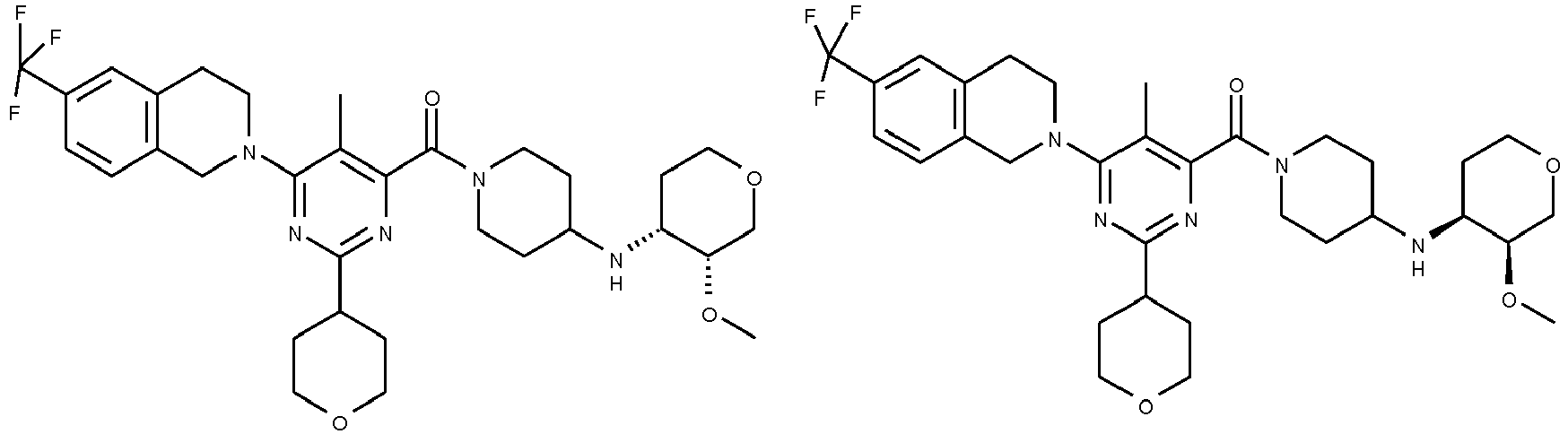


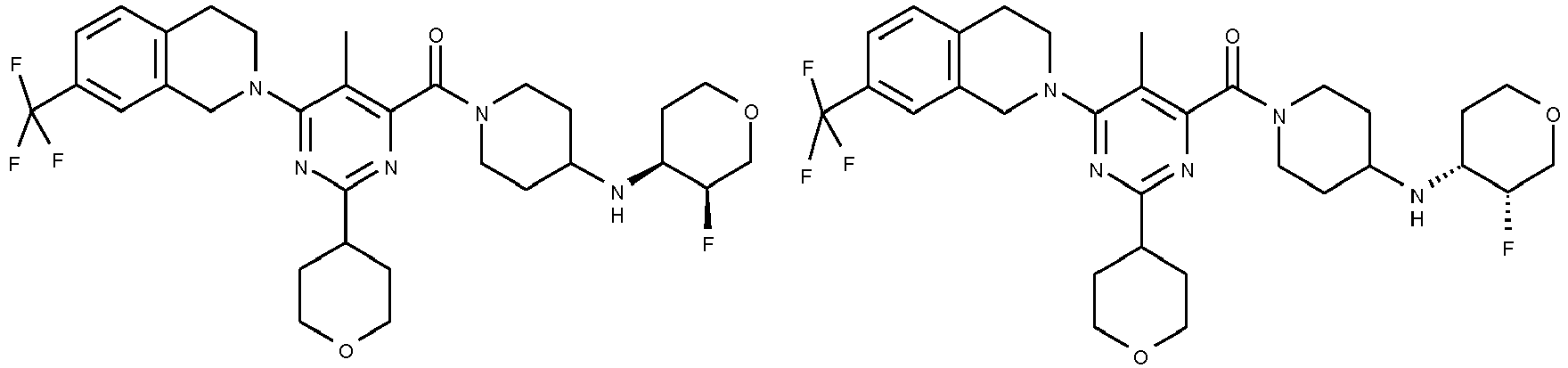


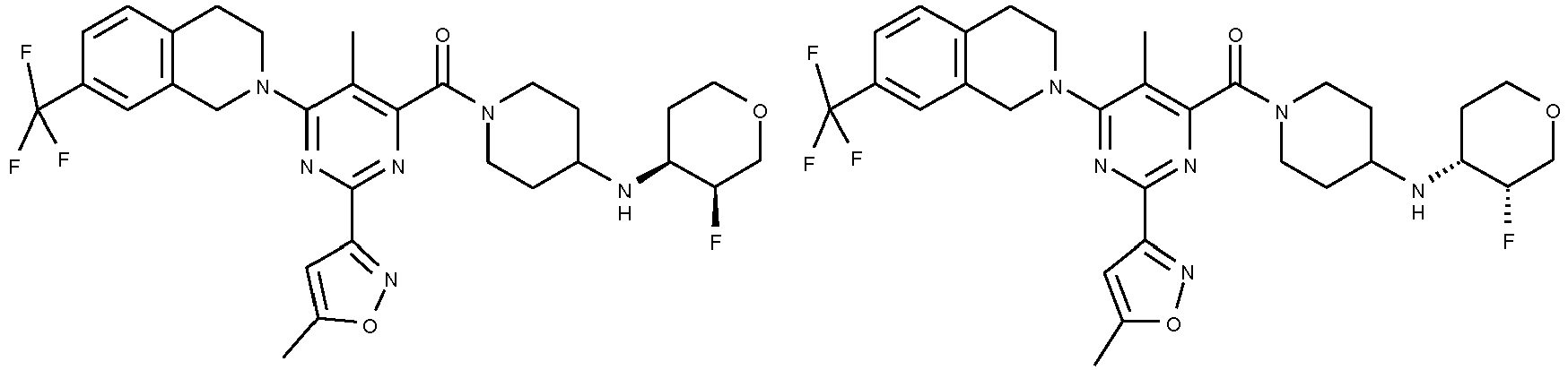
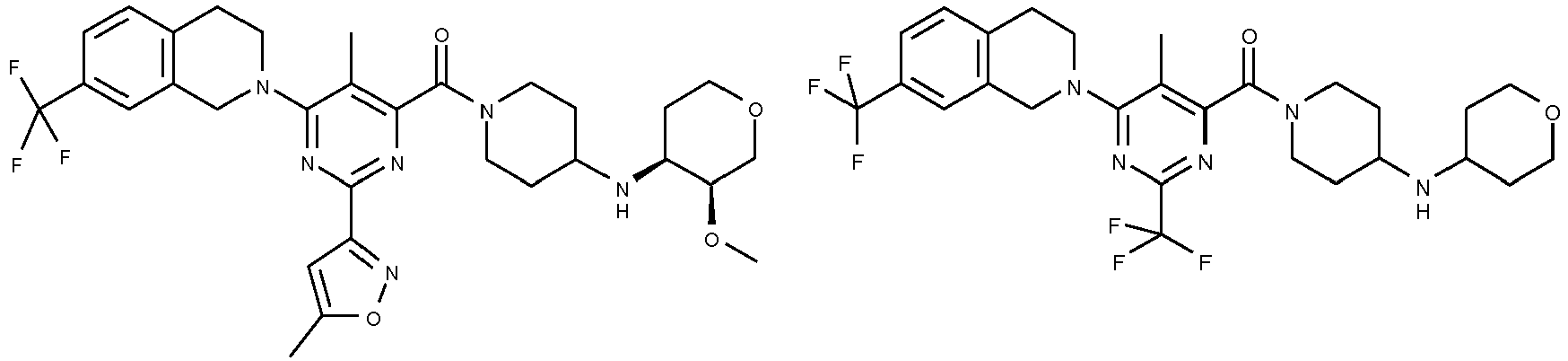


- Composé selon la revendication 1 pour son utilisation en tant que médicament.
- Composé selon la revendication 1 pour son utilisation dans le traitement l'ostéoarthrite, de la néphropathie diabétique, d'une douleur dans le bas du dos, de la douleur neuropathique ou d'une maladie douloureuse.
Priority Applications (1)
| Application Number | Priority Date | Filing Date | Title |
|---|---|---|---|
| EP12733144.5A EP2731941B1 (fr) | 2011-07-15 | 2012-07-09 | Antagonistes ccr2, nouveaux et sélectifs |
Applications Claiming Priority (3)
| Application Number | Priority Date | Filing Date | Title |
|---|---|---|---|
| EP11174198 | 2011-07-15 | ||
| PCT/EP2012/063362 WO2013010839A1 (fr) | 2011-07-15 | 2012-07-09 | Antagonistes de ccr2 nouveaux et sélectifs |
| EP12733144.5A EP2731941B1 (fr) | 2011-07-15 | 2012-07-09 | Antagonistes ccr2, nouveaux et sélectifs |
Publications (2)
| Publication Number | Publication Date |
|---|---|
| EP2731941A1 EP2731941A1 (fr) | 2014-05-21 |
| EP2731941B1 true EP2731941B1 (fr) | 2019-05-08 |
Family
ID=46466563
Family Applications (1)
| Application Number | Title | Priority Date | Filing Date |
|---|---|---|---|
| EP12733144.5A Active EP2731941B1 (fr) | 2011-07-15 | 2012-07-09 | Antagonistes ccr2, nouveaux et sélectifs |
Country Status (4)
| Country | Link |
|---|---|
| US (1) | US9108958B2 (fr) |
| EP (1) | EP2731941B1 (fr) |
| JP (1) | JP5786258B2 (fr) |
| WO (1) | WO2013010839A1 (fr) |
Families Citing this family (13)
| Publication number | Priority date | Publication date | Assignee | Title |
|---|---|---|---|---|
| JP5603770B2 (ja) | 2007-05-31 | 2014-10-08 | ベーリンガー インゲルハイム インターナショナル ゲゼルシャフト ミット ベシュレンクテル ハフツング | Ccr2受容体拮抗薬およびその使用 |
| CN102256963B (zh) | 2008-12-19 | 2014-06-11 | 贝林格尔.英格海姆国际有限公司 | 作为ccr2受体拮抗剂用于治疗炎症、哮喘和copd的环状嘧啶-4-甲酰胺 |
| ES2674275T3 (es) | 2009-12-17 | 2018-06-28 | Centrexion Therapeutics Corporation | Antagonistas del receptor CCR2 y usos de los mismos |
| WO2011141474A1 (fr) | 2010-05-12 | 2011-11-17 | Boehringer Ingelheim International Gmbh | Nouveaux antagonistes des récepteurs ccr2, procédé de production associé et application comme médicaments |
| JP5646736B2 (ja) | 2010-05-12 | 2014-12-24 | ベーリンガー インゲルハイム インターナショナル ゲゼルシャフト ミット ベシュレンクテル ハフツング | 新規ccr2受容体アンタゴニスト、これらの製造方法、及び薬物としてのこれらの使用 |
| WO2011144501A1 (fr) | 2010-05-17 | 2011-11-24 | Boehringer Ingelheim International Gmbh | Antagonistes du récepteur ccr2 et leurs utilisations |
| WO2011147772A1 (fr) | 2010-05-25 | 2011-12-01 | Boehringer Ingelheim International Gmbh | Antagonistes du récepteur ccr2 |
| US8962656B2 (en) | 2010-06-01 | 2015-02-24 | Boehringer Ingelheim International Gmbh | CCR2 antagonists |
| EP2731941B1 (fr) | 2011-07-15 | 2019-05-08 | Boehringer Ingelheim International GmbH | Antagonistes ccr2, nouveaux et sélectifs |
| EP3255041A1 (fr) * | 2011-09-02 | 2017-12-13 | Purdue Pharma L.P. | Pyrimidines utilisées comme bloqueurs de canaux sodiques |
| WO2016094307A1 (fr) | 2014-12-08 | 2016-06-16 | The Research Foundation For The State University Of New York | Anti-fongiques ciblant la synthèse de shingolipides fongiques |
| PT3317270T (pt) | 2015-07-02 | 2020-08-24 | Centrexion Therapeutics Corp | (4-((3r,4r)-3-metoxitetrahidro-pirano-4-ilamino)piperidina-1-il)(5-metil-6-(((2r,6s)-6-(p-tolil)tetrahidro-2h-pirano-2-il)metilamino)pirimidina-4-il)citrato de metanona |
| US11414378B2 (en) | 2017-06-16 | 2022-08-16 | The Research Foundation For The State University Of New York | Anti-fungals compounds targeting the synthesis of fungal sphingolipids |
Citations (1)
| Publication number | Priority date | Publication date | Assignee | Title |
|---|---|---|---|---|
| WO2011141477A1 (fr) * | 2010-05-12 | 2011-11-17 | Boehringer Ingelheim International Gmbh | Nouveaux antagonistes du récepteur ccr2, leur procédé de production et leur utilisation en tant que médicaments |
Family Cites Families (93)
| Publication number | Priority date | Publication date | Assignee | Title |
|---|---|---|---|---|
| US4032526A (en) | 1975-10-02 | 1977-06-28 | American Cyanamid Company | 1,2-dimethyl-3 or 5-piperazinyl-pyrazolium salts |
| US4426382A (en) | 1980-02-13 | 1984-01-17 | Sankyo Company Limited | 4-Amino-6,7-dimethoxy-2-piperazinylquinazoline derivatives, their preparation and use |
| DE3517617A1 (de) | 1985-05-15 | 1986-11-20 | Lentia GmbH Chem. u. pharm. Erzeugnisse - Industriebedarf, 8000 München | Neue pyridaziniumverbindungen, verfahren zu deren herstellung und diese enthaltende fungizide und algizide mittel |
| DE69325662T2 (de) | 1992-10-23 | 2000-02-10 | Merck Sharp & Dohme Ltd., Hoddesdon | Dopamin rezeptor subtyp liganden |
| US5629325A (en) | 1996-06-06 | 1997-05-13 | Abbott Laboratories | 3-pyridyloxymethyl heterocyclic ether compounds useful in controlling chemical synaptic transmission |
| US6514977B1 (en) | 1997-05-22 | 2003-02-04 | G.D. Searle & Company | Substituted pyrazoles as p38 kinase inhibitors |
| US6979686B1 (en) | 2001-12-07 | 2005-12-27 | Pharmacia Corporation | Substituted pyrazoles as p38 kinase inhibitors |
| EE04588B1 (et) | 1997-10-27 | 2006-02-15 | Neurosearch A/S | Heteroarüüldiasatsükloalkaanid kui atsetüülkoliini nikotiinretseptorite kolinergilised ligandid, nende kasutamine ravimitena ning neid sisaldav farmatseutiline kompositsioon |
| US6143892A (en) | 1998-11-20 | 2000-11-07 | G. D. Searle & Co. | Process for making 5-substituted pyrazoles |
| US6248755B1 (en) | 1999-04-06 | 2001-06-19 | Merck & Co., Inc. | Pyrrolidine modulators of chemokine receptor activity |
| SK287418B6 (sk) | 1999-05-04 | 2010-09-07 | Schering Corporation | Farmaceutický prípravok s obsahom CCR5 antagonistov a súprava s obsahom tohto prípravku |
| GB0004153D0 (en) | 2000-02-23 | 2000-04-12 | Astrazeneca Uk Ltd | Novel use |
| OA12274A (en) | 2000-05-22 | 2006-05-09 | Aventis Pharma Inc | Arylmethylamine derivatives for use as tryptase inhibitors. |
| WO2002030928A1 (fr) | 2000-10-12 | 2002-04-18 | Boehringer Ingelheim Pharma Gmbh & Co. Kg | Monohydrate cristallin, procede permettant sa preparation et son utilisation pour la preparation d'un produit pharmaceutique |
| AR035700A1 (es) | 2001-05-08 | 2004-06-23 | Astrazeneca Ab | Derivados de arilheteroalquilamina, composicion farmaceutica, usos de estos derivados para la fabricacion de medicamentos, metodos de tratamiento, y proceso para la preparacion de estos derivados |
| ME00412B (fr) | 2001-06-22 | 2011-10-10 | Boehringer Ingelheim Pharma | Substance anticholinergique cristalline, son procede de production et son utilisation pour la production d'un medicament |
| WO2003037271A2 (fr) | 2001-10-30 | 2003-05-08 | Millennium Pharmaceuticals,Inc. | Composes, compositions pharmaceutiques et methodes d'utilisation |
| US6806279B2 (en) | 2001-12-17 | 2004-10-19 | Sunesis Pharmaceuticals, Inc. | Small-molecule inhibitors of interleukin-2 |
| EP1474401A2 (fr) | 2002-02-05 | 2004-11-10 | Novo Nordisk A/S | Nouvelles aryl- et heteroarylpiperazines |
| HUP0200849A2 (hu) | 2002-03-06 | 2004-08-30 | Sanofi-Synthelabo | N-aminoacetil-2-ciano-pirrolidin-származékok, e vegyületeket tartalmazó gyógyszerkészítmények és eljárás előállításukra |
| CN100445276C (zh) | 2002-03-13 | 2008-12-24 | 詹森药业有限公司 | 用作组蛋白去乙酰酶抑制剂的磺酰基衍生物 |
| US20040014744A1 (en) | 2002-04-05 | 2004-01-22 | Fortuna Haviv | Substituted pyridines having antiangiogenic activity |
| TW200400960A (en) | 2002-06-05 | 2004-01-16 | Pharmacia Corp | Novel pyrazoles and their use as P38 kinase inhibitors |
| AU2003270199A1 (en) | 2002-09-13 | 2004-04-30 | Glaxo Group Limited | Urea compounds active as vanilloid receptor antagonists for the treatment of pain |
| SE0203304D0 (sv) | 2002-11-07 | 2002-11-07 | Astrazeneca Ab | Novel Coumpounds |
| GB0229618D0 (en) | 2002-12-19 | 2003-01-22 | Cancer Rec Tech Ltd | Pyrazole compounds |
| WO2004074438A2 (fr) | 2003-02-14 | 2004-09-02 | Smithkline Beecham Corporation | Antagonistes de ccr8 |
| PL1633724T3 (pl) | 2003-03-12 | 2011-10-31 | Kudos Pharm Ltd | Pochodne ftalazynonu |
| CA2523431A1 (fr) | 2003-04-23 | 2004-11-25 | Glaxo Group Limited | Derives de piperazine et leur utilisation dans le traitement de maladies neurologiques et psychiatriques |
| FR2854158B1 (fr) | 2003-04-25 | 2006-11-17 | Sanofi Synthelabo | Derives de 2-acylamino-4-phenylethiazole, leur preparation et leur application en therapeutique |
| JP2006528147A (ja) | 2003-07-18 | 2006-12-14 | グラクソ グループ リミテッド | ヒスタミンh3受容体リガンドとしての置換ピペリジン |
| WO2005009976A1 (fr) | 2003-07-29 | 2005-02-03 | Novo Nordisk A/S | Pyridazinyl-piperazines et leur utilisation en tant que ligands du recepteur histaminique h3 |
| KR20080052683A (ko) | 2003-12-18 | 2008-06-11 | 인사이트 코포레이션 | 케모킨 수용체의 조절제로서의3-사이클로알킬아미노피롤리딘 유도체 |
| US7435830B2 (en) | 2004-03-03 | 2008-10-14 | Chemocentryx, Inc. | Bicyclic and bridged nitrogen heterocycles |
| US7423147B2 (en) | 2004-03-31 | 2008-09-09 | Janssen Pharmaceutical, N.V. | Pyridine compounds as histamine H3 modulators |
| WO2005117909A2 (fr) | 2004-04-23 | 2005-12-15 | Exelixis, Inc. | Modulateurs des proteines kinases et leurs methodes d'utilisation |
| WO2006001958A2 (fr) | 2004-05-21 | 2006-01-05 | Merck & Co., Inc. | Modulateurs heterocycliques et carbocycliques d'amino cyclopentyle de l'activite du recepteur de la chimiokine |
| CA2569016C (fr) | 2004-06-02 | 2012-11-27 | Takeda Pharmaceutical Company Limited | Compose heterocyclique fusionne |
| US8071624B2 (en) | 2004-06-24 | 2011-12-06 | Incyte Corporation | N-substituted piperidines and their use as pharmaceuticals |
| WO2006012135A1 (fr) | 2004-06-24 | 2006-02-02 | Janssen Pharmaceutica, N. V. | Antagonistes de ccr2 a base de sels quaternaires |
| MXPA06014672A (es) * | 2004-06-28 | 2007-03-26 | Incyte Corp | 3-aminociclopentanocarboxamidas como moduladores de receptores de quimioquinas. |
| WO2006004741A2 (fr) | 2004-06-28 | 2006-01-12 | Incyte Corporation | 3-aminocyclopentanecarboxamides utilises en tant que modulateurs des recepteurs des chimiokines |
| JP2008510783A (ja) | 2004-08-26 | 2008-04-10 | クドス ファーマシューティカルズ リミテッド | 4−ヘテロアリールメチル置換フタラジノン誘導体 |
| GB0420831D0 (en) | 2004-09-17 | 2004-10-20 | Glaxo Group Ltd | Novel compounds |
| GB0421525D0 (en) | 2004-09-28 | 2004-10-27 | Novartis Ag | Inhibitors of protein kineses |
| WO2006038734A1 (fr) | 2004-10-08 | 2006-04-13 | Astellas Pharma Inc. | Dérivés de la pyridazinone inhibiteurs de cytokines |
| CA2589106C (fr) | 2004-11-02 | 2015-07-21 | Northwestern University | Composes pyridazine, compositions et procedes associes et leur utilisation dans le traitement de maladies inflammatoires |
| DE102004061751A1 (de) | 2004-12-22 | 2006-07-06 | Bayer Healthcare Ag | Cyanoguanidin-substituierte Pyrazoline |
| TWI385164B (zh) | 2005-02-17 | 2013-02-11 | Astellas Pharma Inc | Pyridyl non-aromatic nitrogen-containing heterocyclic-1-carboxylate derivatives (II) |
| JP2008537953A (ja) | 2005-04-15 | 2008-10-02 | エラン ファーマシューティカルズ,インコーポレイテッド | ブラジキニンb1受容体拮抗作用に有用な新規化合物 |
| TW200716594A (en) | 2005-04-18 | 2007-05-01 | Neurogen Corp | Substituted heteroaryl CB1 antagonists |
| EP2354140A1 (fr) | 2005-05-20 | 2011-08-10 | Vertex Pharmaceuticals Incorporated | Pyrrolopyridines en tant qu'inhibiteurs de kinase |
| MX2007015675A (es) | 2005-07-04 | 2008-02-20 | Novo Nordisk As | Antagonistas del receptor de histamina h3. |
| US7851474B2 (en) | 2005-08-02 | 2010-12-14 | Neurogen Corporation | Dipiperazinyl ketones and related analogues |
| GB0517184D0 (en) | 2005-08-22 | 2005-09-28 | Glaxo Group Ltd | Compounds |
| AR055203A1 (es) | 2005-08-31 | 2007-08-08 | Otsuka Pharma Co Ltd | Derivados de benzotiofeno con propiedades antipsicoticas |
| KR101415426B1 (ko) | 2005-09-27 | 2014-07-04 | 아이알엠 엘엘씨 | 디아릴아민-함유 화합물 및 조성물, 및 c-kit 수용체의조절제로서의 그의 용도 |
| US8067457B2 (en) | 2005-11-01 | 2011-11-29 | Millennium Pharmaceuticals, Inc. | Compounds useful as antagonists of CCR2 |
| WO2007053495A2 (fr) | 2005-11-01 | 2007-05-10 | Millennium Pharmaceuticals, Inc. | Composes utiles en tant qu’antagonistes de ccr2 |
| CN101309915A (zh) | 2005-11-14 | 2008-11-19 | Irm责任有限公司 | 作为lxr调节剂的化合物和组合物 |
| GB0525957D0 (en) * | 2005-12-21 | 2006-02-01 | Astrazeneca Ab | Methods |
| WO2007084868A2 (fr) | 2006-01-17 | 2007-07-26 | Kalypsys, Inc. | Traitement d'une inflammation et de troubles associes par l'activation de la reponse upr (proteine depliee) |
| JO2660B1 (en) | 2006-01-20 | 2012-06-17 | نوفارتيس ايه جي | Pi-3 inhibitors and methods of use |
| NZ570847A (en) | 2006-02-28 | 2011-10-28 | Helicon Therapeutics Inc | Therapeutic compounds |
| WO2007105058A2 (fr) | 2006-03-16 | 2007-09-20 | Pfizer Products Inc. | Pyrazoles |
| WO2007120574A2 (fr) | 2006-04-11 | 2007-10-25 | Merck & Co., Inc. | Alcanes à substitution diaryle |
| US7807671B2 (en) | 2006-04-25 | 2010-10-05 | Bristol-Myers Squibb Company | Diketo-piperazine and piperidine derivatives as antiviral agents |
| US20100168120A1 (en) | 2006-04-28 | 2010-07-01 | Neuromedix Inc. | Salts of pyridazine compounds |
| US20080039450A1 (en) | 2006-06-22 | 2008-02-14 | Jensen Annika J | Compounds |
| ES2548353T3 (es) | 2006-12-28 | 2015-10-15 | Abbvie Inc. | Inhibidores de poli(ADP-ribosa)polimerasa |
| CA2676715A1 (fr) | 2007-02-12 | 2008-08-21 | Merck & Co., Inc. | Derives de piperazine pour le traitement de la maladie d'alzheimer et des conditions apparentees |
| JP4785881B2 (ja) | 2007-02-27 | 2011-10-05 | 大塚製薬株式会社 | 医薬 |
| JP5603770B2 (ja) | 2007-05-31 | 2014-10-08 | ベーリンガー インゲルハイム インターナショナル ゲゼルシャフト ミット ベシュレンクテル ハフツング | Ccr2受容体拮抗薬およびその使用 |
| CA2691662A1 (fr) * | 2007-07-02 | 2009-01-08 | F. Hoffmann-La Roche Ag | Derives imidazoles comme antagonistes du recepteur ccr2 |
| MX2010002005A (es) | 2007-08-22 | 2010-03-11 | Irm Llc | Derivados de 2-heteroaril-amino-pirimidina como inhibidores de cinasa. |
| RU2010116821A (ru) * | 2007-10-01 | 2011-11-10 | Ф.Хоффманн-Ля Аг (Ch) | N-гетероциклические биарильные карбоксамиды в качестве антагонистов рецептора ccr |
| US20090131417A1 (en) | 2007-11-20 | 2009-05-21 | Letavic Michael A | Substituted pyridyl amide compounds as modulators of the histamine h3 receptor |
| EP2062889A1 (fr) | 2007-11-22 | 2009-05-27 | Boehringer Ingelheim Pharma GmbH & Co. KG | Composés |
| US8829006B2 (en) | 2007-11-22 | 2014-09-09 | Boehringer Ingelheim International Gmbh | Compounds |
| AU2009259496A1 (en) * | 2008-06-18 | 2009-12-23 | F. Hoffmann-La Roche Ag | Novel heteroaryl carboxamide derivatives |
| JP5693452B2 (ja) | 2008-08-04 | 2015-04-01 | シーエイチディーアイ ファウンデーション,インコーポレーテッド | 特定のキヌレニン−3−モノオキシゲナーゼインヒビター、医薬組成物およびそれらの使用方法 |
| GB0815369D0 (en) | 2008-08-22 | 2008-10-01 | Summit Corp Plc | Compounds for treatment of duchenne muscular dystrophy |
| AU2009289378A1 (en) | 2008-09-02 | 2010-03-11 | Boehringer Ingelheim International Gmbh | Novel benzamides, production thereof, and use thereof as medicaments |
| CN102256963B (zh) | 2008-12-19 | 2014-06-11 | 贝林格尔.英格海姆国际有限公司 | 作为ccr2受体拮抗剂用于治疗炎症、哮喘和copd的环状嘧啶-4-甲酰胺 |
| US20110301143A1 (en) | 2009-02-23 | 2011-12-08 | Elise Isabel | Heterocyclic derivatives as inhibitors of stearoyl-coenzyme a delta-9 desaturase |
| EP2513086B1 (fr) * | 2009-12-17 | 2015-04-29 | Boehringer Ingelheim International GmbH | Nouveaux antagonistes pour CCR2 et utilisations associées |
| ES2674275T3 (es) | 2009-12-17 | 2018-06-28 | Centrexion Therapeutics Corporation | Antagonistas del receptor CCR2 y usos de los mismos |
| WO2011141474A1 (fr) | 2010-05-12 | 2011-11-17 | Boehringer Ingelheim International Gmbh | Nouveaux antagonistes des récepteurs ccr2, procédé de production associé et application comme médicaments |
| WO2011144501A1 (fr) | 2010-05-17 | 2011-11-24 | Boehringer Ingelheim International Gmbh | Antagonistes du récepteur ccr2 et leurs utilisations |
| WO2011147772A1 (fr) | 2010-05-25 | 2011-12-01 | Boehringer Ingelheim International Gmbh | Antagonistes du récepteur ccr2 |
| US8962656B2 (en) | 2010-06-01 | 2015-02-24 | Boehringer Ingelheim International Gmbh | CCR2 antagonists |
| WO2012171863A1 (fr) | 2011-06-16 | 2012-12-20 | Boehringer Ingelheim International Gmbh | Nouveaux antagonistes sélectifs de ccr2 |
| EP2731941B1 (fr) | 2011-07-15 | 2019-05-08 | Boehringer Ingelheim International GmbH | Antagonistes ccr2, nouveaux et sélectifs |
-
2012
- 2012-07-09 EP EP12733144.5A patent/EP2731941B1/fr active Active
- 2012-07-09 JP JP2014519515A patent/JP5786258B2/ja active Active
- 2012-07-09 WO PCT/EP2012/063362 patent/WO2013010839A1/fr not_active Ceased
- 2012-07-13 US US13/548,321 patent/US9108958B2/en active Active
Patent Citations (1)
| Publication number | Priority date | Publication date | Assignee | Title |
|---|---|---|---|---|
| WO2011141477A1 (fr) * | 2010-05-12 | 2011-11-17 | Boehringer Ingelheim International Gmbh | Nouveaux antagonistes du récepteur ccr2, leur procédé de production et leur utilisation en tant que médicaments |
Also Published As
| Publication number | Publication date |
|---|---|
| US20130172348A1 (en) | 2013-07-04 |
| EP2731941A1 (fr) | 2014-05-21 |
| US9108958B2 (en) | 2015-08-18 |
| JP2014520826A (ja) | 2014-08-25 |
| WO2013010839A1 (fr) | 2013-01-24 |
| JP5786258B2 (ja) | 2015-09-30 |
Similar Documents
| Publication | Publication Date | Title |
|---|---|---|
| US12209094B2 (en) | CCR2 receptor antagonists and uses thereof | |
| EP2569298B1 (fr) | Nouveaux antagonistes du récepteur ccr2, son procédé de production et utilisation associée en tant que médicaments | |
| EP2721025B1 (fr) | Nouveaux antagonistes sélectifs de ccr2 | |
| EP2731941B1 (fr) | Antagonistes ccr2, nouveaux et sélectifs | |
| EP2513086B1 (fr) | Nouveaux antagonistes pour CCR2 et utilisations associées | |
| EP2569295B1 (fr) | Nouveaux antagonistes du récepteur ccr2, son procédé de production et utilisation associée en tant que médicaments | |
| EP2571870B1 (fr) | Antagonistes de ccr2 et leurs utilisations | |
| EP2576542B1 (fr) | Dérivés d'amide cycliques d'acides pyridazine-3-carboxyliques utiles dans le traitement de maladies respiratoires, liées à des douleurs, liées au système immunitaire et cardiovasculaires | |
| EP2576538B1 (fr) | Nouveaux antagonistes de CCR2 |
Legal Events
| Date | Code | Title | Description |
|---|---|---|---|
| PUAI | Public reference made under article 153(3) epc to a published international application that has entered the european phase |
Free format text: ORIGINAL CODE: 0009012 |
|
| 17P | Request for examination filed |
Effective date: 20140217 |
|
| AK | Designated contracting states |
Kind code of ref document: A1 Designated state(s): AL AT BE BG CH CY CZ DE DK EE ES FI FR GB GR HR HU IE IS IT LI LT LU LV MC MK MT NL NO PL PT RO RS SE SI SK SM TR |
|
| DAX | Request for extension of the european patent (deleted) | ||
| STAA | Information on the status of an ep patent application or granted ep patent |
Free format text: STATUS: EXAMINATION IS IN PROGRESS |
|
| 17Q | First examination report despatched |
Effective date: 20170918 |
|
| REG | Reference to a national code |
Ref country code: DE Ref legal event code: R079 Ref document number: 602012059868 Country of ref document: DE Free format text: PREVIOUS MAIN CLASS: C07D0401060000 Ipc: C07D0401140000 |
|
| GRAP | Despatch of communication of intention to grant a patent |
Free format text: ORIGINAL CODE: EPIDOSNIGR1 |
|
| STAA | Information on the status of an ep patent application or granted ep patent |
Free format text: STATUS: GRANT OF PATENT IS INTENDED |
|
| RIC1 | Information provided on ipc code assigned before grant |
Ipc: C07D 413/14 20060101ALI20181123BHEP Ipc: C07D 401/06 20060101ALI20181123BHEP Ipc: A61K 31/506 20060101ALI20181123BHEP Ipc: A61K 31/535 20060101ALI20181123BHEP Ipc: C07D 401/14 20060101AFI20181123BHEP Ipc: A61P 29/00 20060101ALI20181123BHEP Ipc: A61P 9/00 20060101ALI20181123BHEP Ipc: C07D 405/14 20060101ALI20181123BHEP |
|
| INTG | Intention to grant announced |
Effective date: 20181210 |
|
| GRAS | Grant fee paid |
Free format text: ORIGINAL CODE: EPIDOSNIGR3 |
|
| GRAA | (expected) grant |
Free format text: ORIGINAL CODE: 0009210 |
|
| STAA | Information on the status of an ep patent application or granted ep patent |
Free format text: STATUS: THE PATENT HAS BEEN GRANTED |
|
| AK | Designated contracting states |
Kind code of ref document: B1 Designated state(s): AL AT BE BG CH CY CZ DE DK EE ES FI FR GB GR HR HU IE IS IT LI LT LU LV MC MK MT NL NO PL PT RO RS SE SI SK SM TR |
|
| REG | Reference to a national code |
Ref country code: GB Ref legal event code: FG4D |
|
| REG | Reference to a national code |
Ref country code: CH Ref legal event code: EP Ref country code: AT Ref legal event code: REF Ref document number: 1129960 Country of ref document: AT Kind code of ref document: T Effective date: 20190515 |
|
| REG | Reference to a national code |
Ref country code: IE Ref legal event code: FG4D |
|
| REG | Reference to a national code |
Ref country code: DE Ref legal event code: R096 Ref document number: 602012059868 Country of ref document: DE |
|
| REG | Reference to a national code |
Ref country code: NL Ref legal event code: MP Effective date: 20190508 |
|
| REG | Reference to a national code |
Ref country code: LT Ref legal event code: MG4D |
|
| PG25 | Lapsed in a contracting state [announced via postgrant information from national office to epo] |
Ref country code: NO Free format text: LAPSE BECAUSE OF FAILURE TO SUBMIT A TRANSLATION OF THE DESCRIPTION OR TO PAY THE FEE WITHIN THE PRESCRIBED TIME-LIMIT Effective date: 20190808 Ref country code: AL Free format text: LAPSE BECAUSE OF FAILURE TO SUBMIT A TRANSLATION OF THE DESCRIPTION OR TO PAY THE FEE WITHIN THE PRESCRIBED TIME-LIMIT Effective date: 20190508 Ref country code: FI Free format text: LAPSE BECAUSE OF FAILURE TO SUBMIT A TRANSLATION OF THE DESCRIPTION OR TO PAY THE FEE WITHIN THE PRESCRIBED TIME-LIMIT Effective date: 20190508 Ref country code: SE Free format text: LAPSE BECAUSE OF FAILURE TO SUBMIT A TRANSLATION OF THE DESCRIPTION OR TO PAY THE FEE WITHIN THE PRESCRIBED TIME-LIMIT Effective date: 20190508 Ref country code: NL Free format text: LAPSE BECAUSE OF FAILURE TO SUBMIT A TRANSLATION OF THE DESCRIPTION OR TO PAY THE FEE WITHIN THE PRESCRIBED TIME-LIMIT Effective date: 20190508 Ref country code: HR Free format text: LAPSE BECAUSE OF FAILURE TO SUBMIT A TRANSLATION OF THE DESCRIPTION OR TO PAY THE FEE WITHIN THE PRESCRIBED TIME-LIMIT Effective date: 20190508 Ref country code: PT Free format text: LAPSE BECAUSE OF FAILURE TO SUBMIT A TRANSLATION OF THE DESCRIPTION OR TO PAY THE FEE WITHIN THE PRESCRIBED TIME-LIMIT Effective date: 20190908 Ref country code: LT Free format text: LAPSE BECAUSE OF FAILURE TO SUBMIT A TRANSLATION OF THE DESCRIPTION OR TO PAY THE FEE WITHIN THE PRESCRIBED TIME-LIMIT Effective date: 20190508 Ref country code: ES Free format text: LAPSE BECAUSE OF FAILURE TO SUBMIT A TRANSLATION OF THE DESCRIPTION OR TO PAY THE FEE WITHIN THE PRESCRIBED TIME-LIMIT Effective date: 20190508 |
|
| PG25 | Lapsed in a contracting state [announced via postgrant information from national office to epo] |
Ref country code: GR Free format text: LAPSE BECAUSE OF FAILURE TO SUBMIT A TRANSLATION OF THE DESCRIPTION OR TO PAY THE FEE WITHIN THE PRESCRIBED TIME-LIMIT Effective date: 20190809 Ref country code: RS Free format text: LAPSE BECAUSE OF FAILURE TO SUBMIT A TRANSLATION OF THE DESCRIPTION OR TO PAY THE FEE WITHIN THE PRESCRIBED TIME-LIMIT Effective date: 20190508 Ref country code: BG Free format text: LAPSE BECAUSE OF FAILURE TO SUBMIT A TRANSLATION OF THE DESCRIPTION OR TO PAY THE FEE WITHIN THE PRESCRIBED TIME-LIMIT Effective date: 20190808 Ref country code: LV Free format text: LAPSE BECAUSE OF FAILURE TO SUBMIT A TRANSLATION OF THE DESCRIPTION OR TO PAY THE FEE WITHIN THE PRESCRIBED TIME-LIMIT Effective date: 20190508 |
|
| REG | Reference to a national code |
Ref country code: AT Ref legal event code: MK05 Ref document number: 1129960 Country of ref document: AT Kind code of ref document: T Effective date: 20190508 |
|
| PG25 | Lapsed in a contracting state [announced via postgrant information from national office to epo] |
Ref country code: CZ Free format text: LAPSE BECAUSE OF FAILURE TO SUBMIT A TRANSLATION OF THE DESCRIPTION OR TO PAY THE FEE WITHIN THE PRESCRIBED TIME-LIMIT Effective date: 20190508 Ref country code: RO Free format text: LAPSE BECAUSE OF FAILURE TO SUBMIT A TRANSLATION OF THE DESCRIPTION OR TO PAY THE FEE WITHIN THE PRESCRIBED TIME-LIMIT Effective date: 20190508 Ref country code: EE Free format text: LAPSE BECAUSE OF FAILURE TO SUBMIT A TRANSLATION OF THE DESCRIPTION OR TO PAY THE FEE WITHIN THE PRESCRIBED TIME-LIMIT Effective date: 20190508 Ref country code: AT Free format text: LAPSE BECAUSE OF FAILURE TO SUBMIT A TRANSLATION OF THE DESCRIPTION OR TO PAY THE FEE WITHIN THE PRESCRIBED TIME-LIMIT Effective date: 20190508 Ref country code: DK Free format text: LAPSE BECAUSE OF FAILURE TO SUBMIT A TRANSLATION OF THE DESCRIPTION OR TO PAY THE FEE WITHIN THE PRESCRIBED TIME-LIMIT Effective date: 20190508 Ref country code: SK Free format text: LAPSE BECAUSE OF FAILURE TO SUBMIT A TRANSLATION OF THE DESCRIPTION OR TO PAY THE FEE WITHIN THE PRESCRIBED TIME-LIMIT Effective date: 20190508 |
|
| REG | Reference to a national code |
Ref country code: DE Ref legal event code: R097 Ref document number: 602012059868 Country of ref document: DE |
|
| PG25 | Lapsed in a contracting state [announced via postgrant information from national office to epo] |
Ref country code: IT Free format text: LAPSE BECAUSE OF FAILURE TO SUBMIT A TRANSLATION OF THE DESCRIPTION OR TO PAY THE FEE WITHIN THE PRESCRIBED TIME-LIMIT Effective date: 20190508 Ref country code: SM Free format text: LAPSE BECAUSE OF FAILURE TO SUBMIT A TRANSLATION OF THE DESCRIPTION OR TO PAY THE FEE WITHIN THE PRESCRIBED TIME-LIMIT Effective date: 20190508 Ref country code: MC Free format text: LAPSE BECAUSE OF FAILURE TO SUBMIT A TRANSLATION OF THE DESCRIPTION OR TO PAY THE FEE WITHIN THE PRESCRIBED TIME-LIMIT Effective date: 20190508 |
|
| REG | Reference to a national code |
Ref country code: CH Ref legal event code: PL |
|
| PLBE | No opposition filed within time limit |
Free format text: ORIGINAL CODE: 0009261 |
|
| STAA | Information on the status of an ep patent application or granted ep patent |
Free format text: STATUS: NO OPPOSITION FILED WITHIN TIME LIMIT |
|
| PG25 | Lapsed in a contracting state [announced via postgrant information from national office to epo] |
Ref country code: TR Free format text: LAPSE BECAUSE OF FAILURE TO SUBMIT A TRANSLATION OF THE DESCRIPTION OR TO PAY THE FEE WITHIN THE PRESCRIBED TIME-LIMIT Effective date: 20190508 |
|
| 26N | No opposition filed |
Effective date: 20200211 |
|
| REG | Reference to a national code |
Ref country code: BE Ref legal event code: MM Effective date: 20190731 |
|
| PG25 | Lapsed in a contracting state [announced via postgrant information from national office to epo] |
Ref country code: PL Free format text: LAPSE BECAUSE OF FAILURE TO SUBMIT A TRANSLATION OF THE DESCRIPTION OR TO PAY THE FEE WITHIN THE PRESCRIBED TIME-LIMIT Effective date: 20190508 |
|
| PG25 | Lapsed in a contracting state [announced via postgrant information from national office to epo] |
Ref country code: SI Free format text: LAPSE BECAUSE OF FAILURE TO SUBMIT A TRANSLATION OF THE DESCRIPTION OR TO PAY THE FEE WITHIN THE PRESCRIBED TIME-LIMIT Effective date: 20190508 Ref country code: BE Free format text: LAPSE BECAUSE OF NON-PAYMENT OF DUE FEES Effective date: 20190731 Ref country code: LU Free format text: LAPSE BECAUSE OF NON-PAYMENT OF DUE FEES Effective date: 20190709 Ref country code: LI Free format text: LAPSE BECAUSE OF NON-PAYMENT OF DUE FEES Effective date: 20190731 Ref country code: CH Free format text: LAPSE BECAUSE OF NON-PAYMENT OF DUE FEES Effective date: 20190731 |
|
| PG25 | Lapsed in a contracting state [announced via postgrant information from national office to epo] |
Ref country code: IE Free format text: LAPSE BECAUSE OF NON-PAYMENT OF DUE FEES Effective date: 20190709 |
|
| PG25 | Lapsed in a contracting state [announced via postgrant information from national office to epo] |
Ref country code: CY Free format text: LAPSE BECAUSE OF FAILURE TO SUBMIT A TRANSLATION OF THE DESCRIPTION OR TO PAY THE FEE WITHIN THE PRESCRIBED TIME-LIMIT Effective date: 20190508 |
|
| PG25 | Lapsed in a contracting state [announced via postgrant information from national office to epo] |
Ref country code: IS Free format text: LAPSE BECAUSE OF FAILURE TO SUBMIT A TRANSLATION OF THE DESCRIPTION OR TO PAY THE FEE WITHIN THE PRESCRIBED TIME-LIMIT Effective date: 20190908 |
|
| PG25 | Lapsed in a contracting state [announced via postgrant information from national office to epo] |
Ref country code: MT Free format text: LAPSE BECAUSE OF FAILURE TO SUBMIT A TRANSLATION OF THE DESCRIPTION OR TO PAY THE FEE WITHIN THE PRESCRIBED TIME-LIMIT Effective date: 20190508 Ref country code: HU Free format text: LAPSE BECAUSE OF FAILURE TO SUBMIT A TRANSLATION OF THE DESCRIPTION OR TO PAY THE FEE WITHIN THE PRESCRIBED TIME-LIMIT; INVALID AB INITIO Effective date: 20120709 |
|
| PG25 | Lapsed in a contracting state [announced via postgrant information from national office to epo] |
Ref country code: MK Free format text: LAPSE BECAUSE OF FAILURE TO SUBMIT A TRANSLATION OF THE DESCRIPTION OR TO PAY THE FEE WITHIN THE PRESCRIBED TIME-LIMIT Effective date: 20190508 |
|
| PGFP | Annual fee paid to national office [announced via postgrant information from national office to epo] |
Ref country code: DE Payment date: 20250722 Year of fee payment: 14 |
|
| PGFP | Annual fee paid to national office [announced via postgrant information from national office to epo] |
Ref country code: GB Payment date: 20250722 Year of fee payment: 14 |
|
| PGFP | Annual fee paid to national office [announced via postgrant information from national office to epo] |
Ref country code: FR Payment date: 20250725 Year of fee payment: 14 |