EP2732010B1 - Verbesserung einer plattform mithilfe von alkalimetallen - Google Patents
Verbesserung einer plattform mithilfe von alkalimetallen Download PDFInfo
- Publication number
- EP2732010B1 EP2732010B1 EP12814831.9A EP12814831A EP2732010B1 EP 2732010 B1 EP2732010 B1 EP 2732010B1 EP 12814831 A EP12814831 A EP 12814831A EP 2732010 B1 EP2732010 B1 EP 2732010B1
- Authority
- EP
- European Patent Office
- Prior art keywords
- oil
- hydrogen
- alkali metal
- oil feedstock
- sulfur
- Prior art date
- Legal status (The legal status is an assumption and is not a legal conclusion. Google has not performed a legal analysis and makes no representation as to the accuracy of the status listed.)
- Active
Links
Images





Classifications
-
- C—CHEMISTRY; METALLURGY
- C10—PETROLEUM, GAS OR COKE INDUSTRIES; TECHNICAL GASES CONTAINING CARBON MONOXIDE; FUELS; LUBRICANTS; PEAT
- C10G—CRACKING HYDROCARBON OILS; PRODUCTION OF LIQUID HYDROCARBON MIXTURES, e.g. BY DESTRUCTIVE HYDROGENATION, OLIGOMERISATION, POLYMERISATION; RECOVERY OF HYDROCARBON OILS FROM OIL-SHALE, OIL-SAND, OR GASES; REFINING MIXTURES MAINLY CONSISTING OF HYDROCARBONS; REFORMING OF NAPHTHA; MINERAL WAXES
- C10G29/00—Refining of hydrocarbon oils, in the absence of hydrogen, with other chemicals
- C10G29/04—Metals, or metals deposited on a carrier
-
- C—CHEMISTRY; METALLURGY
- C10—PETROLEUM, GAS OR COKE INDUSTRIES; TECHNICAL GASES CONTAINING CARBON MONOXIDE; FUELS; LUBRICANTS; PEAT
- C10G—CRACKING HYDROCARBON OILS; PRODUCTION OF LIQUID HYDROCARBON MIXTURES, e.g. BY DESTRUCTIVE HYDROGENATION, OLIGOMERISATION, POLYMERISATION; RECOVERY OF HYDROCARBON OILS FROM OIL-SHALE, OIL-SAND, OR GASES; REFINING MIXTURES MAINLY CONSISTING OF HYDROCARBONS; REFORMING OF NAPHTHA; MINERAL WAXES
- C10G29/00—Refining of hydrocarbon oils, in the absence of hydrogen, with other chemicals
- C10G29/20—Organic compounds not containing metal atoms
-
- C—CHEMISTRY; METALLURGY
- C10—PETROLEUM, GAS OR COKE INDUSTRIES; TECHNICAL GASES CONTAINING CARBON MONOXIDE; FUELS; LUBRICANTS; PEAT
- C10G—CRACKING HYDROCARBON OILS; PRODUCTION OF LIQUID HYDROCARBON MIXTURES, e.g. BY DESTRUCTIVE HYDROGENATION, OLIGOMERISATION, POLYMERISATION; RECOVERY OF HYDROCARBON OILS FROM OIL-SHALE, OIL-SAND, OR GASES; REFINING MIXTURES MAINLY CONSISTING OF HYDROCARBONS; REFORMING OF NAPHTHA; MINERAL WAXES
- C10G50/00—Production of liquid hydrocarbon mixtures from lower carbon number hydrocarbons, e.g. by oligomerisation
-
- C—CHEMISTRY; METALLURGY
- C25—ELECTROLYTIC OR ELECTROPHORETIC PROCESSES; APPARATUS THEREFOR
- C25C—PROCESSES FOR THE ELECTROLYTIC PRODUCTION, RECOVERY OR REFINING OF METALS; APPARATUS THEREFOR
- C25C3/00—Electrolytic production, recovery or refining of metals by electrolysis of melts
- C25C3/02—Electrolytic production, recovery or refining of metals by electrolysis of melts of alkali or alkaline earth metals
-
- C—CHEMISTRY; METALLURGY
- C10—PETROLEUM, GAS OR COKE INDUSTRIES; TECHNICAL GASES CONTAINING CARBON MONOXIDE; FUELS; LUBRICANTS; PEAT
- C10G—CRACKING HYDROCARBON OILS; PRODUCTION OF LIQUID HYDROCARBON MIXTURES, e.g. BY DESTRUCTIVE HYDROGENATION, OLIGOMERISATION, POLYMERISATION; RECOVERY OF HYDROCARBON OILS FROM OIL-SHALE, OIL-SAND, OR GASES; REFINING MIXTURES MAINLY CONSISTING OF HYDROCARBONS; REFORMING OF NAPHTHA; MINERAL WAXES
- C10G2300/00—Aspects relating to hydrocarbon processing covered by groups C10G1/00 - C10G99/00
- C10G2300/10—Feedstock materials
- C10G2300/1025—Natural gas
-
- C—CHEMISTRY; METALLURGY
- C10—PETROLEUM, GAS OR COKE INDUSTRIES; TECHNICAL GASES CONTAINING CARBON MONOXIDE; FUELS; LUBRICANTS; PEAT
- C10G—CRACKING HYDROCARBON OILS; PRODUCTION OF LIQUID HYDROCARBON MIXTURES, e.g. BY DESTRUCTIVE HYDROGENATION, OLIGOMERISATION, POLYMERISATION; RECOVERY OF HYDROCARBON OILS FROM OIL-SHALE, OIL-SAND, OR GASES; REFINING MIXTURES MAINLY CONSISTING OF HYDROCARBONS; REFORMING OF NAPHTHA; MINERAL WAXES
- C10G2300/00—Aspects relating to hydrocarbon processing covered by groups C10G1/00 - C10G99/00
- C10G2300/10—Feedstock materials
- C10G2300/1037—Hydrocarbon fractions
-
- C—CHEMISTRY; METALLURGY
- C10—PETROLEUM, GAS OR COKE INDUSTRIES; TECHNICAL GASES CONTAINING CARBON MONOXIDE; FUELS; LUBRICANTS; PEAT
- C10G—CRACKING HYDROCARBON OILS; PRODUCTION OF LIQUID HYDROCARBON MIXTURES, e.g. BY DESTRUCTIVE HYDROGENATION, OLIGOMERISATION, POLYMERISATION; RECOVERY OF HYDROCARBON OILS FROM OIL-SHALE, OIL-SAND, OR GASES; REFINING MIXTURES MAINLY CONSISTING OF HYDROCARBONS; REFORMING OF NAPHTHA; MINERAL WAXES
- C10G2300/00—Aspects relating to hydrocarbon processing covered by groups C10G1/00 - C10G99/00
- C10G2300/20—Characteristics of the feedstock or the products
- C10G2300/201—Impurities
- C10G2300/202—Heteroatoms content, i.e. S, N, O, P
-
- C—CHEMISTRY; METALLURGY
- C10—PETROLEUM, GAS OR COKE INDUSTRIES; TECHNICAL GASES CONTAINING CARBON MONOXIDE; FUELS; LUBRICANTS; PEAT
- C10G—CRACKING HYDROCARBON OILS; PRODUCTION OF LIQUID HYDROCARBON MIXTURES, e.g. BY DESTRUCTIVE HYDROGENATION, OLIGOMERISATION, POLYMERISATION; RECOVERY OF HYDROCARBON OILS FROM OIL-SHALE, OIL-SAND, OR GASES; REFINING MIXTURES MAINLY CONSISTING OF HYDROCARBONS; REFORMING OF NAPHTHA; MINERAL WAXES
- C10G2300/00—Aspects relating to hydrocarbon processing covered by groups C10G1/00 - C10G99/00
- C10G2300/20—Characteristics of the feedstock or the products
- C10G2300/201—Impurities
- C10G2300/205—Metal content
-
- C—CHEMISTRY; METALLURGY
- C10—PETROLEUM, GAS OR COKE INDUSTRIES; TECHNICAL GASES CONTAINING CARBON MONOXIDE; FUELS; LUBRICANTS; PEAT
- C10G—CRACKING HYDROCARBON OILS; PRODUCTION OF LIQUID HYDROCARBON MIXTURES, e.g. BY DESTRUCTIVE HYDROGENATION, OLIGOMERISATION, POLYMERISATION; RECOVERY OF HYDROCARBON OILS FROM OIL-SHALE, OIL-SAND, OR GASES; REFINING MIXTURES MAINLY CONSISTING OF HYDROCARBONS; REFORMING OF NAPHTHA; MINERAL WAXES
- C10G2300/00—Aspects relating to hydrocarbon processing covered by groups C10G1/00 - C10G99/00
- C10G2300/20—Characteristics of the feedstock or the products
- C10G2300/201—Impurities
- C10G2300/207—Acid gases, e.g. H2S, COS, SO2, HCN
-
- C—CHEMISTRY; METALLURGY
- C10—PETROLEUM, GAS OR COKE INDUSTRIES; TECHNICAL GASES CONTAINING CARBON MONOXIDE; FUELS; LUBRICANTS; PEAT
- C10G—CRACKING HYDROCARBON OILS; PRODUCTION OF LIQUID HYDROCARBON MIXTURES, e.g. BY DESTRUCTIVE HYDROGENATION, OLIGOMERISATION, POLYMERISATION; RECOVERY OF HYDROCARBON OILS FROM OIL-SHALE, OIL-SAND, OR GASES; REFINING MIXTURES MAINLY CONSISTING OF HYDROCARBONS; REFORMING OF NAPHTHA; MINERAL WAXES
- C10G2300/00—Aspects relating to hydrocarbon processing covered by groups C10G1/00 - C10G99/00
- C10G2300/20—Characteristics of the feedstock or the products
- C10G2300/30—Physical properties of feedstocks or products
- C10G2300/308—Gravity, density, e.g. API
Definitions
- the present disclosure relates to a process for removing nitrogen, sulfur, and heavy metals from sulfur-, nitrogen-, and metal-bearing shale oil, bitumen, or heavy oil so that these materials may be used as a hydrocarbon fuel.
- hydrocarbon raw materials used to provide this energy often contain difficult-to-remove sulfur and metals.
- sulfur can cause air pollution and can poison catalysts designed to remove hydrocarbons and nitrogen oxide from motor vehicle exhaust, necessitating the need for expensive processes used to remove the sulfur from the hydrocarbon raw materials before it is allowed to be used as a fuel.
- metals such as heavy metals
- These heavy metals can poison catalysts that are typically utilized to remove the sulfur from hydrocarbons. To remove these metals, further processing of the hydrocarbons is required, thereby further increasing expenses.
- bitumen which exists in ample quantities in Alberta, Canada
- heavy oils such as are found in Venezuela
- oil feedstock oil feedstock
- hydro-treating alkali metal desulfurization
- Hydro-treating may be performed by treating the material with hydrogen gas at elevated temperature and an elevated pressure using catalysts such as Co-Mo/Al 2 O 3 or Ni-Mo/Al 2 O 3 .
- catalysts such as Co-Mo/Al 2 O 3 or Ni-Mo/Al 2 O 3 .
- Disadvantages of hydro-treating include over saturation of organics where double bonds between carbon atoms are lost and fouling of catalysts by heavy metals which reduces the effectiveness of hydro-treating. Additionally hydro-treating requires hydrogen, which is expensive.
- Alkali metal desulfurization is a process where the oil feedstock is mixed with an alkali metal (such as sodium or lithium) and hydrogen gas. This mixture is reacted under pressure (and usually at an elevated temperature). The sulfur and nitrogen atoms are chemically bonded to carbon atoms in the oil feedstocks. At an elevated temperature and elevated pressure, the reaction forces the sulfur and nitrogen heteroatoms to be reduced by the alkali metals into ionic salts (such as Na 2 S, Na 3 N, Li 2 S, etc.). To prevent coking (e.g., a formation of a coal-like product) however, the reaction typically occurs in the presence of hydrogen gas. Of course, hydrogen gas is an expensive reagent.
- an alkali metal such as sodium or lithium
- hydrogen gas is an expensive reagent.
- Another downside to processes requiring hydrogen in oil feedstock upgrading is that the source of hydrogen is typically formed by reacting hydrocarbon molecules with water using a steam methane reforming process which produces carbon dioxide emissions. This production of carbon dioxide during the hydro-treating process is considered problematic by many environmentalists due to rising concern over carbon dioxide emissions and the impact such emissions may have on the environment.
- U.S. Patent Application Serial No. 12/916,984 provides an approach for removing sulfur and nitrogen heteroatoms (and heavy metals) from shale oil, bitumen, and heavy oil by using a hydrocarbon material, such as methane, in connection with sodium metal.
- a hydrocarbon material such as methane
- US 4,606,812 describes a process for denitrogenating and demetallizing carbonaceous material (crude oil, see examples) by reacting an alkali metal compound with the carbonaceous material. It also specifies the claim metal to be sodium, lithium, potassium or rubidium and the co-feeding hydrogen sulphide to the reactor.
- the present embodiments include a method of upgrading an oil feedstock according to claim 1.
- the inorganic products are then separated from the hydrocarbon phase. This separation may occur in a separator, wherein the inorganic products form a phase that is separable from the hydrocarbon phases. After separation, the alkali metal may be electrochemically regenerated from the inorganic products.
- the oil feedstock comprises one or more of the following: petroleum, heavy oil, extra heavy oil, bitumen, shale oil, natural gas, petroleum gas, methane, methyl mercaptan, hydrogen sulfide, refinery streams such as vacuum gas oil, fluidized catalytic cracker (FCC) feed, dimethyl disulfide, and near product streams (such as diesel).
- the radical capping substance comprises one or more of the following: ammonia, primary, secondary, and tertiary ammines, thiols, mercaptans, and hydrogen sulfide.
- the reaction of the oil feedstock with the alkali metal and the radical capping substance occurs in the temperature range from 98 °C - 500 °C. The reaction may also occur in a pressure range of 500 psi - 3000 psi.
- hydrogen sulfide (H 2 S) or ammonia (NH 3 ) is used as part of the radical capping substance, then hydrogen may be formed in situ.
- the sodium metal (alkali metal) reacts with the sulfur/nitrogen moiety of the NH 3 /H 2 S, leaving hydrogen (e.g., hydrogen gas, hydrogen atoms or hydrogen radicals) to react with the hydrocarbons.
- hydrogen e.g., hydrogen gas, hydrogen atoms or hydrogen radicals
- H 2 S some natural gas or shale gas may have quantities of H 2 S contained therein. This H 2 S does not need to be removed before using this substance as the radical capping substances.
- H 2 S in the natural gas/shale gas will react to form hydrogen and this hydrogen in turn reacts with the hydrocarbons, while the CH 4 (methane) in the natural gas/shale gas also reacts with the hydrocarbons.
- CH 4 (methane) in the natural gas/shale gas also reacts with the hydrocarbons.
- a mixture of hydrocarbon products may be obtained when natural gas containing H 2 S is used as the radical capping species. (This formed mixture may be further refined, as desired.)
- a schematic method 100 of the present embodiments for upgrading an oil feedstock is disclosed.
- This oil feedstock 102 may comprise bitumen, shale oil, heavy oil, or other materials described herein. More specifically, the oil feedstock may include one or more materials from the following group: petroleum, heavy oil, extra heavy oil, bitumen, shale oil, natural gas, petroleum gas, methane, methyl mercaptan, hydrogen sulfide, refinery streams such as vacuum gas oil, fluidized catalytic cracker (FCC) feed, dimethyl disulfide and also near product streams such as diesel which needs extra sulfur removal.
- FCC fluidized catalytic cracker
- the oil feedstock 102 may be obtained via mining or other processes.
- the oil feedstock 102 is added to a reaction vessel 104 (which is referred to herein as reactor 104).
- the reactor 104 may include a mixer 107 that is designed to mix (stir) the chemicals added therein in order to facilitate a reaction.
- a catalyst 105 may also be added to the reactor 104 to foster the reaction.
- the catalyst may include (by way of non-limiting example) molybdenum, nickel, cobalt or alloys of molybdenum, alloys of nickel, alloys of cobalt, alloys of molybdenum containing nickel and/or cobalt, alloys of nickel containing cobalt and/or molybdenum, molybdenum oxide, nickel oxide or cobalt oxides and combinations thereof.
- This alkali metal 108 is Na or Li 108 and may include mixtures or alloys of alkali metals 108.
- a quantity of a radical capping substance 106 is used and added to the reactor 104.
- this radical capping substance 106 comprises one or more of ammonia, primary, secondary, and tertiary amines, thiols and mercaptans, and hydrogen sulfide.
- the reactor 104 may cause the reaction to occur at a certain temperature or pressure.
- the temperature used for the reaction may be elevated up to about 450 °C.
- One exemplary temperature may be 350 °C.
- temperatures as low as room temperature or ambient temperature may be used.
- the temperature may be such that the alkali metal 108 is in a molten state. It will be appreciated by those of skill in the art that sodium becomes molten at about 98 °C whereas lithium becomes molten at about 180 °C. Thus, embodiments may be designed in which the temperature of the reactor 104 is between 98 °C and 500 °C.
- the pressure of the reaction may be anywhere from atmospheric pressure and above.
- Some exemplary embodiments are performed at a pressure that is above about 250 psi. Other embodiment may be performed at a pressure that is below about 2500 psi. In other embodiments, the pressure of the reactor 104 will range from 500 psi to 3000 psi.
- the alkali metal 108 When the temperature is elevated, the alkali metal 108 may be molten to facilitate the mixing of this chemical with the other chemicals. However, other embodiments may be designed in which a powdered or other solid quantity of the alkali metal 108 is blown into, or otherwise introduced, into the reactor 104 so that it reacts with the other chemicals.
- the separator 112 may include a variety of devices/processes that are designed to separate the hydrocarbon phase 116 (e.g., the phase that has the hydrocarbons derived from the oil feedstock) from the other reaction products (e.g. , inorganic products including the alkali metal, ions, and/or the sulfur/nitrogen/metals).
- the separator 112 may include filters, centrifuges and the like. The separator 112 may also receive, depending upon the embodiment, an influx of a flux 119.
- This flux material 119 may be hydrogen sulfide H 2 S or water or other chemical(s) that facilitate the separation. Mixing the treated feedstock with hydrogen sulfide to form an alkali hydrosulfide can form a separate phase from the organic phase (oil feedstock).
- Na sodium (Na) is the alkali metal, although other alkali metals may also be used: Na 2 S + H 2 S ⁇ 2NaHS (which is a liquid at 375 °C) Na 3 N + 3H 2 S ⁇ 3NaHS + NH 3
- NH 3 ammonia gas
- NaHS an alkali hydro sulfide
- Some heavy metals 118 which were reduced from the feedstock 102 may separate in the separator and be extracted as heavy metals 118. The separation also produces the organic product, which is the hydrocarbon phase 116. This phase 116 may be sent to a refinery for further processing, as needed, to make this material a suitable hydrocarbon fuel.
- Another output of the separator 112 is a mixture 114 (stream) of alkali metal sulfides, alkali metal nitrides, and heavy metals 118. This mixture 114 may be further processed as described below. Alternatively or additionally, any nitrogen containing products (such as via ammonia gas (NH 3 ) that is vented off and collected) may also be removed from this stage depending on the type of the process employed.
- NH 3 ammonia gas
- the mixture 114 of alkali metal sulfides, alkali metal nitrides, and heavy metals 118 may be sent to a regenerator 120.
- the purpose of the regenerator 120 is to regenerate the alkali metal 108 so that it may be reused in further processing at the reactor 104.
- one of the outputs of the regenerator 120 is a quantity of the alkali metal 108.
- the regeneration step involves an electrolytic reaction (electrolysis) of an alkali metal sulfide and/or polysulfide using an ionically conductive ceramic membrane (such as, for example, a NaSiCON or LiSiCON membrane that is commercially available from Ceramatec, Inc. of Salt Lake City, Utah).
- the embodiment of Figure 1 does not include a Steam-Methane Reforming Process.
- the steam methane reforming process is used to generate the hydrogen and requires inputs of methane and water and outputs hydrogen gas and carbon dioxide.
- Hydrogen gas is not used in the method 100 (i.e., hydrogen gas is not added to the reactor 104), and as such, there is no need in this method 100 to use a Steam-Methane Reforming Process; however, this method does not preclude the utilization of hydrogen as adjunct reactant to an upgradent hydrocarbon.
- carbon dioxide is not produced by the method 100 and water (as a reactant) is not required.
- the present method 100 may be less expensive (as it does not require water as a reactant) and may be more environmentally-friendly (as it does not output carbon dioxide into the atmosphere).
- the method 100 of Figure 1 may be run as a batch process or may be a continuous process, depending upon the embodiment. Specifically, if it is a continuous process, the reactants would be continuously added to the reactor 104 and the products continuously removed, separated, etc. Further, the reaction in the reactor 104 may be performed as a single step (e.g., placing all of the chemicals into a single reactor 104) or potentially done as a series of steps or reactions.
- the formed inorganic products can be separated gravimetrically or by filtration from a lighter (organic) phase bearing the hydrocarbon product.
- the product may be comprised of more than one phase.
- the product may be comprised of a gas phase, liquid phase, or gas and liquid phase. There also may be more than one liquid phase where one is lighter than the other.
- natural gas containing H 2 S may be used. If the H 2 S is in the natural gas, more sodium may be required to obtain the same results since sodium reacts with the H 2 S in the natural gas to form hydrogen and sodium sulfide. Thus, H 2 S in the presence of sodium can ultimately provide hydrogen that can react with the radicals formed with heteroatom removal.
- the material used to cap the radical formed from the bond breaking between carbon and sulfur, nitrogen or a metal includes ammonia, primary, secondary, and tertiary amines, thiols or mercaptans. It is also understood that when the radical capping substance is a liquid, the pressure at which the process is run may be relatively low (for example at barometric pressure conditions).
- oil feedstocks which may be treated in the manner described herein may also vary.
- feedstock streams where metals, sulfur, and/or nitrogen are bonded to the hydrocarbon (organic) material can be utilized in the process.
- feedstock streams include petroleum, heavy oil, extra heavy oil, bitumen, shale oil, natural gas, petroleum gas, methane, methyl mercaptan, hydrogen sulfide, refinery streams such as vacuum gas oil, fluidized catalytic cracker (FCC) feed, and also near product streams such as diesel which needs extra sulfur removal and dimethyl disulfide.
- FCC fluidized catalytic cracker
- the reactions of the present embodiment may be conducted at a temperature above the melting point of the alkali metal which in the case of sodium is above 98 °C.
- too high of a temperature, over 500 °C, may be undesirable because of vessel corrosion.
- reaction pressures used for the reactions may have a wide range. If the radical capping substance is a liquid, the pressure does not need to be high. If the radical capping substance is a gas then higher pressures (between 500 - 3000 psi) may be desired to increase the amount of this substance that will intermix with the oil feedstock.
- a preferable temperature for the reaction may be between 350 °C and 450 °C.
- the reactor pressure may be as low as barometric pressure, especially if the feedstock and radical capping substance are liquids at the operating temperature, but if a portion of either component are in the gas phase at the operating temperature, then elevated pressures may be preferred (such as 500 - 3000 psi).
- a typical reaction time is 30 minutes to 2 hours.
- the reactor typically is a pressure vessel comprised of high temperature corrosion resistant materials. Outputs from the reaction may include multiple phases which may be separated in a separator.
- the reactor output may have a salt phase (inorganic phase) which in general has higher specific gravity than the product phases (hydrocarbon phases).
- the salt phase in part is comprised of alkali metal salts, sulfide salts, nitride salts and metals.
- the product phase may be comprised of organic liquid and gas phases.
- the separator may be comprised of cyclones or columns to promote gravimetric separation, and filter system apparatus to promote solid fluid separation.
- the salt phase may be fed to an electrolysis cell.
- the salts will be fed to the anode side of the cell which may be separated from the cathode side of the cell by an alkali metal ion conductive separator.
- NaSICON is particularly suitable as the alkali metal ion conductive separator for operation of the cell near 130 °C.
- NaSICON is used where the sodium is molten. Also, if NaSICON is used, cell materials do not need to be exotic.
- the alkali metal, such as sodium is regenerated at the cathode and is made available to recycle back to the reactor.
- the anolyte may be fed or circulated through a separator where solids such as sulfur and metals and gases such as ammonia are removed from the liquid anolyte.
- solids such as sulfur and metals and gases such as ammonia are removed from the liquid anolyte.
- gases such as ammonia
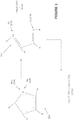
- the radical capping species is natural gas 206 extracted from the ground, which contains both methane (CH 4 ) and hydrogen sulfide (H 2 S).
- the alkali metal is sodium.
- the oil feedstock material comprises a thiophene derived product (C 4 H 4 S) 202, which is a cyclic compound that contains sulfur.
- C 4 H 4 S thiophene derived product
- One purpose of the reactions in the reactor 104 is to upgrade this C 4 H 4 S material into a product that does not contain sulfur and is better suited for use as a hydrocarbon fuel.
- Another purpose of the reactions in the reactor 104 is to increase the ratio of hydrogen to carbon of the resulting organic product (thereby giving the product a greater energy value.)
- the sodium metal 208 reacts and extracts the sulfur atom, thereby creating a Na 2 S product 215.
- This extraction of the sulfur atom creates an organic intermediate 211 which has the formula ⁇ CHCHCHCH ⁇ and is a radical species (having radicals on either end of the molecule).
- This radical intermediate 211 then reacts with radical species formed from the methane 206 or hydrogen gas. Specifically, a CH 3 ⁇ radical 217 reacts with one end of the radical intermediate 211 and an H ⁇ radical 219 reacts with the other end of the radical intermediate 211, thereby forming an organic product 221 which, in this case, is an alkene (C 5 H 8 ). Alternatively, two H ⁇ radical 219 (such as, for example, formed from the H 2 gas that was created by the H 2 S) react with either end of the radical intermediate 211, thereby creating a C 4 H 6 product 221a.
- a CH 3 ⁇ radical 217 reacts with one end of the radical intermediate 211 and an H ⁇ radical 219 reacts with the other end of the radical intermediate 211, thereby forming an organic product 221 which, in this case, is an alkene (C 5 H 8 ).
- two H ⁇ radical 219 (such as, for example, formed from the H 2 gas that was created by the H 2 S) react with either end of the
- the Na 2 S product 215 is also formed and may be separated out from the desired organic products 221a, 221.
- the mechanism described above is provided for exemplary purposes and does not preclude the possibility of likelihood of alternative mechanisms, pathways and ultimate products formed.
- This mixture of hydrocarbon phase products 221, 221a may be separated into the hydrocarbon phase and may be further refined, as desired, in order to obtain a usable hydrocarbon product.
- Figure 2 has significant advantages over a method that uses hydro-treating as a mechanism for upgrading the hydrocarbon.
- C 4 H 4 S oil feedstock shown in Figure 2
- the chemical reaction of this process would be likely would require first saturation of the ring with hydrogen before reaction with the sulfur would occur resulting in higher utilization of hydrogen with the following outcome: C 4 H 4 S + 4H 2 ⁇ H 2 S + C 4 H 10 (butane)
- a Stream Methane Reforming process may be used to generate the hydrogen gas used in this hydro-treating reaction.
- butane may be formed with a low value heat of combustion of 2654 KJ/mol but where 1.43 moles of methane were used to generate the hydrogen, where the low value heat of combustion equivalent of the methane is 1144 KJ/mol for a net of 1510 KJ/mol, and where 1.43 moles CO 2 where emitted generating the hydrogen and 2.86 moles water consumed.
- 1,3 butadiene may be generated with a low value heat of combustion of 2500 KJ/mol but where only 0.36 moles of methane were used to generate the hydrogen, where the low value heat of combustion equivalent of the methane is 286 KJ/mol for a net of 2214 KJ/mol, and where only 0.36 moles CO 2 where emitted generating the hydrogen and 0.72 moles water consumed.
- 1,3 pentadiene may be generated with a low value heat of combustion of 3104 KJ/mol, where only 1 mole of methane was used in the process, where the low value heat of combustion equivalent of the methane is 801 KJ/mol for a net of 2303 KJ/mol, and where no CO 2 is emitted or water consumed generating hydrogen.
- This last case which is the method disclosed in this invention results in 4% higher net energy value while at the same time reduces harmful emissions and reduces water utilization.
- the hydrogen for the hydro-treating process may be supplied by electrolysis of water (as describe above). Assuming that the electrolysis process is 90% efficient and the upgrading process is 100% efficient, the outcome of upgrading thiophene to an upgraded oil product (butane (C 4 H 10 )) having a combustion energy equivalent of 2654 kJ/mole. However, the electrical energy required for the electrolysis process to form the hydrogen (assuming no losses in generation or transmission) is 1200 kJ/mole of thiophene. Thus, the net combustion value of upgrading thiophene using hydrogen from electrolysis is 1454 kJ/mole (e.g., 2654 - 1200).
- 1,3 Pentadiene has a combustion energy equivalent of 3104 kcal/mole (which is much higher than 1,3 butadiene).
- the combustion value of the methane that was consumed in the reaction of Figure 2 was 801 kJ/mol.
- the net combustion value for the feedstock produced in Figure 2 was 2303 kcal/mol (e.g., 3104 - 801).
- the net combustion value for the production of 1,3 butadiene via hydrogen from a steam methane reforming process was 2214 kJ/mole, and the embodiment of Figure 2 provides an additional 89 kJ of energy per mole oil feedstock (e.g., 2303 - 2214) when the hydrogen is produced from steam methane reforming. This is about a 4.0% increase in net energy, while at the same time using less water resources and emitting no carbon dioxide into the environment. If the hydrogen for the sodium desulfurization process was produced via electrolysis, the increase of the net combustion value for the oil feedstock is 103 kJ of energy per mole oil feedstock (e.g., 2303 - 2200).
- the radical capping species is ammonia (NH 3 ) 304.
- the oil feedstock material comprises a thiophene derived product (C 4 H 4 S) 202, which is a cyclic compound that contains sulfur.
- C 4 H 4 S thiophene derived product
- the sulfur is removed from the organic material 202, thereby forming an organic radical species 211.
- Sodium sulfide 215 is also formed.
- the sodium metal also reacts with the ammonia to form sodium nitride (Na 3 N) and hydrogen. These hydrogen moieties (whether in the form of H radicals or H 2 gas) may then react with the organic radical species 211.
- the API gravity of the resulting hydrocarbon that is produced after the reaction is increased with respect to the API gravity of the starting material. This increase in API gravity suggests that the resulting product in more suitable as a hydrocarbon fuel than the starting material.
- Example 1 Several laboratory tests were conducted where approximately 180 grams of oil produced from retorted Jordanian oil shale was heated to about 300 °C with either a cover gas of hydrogen or methane in a Parr 500 cubic centimeter autoclave with a gas induction impeller. With each run, varying amounts of sodium were added. After the sodium addition the temperature was raised to 380 °C and pressure was raised to about 1500 psig (pounds per square inch gauge). Two hours after the sodium addition the autoclave was quenched. Gases where measured and analyzed and the liquids were separated from the solids and analyzed for chemical composition and API gravity.
- Figure 4 shows a plot of the sulfur content in the liquid oil product for the numerous runs where the amount of sodium added is expressed as the actual amount added divided by the theoretical amount needed based on the sulfur and nitrogen content, assuming 2 moles of sodium for every mole of sulfur and 3 moles of sodium for every mole of nitrogen.
- Figure 5 shows a plot of the API gravity in the liquid oil product for the numerous runs where the amount of sodium added is expressed as the actual amount added divided by the theoretical amount needed based on the sulfur and nitrogen content, assuming 2 moles of sodium for every mole of sulfur and 3 moles of sodium for every mole of nitrogen.
- the general trend shows rising API gravity as the amount of sodium is increased with similar results both with hydrogen and methane as the cover gas.
- Example 2 Several laboratory tests were conducted where approximately 180 grams of Athabasca bitumen from Alberta, Canada, diluted with condensate from natural gas production was processed in the same way as example 1.
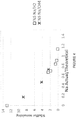
- Figure 6 shows a plot of the sulfur content in the liquid oil product for the numerous runs where the amount of sodium added is expressed as the actual amount added divided by the theoretical amount needed based on the sulfur and nitrogen content, assuming 2 moles of sodium for every mole of sulfur and 3 moles of sodium for every mole of nitrogen.
- Figure 6 shows the general trend where the more sodium added results in less sulfur content in the product oil. The figure also shows the results are nearly the same whether hydrogen or methane are utilized as the cover gas.
- Example 3 Several laboratory tests were conducted where approximately 180 grams of oil retorted from Uinta Basin oil shale in Utah, USA, was processed in the same way as example 1.
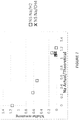
- Figure 7 shows a plot of the sulfur content in the liquid oil product for the numerous runs where the amount of sodium added is expressed as the actual amount added divided by the theoretical amount needed based on the sulfur and nitrogen content, assuming 2 moles of sodium for every mole of sulfur and 3 moles of sodium for every mole of nitrogen.
- Figure 7 shows the general trend where the more sodium added results in less sulfur content in the product oil. The figure also shows the results are nearly the same whether hydrogen or methane are utilized as the cover gas.
- Example 4 A feedstock oil was derived (extracted) from the Uintah Basin in Eastern Utah, USA. This oil feedstock comprised shale oil containing sulfur and nitrogen. This oil feedstock was centrifuged to remove any solids found therein. The centrifuged oil feedstock had the following composition: % Carbon in Shale Oil % Hydrogen in Shale Oil % Nitrogen in Shale Oil % Sulfur in Shale Oil Hydrogen-to-Carbon Ratio Nitrogen-to-Carbon Ratio Sulfur-to-Carbon Ratio 84.48 12.33 1.48 0.25 0.146 0.0175 0.0030
- the reacted mixture included a liquid phase and a solid phase.
- the liquid phase was separated from the solid phase by centrifugation.
- the resulting reacted oil had the following composition in terms of Carbon, Hydrogen, Nitrogen and Sulfur and composition: % Carbon in Product % Hydrogen in Product % Nitrogen in Product % Sulfur in Product Hydrogen-to-Carbon Ratio in Product Nitrogen-to-Carbon ratio in Product Sulfur-to-Carbon Ratio in Product 85.04 12.83 0.68 0.15 0.151 0.0080 0.0018
- the reaction with methane lowered the amount of nitrogen in the product.
- the ratio of nitrogen to carbon in the end product is much less than it was in the original shale oil.
- the reduction in the nitrogen-to-carbon ratio was about 54.4%.
- the amount of sulfur in the end product is much less after the reaction with methane. Accordingly, the ratio of sulfur to carbon in the end product is much less than it was in the original shale oil.
- the reduction in the sulfur-to-carbon ratio was about 40.4%.
- the percentage of hydrogen in the end product is greater than it was in the unreacted shale oil and thus, the hydrogen-to-carbon ratio of the end product has also increased.
- API gravity is a measure of how heavy or light a petroleum liquid is compared to water. If its API gravity is greater than 10, it is lighter than water and floats on water, whereas if the API gravity is less than 10, it is heavier and sinks in water. API gravity is an inverse measure of the relative density of the petroleum liquid and is used to compare the relative densities of petroleum liquids.) After the reaction, however, the API gravity increased to 39.58. This increase in the API gravity indicates an upgrading of the shale oil after the reaction.
- the reduction in nitrogen and sulfur content, the increase in API gravity, and the decrease in boiling point temperature are all indications of an upgrading of the oil without using a conventional hydro-treating process.
Landscapes
- Chemical & Material Sciences (AREA)
- Oil, Petroleum & Natural Gas (AREA)
- Engineering & Computer Science (AREA)
- Chemical Kinetics & Catalysis (AREA)
- Organic Chemistry (AREA)
- General Chemical & Material Sciences (AREA)
- Electrochemistry (AREA)
- Materials Engineering (AREA)
- Metallurgy (AREA)
- Production Of Liquid Hydrocarbon Mixture For Refining Petroleum (AREA)
Claims (6)
- Verfahren zum Aufwerten eines Ölrohstoffs, das Folgendes beinhaltet:Erhalten einer Menge des Ölrohstoffs, wobei der Ölrohstoff Kohlenstoff- und Wasserstoffinhalt beinhaltet, wobei der Ölrohstoff ferner Metall-, Schwefel- und/oder Stickstoffinhalt beinhaltet;Hinzufügen einer Menge von Alkalimetall und einer Menge einer radikalen Verkappungssubstanz zu dem Ölrohstoff;Reagieren der Menge des Ölrohstoffs mit einem Alkalimetall und einer radikalen Verkappungssubstanz, wobei das Alkalimetall mit dem Metall-, Schwefel- oder Stickstoffinhalt reagiert, um ein oder mehrere anorganische Produkte zu bilden, wobei die radikale Verkappungssubstanz mit dem Kohlenstoff- und Wasserstoffinhalt reagiert, um eine Kohlenwasserstoffphase zu bilden; wobei die radikale Verkappungssubstanz eines oder mehrere von Folgendem beinhaltet: Ammoniak; primäre, sekundäre und tertiäre Amine; Thiole; Mercaptane; und Schwefelwasserstoff; und wobei das Alkalimetall Na oder Li ist; und Trennen der anorganischen Produkte von der Kohlenwasserstoffphase.
- Verfahren gemäß Anspruch 1, wobei der Ölrohstoff eines oder mehrere von Folgendem beinhaltet: Erdöl, Schweröl, Extra-Schweröl, Bitumen, Schieferöl, Erdgas, Erdölgas, Methan, Methylmercaptan, Raffinerieströme wie etwa Vakuumgasöl, Fließbettcracker (FCC, Fluidized Catalytic Cracker)-Zufuhr, Dimethyldisulfid und Nebenproduktströme (wie etwa Diesel).
- Verfahren gemäß Anspruch 1, wobei das Reagieren der Menge des Ölrohstoffs mit dem Alkalimetall und der radikalen Verkappungssubstanz im Temperaturbereich von 98 °C-500 °C auftritt.
- Verfahren gemäß Anspruch 1, wobei das Reagieren der Menge des Ölrohstoffs mit dem Alkalimetall und der radikalen Verkappungssubstanz im Druckbereich von 500 psi-3000 psi auftritt.
- Verfahren gemäß Anspruch 1, das ferner Folgendes beinhaltet:
elektrochemisches Regenerieren des Alkalimetalls aus den anorganischen Produkten. - Verfahren gemäß Anspruch 1, wobei der Schwefelwasserstoff (H2S) oder das Ammoniak (NH3) die radikale Verkappungssubstanz ist, die hinzugefügt wird, und das Reagieren der Menge des Ölrohstoffs mit einem Alkalimetall und einer radikalen Verkappungssubstanz Wasserstoff in situ bildet.
Applications Claiming Priority (2)
| Application Number | Priority Date | Filing Date | Title |
|---|---|---|---|
| US201161508415P | 2011-07-15 | 2011-07-15 | |
| PCT/US2012/046939 WO2013012810A2 (en) | 2011-07-15 | 2012-07-16 | Upgrading platform using alkali metals |
Publications (3)
| Publication Number | Publication Date |
|---|---|
| EP2732010A2 EP2732010A2 (de) | 2014-05-21 |
| EP2732010A4 EP2732010A4 (de) | 2014-12-24 |
| EP2732010B1 true EP2732010B1 (de) | 2018-10-10 |
Family
ID=47558692
Family Applications (1)
| Application Number | Title | Priority Date | Filing Date |
|---|---|---|---|
| EP12814831.9A Active EP2732010B1 (de) | 2011-07-15 | 2012-07-16 | Verbesserung einer plattform mithilfe von alkalimetallen |
Country Status (7)
| Country | Link |
|---|---|
| US (1) | US8828221B2 (de) |
| EP (1) | EP2732010B1 (de) |
| JP (1) | JP6062936B2 (de) |
| KR (1) | KR101920524B1 (de) |
| CA (1) | CA2840133C (de) |
| ES (1) | ES2692320T3 (de) |
| WO (1) | WO2013012810A2 (de) |
Families Citing this family (12)
| Publication number | Priority date | Publication date | Assignee | Title |
|---|---|---|---|---|
| US9475998B2 (en) | 2008-10-09 | 2016-10-25 | Ceramatec, Inc. | Process for recovering alkali metals and sulfur from alkali metal sulfides and polysulfides |
| US9546325B2 (en) | 2009-11-02 | 2017-01-17 | Field Upgrading Limited | Upgrading platform using alkali metals |
| US9441170B2 (en) | 2012-11-16 | 2016-09-13 | Field Upgrading Limited | Device and method for upgrading petroleum feedstocks and petroleum refinery streams using an alkali metal conductive membrane |
| US9512368B2 (en) | 2009-11-02 | 2016-12-06 | Field Upgrading Limited | Method of preventing corrosion of oil pipelines, storage structures and piping |
| KR101736753B1 (ko) | 2009-11-02 | 2017-05-17 | 필드 업그레이딩 리미티드 | 알칼리 금속과 탄화수소를 사용하여 석유 공급원료를 업그레이드시키는 방법 |
| US9688920B2 (en) | 2009-11-02 | 2017-06-27 | Field Upgrading Limited | Process to separate alkali metal salts from alkali metal reacted hydrocarbons |
| CA2840133C (en) | 2011-07-15 | 2018-08-14 | Ceramatec, Inc. | Upgrading platform using alkali metals |
| CA2878630A1 (en) | 2012-07-13 | 2014-01-16 | Ceramatec, Inc. | Integrated oil production and upgrading using a molten alkali metal |
| CA2909443C (en) * | 2013-04-15 | 2019-10-01 | Field Upgrading Limited | Process to separate alkali metal salts from alkali metal reacted hydrocarbons |
| EP3907267A1 (de) | 2020-05-08 | 2021-11-10 | Basf Se | Verfahren zur reinigung eines aus der pyrolyse von kunststoffabfällen stammenden rohen pyrolyseöls |
| WO2025099038A1 (en) | 2023-11-06 | 2025-05-15 | Basell Poliolefine Italia S.R.L. | Process for upgrading an oil deriving from pyrolysis of plastic waste |
| WO2025099039A1 (en) | 2023-11-06 | 2025-05-15 | Basell Poliolefine Italia S.R.L. | Process for the depolymerization of plastic waste material |
Family Cites Families (52)
| Publication number | Priority date | Publication date | Assignee | Title |
|---|---|---|---|---|
| US1501756A (en) | 1922-08-18 | 1924-07-15 | Roessler & Hasslacher Chemical | Electrolytic process and cell |
| US2836633A (en) | 1954-09-30 | 1958-05-27 | Standard Oil Co | Nuclear alkylation of certain aromatic hydrocarbons with alkali metals as catalysts |
| US3497569A (en) | 1962-02-12 | 1970-02-24 | Pullman Inc | Treatment of alkylation feed stock with sodium,potassium,or lithium hydroxide solution |
| JPS5014649B1 (de) * | 1969-06-03 | 1975-05-29 | ||
| US3785965A (en) | 1971-10-28 | 1974-01-15 | Exxon Research Engineering Co | Process for the desulfurization of petroleum oil fractions |
| US3791966A (en) | 1972-05-24 | 1974-02-12 | Exxon Research Engineering Co | Alkali metal desulfurization process for petroleum oil stocks |
| US3788978A (en) * | 1972-05-24 | 1974-01-29 | Exxon Research Engineering Co | Process for the desulfurization of petroleum oil stocks |
| US3787315A (en) | 1972-06-01 | 1974-01-22 | Exxon Research Engineering Co | Alkali metal desulfurization process for petroleum oil stocks using low pressure hydrogen |
| US3960708A (en) | 1974-05-31 | 1976-06-01 | Standard Oil Company | Process for upgrading a hydrocarbon fraction |
| DE2558505A1 (de) * | 1975-04-28 | 1976-11-18 | Exxon Research Engineering Co | Verfahren zur entschwefelung und hydrierung von kohlenwasserstoffen |
| US4076613A (en) | 1975-04-28 | 1978-02-28 | Exxon Research & Engineering Co. | Combined disulfurization and conversion with alkali metals |
| US4606812A (en) * | 1980-04-15 | 1986-08-19 | Chemroll Enterprises, Inc. | Hydrotreating of carbonaceous materials |
| US4428828A (en) | 1981-01-02 | 1984-01-31 | Chevron Research Company | Upgrading hydrocarbonaceous oils with an aqueous liquid |
| JPS58159429A (ja) * | 1982-03-17 | 1983-09-21 | Nippon Steel Chem Co Ltd | チオフエン類の分解方法 |
| US5328577A (en) * | 1989-12-27 | 1994-07-12 | Exxon Research & Engineering Co. | Upgrading of low value hydrocarbons using a hydrogen donor and microwave radiation |
| EP0571701A1 (de) | 1992-05-20 | 1993-12-01 | Fina Research S.A. | Verfahren zur Alkylierung von Aromaten |
| US5935421A (en) | 1995-05-02 | 1999-08-10 | Exxon Research And Engineering Company | Continuous in-situ combination process for upgrading heavy oil |
| US5695632A (en) | 1995-05-02 | 1997-12-09 | Exxon Research And Engineering Company | Continuous in-situ combination process for upgrading heavy oil |
| US6210564B1 (en) | 1996-06-04 | 2001-04-03 | Exxon Research And Engineering Company | Process for desulfurization of petroleum feeds utilizing sodium metal |
| US5935419A (en) | 1996-09-16 | 1999-08-10 | Texaco Inc. | Methods for adding value to heavy oil utilizing a soluble metal catalyst |
| US6113327A (en) | 1997-10-31 | 2000-09-05 | Schrader Dane Corporation | Apparatus and system for securing cargo |
| DE19918431A1 (de) | 1999-04-23 | 2000-10-26 | Bayer Ag | Verfahren zur Herstellung eines Katalysators zur selektiven Oxidation von Kohlenwasserstoffen |
| GB9912842D0 (en) | 1999-06-02 | 1999-08-04 | Bp Exploration Operating | Process for reducing the acidity of oil |
| CN1171676C (zh) | 1999-12-28 | 2004-10-20 | 康宁股份有限公司 | 沸石/氧化铝催化剂载体组合物及其制备方法 |
| US6368486B1 (en) | 2000-03-28 | 2002-04-09 | E. I. Du Pont De Nemours And Company | Low temperature alkali metal electrolysis |
| DE10107777A1 (de) | 2001-02-16 | 2002-09-05 | Bayer Ag | Kontinuierlicher Prozess für die Synthese von nanoskaligen Edelmetallpartikeln |
| GB0113645D0 (en) | 2001-06-05 | 2001-07-25 | Bp Exploration Operating | Process |
| US6787019B2 (en) | 2001-11-21 | 2004-09-07 | E. I. Du Pont De Nemours And Company | Low temperature alkali metal electrolysis |
| US6635795B2 (en) | 2001-12-19 | 2003-10-21 | Conocophillips Company | Desulfurization with improved sorbent regeneration |
| US7192516B2 (en) * | 2003-04-17 | 2007-03-20 | Trans Ionics Corporation | Desulfurization of petroleum streams using metallic sodium |
| US7897028B2 (en) | 2004-01-26 | 2011-03-01 | Ceramatec, Inc. | Process for the recovery of materials from a desulfurization reaction |
| ITMI20041288A1 (it) * | 2004-06-25 | 2004-09-25 | Eni Spa | Procedimento per la riduzione-rimozione della concentrazione di idrogeno solforato contenuto nel gas naturale |
| US20060054538A1 (en) | 2004-09-14 | 2006-03-16 | Exxonmobil Research And Engineering Company | Emulsion neutralization of high total acid number (TAN) crude oil |
| US7686948B2 (en) | 2004-12-27 | 2010-03-30 | Exxonmobil Research And Engineering Company | Method of removing sulfur from sulfur-containing hydrocarbon streams |
| US7678955B2 (en) | 2005-10-13 | 2010-03-16 | Exxonmobil Chemical Patents Inc | Porous composite materials having micro and meso/macroporosity |
| CA2705270C (en) * | 2007-11-27 | 2016-07-26 | Ceramatec, Inc. | Process for recovering alkali metals and sulfur from alkali metal sulfides and polysulfides |
| RU2514915C2 (ru) | 2008-02-21 | 2014-05-10 | Эксонмобил Кемикэл Пейтентс Инк. | Получение ароматических соединений из метана |
| US7888540B2 (en) | 2008-04-11 | 2011-02-15 | General Electric Company | Integrated system and method for producing fuel composition from biomass |
| US8486251B2 (en) * | 2008-08-05 | 2013-07-16 | Exxonmobil Research And Engineering Company | Process for regenerating alkali metal hydroxides by electrochemical means |
| US8338038B2 (en) | 2008-09-12 | 2012-12-25 | Ceramatec, Inc | Electrochemical cell comprising ionically conductive membrane and porous multiphase electrode |
| US8728295B2 (en) | 2008-10-09 | 2014-05-20 | Ceramatec, Inc. | Apparatus and method for reducing an alkali metal electrochemically at a temperature below the metal's melting temperature |
| US8778173B2 (en) * | 2008-12-18 | 2014-07-15 | Exxonmobil Research And Engineering Company | Process for producing a high stability desulfurized heavy oils stream |
| SG175258A1 (en) | 2009-04-21 | 2011-11-28 | Sapphire Energy Inc | Methods of preparing oil compositions for fuel refining |
| US20100304953A1 (en) | 2009-05-21 | 2010-12-02 | Battelle Memorial Institute | Zeolite Membranes for Separation of Mixtures Containing Water, Alcohols, or Organics |
| US8673067B2 (en) | 2009-05-21 | 2014-03-18 | Battelle Memorial Institute | Immobilized fluid membranes for gas separation |
| GB0913193D0 (en) | 2009-07-29 | 2009-09-02 | Johnson Matthey Plc | Deoxygenation process |
| KR101736753B1 (ko) | 2009-11-02 | 2017-05-17 | 필드 업그레이딩 리미티드 | 알칼리 금속과 탄화수소를 사용하여 석유 공급원료를 업그레이드시키는 방법 |
| US9512368B2 (en) | 2009-11-02 | 2016-12-06 | Field Upgrading Limited | Method of preventing corrosion of oil pipelines, storage structures and piping |
| CA2780575C (en) | 2009-11-24 | 2015-09-22 | Shell Internationale Research Maatschappij B.V. | Process for catalytic hydrotreatment of a pyrolysis oil |
| US8608952B2 (en) | 2009-12-30 | 2013-12-17 | Uop Llc | Process for de-acidifying hydrocarbons |
| US20120304530A1 (en) | 2011-06-03 | 2012-12-06 | Pallavi Chitta | Bio-Oil Upgrading Process |
| CA2840133C (en) | 2011-07-15 | 2018-08-14 | Ceramatec, Inc. | Upgrading platform using alkali metals |
-
2012
- 2012-07-16 CA CA2840133A patent/CA2840133C/en active Active
- 2012-07-16 US US13/550,313 patent/US8828221B2/en active Active
- 2012-07-16 EP EP12814831.9A patent/EP2732010B1/de active Active
- 2012-07-16 ES ES12814831.9T patent/ES2692320T3/es active Active
- 2012-07-16 WO PCT/US2012/046939 patent/WO2013012810A2/en not_active Ceased
- 2012-07-16 JP JP2014520410A patent/JP6062936B2/ja active Active
- 2012-07-16 KR KR1020147003644A patent/KR101920524B1/ko active Active
Non-Patent Citations (1)
| Title |
|---|
| None * |
Also Published As
| Publication number | Publication date |
|---|---|
| CA2840133C (en) | 2018-08-14 |
| KR20140048972A (ko) | 2014-04-24 |
| WO2013012810A3 (en) | 2013-04-11 |
| EP2732010A2 (de) | 2014-05-21 |
| EP2732010A4 (de) | 2014-12-24 |
| WO2013012810A2 (en) | 2013-01-24 |
| KR101920524B1 (ko) | 2018-11-20 |
| ES2692320T3 (es) | 2018-12-03 |
| US8828221B2 (en) | 2014-09-09 |
| JP2014522901A (ja) | 2014-09-08 |
| CA2840133A1 (en) | 2013-01-24 |
| US20130043160A1 (en) | 2013-02-21 |
| JP6062936B2 (ja) | 2017-01-18 |
Similar Documents
| Publication | Publication Date | Title |
|---|---|---|
| EP2732010B1 (de) | Verbesserung einer plattform mithilfe von alkalimetallen | |
| EP2496669B1 (de) | Anreicherung von erdölrohstoffen mit alkalimetallen und kohlenwasserstoffen | |
| MX2010006452A (es) | Proceso de hidroconversion para crudos pesados y extra pesados y productos residuales. | |
| CA2909443C (en) | Process to separate alkali metal salts from alkali metal reacted hydrocarbons | |
| US9546325B2 (en) | Upgrading platform using alkali metals | |
| US9688920B2 (en) | Process to separate alkali metal salts from alkali metal reacted hydrocarbons | |
| US20160053185A1 (en) | Process to separate alkali metal salts from alkali metal reacted hydrocarbons | |
| US9701909B2 (en) | Extraction of bitumen from oil sands | |
| CA2997472C (en) | Device and method for upgrading petroleum feedstocks using an alkali metal conductive membrane | |
| US9441170B2 (en) | Device and method for upgrading petroleum feedstocks and petroleum refinery streams using an alkali metal conductive membrane | |
| Gordon | Upgrading of petroleum oil feedstocks using alkali metals and hydrocarbons |
Legal Events
| Date | Code | Title | Description |
|---|---|---|---|
| PUAI | Public reference made under article 153(3) epc to a published international application that has entered the european phase |
Free format text: ORIGINAL CODE: 0009012 |
|
| 17P | Request for examination filed |
Effective date: 20140114 |
|
| AK | Designated contracting states |
Kind code of ref document: A2 Designated state(s): AL AT BE BG CH CY CZ DE DK EE ES FI FR GB GR HR HU IE IS IT LI LT LU LV MC MK MT NL NO PL PT RO RS SE SI SK SM TR |
|
| DAX | Request for extension of the european patent (deleted) | ||
| A4 | Supplementary search report drawn up and despatched |
Effective date: 20141124 |
|
| RIC1 | Information provided on ipc code assigned before grant |
Ipc: C10G 29/10 20060101ALI20141118BHEP Ipc: C10G 29/20 20060101ALI20141118BHEP Ipc: C25C 1/22 20060101ALI20141118BHEP Ipc: C10G 29/04 20060101AFI20141118BHEP Ipc: C10C 3/02 20060101ALI20141118BHEP |
|
| RAP1 | Party data changed (applicant data changed or rights of an application transferred) |
Owner name: FIELD UPGRADING LIMITED |
|
| STAA | Information on the status of an ep patent application or granted ep patent |
Free format text: STATUS: EXAMINATION IS IN PROGRESS |
|
| 17Q | First examination report despatched |
Effective date: 20170519 |
|
| GRAP | Despatch of communication of intention to grant a patent |
Free format text: ORIGINAL CODE: EPIDOSNIGR1 |
|
| STAA | Information on the status of an ep patent application or granted ep patent |
Free format text: STATUS: GRANT OF PATENT IS INTENDED |
|
| INTG | Intention to grant announced |
Effective date: 20180626 |
|
| GRAS | Grant fee paid |
Free format text: ORIGINAL CODE: EPIDOSNIGR3 |
|
| GRAA | (expected) grant |
Free format text: ORIGINAL CODE: 0009210 |
|
| STAA | Information on the status of an ep patent application or granted ep patent |
Free format text: STATUS: THE PATENT HAS BEEN GRANTED |
|
| AK | Designated contracting states |
Kind code of ref document: B1 Designated state(s): AL AT BE BG CH CY CZ DE DK EE ES FI FR GB GR HR HU IE IS IT LI LT LU LV MC MK MT NL NO PL PT RO RS SE SI SK SM TR |
|
| REG | Reference to a national code |
Ref country code: GB Ref legal event code: FG4D |
|
| REG | Reference to a national code |
Ref country code: AT Ref legal event code: REF Ref document number: 1051218 Country of ref document: AT Kind code of ref document: T Effective date: 20181015 Ref country code: CH Ref legal event code: EP |
|
| REG | Reference to a national code |
Ref country code: IE Ref legal event code: FG4D |
|
| REG | Reference to a national code |
Ref country code: NL Ref legal event code: FP |
|
| REG | Reference to a national code |
Ref country code: DE Ref legal event code: R096 Ref document number: 602012052103 Country of ref document: DE |
|
| REG | Reference to a national code |
Ref country code: GB Ref legal event code: 732E Free format text: REGISTERED BETWEEN 20181105 AND 20181107 |
|
| REG | Reference to a national code |
Ref country code: ES Ref legal event code: FG2A Ref document number: 2692320 Country of ref document: ES Kind code of ref document: T3 Effective date: 20181203 |
|
| REG | Reference to a national code |
Ref country code: DE Ref legal event code: R082 Ref document number: 602012052103 Country of ref document: DE Representative=s name: HERNANDEZ, YORCK, DIPL.-ING., DE Ref country code: DE Ref legal event code: R081 Ref document number: 602012052103 Country of ref document: DE Owner name: ENLIGHTEN INNOVATIONS INC., CALGARY, CA Free format text: FORMER OWNER: FIELD UPGRADING LIMITED, CALGARY, ALBERTA, CA |
|
| REG | Reference to a national code |
Ref country code: LT Ref legal event code: MG4D |
|
| RAP2 | Party data changed (patent owner data changed or rights of a patent transferred) |
Owner name: ENLIGHTEN INNOVATIONS INC. |
|
| REG | Reference to a national code |
Ref country code: AT Ref legal event code: MK05 Ref document number: 1051218 Country of ref document: AT Kind code of ref document: T Effective date: 20181010 |
|
| PG25 | Lapsed in a contracting state [announced via postgrant information from national office to epo] |
Ref country code: BG Free format text: LAPSE BECAUSE OF FAILURE TO SUBMIT A TRANSLATION OF THE DESCRIPTION OR TO PAY THE FEE WITHIN THE PRESCRIBED TIME-LIMIT Effective date: 20190110 Ref country code: LT Free format text: LAPSE BECAUSE OF FAILURE TO SUBMIT A TRANSLATION OF THE DESCRIPTION OR TO PAY THE FEE WITHIN THE PRESCRIBED TIME-LIMIT Effective date: 20181010 Ref country code: IS Free format text: LAPSE BECAUSE OF FAILURE TO SUBMIT A TRANSLATION OF THE DESCRIPTION OR TO PAY THE FEE WITHIN THE PRESCRIBED TIME-LIMIT Effective date: 20190210 Ref country code: LV Free format text: LAPSE BECAUSE OF FAILURE TO SUBMIT A TRANSLATION OF THE DESCRIPTION OR TO PAY THE FEE WITHIN THE PRESCRIBED TIME-LIMIT Effective date: 20181010 Ref country code: NO Free format text: LAPSE BECAUSE OF FAILURE TO SUBMIT A TRANSLATION OF THE DESCRIPTION OR TO PAY THE FEE WITHIN THE PRESCRIBED TIME-LIMIT Effective date: 20190110 Ref country code: HR Free format text: LAPSE BECAUSE OF FAILURE TO SUBMIT A TRANSLATION OF THE DESCRIPTION OR TO PAY THE FEE WITHIN THE PRESCRIBED TIME-LIMIT Effective date: 20181010 Ref country code: AT Free format text: LAPSE BECAUSE OF FAILURE TO SUBMIT A TRANSLATION OF THE DESCRIPTION OR TO PAY THE FEE WITHIN THE PRESCRIBED TIME-LIMIT Effective date: 20181010 Ref country code: PL Free format text: LAPSE BECAUSE OF FAILURE TO SUBMIT A TRANSLATION OF THE DESCRIPTION OR TO PAY THE FEE WITHIN THE PRESCRIBED TIME-LIMIT Effective date: 20181010 Ref country code: FI Free format text: LAPSE BECAUSE OF FAILURE TO SUBMIT A TRANSLATION OF THE DESCRIPTION OR TO PAY THE FEE WITHIN THE PRESCRIBED TIME-LIMIT Effective date: 20181010 |
|
| PG25 | Lapsed in a contracting state [announced via postgrant information from national office to epo] |
Ref country code: RS Free format text: LAPSE BECAUSE OF FAILURE TO SUBMIT A TRANSLATION OF THE DESCRIPTION OR TO PAY THE FEE WITHIN THE PRESCRIBED TIME-LIMIT Effective date: 20181010 Ref country code: GR Free format text: LAPSE BECAUSE OF FAILURE TO SUBMIT A TRANSLATION OF THE DESCRIPTION OR TO PAY THE FEE WITHIN THE PRESCRIBED TIME-LIMIT Effective date: 20190111 Ref country code: SE Free format text: LAPSE BECAUSE OF FAILURE TO SUBMIT A TRANSLATION OF THE DESCRIPTION OR TO PAY THE FEE WITHIN THE PRESCRIBED TIME-LIMIT Effective date: 20181010 Ref country code: PT Free format text: LAPSE BECAUSE OF FAILURE TO SUBMIT A TRANSLATION OF THE DESCRIPTION OR TO PAY THE FEE WITHIN THE PRESCRIBED TIME-LIMIT Effective date: 20190210 Ref country code: AL Free format text: LAPSE BECAUSE OF FAILURE TO SUBMIT A TRANSLATION OF THE DESCRIPTION OR TO PAY THE FEE WITHIN THE PRESCRIBED TIME-LIMIT Effective date: 20181010 |
|
| REG | Reference to a national code |
Ref country code: DE Ref legal event code: R097 Ref document number: 602012052103 Country of ref document: DE |
|
| PG25 | Lapsed in a contracting state [announced via postgrant information from national office to epo] |
Ref country code: DK Free format text: LAPSE BECAUSE OF FAILURE TO SUBMIT A TRANSLATION OF THE DESCRIPTION OR TO PAY THE FEE WITHIN THE PRESCRIBED TIME-LIMIT Effective date: 20181010 Ref country code: CZ Free format text: LAPSE BECAUSE OF FAILURE TO SUBMIT A TRANSLATION OF THE DESCRIPTION OR TO PAY THE FEE WITHIN THE PRESCRIBED TIME-LIMIT Effective date: 20181010 |
|
| PLBE | No opposition filed within time limit |
Free format text: ORIGINAL CODE: 0009261 |
|
| STAA | Information on the status of an ep patent application or granted ep patent |
Free format text: STATUS: NO OPPOSITION FILED WITHIN TIME LIMIT |
|
| PG25 | Lapsed in a contracting state [announced via postgrant information from national office to epo] |
Ref country code: SK Free format text: LAPSE BECAUSE OF FAILURE TO SUBMIT A TRANSLATION OF THE DESCRIPTION OR TO PAY THE FEE WITHIN THE PRESCRIBED TIME-LIMIT Effective date: 20181010 Ref country code: RO Free format text: LAPSE BECAUSE OF FAILURE TO SUBMIT A TRANSLATION OF THE DESCRIPTION OR TO PAY THE FEE WITHIN THE PRESCRIBED TIME-LIMIT Effective date: 20181010 Ref country code: SM Free format text: LAPSE BECAUSE OF FAILURE TO SUBMIT A TRANSLATION OF THE DESCRIPTION OR TO PAY THE FEE WITHIN THE PRESCRIBED TIME-LIMIT Effective date: 20181010 Ref country code: EE Free format text: LAPSE BECAUSE OF FAILURE TO SUBMIT A TRANSLATION OF THE DESCRIPTION OR TO PAY THE FEE WITHIN THE PRESCRIBED TIME-LIMIT Effective date: 20181010 |
|
| 26N | No opposition filed |
Effective date: 20190711 |
|
| PG25 | Lapsed in a contracting state [announced via postgrant information from national office to epo] |
Ref country code: SI Free format text: LAPSE BECAUSE OF FAILURE TO SUBMIT A TRANSLATION OF THE DESCRIPTION OR TO PAY THE FEE WITHIN THE PRESCRIBED TIME-LIMIT Effective date: 20181010 |
|
| REG | Reference to a national code |
Ref country code: BE Ref legal event code: PD Owner name: ENLIGHTEN INNOVATIONS INC.; CA Free format text: DETAILS ASSIGNMENT: CHANGE OF OWNER(S), CESSION; FORMER OWNER NAME: FIELD UPGRADING LIMITED Effective date: 20191022 |
|
| REG | Reference to a national code |
Ref country code: NL Ref legal event code: PD Owner name: ENLIGHTEN INNOVATIONS INC.; CA Free format text: DETAILS ASSIGNMENT: CHANGE OF OWNER(S), MERGE; FORMER OWNER NAME: FIELD UPGRADING LIMITED Effective date: 20191223 |
|
| PG25 | Lapsed in a contracting state [announced via postgrant information from national office to epo] |
Ref country code: MC Free format text: LAPSE BECAUSE OF FAILURE TO SUBMIT A TRANSLATION OF THE DESCRIPTION OR TO PAY THE FEE WITHIN THE PRESCRIBED TIME-LIMIT Effective date: 20181010 |
|
| REG | Reference to a national code |
Ref country code: CH Ref legal event code: PL |
|
| PG25 | Lapsed in a contracting state [announced via postgrant information from national office to epo] |
Ref country code: TR Free format text: LAPSE BECAUSE OF FAILURE TO SUBMIT A TRANSLATION OF THE DESCRIPTION OR TO PAY THE FEE WITHIN THE PRESCRIBED TIME-LIMIT Effective date: 20181010 |
|
| PG25 | Lapsed in a contracting state [announced via postgrant information from national office to epo] |
Ref country code: LI Free format text: LAPSE BECAUSE OF NON-PAYMENT OF DUE FEES Effective date: 20190731 Ref country code: CH Free format text: LAPSE BECAUSE OF NON-PAYMENT OF DUE FEES Effective date: 20190731 Ref country code: LU Free format text: LAPSE BECAUSE OF NON-PAYMENT OF DUE FEES Effective date: 20190716 |
|
| PG25 | Lapsed in a contracting state [announced via postgrant information from national office to epo] |
Ref country code: IE Free format text: LAPSE BECAUSE OF NON-PAYMENT OF DUE FEES Effective date: 20190716 |
|
| PG25 | Lapsed in a contracting state [announced via postgrant information from national office to epo] |
Ref country code: CY Free format text: LAPSE BECAUSE OF FAILURE TO SUBMIT A TRANSLATION OF THE DESCRIPTION OR TO PAY THE FEE WITHIN THE PRESCRIBED TIME-LIMIT Effective date: 20181010 |
|
| PG25 | Lapsed in a contracting state [announced via postgrant information from national office to epo] |
Ref country code: MT Free format text: LAPSE BECAUSE OF FAILURE TO SUBMIT A TRANSLATION OF THE DESCRIPTION OR TO PAY THE FEE WITHIN THE PRESCRIBED TIME-LIMIT Effective date: 20181010 Ref country code: HU Free format text: LAPSE BECAUSE OF FAILURE TO SUBMIT A TRANSLATION OF THE DESCRIPTION OR TO PAY THE FEE WITHIN THE PRESCRIBED TIME-LIMIT; INVALID AB INITIO Effective date: 20120716 |
|
| PG25 | Lapsed in a contracting state [announced via postgrant information from national office to epo] |
Ref country code: MK Free format text: LAPSE BECAUSE OF FAILURE TO SUBMIT A TRANSLATION OF THE DESCRIPTION OR TO PAY THE FEE WITHIN THE PRESCRIBED TIME-LIMIT Effective date: 20181010 |
|
| P01 | Opt-out of the competence of the unified patent court (upc) registered |
Effective date: 20230517 |
|
| PGFP | Annual fee paid to national office [announced via postgrant information from national office to epo] |
Ref country code: NL Payment date: 20250731 Year of fee payment: 14 |
|
| PGFP | Annual fee paid to national office [announced via postgrant information from national office to epo] |
Ref country code: ES Payment date: 20250826 Year of fee payment: 14 |
|
| PGFP | Annual fee paid to national office [announced via postgrant information from national office to epo] |
Ref country code: DE Payment date: 20250820 Year of fee payment: 14 |
|
| PGFP | Annual fee paid to national office [announced via postgrant information from national office to epo] |
Ref country code: IT Payment date: 20250731 Year of fee payment: 14 |
|
| PGFP | Annual fee paid to national office [announced via postgrant information from national office to epo] |
Ref country code: BE Payment date: 20250731 Year of fee payment: 14 Ref country code: GB Payment date: 20250820 Year of fee payment: 14 |
|
| PGFP | Annual fee paid to national office [announced via postgrant information from national office to epo] |
Ref country code: FR Payment date: 20250731 Year of fee payment: 14 |