EP2732832A2 - Arzneimittelabgabevorrichtung mit einem Wirkstoff und einem wärmeempfindlichen Polymermaterial - Google Patents
Arzneimittelabgabevorrichtung mit einem Wirkstoff und einem wärmeempfindlichen Polymermaterial Download PDFInfo
- Publication number
- EP2732832A2 EP2732832A2 EP13192871.5A EP13192871A EP2732832A2 EP 2732832 A2 EP2732832 A2 EP 2732832A2 EP 13192871 A EP13192871 A EP 13192871A EP 2732832 A2 EP2732832 A2 EP 2732832A2
- Authority
- EP
- European Patent Office
- Prior art keywords
- active compound
- drug delivery
- delivery device
- thermo
- polymeric material
- Prior art date
- Legal status (The legal status is an assumption and is not a legal conclusion. Google has not performed a legal analysis and makes no representation as to the accuracy of the status listed.)
- Withdrawn
Links
- 150000001875 compounds Chemical class 0.000 title claims abstract description 199
- 239000000463 material Substances 0.000 title claims abstract description 191
- 238000012377 drug delivery Methods 0.000 title claims abstract description 141
- PPBRXRYQALVLMV-UHFFFAOYSA-N Styrene Chemical compound C=CC1=CC=CC=C1 PPBRXRYQALVLMV-UHFFFAOYSA-N 0.000 claims abstract description 210
- 229920001577 copolymer Polymers 0.000 claims abstract description 99
- NIXOWILDQLNWCW-UHFFFAOYSA-M Acrylate Chemical compound [O-]C(=O)C=C NIXOWILDQLNWCW-UHFFFAOYSA-M 0.000 claims abstract description 66
- 125000004400 (C1-C12) alkyl group Chemical group 0.000 claims abstract description 55
- 238000000034 method Methods 0.000 claims abstract description 44
- 230000009477 glass transition Effects 0.000 claims abstract description 42
- 238000009792 diffusion process Methods 0.000 claims abstract description 39
- 230000000694 effects Effects 0.000 claims abstract description 26
- 230000004888 barrier function Effects 0.000 claims abstract description 22
- 230000002441 reversible effect Effects 0.000 claims abstract description 18
- -1 chlorhexidine ions Chemical class 0.000 claims description 63
- 229960003260 chlorhexidine Drugs 0.000 claims description 47
- 229920002803 thermoplastic polyurethane Polymers 0.000 claims description 45
- GHXZTYHSJHQHIJ-UHFFFAOYSA-N Chlorhexidine Chemical compound C=1C=C(Cl)C=CC=1NC(N)=NC(N)=NCCCCCCN=C(N)N=C(N)NC1=CC=C(Cl)C=C1 GHXZTYHSJHQHIJ-UHFFFAOYSA-N 0.000 claims description 36
- 239000004433 Thermoplastic polyurethane Substances 0.000 claims description 33
- 229920000570 polyether Polymers 0.000 claims description 22
- 239000004721 Polyphenylene oxide Substances 0.000 claims description 20
- 238000010438 heat treatment Methods 0.000 claims description 20
- 125000003118 aryl group Chemical group 0.000 claims description 19
- 229910052709 silver Inorganic materials 0.000 claims description 16
- 239000004332 silver Substances 0.000 claims description 16
- QBYIENPQHBMVBV-HFEGYEGKSA-N (2R)-2-hydroxy-2-phenylacetic acid Chemical compound O[C@@H](C(O)=O)c1ccccc1.O[C@@H](C(O)=O)c1ccccc1 QBYIENPQHBMVBV-HFEGYEGKSA-N 0.000 claims description 11
- IWYDHOAUDWTVEP-UHFFFAOYSA-N R-2-phenyl-2-hydroxyacetic acid Natural products OC(=O)C(O)C1=CC=CC=C1 IWYDHOAUDWTVEP-UHFFFAOYSA-N 0.000 claims description 11
- 229960002510 mandelic acid Drugs 0.000 claims description 11
- 239000002245 particle Substances 0.000 claims description 11
- 239000000017 hydrogel Substances 0.000 claims description 10
- 230000005855 radiation Effects 0.000 claims description 9
- OKKJLVBELUTLKV-UHFFFAOYSA-N Methanol Chemical compound OC OKKJLVBELUTLKV-UHFFFAOYSA-N 0.000 description 63
- 229920000642 polymer Polymers 0.000 description 37
- CQEYYJKEWSMYFG-UHFFFAOYSA-N butyl acrylate Chemical compound CCCCOC(=O)C=C CQEYYJKEWSMYFG-UHFFFAOYSA-N 0.000 description 32
- 239000003814 drug Substances 0.000 description 30
- OZAIFHULBGXAKX-UHFFFAOYSA-N 2-(2-cyanopropan-2-yldiazenyl)-2-methylpropanenitrile Chemical compound N#CC(C)(C)N=NC(C)(C)C#N OZAIFHULBGXAKX-UHFFFAOYSA-N 0.000 description 28
- 229940079593 drug Drugs 0.000 description 25
- HEFNNWSXXWATRW-UHFFFAOYSA-N Ibuprofen Chemical compound CC(C)CC1=CC=C(C(C)C(O)=O)C=C1 HEFNNWSXXWATRW-UHFFFAOYSA-N 0.000 description 23
- 229960001680 ibuprofen Drugs 0.000 description 23
- 239000000203 mixture Substances 0.000 description 22
- 239000004599 antimicrobial Substances 0.000 description 19
- 230000008901 benefit Effects 0.000 description 16
- 125000004108 n-butyl group Chemical group [H]C([H])([H])C([H])([H])C([H])([H])C([H])([H])* 0.000 description 15
- 239000010410 layer Substances 0.000 description 14
- XKRFYHLGVUSROY-UHFFFAOYSA-N Argon Chemical compound [Ar] XKRFYHLGVUSROY-UHFFFAOYSA-N 0.000 description 13
- SOGAXMICEFXMKE-UHFFFAOYSA-N Butylmethacrylate Chemical compound CCCCOC(=O)C(C)=C SOGAXMICEFXMKE-UHFFFAOYSA-N 0.000 description 13
- 239000004793 Polystyrene Substances 0.000 description 13
- 238000002474 experimental method Methods 0.000 description 13
- XLYOFNOQVPJJNP-UHFFFAOYSA-N water Substances O XLYOFNOQVPJJNP-UHFFFAOYSA-N 0.000 description 13
- 241000894006 Bacteria Species 0.000 description 12
- 230000000845 anti-microbial effect Effects 0.000 description 12
- 208000015181 infectious disease Diseases 0.000 description 12
- 239000000178 monomer Substances 0.000 description 11
- 125000004169 (C1-C6) alkyl group Chemical group 0.000 description 10
- 150000002009 diols Chemical class 0.000 description 10
- 238000002604 ultrasonography Methods 0.000 description 10
- 229920000728 polyester Polymers 0.000 description 9
- CQLFBEKRDQMJLZ-UHFFFAOYSA-M silver acetate Chemical compound [Ag+].CC([O-])=O CQLFBEKRDQMJLZ-UHFFFAOYSA-M 0.000 description 9
- 229940071536 silver acetate Drugs 0.000 description 9
- 239000000126 substance Substances 0.000 description 9
- LFQSCWFLJHTTHZ-UHFFFAOYSA-N Ethanol Chemical compound CCO LFQSCWFLJHTTHZ-UHFFFAOYSA-N 0.000 description 8
- 125000001931 aliphatic group Chemical group 0.000 description 8
- 230000001580 bacterial effect Effects 0.000 description 8
- DKPFZGUDAPQIHT-UHFFFAOYSA-N butyl acetate Chemical compound CCCCOC(C)=O DKPFZGUDAPQIHT-UHFFFAOYSA-N 0.000 description 8
- 238000004128 high performance liquid chromatography Methods 0.000 description 8
- 239000011159 matrix material Substances 0.000 description 8
- 239000000243 solution Substances 0.000 description 8
- 238000004458 analytical method Methods 0.000 description 7
- 238000005259 measurement Methods 0.000 description 7
- 229940002612 prodrug Drugs 0.000 description 7
- 239000000651 prodrug Substances 0.000 description 7
- DSUFPYCILZXJFF-UHFFFAOYSA-N 4-[[4-[[4-(pentoxycarbonylamino)cyclohexyl]methyl]cyclohexyl]carbamoyloxy]butyl n-[4-[[4-(butoxycarbonylamino)cyclohexyl]methyl]cyclohexyl]carbamate Chemical compound C1CC(NC(=O)OCCCCC)CCC1CC1CCC(NC(=O)OCCCCOC(=O)NC2CCC(CC3CCC(CC3)NC(=O)OCCCC)CC2)CC1 DSUFPYCILZXJFF-UHFFFAOYSA-N 0.000 description 6
- HEDRZPFGACZZDS-UHFFFAOYSA-N Chloroform Chemical compound ClC(Cl)Cl HEDRZPFGACZZDS-UHFFFAOYSA-N 0.000 description 6
- 239000002202 Polyethylene glycol Substances 0.000 description 6
- HEDRZPFGACZZDS-MICDWDOJSA-N Trichloro(2H)methane Chemical compound [2H]C(Cl)(Cl)Cl HEDRZPFGACZZDS-MICDWDOJSA-N 0.000 description 6
- 125000000217 alkyl group Chemical group 0.000 description 6
- 229910052786 argon Inorganic materials 0.000 description 6
- 238000001914 filtration Methods 0.000 description 6
- 238000002513 implantation Methods 0.000 description 6
- 239000012948 isocyanate Substances 0.000 description 6
- 229920001223 polyethylene glycol Polymers 0.000 description 6
- 229920005862 polyol Polymers 0.000 description 6
- 150000003077 polyols Chemical class 0.000 description 6
- 230000008569 process Effects 0.000 description 6
- SQGYOTSLMSWVJD-UHFFFAOYSA-N silver(1+) nitrate Chemical compound [Ag+].[O-]N(=O)=O SQGYOTSLMSWVJD-UHFFFAOYSA-N 0.000 description 6
- 238000005160 1H NMR spectroscopy Methods 0.000 description 5
- OKTJSMMVPCPJKN-UHFFFAOYSA-N Carbon Chemical compound [C] OKTJSMMVPCPJKN-UHFFFAOYSA-N 0.000 description 5
- BQCADISMDOOEFD-UHFFFAOYSA-N Silver Chemical compound [Ag] BQCADISMDOOEFD-UHFFFAOYSA-N 0.000 description 5
- 239000002246 antineoplastic agent Substances 0.000 description 5
- 239000003795 chemical substances by application Substances 0.000 description 5
- 238000000576 coating method Methods 0.000 description 5
- 238000001816 cooling Methods 0.000 description 5
- 238000000673 graphite furnace atomic absorption spectrometry Methods 0.000 description 5
- 239000007943 implant Substances 0.000 description 5
- 239000004005 microsphere Substances 0.000 description 5
- 239000007787 solid Substances 0.000 description 5
- UPMLOUAZCHDJJD-UHFFFAOYSA-N 4,4'-Diphenylmethane Diisocyanate Chemical compound C1=CC(N=C=O)=CC=C1CC1=CC=C(N=C=O)C=C1 UPMLOUAZCHDJJD-UHFFFAOYSA-N 0.000 description 4
- 108030001720 Bontoxilysin Proteins 0.000 description 4
- 239000005057 Hexamethylene diisocyanate Substances 0.000 description 4
- 239000013543 active substance Substances 0.000 description 4
- 229940035676 analgesics Drugs 0.000 description 4
- 239000000730 antalgic agent Substances 0.000 description 4
- 239000003416 antiarrhythmic agent Substances 0.000 description 4
- 239000012620 biological material Substances 0.000 description 4
- 230000015572 biosynthetic process Effects 0.000 description 4
- 229920001400 block copolymer Polymers 0.000 description 4
- 229940053031 botulinum toxin Drugs 0.000 description 4
- 125000004432 carbon atom Chemical group C* 0.000 description 4
- 239000002041 carbon nanotube Substances 0.000 description 4
- 229910021393 carbon nanotube Inorganic materials 0.000 description 4
- 229940127089 cytotoxic agent Drugs 0.000 description 4
- 230000003247 decreasing effect Effects 0.000 description 4
- 125000005442 diisocyanate group Chemical group 0.000 description 4
- RRAMGCGOFNQTLD-UHFFFAOYSA-N hexamethylene diisocyanate Chemical compound O=C=NCCCCCCN=C=O RRAMGCGOFNQTLD-UHFFFAOYSA-N 0.000 description 4
- 230000003054 hormonal effect Effects 0.000 description 4
- 238000011534 incubation Methods 0.000 description 4
- 150000002500 ions Chemical class 0.000 description 4
- JJTUDXZGHPGLLC-UHFFFAOYSA-N lactide Chemical compound CC1OC(=O)C(C)OC1=O JJTUDXZGHPGLLC-UHFFFAOYSA-N 0.000 description 4
- 230000035699 permeability Effects 0.000 description 4
- 229920001610 polycaprolactone Polymers 0.000 description 4
- 239000002244 precipitate Substances 0.000 description 4
- 230000002285 radioactive effect Effects 0.000 description 4
- 238000003756 stirring Methods 0.000 description 4
- 210000001519 tissue Anatomy 0.000 description 4
- DVKJHBMWWAPEIU-UHFFFAOYSA-N toluene 2,4-diisocyanate Chemical compound CC1=CC=C(N=C=O)C=C1N=C=O DVKJHBMWWAPEIU-UHFFFAOYSA-N 0.000 description 4
- PAPBSGBWRJIAAV-UHFFFAOYSA-N ε-Caprolactone Chemical compound O=C1CCCCCO1 PAPBSGBWRJIAAV-UHFFFAOYSA-N 0.000 description 4
- ZXSQEZNORDWBGZ-UHFFFAOYSA-N 1,3-dihydropyrrolo[2,3-b]pyridin-2-one Chemical compound C1=CN=C2NC(=O)CC2=C1 ZXSQEZNORDWBGZ-UHFFFAOYSA-N 0.000 description 3
- UJGHGRGFKZWGMS-UHFFFAOYSA-N 1,3-dioxan-2-one Chemical compound O=C1OCCCO1.O=C1OCCCO1 UJGHGRGFKZWGMS-UHFFFAOYSA-N 0.000 description 3
- VPVXHAANQNHFSF-UHFFFAOYSA-N 1,4-dioxan-2-one Chemical compound O=C1COCCO1 VPVXHAANQNHFSF-UHFFFAOYSA-N 0.000 description 3
- RKDVKSZUMVYZHH-UHFFFAOYSA-N 1,4-dioxane-2,5-dione Chemical compound O=C1COC(=O)CO1 RKDVKSZUMVYZHH-UHFFFAOYSA-N 0.000 description 3
- AOLNDUQWRUPYGE-UHFFFAOYSA-N 1,4-dioxepan-5-one Chemical compound O=C1CCOCCO1 AOLNDUQWRUPYGE-UHFFFAOYSA-N 0.000 description 3
- 102000008186 Collagen Human genes 0.000 description 3
- 108010035532 Collagen Proteins 0.000 description 3
- 229920002307 Dextran Polymers 0.000 description 3
- YMWUJEATGCHHMB-UHFFFAOYSA-N Dichloromethane Chemical compound ClCCl YMWUJEATGCHHMB-UHFFFAOYSA-N 0.000 description 3
- KLDXJTOLSGUMSJ-JGWLITMVSA-N Isosorbide Chemical compound O[C@@H]1CO[C@@H]2[C@@H](O)CO[C@@H]21 KLDXJTOLSGUMSJ-JGWLITMVSA-N 0.000 description 3
- 241000124008 Mammalia Species 0.000 description 3
- 239000004677 Nylon Substances 0.000 description 3
- 229910021607 Silver chloride Inorganic materials 0.000 description 3
- YXFVVABEGXRONW-UHFFFAOYSA-N Toluene Chemical compound CC1=CC=CC=C1 YXFVVABEGXRONW-UHFFFAOYSA-N 0.000 description 3
- 238000010521 absorption reaction Methods 0.000 description 3
- 239000002253 acid Substances 0.000 description 3
- 229920006243 acrylic copolymer Polymers 0.000 description 3
- 229940124326 anaesthetic agent Drugs 0.000 description 3
- 230000003444 anaesthetic effect Effects 0.000 description 3
- 238000003556 assay Methods 0.000 description 3
- 229940088623 biologically active substance Drugs 0.000 description 3
- 238000006243 chemical reaction Methods 0.000 description 3
- 229920001436 collagen Polymers 0.000 description 3
- 239000002872 contrast media Substances 0.000 description 3
- 238000007334 copolymerization reaction Methods 0.000 description 3
- 238000001514 detection method Methods 0.000 description 3
- 239000000032 diagnostic agent Substances 0.000 description 3
- 229940039227 diagnostic agent Drugs 0.000 description 3
- 150000002148 esters Chemical class 0.000 description 3
- 125000001495 ethyl group Chemical group [H]C([H])([H])C([H])([H])* 0.000 description 3
- 239000000499 gel Substances 0.000 description 3
- 125000002887 hydroxy group Chemical group [H]O* 0.000 description 3
- 238000003384 imaging method Methods 0.000 description 3
- 238000010348 incorporation Methods 0.000 description 3
- 239000003112 inhibitor Substances 0.000 description 3
- 229960002479 isosorbide Drugs 0.000 description 3
- 125000002496 methyl group Chemical group [H]C([H])([H])* 0.000 description 3
- 229920005615 natural polymer Polymers 0.000 description 3
- 229920001778 nylon Polymers 0.000 description 3
- 210000000056 organ Anatomy 0.000 description 3
- 229920001490 poly(butyl methacrylate) polymer Polymers 0.000 description 3
- 229920001606 poly(lactic acid-co-glycolic acid) Polymers 0.000 description 3
- 229920003229 poly(methyl methacrylate) Polymers 0.000 description 3
- 229920001748 polybutylene Polymers 0.000 description 3
- 229920006149 polyester-amide block copolymer Chemical class 0.000 description 3
- 229920002223 polystyrene Polymers 0.000 description 3
- 238000001556 precipitation Methods 0.000 description 3
- 230000002035 prolonged effect Effects 0.000 description 3
- 238000010526 radical polymerization reaction Methods 0.000 description 3
- 229920005604 random copolymer Polymers 0.000 description 3
- 229910001958 silver carbonate Inorganic materials 0.000 description 3
- LKZMBDSASOBTPN-UHFFFAOYSA-L silver carbonate Substances [Ag].[O-]C([O-])=O LKZMBDSASOBTPN-UHFFFAOYSA-L 0.000 description 3
- HKZLPVFGJNLROG-UHFFFAOYSA-M silver monochloride Chemical compound [Cl-].[Ag+] HKZLPVFGJNLROG-UHFFFAOYSA-M 0.000 description 3
- 229910001961 silver nitrate Inorganic materials 0.000 description 3
- 239000006228 supernatant Substances 0.000 description 3
- 238000001356 surgical procedure Methods 0.000 description 3
- 239000000725 suspension Substances 0.000 description 3
- 238000003786 synthesis reaction Methods 0.000 description 3
- 230000001960 triggered effect Effects 0.000 description 3
- 150000003673 urethanes Chemical class 0.000 description 3
- ALQLPWJFHRMHIU-UHFFFAOYSA-N 1,4-diisocyanatobenzene Chemical compound O=C=NC1=CC=C(N=C=O)C=C1 ALQLPWJFHRMHIU-UHFFFAOYSA-N 0.000 description 2
- 229920001817 Agar Polymers 0.000 description 2
- 239000004970 Chain extender Substances 0.000 description 2
- WJLVQTJZDCGNJN-UHFFFAOYSA-N Chlorhexidine hydrochloride Chemical compound Cl.Cl.C=1C=C(Cl)C=CC=1NC(N)=NC(N)=NCCCCCCN=C(N)N=C(N)NC1=CC=C(Cl)C=C1 WJLVQTJZDCGNJN-UHFFFAOYSA-N 0.000 description 2
- AEMRFAOFKBGASW-UHFFFAOYSA-N Glycolic acid Chemical compound OCC(O)=O AEMRFAOFKBGASW-UHFFFAOYSA-N 0.000 description 2
- 229920001054 Poly(ethylene‐co‐vinyl acetate) Polymers 0.000 description 2
- WNLRTRBMVRJNCN-UHFFFAOYSA-N adipic acid Chemical class OC(=O)CCCCC(O)=O WNLRTRBMVRJNCN-UHFFFAOYSA-N 0.000 description 2
- 238000007605 air drying Methods 0.000 description 2
- 239000012080 ambient air Substances 0.000 description 2
- 238000002802 antimicrobial activity assay Methods 0.000 description 2
- 230000001588 bifunctional effect Effects 0.000 description 2
- 230000003115 biocidal effect Effects 0.000 description 2
- 229920002988 biodegradable polymer Polymers 0.000 description 2
- 239000004621 biodegradable polymer Substances 0.000 description 2
- 230000004071 biological effect Effects 0.000 description 2
- 230000036760 body temperature Effects 0.000 description 2
- 229940043232 butyl acetate Drugs 0.000 description 2
- 229910052799 carbon Inorganic materials 0.000 description 2
- 230000015556 catabolic process Effects 0.000 description 2
- 238000005119 centrifugation Methods 0.000 description 2
- 230000008859 change Effects 0.000 description 2
- WDRFFJWBUDTUCA-UHFFFAOYSA-N chlorhexidine acetate Chemical compound CC(O)=O.CC(O)=O.C=1C=C(Cl)C=CC=1NC(N)=NC(N)=NCCCCCCN=C(N)N=C(N)NC1=CC=C(Cl)C=C1 WDRFFJWBUDTUCA-UHFFFAOYSA-N 0.000 description 2
- 229960001884 chlorhexidine diacetate Drugs 0.000 description 2
- 229960004504 chlorhexidine hydrochloride Drugs 0.000 description 2
- 239000011248 coating agent Substances 0.000 description 2
- 229940039231 contrast media Drugs 0.000 description 2
- 238000004132 cross linking Methods 0.000 description 2
- 238000010908 decantation Methods 0.000 description 2
- 238000007872 degassing Methods 0.000 description 2
- 238000006731 degradation reaction Methods 0.000 description 2
- 230000001419 dependent effect Effects 0.000 description 2
- 238000011161 development Methods 0.000 description 2
- KORSJDCBLAPZEQ-UHFFFAOYSA-N dicyclohexylmethane-4,4'-diisocyanate Chemical compound C1CC(N=C=O)CCC1CC1CCC(N=C=O)CC1 KORSJDCBLAPZEQ-UHFFFAOYSA-N 0.000 description 2
- 238000000113 differential scanning calorimetry Methods 0.000 description 2
- 238000001704 evaporation Methods 0.000 description 2
- 230000008020 evaporation Effects 0.000 description 2
- 238000010528 free radical solution polymerization reaction Methods 0.000 description 2
- FUZZWVXGSFPDMH-UHFFFAOYSA-N hexanoic acid Chemical compound CCCCCC(O)=O FUZZWVXGSFPDMH-UHFFFAOYSA-N 0.000 description 2
- 229920001519 homopolymer Polymers 0.000 description 2
- 239000003999 initiator Substances 0.000 description 2
- 238000002347 injection Methods 0.000 description 2
- 239000007924 injection Substances 0.000 description 2
- 239000011810 insulating material Substances 0.000 description 2
- 238000009413 insulation Methods 0.000 description 2
- 230000002427 irreversible effect Effects 0.000 description 2
- NIMLQBUJDJZYEJ-UHFFFAOYSA-N isophorone diisocyanate Chemical compound CC1(C)CC(N=C=O)CC(C)(CN=C=O)C1 NIMLQBUJDJZYEJ-UHFFFAOYSA-N 0.000 description 2
- 239000000696 magnetic material Substances 0.000 description 2
- 239000006249 magnetic particle Substances 0.000 description 2
- 238000004519 manufacturing process Methods 0.000 description 2
- 125000001280 n-hexyl group Chemical group C(CCCCC)* 0.000 description 2
- 125000004123 n-propyl group Chemical group [H]C([H])([H])C([H])([H])C([H])([H])* 0.000 description 2
- RARSHUDCJQSEFJ-UHFFFAOYSA-N p-Hydroxypropiophenone Chemical compound CCC(=O)C1=CC=C(O)C=C1 RARSHUDCJQSEFJ-UHFFFAOYSA-N 0.000 description 2
- 229920001200 poly(ethylene-vinyl acetate) Polymers 0.000 description 2
- 239000004632 polycaprolactone Substances 0.000 description 2
- 239000004417 polycarbonate Substances 0.000 description 2
- 229920000515 polycarbonate Polymers 0.000 description 2
- 238000006116 polymerization reaction Methods 0.000 description 2
- 239000004926 polymethyl methacrylate Substances 0.000 description 2
- 238000002360 preparation method Methods 0.000 description 2
- 150000003254 radicals Chemical class 0.000 description 2
- 230000035484 reaction time Effects 0.000 description 2
- 238000010008 shearing Methods 0.000 description 2
- 238000001542 size-exclusion chromatography Methods 0.000 description 2
- 238000000527 sonication Methods 0.000 description 2
- 230000001225 therapeutic effect Effects 0.000 description 2
- 238000011282 treatment Methods 0.000 description 2
- 229920000428 triblock copolymer Polymers 0.000 description 2
- OCKGFTQIICXDQW-ZEQRLZLVSA-N 5-[(1r)-1-hydroxy-2-[4-[(2r)-2-hydroxy-2-(4-methyl-1-oxo-3h-2-benzofuran-5-yl)ethyl]piperazin-1-yl]ethyl]-4-methyl-3h-2-benzofuran-1-one Chemical compound C1=C2C(=O)OCC2=C(C)C([C@@H](O)CN2CCN(CC2)C[C@H](O)C2=CC=C3C(=O)OCC3=C2C)=C1 OCKGFTQIICXDQW-ZEQRLZLVSA-N 0.000 description 1
- 206010064687 Device related infection Diseases 0.000 description 1
- 101710138657 Neurotoxin Proteins 0.000 description 1
- 206010034133 Pathogen resistance Diseases 0.000 description 1
- 229920000954 Polyglycolide Polymers 0.000 description 1
- 229920002367 Polyisobutene Polymers 0.000 description 1
- 206010040047 Sepsis Diseases 0.000 description 1
- 241000295644 Staphylococcaceae Species 0.000 description 1
- BZHJMEDXRYGGRV-UHFFFAOYSA-N Vinyl chloride Chemical compound ClC=C BZHJMEDXRYGGRV-UHFFFAOYSA-N 0.000 description 1
- 230000009471 action Effects 0.000 description 1
- 230000003213 activating effect Effects 0.000 description 1
- 125000005073 adamantyl group Chemical group C12(CC3CC(CC(C1)C3)C2)* 0.000 description 1
- 239000000654 additive Substances 0.000 description 1
- 239000000853 adhesive Substances 0.000 description 1
- 230000001070 adhesive effect Effects 0.000 description 1
- 239000003570 air Substances 0.000 description 1
- 229920003232 aliphatic polyester Polymers 0.000 description 1
- 229920005603 alternating copolymer Polymers 0.000 description 1
- 229940035674 anesthetics Drugs 0.000 description 1
- 239000003242 anti bacterial agent Substances 0.000 description 1
- 229940088710 antibiotic agent Drugs 0.000 description 1
- 238000011203 antimicrobial therapy Methods 0.000 description 1
- 229940041181 antineoplastic drug Drugs 0.000 description 1
- 239000011324 bead Substances 0.000 description 1
- 229920000249 biocompatible polymer Polymers 0.000 description 1
- 238000006065 biodegradation reaction Methods 0.000 description 1
- 239000006161 blood agar Substances 0.000 description 1
- 210000001124 body fluid Anatomy 0.000 description 1
- 239000010839 body fluid Substances 0.000 description 1
- RNOOHTVUSNIPCJ-UHFFFAOYSA-N butan-2-yl prop-2-enoate Chemical compound CCC(C)OC(=O)C=C RNOOHTVUSNIPCJ-UHFFFAOYSA-N 0.000 description 1
- 125000000484 butyl group Chemical group [H]C([*])([H])C([H])([H])C([H])([H])C([H])([H])[H] 0.000 description 1
- 238000004364 calculation method Methods 0.000 description 1
- 150000001722 carbon compounds Chemical class 0.000 description 1
- 239000000969 carrier Substances 0.000 description 1
- 238000002512 chemotherapy Methods 0.000 description 1
- 229960003333 chlorhexidine gluconate Drugs 0.000 description 1
- YZIYKJHYYHPJIB-UUPCJSQJSA-N chlorhexidine gluconate Chemical compound OC[C@@H](O)[C@@H](O)[C@H](O)[C@@H](O)C(O)=O.OC[C@@H](O)[C@@H](O)[C@H](O)[C@@H](O)C(O)=O.C1=CC(Cl)=CC=C1NC(=N)NC(=N)NCCCCCCNC(=N)NC(=N)NC1=CC=C(Cl)C=C1 YZIYKJHYYHPJIB-UUPCJSQJSA-N 0.000 description 1
- 239000003086 colorant Substances 0.000 description 1
- 230000006835 compression Effects 0.000 description 1
- 238000007906 compression Methods 0.000 description 1
- 230000021615 conjugation Effects 0.000 description 1
- 238000011109 contamination Methods 0.000 description 1
- 238000013267 controlled drug release Methods 0.000 description 1
- 238000013270 controlled release Methods 0.000 description 1
- 230000002338 cryopreservative effect Effects 0.000 description 1
- 125000004122 cyclic group Chemical group 0.000 description 1
- 239000007933 dermal patch Substances 0.000 description 1
- 229920000359 diblock copolymer Polymers 0.000 description 1
- 238000004090 dissolution Methods 0.000 description 1
- 238000001035 drying Methods 0.000 description 1
- 230000005670 electromagnetic radiation Effects 0.000 description 1
- 238000004520 electroporation Methods 0.000 description 1
- 238000007720 emulsion polymerization reaction Methods 0.000 description 1
- 238000005516 engineering process Methods 0.000 description 1
- 125000005670 ethenylalkyl group Chemical group 0.000 description 1
- 239000000796 flavoring agent Substances 0.000 description 1
- 229920005570 flexible polymer Polymers 0.000 description 1
- 239000012530 fluid Substances 0.000 description 1
- 239000003205 fragrance Substances 0.000 description 1
- 238000002290 gas chromatography-mass spectrometry Methods 0.000 description 1
- 239000003193 general anesthetic agent Substances 0.000 description 1
- 239000011521 glass Substances 0.000 description 1
- 239000001963 growth medium Substances 0.000 description 1
- 230000009931 harmful effect Effects 0.000 description 1
- 125000004051 hexyl group Chemical group [H]C([H])([H])C([H])([H])C([H])([H])C([H])([H])C([H])([H])C([H])([H])* 0.000 description 1
- 229920001477 hydrophilic polymer Polymers 0.000 description 1
- 230000001900 immune effect Effects 0.000 description 1
- 238000001727 in vivo Methods 0.000 description 1
- 230000002458 infectious effect Effects 0.000 description 1
- 230000002401 inhibitory effect Effects 0.000 description 1
- 208000014674 injury Diseases 0.000 description 1
- 238000011081 inoculation Methods 0.000 description 1
- 239000002054 inoculum Substances 0.000 description 1
- 239000012774 insulation material Substances 0.000 description 1
- 125000001449 isopropyl group Chemical group [H]C([H])([H])C([H])(*)C([H])([H])[H] 0.000 description 1
- 230000000670 limiting effect Effects 0.000 description 1
- 239000007788 liquid Substances 0.000 description 1
- 230000005923 long-lasting effect Effects 0.000 description 1
- 230000005389 magnetism Effects 0.000 description 1
- 238000013017 mechanical damping Methods 0.000 description 1
- 239000002609 medium Substances 0.000 description 1
- 238000002844 melting Methods 0.000 description 1
- 230000008018 melting Effects 0.000 description 1
- 244000005700 microbiome Species 0.000 description 1
- 238000012986 modification Methods 0.000 description 1
- 230000004048 modification Effects 0.000 description 1
- 125000000740 n-pentyl group Chemical group [H]C([H])([H])C([H])([H])C([H])([H])C([H])([H])C([H])([H])* 0.000 description 1
- 239000002071 nanotube Substances 0.000 description 1
- 239000002581 neurotoxin Substances 0.000 description 1
- 231100000618 neurotoxin Toxicity 0.000 description 1
- 231100000252 nontoxic Toxicity 0.000 description 1
- 230000003000 nontoxic effect Effects 0.000 description 1
- 235000015097 nutrients Nutrition 0.000 description 1
- 230000000771 oncological effect Effects 0.000 description 1
- TWNQGVIAIRXVLR-UHFFFAOYSA-N oxo(oxoalumanyloxy)alumane Chemical compound O=[Al]O[Al]=O TWNQGVIAIRXVLR-UHFFFAOYSA-N 0.000 description 1
- 239000008188 pellet Substances 0.000 description 1
- 125000001147 pentyl group Chemical group C(CCCC)* 0.000 description 1
- 210000003516 pericardium Anatomy 0.000 description 1
- 150000002979 perylenes Chemical class 0.000 description 1
- 230000000144 pharmacologic effect Effects 0.000 description 1
- 229920001603 poly (alkyl acrylates) Polymers 0.000 description 1
- 229920002939 poly(N,N-dimethylacrylamides) Polymers 0.000 description 1
- 229920003213 poly(N-isopropyl acrylamide) Polymers 0.000 description 1
- 229920000747 poly(lactic acid) Polymers 0.000 description 1
- 229920002401 polyacrylamide Polymers 0.000 description 1
- 229920000058 polyacrylate Polymers 0.000 description 1
- 229920000193 polymethacrylate Polymers 0.000 description 1
- 229920001296 polysiloxane Polymers 0.000 description 1
- 239000011118 polyvinyl acetate Substances 0.000 description 1
- 229920002689 polyvinyl acetate Polymers 0.000 description 1
- 239000011148 porous material Substances 0.000 description 1
- 230000002980 postoperative effect Effects 0.000 description 1
- 230000002265 prevention Effects 0.000 description 1
- 239000000047 product Substances 0.000 description 1
- 238000011321 prophylaxis Methods 0.000 description 1
- 125000001436 propyl group Chemical group [H]C([*])([H])C([H])([H])C([H])([H])[H] 0.000 description 1
- 230000001681 protective effect Effects 0.000 description 1
- 230000000541 pulsatile effect Effects 0.000 description 1
- 238000000746 purification Methods 0.000 description 1
- HNJBEVLQSNELDL-UHFFFAOYSA-N pyrrolidin-2-one Chemical compound O=C1CCCN1 HNJBEVLQSNELDL-UHFFFAOYSA-N 0.000 description 1
- 239000011541 reaction mixture Substances 0.000 description 1
- 230000002829 reductive effect Effects 0.000 description 1
- 230000033764 rhythmic process Effects 0.000 description 1
- HFHDHCJBZVLPGP-UHFFFAOYSA-N schardinger α-dextrin Chemical class O1C(C(C2O)O)C(CO)OC2OC(C(C2O)O)C(CO)OC2OC(C(C2O)O)C(CO)OC2OC(C(O)C2O)C(CO)OC2OC(C(C2O)O)C(CO)OC2OC2C(O)C(O)C1OC2CO HFHDHCJBZVLPGP-UHFFFAOYSA-N 0.000 description 1
- 239000002356 single layer Substances 0.000 description 1
- 229920006301 statistical copolymer Polymers 0.000 description 1
- 150000003431 steroids Chemical class 0.000 description 1
- 238000003860 storage Methods 0.000 description 1
- 238000007920 subcutaneous administration Methods 0.000 description 1
- 238000010557 suspension polymerization reaction Methods 0.000 description 1
- 230000002459 sustained effect Effects 0.000 description 1
- 230000008961 swelling Effects 0.000 description 1
- 125000000999 tert-butyl group Chemical group [H]C([H])([H])C(*)(C([H])([H])[H])C([H])([H])[H] 0.000 description 1
- 238000002560 therapeutic procedure Methods 0.000 description 1
- 230000037317 transdermal delivery Effects 0.000 description 1
- 230000009466 transformation Effects 0.000 description 1
- 230000007704 transition Effects 0.000 description 1
- 230000008733 trauma Effects 0.000 description 1
- 239000012137 tryptone Substances 0.000 description 1
Images





Classifications
-
- A—HUMAN NECESSITIES
- A61—MEDICAL OR VETERINARY SCIENCE; HYGIENE
- A61L—METHODS OR APPARATUS FOR STERILISING MATERIALS OR OBJECTS IN GENERAL; DISINFECTION, STERILISATION OR DEODORISATION OF AIR; CHEMICAL ASPECTS OF BANDAGES, DRESSINGS, ABSORBENT PADS OR SURGICAL ARTICLES; MATERIALS FOR BANDAGES, DRESSINGS, ABSORBENT PADS OR SURGICAL ARTICLES
- A61L29/00—Materials for catheters, medical tubing, cannulae, or endoscopes or for coating catheters
- A61L29/04—Macromolecular materials
- A61L29/041—Macromolecular materials obtained by reactions only involving carbon-to-carbon unsaturated bonds
-
- A—HUMAN NECESSITIES
- A61—MEDICAL OR VETERINARY SCIENCE; HYGIENE
- A61K—PREPARATIONS FOR MEDICAL, DENTAL OR TOILETRY PURPOSES
- A61K47/00—Medicinal preparations characterised by the non-active ingredients used, e.g. carriers or inert additives; Targeting or modifying agents chemically bound to the active ingredient
- A61K47/30—Macromolecular organic or inorganic compounds, e.g. inorganic polyphosphates
- A61K47/32—Macromolecular compounds obtained by reactions only involving carbon-to-carbon unsaturated bonds, e.g. carbomers, poly(meth)acrylates, or polyvinyl pyrrolidone
-
- A—HUMAN NECESSITIES
- A61—MEDICAL OR VETERINARY SCIENCE; HYGIENE
- A61K—PREPARATIONS FOR MEDICAL, DENTAL OR TOILETRY PURPOSES
- A61K9/00—Medicinal preparations characterised by special physical form
- A61K9/0002—Galenical forms characterised by the drug release technique; Application systems commanded by energy
- A61K9/0004—Osmotic delivery systems; Sustained release driven by osmosis, thermal energy or gas
-
- A—HUMAN NECESSITIES
- A61—MEDICAL OR VETERINARY SCIENCE; HYGIENE
- A61K—PREPARATIONS FOR MEDICAL, DENTAL OR TOILETRY PURPOSES
- A61K9/00—Medicinal preparations characterised by special physical form
- A61K9/0002—Galenical forms characterised by the drug release technique; Application systems commanded by energy
- A61K9/0009—Galenical forms characterised by the drug release technique; Application systems commanded by energy involving or responsive to electricity, magnetism or acoustic waves; Galenical aspects of sonophoresis, iontophoresis, electroporation or electroosmosis
-
- A—HUMAN NECESSITIES
- A61—MEDICAL OR VETERINARY SCIENCE; HYGIENE
- A61K—PREPARATIONS FOR MEDICAL, DENTAL OR TOILETRY PURPOSES
- A61K9/00—Medicinal preparations characterised by special physical form
- A61K9/0012—Galenical forms characterised by the site of application
- A61K9/0019—Injectable compositions; Intramuscular, intravenous, arterial, subcutaneous administration; Compositions to be administered through the skin in an invasive manner
- A61K9/0024—Solid, semi-solid or solidifying implants, which are implanted or injected in body tissue
-
- A—HUMAN NECESSITIES
- A61—MEDICAL OR VETERINARY SCIENCE; HYGIENE
- A61K—PREPARATIONS FOR MEDICAL, DENTAL OR TOILETRY PURPOSES
- A61K9/00—Medicinal preparations characterised by special physical form
- A61K9/70—Web, sheet or filament bases ; Films; Fibres of the matrix type containing drug
-
- A—HUMAN NECESSITIES
- A61—MEDICAL OR VETERINARY SCIENCE; HYGIENE
- A61L—METHODS OR APPARATUS FOR STERILISING MATERIALS OR OBJECTS IN GENERAL; DISINFECTION, STERILISATION OR DEODORISATION OF AIR; CHEMICAL ASPECTS OF BANDAGES, DRESSINGS, ABSORBENT PADS OR SURGICAL ARTICLES; MATERIALS FOR BANDAGES, DRESSINGS, ABSORBENT PADS OR SURGICAL ARTICLES
- A61L29/00—Materials for catheters, medical tubing, cannulae, or endoscopes or for coating catheters
- A61L29/14—Materials characterised by their function or physical properties, e.g. lubricating compositions
- A61L29/16—Biologically active materials, e.g. therapeutic substances
Definitions
- the present invention relates to a drug delivery device, in particular a drug device for implantation in a mammalian body, comprising a thermo-sensitive polymeric material having a barrier effect against diffusion of active compounds, wherein the transport characteristics of said thermo-sensitive material can be modified by supplying energy from an energy source.
- the invention relates to a catheter comprising the drug delivery device according to the invention.
- the present invention also relates to a method for delivering a drug to a mammal in need thereof by employing a drug delivery device, wherein the delivery of the drug from the drug delivery device is actively controlled by means of supplying energy from an external energy source.
- the drug delivery device is suitable for implantation in a mammalian body, for incorporation into a prosthesis or an artificial organ.
- US 6.312.708 discloses a system for controlled drug release of the neurotoxin botulinum toxin for a prolonged period of time.
- the system comprises a polymeric carrier comprising one or more biodegradable polymers and a stabilised botulinum toxin associated with the carrier.
- the system may be implanted subdermally, e.g. subcutaneously, intramuscularly and the like, or may be administered by injection.
- the polymeric carrier is in the form of microspheres in which the botulinum toxin is incorporated, and the microspheres may be pressed into the form of a disc and implanted as a pellet.
- the polymeric carrier is comprised of non-toxic, non-immunological, biocompatible polymers such as poly(lactic acid), poly(glycolic acid) and the like.
- polymers are for example Medisorb® polymers which are said to be available from Medisorb Technologies International, now Alkermes, Inc. (cf. www.alkermes.com).
- Example 4 of US 6.312.708 discloses four sets of microspheres each differing in their rate of biodegradation that are compression moulded into a disc. The prolonged release of the botulinum toxin is therefore achieved by employing microspheres having a different rate of degradation in vivo.
- the polymers that may be used for the manufacture of the polymeric matrix can be selected from a wide group of materials (cf.
- US 6.312.708 column 20, lines 25 - 37
- said materials having widely different properties such as glass transition temperature (Tg).
- Tg glass transition temperature
- Alkermes, Inc. manufactures biodegradable polymers based on glycolic acid, lactide, caprolactone and mixtures thereof having glass transition temperatures within the range of -65° to 60° and melting points within the range of 60° to 230°C.
- the disadvantage of the system disclosed in US 6.312.708 is that it lacks controllability, i.e. that release of the drug cannot be initiated "at will” by some external activating source since it will inevitably release the drug in a continuous manner until all microspheres are degraded.
- US 4.657.543 and US 4.779.806 disclose a process for delivering a biologically active substance, e.g. drugs such as steroids, anti-cancer drugs and infection suppressing agents, on demand wherein a polymeric matrix in which the biologically active substance is encapsulated is exposed to ultrasound.
- the frequency and intensity of the ultrasound energy employed is such that the polymeric matrix is degraded by ultrasound induced cavitation so that the drug is released.
- Suitable frequencies are about 20 kHz to about 1000 kHz and a suitable power is in the range of about 1W to about 30 W. It is worth noting that in this patent specification reference is made to power (because of the unit W) and not to intensity (unit W/cm 2 ) as employed in the present application.
- This method has the disadvantage that due to the irreversible degradation of the polymeric matrix release of the biologically active substance is difficult to control. Another disadvantage of this method is that only a small increase in the rate of release could be achieved (about a factor 10).
- US 4.767.402 discloses a transdermal patch comprising a protective cover, a matrix containing a drug, a support and an adhesive.
- the transdermal patch is applied to the skin and release of the drug through the skin is induced by ultrasound energy having a frequency of 20 kHz to 10 MHz and an intensity of 0 to 3 W/cm 2 .
- an aqueous gel can be used in which the drug is suspended to enhance the efficiency of the ultrasound energy since it does not transmit well through air.
- drugs are systemically administered by transdermal patches and higher concentrations can only be achieved when the location of administration is just subcutaneous. In addition, many drugs cannot be administered by this method since they will not pass the skin.
- the method suffers from the disadvantage that release on demand is difficult to control since patches and in particular aqueous gels do not adhere sufficiently to the skin for a prolonged period of time. Hence, for a patient it would be required to replace the patch on a regular basis, e.g. every two days.
- a polymeric device for the controlled release of active agents contained in the device comprises a release rate controlling polymer.
- Said release rate controlling polymer in the device has a glass transition temperature greater than the normal storage or non-use temperature of the device.
- the active agent is released.
- the release of active agent can be switched on or off by the adjustment of the temperature of the polymeric device above or below the glass transition temperature of the polymer.
- Polymers having a glass transition temperature in the range of about 20 to about 50°C are preferred.
- the drug delivery device constitutes of a combined monolithic-reservoir system comprising a matrix of a non-rate controlling polymer polymer having a low glass transition temperature such as C 2 - C 8 alkyl acrylate polymers and their copolymers, poly(vinyl alkyl ethers), polyisobutylene and polysiloxanes, and a rate controlling polymer as was described above.
- a drug delivery device comprising a thermo-sensitive polymeric material having a barrier effect against diffusion of chemical substances or against electron transport, in particular an active compound, and having a glass transition temperature within the range of about 0° to about 90°C, and an active compound, wherein the characteristics of diffusion or transport of the active compound can be modified in a reversible manner by supplying energy from an energy source.
- a poly(lactic acid-co-glycolic acid), polymethyl methacrylate, poly(ethylene-co-vinyl acetate) or a nylon is used as the thermo-sensitive polymeric material.
- thermo-sensitive polymeric material comprises a polymer or a copolymer comprising a monomer selected from the group consisting of a hydroxyl alkanoate wherein the alkyl group comprises 1 to 12 carbon atoms, lactide, glycolide, ⁇ -caprolactone, 1,4-dioxane-2-one, 1,5-dioxepan-2-one, trimethylene carbonate (1,3-dioxane-2-one) and mixtures thereof.
- thermo-sensitive polymeric materials include (meth)acrylic (co)polymers, polyester urethanes, polyester amides, polyether esters such as polyethylene glycol terephtalate-polybutylene terephalate (PEGT/PBT), polyethylene glycol and the natural polymers such as polyhydralonic acid, iso-sorbide, dextran, collagens and mixtures thereof.
- PET/PBT polyethylene glycol terephtalate-polybutylene terephalate
- Another even more preferred thermo-sensitive polymeric material is polybutyl methacrylate.
- a drug delivery device of which the release characteristics are modified on demand by supplying infrared irradiation comprising a thermo-sensitive polymeric material, a pharmaceutically or biologically active component and an infrared absorbing compound.
- thermo-sensitive polymeric material preferably comprises poly(lactic acid-co-glycolic acid), polymethyl (meth)acrylate, poly(N-isopropylacrylamide), poly(N,N-dimethylacrylamide), a nylon, or a polymer or a copolymer comprising a monomer selected from the group consisting of a hydroxyl alkanoate wherein the alkyl group comprises 1 to 12 carbon atoms, lactide, glycolide, ⁇ -caprolactone, 1,4-dioxane-2-one, 1,5-dioxepan-2-one, trimethylene carbonate (1,3-dioxane-2-one) and mixtures thereof, as well as polymers having side-chain crystallinity.
- thermo-sensitive polymeric materials include (meth)acrylic (co)polymers, polyester urethanes, polyester amides, polyether esters such as polyethylene glycol terephtalate - polybutylene terephalate (PEGT/PBT), polyethylene glycol and the natural polymers such as poly(hydralonic acid), iso-sorbide, dextran, collagens and mixtures thereof.
- thermo-sensitive polymeric materials include poly(n-butyl methacrylate) and poly(n-butylmethacrylate-co-methylmethacrylate).
- a disadvantage of several drug delivery devices known in the art is that the permeability for an active compound of the polymeric material used in the device is often insufficient, leading to insufficient release of the active compound.
- the transport properties of the active compound within the polymeric material used in the drug delivery device are very high, leading to release of the active compound in a short timeframe.
- These drug delivery devices are therefore generally unsuitable for a repeated release of an active compound, over a longer period of time.
- the barrier effect against diffusion of an active compound of polymers used in drug delivery devices known in the art is either too low or too high.
- polymeric materials used in drug delivery materials known in the art are often not sufficiently biocompatible.
- Biomaterials are indispensable for restoration of function due to e.g. wear due to increased average life-expectancy, oncological surgery and trauma.
- biomaterials like catheters, are used as temporary devices for treatment during hospitalization.
- the unfavourable surface properties of nearly all biomaterials applied are such that they attract microorganisms to form so called biofilms which induce Biomaterial Associated Infections (BAI), occurring across all implants. 1,2
- BAI Biomaterial Associated Infections
- Unsuccessful treatment may eventually lead to loss of limbs or even death 3 , whereas infectious complications with central venous catheters poses a clinical dilemma: its removal to cure infection will disrupt the chemotherapy, while maintaining the catheter may yield the risk of death due to sepsis of an already weakened patient.
- Antimicrobial therapies often do not sufficiently cure BAI because biofilms appear to form very effective barriers to anti-microbials, attributed to the low biofilm permeability for nutrients and antibiotics. 4-6 Also because antibiotic prophylaxis may give rise to increasing bacterial resistance 7 , major efforts are put into the prevention of these type of infections by the development of anti-microbial implant coatings. Various coating strategies have been identified which apply to different origins of infection.
- the present invention relates to a drug delivery device, in particular for implantation in a mammalian body, said drug device comprising:
- the drug delivery device comprises:
- the present invention particularly relates to a catheter comprising a drug delivery device according to the invention comprising:
- the present invention also relates to a method for releasing an active compound from a drug delivery device according to the invention, the drug delivery device comprising:
- the present invention provides a drug delivery system that does not have the disadvantages of the prior art drug delivery systems.
- thermo-sensitive material comprising a copolymer of styrene and C 1 -C 12 alkyl (meth)acrylate has advantageous characteristics as compared to thermo-sensitive polymers used in drug delivery devices known in the art.
- Said thermo-sensitive material comprising a copolymer of styrene and C 1 -C 12 alkyl (meth)acrylate has for example an enhanced diffusion of active compound when heated above its glass transition temperature Tg, as well as an improved barrier effect against diffusion of an active compound at temperatures below its Tg.
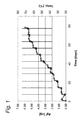
- Figure 1 shows a release profile of silver ions from PS-BA 80/20 (PP1) as a function of time.
- Figure 2 shows a release profile of silver ions from PS-BA 80/20 (PP1) as a function of time (zoomed in from Figure 1 ).
- Figure 3 shows a release profile of mandelic acid from PS-BA 80/20 (PP1) as a function of time.
- Figure 4 shows a release profile of ibuprofen from PS-BA 78/22 (PP2) as a function of time.
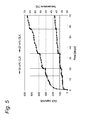
- Figure 5 shows a release profile of chlorhexidine from PS-BA 71/29 (PP3) as a function of time, for PS-BA comprising 20 wt.% (lower curve) or 30 wt.% (upper curve) chlorhexidine.
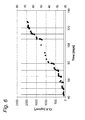
- Figure 6 shows a release profile of chlorhexidine from PS-BA 80/20 (PP4) as a function of time, for PS-BA comprising 20 wt.% chlorhexidine.
- Figure 7 shows a release profile of ibuprofen from PS-BA 78/22 as a function of time, for PS-BA comprising 40 wt.% ibuprofen.
- Figure 8 shows the release rates of ibuprofen from PS-BA.
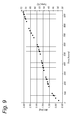
- Figure 9 shows a release profile of ibuprofen from PS-BMA 64/36 as a function of time, for PS-BA comprising 40 wt.% ibuprofen.
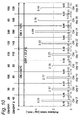
- Figure 10 shows release rates of ibuprofen from PS-BMA.
- Figure 11 shows release of Chlorhexidine from Tecothane TT 1095A (upper graph [ ⁇ ]), Tecophilic HP60D10 (middle graph[ ⁇ ]) and Tecoflex EG 93A (lower graph [ ⁇ ]).
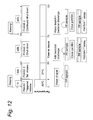
- Figure 12 shows the procedure for antimicrobial activity assessment of antimicrobials released after a temperature trigger.
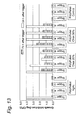
- Figure 13 shows growth inhibiting activity measured for samples with triggered release of Chlorhexidine (Chex) or Silver (AgAc) and for control samples, measured at 24h (light grey bars) and 73 h (dark grey bars) after each of four temperature triggers.
- indefinite article “a” or “an” does not exclude the possibility that more than one of the element is present, unless the context clearly requires that there is one and only one of the elements.
- the indefinite article “a” or “an” thus usually means “at least one”.
- C 1 -C 12 alkyl groups comprise 1 to 12 carbon atoms and have the general formula C n H 2n+1 and may be linear or branched.
- C 1 -C 12 alkyl groups may also contain a cyclic moiety, and thus have the concomitant general formula C n H 2n-1 .
- alkyl groups include methyl, ethyl, n-propyl, 2-propyl, n-butyl, t-butyl, n-hexyl, 2-hexyl, 3-hexyl, etc.
- the term "energy source” is to be understood to be a source of energy via (1) light waves, sound waves or microwaves, (2) electric current, (3) electrical, magnetic or radioactive radiation or (4) a combination thereof.
- the term "active compound” is to be understood as a compound that provides, either directly or indirectly, a certain action.
- the active compound provides a biological effect within a mammalian body.
- an active compound may be a medicament or pharmaceutical that has a direct biological effect on a mammalian body.
- the invention is not regarded as limited to medicaments and pharmaceuticals so that the term “active compound” also includes substances like flavourings, odorants and colorants.
- the glass transition temperature Tg is not limited to the glass transition temperature of the thermo-sensitive polymeric material per se.
- the glass transition temperature Tg may also denote the glass transition temperature of e.g. the combination of the thermo-sensitive polymeric material and the pharmaceutically or biologically active compound.
- the glass transition temperature as used herein does not refer to the glass transition temperature of the polymeric material per se, unless otherwise stated.
- the drug delivery device according to the present invention may comprise further components or additives that influence the glass transition temperature.
- the drug delivery device according to the present invention may be in contact with further components, e.g. body fluids which are usually aqueous in nature, that effect the glass transition temperature of the drug delivery device.
- the glass transition temperature Tg should be interpreted as the glass transition temperature of the thermo-sensitive part or region of the drug delivery device according to the present invention which comprises the thermo-sensitive polymeric material.
- the thermo-sensitive part or region of the drug delivery device according to the present invention may constitute a core, a sublayer or an outer layer of the drug delivery device.
- the thermo-sensitive part or region is an outer layer, more preferably the outer layer, of the drug delivery device according to the invention.
- Drug delivery device comprising a copolymer of styrene and C1-C12 alkyl (meth)acrylate
- the present invention relates to a drug delivery device comprising:
- the present invention is based on the discovery that application of energy, e.g. light waves, sound waves, microwaves, electric current, electrical radiation, magnetic radiation, radioactive radiation, or a combination thereof, to a thermo-sensitive polymeric material comprising a copolymer of styrene and C 1 -C 12 alkyl (meth)acrylate results in absorption of the energy through viscous shearing and relaxation which results in heating of the thermo-sensitive polymeric material. It was found that a thermo-sensitive polymeric material comprising a copolymer of styrene and C 1 -C 12 alkyl (meth)acrylate provides very good pulsative drug release. In contrast, polystyrene homopolymers or poly(meth)acrylate homopolymers do not provide sufficient pulsatile drug release.
- energy e.g. light waves, sound waves, microwaves, electric current, electrical radiation, magnetic radiation, radioactive radiation, or a combination thereof
- thermo-sensitive polymeric material increases linearly with the ultrasonic intensity. Moreover, the temperature increase is induced rapidly when the thermo-sensitive polymeric material is exposed to energy. This fast temperature increase is utilised to change the glassy state of the thermo-sensitive polymeric material into the rubbery state by heating the thermo-sensitive polymeric material from a temperature below the glass transition temperature T g of the thermo-sensitive polymeric material to a temperature above the T g of the thermo-sensitive polymeric material. In addition, at a temperature around the T g the absorption of energy is substantial since mechanical damping has a maximum at this temperature. If the temperature of the thermo-sensitive polymeric material is below the Tg, release of the drug is extremely low whereas if the temperature of the thermo-sensitive polymeric material is above the Tg, flexible polymer chains allow for fast diffusion of the drug.
- the drug delivery device according to a preferred embodiment of the present invention When the drug delivery device according to a preferred embodiment of the present invention is implanted in the body of a mammal, it is surrounded by an aqueous environment. In this aqueous environment, viscous shearing does not occur because energy is less absorbed by the water of the aqueous environment than by the thermo-sensitive polymeric material. Consequently, the drug delivery device according to the present invention does not have any harmful effect to a patient when it is exposed to energy.
- thermo-sensitive polymeric material has preferably an attenuation at 1 MHz of about 10 to about 1000 dB/cm, more preferably about 50 to about 500 dB/cm.
- An advantage of the drug delivery device and method according to the present invention is that the transport characteristics can be reversibly modified in such a way that the diffusion of the active compound occurs repeatedly and reproducibly. In this way, the release of an active compound can be controlled as a function of time.
- Another advantage of the present invention is that an active compound can be delivered on demand.
- the present invention therefore provides a drug delivery device of which the release characteristics of an active compound are modified on demand and/or are modified in a reversible manner by supplying energy from an energy source that optionally differs as a function of time.
- the release characteristics of an active compound by the drug delivery device are modified by supplying energy from an energy source to the drug delivery device.
- the energy source may for example be a source of light waves, sound waves, microwaves, electric current, electrical radiation, magnetic radiation, electromagnetic radiation, radioactive radiation, or a combination thereof.
- the energy source is a source of electric current, preferably a heating wire.
- thermo-sensitive part or region of the drug delivery device has in particular a T g within a certain range, wherein supplying energy to the drug delivery device results in heating of the thermo-sensitive part or region above its T g and in an enhanced release of the active component that is present.
- thermo-sensitive polymeric material (a) that is present in the drug delivery device according to the invention has a barrier effect against diffusion of an active compound and a glass transition temperature T g within the range of about 0° to about 90°C.
- T g glass transition temperature
- the characteristics of diffusion or transport of the active compound (a) for the thermo-sensitive polymeric material (b) can be modified in a reversible manner.
- An advantage of the drug delivery device and method according to the present invention is that the release characteristics can be reversibly modified in such a way that the release of the active component occurs repeatedly and reproducibly. In this way, the release of an active component can be controlled as a function of time.
- Another advantage of the present invention is that an active component can be delivered on demand.
- thermo-sensitive polymeric part or region of the drug delivery device has a T g in the range of about 0 to about 90°C, more preferably in the range of about 30 to about 90°C, even more preferably in the range of about 35 to about 85°C, even more preferably in the range of about 40 to about 80°C, and most preferably in the range of about 45 to about 75°C.
- thermo-sensitive polymeric material that is present in the drug delivery device according to the invention comprises a copolymer of styrene and C 1 -C 12 alkyl (meth)acrylate, herein also referred to as poly(styrene/ C 1 -C 12 alkyl (meth)acrylate).
- C 1 -C 12 alkyl (meth)acrylate is meant to include C 1 -C 12 alkyl acrylate and C 1 -C 12 alkyl methacrylate.
- a copolymer of styrene and C 1 -C 12 alkyl (meth)acrylate herein refers to a copolymer of styrene and C 1 -C 12 alkyl acrylate, a copolymer of styrene and C 1 -C 12 alkyl methacrylate, a copolymer of styrene, C 1 -C 12 alkyl methacrylate and C 1 -C 12 alkyl acrylate, or mixtures thereof.
- a copolymer of styrene and C 1 -C 12 alkyl (meth)acrylate is herein defined as a copolymer that is obtained by copolymerization of styrene monomer and C 1 -C 12 alkyl (meth)acrylate monomer.
- said copolymer of styrene and C 1 -C 12 alkyl (meth)acrylate is a statistical copolymer.
- said copolymer is a block copolymer, preferably a diblock or a triblock copolymer.
- copolymers of styrene and C 1 -C 12 alkyl (meth)acrylate are known in the art, as is the way of preparation of said copolymers.
- the copolymer of styrene and C 1 -C 12 alkyl (meth)acrylate may for example be prepared via a free radical polymerization process, e.g. a solution polymerization process, a suspension polymerization process or an emulsion polymerization process.
- said copolymer is prepared via a solution polymerization process.
- said copolymer of styrene and C 1 -C 12 alkyl (meth)acrylate is a copolymer of styrene and C 1 -C 12 alkyl acrylate or a copolymer of styrene and C 1 -C 12 alkyl methacrylate, more preferably a copolymer of styrene and C 1 -C 12 alkyl acrylate. More preferably, said copolymer is a random copolymer.
- the C 1 -C 12 alkyl (meth)acrylate is a C 1 -C 6 alkyl (meth)acrylate.
- the alkyl group is preferably a methyl, ethyl, propyl, butyl, pentyl or hexyl group, more preferably a methyl, ethyl, n-propyl, n-butyl, n-pentyl or n-hexyl group.
- the alkyl group is an n-butyl group.
- Said copolymer of styrene and C 1 -C 12 alkyl (meth)acrylate is thus preferably a copolymer of styrene and n-butyl (meth)acrylate, and more preferably a copolymer of styrene and n-butyl acrylate.
- said copolymer of styrene and C 1 -C 12 alkyl (meth)acrylate has a number average molecular weight M n in the range of about 3,000 to about 500,000 g/mol, preferably in the range of about 5000 to about 250,000 g/mol, more preferably in the range of about 8,000 to about 150,000 g/mol and most preferably in the range of about 10,000 to about 100,000 g/mol.
- said copolymer has a polydispersity index PDI in the range of about 0.5 to about 4, preferably in the range of about 0.6 to about 3, more preferably in the range of about 0.7 to about 2.5 and most prefererably in the range of about 0.8 to about 2.0.
- the ratio of styrene/ C 1 -C 12 alkyl (meth)acrylate in said copolymer of styrene and C 1 -C 12 alkyl (meth)acrylate is in the range of about 5/95 to about 95/5 mol% styrene/ C 1 -C 12 alkyl (meth)acrylate, preferably in the range of about 95/5 to about 50/50 mol%, more preferably in the range of about 95/5 to about 60/40 mol%, more preferably in the range of about 90/10 to about 70/30 mol% and most preferably in the range of about 85/15 to about 75/25 mol% styrene/ C 1 -C 12 alkyl (meth)acrylate.
- said copolymer preferably has a glass transition temperature T g in the range of about 0 to about 90°C, more preferably in the range of about 30 to about 90°C, even more preferably in the range of about 35 to about 85°
- thermo-sensitive polymeric material (b) that is present in the drug delivery device according to the invention comprises a copolymer of styrene and C 1 -C 12 alkyl (meth)acrylate, preferably of styrene and C 1 -C 6 alkyl (meth)acrylate, more preferably of styrene and n-butyl (meth)acrylate, and most preferably a copolymer of styrene and n-butyl acrylate.
- said thermo-sensitive polymeric material comprises about 10 wt.% or more, more preferably about 30 wt.% or more, even pore preferably about 50 wt.% or more, even more preferably about 70 wt.% or more, and even more preferably about 80 wt.% or more of said copolymer of styrene and C 1 -C 12 alkyl (meth)acrylate, preferably of styrene and C 1 -C 6 alkyl (meth)acrylate, more preferably of styrene and n-butyl (meth)acrylate, and most preferably of styrene and n-butyl acrylate, based on the total weight of the thermo-sensitive polymeric material.
- the thermo-sensitive polymeric material comprises about 90 wt.% or more, even more preferably about 95 wt.% or more of the copolymer of styrene and C 1 -C 12 alkyl (meth)acrylate, preferably of styrene and C 1 -C 6 alkyl (meth)acrylate, more preferably of styrene and n-butyl (meth)acrylate, and most preferably a copolymer of styrene and n-butyl acrylate, based on the total weight of the thermo-sensitive polymeric material.
- said thermo-sensitive polymeric material is a copolymer of styrene and C 1 -C 12 alkyl (meth)acrylate, preferably of styrene and C 1 -C 6 alkyl (meth)acrylate, more preferably of styrene and n-butyl (meth)acrylate, and most preferably a copolymer of styrene and n-butyl acrylate.
- Preferred embodiments of the copolymer of styrene and C 1 -C 12 alkyl acrylate are described in detail above.
- thermo-sensitive material comprising a copolymer of styrene and C 1 -C 12 alkyl (meth)acrylate in a drug delivery device according to the invention has several advantages.
- an advantage of the drug delivery device and the method for releasing an active compound from a drug delivery device according to the invention is that the thermo-sensitive material comprising a copolymer of styrene and C 1 -C 12 alkyl (meth)acrylate has advantageous characteristics as compared to thermo-sensitive polymers used in drug delivery devices known in the art.
- thermo-sensitive material comprising a copolymer of styrene and C 1 -C 12 alkyl (meth)acrylate has for example an enhanced diffusion of active compound when heated above its glass transition temperature Tg, as well as an improved barrier effect against diffusion of an active compound at temperatures below its Tg.
- thermo-sensitive polymeric material when the thermo-sensitive polymeric material is a copolymer of polystyrene and C 1 -C 12 alkyl acrylate, said thermo-sensitive polymeric material has an improved barrier effect against diffusion of an active compound at a temperature below its glass transition temperature Tg, e.g. at 37°C (i.e. human body temperature, a relevant temperature for a drug delivery device implanted in a mammal), ensuring that release of the active compound does not occur at normal body temperature. At a temperature above its T g said thermo-sensitive polymeric material still releases a sufficient amount of active compound. (when used in the right proportions).
- Tg glass transition temperature
- the properties of the thermo-sensitive polymeric material may be adjusted by varying the proportions of monomers in the copolymer comprising styrene and C 1 -C 12 alkyl (meth)acrylate. For example, when the proportion of styrene is increased, a more rigid copolymer is obtained, whereas a more flexible copolymer is obtained by increasing the proportion of C 1 -C 12 alkyl acrylate and/or C 1 -C 12 alkyl acrylate. By varying the composition of these two monomers in the copolymer, the properties of the thermo-sensitive polymeric material can be adjusted. When the material becomes too soft or too brittle, e.g. when loaded with a certain amount of active compound, these properties can be adjusted by varying the proportion of monomers within the copolymer.
- thermo-sensitive polymeric material comprising a copolymer of styrene and C 1 -C 12 alkyl acrylate is that the active compounds generally have a high maximum solubility in this copolymer.
- the drug delivery device according to the invention can be made in various ways.
- the active compound (a) is mixed, preferably in a homogeneous manner, with the thermo-sensitive polymeric material (b).
- the active compound (a) mixed with the thermo-sensitive polymeric material (b) together form the thermo-sensitive part or region of the drug delivery device.
- said active compound (a) is homogeneously dispersed in the thermo-sensitive polymeric material (b).
- the drug delivery device comprises particles comprising the active compound (a) and an inert support material, wherein said particles are coated with a layer of said thermo-sensitive polymeric material (b).
- the coating of said particles forms the thermo-sensitive part or region of the drug delivery device.
- said particles may have any shape, preferably the particles have a spherical shape.
- the preferred size of said particles is in the range of about 10 ⁇ m to about 1,5 mm, more preferably in the range of about 30 to about 600 ⁇ m.
- the inert support material may for example comprise polycaprolactone (PCL), polycaprolactonediol (PCL-iol), or a mixture thereof.
- the active compound (a) is comprised by the core of the drug delivery device and the core is surrounded by a layer comprising the thermo-sensitive polymeric material (b).
- the layer comprising the thermo-sensitive polymeric material forms the thermo-sensitive part of the drug delivery device.
- the drug delivery device according to the invention when the drug delivery device according to the invention is implanted in a mammalian body, it is preferred that the drug delivery device is surrounded by an enveloping material that is thermally insulating and that is permeable for the active compound, in order to protect the tissues and/or the organs in which the drug delivery device is present from the energy supplied. Therefore, the drug delivery device according to the invention optionally further comprises a material (c) being thermally insulating and permeable for the active compound.
- the present invention thus also relates to a drug delivery device, in particular for implantation in a mammalian body, comprising:
- the material (c) being thermally insulating and permeable for the active compound envelopes, i.e. surrounds, active compound (a) and thermo-sensitive polymeric material (b).
- the material (c) being thermally insulating and permeable for the active compound is a hydrogel.
- Hydrogels are three dimensional networks of hydrophilic polymers in which a large amount of water is present. In general the amount of water present in a hydrogel is at least 20 weight percent of the total weight of the dry polymer. The most characteristic property of these hydrogels is that they swell in the presence of water and shrink in the absence of water. The extent of swelling (equilibrium water content) is determined by the nature (mainly the hydrophilicity) of the polymer chains and the crosslinking density.
- hydrogels Polymers that can be used for manufacturing hydrogels are well known in the art and are for example disclosed in US 2.340.110 , US 2.340.111 , US 2.533.635 , US 2.798.053 , US 3.940.351 , US 4.062.817 , US 5.034.486 , US 5.034.487 , US 5.034.488 and US 5.468.797 , all incorporated by reference herein.
- Another type of hydrogel is based on supramolecular host-guest chemistry, e.g. a hydrogel made by reversible cross-linking of an acryl amide polymer having pendant adamantyl groups with a cyclodextrine dimer as disclosed by Kretschmann et al., Angew. Chem. Int. Ed. Engl. 45 , 4361 - 4365, 2006.
- said material (c) being thermally insulating and permeable for the active compound is a thermoplastic polyurethane (TPU), preferably an aromatic TPU, and more preferably an aromatic polyether-based TPU.
- TPU thermoplastic polyurethane
- TPUs are formed by the reaction of a diisocyanate, a short-chain diol (also called chain extender) and long-chain bifunctional diols (known as polyols).
- a TPU is composed of hard and soft segments, wherein the hard segment may be aromatic or aliphatic.
- Aromatic TPUs may be based on aromatic isocyanates.
- Aromatic isocyanates are well-known in the art, and include for example methylene diphenyl diisocyanate (MDI), toluene diisocyanate (TDI), meta- or para-phenylene diisocyanate and 1,5-naphtalenediisocyanate.
- Aliphatic TPUs may be based on aliphatic isocyanates, which are well-known in the art and include for example hexamethylene diisocyanate (HDI), dicyclohexylmethane 4,4'-diisocyanate (H12MDI) and isophorone diisocyanate (IPDI).
- the hard segment of a TPU is composed of the combination of a diisocyanate with a short-chain diol.
- the soft sement of a TPU is composed of the polyol, and may be polyester-based or polyether-based. The soft segment may also be based on a combination of polyester and polyether polyols.
- polyesters include adipates, polycaprolactones, aliphatic polycarbonates.
- polyethers include poly(oxypropylene)diols, poly(oxytetramethylene)diols.
- Aromatic polyether-based TPUs are well known in the art, and for example disclosed in WO 2004/078816 , WO 2004/078816 and WO 2008/089163 , all incorporated by reference herein.
- aliphatic TPUs examples include Tecoflex® TPUs, for example Tecoflex® EG 93A, and Tecophilic®, all commercially available from Lubrizol.
- the aromatic polyether-based thermoplastic polyurethane is Tecothane®, more preferably Tecothane® TT-1095A, commercially available from Lubrizol.
- Tecothane® TT-1095A as material (c) being thermally insulating and permeable for the active compound has several advantages. Tecothane® TT-1095A has a very good biocompatibility, and good thermal insulation properties. In addition, Tecothane® TT-1095A has a very good permeability for the active compound. Use of Tecothane® TT-1095A is particularly advantageous when said active compound comprises chlorhexidine or a source of chlorhexidine ions.
- the present invention therefore further relates to a drug delivery device, comprising:
- the drug delivery device according to the invention may comprise more than one central region (i) and thus more than one enveloping material (ii) surrounding said central region.
- the drug delivery device according to the invention comprises a central region (i) wherein the active compound (a) is mixed, preferably in a homogeneous manner, with the thermo-sensitive polymeric material (b).
- the drug delivery device according to the invention comprises a central region (i), wherein said central region comprises particles comprising the active compound (a) and an inert support material, wherein said particles are coated with a layer of said thermo-sensitive polymeric material (b).
- the drug delivery device comprises a central region (i) wherein the active compound (a), and optionally an inert support material, is comprised by the core of the drug delivery device and said core is surrounded by a layer comprising the thermo-sensitive polymeric material (b).
- an advantage of the presence of an enveloping material (c) surrounding the central region is that the environment in which the drug delivery device is present, in particular the physiological environment of the mammalian body, can be protected from changes in the drug delivery device that are a consequence of the supply of energy.
- One example of this is protection from a rise in the temperature of the drug delivery device.
- the presence of a thermally insulating enveloping material protects the surrounding tissue from the temperature increase of the thermo-sensitive part of the drug delivery device caused by the energy supply to the drug delivery device needed to release the active compound.
- an enveloping material being thermally insulating and permeable for the active compound has as further advantages that it can counteract fouling of the thermo-sensitive polymeric material. It can further provide more strength to the drug delivery device and provide flexibility thereto and inhibits negative influences from sarcophagus and aggressive bacteria. It further provides the option that thermo-sensitive polymeric materials can be used which are less biocompatible (rejections) provided that the enveloping material is sufficiently biocompatible.
- the enveloping material (c) surrounding the central region may be selected from a wide range of materials and structures, including for example the wall of a catheter (wherein the drug delivery device is e.g. incorporated in the wall of the catheter).
- said enveloping material (c) comprises a hydrogel. Hydrogels are described in more detail above.
- said enveloping material (c) comprises an aromatic polyether-based thermoplastic polyurethane (TPU), preferably Tecothane®, more preferably Tecothane® TT-1095A, as described in more detail above. Advantages of the use of Tecothane® TT-1095A as enveloping material (c) being thermally insulating and permeable for the active compound are described in more detail above.
- said enveloping material (c) is the wall of a catheter.
- the enveloping material (c) is selected from the group of materials known in the art as being suitable for use in the wall of a catheter, provided that said material is sufficiently thermally insulating and permeable for the active compound (a).
- the precise shape of the drug delivery device according to the invention and therefore the precise shape (e.g. a sphere, a slab, a film, etc.) of the central region (i) and the enveloping material (c) surrounding the central region are governed by the requirements of the particular drug delivery device.
- An active compound herein refers to a pharmacological and/or biological substance, i.e. a substance that is biologically and/or pharmaceutically active, for example a drug or a prodrug.
- the active compound (a) that is present in the drug delivery device according to the invention may for example be selected from the group consisting of drugs and prodrugs, diagnostic agents and contrast media for imaging.
- the active compound (a) is a drug or a prodrug, more preferably a drug or a prodrug selected from the group consisting of chemotherapeutic agents, analgesics, anaesthetics, hormonal substances, antimicrobial agents, infection suppressing agents and antiarrhythmic agents.
- the active compound is selected from the group of antimicrobial agents. More preferably the active compound comprises chlorhexidine or a source of chlorhexidine ions, mandelic acid and/or a source of silver ions Ag + . Sources of chlorhexidine ions are known in the art, and include for example chlorhexidine diacetate, chlorhexidine digluconate, chlorhexidine hydrochloride and the like.
- Sources of silver ions are known in the art, and include for example silver acetate, silver nitrate, silver chloride and silver carbonate.
- the active compound preferably comprises chlorhexidine or a source of chlorhexidine ions.
- said active compound (a) comprises a mixture of chlorhexidine or a source of chlorhexidine ions, and silver acetate.
- thermo-sensitive polymeric material comprises about 5 to about 50 wt.%, preferably about 10 to about 45 wt.%, more preferably about 15 to about 40 wt.% and most preferably about 15 to about 35 wt.% of the active compound (a), based on the total weight of (a) plus (b).
- the amount of active compound (a) present in the thermo-sensitive polymeric material (b) is determined by the solubility of the active compound in the thermo-sensitive polymer.
- the drug delivery device according to the present invention may for example be used to control post-operative heart rhythm complaints wherein the drug delivery device including the appropriate medicament is implanted in the pericardium.
- the present invention also relates to a carrier comprising a drug delivery device according to the invention.
- the carrier may for example be a catheter, a dermal patch or a porous web-like material, woven or non-woven.
- said carrier is a catheter.
- the invention therefore also relates to a catheter, comprising a drug delivery device comprising:
- thermo-sensitive polymeric material (b) that is present in the drug delivery device according to the invention comprises a copolymer of styrene and and C 1 -C 6 alkyl (meth)acrylate, more preferably of styrene and n-butyl (meth)acrylate, and most preferably a copolymer of styrene and n-butyl acrylate.
- the invention relates to a catheter comprising a drug delivery device according to the invention, comprising:
- thermo-sensitive polymeric material comprising a thermo-sensitive polymeric material comprising a copolymer of styrene and C 1 -C 12 alkyl (meth)acrylate and preferred embodiments thereof, are described in detail above.
- thermo-sensitive polymeric material (b) comprises a copolymer of styrene and C 1 -C 6 alkyl (meth)acrylate, more preferably of styrene and n-butyl (meth)acrylate, and most preferably a copolymer of styrene and n-butyl acrylate.
- the catheter according to the invention further comprises an energy source, preferably a heating means, for example a heating filament.
- the enveloping material (c) may for example be the wall of the catheter, or be comprised in the wall of the catheter.
- the drug delivery device according to the invention may for example be incorporated in the wall of said catheter.
- the enveloping material (c) is selected from the group of materials known in the art as being suitable for use as the wall of a catheter, provided that said material is sufficiently thermally insulating, and permeable for the active compound (a).
- said enveloping material being thermally insulating and permeable for said active compound comprises an aromatic polyether-based thermoplastic polyurethane (TPU), as described in more detail above.
- said TPU comprises Tecothane®, more preferably Tecothane® TT-1095A, as described in more detail above. More preferably, said enveloping material being thermally insulating and permeable for said active compound is Tecothane®, even more preferably Tecothane® TT-1095A.
- the active compound is selected from the group consisting of chemotherapeutic agents, analgesics, anaesthetics, hormonal substances, antimicrobial agents, infection suppressing agents and antiarrhythmic agents.
- the active compound is selected from the group of antimicrobial agents. More preferably the active compound comprises chlorhexidine, mandelic acid and/or a source of silver ions Ag + . Sources of silver ions are known in the art, and include for example silver acetate, silver nitrate, silver chloride and silver carbonate.
- the active compound preferably comprises chlorhexidine or a source of chlorhexidine ions.
- said active compound (a) comprises chlorhexidine or a source of chlorhexidine ions, and a source of silver ions, preferably silver acetate.
- the invention relates in particular to a catheter, comprising a heating means and a drug delivery device according to the invention, said drug delivery device comprising:
- the invention thus also relates to a catheter, provided with a layer of a thermo-sensitive polymeric material (b), wherein said thermo-sensitive polymeric material comprises an active compound (a), and wherein the carrier is also provided with a heating means, for example a heating filament.
- a catheter provided with a layer of a thermo-sensitive polymeric material (b), wherein said thermo-sensitive polymeric material comprises an active compound (a), and wherein the carrier is also provided with a heating means, for example a heating filament.
- a heating means for example a heating filament.
- a catheter comprising (A) a catheter shaft having an outer surface, the catheter shaft being insertable into a body lumen, (B) an energy-emitting element carried by the catheter shaft, the energy-emitting element being operable to radiate a generally symmetrical energy pattern, (C) a plurality of cooling lumens in the catheter shaft around the energy-emitting element, the plurality of cooling lumens being configured for circulation of a fluid therethrough, and (D) means located in at least one of the plurality of cooling lumens for attenuating energy radiated by the energy-emitting element.
- particles comprising the thermo-sensitive polymeric material and the active compound can occur in a form that can be administered by injection, e.g. intravenously or intramuscularly, as is for example disclosed in US 2003/0212148 , incorporated by reference herein.
- the present invention further relates to the use of a drug delivery device according to the invention for implantation in a mammalian body, to the use of a drug delivery device according to the invention for incorporation into a prosthesis or an artificial organ, and to the use of the drug delivery device according to the invention for incorporation into a catheter.
- the present invention further relates to the use of an aromatic polyether-based thermoplastic polyurethane (TPU), preferably Tecothane®, more preferably Tecothane® TT-1095A, as a thermally insulating material in a drug delivery device, preferably a drug delivery device according to the present invention.
- TPU aromatic polyether-based thermoplastic polyurethane
- Tecothane® preferably Tecothane®
- Tecothane® TT-1095A a thermally insulating material
- Drug delivery device comprising a TPU as thermally insulating material
- the invention further relates to a drug delivery device comprising:
- thermo-sensitive material (b) are described in more detail below.
- Said material (c) being thermally insulating and permeable for the active compound comprises a thermoplastic polyurethane (TPU), preferably an aromatic TPU, and more preferably an aromatic polyether-based TPU.
- TPU thermoplastic polyurethane
- TPUs are formed by the reaction of a diisocyanate, a short-chain diol (also called chain extender) and long-chain bifunctional diols (known as polyols).
- a TPU is composed of hard and soft segments, wherein the hard segment may be aromatic or aliphatic.
- Aromatic TPUs may be based on aromatic isocyanates.
- Aromatic isocyanates are well-known in the art, and include for example methylene diphenyl diisocyanate (MDI), toluene diisocyanate (TDI), meta- or para-phenylene diisocyanate and 1,5-naphtalenediisocyanate.
- Aliphatic TPUs may be based on aliphatic isocyanates, which are well-known in the art and include for example hexamethylene diisocyanate (HDI), dicyclohexylmethane 4,4'-diisocyanate (H12MDI) and isophorone diisocyanate (IPDI).
- the hard segment of a TPU is composed of the combination of a diisocyanate with a short-chain diol.
- the soft sement of a TPU is composed of the polyol, and may be polyester-based or polyether-based. The soft segment may also be based on a combination of polyester and polyether polyols.
- polyesters include adipates, polycaprolactones, aliphatic polycarbonates.
- polyethers include poly(oxypropylene)diols, poly(oxytetramethylene)diols.
- Aromatic polyether-based TPUs are well known in the art, and for example disclosed in WO 2004/078816 , WO 2004/078816 and WO 2008/089163 , all incorporated by reference herein.
- aliphatic TPUs examples include Tecoflex® TPUs, for example Tecoflex® EG 93A, and Tecophilic®, all commercially available from Lubrizol.
- the aromatic polyether-based thermoplastic polyurethane is Tecothane®, more preferably Tecothane® TT-1095A, commercially available from Lubrizol.
- Tecothane® TT-1095A as material (c) being thermally insulating and permeable for the active compound has several advantages. Tecothane® TT-1095A has a very good biocompatibility, and good thermal insulation properties. In addition, Tecothane® TT-1095A has a very good permeability for the active compound. Use of Tecothane® TT-1095A is particularly advantageous when said active compound comprises chlorhexidine or a source of chlorhexidine ions.
- Said aromatic polyether-based thermoplastic polyurethane is preferably Tecothane®, more preferably Tecothane® TT-1095A, commercially available from Lubrizol.
- the invention thus also relates to a drug delivery device comprising:
- the active compound (a) that is present in the drug delivery device may for example be selected from the group consisting of drugs and prodrugs, diagnostic agents and contrast media for imaging.
- the active compound (a) is a drug or a prodrug, more preferably a drug or a prodrug selected from the group consisting of chemotherapeutic agents, analgesics, anaesthetics, hormonal substances, antimicrobial agents, infection suppressing agents and antiarrhythmic agents.
- the active compound is selected from the group of antimicrobial agents. More preferably the active compound comprises chlorhexidine or a source of chlorhexidine ions, mandelic acid and/or a source of silver ions Ag + .
- Sources of chlorhexidine ions are known in the art, and include for example chlorhexidine diacetate, chlorhexidine digluconate, chlorhexidine hydrochloride and the like.
- Sources of silver ions are known in the art, and include for example silver acetate, silver nitrate, silver chloride and silver carbonate.
- the active compound preferably comprises chlorhexidine or a source of chlorhexidine ions.
- said active compound (a) comprises a mixture of chlorhexidine or a source of chlorhexidine ions, and silver acetate.
- thermo-sensitive polymeric material (b) a poly(lactic acid-co-glycolic acid), polymethyl methacrylate, poly(ethylene-co-vinyl acetate) or a nylon is used as the thermo-sensitive polymeric material (b).
- thermo-sensitive polymeric material comprises a polymer or a copolymer comprising a monomer selected from the group consisting of a hydroxyl alkanoate wherein the alkyl group comprises 1 to 12 carbon atoms, lactide, glycolide, ⁇ -caprolactone, 1,4-dioxane-2-one, 1,5-dioxepan-2-one, trimethylene carbonate (1,3-dioxane-2-one) and mixtures thereof.
- the copolymer is a random copolymer or a block copolymer and the block copolymer is preferably a diblock copolymer or a triblock copolymer.
- thermo-sensitive polymeric materials for this particular embodiment also includes (meth)acrylic (co)polymers, polyester urethanes, polyester amides, polyether esters such as polyethylene glycol terephtalate - polybutylene terephalate (PEGT/PBT), polyethylene glycol and the natural polymers such as polyhydralonic acid, iso-sorbide, dextran, collagens and mixtures thereof.
- Another even more preferred thermo-sensitive polymeric material for this particular embodiment is also polybutyl methacrylate.
- the present invention also relates to a method for releasing an active compound from a drug delivery device according to the invention, the drug delivery device comprising:
- the drug delivery device is for implantation in a mammalian body.
- a pharmaceutically or biologically active component can be repeatedly released from the drug delivery device in a controlled manner as a function of time, depending on the therapeutic or diagnostic needs (reversible release).
- a medicament selected from the group of chemotherapeutic agents, analgesics, anesthetics, hormonal substances, infection suppressing agents, anti-microbial agents and anti-arrhythmic agents is used as active component.
- a diagnostic agent or a contrast medium for imaging is used as active component.
- thermo-sensitive polymeric material (b) that is present in the drug delivery device according to the invention comprises a copolymer of styrene and and C 12 -C 6 alkyl (meth)acrylate, preferably a copolymer of styrene and C 1 -C 6 alkyl (meth)acrylate, more preferably of styrene and n-butyl (meth)acrylate, and most preferably a copolymer of styrene and n-butyl acrylate.
- the active compound is selected from the group consisting of chlorhexidine or a source of chlorhexidine ions, mandelic acid and a source of silver ions, as described in more detail above.
- the active compound comprises chlorhexidine or a source of chlorhexidine ions, preferably in combination with a source of silver ions Ag + , preferably silver acetate.
- the energy is supplied from an energy source that is external with respect to the drug delivery device.
- the transport characteristics of the polymer can be modified remotely.
- the energy may origin from many sources as explained above.
- the energy source may for example a source of energy via (1) light waves, sound waves or microwaves, (2) electric current, (3) electrical, magnetic or radioactive radiation or (4) a combination thereof.
- the energy source is a source of electric energy, preferably electric current.
- the heating source comprises a heating wire or a heating filament.
- thermo-sensitive polymeric material must contain a magnetic material, for example thermo-sensitive magnetic particles as are disclosed in Chan et al., "Scientific and Clinical Applications of Magnetic Carriers", Häfeli et al. (Eds.), pages 607 - 617 Plenum Press, 1997 , incorporated by reference herein.
- nanotubes may be included to render the thermo-sensitive polymeric material conductive so that when a magnetic field is applied an induced current is generated. As a result of the resistance that is encountered by this induced current, the thermo-sensitive polymeric material is heated (cf. Iijima, S., Helical microtubes of graphitic carbon, Nature, Vol.
- thermo-sensitive magnetic particles are incorporated in the thermo-sensitive polymeric material per g thermo-sensitive polymeric material.
- the energy to be employed is infrared light
- the ultimate temperature increase that occurs within the thermo-sensitive polymeric material is dependent on the intensity and wavelength of the infra red light as will be understood by the person skilled in the art.
- a specific inter-atomic bond of the polymer can for example be activated by using a specific wave length.
- the drug delivery device according to the invention further comprises an infrared absorbing compound.
- Infrared absorbing compounds are known in the art, and include for example so-called “rylenes” (perylenes, terrylenes, quaterrylenes, etc.) and carbon compounds, provided that the infrared absorbing compound is capable of absorbing infrared irradiation having a wave length in the range of about 500 nm to 1000 ⁇ m, in particular in the range of about 700 to 1200 nm.
- An infrared absorbing compound may be incorporated into the drug delivery device according to the invention in several manners, as is disclosed in WO 2008/016297 , incorporated by reference herein.
- the ultrasonic sound has a frequency of 2 x 10 4 Hz to 1 x 10 7 Hz (20 kHz to 10 MHz), more preferably 5 x 10 5 Hz to 5 x 10 6 Hz (500 kHz to 5 MHz).
- the sound waves are focussed in a beam. It is also preferred that the ultrasound has an intensity of 0.1 to 20.0 W/cm 2 , preferably 0.2 to 5.0 W/cm 2 .
- the external energy source is used in such a way that the thermo-sensitive polymeric material is subjected to one or more, more preferably two or more, reversible glass transitions between a glassy state and a rubbery state. It has been found that such transitions, which as such require relatively little energy, can lead to very appreciable modifications in the transport characteristics, which, in turn, can lead to a very appreciable increase in the diffusion of an active compound present in the material.
- the glass transition or glass transitions occur at a temperature of about 0 to about 90°C, more preferably in the range of about 30 to about 90°C, even more preferably in the range of about 35 to about 85°C, even more preferably in the range of about 40 to about 80°C, and most preferably in the range of about 45 to about 75°C..
- these temperature ranges are adequate to obtain the particular advantages according to the present invention.
- the energy is supplied pulse-wise.
- the energy is supplied from an energy source that is external with respect to the material.
- the advantages of these preferred embodiments are that the release of the active compound(s) can be controlled pulse-wise and that the energy can be supplied remotely from the patient by an intervention of the physician, non-academic hospital personnel such as nurses, or the patient himself, respectively.
- the physician or the patient can regulate the duration, the frequency and the intensity of the release of the active compound.
- the energy source is used in such a way that the material is subjected to one or more, preferably two or more, reversible glass transitions between a glassy state and a rubbery state.
- the copolymer of styrene and n-butyl acrylate is prepared using a free radical polymerization procedure as described below.
- the two monomers are heated in the presence of azobisisobutyronitrile (AIBN) as a radical initiator.
- AIBN azobisisobutyronitrile
- methanol is added to precipitate the polymer.
- copolymers were analysed with the following methods:
- Example 1A PS-BA PP2
- Styrene and n-butyl acrylate were filtered over an inhibitor remover prior to use.
- a solution of styrene (200,00 g; 1,92 mol) and n-butyl acrylate (76,87 g; 0,60 mol) in n-butyl acetate (413 mL) was mechanically stirred in a 1L double-walled reactor under argon at ca 23°C. After degassing for 15 min. ( ⁇ 10 argon/vacuum cycles), the mixture was heated to 70°C and a degassed solution of AIBN (0.83 g; 0.05 mol) in n-butyl acetate was added. The colorless solution was allowed to stir during - 2h.
- Example 1B PS-BA 2 PP3
- This copolymer was prepared according to the procedure described for PS-BA 1 from a solution of styrene (200 g; 1.92 mol) and n-butyl acrylate (105.13 g; 0.82 mol) in butyl acetate (420 mL) at 69°C.
- a degassed suspension of AIBN (2.7 g; 0.016 mol) in butyl acetate (20 mL) was added in three times at intervals of ⁇ 2h. The total reaction time was approximately 6.5 h. Half of the solution was poured into methanol (1 L).
- the resulting polymer lump was stirred during 5 minutes, separated from the supernatant by decantation and covered by methanol, into which the second fraction of the reaction mixture was subsequently poured. After five minutes, the lump was separated from methanol, covered with ethanol (500 mL) and stirred (20 minutes). The latter operation was repeated twice, upon 500 and 1500 mL ethanol addition, and stirring (overnight and 1h, respectively). Drying in vacuo was performed first at 23°C during 5 h, then overnight at 80°C, affording 105 g of a colorless material, which was dissolved in CHCl 3 (550 mL) and reprecipitated in MeOH (2 L) by dropwise addition. The polymer was then filtered, stirred in 1 L of methanol during 1 h (the latter operation was performed in total three times) and dried in vacuo for 96 h at 40°C (97.3 g; 32%).
- Example 1C PS-BA PP4
- Styrene, n-butyl acrylate and AIBN were used as received, without any further purification.
- a solution of styrene (168.17 g; 1,615 mol) and n-butyl acrylate (51.85 g; 0,405 mol) in toluene (775 mL) was mechanically stirred in a 3-necked 2 L round bottom flask under argon at ca 23°C. After degassing for 15 min. ( ⁇ 10 argon/vacuum cycles), the mixture was heated to 80°C (oil bath temperature) and AIBN (1.22 g; 7.44 mmol) was then added.
- the lumps/precipitate were combined and stirred overnight in methanol (1.5 L), affording a white solid along with a remaining sticky lump fraction.
- the precipitate was separated by filtration, the lump covered with methanol (1 L) and stirred until full transformation into a non-sticky solid, which was then filtered.
- the combined solids were washed with methanol (3 x 150 mL) and dried in vacuo at 70°C during 4 days. (122.5 g, 56 %).
- the copolymers of styrene and n-butyl methacrylate i.e. PS-BMA copolymers
- PS-BMA copolymers are prepared using a free radical polymerization procedure.
- the two monomers (neat or in solution) are heated in the presence of azobisisobutyronitrile (AIBN) as a radical initiator.
- AIBN azobisisobutyronitrile
- methanol is added to the polymerization mixture, resulting in precipitation of the copolymer.
- the polymer is further purified by precipitation from chloroform or dichloromethane into methanol. Finally the product is dried in a vacuum oven.
- Styrene and n-butyl methacrylate were filtered over aluminum oxide to remove the inhibitor prior to use.
- AIBN was recrystallized from methanol before use.
- Copolymers were analyzed with the following methods:
- thermo-sensitive polymer and an active comopund prepared by compouding, having a size of approximately 2 cm and a thickness of approximately 2 mm was placed in a vessel containing 0.5 liter physiological buffer.
- the object consisted of a strand of a copolymer of styrene and n-butyl (meth)acrylate (PS-BA or PS-BMA), wherein an active compound was incorporated.
- the vessel was first placed in a shaking bad of a temperature below the glass transition temperature T g of the object (the "OFF switch”).
- the release rate of said active compound into the physiological buffer was determined by measuring the amount of active compound as a function of time.
- the vessel was placed in a shaking bath of a temperature above the T g of the object (the "ON switch"), and again the release rate of said active compound into the physiological buffer was determined by measuring the amount of active compound as a function of time.
- This series of temperature cycles, measurements of active compound concentration and calculation of release rates was repeated over a period of time varying from 30 to 130 days.
- the concentration of active compound in the physiological buffer was determined by several methods, e.g. Graphite Furnace Atomic Absorption Spectrometry (GF-AAS), UV-VIS, GC-MS, HPLC.
- GF-AAS Graphite Furnace Atomic Absorption Spectrometry
- UV-VIS UV-VIS
- GC-MS HPLC.
- Example 2A PS-BA 80 / 20 (PP1) with silver acetate
- the release experiment as described above was performed using a copolymer of styrene and n-butyl acrylate in a ratio of 80 to 20 mol%, comprising 2 wt.% of silver acetate.
- the temperature during the "OFF switch” was 37.2°C (temperature of the human body), the temperature during the "ON switch” was 75°C.
- the object was kept at the temperature of the "ON switch” during a period of 60 minutes.
- the concentration of Ag + was determined by Graphite Furnace Atomic Absorption Spectrometry (GF-AAS) at 328 nm.
- the release rate during the "OFF switch", i.e. the OFF release rate was determined to be 0,07 ng/min*cm 2 .
- the ON release rate is calculated by taking the amount of silver ions released during the 15 minutes that is triggered.
- the OFF release rate is calculated over the period that the release is linear. It takes approximately 1 day from the 60 minutes trigger when this it achieved. The period in between is in this model neglected.
- the release profile of the active compound as a function of time and temperature is shown in Figure 1 and Figure 2 , wherein the concentration of silver ions is shown on the left-handed Y-axis, and the temperature on the right-handed Y-axis.
- Figure 1 and 2 show that during the "OFF switch", i.e. at a temperature below Tg, the amount of active compound in the physiological buffer does not increase significantly, indicating that release of active compound at a temperature below T g of the PS-BA copolymer is negligible.
- the "ON switch” i.e. at a temperature above Tg, the release of active compound is significant.
- Figure 1 and 2 also show that said release of active compound during the "On switch” can be repeated over a long period of time.
- Example 2B PS-BA 80 / 20 (PP1) with mandelic acid
- the release experiment as described above was performed using a copolymer of styrene and n-butyl acrylate in a ratio of 80 to 20 mol%, comprising 20 wt.% of mandelic acid.
- the temperature during the "OFF switch” was 25°C
- the temperature during the "ON switch” was 70°C during the first 4 switches, and 75°C thereafter.
- the object was kept at the temperature of the "ON switch” during a period of 15 minutes.
- the concentration of mandelic acid in the physiological buffer was determined by HPLC (detection at 210 nm).
- the release profile of the active compound as a function of time and temperature is shown in Figure 3 , wherein the concentration of mandelic acid is shown on the left-handed Y-axis, and the temperature on the right-handed Y-axis.
- Figure 3 shows that during the "ON switch", in particular at a temperature of 75°C, the release of active compound is significant.
- Figure 3 also show that said release of active compound during the "On switch" can be repeated over a long period of time.
- Example 2C PS-BA 71 / 29 (PP2) with ibuprofen
- the release experiment as described above was performed using a copolymer of styrene and n-butyl acrylate in a ratio of 78 to 22 mol% (PP2), comprising 40 wt.% of inbuprofen.
- the temperature during the "OFF switch” was 37.2°C (temperature of the human body), the temperature during the "ON switch” was 70°C.
- the object was kept at the temperature of the "ON switch” during a period of 15 minutes.
- the concentration of ibuprofen in the physiological buffer was determined by HPLC, detection at 223 nm.
- the release profile of the active compound as a function of time and temperature is shown in Figure 4 , wherein the concentration of ibuprofen is shown on the left-handed Y-axis, and the temperature on the right-handed Y-axis.
- Figure 4 shows that during the "ON switch", the release of active compound is significant.
- Figure 4 also show that said release of active compound during the "On switch” can be repeated over a long period of time, although after the fourth cycle release during the "OFF switch", after about 650 hours, increased significantly.
- Example 2D PS-BA 71 / 29 (PP3) with chlorhexidine
- the release experiment as described above was performed using a copolymer of styrene and n-butyl acrylate in a ratio of 71 to 29 mol%, comprising 20 wt.% or 30 wt.% of chlorhexidin.
- the temperature during the "OFF switch” was 37.2°C (temperature of the human body), the temperature during the "ON switch” was 75°C.
- the object was kept at the temperature of the "ON switch” during a period of 60 minutes.
- the concentration of chlorhexidine in the physiological buffer was determined by HPLC or UV-VIS.
- the release profile of chlorhexidin as a function of time and temperature is shown in Figure 5 , wherein the concentration of chlorhexidin is shown on the left-handed Y-axis, and the temperature on the right-handed Y-axis.
- the ON release rates varied between 20 and 100 ng/(cm 2 *min).
- the release rate decreased after the third trigger.
- the ON release rates varied between 90 - 200 ng /(cm 2 *min). A significant release during the OFF switch is shown.
- Example 2E PS-BA 80 / 20 (PP4) with chlorhexidine
- the release experiment as described above was performed using a copolymer of styrene and n-butyl acrylate in a ratio of 80 to 20 mol% (PP4), comprising 20 wt.% of chlorhexidin diacetate.
- the temperature during the "OFF switch” was 22°C
- the temperature during the "ON switch” was 75°C.
- the object was kept at the temperature of the "ON switch” during a period of 60 minutes.
- the concentration of chlorhexidine in the physiological buffer was determined by HPLC or UV-VIS.
- the release profile of chlorhexidin as a function of time and temperature is shown in Figure 6 , wherein the concentration of chlorhexidine is shown on the left-handed Y-axis, and the temperature on the right-handed Y-axis. Release of chlorhexidine was shown after 40 days.
- the ON release rates varied between 400 and 1200 ng/(cm 2 *min).
- the OFF release rates varied between 1 - 33 ng/(cm 2 *min).
- Example 2F PS-BA 78 / 22 (PP2) with ibuprofen
- the release experiment as described above was performed using a copolymer of styrene and n-butyl acrylate in a ratio of 78 to 22 mol% (PP1), comprising 40 wt.% of ibuprofen.
- the temperature during the "OFF switch” was 37.2°C
- the temperature during the "ON switch” was 60°C for the first five pulses, and 70°C thereafter.
- the object was kept at the temperature of the "ON switch” during a period of 15 minutes.
- the concentration of ibuprofen in the physiological buffer was determined by HPLC.
- Figure 7 shows that the copolymer PS-BA is able to release ibuprofen (IBU) pulse-wise over a period of at least 35 days.
- the release profile in Figure 7 shows 7 released pulses of IBU at 2 different trigger temperatures (see pink line).
- the release rates are calculated at 37.2°C (OFF state) and during a pulse (ON state). These release rates are displayed in Figure 8 .
- Example 2G PS-BMA 64 / 36 with ibuprofen
- the release experiment as described above was performed using a copolymer of styrene and n-butyl methacrylate in a ratio of 64 to 36 mol%, comprising 40 wt.% of ibuprofen.
- the temperature during the "OFF switch” was 37.2°C
- the temperature during the "ON switch” was 65°C initially, and thereafter 70°C.
- the object was kept at the temperature of the "ON switch” during a period of 15 minutes.
- the concentration of ibuprofen was determined by HPLC with detection at 223 nm.
- Figure 9 shows the release profile of ibuprofen as a function of time and temperature, wherein the concentration of ibuprofen is shown on the left-handed Y-axis, and the temperature on the right-handed Y-axis.
- Figure 9 shows that the copolymer PS-BMA is able to release ibuprofen (IBU) pulse-wise over a period of time.
- IBU ibuprofen
- the release rates are calculated at 37.2°C (OFF state) and during a pulse (ON state). These release rates are displayed in Figure 10 .
- Tecothane TT-1095A was dissolved in THF, 10 wt% chlorhexidine was added. This mixture was then dried and part of this film was then used in a water bath release experiment as described above. The film was submerged in water and placed in a water bath at 37°C. Figure 11 shows that Tecothane TT-1095A showed direct release of Chlorhexidine without a delay. The experiment was repeated using Tecophilic HP60D10 and Tecoflex EG 93A, results are also shown in Figure 11 .
- S. aureus ATCC 49230 bacteria were cultured from cryopreservative beads (Protect Technical Surface Consultants Ltd., UK) onto blood agar plates at 37°C in ambient air. Consecutively several colonies were selected to inoculate 5 ml of tryptone soy broth (TSB, Oxoid, Basingstoke, Great Britain) at 37°C for 24 h in ambient air. This preculture was diluted 1:20 in 200 mL TSB and grown statically for 16 h at 37°C. Cultures were harvested by centrifugation (Beckman J2-MC centrifuge, Beckman Coulter, Inc.
- a heating trigger was applied to each of these samples by putting the discs with the droplet into an incubator at 60°C during 1 h.
- the moisture level was kept high in order to limit evaporation.
- Consecutively the samples were cooled down to approximately 37°C and left at 37°C during 24 h during which the moisture level was kept high to limit evaporation.
- Figure 12 shows the procedure for the antimicrobial assays and antimicrobial activity assessment of antimicrobials released after a temperature trigger.
- the sample After rinsing, the sample is exposed to 60°C during 1 h, during which antimicrobial release takes place towards a water droplet (Phase 1, triggered release).
- Phase 1 triggered release
- a decreasing amount of antimicrobials releases until the matrix is fully closed to inhibit further release (Phase 2: tail release).
- the sample with the droplet is transferred to a PetrifilmTM bottom sheet, a bacterial challenge is injected into the droplet (including the released antimicrobials) and finally the PetrifilmTM is closed to inoculate the agar-gel on the transparent top sheet of the assay.
- Phase 3 shut down
- Phase 4 continued shut down
- the sample is rinsed and a water droplet with a bacterial challenge is positioned on the sample again, after which antimicrobial activity of the sample is tested during 48 h of incubation within the PetrifilmTM.
- the efficacy of repeated triggers is tested by repeating the full procedure with the same sample several times.
- Figure 13 shows the results of the measurement of the antimicrobial efficacy during two periods in time after the temperature trigger.
- the first measurement reflects the result of the active release of antimicrobials during 24 hours (light grey bars), as a result of the "open" polymer structure due to a temperature trigger beyond the Tg.
- the second measurement after 73 hours reflects the situation after returning to a temperature well below T g during which the "closed" state of the polymer matrix is supposed to effectively inhibit antimicrobial release (dark grey bars).
- PS/BAC20 and PS/BAC30 samples showed a high activity, sustained even after the third trigger, but with a non-zero activity after 72h, decreasing along with each trigger. Also the 24h activity appeared to decrease for the low concentration Chex samples (PS/BAC20) with repeating the triggers.
- Control samples did not show any measurable activity, which means that colonies formed were too numerous to be counted (CFU>>200).
Landscapes
- Health & Medical Sciences (AREA)
- Life Sciences & Earth Sciences (AREA)
- Chemical & Material Sciences (AREA)
- Epidemiology (AREA)
- Animal Behavior & Ethology (AREA)
- General Health & Medical Sciences (AREA)
- Public Health (AREA)
- Veterinary Medicine (AREA)
- Medicinal Chemistry (AREA)
- Pharmacology & Pharmacy (AREA)
- Engineering & Computer Science (AREA)
- Bioinformatics & Cheminformatics (AREA)
- Biomedical Technology (AREA)
- Inorganic Chemistry (AREA)
- Chemical Kinetics & Catalysis (AREA)
- Molecular Biology (AREA)
- Neurosurgery (AREA)
- Dermatology (AREA)
- Medicinal Preparation (AREA)
Applications Claiming Priority (1)
| Application Number | Priority Date | Filing Date | Title |
|---|---|---|---|
| US201261726093P | 2012-11-14 | 2012-11-14 |
Publications (2)
| Publication Number | Publication Date |
|---|---|
| EP2732832A2 true EP2732832A2 (de) | 2014-05-21 |
| EP2732832A3 EP2732832A3 (de) | 2015-07-01 |
Family
ID=49582629
Family Applications (1)
| Application Number | Title | Priority Date | Filing Date |
|---|---|---|---|
| EP13192871.5A Withdrawn EP2732832A3 (de) | 2012-11-14 | 2013-11-14 | Arzneimittelabgabevorrichtung mit einem Wirkstoff und einem wärmeempfindlichen Polymermaterial |
Country Status (1)
| Country | Link |
|---|---|
| EP (1) | EP2732832A3 (de) |
Cited By (1)
| Publication number | Priority date | Publication date | Assignee | Title |
|---|---|---|---|---|
| US20220174945A1 (en) * | 2020-12-09 | 2022-06-09 | GMR Labs, LLC | Apparatus and method for protecting against microbial hazards |
Citations (33)
| Publication number | Priority date | Publication date | Assignee | Title |
|---|---|---|---|---|
| US2340111A (en) | 1942-07-03 | 1944-01-25 | Gen Electric | Process for removing cations from liquid media |
| US2340110A (en) | 1942-07-03 | 1944-01-25 | Gen Electric | Process for removing cations from liquid media |
| US2533635A (en) | 1947-09-26 | 1950-12-12 | Monsanto Chemicals | Printing textile fabrics with a dye paste comprising a styrene-maleic anhydride copolymer cross-linked with divinyl benzene |
| US2668162A (en) | 1952-03-20 | 1954-02-02 | Du Pont | Preparation of high molecular weight polyhydroxyacetic ester |
| US2703316A (en) | 1951-06-05 | 1955-03-01 | Du Pont | Polymers of high melting lactide |
| US2798053A (en) | 1952-09-03 | 1957-07-02 | Goodrich Co B F | Carboxylic polymers |
| US3636956A (en) | 1970-05-13 | 1972-01-25 | Ethicon Inc | Polylactide sutures |
| US3839297A (en) | 1971-11-22 | 1974-10-01 | Ethicon Inc | Use of stannous octoate catalyst in the manufacture of l(-)lactide-glycolide copolymer sutures |
| US3940351A (en) | 1974-07-02 | 1976-02-24 | The B. F. Goodrich Company | Polymerization of carboxylic acid monomers and alkyl acrylate esters in chlorofluoroethane |
| US4062817A (en) | 1977-04-04 | 1977-12-13 | The B.F. Goodrich Company | Water absorbent polymers comprising unsaturated carboxylic acid, acrylic ester containing alkyl group 10-30 carbon atoms, and another acrylic ester containing alkyl group 2-8 carbon atoms |
| US4137921A (en) | 1977-06-24 | 1979-02-06 | Ethicon, Inc. | Addition copolymers of lactide and glycolide and method of preparation |
| US4243775A (en) | 1978-11-13 | 1981-01-06 | American Cyanamid Company | Synthetic polyester surgical articles |
| US4443430A (en) | 1982-11-16 | 1984-04-17 | Ethicon, Inc. | Synthetic absorbable hemostatic agent |
| US4657543A (en) | 1984-07-23 | 1987-04-14 | Massachusetts Institute Of Technology | Ultrasonically modulated polymeric devices for delivering compositions |
| US4767402A (en) | 1986-07-08 | 1988-08-30 | Massachusetts Institute Of Technology | Ultrasound enhancement of transdermal drug delivery |
| US4779806A (en) | 1984-07-23 | 1988-10-25 | Massachusetts Institute Of Technology | Ultrasonically modulated polymeric devices for delivering compositions |
| US5034486A (en) | 1990-08-09 | 1991-07-23 | Gaf Chemicals Corporation | Terpolymers of maleic anhydride, C1 -C5 alkyl vinyl ether and a C12 -C14 alpha-olefin, and crosslinked products thereof |
| US5034487A (en) | 1990-08-09 | 1991-07-23 | Gaf Chemicals Corporation | Process for making copolymers of maleic anhydride and a C1 -C4 alkyl vinyl ether having a high specific viscosity |
| US5034488A (en) | 1990-01-11 | 1991-07-23 | Gaf Chemicals Corporation | Slurry polymerization of crosslinked maleic anhydride-alkyl vinyl ether copolymers in a solvent system comprising a carboxylic acid ester and a saturated hydrocarbon |
| US5076983A (en) | 1990-07-16 | 1991-12-31 | E. I. Du Pont De Nemours And Company | Polyhydroxy acid films |
| US5310865A (en) | 1991-12-18 | 1994-05-10 | Mitsui Toatsu Chemicals, Incorporated | Polyhydroxycarboxylic acid and preparation process thereof |
| US5468797A (en) | 1992-08-26 | 1995-11-21 | The B. F. Goodrich Company | Polycarboxylic acid thickeners, emulsifiers, and suspending aids having improved wettability characteristics |
| US5580573A (en) | 1991-02-01 | 1996-12-03 | E. R. Squibb And Sons, Inc. | Temperature activated controlled release |
| US5947921A (en) | 1995-12-18 | 1999-09-07 | Massachusetts Institute Of Technology | Chemical and physical enhancers and ultrasound for transdermal drug delivery |
| US6025458A (en) | 1988-08-08 | 2000-02-15 | Chronopol, Inc. | Degradable polydioxaneone-based materials |
| US6041253A (en) | 1995-12-18 | 2000-03-21 | Massachusetts Institute Of Technology | Effect of electric field and ultrasound for transdermal drug delivery |
| US6312708B1 (en) | 2000-06-02 | 2001-11-06 | Allergan Sales, Inc. | Botulinum toxin implant |
| US20030212148A1 (en) | 2000-05-11 | 2003-11-13 | Ap Pharma, Inc. | Pharmaceutical compositions using semi-solid delivery vehicle |
| US6740108B1 (en) | 2001-04-05 | 2004-05-25 | Urologix, Inc. | Thermal treatment catheter having preferential asymmetrical heating pattern |
| WO2004078816A2 (en) | 2003-03-04 | 2004-09-16 | Noveon Ip Holdings Corp. | Thermoplastic polyurethanes |
| WO2004113422A2 (en) | 2003-06-23 | 2004-12-29 | Dolphys Medical B.V. | Drug delivery device comprising an active compound and method for releasing an active compound from a drug delivery device |
| WO2008016297A1 (en) | 2006-08-01 | 2008-02-07 | Dolphys Technologies B.V. | Drug delivery device comprising a pharmaceutically or biologically active component and an infrared absorbing compound |
| WO2008089163A1 (en) | 2007-01-18 | 2008-07-24 | Lubrizol Advanced Materials, Inc. | High moisture vapor transmissive polyurethanes |
Family Cites Families (1)
| Publication number | Priority date | Publication date | Assignee | Title |
|---|---|---|---|---|
| SE9900378D0 (sv) * | 1999-02-05 | 1999-02-05 | Forskarpatent I Syd Ab | Gels with shape memory |
-
2013
- 2013-11-14 EP EP13192871.5A patent/EP2732832A3/de not_active Withdrawn
Patent Citations (34)
| Publication number | Priority date | Publication date | Assignee | Title |
|---|---|---|---|---|
| US2340111A (en) | 1942-07-03 | 1944-01-25 | Gen Electric | Process for removing cations from liquid media |
| US2340110A (en) | 1942-07-03 | 1944-01-25 | Gen Electric | Process for removing cations from liquid media |
| US2533635A (en) | 1947-09-26 | 1950-12-12 | Monsanto Chemicals | Printing textile fabrics with a dye paste comprising a styrene-maleic anhydride copolymer cross-linked with divinyl benzene |
| US2703316A (en) | 1951-06-05 | 1955-03-01 | Du Pont | Polymers of high melting lactide |
| US2668162A (en) | 1952-03-20 | 1954-02-02 | Du Pont | Preparation of high molecular weight polyhydroxyacetic ester |
| US2798053A (en) | 1952-09-03 | 1957-07-02 | Goodrich Co B F | Carboxylic polymers |
| US3636956A (en) | 1970-05-13 | 1972-01-25 | Ethicon Inc | Polylactide sutures |
| US3839297A (en) | 1971-11-22 | 1974-10-01 | Ethicon Inc | Use of stannous octoate catalyst in the manufacture of l(-)lactide-glycolide copolymer sutures |
| US3940351A (en) | 1974-07-02 | 1976-02-24 | The B. F. Goodrich Company | Polymerization of carboxylic acid monomers and alkyl acrylate esters in chlorofluoroethane |
| US4062817A (en) | 1977-04-04 | 1977-12-13 | The B.F. Goodrich Company | Water absorbent polymers comprising unsaturated carboxylic acid, acrylic ester containing alkyl group 10-30 carbon atoms, and another acrylic ester containing alkyl group 2-8 carbon atoms |
| US4137921A (en) | 1977-06-24 | 1979-02-06 | Ethicon, Inc. | Addition copolymers of lactide and glycolide and method of preparation |
| US4157437A (en) | 1977-06-24 | 1979-06-05 | Ethicon, Inc. | Addition copolymers of lactide and glycolide and method of preparation |
| US4243775A (en) | 1978-11-13 | 1981-01-06 | American Cyanamid Company | Synthetic polyester surgical articles |
| US4443430A (en) | 1982-11-16 | 1984-04-17 | Ethicon, Inc. | Synthetic absorbable hemostatic agent |
| US4779806A (en) | 1984-07-23 | 1988-10-25 | Massachusetts Institute Of Technology | Ultrasonically modulated polymeric devices for delivering compositions |
| US4657543A (en) | 1984-07-23 | 1987-04-14 | Massachusetts Institute Of Technology | Ultrasonically modulated polymeric devices for delivering compositions |
| US4767402A (en) | 1986-07-08 | 1988-08-30 | Massachusetts Institute Of Technology | Ultrasound enhancement of transdermal drug delivery |
| US6025458A (en) | 1988-08-08 | 2000-02-15 | Chronopol, Inc. | Degradable polydioxaneone-based materials |
| US5034488A (en) | 1990-01-11 | 1991-07-23 | Gaf Chemicals Corporation | Slurry polymerization of crosslinked maleic anhydride-alkyl vinyl ether copolymers in a solvent system comprising a carboxylic acid ester and a saturated hydrocarbon |
| US5076983A (en) | 1990-07-16 | 1991-12-31 | E. I. Du Pont De Nemours And Company | Polyhydroxy acid films |
| US5034486A (en) | 1990-08-09 | 1991-07-23 | Gaf Chemicals Corporation | Terpolymers of maleic anhydride, C1 -C5 alkyl vinyl ether and a C12 -C14 alpha-olefin, and crosslinked products thereof |
| US5034487A (en) | 1990-08-09 | 1991-07-23 | Gaf Chemicals Corporation | Process for making copolymers of maleic anhydride and a C1 -C4 alkyl vinyl ether having a high specific viscosity |
| US5580573A (en) | 1991-02-01 | 1996-12-03 | E. R. Squibb And Sons, Inc. | Temperature activated controlled release |
| US5310865A (en) | 1991-12-18 | 1994-05-10 | Mitsui Toatsu Chemicals, Incorporated | Polyhydroxycarboxylic acid and preparation process thereof |
| US5468797A (en) | 1992-08-26 | 1995-11-21 | The B. F. Goodrich Company | Polycarboxylic acid thickeners, emulsifiers, and suspending aids having improved wettability characteristics |
| US5947921A (en) | 1995-12-18 | 1999-09-07 | Massachusetts Institute Of Technology | Chemical and physical enhancers and ultrasound for transdermal drug delivery |
| US6041253A (en) | 1995-12-18 | 2000-03-21 | Massachusetts Institute Of Technology | Effect of electric field and ultrasound for transdermal drug delivery |
| US20030212148A1 (en) | 2000-05-11 | 2003-11-13 | Ap Pharma, Inc. | Pharmaceutical compositions using semi-solid delivery vehicle |
| US6312708B1 (en) | 2000-06-02 | 2001-11-06 | Allergan Sales, Inc. | Botulinum toxin implant |
| US6740108B1 (en) | 2001-04-05 | 2004-05-25 | Urologix, Inc. | Thermal treatment catheter having preferential asymmetrical heating pattern |
| WO2004078816A2 (en) | 2003-03-04 | 2004-09-16 | Noveon Ip Holdings Corp. | Thermoplastic polyurethanes |
| WO2004113422A2 (en) | 2003-06-23 | 2004-12-29 | Dolphys Medical B.V. | Drug delivery device comprising an active compound and method for releasing an active compound from a drug delivery device |
| WO2008016297A1 (en) | 2006-08-01 | 2008-02-07 | Dolphys Technologies B.V. | Drug delivery device comprising a pharmaceutically or biologically active component and an infrared absorbing compound |
| WO2008089163A1 (en) | 2007-01-18 | 2008-07-24 | Lubrizol Advanced Materials, Inc. | High moisture vapor transmissive polyurethanes |
Non-Patent Citations (7)
| Title |
|---|
| CHAN ET AL.: "Scientific and Clinical Applications of Magnetic Carriers", 1997, PLENUM PRESS, pages: 607 - 617 |
| DRESSELHAUS, M.; DRESSELHAUS, G.; EKLUND, P.; SAITO, R.; CARBON NANOTUBES, PHYSICS WORLD, vol. 11, no. 1, 1998, pages 33 - 38 |
| IIJIMA, S.: "Helical microtubes of graphitic carbon", NATURE, vol. 354, pages 56 - 58 |
| IIJIMA, S.; ICHIHASI, T.: "Single-shell carbon nanotubes of 1-nm diameter", NATURE, vol. 363, 1993, pages 603 - 605 |
| KIANG, C.; GODDARD, W.A.; BEYERS, R.; BETHUNE, D.S.: "Carbon nanotubes with single-layer walls", CARBON, vol. 33, no. 7, pages 903 - 914 |
| KRETSCHMANN ET AL., ANGEW. CHEM. INT. ED. ENGL., vol. 45, 2006, pages 4361 - 4365 |
| LAMBIN, P.: "Electronic structure of carbon nanotubes", C.R. PHYSIQUE, vol. 4, 2003, pages 1009 - 1019 |
Cited By (2)
| Publication number | Priority date | Publication date | Assignee | Title |
|---|---|---|---|---|
| US20220174945A1 (en) * | 2020-12-09 | 2022-06-09 | GMR Labs, LLC | Apparatus and method for protecting against microbial hazards |
| US12575562B2 (en) * | 2020-12-09 | 2026-03-17 | Cindy Lynn Favre Revocable Trust | Apparatus and method for protecting against microbial hazards |
Also Published As
| Publication number | Publication date |
|---|---|
| EP2732832A3 (de) | 2015-07-01 |
Similar Documents
| Publication | Publication Date | Title |
|---|---|---|
| Ravi Kumar et al. | Polymeric controlled drug-delivery systems: perspective issues and opportunities | |
| Loh et al. | Biodegradable thermogelling poly [(R)-3-hydroxybutyrate]-based block copolymers: Micellization, gelation, and cytotoxicity and cell culture studies | |
| US6984393B2 (en) | Biodegradable elastomer and method of preparing same | |
| Kim et al. | Incorporation and controlled release of a hydrophilic antibiotic using poly (lactide-co-glycolide)-based electrospun nanofibrous scaffolds | |
| Tamada et al. | The development of polyanhydrides for drug delivery applications | |
| EP2467173B1 (de) | Wundverbände, verfahren zu ihrer anwendung und verfahren zu ihrer herstellung | |
| Liow et al. | Biodegradable thermogelling polymers for biomedical applications | |
| EP2493518B1 (de) | Absorbierbare polyethylen-diglycolat-copolymere zur minimierung von mikrobieller adhäsion an medizinischen instrumenten und implantaten | |
| US20060140999A1 (en) | Systems for releasing active ingredients, based on biodegradable or biocompatible polymers with a shape memory effect | |
| EP1636295B1 (de) | Arzneistoffzufuhrvorrichtung, die einen wirkstoff enthält, und verfahren zur freisetzung eines wirkstoffs aus einer arzneistoffzufuhrvorrichtung | |
| WO2020041489A1 (en) | Controlled-release urethane-elastomers for use in implantable products | |
| Kopytynska-Kasperczyk et al. | Local delivery system of doxycycline hyclate based on ϵ-caprolactone copolymers for periodontitis treatment | |
| Ghosh | Recent research and development in synthetic polymer-based drug delivery systems | |
| Costache et al. | Tyrosine-derived polycarbonate-silica xerogel nanocomposites for controlled drug delivery | |
| Basu et al. | Polyurethanes for controlled drug delivery | |
| McCoy et al. | Anti-adherent biomaterials for prevention of catheter biofouling | |
| Mosallanezhad et al. | Preparation and structural analyses of antimicrobial core-shell chitosan-polycaprolactone nanofibers for controlled curcumin release | |
| Kanth et al. | Recent advancements and perspective of ciprofloxacin-based antimicrobial polymers | |
| US20060233857A1 (en) | Degradable elastomeric network | |
| Gupta et al. | PCL-based composites and their utilizations in the medical sector | |
| Feng et al. | Study on oxidative degradation behaviors of polyesterurethane network | |
| KR20120127471A (ko) | 고분자 겔 제제 | |
| CN107200825B (zh) | 含ε-聚赖氨酸两亲性三嵌段抗菌肽的合成及其组装体的制备方法和应用 | |
| CN120514905A (zh) | 一种复合医用缝合线及其制备方法 | |
| Wang et al. | An important biodegradable polymer–polylactone‐family polymer |
Legal Events
| Date | Code | Title | Description |
|---|---|---|---|
| PUAI | Public reference made under article 153(3) epc to a published international application that has entered the european phase |
Free format text: ORIGINAL CODE: 0009012 |
|
| 17P | Request for examination filed |
Effective date: 20131114 |
|
| AK | Designated contracting states |
Kind code of ref document: A2 Designated state(s): AL AT BE BG CH CY CZ DE DK EE ES FI FR GB GR HR HU IE IS IT LI LT LU LV MC MK MT NL NO PL PT RO RS SE SI SK SM TR |
|
| AX | Request for extension of the european patent |
Extension state: BA ME |
|
| PUAL | Search report despatched |
Free format text: ORIGINAL CODE: 0009013 |
|
| AK | Designated contracting states |
Kind code of ref document: A3 Designated state(s): AL AT BE BG CH CY CZ DE DK EE ES FI FR GB GR HR HU IE IS IT LI LT LU LV MC MK MT NL NO PL PT RO RS SE SI SK SM TR |
|
| AX | Request for extension of the european patent |
Extension state: BA ME |
|
| RIC1 | Information provided on ipc code assigned before grant |
Ipc: A61L 29/04 20060101AFI20150522BHEP Ipc: A61K 9/06 20060101ALI20150522BHEP Ipc: A61L 29/14 20060101ALI20150522BHEP Ipc: A61L 29/16 20060101ALI20150522BHEP Ipc: A61K 9/00 20060101ALI20150522BHEP |
|
| STAA | Information on the status of an ep patent application or granted ep patent |
Free format text: STATUS: THE APPLICATION IS DEEMED TO BE WITHDRAWN |
|
| 18D | Application deemed to be withdrawn |
Effective date: 20160105 |