EP2733204B1 - Procédé de production de cellules pluripotentes utilisant des bactéries capables de fermentation - Google Patents
Procédé de production de cellules pluripotentes utilisant des bactéries capables de fermentation Download PDFInfo
- Publication number
- EP2733204B1 EP2733204B1 EP12811861.9A EP12811861A EP2733204B1 EP 2733204 B1 EP2733204 B1 EP 2733204B1 EP 12811861 A EP12811861 A EP 12811861A EP 2733204 B1 EP2733204 B1 EP 2733204B1
- Authority
- EP
- European Patent Office
- Prior art keywords
- cells
- lactic acid
- acid bacteria
- mrna
- homo sapiens
- Prior art date
- Legal status (The legal status is an assumption and is not a legal conclusion. Google has not performed a legal analysis and makes no representation as to the accuracy of the status listed.)
- Active
Links
Images





Classifications
-
- C—CHEMISTRY; METALLURGY
- C12—BIOCHEMISTRY; BEER; SPIRITS; WINE; VINEGAR; MICROBIOLOGY; ENZYMOLOGY; MUTATION OR GENETIC ENGINEERING
- C12N—MICROORGANISMS OR ENZYMES; COMPOSITIONS THEREOF; PROPAGATING, PRESERVING, OR MAINTAINING MICROORGANISMS; MUTATION OR GENETIC ENGINEERING; CULTURE MEDIA
- C12N5/00—Undifferentiated human, animal or plant cells, e.g. cell lines; Tissues; Cultivation or maintenance thereof; Culture media therefor
- C12N5/06—Animal cells or tissues; Human cells or tissues
- C12N5/0602—Vertebrate cells
- C12N5/0696—Artificially induced pluripotent stem cells, e.g. iPS
-
- A—HUMAN NECESSITIES
- A61—MEDICAL OR VETERINARY SCIENCE; HYGIENE
- A61K—PREPARATIONS FOR MEDICAL, DENTAL OR TOILETRY PURPOSES
- A61K35/00—Medicinal preparations containing materials or reaction products thereof with undetermined constitution
- A61K35/66—Microorganisms or materials therefrom
- A61K35/74—Bacteria
- A61K35/741—Probiotics
- A61K35/744—Lactic acid bacteria, e.g. enterococci, pediococci, lactococci, streptococci or leuconostocs
-
- A—HUMAN NECESSITIES
- A61—MEDICAL OR VETERINARY SCIENCE; HYGIENE
- A61K—PREPARATIONS FOR MEDICAL, DENTAL OR TOILETRY PURPOSES
- A61K35/00—Medicinal preparations containing materials or reaction products thereof with undetermined constitution
- A61K35/66—Microorganisms or materials therefrom
- A61K35/74—Bacteria
- A61K35/741—Probiotics
- A61K35/744—Lactic acid bacteria, e.g. enterococci, pediococci, lactococci, streptococci or leuconostocs
- A61K35/747—Lactobacilli, e.g. L. acidophilus or L. brevis
-
- A—HUMAN NECESSITIES
- A61—MEDICAL OR VETERINARY SCIENCE; HYGIENE
- A61P—SPECIFIC THERAPEUTIC ACTIVITY OF CHEMICAL COMPOUNDS OR MEDICINAL PREPARATIONS
- A61P35/00—Antineoplastic agents
-
- C—CHEMISTRY; METALLURGY
- C12—BIOCHEMISTRY; BEER; SPIRITS; WINE; VINEGAR; MICROBIOLOGY; ENZYMOLOGY; MUTATION OR GENETIC ENGINEERING
- C12N—MICROORGANISMS OR ENZYMES; COMPOSITIONS THEREOF; PROPAGATING, PRESERVING, OR MAINTAINING MICROORGANISMS; MUTATION OR GENETIC ENGINEERING; CULTURE MEDIA
- C12N1/00—Microorganisms; Compositions thereof; Processes of propagating, maintaining or preserving microorganisms or compositions thereof; Processes of preparing or isolating a composition containing a microorganism; Culture media therefor
- C12N1/38—Chemical stimulation of growth or activity by addition of chemical compounds which are not essential growth factors; Stimulation of growth by removal of a chemical compound
-
- C—CHEMISTRY; METALLURGY
- C12—BIOCHEMISTRY; BEER; SPIRITS; WINE; VINEGAR; MICROBIOLOGY; ENZYMOLOGY; MUTATION OR GENETIC ENGINEERING
- C12P—FERMENTATION OR ENZYME-USING PROCESSES TO SYNTHESISE A DESIRED CHEMICAL COMPOUND OR COMPOSITION OR TO SEPARATE OPTICAL ISOMERS FROM A RACEMIC MIXTURE
- C12P39/00—Processes involving microorganisms of different genera in the same process, simultaneously
-
- G—PHYSICS
- G01—MEASURING; TESTING
- G01N—INVESTIGATING OR ANALYSING MATERIALS BY DETERMINING THEIR CHEMICAL OR PHYSICAL PROPERTIES
- G01N33/00—Investigating or analysing materials by specific methods not covered by groups G01N1/00 - G01N31/00
- G01N33/48—Biological material, e.g. blood, urine; Haemocytometers
- G01N33/50—Chemical analysis of biological material, e.g. blood, urine; Testing involving biospecific ligand binding methods; Immunological testing
- G01N33/5005—Chemical analysis of biological material, e.g. blood, urine; Testing involving biospecific ligand binding methods; Immunological testing involving human or animal cells
- G01N33/5008—Chemical analysis of biological material, e.g. blood, urine; Testing involving biospecific ligand binding methods; Immunological testing involving human or animal cells for testing or evaluating the effect of chemical or biological compounds, e.g. drugs, cosmetics
- G01N33/5011—Chemical analysis of biological material, e.g. blood, urine; Testing involving biospecific ligand binding methods; Immunological testing involving human or animal cells for testing or evaluating the effect of chemical or biological compounds, e.g. drugs, cosmetics for testing antineoplastic activity
-
- C—CHEMISTRY; METALLURGY
- C12—BIOCHEMISTRY; BEER; SPIRITS; WINE; VINEGAR; MICROBIOLOGY; ENZYMOLOGY; MUTATION OR GENETIC ENGINEERING
- C12N—MICROORGANISMS OR ENZYMES; COMPOSITIONS THEREOF; PROPAGATING, PRESERVING, OR MAINTAINING MICROORGANISMS; MUTATION OR GENETIC ENGINEERING; CULTURE MEDIA
- C12N2500/00—Specific components of cell culture medium
- C12N2500/70—Undefined extracts
- C12N2500/72—Undefined extracts from bacteria
-
- C—CHEMISTRY; METALLURGY
- C12—BIOCHEMISTRY; BEER; SPIRITS; WINE; VINEGAR; MICROBIOLOGY; ENZYMOLOGY; MUTATION OR GENETIC ENGINEERING
- C12N—MICROORGANISMS OR ENZYMES; COMPOSITIONS THEREOF; PROPAGATING, PRESERVING, OR MAINTAINING MICROORGANISMS; MUTATION OR GENETIC ENGINEERING; CULTURE MEDIA
- C12N2502/00—Coculture with; Conditioned medium produced by
- C12N2502/70—Non-animal cells
Definitions
- the present invention relates to a method for producing pluripotent cells using bacteria having fermentation ability.
- ES cells are embryonic stem cells that were discovered in mouse embryos in 1981 and in human embryos in 1998. ES cells having the ability to develop into a variety of types of cells (i.e., pluripotent cells) except for the cells that constitute placenta have been primarily studied for the construction of tissues or organs therefrom. Because of the use of the fertilized eggs that would develop into new lives if they were allowed to grow smoothly, ES cells raise serious ethical questions. Another serious issue is the problem of rejection. When differentiated cells or organs prepared from ES cells are transplanted into a patient, the immune system of the patient may recognize such cells or organs as foreign substances and attack them.
- Non-Patent Document 1 Takahashi and Yamanaka, Cell 126, 663-676, 2006 ; and Non-Patent Document 2: Takahashi et al., Cell 131, 861-872, 2007 ).
- the immune system would recognize an organ prepared from the cells differentiated from the iPS cells as an autonomous organ upon transplantation thereof, and the transplant would accordingly not be rejected.
- somatic cells such as differentiated dermal cells
- iPS cells have drawn attention worldwide as a powerful tool for regenerative medicine, although the technical problem of canceration of cells remains problematic.
- a cause of canceration is related to the introduction of the c-Myc gene into cells; however, iPS cells have been produced from the other 3 factors than the c-Myc gene in recent years.
- iPS cells were prepared with the use of the adenovirus or plasmid vector instead of the retrovirus vector. This allowed for the production of iPS cells with advanced safety and usefulness.
- this technique involves the artificial and forced expression of several genes in cells that had completed differentiation, and the risk that such cells would experience canceration in the future cannot be denied.
- Patent Document 1 describes a method of using Mycobacterium leprae or a component thereof so as to produce reprogrammed embryonic stem (ES)-like cells. Specifically, Patent Document 1 describes a method for producing reprogrammed ES-like cells comprising bringing Mycobacterium leprae or a component thereof into contact with a differentiated cell derived from an adult, and it also describes cells produced by such method.
- Mycobacterium leprae is a lepra bacillus, and application thereof to regenerative medicine remains problematic in terms of safety.
- Patent Document 1 US Patent Application No. 2006/0222636 A1
- embryonic stem (ES) cells that can be obtained during the process of the development of fertilized eggs into embryos or induced pluripotent stem (iPS) cells obtained from one's own body are pluripotent stem cells that can grow into substantially any type of tissue in the future. While the applicability of such cells to treatment of intractable diseases has been expected, these cells remain problematic in terms of ethical concerns and canceration risk. Accordingly, it is an object of the present invention to provide a method for producing pluripotent cells that are free of the risk of cellular canceration and that can be applied to regenerative medicine with a high degree of safety.
- the present inventor focused on bacteria having fermentation ability, such as lactic acid bacteria and Bacillus subtilis var. natto, and inspected the correlations between such bacteria and cells. Specifically, the present inventor confirmed that the human dermal fibroblasts (HDFs) that had completed differentiation (Cell Applications, Inc., Cat No.106-05a) would form cell masses, as in the case of ES cells or iPS cells, upon infection with lactic acid bacteria (i.e., Lactococcus lactis subsp. lactis (JCM20101), Streptococcus salivarius subsp. thermophilus (JCM20026), and Lactobacillus sp.
- HDFs human dermal fibroblasts
- pluripotent stem cells induced by lactic acid bacteria that are present in a human body may be used to overcome the problems of ethical concerns and canceration, and the use of such pluripotent stem cells enables the production of pluripotent cells that are applicable to regenerative medicine with a high degree of safety.
- the pluripotent cells produced by the method of the present invention can serve as useful materials for regenerative medicine in the treatment of diseases that were impossible to cure in the past.
- the endosymbiotic theory proposed by Margulis in 1970 i.e., anaerobic eukaryotes ingested aerobic bacteria to realize the symbiotic conditions and then evolved into the eukaryocytes of the current conditions
- the present invention had been completed on the basis of the above findings.
- the present invention provides the following invention.
- bacteria having fermentation ability such as lactic acid bacteria, that coexist with cells in the human body are allowed to infect somatic cells, and pluripotent stem cells can then be produced. Since the method of the present invention does not require any artificial gene introduction procedure, the risk of canceration occurring in the produced pluripotent cells can be substantially equivalent to that in the normal state.
- the method for producing pluripotent cells according to the present invention that involves the use of bacteria having fermentation ability, such as lactic acid bacteria, is useful in the medical field (including drug discovery research and testing of safety, efficacy, and side effects of pharmaceutical products), disease research (elucidation of cause and development regarding therapeutic and preventive methods for intractable diseases), regenerative medicine (restoration of neurological, vascular, and organ functions), and the food industry.
- bacteria having fermentation ability such as lactic acid bacteria
- the method for producing pluripotent cells from somatic cells according to the present invention is characterized by a step comprising bringing bacteria having fermentation ability into contact with somatic cells.
- any somatic cells can be used for reprogramming, without particular limitation.
- the term "somatic cells" used in the present invention refers to any cells which constitute an organism, except for germ cells. Differentiated somatic cells or undifferentiated stem cells may be used. Somatic cells may originate from any organisms, such as mammalians, birds, fish, reptiles, or amphibians, without particular limitation, with mammalians (e.g., rodents such as mice or primates such as humans) being preferable, and humans or mice being particularly preferable. When human somatic cells are used, such somatic cells may be derived from an embryo, a newborn, or an adult.
- somatic cells isolated from a patient with the disease of interest are preferable.
- cancer cells can be used as somatic cells.
- non-cancer cells can be produced from the cancer cells.
- a step of bringing bacteria having fermentation ability into contact with somatic cells (including cancer cells) can be carried out in vitro.
- pluripotent cells used in the present invention refers to cells capable of autonomous replication under particular culture conditions (specifically in the presence of lactic acid bacteria) for a long period of time and capable of differentiating into a plurality of types of cells (e.g., ectoderm, mesoderm, or endoderm cells) under particular differentiation-inducing conditions, and these cells may also be referred to as “stem cells.”
- bacteria having fermentation ability are brought into contact with somatic cells.
- Bacteria having fermentation ability used in the present invention are not particularly limited. Aerobic bacteria, such as lactic acid bacteria or Bacillus subtilis var. natto, or anaerobic bacteria, such as Bifidobacterium, may be used.
- Lactic acid bacteria used in the present invention are not particularly limited.
- the term "lactic acid bacteria” is a generic term for bacteria capable of producing lactic acid from a saccharide via fermentation.
- Representative examples of lactic acid bacteria include those belonging to the genera Lactobacillus, Bifidobacterium, Enterococcus, Lactococcus, Pediococcus, Leuconostoc, and Streptococcus, and such lactic acid bacteria can be used in the present invention.
- Use of lactic acid bacteria belonging to the genus Lactococcus, Streptococcus, or Lactobacillus is preferable.
- Use of Lactococcus lactis subsp. Lactis, Streptococcus salivarius subsp. thermophilus, Lactobacillus sp., or Lactobacillus acidophilus is particularly preferable.
- pluripotent cells or non-cancer cells in the present invention, culture is conducted in the presence of bacteria having fermentation ability with the use of a common medium for cell culture.
- pluripotent cells or non-cancer cells according to the present invention can be separated and cultured.
- various growth factors, cytokines, or hormones e.g., components associated with proliferation and maintenance of human ES cells, such as FGF-2, TGF ⁇ -1, activin A, Noggin, BDNF, NGF, NT-1, NT-2, or NT-3
- the differentiation potency and proliferation potency of the separated pluripotent cells can be verified by a method of confirmation known with respect to ES cells.
- the applications of the pluripotent cells and the non-cancer cells produced by the method of the present invention are not particularly limited, and these cells can be used for various types of testing, research, or disease treatments, or for other purposes.
- the pluripotent cells produced by the method of the present invention can be treated with a growth factor, such as retinoic acid or EGF, or with glucocorticoid to induce differentiation into cells of interest (e.g., nerve cells, cardiac muscle cells, hepatic cells, pancreatic cells, or blood cells).
- the differentiated cells thus obtained can be returned to the patient's body, so as to realize stem cell therapy by autologous cell transplantation.
- Examples of central nervous system diseases that can be treated with the use of the pluripotent cells of the present invention include Parkinson's disease, Alzheimer's disease, multiple sclerosis, cerebral infarction, and spinal injury.
- Parkinson's disease the pluripotent cells are differentiated into dopaminergic neurons and then transplanted intrastriatally to the patient with Parkinson's disease. Differentiation into dopaminergic neurons can be carried out via coculture of the mouse stroma cell line (PA6 cells) and the pluripotent cells of the present invention under serum-free conditions.
- PA6 cells mouse stroma cell line
- the pluripotent cells of the present invention may be induced to differentiate into neural stem cells and then transplanted into the site of a lesion.
- the pluripotent cells of the present invention can be used for the treatment of hepatic diseases, such as hepatitis, cirrhosis, or liver failure.
- the pluripotent cells of the present invention may be differentiated into hepatic cells or hepatic stem cells and then transplanted.
- the pluripotent cells of the present invention may be cultured in the presence of activin A for 5 days, and culture may be further conducted for about 1 week in the presence of the hepatic cell growth factor (HGF).
- HGF hepatic cell growth factor
- the pluripotent cells of the present invention can be used for the treatment of pancreatic disorders, such as type I diabetes mellitus.
- pancreatic disorders such as type I diabetes mellitus
- the pluripotent cells of the present invention may be differentiated into pancreatic ⁇ cells and transplanted into the pancreas.
- the pluripotent cells of the present invention can be differentiated into pancreatic ⁇ cells in accordance with a method of differentiating ES cells into pancreatic ⁇ cells.
- the pluripotent cells of the present invention can be used for the treatment of cardiac failure associated with ischemic heart diseases.
- the pluripotent cells of the present invention be differentiated into cardiac muscle cells and then transplanted into the site of a lesion.
- the pluripotent cells of the present invention can be differentiated into cardiac muscle cells about 2 weeks after the embryoid body is formed.
- bacteria having fermentation ability e.g., lactic acid bacteria
- non-cancer cells can then be produced from the cancer cells.
- the lactic acid bacteria are useful as an anti-cancer agent, and the present invention can provide an anti-cancer agent which comprises lactic acid bacteria.
- lactic acid bacteria are brought into contact with cancer cells, the extent of conversion of cancer cells into non-cancer cells is assayed, and anti-cancer components originating from lactic acid bacteria can then be screened for.
- the anti-cancer components originating from lactic acid bacteria that are identified by the above-described screening method are useful as anti-cancer agents.
- HDF cells Human dermal fibroblasts (Cell Applications, Inc., Cat No. 106-05a) were cultured in a fibroblast growth medium (Cell Applications, Inc.) in a 10-cm petri dish. The cells were washed with 10 ml of CMF (Ca 2+ Mg 2+ -free buffer). A 0.25% trypsin solution (containing 1 mM EDTA) was added in an amount of 1 ml and allowed to spread across and throughout the dish. The cells were introduced into a CO 2 incubator (37°C) and allowed to stand therein for 5 minutes. A trypsin inhibitor solution (3 ml, Cell Applications, Inc.) was added to prepare a cell suspension, and the number of the cells was counted.
- CMF Ca 2+ Mg 2+ -free buffer
- trypsin solution containing 1 mM EDTA
- a trypsin inhibitor solution (3 ml, Cell Applications, Inc.) was added to prepare a cell suspension, and the number of the cells was
- Lactic acid bacteria i.e., Lactococcus lactis subsp. Lactis (JCM20101), Streptococcus salivarius subsp. thermophilus (JCM20026), Lactobacillus sp. (JCM20061), or Lactobacillus acidophilus (JCM1021)
- JCM20101 Lactococcus lactis subsp. Lactis
- JCM20026 Streptococcus salivarius subsp. thermophilus
- JCM20061 Lactobacillus sp.
- Lactobacillus acidophilus JCM1021
- Lactic acid bacteria purchased from the Japan Collection of Microorganisms of the RIKEN BioResource Center were used. The cells were cultured in that state in an incubator at 34°C in the presence of 5% CO 2 .
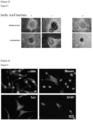
- FIG. 1 show the conditions 8 days after the initiation of culture.
- HDF cells (5 ⁇ 10 5 cells/2 ml) were infected with lactic acid bacteria (7 ⁇ 10 7 cells) (i.e., Lactococcus lactis subsp. Lactis (JCM20101), Streptococcus salivarius subsp. thermophilus (JCM20026), or Lactobacillus sp. (JCM20061)) in a 6-well plate, culture was conducted in an incubator at 34°C in the presence of 5% CO 2 for 8 days, the resulting cell masses were transferred to a 4-well plate, the plate was introduced into an alkaline phosphatase coloring solution (Roche), and color was allowed to develop at room temperature for 1 hour.
- lactic acid bacteria 7 ⁇ 10 7 cells
- JCM20101 Lactococcus lactis subsp. Lactis
- JCM20026 Streptococcus salivarius subsp. thermophilus
- JCM20061 Lactobacillus sp.
- the cell masses turned purple, as shown in Fig. 2 . This indicates that the HDF cells infected with lactic acid bacteria are pluripotent.
- HDF cells (5 ⁇ 10 5 cells/2 ml) were infected with lactic acid bacteria (7 ⁇ 10 7 cells) (i.e., Lactococcus lactis subsp. Lactis (JCM20101)) in a 6-well plate, culture was conducted in an incubator at 34°C in the presence of 5% CO 2 for 8 days, and the formed cell mass was fixed with 4% PFA at room temperature for 15 minutes, followed by staining thereof with a mouse anti-SSEA-4 antibody (MILLIPORE).
- lactic acid bacteria 7 ⁇ 10 7 cells
- JCM20101 Lactococcus lactis subsp. Lactis
- the cell mass was found to express the SSEA-4 antigen, which would be expressed specifically by pluripotent cells, as shown in Fig. 3 .
- HDF cells (2 ⁇ 10 5 /ml) were seeded on a 12-well plate, infected with lactic acid bacteria (2 ⁇ 10 7 cells) (i.e., Lactobacillus acidophilus (JCM1021)), and cultured in an incubator at 34°C in the presence of 5% CO 2 for 8 days. Half of the culture solution was exchanged every 5 days, and tRNA was purified from the 20 formed cell masses with the use of a Trizol reagent (Invitrogen) 2 weeks later.
- lactic acid bacteria (2 ⁇ 10 7 cells)
- JCM1021 Lactobacillus acidophilus
- cDNA was synthesized with the use of Oligo (dT) primer and SuperScript TM III (Invitrogen), and RT-PCR was carried out with the use of a set of primers for several genes reported to be associated with pluripotency.
- the amplified DNA was subjected to 2% agarose gel electrophoresis, and a band was detected via ethidium bromide staining.
- HDF cells (5 ⁇ 10 5 cells/2 ml) were infected with lactic acid bacteria (2 ⁇ 10 7 cells) (i.e., Streptococcus salivarius subsp. thermophilus (JCM20026) or Lactobacillus sp. (JCM20061)) in a 6-well plate, culture was conducted in an incubator at 34°C in the presence of 5% CO 2 , half of the culture solution was exchanged every 5 days, and whether or not the cell masses could be maintained for a long period of time was investigated. Culture was conducted with the use of a fibroblast growth medium (Cell Applications, Inc.) to which lactic acid bacteria had been added or had not been added. In Fig. 5 , the four photographs on the left show the conditions 30 days after the initiation of culture and the two photographs on the right show the conditions 50 days after the initiation of culture.
- lactic acid bacteria 2 ⁇ 10 7 cells
- JCM20026 Streptococcus salivarius subsp. thermophilus
- JCM20061 Lactobacill
- the cell masses were found to be maintained 50 days later if they had been cultured in the presence of lactic acid bacteria, while the cell masses that had been cultured in the absence of lactic acid bacteria were found to have undergone cell death, as shown in Fig. 5 . This indicates that lactic acid bacteria are necessary for the maintenance of the cell masses.
- HDF cells (5 ⁇ 10 5 cells/2 ml) were infected with lactic acid bacteria (2 ⁇ 10 7 cells) (i.e., Lactococcus lactis subsp. Lactis (JCM20101)) in a 6-well plate, and the cell masses that had formed 8 days layer were subjected to culture on a glass cover coated with poly-L-lysine and laminin (Sigma, 50 ⁇ g/ml) for 7 days.
- lactic acid bacteria 2 ⁇ 10 7 cells
- JCM20101 Lactococcus lactis subsp. Lactis
- the cell masses were fixed with 4% PFA at room temperature for 15 minutes, followed by staining thereof with a mouse anti- ⁇ -SMA antibody (Sigma, a vascular marker), a rabbit anti-Desmin antibody (Thermo, a mesoderm marker), a mouse anti-Tuj1 antibody (R&D, a nerve cell marker), and a rabbit anti-GFAP antibody (Dako, a glial cell marker).
- a mouse anti- ⁇ -SMA antibody Sigma, a vascular marker
- a rabbit anti-Desmin antibody Thermo, a mesoderm marker
- a mouse anti-Tuj1 antibody R&D, a nerve cell marker
- Dako a glial cell marker
- the differentiated cells could be recognized by relevant antibodies, as shown in Fig. 6 . This indicates that the HDF cells were differentiated into various types of cells.
- HDFs (5 ⁇ 10 5 cells/2 ml) were infected with lactic acid bacteria (2 ⁇ 10 7 cells) (i.e., Lactobacillus acidophilus (JCM1021)) in a 6-well plate, and the resulting cell masses were transferred to a 4-well plate 2 weeks later.
- Culture solutions that induce HDF cells to differentiate into bone cells B: A shows a 96-well plate after staining with B), fat cells (C), and cartilage cells (D) (GIBCO; A10072-01, A10070-01, and A10071-01) were added in amounts of 500 ⁇ l each, half of the culture solution was exchanged every 3 days, and culture was conducted for an additional 2 weeks.
- the cells on each plate were subjected to staining with Alizarin Red S (bone cells), Oil Red O (fat cells), and Alcian Blue (cartilage cells).
- HDF cells (5 ⁇ 10 5 cells/2 ml) were infected with lactic acid bacteria (2 ⁇ 10 7 cells) (i.e., Lactobacillus acidophilus (JCM1021)) in a 6-well plate, half of the culture solution was exchanged every 5 days, and the formed cell masses were observed under an electron microscope in accordance with a conventional resin embedding method for ultrathin sectioning (Tokai Electron Microscopy was commissioned to perform the observation).
- lactic acid bacteria 2 ⁇ 10 7 cells
- JCM1021 Lactobacillus acidophilus
- the right diagram is an enlarged view showing the framed region in the left diagram.
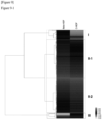
- tRNAs were purified from the control HDF cells (C-HDF) and the 20 HDF cell masses infected with lactic acid bacteria ( Lactobacillus acidophilus (JCM1021)) (Bala-HDF) with the use of a Trizol reagent (Invitrogen), and microarray-based gene expression analysis was performed (Agilent Whole Genome (4x44K) Human; type: one-color). Since this experiment was performed with the addition of lactoferrin (25 ⁇ g/ml) in order to improve the efficiency for cell mass formation, the cells were indicated with the term "Bala-HDF.” Oncomics Co., Ltd. was commissioned to perform the analysis.
- Fig. 9-1 shows the results of cluster analysis of the genes exhibiting two-or-more-fold increases/decreases in gene expression levels.
- the group of genes exhibiting an increased expression level in Bala-HDF compared with that in C-HDF was designated as Group I
- the group of genes exhibiting substantially the same expression levels in both C-HDF and Bala-HDF was designated as Group II
- the group of genes exhibiting a decreased expression level in Bala-HDF compared with that in C-HDF was designated as Group III.
- Fig. 9-2 shows the results of analysis conducted while paying attention to the group of genes that had been reported to be involved with the pluripotency of stem cells.
- HOXC8 Homo sapiens homeobox C8
- mRNA [NM_022658] 594,18225 down 4,66344 2869,18900 C D 2 A_23_P 500998 Hs.
- 659350 HOXA9 homeobox A9 Homo sapiens homeobox A9 (HOXA9), mRNA [NM_152739] 592,35516 down 3,55414 2179,96880 C D 3 A_23_P 70968 Hs.
- HOXA7 Homo sapiens homeobox A7
- HOXB5 Homo sapiens homeobox B5
- XIST X (inactive)-specific transcript (non-protein coding) Homo sapiens X (inactive)-specific transcript (non-protein coding) (XIST), non-coding RNA [NR_001564] 406,94977 down 17,06895 7192,51030 D D 6 A_23_P 66682 Hs. 98428 HOXB6 homeobox B6 Homo sapiens homeobox B6 (HOXB6), mRNA [NM_018952] 385,91574 down 44,43997 17758,20900 D D 7 A_23_P 148541 Hs.
- CTAG1A Homo sapiens cancer/testis antigen 1A
- CTAG1A Homo sapiens cancer/testis antigen 1A
- mRNA [NM_139250] 249,25270 down 93,85477 24223,07800
- 549040 HOXC6 homeobox C6 Homo sapiens homeobox C6 (HOXC6), transcript variant 2, mRNA [NM_153693] 247,46118 down 33,13974 8491,59500 D D 9 A_23_P 7727 Hs.
- HAPLN 1 hyaluronan and proteoglycan link protein 1 Homo sapiens hyaluronan and proteoglycan link protein 1 (HAPLN1), mRNA [NM_001884] 241,03157 down 2,67364 667,28190 C D 10 A_24_P 77904 Hs. 110637 HOXA1 0 homeobox A10 Homo sapiens homeobox A10 (HOXA10), transcript variant 1, mRNA [NM_018951] 212,57760 down 2,51297 553,14400 C D 11 A_23_P 7313 Hs.
- HOXA1 1 homeobox A11 Homo sapiens homeobox A11 (HOXA 11), mRNA [NM_005523] 135,72766 down 2,86949 403,27990 C D 14 A_33_P 330097 5 Hs. 549040 HOXC4 homeobox C4 Homo sapiens homeobox C4 (HOXC4), transcript variant 1, mRNA [NM_014620] 131,16129 down 7,26983 987,33136 C D 15 A_24_P 264943 Hs.
- COMP cartilage oligomeric matrix protein Homo sapiens cartilage oligomeric matrix protein (COMP), mRNA [NM_000095] 126,96592 down 308,84100 40602,72700 D D 16 A_23_P 256956 Hs. 718626 KIF20A kinesin family member 20A Homo sapiens kinesin family member 20A (KIF20A), mRNA [NM_005733] 124,42455 down 18,31738 2359,94800 D D 17 A_23_P 25150 Hs.
- HOXC9 Homo sapiens homeobox C9
- mRNA [NM_006897] 122,49983 down 52,65937 6679,50440 D D 18 A_24_P 218805 Hs.
- Homo sapiens homeobox C10 (HOXC10), mRNA [NM_017409] 116,49500 down 2,27947 274,96307 C D 19 A_23_P 51085 Hs. 421956 SPC25 SPC25, NDC80 kinetochore complex component, homolog (S.
- CTAG2 Homo sapiens cancer/testis antigen 2
- CTAG2 Homo sapiens cancer/testis antigen 2
- transcript variant 2 mRNA [NM_020994]
- HOXB7 Homo sapiens homeobox B7
- mRNA [NM_004502] 98,93823 down 2,50469 256,59653 C D 23 A_23_P 35219 Hs.
- AFP alphafetoprotein Homo sapiens alphafetoprotein (AFP), mRNA [NM_001134] 91,34399 down 4,93107 466,39575 C D 26 A_23_P 118174 Hs.
- PLK1 polo-like kinase 1 Homo sapiens polo-like kinase 1 (Drosophila) (PLK1)
- mRNA [NM_005030] 91,00964 down 27,14974 2558,50440 D D 27 A_23_P 43164 Hs.
- SULF1 sulfatase 1 Homo sapiens sulfatase 1 (SULF1), transcript variant 3, mRNA [NM_015170] 87,87735 down 242,28316 22046,17600 D D 28 A_23_P 118815 Hs. 514527 BIRC5 baculoviral IAP repeat-containing 5 Homo sapiens baculoviral IAP repeat-containing 5 (BIRC5), transcript variant 3, mRNA [NM_001012271] 84,09252 down 897,69434 78166,19500 D D 29 A_23_P 118842 Hs.
- HOXB8 Homo sapiens homeobox B8
- mRNA [NM_024016] 76,56639 down 2,33384 185,03010 C D 36 A_32_P 96719 Hs.
- 123253 SHCBP 1
- SHC SH2-domain binding protein 1 Homo sapiens SHC SH2-domain binding protein 1 (SHCBP1), mRNA [NM_024745] 75,35630 down 49,26647 3844,18380 D D 37 A_23_P 141624 Hs.
- E2F8 E2F transcription factor 8 Homo sapiens E2F transcription factor 8 (E2F8), mRNA [NM_024680] 71,73170 down 2,91475 216,49382 C D 40 A_33_P 328815 9 Hs. 121028 ASPM asp (abnormal spindle) homolog, microcephaly associated (Drosophila) Homo sapiens asp (abnormal spindle) homolog, microcephaly associated (Drosophila) (ASPM), mRNA [NM_018136] 71,65447 down 38,55512 2860,60820 D D 41 A_24_P 323598 Hs. 99480 ESCO2 establishment of cohesion 1 homolog 2 (S.
- centrosomal protein 55kDa Homo sapiens centrosomal protein 55kDa (CEP55), transcript variant 1, mRNA [NM_018131] 68,03040 down 19,57336 1378,80080 D D 44 A_23_P 155711 Hs. 405467 NEIL3 nei endonuclease VIII-like 3 (E. coli) Homo sapiens nei endonuclease VIII-like 3 (E. coli) (NEIL3), mRNA [NM_018248] 67,63126 down 3,82752 268,03870 C D 45 A_23_P 215634 Hs.
- IGFBP3 insulin-like growth factor binding protein 3
- IGFBP3 Homo sapiens insulin-like growth factor binding protein 3
- transcript variant 1 mRNA [NM_001013398] 67,36516 down 1824,75790 127283,97000 D D 46 A_23_P 45011 Hs.
- PPP1R14C Homo sapiens protein phosphatase 1, regulatory (inhibitor) subunit 14C
- mRNA [NM_030949] 66,81310 down 29,65725 2051,75500 D D 47 A_23_P 316511 Hs.
- HOXB3 homeobox B3 Homo sapiens homeobox B3 (HOXB3), mRNA [NM_002146] 65,99564 down 2,28753 156,32037 C D 48 A_23_P 52017 Hs. 121028 ASPM asp (abnormal spindle) homolog, microcephaly Homo sapiens asp (abnormal spindle) homolog, microcephaly 65,81075 down 157,07414 10703,71700 D D associated (Drosophila) associated (Drosophila) (ASPM), mRNA [NM_018136] 49 A_23_P 126212 Hs.
- DOK7 docking protein 7 Homo sapiens docking protein 7 (DOK7), transcript variant 1, mRNA [NM_173660] 62,14818 down 2,55532 164,43954 C D 52 A_24_P 37253 Hs. 21929 LYPD6 LY6/PLAUR domain containing 6 Homo sapiens LY6/PLAUR domain containing 6 (LYPD6), mRNA [NM_194317] 62,11988 down 2,63021 169,18219 C D 53 A_33_P 327127 3 Hs.
- HOXB2 Homo sapiens homeobox B2
- mRNA [NM_002145] 60,37445 down 23,25287 1453,65990 D D 54 A_33_P 331307 5 Hs.
- pombe Homo sapiens cell division cycle 25 homolog C (S. pombe) (CDC25C), transcript variant 1, mRNA [NM_001790] 58,22949 down 30,77745 1855,70400 D D 58 A_23_P 115872 Hs. 14559 CEP55 centrosomal protein 55kDa Homo sapiens centrosomal protein 55kDa (CEP55), transcript variant 1, mRNA [NM_018131] 57,81258 down 178,33205 10675,41700 D D 59 A_33_P 337752 9 Hs.
- HOXA4 Homo sapiens homeobox A4
- mRNA [NM_002141] 57,78450 down 6,40620 383,30520 C D 60 A_33_P 380706 2 Hs.
- 532968 HJURP Holliday junction recognition protein Homo sapiens Holliday junction recognition protein (HJURP)
- HJURP Homo sapiens Holliday junction recognition protein
- mRNA [NM_018410] 56,66154 down 274,61868 16112,07700 D D 61 A_23_P 57588 Hs.
- GTSE1 G-2 and S-phase expressed 1 Homo sapiens G-2 and S-phase expressed 1 (GTSE1), mRNA [NM_016426] 56,62428 down 44,89710 2632,41300 D D 62 A_24_P 225616 Hs. 226390 RRM2 ribonucleotide reductase M2 Homo sapiens ribonucleotide reductase M2 (RRM2), transcript variant 2, mRNA [NM_001034] 56,30852 down 70,34309 4101,36700 D D 63 A_23_P 259586 Hs.
- TTK protein kinase Homo sapiens TTK protein kinase (TTK), transcript variant 1, mRNA [NM_003318] 56,15061 down 25,58659 1487,64700 D D 64 A_24_P 297539 Hs. 93002 UBE2C ubiquitin-conjugating enzyme E2C Homo sapiens ubiquitin-conjugating enzyme E2C (UBE2C), transcript variant 6, mRNA [NM_181803] 55,08201 down 533,38605 30421,77100 D D 65 A_23_P 212844 Hs.
- ITGA6 integrin alpha 6 Homo sapiens integrin, alpha 6 (ITGA6), transcript variant 2, mRNA [NM_000210] 53,34168 down 21,47094 1185,90750 D D 68 A_33_P 325862 7
- ENSP00000387024 [Source:UniProtKB/Tr EMBL; Acc:B8ZZ63] [ENST 00000409162] 52,59529 down 2,31702 126,18560 C D 69 A_23_P 10206 Hs.
- HAS2 hyaluronan synthase 2 Homo sapiens hyaluronan synthase 2 (HAS2), mRNA [NM_005328] 51,20701 down 50,60540 2683,23930 D D 70 A_33_P 321600 8 Hs.
- 88523 SKA3 spindle and kinetochore associated complex subunit 3 Homo sapiens spindle and kinetochore associated complex subunit 3 (SKA3), transcript variant 1, mRNA [NM_145061] 50,93999 down 12,93789 682,42560 D D 71 A_23_P 423237 Hs.
- SMPD3 sphingomyelin phosphodiesterase 3, neutral membrane (neutral sphingomyelinase II)
- SMPD3 Homo sapiens sphingomyelin phosphodiesterase 3, neutral membrane (neutral sphingomyelinase II) (SMPD3)
- HOXB4 homeobox B4 Homo sapiens homeobox B4 (HOXB4), mRNA [NM_024015] 48,99025 down 21,78193 1104,94100 D D 75 A_24_P 225970 Hs.
- ALOX5AP arachidonate 5-lipoxygenaseactivating protein
- CENPM centromere protein M
- CENPM centromere protein M
- transcript variant 1 mRNA [NM_024053] 47,62641 down 238,83578 11778,23800 D D 78 A_23_P 356684 Hs.
- 62180 ANLN anillin, actin binding protein Homo sapiens anillin, actin binding protein (ANLN), mRNA [NM_018685] 46,97221 down 89,14799 4335,96440 D D 79 A_33_P 333014 9 Hs.
- PAX6 paired box 6 Homo sapiens paired box 6 (PAX6), transcript variant 1, mRNA [NM_000280] 46,52534 down 2,62064 126,24968 C D 80 A_24_P 30557 Hs. 381715 TBX5 T-box 5 Homo sapiens T-box 5 (TBX5), transcript variant 1, mRNA [NM_000192] 45,04174 down 4,14714 193,41812 C D 81 A_23_P 146274 Hs.
- AURKB aurora kinase B Homo sapiens aurora kinase B (AURKB), mRNA [NM_004217] 42,91836 down 24,55805 1091,36500 D D 84 A_23_P 56347 Hs. 654413 PSG3 pregnancy specific beta-1-glycoprotein 3 Homo sapiens pregnancy specific beta-1-glycoprotein 3 (PSG3), mRNA [NM_021016] 42,86491 down 93,47945 4149,07400 D D 85 A_23_P 122197 Hs.
- CCNB1 cyclin B1 Homo sapiens cyclin B1 (CCNB1), mRNA [NM_031966] 42,74203 down 517,57600 22906,70500 D D 86 A_23_P 100127 Hs. 181855 CASC5 cancer susceptibility candidate 5 Homo sapiens cancer susceptibility candidate 5 (CASC5), transcript variant 1, mRNA [NM_170589] 42,70049 down 13,65018 603,53723 D D 87 A_24_P 280983 Hs.
- HOXA11 antisense RNA (non-protein coding)
- Homo sapiens HOXA11 antisense RNA (non-protein coding) (HOXA11AS), antisense RNA [NR_002795] 41,97556 down 34,17975 1485,58810 D D 88 A_23_P 74349 Hs. 651950 NUF2 NUF2, NDC80 kinetochore complex component, homolog (S. cerevisiae) Homo sapiens NUF2, NDC80 kinetochore complex component, homolog (S.
- NUF2 cerevisiae
- transcript variant 1 mRNA [NM_145697] 41,75897 down 109,16320 4720,18600 D D 89 A_23_P 373521 Hs.
- KIF4A KIF4A
- TPX2 TPX2 microtubuleassociated, homolog (Xenopus laevis) Homo sapiens TPX2, microtubuleassociated, homolog (Xenopus laevis) (TPX2), mRNA [NM_012112] 41,25013 down 243,59319 10404,55600 D D D 94 A_24_P 140475 Hs.
- HMMR hyaluronan-mediated motility receptor
- HMMR Homo sapiens hyaluronan-mediated motility receptor
- transcript variant 2 mRNA [NM_012484] 40,85090 down 116,10930 4911,35940 D D 97 A_32_P 150891 Hs.
- DIAPH3 diaphanous homolog 3 (Drosophila) Homo sapiens diaphanous homolog 3 (Drosophila) (DIAPH3), transcript variant 1, mRNA [NM_001042517] 40,27765 down 13,45490 561,14830 D D 98 A_33_P 370841 3 Hs.
- MFAP5 Homo sapiens microfibrillar associated protein 5
- MFAP5 Homo sapiens microfibrillar associated protein 5
- SCRG1 stimulator of chondrogenesis 1 Homo sapiens stimulator of chondrogenesis 1 (SCRG1), mRNA [NM_007281] 39,33724 down 2,66140 108,40463 C D 101 A_23_P 121795 Hs. 655143 SORBS 2 sorbin and SH3 domain containing 2 Homo sapiens sorbin and SH3 domain containing 2 (SORBS2), transcript variant 2, mRNA [NM_021069] 38,97343 down 13,70106 552,91187 D D 102 A_23_P 215454 Hs.
- SDPR Homo sapiens serum deprivation response
- FAM83 D family with sequence similarity 83, member D Homo sapiens family with sequence similarity 83, member D (FAM83D), mRNA [NM_030919] 35,86057 down 68,57602 2546,37650 D D 106 A_33_P 332621 0 Hs. 99480 ESCO2 establishment of cohesion 1 homolog 2 (S. cerevisiae) Homo sapiens establishment of cohesion 1 homolog 2 (S.
- ESCO2 cerevisiae
- SCIN SCIN scinderin Homo sapiens scinderin
- transcript variant 2 mRNA [NM_033128] 35,78193 down 2,38629 88,41367 C D 108 A_23_P 375 Hs.
- NDC80 414407 NDC80 NDC80 homolog, kinetochore complex component (S. cerevisiae) Homo sapiens NDC80 homolog, kinetochore complex component (S. cerevisiae) (NDC80), mRNA [NM_006101] 35,48090 down 492,26477 18085,33000 D D 110 A_32_P 62997 Hs. 104741 PBK PDZ binding kinase Homo sapiens PDZ binding kinase (PBK), mRNA [NM_018492] 35,46259 down 272,00460 9988,02700 D D 111 A_32_P 140489 Hs.
- PBK Homo sapiens PDZ binding kinase
- GDF6 growth differentiation factor 6 Homo sapiens growth differentiation factor 6 (GDF6), mRNA [NM_001001557] 34,81978 down 3,73760 134,75726 C D 112 A_33_P 327295 7 Hs. 658061 LOC100 133311 similar to hCG1644697 PREDICTED: Homo sapiens similar to hCG1644697 (LOC100133311), mRNA [XM_002344295] 34,80172 down 2,87419 103,57362 C D 113 A_23_P 163481 Hs.
- HOXA3 homeobox A3 Homo sapiens homeobox A3 (HOXA3), transcript variant 2, mRNA [NM_153631] 33,35369 down 2,40679 83,12165 C D 118 A_33_P 342358 5 Hs. 657273 UNC13 C unc-13 homolog C (C. elegans) Homo sapiens unc-13 homolog C (C. elegans) (UNC13C), mRNA [NM_001080534] 33,21877 down 2,73679 94,13646 C D 119 A_24_P 399888 Hs.
- CENPM centromere protein M
- CENPM centromere protein M
- transcript variant 2 mRNA [NM_001002876] 32,49764 down 30,25951 1018,23220 D D 120 A_24_P 66027 Hs.
- 226307 APOBE C3B Apolipoprotein B mRNA editing enzyme, catalytic polypeptide-like 3B Homo sapiens apolipoprotein B mRNA editing enzyme, catalytic polypeptide-like 3B (APOBEC3B), mRNA [NM_004900] 31,39611 down 82,84677 2693,29900 D D 121 A_23_P 107283 Hs.
- HOXB2 Homo sapiens homeobox B2
- NEDD9 neural precursor cell expressed, developmentally down-regulated 9
- NEDD9 transcript variant 2
- mRNA [NM_182966] 31,14883 down 5,83776 188,28748 C D 123 A_33_P 325582 4 31,06368 down 4,28859 137,94330 C D 124 A_23_P 96158 Hs.
- HDF cells (5 ⁇ 10 5 cells/2 ml) were infected with lactic acid bacteria (2 ⁇ 10 7 cells) (i.e., Lactobacillus acidophilus (JCM1021)) in a 6-well plate, and the cell masses were collected 2 weeks later, followed by treatment with trypsin.
- the cells (5 ⁇ 10 5 cells/30 ⁇ l) were administered to one of the testes of a male SCID mouse (9-to-10 week-old), and the formation of teratoma was examined 3 months later.
- Mouse embryonic fibroblasts were sampled in accordance with the sampling method developed by the RIKEN Center for Developmental Biology.
- a 12.5-day-old GFP mouse embryo was extracted from the uterus, and the head, the caudal portion, the extremities, and the visceral organ were removed. The remaining tissue was cut into small pieces with the use of surgical scissors, and the resultant was incubated in a 0.25% trypsin-EDTA solution at 37°C for 15 minutes. After the incubation product had been filtered through a cell strainer, the remnant was suspended in a cell culture solution, and the cells constituting one embryo were seeded in a 10-cm petri dish. After the cells reached confluence, the cells were infected with lactic acid bacteria (JCM1021), as with the case of the HDF cells, and culture was then conducted for 5 days.
- JCM1021 lactic acid bacteria
- MCF7 Breast cancer cells
- RBRC-RCB1904 lung cancer cells
- A549 RBRC-RCB0098
- hepatic cancer cells HEP G2; RBRC-RCB16478
- lactic acid bacteria i.e., Lactococcus lactis subsp. Lactis (JCM20101)
- JCM20101 Lactococcus lactis subsp. Lactis
- Example 2 The experiment was carried out in the same manner as in Example 1, except that commercially available yogurt was introduced into a 6-well plate at 50 ⁇ l/well in advance, and 5 ⁇ 10 5 cancer cells were added thereto. Culture was conducted in an incubator at 34°C in the presence of 5% CO 2 .
- Example 12 The experiment was carried out in the same manner as in Example 12 with the use of hepatic cancer cells (HEP G2) and lactic acid bacteria (JCM20101). The cells were recovered 4, 8, and 12 days after infection, and then RT-PCR was carried out by using c-Myc and the carcino embryonic antigen (CEA) as cancer cell markers.
- HEP G2 hepatic cancer cells
- JCM20101 lactic acid bacteria
- Fig. 14 The results are shown in Fig. 14 . While both marker molecules were expressed on Day 0, the c-Myc expression level was decreased from Day 4, and the CEA expression level was decreased from Day 8, as shown in Fig. 14 .
- cells are treated with trypsin, the treated cells are suspended in a culture solution at 1 ⁇ 10 5 cells/20 ⁇ l, the cell suspension is added dropwise onto the lid of a petri dish, the lid is overturned, and the petri dish is then allowed to stand overnight.
- a cell mass is observed at the tip of a drop, and the resulting cell mass is transplanted into a mouse.
- the hanging drop method was carried out using lung cancer cells (A549) to form cell masses.
- the resulting 5 cell masses were transplanted hypodermically to an 8-week-old female nude mouse. Tumor formation was observed approximately 1 month later ( Fig. 15 ).
- the tumors were extracted and trimmed to the size of 4 ⁇ 4 mm each.
- Control tumor masses were soaked in a PBS solution.
- the test tumor masses were soaked in a solution of lactic acid bacteria (JCM20101) (1 ⁇ 10 8 /ml) at room temperature for 20 minutes. Thereafter, a single tumor mass was transplanted hypodermically to an 8-week-old female nude mouse.
- a solution containing lactic acid bacteria was injected into the target mouse of lactic acid bacteria test on Day 3 and Day 6. The tumor was extracted and weighed 40 days later.
- Fig. 16 The results are shown in Fig. 16 .
- a reduction in tumor size was observed in the mouse which was infected with lactic acid bacteria and further injected with lactic acid bacteria.
- Bacillus subtilis var. natto or E . coli (XLI-blue, Stratagene) cells were introduced into a 6-well plate at 1 ⁇ 10 8 cells/well in advance, and 5 ⁇ 10 5 HDF cells (Cell Applications, Inc., Cat No.106-05a) were added thereto. Culture was conducted in an incubator at 34°C in the presence of 5% CO 2 .
Landscapes
- Health & Medical Sciences (AREA)
- Life Sciences & Earth Sciences (AREA)
- Chemical & Material Sciences (AREA)
- Engineering & Computer Science (AREA)
- Microbiology (AREA)
- Organic Chemistry (AREA)
- Zoology (AREA)
- Wood Science & Technology (AREA)
- General Health & Medical Sciences (AREA)
- Biomedical Technology (AREA)
- Bioinformatics & Cheminformatics (AREA)
- Biotechnology (AREA)
- Genetics & Genomics (AREA)
- Medicinal Chemistry (AREA)
- Mycology (AREA)
- Biochemistry (AREA)
- Molecular Biology (AREA)
- General Engineering & Computer Science (AREA)
- Veterinary Medicine (AREA)
- Public Health (AREA)
- Animal Behavior & Ethology (AREA)
- Pharmacology & Pharmacy (AREA)
- General Chemical & Material Sciences (AREA)
- Epidemiology (AREA)
- Immunology (AREA)
- Cell Biology (AREA)
- Tropical Medicine & Parasitology (AREA)
- Chemical Kinetics & Catalysis (AREA)
- Urology & Nephrology (AREA)
- Hematology (AREA)
- Developmental Biology & Embryology (AREA)
- Transplantation (AREA)
- Virology (AREA)
- Food Science & Technology (AREA)
- Toxicology (AREA)
- Physics & Mathematics (AREA)
- Analytical Chemistry (AREA)
- General Physics & Mathematics (AREA)
- Pathology (AREA)
- Nuclear Medicine, Radiotherapy & Molecular Imaging (AREA)
Claims (14)
- Procédé in vitro de production de cellules pluripotentes à partir de cellules somatiques comprenant une étape de mise en contact de bactéries ayant une capacité de fermentation avec des cellules somatiques, dans lequel les bactéries ayant une capacité de fermentation sont des bactéries lactiques ou Bacillus subtilis var. natto.
- Procédé selon la revendication 1, dans lequel les bactéries lactiques appartiennent au genre Lactococcus, Streptococcus ou Lactobacillus, de préférence encore dans lequel les bactéries lactiques sont Lactococcus lactis subsp. Lactis, Streptococcus salivarius subsp. thermophilus, Lactobacillus sp., ou Lactobacillus acidophilus.
- Procédé selon la revendication 1 ou 2, dans lequel les cellules somatiques sont des cellules somatiques dérivées d'un mammifère, de préférence dans lequel les cellules somatiques sont des cellules somatiques dérivées d'un humain ou d'une souris.
- Procédé selon l'une quelconque des revendications 1 à 3, dans lequel l'étape consistant à mettre en contact des bactéries ayant une capacité de fermentation avec les cellules somatiques est une étape consistant à infecter les cellules somatiques avec des bactéries ayant une capacité de fermentation.
- Procédé selon l'une quelconque des revendications 1 à 4, qui comprend une étape de traitement des cellules somatiques avec de la trypsine avant que les bactéries ayant une capacité de fermentation ne soient mises en contact avec les cellules somatiques.
- Cellule pluripotente pouvant être produite par le procédé selon la revendication 4 ou 5, ladite cellule étant infectée par des bactéries lactiques.
- Procédé in vitro pour produire des cellules somatiques qui ont été induites à se différencier des cellules pluripotentes, qui comprend les étapes suivantes :(a) produire des cellules pluripotentes par le procédé selon l'une quelconque des revendications 1 à 5 ; et(b) induire la différenciation des cellules pluripotentes produites à l'étape (a).
- Procédé in vitro pour produire des cellules non cancéreuses à partir de cellules cancéreuses, qui comprend une étape consistant à mettre en contact des bactéries ayant une capacité de fermentation avec des cellules cancéreuses, dans lequel les bactéries ayant une capacité de fermentation sont des bactéries lactiques ou Bacillus subtilis var. natto.
- Procédé selon la revendication 8, dans lequel les bactéries lactiques appartiennent au genre Lactococcus, Streptococcus ou Lactobacillus, de préférence encore dans lequel les bactéries lactiques sont Lactococcus lactis subsp. Lactis, Streptococcus salivarius subsp. thermophilus, Lactobacillus sp., ou Lactobacillus acidophilus.
- Procédé selon la revendication 8 ou 9, dans lequel les cellules cancéreuses sont des cellules cancéreuses humaines.
- Procédé selon l'une quelconque des revendications 8 à 10, dans lequel l'étape consistant à mettre en contact les bactéries ayant une capacité de fermentation avec les cellules cancéreuses est une étape consistant à infecter les cellules cancéreuses avec des bactéries ayant une capacité de fermentation.
- Cellule non cancéreuse pouvant être produite par le procédé selon la revendication 11, ladite cellule étant infectée par des bactéries lactiques.
- Procédé de dépistage d'un composant anticancéreux dérivé de bactéries lactiques, qui comprend une étape de mise en contact de bactéries lactiques avec des cellules cancéreuses et une étape de mesure du degré de conversion des cellules cancéreuses en cellules non cancéreuses.
- Procédé selon la revendication 13, dans lequel les bactéries lactiques appartiennent au genre Lactococcus, Streptococcus ou Lactobacillus, et de préférence dans lequel les bactéries lactiques sont Lactococcus lactis subsp. Lactis, Streptococcus salivarius subsp. thermophilus, Lactobacillus sp., ou Lactobacillus acidophilus.
Applications Claiming Priority (3)
| Application Number | Priority Date | Filing Date | Title |
|---|---|---|---|
| JP2011152479 | 2011-07-11 | ||
| JP2012107210 | 2012-05-09 | ||
| PCT/JP2012/067544 WO2013008803A1 (fr) | 2011-07-11 | 2012-07-10 | Procédé de production de cellules pluripotentes utilisant des bactéries capables de fermentation |
Publications (3)
| Publication Number | Publication Date |
|---|---|
| EP2733204A1 EP2733204A1 (fr) | 2014-05-21 |
| EP2733204A4 EP2733204A4 (fr) | 2014-10-01 |
| EP2733204B1 true EP2733204B1 (fr) | 2024-11-06 |
Family
ID=47506086
Family Applications (1)
| Application Number | Title | Priority Date | Filing Date |
|---|---|---|---|
| EP12811861.9A Active EP2733204B1 (fr) | 2011-07-11 | 2012-07-10 | Procédé de production de cellules pluripotentes utilisant des bactéries capables de fermentation |
Country Status (4)
| Country | Link |
|---|---|
| US (1) | US9587224B2 (fr) |
| EP (1) | EP2733204B1 (fr) |
| JP (1) | JP6040494B2 (fr) |
| WO (1) | WO2013008803A1 (fr) |
Families Citing this family (4)
| Publication number | Priority date | Publication date | Assignee | Title |
|---|---|---|---|---|
| JPWO2014167943A1 (ja) * | 2013-04-11 | 2017-02-16 | 国立大学法人 熊本大学 | 細胞の再プログラミングを誘導するタンパク質含有成分、並びに該成分を用いた多能性細胞の製造方法および該成分を含む培地 |
| JP6592846B2 (ja) * | 2014-05-11 | 2019-10-23 | 国立大学法人 熊本大学 | 細胞の再プログラミング誘導方法、および多能性細胞の製造方法 |
| US11702636B2 (en) | 2015-11-16 | 2023-07-18 | National University Corporation Kumamoto University | Composition inducing cell reprogramming and production method for multifunction cells using said composition |
| KR102136772B1 (ko) * | 2018-12-10 | 2020-07-23 | 한국식품연구원 | 락토바실러스 사케아이 wikim30을 유효성분으로 포함하는 암의 예방 또는 치료용 약학 조성물 |
Family Cites Families (15)
| Publication number | Priority date | Publication date | Assignee | Title |
|---|---|---|---|---|
| JPS4946053B1 (fr) * | 1967-10-28 | 1974-12-07 | ||
| JP3995733B2 (ja) * | 1995-07-17 | 2007-10-24 | 明治乳業株式会社 | 免疫賦活組成物 |
| CN1304313A (zh) | 1998-06-05 | 2001-07-18 | 若素制药株式会社 | 含乳酸菌的组合物、药物和食物 |
| GB0113118D0 (en) * | 2001-05-31 | 2001-07-18 | Intercytex Ltd | Stem Cells |
| JP2004248505A (ja) | 2001-09-21 | 2004-09-09 | Norio Nakatsuji | 移植抗原の一部または全てを欠除したes細胞由来の未分化な体細胞融合細胞およびその製造 |
| EP1391503A1 (fr) | 2002-08-12 | 2004-02-25 | Deutsches Krebsforschungszentrum Stiftung des öffentlichen Rechts | Méthode de reprogrammation cellulaire par transfert de cytoplasme |
| JPWO2004087218A1 (ja) | 2003-03-31 | 2006-06-29 | 味の素株式会社 | Ctコロノグラフィ又はmrコロノグラフィにおける、消化管の病変検出能改善剤ならびに腸管洗浄用組成物および腸管洗浄用キットまたは包装品 |
| JP4683881B2 (ja) | 2003-08-27 | 2011-05-18 | 有限会社アーク技研 | 抗腫瘍活性剤 |
| WO2005033297A1 (fr) | 2003-09-19 | 2005-04-14 | The Rockefeller University | Compositions, methodes et kits relatifs a la reprogrammation de cellules differenciees adultes et production de cellules du type cellules souches embryonnaires |
| JP4589618B2 (ja) | 2003-11-28 | 2010-12-01 | 独立行政法人農業生物資源研究所 | 免疫調節性機能を誘導する乳酸菌類とその成分 |
| WO2007026255A2 (fr) | 2005-06-22 | 2007-03-08 | Universitetet I Oslo | Cellules dedifferenciees et procedes permettant de realiser et d'utiliser des cellules dedifferenciees |
| BRPI0617085A2 (pt) | 2005-09-02 | 2016-11-08 | Agency Science Tech & Res | método para obter uma célula-tronco mesenquimal (msc), célula ou linhagem celular, método para derivar uma cultura celular a partir de uma célula-tronco embrionária, método para tratamento de uma doença, uso de uma célula-tronco mesenquimal, linhagem diferenciada, composição farmacêutica, método para condicionar um meio de cultura celular, meio condicionado e uso do mesmo, mpetodo para obterum polipeptídeo, método para obtar uma cultura celular, cultura celular, célula-tronco mesenquimal, linhagem de célula-tronco mesenquimal ou uma célula mesenquimal diferenciada |
| KR100887266B1 (ko) | 2007-09-04 | 2009-03-06 | 주식회사 프로셀제약 | 세포투과성 p18 재조합 단백질, 이를 코딩하는폴리뉴클레오티드 및 이를 유효성분으로 함유하는 항암조성물 |
| EP2206506A1 (fr) * | 2008-12-18 | 2010-07-14 | Bracco Imaging S.p.A | Formulations probiotiques |
| WO2011049099A1 (fr) | 2009-10-20 | 2011-04-28 | 国立大学法人大阪大学 | Procédé de production de cellules souches cancéreuses |
-
2012
- 2012-07-10 EP EP12811861.9A patent/EP2733204B1/fr active Active
- 2012-07-10 WO PCT/JP2012/067544 patent/WO2013008803A1/fr not_active Ceased
- 2012-07-10 US US14/131,498 patent/US9587224B2/en active Active
- 2012-07-10 JP JP2013523947A patent/JP6040494B2/ja active Active
Also Published As
| Publication number | Publication date |
|---|---|
| US9587224B2 (en) | 2017-03-07 |
| JP6040494B2 (ja) | 2016-12-07 |
| JPWO2013008803A1 (ja) | 2015-02-23 |
| US20140255942A1 (en) | 2014-09-11 |
| WO2013008803A1 (fr) | 2013-01-17 |
| EP2733204A4 (fr) | 2014-10-01 |
| EP2733204A1 (fr) | 2014-05-21 |
Similar Documents
| Publication | Publication Date | Title |
|---|---|---|
| CN107012117B (zh) | 可从机体组织分离的多能干细胞 | |
| EP3822339A1 (fr) | Prolifération de cellules épithéliales ex vivo | |
| US10100285B2 (en) | Ex vivo proliferation of epithelial cells | |
| EP3048169B1 (fr) | Procédé de préparation de cellules souches pluripotentes | |
| JP6711757B2 (ja) | 間葉系幹細胞から誘導された万能幹細胞を利用して肝細胞に分化させる方法 | |
| Humenik et al. | Canine bone marrow-derived mesenchymal stem cells: genomics, proteomics and functional analyses of paracrine factors | |
| EP2733204B1 (fr) | Procédé de production de cellules pluripotentes utilisant des bactéries capables de fermentation | |
| US11920180B2 (en) | Method for inducing differentiation of pluripotent stem cells in vitro | |
| KR20140120834A (ko) | 샤르코-마리-투스 질환 치료제의 스크리닝 방법 및 이에 이용되는 자가 분화 운동신경세포 | |
| KR102142254B1 (ko) | 3,4''-다이하이드록시플라본을 이용한 소변줄기세포의 분리 효율 향상 및 소변줄기세포유래 만능줄기세포의 조혈줄기세포 분화 효율을 촉진시키는 방법 | |
| Zhu et al. | Stem cell properties and neural differentiation of sheep amniotic epithelial cells☆ | |
| KR101738715B1 (ko) | 식물 줄기세포 또는 식물 역분화 줄기 세포의 추출물을 이용한 맞춤형 만능줄기세포의 유도 방법 및 상기 방법에 의해 제조된 만능줄기세포 | |
| EP3144384B1 (fr) | Méthode d'induction de la reprogrammation cellulaire, et méthode de production de cellules pluripotentes | |
| JP2017522909A (ja) | 間葉系幹細胞から誘導した万能幹細胞株を製造する方法及び得られた細胞株 | |
| JPWO2014167943A1 (ja) | 細胞の再プログラミングを誘導するタンパク質含有成分、並びに該成分を用いた多能性細胞の製造方法および該成分を含む培地 | |
| CN104285147A (zh) | 使用脂肪组织衍生的干细胞的神经发生筛选方法和系统 | |
| Jasnic-Savovic et al. | Human embryonal carcinoma cells in serum-free conditions as an in vitro model system of neural differentiation | |
| Kolokol'tsova et al. | Isolation and culturing of trophoblasts from human terminal placenta. | |
| HK40050009A (en) | Ex vivo proliferation of epithelial cells | |
| HK40013193A (en) | Method for preparing pluripotent stem cells | |
| Ortolano | Activation of NF-κB Transcription Factor During In Vitro Differentiation of Mouse Embryonic Stem Cells | |
| Safi et al. | ANALYZING THE EFFECT OF BETA-BOSWELLIC ACID (BBA) TO DOPAMINERGIC NEURON DIFFERENTIATION OF TRANSGENE EXPRESSING MOUSE EMBRYONIC STEM CELLS | |
| Popowski | Role of Bright/ARID3A in mouse development, somatic cell reprogramming, and pluripotency | |
| Sykova | Session 1. Stem Cells Bioengineering for Therapeutic Translation | |
| HK1144828A (en) | Propagation of primary cells and use thereof |
Legal Events
| Date | Code | Title | Description |
|---|---|---|---|
| PUAI | Public reference made under article 153(3) epc to a published international application that has entered the european phase |
Free format text: ORIGINAL CODE: 0009012 |
|
| 17P | Request for examination filed |
Effective date: 20140210 |
|
| AK | Designated contracting states |
Kind code of ref document: A1 Designated state(s): AL AT BE BG CH CY CZ DE DK EE ES FI FR GB GR HR HU IE IS IT LI LT LU LV MC MK MT NL NO PL PT RO RS SE SI SK SM TR |
|
| A4 | Supplementary search report drawn up and despatched |
Effective date: 20140829 |
|
| RIC1 | Information provided on ipc code assigned before grant |
Ipc: C12N 5/0775 20100101ALI20140825BHEP Ipc: A61P 35/00 20060101ALI20140825BHEP Ipc: C12N 5/074 20100101AFI20140825BHEP Ipc: A61K 35/74 20060101ALI20140825BHEP Ipc: C12N 5/071 20100101ALI20140825BHEP Ipc: C12N 1/20 20060101ALI20140825BHEP Ipc: C12N 5/09 20100101ALI20140825BHEP |
|
| DAX | Request for extension of the european patent (deleted) | ||
| 17Q | First examination report despatched |
Effective date: 20160308 |
|
| STAA | Information on the status of an ep patent application or granted ep patent |
Free format text: STATUS: EXAMINATION IS IN PROGRESS |
|
| TPAC | Observations filed by third parties |
Free format text: ORIGINAL CODE: EPIDOSNTIPA |
|
| RAP1 | Party data changed (applicant data changed or rights of an application transferred) |
Owner name: INTEGRICULTURE INC. |
|
| GRAP | Despatch of communication of intention to grant a patent |
Free format text: ORIGINAL CODE: EPIDOSNIGR1 |
|
| STAA | Information on the status of an ep patent application or granted ep patent |
Free format text: STATUS: GRANT OF PATENT IS INTENDED |
|
| INTG | Intention to grant announced |
Effective date: 20240322 |
|
| GRAJ | Information related to disapproval of communication of intention to grant by the applicant or resumption of examination proceedings by the epo deleted |
Free format text: ORIGINAL CODE: EPIDOSDIGR1 |
|
| STAA | Information on the status of an ep patent application or granted ep patent |
Free format text: STATUS: EXAMINATION IS IN PROGRESS |
|
| GRAP | Despatch of communication of intention to grant a patent |
Free format text: ORIGINAL CODE: EPIDOSNIGR1 |
|
| STAA | Information on the status of an ep patent application or granted ep patent |
Free format text: STATUS: GRANT OF PATENT IS INTENDED |
|
| INTC | Intention to grant announced (deleted) | ||
| INTG | Intention to grant announced |
Effective date: 20240527 |
|
| GRAS | Grant fee paid |
Free format text: ORIGINAL CODE: EPIDOSNIGR3 |
|
| GRAA | (expected) grant |
Free format text: ORIGINAL CODE: 0009210 |
|
| STAA | Information on the status of an ep patent application or granted ep patent |
Free format text: STATUS: THE PATENT HAS BEEN GRANTED |
|
| AK | Designated contracting states |
Kind code of ref document: B1 Designated state(s): AL AT BE BG CH CY CZ DE DK EE ES FI FR GB GR HR HU IE IS IT LI LT LU LV MC MK MT NL NO PL PT RO RS SE SI SK SM TR |
|
| REG | Reference to a national code |
Ref country code: GB Ref legal event code: FG4D |
|
| REG | Reference to a national code |
Ref country code: CH Ref legal event code: EP |
|
| P01 | Opt-out of the competence of the unified patent court (upc) registered |
Free format text: CASE NUMBER: APP_56235/2024 Effective date: 20241015 |
|
| REG | Reference to a national code |
Ref country code: NL Ref legal event code: FP |
|
| REG | Reference to a national code |
Ref country code: DE Ref legal event code: R096 Ref document number: 602012081191 Country of ref document: DE |
|
| REG | Reference to a national code |
Ref country code: IE Ref legal event code: FG4D |
|
| REG | Reference to a national code |
Ref country code: LT Ref legal event code: MG9D |
|
| PG25 | Lapsed in a contracting state [announced via postgrant information from national office to epo] |
Ref country code: PT Free format text: LAPSE BECAUSE OF FAILURE TO SUBMIT A TRANSLATION OF THE DESCRIPTION OR TO PAY THE FEE WITHIN THE PRESCRIBED TIME-LIMIT Effective date: 20250306 Ref country code: HR Free format text: LAPSE BECAUSE OF FAILURE TO SUBMIT A TRANSLATION OF THE DESCRIPTION OR TO PAY THE FEE WITHIN THE PRESCRIBED TIME-LIMIT Effective date: 20241106 Ref country code: IS Free format text: LAPSE BECAUSE OF FAILURE TO SUBMIT A TRANSLATION OF THE DESCRIPTION OR TO PAY THE FEE WITHIN THE PRESCRIBED TIME-LIMIT Effective date: 20250306 |
|
| PG25 | Lapsed in a contracting state [announced via postgrant information from national office to epo] |
Ref country code: FI Free format text: LAPSE BECAUSE OF FAILURE TO SUBMIT A TRANSLATION OF THE DESCRIPTION OR TO PAY THE FEE WITHIN THE PRESCRIBED TIME-LIMIT Effective date: 20241106 |
|
| REG | Reference to a national code |
Ref country code: AT Ref legal event code: MK05 Ref document number: 1739377 Country of ref document: AT Kind code of ref document: T Effective date: 20241106 |
|
| PG25 | Lapsed in a contracting state [announced via postgrant information from national office to epo] |
Ref country code: BG Free format text: LAPSE BECAUSE OF FAILURE TO SUBMIT A TRANSLATION OF THE DESCRIPTION OR TO PAY THE FEE WITHIN THE PRESCRIBED TIME-LIMIT Effective date: 20241106 |
|
| PG25 | Lapsed in a contracting state [announced via postgrant information from national office to epo] |
Ref country code: ES Free format text: LAPSE BECAUSE OF FAILURE TO SUBMIT A TRANSLATION OF THE DESCRIPTION OR TO PAY THE FEE WITHIN THE PRESCRIBED TIME-LIMIT Effective date: 20241106 |
|
| PG25 | Lapsed in a contracting state [announced via postgrant information from national office to epo] |
Ref country code: NO Free format text: LAPSE BECAUSE OF FAILURE TO SUBMIT A TRANSLATION OF THE DESCRIPTION OR TO PAY THE FEE WITHIN THE PRESCRIBED TIME-LIMIT Effective date: 20250206 |
|
| PG25 | Lapsed in a contracting state [announced via postgrant information from national office to epo] |
Ref country code: AT Free format text: LAPSE BECAUSE OF FAILURE TO SUBMIT A TRANSLATION OF THE DESCRIPTION OR TO PAY THE FEE WITHIN THE PRESCRIBED TIME-LIMIT Effective date: 20241106 Ref country code: LV Free format text: LAPSE BECAUSE OF FAILURE TO SUBMIT A TRANSLATION OF THE DESCRIPTION OR TO PAY THE FEE WITHIN THE PRESCRIBED TIME-LIMIT Effective date: 20241106 Ref country code: GR Free format text: LAPSE BECAUSE OF FAILURE TO SUBMIT A TRANSLATION OF THE DESCRIPTION OR TO PAY THE FEE WITHIN THE PRESCRIBED TIME-LIMIT Effective date: 20250207 |
|
| PG25 | Lapsed in a contracting state [announced via postgrant information from national office to epo] |
Ref country code: PL Free format text: LAPSE BECAUSE OF FAILURE TO SUBMIT A TRANSLATION OF THE DESCRIPTION OR TO PAY THE FEE WITHIN THE PRESCRIBED TIME-LIMIT Effective date: 20241106 |
|
| PG25 | Lapsed in a contracting state [announced via postgrant information from national office to epo] |
Ref country code: RS Free format text: LAPSE BECAUSE OF FAILURE TO SUBMIT A TRANSLATION OF THE DESCRIPTION OR TO PAY THE FEE WITHIN THE PRESCRIBED TIME-LIMIT Effective date: 20250206 |
|
| PG25 | Lapsed in a contracting state [announced via postgrant information from national office to epo] |
Ref country code: SM Free format text: LAPSE BECAUSE OF FAILURE TO SUBMIT A TRANSLATION OF THE DESCRIPTION OR TO PAY THE FEE WITHIN THE PRESCRIBED TIME-LIMIT Effective date: 20241106 |
|
| PG25 | Lapsed in a contracting state [announced via postgrant information from national office to epo] |
Ref country code: DK Free format text: LAPSE BECAUSE OF FAILURE TO SUBMIT A TRANSLATION OF THE DESCRIPTION OR TO PAY THE FEE WITHIN THE PRESCRIBED TIME-LIMIT Effective date: 20241106 |
|
| PGFP | Annual fee paid to national office [announced via postgrant information from national office to epo] |
Ref country code: NL Payment date: 20250613 Year of fee payment: 14 |
|
| PG25 | Lapsed in a contracting state [announced via postgrant information from national office to epo] |
Ref country code: EE Free format text: LAPSE BECAUSE OF FAILURE TO SUBMIT A TRANSLATION OF THE DESCRIPTION OR TO PAY THE FEE WITHIN THE PRESCRIBED TIME-LIMIT Effective date: 20241106 |
|
| PG25 | Lapsed in a contracting state [announced via postgrant information from national office to epo] |
Ref country code: RO Free format text: LAPSE BECAUSE OF FAILURE TO SUBMIT A TRANSLATION OF THE DESCRIPTION OR TO PAY THE FEE WITHIN THE PRESCRIBED TIME-LIMIT Effective date: 20241106 |
|
| PG25 | Lapsed in a contracting state [announced via postgrant information from national office to epo] |
Ref country code: SK Free format text: LAPSE BECAUSE OF FAILURE TO SUBMIT A TRANSLATION OF THE DESCRIPTION OR TO PAY THE FEE WITHIN THE PRESCRIBED TIME-LIMIT Effective date: 20241106 |
|
| PG25 | Lapsed in a contracting state [announced via postgrant information from national office to epo] |
Ref country code: CZ Free format text: LAPSE BECAUSE OF FAILURE TO SUBMIT A TRANSLATION OF THE DESCRIPTION OR TO PAY THE FEE WITHIN THE PRESCRIBED TIME-LIMIT Effective date: 20241106 |
|
| PG25 | Lapsed in a contracting state [announced via postgrant information from national office to epo] |
Ref country code: IT Free format text: LAPSE BECAUSE OF FAILURE TO SUBMIT A TRANSLATION OF THE DESCRIPTION OR TO PAY THE FEE WITHIN THE PRESCRIBED TIME-LIMIT Effective date: 20241106 |
|
| REG | Reference to a national code |
Ref country code: DE Ref legal event code: R097 Ref document number: 602012081191 Country of ref document: DE |
|
| PG25 | Lapsed in a contracting state [announced via postgrant information from national office to epo] |
Ref country code: SE Free format text: LAPSE BECAUSE OF FAILURE TO SUBMIT A TRANSLATION OF THE DESCRIPTION OR TO PAY THE FEE WITHIN THE PRESCRIBED TIME-LIMIT Effective date: 20241106 |
|
| PLBE | No opposition filed within time limit |
Free format text: ORIGINAL CODE: 0009261 |
|
| STAA | Information on the status of an ep patent application or granted ep patent |
Free format text: STATUS: NO OPPOSITION FILED WITHIN TIME LIMIT |
|
| PGFP | Annual fee paid to national office [announced via postgrant information from national office to epo] |
Ref country code: DE Payment date: 20250604 Year of fee payment: 14 |
|
| 26N | No opposition filed |
Effective date: 20250807 |
|
| REG | Reference to a national code |
Ref country code: CH Ref legal event code: H13 Free format text: ST27 STATUS EVENT CODE: U-0-0-H10-H13 (AS PROVIDED BY THE NATIONAL OFFICE) Effective date: 20260224 |
|
| PG25 | Lapsed in a contracting state [announced via postgrant information from national office to epo] |
Ref country code: LU Free format text: LAPSE BECAUSE OF NON-PAYMENT OF DUE FEES Effective date: 20250710 |
|
| GBPC | Gb: european patent ceased through non-payment of renewal fee |
Effective date: 20250710 |
|
| REG | Reference to a national code |
Ref country code: BE Ref legal event code: MM Effective date: 20250731 |
|
| PG25 | Lapsed in a contracting state [announced via postgrant information from national office to epo] |
Ref country code: GB Free format text: LAPSE BECAUSE OF NON-PAYMENT OF DUE FEES Effective date: 20250710 |
|
| PG25 | Lapsed in a contracting state [announced via postgrant information from national office to epo] |
Ref country code: BE Free format text: LAPSE BECAUSE OF NON-PAYMENT OF DUE FEES Effective date: 20250731 |
|
| PG25 | Lapsed in a contracting state [announced via postgrant information from national office to epo] |
Ref country code: FR Free format text: LAPSE BECAUSE OF NON-PAYMENT OF DUE FEES Effective date: 20250731 |