EP2736288A2 - Kommunikationsvorrichtung und -verfahren zur Verringerung des Stromverbrauchs einer Kommunikationsvorrichtung im Zugangspunktbetrieb - Google Patents
Kommunikationsvorrichtung und -verfahren zur Verringerung des Stromverbrauchs einer Kommunikationsvorrichtung im Zugangspunktbetrieb Download PDFInfo
- Publication number
- EP2736288A2 EP2736288A2 EP12196748.3A EP12196748A EP2736288A2 EP 2736288 A2 EP2736288 A2 EP 2736288A2 EP 12196748 A EP12196748 A EP 12196748A EP 2736288 A2 EP2736288 A2 EP 2736288A2
- Authority
- EP
- European Patent Office
- Prior art keywords
- processing device
- signal processing
- communications apparatus
- mode
- baseband signal
- Prior art date
- Legal status (The legal status is an assumption and is not a legal conclusion. Google has not performed a legal analysis and makes no representation as to the accuracy of the status listed.)
- Granted
Links
Images


Classifications
-
- H—ELECTRICITY
- H04—ELECTRIC COMMUNICATION TECHNIQUE
- H04W—WIRELESS COMMUNICATION NETWORKS
- H04W52/00—Power management, e.g. Transmission Power Control [TPC] or power classes
- H04W52/02—Power saving arrangements
- H04W52/0203—Power saving arrangements in the radio access network or backbone network of wireless communication networks
- H04W52/0206—Power saving arrangements in the radio access network or backbone network of wireless communication networks in access points, e.g. base stations
-
- H—ELECTRICITY
- H04—ELECTRIC COMMUNICATION TECHNIQUE
- H04W—WIRELESS COMMUNICATION NETWORKS
- H04W52/00—Power management, e.g. Transmission Power Control [TPC] or power classes
- H04W52/02—Power saving arrangements
- H04W52/0209—Power saving arrangements in terminal devices
- H04W52/0225—Power saving arrangements in terminal devices using monitoring of external events, e.g. the presence of a signal
- H04W52/0241—Power saving arrangements in terminal devices using monitoring of external events, e.g. the presence of a signal where no transmission is received, e.g. out of range of the transmitter
-
- Y—GENERAL TAGGING OF NEW TECHNOLOGICAL DEVELOPMENTS; GENERAL TAGGING OF CROSS-SECTIONAL TECHNOLOGIES SPANNING OVER SEVERAL SECTIONS OF THE IPC; TECHNICAL SUBJECTS COVERED BY FORMER USPC CROSS-REFERENCE ART COLLECTIONS [XRACs] AND DIGESTS
- Y02—TECHNOLOGIES OR APPLICATIONS FOR MITIGATION OR ADAPTATION AGAINST CLIMATE CHANGE
- Y02D—CLIMATE CHANGE MITIGATION TECHNOLOGIES IN INFORMATION AND COMMUNICATION TECHNOLOGIES [ICT], I.E. INFORMATION AND COMMUNICATION TECHNOLOGIES AIMING AT THE REDUCTION OF THEIR OWN ENERGY USE
- Y02D30/00—Reducing energy consumption in communication networks
- Y02D30/70—Reducing energy consumption in communication networks in wireless communication networks
Definitions
- the invention relates to a communications apparatus and a method for reducing power consumption of a communications apparatus, and more particularly to a communications apparatus and a method for reducing power consumption of a communications apparatus operating under an access point (AP) mode.
- AP access point
- mobile electronic devices may be provided with more than one wireless communications service, such as Bluetooth, Wireless Fidelity (Wi-Fi), Worldwide Interoperability for Microwave Access (WiMAX) wireless communications service, and so on.
- Wi-Fi Wireless Fidelity
- WiMAX Worldwide Interoperability for Microwave Access
- the mobile electronic devices may act as a station which can associate with an access point (AP) and further access a network through the AP, or may act as an AP which can provide internet access services for other peer devices associated therewith.
- AP access point
- AP access point
- An exemplary embodiment of a communications apparatus comprises an RF signal processing device, a baseband signal processing device and an access control module.
- the RF signal processing device transmits and receives an RF signal and processes the RF signal in accordance with a predetermined protocol to generate a first signal.
- the baseband signal processing device is coupled to the RF signal processing device and processes the first signal.
- the access control module controls operations of the communications apparatus in at least a station mode and an AP mode.
- the access control module issues a first indication signal and a second indication signal under the AP mode so that the RF signal processing device and the baseband signal processing device are switched between a first power level and a second power level in the AP mode.
- the communications apparatus is operative to provide a network access service for one or more peer device(s) associated with the communications apparatus.
- the RF signal processing device and the baseband signal processing device are operated in the first power level, the transmission and reception of the RF signals and the processing of the baseband signals are suspended.
- An exemplary embodiment of a method for reducing power consumption of a communications apparatus operating in an AP mode comprises: operating a radio frequency (RF) signal processing device and a baseband signal processing device of the communications apparatus in a first power level for a first duration when the communications apparatus operates in the AP mode, wherein in the AP mode, the communications apparatus is operative to provide a network access service for one or more peer device(s) associated with the communications apparatus; and operating the RF signal processing device and the baseband signal processing device in a second power level for a second duration after the end of the first duration when the communications apparatus operates in the AP mode to detect whether a communications channel is busy or not during the second time period.
- RF radio frequency
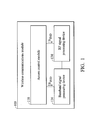
- FIG. 1 is a block diagram of a wireless communications module according to an embodiment of the invention
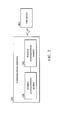
- FIG. 2 is a block diagram of a communications apparatus according to an embodiment of the invention.
- FIG. 3 is a timing diagram showing an exemplary waveform of the indication signal S IND with respect to the communications channel status according to an embodiment of the invention
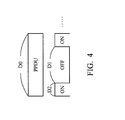
- FIG. 4 is a schematic diagram showing a duration required for transmitting one PPDU with respect to an exemplary on-off cycle of the RF signal processing device and the baseband signal processing device according to an embodiment of the invention.
- FIG. 5 is a flow chart of a method for reducing power consumption of a communications apparatus in an AP mode.
- FIG. 1 is a block diagram of a wireless communications module according to an embodiment of the invention.
- the wireless communications module 100 may be a Wi-Fi module.
- Wi-Fi is short for wireless fidelity and is meant to encompass any type of 802.11 network or other wireless networks, whether 802.11b, 802.11a, 802.11g, 802.16, dual-band, etc.
- Wi-Fi is currently promulgated by the Wi-Fi Alliance. Any products tested and approved as "Wi-Fi Certified” (a registered trademark) by the Wi-Fi Alliance are certified as interoperable with each other, even if they are from different manufacturers.
- a user with a "Wi-Fi Certified" product can use any brand of access point with any other brand of client hardware that also is certified.
- any Wi-Fi product using the same radio frequency e.g., 2.4 GHz for 802.11b or 802.11g, and 5 GHz for 802.11a
- the term "Wi-Fi” is further intended to encompass future versions and/or variations on the foregoing communications standards. Each of the foregoing standards is hereby incorporated by reference.
- the wireless communications module 100 may at least comprise an access control module 110, a baseband signal processing device 120 and a radio frequency (RF) signal processing device 130.
- the RF signal processing device 130 is operative to transmit and receive RF signals to or from air an interface, and process the RF signals in accordance with a predetermined protocol to generate baseband signals (or called first signal).
- a predetermined protocol may be an 802.11 related protocol as illustrated above.
- the RF signal processing device 130 may comprise multiple hardware devices to perform RF signal transceiving and processing.
- the RF signal processing device 130 may comprise a radio transceiver for transceiving the RF signals and a mixer to multiply the baseband signals with a carrier oscillated in a predetermined carrier frequency (for example, 2.4 GHz for a Wi-Fi module).
- the baseband signal processing device 120 is operative to transmit or receive the baseband signals to or from the RF signal processing device 130 and process the baseband signals.
- the baseband signal processing device 120 may also comprise multiple hardware devices to perform baseband signal processing, including Analog to Digital Conversion (ADC)/Digital to Analog Conversion (DAC), gain adjusting, modulation/demodulation, encoding/decoding, and so on.
- ADC Analog to Digital Conversion
- DAC Digital to Analog Conversion
- the access control module 110 may be operative to control the operations of the communications apparatus. According to an embodiment of the invention, the access control module 110 may be implemented by one or more software module(s), hardware device(s), or any combination thereof. In a preferred embodiment of the invention, the access control module 110 may be a media access control (MAC) module of the Wi-Fi module and may control the operations of the baseband signal processing device 120, the RF signal processing device 130 and/or some other device(s) (not shown) in the wireless communications module 100 in accordance with the MAC layer protocol.
- MAC media access control
- FIG. 1 presents a simplified block diagram, in which only the elements relevant to the invention are shown.
- the wireless communications module 100 may further comprise a processing unit (such as a microprocessor) for controlling the whole system operations. Therefore, the invention should not be limited to what is shown on the FIG. 1 .
- FIG. 2 is a block diagram of a communications apparatus according to an embodiment of the invention.
- the communications apparatus 200 may comprise more than one wireless communications module, such as the wireless communications modules 100 and 300.
- the wireless communications module 100 may be the Wi-Fi module and the wireless communications module 300 may be a cellular communication module.
- the communications apparatus 200 may further comprise a Bluetooth module, a Wimax module, or others. Therefore, FIG. 2 only shows an exemplary communications apparatus and the invention should not be limited thereto.
- the communications apparatus 200 equipped with a Wi-Fi module may operate in at least a station mode and an access point (AP) mode.
- the communications apparatus 200 may act as a station and associate with a Wi-Fi access point (AP) so that the communications apparatus 200 may connect to a wired network in accordance the 802.11 related protocol via the Wi-Fi AP.
- the access process of the Wi-Fi module may involve three steps: active/passive scanning, authentication and association, and enabling the Wi-Fi module to associate with an AP. Active scanning is used by the Wi-Fi module to scan surrounding wireless networks and locate a compatible one.
- the Wi-Fi module prepares a list of channels and broadcasts a probe request (with the SSID null) frame on each of them.
- the APs that receive the probe request sends a probe response.
- the Wi-Fi module associates with the AP with the strongest signal.
- the Wi-Fi module only unicasts a probe request (with a specified SSID).
- an AP receives the probe request, it sends a probe response.
- This active scanning mode enables the Wi-Fi module to access a specified wireless network. Passive scanning is used by the Wi-Fi module to discover surrounding wireless networks through listening to the beacon frames periodically sent by an AP.
- the Wi-Fi module prepares a list of channels and listens to beacons on each of these channels.
- authentication may be needed between the Wi-Fi module and an access controller (AC) managing all APs in a wireless local area network (WLAN) or between the WLAN and the associated AP.
- AC access controller
- the Wi-Fi module When the Wi-Fi module chooses a compatible network with a specified SSID and authenticates to an AP, it sends an association request frame to the AP.
- the AP sends an association response to the Wi-Fi module and adds the client's information in its database.
- the Wi-Fi module may go into a power saving (PS) mode (also called a sleep mode) for long time periods. Subsequently, the AP may maintain a continually updated record of the Wi-Fi module currently working in the PS mode, and buffer the packets addressed to the Wi-Fi module until the Wi-Fi module specifically requests for the packets by sending a polling request (briefly in PS-Poll) to the AP.
- PS power saving
- the AP may periodically transmit information indicating which Wi-Fi module has packets buffered at the AP.
- the Wi-Fi module may periodically wake up to receive the Beacon Frame. If there is an indication that at least one packet has been stored at the AP and is waiting for delivery, the corresponding WLAN module may stay awake and send the PS-Poll to the AP to obtain the buffered packet.
- the communications apparatus 200 when operating in the AP mode (which is also named as a tethering and portable hotspot function in the Android system), the communications apparatus 200 may act as an AP and operate as the AP described above, and may provide internet access services for other peer device(s) (For example, the peer device 400 as shown in FIG. 2 , which may be regarded as the station(s)) associated therewith.
- the access control module 110 may further control the power levels of the baseband signal processing device 120 and the RF signal processing device 130 via an indication signal S IND when the communications apparatus 200 operates under the AP mode for power saving.
- the access control module 110 may control the on or off status of the baseband signal processing device 120 and the RF signal processing device 130 via the indication signal S IND , or, control the baseband signal processing device 120 and the RF signal processing device 130 at a high power level or a low power level via the indication signal S IND .
- an AP will never turn off its hardware device(s) for RF signal transceiving and processing, because once the hardware device(s) is/are turned off, the transmission and reception of the RF signals are suspended and packet loss may occur.
- the baseband signal processing device 120 and the RF signal processing device 130 may be switched between a first power level and a second power level, e.g. repeatedly turned on and off, when the communications apparatus 200 operates under the AP mode for power saving.
- both the baseband signal processing device 120 and the RF signal processing device 130 are turned on or off or switch power levels in response to the indication signal S IND .
- one of the baseband signal processing device 120 and the RF signal processing device 130 may receive the indication signal S IND from the access control module 110 and relay the indication signal S IND to the other one, or the access control module 110 may issue different indication signals for the baseband signal processing device 120 and the RF signal processing device 130, respectively, so that the baseband signal processing device 120 and the RF signal processing device 130 may be turned on and off or switch between different power levels synchronously or asynchronously, or others. While the invention has been described in terms of a preferred embodiment where the baseband signal processing device 120 and the RF signal processing device 130 both receive the indication signal S IND from the access control module 110, it is to be understood that the invention is not limited thereto. To the contrary, it is intended to cover various modifications and similar arrangements. Therefore, the scope of the appended claims should be accorded the broadest interpretation so as to encompass all such modifications and similar arrangements.
- the baseband signal processing device 120 and the RF signal processing device 130 may be activated and operative to detect channel activity. For example, the baseband signal processing device 120 and the RF signal processing device 130 may detect whether a communications channel is busy (for example, there is some signal or energy transmitted on the communications channel) or not by performing a clear channel assessment (CCA). After the CCA, the baseband signal processing device 120 may further report a detection result to the access control module 110. When the detection result indicates that the communications channel is busy, it means that there may be some packets transmitted by the peer device 400 associated with the communications apparatus 200.
- CCA clear channel assessment
- the access control module 110 may further extend the on duration of the RF signal processing device 130 and the baseband signal processing device 120 for receiving the packet.
- the access control module 110 may extend the on duration of the RF signal processing device 130 and the baseband signal processing device 120 via the indication signal S IND .
- the indication signal S IND may carry one bit of data, in which '0' (or logic low) may represent an 'off' status and the '1' (or logic high) may represent an 'on' status.
- the access control module 110 may extend the on duration of the RF signal processing device 130 and the baseband signal processing device 120 by extending the duration of the '1' carried in the indication signal S IND .
- FIG. 3 is a timing diagram showing an exemplary waveform of the indication signal S IND with respect to the communications channel status according to an embodiment of the invention.
- the RF signal processing device 130 and the baseband signal processing device 120 may be rapidly and repeatedly turned on and off before the time t1 in response to the indication signal S IND .
- a duration of an on-off cycle (or, a switching cycle for switching between the first power level and the second power level) of the RF signal processing device 130 and the baseband signal processing device 120 may be shorter than a duration of transmitting one physical layer convergence procedure (PLCP) protocol data unit (PPDU).
- PLCP physical layer convergence procedure
- FIG. 4 is a schematic diagram showing a duration required for transmitting one PPDU with respect to an exemplary on-off cycle of the RF signal processing device 130 and the baseband signal processing device 120 according to an embodiment of the invention.
- the duration of transmitting one PPDU is labeled as D0
- the off duration of the RF signal processing device 130 and the baseband signal processing device 120 is labeled as D1
- the on duration of the RF signal processing device 130 and the baseband signal processing device 120 is labeled as D2.
- a length of D1 plus D2 is preferably shorter than a length of D0.
- the purpose of limiting the duration of an on-off cycle of the RF signal processing device 130 and the baseband signal processing device 120 to be shorter than a duration of transmitting one PPDU is for the communications apparatus 200 not to miss the chance of detecting the presence of a packet transmitted by the peer device 400 (even if the packet cannot be successfully received by the communications apparatus 200).
- the baseband signal processing device 120 may further report the detection result to the access control module 110. Based on the detection result indicating that the communications channel is now busy, the access control module 110 may extend an on duration of the RF signal processing device 130 and the baseband signal processing device 120. For example, the access control module 110 may control the RF signal processing device 130 and the baseband signal processing device 120 to be turned on for a duration which is longer than previous (i.e. when the channel is detected as clear) via the indication signal S IND , as shown in FIG. 3 .
- the communications apparatus 200 may further set a protection bit in a beacon frame and periodically transmit the beacon frame via the RF signal processing device 130 so as to trigger the peer device 400 to enter a protection mode. Under the protection mode, the peer device 400 may transmit low rate data before transmitting the high rate data.
- the peer device 400 may transmit the Direct-Sequence Spread Spectrum (DSSS) modulated ready to send (RTS) or clear to send to self (CTS2SELF) packet data at 1 or 2 Mbit/s data rate before transmitting the Orthogonal Frequency-Division Multiplexing (OFDM) or other scheme modulated payload data at a higher data rate (such as 54 Mbit/s).
- DSSS Direct-Sequence Spread Spectrum
- RTS Direct-Sequence Spread Spectrum
- CTS2SELF clear to send to self
- OFDM Orthogonal Frequency-Division Multiplexing
- the communications apparatus 200 can always be aware of the presence of a packet transmitted by the peer device 400 during the on time (for example, the duration D2 shown in FIG.
- the communications apparatus 200 may not suffer from too short PPDU of high rate payload data. Note that to improve the overall throughput, it is preferable that only the peer device enters the protection mode (that is, the communications apparatus 200 does not have to enter the protection mode to prevent the overall throughput from being further downgraded).
- the RF signal processing device 130 and baseband signal processing device 120 will be turned on for a long time right after the channel busy status or the presence of a packet transmitted by the peer device 400 is detected (such as the time t1 shown in FIG. 3 ), the packet can still be successfully received by the communications apparatus 200 when the peer device 400 retransmits it according to the 802.11 related retry mechanism. Since the packet can be successfully received during the first retry, the peer device 400 does not further decrease the data rate and the overall throughput is not further downgraded.
- FIG. 5 is a flow chart of a method for reducing power consumption of a communications apparatus in an AP mode.
- the RF signal processing device and the baseband signal processing device of the communications apparatus are operated in a first power level, such as being turned off, for a first duration when the communications apparatus operates in the AP mode (Step S502).
- the RF signal processing device and the baseband signal processing device are operated in a second power level, such as being turned on, for a second duration after the end of the first duration to detect whether a communications channel is busy or not (Step S504).
- the step S502 of operating the RF signal processing device and the baseband signal processing device in the first power level and the step S504 of operating the RF signal processing device and the baseband signal processing device in the second power level may be performed repeatedly and rapidly so as to save the battery power of the communications apparatus when there is no transmission (TX) or reception (RX) traffic (that is, in the standby state) in the AP mode.
- TX transmission
- RX reception
- the amount of reduced power consumption depends on the CCA detection speed.
- the mechanism of repeatedly turning on and off or switching between different power levels of the RF signal processing device 130 and the baseband signal processing device 120 may be halted (that is, the RF signal processing device 130 and the baseband signal processing device 120 may be kept turned on or switch to the second power level) until the transmission or reception activity is completed.
- the communications apparatus may further trigger the peer device to leave the protection mode (if the peer device has entered the protection mode) to increase the data throughput.
- the mechanism of repeatedly turning on and off or switching between different power levels of the RF signal processing device 130 and the baseband signal processing device 120 may be resumed again to save the battery power.
- any component or collection of components that perform the functions described above can be generically considered as one or more processors that control the above discussed function.
- the one or more processors can be implemented in numerous ways, such as with dedicated hardware, or with general purpose hardware that is programmed using microcode or software to perform the functions recited above.
Landscapes
- Engineering & Computer Science (AREA)
- Computer Networks & Wireless Communication (AREA)
- Signal Processing (AREA)
- Mobile Radio Communication Systems (AREA)
- Transceivers (AREA)
Applications Claiming Priority (1)
| Application Number | Priority Date | Filing Date | Title |
|---|---|---|---|
| US13/686,482 US9232466B2 (en) | 2012-11-27 | 2012-11-27 | Communications apparatus and method for reducing power consumption of a communications apparatus in an AP mode |
Publications (3)
| Publication Number | Publication Date |
|---|---|
| EP2736288A2 true EP2736288A2 (de) | 2014-05-28 |
| EP2736288A3 EP2736288A3 (de) | 2015-05-06 |
| EP2736288B1 EP2736288B1 (de) | 2016-06-08 |
Family
ID=47598604
Family Applications (1)
| Application Number | Title | Priority Date | Filing Date |
|---|---|---|---|
| EP12196748.3A Active EP2736288B1 (de) | 2012-11-27 | 2012-12-12 | Kommunikationsvorrichtung und -verfahren zur Verringerung des Stromverbrauchs einer Kommunikationsvorrichtung im Zugangspunktbetrieb |
Country Status (4)
| Country | Link |
|---|---|
| US (1) | US9232466B2 (de) |
| EP (1) | EP2736288B1 (de) |
| CN (1) | CN103841628B (de) |
| TW (1) | TWI498023B (de) |
Families Citing this family (17)
| Publication number | Priority date | Publication date | Assignee | Title |
|---|---|---|---|---|
| US9544777B2 (en) | 2012-06-18 | 2017-01-10 | Microsoft Technology Licensing, Llc | White space utilization |
| US9288681B2 (en) | 2012-06-18 | 2016-03-15 | Microsoft Technology Licensing, Llc | White space utilization |
| US9094834B2 (en) | 2012-09-11 | 2015-07-28 | Microsoft Technology Licensing, Llc | White space utilization |
| US9288682B2 (en) | 2013-02-22 | 2016-03-15 | Microsoft Technology Licensing, Llc | White space utilization |
| US9854501B2 (en) | 2013-03-14 | 2017-12-26 | Microsoft Technology Licensing, Llc | Radio spectrum utilization |
| US20140274089A1 (en) * | 2013-03-14 | 2014-09-18 | Microsoft Corporation | Radio Spectrum Utilization |
| EP3050342B1 (de) | 2013-09-27 | 2021-01-20 | AirTies Belgium SPRL | Verfahren zum testen einer drahtlosen verbindung eines wifi-knotens und schaltung zur durchführung des verfahrens |
| US20150312279A1 (en) * | 2014-04-29 | 2015-10-29 | Qualcomm Incorporated | Remote station protection |
| WO2016074131A1 (zh) * | 2014-11-10 | 2016-05-19 | 华为技术有限公司 | 接入点设备的工作模式设置方法、接入点设备和系统 |
| CN104540198B (zh) * | 2015-01-16 | 2019-10-08 | 努比亚技术有限公司 | 一种移动终端及其wlan的功率调节方法和装置 |
| FR3038171B1 (fr) * | 2015-06-26 | 2018-06-01 | Ingenico Group | Module radio, dispositif et programme correspondant |
| CN108260191A (zh) * | 2016-12-29 | 2018-07-06 | 展讯通信(上海)有限公司 | 移动终端及其睡眠状态的控制方法 |
| JP2020113985A (ja) | 2019-01-15 | 2020-07-27 | キャリア コーポレイションCarrier Corporation | 動的無線通信の方法およびシステム |
| SG10201912989TA (en) | 2019-01-15 | 2021-04-29 | Carrier Corp | Wireless switching for container controller |
| US11039391B2 (en) * | 2019-06-28 | 2021-06-15 | Wisonsin Alumni Research Foundation | Wireless system using sleep-state modulation |
| US12483993B2 (en) * | 2020-07-24 | 2025-11-25 | Hewlett-Packard Development Company, L.P. | Transmission power control |
| CN116489749A (zh) * | 2022-01-14 | 2023-07-25 | 瑞昱半导体股份有限公司 | 通过信道来与基地台进行通讯的通讯电路及方法 |
Family Cites Families (13)
| Publication number | Priority date | Publication date | Assignee | Title |
|---|---|---|---|---|
| US7277417B2 (en) * | 2003-04-29 | 2007-10-02 | Broadcom Corporation | Low power protocol for wireless terminal peer-to-peer communications |
| US20060176896A1 (en) | 2005-02-10 | 2006-08-10 | Callaway Edgar H Jr | Method and apparatus for transmitting data within a communication system |
| KR101479263B1 (ko) * | 2007-07-09 | 2015-01-06 | 삼성전자주식회사 | 이동 통신 시스템에서 적응적 피어투피어 통신 선택 방법 및 장치 |
| US20090259974A1 (en) * | 2008-04-11 | 2009-10-15 | Mediatek Inc. | Method and apparatus for displaying content menus in a mobile device |
| CN102090115A (zh) * | 2008-07-11 | 2011-06-08 | 马维尔国际贸易有限公司 | 用于接入点的功率节省模式 |
| US8542620B2 (en) | 2009-05-05 | 2013-09-24 | Qualcomm Incorporated | Dynamic energy saving mechanism for access points |
| US8184566B2 (en) * | 2009-06-05 | 2012-05-22 | Mediatek Inc. | Systems for wireless local area network (WLAN) transmission and for coexistence of WLAN and another type of wireless transmission and methods thereof |
| US8532074B2 (en) * | 2010-07-29 | 2013-09-10 | Microsoft Corporation | Energy-efficient on-the-fly Wi-Fi hotspot using mobile devices |
| US8462734B2 (en) * | 2010-10-20 | 2013-06-11 | Nokia Corporation | Wireless docking with out-of-band initiation |
| KR101814810B1 (ko) * | 2011-08-08 | 2018-01-04 | 삼성전자주식회사 | 와이파이 다이렉트를 이용한 와이파이 피투피 그룹을 형성하는 방법 및 장치 |
| CN102938926A (zh) * | 2011-08-16 | 2013-02-20 | 华为终端有限公司 | 一种无线通信网络中实现接入点节能的方法及接入点 |
| KR101836385B1 (ko) * | 2011-11-14 | 2018-03-08 | 삼성전자주식회사 | 휴대용 단말기의 전력 절감 장치 및 방법 |
| US9247495B2 (en) * | 2012-11-06 | 2016-01-26 | Microsoft Technology Licensing, Llc | Power saving Wi-Fi tethering |
-
2012
- 2012-11-27 US US13/686,482 patent/US9232466B2/en active Active
- 2012-12-12 EP EP12196748.3A patent/EP2736288B1/de active Active
-
2013
- 2013-06-04 TW TW102119709A patent/TWI498023B/zh not_active IP Right Cessation
- 2013-06-14 CN CN201310234718.2A patent/CN103841628B/zh active Active
Non-Patent Citations (1)
| Title |
|---|
| None |
Also Published As
| Publication number | Publication date |
|---|---|
| EP2736288A3 (de) | 2015-05-06 |
| US9232466B2 (en) | 2016-01-05 |
| CN103841628B (zh) | 2017-08-01 |
| TW201422030A (zh) | 2014-06-01 |
| CN103841628A (zh) | 2014-06-04 |
| EP2736288B1 (de) | 2016-06-08 |
| TWI498023B (zh) | 2015-08-21 |
| US20140146723A1 (en) | 2014-05-29 |
Similar Documents
| Publication | Publication Date | Title |
|---|---|---|
| US9232466B2 (en) | Communications apparatus and method for reducing power consumption of a communications apparatus in an AP mode | |
| US20230397108A1 (en) | Wireless communication method and wireless communication terminal using wake-up radio | |
| US10231179B2 (en) | Access point standby power optimization across an arbitrary number of associated clients | |
| KR102391146B1 (ko) | 무선랜 환경에서 웨이크-업 라디오를 이용하는 무선 통신 방법 및 무선 통신 단말 | |
| KR102237511B1 (ko) | 무선 통신 시스템에서 단말의 통신 제어 방법 및 장치 | |
| US9282511B2 (en) | Method for managing power save mode in wireless LAN system, and device for supporting same | |
| AU2013332635B2 (en) | Method and apparatus for maintaining association in wireless LAN system | |
| KR101561117B1 (ko) | 무선랜 시스템에서 능동 검색 방법 | |
| US10063292B2 (en) | Multi-user operation management | |
| US20160219515A1 (en) | Communication method and communication apparatus by station that operates in power safe mode in wireless lan system | |
| US20180309538A1 (en) | Data rate selection for wake-up radio transmissions | |
| US20170071022A1 (en) | Session management between different wireless local area networks | |
| US8971225B2 (en) | Method of communication for station operating based on battery in wireless local area network system and apparatus for the same | |
| US20130148556A1 (en) | System And Method For Access Point Power Save | |
| KR20150105337A (ko) | 무선랜 시스템에서 채널 액세스 방법 및 장치 | |
| US10616884B2 (en) | Techniques for signaling a transmit power headroom in a control field | |
| KR101641975B1 (ko) | 무선 통신시스템에서 스테이션의 하향링크 신호 수신 방법 | |
| US9357489B2 (en) | Method for power save mode operation in wireless local area network and apparatus for the same | |
| US8730857B2 (en) | Filtering group-addressed frames in Wi-Fi devices | |
| US10841875B2 (en) | Data transmission method and apparatus |
Legal Events
| Date | Code | Title | Description |
|---|---|---|---|
| PUAI | Public reference made under article 153(3) epc to a published international application that has entered the european phase |
Free format text: ORIGINAL CODE: 0009012 |
|
| 17P | Request for examination filed |
Effective date: 20121212 |
|
| AK | Designated contracting states |
Kind code of ref document: A2 Designated state(s): AL AT BE BG CH CY CZ DE DK EE ES FI FR GB GR HR HU IE IS IT LI LT LU LV MC MK MT NL NO PL PT RO RS SE SI SK SM TR |
|
| AX | Request for extension of the european patent |
Extension state: BA ME |
|
| PUAL | Search report despatched |
Free format text: ORIGINAL CODE: 0009013 |
|
| AK | Designated contracting states |
Kind code of ref document: A3 Designated state(s): AL AT BE BG CH CY CZ DE DK EE ES FI FR GB GR HR HU IE IS IT LI LT LU LV MC MK MT NL NO PL PT RO RS SE SI SK SM TR |
|
| AX | Request for extension of the european patent |
Extension state: BA ME |
|
| RIC1 | Information provided on ipc code assigned before grant |
Ipc: H04W 52/02 20090101AFI20150331BHEP |
|
| R17P | Request for examination filed (corrected) |
Effective date: 20151005 |
|
| RBV | Designated contracting states (corrected) |
Designated state(s): AL AT BE BG CH CY CZ DE DK EE ES FI FR GB GR HR HU IE IS IT LI LT LU LV MC MK MT NL NO PL PT RO RS SE SI SK SM TR |
|
| GRAP | Despatch of communication of intention to grant a patent |
Free format text: ORIGINAL CODE: EPIDOSNIGR1 |
|
| INTG | Intention to grant announced |
Effective date: 20160202 |
|
| GRAS | Grant fee paid |
Free format text: ORIGINAL CODE: EPIDOSNIGR3 |
|
| GRAA | (expected) grant |
Free format text: ORIGINAL CODE: 0009210 |
|
| AK | Designated contracting states |
Kind code of ref document: B1 Designated state(s): AL AT BE BG CH CY CZ DE DK EE ES FI FR GB GR HR HU IE IS IT LI LT LU LV MC MK MT NL NO PL PT RO RS SE SI SK SM TR |
|
| REG | Reference to a national code |
Ref country code: GB Ref legal event code: FG4D |
|
| REG | Reference to a national code |
Ref country code: CH Ref legal event code: EP |
|
| REG | Reference to a national code |
Ref country code: IE Ref legal event code: FG4D |
|
| REG | Reference to a national code |
Ref country code: AT Ref legal event code: REF Ref document number: 805994 Country of ref document: AT Kind code of ref document: T Effective date: 20160715 |
|
| REG | Reference to a national code |
Ref country code: DE Ref legal event code: R096 Ref document number: 602012019342 Country of ref document: DE |
|
| REG | Reference to a national code |
Ref country code: LT Ref legal event code: MG4D |
|
| REG | Reference to a national code |
Ref country code: NL Ref legal event code: MP Effective date: 20160608 |
|
| PG25 | Lapsed in a contracting state [announced via postgrant information from national office to epo] |
Ref country code: FI Free format text: LAPSE BECAUSE OF FAILURE TO SUBMIT A TRANSLATION OF THE DESCRIPTION OR TO PAY THE FEE WITHIN THE PRESCRIBED TIME-LIMIT Effective date: 20160608 Ref country code: LT Free format text: LAPSE BECAUSE OF FAILURE TO SUBMIT A TRANSLATION OF THE DESCRIPTION OR TO PAY THE FEE WITHIN THE PRESCRIBED TIME-LIMIT Effective date: 20160608 Ref country code: NO Free format text: LAPSE BECAUSE OF FAILURE TO SUBMIT A TRANSLATION OF THE DESCRIPTION OR TO PAY THE FEE WITHIN THE PRESCRIBED TIME-LIMIT Effective date: 20160908 |
|
| REG | Reference to a national code |
Ref country code: AT Ref legal event code: MK05 Ref document number: 805994 Country of ref document: AT Kind code of ref document: T Effective date: 20160608 |
|
| PG25 | Lapsed in a contracting state [announced via postgrant information from national office to epo] |
Ref country code: GR Free format text: LAPSE BECAUSE OF FAILURE TO SUBMIT A TRANSLATION OF THE DESCRIPTION OR TO PAY THE FEE WITHIN THE PRESCRIBED TIME-LIMIT Effective date: 20160909 Ref country code: NL Free format text: LAPSE BECAUSE OF FAILURE TO SUBMIT A TRANSLATION OF THE DESCRIPTION OR TO PAY THE FEE WITHIN THE PRESCRIBED TIME-LIMIT Effective date: 20160608 Ref country code: LV Free format text: LAPSE BECAUSE OF FAILURE TO SUBMIT A TRANSLATION OF THE DESCRIPTION OR TO PAY THE FEE WITHIN THE PRESCRIBED TIME-LIMIT Effective date: 20160608 Ref country code: RS Free format text: LAPSE BECAUSE OF FAILURE TO SUBMIT A TRANSLATION OF THE DESCRIPTION OR TO PAY THE FEE WITHIN THE PRESCRIBED TIME-LIMIT Effective date: 20160608 Ref country code: HR Free format text: LAPSE BECAUSE OF FAILURE TO SUBMIT A TRANSLATION OF THE DESCRIPTION OR TO PAY THE FEE WITHIN THE PRESCRIBED TIME-LIMIT Effective date: 20160608 Ref country code: ES Free format text: LAPSE BECAUSE OF FAILURE TO SUBMIT A TRANSLATION OF THE DESCRIPTION OR TO PAY THE FEE WITHIN THE PRESCRIBED TIME-LIMIT Effective date: 20160608 Ref country code: SE Free format text: LAPSE BECAUSE OF FAILURE TO SUBMIT A TRANSLATION OF THE DESCRIPTION OR TO PAY THE FEE WITHIN THE PRESCRIBED TIME-LIMIT Effective date: 20160608 |
|
| REG | Reference to a national code |
Ref country code: FR Ref legal event code: PLFP Year of fee payment: 5 |
|
| PG25 | Lapsed in a contracting state [announced via postgrant information from national office to epo] |
Ref country code: RO Free format text: LAPSE BECAUSE OF FAILURE TO SUBMIT A TRANSLATION OF THE DESCRIPTION OR TO PAY THE FEE WITHIN THE PRESCRIBED TIME-LIMIT Effective date: 20160608 Ref country code: CZ Free format text: LAPSE BECAUSE OF FAILURE TO SUBMIT A TRANSLATION OF THE DESCRIPTION OR TO PAY THE FEE WITHIN THE PRESCRIBED TIME-LIMIT Effective date: 20160608 Ref country code: SK Free format text: LAPSE BECAUSE OF FAILURE TO SUBMIT A TRANSLATION OF THE DESCRIPTION OR TO PAY THE FEE WITHIN THE PRESCRIBED TIME-LIMIT Effective date: 20160608 Ref country code: IS Free format text: LAPSE BECAUSE OF FAILURE TO SUBMIT A TRANSLATION OF THE DESCRIPTION OR TO PAY THE FEE WITHIN THE PRESCRIBED TIME-LIMIT Effective date: 20161008 Ref country code: IT Free format text: LAPSE BECAUSE OF FAILURE TO SUBMIT A TRANSLATION OF THE DESCRIPTION OR TO PAY THE FEE WITHIN THE PRESCRIBED TIME-LIMIT Effective date: 20160608 Ref country code: EE Free format text: LAPSE BECAUSE OF FAILURE TO SUBMIT A TRANSLATION OF THE DESCRIPTION OR TO PAY THE FEE WITHIN THE PRESCRIBED TIME-LIMIT Effective date: 20160608 |
|
| PG25 | Lapsed in a contracting state [announced via postgrant information from national office to epo] |
Ref country code: PT Free format text: LAPSE BECAUSE OF FAILURE TO SUBMIT A TRANSLATION OF THE DESCRIPTION OR TO PAY THE FEE WITHIN THE PRESCRIBED TIME-LIMIT Effective date: 20161010 Ref country code: BE Free format text: LAPSE BECAUSE OF FAILURE TO SUBMIT A TRANSLATION OF THE DESCRIPTION OR TO PAY THE FEE WITHIN THE PRESCRIBED TIME-LIMIT Effective date: 20160608 Ref country code: PL Free format text: LAPSE BECAUSE OF FAILURE TO SUBMIT A TRANSLATION OF THE DESCRIPTION OR TO PAY THE FEE WITHIN THE PRESCRIBED TIME-LIMIT Effective date: 20160608 Ref country code: AT Free format text: LAPSE BECAUSE OF FAILURE TO SUBMIT A TRANSLATION OF THE DESCRIPTION OR TO PAY THE FEE WITHIN THE PRESCRIBED TIME-LIMIT Effective date: 20160608 Ref country code: SM Free format text: LAPSE BECAUSE OF FAILURE TO SUBMIT A TRANSLATION OF THE DESCRIPTION OR TO PAY THE FEE WITHIN THE PRESCRIBED TIME-LIMIT Effective date: 20160608 |
|
| REG | Reference to a national code |
Ref country code: DE Ref legal event code: R097 Ref document number: 602012019342 Country of ref document: DE |
|
| PLBE | No opposition filed within time limit |
Free format text: ORIGINAL CODE: 0009261 |
|
| STAA | Information on the status of an ep patent application or granted ep patent |
Free format text: STATUS: NO OPPOSITION FILED WITHIN TIME LIMIT |
|
| 26N | No opposition filed |
Effective date: 20170309 |
|
| PG25 | Lapsed in a contracting state [announced via postgrant information from national office to epo] |
Ref country code: SI Free format text: LAPSE BECAUSE OF FAILURE TO SUBMIT A TRANSLATION OF THE DESCRIPTION OR TO PAY THE FEE WITHIN THE PRESCRIBED TIME-LIMIT Effective date: 20160608 Ref country code: DK Free format text: LAPSE BECAUSE OF FAILURE TO SUBMIT A TRANSLATION OF THE DESCRIPTION OR TO PAY THE FEE WITHIN THE PRESCRIBED TIME-LIMIT Effective date: 20160608 |
|
| REG | Reference to a national code |
Ref country code: CH Ref legal event code: PL |
|
| PG25 | Lapsed in a contracting state [announced via postgrant information from national office to epo] |
Ref country code: MC Free format text: LAPSE BECAUSE OF FAILURE TO SUBMIT A TRANSLATION OF THE DESCRIPTION OR TO PAY THE FEE WITHIN THE PRESCRIBED TIME-LIMIT Effective date: 20160608 |
|
| REG | Reference to a national code |
Ref country code: IE Ref legal event code: MM4A |
|
| PG25 | Lapsed in a contracting state [announced via postgrant information from national office to epo] |
Ref country code: CH Free format text: LAPSE BECAUSE OF NON-PAYMENT OF DUE FEES Effective date: 20161231 Ref country code: LI Free format text: LAPSE BECAUSE OF NON-PAYMENT OF DUE FEES Effective date: 20161231 Ref country code: LU Free format text: LAPSE BECAUSE OF NON-PAYMENT OF DUE FEES Effective date: 20161212 |
|
| PG25 | Lapsed in a contracting state [announced via postgrant information from national office to epo] |
Ref country code: IE Free format text: LAPSE BECAUSE OF NON-PAYMENT OF DUE FEES Effective date: 20161212 |
|
| REG | Reference to a national code |
Ref country code: FR Ref legal event code: PLFP Year of fee payment: 6 |
|
| PG25 | Lapsed in a contracting state [announced via postgrant information from national office to epo] |
Ref country code: CY Free format text: LAPSE BECAUSE OF FAILURE TO SUBMIT A TRANSLATION OF THE DESCRIPTION OR TO PAY THE FEE WITHIN THE PRESCRIBED TIME-LIMIT Effective date: 20160608 Ref country code: HU Free format text: LAPSE BECAUSE OF FAILURE TO SUBMIT A TRANSLATION OF THE DESCRIPTION OR TO PAY THE FEE WITHIN THE PRESCRIBED TIME-LIMIT; INVALID AB INITIO Effective date: 20121212 |
|
| PG25 | Lapsed in a contracting state [announced via postgrant information from national office to epo] |
Ref country code: MK Free format text: LAPSE BECAUSE OF FAILURE TO SUBMIT A TRANSLATION OF THE DESCRIPTION OR TO PAY THE FEE WITHIN THE PRESCRIBED TIME-LIMIT Effective date: 20160608 |
|
| PG25 | Lapsed in a contracting state [announced via postgrant information from national office to epo] |
Ref country code: BG Free format text: LAPSE BECAUSE OF FAILURE TO SUBMIT A TRANSLATION OF THE DESCRIPTION OR TO PAY THE FEE WITHIN THE PRESCRIBED TIME-LIMIT Effective date: 20160608 |
|
| PG25 | Lapsed in a contracting state [announced via postgrant information from national office to epo] |
Ref country code: MT Free format text: LAPSE BECAUSE OF NON-PAYMENT OF DUE FEES Effective date: 20161212 |
|
| PG25 | Lapsed in a contracting state [announced via postgrant information from national office to epo] |
Ref country code: AL Free format text: LAPSE BECAUSE OF FAILURE TO SUBMIT A TRANSLATION OF THE DESCRIPTION OR TO PAY THE FEE WITHIN THE PRESCRIBED TIME-LIMIT Effective date: 20160608 Ref country code: TR Free format text: LAPSE BECAUSE OF FAILURE TO SUBMIT A TRANSLATION OF THE DESCRIPTION OR TO PAY THE FEE WITHIN THE PRESCRIBED TIME-LIMIT Effective date: 20160608 |
|
| P01 | Opt-out of the competence of the unified patent court (upc) registered |
Effective date: 20230607 |
|
| PGFP | Annual fee paid to national office [announced via postgrant information from national office to epo] |
Ref country code: FR Payment date: 20250930 Year of fee payment: 14 |
|
| PGFP | Annual fee paid to national office [announced via postgrant information from national office to epo] |
Ref country code: DE Payment date: 20250930 Year of fee payment: 14 |
|
| PGFP | Annual fee paid to national office [announced via postgrant information from national office to epo] |
Ref country code: GB Payment date: 20251001 Year of fee payment: 14 |