EP2745523B1 - Adaptation de débit binaire dynamique sur une connexion variant en bande passante - Google Patents
Adaptation de débit binaire dynamique sur une connexion variant en bande passante Download PDFInfo
- Publication number
- EP2745523B1 EP2745523B1 EP12824490.2A EP12824490A EP2745523B1 EP 2745523 B1 EP2745523 B1 EP 2745523B1 EP 12824490 A EP12824490 A EP 12824490A EP 2745523 B1 EP2745523 B1 EP 2745523B1
- Authority
- EP
- European Patent Office
- Prior art keywords
- current
- time
- interval
- media
- buffer
- Prior art date
- Legal status (The legal status is an assumption and is not a legal conclusion. Google has not performed a legal analysis and makes no representation as to the accuracy of the status listed.)
- Active
Links
Images





Classifications
-
- H—ELECTRICITY
- H04—ELECTRIC COMMUNICATION TECHNIQUE
- H04N—PICTORIAL COMMUNICATION, e.g. TELEVISION
- H04N19/00—Methods or arrangements for coding, decoding, compressing or decompressing digital video signals
- H04N19/40—Methods or arrangements for coding, decoding, compressing or decompressing digital video signals using video transcoding, i.e. partial or full decoding of a coded input stream followed by re-encoding of the decoded output stream
-
- H—ELECTRICITY
- H04—ELECTRIC COMMUNICATION TECHNIQUE
- H04L—TRANSMISSION OF DIGITAL INFORMATION, e.g. TELEGRAPHIC COMMUNICATION
- H04L65/00—Network arrangements, protocols or services for supporting real-time applications in data packet communication
- H04L65/60—Network streaming of media packets
- H04L65/70—Media network packetisation
-
- H—ELECTRICITY
- H04—ELECTRIC COMMUNICATION TECHNIQUE
- H04N—PICTORIAL COMMUNICATION, e.g. TELEVISION
- H04N19/00—Methods or arrangements for coding, decoding, compressing or decompressing digital video signals
- H04N19/10—Methods or arrangements for coding, decoding, compressing or decompressing digital video signals using adaptive coding
- H04N19/134—Methods or arrangements for coding, decoding, compressing or decompressing digital video signals using adaptive coding characterised by the element, parameter or criterion affecting or controlling the adaptive coding
- H04N19/146—Data rate or code amount at the encoder output
-
- H—ELECTRICITY
- H04—ELECTRIC COMMUNICATION TECHNIQUE
- H04N—PICTORIAL COMMUNICATION, e.g. TELEVISION
- H04N19/00—Methods or arrangements for coding, decoding, compressing or decompressing digital video signals
- H04N19/10—Methods or arrangements for coding, decoding, compressing or decompressing digital video signals using adaptive coding
- H04N19/134—Methods or arrangements for coding, decoding, compressing or decompressing digital video signals using adaptive coding characterised by the element, parameter or criterion affecting or controlling the adaptive coding
- H04N19/146—Data rate or code amount at the encoder output
- H04N19/152—Data rate or code amount at the encoder output by measuring the fullness of the transmission buffer
-
- H—ELECTRICITY
- H04—ELECTRIC COMMUNICATION TECHNIQUE
- H04N—PICTORIAL COMMUNICATION, e.g. TELEVISION
- H04N21/00—Selective content distribution, e.g. interactive television or video on demand [VOD]
- H04N21/20—Servers specifically adapted for the distribution of content, e.g. VOD servers; Operations thereof
- H04N21/23—Processing of content or additional data; Elementary server operations; Server middleware
- H04N21/234—Processing of video elementary streams, e.g. splicing of video streams or manipulating encoded video stream scene graphs
- H04N21/23406—Processing of video elementary streams, e.g. splicing of video streams or manipulating encoded video stream scene graphs involving management of server-side video buffer
-
- H—ELECTRICITY
- H04—ELECTRIC COMMUNICATION TECHNIQUE
- H04N—PICTORIAL COMMUNICATION, e.g. TELEVISION
- H04N21/00—Selective content distribution, e.g. interactive television or video on demand [VOD]
- H04N21/20—Servers specifically adapted for the distribution of content, e.g. VOD servers; Operations thereof
- H04N21/23—Processing of content or additional data; Elementary server operations; Server middleware
- H04N21/234—Processing of video elementary streams, e.g. splicing of video streams or manipulating encoded video stream scene graphs
- H04N21/2343—Processing of video elementary streams, e.g. splicing of video streams or manipulating encoded video stream scene graphs involving reformatting operations of video signals for distribution or compliance with end-user requests or end-user device requirements
-
- H—ELECTRICITY
- H04—ELECTRIC COMMUNICATION TECHNIQUE
- H04N—PICTORIAL COMMUNICATION, e.g. TELEVISION
- H04N21/00—Selective content distribution, e.g. interactive television or video on demand [VOD]
- H04N21/20—Servers specifically adapted for the distribution of content, e.g. VOD servers; Operations thereof
- H04N21/23—Processing of content or additional data; Elementary server operations; Server middleware
- H04N21/24—Monitoring of processes or resources, e.g. monitoring of server load, available bandwidth, upstream requests
- H04N21/2402—Monitoring of the downstream path of the transmission network, e.g. bandwidth available
-
- H—ELECTRICITY
- H04—ELECTRIC COMMUNICATION TECHNIQUE
- H04N—PICTORIAL COMMUNICATION, e.g. TELEVISION
- H04N21/00—Selective content distribution, e.g. interactive television or video on demand [VOD]
- H04N21/20—Servers specifically adapted for the distribution of content, e.g. VOD servers; Operations thereof
- H04N21/25—Management operations performed by the server for facilitating the content distribution or administrating data related to end-users or client devices, e.g. end-user or client device authentication, learning user preferences for recommending movies
- H04N21/266—Channel or content management, e.g. generation and management of keys and entitlement messages in a conditional access system, merging a VOD unicast channel into a multicast channel
- H04N21/2662—Controlling the complexity of the video stream, e.g. by scaling the resolution or bitrate of the video stream based on the client capabilities
-
- H—ELECTRICITY
- H04—ELECTRIC COMMUNICATION TECHNIQUE
- H04N—PICTORIAL COMMUNICATION, e.g. TELEVISION
- H04N21/00—Selective content distribution, e.g. interactive television or video on demand [VOD]
- H04N21/40—Client devices specifically adapted for the reception of or interaction with content, e.g. set-top-box [STB]; Operations thereof
- H04N21/41—Structure of client; Structure of client peripherals
- H04N21/414—Specialised client platforms, e.g. receiver in car or embedded in a mobile appliance
- H04N21/41407—Specialised client platforms, e.g. receiver in car or embedded in a mobile appliance embedded in a portable device, e.g. video client on a mobile phone, PDA, laptop
-
- H—ELECTRICITY
- H04—ELECTRIC COMMUNICATION TECHNIQUE
- H04N—PICTORIAL COMMUNICATION, e.g. TELEVISION
- H04N21/00—Selective content distribution, e.g. interactive television or video on demand [VOD]
- H04N21/60—Network structure or processes for video distribution between server and client or between remote clients; Control signalling between clients, server and network components; Transmission of management data between server and client, e.g. sending from server to client commands for recording incoming content stream; Communication details between server and client
- H04N21/63—Control signaling related to video distribution between client, server and network components; Network processes for video distribution between server and clients or between remote clients, e.g. transmitting basic layer and enhancement layers over different transmission paths, setting up a peer-to-peer communication via Internet between remote STB's; Communication protocols; Addressing
- H04N21/643—Communication protocols
- H04N21/64322—IP
-
- H—ELECTRICITY
- H04—ELECTRIC COMMUNICATION TECHNIQUE
- H04N—PICTORIAL COMMUNICATION, e.g. TELEVISION
- H04N21/00—Selective content distribution, e.g. interactive television or video on demand [VOD]
- H04N21/80—Generation or processing of content or additional data by content creator independently of the distribution process; Content per se
- H04N21/83—Generation or processing of protective or descriptive data associated with content; Content structuring
- H04N21/845—Structuring of content, e.g. decomposing content into time segments
- H04N21/8456—Structuring of content, e.g. decomposing content into time segments by decomposing the content in the time domain, e.g. in time segments
Definitions
- the present invention relates to the transmission of real time media.
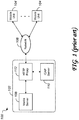
- Figure 1 shows a Media Transmission System 100 of the prior art, including a Media Server Subsystem 102 which is connected to Mobile Units, or Destination Units, 104 over a Network 106, for example the Internet.
- a Media Transmission System 100 of the prior art including a Media Server Subsystem 102 which is connected to Mobile Units, or Destination Units, 104 over a Network 106, for example the Internet.
- Each Mobile Unit 104 may, for example, be a smart phone or a laptop computer equipped to set up a media session.
- the Media Server Subsystem 102 may include a Media Server computing device 108 for generating the media file, an Internet Content Adaptation Protocol (ICAP) Server computing device 110 for processing media files, and a Hypertext Transfer Protocol (HTTP) Proxy Server computing device 112 for handling requests from the Mobile Units, or terminals, 104 and to perform other functions.
- ICAP Internet Content Adaptation Protocol
- HTTP Hypertext Transfer Protocol
- a media session may be requested by the Mobile (Destination) Unit 104.
- the purpose of the media session is to send a stream of media packets (a media file) from the Media Server Subsystem 102 to the Mobile Unit 104.
- the media file may then be adapted to the lower bandwidth by equipment located in the ICAP Server 110 which is typically an adjunct of the HTTP Proxy Server 112.
- the bandwidth of the connection over the Network 106 may also vary in time which poses additional problems for the adaptation of the media file.
- Bajpai publication number US20090103607, filed Dec 19, 2008 , discloses systems and methods for providing a media stream transmitted from an encoding system to a remotely-located media player.
- the media stream is encoded according to an encoding parameter.
- Data is gathered about a transmit buffer within the encoding system, and the gathered data is processed to arrive at an estimate of network capacity and a calculated encoder rate.
- the encoding parameter is adjusted during subsequent encoding in response to a change in at least one of the estimate of network capacity and the calculated encoder rate.
- Nie, publication number US20080232469, filed Mar 10, 2008 discloses a rate controller for allocating a bit budget for video frames to be encoded.
- the rate controller considers many different factors when determining the frame bit budget including: desired video quality, target bit rate, frame type (intra-frame or inter-frame), frame duration, intra-frame frequency, frame complexity, intra-block frequency within an intra-frame, buffer overflow, buffer underflow, and the encoded video frame quality for a possible second pass.
- Chang Journal of Systems Architecture 53 (2007) 833-845 , discloses an object relation graph (ORG) for managing static relationships between video versions and a replacement algorithm for dynamically managing video segments cached in a proxy.
- ORG object relation graph
- a transcoding time constrained profit function to evaluate the profit from caching each version of an object is formulated.
- the profit function considers not only the sum of the costs of caching individual versions of an object, but also the transcoding relationship among these versions.
- an effective data structure a cached object relation tree (CORT) is provided to facilitate the management of multiple versions of different objects cached in the transcoding proxy.
- CORT cached object relation tree
- a method for encoding a media file or part thereof for transmission in real time over a varying bandwidth link to a mobile, or destination, unit comprising: employing at least one processor for:
- step (i) comprises:
- the step (iii) further comprises adjusting the current encoding rate as a function of an estimated display time of said stream fragment at the mobile unit, the estimated display time being derived from timestamps associated with two previously formed stream fragments.
- the step (iii) further comprises adjusting the current encoding rate as a function of the current encoding rate.
- the function is a product of the current encoding rate and an adjustment factor which depends on the estimated display time and the estimated transmit time.
- the adjustment factor is the estimated display time divided by the estimated transmit time.
- the method further comprises transmitting the transcoded media fragments to the mobile unit for display.
- the adjusting of the current encoding rate may be performed from time to time.
- the adjusting may be performed periodically.
- the step (ii) further comprises estimating the estimated transmit time as a current clock interval between a current time and a previous time of the last encoding, and the step (iii) further comprises:
- the two previously formed stream fragments comprise the last two stream fragments.
- the adjusting comprises adjusting the current encoding rate provided the current clock interval differs from the current buffer interval by a predetermined amount.
- the step (iii) may comprise adjusting the current encoding rate after the current clock interval of N seconds has elapsed.
- the adjusting the current encoding rate as a function of the current clock interval and the current buffer interval may be performed as follows:
- TH1 may be chosed to be at least 0.05, and TH2 to be at least 0.02.
- the first incremental value is equal to the first relative difference divided by a first attenuation factor AF1
- the second incremental value is equal to the second relative difference divided by a second attenuation factor AF2
- the first and second attenuation factors AF1 and AF2 being chosen so as to prevent excessive or rapid over-adjusting of the current encoding rate and to ensure stability of the adjusting step.
- the step (iii) comprises adjusting the current encoding rate only if a pause in the transmission of the transcoded media fragments is not detected.
- step (iii) further comprises detecting the pause, comprising:
- the method described above further comprises determining that the pause is detected provided:
- the method further comprises determining that a pause is detected provided the current clock interval exceeds the clock interval average multiplied by a factor M.
- the method further comprises replacing the current clock interval with the average clock interval provided the pause is detected.
- MP is 3
- XC is 1
- M is 4.
- a media processing system for encoding a media file or part thereof for transmission in real time over a varying bandwidth link to a mobile unit, comprising: a processor and a non-transitory computer readable storage medium having computer readable instructions stored thereon for execution by the processor, forming:
- the dynamic bit rate adapter is further configured to adjust the current encoding rate as a function of an estimated display time of said stream fragment at the mobile unit, the estimated display time being derived from timestamps associated with two previously formed stream fragments.
- the media processing system further comprises a transcoder buffer adapted to forward transcoded media fragments to a network, and to send timestamps associated with at least some of the transcoded media fragments to the dynamic bit rate adapter.
- the dynamic bit rate adapter comprises:
- the dynamic bit rate adapter further comprises a pause detector configured to detect a cessation of transmission of the transcoded media fragments and to inhibit the dynamic bit rate adapter from adjusting the current encoding rate provided the cessation has been detected.
- the dynamic bit rate adapter is further configured to adjust the current encoding rate as a function of the current encoding rate.
- the dynamic bit rate adapter is further configured to estimate the estimated transmit time as a current clock interval between a current time and a previous time of the last encoding.
- the dynamic bit rate adapter is further configured to:
- the dynamic bit rate adapter is yet further configured to adjust the current encoding rate provided the current clock interval differs from the current buffer interval by a predetermined amount.
- a method for encoding a media file or part thereof for transmission in real time over a varying bandwidth link to a mobile unit comprising: employing at least one processor for:
- the step (b) comprises estimating the estimated transmit time as a current clock interval between a current time and a previous time of the last reevaluating.
- the step (b) further comprises:
- the current encoding rate is modified as a function of the current clock interval and the current buffer interval.
- the step (b) further comprises computing the new encoding rate as a function of the current encoding rate, and an estimated display time of the last stream fragment at the mobile unit, the estimated display time being a function of timestamps embedded in at least some of the transcoded media fragments of the last and the previous stream fragments.
- the function may be a product of the current encoding rate and an adjustment factor depending on the estimated display time and the estimated transmit time.
- the step (b) comprises reevaluating the current encoding rate only after the current clock interval of N seconds has elapsed.
- the step (b) further comprises detecting a cessation of transmission of the transcoded media fragments, and suppressing the adjusting of the current encoding rate provided the cessation has been detected.
- Embodiments of the present invention aim to improve the user experience in HTTP multimedia delivery over networks for which the bandwidth varies over time. This is done by dynamically changing the encoding rate of a multimedia file to match the available bandwidth.
- the solution may be implemented on the ICAP protocol, but the ultimate delivery to the device is based on HTTP, and the solution applies equally to both protocols.
- the network When users are streaming video over mobile networks, the network often does not have enough bandwidth available to provide near real-time delivery. As a result, the quality of the viewing experience is poor because the video stalls on the end device.
- the encoding rate of the media is dynamically adapted by embodiments of the present invention, by adjusting the current encoding rate from time to time to approximately match the available bandwidth.
- TCP Transmission Control Protocol
- RTSP Real Time Streaming Protocol
- RTP Real-time Transport Protocol
- UDP User Datagram Protocol
- the video player sends feedback from the mobile unit to the server a few times every second. This feedback also includes information about network impairment (packets loss, jitter, etc), and allows the encoding rate to be adjusted automatically.
- US patent 7,844,725 entitled “DATA STREAMING THROUGH TIME-VARYING TRANSPORT MEDIA", granted to Francis R. Labonte, et al., discloses a method for data streaming over a time-varying connection.
- HTTP is an omnipresent protocol for the web. It is used to transfer almost any kind of data.
- HTTP support is a requirement for both web clients and servers
- transferring video over HTTP is a natural fit to maximize interoperability between clients and servers without using a parallel protocol such as RTSP/RTP for example which only serves a much more specific purpose.
- FTP File Transfer Protocol
- HTTP is widely interoperable. It has countless implementations on both the server side and the client side. It has Apache as a de facto reference implementation that every client can interoperate with.
- RTSP on the other hand suffers from non-compliance with the standard in many commercial implementations (see also an article regarding HTTP versus RTSP/RTP at http://www.remlab.net/op/vod.shtml).
- the embodiments of the present invention enable efficient audio and video streaming over an HTTP connection without requiring explicit feedback from the receiving client to the streaming server.
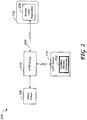
- FIG. 2 shows a Media Delivery System 200 according to an embodiment of the invention, which includes a Variable Bit Rate Transcoder 202 providing a dynamic bit rate adaptation for media files transmitted from the Media Server computing device 108 over a Variable Bandwidth Link 204 to a Mobile Video Application 206 in the Mobile Unit 104.
- the Variable Bandwidth Link 204 to the Mobile (Destination) Unit 104 provides an HTTP connection to the HTTP Proxy Server computing device 112.
- the HTTP link 204 to the mobile unit 104 This link can be a direct link, for example in the laboratory, or go through the Internet, including a wireless drop to the mobile unit 104 itself.
- the mobile Unit 104 is a device, for example a smart phone, laptop, a tablet, or another computer-like device equipped to setup a media session.
- the mobile video application 206 comprises computer readable instructions stored in a computer readable storage medium such as memory for execution by a processor.
- the Variable Bit Rate Transcoder 202 comprises computer readable instructions stored in a computer readable storage medium such as memory for execution by a processor.
- the Variable Bit Rate Transcoder 202 may be implemented in firmware.
- the Variable Bit Rate Transcoder 202 is shown embedded in the ICAP Server 110 which is coupled to the HTTP Proxy Server 112 over an ICAP link, it is understood that the Variable Bit Rate Transcoder 202 can also alternatively be embedded in the HTTP Proxy Server 112, or in the Media Server 108.
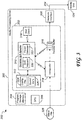
- FIG. 3 shows a simplified block diagram of a Variable Bit Rate Transcoder System 300, including a Media Processing Server 302 which is a computing device comprising at a minimum a Program Storage Memory 304, a CPU 306, and a Network Interface 308, as well as the Variable Bit Rate Transcoder 202 of Fig. 2 .
- the Variable Bit Rate Transcoder 202 is preferably realized as a software module including instructions stored in the Program Storage Memory 304 and executed by the CPU 306.
- the Media Processing Server 302 may represent the Media Server 108, the Internet Content Adaptation Protocol (ICAP) Server 108, or the Hypertext Transfer Protocol (HTTP) Proxy Server 112 in various embodiments of the invention.
- ICAP Internet Content Adaptation Protocol
- HTTP Hypertext Transfer Protocol
- the Variable Bit Rate Transcoder 202 comprises a Dynamic Bit Rate Adapter 310, a Session Variables storage module 312, a Transcoder 314, a Transcoder Buffer 316, and a Wall Clock 318.
- the Dynamic Bit Rate Adapter 310 includes a QoS Adjuster module 320 and a Pause Detector module 322.
- the Session Variables storage module 312 includes a Configuration File 324 and a Saved Variables storage 326.
- the above mentioned modules 310, 312, 314, 316, 318, 320, 322 and 324 of the Variable Bit Rate Transcoder 202 comprise computer readable instructions stored in a computer memory for execution by a processor.
- the network interface 308 includes both hardware (physical interface), and software (protocols).
- the CPU 306 runs an operating system (OS, not shown), for example Linux, which includes the protocols.
- OS operating system
- Linux which includes the protocols.
- the OS also provides a timing service based on a clock chip that is available in a computer , from which the current time (CT) is derived. This is represented in the Wall Clock 318 module.
- the DBRA 310 module reads the time (wall clock time) from the OS software (kernel) when required, but Wall Clock 318 module may embellish it, for example scale it or offset it and keep a local "wall clock” variable which may count time from zero when transmission of transcoded media fragments starts, and thus makes the current time (CT) available to the DBRA 310.
- the Transcoder 314 receives a Media File 328, transcodes or encodes the Media File 328 to a bit rate suitable for transmission to the Mobile Unit 104 through the Transcoder Buffer 316, the Network Interface 308, and over the Variable Bandwidth Link 204, in which a function of the Network Interface 308 is to implement a reliable transmission control protocol (TCP) that underlies the application protocol such as HTTP.
- TCP transmission control protocol
- the time interval used in transmitting one or more transcoded media fragments depends on the bandwidth that is available on the Variable Bandwidth Link 204 and is under the control of the reliable transmission control protocol (TCP).
- TCP transmission control protocol
- An approximate time used in the transmission of a stream fragment can then be calculated by observing the instances of time when successive stream fragments leave the Transcoder Buffer 316, the time values being obtained from an output of the Wall Clock 318.
- the calculated transmit time is termed an "estimated transmit time".
- Transmit time or "estimated transmit time”
- this is effectively the period of time needed for the transcoded fragments to be serially transmitted at the bit rate of the Variable Bandwidth Link 204, i.e the time the transcoded fragments occupy while leaving the Variable Bit Rate Transcoder 202. It is not the delay time between the Variable Bit Rate Transcoder 202 and the Mobile Unit 104, which is not known and is irrelevant to the operation of the embodiment of the invention.
- the estimated transmit time is the time interval required for one or more previous stream fragments to be conveyed from the transcoder and consumed by the varying bandwidth link.
- the estimated transmit time may also be derived from earlier stream fragments which are not immediately previous to the time of the estimating.
- the Dynamic Bit Rate Adapter 310 monitors timestamps from the Transcoder Buffer 316 and, using the Wall Clock and the Session Variables storage module 312, executes algorithms for estimating the bandwidth available on the Variable Bandwidth Link 204, and adjusting a current Quality of Service (QoS) value accordingly.
- the Transcoder 314 then applies the current QoS value to adjust the current encoding bit rate accordingly.
- the terms "Transcoding bit rate”, “encoding rate”, and “QoS value” are used interchangeably in the present application.
- Transcoding bit rate and “encoding rate” directly refer to the resulting bit rate from the transcoding operation of the Transcoder 314;
- QoS value is a parameter inputted to the Transcoder 314 for controlling the encoding rate, thus indirectly specifying the encoding rate.
- session parameters including an initial QoS value are determined and stored in the Configuration File 324.
- a new QoS value is calculated periodically in the QoS Adjuster module 320 which uses a bit rate adaptation function to compare the estimated transmit time, the time it took for a stream fragment (comprising one or more transcoded fragments) to be transmitted from the Variable Bit Rate Transcoder 202.
- the estimated transmit time is also referred to as a current clock interval
- the estimated display time is the time needed for displaying the same stream fragment in the Mobile Unit 104, as indicated by the timestamps that are embedded in the stream.
- the estimated display time also referred to as a current buffer interval, is the time implicitly specified in the timestamps of the stream fragment for use by a display function of the mobile unit in displaying the stream fragment in real time.
- the current clock interval is equal to an adaptation refresh interval of at least three seconds.
- the bit rate available on the link 204 is not directly observable, nor is any information about the occupancy of any buffer in the Mobile Unit 104 available. However while receiving, buffering, and displaying the video stream in real time as dictated by the embedded time stamps, the Mobile Unit 104 will automatically receive additional stream fragments from time to time. In this the transmission rate is governed for example by the underlying network protocol (TCP). As long as the Variable Bit Rate Transcoder 202 is able to send each such fragment in real time as measured by the wall clock time, the link bit rate is sufficient. But if the bit rate was insufficient, this would be detected in the Variable Bit Rate Transcoder 202 because the previous stream fragment could not be sent in a short enough time.
- TCP network protocol
- the Mobile Unit 104 While the Mobile Unit 104 is assumed to have a receive buffer to smooth bit rate variations, this receive buffer would starve if the link bit rate was insufficient over a long time. To avoid this, the Variable Bit Rate Transcoder 202 then need to reduce the encoding rate (QoS).
- QoS encoding rate
- the Pause Detector module 322 is provided in order to detect this condition, and avoid incorrectly adjusting the QoS value.
- Timestamps are embedded in the original and transcoded medias as specified in the format standard documentation for the given original and transcoded media file formats. Timestamps are embedded in at least some transcoded media fragments regardless of the format. Table 1 below shows a partial list of common media file formats and standard codecs which support timestamps.
- the timestamps define relative real time instances are used to lock the real time display of a received video sequence in the Mobile Unit 104 to a corresponding real time sequence of the original video sequence.
- the "display time” i.e.
- the time interval occupied by ordinarily (not fast-forwarded) displaying one or more transcoded media fragments at the mobile unit can be estimated at the Variable Bit Rate Transcoder 202 by observing the timestamps in the transcoded media fragments when they are transmitted, and thus calculating an "estimated display time".
- Table 1 File Format and Codec Standards File Format Audio Codecs Video Codecs F4V, MP4, 3GPP, 3GP2, MOV AAC H.263 AMR, AMR-WB H.264 MPEG-4 FLV AAC H.263 MP3 H.264 VP6 MPEG TS AAC MPEG-2 MP3 (MP2) H.264 WebM Vorbis VP8
- Table 1 includes commonly understood acronyms used for naming various formats and corresponding codecs.
- F4V and FLV are video file formats known as Flash Video from Adobe Systems.
- 3GPP (3rd Generation Partnership Project) and 3GPP2 (3rd Generation Partnership Project 2) provide 3G technologies for cellular phone networks based on UMTS (Universal Mobile Telecommunications System) and CDMA2000 (Code division multiple access) technologies respectively.
- MOV is a file format used in Quicktime (Apple Inc.).
- MPEG (Moving Picture Experts Group) TS (Transport Stream) defines the file format for MPEG streams.
- WebM is an audio-video format designed to provide an open video compression format for use with HTML5 video, sponsored by Google.
- AAC Advanced Audio Coding
- AMR Adaptive Multi-Rate audio codec
- AMR-WB Adaptive Multi-Rate audio codec - wideband
- MP2 MPEG-2 Audio standards
- MP3 MP stands for MPEG-Part.
- Vorbis is the name of an audio format and defines a codec implementation of Xiph.Org Foundation.
- Video Codecs are codecs according to ITU (International Telecommunications Union) standards are defined in H.263 and H.264, while MPEG-2 and MPEG-4 are different versions of MPEG codec standards.
- VP6 is a video codec implementation from On2 Technologies
- VP8 is an open video compression format released by Google, originally created by On2 Technologies.
- the Transcoder 314 may implement a transcoding of any of the listed formats (without prejudice) which are available and used in various systems at the present time. However, details of the Transcoder 314 are outside the scope of the present invention which is focused on supplying QoS (or encoding bit rate) parameters to the Transcoder 314 in order to adapt the transcoded bit rate to the available network bandwidth.
- Dynamic Bit Rate Adaptation that is provided by the Dynamic Bit Rate Adapter 310 is intended for sessions that are transcoded on-the-fly. This means the audio and video streams of a media file are transcoded just-in-time by keeping the transcoding process synchronized to a wall clock. It is important that the transcoding is configured slightly faster than real-time for the DBRA algorithm to work.
- the transcoder 314 stores the transcoded data in the Transcoder Buffer 316 that is to be sent out. The transcoded frames are pushed from the Transcoder Buffer 316 through the HTTP connection as soon as they are transcoded.
- transcoding sessions are monitored from time to time, for example periodically (for example, at 3 second intervals) to assess the bandwidth that was available during the interval, by comparing the time it took to transmit an amount of transcoded data representing one or more video fragments (the transmit time, or estimated transmit time, defined earlier), as measured by the Wall Clock 318, with the time the video fragments will, or would, take to display in real time at the mobile unit 104 (the display time, or estimated display time, defined above), as indicated by timestamps that are embedded in the video fragments.
- the transmit time the transmit time, or estimated transmit time, defined earlier
- transmission time is governed by the available bit rate (bandwidth) of the network link
- display time is the time over which the receiving device, e.g. the Mobile Unit 104, displays the received fragment.
- the fragment need to be transmitted in a time period that is not longer than the display time period of the actual video fragment.
- embodiments of the present invention propose to estimate, in an open loop manner, the bandwidth that was available during the transmission of a fragment; compare it with the display time of the fragment; and if necessary adjust the transcoding bit rate for the next fragments to be sent accordingly.
- fragment and “buffer” or “transcoded buffer” are used interchangeably.
- Transcoded data fragments marked with timestamps according to their file formats, are forwarded through the Transcoder Buffer 316 to the network interface 308.
- the transcoded data in the Transcoder Buffer 316 are sent out, their timestamps are checked to calculate an interval (Interval A, also referred to as a CurrentBufferlnterval, see variable names in Table 2 below).
- the system sends transcoded data in the Transcoder Buffer 316 to the client and, once that is done, DBRA checks what the timestamp of that buffer was.
- the two intervals are compared from time to time and, if a significant difference is calculated (either positive or negative), the bit rate is adjusted (increased or decreased) by a factor that is relative to that difference. Note that the bit rate will never be increased above the initial bit rate that was established at the start of a session.
- the current clock interval (interval B) provides an estimated transmit time, or upper bound, i.e. the time taken to transmit transcoded media fragments from the buffer to the mobile unit (i.e. the time to leave the buffer and be consumed by the link, as described earlier) during that interval.
- the current buffer interval (interval A) is an estimate of the display time of the transcoded media fragments transmitted during the current clock interval.
- the video player in the mobile unit which is assumed to display the media, cannot be accessed directly or indirectly by the system of the embodiment of the invention. But the timestamps that are embedded in at least some of the transcoded media fragments and which the video player in the mobile unit uses to display the video in real time, provide this information.
- the media file 328 (before transcoding) comprises fragments, also termed “media fragments", each media fragment corresponding for example to one or more video frames, or a certain minimum number of milliseconds of audio, sufficient for the operation of the transcoder. Each media fragment is of sufficient size so it can be transcoded.
- the corresponding "transcoded media fragment” has the same semantic content as the "media fragment”, but generally comprising fewer bits.
- the "transcoded media fragments" are sent (streamed) to the mobile unit, where a group of a number of successive "transcoded media fragments" form a "stream fragment".
- a “stream fragment” comprises a number of “transcoded media fragments” representing about 3 seconds of real-time video or audio, that is an amount of transcoded media fragments which should take about 3 seconds to be displayed in real time at the mobile unit.
- This "display time” is specified by timestamps that are embedded in the original "media fragments” as well as the "transcoded media fragments”. Since "transcoded media fragments" are sent through the transcoding buffer, these buffered fragment of the transcoded media may also be referred to simply as “transcoded buffers" or “transcoded buffer fragments”.
- the DBRA algorithm also attempts to detect, or rather "guess" cases where the video player is paused. In such cases, the player buffer in the remote unit would eventually fill up and the player would stop reading data which would then cause the interval comparison to return a large difference between the encoding rate and the delivery rate. This would not be a network or bandwidth problem and is not a reason to decrease the bit rate.
- the bit rate is not modified and the wall clock interval for this irregular iteration is discarded, i.e. the wall clock interval average is readjusted in order to prevent further iterations from being affected.
- DBRA 310 A more detailed description of the functionality of the DBRA 310 is provided with the aid of flow charts in the following Figures.
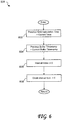
- FIG. 4 shows a flowchart of a Dynamic Bit Rate Adaptation Process 400, comprising steps:
- the steps 404 "Generate next transcoded Buffer" to 414 "Transcoding complete?" form a Dynamic Bit Rate Adaptation Loop 418 that is executed until the media has been completely transcoded and sent.
- the loop may also stop if the session is aborted.
- the step 402 "Begin Transcoding" is a starting point for the transcoding of the media. It represents the point in time where a new session is created for the media to be transcoded and sent to the client.
- the step 404 "Generate next transcoded Buffer” represents the step of transcoding a fragment of the media file 328 into a transcoded media fragment, by generating a buffered fragment of the transcoded media, also referred to simply as a "transcoded buffer”. It is created by applying an encoding algorithm in the transcoder 314 on the original media, i.e. the media file 328.
- step 406 Send transcoded Buffer one transcoded buffer (a transcoded media fragment) is sent to the client over the established session, once it has been generated from the original media.
- step 408 "Reevaluate QoS" the current QoS value is reevaluated or adjusted. This step is expanded in more detail in Fig. 5 below.
- the QoS value is potentially reevaluated (adjusted) every time a transcoded buffer has been sent. This allows the bit rate to be dynamically adjusted as the buffers are sent out.
- step 410 “Has QoS value changed?”, it is determined if the QoS value has been changed as a result of the reevaluation in the previous step. If the QoS value has been changed (exit "Yes” from step 410), the new QoS value is used to change the encoding bit rate for the generation of the next transcoded buffer as detailed in the step 412 "Apply new QoS value” expanded in more detail in Fig. 10 below, otherwise execution continues with the step 414: “Transcoding complete?” (exit "No” from step 410).
- step 414 "Transcoding complete?", it is determined if the media has been completely transcoded and sent. If this is the case (exit "Yes” from step 414), the Dynamic Bit Rate Adaptation Process 400 ends with the step 416 "End”, otherwise execution loops back to the step 404: "Generate next transcoded Buffer".
- Session Variables used in the DBRA algorithm are Stored in the Session Variables Module 312 ( Fig. 3 ) and tabulated in Table 2 below.
- Table 2 Session Variables used in the DBRA algorithm Variable Name Abbr. Description CurrentTime CT The current wall clock time which increases in real time. ClockIntervalAverage CIA The calculated average value of the wall clock difference between two QoS reevaluations. Since the algorithm waits at least 3 seconds before performing a new reevaluation, this is the minimal value for the variable. It is one of the elements used to attempt to detect when the media is paused. If a pause does occur, the value of CurrentClockInterval will most probably be much higher than ClockIntervalAverage.
- ClockIntervalSum CIS The sum of all calculated wall clock differences between subsequent reevaluations of the QoS. In other words, it is the sum of all CurrentClockInterval values. It is used to update ClockIntervalAverage at each QoS reevaluation.
- CurrentBufferInterval CBI The difference between the timestamp of the transcoded data buffer that has just been sent and the one that was sent previously.
- CurrentBufferTimestamp CBT The timestamp of the transcoded data buffer that has just been sent.
- CurrentClockInterval CCI The difference between the current wall clock time and the wall clock time when the previous transcoded data buffer was sent. Delta Delta When reevaluating the QoS, the (positive) difference between CurrentBufferInterval and CurrentClockInterval.
- PreviousBufferTimestamp PBT The timestamp of the transcoded data buffer that had just been sent when the QoS reevaluation was last performed (at the previous IntervalIndex value).
- PreviousClockIntervalSum PCIS The sum of all CurrentClockInterval values when the QoS reevaluation was last performed (at the previous IntervalIndex value). It is used to discard a given interval from the calculation of ClockIntervalAverage if a pause is detected. The data is removed from the average by recalculating the value with PreviousClockIntervalSum and IntervalIndex.
- PreviousQoSCalculationTime PQCT The wall clock time when the QoS was last calculated. It is used to calculate CurrentClockInterval.
- QoS QoS The value that is calculated at each interval and, if necessary, sent to the encoder in order to modify the transcoding bit rate. A value less than 1 indicates to the encoder that the bit rate must be reduced. A value greater than 1 indicates that the bit rate may be increased.
- TranscodingThrottlingRate TTR The rate at which media are sent to clients in Transcoding mode as a factor of the clock rate rather than the media bit rate. For example, 1.0 is equal to the clock rate and 2.0 is double the clock rate.
- FIG. 5 is a more detailed flowchart of the QoS reevaluation step 408 of Fig. 4 , including steps:
- the QoS reevaluation step 408 is entered with the step 502 "Enter”, computes a new QoS values in the steps 504 to 528, and returns with the step 530 "Return”.
- TTR is a parameter that is established when a session is configured. When TTR is less than 1.0, transcoding is not performed, and the procedure returns immediately. TTR provides a way to control the speed at which the original media will be transcoded. With a TTR of 1.0, a 1 minute media would be transcoded in about 1 minute. With a TTR of 2.0, that media would be transcoded in about 30 seconds. This value provides a way to tweak the transcoding speed vs CPU usage ratio. Increasing TTR provides the transcoded media faster but uses more CPU. Bit rate applies to both the original and transcoded media.
- step 506 Is First QoS Calculation?", it is determined whether this is the first QoS calculation for this session. If it is (exit Yes from step 506), execution continues with the step 508 "Initialize QoS Calculation" in which various Session Variables are initialized. The step 508 is expanded in Fig. 6 below. If this is not the first QoS calculation for this session (exit No from step 506), execution continues with the step 510.
- step 512 "Is CCI > N s?", it is determined if the current clock interval (CCI) exceeds a minimum current clock interval of N seconds, where N is preferably set to a value of 3, but may range between 2 and 5 seconds for example. If it does (exit Yes from step 512), execution continues with the next step 514, otherwise (exit No from step 512) the procedure returns (the step 530).
- the value of N is chosen to provide a sufficiently quick response to changes in available bandwidth, in order to protect video buffers from over- or underflowing.
- the step 512 ensures that an actual reevaluation of the current encoding rate (step 528, "Calculate QoS”) is carried out in effect periodically, approximately every N seconds.
- the current interval index (CII) is incremented.
- the interval index must be increased every time the QoS is recalculated. It is used as a divisor when calculating interval averages.
- step 516 Calculate Clock Interval Sum
- the current clock interval sum (CIS) is updated by incrementing with the new clock interval (the current clock interval CCI).
- the sum of clock intervals is kept so that the clock interval average may be calculated in the next step.
- the clock interval average (CIA) is computed as the result of dividing the current sum of clock intervals (CIS) by the current interval index (CII) that has been set in the step 514 above.
- step 520 "Detect Pause" conditions are analyzed which are heuristically sufficient to indicate, as a guess, that the user has probably paused the media. It is an informed guess but not a certainty.
- the step 520 is expanded in Fig. 7 below.
- step 522 "Pause Detected?", the result of the previous step 520 is used to determine if the user has probably paused the media. If a pause was detected (exit Yes from step 522) the pause is processed in the next step 524, otherwise (exit No from step 522) execution continues with the step 526.
- step 524 "Process Pause" algorithm variables are adjusted in order that the available bandwidth not be incorrectly underestimated.
- the step 524 which is expanded in more detail in Fig. 8 below, is necessary in order to try to distinguish bandwidth problems from a pause of the media initiated by the user. Both will lead to slow or stopped buffer transmittal.
- step 526 "Is CCI equal CBI?", it is determined if the transmission time of the last transcoder buffer corresponds with the real time as indicated by the wall clock. This is demonstrated by equality of the current buffer interval (CBI) and the current clock interval (CCI). If they are equal (exit Yes from step 526), there is no need to recalculate the QoS and the step 408 is terminated by returning with the step 530, otherwise (exit No from step 526) a new QoS value is calculated in the next step 528.
- CBI current buffer interval
- CCI current clock interval
- step 528 "Calculate QoS" a new QoS value is computed in preparation of the next iteration of the Dynamic Bit Rate Adaptation Loop 418, but only when there is a difference between the clock and buffer intervals as determined in the previous step 526, and if no pause has been detected as determined in the step 522 above.
- the process of step 408 is terminated by returning with the step 530.
- the step 528 is expanded in more detail in Fig. 9 below.
- Figure 6 shows an expanded flow chart of the step 508 "Initialize QoS Calculation" of Fig. 5 , including steps:
- PreviousQoSCalculationTime When a transcoded buffer is sent out, the values of PreviousQoSCalculationTime, PreviousBufferTimestamp, IntervalIndex, and ClockIntervalSum are saved, but when a new session is started, and before first transcoded buffer is sent out, these saved values must be initialized (in the steps 602 to 608).
- PreviousQoSCalculationTime is initialized to the Current Time. There is no real Previous QoS Calculation Time since this is only the first QoS calculation. The value is saved for use in the next QoS calculation.
- the value of the Previous Buffer Timestamp is initialized to the Current Buffer Timestamp. There is no real Previous Buffer Timestamp as it is the first buffer. The value is saved to be used in the next QoS calculation.
- the clock interval sum is initialized to 0. There is no clock interval sum yet as the first interval does not exist yet as explained in the step 606.
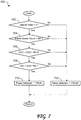
- Figure 7 illustrates an expanded flow chart of the step 520 "Detect Pause" of Fig. 5 , including steps:
- the steps 702 to 708 comprise a number of conditions, which are tested to determine if a pause is detected. Only if all of these conditions are true, a pause is deemed to have occurred.
- step 702 "Interval Index > 1?" it is determined if the Interval Index is greater than one. If not (exit "No” from the step 702) execution jumps to the step 712, otherwise the next condition is tested in the step 704.
- step 704 "Pause Guess Count ⁇ MP ?” it is determined if the Pause Guess Count, i.e. the number of detected pauses, is lower than a maximum number of detected pauses "MP", the value of MP preferably being set to 3. If not (exit "No” from the step 704) execution jumps to the step 712, otherwise the next condition is tested in the step 706.
- step 706 (CCI - CIA) > XC s ?" it is determined if the Current Clock Interval (CCI) is more than a margin "XC" of seconds greater than the calculated Clock Interval Average (CIA), the value of the margin XC preferably being set to 1. If not (exit "No” from the step 706) execution jumps to the step 712, otherwise the next condition is tested in the step 708.
- step 708 "CCI > (CIA ⁇ M) ?" it is determined if the value of the Current Clock Interval (CCI) is more than a factor "M" times the calculated Clock Interval Average (CIA). If not (exit "No” from the step 708) execution jumps to the step 712, otherwise execution continues with the step 710.
- the factor "M” is preferably set to a value of 4.
- PD PauseDetected
- PD PauseDetected
- Figure 8 illustrates an expanded flow chart of the step 524 "Process Pause"of Fig. 5 , including steps:
- a detected user pause is processed by updating relevant variables.
- the value of the Previous Clock Interval Sum is reset to its former value, as the current Clock Interval Sum minus the value of the Current Clock Interval.
- the value of the current Clock Interval Sum is set to a value estimated from the corrected Previous Clock Interval Sum incremented by an average increment computed as the Previous Clock Interval Sum divided by the number of Intervals less one (the present pause interval).
- the process of the step 524 is mainly a corrective recalculation of the clock interval sum (and therefore clock interval average) after an abnormally long clock interval has led to the detection of a user pause.
- Such clock intervals are discarded and replaced with the average clock interval so that they do not have an impact on the subsequent calculations. They are basically ignored because user pauses are not bandwidth problems and should not lead to a modification of the bit rate.
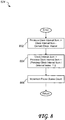
- Figure 9 is an expanded flow chart of the step 528 "Calculate QoS" of Fig. 5 , including steps:
- the QoS value is recalculated by evaluating any change in the apparent link bandwidth which is estimated from the difference between the CurrentClocklnterval (CCI) and the CurrentBufferlnterval (CBI), and incrementing or decrementing QoS accordingly to follow the change.
- CCI CurrentClocklnterval
- CBI CurrentBufferlnterval
- the steps 902 to 918 are provided in a bit rate adaptation function 924 which is illustrative of the functionality of the QoS Adjuster module 320 of Fig. 3 .
- step 902 "CBI > CCI ?", it is determined whether the value of CBI (the Current Buffer Interval) is larger than the value of CCI (Current Clock Interval). If CBI is larger than CCI, the value of QoS will be increased as computed in the steps 904 to 910, otherwise the value of QoS will be decreased as computed in the steps 912 to 918.
- the step 902 is only entered when CBI is not equal to CCI, as determined in the earlier step 526 ( Fig. 5 ).
- the value of Difference 1 is obtained by dividing the delta (Deltal) calculated in step 904 by the Current Buffer Interval.
- a new QoS value will then be calculated in step 910, but only if Difference 1 is greater than a first threshold "TH1" as determined in the step 908 "Is Differencel > TH1 ?".
- the threshold helps prevent bit rate modifications for very low fluctuations.
- step 908 "Is Difference1 > TH1 ?", it is determined if the first relative difference calculated in the previous step exceeds the first threshold.
- the first threshold TH1 is preferably set to a value of at least 0.05, corresponding to a relative difference of 5%. If the first relative difference does exceed the first threshold (exit "Yes” from the step 908) execution continues with the next step 910 in which the value of QoS will be adjusted, otherwise QoS will not be adjusted and execution jumps to the step 920.
- the first incremental value is computed as the first relative difference (Difference 1) from step 906 above, divided by a first attenuation factor "AF1" which preferably has a value of about 8.0.
- the first incremental value, added to 1.0 is the new QoS value that will be sent to the encoder (in step 412, Fig. 4 ) so that it increases the QoS factor (corresponding to the encoding bit rate) by the first incremental value.
- the value of Difference2 is obtained by dividing the delta (Delta2) calculated in step 912 by the Current Clock Interval.
- a new QoS value will then be calculated in step 918, but only if Difference2 is greater than a second threshold "TH2", as determined in the step 916 "Is Difference2 > TH2 ?". This helps prevent bit rate modifications for very low fluctuations.
- step 916 "Is Difference2 > TH2 ?", it is determined if the second relative difference calculated in the previous step exceeds the second threshold.
- the second threshold TH2 is preferably set to a value of at least 0.02, corresponding to a relative difference of 2%. If the second relative difference does exceed the second threshold (exit "Yes” from the step 916) execution continues with the next step 918 in which the value of QoS will be adjusted, otherwise QoS will not be adjusted and execution jumps to the step 920.
- the thresholds TH1 and TH2 help prevent unnecessary bit rate modifications for very low fluctuations.
- the second incremental value is computed as the second relative difference (Difference2) from step 914 above, divided by a second attenuation factor "AF2" which preferably has a value of about 6.0.
- a value obtained by substracting the second incremental value, from 1.0 is the new QoS value that will be sent to the encoder (in step 412, Fig. 4 ) so that it decreases the QoS factor (corresponding to the encoding bit rate) by the second incremental value.
- the values of the attenuation factors AF1 and AF2 have been chosen to ensure stability of the adjustment algorithm, that is to prevent excessive or too rapid over-corrections of the encoding rate (QoS value). Without any adjustment factors, each adjustment of the encoding rate would cause the encoding rate to continuously bounce from too-high to too-low with each adjustment.
- the adjustment factors reduce the impact of each correction and have a sort of damping effect, so that ideally, the encoding rate gradually approaches the transmission bit rate over a number of adjustment intervals. On the other hand, If the adjustment factors are too large (excessive damping), the approach of the encoding rate to the transmission bit rate would be too slow. By judicially choosing the adjustment factors AF1 and AF2, a sufficiently rapid correction is achieved.
- the Current Time is saved as the Previous QoS Calculation Time (PQCT) after each QoS calculation so that the value of PQCT may be used in the calculation step 510 ( Fig. 5 ) of the next iteration of the Dynamic Bit Rate Adaptation Loop 418 ( Fig. 4 ).
- the Current Buffer Time Stamp is saved as the Previous Buffer Time Stamp (PBTS) after each QoS calculation so that the value of PBTS may be used in the calculation step 510 ( Fig. 5 ) of the next iteration of the Dynamic Bit Rate Adaptation Loop 418 ( Fig. 4 ).
- PBTS Previous Buffer Time Stamp
- TH1 TH2
- AF1 AF1
- AF2 AF2
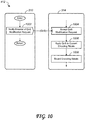
- Figure 10 is an expanded flow chart of the step 412 "Apply new QoS value" of Fig. 4 , including steps:
- the step 1002 is performed in the Dynamic Bit Rate Adapter 310 ( Fig. 3 ), whence the updated QoS value is communicated to the Transcoder 314 ( Fig. 3 ) in which the remaining steps 1004 to 1008 are performed. It is noted that the Transcoder 314 has a capability for receiving QoS modification notifications from the DBRA adapter 310 within the Variable Bit Rate Transcoder subsystem 202.
- step 1002 "Notify Encoder of QoS Modification Request" an event comprising a QoS notification is sent from the Dynamic Bit Rate Adapter 310 to the Transcoder 314.
- step 1004 "Accept QoS Modification Request"
- the QoS notification is received and accepted by the Transcoder 314.
- the Transcoder 314 will modify the active encoding bit rate when this change notification is received.
- the difference in bit rate is dependent on, and proportional to, the new QoS value.
- step 1008 "Bound Encoding Bit Rate" while modifying the encoding bit rate to correspond to the new QoS value, it ensured that the actual encoding bit rate is bound within configured minimum and maximum values even if applying the new QoS value would mathematically lead to a bit rate that is out of that range.
- the DBRA algorithm (also referred to as an original service) of an embodiment of the invention may be summarized in the following steps:
- the initial bit rate is determined from the bit rate of the original media that is being transcoded and the profile of the mobile unit in the session configuration.
- the original service does gradually transcode and send the media to the client without receiving any additional HTTP requests.
- the session is closed once the media has been sent (or the client aborts).
- the bit rate may be modified after every buffer is sent.
- a modified DBRA algorithm (also referred to as a modified service) is proposed, summarized in the following steps:
- each segment requested by the mobile unit is composed of one or more media fragments.
- the transcoded media segment of the modified service effectively corresponds to the stream fragment of the original service in terms of encoding rate adjustments, the difference being that stream fragments of the original service are delineated by time (approximately N-second intervals) whereas in the modified service, transcoded media segments (stream fragments) are defined by way of the segments as they are requested by the mobile unit.
- the modified DBRA algorithm has been designed to match usage conventions by certain SmartPhones, for example the iPhone manufactured by Apple Inc., where individual but related short segment sessions (TCP sessions) within a transcoding session (HTTP session) are established for downloading media content.
- TCP sessions individual but related short segment sessions
- HTTP session transcoding session
- the initial bit rate is determined from the bit rate of the original media that is being transcoded and the profile of the mobile unit (configuration).
- the client i.e. the mobile unit, requests the media using HTTP. It first receives a playlist that tells it which segments exist and where they are located; no transcoding is involved yet. The client then requests a segment using HTTP. Upon the first such request, a transcoding session is created on the server by the modified service. Successive bit rate adjustments to apply to each segment are determined based on the information kept in a transcoding segment state, i.e. time intervals, etc.
- the modified service transcodes and sends the transcoded segment in transcoded media fragments; transcoded media fragments (transcoded buffers) are sent to the client until the end of the segment is reached.
- the client requests the next segment unless it was the last segment of the playlist or the client aborts, at which time the transcoding session is terminated on the server.
- the modified service recognizes that each transcoding segment is part of the same transcoding session and transcodes each next requested segment with a re-adjusted bit rate and sends it.
- the transcoding segment state is used to determine a percentage to apply to the initial (original) bit rate.
- the transcoded bit rate cannot be higher than the initial bit rate so that percentage cannot be higher than 100%.
- the original service provides transmission of the media file in a single session during which the transcoder bit rate may be adjusted after each transcoded stream fragment (which may contain as little as a single transcoded media fragment) is sent, while in the modified service individual segments (also referred to as media segments) are transmitted in separate related segment sessions and the transcoder bit rate is adjusted before each segment session, except before the first session in which the originally established bit rate is used.
- individual segments also referred to as media segments
- the QoS value (bit rate) for the initial segment is established by the mobile unit, and is a function of the properties of the mobile unit. Before transcoding of each subsequent segment starts a QoS value is calculated as described in detail in Fig. 12 below (duration of last segment divided by segment start interval, and multiplied by the QoS that was last saved when the previous segment was requested).
- the transcoder bit rate i.e. the QoS
- the transcoder bit rate is readjusted every time a segment is requested, by multiplying the "cumulative" saved QoS value by a value calculated based on the last segment. That value provides a factor to apply to the initial bit rate of the segment before the start of transcoding the next segment. Since a segment request is a new connection for a segment file that has an (original) initial bit rate indicated in the request, it is necessary to remember at what percentage of that initial bit rate the next segment should be transcoded. That percentage is then adjusted every time another segment is requested.
- the "start intervals" of the modified service correspond to the "current clock intervals" of the original service; both are used in computing the estimated transmit time for comparison with the estimated display time - the display time of a segment of fragments (modified service) vs. the display time of a stream fragment, i.e. the transcoded media fragments transmitted in each approximate 3-second interval (original service).
- the media segments are sufficiently short, so that the bit rate does not need to be varied during the segment, i.e. multiple transcoded buffers (transcoded media fragments) are sent at the bit rate established after the previous media segment was sent.
- the bit rate may be varied only between segments.
- Pause detection in the original service uses the clock interval average to determine if the last clock interval was "abnormally" long.
- Pause detection in the modifiedservice uses a corresponding average of the start intervals (the time between two segment requests) to determine if the last start interval was much too long.. Therefore, no pause detection is attempted during the transmission of a segment. If a pause is detected, this will be a case when a segment is requested and it is realized that it has been a long time since the last segment was requested. If other conditions are met (the number of times a pause was detected, and how out-of-the-ordinary the interval is, etc), it is assumed, or guessed, that the video was paused and no bit rate modification is done.
- both embodiments i.e. run the original service for the transcoded buffers of each segment including pause detection during a segment, then reset the QoS for the next segment according to the accumulated average segment bit rate. It would be possible to integrate some of the original service for the processing of buffers inside a segment.
- FIG. 11 shows a flowchart of a Modified Dynamic Bit Rate Adaptation Process 1100 according to another embodiment of the invention, comprising steps:
- the Modified Dynamic Bit Rate Adaptation (MDBRA) Process 1100 comprises a loop including steps 1102 to 1120 which starts after the mobile unit has obtained a playlist of segments from the Media Processing Server 302 ( Fig. 3 ).
- the MDBRA Process 1100 covers the transcoding and transmission of media segments upon requests issued by the mobile unit which connects to download segments as necessary.
- a transcoding session is created when the first connection is established, and is used for subsequent requests.
- the MDBRA Process 1100 ends when the mobile unit closes the connection with the server or aborts (not shown in Fig. 11 ).
- the steps 1108 "Reevaluate Segment QoS” and 1110 "Save Segment QoS Value” are done after each new segment is requested, just before transcoding, because that is when the start interval of the current segment is known.
- the new QoS value (the encoding bit rate) can be computed as described in the step 1108 by multiplying the QoS value that was last saved (i.e. the previous time a segment was requested) with a QoS adjustment factor which is computed by dividing the duration of the last segment by the current segment start interval.
- the QoS value is saved every time it is calculated, and readjusted every time another segment is requested by multiplying the saved value by the value calculated based on the last segment.
- That value provides a factor to apply to the initial bitrate of the segment before transcoding it. Since each segment request is a new connection for a segment file that has an (original) initial bitrate, it is necessary to remember from segment to segment what percentage of that initial bitrate to transcode at. That percentage is then adjusted every time a segment is requested.
- step 1102 Mobile Connects to Download one Segment
- the mobile unit connects and requests one segment.
- step 1104 "Does Session Exist?", it is determined if a transcoding session between the server and the mobile unit already exists. If it does (exit "Yes” from step 1104) execution continues with the step 1108, otherwise (exit "No” from step 1104) a transcoding session is created in the next step 1106.
- step 1108 "Reevaluate Segment QoS" the saved QoS value that was used in trancoding the last completed segment is reevaluated, based on the time interval between this last completed segment and the previous segment.
- the step 1108 is expanded in more detail in Fig. 12 below.
- step 1110 Save Segment QoS value
- the newly computed Segment QoS value is saved in preparation for transcoding the next segment.
- step 1112 "Apply Saved Segment QoS"
- the newly saved QoS value is applied, i.e. sent to the Transcoder 314, analogous to the step 412 as described in detail in Fig. 10 .
- step 1114 "Begin Transcoding the Segment" transcoding of the current segment is begun. This step is analogous to the step 402.
- the steps 1116 "Generate next transcoded Buffer” and 1118 "Send transcoded Buffer" of the MDBRA process 1100 are analogous to the steps 404 and 406 respectively of the DBRA process 400.
- step 1120 End of Segment reached?", it is determined if the end of the currently transmitted segment has been reached. If this is not the case (exit "No” from step 1120) execution loops back to the step 1116 for processing the next buffer, otherwise (exit "Yes” from step 1120) execution continues with the step 1102 to wait for the next segment to be requested by the mobile unit.
- FIG. 12 is a more detailed flowchart of the Segment QoS Reevaluation step 1108 of Fig. 11 , including steps:
- the Segment QoS Reevaluation step 1108 resembles the Reevaluate QoS step 408 of the DBRA Process of Fig.4 (expanded in Fig. 5 ) with differences due to the use of segment Start Intervals and Outputted Segment Duration values in place of Clock Intervals and Buffer Intervals respectively.
- step 1204 "Is First Segment QoS Calculation?", it is determined whether this is the first QoS evaluation for a segment.
- the Segment QoS is different compared to the simple QoS of Fig. 5 because the Segment QoS determines the transcoder bit rate for an entire segment, not just a transcoder buffer transmission. If this is the First Segment QoS Calculation (exit Yes from step 1204) execution continues with the step 1206 "Initialize Segment QoS Calculation", expanded below in Fig. 13 . If this is not the First Segment QoS Calculation (exit No from step 1204) execution continues with the step 1208.
- CSI Current Start Interval
- OSD Outputted Segment Duration
- step 1210 “Increment Interval Index”
- the current interval index (CII) is incremented.
- the interval index is increased every time the QoS is recalculated. It is used as a divisor when calculating interval averages.
- the step 1210 is identical to the step 514 of Fig. 5 .
- step 1212 "Calculate Start Interval Sum" the StartlntervalSum (SIS) is incremented by the CurrentStartInterval.
- the step 1212 is similar to the step 516 of Fig. 5 , but provides summing of Start Intervals (CSI) instead of Clock Intervals (CCI).
- the StartIntervalAverage (SIA) is calculated by dividing the StartIntervalSum by the Intervallndex.
- the step 1214 is similar to the step 518 of Fig. 5 , but provides averaging of Start Intervals instead of Clock Intervals.
- the step 1216 "Detect Segment Pause” is analogous to the step 520 "Detect Pause” of Fig. 5 , but instead of CCI and CIA, uses CSI and SIA variables respectively to determine the Boolean value of PauseDetected.
- the step 1218 "Is Segment Pause (SP) Detected?" is analogous to the step 522 "Detect Pause" of Fig. 5 .
- the result of the previous step 1216 is used to determine if the user has probably paused the media.
- a Segment Pause would be detected when a segment is requested and it is realized that it has been a long time since the last segment was requested. If a segment pause was detected (exit Yes from step 1218) the segment pause is processed in the next step 1220, otherwise (exit No from step 1218) execution continues with the step 1222.
- the step 1220 "Process Segment Pause” is analogous to the step 524 "Process Pause” of Fig. 5 , and is mainly a corrective recalculation of the segment start interval sum (instead of the clock interval sum in step 524, see Fig. 8 ) after an abnormally long segment interval has led to the detection of a user pause.
- a variable “LastSegmentQoS” which is the QoS adjustment factor (corresponding to a relative bit rate) that was used in transcoding the last segment, is calculated by dividing the duration of the last outputted segment (OSD), i.e. the estimated display time of the last segment, by the Current Start Interval, i.e. the estimated transmit time of the last segment.
- OSD last outputted segment
- Current Start Interval i.e. the estimated transmit time of the last segment.
- the Segment QoS Reevaluation process 1108 is finished and the newly computed SegmentQoS value is saved (in step 1110, Fig. 11 ).
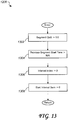
- FIG. 13 is a more detailed flowchart of the "Initialize Segment QoS Calculation" step 1206 of Fig. 12 , including steps:
- step 1206 The purpose of the step 1206 is analogous to that of the step 508 of Fig. 5 , for initializing variables before the first segment is transcoded.
- Methods and a system to provide bandwidth adaptation of media files for transmission over connections with varying bandwidth are provided by embodiments of the present invention, thus improving the user experience in HTTP multimedia delivery over networks for which the bandwidth varies over time.
- Protocols for streaming media files over a network are within the scope of the invention. Such protocols need not provide application level feed back from the mobile unit to the dynamic bit rate adapter, but are assumed to provide a reliable transport mechanism.
- the Transcoder 314 comprises software having computer readable instructions stored in a memory for execution by a processor, but alternatively the Transcoder 314 may also be implemented as hardware on a separate processor, such as coprocessor, in a digital signal processor (DSP) chip or in an Application Specific Integrated Circuit (ASIC).
- DSP digital signal processor
- ASIC Application Specific Integrated Circuit
Landscapes
- Engineering & Computer Science (AREA)
- Multimedia (AREA)
- Signal Processing (AREA)
- Databases & Information Systems (AREA)
- General Engineering & Computer Science (AREA)
- Computer Networks & Wireless Communication (AREA)
- Two-Way Televisions, Distribution Of Moving Picture Or The Like (AREA)
- Mobile Radio Communication Systems (AREA)
- Compression Or Coding Systems Of Tv Signals (AREA)
- Data Exchanges In Wide-Area Networks (AREA)
Claims (16)
- Procédé de codage d'un fichier de média ou d'une partie de celui-ci pour sa transmission en temps réel sur une liaison à largeur de bande variable à une unité de destination, consistant à :
utiliser au moins un processeur d'un transcodeur pour :
exécuter de manière itérative les étapes suivantes jusqu'à ce que le fichier de média ou la partie de celui-ci soit complètement codé(e) et envoyé(e) :(i) coder un ou plusieurs fragments du fichier de média en fragments de média transcodés pour former un fragment de flux (404) ;(ii) envoyer le fragment de flux par l'intermédiaire d'un tampon de transcodeur (316) du transcodeur à l'unité de destination (406) ;(iii) déterminer un temps de transmission estimé du fragment de flux, le temps de transmission estimé étant calculé comme un temps d'horloge actuel moins un temps d'horloge d'une itération précédente qui représente un intervalle de temps entre des fragments de flux successifs quittant le tampon de transcodeur (316) et est l'intervalle de temps nécessaire pour que ledit fragment de flux soit transporté à partir du tampon de transcodeur (316) et consommé par la liaison à largeur de bande variable ;(iv) déterminer un temps d'affichage estimé dudit fragment de flux, le temps d'affichage estimé étant calculé comme un horodatage du fragment de flux moins un horodatage d'un fragment de flux envoyé lors de l'itération précédente ; et(v) ajuster des paramètres de taux de codage pour les itérations suivantes en fonction du temps de transmission estimé et du temps d'affichage estimé. - Procédé selon la revendication 1, dans lequel l'étape (i) comprend les opérations consistant à :coder au moins un premier fragment du fichier de média en premier fragment de média transcodé correspondant à un taux de codage initial ; etfixer un taux de codage actuel égal au taux de codage initial.
- Procédé selon la revendication 1 ou 2, dans lequel l'étape (v) comprend l'opération consistant à coder des fragments suivants du fichier de média en fragments de média transcodés correspondant à un taux de codage actuel ajusté.
- Procédé selon l'une quelconque des revendications 1 à 3, dans lequel l'étape (iii) comprend en outre l'opération consistant à estimer le temps de transmission estimé comme un intervalle d'horloge actuel entre un temps actuel et un temps d'un codage précédent.
- Procédé selon la revendication 4, dans lequel l'étape (v) comprend en outre les opérations consistant à :représenter le temps d'affichage estimé comme un intervalle de tampon actuel ;comparer l'intervalle d'horloge actuel avec l'intervalle de tampon actuel ; etajuster le taux de codage actuel en fonction de l'intervalle d'horloge actuel et de l'intervalle de tampon actuel.
- Procédé selon la revendication 5, dans lequel l'opération consistant à ajuster comprend en outre les opérations consistant à :augmenter le taux de codage actuel d'une première valeur incrémentale calculée à partir d'une première différence relative entre l'intervalle de tampon actuel et l'intervalle d'horloge actuel, à condition que la première différence relative dépasse un premier seuil prédéterminé TH1 ; etdiminuer le taux de codage actuel d'une seconde valeur incrémentale calculée à partir d'une seconde différence relative entre l'intervalle d'horloge actuel et l'intervalle de tampon actuel, à condition que la seconde différence relative dépasse un second seuil prédéterminé TH2.
- Procédé selon l'une quelconque des revendications 4 à 6, dans lequel l'étape (v) comprend en outre les opérations consistant à détecter une cessation de la transmission des fragments de média transcodés, et supprimer l'ajustement du taux de codage actuel à condition que la cessation ait été détectée.
- Procédé selon la revendication 7, dans lequel l'opération consistant à détecter la cessation de la transmission comprend les opérations consistant à :calculer une moyenne des intervalles d'horloge comme une moyenne des intervalles d'horloge actuels passés depuis que le codage du fichier de média a commencé, un intervalle d'horloge actuel étant mesuré entre un temps actuel et le temps du codage précédent ; etdéterminer que la cessation est détectée à condition que l'intervalle d'horloge actuel dépasse la moyenne des intervalles d'horloge d'une marge prédéterminée XC.
- Système de traitement de média pour coder un fichier de média ou une partie de celui-ci pour sa transmission en temps réel sur une liaison à largeur de bande variable à une unité de destination, comprenant :
un transcodeur incluant un processeur et un support de stockage non transitoire lisible par ordinateur sur lequel sont stockées des instructions lisibles par ordinateur pour exécution par le processeur, les instructions amenant le processeur à :
exécuter de manière itérative les étapes suivantes jusqu'à ce que le fichier de média ou la partie de celui-ci soit complètement codé(e) et envoyé(e) :coder un ou plusieurs fragments du fichier de média en fragments de média transcodés pour former un fragment de flux (404) ;envoyer le fragment de flux par l'intermédiaire d'un tampon de transcodeur (316) du transcodeur à l'unité de destination (406) ;déterminer un temps de transmission estimé du fragment de flux, le temps de transmission estimé étant calculé comme un temps d'horloge actuel moins un temps d'horloge d'une itération précédente qui représente un intervalle de temps entre des fragments de flux successifs quittant le tampon de transcodeur (316) et est l'intervalle de temps nécessaire pour que ledit fragment de flux soit transporté à partir du tampon de transcodeur (316) et consommé par la liaison à largeur de bande variable ;déterminer un temps d'affichage estimé dudit fragment de flux, le temps d'affichage estimé étant calculé comme un horodatage du fragment de flux moins un horodatage d'un fragment de flux envoyé lors de l'itération précédente ; etajuster des paramètres de taux de codage pour les itérations suivantes en fonction du temps de transmission estimé et du temps d'affichage estimé. - Système de traitement de média selon la revendication 9, dans lequel les instructions sont en outre configurées pour amener le processeur à estimer le temps de transmission estimé comme un intervalle d'horloge actuel entre un temps actuel et un temps d'un codage précédent.
- Système de traitement de média selon la revendication 9 ou 10, dans lequel les instructions sont en outre configurées pour amener le processeur à :coder au moins un premier fragment du fichier de média en premier fragment de média transcodé correspondant à un taux de codage initial ; etfixer le taux de codage actuel égal au taux de codage initial.
- Système de traitement de média selon l'une quelconque des revendications 9 à 11, comprenant en outre un tampon de transcodeur adapté à transmettre les fragments de média transcodés à un réseau, et à envoyer les horodatages associés à au moins certains des fragments de média transcodés à un adaptateur dynamique de débit binaire.
- Système de traitement de média selon l'une quelconque des revendications 10 à 12, dans lequel les instructions sont en outre configurées pour amener le processeur à :représenter le temps d'affichage estimé comme un intervalle de tampon actuel ;comparer l'intervalle d'horloge actuel avec l'intervalle de tampon actuel ; etajuster le taux de codage actuel en fonction de l'intervalle d'horloge actuel et de l'intervalle de tampon actuel.
- Système de traitement de média selon l'une quelconque des revendications 10 à 13, comprenant en outre :
un module d'horloge murale pour le suivi du temps actuel. - Système de traitement de média selon l'une quelconque des revendications 9 à 14, dans lequel les instructions sont en outre configurées pour amener le processeur à ajuster le taux de codage actuel en fonction du taux de codage actuel.
- Système de traitement de média selon l'une quelconque des revendications 9 à 15, dans lequel les instructions sont en outre configurées pour détecter une cessation de la transmission des fragments de média transcodés et pour empêcher l'adaptateur dynamique de débit binaire d'ajuster le taux de codage actuel, à condition que la cessation ait été détectée.
Applications Claiming Priority (2)
| Application Number | Priority Date | Filing Date | Title |
|---|---|---|---|
| US13/210,652 US9137551B2 (en) | 2011-08-16 | 2011-08-16 | Dynamic bit rate adaptation over bandwidth varying connection |
| PCT/CA2012/000658 WO2013023271A1 (fr) | 2011-08-16 | 2012-07-10 | Adaptation de débit binaire dynamique sur une connexion variant en bande passante |
Publications (3)
| Publication Number | Publication Date |
|---|---|
| EP2745523A1 EP2745523A1 (fr) | 2014-06-25 |
| EP2745523A4 EP2745523A4 (fr) | 2015-03-18 |
| EP2745523B1 true EP2745523B1 (fr) | 2020-03-18 |
Family
ID=47712649
Family Applications (1)
| Application Number | Title | Priority Date | Filing Date |
|---|---|---|---|
| EP12824490.2A Active EP2745523B1 (fr) | 2011-08-16 | 2012-07-10 | Adaptation de débit binaire dynamique sur une connexion variant en bande passante |
Country Status (8)
| Country | Link |
|---|---|
| US (2) | US9137551B2 (fr) |
| EP (1) | EP2745523B1 (fr) |
| JP (1) | JP6255342B2 (fr) |
| KR (1) | KR101996877B1 (fr) |
| CN (1) | CN103733632B (fr) |
| CA (1) | CA2842391C (fr) |
| IL (1) | IL230995A (fr) |
| WO (1) | WO2013023271A1 (fr) |
Families Citing this family (41)
| Publication number | Priority date | Publication date | Assignee | Title |
|---|---|---|---|---|
| BR112014003909B1 (pt) | 2011-08-29 | 2022-10-18 | Sling Media Pvt Ltd | Sistema de codificação de mídia e respectivo método implementado por computador |
| US20130304934A1 (en) * | 2011-09-29 | 2013-11-14 | Avvasi Inc. | Methods and systems for controlling quality of a media session |
| US9462302B2 (en) * | 2012-02-23 | 2016-10-04 | Mobitv, Inc. | Efficient delineation and distribution of media segments |
| KR102077556B1 (ko) * | 2012-06-28 | 2020-02-14 | 엑시스 에이비 | 가상 인트라-프레임을 사용하여 비디오 콘텐츠를 인코딩하기 위한 시스템 및 방법 |
| US20150327197A1 (en) * | 2012-08-14 | 2015-11-12 | Nokia Corporation | Method and apparatuses for adjusting time, computer-readable storage media and a computer program product |
| US9699103B2 (en) * | 2012-09-05 | 2017-07-04 | Flash Networks, Ltd | Method and system for flow controlling |
| US9560392B2 (en) | 2012-09-07 | 2017-01-31 | Google Inc. | Dynamic bit rate encoding |
| WO2014117775A1 (fr) * | 2013-01-31 | 2014-08-07 | Codemate A/S | Procédé de distribution de contenu de réseau à l'aide d'un nœud assistant de distribution |
| US20140286438A1 (en) * | 2013-03-19 | 2014-09-25 | Nvidia Corporation | Quality of service management server and method of managing streaming bit rate |
| US9462032B2 (en) * | 2013-07-24 | 2016-10-04 | Google Inc. | Streaming media content |
| US9137285B2 (en) * | 2013-10-21 | 2015-09-15 | Broadcom Corporation | Adaptive audio video (AV) stream processing |
| ITBA20130077A1 (it) * | 2013-11-25 | 2015-05-26 | Cicco Luca De | Meccanismo per il controllo del bitrate di codifica in un sistema di video streaming adattivo basato su buffer di playout e sulla stima di banda. |
| EP3496452A1 (fr) * | 2014-02-21 | 2019-06-12 | Telefonaktiebolaget LM Ericsson (publ) | Fourniture de service dans un reseau de communication |
| US10708328B2 (en) * | 2014-03-17 | 2020-07-07 | Intel Corporation | Hardware assisted media playback and capture synchronization |
| JP2016005095A (ja) * | 2014-06-16 | 2016-01-12 | 三菱電機株式会社 | 通信装置及び通信レート調整装置及びアプリケーション実行装置及び通信システム及びプログラム |
| FR3022426A1 (fr) | 2014-06-16 | 2015-12-18 | Orange | Gestion par un equipement intermediaire de la qualite de transmission d'un flux de donnees vers un terminal mobile |
| CN104038816B (zh) * | 2014-06-20 | 2017-06-23 | 深圳市九洲电器有限公司 | 一种视频同步方法及系统 |
| EP3162076B1 (fr) * | 2014-06-26 | 2019-01-09 | ARRIS Enterprises LLC | Commande adaptative de débit binaire côté serveur pour clients de lecture en flux continu http |
| US20160191598A1 (en) * | 2014-08-04 | 2016-06-30 | Likqid Media, Inc. | System and methods that enable embedding, streaming, and displaying video advertisements and content on internet webpages accessed via mobile devices |
| US9635069B2 (en) * | 2014-08-06 | 2017-04-25 | Verizon Patent And Licensing Inc. | User feedback systems and methods |
| CN105376176B (zh) * | 2014-08-21 | 2019-03-19 | 中国电信股份有限公司 | 保障移动互联网视频业务服务质量的方法、装置和系统 |
| CN105791735B (zh) * | 2014-12-24 | 2018-11-27 | 中国电信股份有限公司 | 用于视频通话码流动态调整的方法和系统 |
| WO2016112294A1 (fr) * | 2015-01-08 | 2016-07-14 | Arris Enterprises, Inc. | Commande adaptative de débit binaire côté serveur pour clients de lecture en flux continu http |
| US9756112B2 (en) * | 2015-02-11 | 2017-09-05 | At&T Intellectual Property I, L.P. | Method and system for managing service quality according to network status predictions |
| US9935993B2 (en) * | 2015-03-31 | 2018-04-03 | Avago Technologies General Ip (Singapore) Pte. Ltd. | Streaming video over a hybrid network |
| US9894366B2 (en) * | 2016-01-28 | 2018-02-13 | Arris Enterprises Llc | Variant and buffer handling for adaptive bitrate streaming |
| WO2018053540A1 (fr) * | 2016-09-19 | 2018-03-22 | Arris Enterprises Llc | Appareil et système de diffusion en continu http avec fichier pseudo-manifeste et codage juste à temps |
| WO2018129102A1 (fr) * | 2017-01-03 | 2018-07-12 | Ayre Acoustics, Inc. | Système et procédé pour une meilleure transmission de données numériques |
| US10812559B2 (en) * | 2017-01-18 | 2020-10-20 | Amazon Technologies, Inc. | Just-in-time variable adaptive encoding and delivery of media content |
| JP6922267B2 (ja) * | 2017-03-07 | 2021-08-18 | 株式会社リコー | 端末、プログラム、データ送信方法 |
| CN106993237B (zh) * | 2017-04-13 | 2019-05-10 | 中北大学 | 基于mpeg-dash协议的动态自适应码率选择方法 |
| KR102307447B1 (ko) * | 2017-05-02 | 2021-09-30 | 삼성전자주식회사 | 네트워크 환경 모니터링에 기반하는 http 적응적 스트리밍 서버, 방법, 및 클라이언트 단말 |
| US10801678B1 (en) * | 2017-10-30 | 2020-10-13 | Race, LLC | Modular emitting device and light emission system |
| US10944808B2 (en) * | 2018-07-27 | 2021-03-09 | Verizon Digital Media Services Inc. | Server-side reproduction of client-side quality-of-experience |
| WO2021061098A1 (fr) * | 2019-09-23 | 2021-04-01 | Google Llc | Transcodage vidéo interruptible |
| WO2021063488A1 (fr) * | 2019-10-01 | 2021-04-08 | Streamonkey Gmbh | Diffusion en continu de contenu multimédia adaptative coté-serveur |
| US11438545B2 (en) | 2019-12-23 | 2022-09-06 | Carrier Corporation | Video image-based media stream bandwidth reduction |
| US11463651B2 (en) | 2019-12-23 | 2022-10-04 | Carrier Corporation | Video frame-based media stream bandwidth reduction |
| CN113596377A (zh) * | 2021-08-02 | 2021-11-02 | 北京数码视讯技术有限公司 | 卫星通信的监控视频转换装置和系统 |
| CN114221870B (zh) * | 2021-12-16 | 2023-01-20 | 北京达佳互联信息技术有限公司 | 用于服务器的带宽分配方法和装置 |
| US20250024107A1 (en) * | 2023-07-14 | 2025-01-16 | Sling TV L.L.C. | Method and System for Streaming with Rewards Tracking and Arcade Content |
Family Cites Families (74)
| Publication number | Priority date | Publication date | Assignee | Title |
|---|---|---|---|---|
| DE3236000A1 (de) * | 1982-09-29 | 1984-03-29 | Blaupunkt-Werke Gmbh, 3200 Hildesheim | Verfahren zum klassifizieren von audiosignalen |
| US4893197A (en) * | 1988-12-29 | 1990-01-09 | Dictaphone Corporation | Pause compression and reconstitution for recording/playback apparatus |
| JP3042102B2 (ja) * | 1991-11-22 | 2000-05-15 | 日本電気株式会社 | 多重化送信装置 |
| US6633609B1 (en) * | 1996-12-24 | 2003-10-14 | Intel Corporation | Method and apparatus for bit rate control in a digital video environment for arbitrary bandwidth |
| US7041941B2 (en) | 1997-04-07 | 2006-05-09 | Patented Medical Solutions, Llc | Medical item thermal treatment systems and method of monitoring medical items for compliance with prescribed requirements |
| US7184426B2 (en) | 2002-12-12 | 2007-02-27 | Qualcomm, Incorporated | Method and apparatus for burst pilot for a time division multiplex system |
| US6400954B1 (en) | 1998-05-15 | 2002-06-04 | Tlelefonaktiebolaget Lm Ericsson (Publ) | Methods and systems for mode selection based on access network capacity |
| US6563517B1 (en) * | 1998-10-02 | 2003-05-13 | International Business Machines Corp. | Automatic data quality adjustment to reduce response time in browsing |
| US6208620B1 (en) | 1999-08-02 | 2001-03-27 | Nortel Networks Corporation | TCP-aware agent sublayer (TAS) for robust TCP over wireless |
| JP3841256B2 (ja) | 2000-02-15 | 2006-11-01 | 三菱電機株式会社 | 通信システム及び通信方法及び送信端末 |
| US7299291B1 (en) | 2000-05-18 | 2007-11-20 | Akamai Technologies, Inc. | Client-side method for identifying an optimum server |
| US7260826B2 (en) | 2000-05-31 | 2007-08-21 | Microsoft Corporation | Resource allocation in multi-stream IP network for optimized quality of service |
| US20020164024A1 (en) | 2000-08-25 | 2002-11-07 | Hiroshi Arakawa | Data transmission method and data relay method |
| US20020173315A1 (en) | 2001-05-17 | 2002-11-21 | Mazen Chmaytelli | Method and apparatus for adapting capabilities of a wireless communication system to load requirements |
| US7460629B2 (en) | 2001-06-29 | 2008-12-02 | Agere Systems Inc. | Method and apparatus for frame-based buffer control in a communication system |
| JP2003046976A (ja) * | 2001-07-31 | 2003-02-14 | Matsushita Electric Ind Co Ltd | 映像配信装置、映像配信方法及びプログラム |
| KR100954253B1 (ko) | 2001-11-30 | 2010-04-23 | 브리티쉬 텔리커뮤니케이션즈 파블릭 리미티드 캄퍼니 | 데이터 전송 시스템, 동작 방법 및 디지털 미디어 캐리어 |
| JP3900413B2 (ja) | 2002-02-14 | 2007-04-04 | Kddi株式会社 | 映像情報伝送方式およびプログラム |
| US7596373B2 (en) | 2002-03-21 | 2009-09-29 | Mcgregor Christopher M | Method and system for quality of service (QoS) monitoring for wireless devices |
| JP4000895B2 (ja) | 2002-04-23 | 2007-10-31 | 日本電気株式会社 | リアルタイム通信のためのビットレート制御方法および装置 |
| US20030229693A1 (en) | 2002-06-06 | 2003-12-11 | International Business Machines Corporation | Self-correcting monitor |
| KR20030095995A (ko) | 2002-06-14 | 2003-12-24 | 마츠시타 덴끼 산교 가부시키가이샤 | 미디어 전송방법 및 그 송신장치 및 수신장치 |
| US7418037B1 (en) * | 2002-07-15 | 2008-08-26 | Apple Inc. | Method of performing rate control for a compression system |
| EP1418764A1 (fr) * | 2002-11-05 | 2004-05-12 | STMicroelectronics S.A. | Procédé et appareil pour le transcodage de données de sous-images et système d'affichage vidéo comprenant cet appareil |
| SG111978A1 (en) | 2002-11-20 | 2005-06-29 | Victor Company Of Japan | An mpeg-4 live unicast video streaming system in wireless network with end-to-end bitrate-based congestion control |
| JP4069444B2 (ja) | 2002-12-10 | 2008-04-02 | ソニー株式会社 | 符号化制御方法及び符号化制御プログラム |
| AU2003288595A1 (en) | 2002-12-18 | 2004-07-09 | Koninklijke Philips Electronics N.V. | Adaptive encoding of digital multimedia information |
| KR100759954B1 (ko) | 2003-02-13 | 2007-09-19 | 노키아 코포레이션 | 멀티미디어 스트리밍에서 클라이언트 레이트 능력을시그널링하는 방법 |
| US7444425B2 (en) | 2003-03-10 | 2008-10-28 | Meetrix, Inc. | Applying multicast protocols and VPN tunneling techniques to achieve high quality of service for real time media transport across IP networks |
| JP3838511B2 (ja) * | 2003-03-24 | 2006-10-25 | 株式会社Kddi研究所 | 動画像圧縮符号化送受信装置 |
| WO2005008386A2 (fr) | 2003-07-07 | 2005-01-27 | Mformation Technologies, Inc. | Systeme et procede pour la gestion par voie hertzienne d'un reseau et de dispositifs sans fil |
| US7400588B2 (en) | 2003-08-01 | 2008-07-15 | Thomson Licensing | Dynamic rate adaptation using neural networks for transmitting video data |
| US7016409B2 (en) * | 2003-11-12 | 2006-03-21 | Sony Corporation | Apparatus and method for use in providing dynamic bit rate encoding |
| SE526535C2 (sv) | 2003-12-22 | 2005-10-04 | Operax Ab | Förfarande och nod för att kontrollera vidarebefordringskvaliteten i ett datanät |
| JP2005217199A (ja) | 2004-01-29 | 2005-08-11 | Sanyo Electric Co Ltd | 信号線回路装置 |
| EP1580914A1 (fr) * | 2004-03-26 | 2005-09-28 | STMicroelectronics S.r.l. | Méthode et système pour contrôler l'opération d'un réseau |
| US7720983B2 (en) | 2004-05-03 | 2010-05-18 | Microsoft Corporation | Fast startup for streaming media |
| US7353466B2 (en) | 2004-05-28 | 2008-04-01 | Microsoft Corporation | System and method for generating message notification objects on dynamically scaled timeline |
| US7647614B2 (en) | 2004-06-07 | 2010-01-12 | Sling Media, Inc. | Fast-start streaming and buffering of streaming content for personal media player |
| US8099755B2 (en) * | 2004-06-07 | 2012-01-17 | Sling Media Pvt. Ltd. | Systems and methods for controlling the encoding of a media stream |
| US7474707B2 (en) * | 2004-09-09 | 2009-01-06 | Ibiquity Digital Corporation | Bandwidth reduction of an FM broadcast signal using a baseband precompensation technique |
| JP2006129439A (ja) | 2004-09-28 | 2006-05-18 | Kyocera Corp | 通信システム、基地局装置、サーバ装置、移動局装置、及び送信データ量決定方法 |
| CN101057439B (zh) | 2004-11-17 | 2011-07-27 | 夏普株式会社 | 发送器 |
| KR20060065482A (ko) * | 2004-12-10 | 2006-06-14 | 마이크로소프트 코포레이션 | 스트리밍 미디어 데이터의 코딩 비트 레이트의 제어 시스템및 프로세스 |
| JP2006180036A (ja) * | 2004-12-21 | 2006-07-06 | Matsushita Electric Ind Co Ltd | 動画符号化伝送制御装置および動画符号化伝送制御方法 |
| GB2423219B (en) | 2005-02-10 | 2007-04-18 | Motorola Inc | A network proxy client, a communication system and a method for providing a service between a server and an end client |
| JP4697525B2 (ja) | 2005-04-20 | 2011-06-08 | ソニー株式会社 | 送受信システム、送信装置および送信方法、受信装置および受信方法、並びにプログラム |
| JP4516496B2 (ja) * | 2005-07-27 | 2010-08-04 | 株式会社日立製作所 | マルチキャスト配信方法及びシステム、コンテンツサーバ |
| US8218657B2 (en) | 2005-09-02 | 2012-07-10 | Netgear, Inc. | System and method for automatic adjustment of streaming video bit rate |
| US8842555B2 (en) | 2005-10-21 | 2014-09-23 | Qualcomm Incorporated | Methods and systems for adaptive encoding of real-time information in packet-switched wireless communication systems |
| US8548048B2 (en) | 2005-10-27 | 2013-10-01 | Qualcomm Incorporated | Video source rate control for video telephony |
| KR100735373B1 (ko) | 2006-02-06 | 2007-07-04 | 삼성전자주식회사 | 통신 시스템에서 데이터 전송 방법 및 시스템 |
| US20080133766A1 (en) | 2006-05-05 | 2008-06-05 | Wenjun Luo | Method and apparatus for streaming media to a plurality of adaptive client devices |
| KR101330631B1 (ko) * | 2006-08-21 | 2013-11-18 | 삼성전자주식회사 | 통신 환경에 대한 정보를 이용한 데이터 전송 방법 및 장치 |
| US20080062322A1 (en) | 2006-08-28 | 2008-03-13 | Ortiva Wireless | Digital video content customization |
| US8606966B2 (en) | 2006-08-28 | 2013-12-10 | Allot Communications Ltd. | Network adaptation of digital content |
| US8014470B2 (en) | 2006-09-13 | 2011-09-06 | Marvell World Trade Ltd. | Decoding method for Alamouti scheme with HARQ and/or repetition coding |
| US8780717B2 (en) | 2006-09-21 | 2014-07-15 | General Instrument Corporation | Video quality of service management and constrained fidelity constant bit rate video encoding systems and method |
| US7743161B2 (en) | 2006-10-10 | 2010-06-22 | Ortiva Wireless, Inc. | Digital content buffer for adaptive streaming |
| US7652993B2 (en) * | 2006-11-03 | 2010-01-26 | Sharp Laboratories Of America, Inc. | Multi-stream pro-active rate adaptation for robust video transmission |
| JP2008125063A (ja) | 2006-11-09 | 2008-05-29 | Innowireless Co Ltd | 基地局エミュレーティング機能を有する携帯インターネット計測器及びこれを利用したul同期取得及び端末のテスト方法 |
| US8116805B2 (en) | 2006-12-17 | 2012-02-14 | Qualcomm Incorporated | Uplink scheduling for OFDM systems |
| US7843824B2 (en) | 2007-01-08 | 2010-11-30 | General Instrument Corporation | Method and apparatus for statistically multiplexing services |
| US8139487B2 (en) * | 2007-02-28 | 2012-03-20 | Microsoft Corporation | Strategies for selecting a format for data transmission based on measured bandwidth |
| US20080300025A1 (en) | 2007-05-31 | 2008-12-04 | Motorola, Inc. | Method and system to configure audio processing paths for voice recognition |
| JP2009005193A (ja) * | 2007-06-22 | 2009-01-08 | Panasonic Corp | 通信端末 |
| EP2254366B1 (fr) | 2008-03-12 | 2019-02-27 | Panasonic Intellectual Property Corporation of America | Dispositif de radiocommunication, système de radiocommunication et procédé de radiocommunication |
| US7844725B2 (en) | 2008-07-28 | 2010-11-30 | Vantrix Corporation | Data streaming through time-varying transport media |
| EP2204954B1 (fr) * | 2009-01-06 | 2017-12-27 | Alcatel Lucent | Utilisation optimisée de bande passante dans des réseaux |
| US8396114B2 (en) | 2009-01-29 | 2013-03-12 | Microsoft Corporation | Multiple bit rate video encoding using variable bit rate and dynamic resolution for adaptive video streaming |
| WO2010111261A1 (fr) | 2009-03-23 | 2010-09-30 | Azuki Systems, Inc. | Procédé et système d'adaptation dynamique de débit de lecture vidéo en transit |
| US9501329B2 (en) | 2009-05-08 | 2016-11-22 | Rackspace Us, Inc. | Methods and systems for cloud computing management |
| US20100312828A1 (en) * | 2009-06-03 | 2010-12-09 | Mobixell Networks Ltd. | Server-controlled download of streaming media files |
| CN102123303B (zh) * | 2011-03-25 | 2012-10-24 | 天脉聚源(北京)传媒科技有限公司 | 一种音视频文件播放方法、系统及传输控制装置 |
-
2011
- 2011-08-16 US US13/210,652 patent/US9137551B2/en active Active
-
2012
- 2012-07-10 KR KR1020147003664A patent/KR101996877B1/ko active Active
- 2012-07-10 CA CA2842391A patent/CA2842391C/fr active Active
- 2012-07-10 EP EP12824490.2A patent/EP2745523B1/fr active Active
- 2012-07-10 CN CN201280039692.XA patent/CN103733632B/zh active Active
- 2012-07-10 JP JP2014525264A patent/JP6255342B2/ja active Active
- 2012-07-10 WO PCT/CA2012/000658 patent/WO2013023271A1/fr not_active Ceased
-
2014
- 2014-02-16 IL IL230995A patent/IL230995A/en active IP Right Grant
-
2015
- 2015-09-14 US US14/853,868 patent/US10499071B2/en active Active
Non-Patent Citations (1)
| Title |
|---|
| None * |
Also Published As
| Publication number | Publication date |
|---|---|
| CN103733632A (zh) | 2014-04-16 |
| US9137551B2 (en) | 2015-09-15 |
| IL230995A0 (en) | 2014-03-31 |
| JP2014529931A (ja) | 2014-11-13 |
| KR101996877B1 (ko) | 2019-07-08 |
| IL230995A (en) | 2016-04-21 |
| CA2842391C (fr) | 2017-04-04 |
| US20160007033A1 (en) | 2016-01-07 |
| WO2013023271A1 (fr) | 2013-02-21 |
| EP2745523A4 (fr) | 2015-03-18 |
| CN103733632B (zh) | 2017-09-22 |
| JP6255342B2 (ja) | 2017-12-27 |
| US10499071B2 (en) | 2019-12-03 |
| CA2842391A1 (fr) | 2013-02-21 |
| KR20140062465A (ko) | 2014-05-23 |
| EP2745523A1 (fr) | 2014-06-25 |
| US20130044801A1 (en) | 2013-02-21 |
Similar Documents
| Publication | Publication Date | Title |
|---|---|---|
| EP2745523B1 (fr) | Adaptation de débit binaire dynamique sur une connexion variant en bande passante | |
| US10044466B2 (en) | Server-side adaptive bit rate control for DLNA HTTP streaming clients | |
| US10129316B2 (en) | Server side adaptive bit rate control for HTTP streaming clients | |
| EP2600576B1 (fr) | Gestion adaptative d'un débit binaire pour transmission multimédia sur des réseaux de paquets | |
| US8527649B2 (en) | Multi-stream bit rate adaptation | |
| KR101931407B1 (ko) | Http 의사 스트리밍용 적분 제어기 기반 페이싱 | |
| US20160037176A1 (en) | Automatic and adaptive selection of profiles for adaptive bit rate streaming | |
| CA2847081A1 (fr) | Systemes et procedes pour commander le codage d'un flux multimedia segmente au moyen de temps de transmission de segment | |
| CN106791860B (zh) | 一种自适应视频编码控制系统及方法 | |
| CN111886875B (zh) | 一种通过网络传送媒体内容的方法及服务器 | |
| CN105338376A (zh) | 一种流媒体码率的控制方法、系统及流媒体服务器 | |
| EP3228035A1 (fr) | Commande adaptative de débit binaire côté serveur pour clients de lecture en flux continu http |
Legal Events
| Date | Code | Title | Description |
|---|---|---|---|
| PUAI | Public reference made under article 153(3) epc to a published international application that has entered the european phase |
Free format text: ORIGINAL CODE: 0009012 |
|
| 17P | Request for examination filed |
Effective date: 20140127 |
|
| AK | Designated contracting states |
Kind code of ref document: A1 Designated state(s): AL AT BE BG CH CY CZ DE DK EE ES FI FR GB GR HR HU IE IS IT LI LT LU LV MC MK MT NL NO PL PT RO RS SE SI SK SM TR |
|
| DAX | Request for extension of the european patent (deleted) | ||
| A4 | Supplementary search report drawn up and despatched |
Effective date: 20150218 |
|
| RIC1 | Information provided on ipc code assigned before grant |
Ipc: H04N 21/2662 20110101AFI20150212BHEP Ipc: H04N 21/643 20110101ALI20150212BHEP Ipc: H04N 21/234 20110101ALI20150212BHEP Ipc: H04N 19/146 20140101ALI20150212BHEP Ipc: H04N 21/24 20110101ALI20150212BHEP |
|
| 17Q | First examination report despatched |
Effective date: 20160315 |
|
| RAP1 | Party data changed (applicant data changed or rights of an application transferred) |
Owner name: VANTRIX CORPORATION |
|
| GRAP | Despatch of communication of intention to grant a patent |
Free format text: ORIGINAL CODE: EPIDOSNIGR1 |
|
| STAA | Information on the status of an ep patent application or granted ep patent |
Free format text: STATUS: GRANT OF PATENT IS INTENDED |
|
| INTG | Intention to grant announced |
Effective date: 20191004 |
|
| GRAS | Grant fee paid |
Free format text: ORIGINAL CODE: EPIDOSNIGR3 |
|
| GRAA | (expected) grant |
Free format text: ORIGINAL CODE: 0009210 |
|
| STAA | Information on the status of an ep patent application or granted ep patent |
Free format text: STATUS: THE PATENT HAS BEEN GRANTED |
|
| RAP1 | Party data changed (applicant data changed or rights of an application transferred) |
Owner name: VANTRIX CORPORATION |
|
| AK | Designated contracting states |
Kind code of ref document: B1 Designated state(s): AL AT BE BG CH CY CZ DE DK EE ES FI FR GB GR HR HU IE IS IT LI LT LU LV MC MK MT NL NO PL PT RO RS SE SI SK SM TR |
|
| REG | Reference to a national code |
Ref country code: GB Ref legal event code: FG4D |
|
| REG | Reference to a national code |
Ref country code: DE Ref legal event code: R096 Ref document number: 602012068617 Country of ref document: DE |
|
| REG | Reference to a national code |
Ref country code: AT Ref legal event code: REF Ref document number: 1247291 Country of ref document: AT Kind code of ref document: T Effective date: 20200415 Ref country code: IE Ref legal event code: FG4D |
|
| PG25 | Lapsed in a contracting state [announced via postgrant information from national office to epo] |
Ref country code: NO Free format text: LAPSE BECAUSE OF FAILURE TO SUBMIT A TRANSLATION OF THE DESCRIPTION OR TO PAY THE FEE WITHIN THE PRESCRIBED TIME-LIMIT Effective date: 20200618 Ref country code: FI Free format text: LAPSE BECAUSE OF FAILURE TO SUBMIT A TRANSLATION OF THE DESCRIPTION OR TO PAY THE FEE WITHIN THE PRESCRIBED TIME-LIMIT Effective date: 20200318 Ref country code: RS Free format text: LAPSE BECAUSE OF FAILURE TO SUBMIT A TRANSLATION OF THE DESCRIPTION OR TO PAY THE FEE WITHIN THE PRESCRIBED TIME-LIMIT Effective date: 20200318 |
|
| REG | Reference to a national code |
Ref country code: NL Ref legal event code: MP Effective date: 20200318 |
|
| PG25 | Lapsed in a contracting state [announced via postgrant information from national office to epo] |
Ref country code: HR Free format text: LAPSE BECAUSE OF FAILURE TO SUBMIT A TRANSLATION OF THE DESCRIPTION OR TO PAY THE FEE WITHIN THE PRESCRIBED TIME-LIMIT Effective date: 20200318 Ref country code: SE Free format text: LAPSE BECAUSE OF FAILURE TO SUBMIT A TRANSLATION OF THE DESCRIPTION OR TO PAY THE FEE WITHIN THE PRESCRIBED TIME-LIMIT Effective date: 20200318 Ref country code: LV Free format text: LAPSE BECAUSE OF FAILURE TO SUBMIT A TRANSLATION OF THE DESCRIPTION OR TO PAY THE FEE WITHIN THE PRESCRIBED TIME-LIMIT Effective date: 20200318 Ref country code: BG Free format text: LAPSE BECAUSE OF FAILURE TO SUBMIT A TRANSLATION OF THE DESCRIPTION OR TO PAY THE FEE WITHIN THE PRESCRIBED TIME-LIMIT Effective date: 20200618 Ref country code: GR Free format text: LAPSE BECAUSE OF FAILURE TO SUBMIT A TRANSLATION OF THE DESCRIPTION OR TO PAY THE FEE WITHIN THE PRESCRIBED TIME-LIMIT Effective date: 20200619 |
|
| REG | Reference to a national code |
Ref country code: LT Ref legal event code: MG4D |
|
| PG25 | Lapsed in a contracting state [announced via postgrant information from national office to epo] |
Ref country code: NL Free format text: LAPSE BECAUSE OF FAILURE TO SUBMIT A TRANSLATION OF THE DESCRIPTION OR TO PAY THE FEE WITHIN THE PRESCRIBED TIME-LIMIT Effective date: 20200318 |
|
| PG25 | Lapsed in a contracting state [announced via postgrant information from national office to epo] |
Ref country code: RO Free format text: LAPSE BECAUSE OF FAILURE TO SUBMIT A TRANSLATION OF THE DESCRIPTION OR TO PAY THE FEE WITHIN THE PRESCRIBED TIME-LIMIT Effective date: 20200318 Ref country code: CZ Free format text: LAPSE BECAUSE OF FAILURE TO SUBMIT A TRANSLATION OF THE DESCRIPTION OR TO PAY THE FEE WITHIN THE PRESCRIBED TIME-LIMIT Effective date: 20200318 Ref country code: IS Free format text: LAPSE BECAUSE OF FAILURE TO SUBMIT A TRANSLATION OF THE DESCRIPTION OR TO PAY THE FEE WITHIN THE PRESCRIBED TIME-LIMIT Effective date: 20200718 Ref country code: SK Free format text: LAPSE BECAUSE OF FAILURE TO SUBMIT A TRANSLATION OF THE DESCRIPTION OR TO PAY THE FEE WITHIN THE PRESCRIBED TIME-LIMIT Effective date: 20200318 Ref country code: PT Free format text: LAPSE BECAUSE OF FAILURE TO SUBMIT A TRANSLATION OF THE DESCRIPTION OR TO PAY THE FEE WITHIN THE PRESCRIBED TIME-LIMIT Effective date: 20200812 Ref country code: SM Free format text: LAPSE BECAUSE OF FAILURE TO SUBMIT A TRANSLATION OF THE DESCRIPTION OR TO PAY THE FEE WITHIN THE PRESCRIBED TIME-LIMIT Effective date: 20200318 Ref country code: EE Free format text: LAPSE BECAUSE OF FAILURE TO SUBMIT A TRANSLATION OF THE DESCRIPTION OR TO PAY THE FEE WITHIN THE PRESCRIBED TIME-LIMIT Effective date: 20200318 Ref country code: LT Free format text: LAPSE BECAUSE OF FAILURE TO SUBMIT A TRANSLATION OF THE DESCRIPTION OR TO PAY THE FEE WITHIN THE PRESCRIBED TIME-LIMIT Effective date: 20200318 |
|
| REG | Reference to a national code |
Ref country code: AT Ref legal event code: MK05 Ref document number: 1247291 Country of ref document: AT Kind code of ref document: T Effective date: 20200318 |
|
| REG | Reference to a national code |
Ref country code: DE Ref legal event code: R097 Ref document number: 602012068617 Country of ref document: DE |
|
| PLBE | No opposition filed within time limit |
Free format text: ORIGINAL CODE: 0009261 |
|
| STAA | Information on the status of an ep patent application or granted ep patent |
Free format text: STATUS: NO OPPOSITION FILED WITHIN TIME LIMIT |
|
| PG25 | Lapsed in a contracting state [announced via postgrant information from national office to epo] |
Ref country code: AT Free format text: LAPSE BECAUSE OF FAILURE TO SUBMIT A TRANSLATION OF THE DESCRIPTION OR TO PAY THE FEE WITHIN THE PRESCRIBED TIME-LIMIT Effective date: 20200318 Ref country code: DK Free format text: LAPSE BECAUSE OF FAILURE TO SUBMIT A TRANSLATION OF THE DESCRIPTION OR TO PAY THE FEE WITHIN THE PRESCRIBED TIME-LIMIT Effective date: 20200318 Ref country code: IT Free format text: LAPSE BECAUSE OF FAILURE TO SUBMIT A TRANSLATION OF THE DESCRIPTION OR TO PAY THE FEE WITHIN THE PRESCRIBED TIME-LIMIT Effective date: 20200318 Ref country code: ES Free format text: LAPSE BECAUSE OF FAILURE TO SUBMIT A TRANSLATION OF THE DESCRIPTION OR TO PAY THE FEE WITHIN THE PRESCRIBED TIME-LIMIT Effective date: 20200318 |
|
| 26N | No opposition filed |
Effective date: 20201221 |
|
| PG25 | Lapsed in a contracting state [announced via postgrant information from national office to epo] |
Ref country code: MC Free format text: LAPSE BECAUSE OF FAILURE TO SUBMIT A TRANSLATION OF THE DESCRIPTION OR TO PAY THE FEE WITHIN THE PRESCRIBED TIME-LIMIT Effective date: 20200318 Ref country code: PL Free format text: LAPSE BECAUSE OF FAILURE TO SUBMIT A TRANSLATION OF THE DESCRIPTION OR TO PAY THE FEE WITHIN THE PRESCRIBED TIME-LIMIT Effective date: 20200318 |
|
| REG | Reference to a national code |
Ref country code: CH Ref legal event code: PL |
|
| REG | Reference to a national code |
Ref country code: BE Ref legal event code: MM Effective date: 20200731 |
|
| PG25 | Lapsed in a contracting state [announced via postgrant information from national office to epo] |
Ref country code: FR Free format text: LAPSE BECAUSE OF NON-PAYMENT OF DUE FEES Effective date: 20200731 Ref country code: LU Free format text: LAPSE BECAUSE OF NON-PAYMENT OF DUE FEES Effective date: 20200710 Ref country code: CH Free format text: LAPSE BECAUSE OF NON-PAYMENT OF DUE FEES Effective date: 20200731 Ref country code: LI Free format text: LAPSE BECAUSE OF NON-PAYMENT OF DUE FEES Effective date: 20200731 |
|
| PG25 | Lapsed in a contracting state [announced via postgrant information from national office to epo] |
Ref country code: BE Free format text: LAPSE BECAUSE OF NON-PAYMENT OF DUE FEES Effective date: 20200731 Ref country code: SI Free format text: LAPSE BECAUSE OF FAILURE TO SUBMIT A TRANSLATION OF THE DESCRIPTION OR TO PAY THE FEE WITHIN THE PRESCRIBED TIME-LIMIT Effective date: 20200318 |
|
| PG25 | Lapsed in a contracting state [announced via postgrant information from national office to epo] |
Ref country code: IE Free format text: LAPSE BECAUSE OF NON-PAYMENT OF DUE FEES Effective date: 20200710 |
|
| PG25 | Lapsed in a contracting state [announced via postgrant information from national office to epo] |
Ref country code: TR Free format text: LAPSE BECAUSE OF FAILURE TO SUBMIT A TRANSLATION OF THE DESCRIPTION OR TO PAY THE FEE WITHIN THE PRESCRIBED TIME-LIMIT Effective date: 20200318 Ref country code: MT Free format text: LAPSE BECAUSE OF FAILURE TO SUBMIT A TRANSLATION OF THE DESCRIPTION OR TO PAY THE FEE WITHIN THE PRESCRIBED TIME-LIMIT Effective date: 20200318 Ref country code: CY Free format text: LAPSE BECAUSE OF FAILURE TO SUBMIT A TRANSLATION OF THE DESCRIPTION OR TO PAY THE FEE WITHIN THE PRESCRIBED TIME-LIMIT Effective date: 20200318 |
|
| PG25 | Lapsed in a contracting state [announced via postgrant information from national office to epo] |
Ref country code: MK Free format text: LAPSE BECAUSE OF FAILURE TO SUBMIT A TRANSLATION OF THE DESCRIPTION OR TO PAY THE FEE WITHIN THE PRESCRIBED TIME-LIMIT Effective date: 20200318 Ref country code: AL Free format text: LAPSE BECAUSE OF FAILURE TO SUBMIT A TRANSLATION OF THE DESCRIPTION OR TO PAY THE FEE WITHIN THE PRESCRIBED TIME-LIMIT Effective date: 20200318 |
|
| P01 | Opt-out of the competence of the unified patent court (upc) registered |
Effective date: 20230601 |
|
| PGFP | Annual fee paid to national office [announced via postgrant information from national office to epo] |
Ref country code: GB Payment date: 20250529 Year of fee payment: 14 |
|
| PGFP | Annual fee paid to national office [announced via postgrant information from national office to epo] |
Ref country code: DE Payment date: 20250604 Year of fee payment: 14 |