EP2748060B1 - Method and device for averting and damping rolling of a ship - Google Patents
Method and device for averting and damping rolling of a ship Download PDFInfo
- Publication number
- EP2748060B1 EP2748060B1 EP12831107.3A EP12831107A EP2748060B1 EP 2748060 B1 EP2748060 B1 EP 2748060B1 EP 12831107 A EP12831107 A EP 12831107A EP 2748060 B1 EP2748060 B1 EP 2748060B1
- Authority
- EP
- European Patent Office
- Prior art keywords
- ship
- rolling
- engine
- speed
- propeller
- Prior art date
- Legal status (The legal status is an assumption and is not a legal conclusion. Google has not performed a legal analysis and makes no representation as to the accuracy of the status listed.)
- Not-in-force
Links
Images




Classifications
-
- G—PHYSICS
- G05—CONTROLLING; REGULATING
- G05D—SYSTEMS FOR CONTROLLING OR REGULATING NON-ELECTRIC VARIABLES
- G05D1/00—Control of position, course, altitude or attitude of land, water, air or space vehicles, e.g. using automatic pilots
- G05D1/40—Control within particular dimensions
- G05D1/49—Control of attitude, i.e. control of roll, pitch or yaw
-
- B—PERFORMING OPERATIONS; TRANSPORTING
- B63—SHIPS OR OTHER WATERBORNE VESSELS; RELATED EQUIPMENT
- B63B—SHIPS OR OTHER WATERBORNE VESSELS; EQUIPMENT FOR SHIPPING
- B63B39/00—Equipment to decrease pitch, roll, or like unwanted vessel movements; Apparatus for indicating vessel attitude
-
- B—PERFORMING OPERATIONS; TRANSPORTING
- B63—SHIPS OR OTHER WATERBORNE VESSELS; RELATED EQUIPMENT
- B63B—SHIPS OR OTHER WATERBORNE VESSELS; EQUIPMENT FOR SHIPPING
- B63B39/00—Equipment to decrease pitch, roll, or like unwanted vessel movements; Apparatus for indicating vessel attitude
- B63B39/08—Equipment to decrease pitch, roll, or like unwanted vessel movements; Apparatus for indicating vessel attitude to decrease vessel movements by using auxiliary jets or propellers
-
- B—PERFORMING OPERATIONS; TRANSPORTING
- B63—SHIPS OR OTHER WATERBORNE VESSELS; RELATED EQUIPMENT
- B63B—SHIPS OR OTHER WATERBORNE VESSELS; EQUIPMENT FOR SHIPPING
- B63B39/00—Equipment to decrease pitch, roll, or like unwanted vessel movements; Apparatus for indicating vessel attitude
- B63B39/14—Equipment to decrease pitch, roll, or like unwanted vessel movements; Apparatus for indicating vessel attitude for indicating inclination or duration of roll
-
- B—PERFORMING OPERATIONS; TRANSPORTING
- B63—SHIPS OR OTHER WATERBORNE VESSELS; RELATED EQUIPMENT
- B63H—MARINE PROPULSION OR STEERING
- B63H21/00—Use of propulsion power plant or units on vessels
- B63H21/21—Control means for engine or transmission, specially adapted for use on marine vessels
-
- G—PHYSICS
- G05—CONTROLLING; REGULATING
- G05D—SYSTEMS FOR CONTROLLING OR REGULATING NON-ELECTRIC VARIABLES
- G05D1/00—Control of position, course, altitude or attitude of land, water, air or space vehicles, e.g. using automatic pilots
- G05D1/40—Control within particular dimensions
- G05D1/49—Control of attitude, i.e. control of roll, pitch or yaw
- G05D1/495—Control of attitude, i.e. control of roll, pitch or yaw to ensure stability
-
- G—PHYSICS
- G05—CONTROLLING; REGULATING
- G05D—SYSTEMS FOR CONTROLLING OR REGULATING NON-ELECTRIC VARIABLES
- G05D2109/00—Types of controlled vehicles
- G05D2109/30—Water vehicles
-
- G—PHYSICS
- G05—CONTROLLING; REGULATING
- G05D—SYSTEMS FOR CONTROLLING OR REGULATING NON-ELECTRIC VARIABLES
- G05D2109/00—Types of controlled vehicles
- G05D2109/30—Water vehicles
- G05D2109/34—Water vehicles operating on the water surface
Definitions
- This invention relates to a method and a device for averting and damping rolling of an engine-driven marine vessel with propeller propulsion.
- Rolling of ships is a well-known risk to ship's safety. It can lead to loss of containers, high stress on the cargo securing system and discomfort for passengers and crew. Rolling of a ship can be described as the periodic movement of a pendulum. The corresponding time period is called the "natural rolling period" of a ship.
- the corresponding time period is called the "natural rolling period" of a ship.
- the pendulum-type of rolling will dampen quickly due to the restoring moment and due to friction forces between the ship's hull and water.
- Rolling may be triggered by environmental disturbances such as waves, wind or sea currents.
- disturbances can have very low energy and still develop successively into a high-amplitude rolling by an energy transfer mechanism between two states.
- a known dangerous variant of a critical rolling is the so called "parametric rolling", emerging when sea waves along the ship have a period that matches in a certain relation a ship's natural period.
- a rolling with maintained amplitude and constant period is called a "critical rolling”.
- PA1 anti-rolling methods and devices
- PA2 engine speed and load control devices
- Passive anti-rolling devices such as bilge keels are using friction energy to dissipate the rolling energy of a ship. Active anti-rolling devices are more effective than passive devices due to specialized actuators manipulated by controllers that inject energy to counteract rolling forces. Often used contemporary anti-rolling actuators are fin stabilizers.
- Two patents that describe active anti-rolling devices are the European patent PA0423901A1 and the US patent US20080183341A1 .
- the first uses as anti-rolling actuators the propulsion machinery of the ship consisting of controllable water jet engines and the later uses as anti-rolling actuators the torque difference between two propellers or two groups of propellers that are also used for the propulsion of the ship.
- the ship's Speed and Load Control Device has the purpose to keep the ship's engine speed and load within given operational range. Consequently, the ship's speed can also be maintained within a given range.
- FIG. 2 shows schematically the components of a traditional speed and load control device for a diesel engine.
- a speed-set device 300 is used to set the required engine speed at a value n *. Typically an operator or an automated navigation system provides the speed set value.
- the actual speed of the engine n is read by a rotation speed sensor 314 .
- the speed comparator 302 subtracts the rotation speed of the engine from the set speed.
- the resulting speed difference dn is applied to a Speed Controller 304.
- the output from the speed Controller is the set-point p * to a Fuel Device 310 .
- a fuel pump comparator 306 subtracts the actual fuel injection level p read by the Fuel Injection Pump Index Sensor 312 from the set-point value p *.
- the resulting difference dp is the input to the Fuel Controller 308 that manipulates the fuel device 310 via a power signal fc .
- the Fuel Device commands the fuel injection into the diesel engine 316 such that the engine speed n will be kept close to the set-point value n *.
- the fuel device is a mechanical actuator while for a Common Rail Fuel system the fuel device is the Electronic Control Unit of the engine.
- Propulsion arrangements with diesel-electric engines work in the same fashion but with the difference that electrical generators and electrical motors are placed between the diesel engine and the propeller and it is the electrical motor that is speed-controlled.
- the arrangement improves the prior art PA2 described earlier to incorporate additionally the roll averting and damping functionality.
- a marine vessel may comprise a plurality of engines and propellers. For simplicity, only one engine and one propeller are described in this embodiment.
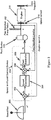
- the arrangement according to this preferred embodiment essentially comprises the Roll Averting and Damping Device 320 (the RAD device) that can intervene with an overriding command to the Speed and Load Control Device 334 of the ship.
- Inputs to the RAD device comprises: (1) sampled signals from one or several sensors that are used to evaluate rolling properties of the ship and (2) information about technical and physical properties of different devices in the arrangement.
- the outputs from the RAD device are overriding commands and parameters to the Speed and Load Control Device 334 that alter the normal, prior art function of the said device 334 .
- Overriding commands can be applied to any of the following subparts of the device 334 : the Speed Comparator 302 , the Speed Controller 304 or the Fuel Controller 308 . All these subparts can achieve a change on the engine speed.
- the overriding commands are applied to the Speed Controller 304 .
- the RAD device can be advantageously integrated with the Speed Controller 304 .
- the sensor used to determine rolling properties is an inclinometer 322 that gives the ship's current heel angle ⁇ .
- Information about ship properties is given via an operator's interface and/or via a superior computer 324.
- Properties of interest comprise ship's natural period Ts , transversal inertial moment Js and ship's rolling damping coefficient ⁇ s .
- Engine properties of interest comprise engine power Pe, nominal speed Nn , and the inertial moment of the engine Je.
- Properties of interest for the speed and load control device are the control amplification factor k and the time constants for the fuel device and controller Tc . In the preferred embodiment, this information is assumed known from technical specifications or from ship commissioning tests.
- the RAD device needs a dynamic model of the ship and values for parameters of this dynamic model as described in the preferred embodiment section.
- Ship dynamic models and parameter values can be determined by system identification methods, using sensor values. Control engineers skilled in the art are commonly using such methods.
- the overriding command from the RAD device is applied to the Speed Controller 304.
- a similar effect on the engine speed can be achieved by applying an overriding command to the Fuel Controller 308 or to the speed comparator 302. All these alternatives are essentially variations using the same disclosed principle of breaking a critical interaction between the speed control function of the engine and rolling, as described in the Algorithm section.
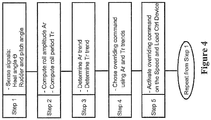
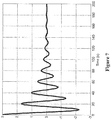
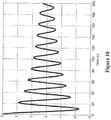
- the method steps for the preferred embodiment disclosed in Figure 4 are performed repeatedly at a constant time interval Tsample to ensure a relevant number of sensor readings for each rolling time period.
- An appropriate range for Tsample would be from tenths to hundreds of milliseconds.
- Typical rolling periods are 10 to 30 seconds.
- Step 1 The RAD device 320 is reading the inclinometer 322 to get the current heel angle of the ship ⁇ . This value is stored in the RAD device and is available for further computations.
- Step 2 Using past heel angle readings, the RAD device determines the amplitude Ar and time period Tr of the ship's rolling.
- Step 3 the RAD device determines the trend of the rolling amplitude and rolling period over an interval Ttrend (the trend time).
- Ttrend the trend time.
- the trend time the ship undergoes several rolling periods whose amplitude and period trends are characterized as follows.
- the trend for the amplitude Ar is characterised as being one of the following categories: Low, Stochastic, Constant, Increasing or Decreasing.
- the trend for the rolling period Tr is characterized by being one of the following kinds: Stochastic, Constant or Natural.
- Stochastic' means that the roll period Tr , respectively the amplitude Ar are not regular.
- Constant' means a rolling time that is stable at a value that is different from the ship's natural rolling time.
- 'Natural' means that rolling has the rolling period value equal to the natural rolling time.
- 'Low' means that the amplitude of rolling is low.
- Step 4 The RAD device 320 uses the trends determined at Step 3 together with the ship's dynamic properties and engine properties to determine an overriding command on the speed and load control device that is effectively averting and damping rolling and which also maintains the set speed of the ship.
- the prior art speed control algorithm that has no roll damping is denoted here as NS.
- the preferred embodiment defines two kinds of algorithms that are averting or damping ship's rolling: (1) constant speed ( CS ) and inverted control ( IC ).
- IC has a stronger roll reducing effect as compared to CS , so it might be applied for stronger rolling.
- the preferred embodiment discloses a set of rules for algorithm selection of the roll reducing and damping type as shown in Table 1.
- the rolling amplitude is 'Low' or the speed error dn is large, then the rule NS (normal, prior art) speed control is applied. If the Roll Period is 'Constant' (second row) and the Roll Amplitude is 'Increase' (the fifth line), the stronger rule IC (inverted control) is applied to damp the increasing rolling.
- the CS constant speed algorithm is applied.
- the other cells of the table are interpreted in the same fashion, thus an appropriate roll damping and averting algorithm is selected for appropriate conditions.
- rolling is persistent, e.g. due to sea conditions, then the CS and IS rules will be applied more often than NS.
- the propeller and hence the ship will not keep a constant, predefined speed.
- the speed error dn will increase and after a time the rules in the first line of the table will trigger a normal speed control NS that will bring the speed to the predefined value.
- An alternative method is to trigger NS rules at constant time intervals to avoid large speed deviations.
- Step 5 the RAD device 320 is activating the selected algorithm as an overriding command to the Speed and Load Control Device 334.
- This overriding command modifies the normal function of the speed controller to avert rolling.
- the speed controller determines the output torque of the engine.
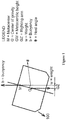
- the torque increases or decreases depending on (a) the ship's speed, (b) the rotation speed of the propeller, (c) variations of the ship's heel angle, (d) rudder interaction with the water stream produced by the propeller, (e) changes in ship's yaw angle and (f) interaction between waves and hull.
- the torque from the engine is converted mainly to a longitudinal thrust; however a small portion is creating a moment and reaction moment between the propeller and the surrounding water. This torque is transferred from the propeller to the ship's hull.
- the torque is proportional to the engine power. Higher ship speed means a higher torque on the propeller, by a near quadratic relation.
- the speed sensor 314 registers a reduction in RPM.
- the speed controller 304 will increase the moment on the engine to restore the speed. This will increase the uneven water flow such that the ship will tend to change heading. This will further increase the heel angle sensed by the inclinometer 322 and consequently the moment on the engine will increase again, in a continuous process until equilibrium is reached via compensating restore- and friction moments.
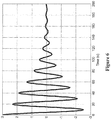
- the moment of the engine will increase non-linearly with the heel angle. This non-linearity, described by a near quadratic function, will maintain a self-sustained rolling. This effect appears for both single and multi-propeller ships.
- the vessel dynamics in calm water is different compared to a rough sea condition when the attack angle of the wave on the ship's hull must be taken into consideration.
- the engine-propeller unit In calm water conditions, the engine-propeller unit has a steady rotational speed.
- the rudder is in mid position and the torque lists the vessel, opposite to the direction of the propeller rotation.
- the list angle is typically in the range 0.5 - 2 degrees.
- the angular velocity of the heel angle is zero.
- the hull transverse angle and angular velocity increases or decreases the engine load:
- This variation is superimposed on the load variation originating from the ship's speed variation.
- the rotation speed and load of the engine, hence the torque, become variable.
- the variation of load causes the engine speed controller to increase or decrease the fuel index 312 to maintain the required rotational speed.
- the attacking waves lead to a heading error.
- the heading controller of the autopilot then changes the rudder position to correct the heading error. Corrections done by the heading control system can also increase or decrease the heel angle and thus the engine load.
- the rolling of propulsion driven ships can be determined by solving a system of equations modelling the heel angle dynamics as the interaction between speed control, engine torque and ship's inertial forces.
- E1 consists of the following terms:
- the core of the proposed roll averting and damping method is avoiding the build-up of rolling by manipulating the speed control parameters appearing on the right side of the differential equation such that the heel angle acceleration, speed and value is effectively reduced.
- rolling will dampen quickly due to the restoring moment and due to friction forces between the ship's hull and the water.
- the resulting reduction in propeller torque variation means less propeller slip and less fuel consumption.
- the proposed method comprises, but is not limited to one of the following alternatives:
- the preferred embodiment described by the method steps shown in Figure 4 discloses two roll damping and reducing methods: the constant speed algorithm (CS) that can be implemented by the methods M1 or M2 described above and the inverted control (IC) that can be implemented as algorithm M3, M4 or M5.
- CS constant speed algorithm
- IC inverted control
Landscapes
- Engineering & Computer Science (AREA)
- Chemical & Material Sciences (AREA)
- Ocean & Marine Engineering (AREA)
- Mechanical Engineering (AREA)
- Combustion & Propulsion (AREA)
- Physics & Mathematics (AREA)
- Automation & Control Theory (AREA)
- General Physics & Mathematics (AREA)
- Remote Sensing (AREA)
- Radar, Positioning & Navigation (AREA)
- Aviation & Aerospace Engineering (AREA)
- Feedback Control In General (AREA)
- Control Of Vehicle Engines Or Engines For Specific Uses (AREA)
- Control Of Position, Course, Altitude, Or Attitude Of Moving Bodies (AREA)
- Vibration Prevention Devices (AREA)
- Output Control And Ontrol Of Special Type Engine (AREA)
- Combined Controls Of Internal Combustion Engines (AREA)
Applications Claiming Priority (2)
| Application Number | Priority Date | Filing Date | Title |
|---|---|---|---|
| SE1130084A SE535979C2 (sv) | 2011-09-16 | 2011-09-16 | Metod och anordning för undvikande och dämpning av ett fartygs rullning |
| PCT/SE2012/050955 WO2013039445A1 (en) | 2011-09-16 | 2012-09-11 | Method and device for averting and damping rolling of a ship |
Publications (3)
| Publication Number | Publication Date |
|---|---|
| EP2748060A1 EP2748060A1 (en) | 2014-07-02 |
| EP2748060A4 EP2748060A4 (en) | 2016-03-02 |
| EP2748060B1 true EP2748060B1 (en) | 2018-04-25 |
Family
ID=47790726
Family Applications (1)
| Application Number | Title | Priority Date | Filing Date |
|---|---|---|---|
| EP12831107.3A Not-in-force EP2748060B1 (en) | 2011-09-16 | 2012-09-11 | Method and device for averting and damping rolling of a ship |
Country Status (8)
| Country | Link |
|---|---|
| US (1) | US9145191B2 (da) |
| EP (1) | EP2748060B1 (da) |
| JP (1) | JP6195122B2 (da) |
| KR (1) | KR101980367B1 (da) |
| CN (1) | CN103813958B (da) |
| DK (1) | DK2748060T3 (da) |
| SE (1) | SE535979C2 (da) |
| WO (1) | WO2013039445A1 (da) |
Families Citing this family (16)
| Publication number | Priority date | Publication date | Assignee | Title |
|---|---|---|---|---|
| EP3071475B1 (en) * | 2013-11-18 | 2019-04-03 | AB Volvo Penta | A method for controlling a boat comprising a pivotable drive unit, and a electronic vessel control unit for steering a boat |
| CN105022861B (zh) * | 2015-06-11 | 2018-05-22 | 北京精密机电控制设备研究所 | 一种运载火箭用挤压式伺服系统蓄油量的确定方法 |
| CN105468046B (zh) * | 2016-01-08 | 2017-08-11 | 中国船舶重工集团公司第七0四研究所 | 船舶主推进系统多功率分支局部振动控制方法 |
| EP3494039B1 (en) * | 2016-08-05 | 2021-04-14 | ZF Friedrichshafen AG | Sailboat steering system and method for steering a sailboat |
| CN107140110B (zh) * | 2017-03-21 | 2019-07-09 | 山东省科学院海洋仪器仪表研究所 | 一种船舶大幅横摇运动非线性阻尼系数识别方法 |
| WO2018228696A1 (en) | 2017-06-15 | 2018-12-20 | Abb Schweiz Ag | Controlling marine vessel |
| CN109358495B (zh) * | 2018-12-05 | 2024-01-30 | 山东智翼航空科技有限公司 | 无人艇桨距-转速差动减摇增稳系统及方法 |
| NO345528B1 (en) | 2018-12-20 | 2021-03-29 | Kongsberg Maritime CM AS | Vessel environment condition assessment system and method |
| CN109850082B (zh) * | 2019-04-12 | 2020-04-10 | 北京虹湾威鹏信息技术有限公司 | 一种无人船自扶正方法 |
| US12600452B2 (en) | 2020-11-05 | 2026-04-14 | Marine Edge Ltd | Compensating for ambient torsional loads affecting marine vessel propulsion |
| US11175663B1 (en) * | 2021-03-15 | 2021-11-16 | Sea Machines Robotics, Inc. | Automated marine navigation |
| CN113212681B (zh) * | 2021-04-28 | 2023-06-09 | 江苏信息职业技术学院 | 一种船舶横摇周期监测方法 |
| CN114167883B (zh) * | 2022-02-11 | 2022-04-15 | 中国空气动力研究与发展中心计算空气动力研究所 | 一种利用喷流进行高空飞行器姿态控制的方法 |
| CN117015500B (zh) * | 2022-11-10 | 2024-09-20 | 广东逸动科技有限公司 | 推进器、水域可移动设备及其减摇控制方法以及存储介质 |
| CN116540699B (zh) * | 2023-04-14 | 2024-09-24 | 大连海事大学 | 一种恶劣海况下基于模型预测控制的船舶航行控制方法 |
| ES3039358A1 (es) * | 2024-04-19 | 2025-10-20 | Univ Del Pais Vasco / Euskal Herriko Unibertsitatea | Metodo y sistema de control de inclinacion de una estructura oscilante |
Family Cites Families (15)
| Publication number | Priority date | Publication date | Assignee | Title |
|---|---|---|---|---|
| US1821242A (en) * | 1928-08-18 | 1931-09-01 | Old Colony Trust Company | Gaseous conduction apparatus |
| US1774825A (en) * | 1928-09-04 | 1930-09-02 | Dow Chemical Co | Method of stabilizing ships |
| FR2053697A5 (da) * | 1969-07-15 | 1971-04-16 | Polouektoff Jean Paul | |
| JPS6067300U (ja) * | 1983-10-17 | 1985-05-13 | 三菱重工業株式会社 | 主機を利用した横揺れ防止式船舶 |
| NL8902595A (nl) * | 1989-10-19 | 1991-05-16 | Rietschoten & Houwens Elek | Inrichting voor het stabiliseren van een vaartuig. |
| DE19537989A1 (de) * | 1995-10-12 | 1997-04-17 | En Umwelt Beratung E V I | Verfahren zur Bestimmung und Quantifizierung des dynamischen Seegangseinflusses auf die Laständerung der Antriebsanlage eines Schiffes |
| JP2004009785A (ja) * | 2002-06-04 | 2004-01-15 | Mitsubishi Heavy Ind Ltd | 波浪予測動揺低減方法及び波浪予測動揺低減装置 |
| NL1023921C2 (nl) * | 2003-07-15 | 2005-01-18 | Quantum Controls B V | Actief slingerdempingssysteem voor scheepsbewegingen. |
| DE10355052B4 (de) | 2003-07-19 | 2006-11-02 | Dallach, Gert, Dr. Ing. | Stabilitätsbestimmung von Schiffen |
| NO320465B1 (no) * | 2004-02-16 | 2005-12-12 | Egeland Olav | Fremgangsmate og system for testing av et reguleringssystem tilhorende et marint fartoy |
| JP4262127B2 (ja) * | 2004-03-30 | 2009-05-13 | Jfeソルデック株式会社 | パラメトリック横揺れ防止装置 |
| US20080183341A1 (en) * | 2006-08-22 | 2008-07-31 | Neu Wayne L | Method and apparatus for torque control for machinery using counter-rotating drives |
| CN100568141C (zh) * | 2008-03-20 | 2009-12-09 | 北京航空航天大学 | 一种无人机滚转改平控制方法 |
| EP2419804B1 (en) | 2009-04-14 | 2013-11-27 | Danmarks Tekniske Universitet | Prediction of resonant oscillation |
| NO20093007A1 (no) | 2009-09-16 | 2011-03-17 | Kongsberg Seatex As | Fartoybevegelser |
-
2011
- 2011-09-16 SE SE1130084A patent/SE535979C2/sv not_active IP Right Cessation
-
2012
- 2012-09-11 DK DK12831107.3T patent/DK2748060T3/da active
- 2012-09-11 US US14/211,547 patent/US9145191B2/en active Active
- 2012-09-11 KR KR1020147010183A patent/KR101980367B1/ko not_active Expired - Fee Related
- 2012-09-11 JP JP2014530628A patent/JP6195122B2/ja not_active Expired - Fee Related
- 2012-09-11 CN CN201280045080.1A patent/CN103813958B/zh not_active Expired - Fee Related
- 2012-09-11 WO PCT/SE2012/050955 patent/WO2013039445A1/en not_active Ceased
- 2012-09-11 EP EP12831107.3A patent/EP2748060B1/en not_active Not-in-force
Non-Patent Citations (1)
| Title |
|---|
| None * |
Also Published As
| Publication number | Publication date |
|---|---|
| WO2013039445A1 (en) | 2013-03-21 |
| KR101980367B1 (ko) | 2019-05-20 |
| US9145191B2 (en) | 2015-09-29 |
| DK2748060T3 (da) | 2018-07-23 |
| US20140316620A1 (en) | 2014-10-23 |
| CN103813958B (zh) | 2017-10-03 |
| SE1130084A1 (sv) | 2013-03-12 |
| CN103813958A (zh) | 2014-05-21 |
| EP2748060A1 (en) | 2014-07-02 |
| EP2748060A4 (en) | 2016-03-02 |
| SE535979C2 (sv) | 2013-03-12 |
| JP6195122B2 (ja) | 2017-09-13 |
| JP2014531360A (ja) | 2014-11-27 |
| KR20140061547A (ko) | 2014-05-21 |
Similar Documents
| Publication | Publication Date | Title |
|---|---|---|
| EP2748060B1 (en) | Method and device for averting and damping rolling of a ship | |
| Marzouk et al. | Control of ship roll using passive and active anti-roll tanks | |
| Yasukawa et al. | Application of the MMG method for the prediction of steady sailing condition and course stability of a ship under external disturbances | |
| Tannuri et al. | Dynamic positioning systems: An experimental analysis of sliding mode control | |
| Townsend et al. | Control strategies for marine gyrostabilizers | |
| JP4640760B2 (ja) | 到来波浪の波形予測法および波浪中の航走体の運転制御方法 | |
| CN109739248B (zh) | 基于adrc的船载三自由度并联稳定平台稳定控制方法 | |
| EP2332821A1 (en) | Method of controlling the position of moored marine vessels | |
| Chuang et al. | Speed loss of a vessel sailing in oblique waves | |
| Bui et al. | Dynamics modeling and motion control for high-speed underwater vehicles using H-infinity synthesis with anti-windup compensator | |
| Kula | An overview of roll stabilizers and systems for their control | |
| Fitriadhy et al. | Course stability of a ship towing system | |
| Aung et al. | Manoeuvring simulations in adverse weather conditions with the effects of propeller and rudder emergence taken into account | |
| Ueno et al. | Rudder effectiveness correction for scale model ship testing | |
| Kerdraon et al. | Development of a 6-DOF Dynamic Velocity Prediction Program for offshore racing yachts | |
| Awad et al. | Ship roll damping via direct inverse neural network control system | |
| Khaled et al. | A dynamic model and a robust controller for a fully-actuated marine surface vessel | |
| Söder et al. | Parametric roll mitigation using rudder control | |
| Hashimoto et al. | Broaching prediction of a wave-piercing tumblehome vessel with twin screws and twin rudders | |
| Agostinho et al. | Sliding mode control applied to offshore dynamic positioning systems | |
| Patil et al. | A time-domain method for analyzing the ship roll stabilization based on active fin control | |
| JP5296737B2 (ja) | 入射波の波高及び波向き推定方法、自動位置保持制御方法、自動位置保持システム及び船舶と洋上構造物 | |
| Li et al. | Handling roll constraints for path following of marine surface vessels using coordinated rudder and propulsion control | |
| Kazerooni et al. | Experimental evaluation of forward speed effect on maneuvering hydrodynamic derivatives of a planing hull | |
| Dash et al. | Roll-induced bifurcation in ship maneuvering under model uncertainty |
Legal Events
| Date | Code | Title | Description |
|---|---|---|---|
| PUAI | Public reference made under article 153(3) epc to a published international application that has entered the european phase |
Free format text: ORIGINAL CODE: 0009012 |
|
| 17P | Request for examination filed |
Effective date: 20140221 |
|
| AK | Designated contracting states |
Kind code of ref document: A1 Designated state(s): AL AT BE BG CH CY CZ DE DK EE ES FI FR GB GR HR HU IE IS IT LI LT LU LV MC MK MT NL NO PL PT RO RS SE SI SK SM TR |
|
| DAX | Request for extension of the european patent (deleted) | ||
| RA4 | Supplementary search report drawn up and despatched (corrected) |
Effective date: 20160201 |
|
| RIC1 | Information provided on ipc code assigned before grant |
Ipc: B63B 39/08 20060101ALI20160126BHEP Ipc: G05D 1/08 20060101ALI20160126BHEP Ipc: B63B 39/00 20060101AFI20160126BHEP |
|
| GRAP | Despatch of communication of intention to grant a patent |
Free format text: ORIGINAL CODE: EPIDOSNIGR1 |
|
| INTG | Intention to grant announced |
Effective date: 20171023 |
|
| RIN1 | Information on inventor provided before grant (corrected) |
Inventor name: LOEFGREN, ARNE Inventor name: FODOR, GEORGE Inventor name: LINDQVIST, TOMAS |
|
| GRAS | Grant fee paid |
Free format text: ORIGINAL CODE: EPIDOSNIGR3 |
|
| GRAA | (expected) grant |
Free format text: ORIGINAL CODE: 0009210 |
|
| AK | Designated contracting states |
Kind code of ref document: B1 Designated state(s): AL AT BE BG CH CY CZ DE DK EE ES FI FR GB GR HR HU IE IS IT LI LT LU LV MC MK MT NL NO PL PT RO RS SE SI SK SM TR |
|
| RAP1 | Party data changed (applicant data changed or rights of an application transferred) |
Owner name: Q-TAGG R&D AB |
|
| REG | Reference to a national code |
Ref country code: GB Ref legal event code: FG4D |
|
| REG | Reference to a national code |
Ref country code: CH Ref legal event code: EP |
|
| REG | Reference to a national code |
Ref country code: AT Ref legal event code: REF Ref document number: 992579 Country of ref document: AT Kind code of ref document: T Effective date: 20180515 |
|
| REG | Reference to a national code |
Ref country code: IE Ref legal event code: FG4D |
|
| REG | Reference to a national code |
Ref country code: DE Ref legal event code: R096 Ref document number: 602012045731 Country of ref document: DE |
|
| REG | Reference to a national code |
Ref country code: DK Ref legal event code: T3 Effective date: 20180716 |
|
| REG | Reference to a national code |
Ref country code: NL Ref legal event code: FP |
|
| REG | Reference to a national code |
Ref country code: NO Ref legal event code: T2 Effective date: 20180425 |
|
| REG | Reference to a national code |
Ref country code: LT Ref legal event code: MG4D |
|
| PG25 | Lapsed in a contracting state [announced via postgrant information from national office to epo] |
Ref country code: BG Free format text: LAPSE BECAUSE OF FAILURE TO SUBMIT A TRANSLATION OF THE DESCRIPTION OR TO PAY THE FEE WITHIN THE PRESCRIBED TIME-LIMIT Effective date: 20180725 Ref country code: PL Free format text: LAPSE BECAUSE OF FAILURE TO SUBMIT A TRANSLATION OF THE DESCRIPTION OR TO PAY THE FEE WITHIN THE PRESCRIBED TIME-LIMIT Effective date: 20180425 Ref country code: SE Free format text: LAPSE BECAUSE OF FAILURE TO SUBMIT A TRANSLATION OF THE DESCRIPTION OR TO PAY THE FEE WITHIN THE PRESCRIBED TIME-LIMIT Effective date: 20180425 Ref country code: ES Free format text: LAPSE BECAUSE OF FAILURE TO SUBMIT A TRANSLATION OF THE DESCRIPTION OR TO PAY THE FEE WITHIN THE PRESCRIBED TIME-LIMIT Effective date: 20180425 Ref country code: LT Free format text: LAPSE BECAUSE OF FAILURE TO SUBMIT A TRANSLATION OF THE DESCRIPTION OR TO PAY THE FEE WITHIN THE PRESCRIBED TIME-LIMIT Effective date: 20180425 |
|
| PG25 | Lapsed in a contracting state [announced via postgrant information from national office to epo] |
Ref country code: LV Free format text: LAPSE BECAUSE OF FAILURE TO SUBMIT A TRANSLATION OF THE DESCRIPTION OR TO PAY THE FEE WITHIN THE PRESCRIBED TIME-LIMIT Effective date: 20180425 Ref country code: HR Free format text: LAPSE BECAUSE OF FAILURE TO SUBMIT A TRANSLATION OF THE DESCRIPTION OR TO PAY THE FEE WITHIN THE PRESCRIBED TIME-LIMIT Effective date: 20180425 Ref country code: GR Free format text: LAPSE BECAUSE OF FAILURE TO SUBMIT A TRANSLATION OF THE DESCRIPTION OR TO PAY THE FEE WITHIN THE PRESCRIBED TIME-LIMIT Effective date: 20180726 Ref country code: RS Free format text: LAPSE BECAUSE OF FAILURE TO SUBMIT A TRANSLATION OF THE DESCRIPTION OR TO PAY THE FEE WITHIN THE PRESCRIBED TIME-LIMIT Effective date: 20180425 |
|
| REG | Reference to a national code |
Ref country code: AT Ref legal event code: MK05 Ref document number: 992579 Country of ref document: AT Kind code of ref document: T Effective date: 20180425 |
|
| PG25 | Lapsed in a contracting state [announced via postgrant information from national office to epo] |
Ref country code: PT Free format text: LAPSE BECAUSE OF FAILURE TO SUBMIT A TRANSLATION OF THE DESCRIPTION OR TO PAY THE FEE WITHIN THE PRESCRIBED TIME-LIMIT Effective date: 20180827 |
|
| REG | Reference to a national code |
Ref country code: DE Ref legal event code: R097 Ref document number: 602012045731 Country of ref document: DE |
|
| PG25 | Lapsed in a contracting state [announced via postgrant information from national office to epo] |
Ref country code: EE Free format text: LAPSE BECAUSE OF FAILURE TO SUBMIT A TRANSLATION OF THE DESCRIPTION OR TO PAY THE FEE WITHIN THE PRESCRIBED TIME-LIMIT Effective date: 20180425 Ref country code: RO Free format text: LAPSE BECAUSE OF FAILURE TO SUBMIT A TRANSLATION OF THE DESCRIPTION OR TO PAY THE FEE WITHIN THE PRESCRIBED TIME-LIMIT Effective date: 20180425 Ref country code: AT Free format text: LAPSE BECAUSE OF FAILURE TO SUBMIT A TRANSLATION OF THE DESCRIPTION OR TO PAY THE FEE WITHIN THE PRESCRIBED TIME-LIMIT Effective date: 20180425 Ref country code: CZ Free format text: LAPSE BECAUSE OF FAILURE TO SUBMIT A TRANSLATION OF THE DESCRIPTION OR TO PAY THE FEE WITHIN THE PRESCRIBED TIME-LIMIT Effective date: 20180425 Ref country code: SK Free format text: LAPSE BECAUSE OF FAILURE TO SUBMIT A TRANSLATION OF THE DESCRIPTION OR TO PAY THE FEE WITHIN THE PRESCRIBED TIME-LIMIT Effective date: 20180425 |
|
| PG25 | Lapsed in a contracting state [announced via postgrant information from national office to epo] |
Ref country code: SM Free format text: LAPSE BECAUSE OF FAILURE TO SUBMIT A TRANSLATION OF THE DESCRIPTION OR TO PAY THE FEE WITHIN THE PRESCRIBED TIME-LIMIT Effective date: 20180425 Ref country code: IT Free format text: LAPSE BECAUSE OF FAILURE TO SUBMIT A TRANSLATION OF THE DESCRIPTION OR TO PAY THE FEE WITHIN THE PRESCRIBED TIME-LIMIT Effective date: 20180425 |
|
| PLBE | No opposition filed within time limit |
Free format text: ORIGINAL CODE: 0009261 |
|
| STAA | Information on the status of an ep patent application or granted ep patent |
Free format text: STATUS: NO OPPOSITION FILED WITHIN TIME LIMIT |
|
| 26N | No opposition filed |
Effective date: 20190128 |
|
| PG25 | Lapsed in a contracting state [announced via postgrant information from national office to epo] |
Ref country code: MC Free format text: LAPSE BECAUSE OF FAILURE TO SUBMIT A TRANSLATION OF THE DESCRIPTION OR TO PAY THE FEE WITHIN THE PRESCRIBED TIME-LIMIT Effective date: 20180425 |
|
| REG | Reference to a national code |
Ref country code: CH Ref legal event code: PL |
|
| PG25 | Lapsed in a contracting state [announced via postgrant information from national office to epo] |
Ref country code: SI Free format text: LAPSE BECAUSE OF FAILURE TO SUBMIT A TRANSLATION OF THE DESCRIPTION OR TO PAY THE FEE WITHIN THE PRESCRIBED TIME-LIMIT Effective date: 20180425 |
|
| REG | Reference to a national code |
Ref country code: BE Ref legal event code: MM Effective date: 20180930 |
|
| REG | Reference to a national code |
Ref country code: IE Ref legal event code: MM4A |
|
| PG25 | Lapsed in a contracting state [announced via postgrant information from national office to epo] |
Ref country code: LU Free format text: LAPSE BECAUSE OF NON-PAYMENT OF DUE FEES Effective date: 20180911 |
|
| PG25 | Lapsed in a contracting state [announced via postgrant information from national office to epo] |
Ref country code: IE Free format text: LAPSE BECAUSE OF NON-PAYMENT OF DUE FEES Effective date: 20180911 |
|
| PG25 | Lapsed in a contracting state [announced via postgrant information from national office to epo] |
Ref country code: CH Free format text: LAPSE BECAUSE OF NON-PAYMENT OF DUE FEES Effective date: 20180930 Ref country code: BE Free format text: LAPSE BECAUSE OF NON-PAYMENT OF DUE FEES Effective date: 20180930 Ref country code: LI Free format text: LAPSE BECAUSE OF NON-PAYMENT OF DUE FEES Effective date: 20180930 Ref country code: FR Free format text: LAPSE BECAUSE OF NON-PAYMENT OF DUE FEES Effective date: 20180930 |
|
| PG25 | Lapsed in a contracting state [announced via postgrant information from national office to epo] |
Ref country code: AL Free format text: LAPSE BECAUSE OF FAILURE TO SUBMIT A TRANSLATION OF THE DESCRIPTION OR TO PAY THE FEE WITHIN THE PRESCRIBED TIME-LIMIT Effective date: 20180425 |
|
| PG25 | Lapsed in a contracting state [announced via postgrant information from national office to epo] |
Ref country code: MT Free format text: LAPSE BECAUSE OF NON-PAYMENT OF DUE FEES Effective date: 20180911 |
|
| PG25 | Lapsed in a contracting state [announced via postgrant information from national office to epo] |
Ref country code: TR Free format text: LAPSE BECAUSE OF FAILURE TO SUBMIT A TRANSLATION OF THE DESCRIPTION OR TO PAY THE FEE WITHIN THE PRESCRIBED TIME-LIMIT Effective date: 20180425 |
|
| PG25 | Lapsed in a contracting state [announced via postgrant information from national office to epo] |
Ref country code: HU Free format text: LAPSE BECAUSE OF FAILURE TO SUBMIT A TRANSLATION OF THE DESCRIPTION OR TO PAY THE FEE WITHIN THE PRESCRIBED TIME-LIMIT; INVALID AB INITIO Effective date: 20120911 |
|
| PG25 | Lapsed in a contracting state [announced via postgrant information from national office to epo] |
Ref country code: CY Free format text: LAPSE BECAUSE OF FAILURE TO SUBMIT A TRANSLATION OF THE DESCRIPTION OR TO PAY THE FEE WITHIN THE PRESCRIBED TIME-LIMIT Effective date: 20180425 Ref country code: MK Free format text: LAPSE BECAUSE OF NON-PAYMENT OF DUE FEES Effective date: 20180425 |
|
| PG25 | Lapsed in a contracting state [announced via postgrant information from national office to epo] |
Ref country code: IS Free format text: LAPSE BECAUSE OF FAILURE TO SUBMIT A TRANSLATION OF THE DESCRIPTION OR TO PAY THE FEE WITHIN THE PRESCRIBED TIME-LIMIT Effective date: 20180825 |
|
| REG | Reference to a national code |
Ref country code: DE Ref legal event code: R082 Ref document number: 602012045731 Country of ref document: DE Representative=s name: BECKER KURIG & PARTNER PATENTANWAELTE MBB, DE Ref country code: DE Ref legal event code: R082 Ref document number: 602012045731 Country of ref document: DE Representative=s name: BECKER & KURIG PARTNERSCHAFT PATENTANWAELTE MB, DE |
|
| REG | Reference to a national code |
Ref country code: DE Ref legal event code: R084 Ref document number: 602012045731 Country of ref document: DE |
|
| PGFP | Annual fee paid to national office [announced via postgrant information from national office to epo] |
Ref country code: NO Payment date: 20220913 Year of fee payment: 11 Ref country code: NL Payment date: 20220913 Year of fee payment: 11 Ref country code: GB Payment date: 20220912 Year of fee payment: 11 Ref country code: FI Payment date: 20220913 Year of fee payment: 11 Ref country code: DK Payment date: 20220914 Year of fee payment: 11 Ref country code: DE Payment date: 20220913 Year of fee payment: 11 |
|
| REG | Reference to a national code |
Ref country code: DE Ref legal event code: R119 Ref document number: 602012045731 Country of ref document: DE |
|
| REG | Reference to a national code |
Ref country code: DK Ref legal event code: EBP Effective date: 20230930 |
|
| PG25 | Lapsed in a contracting state [announced via postgrant information from national office to epo] |
Ref country code: FI Free format text: LAPSE BECAUSE OF NON-PAYMENT OF DUE FEES Effective date: 20230911 |
|
| REG | Reference to a national code |
Ref country code: NL Ref legal event code: MM Effective date: 20231001 |
|
| GBPC | Gb: european patent ceased through non-payment of renewal fee |
Effective date: 20230911 |
|
| PG25 | Lapsed in a contracting state [announced via postgrant information from national office to epo] |
Ref country code: NL Free format text: LAPSE BECAUSE OF NON-PAYMENT OF DUE FEES Effective date: 20231001 |
|
| PG25 | Lapsed in a contracting state [announced via postgrant information from national office to epo] |
Ref country code: NL Free format text: LAPSE BECAUSE OF NON-PAYMENT OF DUE FEES Effective date: 20231001 |
|
| PG25 | Lapsed in a contracting state [announced via postgrant information from national office to epo] |
Ref country code: GB Free format text: LAPSE BECAUSE OF NON-PAYMENT OF DUE FEES Effective date: 20230911 |
|
| PG25 | Lapsed in a contracting state [announced via postgrant information from national office to epo] |
Ref country code: NO Free format text: LAPSE BECAUSE OF NON-PAYMENT OF DUE FEES Effective date: 20230930 Ref country code: GB Free format text: LAPSE BECAUSE OF NON-PAYMENT OF DUE FEES Effective date: 20230911 Ref country code: DE Free format text: LAPSE BECAUSE OF NON-PAYMENT OF DUE FEES Effective date: 20240403 |
|
| PG25 | Lapsed in a contracting state [announced via postgrant information from national office to epo] |
Ref country code: DK Free format text: LAPSE BECAUSE OF NON-PAYMENT OF DUE FEES Effective date: 20230930 |
|
| PG25 | Lapsed in a contracting state [announced via postgrant information from national office to epo] |
Ref country code: DK Free format text: LAPSE BECAUSE OF NON-PAYMENT OF DUE FEES Effective date: 20230930 |