EP2750077A2 - Objekterkennungsverfahren, Anzeigeverfahren und Anzeigevorrichtungen - Google Patents
Objekterkennungsverfahren, Anzeigeverfahren und Anzeigevorrichtungen Download PDFInfo
- Publication number
- EP2750077A2 EP2750077A2 EP13198188.8A EP13198188A EP2750077A2 EP 2750077 A2 EP2750077 A2 EP 2750077A2 EP 13198188 A EP13198188 A EP 13198188A EP 2750077 A2 EP2750077 A2 EP 2750077A2
- Authority
- EP
- European Patent Office
- Prior art keywords
- luggage
- data
- projection images
- volume data
- objects
- Prior art date
- Legal status (The legal status is an assumption and is not a legal conclusion. Google has not performed a legal analysis and makes no representation as to the accuracy of the status listed.)
- Granted
Links
Images

Classifications
-
- G—PHYSICS
- G01—MEASURING; TESTING
- G01V—GEOPHYSICS; GRAVITATIONAL MEASUREMENTS; DETECTING MASSES OR OBJECTS; TAGS
- G01V5/00—Prospecting or detecting by the use of ionising radiation, e.g. of natural or induced radioactivity
- G01V5/20—Detecting prohibited goods, e.g. weapons, explosives, hazardous substances, contraband or smuggled objects
- G01V5/22—Active interrogation, i.e. by irradiating objects or goods using external radiation sources, e.g. using gamma rays or cosmic rays
- G01V5/226—Active interrogation, i.e. by irradiating objects or goods using external radiation sources, e.g. using gamma rays or cosmic rays using tomography
-
- G—PHYSICS
- G06—COMPUTING OR CALCULATING; COUNTING
- G06T—IMAGE DATA PROCESSING OR GENERATION, IN GENERAL
- G06T7/00—Image analysis
- G06T7/0002—Inspection of images, e.g. flaw detection
- G06T7/0004—Industrial image inspection
-
- G—PHYSICS
- G01—MEASURING; TESTING
- G01V—GEOPHYSICS; GRAVITATIONAL MEASUREMENTS; DETECTING MASSES OR OBJECTS; TAGS
- G01V5/00—Prospecting or detecting by the use of ionising radiation, e.g. of natural or induced radioactivity
- G01V5/20—Detecting prohibited goods, e.g. weapons, explosives, hazardous substances, contraband or smuggled objects
- G01V5/22—Active interrogation, i.e. by irradiating objects or goods using external radiation sources, e.g. using gamma rays or cosmic rays
- G01V5/224—Multiple energy techniques using one type of radiation, e.g. X-rays of different energies
-
- G—PHYSICS
- G06—COMPUTING OR CALCULATING; COUNTING
- G06T—IMAGE DATA PROCESSING OR GENERATION, IN GENERAL
- G06T15/00—Three-dimensional [3D] image rendering
- G06T15/08—Volume rendering
-
- G—PHYSICS
- G06—COMPUTING OR CALCULATING; COUNTING
- G06T—IMAGE DATA PROCESSING OR GENERATION, IN GENERAL
- G06T7/00—Image analysis
- G06T7/0002—Inspection of images, e.g. flaw detection
-
- G—PHYSICS
- G06—COMPUTING OR CALCULATING; COUNTING
- G06V—IMAGE OR VIDEO RECOGNITION OR UNDERSTANDING
- G06V20/00—Scenes; Scene-specific elements
- G06V20/60—Type of objects
- G06V20/64—Three-dimensional [3D] objects
-
- G—PHYSICS
- G06—COMPUTING OR CALCULATING; COUNTING
- G06T—IMAGE DATA PROCESSING OR GENERATION, IN GENERAL
- G06T2200/00—Indexing scheme for image data processing or generation, in general
- G06T2200/04—Indexing scheme for image data processing or generation, in general involving 3D image data
-
- G—PHYSICS
- G06—COMPUTING OR CALCULATING; COUNTING
- G06T—IMAGE DATA PROCESSING OR GENERATION, IN GENERAL
- G06T2207/00—Indexing scheme for image analysis or image enhancement
- G06T2207/10—Image acquisition modality
- G06T2207/10116—X-ray image
-
- G—PHYSICS
- G06—COMPUTING OR CALCULATING; COUNTING
- G06T—IMAGE DATA PROCESSING OR GENERATION, IN GENERAL
- G06T2207/00—Indexing scheme for image analysis or image enhancement
- G06T2207/30—Subject of image; Context of image processing
- G06T2207/30108—Industrial image inspection
- G06T2207/30112—Baggage; Luggage; Suitcase
Definitions
- the present disclosure relates to inspection of objects, and in particular to object detection method, display methods and apparatuses.
- Radiography is an essential tool in security inspection, and typically implemented in the following process.
- a radiography device scans luggage and generates an image of the luggage.
- An inspector checks the image, manually marks regions of suspicious objects, and adds semantic description of these regions, such as "lighter,” and "a bottle of wine.”
- This process relies largely on human factor, and may leave some dangerous article undetected when the dangerous article occurs in a very low frequency, or when the inspector has inadequate experience or is influenced by factors including fatigue. This will lead to serious aftermath.
- a typical measurement to solve the above problem is to primarily rely on automatic detection while interaction between the inspector and the device is auxiliary.
- the automatic detection technology is not satisfactory nowdays.
- DECT is a preferable solution to the above problem.
- DECT is developed from DR and CT technologies, and can obtain effective atomic number and equivalent electron density inside a scanned object while acquiring 3D structure information of the object. Accordingly, DECT provides possibility of better understanding of the scanned content thorough 3D data.
- the current research is focused on detection of specific objects, and mainly relies on pixel-level information of density and atomic number. Thus, there is a lack of recognition of "object" information.
- the present disclosure provides object detection method, display methods and apparatuses, in order to achieve more accurate security inspection of objects.
- a method for inspecting luggage in a CT system comprising: obtaining slice data of the inspected luggage in the CT system; generating 3D volume data of at least one object in the luggage from the slice data; calculating first, second and third depth projection images of the object in three directions based on the 3D volume data, wherein projection direction of the third depth projection image is orthogonal to those of the first and second depth projection images; calculating a metric of symmetry, and a duty ratio and aspect ratio for each of the first, second, and third depth projection images, and a metric of similarity between each two of the first, second, and third depth projection images; generating a shape feature parameter of the object at least based on the metrics of symmetry, the metrics of similarity, the duty ratios and aspect ratios of the first to third depth projection images; classify the shape feature parameter with a classifier based on shape feature to obtain a quantifier description expressing the shape of the object; and outputting a semantic description including at least the quantifier description of the object
- an apparatus for inspecting luggage in a CT system comprising: means for obtaining slice data of the inspected luggage in the CT system; means for generating 3D volume data of at least one object in the luggage from the slice data; means for calculating first, second and third depth projection images of the object in three directions based on the 3D volume data, wherein projection direction of the third depth projection image is orthogonal to those of the first and second depth projection images; means for calculating a metric of symmetry, and a duty ratio and aspect ratio for each of the first, second, and third depth projection images, and a metric of similarity between each two of the first, second, and third depth projection images; means for generating a shape feature parameter of the object at least based on the metrics of symmetry, the metrics of similarity, the duty ratios and aspect ratios of the first to third depth projection images; means for classify the shape feature parameter with a classifier based on shape feature to obtain a quantifier description expressing the shape of the object; and means for outputting
- a method for displaying objects in a CT system comprising: obtaining slice data of inspected luggage in the CT system; generating 3D volume data of objects in the luggage from the slice data; for each object, determining a semantic description including at least a quantifier description of the object based on the 3D volume data; and upon reception of a user selection of an object, presenting the semantic description of the selected object while displaying a 3D image of the object.
- an apparatus for displaying objects in a CT system comprising: means for obtaining slice data of inspected luggage in the CT system; means for generating 3D volume data of objects in the luggage from the slice data; means for determining a semantic description including at least a quantifier description of each of the objects based on the 3D volume data; and means for, upon reception of a user selection of an object, presenting the semantic description of the selected object while displaying a 3D image of the object.
- embodiments of the present disclosure provide a method for luggage inspection in a CT system. After obtaining the slice data of the inspected luggage in the CT system, the 3D volume data of at least one object in the luggage are generated from the slice data. Then, first, second and third depth projection images of the object in three directions are calculated based on the 3D volume data. The projection direction of the third depth projection image is orthogonal to those of the first and second depth projection images. Next, a metric of symmetry, and a duty ratio and aspect ratio is calculated for each of the first, second, and third depth projection images, and a metric of similarity is calculated for each two of the first, second, and third depth projection images.
- a shape feature parameter of the object is generated at least based on the metrics of symmetry, the metrics of similarity, the duty ratios and aspect ratios of the first to third depth projection images.
- the shape feature parameter is classified with a classifier based on shape feature to obtain a quantifier description expressing the shape of the object.
- a semantic description including at least the quantifier description of the object is outputted.
- the shape feature of the object is obtained by processing object data acquired in the CT system, and outputted in a form of semantic description. This presents to the inspector an intuitive, accurate, specific description of the object in the inspected luggage, and thus reduces the omission factor.
- a method for displaying objects in a CT system is provided to reduce the omission factor.
- the 3D volume data of the respective objects in the luggage are generated from the slice data.
- a semantic description including at least a quantifier description of the object is determined based on the 3D volume data.
- the semantic description of the selected object is presented while displaying the 3D image of the object.
- a method for creating a 3D model for objects in an inspected luggage in a CT system is provided in order to achieve more accurate shape feature extraction of the objects.
- the slice data are interpolated to generate 3D volume data of the luggage.
- Unsupervised segmentation is performed on the 3D volume data of the luggage to obtain a plurality of segmental regions, which will undergo isosurface extraction to obtain corresponding isosurfaces.
- 3D surface segmentation is performed on the isosurfaces to form a 3D model for the objects in the luggage.
- Such 3D model for objects in the luggage can describes the 3D surfaces of the objects in a more accurate manner, provide a better basis for subsequent 3D shape feature extraction, and thus improve accuracy in security inspection.
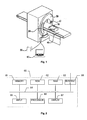
- Fig. 1 is a schematic diagram showing the structure of a CT apparatus according to an embodiment of the present disclosure.
- the CT apparatus of the embodiment includes a rack 20, a bearing mechanism 40, a controller 50, and a computer data processor 60.
- the rack 20 includes a ray source 10 configured to emit x rays for inspection, such as x-ray machine, and a detection & collection device 30.
- the bearing mechanism 40 bears an inspected luggage 70, and moves with it to pass through a scanning region between the ray source 10 and the detection & collection device 30 in the rack 20.
- the detection & collection device 30 may include detector and data collector formed in an integral module, such as planar detector, and may be configured to detect rays having penetrated the inspected liquid-state article, obtain analog signals, convert the analog signals into digital signals, and output projection data of the inspected luggage 70 with respect to the x rays.
- the controller 50 is configured to control respective components of the entire system to operate in synchronization.
- the computer data processor 60 is configured to process data collected by the data collector, reconstruct on the data and output results.
- the ray source 10 is placed on one side of the inspected luggage 70.
- the detection & collection device 30 placed on the other side of the luggage 70 includes detector and data collector configured to perspective data and/or multi-angle projection data of the luggage 70.
- the data collector includes data amplifying & shaping circuit operable in a (current) integration mode or a pulse (counting) mode.
- the detection & collection device 30 has a data output cable coupled with the controller 50 and the computer data processor 60 and configured to store the collected data in the computer data processor 60 in accordance with a trigger command.
- Fig. 2 shows a block diagram of the computer data processor 60 of Fig. 1 .
- Data collected by the data collector are stored in a memory 61 through an interface unit 68 and a bus 64, as shown in Fig. 2 .
- Read Only Memory (ROM) 62 stores configuration information and programs of the computer data processor.
- Random Access Memory (RAM) 63 is configured to temporarily store various data during operation of processor 66. Further, the memory 61 stores computer programs for data processing.
- the internal bus 64 connects the memory 61, ROM 62, RAM 63, input device 65, processor 66, display device 67 and interface unit 68 with each other.
- instruction codes of computer programs instruct the processor 66 to execute predetermined data processing algorithms.
- the results of data processing are displayed on the display device 67, such as LCD display, or directly outputted in a hardcopy form, such as being printed out.
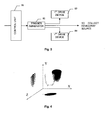
- Fig. 3 shows a block diagram of the controller according to an embodiment of the present disclosure.
- the controller 50 includes a control unit 51 configured to control the ray source 10, the bearing mechanism 40, and the detection & collection device 30 in accordance with an instruction from the computer 60, a trigger signal generation unit 52 configured to generate, under control of the control unit, trigger commands for triggering actions of the ray source 10, the bearing mechanism 40, and the detection & collection device 30, a first driving device configured to drive the bearing mechanism 40 to convey the inspected luggage 70 in accordance with a trigger command generated by the trigger signal generation unit 52 under control of the control unit, and a second driving device 54 configured to drive the rack 20 to rotate in accordance with a trigger command generated by the trigger signal generation unit 52 under control of the control unit.
- the projection data obtained by the detection & collection device 30 are stored in the computer 60 for reconstructing CT sections, and thus obtaining slice data (CT slice) of the luggage 70.
- the computer 60 execute software, for example, to extract 3D shape parameter for at least one object contained in the luggage 70 from the slice data for security inspection.
- the above CT system may be a dual-energy CT system, that is, the x-ray source 10 in the rack 10 emits two kinds of rays of high and low energy levels, and the detection & collection device 30 detects projection data of the different energy levels.
- the computer data processor 60 performs dual-energy CT reconstruction to obtain equivalent atomic number and electron density data for respective sections of the luggage 70.
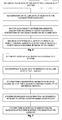
- Fig. 4 is a schematic diagram showing definition of respective view angles in a method according to an embodiment of the present disclosure.
- Fig. 5 is a flowchart showing a method for luggage inspection in a CT system according to an embodiment of the present disclosure.
- Slice data of the inspected luggage are obtained in the CT system at step S51.
- the above-described CT apparatus or another CT apparatus may be used to perform dual-energy CT inspection on the luggage to obtain slice data.
- the slice data generally include slice density image data and slice atomic number image data.
- the slice data include linear attenuation coefficient image data.
- 3D volume data of at least one object in the luggage are generated from the slice data.
- the 3D volume data may be generated by perform inter-slice interpolation of the slice data.
- each of the images undergoes 3D interpolation so that the resolution of the images are the same both inside each section and between sections.
- 3D interpolation There are many know algorithms for 3D interpolation, such as commercially available software Intel IPP (Intel Integrated Performance Primitives) function library, or open source software Kitware VTK (Visualization Toolkit) function library.
- the 2D slice data are converted into 3D volume data through the interpolation.
- first, second and third depth projection images of the object in three directions are calculated based on the 3D volume data.
- the projection direction of the third depth projection image is orthogonal to those of the first and second depth projection images.
- the projection directions of the first and second depth projection images are made as orthogonal as possible (e.g., approximately orthogonal), and approximate directions of maximal and minimal projection areas of the image, respectively.
- Depth Buffer is also called Z-buffering, and a basis technology for 3D surface display. This technology determines occlusion between objects, and displays non-occluded part(s) on a screen.
- Depth Buffer is a typical technology used in 3DOR(3D Object Retrieval), and is highly complex because it often involves tens of projections.
- just three depth projection images are used as shown in Fig. 4 .
- the first projection is defined as I 1 , to obtain a "primary view.” Here, it is approximated with a projection having the maximal area.
- the projection in the XOY plane of Fig. 2 is I 1 .
- the second projection is defined as I 2 to obtain a "top view.” Here, it is approximated with a projection having the minimal area.
- the projection in the XOZ plane of Fig. 2 is I 2 .
- the directions of the two projections are orthogonal to each other in Fig. 2 . In real applications, however, it is not necessary to meet the condition of orthogonality, and an angle between the two projection directions may also be used as one of the features.
- the third projection is defined as I 3 to obtain a "side view.” I 3 may be obtained by projecting along a direction orthogonal to the projection directions of I 1 and I 2 .
- the projection in the YOZ plane of Fig. 4 is I 3 .
- 6 images may be obtained by projecting along X, Y, Z directions and opposite directions thereof in Fig. 4 .
- the projections of each direction and an opposition direction thereof are similar, since details have been removed during the 3D surface segmentation.
- just three projections are used to reduce computation complex.
- a method of traversing through all rotation angles may be used to find the maximal-area or minimal-area projection, but is too complex.
- a genetic algorithm may be used to rapidly estimate the first two projection directions.
- each of I 1 ⁇ I 3 reflects self-similarity of an object, and is an important shape feature.
- each of I 1 ⁇ I 3 may be aligned through PCA (Principal Component Analysis) so that the 2D image has the maximal divergence along the x axis, that is, the symmetry of upper and lower halves of the image is the greatest.
- I 1 ⁇ I 3 refer to such aligned images.
- a metric of symmetry, and a duty ratio and aspect ratio is calculated for each of the first, second, and third depth projection images, and a metric of similarity is calculated for each two of the first, second, and third depth projection images.
- one or more of the symmetry metrics, the symmetry metrics between two images, the duty ratios and aspect ratios, or any combination thereof may be selected as shape feature parameter.
- the angle between the projection directions of I 1 and I 2 reflects the shape of the object, and may be used as one of the feature parameters.
- the volume of the object reflects the size of the object, and may be used as one of the features.
- the depth projection image has grey values in the range [0, 1], a grey value 0 denotes indefinite point, and a non-zero grey value denotes a distance between a facet and the observation location.
- the grey value increase as the distance decreases.
- a shape feature parameter of the object is generated at least based on the metrics of symmetry, the metrics of similarity, the duty ratios and aspect ratios of the first to third depth projection images.
- the shape feature parameter may be generated based on one or more of the metrics of symmetry, the metrics of similarity, the duty ratios and aspect ratios, or the angle between the two directions of the projections I 1 and I 2 calculated in the above i) to iv).
- the shape feature parameter is classified with a classifier based on shape feature to obtain a quantifier description expressing the shape of the object.
- the process of creating the classifier corresponds to a general process in pattern recognition, and various types of classifier may be used, such as linear classifier, support vector machine, decision tree, neural network, and integrated classifier. These classifiers can be used to classify and recognize the shape of an unknown object after being trained.
- the classifier is implemented with RF (Random Forest).
- RF Random Forest
- the objects acquired in the fifth step need to be manually labeled by the inspector as one of classes "Bag,” “Piece,” “Block,” “Bottle,” “Can,” “Tube,” “Bar,” “Pack,” “Box,” and “Item.” Now these predications are simply defined as follows.
- Bog refers to a class of objects in a prolate package, such as a soft bag of milk, a prolate bag of homogeneous food, and a key feature thereof is aspect ratio.
- Porture refers to a class of objects having a very small thickness, such as a thin book, materials for filling a case, and a knife, and a key feature thereof is aspect ratio.
- Lock refers to a class of objects having small similarity and duty ratio, such as a homogeneous object wrapped in a plastic bag which is not prolate.
- Bottom refers to a class of objects like a bottle of mineral water, and key features thereof include similarity of each of projections in primary view and side view, duty ratio and aspect ratio.
- Can refers to a class of objects like a pop can. It is similar to “bottle,” but has larger duty ratio and aspect ratio;
- Bar refers to a class of objects of a large length, such as sausage, timber, iron pipe, and a key feature thereof is aspect ratio.
- Tube is refers to a class of objects having a length shorter than the object of "Bar,” and good symmetry, such as cleansing facial milk, and glue.
- Box refers to a class of rectangular objects having a thickness, and a duty ratio larger than the object of "Block,” such as soap, various cosmetics, and foods, and key features thereof include duty ratio and aspect ratio.
- Pack refers to a class of objects of a large volume, such as computer, and big, thick book, and a key feature thereof is volume. However, an object having a large volume does not belong to this class if it is determined as belonging to another class.
- a cup as shown in Fig. 4 may be classified into the class of "Can.”
- Such definition of class is associated with security inspection applications.
- solid explosives usually appear in a form of "Bag,” “Piece,” or “Block.”
- Liquid usually appears in a form of "Bottle,” “Can,” or “Tube,” and controlled instrument mostly appears in a form of "Piece” or "Bar.”
- the other classes like “Pack,” “Box” and “Item” are supplement to the above common forms.
- the semantic description including at least the quantifier description of the object is outputted.
- Interaction with the user may be conducted in various manners after obtaining the semantic description of each object in the inspected luggage.
- the profile of the object may be directly displayed to draw the user's attention.
- the user may click on the screen to extract the object and display the description information, to facilitate the user to further learn and label the object.
- constraints may be imposed with respect to object semantics, so that an object having the semantics specified by the constraints can be highlighted. In this way, it is possible to mitigate the inspector's fatigue, and improve work efficiency.
- the obtained information for predication may be sorted to generate the semantic description of the object, i.e., "shape +weight +density +atomic number + position.”
- Fig. 6 is a flowchart showing a method for displaying an object in a CT system according to another embodiment of the present disclosure.
- automatic auxiliary detection of objects in luggage can be achieved by automatic detection and description.
- the resultant descriptions of the objects are necessary supplement to manual detection, and also functions to enhance man-machine interaction. It is applicable and useful to mitigate the omission factor.
- step S61 slice data of the inspected luggage are obtained in the CT system.
- the 3D volume data of the respective objects in the luggage are generated from the slice data. Then, at step S63, for each object, a semantic description including at least a quantifier description of the object is determined based on the 3D volume data.
- step S64 upon reception of a user selection of an object, the semantic description of the selected object is presented while displaying the 3D image of the object.
- the positions of all detected objects are marked in a display window.
- the inspector selects a position in the area of one of the objects with a tool, such as mouse, the complete semantic description of the object is displayed. Further, the inspector may select one of the objects with a tool, such as mouse, and specifically label the selected object by adding further semantic description of the object.
- Constraint may be defined for semantic description, and only an object meeting the constraint may be displayed. For example, the constraint may be only notifying an object having a shape of "Bottle" and a weight above 200 grams.
- the position of a suspicious object may be represented in a 2D or 3D image to help the inspector check the object.
- the selected object may be highlighted.
- the selected object may also be displayed in a form of blocking the other objects.
- some constraints in the embodiments may be strengthen, for example, by further thresholding the volume data of the object or limiting the shape of the object, to achieve automatic detection of specific objects, such as explosives and contraband articles.
- the process of generating semantic description for each object in the inspected luggage may be implemented with reference to the above embodiment described with Fig. 5 .
- a 3D model may be created for each object in the inspected luggage for shape feature extraction and security inspection.
- Fig. 7 is a flowchart showing a method for creating a 3D model for objects in luggage in a CT system according to another embodiment of the present disclosure.
- slice data of the inspected luggage are obtained in the CT system.
- the 3D volume data of the luggage are generated by interpolating the slice data.
- the 3D volume data includes density volume data and atomic number volume data in the case of dual energy, while the 3D volume data includes linear attenuation coefficient in the case of mono energy.
- each of the images undergoes 3D interpolation so that the resolution of the images are the same both inside each section and between sections.
- 3D interpolation There are many know algorithms for 3D interpolation, such as commercially available software Intel IPP (Intel Integrated Performance Primitives) function library, or open source software Kitware VTK (Visualization Toolkit) function library.
- the 2D slice data are converted into 3D volume data through the interpolation.
- the "volume data" include density volume data and atomic number volume data, except where it is specifically defined.
- the volume data is thresholded to remove disturbance of objects of no interest, such as clothes. This step may be omitted in practical applications. In this case, the amount of computation will increase, and more "objects" will be detected, leading to a degraded result.
- the volume data is filtered with a 3D bilateral filter.
- a fast algorithm is used. This filtering may also be implemented using ITK (Insight Segmentation and Registration Toolkit) function library.
- unsupervised segmentation may be performed on the 3D volume data to obtain a plurality of segmental regions.
- 2D segmentation algorithms are usually based on information such as 4/8 neighbors, and gradient. Here, these processes need to be extended into 3D, for example, extending the 4 neighbors into 6 neighbors. Further, segmentation will be performed on both density volume data and atomic number volume data. The final segmentation result may be a weighted sum of the respective segmentation results of the two types of volume data. Alternatively, each voxel may be represented by a 2D vector including the two types of volume data, so that a unified segmentation result can be obtained. In addition, the segmentation needs to achieve an inadequate segmentation effect.
- the Statistical Region Merging (SRM) algorithm may be used and extended into 3D processing. SRM is a bottom-to-up merging segmentation algorithm, which is extended in the embodiment as follows:
- the complexity of SRM segmentation result may be defined by a complexity parameter.
- the inadequate segmentation effect may be achieved by setting a low complexity parameter.
- the resultant segmental regions undergo isosurface extraction to obtain corresponding isosurfaces.
- the isosurface extraction is performed on the segmental regions obtained in step S73 to obtain corresponding isosurfaces.
- this may use Marching Cubes algorithm.
- step S75 3D surface segmentation is performed on the isosurfaces to form a 3D model for the objects in the luggage.
- step S73 surface segmentation is required for refining the 3D segmentation result.
- Mesh Segmentation algorithm may be used, which divides a curved surface into a plurality of convex surfaces.
- the algorithm is a supervised algorithm, and requires a specified number of segmentation results.
- the number of segmentation results may be first calculated or obtained iteratively in a manner similar to that of modifying K-Means clustering algorithm into an unsupervised one.
- such method can hardly give good result according to the experiments. Therefore, let's set the number of segmentation results as 10.
- the 10 segmentation results are subjected to Mesh Merge with reference to so-called Star-Convex hypothesis. Assume that among the segmentation results, a curved surface A has a center a, and a curved surface B has a center b, A and B will be jointed together if a line connecting a and b is inside the entire surface obtained at the third step (or the percentage of voxels outside the entire surface is less than certain threshold). The joining process is performed on each two of the 10 segmentation results to obtain the final segmentation result.
- the segmentation results may be subjected to further processing including three steps of hole-filling, smoothing, and model limiting, for example.
- the first two steps are basic operations in graphics, and may be implemented using open source software Kitware VTK (Visualization Toolkit) function library. Thus, details thereof will be omitted here.
- the model is voxelized into voxels filled with density volume data, and the surface area, volume, and weight of the model is calculated.
- the model limiting step refers to removing small objects including objects that have small values in area, volume, and weight. There are two reasons for performing the limiting step. First, it can remove noisy objects, and make the result more useful in real applications.
- Thresholds used in the limiting step depend on DECT resolution, and may be set with respect to real applications. For example, the threshold for weight may be set as 50 grams.
- Examples of the signal bearing medium include but not limited to recordable medium, such as floppy disk, hard disk drive, compact disk (CD), digital versatile disk (DVD), digital tape, computer memory, and transmission-type medium, such as digital and/or analog communication medium (e.g., optical fiber cable, waveguide, wired and wireless communication link).
- recordable medium such as floppy disk, hard disk drive, compact disk (CD), digital versatile disk (DVD), digital tape, computer memory
- transmission-type medium such as digital and/or analog communication medium (e.g., optical fiber cable, waveguide, wired and wireless communication link).
Landscapes
- Engineering & Computer Science (AREA)
- Physics & Mathematics (AREA)
- General Physics & Mathematics (AREA)
- Theoretical Computer Science (AREA)
- Life Sciences & Earth Sciences (AREA)
- High Energy & Nuclear Physics (AREA)
- General Life Sciences & Earth Sciences (AREA)
- Geophysics (AREA)
- Quality & Reliability (AREA)
- Computer Vision & Pattern Recognition (AREA)
- Multimedia (AREA)
- Computer Graphics (AREA)
- Analysing Materials By The Use Of Radiation (AREA)
- Health & Medical Sciences (AREA)
- General Health & Medical Sciences (AREA)
- Nuclear Medicine, Radiotherapy & Molecular Imaging (AREA)
- Radiology & Medical Imaging (AREA)
- Apparatus For Radiation Diagnosis (AREA)
- Image Processing (AREA)
- Pulmonology (AREA)
- Chemical & Material Sciences (AREA)
- Analytical Chemistry (AREA)
- Biochemistry (AREA)
- Immunology (AREA)
- Pathology (AREA)
Priority Applications (1)
| Application Number | Priority Date | Filing Date | Title |
|---|---|---|---|
| PL13198188T PL2750077T3 (pl) | 2012-12-27 | 2013-12-18 | Sposoby wykrywania obiektów, sposoby wyświetlania i aparatury |
Applications Claiming Priority (1)
| Application Number | Priority Date | Filing Date | Title |
|---|---|---|---|
| CN201210581468.5A CN103901489B (zh) | 2012-12-27 | 2012-12-27 | 检查物体的方法、显示方法和设备 |
Publications (3)
| Publication Number | Publication Date |
|---|---|
| EP2750077A2 true EP2750077A2 (de) | 2014-07-02 |
| EP2750077A3 EP2750077A3 (de) | 2014-12-17 |
| EP2750077B1 EP2750077B1 (de) | 2019-02-20 |
Family
ID=49918413
Family Applications (1)
| Application Number | Title | Priority Date | Filing Date |
|---|---|---|---|
| EP13198188.8A Active EP2750077B1 (de) | 2012-12-27 | 2013-12-18 | Objekterkennungsverfahren, Anzeigeverfahren und Anzeigevorrichtungen |
Country Status (8)
| Country | Link |
|---|---|
| US (1) | US10013750B2 (de) |
| EP (1) | EP2750077B1 (de) |
| KR (1) | KR101792927B1 (de) |
| CN (1) | CN103901489B (de) |
| AU (1) | AU2013369924B2 (de) |
| GB (1) | GB2510255B (de) |
| PL (1) | PL2750077T3 (de) |
| WO (1) | WO2014101621A1 (de) |
Cited By (4)
| Publication number | Priority date | Publication date | Assignee | Title |
|---|---|---|---|---|
| EP3130915A4 (de) * | 2014-12-23 | 2017-08-23 | Tsinghua University | Betriebsverfahren und -vorrichtung im zusammenhang mit einem dreidimensionalen ct-bild einer sicherheitsinspektion |
| EP3290912A4 (de) * | 2015-12-29 | 2019-02-20 | Nuctech Company Limited | Untersuchungssystem zur inspektion und quarantäne und verfahren dafür |
| CN109522913A (zh) * | 2017-09-18 | 2019-03-26 | 同方威视技术股份有限公司 | 检查方法和检查设备以及计算机可读介质 |
| EP3748344A4 (de) * | 2018-01-31 | 2021-10-27 | Cyberdyne Inc. | Vorrichtung zur identifizierung von objekten und verfahren zur identifizierung von objekten |
Families Citing this family (28)
| Publication number | Priority date | Publication date | Assignee | Title |
|---|---|---|---|---|
| CN105784731B (zh) | 2014-06-25 | 2019-02-22 | 同方威视技术股份有限公司 | 一种定位三维ct图像中的目标的方法和安检系统 |
| CN104596419A (zh) * | 2015-01-22 | 2015-05-06 | 宇龙计算机通信科技(深圳)有限公司 | 一种基于双摄像头测量物体质量的方法、装置和终端 |
| CN106226831A (zh) * | 2015-08-25 | 2016-12-14 | 中国石油天然气股份有限公司 | 一种岩心的孔隙度矩阵反演方法 |
| EP3214590A1 (de) * | 2016-03-02 | 2017-09-06 | Siemens Aktiengesellschaft | Verfahren zur erstellung einer beschreibung eines gepäckstücks und gepäckbeschreibungssystem |
| JP6724484B2 (ja) * | 2016-03-31 | 2020-07-15 | 日本電気株式会社 | 検品処理装置、検品システム、商品マスタ登録装置、検品処理方法及びプログラム |
| US10288762B2 (en) * | 2016-06-21 | 2019-05-14 | Morpho Detection, Llc | Systems and methods for detecting luggage in an imaging system |
| US11205103B2 (en) | 2016-12-09 | 2021-12-21 | The Research Foundation for the State University | Semisupervised autoencoder for sentiment analysis |
| CN106802929B (zh) * | 2016-12-27 | 2020-07-14 | 华南师范大学 | 一种大数据三维模型的图形化分析方法及系统 |
| EP3565259A1 (de) * | 2016-12-28 | 2019-11-06 | Panasonic Intellectual Property Corporation of America | Verteilungsverfahren für dreidimensionales modell, empfangsverfahren für dreidimensionales modell, verteilungsvorrichtung für dreidimensionales modell und empfangsvorrichtung für dreidimensionales modell |
| CN108303435B (zh) * | 2017-01-12 | 2020-09-11 | 同方威视技术股份有限公司 | 检查设备和对集装箱进行检查的方法 |
| CN106950231B (zh) * | 2017-03-29 | 2018-07-20 | 中国科学院地质与地球物理研究所 | 一种用双能微米ct定量识别岩石矿物的岩样装置和方法 |
| CN107228867A (zh) * | 2017-06-21 | 2017-10-03 | 同方威视技术股份有限公司 | 安检图像显示方法、设备和安检系统 |
| KR101884575B1 (ko) * | 2017-12-06 | 2018-08-02 | 한국공항공사 | 보안 검색 시스템 |
| CN109116831B (zh) * | 2018-08-17 | 2020-09-08 | 北京航空航天大学 | 人机交互动态故障树的模式混淆故障逻辑门的设计方法 |
| CN109345624A (zh) * | 2018-10-08 | 2019-02-15 | 北京健康有益科技有限公司 | 一种自动识别食物热量的估算方法及系统 |
| US11282180B1 (en) | 2019-04-24 | 2022-03-22 | Apple Inc. | Object detection with position, pose, and shape estimation |
| US11093803B2 (en) | 2019-06-14 | 2021-08-17 | International Business Machines Corporation | Screening technique for prohibited objects at security checkpoints |
| US11106930B2 (en) | 2019-06-14 | 2021-08-31 | International Business Machines Corporation | Classifying compartments at security checkpoints by detecting a shape of an object |
| US11301688B2 (en) | 2019-06-14 | 2022-04-12 | International Business Machines Corporation | Classifying a material inside a compartment at security checkpoints |
| US11403765B2 (en) | 2019-08-14 | 2022-08-02 | Lawrence Livermore National Security, Llc | Automatic threat recognition system and method using material disambiguation informed by physics in x-ray CT images of baggage |
| WO2021085019A1 (ja) * | 2019-10-31 | 2021-05-06 | アイテック株式会社 | 手荷物非破壊検査システム、手荷物非破壊検査方法、プログラム、及び記録媒体 |
| KR102199572B1 (ko) * | 2019-11-25 | 2021-01-07 | 포인드 주식회사 | 딥러닝 기반의 역방향 사물 검사 방법 |
| CN113643360B (zh) * | 2020-05-11 | 2024-12-27 | 同方威视技术股份有限公司 | 目标物体定位方法、装置、设备、介质和程序产品 |
| CA3178580A1 (en) * | 2020-05-14 | 2021-11-18 | Eric FITERMAN | Creating imagery for al model training in security screening |
| US11670036B2 (en) * | 2020-07-14 | 2023-06-06 | Lawrence Livermore National Security, Llc | System and method for identifying objects of interest in images based on likelihood map decluttering |
| CN113792623B (zh) * | 2021-08-27 | 2022-12-13 | 同方威视技术股份有限公司 | 安检ct目标物识别方法和装置 |
| US12205359B2 (en) | 2021-11-29 | 2025-01-21 | International Business Machines Corporation | Two-stage screening technique for prohibited objects at security checkpoints using image segmentation |
| CN114708171B (zh) * | 2021-12-23 | 2025-04-01 | 中广核贝谷科技有限公司 | 一种基于计算机断层扫描的三维图像融合方法及装置 |
Family Cites Families (53)
| Publication number | Priority date | Publication date | Assignee | Title |
|---|---|---|---|---|
| US5367552A (en) * | 1991-10-03 | 1994-11-22 | In Vision Technologies, Inc. | Automatic concealed object detection system having a pre-scan stage |
| US5659624A (en) * | 1995-09-01 | 1997-08-19 | Fazzari; Rodney J. | High speed mass flow food sorting appartus for optically inspecting and sorting bulk food products |
| EP0816873B1 (de) * | 1996-06-27 | 2002-10-09 | Analogic Corporation | Vorrichtung zum Erfassen für axiale Transversal- und Quadratur-Tomographie |
| EP0825457A3 (de) * | 1996-08-19 | 2002-02-13 | Analogic Corporation | Nachweisverfahren und -system für die Tomografie unter einer Mehrzahl von Winkeln |
| US6092059A (en) * | 1996-12-27 | 2000-07-18 | Cognex Corporation | Automatic classifier for real time inspection and classification |
| US6272230B1 (en) * | 1998-02-11 | 2001-08-07 | Analogic Corporation | Apparatus and method for optimizing detection of objects in computed tomography data |
| US6026171A (en) * | 1998-02-11 | 2000-02-15 | Analogic Corporation | Apparatus and method for detection of liquids in computed tomography data |
| US6078642A (en) * | 1998-02-11 | 2000-06-20 | Analogice Corporation | Apparatus and method for density discrimination of objects in computed tomography data using multiple density ranges |
| US6111974A (en) * | 1998-02-11 | 2000-08-29 | Analogic Corporation | Apparatus and method for detecting sheet objects in computed tomography data |
| US6067366A (en) * | 1998-02-11 | 2000-05-23 | Analogic Corporation | Apparatus and method for detecting objects in computed tomography data using erosion and dilation of objects |
| US6035014A (en) * | 1998-02-11 | 2000-03-07 | Analogic Corporation | Multiple-stage apparatus and method for detecting objects in computed tomography data |
| US6128365A (en) * | 1998-02-11 | 2000-10-03 | Analogic Corporation | Apparatus and method for combining related objects in computed tomography data |
| US6026143A (en) * | 1998-02-11 | 2000-02-15 | Analogic Corporation | Apparatus and method for detecting sheet objects in computed tomography data |
| US6075871A (en) * | 1998-02-11 | 2000-06-13 | Analogic Corporation | Apparatus and method for eroding objects in computed tomography data |
| US6317509B1 (en) * | 1998-02-11 | 2001-11-13 | Analogic Corporation | Computed tomography apparatus and method for classifying objects |
| US6108396A (en) * | 1998-02-11 | 2000-08-22 | Analogic Corporation | Apparatus and method for correcting object density in computed tomography data |
| US6076400A (en) * | 1998-02-11 | 2000-06-20 | Analogic Corporation | Apparatus and method for classifying objects in computed tomography data using density dependent mass thresholds |
| US6088423A (en) * | 1998-06-05 | 2000-07-11 | Vivid Technologies, Inc. | Multiview x-ray based system for detecting contraband such as in baggage |
| US6301326B2 (en) * | 1998-11-02 | 2001-10-09 | Perkinelmer Detection Systems, Inc. | Sheet detection system |
| US6195444B1 (en) * | 1999-01-12 | 2001-02-27 | Analogic Corporation | Apparatus and method for detecting concealed objects in computed tomography data |
| US6345113B1 (en) * | 1999-01-12 | 2002-02-05 | Analogic Corporation | Apparatus and method for processing object data in computed tomography data using object projections |
| US6185272B1 (en) * | 1999-03-15 | 2001-02-06 | Analogic Corporation | Architecture for CT scanning system |
| US6813374B1 (en) * | 2001-04-25 | 2004-11-02 | Analogic Corporation | Method and apparatus for automatic image quality assessment |
| US6823044B2 (en) * | 2001-11-21 | 2004-11-23 | Agilent Technologies, Inc. | System for collecting multiple x-ray image exposures of a sample using a sparse configuration |
| US6816571B2 (en) * | 2002-02-06 | 2004-11-09 | L-3 Communications Security And Detection Systems Corporation Delaware | Method and apparatus for transmitting information about a target object between a prescanner and a CT scanner |
| US20040022356A1 (en) * | 2002-02-15 | 2004-02-05 | Nikola Subotic | Multi-phenomenology, decision-directed baggage scanning apparatus and method |
| GB2390005A (en) * | 2002-06-17 | 2003-12-24 | Royal Holloway University Of L | Screening Apparatus |
| US20050058242A1 (en) * | 2003-09-15 | 2005-03-17 | Peschmann Kristian R. | Methods and systems for the rapid detection of concealed objects |
| US7277577B2 (en) * | 2004-04-26 | 2007-10-02 | Analogic Corporation | Method and system for detecting threat objects using computed tomography images |
| US7356174B2 (en) * | 2004-05-07 | 2008-04-08 | General Electric Company | Contraband detection system and method using variance data |
| US7907762B2 (en) * | 2004-05-26 | 2011-03-15 | Guardian Technologies International, Inc. | Method of creating a divergence transform for identifying a feature of interest in hyperspectral data |
| US7327853B2 (en) * | 2004-06-09 | 2008-02-05 | Analogic Corporation | Method of and system for extracting 3D bag images from continuously reconstructed 2D image slices in computed tomography |
| US20080063140A1 (en) * | 2004-07-20 | 2008-03-13 | William Awad | System and Method for Detecting the Presence of a Threat in a Package |
| US7813540B1 (en) * | 2005-01-13 | 2010-10-12 | Oro Grande Technologies Llc | System and method for detecting nuclear material in shipping containers |
| US7684587B2 (en) * | 2005-04-04 | 2010-03-23 | Spirent Communications Of Rockville, Inc. | Reduced-reference visual communication quality assessment using data hiding |
| US7991242B2 (en) * | 2005-05-11 | 2011-08-02 | Optosecurity Inc. | Apparatus, method and system for screening receptacles and persons, having image distortion correction functionality |
| EP1886257A1 (de) * | 2005-05-11 | 2008-02-13 | Optosecurity Inc. | Verfahren und system zum prüfen von gepäckstücken, frachtcontainern oder personen |
| US7606348B2 (en) * | 2006-02-09 | 2009-10-20 | L-3 Communications Security and Detection Systems Inc. | Tomographic imaging systems and methods |
| US7899232B2 (en) * | 2006-05-11 | 2011-03-01 | Optosecurity Inc. | Method and apparatus for providing threat image projection (TIP) in a luggage screening system, and luggage screening system implementing same |
| US20080253653A1 (en) * | 2007-04-12 | 2008-10-16 | Todd Gable | Systems and methods for improving visibility of scanned images |
| CN101424648B (zh) * | 2007-10-30 | 2012-10-03 | 清华大学 | 检查系统和检查方法 |
| US8600149B2 (en) * | 2008-08-25 | 2013-12-03 | Telesecurity Sciences, Inc. | Method and system for electronic inspection of baggage and cargo |
| US8090150B2 (en) * | 2008-10-10 | 2012-01-03 | Morpho Detection, Inc. | Method and system for identifying a containment vessel |
| DE112008004057T5 (de) * | 2008-10-30 | 2012-05-03 | Analogic Corp. | Erkennen verborgener Bedrohungen |
| WO2010094774A2 (de) * | 2009-02-20 | 2010-08-26 | Werth Messtechnik Gmbh | Verfahren zum messen eines objekts |
| EP2430396B1 (de) * | 2009-05-16 | 2020-01-15 | Rapiscan Systems, Inc. | Systeme und verfahren zur automatisierten schnellen erkennung von materialien mit hoher ordnungszahl |
| EP2471044B1 (de) * | 2009-08-28 | 2015-07-01 | Analogic Corporation | Erzeugung von zweidimensionalen projektionsdaten aus helikalen daten |
| US8254656B2 (en) * | 2009-10-13 | 2012-08-28 | Morpho Detection, Inc. | Methods and system for selective resolution improvement in computed tomography |
| CN101783076B (zh) * | 2010-02-04 | 2012-06-13 | 西安理工大学 | 一种视频监控模式下的快速车型识别方法 |
| US9042661B2 (en) * | 2010-09-30 | 2015-05-26 | Analogic Corporation | Object classification using two-dimensional projection |
| JP2014523522A (ja) * | 2011-06-07 | 2014-09-11 | アトミック エナジー オブ カナダ リミテッド | 宇宙線ミューオントモグラフィを用いた高原子番号物質の検出 |
| US8879815B2 (en) * | 2011-08-23 | 2014-11-04 | Siemens Aktiengesellschaft | Automatic initialization for 2D/3D registration |
| US9134258B2 (en) * | 2012-07-06 | 2015-09-15 | Morpho Detection, Llc | Systems and methods for imaging and detecting sheet-like material |
-
2012
- 2012-12-27 CN CN201210581468.5A patent/CN103901489B/zh active Active
-
2013
- 2013-11-28 KR KR1020157020413A patent/KR101792927B1/ko not_active Expired - Fee Related
- 2013-11-28 WO PCT/CN2013/088039 patent/WO2014101621A1/zh not_active Ceased
- 2013-11-28 AU AU2013369924A patent/AU2013369924B2/en not_active Ceased
- 2013-12-18 EP EP13198188.8A patent/EP2750077B1/de active Active
- 2013-12-18 GB GB1322442.3A patent/GB2510255B/en active Active
- 2013-12-18 PL PL13198188T patent/PL2750077T3/pl unknown
- 2013-12-23 US US14/138,399 patent/US10013750B2/en active Active
Non-Patent Citations (1)
| Title |
|---|
| None |
Cited By (7)
| Publication number | Priority date | Publication date | Assignee | Title |
|---|---|---|---|---|
| EP3130915A4 (de) * | 2014-12-23 | 2017-08-23 | Tsinghua University | Betriebsverfahren und -vorrichtung im zusammenhang mit einem dreidimensionalen ct-bild einer sicherheitsinspektion |
| US10353110B2 (en) | 2014-12-23 | 2019-07-16 | Tsinghua University | Method and device for operating CT-based three-dimensional image used for security inspection |
| EP3290912A4 (de) * | 2015-12-29 | 2019-02-20 | Nuctech Company Limited | Untersuchungssystem zur inspektion und quarantäne und verfahren dafür |
| CN109522913A (zh) * | 2017-09-18 | 2019-03-26 | 同方威视技术股份有限公司 | 检查方法和检查设备以及计算机可读介质 |
| CN109522913B (zh) * | 2017-09-18 | 2022-07-19 | 同方威视技术股份有限公司 | 检查方法和检查设备以及计算机可读介质 |
| EP3748344A4 (de) * | 2018-01-31 | 2021-10-27 | Cyberdyne Inc. | Vorrichtung zur identifizierung von objekten und verfahren zur identifizierung von objekten |
| US11335083B2 (en) | 2018-01-31 | 2022-05-17 | Cyberdyne Inc. | Object identification device and object identification method |
Also Published As
| Publication number | Publication date |
|---|---|
| EP2750077B1 (de) | 2019-02-20 |
| GB2510255A (en) | 2014-07-30 |
| GB201322442D0 (en) | 2014-02-05 |
| GB2510255B (en) | 2015-09-16 |
| EP2750077A3 (de) | 2014-12-17 |
| KR20150099860A (ko) | 2015-09-01 |
| WO2014101621A1 (zh) | 2014-07-03 |
| AU2013369924A1 (en) | 2015-08-13 |
| US20150332448A1 (en) | 2015-11-19 |
| KR101792927B1 (ko) | 2017-11-02 |
| PL2750077T3 (pl) | 2019-08-30 |
| CN103901489A (zh) | 2014-07-02 |
| AU2013369924B2 (en) | 2017-06-29 |
| US10013750B2 (en) | 2018-07-03 |
| CN103901489B (zh) | 2017-07-21 |
Similar Documents
| Publication | Publication Date | Title |
|---|---|---|
| EP2750077B1 (de) | Objekterkennungsverfahren, Anzeigeverfahren und Anzeigevorrichtungen | |
| US9557436B2 (en) | 3-dimensional model creation methods and apparatuses | |
| EP2750104B1 (de) | Verfahren zur Extraktion eines Formmerkmals, Inspektionsverfahren und -vorrichtungen | |
| McCulloch et al. | Model-based detection of lung nodules in computed tomography exams1: Thoracic computer-aided diagnosis | |
| Mouton et al. | Materials-based 3D segmentation of unknown objects from dual-energy computed tomography imagery in baggage security screening | |
| US9898678B2 (en) | Compound object separation | |
| Tempelaere et al. | Non-destructive internal disorder segmentation in pear fruit by X-ray radiography and AI | |
| Videla et al. | Watershed functions applied to a 3D image segmentation problem for the analysis of packed particle beds | |
| US8774496B2 (en) | Compound object separation | |
| US11087468B2 (en) | Item classification using localized CT value distribution analysis | |
| US20150187069A1 (en) | Segmentation of sheet objects from image generated using radiation imaging modality | |
| HK1195820B (en) | 3-dimensional model creation methods and apparatuses | |
| HK1195820A (en) | 3-dimensional model creation methods and apparatuses | |
| HK1195943B (en) | Methods for detecting objects, display methods and apparatuses | |
| HK1195943A (en) | Methods for detecting objects, display methods and apparatuses | |
| CN115452870B (zh) | 一种爆炸物识别系统和方法 | |
| HK1195805A (en) | Methods for extracting shape feature, inspection methods and apparatuses | |
| HK1195805B (en) | Methods for extracting shape feature, inspection methods and apparatuses |
Legal Events
| Date | Code | Title | Description |
|---|---|---|---|
| 17P | Request for examination filed |
Effective date: 20131218 |
|
| AK | Designated contracting states |
Kind code of ref document: A2 Designated state(s): AL AT BE BG CH CY CZ DE DK EE ES FI FR GB GR HR HU IE IS IT LI LT LU LV MC MK MT NL NO PL PT RO RS SE SI SK SM TR |
|
| AX | Request for extension of the european patent |
Extension state: BA ME |
|
| PUAI | Public reference made under article 153(3) epc to a published international application that has entered the european phase |
Free format text: ORIGINAL CODE: 0009012 |
|
| PUAL | Search report despatched |
Free format text: ORIGINAL CODE: 0009013 |
|
| AK | Designated contracting states |
Kind code of ref document: A3 Designated state(s): AL AT BE BG CH CY CZ DE DK EE ES FI FR GB GR HR HU IE IS IT LI LT LU LV MC MK MT NL NO PL PT RO RS SE SI SK SM TR |
|
| AX | Request for extension of the european patent |
Extension state: BA ME |
|
| RIC1 | Information provided on ipc code assigned before grant |
Ipc: G06K 9/00 20060101AFI20141110BHEP |
|
| STAA | Information on the status of an ep patent application or granted ep patent |
Free format text: STATUS: EXAMINATION IS IN PROGRESS |
|
| 17Q | First examination report despatched |
Effective date: 20161118 |
|
| GRAP | Despatch of communication of intention to grant a patent |
Free format text: ORIGINAL CODE: EPIDOSNIGR1 |
|
| STAA | Information on the status of an ep patent application or granted ep patent |
Free format text: STATUS: GRANT OF PATENT IS INTENDED |
|
| INTG | Intention to grant announced |
Effective date: 20180808 |
|
| GRAS | Grant fee paid |
Free format text: ORIGINAL CODE: EPIDOSNIGR3 |
|
| GRAA | (expected) grant |
Free format text: ORIGINAL CODE: 0009210 |
|
| STAA | Information on the status of an ep patent application or granted ep patent |
Free format text: STATUS: THE PATENT HAS BEEN GRANTED |
|
| AK | Designated contracting states |
Kind code of ref document: B1 Designated state(s): AL AT BE BG CH CY CZ DE DK EE ES FI FR GB GR HR HU IE IS IT LI LT LU LV MC MK MT NL NO PL PT RO RS SE SI SK SM TR |
|
| REG | Reference to a national code |
Ref country code: GB Ref legal event code: FG4D |
|
| REG | Reference to a national code |
Ref country code: CH Ref legal event code: EP |
|
| REG | Reference to a national code |
Ref country code: DE Ref legal event code: R096 Ref document number: 602013050955 Country of ref document: DE |
|
| REG | Reference to a national code |
Ref country code: AT Ref legal event code: REF Ref document number: 1099175 Country of ref document: AT Kind code of ref document: T Effective date: 20190315 |
|
| REG | Reference to a national code |
Ref country code: IE Ref legal event code: FG4D |
|
| REG | Reference to a national code |
Ref country code: NL Ref legal event code: FP |
|
| REG | Reference to a national code |
Ref country code: LT Ref legal event code: MG4D |
|
| PG25 | Lapsed in a contracting state [announced via postgrant information from national office to epo] |
Ref country code: PT Free format text: LAPSE BECAUSE OF FAILURE TO SUBMIT A TRANSLATION OF THE DESCRIPTION OR TO PAY THE FEE WITHIN THE PRESCRIBED TIME-LIMIT Effective date: 20190620 Ref country code: SE Free format text: LAPSE BECAUSE OF FAILURE TO SUBMIT A TRANSLATION OF THE DESCRIPTION OR TO PAY THE FEE WITHIN THE PRESCRIBED TIME-LIMIT Effective date: 20190220 Ref country code: LT Free format text: LAPSE BECAUSE OF FAILURE TO SUBMIT A TRANSLATION OF THE DESCRIPTION OR TO PAY THE FEE WITHIN THE PRESCRIBED TIME-LIMIT Effective date: 20190220 Ref country code: FI Free format text: LAPSE BECAUSE OF FAILURE TO SUBMIT A TRANSLATION OF THE DESCRIPTION OR TO PAY THE FEE WITHIN THE PRESCRIBED TIME-LIMIT Effective date: 20190220 Ref country code: NO Free format text: LAPSE BECAUSE OF FAILURE TO SUBMIT A TRANSLATION OF THE DESCRIPTION OR TO PAY THE FEE WITHIN THE PRESCRIBED TIME-LIMIT Effective date: 20190520 |
|
| PG25 | Lapsed in a contracting state [announced via postgrant information from national office to epo] |
Ref country code: GR Free format text: LAPSE BECAUSE OF FAILURE TO SUBMIT A TRANSLATION OF THE DESCRIPTION OR TO PAY THE FEE WITHIN THE PRESCRIBED TIME-LIMIT Effective date: 20190521 Ref country code: IS Free format text: LAPSE BECAUSE OF FAILURE TO SUBMIT A TRANSLATION OF THE DESCRIPTION OR TO PAY THE FEE WITHIN THE PRESCRIBED TIME-LIMIT Effective date: 20190620 Ref country code: RS Free format text: LAPSE BECAUSE OF FAILURE TO SUBMIT A TRANSLATION OF THE DESCRIPTION OR TO PAY THE FEE WITHIN THE PRESCRIBED TIME-LIMIT Effective date: 20190220 Ref country code: BG Free format text: LAPSE BECAUSE OF FAILURE TO SUBMIT A TRANSLATION OF THE DESCRIPTION OR TO PAY THE FEE WITHIN THE PRESCRIBED TIME-LIMIT Effective date: 20190520 Ref country code: LV Free format text: LAPSE BECAUSE OF FAILURE TO SUBMIT A TRANSLATION OF THE DESCRIPTION OR TO PAY THE FEE WITHIN THE PRESCRIBED TIME-LIMIT Effective date: 20190220 Ref country code: HR Free format text: LAPSE BECAUSE OF FAILURE TO SUBMIT A TRANSLATION OF THE DESCRIPTION OR TO PAY THE FEE WITHIN THE PRESCRIBED TIME-LIMIT Effective date: 20190220 |
|
| REG | Reference to a national code |
Ref country code: AT Ref legal event code: MK05 Ref document number: 1099175 Country of ref document: AT Kind code of ref document: T Effective date: 20190220 |
|
| PG25 | Lapsed in a contracting state [announced via postgrant information from national office to epo] |
Ref country code: IT Free format text: LAPSE BECAUSE OF FAILURE TO SUBMIT A TRANSLATION OF THE DESCRIPTION OR TO PAY THE FEE WITHIN THE PRESCRIBED TIME-LIMIT Effective date: 20190220 Ref country code: RO Free format text: LAPSE BECAUSE OF FAILURE TO SUBMIT A TRANSLATION OF THE DESCRIPTION OR TO PAY THE FEE WITHIN THE PRESCRIBED TIME-LIMIT Effective date: 20190220 Ref country code: CZ Free format text: LAPSE BECAUSE OF FAILURE TO SUBMIT A TRANSLATION OF THE DESCRIPTION OR TO PAY THE FEE WITHIN THE PRESCRIBED TIME-LIMIT Effective date: 20190220 Ref country code: AL Free format text: LAPSE BECAUSE OF FAILURE TO SUBMIT A TRANSLATION OF THE DESCRIPTION OR TO PAY THE FEE WITHIN THE PRESCRIBED TIME-LIMIT Effective date: 20190220 Ref country code: SK Free format text: LAPSE BECAUSE OF FAILURE TO SUBMIT A TRANSLATION OF THE DESCRIPTION OR TO PAY THE FEE WITHIN THE PRESCRIBED TIME-LIMIT Effective date: 20190220 Ref country code: DK Free format text: LAPSE BECAUSE OF FAILURE TO SUBMIT A TRANSLATION OF THE DESCRIPTION OR TO PAY THE FEE WITHIN THE PRESCRIBED TIME-LIMIT Effective date: 20190220 Ref country code: ES Free format text: LAPSE BECAUSE OF FAILURE TO SUBMIT A TRANSLATION OF THE DESCRIPTION OR TO PAY THE FEE WITHIN THE PRESCRIBED TIME-LIMIT Effective date: 20190220 Ref country code: EE Free format text: LAPSE BECAUSE OF FAILURE TO SUBMIT A TRANSLATION OF THE DESCRIPTION OR TO PAY THE FEE WITHIN THE PRESCRIBED TIME-LIMIT Effective date: 20190220 |
|
| REG | Reference to a national code |
Ref country code: DE Ref legal event code: R097 Ref document number: 602013050955 Country of ref document: DE |
|
| PG25 | Lapsed in a contracting state [announced via postgrant information from national office to epo] |
Ref country code: SM Free format text: LAPSE BECAUSE OF FAILURE TO SUBMIT A TRANSLATION OF THE DESCRIPTION OR TO PAY THE FEE WITHIN THE PRESCRIBED TIME-LIMIT Effective date: 20190220 |
|
| PLBE | No opposition filed within time limit |
Free format text: ORIGINAL CODE: 0009261 |
|
| STAA | Information on the status of an ep patent application or granted ep patent |
Free format text: STATUS: NO OPPOSITION FILED WITHIN TIME LIMIT |
|
| PG25 | Lapsed in a contracting state [announced via postgrant information from national office to epo] |
Ref country code: AT Free format text: LAPSE BECAUSE OF FAILURE TO SUBMIT A TRANSLATION OF THE DESCRIPTION OR TO PAY THE FEE WITHIN THE PRESCRIBED TIME-LIMIT Effective date: 20190220 |
|
| 26N | No opposition filed |
Effective date: 20191121 |
|
| PG25 | Lapsed in a contracting state [announced via postgrant information from national office to epo] |
Ref country code: SI Free format text: LAPSE BECAUSE OF FAILURE TO SUBMIT A TRANSLATION OF THE DESCRIPTION OR TO PAY THE FEE WITHIN THE PRESCRIBED TIME-LIMIT Effective date: 20190220 |
|
| PG25 | Lapsed in a contracting state [announced via postgrant information from national office to epo] |
Ref country code: TR Free format text: LAPSE BECAUSE OF FAILURE TO SUBMIT A TRANSLATION OF THE DESCRIPTION OR TO PAY THE FEE WITHIN THE PRESCRIBED TIME-LIMIT Effective date: 20190220 |
|
| REG | Reference to a national code |
Ref country code: CH Ref legal event code: PL |
|
| REG | Reference to a national code |
Ref country code: BE Ref legal event code: MM Effective date: 20191231 |
|
| PG25 | Lapsed in a contracting state [announced via postgrant information from national office to epo] |
Ref country code: MC Free format text: LAPSE BECAUSE OF FAILURE TO SUBMIT A TRANSLATION OF THE DESCRIPTION OR TO PAY THE FEE WITHIN THE PRESCRIBED TIME-LIMIT Effective date: 20190220 |
|
| PG25 | Lapsed in a contracting state [announced via postgrant information from national office to epo] |
Ref country code: IE Free format text: LAPSE BECAUSE OF NON-PAYMENT OF DUE FEES Effective date: 20191218 Ref country code: LU Free format text: LAPSE BECAUSE OF NON-PAYMENT OF DUE FEES Effective date: 20191218 |
|
| PG25 | Lapsed in a contracting state [announced via postgrant information from national office to epo] |
Ref country code: LI Free format text: LAPSE BECAUSE OF NON-PAYMENT OF DUE FEES Effective date: 20191231 Ref country code: CH Free format text: LAPSE BECAUSE OF NON-PAYMENT OF DUE FEES Effective date: 20191231 Ref country code: BE Free format text: LAPSE BECAUSE OF NON-PAYMENT OF DUE FEES Effective date: 20191231 |
|
| PG25 | Lapsed in a contracting state [announced via postgrant information from national office to epo] |
Ref country code: CY Free format text: LAPSE BECAUSE OF FAILURE TO SUBMIT A TRANSLATION OF THE DESCRIPTION OR TO PAY THE FEE WITHIN THE PRESCRIBED TIME-LIMIT Effective date: 20190220 |
|
| PG25 | Lapsed in a contracting state [announced via postgrant information from national office to epo] |
Ref country code: HU Free format text: LAPSE BECAUSE OF FAILURE TO SUBMIT A TRANSLATION OF THE DESCRIPTION OR TO PAY THE FEE WITHIN THE PRESCRIBED TIME-LIMIT; INVALID AB INITIO Effective date: 20131218 Ref country code: MT Free format text: LAPSE BECAUSE OF FAILURE TO SUBMIT A TRANSLATION OF THE DESCRIPTION OR TO PAY THE FEE WITHIN THE PRESCRIBED TIME-LIMIT Effective date: 20190220 |
|
| REG | Reference to a national code |
Ref country code: DE Ref legal event code: R079 Ref document number: 602013050955 Country of ref document: DE Free format text: PREVIOUS MAIN CLASS: G06K0009000000 Ipc: G06V0010000000 |
|
| PG25 | Lapsed in a contracting state [announced via postgrant information from national office to epo] |
Ref country code: MK Free format text: LAPSE BECAUSE OF FAILURE TO SUBMIT A TRANSLATION OF THE DESCRIPTION OR TO PAY THE FEE WITHIN THE PRESCRIBED TIME-LIMIT Effective date: 20190220 |
|
| P01 | Opt-out of the competence of the unified patent court (upc) registered |
Effective date: 20230527 |
|
| PGFP | Annual fee paid to national office [announced via postgrant information from national office to epo] |
Ref country code: NL Payment date: 20251126 Year of fee payment: 13 |
|
| PGFP | Annual fee paid to national office [announced via postgrant information from national office to epo] |
Ref country code: GB Payment date: 20251104 Year of fee payment: 13 |
|
| PGFP | Annual fee paid to national office [announced via postgrant information from national office to epo] |
Ref country code: FR Payment date: 20251125 Year of fee payment: 13 |
|
| PGFP | Annual fee paid to national office [announced via postgrant information from national office to epo] |
Ref country code: PL Payment date: 20251205 Year of fee payment: 13 |
|
| PGFP | Annual fee paid to national office [announced via postgrant information from national office to epo] |
Ref country code: DE Payment date: 20251222 Year of fee payment: 13 |