EP2752057B1 - Systèmes et procédés pour accès au support de faible puissance - Google Patents
Systèmes et procédés pour accès au support de faible puissance Download PDFInfo
- Publication number
- EP2752057B1 EP2752057B1 EP12758962.0A EP12758962A EP2752057B1 EP 2752057 B1 EP2752057 B1 EP 2752057B1 EP 12758962 A EP12758962 A EP 12758962A EP 2752057 B1 EP2752057 B1 EP 2752057B1
- Authority
- EP
- European Patent Office
- Prior art keywords
- sta
- determining
- medium
- backoff counter
- data
- Prior art date
- Legal status (The legal status is an assumption and is not a legal conclusion. Google has not performed a legal analysis and makes no representation as to the accuracy of the status listed.)
- Active
Links
Images


Classifications
-
- H—ELECTRICITY
- H04—ELECTRIC COMMUNICATION TECHNIQUE
- H04W—WIRELESS COMMUNICATION NETWORKS
- H04W52/00—Power management, e.g. Transmission Power Control [TPC] or power classes
- H04W52/02—Power saving arrangements
- H04W52/0209—Power saving arrangements in terminal devices
- H04W52/0225—Power saving arrangements in terminal devices using monitoring of external events, e.g. the presence of a signal
- H04W52/0238—Power saving arrangements in terminal devices using monitoring of external events, e.g. the presence of a signal where the received signal is an unwanted signal, e.g. interference or idle signal
-
- H—ELECTRICITY
- H04—ELECTRIC COMMUNICATION TECHNIQUE
- H04W—WIRELESS COMMUNICATION NETWORKS
- H04W52/00—Power management, e.g. Transmission Power Control [TPC] or power classes
- H04W52/02—Power saving arrangements
-
- H—ELECTRICITY
- H04—ELECTRIC COMMUNICATION TECHNIQUE
- H04W—WIRELESS COMMUNICATION NETWORKS
- H04W74/00—Wireless channel access
- H04W74/08—Non-scheduled access, e.g. ALOHA
-
- Y—GENERAL TAGGING OF NEW TECHNOLOGICAL DEVELOPMENTS; GENERAL TAGGING OF CROSS-SECTIONAL TECHNOLOGIES SPANNING OVER SEVERAL SECTIONS OF THE IPC; TECHNICAL SUBJECTS COVERED BY FORMER USPC CROSS-REFERENCE ART COLLECTIONS [XRACs] AND DIGESTS
- Y02—TECHNOLOGIES OR APPLICATIONS FOR MITIGATION OR ADAPTATION AGAINST CLIMATE CHANGE
- Y02D—CLIMATE CHANGE MITIGATION TECHNOLOGIES IN INFORMATION AND COMMUNICATION TECHNOLOGIES [ICT], I.E. INFORMATION AND COMMUNICATION TECHNOLOGIES AIMING AT THE REDUCTION OF THEIR OWN ENERGY USE
- Y02D30/00—Reducing energy consumption in communication networks
- Y02D30/70—Reducing energy consumption in communication networks in wireless communication networks
Definitions
- the present application relates generally to wireless communications, and more specifically to systems, methods, and devices for reducing power consumption by devices communicating over a medium. Certain aspects herein relate to reducing the power expended on determining when a communication medium is free for use for transmission of data over the medium.
- communications networks are used to exchange messages among several interacting spatially-separated devices.
- Networks may be classified according to geographic scope, which could be, for example, a metropolitan area, a local area, or a personal area. Such networks would be designated respectively as a wide area network (WAN), metropolitan area network (MAN), local area network (LAN), or personal area network (PAN).
- WAN wide area network
- MAN metropolitan area network
- LAN local area network
- PAN personal area network
- Networks also differ according to the switching/routing technique used to interconnect the various network nodes and devices (e.g. circuit switching vs. packet switching), the type of physical media employed for transmission (e.g. wired vs. wireless), and the set of communication protocols used (e.g. Internet protocol suite, SONET (Synchronous Optical Networking), Ethernet, etc.).
- SONET Synchronous Optical Networking
- Wireless networks are often preferred when the network elements are mobile and thus have dynamic connectivity needs, or if the network architecture is formed in an ad hoc, rather than fixed, topology.
- Wireless networks employ intangible physical media in an unguided propagation mode using electromagnetic waves in the radio, microwave, infra-red, optical, etc. frequency bands. Wireless networks advantageously facilitate user mobility and rapid field deployment when compared to fixed wired networks.
- the devices in a wireless network may transmit/receive information between each other.
- the information may comprise packets, which in some aspects may be referred to as data units.
- the packets may include overhead information (e.g., header information, packet properties, etc.) that helps in routing the packet through the network, identifying the data in the packet, processing the packet, etc., as well as data, for example user data, multimedia content, etc. as might be carried in a payload of the packet.
- overhead information e.g., header information, packet properties, etc.
- Some devices may be idle for extended periods of time. When these devices have data to transmit, the devices may expend significant time and power determining when a communication medium is available such that the devices may transmit the data. The power required to determine when the communication medium is available can shorten both the charge and the lifetime of batteries used by the devices.
- One aspect of the disclosure provides a method for wireless communication by a station or wireless device.
- the method includes waking from a sleep state. Further, the method includes determining an availability of a transmission medium. In addition, in response to determining that the transmission medium is not available, the method can include determining a sleep time period, entering a second sleep state based on the sleep time period, and freezing a backoff counter for the duration of the second sleep state.
- the method can include decrementing the backoff counter in response to waking from the sleep state and determining that the transmission medium is available for at least an availability time period.
- the method may further include transmitting data when the backoff counter is reduced to zero.
- the method may include selecting a value for the backoff counter from a range of values.
- the range of values may be based on a priority level associated with data to be transmitted by the station.
- the range of values may be based on a priority level associated with the station.
- the value for the backoff counter is selected substantially at random.
- Another aspect of the disclosure provides a method for wireless communication by a station.
- the method includes waking from a sleep state. Further, the method includes determining an availability of a transmission medium. In addition, in response to determining that the transmission medium is not available, the method can include determining a sleep time period and entering a second sleep state based on the sleep time period.
- the method may include determining the sleep time period based on a measurement of an access-to-medium time without sleep and an average number of trials for the station to determine that the transmission medium is available. The average number of trials is based on an occupancy of the medium. Further, the method may include receiving at least one of the measurement of the access-to-medium time, the average number of trials, and the occupancy of the medium from an access point. In some cases, the measurement of the access-to-medium time is performed at an access point that does not enter a sleep state.
- the method may include determining the sleep time period based on an estimate of an access-to-medium time without sleep and an average number of trials for the station to determine that the transmission medium is available. Further, in some case, the method may include receiving a specification of the sleep time period from an access point. In addition, the method may include determining sleep time period based on a priority level associated with data to be transmitted by the station. Determining the availability of the transmission medium may include determining the availability of the transmission medium over an availability time period.
- the method may include selecting a backoff counter value. Selecting the backoff counter value may include selecting the backoff counter value from a range of values. Further, in some cases, the range of values may be based on a priority level associated with data to be transmitted by the station. Moreover, in certain implementations, the range of values may be based on a priority level associated with the station.
- the method may include decrementing the backoff counter in response to determining that the transmission medium is available over an availability time period. Further, the method may include transmitting a data packet to an access point in response to the backoff counter satisfying a threshold. In addition, the method may include entering the second sleep state based on the value of the backoff counter.
- the method may include transmitting a data packet to an access point in response to determining that the transmission medium is available. For some instances, entering the second sleep state comprises reducing power to at least one component associated with the station.
- the apparatus includes an active-state controller configured to wake a station from a sleep state. Further, the apparatus includes a transmission activity detector configured to determine the availability of a transmission medium. Moreover, the apparatus includes a processor configured to determine a sleep time period. Further, the active-state controller of the apparatus may be configured to place the station into a second sleep state based on the sleep time period.
- the apparatus includes means for waking a station from a sleep state. Further, the apparatus includes means for determining an availability of a transmission medium. Moreover, the apparatus includes means for determining a sleep time period. Additionally, the apparatus includes means for entering a second sleep state based on the sleep time period in response to determining that the transmission medium is unavailable.
- Yet another aspect of the disclosure provides for a non-transitory physical computer storage comprising computer executable instructions configured to implement a method for wireless communication by a station.
- the method includes waking from a sleep state. Further, the method includes determining an availability of a transmission medium. In addition, in response to determining that the transmission medium is not available, the method can include determining a sleep time period and entering a second sleep state based on the sleep time period.
- Wireless network technologies may include various types of wireless local area networks (WLANs).
- WLAN may be used to interconnect nearby devices together, employing widely used networking protocols.
- the various aspects described herein may apply to any communication standard, such as WiFi or, more generally, any member of the IEEE 802.11 family of wireless protocols.
- the various aspects described herein may be used as part of the IEEE 802.11ah protocol, which uses sub-1GHz bands.
- wireless signals in a sub-gigahertz band may be transmitted according to the 802.11ah protocol using orthogonal frequency-division multiplexing (OFDM), direct-sequence spread spectrum (DSSS) communications, a combination of OFDM and DSSS communications, or other schemes.
- OFDM orthogonal frequency-division multiplexing
- DSSS direct-sequence spread spectrum
- Implementations of the 802.11ah protocol may be used for sensors, metering, and smart grid networks.
- aspects of certain devices implementing the 802.11ah protocol may consume less power than devices implementing other wireless protocols, and/or may be used to transmit wireless signals across a relatively long range, for example about one kilometer or longer.
- a WLAN includes various devices which are the components that access the wireless network.
- access points access points
- STAs stations
- an AP serves as a hub or base station for the WLAN and a STA serves as a user of the WLAN.
- an STA may be a laptop computer, a personal digital assistant (PDA), a mobile phone, etc.
- PDA personal digital assistant
- an STA connects to an AP via a WiFi (e.g., IEEE 802.11 protocol such as 802.11ah) compliant wireless link to obtain general connectivity to the Internet or to other wide area networks.
- an STA may also be used as an AP.
- An access point may also comprise, be implemented as, or known as a NodeB, Radio Network Controller (“RNC”), eNodeB, Base Station Controller (“BSC”), Base Transceiver Station (“BTS”), Base Station (“BS”), Transceiver Function (“TF”), Radio Router, Radio Transceiver, or some other terminology.
- RNC Radio Network Controller
- BSC Base Station Controller
- BTS Base Transceiver Station
- BS Base Station
- Transceiver Function TF
- Radio Router Radio Transceiver, or some other terminology.
- a station “STA” may also comprise, be implemented as, or known as an access terminal ("AT”), a subscriber station, a subscriber unit, a mobile station, a remote station, a remote terminal, a user terminal, a user agent, a user device, user equipment, or some other terminology.
- an access terminal may comprise a cellular telephone, a cordless telephone, a Session Initiation Protocol ("SIP”) phone, a wireless local loop (“WLL”) station, a personal digital assistant (“PDA”), a handheld device having wireless connection capability, or some other suitable processing device connected to a wireless modem.
- SIP Session Initiation Protocol
- WLL wireless local loop
- PDA personal digital assistant
- a phone e.g., a cellular phone or smartphone
- a computer e.g., a laptop
- a portable communication device e.g., a headset
- a portable computing device e.g., a personal data assistant
- an entertainment device e.g., a music or video device, or a satellite radio
- gaming device or system e.g., a gaming console, a global positioning system device, or any other suitable device that is configured to communicate via a wireless medium.
- certain of the devices described herein may implement the 802.11ah standard, for example.
- Such devices whether used as an STA or AP or other device, may be used for smart metering or in a smart grid network.
- Such devices may provide sensor applications or be used in home automation.
- the devices may instead or in addition be used in a healthcare context, for example for personal healthcare. They may also be used for surveillance, to enable extended-range Internet connectivity (e.g. for use with hotspots), or to implement machine-to-machine communications.
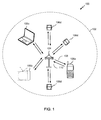
- FIG. 1 illustrates an example of a wireless communication system 100 in which aspects of the present disclosure may be employed.
- the wireless communication system 100 may operate pursuant to a wireless standard, for example the 802.11ah standard.
- the wireless communication system 100 may include an AP 104, which communicates with STAs 106.
- a variety of processes and methods may be used for transmissions in the wireless communication system 100 between the AP 104 and the STAs 106.
- signals may be sent and received between the AP 104 and the STAs 106 in accordance with OFDM/OFDMA techniques. If this is the case, the wireless communication system 100 may be referred to as an OFDM/OFDMA system.
- signals may be sent and received between the AP 104 and the STAs 106 in accordance with CDMA techniques. If this is the case, the wireless communication system 100 may be referred to as a CDMA system.
- a communication link that facilitates transmission from the AP 104 to one or more of the STAs 106 may be referred to as a downlink (DL) 108, and a communication link that facilitates transmission from one or more of the STAs 106 to the AP 104 may be referred to as an uplink (UL) 110.
- DL downlink
- UL uplink
- a downlink 108 may be referred to as a forward link or a forward channel
- an uplink 110 may be referred to as a reverse link or a reverse channel.
- the AP 104 may act as a base station and provide wireless communication coverage in a basic service area (BSA) 102.
- BSA basic service area
- the AP 104 along with the STAs 106 associated with the AP 104 that use the AP 104 for communication may be referred to as a basic service set (BSS).
- BSS basic service set
- the wireless communication system 100 may not have a central AP 104, but rather may function as a peer-to-peer network between the STAs 106. Accordingly, the functions of the AP 104 described herein may alternatively be performed by one or more of the STAs 106.
- the STAs 106 are not limited in type and may include a variety of different STAs.
- STAs 106 can include a cellular phone 106a, a television 106b, a laptop 106c, and a number of sensors 106d (e.g. a weather sensor or other sensor capable of communicating using a wireless protocol), to name a few.
- sensors 106d e.g. a weather sensor or other sensor capable of communicating using a wireless protocol
- FIG. 2 illustrates various components that may be utilized in a wireless device 202 that may be employed within the wireless communication system 100.
- the wireless device 202 is an example of a device that may be configured to implement the various methods described herein.
- the wireless device 202 may comprise the AP 104 or one of the STAs 106.
- the wireless device 202 may include a processor 204 which controls operation of the wireless device 202.
- the processor 204 may also be referred to as a central processing unit (CPU).
- Memory 206 which may include both read-only memory (ROM) and random access memory (RAM), provides instructions and data to the processor 204.
- a portion of the memory 206 may also include non-volatile random access memory (NVRAM).
- the processor 204 typically performs logical and arithmetic operations based on program instructions stored within the memory 206.
- the instructions in the memory 206 may be executable to implement the methods described herein.
- the processor 204 may comprise or be a component of a processing system implemented with one or more processors.
- the one or more processors may be implemented with any combination of general-purpose microprocessors, microcontrollers, digital signal processors (DSPs), field programmable gate array (FPGAs), programmable logic devices (PLDs), controllers, state machines, gated logic, discrete hardware components, dedicated hardware finite state machines, or any other suitable entities that can perform calculations or other manipulations of information.
- the processing system may also include machine-readable media for storing software.
- Software shall be construed broadly to mean any type of instructions, whether referred to as software, firmware, middleware, microcode, hardware description language, or otherwise. Instructions may include code (e.g., in source code format, binary code format, executable code format, or any other suitable format of code). The instructions, when executed by the one or more processors, cause the processing system to perform the various functions described herein.
- the wireless device 202 may also include a transmitter 210 and a receiver 212 to allow transmission and reception of data between the wireless device 202 and a remote location. Further, the transmitters 210 and the receiver 212 may be configured to allow transmission and reception of setup and/or configuration packets or frames between the wireless device 202 and a remote location including, for example, an AP.
- the transmitter 210 and receiver 212 may be combined into a transceiver 214.
- An antenna 216 may be attached to the housing 208 and electrically coupled to the transceiver 214. Alternatively, or additionally, the wireless device 202 may include an antenna 216 formed as part of the housing 208 or may be an internal antenna.
- the wireless device 202 may also include (not shown) multiple transmitters, multiple receivers, multiple transceivers, and/or multiple antennas.
- the wireless device 202 may also include a signal detector 218 that may be used in an effort to detect and quantify the level of signals received by the transceiver 214.
- the signal detector 218 may detect such signals as total energy, energy per subcarrier per symbol, power spectral density and other signals.
- the wireless device 202 may also include a digital signal processor (DSP) 220 for use in processing signals.
- DSP 220 may be configured to generate a data unit for transmission.
- the data unit may comprise a physical layer data unit (PPDU).
- PPDU physical layer data unit
- the PPDU is referred to as a packet or a frame.
- the wireless device 202 may further comprise a user interface 222 in some aspects.
- the user interface 222 may comprise a keypad, a microphone, a speaker, and/or a display.
- the user interface 222 may include any element or component that conveys information to a user of the wireless device 202 and/or receives input from the user.
- the various components of the wireless device 202 may be housed within a housing 208. Further, the various components of the wireless device 202 may be coupled together by a bus system 226.
- the bus system 226 may include a data bus, for example, as well as a power bus, a control signal bus, and a status signal bus in addition to the data bus.
- a data bus for example, as well as a power bus, a control signal bus, and a status signal bus in addition to the data bus.
- Those of skill in the art will appreciate the components of the wireless device 202 may be coupled together, or may accept or provide inputs to each other using some other mechanism.
- processor 204 may be used to implement not only the functionality described above with respect to the processor 204, but also to implement the functionality described above with respect to the signal detector 218 and/or the DSP 220. Further, each of the components illustrated in FIG. 2 may be implemented using a plurality of separate elements.
- the wireless device 202 may comprise an AP 104 or a STA 106, and may be used to transmit and/or receive communications.
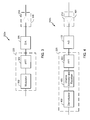
- FIG. 3 illustrates various components that may be utilized in the wireless device 202 to transmit wireless communications.
- the components illustrated in FIG. 3 may be used, for example, to transmit OFDM communications.
- the components illustrated in FIG. 3 are used to transmit data units with training fields with peak-to-power average ratio is as low as possible, as will be discussed in additional detail below.
- the wireless device 202 configured with the components illustrated in FIG. 3 is hereinafter referred to as a wireless device 202a.
- the wireless device 202a may comprise a modulator 302 configured to modulate bits for transmission.
- the modulator 302 may determine a plurality of symbols from bits received from the processor 204 or the user interface 222, for example by mapping bits to a plurality of symbols according to a constellation.
- the bits may correspond to user data or to control information.
- the bits are received in codewords.
- the modulator 302 comprises a QAM (quadrature amplitude modulation) modulator, for example a 16-QAM modulator or a 64-QAM modulator.
- the modulator 302 comprises a binary phase-shift keying (BPSK) modulator or a quadrature phase-shift keying (QPSK) modulator.
- BPSK binary phase-shift keying
- QPSK quadrature phase-shift keying
- the wireless device 202a may further comprise a transform module 304 configured to convert symbols or otherwise modulated bits from the modulator 302 into a time domain.
- the transform module 304 is illustrated as being implemented by an inverse fast Fourier transform (IFFT) module.
- IFFT inverse fast Fourier transform
- the modulator 302 and the transform module 304 are illustrated as being implemented in the DSP 220. In some aspects, however, one or both of the modulator 302 and the transform module 304 are implemented in the processor 204 or in another element of the wireless device 202.
- the DSP 220 may be configured to generate a data unit for transmission.
- the modulator 302 and the transform module 304 may be configured to generate a data unit comprising a plurality of fields including control information and a plurality of data symbols.
- the fields including the control information may comprise one or more training fields, for example, and one or more signal (SIG) fields.
- Each of the training fields may include a known sequence of bits or symbols.
- Each of the SIG fields may include information about the data unit, for example a description of a length or data rate of the data unit.
- the wireless device 202a may further comprise a digital to analog converter 306 configured to convert the output of the transform module into an analog signal.
- a digital to analog converter 306 configured to convert the output of the transform module into an analog signal.
- the time-domain output of the transform module 306 may be converted to a baseband OFDM signal by the digital to analog converter 306.
- the digital to analog converter 306 may be implemented in the processor 204 or in another element of the wireless device 202. In some aspects, the digital to analog converter 306 is implemented in the transceiver 214 or in a data transmission processor.
- the analog signal may be wirelessly transmitted by the transmitter 210.
- the analog signal may be further processed before being transmitted by the transmitter 210, for example by being filtered or by being upconverted to an intermediate or carrier frequency.
- the transmitter 210 includes a transmit amplifier 308.
- the analog signal Prior to being transmitted, the analog signal may be amplified by the transmit amplifier 308.
- the amplifier 308 comprises a low noise amplifier (LNA).
- the transmitter 210 is configured to transmit one or more packets, frames, or data units in a wireless signal based on the analog signal.
- the data units may be generated using the processor 204 and/or the DSP 220, for example using the modulator 302 and the transform module 304 as discussed above.
- FIG. 4 illustrates various components that may be utilized in the wireless device 202 to receive wireless communications.
- the components illustrated in FIG. 4 may be used, for example, to receive OFDM communications.
- the components illustrated in FIG. 4 are used to receive packets, frames, or data units that include one or more training fields, as will be discussed in additional detail below.
- the components illustrated in FIG. 4 may be used to receive data units transmitted by the components discussed above with respect to FIG. 3 .
- the wireless device 202 configured with the components illustrated in FIG. 4 is hereinafter referred to as a wireless device 202b.
- the receiver 212 is configured to receive one or more packets, frames, or data units in a wireless signal.
- the receiver 212 includes a receive amplifier 401.
- the receive amplifier 401 may be configured to amplify the wireless signal received by the receiver 212.
- the receiver 212 is configured to adjust the gain of the receive amplifier 401 using an automatic gain control (AGC) procedure.
- AGC automatic gain control
- the automatic gain control uses information in one or more received training fields, such as a received short training field (STF) for example, to adjust the gain.
- STF received short training field
- the amplifier 401 comprises an LNA.
- the wireless device 202b may comprise an analog to digital converter 402 configured to convert the amplified wireless signal from the receiver 212 into a digital representation thereof. Further to being amplified, the wireless signal may be processed before being converted by the digital to analog converter 402, for example by being filtered or by being downconverted to an intermediate or baseband frequency.
- the analog to digital converter 402 may be implemented in the processor 204 or in another element of the wireless device 202. In some aspects, the analog to digital converter 402 is implemented in the transceiver 214 or in a data receive processor.
- the wireless device 202b may further comprise a transform module 404 configured to convert the representation the wireless signal into a frequency spectrum.
- the transform module 404 is illustrated as being implemented by a fast Fourier transform (FFT) module.
- FFT fast Fourier transform
- the transform module may identify a symbol for each point that it uses.
- the wireless device 202b may further comprise a channel estimator and equalizer 405 configured to form an estimate of the channel over which the data unit is received, and to remove certain effects of the channel based on the channel estimate.
- the channel estimator may be configured to approximate a function of the channel
- the channel equalizer may be configured to apply an inverse of that function to the data in the frequency spectrum.
- the channel estimator and equalizer 405 uses information in one or more received training fields, such as a long training field (LTF) for example, to estimate the channel.
- the channel estimate may be formed based on one or more LTFs received at the beginning of the data unit. This channel estimate may thereafter be used to equalize data symbols that follow the one or more LTFs.
- one or more additional LTFs may be received in the data unit.
- the channel estimate may be updated or a new estimate formed using the additional LTFs. This new or update channel estimate may be used to equalize data symbols that follow the additional LTFs.
- the new or updated channel estimate is used to re-equalize data symbols preceding the additional LTFs.
- the wireless device 202b may further comprise a demodulator 406 configured to demodulate the equalized data.
- the demodulator 406 may determine a plurality of bits from symbols output by the transform module 404 and the channel estimator and equalizer 405, for example by reversing a mapping of bits to a symbol in a constellation.
- the bits may be processed or evaluated by the processor 204, or used to display or otherwise output information to the user interface 222. In this way, data and/or information may be decoded.
- the bits correspond to codewords.
- the demodulator 406 comprises a QAM (quadrature amplitude modulation) demodulator, for example a 16-QAM demodulator or a 64-QAM demodulator.
- the demodulator 406 comprises a binary phase-shift keying (BPSK) demodulator or a quadrature phase-shift keying (QPSK) demodulator.
- BPSK binary phase-shift keying
- QPSK quadrature phase-shift keying
- the transform module 404, the channel estimator and equalizer 405, and the demodulator 406 are illustrated as being implemented in the DSP 220. In some aspects, however, one or more of the transform module 404, the channel estimator and equalizer 405, and the demodulator 406 are implemented in the processor 204 or in another element of the wireless device 202.
- the wireless signal received at the receiver 212 comprises one or more data units.
- the data units or data symbols therein may be decoded evaluated or otherwise evaluated or processed.
- the processor 204 and/or the DSP 220 may be used to decode data symbols in the data units using the transform module 404, the channel estimator and equalizer 405, and the demodulator 406.
- Data units exchanged by the AP 104 and the STA 106 may include control information or data, as discussed above.
- these data units may be referred to as physical layer protocol data units (PPDUs).
- PPDUs physical layer protocol data units
- a PPDU may be referred to as a packet, frame, or physical layer packet.
- Each PPDU may comprise a preamble and a payload.
- the preamble may include training fields and a SIG field.
- the payload may comprise a Media Access Control (MAC) header or data for other layers, and/or user data, for example.
- the payload may be transmitted using one or more data symbols.
- the systems, methods, and devices herein may utilize data units with training fields whose peak-to-power ratio has been minimized.
- Some STA 106 may remain idle for significantly longer than they are transmitting. When the STA 106 has data to transmit, significant power may be expended waiting for the communication medium to be available. This is particularly case when packet durations are long.
- the STA 106 can be configured to sleep while waiting for the communication to be available. In some embodiments, any STA 106 can be configured to sleep when idle to reduce power consumption regardless of how often the STA 106 transmits data. Placing the STA 106 into a sleep mode to reduce power consumption is described further with respect to FIGs. 5-8 below.
- embodiments of the present disclosure are compatible with pre-existing processes and standards associated with IEEE 802.11 among others. For example, embodiments of the present disclosure are compatible with enhanced distributed channel access (EDCA).
- EDCA enhanced distributed channel access
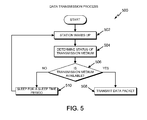
- FIG. 5 presents a flowchart for one embodiment of a data transmission process 500.
- the process 500 can be implemented by any STA, such as STA 106a-d. Further, the process 500 can be implemented by any component of a STA 106 or a wireless device 202 that can control the power consumption of the device of a component of the device.
- the process 500 can be implemented by a processor 204, a transceiver 214, or a DSP 220, to name a few.
- the process 500 will be described generally as being implemented by a STA 106.
- operations associated with the process 500 may be described as occurring in a particular order. However, unless specifically stated, the order of the operations of process 500 are not limited as such. The operations associated with the process 500 may be modified and/or may occur in a different order. Further, some operations may be optional and/or may occur more or less frequently than described.
- the process 500 begins at block 502 when, for example, the STA 106 wakes up.
- the STA 106 may wake up due to a variety of triggers.
- the STA 106 may wake up in response to receiving, generating, accessing, or otherwise acquiring data to transmit.
- the STA 106 is an earthquake sensor, the STA 106 may wake up in response to sensing an earthquake, or other geological activity associated with earthquake detection or prediction.
- the STA 106 waking includes one or more components associated with the STA 106 waking.
- the STA 106 waking may include a transceiver 214 associated with the STA 106 waking.
- one or more components associated with the STA 106 may already be active and not require waking.
- a geological sensor associated with the STA 106 may remain active at all times to detect possible earthquake activity.
- the block 502 may be optional.
- the STA 106 may already be awake.
- the STA 106 waking includes supplying power or increasing the amount of power supplied to one or more components associated with the STA 106.
- the STA 106 determines the status of the transmission medium. Determining the status of the transmission or communication medium may include determining if the transmission medium is available for the STA 106 to transmit data. In some embodiments, determining if the transmission medium is available includes determining if the transmission medium is available for a minimum period of time. In some implementations, the minimum period of time can be a Distributed Coordination Function (DCF) Interframe Space (DIFS) duration. Alternatively, the minimum period of time can be any period of time that can be used to determine if the transmission medium is available.
- DCF Distributed Coordination Function
- DIFS Interframe Space
- the STA 106 determines whether the transmission medium status indicates that the transmission medium is available. If so, the STA 106 transmits the data packet at block 508. If the STA 106 determines that the transmission medium status indicates that the transmission medium is not available for use by the STA 106, the STA 106 goes to sleep for a sleep time period. In some embodiments, going to sleep can include reducing power consumption or eliminating power consumption to one or more components associated with the STA 106, such as the transceiver 214.
- the sleep time period may be predefined for the STA 106, for all STA of a specific type, or for all STA 106 associated with the BSA 102 or the wireless communication system 100.
- the AP 104 may specify the sleep time.
- the AP 104 may specify the sleep time based on one or more of a measurement of an access-to-medium time without sleep, an estimate of an access-to-medium time without sleep, and an average number of trials for the STA 106 to determine that the transmission medium is available.
- the average number of trials may be based on an occupancy of the communication medium.
- the average number of trials may be received by the STA.
- the STA may receive the average number of trials from the AP 104.
- the AP 104 broadcasts the average number of trials in a beacon signal.
- the AP 104 broadcasts a value of T edca to the station.
- the STA determines a sleep time based on a T edca value.
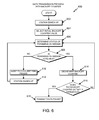
- FIG. 6 presents a flowchart for one embodiment of a data transmission process 600 using a backoff counter.
- the process 600 can be implemented by any STA, such as STA 106a-d. Further, the process 600 can be implemented by any component of a STA 106 or a wireless device 202 that can control the power consumption of the device of a component of the device. For example, the process 600 can be implemented by a processor 204, a transceiver 214, or a DSP 220, to name a few. To simplify discussion, the process 600 will be described generally as being implemented by a STA 106. Further, to simplify discussion, operations associated with the process 600 may be described as occurring in a particular order. However, unless specifically stated, the order of the operations of process 600 are not limited as such. The operations associated with the process 600 may be modified and/or may occur in a different order. Further, some operations may be optional and/or may occur more or less frequently than described.
- the process 600 begins at block 602 when, for example, the STA 106 wakes up.
- the STA 106 may wake up due to a variety of triggers.
- the STA 106 may wake up in response to receiving, generating, accessing, or otherwise acquiring data to transmit.
- the STA 106 is an earthquake sensor, the STA 106 may wake up in response to sensing an earthquake, or other geological activity associated with earthquake detection or prediction.
- the STA 106 waking includes one or more components associated with the STA 106 waking.
- the STA 106 waking may include a transceiver 214 associated with the STA 106 waking.
- one or more components associated with the STA 106 may already be active and not require waking.
- a geological sensor associated with the STA 106 may remain active at all times to detect possible earthquake activity.
- the block 602 may be optional.
- the STA 106 may already be awake.
- the STA 106 waking includes supplying power or increasing the amount of power supplied to one or more components associated with the STA 106.
- the STA 106 selects an initial backoff counter value at block 604.
- the STA 106 may select the initial backoff counter value pseudo-randomly, substantially randomly, or randomly.
- the initial backoff counter value may be selected from a range of values. This range of values may be based on a priority associated with one or more of the STA 106 and data for transmission by the STA 106. For example, if the STA 106, or the data, is associated with a high priority, the STA 106 may select the backoff counter value from a set of values between zero and five. However, if the STA 106, or the data, is associated with a low or lower priority, the STA 106 may select the backoff counter value from a set of values between zero and ten.
- the range of values may be selected to ensure a minimum backoff value greater than zero and/or greater than one.
- the lower priority STA 106 may select the backoff counter value from a set of values between five and ten thereby ensuring that the backoff counter value will be of at least a minimum value of five.
- the higher priority STA 106 may select a backoff counter value from a set of values between one and five thereby ensuring that the backoff counter value will be non-zero.
- the process 600 is not limited as such. Any number of priority levels may be associated with the various STAs and/or data packets to be transmitted. For example, there may exist five different priority levels each associated with a different range of possible backoff values.
- the backoff counter values have been described as positive integer values, the backoff counter values are not limited as such.
- the backoff counter values may be fractions between zero and one, or may include negative values.
- the STA 106 determines the status of the transmission medium. Determining the status of the transmission or communication medium may include determining if the transmission medium is available for the STA 106 to transmit data. In some embodiments, determining if the transmission medium is available includes determining if the transmission medium is available for a minimum period of time. In some implementations, the minimum period of time can be a Distributed Coordination Function (DCF) Interframe Space (DIFS) duration. Alternatively, the minimum period of time can be any period of time that can be used to determine if the transmission medium is available.
- DCF Distributed Coordination Function
- DIFS Interframe Space
- the STA 106 determines at decision block 608 whether the transmission medium status indicates that the transmission medium is available. If not, the STA 106 goes to sleep for a sleep time period in block 610. In some embodiments, going to sleep can include reducing power consumption or eliminating power consumption to one or more components associated with the STA 106, such as the transceiver 214.
- the sleep time period may be predefined for the STA 106, for all STA of a specific type, or for all STA 106 associated with the BSA 102 or the wireless communication system 100.
- the AP 104 may specify the sleep time.
- the AP 104 may specify the sleep time based on one or more of a measurement of an access-to-medium time without sleep, an estimate of an access-to-medium time without sleep, and an average number of trials for the STA 106 to determine that the transmission medium is available.
- the average number of trials may be based on an occupancy of the communication medium.
- the average number of trials may be received from the AP 104.
- the STA 106 wakes at block 612.
- the block 612 can include one or more of the embodiments described above with respect to the block 602.
- the process 600 Upon completing the process associated with the block 612, the process 600 returns to the block 606 as illustrated in FIG. 6 .
- the STA 106 decrements the backoff counter value at block 614.
- the STA 106 decrements the backoff counter value by one unit or value.
- the unit or value may differ based on the type of value used for the backoff counter.
- the unit may be an integer or a fraction.
- the STA 106 may decrement the backoff counter value by more than one unit or value.
- a high priority STA may be configured to decrement the backoff counter by two units at block 614 while a low priority STA may be configured to decrement the backoff counter by one unit.
- the STA 106 may increment the backoff counter value at block 614. For example, if the initial backoff counter value is associated with a negative integer, the STA 106 may increment the backoff counter instead of decrementing the backoff counter.
- the STA 106 determines if the backoff counter satisfies a threshold at decision block 616. Satisfying a threshold in one embodiment may indicate the backoff counter is equal to the threshold. In another embodiment, satisfying the threshold may indicate that the backoff counter is greater than, less than, greater than or equal to, or less than or equal to the threshold.
- the threshold is zero. In other embodiments, the threshold may be another value. For example, in some embodiments, the threshold may be a non-zero value. If the backoff counter does not satisfy the threshold, the process 600 returns to the block 606 as illustrated in FIG. 6 .
- the STA 106 transmits the data packet at block 618.
- the communication medium is likely to be available at block 618 because it was available at decision block 608..
- the transmission medium may be available at decision block 608, but, if the backoff counter associated with the STA 106 does not satisfy the threshold at block 616, the STA 106 may not transmit data. Instead, process 600 returns to block 606 and processing continues as described above.
- the use of the backoff counter to defer transmission of a data packet facilitates prioritizing data traffic.
- An initial backoff counter value selected in block 604 may vary across STAs communicating on a wireless network.
- initial backoff counter values may be assigned to an STA based on the priority of the STA or the priority of the STA's data streams. Higher priority STAs or data streams may be assigned lower initial backoff counter values than lower priority STAs. This may provide higher priority STAsor data streams with an ability to transmit data during a contention period earlier than lower priority STAs or data streams.
- FIG. 7 illustrates an example of a packet flow 700 in accordance with an embodiment of the present disclosure.
- the packet flow 700 includes two synchronous relative timelines.
- the timeline 702 represents the state of a STA, such as the STA 106.
- the timeline 704 represents the state of a communication medium that the STA 106 is attempting to use to transmit data.
- Each diagonal slash 706 is equivalent to one entire DIFS 708.
- the diagonal slashes 706 are used to help compress the illustration and is not intended to differ from the DIFS 708.
- the STA 106 has data to transmit across the communication medium.
- the STA 106 may have woken from a sleep state or may have been active at the beginning of the packet flow 700 when the STA 106 first obtains data to transmit.
- the STA 106 includes a backoff counter. During initialization of the backoff counter, the STA 106, randomly or pseudo-randomly, selects a backoff counter value of nine. Thus, in this example, the STA 106 will not transmit the data until the backoff counter has been decremented nine times. Further, in this example, the STA 106 decrements the backoff counter each time the STA 106 determines that the communication medium is available, or not transmitting data, for at least a DIFS time period.
- the STA 106 determines that the communication medium is available for three DIFS time periods. Thus, after each slash 706, the STA 106 decrements its backoff counter by one and therefore the backoff counter value is six at the end of the first three slashes 706.
- the STA 106 detects data 720 being transmitted in the communication medium by another device or STA. Thus, the STA 106 sleeps for a first time period 710. At the detection of the data 720 in the communication channel and during the time period 710, the backoff counter is not decremented. Upon waking, at the end of the first time period 710, the STA 106 determines that the communication medium is free for at least a DIFS 708 and thus, decrements the backoff counter from six to five. In the example flow 700, the STA 106, for two more DIFS periods as represented by the slashes 706, determines that the communication medium is free and reduces the backoff counter from five to four and then to three.
- the STA 106 then detects the data 722 being transmitted in the communication medium.
- the same device or STA that transmitted the data 720 may also transmit the data 722.
- another device or STA may transmit the data 722.
- the STA 106 sleeps for a second time period 712.
- each sleep time period is substantially equivalent.
- the sleep times may differ.
- each sleep time may be incrementally longer or shorter based on, for example, STA priority.
- the gap 730 is representative of the time during which the STA 106 is determining whether the communication medium is available. Generally, this time is less than a DIFS time period because upon detecting the data 722 in the communication medium, the STA 106 is configured to sleep. In some embodiments, the gap 730 may be equivalent to a DIFS. In response to determining that the data 722 is still being transmitted, the STA 106 sleeps for a third time period 714.
- the STA 106 Upon completion of the third sleep time period 714, the STA 106 awakens and determines the availability of the communication medium.
- the STA 106 determines that the communication medium is available for at least a DIFS time period 708. Thus, the STA 106 reduces the backoff counter from three to two. The STA 106 then determines that the communication medium remains available for at least two more DIFS periods as indicated by the two slashes 706. Therefore, at the end of each DIFS period represented by the slashes 706, the STA 106 reduces the backoff counter from two to one to zero respectively. Upon the backoff counter reaching zero, the STA 106 transmits data 724.
- a substantially similar process is repeated.
- the same backoff counter may be used.
- a new backoff counter may be selected.
- the range of values from which the backoff counter is selected may remain the same.
- the range of values may be adjusted. For example, if the priority of the data to be transmitted differs, the range of values from which the backoff counter is selected may be adjusted.
- FIG. 8 illustrates another example of a wireless device 800 that may be employed within the wireless communication system of FIG. 1 .
- the wireless device 800 comprises an activation module 802, a transmission medium status determining module 804, a sleep time determining module 806, a sleep module 808, a backoff counter processing module 810, and a data transmitting module 812.
- the activation module 802 is capable of waking a STA 106 by, for example, supplying power to one or more components associated with the STA 106. Further, the activation module 802 may be configured to perform one or more of the functions discussed above with respect to the blocks 502, 602, and 612.
- the activation module 802 may correspond to one or more of the processor 204, the DSP 220, or a power supply (not shown).
- the activation module 802 may include one or more of the processor 204, the DSP 220, a transceiver 214, a signal detector 218, a memory 206, a power supply, and any other component that may facilitate performing one or more of the functions discussed above with respect to the blocks 502, 602, and 612.
- the transmission medium status determining module 804 is capable of determining the status of a transmission medium or communication medium. Determining the status of the transmission medium can include determining whether the transmission medium or communication medium is available for the wireless device 800 to transmit data. Further, the transmission medium status determining module 804 may be configured to perform one or more of the functions discussed above with respect to the blocks 504, 506, 606, and 608. The transmission medium status determining module 804 may correspond to one or more of the processor 204, the DSP 220, the transceiver 214, or the signal detector 218.
- the transmission medium status determining module 804 may include one or more of the processor 204, the DSP 220, the transceiver 214, the signal detector 218, the memory 206, and any other component that may facilitate performing one or more of the functions discussed above with respect to the blocks 504, 506, 606, and 608.
- the sleep time determining module 806 is capable of determining the length of time that the STA 106 should sleep, power down, or reduce power to one or more components associated with the STA 106. Further, the sleep time determining module 806 may be configured to perform one or more of the functions discussed above with respect to the blocks 510 and 610.
- the sleep time determining module 806 may correspond to one or more of the processor 204, the DSP 220, or a power supply (not shown). Further, the sleep time determining module 806 may include one or more of the processor 204, the DSP 220, the transceiver 214, the signal detector 218, the memory 206, a power supply, and any other component that may facilitate performing one or more of the functions discussed above with respect to the blocks 510 and 610.
- the sleep module 808 is capable of placing the STA 106 into a sleep mode. Placing the STA 106 into a sleep mode can include reducing or ceasing to supply power to the STA 106 or one or more components associated with the STA 106. Further, the sleep module 808 may be configured to perform one or more of the functions discussed above with respect to the blocks 510 and 610. The sleep module 808 may correspond to one or more of the processor 204, the DSP 220, or a power supply (not shown).
- the sleep module 808 may include one or more of the processor 204, the DSP 220, the transceiver 214, the signal detector 218, the memory 206, a power supply, and any other component that may facilitate performing one or more of the functions discussed above with respect to the blocks 510 and 610.
- the backoff counter processing module 810 is capable of generating or selecting a backoff counter value and decrementing the backoff counter value in response to a determination that the transmission medium is available for the transmission of data. Further, the backoff counter processing module 810 may be configured to perform one or more of the functions discussed above with respect to the blocks 604, 614, and 616. The backoff counter processing module 810 may correspond to one or more of the processor 204 and the DSP 220. Further, the backoff counter processing module 810 may include one or more of the processor 204, the DSP 220, the transceiver 214, the signal detector 218, the memory 206, and any other component that may facilitate performing one or more of the functions discussed above with respect to the blocks 604, 614, and 616.
- the data transmitting module 812 is capable of transmitting data via a transmission medium. Further, the data transmitting module 812 may be configured to perform one or more of the functions discussed above with respect to the blocks 508, 616, and 618.
- the data transmitting module 812 may correspond to one or more of the transmitter 210 and the transceiver 214. Further, the data transmitting module 812 may include one or more of the processor 204, the DSP 220, the transceiver 214, the signal detector 218, the memory 206, and any other component that may facilitate performing one or more of the functions discussed above with respect to the blocks 508, 616, and 618.
- determining encompasses a wide variety of actions. For example, “determining” may include calculating, computing, processing, deriving, investigating, looking up (e.g., looking up in a table, a database or another data structure), ascertaining and the like. Also, “determining” may include receiving (e.g., receiving information), accessing (e.g., accessing data in a memory) and the like. Also, “determining” may include resolving, selecting, choosing, establishing and the like. Further, a "channel width” as used herein may encompass or may also be referred to as a bandwidth in certain aspects.
- a phrase referring to "at least one of" a list of items refers to any combination of those items, including single members.
- "at least one of: a , b, or c" is intended to cover: a , b, c, a-b , a-c , b-c, and a-b-c.
- any suitable means capable of performing the operations such as various hardware and/or software component(s), circuits, and/or module(s).
- any operations illustrated in the Figures may be performed by corresponding functional means capable of performing the operations.
- DSP digital signal processor
- ASIC application specific integrated circuit
- FPGA field programmable gate array signal
- PLD programmable logic device
- a general purpose processor may be a microprocessor, but in the alternative, the processor may be any commercially available processor, controller, microcontroller or state machine.
- a processor may also be implemented as a combination of computing devices, e.g., a combination of a DSP and a microprocessor, a plurality of microprocessors, one or more microprocessors in conjunction with a DSP core, or any other such configuration.
- the functions described may be implemented in hardware, software, firmware, or any combination thereof. If implemented in software, the functions may be stored on or transmitted over as one or more instructions or code on a computer-readable medium.
- Computer-readable media includes both computer storage media and communication media including any medium that facilitates transfer of a computer program from one place to another.
- a storage media may be any available media that can be accessed by a computer.
- such computer-readable media can comprise RAM, ROM, EEPROM, CD-ROM or other optical disk storage, magnetic disk storage or other magnetic storage devices, or any other medium that can be used to carry or store desired program code in the form of instructions or data structures and that can be accessed by a computer.
- any connection is properly termed a computer-readable medium.
- the software is transmitted from a website, server, or other remote source using a coaxial cable, fiber optic cable, twisted pair, digital subscriber line (DSL), or wireless technologies such as infrared, radio, and microwave
- the coaxial cable, fiber optic cable, twisted pair, DSL, or wireless technologies such as infrared, radio, and microwave are included in the definition of medium.
- Disk and disc includes compact disc (CD), laser disc, optical disc, digital versatile disc (DVD), floppy disk and blu-ray disc where disks usually reproduce data magnetically, while discs reproduce data optically with lasers.
- computer readable medium may comprise non-transitory computer readable medium (e.g., tangible media).
- computer readable medium may comprise transitory computer readable medium (e.g., a signal). Combinations of the above should also be included within the scope of computer-readable media.
- the methods disclosed herein comprise one or more steps or actions for achieving the described method.
- the method steps and/or actions may be interchanged with one another without departing from the scope of the claims.
- the order and/or use of specific steps and/or actions may be modified without departing from the scope of the claims.
- a storage media may be any available media that can be accessed by a computer.
- such computer-readable media can comprise RAM, ROM, EEPROM, CD-ROM or other optical disk storage, magnetic disk storage or other magnetic storage devices, or any other medium that can be used to carry or store desired program code in the form of instructions or data structures and that can be accessed by a computer.
- Disk and disc include compact disc (CD), laser disc, optical disc, digital versatile disc (DVD), floppy disk, and Blu-ray® disc where disks usually reproduce data magnetically, while discs reproduce data optically with lasers.
- certain aspects may comprise a computer program product for performing the operations presented herein.
- a computer program product may comprise a computer readable medium having instructions stored (and/or encoded) thereon, the instructions being executable by one or more processors to perform the operations described herein.
- the computer program product may include packaging material.
- Software or instructions may also be transmitted over a transmission medium.
- a transmission medium For example, if the software is transmitted from a website, server, or other remote source using a coaxial cable, fiber optic cable, twisted pair, digital subscriber line (DSL), or wireless technologies such as infrared, radio, and microwave, then the coaxial cable, fiber optic cable, twisted pair, DSL, or wireless technologies such as infrared, radio, and microwave are included in the definition of transmission medium.
- DSL digital subscriber line
- modules and/or other appropriate means for performing the methods and techniques described herein can be downloaded and/or otherwise obtained by a user terminal and/or base station as applicable.
- a user terminal and/or base station can be coupled to a server to facilitate the transfer of means for performing the methods described herein.
- various methods described herein can be provided via storage means (e.g., RAM, ROM, a physical storage medium such as a compact disc (CD) or floppy disk, etc.), such that a user terminal and/or base station can obtain the various methods upon coupling or providing the storage means to the device.
- storage means e.g., RAM, ROM, a physical storage medium such as a compact disc (CD) or floppy disk, etc.
- CD compact disc
- floppy disk etc.
- any other suitable technique for providing the methods and techniques described herein to a device can be utilized.
Landscapes
- Engineering & Computer Science (AREA)
- Computer Networks & Wireless Communication (AREA)
- Signal Processing (AREA)
- Mobile Radio Communication Systems (AREA)
Claims (15)
- Procédé d'accès à un support partagé en communication sans fil par une station, comprenant :le réveil à partir d'un état de sommeil (502) ;caractérisé par :la détermination d'une disponibilité d'un support de transmission (504) ; eten réponse à la détermination que le support de transmission n'est pas disponible (506), la détermination d'une période de temps de sommeil, et le passage à un second état de sommeil (510) au moins en partie sur la base de la période de temps de sommeil.
- Procédé selon la revendication 1, comprenant en outre la sélection d'une valeur de compteur d'attente aléatoire.
- Procédé selon la revendication 2, comprenant en outre le gel du compteur d'attente aléatoire pendant la durée du second état de sommeil ;
la décrémentation du compteur d'attente aléatoire en réponse au réveil à partir de l'état de sommeil et à la détermination que le support de transmission est disponible pendant au moins une période de temps de disponibilité ; et
l'envoi de données lorsque le compteur d'attente aléatoire est réduit à zéro. - Procédé selon la revendication 2, comprenant en outre la sélection d'une valeur pour le compteur d'attente aléatoire sur la base d'un niveau de priorité associé à des données à envoyer par la station, ou sur la base d'un niveau de priorité associé à la station, ou d'une manière sensiblement aléatoire.
- Procédé selon la revendication 1, comprenant en outre la détermination de la période de temps de sommeil sur la base d'une mesure d'un temps d'accès au support sans sommeil et d'un nombre moyen de tentatives pour que la station détermine que le support de transmission est disponible, dans lequel le nombre moyen de tentatives est basé sur une occupation du support.
- Procédé selon la revendication 2, comprenant en outre la décrémentation du compteur d'attente aléatoire en réponse à la détermination que le support de transmission est disponible sur une période de temps de disponibilité, et le passage au second état de sommeil sur la base de la valeur du compteur d'attente aléatoire.
- Procédé selon la revendication 6, comprenant en outre l'envoi d'un paquet de données à un point d'accès en réponse au fait que le compteur d'attente aléatoire satisfait un seuil.
- Appareil d'accès à un support partagé en communication sans fil, comprenant :un moyen pour réveiller une station à partir d'un état de sommeil ;caractérisé par :un moyen pour déterminer une disponibilité d'un support de transmission ;un moyen pour déterminer une période de temps de sommeil ; etun moyen pour passer à un second état de sommeil sur la base de la période de temps de sommeil en réponse à la détermination que le support de transmission est indisponible.
- Appareil selon la revendication 8, comprenant en outre un moyen pour recevoir une spécification de la période de temps de sommeil en provenance d'un point d'accès.
- Appareil selon la revendication 8, comprenant en outre un moyen pour envoyer un paquet de données à un point d'accès en réponse au fait que le moyen pour déterminer une disponibilité d'un support de transmission détermine que le support de transmission est disponible.
- Appareil selon la revendication 8, comprenant en outre un moyen pour déterminer la période de temps de sommeil sur la base d'une mesure d'un temps d'accès au support et d'un nombre moyen de tentatives pour que le moyen pour déterminer une disponibilité d'un support de transmission détermine que le support de transmission est disponible.
- Appareil selon la revendication 11, dans lequel le nombre moyen de tentatives est basé sur une occupation du support.
- Appareil selon la revendication 12, comprenant en outre un moyen de réception configuré pour recevoir au moins un paramètre parmi la mesure du temps d'accès au support, le nombre moyen de tentatives et l'occupation du support en provenance d'un point d'accès.
- Appareil selon la revendication 8, dans lequel la mise de la station dans le second état de sommeil comprend la réduction de la puissance fournie à au moins un composant associé à la station.
- Support lisible par ordinateur sur lequel sont stockées des instructions exécutables par processeur qui amènent un ordinateur à mettre en oeuvre le procédé selon l'une quelconque des revendications 1 à 7 lorsqu'elles sont exécutées par un ordinateur.
Applications Claiming Priority (3)
| Application Number | Priority Date | Filing Date | Title |
|---|---|---|---|
| US201161530735P | 2011-09-02 | 2011-09-02 | |
| US13/601,079 US9226241B2 (en) | 2011-09-02 | 2012-08-31 | Systems and methods for low power medium access |
| PCT/US2012/053615 WO2013033694A1 (fr) | 2011-09-02 | 2012-09-04 | Systèmes et procédés pour accès au support de faible puissance |
Publications (2)
| Publication Number | Publication Date |
|---|---|
| EP2752057A1 EP2752057A1 (fr) | 2014-07-09 |
| EP2752057B1 true EP2752057B1 (fr) | 2015-06-24 |
Family
ID=46846023
Family Applications (1)
| Application Number | Title | Priority Date | Filing Date |
|---|---|---|---|
| EP12758962.0A Active EP2752057B1 (fr) | 2011-09-02 | 2012-09-04 | Systèmes et procédés pour accès au support de faible puissance |
Country Status (6)
| Country | Link |
|---|---|
| US (1) | US9226241B2 (fr) |
| EP (1) | EP2752057B1 (fr) |
| JP (1) | JP5847943B2 (fr) |
| KR (1) | KR101641607B1 (fr) |
| CN (1) | CN103858491B (fr) |
| WO (1) | WO2013033694A1 (fr) |
Families Citing this family (9)
| Publication number | Priority date | Publication date | Assignee | Title |
|---|---|---|---|---|
| US8913560B2 (en) * | 2012-01-11 | 2014-12-16 | Broadcom Corporation | One or multiple bit restricted access window (RAW) end point determination within for single user, multiple user, multiple access, and/or MIMO wireless communications |
| US9152195B2 (en) * | 2013-01-21 | 2015-10-06 | Lenovo (Singapore) Pte. Ltd. | Wake on cloud |
| WO2015115829A1 (fr) * | 2014-01-29 | 2015-08-06 | 엘지전자 주식회사 | Procédé et dispositif au moyen desquels un terminal nan transmet une trame de recherche de service nan dans un système de communication sans fil |
| KR20150111732A (ko) * | 2014-03-26 | 2015-10-06 | 한국전자통신연구원 | 동시 전송을 이용한 데이터 통신 장치 및 방법 |
| US20150282091A1 (en) * | 2014-03-28 | 2015-10-01 | Qualcomm Incorporated | Method for DSDS/DSDA Idle Power Optimization by Adaptive RF Power Retention and Delta Programming |
| US10757736B2 (en) * | 2014-07-07 | 2020-08-25 | Lg Electronics Inc. | Method for supporting carrier sensing in wireless access system supporting unlicensed band, and device supporting same |
| KR101900064B1 (ko) * | 2014-08-07 | 2018-11-05 | 엘지전자 주식회사 | 무선랜에서 파워 세이브 모드 기반의 동작 방법 및 장치 |
| KR102659956B1 (ko) | 2015-07-31 | 2024-04-24 | 주식회사 윌러스표준기술연구소 | 다중 캐리어 신호 전송 방법, 장치 및 시스템 |
| US10966151B2 (en) * | 2019-12-27 | 2021-03-30 | Intel Corporation | Instant tethering and auto-connecting devices using wake-up radio (WUR) communications |
Family Cites Families (42)
| Publication number | Priority date | Publication date | Assignee | Title |
|---|---|---|---|---|
| US7537167B1 (en) * | 1993-08-31 | 2009-05-26 | Broadcom Corporation | Modular, portable data processing terminal for use in a radio frequency communication network |
| US7383038B2 (en) * | 1990-01-18 | 2008-06-03 | Broadcom Corporation | Modular, portable data processing terminal for use in a radio frequency communication network |
| US5355518A (en) * | 1992-05-26 | 1994-10-11 | Kindinger Peter A | Receiver with constant battery saving duty cycle |
| JPH1155266A (ja) | 1997-08-01 | 1999-02-26 | Nec Corp | 無線通信システムと通信システム |
| US6088602A (en) * | 1998-03-27 | 2000-07-11 | Lsi Logic Corporation | High resolution frequency calibrator for sleep mode clock in wireless communications mobile station |
| KR100330241B1 (ko) * | 1998-08-26 | 2002-10-04 | 삼성전자 주식회사 | 무선패킷음성데이터통신장치및방법 |
| US7483699B2 (en) * | 1998-09-22 | 2009-01-27 | Qualcomm Incorporated | Overhead message update with decentralized control |
| US6453181B1 (en) * | 1999-11-04 | 2002-09-17 | Qualcomm, Incorporated | Method and apparatus for compensating for frequency drift in a low frequency sleep clock within a mobile station operating in a slotted paging mode |
| US6735454B1 (en) * | 1999-11-04 | 2004-05-11 | Qualcomm, Incorporated | Method and apparatus for activating a high frequency clock following a sleep mode within a mobile station operating in a slotted paging mode |
| US7280517B2 (en) * | 2001-11-02 | 2007-10-09 | At&T Corp. | Wireless LANs and neighborhood capture |
| US20030086437A1 (en) * | 2001-11-07 | 2003-05-08 | Mathilde Benveniste | Overcoming neighborhood capture in wireless LANs |
| US6597915B2 (en) * | 2001-12-18 | 2003-07-22 | Motorola, Inc. | System and method for updating location information for distributed communication devices |
| JP3799285B2 (ja) | 2002-03-29 | 2006-07-19 | Necインフロンティア株式会社 | 無線lan基地局、無線端末およびプログラム |
| US20040186907A1 (en) * | 2003-03-17 | 2004-09-23 | Wentink Maarten Menzo | Technique for optimizing backoff for a shared resource |
| US7508781B2 (en) | 2003-03-25 | 2009-03-24 | Texas Instruments Incorporated | Power saving mechanism for wireless LANs via schedule information vector |
| JP2004343245A (ja) | 2003-05-13 | 2004-12-02 | Nippon Telegr & Teleph Corp <Ntt> | 無線データ通信開始方法および無線データ通信装置 |
| US7245946B2 (en) | 2003-07-07 | 2007-07-17 | Texas Instruments Incorporated | Optimal power saving scheduler for 802.11e APSD |
| US7406296B2 (en) * | 2003-08-22 | 2008-07-29 | Telefonaktiebolaget L M Ericsson (Publ) | Co-located radio operation |
| US20050237959A1 (en) * | 2004-04-26 | 2005-10-27 | Christopher Osterloh | Mobile automatic meter reading system and method |
| US20060029024A1 (en) * | 2004-08-05 | 2006-02-09 | Guang Zeng | System and method for battery conservation in wireless stations |
| US8098666B2 (en) * | 2004-08-12 | 2012-01-17 | Stmicroelectronics, Inc. | Method and system for providing a priority-based, low-collision distributed coordination function using a super-frame structure |
| US8966120B2 (en) * | 2004-08-12 | 2015-02-24 | Stmicroelectronics, Inc. | Method and system for providing a priority-based, low-collision distributed coordination function |
| DE102004057767B4 (de) * | 2004-11-30 | 2013-12-12 | Advanced Micro Devices Inc. | Gemeinsame Backoff-Erzeugung für 802.11E-kompatible WLAN-Kommunikationsgeräte |
| US7593745B2 (en) * | 2005-01-05 | 2009-09-22 | Faraday Technology Corp. | Method for operating wireless local area network cards in a power-saving mode |
| JP4591104B2 (ja) | 2005-02-09 | 2010-12-01 | ソニー株式会社 | 無線通信装置、無線通信方法およびプログラム |
| US20060209772A1 (en) * | 2005-03-15 | 2006-09-21 | University Of Florida Research Foundation, Inc. | Coordinated directional medium access control in a wireless network |
| EP1977563B1 (fr) * | 2006-01-11 | 2018-01-03 | QUALCOMM Incorporated | Codage de signaux de balise pour l'identification dans une communication de pair a pair |
| US8041972B2 (en) * | 2006-04-04 | 2011-10-18 | Qualcomm Incorporated | Apparatus and method for setting wakeup times in a communication device based on estimated lock on time of frequency synthesizer |
| US20070254680A1 (en) * | 2006-05-01 | 2007-11-01 | Shary Nassimi | Wirefree intercom having low power system and process |
| US7873049B2 (en) * | 2006-06-28 | 2011-01-18 | Hitachi, Ltd. | Multi-user MAC protocol for a local area network |
| JP2010516208A (ja) * | 2007-01-11 | 2010-05-13 | クゥアルコム・インコーポレイテッド | 無線通信システムにおいてdtxおよびdrxを使用すること |
| US7653397B2 (en) | 2007-02-09 | 2010-01-26 | Nokia Corporation | Managing unscheduled wireless communication in a multiradio device |
| JP4477022B2 (ja) | 2007-02-27 | 2010-06-09 | 日本電信電話株式会社 | 無線基地局、無線ノード、無線通信システム、及び無線通信方法 |
| US20080316963A1 (en) * | 2007-06-21 | 2008-12-25 | The Hong Kong University Of Science And Technology | Cross layer optimized medium access control |
| KR100953565B1 (ko) * | 2007-10-19 | 2010-04-21 | 한국전자통신연구원 | 센서 네트워크에서의 매체 접근 제어 방법 및 센서 노드의매체 접근 제어 장치 |
| US8385272B2 (en) * | 2007-10-24 | 2013-02-26 | Hitachi, Ltd. | System and method for burst channel access over wireless local area networks |
| US8184535B2 (en) * | 2008-07-23 | 2012-05-22 | Wipro Limited | Flow control techniques for co-localized WLAN and bluetooth |
| US8542620B2 (en) | 2009-05-05 | 2013-09-24 | Qualcomm Incorporated | Dynamic energy saving mechanism for access points |
| TWI400974B (zh) * | 2010-02-11 | 2013-07-01 | Univ Minghsin Sci & Tech | 無線訊號節能傳輸之方法 |
| TW201215064A (en) * | 2010-06-17 | 2012-04-01 | Interdigital Patent Holdings | Application layer protocol support for sleeping nodes in constrained networks |
| US8670362B2 (en) * | 2010-07-26 | 2014-03-11 | Texas Instruments Incorporated | Power state and medium access coordination in coexisting wireless networks |
| US8577326B2 (en) | 2010-08-10 | 2013-11-05 | Nokia Corporation | Method and apparatus for power conservation for a mobile device in idle mode |
-
2012
- 2012-08-31 US US13/601,079 patent/US9226241B2/en active Active
- 2012-09-04 JP JP2014528690A patent/JP5847943B2/ja not_active Expired - Fee Related
- 2012-09-04 WO PCT/US2012/053615 patent/WO2013033694A1/fr not_active Ceased
- 2012-09-04 CN CN201280049828.5A patent/CN103858491B/zh active Active
- 2012-09-04 EP EP12758962.0A patent/EP2752057B1/fr active Active
- 2012-09-04 KR KR1020147008779A patent/KR101641607B1/ko not_active Expired - Fee Related
Also Published As
| Publication number | Publication date |
|---|---|
| CN103858491A (zh) | 2014-06-11 |
| US20130235770A1 (en) | 2013-09-12 |
| JP5847943B2 (ja) | 2016-01-27 |
| EP2752057A1 (fr) | 2014-07-09 |
| JP2014528202A (ja) | 2014-10-23 |
| KR20140060561A (ko) | 2014-05-20 |
| CN103858491B (zh) | 2018-12-07 |
| WO2013033694A1 (fr) | 2013-03-07 |
| KR101641607B1 (ko) | 2016-07-21 |
| US9226241B2 (en) | 2015-12-29 |
Similar Documents
| Publication | Publication Date | Title |
|---|---|---|
| EP2932764B1 (fr) | Système et procédé permettant d'améliorer la communication sur un réseau sans fil | |
| US9585091B2 (en) | Systems and methods for low power wake up signal and operations for WLAN | |
| EP2752057B1 (fr) | Systèmes et procédés pour accès au support de faible puissance | |
| EP3045007B1 (fr) | Système et procédé pour une communication améliorée sur un réseau sans fil | |
| EP3038415B1 (fr) | Système et procédé d'économie d'énergie utilisant des fenêtres à accès restreint | |
| US20150124678A1 (en) | System and method for access point power management signalling in a wireless network |
Legal Events
| Date | Code | Title | Description |
|---|---|---|---|
| PUAI | Public reference made under article 153(3) epc to a published international application that has entered the european phase |
Free format text: ORIGINAL CODE: 0009012 |
|
| 17P | Request for examination filed |
Effective date: 20140210 |
|
| AK | Designated contracting states |
Kind code of ref document: A1 Designated state(s): AL AT BE BG CH CY CZ DE DK EE ES FI FR GB GR HR HU IE IS IT LI LT LU LV MC MK MT NL NO PL PT RO RS SE SI SK SM TR |
|
| DAX | Request for extension of the european patent (deleted) | ||
| GRAP | Despatch of communication of intention to grant a patent |
Free format text: ORIGINAL CODE: EPIDOSNIGR1 |
|
| INTG | Intention to grant announced |
Effective date: 20150113 |
|
| GRAS | Grant fee paid |
Free format text: ORIGINAL CODE: EPIDOSNIGR3 |
|
| GRAA | (expected) grant |
Free format text: ORIGINAL CODE: 0009210 |
|
| AK | Designated contracting states |
Kind code of ref document: B1 Designated state(s): AL AT BE BG CH CY CZ DE DK EE ES FI FR GB GR HR HU IE IS IT LI LT LU LV MC MK MT NL NO PL PT RO RS SE SI SK SM TR |
|
| REG | Reference to a national code |
Ref country code: GB Ref legal event code: FG4D |
|
| REG | Reference to a national code |
Ref country code: CH Ref legal event code: EP |
|
| REG | Reference to a national code |
Ref country code: AT Ref legal event code: REF Ref document number: 733358 Country of ref document: AT Kind code of ref document: T Effective date: 20150715 |
|
| REG | Reference to a national code |
Ref country code: IE Ref legal event code: FG4D |
|
| REG | Reference to a national code |
Ref country code: DE Ref legal event code: R096 Ref document number: 602012008268 Country of ref document: DE |
|
| PG25 | Lapsed in a contracting state [announced via postgrant information from national office to epo] |
Ref country code: LT Free format text: LAPSE BECAUSE OF FAILURE TO SUBMIT A TRANSLATION OF THE DESCRIPTION OR TO PAY THE FEE WITHIN THE PRESCRIBED TIME-LIMIT Effective date: 20150624 Ref country code: FI Free format text: LAPSE BECAUSE OF FAILURE TO SUBMIT A TRANSLATION OF THE DESCRIPTION OR TO PAY THE FEE WITHIN THE PRESCRIBED TIME-LIMIT Effective date: 20150624 Ref country code: NO Free format text: LAPSE BECAUSE OF FAILURE TO SUBMIT A TRANSLATION OF THE DESCRIPTION OR TO PAY THE FEE WITHIN THE PRESCRIBED TIME-LIMIT Effective date: 20150924 Ref country code: HR Free format text: LAPSE BECAUSE OF FAILURE TO SUBMIT A TRANSLATION OF THE DESCRIPTION OR TO PAY THE FEE WITHIN THE PRESCRIBED TIME-LIMIT Effective date: 20150624 |
|
| REG | Reference to a national code |
Ref country code: AT Ref legal event code: MK05 Ref document number: 733358 Country of ref document: AT Kind code of ref document: T Effective date: 20150624 |
|
| REG | Reference to a national code |
Ref country code: LT Ref legal event code: MG4D |
|
| PG25 | Lapsed in a contracting state [announced via postgrant information from national office to epo] |
Ref country code: RS Free format text: LAPSE BECAUSE OF FAILURE TO SUBMIT A TRANSLATION OF THE DESCRIPTION OR TO PAY THE FEE WITHIN THE PRESCRIBED TIME-LIMIT Effective date: 20150624 Ref country code: LV Free format text: LAPSE BECAUSE OF FAILURE TO SUBMIT A TRANSLATION OF THE DESCRIPTION OR TO PAY THE FEE WITHIN THE PRESCRIBED TIME-LIMIT Effective date: 20150624 Ref country code: GR Free format text: LAPSE BECAUSE OF FAILURE TO SUBMIT A TRANSLATION OF THE DESCRIPTION OR TO PAY THE FEE WITHIN THE PRESCRIBED TIME-LIMIT Effective date: 20150925 Ref country code: BG Free format text: LAPSE BECAUSE OF FAILURE TO SUBMIT A TRANSLATION OF THE DESCRIPTION OR TO PAY THE FEE WITHIN THE PRESCRIBED TIME-LIMIT Effective date: 20150924 |
|
| REG | Reference to a national code |
Ref country code: NL Ref legal event code: MP Effective date: 20150624 |
|
| PG25 | Lapsed in a contracting state [announced via postgrant information from national office to epo] |
Ref country code: EE Free format text: LAPSE BECAUSE OF FAILURE TO SUBMIT A TRANSLATION OF THE DESCRIPTION OR TO PAY THE FEE WITHIN THE PRESCRIBED TIME-LIMIT Effective date: 20150624 |
|
| PG25 | Lapsed in a contracting state [announced via postgrant information from national office to epo] |
Ref country code: CZ Free format text: LAPSE BECAUSE OF FAILURE TO SUBMIT A TRANSLATION OF THE DESCRIPTION OR TO PAY THE FEE WITHIN THE PRESCRIBED TIME-LIMIT Effective date: 20150624 Ref country code: SK Free format text: LAPSE BECAUSE OF FAILURE TO SUBMIT A TRANSLATION OF THE DESCRIPTION OR TO PAY THE FEE WITHIN THE PRESCRIBED TIME-LIMIT Effective date: 20150624 Ref country code: PL Free format text: LAPSE BECAUSE OF FAILURE TO SUBMIT A TRANSLATION OF THE DESCRIPTION OR TO PAY THE FEE WITHIN THE PRESCRIBED TIME-LIMIT Effective date: 20150624 Ref country code: PT Free format text: LAPSE BECAUSE OF FAILURE TO SUBMIT A TRANSLATION OF THE DESCRIPTION OR TO PAY THE FEE WITHIN THE PRESCRIBED TIME-LIMIT Effective date: 20151026 Ref country code: AT Free format text: LAPSE BECAUSE OF FAILURE TO SUBMIT A TRANSLATION OF THE DESCRIPTION OR TO PAY THE FEE WITHIN THE PRESCRIBED TIME-LIMIT Effective date: 20150624 Ref country code: RO Free format text: LAPSE BECAUSE OF NON-PAYMENT OF DUE FEES Effective date: 20150624 Ref country code: IS Free format text: LAPSE BECAUSE OF FAILURE TO SUBMIT A TRANSLATION OF THE DESCRIPTION OR TO PAY THE FEE WITHIN THE PRESCRIBED TIME-LIMIT Effective date: 20151024 Ref country code: ES Free format text: LAPSE BECAUSE OF FAILURE TO SUBMIT A TRANSLATION OF THE DESCRIPTION OR TO PAY THE FEE WITHIN THE PRESCRIBED TIME-LIMIT Effective date: 20150624 |
|
| REG | Reference to a national code |
Ref country code: DE Ref legal event code: R097 Ref document number: 602012008268 Country of ref document: DE |
|
| PG25 | Lapsed in a contracting state [announced via postgrant information from national office to epo] |
Ref country code: LU Free format text: LAPSE BECAUSE OF FAILURE TO SUBMIT A TRANSLATION OF THE DESCRIPTION OR TO PAY THE FEE WITHIN THE PRESCRIBED TIME-LIMIT Effective date: 20150904 Ref country code: MC Free format text: LAPSE BECAUSE OF FAILURE TO SUBMIT A TRANSLATION OF THE DESCRIPTION OR TO PAY THE FEE WITHIN THE PRESCRIBED TIME-LIMIT Effective date: 20150624 Ref country code: DK Free format text: LAPSE BECAUSE OF FAILURE TO SUBMIT A TRANSLATION OF THE DESCRIPTION OR TO PAY THE FEE WITHIN THE PRESCRIBED TIME-LIMIT Effective date: 20150624 Ref country code: IT Free format text: LAPSE BECAUSE OF FAILURE TO SUBMIT A TRANSLATION OF THE DESCRIPTION OR TO PAY THE FEE WITHIN THE PRESCRIBED TIME-LIMIT Effective date: 20150624 |
|
| PLBE | No opposition filed within time limit |
Free format text: ORIGINAL CODE: 0009261 |
|
| REG | Reference to a national code |
Ref country code: CH Ref legal event code: PL |
|
| STAA | Information on the status of an ep patent application or granted ep patent |
Free format text: STATUS: NO OPPOSITION FILED WITHIN TIME LIMIT |
|
| 26N | No opposition filed |
Effective date: 20160329 |
|
| REG | Reference to a national code |
Ref country code: IE Ref legal event code: MM4A |
|
| REG | Reference to a national code |
Ref country code: FR Ref legal event code: ST Effective date: 20160531 |
|
| PG25 | Lapsed in a contracting state [announced via postgrant information from national office to epo] |
Ref country code: IE Free format text: LAPSE BECAUSE OF NON-PAYMENT OF DUE FEES Effective date: 20150904 Ref country code: CH Free format text: LAPSE BECAUSE OF NON-PAYMENT OF DUE FEES Effective date: 20150930 Ref country code: LI Free format text: LAPSE BECAUSE OF NON-PAYMENT OF DUE FEES Effective date: 20150930 |
|
| PG25 | Lapsed in a contracting state [announced via postgrant information from national office to epo] |
Ref country code: SI Free format text: LAPSE BECAUSE OF FAILURE TO SUBMIT A TRANSLATION OF THE DESCRIPTION OR TO PAY THE FEE WITHIN THE PRESCRIBED TIME-LIMIT Effective date: 20150624 Ref country code: FR Free format text: LAPSE BECAUSE OF NON-PAYMENT OF DUE FEES Effective date: 20150930 |
|
| PG25 | Lapsed in a contracting state [announced via postgrant information from national office to epo] |
Ref country code: BE Free format text: LAPSE BECAUSE OF FAILURE TO SUBMIT A TRANSLATION OF THE DESCRIPTION OR TO PAY THE FEE WITHIN THE PRESCRIBED TIME-LIMIT Effective date: 20150624 |
|
| PG25 | Lapsed in a contracting state [announced via postgrant information from national office to epo] |
Ref country code: MT Free format text: LAPSE BECAUSE OF FAILURE TO SUBMIT A TRANSLATION OF THE DESCRIPTION OR TO PAY THE FEE WITHIN THE PRESCRIBED TIME-LIMIT Effective date: 20150624 |
|
| PG25 | Lapsed in a contracting state [announced via postgrant information from national office to epo] |
Ref country code: SM Free format text: LAPSE BECAUSE OF FAILURE TO SUBMIT A TRANSLATION OF THE DESCRIPTION OR TO PAY THE FEE WITHIN THE PRESCRIBED TIME-LIMIT Effective date: 20150624 Ref country code: HU Free format text: LAPSE BECAUSE OF FAILURE TO SUBMIT A TRANSLATION OF THE DESCRIPTION OR TO PAY THE FEE WITHIN THE PRESCRIBED TIME-LIMIT; INVALID AB INITIO Effective date: 20120904 |
|
| PG25 | Lapsed in a contracting state [announced via postgrant information from national office to epo] |
Ref country code: NL Free format text: LAPSE BECAUSE OF FAILURE TO SUBMIT A TRANSLATION OF THE DESCRIPTION OR TO PAY THE FEE WITHIN THE PRESCRIBED TIME-LIMIT Effective date: 20150624 Ref country code: CY Free format text: LAPSE BECAUSE OF FAILURE TO SUBMIT A TRANSLATION OF THE DESCRIPTION OR TO PAY THE FEE WITHIN THE PRESCRIBED TIME-LIMIT Effective date: 20150624 Ref country code: SE Free format text: LAPSE BECAUSE OF FAILURE TO SUBMIT A TRANSLATION OF THE DESCRIPTION OR TO PAY THE FEE WITHIN THE PRESCRIBED TIME-LIMIT Effective date: 20150624 |
|
| PG25 | Lapsed in a contracting state [announced via postgrant information from national office to epo] |
Ref country code: MK Free format text: LAPSE BECAUSE OF FAILURE TO SUBMIT A TRANSLATION OF THE DESCRIPTION OR TO PAY THE FEE WITHIN THE PRESCRIBED TIME-LIMIT Effective date: 20150624 Ref country code: TR Free format text: LAPSE BECAUSE OF FAILURE TO SUBMIT A TRANSLATION OF THE DESCRIPTION OR TO PAY THE FEE WITHIN THE PRESCRIBED TIME-LIMIT Effective date: 20150624 |
|
| PG25 | Lapsed in a contracting state [announced via postgrant information from national office to epo] |
Ref country code: AL Free format text: LAPSE BECAUSE OF FAILURE TO SUBMIT A TRANSLATION OF THE DESCRIPTION OR TO PAY THE FEE WITHIN THE PRESCRIBED TIME-LIMIT Effective date: 20150624 |
|
| PGFP | Annual fee paid to national office [announced via postgrant information from national office to epo] |
Ref country code: DE Payment date: 20240808 Year of fee payment: 13 |
|
| PGFP | Annual fee paid to national office [announced via postgrant information from national office to epo] |
Ref country code: GB Payment date: 20240808 Year of fee payment: 13 |