EP2753005B1 - Datenübertragungsverfahren und -vorrichtung - Google Patents
Datenübertragungsverfahren und -vorrichtung Download PDFInfo
- Publication number
- EP2753005B1 EP2753005B1 EP12827555.9A EP12827555A EP2753005B1 EP 2753005 B1 EP2753005 B1 EP 2753005B1 EP 12827555 A EP12827555 A EP 12827555A EP 2753005 B1 EP2753005 B1 EP 2753005B1
- Authority
- EP
- European Patent Office
- Prior art keywords
- sub
- frames
- user equipment
- base station
- signal
- Prior art date
- Legal status (The legal status is an assumption and is not a legal conclusion. Google has not performed a legal analysis and makes no representation as to the accuracy of the status listed.)
- Active
Links
Images


Classifications
-
- H—ELECTRICITY
- H04—ELECTRIC COMMUNICATION TECHNIQUE
- H04L—TRANSMISSION OF DIGITAL INFORMATION, e.g. TELEGRAPHIC COMMUNICATION
- H04L5/00—Arrangements affording multiple use of the transmission path
- H04L5/003—Arrangements for allocating sub-channels of the transmission path
- H04L5/0042—Intra-user or intra-terminal allocation
-
- H—ELECTRICITY
- H04—ELECTRIC COMMUNICATION TECHNIQUE
- H04B—TRANSMISSION
- H04B7/00—Radio transmission systems, i.e. using radiation field
- H04B7/24—Radio transmission systems, i.e. using radiation field for communication between two or more posts
- H04B7/26—Radio transmission systems, i.e. using radiation field for communication between two or more posts at least one of which is mobile
- H04B7/2643—Radio transmission systems, i.e. using radiation field for communication between two or more posts at least one of which is mobile using time-division multiple access [TDMA]
- H04B7/2656—Radio transmission systems, i.e. using radiation field for communication between two or more posts at least one of which is mobile using time-division multiple access [TDMA] for structure of frame, burst
-
- H—ELECTRICITY
- H04—ELECTRIC COMMUNICATION TECHNIQUE
- H04L—TRANSMISSION OF DIGITAL INFORMATION, e.g. TELEGRAPHIC COMMUNICATION
- H04L5/00—Arrangements affording multiple use of the transmission path
- H04L5/003—Arrangements for allocating sub-channels of the transmission path
- H04L5/0037—Inter-user or inter-terminal allocation
-
- H—ELECTRICITY
- H04—ELECTRIC COMMUNICATION TECHNIQUE
- H04L—TRANSMISSION OF DIGITAL INFORMATION, e.g. TELEGRAPHIC COMMUNICATION
- H04L5/00—Arrangements affording multiple use of the transmission path
- H04L5/14—Two-way operation using the same type of signal, i.e. duplex
-
- H—ELECTRICITY
- H04—ELECTRIC COMMUNICATION TECHNIQUE
- H04W—WIRELESS COMMUNICATION NETWORKS
- H04W72/00—Local resource management
- H04W72/02—Selection of wireless resources by user or terminal
-
- H—ELECTRICITY
- H04—ELECTRIC COMMUNICATION TECHNIQUE
- H04W—WIRELESS COMMUNICATION NETWORKS
- H04W72/00—Local resource management
- H04W72/04—Wireless resource allocation
- H04W72/044—Wireless resource allocation based on the type of the allocated resource
- H04W72/0446—Resources in time domain, e.g. slots or frames
Definitions
- the present invention relates to the field of wireless communication technologies and particularly to a data communication method and apparatus.
- TDD Time Division Duplex
- FDD Frequency Division Duplex
- GP Guard Period
- GB Guard Band
- a radio frame has a length of 10 ms and includes two types of sub-frames which are special sub-frames and normal sub-frames, totaling to 10 sub-frames, each of which is 1 ms.
- the special sub-frames include three sub-frames which are a Downlink Pilot Slot (DwPTS) for transmission of a Primary Synchronization Signal (PSS), a Physical Downlink Control Channel (PDCCH), a Physical Hybrid Automatic Repeat Request (HARQ) Indication Channel (PHICH), a Physical Control Format Indication Channel (PCFICH), a Physical Downlink Shared Channel (PDSCH), etc.; a GP as a guard period between the downlink and the uplink; and an Uplink Pilot Slot (UpPTS) for transmission of a Sounding Reference Signal (SRS), a Physical Random Access Channel (PRACH), etc.
- the normal sub-frames include uplink sub-frames and downlink sub-frames for transmission of uplink/downlink control channels, service data, etc .
- two special sub-frames located at the sub-frames 1 and 6) or one special sub-frame (located at the sub-frame 1) may be configured.
- the sub-frame 0 and the sub-frame 5 as well as the DwPTS among the special sub-frames are always used for downlink transmission, the sub-frame 2 and the UpPTS among the special sub-frames are always used for uplink transmission, and the other sub-frames may be configured for uplink or downlink transmission as needed.
- a user equipment which is not in a Discontinuous Reception (DRX) status needs to detect in each downlink sub-frame a downlink signal transmitted from a base station and transmits a signal to the base station in a corresponding uplink sub-frame as scheduled by the base station.
- DRX Discontinuous Reception
- the allocation proportion of downlink sub-frames and uplink sub-frames in a radio frame and their corresponding locations are notified by the base station in a system broadcast, and all the user equipments in a cell operate in an uplink/downlink sub-frame allocation scheme (as depicted in Table 1) indicated by the broadcast.
- the existing radio frame structure is only applicable to transmission and reception of a signal between a user equipment and a base station and can not well support transmission and reception of a signal other than between a user equipment and a base station, for example, a direct communication service between one user equipment and another user equipment, direct communication between one base station and another base station via an air interface, etc.
- the existing radio frame structure is only applicable to transmission and reception of a signal between a user equipment and a base station and cannot support transmission and reception of a signal between other entities than a user equipment and a base station in communication.
- WO 2011/044558 A1 discloses subframe staggering for relay communication, which further discloses that a first relay may determine its access subframes and backhaul subframes, which may correspond to different non-overlapping subsets of subframes of the first relay; the first relay may communicate with at least one UE on the access link during the access subframes; the first relay may communicate with a base station on the backhaul link during the backhaul subframes; the subframes of the first relay may be offset (e.g., by an integer number of subframes) from the subframes of a second relay communicating with the base station.
- a method may include communicating, by a first apparatus, with at least a second apparatus via a device-to-device communication link.
- the method may also include receiving resource allocations, from a base station.
- the method may include determining, based at least partly on the received resource allocations, which resources are allocated to at least the second apparatus for communication with the base station.
- the method may include based at least partly upon the resource allocations, determining when to perform direct device-to-device communication, by the first apparatus, with the second apparatus.
- WO 2010/130626 A1 discloses that techniques for supporting peer-to-peer (P2P) communication and wide area network (WAN) communication are disclosed.
- P2P communication may be supported on an uplink spectrum.
- a user equipment (UE) may communicate (i) with a base station on both a downlink spectrum and an uplink spectrum for WAN communication and (ii) with another UE on only the uplink spectrum for P2P communication.
- P2P communication may be supported by time division multiplexing the downlink and uplink (or transmit and receive links) for two UEs.
- WAN communication and P2P communication may be time division multiplexed, so that both can be concurrently supported by a UE.
- transmission gaps may be provided between WAN transmissions and P2P transmissions in order to avoid interference between these transmissions.
- Embodiments of the invention provide a data communication method and apparatus so as to be applicable to transmission and reception of a signal between a user equipment and a base station and also support transmission and reception of a signal between other entities than a user equipment and a base station in communication.
- An aspect of the invention provides a signal communication method including:
- An aspect of the invention provides a signal communication method including:
- Sub-frames in one or more radio frames are divided into two sets to be used differently to thereby be applicable to transmission and reception of a signal between a user equipment and a base station and also support transmission and reception of a signal between other entities than a user equipment and a base station in communication.
- the resource utilization ratio of the system and the system performance is further improved.
- sub-frames in one or more radio frames are divided into a first set and a second set, where the first set of sub-frames are used for communication between a base station and a user equipment, and the second set of sub-frames are used for another use of communication, for example, communication between user equipments, communication between base stations, etc.
- Sub-frames in one or more radio frames are divided into two sets to be used differently to thereby be applicable to transmission and reception of a signal between a user equipment and a base station and also support transmission and reception of a signal between other entities than a user equipment and a base station in communication, for example, transmission and reception of a signal between a user equipment and another entity than a base station, transmission and reception of a signal between a base station and another entity than a user equipment.
- the solution according to the embodiments of the invention is applicable to an FDD system and a TDD system.
- a method of a user equipment transmitting data includes the following steps.
- Step 201 A user equipment determines a first set of sub-frames and a second set of sub-frames in one or more radio frames; and Step 202.
- the user equipment communicates with a base station of a serving cell in the first set of sub-frames and communicates with another entity than the base station of the serving cell in the second set of sub-frames.
- the other entity than the base station of the serving cell includes another user equipment and another base station than the base station of the serving cell.
- Sub-frames in one or more radio frames are divided into two sets to be used differently to thereby be applicable to transmission and reception of a signal between a user equipment and a base station and also support transmission and reception of a signal between a user equipment and another entity than a base station, for example, transmission and reception of a signal between one user equipment and another user equipment.
- a specific period of time may be preset, for example, 5 radio frames, and then the user equipment determines a first set of sub-frames and a second set of sub-frames in the 5 radio frames and communicates in subsequent radio frames as in the prior art.
- the specific period of time may be preset from simulation or as needed and preferably may be specified in a protocol or notified by the network side.
- the user equipment may communicate respectively with the base station of the serving cell and with the other entity than the base station of the serving cell in the first set and the second set of sub-frames in the same radio frame as needed, for example, for the sub-frame 3 and the sub-frame 4 in the same radio frame, the sub-frame 3 belongs to the first set, and the sub-frame 4 belongs to the second set, and then the user equipment may communication with the base station of the serving cell in the sub-frame 3 and communication with the other entity than the base station of the serving cell in the sub-frame 4;
- the user equipment may communicate respectively with the base station of the serving cell and with the other entity than the base station of the serving cell in the first set and the second set of sub-frames in different radio frames as needed, for example, for the sub-frame 3 and the sub-frame 4 in different radio frames, the sub-frame 3 belongs to the first set, and the sub-frame 4 belongs to the second set, and then the user equipment may communication with the base station of the serving cell in the sub-frame 3 and communication with the other entity than the base station of the serving cell in the sub-frame 4.
- the user equipment may communicate the same or different data with the base station of the serving cell and with the other entity than the base station of the serving cell.
- the user equipment may forward the data communicated with the base station of the serving cell to another user equipment or another base station as needed for a service.
- the user equipment forwards the data communicated with the base station of the serving cell in the first set of sub-frames to the other entity than the base station of the serving cell in the second set of sub-frames.
- a sub-frame may belong to both of the two sets; and preferably each sub-frame belongs to only one of the sets.
- the user equipment according to the embodiment of the invention is an evolved user equipment, where the evolved user equipment refers to an evolved TDD user equipment and a user equipment supporting the function of the inventive solution, for example, a user equipment of the 3GPP LTE Rel-11 or a later release.
- the base station of the serving cell refers to a base station serving the serving cell of the user equipment.
- the user equipment determines the first set of sub-frames and the second set of sub-frames in the radio frame(s) according to received configuration information from the network side.
- the user equipment receives the configuration information in a system broadcast or user equipment specific signaling.
- the user equipment receives the configuration information in the user equipment specific signaling, then all or a part or none of configuration information corresponding to different user equipments is the same.
- the first set of sub-frames include uplink sub-frames and downlink sub-frames respectively used for transmission and reception of uplink and downlink signals between the user equipment and the network side.
- downlink sub-frames and uplink sub-frames are located over the same carrier, and a sub-frame direction division scheme may be notified by the network side to the user equipment, for example, in a system broadcast, user equipment specific signaling, etc. If it is notified in the user equipment specific signaling, then the different user equipments may be configured with different sub-frame direction division schemes.
- the user equipment determines the uplink sub-frames and the downlink sub-frames in the first set according to the received configuration information from the network side.
- the user equipment transmits a signal in the uplink sub-frames in the first set and receives a signal in the downlink sub-frames in the first set.
- the second set of sub-frames include sub-frames in a transmission status and sub-frames in a reception status.
- the sub-frames in the transmission status and the sub-frames in the reception status are located over the same carrier, and a sub-frame status division scheme may be notified by the network side to the user equipment, for example, in a system broadcast, user equipment specific signaling, etc. If it is notified in the user equipment specific signaling, then different user equipments may be configured with different sub-frame status division schemes.
- the user equipment determines the sub-frames in the transmission status and the sub-frames in the reception status in the second set according to the received configuration information from the network side.
- the user equipment transmits a signal in the sub-frames in the transmission status in the second set and receives a signal in the sub-frames in the reception status in the second set.
- the user equipment transmits a signal to another user equipment in the sub-frames in the transmission status in the second set and does not transmit a signal to the base station in sub-frames in the transmission status; and receives a signal from the another user equipment in the sub-frames in the reception status in the second set and does not receive a signal from the base station in sub-frames in the reception status.
- the user equipment when the user equipment communicates directly with another user equipment, the user equipment may neither receive a signal from the base station nor transmit a signal to the base station in these sub-frames, and the user equipment is configured in a transmission or reception status according to signaling of the base station, where different user equipments may be configured in the same or different statuses in the same one sub-frame.
- the user equipment transmits control signaling, a data signal, corresponding channel measurement and demodulation reference signals, etc., for direct communication between the user equipments, and a reference signal, a synchronization signal, etc., used for the other user equipment to capture the present user equipment; and in the reception status, the user equipment may detect a synchronization signal or a reference signal transmitted from one or more other user equipments to discover the presence of the corresponding user equipment(s) and to set up synchronization with the corresponding user equipment(s). Moreover control signaling, a data signal, corresponding measurement and demodulation reference signals, etc., transmitted from the corresponding user equipment(s) may be further received.
- the user equipment may communication in the second set of sub-frames for another use (for example, communication between the user equipments), possibly in a full sub-frame, for example, a temporal length of 1ms and a system bandwidth in the frequency domain in the LTE system; or a part of a sub-frame, for example, a part of the temporal length in a full sub-frame (for example, a part of Orthogonal Frequency Division Multiplexing (OFDM) symbols in the LTE) and a part of the width in the frequency domain (for example, a part of Resource Blocks (RBs) in the LTE).
- OFDM Orthogonal Frequency Division Multiplexing
- a method of a base station transmitting data includes the following steps.
- Step 301 A base station determines a first set of sub-frames and a second set of sub-frames in one or more radio frames;
- Step 302. The base station communicates with a user equipment residing in a cell of the present base station in the first set of sub-frames and communicates with another entity than the user equipment residing in the cell of the present base station in the second set of sub-frames.
- the other entity than the user equipment residing in the cell of the present base station includes another base station and a user equipment which does not resides in the cell of the present base station.
- Sub-frames in one or more radio frames are divided into two sets to be used differently to thereby be applicable to transmission and reception of a signal between a user equipment and a base station and also support transmission and reception of a signal between the base station and another entity than the user equipment, for example, transmission and reception of a signal between one base station and another base station.
- a specific period of time may be preset, for example, 5 radio frames, and then the base station determines a first set of sub-frames and a second set of sub-frames in the 5 radio frames and communicates in subsequent frames as in the prior art.
- the specific period of time may be preset from simulation or as needed and preferably may be specified in a protocol or notified by the network side (e.g., a higher layer).
- the base station may communicate respectively with the user equipment residing in the cell of the present base station and with the other entity than the user equipment residing in the cell of the present base station in the first set and the second set of sub-frames in the same radio frame as needed, for example, for the sub-frame 3 and the sub-frame 4 in the same radio frame, the sub-frame 3 belongs to the first set, and the sub-frame 4 belongs to the second set, and then the base station may communication with the user equipment residing in the cell of the present base station in the sub-frame 3 and communication with the other entity than the user equipment residing in the cell of the present base station in the sub-frame 4; and
- the base station may communicate respectively with the user equipment residing in the cell of the present base station and with the other entity than the user equipment residing in the cell of the present base station in the first set and the second set of sub-frames in different radio frames as needed, for example, for the sub-frame 3 and the sub-frame 4 in different radio frames, the sub-frame 3 belongs to the first set, and the sub-frame 4 belongs to the second set, and then the base station may communication with user equipment residing in the cell of the present base station in the sub-frame 3 and communication with the other entity than user equipment residing in the cell of the present base station in the sub-frame 4.
- the base station may communicate the same or different data with the user equipment residing in the cell of the present base station and with the other entity than the user equipment residing in the cell of the present base station.
- the base station may forward the data communicated with the user equipment residing in the cell of the present base station to another user equipment or another base station as needed for a service.
- the base station forwards the data communicated with the user equipment residing in the cell of the present base station in the first set of sub-frames to the other entity than the user equipment residing in the cell of the present base station in the second set of sub-frames.
- a sub-frame may belong to both of the two sets; and preferably each sub-frame belongs to only one of the sets.
- the user equipment residing in the cell of the present base station refers to a user equipment in a cell managed by the base station.
- the base station communicates with the user equipment residing in the cell of the present base station in the first set of sub-frames, where the user equipment residing in the cell of the present base station here includes an evolved user equipment and a non-evolved user equipment.
- the evolved user equipment is an evolved TDD user equipment and a user equipment supporting the function of the inventive solution, for example, a user equipment of the 3GPP LTE Rel-11 or a later release.
- the base station communicates with the non-evolved user equipment residing in the cell of the present base station in the second set of sub-frames.
- the base station may determine the first set of sub-frames and the second set of sub-frames in the radio frame(s) according to configuration information of the network side or may determine by itself the first set of sub-frames and the second set of sub-frames in the radio frame(s).
- the base station determines the first set of sub-frames and the second set of sub-frames in the radio frame(s) according to the configuration information of the network side, then in the step 301, the base station determines the first set of sub-frames and the second set of sub-frames in the radio frame(s) according to the received configuration information from the network side (for example, a higher layer).
- the base station determines by itself the first set of sub-frames and the second set of sub-frames in the radio frame(s), then the base station determines the first set of sub-frames and the second set of sub-frames according to a service demand; and determines a transmission direction of the first set of sub-frames according to an uplink/downlink configuration proportion and determines a transmission direction of the second set of sub-frames according to a service to be communicated.
- some more sub-frames may be configured in the second set; and if there are a larger number of services between the base station and the user equipment, then some more sub-frames may be configured in the first set.
- the sub-frames in the first set may be configured at exactly or approximately 1:3.
- the sub-frames in the transmission status and in the reception status may be configured in the second set at an almost equal proportion; and if there is a larger amount transmitted from the user equipment A to the user equipment B, then the user equipment A may be configured with a larger number of sub-frames in the transmission status and the user equipment B may be configured with a larger number of sub-frames in the reception status in the second set.
- the configuration mode adopted by the network side may be the same as that adopted by the base station as described above.
- the base station Preferably the base station generates configuration information from the determined first set and second set and transmits the configuration information in a system broadcast or user equipment specific signaling.
- the base station transmits the configuration information in the user equipment specific signaling, then all or a part or none of configuration information corresponding to different user equipments is the same.
- the first set of sub-frames include uplink sub-frames and downlink sub-frames respectively used for transmission and reception of uplink and downlink signals between the base station and the user equipment.
- the base station receives a signal in the uplink sub-frames in the first set and transmits a signal in the downlink sub-frames in the first set.
- the second set of sub-frames include sub-frames in a transmission status and sub-frames in a reception status.
- the base station transmits a signal in the sub-frames in the transmission status in the second set and receives a signal in the sub-frames in the reception status in the second set.
- the base station If the base station communicates with another base station, then the base station transmits a signal to the other base station in the sub-frames in the transmission status in the second set and does not transmit a signal to the user equipment in the sub-frames in the transmission status; and receives a signal from the other base station in the sub-frames in the reception status in the second set and does not receive a signal from the user equipment in sub-frames in the reception status.
- the base station when the base station communicates directly with another base station, the base station may neither receive a signal transmitted from the user equipment nor transmit a signal to the user equipment in these sub-frames, and the base station is configured by the network side in a transmission or reception status, where different base stations may be configured in the same or different statuses in the same sub-frame.
- the base station transmits control signaling, a data signal, corresponding measurement and demodulation reference signals, etc., for direct communication between the base stations, and a reference signal, a synchronization signal, etc., used for the other base station to capture the present base station; and in the reception status, the base station may detect a synchronization signal or a reference signal transmitted from one or more other base stations to set up synchronization with the corresponding base station(s). Moreover control signaling, a data signal, corresponding measurement and demodulation reference signals, etc., transmitted from the corresponding base station(s) may be further received.
- the base station may further configure a non-evolved user equipment with uplink sub-frames in the determined second set of sub-frames.
- the base station may further schedule the non-evolved user equipment not to transmit a signal in the second set of sub-frames.
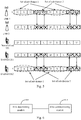
- evolved user equipments 1 and 2 are configured by a base station (i.e., an eNB) respectively with two sets, which are a first set including sub-frames ⁇ 0, 1, 2, 5, 6, 7 ⁇ in a radio frame and a second set including sub-frames ⁇ 3, 4, 8, 9 ⁇ in the radio frame.
- a base station i.e., an eNB
- two sets which are a first set including sub-frames ⁇ 0, 1, 2, 5, 6, 7 ⁇ in a radio frame and a second set including sub-frames ⁇ 3, 4, 8, 9 ⁇ in the radio frame.
- sub-frames in a reception status are the sub-frames ⁇ 3, 8 ⁇ in the second set, and sub-frames in a transmission status are the sub-frames ⁇ 4, 9 ⁇ in the second set; and for the evolved user equipment 2, sub-frames in a reception status are the sub-frames ⁇ 4, 9 ⁇ in the second set, and sub-frames in a transmission status are the sub-frames ⁇ 3, 8 ⁇ in the second set.
- the evolved user equipments 1 and 2 do not receive and process a signal from the base station but obtain synchronization with another evolved user equipment, receive control signaling, data and a reference signal from the other evolved user equipment, etc;
- the evolved user equipments 1 and 2 do not transmit a signal to the base station but transmit a synchronization signal, control signaling, a data signal, a reference signal, etc., to the user equipment.
- an evolved base station 1 and an evolved base station 2 are configured by the network side with two sets of sub-frames, which are a first set including sub-frames ⁇ 0, 1, 2, 5, 6, 7 ⁇ in a radio frame and a second set including sub-frames ⁇ 3, 4, 8, 9 ⁇ in the radio frame.
- sub-frames in a reception status are the sub-frames ⁇ 3, 8 ⁇ in the second set, and sub-frames in a transmission status are the sub-frames ⁇ 4, 9 ⁇ in the second set; and for the evolved base station 2, sub-frames in a reception status are the sub-frames ⁇ 4, 9 ⁇ in the second set, and sub-frames in a transmission status are the sub-frames ⁇ 3, 8 ⁇ in the second set.
- the evolved base station 1 and the base station 2 do not transmit a signal to the user equipment but transmit a synchronization signal, control signaling, a data signal, a reference signal, etc., to another base station;
- the evolved base station 1 and the base station 2 do not receive a signal transmitted from the user equipment but receive and process a synchronization signal, control signaling, a data signal, a reference signal, etc., transmitted from the other base station.
- the base station still can configure evolved user equipments to communicate directly with each other, particularly with reference to Fig. 4 .
- a non-evolved user equipment For a non-evolved user equipment, it can transmit uplink and downlink signals with the base station as in the prior art, and in the second set of sub-frames with which an evolved user equipment is configured, the base station configures uplink transmission for the non-evolved user equipment and/or does not schedule the non-evolved user equipment to transmit a signal in the second set of sub-frames.
- an embodiment of the invention further provides a user equipment, and since the user equipment addresses the problem under a similar principle to the method of a user equipment transmitting data according to embodiments of the invention, reference can be made to the implementation of the method for an implementation of the user equipment, so a repeated description thereof will be omitted here.
- a user equipment includes a first determining module 600 and a first communicating module 610.
- the first determining module 600 is configured to determine a first set of sub-frames and a second set of sub-frames in one or more radio frames, where each sub-frame belongs to only one of the sets;
- the first communicating module 610 is configured to communicate with a base station of a serving cell in the first set of sub-frames and to communicate with another entity than the base station of the serving cell in the second set of sub-frames.
- a sub-frame may belong to both of the two sets; and preferably each sub-frame belongs to only one of the sets.
- the first determining module 600 determines the first set of sub-frames and the second set of sub-frames in the radio frame(s) according to received configuration information from the network side.
- the first determining module 600 receives the configuration information in a system broadcast or user equipment specific signaling.
- the first determining module 600 determines uplink sub-frames and downlink sub-frames in the first set and determines sub-frames in a transmission status and sub-frames in a reception status in the second set according to the received configuration information from the network side.
- the first communicating module 610 transmits a signal in the uplink sub-frames in the first set and receives a signal in the downlink sub-frames in the first set; and transmits a signal in the sub-frames in the transmission status in the second set and receives a signal in the sub-frames in the reception status in the second set.
- the first communicating module 610 transmits a signal to another user equipment in the sub-frames in the transmission status in the second set and does not transmit a signal to the base station in sub-frames in the transmission status; and receives a signal from the other user equipment in the sub-frames in the reception status in the second set and does not receive a signal from the base station in sub-frames in the reception status.
- the first communicating module 610 forwards data communicated with the base station of the serving cell in the first set of sub-frames to the other entity than the base station of the serving cell in the second set of sub-frames.
- an embodiment of the invention further provides a base station, and since the base station addresses the problem under a similar principle to the method of a base station transmitting data according to embodiments of the invention, reference can be made to the implementation of the method for an implementation of the base station, so a repeated description thereof will be omitted here.
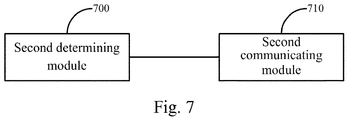
- a base station includes: a second determining module 700 and a second communicating module 710.
- the second determining module 700 is configured to determine a first set of sub-frames and a second set of sub-frames in one or more radio frames;
- the second communicating module 710 is configured to communicate with a user equipment residing in a cell of the present base station in the first set of sub-frames and to communicate with another entity than the user equipment residing in the cell of the present base station in the second set of sub-frames.
- the second communicating module 710 communicates with a non-evolved user equipment residing in the cell of the present base station in the second set of sub-frames.
- a sub-frame may belong to both of the two sets; and preferably each sub-frame belongs to only one of the sets.
- the second communicating module 710 communicates with the user equipment residing in the cell of the present base station in the first set of sub-frames, where the user equipment residing in the cell of the present base station includes an evolved user equipment and a non-evolved user equipment.
- the second determining module 700 determines the first set of sub-frames and the second set of sub-frames in the radio frame(s) according to received configuration information from the network side.
- the second determining module 700 determines the first set of sub-frames and the second set of sub-frames according to a service demand; determines a transmission direction of the first set of sub-frames according to an uplink/downlink configuration proportion and determines a transmission direction of the second set of sub-frames according to a service to be transmitted; and generates configuration information from the determined first set and second set and transmits the configuration information in a system broadcast or user equipment specific signaling.
- the second communicating module 710 receives a signal in the uplink sub-frames in the first set and transmits a signal in the downlink sub-frames in the first set; and transmits a signal in the sub-frames in the transmission status in the second set and receives a signal in the sub-frames in the reception status in the second set.
- the second communicating module 710 transmits a signal to another base station in the sub-frames in the transmission status in the second set and does not transmit a signal to the user equipment in sub-frames in the transmission status; and receives a signal from the other base station in the sub-frames in the reception status in the second set and does not receive a signal from the user equipment in sub-frames in the reception status.
- the second communicating module 710 forwards data communicated with the user equipment residing in the cell of the present base station in the first set of sub-frames to the other entity than the user equipment residing in the cell of the present base station in the second set of sub-frames.
- the second determining module 700 configures a non-evolved user equipment with uplink sub-frames in the determined second set of sub-frames.
- the second determining module 700 does not schedule a non-evolved user equipment to transmit a signal in the second set of sub-frames.
- Sub-frames in one or more radio frames are divided into two sets to be used differently to thereby be applicable to transmission and reception of a signal between a user equipment and a base station and also support transmission and reception of a signal between other entities than a user equipment and a base station in communication, for example, transmission and reception of a signal between a user equipment and another entity than a base station, transmission and reception of a signal between a base station and another entity than a user equipment, etc.; and to further improve the resource utilization ratio of the system and the system performance.
- the embodiments of the invention can be embodied as a method, a system or a computer program product. Therefore the invention can be embodied in the form of an all-hardware embodiment, an all-software embodiment or an embodiment of software and hardware in combination. Furthermore the invention can be embodied in the form of a computer program product embodied in one or more computer useable storage mediums (including but not limited to a disk memory, an optical memory, etc.) in which computer useable program codes are contained.
- These computer program instructions can also be stored into a computer readable memory capable of directing the computer or the other programmable data processing device to operate in a specific manner so that the instructions stored in the computer readable memory create an article of manufacture including instruction means which perform the functions specified in the flow(s) of the flow chart and/or the block(s) of the block diagram.
- These computer program instructions can also be loaded onto the computer or the other programmable data processing device so that a series of operational steps are performed on the computer or the other programmable data processing device to create a computer implemented process so that the instructions executed on the computer or the other programmable device provide steps for performing the functions specified in the flow(s) of the flow chart and/or the block(s) of the block diagram.
Landscapes
- Engineering & Computer Science (AREA)
- Signal Processing (AREA)
- Computer Networks & Wireless Communication (AREA)
- Mobile Radio Communication Systems (AREA)
Claims (8)
- Signalkommunikationsverfahren, umfassend:Bestimmen (201) durch ein Benutzergerät eines ersten Satzes von Unterrahmen und eines zweiten Satzes von Unterrahmen in einem oder mehreren Funkrahmen; undKommunizieren (202) durch das Benutzergerät mit einer Basisstation einer bedienenden Zelle in dem ersten Satz von Unterrahmen und Kommunizieren mit einer anderen Einheit als der Basisstation der bedienenden Zelle in dem zweiten Satz von Unterrahmen,wobei:wobei das Benutzergerät ein weiterentwickeltes TDD-Benutzergerät ist;das Benutzergerät verschiedene Daten an die Basisstation der bedienenden Zelle und an eine anderen Einheit als die Basisstation der bedienenden Zelle kommuniziert;das Bestimmen (201) durch das Benutzergerät des ersten Satzes von Unterrahmen und des zweiten Satzes von Unterrahmen in einem oder mehreren Funkrahmen umfasst:Bestimmen durch das Benutzergeräts der Uplink-Unterrahmen und der Downlink-Unterrahmen in dem ersten Satz und das Bestimmen der Unterrahmen, in denen das Benutzergerät mit einem Übertragungsstatus konfiguriert ist, und der Unterrahmen, in denen das Benutzergerät mit einem Empfangsstatus in dem zweiten Satz gemäß der empfangenen Konfigurationsinformationen von einer Netzwerkseite konfiguriert ist;wobei der bestimmte zweite Satz von Unterrahmen durch die Basisstation der bedienenden Zelle als Uplink-Unterrahmen für eine nicht weiterentwickeltes Benutzergerät konfiguriert wird; oder der zweite Satz von Unterrahmen von der Basisstation der bedienenden Zelle als Unterrahmen konfiguriert wird, in denen das nicht weiterentwickelte Benutzergerät kein Signal übertragen kann, wobei das nicht weiterentwickelte Benutzergerät ein Benutzergerät ist, das kein weiterentwickeltes TDD-Benutzergerät ist.
- Verfahren nach Anspruch 1, wobei jeder Unterrahmen zu einem von dem ersten Satz und dem zweiten Satz gehört.
- Verfahren nach Anspruch 1, wobei das Benutzergerät, das mit der Basisstation kommuniziert, umfasst:Übertragen durch das Benutzergerät eines Signals in den Uplink-Unterrahmen in dem ersten Satz und Empfangen eines Signals in den Downlink-Unterrahmen in dem ersten Satz; unddas Kommunizieren durch das Benutzergerät mit der anderen Einheit als der Basisstation der bedienenden Zelle umfasst:
Übertragen durch das Benutzergerät eines Signals in den Unterrahmen, in denen das Benutzergerät mit einem Übertragungsstatus in dem zweiten Satz konfiguriert ist, und Empfangen eines Signals in den Unterrahmen, in denen das Benutzergerät mit einem Empfangsstatus in dem zweiten Satz konfiguriert ist. - Verfahren nach Anspruch 3, wobei das Benutzergerät mit einem anderen Benutzergerät kommuniziert; und
das Kommunizieren durch das Benutzergerät mit der anderen Einheit als der Basisstation der bedienenden Zelle umfasst:
Übertragen durch das Benutzergerät eines Signals an das andere Benutzergerät in den Unterrahmen, in denen das Benutzergerät mit einem Übertragungsstatus in dem zweiten Satz konfiguriert ist, und kein Übertragen eines Signals an die Basisstation in den Unterrahmen, in denen das Benutzergerät mit einem Übertragungsstatus konfiguriert ist; und Empfangen eines Signals von dem anderen Benutzergerät in den Unterrahmen, in denen das Benutzergerät mit einem Empfangsstatus in dem zweiten Satz konfiguriert ist, und kein Empfangen eines Signals von die Basisstation in den Unterrahmen, in denen das Benutzergerät mit einem Empfangsstatus konfiguriert ist. - Signalkommunikationsverfahren, umfassend:Bestimmen (301) durch eine Basisstation eines ersten Satzes von Unterrahmen und eines zweiten Satzes von Unterrahmen in einem oder mehreren Funkrahmen; undKommunizieren (302) durch die Basisstation mit einem Benutzergerät, das sich in einer Zelle der Basisstation in dem ersten Satz von Unterrahmen befindet, und Kommunizieren mit einer anderen Einheit als dem Benutzergerät, die sich in der Zelle der Basisstation in dem zweiten Satz von Unterrahmen befindet,wobei:das Benutzergerät, das sich in der Zelle der Basisstation befindet, ein weiterentwickeltes TDD-Benutzergerät ist;die Basisstation verschiedene Daten an das Benutzergerät, das sich in der Zelle der Basisstation befindet, und an die andere Einheit als dem Benutzergerät, die sich in der Zelle der Basisstation befindet, kommuniziert;das Bestimmen (301) durch eine Basisstation eines ersten Satzes von Unterrahmen und eines zweiten Satzes von Unterrahmen in einem oder mehreren Funkrahmen, umfasst:Bestimmen durch die Basisstation des ersten Satzes von Unterrahmen und des zweiten Satzes von Unterrahmen in einem oder mehreren Funkrahmen gemäß den empfangenen Konfigurationsinformationen von einer Netzwerkseite; oderBestimmen durch die Basisstation des ersten Satzes von Unterrahmen und des zweiten Satzes von Unterrahmen gemäß einer Dienstanforderung; Bestimmen durch die Basisstation einer Übertragungsrichtung des ersten Satzes von Unterrahmen gemäß einem Uplink-/Downlink-Konfigurationsanteil und Bestimmen einer Übertragungsrichtung des zweiten Satzes von Unterrahmen gemäß einem zu kommunizierenden Dienst; und Erzeugen durch die Basisstation von Konfigurationsinformationen aus dem bestimmten ersten Satz und zweiten Satz und Übertragen der Konfigurationsinformationen in einer spezifischen Systemmeldungs- oder Benutzergerätesignalisierung;Konfigurieren durch die Basisstation eines nicht weiterentwickelten Benutzergeräts mit Uplink-Unterrahmen in dem bestimmten zweiten Satz von Unterrahmen oder Planen durch die Basisstation eines nicht weiterentwickelten Benutzergeräts zur Nichtübertragung eines Signals in dem zweiten Satz von Unterrahmen, wobei das nicht weiterentwickelte Benutzergerät ein Benutzergerät ist, das kein weiterentwickeltes TDD-Benutzergerät ist.
- Verfahren nach Anspruch 5, wobei jeder Unterrahmen zu einem von dem ersten Satz und dem zweiten Satz gehört.
- Verfahren nach Anspruch 5, wobei die Basisstation mit einer anderen Basisstation kommuniziert; und
die Basisstation, die mit der anderen Einheit als der in der Zelle der Basisstation befindlichen Benutzerausrüstung kommuniziert, umfasst:Übertragen durch die Basisstation eines Signals an die andere Basisstation in den Unterrahmen, in denen die Basisstation mit einem Übertragungsstatus in dem zweiten Satz konfiguriert ist, und kein Übertragen eines Signals an das Benutzergerät in den Unterrahmen, in denen die Basisstation mit einem Übertragungsstatus konfiguriert ist; undEmpfangen eines Signals von der anderen Basisstation in den Unterrahmen, in denen die Basisstation mit einem Empfangsstatus in dem zweiten Satz konfiguriert ist, und kein Empfangen eines Signals von dem Benutzergerät in den Unterrahmen, in denen die Basisstation mit einem Empfangsstatus konfiguriert ist. - Verfahren nach Anspruch 5, wobei die Basisstation, die mit der in der Zelle der Basisstation befindlichen Benutzerausrüstung kommuniziert, umfasst:Empfangen durch die Basisstation eines Signals in den Uplink-Unterrahmen in dem ersten Satz und Übertragen eines Signals in den Downlink-Unterrahmen in dem ersten Satz; unddie Basisstation, die mit der anderen Einheit als der in der Zelle der Basisstation befindlichen Benutzerausrüstung kommuniziert, umfasst:
Übertragen durch die Basisstation eines Signals in den Unterrahmen, in denen die Basisstation mit einem Übertragungsstatus in dem zweiten Satz konfiguriert ist, und Empfangen eines Signals in den Unterrahmen, in denen die Basisstation mit einem Empfangsstatus in dem zweiten Satz konfiguriert ist.
Applications Claiming Priority (2)
| Application Number | Priority Date | Filing Date | Title |
|---|---|---|---|
| CN201110255903.0A CN102307060B (zh) | 2011-08-31 | 2011-08-31 | 一种传输数据的方法和设备 |
| PCT/CN2012/080726 WO2013029545A1 (zh) | 2011-08-31 | 2012-08-29 | 一种传输数据的方法和设备 |
Publications (3)
| Publication Number | Publication Date |
|---|---|
| EP2753005A1 EP2753005A1 (de) | 2014-07-09 |
| EP2753005A4 EP2753005A4 (de) | 2014-07-09 |
| EP2753005B1 true EP2753005B1 (de) | 2019-03-06 |
Family
ID=45380878
Family Applications (1)
| Application Number | Title | Priority Date | Filing Date |
|---|---|---|---|
| EP12827555.9A Active EP2753005B1 (de) | 2011-08-31 | 2012-08-29 | Datenübertragungsverfahren und -vorrichtung |
Country Status (4)
| Country | Link |
|---|---|
| US (1) | US20140328226A1 (de) |
| EP (1) | EP2753005B1 (de) |
| CN (1) | CN102307060B (de) |
| WO (1) | WO2013029545A1 (de) |
Families Citing this family (16)
| Publication number | Priority date | Publication date | Assignee | Title |
|---|---|---|---|---|
| CN102307060B (zh) * | 2011-08-31 | 2015-08-19 | 电信科学技术研究院 | 一种传输数据的方法和设备 |
| CN104734834B (zh) * | 2011-08-31 | 2018-10-23 | 电信科学技术研究院 | 一种传输数据的方法 |
| CN103220782B (zh) | 2012-01-19 | 2017-08-18 | 华为技术有限公司 | 一种传输子帧的确定方法、系统及设备 |
| US9763272B2 (en) * | 2012-02-27 | 2017-09-12 | Futurewei Technologies, Inc. | System and method for time resource allocation for device-to-device communication overlaid on a cellular network |
| CN107071905B (zh) * | 2012-06-29 | 2020-11-03 | 华为技术有限公司 | 设备间通信方法、用户设备和基站 |
| US20140269336A1 (en) * | 2013-03-14 | 2014-09-18 | Lg Electronics Inc. | Method and apparatus for monitoring physical downlink control channel in a system having cells |
| CN104052704B (zh) * | 2013-03-15 | 2017-03-22 | 电信科学技术研究院 | 数据发送和接收方法及设备 |
| CN104104476B (zh) * | 2013-04-07 | 2017-09-08 | 普天信息技术研究院有限公司 | 一种d2d的数据传输方法 |
| US9467277B2 (en) * | 2013-05-16 | 2016-10-11 | Htc Corporation | Method and related communication device for handling communication between time division duplex devices |
| WO2014198207A1 (zh) * | 2013-06-13 | 2014-12-18 | 上海朗帛通信技术有限公司 | 一种tdd系统d2d ue中进行通信的方法和设备 |
| CN104244413A (zh) * | 2013-06-14 | 2014-12-24 | 中兴通讯股份有限公司 | 一种d2d通信中的子帧配置指示方法和系统 |
| CN104349470B (zh) | 2013-08-02 | 2018-11-30 | 华为终端有限公司 | 一种发送信息方法和装置 |
| CN104427510B (zh) * | 2013-08-23 | 2018-08-17 | 中国移动通信集团公司 | 一种lte tdd系统中d2d通信的方法、装置及系统 |
| JP6423592B2 (ja) * | 2014-01-30 | 2018-11-14 | 株式会社Nttドコモ | ユーザ端末、無線基地局、無線通信方法及び無線通信システム |
| WO2016004634A1 (en) | 2014-07-11 | 2016-01-14 | Mediatek Singapore Pte. Ltd. | Method for enb, ue uplink transmission and reception |
| US10778387B2 (en) * | 2016-11-23 | 2020-09-15 | Huawei Technologies Co., Ltd. | System and method for group-assisted downlink transmission |
Citations (2)
| Publication number | Priority date | Publication date | Assignee | Title |
|---|---|---|---|---|
| WO2010082114A1 (en) * | 2009-01-16 | 2010-07-22 | Nokia Corporation | Enabling device-to-device communication in cellular networks |
| WO2011130626A1 (en) * | 2010-04-15 | 2011-10-20 | Qualcomm Incorporated | Multiplexing of peer-to-peer (p2p) communication and wide area network (wan) communication |
Family Cites Families (33)
| Publication number | Priority date | Publication date | Assignee | Title |
|---|---|---|---|---|
| KR100584409B1 (ko) * | 2004-12-29 | 2006-05-26 | 삼성전자주식회사 | 직교주파수분할다중접속 기반의 셀룰러 시스템을 위한중계 통신 방법 |
| KR100893832B1 (ko) * | 2005-10-18 | 2009-04-17 | 삼성전자주식회사 | 두 개의 주파수 대역을 사용하는 다중 홉 릴레이 방식의셀룰러 네트워크에서 다중 링크를 지원하기 위한 장치 및방법 |
| CN101150384B (zh) * | 2006-09-20 | 2010-12-08 | 上海贝尔阿尔卡特股份有限公司 | 混合自动重传的方法和装置 |
| KR101367798B1 (ko) * | 2007-06-29 | 2014-02-28 | 삼성전자주식회사 | 광대역 무선통신 시스템에서 피투피 통신 설정 장치 및방법 |
| KR101527978B1 (ko) * | 2008-08-06 | 2015-06-18 | 엘지전자 주식회사 | 기지국과 중계기 사이의 서브프레임을 사용하여 통신하는 방법 및 장치 |
| RU2486711C2 (ru) * | 2008-11-07 | 2013-06-27 | Хуавэй Текнолоджиз Ко., Лтд. | Способ ретрансляционной передачи и сетевой узел |
| CN101753198B (zh) * | 2008-12-08 | 2013-04-17 | 华为技术有限公司 | 通信方法、中继器和通信系统 |
| CN101772086B (zh) * | 2009-01-04 | 2014-02-05 | 夏普株式会社 | 实现中继节点透明传输与非透明传输共存的方法 |
| JP2012517179A (ja) * | 2009-02-09 | 2012-07-26 | エルジー エレクトロニクス インコーポレイティド | リレー方式の通信システムにおけるバックホールリンクリソース割当て方法、並びにそれを用いたデータ送受信方法及び装置 |
| WO2010098581A2 (en) * | 2009-02-26 | 2010-09-02 | Lg Electronics Inc. | Method and apparatus of transmitting data in mbsfn subframe in wireless communication system |
| US9031569B2 (en) * | 2009-03-24 | 2015-05-12 | Lg Electronics, Inc. | Method for identifying a MBSFN subframe at a user equipment (UE) in a wireless communication system |
| US8472539B2 (en) * | 2009-04-07 | 2013-06-25 | Lg Electronics Inc. | Method of transmitting power information in wireless communication system |
| EP2438788A1 (de) * | 2009-06-04 | 2012-04-11 | Nokia Corp. | Effektive kennzeichnung von subrahmen auf basis einer gerät-zu-gerät-übertragung in zellulären downlink-spektren |
| US9184882B2 (en) * | 2009-06-16 | 2015-11-10 | Interdigital Patent Holdings, Inc. | Method and apparatus for synchronous HARQ operation and interference avoidance |
| US8649317B2 (en) * | 2009-06-22 | 2014-02-11 | Panasonic Corporation | Wireless communication relay station apparatus, wireless communication apparatus, wireless communication relay method, and wireless communication method |
| CN101621835B (zh) * | 2009-07-23 | 2012-01-11 | 北京航空航天大学 | 一种基于空中接口的CoMP分布式下行多用户调度方法 |
| US8804601B2 (en) * | 2009-08-05 | 2014-08-12 | Panasonic Intellectual Property Corporation Of America | Wireless communication device, signal relay method, and signal allocation method |
| CN101997598A (zh) * | 2009-08-21 | 2011-03-30 | 富士通株式会社 | 中继节点、时分双工通信系统及通信方法 |
| US8705419B2 (en) * | 2009-10-09 | 2014-04-22 | Qualcomm Incorporated | Subframe staggering for relay communication |
| US9137807B2 (en) * | 2010-02-10 | 2015-09-15 | Nokia Solutions And Networks Oy | Method and device for data processing in a wireless network |
| KR101587458B1 (ko) * | 2010-02-18 | 2016-01-22 | 삼성전자주식회사 | 중계 네트워크 시스템에서 채널 상태 정보 참조 심볼 송수신 방법 및 장치 |
| EP2543219B1 (de) * | 2010-03-05 | 2014-12-03 | Nokia Solutions and Networks Oy | Verfahren, vorrichtung und benutzergerät zur verwendung in einem mobilen kommunikationssystem mit einem relaisknoten |
| WO2011116815A1 (en) * | 2010-03-23 | 2011-09-29 | Nokia Siemens Networks Oy | Resource allocation for direct terminal-to-terminal communication in a cellular system |
| US8913511B2 (en) * | 2010-04-01 | 2014-12-16 | Qualcomm Incorporated | Interference management to support peer-to-peer communication in a wide area network |
| EP2556709B1 (de) * | 2010-04-09 | 2014-06-18 | Telefonaktiebolaget LM Ericsson (publ) | Relaisknoten und steuerknoten eines lte-netzes |
| JP5664365B2 (ja) * | 2010-05-26 | 2015-02-04 | ソニー株式会社 | 基地局、無線通信方法、ユーザ端末、および無線通信システム |
| WO2012016378A1 (en) * | 2010-08-04 | 2012-02-09 | Nokia Corporation | A resolution method and apparatus for simultaneous transmission and receiving contention in a device-to-device cellular reuse system |
| CN103069899A (zh) * | 2010-08-12 | 2013-04-24 | 诺基亚公司 | 配置用于在蜂窝网络下的设备到设备通信的上行链路和下行链路划分模式 |
| CN102437904B (zh) * | 2010-09-29 | 2015-05-13 | 中兴通讯股份有限公司 | 一种时分双工系统及其中继链路的下行反馈方法 |
| WO2012075630A1 (en) * | 2010-12-08 | 2012-06-14 | Nokia Corporation | Device-to-device communication scenario |
| US9241234B2 (en) * | 2011-03-03 | 2016-01-19 | Lg Electronics Inc. | Method and apparatus for transmitting data in wireless communication system |
| WO2012121477A1 (ko) * | 2011-03-08 | 2012-09-13 | 엘지전자 주식회사 | P2p(peer-to-peer) 통신 시스템에서의 harq 방법 및 그 장치 |
| CN102307060B (zh) * | 2011-08-31 | 2015-08-19 | 电信科学技术研究院 | 一种传输数据的方法和设备 |
-
2011
- 2011-08-31 CN CN201110255903.0A patent/CN102307060B/zh active Active
-
2012
- 2012-08-29 US US14/236,612 patent/US20140328226A1/en not_active Abandoned
- 2012-08-29 WO PCT/CN2012/080726 patent/WO2013029545A1/zh not_active Ceased
- 2012-08-29 EP EP12827555.9A patent/EP2753005B1/de active Active
Patent Citations (2)
| Publication number | Priority date | Publication date | Assignee | Title |
|---|---|---|---|---|
| WO2010082114A1 (en) * | 2009-01-16 | 2010-07-22 | Nokia Corporation | Enabling device-to-device communication in cellular networks |
| WO2011130626A1 (en) * | 2010-04-15 | 2011-10-20 | Qualcomm Incorporated | Multiplexing of peer-to-peer (p2p) communication and wide area network (wan) communication |
Also Published As
| Publication number | Publication date |
|---|---|
| EP2753005A1 (de) | 2014-07-09 |
| CN102307060B (zh) | 2015-08-19 |
| WO2013029545A1 (zh) | 2013-03-07 |
| US20140328226A1 (en) | 2014-11-06 |
| EP2753005A4 (de) | 2014-07-09 |
| CN102307060A (zh) | 2012-01-04 |
Similar Documents
| Publication | Publication Date | Title |
|---|---|---|
| EP2753005B1 (de) | Datenübertragungsverfahren und -vorrichtung | |
| JP6434043B2 (ja) | 無線通信システムにおいて信号を送受信する方法及びそのための装置 | |
| US11576200B2 (en) | Method and device for transmitting grant related to sidelink transmission in wireless communication system | |
| CN112567676B (zh) | 用于在支持nb-iot的无线通信系统中操作终端和基站的方法以及支持的装置 | |
| US10492191B2 (en) | Data transmission control method and system for user equipment | |
| US9603163B2 (en) | Method and apparatus for supporting scheduling groups of devices characteristics in a wireless communication system | |
| US10021654B2 (en) | Method for controlling power and apparatus therefor in wireless communication system supporting device-to-device communication | |
| US9736819B2 (en) | Relay node device for receiving control information from a base station and method therefor | |
| KR101530138B1 (ko) | Csi-rs 송신 방법, 검출 방법 및 장치 | |
| JP6297690B2 (ja) | 情報送信及び受信方法及びデバイス | |
| EP3014786B1 (de) | Gruppierungsbasierte referenzsignalübertragung für massives mimo-schema | |
| RU2615164C2 (ru) | Способ и устройство для передачи сигнала обнаружения для связи от устройства к устройству в системе беспроводной связи | |
| US20240251403A1 (en) | Power control parameters for multi-trp pusch repetition | |
| EP2501196A1 (de) | Verfahren und vorrichtung zur erfassung von duplexmodus-informationen von einer benutzervorrichtung | |
| US9668267B2 (en) | Method and apparatus for controlling interference in wireless communication system | |
| KR20130137643A (ko) | 무선 통신 시스템에서 단말 간의 통신 방법 및 장치 | |
| KR20160108393A (ko) | 단말간 직접 통신을 지원하는 무선 통신 시스템에서 자원을 할당하기 위한 방법 및 이를 위한 장치 | |
| CN103650391A (zh) | 在无线通信系统中控制小区间干扰的方法和设备 | |
| US20170006652A1 (en) | Terminal and method for transmitting device to device (d2d) signal for d2d communication in wireless access system supporting d2d communication | |
| US9832665B2 (en) | Method for sending and receiving signals for alleviating inter-cell interference in a wireless communication system and a device therefor | |
| WO2015080510A1 (ko) | 무선 통신 시스템에서 디스커버리 메시지를 전송하는 방법 및 이를 위한 장치 | |
| KR20170016886A (ko) | 무선 통신 시스템에서 신호 전송 방법 및 장치 | |
| US20200015230A1 (en) | Method and apparatus for transmitting sidelink signal in wireless communication system | |
| KR20150028772A (ko) | 무선 통신 시스템에서 핸드오버 제어 방법 및 이를 위한 장치 | |
| US9461789B2 (en) | Method for controlling interference in wireless communication system and apparatus therefor |
Legal Events
| Date | Code | Title | Description |
|---|---|---|---|
| PUAI | Public reference made under article 153(3) epc to a published international application that has entered the european phase |
Free format text: ORIGINAL CODE: 0009012 |
|
| 17P | Request for examination filed |
Effective date: 20140306 |
|
| A4 | Supplementary search report drawn up and despatched |
Effective date: 20140606 |
|
| AK | Designated contracting states |
Kind code of ref document: A1 Designated state(s): AL AT BE BG CH CY CZ DE DK EE ES FI FR GB GR HR HU IE IS IT LI LT LU LV MC MK MT NL NO PL PT RO RS SE SI SK SM TR |
|
| DAX | Request for extension of the european patent (deleted) | ||
| 17Q | First examination report despatched |
Effective date: 20150721 |
|
| STAA | Information on the status of an ep patent application or granted ep patent |
Free format text: STATUS: EXAMINATION IS IN PROGRESS |
|
| GRAP | Despatch of communication of intention to grant a patent |
Free format text: ORIGINAL CODE: EPIDOSNIGR1 |
|
| STAA | Information on the status of an ep patent application or granted ep patent |
Free format text: STATUS: GRANT OF PATENT IS INTENDED |
|
| RIC1 | Information provided on ipc code assigned before grant |
Ipc: H04W 72/02 20090101ALI20180828BHEP Ipc: H04W 72/04 20090101ALI20180828BHEP Ipc: H04B 7/26 20060101AFI20180828BHEP |
|
| INTG | Intention to grant announced |
Effective date: 20180924 |
|
| GRAS | Grant fee paid |
Free format text: ORIGINAL CODE: EPIDOSNIGR3 |
|
| GRAA | (expected) grant |
Free format text: ORIGINAL CODE: 0009210 |
|
| STAA | Information on the status of an ep patent application or granted ep patent |
Free format text: STATUS: THE PATENT HAS BEEN GRANTED |
|
| AK | Designated contracting states |
Kind code of ref document: B1 Designated state(s): AL AT BE BG CH CY CZ DE DK EE ES FI FR GB GR HR HU IE IS IT LI LT LU LV MC MK MT NL NO PL PT RO RS SE SI SK SM TR |
|
| REG | Reference to a national code |
Ref country code: GB Ref legal event code: FG4D |
|
| REG | Reference to a national code |
Ref country code: CH Ref legal event code: EP Ref country code: AT Ref legal event code: REF Ref document number: 1105975 Country of ref document: AT Kind code of ref document: T Effective date: 20190315 |
|
| REG | Reference to a national code |
Ref country code: DE Ref legal event code: R096 Ref document number: 602012057540 Country of ref document: DE |
|
| REG | Reference to a national code |
Ref country code: IE Ref legal event code: FG4D |
|
| REG | Reference to a national code |
Ref country code: NL Ref legal event code: MP Effective date: 20190306 |
|
| REG | Reference to a national code |
Ref country code: LT Ref legal event code: MG4D |
|
| PG25 | Lapsed in a contracting state [announced via postgrant information from national office to epo] |
Ref country code: SE Free format text: LAPSE BECAUSE OF FAILURE TO SUBMIT A TRANSLATION OF THE DESCRIPTION OR TO PAY THE FEE WITHIN THE PRESCRIBED TIME-LIMIT Effective date: 20190306 Ref country code: LT Free format text: LAPSE BECAUSE OF FAILURE TO SUBMIT A TRANSLATION OF THE DESCRIPTION OR TO PAY THE FEE WITHIN THE PRESCRIBED TIME-LIMIT Effective date: 20190306 Ref country code: FI Free format text: LAPSE BECAUSE OF FAILURE TO SUBMIT A TRANSLATION OF THE DESCRIPTION OR TO PAY THE FEE WITHIN THE PRESCRIBED TIME-LIMIT Effective date: 20190306 Ref country code: NO Free format text: LAPSE BECAUSE OF FAILURE TO SUBMIT A TRANSLATION OF THE DESCRIPTION OR TO PAY THE FEE WITHIN THE PRESCRIBED TIME-LIMIT Effective date: 20190606 |
|
| PG25 | Lapsed in a contracting state [announced via postgrant information from national office to epo] |
Ref country code: RS Free format text: LAPSE BECAUSE OF FAILURE TO SUBMIT A TRANSLATION OF THE DESCRIPTION OR TO PAY THE FEE WITHIN THE PRESCRIBED TIME-LIMIT Effective date: 20190306 Ref country code: BG Free format text: LAPSE BECAUSE OF FAILURE TO SUBMIT A TRANSLATION OF THE DESCRIPTION OR TO PAY THE FEE WITHIN THE PRESCRIBED TIME-LIMIT Effective date: 20190606 Ref country code: LV Free format text: LAPSE BECAUSE OF FAILURE TO SUBMIT A TRANSLATION OF THE DESCRIPTION OR TO PAY THE FEE WITHIN THE PRESCRIBED TIME-LIMIT Effective date: 20190306 Ref country code: NL Free format text: LAPSE BECAUSE OF FAILURE TO SUBMIT A TRANSLATION OF THE DESCRIPTION OR TO PAY THE FEE WITHIN THE PRESCRIBED TIME-LIMIT Effective date: 20190306 Ref country code: GR Free format text: LAPSE BECAUSE OF FAILURE TO SUBMIT A TRANSLATION OF THE DESCRIPTION OR TO PAY THE FEE WITHIN THE PRESCRIBED TIME-LIMIT Effective date: 20190607 Ref country code: HR Free format text: LAPSE BECAUSE OF FAILURE TO SUBMIT A TRANSLATION OF THE DESCRIPTION OR TO PAY THE FEE WITHIN THE PRESCRIBED TIME-LIMIT Effective date: 20190306 |
|
| REG | Reference to a national code |
Ref country code: AT Ref legal event code: MK05 Ref document number: 1105975 Country of ref document: AT Kind code of ref document: T Effective date: 20190306 |
|
| PG25 | Lapsed in a contracting state [announced via postgrant information from national office to epo] |
Ref country code: CZ Free format text: LAPSE BECAUSE OF FAILURE TO SUBMIT A TRANSLATION OF THE DESCRIPTION OR TO PAY THE FEE WITHIN THE PRESCRIBED TIME-LIMIT Effective date: 20190306 Ref country code: IT Free format text: LAPSE BECAUSE OF FAILURE TO SUBMIT A TRANSLATION OF THE DESCRIPTION OR TO PAY THE FEE WITHIN THE PRESCRIBED TIME-LIMIT Effective date: 20190306 Ref country code: PT Free format text: LAPSE BECAUSE OF FAILURE TO SUBMIT A TRANSLATION OF THE DESCRIPTION OR TO PAY THE FEE WITHIN THE PRESCRIBED TIME-LIMIT Effective date: 20190706 Ref country code: AL Free format text: LAPSE BECAUSE OF FAILURE TO SUBMIT A TRANSLATION OF THE DESCRIPTION OR TO PAY THE FEE WITHIN THE PRESCRIBED TIME-LIMIT Effective date: 20190306 Ref country code: SK Free format text: LAPSE BECAUSE OF FAILURE TO SUBMIT A TRANSLATION OF THE DESCRIPTION OR TO PAY THE FEE WITHIN THE PRESCRIBED TIME-LIMIT Effective date: 20190306 Ref country code: EE Free format text: LAPSE BECAUSE OF FAILURE TO SUBMIT A TRANSLATION OF THE DESCRIPTION OR TO PAY THE FEE WITHIN THE PRESCRIBED TIME-LIMIT Effective date: 20190306 Ref country code: ES Free format text: LAPSE BECAUSE OF FAILURE TO SUBMIT A TRANSLATION OF THE DESCRIPTION OR TO PAY THE FEE WITHIN THE PRESCRIBED TIME-LIMIT Effective date: 20190306 Ref country code: RO Free format text: LAPSE BECAUSE OF FAILURE TO SUBMIT A TRANSLATION OF THE DESCRIPTION OR TO PAY THE FEE WITHIN THE PRESCRIBED TIME-LIMIT Effective date: 20190306 |
|
| PG25 | Lapsed in a contracting state [announced via postgrant information from national office to epo] |
Ref country code: SM Free format text: LAPSE BECAUSE OF FAILURE TO SUBMIT A TRANSLATION OF THE DESCRIPTION OR TO PAY THE FEE WITHIN THE PRESCRIBED TIME-LIMIT Effective date: 20190306 Ref country code: PL Free format text: LAPSE BECAUSE OF FAILURE TO SUBMIT A TRANSLATION OF THE DESCRIPTION OR TO PAY THE FEE WITHIN THE PRESCRIBED TIME-LIMIT Effective date: 20190306 |
|
| REG | Reference to a national code |
Ref country code: DE Ref legal event code: R097 Ref document number: 602012057540 Country of ref document: DE |
|
| PG25 | Lapsed in a contracting state [announced via postgrant information from national office to epo] |
Ref country code: IS Free format text: LAPSE BECAUSE OF FAILURE TO SUBMIT A TRANSLATION OF THE DESCRIPTION OR TO PAY THE FEE WITHIN THE PRESCRIBED TIME-LIMIT Effective date: 20190706 Ref country code: AT Free format text: LAPSE BECAUSE OF FAILURE TO SUBMIT A TRANSLATION OF THE DESCRIPTION OR TO PAY THE FEE WITHIN THE PRESCRIBED TIME-LIMIT Effective date: 20190306 |
|
| PLBE | No opposition filed within time limit |
Free format text: ORIGINAL CODE: 0009261 |
|
| STAA | Information on the status of an ep patent application or granted ep patent |
Free format text: STATUS: NO OPPOSITION FILED WITHIN TIME LIMIT |
|
| PG25 | Lapsed in a contracting state [announced via postgrant information from national office to epo] |
Ref country code: DK Free format text: LAPSE BECAUSE OF FAILURE TO SUBMIT A TRANSLATION OF THE DESCRIPTION OR TO PAY THE FEE WITHIN THE PRESCRIBED TIME-LIMIT Effective date: 20190306 |
|
| 26N | No opposition filed |
Effective date: 20191209 |
|
| PG25 | Lapsed in a contracting state [announced via postgrant information from national office to epo] |
Ref country code: SI Free format text: LAPSE BECAUSE OF FAILURE TO SUBMIT A TRANSLATION OF THE DESCRIPTION OR TO PAY THE FEE WITHIN THE PRESCRIBED TIME-LIMIT Effective date: 20190306 |
|
| PG25 | Lapsed in a contracting state [announced via postgrant information from national office to epo] |
Ref country code: TR Free format text: LAPSE BECAUSE OF FAILURE TO SUBMIT A TRANSLATION OF THE DESCRIPTION OR TO PAY THE FEE WITHIN THE PRESCRIBED TIME-LIMIT Effective date: 20190306 |
|
| PG25 | Lapsed in a contracting state [announced via postgrant information from national office to epo] |
Ref country code: CH Free format text: LAPSE BECAUSE OF NON-PAYMENT OF DUE FEES Effective date: 20190831 Ref country code: LU Free format text: LAPSE BECAUSE OF NON-PAYMENT OF DUE FEES Effective date: 20190829 Ref country code: LI Free format text: LAPSE BECAUSE OF NON-PAYMENT OF DUE FEES Effective date: 20190831 Ref country code: MC Free format text: LAPSE BECAUSE OF FAILURE TO SUBMIT A TRANSLATION OF THE DESCRIPTION OR TO PAY THE FEE WITHIN THE PRESCRIBED TIME-LIMIT Effective date: 20190306 |
|
| REG | Reference to a national code |
Ref country code: BE Ref legal event code: MM Effective date: 20190831 |
|
| PG25 | Lapsed in a contracting state [announced via postgrant information from national office to epo] |
Ref country code: IE Free format text: LAPSE BECAUSE OF NON-PAYMENT OF DUE FEES Effective date: 20190829 |
|
| PG25 | Lapsed in a contracting state [announced via postgrant information from national office to epo] |
Ref country code: BE Free format text: LAPSE BECAUSE OF NON-PAYMENT OF DUE FEES Effective date: 20190831 |
|
| PG25 | Lapsed in a contracting state [announced via postgrant information from national office to epo] |
Ref country code: CY Free format text: LAPSE BECAUSE OF FAILURE TO SUBMIT A TRANSLATION OF THE DESCRIPTION OR TO PAY THE FEE WITHIN THE PRESCRIBED TIME-LIMIT Effective date: 20190306 |
|
| PG25 | Lapsed in a contracting state [announced via postgrant information from national office to epo] |
Ref country code: MT Free format text: LAPSE BECAUSE OF FAILURE TO SUBMIT A TRANSLATION OF THE DESCRIPTION OR TO PAY THE FEE WITHIN THE PRESCRIBED TIME-LIMIT Effective date: 20190306 Ref country code: HU Free format text: LAPSE BECAUSE OF FAILURE TO SUBMIT A TRANSLATION OF THE DESCRIPTION OR TO PAY THE FEE WITHIN THE PRESCRIBED TIME-LIMIT; INVALID AB INITIO Effective date: 20120829 |
|
| REG | Reference to a national code |
Ref country code: DE Ref legal event code: R081 Ref document number: 602012057540 Country of ref document: DE Owner name: DATANG MOBILE COMMUNICATIONS EQUIPMENT CO., LT, CN Free format text: FORMER OWNER: CHINA ACADEMY OF TELECOMMUNICATIONS TECHNOLOGY, BEIJING, CN |
|
| REG | Reference to a national code |
Ref country code: GB Ref legal event code: 732E Free format text: REGISTERED BETWEEN 20211007 AND 20211013 |
|
| PG25 | Lapsed in a contracting state [announced via postgrant information from national office to epo] |
Ref country code: MK Free format text: LAPSE BECAUSE OF FAILURE TO SUBMIT A TRANSLATION OF THE DESCRIPTION OR TO PAY THE FEE WITHIN THE PRESCRIBED TIME-LIMIT Effective date: 20190306 |
|
| P01 | Opt-out of the competence of the unified patent court (upc) registered |
Effective date: 20230512 |
|
| PGFP | Annual fee paid to national office [announced via postgrant information from national office to epo] |
Ref country code: DE Payment date: 20250820 Year of fee payment: 14 |
|
| PGFP | Annual fee paid to national office [announced via postgrant information from national office to epo] |
Ref country code: GB Payment date: 20250820 Year of fee payment: 14 |
|
| PGFP | Annual fee paid to national office [announced via postgrant information from national office to epo] |
Ref country code: FR Payment date: 20250829 Year of fee payment: 14 |