EP2754076B1 - Système et procédé de modélisation de l'érythropoïèse et sa gestion - Google Patents
Système et procédé de modélisation de l'érythropoïèse et sa gestion Download PDFInfo
- Publication number
- EP2754076B1 EP2754076B1 EP12773434.1A EP12773434A EP2754076B1 EP 2754076 B1 EP2754076 B1 EP 2754076B1 EP 12773434 A EP12773434 A EP 12773434A EP 2754076 B1 EP2754076 B1 EP 2754076B1
- Authority
- EP
- European Patent Office
- Prior art keywords
- patient
- epo
- erythropoiesis
- cells
- hematocrit
- Prior art date
- Legal status (The legal status is an assumption and is not a legal conclusion. Google has not performed a legal analysis and makes no representation as to the accuracy of the status listed.)
- Active
Links
Images








Classifications
-
- G—PHYSICS
- G16—INFORMATION AND COMMUNICATION TECHNOLOGY [ICT] SPECIALLY ADAPTED FOR SPECIFIC APPLICATION FIELDS
- G16H—HEALTHCARE INFORMATICS, i.e. INFORMATION AND COMMUNICATION TECHNOLOGY [ICT] SPECIALLY ADAPTED FOR THE HANDLING OR PROCESSING OF MEDICAL OR HEALTHCARE DATA
- G16H50/00—ICT specially adapted for medical diagnosis, medical simulation or medical data mining; ICT specially adapted for detecting, monitoring or modelling epidemics or pandemics
- G16H50/50—ICT specially adapted for medical diagnosis, medical simulation or medical data mining; ICT specially adapted for detecting, monitoring or modelling epidemics or pandemics for simulation or modelling of medical disorders
-
- A—HUMAN NECESSITIES
- A61—MEDICAL OR VETERINARY SCIENCE; HYGIENE
- A61K—PREPARATIONS FOR MEDICAL, DENTAL OR TOILETRY PURPOSES
- A61K38/00—Medicinal preparations containing peptides
- A61K38/16—Peptides having more than 20 amino acids; Gastrins; Somatostatins; Melanotropins; Derivatives thereof
- A61K38/17—Peptides having more than 20 amino acids; Gastrins; Somatostatins; Melanotropins; Derivatives thereof from animals; from humans
- A61K38/18—Growth factors; Growth regulators
- A61K38/1816—Erythropoietin [EPO]
-
- G—PHYSICS
- G16—INFORMATION AND COMMUNICATION TECHNOLOGY [ICT] SPECIALLY ADAPTED FOR SPECIFIC APPLICATION FIELDS
- G16H—HEALTHCARE INFORMATICS, i.e. INFORMATION AND COMMUNICATION TECHNOLOGY [ICT] SPECIALLY ADAPTED FOR THE HANDLING OR PROCESSING OF MEDICAL OR HEALTHCARE DATA
- G16H50/00—ICT specially adapted for medical diagnosis, medical simulation or medical data mining; ICT specially adapted for detecting, monitoring or modelling epidemics or pandemics
- G16H50/20—ICT specially adapted for medical diagnosis, medical simulation or medical data mining; ICT specially adapted for detecting, monitoring or modelling epidemics or pandemics for computer-aided diagnosis, e.g. based on medical expert systems
-
- G—PHYSICS
- G16—INFORMATION AND COMMUNICATION TECHNOLOGY [ICT] SPECIALLY ADAPTED FOR SPECIFIC APPLICATION FIELDS
- G16H—HEALTHCARE INFORMATICS, i.e. INFORMATION AND COMMUNICATION TECHNOLOGY [ICT] SPECIALLY ADAPTED FOR THE HANDLING OR PROCESSING OF MEDICAL OR HEALTHCARE DATA
- G16H50/00—ICT specially adapted for medical diagnosis, medical simulation or medical data mining; ICT specially adapted for detecting, monitoring or modelling epidemics or pandemics
- G16H50/80—ICT specially adapted for medical diagnosis, medical simulation or medical data mining; ICT specially adapted for detecting, monitoring or modelling epidemics or pandemics for detecting, monitoring or modelling epidemics or pandemics, e.g. flu
-
- G—PHYSICS
- G16—INFORMATION AND COMMUNICATION TECHNOLOGY [ICT] SPECIALLY ADAPTED FOR SPECIFIC APPLICATION FIELDS
- G16C—COMPUTATIONAL CHEMISTRY; CHEMOINFORMATICS; COMPUTATIONAL MATERIALS SCIENCE
- G16C20/00—Chemoinformatics, i.e. ICT specially adapted for the handling of physicochemical or structural data of chemical particles, elements, compounds or mixtures
- G16C20/30—Prediction of properties of chemical compounds, compositions or mixtures
-
- G—PHYSICS
- G16—INFORMATION AND COMMUNICATION TECHNOLOGY [ICT] SPECIALLY ADAPTED FOR SPECIFIC APPLICATION FIELDS
- G16H—HEALTHCARE INFORMATICS, i.e. INFORMATION AND COMMUNICATION TECHNOLOGY [ICT] SPECIALLY ADAPTED FOR THE HANDLING OR PROCESSING OF MEDICAL OR HEALTHCARE DATA
- G16H20/00—ICT specially adapted for therapies or health-improving plans, e.g. for handling prescriptions, for steering therapy or for monitoring patient compliance
- G16H20/10—ICT specially adapted for therapies or health-improving plans, e.g. for handling prescriptions, for steering therapy or for monitoring patient compliance relating to drugs or medications, e.g. for ensuring correct administration to patients
- G16H20/17—ICT specially adapted for therapies or health-improving plans, e.g. for handling prescriptions, for steering therapy or for monitoring patient compliance relating to drugs or medications, e.g. for ensuring correct administration to patients delivered via infusion or injection
Definitions
- Red blood cells are essential for the transport of oxygen through the body.
- An understanding of the regulation of red blood cell production, called erythropoiesis is important for the treatment of patients in a variety of clinical situations.
- Patients that are scheduled for elective surgery, such as hip or transplant surgery can be prescribed an erythropoiesis stimulating agent (ESA) to compensate for the expected loss of blood, thus obviating the need for allogenic blood transfusions by raising the patient's hematocrit and/or hemoglobin concentration to a desired range at the predetermined time, in expectation of the surgery.
- ESA erythropoiesis stimulating agent
- Erythropoiesis stimulating agents including recombinant human erythropoietin, exert hematological effects analogous to the hormone erythropoietin (EPO), which is released into the blood stream by the kidneys based on a negative feedback mechanism that reacts to the partial pressure of oxygen in the blood.
- ESA treatment regimens are also prescribed for patients who suffer from insufficient erythropoiesis, such as cancer patients recovering from the effects of chemotherapy, and chronic kidney disease patients whose kidneys can no longer produce sufficient amounts of EPO.
- the dose and frequency of administration of an ESA treatment regimen are often determined based on the prior experience of the physician and on established guidelines, because predictive models of erythropoiesis under an ESA treatment regimen are not readily available.
- US 2010/0113891 A1 relates to hemodialysis patient data acquisition, management and analysis system.
- WO 2011/082421 A1 relates to erythropoietic stimulating agent (ESA) dosage determination.
- ESA erythropoietic stimulating agent
- the invention relates to computer systems for adjusting a patient's undesired hematocrit and/or hemoglobin concentration and a method of determining an erythropoiesis stimulating agent (ESA) adminstration regime, according to the claims.
- ESA erythropoiesis stimulating agent
- a model for erythropoiesis in humans is provided that is useful in the invention and is based on structured population models for the different cell stages in development, from stem cells in bone marrow to erythrocytes in the blood stream.
- a method is described of adjusting a patient's hematocrit and/or hemoglobin concentration to a desired range at a predetermined time with an erythropoiesis stimulating agent (ESA) regimen includes obtaining patient parameters required for input into a model for predicting the patient's hematocrit and/or hemoglobin concentration at a predetermined time with a selected ESA administration regimen, and employing the patient parameters and an initially selected EPO administration regimen in the model to predict the patient's hematocrit and/or hemoglobin concentration at the predetermined time with the initially selected ESA administration regimen.
- ESA erythropoiesis stimulating agent
- the method includes employing the model with one or more different ESA administration regimens until the model predicts that the patient's hematocrit and/or hemoglobin concentration will be in the desired range at the predetermined time.
- the method then includes administering ESA to the patient with the ESA administration regimen predicted to adjust the patient's hematocrit and/or hemoglobin concentration to the desired range at the predetermined time.
- the patient parameters can include the starting hematocrit and/or hemoglobin concentration in the patient's blood, the total blood volume of the patient, the lifespan of red blood cells (RBCs) of the patient, the mean corpuscular volume of the RBCs, and the rate of neocytolysis in the patient's blood.
- RBCs red blood cells
- the predetermined time can be, for example, in a range of between about 5 days and about 200 days into the ESA administration regimen.
- the patient undergoes a medical procedure prior, during, or after initiation of an ESA administration regimen, including medical procedures such as blood donation, surgery, and dialysis, or any combination thereof.
- the desired hematocrit can be, for example, in the range of between about 28 percent and about 36 percent and the desired hemoglobin concentration can be, for example, in a range of between about 9.5 g/dL and about 12 g/dL.
- the invention provides a computer system for adjusting a patient's hematocrit and/or hemoglobin concentration to a desired range at a predetermined time with an erythropoiesis stimulating agent (ESA) regimen includes a user input means for determining patient parameters from a user, a digital processor coupled to receive determined patient data from the input means, wherein the digital processor executes a modeling system in working memory, and an output means coupled to the digital processor, the output means provides to the user the patient's hematocrit and/or hemoglobin concentration under the ESA administration regimen at the predetermined time.
- ESA erythropoiesis stimulating agent
- the modeling system employs the patient parameters and an initially selected EPO administration regimen in the model to predict the patient's hematocrit and/or hemoglobin concentration at the predetermined time with the initially selected ESA administration regimen.
- the model employs the model with one or more different ESA administration regimens until the model predicts that the patient's hematocrit and/or hemoglobin concentration will be in the desired range at the predetermined time.
- a method of determining a patient's hematocrit and/or hemoglobin concentration within a desired range at a predetermined time with an erythropoiesis stimulating agent (ESA) regimen includes obtaining patient parameters required for input into a model for predicting the patient's hematocrit and/or hemoglobin concentration at a predetermined time with a selected ESA administration regimen, and employing patient parameters and an initially selected EPO administration regimen in the model to predict the patient's hematocrit and/or hemoglobin concentration at the predetermined time with the initially selected ESA administration regimen.
- ESA erythropoiesis stimulating agent
- the method includes employing the model with one or more different ESA administration regimens until the model predicts that the patient's hematocrit and/or hemoglobin concentration will be in the desired range at the predetermined time.
- the method then can include administering ESA to the patient with the ESA administration regimen predicted to adjust the patient's hematocrit and/or hemoglobin concentration to the desired range at the predetermined time.
- This invention has many advantages, including the achievement of an ESA regimen needed for a desired hematocrit and/or hemoglobin concentration for a patient, thereby, on the one hand, alleviating insufficient erythropoiesis, and, on the other hand, preventing excessively high ESA dose levels that raise the patient's blood pressure and increase the patient's risk of stroke and cardiovascular disease.
- Red blood cells are essential for the distribution of oxygen through the body to organs and tissues. They take up oxygen in the lungs and deliver it to tissues while squeezing through the capillaries. To fulfill this task properly, they are highly specialized. For instance, being shaped like biconcave disks optimizes the oxygen exchange. Furthermore, they give up their nuclei, organelles, and mitochondria in order to provide more space for hemoglobin, the molecule which oxygen binds to. Erythrocytes are very deformable and can therefore pass capillaries half their diameter. During microcirculation, they have to withstand high shear stresses, rapid elongation, folding, and deformation. Over time, the cell membrane is damaged by these extraordinary stresses.
- erythropoiesis The maturation of undifferentiated stem cells to mature erythrocytes is called erythropoiesis and takes place in the bone marrow. Erythropoiesis not only has to compensate for the continuous loss of old erythrocytes, but also for the additional loss of cells due to random breakdown, as well as due to internal and external bleeding.
- red blood cells has to be adjusted to varying environmental conditions, as for instance a transition from low to high altitudes or vice versa, by increasing the rate of erythropoiesis, or, conversely, by neocytolysis, a process believed to be wherein macrophages start to phagocytose young erythrocytes (neocytes).
- erythropoiesis the cell population undergoes a series of proliferations and differentiations. Starting from multipotential stem cells, erythroid cells mature to BFU-Es (earliest stage of erythroid committed cells), CFU-Es, different stages of erythroblasts, and finally reticulocytes. The reticulocytes are released from the bone marrow into blood and mature within 1 - 2 days to erythrocytes (see FIG. 1B ).
- EPO erythropoietin
- the primary control of erythropoiesis is governed by the hormone erythropoietin (EPO).
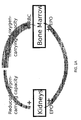
- EPO is released into the blood stream by the kidneys based on a negative feedback mechanism that reacts to the partial pressure of oxygen in blood.
- the concentration of EPO affects the number of circulating red blood cells by determining the number of cells that mature into erythrocytes, either by recruitment or by preventing apoptosis (programmed cell death), and by affecting the velocity of maturing of progenitor and precursor cells.
- disturbances in oxygen delivery can be adjusted for by an adaptive resetting of the rate of erythropoiesis.
- Neocytolysis seems to be triggered by a drop in the EPO level.
- Rice, L., and Alfrey, C.P. The negative regulation of red cell mass by neocytolysis: Physiologic and pathophysiologic manifestations, Cellular Physiology and Biochemistry, 2005, Vol. 15, pp. 245 - 250 (hereinafter "Rice 2005”); Rice, L., Alfrey, C.P., Driscoll, T., Whitley, C.E., Hachey, D.
- Neocytolysis contributes to the anemia of renal disease, Amer. J. Kidney Diseases, 1999, Vol. 33, pp. 59 - 62 (hereinafter "Rice 1999”); and Rice, L., W. Ruiz, W., Driscoll, T., Whitley, C.E., Tapia, R., Hachey, D.L., Conzales, G.F., and Alfrey, C.P., Neocytolysis on descent from altitude: A newly recognized mechanism, Annals Internal Medicine. 2001, Vol. 134, pp. 652 - 656 (hereinafter "Rice 2001”).
- Another critical factor for effective erythropoiesis is the availability of iron which is indispensable for hemoglobin synthesis. If the body is not able to provide sufficient iron for this process, then ineffective erythropoiesis will result. See Finch, S., Haskins, D., and Finch, C.A., Iron metabolism. Hematopoiesis following phlebotomy. Iron as a limiting factor, The Journal of Clinical Investigation. 1950, Vol. 29, pp. 1078 - 1086 ; and Lichtman, M.A., E. Beutler, E., Kipps, T.J., Seligsohn, U., Kaushansky, K., and Prchal, J.T.
- hepcidin level The consequence of a lower hepcidin level is that more iron is taken up via the duodenum and more iron is released from macrophages and from the stores. See Crichton, R., Iron Metabolism. From Molecular Mechanisms to Clinical Consequences, New York, J. Wiley, 2009 ; and Fleming, M. D., The regulation of hepcidin and its effects on systemic and cellular iron metabolism, Hematology, J. Amer. Soc. Hematology, 2008, pp. 151 - 158 . Patients suffering from inflammation, such as dialysis patients, typically have higher hepcidin levels.
- Increasing iron availability in inflamed dialysis patients can be achieved by an increase of parenteral iron by increasing dose, frequency, or both, and by reducing inflammation by diagnosis and treatment of sources of inflammation, e.g., barrier breakdown (i.e., skin, periodontal disease, intestinal congestion), pulmonary or urinary tract infection, thrombosed fistulas or catheter, and by subsequent specific therapy, e.g., antibiotics, catheter removal, aseptic techniques when manipulating in-dwelling catheters, and surgical debridement of skin ulcers.
- sources of inflammation e.g., barrier breakdown (i.e., skin, periodontal disease, intestinal congestion), pulmonary or urinary tract infection, thrombosed fistulas or catheter, and by subsequent specific therapy, e.g., antibiotics, catheter removal, aseptic techniques when manipulating in-dwelling catheters, and surgical debridement of skin ulcers.
- age-structured population models are needed in order to describe the development of the cell populations.
- the model of this invention includes a feedback loop including erythropoietin.
- iron supply is fixed to a rate which corresponds to a sufficient supply of iron one would expect in a healthy person (without iron deficiency).
- a method is described of adjusting a patient's hematocrit and/or hemoglobin concentration to a desired range at a predetermined time with an erythropoiesis stimulating agent (ESA) regimen includes obtaining patient parameters required for input into a model for predicting the patient's hematocrit and/or hemoglobin concentration at a predetermined time with a selected ESA administration regimen, and employing the patient parameters and an initially selected EPO administration regimen in the model to predict the patient's hematocrit and/or hemoglobin concentration at the predetermined time with the initially selected ESA administration regimen.
- ESA erythropoiesis stimulating agent
- ESAs are provided in Table 1 (adapted from Phurrough S, Jacques L, Ciccanti M, Turner T, Koller E, Feinglass S: "Proposed Coverage Decision Memorandum for the Use of Erythropoiesis Stimulating Agents in Cancer and Related Neoplastic Conditions"; Centers for Medicare and Medicaid Services; Administrative File: CAG #000383N; May 14, 2007 ).
- the method includes employing the model with one or more different ESA administration regimens until the model predicts that the patient's hematocrit and/or hemoglobin concentration will be in the desired range at the predetermined time.
- the method then includes administering ESA to the patient with an ESA administration regimen predicted to adjust the patient's hematocrit and/or hemoglobin concentration to a value within the desired range at the predetermined time.
- the patient parameters can include the starting hematocrit and/or hemoglobin concentration in the patient's blood, the total blood volume of the patient, the lifespan of red blood cells (RBCs) of the patient, the mean corpuscular volume of the RBCs, and the rate of neocytolysis in the patient's blood.
- the starting hematocrit and/or hemoglobin concentration in the patient's blood can be obtained from routine laboratory measurements known in the art.
- the lifespan of RBCs of the patient can be estimated from endogenous alveolar carbon monoxide concentrations. See Strocchi A., Schwartz S., Ellefson M., Engel R. R., Medina A., Levitt M. D., A simple carbon monoxide breath test to estimate erythrocyte turnover, J Lab Clin Med 1992, 120(3), pp. 392-399 .
- the mean corpuscular volume can be obtained from routine laboratory measurements known in the art.
- the rate of neocytolysis in the patient's blood can be estimated from correlations with reduced expression of CD44 (homing-associated cell adhesion molecule) and CD71 (transferrin receptor). See Chang C. C., Chen Y., Modi K., Awar O., Alfrey C., Rice L., Changes of red blood cell surface markers in a blood doping model of neocytolysis, J Investig Med 2009, 57(5), pp. 650-654 .
- the model useful in the invention can track the patient's predicted hematocrit and/or hemoglobin concentration over time, such as between about 5 days and about 200 days of the ESA administration regimen.
- the predetermined time can be any future time after an ESA administration regimen is selected and the predicted regimen is initiated.
- the patient undergoes a medical procedure prior, during, or after the ESA administration regimen, such as blood donation, surgery, and dialysis, or any combination thereof.
- the desired hematocrit is typically in the range of between about 28 percent and about 36 percent and the desired hemoglobin concentration is typically in a range of between about 9.5 g/dL and about 12 g/dL.
- the desired hemoglobin concentration for males and females is typically greater than or equal to 13 g/dL, and 12 g/dL, respectively. See Goodnough L.T., Maniatis A., Earnshaw P., Benoni G., Beris P., Bisbe E., Fergusson D. A., Gombotz H., Habler O., Monk T. G., Ozier Y, Slappendel R., and Szpalski M., Detection, evaluation and management of preoperative anaemia in the elective orthopaedic surgical patient: NATA guidelines, British Journal of Anaesthesia 106 (1) pp. 13-22 (2011 ).
- a method of determining a patient's hematocrit and/or hemoglobin concentration within a desired range at a predetermined time with an erythropoiesis stimulating agent (ESA) regimen includes obtaining patient parameters required for input into a model for predicting the patient's hematocrit and/or hemoglobin concentration at a predetermined time with a selected ESA administration regimen, and employing the patient parameters and an initially selected EPO administration regimen in the model to predict the patient's hematocrit and/or hemoglobin concentration at the predetermined time with the initially selected ESA administration regimen.
- ESA erythropoiesis stimulating agent
- the method includes employing the model with one or more different ESA administration regimens until the model predicts that the patient's hematocrit and/or hemoglobin concentration will be in the desired range at the predetermined time.
- the method then can include administering ESA to the patient with the ESA administration regimen predicted to adjust the patient's hematocrit and/or hemoglobin concentration to a value within the desired range at the predetermined time.
- erythrocytes actually undergo suicidal death.
- the suicidal death of erythrocytes is called eryptosis. This term was chosen in order to point out the differences from and similarities to apoptosis, the programmed cell death of nucleated cells.
- Stimulation of eryptosis is governed by a complex signaling network and involves activation of cation channels.
- macrophages Shortly before they are phagocytosed by macrophages, which takes place mainly in the spleen, one can observe distinctive cell shrinkage, plasma membrane microvesiculation and an exposure of phosphatidylserine (PS) on the cell surface.
- PS phosphatidylserine
- the normal lifespan and senescence can be either accelerated or delayed by environmental signals. Triggers of eryptosis include osmotic shock, oxidative stress, prostaglandin E2, energy depletion, chlorpromazine, aluminum, mercury, etc. Diseases which are associated with an early expression of PS and thus accelerated eryptosis are, for instance, iron deficiency, sepsis, hemolytic uremic syndrome and sickle-cell anemia. ( R.F. Zwaal, P. Comfurius, and E.B. Bevers. Surface exposure of phosphatidylserine in pathological cells. Cellular and molecular life sciences, 62:971-988, 2005 ).
- eryptosis may be inhibited by erythropoietin, adenosine, catecholamines, nitric oxide and activation of G-kinase.
- EPO seems not only to increase the number of circulating erythrocytes by preventing apoptosis of progenitor cells but also by prolonging the lifespan of circulating RBC by inhibiting the cation channels.
- Binding of erythropoietin to RBC and inhibition of the channels may contribute to an increase in the erythrocyte number during erythropoietin therapy.
- erythrocytes from erythropoietin overexpressing mice die faster ex vivo.
- the daily production rate in a healthy adult totals about 200 x 10 9 red blood cells under normal conditions. This number can vary due to varying internal and environmental conditions.
- the body has to be able to adapt the number of erythrocytes to situations of anemia and/or hypoxia (e.g. after bleeding, due to a shortened RBC lifespan, due to an enhanced eryptosis,...) as well as to situations of excessive red blood cells (e.g., high altitude dwellers descending to sea level).
- BFU-Es Burst-Forming Unit Erythroid
- CFU-Es Cold-Forming Unit Erythroid
- reticulocytes The reticulocytes are released to the blood stream and within 1-2 days they appear as mature erythrocytes. (See Williams Hematology ).
- progenitor cells is used to refer to BFU-E and CFU-E cells and the term precursor cells is used to subsume proerythroblasts, basophilic erythroblasts, orthochromatophilic erythroblasts and bone marrow reticulocytes.
- EPO erythropoiesis
- the primary control of erythropoiesis is governed by the hormone erythropoietin.
- EPO is produced mainly by peritubular cells in the renal cortex based on a negative feedback mechanism.
- the kidneys detect the partial pressure of oxygen in blood and react by releasing more EPO if the oxygen content is too low and vice versa.
- the concentration of EPO affects the number of circulating RBC by determining the number of cells that mature into erythrocytes.
- Erythropoietin plays a role in the recruitment of stem cells to the erythroid lineage, prevents apoptosis of progenitor cells and affects the maturation velocity of progenitor and precursor cells.
- disturbances in oxygen delivery can be adjusted for by an adaptive resetting of the rate of erythropoiesis, as shown in FIG. 1A .
- neocytolysis phagocytose young erythrocytes
- Neocytolysis seems to be triggered by a drop in the EPO level and helps to regulate situations of excessive red cell mass. (See Rice 2001).
- recent studies suggest that the concentration of EPO in blood influences the clearance of senescent RBCs and that EPO can prolong the lifespan of erythrocytes by inhibiting cation channels.
- erythrocyte Once a stem cell committed to the erythroid lineage, the cell can not regress or switch to another hematopoietic lineage, but can only develop to an erythrocyte.
- the number of stem cells which enter the different hematopoietic lineages is determined by interleukines and growth factors.
- the immature erythrocyte undergoes a number of changes in structure, appearance and its requirements during the process of differentiation and proliferation.
- BFU-E cells the first committed erythroid cells, express only a very small number of EPO-receptors (EpoR) and therefore they are almost EPO-independent for their survival. Within a few days they develop into CFU-E cells.
- TfR transferrin receptors
- the body has to be able to deal with situations of too few circulating erythrocytes as well as with excessive red blood cells. Whereas it is very effective to change the rate of erythropoiesis to adapt the system to situations when red cell numbers are low, this is not an adequate regulatory mechanism in situations of red cell mass excess. This is because a decrease in the rate of erythropoiesis takes relatively long to have a noticeable effect on the number of circulating red blood cells, due to the long lifespan of erythrocytes.
- Neocytolysis is initiated by a fall in erythropoietin levels and in Rice 2005 it was shown that, for instance, low doses of EPO administered to high altitude dwellers on descent, completely abrogated neocytolysis. At the moment it remains unclear whether it is the rate of decline in EPO level or the drop of EPO beneath a certain threshold that acts as a trigger for neocytolysis. ( C.P. Alfrey and S. Fishbane. Implications of neocytolysis for optimal management of anaemia in chronic kidney disease. Nephron Clinical Practice, 106:149-156, 2007 (hereinafter "Alfrey et al.”); Rice 1999).
- Neocytolysis contributes to renal anemia. It is precipitated by the pathologic endogenous erythropoietin deficiency of renal disease and the short bursts in EPO concentration followed by sharp declines in serum levels due to administration of the hormone (especially during intravenous (i.v.) administration). It would be desirable to choose dosing schedules such that neocytolysis is minimized or totally prevented. (See Alfrey et al.; Rice 1999). A mathematical model could be very useful to define better administration schemes which stimulate erythropoiesis in a more natural way and abrogate neocytolysis.
- Erythropoiesis is a very complex process and even though erythropoietin is the key regulator, there are other proteins (e.g., interleukins,...) and substances (e.g., iron, folic acid, vitamin B 12 , ...) that are needed for an optimal erythropoiesis.
- proteins e.g., interleukins, etc.
- substances e.g., iron, folic acid, vitamin B 12 , .
- iron one very critical factor for an effective production of red blood cells is iron.
- the metal is indispensable for hemoglobin synthesis and the hemoglobin protein is the actual oxygen transporter in erythrocytes.
- the molecule makes up about 97% of the dry weight of red blood cells. If the body is not able to provide sufficient iron for the production of erythrocytes, then impaired erythropoiesis will result. ( S. Finch, D.
- Erythroid precursor cells are the most avid consumers of iron in the body. ( P. Ponka and C.N. Lok. The transferring receptor: role in health and disease. The International Journal of Biochemistry & Cell Biology, 31:1111-1137, 1999 ).
- the immature erythrocyte has only a few days time to synthesize all the hemoglobin which the mature cell contains.
- Hemoglobin is a metalloprotein. Its name refers to the special structure.
- a hemoglobin molecule consists of four subunits each composed of a globular protein embedding a heme group, and every heme group in turn contains one iron atom. Erythroid cells rely completely on transferrin receptors to take up iron. ( R.Y. Chan, C.
- heme is essential for maintaining a "normal" number of TfR.
- P. Ponka Tissue-specific regulation of iron metabolism and heme synthesis: Distinct control mechanisms in erythroid cells. Blood, 89:1-25, 1997 ).
- precursor cells which have a low hemoglobin content are still able to proliferate but do not differentiate and undergo apoptosis.
- Anemia affects almost all patients with chronic kidney disease. It is caused by failure of renal excretory and endocrine function. It often develops once renal function decreases to 50 % and the degree of anemia increases with severity of renal failure.
- Anemia develops because of deficiency in endogenous erythropoietin production by the kidneys (note that even non functioning kidneys produce some EPO and can maintain hemoglobin levels higher than those found in anephric patients), increased blood losses (gastrointestinal bleeding (purpura, gastrointestinal and gynecologic bleeding occur in one third to one half of all CKD patients ( J.B. Wish. Assessing iron status: Beyond serum ferritin and transferring saturation. Clinical Journal of the American Society of Nephrology, 1 :S4-S8, 2006 )), frequent blood sampling, blood left in the dialyzer, multiple vascular access surgeries,...), functional or absolute iron deficiency and decreased red cell survival.
- neocytolysis contributes to renal anemia and it explains the often demonstrable hemolytic component and the worsening of hemolysis with more pronounced renal disease.
- a description of neocytolysis is provided above. It further explains the responsiveness of hemolysis to ESA therapy and the increased efficiency of subcutaneous compared to intravenous therapy, because in s.c. administration nadirs in EPO levels which precipitate neocytolysis are avoided. (See Rice 1999).
- renal anemia is normocytic and normochromic and the number of reticulocytes is normal or slightly decreased, which is inappropriate in the context of a reduced RBC population.
- Untreated anemia is associated with decreased oxygen delivery to the tissues. For compensatory reasons, cardiac output increases, resulting in left ventricular hypertrophy. Cardiac disease is the most common cause of death among patients who are on maintenance dialysis. Partial correction of anemia in these patients was shown to reduce cardiac ischemia and ameliorate cardiomegaly, thus, reducing cardiac related morbidity. ( A. Besarab, W.K. Bolton, J.K. Browne, J.C. Egrie, A.R. Nissenson, D.M. Okamoto, S.J. Schwab, and D.A. Goodkin. The effects of normal as compared with low hematocrit values in patients with cardiac disease who are receiving hemodialysis and epoetin. The New England Journal of Medicine, 339:584-590, 1998 ). Further consequences of uncorrected anemia are decreased cognition and mental acuity and overall decrease in patient welfare.
- Erythropoiesis stimulating agents have been used to treat anemia in patients suffering from chronic renal failure for more than two decades.
- Optimal hemoglobin targets are still a matter of discussion. Studies have shown (see e.g. Singh et al.; Strippoli et al.,; R.N. Foley, B.M. Curtis, and P.S. Parfrey. Erythropoietin therapy, hemoglobin targets, and quality of life in healthy hemodialysis patients: A randomized trial. Clinical Journal of the American Society of Nephrology, 4:726-733, 2009 (hereinafter "Foley et al.")) that a partial correction of anemia is preferable to a full correction.
- Normal hemoglobin levels for women are in a range of between about 12 g/dl and 16 g/dl, and in a range of between about 13 g/dl and about 17.5 g/dl for men.
- Kidney International, 68:1337-1343, 2005 ) analyzed data of dialysis patients collected over five years in a hospital and came to a similar conclusion. More than 90 % of the patients experienced hemoglobin cycling. The authors state that changes in ESA dose were the most important driver and were associated with hemoglobin excursion in about 80 % of cases.
- the ESA dose adjustment protocol that was used was similar to the protocol used in most dialysis centers (see Tables A1-A8 for an example of a typical dose adjustment protocol).
- a predictive model of erythropoiesis can help deal with this situation. For instance, a physician can try different ESA treatment regimens and observe their effects on hemoglobin levels over the next few months. Dosing regimens can be tested/chosen with regard to avoidance of neocytolysis, minimal amounts of ESA administered and avoidance of cycling patterns in Hb concentration.
- Iron loss in hemodialysis patients is about 1500-3000 mg/year, as compared to iron loss for a healthy adult that is about 400-800 mg/year, and can be even higher under certain circumstances.
- the daily need for iron can be well above the absorptive capacity of the intestinal. This is aggravated by the fact that the uptake via the duodenum is often impaired in these patients.
- a functional iron deficiency is often observed in renal anemia.
- the model developed below focuses on the effects of erythropoietin on erythroid cells. Hence, throughout this development, an impairment of erythropoiesis because of an under supply with iron is ruled out.
- the mathematical model developed in this chapter is applicable for a number of different situations, as long as it is reasonable to assume that erythropoiesis is sufficiently supplied with iron.
- the model presented here is able to describe the recovery of red cell mass after blood donation, the reaction of the body to presurgical administration of ESAs and changes in the number of erythrocytes of polycythemic high altitude dwellers descending to sea level. This model is only applicable for a small subpopulation of dialysis patients.
- the model can be applied to a larger subgroup of dialysis patients. Furthermore, this model helps to understand the most important dynamics that need to be considered for red blood cell production.
- the model is based on structured population models describing the different erythroid cell stages. Five different population classes of cells are considered: BFU-E, CFU-E, erythroblasts, marrow reticulocytes and mature erythrocytes circulating in the bloodstream (including peripheral reticulocytes). Individual cells are distinguished according to their maturity, which can also be referred to as cell age. The commitment to the erythroid lineage is an irreversible event. A differentiated cell cannot regress or switch into another differentiation pathway. Thus, once a multipotent stem cell is committed to the erythroid lineage, it undergoes the complete series of differentiations until it becomes a mature red blood cell, or it dies eventually during this process. While maturing the cell divides a number of times.
- u(t, ⁇ ) denotes the population density of the cell population at time t with maturity ⁇ .
- ⁇ ( ⁇ ) and ⁇ ( ⁇ ) describe the proliferation rate and rate of apoptosis, respectively, of the cells.
- the function ⁇ ( ⁇ ) a priori depends on the maturity ⁇ and the concentration of EPO E(t), respectively, at time t.
- the function v describes the maturation velocity and depends on the concentration E(t).
- the characteristic properties change depending on erythropoietin, because while maturing the cell changes its morphological characteristics, such as, the number of EPO- and transferrin-receptors expressed on the surface.
- BFU-E Burst-forming Unit Erythroid
- CFU-E are more rapidly dividing cells than BFU-E. (See Wu et al.). During this stage, cells are very sensitive to EPO levels and under normal conditions large numbers of generated CFU-E are not surviving. (See Wintrobe's Clinical Hematology). CFU-E are highly dependent on EPO to prevent them from apoptosis, i.e., the mortality for this population class depends on the EPO concentration.
- ⁇ q stands for a constant proliferation rate (Assumption 4)
- ⁇ q ( E ( t )) denotes the apoptosis rate depending on the EPO-concentration (Assumption 5)
- E(t) is the EPO concentration at time t and a 1 , b 1 , c 1 and k 1 are positive constants and a 1 > b 1 .
- the function ⁇ q monotonically decreases with increasing EPO concentration. Thus, a higher level of EPO causes more cells to survive.
- Precursor Cells Erythroblasts and Marrow Reticulocytes
- the differentiating process from orthochromatophilic erythroblasts to marrow reticulocytes involves the extrusion of the cell nucleus.
- Reticulocytes are not capable of cell divisions (Assumption 11), i.e., ⁇ s ⁇ 0.
- the inventors do not account for an impaired erythropoiesis due to iron deficiency.
- the erythroid cells in the bone marrow are sufficiently supplied with iron, not all precursor cells survive.
- Some of the reticulocytes die before they are released to the blood stream.
- a raised EPO concentration shortens the marrow transit time of precursor cells. If the EPO level is elevated marrow reticulocytes are released prematurely. The inventors account for this by allowing the maturation velocity of reticulocytes to vary depending on erythropoietin concentration. Thus, although the maximum cell age of marrow reticulocytes is fixed the actual transit time for the cells varies between 1-3 days. Hence, the transit time for precursor cells is between 6-8 days (Assumption 7).
- the maturation velocity increases with a rising concentration of EPO. Note, a slower maturation velocity causes the cells to reach the maximum cell age ⁇ s max at a later point, whereas a faster maturation velocity shortens the transit time, i.e., the cells reach ⁇ s max earlier.
- the kidneys adjust the release of EPO according to the oxygen carrying capacity of the blood. If blood oxygen content is lower than normal, then EPO production increases and vice versa. Thus, the production of EPO is controlled by a negative feedback mechanism and allows for more red blood cells to be developed in case of an undersupply of the body with oxygen by opposing programmed cell death of erythroid progenitor cells. Additionally, if EPO decreases beneath a certain threshold, neocytolysis is triggered, the process wherein macrophages start to phagocytose young erythrocytes (neocytes).
- M t ⁇ 0 ⁇ max m m t ⁇ m d ⁇ m and TBV is the total blood volume.
- the constants a 3 , b 3 , c 3 , k 3 are positive and satisfy a 3 > b 3 .
- the function E in end t is monotonically decreasing. Thus, the release of EPO increases if the number of circulating red blood cells decreases (Assumption 21).
- E in ex t is the rate at which the artificial hormone is administered
- c deg ex is the rate with which the exogenous hormone is degraded.
- intravenous administration the total amount of the agent is injected into a vein, within a very short time interval.
- E in ex t can be approximated by E 0 ex t ⁇ t 0 t , where E 0 ex is the amount of artificial hormone administered and ⁇ t 0 ( t ) is the Dirac delta impulse located at t 0 , the time when the administration takes place.
- HCT hematocrit
- Hb hemoglobin concentration
- TBV ml 183.3 + 356.1 ⁇ height m 3 + 33.08 ⁇ weight kg
- TBV ml 604.1 + 366.9 ⁇ height m 3 + 32.19 ⁇ weight kg .
- the TBV for a dialysis patient can be measured by radio-labeling red blood cells with chromium-51 as described above.
- HCT % M t ⁇ MCV fl TBV ml
- MCV the mean corpuscular volume of a RBC which is obtained from measurement
- Hb g l 1000 ⁇ M t ⁇ MCH pg TBV ml
- MCH is the mean cellular hemoglobin, which is also obtained via measurements.
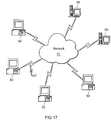
- Figure 17 illustrates a computer network or similar digital processing environment in which the methods described may be implemented.
- Computer(s)/devices 50 and server computer(s) 60 provide processing, storage, and input/output devices executing application programs and the like.
- Computer(s)/devices 50 can also be linked through communications network 70 to other computing devices, including other devices/processes 50, digital processor dialysis machines 50A, and server computer(s) 60.
- Communications network 70 can be part of a remote access network, a global network (e.g., the Internet), a worldwide collection of computers, Local area or Wide area networks, and gateways that currently use respective protocols (TCP/IP, Bluetooth, etc.) to communicate with one another.
- Other electronic device/computer network architectures are suitable.
- Fig. 18 is a diagram of the internal structure of a computer (e.g., processor/device 50, digital processor dialysis machines 50A, or server computers 60) in the computer system of Fig. 17 .
- Each computer 50, 60 contains system bus 79, where a bus is a set of hardware lines used for data transfer among the components of a computer or processing system.
- Bus 79 is essentially a shared conduit that connects different elements of a computer system (e.g., processor, disk storage, memory, input/output ports, network ports, etc.) that enables the transfer of information between the elements.
- I/O device interface 82 for connecting various input and output devices (e.g., keyboard, mouse, displays, printers, speakers, etc.) to the computer 50, 60.
- Network interface 86 allows the computer to connect to various other devices attached to a network (e.g., network 70 of Fig. 17 ).
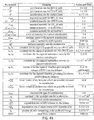
- Memory 90 provides volatile storage for computer software instructions 92 and data 94 used to implement an embodiment of the present invention (e.g., Eqs. shown in FIG. 3 or any other erythropoiesis modeling engine detailed above).
- Disk storage 95 provides non-volatile storage for computer software instructions 92 and data 94 used to implement an embodiment of the present invention.
- Central processor unit 84 is also attached to system bus 79 and provides for the execution of computer instructions.
- the processor routines 92 and data 94 are a computer program product (generally referenced 92), including a computer readable medium (e.g., a removable storage medium such as one or more DVD-ROM's, CD-ROM's, diskettes, tapes, etc.) that provides at least a portion of the software instructions for the invention system.
- Computer program product 92 can be installed by any suitable software installation procedure, as is well known in the art.
- at least a portion of the software instructions may also be downloaded over a cable, communication and/or wireless connection.
- the invention programs are a computer program propagated signal product 107 embodied on a propagated signal on a propagation medium (e.g., a radio wave, an infrared wave, a laser wave, a sound wave, or an electrical wave propagated over a global network such as the Internet, or other network(s)).
- a propagation medium e.g., a radio wave, an infrared wave, a laser wave, a sound wave, or an electrical wave propagated over a global network such as the Internet, or other network(s).
- Such carrier medium or signals provide at least a portion of the software instructions for the present invention routines/program 92.
- the propagated signal is an analog carrier wave or digital signal carried on the propagated medium.
- the propagated signal may be a digitized signal propagated over a global network (e.g., the Internet), a telecommunications network, or other network.
- the propagated signal is a signal that is transmitted over the propagation medium over a period of time, such as the instructions for a software application sent in packets over a network over a period of milliseconds, seconds, minutes, or longer.
- the computer readable medium of computer program product 92 is a propagation medium that the computer system 50 may receive and read, such as by receiving the propagation medium and identifying a propagated signal embodied in the propagation medium, as described above for computer program propagated signal product.
- carrier medium or transient carrier encompasses the foregoing transient signals, propagated signals, propagated medium, storage medium and the like.
- the erythropoiesis model consists of five partial differential equations (PDEs), several ordinary differential equations (ODEs) and some auxiliary equations which determine the dynamics and the feedback of the system. Altogether there are 30 parameters to which values have to be assigned.
- PDEs partial differential equations
- ODEs ordinary differential equations
- auxiliary equations which determine the dynamics and the feedback of the system.
- the parameters of a model are estimated using data measured in the system. It is important to have measurements for different outputs and during situations where the system is perturbed in some way, because measurements taken in a "steady state", in general, contain very little information. Further requirements to do a proper parameter identification are that measurements are taken with a certain frequency, i.e., there have to be enough data points, and that the measurements are of a certain quality, i.e., the measurement error should be small.
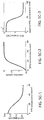
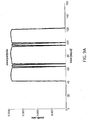
- FIGS. 5C-1, 5C-2, and 5C-3 plots for the three sigmoidal functions ( FIGS. 5C-1, 5C-2, and 5C-3 ) describing the rate of apoptosis of CFU-E cells, the maturation velocity of reticulocytes and the release of EPO by the kidneys, respectively, are shown.
- Neocytolysis referring to the fact that especially young red blood cells, so called neocytes, are prone to it. It is suggested, that under suppression of EPO, when plasma concentration drops beneath a certain threshold, active hemolysis of neocytes is triggered. Neocytolysis is probably responsible for the anemia of astronauts returning from space mission ( C.P. Alfrey, M.M. Udden, C. Leach-Huntoon, T. Driscoll, and M.H. Pickett. Control of red blood cell mass in spaceflight.
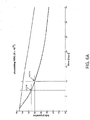
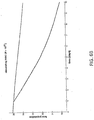
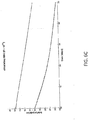
- FIGS. 6A-6C a simulation for a 75 kg man descending from high altitude to sea level is presented. It was assumed that the red blood cell population was 40 % increased, due to the oxygen poor environment.
- FIG. 6A-6C a simulation for a 75 kg man descending from high altitude to sea level is presented. It was assumed that the red blood cell population was 40 % increased, due to the oxygen poor environment.
- 6A shows the development of the red cell mass during the first 5 weeks. Further, it was compared how the system reacts considering neocytolysis (solid line) and without considering neocytolysis (dashed line). The predicted reduction of red cell mass, if considering neocytolysis, lies within a physiological meaningful range. After 7 days a decrease in RBCs of 11.3 % can be observed and after 10 days the reduction from the original value accumulates to 14.5 %. It can be clearly seen that without neocytolysis the model output is nowhere near the observed behavior of the body. In 6B the difference in the behavior of the model with and without neocytolysis is emphasized.
- FIGS. 7A-7C show a simulation of a standard blood donation of about 550 ml obtained from a person weighing 75 kg. The simulation starts in the steady state and after one day 9 % of the erythrocytes population is lost, due to blood donation.
- FIG. 7A it is illustrated how erythropoiesis adapts to this stress situation and drives the system back to the original state. Almost immediately after the oxygen carrying capacity is reduced, because of the loss of RBC, more EPO is released into the blood (see FIG. 7A ). Interestingly, the EPO level peaks after about 5 days and thereafter declines continuously although the erythrocyte population is far from back to normal at this time (see FIG. 7C ). Maeda et al., (see H.
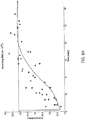
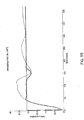
- the inventors defined the steady state of the model to be the red cell mass baseline, and plotted the relative changes in tHb observed by Pottgiesser et al. together with the model prediction. The results are presented in FIG. 8A .
- the model fits the data not only qualitatively but also quantitatively very well.
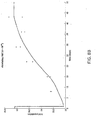
- the inventors compared the model output to a study done by Wadsworth. (see G.R. Wadsworth. Recovery from acute haemorrhage in normal men and women. The Journal of Physiology, 129:583-593, 1955 ). The author compared the mean recovery of 7 females to 7 males after the subjects were bled of about 8 % of their blood volume. The data in Wadsworth is given in percentage of Hb baseline and again the inventors plotted the relative changes measured in the study together with the model simulation, see FIG. 8B . Again the model prediction fits the data quite well.
- the negative feedback loop through erythropoietin affects mainly the numbers of CFU-E cells.
- the indirect effect on the number of erythrocytes is relatively slow, because it takes some days until progenitor cells mature to erythrocytes.
- the cells entering the blood stream are mature CFU-E cells that survived under a certain level of EPO days ago. Consequently, more cells than normal enter the blood stream during a period of a few days when the level of erythropoietin decreases to normal.
- FIG. 9A shows the rate of neocytolysis after a blood donation of 550 ml.
- the mortality rate is very small throughout the simulation ( ⁇ 0.004), but continues over a considerable time. Even though the effect seems very small at first sight, comparing the behavior of the model with and without neocytolysis makes it clear that neocytolysis allows for a tighter and more stable control of the erythrocyte population. See FIG. 9B for a comparison of the two simulations.
- the solid line shows the model output with neocytolysis and the dashed line without neocytolysis.
- the solid line keeps very tightly to the baseline value after recovery of the blood loss.
- a slight drop in the number of erythrocytes can be observed around day 120 in both simulations. In the curve illustrating the model without neocytolysis, this drop is more pronounced (about 1x10 12 cells compared to about 0.4x10 12 cells). Both systems react to this drop and slightly increase erythropoiesis. Again the system without neocytolysis overcompensates and shows small oscillations around the steady state in the long-term behavior. With neocytolysis, a small drop is observed in the number of erythrocytes at some point but this remains the only drop and afterwards the system stays in the steady state.
- ESAs are common practice not only in treatment of anemia but it is also used to elevate the number of RBCs in patients that have to undergo major elective surgeries, like for instance, hip arthroplasty.
- the increase in hemoglobin levels in patients reduces the need for allergenic blood transfusions after surgery and it further allows the subjects to donate blood preoperatively for autologous blood transfusions.
- Allergenic blood transfusions are accompanied by risks like transfer of pathogens, fever, dyspnea and an anaphylactic shock.
- acquisition costs of erythropoiesis stimulating agents are high and it is in the hospitals interest to choose a most cost-effective administration scheme.
- D. Jaspan. Erythropoietic therapy cost efficiency and reimbursement.
- American Journal of Health-System Pharmacy 64(16 Suppl 11):19-29, Aug 2007 ).
- ESAs Different from dialysis patient in healthy persons, the common administration route of ESAs is subcutaneous (s.c.) administration.
- Cheung et al. (see W. Cheung, N. Minton, and K. Gunawardena. Pharmocokinetics and pharmacodynamics of epoetin alfa once weekly and three times weekly. European Journal of Clinical Pharmacology, 57:411-418, 2001 ), published data concerning pharmacokinetics and pharmacodynamics of Epoetin alfa for a drug administration of 40,000 U once weekly (q.w.) s.c. for four weeks in healthy persons.
- the pharmacokinetic profile was used to asses the model parameters describing exogenous erythropoietin.
- Cheung et al evaluated that the mean peak in serum erythropoietin concentrations was 861 ⁇ 445.1 mU/ml after 16.1 ⁇ 4.27 h after administration with a mean half-life value of 15.0 ⁇ 6.12 h. Obviously, there is a huge variability in the pharmacokinetic profile of Epoetin alfa in healthy persons.
- the mean values (a peak in serum EPO levels of 861 mU/ml and a half-life of 15h) were used as model parameters.
- a comparison of a model simulation using the described administration scheme of 40,000 U q.w. s.c. for four weeks and the pharmacodynamic data published in Cheung et al., can be found in FIG. 10A . Overall the model fits the data nicely.
- the delayed reaction of the model could eventually be explained by an underestimated ability of the body to release stress reticulocytes and a bit long transit time of progenitor cells. Both concepts are mentioned among others for a revisited model above.
- the idea of a very fast release of premature reticulocytes from the bone marrow was relatively easy to include in the model. It only requires minor changes for the population equation describing the reticulocyte class (Assumption 12 is replaced by Assumption 26), but apart from that, the model assumptions and parameters can be left unaltered.
- the inventors further compared the model output to another study by Feagan et al. concerning pre-surgical administration of Epoetin alfa. (See C.J. Feagan, B.G.and Wong, A. Kirkley, D.W. Johnston, F.C. Smith, P. Whitsitt, S. Wheeler, and C.Y. Lau. Erythropoietin with iron supplementation to prevent allogeneic blood transfusion in total hip joint arthroplasty. Annals of Internal Medicine, 133:845-854, 2000 ). Patients undergoing primary hip joint arthroplasty were treated with ESAs starting four weeks prior to the surgery.
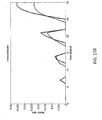
- neocytolysis gets more prominent in the intermediate phases from week to week, as shown in FIG. 11B .
- the rising cell mass i.e., an unnatural high oxygen carrying capacity of the blood, leads to a suppression of endogenous erythropoietin.
- the short half-life of Epoetin alfa results in almost complete decomposition of exogenous erythropoietin within 4 days. Therefore, EPO levels drop beneath the threshold where neocytolysis is triggered.
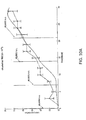
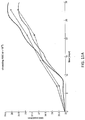
- the stars represent mean values of the data points of Feagan et al., which were observed when administering 20,000 U/week during four weeks prior to the surgery.
- the data points are connected by straight lines.
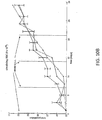
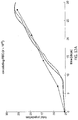
- FIG. 12B sets forth graphs comparing two different administration schemes.
- the triangles depict mean values observed in Feagan et al., during an administration of 40,000 U Epoetin ⁇ once a week for four weeks prior to the surgery.
- the cumulative EPO dose is less than a sixth, when the drug is administered more often, but results in almost the same number of RBC.
- condition (A) can also be satisfied by administration of iron
- the applicability of the model is not restricted to the subgroup of healthy people, for which the simulations mentioned above have been conducted, but is also applicable to a number of subgroups, including dialysis patients as long as the individuals of the subgroup can be characterized by an appropriate choice of the model parameters. Examples of such conditions are represented by reduced expected life span of RBCs and/or by reduced responsiveness of the precursor cells in bone marrow to EPO or ESAs.
- the model can be used to simulate modifications of anemia algorithms and adaptations of anemia algorithms to specific subgroups of dialysis patients. Simple modifications will just replace two week intervals for changing administration doses by shorter time intervals, which are now possible because of availability of data on hemoglobin levels for every treatment session by the CritLine monitor (see U.S. Pat. No. 5,803,908 issued to Steuer et al. on September 8, 1998 ) and leaving the decision criteria of the anemia algorithm otherwise unchanged. More sophisticated modifications will also base decisions on changes of doses on rates of change of the measured hemoglobin levels over some time interval.
- the model simulations show that for a specific algorithm, in general, fewer dose changes are needed and smaller cumulative EPO-doses can be administered if weekly changes of the doses are allowed compared to the situation where a change of the dose is only allowed every other week.
- This behavior of the simulations done for concrete algorithms (as for instance the anemia algorithm shown in Appendix D), but not referring to patient data, is confirmed by data on anemia algorithms which are indeed used at clinics and allow weekly changes of EPO-doses.
- Erythropoiesis stimulating agents have been used to treat anemia in patients suffering from chronic renal failure for almost three decades. Studies have shown that a partial correction of anemia is preferable to a full correction (see e.g. Singh et al.,; Strippoli et al.,; Foley et al.). Optimal hemoglobin targets are still a matter of discussion and recommendations by the National Kidney Foundation changed several times over the last few years.
- EPO doses in dialysis centers are prescribed using empirical algorithms. Changing the hemoglobin target always implies an adaption of the algorithm which is used to prescribe EPO doses.
- these algorithms are charts where the physician can look up what EPO dose to prescribe for a patient for the next one or two weeks using a current hemoglobin measurement. Most of them work in the following way: if this is the Hgb value of the patient, then administer that EPO dose. Some additional data are taken into account, such as whether there occurred any fast Hgb changes over the last few weeks. This approach bears some limitations and level of hemoglobin tends to fluctuate greatly and cycling phenomena are observed.
- the mathematical model of erythropoiesis can be put to good use.
- Different ESA treatment regimen can be tested easily and their effects on hemoglobin levels observed over the next few months.
- Algorithms can be rated, for instance, with regard to the number of EPO changes and the cumulative EPO dose that is required over a given time period and whether they kept the "patient", i.e. the model simulation, within certain limits around the hemoglobin target value. The most promising algorithm can then be used in a clinical setting.
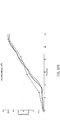
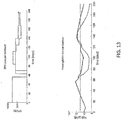
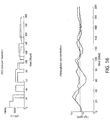
- FIGS. 13-16 show what such a test for an algorithm could look like.
- the anemia algorithm described in Tables A1-A8, called the FMS algorithm was tested.
- This algorithm prescribes EPO doses using Hgb measurements every two weeks.
- the desired hemoglobin target value is 11 g/dl.
- Doses are changed every month if necessary, except one of the exception criteria is met. Then a prescribed dose can be already adapted after two weeks.
- the inventors compare this anemia algorithm to a slightly modified version. In the modified version doses are prescribed in the exact same way as in the FMS algorithm but for one thing: now it is checked every week (compared to every two weeks) if an exception criterion is met. If necessary, doses can be adapted weekly.
- the inventors increased the predialysis blood volume from 5000 ml to 6000 ml. Moreover, to compute from the total RBC population the hemoglobin concentration a mean corpuscular hemoglobin of 29 pg was assumed, because, in general, anemia of CKD is normochromic. The duration for all simulations was 200 days.
- Table A-2 Facility Collects and Ships Spectra Labs Spectra Receives. Processes and Transmits Result to Knowledge Center New Dose Entered in Electronic System No Later Than Day Indicated Below Patient Receives New Dose Monday Tuesday Thursday Friday Tuesday Wednesday Friday Saturday Wednesday Thursday Saturday Monday Thursday Friday Monday Tuesday Table A-3 New Patients If Hgb is less than 10.0 g/dL and either TSAT is less than 20% or Ferritin is less than 100 ng/mL Do not start EPO until the patient has received a one gram iron sequence per algorithm. Upon completion of the 1 gram iron sequence, recheck Hgb at next scheduled facility lab draw. If Hgb less than 10, start EPO according to Starting Dose Chart. Starting Dose 1.
- Hgb is less than 10.0: Begin administration of EPO per Starting Dose Chart 2. If Hgb 10.0 or greater Do not begin administration of EPO. Start EPO when Hgb is less than 10.0 per Starting Dose Chart Table A-4 General Orders Converting from patient's existing algorithm to revised algorithm When converting from the patient's existing algorithm to the revised algorithm, start EPO with the patient's previous EPO dose, using rounding rules. Route of Administration All IV EPO dose will be administered IVP. Missed Treatments Administer ordered dose and contact M.D. to determine whether physician wants to order make up of missed EPO dose(s).
- EPO dose changes will be made monthly using Maintenance Dose Chart unless patient meets exception criteria (see Exceptions to Monthly Dose Changes). • EPO doses will not be changed more frequently than every 14 days unless Hgb is greater than or equal to 12.0 or patient is returning from the hospital. Dosing Frequency • All doses based on 3 X/week administrations unless noted otherwise. • If patient is receiving EPO less than 3 X/week, calculate new dose and frequency as follows: a. Calculate current dose times (X) current frequency (as ordered by physician) to determine the weekly EPO dose. b. Divide weekly dose by three to use Dosing Chart. Round per rounding rules. c. Use Maintenance Dose Chart to determine new dose. d.
- Minimum Dose per treatment The minimum dose of EPO is 1000 units per treatment. If the calculated dose is less than 1000 units reduce the frequency by one as indicated in the Maintenance Dose Chart. • If total weekly dose (i.e., dose from Dosing Chart times frequency) is at least 3000 units, the frequency of administration will be 3 X/week unless otherwise ordered by physician. To get correct dose, divide total weekly dose by 3 and follow rounding rules.
- Maximum Dose • EPO dose is not to exceed 400,000 units per month. • Maximum dose not to exceed Maximum Dose Chart.
- EMP Rules If the calculated dose cannot be entered into the electronic system due to EMP rules, complete and submit a Remedy ticket to over-ride the rules so calculated dose may be entered into the system.
- Patient transferring into facility Obtain starting dose from physician with admission orders.
- Table A-5 Exceptions to Monthly Dose Changes Hgb greater than or equal to 12.0 g/dL Hold and re-evaluate with weekly hemoglobin checks Hgb is less than or equal to 11.8 g/dL on Held doses Restart EPO at 25% decrease (see 25% decrease column) using Maintenance Dose Chart. If no open EPO order in last 3 months, resume EPO using Starting Dose Chart. Hospitalized Patients • Prior to receipt of new Hgb result, continue pre hospitalization EPO dose.
- Hgb greater than or equal to 10 and increases by more than 1.0 g/dL over past 2 weeks Decrease dose 25% using Maintenance Dose Chart Hgb decreases by more than 1.0 g/dL over past 2 weeks and dose not currently on hold Increase dose using Maintenance Dose Chart (applicable only to pts receiving EPO - not pts on Hold) Hgb is less than 10.5 g/dL AND Hgb decreasing over past 2 weeks Increase dose using Maintenance Dose Chart
Landscapes
- Health & Medical Sciences (AREA)
- Engineering & Computer Science (AREA)
- Public Health (AREA)
- Medical Informatics (AREA)
- Life Sciences & Earth Sciences (AREA)
- General Health & Medical Sciences (AREA)
- Epidemiology (AREA)
- Biomedical Technology (AREA)
- Primary Health Care (AREA)
- Pathology (AREA)
- Databases & Information Systems (AREA)
- Data Mining & Analysis (AREA)
- Bioinformatics & Cheminformatics (AREA)
- Animal Behavior & Ethology (AREA)
- Proteomics, Peptides & Aminoacids (AREA)
- Veterinary Medicine (AREA)
- Pharmacology & Pharmacy (AREA)
- Medicinal Chemistry (AREA)
- Immunology (AREA)
- Chemical & Material Sciences (AREA)
- Gastroenterology & Hepatology (AREA)
- Zoology (AREA)
- Medicines That Contain Protein Lipid Enzymes And Other Medicines (AREA)
- External Artificial Organs (AREA)
- Investigating Or Analysing Biological Materials (AREA)
Claims (10)
- Système informatique permettant de modéliser la concentration d'hématocrite et/ou d'hémoglobine d'un patient soumis à au moins un régime d'agents stimulant l'érythropoïèse (ASE), le système informatique comprenant :a) un moyen d'entrée d'utilisateur pour déterminer les paramètres de patient du patient ;b) un processeur numérique couplé pour recevoir des données de patient déterminées à partir du moyen d'entrée, le processeur numérique exécutant un système de modélisation d'érythropoïèse dans la mémoire de travail, le système de modélisation d'érythropoïèse recevant les paramètres de patient en tant qu'entrée pour générer une sortie d'une concentration d'hématocrite et/ou d'hémoglobine prédite du patient par :i) utilisation des paramètres de patient et d'un régime d'administration d'ESA initialement sélectionné dans le système de modélisation de l'érythropoïèse pour prédire la concentration d'hématocrite et/ou d'hémoglobine du patient à un moment prédéterminé avec le régime d'administration d'ESA initialement sélectionné, le système de modélisation d'érythropoïèse utilisant un moteur de modélisation d'érythropoïèse pour modéliser l'érythropoïèse du patient en fonction des paramètres de patient et des fonctions suivantes :





 VST = volume sanguin total,où p(t, µp) est une densité de population d'une classe de cellules BFU-E au temps t de maturité µp, βp est un taux de prolifération pour des cellules BFU-E, q(t, µq) est une densité de population d'une classe de cellules CFU-E au temps t de maturité µq, βq est un taux de prolifération pour des cellules CFU-E, αq(E(t)) est un taux d'apoptose pour des cellules CFU-E qui dépend d'une concentration en érythropoïétine (EPO) E(t) au temps t, r(t, µr) est une densité de population d'une classe d'érythroblastes au temps t de maturité µr , βr est un taux de prolifération pour des érythroblastes, s(t, µs) est une densité de population d'une classe de réticulocytes de la moelle au temps t de maturité µs, vs(E(t)) est une vitesse de maturation des cellules sortant de la classe d'érythroblastes et entrant dans la classe de population de réticulocytes qui dépend d'une concentration en EPO E(t) au temps t, αs est un taux d'érythropoïèse inefficace,m(t, µm) est une densité de population d'une classe d'érythrocytes au temps t de maturité µm, αm(E(t), µm) est un taux d'apoptose pour des érythrocytes qui dépend d'une concentration en EPO E(t) au temps t et de la maturité µm, Eend(t) est une concentration en EPO endogène au temps t, Ein end(t) est une quantité d'EPO libérée par les reins d'un patient, Cdeg end est un taux de dégradation d'EPO endogène, Eex(t) est une concentration en EPO exogène au temps t, Ein ex(t) est une quantité d'EPO administrée au patient, cdeg ex est un taux de dégradation d'EPO exogène, a1, b1, c1 et k1 sont des constantes du taux d'apoptose pour des cellules CFU-E, a2, b2, c2 et k2 sont des constantes de la vitesse de maturation des réticulocytes de la moelle, γm(µm) est un taux de mortalité des érythrocytes, bE, cE et kE sont des constantes du taux de mortalité des érythrocytes, τE est un seuil en dessous duquel la néocytolyse est déclenchée, µm est une maturité érythrocytaire ; µmin m,n est une limite inférieure des érythrocytes qui sont éventuellement exposés à la néocytolyse, µmax m,n est une limite supérieure des érythrocytes qui sont éventuellement exposés à la néocytolyse, M(t) est la population totale d'érythrocytes ;ii) détermination de la concentration d'hématocrite et/ou d'hémoglobine prédite du patient au moment prédéterminé sur la base de M(t), la concentration d'hématocrite (HCT [%]) du patient étant basée sur M(t) comme suit : HCT[%] =
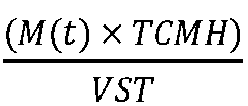 iii) utilisation du système de modélisation de l'érythropoïèse avec un ou plusieurs régimes d'administration d'ESA différents jusqu'à ce que le système de modélisation de l'érythropoïèse prédit que la concentration d'hématocrite et/ou d'hémoglobine du patient sera une valeur située dans une plage souhaitée au moment prédéterminé ; etc) un moyen de sortie couplé au processeur numérique, le moyen de sortie fournissant à l'utilisateur la concentration d'hématocrite et/ou d'hémoglobine du patient sous le régime d'administration d'ESA au moment prédéterminé.
 - Système informatique selon la revendication 1, dans lequel les paramètres de patient comprennent la concentration d'hémoglobine initiale dans le sang du patient, le volume sanguin total du patient, la durée de vie des globules rouges (RBC) du patient, le volume corpusculaire moyen des RBC et le taux de néocytolyse dans le sang du patient.
- Système informatique selon la revendication 1, dans lequel la durée prédéterminée se situe dans une plage comprise entre 5 jours et 200 jours après le début du régime d'administration d'ESA.
- Système informatique selon la revendication 1, dans lequel le système de modélisation de l'érythropoïèse représente une intervention médicale effectuée chez le patient avant, pendant ou après le régime d'administration d'ESA, l'intervention médicale étant choisie dans le groupe consistant en un don de sang, une opération chirurgicale et une dialyse, ou l'une quelconque de leurs combinaisons.
- Système informatique selon la revendication 1, dans lequel le patient est un patient dialysé et l'hématocrite souhaité se situe dans la plage comprise entre 28 % et 36 % et la concentration d'hémoglobine souhaitée se situe dans la plage comprise entre 9,5 g/dl et 12 g/dl.
- Procédé de modélisation de la concentration d'hématocrite et/ou d'hémoglobine d'un patient soumis à au moins un régime d'administration d'agent stimulant l'érythropoïèse (ASE) en utilisant un système de modélisation d'érythropoïèse pour amener la concentration d'hématocrite et/ou d'hémoglobine d'un patient dans une plage souhaitée à un moment prédéterminé comprenant :l'obtention de paramètres de patient du patient à entrer dans un modèle afin de prédire la concentration d'hématocrite et/ou d'hémoglobine du patient à un moment prédéterminé avec un régime d'administration d'ESA sélectionné, le système de modélisation d'érythropoïèse recevant les paramètres de patient comme entrée pour générer une sortie d'une concentration d'hématocrite et/ou d'hémoglobine prédite du patient par :utilisation des paramètres de patient et d'un régime d'administration d'ESA initialement sélectionné dans le système de modélisation de l'érythropoïèse pour prédire la concentration d'hématocrite et/ou d'hémoglobine du patient au moment prédéterminé avec le régime d'administration d'ESA initialement sélectionné, le système de modélisation d'érythropoïèse utilisant un moteur de modélisation d'érythropoïèse pour modéliser l'érythropoïèse du patient en fonction des paramètres de patient et des fonctions suivantes :


 VST = volume sanguin total,où p(t, µp) est une densité de population d'une classe de cellules BFU-E au temps t de maturité µp, βp est un taux de prolifération pour des cellules BFU-E, q(t, µq) est une densité de population d'une classe de cellules CFU-E au temps t de maturité µp, βq est un taux de prolifération pour des cellules CFU-E, αq(E(t)) est un taux d'apoptose pour des cellules CFU-E qui dépend d'une concentration en érythropoïétine (EPO) E(t) au temps t, r(t, µr) est une densité de population d'une classe d'érythroblastes au temps t de maturité µr , βr est un taux de prolifération pour des érythroblastes, s(t, µs) est une densité de population d'une classe de réticulocytes de la moelle au temps t de maturité µs, vs(E(t)) est une vitesse de maturation des cellules sortant de la classe d'érythroblastes et entrant dans la classe de population de réticulocytes qui dépend d'une concentration en EPO E(t) au temps t, αs est un taux d'érythropoïèse inefficace, m(t, µm) est une densité de population d'une classe d'érythrocytes au temps t de maturité µm, αm(E(t), µm) est un taux d'apoptose pour des érythrocytes qui dépend d'une concentration en EPO E(t) au temps t et de maturité µm, Eend(t) est une concentration en EPO endogène au temps t, Ein end(t) est une quantité d'EPO libérée par les reins d'un patient, Cdeg end est un taux de dégradation d'EPO endogène, Eex(t) est une concentration en EPO exogène au temps t, Ein ex(t) est une quantité d'EPO administrée au patient, cdeg ex est un taux de dégradation d'EPO exogène, a1, b1, c1 et k1 sont des constantes du taux d'apoptose pour des cellules CFU-E, a2, b2, c2 et k2 sont des constantes de la vitesse de maturation des réticulocytes de la moelle, γm(µm) est un taux de mortalité des érythrocytes, bE, cE et kE sont des constantes du taux de mortalité des érythrocytes, τE est un seuil en dessous duquel la néocytolyse est déclenchée, µm est une maturité érythrocytaire ; µmin m,n est une limite inférieure des érythrocytes qui sont éventuellement exposés à la néocytolyse, µmax m,n est une limite supérieure des érythrocytes qui sont éventuellement exposés à la néocytolyse, M(t) est une population totale d'érythrocytes ;détermination de la concentration d'hématocrite et/ou d'hémoglobine prédite du patient au moment prédéterminé sur la base de M(t), la concentration d'hématocrite (HCT [%]) du patient étant basée sur M(t) comme suit :
 l'utilisation du système de modélisation de l'érythropoïèse avec un ou plusieurs régimes d'administration d'ESA différents jusqu'à ce que le système de modélisation de l'érythropoïèse prédise que la concentration d'hématocrite et/ou d'hémoglobine du patient se situera dans la plage souhaitée au moment prédéterminé.
 - Procédé selon la revendication 6, dans lequel les paramètres de patient comprennent la concentration initiale d'hématocrite et/ou d'hémoglobine dans le sang du patient, le volume sanguin total du patient, la durée de vie des globules rouges (RBC) du patient, le volume corpusculaire moyen des RBC, et le taux de néocytolyse dans le sang du patient.
- Procédé selon la revendication 6, dans lequel la durée prédéterminée se situe dans une plage comprise entre 5 jours et 200 jours après le début du régime d'administration d'ESA.
- Procédé selon la revendication 6, dans lequel le système de modélisation de l'érythropoïèse représente une intervention médicale effectuée sur le patient avant, pendant ou après le début du régime d'administration d'ESA, l'intervention médicale choisie dans le groupe comprenant un don de sang, une opération chirurgicale et une dialyse, ou l'une quelconque de leurs combinaisons.
- Procédé selon la revendication 6, dans lequel le patient est un patient dialysé et l'hématocrite souhaité est se situe dans la plage comprise entre 28 % et 36 % et la concentration d'hémoglobine souhaitée est se situe dans une plage comprise entre 9,5 g/dl et 12 g/dl.
Applications Claiming Priority (2)
| Application Number | Priority Date | Filing Date | Title |
|---|---|---|---|
| US201161532290P | 2011-09-08 | 2011-09-08 | |
| PCT/US2012/054264 WO2013036836A2 (fr) | 2011-09-08 | 2012-09-07 | Système et procédé de modélisation de l'érythropoïèse et sa gestion |
Publications (2)
| Publication Number | Publication Date |
|---|---|
| EP2754076A2 EP2754076A2 (fr) | 2014-07-16 |
| EP2754076B1 true EP2754076B1 (fr) | 2021-03-10 |
Family
ID=47040787
Family Applications (1)
| Application Number | Title | Priority Date | Filing Date |
|---|---|---|---|
| EP12773434.1A Active EP2754076B1 (fr) | 2011-09-08 | 2012-09-07 | Système et procédé de modélisation de l'érythropoïèse et sa gestion |
Country Status (3)
| Country | Link |
|---|---|
| US (1) | US10319478B2 (fr) |
| EP (1) | EP2754076B1 (fr) |
| WO (1) | WO2013036836A2 (fr) |
Families Citing this family (16)
| Publication number | Priority date | Publication date | Assignee | Title |
|---|---|---|---|---|
| EP2754076B1 (fr) | 2011-09-08 | 2021-03-10 | Fresenius Medical Care Holdings, Inc. | Système et procédé de modélisation de l'érythropoïèse et sa gestion |
| WO2013049624A1 (fr) * | 2011-09-30 | 2013-04-04 | University Of Louisville Research Foundation, Inc. | Système et procédé de dosage personnalisé d'agents pharmacologiques |
| US9679111B2 (en) | 2012-11-05 | 2017-06-13 | Fresenius Medical Care Holdings, Inc. | System and method of modeling erythropoiesis including iron homeostasis |
| JP6190632B2 (ja) | 2013-06-13 | 2017-08-30 | 有限会社ネクスティア | 赤血球造血刺激因子製剤の投与量決定装置 |
| CN106456865B (zh) | 2014-05-20 | 2019-04-05 | 弗雷泽纽斯医疗保健控股有限公司 | 使用血液稀释的绝对血量估计 |
| EP3234874B1 (fr) * | 2014-12-18 | 2025-04-02 | Fresenius Medical Care Holdings, Inc. | Système et procédé de mise en oeuvre d'essais cliniques in silico |
| DE102016115496A1 (de) * | 2016-08-22 | 2018-02-22 | B. Braun Avitum Ag | Verfahren und System zur post-dialytischen Bestimmung des Trockengewichts |
| JP6864834B2 (ja) * | 2017-06-14 | 2021-04-28 | ニプロ株式会社 | 投与量決定プログラムおよび投与量決定装置 |
| EP3652751A1 (fr) | 2017-07-12 | 2020-05-20 | Fresenius Medical Care Holdings, Inc. | Techniques pour effectuer des essais cliniques virtuels |
| US20210313024A1 (en) * | 2018-08-24 | 2021-10-07 | National University YOKOHAMA National Universty | Administration managing apparatus, administration managing method, and program |
| JP7459250B2 (ja) | 2019-12-23 | 2024-04-01 | フレセニウス メディカル ケア ホールディングス インコーポレーテッド | 赤血球造血刺激因子製剤のための接続された薬物送達システム |
| WO2021145369A1 (fr) * | 2020-01-17 | 2021-07-22 | 国立大学法人横浜国立大学 | Dispositif et procédé de gestion d'administration, et programme associé |
| CN114235906B (zh) * | 2021-11-09 | 2024-01-05 | 江苏鱼跃凯立特生物科技有限公司 | 一种离体血液葡萄糖降解过程中实时检测血糖浓度的方法 |
| US12046375B2 (en) | 2022-10-05 | 2024-07-23 | Fresenius Medical Care Holdings, Inc. | System and method for attaining desired oxygen dosing based on erythropoiesis modeling |
| US20240127961A1 (en) | 2022-10-05 | 2024-04-18 | Fresenius Medical Care Holdings, Inc. | System and method for adjusting hypoxia-inducible factor stabilizer treatment based on anemia modeling |
| WO2025224575A1 (fr) | 2024-04-26 | 2025-10-30 | Fresenius Medical Care Deutschland, Gmbh | Système et procédé de modélisation de l'érythropoïèse |
Citations (2)
| Publication number | Priority date | Publication date | Assignee | Title |
|---|---|---|---|---|
| US20100113891A1 (en) * | 2008-11-05 | 2010-05-06 | Hema Metrics, Llc | Hemodialysis patient data acquisition, management and analysis system |
| WO2011082421A1 (fr) * | 2010-01-04 | 2011-07-07 | Mayo Foundation For Medical Education And Research | Détermination de la dose du stimulant de l'érythropoïèse (esa) |
Family Cites Families (17)
| Publication number | Priority date | Publication date | Assignee | Title |
|---|---|---|---|---|
| US5372136A (en) | 1990-10-06 | 1994-12-13 | Noninvasive Medical Technology Corporation | System and method for noninvasive hematocrit monitoring |
| US7860583B2 (en) * | 2004-08-25 | 2010-12-28 | Carefusion 303, Inc. | System and method for dynamically adjusting patient therapy |
| US6871171B1 (en) * | 2000-10-19 | 2005-03-22 | Optimata Ltd. | System and methods for optimized drug delivery and progression of diseased and normal cells |
| WO2003045423A1 (fr) * | 2001-11-28 | 2003-06-05 | Ortho-Mcneil Pharmaceutical, Inc. | Schema de dosage d'erythropoietine pour traiter l'anemie |
| DE10345836A1 (de) * | 2003-10-02 | 2005-04-21 | Bayer Technology Services Gmbh | Verfahren zur Simulation der Wechselwirkung von chemischen Substanzen mit lebenden Organismen |
| US8150509B2 (en) * | 2004-10-21 | 2012-04-03 | Cardiac Pacemakers, Inc. | Systems and methods for drug therapy enhancement using expected pharmacodynamic models |
| US8650017B2 (en) * | 2005-06-13 | 2014-02-11 | Optimata Ltd. | System and method of evaluation of stochastic interactions of a soluble ligand with a target cell population for optimization of drug design and delivery |
| US7788045B2 (en) * | 2005-09-01 | 2010-08-31 | Meditasks, Llc | Systems and method for homeostatic blood states |
| JP2009517186A (ja) * | 2005-11-29 | 2009-04-30 | チルドレンズ ホスピタル メディカル センター | 薬物選択及び投薬の最適化及び個別化 |
| WO2009120991A2 (fr) * | 2008-03-27 | 2009-10-01 | Medtronic, Inc. | Outils pharmacocinétiques et pharmacodynamiques destinés à définir des régimes thérapeutiques spécifiques à un patient |
| US20100169063A1 (en) * | 2008-12-31 | 2010-07-01 | The General Electric Company | System and Method of Modeling the Pharmacodynamic Effect to Drugs Delivered to a Patient |
| WO2010099816A1 (fr) | 2009-03-02 | 2010-09-10 | Vifor (International) Ag | Machine de dialyse, collecteur pour machine de dialyse et procédé associé |
| MX2012000100A (es) | 2009-07-01 | 2012-04-02 | Fresenius Med Care Hldg Inc | Dispositivos de suministro de farmaco y sistemas y metodos relacionados. |
| US20120016686A1 (en) * | 2010-07-13 | 2012-01-19 | Cerner Innovation, Inc. | Inpatient blood management |
| EP2754076B1 (fr) | 2011-09-08 | 2021-03-10 | Fresenius Medical Care Holdings, Inc. | Système et procédé de modélisation de l'érythropoïèse et sa gestion |
| WO2013049624A1 (fr) * | 2011-09-30 | 2013-04-04 | University Of Louisville Research Foundation, Inc. | Système et procédé de dosage personnalisé d'agents pharmacologiques |
| US9679111B2 (en) | 2012-11-05 | 2017-06-13 | Fresenius Medical Care Holdings, Inc. | System and method of modeling erythropoiesis including iron homeostasis |
-
2012
- 2012-09-07 EP EP12773434.1A patent/EP2754076B1/fr active Active
- 2012-09-07 US US14/343,464 patent/US10319478B2/en active Active
- 2012-09-07 WO PCT/US2012/054264 patent/WO2013036836A2/fr not_active Ceased
Patent Citations (2)
| Publication number | Priority date | Publication date | Assignee | Title |
|---|---|---|---|---|
| US20100113891A1 (en) * | 2008-11-05 | 2010-05-06 | Hema Metrics, Llc | Hemodialysis patient data acquisition, management and analysis system |
| WO2011082421A1 (fr) * | 2010-01-04 | 2011-07-07 | Mayo Foundation For Medical Education And Research | Détermination de la dose du stimulant de l'érythropoïèse (esa) |
Also Published As
| Publication number | Publication date |
|---|---|
| EP2754076A2 (fr) | 2014-07-16 |
| WO2013036836A3 (fr) | 2013-10-31 |
| US10319478B2 (en) | 2019-06-11 |
| US20140200181A1 (en) | 2014-07-17 |
| WO2013036836A2 (fr) | 2013-03-14 |
Similar Documents
| Publication | Publication Date | Title |
|---|---|---|
| EP2754076B1 (fr) | Système et procédé de modélisation de l'érythropoïèse et sa gestion | |
| US20230352183A1 (en) | System And Method Of Conducting In Silico Clinical Trials | |
| US9679111B2 (en) | System and method of modeling erythropoiesis including iron homeostasis | |
| de Francisco et al. | Inflammation and its impact on anaemia in chronic kidney disease: from haemoglobin variability to hyporesponsiveness | |
| Stuart et al. | Sickle cell acute chest syndrome: pathogenesis and rationale for treatment | |
| Fuertinger et al. | A model of erythropoiesis in adults with sufficient iron availability | |
| Shander et al. | Patient blood management in Europe | |
| RU2248215C2 (ru) | Фармакокинетическое и фармакодинамическое моделирование введения эритропоэтина | |
| Sun et al. | A hepcidin lowering agent mobilizes iron for incorporation into red blood cells in an adenine-induced kidney disease model of anemia in rats | |
| Sharma et al. | Reductions in red blood cell 2, 3-diphosphoglycerate concentration during continuous renal replacment therapy | |
| de Araújo Azi et al. | Postoperative management of severe acute anemia in a J ehovah's W itness | |
| Ramakrishnan et al. | Pulmonary arterial hypertension: iron matters | |
| Shander et al. | How I treat anemia in the perisurgical setting | |
| Shanbhag et al. | Treating preoperative anemia to improve patient outcomes after orthopaedic surgery | |
| Goicoechea et al. | Role of type of vascular access in erythropoietin and intravenous iron requirements in haemodialysis | |
| Chin et al. | Decreased levels of ferritin, mild thrombocytosis, and increased erythropoietin are sequential events among frequent plateletpheresis donors: Implication for a ferritin screen | |
| US20250331771A1 (en) | System and method of modeling erythropoiesis | |
| Messa et al. | Efficacy prospective study of different frequencies of Epo administration by iv and sc routes in renal replacement therapy patients | |
| Upadhye et al. | Anemia Management Strategies in Diabetic Kidney Disease: A Comprehensive Review | |
| Goch et al. | Serum erythropoietin levels in the immediate kidney-posttransplant period | |
| Macdougall | Anaemia Management in Chronic Kidney Disease | |
| JP2015000109A (ja) | 赤血球造血刺激因子製剤の投与量決定方法 | |
| Peck et al. | Adolescent with acute liver failure in the setting of ethanol, cocaine, and ecstasy ingestion treated with a molecular adsorbent recirculating system | |
| Macdougall | Pocket Reference to Renal Anemia | |
| Guzmán et al. | Therapeutic plasmapheresis in patients with thyrotoxicosis |
Legal Events
| Date | Code | Title | Description |
|---|---|---|---|
| PUAI | Public reference made under article 153(3) epc to a published international application that has entered the european phase |
Free format text: ORIGINAL CODE: 0009012 |
|
| 17P | Request for examination filed |
Effective date: 20140221 |
|
| AK | Designated contracting states |
Kind code of ref document: A2 Designated state(s): AL AT BE BG CH CY CZ DE DK EE ES FI FR GB GR HR HU IE IS IT LI LT LU LV MC MK MT NL NO PL PT RO RS SE SI SK SM TR |
|
| DAX | Request for extension of the european patent (deleted) | ||
| STAA | Information on the status of an ep patent application or granted ep patent |
Free format text: STATUS: EXAMINATION IS IN PROGRESS |
|
| 17Q | First examination report despatched |
Effective date: 20180802 |
|
| REG | Reference to a national code |
Ref country code: DE Ref legal event code: R079 Ref document number: 602012074730 Country of ref document: DE Free format text: PREVIOUS MAIN CLASS: G06F0019000000 Ipc: G16H0050500000 |
|
| RIC1 | Information provided on ipc code assigned before grant |
Ipc: G16H 50/50 20180101AFI20201125BHEP |
|
| GRAP | Despatch of communication of intention to grant a patent |
Free format text: ORIGINAL CODE: EPIDOSNIGR1 |
|
| STAA | Information on the status of an ep patent application or granted ep patent |
Free format text: STATUS: GRANT OF PATENT IS INTENDED |
|
| INTG | Intention to grant announced |
Effective date: 20210112 |
|
| GRAS | Grant fee paid |
Free format text: ORIGINAL CODE: EPIDOSNIGR3 |
|
| GRAA | (expected) grant |
Free format text: ORIGINAL CODE: 0009210 |
|
| STAA | Information on the status of an ep patent application or granted ep patent |
Free format text: STATUS: THE PATENT HAS BEEN GRANTED |
|
| AK | Designated contracting states |
Kind code of ref document: B1 Designated state(s): AL AT BE BG CH CY CZ DE DK EE ES FI FR GB GR HR HU IE IS IT LI LT LU LV MC MK MT NL NO PL PT RO RS SE SI SK SM TR |
|
| REG | Reference to a national code |
Ref country code: GB Ref legal event code: FG4D |
|
| REG | Reference to a national code |
Ref country code: AT Ref legal event code: REF Ref document number: 1370726 Country of ref document: AT Kind code of ref document: T Effective date: 20210315 Ref country code: CH Ref legal event code: EP |
|
| REG | Reference to a national code |
Ref country code: IE Ref legal event code: FG4D |
|
| REG | Reference to a national code |
Ref country code: DE Ref legal event code: R096 Ref document number: 602012074730 Country of ref document: DE |
|
| REG | Reference to a national code |
Ref country code: DE Ref legal event code: R082 Ref document number: 602012074730 Country of ref document: DE Representative=s name: FREISCHEM & PARTNER PATENTANWAELTE MBB, DE |
|
| REG | Reference to a national code |
Ref country code: SE Ref legal event code: TRGR |
|
| REG | Reference to a national code |
Ref country code: LT Ref legal event code: MG9D |
|
| PG25 | Lapsed in a contracting state [announced via postgrant information from national office to epo] |
Ref country code: BG Free format text: LAPSE BECAUSE OF FAILURE TO SUBMIT A TRANSLATION OF THE DESCRIPTION OR TO PAY THE FEE WITHIN THE PRESCRIBED TIME-LIMIT Effective date: 20210610 Ref country code: NO Free format text: LAPSE BECAUSE OF FAILURE TO SUBMIT A TRANSLATION OF THE DESCRIPTION OR TO PAY THE FEE WITHIN THE PRESCRIBED TIME-LIMIT Effective date: 20210610 Ref country code: LT Free format text: LAPSE BECAUSE OF FAILURE TO SUBMIT A TRANSLATION OF THE DESCRIPTION OR TO PAY THE FEE WITHIN THE PRESCRIBED TIME-LIMIT Effective date: 20210310 Ref country code: HR Free format text: LAPSE BECAUSE OF FAILURE TO SUBMIT A TRANSLATION OF THE DESCRIPTION OR TO PAY THE FEE WITHIN THE PRESCRIBED TIME-LIMIT Effective date: 20210310 Ref country code: FI Free format text: LAPSE BECAUSE OF FAILURE TO SUBMIT A TRANSLATION OF THE DESCRIPTION OR TO PAY THE FEE WITHIN THE PRESCRIBED TIME-LIMIT Effective date: 20210310 Ref country code: GR Free format text: LAPSE BECAUSE OF FAILURE TO SUBMIT A TRANSLATION OF THE DESCRIPTION OR TO PAY THE FEE WITHIN THE PRESCRIBED TIME-LIMIT Effective date: 20210611 |
|
| REG | Reference to a national code |
Ref country code: AT Ref legal event code: MK05 Ref document number: 1370726 Country of ref document: AT Kind code of ref document: T Effective date: 20210310 |
|
| REG | Reference to a national code |
Ref country code: NL Ref legal event code: MP Effective date: 20210310 |
|
| PG25 | Lapsed in a contracting state [announced via postgrant information from national office to epo] |
Ref country code: LV Free format text: LAPSE BECAUSE OF FAILURE TO SUBMIT A TRANSLATION OF THE DESCRIPTION OR TO PAY THE FEE WITHIN THE PRESCRIBED TIME-LIMIT Effective date: 20210310 Ref country code: RS Free format text: LAPSE BECAUSE OF FAILURE TO SUBMIT A TRANSLATION OF THE DESCRIPTION OR TO PAY THE FEE WITHIN THE PRESCRIBED TIME-LIMIT Effective date: 20210310 |
|
| PG25 | Lapsed in a contracting state [announced via postgrant information from national office to epo] |
Ref country code: NL Free format text: LAPSE BECAUSE OF FAILURE TO SUBMIT A TRANSLATION OF THE DESCRIPTION OR TO PAY THE FEE WITHIN THE PRESCRIBED TIME-LIMIT Effective date: 20210310 |
|
| PG25 | Lapsed in a contracting state [announced via postgrant information from national office to epo] |
Ref country code: SM Free format text: LAPSE BECAUSE OF FAILURE TO SUBMIT A TRANSLATION OF THE DESCRIPTION OR TO PAY THE FEE WITHIN THE PRESCRIBED TIME-LIMIT Effective date: 20210310 Ref country code: AT Free format text: LAPSE BECAUSE OF FAILURE TO SUBMIT A TRANSLATION OF THE DESCRIPTION OR TO PAY THE FEE WITHIN THE PRESCRIBED TIME-LIMIT Effective date: 20210310 Ref country code: EE Free format text: LAPSE BECAUSE OF FAILURE TO SUBMIT A TRANSLATION OF THE DESCRIPTION OR TO PAY THE FEE WITHIN THE PRESCRIBED TIME-LIMIT Effective date: 20210310 Ref country code: CZ Free format text: LAPSE BECAUSE OF FAILURE TO SUBMIT A TRANSLATION OF THE DESCRIPTION OR TO PAY THE FEE WITHIN THE PRESCRIBED TIME-LIMIT Effective date: 20210310 |
|
| PG25 | Lapsed in a contracting state [announced via postgrant information from national office to epo] |
Ref country code: ES Free format text: LAPSE BECAUSE OF FAILURE TO SUBMIT A TRANSLATION OF THE DESCRIPTION OR TO PAY THE FEE WITHIN THE PRESCRIBED TIME-LIMIT Effective date: 20210310 Ref country code: PL Free format text: LAPSE BECAUSE OF FAILURE TO SUBMIT A TRANSLATION OF THE DESCRIPTION OR TO PAY THE FEE WITHIN THE PRESCRIBED TIME-LIMIT Effective date: 20210310 Ref country code: PT Free format text: LAPSE BECAUSE OF FAILURE TO SUBMIT A TRANSLATION OF THE DESCRIPTION OR TO PAY THE FEE WITHIN THE PRESCRIBED TIME-LIMIT Effective date: 20210712 Ref country code: SK Free format text: LAPSE BECAUSE OF FAILURE TO SUBMIT A TRANSLATION OF THE DESCRIPTION OR TO PAY THE FEE WITHIN THE PRESCRIBED TIME-LIMIT Effective date: 20210310 Ref country code: IS Free format text: LAPSE BECAUSE OF FAILURE TO SUBMIT A TRANSLATION OF THE DESCRIPTION OR TO PAY THE FEE WITHIN THE PRESCRIBED TIME-LIMIT Effective date: 20210710 Ref country code: RO Free format text: LAPSE BECAUSE OF FAILURE TO SUBMIT A TRANSLATION OF THE DESCRIPTION OR TO PAY THE FEE WITHIN THE PRESCRIBED TIME-LIMIT Effective date: 20210310 |
|
| REG | Reference to a national code |
Ref country code: DE Ref legal event code: R097 Ref document number: 602012074730 Country of ref document: DE |
|
| PLBE | No opposition filed within time limit |
Free format text: ORIGINAL CODE: 0009261 |
|
| STAA | Information on the status of an ep patent application or granted ep patent |
Free format text: STATUS: NO OPPOSITION FILED WITHIN TIME LIMIT |
|
| PG25 | Lapsed in a contracting state [announced via postgrant information from national office to epo] |
Ref country code: AL Free format text: LAPSE BECAUSE OF FAILURE TO SUBMIT A TRANSLATION OF THE DESCRIPTION OR TO PAY THE FEE WITHIN THE PRESCRIBED TIME-LIMIT Effective date: 20210310 Ref country code: DK Free format text: LAPSE BECAUSE OF FAILURE TO SUBMIT A TRANSLATION OF THE DESCRIPTION OR TO PAY THE FEE WITHIN THE PRESCRIBED TIME-LIMIT Effective date: 20210310 |
|
| 26N | No opposition filed |
Effective date: 20211213 |
|
| PG25 | Lapsed in a contracting state [announced via postgrant information from national office to epo] |
Ref country code: SI Free format text: LAPSE BECAUSE OF FAILURE TO SUBMIT A TRANSLATION OF THE DESCRIPTION OR TO PAY THE FEE WITHIN THE PRESCRIBED TIME-LIMIT Effective date: 20210310 |
|
| REG | Reference to a national code |
Ref country code: CH Ref legal event code: PL |
|
| REG | Reference to a national code |
Ref country code: BE Ref legal event code: MM Effective date: 20210930 |
|
| PG25 | Lapsed in a contracting state [announced via postgrant information from national office to epo] |
Ref country code: IS Free format text: LAPSE BECAUSE OF FAILURE TO SUBMIT A TRANSLATION OF THE DESCRIPTION OR TO PAY THE FEE WITHIN THE PRESCRIBED TIME-LIMIT Effective date: 20210710 Ref country code: MC Free format text: LAPSE BECAUSE OF FAILURE TO SUBMIT A TRANSLATION OF THE DESCRIPTION OR TO PAY THE FEE WITHIN THE PRESCRIBED TIME-LIMIT Effective date: 20210310 |
|
| PG25 | Lapsed in a contracting state [announced via postgrant information from national office to epo] |
Ref country code: LU Free format text: LAPSE BECAUSE OF NON-PAYMENT OF DUE FEES Effective date: 20210907 Ref country code: IE Free format text: LAPSE BECAUSE OF NON-PAYMENT OF DUE FEES Effective date: 20210907 Ref country code: BE Free format text: LAPSE BECAUSE OF NON-PAYMENT OF DUE FEES Effective date: 20210930 |
|
| PG25 | Lapsed in a contracting state [announced via postgrant information from national office to epo] |
Ref country code: LI Free format text: LAPSE BECAUSE OF NON-PAYMENT OF DUE FEES Effective date: 20210930 Ref country code: CH Free format text: LAPSE BECAUSE OF NON-PAYMENT OF DUE FEES Effective date: 20210930 |
|
| PG25 | Lapsed in a contracting state [announced via postgrant information from national office to epo] |
Ref country code: HU Free format text: LAPSE BECAUSE OF FAILURE TO SUBMIT A TRANSLATION OF THE DESCRIPTION OR TO PAY THE FEE WITHIN THE PRESCRIBED TIME-LIMIT; INVALID AB INITIO Effective date: 20120907 Ref country code: CY Free format text: LAPSE BECAUSE OF FAILURE TO SUBMIT A TRANSLATION OF THE DESCRIPTION OR TO PAY THE FEE WITHIN THE PRESCRIBED TIME-LIMIT Effective date: 20210310 |
|
| P01 | Opt-out of the competence of the unified patent court (upc) registered |
Effective date: 20230602 |
|
| PG25 | Lapsed in a contracting state [announced via postgrant information from national office to epo] |
Ref country code: MK Free format text: LAPSE BECAUSE OF FAILURE TO SUBMIT A TRANSLATION OF THE DESCRIPTION OR TO PAY THE FEE WITHIN THE PRESCRIBED TIME-LIMIT Effective date: 20210310 |
|
| PG25 | Lapsed in a contracting state [announced via postgrant information from national office to epo] |
Ref country code: TR Free format text: LAPSE BECAUSE OF FAILURE TO SUBMIT A TRANSLATION OF THE DESCRIPTION OR TO PAY THE FEE WITHIN THE PRESCRIBED TIME-LIMIT Effective date: 20210310 |
|
| PG25 | Lapsed in a contracting state [announced via postgrant information from national office to epo] |
Ref country code: MT Free format text: LAPSE BECAUSE OF FAILURE TO SUBMIT A TRANSLATION OF THE DESCRIPTION OR TO PAY THE FEE WITHIN THE PRESCRIBED TIME-LIMIT Effective date: 20210310 |
|
| PGFP | Annual fee paid to national office [announced via postgrant information from national office to epo] |
Ref country code: DE Payment date: 20250820 Year of fee payment: 14 |
|
| PGFP | Annual fee paid to national office [announced via postgrant information from national office to epo] |
Ref country code: IT Payment date: 20250820 Year of fee payment: 14 |
|
| PGFP | Annual fee paid to national office [announced via postgrant information from national office to epo] |
Ref country code: GB Payment date: 20250820 Year of fee payment: 14 |
|
| PGFP | Annual fee paid to national office [announced via postgrant information from national office to epo] |
Ref country code: FR Payment date: 20250820 Year of fee payment: 14 |
|
| PGFP | Annual fee paid to national office [announced via postgrant information from national office to epo] |
Ref country code: SE Payment date: 20250820 Year of fee payment: 14 |