EP2763361B1 - Procédé de transmission de message de protocole internet (ip), capacité d'économie de largeur de bande négociée et économie de largeur de bande de réseau - Google Patents
Procédé de transmission de message de protocole internet (ip), capacité d'économie de largeur de bande négociée et économie de largeur de bande de réseau Download PDFInfo
- Publication number
- EP2763361B1 EP2763361B1 EP14166308.8A EP14166308A EP2763361B1 EP 2763361 B1 EP2763361 B1 EP 2763361B1 EP 14166308 A EP14166308 A EP 14166308A EP 2763361 B1 EP2763361 B1 EP 2763361B1
- Authority
- EP
- European Patent Office
- Prior art keywords
- message
- receiver
- bandwidth saving
- sender
- saving capability
- Prior art date
- Legal status (The legal status is an assumption and is not a legal conclusion. Google has not performed a legal analysis and makes no representation as to the accuracy of the status listed.)
- Active
Links
- 238000000034 method Methods 0.000 title claims description 79
- 230000005540 biological transmission Effects 0.000 claims description 22
- 238000007906 compression Methods 0.000 description 41
- 230000006835 compression Effects 0.000 description 40
- 230000008569 process Effects 0.000 description 20
- 238000010586 diagram Methods 0.000 description 15
- 230000006854 communication Effects 0.000 description 13
- 238000004891 communication Methods 0.000 description 13
- 238000005516 engineering process Methods 0.000 description 4
- 239000003999 initiator Substances 0.000 description 4
- 238000010276 construction Methods 0.000 description 3
- 238000010187 selection method Methods 0.000 description 3
- 239000002699 waste material Substances 0.000 description 3
- RTZKZFJDLAIYFH-UHFFFAOYSA-N Diethyl ether Chemical compound CCOCC RTZKZFJDLAIYFH-UHFFFAOYSA-N 0.000 description 2
- 230000007175 bidirectional communication Effects 0.000 description 2
- 230000002457 bidirectional effect Effects 0.000 description 2
- 230000006837 decompression Effects 0.000 description 2
- 230000006872 improvement Effects 0.000 description 2
- 230000000977 initiatory effect Effects 0.000 description 2
- 230000007246 mechanism Effects 0.000 description 2
- 230000006978 adaptation Effects 0.000 description 1
- 230000003044 adaptive effect Effects 0.000 description 1
- 230000009286 beneficial effect Effects 0.000 description 1
- 230000008859 change Effects 0.000 description 1
- 125000004122 cyclic group Chemical group 0.000 description 1
- 230000001419 dependent effect Effects 0.000 description 1
- RGNPBRKPHBKNKX-UHFFFAOYSA-N hexaflumuron Chemical compound C1=C(Cl)C(OC(F)(F)C(F)F)=C(Cl)C=C1NC(=O)NC(=O)C1=C(F)C=CC=C1F RGNPBRKPHBKNKX-UHFFFAOYSA-N 0.000 description 1
- 230000002452 interceptive effect Effects 0.000 description 1
- 239000003550 marker Substances 0.000 description 1
- 230000004048 modification Effects 0.000 description 1
- 238000012986 modification Methods 0.000 description 1
- 230000006855 networking Effects 0.000 description 1
- 238000005070 sampling Methods 0.000 description 1
- 230000011218 segmentation Effects 0.000 description 1
- 238000004904 shortening Methods 0.000 description 1
- 230000011664 signaling Effects 0.000 description 1
- 238000006467 substitution reaction Methods 0.000 description 1
- 230000001360 synchronised effect Effects 0.000 description 1
Images




Classifications
-
- H—ELECTRICITY
- H04—ELECTRIC COMMUNICATION TECHNIQUE
- H04L—TRANSMISSION OF DIGITAL INFORMATION, e.g. TELEGRAPHIC COMMUNICATION
- H04L47/00—Traffic control in data switching networks
- H04L47/10—Flow control; Congestion control
- H04L47/15—Flow control; Congestion control in relation to multipoint traffic
-
- H—ELECTRICITY
- H04—ELECTRIC COMMUNICATION TECHNIQUE
- H04L—TRANSMISSION OF DIGITAL INFORMATION, e.g. TELEGRAPHIC COMMUNICATION
- H04L47/00—Traffic control in data switching networks
- H04L47/10—Flow control; Congestion control
- H04L47/18—End to end
-
- H—ELECTRICITY
- H04—ELECTRIC COMMUNICATION TECHNIQUE
- H04L—TRANSMISSION OF DIGITAL INFORMATION, e.g. TELEGRAPHIC COMMUNICATION
- H04L47/00—Traffic control in data switching networks
- H04L47/10—Flow control; Congestion control
- H04L47/38—Flow control; Congestion control by adapting coding or compression rate
-
- H—ELECTRICITY
- H04—ELECTRIC COMMUNICATION TECHNIQUE
- H04L—TRANSMISSION OF DIGITAL INFORMATION, e.g. TELEGRAPHIC COMMUNICATION
- H04L47/00—Traffic control in data switching networks
- H04L47/70—Admission control; Resource allocation
-
- H—ELECTRICITY
- H04—ELECTRIC COMMUNICATION TECHNIQUE
- H04L—TRANSMISSION OF DIGITAL INFORMATION, e.g. TELEGRAPHIC COMMUNICATION
- H04L47/00—Traffic control in data switching networks
- H04L47/70—Admission control; Resource allocation
- H04L47/80—Actions related to the user profile or the type of traffic
- H04L47/801—Real time traffic
-
- H—ELECTRICITY
- H04—ELECTRIC COMMUNICATION TECHNIQUE
- H04L—TRANSMISSION OF DIGITAL INFORMATION, e.g. TELEGRAPHIC COMMUNICATION
- H04L47/00—Traffic control in data switching networks
- H04L47/70—Admission control; Resource allocation
- H04L47/82—Miscellaneous aspects
- H04L47/824—Applicable to portable or mobile terminals
-
- H—ELECTRICITY
- H04—ELECTRIC COMMUNICATION TECHNIQUE
- H04L—TRANSMISSION OF DIGITAL INFORMATION, e.g. TELEGRAPHIC COMMUNICATION
- H04L69/00—Network arrangements, protocols or services independent of the application payload and not provided for in the other groups of this subclass
- H04L69/04—Protocols for data compression, e.g. ROHC
-
- H—ELECTRICITY
- H04—ELECTRIC COMMUNICATION TECHNIQUE
- H04L—TRANSMISSION OF DIGITAL INFORMATION, e.g. TELEGRAPHIC COMMUNICATION
- H04L69/00—Network arrangements, protocols or services independent of the application payload and not provided for in the other groups of this subclass
- H04L69/16—Implementation or adaptation of Internet protocol [IP], of transmission control protocol [TCP] or of user datagram protocol [UDP]
-
- H—ELECTRICITY
- H04—ELECTRIC COMMUNICATION TECHNIQUE
- H04L—TRANSMISSION OF DIGITAL INFORMATION, e.g. TELEGRAPHIC COMMUNICATION
- H04L69/00—Network arrangements, protocols or services independent of the application payload and not provided for in the other groups of this subclass
- H04L69/16—Implementation or adaptation of Internet protocol [IP], of transmission control protocol [TCP] or of user datagram protocol [UDP]
- H04L69/161—Implementation details of TCP/IP or UDP/IP stack architecture; Specification of modified or new header fields
-
- H—ELECTRICITY
- H04—ELECTRIC COMMUNICATION TECHNIQUE
- H04L—TRANSMISSION OF DIGITAL INFORMATION, e.g. TELEGRAPHIC COMMUNICATION
- H04L69/00—Network arrangements, protocols or services independent of the application payload and not provided for in the other groups of this subclass
- H04L69/16—Implementation or adaptation of Internet protocol [IP], of transmission control protocol [TCP] or of user datagram protocol [UDP]
- H04L69/164—Adaptation or special uses of UDP protocol
-
- H—ELECTRICITY
- H04—ELECTRIC COMMUNICATION TECHNIQUE
- H04W—WIRELESS COMMUNICATION NETWORKS
- H04W28/00—Network traffic management; Network resource management
- H04W28/02—Traffic management, e.g. flow control or congestion control
- H04W28/06—Optimizing the usage of the radio link, e.g. header compression, information sizing, discarding information
-
- H—ELECTRICITY
- H04—ELECTRIC COMMUNICATION TECHNIQUE
- H04W—WIRELESS COMMUNICATION NETWORKS
- H04W28/00—Network traffic management; Network resource management
- H04W28/16—Central resource management; Negotiation of resources or communication parameters, e.g. negotiating bandwidth or QoS [Quality of Service]
- H04W28/18—Negotiating wireless communication parameters
-
- H—ELECTRICITY
- H04—ELECTRIC COMMUNICATION TECHNIQUE
- H04W—WIRELESS COMMUNICATION NETWORKS
- H04W80/00—Wireless network protocols or protocol adaptations to wireless operation
- H04W80/04—Network layer protocols, e.g. mobile IP [Internet Protocol]
Definitions
- the present invention relates to data transmission technologies in an Internet Protocol (IP) bearer network of a communication system, and more particularly, to methods and systems for transmitting an IP message, negotiating a bandwidth saving capability and saving network bandwidth.
- IP Internet Protocol
- FIG. 1 is a schematic diagram illustrating the structure of a conventional WCDMA network.
- the broken lines indicate signaling paths, and the solid lines indicate message transmission paths for bearing data.
- the data to be transmitted via an Nb interface between Media Gateways (MGWs) and the data to be transmitted via an Iu interface between a Universal Terrestrial Radio Access Network (UTRAN) and a Media Gate Way (MGW) can be borne by IP messages.
- User plane parameters can be negotiated by a User Plane (UP) Protocol on the Nb interface and Iu interface.
- UP User Plane
- a Mobile Service Control center server controls the MGW by the H.248 protocol via a Mc interface.
- the above-mentioned network structure may also be used in a fixed softswitch system, a CDMA system, an IP Multimedia Subsystem (IMS) of a fixed network or the like.
- IMS IP Multimedia Subsystem
- the protocol stack includes a data layer for transmitting data, a Real-Time Transport Protocol (RTP) layer, a User Datagram Protocol (UDP) layer, an IP layer and a link layer.
- the IP layer may be based on two versions including IP version 4 (IPv4) or IP version 6 (IPv6).
- the link layer is used for performing a cyclic redundancy check (CRC) on the IP message by an ETHER protocol and a Packet Over SDH/SONET (POS).
- CRC cyclic redundancy check
- POS Packet Over SDH/SONET
- the UDP layer is a simple data-oriented transmission protocol layer. On the UDP layer, data transmission channels are reserved respectively for different sessions according to port numbers. A sender sends UDP data via a source port of a data transmission channel, and a receiver receives data via a destination port of the data transmission channel.
- the UDP layer does not provide reliability, i.e., the sender sends the UDP data, but does not ensure that the UDP data can reach the receiver.
- the RTP layer is a protocol layer for providing end-to-end transmission services for data of real time characteristics, such as interactive voice data or image data.
- the RTP layer is defined to work in one-to-one or one-to-multiple transmission to provide time synchronization and data stream synchronization.
- the RTP layer usually transmits the data via the UDP layer, and one RTP data packet can be transmitted via two parts, one of which is based on RTP, and the other of which is based on Real-Time Transport Control Protocol (RTCP).
- RTCP Real-Time Transport Control Protocol
- the RTP layer is unable to provide a reliable transmission mechanism for the RTP data packets being transmitted in sequence and is unable to provide flow control and congestion control. These services are provided by the RTCP.
- Sequence numbers in the IP messages may be used by the receiver to reconstruct a sequence of the IP messages sent by the sender and can be used to determine the location of one IP message in the entire sequence of the IP messages sent by the sender. Timestamps in the IP messages may be used to calculate delay and jitter of the network transmission.
- FIG. 3 is a schematic diagram illustrating the structure of an RTP header of an IP message.
- the figure shows the format and contents of the RTP header, and usages of the fields in the RTP header are described as follows.
- the field of Version (V) is used to indicate version 2.
- the field of Padding (P) is configured as valid when the IP message has an additional padding byte.
- the field of extension (X) is used to indicate one extended header next to the RTP header (not being used at present).
- the field of a Contributor count (CC) is used to indicate the number of contributing source identifiers in the IP message with a maximum number of 15.
- the field of Marker (M), the meaning of which is specified by a session, is used for establishing borders between different data in the IP message.
- the field of a Payload type is used to indicate a service type of the data in the IP message.
- the field of Sequence Number is used to indicate a 16-bit sequence number of the IP message.
- the field of a timestamp is used to indicate a 16-bit sampling instant of the first byte of data in the IP message.
- the field of a Synchronization Source Identifier is used to indicate a synchronous source of the IP message.
- the field of a Contributing Source (CSRC) list is used to indicate all the contributor sources contained in the payload of the IP message and the number of which is given by the CC.
- FIG. 4 is a schematic diagram illustrating the structure of an IP message bearing the data compressed by an Adaptive Multi Rate (AMR) protocol. The structure is almost the same as that illustrated in Figure 2 except that an UP layer is added and the data is compressed by the AMR.
- AMR Adaptive Multi Rate
- UP data messages of the UP layer include control messages and data messages, and the control messages include Initialization messages, rate control messages, time alignment messages and error event messages.
- the UP data message of the UP layer includes a control part, a check part and a payload part.
- CRC checks are performed on both the UP headers of the compressed data and the compressed data if the type of the UP data message is the PDU Type 0, and the CRC checks are performed only on the UP header of the compressed data if the type of the UP data message is the PDU Type 1.
- the process for transmitting the IP message bearing data includes two parts: Part I a bandwidth saving capability of the IP message being negotiated; and Part II, the IP message being transmitted. Detailed descriptions of the two parts are given below.
- one party of a sender and a receiver of the IP message needs to determine the type of the IP message to be transmitted by the other party or the desired type of the IP message supported by the other party, so that a process for negotiating the bandwidth saving capability is needed. Since each bandwidth saving capability corresponds to one type of the IP message, after the bandwidth saving capability is negotiated, the type of the IP message to be transmitted can be determined by the two parties.
- a conventional process for negotiating the bandwidth saving capability is described as follows.
- An initiator of the IP message sends a bandwidth saving capability supported by the initiator to a receiver of the IP message; the receiver determines whether the bandwidth saving capability from the initiator is supported by the receiver; if the bandwidth saving capability is supported by the receiver, the receiver sends to the initiator a reply message of a successful negotiation, indicating a successful negotiation; otherwise, the receiver sends a reply message of an unsuccessful negotiation, indicating that the negotiation fails or another negotiation can be initiated.
- the process for negotiating the bandwidth saving capability of the IP message has following drawbacks, the sender of the IP message only sends one self-supported bandwidth saving capability to the receiver. Therefore, an unsuccessful negotiation or a re-negotiation occurs frequently, leading to a waste of resources in the communication system.
- two bandwidth saving capabilities of the IP message supported by the sender are indicated as 0 and 1, only the bandwidth saving capability indicated as 0 can be sent to the receiver, while the bandwidth saving capability supported by the receiver is indicated as 1. Therefore, an unsuccessful negotiation or a re-negotiation occurs.
- the IP message being transmitted.
- the type of the IP message used for transmitting data is determined according to the negotiated bandwidth saving capability, so that the data is transmitted via the IP message with the determined type.
- IP message At present, there are multiple types of the IP message, and two types commonly used currently are described below.
- Figure 3 shows the structure of a first type of the IP message which includes a compressed IP message header and compressed data, i.e., payload.
- the Internet Engineering Task Force IETF
- IETF Internet Engineering Task Force
- IETF provides multiple standards of IP message header compression for compressing an IP message header of a session, i.e., compressing an IP header, a UDP header and an RTP header.
- a lot of information in the IP message header does not change or changes a little; some information in the IP message header changes, but the difference between the information in two adjacent IP messages is invariable.
- the above-mentioned two types of information are referred to as stable information.
- a sender sends to a receiver the IP message which carries the IP message header having the stable information, and then the sender only sends to the receiver the IP message which carries the IP message header having variable information. If the stable information changes in the process of the session, the sender resends to the receiver the IP message which carries the IP message header having the changed stable information.
- the receiver rearranges the IP message header of each received IP message in the session according to the received stable information and the variable information.
- the data transmission by using the IP message with the above-mentioned type of the IP message has the following drawbacks.
- Second, the data transmission is suitable for only one session and can not be multiplied by multiple sessions.
- Figure 6 shows the structure of a second type of the IP message.
- a multiplex header technique and a RTP compression technique are used for the IP message with the second type of the IP message, i.e., a multiplex header is added to each IP sub-message, and a compression technique is used in the RTP layer.
- a multiplex header technique multiple IP sub-messages in multiple sessions which are identical in the source IP address and destination IP address are multiplied in one IP message, and the link layer, the IP layer and the UDP layer of each IP sub-message are unchanged in formats, and then the multiplied IP message is sent out.
- the destination port number in the UDP header is a fixed value, and the source port number in the UDP header is meaningless.
- Each IP sub-message includes a multiplex header which indicates the destination UDP port number and message length of the IP sub-message.
- the RTP compression technique used in the IP sub-message minimizes the RTP layer length by shortening or erasing some fields in the RTP layer.
- the length of some fields can be minimized, such as a timestamp and a sequence number; some fields are unnecessary in some communication system networking environment, such as a P, an M, a CC, an X, a CSRC field and the like are useless in the WCDMA system network and may be removed.
- the RTP header is compressed after the fields in the RTP header is erased or shortened.
- the receiver which receives the IP message can not determine the validity of each IP sub-message in the IP message, and thus there are problems in reliability and safety.
- a bidirectional connection is established between Terminal 1 with an IP address of 10.110.100.100 and a port number of 5000 and Terminal 2 with an IP address of 10.110.200.200 and a port number of 6000; and the two Terminals may transmit IP messages to each other.
- Terminal 1 is successfully subtracted, but Terminal 2 fails to be subtracted for some reasons and becomes a hanging terminal.
- IP address and the port number of Terminal 1 is assigned to a subsequent terminal; if the IP address and the port number are assigned to Terminal 3, and a bidirectional connection is established between Terminal 3 and Terminal 4 with an IP address of 10.110.200.200 and a port number of 5000; Terminal 3 and Terminal 4 transmit IP messages to each other.
- Terminal 3 receives the IP messages from two terminals, and the IP message from 10.110.200.200/5000 is legal, the IP message from 10.110.200.200/6000 is illegal and needs to be discarded. If the IP sub-message of the sent IP message does not include source information, the receiver is unable to determine the validity of the IP sub-message in the IP message; if no determination is made and all the IP sub-messages are taken as legal, the conversation quality will be affected, for example, a crosstalk may occur.
- the field for indicating the IP sub-message is so short that the length of the IP sub-message is indicated by at most one byte, and the indicated length is at most 255 bytes.
- the length of the IP sub-message can not be indicated, such as when video data is transmitted or an RTP redundant processing is given to the voice data, the payload length in the IP sub-message may be greater than 255 bytes, and in this way, the multiplex header technique can not be used.
- WO 02/15627 A1 discloses a method and a communication system comprising first network element connectable to a second network element.
- a network element is adapted to perform a mode selection procedure for selecting the same mode for bidirectional communication between the network elements.
- EP 1 248 431 A1 discloses a framework for achieving dynamic End-to-End Qos-negotiation and control coordination, with distributed multimedia applications.
- the framework builds upon dynamic capability negotiation and specification of Adaptation Paths and QoS Contracts, based on user preferences.
- SNDCP Network Dependent Convergence Protocol
- ROC 2508 Compressing IP/UDP/RTP Headers for Low-Speed Serial Links discloses a method for compressing the headers of IP/UDP/RTP datagrams to reduce overhead on low-speed serial links. In many cased, all three headers can be compressed to 2-4 bytes.
- SDP Session Description Protocol
- WO 02/15625 A1 discloses a method and system for providing a mode selection procedure. At least one of a first and second network elements are able to use one of two or more selectable modes for communicating with another network element. One or both of the network elements, or a third network element which is connectable with the first and second network elements, is adapted to perform a mode selection procedure for selecting the same mode for bidirectional communication between the network elements.
- the modes preferably are different codec types or channel-coding schemes, or radio interface protocol types.
- US 2001/0055317 A1 discloses a network relay apparatus and method of combining packets.
- Network load is reduced by combining packets by considering the MTU of a transmission path.
- a routing processing unit detects the transmission of a large number of packets addressed to the same destination network
- a routing information gathering unit determines the MTU of a transmission path along which the packets are to be transmitted.
- a combining unit assembles a combined packet by combining packets up to a length that does not exceed the MTU of the transmission path, and sends out the combined packet.
- the embodiments of the present invention provide a method and an apparatus for ensuring reliability of message transmission to ensure reliability and safety of transmitted messages.
- a method for ensuring reliability of message transmission includes:
- a sender apparatus includes:
- embodiments of the present invention provide a method for transmitting an IP message.
- network entities involved in the method include a sender and a receiver of an IP message.
- the method includes the following process.
- a sender sends to a receiver more than one bandwidth saving capability supported by the sender.
- the more than one bandwidth saving capability can be configured as a bandwidth saving capability set.
- the receiver selects one bandwidth saving capability from the more than one bandwidth saving capability according to a bandwidth saving capability supported by the receiver, and then the receiver sends to the sender the bandwidth saving capability selected from the more than one bandwidth saving capability.
- the receiver may configure a selecting policy of the bandwidth saving capability.
- the receiver may select the bandwidth saving capability which is supported by the receiver and saving maximum bandwidth (or other predetermined contents), and then the receiver sends the selected bandwidth saving capability to the sender.
- the sender determines a type of the IP message used for transmitting data, and the type of the IP message corresponds to the bandwidth saving capability selected by the receiver; and the sender sends to the receiver a message indicating that the bandwidth saving capability selected by the receiver is accepted.
- the sender constructs an IP message bearing data using the determined type and sends the IP message to the receiver.
- the IP message shown in Figure 6 may be used for transmitting data, but the following improvements are needed.
- a source ID indicating the information of the sender is carried in the multiplex header of the IP sub-message in the IP message.
- the source ID may be the User Datagram Protocol (UDP) port number of the session which the IP sub-message belongs to; or the source ID may be a value obtained by dividing the UDP port number by 2.
- UDP User Datagram Protocol
- the receiver may determine the validity according to the source ID indicating the information of the sender carried by the IP sub-message in the IP message.
- one byte in the multiplex header of the IP sub-message in the IP message is used to indicate the length of the IP sub-message, and the indicated length is less than 255 bytes.
- 2 bytes is used to indicate the length of the IP sub-message, instead of using 1 byte in the multiplex header in the prior art.
- this will waste network bandwidth of the communication system.
- another bit in the multiplex header is used to indicate the number of bytes in a field which indicates the length of the IP sub-message; for example, 0 indicates that 1 byte is used to indicate the length of the IP sub-message, and 1 indicates that 2 bytes are used to indicate the length of the IP sub-message, etc.
- the embodiment of the present invention provides a format of the UP data message with compressed data in the UP layer, only the UP header is compressed, and no CRC check is performed on the UP header and compressed data i.e., payload.
- the receiver resolves each IP sub-message in the IP message according to the type of IP message corresponding to the selected bandwidth saving capability and thus obtains the encapsulated data.
- the parameters are used for carrying multiple supported bandwidth saving capabilities; information indicating bandwidth saving capability may be in a variety of modes, and two modes are described below.
- IPFmts ⁇ 0,1 ⁇ indicates that the bandwidth saving capabilities as 0 or 1 are supported by an IP message with a payload type of 4.
- the method for negotiating the bandwidth saving capability of the IP message by the H.248 protocol and the SDP, using the IPBCP and the SDP, using the SIP and the SDP and using the UP are described below respectively.
- the IPBCP can not be used for negotiating the bandwidth saving capability between two media processing devices, and a media controlling device controls the media processing devices for negotiating by the H.248 protocol. During the negotiation, the media controlling device and media processing devices interact by the H.248.
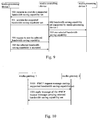
- the LOCAL and REMOTE descriptors in the H.248 protocol may be used, and multiple bandwidth saving capabilities are described by the SDP. Here, multiple bandwidth saving capabilities are configured as bandwidth saving capability set. When there is no bandwidth saving capability in the SDP description, it is indicated that the bandwidth saving capability is not supported.
- FIG. 9 is a flowchart of a method for negotiating an IP message bandwidth saving capability by the H.248 protocol and the SDP in accordance with an embodiment of the present invention.
- Network entities involved in the method include a media processing device 1, a media controlling device and a media processing device 2; the media processing device 1 and media processing device 2 may respectively be an IP message sender and an IP message receiver.
- the method includes the following process.
- the media controlling device requests the media processing device 1 to provide a supported bandwidth saving capability set.
- the media processing device 1 sends to the media controlling device the supported bandwidth saving capability set.
- the media controlling device sends to the media processing device 2 the supported bandwidth saving capability set and requests the media processing device 2 to select a supported bandwidth saving capability.
- the media processing device 2 selects a supported bandwidth saving capability and returns the selected bandwidth saving capability to the media controlling device.
- the media controlling device requests the media processing device 1 to use the bandwidth saving capability selected by the media processing device 2.
- the media processing device 1 returns to the media controlling device a message indicating that the selected bandwidth saving capability is accepted.
- a receiver and a sender exchange negotiation parameters by the IPBCP, and the receiver and the sender may both be media gateways.
- the negotiation parameters may be a media stream characteristic, an IP address of a media stream carrier and a port number of a media stream carrier.
- the SDP is used by the IPBCP to describe a supported bandwidth saving capability set.
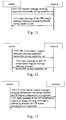
- FIG 10 is a flowchart of a method for negotiating a bandwidth saving capability of an IP message by the IPBCP and the SDP in accordance with an embodiment of the present invention.
- Network entities involved in the method include a media gateway 1 and a media gateway 2, and the method includes the following process.
- the media gateway 1 sends to the media gateway 2 an IPBCP request message carrying a bandwidth saving capability set supported by the media gateway 1, and the bandwidth saving capability set is described by the SDP.
- the media gateway 2 selects a bandwidth saving capability supported by the media gateway 2 from the received bandwidth saving capability set, and the media gateway 2 returns to the media gateway 1 a reply message carrying the selected bandwidth saving capability.
- the SDP description having the bandwidth saving capability set is removed in the reply message.
- the SDP is used by the SIP to describe the supported bandwidth saving capability set.
- Figure 11 is a flowchart of a method for negotiating a bandwidth saving capability of an IP message by the IPBCP and the SDP.
- Network entities involved in the method include a sender of the IP message and a receiver of the IP message. The method includes the following process.
- the sender sends to the receiver a SIP request message carrying the bandwidth saving capability set supported by the sender, and the bandwidth saving capability set is descript by the SDP.
- the receiver selects a bandwidth saving capability supported by the receiver from the bandwidth saving capability set and returns to the sender a reply message of the SIP request message carrying the selected bandwidth saving capability.
- the SDP description having the bandwidth saving capability set is removed in the reply message.
- an UP initialization message is used for negotiating user plane parameters between the UTRAN and the MGW and between the MGW and the MGW.
- an UP initialization request message and a reply message may be used for negotiating the bandwidth saving capability.
- Figure 12 is a flowchart of a method for negotiating a bandwidth saving capability of an IP message by the UP.
- Network entities involved in the method include a sender of the IP message and a receiver of the IP message. The method includes the following process.
- the sender sends to the receiver an UP initialization request message carrying a supported bandwidth saving capability set.
- the receiver selects a bandwidth saving capability supported by the receiver from the bandwidth saving capability set and returns to the sender a reply message of the UP initialization request message carrying the selected bandwidth saving capability.
- the UP may also be used for negotiating an UP header compression capability as shown in Figure 13 , and the negotiation includes the following process.
- a sender sends to a receiver an UP initialization request message carrying information indicating whether the UP header compression is supported by the sender.
- the receiver if the receiver supports the UP header compression and the received information from the sender indicating that the sender supports the UP header compression, the receiver sends to the sender a reply message of the UP initialization request message indicating that the UP header compression is supported; if any of the two parties does not support the UP header compression, the receiver returns to the sender the reply message of the UP initialization request message indicating that the UP header compression is not supported.
- two bitmaps (IPFmts) in an idle extended field in the UP initialization request message may be used for carrying the supported bandwidth saving capability set; one bit, BWS supported, in an idle extended field in the reply message may be used for indicating whether the receiver supports the bandwidth saving capability, and one bit, IPFMT, may be used for indicating the bandwidth saving capability selected by the receiver.
- one bit, UPC, in an idle extended field in the UP initialization request message may be used for indicating whether the sender supports the UP header compression;
- one bit, UPC, in an idle extended field in the reply message may be used for indicating whether the receiver supports the UP header compression.
- the sender assigns the IPFmts (bitmap) fields in the UP initialization request message according to the supported bandwidth saving capability set.
- the receiver selects one bandwidth saving capability supported by the receiver from the IPFmts (bitmap) fields in the received UP initialization request message, and then the receiver writes the supported bandwidth saving capability in the IP FMT field in the reply message of the UP initialization request message and sets the BWS supported field as 1 at the same time, thus the sender and the receiver may process the IP messages corresponding to the same bandwidth saving capability.
- the receiver If the receiver does not support the bandwidth saving capability, or not support the bandwidth saving capability in the IPFmts (bitmap) field in the received IP initialization request message, the receiver sets the BWS supported field as 0 in the reply message of the UP initialization request message, thus the sender and the receiver can only process ordinary IP messages.
- the sender may indicate in the UP initialization request message that whether the UP header compression is supported
- the receiver may indicate in the reply message of the UP initialization request message that whether the UP header compression is supported
- the UP header compression function can be used in the IP messages transmitted between the sender and the receiver.
- the UP header compression capability may also be described by the SDP, and the SDP may be used for negotiating the UP header compression capability.
- the SDP may be used for negotiating the UP header compression capability.
- IP message used in the embodiments of the present invention.
- the link layer, the IP layer and the UDP layer in the protocol stack bearing an IP message are all kept unchanged, multiple IP sub-messages are encapsulated in an IP message, each content of each session is carried in each IP sub-message, and there is a multiplex header in an IP sub-message as shown in Figure 6 .
- an RTP header is compressed. If the sender and the receiver both support the UP header compression, the UP header may also be compressed.
- the IP header format of the IP message is the same as that in the prior art;
- the UDP header is the same as that in the prior art, i.e., the destination UDP port number is a fixed value, the value of the source UDP port number is meaningless and may be any value;
- the multiplex header includes a multiplex ID, a source ID, a length indicator bit and a length field.
- the multiplex ID is the number of the destination UDP port receiving the sub-message or a value obtained by performing some operation of the number of the destination UDP port;
- the source ID is the number of the source UDP port sending the sub-message or a value obtained by performing some operation of the number of the source UDP port;
- the length indicator bit indicates the number of the bytes in the length field is 1 or 2 bytes; and the length field indicates the length of the IP sub-message.
- an UP header type is defined in the embodiment of the present invention, and the UP header with the UP header type does not include the CRC check of the UP header and the CRC check of the payload. As shown in Figure 14 , no CRC check is performed in the check part.
- IP message header of the IP message is compressed, the saved bandwidth is not obvious, so the IP message header is usually compressed after being multiplied.
- IP message formats Two examples are given below to define two IP message formats: one is that the IP message is only multiplied, the other is that IP message header of the IP message is compressed after being multiplied as shown in Figure 15 and 16 .
- a variety of IP message formats may be provided according to the multiplexing technique and a variety of IP message compression techniques.
- the IP message is only multiplied; the RTP header is not compressed and is kept unchanged.
- the MUXID may be expressed by the destination UDP port number divided by 2.
- the SourceID may be expressed by the source UDP port number or the source UDP port number divided by 2; and the receiver may use the SourceID to check the validity of the IP sub-message.
- the Length the length of the IP sub-message may be indicated by one byte or 2 bytes.
- the IP message is multiplied, and the RTP header is compressed.
- the contents of the multiplex header include an L, a MUXID, a SourceID, and a Length;
- the contents of the compressed RTP header include a P, an M, a Payload Type, a Time Stamp and a Sequence Number.
- the MUXID may be expressed by the destination UDP port number divided by 2.
- the SourceID may be expressed by the source UDP port number or the source UDP port number divided by 2, and the receiver may use the SourceID to check the validity of the IP sub-message.
- the Length the length of the IP sub-message may be indicated by one byte or 2 bytes.
- the usage of the P is consistent with that in the standard RTP header; if there is an additional padding byte in the IP sub-message, the flag is configured.
- the usage of the M is consistent with that in the standard RTP header; the meaning of the M is specified by the session, and the M is used for determining borders of different data.
- the usage of the Payload Type is consistent with that in the standard RTP header.
- the usage of the Sequence Number is consistent with that in the standard RTP header, and the length of the Sequence Number is 8 bits, which is 16 bits before being compressed.
- the usage of the Time Stamp is consistent with that in the standard RTP header, and the length of the Time Stamp is 16 bits, which is 32 bits before being compressed.
- the RTP header may be compressed by a structure as shown in Figure 6 .
- the IP message is multiplied, the RTP header is compressed and the data borne in the IP message is compressed. Therefore, the efficiency for processing the IP message by processing devices in the communication system is improved.
- a source indication is carried by the multiplex header of each IP sub-message in the IP message, thus the receiver may determine the validity of the IP message, the reliability and safety are improved.
- multiple bandwidth saving capabilities are carried at the same time, the success rate is improved.
- the H.248 protocol, the IPBCP and the SIP may be used, thus the negotiation methods can be applied in the case of Non-Tunnel in a circuit-switched core network of the WCDMA system and the fixed softswitch network.
- the embodiments of the present invention also provide a system for transmitting an IP message as shown in Figure 17 , and the system includes a sender and a receiver.
- the sender sends to the receiver more than one bandwidth saving capability supported by the sender, and determines a type of the IP message used for transmitting data according to a received bandwidth saving capability selected by the receiver, and then the sender sends an IP message to the receiver after constructing the IP message bearing data to be transmitted using the determined type of the IP message.
- the receiver selects the bandwidth saving capability from the more than one bandwidth saving capability sent by the sender according to a bandwidth saving capability supported by the receiver, and then the receiver sends the selected bandwidth saving capability to the sender.
- the sender and receiver also include RTP header compression capability negotiation modules respectively.
- the RTP header compression capability negotiation module of the sender sends to the receiver information indicating whether RTP header compression is supported by the sender and receives from the receiver information indicating whether the RTP header compression is supported, and the RTP header compression capability negotiation module of the sender compresses an RTP header when constructing the IP message if the RTP header compression is supported.
- the RTP header compression capability negotiation module of the receiver determines whether the RTP header compression is supported according to whether the RTP header compression is supported by the receiver and according to the received information indicating whether the RTP header compression is supported by the sender and sends to the sender the information indicating whether the RTP header compression is supported.
- the receiver further includes an IP message reception resolution module.
- the IP message reception resolution module resolves each IP sub-message in the IP message according to the type of IP message corresponding to the selected bandwidth saving capability and obtains the transmitted data.
- the embodiments of the present invention also provide a system for negotiating a bandwidth saving capacity.
- the system includes a sender and a receiver.
- the sender sends to the receiver more than one bandwidth saving capability supported by the sender and determines a type of the IP message used for transmitting data according to a received bandwidth saving capability selected by the receiver.
- the receiver selects the bandwidth saving capability from the more than one bandwidth saving capability sent by the sender according to a bandwidth saving capability supported by the receiver and sends the selected bandwidth saving capability to the sender.
- the sender further includes an IP message construction module to construct a multiplied IP message bearing the data to be transmitted according to the determined type of the IP message and to send to the receiver the multiplied IP message constructed.
- At least one IP sub-message having a multiplex header is included in the multiplied IP message.
- the multiplex header of the IP sub-message includes at least one of a source ID for indicating the information of the sender, an indication for indicating the number of bytes used for indicating the length of the IP sub-message and an indication for indicating the length of the IP sub-message.
- the sender further includes an IP message construction module to construct the IP message bearing the data to be transmitted after the IP message is compressed according to the determined type of the IP message.
- the IP message includes an UP data message without a CRC check and an UP header without a CRC check.
- the IP message construction module sends the constructed IP message to the receiver.
Landscapes
- Engineering & Computer Science (AREA)
- Computer Networks & Wireless Communication (AREA)
- Signal Processing (AREA)
- Computer Security & Cryptography (AREA)
- Data Exchanges In Wide-Area Networks (AREA)
- Telephonic Communication Services (AREA)
Claims (9)
- Procédé pour assurer la fiabilité de la transmission de messages, caractérisé en ce qu'il comprend les étapes suivantes :négocier, par un expéditeur, une capacité d'économie de largeur de bande d'un message IP avec un récepteur, de manière à déterminer un type du message IP ;construire (803), par l'expéditeur, le message IP du type déterminé, dans lequel le message IP comprend au moins un sous-message IP qui comprend un en-tête de multiplex, dans lequel l'en-tête de multiplex comprend un ID de source pour indiquer des informations de l'expéditeur et une première indication pour indiquer la longueur du sous-message IP ; etenvoyer (803), par l'expéditeur, le message IP au récepteur.
- Procédé selon la revendication 1, dans lequel l'ID de source est un numéro de port de protocole de datagramme utilisateur, UDP, d'une session à laquelle le sous-message IP appartient, ou une valeur obtenue en divisant le numéro de port UDP par deux.
- Procédé selon la revendication 1, dans lequel l'en-tête de multiplex comprend une seconde indication pour indiquer le nombre d'octets dans la première indication.
- Procédé selon la revendication 1, dans lequel la négociation, par l'émetteur, de la capacité d'économie de largeur de bande du message IP avec le récepteur, de manière à déterminer le type du message IP, comprend les étapes suivantes :envoyer, par l'expéditeur, plus d'une capacité d'économie de largeur de bande supportée au récepteur ;recevoir, par l'expéditeur, une seule capacité d'économie de largeur de bande sélectionnée par le récepteur, dans lequel la capacité d'économie de largeur de bande est sélectionnée parmi les plus d'une capacité d'économie de largeur de bande et est supportée par le récepteur ; etdéterminer, par l'expéditeur, le type du message IP en fonction de la capacité d'économie de largeur de bande sélectionnée par le récepteur.
- Procédé selon la revendication 4, comprenant en outre les étapes suivantes :si le récepteur supporte plusieurs capacités d'économie de largeur de bande des plus d'une capacité d'économie de largeur de bande, sélectionner, par le récepteur, la capacité d'économie de largeur de bande qui est supportée par le récepteur et économiser un maximum de largeur de bande.
- Appareil d'expéditeur, caractérisé en ce qu'il comprend :des moyens pour négocier une capacité d'économie de largeur de bande d'un message IP avec un récepteur, de manière à déterminer un type du message IP ;des moyens pour construire le message IP du type déterminé, dans lequel le message IP comprend au moins un sous-message IP qui comprend un en-tête de multiplex, où l'en-tête de multiplex comprend un ID de source pour indiquer des informations de l'expéditeur et une première indication pour indiquer la longueur du sous-message IP ; etdes moyens pour envoyer le message IP au récepteur.
- Expéditeur selon la revendication 6, dans lequel l'ID de source est un numéro de port de protocole de datagramme utilisateur, UDP, d'une session à laquelle le sous-message IP appartient, ou une valeur obtenue en divisant le numéro de port UDP par deux.
- Expéditeur selon la revendication 6, dans lequel l'en-tête de multiplex comprend en outre une seconde indication pour indiquer le nombre d'octets dans la première indication.
- Expéditeur selon la revendication 6, dans lequel les moyens pour la négociation comprennent :des moyens pour envoyer plus d'une capacité d'économie de largeur de bande supportée au récepteur ;des moyens pour recevoir une capacité d'économie de largeur de bande sélectionnée par le récepteur, dans lequel la capacité d'économie de largeur de bande est sélectionnée parmi les plus d'une capacité d'économie de largeur de bande et est supportée par le récepteur ; etdes moyens pour déterminer le type du message IP en fonction de la capacité d'économie de largeur de bande sélectionnée par le récepteur.
Applications Claiming Priority (2)
| Application Number | Priority Date | Filing Date | Title |
|---|---|---|---|
| CN2006100760819A CN101047711B (zh) | 2006-04-27 | 2006-04-27 | Ip报文传输、协商带宽节省能力和节省网络带宽的方法 |
| EP07720987.2A EP1940093B1 (fr) | 2006-04-27 | 2007-04-27 | Procédé de transmission de message de protocole internet (ip), capacité d'économie de largeur de bande négociée et économie de largeur de bande de réseau |
Related Parent Applications (2)
| Application Number | Title | Priority Date | Filing Date |
|---|---|---|---|
| EP07720987.2A Division EP1940093B1 (fr) | 2006-04-27 | 2007-04-27 | Procédé de transmission de message de protocole internet (ip), capacité d'économie de largeur de bande négociée et économie de largeur de bande de réseau |
| EP07720987.2A Division-Into EP1940093B1 (fr) | 2006-04-27 | 2007-04-27 | Procédé de transmission de message de protocole internet (ip), capacité d'économie de largeur de bande négociée et économie de largeur de bande de réseau |
Publications (2)
| Publication Number | Publication Date |
|---|---|
| EP2763361A1 EP2763361A1 (fr) | 2014-08-06 |
| EP2763361B1 true EP2763361B1 (fr) | 2016-06-08 |
Family
ID=38667429
Family Applications (3)
| Application Number | Title | Priority Date | Filing Date |
|---|---|---|---|
| EP20140166306 Withdrawn EP2763360A1 (fr) | 2006-04-27 | 2007-04-27 | Procédé de transmission de message de protocole internet (ip), capacité d'économie de largeur de bande négociée et économie de largeur de bande de réseau |
| EP14166308.8A Active EP2763361B1 (fr) | 2006-04-27 | 2007-04-27 | Procédé de transmission de message de protocole internet (ip), capacité d'économie de largeur de bande négociée et économie de largeur de bande de réseau |
| EP07720987.2A Active EP1940093B1 (fr) | 2006-04-27 | 2007-04-27 | Procédé de transmission de message de protocole internet (ip), capacité d'économie de largeur de bande négociée et économie de largeur de bande de réseau |
Family Applications Before (1)
| Application Number | Title | Priority Date | Filing Date |
|---|---|---|---|
| EP20140166306 Withdrawn EP2763360A1 (fr) | 2006-04-27 | 2007-04-27 | Procédé de transmission de message de protocole internet (ip), capacité d'économie de largeur de bande négociée et économie de largeur de bande de réseau |
Family Applications After (1)
| Application Number | Title | Priority Date | Filing Date |
|---|---|---|---|
| EP07720987.2A Active EP1940093B1 (fr) | 2006-04-27 | 2007-04-27 | Procédé de transmission de message de protocole internet (ip), capacité d'économie de largeur de bande négociée et économie de largeur de bande de réseau |
Country Status (5)
| Country | Link |
|---|---|
| US (1) | US8311060B2 (fr) |
| EP (3) | EP2763360A1 (fr) |
| CN (2) | CN101047711B (fr) |
| ES (1) | ES2558020T3 (fr) |
| WO (1) | WO2007128217A1 (fr) |
Families Citing this family (28)
| Publication number | Priority date | Publication date | Assignee | Title |
|---|---|---|---|---|
| CN101047711B (zh) | 2006-04-27 | 2010-08-18 | 华为技术有限公司 | Ip报文传输、协商带宽节省能力和节省网络带宽的方法 |
| US20100091835A1 (en) * | 2008-10-14 | 2010-04-15 | Morris Robert P | Method And System For Processing A Media Stream |
| WO2010105666A1 (fr) * | 2009-03-16 | 2010-09-23 | Nokia Siemens Networks Oy | Optimisation de réseau mobile |
| CN102349285B (zh) * | 2009-03-19 | 2014-04-16 | 富士通株式会社 | 接收装置、发送装置、接收方法、发送方法、通信系统及通信方法 |
| CN101616156B (zh) * | 2009-07-24 | 2012-10-03 | 中兴通讯股份有限公司 | 一种实现rtp数据流多路复用的信令协商方法和装置 |
| JP4740365B2 (ja) | 2009-10-26 | 2011-08-03 | シャープ株式会社 | 移動局装置、基地局装置、無線通信システム、通信制御方法、通信制御プログラム、及びプロセッサ |
| KR20110071835A (ko) * | 2009-12-21 | 2011-06-29 | 삼성전자주식회사 | 이동통신시스템에서 브이오아이피 서비스를 제공하는 방법 및 장치 |
| JP5094896B2 (ja) * | 2010-02-26 | 2012-12-12 | シャープ株式会社 | 移動局装置、基地局装置、通信制御方法及び集積回路 |
| CN102546547A (zh) * | 2010-12-22 | 2012-07-04 | 中兴通讯股份有限公司 | Ip报文发送方法、网络测设备及终端 |
| CN102255906B (zh) * | 2011-07-08 | 2014-07-23 | 中国联合网络通信集团有限公司 | 数据发送和接收方法、设备及系统 |
| EP2667547B1 (fr) | 2011-07-29 | 2016-01-20 | Huawei Technologies Co., Ltd. | Procédé d'ajustement de bande passante, contrôleur de bus et convertisseur de signal |
| JP6258856B2 (ja) * | 2011-10-13 | 2018-01-10 | サムスン エレクトロニクス カンパニー リミテッド | 放送システムにおける制御メッセージ構成装置及び方法 |
| CN103685426B (zh) * | 2012-09-25 | 2017-11-03 | 联想(北京)有限公司 | 信息处理设备和信息处理方法 |
| US9356645B2 (en) * | 2012-11-16 | 2016-05-31 | International Business Machines Corporation | Saving bandwidth in transmission of compressed data |
| CN103618678A (zh) * | 2013-11-18 | 2014-03-05 | 北京星网锐捷网络技术有限公司 | 自适应多链路聚合的方法、装置及系统 |
| CN104394119B (zh) * | 2014-08-27 | 2020-09-11 | 贵阳语玩科技有限公司 | Rtp包的发送方法、响应方法及装置 |
| CN105450613B (zh) * | 2014-09-01 | 2019-03-12 | 展讯通信(上海)有限公司 | 一种数据识别系统及方法 |
| US9991719B2 (en) | 2014-09-30 | 2018-06-05 | The Boeing Company | Systems and methods for reducing circulating current and phase to phase imbalance in a parallel modular converter system |
| CN106301987B (zh) | 2015-06-03 | 2020-02-14 | 华为技术有限公司 | 一种报文丢失检测方法、装置及系统 |
| CN106817386B (zh) * | 2015-11-27 | 2020-03-10 | 华为技术有限公司 | 一种多会话下远程服务的数据处理方法和系统 |
| US10498683B2 (en) | 2016-07-20 | 2019-12-03 | At&T Intellectual Property I, L.P. | Compressed message sets for storage efficiency |
| CN107872429A (zh) * | 2016-09-26 | 2018-04-03 | 中国电信股份有限公司 | 在 vxlan 中实现身份检验的方法和系统 |
| CN109547467A (zh) * | 2018-12-19 | 2019-03-29 | 北京东土科技股份有限公司 | 媒体数据纠错传输及纠错方法、装置、设备及存储介质 |
| CN112398731B (zh) | 2019-08-15 | 2022-05-13 | 华为技术有限公司 | 一种处理报文的方法和第一网络设备 |
| CN112040513B (zh) * | 2020-09-10 | 2024-03-08 | 深圳市欢太科技有限公司 | 一种数据传输方法、数据传输装置及数据传输系统 |
| CN112671597B (zh) * | 2020-11-25 | 2023-03-24 | 紫光云技术有限公司 | 一种分段统计弹性公网ip在共享带宽内和外流量的方法 |
| CN113821074B (zh) | 2021-09-06 | 2023-09-08 | 北京车和家信息技术有限公司 | 一种时间同步方法、装置、电子设备和存储介质 |
| US12526439B2 (en) | 2023-04-22 | 2026-01-13 | Qualcomm Incorporated | Rate adaptation for video coding for machines |
Family Cites Families (16)
| Publication number | Priority date | Publication date | Assignee | Title |
|---|---|---|---|---|
| US6529734B1 (en) * | 1998-11-03 | 2003-03-04 | Telefonaktiebolaget Lm Ericsson | Bandwith supply dependent cell level |
| EP1049297A3 (fr) * | 1999-04-01 | 2003-06-18 | AT&T Corp. | Procédé pour fournir un accord de qualité de service à travers des limites de réseau |
| JP2001251381A (ja) * | 1999-12-21 | 2001-09-14 | Alcatel Usa Sourcing Lp | 通信ネットワークノードのイーサネット(登録商標)接続のシステムおよび方法 |
| JP4068780B2 (ja) * | 2000-02-24 | 2008-03-26 | 富士通株式会社 | VoIP通信システムにおける通信状態通知装置,通信状態表示装置,通信状態通知方法及び通信状態通知プログラムを記録した媒体 |
| US7058973B1 (en) * | 2000-03-03 | 2006-06-06 | Symantec Corporation | Network address translation gateway for local area networks using local IP addresses and non-translatable port addresses |
| JP4405044B2 (ja) * | 2000-06-21 | 2010-01-27 | 富士通株式会社 | ネットワーク中継装置およびパケット結合方法 |
| US6842463B1 (en) * | 2000-07-14 | 2005-01-11 | Nortel Networks Limited | Automated and adaptive management of bandwidth capacity in telecommunications networks |
| WO2002015627A1 (fr) | 2000-08-14 | 2002-02-21 | Nokia Corporation | Systeme de communication et procede utilisant une procedurede selection de mode |
| CA2419536C (fr) * | 2000-08-14 | 2009-12-29 | Nokia Corporation | Systeme de communication et procede d'elaboration d'une procedure de selection de modes |
| EP1248431B1 (fr) | 2001-03-27 | 2007-10-31 | Sony Deutschland GmbH | Procédé de négociation de qualité de service de bout en bout en utilisant des applications multimédia distribués |
| US7171485B2 (en) * | 2001-10-17 | 2007-01-30 | Velcero Broadband Applications, Llc | Broadband network system configured to transport audio or video at the transport layer, and associated method |
| DE60335867D1 (de) * | 2003-07-10 | 2011-03-10 | Alcatel Lucent | Reduktion von Bandbreite und Energieverbrauch in einem multimode Mobilfunkendgerät durch selektives Überwachen mehrerer Funkschnittstellen |
| US7965674B2 (en) | 2004-05-05 | 2011-06-21 | New Jersey Institute Of Technology | Sub-segment based transport layer protocol for wireless medium |
| JP4363404B2 (ja) * | 2006-01-26 | 2009-11-11 | ソニー株式会社 | 受信装置および方法、並びにプログラム |
| GB0602314D0 (en) * | 2006-02-06 | 2006-03-15 | Ericsson Telefon Ab L M | Transporting packets |
| CN101047711B (zh) * | 2006-04-27 | 2010-08-18 | 华为技术有限公司 | Ip报文传输、协商带宽节省能力和节省网络带宽的方法 |
-
2006
- 2006-04-27 CN CN2006100760819A patent/CN101047711B/zh not_active Expired - Lifetime
-
2007
- 2007-04-27 ES ES07720987.2T patent/ES2558020T3/es active Active
- 2007-04-27 EP EP20140166306 patent/EP2763360A1/fr not_active Withdrawn
- 2007-04-27 EP EP14166308.8A patent/EP2763361B1/fr active Active
- 2007-04-27 EP EP07720987.2A patent/EP1940093B1/fr active Active
- 2007-04-27 WO PCT/CN2007/001414 patent/WO2007128217A1/fr not_active Ceased
- 2007-04-27 CN CN2007800003277A patent/CN101317404B/zh active Active
-
2008
- 2008-09-23 US US12/235,876 patent/US8311060B2/en active Active
Also Published As
| Publication number | Publication date |
|---|---|
| EP1940093A4 (fr) | 2008-12-17 |
| ES2558020T3 (es) | 2016-02-01 |
| CN101047711A (zh) | 2007-10-03 |
| US20090022065A1 (en) | 2009-01-22 |
| CN101047711B (zh) | 2010-08-18 |
| EP2763360A1 (fr) | 2014-08-06 |
| WO2007128217A1 (fr) | 2007-11-15 |
| EP1940093B1 (fr) | 2015-10-21 |
| EP2763361A1 (fr) | 2014-08-06 |
| CN101317404B (zh) | 2012-02-29 |
| EP1940093A1 (fr) | 2008-07-02 |
| CN101317404A (zh) | 2008-12-03 |
| US8311060B2 (en) | 2012-11-13 |
Similar Documents
| Publication | Publication Date | Title |
|---|---|---|
| EP2763361B1 (fr) | Procédé de transmission de message de protocole internet (ip), capacité d'économie de largeur de bande négociée et économie de largeur de bande de réseau | |
| US7558240B2 (en) | Radio telecommunications apparatus and method for communications internet data packets containing different types of data | |
| EP1604535B1 (fr) | Appareils et procédé pour la communication de paquets de data d'internet | |
| CA2429571C (fr) | Procede et systeme de transmission de paquets de donnees sans en-tetes via une liaison sans fil | |
| JP2006522518A5 (fr) | ||
| JP2000078197A (ja) | 通信ノード及びパケット転送方法 | |
| EP1106008A1 (fr) | Procede et appareil assurant un multiplexage utilisateur dans un protocole en temps reel - | |
| US20010004355A1 (en) | System and a method relating to digital mobile communication systems | |
| US20020186663A1 (en) | End-to-end frame quality classification | |
| US9148257B2 (en) | Method and apparatus for reducing delays in a packets switched network | |
| EP1611716B1 (fr) | Réseau radio de communication de paquets de données internet contenant différents types de données | |
| CN101442777B (zh) | 一种压缩复用报文处理方法及装置 | |
| GB2456913A (en) | TETRA Mobile Communications Systems | |
| WO2005065060A2 (fr) | Configuration de support radio optimisee pour voix sur ip | |
| KR20080094417A (ko) | 무선 통신망을 이용한 실시간 멀티미디어 서비스에서 망상황 정보 전송 방법 및 장치 | |
| Sevenich | Multiplexing time-critical data over tactical subnetworks of low bandwidth | |
| KR20060011678A (ko) | 보이스 오버 아이피 서비스를 제공하는 이동통신시스템에서 실시간 전송 프로토콜 패킷과 실시간 전송제어 프로토콜 패킷의 구분 전송 방법 및 장치 |
Legal Events
| Date | Code | Title | Description |
|---|---|---|---|
| PUAI | Public reference made under article 153(3) epc to a published international application that has entered the european phase |
Free format text: ORIGINAL CODE: 0009012 |
|
| 17P | Request for examination filed |
Effective date: 20140429 |
|
| AC | Divisional application: reference to earlier application |
Ref document number: 1940093 Country of ref document: EP Kind code of ref document: P |
|
| AK | Designated contracting states |
Kind code of ref document: A1 Designated state(s): AT BE BG CH CY CZ DE DK EE ES FI FR GB GR HU IE IS IT LI LT LU LV MC MT NL PL PT RO SE SI SK TR |
|
| R17P | Request for examination filed (corrected) |
Effective date: 20141030 |
|
| RBV | Designated contracting states (corrected) |
Designated state(s): AT BE BG CH CY CZ DE DK EE ES FI FR GB GR HU IE IS IT LI LT LU LV MC MT NL PL PT RO SE SI SK TR |
|
| 17Q | First examination report despatched |
Effective date: 20150520 |
|
| REG | Reference to a national code |
Ref country code: DE Ref legal event code: R079 Ref document number: 602007046637 Country of ref document: DE Free format text: PREVIOUS MAIN CLASS: H04L0012700000 Ipc: H04L0012540000 |
|
| GRAP | Despatch of communication of intention to grant a patent |
Free format text: ORIGINAL CODE: EPIDOSNIGR1 |
|
| RIC1 | Information provided on ipc code assigned before grant |
Ipc: H04L 12/801 20130101ALN20151027BHEP Ipc: H04L 12/811 20130101ALI20151027BHEP Ipc: H04L 29/06 20060101ALI20151027BHEP Ipc: H04W 80/04 20090101ALI20151027BHEP Ipc: H04L 12/911 20130101ALN20151027BHEP Ipc: H04W 28/06 20090101ALI20151027BHEP Ipc: H04W 28/18 20090101ALI20151027BHEP Ipc: H04L 12/54 20130101AFI20151027BHEP Ipc: H04L 12/825 20130101ALI20151027BHEP Ipc: H04L 12/927 20130101ALI20151027BHEP |
|
| INTG | Intention to grant announced |
Effective date: 20151111 |
|
| GRAS | Grant fee paid |
Free format text: ORIGINAL CODE: EPIDOSNIGR3 |
|
| GRAA | (expected) grant |
Free format text: ORIGINAL CODE: 0009210 |
|
| AC | Divisional application: reference to earlier application |
Ref document number: 1940093 Country of ref document: EP Kind code of ref document: P |
|
| AK | Designated contracting states |
Kind code of ref document: B1 Designated state(s): AT BE BG CH CY CZ DE DK EE ES FI FR GB GR HU IE IS IT LI LT LU LV MC MT NL PL PT RO SE SI SK TR |
|
| REG | Reference to a national code |
Ref country code: GB Ref legal event code: FG4D |
|
| REG | Reference to a national code |
Ref country code: CH Ref legal event code: EP |
|
| REG | Reference to a national code |
Ref country code: IE Ref legal event code: FG4D |
|
| REG | Reference to a national code |
Ref country code: AT Ref legal event code: REF Ref document number: 805897 Country of ref document: AT Kind code of ref document: T Effective date: 20160715 |
|
| REG | Reference to a national code |
Ref country code: DE Ref legal event code: R096 Ref document number: 602007046637 Country of ref document: DE |
|
| REG | Reference to a national code |
Ref country code: SE Ref legal event code: TRGR |
|
| REG | Reference to a national code |
Ref country code: LT Ref legal event code: MG4D |
|
| REG | Reference to a national code |
Ref country code: NL Ref legal event code: MP Effective date: 20160608 |
|
| PG25 | Lapsed in a contracting state [announced via postgrant information from national office to epo] |
Ref country code: FI Free format text: LAPSE BECAUSE OF FAILURE TO SUBMIT A TRANSLATION OF THE DESCRIPTION OR TO PAY THE FEE WITHIN THE PRESCRIBED TIME-LIMIT Effective date: 20160608 Ref country code: LT Free format text: LAPSE BECAUSE OF FAILURE TO SUBMIT A TRANSLATION OF THE DESCRIPTION OR TO PAY THE FEE WITHIN THE PRESCRIBED TIME-LIMIT Effective date: 20160608 |
|
| REG | Reference to a national code |
Ref country code: AT Ref legal event code: MK05 Ref document number: 805897 Country of ref document: AT Kind code of ref document: T Effective date: 20160608 |
|
| PG25 | Lapsed in a contracting state [announced via postgrant information from national office to epo] |
Ref country code: LV Free format text: LAPSE BECAUSE OF FAILURE TO SUBMIT A TRANSLATION OF THE DESCRIPTION OR TO PAY THE FEE WITHIN THE PRESCRIBED TIME-LIMIT Effective date: 20160608 Ref country code: GR Free format text: LAPSE BECAUSE OF FAILURE TO SUBMIT A TRANSLATION OF THE DESCRIPTION OR TO PAY THE FEE WITHIN THE PRESCRIBED TIME-LIMIT Effective date: 20160909 Ref country code: NL Free format text: LAPSE BECAUSE OF FAILURE TO SUBMIT A TRANSLATION OF THE DESCRIPTION OR TO PAY THE FEE WITHIN THE PRESCRIBED TIME-LIMIT Effective date: 20160608 Ref country code: ES Free format text: LAPSE BECAUSE OF FAILURE TO SUBMIT A TRANSLATION OF THE DESCRIPTION OR TO PAY THE FEE WITHIN THE PRESCRIBED TIME-LIMIT Effective date: 20160608 |
|
| PG25 | Lapsed in a contracting state [announced via postgrant information from national office to epo] |
Ref country code: SK Free format text: LAPSE BECAUSE OF FAILURE TO SUBMIT A TRANSLATION OF THE DESCRIPTION OR TO PAY THE FEE WITHIN THE PRESCRIBED TIME-LIMIT Effective date: 20160608 Ref country code: IS Free format text: LAPSE BECAUSE OF FAILURE TO SUBMIT A TRANSLATION OF THE DESCRIPTION OR TO PAY THE FEE WITHIN THE PRESCRIBED TIME-LIMIT Effective date: 20161008 Ref country code: EE Free format text: LAPSE BECAUSE OF FAILURE TO SUBMIT A TRANSLATION OF THE DESCRIPTION OR TO PAY THE FEE WITHIN THE PRESCRIBED TIME-LIMIT Effective date: 20160608 Ref country code: RO Free format text: LAPSE BECAUSE OF FAILURE TO SUBMIT A TRANSLATION OF THE DESCRIPTION OR TO PAY THE FEE WITHIN THE PRESCRIBED TIME-LIMIT Effective date: 20160608 Ref country code: CZ Free format text: LAPSE BECAUSE OF FAILURE TO SUBMIT A TRANSLATION OF THE DESCRIPTION OR TO PAY THE FEE WITHIN THE PRESCRIBED TIME-LIMIT Effective date: 20160608 |
|
| PG25 | Lapsed in a contracting state [announced via postgrant information from national office to epo] |
Ref country code: AT Free format text: LAPSE BECAUSE OF FAILURE TO SUBMIT A TRANSLATION OF THE DESCRIPTION OR TO PAY THE FEE WITHIN THE PRESCRIBED TIME-LIMIT Effective date: 20160608 Ref country code: BE Free format text: LAPSE BECAUSE OF FAILURE TO SUBMIT A TRANSLATION OF THE DESCRIPTION OR TO PAY THE FEE WITHIN THE PRESCRIBED TIME-LIMIT Effective date: 20160608 Ref country code: PL Free format text: LAPSE BECAUSE OF FAILURE TO SUBMIT A TRANSLATION OF THE DESCRIPTION OR TO PAY THE FEE WITHIN THE PRESCRIBED TIME-LIMIT Effective date: 20160608 Ref country code: PT Free format text: LAPSE BECAUSE OF FAILURE TO SUBMIT A TRANSLATION OF THE DESCRIPTION OR TO PAY THE FEE WITHIN THE PRESCRIBED TIME-LIMIT Effective date: 20161010 |
|
| REG | Reference to a national code |
Ref country code: DE Ref legal event code: R097 Ref document number: 602007046637 Country of ref document: DE |
|
| PLBE | No opposition filed within time limit |
Free format text: ORIGINAL CODE: 0009261 |
|
| STAA | Information on the status of an ep patent application or granted ep patent |
Free format text: STATUS: NO OPPOSITION FILED WITHIN TIME LIMIT |
|
| 26N | No opposition filed |
Effective date: 20170309 |
|
| PG25 | Lapsed in a contracting state [announced via postgrant information from national office to epo] |
Ref country code: DK Free format text: LAPSE BECAUSE OF FAILURE TO SUBMIT A TRANSLATION OF THE DESCRIPTION OR TO PAY THE FEE WITHIN THE PRESCRIBED TIME-LIMIT Effective date: 20160608 Ref country code: SI Free format text: LAPSE BECAUSE OF FAILURE TO SUBMIT A TRANSLATION OF THE DESCRIPTION OR TO PAY THE FEE WITHIN THE PRESCRIBED TIME-LIMIT Effective date: 20160608 |
|
| REG | Reference to a national code |
Ref country code: DE Ref legal event code: R119 Ref document number: 602007046637 Country of ref document: DE |
|
| REG | Reference to a national code |
Ref country code: CH Ref legal event code: PL |
|
| GBPC | Gb: european patent ceased through non-payment of renewal fee |
Effective date: 20170427 |
|
| REG | Reference to a national code |
Ref country code: IE Ref legal event code: MM4A |
|
| REG | Reference to a national code |
Ref country code: FR Ref legal event code: ST Effective date: 20171229 |
|
| PG25 | Lapsed in a contracting state [announced via postgrant information from national office to epo] |
Ref country code: MC Free format text: LAPSE BECAUSE OF FAILURE TO SUBMIT A TRANSLATION OF THE DESCRIPTION OR TO PAY THE FEE WITHIN THE PRESCRIBED TIME-LIMIT Effective date: 20160608 Ref country code: DE Free format text: LAPSE BECAUSE OF NON-PAYMENT OF DUE FEES Effective date: 20171103 Ref country code: FR Free format text: LAPSE BECAUSE OF NON-PAYMENT OF DUE FEES Effective date: 20170502 |
|
| PG25 | Lapsed in a contracting state [announced via postgrant information from national office to epo] |
Ref country code: LU Free format text: LAPSE BECAUSE OF NON-PAYMENT OF DUE FEES Effective date: 20170427 Ref country code: CH Free format text: LAPSE BECAUSE OF NON-PAYMENT OF DUE FEES Effective date: 20170430 Ref country code: LI Free format text: LAPSE BECAUSE OF NON-PAYMENT OF DUE FEES Effective date: 20170430 Ref country code: GB Free format text: LAPSE BECAUSE OF NON-PAYMENT OF DUE FEES Effective date: 20170427 |
|
| PG25 | Lapsed in a contracting state [announced via postgrant information from national office to epo] |
Ref country code: IE Free format text: LAPSE BECAUSE OF NON-PAYMENT OF DUE FEES Effective date: 20170427 |
|
| PG25 | Lapsed in a contracting state [announced via postgrant information from national office to epo] |
Ref country code: MT Free format text: LAPSE BECAUSE OF NON-PAYMENT OF DUE FEES Effective date: 20170427 |
|
| PG25 | Lapsed in a contracting state [announced via postgrant information from national office to epo] |
Ref country code: HU Free format text: LAPSE BECAUSE OF FAILURE TO SUBMIT A TRANSLATION OF THE DESCRIPTION OR TO PAY THE FEE WITHIN THE PRESCRIBED TIME-LIMIT; INVALID AB INITIO Effective date: 20070427 |
|
| PG25 | Lapsed in a contracting state [announced via postgrant information from national office to epo] |
Ref country code: BG Free format text: LAPSE BECAUSE OF FAILURE TO SUBMIT A TRANSLATION OF THE DESCRIPTION OR TO PAY THE FEE WITHIN THE PRESCRIBED TIME-LIMIT Effective date: 20160608 |
|
| PG25 | Lapsed in a contracting state [announced via postgrant information from national office to epo] |
Ref country code: CY Free format text: LAPSE BECAUSE OF FAILURE TO SUBMIT A TRANSLATION OF THE DESCRIPTION OR TO PAY THE FEE WITHIN THE PRESCRIBED TIME-LIMIT Effective date: 20160608 |
|
| PG25 | Lapsed in a contracting state [announced via postgrant information from national office to epo] |
Ref country code: TR Free format text: LAPSE BECAUSE OF FAILURE TO SUBMIT A TRANSLATION OF THE DESCRIPTION OR TO PAY THE FEE WITHIN THE PRESCRIBED TIME-LIMIT Effective date: 20160608 |
|
| P01 | Opt-out of the competence of the unified patent court (upc) registered |
Free format text: CASE NUMBER: UPC_APP_429138/2023 Effective date: 20230524 |
|
| PGFP | Annual fee paid to national office [announced via postgrant information from national office to epo] |
Ref country code: SE Payment date: 20250310 Year of fee payment: 19 |
|
| PGFP | Annual fee paid to national office [announced via postgrant information from national office to epo] |
Ref country code: IT Payment date: 20250320 Year of fee payment: 19 |