EP2763473A1 - Method of handling network entry in a cell cluster and related communication device - Google Patents
Method of handling network entry in a cell cluster and related communication device Download PDFInfo
- Publication number
- EP2763473A1 EP2763473A1 EP14152988.3A EP14152988A EP2763473A1 EP 2763473 A1 EP2763473 A1 EP 2763473A1 EP 14152988 A EP14152988 A EP 14152988A EP 2763473 A1 EP2763473 A1 EP 2763473A1
- Authority
- EP
- European Patent Office
- Prior art keywords
- cell
- communication device
- control information
- anchor
- cluster
- Prior art date
- Legal status (The legal status is an assumption and is not a legal conclusion. Google has not performed a legal analysis and makes no representation as to the accuracy of the status listed.)
- Withdrawn
Links
- 238000004891 communication Methods 0.000 title claims abstract description 160
- 238000000034 method Methods 0.000 title claims abstract description 62
- 230000005540 biological transmission Effects 0.000 claims description 17
- 230000002776 aggregation Effects 0.000 claims description 3
- 238000004220 aggregation Methods 0.000 claims description 3
- 230000008569 process Effects 0.000 description 24
- 238000010586 diagram Methods 0.000 description 10
- 238000009826 distribution Methods 0.000 description 6
- 230000006872 improvement Effects 0.000 description 6
- 230000003247 decreasing effect Effects 0.000 description 5
- 238000012545 processing Methods 0.000 description 4
- 238000003860 storage Methods 0.000 description 3
- 230000001960 triggered effect Effects 0.000 description 3
- 238000013500 data storage Methods 0.000 description 2
- 230000007774 longterm Effects 0.000 description 2
- XUIMIQQOPSSXEZ-UHFFFAOYSA-N Silicon Chemical compound [Si] XUIMIQQOPSSXEZ-UHFFFAOYSA-N 0.000 description 1
- 230000004075 alteration Effects 0.000 description 1
- 230000001419 dependent effect Effects 0.000 description 1
- 238000013461 design Methods 0.000 description 1
- 238000011161 development Methods 0.000 description 1
- 230000018109 developmental process Effects 0.000 description 1
- 230000002708 enhancing effect Effects 0.000 description 1
- 238000007726 management method Methods 0.000 description 1
- 238000012986 modification Methods 0.000 description 1
- 230000004048 modification Effects 0.000 description 1
- 230000003287 optical effect Effects 0.000 description 1
- 238000005457 optimization Methods 0.000 description 1
- 229910052710 silicon Inorganic materials 0.000 description 1
- 239000010703 silicon Substances 0.000 description 1
Images




Classifications
-
- H—ELECTRICITY
- H04—ELECTRIC COMMUNICATION TECHNIQUE
- H04W—WIRELESS COMMUNICATION NETWORKS
- H04W36/00—Hand-off or reselection arrangements
- H04W36/24—Reselection being triggered by specific parameters
- H04W36/247—Reselection being triggered by specific parameters by using coverage extension
-
- H—ELECTRICITY
- H04—ELECTRIC COMMUNICATION TECHNIQUE
- H04W—WIRELESS COMMUNICATION NETWORKS
- H04W48/00—Access restriction; Network selection; Access point selection
- H04W48/08—Access restriction or access information delivery, e.g. discovery data delivery
- H04W48/12—Access restriction or access information delivery, e.g. discovery data delivery using downlink control channel
-
- H—ELECTRICITY
- H04—ELECTRIC COMMUNICATION TECHNIQUE
- H04W—WIRELESS COMMUNICATION NETWORKS
- H04W52/00—Power management, e.g. Transmission Power Control [TPC] or power classes
- H04W52/04—Transmission power control [TPC]
- H04W52/30—Transmission power control [TPC] using constraints in the total amount of available transmission power
- H04W52/32—TPC of broadcast or control channels
- H04W52/325—Power control of control or pilot channels
-
- H—ELECTRICITY
- H04—ELECTRIC COMMUNICATION TECHNIQUE
- H04W—WIRELESS COMMUNICATION NETWORKS
- H04W52/00—Power management, e.g. Transmission Power Control [TPC] or power classes
- H04W52/04—Transmission power control [TPC]
- H04W52/38—TPC being performed in particular situations
- H04W52/40—TPC being performed in particular situations during macro-diversity or soft handoff
-
- H—ELECTRICITY
- H04—ELECTRIC COMMUNICATION TECHNIQUE
- H04W—WIRELESS COMMUNICATION NETWORKS
- H04W52/00—Power management, e.g. Transmission Power Control [TPC] or power classes
- H04W52/04—Transmission power control [TPC]
- H04W52/38—TPC being performed in particular situations
- H04W52/50—TPC being performed in particular situations at the moment of starting communication in a multiple access environment
Definitions
- the present invention relates to a method of handling a network entry in a cell cluster and related communication device.
- LTE long-term evolution
- 3GPP 3rd Generation Partnership Project
- 3GPP Rel-8 3rd Generation Partnership Project
- 3GPP Rel-9 3rd Generation Partnership Project
- UMTS universal mobile telecommunications system
- the LTE system includes a new radio interface and a new radio network architecture that provides a high data rate, low latency, packet optimization, and improved system capacity and coverage.
- a radio access network known as an evolved universal terrestrial radio access network (E-UTRAN) includes multiple evolved Node-Bs (eNBs) for communicating with multiple user equipments (UEs), and for communicating with a core network including a mobility management entity (MME), a serving gateway, etc., for Non-Access Stratum (NAS) control.
- E-UTRAN evolved universal terrestrial radio access network
- eNBs evolved Node-Bs
- MME mobility management entity
- serving gateway etc.
- NAS Non-Access Stratum
- LTE-advanced (LTE-A) system is an evolution of the LTE system.
- the LTE-A system targets faster switching between power states, improves performance at the coverage edge of an eNB, and includes advanced techniques, such as carrier aggregation (CA), coordinated multipoint (CoMP) transmission/reception, uplink (UL) multiple-input multiple-output (MIMO), etc.
- CA carrier aggregation
- CoMP coordinated multipoint
- UL multiple-input multiple-output
- MIMO multiple-input multiple-output
- the UE and the eNB must support standards developed for the LTE-A system, such as the 3GPP Rel-10 standard or later versions.
- multiple cells may be grouped into a cell cluster to improve quality of transmissions and/or receptions occurred in a coverage area of the cell cluster.
- a coverage area of a clustered cell is usually smaller than a coverage area of a macro cell.
- a diameter of the coverage area of the clustered cell may be 50m ⁇ 100m.
- the UE may move across boundaries of the clustered cells, even if the UE moves with a moderate speed. Accordingly, the UE may need to perform handovers frequently, and performance improvement obtained from the cell cluster is decreased due to the frequent handovers.
- the present invention therefore provides a method and related communication device for a network entry in a cell cluster to solve the abovementioned problem.
- the claimed method of handling a network entry in a cell cluster comprises transmitting, by an anchor cell in the cell cluster, first control information with a first power level to a communication device of the wireless communication system, for the communication device to perform a network entry according to the first control information; and transmitting, by the anchor cell, second control information with a second power level lower than the first power level to the communication device, for the communication device to obtain channel information according to the second control information.
- Fig. 1 is a schematic diagram of a wireless communication system 10 according to an example of the present invention.
- the wireless communication system 10 is briefly composed of a communication device 100, a macro cell 110 and a cell cluster 120.
- the cell cluster 120 includes 7 clustered cells (hereinafter cells for short) 122-134, wherein the cell 122 is an anchor cell and the cells 124-134 are non-anchor cells. Boundaries of the cells are denoted by respective doted circles, and coverage areas of the cells are areas within the boundaries, respectively.
- the coverage areas of the cells 122-134 may be non-overlapped or partly overlapped, and are not limited to the non-overlapped coverage areas shown in Fig. 1 .
- the cell cluster 120 is within a coverage area of the macro cell 110 in the present example. However, this is not a restriction for realizing the present invention, and the cell cluster 120 may not be within a coverage area of any macro cell in another example.
- carrier frequencies operated by the macro cell 110 and the cell cluster 120 may be the same or different.
- the communication device 100 may communicate with the macro cell 110 and the cell cluster 120 according to a carrier aggregation (CA), when the carrier frequencies operated by the macro cell 110 and the cell cluster 120 are different.
- CA carrier aggregation
- the communication device 100 communicate with one or more of the cells 122-134, when a statement such as the communication device 100 communicates with the cell cluster 120 is used.
- the carrier frequencies operated by the cells 124-134 may also be the same or different. That is, the CA may even be supported, when the UE communicates with two or more of the cells 124-134 which operate at different carrier frequencies.
- a cell e.g., the macro cell 110 or a clustered cell
- a cell can be controlled (e.g., generated) by a Node-B (NB) in a universal mobile telecommunications system (UMTS).
- a cell e.g., the macro cell 110 or a clustered cell
- eNB evolved NB
- LTE long term evolution
- LTE-A LTE-Advanced
- LTE-A evolution of the LTE-A system.
- each of the cells 122-134 may be controlled by a respective NB/eNB.
- a NB (or an eNB) may control multiple cells according to design of the wireless communication system 10.
- the cells 124 and 126 may be controlled by the same NB (or the same eNB).
- the communication device 100 can be a user equipment (UE), a low cost device (e.g., machine type communication (MTC) device), a mobile phone, a laptop, a tablet computer, an electronic book or a portable computer system.
- MTC machine type communication
- a cell and the communication device 100 can be seen as a transmitter or a receiver according to direction, e.g., for an uplink (UL), the communication device 100 is the transmitter and the cell is the receiver, and for a downlink (DL), the cell is the transmitter and the communication device 100 is the receiver.
- UL uplink
- DL downlink
- information may be processed only by the anchor cell (i.e., the cell 122) and decisions corresponding to the information are made at the anchor cell, after the anchor cell receives the information transmitted by the communication device 100.
- the information can be processed by both the anchor cell and other cells (e.g., the macro cell 110 and/or other clustered cell(s)), and the decisions are made after coordination and/or cooperation are performed by the anchor cell and the other cells.
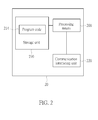
- Fig. 2 is a schematic diagram of a communication device 20 according to an example of the present invention.
- the communication device 20 can be used for realizing the communication device 100 and/or a NB, an eNB or a relay generating a cell shown in Fig. 1 , but is not limited herein.
- the communication device 20 may include a processing means 200 such as a microprocessor or Application Specific Integrated Circuit (ASIC), a storage unit 210 and a communication interfacing unit 220.
- the storage unit 210 may be any data storage device that can store a program code 214, accessed and executed by the processing means 200.
- Examples of the storage unit 210 include a subscriber identity module (SIM), read-only memory (ROM), flash memory, random-access memory (RAM), CD-ROM/DVD-ROM, magnetic tape, hard disk and optical data storage device.
- SIM subscriber identity module
- ROM read-only memory
- RAM random-access memory
- CD-ROM/DVD-ROM magnetic tape
- hard disk hard disk
- optical data storage device examples include a subscriber identity module (SIM), read-only memory (ROM), flash memory, random-access memory (RAM), CD-ROM/DVD-ROM, magnetic tape, hard disk and optical data storage device.
- the communication interfacing unit 220 is preferably a transceiver and is used to transmit and receive signals (e.g., messages or packets) according to processing results of the processing means 200.
- Fig. 3 is a flowchart of a process 30 according to an example of the present invention.
- the process 30 can be utilized in the anchor cell (i.e., utilized in a NB, an eNB or a relay which controls the anchor cell) shown in Fig. 1 , for handling a network entry in the cell cluster 120.
- the process 30 may be compiled into the program code 214 and includes the following steps:
- the anchor cell transmits first control information with a first power level to the communication device 100 in a coverage area of the cell cluster 120, for the communication device 100 to perform a network entry according to the first control information.
- the first control information may include only part of control information needed for performing the network entry, or may include all the control information needed for performing the network entry.
- the anchor cell transmits second control information with a second power level lower than the first power level to the communication device 100, for the communication device 100 to obtain channel information according to the second control information.
- the communication device 100 does not perform the network entry according to the first control information (which may be slightly different from the one transmitted by the anchor cell) transmitted by another cell (e.g., the cell 124) in the cell cluster 120, even when the communication device 100 is in a coverage area of the cell. That is, the communication device 100 camps on the anchor cell according to the first control information. This can be achieved by that the anchor cell transmits the first control information with the first power level larger than a power level (e.g., the second power level) used by other cells in the cell cluster 120 for transmitting the first control information.
- the first control information which may be slightly different from the one transmitted by the anchor cell
- the communication device 100 camps on the anchor cell according to the first control information. This can be achieved by that the anchor cell transmits the first control information with the first power level larger than a power level (e.g., the second power level) used by other cells in the cell cluster 120 for transmitting the first control information.
- a handover will not be triggered by a cell or the communication device 100, when the communication device 100 moves across a boundary between two cells (e.g., the cells 126 and 128) in the cell cluster 120.
- the communication device 100 does not need to perform the handover as long as the communication device 100 is in the coverage area of the cell cluster 120, even if the communication device 100 moves across multiple boundaries of the cells in the cell cluster 120.
- the communication device 100 may still need to perform a handover, when the communication device 100 moves across the coverage area of the cell cluster 120.
- the coverage area of the cell cluster 120 can be approximately seen as a union of the coverage areas of the cells 122-134.
- an eNB/NB controlling a cell performs a transmission or a reception, when a statement such as the cell performs the transmission or the reception is used.
- performance improvement obtained from the cell cluster is not decreased due to frequent handovers.
- the first control information in the process 30 may include at least a primary synchronization signal (PSS), a secondary synchronization signal (SSS) and/or a common reference signal (CRS).
- the second control information in the process 30 may include at least a channel state information-reference signal (CSI-RS) and downlink control information (DCI).
- CSI-RS channel state information-reference signal
- DCI downlink control information
- a difference between the first power level and the second power level in the process 30 is not limited herein.
- the first power level should be large enough such that the communication device 100 does not perform any handover in a coverage area of the cell cluster 120.
- the first power level should be at least greater than any power level used by any cell in the cell cluster 120 for transmitting control information which may trigger a handover.
- the above descriptions are equivalent because the power level is closely related to the coverage area.
- the handover does not happen when the communication device 100 moves across a boundary between two cells in the cell cluster 120.
- the anchor cell may further transmit third control information with either one of the second power level and the first power level to the communication device 100, wherein the third control information may include system information (SI) and paging information.
- SI system information
- the communication device 100 may transmit channel information to the anchor cell, after the communication device 100 obtains the channel information according to the second control information.
- the anchor cell may determine a cell (e.g., the cell 130) in the cell cluster 120 after receiving the channel information, for the communication device 100 to perform a communication operation (e.g., a transmission or a reception of a packet) with the cell.
- the anchor cell may determine the cell by itself, or according to a result of coordination between the anchor cell and one or more cells in the cell cluster 120.
- the determination of the cell is transparent to the communication device 100. That is, the communication device 100 considers that it performs the communication operation with the anchor cell, while it actually performs the communication operation with the determined cell.
- the communication operation performed with the cell may include at least a non-contention based random access procedure, a reception of a physical downlink shared channel (PDSCH), a transmission of a physical uplink shared channel (PUSCH) and/or a transmission of a physical uplink control channel (PUCCH).
- the network entry in the process 30 may include at least a contention based random access procedure and/or a cell search procedure.
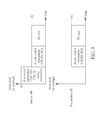
- Fig. 4 is a schematic diagram of power level distributions according to an example of the present invention.
- the anchor cell e.g., the cell 122
- first control information including a PSS, a SSS, a CRS, SI and paging information with a power level P1 to the communication device 100, e.g., by using a power boost.
- the anchor cell may transmit second control information including a CSI-RS and DCI with a power level P2 lower than the power level P1 to the communication device 100.
- the communication device 100 may obtain channel information according to the second control information, and can transmit the channel information to the anchor cell.
- the anchor cell may determine a cell (e.g., the cell 128) for communicating with the communication device 100.
- the communication device 100 may start to receive DL data (e.g., physical DL shared channel (PDSCH)) from the network via the cell.
- a non-anchor cell e.g., the cell 132
- the power level P3 may be closed to (or the same as) the power level P2, but is lower than the power level P1.
- the communication device 100 may also use the second control information transmitted by the non-anchor cell to obtain the channel information.
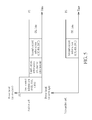
- Fig. 5 is a schematic diagram of power level distributions according to an example of the present invention.
- the anchor cell e.g., the cell 122
- first control information including a PSS, a SSS and a CRS with a power level P1
- the anchor cell may transmit second control information including a CSI-RS and DCI with a power level P2 lower than the power level P1 to the communication device 100.
- second control information including a CSI-RS and DCI with a power level P2 lower than the power level P1 to the communication device 100.
- the anchor cell may transmit third control information including SI and paging information with the power level P2 to the communication device 100.
- the communication device 100 may obtain channel information according to the second control information, and can transmit the channel information to the anchor cell.
- the anchor cell may determine a cell (e.g., the cell 128) for communicating with the communication device 100. Accordingly, the communication device 100 may start to receive DL data (e.g., PDSCH) from the network via the cell.
- a non-anchor cell e.g., the cell 132 may operate according to the description related to Fig. 4 , and is not narrated herein.
- Fig. 6 is a schematic diagram of power level distributions according to an example of the present invention.
- the anchor cell e.g., the cell 122
- first control information including a PSS, a SSS and a CRS with a power level P1
- the anchor cell may transmit second control information including a CSI-RS and DCI with a power level P2 lower than the power level P1 to the communication device 100.
- second control information including a CSI-RS and DCI with a power level P2 lower than the power level P1 to the communication device 100.
- the anchor cell may transmit third control information including SI and paging information with the power level P2 to the communication device 100.
- the third control information may be encoded with a low rate code and/or a new coding scheme, may be received by the communication device 100 with an advanced receiver, and/or may be transmitted jointly by a non-anchor cell.
- the third control information may be robust enough without using a large power level.
- the communication device 100 may obtain channel information according to the second control information, and can transmit the channel information to the anchor cell.
- the anchor cell may determine a cell (e.g., the cell 128) for communicating with the communication device 100. Accordingly, the communication device 100 may start to receive DL data (e.g., PDSCH) from the network via the cell.
- a non-anchor cell may not transmit the first control information, and may transmit the second control information (which may be slightly different from the one transmitted by the anchor cell) with a power level P3 to the communication device 100.
- the non-anchor cell may further transmit the third control information to the communication device 100, to improve a reception of the third control information.
- the power level P3 may be closed to (or the same as) the power level P2, but is lower than the power level P1.
- the communication device 100 may also use the second control information transmitted by the non-anchor cell to obtain the channel information.
- Fig. 7 is a flowchart of a process 70 according to an example of the present invention.
- the process 70 can be utilized in the communication device 100 shown in Fig. 1 , for handling a network entry.
- the process 70 may be compiled into the program code 214 and includes the following steps:
- the communication device 100 receives system information transmitted by a cell in the cell cluster 120, after camping on the cell. Then, the communication device 100 determines whether the cell is an anchor cell (e.g., the cell 122) in the cell cluster according to information of the anchor cell comprised in the system information. The communication device 100 continues to camp on the cell if the cell is the anchor cell, and camps on the anchor cell according to the information of the anchor cell if the cell is not the anchor cell. In other words, the communication device 100 tries to (or changes to) camp on the anchor cell, even if the communication device 100 originally camped on a non-anchor cell (e.g., the cell 124) in the cell cluster 120.
- an anchor cell e.g., the cell 122
- a handover will not be triggered by a cell or the communication device 100, when the communication device 100 moves across a boundary between two cells (e.g., the cells 126 and 128) in the cell cluster 120.
- the communication device 100 does not need to perform the handover as long as the communication device 100 is in a coverage area of the cell cluster 120, even if the communication device 100 moves across multiple boundaries of the cells in the cell cluster 120.
- the communication device 100 may still need to perform a handover, when the communication device 100 moves across the coverage area of the cell cluster 120.
- the coverage area of the cell cluster 120 can be approximately seen as a union of the coverage areas of the cells 122-134.
- an eNB/NB controlling a cell performs a transmission or a reception, when a statement such as the cell performs the transmission or the reception is used.
- performance improvement obtained from the cell cluster is not decreased due to frequent handovers.
- the information of the anchor cell in the process 70 may include at least an identification (e.g., cell ID) of the anchor cell.
- the communication device may determine whether the cell is the anchor cell comparing an identification of the cell with the identification of the anchor cell.
- the communication device 100 may receive control information transmitted by one or more cells in the cell cluster 120 when performing a network entry, to camp on one of the cells according to the control information. Then, the communication device is able to perform step 702.
- the control information may include at least a PSS, a SSS and/or a CRS.
- a method according to which a cell transmits the control information is not limited herein.
- the cell may transmit the control information via a unicast, a multicast or a broad cast.
- the control information may be transmitted by the anchor cell and/or a non-anchor cell in the cell cluster 120.
- the control information may be transmitted with a large power level (e.g., the power level P1) by the anchor cell, e.g., by using a power boost.
- the control information may be transmitted with a normal power level by the anchor cell and by one or more non-anchor cells, e.g., without using a power boost.
- the anchor cell may determine a cell (e.g., the cell 130) in the cell cluster 120, after the communication device 100 camps on the anchor cell and transmits channel information to the anchor cell. Accordingly, the communication device 100 may perform a communication operation (e.g., a transmission or a reception of a packet) with the cell.
- the anchor cell may determine the cell by itself, or according to a result of coordination between the anchor cell and one or more cells in the cell cluster 120.
- the determination of the cell is transparent to the communication device 100. That is, the communication device 100 considers that it performs the communication operation with the anchor cell, while it actually performs the communication operation with the determined cell.
- the communication operation performed with the cell may include at least a non-contention based random access procedure, a reception of a physical downlink shared channel (PDSCH), a transmission of a physical uplink shared channel (PUSCH) and/or a transmission of a physical uplink control channel (PUCCH).
- the network entry mentioned above may include at least a contention based random access procedure and/or a cell search procedure.
- the communication device 100 camps on the anchor cell, even if the communication device 100 may perform transmissions or receptions via another cell in the cell cluster 120. In this situation, the communication device 100 synchronizes with the anchor cell but not with the cell. Synchronization mismatch occurred between the communication device 100 and the cell should be solved. For example, the cell should defer the transmissions or receptions, if a distance between the cell and the communication device 100 is smaller than a distance between the anchor cell and the communication device 100. In contrast, the cell should advance the transmissions or receptions, if the distance between the cell and the communication device 100 is larger than the distance between the anchor cell and the communication device 100. Thus, the communication device 100 can also synchronize with the cell, and the synchronization mismatch is solved.
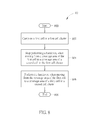
- Fig. 8 is a flowchart of a process 80 according to an example of the present invention.
- the process 80 can be utilized in the communication device 100 shown in Fig. 1 , for handling a network entry.
- the process 80 may be compiled into the program code 214 and includes the following steps:
- the communication device has camped on a first cell in a first cell cluster. Then, the communication device stops performing a handover, when moving from a coverage area of the first cell to a coverage area of a second cell in the first cell cluster. In addition, the communication device performs the handover, when moving from the coverage area of the first cell to a coverage area of a third cell in a second cell cluster. In other words, the communication device does not perform the handover when the communication device moves to a different cell in the same cell cluster, but performs the handover when the communication device moves to a different cell in a different cell cluster. As a result, performance improvement obtained from the cell cluster is not decreased due to frequent handovers.
- the communication device 100 does not need to perform the handover as long as the communication device 100 is in the coverage area of the cell cluster 120, even if the communication device 100 moves across multiple boundaries of the cells in the cell cluster 120. However, the communication device 100 may still need to perform a handover, when the communication device 100 moves across the coverage area of the cell cluster 120. Note that the coverage area of the cell cluster 120 can be approximately seen as a union of the coverage areas of the cells 122-134. Thus, the communication device 100 is actually in a coverage area of a certain cell in the cell cluster 120, when the communication device 100 is in the coverage area of the cell cluster 120.
- the abovementioned steps of the processes including suggested steps can be realized by means that could be a hardware, a firmware known as a combination of a hardware device and computer instructions and data that reside as read-only software on the hardware device, or an electronic system.
- hardware can include analog, digital and mixed circuits known as microcircuit, microchip, or silicon chip.
- the electronic system can include a system on chip (SOC), system in package (SiP), a computer on module (COM), and the communication device 20.
- SOC system on chip
- SiP system in package
- COM computer on module
- the present invention provides a method of handling a network entry in a cell cluster.
- a handover will not be triggered by a cell or a communication device, when the communication device moves across a boundary between two cells in the cell cluster.
- performance improvement obtained from the cell cluster is not decreased due to frequent handovers.
Landscapes
- Engineering & Computer Science (AREA)
- Computer Networks & Wireless Communication (AREA)
- Signal Processing (AREA)
- Computer Security & Cryptography (AREA)
- Mobile Radio Communication Systems (AREA)
Abstract
Description
- The present invention relates to a method of handling a network entry in a cell cluster and related communication device.
- A long-term evolution (LTE) system supporting the 3rd Generation Partnership Project (3GPP) Rel-8 standard and/or the 3GPP Rel-9 standard have been developed by the 3GPP as a successor of the universal mobile telecommunications system (UMTS), for further enhancing performance of the UMTS to satisfy increasing needs of users. The LTE system includes a new radio interface and a new radio network architecture that provides a high data rate, low latency, packet optimization, and improved system capacity and coverage. In the LTE system, a radio access network known as an evolved universal terrestrial radio access network (E-UTRAN) includes multiple evolved Node-Bs (eNBs) for communicating with multiple user equipments (UEs), and for communicating with a core network including a mobility management entity (MME), a serving gateway, etc., for Non-Access Stratum (NAS) control.
- A LTE-advanced (LTE-A) system, as its name implies, is an evolution of the LTE system. The LTE-A system targets faster switching between power states, improves performance at the coverage edge of an eNB, and includes advanced techniques, such as carrier aggregation (CA), coordinated multipoint (CoMP) transmission/reception, uplink (UL) multiple-input multiple-output (MIMO), etc. For a UE and an eNB to communicate with each other in the LTE-A system, the UE and the eNB must support standards developed for the LTE-A system, such as the 3GPP Rel-10 standard or later versions.
- In addition, multiple cells (e.g., femto cells, pico cells) may be grouped into a cell cluster to improve quality of transmissions and/or receptions occurred in a coverage area of the cell cluster. However, a coverage area of a clustered cell is usually smaller than a coverage area of a macro cell. For example, a diameter of the coverage area of the clustered cell may be 50m∼100m. The UE may move across boundaries of the clustered cells, even if the UE moves with a moderate speed. Accordingly, the UE may need to perform handovers frequently, and performance improvement obtained from the cell cluster is decreased due to the frequent handovers.
- Thus, how to reduce a number of the handovers performed by the UE is an important problem to be solved.
- The present invention therefore provides a method and related communication device for a network entry in a cell cluster to solve the abovementioned problem.
- This is achieved by a method and a communication device for handling the network entry in the cell cluster according to the independent claims here below. The dependent claims pertain to corresponding further developments and improvements.
- As will be seen more clearly from the detailed description following below, the claimed method of handling a network entry in a cell cluster comprises transmitting, by an anchor cell in the cell cluster, first control information with a first power level to a communication device of the wireless communication system, for the communication device to perform a network entry according to the first control information; and transmitting, by the anchor cell, second control information with a second power level lower than the first power level to the communication device, for the communication device to obtain channel information according to the second control information.
-
-
Fig. 1 is a schematic diagram of a wireless communication system according to an example of the present invention. -
Fig. 2 is a schematic diagram of a communication device according to an example of the present invention. -
Fig. 3 is a flowchart of a process according to an example of the present invention. -
Fig. 4 is a schematic diagram of power level distributions according to an example of the present invention. -
Fig. 5 is a schematic diagram of power level distributions according to an example of the present invention. -
Fig. 6 is a schematic diagram of power level distributions according to an example of the present invention. -
Fig. 7 is a flowchart of a process according to an example of the present invention. -
Fig. 8 is a flowchart of a process according to an example of the present invention. -
Fig. 1 is a schematic diagram of awireless communication system 10 according to an example of the present invention. Thewireless communication system 10 is briefly composed of acommunication device 100, amacro cell 110 and acell cluster 120. Thecell cluster 120 includes 7 clustered cells (hereinafter cells for short) 122-134, wherein thecell 122 is an anchor cell and the cells 124-134 are non-anchor cells. Boundaries of the cells are denoted by respective doted circles, and coverage areas of the cells are areas within the boundaries, respectively. The coverage areas of the cells 122-134 may be non-overlapped or partly overlapped, and are not limited to the non-overlapped coverage areas shown inFig. 1 . Note that thecell cluster 120 is within a coverage area of themacro cell 110 in the present example. However, this is not a restriction for realizing the present invention, and thecell cluster 120 may not be within a coverage area of any macro cell in another example. - Furthermore, carrier frequencies operated by the
macro cell 110 and thecell cluster 120 may be the same or different. For example, thecommunication device 100 may communicate with themacro cell 110 and thecell cluster 120 according to a carrier aggregation (CA), when the carrier frequencies operated by themacro cell 110 and thecell cluster 120 are different. Note that it means that thecommunication device 100 communicate with one or more of the cells 122-134, when a statement such as thecommunication device 100 communicates with thecell cluster 120 is used. In addition, the carrier frequencies operated by the cells 124-134 may also be the same or different. That is, the CA may even be supported, when the UE communicates with two or more of the cells 124-134 which operate at different carrier frequencies. - In
Fig. 1 , thecommunication device 100, themacro cell 110 and thecell cluster 120 are simply utilized for illustrating the structure of thewireless communication system 10. Practically, a cell (e.g., themacro cell 110 or a clustered cell) can be controlled (e.g., generated) by a Node-B (NB) in a universal mobile telecommunications system (UMTS). In another example, a cell (e.g., themacro cell 110 or a clustered cell) can be controlled (e.g., generated) by an evolved NB (eNB) and/or a relay in a long term evolution (LTE) system, a LTE-Advanced (LTE-A) system or an evolution of the LTE-A system. That is, each of the cells 122-134 may be controlled by a respective NB/eNB. In addition, a NB (or an eNB) may control multiple cells according to design of thewireless communication system 10. For example, thecells communication device 100 can be a user equipment (UE), a low cost device (e.g., machine type communication (MTC) device), a mobile phone, a laptop, a tablet computer, an electronic book or a portable computer system. In addition, a cell and thecommunication device 100 can be seen as a transmitter or a receiver according to direction, e.g., for an uplink (UL), thecommunication device 100 is the transmitter and the cell is the receiver, and for a downlink (DL), the cell is the transmitter and thecommunication device 100 is the receiver. - Furthermore, information may be processed only by the anchor cell (i.e., the cell 122) and decisions corresponding to the information are made at the anchor cell, after the anchor cell receives the information transmitted by the
communication device 100. In another example, the information can be processed by both the anchor cell and other cells (e.g., themacro cell 110 and/or other clustered cell(s)), and the decisions are made after coordination and/or cooperation are performed by the anchor cell and the other cells. -
Fig. 2 is a schematic diagram of acommunication device 20 according to an example of the present invention. Thecommunication device 20 can be used for realizing thecommunication device 100 and/or a NB, an eNB or a relay generating a cell shown inFig. 1 , but is not limited herein. Thecommunication device 20 may include a processing means 200 such as a microprocessor or Application Specific Integrated Circuit (ASIC), astorage unit 210 and acommunication interfacing unit 220. Thestorage unit 210 may be any data storage device that can store aprogram code 214, accessed and executed by the processing means 200. Examples of thestorage unit 210 include a subscriber identity module (SIM), read-only memory (ROM), flash memory, random-access memory (RAM), CD-ROM/DVD-ROM, magnetic tape, hard disk and optical data storage device. Thecommunication interfacing unit 220 is preferably a transceiver and is used to transmit and receive signals (e.g., messages or packets) according to processing results of the processing means 200. -
Fig. 3 is a flowchart of aprocess 30 according to an example of the present invention. Theprocess 30 can be utilized in the anchor cell (i.e., utilized in a NB, an eNB or a relay which controls the anchor cell) shown inFig. 1 , for handling a network entry in thecell cluster 120. Theprocess 30 may be compiled into theprogram code 214 and includes the following steps: - Step 300:
- Start.
- Step 302:
- Transmit first control information with a first power level to the communication device in a coverage area of the cell cluster, for the communication device to perform a network entry according to the first control information.
- Step 304:
- Transmit second control information with a second power level lower than the first power level to the communication device, for the communication device to obtain channel information according to the second control information.
- Step 306:
- End.
- According to the
process 30, the anchor cell transmits first control information with a first power level to thecommunication device 100 in a coverage area of thecell cluster 120, for thecommunication device 100 to perform a network entry according to the first control information. Note that the first control information may include only part of control information needed for performing the network entry, or may include all the control information needed for performing the network entry. The anchor cell transmits second control information with a second power level lower than the first power level to thecommunication device 100, for thecommunication device 100 to obtain channel information according to the second control information. In other words, thecommunication device 100 does not perform the network entry according to the first control information (which may be slightly different from the one transmitted by the anchor cell) transmitted by another cell (e.g., the cell 124) in thecell cluster 120, even when thecommunication device 100 is in a coverage area of the cell. That is, thecommunication device 100 camps on the anchor cell according to the first control information. This can be achieved by that the anchor cell transmits the first control information with the first power level larger than a power level (e.g., the second power level) used by other cells in thecell cluster 120 for transmitting the first control information. - Accordingly, a handover will not be triggered by a cell or the
communication device 100, when thecommunication device 100 moves across a boundary between two cells (e.g., thecells 126 and 128) in thecell cluster 120. In other words, thecommunication device 100 does not need to perform the handover as long as thecommunication device 100 is in the coverage area of thecell cluster 120, even if thecommunication device 100 moves across multiple boundaries of the cells in thecell cluster 120. However, thecommunication device 100 may still need to perform a handover, when thecommunication device 100 moves across the coverage area of thecell cluster 120. Note that the coverage area of thecell cluster 120 can be approximately seen as a union of the coverage areas of the cells 122-134. In addition, as known by those skilled in the art, it means that an eNB/NB controlling a cell performs a transmission or a reception, when a statement such as the cell performs the transmission or the reception is used. As a result, performance improvement obtained from the cell cluster is not decreased due to frequent handovers. - Realization of the present invention is not limited to the above description.
- For example, the first control information in the
process 30 may include at least a primary synchronization signal (PSS), a secondary synchronization signal (SSS) and/or a common reference signal (CRS). In addition, the second control information in theprocess 30 may include at least a channel state information-reference signal (CSI-RS) and downlink control information (DCI). Note that a method according to which the anchor cell transmits the control information (e.g., the first control information and/or the second control information) is not limited herein. For example, the anchor cell may transmit the control information via a unicast, a multicast or a broad cast. - A difference between the first power level and the second power level in the
process 30 is not limited herein. For example, the first power level should be large enough such that thecommunication device 100 does not perform any handover in a coverage area of thecell cluster 120. In other words, the first power level should be at least greater than any power level used by any cell in thecell cluster 120 for transmitting control information which may trigger a handover. The above descriptions are equivalent because the power level is closely related to the coverage area. Thus, the handover does not happen when thecommunication device 100 moves across a boundary between two cells in thecell cluster 120. - On the other hand, in addition to the first control information and the second control information in the
process 30, the anchor cell may further transmit third control information with either one of the second power level and the first power level to thecommunication device 100, wherein the third control information may include system information (SI) and paging information. - The
communication device 100 may transmit channel information to the anchor cell, after thecommunication device 100 obtains the channel information according to the second control information. Accordingly, the anchor cell may determine a cell (e.g., the cell 130) in thecell cluster 120 after receiving the channel information, for thecommunication device 100 to perform a communication operation (e.g., a transmission or a reception of a packet) with the cell. Note that the anchor cell may determine the cell by itself, or according to a result of coordination between the anchor cell and one or more cells in thecell cluster 120. Preferably, the determination of the cell is transparent to thecommunication device 100. That is, thecommunication device 100 considers that it performs the communication operation with the anchor cell, while it actually performs the communication operation with the determined cell. For example, the communication operation performed with the cell may include at least a non-contention based random access procedure, a reception of a physical downlink shared channel (PDSCH), a transmission of a physical uplink shared channel (PUSCH) and/or a transmission of a physical uplink control channel (PUCCH). On the other hand, the network entry in theprocess 30 may include at least a contention based random access procedure and/or a cell search procedure. -
Fig. 4 is a schematic diagram of power level distributions according to an example of the present invention. As shown inFig. 4 , the anchor cell (e.g., the cell 122) may transmit first control information including a PSS, a SSS, a CRS, SI and paging information with a power level P1 to thecommunication device 100, e.g., by using a power boost. Then, the anchor cell may transmit second control information including a CSI-RS and DCI with a power level P2 lower than the power level P1 to thecommunication device 100. Thecommunication device 100 may obtain channel information according to the second control information, and can transmit the channel information to the anchor cell. The anchor cell may determine a cell (e.g., the cell 128) for communicating with thecommunication device 100. Accordingly, thecommunication device 100 may start to receive DL data (e.g., physical DL shared channel (PDSCH)) from the network via the cell. At the same time, a non-anchor cell (e.g., the cell 132) may not transmit the first control information, and may transmit the second control information (which may be slightly different from the one transmitted by the anchor cell) with a power level P3 to thecommunication device 100. The power level P3 may be closed to (or the same as) the power level P2, but is lower than the power level P1. Thecommunication device 100 may also use the second control information transmitted by the non-anchor cell to obtain the channel information. -
Fig. 5 is a schematic diagram of power level distributions according to an example of the present invention. As shown inFig. 5 , the anchor cell (e.g., the cell 122) may transmit first control information including a PSS, a SSS and a CRS with a power level P1 to thecommunication device 100, e.g., by using a power boost. Then, the anchor cell may transmit second control information including a CSI-RS and DCI with a power level P2 lower than the power level P1 to thecommunication device 100. Different fromFig. 4 , the anchor cell may transmit third control information including SI and paging information with the power level P2 to thecommunication device 100. The reason is that the third control information may be encoded with a low rate code and/or a new coding scheme, and/or may be received by thecommunication device 100 with an advanced receiver. Thus, the third control information may be robust enough without using a large power level. Thecommunication device 100 may obtain channel information according to the second control information, and can transmit the channel information to the anchor cell. The anchor cell may determine a cell (e.g., the cell 128) for communicating with thecommunication device 100. Accordingly, thecommunication device 100 may start to receive DL data (e.g., PDSCH) from the network via the cell. At the same time, a non-anchor cell (e.g., the cell 132) may operate according to the description related toFig. 4 , and is not narrated herein. -
Fig. 6 is a schematic diagram of power level distributions according to an example of the present invention. As shown inFig. 6 , the anchor cell (e.g., the cell 122) may transmit first control information including a PSS, a SSS and a CRS with a power level P1 to thecommunication device 100, e.g., by using a power boost. Then, the anchor cell may transmit second control information including a CSI-RS and DCI with a power level P2 lower than the power level P1 to thecommunication device 100. Similar toFig. 5 , the anchor cell may transmit third control information including SI and paging information with the power level P2 to thecommunication device 100. The reason is that the third control information may be encoded with a low rate code and/or a new coding scheme, may be received by thecommunication device 100 with an advanced receiver, and/or may be transmitted jointly by a non-anchor cell. Thus, the third control information may be robust enough without using a large power level. Thecommunication device 100 may obtain channel information according to the second control information, and can transmit the channel information to the anchor cell. The anchor cell may determine a cell (e.g., the cell 128) for communicating with thecommunication device 100. Accordingly, thecommunication device 100 may start to receive DL data (e.g., PDSCH) from the network via the cell. At the same time, a non-anchor cell (e.g., the cell 132) may not transmit the first control information, and may transmit the second control information (which may be slightly different from the one transmitted by the anchor cell) with a power level P3 to thecommunication device 100. Different fromFigs. 4 and5 , the non-anchor cell may further transmit the third control information to thecommunication device 100, to improve a reception of the third control information. The power level P3 may be closed to (or the same as) the power level P2, but is lower than the power level P1. Thecommunication device 100 may also use the second control information transmitted by the non-anchor cell to obtain the channel information. -
Fig. 7 is a flowchart of aprocess 70 according to an example of the present invention. Theprocess 70 can be utilized in thecommunication device 100 shown inFig. 1 , for handling a network entry. Theprocess 70 may be compiled into theprogram code 214 and includes the following steps: - Step 700:
- Start.
- Step 702:
- Receive system information transmitted by a cell in the cell cluster, after camping on the cell.
- Step 704:
- Determine whether the cell is an anchor cell in the cell cluster according to information of the anchor cell comprised in the system information.
- Step 706:
- Continue to camp on the cell, if the cell is the anchor cell.
- Step 708:
- Camp on the anchor cell according to the information of the anchor cell, if the cell is not the anchor cell.
- Step 710:
- End.
- According to the
process 70, thecommunication device 100 receives system information transmitted by a cell in thecell cluster 120, after camping on the cell. Then, thecommunication device 100 determines whether the cell is an anchor cell (e.g., the cell 122) in the cell cluster according to information of the anchor cell comprised in the system information. Thecommunication device 100 continues to camp on the cell if the cell is the anchor cell, and camps on the anchor cell according to the information of the anchor cell if the cell is not the anchor cell. In other words, thecommunication device 100 tries to (or changes to) camp on the anchor cell, even if thecommunication device 100 originally camped on a non-anchor cell (e.g., the cell 124) in thecell cluster 120. - Accordingly, a handover will not be triggered by a cell or the
communication device 100, when thecommunication device 100 moves across a boundary between two cells (e.g., thecells 126 and 128) in thecell cluster 120. In other words, thecommunication device 100 does not need to perform the handover as long as thecommunication device 100 is in a coverage area of thecell cluster 120, even if thecommunication device 100 moves across multiple boundaries of the cells in thecell cluster 120. However, thecommunication device 100 may still need to perform a handover, when thecommunication device 100 moves across the coverage area of thecell cluster 120. Note that the coverage area of thecell cluster 120 can be approximately seen as a union of the coverage areas of the cells 122-134. In addition, as known by those skilled in the art, it means that an eNB/NB controlling a cell performs a transmission or a reception, when a statement such as the cell performs the transmission or the reception is used. As a result, performance improvement obtained from the cell cluster is not decreased due to frequent handovers. - Realization of the present invention is not limited to the above description.
- For example, the information of the anchor cell in the
process 70 may include at least an identification (e.g., cell ID) of the anchor cell. Thus, the communication device may determine whether the cell is the anchor cell comparing an identification of the cell with the identification of the anchor cell. - In addition, the
communication device 100 may receive control information transmitted by one or more cells in thecell cluster 120 when performing a network entry, to camp on one of the cells according to the control information. Then, the communication device is able to performstep 702. The control information may include at least a PSS, a SSS and/or a CRS. - A method according to which a cell transmits the control information is not limited herein. For example, the cell may transmit the control information via a unicast, a multicast or a broad cast. In addition, the control information may be transmitted by the anchor cell and/or a non-anchor cell in the
cell cluster 120. For example, similar to the first control information shown inFig. 4 , the control information may be transmitted with a large power level (e.g., the power level P1) by the anchor cell, e.g., by using a power boost. In another example, the control information may be transmitted with a normal power level by the anchor cell and by one or more non-anchor cells, e.g., without using a power boost. - The anchor cell may determine a cell (e.g., the cell 130) in the
cell cluster 120, after thecommunication device 100 camps on the anchor cell and transmits channel information to the anchor cell. Accordingly, thecommunication device 100 may perform a communication operation (e.g., a transmission or a reception of a packet) with the cell. Note that the anchor cell may determine the cell by itself, or according to a result of coordination between the anchor cell and one or more cells in thecell cluster 120. Preferably, the determination of the cell is transparent to thecommunication device 100. That is, thecommunication device 100 considers that it performs the communication operation with the anchor cell, while it actually performs the communication operation with the determined cell. For example, the communication operation performed with the cell may include at least a non-contention based random access procedure, a reception of a physical downlink shared channel (PDSCH), a transmission of a physical uplink shared channel (PUSCH) and/or a transmission of a physical uplink control channel (PUCCH). On the other hand, the network entry mentioned above may include at least a contention based random access procedure and/or a cell search procedure. - According to the above description (e.g., related to the
process 30 and/or the process 70), thecommunication device 100 camps on the anchor cell, even if thecommunication device 100 may perform transmissions or receptions via another cell in thecell cluster 120. In this situation, thecommunication device 100 synchronizes with the anchor cell but not with the cell. Synchronization mismatch occurred between thecommunication device 100 and the cell should be solved. For example, the cell should defer the transmissions or receptions, if a distance between the cell and thecommunication device 100 is smaller than a distance between the anchor cell and thecommunication device 100. In contrast, the cell should advance the transmissions or receptions, if the distance between the cell and thecommunication device 100 is larger than the distance between the anchor cell and thecommunication device 100. Thus, thecommunication device 100 can also synchronize with the cell, and the synchronization mismatch is solved. -
Fig. 8 is a flowchart of aprocess 80 according to an example of the present invention. Theprocess 80 can be utilized in thecommunication device 100 shown inFig. 1 , for handling a network entry. Theprocess 80 may be compiled into theprogram code 214 and includes the following steps: - Step 800:
- Start.
- Step 802:
- Camp on a first cell in a first cell cluster.
- Step 804:
- Stop performing a handover, when moving from a coverage area of the first cell to a coverage area of a second cell in the first cell cluster.
- Step 806:
- Perform the handover, when moving from the coverage area of the first cell to a coverage area of a third cell in a second cell cluster.
- Step 808:
- End.
- According to the
process 80, the communication device has camped on a first cell in a first cell cluster. Then, the communication device stops performing a handover, when moving from a coverage area of the first cell to a coverage area of a second cell in the first cell cluster. In addition, the communication device performs the handover, when moving from the coverage area of the first cell to a coverage area of a third cell in a second cell cluster. In other words, the communication device does not perform the handover when the communication device moves to a different cell in the same cell cluster, but performs the handover when the communication device moves to a different cell in a different cell cluster. As a result, performance improvement obtained from the cell cluster is not decreased due to frequent handovers. - Taking
Fig. 1 as an example, thecommunication device 100 does not need to perform the handover as long as thecommunication device 100 is in the coverage area of thecell cluster 120, even if thecommunication device 100 moves across multiple boundaries of the cells in thecell cluster 120. However, thecommunication device 100 may still need to perform a handover, when thecommunication device 100 moves across the coverage area of thecell cluster 120. Note that the coverage area of thecell cluster 120 can be approximately seen as a union of the coverage areas of the cells 122-134. Thus, thecommunication device 100 is actually in a coverage area of a certain cell in thecell cluster 120, when thecommunication device 100 is in the coverage area of thecell cluster 120. - Those skilled in the art should readily make combinations, modifications and/or alterations on the abovementioned description and examples. The abovementioned steps of the processes including suggested steps can be realized by means that could be a hardware, a firmware known as a combination of a hardware device and computer instructions and data that reside as read-only software on the hardware device, or an electronic system. Examples of hardware can include analog, digital and mixed circuits known as microcircuit, microchip, or silicon chip. Examples of the electronic system can include a system on chip (SOC), system in package (SiP), a computer on module (COM), and the
communication device 20. - To sum up, the present invention provides a method of handling a network entry in a cell cluster. Thus, a handover will not be triggered by a cell or a communication device, when the communication device moves across a boundary between two cells in the cell cluster. As a result, performance improvement obtained from the cell cluster is not decreased due to frequent handovers.
Claims (15)
- A method of handling a network entry in a cell cluster of a wireless communication system, characterized by the method comprising the steps of:transmitting, by an anchor cell in the cell cluster, first control information with a first power level to a communication device of the wireless communication system, for the communication device to perform a network entry according to the first control information (302); andtransmitting, by the anchor cell, second control information with a second power level lower than the first power level to the communication device, for the communication device to obtain channel information according to the second control information (304).
- The method of claim 1, characterized in that the first control information comprises a primary synchronization signal (PSS), a secondary synchronization signal (SSS) and/or a common reference signal (CRS), or the second control information comprises a channel state information-reference signal (CSI-RS) and downlink control information (DCI).
- The method of claim 1 or 2, characterized in that the first power level is large enough such that the communication device does not perform a handover in a coverage area of the cell cluster.
- The method of any of claims 1-3, further comprising the step of:transmitting, by the anchor cell, third control information with either one of the second power level and the first power level to the communication device;wherein the third control information comprises system information (SI) and paging information.
- The method of any of claims 1-4, further comprising the step of:determining, by the anchor cell, a cell in the cell cluster after receiving the channel information, for the communication device to perform a communication operation with the cell.
- The method of claim 5, characterized in that the communication operation comprises a non-contention based random access procedure, a reception of a physical downlink shared channel (PDSCH), a transmission of a physical uplink shared channel (PUSCH) and/or a transmission of a physical uplink control channel (PUCCH).
- The method of any of claims 1-6, characterized in that the cell cluster comprises a non-anchor cell, and the method further comprises the step of:transmitting, by the non-anchor cell, the second control information with a third power level lower than the first power level to the communication device.
- A method of handling a network entry for a communication device in a wireless communication system, characterized by the method comprising the steps of:receiving system information transmitted by a cell in a cell cluster of the wireless communication system, after camping on the cell (702);determining whether the cell is an anchor cell in the cell cluster according to information of the anchor cell comprised in the system information (704);continue to camp on the cell, if the cell is the anchor cell (706); andcamping on the anchor cell according to the information of the anchor cell, if the cell is not the anchor cell (708).
- The method of claim 8, further comprising the step of:receiving control information transmitted by at least one cell in the cell cluster when performing a network entry, to camp on the cell according to the control information.
- The method of claim 9, characterized in that the control information comprises a primary synchronization signal (PSS), a secondary synchronization signal (SSS) and a common reference signal (CRS).
- The method of claim 9, wherein the control information is transmitted by the anchor cell and/or a non-anchor cell in the cell cluster.
- The method of claim 1 or 9, characterized in that the network entry comprises a contention based random access procedure and/or a cell search procedure.
- The method of any of claims 9-12, characterized in that the information of the anchor cell comprises an identification of the anchor cell.
- The method of claim 1 or 8, characterized in that the wireless communication system further comprises a macro cell operating at a first carrier frequency, the cell cluster operating at a second carrier frequency is in a coverage area of the macro cell, and the communication device communicates with the cell cluster and the macro cell according to a carrier aggregation.
- A method of handling a handover for a communication device in a wireless communication system, characterized by the method comprising the steps of:camping on a first cell in a first cell cluster (802);stopping performing a handover, when moving from a coverage area of the first cell to a coverage area of a second cell in the first cell cluster (804); andperforming the handover, when moving from the coverage area of the first cell to a coverage area of a third cell in a second cell cluster (806).
Priority Applications (3)
| Application Number | Priority Date | Filing Date | Title |
|---|---|---|---|
| EP16191435.3A EP3133879B1 (en) | 2013-01-31 | 2014-01-29 | Method of handling network entry in a cell cluster and related communication device |
| EP14197190.3A EP2863690B1 (en) | 2013-01-31 | 2014-01-29 | Method of handling network entry in a cell cluster and related communication device |
| EP18175459.9A EP3386246B1 (en) | 2013-01-31 | 2014-01-29 | Handling network entry in a cell cluster |
Applications Claiming Priority (2)
| Application Number | Priority Date | Filing Date | Title |
|---|---|---|---|
| US201361758777P | 2013-01-31 | 2013-01-31 | |
| US14/166,816 US10542474B2 (en) | 2013-01-31 | 2014-01-28 | Method of handling network entry in a cell cluster and related communication device |
Related Child Applications (3)
| Application Number | Title | Priority Date | Filing Date |
|---|---|---|---|
| EP14197190.3A Division EP2863690B1 (en) | 2013-01-31 | 2014-01-29 | Method of handling network entry in a cell cluster and related communication device |
| EP18175459.9A Division EP3386246B1 (en) | 2013-01-31 | 2014-01-29 | Handling network entry in a cell cluster |
| EP16191435.3A Division EP3133879B1 (en) | 2013-01-31 | 2014-01-29 | Method of handling network entry in a cell cluster and related communication device |
Publications (1)
| Publication Number | Publication Date |
|---|---|
| EP2763473A1 true EP2763473A1 (en) | 2014-08-06 |
Family
ID=50031153
Family Applications (4)
| Application Number | Title | Priority Date | Filing Date |
|---|---|---|---|
| EP18175459.9A Active EP3386246B1 (en) | 2013-01-31 | 2014-01-29 | Handling network entry in a cell cluster |
| EP16191435.3A Active EP3133879B1 (en) | 2013-01-31 | 2014-01-29 | Method of handling network entry in a cell cluster and related communication device |
| EP14152988.3A Withdrawn EP2763473A1 (en) | 2013-01-31 | 2014-01-29 | Method of handling network entry in a cell cluster and related communication device |
| EP14197190.3A Active EP2863690B1 (en) | 2013-01-31 | 2014-01-29 | Method of handling network entry in a cell cluster and related communication device |
Family Applications Before (2)
| Application Number | Title | Priority Date | Filing Date |
|---|---|---|---|
| EP18175459.9A Active EP3386246B1 (en) | 2013-01-31 | 2014-01-29 | Handling network entry in a cell cluster |
| EP16191435.3A Active EP3133879B1 (en) | 2013-01-31 | 2014-01-29 | Method of handling network entry in a cell cluster and related communication device |
Family Applications After (1)
| Application Number | Title | Priority Date | Filing Date |
|---|---|---|---|
| EP14197190.3A Active EP2863690B1 (en) | 2013-01-31 | 2014-01-29 | Method of handling network entry in a cell cluster and related communication device |
Country Status (4)
| Country | Link |
|---|---|
| US (1) | US10542474B2 (en) |
| EP (4) | EP3386246B1 (en) |
| CN (1) | CN103974348B (en) |
| TW (1) | TWI538545B (en) |
Families Citing this family (2)
| Publication number | Priority date | Publication date | Assignee | Title |
|---|---|---|---|---|
| CN104519535A (en) * | 2013-10-04 | 2015-04-15 | 数码士控股有限公司 | Method for transceiving handover message during connection of plural lte base stations |
| CN110337133B (en) | 2016-01-22 | 2020-12-25 | 华为技术有限公司 | Communication method, communication device and communication system |
Citations (11)
| Publication number | Priority date | Publication date | Assignee | Title |
|---|---|---|---|---|
| WO2001020942A1 (en) * | 1999-09-15 | 2001-03-22 | Telefonaktiebolaget Lm Ericsson (Publ) | Inter-frequency measurement and handover for wireless communications |
| US20090270103A1 (en) * | 2008-04-25 | 2009-10-29 | Interdigital Patent Holdings, Inc. | Multi-cell wtrus configured to perform mobility procedures and methods |
| US20100034163A1 (en) * | 2008-08-11 | 2010-02-11 | Qualcomm Incorporated | Anchor carrier in a multiple carrier wireless communication system |
| US20100130218A1 (en) * | 2008-11-21 | 2010-05-27 | Interdigital Patent Holdings, Inc. | Method and apparatus for supporting aggregation of multiple component carriers |
| US20100227569A1 (en) * | 2008-10-20 | 2010-09-09 | Interdigital Patent Holdings, Inc. | Control channel signaling and acquisition for carrier aggregation |
| US20100265914A1 (en) * | 2009-04-20 | 2010-10-21 | Qualcomm Incorporated | Systems, methods, and devices to enable selection of radio access technology |
| US20100272017A1 (en) * | 2009-04-23 | 2010-10-28 | Interdigital Patent Holdings, Inc. | Method and apparatus for processing advanced long term evolution system information |
| EP2367379A2 (en) * | 2010-03-05 | 2011-09-21 | Intel Corporation (INTEL) | Legacy and advanced access service network internetworking |
| US20110235743A1 (en) * | 2010-03-26 | 2011-09-29 | Lg Electronics Inc. | Method and base station for receiving reference signal, and method and user equipment for receiving reference signal |
| WO2012067367A2 (en) * | 2010-11-18 | 2012-05-24 | Samsung Electronics Co., Ltd. | Apparatus and method for dynamically allocating multicast path in broadband wireless access system |
| WO2013002474A1 (en) * | 2011-06-30 | 2013-01-03 | Lg Electronics Inc. | Method and apparatus for ranging transmission by mobile station in wireless communication system |
Family Cites Families (10)
| Publication number | Priority date | Publication date | Assignee | Title |
|---|---|---|---|---|
| JP4855985B2 (en) | 2007-03-20 | 2012-01-18 | 株式会社エヌ・ティ・ティ・ドコモ | Cell information transmission method and user equipment in mobile communication system |
| US8761824B2 (en) * | 2008-06-27 | 2014-06-24 | Qualcomm Incorporated | Multi-carrier operation in a wireless communication network |
| US8737296B2 (en) | 2008-10-24 | 2014-05-27 | Qualcomm Incorporated | Method and apparatus for anchor cell designation in network MIMO |
| WO2010099105A1 (en) | 2009-02-27 | 2010-09-02 | Interdigital Patent Holdings, Inc. | Anchor carrier reselection and cell reselection in long term evolution-advanced |
| CA2775371C (en) * | 2009-09-25 | 2018-03-13 | Research In Motion Limited | System and method for multi-carrier network operation |
| WO2012008737A2 (en) * | 2010-07-12 | 2012-01-19 | 엘지전자 주식회사 | Device and method for transmitting and receiving control information in a wireless communication system simultaneously supporting a plurality of wireless communication methods |
| CN102076031A (en) | 2011-01-13 | 2011-05-25 | 大唐移动通信设备有限公司 | Method and device for configuring cell information |
| US9585083B2 (en) | 2011-06-17 | 2017-02-28 | Samsung Electronics Co., Ltd. | Apparatus and method for supporting network entry in a millimeter-wave mobile broadband communication system |
| US9839009B2 (en) * | 2012-08-03 | 2017-12-05 | Qualcomm Incorporated | Methods and apparatus for processing control and/or shared channels in long term evolution (LTE) |
| US9832717B2 (en) * | 2012-12-19 | 2017-11-28 | Blackberry Limited | Method and apparatus for layer 3 configuration in a heterogeneous network |
-
2014
- 2014-01-28 US US14/166,816 patent/US10542474B2/en active Active
- 2014-01-29 EP EP18175459.9A patent/EP3386246B1/en active Active
- 2014-01-29 EP EP16191435.3A patent/EP3133879B1/en active Active
- 2014-01-29 TW TW103103604A patent/TWI538545B/en active
- 2014-01-29 EP EP14152988.3A patent/EP2763473A1/en not_active Withdrawn
- 2014-01-29 CN CN201410043663.1A patent/CN103974348B/en active Active
- 2014-01-29 EP EP14197190.3A patent/EP2863690B1/en active Active
Patent Citations (11)
| Publication number | Priority date | Publication date | Assignee | Title |
|---|---|---|---|---|
| WO2001020942A1 (en) * | 1999-09-15 | 2001-03-22 | Telefonaktiebolaget Lm Ericsson (Publ) | Inter-frequency measurement and handover for wireless communications |
| US20090270103A1 (en) * | 2008-04-25 | 2009-10-29 | Interdigital Patent Holdings, Inc. | Multi-cell wtrus configured to perform mobility procedures and methods |
| US20100034163A1 (en) * | 2008-08-11 | 2010-02-11 | Qualcomm Incorporated | Anchor carrier in a multiple carrier wireless communication system |
| US20100227569A1 (en) * | 2008-10-20 | 2010-09-09 | Interdigital Patent Holdings, Inc. | Control channel signaling and acquisition for carrier aggregation |
| US20100130218A1 (en) * | 2008-11-21 | 2010-05-27 | Interdigital Patent Holdings, Inc. | Method and apparatus for supporting aggregation of multiple component carriers |
| US20100265914A1 (en) * | 2009-04-20 | 2010-10-21 | Qualcomm Incorporated | Systems, methods, and devices to enable selection of radio access technology |
| US20100272017A1 (en) * | 2009-04-23 | 2010-10-28 | Interdigital Patent Holdings, Inc. | Method and apparatus for processing advanced long term evolution system information |
| EP2367379A2 (en) * | 2010-03-05 | 2011-09-21 | Intel Corporation (INTEL) | Legacy and advanced access service network internetworking |
| US20110235743A1 (en) * | 2010-03-26 | 2011-09-29 | Lg Electronics Inc. | Method and base station for receiving reference signal, and method and user equipment for receiving reference signal |
| WO2012067367A2 (en) * | 2010-11-18 | 2012-05-24 | Samsung Electronics Co., Ltd. | Apparatus and method for dynamically allocating multicast path in broadband wireless access system |
| WO2013002474A1 (en) * | 2011-06-30 | 2013-01-03 | Lg Electronics Inc. | Method and apparatus for ranging transmission by mobile station in wireless communication system |
Also Published As
| Publication number | Publication date |
|---|---|
| EP2863690B1 (en) | 2017-04-19 |
| EP3386246B1 (en) | 2021-07-28 |
| EP3133879A1 (en) | 2017-02-22 |
| EP3386246A1 (en) | 2018-10-10 |
| CN103974348B (en) | 2020-03-20 |
| US20140211758A1 (en) | 2014-07-31 |
| EP3133879B1 (en) | 2019-06-12 |
| US10542474B2 (en) | 2020-01-21 |
| CN103974348A (en) | 2014-08-06 |
| TW201431415A (en) | 2014-08-01 |
| TWI538545B (en) | 2016-06-11 |
| EP2863690A1 (en) | 2015-04-22 |
Similar Documents
| Publication | Publication Date | Title |
|---|---|---|
| EP2750456B1 (en) | Method for performing cell selection in a coverage enhancement mode and related communication device | |
| JP6702981B2 (en) | Antenna subset and directional channel access in shared radio frequency spectrum band | |
| CN107431915B (en) | System, method and apparatus for managing relay connections in wireless communication networks | |
| US9386619B2 (en) | Method of handling a cell addition for dual connectivity and related communication device | |
| EP3236704B1 (en) | Device and method of handling device-to-device communication | |
| US9774427B2 (en) | Method of handling uplink/downlink configurations for time-division duplexing system and related communication device | |
| KR20190028696A (en) | Cellular Things Internet Feature Incompatibility Rejects Registration | |
| EP2373111B1 (en) | Method of changing primary component carrier and related communication device | |
| US10009861B2 (en) | Techniques for adaptively enabling synchronization of nodes using a listen before talk load-based equipment protocol | |
| US11395190B2 (en) | Full configuration handover techniques | |
| US9717013B2 (en) | Device and method of handling measurement configuration | |
| EP2723000A1 (en) | Method of handling beamforming feedback in a wireless communication system and related communication device | |
| EP2757726B1 (en) | Method of handling communication operations and related communication device | |
| EP2903382A2 (en) | Method of handling device-to-device signal and device-to-cellular signal and related communication device | |
| US9867061B2 (en) | Method of handling measurement pattern for TDD system and related communication device | |
| EP2775763A1 (en) | Method of Handling Selections of Base Stations Related Communication Device | |
| EP3133879B1 (en) | Method of handling network entry in a cell cluster and related communication device | |
| US8923916B2 (en) | Out-of-service scanning in mobile equipment having two or more modems | |
| US9398541B2 (en) | Communication device for handling uplink power control | |
| US10149289B2 (en) | Method of handling downlink-only carrier and related communication device | |
| EP2800443A1 (en) | Method of handling a cell addition for dual connectivity and related communication device |
Legal Events
| Date | Code | Title | Description |
|---|---|---|---|
| PUAI | Public reference made under article 153(3) epc to a published international application that has entered the european phase |
Free format text: ORIGINAL CODE: 0009012 |
|
| 17P | Request for examination filed |
Effective date: 20140129 |
|
| AK | Designated contracting states |
Kind code of ref document: A1 Designated state(s): AL AT BE BG CH CY CZ DE DK EE ES FI FR GB GR HR HU IE IS IT LI LT LU LV MC MK MT NL NO PL PT RO RS SE SI SK SM TR |
|
| AX | Request for extension of the european patent |
Extension state: BA ME |
|
| R17P | Request for examination filed (corrected) |
Effective date: 20141210 |
|
| RBV | Designated contracting states (corrected) |
Designated state(s): AL AT BE BG CH CY CZ DE DK EE ES FI FR GB GR HR HU IE IS IT LI LT LU LV MC MK MT NL NO PL PT RO RS SE SI SK SM TR |
|
| 17Q | First examination report despatched |
Effective date: 20160531 |
|
| STAA | Information on the status of an ep patent application or granted ep patent |
Free format text: STATUS: EXAMINATION IS IN PROGRESS |
|
| STAA | Information on the status of an ep patent application or granted ep patent |
Free format text: STATUS: THE APPLICATION IS DEEMED TO BE WITHDRAWN |
|
| 18D | Application deemed to be withdrawn |
Effective date: 20190409 |