EP2763879B1 - Procédé d'activation d'un système d'aide à la conduite - Google Patents
Procédé d'activation d'un système d'aide à la conduite Download PDFInfo
- Publication number
- EP2763879B1 EP2763879B1 EP12746317.2A EP12746317A EP2763879B1 EP 2763879 B1 EP2763879 B1 EP 2763879B1 EP 12746317 A EP12746317 A EP 12746317A EP 2763879 B1 EP2763879 B1 EP 2763879B1
- Authority
- EP
- European Patent Office
- Prior art keywords
- driver
- assistance system
- driver assistance
- suitability
- vehicle
- Prior art date
- Legal status (The legal status is an assumption and is not a legal conclusion. Google has not performed a legal analysis and makes no representation as to the accuracy of the status listed.)
- Active
Links
Images

Classifications
-
- B—PERFORMING OPERATIONS; TRANSPORTING
- B60—VEHICLES IN GENERAL
- B60W—CONJOINT CONTROL OF VEHICLE SUB-UNITS OF DIFFERENT TYPE OR DIFFERENT FUNCTION; CONTROL SYSTEMS SPECIALLY ADAPTED FOR HYBRID VEHICLES; ROAD VEHICLE DRIVE CONTROL SYSTEMS FOR PURPOSES NOT RELATED TO THE CONTROL OF A PARTICULAR SUB-UNIT
- B60W30/00—Purposes of road vehicle drive control systems not related to the control of a particular sub-unit, e.g. of systems using conjoint control of vehicle sub-units
-
- B—PERFORMING OPERATIONS; TRANSPORTING
- B60—VEHICLES IN GENERAL
- B60W—CONJOINT CONTROL OF VEHICLE SUB-UNITS OF DIFFERENT TYPE OR DIFFERENT FUNCTION; CONTROL SYSTEMS SPECIALLY ADAPTED FOR HYBRID VEHICLES; ROAD VEHICLE DRIVE CONTROL SYSTEMS FOR PURPOSES NOT RELATED TO THE CONTROL OF A PARTICULAR SUB-UNIT
- B60W50/00—Details of control systems for road vehicle drive control not related to the control of a particular sub-unit, e.g. process diagnostic or vehicle driver interfaces
- B60W50/08—Interaction between the driver and the control system
- B60W50/082—Selecting or switching between different modes of propelling
-
- B—PERFORMING OPERATIONS; TRANSPORTING
- B60—VEHICLES IN GENERAL
- B60W—CONJOINT CONTROL OF VEHICLE SUB-UNITS OF DIFFERENT TYPE OR DIFFERENT FUNCTION; CONTROL SYSTEMS SPECIALLY ADAPTED FOR HYBRID VEHICLES; ROAD VEHICLE DRIVE CONTROL SYSTEMS FOR PURPOSES NOT RELATED TO THE CONTROL OF A PARTICULAR SUB-UNIT
- B60W50/00—Details of control systems for road vehicle drive control not related to the control of a particular sub-unit, e.g. process diagnostic or vehicle driver interfaces
- B60W50/08—Interaction between the driver and the control system
- B60W50/087—Interaction between the driver and the control system where the control system corrects or modifies a request from the driver
-
- B—PERFORMING OPERATIONS; TRANSPORTING
- B60—VEHICLES IN GENERAL
- B60W—CONJOINT CONTROL OF VEHICLE SUB-UNITS OF DIFFERENT TYPE OR DIFFERENT FUNCTION; CONTROL SYSTEMS SPECIALLY ADAPTED FOR HYBRID VEHICLES; ROAD VEHICLE DRIVE CONTROL SYSTEMS FOR PURPOSES NOT RELATED TO THE CONTROL OF A PARTICULAR SUB-UNIT
- B60W50/00—Details of control systems for road vehicle drive control not related to the control of a particular sub-unit, e.g. process diagnostic or vehicle driver interfaces
- B60W2050/0062—Adapting control system settings
- B60W2050/0075—Automatic parameter input, automatic initialising or calibrating means
-
- B—PERFORMING OPERATIONS; TRANSPORTING
- B60—VEHICLES IN GENERAL
- B60W—CONJOINT CONTROL OF VEHICLE SUB-UNITS OF DIFFERENT TYPE OR DIFFERENT FUNCTION; CONTROL SYSTEMS SPECIALLY ADAPTED FOR HYBRID VEHICLES; ROAD VEHICLE DRIVE CONTROL SYSTEMS FOR PURPOSES NOT RELATED TO THE CONTROL OF A PARTICULAR SUB-UNIT
- B60W2540/00—Input parameters relating to occupants
- B60W2540/043—Identity of occupants
-
- B—PERFORMING OPERATIONS; TRANSPORTING
- B60—VEHICLES IN GENERAL
- B60W—CONJOINT CONTROL OF VEHICLE SUB-UNITS OF DIFFERENT TYPE OR DIFFERENT FUNCTION; CONTROL SYSTEMS SPECIALLY ADAPTED FOR HYBRID VEHICLES; ROAD VEHICLE DRIVE CONTROL SYSTEMS FOR PURPOSES NOT RELATED TO THE CONTROL OF A PARTICULAR SUB-UNIT
- B60W2540/00—Input parameters relating to occupants
- B60W2540/215—Selection or confirmation of options
-
- B—PERFORMING OPERATIONS; TRANSPORTING
- B60—VEHICLES IN GENERAL
- B60W—CONJOINT CONTROL OF VEHICLE SUB-UNITS OF DIFFERENT TYPE OR DIFFERENT FUNCTION; CONTROL SYSTEMS SPECIALLY ADAPTED FOR HYBRID VEHICLES; ROAD VEHICLE DRIVE CONTROL SYSTEMS FOR PURPOSES NOT RELATED TO THE CONTROL OF A PARTICULAR SUB-UNIT
- B60W2540/00—Input parameters relating to occupants
- B60W2540/229—Attention level, e.g. attentive to driving, reading or sleeping
-
- B—PERFORMING OPERATIONS; TRANSPORTING
- B60—VEHICLES IN GENERAL
- B60W—CONJOINT CONTROL OF VEHICLE SUB-UNITS OF DIFFERENT TYPE OR DIFFERENT FUNCTION; CONTROL SYSTEMS SPECIALLY ADAPTED FOR HYBRID VEHICLES; ROAD VEHICLE DRIVE CONTROL SYSTEMS FOR PURPOSES NOT RELATED TO THE CONTROL OF A PARTICULAR SUB-UNIT
- B60W2540/00—Input parameters relating to occupants
- B60W2540/24—Drug level, e.g. alcohol
-
- B—PERFORMING OPERATIONS; TRANSPORTING
- B60—VEHICLES IN GENERAL
- B60W—CONJOINT CONTROL OF VEHICLE SUB-UNITS OF DIFFERENT TYPE OR DIFFERENT FUNCTION; CONTROL SYSTEMS SPECIALLY ADAPTED FOR HYBRID VEHICLES; ROAD VEHICLE DRIVE CONTROL SYSTEMS FOR PURPOSES NOT RELATED TO THE CONTROL OF A PARTICULAR SUB-UNIT
- B60W2540/00—Input parameters relating to occupants
- B60W2540/26—Incapacity
-
- B—PERFORMING OPERATIONS; TRANSPORTING
- B60—VEHICLES IN GENERAL
- B60W—CONJOINT CONTROL OF VEHICLE SUB-UNITS OF DIFFERENT TYPE OR DIFFERENT FUNCTION; CONTROL SYSTEMS SPECIALLY ADAPTED FOR HYBRID VEHICLES; ROAD VEHICLE DRIVE CONTROL SYSTEMS FOR PURPOSES NOT RELATED TO THE CONTROL OF A PARTICULAR SUB-UNIT
- B60W2540/00—Input parameters relating to occupants
- B60W2540/30—Driving style
-
- B—PERFORMING OPERATIONS; TRANSPORTING
- B60—VEHICLES IN GENERAL
- B60W—CONJOINT CONTROL OF VEHICLE SUB-UNITS OF DIFFERENT TYPE OR DIFFERENT FUNCTION; CONTROL SYSTEMS SPECIALLY ADAPTED FOR HYBRID VEHICLES; ROAD VEHICLE DRIVE CONTROL SYSTEMS FOR PURPOSES NOT RELATED TO THE CONTROL OF A PARTICULAR SUB-UNIT
- B60W2556/00—Input parameters relating to data
- B60W2556/10—Historical data
Definitions
- the invention relates to a method for activating a driver assistance system according to claim 1, a driver assistance system according to claim 14 and a computer program product according to claim 15.
- a driver assistance system is understood as meaning, for example, an automatic distance control, an automatic cruise control or an automatic lane keeping system.
- a method and a device for user-related adjustment of a driver information system are known.
- information from a past behavior of the driver, in particular the driving behavior or input information is stored and used to make a decision, wherein a user-related decision matrix is created, the adaptable depending on operating information and to make a preliminary decision is used by the driver information system.
- user data from other areas are used to adapt the user-related decision matrix.
- the publication EP 2 293 255 A1 shows a method for controlling a motor vehicle, wherein at least one driver-specific, the driving ability of the driver descriptive evaluation value is determined. Depending on the evaluation value, at least one feature available to the driver becomes and / or activates or deactivates at least one driving function of a system of the motor vehicle.
- the object of the invention is to provide an improved method for activating a driver assistance system.
- the object of the invention is achieved by the method according to claim 1, by the driver assistance system according to claim 14 and by the computer program product according to claim 15. Further advantageous embodiments of the invention are specified in the dependent claims.
- An advantage of the method described is that a driver assistance system is provided individually to the driver at least partially or completely to a fixed extent. In this way, increased safety in the use of driver assistance systems is possible. This advantage is achieved by checking the suitability of the driver for using the driver assistance system and taking into account when deciding whether to activate the driver assistance system. This can be matched to the suitability of the driver safe use of the driver assistance system can be achieved.
- an operating behavior of the vehicle is determined by the driver.
- the detected operating behavior is used to assess the suitability of the driver for the use of the desired driver assistance system.
- it can be ensured that a driver who has not used a driver assistance system correctly in the past, for example, can not use the driver assistance system for the future or can only use it after a new input.
- empirical values are used in the use of the driver assistance system in order to release the driver assistance system only partially or not at all to the driver.
- the desired driver assistance system is activated if the check reveals that the driver is suitable, and the activation of the desired driver assistance system is inhibited if the driver is judged to be unsuitable.
- the driver himself has no opportunity to activate a driver assistance system for which the driver was judged to be unsuitable. Thus, a dangerous use of a driver assistance system can be avoided.
- the driver can activate a desired driver assistance system, even though he has been judged to be unsuitable. This gives the driver the opportunity to activate the driver assistance system despite an inappropriate assessment.
- a driver who behaves in the past as unsuitable with a correspondingly increased attention or a correspondingly improved behavior can use the driver assistance system and be assessed as suitable for the future.
- increased flexibility of the described method is possible.
- a stored value is provided for checking the suitability of the driver, which value may preferably be stored individually for a plurality of drivers. In this way, a simple comparison of the detected operating behavior of the driver with the stored value is sufficient to assess the suitability of the driver.
- the operating behavior of the driver is detected while a driver assistance system of the vehicle, in particular the desired driver assistance system, is active.
- a driver assistance system of the vehicle in particular the desired driver assistance system
- a plurality of operating behavior of the driver can be detected. For example, in the presence of different active driver assistance systems and / or different driving situations, a plurality of values for the operating behavior of the driver can be determined. For suitability, either the value determined during the desired driver assistance system can be used, or an average of the values for the driver's operating behavior can be determined and used for the comparison with the stored value.
- a value for the suitability of the driver which was determined during an active state of the desired driver assistance system is used for the assessment of the suitability of the driver.
- a present driving situation and a corresponding value for the suitability of the driver for the driving situation are also taken into account for the assessment of the suitability.
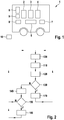
- FIG. 1 shows a schematic representation of a vehicle 1 having a computing unit 2, which is connected to a driver assistance system 3, an input 4 and an output 5.
- the arithmetic unit 2 is additionally connected to sensors 6 which, for example, detect parameters of the vehicle, surroundings information of the vehicle and / or information about a behavior of the driver and transmit them to the arithmetic unit 2.
- the arithmetic unit 2 is designed, for example, as a control unit which controls the functions necessary for the vehicle. Depending on the selected embodiment, the arithmetic unit 2 may be formed in addition to a control unit of the vehicle.
- a driver of the vehicle can issue via the input 4 control commands and / or input commands to the arithmetic unit 2 and / or to the control unit.
- the input 4 represents, for example, an accelerator pedal, a switch or a touch screen.
- the driver can also activate a driver assistance system by pressing the input 4.
- a driver assistance system for example, a lane keeping system, a backup system, an emergency braking system, an automatic distance control and an automatic cruise control can be used become.
- the vehicle may have a driver information system 7, which is embodied, for example, as a navigation system and / or as an information system that retrieves data and information via a wireless connection from a central data service such as the Internet and forwards it to the driver or takes it into account when executing a driver assistance system ,
- the driver assistance system may also include an autonomous driving system, which at least temporarily reduces the responsibility of the driver for driving the vehicle.
- the sensors 6 may be designed as simple sensors, for example for detecting steering movements, for detecting a speed, and / or for detecting accelerations.
- the sensors 6 can also be designed in the form of more complex sensor systems, which include, for example, a driver fatigue system or a driver attention system.
- a driver recognition system may be provided as a sensor 6, which detects which driver is sitting at the wheel.
- interior cameras with visual evaluation e.g. of the head or eyes.
- coded key systems can be used that are individually assigned to a driver.
- the driving behavior such as Braking, accelerating or shifting etc. are used to detect the driver.
- the vehicle may have a communication device 8, via which data is exchanged with other vehicles or with an infrastructure.
- the communication device 8 can be designed, for example, to exchange data, for example via a traffic light phase or the prescribed speed, with other vehicles or with an external computing unit 10.
- data transmission systems such as WLAN or LTE can be used.
- data such as one's own position, one's own speed to other vehicles or the external computing unit can be transmitted via the communication device 8.
- the navigation system 7 information about road courses, gradients, lanes, etc., or partial information about infrastructure such as traffic lights, road signs, etc. stored in a map database.
- via the navigation system or accessed via the communication device to external databases in which, for example, road data and current information about the traffic are available.
- the vehicle can have its own data memory 9, in which data can be stored long-term.
- the data memory 9 may also be integrated in the navigation system.
- the communication device 8 may for example also be in the form of a mobile communication device, such as a mobile phone, in particular a smart phone can be queried with the information wirelessly, for example from the Internet on current data, such as congestion, accidents, construction sites, etc.
- the output 5 can be designed, for example, in the form of a display to output current data, such as congestion, accidents and construction sites to the driver.
- driver assistance system is understood to mean any type of function or partial function of the vehicle that assists the driver in driving and operating the vehicle.
- a driver assistance system may represent a partial or complete autonomous driving function for guiding the vehicle.
- the behavior of the driver in the past is taken into account.
- a behavior of the driver in certain driving situations in the presence of an active driver assistance system is checked by means of specified procedures and specified parameters.
- Examples of semi-autonomous driver assistance systems are automatic braking, automatic steering, automatic avoidance and / or a combination of these functions up to fully autonomous driving of the vehicle.
- FIG. 2 shows a schematic program flow for performing a simple method for activating a driver assistance system.
- the driver is already driving with the vehicle and would like a specific driver assistance system, for example an automatic brake, activate automatic steering and / or automatic dodge by pressing the input 4.
- the arithmetic unit 2 detects the driver's desire to activate a specific driver assistance system. Subsequently, the arithmetic unit 2 checks at the following program point 120 whether, for example, a value for the suitability of the driver for the selected driver assistance system is present in the data memory 9.
- the arithmetic unit 2 compares the present value for the suitability of the driver with a comparison value stored in the data memory 9.
- the program branches to program point 140.
- the program point 140 gives the arithmetic unit 2 via the output 4 information to the driver that the use of the desired driver assistance system is not recommended.
- the arithmetic unit 2 monitors at a subsequent program point 150 whether the driver nevertheless activates the desired driver assistance system by means of a corresponding input. If this is the case, the program branches to program point 160 and the desired driver assistance system is activated. However, if no renewed activation of the driver assistance system is carried out by the driver after program point 140 within a defined period of time, the program branches back to program point 100.
- the driver assistance system is reactivated by the driver despite the refusal by the arithmetic unit 2, this decision of the driver is stored in the memory 9 by the arithmetic unit 2.
- the program branches to program point 170.
- the driver activates the desired driver assistance system. Then branched back to program point 100 back.
- the comparative value used may be a general comparison value, depending on the selected embodiment, or in turn depend on the desired driver assistance system and / or on a particular driving situation.
- the driving situation may include, for example, driving on a highway, driving on a country road, driving in the city, driving in a traffic jam, driving specified weather conditions such as rain, fog, snow, a daytime ride or a ride at night.
- the comparative value may depend on one or more of these driving situations.
- the arithmetic unit 2 checks in the inquiry which driving situation exists, and uses for the comparison a comparison value which most closely corresponds to the driving situation. In addition, as a driving situation, the driver's previous driving time, the fatigue of the driver and / or the driver's attention can be taken into account.
- an additional exclusion criterion will be reviewed prior to the decision of the computing unit that the desired driving function is activated, i. before program item 160 or 170. For example, certain speed ranges, weather conditions or driving conditions of the driver such as e.g. Increased fatigue, low attention or drunkenness of the driver are used in order not to activate the driver assistance system despite the present suitability of the driver for the desired driver assistance system.
- activation of the desired driver assistance system by the arithmetic unit 2 can not be permitted.
- the arithmetic unit 2 can prohibit the activation of a fully automatic driving of the vehicle when recognizing a tired driver.
- the arithmetic unit 2 Upon detection of a corresponding situation, the arithmetic unit 2 outputs an alarm signal to the driver.
- FIG. 3 shows a schematic representation of a method for determining a value for the suitability of the driver for the activation of a driver assistance system.
- a driver drives a vehicle.
- the arithmetic unit 2 detects which driver drives the vehicle. For this purpose, methods such as coded keys, cameras to detect a face or even driving behavior can be used.
- the arithmetic unit 210 stores the recognized driver in the database 9 at the following program point 220.
- the arithmetic unit detects how the driver behaves when using active driver assistance systems. The arithmetic unit monitors whether the driver behaves confidentially when using the driver assistance system.
- certain rules and parameters are laid down, with which the assessment determine the behavior of the driver as trusting for the particular driver assistance system.
- the rules and parameters can be set individually for different driver assistance systems. For example, in the active driver assistance system, automatic distance control checks whether the driver falls below the automatically adjusted distance to the vehicle in front by his own throttle or whether the driver increases the automatically controlled distance to the vehicle in front by braking. A driver may be deemed unsuitable for the driver assistance system automatic distance control if he actively changes the automatically controlled distance more than a specified number of times during a specified period of time and / or distance. In the simplest case, the driver can be assessed as unsuitable even with a single change of the automatically controlled distance over a distance of 5 km.
- a driver may be deemed unsuitable for the driver assistance system to drive autonomously, i. automatic steering and automatic braking and automatic lane keeping are considered to be inappropriate if the driver does not take back the return of the vehicle within a certain period of time upon the return of responsibility to the driver.
- the arithmetic unit 2 stores, for example for the driving function autonomous driving for the driver A, the value "inappropriate” in the database.
- the value "unsuitable” can be stored in the form of a 0, for example, and the value "suitable” in the form of a 2.
- the value 1 can be used in this example.
- the stored values will be used in the process FIG. 2 used.
- a fitness value of the driver may be detected for each driver assistance system. If the driver now wants to activate the corresponding driver assistance system, the recorded value for the suitability is used for comparison.
- different comparison values are stored, for example, for different driver assistance systems. moreover For example, depending on the embodiment selected, a combination value of the various values for the driver's fitness may also be used for the various driver assistance systems. In this embodiment, a combination value is also used for the comparison values of the various driver assistance systems.
- the values for the suitability of the driver for the driver assistance systems and / or the comparison values of the driver assistance systems can be weighted differently in the case of an averaging.
- further environmental parameters can be taken into account when averaging the suitability of the driver and / or when selecting the comparison value.
- a driving on the highway, on the highway or within the city can be evaluated differently and weighted.
- environmental conditions such as bad weather, i. Fog, snow, rain must be taken into account when determining the suitability of the driver and / or when choosing the reference value.
- condition of the driver when choosing the comparison value can also be taken into account in order to hinder or hinder the activation of a driver assistance system.
- an exclusivity criterion for the activation of a driver assistance system e.g. increased fatigue of the driver, low driver's attention, too long driving time or drunkenness of the driver may be provided, which blocks an activation of a driver assistance system by the driver.
- the suitability of the driver may be continuously updated. This means that, for example, default values for the suitability for the driver assistance systems are predefined for each driver. During operation of the vehicle, the fitness values for the driver assistance systems may be improved or degraded due to the behavior of the driver.
- the data on the suitability of the driver and on the comparison values of the driving functions can be stored in the memory 9 of the vehicle and / or in an external database, which can be accessed by the driver.
- a corresponding communication device 8 can be used.
Landscapes
- Engineering & Computer Science (AREA)
- Automation & Control Theory (AREA)
- Transportation (AREA)
- Mechanical Engineering (AREA)
- Human Computer Interaction (AREA)
- Traffic Control Systems (AREA)
- Control Of Driving Devices And Active Controlling Of Vehicle (AREA)
Claims (15)
- Procédé pour activer un système d'assistance au conducteur dans un véhicule, selon lequel, après un souhait d'activation d'un système d'assistance au conducteur par un conducteur, un contrôle est effectué afin de vérifier si le conducteur du véhicule est apte à utiliser le système d'assistance au conducteur souhaité, et selon lequel l'activation du système d'assistance au conducteur souhaité est effectuée en fonction de l'aptitude du conducteur.
- Procédé selon la revendication 1, un comportement de commande du véhicule par le conducteur étant déterminé, et le comportement de commande détecté étant utilisé pour évaluer une aptitude du conducteur à utiliser le système d'assistance au conducteur souhaité.
- Procédé selon l'une des revendications précédentes, le système d'assistance au conducteur souhaité étant activé lorsqu'il résulte du contrôle que le conducteur est apte, l'activation du système d'assistance au conducteur souhaité étant inhibée lorsque le conducteur est estimé être inapte.
- Procédé selon l'une des revendications précédentes, le conducteur pouvant activer le système d'assistance au conducteur souhaité par le biais d'un système d'entrée malgré que le conducteur soit estimé être inapte.
- Procédé selon l'une des revendications précédentes, une valeur mise en mémoire étant prise en compte pour le contrôle de l'aptitude du conducteur.
- Procédé selon la revendication 5, des valeurs différentes étant mises en mémoire pour des conducteurs différents, le conducteur étant reconnu au moyen d'un procédé de détection et la valeur associée au conducteur reconnu étant utilisée pour le contrôle.
- Procédé selon la revendication 5 ou 6, une valeur étant déterminée à partir d'un comportement de commande du véhicule par le conducteur, laquelle est utilisée pour une comparaison avec la valeur comparative mise en mémoire.
- Procédé selon l'une des revendications précédentes, le comportement de commande du conducteur étant détecté pendant qu'un système d'assistance au conducteur est actif.
- Procédé selon l'une des revendications précédentes, un comportement de commande étant détecté en fonction d'une situation de conduite donnée.
- Procédé selon la revendication 9, le comportement de commande du conducteur étant évalué différemment en fonction du système d'assistance au conducteur et/ou en fonction de la situation de conduite.
- Procédé selon l'une des revendications 2 à 10, un conducteur étant reconnu à l'aide d'un comportement de détection et le comportement de commande étant détecté et mis en mémoire individuellement pour chaque conducteur.
- Procédé selon l'une des revendications 1 à 11, l'évaluation de l'aptitude du conducteur étant effectuée en utilisant une valeur de l'aptitude du conducteur qui a été déterminée pendant un état actif du système d'assistance au conducteur souhaité.
- Procédé selon l'une des revendications 1 à 12, une situation de conduite en présence et une valeur correspondante pour l'aptitude du conducteur étant en plus prises en compte pour l'évaluation de l'aptitude.
- Système d'assistance au conducteur comprenant une unité de calcul et comprenant une mémoire, l'unité de calcul étant reliée à un système d'entrée destiné à la saisie d'un souhait d'activation et l'unité de calcul étant conçue pour mettre en oeuvre un procédé selon l'une des revendications précédentes.
- Produit de programme informatique comprenant des moyens de code de programme qui sont aptes à mettre en oeuvre un procédé selon l'une des revendications 1 à 13 sur une unité de calcul.
Applications Claiming Priority (2)
| Application Number | Priority Date | Filing Date | Title |
|---|---|---|---|
| DE102011083944A DE102011083944A1 (de) | 2011-10-04 | 2011-10-04 | Verfahren zum Aktivieren eines Fahrerassistenzsystems |
| PCT/EP2012/065343 WO2013050189A1 (fr) | 2011-10-04 | 2012-08-06 | Procédé d'activation d'un système d'aide à la conduite |
Publications (2)
| Publication Number | Publication Date |
|---|---|
| EP2763879A1 EP2763879A1 (fr) | 2014-08-13 |
| EP2763879B1 true EP2763879B1 (fr) | 2018-02-28 |
Family
ID=46651489
Family Applications (1)
| Application Number | Title | Priority Date | Filing Date |
|---|---|---|---|
| EP12746317.2A Active EP2763879B1 (fr) | 2011-10-04 | 2012-08-06 | Procédé d'activation d'un système d'aide à la conduite |
Country Status (6)
| Country | Link |
|---|---|
| US (1) | US9457803B2 (fr) |
| EP (1) | EP2763879B1 (fr) |
| CN (1) | CN103842232B (fr) |
| DE (1) | DE102011083944A1 (fr) |
| ES (1) | ES2671234T3 (fr) |
| WO (1) | WO2013050189A1 (fr) |
Cited By (1)
| Publication number | Priority date | Publication date | Assignee | Title |
|---|---|---|---|---|
| DE102022201288A1 (de) | 2022-02-08 | 2023-08-10 | Volkswagen Aktiengesellschaft | Fahrerassistenzsystem, Fortbewegungsmittel und Verfahren zum Betrieb eines Fahrerassistenzsystems |
Families Citing this family (21)
| Publication number | Priority date | Publication date | Assignee | Title |
|---|---|---|---|---|
| EP2848488B2 (fr) * | 2013-09-12 | 2022-04-13 | Volvo Car Corporation | Procédé et agencement pour avertissement de transfert de commande dans un véhicule possédant des capacités de conduite autonome |
| EP2915718B1 (fr) * | 2014-03-04 | 2018-07-11 | Volvo Car Corporation | Appareil et procédé pour établir une limite de disponibilité de conduite autonome et véhicule automobile comportant un tel appareil |
| EP2930081B1 (fr) * | 2014-04-08 | 2019-03-27 | Volvo Car Corporation | Procédé de transition entre des modes d'entraînement |
| EP2942012A1 (fr) * | 2014-05-08 | 2015-11-11 | Continental Automotive GmbH | Système d'assistance au conducteur |
| CN105235615B (zh) * | 2015-10-27 | 2018-01-23 | 浙江吉利控股集团有限公司 | 一种基于人脸识别的车辆控制系统 |
| US9886034B2 (en) | 2015-11-11 | 2018-02-06 | Ford Global Technologies, Llc | Vehicle control based on connectivity of a portable device |
| US9740202B2 (en) * | 2016-01-08 | 2017-08-22 | Waymo Llc | Fall back trajectory systems for autonomous vehicles |
| US9551992B1 (en) * | 2016-01-08 | 2017-01-24 | Google Inc. | Fall back trajectory systems for autonomous vehicles |
| US9925872B1 (en) | 2016-11-14 | 2018-03-27 | Denso International America, Inc. | System for monitoring driver alertness and adapting vehicle settings thereto |
| CN106740828A (zh) * | 2016-12-16 | 2017-05-31 | 深圳安狗数据技术有限公司 | 一种辅助驾驶系统的运行控制方法和装置 |
| US10059336B2 (en) | 2017-01-06 | 2018-08-28 | Toyota Research Institute, Inc. | Systems and methods for dynamically adjusting a vehicle trajectory according to deviations of a driver from expected inputs |
| DE102017202834B4 (de) | 2017-02-22 | 2019-05-16 | Audi Ag | Verfahren zum Betreiben eines Kraftfahrzeugs in einem aktivierten zumindest teilautonomen Fahrmodus |
| US10134279B1 (en) | 2017-05-05 | 2018-11-20 | Toyota Motor Engineering & Manufacturing North America, Inc. | Systems and methods for visualizing potential risks |
| DE102018206808A1 (de) * | 2018-05-03 | 2019-11-07 | Volkswagen Aktiengesellschaft | Steuerungssystem für ein Kraftfahrzeug zum Koordinieren und Ausführen von Kundenfunktionen, Verfahren zum Betreiben eines derartigen Steuerungssystems sowie Kraftfahrzeug mit einem derartigen Steuerungssystem |
| CN110789469B (zh) * | 2018-08-02 | 2024-10-08 | 罗伯特·博世有限公司 | 用于驾驶车辆的方法、相应的控制器和相应的车辆 |
| CN110969833B (zh) * | 2018-09-30 | 2021-11-19 | 上海丰豹商务咨询有限公司 | 一种智能网联交通系统的固定路径服务系统 |
| CN109367541B (zh) * | 2018-10-15 | 2020-12-25 | 吉林大学 | 一种基于驾驶员行为特性的智能车类人变道决策方法 |
| US11364929B2 (en) | 2019-01-04 | 2022-06-21 | Toyota Research Institute, Inc. | Systems and methods for shared control of a vehicle |
| DE102022102782A1 (de) | 2022-02-07 | 2023-08-10 | Bayerische Motoren Werke Aktiengesellschaft | Fahrassistenzsystem und Verfahren zum Betreiben eines Fahrassistenzsystems |
| DE102022001383A1 (de) * | 2022-04-22 | 2023-10-26 | Mercedes-Benz Group AG | Fahrzeug und Verfahren zur Ausgabe von Empfehlungen an eine fahrzeugführende Person zur Übernahme einer Fahrzeugsteuerung |
| DE102023000160A1 (de) | 2023-01-19 | 2024-07-25 | Mercedes-Benz Group AG | Verfahren zum Betrieb einer Mehrzahl von Assistenzsystemen eines Fahrzeuges |
Family Cites Families (10)
| Publication number | Priority date | Publication date | Assignee | Title |
|---|---|---|---|---|
| DE10056756A1 (de) | 2000-11-16 | 2002-05-23 | Daimler Chrysler Ag | Fahrerkonditionierung durch Fahrtinformationen über die Fahrzeuge in einem lokalen verkehrlichen Umfeld |
| US20040124697A1 (en) * | 2000-12-04 | 2004-07-01 | Macgregor G. David | Vehicle brake safety system apparatus and methods |
| JP2005510398A (ja) * | 2001-11-29 | 2005-04-21 | ダイムラークライスラー・アクチェンゲゼルシャフト | 車両動作変数及び/又は車両動作特性を評価する及び/又はそれに影響を及ぼすための装置 |
| DE10228703A1 (de) * | 2002-06-27 | 2004-01-15 | Robert Bosch Gmbh | Verfahren zum Betreiben von Fahrerinformationssystemen sowie Vorrichtung zur Durchführung des Verfahrens |
| EP1638801A1 (fr) | 2003-06-06 | 2006-03-29 | Volvo Technology Corporation | Procede et agencement permettant de commander des sous-systemes de vehicules bases sur une activite de conducteur interpretee |
| ITBO20060089A1 (it) | 2006-02-10 | 2007-08-11 | Ferrari Spa | Metodo di controllo di un veicolo per adattare il comportamento dinamico del veicolo stesso allo stato psico-fisico del guidatore. |
| RU2443586C2 (ru) | 2006-09-15 | 2012-02-27 | Вольво Ластвагнар Аб | Способ адаптации автоматической механической трансмиссии на транспортном средстве большой грузоподъемности |
| DE102006057230A1 (de) | 2006-12-05 | 2008-07-03 | Volkswagen Ag | Parklenkassistenzsystem mit verbesserter Ein- und Ausschaltlogik |
| DE102009028637A1 (de) | 2009-08-19 | 2011-02-24 | Robert Bosch Gmbh | Verfahren und Vorrichtung zur benutzerbezogenen Einstellung eines Fahrerinformationssystems |
| DE102009039774B4 (de) * | 2009-09-02 | 2018-03-01 | Audi Ag | Verfahren zur Steuerung eines Kraftfahrzeugs und Kraftfahrzeug |
-
2011
- 2011-10-04 DE DE102011083944A patent/DE102011083944A1/de not_active Withdrawn
-
2012
- 2012-08-06 EP EP12746317.2A patent/EP2763879B1/fr active Active
- 2012-08-06 US US14/348,004 patent/US9457803B2/en active Active
- 2012-08-06 WO PCT/EP2012/065343 patent/WO2013050189A1/fr not_active Ceased
- 2012-08-06 CN CN201280049172.7A patent/CN103842232B/zh active Active
- 2012-08-06 ES ES12746317.2T patent/ES2671234T3/es active Active
Cited By (1)
| Publication number | Priority date | Publication date | Assignee | Title |
|---|---|---|---|---|
| DE102022201288A1 (de) | 2022-02-08 | 2023-08-10 | Volkswagen Aktiengesellschaft | Fahrerassistenzsystem, Fortbewegungsmittel und Verfahren zum Betrieb eines Fahrerassistenzsystems |
Also Published As
| Publication number | Publication date |
|---|---|
| CN103842232A (zh) | 2014-06-04 |
| CN103842232B (zh) | 2018-04-24 |
| US20140358327A1 (en) | 2014-12-04 |
| ES2671234T3 (es) | 2018-06-05 |
| DE102011083944A1 (de) | 2013-04-04 |
| WO2013050189A1 (fr) | 2013-04-11 |
| EP2763879A1 (fr) | 2014-08-13 |
| US9457803B2 (en) | 2016-10-04 |
Similar Documents
| Publication | Publication Date | Title |
|---|---|---|
| EP2763879B1 (fr) | Procédé d'activation d'un système d'aide à la conduite | |
| EP3700795B1 (fr) | Procédé pour l'indication précoce d'une plage de fonctionnement d'un système d'assistance d'un moyen de transport ayant un statut de fiabilité insuffisant, système et automobile | |
| EP3752401B1 (fr) | Procédé de sélection d'un profil de conduite d'un véhicule automobile, système d'assistance a la conduite et véhicule automobile | |
| EP1751728B1 (fr) | Systeme d'assistance pour automobile | |
| DE102016225606B4 (de) | Verfahren zum Betreiben einer Fahrerassistenzeinrichtung eines Kraftfahrzeugs | |
| DE102011083039B4 (de) | Vorrichtung und Verfahren zum Betreiben eines Fahrzeugs | |
| DE102013210941A1 (de) | Verfahren und Vorrichtung zum Betreiben eines Fahrzeugs | |
| DE102016109146A1 (de) | Fahrzeugfahrt-Steuerungsvorrichtung | |
| DE102011121260A1 (de) | Verfahren zum Unterstützen eines Fahrers eines Kraftfahrzeugs bei einem Aufmerksamkeitsverlust mit Hilfe eines Fehlerzählers | |
| DE102010049721A1 (de) | Verfahren und Vorrichtung zur Anzeige einer Kritikalität | |
| DE102005025387A1 (de) | Verfahren und Vorrichtung zur Fahrerwahrnung bzw. zum aktiven Eingreifen in die Fahrdynamik, falls ein Verlassen der Fahrspur droht | |
| DE102019110924A1 (de) | Bereitstellen einer Fahrerrückmeldung | |
| DE102022115718A1 (de) | Verfahren und Vorrichtung zum automatisierten Anfahren eines Fahrzeugs an einer Signalisierungseinheit | |
| DE102019215308A1 (de) | Verfahren zum Freischalten und/oder Anpassen einer automatisierten Fahrfunktion für ein zumindest teilautomatisiert betreibbares Fahrzeug | |
| DE102015201588A1 (de) | Verfahren und System zur Durchführung einer automatischen Steuerung der Bewegung eines Fahrzeugs | |
| DE102022200935A1 (de) | Verfahren und Assistenzeinrichtung zum Steuern eines Spurhalteassistenzsystems basierend auf Schwarmdaten und einer Fahrstilerkennung sowie Kraftfahrzeug | |
| DE102015210833A1 (de) | Verfahren und System zur Steuerung eines Fahrzeugs in einem Fahrbahnabschnitt | |
| DE102016205260A1 (de) | Verfahren zur automatisierten Anpassung der Geschwindigkeit eines Fahrzeugs | |
| DE102019215657A1 (de) | Fahrzeugsteuerungsstystem und -verfahren | |
| WO2021058205A1 (fr) | Procédé pour faire fonctionner un véhicule | |
| DE102012008912A1 (de) | Reflexion der eigenen Fahrweise | |
| EP3042819B1 (fr) | Systeme d'assistance a la conduite et procede de guidage assiste d'un vehicule | |
| DE102019215815A1 (de) | Fahrzeugsteuerungssystem und -verfahren | |
| EP3747720B1 (fr) | Procédé de fonctionnement d'un véhicule pourvu d'une pluralité de modes semi-automatiques à commande de bracquage manuell et à commande de bracquage non manuell, ainsi que système de guidage de véhicule | |
| EP3980310B1 (fr) | Procédé pour faire fonctionner un véhicule à moteur, produit-programme informatique et véhicule à moteur |
Legal Events
| Date | Code | Title | Description |
|---|---|---|---|
| PUAI | Public reference made under article 153(3) epc to a published international application that has entered the european phase |
Free format text: ORIGINAL CODE: 0009012 |
|
| 17P | Request for examination filed |
Effective date: 20140506 |
|
| AK | Designated contracting states |
Kind code of ref document: A1 Designated state(s): AL AT BE BG CH CY CZ DE DK EE ES FI FR GB GR HR HU IE IS IT LI LT LU LV MC MK MT NL NO PL PT RO RS SE SI SK SM TR |
|
| DAX | Request for extension of the european patent (deleted) | ||
| GRAP | Despatch of communication of intention to grant a patent |
Free format text: ORIGINAL CODE: EPIDOSNIGR1 |
|
| INTG | Intention to grant announced |
Effective date: 20171129 |
|
| GRAS | Grant fee paid |
Free format text: ORIGINAL CODE: EPIDOSNIGR3 |
|
| GRAA | (expected) grant |
Free format text: ORIGINAL CODE: 0009210 |
|
| AK | Designated contracting states |
Kind code of ref document: B1 Designated state(s): AL AT BE BG CH CY CZ DE DK EE ES FI FR GB GR HR HU IE IS IT LI LT LU LV MC MK MT NL NO PL PT RO RS SE SI SK SM TR |
|
| REG | Reference to a national code |
Ref country code: GB Ref legal event code: FG4D Free format text: NOT ENGLISH Ref country code: CH Ref legal event code: EP |
|
| REG | Reference to a national code |
Ref country code: AT Ref legal event code: REF Ref document number: 973764 Country of ref document: AT Kind code of ref document: T Effective date: 20180315 |
|
| REG | Reference to a national code |
Ref country code: IE Ref legal event code: FG4D Free format text: LANGUAGE OF EP DOCUMENT: GERMAN |
|
| REG | Reference to a national code |
Ref country code: DE Ref legal event code: R096 Ref document number: 502012012260 Country of ref document: DE |
|
| REG | Reference to a national code |
Ref country code: ES Ref legal event code: FG2A Ref document number: 2671234 Country of ref document: ES Kind code of ref document: T3 Effective date: 20180605 |
|
| REG | Reference to a national code |
Ref country code: NL Ref legal event code: MP Effective date: 20180228 |
|
| REG | Reference to a national code |
Ref country code: LT Ref legal event code: MG4D |
|
| PG25 | Lapsed in a contracting state [announced via postgrant information from national office to epo] |
Ref country code: CY Free format text: LAPSE BECAUSE OF FAILURE TO SUBMIT A TRANSLATION OF THE DESCRIPTION OR TO PAY THE FEE WITHIN THE PRESCRIBED TIME-LIMIT Effective date: 20180228 Ref country code: LT Free format text: LAPSE BECAUSE OF FAILURE TO SUBMIT A TRANSLATION OF THE DESCRIPTION OR TO PAY THE FEE WITHIN THE PRESCRIBED TIME-LIMIT Effective date: 20180228 Ref country code: NL Free format text: LAPSE BECAUSE OF FAILURE TO SUBMIT A TRANSLATION OF THE DESCRIPTION OR TO PAY THE FEE WITHIN THE PRESCRIBED TIME-LIMIT Effective date: 20180228 Ref country code: NO Free format text: LAPSE BECAUSE OF FAILURE TO SUBMIT A TRANSLATION OF THE DESCRIPTION OR TO PAY THE FEE WITHIN THE PRESCRIBED TIME-LIMIT Effective date: 20180528 Ref country code: HR Free format text: LAPSE BECAUSE OF FAILURE TO SUBMIT A TRANSLATION OF THE DESCRIPTION OR TO PAY THE FEE WITHIN THE PRESCRIBED TIME-LIMIT Effective date: 20180228 Ref country code: FI Free format text: LAPSE BECAUSE OF FAILURE TO SUBMIT A TRANSLATION OF THE DESCRIPTION OR TO PAY THE FEE WITHIN THE PRESCRIBED TIME-LIMIT Effective date: 20180228 |
|
| REG | Reference to a national code |
Ref country code: FR Ref legal event code: PLFP Year of fee payment: 7 |
|
| PG25 | Lapsed in a contracting state [announced via postgrant information from national office to epo] |
Ref country code: SE Free format text: LAPSE BECAUSE OF FAILURE TO SUBMIT A TRANSLATION OF THE DESCRIPTION OR TO PAY THE FEE WITHIN THE PRESCRIBED TIME-LIMIT Effective date: 20180228 Ref country code: LV Free format text: LAPSE BECAUSE OF FAILURE TO SUBMIT A TRANSLATION OF THE DESCRIPTION OR TO PAY THE FEE WITHIN THE PRESCRIBED TIME-LIMIT Effective date: 20180228 Ref country code: RS Free format text: LAPSE BECAUSE OF FAILURE TO SUBMIT A TRANSLATION OF THE DESCRIPTION OR TO PAY THE FEE WITHIN THE PRESCRIBED TIME-LIMIT Effective date: 20180228 Ref country code: GR Free format text: LAPSE BECAUSE OF FAILURE TO SUBMIT A TRANSLATION OF THE DESCRIPTION OR TO PAY THE FEE WITHIN THE PRESCRIBED TIME-LIMIT Effective date: 20180529 Ref country code: BG Free format text: LAPSE BECAUSE OF FAILURE TO SUBMIT A TRANSLATION OF THE DESCRIPTION OR TO PAY THE FEE WITHIN THE PRESCRIBED TIME-LIMIT Effective date: 20180528 |
|
| PG25 | Lapsed in a contracting state [announced via postgrant information from national office to epo] |
Ref country code: MT Free format text: LAPSE BECAUSE OF FAILURE TO SUBMIT A TRANSLATION OF THE DESCRIPTION OR TO PAY THE FEE WITHIN THE PRESCRIBED TIME-LIMIT Effective date: 20180228 |
|
| PG25 | Lapsed in a contracting state [announced via postgrant information from national office to epo] |
Ref country code: AL Free format text: LAPSE BECAUSE OF FAILURE TO SUBMIT A TRANSLATION OF THE DESCRIPTION OR TO PAY THE FEE WITHIN THE PRESCRIBED TIME-LIMIT Effective date: 20180228 Ref country code: IT Free format text: LAPSE BECAUSE OF FAILURE TO SUBMIT A TRANSLATION OF THE DESCRIPTION OR TO PAY THE FEE WITHIN THE PRESCRIBED TIME-LIMIT Effective date: 20180228 Ref country code: PL Free format text: LAPSE BECAUSE OF FAILURE TO SUBMIT A TRANSLATION OF THE DESCRIPTION OR TO PAY THE FEE WITHIN THE PRESCRIBED TIME-LIMIT Effective date: 20180228 Ref country code: EE Free format text: LAPSE BECAUSE OF FAILURE TO SUBMIT A TRANSLATION OF THE DESCRIPTION OR TO PAY THE FEE WITHIN THE PRESCRIBED TIME-LIMIT Effective date: 20180228 Ref country code: RO Free format text: LAPSE BECAUSE OF FAILURE TO SUBMIT A TRANSLATION OF THE DESCRIPTION OR TO PAY THE FEE WITHIN THE PRESCRIBED TIME-LIMIT Effective date: 20180228 |
|
| REG | Reference to a national code |
Ref country code: DE Ref legal event code: R097 Ref document number: 502012012260 Country of ref document: DE |
|
| PG25 | Lapsed in a contracting state [announced via postgrant information from national office to epo] |
Ref country code: SK Free format text: LAPSE BECAUSE OF FAILURE TO SUBMIT A TRANSLATION OF THE DESCRIPTION OR TO PAY THE FEE WITHIN THE PRESCRIBED TIME-LIMIT Effective date: 20180228 Ref country code: SM Free format text: LAPSE BECAUSE OF FAILURE TO SUBMIT A TRANSLATION OF THE DESCRIPTION OR TO PAY THE FEE WITHIN THE PRESCRIBED TIME-LIMIT Effective date: 20180228 Ref country code: CZ Free format text: LAPSE BECAUSE OF FAILURE TO SUBMIT A TRANSLATION OF THE DESCRIPTION OR TO PAY THE FEE WITHIN THE PRESCRIBED TIME-LIMIT Effective date: 20180228 Ref country code: DK Free format text: LAPSE BECAUSE OF FAILURE TO SUBMIT A TRANSLATION OF THE DESCRIPTION OR TO PAY THE FEE WITHIN THE PRESCRIBED TIME-LIMIT Effective date: 20180228 |
|
| PLBE | No opposition filed within time limit |
Free format text: ORIGINAL CODE: 0009261 |
|
| STAA | Information on the status of an ep patent application or granted ep patent |
Free format text: STATUS: NO OPPOSITION FILED WITHIN TIME LIMIT |
|
| 26N | No opposition filed |
Effective date: 20181129 |
|
| PG25 | Lapsed in a contracting state [announced via postgrant information from national office to epo] |
Ref country code: SI Free format text: LAPSE BECAUSE OF FAILURE TO SUBMIT A TRANSLATION OF THE DESCRIPTION OR TO PAY THE FEE WITHIN THE PRESCRIBED TIME-LIMIT Effective date: 20180228 |
|
| PG25 | Lapsed in a contracting state [announced via postgrant information from national office to epo] |
Ref country code: MC Free format text: LAPSE BECAUSE OF FAILURE TO SUBMIT A TRANSLATION OF THE DESCRIPTION OR TO PAY THE FEE WITHIN THE PRESCRIBED TIME-LIMIT Effective date: 20180228 |
|
| REG | Reference to a national code |
Ref country code: CH Ref legal event code: PL |
|
| PG25 | Lapsed in a contracting state [announced via postgrant information from national office to epo] |
Ref country code: CH Free format text: LAPSE BECAUSE OF NON-PAYMENT OF DUE FEES Effective date: 20180831 Ref country code: LI Free format text: LAPSE BECAUSE OF NON-PAYMENT OF DUE FEES Effective date: 20180831 Ref country code: LU Free format text: LAPSE BECAUSE OF NON-PAYMENT OF DUE FEES Effective date: 20180806 |
|
| REG | Reference to a national code |
Ref country code: BE Ref legal event code: MM Effective date: 20180831 |
|
| REG | Reference to a national code |
Ref country code: IE Ref legal event code: MM4A |
|
| PG25 | Lapsed in a contracting state [announced via postgrant information from national office to epo] |
Ref country code: IE Free format text: LAPSE BECAUSE OF NON-PAYMENT OF DUE FEES Effective date: 20180806 |
|
| PG25 | Lapsed in a contracting state [announced via postgrant information from national office to epo] |
Ref country code: BE Free format text: LAPSE BECAUSE OF NON-PAYMENT OF DUE FEES Effective date: 20180831 |
|
| REG | Reference to a national code |
Ref country code: AT Ref legal event code: MM01 Ref document number: 973764 Country of ref document: AT Kind code of ref document: T Effective date: 20180806 |
|
| PG25 | Lapsed in a contracting state [announced via postgrant information from national office to epo] |
Ref country code: AT Free format text: LAPSE BECAUSE OF NON-PAYMENT OF DUE FEES Effective date: 20180806 |
|
| PG25 | Lapsed in a contracting state [announced via postgrant information from national office to epo] |
Ref country code: TR Free format text: LAPSE BECAUSE OF FAILURE TO SUBMIT A TRANSLATION OF THE DESCRIPTION OR TO PAY THE FEE WITHIN THE PRESCRIBED TIME-LIMIT Effective date: 20180228 |
|
| PG25 | Lapsed in a contracting state [announced via postgrant information from national office to epo] |
Ref country code: HU Free format text: LAPSE BECAUSE OF FAILURE TO SUBMIT A TRANSLATION OF THE DESCRIPTION OR TO PAY THE FEE WITHIN THE PRESCRIBED TIME-LIMIT; INVALID AB INITIO Effective date: 20120806 Ref country code: PT Free format text: LAPSE BECAUSE OF FAILURE TO SUBMIT A TRANSLATION OF THE DESCRIPTION OR TO PAY THE FEE WITHIN THE PRESCRIBED TIME-LIMIT Effective date: 20180228 |
|
| PG25 | Lapsed in a contracting state [announced via postgrant information from national office to epo] |
Ref country code: MK Free format text: LAPSE BECAUSE OF NON-PAYMENT OF DUE FEES Effective date: 20180228 |
|
| PG25 | Lapsed in a contracting state [announced via postgrant information from national office to epo] |
Ref country code: IS Free format text: LAPSE BECAUSE OF FAILURE TO SUBMIT A TRANSLATION OF THE DESCRIPTION OR TO PAY THE FEE WITHIN THE PRESCRIBED TIME-LIMIT Effective date: 20180628 |
|
| PGFP | Annual fee paid to national office [announced via postgrant information from national office to epo] |
Ref country code: FR Payment date: 20210823 Year of fee payment: 10 |
|
| PGFP | Annual fee paid to national office [announced via postgrant information from national office to epo] |
Ref country code: ES Payment date: 20210917 Year of fee payment: 10 Ref country code: GB Payment date: 20210824 Year of fee payment: 10 |
|
| GBPC | Gb: european patent ceased through non-payment of renewal fee |
Effective date: 20220806 |
|
| PG25 | Lapsed in a contracting state [announced via postgrant information from national office to epo] |
Ref country code: FR Free format text: LAPSE BECAUSE OF NON-PAYMENT OF DUE FEES Effective date: 20220831 |
|
| REG | Reference to a national code |
Ref country code: ES Ref legal event code: FD2A Effective date: 20230929 |
|
| PG25 | Lapsed in a contracting state [announced via postgrant information from national office to epo] |
Ref country code: GB Free format text: LAPSE BECAUSE OF NON-PAYMENT OF DUE FEES Effective date: 20220806 Ref country code: ES Free format text: LAPSE BECAUSE OF NON-PAYMENT OF DUE FEES Effective date: 20220807 |
|
| PGFP | Annual fee paid to national office [announced via postgrant information from national office to epo] |
Ref country code: DE Payment date: 20251021 Year of fee payment: 14 |