EP2765785A1 - Elektronische Vorrichtungen und Verfahren zur Verarbeitung von Videoströmen - Google Patents
Elektronische Vorrichtungen und Verfahren zur Verarbeitung von Videoströmen Download PDFInfo
- Publication number
- EP2765785A1 EP2765785A1 EP13000830.3A EP13000830A EP2765785A1 EP 2765785 A1 EP2765785 A1 EP 2765785A1 EP 13000830 A EP13000830 A EP 13000830A EP 2765785 A1 EP2765785 A1 EP 2765785A1
- Authority
- EP
- European Patent Office
- Prior art keywords
- video
- stream
- buffer
- data unit
- video data
- Prior art date
- Legal status (The legal status is an assumption and is not a legal conclusion. Google has not performed a legal analysis and makes no representation as to the accuracy of the status listed.)
- Granted
Links
- 238000000034 method Methods 0.000 title claims abstract description 20
- 239000000872 buffer Substances 0.000 claims abstract description 169
- 230000003139 buffering effect Effects 0.000 claims description 11
- 230000000717 retained effect Effects 0.000 description 7
- 230000000007 visual effect Effects 0.000 description 3
- 238000010586 diagram Methods 0.000 description 2
- 230000006870 function Effects 0.000 description 2
- 230000015654 memory Effects 0.000 description 2
- 230000003287 optical effect Effects 0.000 description 2
- 230000001419 dependent effect Effects 0.000 description 1
- 239000012464 large buffer Substances 0.000 description 1
- 238000012986 modification Methods 0.000 description 1
- 230000004048 modification Effects 0.000 description 1
- 230000003252 repetitive effect Effects 0.000 description 1
Images


Classifications
-
- H—ELECTRICITY
- H04—ELECTRIC COMMUNICATION TECHNIQUE
- H04N—PICTORIAL COMMUNICATION, e.g. TELEVISION
- H04N13/00—Stereoscopic video systems; Multi-view video systems; Details thereof
- H04N13/10—Processing, recording or transmission of stereoscopic or multi-view image signals
- H04N13/106—Processing image signals
- H04N13/161—Encoding, multiplexing or demultiplexing different image signal components
-
- H—ELECTRICITY
- H04—ELECTRIC COMMUNICATION TECHNIQUE
- H04N—PICTORIAL COMMUNICATION, e.g. TELEVISION
- H04N21/00—Selective content distribution, e.g. interactive television or video on demand [VOD]
- H04N21/40—Client devices specifically adapted for the reception of or interaction with content, e.g. set-top-box [STB]; Operations thereof
- H04N21/43—Processing of content or additional data, e.g. demultiplexing additional data from a digital video stream; Elementary client operations, e.g. monitoring of home network or synchronising decoder's clock; Client middleware
- H04N21/434—Disassembling of a multiplex stream, e.g. demultiplexing audio and video streams, extraction of additional data from a video stream; Remultiplexing of multiplex streams; Extraction or processing of SI; Disassembling of packetised elementary stream
- H04N21/4341—Demultiplexing of audio and video streams
-
- H—ELECTRICITY
- H04—ELECTRIC COMMUNICATION TECHNIQUE
- H04N—PICTORIAL COMMUNICATION, e.g. TELEVISION
- H04N19/00—Methods or arrangements for coding, decoding, compressing or decompressing digital video signals
- H04N19/50—Methods or arrangements for coding, decoding, compressing or decompressing digital video signals using predictive coding
- H04N19/597—Methods or arrangements for coding, decoding, compressing or decompressing digital video signals using predictive coding specially adapted for multi-view video sequence encoding
-
- H—ELECTRICITY
- H04—ELECTRIC COMMUNICATION TECHNIQUE
- H04N—PICTORIAL COMMUNICATION, e.g. TELEVISION
- H04N21/00—Selective content distribution, e.g. interactive television or video on demand [VOD]
- H04N21/40—Client devices specifically adapted for the reception of or interaction with content, e.g. set-top-box [STB]; Operations thereof
- H04N21/43—Processing of content or additional data, e.g. demultiplexing additional data from a digital video stream; Elementary client operations, e.g. monitoring of home network or synchronising decoder's clock; Client middleware
- H04N21/434—Disassembling of a multiplex stream, e.g. demultiplexing audio and video streams, extraction of additional data from a video stream; Remultiplexing of multiplex streams; Extraction or processing of SI; Disassembling of packetised elementary stream
- H04N21/4347—Demultiplexing of several video streams
-
- H—ELECTRICITY
- H04—ELECTRIC COMMUNICATION TECHNIQUE
- H04N—PICTORIAL COMMUNICATION, e.g. TELEVISION
- H04N21/00—Selective content distribution, e.g. interactive television or video on demand [VOD]
- H04N21/40—Client devices specifically adapted for the reception of or interaction with content, e.g. set-top-box [STB]; Operations thereof
- H04N21/43—Processing of content or additional data, e.g. demultiplexing additional data from a digital video stream; Elementary client operations, e.g. monitoring of home network or synchronising decoder's clock; Client middleware
- H04N21/44—Processing of video elementary streams, e.g. splicing a video clip retrieved from local storage with an incoming video stream or rendering scenes according to encoded video stream scene graphs
- H04N21/44004—Processing of video elementary streams, e.g. splicing a video clip retrieved from local storage with an incoming video stream or rendering scenes according to encoded video stream scene graphs involving video buffer management, e.g. video decoder buffer or video display buffer
Definitions
- the invention relates generally to video streams, and more particularly, to electronic devices and methods for processing video streams.
- Video standards such as the Multiview Video Coding (MVC) standard, which is ancillary to the H.264 standard, allow a single video stream to contain video information of different views.
- MVC Multiview Video Coding
- these standards allow a first elementary stream (e.g. a right-view video stream) and a second elementary stream (e.g. a left-view video stream) to be combined together to form a single multi-view video stream.
- a multi-view video stream can also be referred to as a stereo video stream.
- the electronic device may firstly separate and store the first elementary stream and the second elementary stream into a buffer for further processing thereafter. Since the first elementary stream and the second elementary stream may be haphazardly mixed in the multi-view video stream, the electronic device may have to reserve a large buffer space for consecutively buffering the first elementary stream and the second elementary stream in terms of smoothly displaying the multi-view video stream.
- the electronic device may be stuck in a deadlock.
- the electronic device may have no choice but to sacrifice its user's video-watching experience by discarding some of the buffered elementary streams prematurely, i.e. before these images are processed or displayed.
- One of the objectives of the invention is to provide embodiments of electronic devices and methods that may prevent deadlocks from occurring.
- An embodiment of the invention provides an electronic device.
- the electronic device includes a front-end stream buffer, a de-multiplexer, and a plurality of back-end video buffers.
- the front-end stream buffer buffers a plurality of video data units of a video stream.
- the video stream includes a plurality of subordinate video streams interleaved therein.
- Each of back-end video buffers is configured to buffer video information included in one of the subordinate video streams.
- the de-multiplexer is coupled to the front-end stream buffer and the back-end video buffers and is configured to: fetch video information of the video data units buffered in the front-end stream buffer and pass the fetched video information to the back-end video buffers; and skip accessing a first video data unit buffered in the front-end stream buffer and instead fetch video information of a second video data unit buffered in the front-end stream buffer.
- An embodiment of the invention provides a method performed by a de-multiplexer that is coupled to a front-end stream buffer and a plurality of back-end video buffers.
- the front-end stream buffer is configured to buffer a plurality of video data units of a video stream.
- the video stream includes a plurality of subordinate video streams interleaved therein.
- Each of the back-end video buffers is configured to buffer video information contained in one of the subordinate video streams.
- the de-multiplexer determines whether it is blocked from fetching video information of a first video data unit buffered in the front-end stream buffer. Then, if being blocked, the de-multiplexer skips accessing the first video data unit and instead fetches video information of a second video data unit buffered in the front-end stream buffer.
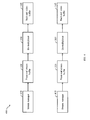
- FIG. 1 , 3 , and 4 show block diagrams of a part of electronic devices according to three embodiments of the invention.
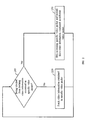
- FIG. 2 shows a flowchart of an exemplary method performed by the de-multiplexer shown in FIG. 1 .
- FIG. 1 , 3 , and 4 show block diagrams of a part of electronic devices according to various embodiments of the invention.
- Any of the electronic devices 100, 300, and 400 of these embodiments can process, e.g. decompress and then display, a video stream.
- the electronic device 100/300/400 can be a television, a set-top box, an optical disc player, a media player, a desktop computer, a laptop computer, a tablet computer, a smart phone, or a video game console.
- the video stream may comprise a plurality of subordinate video streams, e.g. elementary streams, therein.
- the subordinate video streams and other non-visual information can be interleaved together to form the video stream.
- the subordinate video streams can correspond to a plurality of individual videos of a plurality of different channels (or virtual channels), or correspond to a plurality of views of a multiview video.
- the video stream can be a stereoscopic interleaved file (ssif) stream having a main view elementary stream and a sub-view elementary stream.
- the main view elementary stream may be independent from the sub-view elementary stream and can be displayed without referring to the sub-view elementary stream; the sub-view may be dependent to the main view elementary stream and can be decoded by referring to the main view elementary stream.
- one of the subordinate video streams can correspond to the main view elementary stream while the other of the subordinate video streams can correspond to the sub-view elementary stream.
- a video stream can give a viewer an impression that he or she is watching a three dimensional video, in which different parts of a scene can have different visual depths.
- there can be more than two subordinate video streams the following explanation will mention only a first subordinate video stream and a second subordinate video stream of the video stream for the sake of brevity.
- the electronic device 100/300/400 may fetch the video stream from a storage medium (such as a hard disk, an optical disc, or a flash memory) or receive the video stream from a network (such as a telecommunications network, an intranet, or the Internet). Rather than processing the video stream entirely at once, the electronic device 100/300/400 processes the video stream piece by piece.
- the video stream may comprise a plurality of successive data units. Each of the data units can be a packet that has a payload section for carrying information; different packets may have different sizes.
- the electronic device 100/300/400 may retain some data units of the video stream for processing, and discard a retained packet for releasing space of the buffer once it's no longer needed. The electronic device 100/300/400 can then use the released or free space to store other newly received data units of the video stream.
- the electronic device 100 of this embodiment includes a stream manager 110, a front-end stream buffer 120, a de-multiplexer 130, a first back-end video buffer 140, and a second back-end video buffer 145. Other components of the electronic device 100 are omitted from FIG. 1 for the sake of simplicity.
- the stream manager 110 receives the video stream from a storage medium or a network. Then the stream manager 110 passes the video stream to the front-end stream buffer 120 piece by piece, e.g. one packet after another. Each of the piece/packet may also be referred to as a data unit.
- the front-end stream buffer 120 stores a packet it receives from the stream manager 110 until the packet or the information contained therein has been fetched, e.g. by the de-multiplexer 130. The front-end stream buffer 120 can then use the free space to buffer another packet of the video stream newly received from the stream manager 110.
- the de-multiplexer 130 fetches video information of video packets buffered in the front-end stream buffer 120 and passes the fetched video information to the back-end video buffers 140 and 145. Specifically, from the front-end stream buffer 120, the de-multiplexer 130 fetches video information of video packets belonging to the first subordinate video stream successively and passes the fetched video information to the first back-end video buffer 140.Also the de-multiplexer 130 fetches video information of video packets belonging to the second subordinate video stream successively and passes the fetched video information to the second back-end video buffer 145.
- the de-multiplexer 130 determines whether the packet belongs to the first or second subordinate video stream by using a packet identifier ("packet ID") or other information associated with each packet buffered in the front-end stream buffer 120.
- packet ID packet identifier
- the de-multiplexer 130 fetches video information of a video packet buffered in the front-end stream buffer 120, the video packet may be, but needs not always be, the oldest video packet buffered in the front-end stream buffer 120. In other words, among all the video packets buffered in the front-end stream buffer 120, the fetched video packet may be, but needs not always be, the one that enters the front-end stream buffer 120 the earliest.
- the de-multiplexer 130 can constitute a single functional block, or comprises multiple subordinate functional blocks, each for fetching one of the subordinate video streams.
- one of the subordinate functional blocks can be a first subordinate de-multiplexer while the other can be a second subordinate de-multiplexer.
- the first subordinate de-multiplexer fetches, from the front-end stream buffer 120, video information of video packets belonging to the first subordinate video stream successively and passes the fetched video information to the first back-end video buffer 140.
- the second subordinate de-multiplexer fetches, from the front-end stream buffer 120, video information of video packets belonging to the second subordinate video stream successively and passes the fetched video information to the second back-end video buffer.
- the first back-end video buffer 140 buffers a plurality of data units of the first subordinate video stream it receives from the de-multiplexer 130.
- the second back-end video buffer 145 buffers a plurality of data units of the second subordinate video stream it receives from the de-multiplexer 130.
- a processor, which is not depicted in FIG. 1 of the electronic device 100 can process, e.g. decompress and then display, the video information buffered in the two buffers 140 and 145.
- the processor controls the first back-end video buffer 140 to discard the first data unit of the first subordinate video stream so as to release or free (make it available for use) the buffer space for buffering another data unit of the first subordinate video stream.
- the processor controls the second back-end video buffer 145 to discard the second data unit of the first subordinate video stream so as to release or free (make it available for use) the buffer space for buffering another data unit of the second subordinate video stream.
- the first back-end video buffer 140 and the second back-end video buffer 145 are first-in-first-out (FIFO) memories.
- FIG. 2 shows a flowchart of an exemplary method performed by the de-multiplexer 130 of FIG. 1 .
- the de-multiplexer 130 may prevent deadlock from occurring while not requiring the size of either the first back-end video buffer 140 or the second back-end video buffer 145 or both to be extended.
- the de-multiplexer 130 determines whether it is blocked from fetching video information buffered in the front-end stream buffer 120. If the answer is no, it enters step 220; otherwise, it enters step 230.
- the de-multiplexer 130 can firstly determine whether a specific video packet, e.g. an oldest video packet, belongs to the first or second subordinate video stream by checking the packet ID or other information associated with this packet. Among all the video packets currently buffered in the front-end stream buffer 120, an oldest video packet is the one that enters the front-end stream buffer 120 the earliest. If the specific video packet belongs to the first subordinate video stream, the de-multiplexer 130 checks whether the first back-end video buffer 140 has sufficient space for buffering the video information of this specific video packet.
- a specific video packet e.g. an oldest video packet
- the de-multiplexer 130 determines that it is not blocked from fetching the specific video packet and as a result enters step 220; otherwise, the de-multiplexer 130 determines that it is blocked from fetching the specific video packet and as a result enters step 230.
- the de-multiplexer 130 checks whether the second back-end video buffer 145 has sufficient space for buffering the video information of the specific video packet. If the answer is yes, the de-multiplexer 130 determines that it is not blocked and as a result enters step 220; otherwise, the de-multiplexer 130 determines that it is blocked from fetching the specific video packet and as a result enters step 230.
- the de-multiplexer 130 can perform step 210 after the first back-end video buffer 140 or the second back-end video buffer 145 has already discarded some of the no-longer-needed video information buffered therein and therefore making some space to be available for further buffering.
- the de-multiplexer 130 fetches the video information of the specific video packet buffered in the front-end stream buffer 120 and passes the fetched information to the first back-end video buffer 140 or the second back-end video buffer 145, whichever is suitable for buffering the video information. Specifically, if this specific video packet belongs to the first subordinate video stream, the de-multiplexer 130 passes the video information contained therein to the first back-end video buffer 140; if this specific video packet belongs to the second subordinate video stream, the de-multiplexer 130 passes the video information contained therein to the second back-end video buffer 145. This specific video packet is then discarded from the front-end stream buffer 120. After step 220, the de-multiplexer 130 can then go back to step 210 to deal with a subsequent video packet.
- the de-multiplexer may enter into a deadlock. For example, the de-multiplexer keeps waiting for processing a video packet, e.g. an oldest video packet, stored in the front-end buffer, but it has been stocked due to no enough space in the full occupied back-end buffer.
- the processor may have no choice but either to extent the back-end buffer size or to discard some video information retained in the first back-end video buffer or the second back-end video buffer in order to release some space for the video information of the oldest video packet buffered in the front-end stream buffer.
- Step 230 of the invention may allow the electronic device 100 to resolve the potential deadlock without discarding some video information retained in the first back-end video buffer 140 or the second back-end video buffer 145 prematurely.
- the de-multiplexer 130 would fetches video packets buffered in the front-end stream buffer 120 sequentially. In other words, before fetching the oldest video packet, it would not fetch any other video packet from the front-end stream buffer 120.
- the de-multiplexer 130 of this embodiment is different from the conventional one.
- the de-multiplexer 130 instead of insisting on fetching the video information of a specific video packet when being blocked from doing so, the de-multiplexer 130 fetches video information of a different video packet (i.e. a newly accessed video packet). For example, this newly accessed video packet and the skipped specific video packet may belong to different views and the newly accessed video packet may be the oldest among its kind buffered in the front-end stream buffer 120.
- the newly accessed video packet fetched at this step can be on the second view and may be the oldest second view video packet buffered in the front-end stream buffer 120. If the specific video packet is on the second view, the newly accessed video packet fetched at step 230 can be on the first view and may be the oldest first view video packet buffered in the front-end stream buffer 120. Afterwards, this newly accessed video packet may be discarded from the front-end stream buffer 120.
- the de-multiplexer 130 can then go back to step 210 to fetch video information in other video packet or to see whether it can now deal with the skipped specific video packet that is still buffered in the front-end stream buffer 120. This time, the de-multiplexer 130 may no longer be blocked from fetching the video information of the skipped specific video packet.
- the video information of the newly accessed video packet fetched at step 230 may be referenced by video information retained in the first back-end video buffer 140 or the second back-end video buffer 145, whichever has no sufficient space remaining.
- the video information fetched at step 230 may allow the retained referencing video information to be processed (e.g. decoded) and then discarded.
- step 230 may allow the electronic device 100 to resolve the potential deadlock without requiring the first back-end video buffer 140 or the second back-end video buffer 145 to discard video information prematurely.
- the electronic device 100 achieves this result without sacrificing a viewer's video-watching experience.
- the potential deadlock may be resolved in a cost-efficient manner because the capacity of neither the first back-end video buffer 140 nor the second back-end video buffer 145 needs to be extended.
- the electronic device 300 of this embodiment includes a stream manager 310, a first front-end stream buffer 320, a second front-end stream buffer 325, a first de-multiplexer 330, a second de-multiplexer 335, a first back-end video buffer 140, and a second back-end video buffer 145.
- Other components of the electronic device 300 are omitted from FIG. 3 for the sake of simplicity.
- the stream manager 310 passes the video stream to both the first front-end stream buffer 320 and the second front-end stream buffer 325 piece by piece, e.g. one packet after another. Specifically, whenever there is a new packet, the stream manager 310 passes the packet to not only the first front-end stream buffer 320 but also the second front-end stream buffer 325.
- the packet can belong to either the first subordinate video stream or the second subordinate video stream, or comprises non-visual information.
- the front-end stream buffer 320/325 retains a packet it receives from the stream manager 310 until the packet or the information contained therein has been fetched, e.g. by the de-multiplexer 330/335 or after it's determined that the packet can be discarded.
- the front-end stream buffer 320/325 can then use the released space to buffer another packet of the video stream newly received from the stream manager 310.
- the de-multiplexer 330/335 fetches video information of video packets belonging to the first/second subordinate video stream from the front-end stream buffer 320/325 successively and passes the fetched video information to the back-end video buffers 140/145. Specifically, if a specific packet buffered in the first front-end stream buffer 320 belongs to the first subordinate video stream, the first de-multiplexer 330 fetches the video information contained therein and passes the fetched video information to the first back-end video buffer 140; this specific video packet is then discarded from the first front-end stream buffer 320.
- the first de-multiplexer 330 lets this video packet discarded from the first front-end stream buffer 320.
- the second de-multiplexer 335 fetches the video information contained therein and passes the fetched video information to the second back-end video buffer 145; this specific video packet is then discarded from the second front-end stream buffer 325.
- the second de-multiplexer 335 lets this specific packet discarded from second front-end stream buffer 325.
- the de-multiplexer 330/335 can use the packet ID or other information associated with a packet to determine whether the packet belongs to the first or second subordinate video stream.
- the functions of the first back-end video buffer 140 and the second back-end video buffer 145 shown in FIG. 3 are similar to the functions of their counterparts in FIG. 1 . Therefore, repetitive explanation is omitted herein.
- the electronic device 400 of this embodiment is different from the embodiment show in FIG 3 in that the former includes two stream managers, including a first stream manager 410 and a second stream manager 415. Furthermore, the first stream manager 410 passes the video stream to the first front-end stream buffer 320 packet by packet, and the second stream manager 415 passes the video stream to the second front-end stream buffer 325 packet by packet. Because there are two stream managers, the electronic device 400 may need to access the source file of the video stream twice. For example, if the electronic device 400 fetches the video stream from a storage medium, it may need to read each section of the storage medium twice. If the electronic device 400 receives the video stream from a network, it may need to receive each packet of the video stream from the network twice.
- the former includes two stream managers, including a first stream manager 410 and a second stream manager 415. Furthermore, the first stream manager 410 passes the video stream to the first front-end stream buffer 320 packet by packet, and the second stream manager 415 passes the video stream to the second front-end stream buffer 3
- the electronic device 300/400 may prevent deadlocks from occurring.
- the electronic device 300 if the first de-multiplexer 330 is blocked from fetching video information of a specific video packet buffered in the first front-end stream buffer 320 because the first back-end video buffer 140 does not have sufficient space remaining and cannot discard any information buffered therein, the second de-multiplexer 335 may still be able to pass video information belonging to the second subordinate video stream to the second back-end video buffer 145 (as long as this buffer has sufficient space remaining).
- the video information newly passed to the second back-end video buffer 145 may be referenced by other video information buffered in the first back-end video buffer 140, and hence may cause the referencing video information to be processed and then discarded from the first back-end video buffer 140.
- the first back-end video buffer 140 which originally had no sufficient space remaining, may now have spared space for the video information of the specific video packet buffered in the first front-end stream buffer 320. Therefore, the blockage is not an actual deadlock but only a brief blockage, and the first back-end video buffer 140 needs not discard video information retained therein prematurely.
- the blockage may be brief and the second back-end video buffer 145 may not be forced to discard video information retained therein prematurely. While having the aforementioned advantages, the electronic device 300/400 does not require the length of either the first back-end video buffer 140 or the second back-end video buffer 145 or both to be extended.
Landscapes
- Engineering & Computer Science (AREA)
- Multimedia (AREA)
- Signal Processing (AREA)
- Two-Way Televisions, Distribution Of Moving Picture Or The Like (AREA)
Applications Claiming Priority (1)
| Application Number | Priority Date | Filing Date | Title |
|---|---|---|---|
| US13/760,076 US9148647B2 (en) | 2013-02-06 | 2013-02-06 | Electronic devices and methods for processing video streams |
Publications (2)
| Publication Number | Publication Date |
|---|---|
| EP2765785A1 true EP2765785A1 (de) | 2014-08-13 |
| EP2765785B1 EP2765785B1 (de) | 2018-01-03 |
Family
ID=47912818
Family Applications (1)
| Application Number | Title | Priority Date | Filing Date |
|---|---|---|---|
| EP13000830.3A Not-in-force EP2765785B1 (de) | 2013-02-06 | 2013-02-19 | Elektronische Vorrichtungen und Verfahren zur Verarbeitung von Videoströmen |
Country Status (3)
| Country | Link |
|---|---|
| US (1) | US9148647B2 (de) |
| EP (1) | EP2765785B1 (de) |
| CN (1) | CN103974083B (de) |
Families Citing this family (1)
| Publication number | Priority date | Publication date | Assignee | Title |
|---|---|---|---|---|
| US20160088079A1 (en) * | 2014-09-21 | 2016-03-24 | Alcatel Lucent | Streaming playout of media content using interleaved media players |
Citations (4)
| Publication number | Priority date | Publication date | Assignee | Title |
|---|---|---|---|---|
| EP0713341A2 (de) * | 1994-11-18 | 1996-05-22 | Sanyo Electric Co. Ltd | Bilddekodierer mit Steuerung der Rate der kodierten Bilddaten |
| US6654500B1 (en) * | 1997-12-29 | 2003-11-25 | Lg Electronics Inc. | MPEG video decoding system and overflow processing method thereof |
| US20040066846A1 (en) * | 2002-10-07 | 2004-04-08 | Kugjin Yun | Data processing system for stereoscopic 3-dimensional video based on MPEG-4 and method thereof |
| US20120075421A1 (en) * | 2010-04-06 | 2012-03-29 | Sony Corporation | Image data transmission device, image data transmission method, and image data receiving device |
Family Cites Families (8)
| Publication number | Priority date | Publication date | Assignee | Title |
|---|---|---|---|---|
| JP3427416B2 (ja) * | 1993-05-25 | 2003-07-14 | ソニー株式会社 | 多重化データ分離装置および方法 |
| EP0686973B1 (de) * | 1993-12-18 | 2002-10-16 | Sony Corporation | Datenwiedergabevorrichtung und datenaufzeichnungsmedium |
| US5898695A (en) * | 1995-03-29 | 1999-04-27 | Hitachi, Ltd. | Decoder for compressed and multiplexed video and audio data |
| GB0428155D0 (en) * | 2004-12-22 | 2005-01-26 | British Telecomm | Buffer underflow prevention |
| US20090122875A1 (en) * | 2005-03-07 | 2009-05-14 | Koninklijke Philips Electronics, N.V. | Buffering of video stream data |
| US7751436B2 (en) * | 2005-05-24 | 2010-07-06 | Sony Corporation | System and method for dynamically establishing PLL speed based on receive buffer data accumulation for streaming video |
| JP5307545B2 (ja) * | 2006-09-11 | 2013-10-02 | パナソニック株式会社 | 画像復号化装置、画像復号化方法、画像復号化システム、及びシステムlsi |
| WO2012037713A1 (en) * | 2010-09-20 | 2012-03-29 | Mediatek Singapore Pte. Ltd. | Method for performing display management regarding three-dimensional video stream, and associated video display system |
-
2013
- 2013-02-06 US US13/760,076 patent/US9148647B2/en not_active Expired - Fee Related
- 2013-02-19 EP EP13000830.3A patent/EP2765785B1/de not_active Not-in-force
-
2014
- 2014-01-23 CN CN201410032596.3A patent/CN103974083B/zh not_active Expired - Fee Related
Patent Citations (4)
| Publication number | Priority date | Publication date | Assignee | Title |
|---|---|---|---|---|
| EP0713341A2 (de) * | 1994-11-18 | 1996-05-22 | Sanyo Electric Co. Ltd | Bilddekodierer mit Steuerung der Rate der kodierten Bilddaten |
| US6654500B1 (en) * | 1997-12-29 | 2003-11-25 | Lg Electronics Inc. | MPEG video decoding system and overflow processing method thereof |
| US20040066846A1 (en) * | 2002-10-07 | 2004-04-08 | Kugjin Yun | Data processing system for stereoscopic 3-dimensional video based on MPEG-4 and method thereof |
| US20120075421A1 (en) * | 2010-04-06 | 2012-03-29 | Sony Corporation | Image data transmission device, image data transmission method, and image data receiving device |
Non-Patent Citations (1)
| Title |
|---|
| ISOVIC D ET AL: "Timing constraints of MPEG-2 decoding for high quality video: misconceptions and realistic assumptions", REAL-TIME SYSTEMS, 2003. PROCEEDINGS. 15TH EUROMICRO CONFERENCE ON 2-4 JULY 2003, PISCATAWAY, NJ, USA,IEEE, 2 July 2003 (2003-07-02), pages 73 - 82, XP010644819, ISBN: 978-0-7695-1936-4 * |
Also Published As
| Publication number | Publication date |
|---|---|
| EP2765785B1 (de) | 2018-01-03 |
| US9148647B2 (en) | 2015-09-29 |
| CN103974083B (zh) | 2017-10-27 |
| CN103974083A (zh) | 2014-08-06 |
| US20140218471A1 (en) | 2014-08-07 |
Similar Documents
| Publication | Publication Date | Title |
|---|---|---|
| US20110293240A1 (en) | Method and system for transmitting over a video interface and for compositing 3d video and 3d overlays | |
| EP2523461A1 (de) | Bildverarbeitungsvorrichtung, informationsaufzeichnungsmedium, bildverarbeitungsverfahren und programm | |
| US20130093786A1 (en) | Video thumbnail display device and video thumbnail display method | |
| KR20040073347A (ko) | 스크램블된 디지털 데이터의 기록 방법, 저장 매체 및 그데이터의 판독 방법 | |
| HUP0101843A2 (en) | Method of decoding packed videopictures and video decoder | |
| CN107426606B (zh) | 录制屏幕的方法、装置、电子设备和系统 | |
| US8659642B2 (en) | Stereoscopic video file format and computer readable recording medium in which stereoscopic video file is recorded according thereto | |
| CN106231225A (zh) | 一种网络硬盘录像机数据处理方法和系统 | |
| US20180376180A1 (en) | Method and apparatus for metadata insertion pipeline for streaming media | |
| JP2011124950A (ja) | 画像復号装置及び画像復号方法 | |
| US20100247079A1 (en) | Visual Information Storage Methods and Systems | |
| CN102792682B (zh) | 视频显示控制的方法,及相关视频处理电路与显示系统 | |
| US9148647B2 (en) | Electronic devices and methods for processing video streams | |
| US6466939B1 (en) | System and method for communicating video data in a digital media device | |
| US10104142B2 (en) | Data processing device, data processing method, program, recording medium, and data processing system | |
| JP4325194B2 (ja) | 記憶媒体へのアクセスを管理する装置及び方法 | |
| CN101630500A (zh) | 视频设备和用于逆向显示视频数据的方法 | |
| US11653039B2 (en) | Video stream batching | |
| EP1773043A1 (de) | Verfahren und System zur Speicherung von Datenpaketen | |
| US10063941B2 (en) | Method and apparatus for writing images into memory | |
| CN120956947B (zh) | 一种基于mp4的数据处理方法 | |
| CN111683283A (zh) | 电视节目的预约录制方法及装置、电视机 | |
| JP5678807B2 (ja) | 映像・音声データ処理装置およびデータ多重化方法 | |
| US9813689B2 (en) | Method for accelerated restitution of audio content and associated device | |
| US20150255119A1 (en) | Display apparatus and method for editing and displaying recorded video content |
Legal Events
| Date | Code | Title | Description |
|---|---|---|---|
| PUAI | Public reference made under article 153(3) epc to a published international application that has entered the european phase |
Free format text: ORIGINAL CODE: 0009012 |
|
| 17P | Request for examination filed |
Effective date: 20130219 |
|
| AK | Designated contracting states |
Kind code of ref document: A1 Designated state(s): AL AT BE BG CH CY CZ DE DK EE ES FI FR GB GR HR HU IE IS IT LI LT LU LV MC MK MT NL NO PL PT RO RS SE SI SK SM TR |
|
| AX | Request for extension of the european patent |
Extension state: BA ME |
|
| R17P | Request for examination filed (corrected) |
Effective date: 20150211 |
|
| RBV | Designated contracting states (corrected) |
Designated state(s): AL AT BE BG CH CY CZ DE DK EE ES FI FR GB GR HR HU IE IS IT LI LT LU LV MC MK MT NL NO PL PT RO RS SE SI SK SM TR |
|
| 17Q | First examination report despatched |
Effective date: 20151214 |
|
| GRAP | Despatch of communication of intention to grant a patent |
Free format text: ORIGINAL CODE: EPIDOSNIGR1 |
|
| INTG | Intention to grant announced |
Effective date: 20170901 |
|
| RIN1 | Information on inventor provided before grant (corrected) |
Inventor name: HUANG, KAN-LI Inventor name: LEE, YUEH-LUN Inventor name: HSIAO, TE-CHI Inventor name: PAN, CHIA-WEI |
|
| GRAS | Grant fee paid |
Free format text: ORIGINAL CODE: EPIDOSNIGR3 |
|
| GRAA | (expected) grant |
Free format text: ORIGINAL CODE: 0009210 |
|
| AK | Designated contracting states |
Kind code of ref document: B1 Designated state(s): AL AT BE BG CH CY CZ DE DK EE ES FI FR GB GR HR HU IE IS IT LI LT LU LV MC MK MT NL NO PL PT RO RS SE SI SK SM TR |
|
| REG | Reference to a national code |
Ref country code: GB Ref legal event code: FG4D |
|
| REG | Reference to a national code |
Ref country code: CH Ref legal event code: EP Ref country code: AT Ref legal event code: REF Ref document number: 961273 Country of ref document: AT Kind code of ref document: T Effective date: 20180115 |
|
| REG | Reference to a national code |
Ref country code: IE Ref legal event code: FG4D |
|
| REG | Reference to a national code |
Ref country code: DE Ref legal event code: R096 Ref document number: 602013031530 Country of ref document: DE |
|
| REG | Reference to a national code |
Ref country code: FR Ref legal event code: PLFP Year of fee payment: 6 |
|
| PGFP | Annual fee paid to national office [announced via postgrant information from national office to epo] |
Ref country code: GB Payment date: 20180104 Year of fee payment: 6 Ref country code: DE Payment date: 20180109 Year of fee payment: 6 |
|
| REG | Reference to a national code |
Ref country code: NL Ref legal event code: MP Effective date: 20180103 |
|
| REG | Reference to a national code |
Ref country code: LT Ref legal event code: MG4D |
|
| PGFP | Annual fee paid to national office [announced via postgrant information from national office to epo] |
Ref country code: FR Payment date: 20180226 Year of fee payment: 6 |
|
| REG | Reference to a national code |
Ref country code: AT Ref legal event code: MK05 Ref document number: 961273 Country of ref document: AT Kind code of ref document: T Effective date: 20180103 |
|
| PG25 | Lapsed in a contracting state [announced via postgrant information from national office to epo] |
Ref country code: NL Free format text: LAPSE BECAUSE OF FAILURE TO SUBMIT A TRANSLATION OF THE DESCRIPTION OR TO PAY THE FEE WITHIN THE PRESCRIBED TIME-LIMIT Effective date: 20180103 |
|
| PG25 | Lapsed in a contracting state [announced via postgrant information from national office to epo] |
Ref country code: ES Free format text: LAPSE BECAUSE OF FAILURE TO SUBMIT A TRANSLATION OF THE DESCRIPTION OR TO PAY THE FEE WITHIN THE PRESCRIBED TIME-LIMIT Effective date: 20180103 Ref country code: CY Free format text: LAPSE BECAUSE OF FAILURE TO SUBMIT A TRANSLATION OF THE DESCRIPTION OR TO PAY THE FEE WITHIN THE PRESCRIBED TIME-LIMIT Effective date: 20180103 Ref country code: FI Free format text: LAPSE BECAUSE OF FAILURE TO SUBMIT A TRANSLATION OF THE DESCRIPTION OR TO PAY THE FEE WITHIN THE PRESCRIBED TIME-LIMIT Effective date: 20180103 Ref country code: LT Free format text: LAPSE BECAUSE OF FAILURE TO SUBMIT A TRANSLATION OF THE DESCRIPTION OR TO PAY THE FEE WITHIN THE PRESCRIBED TIME-LIMIT Effective date: 20180103 Ref country code: HR Free format text: LAPSE BECAUSE OF FAILURE TO SUBMIT A TRANSLATION OF THE DESCRIPTION OR TO PAY THE FEE WITHIN THE PRESCRIBED TIME-LIMIT Effective date: 20180103 Ref country code: NO Free format text: LAPSE BECAUSE OF FAILURE TO SUBMIT A TRANSLATION OF THE DESCRIPTION OR TO PAY THE FEE WITHIN THE PRESCRIBED TIME-LIMIT Effective date: 20180403 |
|
| PG25 | Lapsed in a contracting state [announced via postgrant information from national office to epo] |
Ref country code: BG Free format text: LAPSE BECAUSE OF FAILURE TO SUBMIT A TRANSLATION OF THE DESCRIPTION OR TO PAY THE FEE WITHIN THE PRESCRIBED TIME-LIMIT Effective date: 20180403 Ref country code: AT Free format text: LAPSE BECAUSE OF FAILURE TO SUBMIT A TRANSLATION OF THE DESCRIPTION OR TO PAY THE FEE WITHIN THE PRESCRIBED TIME-LIMIT Effective date: 20180103 Ref country code: PL Free format text: LAPSE BECAUSE OF FAILURE TO SUBMIT A TRANSLATION OF THE DESCRIPTION OR TO PAY THE FEE WITHIN THE PRESCRIBED TIME-LIMIT Effective date: 20180103 Ref country code: RS Free format text: LAPSE BECAUSE OF FAILURE TO SUBMIT A TRANSLATION OF THE DESCRIPTION OR TO PAY THE FEE WITHIN THE PRESCRIBED TIME-LIMIT Effective date: 20180103 Ref country code: LV Free format text: LAPSE BECAUSE OF FAILURE TO SUBMIT A TRANSLATION OF THE DESCRIPTION OR TO PAY THE FEE WITHIN THE PRESCRIBED TIME-LIMIT Effective date: 20180103 Ref country code: SE Free format text: LAPSE BECAUSE OF FAILURE TO SUBMIT A TRANSLATION OF THE DESCRIPTION OR TO PAY THE FEE WITHIN THE PRESCRIBED TIME-LIMIT Effective date: 20180103 Ref country code: IS Free format text: LAPSE BECAUSE OF FAILURE TO SUBMIT A TRANSLATION OF THE DESCRIPTION OR TO PAY THE FEE WITHIN THE PRESCRIBED TIME-LIMIT Effective date: 20180503 Ref country code: GR Free format text: LAPSE BECAUSE OF FAILURE TO SUBMIT A TRANSLATION OF THE DESCRIPTION OR TO PAY THE FEE WITHIN THE PRESCRIBED TIME-LIMIT Effective date: 20180404 |
|
| REG | Reference to a national code |
Ref country code: CH Ref legal event code: PL |
|
| REG | Reference to a national code |
Ref country code: DE Ref legal event code: R097 Ref document number: 602013031530 Country of ref document: DE |
|
| PG25 | Lapsed in a contracting state [announced via postgrant information from national office to epo] |
Ref country code: RO Free format text: LAPSE BECAUSE OF FAILURE TO SUBMIT A TRANSLATION OF THE DESCRIPTION OR TO PAY THE FEE WITHIN THE PRESCRIBED TIME-LIMIT Effective date: 20180103 Ref country code: IT Free format text: LAPSE BECAUSE OF FAILURE TO SUBMIT A TRANSLATION OF THE DESCRIPTION OR TO PAY THE FEE WITHIN THE PRESCRIBED TIME-LIMIT Effective date: 20180103 Ref country code: MC Free format text: LAPSE BECAUSE OF FAILURE TO SUBMIT A TRANSLATION OF THE DESCRIPTION OR TO PAY THE FEE WITHIN THE PRESCRIBED TIME-LIMIT Effective date: 20180103 Ref country code: EE Free format text: LAPSE BECAUSE OF FAILURE TO SUBMIT A TRANSLATION OF THE DESCRIPTION OR TO PAY THE FEE WITHIN THE PRESCRIBED TIME-LIMIT Effective date: 20180103 Ref country code: AL Free format text: LAPSE BECAUSE OF FAILURE TO SUBMIT A TRANSLATION OF THE DESCRIPTION OR TO PAY THE FEE WITHIN THE PRESCRIBED TIME-LIMIT Effective date: 20180103 |
|
| PLBE | No opposition filed within time limit |
Free format text: ORIGINAL CODE: 0009261 |
|
| STAA | Information on the status of an ep patent application or granted ep patent |
Free format text: STATUS: NO OPPOSITION FILED WITHIN TIME LIMIT |
|
| REG | Reference to a national code |
Ref country code: IE Ref legal event code: MM4A |
|
| REG | Reference to a national code |
Ref country code: BE Ref legal event code: MM Effective date: 20180228 |
|
| PG25 | Lapsed in a contracting state [announced via postgrant information from national office to epo] |
Ref country code: LU Free format text: LAPSE BECAUSE OF NON-PAYMENT OF DUE FEES Effective date: 20180219 Ref country code: LI Free format text: LAPSE BECAUSE OF NON-PAYMENT OF DUE FEES Effective date: 20180228 Ref country code: SM Free format text: LAPSE BECAUSE OF FAILURE TO SUBMIT A TRANSLATION OF THE DESCRIPTION OR TO PAY THE FEE WITHIN THE PRESCRIBED TIME-LIMIT Effective date: 20180103 Ref country code: DK Free format text: LAPSE BECAUSE OF FAILURE TO SUBMIT A TRANSLATION OF THE DESCRIPTION OR TO PAY THE FEE WITHIN THE PRESCRIBED TIME-LIMIT Effective date: 20180103 Ref country code: CZ Free format text: LAPSE BECAUSE OF FAILURE TO SUBMIT A TRANSLATION OF THE DESCRIPTION OR TO PAY THE FEE WITHIN THE PRESCRIBED TIME-LIMIT Effective date: 20180103 Ref country code: SK Free format text: LAPSE BECAUSE OF FAILURE TO SUBMIT A TRANSLATION OF THE DESCRIPTION OR TO PAY THE FEE WITHIN THE PRESCRIBED TIME-LIMIT Effective date: 20180103 Ref country code: CH Free format text: LAPSE BECAUSE OF NON-PAYMENT OF DUE FEES Effective date: 20180228 |
|
| 26N | No opposition filed |
Effective date: 20181005 |
|
| PG25 | Lapsed in a contracting state [announced via postgrant information from national office to epo] |
Ref country code: IE Free format text: LAPSE BECAUSE OF NON-PAYMENT OF DUE FEES Effective date: 20180219 |
|
| PG25 | Lapsed in a contracting state [announced via postgrant information from national office to epo] |
Ref country code: BE Free format text: LAPSE BECAUSE OF NON-PAYMENT OF DUE FEES Effective date: 20180228 Ref country code: SI Free format text: LAPSE BECAUSE OF FAILURE TO SUBMIT A TRANSLATION OF THE DESCRIPTION OR TO PAY THE FEE WITHIN THE PRESCRIBED TIME-LIMIT Effective date: 20180103 |
|
| REG | Reference to a national code |
Ref country code: DE Ref legal event code: R119 Ref document number: 602013031530 Country of ref document: DE |
|
| GBPC | Gb: european patent ceased through non-payment of renewal fee |
Effective date: 20190219 |
|
| PG25 | Lapsed in a contracting state [announced via postgrant information from national office to epo] |
Ref country code: MT Free format text: LAPSE BECAUSE OF NON-PAYMENT OF DUE FEES Effective date: 20180219 Ref country code: GB Free format text: LAPSE BECAUSE OF NON-PAYMENT OF DUE FEES Effective date: 20190219 Ref country code: DE Free format text: LAPSE BECAUSE OF NON-PAYMENT OF DUE FEES Effective date: 20190903 |
|
| PG25 | Lapsed in a contracting state [announced via postgrant information from national office to epo] |
Ref country code: FR Free format text: LAPSE BECAUSE OF NON-PAYMENT OF DUE FEES Effective date: 20190228 |
|
| PG25 | Lapsed in a contracting state [announced via postgrant information from national office to epo] |
Ref country code: TR Free format text: LAPSE BECAUSE OF FAILURE TO SUBMIT A TRANSLATION OF THE DESCRIPTION OR TO PAY THE FEE WITHIN THE PRESCRIBED TIME-LIMIT Effective date: 20180103 |
|
| PG25 | Lapsed in a contracting state [announced via postgrant information from national office to epo] |
Ref country code: PT Free format text: LAPSE BECAUSE OF FAILURE TO SUBMIT A TRANSLATION OF THE DESCRIPTION OR TO PAY THE FEE WITHIN THE PRESCRIBED TIME-LIMIT Effective date: 20180103 Ref country code: HU Free format text: LAPSE BECAUSE OF FAILURE TO SUBMIT A TRANSLATION OF THE DESCRIPTION OR TO PAY THE FEE WITHIN THE PRESCRIBED TIME-LIMIT; INVALID AB INITIO Effective date: 20130219 |
|
| PG25 | Lapsed in a contracting state [announced via postgrant information from national office to epo] |
Ref country code: MK Free format text: LAPSE BECAUSE OF NON-PAYMENT OF DUE FEES Effective date: 20180103 |