EP2767548A2 - Molécules IgG modifié - Google Patents
Molécules IgG modifié Download PDFInfo
- Publication number
- EP2767548A2 EP2767548A2 EP14155839.5A EP14155839A EP2767548A2 EP 2767548 A2 EP2767548 A2 EP 2767548A2 EP 14155839 A EP14155839 A EP 14155839A EP 2767548 A2 EP2767548 A2 EP 2767548A2
- Authority
- EP
- European Patent Office
- Prior art keywords
- igg
- igg molecule
- fcrn
- domain
- fragment
- Prior art date
- Legal status (The legal status is an assumption and is not a legal conclusion. Google has not performed a legal analysis and makes no representation as to the accuracy of the status listed.)
- Withdrawn
Links
Images




Classifications
-
- C—CHEMISTRY; METALLURGY
- C07—ORGANIC CHEMISTRY
- C07K—PEPTIDES
- C07K16/00—Immunoglobulins [IG], e.g. monoclonal or polyclonal antibodies
-
- C—CHEMISTRY; METALLURGY
- C07—ORGANIC CHEMISTRY
- C07K—PEPTIDES
- C07K16/00—Immunoglobulins [IG], e.g. monoclonal or polyclonal antibodies
- C07K16/18—Immunoglobulins [IG], e.g. monoclonal or polyclonal antibodies against material from animals or humans
- C07K16/28—Immunoglobulins [IG], e.g. monoclonal or polyclonal antibodies against material from animals or humans against receptors, cell surface antigens or cell surface determinants
- C07K16/2863—Immunoglobulins [IG], e.g. monoclonal or polyclonal antibodies against material from animals or humans against receptors, cell surface antigens or cell surface determinants against receptors for growth factors, growth regulators
-
- C—CHEMISTRY; METALLURGY
- C07—ORGANIC CHEMISTRY
- C07K—PEPTIDES
- C07K2317/00—Immunoglobulins specific features
- C07K2317/20—Immunoglobulins specific features characterized by taxonomic origin
- C07K2317/21—Immunoglobulins specific features characterized by taxonomic origin from primates, e.g. man
-
- C—CHEMISTRY; METALLURGY
- C07—ORGANIC CHEMISTRY
- C07K—PEPTIDES
- C07K2317/00—Immunoglobulins specific features
- C07K2317/40—Immunoglobulins specific features characterized by post-translational modification
- C07K2317/41—Glycosylation, sialylation, or fucosylation
-
- C—CHEMISTRY; METALLURGY
- C07—ORGANIC CHEMISTRY
- C07K—PEPTIDES
- C07K2317/00—Immunoglobulins specific features
- C07K2317/50—Immunoglobulins specific features characterized by immunoglobulin fragments
- C07K2317/52—Constant or Fc region; Isotype
-
- C—CHEMISTRY; METALLURGY
- C07—ORGANIC CHEMISTRY
- C07K—PEPTIDES
- C07K2317/00—Immunoglobulins specific features
- C07K2317/50—Immunoglobulins specific features characterized by immunoglobulin fragments
- C07K2317/52—Constant or Fc region; Isotype
- C07K2317/524—CH2 domain
-
- C—CHEMISTRY; METALLURGY
- C07—ORGANIC CHEMISTRY
- C07K—PEPTIDES
- C07K2317/00—Immunoglobulins specific features
- C07K2317/50—Immunoglobulins specific features characterized by immunoglobulin fragments
- C07K2317/52—Constant or Fc region; Isotype
- C07K2317/526—CH3 domain
-
- C—CHEMISTRY; METALLURGY
- C07—ORGANIC CHEMISTRY
- C07K—PEPTIDES
- C07K2317/00—Immunoglobulins specific features
- C07K2317/70—Immunoglobulins specific features characterized by effect upon binding to a cell or to an antigen
- C07K2317/72—Increased effector function due to an Fc-modification
-
- C—CHEMISTRY; METALLURGY
- C07—ORGANIC CHEMISTRY
- C07K—PEPTIDES
- C07K2317/00—Immunoglobulins specific features
- C07K2317/90—Immunoglobulins specific features characterized by (pharmaco)kinetic aspects or by stability of the immunoglobulin
- C07K2317/92—Affinity (KD), association rate (Ka), dissociation rate (Kd) or EC50 value
Definitions
- the present invention relates to immunoglobulin molecules and in particular, modified immunoglobulin G (IgG) molecules with amino acid substitutions conferring improved characteristics.
- IgG immunoglobulin G
- Immunoglobulin G constitutes the most prevalent immunoglobin class in the serum of humans and other mammals. Several subclasses (or isotypes) of IgG exist in different species. In rat, IgG molecules belong to subclasses IgG1, IgG2a, IgG2b or IgG2c. The murine subclasses of IgG are IgG1, IgG2a, IgG2b and IgG3. Humans also have four subclasses of IgG: IgG1; IgG2; IgG3; and IgG4.
- IgGs are maintained at remarkably constant levels in the serum. If IgG homeostasis is disturbed, then pathology due to too high (hypergammaglobunemia) or too low (hypogammaglobunemia) can result.
- MHC major histocompatibility complex
- FcRn major histocompatibility complex
- This receptor most likely acts as a salvage receptor, and this would be consistent with its known ability to transcytose IgGs in intact form across the neonatal gut (Wallace and Rees, 1980; Rodewald and Kraehenbuhl, 1984) and yolk sac (Roberts et al, 1990; Israel et al, 1995) or placenta (Kristoffersen and Matre, 1996; Simister et al, 1996; Leach et al, 1996; Firan et al, 2001).
- the FcRn interaction site within the Fc domain of IgG molecules encompasses three spatially close loops comprised of sequences that are distal in the primary amino acid sequence.
- the central role of Fc histidines in building this site accounts for the marked pH-dependence (binding at pH 6.0, release at pH 7.2-7.4) of the Fc-FcRn interaction (Rodewald and Kraehenbuhl, 1984; Raghavan et al, 1995; Popov et al, 1996), as the pKa of one of the imidazole protons lies in this pH range.
- Fc fragments comprising the Fc and hinge region
- Fc fragments or IgGs with increased affinity for binding to FcRn have been engineered (Ghetie et al, 1997; Shields et al, 2001; Hinton et al, 2004) and these molecules have increased serum persistence in mice (Ghetie et al, 1997) or cynomologous monkeys (Hinton et al, 2004).
- WO2006/130834 describes mutant IgG1 molecules having His433 changed to Lys and Asn434 changed to Phe, while Tyr436 is retained. These IgG1 molecules show a 6-fold higher binding affinity for human FcRn relative to wild-type, and retain pH-dependent binding to FcRn.
- Immunoglobulin Fc domains are also of great interest for the purposes of studying the mechanisms of antibody interactions with further molecules of the immune system. These include, depending on the class of antibody, interactions with complement, and binding to specific receptors on other cells, including macrophages, neutrophils and mast cells. More detailed knowledge of the biology of Fc domains is important in understanding various molecular processes of the immune system, such as phagocytosis, antibody-dependent cell-mediated cytotoxicity (ADCC) and allergic reactions.
- ADCC antibody-dependent cell-mediated cytotoxicity
- the present invention relates to modified IgG molecules with an Fc domain or a fragment thereof derived from IgG2, IgG3 or IgG4, and having specific combinations of altered and wild-type amino acid residues.
- the modified IgG molecules exhibit increased binding affinity for FcRn, as compared with wild-type IgG molecules of the corresponding subclass.
- an IgG molecule comprising an Fc domain or a fragment thereof derived from IgG2, IgG3 or IgG4, wherein the Fc domain comprises Lys433, Phe434 and a wild-type amino acid residue at position 436.
- the Fc domain is preferably derived from IgG2, IgG3 or IgG4 of human origin.
- the IgG molecule includes Tyr436.
- the Fc domain is derived from IgG3, the IgG molecule includes Phe436.
- the IgG molecule may further comprise His435. The numbering of all amino acid residues within the Fc domain is in accordance with the EU numbering scheme.
- the Fc domain or fragment thereof may further comprise one or more of the following amino acid residues in any combination:- Tyr252, Thr254 and Glu256.
- the modified IgG molecule according to the present invention may take any form provided the required Fc domain or fragment thereof is incorporated into the molecule.
- the IgG molecule of the present invention is selected from the following:- a bivalent immunoglobulin; a single chain immunoglobulin; a full-length IgG heavy chain polypeptide; and a fragment of an IgG heavy chain polypeptide.
- the fragment may be the full-length Fc domain of the IgG heavy chain polypeptide i.e. domains CH2 and CH3.
- the fragment may be at least 40, at least 50, at least 60, at least 70, at least 80, at least 90, at least 100, at least 110, at least 120, at least 130, at least 140, at least 150, at least 160, at least 170, at least 180, at least 190 or at least 200 amino acids in length.
- Any fragment should include at least amino acid residues 397 to 436 of the Fc domain of IgG according to EU numbering.
- the modified IgG molecules according to the present invention may be derived from human IgG2, IgG3 or IgG4 immunoglobulins.
- the IgG molecule may include an Fv domain, or epitope-binding fragment thereof and therefore be capable of binding to an antigen, for example a pathogen antigen, or a toxin or other antibodies such as autoimmune or anti-transplant antibodies.
- an antigen for example a pathogen antigen, or a toxin or other antibodies such as autoimmune or anti-transplant antibodies.
- IgG molecules according to the present invention may be used as "delivery modules" through conjugation to further agents, for example therapeutic and/or diagnostic agents.
- the IgG molecules for conjugation are as defined above, and may in particular be a full-length Fc domain or fragment thereof.
- Suitable therapeutic agents may be selected from the following:- anti-bacterial; anti-viral and anti-toxin agents.
- Suitable diagnostic agents may be selected from a fluorescent label, a chemiluminescent label, a radiolabel, or a chromophore.
- the IgG molecules as described herein may be formulated as a medicament for administration to a subject in need thereof.
- a pharmaceutical composition comprising an IgG molecule as defined in the first aspect of the invention, and a pharmaceutically acceptable buffer, carrier, diluent or excipient.
- the IgG molecules or pharmaceutical compositions may be formulated for administration or delivery to a subject via an epithelium that expresses FcRn.
- the epithelium may be selected from the bronchial, intestinal or pulmonary epithelium.
- kits for therapy utilising the IgG molecules according to the first aspect of the invention or the pharmaceutical compositions according to the second aspect of the invention are provided herein.
- methods of therapy include a method of treating an autoimmune disease or disorder, a method of treating infection with a pathogenic agent, and a method of treating cancer.
- Such methods involve administering to a subject in need thereof an effective amount of an IgG molecule or a pharmaceutical composition comprising the same according to the present invention.
- a chimeric protein comprising an IgG molecule as defined in the first aspect of the invention.
- the present invention concerns IgG molecules modified so as to have improved characteristics. Improved characteristics include but are not limited to improved binding to the FcRn receptor, increased serum half life, improved distribution to certain tissues including skin, muscle and brain and/or improved transplacental transfer or transport across other cellular barriers, as compared with wild-type or native IgG molecules.
- the invention also concerns the generation of modified IgG molecules that have the ability to block FcRn function by virtue of enhanced binding to FcRn. More specifically, the invention is exemplified by the production of various mutant IgG molecules having a beneficial combination of altered and wild-type residues within the Fc domain.
- the IgG molecules of the invention comprise an Fc domain or a fragment thereof derived from an IgG molecule belonging to IgG subclasses 2, 3 or 4.
- the IgG molecule from which the Fc domain derives may be of murine or rat origin, but is preferably derived from IgG2, IgG3 or IgG4 of human origin.
- the Fc domain of the IgG molecules of the invention comprises the following amino acid residues: Lys433; Phe434; and a wild-type amino acid residue at position 436 based on the EU numbering scheme for IgG molecules.
- wild-type amino acid residue means the amino acid located at position 436 in the naturally-occurring IgG molecule from which the Fc domain or fragment thereof derives.
- position 436 is a Tyrosine
- position 436 is a Phenylalanine.
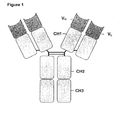
- Native antibody or immunoglobulin molecules typically have a structure as depicted in Figure 1 with two identical heavy polypeptide chains of molecular weight 53,000-70,000 Da and two identical light polypeptide chains of molecular weight approximately 23,000 Da. The four chains are linked by disulphide bonds so as to form a "Y" configuration. Each heavy chain and each light chain has a variable domain (V H and V L ), and hypervariable regions within these domains can combine to create two sites of antigen recognition.
- the heavy chains and light chains also include constant domains, and the heavy chain has three constant domains (C H ) identified as CH1, CH2 and CH3.
- the Fc domain of an immunoglobulin consists of the second and third C H domains (CH2-CH3) and is typically recognised by effector molecules of the immune system and cells carrying Fc receptors.
- the IgG molecules of the present invention comprise an Fc domain derived from IgG2, IgG3 or IgG4, preferably wherein the IgG2, IgG3 or IgG4 is of human origin.
- IgG molecules of the present invention may comprise a fragment of an Fc domain derived from IgG2, IgG3 or IgG4, wherein a fragment is defined as a region of the Fc domain including at least residues 433-436 and comprising at least 40, at least 50, at least 60, at least 70, at least 80, at least 90, at least 100, at least 110, at least 120, at least 130, at least 140, at least 150, at least 160, at least 170, at least 180, at least 190 or at least 200 amino acids taken from the Fc domain of the originating IgG molecule.
- the minimum region of the Fc domain included in the fragment should be from amino acid residues 397 to 436
- IgG molecule insofar as it is used to describe modified IgG molecules according to the present invention is to be construed broadly so as to include a bivalent immunoglobulin; a single chain immunoglobulin; a full-length IgG heavy chain polypeptide; and a fragment of an IgG heavy chain polypeptide.
- a fragment of an IgG heavy chain polypeptide means a fragment having a length of at least 40, at least 50, at least 60, at least 70, at least 80, at least 90, at least 100, at least 110, at least 120, at least 130, at least 140, at least 150, at least 160, at least 170, at least 180, at least 190 or at least 200 amino acids.
- a fragment of an IgG heavy chain polypeptide may comprise a full-length Fc domain i.e. the CH2 and CH3 domains.
- any model must invoke a feedback system that is both sensitive and responsive to changes in serum IgG levels.
- transport of IgGs across cellular barriers is an important process in mediating protective humoral immunity, and is most likely closely related to the processes that regulate serum IgG levels.
- the features of an immunoglobulin molecule that determine stability and other properties in vivo have been the subject of much study.
- the current model for how IgG levels are regulated in the body is that the Fc receptor, FcRn, binds to IgGs and transports them within and across cells.
- the receptor FcRn has been isolated from duodenal epithelial brush borders of suckling rats (Rodewald and Kraehenbuhl, 1984; Simister and Rees, 1985) and the corresponding genes cloned for both human and mouse FcRn (Simister and Mostov, 1989a; Simister and Mostov, 1989b; Ahouse et al., 1993).
- This Fc receptor comprises a heterodimer of two polypeptides of 51 kDa and 14 kDa.
- the 14 kDa component is ⁇ 2-microglobulin and the 51 kDa component is homologous to the heavy chain of Class I MHC proteins.
- the protein can be expressed in high yields in recombinant form and has been analyzed by x-ray crystallography (Burmeister et al., 1994a; Burmeister et al., 1994b; Martin et al, 2001).
- FcRn orthologs have been isolated from multiple species including humans (e.g., Story et al., 1994; Kacskovics et al., 2000), indicating that FcRn is present across mammalian species.
- IgG binding to FcRn by naturally occurring IgG is pH dependent, with much tighter binding at pH 6.0 than at pH 7.2-7.4 (Raghavan et al., 1995; Popov et al, 1996; Zhou et al., 2003). In most cell types the pH at the cell surface is near neutral and as a result, non-permissive for FcRn-IgG interactions. IgGs are therefore taken into cells by fluid phase pinocytosis rather than receptor-mediated uptake. If, following uptake by fluid phase pinocytosis, IgGs do not bind to FcRn then they undergo lysosomal degradation (Ober et al., 2004b).
- FcRn is expressed at multiple sites throughout the body (e.g., endothelium, epithelium, monocytes, dendritic cells), and therefore serves not only to regulate IgG levels by acting as a salvage receptor (reviewed in Ghetie and Ward, 2000), but also plays a role in transporting IgG across cellular barriers (Antohe et al, 2001; McCarthy et al, 2000; Spiekerman et al, 2002; Dickinson et al, 1999; Kobayashi et al, 2002; Yoshida et al, 2004).
- IgG has the longest in vivo half life (Zuckier et al, 1990).
- the region of the IgG molecule that regulates serum persistence has been known for several decades to reside in the Fc fragment. This work, carried out initially by Spiegelberg and Weigle (1966) and later confirmed by many others (reviewed in Zuckier et al, 1990), indicated that the Fc fragment produced by proteolysis has the same in vivo half life as the complete IgG molecule.
- CH2 domain and to a lesser extent the CH3 domain, contain sequences that control the serum persistence of IgG molecules (Kim et al, 1994a; Pollock et al, 1990, Kim et al, 1994c).
- site-directed mutagenesis has been used to identify amino acid residues in the CH2-CH3 domain interface that are critical for the maintenance of serum IgGI levels in mice (Kim et al, 1994a; Medesan et al, 1997), and these studies therefore resulted in the precise localization of the FcRn binding site.
- mapping of the FcRn interaction site on IgG by site directed mutagenesis is also consistent with the high resolution X-ray crystallographic structure of rat FcRn complexed with rat Fc (IgG2a), which demonstrated that residues 252, 253, 254, 288, 307, 309, 310,311, 314, 348, 433, 434, 435, 436 and 439 of IgG make contact to varying extents with FcRn (including carbohydrate contacts of FcRn on Fc) (Martin et al, 2001).
- FcRn The region of the Fc that is involved in binding to FcRn (Kim et al., 1994a; Medesan et al., 1997; Martin et al., 2001) is distinct from the sites involved in binding Fc ⁇ RI, RII and RIII receptors (the "classical” FcRs), as these recognize sequences primarily located in the lower hinge region (Duncan et al, 1988; Lund et al, 1992; Sarmay et al, 1992; Jefferis et al, 1990; Canfield and Morrison, 1991; Wawrzynczak et al, 1992).
- the FcRn interaction site is distinct from the complement factor Clq binding site (Glu318, Lys320 and Lys322) (Wawrzynczak et al, 1992; Duncan and Winter, 1988). Thus, mutation of the FcRn interaction site should neither affect complement fixation nor binding to Fc ⁇ RI, RII and RIII.
- the present invention is concerned with IgG molecules comprising an Fc domain or fragment thereof derived from IgG2, IgG3 or IgG4 wherein the Fc domain comprises the particular combination of amino acid residues Lys433, Phe434 and a wild-type amino acid residue at position 436 (mutant/mutant/wild-type).
- the term "derived" refers to the origin of the sequence of the Fc domain and means that the Fc domain or fragment thereof has a sequence of amino acids corresponding to the sequence of amino acids found in the corresponding Fc domain of an IgG subclass selected from IgG2, IgG3 or IgG4.
- the IgG molecule from which the Fc domain or fragment thereof derives is of human origin.
- the IgG molecule is human IgG2 or IgG4
- the wild-type amino acid residue at position 436 is tyrosine.
- the IgG molecule is human IgG3, the wild-type amino acid residue at position 436 is phenylalanine.
- amino acid residue 435 may be further mutated to histidine wherein the IgG molecule is human IgG3.
- This combination provides for at least a 3-fold, typically a 4-6 fold increase in the affinity of IgG molecule binding to human FcRn at pH6.0 as compared with binding of the corresponding wild-type IgG to human FcRn at pH6.0. Binding of IgG molecules to FcRn at pH7.4 is largely unaffected therefore the pH dependence of the interaction between IgG and FcRn is retained for the modified IgG molecules according to the present invention. In addition, the affinity of binding to CD16 is not reduced for IgG molecules or antibodies incorporating the combination of mutations according to the present invention and therefore effector function is retained. This is important for the triggering of effector mechanisms such as antibody-dependent cell-mediated cytotoxicity (ADCC) by the modified IgG molecules described herein.
- ADCC antibody-dependent cell-mediated cytotoxicity
- the modified IgG molecules of the invention may include one or more additional amino acid residues selected from:- Tyr252, Thr254 and Glu256.
- the invention also provides polynucleotide molecules encoding the modified IgG molecules of the invention, expression vectors containing these nucleotide sequences operably linked to regulatory sequences which permit expression of the IgG molecules in a host cell or cell-free expression system, and host cells or cell-free expression systems containing these expression vectors.
- Polynucleotide molecules encoding the modified IgGs of the invention include, for example, recombinant DNA molecules.
- the terms "nucleic acid”, “polynucleotide” or a “polynucleotide molecule” are used herein interchangeably and refer to any DNA or RNA molecule, either single- or double-stranded and, if single-stranded, the molecule of its complementary sequence.
- nucleic acid molecules a sequence or structure of a particular nucleic acid molecule may be described herein according to the normal convention of providing the sequence in the 5' to 3' direction.
- nucleic acids or polynucleotides are "isolated.”
- This term when applied to a nucleic acid molecule, refers to a nucleic acid molecule that is separated from sequences with which it is immediately contiguous in the naturally occurring genome of the organism in which it originated.
- an "isolated nucleic acid” may comprise a DNA molecule inserted into a vector, such as a plasmid or virus vector, or integrated into the genomic DNA of a prokaryotic or eukaryotic cell or non-human host organism.
- An isolated polynucleotide may further represent a molecule produced directly by biological or synthetic means and separated from other components present during its production.
- recombinant polynucleotide encoding the IgG molecule may be prepared (using standard molecular biology techniques) and inserted into a replicable vector for expression in a chosen host cell, or a cell-free expression system.
- Suitable host cells may be prokaryote, yeast, or higher eukaryote cells, specifically mammalian cells. Expression vectors suitable for use in each of these host cells are also generally known in the art.
- host cell generally refers to a cultured cell line (prokaryote or eukaryote). Whole human beings into which an expression vector encoding an IgG molecule according to the invention has been introduced are explicitly excluded from the definition of a "host cell”.
- the mutagenesis of polynucleotides encoding IgG Fc regions can be performed using site-specific or site-directed mutagenesis.
- Site-specific mutagenesis is a technique useful in the preparation of individual proteins or peptides, or biologically functional equivalent proteins or peptides, through specific mutagenesis of the underlying DNA.
- the technique further provides a ready ability to prepare and test sequence variants, incorporating one or more of the foregoing mutations, by introducing one or more nucleotide sequence changes into the DNA.
- Site-specific mutagenesis allows the production of mutants through the use of specific oligonucleotide sequences which encode the DNA sequence of the desired mutation, as well as a sufficient number of adjacent nucleotides, to provide a primer sequence of sufficient size and sequence complexity to form a stable duplex on both sides of the deletion junction being traversed.
- a primer of about 17 to 25 nucleotides in length is preferred, with about 5 to 10 residues on both sides of the junction of the sequence being altered.
- the technique of site-specific mutagenesis is well known in the art.
- the technique can employ a bacteriophage vector that exists in both a single stranded and double stranded form.
- Typical vectors useful in site-directed mutagenesis include vectors such as the M13 phage. These phage vectors are commercially available and their use is generally well known to those skilled in the art.
- Double stranded plasmids are also routinely employed in site directed mutagenesis, using the PCRTM, which eliminates the step of transferring the gene of interest from a phage to a plasmid.
- site-directed mutagenesis is performed by first obtaining a single-stranded vector, or melting of two strands of a double stranded vector which includes within its sequence a DNA sequence encoding the desired protein.
- An oligonucleotide primer bearing the desired mutated sequence is synthetically prepared.
- This primer is then annealed with the single-stranded DNA preparation, and subjected to DNA polymerizing enzymes such as E. coli polymerase I Klenow fragment, in order to complete the synthesis of the mutation-bearing strand.
- E. coli polymerase I Klenow fragment DNA polymerizing enzymes
- a heteroduplex is formed wherein one strand encodes the original non-mutated sequence and the second strand bears the desired mutation.
- This heteroduplex vector is then used to transform appropriate cells, such as E. coli cells, and clones are selected that include recombinant vectors bearing the mutated sequence arrangement.
- PCRTM directed mutagenesis of double-stranded DNA can be used.
- Such mutants may be readily prepared by, for example, directly synthesizing the Fc fragment by application of nucleic acid reproduction technology, such as the PCRTM technology of U.S. Patent 4,603,102 (incorporated herein by reference).
- sequence variants of the selected gene using site-directed mutagenesis is provided as a means of producing potentially useful species and is not meant to be limiting, as there are other ways in which sequence variants of genes may be obtained.
- recombinant vectors encoding the desired gene may be treated with mutagenic agents, such as hydroxylamine, to obtain sequence variants.
- the modified IgG molecules according to the present invention exhibit enhanced binding affinity for human FcRn and as a result, are likely to persist longer in serum than wild-type IgGs.
- the present invention provides a method for increasing the serum half life of an IgG molecule by providing a modified IgG molecule having an Fc domain or fragment thereof derived from IgG2, IgG3 or IgG4 comprising any of the combinations of amino acid residues described above.
- an antibody or antibody-based molecule or conjugate may be altered. It also provides a means by which the longevity of a particular antibody may be increased if desired, by re-inserting residues such as Ile253, His310, His435 and His436, should any such residues be found to be mutated in a particular antibody, e.g., IgG2b. Importantly, random mutagenesis of residues flanking these key amino acids, followed by selection, may yield an Fc fragment with increased serum half life ( U.S. Patent 6,277,375 ; Ghetie et al, 1997; Hinton et al, 2004).
- IgG2 is changed to Lys
- Asn434 is changed to Phe
- position 436 is retained in its wild-type form in the Fc domain of IgG2, IgG3 or IgG4, modified IgG molecules including such a domain or a fragment thereof show at least a 3-fold, typically a 4-6 fold higher binding affinity for human FcRn relative to wild-type IgG molecules belonging to the corresponding subclass from which the Fc domain derives.
- the pH dependence of IgG-FcRn binding is retained, and binding to CD16 is not reduced as compared with wild-type IgG molecules, indicating that effector functions of antibodies incorporating this combination of mutations will be retained.
- the claimed invention is broadly applicable to an almost unlimited number of therapeutic uses for the treatment of diseases or disorders, including but not limited to treatment of infectious diseases, autoimmunity, cancer and transplant rejection, as detailed in section 11 below.
- the present invention is also directed to methods for increasing IgG clearance rates in a subject and methods of blocking FcRn function in a subject comprising providing to said subject a modified IgG molecule according to the first aspect of the invention.
- FcRn salvages IgG molecules from degradation and transports these molecules within and across cells. Blocking of FcRn binding to IgGs might therefore be desirable in situations where pathogenic antibodies (e.g., autoreactive) are present, or where an antibody is being used to clear a toxic drug or toxin from the body. Exposure to toxins such as snake venom can be treated with anti-venom antibodies. Similarly, overdoses with drugs such as digoxin are currently treated with anti-digoxin Fab fragments (DigiFabTM). Following delivery of the antibody and complex formation with the toxin or drug, it might be desirable to induce rapid clearance of antibody-toxin complexes from the body. The current invention describes a modality of inducing rapid clearance of such complexes.
- pathogenic antibodies e.g., autoreactive
- DigiFabTM anti-digoxin Fab fragments
- Modified IgG molecules according to the present invention may also be used as FcRn blocking agents to clear other types of undesirable antibodies from the circulation, for example antibodies that exhibit anti-drug properties.
- Administration of such blocking antibodies prior to or during administration of a therapeutic agent may be used to clear antibodies that neutralize the effects of such therapeutic agents from the circulation, so as to improve efficacy.
- the modified IgG molecules according to the present invention bind FcRn with higher affinity than wild-type IgG molecules and can therefore be used as FcRn blocking antibodies.
- FcRn blocking antibodies have a large number of therapeutic uses for the treatment of disease or disorders, including but not limited to the treatment of autoimmunity or blockade of the transfer of pathogenic antibodies from mother to young.
- the modified IgG molecules according to the present invention may be formulated as pharmaceutical compositions suitable for administration to a subject, in particular a human subject.
- the pharmaceutical composition includes a pharmaceutically acceptable buffer, carrier, diluent or excipient.
- Suitable agents would be known to those skilled in the art, and include excipients for modifying conditions such as pH, osmolarity, taste, viscosity, sterility, lipophilicity, solubility etc.
- Suitable agents with which the modified IgG molecules may be combined include surfactants or surface tension lowering agents, excipients that improve physiochemical stability or caking agents that promote freeze drying.
- compositions described herein may be formulated in any suitable dosage form for any suitable route of delivery.
- suitable dosage forms include solid dosage forms, for example, tablets, capsules, powders, dispersible granules, cachets and suppositories, including sustained release and delayed release formulations. Tablets, powders, cachets and capsules are all suitable dosage forms for oral administration.
- Liquid dosage forms include solutions, suspensions and emulsions.
- Liquid form preparations may be administered by intravenous, intracerebral, intraperitoneal, parenteral or intramuscular injection or infusion.
- Sterile injectable formulations may comprise a sterile solution or suspension of the active agent in a non-toxic, pharmaceutically acceptable diluent or solvent. Suitable diluents and solvents include sterile water, Ringer's solution and isotonic sodium chloride solution, etc.
- Liquid dosage forms also include solutions or sprays for intranasal administration.
- Aerosol preparations suitable for inhalation may include solutions and solids in powder form, which may be combined with a pharmaceutically acceptable carrier, such as an inert compressed gas.
- a pharmaceutically acceptable carrier such as an inert compressed gas.
- the pharmaceutical composition may be formulated for mucosal delivery, for example, formulated for intranasal administration.
- the pharmaceutical composition may be formulated for delivery via a tissue or epithelium that expresses FcRn.
- the epithelium may be selected from bronchial, intestinal or pulmonary epithelium.
- the binding of IgG molecules to FcRn expressed by particular tissues of the body may enhance the delivery and/or accumulation of the modified IgG molecules at certain sites, including muscle, skin and brain.
- modified IgG molecules and pharmaceutical compositions as described herein may be used for a variety of different therapeutic applications.
- Therapeutic antibodies represent a major class of therapeutic agents used for the treatment of a variety of different diseases including cancer, Rheumatoid arthritis, Crohn's disease, asthma and a number of immunological disorders. Many therapeutic antibodies are already approved for use in the clinic, and many more are in the developmental pipeline. Therapeutic antibodies are typically monoclonal antibodies of murine or human origin. Murine therapeutic antibodies are frequently engineered so as to reduce their immunogenicity in humans, for example by antibody chimerization or humanization.
- therapeutic antibodies may be produced and used as full-length immunoglobulin molecules, many variants have been developed. These variants include, but are not limited to, bi-specific antibodies, which are typically single antibody molecules capable of specific binding to two different target antigens, antibody-drug conjugates (ADCs) and intrabodies (therapeutic antibodies that act on intracellular targets).
- ADCs antibody-drug conjugates
- intrabodies therapeutic antibodies that act on intracellular targets.
- modified IgG molecules of the present invention may be incorporated into any of the therapeutic antibody forms as defined above, and that would be known to a person skilled in the art, provided the therapeutic antibody comprises an Fc domain or fragment thereof.
- Modified IgG molecules according to the present invention comprising an Fc domain or fragment thereof derived from IgG2, IgG3 or IgG4 wherein the Fc domain comprises the particular combination of amino acid residues Lys433, Phe434 and a wild-type amino acid residue at position 436 (mutant/mutant/wild-type), retain effector function and are therefore capable of triggering effector mechanisms such as ADCC.
- Therapeutic antibodies are already used widely in the treatment of cancer, and many more anti-cancer antibodies are in pre-clinical and clinical development.
- the present invention provides methods of treating cancer using modified IgG molecules according to the present invention.
- Non-Hodgkin's lymphoma (anti-CD20; RituxanTM, ZevalinTM), metastatic breast cancer (anti-Her-2; HerceptinTM), acute myeloid leukemia (anti-CD33; MylotargTM), chronic lymphocytic leukemia (anti-CD52; CampathTM) and colon cancer (anti-VEGF: AvastinTM).
- Such antibodies would benefit from having an increased persistence in vivo, as this would result in the need for lower doses at less frequent intervals. Imaging of tumors with radiolabeled antibodies is also becoming increasingly common. The possibility of inducing the rapid clearance of an imaging agent from the body following imaging would be attractive as it would result in reduced radioactive burden.
- Modified IgG molecules according to the present invention may also be used as a means to influence the biodistribution of therapeutic antibodies following administration to the human body.
- improved binding to FcRn may facilitate delivery to and/or accumulation of therapeutic antibodies in certain tissues, for example, skin, muscle and brain
- the present invention also includes a method of treating infection with a pathogenic agent using the modified IgG molecules described herein.
- Antibodies incorporating the combinations of mutated and wild-type residues described elsewhere herein retain effector function, and therefore effector mechanisms such as ADCC may be important in reducing or eliminating infection.
- Possible pathogens that might be targeted include, but are not limited to, Bacillus anthracis, West Nile virus, cytomegalovirus and respiratory syncytial virus.
- a number of disease states can result in the production of excessive or aberrant (i.e., pathologic) immunoglobulins.
- the present invention may, in one embodiment, be used to treat such diseases.
- autoimmune disease or disorder comprising administering to a subject in need thereof an effective amount of a modified IgG molecule as described herein.
- the autoimmune diseases to be treated may be selected from those described below.
- SLE Systemic lupus erythematosus
- SLE is an autoimmune rheumatic disease characterized by deposition in tissues of autoantibodies and immune complexes leading to tissue injury (Kotzin, 1996).
- autoimmune diseases such as MS and type 1 diabetes mellitus
- SLE potentially involves multiple organ systems directly, and its clinical manifestations are diverse and variable (Reviewed by Kotzin and O'Dell, 1995).
- some patients may demonstrate primarily skin rash and joint pain, show spontaneous remissions, and require little medication.
- cytotoxic drugs such as cyclophosphamide
- More recently, treatment with rituximab (anti-CD20; a B cell marker) has been attempted.
- IgG antibodies to constituents of the cell nucleus, such as double-stranded DNA (dsDNA), single-stranded DNA (ssDNA), and chromatin.
- dsDNA double-stranded DNA
- ssDNA single-stranded DNA
- chromatin chromatin-binding protein
- IgG anti-dsDNA antibodies play a major role in the development of lupus glomerulonephritis (Tsao and Hahn, 1994; Ohnishi et al, 1994).
- Glomerulonephritis is a serious condition in which the capillary walls of the kidney's blood purifying glomeruli become thickened by accretions on the epithelial side of glomerular basement membranes. The disease is often chronic and progressive and may lead to eventual renal failure.
- RA Rheumatoid Arthritis
- IL-1 interleukin-1
- TNF- ⁇ tumour necrosis factor
- Sjögren's Syndrome is a systemic autoimmune disease in which the body's immune system mistakenly attacks its own moisture producing glands. Sjögren's is one of the most prevalent autoimmune disorders, striking as many as 4,000,000 Americans, with 90% of patients being women. The average age of onset is late 40's although Sjögren's occurs in all age groups in both women and men. About 50% of the time Sjögren's syndrome occurs alone, and 50% of the time it occurs in the presence of another connective tissue disease.
- Grave's Disease Marked by nervousness and overstimulation, Grave's disease is the result of an overactive thyroid gland (hyperthyroidism) due to production of autoreactive antibodies that recognize the thyroid stimulating hormone receptor. Thyroid hormones regulate metabolism and body temperature, and are essential for normal growth and fertility. But in excessive amounts, they can lead to the burn-out seen in this relatively common form of thyroid disease. It is unclear what triggers this problem, but the immune system is involved. In Grave's disease patients, they find antibodies specifically designed to stimulate the thyroid. In many cases, drugs that reduce thyroid output are sufficient to control the condition.
- surgery to remove all or part of the thyroid is needed.
- Surgery can also relieve some of the symptoms of Grave's disease. Bulging eyes, for example, can be corrected by creating enough extra space in the nearby sinus cavity to allow the eye to settle into a more normal position.
- Myasthenia Gravis The number of myasthenia gravis patients in the United States alone is estimated at .014% of the population, or approximately 36,000 cases; however, myasthenia gravis is likely under diagnosed. Myasthenia gravis is caused by autoreactive antibodies that recognize the acetylcholine (Ach) receptor.
- Ach acetylcholine
- Modified IgG molecules according to the present invention may also be used to prevent and/or treat graft rejection following tissue or organ transplant.
- Tissue and organ grafts though powerful tools for treating disease and injury, provoke powerful immune responses that can result in rapid graft rejection in the absence of immunosuppressive therapy.
- Pioneering studies conducted in the '40s and '50s established that allograft rejection was due to immune responses, later linked to T- lymphocytes.
- Specific immunological effector mechanisms responsible for graft rejection include cytotoxic T-cells, delayed-type hypersensitivity and antibody-dependent effects.
- Several therapeutic antibodies that target the T cell marker CD25 have been developed for the treatment of transplant rejection (e.g., ZenapaxTM, SimulectTM).
- antibodies of the IgG classes can be involved in transplant rejection ( Jordan, S. C. et al., 2005, Pediatric Transplantation, 9, 408-415 ). Blockade of FcRn by administration of modified IgG molecules according to the present invention might therefore be used to lower the levels of such deleterious antibodies during transplantation.
- the IgG molecules according to the present invention may be used as delivery modules, for example delivery modules attached or conjugated to a secondary agent to be delivered to a subject, preferably a human subject.
- the IgG molecules for conjugation are Fc domains or fragments thereof.
- Conjugation of the IgG molecule to the secondary agent may be direct or indirect, for example mediated by any suitable linker moiety known to a person skilled in the art.
- the secondary agent is a therapeutic or diagnostic agent to be administered to a subject.
- the therapeutic agent may be selected from any of the following:- an anti-bacterial anti-viral or anti-toxin agent.
- the diagnostic agent may be selected from a fluorescent label, a chemiluminescent label, a radiolabel or a chromophore.
- the present invention also relates to chimeric polypeptides or proteins comprising an IgG molecule according to the first aspect of the invention.
- chimeric polypeptide or protein refers to a polypeptide comprising a first amino acid sequence linked to a second amino acid sequence with which it is not naturally linked in nature.
- the amino acid sequences may normally exist in separate proteins that are brought together in the fusion polypeptide or they may normally exist in the same protein but are placed in a new arrangement in the fusion polypeptide.
- a chimeric polypeptide may be created, for example, by chemical synthesis, or by creating and translating a polynucleotide in which the peptide regions are encoded in the desired relationship.
- Chimeric polypeptides can be prepared using any art recognised means.
- the chimeric polypeptides are prepared using recombinant DNA techniques.
- the chimeric polypeptides are prepared by chemical synthesis.
- Modified IgG molecules according to the present invention may be incorporated into chimeric polypeptides or fusion proteins in order to stabilize the polypeptide or sequence of amino acid residues to which the IgG is attached.
- the modified IgG molecule incorporated into the chimeric polypeptide may take any of the forms described elsewhere herein including a full-length heavy chain polypeptide or a fragment thereof, particularly wherein the fragment is an Fc domain of a heavy chain polypeptide.
- the IgG molecules of the present invention may be incorporated into fusion proteins so as to produce biologically stable therapeutic agents e.g. agents having an extended half-life.
- the IgG molecules of the present invention may also be used to stabilize polypeptides to which they are attached for the purposes of improving the efficiency of expression, for example in mammalian expression systems.
- the modified IgG molecules of the present invention are therefore proposed to be useful modules for both the stabilization and delivery of recombinant molecules, including chimeric proteins of therapeutic use.
- the modified IgG molecules described herein may be incorporated into fusion proteins, particularly Fc fusion proteins called immunoadhesins.
- Immunoadhesins are chimeric, antibody-like molecules that combine the functional domain of a binding protein, for example a receptor, ligand, or cell-adhesion molecule with immunoglobulin Fc domains.
- Immunoadhesins incorporating the IgG molecules of the present invention may exhibit enhanced serum persistence and be beneficial in a number of therapeutic applications, as an alternative or in addition to therapeutic antibodies.
- FcRn Fc receptor
- the proposed mechanism of trans-intestinal transport is similar to that described above (Section 2), with the exception that the intestinal lumen is at a pH (6.0-6.5) permissive for FcRn-IgG interactions.
- FcRn on the lumenal side of intestinal epithelial cells binds IgG and the IgG-FcRn complexes are transported across the cell to the basolateral surface where exocytosis occurs into the bloodstream of the newborn rodent. Association of IgG with FcRn as it traffics through the cell is postulated to protect the IgG molecule from lysosomal degradation.
- the pH of the plasma results in release of the bound IgG into the circulation, consistent with the pH dependence of the FcRn-IgG interaction (Raghavan et al, 1995; Popov et al, 1996).
- Murine FcRn is expressed at high levels in both neonatal intestine and yolk sac (Ahouse et al., 1993), and an FcR that is structurally similar to FcRn has also been isolated from rat yolk sac (Roberts et al., 1993). These data strongly suggested that maternal-fetal and intestinal transport are carried out by FcRn, although the cellular location for IgG binding to FcRn appears to differ in the two processes (Roberts et al, 1993). Consistent with the involvement of FcRn, maternal IgGs are not transported to the developing fetus in mice that lack functional FcRn (Israel et al, 1995).
- yolk sac FcRn is located in vesicles in the apical and basolateral cytoplasm, and not on the lumenal surface of the yolk sac endodermal cells (Roberts et al, 1993).
- the difference in location is believed to be necessary because the pH of the lumen surrounding the yolk sac is slightly basic (Roberts et al, 1993), and the affinity of binding of FcRn to IgG is low at this pH (Raghavan et al, 1995; Popov et al, 1996); thus, it has been suggested that maternal IgG is taken up by the yolk sac cells in a nonspecific endocytic step and then binds to FcRn in a slightly acidic endosomal compartment. Delivery of IgG into the fetal circulation is then proposed to occur in a similar way to that of intestinal transcytosis (Roberts et al, 1993).
- the higher affinity IgGs should be able to out-compete the high concentrations of endogeneous IgGs (about 5 mg/ml in mice and 10 mg/ml in humans).
- blockade of FcRn function using engineered IgGs (or fragments thereof) might be useful in preventing the transfer of deleterious maternal antibodies to the fetus.
- FcRn was originally identified as the receptor that transports IgGs across the epithelial cells of neonatal intestine, where FcRn is highly expressed.
- FcRn is functionally active in adult epithelial cells of diverse origin such as intestinal, bronchial and kidney epithelium (Spiekerman et al, 2002; Dickinson et al, 1999; Kobayashi et al, 2002; Yoshida et al, 2004).
- FcRn can transport Fc-fusion proteins across bronchial epithelium (Spiekermann et al, 2002; Bitonti et al, 2004), and also plays a role in the delivery of antibody-antigen complexes across the gut (Yoshida et al, 2004). The latter process may play an important role in initiating immune responses against mucosal antigens. FcRn is therefore involved in transporting IgGs and their bound antigen (Yoshida et al, 2004) to diverse body sites throughout adult life.
- the current invention has relevance to the transporting function of FcRn.
- IgG molecules with improved binding properties for FcRn might be transported more efficiently across epithelia such as the adult intestinal epithelium or pulmonary epithelium, providing a route of delivery for therapeutic IgGs.
- IgGs that block FcRn function might be useful for the blockade of, for example, bronchial FcRn that might relate to the blockade of allergic responses.
- Such IgGs may be administered via the bronchial epithelium.
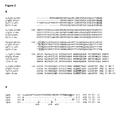
- H433K/N434F (referred to herein as the "HN" mutation) was introduced into the Fc domain of different IgG subclasses (IgG2, IgG3 and IgG4) fused to the VH and VL of an anti-cMet antibody (mAb MAB1).
- the constant domains (CH1+Fc) of IgG2, IgG3 and IgG4 were cloned into a mammalian expression vector, starting from hIgG2 whose cDNA was ordered at geneart ⁇ (GenBank: BC062335), pFUSE-CHIg-hG3 (Invivogen, cat# pfuse-hchg301) and pFUSE-CHIg-hG4 (Invivogen, cat# pfuse-hchg4) respectively, using PCR and specific primers.
- the HN mutation H433K/N434F (as described in Vaccaro C et al, PNAS, 103, 2006) was introduced in the CH3 of IgG2, IgG3 and IgG4 by conventional site directed mutagenesis.
- the primers used for IgG2 and IgG4 were:
- the primers were:
- HN2 H433K/N434F/R435H
- Position 435 of IgG3 has previously been found to influence binding to FcRn (Stapleton et al, Nature Communications 2:599, December 2011).
- variable domain of MAB1 (cMet specific mAb) was ligated into the constant domain of the different IgG variants (wild-type and HN/HN2 mutants) by PCR and conventional restriction sites.
- the final construct contains the signal peptide of the IgGkappa (MGWSCIILFLVATATGVHS) (SEQ ID NO: 24), the VH of MAB1 (anti-cMet) and the constant domains of the various IgG subclasses (CH1+hinge+Fc).
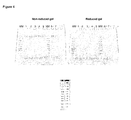
- a DNA midiprep (Qiagen) was prepared and the complete heavy chain constructs (IgG2, IgG3 and IgG4) with and without the introduced mutations (HN or HN2) were used in combination to the MAB1 light chain transient transfection of HEK293 cells and transiently express the various mAb MAB1. All the antibodies were expressed in 100mL production scale.
- IgG2-MAB1 18.5 2 IgG2-MAB1-HN 17.9 3 IgG3-MAB1 8.6 4 IgG3-MAB1-HN 7.3 5 IgG3-MAB1-HN2 11.5 6 IgG4-MAB1 25.9 7 IgG4-MAB1-HN 27.1
- the same variable region was used for all the mAbs, called MAB1.
- the functionality of the different purified mAbs was tested in a validated binding ELISA.
- a maxisorb plate was coated with 250ng/well decoy Met overnight at 4°C.
- Table 3 EC 50 values ( ⁇ g/mL) for the different mAbs mAb EC 50 ( ⁇ g/mL) IgG1-MAB1-P-HN 0,018 IgG2-MAB1 0,026 IgG2-MAB1-HN 0,028 IgG3-MAB1 0,016 IgG3-MAB1-HN 0,016 IgG3-MAB1-HN2 0,017 IgG4-MAB1 0,031 IgG4-MAB1-HN 0,036
- the HN mutation does not alter the binding activity of the antibody to the antigen (cMet).
- IgG2 (+/-HN), IgG3 (+/-HN)2) and IgG4 (+/-HN an EC 50 value of 0.026-0.028 ⁇ g/mL, 0.016-0.017 ⁇ g/mL and 0.031-0.036 ⁇ g/mL was obtained respectively.
- the EC 50 value for the control afucosylated (-P) IgG1 molecule with the -HN mutation (MAB1-P-HN) is 0.018 ⁇ g/mL and is in line with previous experiments (0.020-0.034 ⁇ g/mL).
- the obtained EC 50 values indicate that the different subclasses are very similar to each other and do have similar potencies.
- the IgG2 and IgG4 antibodies appear to have lost a little bit of potency but this is still between the 2-fold error range.
- a binding ELISA experiment was performed to test if the binding to CD16 of the IgG subclasses was affected by the introduction of the HN or HN2 mutation.
- a maxisorb plate was coated with 100ng/well neutravidin overnight at 4°C. After blocking with 1% casein in PBS, 25ng/well biotinylated CD16 (Sino Biological Inc, cat#10389-H27H1-B; diluted in PBS+0.1% casein) was added and incubated for 1h at room temperature on an orbital shaker.
- Figure 6 shows the results of the human CD16 ELISA for the different MAB1 mAbs.
- the obtained EC 50 values ( ⁇ g/mL) are shown in Table 4.
- EC 50 ( ⁇ g/mL) IgG1 (Synagis) 6.15 IgG1-MAB1-HN-P (afucosylated) 0.11 IgG2-MAB1 N.A. IgG2-MAB1-HN N.A. IgG3-MAB1 3.58 IgG3-MAB1-HN 1.56 IgG3-MAB1-HN2 1.26 IgG4-MAB1 N.A. IgG4-MAB1-HN N.A.
- the measured EC 50 values for IgG3 without or with the HN (or HN2) mutation vary between 1.26 and 3.58 ⁇ g/mL, respectively.
- the better affinity of the IgG3 to CD16 compared to a normal IgG1 is also expected since IgG3 is known to trigger more ADCC than IgG1.
- the addition of the HN or HN2 mutation seems to increase the binding to CD16 around 2.5-fold.
- the affinity measured in this experiment is in line with previous data on the normal IgG1-MAB1 (1.44-3.8 ⁇ g/mL), which could indicate just internal variation of the assay.
- the afucosylated IgG1-MAB1-HN-P with the-HN mutation was taken as a control and gives an EC 50 of 0.11 ⁇ g/mL which is in line with previous experiments. It was already reported that the afucosylated character of the antibody increases the affinity to human CD16.
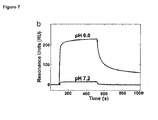
- HN mutations H433K/N434F have been reported to have increased affinity to human FcRn at pH6.0 but not at a pH7.2 and thereby increased half-life (Vaccaro C et al, PNAS, 103, 2006). It was described that the affinity to human FcRn for the HN mutant, measured with Surface Plasmon Resonance at pH6.0, was increased 15-fold compared to wild type IgG1 (34nM versus 528nM, Figure 7 ).
- the affinity was measured using Surface plasmon resonance (SPR) using the standard method used by Vaccaro et al. 750RU of each mAbs was immobilized on CM5 chips in NaAc buffer pH4.5 as shown in Table 5.
- SPR Surface plasmon resonance
- FcRn obtained from S. Ward and confirmed functional was added in 2-fold dilutions, starting at 4 ⁇ M, in pH6.0 with a flow rate of 10 ⁇ l/min.
- FcRn bound the different MAB1 variants (with and without HN) in a dose dependent fashion at pH6.
- the affinities (KD) were calculated after fitting the curves (steady-state fitting method) and showed an increased affinity (4.6 to 6.2-fold for the first experiment and 3.0 to 4.8-fold in the second experiments) for MAB1 (-P)-HN compared to MAB1 (Table 6).
- the coated CM5 chips were stored at 4°C for a month between the first and second measurement which could explain the lower FcRn binding (RUs) obtained in the second experiment, resulting in lower affinities and consequently a lower fold improved affinity of the HN mutated mAbs vs. the wild type mAbs.
- HN mutation improves the binding to FcRn 4 to 6-fold, to 140-160nM, at pH6.0 for all the IgG subclasses tested. It was increase 5.4 fold in IgG2 to 0.14 ⁇ M, 4.6 fold for IgG3 to 0.19 ⁇ M and 5.9 fold to 0.16 ⁇ M for IgG4.
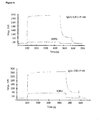
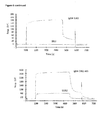
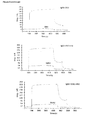
- Figure 8 shows the binding of the different MAB1 mAbs to 4 ⁇ M FcRn at both pH6.0 (upper line) and pH7.4 (lower line).
- a second set of modified IgG2 antibodies were generated, as described in Example 1 above for MAB1, using a second antibody, MAB2.
- MAB2 binds a different antigen to MAB1.
- the modified IgG2 antibodies were produced so as to contain:
- the affinities at pH6.0 were consistent between IgG2-MAB1 (+/-HN) and IgG2-MAB2 (+/-HN), which confirms that the mutations have the same effect on IgG2 molecules irrespective of the antigen binding characteristics of the antibody.
- hIgG2-HN-MST antibodies can function as FcRn blockers or "ABDEGs" (antibodies that enhance IgG degradation) to the same extent as has been shown for modified IgG1 antibodies (Vaccaro et al., 2005).
Landscapes
- Chemical & Material Sciences (AREA)
- Health & Medical Sciences (AREA)
- Organic Chemistry (AREA)
- Immunology (AREA)
- Medicinal Chemistry (AREA)
- Biophysics (AREA)
- General Health & Medical Sciences (AREA)
- Genetics & Genomics (AREA)
- Biochemistry (AREA)
- Molecular Biology (AREA)
- Proteomics, Peptides & Aminoacids (AREA)
- Life Sciences & Earth Sciences (AREA)
- Peptides Or Proteins (AREA)
- Micro-Organisms Or Cultivation Processes Thereof (AREA)
- Medicines Containing Antibodies Or Antigens For Use As Internal Diagnostic Agents (AREA)
- Medicines That Contain Protein Lipid Enzymes And Other Medicines (AREA)
Applications Claiming Priority (1)
| Application Number | Priority Date | Filing Date | Title |
|---|---|---|---|
| GBGB1302878.2A GB201302878D0 (en) | 2013-02-19 | 2013-02-19 | Modified igG molecules |
Publications (3)
| Publication Number | Publication Date |
|---|---|
| EP2767548A2 true EP2767548A2 (fr) | 2014-08-20 |
| EP2767548A3 EP2767548A3 (fr) | 2015-07-15 |
| EP2767548A9 EP2767548A9 (fr) | 2015-11-25 |
Family
ID=48048605
Family Applications (1)
| Application Number | Title | Priority Date | Filing Date |
|---|---|---|---|
| EP14155839.5A Withdrawn EP2767548A3 (fr) | 2013-02-19 | 2014-02-19 | Molécules IgG modifié |
Country Status (2)
| Country | Link |
|---|---|
| EP (1) | EP2767548A3 (fr) |
| GB (1) | GB201302878D0 (fr) |
Cited By (6)
| Publication number | Priority date | Publication date | Assignee | Title |
|---|---|---|---|---|
| US10538583B2 (en) | 2017-10-31 | 2020-01-21 | Staten Biotechnology B.V. | Anti-APOC3 antibodies and compositions thereof |
| EP3626738A1 (fr) * | 2013-12-24 | 2020-03-25 | Argenx BVBA | Antagonistes fcrn et procédés d'utilisation |
| US11091539B2 (en) | 2016-07-08 | 2021-08-17 | Staten Biotechnology B.V. | Anti-ApoC3 antibodies and methods of use thereof |
| US11242381B2 (en) | 2017-04-21 | 2022-02-08 | Staten Biotechnology B.V. | Anti-ApoC3 antibodies and methods of use thereof |
| US11248042B2 (en) | 2017-10-31 | 2022-02-15 | Staten Biotechnology B.V. | Polynucleotides encoding anti-ApoC3 antibodies |
| US12565538B2 (en) | 2022-06-15 | 2026-03-03 | argenx BV | FCRN/antigen-binding molecules and methods of use |
Citations (4)
| Publication number | Priority date | Publication date | Assignee | Title |
|---|---|---|---|---|
| US4603102A (en) | 1984-07-06 | 1986-07-29 | Agfa-Gevaert Aktiengesellschaft | Photographic silver halide recording material with cellulose dicarboxylic acid semiester particles in outer layer |
| US4843092A (en) | 1986-04-25 | 1989-06-27 | Hitoshi Shichi | Immunosuppressive agent |
| US6277375B1 (en) | 1997-03-03 | 2001-08-21 | Board Of Regents, The University Of Texas System | Immunoglobulin-like domains with increased half-lives |
| WO2006130834A2 (fr) | 2005-05-31 | 2006-12-07 | Board Of Regents, The University Of Texas System | Molecules d'immunoglobuline ayant des proprietes ameliorees |
Family Cites Families (4)
| Publication number | Priority date | Publication date | Assignee | Title |
|---|---|---|---|---|
| US6663862B1 (en) * | 1999-06-04 | 2003-12-16 | Duke University | Reagents for detection and purification of antibody fragments |
| EP2233500A1 (fr) * | 2009-03-20 | 2010-09-29 | LFB Biotechnologies | Variantes Fc optimisées |
| TWI667346B (zh) * | 2010-03-30 | 2019-08-01 | 中外製藥股份有限公司 | 促進抗原消失之具有經修飾的FcRn親和力之抗體 |
| SG11201401100UA (en) * | 2011-09-30 | 2014-07-30 | Chugai Pharmaceutical Co Ltd | Antigen-binding molecule inducing immune response to target antigen |
-
2013
- 2013-02-19 GB GBGB1302878.2A patent/GB201302878D0/en not_active Ceased
-
2014
- 2014-02-19 EP EP14155839.5A patent/EP2767548A3/fr not_active Withdrawn
Patent Citations (4)
| Publication number | Priority date | Publication date | Assignee | Title |
|---|---|---|---|---|
| US4603102A (en) | 1984-07-06 | 1986-07-29 | Agfa-Gevaert Aktiengesellschaft | Photographic silver halide recording material with cellulose dicarboxylic acid semiester particles in outer layer |
| US4843092A (en) | 1986-04-25 | 1989-06-27 | Hitoshi Shichi | Immunosuppressive agent |
| US6277375B1 (en) | 1997-03-03 | 2001-08-21 | Board Of Regents, The University Of Texas System | Immunoglobulin-like domains with increased half-lives |
| WO2006130834A2 (fr) | 2005-05-31 | 2006-12-07 | Board Of Regents, The University Of Texas System | Molecules d'immunoglobuline ayant des proprietes ameliorees |
Non-Patent Citations (67)
| Title |
|---|
| ANTOHE ET AL., HUMAN IMMUNOL, vol. 62, 2001, pages 93 - 105 |
| AREND; DAYER, ARTHRITIS RHEUM., vol. 38, 1995, pages 151 - 160 |
| BITONTI ET AL., PROC. NATL. ACAD. SCL, USA, vol. 101, 2004, pages 9763 - 9768 |
| BURMEISTER ET AL., NATURE, 1994, pages 336 - 343 |
| DALL' ACQUA ET AL., J. IMMUNOL, vol. 169, 2002, pages 5171 - 5180 |
| DICKINSON ET AL., J. CUN. INVEST., vol. 104, 1999, pages 903 - 911 |
| DINARELLO, INT. REV. IMMUNOL, vol. 16, 1998, pages 457 - 499 |
| EDELMAN ET AL., PROC. NATL. ACAD. SCL, USA, vol. 63, 1969, pages 78 - 85 |
| FIRAN ET AL., INT. IMMUNOL, vol. 13, no. 8, 2001, pages 993 - 1002 |
| FOOTE; WINTER, J. MOL. BIOL, vol. 224, 1992, pages 487 - 499 |
| GHETIE ET AL., EUR. J. IMMUNOL, vol. 26, no. 3, 1996, pages 690 - 696 |
| GHETIE ET AL., IMMUNOL TODAY, vol. 18, no. 12, 1997, pages 592 - 598 |
| GHETIE; WARD, ANMI. REF. IMMUNOL, vol. 18, 2000, pages 739 |
| HINTON ET AL., J. BIOL CHEM., vol. 279, 2004, pages 6213 - 6216 |
| HORTON ET AL., GENE, vol. 77, 1989, pages 61 - 68 |
| HUDSON; SOURIAU, NAT. MED., vol. 9, 2003, pages 129 - 134 |
| ISRAEL ET AL., IMMUNOL, vol. 89, 1996, pages 573 - 578 |
| ISRAEL ET AL., J. IMMUNOL, vol. 154, 1995, pages 6246 - 6251 |
| JORDAN, S. C. ET AL., PEDIATRIC TRANSPLANTATION, vol. 9, 2005, pages 408 - 415 |
| JUNGHANS; ANDERSON, PROC. NATL. ACAD. SCL USA, vol. 93, no. 11, 1996, pages 5512 - 5516 |
| KABAT ET AL.: "Sequences of proteins of immunological interest", 1991, U.S. DEPARTMENT OF HEALTH AND HUMAN SERVICES |
| KACSKOVICS ET AL., J. IMMUNOL, vol. 164, 2000, pages 1889 - 1897 |
| KIM ET AL., EUR. J. IMMUNOL, vol. 24, 1994, pages 2429 - 2434 |
| KIM ET AL., EUR. J. IMMUNOL, vol. 24, 1994, pages 542 - 548 |
| KIM ET AL., EUR. J. IMMUNOL, vol. 29, 1999, pages 2819 - 2825 |
| KIM ET AL., SCAND. J. IMMUNOL, vol. 40, 1994, pages 457 - 465 |
| KOBAYASHI ET AL., AM. J. PHYSIOL. RENAL PHYSIOL, vol. 282, 2002, pages F358 - F365 |
| KOTZIN, CELL, vol. 85, 1996, pages 303 - 306 |
| KOTZIN; O'DELL ET AL.: "Samler's Immunologic Diseases", 1995, pages: 667 - 697 |
| KRISTOFFERSEN; MATRE, EUR. J. IMMUNOL, vol. 26, no. 7, 1996, pages 1668 - 1671 |
| LEACH ET AL., J. IMMUNOL, vol. 157, 1996, pages 3317 - 3322 |
| LIPSKY ET AL.: "Harrison's principles of internal medicine", 1998, pages: 1880 - 1888 |
| MARTIN ET AL., MOL CELL, vol. 7, 2001, pages 867 - 877 |
| MARTIN ET AL., MOLECULAR CELL, vol. 7, 2001, pages 867 - 877 |
| MCCARTHY ET AL., J. CELL SCL, vol. 113, 2000, pages 1277 - 1285 |
| MEDESAN ET AL., EUR. J. IMMUNOL, vol. 26, 1996, pages 2533 - 2536 |
| MEDESAN ET AL., J. IMMUNOL, vol. 158, no. 5, 1997, pages 2211 - 2217 |
| OBER ET AL., INT. IMMUNOL, vol. 13, 2001, pages 1551 - 1559 |
| OBER ET AL., J. IMMUNOL, vol. 172, 2004, pages 2021 - 2029 |
| OBER ET AL., J. IMMUNOL, vol. 172, no. 4, 2004, pages 2021 - 2029 |
| OBER ET AL., PROC. NATL ACAD. SCL USA, vol. 101, no. 30, 2004, pages 11076 - I 1081 |
| OBER ET AL., PROC. NATL. ACAD. SCI, USA, vol. 101, 2004, pages 11076 - 11081 |
| OHNISHI ET AL., NEPHROL DIAL TRANSPLANT., vol. 9, 1994, pages 1747 - 1750 |
| POPOV ET AL., MOL IMMOL, vol. 33, 1996, pages 521 |
| RAGHAVAN ET AL., BIOCHEMISTRY, vol. 34, 1995, pages 14649 |
| ROBERTS ET AL., J. CELL BIOL, vol. 111, 1990, pages 1867 - 1876 |
| RODEWALD; KRAEHENBUHL, J. CELL BIOL, vol. 99, 1984, pages S159 - S164 |
| SHIELDS ET AL., J. BIOL. CHEM., vol. 276, 2001, pages 6591 - 6604 |
| SIMISTER ET AL., EUR. J. IMMUNOL, vol. 26, no. 7, 1996, pages 1527 - 1531 |
| SIMISTER, VACCINE, vol. 21, 2003, pages 3365 - 3369 |
| SPIEKERMANN ET AL., J. EXP. MED., vol. 196, no. 3, 2002, pages 303 - 310 |
| STAPLETON ET AL., NATURE COMMUNICATIONS, vol. 2, December 2011 (2011-12-01), pages 599 |
| STAPLETON NM ET AL., NATURE COMMUNICATION, December 2011 (2011-12-01) |
| STORY ET AL., J. EXP. MED, vol. 180, 1994, pages 2377 - 2381 |
| STROHL, CURRENT OPINION ON BIOTECHNOLOGY, vol. 20, 2009, pages 685 - 691 |
| TSAO; HAHN, INT REV IMMUNOL, vol. 11, no. 4, 1994, pages 305 - 320 |
| VACCARO C ET AL., PNAS, 2006, pages 103 |
| VACCARO C ET AL., PNAS, vol. 1 03, no. 49, 2006 |
| VACCARO ET AL., NAT. BIOTECH., vol. 23, 2005, pages 1283 - 1288 |
| VACCARO ET AL., PNAS, 2006 |
| VAN DEN BERG, SEMIN. ARTHRITIS RHEUM., vol. 30, no. 5S-2, 2001, pages 7 - 16 |
| VILCEK; FELDMANN, TRENDS IN PHARMACOLOGICAL SCIENCES, vol. 25, 2004, pages 201 - 209 |
| WALLACE; REES, BIOCHEM. J, vol. 188, 1980, pages 9 - 16 |
| WEST AP ET AL., BIOCHEMISTRY, vol. 39, 2000, pages 9698 - 9708 |
| YOSHIDA ET AL., IMMUNITY, vol. 20, 2004, pages 769 - 783 |
| ZHOU ET AL., J. MOL BIOL, vol. 332, 2003, pages 901 - 913 |
| ZHOU ET AL., J. MOL. BIOL, vol. 345, 2005, pages 1071 - 1081 |
Cited By (7)
| Publication number | Priority date | Publication date | Assignee | Title |
|---|---|---|---|---|
| EP3626738A1 (fr) * | 2013-12-24 | 2020-03-25 | Argenx BVBA | Antagonistes fcrn et procédés d'utilisation |
| US11091539B2 (en) | 2016-07-08 | 2021-08-17 | Staten Biotechnology B.V. | Anti-ApoC3 antibodies and methods of use thereof |
| US11242381B2 (en) | 2017-04-21 | 2022-02-08 | Staten Biotechnology B.V. | Anti-ApoC3 antibodies and methods of use thereof |
| US10538583B2 (en) | 2017-10-31 | 2020-01-21 | Staten Biotechnology B.V. | Anti-APOC3 antibodies and compositions thereof |
| US11248042B2 (en) | 2017-10-31 | 2022-02-15 | Staten Biotechnology B.V. | Polynucleotides encoding anti-ApoC3 antibodies |
| US11248041B2 (en) | 2017-10-31 | 2022-02-15 | Staten Biotechnology B.V. | Anti-ApoC3 antibodies |
| US12565538B2 (en) | 2022-06-15 | 2026-03-03 | argenx BV | FCRN/antigen-binding molecules and methods of use |
Also Published As
| Publication number | Publication date |
|---|---|
| EP2767548A9 (fr) | 2015-11-25 |
| EP2767548A3 (fr) | 2015-07-15 |
| GB201302878D0 (en) | 2013-04-03 |
Similar Documents
| Publication | Publication Date | Title |
|---|---|---|
| EP1896503B1 (fr) | ANTICORPS D'ISOTYPE IgG1 MUTÉS DANS LEUR PARTIE Fc AFIN D'AUGMENTER LEUR LIAISON AVEC LE FcRn ET LEUR UTILISATION | |
| CN112955461B (zh) | 针对Her2和CD3的同源二聚体型双特异性抗体及其用途 | |
| ES2726625T3 (es) | Variantes de Fc optimizadas | |
| EP3368562B1 (fr) | Anticorps neutralisant le virus syncytial respiratoire humain | |
| AU2013305885B2 (en) | Molecules with antigen binding and polyvalent Fc gamma receptor binding activity | |
| CN101952454B (zh) | 具有减弱的Fc配体亲和性的抗IFNAR1抗体 | |
| ES2846024T7 (es) | Proteínas de fusión de fragmentos de proteína humana para crear composiciones de Fc de inmunoglobulina multimerizada de forma ordenada con unión al complemento aumentada | |
| WO2020098734A1 (fr) | Anticorps anti-tigit et son utilisation | |
| JP2025121904A (ja) | Cd22及びcd3に結合する多重特異性重鎖抗体 | |
| JP2018166522A (ja) | 抗cd40抗体および使用方法 | |
| KR20190038607A (ko) | 조작된 폴리펩티드 및 그의 용도 | |
| JP2019503661A (ja) | Cd3とcd38とを結合するヘテロ二量体抗体 | |
| EP2767548A2 (fr) | Molécules IgG modifié | |
| JP2007525149A (ja) | 可溶性FcγR融合タンパク質およびその使用法 | |
| CN116847887A (zh) | 治疗自身免疫性疾病和癌症的方法和组合物 | |
| CN101124245A (zh) | 新生儿Fc受体(FcRn)-结合多肽变体、二聚体Fc结合蛋白及其相关方法 | |
| CN116234826A (zh) | Btla抗体 | |
| CN116096758A (zh) | 工程化免疫球蛋白 | |
| US12202888B2 (en) | High-affinity Mycobacterium tuberculosis capsule-specific human monoclonal antibody | |
| RU2795592C2 (ru) | Варианты fc с повышенным связыванием с fcrn и пролонгированным периодом полувыведения | |
| WO2026057545A1 (fr) | Anticorps anti-sting et leurs méthodes d'utilisation | |
| HK40092434A (zh) | Btla抗体 | |
| CN117377685A (zh) | 具有对Fc受体的增强的亲和力和改善的热稳定性的Fc变体 | |
| HK1185357A1 (en) | Modified antigen binding molecules with altered cell signaling activity | |
| HK1185357B (en) | Modified antigen binding molecules with altered cell signaling activity |
Legal Events
| Date | Code | Title | Description |
|---|---|---|---|
| PUAI | Public reference made under article 153(3) epc to a published international application that has entered the european phase |
Free format text: ORIGINAL CODE: 0009012 |
|
| 17P | Request for examination filed |
Effective date: 20140219 |
|
| AK | Designated contracting states |
Kind code of ref document: A2 Designated state(s): AL AT BE BG CH CY CZ DE DK EE ES FI FR GB GR HR HU IE IS IT LI LT LU LV MC MK MT NL NO PL PT RO RS SE SI SK SM TR |
|
| AX | Request for extension of the european patent |
Extension state: BA ME |
|
| PUAL | Search report despatched |
Free format text: ORIGINAL CODE: 0009013 |
|
| RIC1 | Information provided on ipc code assigned before grant |
Ipc: C07K 16/00 20060101AFI20150521BHEP Ipc: C07K 16/28 20060101ALN20150521BHEP |
|
| RIC1 | Information provided on ipc code assigned before grant |
Ipc: C07K 16/00 20060101AFI20150528BHEP Ipc: C07K 16/28 20060101ALN20150528BHEP |
|
| AK | Designated contracting states |
Kind code of ref document: A3 Designated state(s): AL AT BE BG CH CY CZ DE DK EE ES FI FR GB GR HR HU IE IS IT LI LT LU LV MC MK MT NL NO PL PT RO RS SE SI SK SM TR |
|
| AX | Request for extension of the european patent |
Extension state: BA ME |
|
| RAP1 | Party data changed (applicant data changed or rights of an application transferred) |
Owner name: ARGEN-X N.V. |
|
| STAA | Information on the status of an ep patent application or granted ep patent |
Free format text: STATUS: THE APPLICATION IS DEEMED TO BE WITHDRAWN |
|
| 18D | Application deemed to be withdrawn |
Effective date: 20160116 |