EP2768191A1 - Verfahren, vorrichtung und system zur interferenzausrichtung - Google Patents
Verfahren, vorrichtung und system zur interferenzausrichtung Download PDFInfo
- Publication number
- EP2768191A1 EP2768191A1 EP12851539.2A EP12851539A EP2768191A1 EP 2768191 A1 EP2768191 A1 EP 2768191A1 EP 12851539 A EP12851539 A EP 12851539A EP 2768191 A1 EP2768191 A1 EP 2768191A1
- Authority
- EP
- European Patent Office
- Prior art keywords
- interference
- signal
- acquire
- constellation
- aligned
- Prior art date
- Legal status (The legal status is an assumption and is not a legal conclusion. Google has not performed a legal analysis and makes no representation as to the accuracy of the status listed.)
- Granted
Links
Images




Classifications
-
- H—ELECTRICITY
- H04—ELECTRIC COMMUNICATION TECHNIQUE
- H04B—TRANSMISSION
- H04B7/00—Radio transmission systems, i.e. using radiation field
- H04B7/02—Diversity systems; Multi-antenna system, i.e. transmission or reception using multiple antennas
- H04B7/04—Diversity systems; Multi-antenna system, i.e. transmission or reception using multiple antennas using two or more spaced independent antennas
- H04B7/08—Diversity systems; Multi-antenna system, i.e. transmission or reception using multiple antennas using two or more spaced independent antennas at the receiving station
- H04B7/0837—Diversity systems; Multi-antenna system, i.e. transmission or reception using multiple antennas using two or more spaced independent antennas at the receiving station using pre-detection combining
-
- H—ELECTRICITY
- H04—ELECTRIC COMMUNICATION TECHNIQUE
- H04L—TRANSMISSION OF DIGITAL INFORMATION, e.g. TELEGRAPHIC COMMUNICATION
- H04L25/00—Baseband systems
- H04L25/02—Details ; arrangements for supplying electrical power along data transmission lines
- H04L25/03—Shaping networks in transmitter or receiver, e.g. adaptive shaping networks
- H04L25/03891—Spatial equalizers
-
- H—ELECTRICITY
- H04—ELECTRIC COMMUNICATION TECHNIQUE
- H04B—TRANSMISSION
- H04B7/00—Radio transmission systems, i.e. using radiation field
- H04B7/02—Diversity systems; Multi-antenna system, i.e. transmission or reception using multiple antennas
- H04B7/04—Diversity systems; Multi-antenna system, i.e. transmission or reception using multiple antennas using two or more spaced independent antennas
- H04B7/06—Diversity systems; Multi-antenna system, i.e. transmission or reception using multiple antennas using two or more spaced independent antennas at the transmitting station
- H04B7/0613—Diversity systems; Multi-antenna system, i.e. transmission or reception using multiple antennas using two or more spaced independent antennas at the transmitting station using simultaneous transmission
-
- H—ELECTRICITY
- H04—ELECTRIC COMMUNICATION TECHNIQUE
- H04L—TRANSMISSION OF DIGITAL INFORMATION, e.g. TELEGRAPHIC COMMUNICATION
- H04L25/00—Baseband systems
- H04L25/02—Details ; arrangements for supplying electrical power along data transmission lines
- H04L25/08—Modifications for reducing interference; Modifications for reducing effects due to line faults ; Receiver end arrangements for detecting or overcoming line faults
-
- H—ELECTRICITY
- H04—ELECTRIC COMMUNICATION TECHNIQUE
- H04L—TRANSMISSION OF DIGITAL INFORMATION, e.g. TELEGRAPHIC COMMUNICATION
- H04L27/00—Modulated-carrier systems
- H04L27/32—Carrier systems characterised by combinations of two or more of the types covered by groups H04L27/02, H04L27/10, H04L27/18 or H04L27/26
- H04L27/34—Amplitude- and phase-modulated carrier systems, e.g. quadrature-amplitude modulated carrier systems
- H04L27/3488—Multiresolution systems
-
- H—ELECTRICITY
- H04—ELECTRIC COMMUNICATION TECHNIQUE
- H04L—TRANSMISSION OF DIGITAL INFORMATION, e.g. TELEGRAPHIC COMMUNICATION
- H04L25/00—Baseband systems
- H04L25/02—Details ; arrangements for supplying electrical power along data transmission lines
- H04L25/03—Shaping networks in transmitter or receiver, e.g. adaptive shaping networks
- H04L25/03006—Arrangements for removing intersymbol interference
- H04L2025/0335—Arrangements for removing intersymbol interference characterised by the type of transmission
- H04L2025/03375—Passband transmission
- H04L2025/0342—QAM
Definitions
- the present invention relates to the field of radio communications technologies, and in particular, to a method, an apparatus, and a system for interference alignment.
- a broadcast feature of nodes in a radio network communications system inevitably causes co-channel interference to signals simultaneously transmitted in a same frequency band.
- Introduction of a multi-antenna system greatly increases difficulty and complexity of an anti-interference algorithm.
- channel interference may be a main bottleneck that restricts system performance.
- An interference alignment method is a new method for processing co-channel interference.
- a transmit end converts information to a signal to be transmitted by performing two steps: channel encoding and modulation, and a receive end aligns an interference signal and then directly maps the interference signal to the signal to be transmitted which greatly increases complexity of signal demodulation and decoding at the receive end.
- Embodiments of the present invention provide a method, an apparatus, and a system for interference alignment to reduce complexity of signal encoding and decoding at a signal receive end while removing interference.
- an interference alignment method includes:
- an interference removal method includes:
- a signal receive end includes:
- an interference signal transmit end includes:
- an interference alignment system includes:
- interference signals are demodulated and decoded step by step after being aligned, so that the interference signals are removed.
- this reduces the complexity of signal demodulation and decoding at the receive end.
- An interference signal and a wanted signal in the embodiments of the present invention are relative to different receive ends.
- a certain signal is an interference signal to a receive end in the embodiments of the present invention but is a wanted signal to a receive end of the signal.
- An interference alignment method provided by an embodiment of the present invention, as shown in FIG. 1 includes the following steps:
- interference signals are demodulated and decoded step by step after being aligned, so that the interference signals are removed.
- this reduces the complexity of signal demodulation and decoding at the receive end.
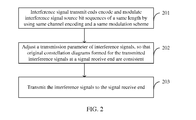
- An interference alignment method provided by another embodiment of the present invention, as shown in FIG. 2 includes the following steps:
- multiple interference signals are encoded and modulated by using same channel encoding and a same modulation scheme and then a transmission parameter is adjusted to make original constellation diagrams formed for the interference signals at a receive end completely consistent, so as to implement alignment of the interference signals at the receive end, and thereby the interference signals are demodulated and decoded step by step and then removed.
- An interference alignment method provided by still another embodiment of the present invention, as shown in FIG. 3 includes the following steps:
- Interference signal transmit ends encode and modulate interference signal source bit sequences of a same length by using same channel encoding and a same modulation scheme.
- the predefined condition is as follows:
- a binary code bit stream generated after two binary signal source bit streams a1, a2, a3, ..., aM and b1, b2, b3, ..., bM are processed by using the Channel Encoder 1 are respectively p1, p2, p3, ..., pN and q1, q2, q3, ..., qN
- a binary code bit stream generated after a binary source bit stream a1 ⁇ b1, a2 ⁇ b2, a3 ⁇ b3, ..., aM ⁇ bM is processed by using the Channel Encoder 1 is p1 ⁇ q1, p2 ⁇ q2, p3 ⁇ q3, ..., pM ⁇ qM, where, ⁇ indicates a binary exclusive-OR operation.
- the Channel Encoder 1 meeting the foregoing predefined condition includes: Convolutonal Code, Turbo Code, LDPC, Repetton Code, and the like.
- the modulation scheme in the embodiment of the present invention includes all M-QAM modulation schemes such as BPSK, QPSK (4QAM), 8QAM, 16QAM, 64QAM, and the like.
- the interference signal transmit ends adjust a transmission parameter of interference signals, so that original constellation diagrams formed for the transmitted interference signals at a receive end are consistent.
- the interference signal transmit ends make, by rotating a transmit channel, the interference signals have a same phase and same power.
- original constellation points in the original constellation diagrams of the interference signals have a consistent arrangement direction and a consistent arrangement distance, which means that the original constellation diagrams are consistent.
- the interference signal transmit ends transmit the interference signals to the signal receive end.
- the signal receive end receives a signal SEQ1 transmitted by transmit ends.
- the signal receive end receives the interference signals transmitted by the interference signal transmit ends and a wanted signal transmitted by a wanted signal transmit end.
- the interference signals and the wanted signal are marked as a signal sequence SEQ1.
- the signal receive end aligns the original constellation diagrams corresponding to the interference signals that the interference signal transmit ends transmit by using the same channel encoding and the same modulation scheme, to acquire a first interference aligned constellation diagram.
- the signal receive end performs vector addition on original constellation points in the original constellation diagrams corresponding to the interference signals to acquire aligned constellation points, and determines bit mapping for the aligned constellation points to acquire the first interference aligned constellation diagram.
- the bit mapping of the aligned constellation points may be initial bit mapping, where the initial bit mapping means that a bit of an aligned constellation point is an exclusive-OR bit of a bit of an original constellation point from which the aligned constellation point is generated; or the bit mapping may be final bit mapping, where the final bit mapping means that initial bit mapping C1, C2, ..., CN is acquired by performing an exclusive-OR operation on bits of original constellation points corresponding to N different combination modes of the original constellation points from which the same aligned constellation point is generated.
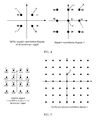
- the aligned constellation points adopt the initial bit mapping.
- Two interference signal transmit ends are used as an example.
- the interference signal transmit ends make, by rotating a transmit channel, an arrangement direction of original constellation points in QPSK original constellation diagrams of interference signals consistent with a coordinate axis.
- An arrangement distance of the original constellation points is two unit distances.
- a QPSK original constellation diagram of an interference signal contains four original constellation points.
- FIG. 4 marks bits corresponding to each original constellation point.
- Other aligned constellation points are generated in the same way, which is not repeatedly described herein. Vector addition is performed on original constellation points in one interference original constellation diagram and original constellation points in another interference original constellation diagram to acquire all aligned constellation points, and bits of the aligned constellation points are determined according to the initial bit mapping.
- interference aligned constellation diagram 1 is acquired.
- the number of interference sources is greater than 2, composition of the interference aligned constellation diagram 1 is deduced by analogy.
- the aligned constellation points in the interference aligned constellation diagram 1 may be acquired by performing vector addition on different combinations of original constellation points in the interference original constellation diagram. For example, in FIG.
- an aligned constellation point H with a coordinate point (0, 0) in the interference aligned constellation diagram may be acquired by performing vector addition on an original constellation point A with a coordinate point (1, 1) and bits [11] in one QPSK original constellation diagram and an original constellation point C with a coordinate point (-1, -1) and bits [00] in another QPSK original constellation diagram, or by performing vector addition on an original constellation point D with a coordinate point (-1, 1) and bits [01] in one QPSK original constellation diagram and an original constellation point B with a coordinate point (1, -1) and bits [10] in another QPSK original constellation diagram.
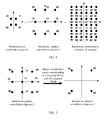
- the aligned constellation points adopt the final bit mapping.
- Two interference signal transmit ends are used as an example.
- the interference signal transmit ends make, by rotating the transmit channel, arrangement directions of original constellation points in 16QAM original constellation diagrams of the interference signals consistent with a coordinate axis.
- the arrangement distance of the original constellation points is two unit distances.
- a 16QAM original constellation diagram of an interference signal contains 16 original constellation points.
- FIG. 5 marks bits corresponding to each original constellation point.
- Vector addition is performed on original constellation points in 16QAM original constellation diagrams of two interference signals to acquire aligned constellation points.
- an exclusive-OR operation is performed on the bits of the original constellation points corresponding to each combination mode of the original constellation points to acquire N types of initial bit mapping.
- the N types of initial bit mapping are not unique.
- combination modes for generating a same aligned constellation point X with a coordinate point (0, 2i) in the interference aligned constellation diagram may be vector addition modes of five combinations: vector addition of an original constellation point A1 (a coordinate point is (1, 3) and bits are [1 1 1 0]) and an original constellation point B1 (a coordinate point is (-1, -1) and bits are [0 1 0 1]); vector addition of an original constellation point C1 (a coordinate point is (-1, 3) and bits are [0 1 1 0]) and an original constellation point D1 (a coordinate point is (1, -1) and bits are [1 1 0 1]); vector addition of an original constellation point E1 (a coordinate point is (3, 3) and bits are [1 0 1 0]) and an original constellation point F1 (a coordinate point is (-3, -1) and bits are [0 0 0 1]); vector addition of an original constellation point G1 (a coordinate point is (-3, 3) and bits are [0 0 1 0
- Step 306 may be implemented in the following two manners:
- Manner 1 The received signal sequence SEQ1 is demodulated according to the first interference aligned constellation diagram to acquire the interference code bit sequence SEQ2.
- the signal sequence SEQ1 is demodulated to acquire the interference code bit sequence SEQ2.
- demodulation is classified into two types: hard demodulation and soft demodulation.
- a binary bit sequence consisting of 0 and 1 is acquired after a hard demodulation.
- each bit is expressed by a decimal between 0 and 1.
- a probability that the bit is 0 is large.
- a probability that the bit is 1 is large.
- the interference signal transmit ends adopt BPSK or QPSK as the modulation scheme, either hard demodulation or soft demodulation may be adopted.
- M-QAM modulation schemes such as 8QAM, 16QAM, 64QAM, and the like, soft demodulation is adopted.
- Manner 2 Vector addition is performed on constellation points in an original desired constellation diagram corresponding to the wanted signal transmitted by the wanted signal transmit end and those in the first interference aligned constellation diagram to acquire constellation points; and bit mapping is determined for each constellation point to generate an interference demodulation constellation diagram.
- the signal sequence SEQ1 is demodulated according to the interference demodulation constellation diagram to acquire the interference code bit sequence SEQ2.
- vector addition is performed on the constellation points in the original desired constellation diagram corresponding to the wanted signal transmitted by the wanted signal transmit end and those in the first interference aligned constellation diagram to acquire constellation points, and bit mapping is determined for each constellation point to generate the interference demodulation constellation diagram.
- the vector addition and the bit mapping are the same as the vector addition process and the determination of the bit mapping for generating the interference aligned constellation diagram 1, and are not repeatedly described herein.
- Bits corresponding to each constellation point in the interference demodulation constellation diagram are the same as bits corresponding to a constellation point in the first interference aligned constellation diagram from which the constellation point is generated.
- the demodulation process is the same as the demodulation process described in manner 1.
- a difference is that constellation points in the interference demodulation constellation diagram are denser than those in the interference aligned constellation diagram. Therefore, demodulating the signal sequence SEQ1 according to the interference demodulation constellation diagram is more accurate than demodulating the signal sequence SEQ1 according to the first interference aligned constellation diagram.
- the signal receive end needs to descramble the SEQ2 first and then input the descrambled SEQ2 to a channel decoder of the ENCODER1 for decoding to acquire the interference source bit sequence SEQ3.
- Two interference signal transmit ends are used as an example. If scrambling sequences of the two interference signal transmit ends are [S11 S12 ... S1N] and [S21 S22 ... S2N] respectively, a descrambling sequence is an exclusive-OR result of these sequences by bit, that is, [S11 ⁇ S21 S12 ⁇ S22 ... S1N ⁇ S2N].
- the signal receive end may adopt a corresponding check algorithm to perform CRC check and error correction on the decoded interference signal source bit sequence to generate an error-corrected interference signal source bit sequence SEQ3.
- CRC cyclic redundancy check, Cyclc Redundancy Check
- the signal receive end re-performs channel encoding on the SEQ3 according to the ENCODER1 to acquire a code bit sequence SEQ4.
- the number of bits P corresponding to one constellation point in the first interference aligned constellation diagram is determined, and every P bits in the code bit sequence SEQ4 are grouped into one bit group.
- the number of bits P corresponding to one constellation point in the first interference aligned constellation diagram is 1 or 2.
- every two bits in the code bit sequence SEQ4 are grouped into one bit group.
- the code bit sequence SEQ4 is [0000].
- Two bit groups [00] and [00] are then acquired.
- the first interference aligned constellation diagram only constellation points with bits [00] corresponding to the two bit groups [00] and [00] are retained to acquire the second interference aligned constellation diagram.
- one bit group may correspond to multiple aligned constellation points in the first interference aligned constellation diagram, that is, aligned constellation points are not unique.
- the bit group [00] corresponds to four different aligned constellation points in the first interference aligned constellation diagram and only the four different aligned constellation points [00] are retained in the first interference aligned constellation diagram to acquire the second interference aligned constellation diagram.
- one aligned constellation point may correspond to multiple bit groups in the first interference aligned constellation diagram.
- the aligned constellation point is retained in the first interference aligned constellation diagram to acquire the second interference aligned constellation diagram.
- Vector addition is performed on constellation points in the second interference aligned constellation diagram and those in the original desired constellation diagram corresponding to the wanted signal transmitted by the wanted signal transmit end to acquire constellation points; and bit mapping is determined for each constellation point to form a wanted signal constellation diagram.
- vector addition is performed on the constellation points in the second interference aligned constellation diagram and those in the original desired constellation diagram to acquire constellation points, and bit mapping is determined for each constellation point to generate the wanted signal constellation diagram.
- the vector addition is the same as the vector addition process for generating the first interference aligned constellation diagram, and bits corresponding to each constellation point are the same as bits corresponding to a constellation point in the original desired constellation diagram from which the constellation point is generated.
- wanted signal demodulation is performed on the received signal SEQ1 according to the wanted signal constellation diagram to acquire a signal bit sequence SEQ5 to be decoded.
- the demodulation may be hard demodulation or soft demodulation.
- a channel encoding scheme ENCODER2 adopted by the wanted signal transmit end is adopted to perform channel decoding on the SEQ5 to acquire the wanted signal SEQ6 transmitted by the transmit end.
- multiple interference signal transmit ends perform encoding and modulation by using same channel encoding and a same modulation scheme and then a transmission parameter is adjusted to make original constellation diagrams formed for interference signals at a receive end consistent, so that the signal receive end performs demodulation and decoding step by step after aligning the interference signals and thereby removing the interference signals.
- this reduces the complexity of signal demodulation and decoding at the receive end.
- the embodiment is described based on a single-antenna communications system and can be easily extended to a multi-antenna system.
- the technology provided by the present invention can be used to perform interference alignment and removal on every data stream at a signal receive end.
- the interference alignment method provided by the embodiment is applicable to an uplink scenario in a HetNet (heterogeneous network, Heterogeneous Network) system.
- a Macro UE macro user equipment
- Femtocell cellular base station
- an uplink signal of the Macro UE may cause interference to an uplink of a Femto UE (cellular user equipment) in the Femtocell.
- the Femtocell generally does not know on which RBs (Resource Block, resource block) the Macro UE performs transmission.
- steps of applying the interference alignment method provided by the embodiment to remove uplink interference of the Macro UE are as follows.
- An uplink transmit signal of the Femto UE is divided into two data streams, which are marked as data stream 1 and data stream 2, encoded and modulated separately, and transmitted at the same time.
- a Femto BS aligns a constellation diagram of data stream 1 and a constellation diagram of the Macro UE at the Femto BS according to a certain process.
- the Femto BS can receive data stream 1 and data stream 2 at the same time.
- the Femto BS When the Macro UE performs uplink transmission, the Femto BS considers data stream 1 as one interference signal, considers data stream 2 as a wanted signal, and considers uplink data of the Macro UE as another interference source, and then uses the interference alignment method provided by the embodiment to perform interference alignment on data stream 1 and the uplink signal of the Macro UE, so as to receive data in data stream 2.
- An advantage of using the interference alignment method of the embodiment to remove the uplink interference of the Macro UE in this scenario is that: when uplink interference from the Macro UE exits, the Femto UE can still successfully transmit a part of data, and may not interrupt transmission of all data due to interference removal.
- An embodiment of the present invention further provides a signal receive end, where the signal receive end may be a base station such as a cellular base station in the foregoing communication or may be a device serving as a base station in a communications system.
- the signal receive end 9 includes:
- An embodiment of the present invention further provides an interference signal transmit end.
- the interference signal transmit end includes:
- An embodiment of the present invention further provides an interference alignment system. As shown in FIG. 11 , the system includes:
- the signal transmit end or signal receive end device in the embodiment of the present invention can execute the steps in the preceding method embodiments to complete functions of the method embodiments.
- the interference alignment method is implemented according to the descriptions in the method embodiments.
Landscapes
- Engineering & Computer Science (AREA)
- Computer Networks & Wireless Communication (AREA)
- Signal Processing (AREA)
- Power Engineering (AREA)
- Digital Transmission Methods That Use Modulated Carrier Waves (AREA)
- Noise Elimination (AREA)
Applications Claiming Priority (2)
| Application Number | Priority Date | Filing Date | Title |
|---|---|---|---|
| CN201110382521.4A CN103139115B (zh) | 2011-11-25 | 2011-11-25 | 一种干扰对齐方法、装置及系统 |
| PCT/CN2012/084925 WO2013075616A1 (zh) | 2011-11-25 | 2012-11-21 | 一种干扰对齐方法、装置及系统 |
Publications (3)
| Publication Number | Publication Date |
|---|---|
| EP2768191A1 true EP2768191A1 (de) | 2014-08-20 |
| EP2768191A4 EP2768191A4 (de) | 2014-12-17 |
| EP2768191B1 EP2768191B1 (de) | 2019-01-09 |
Family
ID=48469111
Family Applications (1)
| Application Number | Title | Priority Date | Filing Date |
|---|---|---|---|
| EP12851539.2A Active EP2768191B1 (de) | 2011-11-25 | 2012-11-21 | Verfahren und vorrichtung zur interferenzausrichtung |
Country Status (4)
| Country | Link |
|---|---|
| US (1) | US9124332B2 (de) |
| EP (1) | EP2768191B1 (de) |
| CN (1) | CN103139115B (de) |
| WO (1) | WO2013075616A1 (de) |
Families Citing this family (8)
| Publication number | Priority date | Publication date | Assignee | Title |
|---|---|---|---|---|
| WO2015196404A1 (zh) | 2014-06-26 | 2015-12-30 | 华为技术有限公司 | 一种干扰消除的装置和方法 |
| RU2651585C1 (ru) | 2014-06-26 | 2018-04-23 | Хуавэй Текнолоджиз Ко., Лтд. | Устройство и способ подавления помех |
| BR112016030506B1 (pt) | 2014-06-26 | 2023-04-11 | Huawei Technologies Co., Ltd | Aparelho e método de cancelamento de interferência |
| CN108259401B (zh) | 2016-12-28 | 2020-09-15 | 电信科学技术研究院 | 参考信号发送方法和相位噪声确定方法及相关装置 |
| CN107241159B (zh) * | 2017-07-21 | 2019-03-29 | 电子科技大学 | 一种利用干扰信号通信的方法 |
| CN109561037A (zh) | 2017-09-27 | 2019-04-02 | 株式会社Ntt都科摩 | 比特到符号的映射方法和通信装置 |
| CN109450506B (zh) * | 2018-11-16 | 2020-12-29 | 政务和公益机构域名注册管理中心 | 一种基于双路干扰信号调整的多干扰协作干扰对齐方法 |
| CN113612720B (zh) * | 2021-08-17 | 2023-12-19 | 中国空间技术研究院 | 无线信道抗干扰调制方法及系统 |
Family Cites Families (6)
| Publication number | Priority date | Publication date | Assignee | Title |
|---|---|---|---|---|
| JP5037605B2 (ja) * | 2006-04-25 | 2012-10-03 | エルジー エレクトロニクス インコーポレイティド | 無線通信システムでの多重使用者パケットの構成方法及び構造 |
| CN101572653B (zh) * | 2008-04-30 | 2013-11-20 | 株式会社Ntt都科摩 | 一种双向中继方法、基站、移动终端及中继站 |
| CN102301819B (zh) * | 2008-11-21 | 2015-01-07 | 皮恩-汉·霍 | 单一调制方案叠加编码组播之系统、方法及计算机程序 |
| KR101530200B1 (ko) | 2009-03-25 | 2015-06-19 | 삼성전자주식회사 | 단말 장치 및 네트워크 제어 장치 |
| US8379705B2 (en) * | 2009-08-04 | 2013-02-19 | Qualcomm Incorporated | Hierarchical feedback of channel state information for wireless communication |
| KR101587563B1 (ko) * | 2009-09-01 | 2016-02-02 | 삼성전자주식회사 | 간섭 정렬을 수행하는 통신 시스템 및 그 방법 |
-
2011
- 2011-11-25 CN CN201110382521.4A patent/CN103139115B/zh active Active
-
2012
- 2012-11-21 WO PCT/CN2012/084925 patent/WO2013075616A1/zh not_active Ceased
- 2012-11-21 EP EP12851539.2A patent/EP2768191B1/de active Active
-
2014
- 2014-05-23 US US14/286,011 patent/US9124332B2/en active Active
Also Published As
| Publication number | Publication date |
|---|---|
| CN103139115A (zh) | 2013-06-05 |
| US9124332B2 (en) | 2015-09-01 |
| WO2013075616A1 (zh) | 2013-05-30 |
| EP2768191A4 (de) | 2014-12-17 |
| EP2768191B1 (de) | 2019-01-09 |
| US20140254707A1 (en) | 2014-09-11 |
| CN103139115B (zh) | 2016-08-03 |
Similar Documents
| Publication | Publication Date | Title |
|---|---|---|
| US9124332B2 (en) | Method, apparatus, and system for interference alignment | |
| EP3698492B1 (de) | Iterative mehrstufige entzerrung und decodierung | |
| EP3172853B1 (de) | System und verfahren zur erzeugung von codebüchern mit kleinen projektionen pro komplexdimension und verwendung davon | |
| EP2326055A1 (de) | Sender, sendeverfahren, empfänger und empfangsverfahren | |
| CN104272641B (zh) | 在基于多用户mimo的通信系统中解调信号的方法及装置 | |
| US10097386B2 (en) | Method and device for multiuser superposition transmission, and method and device for demodulating multiuser information transmission | |
| CN114124186B (zh) | 一种多天线无线隐蔽通信协同优化方法 | |
| CN116366415A (zh) | 调制方法、解调方法以及相关装置 | |
| EP2950476A1 (de) | Verfahren und vorrichtung für verbesserte höherwertige modulation | |
| CN106302299B (zh) | 一种多用户接入方法及装置 | |
| EP3593475B1 (de) | Codierungs- und modulationsvorrichtung unter verwendung von ungleichförmiger konstellation | |
| US10432356B2 (en) | Data transmitting or receiving method and device for dual TBs, transmitter and receiver | |
| US9231705B1 (en) | Communication system with QAM modulation | |
| CN107493122A (zh) | 一种空间调制传输方法和设备 | |
| US20040005011A1 (en) | Multi-bit per symbol rate quadrature amplitude encoding | |
| US20170353247A1 (en) | Constellation design for use in communication systems | |
| ES2448576T3 (es) | Recepción descentralizada y cooperativa de datos a través de estaciones base | |
| KR102795903B1 (ko) | 다중 사용자를 위한 비직교 다중 접속의 그룹화 방법 및 이를 이용한 시스템 | |
| Jung et al. | A practical physical-layer network coding with spatial modulation in two-way relay networks | |
| CN1319353C (zh) | 能够降低信号失真的单载波传输系统及其方法 | |
| Pallam et al. | BER Evaluation of M-QAM Modulation in Wireless Transmission over AWGN Channel | |
| US8675755B1 (en) | Method and apparatus for jointly decoding independently encoded signals | |
| CN101686215B (zh) | 一种信号编码调制方法及装置 | |
| CN107276721A (zh) | 编码调制方法以及信息处理方法 | |
| CN100576783C (zh) | 能够改善发送效率的多载波发送系统及其方法 |
Legal Events
| Date | Code | Title | Description |
|---|---|---|---|
| PUAI | Public reference made under article 153(3) epc to a published international application that has entered the european phase |
Free format text: ORIGINAL CODE: 0009012 |
|
| 17P | Request for examination filed |
Effective date: 20140516 |
|
| AK | Designated contracting states |
Kind code of ref document: A1 Designated state(s): AL AT BE BG CH CY CZ DE DK EE ES FI FR GB GR HR HU IE IS IT LI LT LU LV MC MK MT NL NO PL PT RO RS SE SI SK SM TR |
|
| A4 | Supplementary search report drawn up and despatched |
Effective date: 20141118 |
|
| RIC1 | Information provided on ipc code assigned before grant |
Ipc: H04L 27/34 20060101ALI20141112BHEP Ipc: H04L 25/03 20060101AFI20141112BHEP |
|
| DAX | Request for extension of the european patent (deleted) | ||
| STAA | Information on the status of an ep patent application or granted ep patent |
Free format text: STATUS: EXAMINATION IS IN PROGRESS |
|
| 17Q | First examination report despatched |
Effective date: 20170915 |
|
| GRAP | Despatch of communication of intention to grant a patent |
Free format text: ORIGINAL CODE: EPIDOSNIGR1 |
|
| STAA | Information on the status of an ep patent application or granted ep patent |
Free format text: STATUS: GRANT OF PATENT IS INTENDED |
|
| INTG | Intention to grant announced |
Effective date: 20180514 |
|
| GRAS | Grant fee paid |
Free format text: ORIGINAL CODE: EPIDOSNIGR3 |
|
| GRAJ | Information related to disapproval of communication of intention to grant by the applicant or resumption of examination proceedings by the epo deleted |
Free format text: ORIGINAL CODE: EPIDOSDIGR1 |
|
| GRAL | Information related to payment of fee for publishing/printing deleted |
Free format text: ORIGINAL CODE: EPIDOSDIGR3 |
|
| STAA | Information on the status of an ep patent application or granted ep patent |
Free format text: STATUS: EXAMINATION IS IN PROGRESS |
|
| GRAR | Information related to intention to grant a patent recorded |
Free format text: ORIGINAL CODE: EPIDOSNIGR71 |
|
| STAA | Information on the status of an ep patent application or granted ep patent |
Free format text: STATUS: GRANT OF PATENT IS INTENDED |
|
| INTC | Intention to grant announced (deleted) | ||
| INTG | Intention to grant announced |
Effective date: 20181023 |
|
| RIN1 | Information on inventor provided before grant (corrected) |
Inventor name: DU, YINGGANG Inventor name: CHENG, HONG Inventor name: WANG, RUI |
|
| GRAA | (expected) grant |
Free format text: ORIGINAL CODE: 0009210 |
|
| STAA | Information on the status of an ep patent application or granted ep patent |
Free format text: STATUS: THE PATENT HAS BEEN GRANTED |
|
| AK | Designated contracting states |
Kind code of ref document: B1 Designated state(s): AL AT BE BG CH CY CZ DE DK EE ES FI FR GB GR HR HU IE IS IT LI LT LU LV MC MK MT NL NO PL PT RO RS SE SI SK SM TR |
|
| REG | Reference to a national code |
Ref country code: GB Ref legal event code: FG4D |
|
| REG | Reference to a national code |
Ref country code: CH Ref legal event code: EP Ref country code: AT Ref legal event code: REF Ref document number: 1088714 Country of ref document: AT Kind code of ref document: T Effective date: 20190115 |
|
| REG | Reference to a national code |
Ref country code: DE Ref legal event code: R096 Ref document number: 602012055853 Country of ref document: DE |
|
| REG | Reference to a national code |
Ref country code: IE Ref legal event code: FG4D |
|
| REG | Reference to a national code |
Ref country code: NL Ref legal event code: MP Effective date: 20190109 |
|
| REG | Reference to a national code |
Ref country code: LT Ref legal event code: MG4D |
|
| PG25 | Lapsed in a contracting state [announced via postgrant information from national office to epo] |
Ref country code: NL Free format text: LAPSE BECAUSE OF FAILURE TO SUBMIT A TRANSLATION OF THE DESCRIPTION OR TO PAY THE FEE WITHIN THE PRESCRIBED TIME-LIMIT Effective date: 20190109 |
|
| REG | Reference to a national code |
Ref country code: AT Ref legal event code: MK05 Ref document number: 1088714 Country of ref document: AT Kind code of ref document: T Effective date: 20190109 |
|
| PG25 | Lapsed in a contracting state [announced via postgrant information from national office to epo] |
Ref country code: LT Free format text: LAPSE BECAUSE OF FAILURE TO SUBMIT A TRANSLATION OF THE DESCRIPTION OR TO PAY THE FEE WITHIN THE PRESCRIBED TIME-LIMIT Effective date: 20190109 Ref country code: SE Free format text: LAPSE BECAUSE OF FAILURE TO SUBMIT A TRANSLATION OF THE DESCRIPTION OR TO PAY THE FEE WITHIN THE PRESCRIBED TIME-LIMIT Effective date: 20190109 Ref country code: PT Free format text: LAPSE BECAUSE OF FAILURE TO SUBMIT A TRANSLATION OF THE DESCRIPTION OR TO PAY THE FEE WITHIN THE PRESCRIBED TIME-LIMIT Effective date: 20190509 Ref country code: NO Free format text: LAPSE BECAUSE OF FAILURE TO SUBMIT A TRANSLATION OF THE DESCRIPTION OR TO PAY THE FEE WITHIN THE PRESCRIBED TIME-LIMIT Effective date: 20190409 Ref country code: ES Free format text: LAPSE BECAUSE OF FAILURE TO SUBMIT A TRANSLATION OF THE DESCRIPTION OR TO PAY THE FEE WITHIN THE PRESCRIBED TIME-LIMIT Effective date: 20190109 Ref country code: PL Free format text: LAPSE BECAUSE OF FAILURE TO SUBMIT A TRANSLATION OF THE DESCRIPTION OR TO PAY THE FEE WITHIN THE PRESCRIBED TIME-LIMIT Effective date: 20190109 Ref country code: FI Free format text: LAPSE BECAUSE OF FAILURE TO SUBMIT A TRANSLATION OF THE DESCRIPTION OR TO PAY THE FEE WITHIN THE PRESCRIBED TIME-LIMIT Effective date: 20190109 |
|
| PG25 | Lapsed in a contracting state [announced via postgrant information from national office to epo] |
Ref country code: BG Free format text: LAPSE BECAUSE OF FAILURE TO SUBMIT A TRANSLATION OF THE DESCRIPTION OR TO PAY THE FEE WITHIN THE PRESCRIBED TIME-LIMIT Effective date: 20190409 Ref country code: GR Free format text: LAPSE BECAUSE OF FAILURE TO SUBMIT A TRANSLATION OF THE DESCRIPTION OR TO PAY THE FEE WITHIN THE PRESCRIBED TIME-LIMIT Effective date: 20190410 Ref country code: RS Free format text: LAPSE BECAUSE OF FAILURE TO SUBMIT A TRANSLATION OF THE DESCRIPTION OR TO PAY THE FEE WITHIN THE PRESCRIBED TIME-LIMIT Effective date: 20190109 Ref country code: LV Free format text: LAPSE BECAUSE OF FAILURE TO SUBMIT A TRANSLATION OF THE DESCRIPTION OR TO PAY THE FEE WITHIN THE PRESCRIBED TIME-LIMIT Effective date: 20190109 Ref country code: IS Free format text: LAPSE BECAUSE OF FAILURE TO SUBMIT A TRANSLATION OF THE DESCRIPTION OR TO PAY THE FEE WITHIN THE PRESCRIBED TIME-LIMIT Effective date: 20190509 Ref country code: HR Free format text: LAPSE BECAUSE OF FAILURE TO SUBMIT A TRANSLATION OF THE DESCRIPTION OR TO PAY THE FEE WITHIN THE PRESCRIBED TIME-LIMIT Effective date: 20190109 |
|
| REG | Reference to a national code |
Ref country code: DE Ref legal event code: R097 Ref document number: 602012055853 Country of ref document: DE |
|
| PG25 | Lapsed in a contracting state [announced via postgrant information from national office to epo] |
Ref country code: AL Free format text: LAPSE BECAUSE OF FAILURE TO SUBMIT A TRANSLATION OF THE DESCRIPTION OR TO PAY THE FEE WITHIN THE PRESCRIBED TIME-LIMIT Effective date: 20190109 Ref country code: AT Free format text: LAPSE BECAUSE OF FAILURE TO SUBMIT A TRANSLATION OF THE DESCRIPTION OR TO PAY THE FEE WITHIN THE PRESCRIBED TIME-LIMIT Effective date: 20190109 Ref country code: DK Free format text: LAPSE BECAUSE OF FAILURE TO SUBMIT A TRANSLATION OF THE DESCRIPTION OR TO PAY THE FEE WITHIN THE PRESCRIBED TIME-LIMIT Effective date: 20190109 Ref country code: SK Free format text: LAPSE BECAUSE OF FAILURE TO SUBMIT A TRANSLATION OF THE DESCRIPTION OR TO PAY THE FEE WITHIN THE PRESCRIBED TIME-LIMIT Effective date: 20190109 Ref country code: EE Free format text: LAPSE BECAUSE OF FAILURE TO SUBMIT A TRANSLATION OF THE DESCRIPTION OR TO PAY THE FEE WITHIN THE PRESCRIBED TIME-LIMIT Effective date: 20190109 Ref country code: IT Free format text: LAPSE BECAUSE OF FAILURE TO SUBMIT A TRANSLATION OF THE DESCRIPTION OR TO PAY THE FEE WITHIN THE PRESCRIBED TIME-LIMIT Effective date: 20190109 Ref country code: CZ Free format text: LAPSE BECAUSE OF FAILURE TO SUBMIT A TRANSLATION OF THE DESCRIPTION OR TO PAY THE FEE WITHIN THE PRESCRIBED TIME-LIMIT Effective date: 20190109 Ref country code: RO Free format text: LAPSE BECAUSE OF FAILURE TO SUBMIT A TRANSLATION OF THE DESCRIPTION OR TO PAY THE FEE WITHIN THE PRESCRIBED TIME-LIMIT Effective date: 20190109 |
|
| PLBE | No opposition filed within time limit |
Free format text: ORIGINAL CODE: 0009261 |
|
| STAA | Information on the status of an ep patent application or granted ep patent |
Free format text: STATUS: NO OPPOSITION FILED WITHIN TIME LIMIT |
|
| PG25 | Lapsed in a contracting state [announced via postgrant information from national office to epo] |
Ref country code: SM Free format text: LAPSE BECAUSE OF FAILURE TO SUBMIT A TRANSLATION OF THE DESCRIPTION OR TO PAY THE FEE WITHIN THE PRESCRIBED TIME-LIMIT Effective date: 20190109 |
|
| 26N | No opposition filed |
Effective date: 20191010 |
|
| PG25 | Lapsed in a contracting state [announced via postgrant information from national office to epo] |
Ref country code: SI Free format text: LAPSE BECAUSE OF FAILURE TO SUBMIT A TRANSLATION OF THE DESCRIPTION OR TO PAY THE FEE WITHIN THE PRESCRIBED TIME-LIMIT Effective date: 20190109 |
|
| PG25 | Lapsed in a contracting state [announced via postgrant information from national office to epo] |
Ref country code: TR Free format text: LAPSE BECAUSE OF FAILURE TO SUBMIT A TRANSLATION OF THE DESCRIPTION OR TO PAY THE FEE WITHIN THE PRESCRIBED TIME-LIMIT Effective date: 20190109 |
|
| REG | Reference to a national code |
Ref country code: CH Ref legal event code: PL |
|
| PG25 | Lapsed in a contracting state [announced via postgrant information from national office to epo] |
Ref country code: MC Free format text: LAPSE BECAUSE OF FAILURE TO SUBMIT A TRANSLATION OF THE DESCRIPTION OR TO PAY THE FEE WITHIN THE PRESCRIBED TIME-LIMIT Effective date: 20190109 Ref country code: LI Free format text: LAPSE BECAUSE OF NON-PAYMENT OF DUE FEES Effective date: 20191130 Ref country code: LU Free format text: LAPSE BECAUSE OF NON-PAYMENT OF DUE FEES Effective date: 20191121 Ref country code: CH Free format text: LAPSE BECAUSE OF NON-PAYMENT OF DUE FEES Effective date: 20191130 |
|
| REG | Reference to a national code |
Ref country code: BE Ref legal event code: MM Effective date: 20191130 |
|
| GBPC | Gb: european patent ceased through non-payment of renewal fee |
Effective date: 20191121 |
|
| PG25 | Lapsed in a contracting state [announced via postgrant information from national office to epo] |
Ref country code: FR Free format text: LAPSE BECAUSE OF NON-PAYMENT OF DUE FEES Effective date: 20191130 Ref country code: IE Free format text: LAPSE BECAUSE OF NON-PAYMENT OF DUE FEES Effective date: 20191121 Ref country code: GB Free format text: LAPSE BECAUSE OF NON-PAYMENT OF DUE FEES Effective date: 20191121 |
|
| PG25 | Lapsed in a contracting state [announced via postgrant information from national office to epo] |
Ref country code: BE Free format text: LAPSE BECAUSE OF NON-PAYMENT OF DUE FEES Effective date: 20191130 |
|
| PG25 | Lapsed in a contracting state [announced via postgrant information from national office to epo] |
Ref country code: CY Free format text: LAPSE BECAUSE OF FAILURE TO SUBMIT A TRANSLATION OF THE DESCRIPTION OR TO PAY THE FEE WITHIN THE PRESCRIBED TIME-LIMIT Effective date: 20190109 |
|
| PG25 | Lapsed in a contracting state [announced via postgrant information from national office to epo] |
Ref country code: MT Free format text: LAPSE BECAUSE OF FAILURE TO SUBMIT A TRANSLATION OF THE DESCRIPTION OR TO PAY THE FEE WITHIN THE PRESCRIBED TIME-LIMIT Effective date: 20190109 Ref country code: HU Free format text: LAPSE BECAUSE OF FAILURE TO SUBMIT A TRANSLATION OF THE DESCRIPTION OR TO PAY THE FEE WITHIN THE PRESCRIBED TIME-LIMIT; INVALID AB INITIO Effective date: 20121121 |
|
| PG25 | Lapsed in a contracting state [announced via postgrant information from national office to epo] |
Ref country code: MK Free format text: LAPSE BECAUSE OF FAILURE TO SUBMIT A TRANSLATION OF THE DESCRIPTION OR TO PAY THE FEE WITHIN THE PRESCRIBED TIME-LIMIT Effective date: 20190109 |
|
| PGFP | Annual fee paid to national office [announced via postgrant information from national office to epo] |
Ref country code: DE Payment date: 20250930 Year of fee payment: 14 |