EP2768232A1 - Digitalrundfunkempfänger und Verfahren zur Aktualisierung von Kanalinformationen - Google Patents
Digitalrundfunkempfänger und Verfahren zur Aktualisierung von Kanalinformationen Download PDFInfo
- Publication number
- EP2768232A1 EP2768232A1 EP14153169.9A EP14153169A EP2768232A1 EP 2768232 A1 EP2768232 A1 EP 2768232A1 EP 14153169 A EP14153169 A EP 14153169A EP 2768232 A1 EP2768232 A1 EP 2768232A1
- Authority
- EP
- European Patent Office
- Prior art keywords
- information
- channel
- broadcast
- receiver
- type
- Prior art date
- Legal status (The legal status is an assumption and is not a legal conclusion. Google has not performed a legal analysis and makes no representation as to the accuracy of the status listed.)
- Granted
Links
Images



Classifications
-
- H—ELECTRICITY
- H04—ELECTRIC COMMUNICATION TECHNIQUE
- H04N—PICTORIAL COMMUNICATION, e.g. TELEVISION
- H04N7/00—Television systems
- H04N7/08—Systems for the simultaneous or sequential transmission of more than one television signal, e.g. additional information signals, the signals occupying wholly or partially the same frequency band, e.g. by time division
-
- H—ELECTRICITY
- H04—ELECTRIC COMMUNICATION TECHNIQUE
- H04N—PICTORIAL COMMUNICATION, e.g. TELEVISION
- H04N5/00—Details of television systems
- H04N5/44—Receiver circuitry for the reception of television signals according to analogue transmission standards
- H04N5/50—Tuning indicators; Automatic tuning control
-
- H—ELECTRICITY
- H04—ELECTRIC COMMUNICATION TECHNIQUE
- H04H—BROADCAST COMMUNICATION
- H04H60/00—Arrangements for broadcast applications with a direct linking to broadcast information or broadcast space-time; Broadcast-related systems
- H04H60/25—Arrangements for updating broadcast information or broadcast-related information
-
- H—ELECTRICITY
- H04—ELECTRIC COMMUNICATION TECHNIQUE
- H04H—BROADCAST COMMUNICATION
- H04H60/00—Arrangements for broadcast applications with a direct linking to broadcast information or broadcast space-time; Broadcast-related systems
- H04H60/35—Arrangements for identifying or recognising characteristics with a direct linkage to broadcast information or to broadcast space-time, e.g. for identifying broadcast stations or for identifying users
- H04H60/38—Arrangements for identifying or recognising characteristics with a direct linkage to broadcast information or to broadcast space-time, e.g. for identifying broadcast stations or for identifying users for identifying broadcast time or space
- H04H60/41—Arrangements for identifying or recognising characteristics with a direct linkage to broadcast information or to broadcast space-time, e.g. for identifying broadcast stations or for identifying users for identifying broadcast time or space for identifying broadcast space, i.e. broadcast channels, broadcast stations or broadcast areas
-
- H—ELECTRICITY
- H04—ELECTRIC COMMUNICATION TECHNIQUE
- H04H—BROADCAST COMMUNICATION
- H04H60/00—Arrangements for broadcast applications with a direct linking to broadcast information or broadcast space-time; Broadcast-related systems
- H04H60/68—Systems specially adapted for using specific information, e.g. geographical or meteorological information
- H04H60/73—Systems specially adapted for using specific information, e.g. geographical or meteorological information using meta-information
-
- H—ELECTRICITY
- H04—ELECTRIC COMMUNICATION TECHNIQUE
- H04N—PICTORIAL COMMUNICATION, e.g. TELEVISION
- H04N21/00—Selective content distribution, e.g. interactive television or video on demand [VOD]
- H04N21/40—Client devices specifically adapted for the reception of or interaction with content, e.g. set-top-box [STB]; Operations thereof
- H04N21/41—Structure of client; Structure of client peripherals
- H04N21/426—Internal components of the client ; Characteristics thereof
-
- H—ELECTRICITY
- H04—ELECTRIC COMMUNICATION TECHNIQUE
- H04N—PICTORIAL COMMUNICATION, e.g. TELEVISION
- H04N21/00—Selective content distribution, e.g. interactive television or video on demand [VOD]
- H04N21/40—Client devices specifically adapted for the reception of or interaction with content, e.g. set-top-box [STB]; Operations thereof
- H04N21/43—Processing of content or additional data, e.g. demultiplexing additional data from a digital video stream; Elementary client operations, e.g. monitoring of home network or synchronising decoder's clock; Client middleware
- H04N21/434—Disassembling of a multiplex stream, e.g. demultiplexing audio and video streams, extraction of additional data from a video stream; Remultiplexing of multiplex streams; Extraction or processing of SI; Disassembling of packetised elementary stream
- H04N21/4345—Extraction or processing of SI, e.g. extracting service information from an MPEG stream
-
- H—ELECTRICITY
- H04—ELECTRIC COMMUNICATION TECHNIQUE
- H04N—PICTORIAL COMMUNICATION, e.g. TELEVISION
- H04N21/00—Selective content distribution, e.g. interactive television or video on demand [VOD]
- H04N21/40—Client devices specifically adapted for the reception of or interaction with content, e.g. set-top-box [STB]; Operations thereof
- H04N21/43—Processing of content or additional data, e.g. demultiplexing additional data from a digital video stream; Elementary client operations, e.g. monitoring of home network or synchronising decoder's clock; Client middleware
- H04N21/438—Interfacing the downstream path of the transmission network originating from a server, e.g. retrieving encoded video stream packets from an IP network
- H04N21/4383—Accessing a communication channel
-
- H—ELECTRICITY
- H04—ELECTRIC COMMUNICATION TECHNIQUE
- H04N—PICTORIAL COMMUNICATION, e.g. TELEVISION
- H04N21/00—Selective content distribution, e.g. interactive television or video on demand [VOD]
- H04N21/40—Client devices specifically adapted for the reception of or interaction with content, e.g. set-top-box [STB]; Operations thereof
- H04N21/47—End-user applications
- H04N21/472—End-user interface for requesting content, additional data or services; End-user interface for interacting with content, e.g. for content reservation or setting reminders, for requesting event notification, for manipulating displayed content
- H04N21/47202—End-user interface for requesting content, additional data or services; End-user interface for interacting with content, e.g. for content reservation or setting reminders, for requesting event notification, for manipulating displayed content for requesting content on demand, e.g. video on demand
-
- H—ELECTRICITY
- H04—ELECTRIC COMMUNICATION TECHNIQUE
- H04N—PICTORIAL COMMUNICATION, e.g. TELEVISION
- H04N21/00—Selective content distribution, e.g. interactive television or video on demand [VOD]
- H04N21/40—Client devices specifically adapted for the reception of or interaction with content, e.g. set-top-box [STB]; Operations thereof
- H04N21/47—End-user applications
- H04N21/485—End-user interface for client configuration
-
- H—ELECTRICITY
- H04—ELECTRIC COMMUNICATION TECHNIQUE
- H04N—PICTORIAL COMMUNICATION, e.g. TELEVISION
- H04N21/00—Selective content distribution, e.g. interactive television or video on demand [VOD]
- H04N21/60—Network structure or processes for video distribution between server and client or between remote clients; Control signalling between clients, server and network components; Transmission of management data between server and client, e.g. sending from server to client commands for recording incoming content stream; Communication details between server and client
- H04N21/61—Network physical structure; Signal processing
- H04N21/6106—Network physical structure; Signal processing specially adapted to the downstream path of the transmission network
- H04N21/6118—Network physical structure; Signal processing specially adapted to the downstream path of the transmission network involving cable transmission, e.g. using a cable modem
-
- H—ELECTRICITY
- H04—ELECTRIC COMMUNICATION TECHNIQUE
- H04N—PICTORIAL COMMUNICATION, e.g. TELEVISION
- H04N7/00—Television systems
- H04N7/015—High-definition television systems
Definitions
- the present invention relates to a digital broadcast receiver and a method of updating channel information. More particularly, the exemplary embodiments relate to a digital broadcast receiver capable of selecting a broadcast signal according to the type of service information (SI) of the received broadcast signal and providing a channel, and a method of updating channel information.
- SI type of service information
- broadcast media have converted from analog to digital due to many operational and structural advantages of using the digital method.
- the digital method is more resistant to noise than conventional analog signals, can use error correction technology and can enable drastic band compression of video and audio signals. Accordingly, broadcast media have been rapidly digitalized around the world.
- broadcasts are mostly based on MPEG-2 coding, the broadcasts extract metadata from a transferred broadcast stream and provide channel information (or service information (SI)) related to the broadcast stream.
- SI service information
- VOD video on demand
- a known digital broadcast receiver does not distinguish PSI and PSIP but scans and organize all the channels uniformly so that specially used channels, such as VOD services, cannot be distinguished. For this reason, in diverse digital broadcast environments, the receiver may organize an unintended broadcast service (for example, an unscrambled VOD adult broadcast channel) as a channel.
- an unintended broadcast service for example, an unscrambled VOD adult broadcast channel
- Exemplary embodiments overcome the above disadvantages and other disadvantages not described above.
- the inventive concept provides a digital broadcast receiver which selects a broadcast signal according to the type of SI of the received broadcast signal and provides channels so as to prevent reception of an unintended broadcast service, and a method for updating channel information.
- the channel scanner may acquire the service information by scanning the plurality of broadcast signals in a predetermined cycle.
- the SI may include at least one of program specific information (PSI)-type information, and program and service information protocol (PSIP)-type information.
- PSI program specific information
- PSIP program and service information protocol
- the controller may select the broadcast signal having the PSIP-type information from among the acquired SI, and update the channel information.
- the digital broadcast receiver may further include a user interface which receives selection of channel mode, wherein the controller is configured to select the broadcast signal according to a type of SI which corresponds to the selected channel mode, and updates the channel information.
- the channel mode may include cable channel mode and video on demand (VOD) channel mode.
- VOD video on demand
- the controller may select the broadcast signal having the PSIP-type information and may update the channel information.
- the controller may select the broadcast signal having the PSI-type information and may update the channel information.
- the receiver may include a tuner configured to tune the plurality of broadcast signals, and a demodulator configured to demodulate the plurality of tuned broadcast signals.
- a method of updating channel information using a digital broadcast receiver includes receiving a plurality of broadcast signals, scanning the plurality of broadcast signals and acquiring service information (SI) of the plurality of broadcast signals, and selecting a broadcast signal having a preset type of SI from among the acquired SI, and updating the channel information.
- SI service information
- the plurality of broadcast signals may be scanned in a predetermined cycle.
- the SI may include at least one of program specific information (PSI)-type information, and program and service information protocol (PSIP)-type information.
- PSI program specific information
- PSIP program and service information protocol
- the channel information may be updated by selecting the broadcast signal having the PSIP-type information from among the acquired SI.
- the method may further include receiving selection of channel mode, and in the updating operation, the channel information is updated by selecting the broadcast signal according to a type of SI which corresponds to the selected channel mode.
- the channel mode may include cable channel mode and video on demand (VOD) channel mode.
- VOD video on demand
- the channel information when the cable channel mode is selected, the channel information may be updated by selecting the broadcast signal having the PSIP-type information.
- the channel information when the VOD channel mode is selected, the channel information may be updated by selecting the broadcast signal having the PSI-type information.
- the receiving operation may include tuning the plurality of broadcast signals, and demodulating the plurality of tuned broadcast signals.
- a non-transitory computer readable storage medium when implemented on a computer, may cause a processor of the computer to execute a method of updating channel information using a digital broadcast receiver, the method including scanning a plurality of broadcast signals in a predetermined cycle and acquiring service information (SI) of the plurality of broadcast signals, and selecting a broadcast signal having a preset type of SI from among the acquired SI and updating the channel information.
- SI service information
- FIG. 1 is a block diagram of a configuration of a digital broadcast receiver 100 according to an exemplary embodiment.
- the digital broadcast receiver 100 may include a receiver 110, a channel scanner 120, a controller 130, a storage 140, a user interface 150, a signal processor 160, and an output 170.
- the receiver 110 receives a plurality of broadcast signals. More specifically, the receiver 110 may receive broadcast signals related to a plurality of channels which are externally transferred.
- the receiver 110 may include a tuner configured to tune a broadcast signal, and a demodulator configured to demodulate a tuned broadcast signal. Detailed description of the tuner and the demodulator will be provided below with reference to FIG. 2 .
- the receiver 110 may receive a broadcast signal of a channel selected by the user from among a plurality of broadcast signals, according to control of the controller 130, and may transmit the broadcast signal to the signal processor 160.
- the plurality of broadcast signals are digital broadcast signals, which may be transmitted from a digital broadcast transmitter.
- General digital broadcast signals may be generated by the following process.
- a video signal and an audio signal which constitute a broadcast program are individually encoded and compressed to be converted into a video elementary stream (ES) and an audio elementary stream (ES) which are the basis of digital data.
- the ESs are packetized and multiplexed and converted into a transport stream (TS) of a transportable format.
- TS transport stream
- the TS is channel-coded and modulated for transmission to become a broadcast signal and is transferred to a receiver.
- the channel scanner 120 scans a plurality of broadcast signals in a predetermined cycle, and acquires SI of the plurality of broadcast signals.
- the SI indicates information needed for de-multiplexing the multiplexed TS, and information regarding contents and kinds of diverse programs provided by broadcast services. That is, the SI may include broadcast channel information, broadcast signal coding information and electronic program guide (EPG) information.
- EPG electronic program guide
- the types of the SI include program specific information (PSI) of an MPEG-2 system (ISO/IEC 13818-1 Sections) to classify programs, and program system information protocol (PSIP) of ATSC A/65 which includes network information and EPG information which are transferred to terrestrial, cable, and satellite etc.
- PSI program specific information
- PSIP program system information protocol
- DVB-SI digital video broadcast-service information
- the PSI contains information through which the receiver de-multiplexes and decodes a particular stream in a multiplexed TS.
- the PSI includes a program association table (PAT), a conditional access table (CAT), a program map table (PMT), and a network information table (NIT).
- PAT program association table
- CAT conditional access table
- PMT program map table
- NIT network information table
- the PAT includes a packet identifier (PID) of the PMT which corresponds to diverse kinds of broadcast signals provided by a transmitter. Accordingly, the PAT allocates a packet of the TS to each broadcast signal, that is, a program. In addition, since the PMT has a PID of a packet of the TS which transmits the broadcast signal together with the type of each broadcast signal, the PMT indicates the packet in which each video, audio, and data are loaded.
- PID packet identifier
- the PSIP contains information related to a channel and EPG information regarding each program.
- the PSIP includes a system time table (STT), a rating region table (RRT), a master guide table (MGT), a virtual channel table (VCT), an event information table (EIT) and an extended text table (ETT).
- STT system time table
- RRT rating region table
- MCT master guide table
- VCT virtual channel table
- EIT event information table
- ETT extended text table
- a PID which is recognized as the PSIP from a TS of MPEG-2 is oxFFB.
- a VCT can be obtained.
- the VCT may know whether the corresponding table is a MGT, an STT, an RRT, or a VCT by checking the table_id of the corresponding packet.
- PIDs of audio and video streams of the broadcast signal may be obtained so that an individual broadcast program can be de-multiplexed. Accordingly, reception is possible without the PAT and the PMT of the PSI, but the ATSC standard regulates that PSI is concurrently transmitted for compatibility with MPEG-2.
- PSI and the PSIP are described in ISO/IEC 13818-1 sections and ATSC A/65 PSIP standard, and thus, is omitted here.
- the channel scanner 120 regularly scans channels through which a plurality of broadcast signals enter, and acquires SI by filtering a data signal from the scanned broadcast signals.
- the acquired SI is transmitted to the controller 130.
- the controller 130 selects a broadcast signal having a preset type of SI from among the acquired SI and updates channel information.
- the types of SI may include PSIP/PSI type, PSI type, and PSIP type.
- the controller 130 may select a broadcast signal having PSIP-type information and update channel information.
- the PSIP-type information indicates SI having the table of the PSIP, and may include PSIP/PSI type and PSIP type.
- VOD services are not organized as channels in digital cable broadcasting. This is because in the digital cable broadcasting, VOD services uses only PSI of the MPEG-2 system as SI, whereas general cable broadcast services use PSIP-type or PSIP/PSI-type SI.
- the controller 130 selects a broadcast signal having PSIP-type SI and updates the channel information.
- the controller 130 may parse oxFFB packet of the TS of the broadcast signal, and only determine that the SI is PSIP type, when there is a VCT.
- the controller 130 may select a broadcast signal according to the type of SI corresponding to channel mode selected through the user interface 150 and may update channel information. More specifically, the user may select the channel mode through the user interface 150.
- the channel mode may include cable channel mode and VOD channel mode.
- the controller 130 may select a broadcast signal having PSIP-type information and update channel information.
- the controller 130 may only select a broadcast signal having PSI-type information and update channel information.
- the controller 130 controls operation of the components of the digital broadcast receiver 100.
- the storage 140 stores acquired SI of a broadcast signal. In addition, the storage 140 stores channel information updated by the controller 130.
- the storage 140 stores a Basic Input/Output System (BIOS), an operating system, and diverse programs and data such as applications.
- BIOS Basic Input/Output System
- the user interface 150 receives selection of the channel mode.
- the user interface 150 receives a control command from an input means such as physical buttons in order to input a control command or from a wireless input means such as a remote controller, and transmits the control command to the controller 130.
- the signal processor 160 receives a broadcast signal of a channel selected by the controller 130 from the receiver 110, and processes the broadcast signal to be output. More specifically, the signal processor 160 may de-multiplex a TS of a broadcast signal to be output and decode the de-multiplexed video and audio streams using SI.
- the signal processor 160 may include a de-multiplexer, a video decoder, and an audio decoder. Detailed description of the signal processor 160 will be given below with reference to FIG. 2 .
- the output 170 outputs the processed broadcast signal. More specifically, according to the control of the controller 130, the output 170 displays the decoded video stream and outputs the decoded audio stream.
- the output 170 may include a display and a speaker.
- the digital broadcast receiver as shown in FIG. 1 selects a broadcast signal according to the type of the SI and provides channels so that reception of unintended broadcast services may be prevented.
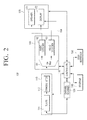
- FIG. 2 is a block diagram of a specific configuration of a digital broadcast receiver according to an exemplary embodiment.
- the receiver 110 may include a tuner 111 and a demodulator 112.
- the tuner 111 tunes and receives a broadcast signal.
- the demodulator 112 receives and demodulates the tuned signal. More specifically, digital cable broadcasting uses Quadrature Amplitude Modulation (QAM), and digital terrestrial broadcasting uses Vestigial Side Band (VSB) modulation. Accordingly, the demodulator 112 may employ different modulation methods according to the type of a received broadcast signal.
- QAM Quadrature Amplitude Modulation
- VSB Vestigial Side Band
- the signal processor 160 may include a de-multiplexer 161, an audio decoder 162, and a video decoder 163.
- the de-multiplexer 161 de-multiplexes a TS of a broadcast program to reproduce using acquired SI so that a video ES, an audio ES, and data may be separated. More specifically, according to a broadcast channel selected through the user interface 150, the controller 130 may control operation of the de-multiplexer 161 using (EPG) information of stored SI.
- EPG EPG
- the audio decoder 162 and the video decoder 163 decode an audio ES and a video ES respectively, and transmit the decoded ESs to the output unit 170.
- the de-multiplexer 161 extracts a data stream 164 and transmits the data stream to the output unit 170.
- the output unit 170 may include a speaker 171 and a display 172.
- the speaker 171 outputs the decoded audio signal, and the display 172 displays the decoded video signal.
- the digital broadcast receiver as shown in FIG. 2 selects a broadcast signal according to the type of SI of a received broadcast signal and provides channels so that reception of unintended broadcast services may be prevented and a broadcast channel selected by the user may be appropriately reproduced.
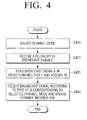
- FIGs. 3 and 4 are flowcharts which illustrate a method of updating channel information using a digital broadcast receiver, according to exemplary embodiments.
- a digital broadcast receiver 100 receives a plurality of broadcast signals.
- the plurality of broadcast signals are tuned, demodulated, and received.
- the digital broadcast receiver 100 scans the plurality of broadcast signals in a predetermined cycle, and acquires SI of the plurality of broadcast signals.
- the SI may include at least one of PSI-type information and PSIP-type information. More specifically, the SI indicates information needed for de-multiplexing the multiplexed TS, and information regarding contents and kinds of diverse programs provided by broadcast services. That is, the SI may include broadcast channel information, broadcast signal coding information and EPG information.
- the digital broadcast receiver 100 selects a broadcast signal having a preset type of SI from among the acquired SI and updates the channel information.
- the types of SI may include PSIP/PSI type, PSI type and PSIP type.
- the digital broadcast receiver 100 may select a broadcast signal having PSIP-type information from among the acquired SI and may update the channel information.
- the PSIP-type information indicates SI having the table of the PSIP, and may include PSIP/PSI type and PSIP type.
- VOD services uses only PSI of the MPEG-2 system as SI
- general cable broadcast services use PSIP-type or PSIP/PSI-type SI. Accordingly, when the user does not want to organize VOD services as channel information but rather only wants to use general cable broadcasting services, the digital broadcast receiver 100 selects a broadcast signal having PSIP-type SI and updates the channel information.
- the digital broadcast receiver 100 may parse oxFFB packet of the TS of the broadcast signal, and only determine that the SI is PSIP type when there is a VCT.
- FIG. 4 is a flowchart which illustrates a method of updating channel information, in which the operation of selecting channel mode is further added to the method of FIG. 3 .
- a digital broadcast receiver 100 receives from the user a selection of channel mode.
- the channel mode may include cable channel mode and VOD channel mode.
- the cable channel mode is a mode in which only broadcast channels providing general digital cable broadcast services are organized as channels of the receiver.
- the VOD channel mode is a mode in which only broadcast channels providing VOD services are organized as channels of the receiver.
- the digital broadcast receiver 100 may have default mode in which both the cable channels and the VOD channels are organized as channels of the receiver. When the user selects neither the cable channel mode nor the VOD channel mode, the digital broadcast receiver 100 may operate in the default mode.
- the digital broadcast receiver 100 receives a plurality of broadcast signals.
- the digital broadcast receiver 100 scans the plurality of broadcast signals in a predetermined cycle, and acquires SI of the plurality of broadcast signals.
- the digital broadcast receiver 100 selects a broadcast signal having a preset type of SI from among the acquired SI and updates the channel information.
- the digital broadcast receiver 100 may select a broadcast signal according to the type of SI corresponding to the selected channel mode and may update the channel information.
- the digital broadcast receiver 100 may select a broadcast signal having PSIP-type information and may update the channel information.
- the digital broadcast receiver 100 may select a broadcast signal only having PSI-type information and update the channel information.
- the methods for updating channel information using a digital broadcast receiver as shown in FIGs. 3 and 4 may be executed by digital broadcast receivers having the configurations as shown in FIGs. 1 and 2 and also by display apparatuses having other configurations.
- FIG. 5 is a flowchart which illustrates a method of updating channel information using a digital broadcast receiver, according to yet another exemplary embodiment.
- a digital broadcast receiver 100 receives from the user a selection of channel mode.
- the channel mode may include cable channel mode, VOD channel mode and a default mode.
- the cable channel mode is a mode in which only broadcast channels providing general digital cable broadcast services are organized as channels of the receiver.
- the VOD channel mode is a mode in which only broadcast channels providing VOD services are organized as channels of the receiver.
- the digital broadcast receiver 100 may have the default mode in which both the cable channels and the VOD channels are organized as channels of the receiver. When the user selects neither the cable channel mode nor the VOD channel mode, the digital broadcast receiver 100 may operate in the default mode.
- the digital broadcast receiver 100 scans a plurality of received broadcast signals in a predetermined cycle, and acquires SI related to the plurality of broadcast signals.
- the digital broadcast receiver 100 After acquiring the SI, in response to the selected channel mode being the cable channel mode in operation of S530:YES, the digital broadcast receiver 100 selects a broadcast signal having PSIP-type information and updates channel information in operation S540.
- the digital broadcast receiver 100 selects all of the received broadcast signals and updates channel information in operation of S550.
- the channel information may be updated using EPG information of the acquired SI.
- the digital broadcast receiver 100 displays the updated channel information to the user.
- the user may select a broadcast channel to view using the displayed channel information.
- the method for updating channel information as shown in FIG. 5 may be executed by digital broadcast receivers having the configurations as shown in FIGs. 1 and 2 and also by display apparatuses having other configurations.
- channels are provided by selecting a broadcast signal according to the type of SI of the received broadcast signal so that reception of unintended broadcast services may be prevented and broadcast channels selected by the user may be appropriately reproduced.
- the methods according to the diverse exemplary embodiments may be programmed and stored in diverse storage media. Accordingly, diverse types of digital broadcast receivers which execute such storage media may realize the methods according to the diverse exemplary embodiments.
- the methods for updating channel information may be implemented with a program including an algorithm which is executable by digital broadcast receivers, and may be stored and provided in a non-transitory computer readable medium.
- a non-transitory computer readable medium is a medium which does not store data temporarily such as a register, cash, and memory but stores data semi-permanently and is readable by devices. More specifically, the aforementioned diverse applications or programs may be stored and provided in a non-transitory computer readable medium such as a compact disk (CD), digital video disk (DVD), hard disk, Blu-ray disk®, universal serial bus (USB), memory card, and read-only memory (ROM).
- CD compact disk
- DVD digital video disk
- hard disk hard disk
- Blu-ray disk® universal serial bus
- USB universal serial bus
- ROM read-only memory
Landscapes
- Engineering & Computer Science (AREA)
- Signal Processing (AREA)
- Multimedia (AREA)
- Human Computer Interaction (AREA)
- Databases & Information Systems (AREA)
- Two-Way Televisions, Distribution Of Moving Picture Or The Like (AREA)
- Circuits Of Receivers In General (AREA)
Applications Claiming Priority (1)
| Application Number | Priority Date | Filing Date | Title |
|---|---|---|---|
| KR1020130015525A KR102046914B1 (ko) | 2013-02-13 | 2013-02-13 | 디지털 방송 수신기 및 채널 정보 갱신 방법 |
Publications (2)
| Publication Number | Publication Date |
|---|---|
| EP2768232A1 true EP2768232A1 (de) | 2014-08-20 |
| EP2768232B1 EP2768232B1 (de) | 2019-10-23 |
Family
ID=50071418
Family Applications (1)
| Application Number | Title | Priority Date | Filing Date |
|---|---|---|---|
| EP14153169.9A Active EP2768232B1 (de) | 2013-02-13 | 2014-01-30 | Digitalrundfunkempfänger und Verfahren zur Aktualisierung von Kanalinformationen |
Country Status (4)
| Country | Link |
|---|---|
| US (1) | US9544525B2 (de) |
| EP (1) | EP2768232B1 (de) |
| KR (1) | KR102046914B1 (de) |
| CN (1) | CN104038794B (de) |
Families Citing this family (6)
| Publication number | Priority date | Publication date | Assignee | Title |
|---|---|---|---|---|
| US9860504B2 (en) | 2015-01-09 | 2018-01-02 | Vixs Systems, Inc. | Color gamut mapper for dynamic range conversion and methods for use therewith |
| US9654755B2 (en) * | 2015-01-09 | 2017-05-16 | Vixs Systems, Inc. | Dynamic range converter with logarithmic conversion and methods for use therewith |
| US9589313B2 (en) * | 2015-01-09 | 2017-03-07 | Vixs Systems, Inc. | Dynamic range converter with pipelined architecture and methods for use therewith |
| TWI568209B (zh) * | 2015-03-16 | 2017-01-21 | 兆赫電子股份有限公司 | 自動更新之衛星電視訊號分配裝置 |
| KR102146860B1 (ko) * | 2015-09-21 | 2020-08-21 | 삼성전자주식회사 | 전자 장치 및 그 동작 방법 |
| KR102422934B1 (ko) * | 2017-11-24 | 2022-07-20 | 삼성전자 주식회사 | 방송수신장치 및 그 제어방법 |
Citations (7)
| Publication number | Priority date | Publication date | Assignee | Title |
|---|---|---|---|---|
| JP2006013765A (ja) * | 2004-06-24 | 2006-01-12 | Matsushita Electric Ind Co Ltd | デジタル放送受信装置 |
| US20070146555A1 (en) * | 2005-12-26 | 2007-06-28 | Naoyuki Wada | Tuner unit, information processing apparatus including tuner unit, and method for detecting receive channel |
| US20090150933A1 (en) * | 2007-12-05 | 2009-06-11 | Joon Hui Lee | IPTV receiver and method of providing channel details information |
| EP2227007A2 (de) * | 2009-03-02 | 2010-09-08 | Kabushiki Kaisha Toshiba | Videosignalverarbeitungsvorrichtung, die in Bezug auf ein Informationsaktualisierungsverfahren verbessert ist, und Steuerungsverfahren für diese Vorrichtung |
| US20100321589A1 (en) * | 2009-06-17 | 2010-12-23 | Samsung Electronics Co. Ltd. | Mobile terminal capable of receiving mobile broadcast services and channel control method therefor |
| WO2012142758A1 (zh) * | 2011-04-20 | 2012-10-26 | 深圳创维数字技术股份有限公司 | 数字电视节目的播放系统、方法及数字电视接收终端 |
| EP2525567A2 (de) * | 2011-05-20 | 2012-11-21 | Lg Electronics Inc. | Anzeigevorrichtung, die an mehrere Quellvorrichtungen angeschlossen ist und Steuerungsverfahren dafür |
Family Cites Families (7)
| Publication number | Priority date | Publication date | Assignee | Title |
|---|---|---|---|---|
| BR9914790A (pt) * | 1998-10-30 | 2001-10-02 | Gen Instrument Corp | Interface de programação de aplicação para habilitar o acesso de informações de sistema de um formato abstrato por um receptor de televisão digital |
| US6978471B1 (en) * | 1999-05-25 | 2005-12-20 | Thomson Licensing S.A. | System for acquiring and processing broadcast programs and program guide data |
| US7971220B2 (en) * | 2002-04-30 | 2011-06-28 | Thomson Licensing | System, method, computer program product, and apparatus for automatically ensuring consistency between program and system information protocol tables and program specific information tables in a digital television stream |
| KR100750144B1 (ko) * | 2005-12-12 | 2007-08-17 | 삼성전자주식회사 | 방송 채널 정보를 제공하는 방송 수신 장치 및 방송 채널정보 제공 방법 |
| US20100231809A1 (en) * | 2009-02-19 | 2010-09-16 | Panasonic Corporation | Broadcast receiving apparatus, and broadcast receiving method |
| KR101737555B1 (ko) * | 2010-11-29 | 2017-05-29 | 엘지전자 주식회사 | 화면 표시 제어 방법 및 그를 이용한 영상 표시 기기 |
| US8813165B2 (en) * | 2011-09-25 | 2014-08-19 | Kevin Mark Klughart | Audio/video storage/retrieval system and method |
-
2013
- 2013-02-13 KR KR1020130015525A patent/KR102046914B1/ko not_active Expired - Fee Related
-
2014
- 2014-01-30 EP EP14153169.9A patent/EP2768232B1/de active Active
- 2014-02-04 US US14/171,813 patent/US9544525B2/en not_active Expired - Fee Related
- 2014-02-13 CN CN201410049622.3A patent/CN104038794B/zh not_active Expired - Fee Related
Patent Citations (8)
| Publication number | Priority date | Publication date | Assignee | Title |
|---|---|---|---|---|
| JP2006013765A (ja) * | 2004-06-24 | 2006-01-12 | Matsushita Electric Ind Co Ltd | デジタル放送受信装置 |
| US20070146555A1 (en) * | 2005-12-26 | 2007-06-28 | Naoyuki Wada | Tuner unit, information processing apparatus including tuner unit, and method for detecting receive channel |
| US20090150933A1 (en) * | 2007-12-05 | 2009-06-11 | Joon Hui Lee | IPTV receiver and method of providing channel details information |
| EP2227007A2 (de) * | 2009-03-02 | 2010-09-08 | Kabushiki Kaisha Toshiba | Videosignalverarbeitungsvorrichtung, die in Bezug auf ein Informationsaktualisierungsverfahren verbessert ist, und Steuerungsverfahren für diese Vorrichtung |
| US20100321589A1 (en) * | 2009-06-17 | 2010-12-23 | Samsung Electronics Co. Ltd. | Mobile terminal capable of receiving mobile broadcast services and channel control method therefor |
| WO2012142758A1 (zh) * | 2011-04-20 | 2012-10-26 | 深圳创维数字技术股份有限公司 | 数字电视节目的播放系统、方法及数字电视接收终端 |
| EP2701396A1 (de) * | 2011-04-20 | 2014-02-26 | Shenzhen Skyworth Digital Technology Co., Ltd. | System und verfahren zur wiedergabe eines digitalen fernsehprogramms und empfangsendgerät für digitales fernsehen |
| EP2525567A2 (de) * | 2011-05-20 | 2012-11-21 | Lg Electronics Inc. | Anzeigevorrichtung, die an mehrere Quellvorrichtungen angeschlossen ist und Steuerungsverfahren dafür |
Also Published As
| Publication number | Publication date |
|---|---|
| CN104038794A (zh) | 2014-09-10 |
| KR102046914B1 (ko) | 2019-12-02 |
| US9544525B2 (en) | 2017-01-10 |
| US20140226076A1 (en) | 2014-08-14 |
| KR20140102083A (ko) | 2014-08-21 |
| EP2768232B1 (de) | 2019-10-23 |
| CN104038794B (zh) | 2019-03-15 |
Similar Documents
| Publication | Publication Date | Title |
|---|---|---|
| US6700624B2 (en) | Combined terrestrial wave/cable broadcast receiver and program information processing method therefor | |
| EP2768232B1 (de) | Digitalrundfunkempfänger und Verfahren zur Aktualisierung von Kanalinformationen | |
| US8233095B2 (en) | Channel scan for terrestrial broadcast digital television receiver | |
| KR101486354B1 (ko) | 방송 수신기 및 방송 데이터 처리 방법 | |
| KR20060060008A (ko) | 디지털 텔레비전을 위한 표준화된 테마 취급 방법 | |
| JP4450022B2 (ja) | デジタル放送受信装置 | |
| KR100659453B1 (ko) | 수신장치 및 방법, 기록매체 | |
| KR101328929B1 (ko) | 디지털 방송 신호를 처리하는 방법 및 장치 | |
| GB2460676A (en) | Cable and terrestrial broadcasts using the same data language | |
| KR101341454B1 (ko) | 디지털 티브이 수신기의 자동 채널 검색 방법 및 장치 | |
| US20160241906A1 (en) | Broadcasting reception apparatus and control method | |
| EP3026902A1 (de) | Rundfunkempfangsvorrichtung und steuerungsverfahren dafür | |
| KR101025212B1 (ko) | 프로그램 가이드 제공시 선호 채널 팝업창 표시 시스템 및방법 | |
| KR100712331B1 (ko) | 시청 제한 프로그램을 이용한 화면 디스플레이 제한 디지털방송 수신기 및 방법 | |
| KR101650382B1 (ko) | 채널 탐색/접근 방법 및 디지털 방송 수신기 | |
| KR20120016466A (ko) | 외부 아날로그 입력 신호에 디지털 방송 채널을 할당하는 디지털 셋톱 박스 및 그 방법 | |
| KR100791661B1 (ko) | 무선 디지털티브이에서의 이피지 데이터 처리방법 | |
| KR101179191B1 (ko) | 디지털 방송신호 재전송 및 채널정보 처리 장치와 그 방법 | |
| WO2014127844A1 (en) | Method for selecting television programs and their related services and for displaying them, and related apparatus | |
| KR20110029043A (ko) | 영상표시기기에서 채널 제어 방법 | |
| KR20090038176A (ko) | 시청 등급 정보 처리 방법 및 방송 신호 수신 장치 | |
| JP2009105494A (ja) | デジタル放送受信機 | |
| KR20110006867A (ko) | 방송 수신기의 출력 제어 방법 및 그 방법을 채용한 방송 수신기 | |
| JP2004343790A (ja) | 送信機、および送信方法 | |
| KR20060067345A (ko) | 디지털 티브이 방송의 이티티 방송 정보 활용 방법 |
Legal Events
| Date | Code | Title | Description |
|---|---|---|---|
| PUAI | Public reference made under article 153(3) epc to a published international application that has entered the european phase |
Free format text: ORIGINAL CODE: 0009012 |
|
| 17P | Request for examination filed |
Effective date: 20140130 |
|
| AK | Designated contracting states |
Kind code of ref document: A1 Designated state(s): AL AT BE BG CH CY CZ DE DK EE ES FI FR GB GR HR HU IE IS IT LI LT LU LV MC MK MT NL NO PL PT RO RS SE SI SK SM TR |
|
| AX | Request for extension of the european patent |
Extension state: BA ME |
|
| R17P | Request for examination filed (corrected) |
Effective date: 20150218 |
|
| RBV | Designated contracting states (corrected) |
Designated state(s): AL AT BE BG CH CY CZ DE DK EE ES FI FR GB GR HR HU IE IS IT LI LT LU LV MC MK MT NL NO PL PT RO RS SE SI SK SM TR |
|
| STAA | Information on the status of an ep patent application or granted ep patent |
Free format text: STATUS: EXAMINATION IS IN PROGRESS |
|
| 17Q | First examination report despatched |
Effective date: 20161116 |
|
| GRAP | Despatch of communication of intention to grant a patent |
Free format text: ORIGINAL CODE: EPIDOSNIGR1 |
|
| STAA | Information on the status of an ep patent application or granted ep patent |
Free format text: STATUS: GRANT OF PATENT IS INTENDED |
|
| INTG | Intention to grant announced |
Effective date: 20190527 |
|
| GRAS | Grant fee paid |
Free format text: ORIGINAL CODE: EPIDOSNIGR3 |
|
| GRAA | (expected) grant |
Free format text: ORIGINAL CODE: 0009210 |
|
| STAA | Information on the status of an ep patent application or granted ep patent |
Free format text: STATUS: THE PATENT HAS BEEN GRANTED |
|
| AK | Designated contracting states |
Kind code of ref document: B1 Designated state(s): AL AT BE BG CH CY CZ DE DK EE ES FI FR GB GR HR HU IE IS IT LI LT LU LV MC MK MT NL NO PL PT RO RS SE SI SK SM TR |
|
| RAP1 | Party data changed (applicant data changed or rights of an application transferred) |
Owner name: SAMSUNG ELECTRONICS CO., LTD. |
|
| REG | Reference to a national code |
Ref country code: GB Ref legal event code: FG4D |
|
| REG | Reference to a national code |
Ref country code: CH Ref legal event code: EP |
|
| REG | Reference to a national code |
Ref country code: IE Ref legal event code: FG4D |
|
| REG | Reference to a national code |
Ref country code: DE Ref legal event code: R096 Ref document number: 602014055466 Country of ref document: DE |
|
| REG | Reference to a national code |
Ref country code: AT Ref legal event code: REF Ref document number: 1195031 Country of ref document: AT Kind code of ref document: T Effective date: 20191115 |
|
| REG | Reference to a national code |
Ref country code: NL Ref legal event code: MP Effective date: 20191023 |
|
| REG | Reference to a national code |
Ref country code: LT Ref legal event code: MG4D |
|
| PG25 | Lapsed in a contracting state [announced via postgrant information from national office to epo] |
Ref country code: PL Free format text: LAPSE BECAUSE OF FAILURE TO SUBMIT A TRANSLATION OF THE DESCRIPTION OR TO PAY THE FEE WITHIN THE PRESCRIBED TIME-LIMIT Effective date: 20191023 Ref country code: LT Free format text: LAPSE BECAUSE OF FAILURE TO SUBMIT A TRANSLATION OF THE DESCRIPTION OR TO PAY THE FEE WITHIN THE PRESCRIBED TIME-LIMIT Effective date: 20191023 Ref country code: GR Free format text: LAPSE BECAUSE OF FAILURE TO SUBMIT A TRANSLATION OF THE DESCRIPTION OR TO PAY THE FEE WITHIN THE PRESCRIBED TIME-LIMIT Effective date: 20200124 Ref country code: BG Free format text: LAPSE BECAUSE OF FAILURE TO SUBMIT A TRANSLATION OF THE DESCRIPTION OR TO PAY THE FEE WITHIN THE PRESCRIBED TIME-LIMIT Effective date: 20200123 Ref country code: NL Free format text: LAPSE BECAUSE OF FAILURE TO SUBMIT A TRANSLATION OF THE DESCRIPTION OR TO PAY THE FEE WITHIN THE PRESCRIBED TIME-LIMIT Effective date: 20191023 Ref country code: FI Free format text: LAPSE BECAUSE OF FAILURE TO SUBMIT A TRANSLATION OF THE DESCRIPTION OR TO PAY THE FEE WITHIN THE PRESCRIBED TIME-LIMIT Effective date: 20191023 Ref country code: SE Free format text: LAPSE BECAUSE OF FAILURE TO SUBMIT A TRANSLATION OF THE DESCRIPTION OR TO PAY THE FEE WITHIN THE PRESCRIBED TIME-LIMIT Effective date: 20191023 Ref country code: LV Free format text: LAPSE BECAUSE OF FAILURE TO SUBMIT A TRANSLATION OF THE DESCRIPTION OR TO PAY THE FEE WITHIN THE PRESCRIBED TIME-LIMIT Effective date: 20191023 Ref country code: NO Free format text: LAPSE BECAUSE OF FAILURE TO SUBMIT A TRANSLATION OF THE DESCRIPTION OR TO PAY THE FEE WITHIN THE PRESCRIBED TIME-LIMIT Effective date: 20200123 Ref country code: ES Free format text: LAPSE BECAUSE OF FAILURE TO SUBMIT A TRANSLATION OF THE DESCRIPTION OR TO PAY THE FEE WITHIN THE PRESCRIBED TIME-LIMIT Effective date: 20191023 Ref country code: PT Free format text: LAPSE BECAUSE OF FAILURE TO SUBMIT A TRANSLATION OF THE DESCRIPTION OR TO PAY THE FEE WITHIN THE PRESCRIBED TIME-LIMIT Effective date: 20200224 |
|
| PG25 | Lapsed in a contracting state [announced via postgrant information from national office to epo] |
Ref country code: IS Free format text: LAPSE BECAUSE OF FAILURE TO SUBMIT A TRANSLATION OF THE DESCRIPTION OR TO PAY THE FEE WITHIN THE PRESCRIBED TIME-LIMIT Effective date: 20200224 Ref country code: RS Free format text: LAPSE BECAUSE OF FAILURE TO SUBMIT A TRANSLATION OF THE DESCRIPTION OR TO PAY THE FEE WITHIN THE PRESCRIBED TIME-LIMIT Effective date: 20191023 Ref country code: HR Free format text: LAPSE BECAUSE OF FAILURE TO SUBMIT A TRANSLATION OF THE DESCRIPTION OR TO PAY THE FEE WITHIN THE PRESCRIBED TIME-LIMIT Effective date: 20191023 |
|
| PG25 | Lapsed in a contracting state [announced via postgrant information from national office to epo] |
Ref country code: AL Free format text: LAPSE BECAUSE OF FAILURE TO SUBMIT A TRANSLATION OF THE DESCRIPTION OR TO PAY THE FEE WITHIN THE PRESCRIBED TIME-LIMIT Effective date: 20191023 |
|
| REG | Reference to a national code |
Ref country code: DE Ref legal event code: R097 Ref document number: 602014055466 Country of ref document: DE |
|
| PG2D | Information on lapse in contracting state deleted |
Ref country code: IS |
|
| PG25 | Lapsed in a contracting state [announced via postgrant information from national office to epo] |
Ref country code: DK Free format text: LAPSE BECAUSE OF FAILURE TO SUBMIT A TRANSLATION OF THE DESCRIPTION OR TO PAY THE FEE WITHIN THE PRESCRIBED TIME-LIMIT Effective date: 20191023 Ref country code: EE Free format text: LAPSE BECAUSE OF FAILURE TO SUBMIT A TRANSLATION OF THE DESCRIPTION OR TO PAY THE FEE WITHIN THE PRESCRIBED TIME-LIMIT Effective date: 20191023 Ref country code: RO Free format text: LAPSE BECAUSE OF FAILURE TO SUBMIT A TRANSLATION OF THE DESCRIPTION OR TO PAY THE FEE WITHIN THE PRESCRIBED TIME-LIMIT Effective date: 20191023 Ref country code: CZ Free format text: LAPSE BECAUSE OF FAILURE TO SUBMIT A TRANSLATION OF THE DESCRIPTION OR TO PAY THE FEE WITHIN THE PRESCRIBED TIME-LIMIT Effective date: 20191023 Ref country code: IS Free format text: LAPSE BECAUSE OF FAILURE TO SUBMIT A TRANSLATION OF THE DESCRIPTION OR TO PAY THE FEE WITHIN THE PRESCRIBED TIME-LIMIT Effective date: 20200223 |
|
| REG | Reference to a national code |
Ref country code: AT Ref legal event code: MK05 Ref document number: 1195031 Country of ref document: AT Kind code of ref document: T Effective date: 20191023 |
|
| PLBE | No opposition filed within time limit |
Free format text: ORIGINAL CODE: 0009261 |
|
| STAA | Information on the status of an ep patent application or granted ep patent |
Free format text: STATUS: NO OPPOSITION FILED WITHIN TIME LIMIT |
|
| PG25 | Lapsed in a contracting state [announced via postgrant information from national office to epo] |
Ref country code: MC Free format text: LAPSE BECAUSE OF FAILURE TO SUBMIT A TRANSLATION OF THE DESCRIPTION OR TO PAY THE FEE WITHIN THE PRESCRIBED TIME-LIMIT Effective date: 20191023 Ref country code: SK Free format text: LAPSE BECAUSE OF FAILURE TO SUBMIT A TRANSLATION OF THE DESCRIPTION OR TO PAY THE FEE WITHIN THE PRESCRIBED TIME-LIMIT Effective date: 20191023 Ref country code: SM Free format text: LAPSE BECAUSE OF FAILURE TO SUBMIT A TRANSLATION OF THE DESCRIPTION OR TO PAY THE FEE WITHIN THE PRESCRIBED TIME-LIMIT Effective date: 20191023 Ref country code: IT Free format text: LAPSE BECAUSE OF FAILURE TO SUBMIT A TRANSLATION OF THE DESCRIPTION OR TO PAY THE FEE WITHIN THE PRESCRIBED TIME-LIMIT Effective date: 20191023 |
|
| REG | Reference to a national code |
Ref country code: CH Ref legal event code: PL |
|
| 26N | No opposition filed |
Effective date: 20200724 |
|
| REG | Reference to a national code |
Ref country code: BE Ref legal event code: MM Effective date: 20200131 |
|
| PG25 | Lapsed in a contracting state [announced via postgrant information from national office to epo] |
Ref country code: FR Free format text: LAPSE BECAUSE OF NON-PAYMENT OF DUE FEES Effective date: 20200131 Ref country code: LU Free format text: LAPSE BECAUSE OF NON-PAYMENT OF DUE FEES Effective date: 20200130 |
|
| PG25 | Lapsed in a contracting state [announced via postgrant information from national office to epo] |
Ref country code: AT Free format text: LAPSE BECAUSE OF FAILURE TO SUBMIT A TRANSLATION OF THE DESCRIPTION OR TO PAY THE FEE WITHIN THE PRESCRIBED TIME-LIMIT Effective date: 20191023 Ref country code: LI Free format text: LAPSE BECAUSE OF NON-PAYMENT OF DUE FEES Effective date: 20200131 Ref country code: CH Free format text: LAPSE BECAUSE OF NON-PAYMENT OF DUE FEES Effective date: 20200131 Ref country code: SI Free format text: LAPSE BECAUSE OF FAILURE TO SUBMIT A TRANSLATION OF THE DESCRIPTION OR TO PAY THE FEE WITHIN THE PRESCRIBED TIME-LIMIT Effective date: 20191023 Ref country code: BE Free format text: LAPSE BECAUSE OF NON-PAYMENT OF DUE FEES Effective date: 20200131 |
|
| PG25 | Lapsed in a contracting state [announced via postgrant information from national office to epo] |
Ref country code: IE Free format text: LAPSE BECAUSE OF NON-PAYMENT OF DUE FEES Effective date: 20200130 |
|
| PGFP | Annual fee paid to national office [announced via postgrant information from national office to epo] |
Ref country code: GB Payment date: 20201223 Year of fee payment: 8 |
|
| PGFP | Annual fee paid to national office [announced via postgrant information from national office to epo] |
Ref country code: DE Payment date: 20201221 Year of fee payment: 8 |
|
| PG25 | Lapsed in a contracting state [announced via postgrant information from national office to epo] |
Ref country code: TR Free format text: LAPSE BECAUSE OF FAILURE TO SUBMIT A TRANSLATION OF THE DESCRIPTION OR TO PAY THE FEE WITHIN THE PRESCRIBED TIME-LIMIT Effective date: 20191023 Ref country code: MT Free format text: LAPSE BECAUSE OF FAILURE TO SUBMIT A TRANSLATION OF THE DESCRIPTION OR TO PAY THE FEE WITHIN THE PRESCRIBED TIME-LIMIT Effective date: 20191023 Ref country code: CY Free format text: LAPSE BECAUSE OF FAILURE TO SUBMIT A TRANSLATION OF THE DESCRIPTION OR TO PAY THE FEE WITHIN THE PRESCRIBED TIME-LIMIT Effective date: 20191023 |
|
| PG25 | Lapsed in a contracting state [announced via postgrant information from national office to epo] |
Ref country code: MK Free format text: LAPSE BECAUSE OF FAILURE TO SUBMIT A TRANSLATION OF THE DESCRIPTION OR TO PAY THE FEE WITHIN THE PRESCRIBED TIME-LIMIT Effective date: 20191023 |
|
| REG | Reference to a national code |
Ref country code: DE Ref legal event code: R119 Ref document number: 602014055466 Country of ref document: DE |
|
| GBPC | Gb: european patent ceased through non-payment of renewal fee |
Effective date: 20220130 |
|
| PG25 | Lapsed in a contracting state [announced via postgrant information from national office to epo] |
Ref country code: GB Free format text: LAPSE BECAUSE OF NON-PAYMENT OF DUE FEES Effective date: 20220130 Ref country code: DE Free format text: LAPSE BECAUSE OF NON-PAYMENT OF DUE FEES Effective date: 20220802 |