EP2768540B1 - Verfahren zur herstellung blutstillender produkte - Google Patents
Verfahren zur herstellung blutstillender produkte Download PDFInfo
- Publication number
- EP2768540B1 EP2768540B1 EP12841666.6A EP12841666A EP2768540B1 EP 2768540 B1 EP2768540 B1 EP 2768540B1 EP 12841666 A EP12841666 A EP 12841666A EP 2768540 B1 EP2768540 B1 EP 2768540B1
- Authority
- EP
- European Patent Office
- Prior art keywords
- hemostatic
- thrombin
- fibrinogen
- product
- dextran
- Prior art date
- Legal status (The legal status is an assumption and is not a legal conclusion. Google has not performed a legal analysis and makes no representation as to the accuracy of the status listed.)
- Active
Links
Images



Classifications
-
- A—HUMAN NECESSITIES
- A61—MEDICAL OR VETERINARY SCIENCE; HYGIENE
- A61L—METHODS OR APPARATUS FOR STERILISING MATERIALS OR OBJECTS IN GENERAL; DISINFECTION, STERILISATION OR DEODORISATION OF AIR; CHEMICAL ASPECTS OF BANDAGES, DRESSINGS, ABSORBENT PADS OR SURGICAL ARTICLES; MATERIALS FOR BANDAGES, DRESSINGS, ABSORBENT PADS OR SURGICAL ARTICLES
- A61L15/00—Chemical aspects of, or use of materials for, bandages, dressings or absorbent pads
- A61L15/16—Bandages, dressings or absorbent pads for physiological fluids such as urine or blood, e.g. sanitary towels, tampons
- A61L15/42—Use of materials characterised by their function or physical properties
- A61L15/44—Medicaments
-
- A—HUMAN NECESSITIES
- A61—MEDICAL OR VETERINARY SCIENCE; HYGIENE
- A61K—PREPARATIONS FOR MEDICAL, DENTAL OR TOILETRY PURPOSES
- A61K38/00—Medicinal preparations containing peptides
- A61K38/16—Peptides having more than 20 amino acids; Gastrins; Somatostatins; Melanotropins; Derivatives thereof
- A61K38/17—Peptides having more than 20 amino acids; Gastrins; Somatostatins; Melanotropins; Derivatives thereof from animals; from humans
- A61K38/36—Blood coagulation or fibrinolysis factors
- A61K38/363—Fibrinogen
-
- A—HUMAN NECESSITIES
- A61—MEDICAL OR VETERINARY SCIENCE; HYGIENE
- A61K—PREPARATIONS FOR MEDICAL, DENTAL OR TOILETRY PURPOSES
- A61K38/00—Medicinal preparations containing peptides
- A61K38/16—Peptides having more than 20 amino acids; Gastrins; Somatostatins; Melanotropins; Derivatives thereof
- A61K38/43—Enzymes; Proenzymes; Derivatives thereof
- A61K38/46—Hydrolases (3)
- A61K38/48—Hydrolases (3) acting on peptide bonds (3.4)
- A61K38/482—Serine endopeptidases (3.4.21)
- A61K38/4833—Thrombin (3.4.21.5)
-
- A—HUMAN NECESSITIES
- A61—MEDICAL OR VETERINARY SCIENCE; HYGIENE
- A61K—PREPARATIONS FOR MEDICAL, DENTAL OR TOILETRY PURPOSES
- A61K47/00—Medicinal preparations characterised by the non-active ingredients used, e.g. carriers or inert additives; Targeting or modifying agents chemically bound to the active ingredient
- A61K47/30—Macromolecular organic or inorganic compounds, e.g. inorganic polyphosphates
- A61K47/36—Polysaccharides; Derivatives thereof, e.g. gums, starch, alginate, dextrin, hyaluronic acid, chitosan, inulin, agar or pectin
-
- A—HUMAN NECESSITIES
- A61—MEDICAL OR VETERINARY SCIENCE; HYGIENE
- A61K—PREPARATIONS FOR MEDICAL, DENTAL OR TOILETRY PURPOSES
- A61K9/00—Medicinal preparations characterised by special physical form
- A61K9/70—Web, sheet or filament bases ; Films; Fibres of the matrix type containing drug
- A61K9/7007—Drug-containing films, membranes or sheets
-
- A—HUMAN NECESSITIES
- A61—MEDICAL OR VETERINARY SCIENCE; HYGIENE
- A61L—METHODS OR APPARATUS FOR STERILISING MATERIALS OR OBJECTS IN GENERAL; DISINFECTION, STERILISATION OR DEODORISATION OF AIR; CHEMICAL ASPECTS OF BANDAGES, DRESSINGS, ABSORBENT PADS OR SURGICAL ARTICLES; MATERIALS FOR BANDAGES, DRESSINGS, ABSORBENT PADS OR SURGICAL ARTICLES
- A61L15/00—Chemical aspects of, or use of materials for, bandages, dressings or absorbent pads
- A61L15/16—Bandages, dressings or absorbent pads for physiological fluids such as urine or blood, e.g. sanitary towels, tampons
- A61L15/22—Bandages, dressings or absorbent pads for physiological fluids such as urine or blood, e.g. sanitary towels, tampons containing macromolecular materials
- A61L15/28—Polysaccharides or their derivatives
-
- A—HUMAN NECESSITIES
- A61—MEDICAL OR VETERINARY SCIENCE; HYGIENE
- A61P—SPECIFIC THERAPEUTIC ACTIVITY OF CHEMICAL COMPOUNDS OR MEDICINAL PREPARATIONS
- A61P17/00—Drugs for dermatological disorders
- A61P17/02—Drugs for dermatological disorders for treating wounds, ulcers, burns, scars, keloids, or the like
-
- A—HUMAN NECESSITIES
- A61—MEDICAL OR VETERINARY SCIENCE; HYGIENE
- A61P—SPECIFIC THERAPEUTIC ACTIVITY OF CHEMICAL COMPOUNDS OR MEDICINAL PREPARATIONS
- A61P7/00—Drugs for disorders of the blood or the extracellular fluid
- A61P7/04—Antihaemorrhagics; Procoagulants; Haemostatic agents; Antifibrinolytic agents
-
- C—CHEMISTRY; METALLURGY
- C12—BIOCHEMISTRY; BEER; SPIRITS; WINE; VINEGAR; MICROBIOLOGY; ENZYMOLOGY; MUTATION OR GENETIC ENGINEERING
- C12Y—ENZYMES
- C12Y304/00—Hydrolases acting on peptide bonds, i.e. peptidases (3.4)
- C12Y304/21—Serine endopeptidases (3.4.21)
- C12Y304/21005—Thrombin (3.4.21.5)
-
- A—HUMAN NECESSITIES
- A61—MEDICAL OR VETERINARY SCIENCE; HYGIENE
- A61K—PREPARATIONS FOR MEDICAL, DENTAL OR TOILETRY PURPOSES
- A61K49/00—Preparations for testing in vivo
-
- A—HUMAN NECESSITIES
- A61—MEDICAL OR VETERINARY SCIENCE; HYGIENE
- A61L—METHODS OR APPARATUS FOR STERILISING MATERIALS OR OBJECTS IN GENERAL; DISINFECTION, STERILISATION OR DEODORISATION OF AIR; CHEMICAL ASPECTS OF BANDAGES, DRESSINGS, ABSORBENT PADS OR SURGICAL ARTICLES; MATERIALS FOR BANDAGES, DRESSINGS, ABSORBENT PADS OR SURGICAL ARTICLES
- A61L2300/00—Biologically active materials used in bandages, wound dressings, absorbent pads or medical devices
- A61L2300/40—Biologically active materials used in bandages, wound dressings, absorbent pads or medical devices characterised by a specific therapeutic activity or mode of action
- A61L2300/418—Agents promoting blood coagulation, blood-clotting agents, embolising agents
-
- A—HUMAN NECESSITIES
- A61—MEDICAL OR VETERINARY SCIENCE; HYGIENE
- A61L—METHODS OR APPARATUS FOR STERILISING MATERIALS OR OBJECTS IN GENERAL; DISINFECTION, STERILISATION OR DEODORISATION OF AIR; CHEMICAL ASPECTS OF BANDAGES, DRESSINGS, ABSORBENT PADS OR SURGICAL ARTICLES; MATERIALS FOR BANDAGES, DRESSINGS, ABSORBENT PADS OR SURGICAL ARTICLES
- A61L2400/00—Materials characterised by their function or physical properties
- A61L2400/04—Materials for stopping bleeding
-
- A—HUMAN NECESSITIES
- A61—MEDICAL OR VETERINARY SCIENCE; HYGIENE
- A61M—DEVICES FOR INTRODUCING MEDIA INTO, OR ONTO, THE BODY; DEVICES FOR TRANSDUCING BODY MEDIA OR FOR TAKING MEDIA FROM THE BODY; DEVICES FOR PRODUCING OR ENDING SLEEP OR STUPOR
- A61M25/00—Catheters; Hollow probes
- A61M25/01—Introducing, guiding, advancing, emplacing or holding catheters
- A61M25/02—Holding devices, e.g. on the body
-
- A—HUMAN NECESSITIES
- A61—MEDICAL OR VETERINARY SCIENCE; HYGIENE
- A61M—DEVICES FOR INTRODUCING MEDIA INTO, OR ONTO, THE BODY; DEVICES FOR TRANSDUCING BODY MEDIA OR FOR TAKING MEDIA FROM THE BODY; DEVICES FOR PRODUCING OR ENDING SLEEP OR STUPOR
- A61M25/00—Catheters; Hollow probes
- A61M25/10—Balloon catheters
-
- A—HUMAN NECESSITIES
- A61—MEDICAL OR VETERINARY SCIENCE; HYGIENE
- A61M—DEVICES FOR INTRODUCING MEDIA INTO, OR ONTO, THE BODY; DEVICES FOR TRANSDUCING BODY MEDIA OR FOR TAKING MEDIA FROM THE BODY; DEVICES FOR PRODUCING OR ENDING SLEEP OR STUPOR
- A61M5/00—Devices for bringing media into the body in a subcutaneous, intra-vascular or intramuscular way; Accessories therefor, e.g. filling or cleaning devices, arm-rests
Definitions
- the invention relates generally to a method for preparing products having hemostatic characteristics. More particularly, the invention relates to a method of forming hemostatic products.
- the body's natural response to stem bleeding from a wound is to initiate blood clotting via a complex process known as the coagulation cascade.
- the cascade involves two pathways that ultimately lead to the production of the enzyme thrombin, which catalyzes the conversion of fibrinogen to fibrin.
- Fibrin is then cross-linked to form a clot, resulting in hemostasis.
- the body is usually able to carry out this process efficiently in a manner that prevents excessive loss of blood from the wound.
- this may not be the case.
- survival of the wounded individual may depend on stopping blood loss from the wound and achieving hemostasis during the first few minutes after injury. Unfortunately, given the circumstances of such injuries, appropriate medical intervention may not be immediately available.
- electrospun fibers comprising a substantially homogeneous mixture of a hydrophilic polymer and a polymer that is at least weakly hydrophobic, which may be used to form a bandage.
- the bandage may comprise active agents (e.g. dextran).
- active agents e.g. dextran
- the disclosed fibers are not readily soluble in liquid.
- MacPhee et al. U.S. Patent No. 6,762,336 , teaches a hemostatic multilayer bandage that comprises a thrombin layer between two fibrinogen layers.
- the bandage may contain other resorbable materials such as glycolic acid or lactic acid based polymers or copolymers. Neither electrospun fibers nor dextran fibers are taught as components of the bandage.
- compositions comprise a cellulose containing article (e.g. gauze) to which a polysaccharide is covalently or ionically crosslinked.
- the crosslinked polysaccharide may be dextran.
- the compositions are not electrospun and exogenous clotting agents are not included in the compositions.
- Wnek et al. U.S. Patent Publication No. 2004/0018226 , discloses fibers produced by an electroprocessing technique such as electro spinning.
- the fibers comprise enclosures within the fibers for containing substances that are not miscible with the fibers. Dextran is not taught as a fiber component.
- hemostatic textile comprising hemostatic factors (e.g. thrombin, fibrinogen) but the fibers are formed from electrospun glass plus a secondary fiber (e.g. silk, ceramic, bamboo, jute, rayon, etc.)
- hemostatic factors e.g. thrombin, fibrinogen
- secondary fiber e.g. silk, ceramic, bamboo, jute, rayon, etc.
- wound dressing comprised of various biodegradable polymers and hydrogels having allogenic or autologous precursor cells (e.g. stem cells) dispersed within the polymers.
- the polymers may be prepared by electrospinning, and one polymer component may be dextran.
- the polymers cannot be immediately soluble upon contact with liquid, as they must provide a scaffolding for delivery of the cells over time, even though the polymers eventually biodegrade in situ.
- Li et al. U.S. Patent Publication No. 2008/0265469 , describes electrospun nanofibers that may include dextran. However, the nanofibers are not described as readily soluble in liquids.
- Eskridge et al. U.S. Patent Publication No. 2009/0053288 , teaches a woven hemostatic fabric comprised of about 65% fiberglass yarn and about 35% bamboo yarn.
- the fiberglass component may be electrospun, and hemostatic factors such as thrombin may be associated with the fabric, e.g. by soaking the material in a solution of thrombin.
- dextran may be added as a hygroscopic agent.
- Bowlin et al. U.S. Patent Publication No. 2011/0150973 discloses a method of delivering one or more agents of interest to a location of interest.
- the method includes applying or delivering to a location of interest a hemostatic product.
- the hemostatic product includes electrospun dextran fibers that dissolve upon contact with liquid.
- the hemostatic product also includes one or more agents of interest associated with said electrospun dextran fibers. Applying or delivering results in dissolution of the electrospun dextran fibers in liquid at the location of interest to thereby release the one or more agents of interest into the liquid.
- the invention provides a method of preparing a hemostatic product comprising: fabricating a plurality of hemostatic layers that each comprise: forming an electrospun dextran support; and dispensing at least one hemostatic agent on the electro spun dextran support, wherein the at least one hemostatic agent is selected from the group consisting of thrombin and fibrinogen; and arranging the hemostatic layers in a stacked configuration; and cutting the hemostatic product into at least two pieces using a cutter; and fusing the hemostatic layers adjacent to the cutter.
- the invention also provides a method of preparing a hemostatic product comprising: fabricating a plurality of hemostatic layers that each comprise: forming an electrospun dextran support; and dispensing at least one hemostatic agent on the electro spun dextran support, wherein the at least one hemostatic agent is selected from the group consisting of thrombin and fibrinogen; arranging the hemostatic layers in a stacked configuration; and vacuum packaging the hemostatic product in a compressed configuration.
- This invention is directed to a process of forming a hemostatic product from a plurality of sheets hemostatic material. As an initial step in forming the hemostatic product, the sheets of hemostatic material are prepared.
- the materials used to fabricate the hemostatic product dissolve to thereby release the materials to the injury site and provide the hemostatic effect.
- the site of action is a wound bed
- the active agents that are delivered by the hemostatic product are factors or agents that participate in the coagulation cascade such as thrombin and fibrinogen.
- Application of the hemostatic product to a wound results in dissolution of the dextran fibers in blood within the wound bed, which in turn results in release or delivery of the active agents at or into the site.
- Thrombin and fibrinogen that are associated with the hemostatic product are in forms that are biologically active when they come into contact with blood. Hence, upon dissolution, the thrombin acts on the fibrinogen, converting it to fibrin, which then forms a clot within the wound and thereby staunch the flow of blood.
- the hemostatic product may include other materials such as support or backing material, which, after initial rapid application of the hemostatic product, may later be removed for further treatment of the wound by conventional methods.
- Electrospinning is a non-mechanical processing strategy and can be scaled to accommodate the large volumes necessary to meet the needs of commercial processing.
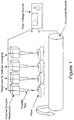
- a schematic representation of one type of set-up for electrospinning is provided in FIG. 1 .
- a polymer solution, or melt is injected with current to create a charge imbalance.
- the charged solution is then placed in proximity to a grounded target (in FIG. 1 , a grounded mandrel).
- the charge imbalance begins to overcome the surface tension of the polymer source, forming an electrically charged jet. Within the electric field, the jet is directed towards the grounded target and the carrier solvent evaporates. Depending upon reaction conditions, and the polymers used in the process, electrospinning can be utilized to produce a fine aerosol of material or a continuous non-woven mat of fibrillar material, as shown in FIG. 1 .
- the nature of the electrospinning process intrinsically provides a high degree of control over the diameter of the resulting fibers.
- Micron to nanoscale diameters can be selectively achieved simply by regulating the starting concentrations of the polymers present in the electrospinning solutions.
- fibrils may be deposited into a random matrix or into aligned arrays that are oriented along a defined axis.
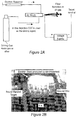
- FIG. 2A A second schematic of an electrospinning apparatus is shown in FIG. 2A .
- the key elements of the electrospinning system include a high voltage power supply, a source reservoir for the polymer and a grounded target mandrel.
- the system that is depicted utilizes a cylindrical target mandrel; however the electrospinning process can be adapted to produce much more complex shapes.
- FIG. 2B shows the result of electrospinning about 10 grams of dextran dissolved in deionized water onto a round mandrel target, as described in detail in the Example 1 below.
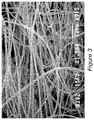
- FIG. 3 shows a scanning electron micrograph of electrospun dextran fibers in which the average cross sectional diameter of the individual fibers is about 1 micron.
- electrospinning is not the only way to make dextran fibers. Such fibers may be produced by other methods of aerosolization. However, the electric field helps in the efficient collection of the fibers, and electrospinning may yield more uniform fibers.
- Other technologies which might also be employed for spinning dextran fibers including those described in Luo et al., U.S. Patent No. 7,067,444 ; Bogue et al., U.S. Patent No. 6,116,880 ; and Fuisz et al., U.S. Patent No. 5,447,423 .
- so-called “cotton-candy machines” may be suitable for use in fabricating the dextran fibers of the invention. More detailed descriptions of methods of preparing the dextran fibers of the invention are provided in Example 2 below.
- Other methods include compressing a dextran solution between two plates or other flat surfaces and drawing the plates or surfaces away from each other, usually repeatedly. Dextran fibers form between the two surfaces.
- the commercially available dextran that is used to produce the electrospun fibers of the invention is synthesized from sucrose by enzymes on the cell surface of certain lactic acid bacteria, the best-known being Leuconostoc mesenteroides and Streptococcus mutans.
- Dextran is a complex, branched glucan (a polysaccharide made of many d-glucose molecules) composed of chains of varying lengths (e.g. from 10 to 200 kilodaltons).
- the straight chain consists of a-1,6 glycosidic linkages between glucose molecules, while branches begin from a-1,4linkages (and in some cases, a-1,2 and a-1,3 linkages as well).
- Dextrans are commercially available in a wide range of molecular weights e.g. from about 10 kilodaltons (kDa) to about 200 kDa. Commercial preparations are mixtures of dextrans of varying molecular weights, usually in narrower weight ranges and may be provided, for example, as “low” or “high” molecular weight dextrans. For example, “Dextran 40” has an average molecular weight of 40 kDa, “Dextrans 75” has an average molecular weight of 75 kDa, etc.
- the dextrans used for electrospinning are typically in a molecular weight range of from about 10 to about 200 kDa, or from about 25 to about 200 kDa, or from about 50 to about 200 kDa, or from about 75 to 200 kDa, and usually from about 60 to 90 kDa, or from about 100 to about 200 kDa.
- the median size of the dextran molecules in a dextran preparation also has an effect in that if the median weight is high in a particular lot, less dextran may be used to form the desired amount of fibers.
- the conditions for electrospinning dextran are as follows: an ambient temperature of from about 60 to about 75° F, a relative humidity of from about 30% to about 40%, and typically at least about 20%.
- the resulting fibers are typically in the nanometer or millimeter range of cross-sectional diameter, usually from about 0.75 microns to about 1.25 microns.
- the electrospun fibers are "dry" and should be protected from exposure to moisture to prevent premature dissolution. However, some water is associated with the fibers and fiber compositions can contain from about 7 to about 8% water, but must be less than about 5% when the fibers are sterilized by x-ray irradiation.
- the hemostatic products obtained according to the method of the invention are usually formed of substantially homogeneous spun dextran.
- the amount of dextran per hemostatic product can vary widely, depending on the size of hemostatic product that is being manufactured, with typical hemostatic product formulations using from about 5-10 grams of dextran (usually 100,000-200,000 Mr) per hemostatic product.
- the range can be extended widely, e.g. from as low as about 0.5 grams or less (for small hemostatic products) to as high as 100 or more grams per hemostatic product, for large hemostatic products.
- a solution of dextran for electrospinning will be of a concentration in the range of from about 0.1 to about 10 grams per ml of solvent, or from about 0.5 to about 5 grams per ml, and usually such a solution is at a concentration of about 1 gram per ml, ⁇ about 0.15 mg.
- a preferred range would be from about 0.9 to about 1.1 grams of dextran per ml of solution that is to be spun.
- the area (length and width) of a hemostatic product of the invention can vary widely and can be adjusted by adjusting spinning parameters.
- the mats of dextran fibers can be cut to a desired size after spinning.
- the hemostatic product will be from about 0.5 centimeters or less to about 30 centimeters or more in length and/or width, but larger or smaller sizes are also contemplated.
- the height or thickness of the hemostatic product can likewise vary considerably depending on the intended use of the hemostatic product.
- the hemostatic product has a thickness of between about 1 millimeter and about 5 centimeters.
- the thickness of the hemostatic product (which is related to the volume) may impact the rate of dissolution of the dextran upon contact with liquid. For example, a thin hemostatic product (e.g. about 2 millimeters), will dissolve more rapidly than a hemostatic product that is thicker, providing the loft of the fibers is comparable.
- dissolution of the dextran fibers is extremely rapid, e.g. about 5 minutes or less after exposure to liquid, or about 4 minutes or less, or about 3 minutes or less, or about 2 minutes or less, or about 1 minute or less, e.g. the hemostatic product typically takes only a few seconds to dissolve (e.g. from about 1 to about 20 seconds to dissolve.
- This rapid dissolution may be referred to herein as “instantaneous” or “immediate” dissolution.
- Compression of an electrospun dextran mat may be used to modulate the rate of dissolution, with greater levels of compression inversely impacting the rate, i.e. generally, the greater the degree of compression, the slower the rate of dissolution.
- the rapid rate of dissolution is advantageous, particularly when delivering biologically active agents (e.g. hemostatic agents) to a site of action such as a wound. Rapid dissolution of the carrier dextran fibers provides extremely rapid delivery of the hemostatic agents to the wound upon deployment of the hemostatic product.
- the one or more active agents that are associated with the dextran fibers of the hemostatic product may be any active agent that it is desirable or advantageous to deliver to the site where the hemostatic product is to be used or applied.
- the method of preparing a hemostatic product yields a hemostatic product that is used to deliver active agents, for example, to a wound.
- Such wounds include wounds and breaches of body or tissue integrity that occur as a result of trauma (e.g. accidental trauma, trauma resulting from conflicts such as gunshot wounds, knives, etc.), as well as wounds which are purposefully incurred, such as surgical incisions, body piercings, etc.
- trauma e.g. accidental trauma, trauma resulting from conflicts such as gunshot wounds, knives, etc.
- wounds which are purposefully incurred such as surgical incisions, body piercings, etc.
- the active agents are bioactive agents that have a beneficial or therapeutic effect at the wound site.
- the site is a bleeding wound at which it is desired to form a blood clot to stop or slow the bleeding.
- the therapeutic substances of interest include thrombin and fibrinogen, although other agents active in promoting hemostasis, including but not limited to capscian, may also be included.
- electrospun or non-electrospun collagen agents that absorb water, various dry salts that would tend to absorb fluids when placed in contact with e.g. blood; engineered thrombin or thrombin mimics; engineered fibrinogen; agents that cause vasospasm (e.g. ADP, 5-hydroxytryptamine, 5-HT and thromboxane, (TXA-2) to help contract and seal a bleeding vessel, etc. may also be included.
- vasospasm e.g. ADP, 5-hydroxytryptamine, 5-HT and thromboxane, (TXA-2) to help contract and seal a bleeding vessel, etc.
- tissue factors that are normally only expressed on the surface of damaged cells and which start the normal clotting cascade
- serotonin which enhances platelet clumping and promotes vessel constriction
- other agents that are used to replace missing components of the clotting cascade in hemophilia, such as Factor 7 (which activates the so called external extrinsic coagulation cascade) and crude extracts of platelets.
- Factor 7 which activates the so called external extrinsic coagulation cascade
- crude extracts of platelets crude extracts of platelets.
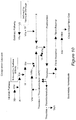
- FIG. 10 italic pathways denote inhibition and the central role of thrombin in the activation of coagulation and inactivation of coagulation processes is shown, where:
- active agents that function to promote late stages of wound healing may also be included to, for example, facilitate cell migration and remodeling.
- the incorporation of collagen is an example of such an active agent.
- the therapeutic agents must be amenable to drying and are associated with the other components of the hemostatic product in the dry state, since liquid may negatively affect at least one of the components used in the hemostatic product.
- the active agents may be desiccated or lyophilized, or water may be removed by some other means.
- the amount of water that is present in the substances when they are associated with the electrospun dextran fibers is less than about 5%, and preferably less that about 2%. These substances retain full or partial activity when rehydrated, e.g. in blood. Generally therapeutic substances associated with the hemostatic products of the invention retain, upon contact with liquid, at least about 25%, or about 50%, or even about 75 to 100% of their activity before drying or desiccation, as compared to standard preparations of the substance using standard assays that are known to those of skill in the art.
- thrombin or fibrinogen are associated with the hemostatic product.
- the thrombin and fibrinogen are salmon thrombin and fibrinogen. Advantages of using salmon as a source of these materials include but are not limited to the lack of concern about transmission of etiologic agents (e.g. viruses) that may occur when human and other mammalian sources of thrombin or fibrinogen (e.g. bovine) are used.
- etiologic agents e.g. viruses
- Salmon thrombin and fibrinogen are highly efficacious and have no deleterious side effects, when used in the pig model, which is a recognized animal model that is considered to be indicative of results in humans.
- the quantity of fibrinogen added to the hemostatic product is generally in the range of from about 10 milligrams to about 3 grams. In certain embodiments, the amount of fibrinogen in each of the hemostatic products is between about 20 milligrams to about 1 gram.
- the quantity of thrombin added to each of the hemostatic products is generally between about 10 and 10,000 NIH Units. In certain embodiments, the amount of thrombin in each of the hemostatic products is between about 20 and 6,000 NIH Units.
- the therapeutic agents may themselves be electrospun.
- the therapeutic agents are dissolved in and spun from a solution.
- the therapeutic agents may be electrospun into fibers.
- the active agents may be electrospun into other forms such as droplets, beads, etc.
- active agents such as thrombin may be electrosprayed with sucrose to form sugar droplets, which tends to stabilize thrombin and can also "trap" other substances of interest for delivery to the hemostatic product.
- these (or other) active agents are in a finely dispersed dry, particulate or granular form e.g. as a fine powder or dust, as electrospinning may tend to decrease their activity. In other words, the active agents are not electrospun either by themselves.
- the provision of the substances in the form of a fine powder provides a large surface area of contact for dissolution when the materials come into contact with fluid.
- such particles will have average diameters of between about 1 and 10,000 microns, and, in certain embodiments, between about 10 and 1,000 microns.
- Such dry solid particles may be formed by any of several means, including but not limited to grinding, pulverizing, crushing, etc. However, those of skill in the art will recognize that other forms of these active agents may also be included in the hemostatic product, e.g. flakes, films, sheets, strings, etc. Further, in some embodiments, thrombin and fibrinogen are in the form of electrospun droplets when associated with an excipient or earner.
- association of substances of interest with the excipient or carrier may be accomplished by any of many suitable techniques that are known to those of skill in the art, and will depend in part on the precise form of the substance and the means at hand. For example, for powdered, particulate thrombin and fibrinogen, association may be carried out by sprinkling, shaking, blowing, etc. the agents onto a layer of the excipient or carrier.
- the substances of interest may become relatively evenly dispersed throughout the woven mat of fibers or may be largely confined to the topmost section of the fiber mat. If no backing is present, the latter embodiment is preferable, to prevent the particulate substance of interest from falling through and out of the mat.
- the density of the fibrous mat can be adjusted (e.g. increased), for example, by adjusting its thickness and/or by compressing the mat under pressure so that the fibers are closer together.
- Other techniques for association also exist, e.g. the placement of dry but liquid soluble sheets or strips of material onto or between layers of a carrier, electrospinning the added materials as a discrete layer or in discrete layers, etc., and any such technique may be employed.
- the techniques for assembling the hemostatic products of the invention may be carried out manually or may be mechanized, or a combination of manual manipulation and mechanization may be used.
- thrombin in particular, 5,000 NIH Units of thrombin is a relatively small volume of powder. Therefore, inert carriers or bulking agents such as dextrose may be added to insure more complete dispersal of active agents in the hemostatic product.
- the association of substances of interest with the excipient may be carried out according to many different arrangements. For example, a first layer of excipient may be formed, and one or more of the substances may be associated with the first layer. Then another second layer of excipient may be formed on top of the substance(s) of interest, and the same or other substances of interest may be associated with the second layer, and so on.
- a final or outermost layer of excipient may be added to prevent the dislodgement of substances of interest from the layer(s) below.
- the number of layers of excipient that are used in a hemostatic product of the invention may vary widely, from as few as 1-2 to as many as several dozen, or even several hundred, depending on the desired characteristics of the hemostatic product.
- a hemostatic product will contain 1-2 layers. In other embodiments the hemostatic product may include between 2-20 layers. The very slight amount of moisture that is present in a prepared hemostatic product may help to trap and retain the thrombin and fibrinogen on the surface of the hemostatic product.
- the hemostatic products also include one or more support structures or support materials incorporated therein.
- a backing may be incorporated into the hemostatic product.
- the support material may be formed from various electrospun materials such as polyglycolic acid (PGA), polylactic acid (PLA), and their copolymers (PLGAs); charged nylon, etc.
- the support material is compressed electrospun dextran fibers.
- compressed electrospun dextran fibers we mean that electrospun dextran fibers are compressed together under pressure.
- Compression of electrospun dextran fibers is carried out, for example, under pressure between two plates (e.g. a vice), and can compress a mat of fibers with a height (thickness) of about 3 inches to a sheet with a height of about 0.5 inches or even less (e.g. about 0.1 to about 0.4 inches).
- the electrospun dextran fibers are electrospun directly onto a previously electrospun support material, while in other embodiments, the support material and the electrospun dextran fibers are associated after electrospinning of each, e.g. by joining of one or more layers of each.
- the support material is not an electrospun material but is some other (usually lightweight) material.
- examples of such materials include but are not limited to gauze; various plastics; hydrogels and other absorbent materials that can facilitate absorption of blood and therefore clot formation; etc.
- the support material may or may not be soluble in liquid, or may be slowly soluble in liquid, and may or may not be permeable to liquid.
- Slowly soluble materials include those from which absorbable or dissolving (biodegradable) stitches or sutures are formed, included PGA, polylactic and caprolactone polymers.
- the support material may dissolve relatively quickly such as less than about 1 hour. In other embodiments, the support material may dissolve within from about 10 days to 8 weeks. In either case, the support material provides the advantage of not having to remove the hemostatic product and risk disrupting the clot.
- the support material should not interfere with the immediate dissolution of the excipients and delivery of the active agents associated therewith into the liquid that dissolves the excipients.
- the support material might be only on one side of the hemostatic product, so that when the hemostatic product is, for example, a hemostatic product, and is applied to a wound, the hemostatic product is oriented so that the excipients come into direct contact with the blood in the wound bed and the support material does not, i.e. the support material is the "top" or outermost surface of the hemostatic product when placed on the wound.
- FIG. 4A This embodiment is illustrated, for example, in FIG. 4A , in which electrospun dextran fibers 10 are shown as deposited onto non-porous, liquid impermeable support material 20. When applied to a wound, excipient 10 would face downward into the wound, and non-porous support material 20 would face away from the wound.
- the support material may contain pores, openings or spaces that allow liquid to access the excipients in the hemostatic product even when the support material is present.
- the support material may be a net or web of material that is insoluble (or slowly soluble) but that permits liquid to freely access the excipients and associated substances of interest.
- FIG. 4B shows electrospun dextran fibers 10 deposited on (or possibly under, or on and under, or woven throughout) netting 40, which is shown partially in phantom where covered by electrospun dextran fibers 10.
- both a "backing" or “top” support material and a second web-like support material may be present in the devise.
- FIG. 4C shows electrospun dextran fibers 10 deposited on non-porous support material 50 and overlaid with net-like material 60, i.e. electrospun dextran fibers 10 are "sandwiched" between non-porous support material 50 and net-like material60.
- excipients might be wrapped or wound around an elongated support such as a filament or string, or wrapped around a particular form with the shape of a cavity in which the hemostatic product is likely to be placed, such as a bullet hole, etc.
- each of the sheets is primarily fabricated from dextran and thrombin.
- Each of the layers may have a thickness of between about 0.001 inches and about 0.50 inches.
- hemostatic product Depending on the type of wound with which the hemostatic product is intended to be used, there may be between about 2 and 20 sheets placed in a stacked relationship to form the hemostatic product.
- fibrinogen is provided in a powder which is dispersed onto the surface of at least a portion of the sheets.
- the layers used in fabricating the hemostatic product may be attached together in a manner that enables the layers to remain in a substantially stationary position with respect to each other.
- the sheets are cut into a desired shape and size and then stacked upon each other. Once the desired number of sheets are stacked, the sheets are fused together to thereby prevent the sheets from moving with respect to each other.
- cutting causes the sheets to fuse together.
- Another suitable technique for fusing the layers together is ultrasonic welding. The ultrasonic welding avoids complications from the presence of adhesives.
- Non-limiting examples of other techniques that may be utilized to fuse the layers in a substantially stationary position with respect to each other is sewing, crimping, heat sealing and applying a medical grade adhesive. Whatever technique is utilized to fuse the layers together, the technique should maintain the ability of the hemostatic product to substantially dissolve so that the patient does not experience complications from such undissolved components and so that the patient does not have to undergo additional surgical procedures to remove the undissolved components when the hemostatic product is used in locations that are other than on the upper surface of the patient's skin.
- the crux of the problem at the site of a penetrating injury is that the wounded tissue is relatively inaccessible.
- bleeding does not occur as much at the surface but deeper within the tissue, within a cavity formed by the bullet, where it cannot be easily treated by a hemostatic product that is simply spread over the external site of the injury (e.g. the point of entry of the bullet, knife, shrapnel, sword, bayonet, etc., or other cause of injury).
- This aspect of the hemostatic product obtained by the method of the invention solves the problems associated with penetrating injuries, which can cause extensive bleeding in the deep tissues, and takes advantage of the highly soluble nature of the dextran hemostatic product.
- a complicating factor in this type of injury concerns the ability to deliver hemostatic materials that are highly soluble to such a site.
- hemostatic product there may be bleeding and other fluids evident at the entry site of the wound and the application of a hemostatic product to this superficial site may result in the complete dissolution of the hemostatic product at the surface-without the delivery of the active materials to the underlying source of the bleeding within the wound cavity.
- the invention circumvents this occurrence by providing delivery of active agents deep into the wound.
- Prior art hemostatic products have failed to adequately address this problem.
- the present invention solves this problem by providing a method for preparing a hemostatic product, the shape and application of that can be adapted to use with such wounds.
- a method for preparing a hemostatic product the shape and application of that can be adapted to use with such wounds.
- an elongated cylindrical "cigar-shaped" hemostatic product that contains thrombin and fibrinogen, and which may contain support material, is provided.
- the hemostatic product may be stored within a protective covering or packaging or tube. This tube protects the hemostatic product from the ambient environment. Both the hemostatic product and the tube are preferably sterile. These components may be further enclosed in an outer wrapper of e.g. paper, polymer, blister pack, similar to that used for disposable syringes, to prevent loss of sterility.
- an outer wrapper e.g. paper, polymer, blister pack, similar to that used for disposable syringes, to prevent loss of sterility.
- the outer wrapping When used, the outer wrapping is torn open and the sterile tube containing the hemostatic product is accessed. In some embodiments, one end of the tube is removed and placed over the outermost accessible portion of the injury.
- the tube may also comprise a "plunger” or similar means which enables the user to expel the hemostatic product from the tube and into the wound, in effect "injecting" the hemostatic product into the wound.
- Means such as those that are used for the vaginal delivery of, for example, tampons, i.e. a "cylinder within a cylinder"
- a syringe-like means of delivery may be used.
- the hemostatic product can thereby be introduced deep into the tissue along the wound track and the therapeutic agents in the hemostatic product are delivered to where they are most needed, i.e. to the interior of the wound.
- a plunger per se is not included, but the tube is fashioned so that both ends can be opened, and the hemostatic can be pushed into the wound from one open end by exerting pressure on the opposite open end of the tube using any object that fits at least partially into the tube, sufficiently to push the hemostatic product out of the tube and into the wound. Examples of such objects include a finger and a stick.
- this embodiment of the hemostatic product may include support material around or within the hemostatic product (e.g. biologically compatible netting, rod, etc. that will disintegrate via biodegradation) to render the hemostatic product more robust and less flexible as it is shunted down into the wound.
- support material around or within the hemostatic product e.g. biologically compatible netting, rod, etc. that will disintegrate via biodegradation
- the outermost end of the hemostatic product that end on which pressure is exerted (e.g. with a plunger) to expel the hemostatic product from the tube into the wound, may be reinforced with support material so that the plunger or other object used to push on the hemostatic product can deliver sufficient force to remove the hemostatic product from the tube.
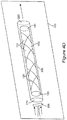
- FIG. 4D An exemplary schematic depiction of this embodiment of the invention is provided in FIG. 4D , where hemostatic product 100, comprised of spun dextran fibers 110 and (optional) support material 120, and having a first end 130 and second end 140 is illustrated as enclosed within tube 200.
- Tube 200 has openings 210 and 220, both of which may be capped prior to use (caps not shown) or may be left open, especially if the entire apparatus is packaged in sterile packaging 400. Sterile packaging 400 is removed or breached to provide access the apparatus prior to use. To use the apparatus, openings 210 and 220 of the tube must be open.
- hemostatic product 10 To deliver hemostatic product 10 to a penetrating wound, an object such as plunger 300 in inserted into end 210 of the tube. Pressure is exerted on hemostatic product 100 as plunger 300 contacts device end 130, and hemostatic product 100 is consequently pushed out of tube 200 via opening 220 (in the direction indicated by the arrows) and into the penetrating wound (not shown).
- a second schematic representation of such a hemostatic product is provided in FIG. 4E .
- support material is not included and the dry, sterile hemostatic product material (e.g. dextran fibers) with associated therapeutic agents is located or positioned within a small, sealed cylinder with a cap at one end and a plunger at the other.
- the cap is discarded, the open end of the cylinder is placed over the mouth of the wound and may be inserted into the wound, and the plunger is depressed, displacing or injecting the hemostatic product material deeply into the wound.
- Similar designs may be used to deliver the hemostatic product to orifices or channels such as the nasal passages, the ear canal, the vagina, the anus, into blood vessels, etc.
- the components that are used in such an application will be formed into a shape that is of the order of about 1 to about 6 inches in length, and from about 1/4 inch to 1 inch in diameter, i.e. the dimensions of the hemostatic product will be suitable for insertion through the external opening and deep into an orifice or a wound cavity.
- the hemostatic product may be sterilized prior to use, generally by using electromagnetic radiation, for example, X-rays, gamma rays, ultraviolet light, etc. If thrombin is included in the hemostatic product, it may be desirable to reduce the moisture content of the hemostatic product (e.g. a bandage or gauze) to less than about 5%, to preserve thrombin activity during sterilization.
- electromagnetic radiation for example, X-rays, gamma rays, ultraviolet light, etc.
- This moisture content reduction can be achieved by drying the fabricated hemostatic product, e.g., under a vacuum, or by using a fabrication method that reduces moisture content from the beginning.
- the hemostatic products are sterilized using X-rays in a dose of between about 5 and 25 kilograys (kGray). Any method that does not destroy the carrier or the activity of substances associated with the fibers may be used to sterilize the hemostatic products of the invention.
- the substances of interest that are associated with the fibers of the hemostatic product may include thrombin and fibrinogen, and the hemostatic product may be used to staunch bleeding.
- the range of active ingredients may vary with the specific application of the hemostatic product.
- hemostatic products comprised of only thrombin might be used for small injuries or in combination with other interventions.
- other therapeutically beneficial substances may also be associated with the hemostatic product, including but not limited to: antibiotics, medicaments that alleviate pain, growth factors, bone morphogenic protein, vasoactive materials (e.g. substances that cause vasospasms), steroids to reduce inflammation and combinations thereof.
- no bodily fluid is present (or if insufficient body fluid is present) and the applied hemostatic product can be "activated" by wetting, e.g. by spraying, or by otherwise applying a source of moisture (e.g. by exposing the hemostatic product to a moist material such as a sponge), or dropping hemostatic products into a liquid (e.g. a body of water), to cause release of the agents of interest associated with the dextran fibers.
- a source of moisture e.g. by exposing the hemostatic product to a moist material such as a sponge
- a liquid e.g. a body of water
- the hemostatic products may be used in a variety of situations and for a variety of purposes in which space and weight are not considerations.
- the hemostatic products of the invention provide a convenient means to administer thrombin and fibrinogen to surgical wounds in a conventional operating theater.
- the hemostatic products of the invention may also be advantageously utilized whenever it is desired to package and eventually release one or more dried substances, but where it is unfeasible or undesirable to handle the dried substances directly, e.g. where the quantity is extremely small, or the substance is toxic.
- the hemostatic products may serve as a "scaffolding" or carrier for containing, storing and/or transporting the substance(s) until use, i.e. until contacted with liquid that dissolves the electrospun dextran fibers, concomitantly releasing the substances into the liquid.
- substances may include, for example, enzymes or their precursors (e.g. pro-enzymes or zymogens) and their substrates, substances that activate a protein or enzyme (e.g. proteases, cofactors, etc.), and the like.
- the stabilizer also enhances the usable shelf life of the hemostatic product.
- the stabilizer provides the hemostatic product with a shelf life of at least about 2 years. In other embodiments, the hemostatic product exhibits a shelf life of at least 3 years.
- the term usable shelf life means that the hemostatic product does not exhibit noticeable degradation when viewed without magnification or with magnification such as a magnifying glass or microscope.
- One such stabilizer is adapted for use in conjunction with thrombin. It is believed that the thrombin stabilizer gets into the structure of the thrombin and thereby reduces the rate at which the thrombin breaks down.
- the at least one thrombin stabilizer may be mixed with the thrombin before the thrombin is mixed with the other components used to fabricate the hemostatic product.
- the thrombin stabilizer contains a sugar such as sucrose.
- sucrose is used in the thrombin stabilizer at a concentration of up to about 5 percent by weight of the thrombin. In other embodiments, the sucrose concentration is about 1 percent by weight of the thrombin.
- the thrombin stabilizer Prior to mixing the thrombin stabilizer with the thrombin, the thrombin stabilizer may be mixed with dextran. It is believed that the dextran enhances the ability of the sucrose to enter into the structure of the thrombin.
- the dextran is used in the thrombin stabilizer at a concentration of up to about 5 percent by weight of the thrombin. In other embodiments, the dextran concentration is about 1 percent by weight of the thrombin.
- a stabilizer may be used in conjunction with the fibrinogen.
- the fibrinogen stabilizer Prior to applying the fibrinogen to the other components of the hemostatic bandage, the fibrinogen stabilizer may be mixed with the fibrinogen. It is believed that the fibrinogen stabilizer gets into the structure of the fibrinogen and thereby reduces the rate at which the fibrinogen breaks down.
- the fibrinogen stabilizer contains a sugar such as sucrose.
- sucrose is used in the fibrinogen stabilizer at a concentration of up to about 5 percent by weight of the fibrinogen. In other embodiments, the sucrose concentration is between about 2 and 3 percent by weight of the fibrinogen. In still other embodiments, the sucrose concentration is about 1 percent by weight of the fibrinogen.
- the fibrinogen stabilizer Prior to mixing the fibrinogen stabilizer with the fibrinogen, the fibrinogen stabilizer may be mixed with a solubility enhancing agent. It is believed that the solubility enhancing agent enhances the ability of the sucrose to enter into the structure of the fibrinogen.
- the solubility enhancing agent is a detergent. In other embodiments, the solubility enhancing agent is Pluronic.
- the solubility enhancing agent is used in the fibrinogen stabilizer at a concentration of up to about 1 percent by weight of the fibrinogen. In other embodiments, the solubility enhancing agent concentration is about 0.002 percent by weight of the fibrinogen.
- the fibrinogen and thrombin are placed on the surface of and/or integrated into the matrix of a dissolving film. Using the fibrinogen and thrombin in such a configuration enables the hemostatic product to be positioned over the position on the person's body where the blood is being emitted and, as such, where hemostasis is desired.
- the dissolvable film may be configured to dissolve relatively quickly when exposed to liquid such as blood. In certain embodiments, the film dissolves in less than about 30 seconds. In other embodiments, the film dissolves in less than about 5 seconds.
- An example of one suitable dissolving film is marketed by Hughes Medical Corp.
- an example of another dissolving film is a dissolving paper that is fabricated from materials that do not pose a health hazard to the patient after the dissolving paper has dissolved.
- the dissolving paper may be fabricated from a material that enhances the ability of at least one of the fibrinogen and thrombin to achieve hemostasis.
- An example of one such dissolving paper is marketed by Daymark Technologies.
- the fibrinogen and thrombin are provided between two layers of a dissolvable material.
- a dissolvable material is marketed by Hughes Medical Corp. and which is discussed above.
- the fibrinogen and thrombin may be provided in a variety of configurations using the concepts of the invention. In one such configuration, at least one of the fibrinogen and the thrombin are provided in a powder that is retained between the layers of the dissolvable material.
- the dissolvable material should have sufficient structural integrity to retain the fibrinogen and thrombin therebetween while resisting interaction with the fibrinogen and thrombin.
- the dissolvable material should also dissolve relatively quickly when exposed to liquids such as blood such that the fibrinogen and thrombin are released therefrom.
- dissolving means that the dissolvable material breaks down to a sufficient extent such that a significant portion of the fibrinogen and thrombin are in contact with the blood in less than about 30 seconds. In other embodiments, the dissolvable material breaks down in less than about 10 seconds.
- the dissolvable material should also facilitate readily bonding such that two layers of the dissolvable material can be attached together around the edges thereof to thereby form an enclosure that is adapted to retain the fibrinogen and thrombin therein.
- An example of one suitable technique for attaching the dissolvable materials to each other is applying a small amount of liquid to at least one of the pieces of material that are intended to be bonded together.
- the water causes a slight breakdown of the dissolvable materials such that when two layers of the dissolvable material are placed adjacent to each other, the layers of the dissolvable material bond together.
- the dissolvable material may be fabricated from a variety of materials.
- the dissolvable material should not negatively impact the stability of the fibrinogen and thrombin.
- the material used to fabricate the dissolvable layer should also be selected to not have any adverse health effects on the person or animal on which the product is intended to be used.
- the material used to fabricate the hemostatic product may alone or in conjunction with the fibrinogen or thrombin enhance the rate of hemostasis.
- components that may be used for the dissolvable material include cellulose derived materials.
- a separate device is used to maintain the hemostatic product in a desired position with respect to the patient.
- An example of one such device is gauze that is wrapped around the portion of the body that is bleeding.
- At least a portion of the hemostatic product is covered with an adhesive.
- the adhesive may be positioned around at least a portion of an edge of the hemostatic product.
- the adhesive covers a substantial portion of an inner surface of the hemostatic product.
- the adhesive should be selected to be biocompatible to minimize the potential of the patient experiencing complications caused by contact between the adhesive and the tissue that is bleeding.
- the fibrinogen and thrombin may be placed inside of an enclosure and/or on the surface of an enclosure that does not dissolve when exposed to liquids such as blood.
- Such a configuration may facilitate forming a blood clot thereon such that the blood clot could be removed from the patient.
- Such a configuration may be similar to a conventional tea bag in that the enclosure may be attached to a string that is used in conjunction with at least one of positioning the product proximate an area where hemostasis is desired or removing the product and the associated blood clot from the patient.
- the string may be fabricated from a material that is sufficiently strong such that the string does not break either when positioning the product or when removing the product from the patient.
- the string should also be fabricated from a material that is not likely to produce adverse biological interactions.
- the enclosure may be configured to discharge the fibrinogen or thrombin over a selected period of time.
- the rate at which the fibrinogen and thrombin are discharged may be adjustable based upon the rate and/or volume of blood that is being discharged from the patient.
- the enclosure may be configured to breakdown over an extended period of time. As the enclosure breaks down, the fibrinogen and thrombin may be discharged from the product.
- the product By controlling the rate at which the fibrinogen and thrombin are discharged from the product and/or the rate at which the enclosure degrades, the product minimizes the formation of a clot having a relatively large size but rather may facilitate the formation of a plurality of clots having a smaller size. Such smaller clots may be more readily broken down within the body than if relatively large clots were caused to be formed.
- This configuration of the hemostasis product may be particularly suited for use in conjunction with bleeding in patients that while being within a bodily cavity such a bodily cavity is accessible from outside of the body.
- Examples of surgical techniques with which the hemostasis product may be used in conjunction include sinus and tonsil surgery.
- At least one of the fibrinogen and thrombin may be electrospun either alone or with another component such as dextran.
- the fibers produced using such a process may be wrapped around a distal end of the applicator.
- the applicator may be configured to release the fibrinogen and thrombin once the hemostatic product encounters blood. Using such a process, the fibrinogen and thrombin would cause clots to form. The clots could be removed from the patient. If the clots are sufficiently small, the clots may be allowed to remain in the patient such that the clots could eventually be broken down.
- At least one of the fibrinogen and thrombin may be configured to remain relatively close to or be confined to the applicator such that when the fibrinogen and thrombin cause at least one clot to form, such clots remain attached to the applicator.
- This configuration facilitates removal of the clots from the patient and may be desirable where the clots are likely to be sufficiently large to make it undesirable for the clots to remain in the body.
- the fibrinogen and thrombin may be incorporated into a material that is attached to an end of the applicator.
- An example of one such material is foam.
- the foam may be either open cell foam or closed cell foam.
- the foam should have pores that are sufficiently large to receive the fibrinogen and thrombin.
- the foam should not have a strong affinity for either fibrinogen or thrombin so that when the fibrinogen and thrombin are exposed to water, these components are released from the foam.
- the fibrinogen and thrombin are incorporated into foam.
- foam is an absorbable gelatin sponge such as is available under the designation VETSPON from Novartis.
- hemostatic sponge it may be desirable to prewet the hemostatic sponge prior to the hemostatic sponge being applied to the region where hemostasis is desired.
- the foam may be configured to be bendable so that the hemostatic foam can be bent into a configuration that conforms to the shape of the region in which the hemostasis is desired. Once the hemostatic foam is bent into the desired configuration, it may remain in that configuration even without a fastening device being used to hold the hemostatic foam in the desired shape and/or position.
- the foam may be either open cell foam or closed cell foam.
- the foam should not have a strong affinity for either fibrinogen or thrombin so that when the fibrinogen and thrombin are exposed to water, these components are released from the foam.
- the fibrinogen and thrombin may be incorporated into the components that are used to fabricate the foam such that rather than the fibrinogen and thrombin being applied to a surface of the foam, the fibrinogen and thrombin are dispersed through the matrix of the foam.
- Such a configuration facilitates ongoing release of the fibrinogen and thrombin from the foam and may be particularly beneficial when it is desired to form a clot in a region of the body that is likely to experience rebleeding.
- the quick dissolving tablets are suited for use in a variety of applications.
- An example of one such application is oral bleeding. If the product is intended for use in conjunction with oral bleeding, the tablet may be flavored.
- the hemostatic product may be placed over at least a portion of the suture line through which blood is passing.
- the fibrinogen and thrombin contact such blood and thereby provide hemostasis.
- Vascular access devices are used in conjunction with a variety of medical treatments such as delivering chemotherapy drugs to a patient.
- the vascular access devices are surgically implanted in a large vein that is near the patient's heart.
- the vascular access devices may be left in place for an extended period of time such as more than a year.
- One challenge of surgically implanting the vascular access devices is stopping the bleeding around the vascular access device.
- the blood may leak out of the suture lines or around the conduit.
- the hemostatic product may be placed around the vascular access device to thereby cause hemostasis.
- the hemostatic product may have a variety of configurations.
- the conduit associated with the vascular access device may be porous.
- the hemostatic product may be used to provide hemostasis and thereby prevent blood from passing through the porous conduit.
- the hemostatic product may be suited for use to stop bleeding from a patient such as when a catheter is removed from a femoral artery in the patient.
- the hemostatic product may include an adhesive, which holds the hemostatic product in place while hemostasis is occurring.
- Aortic root surgery is used to treat a dilation or enlargement of the aorta. Because of the nature of the aorta, hemostasis plays an important role in the success of the procedure.
- One of the configurations of the hemostatic product that are discussed above may be used to provide the hemostasis without causing constriction of the aorta, which frequently results from the prior art agents that are used to provide hemostasis in conjunction with this type of surgery.
- the hemostatic product in the form of a pledget that is placed at least partially into the wound and which thereby causes hemostasis within the wound.
- the hemostatic product may be provided in an elongated configuration such as a tampon-type shape.
- the hemostatic product could also be formed in the shape of a worm or rope.
- Such configurations could be used for hemostasis after vaginal surgeries.
- These configurations could also be used in conjunction with an elongated hole in the patient such as may be caused by a gunshot wound.
- the cylindrical configuration of the hemostatic product is also suitable for use in situations where there is a large opening in tissue. In such situations, multiple cylindrical hemostatic products may be inserted into the large opening to thereby fill a portion of such opening.
- the facilitate administering the elongated hemostatic product it may be desirable for the hemostatic product to be stored in an applicator such as a plunger.
- the plunger could be used to insert the elongated hemostatic product into the wound in the patient.
- each of the components of the hemostatic product are package separately such as in a syringe.
- a syringe Such a configuration enables the components to be dispensed at different rates so that the hemostasis may be customized to the particular patient or for a particular type of wound.
- the applicator may allow each of the components to be delivered alternatively or simultaneously.
- the hemostatic product may consist substantially of the fibrinogen, thrombin and a carrier that are adapted to be bioabsorbed.
- the fibrinogen and thrombin may be placed on an outer surface of the hemostatic product such that the hemostatic product would be removed from within the patient after hemostasis is completed.
- the fibrinogen and thrombin are delivered via an aerosol.
- the fibrinogen and thrombin may be provide in the form of microspheres that are capable of being dispensed using an aerosol container.
- the hemostatic product in conjunction with robotic surgical procedures. While robotics provide the ability for surgical procedures to be performed by a surgeon who is at a location that is remote to where the patient is located, the robotics have certain limitations.
- the hemostatic product may be used in conjunction with the robotic surgical procedures to provide hemostasis and thereby overcome such limitations.
- the concepts of the invention may be adapted for use in conjunction with other animals.
- animals on which the invention can be used include dogs and cats.
- an effective amount of water is mixed with dextran to form an aqueous dextran solution. Thereafter, the aqueous dextran solution is electrospun to form a dextran sheet.
- the dextran sheet may be stored until it is desired to fabricate the hemostatic product.
- the dextran sheet is rolled. Rolling of the dextran sheet not only reduces the area taken up by the dextran sheet while the dextran sheet is being stored but also reduces the potential that the dextran sheet will be damaged prior to fabricating the hemostatic product.
- the thrombin and fibrinogen are mixed together at the ratio discussed in the other portions of this patent application just before it is desired to fabricate the hemostatic product.
- the mixing should provide a relatively uniform dispersion of the thrombin and fibrinogen in the mixture.
- the thrombin is dispersed on the dextran sheet to provide a thrombin concentration of between about 2 and 200 NIH Units of thrombin per square centimeter of the dextran sheet.
- the fibrinogen is dispersed on the dextran sheet to provide a fibrinogen concentration of between about 20 and 60 grams of fibrinogen per square centimeter of the dextran sheet.
- the dextran sheet is unrolled and the thrombin and fibrinogen mixture is dispersed over the surface of the dextran sheet.
- the thrombin and fibrinogen mixture is dispersed in a substantially uniform manner over the surface of the dextran sheet. This even dispersion is desired because it enables each portion of the hemostatic product to have a substantially hemostatic activity.
- the hemostatic product includes between about 2 and 20 dextran layers.
- the thrombin and fibrinogen mixture is not placed on the uppermost layer of the dextran sheet. Using this configuration, the thrombin and fibrinogen are located at an interior location in the hemostatic product. Fabricating the hemostatic product in this manner enhances the ability to retain thrombin and fibrinogen inside of the hemostatic product even though the thrombin and fibrinogen are sprinkled on the surface of the dextran sheet.
- thrombin and fibrinogen While it is possible to put thrombin and fibrinogen on the outside of the hemostatic product, a portion of the thrombin and fibrinogen may become dissociated from the hemostatic product prior to use. In view of the cost of thrombin and fibrinogen, it is desirable for substantially all of the thrombin and fibrinogen to remain associated with the hemostatic product until it is desired to use the hemostatic product to maximize the efficacy of the hemostatic product.
- the thrombin and fibrinogen are sufficiently dispersed on the dextran sheet so that the thrombin and fibrinogen do not react prior to placing the hemostatic product at the location where hemostasis is desired.
- the hemostatic product is then cut into pieces.
- the pieces may be formed in a generally square shape.
- the size of the pieces may be selected based upon the intended use of the hemostatic product. For example, when the hemostatic product is intended for surgical applications, the pieces may have a smaller size than if the hemostatic product is intended for trauma applications.
- a cutter may be used to cut the hemostatic product into the desired size.
- the cutter may cause the layers of the dextran sheets that are adjacent to the cutter to be compressed together. This compression causes the dextran layers to stay together.
- the pieces of the hemostatic product are vacuum packaged.
- the vacuum packaging also compresses the layers in the hemostatic product, which enhances the ability of the layers to resist separation after the hemostatic product is removed from the package prior to use.
- This process thereby enhances the ability to use the hemostatic product because the layers in the hemostatic product resist coming apart.
- An advantage of using this process is that no additional steps are necessary to retain the layers together. Additionally, it does not require the use of additional components and/or additional processing steps, which could affect the efficacy of the hemostatic product.
- dextran is mixed with water until a substantially homogeneous mixture is prepared.
- the dextran may be provided in a powder having a relatively fine particle granulation.
- the dextran and water may be selected to have a relatively high purity such as is typically used in medical applications.
- An example of one such suitable water is distilled water.
- dextran there are between about 3 grams and about 9 grams of dextran with about 6 milliliters of water. In other embodiments, there are about 6 grams of dextran is mixed with about 6 milliliters of water.
- a person of skill in the art will appreciate that a variety of techniques may be used to mix together the dextran and water to produce the substantially homogeneous mixture from dextran and water.
- a non-limiting example of a technique that may be used to mix together the dextran and water is electro spinning.
- the duration of mixing that is needed to prepare the substantially homogeneous mixture of dextran and water may depend on a variety of factors such as the type of equipment that is used to perform the mixing. In certain configurations, this mixing is performed for greater than about 30 minutes. The mixing may be performed at a temperature of between about 40°F and about 70°F.
- thrombin is mixed with the dextran-water mixture.
- the thrombin is added to the dextran-water mixture to provide the hemostatic product therefrom with a concentration of thrombin that is between about 20 and 6,000 NIH Units.
- Thrombin may be provided in a powder having a relatively fine particle granulation.
- the thrombin may be selected to have a relatively high purity such as is typically used in medical applications.
- electrospinning may be used when mixing the thrombin with the dextran-water mixture.
- the mixing of the thrombin with the dextran-water mixture may be performed at a temperature of between about 40°F and about 70°F.
- the duration of mixing that is needed to prepare the substantially homogeneous mixture of thrombin, dextran and water may depend on a variety of factors such as the type of equipment that is used to perform the mixing. In certain configurations, the mixing is performed for between about 10 and 30 minutes. In other configurations, the mixing is performed for about 1 hour.
- the electrospinning machine is configured to produce a sheet having a width of up to about 1 meter. However, shorter widths may also be used depending on the desired dimensions for the hemostatic product.
- a release sheet is placed beneath the electrospinning machine onto which the fibers are placed.
- the release sheet provides support for the fibers during the processing and cutting.
- the release sheet should be selected to not interact with the components being used in the fabricating the hemostatic product.
- the release sheet may be configured to be separated from the product after the cutting and/or other processing is completed.
- the fibrinogen may be provided on a surface of one of the layers in the hemostatic product as opposed to being incorporated into one or more of the layers.
- Dextran is mixed with an effective amount of water to form an aqueous dextran solution.
- the aqueous dextran solution is electro spun to form an electro spun dextran sheet.
- Thrombin and fibrinogen were mixed together and then dispersed on the electrospun dextran sheet.
- the thrombin was dispensed at a rate of between about 1.3 and 2.7 NIH Units per square centimeter of the electrospun dextran sheet.
- the fibrinogen was dispensed at a rate of between about 3.6 and 7.4 milligrams per square centimeter of the electrospun dextran sheet
- the electrospun dextran sheet has a thickness of between about 1 and 3 millimeters.
- a cutter was then used to cut the hemostatic product into pieces having a width of about 4.8 centimeters and a length of about 4.8 centimeters.
- the cutting causes the electrospun dextran layers to be pushed together. This process caused the electrospun dextran layers to resist separation.
- the pieces of the hemostatic product were vacuum packaged for storage until use. In addition to preventing contamination of the hemostatic product, the vacuum packaging caused the layers of the electrospun dextran to be urged together.
- the TACHOSIL product contains an equine collagen sponge that is coated on one side thereof with the thrombin and fibrinogen.
- the TACHOSIL product contains between 3.6 and 7.4 milligrams of human fibrinogen per square centimeter of the product and between 1.3 and 2.7 NIH Units of human thrombin per square centimeter of the product.
- the TACHOSIL product was cut into square pieces to provide an amount of thrombin and fibrinogen on each piece of the TACHOSIL product that was approximately equal to the amount of thrombin and fibrinogen on the hemostatic product that was prepared above.
- the hemostatic efficacy of the hemostatic product of this patent application and the TACHOSIL product was evaluated using the swine liver injury model, which has previously been used to evaluate hemostatic efficacy.
- the swine liver injury model enables multiple tests to be conducted on a single animal.
- the tests were conducted using adult, domestic, breed-indifferent, female pigs having a weight of between about 50 and 70 kilograms. Each animal was subjected to an initial examination to verify the animal was in good health. Prior to the procedure, the animals were quarantined for three days during which the animals were provided food and water ad libitum.
- anesthesia Prior to initiating the procedure, anesthesia was administered to the animal. During the procedure, anesthesia and fluid maintenance was administered to the animal. A heating pad was placed under the animal during the procedure to assist in maintaining the animal's body temperature during the procedure.
- a midline laparotomy was performed to provide access to the abdominal organs where the hepatic biopsies were to be performed.
- a biopsy punch having a diameter of approximately 8 millimeters was used to create each hepatic biopsy.
- the hepatic biopsies each have a width of about 8 millimeters and a depth of about 4 millimeters.
- the cylindrical hepatic biopsy was surgically removed with a scissor.
- the presence of continuous free bleeding at the biopsy site was observed for about 20-25 seconds. Thereafter, the hemostatic product was applied to the biopsy site. The hemostatic product was held in place with manual pressure for about 20 seconds.
- the manual pressure was then removed while leaving the hemostatic product on the biopsy site.
- the biopsy site was observed for about 2 minutes for visible signs of active bleeding.
- hemostatic product was placed over the biopsy site.
- the hemostatic product was held in place with manual pressure for about 20 seconds. Thereafter, the manual pressure was removed while leaving the hemostatic product on the biopsy site. The biopsy site was observed for about 2 minutes for visible signs of active bleeding. This process was repeated for up to 4 times if the bleeding had not previously stopped.
- the biopsy punch was used to create a hepatic biopsy having a width of about 8 millimeters and a depth of about 4 millimeters. The biopsy was observed for about 2 minutes. During this time period, the biopsy did not stop bleeding.
- Table 1 Hemostasis agent Number of compressions to achieve hemostasis Time to achieve hemostasis (minutes) Tachosil 2 4
- This invention 1 2 This invention 2 4 Control n/a n/a Tachosil 4 8 Control n/a n/a This invention 1 2 Tachosil 2 4
- the evaluation was repeated using 5 additional animals.
- the order in which the hemostatic products were used on the 5 additional animals was also randomized.
- the mean time for the hemostatic product from this patent application to cause hemostasis was 2.9 minutes with a standard deviation of 1.7 minutes.
- the mean time for the TACHOSIL product to cause hemostasis was 4.7 minutes with a standard deviation of 1.4 minutes. The hemostatic product from this patent application thereby provided a reduction in time to achieve hemostasis of nearly two minutes.
- the animal blood was evaluated prior to the biopsy and after hemostasis was achieved for potential changes in the hematology. There were no significant differences in the hematology results for the hemostatic product from this patent application and the TACHOSIL product.
- the clots provided by the hemostatic product of this patent application were compared to the clots provided by the TACHOSIL product using pathology. Fibrin was identifiable in all of the biopsies treated with the hemostatic product of this patent application. On the other hand, fibrin was not identifiable in 5 out of 18 biopsies treated with the TACHOSIL product.
- the total number of biopsies needing additional compress 10ns for the hemostatic product of this patent application was 5.
- the total number of biopsies needing additional compressions for the TACHOSIL product was 17.
- the hemostatic product of this patent application thereby represents a reduction of biopsies needing additional compressions of over 70% as compared to the TACHOSIL product.
- the total number of additional compressions needed to provide hemostasis with the hemostatic product of this patent application was 8.
- the total number of additional compressions needed to provide hemostasis for the TACHOSIL product was 24.
- the hemostatic product of this patent application thereby represents a reduction of additional compressions of over 60% as compared to the TACHOSIL product.
- the TACHOSIL product may contain infectious agents.
- Another advantage of the hemostatic product of the current invention over the TACHOSIL is that the hemostatic product of the current invention appears to remain stable at a higher temperature than the TACHOSIL product.
- the electrospun dextran base used in the hemostatic product produced according to this invention rapidly dissolves upon contact with fluids.
- the dextran is absorbed into the body in a relatively short time frame that ranges from minutes to a few days.
- the rapid depletion of the dextran carrier can provide beneficial results in conjunction with reducing the risk of inflammation and scaring.
- the collagen sponge used in the TACHOSIL product breaks down over a much longer period of time such as up to about 4 months.
- This aspect of the TACHOSIL product is indicated by the manufacturer to be a feature because it is indicated that the collagen sponge holds fibrin clots to the wound surface to achieve hemostasis.
- the slow absorption of collagen can be associated with increased risk of inflammation and scarring.
- the electrospun dextran used in the hemostatic product provides this hemostatic product with a higher level of flexibility compared to the collagen sponge used in the TACHOSIL product. This enhanced flexibility enables the hemostatic product described in this patent application to more readily conform to the surface of the wound than the TACHOSIL product.
Landscapes
- Health & Medical Sciences (AREA)
- Life Sciences & Earth Sciences (AREA)
- Chemical & Material Sciences (AREA)
- Engineering & Computer Science (AREA)
- General Health & Medical Sciences (AREA)
- Veterinary Medicine (AREA)
- Public Health (AREA)
- Animal Behavior & Ethology (AREA)
- Epidemiology (AREA)
- Bioinformatics & Cheminformatics (AREA)
- Medicinal Chemistry (AREA)
- Pharmacology & Pharmacy (AREA)
- Hematology (AREA)
- Organic Chemistry (AREA)
- Gastroenterology & Hepatology (AREA)
- Zoology (AREA)
- Proteomics, Peptides & Aminoacids (AREA)
- Immunology (AREA)
- Materials Engineering (AREA)
- Inorganic Chemistry (AREA)
- Biochemistry (AREA)
- General Engineering & Computer Science (AREA)
- Genetics & Genomics (AREA)
- Wood Science & Technology (AREA)
- Chemical Kinetics & Catalysis (AREA)
- Nuclear Medicine, Radiotherapy & Molecular Imaging (AREA)
- General Chemical & Material Sciences (AREA)
- Diabetes (AREA)
- Dermatology (AREA)
- Materials For Medical Uses (AREA)
- Medicines That Contain Protein Lipid Enzymes And Other Medicines (AREA)
- Polymers & Plastics (AREA)
Claims (14)
- Verfahren zur Herstellung eines hämostatischen Produkts, umfassend:Herstellen einer Vielzahl von hämostatischen Schichten,jeweils beinhaltend:Bilden eines elektrogesponnenen Dextranträgers; undAusteilen von mindestens einem hämostatischen Mittel auf dem elektrogesponnenen Dextranträger,wobei das mindestens eine hämostatische Mittel ausgewählt ist aus der Gruppe bestehend aus Thrombin und Fibrinogen; undAnordnen der hämostatischen Schichten in einer gestapelten Konfiguration; undSchneiden des hämostatischen Produkts in mindestens zwei Stücke mithilfe einer Schneidevorrichtung; und Verschmelzen der hämostatischen Schichten benachbart zur Schneidevorrichtung.
- Verfahren von Anspruch 1, wobei der elektrogesponnene Dextranträger eine erste Trägerseite und eine zweite Trägerseite, die der ersten Trägerseite gegenüberliegt, umfasst, wobei das eine hämostatische Mittel auf der ersten Trägerseite ausgeteilt ist und wobei die hämostatischen Schichten gestapelt sind, so dass die erste Trägerseite und die zweite Trägerseite auf benachbarten elektrogesponnenen Dextranträgern benachbart zueinander liegen.
- Verfahren von Anspruch 1, ferner umfassend das Anordnen einer oberen hämostatischen Schicht, so dass ein zweiter elektrogesponnener Dextranträger benachbart zu der ersten Trägerseite auf einer obersten Schicht der Vielzahl von hämostatischen Schichten angeordnet wird, wobei das hämostatische Produkt zwischen etwa 2 und 20 der hämostatischen Schichten umfasst und wobei die Anzahl an hämostatischen Schichten in dem hämostatischen Produkt basierend auf einem gewünschten Ausmaß an hämostatischer Fähigkeit des hämostatischen Produkts ausgewählt wird.
- Verfahren von Anspruch 1, wobei das Fibrinogen auf dem elektrogesponnenen Dextranträger bei einer Konzentration zwischen etwa 20 und 60 Milligramm pro Quadratzentimeter des elektrogesponnenen Dextranträgers angeordnet wird, wobei das Thrombin auf den elektrogesponnenen Dextranträger bei einer Konzentration zwischen etwa 2 und 200 NIH-Einheiten pro Quadratzentimeter des Dextranträgers angeordnet wird, und wobei das Thrombin und Fibrinogen auf dem elektrogesponnenen Dextranträger in einer im Wesentlichen gleichförmigen Weise angeordnet werden.
- Verfahren von Anspruch 1, wobei das Thrombin und das Fibrinogen vor dem Austeilen des mindestens einen hämostatischen Mittels zusammengemischt werden und wobei das Thrombin Lachs-Thrombin ist und das Fibrinogen Lachs-Fibrinogen ist.
- Verfahren von Anspruch 1, wobei das hämostatische Produkt ferner ein Trägermaterial umfasst, das aus der Gruppe ausgewählt ist, die aus Gaze, komprimiertem elektrogesponnenem Dextran, Polyglycolsäurepolymeren, Polymilchsäurepolymeren, Caprolactonpolymeren und geladenem Nylon besteht.
- Verfahren von Anspruch 1, ferner umfassend das Komprimieren der hämostatischen Schicht zu einer Höhe, die geringer ist als eine Anfangshöhe der hämostatischen Schicht, wobei die Kompression bewirkt, dass die Höhe der hämostatischen Schicht um mindestens 75 Prozent reduziert wird, verglichen mit der Anfangshöhe der hämostatischen Schicht oder der Packung des hämostatischen Produkts, um zu verhindern, dass das hämostatische Produkt Feuchtigkeit absorbiert, und um das hämostatische Produkt in einer komprimierten Konfiguration zu halten.
- Verfahren zur Herstellung eines hämostatischen Produkts, umfassend:Herstellen einer Vielzahl von hämostatischen Schichten,jeweils beinhaltend:Bilden eines elektrogesponnenen Dextranträgers; undAusteilen von mindestens einem hämostatischen Mittel auf dem elektrogesponnenen Dextranträger,wobei das mindestens eine hämostatische Mittel aus der Gruppe bestehend aus Thrombin und Fibrinogen ausgewählt ist;Anordnen der hämostatischen Schichten in einer gestapelten Konfiguration; undVakuumpacken des hämostatischen Produkts in einer komprimierten Konfiguration.
- Verfahren von Anspruch 8, wobei der elektrogesponnene Dextranträger eine erste Trägerseite und eine zweite Trägerseite, die der ersten Trägerseite gegenüberliegt, umfasst, wobei das eine hämostatische Mittel auf der ersten Trägerseite ausgeteilt ist und wobei die hämostatischen Schichten gestapelt sind, so dass die erste Trägerseite und die zweite Trägerseite auf benachbarten elektrogesponnenen Dextranträgern benachbart zueinander liegen.
- Verfahren von Anspruch 8, ferner umfassend das Anordnen einer oberen hämostatischen Schicht, so dass ein zweiter elektrogesponnener Dextranträger benachbart zu der ersten Trägerseite auf einer obersten Schicht der Vielzahl von hämostatischen Schichten angeordnet wird, wobei das hämostatische Produkt zwischen etwa 2 und 20 der hämostatischen Schichten umfasst und wobei die Anzahl an hämostatischen Schichten in dem hämostatischen Produkt basierend auf einem gewünschten Ausmaß an hämostatischer Fähigkeit des hämostatischen Produkts ausgewählt wird.
- Verfahren von Anspruch 8, wobei das Fibrinogen auf dem elektrogesponnenen Dextranträger bei einer Konzentration zwischen etwa 20 und 60 Milligramm pro Quadratzentimeter des elektrogesponnenen Dextranträgers angeordnet wird, wobei das Thrombin auf den elektrogesponnenen Dextranträger bei einer Konzentration zwischen etwa 2 und 200 NIH-Einheiten pro Quadratzentimeter des elektrogesponnenen Dextranträgers angeordnet wird, und wobei das Thrombin und Fibrinogen auf dem elektrogesponnenen Dextranträger in einer im Wesentlichen gleichförmigen Weise angeordnet werden.
- Verfahren von Anspruch 8, wobei das Thrombin und das Fibrinogen vor dem Austeilen des mindestens einen hämostatischen Mittels zusammengemischt werden und wobei das Thrombin Lachs-Thrombin ist und das Fibrinogen Lachs-Fibrinogen ist.
- Verfahren von Anspruch 8, wobei das hämostatische Produkt ferner ein Trägermaterial umfasst, das aus der Gruppe ausgewählt ist, die aus Gaze, komprimiertem elektrogesponnenem Dextran, Polyglycolsäurepolymeren, Polymilchsäurepolymeren, Caprolactonpolymeren und geladenem Nylon besteht.
- Verfahren von Anspruch 8, ferner umfassend das Komprimieren der hämostatischen Schicht zu einer Höhe, die geringer ist als eine Anfangshöhe der hämostatischen Schicht, wobei die Kompression bewirkt, dass die Höhe der hämostatischen Schicht um mindestens 75 Prozent reduziert wird, verglichen mit der Anfangshöhe der hämostatischen Schicht oder der Packung des hämostatischen Produkts, um zu verhindern, dass das hämostatische Produkt Feuchtigkeit absorbiert.
Applications Claiming Priority (7)
| Application Number | Priority Date | Filing Date | Title |
|---|---|---|---|
| US201161548261P | 2011-10-18 | 2011-10-18 | |
| US201161548260P | 2011-10-18 | 2011-10-18 | |
| US201161548258P | 2011-10-18 | 2011-10-18 | |
| US201261585303P | 2012-01-11 | 2012-01-11 | |
| US201261589060P | 2012-01-20 | 2012-01-20 | |
| US13/622,637 US20130096479A1 (en) | 2011-10-18 | 2012-09-19 | Method of forming hemostatic products |
| PCT/US2012/060649 WO2013059346A1 (en) | 2011-10-18 | 2012-10-17 | Method of forming hemostatic products |
Publications (3)
| Publication Number | Publication Date |
|---|---|
| EP2768540A1 EP2768540A1 (de) | 2014-08-27 |
| EP2768540A4 EP2768540A4 (de) | 2015-05-06 |
| EP2768540B1 true EP2768540B1 (de) | 2018-12-05 |
Family
ID=48086140
Family Applications (2)
| Application Number | Title | Priority Date | Filing Date |
|---|---|---|---|
| EP12841666.6A Active EP2768540B1 (de) | 2011-10-18 | 2012-10-17 | Verfahren zur herstellung blutstillender produkte |
| EP12841853.0A Active EP2768490B1 (de) | 2011-10-18 | 2012-10-17 | Stabilisatoren für hämostatische produkte |
Family Applications After (1)
| Application Number | Title | Priority Date | Filing Date |
|---|---|---|---|
| EP12841853.0A Active EP2768490B1 (de) | 2011-10-18 | 2012-10-17 | Stabilisatoren für hämostatische produkte |
Country Status (9)
| Country | Link |
|---|---|
| US (4) | US8697118B2 (de) |
| EP (2) | EP2768540B1 (de) |
| CN (2) | CN104136049B (de) |
| AU (2) | AU2012326211B2 (de) |
| CA (2) | CA2851288C (de) |
| ES (1) | ES2704849T3 (de) |
| IL (2) | IL232181A (de) |
| PT (1) | PT2768540T (de) |
| WO (2) | WO2013059346A1 (de) |
Families Citing this family (25)
| Publication number | Priority date | Publication date | Assignee | Title |
|---|---|---|---|---|
| US10046081B2 (en) | 2008-04-11 | 2018-08-14 | The Henry M Jackson Foundation For The Advancement Of Military Medicine, Inc. | Electrospun dextran fibers and devices formed therefrom |
| US9884027B2 (en) | 2012-01-12 | 2018-02-06 | Nanofiber Solutions, Inc. | Nanofiber scaffolds for biological structures |
| GB201207781D0 (en) * | 2012-05-03 | 2012-06-13 | Restoration Of Appearance And Function Trust | Extracellular matrix - synthetic skin scaffold |
| US10294449B2 (en) | 2012-08-21 | 2019-05-21 | Nanofiber Solutions, Llc | Fiber scaffolds for enhancing cell proliferation in cell culture |
| WO2014145864A1 (en) | 2013-03-15 | 2014-09-18 | Nanofiber Solutions, Llc | Biocompatible fiber textiles for implantation |
| US9757547B2 (en) * | 2013-05-03 | 2017-09-12 | Park City Bio, LLC | Lysine delivery systems for blood coagulation |
| WO2015073539A1 (en) * | 2013-11-12 | 2015-05-21 | St. Teresa Medical, Inc. | Hemostatic products |
| WO2016022708A1 (en) * | 2014-08-06 | 2016-02-11 | St. Teresa Medical Inc. | Method of causing delayed hemostasis |
| EP3242656A4 (de) * | 2015-01-06 | 2018-08-29 | St. Teresa Medical, Inc. | Hämostatika |
| CA3004734A1 (en) | 2015-11-12 | 2017-06-18 | St. Teresa Medical, Inc. | A method of sealing a durotomy |
| CN105496586B (zh) * | 2015-12-30 | 2017-12-12 | 北华大学 | 一种应用酶工程去除牙齿色斑系统 |
| US20170319739A1 (en) * | 2016-05-09 | 2017-11-09 | Joshua R&D Technologies, LLC | Chemically foaming hemostat |
| JP6690841B2 (ja) * | 2016-08-05 | 2020-04-28 | Necディスプレイソリューションズ株式会社 | 表示システム、受信装置、表示装置及び通信接続方法 |
| US20180099069A1 (en) * | 2016-10-11 | 2018-04-12 | St. Teresa Medical, Inc. | Hemostatic products |
| US10898608B2 (en) | 2017-02-02 | 2021-01-26 | Nanofiber Solutions, Llc | Methods of improving bone-soft tissue healing using electrospun fibers |
| AU2018230356A1 (en) * | 2017-03-08 | 2019-10-24 | Baxter Healthcare Sa | Device for delivery of powdered hemostatic agents |
| CA3067583A1 (en) * | 2017-06-20 | 2018-12-27 | St. Teresa Medical, Inc. | Hemostatic products |
| US10953128B2 (en) * | 2017-11-02 | 2021-03-23 | St. Teresa Medical, Inc. | Fibrin sealant products |
| US20190388359A1 (en) * | 2018-06-26 | 2019-12-26 | Nanofiber Solutions, Llc | Methods of promoting the healing of concave wounds |
| CN108785735B (zh) * | 2018-09-10 | 2020-09-08 | 中山大学 | 止血材料 |
| JP2022513442A (ja) | 2018-12-11 | 2022-02-08 | ナノファイバー ソリューションズ、エルエルシー | 電界紡糸繊維を使用した慢性創傷の治療方法 |
| WO2020142667A1 (en) * | 2019-01-03 | 2020-07-09 | St. Teresa Medical, Inc. | Surgical sealant products and method of use |
| WO2020182863A1 (en) * | 2019-03-11 | 2020-09-17 | Xeltis Ag | Electrospun polymer assemblies for medical implant applications |
| CN116585524A (zh) * | 2023-04-04 | 2023-08-15 | 上海利康瑞生物工程有限公司 | 一种皮瓣粘合用制剂及其制备方法 |
| CN119455236B (zh) * | 2025-01-08 | 2025-05-30 | 湖南省华芯医疗器械有限公司 | 药物释放球囊、药物释放器械及内镜组件 |
Family Cites Families (45)
| Publication number | Priority date | Publication date | Assignee | Title |
|---|---|---|---|---|
| SE414994B (sv) * | 1978-11-28 | 1980-09-01 | Landstingens Inkopscentral | Venkateterforband |
| DK83092D0 (da) * | 1992-06-24 | 1992-06-24 | Unes As | Fremgangsmaade til udvinding af thrombin |
| US5447423A (en) | 1993-03-30 | 1995-09-05 | Fuisz Technologies, Ltd. | Apparatus for transforming the physical structure of thermo-flow materials |
| US5667864A (en) * | 1995-06-07 | 1997-09-16 | Landoll; Leo M. | Absorbant laminates and method of making same |
| US6235392B1 (en) | 1996-08-23 | 2001-05-22 | Weyerhaeuser Company | Lyocell fibers and process for their preparation |
| WO1998057678A2 (en) * | 1997-06-18 | 1998-12-23 | Cohesion Technologies, Inc. | Compositions containing thrombin and microfibrillar collagen |
| US6762336B1 (en) | 1998-01-19 | 2004-07-13 | The American National Red Cross | Hemostatic sandwich bandage |
| JP4480270B2 (ja) | 1998-05-19 | 2010-06-16 | ジ・アメリカン・ナショナル・レッド・クロス | 止血サンドウィッチ包帯 |
| US6116880A (en) | 1998-07-10 | 2000-09-12 | Fuisz Technologies Ltd. | Apparatus for melt spinning feedstock material |
| CN1335757A (zh) | 1998-11-12 | 2002-02-13 | 聚合体生物科学公司 | 可用于快速凝血和止血的止血聚合物 |
| US6759050B1 (en) * | 1998-12-03 | 2004-07-06 | Avigen, Inc. | Excipients for use in adeno-associated virus pharmaceutical formulations, and pharmaceutical formulations made therewith |
| AU2045200A (en) | 1998-12-08 | 2000-06-26 | University Of Virginia Patent Foundation | Device and technique for percutaneous closure of vascular puncture sites |
| US20040018226A1 (en) | 1999-02-25 | 2004-01-29 | Wnek Gary E. | Electroprocessing of materials useful in drug delivery and cell encapsulation |
| FI109659B (fi) * | 1999-09-10 | 2002-09-30 | Orion Yhtymae Oyj | Levosimendaanin farmaseuttisia liuoksia |
| US6753454B1 (en) | 1999-10-08 | 2004-06-22 | The University Of Akron | Electrospun fibers and an apparatus therefor |
| US6821479B1 (en) | 2001-06-12 | 2004-11-23 | The University Of Akron | Preservation of biological materials using fiber-forming techniques |
| GB0117618D0 (en) * | 2001-07-19 | 2001-09-12 | Phoqus Ltd | Pharmaceutical dosage form |
| EP1469865A4 (de) | 2001-12-31 | 2010-04-14 | Crosslink D Inc | Hämostatische zusammensetzungen und verfahren zur kontrolle von blutungen |
| US7390452B2 (en) | 2002-03-08 | 2008-06-24 | Board Of Regents, The University Of Texas System | Electrospinning of polymer and mesoporous composite fibers |
| US8529956B2 (en) * | 2002-03-18 | 2013-09-10 | Carnell Therapeutics Corporation | Methods and apparatus for manufacturing plasma based plastics and bioplastics produced therefrom |
| US20100254900A1 (en) | 2002-03-18 | 2010-10-07 | Campbell Phil G | Biocompatible polymers and Methods of use |
| AU2003300076C1 (en) | 2002-12-30 | 2010-03-04 | Angiotech International Ag | Drug delivery from rapid gelling polymer composition |
| US7019191B2 (en) | 2003-03-25 | 2006-03-28 | Ethicon, Inc. | Hemostatic wound dressings and methods of making same |
| US7794706B2 (en) | 2003-10-14 | 2010-09-14 | Medivas, Llc | Bioactive wound dressings and implantable devices and methods of use |
| JP4526851B2 (ja) | 2004-03-31 | 2010-08-18 | 明彦 谷岡 | 多糖類のナノスケールの繊維および成形体 |
| US7393674B2 (en) * | 2004-06-22 | 2008-07-01 | Zymogenetics, Inc. | Thrombin compositions |
| US20060155235A1 (en) | 2004-12-17 | 2006-07-13 | Sawyer Evelyn S | Hemostatic compression bandage |
| US7856989B2 (en) | 2004-12-30 | 2010-12-28 | Philip Morris Usa Inc. | Electrostatically produced fast dissolving fibers |
| US7531503B2 (en) * | 2005-03-11 | 2009-05-12 | Wake Forest University Health Sciences | Cell scaffold matrices with incorporated therapeutic agents |
| US7732427B2 (en) | 2005-03-31 | 2010-06-08 | University Of Delaware | Multifunctional and biologically active matrices from multicomponent polymeric solutions |
| CN100427652C (zh) | 2005-11-11 | 2008-10-22 | 东南大学 | 复合纳米纤维长丝束制备装置及其制备方法 |
| US8277837B2 (en) | 2006-01-11 | 2012-10-02 | Entegrion, Inc. | Hemostatic textile |
| FR2900817B1 (fr) * | 2006-05-12 | 2008-12-19 | Gambro Lundia Ab | Bandage a usage medical pour un tube implante dans un patient, ainsi que le procede d'application de ce bandage sur la peau d'un patient |
| US20090053288A1 (en) | 2007-08-20 | 2009-02-26 | Eskridge Jr E Stan | Hemostatic woven fabric |
| US20090198179A1 (en) | 2007-12-18 | 2009-08-06 | Abbate Anthony J | Delivery devices and methods |
| CA2716872C (en) * | 2008-02-29 | 2015-02-10 | Ferrosan Medical Devices A/S | Device for promotion of hemostasis and/or wound healing |
| CA2716010C (en) | 2008-04-03 | 2019-10-01 | Zymogenetics, Inc. | Hemostatic microspheres |
| AU2009234203B2 (en) * | 2008-04-11 | 2014-06-12 | The Henry M. Jackson Foundation For The Advancement Of Military Medicine, Inc. | Electrospun dextran fibers and devices formed therefrom |
| US8795718B2 (en) | 2008-05-22 | 2014-08-05 | Honeywell International, Inc. | Functional nano-layered hemostatic material/device |
| US20100100123A1 (en) | 2008-10-17 | 2010-04-22 | Confluent Surgical, Inc. | Hemostatic implant |
| JP5559190B2 (ja) | 2008-11-19 | 2014-07-23 | アクタマックス サージカル マテリアルズ リミテッド ライアビリティ カンパニー | 繊維状組織シーラントおよびその使用方法 |
| EP2477617B1 (de) | 2009-09-18 | 2018-01-31 | Bioinspire Technologies Inc. | Autonomes bioabbaubares pflaster |
| WO2011040860A1 (en) * | 2009-09-30 | 2011-04-07 | Mölnlycke Health Care Ab | A method of attaching grip tabs to the carrier layer of a film dressing |
| US20110112572A1 (en) | 2009-11-10 | 2011-05-12 | Tyco Healthcare Group Lp | Hemostatic Tapes and Dispensers Therefor |
| US20110171281A1 (en) * | 2010-01-14 | 2011-07-14 | Karl Wei Cao | Soft capsule composition and method of use |
-
2012
- 2012-09-19 US US13/622,690 patent/US8697118B2/en active Active
- 2012-09-19 US US13/622,604 patent/US9597425B2/en active Active
- 2012-09-19 US US13/622,637 patent/US20130096479A1/en not_active Abandoned
- 2012-10-17 CN CN201280062577.4A patent/CN104136049B/zh not_active Expired - Fee Related
- 2012-10-17 CA CA2851288A patent/CA2851288C/en active Active
- 2012-10-17 AU AU2012326211A patent/AU2012326211B2/en active Active
- 2012-10-17 ES ES12841666T patent/ES2704849T3/es active Active
- 2012-10-17 EP EP12841666.6A patent/EP2768540B1/de active Active
- 2012-10-17 CA CA2851286A patent/CA2851286C/en active Active
- 2012-10-17 EP EP12841853.0A patent/EP2768490B1/de active Active
- 2012-10-17 AU AU2012326206A patent/AU2012326206B2/en not_active Ceased
- 2012-10-17 CN CN201280062576.XA patent/CN104159578B/zh not_active Expired - Fee Related
- 2012-10-17 WO PCT/US2012/060649 patent/WO2013059346A1/en not_active Ceased
- 2012-10-17 WO PCT/US2012/060655 patent/WO2013059351A1/en not_active Ceased
- 2012-10-17 PT PT12841666T patent/PT2768540T/pt unknown
-
2013
- 2013-06-18 US US13/920,891 patent/US8916190B2/en active Active
-
2014
- 2014-04-22 IL IL232181A patent/IL232181A/en active IP Right Grant
- 2014-04-22 IL IL232186A patent/IL232186A0/en unknown
Non-Patent Citations (1)
| Title |
|---|
| None * |
Also Published As
| Publication number | Publication date |
|---|---|
| CA2851288A1 (en) | 2013-04-25 |
| EP2768540A4 (de) | 2015-05-06 |
| IL232181A (en) | 2017-11-30 |
| AU2012326206B2 (en) | 2015-12-17 |
| WO2013059351A1 (en) | 2013-04-25 |
| AU2012326211A1 (en) | 2014-05-01 |
| AU2012326206A1 (en) | 2014-05-01 |
| US8697118B2 (en) | 2014-04-15 |
| CN104136049A (zh) | 2014-11-05 |
| CN104136049B (zh) | 2016-03-16 |
| IL232181A0 (en) | 2014-06-30 |
| WO2013059346A1 (en) | 2013-04-25 |
| US8916190B2 (en) | 2014-12-23 |
| US20130095229A1 (en) | 2013-04-18 |
| AU2012326211B2 (en) | 2017-02-09 |
| EP2768540A1 (de) | 2014-08-27 |
| EP2768490A4 (de) | 2015-05-20 |
| CA2851288C (en) | 2018-11-20 |
| CA2851286C (en) | 2020-04-21 |
| US20130095165A1 (en) | 2013-04-18 |
| ES2704849T3 (es) | 2019-03-20 |
| EP2768490A1 (de) | 2014-08-27 |
| CN104159578A (zh) | 2014-11-19 |
| US20130280321A1 (en) | 2013-10-24 |
| PT2768540T (pt) | 2019-02-13 |
| EP2768490B1 (de) | 2016-12-07 |
| US20130096479A1 (en) | 2013-04-18 |
| CA2851286A1 (en) | 2013-04-25 |
| CN104159578B (zh) | 2016-12-14 |
| IL232186A0 (en) | 2014-06-30 |
| US9597425B2 (en) | 2017-03-21 |
Similar Documents
| Publication | Publication Date | Title |
|---|---|---|
| EP2768540B1 (de) | Verfahren zur herstellung blutstillender produkte | |
| EP2276879B1 (de) | Elektrogesponnene dextranfasern und daraus hergestellte vorrichtungen | |
| WO2016112026A1 (en) | Hemostatic products | |
| KR20160085267A (ko) | 지혈 제품 | |
| US10953128B2 (en) | Fibrin sealant products | |
| AU2012326201B2 (en) | Method of forming dextran and thrombin sheets | |
| US20180361012A1 (en) | Hemostatic products | |
| US10046081B2 (en) | Electrospun dextran fibers and devices formed therefrom | |
| CN104254347B (zh) | 形成右旋糖酐和凝血酶片材的方法 | |
| WO2016022708A1 (en) | Method of causing delayed hemostasis |
Legal Events
| Date | Code | Title | Description |
|---|---|---|---|
| PUAI | Public reference made under article 153(3) epc to a published international application that has entered the european phase |
Free format text: ORIGINAL CODE: 0009012 |
|
| 17P | Request for examination filed |
Effective date: 20140415 |
|
| AK | Designated contracting states |
Kind code of ref document: A1 Designated state(s): AL AT BE BG CH CY CZ DE DK EE ES FI FR GB GR HR HU IE IS IT LI LT LU LV MC MK MT NL NO PL PT RO RS SE SI SK SM TR |
|
| RA4 | Supplementary search report drawn up and despatched (corrected) |
Effective date: 20150407 |
|
| RIC1 | Information provided on ipc code assigned before grant |
Ipc: A61K 47/36 20060101ALI20150330BHEP Ipc: A61L 15/44 20060101AFI20150330BHEP Ipc: A61K 38/36 20060101ALI20150330BHEP Ipc: A61K 38/48 20060101ALI20150330BHEP Ipc: A61F 13/00 20060101ALI20150330BHEP |
|
| STAA | Information on the status of an ep patent application or granted ep patent |
Free format text: STATUS: EXAMINATION IS IN PROGRESS |
|
| 17Q | First examination report despatched |
Effective date: 20161122 |
|
| RAP1 | Party data changed (applicant data changed or rights of an application transferred) |
Owner name: ST. TERESA MEDICAL, INC. |
|
| GRAP | Despatch of communication of intention to grant a patent |
Free format text: ORIGINAL CODE: EPIDOSNIGR1 |
|
| STAA | Information on the status of an ep patent application or granted ep patent |
Free format text: STATUS: GRANT OF PATENT IS INTENDED |
|
| INTG | Intention to grant announced |
Effective date: 20180508 |
|
| GRAS | Grant fee paid |
Free format text: ORIGINAL CODE: EPIDOSNIGR3 |
|
| GRAA | (expected) grant |
Free format text: ORIGINAL CODE: 0009210 |
|
| GRAA | (expected) grant |
Free format text: ORIGINAL CODE: 0009210 |
|
| STAA | Information on the status of an ep patent application or granted ep patent |
Free format text: STATUS: THE PATENT HAS BEEN GRANTED |
|
| AK | Designated contracting states |
Kind code of ref document: B1 Designated state(s): AL AT BE BG CH CY CZ DE DK EE ES FI FR GB GR HR HU IE IS IT LI LT LU LV MC MK MT NL NO PL PT RO RS SE SI SK SM TR |
|
| REG | Reference to a national code |
Ref country code: GB Ref legal event code: FG4D |
|
| REG | Reference to a national code |
Ref country code: CH Ref legal event code: EP |
|
| REG | Reference to a national code |
Ref country code: AT Ref legal event code: REF Ref document number: 1072247 Country of ref document: AT Kind code of ref document: T Effective date: 20181215 |
|
| REG | Reference to a national code |
Ref country code: IE Ref legal event code: FG4D |
|
| REG | Reference to a national code |
Ref country code: DE Ref legal event code: R096 Ref document number: 602012054463 Country of ref document: DE |
|
| REG | Reference to a national code |
Ref country code: PT Ref legal event code: SC4A Ref document number: 2768540 Country of ref document: PT Date of ref document: 20190213 Kind code of ref document: T Free format text: AVAILABILITY OF NATIONAL TRANSLATION Effective date: 20190205 |
|
| REG | Reference to a national code |
Ref country code: ES Ref legal event code: FG2A Ref document number: 2704849 Country of ref document: ES Kind code of ref document: T3 Effective date: 20190320 |
|
| REG | Reference to a national code |
Ref country code: NL Ref legal event code: MP Effective date: 20181205 |
|
| REG | Reference to a national code |
Ref country code: AT Ref legal event code: MK05 Ref document number: 1072247 Country of ref document: AT Kind code of ref document: T Effective date: 20181205 |
|
| REG | Reference to a national code |
Ref country code: LT Ref legal event code: MG4D |
|
| PG25 | Lapsed in a contracting state [announced via postgrant information from national office to epo] |
Ref country code: AT Free format text: LAPSE BECAUSE OF FAILURE TO SUBMIT A TRANSLATION OF THE DESCRIPTION OR TO PAY THE FEE WITHIN THE PRESCRIBED TIME-LIMIT Effective date: 20181205 Ref country code: HR Free format text: LAPSE BECAUSE OF FAILURE TO SUBMIT A TRANSLATION OF THE DESCRIPTION OR TO PAY THE FEE WITHIN THE PRESCRIBED TIME-LIMIT Effective date: 20181205 Ref country code: LT Free format text: LAPSE BECAUSE OF FAILURE TO SUBMIT A TRANSLATION OF THE DESCRIPTION OR TO PAY THE FEE WITHIN THE PRESCRIBED TIME-LIMIT Effective date: 20181205 Ref country code: BG Free format text: LAPSE BECAUSE OF FAILURE TO SUBMIT A TRANSLATION OF THE DESCRIPTION OR TO PAY THE FEE WITHIN THE PRESCRIBED TIME-LIMIT Effective date: 20190305 Ref country code: FI Free format text: LAPSE BECAUSE OF FAILURE TO SUBMIT A TRANSLATION OF THE DESCRIPTION OR TO PAY THE FEE WITHIN THE PRESCRIBED TIME-LIMIT Effective date: 20181205 Ref country code: LV Free format text: LAPSE BECAUSE OF FAILURE TO SUBMIT A TRANSLATION OF THE DESCRIPTION OR TO PAY THE FEE WITHIN THE PRESCRIBED TIME-LIMIT Effective date: 20181205 Ref country code: NO Free format text: LAPSE BECAUSE OF FAILURE TO SUBMIT A TRANSLATION OF THE DESCRIPTION OR TO PAY THE FEE WITHIN THE PRESCRIBED TIME-LIMIT Effective date: 20190305 |
|
| PG25 | Lapsed in a contracting state [announced via postgrant information from national office to epo] |
Ref country code: RS Free format text: LAPSE BECAUSE OF FAILURE TO SUBMIT A TRANSLATION OF THE DESCRIPTION OR TO PAY THE FEE WITHIN THE PRESCRIBED TIME-LIMIT Effective date: 20181205 Ref country code: GR Free format text: LAPSE BECAUSE OF FAILURE TO SUBMIT A TRANSLATION OF THE DESCRIPTION OR TO PAY THE FEE WITHIN THE PRESCRIBED TIME-LIMIT Effective date: 20190306 Ref country code: AL Free format text: LAPSE BECAUSE OF FAILURE TO SUBMIT A TRANSLATION OF THE DESCRIPTION OR TO PAY THE FEE WITHIN THE PRESCRIBED TIME-LIMIT Effective date: 20181205 Ref country code: SE Free format text: LAPSE BECAUSE OF FAILURE TO SUBMIT A TRANSLATION OF THE DESCRIPTION OR TO PAY THE FEE WITHIN THE PRESCRIBED TIME-LIMIT Effective date: 20181205 |
|
| PG25 | Lapsed in a contracting state [announced via postgrant information from national office to epo] |
Ref country code: NL Free format text: LAPSE BECAUSE OF FAILURE TO SUBMIT A TRANSLATION OF THE DESCRIPTION OR TO PAY THE FEE WITHIN THE PRESCRIBED TIME-LIMIT Effective date: 20181205 |
|
| PG25 | Lapsed in a contracting state [announced via postgrant information from national office to epo] |
Ref country code: PL Free format text: LAPSE BECAUSE OF FAILURE TO SUBMIT A TRANSLATION OF THE DESCRIPTION OR TO PAY THE FEE WITHIN THE PRESCRIBED TIME-LIMIT Effective date: 20181205 Ref country code: CZ Free format text: LAPSE BECAUSE OF FAILURE TO SUBMIT A TRANSLATION OF THE DESCRIPTION OR TO PAY THE FEE WITHIN THE PRESCRIBED TIME-LIMIT Effective date: 20181205 |
|
| PG25 | Lapsed in a contracting state [announced via postgrant information from national office to epo] |
Ref country code: SK Free format text: LAPSE BECAUSE OF FAILURE TO SUBMIT A TRANSLATION OF THE DESCRIPTION OR TO PAY THE FEE WITHIN THE PRESCRIBED TIME-LIMIT Effective date: 20181205 Ref country code: EE Free format text: LAPSE BECAUSE OF FAILURE TO SUBMIT A TRANSLATION OF THE DESCRIPTION OR TO PAY THE FEE WITHIN THE PRESCRIBED TIME-LIMIT Effective date: 20181205 Ref country code: SM Free format text: LAPSE BECAUSE OF FAILURE TO SUBMIT A TRANSLATION OF THE DESCRIPTION OR TO PAY THE FEE WITHIN THE PRESCRIBED TIME-LIMIT Effective date: 20181205 Ref country code: RO Free format text: LAPSE BECAUSE OF FAILURE TO SUBMIT A TRANSLATION OF THE DESCRIPTION OR TO PAY THE FEE WITHIN THE PRESCRIBED TIME-LIMIT Effective date: 20181205 Ref country code: IS Free format text: LAPSE BECAUSE OF FAILURE TO SUBMIT A TRANSLATION OF THE DESCRIPTION OR TO PAY THE FEE WITHIN THE PRESCRIBED TIME-LIMIT Effective date: 20190405 |
|
| REG | Reference to a national code |
Ref country code: DE Ref legal event code: R097 Ref document number: 602012054463 Country of ref document: DE |
|
| PLBE | No opposition filed within time limit |
Free format text: ORIGINAL CODE: 0009261 |
|
| STAA | Information on the status of an ep patent application or granted ep patent |
Free format text: STATUS: NO OPPOSITION FILED WITHIN TIME LIMIT |
|
| PG25 | Lapsed in a contracting state [announced via postgrant information from national office to epo] |
Ref country code: SI Free format text: LAPSE BECAUSE OF FAILURE TO SUBMIT A TRANSLATION OF THE DESCRIPTION OR TO PAY THE FEE WITHIN THE PRESCRIBED TIME-LIMIT Effective date: 20181205 Ref country code: DK Free format text: LAPSE BECAUSE OF FAILURE TO SUBMIT A TRANSLATION OF THE DESCRIPTION OR TO PAY THE FEE WITHIN THE PRESCRIBED TIME-LIMIT Effective date: 20181205 |
|
| 26N | No opposition filed |
Effective date: 20190906 |
|
| PG25 | Lapsed in a contracting state [announced via postgrant information from national office to epo] |
Ref country code: TR Free format text: LAPSE BECAUSE OF FAILURE TO SUBMIT A TRANSLATION OF THE DESCRIPTION OR TO PAY THE FEE WITHIN THE PRESCRIBED TIME-LIMIT Effective date: 20181205 |
|
| PG25 | Lapsed in a contracting state [announced via postgrant information from national office to epo] |
Ref country code: MC Free format text: LAPSE BECAUSE OF FAILURE TO SUBMIT A TRANSLATION OF THE DESCRIPTION OR TO PAY THE FEE WITHIN THE PRESCRIBED TIME-LIMIT Effective date: 20181205 |
|
| REG | Reference to a national code |
Ref country code: CH Ref legal event code: PL |
|
| PG25 | Lapsed in a contracting state [announced via postgrant information from national office to epo] |
Ref country code: CH Free format text: LAPSE BECAUSE OF NON-PAYMENT OF DUE FEES Effective date: 20191031 Ref country code: LU Free format text: LAPSE BECAUSE OF NON-PAYMENT OF DUE FEES Effective date: 20191017 Ref country code: LI Free format text: LAPSE BECAUSE OF NON-PAYMENT OF DUE FEES Effective date: 20191031 |
|
| REG | Reference to a national code |
Ref country code: BE Ref legal event code: MM Effective date: 20191031 |
|
| PG25 | Lapsed in a contracting state [announced via postgrant information from national office to epo] |
Ref country code: BE Free format text: LAPSE BECAUSE OF NON-PAYMENT OF DUE FEES Effective date: 20191031 |
|
| PG25 | Lapsed in a contracting state [announced via postgrant information from national office to epo] |
Ref country code: FR Free format text: LAPSE BECAUSE OF NON-PAYMENT OF DUE FEES Effective date: 20191031 Ref country code: IE Free format text: LAPSE BECAUSE OF NON-PAYMENT OF DUE FEES Effective date: 20191017 |
|
| PG25 | Lapsed in a contracting state [announced via postgrant information from national office to epo] |
Ref country code: CY Free format text: LAPSE BECAUSE OF FAILURE TO SUBMIT A TRANSLATION OF THE DESCRIPTION OR TO PAY THE FEE WITHIN THE PRESCRIBED TIME-LIMIT Effective date: 20181205 |
|
| PG25 | Lapsed in a contracting state [announced via postgrant information from national office to epo] |
Ref country code: MT Free format text: LAPSE BECAUSE OF FAILURE TO SUBMIT A TRANSLATION OF THE DESCRIPTION OR TO PAY THE FEE WITHIN THE PRESCRIBED TIME-LIMIT Effective date: 20181205 Ref country code: HU Free format text: LAPSE BECAUSE OF FAILURE TO SUBMIT A TRANSLATION OF THE DESCRIPTION OR TO PAY THE FEE WITHIN THE PRESCRIBED TIME-LIMIT; INVALID AB INITIO Effective date: 20121017 |
|
| PG25 | Lapsed in a contracting state [announced via postgrant information from national office to epo] |
Ref country code: MK Free format text: LAPSE BECAUSE OF FAILURE TO SUBMIT A TRANSLATION OF THE DESCRIPTION OR TO PAY THE FEE WITHIN THE PRESCRIBED TIME-LIMIT Effective date: 20181205 |
|
| PGFP | Annual fee paid to national office [announced via postgrant information from national office to epo] |
Ref country code: PT Payment date: 20231018 Year of fee payment: 12 Ref country code: IT Payment date: 20231023 Year of fee payment: 12 |
|
| PGFP | Annual fee paid to national office [announced via postgrant information from national office to epo] |
Ref country code: ES Payment date: 20240102 Year of fee payment: 12 |
|
| PGFP | Annual fee paid to national office [announced via postgrant information from national office to epo] |
Ref country code: DE Payment date: 20250430 Year of fee payment: 13 |
|
| PGFP | Annual fee paid to national office [announced via postgrant information from national office to epo] |
Ref country code: GB Payment date: 20250417 Year of fee payment: 13 |
|
| PG25 | Lapsed in a contracting state [announced via postgrant information from national office to epo] |
Ref country code: PT Free format text: LAPSE BECAUSE OF NON-PAYMENT OF DUE FEES Effective date: 20250417 |
|
| PG25 | Lapsed in a contracting state [announced via postgrant information from national office to epo] |
Ref country code: IT Free format text: LAPSE BECAUSE OF NON-PAYMENT OF DUE FEES Effective date: 20241017 |
|
| REG | Reference to a national code |
Ref country code: ES Ref legal event code: FD2A Effective date: 20251201 |
|
| PG25 | Lapsed in a contracting state [announced via postgrant information from national office to epo] |
Ref country code: ES Free format text: LAPSE BECAUSE OF NON-PAYMENT OF DUE FEES Effective date: 20241018 |