EP2770041B1 - Method and system for removing hydrogen sulfide from sour oil and sour water - Google Patents
Method and system for removing hydrogen sulfide from sour oil and sour water Download PDFInfo
- Publication number
- EP2770041B1 EP2770041B1 EP14155871.8A EP14155871A EP2770041B1 EP 2770041 B1 EP2770041 B1 EP 2770041B1 EP 14155871 A EP14155871 A EP 14155871A EP 2770041 B1 EP2770041 B1 EP 2770041B1
- Authority
- EP
- European Patent Office
- Prior art keywords
- water
- hydrogen sulfide
- oil
- sour
- container
- Prior art date
- Legal status (The legal status is an assumption and is not a legal conclusion. Google has not performed a legal analysis and makes no representation as to the accuracy of the status listed.)
- Active
Links
Images

Classifications
-
- B—PERFORMING OPERATIONS; TRANSPORTING
- B01—PHYSICAL OR CHEMICAL PROCESSES OR APPARATUS IN GENERAL
- B01D—SEPARATION
- B01D19/00—Degasification of liquids
- B01D19/0005—Degasification of liquids with one or more auxiliary substances
-
- C—CHEMISTRY; METALLURGY
- C02—TREATMENT OF WATER, WASTE WATER, SEWAGE, OR SLUDGE
- C02F—TREATMENT OF WATER, WASTE WATER, SEWAGE, OR SLUDGE
- C02F1/00—Treatment of water, waste water, or sewage
- C02F1/20—Treatment of water, waste water, or sewage by degassing, i.e. liberation of dissolved gases
-
- C—CHEMISTRY; METALLURGY
- C10—PETROLEUM, GAS OR COKE INDUSTRIES; TECHNICAL GASES CONTAINING CARBON MONOXIDE; FUELS; LUBRICANTS; PEAT
- C10G—CRACKING HYDROCARBON OILS; PRODUCTION OF LIQUID HYDROCARBON MIXTURES, e.g. BY DESTRUCTIVE HYDROGENATION, OLIGOMERISATION, POLYMERISATION; RECOVERY OF HYDROCARBON OILS FROM OIL-SHALE, OIL-SAND, OR GASES; REFINING MIXTURES MAINLY CONSISTING OF HYDROCARBONS; REFORMING OF NAPHTHA; MINERAL WAXES
- C10G21/00—Refining of hydrocarbon oils, in the absence of hydrogen, by extraction with selective solvents
- C10G21/06—Refining of hydrocarbon oils, in the absence of hydrogen, by extraction with selective solvents characterised by the solvent used
- C10G21/12—Organic compounds only
- C10G21/16—Oxygen-containing compounds
-
- C—CHEMISTRY; METALLURGY
- C10—PETROLEUM, GAS OR COKE INDUSTRIES; TECHNICAL GASES CONTAINING CARBON MONOXIDE; FUELS; LUBRICANTS; PEAT
- C10G—CRACKING HYDROCARBON OILS; PRODUCTION OF LIQUID HYDROCARBON MIXTURES, e.g. BY DESTRUCTIVE HYDROGENATION, OLIGOMERISATION, POLYMERISATION; RECOVERY OF HYDROCARBON OILS FROM OIL-SHALE, OIL-SAND, OR GASES; REFINING MIXTURES MAINLY CONSISTING OF HYDROCARBONS; REFORMING OF NAPHTHA; MINERAL WAXES
- C10G21/00—Refining of hydrocarbon oils, in the absence of hydrogen, by extraction with selective solvents
- C10G21/30—Controlling or regulating
-
- C—CHEMISTRY; METALLURGY
- C10—PETROLEUM, GAS OR COKE INDUSTRIES; TECHNICAL GASES CONTAINING CARBON MONOXIDE; FUELS; LUBRICANTS; PEAT
- C10G—CRACKING HYDROCARBON OILS; PRODUCTION OF LIQUID HYDROCARBON MIXTURES, e.g. BY DESTRUCTIVE HYDROGENATION, OLIGOMERISATION, POLYMERISATION; RECOVERY OF HYDROCARBON OILS FROM OIL-SHALE, OIL-SAND, OR GASES; REFINING MIXTURES MAINLY CONSISTING OF HYDROCARBONS; REFORMING OF NAPHTHA; MINERAL WAXES
- C10G31/00—Refining of hydrocarbon oils, in the absence of hydrogen, by methods not otherwise provided for
- C10G31/08—Refining of hydrocarbon oils, in the absence of hydrogen, by methods not otherwise provided for by treating with water
-
- C—CHEMISTRY; METALLURGY
- C02—TREATMENT OF WATER, WASTE WATER, SEWAGE, OR SLUDGE
- C02F—TREATMENT OF WATER, WASTE WATER, SEWAGE, OR SLUDGE
- C02F2101/00—Nature of the contaminant
- C02F2101/10—Inorganic compounds
- C02F2101/101—Sulfur compounds
-
- C—CHEMISTRY; METALLURGY
- C02—TREATMENT OF WATER, WASTE WATER, SEWAGE, OR SLUDGE
- C02F—TREATMENT OF WATER, WASTE WATER, SEWAGE, OR SLUDGE
- C02F2209/00—Controlling or monitoring parameters in water treatment
- C02F2209/005—Processes using a programmable logic controller [PLC]
-
- C—CHEMISTRY; METALLURGY
- C02—TREATMENT OF WATER, WASTE WATER, SEWAGE, OR SLUDGE
- C02F—TREATMENT OF WATER, WASTE WATER, SEWAGE, OR SLUDGE
- C02F2209/00—Controlling or monitoring parameters in water treatment
- C02F2209/26—H2S
-
- C—CHEMISTRY; METALLURGY
- C02—TREATMENT OF WATER, WASTE WATER, SEWAGE, OR SLUDGE
- C02F—TREATMENT OF WATER, WASTE WATER, SEWAGE, OR SLUDGE
- C02F2209/00—Controlling or monitoring parameters in water treatment
- C02F2209/26—H2S
- C02F2209/265—H2S in the gas phase
-
- C—CHEMISTRY; METALLURGY
- C10—PETROLEUM, GAS OR COKE INDUSTRIES; TECHNICAL GASES CONTAINING CARBON MONOXIDE; FUELS; LUBRICANTS; PEAT
- C10G—CRACKING HYDROCARBON OILS; PRODUCTION OF LIQUID HYDROCARBON MIXTURES, e.g. BY DESTRUCTIVE HYDROGENATION, OLIGOMERISATION, POLYMERISATION; RECOVERY OF HYDROCARBON OILS FROM OIL-SHALE, OIL-SAND, OR GASES; REFINING MIXTURES MAINLY CONSISTING OF HYDROCARBONS; REFORMING OF NAPHTHA; MINERAL WAXES
- C10G2300/00—Aspects relating to hydrocarbon processing covered by groups C10G1/00 - C10G99/00
- C10G2300/20—Characteristics of the feedstock or the products
- C10G2300/201—Impurities
- C10G2300/207—Acid gases, e.g. H2S, COS, SO2, HCN
-
- C—CHEMISTRY; METALLURGY
- C10—PETROLEUM, GAS OR COKE INDUSTRIES; TECHNICAL GASES CONTAINING CARBON MONOXIDE; FUELS; LUBRICANTS; PEAT
- C10G—CRACKING HYDROCARBON OILS; PRODUCTION OF LIQUID HYDROCARBON MIXTURES, e.g. BY DESTRUCTIVE HYDROGENATION, OLIGOMERISATION, POLYMERISATION; RECOVERY OF HYDROCARBON OILS FROM OIL-SHALE, OIL-SAND, OR GASES; REFINING MIXTURES MAINLY CONSISTING OF HYDROCARBONS; REFORMING OF NAPHTHA; MINERAL WAXES
- C10G2300/00—Aspects relating to hydrocarbon processing covered by groups C10G1/00 - C10G99/00
- C10G2300/40—Characteristics of the process deviating from typical ways of processing
- C10G2300/4068—Moveable devices or units, e.g. on trucks, barges
Definitions
- the present invention is related to a system and method to remove hydrogen sulfide from sour water and sour oil.
- hydrogen sulfide is removed from sour water and sour oil without the need for special chemicals, such as catalyst chemicals, scavenger chemicals, hydrocarbon sources, or a large scale facility.
- the system and method in the present invention is particularly useful in exploratory oil and gas fields, where large facilities to remove hydrogen sulfide may be inaccessible.
- the present invention addresses the need for safe and cost effective transport of the deadly neurotoxin.
- Particular embodiments involve a system and method that can be executed both on a small and large scale to sweeten sour water and sour oil.
- Exploration of gas fields can involve discovery of wells that contain significant quantities of hydrogen sulfide and other organic and inorganic sulfur compounds.
- Oil, natural gas, and water with a high concentration of sulfur compounds such as hydrogen sulfide and sulfur dioxide are referred to as "sour.”
- Hydrogen sulfide is a colorless, toxic, flammable gas that is responsible for the foul odor of rotten eggs. It often results when bacteria break down organic matter in the absence of oxygen, such as in swamps, and sewers alongside the process of anaerobic digestion. It also occurs in volcanic gases, natural gas and some well waters. Sour oil and sour water are not only undesirable as sour products are economically useful, they can be extremely toxic and deadly because high levels of sulfur and sulfur byproducts.
- hydrogen sulfide is a highly toxic and extremely deadly gas.
- the industry considers oil or water containing 100 parts per million (“ppm") (0.01%) sulfur sour oil and sour water. Although this is the minimum level, oil wells and water can contain higher amounts. Oil and water can contain hydrogen sulfide up to 300,000 ppm (30%) at the immediate gas/liquid interphase, the vapor space in a tank or container, and the atmosphere surrounding a spill. At higher concentrations, hydrogen sulfide is toxic and deadly.
- sour oil refers to oil containing levels of hydrogen sulfide in an amount greater than 100 ppm (0.01%). Sour oil can also mean oil containing 0.5% or more sulfur by weight.
- sour water refers to water containing hydrogen sulfide in an amount greater than 100 ppm (0.01%).
- sweet means a product that has low levels of hydrogen sulfide, has had hydrogen sulfide removed, or the process of removing hydrogen sulfide.
- stripping means removing hydrogen sulfide from water and/or oil.
- acceptable limits or “acceptable amounts” or “acceptable levels” refer to the maximum amount of hydrogen sulfide allowed according to any of the pertinent regulations.
- the Environmental Protection Agency (“EPA) has certain regulations regarding the concentration of hydrogen sulfide that may be released into the environment.
- EPA Environmental Protection Agency
- OSHA Occupational Safety and Health Administration
- acceptable limits or “acceptable amounts” or “acceptable levels” can also refer to the maximum amount of hydrogen sulfide allowed in oil and/or water in order for a facility to accept the materials.
- Rail shipment of crude oil has become an option for moving oil out of high production areas with little pipeline access.
- the shipping industry is adversely affected by having to address the shipping of hydrogen sulfide.
- the solution to rail safety issues are typically unanticipated costs, including rail car investments or new safety protocols to address the shipping of sour oil.
- an oil-loading rail terminal in North Dakota may be forced to shut down its facility unless the amount of hydrogen sulfide in crude oil delivered to the facility can be reduced.
- the oil-loading rail terminal requested the Federal Energy and Regulatory Commission (FERC) to restrict the amount of hydrogen sulfide in crude deliveries, after a large concentration of hydrogen sulfide was discovered a tank at an upstream facility.
- the terminal requested a limit of 5ppm hydrogen sulfide.
- Another company objected to the request, as it ships crude oil to the terminal.
- the terminal asserted that without the new limits to hydrogen sulfide coming to its facility, its employees who stand on top of rail tankers to pump crude could be exposed to harmful vapors.
- the terminal further argued that if higher levels were allowed to be delivered to its terminal, other terminals downstream would have to shut down its rail facility.
- liquid scavengers appropriate for water and oil are themselves very noxious chemicals. Workers dealing with these chemicals must wear full HAZMAT suits. And, if there is a spill of the scavenger chemicals at any point during transportation, it again poses a threat to the safety of the public and the transport personnel.
- Hydrogen sulfide is lethal if inhaled in concentrations down to 1000 ppm (0.1%) in air or water or oil vapor. At low concentrations, hydrogen sulfide has a characteristic odor similar to the smell of rotten eggs. At higher concentrations, the typical rotten egg odor is lost, as hydrogen sulfide can fatigue the sense of smell.
- Hydrogen sulfide is a very toxic gas at normal temperatures. It poses a very serious inhalation hazard. There is a large amount of information on human exposures. However, in most cases, the exposure levels and exposure durations are unknown or crudely estimated. Effects at various exposure levels are believed to be as follows: 0.001-0.13 ppm - odor threshold (highly variable); 1-5 ppm - moderately offensive odor, possibly with nausea, or headaches with prolonged exposure; 20-50 ppm - nose, throat and lung irritation, digestive upset and loss of appetite, sense of smell starts to become "fatigued", odor cannot be relied upon as a warning of exposure; 100 -200 ppm - severe nose, throat and lung irritation, ability to smell odor completely disappears; 250-500 ppm - potentially fatal build-up of fluid in the lungs (pulmonary edema) in the absence of central nervous system effects (headache, nausea, dizziness), especially if exposure is prolonged; 500 ppm - severe lung irritation, excitement, headache
- Prolonged exposure for several hours or days to concentrations as low as 50-100 ppm can cause a runny nose, cough, hoarseness, and shortness of breath. Prolonged exposure to higher concentrations can produce bronchitis, pneumonia and a potentially fatal build-up of fluid in the lungs (pulmonary edema).
- pulmonary edema There are numerous case reports of deaths, especially among workers in the petroleum, sewage treatment, and agricultural industries. Most fatalities have occurred in relatively confined spaces (e.g. sewers, sludge tanks, cesspools, or hydrogen sulfide collecting in pits or dips on open land or in buildings). In many cases, multiple deaths have occurred at a single site. Rescuers, attempting to save an unconscious co-worker, have entered a hazardous and/or confined area without respiratory protection or safety lines. They, in turn, have been overcome by hydrogen sulfide.
- Nervous system and respiratory effects have been described in small human population studies or case reports. Permanent or persistent nervous system effects have included fatigue, anxiety, irritability, intellectual decline, reduced attention span, impaired learning and memory, altered sense of smell, and motor deficits. Some of the nervous system effects may be due to a lack of oxygen reaching the brain cells during a severe hydrogen sulfide exposure. Respiratory effects have included symptoms (shortness of breath upon exertion, chest tightness or wheezing) consistent with hypersensitivity of the airways (Reactive Airways Dysfunction); permanent lung damage (pulmonary fibrosis) and significant reductions in residual volume (one measure of lung function).
- hydrogen sulfide is a flammable gas that creates additional transportation hazards. Recently, 47 people died when a freight train transporting crude oil caught on fire when it wrecked. The composition is under investigation, as crude oil typically does not explode. Contamination of the shipment with hydrogen sulfide from an upstream source is being considered a culprit to why the freight train exploded unexpectedly. Certain embodiments of the present disclosure address the safety concerns with shipping oil containing hydrogen sulfide and can prevent contamination of otherwise less hazardous oil.
- Hassan describes a method where the sour oil is subjected to a high shear and at least one desulfurizing agent wherein the desulfurizing agent is selected from a group consisting of bases and inorganic salts to produce a high shear stream and separating the sulfur rich product and sweetened oil product from the high shear-treated stream.
- Hassan further describes a system and a method that use a shearing mechanism in combination with chemicals or other gases to remove sulfur. According to the Hassan system and method, one needs high shear and at least one chemical desulfurizing agent.
- Choi U.S. Patent No. 8,216,520 issued to Choi et al. and Patent Publications Nos. 2011/0147266 , 2009/0173664 and 2011/0315600 also by Choi et al. (collectively "Choi"), involves a system, method, and apparatus for upgrading heavy oil.
- Choi describes a system and method that involves combining heavy oil with a water feed in a mixing zone to form a heavy oil/water mixture, wherein the mixture does not exceed 150 degrees Celsius; subjecting the oil water mixture to ultrasonic waves to create a submicromulsion; pumping the submicromulsion using a high pressure pump to increase the pressure to or above the critical pressure of water; and heating the submicromulsion between 150 degrees C and 350 degrees Celsius.
- Choi further describes adding a heated oxidant stream to the heavy oil/water mixture wherein the heated oxidant stream is at a temperature and pressure that exceeds the critical temperature and pressure of water; introducing the mixture into a zone essentially free of an externally-provided catalyst wherein the reaction is subjected to conditions that exceed the supercritical conditions of water such that a portion of hydrocarbons in the reaction mixture undergoing cracking to form an upgraded mixture.
- the Choi process requires subjecting the mixture to ultrasonic waves.
- the Choi process requires a special apparatus that has a mixing zone to combine heavy oil with a water feed at a slightly elevated temperature to create a heavy oil/water mixture, where the mixing zone is an ultra-sonic wave generator; a pre-heating zone that is fluidly connected with the mixing zone, operable to heat the heavy oil/water mixture to a temperature up to about 350 degrees Celsius; a high pressure pumping means, operable to increase pressure of the heavy/oil water mixture to at least the critical pressure of water; and a reaction zone that is essentially free of an externally provided catalyst and an externally-provided hydrogen source fluidly connected with the pre-heating zone and able to withstand the temperature of the critical temperature of water and being able to withstand the pressure in excess of the critical pressure of water.
- the result is an upgraded oil with reduced amounts of substances such as sulfur.
- the Choi process although describing a system and method essentially free of external catalysts or external hydrogen to remove compounds including sulfur compounds, requires heating oil and water, mixing the water with an ultrasonic component, a high pressure system to bring the mixture to the critical pressure of water. Choi teaches away from a system and method that can remove sulfur byproducts, such as hydrogen sulfide, from sour oil without complex equipment and a highly controlled environment.
- Blytas U.S. Patent No. 4,253,298, issued to Blytas et al.
- Blytas describes a method of sour water treatment in which sour water components are removed from a sour water stream in an electrodialysis step in which the sour water stream becomes the dilute stream.
- the Blytas process subjects a sour water stream to an electrodialysis step in which the acidic component and the basic component of the stream migrate from the stream through a fixed anion and cation exchange membrane to one or more concentrate streams, and steam strip the concentrate streams in order to remove the volatile acidic component and the volatile basic component.
- This method is geared toward a pre-process, upstream of an unspecified steam-stripping process.
- Blytas uses a membrane to remove sour components from water. This is a pre-process treatment and does not address hydrogen sulfide vented in the steam process with regard to safely breathable concentrations.
- the present disclosure is devoid of the use of a membrane to remove hydrogen sulfide from sour water. Furthermore, the present disclosure does not require a steam-stripping process.
- the electrooxidation cocktail removes hydrogen sulfide not only by oxidizing hydrogen sulfide to elemental sulfur or sulfur-containing anions (e.g., SO 3 - , SO 4 2- ), but it also destroys sulfide reducing bacteria (SRB), which may be responsible for production of the hydrogen sulfide in some wastewater sources in the first place.
- SRB sulfide reducing bacteria
- some sulfur-containing organic compounds may be oxidized by the electrooxidation cocktail to reduce their odor (e.g., thioethers oxidized to sulfoxides or sulfones), and further oxidation of the hydrocarbon portion of these molecules may take place as set forth Themy to remove them from the purified wastewater.
- McClung IV et al. describes treating a well with a material to inhibit hydrogen sulfide producing bacteria. McClung describes adding an inhibitor to a treatment fluid. The treatment fluid is added to a source containing bacteria that produces hydrogen sulfide to inhibit the growth of the bacteria.
- the process to remove the sulfur content from sour water also requires specialized equipment, as sour water has corrosive properties.
- Using air to remove hydrogen sulfide, or "aeration,” as a unit operation depends on two basic principles: equilibrium conditions and mass transfer considerations.
- the water to be treated is in equilibrium chemically with its component species and physically in equilibrium with the atmosphere above the water surface. These equilibrium conditions define the limits of the gas transfer process.
- Aeration is an effective removal mechanism because hydrogen sulfide exists as a dissolved gas in some water.
- the function of aeration is not specifically to oxygenate the water; rather it is to strip the dissolved gas (hydrogen sulfide) out of the water by changing the equilibrium conditions of the water and thus drive the dissolved gas out.
- Japanese Patent No. 2008307475A issued to Kyoji et al. (“Kyoji"), describes an apparatus and method to remove hydrogen sulfide from groundwater.
- Kyoji the preferred embodiment of the apparatus uses a pump to pump ground water into a storage tank. A pipe applies air to the water in the storage tank, releasing hydrogen sulfide in a gas phase. The gas phase is then sent to a separate desulfurizing compartment that contains a desulfurizing agent such as iron oxide or activated carbon. Air is then vented from the desulfurizing compartment.
- a desulfurizing agent such as iron oxide or activated carbon
- Kyoji requires a separate compartment from which air is vented to contain a desulfurizing agent, such as a chemical catalyst. Although Kyoji mentions that certain embodiments of the apparatus do not contain a separate desulfurizing compartment, it is unclear if Kyoji's alternate embodiment would vent air directly from the compartment containing the sour water. Such alternate embodiment does not account for human safety or environmental safety. Thus, Kyoji does not disclose a separate compartment, devoid of any catalysts or additional desulfurizing agents, where the concentration of hydrogen sulfide is measured before it is vented to ensure the concentration of hydrogen sulfide is within the acceptable limits.
- EP '219 describes a method for removing contaminants from feedwater.
- EP '219 describes a method that includes forming a dispersion of bubbles of a treatment gas in a continuous phase comprising feedwater, wherein the bubbles have a mean diameter of less than about 5 micrometers, and the gas is selected from air, oxygen, and chlorine.
- the gas bubbles have a mean diameter of less than 1 micrometer, or no more than 400 nanometers (“nm").
- the feedwater and treatment gas mixture and the continuous phase is subjected to a shear rate of greater than about 20,000s-1.
- the treatment gas and the continuous phase are contacted in a high shear device, wherein the high shear devices comprises at least one rotor, and wherein the at least one rotor is rotated at a tip speed of at least 22.9 meters/second (4,500 feet/minute) during formation of the dispersion.
- the high shear device produces a local pressure of at least about 1034.2 MPa (150,000 pounds per square inch, "psi") at the tip of one rotor during the formation of the dispersion.
- the energy expenditure of the high shear devices during the formation of the dispersion may be greater than 1000 W/m3.
- the dispersion is introduced into a vessel and particle containing water is extracted from the vessel. The particle containing water is then introduced into a separator.
- This method uses a specific mechanical device with very specific mechanical and process parameters to remove hydrogen sulfide and other contaminants from water. While its advantages (may be contained in a small footprint, may result in water suitable for direct disposal into surface lakes, streams or municipal water facilities, seems a fast process) appear useful in other work environments, they are not needed for produced water transportation or disposal in remote or field oil and gas production scenarios. Also, the advantages come at a greater cost not suitable for field use because the method uses a specific mechanical device with very specific mechanical, power use and process parameters and it vents hydrogen sulfide and where chlorine gas is used a further possibly toxic, non-breathable mixture without regard to safely breathable concentrations.
- Certain embodiments of the present disclosure comprise an enclosed environment for the materials containing hydrogen sulfide to prevent high concentrations of hydrogen sulfide to be released into the open environment.
- perforations in the diffusion bar located in a tank containing sour water can be 0.25 inches in diameter.
- the perforations can be as small as 0.05 inches in diameter.
- the perforations can be 1.00 inches in diameter.
- the present invention provides a simpler way to remove hydrogen sulfide such that no automation is required. Although no automation is required for the present invention, certain embodiments include automation.
- Treatment facilities can be inaccessible to those who are performing exploratory drilling. Furthermore, the equipment and materials required to perform traditional processes are not cost effective at exploratory sites. Those working at remote exploratory sites do not have access to the resources needed to sweeten sour oil or sour water. For example, many of the typical processes use sweet natural gas to sweeten oil or to sweeten water. Often, a source of sweet natural gas is not readily available, and it is not economical to sweeten sour natural gas in order to use to treat sour oil or sour water.
- Certain embodiments of the invention provide a system and method to sweeten sour oil and water without a need to use hydrocarbons or other catalysts. This is especially useful in the exploratory gas industry when access to traditional methods used to sweeten oil and water are not readily available and could be many miles away.
- Certain embodiments include a system and a method that comprise collecting the sour oil in a container, maintaining the sour oil in an air-free environment, adding water, and agitating the mixture.
- Other embodiments of the present invention include using sour water to remove hydrogen sulfide from sour oil.
- the present invention relates to a system and method of removing hydrogen sulfide from oil and water according to claims 1 and 3, respectively.
- the present invention also reduces the sulfur-by-weight content.
- Current ways to remove hydrogen sulfide from oil and water typically use specialized equipment and expensive chemicals.
- Hydrogen sulfide is a toxic chemical, and transportation of materials that contain high levels of hydrogen sulfide presents dangers to all those involved. This is especially problematic for exploratory wells, which are often located hundreds of miles away from the closest treatment facility.
- the present invention comprises treating oil or water to remove hydrogen sulfide.
- the present invention can be used with sour water and sour oil with high levels of hydrogen sulfide as well as lower levels.
- the hydrogen sulfide is removed without specialized equipment or expensive chemicals.
- the sweetened water or sweetened oil can be transported without placing those involved in handling and transportation at risk of potentially fatal mishaps and minimizes and environmental hazards.
- the disclosure comprises an air source, a tank, a plurality of lines that distribute air from the air source to the tank and a vent stack, connections that distribute the air from the air source into the tank, a hydrogen sulfide monitor, and a vent stack connected to the water tank and air source.
- the air from the air source runs to a tank filled with sour water through an airflow line.
- the airflow line is connected to a pipe with at least one hole.
- the pipe is located in the water tank.
- a second line runs to the vent stack through a second airflow line.
- air flows to the vent stack at a rate of 120 standard cubic feet per minute ("scf/m"). The airflow is adjusted incrementally every hour for twelve hours.
- the air distribution ratio is adjusted hourly until the ratio of airflow to the water tank line increases to about 120 scf/m and the airflow to the vent stack decreases to about 20 scf/m.
- the amount of hydrogen sulfide is measured near the top of the vent stack.
- the air with the acceptable levels of hydrogen sulfide is then vented.
- the plurality of lines running from the air source are secured by typical ways known to those skilled in the art to connect air lines to air source. Embodiments of the present disclosure ensure that any materials containing hydrogen sulfide are enclosed within the invention and not exposed to the outside environment.
- the air source can be any air source able to generate air, such as a compressor or a blower.
- the present disclosure comprises a container filled with water, a separate container filled with oil, a means to distribute water from the container filled with water to the container filled with oil.
- the water can be sweet water or sour water.
- the water travels through the sour oil as it has a lower specific gravity. This travel through the oil creates an agitation, and the hydrogen sulfide is removed from the oil as the water passes through the oil. The agitation occurs at the oil/water interface. Oil will release hydrogen sulfide into the water wherever water containing a lower hydrogen sulfide concentration contacts oil containing a higher hydrogen sulfide concentration.
- Bloch's preferred embodiment contains a compressor having a shaft which rotates in a pair of liquid-film seal cartridges which serve as seal retainer housings for the rotary shaft of the compressor.
- Each of the liquid-fill seal cartridges includes a pair of floating, non-rotation sleeve portions surrounding the shaft and interconnected by an intermediate space portion through which the shaft freely extends. Contaminated oil is then transferred to a cylindrical drum, where the diameter of the drum may be on the order of two feet while its height may be approximately twice the diameter.
- the lower interior portion of the drum is provided with a baffle in the form of a simple flat sheet of metal extending upwardly approximately 2 feet from the bottom of the drum to divide the lower interior portion of the drum into a pair of chambers which has a cross section of a semicircle.
- Contaminated seal oil flows into one of the chambers, where a sparger means bubbles up air or nitrogen through the oil.
- the oil flows to the second chamber, where a sparger means bubbles up air or nitrogen through the oil.
- Bloch while possibly suitable for refined seal and lubrication oils that may become contaminated by higher sulfur fuels, is neither suitable nor safe to use with crude oils or any other oil that releases combustible case into the air.
- nitrogen can be used to keep the oil-water interface fresh, where the water agitation sweetens the oil.
- Nitrogen is introduced into the bottom of the oil stripping tank periodically at a low volume, for example, at a rate of 10 standard cubic feet every 15 minutes as an additional safety measure to prevent flammable gas buildup.
- the present disclosure comprises a tank with a mixture of oil and sour water, a separate tank with sour water, air distributers pumping air through the tank with sour water to remove hydrogen sulfide, pumping the sweetened water into the tank containing the oil and water mixture, and allowing the water from the oil and water tank to flow into the sour water tank through a gravity-feed.
- the present invention is an improvement to the prior art that requires the use of catalysts, scavengers or other expensive and specialized equipment.
- Certain embodiments of the present disclosure can be implemented using containers typically used in the oilfield, such as commonly used 500 barrel “frac” tanks and 400 barrel cylindrical upright tanks.
- a 185scf/m air compressor derated for 5000 feet elevation to 140 scf/m can be used as the air source.
- a disperser bar with at least one hole is placed in the water tank.
- the disperser bar can be 1" or 1.5" pipe.
- the vent line from the water tank to the vent stack is 3" in diameter.
- the equipment described herein is provided as an example only and should not be construed to limit the present disclosure, as the present disclosure can be used in almost any scale,
- the present invention can be used with samples smaller than 500 ml oil or water as well as tanks having a volume in excess of 1000 barrels.
- certain embodiments comprise equipment that can be placed in mobile transportation, such as a trailer or the back of a pickup truck.
- Certain tanks which are commercially available, are designed to fit in the back of a pickup truck. This embodiment allows easy transport and allows sour oil and sour water located in remote locations where larger equipment is uneconomical, impractical, or impossible because of the remote area.
- the equipment can be placed in a tow trailer, where the disclosure comprises a configuration comprising an automation cabinet, an air source, a power source, such as a generator, a water pump, and hose or piping connectors.
- a power source such as a generator, a water pump, and hose or piping connectors.
- the disclosure comprises an air source, a plurality of storage devices, connections that distribute the air from the air source into a storage device comprising water, and a vent stack connected to the storage device comprising water and air source.
- the air from the air source runs to the storage device comprising sour water through an airflow line.
- the airflow line is connected to a pipe with at least one hole.
- the pipe is located in the storage device comprising sour water.
- a second line runs to the vent stack through a second airflow line.
- the air distribution ratio is adjusted hourly until the ratio of airflow to the water tank line increases to around 120 scf/m and the airflow to the vent stack is decreased to around 20 scf/m.
- the amount of hydrogen sulfide is measured near the top of the vent stack.
- the air with the acceptable concentrations of hydrogen sulfide is then vented.
- the sweetened water is then pumped from the water tank to a second storage device comprising a mixture of sour oil and water through an attachment attaching the water tank to the top of the second storage device comprising sour oil and water.
- the storage device comprising a mixture of sour oil and sour water is equalized.
- Water is pumped from the storage device comprising sour water into the storage device comprising the mixture of sour oil and water.
- a suitable rate would be pumping water from the storage device comprising water into the storage device comprising the mixture of sour oil and water at a rate of 3 barrels per minute.
- Other rates are also possible, such as a rate of 20 to 50 gallons per minute.
- hydrogen sulfide is removed from the oil.
- the water that is now at the bottom of the storage device comprising oil and water has higher concentrations of hydrogen sulfide.
- the water from the bottom of the storage device comprising oil and water flows back to the storage device comprising water due to hydrostatic pressure, i.e., a "gravity feed," through an attachment between the bottom of the storage device comprising oil and water tank and storage device comprising water.
- the water is then stripped to remove hydrogen sulfide so that the concentrations of hydrogen sulfide reach a level that is acceptable to vent.
- Embodiments of the present disclosure ensure that any materials containing hydrogen sulfide are enclosed within the disclosure and not exposed to the outside environment.
- Certain embodiments of the disclosure include a cavitation vent to keep air out of the oil stripping tank.
- the water used in the stripping process comprises a pH of approximately 7.2 or below.
- the removal of all hydrogen sulfide may be desired.
- the hydrogen sulfide could be completely removed once environmental temperatures are above 45 degrees Fahrenheit.
- a loop controller is attached to a hydrogen sulfide sensor monitoring the concentration of hydrogen sulfide from the vent stack.
- the loop controller is attached to the vent stack, the air line to the water stripping tank, and the air line to the vent stack.
- the loop controller is used to keep the air vented below 10 ppm.
- the loop controller is connected to a current to pressure converter ("I to P converter").
- I to P converter converts the controller 4 to 20ma output to 0 to 15 psi pneumatic.
- Certain embodiments include at least one I to P converter.
- a specific air line could be regulated by a dedicated I to P converter.
- the I to P converter could regulate a plurality of air lines.
- the use of one I to P converter may be advantageous because it assures a "safe state" upon loss of control signal (either electric or pneumatic) where all the air would divert into the vent stack, and the valves would return to their default position.
- the I to P converter or converters will send more air to the air line connected to the vent stack and less air to the air line connected to the tank comprising water, i.e., the water stripping tank, as the hydrogen sulfide stream exceeds 10 ppm when the hydrogen sulfide monitor reads a concentration exceeding 10 ppm. If a concentration detected by the hydrogen sulfide sensor falls below 10 ppm, the loop controller sends more air to the air line connected to the water stripping tank.
- the loop controller could be calibrated where it would reset at a one minute interval, and also calibrated so that there is a variance range of 2 to 3 ppm where no change in control to the air lines would be transmitted.
- the automation can be controlled with an automation control.
- the automation control allows for measurement of the number of barrels of oil sweetened by the present disclosure.
- the automation control comprises a programmable logic controller ("PLC"), a plurality of compartments, an air source, connections that distribute the air from the air source to the desired compartments, a pumping means, sensors, sensor cables, and a vent stack connected to a compartment comprising water.
- a first compartment is filled with water which can comprise hydrogen sulfide.
- a second compartment is filled with a mixture comprising sour oil and sour water in an equalized amount.
- the sensors are attached by sensor cables to the compartments comprising water, sour oil and sour water, and a vent stack. Water from the first compartment is distributed to the second compartment through a connection located at the top of the second compartment.
- the sensor in the second compartment detects the amount of hydrogen sulfide in the second compartment.
- the water that is now at the bottom of the second compartment has higher concentrations of hydrogen sulfide.
- the water from the bottom of the second compartment flows back to the first compartment comprising water due to hydrostatic pressure through an attachment between the bottom of the second compartment and the first compartment.
- the sensor in the first compartment measures the amount of hydrogen sulfide in the first compartment.
- the sensor in the vent stack also measures the amount of hydrogen sulfide in the vent stack.
- Air is distributed to the first compartment from the air source through an airflow line.
- the sensor in the first compartment measures the amount of hydrogen sulfide present in the first compartment.
- the sensor in the vent stack measures the amount of hydrogen sulfide present in the vent stack. Once the sensor detects the amount of hydrogen sulfide is within the desired limit programmed into the PLC, air is automatically vented. Sweetened water is then pumped from the first compartment to the second compartment. As those skilled in the art can appreciate, the sensors monitor the amount of oil sweetened by the process.
- the data regarding the number of barrels of oil sweetened is transferred remotely to a database where the number of barrels of oil sweetened can be stored and analyzed.
- This data transfer can occur via wireless means including cellular internet protocol, Bluetooth, or other wireless data transfers.
- a high pressure, low volume water pump to circulate stripped water through a sample to remove hydrogen sulfide.
- These embodiments comprises an air compressor or air pump, a container used as a water stripping reservoir, a high pressure, low volume pump, a relief regulator, a container filled with an oil sample pressurized to the sampled psi, a container filled with a water sample, and a liquid pressure regulator.
- the air compressor or air pump pumps air into the reservoir containing water to be stripped.
- a Coralife SL-381.3 scfm pump may be used. Air is then pumped into a water stripping reservoir.
- the water stripping reservoir is at atmospheric pressure.
- the water stripping reservoir may comprise a plastic or metal material with a five to ten liter capacity.
- the water stripping reservoir is filled to 3/4 or 5/8 of its volume capacity with distilled water.
- Water from the water stripping reservoir then travels to a high pressure low volume pump.
- the pump may comprise a pneumatic pump or an electric pump.
- the pump may comprise a Texsteam 5000 series.
- a relief regulator is connected to the high pressure low volume pump, and vents as necessary.
- the relief regulator may be set at the sample container MAOP, such as 2000 psi. The water from the high pressure low volume pump then travels to a container with the oil sample.
- certain embodiments may use a 1000 cubic centimeter ("cc") container, pressurized at 75 psi.
- the water passes through the oil sample container to a separate container, containing a water sample.
- the container for the water sample may comprise a 1000 cc container.
- the water then passes from the water container back to the water stripping reservoir.
- a liquid pressure regulator may be attached to the line traveling from the container with the water sample to the water stripping reservoir. The liquid pressure regulator may be set at the oil sample pressure, e.g. 75 psi.
- the present disclosure comprises a container filled with water, a separate container filled with oil, a distributing means that distributes water from the container filled with water to the container filled with oil.
- the disclosure includes of filling a tank with sour water, aerating the sour water to strip the sour water, pumping the sweetened water into a separate tank comprising an equalized mixture of sour oil and sour water, removing hydrogen sulfide from the sour oil, pumping the resulting sour water into the tank filled with sour water.
- the disclosure includes components that can be used in remote areas, such as exploratory wells.
- the disclosure eliminates the need for expensive and specialized equipment that is currently used to remove hydrogen sulfide from sour water and sour gas.
- the disclosure can be used to strip sour water and treat sour oil containing hydrogen sulfide in any amount, even exceeding 300,000 up to saturation-an amount higher than equipment that taught in the prior art.
- U.S. Patent No. 5,286,389 issued to Hardison (the "Hardison '389 Patent"), describes a system and apparatus to strip hydrogen sulfide from water.
- the Hardison '389 Patent method and apparatus specifically states the apparatus and method is particularly effective to treat sour water containing around 5 ppm to 500 ppm hydrogen sulfide.
- the Hardison '389 Patent teaches away from using such prior art with water containing high levels of hydrogen sulfide.
- the levels of hydrogen sulfide do not influence the present disclosure, and the present disclosure can be used with materials containing very high levels of hydrogen sulfide.
- Kahn U.S. Patent No. 6,444,117, issued to Kahn et al. (“Kahn”), describes a process for desulfurizing sulfur-containing crude oil streams.
- Kahn requires heating the sulfur containing crude oil to an elevated temperature to at least 300 degrees Fahrenheit (149 degrees Celsius) to about 600 degrees F (316 degrees C) for an extended period of time, stirring and bubbling an inert gas, such as nitrogen into the crude oil, and adding a scavenger or catalyst into the crude oil stream to generate an exhaust gas such as hydrogen sulfide.
- Kahn requires a careful monitoring of and control liquid temperature to remain safe. Its maximum efficiency envelope immediately borders the flash-point of the oil sweetened (unsafe).
- Kahn acknowledges that additional steps may be required to reduce the amount of hydrogen sulfide generated by heating the crude to the levels described. Kahn vents both hydrogen sulfide and low-oxygen mixture without regard to safely breathable considerations. As those skilled in the art can appreciate, the present disclosure is a much simpler process that is much safer than what is known in the prior art.
- Wilson Wilson et al.
- the hydrogen sulfide adsorbent is added to the material containing hydrogen sulfide.
- the present disclosure involves a system and a method that removes hydrogen sulfide from water and oil in a very cost effective manner. Furthermore, certain embodiments allow the hydrogen sulfide to be removed on-site at remote locations, such as exploratory wells. Certain embodiments allow removal of hydrogen sulfide from water and oil, diluting the concentration to amounts that can be safely vented into the environment, in accordance with current environmental and safety regulations and without endangering anyone in the surrounding area, any animal in the surrounding area or the environment.
- the present disclosure also reduces sulfur by weight.
- Typical worldwide definition for sour oil is generally about 0.5% sulfur by weight.
- the present disclosure can be used to sweeten oil such that the oil is lower than the 0.5% acceptable rate.
- Other embodiments are directed to improving the price spread, which is the value of sweet oil versus sour oil, measured in dollars.
- the price spread can vary between $5 USD and $16 USD per barrel. It is difficult, and not usually feasible, to blend out high volumes of hydrogen sulfide in oil. It is not difficult, but may be costly, to blend out high sulfur weights. One would have to blend a prohibitive amount of 0% ppm hydrogen sulfide with 10,000 ppm oil in order for the resulting total volume to currently accepted limits of 0.5% or 5 ppm.
- Blending is typically expensive, but by first treating oils as described herein, provides a low cost method of minimizing the post-process blending ratio, or eliminates the need to blend oils to increase the price spread.
- Certain embodiments of the present disclosure include a plurality of tanks containing different levels of sour oil.
- the oil in one of the tanks can be treated to remove hydrogen sulfide and then blended with oil from another tank to improve the price spread.
- inventions comprise an additional chamber where the removal of hydrogen sulfide from the air can be further stripped thus increasing the rate of hydrogen sulfide removal before venting once the hydrogen sulfide levels are within the desired limits.
- the system and method comprise safe transport of sour water and sour oil from a remote area such as an exploratory well.
- High concentrations of hydrogen sulfide are extremely toxic and deadly. Transportation of such materials is extremely dangerous and puts everyone involved at risk, from the personnel handling the materials at the site, those involved in loading the transportation vehicle, the driver of the transportation vehicle, to the personnel at the treatment plant unloading the toxic materials. The danger of a deadly mishap increases as more people have to handle the toxic materials, and the greater the distance traveled further puts the handlers at risk.
- the present disclosure involves a system and method to neutralize the risk involved in transporting toxic materials, such as sour water and sour oil with high concentrations of hydrogen sulfide. As those skilled in the art can appreciate, the present disclosure renders the transport of materials high in hydrogen sulfide unnecessary, thus improving the safety to those involved in transporting the materials, and reducing liability that may result should an accident occur during transportation.
- the present disclosure neutralizes this risk.
- there is no need for expensive chemicals, which themselves are hazardous and the disclosure eliminates the need to haul a potentially deadly toxin or toxins long distances, whether hydrogen sulfide, chemical scavengers, chemical catalysts, or other chemicals.
- Other embodiments allow oil and water with high concentrations of hydrogen sulfide to be sweetened on site before loading the trucks to transport, transporting the sweetened water or oil, and unloading the sweetened water or oil at a facility that will run further analysis or even to sell the sweetened oil.
- sour oil or sour water would be detected at an exploratory site, far away from a facility that could treat the sour oil or sour water to remove levels of hydrogen sulfide.
- the sour water and sour oil is treated in accordance with the present disclosure at the exploratory site for easy transportation.
- the transportation method comprises shipping oil or water via a common carriers or private carriers, including via FedEx or UPS. Since there is little to no hydrogen sulfide in the materials, no additional precautions need to be taken to ship the materials.
- a container that indicates the levels of hydrogen sulfide in the materials within the container.
- the container provides a certain indication that the levels of hydrogen sulfide are below toxic amounts and can be transported safely.
- the container and display can be calibrated according to the relevant regulations to indicate when the hydrogen sulfide level content is below the required levels. This is particularly useful when further analysis on samples from a remote well need further analysis at an off-site location.
- One of the important aspects of the present disclosure is its flexibility to be used in multiple scales.
- hydrogen sulfide can be removed from smaller volumes of sour water or sour oil by the present disclosure, such as within a specialized container that indicates that the materials within the container are safe to ship.
- the calibration can be set to indicate that no hydrogen sulfide is present, and the oil could be sold to a refinery.
- Yet another embodiment of the present disclosure comprises an indicator that displays a corresponding message or display regarding the amount of hydrogen sulfide content in the materials to be shipped.
- the indicator can be integrated with a container, or as a stand-alone indicator.
- the indicator displays information on proper handling of the materials that are to be transported. With the information, decisions on safe handling and safe shipping of the materials can be made. For example, a decision to ship the materials via truck, via parcel, via common carrier, or whether the materials are even safe to transport at all can be made from the information. For instance, if the indicator displays that the hydrogen sulfide level is close to zero, it would indicate safe shipping by any shipment method that would allow the transport of non-hazardous materials similar to those being shipped.
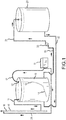
- Fig. 1 provides a diagram depicting the invention related to a system to remove hydrogen sulfide in water and oil.
- Element 10 is a container comprising sour water.
- Element 11 is an air compressor used to distribute air to elements 10 and 16.
- Element 17 is a line from element 11 to distribute air to element 10, sealed by a cap assembly, element 12.
- Element 13 is a line running from cap assembly element 12 to an air dispenser bar.
- Element 14 is an air dispenser bar.
- Element 14 is submerged in the sour water located in element 10. The air in the vapor space is transferred by element 15 to a vent stack, element 16.
- Element 24 is a second line running from element 11 to element 16, where air from the air compressor dilutes air transferred from the vapor space to the vent stack.
- Element 18 is a gauge that meters the amount of hydrogen sulfide in element 16.
- Element 23 is a container comprising sour oil and water. The oil and water in element 23 are equalized.
- Element 19 is a line from element 10 to element 20.
- Element 20 is a pump that distributes lean water from element 10 to element 23.
- Element 20 pumps the water through element 21, a line running from element 20 to the top of element 23.
- Element 22 is a line attaching element 23 to element 10.
- the water runs from element 23 to element 10 via hydrostatic pressure. Hydrogen sulfide is removed from the water that returns from element 23 as described above.
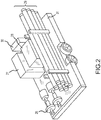
- Fig. 2 provides certain embodiments of the disclosure that are mobile.
- Element 26 depicts a water pump.
- Element 27 depicts an automation cabinet.
- Element 28 depicts an air source.
- Element 29 depicts a rack where appropriate connections, such as piping or hose can be stored.
- Element 30 depicts a power source, such as a generator.
- Element 31 depicts a trailer.
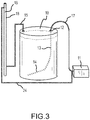
- Fig. 3 provides a diagram depicting the system to remove hydrogen sulfide from water.
- Element 10 is a container comprising sour water.
- Element 11 is an air compressor used to distribute air to element 10.
- Element 17 is a line from element 11 to distribute air to element 10, sealed by a cap assembly, element 12.
- Element 12 is secured to elements 11 and 17 using typical items known to those skilled in the art.
- Element 13 is a line running from cap assembly element 12 to an air dispenser bar, element 14.
- Elements 12, 13, and 14 are attached using typical means known to those skilled in the art.
- Element 14 is submerged in the sour water located in element 10. The air in the vapor space is transferred by element 15 to a vent stack, element 16.
- Element 24 is a second line running from element 11 runs to element 16, where air from the air compressor dilutes air transferred from the vapor space to the vent stack.
- Element 18 is a gauge that meters the amount of hydrogen sulfide concentration in element 16.
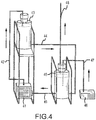
- FIG. 4 depicts certain embodiments of the disclosure that allows removal of hydrogen sulfide in a smaller scale.
- Element 41 depicts a pump.
- Element 41 is connected to element 45 via element 49.
- Element 41 pumps water from element 45 through element 42 into element 43.
- Element 43 is a container filled with sour oil and water. Water from Element 43 flows through element 44 into element 45.
- Element 45 depicts a container filled with water.
- Element 46 depicts an air source.
- Element 46 distributes air through element 47 into element 45.
- Element 48 depicts a vent connected to element 45.
- Fig. 5 provides a diagram depicting certain embodiments of the disclosure comprising an I to P converter that regulates air flow to a plurality of air lines.
- Air compressor element 11 is connected to element 17, a line running air to a tank containing sour water and element 24, a line running air to a vent stack.
- Element 55 is connected to element 53 by element 54.
- Element 53 converts an electrical signal from element 55 into a pneumatic signal.
- the signal from element 53 is relayed by element 52 to elements 50 and 51.
- element 50 may increase or decrease the amount of air flowing through element 17.
- element 51 may increase or decrease the amount of air flowing through element 24.
- Example 1 To determine tons of sulfur emitted using one embodiment of the disclosure a water tank was filled with approximately 350 barrels of sour water, the sour water having a concentration of 10,000 (1%) hydrogen sulfide, as tested through a bottle test described in Example 2, below. Air from an air compressor was distributed into the bottom of the tank at a steady rate of 105 scfm. The air from the vapor space in the tank was then transferred to a vent stack. The amount of hydrogen sulfide and sulfur in the vent stack was measured over a twelve hour period. The measurements were taken around every thirty minutes. The air in the vent stack measured 11.25 scf hydrogen sulfide and 1.01 of sulfur.
- the airflow into the water tank was kept at a steady 105 scfm and recorded the concentration over time in the vented air. This was approximately 350 barrels of 1% hydrogen sulfide (in tank vapor space tested via bottle test) water.
- air flow was regulated manually in this example, certain aspects of the process could be automated. For example, a PID loop and splitter valve configuration could be used.
- Example 2 To determine the amount of hydrogen sulfide present in materials subjected to treatment through certain embodiments of the disclosure, a "bottle test" was conducted.
- the bottle test comprises filling a container with 50% of the liquid to be tested, drilling a hole in the top of the container, agitating the container for at least thirty seconds, and measuring the amount of hydrogen sulfide in the vapor space with a hydrogen sulfide meter.
- a 1000 ml container was used, but the size of the container is for illustrative purposes only.
- the 1000 ml container was filled with 500 ml of the liquid to be tested, whether oil or water.
- a small hole was drilled into the lid of the container. The hole at the top of the container was covered.
- the container was then agitated by shaking the container for at least 30 seconds. A longer agitation time did not affect the results.
- the vapor space was measured for the amount of hydrogen sulfide.
- the hydrogen sulfide can be measured with a plunger-type, electronic or similar hydrogen sulfide meters.
- a bottle test was conducted prior to removing hydrogen sulfide according to the present disclosure, after removing hydrogen sulfide according to the present disclosure, and prior to loading the water and/or oil in a truck for transportation.
- a bottle test is not performed if there is any measurable hydrogen sulfide in the air to be vented, as hydrogen sulfide will continue to be removed through the described disclosure until the concentration of hydrogen sulfide is below the acceptable limits.
- Acceptable limits can include the levels of hydrogen sulfide allowed by the EPA to be released into the environment, safety limits set by OSHA, and/or other relevant regulations.
- Example 3 oil from Little Knife Field in North Dakota contained both hydrogen sulfide and sulfur.
- the pre-process hydrogen sulfide in the vapor space measured at 10.6% or 106,000 ppm.
- the pre-process sulfur by weight measured at 0.66%.
- both hydrogen sulfide and sulfur by weight content was reduced, where hydrogen sulfide was reduced to 0% or less than 1 ppm and the process reduced the sulfur by weight to 0.55% by weight.
- Example 4 oil from Whitney Canyon Field in Wyoming contained both hydrogen sulfide and sulfur.
- the pre-process hydrogen sulfide in the vapor space measured at 17.4% or 174,000 ppm.
- the pre-process sulfur by weight measured at 0.84%.
- both hydrogen sulfide and sulfur by weight was reduced, where hydrogen sulfide was reduced to 0% or less than 1 ppm and the sulfur by weight was reduced to 0.51% by weight.
Landscapes
- Chemical & Material Sciences (AREA)
- Oil, Petroleum & Natural Gas (AREA)
- Engineering & Computer Science (AREA)
- Organic Chemistry (AREA)
- Chemical Kinetics & Catalysis (AREA)
- General Chemical & Material Sciences (AREA)
- Life Sciences & Earth Sciences (AREA)
- Hydrology & Water Resources (AREA)
- Environmental & Geological Engineering (AREA)
- Water Supply & Treatment (AREA)
- Production Of Liquid Hydrocarbon Mixture For Refining Petroleum (AREA)
Applications Claiming Priority (1)
| Application Number | Priority Date | Filing Date | Title |
|---|---|---|---|
| US201361768029P | 2013-02-22 | 2013-02-22 |
Publications (2)
| Publication Number | Publication Date |
|---|---|
| EP2770041A1 EP2770041A1 (en) | 2014-08-27 |
| EP2770041B1 true EP2770041B1 (en) | 2017-09-13 |
Family
ID=50159052
Family Applications (1)
| Application Number | Title | Priority Date | Filing Date |
|---|---|---|---|
| EP14155871.8A Active EP2770041B1 (en) | 2013-02-22 | 2014-02-20 | Method and system for removing hydrogen sulfide from sour oil and sour water |
Country Status (6)
| Country | Link |
|---|---|
| US (1) | US9028679B2 (da) |
| EP (1) | EP2770041B1 (da) |
| CA (1) | CA2843041C (da) |
| DK (1) | DK2770041T3 (da) |
| MX (1) | MX357271B (da) |
| SA (1) | SA114350298B1 (da) |
Cited By (1)
| Publication number | Priority date | Publication date | Assignee | Title |
|---|---|---|---|---|
| US12623904B2 (en) | 2022-10-03 | 2026-05-12 | Saudi Arabian Oil Company | Removal of sulfur compounds from gas |
Families Citing this family (23)
| Publication number | Priority date | Publication date | Assignee | Title |
|---|---|---|---|---|
| US9364773B2 (en) | 2013-02-22 | 2016-06-14 | Anschutz Exploration Corporation | Method and system for removing hydrogen sulfide from sour oil and sour water |
| US11440815B2 (en) | 2013-02-22 | 2022-09-13 | Anschutz Exploration Corporation | Method and system for removing hydrogen sulfide from sour oil and sour water |
| US9708196B2 (en) * | 2013-02-22 | 2017-07-18 | Anschutz Exploration Corporation | Method and system for removing hydrogen sulfide from sour oil and sour water |
| US11433321B2 (en) | 2013-07-30 | 2022-09-06 | Bbl Holdings, Llc | System and method for removing sulfur from hydrocarbon fluids |
| US10258904B2 (en) | 2013-07-30 | 2019-04-16 | Bbl Holdings, Llc | System and method for removing sulfur from hydrocarbon fluids |
| US9440863B2 (en) | 2015-01-12 | 2016-09-13 | Apache Corporation | Method and apparatus for removing acid-gases from hydrocarbon-bearing saltwater solution |
| AR104595A1 (es) * | 2015-05-11 | 2017-08-02 | Anschutz Explor Corp | Sistema de eliminación de sulfuro de hidrógeno |
| US9833728B2 (en) | 2015-05-15 | 2017-12-05 | Sheldon McKee | Fluid scrubbing apparatus |
| US11512258B2 (en) | 2017-08-01 | 2022-11-29 | GAPS Technology, LLC. | Chemical compositions and methods of using same for remediating low to moderate amounts of sulfur-containing compositions and other contaminants in liquids |
| US10550337B2 (en) | 2017-08-01 | 2020-02-04 | GAPS Technology, LLC. | Chemical compositions and methods for remediating hydrogen sulfide and other contaminants in hydrocarbon based liquids and aqueous solutions without the formation of precipitates or scale |
| US11286433B2 (en) | 2017-08-01 | 2022-03-29 | Gaps Technology, Llc | Compositions and methods for remediating hydrogen sulfide in hydrocarbon based liquids |
| WO2019036731A2 (en) | 2017-08-01 | 2019-02-21 | Gaps Technology, Llc | CHEMICAL SOLUTION AND METHODS OF USE FOR REMEDYING HYDROGEN SULFIDE AND OTHER CONTAMINANTS IN OIL-BASED LIQUIDS AND OTHER LIQUIDS |
| US11613710B2 (en) | 2017-08-01 | 2023-03-28 | GAPS Technology, LLC. | Methods of remediating liquid compositions containing sulfur and other contaminants |
| CN112010471A (zh) * | 2019-05-30 | 2020-12-01 | 中国石油化工股份有限公司 | 一种污水处理装置和方法 |
| US11549064B2 (en) | 2019-09-20 | 2023-01-10 | Gaps Technology, Llc | Chemical compositions and treatment systems and treatment methods using same for remediating H2S and other contaminants in fluids, including liquids,gasses and mixtures thereof |
| US10913911B1 (en) | 2019-09-20 | 2021-02-09 | Gaps Technology Llc | Chemical compositions and treatment systems and treatment methods using same for remediating H2S and other contaminants in gasses |
| EP3831457B1 (en) * | 2019-12-03 | 2025-10-01 | Hitachi Energy Ltd | System and process for degassing a liquid |
| CN116745390A (zh) | 2021-05-07 | 2023-09-12 | 盖普斯科技有限责任公司 | 化学组合物及使用该化学组合物治理流体中的含硫组合物和其他污染物的方法 |
| CN116368205A (zh) | 2021-05-07 | 2023-06-30 | 盖普斯科技有限责任公司 | 烃基液体化学组合物及其用于修复流体和污染流体混合物中h2s和其他污染物的处理方法 |
| US12492349B2 (en) | 2021-05-07 | 2025-12-09 | GAPS Technology, LLC. | Hydrocarbon liquid based chemical compositions and treatment methods using same for remediating H2S and other contaminants in fluids and mixtures of contaminated fluids |
| US11813551B1 (en) | 2021-11-22 | 2023-11-14 | Viro Petroleum & Energy, LLC | Hydrogen sulfide mitigation methods and systems |
| WO2024049827A1 (en) | 2022-08-29 | 2024-03-07 | Gaps Technology, Llc | Aqueous solutions and methods of using same for remediating contaminants in contaminated gasses |
| US12202755B2 (en) | 2022-12-20 | 2025-01-21 | Saudi Arabian Oil Company | Segregation and treatment of waste water streams for enhanced oil recovery |
Family Cites Families (239)
| Publication number | Priority date | Publication date | Assignee | Title |
|---|---|---|---|---|
| US3387431A (en) * | 1966-06-13 | 1968-06-11 | Gerald H. Siebert | Desulfurizing of water |
| US3547190A (en) | 1968-06-13 | 1970-12-15 | Shell Oil Co | Apparatus for treating waste water associated with hydrocarbon production |
| US3583901A (en) * | 1969-02-03 | 1971-06-08 | Chevron Res | Corrosion control in hydroconversion effluent piping by nh4 + control |
| US3618667A (en) | 1970-03-06 | 1971-11-09 | Mobil Oil Corp | Removal of dissolved oxygen from water |
| US3913673A (en) | 1971-11-17 | 1975-10-21 | Texaco Inc | Oil recovery process which provides for the treatment of produced water before it is reinjected to drive oil toward the production wells |
| US3844942A (en) | 1971-11-17 | 1974-10-29 | Texaco Inc | Process for air pollution abatement |
| DE2264264A1 (de) | 1972-12-30 | 1974-07-04 | Otto & Co Gmbh Dr C | Verfahren zur entfernung von ammoniak, schwefelwasserstoff und blausaeure aus diese stoffe enthaltenden gasen |
| US4011304A (en) | 1975-03-05 | 1977-03-08 | Air Resources, Inc. | Method for controlling removal of hydrogen sulfide from gases |
| US3977972A (en) | 1975-04-02 | 1976-08-31 | Exxon Research And Engineering Company | Method and apparatus for reclaiming contaminated liquid |
| US3969106A (en) | 1975-06-03 | 1976-07-13 | Zeo-Mag Research Limited | Selective hydrometallurgical separation of lead from complex lead-zinc-copper sulfide ores or derived concentrates |
| US3997437A (en) | 1975-07-25 | 1976-12-14 | Prince Jack E | Aerobic type sewage digestion system |
| US3984316A (en) | 1975-07-30 | 1976-10-05 | Ashland Oil, Inc. | Treating foul refinery waste waters with absorber gas |
| US4051016A (en) | 1976-01-27 | 1977-09-27 | Exxon Research & Engineering Co. | Fluid coking with H2 S addition |
| US4076621A (en) | 1976-03-15 | 1978-02-28 | Air Resources, Inc. | Chelate oxidation of hydrogen sulfide in sour water |
| US4218309A (en) | 1978-09-08 | 1980-08-19 | Occidental Research Corporation | Removal of sulfur from shale oil |
| US4208384A (en) | 1979-01-05 | 1980-06-17 | Phillips Petroleum Company | Energy recovery, sour gas stripping and caustic neutralization using combustion gases containing solids |
| US4253928A (en) | 1979-10-04 | 1981-03-03 | Shell Oil Company | Process for sour water treatment |
| NL8006094A (nl) | 1980-11-07 | 1982-06-01 | Landbouw Hogeschool | Werkwijze voor het zuiveren van afvalwater en/of afvalwaterslib. |
| US4324776A (en) | 1980-12-08 | 1982-04-13 | General Electric Company | Mid-temperature H2 S removal process |
| US4370236A (en) * | 1980-12-16 | 1983-01-25 | Phillips Petroleum Company | Purification of hydrocarbon streams |
| US4452699A (en) | 1981-05-07 | 1984-06-05 | Shinryo Air Conditioning Co., Ltd. | Method of improving the SVI of mixed liquor in aeration tank |
| US4402713A (en) | 1981-05-27 | 1983-09-06 | Stone & Webster Engineering Corp. | Process for removing hydrogen sulfide from fluids |
| US4410432A (en) | 1981-05-27 | 1983-10-18 | Stone & Webster Engineering Corp. | Process for removing hydrogen sulfide from fluids |
| US4536293A (en) | 1981-06-30 | 1985-08-20 | Babineaux Iii David | Method of treating waste water |
| US4447330A (en) | 1981-06-30 | 1984-05-08 | Babineaux Iii David | Method of treating waste water |
| US4468929A (en) | 1981-11-27 | 1984-09-04 | The Dow Chemical Company | Purifying geothermal steam |
| US4414817A (en) | 1981-11-27 | 1983-11-15 | The Dow Chemical Company | Purifying geothermal steam |
| US4528817A (en) | 1981-11-27 | 1985-07-16 | The Dow Chemical Company | Purifying geothermal steam |
| US4412924A (en) | 1981-12-29 | 1983-11-01 | Feather Orval R | Water purification system |
| US4444259A (en) | 1982-01-15 | 1984-04-24 | Schwall Joseph A | Apparatus and method for purging hydrogen sulfide gases from well water |
| US4414103A (en) | 1982-04-09 | 1983-11-08 | Chevron Research Company | Selective removal and recovery of ammonia and hydrogen sulfide |
| US4537605A (en) | 1982-07-16 | 1985-08-27 | Chevron Research Company | Removal of hydrogen sulfide from elemental sulfur by a countercurrent wet steam process |
| US4473541A (en) | 1983-05-31 | 1984-09-25 | Standard Oil Company (Indiana) | Low water content sulfur recovery process |
| US4976935A (en) | 1984-11-04 | 1990-12-11 | Regents Of The University Of California | Regeneration of solvent in H2 S removal from gases |
| ATE63469T1 (de) | 1985-10-11 | 1991-06-15 | Buchs Umwelttech Utb | Verfahren zum entschwefeln von schwefelwasserstoffhaltigem gas und vorrichtung zur durchfuehrung des verfahrens. |
| JPS62216698A (ja) | 1986-03-18 | 1987-09-24 | Niigata Eng Co Ltd | 接触分解装置の排水処理方法 |
| US4784775A (en) | 1987-03-02 | 1988-11-15 | Ari Technologies, Inc. | Removal of hydrogen sulfide from sour water |
| US5286389A (en) | 1987-03-02 | 1994-02-15 | Ari Technologies, Inc. | Removal of hydrogen sulfide from sour water |
| US4925569A (en) | 1988-12-29 | 1990-05-15 | Shell Oil Company | Process for sorption and catalytic oxidation of sulfides in water |
| US4992181A (en) | 1989-02-03 | 1991-02-12 | Siebert Gerald H | Water treatment method |
| US4992078A (en) | 1989-02-23 | 1991-02-12 | Sandoz Ltd. | Sulfur dyes and method of preparing same: membrane process |
| FR2645549B1 (fr) | 1989-04-10 | 1994-04-01 | Ceca Sa | Procede et compositions pour reduire la corrosivite des solutions salines oxygenees par balayage avec des gaz acides |
| US5015370A (en) | 1989-06-08 | 1991-05-14 | Anthony Fricano | Apparatus and method for treating well water |
| US5096580A (en) | 1989-09-21 | 1992-03-17 | Hydrosource, Inc. | Iron removal system and method |
| US5362181A (en) | 1989-10-19 | 1994-11-08 | Denbesten Enterprises, Inc. | In place stabilization of pre-existing landfills |
| US5520818A (en) | 1989-12-06 | 1996-05-28 | The University Of Toronto Innovations Foundation | Method for effecting gas-liquid contact |
| US5057292A (en) | 1989-12-06 | 1991-10-15 | Monticelli Jr Frank R | Hydrogen sulfide abating cooling toner |
| US5089246A (en) | 1990-01-29 | 1992-02-18 | Atochem North America, Inc. | Process for converting carbon disulfide to hydrogen sulfide in hydrogen sulfide/carbon disulfide mixtures |
| US5006240A (en) | 1990-02-06 | 1991-04-09 | Aqua Systems Division Of Chem-Free, Inc. | Water-treatment system |
| US5073310A (en) | 1990-10-01 | 1991-12-17 | Water Master, Inc. | Air injector assembly |
| US5296205A (en) | 1991-04-08 | 1994-03-22 | Ari Technologies, Inc. | Multi-bed mass transfer column with mobile packing |
| US5141647A (en) | 1991-12-27 | 1992-08-25 | Bhadra Amal K | Control of odor and septicity of sewage |
| US5350516A (en) | 1991-12-27 | 1994-09-27 | Bhadra Amal K | Control of odor and septicity and purification of sewage and wastewater |
| US5340484A (en) | 1992-01-09 | 1994-08-23 | Prince Jack E | Air scrubbing system for waste water treatment |
| US5348573A (en) * | 1992-01-10 | 1994-09-20 | County Sanitation Districts Of Los Angeles County | Annular scrubber |
| US5405531A (en) | 1993-02-16 | 1995-04-11 | Geo-Microbial Technologies, Inc. | Method for reducing the amount of and preventing the formation of hydrogen sulfide in an aqueous system |
| US5744040A (en) | 1996-05-24 | 1998-04-28 | Sulfur-Tech Water Systems, Inc. | Apparatus and method for removing dissolved hydrogen sulfide from water |
| DE19718261A1 (de) | 1997-04-30 | 1998-11-05 | Messer Griesheim Gmbh | Verfahren und Vorrichtung zur Umwandlung von Schwefelwasserstoff in elementaren Schwefel |
| US5858206A (en) | 1997-05-20 | 1999-01-12 | Uop Llc | Process for improved water wash in FCC gas concentration units |
| US5788843A (en) | 1997-07-11 | 1998-08-04 | Larrabee, Jr.; Carl Richard | Method and installation for treating water |
| US6495029B1 (en) | 1997-08-22 | 2002-12-17 | Exxon Research And Engineering Company | Countercurrent desulfurization process for refractory organosulfur heterocycles |
| US6080306A (en) | 1998-06-02 | 2000-06-27 | Falkner; Kemp E | Hydrogen sulfide removal apparatus |
| US6153108A (en) | 1998-06-11 | 2000-11-28 | Texaco Inc. | Method for removal of heavy metals from water |
| GB9814064D0 (en) | 1998-06-29 | 1998-08-26 | Boc Group Plc | Partial combustion of hydrogen sulphide |
| US6103108A (en) | 1998-09-24 | 2000-08-15 | Kohlenberg; Larry D. | Water treatment apparatus |
| US7803267B2 (en) | 1998-12-28 | 2010-09-28 | W. R. Grace & Co.-Conn. | Gasoline sulfur reduction in fluid catalytic cracking |
| US6692635B2 (en) | 1999-02-24 | 2004-02-17 | Institut Francais Du Petrole | Process for the production of gasolines with low sulfur contents |
| JP2004501222A (ja) | 2000-04-18 | 2004-01-15 | エクソンモービル リサーチ アンド エンジニアリング カンパニー | 選択的水素処理およびメルカプタン除去 |
| EP1147811A1 (en) | 2000-04-20 | 2001-10-24 | Engelhard Corporation | Catalyst, catalyst support and process for hydrogenation, hydroisomerization, hydrocracking and/or hydrodesulfurization. |
| US6596914B2 (en) | 2000-08-01 | 2003-07-22 | Walter Gore | Method of desulfurization and dearomatization of petroleum liquids by oxidation and solvent extraction |
| US6444117B1 (en) | 2000-08-16 | 2002-09-03 | Texaco, Inc. | Sweetening of sour crudes |
| US6736962B1 (en) | 2000-09-29 | 2004-05-18 | Exxonmobil Research And Engineering Company | Catalytic stripping for mercaptan removal (ECB-0004) |
| US6827845B2 (en) | 2001-02-08 | 2004-12-07 | Bp Corporation North America Inc. | Preparation of components for refinery blending of transportation fuels |
| US6673230B2 (en) | 2001-02-08 | 2004-01-06 | Bp Corporation North America Inc. | Process for oxygenation of components for refinery blending of transportation fuels |
| US6881325B2 (en) | 2001-02-08 | 2005-04-19 | Bp Corporation North America Inc. | Preparation of components for transportation fuels |
| JP4657467B2 (ja) | 2001-02-20 | 2011-03-23 | 日揮株式会社 | 重質油の精製方法および重質油の精製装置 |
| US20020175108A1 (en) | 2001-03-12 | 2002-11-28 | Institut Francais Du Petrole | Process for the production of a desulfurized gasoline from a gasoline fraction that contains conversion gasoline |
| US6534030B2 (en) | 2001-03-14 | 2003-03-18 | El Paso Merchant Energy Petroleum Company | Process for producing ammonium thiosulfate |
| US6773595B2 (en) | 2001-03-29 | 2004-08-10 | Charles J. Gantzer | Compartmentalized facultative lagoon and method of creating and maintaining such a lagoon |
| US6755974B2 (en) | 2001-06-19 | 2004-06-29 | Exxonmobil Research And Engineering Company | Continuous naphtha treatment method |
| US6623627B1 (en) | 2001-07-09 | 2003-09-23 | Uop Llc | Production of low sulfur gasoline |
| US7279104B2 (en) | 2001-10-03 | 2007-10-09 | Waterpure Technologies, Inc. | Waste treatment method |
| US7507325B2 (en) | 2001-11-09 | 2009-03-24 | Institut Francais Du Petrole | Process for converting heavy petroleum fractions for producing a catalytic cracking feedstock and middle distillates with a low sulfur content |
| US7097760B1 (en) | 2002-05-07 | 2006-08-29 | Uop Llc | Hydrocarbon process for the production of ultra low sulfur diesel |
| US7005058B1 (en) | 2002-05-08 | 2006-02-28 | Uop Llc | Process and apparatus for removing sulfur from hydrocarbons |
| US7232848B2 (en) | 2002-09-09 | 2007-06-19 | Conocophillips Company | Gas agitated multiphase reactor with stationary catalyst solid phase |
| US6773582B2 (en) | 2002-09-25 | 2004-08-10 | Precision Control Technology, Inc. | Drinking water treatment system including hydrogen sulfide scrubber using triazine compound and associated methods |
| US7922894B2 (en) | 2002-12-06 | 2011-04-12 | Albemarle Netherlands, B.V. | HPC process using a mixture of catalysts |
| US6808639B2 (en) | 2002-12-11 | 2004-10-26 | General Electric Company | Method and apparatus for reducing the amount of hydrogen sulfide in effluent of a water heater |
| US7252756B2 (en) | 2002-12-18 | 2007-08-07 | Bp Corporation North America Inc. | Preparation of components for refinery blending of transportation fuels |
| ATE331014T1 (de) | 2002-12-20 | 2006-07-15 | Eni Spa | Krackverfahren für schwere aufgaben wie schwere rohöle und destillationsreststoffe |
| AU2003292768A1 (en) | 2002-12-26 | 2004-07-22 | Idemitsu Kosan Co., Ltd. | Method for removing sulfur compound in hydrocarbon-containing gas |
| US6929423B2 (en) | 2003-01-16 | 2005-08-16 | Paul A. Kittle | Gas recovery from landfills using aqueous foam |
| US8088183B2 (en) | 2003-01-27 | 2012-01-03 | Seneca Landlord, Llc | Production of biodiesel and glycerin from high free fatty acid feedstocks |
| US7087153B1 (en) | 2003-02-04 | 2006-08-08 | Uop Llc | Combination hydrocracking process for the production of ultra low sulfur diesel |
| US7309416B2 (en) | 2003-07-11 | 2007-12-18 | Aspen Products Group, Inc. | Methods and compositions for desulfurization of hydrocarbon fuels |
| KR101133867B1 (ko) | 2003-10-10 | 2012-04-06 | 시게유키 모리 | 윤활유 |
| DE10356595A1 (de) | 2003-12-04 | 2005-06-30 | Basf Ag | Brennstoffölzusammensetzungen mit verbesserten Kaltfließeigenschaften |
| US20050133416A1 (en) | 2003-12-19 | 2005-06-23 | Bhan Opinder K. | Systems, methods, and catalysts for producing a crude product |
| US20050145538A1 (en) | 2003-12-19 | 2005-07-07 | Wellington Scott L. | Systems and methods of producing a crude product |
| NL1027782C2 (nl) | 2003-12-19 | 2006-08-22 | Shell Int Research | Systemen en werkwijzen voor het bereiden van een ruw product. |
| US7100683B2 (en) | 2004-02-06 | 2006-09-05 | Amtrol Inc. | In-well aeration device |
| US8016999B2 (en) | 2004-05-31 | 2011-09-13 | Agency For Science, Technology And Research | Process for removing sulfur from fuels |
| US7351330B1 (en) | 2004-06-10 | 2008-04-01 | Willmar Water & Spas | Iron and hydrogen sulfide removal apparatus |
| US7282081B2 (en) | 2004-08-12 | 2007-10-16 | Verscharen John A | Method and apparatus for high efficiency multi-stage packed tower aeration with PH adjustment and reutilization of outlet air |
| US8709989B2 (en) | 2004-10-19 | 2014-04-29 | Nippon Oil Corporation | Lubricant composition and antioxident composition |
| US7650938B2 (en) | 2004-10-21 | 2010-01-26 | Hall Thomas G | Residential in-well internal water aerator |
| US7431827B2 (en) | 2004-10-27 | 2008-10-07 | Catalytic Distillation Technologies | Process for the production of low sulfur, low olefin gasoline |
| US7507328B2 (en) | 2004-12-27 | 2009-03-24 | Exxonmobile Research And Engineering Company | Selective hydrodesulfurization and mercaptan decomposition process with interstage separation |
| EP1832645A4 (en) | 2004-12-28 | 2012-01-11 | Japan Energy Corp | METHOD FOR PRODUCING A GAS OIL BASED MATERIAL WITH SUPER LOW SULFUR CONTENT OR GAS OIL COMPOSITION WITH SUPER LOW SULFUR CONTENT AND GAS OIL COMPOSITION WITH SUPER LOW SULFUR CONTENT |
| AU2006206277B2 (en) | 2005-01-21 | 2010-10-14 | Exxonmobil Research And Engineering Company | Hydrotreating process with improved hydrogen management |
| US7547386B1 (en) | 2005-02-02 | 2009-06-16 | Uop Llc | Integrated process by hydroprocessing multiple feeds |
| EP1712536A1 (en) | 2005-03-23 | 2006-10-18 | Engelhard Corporation | Process for the purification of benzene feedstock containing contaminating sulfur compounds |
| BRPI0610670B1 (pt) | 2005-04-11 | 2016-01-19 | Shell Int Research | método para produzir um produto bruto, catalisador para produzir um produto bruto, e, método para fabricar um catalisador |
| WO2006110556A1 (en) | 2005-04-11 | 2006-10-19 | Shell International Research Maatschappij B.V. | Method and catalyst for producing a crude product having a reduced nitroge content |
| US7790018B2 (en) | 2005-05-11 | 2010-09-07 | Saudia Arabian Oil Company | Methods for making higher value products from sulfur containing crude oil |
| US7204967B2 (en) | 2005-08-26 | 2007-04-17 | Bierle Scott A | Waste water process with scrubber |
| US7537643B2 (en) | 2005-08-26 | 2009-05-26 | Pcs Nitrogen Fertilizer Lp | Method for treating byproducts of sour water stripper process |
| US7744749B2 (en) | 2005-09-08 | 2010-06-29 | Saudi Arabian Oil Company | Diesel oil desulfurization by oxidation and extraction |
| US8715489B2 (en) | 2005-09-08 | 2014-05-06 | Saudi Arabian Oil Company | Process for oxidative conversion of organosulfur compounds in liquid hydrocarbon mixtures |
| US7763218B2 (en) | 2005-09-26 | 2010-07-27 | Haldor Topsoe A/S | Partial conversion hydrocracking process and apparatus |
| WO2007039047A1 (en) | 2005-09-26 | 2007-04-12 | Haldor Topsøe A/S | Hydrotreating and hydrocracking process and apparatus |
| US8696888B2 (en) | 2005-10-20 | 2014-04-15 | Exxonmobil Chemical Patents Inc. | Hydrocarbon resid processing |
| US7842180B1 (en) | 2005-12-14 | 2010-11-30 | Uop Llc | Hydrocracking process |
| US7449102B2 (en) | 2005-12-14 | 2008-11-11 | Uop Llc | Integrated process for the production of low sulfur diesel |
| US7431823B2 (en) | 2005-12-16 | 2008-10-07 | Chevron U.S.A. Inc. | Process for upgrading heavy oil using a highly active slurry catalyst composition |
| US7431822B2 (en) | 2005-12-16 | 2008-10-07 | Chevron U.S.A. Inc. | Process for upgrading heavy oil using a reactor with a novel reactor separation system |
| US7431831B2 (en) | 2005-12-16 | 2008-10-07 | Chevron U.S.A. Inc. | Integrated in-line pretreatment and heavy oil upgrading process |
| US7470358B1 (en) | 2005-12-19 | 2008-12-30 | Uop Llc | Integrated process for the production of low sulfur diesel |
| US7678263B2 (en) | 2006-01-30 | 2010-03-16 | Conocophillips Company | Gas stripping process for removal of sulfur-containing components from crude oil |
| US8663459B2 (en) | 2006-03-03 | 2014-03-04 | Saudi Arabian Oil Company | Catalytic process for deep oxidative desulfurization of liquid transportation fuels |
| AU2007233022B2 (en) | 2006-03-30 | 2011-11-17 | Nippon Oil Corporation | Hydrocracking catalyst and process for producing fuel substrate |
| US7610962B2 (en) | 2006-04-21 | 2009-11-03 | Shell Oil Company | Sour gas injection for use with in situ heat treatment |
| SG163524A1 (en) | 2006-05-17 | 2010-08-30 | Thiosolv L L C | Process for treating a gas stream |
| US7419582B1 (en) | 2006-07-11 | 2008-09-02 | Uop Llc | Process for hydrocracking a hydrocarbon feedstock |
| US7258848B1 (en) | 2006-07-31 | 2007-08-21 | E. I. Du Pont De Nemours And Company | Process for scrubbing ammonia from acid gases comprising ammonia and hydrogen sulfide |
| JP2008055291A (ja) * | 2006-08-30 | 2008-03-13 | Toshiba Corp | 水処理装置 |
| CN101535447B (zh) | 2006-08-31 | 2013-07-24 | 氟石科技公司 | 基于烃的硫溶剂体系和方法 |
| US7842181B2 (en) | 2006-12-06 | 2010-11-30 | Saudi Arabian Oil Company | Composition and process for the removal of sulfur from middle distillate fuels |
| EP2102320B1 (en) | 2006-12-18 | 2020-06-17 | The Lubrizol Corporation | Functional fluid |
| US7803979B2 (en) | 2007-02-28 | 2010-09-28 | Uop Llc | Method for removing water from an alkylation process system |
| US8608942B2 (en) | 2007-03-15 | 2013-12-17 | Kellogg Brown & Root Llc | Systems and methods for residue upgrading |
| SG179416A1 (en) | 2007-03-30 | 2012-04-27 | Nippon Oil Corp | Lubricant base oil, method for production thereof, and lubricant oil composition |
| US8603953B2 (en) | 2007-03-30 | 2013-12-10 | Jx Nippon Oil & Energy Corporation | Operating oil for buffer |
| US9255731B2 (en) | 2007-05-18 | 2016-02-09 | Pilot Energy Solutions, Llc | Sour NGL stream recovery |
| AR066680A1 (es) | 2007-05-25 | 2009-09-02 | Shell Int Research | Un proceso para remover azufre de una corriente de gas combustible, que tambien contiene dioxido de carbono y olefinas livianas |
| JP2008307475A (ja) * | 2007-06-14 | 2008-12-25 | Shimizu Corp | 硫化水素除去方法及び硫化水素除去装置 |
| US7842184B2 (en) | 2007-06-27 | 2010-11-30 | H R D Corporation | Process for water treatment using high shear device |
| US8021539B2 (en) | 2007-06-27 | 2011-09-20 | H R D Corporation | System and process for hydrodesulfurization, hydrodenitrogenation, or hydrofinishing |
| US7955401B2 (en) | 2007-07-16 | 2011-06-07 | Conocophillips Company | Hydrotreating and catalytic dewaxing process for making diesel from oils and/or fats |
| CN101808732B (zh) | 2007-08-06 | 2013-08-14 | 国际壳牌研究有限公司 | 用于烃原料催化加氢处理的组合物、制备该催化剂的方法以及使用该催化剂的方法 |
| US7858834B2 (en) | 2007-08-17 | 2010-12-28 | Equistar Chemicals, Lp | Olefin production utilizing a feed containing condensate and crude oil |
| WO2009039020A1 (en) | 2007-09-18 | 2009-03-26 | Shell Oil Company | Process for the deep desulfurization of heavy pyrolysis gasoline |
| US7794585B2 (en) | 2007-10-15 | 2010-09-14 | Uop Llc | Hydrocarbon conversion process |
| US7799208B2 (en) | 2007-10-15 | 2010-09-21 | Uop Llc | Hydrocracking process |
| US8366914B2 (en) | 2007-10-15 | 2013-02-05 | Baker Hughes Incorporated | Multifunctional scavenger for hydrocarbon fluids |
| CN106867570A (zh) | 2007-11-14 | 2017-06-20 | 沙特阿拉伯石油公司 | 微波促进的原油脱硫 |
| US7740065B2 (en) | 2007-11-28 | 2010-06-22 | Saudi Arabian Oil Company | Process to upgrade whole crude oil by hot pressurized water and recovery fluid |
| US8142646B2 (en) | 2007-11-30 | 2012-03-27 | Saudi Arabian Oil Company | Process to produce low sulfur catalytically cracked gasoline without saturation of olefinic compounds |
| CN106190503A (zh) | 2007-12-05 | 2016-12-07 | 捷客斯能源株式会社 | 润滑油组合物 |
| US7837965B2 (en) | 2007-12-10 | 2010-11-23 | ThioSolv, LLC | Process to remove hydrogen-sulfide from gas by reflux recycle from sour water stripper |
| US8075762B2 (en) | 2007-12-20 | 2011-12-13 | Exxonmobil Reseach And Engineering Company | Electrodesulfurization of heavy oils |
| US7985332B2 (en) | 2007-12-20 | 2011-07-26 | Exxonmobil Research And Engineering Company | Electrodesulfurization of heavy oils using a divided electrochemical cell |
| US8152994B2 (en) | 2007-12-27 | 2012-04-10 | Kellogg Brown & Root Llc | Process for upgrading atmospheric residues |
| JP5166014B2 (ja) | 2007-12-27 | 2013-03-21 | 株式会社東芝 | 嫌気性処理における溶存硫化水素の除去装置 |
| US8043495B2 (en) | 2008-01-25 | 2011-10-25 | Catalytic Distillation Technologies | Process to hydrodesulfurize FCC gasoline resulting in a low-mercaptan product |
| US8236172B2 (en) | 2008-01-25 | 2012-08-07 | Catalytic Distillation Technologies | Process to hydrodesulfurize FCC gasoline resulting in a low-mercaptan product |
| US7927480B2 (en) | 2008-01-29 | 2011-04-19 | Catalytic Distillation Technologies | Process for desulfurization of cracked naphtha |
| US7883618B2 (en) | 2008-02-28 | 2011-02-08 | Kellogg Brown & Root Llc | Recycle of olefinic naphthas by removing aromatics |
| US7947168B2 (en) | 2008-03-05 | 2011-05-24 | Syncrude Canada Ltd. | Segregation of streams for the production of ammonia |
| US7695701B2 (en) | 2008-03-07 | 2010-04-13 | Du Pont | Process for treating acid gas in staged furnaces with inter-stage heat recovery |
| CA2719058C (en) | 2008-03-26 | 2017-10-03 | Auterra, Inc. | Sulfoxidation catalysts and methods and systems of using same |
| US7935178B2 (en) | 2008-03-26 | 2011-05-03 | Uop Llc | Use of a biphasic turbine in a process for recovering energy in gasification and natural gas applications |
| DE102008017144A1 (de) | 2008-04-04 | 2009-10-15 | KLüBER LUBRICATION MüNCHEN KG | Schmierfettzusammensetzung auf Basis von ionischen Flüssigkeiten |
| US7931739B2 (en) | 2008-04-08 | 2011-04-26 | China Petroleum & Chemical Corporation | Agglomerate removal system |
| US8128811B2 (en) | 2008-04-11 | 2012-03-06 | Exxonmobil Research And Engineering Company | Hydroprocessing using rejuvenated supported hydroprocessing catalysts |
| US8008534B2 (en) | 2008-06-30 | 2011-08-30 | Uop Llc | Liquid phase hydroprocessing with temperature management |
| US8323416B2 (en) | 2008-06-30 | 2012-12-04 | Uop Llc | Process and composition for removing a scale deposit |
| US8286951B2 (en) | 2008-07-31 | 2012-10-16 | Dart Frederick J | Well water aeration system |
| US8476210B2 (en) | 2008-09-09 | 2013-07-02 | Glenn Short | Composition for compressor working fluid for applications with soluble gas or gas condensates |
| US7942198B2 (en) | 2008-09-18 | 2011-05-17 | Zirkle Howard W | Aerator for a well water pumping system |
| EP2333037A4 (en) | 2008-09-19 | 2012-03-21 | Idemitsu Kosan Co | LUBRICATING OIL COMPOSITION FOR A COMBUSTION ENGINE |
| US8398848B2 (en) | 2008-10-02 | 2013-03-19 | Exxonmobil Research And Engineering Company | Desulfurization of heavy hydrocarbons and conversion of resulting hydrosulfides utilizing copper metal |
| US8303804B2 (en) | 2008-10-06 | 2012-11-06 | Exxonmobil Research And Engineering Company | Process to improve jet fuels |
| US8563486B2 (en) | 2008-10-07 | 2013-10-22 | Jx Nippon Oil & Energy Corporation | Lubricant composition and method for producing same |
| JP2010090251A (ja) | 2008-10-07 | 2010-04-22 | Nippon Oil Corp | 潤滑油基油及びその製造方法、潤滑油組成物 |
| CN101532380B (zh) | 2009-03-12 | 2013-04-24 | 门正国 | 油井井口小型硫化氢去除装置 |
| US8118995B2 (en) | 2009-03-31 | 2012-02-21 | General Electric Company | Process for inhibiting fouling in hydrocarbon processing |
| US8702994B2 (en) | 2009-03-31 | 2014-04-22 | United Laboratories International, Llc | Sodium nitrite oxidation of hydrogen sulfide |
| US8424181B2 (en) | 2009-04-17 | 2013-04-23 | Exxonmobil Research And Engineering Company | High pressure revamp of low pressure distillate hydrotreating process units |
| DE102009018911A1 (de) | 2009-04-28 | 2011-01-20 | Lurgi Gmbh | Verfahren zum Herstellen von Prozessgas für das Claus-Verfahren |
| FR2947185B1 (fr) | 2009-06-26 | 2011-07-01 | Total Sa | Procede de traitement de gaz acides |
| US20110024328A1 (en) | 2009-07-31 | 2011-02-03 | Chevron U.S.A. Inc. | Distillate production in a hydrocarbon synthesis process. |
| US8318004B2 (en) | 2009-08-04 | 2012-11-27 | Praxair Technology, Inc. | Hydrocarbon treatment method and apparatus |
| US8409427B2 (en) | 2009-08-04 | 2013-04-02 | Praxair Technology, Inc. | Hydrocarbon treatment method and apparatus |
| US7897133B1 (en) | 2009-09-18 | 2011-03-01 | Tessenderlo Kerley, Inc. | Process for conversion of waste fluid streams from chemical processing plants to beneficiary agriculture products |
| CA2779509A1 (en) | 2009-10-30 | 2011-05-05 | Neohydro Corporation | Water purification systems and methods |
| US8414763B2 (en) | 2009-11-09 | 2013-04-09 | Uop Llc | Process for recovering FCC product |
| US8613852B2 (en) | 2009-12-18 | 2013-12-24 | Exxonmobil Research And Engineering Company | Process for producing a high stability desulfurized heavy oils stream |
| US8394260B2 (en) | 2009-12-21 | 2013-03-12 | Saudi Arabian Oil Company | Petroleum upgrading process |
| KR101555479B1 (ko) | 2009-12-31 | 2015-09-24 | 도르프 케탈 케미칼즈 (인디아) 프라이비트 리미티드 | 칼슘 나프테네이트를 함유하는 원유에서 황 화합물로 인하여 형성된 불순물의 제거를 위한 첨가제 및 방법 |
| WO2011091208A2 (en) | 2010-01-21 | 2011-07-28 | Shell Oil Company | Process for treating a hydrocarbon-containing feed |
| US8734637B2 (en) | 2010-03-12 | 2014-05-27 | Baker Hughes Incorporated | Method of scavenging hydrogen sulfide and/or mercaptans using triazines |
| US8658027B2 (en) | 2010-03-29 | 2014-02-25 | Saudi Arabian Oil Company | Integrated hydrotreating and oxidative desulfurization process |
| US8486258B2 (en) | 2010-04-01 | 2013-07-16 | Catalytic Distillation Technologies | Gasoline hydrodesulfurization and membrane unit to reduce mercaptan type sulfur |
| US20110272365A1 (en) | 2010-05-07 | 2011-11-10 | Encana Corporation | Removal of hydrogen sulfide from water |
| PL2580167T3 (pl) | 2010-06-11 | 2022-11-21 | Dvo, Inc. | Układy i sposoby odzyskiwania składników odżywczych |
| US9005432B2 (en) | 2010-06-29 | 2015-04-14 | Saudi Arabian Oil Company | Removal of sulfur compounds from petroleum stream |
| US8617383B2 (en) | 2010-06-29 | 2013-12-31 | Exxonmobil Research And Engineering Company | Integrated hydrocracking and dewaxing of hydrocarbons |
| CA2803275C (en) | 2010-06-30 | 2016-10-11 | Exxonmobil Research And Engineering Company | Two stage hydroprocessing with divided wall column fractionator |
| US8518356B2 (en) | 2010-07-27 | 2013-08-27 | Air Products And Chemicals, Inc. | Method and apparatus for adjustably treating a sour gas |
| US8888993B2 (en) | 2010-07-30 | 2014-11-18 | Chevron U.S.A. Inc. | Treatment of a hydrocarbon feed |
| US8845885B2 (en) | 2010-08-09 | 2014-09-30 | H R D Corporation | Crude oil desulfurization |
| US8673133B2 (en) | 2010-09-16 | 2014-03-18 | Chevron U.S.A. Inc. | Process, method, and system for removing heavy metals from fluids |
| US8728304B2 (en) | 2010-09-16 | 2014-05-20 | Chevron U.S.A. Inc. | Process, method, and system for removing heavy metals from fluids |
| US8702975B2 (en) | 2010-09-16 | 2014-04-22 | Chevron U.S.A. Inc. | Process, method, and system for removing heavy metals from fluids |
| US8663460B2 (en) | 2010-09-16 | 2014-03-04 | Chevron U.S.A. Inc. | Process, method, and system for removing heavy metals from fluids |
| EP2439176A1 (en) | 2010-10-07 | 2012-04-11 | EnCana Corporation | Treatment of water for use in hydraulic fracture stimulation |
| US8764855B2 (en) | 2010-12-15 | 2014-07-01 | Uop Llc | Process for producing a biofuel while minimizing fossil fuel derived carbon dioxide emissions |
| WO2012083429A1 (en) | 2010-12-22 | 2012-06-28 | Nexen Inc. | High pressure hydrocarbon fracturing on demand method and related process |
| US8741001B1 (en) | 2010-12-23 | 2014-06-03 | Greyrock Energy, Inc. | Blends of low carbon and conventional fuels with improved performance characteristics |
| US8734715B2 (en) | 2011-01-13 | 2014-05-27 | Ut-Battelle, Llc | Method for the preparation of ferrous low carbon porous material |
| US8993488B2 (en) | 2011-02-24 | 2015-03-31 | United Laboratories International, Llc | Process for removal of hydrogen sulfide in downhole oilfield applications |
| ES2656223T3 (es) | 2011-03-14 | 2018-02-26 | Thiosolv, L.L.C. | Eliminación de sulfuro de hidrógeno en amoniaco acuoso |
| US8334243B2 (en) | 2011-03-16 | 2012-12-18 | Afton Chemical Corporation | Lubricant compositions containing a functionalized dispersant for improved soot or sludge handling capabilities |
| US8753504B2 (en) | 2011-04-28 | 2014-06-17 | Battelle Memorial Institute | Systems and processes for removing elemental sulfur compounds from desulfurized fuels |
| US8569216B2 (en) | 2011-06-16 | 2013-10-29 | Exxonmobil Research And Engineering Company | Lubricant formulation with high oxidation performance |
| MX2011009116A (es) | 2011-08-31 | 2013-02-28 | Mexicano Inst Petrol | Proceso de hidroconversion-destilacion de aceites crudos pesados y/o extra-pesados. |
| US8871082B2 (en) | 2012-03-29 | 2014-10-28 | Uop Llc | Process and apparatus for producing diesel from a hydrocarbon stream |
| US8888990B2 (en) | 2012-03-29 | 2014-11-18 | Uop Llc | Process and apparatus for producing diesel from a hydrocarbon stream |
| WO2013158164A1 (en) | 2012-04-19 | 2013-10-24 | Mcclung Guy Lamont Iv | Controlling hydrogen sulfide production in oilfield operations |
| US9126139B2 (en) | 2012-05-29 | 2015-09-08 | Entegris, Inc. | Carbon adsorbent for hydrogen sulfide removal from gases containing same, and regeneration of adsorbent |
| US9278307B2 (en) | 2012-05-29 | 2016-03-08 | Baker Hughes Incorporated | Synergistic H2 S scavengers |
| US9346677B2 (en) | 2012-08-29 | 2016-05-24 | Sandvik Process Systems Llc | Sulfur degasser apparatus and method |
| US9157038B2 (en) | 2012-09-28 | 2015-10-13 | Uop Llc | Process for washing a gas from a hydroprocessed effluent, and an apparatus and separator relating thereto |
| US20140091010A1 (en) | 2012-09-28 | 2014-04-03 | Uop, Llc | Process and apparatus for removing hydrogen sulfide |
| US8721871B1 (en) | 2012-11-06 | 2014-05-13 | E I Du Pont De Nemours And Company | Hydroprocessing light cycle oil in liquid-full reactors |
| US8815083B2 (en) | 2012-11-29 | 2014-08-26 | Merichem Company | Treating sulfur containing hydrocarbons recovered from hydrocarbonaceous deposits |
| US9657247B2 (en) | 2013-03-14 | 2017-05-23 | Donald Lawrence Zink | Auxiliary acid and sour gas treatment system and method |
-
2014
- 2014-02-19 CA CA2843041A patent/CA2843041C/en active Active
- 2014-02-20 US US14/185,006 patent/US9028679B2/en active Active
- 2014-02-20 DK DK14155871.8T patent/DK2770041T3/da active
- 2014-02-20 EP EP14155871.8A patent/EP2770041B1/en active Active
- 2014-02-21 MX MX2014002102A patent/MX357271B/es active IP Right Grant
- 2014-02-22 SA SA114350298A patent/SA114350298B1/ar unknown
Non-Patent Citations (2)
| Title |
|---|
| CANADIAN CENTRE FOR OCCUPATIONAL HEALTH & SAFETY: "CHEMINFO: Hydrogen sulfide", 3 October 2005 (2005-10-03), XP055199364, Retrieved from the Internet <URL:http://www.ccohs.ca/products/databases/samples/CHEMINFO.html> [retrieved on 20150701] * |
| US GOVERNMENT: "30 CFR 250", CODE OF FEDERAL REGULATIONS, 31 December 2012 (2012-12-31), pages 213 - 221, XP055199342, Retrieved from the Internet <URL:http://www.gpo.gov/fdsys/pkg/CFR-2011-title30-vol2/pdf/CFR-2011-title30-vol2-part250-subpartK.pdf> [retrieved on 20150701] * |
Cited By (1)
| Publication number | Priority date | Publication date | Assignee | Title |
|---|---|---|---|---|
| US12623904B2 (en) | 2022-10-03 | 2026-05-12 | Saudi Arabian Oil Company | Removal of sulfur compounds from gas |
Also Published As
| Publication number | Publication date |
|---|---|
| US20140238902A1 (en) | 2014-08-28 |
| MX2014002102A (es) | 2015-03-04 |
| MX357271B (es) | 2018-07-02 |
| SA114350298B1 (ar) | 2015-07-09 |
| US9028679B2 (en) | 2015-05-12 |
| EP2770041A1 (en) | 2014-08-27 |
| CA2843041C (en) | 2017-06-13 |
| DK2770041T3 (da) | 2017-11-13 |
| CA2843041A1 (en) | 2014-08-22 |
Similar Documents
| Publication | Publication Date | Title |
|---|---|---|
| US9028679B2 (en) | Method and system for removing hydrogen sulfide from sour oil and sour water | |
| US9364773B2 (en) | Method and system for removing hydrogen sulfide from sour oil and sour water | |
| US10882762B2 (en) | Method and system for removing hydrogen sulfide from sour oil and sour water | |
| US20110147272A1 (en) | Emulsification of hydrocarbon gas oils to increase efficacy of water based hydrogen sulfide scavengers | |
| US10835860B2 (en) | Treatment of hydrogen sulfide gas under aerobic conditions | |
| US9657248B1 (en) | Systems, devices, compositions, and/or methods for de-sulphurizing acid gases | |
| US20250066222A1 (en) | Method and System for Removing Hydrogen Sulfide From Sour Oil and Sour Water | |
| US7459012B2 (en) | Solution and method for scavenging sulphur compounds | |
| SA515361252B1 (ar) | أملاح كربوكسيلات فلزية ككاسحات كبريتيد الهيدروجين لأنظمة الإنتاج المختلط أو الغاز الجاف | |
| EP3075711B1 (en) | System for decontamination of hazardous sulfur compounds in oilfield produced water | |
| US9353585B2 (en) | On-the-fly acid blender with sampling equipment | |
| Gong et al. | Effects of oil dispersant on ozone oxidation of phenanthrene and pyrene in marine water | |
| US20210269333A1 (en) | Method For Removing Hydrogen Sulfide From Oily Sour Water | |
| WO2016183125A1 (en) | Hydrogen sulfide removal system | |
| Söğüt et al. | The treatment of wastewaters by supercritical water oxidation | |
| EP2058040A2 (en) | Process for treating effluents from the oil industry for discharge or reutilization | |
| WO2022099192A1 (en) | Chemical compositions and treatment systems and treatment methods using same for remediating h2s and other contaminants in mixtures of contaminated fluids | |
| Harkins et al. | Removal of refractory organics by aeration. VIII. Air stripping of benzene derivatives | |
| WO2009131615A2 (en) | Process for decontamination of inorganic hazardous components from a waste stream |
Legal Events
| Date | Code | Title | Description |
|---|---|---|---|
| PUAI | Public reference made under article 153(3) epc to a published international application that has entered the european phase |
Free format text: ORIGINAL CODE: 0009012 |
|
| 17P | Request for examination filed |
Effective date: 20140220 |
|
| AK | Designated contracting states |
Kind code of ref document: A1 Designated state(s): AL AT BE BG CH CY CZ DE DK EE ES FI FR GB GR HR HU IE IS IT LI LT LU LV MC MK MT NL NO PL PT RO RS SE SI SK SM TR |
|
| AX | Request for extension of the european patent |
Extension state: BA ME |
|
| R17P | Request for examination filed (corrected) |
Effective date: 20150225 |
|
| RBV | Designated contracting states (corrected) |
Designated state(s): AL AT BE BG CH CY CZ DE DK EE ES FI FR GB GR HR HU IE IS IT LI LT LU LV MC MK MT NL NO PL PT RO RS SE SI SK SM TR |
|
| 17Q | First examination report despatched |
Effective date: 20150707 |
|
| STAA | Information on the status of an ep patent application or granted ep patent |
Free format text: STATUS: EXAMINATION IS IN PROGRESS |
|
| GRAP | Despatch of communication of intention to grant a patent |
Free format text: ORIGINAL CODE: EPIDOSNIGR1 |
|
| STAA | Information on the status of an ep patent application or granted ep patent |
Free format text: STATUS: GRANT OF PATENT IS INTENDED |
|
| INTG | Intention to grant announced |
Effective date: 20170407 |
|
| GRAS | Grant fee paid |
Free format text: ORIGINAL CODE: EPIDOSNIGR3 |
|
| GRAA | (expected) grant |
Free format text: ORIGINAL CODE: 0009210 |
|
| STAA | Information on the status of an ep patent application or granted ep patent |
Free format text: STATUS: THE PATENT HAS BEEN GRANTED |
|
| AK | Designated contracting states |
Kind code of ref document: B1 Designated state(s): AL AT BE BG CH CY CZ DE DK EE ES FI FR GB GR HR HU IE IS IT LI LT LU LV MC MK MT NL NO PL PT RO RS SE SI SK SM TR |
|
| REG | Reference to a national code |
Ref country code: GB Ref legal event code: FG4D |
|
| REG | Reference to a national code |
Ref country code: CH Ref legal event code: EP |
|
| REG | Reference to a national code |
Ref country code: IE Ref legal event code: FG4D |
|
| REG | Reference to a national code |
Ref country code: AT Ref legal event code: REF Ref document number: 928129 Country of ref document: AT Kind code of ref document: T Effective date: 20171015 |
|
| REG | Reference to a national code |
Ref country code: DE Ref legal event code: R096 Ref document number: 602014014434 Country of ref document: DE |
|
| REG | Reference to a national code |
Ref country code: DK Ref legal event code: T3 Effective date: 20171108 |
|
| REG | Reference to a national code |
Ref country code: NO Ref legal event code: T2 Effective date: 20170913 |
|
| REG | Reference to a national code |
Ref country code: NL Ref legal event code: MP Effective date: 20170913 |
|
| REG | Reference to a national code |
Ref country code: LT Ref legal event code: MG4D |
|
| PG25 | Lapsed in a contracting state [announced via postgrant information from national office to epo] |
Ref country code: FI Free format text: LAPSE BECAUSE OF FAILURE TO SUBMIT A TRANSLATION OF THE DESCRIPTION OR TO PAY THE FEE WITHIN THE PRESCRIBED TIME-LIMIT Effective date: 20170913 Ref country code: SE Free format text: LAPSE BECAUSE OF FAILURE TO SUBMIT A TRANSLATION OF THE DESCRIPTION OR TO PAY THE FEE WITHIN THE PRESCRIBED TIME-LIMIT Effective date: 20170913 Ref country code: HR Free format text: LAPSE BECAUSE OF FAILURE TO SUBMIT A TRANSLATION OF THE DESCRIPTION OR TO PAY THE FEE WITHIN THE PRESCRIBED TIME-LIMIT Effective date: 20170913 Ref country code: LT Free format text: LAPSE BECAUSE OF FAILURE TO SUBMIT A TRANSLATION OF THE DESCRIPTION OR TO PAY THE FEE WITHIN THE PRESCRIBED TIME-LIMIT Effective date: 20170913 |
|
| REG | Reference to a national code |
Ref country code: FR Ref legal event code: PLFP Year of fee payment: 5 |
|
| REG | Reference to a national code |
Ref country code: AT Ref legal event code: MK05 Ref document number: 928129 Country of ref document: AT Kind code of ref document: T Effective date: 20170913 |
|
| PG25 | Lapsed in a contracting state [announced via postgrant information from national office to epo] |
Ref country code: BG Free format text: LAPSE BECAUSE OF FAILURE TO SUBMIT A TRANSLATION OF THE DESCRIPTION OR TO PAY THE FEE WITHIN THE PRESCRIBED TIME-LIMIT Effective date: 20171213 Ref country code: GR Free format text: LAPSE BECAUSE OF FAILURE TO SUBMIT A TRANSLATION OF THE DESCRIPTION OR TO PAY THE FEE WITHIN THE PRESCRIBED TIME-LIMIT Effective date: 20171214 Ref country code: LV Free format text: LAPSE BECAUSE OF FAILURE TO SUBMIT A TRANSLATION OF THE DESCRIPTION OR TO PAY THE FEE WITHIN THE PRESCRIBED TIME-LIMIT Effective date: 20170913 Ref country code: ES Free format text: LAPSE BECAUSE OF FAILURE TO SUBMIT A TRANSLATION OF THE DESCRIPTION OR TO PAY THE FEE WITHIN THE PRESCRIBED TIME-LIMIT Effective date: 20170913 Ref country code: RS Free format text: LAPSE BECAUSE OF FAILURE TO SUBMIT A TRANSLATION OF THE DESCRIPTION OR TO PAY THE FEE WITHIN THE PRESCRIBED TIME-LIMIT Effective date: 20170913 |
|
| PG25 | Lapsed in a contracting state [announced via postgrant information from national office to epo] |
Ref country code: NL Free format text: LAPSE BECAUSE OF FAILURE TO SUBMIT A TRANSLATION OF THE DESCRIPTION OR TO PAY THE FEE WITHIN THE PRESCRIBED TIME-LIMIT Effective date: 20170913 |
|
| PG25 | Lapsed in a contracting state [announced via postgrant information from national office to epo] |
Ref country code: PL Free format text: LAPSE BECAUSE OF FAILURE TO SUBMIT A TRANSLATION OF THE DESCRIPTION OR TO PAY THE FEE WITHIN THE PRESCRIBED TIME-LIMIT Effective date: 20170913 Ref country code: CZ Free format text: LAPSE BECAUSE OF FAILURE TO SUBMIT A TRANSLATION OF THE DESCRIPTION OR TO PAY THE FEE WITHIN THE PRESCRIBED TIME-LIMIT Effective date: 20170913 Ref country code: RO Free format text: LAPSE BECAUSE OF FAILURE TO SUBMIT A TRANSLATION OF THE DESCRIPTION OR TO PAY THE FEE WITHIN THE PRESCRIBED TIME-LIMIT Effective date: 20170913 |
|
| PG25 | Lapsed in a contracting state [announced via postgrant information from national office to epo] |
Ref country code: IT Free format text: LAPSE BECAUSE OF FAILURE TO SUBMIT A TRANSLATION OF THE DESCRIPTION OR TO PAY THE FEE WITHIN THE PRESCRIBED TIME-LIMIT Effective date: 20170913 Ref country code: SM Free format text: LAPSE BECAUSE OF FAILURE TO SUBMIT A TRANSLATION OF THE DESCRIPTION OR TO PAY THE FEE WITHIN THE PRESCRIBED TIME-LIMIT Effective date: 20170913 Ref country code: EE Free format text: LAPSE BECAUSE OF FAILURE TO SUBMIT A TRANSLATION OF THE DESCRIPTION OR TO PAY THE FEE WITHIN THE PRESCRIBED TIME-LIMIT Effective date: 20170913 Ref country code: IS Free format text: LAPSE BECAUSE OF FAILURE TO SUBMIT A TRANSLATION OF THE DESCRIPTION OR TO PAY THE FEE WITHIN THE PRESCRIBED TIME-LIMIT Effective date: 20180113 Ref country code: AT Free format text: LAPSE BECAUSE OF FAILURE TO SUBMIT A TRANSLATION OF THE DESCRIPTION OR TO PAY THE FEE WITHIN THE PRESCRIBED TIME-LIMIT Effective date: 20170913 Ref country code: SK Free format text: LAPSE BECAUSE OF FAILURE TO SUBMIT A TRANSLATION OF THE DESCRIPTION OR TO PAY THE FEE WITHIN THE PRESCRIBED TIME-LIMIT Effective date: 20170913 |
|
| REG | Reference to a national code |
Ref country code: DE Ref legal event code: R097 Ref document number: 602014014434 Country of ref document: DE |
|
| PLBE | No opposition filed within time limit |
Free format text: ORIGINAL CODE: 0009261 |
|
| STAA | Information on the status of an ep patent application or granted ep patent |
Free format text: STATUS: NO OPPOSITION FILED WITHIN TIME LIMIT |
|
| 26N | No opposition filed |
Effective date: 20180614 |
|
| REG | Reference to a national code |
Ref country code: DE Ref legal event code: R119 Ref document number: 602014014434 Country of ref document: DE |
|
| REG | Reference to a national code |
Ref country code: CH Ref legal event code: PL |
|
| PG25 | Lapsed in a contracting state [announced via postgrant information from national office to epo] |
Ref country code: MC Free format text: LAPSE BECAUSE OF FAILURE TO SUBMIT A TRANSLATION OF THE DESCRIPTION OR TO PAY THE FEE WITHIN THE PRESCRIBED TIME-LIMIT Effective date: 20170913 |
|
| REG | Reference to a national code |
Ref country code: IE Ref legal event code: MM4A |
|
| REG | Reference to a national code |
Ref country code: BE Ref legal event code: MM Effective date: 20180228 |
|
| PG25 | Lapsed in a contracting state [announced via postgrant information from national office to epo] |
Ref country code: SI Free format text: LAPSE BECAUSE OF FAILURE TO SUBMIT A TRANSLATION OF THE DESCRIPTION OR TO PAY THE FEE WITHIN THE PRESCRIBED TIME-LIMIT Effective date: 20170913 Ref country code: CH Free format text: LAPSE BECAUSE OF NON-PAYMENT OF DUE FEES Effective date: 20180228 Ref country code: LI Free format text: LAPSE BECAUSE OF NON-PAYMENT OF DUE FEES Effective date: 20180228 Ref country code: LU Free format text: LAPSE BECAUSE OF NON-PAYMENT OF DUE FEES Effective date: 20180220 |
|
| PG25 | Lapsed in a contracting state [announced via postgrant information from national office to epo] |
Ref country code: IE Free format text: LAPSE BECAUSE OF NON-PAYMENT OF DUE FEES Effective date: 20180220 Ref country code: DE Free format text: LAPSE BECAUSE OF NON-PAYMENT OF DUE FEES Effective date: 20180901 |
|
| PG25 | Lapsed in a contracting state [announced via postgrant information from national office to epo] |
Ref country code: BE Free format text: LAPSE BECAUSE OF NON-PAYMENT OF DUE FEES Effective date: 20180228 |
|
| PG25 | Lapsed in a contracting state [announced via postgrant information from national office to epo] |
Ref country code: MT Free format text: LAPSE BECAUSE OF NON-PAYMENT OF DUE FEES Effective date: 20180220 |
|
| PG25 | Lapsed in a contracting state [announced via postgrant information from national office to epo] |
Ref country code: TR Free format text: LAPSE BECAUSE OF FAILURE TO SUBMIT A TRANSLATION OF THE DESCRIPTION OR TO PAY THE FEE WITHIN THE PRESCRIBED TIME-LIMIT Effective date: 20170913 |
|
| PG25 | Lapsed in a contracting state [announced via postgrant information from national office to epo] |
Ref country code: HU Free format text: LAPSE BECAUSE OF FAILURE TO SUBMIT A TRANSLATION OF THE DESCRIPTION OR TO PAY THE FEE WITHIN THE PRESCRIBED TIME-LIMIT; INVALID AB INITIO Effective date: 20140220 Ref country code: PT Free format text: LAPSE BECAUSE OF FAILURE TO SUBMIT A TRANSLATION OF THE DESCRIPTION OR TO PAY THE FEE WITHIN THE PRESCRIBED TIME-LIMIT Effective date: 20170913 |
|
| PG25 | Lapsed in a contracting state [announced via postgrant information from national office to epo] |
Ref country code: CY Free format text: LAPSE BECAUSE OF FAILURE TO SUBMIT A TRANSLATION OF THE DESCRIPTION OR TO PAY THE FEE WITHIN THE PRESCRIBED TIME-LIMIT Effective date: 20170913 Ref country code: MK Free format text: LAPSE BECAUSE OF NON-PAYMENT OF DUE FEES Effective date: 20170913 |
|
| PG25 | Lapsed in a contracting state [announced via postgrant information from national office to epo] |
Ref country code: AL Free format text: LAPSE BECAUSE OF FAILURE TO SUBMIT A TRANSLATION OF THE DESCRIPTION OR TO PAY THE FEE WITHIN THE PRESCRIBED TIME-LIMIT Effective date: 20170913 |
|
| PGFP | Annual fee paid to national office [announced via postgrant information from national office to epo] |
Ref country code: GB Payment date: 20260122 Year of fee payment: 13 |
|
| PGFP | Annual fee paid to national office [announced via postgrant information from national office to epo] |
Ref country code: NO Payment date: 20260123 Year of fee payment: 13 Ref country code: DK Payment date: 20260121 Year of fee payment: 13 |
|
| PGFP | Annual fee paid to national office [announced via postgrant information from national office to epo] |
Ref country code: FR Payment date: 20260121 Year of fee payment: 13 |