EP2770085A1 - Aluminiumhaltige Schutzschicht gegen Korrosion und Erosion - Google Patents
Aluminiumhaltige Schutzschicht gegen Korrosion und Erosion Download PDFInfo
- Publication number
- EP2770085A1 EP2770085A1 EP13156793.5A EP13156793A EP2770085A1 EP 2770085 A1 EP2770085 A1 EP 2770085A1 EP 13156793 A EP13156793 A EP 13156793A EP 2770085 A1 EP2770085 A1 EP 2770085A1
- Authority
- EP
- European Patent Office
- Prior art keywords
- aluminum
- layer
- particles
- layer system
- alloy
- Prior art date
- Legal status (The legal status is an assumption and is not a legal conclusion. Google has not performed a legal analysis and makes no representation as to the accuracy of the status listed.)
- Withdrawn
Links
- XAGFODPZIPBFFR-UHFFFAOYSA-N aluminium Chemical compound [Al] XAGFODPZIPBFFR-UHFFFAOYSA-N 0.000 title claims description 60
- 229910052782 aluminium Inorganic materials 0.000 title claims description 60
- 238000005260 corrosion Methods 0.000 title abstract description 9
- 239000004411 aluminium Substances 0.000 title description 2
- 239000011253 protective coating Substances 0.000 title 1
- 239000002245 particle Substances 0.000 claims abstract description 77
- 229910045601 alloy Inorganic materials 0.000 claims description 19
- 239000000956 alloy Substances 0.000 claims description 19
- 239000011777 magnesium Substances 0.000 claims description 13
- 239000000463 material Substances 0.000 claims description 13
- PXHVJJICTQNCMI-UHFFFAOYSA-N Nickel Chemical compound [Ni] PXHVJJICTQNCMI-UHFFFAOYSA-N 0.000 claims description 10
- 239000000758 substrate Substances 0.000 claims description 9
- 229910000838 Al alloy Inorganic materials 0.000 claims description 8
- 229910052749 magnesium Inorganic materials 0.000 claims description 7
- FYYHWMGAXLPEAU-UHFFFAOYSA-N Magnesium Chemical compound [Mg] FYYHWMGAXLPEAU-UHFFFAOYSA-N 0.000 claims description 6
- 239000010949 copper Substances 0.000 claims description 6
- 229910018131 Al-Mn Inorganic materials 0.000 claims description 5
- 229910018461 Al—Mn Inorganic materials 0.000 claims description 5
- XEEYBQQBJWHFJM-UHFFFAOYSA-N Iron Chemical compound [Fe] XEEYBQQBJWHFJM-UHFFFAOYSA-N 0.000 claims description 5
- 229910000831 Steel Inorganic materials 0.000 claims description 5
- 239000011159 matrix material Substances 0.000 claims description 5
- 238000004881 precipitation hardening Methods 0.000 claims description 5
- 239000010959 steel Substances 0.000 claims description 5
- RYGMFSIKBFXOCR-UHFFFAOYSA-N Copper Chemical compound [Cu] RYGMFSIKBFXOCR-UHFFFAOYSA-N 0.000 claims description 3
- 229910001030 Iron–nickel alloy Inorganic materials 0.000 claims description 3
- 229910018643 Mn—Si Inorganic materials 0.000 claims description 3
- 238000005422 blasting Methods 0.000 claims description 3
- 229910052802 copper Inorganic materials 0.000 claims description 3
- 229910052759 nickel Inorganic materials 0.000 claims description 3
- 229910021364 Al-Si alloy Inorganic materials 0.000 claims description 2
- 229910052582 BN Inorganic materials 0.000 claims description 2
- PZNSFCLAULLKQX-UHFFFAOYSA-N Boron nitride Chemical compound N#B PZNSFCLAULLKQX-UHFFFAOYSA-N 0.000 claims description 2
- 229910019018 Mg 2 Si Inorganic materials 0.000 claims description 2
- 229910007565 Zn—Cu Inorganic materials 0.000 claims description 2
- ZCDOYSPFYFSLEW-UHFFFAOYSA-N chromate(2-) Chemical compound [O-][Cr]([O-])(=O)=O ZCDOYSPFYFSLEW-UHFFFAOYSA-N 0.000 claims description 2
- UFGZSIPAQKLCGR-UHFFFAOYSA-N chromium carbide Chemical compound [Cr]#C[Cr]C#[Cr] UFGZSIPAQKLCGR-UHFFFAOYSA-N 0.000 claims description 2
- PMHQVHHXPFUNSP-UHFFFAOYSA-M copper(1+);methylsulfanylmethane;bromide Chemical compound Br[Cu].CSC PMHQVHHXPFUNSP-UHFFFAOYSA-M 0.000 claims description 2
- 239000000203 mixture Substances 0.000 claims description 2
- TWNQGVIAIRXVLR-UHFFFAOYSA-N oxo(oxoalumanyloxy)alumane Chemical compound O=[Al]O[Al]=O TWNQGVIAIRXVLR-UHFFFAOYSA-N 0.000 claims description 2
- 238000007711 solidification Methods 0.000 claims description 2
- 230000008023 solidification Effects 0.000 claims description 2
- 229910003470 tongbaite Inorganic materials 0.000 claims description 2
- -1 Aluminum-manganese scandium Chemical compound 0.000 claims 4
- 229910019142 PO4 Inorganic materials 0.000 claims 1
- FJMNNXLGOUYVHO-UHFFFAOYSA-N aluminum zinc Chemical compound [Al].[Zn] FJMNNXLGOUYVHO-UHFFFAOYSA-N 0.000 claims 1
- 239000011230 binding agent Substances 0.000 claims 1
- 238000000034 method Methods 0.000 claims 1
- NBIIXXVUZAFLBC-UHFFFAOYSA-K phosphate Chemical compound [O-]P([O-])([O-])=O NBIIXXVUZAFLBC-UHFFFAOYSA-K 0.000 claims 1
- 239000010452 phosphate Substances 0.000 claims 1
- 238000005096 rolling process Methods 0.000 claims 1
- 238000005482 strain hardening Methods 0.000 claims 1
- 230000003628 erosive effect Effects 0.000 abstract description 20
- 230000007797 corrosion Effects 0.000 abstract description 8
- 239000010410 layer Substances 0.000 description 57
- 229910018137 Al-Zn Inorganic materials 0.000 description 3
- 229910018573 Al—Zn Inorganic materials 0.000 description 3
- 239000011248 coating agent Substances 0.000 description 3
- 238000000576 coating method Methods 0.000 description 3
- 229910052748 manganese Inorganic materials 0.000 description 3
- 239000011241 protective layer Substances 0.000 description 3
- 238000009419 refurbishment Methods 0.000 description 3
- 239000002356 single layer Substances 0.000 description 3
- 229910018072 Al 2 O 3 Inorganic materials 0.000 description 2
- 229910018084 Al-Fe Inorganic materials 0.000 description 2
- 229910018125 Al-Si Inorganic materials 0.000 description 2
- 229910000951 Aluminide Inorganic materials 0.000 description 2
- 229910018192 Al—Fe Inorganic materials 0.000 description 2
- 229910018507 Al—Ni Inorganic materials 0.000 description 2
- 229910018520 Al—Si Inorganic materials 0.000 description 2
- 229910018566 Al—Si—Mg Inorganic materials 0.000 description 2
- 229910015372 FeAl Inorganic materials 0.000 description 2
- WHXSMMKQMYFTQS-UHFFFAOYSA-N Lithium Chemical compound [Li] WHXSMMKQMYFTQS-UHFFFAOYSA-N 0.000 description 2
- 229910000943 NiAl Inorganic materials 0.000 description 2
- NPXOKRUENSOPAO-UHFFFAOYSA-N Raney nickel Chemical compound [Al].[Ni] NPXOKRUENSOPAO-UHFFFAOYSA-N 0.000 description 2
- 229910010038 TiAl Inorganic materials 0.000 description 2
- PNEYBMLMFCGWSK-UHFFFAOYSA-N aluminium oxide Inorganic materials [O-2].[O-2].[O-2].[Al+3].[Al+3] PNEYBMLMFCGWSK-UHFFFAOYSA-N 0.000 description 2
- 239000000919 ceramic Substances 0.000 description 2
- 229910052804 chromium Inorganic materials 0.000 description 2
- 239000011651 chromium Substances 0.000 description 2
- 229910052593 corundum Inorganic materials 0.000 description 2
- 238000001914 filtration Methods 0.000 description 2
- 229910052744 lithium Inorganic materials 0.000 description 2
- 239000000049 pigment Substances 0.000 description 2
- 229910052706 scandium Inorganic materials 0.000 description 2
- 229910001845 yogo sapphire Inorganic materials 0.000 description 2
- 239000011701 zinc Substances 0.000 description 2
- 229910016384 Al4C3 Inorganic materials 0.000 description 1
- 229910017372 Fe3Al Inorganic materials 0.000 description 1
- 229910019752 Mg2Si Inorganic materials 0.000 description 1
- 229910001005 Ni3Al Inorganic materials 0.000 description 1
- 229910021330 Ti3Al Inorganic materials 0.000 description 1
- 239000003570 air Substances 0.000 description 1
- 238000005275 alloying Methods 0.000 description 1
- 239000012080 ambient air Substances 0.000 description 1
- 230000002051 biphasic effect Effects 0.000 description 1
- 239000002131 composite material Substances 0.000 description 1
- 230000001419 dependent effect Effects 0.000 description 1
- 239000011572 manganese Substances 0.000 description 1
- 229910000734 martensite Inorganic materials 0.000 description 1
- 150000001247 metal acetylides Chemical class 0.000 description 1
- 150000004767 nitrides Chemical class 0.000 description 1
- 239000003973 paint Substances 0.000 description 1
- 239000002694 phosphate binding agent Substances 0.000 description 1
- 238000001556 precipitation Methods 0.000 description 1
- SIXSYDAISGFNSX-UHFFFAOYSA-N scandium atom Chemical compound [Sc] SIXSYDAISGFNSX-UHFFFAOYSA-N 0.000 description 1
- JBQYATWDVHIOAR-UHFFFAOYSA-N tellanylidenegermanium Chemical compound [Te]=[Ge] JBQYATWDVHIOAR-UHFFFAOYSA-N 0.000 description 1
- 229910052720 vanadium Inorganic materials 0.000 description 1
- 229910052725 zinc Inorganic materials 0.000 description 1
Images

Classifications
-
- C—CHEMISTRY; METALLURGY
- C23—COATING METALLIC MATERIAL; COATING MATERIAL WITH METALLIC MATERIAL; CHEMICAL SURFACE TREATMENT; DIFFUSION TREATMENT OF METALLIC MATERIAL; COATING BY VACUUM EVAPORATION, BY SPUTTERING, BY ION IMPLANTATION OR BY CHEMICAL VAPOUR DEPOSITION, IN GENERAL; INHIBITING CORROSION OF METALLIC MATERIAL OR INCRUSTATION IN GENERAL
- C23C—COATING METALLIC MATERIAL; COATING MATERIAL WITH METALLIC MATERIAL; SURFACE TREATMENT OF METALLIC MATERIAL BY DIFFUSION INTO THE SURFACE, BY CHEMICAL CONVERSION OR SUBSTITUTION; COATING BY VACUUM EVAPORATION, BY SPUTTERING, BY ION IMPLANTATION OR BY CHEMICAL VAPOUR DEPOSITION, IN GENERAL
- C23C28/00—Coating for obtaining at least two superposed coatings either by methods not provided for in a single one of groups C23C2/00 - C23C26/00 or by combinations of methods provided for in subclasses C23C and C25C or C25D
- C23C28/02—Coating for obtaining at least two superposed coatings either by methods not provided for in a single one of groups C23C2/00 - C23C26/00 or by combinations of methods provided for in subclasses C23C and C25C or C25D only coatings only including layers of metallic material
- C23C28/027—Coating for obtaining at least two superposed coatings either by methods not provided for in a single one of groups C23C2/00 - C23C26/00 or by combinations of methods provided for in subclasses C23C and C25C or C25D only coatings only including layers of metallic material including at least one metal matrix material comprising a mixture of at least two metals or metal phases or metal matrix composites, e.g. metal matrix with embedded inorganic hard particles, CERMET, MMC.
-
- C—CHEMISTRY; METALLURGY
- C09—DYES; PAINTS; POLISHES; NATURAL RESINS; ADHESIVES; COMPOSITIONS NOT OTHERWISE PROVIDED FOR; APPLICATIONS OF MATERIALS NOT OTHERWISE PROVIDED FOR
- C09D—COATING COMPOSITIONS, e.g. PAINTS, VARNISHES OR LACQUERS; FILLING PASTES; CHEMICAL PAINT OR INK REMOVERS; INKS; CORRECTING FLUIDS; WOODSTAINS; PASTES OR SOLIDS FOR COLOURING OR PRINTING; USE OF MATERIALS THEREFOR
- C09D5/00—Coating compositions, e.g. paints, varnishes or lacquers, characterised by their physical nature or the effects produced; Filling pastes
- C09D5/08—Anti-corrosive paints
- C09D5/10—Anti-corrosive paints containing metal dust
- C09D5/103—Anti-corrosive paints containing metal dust containing Al
-
- C—CHEMISTRY; METALLURGY
- C23—COATING METALLIC MATERIAL; COATING MATERIAL WITH METALLIC MATERIAL; CHEMICAL SURFACE TREATMENT; DIFFUSION TREATMENT OF METALLIC MATERIAL; COATING BY VACUUM EVAPORATION, BY SPUTTERING, BY ION IMPLANTATION OR BY CHEMICAL VAPOUR DEPOSITION, IN GENERAL; INHIBITING CORROSION OF METALLIC MATERIAL OR INCRUSTATION IN GENERAL
- C23C—COATING METALLIC MATERIAL; COATING MATERIAL WITH METALLIC MATERIAL; SURFACE TREATMENT OF METALLIC MATERIAL BY DIFFUSION INTO THE SURFACE, BY CHEMICAL CONVERSION OR SUBSTITUTION; COATING BY VACUUM EVAPORATION, BY SPUTTERING, BY ION IMPLANTATION OR BY CHEMICAL VAPOUR DEPOSITION, IN GENERAL
- C23C28/00—Coating for obtaining at least two superposed coatings either by methods not provided for in a single one of groups C23C2/00 - C23C26/00 or by combinations of methods provided for in subclasses C23C and C25C or C25D
- C23C28/02—Coating for obtaining at least two superposed coatings either by methods not provided for in a single one of groups C23C2/00 - C23C26/00 or by combinations of methods provided for in subclasses C23C and C25C or C25D only coatings only including layers of metallic material
- C23C28/021—Coating for obtaining at least two superposed coatings either by methods not provided for in a single one of groups C23C2/00 - C23C26/00 or by combinations of methods provided for in subclasses C23C and C25C or C25D only coatings only including layers of metallic material including at least one metal alloy layer
-
- C—CHEMISTRY; METALLURGY
- C23—COATING METALLIC MATERIAL; COATING MATERIAL WITH METALLIC MATERIAL; CHEMICAL SURFACE TREATMENT; DIFFUSION TREATMENT OF METALLIC MATERIAL; COATING BY VACUUM EVAPORATION, BY SPUTTERING, BY ION IMPLANTATION OR BY CHEMICAL VAPOUR DEPOSITION, IN GENERAL; INHIBITING CORROSION OF METALLIC MATERIAL OR INCRUSTATION IN GENERAL
- C23C—COATING METALLIC MATERIAL; COATING MATERIAL WITH METALLIC MATERIAL; SURFACE TREATMENT OF METALLIC MATERIAL BY DIFFUSION INTO THE SURFACE, BY CHEMICAL CONVERSION OR SUBSTITUTION; COATING BY VACUUM EVAPORATION, BY SPUTTERING, BY ION IMPLANTATION OR BY CHEMICAL VAPOUR DEPOSITION, IN GENERAL
- C23C28/00—Coating for obtaining at least two superposed coatings either by methods not provided for in a single one of groups C23C2/00 - C23C26/00 or by combinations of methods provided for in subclasses C23C and C25C or C25D
- C23C28/02—Coating for obtaining at least two superposed coatings either by methods not provided for in a single one of groups C23C2/00 - C23C26/00 or by combinations of methods provided for in subclasses C23C and C25C or C25D only coatings only including layers of metallic material
- C23C28/023—Coating for obtaining at least two superposed coatings either by methods not provided for in a single one of groups C23C2/00 - C23C26/00 or by combinations of methods provided for in subclasses C23C and C25C or C25D only coatings only including layers of metallic material only coatings of metal elements only
-
- F—MECHANICAL ENGINEERING; LIGHTING; HEATING; WEAPONS; BLASTING
- F01—MACHINES OR ENGINES IN GENERAL; ENGINE PLANTS IN GENERAL; STEAM ENGINES
- F01D—NON-POSITIVE DISPLACEMENT MACHINES OR ENGINES, e.g. STEAM TURBINES
- F01D5/00—Blades; Blade-carrying members; Heating, heat-insulating, cooling or antivibration means on the blades or the members
- F01D5/12—Blades
- F01D5/28—Selecting particular materials; Particular measures relating thereto; Measures against erosion or corrosion
- F01D5/288—Protective coatings for blades
Definitions
- the invention relates to an aluminum-containing protective layer against corrosion and erosion.
- Compressor blades of stationary GT and aircraft turbines are usually manufactured on the basis of tempered martensitic 12% - 13% Cr steels and partly precipitation hardened 16% - 17% Cr steels. To protect against corrosion, the blades of the front steps are protected with a special high-temperature paint containing aluminum pigment.
- the currently used protective layers are inspected for erosion and corrosion protection at regular intervals, and in the refurbishment a stripping with subsequent recoating of the blades is carried out with the same system.
- the period of these intervals is highly dependent on the ambient air and the effectiveness of filtering devices.
- the object is achieved by a layer system according to claim 1.
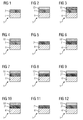
- FIG. 1 shows a layer system 1 of a substrate 4 with a single layer 7 containing soft aluminum particles Al having a hardness ⁇ Hv50.
- the single-layer 7 "starting from FIG. 1 may preferably additionally have hard material particles (H), as in FIG. 5 is shown.
- FIG. 2 shows a layer system 1 of a substrate 4 with a two-layer protective layer 7, 10 against corrosion and erosion (corresponds FIG. 1 + outer layer 10).
- the layer 7, which rests directly on the steel-containing substrate 4 soft aluminum particles Al and acts as a sacrificial anode, wherein the upper layer 10 but has no aluminum particles.
- the soft aluminum particles Al are present, and the upper layer 10 has no particles but only a matrix material.
- FIG. 8 provides FIG. 2 for harder aluminum-containing particles AL * in the lower layer 7 '.
- FIG. 8 only in the outer layer 10 "only hard particles H be present, as it is in FIG. 4 respectively.
- FIG. 6 is shown.
- Another embodiment of the invention is to introduce aluminum into both layers ( Fig. 3 ), but in the lower layer 7 softer aluminum particles Al ("pure" aluminum) is present and in the upper layer 10 'harder aluminum-containing particles AL * are present.
- the upper layer may be configured with soft aluminum particles Al, harder, aluminum-containing particles AL * and / or hard material particles H or the top layer 10 IV may only comprise aluminum soft aluminum particles or the top layer 10 V may have both hard particles H and harder aluminum-containing particles AL *.
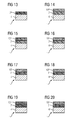
- the lower layer 7 has soft aluminum particles Al and the upper layer 10 "'as well as hard material particles H as erosion protection.
- both the lower layer 7 and the upper layer 10 IV aluminum particles, wherein in the outer layer 10 IV, the aluminum particles are used to increase erosion, even if they are used to erosion protection to a lesser extent than hard particles.
- the lower layer 7 comprises soft aluminum particles Al and the upper layer 10 V harder aluminum-containing particles AL * and hard material particles H.
- FIG. 17 indicates starting from FIG. 3 for the lower layer 7 'no aluminum particles, but harder aluminum particles AL *.
- FIG. 18 shows a lower layer 7 'with harder aluminum-containing particles Al *, on which an upper layer 10''with soft aluminum particles Al and hard particles H is applied.
- the lower layer 7 has harder aluminum-containing particles AL *, which then contribute to erosion protection when the upper layer 10 IV has been removed, since the upper layer 10 IV contains only aluminum particles.
- the hardest erosion protection forms an upper layer 10 V , in which harder aluminum particles AL * and hard particles are present, and depending on the field of application and degree of erosion protection in the lower layer 7 'harder aluminum particles AL * are present ( Fig. 20 ) or in the lower layer also additionally hard material particles are contained ( FIG. 28 ).
- the lower layer 7 has aluminum particles and hard particles H to increase the erosion resistance of the lower layer 7".
- harder aluminum-containing particles AL * are present in the top layer 10 'to contribute to both corrosion protection and erosion protection.
- the top layer may have 10 IV compared to FIG. 22 also have only aluminum particles ( FIG. 23 ).
- the lower layer 7 "' has harder aluminum-containing particles AL * and hard particles H to protect the substrate 4 from erosion in any case FIG. 25 in the upper layer 10 'harder aluminum-containing particles AL * are present and in FIG. 26 erosion protection but also by hard particles in the aluminum-containing layer 10 "'is guaranteed.
- FIG. 27 shows an upper layer 10 IV , which has soft aluminum particles Al, which contributes in particular to the corrosion protection and only when the top layer is removed, the lower layer ensures both the corrosion protection and erosion protection.
- ceramic particles preferably aluminum nitride and boron nitride, chromium carbide, aluminum oxide or mixtures thereof can be used.
- the substrate 4 ( Fig. 1 - 28 ) preferably comprises a steel.
- alloys may be used in particular as precipitation-hardening alloys of aluminum and at least one element of the group Zn, Mg, Cu, Mn, Co: Al-Zn, Al-Zn-Mn, Al-Mn-SC, Al-Mg-Mn, Al-Mg-Zn-Cu, Al-Cu-Mn-Zn, AlZn4, 5Mg1, AIZnMgCu1.5, AlZnMgCu0.5, AlMg4, 5Mn.
- alloys with significantly higher contents of different alloying elements for example with 6% -8% zinc (Zn).
- the particles AL * have an alloy or there are particles AL * of different alloys, in the layers 7,..., 10 V , but a single particle AL * preferably has only one alloy.
- the aluminum pigment layer is usually a low-intensity conductivity rays.
- targeted pressure blasting with optimized parameters on the other hand, an increase in the hardness of aluminum particles can be achieved.
- the matrix material of the layers 7, 7 ', 7 ", 7"', 10, 10 ', 10 ", 10"', 10 IV , 10 V ( Fig. 1 - 28 ) is preferably the same in chromate phosphate binder and preferably for both layers.
Landscapes
- Chemical & Material Sciences (AREA)
- Organic Chemistry (AREA)
- Engineering & Computer Science (AREA)
- Materials Engineering (AREA)
- Chemical Kinetics & Catalysis (AREA)
- Mechanical Engineering (AREA)
- Metallurgy (AREA)
- Wood Science & Technology (AREA)
- Life Sciences & Earth Sciences (AREA)
- Composite Materials (AREA)
- Inorganic Chemistry (AREA)
- Laminated Bodies (AREA)
- Other Surface Treatments For Metallic Materials (AREA)
Abstract
Durch die Verwendung von ausscheidungsgehärteten Partikeln kann sowohl die Korrosion als auch die Erosionseigenschaften eines Schichtsystems verbessert werden.
Description
- Die Erfindung betrifft eine aluminiumhaltige Schutzschicht gegen Korrosion und Erosion.
- Verdichter-Schaufeln von stationären GT und Flugturbinen werden meist auf der Basis von vergüteten martensitischen 12% - 13%Cr-Stähle und zum Teil ausscheidungsgehärteten 16% - 17%Cr-Stähle hergestellt. Als Schutz gegen Korrosion werden die Schaufeln der vorderen Stufen mit einem speziellen Aluminium-pigmenthaltigen Hochtemperaturlack geschützt.
- Der Nachteil dieser Beschichtung besteht in der relativ geringen Erosionsbeständigkeit der Schicht. Als Folge davon ist neben einer sehr aufwändigen Filterung der Luft oft auch eine regelmäßige Neubeschichtung der Schaufeln (im Refurbishment) notwendig.
- Zur Lösung dieses Problems werden die zurzeit verwendeten Schutzschichten in regelmäßigen Intervallen auf Erosionsabtrag und Korrosionsschutz inspiziert und im Refurbishment wird eine Entschichtung mit anschließender Neubeschichtung der Schaufeln mit dem gleichen System durchgeführt. Der Zeitraum dieser Intervalle ist stark von der Umgebungsluft und der Wirksamkeit von Filtereinrichtungen abhängig.
- Dieses Problem soll gelöst werden.
- Die Aufgabe wird gelöst durch ein Schichtsystem gemäß Anspruch 1.
- Durch eine Erhöhung des Erosionswiderstandes der Beschichtung könnten die Refurbishment-Intervalle verlängert werden.
- In den Unteransprüchen sind weitere vorteilhafte Maßnahmen aufgelistet, die beliebig miteinander kombiniert werden können um weitere Vorteile zu erzielen.
- Es zeigen
Figuren 1 - 28 Schichtsysteme. - Die Figuren und die Beschreibung stellen nur Ausführungsbeispiele der Erfindung dar.
-
Figur 1 zeigt ein Schichtsystem 1 aus einem Substrat 4 mit einer einzigen Schicht 7, die weiche Aluminiumpartikel Al mit einer Härte ≤ Hv50 enthält.
Vorzugsweise sind das härtere aluminiumhaltige Partikel AL* in einer Schicht 7' (Fig. 11 ). - Die einlagige Schicht 7" ausgehend von
Figur 1 kann vorzugsweise zusätzlich noch Hartstoffpartikel (H) aufweisen, wie es inFigur 5 dargestellt ist. - Dies gilt ebenso für eine einlagige Schicht 7"' gemäß
Figur 13 ausgehend vonFigur 11 . -
Figur 2 zeigt ein Schichtsystem 1 aus einem Substrat 4 mit einer zweilagigen Schutzschicht 7, 10 gegen Korrosion und Erosion (entsprichtFigur 1 + äußere Schicht 10).
Nach diesem Stand der Technik weist die Schicht 7, die direkt auf dem stahlhaltigen Substrat 4 aufliegt, weiche Aluminiumpartikel Al auf und wirkt als Opferanode, wobei die obere Schicht 10 aber keine Aluminiumpartikel aufweist.
InFigur 2 sind in der unteren Schichten 7 die weichen Aluminiumpartikel Al vorhanden und die obere Schicht 10 weist keine Partikel auf, sondern nur ein Matrixmaterial. -
Figur 8 stelltFigur 2 für härtere aluminiumhaltige Partikel AL* in der unteren Schicht 7' dar. - Zur Steigerung der Erosionsbeständigkeit können ausgehend von
Figur 2 bzw.Figur 8 nur in der äußeren Schicht 10" ausschließlich Hartstoffpartikel H vorhanden sein, wie es inFigur 4 bzw.Figur 6 dargestellt ist. - Ein weiteres Ausführungsbeispiel der Erfindung besteht darin, in beide Schichten Aluminium einzubringen (
Fig. 3 ), wobei jedoch in die untere Schicht 7 weichere Aluminiumpartikel Al ("reines" Aluminium) vorhanden ist und in der oberen Schicht 10' härtere aluminiumhaltige Partikel AL* vorhanden sind. - Je nach Anwendungsgebiet können in den unteren Schichten 7" bzw. 7"' und in der oberen Schicht 10', 10" gemäß
Figur 7 ausgehend vonFigur 2 bzw. gemäßFigur 10 (ausgehend vonFig. 8 ) oder nur in der oberen Schicht 10" (Fig. 4, 6 ) oder gemäßFigur 9 ausgehend vonFigur 8 und gemäßFigur 12 ausgehend vonFigur 2 nur in der unteren Schicht 7"', 7" Hartstoffpartikel H eingelagert sein. - Darüber hinaus kann die obere Schicht mit weichen Aluminiumpartikeln Al, härteren, aluminiumhaltigen Partikeln AL* und/oder Hartstoffpartikeln H ausgestaltet werden oder die obere Schicht 10IV kann nur weiche Aluminiumpartikel aus Aluminium aufweisen oder die obere Schicht 10V weist sowohl Hartstoffpartikel H als auch härtere aluminiumhaltige Partikel AL* auf.
- In
Figur 14 weist die untere Schicht 7 weiche Aluminiumpartikel Al und die obere Schicht 10"' ebenso aber auch Hartstoffpartikel H als Erosionsschutz auf. - In
Figur 15 weist sowohl die untere Schicht 7 als auch die obere Schicht 10 IV Aluminiumpartikel auf, wobei in der äußeren Schicht 10IV die Aluminiumpartikel zur Steigerung der Erosion genutzt werden, auch wenn sie in geringerem Maße zur Erosionsschutz dienen als Hartstoffpartikel. - In
Figur 16 weist die untere Schicht 7 weiche Aluminiumpartikel Al auf und die obere Schicht 10V härtere aluminiumhaltige Partikel AL* und Hartstoffpartikel H. -
Figur 17 weist ausgehend vonFigur 3 für die untere Schicht 7' keine Aluminiumpartikel auf, sondern härtere Aluminiumpartikel AL*. -
Figur 18 zeigt eine untere Schicht 7' mit härteren aluminiumhaltigen Partikeln Al*, auf der eine obere Schicht 10"' mit weichen Aluminiumpartikeln Al und Hartstoffpartikel H aufgebracht ist. - In
Figur 19 weist die untere Schicht 7' härtere aluminiumhaltige Partikel AL* auf, die dann zum Erosionsschutz beitragen, wenn die obere Schicht 10IV abgetragen ist, da die obere Schicht 10IV nur Aluminiumpartikel enthält. - Den härtesten Erosionsschutz bildet eine obere Schicht 10V, bei der härtere Aluminiumpartikel AL* und Hartstoffpartikel vorhanden sind, wobei je nach Anwendungsgebiet und Grad des Erosionsschutzes in der unteren Schicht 7' härtere Aluminiumpartikel AL* vorhanden sind (
Fig. 20 ) oder in der unteren Schicht auch noch zusätzlich Hartstoffpartikel enthalten sind (Figur 28 ). - In
Figur 21 - 24 weist die untere Schicht 7" Aluminiumpartikel und Hartstoffpartikeln H auf, um den Erosionswiderstand der unteren Schicht 7" zu steigern. - In
Figur 21 sind härtere aluminiumhaltige Partikel AL* in der oberen Schicht 10' vorhanden, um sowohl zum Korrosionsschutz als auch zum Erosionsschutz beizutragen. - In
Figur 22 wird das in der oberen Schicht 10"' mit weichen Aluminiumpartikeln Al und Hartstoffpartikeln H erreicht. - In weniger erosionsbelasteten Umgebungen, kann die obere Schicht 10IV im Vergleich zu
Figur 22 auch nur Aluminiumpartikel aufweisen (Figur 23 ). - Durch die obere Schicht 10V mit aluminiumhaltigen härteren Partikeln Al* und Hartstoffpartikeln H wird insbesondere die äußere Schicht vor Erosion geschützt (
Figur 24 ). - In den
Figuren 25 - 28 weist die untere Schicht 7"' härtere aluminiumhaltige Partikel AL* und Hartstoffpartikel H auf, um das Substrat 4 auf jeden Fall vor Erosion zu schützen, wobei inFigur 25 in der oberen Schicht 10' härtere aluminiumhaltige Partikel AL* vorhanden sind und inFigur 26 der Erosionsschutz aber auch durch Hartstoffpartikel in der aluminiumhaltigen Schicht 10"' gewährleistet wird. -
Figur 27 zeigt eine obere Schicht 10IV, die weiche Aluminiumpartikel Al aufweist, die insbesondere auch zum Korrosionsschutz beiträgt und nur wenn die obere Schicht abgetragen ist die untere Schicht sowohl den Korrosionsschutz als auch den Erosionsschutz gewährleistet. - Als Hartstoffpartikel H können Keramikpartikel, vorzugsweise Aluminiumnitrid und Bornitrid, Chromkarbid, Aluminiumoxid oder Mischungen daraus verwendet werden.
- Das Substrat 4 (
Fig. 1 - 28 ) weist vorzugsweise einen Stahl auf. - Die erfindungsgemäße Steigerung der Erosion erfolgt durch Verwendung von härteren, aluminiumhaltigen Partikeln AL* aus einer Aluminiumlegierung, insbesondere ausscheidungsgehärteten Aluminiumlegierung, die eine 5-10-fach höhere Härte und einem mindestens Faktor 5 höhere Festigkeit aufweisen:
- Legierungen auf Basis Al-Mn, optional mit geringen Gehalten von 0% bis zu 1,5 Gew.-% an Magnesium (Mg) oder Kupfer (Cu), insbesondere AlMn1, AlMn1Cu, - zweiphasigen Legierungen auf der Basis einer übereutektischen Al-Si-Legierung, insbesondere AlSi20 bis AlSi35
- dispersoidgehärtete Legierung auf der Basis Al-Mg-Mn-Si, bei der das Magnesium (Mg) überwiegend als Mg2Si abgebunden ist,
- dispersoidgehärtete Legierungen auf Basis Al-Fe-Ni,
- Kombination aus zweiphasigem Gefüge und Dispersoidverfestigung mit Eisen (Fe) und Nickel (Ni), insbesondere AlSi20Fe5Ni2.
- Vorzugsweise können als ausscheidungshärtende Legierungen aus Aluminium und zumindest einem Element der Gruppe Zn, Mg, Cu, Mn, Co insbesondere folgende Legierungen verwendet werden: Al-Zn, Al-Zn-Mn, Al-Mn-SC, Al-Mg-Mn, Al-Mg-Zn-Cu, Al-Cu-Mn-Zn, AlZn4, 5Mg1, AIZnMgCu1,5, AlZnMgCu0,5, AlMg4, 5Mn.
Es können aber auch Legierungen mit deutlich höheren Gehalten verschiedener Legierungselemente zur Anwendung gekommen, wie z.B. mit 6% - 8% Zink (Zn). - Ebenso vorzugsweise werden verwendet:
- Partikel AL* aus Aluminium-Verbundwerkstoffe aus Aluminium oder einer Aluminiumlegierung als Matrix: Al-Si, Al-Si-Mg, Al-Mn, Al-Fe, Al-Ni, Al-Zn mit einer eingelagerten zweiten Komponente, wie keramische Teilchen aus Al2O3 oder SiC
- Dispersionshärtende Aluminiumwerkstoffe mit Oxiden, Karbiden oder Nitriden (Al2O3, Al4C3) mit Lithium (Li) oder durch intermetallische Phasen: AlFe8Co, AlFe8Ce4, AlFe8Zr1,
- Aluminide: insbesondere NiAl, Ni3Al, FeAl, Fe3Al, TiAl, Ti3Al,
- Ausscheidungshärtende scandiumhaltige (Sc) Aluminiumlegierung Al-Sc oder Al-Sc-X-Legierungen,
- Die Partikel AL* weisen eine Legierung auf oder es gibt Partikel AL* aus verschiedenen Legierungen, in den Schichten 7, ..., 10V, wobei ein einzelnes Partikel AL* vorzugsweise jedoch nur eine Legierung aufweist.
- Nach dem Einbrennen der Aluminiumpigmentschicht erfolgt in der Regel ein Leitfähigkeitsstrahlen mit geringer Intensität. Durch gezieltes Druckstrahlen mit optimierten Parametern lässt sich hingegen zusätzlich eine Härtesteigerung von Aluminiumpartikeln erzielen.
- Das Matrixmaterial der Schichten 7, 7', 7", 7"', 10, 10', 10", 10"', 10IV, 10V (
Fig. 1 - 28 ) ist vorzugsweise in Chromat-Phospat-Binder und vorzugsweise für beide Schichten gleich.
Claims (14)
- Schichtsystem (1),
das zumindest aufweist:ein Substrat (4),eine untere Schicht (7, 7', 7", 7"'),die auf dem Substrat (4),insbesondere direkt auf dem Substrat (4),vorhanden ist,optional eine äußere Schicht (10, 10', 10", 10"', 10IV, 10V) auf der unteren Schicht (7, 7', 7", 7"'),wobei in dem Schichtsystem (1) Partikel aus Aluminium (Al) mit einer weichen Härte vorhanden ist,insbesondere mit einer Härte bis zu Hv50.dadurch gekennzeichnet,dass die Schicht (7, 7', 7", 7"', 10, 10', 10", 10"', 10IV, 10V)aluminiumhaltige Partikel (AL*) aufweist,die härter ausgebildet sind als die Partikel aus Aluminium (Al),dass die aluminiumhaltigen Partikel (AL*) eine Aluminiumlegierung oderAluminium mit einem Härtungsmechanismus,insbesondere eine ausscheidungshärtende Aluminiumlegierung,aufweisen, insbesondere daraus bestehen,wobei die Aluminiumlegierung vorzugsweise ausgewählt wird aus:- Legierungen auf Basis Al-Mn,optional mit geringen Gehalten von 0% bis zu 1,5 Gew.-% an Magnesium (Mg) oder Kupfer (Cu),insbesondere AlMn1, AlMn1Cu,- zweiphasigen Legierungen auf der Basis einer übereutektischen Al-Si-Legierung,insbesondere AlSi20 bis AlSi35- dispersoidgehärtete Legierung auf der Basis Al-Mg-Mn-Si,bei der das Magnesium (Mg) überwiegend als Mg2Si abgebunden ist,- dispersoidgehärtete Legierungen auf Basis Al-Fe-Ni,- Kombination aus zweiphasigem Gefüge und Dispersoidverfestigung mit Eisen (Fe) und Nickel (Ni), insbesondere AlSi20Fe5Ni2und optional- Aluminium-Zink (Al-Zn)- Aluminium-Zink-Mangan (Al-Zn-Mn)- Aluminium-Mangan-Scandium (Al-Mn-Sc)- Aluminium-Magnesium-Mangan (Al-Mg-Mn)- Aluminium-Magnesium-Zink-Kupfer (Al-Mg-Zn-Cu)- Aluminium-Magnesium-Zink-Kupfer-Kobalt (Al-Mg-Zn-Cu-Co)- Legierungen von Aluminium-Kupfer-Mangan-Zink (Al-Cu-Mn-Zn)- Al3Li- AlZn4, 5Mg1- AlZnMgCu1,5- AlZnMgCu0,5- AlMg4,5Mn. - Schichtsystem nach Anspruch 1,
das nur eine untere Schicht (7, 7', 7", 7"') aufweist. - Schichtsystem nach einem oder beiden der Ansprüche 1 oder 2,
das zumindest aufweist:eine untere Schicht (7, 7', 7", 7"') undeine äußere Schicht (10, 10', 10", 10"', 10IV, 10V),insbesondere nur eine untere (7, 7', 7", 7"') und nur eine äußere Schicht (10, 10', 10", 10"', 10IV, 10V). - Schichtsystem nach Anspruch 3,
bei dem in der unteren Schicht (7) weiche Aluminiumpartikel (AL),
insbesondere mit einer maximalen Härte von Hv50, vorhanden sind und
in der oberen Schicht (10', 10V)
um mindestens 10% härtere Aluminiumpartikel (AL*), insbesondere ausscheidungshärtende Aluminiumlegierungspartikel (AL*) vorhanden sind. - Schichtsystem nach einem oder mehreren der Ansprüche 1 bis 4,
bei dem in der unteren Schicht (7", 7"') Hartstoffpartikel (H) vorhanden sind. - Schichtsystem nach einem oder mehreren der Ansprüche 1 bis 5,
wobei in der oberen Schicht (10", 10"', 10V) Hartstoffpartikel (H) vorhanden sind. - Schichtsystem nach einem oder mehreren der Ansprüche 5 oder 6,
bei dem in beiden Schichten (7", 7"', 10", 10"', 10V) Hartstoffpartikel (H) vorhanden sind. - Schichtsystem nach einem oder mehreren der Ansprüche 5, 6 oder 7,
bei dem als Hartstoffpartikel (H) Aluminiumnitrid, Bornitrid, Chromkarbid, Aluminiumoxid oder Mischungen daraus verwendet werden. - Schichtsystem nach einem oder mehreren der Ansprüche 1 bis 8,
bei dem die Schicht (7, 7', 7", 7"', 10, 10', 10", 10"', 10IV, 10V) oder beide Schichten (7,7', 7", 7"', 10, 10', 10", 10"', 10IV, 10V) das gleiche Matrixmaterial aufweisen,
insbesondere Chromatphosphatbinder. - Schichtsystem mit einem oder mehreren der vorherigen Ansprüche,
bei dem die obere Schicht (10) keine aluminiumhaltige Partikel (AL*) oder Aluminiumpartikel (AL) aufweist. - Schichtsystem nach einem oder mehreren der vorherigen Ansprüche,
bei dem das Substrat (4) ein Stahl aufweist. - Schichtsystem nach einem oder mehreren der vorherigen Ansprüche,
wobei die Aluminiumpartikel durch Leitfähigkeitsstrahlen, insbesondere durch Kaltfestigungsverfahren, wie z.B. Strahlen oder Rollieren, eine Härtesteigerung erfahren haben. - Schichtsystem nach einem oder mehreren der vorherigen Ansprüche,
bei dem die aluminiumhaltigen Partikel (Al*) nur eine Legierung aufweisen. - Schichtsystem nach einem oder mehreren der vorherigen Ansprüche,
bei dem aluminiumhaltige Partikel (AL*) aus verschiedenen Legierungen vorhanden sind,
wobei jeder Partikel (AL*) jedoch nur eine Legierung aufweist.
Priority Applications (2)
| Application Number | Priority Date | Filing Date | Title |
|---|---|---|---|
| EP13156793.5A EP2770085A1 (de) | 2013-02-26 | 2013-02-26 | Aluminiumhaltige Schutzschicht gegen Korrosion und Erosion |
| PCT/EP2014/052428 WO2014131599A1 (de) | 2013-02-26 | 2014-02-07 | Aluminiumhaltige schutzschicht gegen korrosion und erosion |
Applications Claiming Priority (1)
| Application Number | Priority Date | Filing Date | Title |
|---|---|---|---|
| EP13156793.5A EP2770085A1 (de) | 2013-02-26 | 2013-02-26 | Aluminiumhaltige Schutzschicht gegen Korrosion und Erosion |
Publications (1)
| Publication Number | Publication Date |
|---|---|
| EP2770085A1 true EP2770085A1 (de) | 2014-08-27 |
Family
ID=47754347
Family Applications (1)
| Application Number | Title | Priority Date | Filing Date |
|---|---|---|---|
| EP13156793.5A Withdrawn EP2770085A1 (de) | 2013-02-26 | 2013-02-26 | Aluminiumhaltige Schutzschicht gegen Korrosion und Erosion |
Country Status (2)
| Country | Link |
|---|---|
| EP (1) | EP2770085A1 (de) |
| WO (1) | WO2014131599A1 (de) |
Citations (3)
| Publication number | Priority date | Publication date | Assignee | Title |
|---|---|---|---|---|
| US3869293A (en) * | 1971-08-06 | 1975-03-04 | Teleflex Inc | Inorganic coating compositions and a method |
| EP0142418A1 (de) * | 1983-10-19 | 1985-05-22 | Sermatech International Inc. | Spherische Aluminiumteilchen in Beschichtungen |
| WO1994008071A1 (de) * | 1992-10-05 | 1994-04-14 | Siemens Aktiengesellschaft | Schutz gegen korrosive und erosive angriffe bei temperaturen bis etwa 500 °c für ein aus chromstahl bestehendes substrat |
-
2013
- 2013-02-26 EP EP13156793.5A patent/EP2770085A1/de not_active Withdrawn
-
2014
- 2014-02-07 WO PCT/EP2014/052428 patent/WO2014131599A1/de not_active Ceased
Patent Citations (3)
| Publication number | Priority date | Publication date | Assignee | Title |
|---|---|---|---|---|
| US3869293A (en) * | 1971-08-06 | 1975-03-04 | Teleflex Inc | Inorganic coating compositions and a method |
| EP0142418A1 (de) * | 1983-10-19 | 1985-05-22 | Sermatech International Inc. | Spherische Aluminiumteilchen in Beschichtungen |
| WO1994008071A1 (de) * | 1992-10-05 | 1994-04-14 | Siemens Aktiengesellschaft | Schutz gegen korrosive und erosive angriffe bei temperaturen bis etwa 500 °c für ein aus chromstahl bestehendes substrat |
Non-Patent Citations (1)
| Title |
|---|
| SCHMITT-THOMAS KH G ET AL: "Investigation into the blasting wear resistance of materials and coatings using the fluidized bed process // Untersuchung der Strahlverschleissbeständigkeit von Werkstoffen und Beschichtungen mit Hilfe eines Wirbelbett-Testverfahrens", WERKSTOFFE UND KORROSION, DE, vol. 41, no. 11, 1 November 1990 (1990-11-01), pages 623 - 634, XP002683281, ISSN: 0043-2822 * |
Also Published As
| Publication number | Publication date |
|---|---|
| WO2014131599A1 (de) | 2014-09-04 |
Similar Documents
| Publication | Publication Date | Title |
|---|---|---|
| EP2802683B1 (de) | Aluminiumhaltige schutzschicht gegen korrosion und erosion | |
| DE19925666C1 (de) | Zylinderkopf- und Motorblockgußteil | |
| EP2398936A1 (de) | Erosionsschutz-beschichtungssystem fur gasturbinenbauteile | |
| EP2954081A1 (de) | Al-GUSSLEGIERUNG | |
| EP2905350A1 (de) | Hochtemperatur TiAl-Legierung | |
| DE102013009369A1 (de) | Verfahren zur Herstellung eines Kolbenrings | |
| WO2017174185A1 (de) | Aluminiumlegierung, insbesondere für ein giessverfahren, sowie verfahren zum herstellen eines bauteils aus einer solchen aluminiumlegierung | |
| DE1246352B (de) | Pulvergemisch zum Alitieren von Werkstuecken aus hochlegierten Staehlen oder Legierungen auf der Basis wenigstens eines der Metalle Kobalt, Nickel oder Chrom | |
| DE102008020523A1 (de) | Duktile Magnesiumlegierung | |
| EP2796588A1 (de) | Verfahren zur Herstellung einer Hochtemperaturschutzbeschichtung und entsprechend hergestelltes Bauteil | |
| DE19601793B4 (de) | Verfahren zum Beschichten von Oberflächen | |
| DE102016224546A1 (de) | HEIßGASKORROSIONS - UND OXIDATIONSSCHUTZSCHICHT FÜR TIAL-LEGIERUNGEN | |
| WO2014131599A1 (de) | Aluminiumhaltige schutzschicht gegen korrosion und erosion | |
| DE102009015811A1 (de) | Synchronring | |
| DE102014224229A1 (de) | Verfahren zur Herstellung eines Motorbauteils, Motorbauteil und Verwendung einer Aluminiumlegierung | |
| EP3423606B1 (de) | Al-gusslegierung | |
| WO2013050357A1 (de) | Verfahren zur herstellung eines motorbauteils und motorbauteil | |
| DE102013214767A1 (de) | Hochwarmfeste Leichtbaulegierung aus NiAl | |
| DE602005000087T2 (de) | Verfahren zum Schmieden einer Titanlegierung | |
| AT509343B1 (de) | Aluminiumlegierung | |
| DE1154642B (de) | Aluminiumhaltige Mehrstoffbronzen, die sich insbesondere durch hohe Warmfestigkeit und chemische Bestaendigkeit auszeichnen | |
| DE102015207833A1 (de) | Zylinderkurbelgehäuse für einen Verbrennungsmotor | |
| EP1070152A1 (de) | TiAl-BASISLEGIERUNG | |
| EP2742164A1 (de) | Verfahren zur herstellung eines motorbauteils und motorbauteil | |
| DE102014010600A1 (de) | Legierung zur Herstellung eines dünnwandigen Stahlbauteils |
Legal Events
| Date | Code | Title | Description |
|---|---|---|---|
| PUAI | Public reference made under article 153(3) epc to a published international application that has entered the european phase |
Free format text: ORIGINAL CODE: 0009012 |
|
| 17P | Request for examination filed |
Effective date: 20130226 |
|
| AK | Designated contracting states |
Kind code of ref document: A1 Designated state(s): AL AT BE BG CH CY CZ DE DK EE ES FI FR GB GR HR HU IE IS IT LI LT LU LV MC MK MT NL NO PL PT RO RS SE SI SK SM TR |
|
| AX | Request for extension of the european patent |
Extension state: BA ME |
|
| STAA | Information on the status of an ep patent application or granted ep patent |
Free format text: STATUS: THE APPLICATION IS DEEMED TO BE WITHDRAWN |
|
| 18D | Application deemed to be withdrawn |
Effective date: 20150228 |