EP2772904A1 - Vorrichtung und Verfahren zur Musik-akkord-erkennung und automatische Begleitung - Google Patents
Vorrichtung und Verfahren zur Musik-akkord-erkennung und automatische Begleitung Download PDFInfo
- Publication number
- EP2772904A1 EP2772904A1 EP14155881.7A EP14155881A EP2772904A1 EP 2772904 A1 EP2772904 A1 EP 2772904A1 EP 14155881 A EP14155881 A EP 14155881A EP 2772904 A1 EP2772904 A1 EP 2772904A1
- Authority
- EP
- European Patent Office
- Prior art keywords
- chord
- musical
- musical performance
- information
- chords
- Prior art date
- Legal status (The legal status is an assumption and is not a legal conclusion. Google has not performed a legal analysis and makes no representation as to the accuracy of the status listed.)
- Granted
Links
- 238000000034 method Methods 0.000 title claims description 160
- 238000001514 detection method Methods 0.000 claims abstract description 199
- 238000000605 extraction Methods 0.000 claims description 30
- 239000000284 extract Substances 0.000 claims description 11
- 238000004590 computer program Methods 0.000 claims 2
- 230000008569 process Effects 0.000 description 135
- 230000006870 function Effects 0.000 description 31
- 239000000470 constituent Substances 0.000 description 16
- 238000004891 communication Methods 0.000 description 14
- 230000000694 effects Effects 0.000 description 9
- 230000004044 response Effects 0.000 description 9
- 230000000994 depressogenic effect Effects 0.000 description 8
- 230000001256 tonic effect Effects 0.000 description 8
- 230000003190 augmentative effect Effects 0.000 description 6
- 230000003292 diminished effect Effects 0.000 description 4
- 230000009471 action Effects 0.000 description 2
- 230000008859 change Effects 0.000 description 2
- 238000010586 diagram Methods 0.000 description 2
- 102220257474 rs142991697 Human genes 0.000 description 2
- 102220305346 rs1555469504 Human genes 0.000 description 2
- 102220300650 rs181048561 Human genes 0.000 description 2
- 102220028428 rs386352384 Human genes 0.000 description 2
- 102220109246 rs4696 Human genes 0.000 description 2
- 102220033174 rs62642581 Human genes 0.000 description 2
- 102220093071 rs876657445 Human genes 0.000 description 2
- 101150025129 POP1 gene Proteins 0.000 description 1
- 238000007519 figuring Methods 0.000 description 1
- 239000004973 liquid crystal related substance Substances 0.000 description 1
- 230000004048 modification Effects 0.000 description 1
- 238000012986 modification Methods 0.000 description 1
- 239000004065 semiconductor Substances 0.000 description 1
- 238000004904 shortening Methods 0.000 description 1
Images





Classifications
-
- G—PHYSICS
- G10—MUSICAL INSTRUMENTS; ACOUSTICS
- G10H—ELECTROPHONIC MUSICAL INSTRUMENTS; INSTRUMENTS IN WHICH THE TONES ARE GENERATED BY ELECTROMECHANICAL MEANS OR ELECTRONIC GENERATORS, OR IN WHICH THE TONES ARE SYNTHESISED FROM A DATA STORE
- G10H1/00—Details of electrophonic musical instruments
- G10H1/36—Accompaniment arrangements
- G10H1/38—Chord
- G10H1/383—Chord detection and/or recognition, e.g. for correction, or automatic bass generation
-
- G—PHYSICS
- G10—MUSICAL INSTRUMENTS; ACOUSTICS
- G10H—ELECTROPHONIC MUSICAL INSTRUMENTS; INSTRUMENTS IN WHICH THE TONES ARE GENERATED BY ELECTROMECHANICAL MEANS OR ELECTRONIC GENERATORS, OR IN WHICH THE TONES ARE SYNTHESISED FROM A DATA STORE
- G10H1/00—Details of electrophonic musical instruments
- G10H1/36—Accompaniment arrangements
- G10H1/38—Chord
-
- G—PHYSICS
- G10—MUSICAL INSTRUMENTS; ACOUSTICS
- G10H—ELECTROPHONIC MUSICAL INSTRUMENTS; INSTRUMENTS IN WHICH THE TONES ARE GENERATED BY ELECTROMECHANICAL MEANS OR ELECTRONIC GENERATORS, OR IN WHICH THE TONES ARE SYNTHESISED FROM A DATA STORE
- G10H2210/00—Aspects or methods of musical processing having intrinsic musical character, i.e. involving musical theory or musical parameters or relying on musical knowledge, as applied in electrophonic musical tools or instruments
- G10H2210/031—Musical analysis, i.e. isolation, extraction or identification of musical elements or musical parameters from a raw acoustic signal or from an encoded audio signal
- G10H2210/056—Musical analysis, i.e. isolation, extraction or identification of musical elements or musical parameters from a raw acoustic signal or from an encoded audio signal for extraction or identification of individual instrumental parts, e.g. melody, chords, bass; Identification or separation of instrumental parts by their characteristic voices or timbres
-
- G—PHYSICS
- G10—MUSICAL INSTRUMENTS; ACOUSTICS
- G10H—ELECTROPHONIC MUSICAL INSTRUMENTS; INSTRUMENTS IN WHICH THE TONES ARE GENERATED BY ELECTROMECHANICAL MEANS OR ELECTRONIC GENERATORS, OR IN WHICH THE TONES ARE SYNTHESISED FROM A DATA STORE
- G10H2210/00—Aspects or methods of musical processing having intrinsic musical character, i.e. involving musical theory or musical parameters or relying on musical knowledge, as applied in electrophonic musical tools or instruments
- G10H2210/031—Musical analysis, i.e. isolation, extraction or identification of musical elements or musical parameters from a raw acoustic signal or from an encoded audio signal
- G10H2210/066—Musical analysis, i.e. isolation, extraction or identification of musical elements or musical parameters from a raw acoustic signal or from an encoded audio signal for pitch analysis as part of wider processing for musical purposes, e.g. transcription, musical performance evaluation; Pitch recognition, e.g. in polyphonic sounds; Estimation or use of missing fundamental
-
- G—PHYSICS
- G10—MUSICAL INSTRUMENTS; ACOUSTICS
- G10H—ELECTROPHONIC MUSICAL INSTRUMENTS; INSTRUMENTS IN WHICH THE TONES ARE GENERATED BY ELECTROMECHANICAL MEANS OR ELECTRONIC GENERATORS, OR IN WHICH THE TONES ARE SYNTHESISED FROM A DATA STORE
- G10H2210/00—Aspects or methods of musical processing having intrinsic musical character, i.e. involving musical theory or musical parameters or relying on musical knowledge, as applied in electrophonic musical tools or instruments
- G10H2210/031—Musical analysis, i.e. isolation, extraction or identification of musical elements or musical parameters from a raw acoustic signal or from an encoded audio signal
- G10H2210/081—Musical analysis, i.e. isolation, extraction or identification of musical elements or musical parameters from a raw acoustic signal or from an encoded audio signal for automatic key or tonality recognition, e.g. using musical rules or a knowledge base
-
- G—PHYSICS
- G10—MUSICAL INSTRUMENTS; ACOUSTICS
- G10H—ELECTROPHONIC MUSICAL INSTRUMENTS; INSTRUMENTS IN WHICH THE TONES ARE GENERATED BY ELECTROMECHANICAL MEANS OR ELECTRONIC GENERATORS, OR IN WHICH THE TONES ARE SYNTHESISED FROM A DATA STORE
- G10H2210/00—Aspects or methods of musical processing having intrinsic musical character, i.e. involving musical theory or musical parameters or relying on musical knowledge, as applied in electrophonic musical tools or instruments
- G10H2210/571—Chords; Chord sequences
-
- G—PHYSICS
- G10—MUSICAL INSTRUMENTS; ACOUSTICS
- G10H—ELECTROPHONIC MUSICAL INSTRUMENTS; INSTRUMENTS IN WHICH THE TONES ARE GENERATED BY ELECTROMECHANICAL MEANS OR ELECTRONIC GENERATORS, OR IN WHICH THE TONES ARE SYNTHESISED FROM A DATA STORE
- G10H2210/00—Aspects or methods of musical processing having intrinsic musical character, i.e. involving musical theory or musical parameters or relying on musical knowledge, as applied in electrophonic musical tools or instruments
- G10H2210/571—Chords; Chord sequences
- G10H2210/576—Chord progression
Definitions
- the present invention relates to an apparatus and method for detecting chords real-time to fit retrieved musical performance data.
- chord detection apparatuses for detecting chords real-time to fit retrieved musical performance data.
- Such conventional chord detection apparatuses include an apparatus which detects a suitable chord from input musical performance data by procedures A to F which will be described below (see Japanese Unexamined Patent Publication No. 2012-98480 , for example).
- the musical performance setting data selection apparatus which allows a user to select a title of a musical piece that the user desires to play, to automatically set musical performance setting data suitable for musical performance of the selected musical piece (see Japanese Patent Publication No. 3821094 , for example).
- the musical performance setting data which is to be set includes accompaniment style data, melody tone color, and tempo, while sets of musical performance setting data corresponding to titles of musical pieces, respectively, are previously stored in a table. If the user selects a title of a musical piece, the musical performance setting data selection apparatus refers to the table on the basis of the selected title to retrieve corresponding musical performance setting data to set the retrieved musical performance setting data.
- a user's intended chord can be detected easily by use of a note point table (a table included in the degree name point table) in which the root is given higher points at the procedure "B".
- a note point table a table included in the degree name point table
- musical performance data including the root of the user's intended chord is not necessarily retrieved in the chord detection timing. In such a case, there is a possibility that a chord having images different from the musical piece is detected.
- the degree name point table which the conventional chord detection apparatus uses includes a priority point table for obtaining priority points of respective chords themselves. By adjusting values of the priority point table, therefore, it is not impossible to give higher priority to specific chords to detect such chords.
- the adjustment of the priority point table is done for the specific chords (a musical piece)
- the adjustment of the priority point table only makes it easy to detect the specific chords to which higher priority is given to gain higher points, failing to detect chords which suit the image of the musical piece.
- the conventional musical performance setting data selection apparatus furthermore, in response to user's selection of a title of a musical piece, musical performance setting data corresponding to the title is automatically set on the apparatus.
- the set musical performance setting data includes accompaniment style data, melody tone color, tempo and the like, but does not include chord information.
- chords are treated not as musical performance setting data but as musical performance data. Therefore, the conventional musical performance setting data selection apparatus can set accompaniment style data, melody tone color, tempo and the like which suit the musical piece selected by the user, but cannot set chord progression that suits the image of the musical piece.
- the present invention was accomplished to solve the above-described problems, and an object thereof is to provide a chord detection apparatus which can detect chords that are in harmony with retrieved musical performance data, and suit the image of a musical piece.
- a chord detection apparatus which can detect chords that are in harmony with retrieved musical performance data, and suit the image of a musical piece.
- chord detection apparatus including musical performance data retrieval means (S15) for retrieving musical performance data indicative of musical performance played by a user; musical piece information retrieval means (S2) for retrieving musical piece information indicative of a musical piece played by the user; chord tendency information retrieval means (S3) for retrieving chord tendency information indicative of degrees of likelihood or unlikelihood of chords appearing in the musical piece; and chord detection means (S17 to S21) for detecting a chord on the basis of the musical performance data retrieved by the musical performance data retrieval means and the chord tendency information retrieved by the chord tendency information retrieval means.
- the musical performance data retrieval means retrieves musical performance data played by a user during a predetermined period or in predetermined timing, for example (S51 to S56).
- the chord tendency information represents the degrees of likelihood or unlikelihood of chords so as to be associated with at least one element of chord name, scale degree of chord root, chord type and chord function, for example ( FIG. 4(c) ).
- the chord tendency information retrieval means retrieves chord tendency information corresponding to the musical piece by reading out chord tendency information previously stored such that the chord tendency information is associated with the musical piece, for example (S31, S33, S42).
- the chord tendency information retrieval means retrieves chord tendency information corresponding to the musical piece by analyzing chord information or musical performance information previously stored so as to be associated with the musical piece, for example (S34 to S40, S42).
- the chord detection means includes candidate extraction means (S17 to S20) for extracting a plurality of candidate chords; and first reflection means (S72) for reflecting the chord tendency information retrieved by the chord tendency retrieval means in the respective candidate chords extracted by the candidate extraction means; and the chord detection means detects one of the candidate chords in which the chord tendency information has been reflected by the first reflection means (S75), for example.
- the candidate extraction means extracts candidate chords in accordance with a key of the musical piece, for example. In this case, the key of the musical piece is input by the user (R1a), or retrieved by analyzing the musical performance data retrieved by the musical performance data retrieval means (R1b).
- the candidate extraction means extracts only diatonic chords of the input or retrieved key (R2a), all chords which can be used in the input or retrieved key (R2b), or chords which can be used in the input or retrieved key and each of which has one or more notes included in the musical performance data (R2c).
- the chord detection apparatus in response to user's musical performance, retrieves musical performance data corresponding to the user's musical performance and chord tendency information corresponding to the musical piece played by the user to detect chords which suit the image of the musical piece in accordance with the retrieved musical performance data and chord tendency information. Resultantly, the chord detection apparatus of the present invention eliminates user's effort to enable user's intended chord detection such as an effort to include a root of a chord in notes that the user plays without fail. Therefore, the chord detection apparatus allows the user to focus on playing the musical piece.
- chord detection apparatus will not rigidly fix chord progression by, for example, sequentially reading out chords in accordance with chord progression previously stored for a user's selected musical piece, but only facilitates detection of chords which suit the image and notes (musical performance data) of the selected musical piece. Therefore, even if the user arranges the musical piece as the user desires during the user's musical performance, or adds or omits a repeat as the user desires, the chord detection apparatus can always achieve the chord detection which suits the image and the notes of the musical piece. Resultantly, the chord detection apparatus enables a wide variety of musical performances with various arranges, also keeping the image of the musical piece.
- chord detection apparatus of the present invention can easily read out and use the chord tendency information.
- the chord detection apparatus of the present invention can retrieve the chord tendency information corresponding to the musical piece by analyzing chord information or musical performance information previously stored so as to be associated with the musical piece. In this case as well, therefore, the chord detection apparatus of the present invention can detect chords which suit the image of the musical piece to fit retrieved musical performance data.
- the chord detection means further includes second reflection means (S66 to S70) for detecting, by use of the musical performance data retrieved by the musical performance data retrieval means, respective degrees of importance of notes indicated by the musical performance data to each of the candidate chords extracted by the candidate extraction means, and reflecting the detected degrees of importance in the candidate chords; and the chord detection means detects one chord from among the candidate chords in which the degrees of importance have been also reflected by the second reflection means.
- the respective degrees of importance of the notes indicated by the musical performance data to the candidate chords are also reflected in the candidate chords, so that the chord detection apparatus can detect chords which suit the image of the musical piece more appropriately to fit the retrieved musical performance data.
- the chord detection means further includes third reflection means (S71) for reflecting degrees of priority of the candidate chords themselves extracted by the candidate extraction means in the respective candidate chords; and the chord detection means detects one chord from among the candidate chords in which the respective degrees of priority of the candidate chords have been also reflected by the third reflection means.
- the respective degrees of priority of the candidate chords themselves are also reflected in the candidate chords, so that the chord detection apparatus can detect chords more appropriately to fit the retrieved musical performance data.
- the present invention can be embodied not only as the invention of the chord detection apparatus but also as inventions of a method for detecting a chord and a chord detection program.
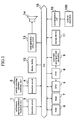
- FIG. 1 is a block diagram indicative of a schematic configuration of a chord detection apparatus according to an embodiment of the present invention.
- the chord detection apparatus of the embodiment has performance operating elements 1, setting operating elements 2, a detection circuit 3, a detection circuit 4, a CPU 5, a ROM 6, a RAM 7, a timer 8, an automatic accompaniment apparatus 9, a display device 10, a storage device 11, a communication interface (I/F) 12, a tone generator/effect circuit 13 and a sound system 14.
- the performance operating elements 1 include a keyboard for inputting musical performance data including tone pitch information in accordance with user's musical performance operation.
- the setting operating elements 2 include switches for inputting various kinds of information.
- the detection circuit 3 detects manipulation of the performance operating elements 1.
- the detection circuit 4 detects manipulation of the setting operating elements 2.
- the CPU 5 controls the entire apparatus.
- the ROM 6 stores control programs which the CPU 5 will execute and various kinds of table data.
- the RAM 7 temporarily stores musical performance data, various kinds of input information, calculated results, and the like.
- the timer 8 measures interrupt time for timer interrupts and various kinds of time.
- the automatic accompaniment apparatus 9 generates musical performance data for generating accompaniment sounds on the basis of chord information supplied from the CPU 5 as described later.
- the display device 10 has an LCD (liquid crystal display), LEDs (light emitting diodes), and the like for displaying various kinds of information.
- the communication I/F 12 connects the chord detection apparatus with an external apparatus 100 such as an external MIDI (musical instrument digital interface) apparatus or the like to transmit/receive data to/from the external apparatus 100.
- the tone generator/effect circuit 13 converts musical performance data input through the performance operating elements 1 and musical performance data generated by the automatic accompaniment apparatus 9 to musical tone signals, and adds various kinds of effects to the musical tone signals.
- the sound system 14 has a DAC (digital-to-analog converter), for example, which converts musical tone signals supplied from the tone generator/effect circuit 13 to musical sounds.
- the sound system 14 also has an amplifier, a speaker and the like.
- the above-described components 3 to 13 are connected with each other via a bus 15.
- the timer 8 is connected.
- the external apparatus 100 is connected.
- the tone generator/effect circuit 13 the sound system 14 is connected.
- the automatic accompaniment apparatus 9 which is realized by making the CPU 5 execute sequencer software previously stored in the ROM 6, for example, generates accompaniment sounds by generating musical performance data on the basis of supplied chord information as described above and supplying the generated musical performance data to the tone generator/effect circuit 13. Furthermore, the automatic accompaniment apparatus 9 has a function of generating musical performance data by reproducing accompaniment style data selected by a user from among various kinds of accompaniment style data previously stored in the ROM 6, for example. When utilizing this function, the automatic accompaniment apparatus 9 reproduces the accompaniment style data on the basis of time information supplied from the timer 8. Since the present invention is not characterized by the configuration and action of the automatic accompaniment apparatus 9, the configuration and the action of the automatic accompaniment apparatus 9 will not be explained any further.
- the storage device 11 includes storage media such as flexible disk (FD), hard disk (HD), CD-ROM, DVD (digital versatile disc), magneto-optical disk (MO) and semiconductor memory, and their drives.
- the storage media may be detachable from the drives.
- the storage device 11 itself may be detachable from the chord detection apparatus of the embodiment. Alternatively, both the storage media and the storage device 11 may be undetachable.
- the control programs which will be executed by the CPU 5 can be stored as described above.
- the storage device 11 may store the control programs to allow the RAM 7 to read the control programs to allow the CPU 5 to operate similarly to the case where the control programs are stored in the ROM 6. In that case, resultantly, addition and upgrade of the control programs are facilitated.
- the external apparatus 100 is connected in the shown example.
- a server computer may be connected to the communication I/F 12 via a communication network such as LAN (local area network), Internet, or telephone line.
- LAN local area network
- Internet Internet
- telephone line a communication network
- the chord detection apparatus serving as a client transmits a command requesting for downloading of the programs and parameters to the server computer via the communication I/F 12 and the communication network.
- the server computer distributes the requested programs and parameters to the chord detection apparatus through the communication network so that the chord detection apparatus can receive the programs and parameters through the communication I/F 12 to store the received programs and parameters in the storage device 11 to complete the downloading.
- the chord detection apparatus of the embodiment is configured on an electronic keyboard musical instrument, as apparent from the above-described configuration.
- the chord detection apparatus may be configured on a general personal computer having an externally connected keyboard.
- the chord detection apparatus may employ a form of a string instrument type or a wind instrument type, for the present invention can be realized without a keyboard.
- the present invention can be applied not only to electronic musical instruments but also to electronic apparatuses such as karaoke apparatus, game apparatus and communication apparatus.
- chord detection apparatus configured as above will be briefly explained with reference to FIG. 2 to FIG. 4 , and will be explained in detail with reference to FIG. 5A , FIG. 5B , FIG. 6 , FIG. 7 , FIG. 8A , FIG. 8B , FIG. 9A and FIG. 9B .
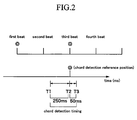
- FIG. 2 indicates an example setting of chord detection timing. More specifically, FIG. 2 indicates an example in which a musical piece of four-four time is selected as a musical piece to play, with the first beat and the third beat being defined as chord detection reference positions where a period starting 250 ms earlier and ending 50 ms later than each chord detection reference position is defined as chord detection timing.
- the chord detection timing is provided on the third beat, the chord detection timing is not provided on the first beat. This is because the chord detection timing of the first beat has the same time period as the chord detection timing of the third beat. Therefore, as long as the chord detection timing is shown for one of the beats in the figure, it is apparent that the other beat also has the similar chord detection timing.
- the user is allowed to choose the positions of the chord detection timing, the duration of the timing, and the number of the timings (or the frequency of the timings).
- the chord detection apparatus of the embodiment directly supplies musical performance data input real-time to the tone generator/effect circuit 13 to generate sounds in accordance with the supplied musical performance data, also detecting chords which suit an image of a played musical piece in accordance with the musical performance data input real-time to supply the detected chords to the automatic accompaniment apparatus 9 to generate accompaniment sounds as well.
- the period of the chord detection timing (duration) is a period during which musical performance data which is to be referred to for chord detection is supplied to the chord detection apparatus. In other words, only musical performance data supplied during the chord detection timing is referred to for chord detection for generation of accompaniment sounds.
- the chord detection is done by modifying the chord detection processing performed by the conventional chord detection apparatus described in Japanese Unexamined Patent Publication No. 2012-98480 described in Description of the Related Art. More specifically, although the processes A to F described in Description of the Related Art are to be done without any change, a process G which will be described later is to be inserted between the process E and the process F.
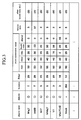
- FIG. 3 indicates an example of the degree name point table referred to at the process D
- FIG. 4 indicates respective examples of musical performance setting data ((a)), music content data ((b)) and chord tendency information ((c)) used for chord detection.
- FIG. 3 is identical with FIG. 3 of Japanese Unexamined Patent Publication No. 2012-98480 which is the above-described prior art document, the degree name point table of FIG. 3 will now be explained. What is written in the above-described Japanese Unexamined Patent Publication No. 2012-98480 is incorporated into this specification.
- the degree name point table includes a note point table (the fifth to eleventh columns) for gaining points of respective notes (root, third, fifth, etc.) of every possible candidate chord, and a priority point table (the fourth column) for gaining priority points (Prior) of each chord itself.
- the degree name point table is provided for major key and minor key, respectively, and further has pieces of information (the third and second columns) about chord function and about whether a corresponding chord is a diatonic chord or not.
- the degree name point table of FIG. 3 is a table which lists all the possible candidate chords of major keys, a similar table is provided for candidate chords of minor keys as well (not shown).
- the first column indicates degree name information (also referred to as chord information, and hereafter simply referred to as degree name).
- degree name indicates a chord by a combination of a scale degree relative to a key tonic (scale degree of a root such as I , II, III, N, V ⁇ ⁇ ) and a chord type (e.g., no symbol (major), m (minor), 7, 6, Maj7 (major7), m6 (minor 6), m7 (minor 7), add9 (major added 9th) ⁇ ⁇ ).
- “b” represents a flat, and this symbol is used similarly in the other examples which will be described later.
- the degree name point table is designed such that each degree name indicated in the first column (the first field) has various kinds of information indicated in the second and later columns (the second and later fields).
- the diatonic information of the second column indicates whether the chord represented by the corresponding degree name is a diatonic chord ( ⁇ ) or not ( ⁇ ).
- the function information of the third column indicates the function of the corresponding degree name, that is, that the function of the degree name is a tonic (T), a subdominant (S), a dominant (D) or a subdominant minor (SM).
- the priority point information (Prior) of the fourth column indicates the degree of priority assigned to the corresponding degree name by points. The points are also referred to as chord priority points or degree name priority points.
- the fifth to eleventh columns constitute a note point table portion which defines note point information indicative of the degree of musical importance of each note (a root, a third, a fifth, and so on) which characterizes the corresponding chord.
- the note point information indicated in each of the fifth to ninth columns represents the degree of musical importance of the corresponding note (role) of chord constituent notes of the corresponding chord by point value. More specifically, the root point information of the fifth column indicates points given to the root of the chord constituent notes of the corresponding chord.
- the third point information of the sixth column indicates points given to the third of the chord constituent notes of the corresponding chord.
- the fifth point information of the seventh column indicates points given to the fifth of the chord constituent notes of the corresponding chord.
- the fourth note point information of the eighth column indicates points given to the fourth note which is a major sixth (6th), a minor seventh (7th) or a major seventh (Maj 7th) from the root of the chord constituent notes of the corresponding chord.
- the altered point information of the ninth column indicates points given to an altered fifth (altered chord tone) of a diminished fifth (b 5th) or an augmented fifth (#5th) from the root of the chord constituent notes of the corresponding chord.
- the tension note point information of the tenth column indicates the degree of musical importance of a tension note by point value.
- a tension note is a non-harmonic tone located above basic chord constituent notes of the corresponding chord to add tension.
- the other point information of the eleventh column (rightmost field) indicates the degree of musical importance of the other notes which are neither the chord constituent notes nor the tension notes such as avoid notes which are excluded from chord sounds.
- the other point information is also represented by points.
- notes particularly having the role of a root among chord constituent notes are considered as having higher importance to be given higher points.
- notes of the third or the seventh (the fourth note) which are deeply responsible for chord type determination are also considered as important.
- notes of the other notes having a role which is dissonant in chords have lower importance to be given lower points.
- the chord detection apparatus figures out the total amount of points of each candidate chord (Chord List). More specifically, in accordance with a key (Key) of input musical performance data which is to be subjected to chord detection, candidate chords (Chord List) are extracted (process B). In other words, the candidate chords are registered in Chord List. In the chord detection apparatus, for instance, some combinations of chord types that can be used in a certain key are previously stored, so that the chord detection apparatus can choose a desired combination on chord detection to extract chords corresponding to the chosen combination as candidate chords (Chord List). Since the degree name point table shown in FIG.
- the chord detection apparatus can extract candidate chords (Chord List) by referring to the additional information by use of the degree name point table.
- the function (information of the third column) of a chord detected at the previous detection may be examined so that chords (Degree Name) which can be musically taken to suit the next progression from the previous chord (Chord) such as a tonic (T) being taken next for a dominant (D) will be extracted as candidate chords (Chord List).
- Chord a tonic
- D dominant
- the additional information may not be included in the degree name point table, but may be separately provided as a reference table.
- the CPU 5 After the point calculation for each of the extracted candidate chords by the process E, the CPU 5 carries out the following process G:
- the CPU 5 carries out the chord detection by performing the above-described process F on the point-adjusted candidate chords. More specifically, the CPU 5 chooses a candidate chord having the highest amount of points adjusted at the process G to define the chosen chord as the most suitable chord (Chord) for the target musical performance data.
- chord tendency information is identified on the basis of information (reference path) described in a "chord tendency information" field provided in musical performance setting data. Since musical performance setting data is provided for each musical piece, chord tendency information is associated with a musical piece. However, since some sets of musical performance setting data, that is, some musical pieces do not have any reference path in the "chord tendency information" field, chord tendency information is not necessarily stored to be associated with a musical piece. In this embodiment, however, chord tendency information corresponding to the target musical piece is always referred to before the process F which follows the process E to adjust the amount of points of each candidate chord.
- the CPU 5 is to generate chord tendency information corresponding to the target musical piece on the basis of music content data (see FIG. 4(b) ) of the target musical piece. The generation of chord tendency information will be described in detail later.
- the chord detection apparatus of this embodiment retrieves chord tendency information corresponding to the selected musical piece and detects chords which suit the image of the musical piece in accordance with the chord tendency information. Therefore, the chord detection apparatus eliminates user's effort to enable user's intended chord detection such as an effort to include a root of a chord in notes that the user plays without fail. As a result, the chord detection apparatus allows the user to focus on playing the musical piece.
- chord detection apparatus will not rigidly fix chord progression by, for example, sequentially reading out chords in accordance with chord progression previously stored for a user's selected musical piece, but only facilitates detection of chords which suit the image and notes (musical performance data) of the selected musical piece. Therefore, even if the user arranges the musical piece as the user desires during the user's musical performance, or adds or omits a repeat as the user desires, the chord detection apparatus can always achieve the chord detection which suits the image and the notes of the musical piece. Resultantly, the chord detection apparatus enables a wide variety of musical performances with various arranges, also keeping the image of the musical piece.
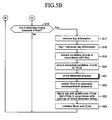
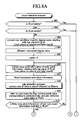
- FIG. 5A and FIG. 5B indicate a flowchart of a musical performance process with automatic accompaniment, the process being carried out by the chord detection apparatus particularly, by the CPU 5 of the embodiment.
- the chord detection apparatus of the embodiment has first and second musical performance modes as musical performance mode for user's real-time musical performance by use of the performance operating elements 1.
- musical tones corresponding to musical performance data input by use of the performance operating elements 1 are generated without operating the automatic accompaniment apparatus 9.
- the automatic accompaniment apparatus 9 is operated so that not only musical tones corresponding to musical performance data input by use of the performance operating elements 1 but also musical tones (accompaniment tones) corresponding to musical performance data generated by the automatic accompaniment apparatus 9 can be generated.
- a normal musical performance mode that is, the musical performance mode first selected at turn-on of the chord detection apparatus of the embodiment is the first musical performance mode.
- the above-described “musical performance process with automatic accompaniment” is a process started in response to the directions for entering the second musical performance mode.
- all the features of the present invention are incorporated in the "musical performance process with automatic accompaniment” so that the features of the present invention will be explained through the “musical performance process with automatic accompaniment”. Therefore, a “musical performance process without automatic accompaniment” will not be explained.
- the "musical performance process with automatic accompaniment” will be simply referred to as a "musical performance process”.
- the musical performance process is mainly formed of processes (1) to (5):
- step S1 to S7 When the musical performance process is started, the above-described start-up process (1) (steps S1 to S7) is carried out once. After the start-up process, the chord detection apparatus stays on a standby state until instruction for starting automatic accompaniment is given (step S8 ⁇ S9 ⁇ S8). If the instruction for starting automatic accompaniment is given, the above-described automatic accompaniment start process (2) (step S10) is carried out. After the automatic accompaniment start process, the above-described note event process (4) and chord detection timing process (5) (step S15 and steps S17 to S24) are carried out. The processes (4) and (5) are repeated until instruction for stopping automatic accompaniment is given (step S11) or instruction for returning to the first musical performance mode is given (step S8).
- step S12 If the instruction for stopping automatic accompaniment is given, the above-described automatic accompaniment stop process (3) (step S12) is carried out.
- step S13 After the automatic accompaniment stop process, it is determined whether a musical piece has been changed or not (step S13). If the musical piece has been changed, the musical performance process returns to the above-described start-up process (1) (steps S1 to S7) (step S13 ⁇ S1). If the musical piece has not been changed, the chord detection apparatus returns to the standby state (step S13 ⁇ S8). If the instruction for returning to the first musical performance mode has been given, the musical performance process terminates (step S8 ⁇ end).
- start-up process (1) is formed of the following processes (11) to (16):
- the CPU 5 carries out the musical piece selection and setting process (11) (steps S1 and S2).
- the CPU 5 displays a list of titles of selectable musical pieces, for example, on the display device 10. If the user selected any one of the musical pieces from the displayed title list, the CPU 5 reads out musical performance setting data corresponding to the selected musical piece (step S1), and writes various set values described in the musical performance setting data into corresponding registers or the like to set the values (step S2).
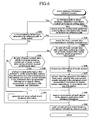
- FIG. 6 is a flowchart indicative of detailed procedures of the chord tendency information retrieval process (12).
- chord tendency information indicated as an example in FIG. 4(c) is retrieved.
- chord tendency information is stored in a location which is different from a location where musical performance setting data is stored, while information indicating the storage location of the chord tendency information (as the information, this embodiment employs "reference path") is recorded in a "chord tendency information" field of the musical performance setting data (see FIG. 4(a) ).
- reference path information indicating the storage location of the chord tendency information
- chord tendency information is recorded in a "chord tendency information" field of the musical performance setting data.
- chord tendency information can be retrieved by respective manners in the following cases (C1) to (C3): (C1) a case where it is necessary to newly generate chord tendency information to retrieve, for musical performance setting data does not have any reference path for chord tendency information, which means that there is no chord tendency information to retrieve; (C2) a case where it is necessary to newly generate chord tendency information to retrieve, for musical performance setting data has reference path for chord tendency information, but the chord tendency information that can be referred to by the reference path is in an initial state (more specifically, although a storage area for chord tendency information is secured, no effective chord tendency information is stored in that area); and (C3) a case where a reference path for chord tendency information is recorded on musical performance setting data, while the chord tendency information referred to by the reference path is not in the initial state unlike the above-described case (C2) but is effective, so that the chord tendency information can be retrieved.
- C1 a case where it is necessary to newly generate chord tendency information to retrieve, for musical performance setting data does not have any reference path for chord tendency information, which means
- chord tendency information retrieval process is started in the above-described case (C1). Since any reference path for chord tendency information is not recorded on the musical performance setting data, that is, since there is no chord tendency information that the CPU 5 can retrieve, the CPU 5 secures an area where chord tendency information will be newly generated to be stored in the storage device 11, for example, generates information indicative of the location of the area as a form of a reference path, and records the generated information in a certain position (in the "chord tendency information" field, in FIG. 4 (a) ) of the musical performance setting data (step S31 ⁇ S32).
- the CPU 5 searches for music content data corresponding to the selected musical piece (step S34).
- the location which the CPU 5 is to search may be anywhere as long as the CPU 5 can search.
- the location can be inside the chord detection apparatus of this embodiment such as the ROM 6, the RAM 7 and the storage device 11. Furthermore, the location can be outside the chord detection apparatus of this embodiment such as a storage medium of the external apparatus 100.
- the chord detection apparatus is connected to the Internet through the communication I/F 12
- the CPU 5 can search a server computer connected with the Internet. As described above, since there are many locations to search, there are cases where the CPU 5 can find sets of music content data for one musical piece.
- the above-described music content data shown in FIG. 4(b) is one of the sets of data.
- the shown music content data having the title " ⁇ " has chord progression information, musical performance data and additional information.
- music content data may be formed of musical performance data and additional data without chord progression information, or may be formed of chord progression information and additional information without musical performance data.
- musical performance data of the shown music content data is MIDI data
- musical performance data may be audio data.
- a part of a set of musical performance data may be MIDI data, while the other part of the set of musical performance data may be audio data.
- the CPU 5 carries out different processes for three different cases (C11) to (C13), respectively:
- the CPU 5 retrieves key information of the music content data (step S35 ⁇ S36).
- the CPU 5 reads out the key information to retrieve the key information.
- the CPU 5 may analyze the music content data (chord (progression) information or musical performance data) to extract and retrieve key information.
- the CPU 5 extracts chord (progression) information from the music content data, and converts chords included in the chord (progression) information to degree names, respectively, in accordance with the retrieved key information (step S37).
- the chords converted into degree names are temporarily stored in a working area of the RAM 7, for example.
- chord tendency information indicates elements classified as being “likely to appear” or “unlikely to appear” in one or more categories for the target musical piece, with priority order being given.
- chord tendency information shown in the figure has the categories "degree name”, “scale degree of chord root (scale degree of chord root relative to key (tonic))", “chord type” and “function” (function represents tonic (T), dominant (D), subdominant (S) or subdominant minor (SM))
- the categories may include chord names themselves.
- the priority order is represented by "%" to indicate the rate of occurrence of each element included in the categories of "being likely to appear”.
- the priority order may be represented by a point value or probability.
- the CPU 5 analyzes musical performance data included in the music content data, extracts key information and chord progression information, and converts chords included in the extracted chord (progression) information to degree names in accordance with the extracted key information (step S35 ⁇ S38 ⁇ S39).
- the chords converted into degree names, respectively, are temporarily stored in the working area of the RAM 7, similarly to the above-described step S37.
- the CPU 5 then proceeds to step S40.
- the explanation of step S40 will not be repeated.
- the CPU 5 generates default chord tendency information, and stores the generated chord tendency information in a storage area indicated by a reference path recorded on the musical performance setting data (step S35 ⁇ S38 ⁇ S41).
- the CPU 5 reads out the chord tendency information from the storage area that can be referred to by the reference path recorded on the musical performance setting data, and stores the chord tendency information in a chord tendency information storage area (not shown) provided on the RAM 7 for storing chord tendency information (step S42).
- step S34 the initial chord tendency information is replaced with effective chord tendency information, so that the new chord tendency information is stored in the chord tendency information storage area.
- chord tendency information retrieval process is started in the above-described case (C3).
- the CPU 5 since the musical performance setting data has a reference path to effective chord tendency information, the CPU 5 reads out the chord tendency information from a storage area indicated by the reference path recorded on the musical performance setting data, and stores the chord tendency information in the chord tendency information storage area (step S31 ⁇ S33 ⁇ S42).
- step S4 the CPU 5 sets a rule for setting chord detection timing, the other rules and various kinds of information.
- the chord detection timing setting rule defines whether a period of time is provided as the chord detection timing, or the chord detection timing is prescribed by point in time without any period of time being provided. In a case where a period of time is provided as the chord detection timing, the chord detection timing setting rule also defines a reference position, and frontward and backward periods provided before and after the reference position. In a case where the chord detection timing is prescribed by point in time, the chord detection timing setting rule also defines points in time which serve as the chord detection timing.
- every second beat e.g., the first and third beats in a case of four-four time
- every chord detection reference position is defined as the chord detection reference position, with a period starting 250 ms earlier and ending 50 ms later than each chord detection reference position being provided as the period of time.
- "ms" is employed as unit for defining the time period.
- the unit is not limited to "ms”, but may be note length.
- the chord detection reference position is not limited to every second beat, but may be every beat. Alternatively, the chord detection reference position may be changed from every second beat to every beat, for example, in response to a tempo change.
- chord detection reference position may be prescribed not by beat but by a specific position of each bar (e.g., top of each bar). Furthermore, the chord detection reference position may be determined according to tempo value or accompaniment style.
- examples of the point in time include the various chord detection reference positions indicated in the cases of a period of time, that is, every certain beat and a specific position of each bar. The examples of the point in time also include a point in time when a user manipulates a certain operating element included in the setting operating elements 2 or a point in time when the user manipulates the certain operating element within a certain amount of beats.
- this embodiment employs the rule indicated in FIG. 2 as the chord detection timing setting rule.
- the other rules include a key information detection rule (R1) and a candidate chord extraction rule (R2).
- R1 As the key information detection rule (R1), for example, the following rules (R1a) and (R1b) can be employed:
- the various kinds of information include the degree name point table and the chord tendency information.
- the setting of the degree name point table means the selection of a table from among different kinds of tables and the edit of point values of the table in accordance with user's instructions.
- the setting of the chord tendency information means the edit of the chord tendency information stored in the chord tendency information storage area in accordance with user's instructions.
- step S5 the CPU 5 reads the above-selected degree name point table, and stores the table in a point table storage area (not shown) provided on the RAM 7.
- the degree name point table is integral with the chord priority point table (Prior), so that the CPU 5 can simply read the degree name point table.
- the chord priority point table is provided separately, however, it is necessary to read not only the degree name point table (without the chord priority point table) but also the separately provided chord priority point table.
- step S6 the CPU 5 initializes, that is, clears respective areas, a note event list NList, a chord detection timing start point sTime, a chord detection timing end point eTime of, a key information Key, a chord list CList, and a detected chord Chord which are provided on the RAM 7:
- the CPU 5 proceeds to the chord detection timing start point and end point calculation setting process (16) (step S7).
- this chord detection timing start point and end point calculation setting process (16) the CPU 5 figures out the start point and the end point of the first chord detection timing in accordance with the set chord detection timing setting rule. Furthermore, the CPU 5 stores (sets) the calculated start point in the start point sTime, and stores (sets) the calculated end point in the end point eTime.
- a beat position of the top beat of a musical piece is defined as a chord detection reference position of chord detection timing, with a point in time which is 250 ms earlier than the beat position being defined as a start point of the chord detection timing.
- the musical piece starts at the top beat, it is meaningless to figure out a position which is earlier than the start position of the musical piece at the time of the start of the musical piece to define the position as the start point sTime.
- the beat position of the top beat that is, the chord detection reference position as the start point sTime.
- the control processing is to only start at time which is later than the defined start point, and will not cause any problems on later processing.
- step S10 step S10 ⁇ S10
- step S9 step S10 ⁇ S10
- the CPU 5 starts the timer 8 to make the timer 8 start counting time.
- the time counted by the timer 8 is supplied to the automatic accompaniment apparatus 9 as well, as described above.
- the automatic accompaniment apparatus 9 which is in the operating state reproduces the accompaniment style data on the basis of the counted time (time information) supplied from the timer 8, independently of the musical performance process.
- the CPU 5 carries out the note event process (4) (step S15) in response to reception of a note-on event until user's instruction for stopping automatic accompaniment (step S11 ⁇ S14 ⁇ S15).
- the CPU 5 carries out the chord detection timing process (5) (steps S17 to S24) (step S16 ⁇ S17 of FIG. 5B ).
- step S12 the CPU 5 stops the timer 8. As a result, the reproduction of the accompaniment style data by the automatic accompaniment apparatus 9 is stopped.
- FIG. 7 is a flowchart indicative of detailed procedures of the note event process (4) (step S15). As indicated in FIG. 7 , the note event process has the following processes (41) and (42):
- the above-described process (41 a) (steps S53 and S54) is formed by adding a process of adding note event information (tone pitch + input timing) corresponding to the note-on event into the note event list NList to the above-described process (42a) (step S58), that is, a tone generation process by which the accepted note-on event is output to the tone generator/effect circuit 13.
- the above-described process (41 b) (steps S55 and S56) is formed by adding a process of deleting note event information corresponding to the note-off event from the note event list NList to the above-described process (42b) (step S59), that is, a tone deadening process by which the accepted note-off event is output to the tone generator/effect circuit 13.
- step S54 note event information indicative of acceptance of a note-on event after the start point sTime of the chord detection timing is added to the note event list NList.
- step S56 note event information indicative of acceptance of a note-off event before the end point eTime of the chord detection timing is deleted from the note event list NList.
- note event list NList only note event information indicative of keys which have been depressed during the period ranging from the start point sTime to the end point eTime, and are still kept depressed at the end point eTime is stored.
- note event information indicative of the key is not stored in the note event list NList. Furthermore, even if there is a key which had been depressed after the start point sTime but has been released before the end point eTime, note event information indicative of the key is not stored in the note event list NList. In this case, it is possible to exclude note event information indicative of erroneously depressed keys (keys released immediately after depression of the keys) from the note event list NList by shortening the period from the start point sTime to the end point eTime.
- step S56 it is possible to omit step S56.
- the note event list NList is to store note event information indicative of all the keys which have been depressed during the period ranging from the start point sTime to the end point eTime.
- the CPU 5 retrieves key information (step S17) in accordance with the key detection rule set by the chord detection timing, various rules and various kinds of information setting process (13) (step S4), and stores the retrieved key information in the key information Key (step S18).
- the CPU 5 extracts candidate chords in accordance with the key information Key (step S19).
- the extraction of candidate chords is also performed in accordance with the candidate chord extraction rule set by the key detection rule set by the chord detection timing, various rules and various kinds of information setting process (13) (step S4).
- the CPU 5 records the candidate chords extracted at step S19 on the chord list CList (step S20).
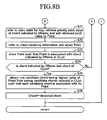
- FIG. 8A and FIG. 8B are a flowchart indicative of detailed procedures of the chord detection process.
- the chord detection process is mainly formed of processes (21) to (24):
- the CPU 5 judges whether at least either the note event list NList or the chord list CList is empty or not, that is, whether at least either the note event list NList or the chord list CList does not have any recorded information. If it is determined that at least either of them does not have any information, the CPU 5 immediately terminates the chord detection process (step S61 ⁇ return, or step S61 ⁇ S62 ⁇ return). If it is determined that both of them have information, the CPU 5 proceeds to the point calculation process (21) (step S62 ⁇ S63).
- step S63 the CPU 5 converts a candidate chord listed on the top of the chord list CList to a degree name (step S63).
- the CPU 5 then stores the converted degree name in a degree name storage area DName (not shown) provided on the RAM 7 in order to store degree names (step S64).
- degree name DName the degree name stored in the degree name storage area DName is referred to as a "degree name DName”.
- the CPU 5 initializes a point amount addition area Point (not shown) provided on the RAM 7 in order to add points to "0" (step S65).
- a point amount Point (not shown) provided on the RAM 7 in order to add points to "0" (step S65).
- the point amount stored in the point amount addition area Point is referred to as a "point amount Point”.
- tone pitch information Note the tone pitch information stored in the tone pitch information storage area Note.
- the CPU 5 extracts a role of the tone pitch information Note in a chord represented by the degree name DName (step S68).
- the "role” extracted in this step is "root", “third", “fifth”, “fourth note”, “altered”, "tension note” or “other (avoid note or the like)” indicated in the degree name point table shown in FIG. 3 .
- the extraction method is described in the above-described Japanese Unexamined Patent Publication No. 2012-98480 described in Description of the Related Art, the extraction method will be explained as a role extraction process with reference to FIG. 9A and FIG. 9B .
- FIG. 9A and FIG. 9B indicate detailed procedures of the role extraction process of step S68.
- the CPU 5 retrieves note names corresponding to the root, third and fifth (except minor seventh flat fifth (m7(b 5)), and augmented) of the chord in accordance with the tonic of the key information Key and the degree name DName, and stores the retrieved note names in a "root" register, a "third” register and a "fifth” register provided in the RAM 7.
- Respective semitone distances of a root, a third and a fifth from a tonic are determined according to chord type. In a case where Key is CMajor, with Degree Name being IVMaj7, for example, the "root” is F, the "third” is A, and the "fifth” is C.
- Maj7 major 7
- Respective semitone distances of tension notes from a root are determined according to chord type (one to three of b 9th, 9th, # 9th, 11th, # 11th, b 13th, and 13th).
- chord type one to three of b 9th, 9th, # 9th, 11th, # 11th, b 13th, and 13th.
- tension notes are G, B and D.
- step F21 the role of the tone pitch information Note as "tension note”.
- the CPU 5 proceeds to step F22 to define the role of the tone pitch information Note as "other”.
- the CPU 5 terminates the role extraction process to return to step S69 of the chord detection process of FIG. 8 .
- the CPU 5 After the role extraction process of step S68 of FIG. 8 , the CPU 5 refers to the degree name point table (point table for the key information Key) of the key indicated by the key information Key, retrieves a point value corresponding to the extracted role, and adds the retrieved point value to the point amount Point (step S69). Since the amount of point Point is "0" at this time, the point value retrieved at step S69 is directly assumed to be the point amount Point.
- the degree name point table point table for the key information Key
- the CPU 5 repeats the above-described steps S66 to S69 with a target piece of note event information being changed until the tone pitch information of the last piece of note event information included in the note event list NList (step S70 ⁇ S66).
- the CPU 5 proceeds to the next step S71.
- the CPU 5 refers to the degree name point table (point table for the key information Key) of the key indicated by the key information Key, retrieves priority points of the chord indicated by the degree name DName, and adds the retrieved points to the point amount Point.
- the chord priority point table Prior
- the chord priority point table Prior to be retrieved from the degree name point table, that is, from the point table for the key information Key.
- the CPU 5 proceeds to the point adjustment process (22) (step S72).
- this point adjustment process (22) the CPU 5 adjusts the amount of points Point on the basis of chord tendency information as follows. (22a) In a case where the chord indicated by the degree name DName is included in the "degree names likely to appear" in the chord tendency information, a certain value corresponding to the likelihood is reflected in the amount of points Point. In a case where the chord indicated by the degree name DName is included in the "degree names unlikely to appear" in the chord tendency information, a certain value corresponding to the unlikelihood is reflected in the amount of points Point.
- chord type indicated by the degree name DName is included in the "chord types unlikely to appear” in the chord tendency information
- a certain value corresponding to the unlikelihood is reflected in the amount of points Point.
- chord function indicated by the degree name DName is included in the "function likely to appear” in the chord tendency information
- a certain value corresponding to the likelihood is reflected in the amount of points Point.
- chord function indicated by the degree name DName is included in the "chord function unlikely to appear” in the chord tendency information
- a certain value corresponding to the unlikelihood is reflected in the amount of points Point.
- the term “reflect” means adjusting to increase the amount of points Point for those "likely to appear”, while the term “reflect” means adjusting to decrease the amount of points Point for those "unlikely to appear”.
- the rate of appearance of those "likely to appear” is expressed in percentage (%) (however, since there is only one for "function", any rate of appearance is not indicated. However, the rate of the chord can be assumed to be 100%), while the rate of appearance is not indicated for those "unlikely to appear”.
- the amount of point Point is to be adjusted as follows, for example:
- the scale degree and the chord type indicated by the degree name DName are included in the items "scale degree of chord root” and "chord type", respectively.
- the amount of points Point may be adjusted in every item. Alternatively, the amount of points Point may be adjusted only in one of the items to omit adjustment (not to adjust) in the other items.
- the item "function" indicates a single function in the example of FIG. 4(c) , the item may indicate a progression of plural functions. In this case, however, a history of changes in detected chord Chord and key information Key has to be recorded.
- the "certain value” may not necessarily be figured out on the basis of the appearance rate, but may be figured out by associating an amount of points to be added with each element included in each item so that an amount of points corresponding to an element can be simply added.
- an element ranked in first place as "being likely to appear” is associated with +20 points with an element ranked in second place being associated with +10 points, and so on, while those elements defined as “being unlikely to appear” are associated with -10 points across the board.
- elements defined as “being unlikely to appear” may also be ranked so that the elements can have different points according to the ranking.
- the "certain value” may be reflected not by addition/subtraction but by multiplication/division.
- step S73 the CPU 5 proceeds to the storage process (23) (step S73) to store the amount of points Point adjusted as explained above so that the amount of points can be associated with the chord indicated by the degree name DName of the chord list CList.
- the CPU 5 repeats the above-described processes (21) to (23) (steps S63 to S73) with a target chord being changed until the last chord indicated by the degree name DName of the chord list CList (step S74 ⁇ S63).
- the CPU 5 proceeds to the detection process (24) (steps S75 and S76).
- the CPU 5 detects one candidate chord having the highest amount of points Point (step S75), defines the detected chord as the detected chord Chord (step S76), and terminates the chord detection process.
- the CPU 5 is to detect one candidate chord at step S75. In this case, however, an additional condition such as the highest frequency of detection or the highest chord priority points is to be added to determine one candidate chord.
- the CPU 5 returns to FIG. 5B to output the detected chord Chord to the automatic accompaniment apparatus 9 (step S22).
- the CPU 5 then figures out the start point and the end point of the next chord detection period, updates the start point sTime and the end point eTime (step S23), and initializes (clears) the note event list NList and the chord list CList (step S24).
- the selection of a musical piece is made by selecting a title of a desired musical piece listed on the title list displayed on the display device 10 included in the chord detection apparatus of this embodiment by manipulation of the operating elements (the setting operating elements 2 or the performance operating elements 1) or touch manipulation.
- a display device provided separately from the chord detection apparatus may be connected with the chord detection apparatus by wired or wireless connections so that the user can select a musical piece on the display device.
- the selection of a musical piece is made possible without a display screen by employing a scheme in which an operating element such as a button for directly selecting a musical piece and a booklet of a title list are provided for a user to allow the user to select a desired musical piece by manipulating the operating element for the number of times equal to the title number of the musical piece, for example.
- the display device 10 or the equivalent is not indispensable to the present invention as long as the user can select a musical piece by some scheme.
- candidate chords are extracted on the basis of musical performance data input by user's musical performance to detect a chord from the extracted candidate chords.
- the embodiment may be modified to directly detect a chord without extracting candidate chords.
- a method for detecting a chord in this modification, a method of detecting a chord having the highest ratio of chord constituent notes to notes input by a musical performance, or a method of detecting a chord by giving a high priority to diatonic chords of a current key can be employed.
- the chord detection based on chord tendency information according to the present invention may be applied. For instance, it is judged whether a detected chord matches chord tendency information.
- chord detection may be modified to consider smooth links to previous chords which have been detected before.
- musical performance data input by user's musical performance within a predetermined period is used for chord detection.
- the chord detection may be done by use only of musical performance data of predetermined timing.
- musical performance data on user's depressed keys in the predetermined timing are input to use the input musical performance data for chord detection.
- chord tendency information has the four types "degree name”, “scale degree of chord root”, “chord type” and “function” so that all the types of the chord tendency information can be used.
- the embodiment may be modified such that chord tendency information has at least one of the four types to use the at least one type of the chord tendency information.
- chord tendency information is provided for each musical piece.
- the embodiment may be modified such that a user can define chord tendency information as necessary.
- a location where the chord tendency information is stored is described in musical performance setting data.
- the embodiment may be modified such that the chord tendency information itself is described (stored) in musical performance setting data.
- the chord tendency information is applied to the entire musical piece from the beginning to the end in this embodiment, the embodiment may be modified such that each section of a musical piece has a different kind of chord tendency information.
- accompaniment style data a melody tone color, a tempo and the like are described.
- chord progression information for a whole musical piece and chord detection results involved in user's musical performance may be also recorded.
- it is preferable to control the chord detection such that suitable chords can be detected to fit a user's musical performance by using the recorded chord progression information as strongly recommended chords.
- sets of the musical performance setting data such as accompaniment style data and melody tone color may be provided for each musical piece. In this case, a user may be allowed to select a set of musical performance setting data to use.
- a set of musical performance setting data may be automatically selected in accordance with previously set user's level of musical performance or in accordance with judgment based on user's previous musical performance.
- the musical performance setting data may be stored either in the chord detection apparatus itself or in a storage medium provided separately from the chord detection apparatus or an apparatus on which a chord detection program operates. Alternatively, the musical performance setting data may be referred to via a network.
- chord progression information which suits the musical piece is not stored as a part of musical performance setting data
- a storage portion (the storage device 11, and the ROM 6 and RAM 7) of the apparatus or a server via a network may be searched to find content data that can be used for the musical piece to refer to chord progression information recorded on the found content data.
- a chord part and a base part of the content data that can be used for the musical piece may be analyzed to obtain chord progression information.
- the object of the present invention can be achieved by supplying a storage medium which stores program codes of software that realizes the functions of the above-described embodiment to a system or an apparatus to allow a computer (or CPU and MPU) of the system or the apparatus to read and execute the program codes stored in the storage medium.
- the program codes themselves read out from the storage medium are to realize novel functions of the present invention, while the program codes and the storage medium that stores the program codes are to constitute the present invention.
- the storage medium for supplying the program codes can be a flexible disk, hard disk, magneto-optical disk, CD-ROM, CD-R, CD-RW, DVD-ROM, DVD-RAM, DVD-RW, DVD+RW, magnetic tape, nonvolatile memory card, ROM or the like.
- the program codes may be supplied from a server computer via a communication network.
- a CPU provided on the function expansion board or the function expansion unit can carry out a part of actual processing or the entire actual processing in accordance with instructions of the program codes to realize the functions of the above-described embodiment by the processing.
Landscapes
- Physics & Mathematics (AREA)
- Engineering & Computer Science (AREA)
- Acoustics & Sound (AREA)
- Multimedia (AREA)
- Electrophonic Musical Instruments (AREA)
Applications Claiming Priority (1)
| Application Number | Priority Date | Filing Date | Title |
|---|---|---|---|
| JP2013036869 | 2013-02-27 |
Publications (2)
| Publication Number | Publication Date |
|---|---|
| EP2772904A1 true EP2772904A1 (de) | 2014-09-03 |
| EP2772904B1 EP2772904B1 (de) | 2017-03-29 |
Family
ID=50115754
Family Applications (1)
| Application Number | Title | Priority Date | Filing Date |
|---|---|---|---|
| EP14155881.7A Not-in-force EP2772904B1 (de) | 2013-02-27 | 2014-02-20 | Vorrichtung und Verfahren zur Musik-Akkord-Erkennung und automatische Begleitung. |
Country Status (4)
| Country | Link |
|---|---|
| US (1) | US9117432B2 (de) |
| EP (1) | EP2772904B1 (de) |
| JP (1) | JP2014194536A (de) |
| CN (1) | CN104008747A (de) |
Cited By (1)
| Publication number | Priority date | Publication date | Assignee | Title |
|---|---|---|---|---|
| EP4198965A1 (de) * | 2021-12-15 | 2023-06-21 | Casio Computer Co., Ltd. | Automatische musikabspielsteuerungsvorrichtung, elektronisches musikinstrument, verfahren zum abspielen einer automatischen musikabspielvorrichtung und programm |
Families Citing this family (19)
| Publication number | Priority date | Publication date | Assignee | Title |
|---|---|---|---|---|
| EP2772904B1 (de) * | 2013-02-27 | 2017-03-29 | Yamaha Corporation | Vorrichtung und Verfahren zur Musik-Akkord-Erkennung und automatische Begleitung. |
| JP6123995B2 (ja) * | 2013-03-14 | 2017-05-10 | ヤマハ株式会社 | 音響信号分析装置及び音響信号分析プログラム |
| JP6040809B2 (ja) * | 2013-03-14 | 2016-12-07 | カシオ計算機株式会社 | コード選択装置、自動伴奏装置、自動伴奏方法および自動伴奏プログラム |
| JP6179140B2 (ja) | 2013-03-14 | 2017-08-16 | ヤマハ株式会社 | 音響信号分析装置及び音響信号分析プログラム |
| US9852721B2 (en) * | 2015-09-30 | 2017-12-26 | Apple Inc. | Musical analysis platform |
| US9824719B2 (en) | 2015-09-30 | 2017-11-21 | Apple Inc. | Automatic music recording and authoring tool |
| US9804818B2 (en) | 2015-09-30 | 2017-10-31 | Apple Inc. | Musical analysis platform |
| US9672800B2 (en) | 2015-09-30 | 2017-06-06 | Apple Inc. | Automatic composer |
| CN105761713B (zh) * | 2016-01-29 | 2020-02-14 | 北京精奇互动科技有限公司 | 和弦变换处理方法和装置 |
| CN105845115B (zh) * | 2016-03-16 | 2021-05-07 | 腾讯科技(深圳)有限公司 | 歌曲调式确定方法及歌曲调式确定装置 |
| CN107301857A (zh) * | 2016-04-15 | 2017-10-27 | 青岛海青科创科技发展有限公司 | 一种给旋律自动配伴奏的方法及系统 |
| JP6500869B2 (ja) * | 2016-09-28 | 2019-04-17 | カシオ計算機株式会社 | コード解析装置、方法、及びプログラム |
| JP6708180B2 (ja) * | 2017-07-25 | 2020-06-10 | ヤマハ株式会社 | 演奏解析方法、演奏解析装置およびプログラム |
| CN107436953B (zh) * | 2017-08-15 | 2020-07-10 | 中国联合网络通信集团有限公司 | 一种音乐搜索方法及系统 |
| WO2019049293A1 (ja) * | 2017-09-07 | 2019-03-14 | ヤマハ株式会社 | コード情報抽出装置、コード情報抽出方法およびコード情報抽出プログラム |
| JP7230464B2 (ja) * | 2018-11-29 | 2023-03-01 | ヤマハ株式会社 | 音響解析方法、音響解析装置、プログラムおよび機械学習方法 |
| JP7259987B2 (ja) * | 2019-11-20 | 2023-04-18 | ヤマハ株式会社 | 情報処理システム、鍵盤楽器、情報処理方法およびプログラム |
| CN110930970B (zh) * | 2019-12-03 | 2023-12-05 | 上海观池文化传播有限公司 | 一种基于信号触发的音乐和弦发生装置及方法 |
| CN115132155B (zh) * | 2022-05-12 | 2024-08-09 | 天津大学 | 一种基于声调音高空间的预测和弦解释音符的方法 |
Citations (1)
| Publication number | Priority date | Publication date | Assignee | Title |
|---|---|---|---|---|
| JP2012098480A (ja) * | 2010-11-01 | 2012-05-24 | Yamaha Corp | コード検出装置及びプログラム |
Family Cites Families (35)
| Publication number | Priority date | Publication date | Assignee | Title |
|---|---|---|---|---|
| US5852252A (en) * | 1996-06-20 | 1998-12-22 | Kawai Musical Instruments Manufacturing Co., Ltd. | Chord progression input/modification device |
| US5850051A (en) * | 1996-08-15 | 1998-12-15 | Yamaha Corporation | Method and apparatus for creating an automatic accompaniment pattern on the basis of analytic parameters |
| US5918303A (en) | 1996-11-25 | 1999-06-29 | Yamaha Corporation | Performance setting data selecting apparatus |
| JP3821094B2 (ja) * | 1996-11-25 | 2006-09-13 | ヤマハ株式会社 | 演奏設定データ選択装置、演奏設定データ選択方法及び記録媒体 |
| WO2006062064A1 (ja) * | 2004-12-10 | 2006-06-15 | Matsushita Electric Industrial Co., Ltd. | 楽曲処理装置 |
| US8013229B2 (en) * | 2005-07-22 | 2011-09-06 | Agency For Science, Technology And Research | Automatic creation of thumbnails for music videos |
| JP4650182B2 (ja) * | 2005-09-26 | 2011-03-16 | ヤマハ株式会社 | 自動伴奏装置及びプログラム |
| JP4465626B2 (ja) * | 2005-11-08 | 2010-05-19 | ソニー株式会社 | 情報処理装置および方法、並びにプログラム |
| JP4650270B2 (ja) * | 2006-01-06 | 2011-03-16 | ソニー株式会社 | 情報処理装置および方法、並びにプログラム |
| TW200727170A (en) * | 2006-01-09 | 2007-07-16 | Ulead Systems Inc | Method for generating a visualizing map of music |
| US7705231B2 (en) * | 2007-09-07 | 2010-04-27 | Microsoft Corporation | Automatic accompaniment for vocal melodies |
| JP4333700B2 (ja) * | 2006-06-13 | 2009-09-16 | ソニー株式会社 | 和音推定装置及び方法 |
| JP4108719B2 (ja) * | 2006-08-30 | 2008-06-25 | 株式会社バンダイナムコゲームス | プログラム、情報記憶媒体及びゲーム装置 |
| US20100198760A1 (en) * | 2006-09-07 | 2010-08-05 | Agency For Science, Technology And Research | Apparatus and methods for music signal analysis |
| US8168877B1 (en) * | 2006-10-02 | 2012-05-01 | Harman International Industries Canada Limited | Musical harmony generation from polyphonic audio signals |
| JP4315180B2 (ja) * | 2006-10-20 | 2009-08-19 | ソニー株式会社 | 信号処理装置および方法、プログラム、並びに記録媒体 |
| JP4214491B2 (ja) * | 2006-10-20 | 2009-01-28 | ソニー株式会社 | 信号処理装置および方法、プログラム、並びに記録媒体 |
| JP5463655B2 (ja) * | 2008-11-21 | 2014-04-09 | ソニー株式会社 | 情報処理装置、音声解析方法、及びプログラム |
| JP5625235B2 (ja) * | 2008-11-21 | 2014-11-19 | ソニー株式会社 | 情報処理装置、音声解析方法、及びプログラム |
| JP5282548B2 (ja) * | 2008-12-05 | 2013-09-04 | ソニー株式会社 | 情報処理装置、音素材の切り出し方法、及びプログラム |
| JP5206378B2 (ja) * | 2008-12-05 | 2013-06-12 | ソニー株式会社 | 情報処理装置、情報処理方法、及びプログラム |
| JP5593608B2 (ja) * | 2008-12-05 | 2014-09-24 | ソニー株式会社 | 情報処理装置、メロディーライン抽出方法、ベースライン抽出方法、及びプログラム |
| US8785760B2 (en) * | 2009-06-01 | 2014-07-22 | Music Mastermind, Inc. | System and method for applying a chain of effects to a musical composition |
| US9257053B2 (en) * | 2009-06-01 | 2016-02-09 | Zya, Inc. | System and method for providing audio for a requested note using a render cache |
| CA2996784A1 (en) * | 2009-06-01 | 2010-12-09 | Music Mastermind, Inc. | System and method of receiving, analyzing, and editing audio to create musical compositions |
| US9177540B2 (en) * | 2009-06-01 | 2015-11-03 | Music Mastermind, Inc. | System and method for conforming an audio input to a musical key |
| US9251776B2 (en) * | 2009-06-01 | 2016-02-02 | Zya, Inc. | System and method creating harmonizing tracks for an audio input |
| US8779268B2 (en) * | 2009-06-01 | 2014-07-15 | Music Mastermind, Inc. | System and method for producing a more harmonious musical accompaniment |
| US9310959B2 (en) * | 2009-06-01 | 2016-04-12 | Zya, Inc. | System and method for enhancing audio |
| CN101950377A (zh) * | 2009-07-10 | 2011-01-19 | 索尼公司 | 新型马尔可夫序列生成器和生成马尔可夫序列的新方法 |
| JP5168297B2 (ja) * | 2010-02-04 | 2013-03-21 | カシオ計算機株式会社 | 自動伴奏装置および自動伴奏プログラム |
| JP5293710B2 (ja) * | 2010-09-27 | 2013-09-18 | カシオ計算機株式会社 | 調判定装置および調判定プログラム |
| US20140330900A1 (en) * | 2011-11-23 | 2014-11-06 | Evernote Corporation | Encounter-driven personal contact space |
| US9459768B2 (en) * | 2012-12-12 | 2016-10-04 | Smule, Inc. | Audiovisual capture and sharing framework with coordinated user-selectable audio and video effects filters |
| EP2772904B1 (de) * | 2013-02-27 | 2017-03-29 | Yamaha Corporation | Vorrichtung und Verfahren zur Musik-Akkord-Erkennung und automatische Begleitung. |
-
2014
- 2014-02-20 EP EP14155881.7A patent/EP2772904B1/de not_active Not-in-force
- 2014-02-21 JP JP2014031883A patent/JP2014194536A/ja active Pending
- 2014-02-26 CN CN201410067031.9A patent/CN104008747A/zh active Pending
- 2014-02-27 US US14/191,803 patent/US9117432B2/en not_active Expired - Fee Related
Patent Citations (1)
| Publication number | Priority date | Publication date | Assignee | Title |
|---|---|---|---|---|
| JP2012098480A (ja) * | 2010-11-01 | 2012-05-24 | Yamaha Corp | コード検出装置及びプログラム |
Non-Patent Citations (2)
| Title |
|---|
| ANA M BARBANCHO ET AL: "Automatic Transcription of Guitar Chords and Fingering From Audio", IEEE TRANSACTIONS ON AUDIO, SPEECH AND LANGUAGE PROCESSING, IEEE SERVICE CENTER, NEW YORK, NY, USA, vol. 20, no. 3, 2 March 2012 (2012-03-02), pages 915 - 921, XP011398136, ISSN: 1558-7916, DOI: 10.1109/TASL.2011.2174227 * |
| SIMON DIXON ET AL: "Probabilistic and Logic-Based Modelling of Harmony", 21 June 2010, EXPLORING MUSIC CONTENTS, SPRINGER BERLIN HEIDELBERG, BERLIN, HEIDELBERG, PAGE(S) 1 - 19, ISBN: 978-3-642-23125-4, XP019165400 * |
Cited By (1)
| Publication number | Priority date | Publication date | Assignee | Title |
|---|---|---|---|---|
| EP4198965A1 (de) * | 2021-12-15 | 2023-06-21 | Casio Computer Co., Ltd. | Automatische musikabspielsteuerungsvorrichtung, elektronisches musikinstrument, verfahren zum abspielen einer automatischen musikabspielvorrichtung und programm |
Also Published As
| Publication number | Publication date |
|---|---|
| CN104008747A (zh) | 2014-08-27 |
| US20140238220A1 (en) | 2014-08-28 |
| US9117432B2 (en) | 2015-08-25 |
| EP2772904B1 (de) | 2017-03-29 |
| JP2014194536A (ja) | 2014-10-09 |
Similar Documents
| Publication | Publication Date | Title |
|---|---|---|
| EP2772904B1 (de) | Vorrichtung und Verfahren zur Musik-Akkord-Erkennung und automatische Begleitung. | |
| CN101796587B (zh) | 声音旋律的自动伴奏 | |
| EP1791111A1 (de) | Vorrichtung und verfahren zur inhaltserstellung | |
| JP3484986B2 (ja) | 自動作曲装置、自動作曲方法および記憶媒体 | |
| JP3407626B2 (ja) | 演奏練習装置、演奏練習方法及び記録媒体 | |
| US6175072B1 (en) | Automatic music composing apparatus and method | |
| CN102576524A (zh) | 接收、分析并编辑音频来创建音乐作品的系统和方法 | |
| JP6295583B2 (ja) | 音楽データ生成装置および音楽データ生成方法を実現するためのプログラム | |
| JP2009282464A (ja) | コード検出装置およびコード検出プログラム | |
| JP5696435B2 (ja) | コード検出装置及びプログラム | |
| US11955104B2 (en) | Accompaniment sound generating device, electronic musical instrument, accompaniment sound generating method and non-transitory computer readable medium storing accompaniment sound generating program | |
| KR102240872B1 (ko) | 주변 환경 기반의 자동 작곡 방법 및 그 장치 | |
| JPH10105173A (ja) | 演奏データ変換装置 | |
| JP2001128959A (ja) | 演奏カロリー消費量測定装置 | |
| JP3266007B2 (ja) | 演奏データ変換装置 | |
| JP3879524B2 (ja) | 波形生成方法、演奏データ処理方法および波形選択装置 | |
| JP6525034B2 (ja) | コード進行情報生成装置およびコード進行情報生成方法を実現するためのプログラム | |
| JP5104414B2 (ja) | 自動演奏装置及びプログラム | |
| JP3807333B2 (ja) | メロディ検索装置およびメロディ検索プログラム | |
| JP2026028593A (ja) | 伴奏生成方法、伴奏生成プログラム、伴奏生成装置および伴奏生成システム | |
| JP2007163710A (ja) | 演奏支援装置及びプログラム | |
| JP5703693B2 (ja) | コード検出装置及びプログラム | |
| JP5825449B2 (ja) | コード検出装置 | |
| JP5104415B2 (ja) | 自動演奏装置及びプログラム | |
| JP2003029749A (ja) | 自動作曲装置及び自動作曲プログラム |
Legal Events
| Date | Code | Title | Description |
|---|---|---|---|
| PUAI | Public reference made under article 153(3) epc to a published international application that has entered the european phase |
Free format text: ORIGINAL CODE: 0009012 |
|
| 17P | Request for examination filed |
Effective date: 20140220 |
|
| AK | Designated contracting states |
Kind code of ref document: A1 Designated state(s): AL AT BE BG CH CY CZ DE DK EE ES FI FR GB GR HR HU IE IS IT LI LT LU LV MC MK MT NL NO PL PT RO RS SE SI SK SM TR |
|
| AX | Request for extension of the european patent |
Extension state: BA ME |
|
| R17P | Request for examination filed (corrected) |
Effective date: 20140829 |
|
| RBV | Designated contracting states (corrected) |
Designated state(s): AL AT BE BG CH CY CZ DE DK EE ES FI FR GB GR HR HU IE IS IT LI LT LU LV MC MK MT NL NO PL PT RO RS SE SI SK SM TR |
|
| 17Q | First examination report despatched |
Effective date: 20141009 |
|
| RIC1 | Information provided on ipc code assigned before grant |
Ipc: G10H 1/38 20060101ALN20150312BHEP Ipc: G10H 1/36 20060101AFI20150312BHEP |
|
| RIC1 | Information provided on ipc code assigned before grant |
Ipc: G10H 1/36 20060101AFI20160721BHEP Ipc: G10H 1/38 20060101ALN20160721BHEP |
|
| GRAP | Despatch of communication of intention to grant a patent |
Free format text: ORIGINAL CODE: EPIDOSNIGR1 |
|
| RIC1 | Information provided on ipc code assigned before grant |
Ipc: G10H 1/38 20060101ALN20160809BHEP Ipc: G10H 1/36 20060101AFI20160809BHEP |
|
| RIC1 | Information provided on ipc code assigned before grant |
Ipc: G10H 1/38 20060101ALN20160818BHEP Ipc: G10H 1/36 20060101AFI20160818BHEP |
|
| RIC1 | Information provided on ipc code assigned before grant |
Ipc: G10H 1/38 20060101ALN20160824BHEP Ipc: G10H 1/36 20060101AFI20160824BHEP |
|
| RIC1 | Information provided on ipc code assigned before grant |
Ipc: G10H 1/36 20060101AFI20160830BHEP Ipc: G10H 1/38 20060101ALN20160830BHEP |
|
| INTG | Intention to grant announced |
Effective date: 20160914 |
|
| GRAS | Grant fee paid |
Free format text: ORIGINAL CODE: EPIDOSNIGR3 |
|
| GRAA | (expected) grant |
Free format text: ORIGINAL CODE: 0009210 |
|
| AK | Designated contracting states |
Kind code of ref document: B1 Designated state(s): AL AT BE BG CH CY CZ DE DK EE ES FI FR GB GR HR HU IE IS IT LI LT LU LV MC MK MT NL NO PL PT RO RS SE SI SK SM TR |
|
| REG | Reference to a national code |
Ref country code: GB Ref legal event code: FG4D |
|
| REG | Reference to a national code |
Ref country code: CH Ref legal event code: EP |
|
| REG | Reference to a national code |
Ref country code: AT Ref legal event code: REF Ref document number: 880417 Country of ref document: AT Kind code of ref document: T Effective date: 20170415 |
|
| REG | Reference to a national code |
Ref country code: IE Ref legal event code: FG4D |
|
| REG | Reference to a national code |
Ref country code: DE Ref legal event code: R096 Ref document number: 602014007986 Country of ref document: DE |
|
| PG25 | Lapsed in a contracting state [announced via postgrant information from national office to epo] |
Ref country code: GR Free format text: LAPSE BECAUSE OF FAILURE TO SUBMIT A TRANSLATION OF THE DESCRIPTION OR TO PAY THE FEE WITHIN THE PRESCRIBED TIME-LIMIT Effective date: 20170630 Ref country code: NO Free format text: LAPSE BECAUSE OF FAILURE TO SUBMIT A TRANSLATION OF THE DESCRIPTION OR TO PAY THE FEE WITHIN THE PRESCRIBED TIME-LIMIT Effective date: 20170629 Ref country code: LT Free format text: LAPSE BECAUSE OF FAILURE TO SUBMIT A TRANSLATION OF THE DESCRIPTION OR TO PAY THE FEE WITHIN THE PRESCRIBED TIME-LIMIT Effective date: 20170329 Ref country code: FI Free format text: LAPSE BECAUSE OF FAILURE TO SUBMIT A TRANSLATION OF THE DESCRIPTION OR TO PAY THE FEE WITHIN THE PRESCRIBED TIME-LIMIT Effective date: 20170329 Ref country code: HR Free format text: LAPSE BECAUSE OF FAILURE TO SUBMIT A TRANSLATION OF THE DESCRIPTION OR TO PAY THE FEE WITHIN THE PRESCRIBED TIME-LIMIT Effective date: 20170329 |
|
| REG | Reference to a national code |
Ref country code: NL Ref legal event code: MP Effective date: 20170329 |
|
| REG | Reference to a national code |
Ref country code: AT Ref legal event code: MK05 Ref document number: 880417 Country of ref document: AT Kind code of ref document: T Effective date: 20170329 |
|
| PG25 | Lapsed in a contracting state [announced via postgrant information from national office to epo] |
Ref country code: SE Free format text: LAPSE BECAUSE OF FAILURE TO SUBMIT A TRANSLATION OF THE DESCRIPTION OR TO PAY THE FEE WITHIN THE PRESCRIBED TIME-LIMIT Effective date: 20170329 Ref country code: BG Free format text: LAPSE BECAUSE OF FAILURE TO SUBMIT A TRANSLATION OF THE DESCRIPTION OR TO PAY THE FEE WITHIN THE PRESCRIBED TIME-LIMIT Effective date: 20170629 Ref country code: RS Free format text: LAPSE BECAUSE OF FAILURE TO SUBMIT A TRANSLATION OF THE DESCRIPTION OR TO PAY THE FEE WITHIN THE PRESCRIBED TIME-LIMIT Effective date: 20170329 Ref country code: LV Free format text: LAPSE BECAUSE OF FAILURE TO SUBMIT A TRANSLATION OF THE DESCRIPTION OR TO PAY THE FEE WITHIN THE PRESCRIBED TIME-LIMIT Effective date: 20170329 |
|
| PG25 | Lapsed in a contracting state [announced via postgrant information from national office to epo] |
Ref country code: NL Free format text: LAPSE BECAUSE OF FAILURE TO SUBMIT A TRANSLATION OF THE DESCRIPTION OR TO PAY THE FEE WITHIN THE PRESCRIBED TIME-LIMIT Effective date: 20170329 |
|
| PG25 | Lapsed in a contracting state [announced via postgrant information from national office to epo] |
Ref country code: AT Free format text: LAPSE BECAUSE OF FAILURE TO SUBMIT A TRANSLATION OF THE DESCRIPTION OR TO PAY THE FEE WITHIN THE PRESCRIBED TIME-LIMIT Effective date: 20170329 Ref country code: RO Free format text: LAPSE BECAUSE OF FAILURE TO SUBMIT A TRANSLATION OF THE DESCRIPTION OR TO PAY THE FEE WITHIN THE PRESCRIBED TIME-LIMIT Effective date: 20170329 Ref country code: CZ Free format text: LAPSE BECAUSE OF FAILURE TO SUBMIT A TRANSLATION OF THE DESCRIPTION OR TO PAY THE FEE WITHIN THE PRESCRIBED TIME-LIMIT Effective date: 20170329 Ref country code: EE Free format text: LAPSE BECAUSE OF FAILURE TO SUBMIT A TRANSLATION OF THE DESCRIPTION OR TO PAY THE FEE WITHIN THE PRESCRIBED TIME-LIMIT Effective date: 20170329 Ref country code: ES Free format text: LAPSE BECAUSE OF FAILURE TO SUBMIT A TRANSLATION OF THE DESCRIPTION OR TO PAY THE FEE WITHIN THE PRESCRIBED TIME-LIMIT Effective date: 20170329 Ref country code: SK Free format text: LAPSE BECAUSE OF FAILURE TO SUBMIT A TRANSLATION OF THE DESCRIPTION OR TO PAY THE FEE WITHIN THE PRESCRIBED TIME-LIMIT Effective date: 20170329 |
|
| PG25 | Lapsed in a contracting state [announced via postgrant information from national office to epo] |
Ref country code: PL Free format text: LAPSE BECAUSE OF FAILURE TO SUBMIT A TRANSLATION OF THE DESCRIPTION OR TO PAY THE FEE WITHIN THE PRESCRIBED TIME-LIMIT Effective date: 20170329 Ref country code: IS Free format text: LAPSE BECAUSE OF FAILURE TO SUBMIT A TRANSLATION OF THE DESCRIPTION OR TO PAY THE FEE WITHIN THE PRESCRIBED TIME-LIMIT Effective date: 20170729 Ref country code: SM Free format text: LAPSE BECAUSE OF FAILURE TO SUBMIT A TRANSLATION OF THE DESCRIPTION OR TO PAY THE FEE WITHIN THE PRESCRIBED TIME-LIMIT Effective date: 20170329 Ref country code: PT Free format text: LAPSE BECAUSE OF FAILURE TO SUBMIT A TRANSLATION OF THE DESCRIPTION OR TO PAY THE FEE WITHIN THE PRESCRIBED TIME-LIMIT Effective date: 20170731 |
|
| REG | Reference to a national code |
Ref country code: DE Ref legal event code: R097 Ref document number: 602014007986 Country of ref document: DE |
|
| PG25 | Lapsed in a contracting state [announced via postgrant information from national office to epo] |
Ref country code: DK Free format text: LAPSE BECAUSE OF FAILURE TO SUBMIT A TRANSLATION OF THE DESCRIPTION OR TO PAY THE FEE WITHIN THE PRESCRIBED TIME-LIMIT Effective date: 20170329 |
|
| PLBE | No opposition filed within time limit |
Free format text: ORIGINAL CODE: 0009261 |
|
| STAA | Information on the status of an ep patent application or granted ep patent |
Free format text: STATUS: NO OPPOSITION FILED WITHIN TIME LIMIT |
|
| PG25 | Lapsed in a contracting state [announced via postgrant information from national office to epo] |
Ref country code: IT Free format text: LAPSE BECAUSE OF FAILURE TO SUBMIT A TRANSLATION OF THE DESCRIPTION OR TO PAY THE FEE WITHIN THE PRESCRIBED TIME-LIMIT Effective date: 20170329 |
|
| 26N | No opposition filed |
Effective date: 20180103 |
|
| PGFP | Annual fee paid to national office [announced via postgrant information from national office to epo] |
Ref country code: GB Payment date: 20180214 Year of fee payment: 5 Ref country code: DE Payment date: 20180206 Year of fee payment: 5 |
|
| PG25 | Lapsed in a contracting state [announced via postgrant information from national office to epo] |
Ref country code: SI Free format text: LAPSE BECAUSE OF FAILURE TO SUBMIT A TRANSLATION OF THE DESCRIPTION OR TO PAY THE FEE WITHIN THE PRESCRIBED TIME-LIMIT Effective date: 20170329 |
|
| REG | Reference to a national code |
Ref country code: CH Ref legal event code: PL |
|
| PG25 | Lapsed in a contracting state [announced via postgrant information from national office to epo] |
Ref country code: MC Free format text: LAPSE BECAUSE OF FAILURE TO SUBMIT A TRANSLATION OF THE DESCRIPTION OR TO PAY THE FEE WITHIN THE PRESCRIBED TIME-LIMIT Effective date: 20170329 |
|
| REG | Reference to a national code |
Ref country code: IE Ref legal event code: MM4A |
|
| REG | Reference to a national code |
Ref country code: BE Ref legal event code: MM Effective date: 20180228 |
|
| PG25 | Lapsed in a contracting state [announced via postgrant information from national office to epo] |
Ref country code: CH Free format text: LAPSE BECAUSE OF NON-PAYMENT OF DUE FEES Effective date: 20180228 Ref country code: LU Free format text: LAPSE BECAUSE OF NON-PAYMENT OF DUE FEES Effective date: 20180220 Ref country code: LI Free format text: LAPSE BECAUSE OF NON-PAYMENT OF DUE FEES Effective date: 20180228 |
|
| REG | Reference to a national code |
Ref country code: FR Ref legal event code: ST Effective date: 20181031 |
|
| PG25 | Lapsed in a contracting state [announced via postgrant information from national office to epo] |
Ref country code: IE Free format text: LAPSE BECAUSE OF NON-PAYMENT OF DUE FEES Effective date: 20180220 |
|
| PG25 | Lapsed in a contracting state [announced via postgrant information from national office to epo] |
Ref country code: FR Free format text: LAPSE BECAUSE OF NON-PAYMENT OF DUE FEES Effective date: 20180228 Ref country code: BE Free format text: LAPSE BECAUSE OF NON-PAYMENT OF DUE FEES Effective date: 20180228 |
|
| REG | Reference to a national code |
Ref country code: DE Ref legal event code: R119 Ref document number: 602014007986 Country of ref document: DE |
|
| GBPC | Gb: european patent ceased through non-payment of renewal fee |
Effective date: 20190220 |
|
| PG25 | Lapsed in a contracting state [announced via postgrant information from national office to epo] |
Ref country code: GB Free format text: LAPSE BECAUSE OF NON-PAYMENT OF DUE FEES Effective date: 20190220 Ref country code: DE Free format text: LAPSE BECAUSE OF NON-PAYMENT OF DUE FEES Effective date: 20190903 Ref country code: MT Free format text: LAPSE BECAUSE OF NON-PAYMENT OF DUE FEES Effective date: 20180220 |
|
| PG25 | Lapsed in a contracting state [announced via postgrant information from national office to epo] |
Ref country code: TR Free format text: LAPSE BECAUSE OF FAILURE TO SUBMIT A TRANSLATION OF THE DESCRIPTION OR TO PAY THE FEE WITHIN THE PRESCRIBED TIME-LIMIT Effective date: 20170329 |
|
| PG25 | Lapsed in a contracting state [announced via postgrant information from national office to epo] |
Ref country code: HU Free format text: LAPSE BECAUSE OF FAILURE TO SUBMIT A TRANSLATION OF THE DESCRIPTION OR TO PAY THE FEE WITHIN THE PRESCRIBED TIME-LIMIT; INVALID AB INITIO Effective date: 20140220 |
|
| PG25 | Lapsed in a contracting state [announced via postgrant information from national office to epo] |
Ref country code: CY Free format text: LAPSE BECAUSE OF FAILURE TO SUBMIT A TRANSLATION OF THE DESCRIPTION OR TO PAY THE FEE WITHIN THE PRESCRIBED TIME-LIMIT Effective date: 20170329 Ref country code: MK Free format text: LAPSE BECAUSE OF NON-PAYMENT OF DUE FEES Effective date: 20170329 |
|
| PG25 | Lapsed in a contracting state [announced via postgrant information from national office to epo] |
Ref country code: AL Free format text: LAPSE BECAUSE OF FAILURE TO SUBMIT A TRANSLATION OF THE DESCRIPTION OR TO PAY THE FEE WITHIN THE PRESCRIBED TIME-LIMIT Effective date: 20170329 |