EP2773055A1 - Procédé, système et programme informatique pour annuler les interférences de liaison montante dans un réseau sans fil - Google Patents
Procédé, système et programme informatique pour annuler les interférences de liaison montante dans un réseau sans fil Download PDFInfo
- Publication number
- EP2773055A1 EP2773055A1 EP13382061.3A EP13382061A EP2773055A1 EP 2773055 A1 EP2773055 A1 EP 2773055A1 EP 13382061 A EP13382061 A EP 13382061A EP 2773055 A1 EP2773055 A1 EP 2773055A1
- Authority
- EP
- European Patent Office
- Prior art keywords
- base station
- interference
- user device
- fingerprints
- fingerprint
- Prior art date
- Legal status (The legal status is an assumption and is not a legal conclusion. Google has not performed a legal analysis and makes no representation as to the accuracy of the status listed.)
- Granted
Links
- 238000000034 method Methods 0.000 title claims abstract description 78
- 238000004590 computer program Methods 0.000 title claims description 4
- 230000002452 interceptive effect Effects 0.000 claims abstract description 37
- 230000008569 process Effects 0.000 claims abstract description 32
- 230000004044 response Effects 0.000 claims description 18
- 238000012545 processing Methods 0.000 claims description 11
- 241000700159 Rattus Species 0.000 claims description 3
- 230000007246 mechanism Effects 0.000 description 7
- 230000008901 benefit Effects 0.000 description 4
- 230000005540 biological transmission Effects 0.000 description 4
- 239000011159 matrix material Substances 0.000 description 3
- 238000005259 measurement Methods 0.000 description 3
- 230000001360 synchronised effect Effects 0.000 description 3
- 230000010485 coping Effects 0.000 description 2
- 230000006870 function Effects 0.000 description 2
- 230000007274 generation of a signal involved in cell-cell signaling Effects 0.000 description 2
- 230000000670 limiting effect Effects 0.000 description 2
- 238000012986 modification Methods 0.000 description 2
- 230000004048 modification Effects 0.000 description 2
- 230000036961 partial effect Effects 0.000 description 2
- 230000002829 reductive effect Effects 0.000 description 2
- 238000009825 accumulation Methods 0.000 description 1
- 230000001413 cellular effect Effects 0.000 description 1
- 230000008859 change Effects 0.000 description 1
- 238000004891 communication Methods 0.000 description 1
- 230000000295 complement effect Effects 0.000 description 1
- 125000004122 cyclic group Chemical group 0.000 description 1
- 230000000694 effects Effects 0.000 description 1
- 238000005516 engineering process Methods 0.000 description 1
- 230000008570 general process Effects 0.000 description 1
- 230000006872 improvement Effects 0.000 description 1
- 238000010348 incorporation Methods 0.000 description 1
- 230000007774 longterm Effects 0.000 description 1
- 238000007781 pre-processing Methods 0.000 description 1
- 230000011664 signaling Effects 0.000 description 1
- 230000003068 static effect Effects 0.000 description 1
Images


Classifications
-
- H—ELECTRICITY
- H04—ELECTRIC COMMUNICATION TECHNIQUE
- H04W—WIRELESS COMMUNICATION NETWORKS
- H04W24/00—Supervisory, monitoring or testing arrangements
- H04W24/02—Arrangements for optimising operational condition
-
- H—ELECTRICITY
- H04—ELECTRIC COMMUNICATION TECHNIQUE
- H04J—MULTIPLEX COMMUNICATION
- H04J11/00—Orthogonal multiplex systems, e.g. using WALSH codes
- H04J11/0023—Interference mitigation or co-ordination
- H04J11/005—Interference mitigation or co-ordination of intercell interference
- H04J11/0056—Inter-base station aspects
Definitions
- the present invention generally relates to wireless communication, and more particularly to a method and system for cancelling the uplink interference in a wireless network.
- the invention refers also to a computer program product configured to perform some of the steps of the proposed method for cancelling said uplink interference.
- interference cancellation e.g., when implementing Successive Interference Cancellation (SIC), based in the principle of detect, decode and cancel a strong interferer and continue in the same way until desired signal can be decoded
- SIC Successive Interference Cancellation
- the information required for IC implementation is naturally available at the receiver. This is the case, for example, of intra-cell multi user Multiple Input Multiple Output (MIMO) (MU-MIMO), where the spatial multiplexing of streams from different UEs is carried out.
- MIMO Multiple Input Multiple Output
- the receiving base station (BS) is aware of the modulation and coding scheme used by each UE and can apply the SIC principle. Also, the signals arrive to the receiver synchronized and the Reference Signals used for channel estimation (DM-RS) are guaranteed to use different cyclic shifts, so they remain orthogonal.
- DM-RS Reference Signals used for channel estimation
- Uplink MU-MIMO is supported by advanced wireless systems like Long Term Evolution (LTE) or IEEE 802.11ac.
- the proposed invention is expected to serve UEs located in areas where none of these two situations is relevant, i.e., when the level of the UE signal and of the interference are similar. In those cases, the estimation of the channel of the interfering signal cannot be properly carried out and the result is a limited effectiveness of the interference cancellation mechanisms.
- CoMP Cooperative Multipoint Transmission and Reception
- the proposed invention is intended to provide similar benefits to those that can be obtained with uplink CoMP techniques but with a reduced complexity, both in the terminal and in the network.
- it is proposed to use mechanism that has been extensively used for estimating the location of the mobile terminals, i.e., the reporting of radio frequency (RF) fingerprints.
- RF radio frequency
- the invention is compatible with both LTE and LTE Advanced radio interfaces without modifications. It may require, however, changes in the protocols.
- the invention proposes a solution for facilitating the support of interference cancellation techniques in the uplink of a wireless cellular system, such as LTE, LTE Advanced, etc. by means of RF fingerprints collection by the base stations and the exchange of RF fingerprints during active calls.
- This mechanism would allow to solve some of the problems indicated above and would be complementary to similar mechanisms proposed for the downlink.
- a method for cancelling uplink interference in a wireless network comprising as commonly in the art measuring by an interfered base station the uplink interference provoked over at least one interfered user device wirelessly connected thereto, and when said uplink interference exceeds a given threshold performing a cancellation process.
- the interfered base station to perform said cancellation process comprises the following steps:
- the requested RF fingerprints of the one or more interfering user devices are also stored in the register or database and then said register is also updated.
- these preferably are pre-processed, for instance by compressing their information data, in order to reduce storage requirements or coping with partial measurements. This processing would be required, for example, to select those frequency sections where no multiple-cell interference happens.
- the stored RF fingerprint includes a measure of the complex frequency response of the radio channel between the user device and the base station (e.g., the outcome of the channel estimator in the base station receiver), as well as other metrics of the radio interface such as a timing advance, a location information from a user device GPS data, reports containing data from other RATs provided by the user device or information reports containing WiFi signals received by the user device.
- a measure of the complex frequency response of the radio channel between the user device and the base station e.g., the outcome of the channel estimator in the base station receiver
- other metrics of the radio interface such as a timing advance, a location information from a user device GPS data, reports containing data from other RATs provided by the user device or information reports containing WiFi signals received by the user device.
- the measuring step is performed during idle periods of said interfered based station.
- the RF fingerprints are composed preferably by several layer 1 features of the uplink connection that can be reported by the base stations, like the channel estimation, the received signal power, the applied timing advance (TA) or the scheduled modulation and coding scheme.
- the RF fingerprint is reported per user device and the concept managed in the invention is different to the one used for location or access control purposes.
- an X2 interface can be reused.
- new messages including a frame and a subframe number of the information regarding the level of interference and the frequency resource blocks (RBs) used are incorporated to support the different procedures.
- a centralized architecture like Cloud RAN where the baseband processing elements of several base stations are concentrated in a single location, can also be used meeting the requirements of the invention, without requiring the support of the X2 interface.
- the discovering and the identifying of the at least one potentially interfering serving base station is performed periodically every certain period of time.
- an interfered base station comprises measuring and processing means for performing a measure of the uplink interference provoked over at least one interfered user device wirelessly connected thereto and for performing a cancellation process.
- the interfered base station is configured for implementing the method of the first aspect by means of said processing means and by means of a memory accessible thereby which stores said register.
- a computer program product comprising instructions that when executed in a computer are configured to perform steps a), b), d), e) and f) of the method of the first aspect.
- the proposed invention can be overcome the inter-cell interference, which is the main limitation for the uplink capacity in LTE systems.
- the invention does not depend on the user device capabilities, e.g., it can be applied for legacy terminals that do not support uplink MIMO and the base stations that support ABS elClC procedures will support it without significant changes.
- the basic principles of the invention could be applied to other similar technologies like HSUPA for instance.
- the RF fingerprints stored by the base station may be reused for other purposes, like optimizing the scheduling decisions (e.g., supporting coordinated frequency selective scheduling or improving the precoding in order to minimize inter-cell interference).
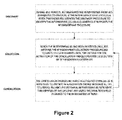
- Figure 2 shows the three phases in which the invention is structured: discovery, collection and cancellation.
- the discovery phase is intended to discover the base stations that can cooperate in the implementation of the proposed interference cancellation method.
- the collection phase is intended for the accumulation of RF fingerprints that may be used and the cancellation phase to eliminate inter-cell interference based on the RF fingerprints reported by the potentially interfering BSs. A detail explanation of each phase will now be described.
- a base station that is capable of supporting uplink interference cancellation identifies the base stations which it can cooperate with. In this sense, it can (but should not necessarily) be considered an extension of the Self Organizing Network feature called Automatic Neighbour Relation (ANR).
- ANR Automatic Neighbour Relation
- the discovery process should happen once the base station is aware with which other base stations it has an enhanced X2 interface implemented (enhanced means that is able to support the exchange of new messages indicated for the proposed invention).
- the base station is time and frequency synchronized with its neighbours, and knows the frame number that is being used by its neighbours.
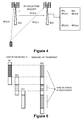
- the base station uses idle periods (subframes where it has not traffic scheduled to be received or idle RBs) to carry out measurements of the UEs connected to other base stations that are using the same frequency resources. It should be noticed that BS2 has no way to know which BS the transmitting UE is connected to.
- the BS2 sends a message to the base stations it has X2 interface available requesting information about the signal that produced the interference.
- the RF Request message includes the frame and subframe number of the interfering signals and the Resource Blocks (RBs) used.
- the base stations should, for the support of this phase, keep a record of the RF fingerprints of a relatively low number of received subframes (e.g., one frame).
- RF Response message which generally includes several information elements:
- the querying base station has to store and process their responses in order to estimate which one is the main source for the interference.
- the uncertainty can be easily solved if the number of potential interferers is low and the traffic activity factor is also low.
- the outcome of this phase is a list of base station that may be source of uplink interference when UEs are connected to them.
- These base stations constitute a RF IC Group (The procedures detailed in the next phases are limited to the members of the RF IC Group).
- the RF IC Group has an identifier, which should be chosen to avoid any potential uncertainty (the identifier of the cell that has initiated the discovery phase can be used for these purposes), and each BS in the group is also provided an internal identifier.
- base stations have two fulfil two additional conditions:
- each base station that supports the RF fingerprint based interference cancellation should, after the discovery phase has been carried out, lead its own RF IC Group.
- One base station can be part of more than one RF IC Group as a cooperating one, but can only lead a RF IC Group.
- the discovery phase is repeated periodically in order to determine if new base stations in the network may be cause significant interference (the BS should be aware that there are new base stations as they should be identified in the ANR SON process).
- the base station collects pairs of RF fingerprints from a single UE connected to a different base station in its RF IC Group.
- This phase is activated when the base station has idle or partially idle uplink subframes.
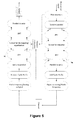
- the general process is illustrated in the following figure, which for sake of simplicity only two BSs, querying and queried, are represented:
- the common part of the proposed RF fingerprint to be exchanged in response to a query is composed by two components.
- the first one is an estimation of the sampled channel impulse response, which a complex vector of size Nc, being the number of subcarriers.
- Nc the number of subcarriers.
- the channel response can be estimated by the base station from the Reference Signals transmitted by the UE.
- the second component is a sample of the received signal in the frequency domain Y. This can be produced as the outcome of the DFT at the receiver as indicated in figure 5 .
- the received signal Y at each BS is the result of the convolution of the input of the IDFT X in the transmitter with the channel frequency response H. Because X can change in every subframe, even if the channel remains the same, the interference generated may be different, so the channel response could be not enough to predict the interference generated. For this reason both the channel response estimation and the received signal are part of the RF fingerprint.
- both components to be incorporated in the RF fingerprint can be estimated and sent before the full demodulation of the signal has happened in the receiver.
- the stored RF fingerprint in the queried base station incorporates at least the sample channel impulse response, and before entering the RF fingerprint in the register or database it can be pre-processed in order to reduce storage requirements or coping with partial measurements.
- the collection phase can be coordinated to be carried out simultaneously by several base stations, in such a way that several of them schedule empty subframes simultaneously.
- One of the main parameters used to control the collection process is the minimum value of the interfering signal received in BS2 that is required to collect the RF fingerprint reported by the interfering base station.
- the cancellation phase gets activated when an UE connected to the base station is considered to be heavily interfered (this can be easily determined by the base station, when contrasting the received signal level with its quality, and the supporting procedure is not part of the proposed invention). Then, the base station may identify which are the most likely candidate base stations to provoke the interference (this is not strictly required if the number of potential interferers is relatively low). For these purposes, the invention can implement a separate process, which would rank the likelihood of the base stations in the RF IC Group to be the most interfering one.
- the ranking process can be based on a cost function that takes into account all the information that is available at the receiving base station or in a heuristic process.
- the basic factor in the function would be the similarity of the estimated interference with respect to the fingerprints stored in the compilation phase.
- the process to estimate the interference is represented figure 7 .
- the base station may use the non-scheduled UL subframes/RBs to measure the interference and compare it with the RF fingerprints in order to determine which base station the main interfering UE is connected to.
- the base station sends a RF Cancellation Request message to the base stations that the potentially interfering UEs are connected.
- This message indicates the periodicity the RF fingerprints should be sent (one per each subframe or with a lower frequency).
- the queried base station may accept or reject the cooperation, or may propose different conditions to be applied.
- Figure 8 illustrates the process for those base stations that agree to cooperate.
- RF fingerprints are sent by cooperating base stations ideally every subframe, independently of whether the UE is being scheduled or not (indicating when the potentially interfering UE is not transmitting will help to verify that the base stations queried is the correct one).
- the latency incurred in the transmission process should be as low as possible (ideally, lower than 1 ms).
- the base station Based on the reported RF fingerprint, the base station selects the associated RF fingerprint most likely to represent the interference. This selection may take into account other information reported by the interfering cell, like the UE location information (if available) or the success rate of previous IC processes (if stored in the database). The basic mechanism, however, should be the minimization of a measure of the distance between the reported RF fingerprint and the ones stored in the base stations database. A ranking of likely fingerprints is the outcome of this process.
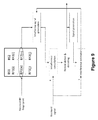
- Figure 9 illustrates the process that is carried once the interfering fingerprint has been selected.
- the interfering signal should be generated in the Interfering signal generation module.
- the module generates the channel response for the link between the UE and the reporting base stations. This can be done by convoluting the reported sampled channel by the DFT matrix.
- the channel response H1 and the reported sample of the received signal in the frequency domain Y 1 are used then for obtaining an estimation of original input signal in the frequency domain X 1 .
- X 1 is then convoluted by the channel response of the selected RF fingerprint H 2 , in order to obtain an estimation of the interfering signal in the frequency domain Y 2 .
- the different RF fingerprints are processed in the Interfering signal generation module to produce a combined interference signal.
- the process can be improved including an additional loop, where the demodulation and decoding of the signal is performed both before and after interference cancellation, in order to prevent that the latter may result in a quality loss.
- the effectiveness of the IC process is incorporated to the RF fingerprints register or database with an indication of the performance improvement achieved with the use of the interference cancellation process. It is very likely that the invention becomes more effective when the interfering UE is static or with low mobility (e.g., when it is located indoors).
- the base station processing capabilities are enhanced with the incorporation of the register or database to accumulate the RF fingerprint pairs. Also, the receiver is modified to incorporate the proposed IC process.
- IP layer of X2 only supports point-to-point transmission for delivering X2-AP message.
- the invention would benefit from the support of multicasting messages.
Landscapes
- Engineering & Computer Science (AREA)
- Computer Networks & Wireless Communication (AREA)
- Signal Processing (AREA)
- Mobile Radio Communication Systems (AREA)
Priority Applications (3)
| Application Number | Priority Date | Filing Date | Title |
|---|---|---|---|
| EP13382061.3A EP2773055B1 (fr) | 2013-02-27 | 2013-02-27 | Procédé, système et programme informatique pour annuler les interférences de liaison montante dans un réseau sans fil |
| ES13382061.3T ES2689378T3 (es) | 2013-02-27 | 2013-02-27 | Método, sistema y programa de ordenador para la cancelación de interferencia del enlace ascendente en una red inalámbrica |
| US14/190,871 US9338670B2 (en) | 2013-02-27 | 2014-02-26 | Method, system and computer program for cancelling uplink interference in a wireless network |
Applications Claiming Priority (1)
| Application Number | Priority Date | Filing Date | Title |
|---|---|---|---|
| EP13382061.3A EP2773055B1 (fr) | 2013-02-27 | 2013-02-27 | Procédé, système et programme informatique pour annuler les interférences de liaison montante dans un réseau sans fil |
Publications (2)
| Publication Number | Publication Date |
|---|---|
| EP2773055A1 true EP2773055A1 (fr) | 2014-09-03 |
| EP2773055B1 EP2773055B1 (fr) | 2018-07-04 |
Family
ID=47844240
Family Applications (1)
| Application Number | Title | Priority Date | Filing Date |
|---|---|---|---|
| EP13382061.3A Not-in-force EP2773055B1 (fr) | 2013-02-27 | 2013-02-27 | Procédé, système et programme informatique pour annuler les interférences de liaison montante dans un réseau sans fil |
Country Status (3)
| Country | Link |
|---|---|
| US (1) | US9338670B2 (fr) |
| EP (1) | EP2773055B1 (fr) |
| ES (1) | ES2689378T3 (fr) |
Families Citing this family (5)
| Publication number | Priority date | Publication date | Assignee | Title |
|---|---|---|---|---|
| US10164683B2 (en) * | 2014-08-08 | 2018-12-25 | Lg Electronics Inc. | Method for receiving interference cancellation |
| US10070253B2 (en) * | 2015-12-29 | 2018-09-04 | Sk Planet Co., Ltd. | Method, apparatus, and recording medium for radio fingerprint map construction and location tracking |
| KR102514593B1 (ko) * | 2015-12-29 | 2023-03-27 | 에스케이플래닛 주식회사 | Rf 핑거프린트 구축 방법 및 장치 |
| EP3786864A1 (fr) * | 2019-08-27 | 2021-03-03 | Siemens Healthcare GmbH | Suivi intérieur et extérieur combiné utilisant l'apprentissage machine |
| CN118535890B (zh) * | 2024-04-19 | 2025-05-09 | 北京邮电大学 | 数字通信系统的射频指纹增强与接收方法、系统及设备 |
Citations (1)
| Publication number | Priority date | Publication date | Assignee | Title |
|---|---|---|---|---|
| WO2011147267A1 (fr) * | 2010-05-27 | 2011-12-01 | 刘建 | Procédé et dispositif pour une coordination d'interférence intercellulaire dans un système de liaison descendante d'évolution à long terme |
Family Cites Families (25)
| Publication number | Priority date | Publication date | Assignee | Title |
|---|---|---|---|---|
| US8504091B2 (en) * | 2008-02-01 | 2013-08-06 | Qualcomm Incorporated | Interference mitigation for control channels in a wireless communication network |
| US8169931B2 (en) * | 2008-05-21 | 2012-05-01 | Airhop Communications, Inc. | Method and apparatus for base stations and their provisioning, management, and networking |
| US8489028B2 (en) * | 2008-05-22 | 2013-07-16 | Qualcomm Incorporated | System and method to enable resource partitioning in wireless networks |
| US8639996B2 (en) * | 2008-07-11 | 2014-01-28 | Qualcomm Incorporated | Systems and methods for uplink inter-cell interference cancellation using hybrid automatic repeat request (HARQ) retransmissions |
| US8938247B2 (en) * | 2009-04-23 | 2015-01-20 | Qualcomm Incorporated | Sounding reference signal for coordinated multi-point operation |
| CN102474731B (zh) * | 2009-08-19 | 2015-01-07 | 松下电器(美国)知识产权公司 | 移动通信系统、网络管理装置、宏小区基站装置及干扰控制方法 |
| US8570993B2 (en) * | 2010-05-20 | 2013-10-29 | At&T Mobility Ii Llc | Wi-Fi intelligent selection engine |
| JP2013545154A (ja) * | 2010-09-10 | 2013-12-19 | ワイフェアラー・インコーポレーテッド | コンテンツロケーションに関するrfフィンガープリント |
| US8457673B2 (en) * | 2010-10-11 | 2013-06-04 | Motorola Mobility Llc | Method and apparatus for radio frequency fingerprint distribution |
| US20120258730A1 (en) * | 2010-11-29 | 2012-10-11 | Qualcomm Incorporated | Estimating access terminal location based on beacon signals from femto cells |
| KR20140018908A (ko) * | 2011-04-05 | 2014-02-13 | 텔레호낙티에볼라게트 엘엠 에릭슨(피유비엘) | 채널 핑거프린트에 기초한 자율적 최대 전력 설정 |
| US10003980B2 (en) * | 2011-07-15 | 2018-06-19 | Telefonaktiebolaget Lm Ericsson (Publ) | Neighbour relations management |
| US20150016561A1 (en) * | 2011-08-17 | 2015-01-15 | CBF Networks, Inc. | Advanced backhaul services |
| KR101566135B1 (ko) * | 2011-10-02 | 2015-11-04 | 엘지전자 주식회사 | 무선 통신 시스템에서 측정 방법 및 장치 |
| EP2775750B1 (fr) * | 2011-11-03 | 2018-01-31 | Kyocera Corporation | Procédé de commande de communication, système de communication mobile et station de base |
| US9723496B2 (en) * | 2011-11-04 | 2017-08-01 | Qualcomm Incorporated | Method and apparatus for interference cancellation by a user equipment using blind detection |
| US9272851B2 (en) * | 2011-11-07 | 2016-03-01 | Mediatek Inc. | Minimization of drive tests for uplink link coverage |
| US9332505B2 (en) * | 2011-11-11 | 2016-05-03 | Telefonaktiebolaget L M Ericsson (Publ) | Methods and apparatus for performing measurements in adaptive downlink power transmission |
| US20130225197A1 (en) * | 2012-02-24 | 2013-08-29 | Broadcom Corporation | Low Power Location Beacon |
| US9661601B2 (en) * | 2012-12-13 | 2017-05-23 | Qualcomm Incorporated | Crowdsourcing information in a communication network using small cells |
| US9173200B2 (en) * | 2013-02-28 | 2015-10-27 | Intel Mobile Communications GmbH | Communication terminal, network component, base station and method for communicating |
| US9572055B2 (en) * | 2013-04-09 | 2017-02-14 | Spectrum Effect, Inc. | Uplink interference detection using transmission matrices |
| US9769834B2 (en) * | 2013-05-07 | 2017-09-19 | Spectrum Effect, Inc. | Interference detection with UE signal subtraction |
| US9226200B2 (en) * | 2013-05-10 | 2015-12-29 | Alcatel Lucent | Network assisted interference cancellation |
| US9332465B2 (en) * | 2013-10-15 | 2016-05-03 | Qualcomm Incorporated | Long term evolution interference management in unlicensed bands for wi-fi operation |
-
2013
- 2013-02-27 EP EP13382061.3A patent/EP2773055B1/fr not_active Not-in-force
- 2013-02-27 ES ES13382061.3T patent/ES2689378T3/es active Active
-
2014
- 2014-02-26 US US14/190,871 patent/US9338670B2/en not_active Expired - Fee Related
Patent Citations (1)
| Publication number | Priority date | Publication date | Assignee | Title |
|---|---|---|---|---|
| WO2011147267A1 (fr) * | 2010-05-27 | 2011-12-01 | 刘建 | Procédé et dispositif pour une coordination d'interférence intercellulaire dans un système de liaison descendante d'évolution à long terme |
Non-Patent Citations (1)
| Title |
|---|
| LG ELECTRONICS: "SIC-based ICIC in heterogeneous network", no. R1-100235, 18 January 2010 (2010-01-18), pages 1 - 4, XP002636256, Retrieved from the Internet <URL:http://www.3gpp.org/ftp/tsg_ran/WG1_RL1/TSGR1_59b/Docs/R1-100235.zip> [retrieved on 20110509] * |
Also Published As
| Publication number | Publication date |
|---|---|
| EP2773055B1 (fr) | 2018-07-04 |
| US9338670B2 (en) | 2016-05-10 |
| US20140241245A1 (en) | 2014-08-28 |
| ES2689378T3 (es) | 2018-11-13 |
Similar Documents
| Publication | Publication Date | Title |
|---|---|---|
| US20230217480A1 (en) | Wireless device, a network node and methods therein for reporting channel state information (csi) in a radio communications network | |
| JP7336988B2 (ja) | 初期アクセス信号の品質に基づくモビリティ基準信号の開始 | |
| US10506472B2 (en) | Narrowband reference signals in non-anchor resource blocks | |
| JP7010933B2 (ja) | 無線通信システムにおいてリソースを選択しpscchを伝送する方法及び装置 | |
| KR101700543B1 (ko) | 채널 추정을 위한 의사 동일 위치된 안테나 포트 | |
| EP3138317B1 (fr) | Équipement d'utilisateur, noeud de réseau et procédés pour permettre un communication dispositif à dispositif dans des réseaux radio | |
| TWI470950B (zh) | And a method for eliminating the interference of the cell reference signal | |
| CN111165066A (zh) | 用于使用第二链路用于对第一链路的波束失败恢复的技术和装置 | |
| EP3051864B1 (fr) | Station de base sans fil, terminal d'utilisateur, et procédé de commande de communication | |
| CN111886903A (zh) | 跳过周期性测量以在用户设备中实现电力节省 | |
| EP3127265B1 (fr) | Procédé pour estimer la qualité de signal de transmission vers un équipement d'utilisateur à partir d'un point de transmission | |
| EP3269181B1 (fr) | Noeuds de réseau, dispositif sans fil et procédés associés pour permettre des transmissions dans un réseau de communication sans fil | |
| KR20130042594A (ko) | 모바일 통신 시스템의 확장 캐리어를 통하는 빔포밍된 물리적 다운링크 제어 채널(pdcch)의 제공 | |
| EP3830988A1 (fr) | Mécanisme de surveillance de signal de référence pour gestion d'interférence à distance | |
| US9338670B2 (en) | Method, system and computer program for cancelling uplink interference in a wireless network | |
| US9374715B2 (en) | Intercell interference coordination for machine to machine communications | |
| US20230015327A1 (en) | Dynamic scheduling of user equipment (ue) antenna resources | |
| JP2025036434A (ja) | デバイス間通信のためのリソース除外 | |
| EP3836714B1 (fr) | Procédé de transmission de données fbe, appareil et support de stockage | |
| US20230044975A1 (en) | Multi-cell synchronization for dual connectivity and carrier aggregation | |
| US11483841B2 (en) | DMRS-based beam management for downlink repetition | |
| BR102014004594A2 (pt) | método e sistema para cancelar a interferência do uplink em uma rede sem fio; e produto de programa de computador |
Legal Events
| Date | Code | Title | Description |
|---|---|---|---|
| PUAI | Public reference made under article 153(3) epc to a published international application that has entered the european phase |
Free format text: ORIGINAL CODE: 0009012 |
|
| 17P | Request for examination filed |
Effective date: 20130227 |
|
| AK | Designated contracting states |
Kind code of ref document: A1 Designated state(s): AL AT BE BG CH CY CZ DE DK EE ES FI FR GB GR HR HU IE IS IT LI LT LU LV MC MK MT NL NO PL PT RO RS SE SI SK SM TR |
|
| AX | Request for extension of the european patent |
Extension state: BA ME |
|
| R17P | Request for examination filed (corrected) |
Effective date: 20150223 |
|
| RBV | Designated contracting states (corrected) |
Designated state(s): AL AT BE BG CH CY CZ DE DK EE ES FI FR GB GR HR HU IE IS IT LI LT LU LV MC MK MT NL NO PL PT RO RS SE SI SK SM TR |
|
| GRAP | Despatch of communication of intention to grant a patent |
Free format text: ORIGINAL CODE: EPIDOSNIGR1 |
|
| STAA | Information on the status of an ep patent application or granted ep patent |
Free format text: STATUS: GRANT OF PATENT IS INTENDED |
|
| RIC1 | Information provided on ipc code assigned before grant |
Ipc: H04W 24/02 20090101ALI20180123BHEP Ipc: H04J 11/00 20060101AFI20180123BHEP Ipc: H04W 72/00 20090101ALI20180123BHEP |
|
| INTG | Intention to grant announced |
Effective date: 20180214 |
|
| GRAS | Grant fee paid |
Free format text: ORIGINAL CODE: EPIDOSNIGR3 |
|
| GRAA | (expected) grant |
Free format text: ORIGINAL CODE: 0009210 |
|
| STAA | Information on the status of an ep patent application or granted ep patent |
Free format text: STATUS: THE PATENT HAS BEEN GRANTED |
|
| AK | Designated contracting states |
Kind code of ref document: B1 Designated state(s): AL AT BE BG CH CY CZ DE DK EE ES FI FR GB GR HR HU IE IS IT LI LT LU LV MC MK MT NL NO PL PT RO RS SE SI SK SM TR |
|
| REG | Reference to a national code |
Ref country code: GB Ref legal event code: FG4D |
|
| REG | Reference to a national code |
Ref country code: CH Ref legal event code: EP |
|
| REG | Reference to a national code |
Ref country code: AT Ref legal event code: REF Ref document number: 1015633 Country of ref document: AT Kind code of ref document: T Effective date: 20180715 |
|
| REG | Reference to a national code |
Ref country code: IE Ref legal event code: FG4D |
|
| REG | Reference to a national code |
Ref country code: DE Ref legal event code: R096 Ref document number: 602013039656 Country of ref document: DE |
|
| REG | Reference to a national code |
Ref country code: NL Ref legal event code: MP Effective date: 20180704 |
|
| REG | Reference to a national code |
Ref country code: ES Ref legal event code: FG2A Ref document number: 2689378 Country of ref document: ES Kind code of ref document: T3 Effective date: 20181113 |
|
| REG | Reference to a national code |
Ref country code: LT Ref legal event code: MG4D |
|
| REG | Reference to a national code |
Ref country code: AT Ref legal event code: MK05 Ref document number: 1015633 Country of ref document: AT Kind code of ref document: T Effective date: 20180704 |
|
| PG25 | Lapsed in a contracting state [announced via postgrant information from national office to epo] |
Ref country code: NL Free format text: LAPSE BECAUSE OF FAILURE TO SUBMIT A TRANSLATION OF THE DESCRIPTION OR TO PAY THE FEE WITHIN THE PRESCRIBED TIME-LIMIT Effective date: 20180704 |
|
| PG25 | Lapsed in a contracting state [announced via postgrant information from national office to epo] |
Ref country code: NO Free format text: LAPSE BECAUSE OF FAILURE TO SUBMIT A TRANSLATION OF THE DESCRIPTION OR TO PAY THE FEE WITHIN THE PRESCRIBED TIME-LIMIT Effective date: 20181004 Ref country code: GR Free format text: LAPSE BECAUSE OF FAILURE TO SUBMIT A TRANSLATION OF THE DESCRIPTION OR TO PAY THE FEE WITHIN THE PRESCRIBED TIME-LIMIT Effective date: 20181005 Ref country code: SE Free format text: LAPSE BECAUSE OF FAILURE TO SUBMIT A TRANSLATION OF THE DESCRIPTION OR TO PAY THE FEE WITHIN THE PRESCRIBED TIME-LIMIT Effective date: 20180704 Ref country code: PL Free format text: LAPSE BECAUSE OF FAILURE TO SUBMIT A TRANSLATION OF THE DESCRIPTION OR TO PAY THE FEE WITHIN THE PRESCRIBED TIME-LIMIT Effective date: 20180704 Ref country code: FI Free format text: LAPSE BECAUSE OF FAILURE TO SUBMIT A TRANSLATION OF THE DESCRIPTION OR TO PAY THE FEE WITHIN THE PRESCRIBED TIME-LIMIT Effective date: 20180704 Ref country code: IS Free format text: LAPSE BECAUSE OF FAILURE TO SUBMIT A TRANSLATION OF THE DESCRIPTION OR TO PAY THE FEE WITHIN THE PRESCRIBED TIME-LIMIT Effective date: 20181104 Ref country code: RS Free format text: LAPSE BECAUSE OF FAILURE TO SUBMIT A TRANSLATION OF THE DESCRIPTION OR TO PAY THE FEE WITHIN THE PRESCRIBED TIME-LIMIT Effective date: 20180704 Ref country code: LT Free format text: LAPSE BECAUSE OF FAILURE TO SUBMIT A TRANSLATION OF THE DESCRIPTION OR TO PAY THE FEE WITHIN THE PRESCRIBED TIME-LIMIT Effective date: 20180704 Ref country code: BG Free format text: LAPSE BECAUSE OF FAILURE TO SUBMIT A TRANSLATION OF THE DESCRIPTION OR TO PAY THE FEE WITHIN THE PRESCRIBED TIME-LIMIT Effective date: 20181004 Ref country code: AT Free format text: LAPSE BECAUSE OF FAILURE TO SUBMIT A TRANSLATION OF THE DESCRIPTION OR TO PAY THE FEE WITHIN THE PRESCRIBED TIME-LIMIT Effective date: 20180704 Ref country code: CZ Free format text: LAPSE BECAUSE OF FAILURE TO SUBMIT A TRANSLATION OF THE DESCRIPTION OR TO PAY THE FEE WITHIN THE PRESCRIBED TIME-LIMIT Effective date: 20180704 |
|
| PG25 | Lapsed in a contracting state [announced via postgrant information from national office to epo] |
Ref country code: AL Free format text: LAPSE BECAUSE OF FAILURE TO SUBMIT A TRANSLATION OF THE DESCRIPTION OR TO PAY THE FEE WITHIN THE PRESCRIBED TIME-LIMIT Effective date: 20180704 Ref country code: LV Free format text: LAPSE BECAUSE OF FAILURE TO SUBMIT A TRANSLATION OF THE DESCRIPTION OR TO PAY THE FEE WITHIN THE PRESCRIBED TIME-LIMIT Effective date: 20180704 Ref country code: HR Free format text: LAPSE BECAUSE OF FAILURE TO SUBMIT A TRANSLATION OF THE DESCRIPTION OR TO PAY THE FEE WITHIN THE PRESCRIBED TIME-LIMIT Effective date: 20180704 |
|
| REG | Reference to a national code |
Ref country code: DE Ref legal event code: R097 Ref document number: 602013039656 Country of ref document: DE |
|
| PG25 | Lapsed in a contracting state [announced via postgrant information from national office to epo] |
Ref country code: EE Free format text: LAPSE BECAUSE OF FAILURE TO SUBMIT A TRANSLATION OF THE DESCRIPTION OR TO PAY THE FEE WITHIN THE PRESCRIBED TIME-LIMIT Effective date: 20180704 Ref country code: RO Free format text: LAPSE BECAUSE OF FAILURE TO SUBMIT A TRANSLATION OF THE DESCRIPTION OR TO PAY THE FEE WITHIN THE PRESCRIBED TIME-LIMIT Effective date: 20180704 Ref country code: IT Free format text: LAPSE BECAUSE OF FAILURE TO SUBMIT A TRANSLATION OF THE DESCRIPTION OR TO PAY THE FEE WITHIN THE PRESCRIBED TIME-LIMIT Effective date: 20180704 |
|
| PGFP | Annual fee paid to national office [announced via postgrant information from national office to epo] |
Ref country code: DE Payment date: 20190227 Year of fee payment: 7 Ref country code: ES Payment date: 20190301 Year of fee payment: 7 Ref country code: GB Payment date: 20190227 Year of fee payment: 7 |
|
| PLBE | No opposition filed within time limit |
Free format text: ORIGINAL CODE: 0009261 |
|
| STAA | Information on the status of an ep patent application or granted ep patent |
Free format text: STATUS: NO OPPOSITION FILED WITHIN TIME LIMIT |
|
| PG25 | Lapsed in a contracting state [announced via postgrant information from national office to epo] |
Ref country code: SM Free format text: LAPSE BECAUSE OF FAILURE TO SUBMIT A TRANSLATION OF THE DESCRIPTION OR TO PAY THE FEE WITHIN THE PRESCRIBED TIME-LIMIT Effective date: 20180704 Ref country code: SK Free format text: LAPSE BECAUSE OF FAILURE TO SUBMIT A TRANSLATION OF THE DESCRIPTION OR TO PAY THE FEE WITHIN THE PRESCRIBED TIME-LIMIT Effective date: 20180704 Ref country code: DK Free format text: LAPSE BECAUSE OF FAILURE TO SUBMIT A TRANSLATION OF THE DESCRIPTION OR TO PAY THE FEE WITHIN THE PRESCRIBED TIME-LIMIT Effective date: 20180704 |
|
| 26N | No opposition filed |
Effective date: 20190405 |
|
| PG25 | Lapsed in a contracting state [announced via postgrant information from national office to epo] |
Ref country code: SI Free format text: LAPSE BECAUSE OF FAILURE TO SUBMIT A TRANSLATION OF THE DESCRIPTION OR TO PAY THE FEE WITHIN THE PRESCRIBED TIME-LIMIT Effective date: 20180704 |
|
| REG | Reference to a national code |
Ref country code: CH Ref legal event code: PL |
|
| PG25 | Lapsed in a contracting state [announced via postgrant information from national office to epo] |
Ref country code: MC Free format text: LAPSE BECAUSE OF FAILURE TO SUBMIT A TRANSLATION OF THE DESCRIPTION OR TO PAY THE FEE WITHIN THE PRESCRIBED TIME-LIMIT Effective date: 20180704 Ref country code: LU Free format text: LAPSE BECAUSE OF NON-PAYMENT OF DUE FEES Effective date: 20190227 |
|
| REG | Reference to a national code |
Ref country code: BE Ref legal event code: MM Effective date: 20190228 |
|
| REG | Reference to a national code |
Ref country code: IE Ref legal event code: MM4A |
|
| PG25 | Lapsed in a contracting state [announced via postgrant information from national office to epo] |
Ref country code: LI Free format text: LAPSE BECAUSE OF NON-PAYMENT OF DUE FEES Effective date: 20190228 Ref country code: CH Free format text: LAPSE BECAUSE OF NON-PAYMENT OF DUE FEES Effective date: 20190228 |
|
| PG25 | Lapsed in a contracting state [announced via postgrant information from national office to epo] |
Ref country code: IE Free format text: LAPSE BECAUSE OF NON-PAYMENT OF DUE FEES Effective date: 20190227 |
|
| PG25 | Lapsed in a contracting state [announced via postgrant information from national office to epo] |
Ref country code: FR Free format text: LAPSE BECAUSE OF NON-PAYMENT OF DUE FEES Effective date: 20190228 Ref country code: BE Free format text: LAPSE BECAUSE OF NON-PAYMENT OF DUE FEES Effective date: 20190228 |
|
| PG25 | Lapsed in a contracting state [announced via postgrant information from national office to epo] |
Ref country code: TR Free format text: LAPSE BECAUSE OF FAILURE TO SUBMIT A TRANSLATION OF THE DESCRIPTION OR TO PAY THE FEE WITHIN THE PRESCRIBED TIME-LIMIT Effective date: 20180704 |
|
| PG25 | Lapsed in a contracting state [announced via postgrant information from national office to epo] |
Ref country code: MT Free format text: LAPSE BECAUSE OF NON-PAYMENT OF DUE FEES Effective date: 20190227 Ref country code: PT Free format text: LAPSE BECAUSE OF FAILURE TO SUBMIT A TRANSLATION OF THE DESCRIPTION OR TO PAY THE FEE WITHIN THE PRESCRIBED TIME-LIMIT Effective date: 20181105 |
|
| REG | Reference to a national code |
Ref country code: DE Ref legal event code: R119 Ref document number: 602013039656 Country of ref document: DE |
|
| GBPC | Gb: european patent ceased through non-payment of renewal fee |
Effective date: 20200227 |
|
| PG25 | Lapsed in a contracting state [announced via postgrant information from national office to epo] |
Ref country code: DE Free format text: LAPSE BECAUSE OF NON-PAYMENT OF DUE FEES Effective date: 20200901 Ref country code: GB Free format text: LAPSE BECAUSE OF NON-PAYMENT OF DUE FEES Effective date: 20200227 |
|
| PG25 | Lapsed in a contracting state [announced via postgrant information from national office to epo] |
Ref country code: CY Free format text: LAPSE BECAUSE OF FAILURE TO SUBMIT A TRANSLATION OF THE DESCRIPTION OR TO PAY THE FEE WITHIN THE PRESCRIBED TIME-LIMIT Effective date: 20180704 |
|
| REG | Reference to a national code |
Ref country code: ES Ref legal event code: FD2A Effective date: 20210708 |
|
| PG25 | Lapsed in a contracting state [announced via postgrant information from national office to epo] |
Ref country code: HU Free format text: LAPSE BECAUSE OF FAILURE TO SUBMIT A TRANSLATION OF THE DESCRIPTION OR TO PAY THE FEE WITHIN THE PRESCRIBED TIME-LIMIT; INVALID AB INITIO Effective date: 20130227 |
|
| PG25 | Lapsed in a contracting state [announced via postgrant information from national office to epo] |
Ref country code: ES Free format text: LAPSE BECAUSE OF NON-PAYMENT OF DUE FEES Effective date: 20200228 |
|
| PG25 | Lapsed in a contracting state [announced via postgrant information from national office to epo] |
Ref country code: MK Free format text: LAPSE BECAUSE OF FAILURE TO SUBMIT A TRANSLATION OF THE DESCRIPTION OR TO PAY THE FEE WITHIN THE PRESCRIBED TIME-LIMIT Effective date: 20180704 |