EP2773065B1 - Procédé pour activer un groupe de contrôleurs périphériques de session (sbc) et sbc - Google Patents
Procédé pour activer un groupe de contrôleurs périphériques de session (sbc) et sbc Download PDFInfo
- Publication number
- EP2773065B1 EP2773065B1 EP11867502.4A EP11867502A EP2773065B1 EP 2773065 B1 EP2773065 B1 EP 2773065B1 EP 11867502 A EP11867502 A EP 11867502A EP 2773065 B1 EP2773065 B1 EP 2773065B1
- Authority
- EP
- European Patent Office
- Prior art keywords
- session border
- border controller
- terminal device
- pool
- registered
- Prior art date
- Legal status (The legal status is an assumption and is not a legal conclusion. Google has not performed a legal analysis and makes no representation as to the accuracy of the status listed.)
- Active
Links
Images



Classifications
-
- H—ELECTRICITY
- H04—ELECTRIC COMMUNICATION TECHNIQUE
- H04L—TRANSMISSION OF DIGITAL INFORMATION, e.g. TELEGRAPHIC COMMUNICATION
- H04L67/00—Network arrangements or protocols for supporting network services or applications
- H04L67/14—Session management
- H04L67/142—Managing session states for stateless protocols; Signalling session states; State transitions; Keeping-state mechanisms
-
- H—ELECTRICITY
- H04—ELECTRIC COMMUNICATION TECHNIQUE
- H04L—TRANSMISSION OF DIGITAL INFORMATION, e.g. TELEGRAPHIC COMMUNICATION
- H04L67/00—Network arrangements or protocols for supporting network services or applications
- H04L67/14—Session management
-
- H—ELECTRICITY
- H04—ELECTRIC COMMUNICATION TECHNIQUE
- H04L—TRANSMISSION OF DIGITAL INFORMATION, e.g. TELEGRAPHIC COMMUNICATION
- H04L69/00—Network arrangements, protocols or services independent of the application payload and not provided for in the other groups of this subclass
- H04L69/40—Network arrangements, protocols or services independent of the application payload and not provided for in the other groups of this subclass for recovering from a failure of a protocol instance or entity, e.g. service redundancy protocols, protocol state redundancy or protocol service redirection
-
- H—ELECTRICITY
- H04—ELECTRIC COMMUNICATION TECHNIQUE
- H04L—TRANSMISSION OF DIGITAL INFORMATION, e.g. TELEGRAPHIC COMMUNICATION
- H04L65/00—Network arrangements, protocols or services for supporting real-time applications in data packet communication
- H04L65/10—Architectures or entities
- H04L65/1013—Network architectures, gateways, control or user entities
-
- H—ELECTRICITY
- H04—ELECTRIC COMMUNICATION TECHNIQUE
- H04L—TRANSMISSION OF DIGITAL INFORMATION, e.g. TELEGRAPHIC COMMUNICATION
- H04L67/00—Network arrangements or protocols for supporting network services or applications
- H04L67/01—Protocols
- H04L67/10—Protocols in which an application is distributed across nodes in the network
- H04L67/1001—Protocols in which an application is distributed across nodes in the network for accessing one among a plurality of replicated servers
Definitions
- the present invention relates to network communications technologies, and in particular, to a method for implementing a session border controller pool, and a session border controller.
- backup devices generally are provided for some key service processing devices in a network.
- a backup device generally needs to be deployed in a remote area. Therefore, a network has a requirement for a remote disaster recovery solution for devices therein.
- session border controllers SBC
- SBC session border controllers
- a peer device for example, a terminal device or a softswitch at network-side, is configured with IP addresses of the active and standby SBC devices, and determines, by separately probing the two IP addresses, whether the active and standby SBC devices are working normally.
- the peer device accesses the IP address of the active SBC device, and implements a related service by using the active SBC device; when perceiving that the active SBC device is faulty, the peer device switches to the standby SBC device automatically to continue the related service, so as to implement SBC device disaster recovery.
- SBC disaster recovery solution has a special requirement for the peer device (for example, a terminal device), that is, the peer device needs to be configured with two IP addresses.
- the peer device In a normal situation, one of the two devices is selected as an active device, and after it is detected that the active device is abnormal, the peer device automatically switches to a backup device.
- the backup device is usually in an idle state, and is used only when the active device is faulty, which causes a low resource utilization rate.
- US 2010/0034079 Al discloses a network providing a service to a client of a terminal, the network comprising at least two session border controller, at least one identical address is allocated to the two session border controller.
- EP1816887A1 discloses a method for improving network reliability by realizing dynamic rout of signaling.
- Embodiments of the present invention provide a method for implementing a session border controller pool, and a session border controller, so as to avoid disaster recovery of session border controllers from placing a special requirement for a terminal device, and increase a resource utilization rate.
- An embodiment of the present invention provides a method for implementing a session border controller pool, including:
- An embodiment of the present invention further provides a session border controller, where the session border controller is located in a session border controller pool, the session border controller pool includes the session border controller and one or more other session border controllers, and the session border controller and the one or more other session border controllers communicate with a terminal device by using a same IP address, and communicating with a network-side device by using a same IP address;
- the session border controller includes a receiving unit and a forwarding unit; where the receiving unit is configured to receive a service message of the terminal device, and determine whether the terminal device is registered in the session border controller pool; and the forwarding unit is configured to forward the service message to a session border controller with which the terminal device is registered when the receiving unit determines that the terminal device has been registered in the session border controller pool, so that the session border controller with which the terminal device is registered processes the service message.
- a session border controller pool is formed by at least two session border controllers, the session border controllers in the session border controller pool communicate with a terminal device by using a same IP address, and if the terminal device has been registered in the session border controller pool, a service message is forwarded to a session border controller with which the terminal device is registered, so that the session border controller with which the terminal device is registered processes the service message.
- all devices in the session border controller pool can process the service message of the terminal device, thereby increasing a resource utilization rate.
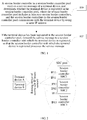
- FIG. 1 is a schematic flowchart of a method for implementing a session border controller pool according to an embodiment of the present invention, and the method includes the following steps:
- the service message of the terminal device may be a service message, such as a registration request message, a calling request message, or a called request message, of the terminal device.
- SBC devices in the SBC pool may have different IP addresses in the SBC pool, where the IP addresses are used to distinguish different SBC devices in the SBC pool, so that the SBC devices in the SBC pool can be notified and managed.
- the at least two session border controllers may be disaster-recovery controllers for each other, where the disaster recovery for each other is that the at least two session border controllers are mutually backed up for disaster recovery.
- Disaster-recovery SBC devices can ensure that a service of the terminal device is not interrupted when an SBC device is faulty. If an SBC device is faulty, another SBC device can replace the faulty SBC device to continue to process the service of the terminal device.
- the session border controller pool is formed by at least two session border controllers, the session border controllers communicate with the terminal device by using a same IP address, and when the service message of the terminal device is received, whether the terminal device is registered in the session border controller pool is determined; and if the terminal device has been registered in the session border controller pool, the service message is forwarded to the session border controller with which the terminal device is registered, so that the session border controller with which the terminal device is registered processes the service message.
- all devices in the session border controller pool can process the service message of the terminal device, thereby increasing a resource utilization rate.
- the session border controller receiving the service message of the terminal device distributes the service message to any one session border controller in the session border controller pool for registration. Further, after the session border controller receiving the service message of the terminal device distributes the service message to the any one session border controller in the session border controller pool for registration, registration information of the terminal device is sent to another session border controller in the session border controller pool, so that the another session border controller records information of the session border controller with which the terminal device is registered.
- the session border controller receiving the service message of the terminal device distributes the service message to any one session border controller in the session border controller pool for registration. If the service message received from the terminal device includes a calling request message or a called request message and the terminal device is not registered, the session border controller receiving the service message of the terminal device may reject this service request of the terminal device, and certainly, may also distribute the service message to any one session border controller in the session border controller pool for registration, which is not limited in the embodiment of the present invention.
- the terminal device is registered with any one session border controller in the session border controller pool, which can register an unregistered terminal device in the session border controller pool, and implement disaster recovery backup between session border controllers in the session border controller pool, so that when a session border controller is faulty, the terminal device may also be registered with another session border controller.
- the registration information of the terminal device is sent to another session border controller in the session border controller pool, so that the another session border controller in the session border controller pool can know whether the terminal device is registered in the session border controller pool and the session border controller with which the terminal device is registered.
- the another session border controller can forward the service message of the terminal device to the session border controller with which the terminal device is registered for processing.
- session border controllers included in the session border controller pool communicate with a network-side device by using a same IP address; and when receiving another service message of the network-side device about the terminal device, a session border controller in the session border controller pool determines the session border controller with which the terminal device is registered, and forwards the another service message to the session border controller with which the terminal device is registered, so that the session border controller with which the terminal device is registered processes the another service message.
- the network-side device may be a network control device or another device with a control function, for example, a control device such as a media gateway controller, MGC, or a softswitch.
- a control device such as a media gateway controller, MGC, or a softswitch.
- the at least two session border controllers communicate with the network-side device by using the same IP address, which can further reduce modifications by the SBC pool to a network, and no special requirement is placed on a network side, so that an implementation manner of the SBC pool can be implemented more easily in an existing network, which can improve the network management quality and efficiency while reducing the maintenance cost.
- the determining whether the terminal device is registered in the session border controller pool in step 100 includes:
- the method further includes:
- the distributing, by the session border controller receiving the service message of the terminal device, the service message to any one session border controller in the session border controller pool for registration in step 102 includes:
- the foregoing manner can further ensure balance of registration of the terminal device in the SBC pool, and ensure load balancing among devices in the SBC pool.
- FIG. 2 is a structural diagram of the SBC pool.
- the 3 SBC devices are disaster recovery devices of each other and have a same IP address for a terminal device.
- the foregoing 3 SBC devices are merely a simple example, and are used for describing and interpreting the specific implementation manner of the embodiment of the present invention.
- the SBC pool and SBC devices therein applied in the embodiment of the present invention may have multiple implementation manners, for example, more than 3 SBC devices exist. No specific limitation is imposed on the SBC devices in the SBC pool in the embodiment of the present invention, and for an implementation manner of another SBC pool having more than 3 SBC devices, reference may be made to the implementation manner of the 3 SBC devices in the following.
- the SBCs in the SBC pool are configured with a same IP address (for example, IP11) for a terminal device, that is, the SBCs communicate with the terminal device by using the same IP address.
- the SBCs may have different IP addresses (such as IP01, IP02, and IP03) and are connected to a routing device of an access-side IP bearer network.
- IP11 IP11
- An IP address (IP11) is configured on the terminal device, a service message of the terminal device may be sent to any one device in the SBC pool, and the SBC devices in the SBC pool all are in a working state. In this way, only one IP address (for example, IP11) needs to be configured on the terminal device, and a networking scheme has no special requirement on the terminal.
- the devices in the SBC pool are provided with different IP addresses (IP01, IP02, and IP03), the routing device is connected by using these IP addresses, and no special requirement is placed on the routing device.
- FIG. 2 In the implementation manner shown in FIG. 2 , only a networking mode used at a terminal device side is described.
- a networking mode used at a network side two scenarios may be used, and the objectives of the embodiment of the present invention can be achieved in both the two scenarios:
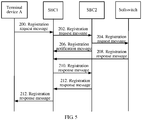
- FIG. 5 is a flowchart of a specific implementation of a method for implementing a session border controller pool according to an embodiment of the present invention.
- this embodiment is described by using an example in which in Scenario 1, a terminal device is registered in the SBC pool for the first time, including:
- the destination address of the terminal device A is IP11.
- any one SBC in the SBC pool may receive the registration request message of the terminal device A; and the embodiment of the present invention is described by using an example in which the registration request message is sent to an SBC1.
- Step 202 After receiving the registration request message whose destination address is IP11, the SBC1 determines whether the terminal device A has been registered in the SBC pool. That is, the SBC1 determines whether the terminal device A is registered for the first time; and if the terminal device A is registered for the first time, the SBC1 forwards the registration request message to any one SBC device in the SBC pool according to a preset distribution algorithm, so that the any one SBC device can process the registration request message of the terminal device A.
- the embodiment of the present invention is described by using an example in which the registration request message is forwarded to an SBC2.
- the foregoing distribution algorithm may be a manner of round-robin, random selection, or load balancing, and the registration request message is distributed to any one SBC device in the SBC pool by means of the algorithm.
- the registration request message may also be distributed to an SBC device whose physical address is closest to a physical address of the terminal.
- whether the terminal device A is registered for the first time may be determined in the following manner:
- the SBC1 After receiving the registration request message of the terminal device A, the SBC1 queries a registration list stored by the SBC1, determines whether the terminal device A is in the registration list. If the terminal device A is not found, the SBC1 determines that the terminal device A is not registered in the session border controller pool.
- the registration list records registration information recorded by a session border controller device in the session border controller pool after a terminal device is registered, where the registration information is information of that a terminal device is registered with an SBC in the SBC pool.
- the SBC device When a terminal device is registered with an SBC device in the SBC pool, the SBC device records registration information of the terminal device in a registration list of the SBC device, and notifies another SBC device in the SBC pool of the registration information of the terminal device, so that the another SBC device records that the terminal device A has been registered with the SBC2.
- the SBC device may use a registration list stored by the SBC device to record the registration information of the terminal device, where the registration list records the registration information of the terminal device. Different terminal devices may be distinguished by using IP address information.
- Step 204 The SBC2 completes registration of the terminal device A with the SBC2, and initiates a registration process to a network-side softswitch device.
- the destination address received by the SBC2 is IP11
- the registration request message is no longer forwarded after being forwarded by the SBC1
- the registration process is executed on the SBC2.
- the SBC2 completes registration of the terminal device A with the SBC2, and initiates the registration process to the network-side device.
- a service IP of the SBC2 in the registration request message sent to the softswitch is IP22.
- Step 206 The SBC2 notifies another SBC in the session border controller pool that the terminal device A has been registered with the SBC2, so that the another SBC in the SBC pool updates a registration list stored by the another SBC, and records that the terminal device A has been registered with the SBC2.
- Which SBC needs to be notified by the SBC2 may be determined with reference to routing configuration, and only an SBC that is reachable by routing for the registered terminal needs to be notified. For example, if only the SBC1 and the SBC2 are reachable for a route between the terminal device A and SBCs, the SBC1 needs to be notified; and if the SBC1, the SBC2, and an SBC3 are reachable for a route between the terminal device A and SBCs, the SBC1 and the SBC3 need to be notified. As shown in the accompanying drawing, description is made by using an example in which the SBC1 is notified.
- step 206 may also be performed before step 204.
- Step 208 After receiving the registration request message, the softswitch processes the registration request message of the terminal device A, and then returns a registration response message, whose destination address is IP22.
- the registration response message may be sent to any one SBC in the SBC POOL, and this embodiment is described by using an example in which the SBC1 receives the registration response message.
- Step 210 The SBC1 receives, from the softswitch, the registration response message whose destination address is IP22, and determines that the terminal device A has been registered with the SBC2, and the SBC1 forwards the registration response message to the SBC2.
- Step 212 After receiving the registration response message from the softswitch which is forwarded by the SBC1, the SBC2 completes a registration process at the network side, and returns a registration response message to the terminal.
- the registration response message returned by the SBC2 to the terminal device A may be forwarded by the SBC1, and may also be sent to terminal device A directly. This embodiment is described by using an example in which the registration response message is forwarded by the SBC1.
- a backup SBC (the SBC1 is used as an example in description of the embodiment of the present invention) may be selected from the SBC pool, and the terminal device A is also registered with the SBC1. After registration with the SBC1 is completed, the SBC1 also needs to notify other SBC in the POOL that the SBC1 is the backup SBC with which the terminal device A is registered. In this way, when an SBC device in the SBC pool receives a service message of terminal device A, if the SBC2 is found faulty and cannot forward the message to the SBC2, the SBC device forwards the message to the backup SBC1 for processing.
- a session border controller in an SBC pool receives a service message from a terminal device, whether the terminal device is registered in the session border controller pool is determined; and if the terminal device is not registered in the session border controller pool, the session border controller receiving the service message of the terminal device distributes the service message to any one session border controller in the session border controller pool for registration.
- all SBC devices in the SBC pool can be in a working state, and are mutually backed up for disaster recovery.
- a same IP address is configured for a terminal device side, a same IP address is also configured for a network side, and no special requirement is placed on an existing networking scheme and an existing routing device, so that implementation and popularization are easy.
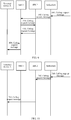
- FIG. 6 is another flowchart of a specific implementation of a method for implementing a session border controller pool according to an embodiment of the present invention.
- this embodiment is described by using an example in which in Scenario 2, a terminal device is registered in the SBC pool for the first time, including:
- the destination address of the terminal device A is IP11.
- any one SBC in the SBC pool may receive the registration request message of the terminal device A; and the embodiment of the present invention is described by using an example in which the registration request message is sent to an SBC1.
- Step 302 After receiving the registration request message whose destination address is IP11, the SBC1 determines whether the terminal device A has been registered in the SBC pool. That is, the SBC1 determines whether the terminal device A is registered for the first time; and if the terminal device A is registered for the first time, the SBC1 forwards, according to a preset distribution algorithm, the registration request message to any one SBC device in the SBC pool that can work normally.
- the embodiment of the present invention is described by using an example in which the registration request message is forwarded to an SBC2.
- the foregoing distribution algorithm may be a manner of round-robin, random selection, or load balancing, and the registration request message is distributed to any one SBC device in the SBC pool by means of the algorithm.
- the registration request message may also be distributed to an SBC device whose physical address is closest to a physical address of the terminal.
- whether the terminal device A is registered for the first time may be determined in the following manner:
- the SBC1 After receiving the registration request message of the terminal device A, the SBC1 queries a registration list stored by the SBC1, determines whether the terminal device A is in the registration list. If the terminal device A is not found, the SBC1 determines that the terminal device A is not registered in the session border controller pool.
- the registration list records registration information recorded by a session border controller device in the session border controller pool after a terminal device is registered, where the registration information is information of that a terminal device is registered with an SBC in the SBC pool.
- the SBC device When a terminal device is registered with an SBC device in the SBC pool, the SBC device records registration information of the terminal device in a registration list of the SBC device, and notifies another SBC device in the SBC pool of the registration information of the terminal device, where different terminal devices may be distinguished by using IP address information.
- Step 304 The SBC2 completes registration of the terminal device A with the SBC2, and initiates a registration process to a network-side softswitch device.
- the destination address received by the SBC2 is IP11
- the registration request message is no longer forwarded after being forwarded by the SBC1
- the registration process is executed on the SBC2.
- the SBC2 completes registration of the terminal device A with the SBC2, and initiates the registration process to the network-side device.
- a service IP of the SBC2 in the registration request message sent to the softswitch is IP23.
- Step 306 The SBC2 notifies other SBC in the session border controller pool that the terminal device A has been registered with the SBC2.
- Which SBC needs to be notified by the SBC2 may be determined with reference to routing configuration, and only an SBC that is reachable by routing for the registered terminal needs to be notified. For example, if only the SBC1 and the SBC2 are reachable for a route between the terminal device A and SBCs, the SBC1 needs to be notified; and if the SBC1, the SBC2, and an SBC3 are reachable for a route between the terminal device A and SBCs, the SBC1 and the SBC3 need to be notified. As shown in the accompanying drawing, description is made by using an example in which the SBC1 is notified.
- Step 308 After receiving the registration request, the softswitch processes the registration request message of the terminal device A, and then returns a registration response message, whose destination address is IP23.
- Step 310 After receiving the registration response message of the softswitch, the SBC2 completes a registration process at the network side, and returns a registration response message to the terminal.
- the registration response message returned by the SBC2 to the terminal device A may be forwarded by the SBC1, and may also be sent to terminal device A directly. This embodiment is described by using an example in which the registration response message is forwarded by the SBC1.
- a backup SBC (the SBC1 is used as an example in description of the embodiment of the present invention) may be selected from the SBC pool, and the terminal device A is also registered with the SBC1. After registration with the SBC1 is completed, the SBC1 also needs to notify other SBC in the POOL that the SBC1 is the backup SBC with which the terminal device A is registered. In this way, when an SBC device in the SBC pool receives a service message of the terminal device A, if the SBC2 is found faulty and cannot forward the message to the SBC2, the SBC device forwards the message to the backup SBC1 for processing.
- a session border controller in an SBC pool receives a service message from a terminal device, whether the terminal device is registered in the session border controller pool is determined; and if the terminal device is not registered in the session border controller pool, the session border controller receiving the service message of the terminal device distributes the service message to any one session border controller in the session border controller pool for registration.
- all SBC devices in the SBC pool can be in a working state, and are mutually backed up for disaster recovery.
- a same IP address exists on the terminal device, and no special requirement is placed on an existing networking scheme and an existing routing device, so that implementation and popularization are easy.
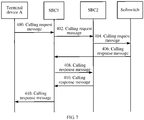
- FIG. 7 is another flowchart of a specific implementation of a method for implementing a session border controller pool according to an embodiment of the present invention.
- this embodiment is described by using an example in which in Scenario 1, a terminal device initiates a calling service and the terminal device is registered with an SBC2, including:
- the calling response message returned by the SBC2 to the terminal device A may be forwarded by the SBC1, and may also be sent to the terminal device A directly. This embodiment is described by using an example in which the calling response message is forwarded by the SBC1.
- the SBC2 is faulty, it is required to forward the calling request message to a backup SBC with which the terminal device A is registered.
- the backup device of the terminal device A is the SBC1, in step 402, the SBC1 processes the calling request message directly, and sends the calling request message to the softswitch. A subsequent execution process thereof is similar to that of the SBC2, and no detail is described herein again.
- the backup device of the terminal device A is an SBC3, in step 402, the SBC1 forwards the calling request message to the SBC3 for processing. A subsequent execution process thereof is similar to that of the SBC2, and no detail is described herein again.
- an SBC1 in the SBC pool receives a calling request message of a terminal device
- the SBC1 determines that the terminal device has been registered with an SBC2, and forwards the calling message to the SBC2, so that the SBC2 processes the calling message.
- all SBC devices in the SBC pool can be in a working state, and are mutually backed up for disaster recovery.
- a same IP address is configured for a terminal device side
- a same IP address is also configured for a network side, and no special requirement is placed on an existing networking scheme and an existing routing device, so that implementation and popularization are easy.
- FIG. 8 is another flowchart of a specific implementation of a method for implementing a session border controller pool according to an embodiment of the present invention.
- this embodiment is described by using an example in which in Scenario 2, a terminal device initiates a calling service and the terminal device is registered with an SBC2, including:
- the calling response message returned by the SBC2 to the terminal device A may be forwarded by the SBC1, and may also be sent to the terminal device A directly. This embodiment is described by using an example in which the calling response message is forwarded by the SBC1.
- the SBC2 is faulty, it is required to forward the calling request message to a backup SBC with which the terminal device A is registered.
- the backup device of the terminal device A is the SBC1, in step 502, the SBC1 processes the calling request message directly, and sends the calling request message to the softswitch. A subsequent execution process thereof is similar to that of the SBC2, and no detail is described herein again.
- the backup device of the terminal device A is an SBC3, in step 502, the SBC1 forwards the calling request message to the SBC3 for processing. A subsequent execution process thereof is similar to that of the SBC2, and no detail is described herein again.
- an SBC1 in the SBC pool receives a calling request message of a terminal device
- the SBC1 determines that the terminal device has been registered with an SBC2; and if the terminal device is not registered in the session border controller pool, the SBC1 forwards the calling message to the SBC2, so that the SBC2 processes the calling message.
- all SBC devices in the SBC pool can be in a working state, and are mutually backed up for disaster recovery.
- a same IP address is configured for a terminal device side, and no special requirement is placed on an existing networking scheme and an existing routing device, so that implementation and popularization are easy.
- FIG. 9 is another flowchart of a specific implementation of a method for implementing a session border controller pool according to an embodiment of the present invention.
- this embodiment is described by using an example in which in Scenario 1, a terminal device is called and the terminal device is registered with an SBC2, including:
- the calling request message sent by the SBC2 to the terminal device A may be forwarded by the SBC1, and may also be sent to the terminal device A directly. This embodiment is described by using an example in which the calling request message is forwarded by the SBC1.
- the terminal device A After receiving the calling request message, the terminal device A returns a response message.
- a subsequent message distributing process is the same as that in the calling process initiated by terminal device A, and no detail is described herein again.
- the SBC2 is faulty, it is required to forward the calling request message to a backup SBC with which the terminal device A is registered.
- the backup device of the terminal device A is the SBC1, in step 604, the SBC1 processes the calling request message directly, and sends the calling request message to the softswitch. A subsequent execution process thereof is similar to that of the SBC2, and no detail is described herein again.
- the backup device of the terminal device A is an SBC3, in step 604, the SBC1 forwards the calling request message to the SBC3 for processing. A subsequent execution process thereof is similar to that of the SBC2, and no detail is described herein again.
- an SBC1 in the SBC pool receives a called request message of a terminal device
- the SBC1 determines that the terminal device has been registered with an SBC2, and forwards the called request message to the SBC2, so that the SBC2 processes the called request message.
- all SBC devices in the SBC pool can be in a working state, and are mutually backed up for disaster recovery.
- a same IP address is configured for a terminal device side
- a same IP address is also configured for a network side, and no special requirement is placed on an existing networking scheme and an existing routing device, so that implementation and popularization are easy.
- FIG. 10 is another flowchart of a specific implementation of a method for implementing a session border controller pool according to an embodiment of the present invention.
- this embodiment is described by using an example in which in Scenario 2, a terminal device is called and the terminal device is registered with an SBC2, including:
- This embodiment is described by using an example in which the SBC2 sends the calling request message to the terminal device A directly.
- the terminal device A After receiving the calling request message, the terminal device A returns a response message.
- a subsequent message distributing process is the same as that in the calling process initiated by terminal device A, and no detail is described herein again.
- the SBC2 is faulty, it is required to forward the calling request message to a backup SBC with which the terminal device A is registered.
- the backup device of the terminal device A is an SBC1
- the destination address of the calling request message, which is delivered by the softswitch, of the terminal device A is IP22
- the SBC1 processes the calling request message directly, and sends the calling request message to the softswitch.
- a subsequent execution process thereof is similar to that of the SBC2, and no detail is described herein again.
- the backup device of the terminal device A is an SBC3, in step 702, the destination address of the calling request message, which is delivered by the softswitch, of the terminal device A is IP24, and the SBC3 processes the calling request message directly.
- a subsequent execution process thereof is similar to that of the SBC2, and no detail is described herein again.
- an SBC2 in the SBC pool receives a called request message of a terminal device, the SBC2 processes the called request message.
- all SBC devices in the SBC pool can be in a working state, and are mutually backed up for disaster recovery.
- a same IP address is configured for the terminal device, and no special requirement is placed on an existing networking scheme and an existing routing device, so that implementation and popularization are easy.
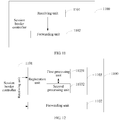
- FIG. 11 is a schematic structural diagram of a session border controller 1100 according to an embodiment of the present invention.
- the session border controller 1100 is located in a session border controller pool, the session border controller pool includes the session border controller and one or more other session border controllers, the session border controller and the one or more other session border controllers communicate with a terminal device by using a same IP address, and the session border controller includes a receiving unit 1101 and a forwarding unit 1102, where the receiving unit 1101 is configured to receive a service message of the terminal device, and determine whether the terminal device is registered in the session border controller pool; and the forwarding unit 1102 is configured to: when the receiving unit 1101 determines that the terminal device has been registered in the session border controller pool, forward the service message to a session border controller with which the terminal device is registered, so that the session border controller with which the terminal device is registered processes the service message.
- the service message of the terminal device may be a service message, such as a calling request message or a called request message, of the terminal device.
- SBC devices in the SBC pool may have different IP addresses in the SBC pool, where the IP addresses are used to distinguish different SBC devices in the SBC pool, so that the SBC devices in the SBC pool can be notified and managed.
- the at least two session border controllers may be disaster-recovery controllers for each other, where the disaster recovery for each other is that the at least two session border controllers are mutually backed up for disaster recovery.
- Disaster-recovery SBC devices can ensure that a service of the terminal device is not interrupted when an SBC device is faulty. If an SBC device is faulty, another SBC device can replace the faulty SBC device to continue to process the service of the terminal device.
- the session border controller 1100 in the foregoing embodiment, it is avoided that disaster recovery of session border controller devices places a special requirement for the terminal device, and the terminal device does not need to be configured with two IP addresses.
- all devices in the session border controller pool can process the service message of the terminal device, thereby increasing a resource utilization rate.
- the SBC 1100 may further include a registration unit 1103, as shown in FIG. 12 , and the registration unit 1103 is configured to: when the terminal device is not registered in the session border controller pool, distribute the service message to any one session border controller in the session border controller pool for registration.
- the registration unit 1103 may be further configured to send registration information of the terminal device to another session border controller in the session border controller pool, so that the another session border controller records information of the session border controller with which the terminal device is registered.
- the registration unit 1103 registers the terminal device with any one session border controller in the session border controller pool, which can register an unregistered terminal device in the session border controller pool, and implement disaster recovery backup between session border controllers in the session border controller pool, so that when a session border controller is faulty, the terminal device may also be registered with another session border controller.
- the registration unit 1103 sends the registration information of the terminal device to other session border controller in the session border controller pool, so that the other session border controller in the session border controller pool can know whether the terminal device is registered in the session border controller pool and the session border controller with which the terminal device is registered, and when receiving a service message, for example, a calling request message, of the terminal device, the other session border controller in the session border controller pool can forward the service message of the terminal device to the session border controller with which the terminal device is registered for processing.
- a service message for example, a calling request message
- the session border controller 1100 and the one or more other session border controllers communicate with a network-side device by using a same IP address; and the receiving unit is further configured to receive another service message of the network-side device about the terminal device, determine the session border controller with which the terminal device is registered, and forward the another service message to the session border controller with which the terminal device is registered, so that the session border controller with which the terminal device is registered processes the another service message.
- the network-side device may be a network control device or another device with a control function, for example, a control device such as a media gateway controller, MGC, or a softswitch.
- a control device such as a media gateway controller, MGC, or a softswitch.
- the at least two session border controllers communicate with the network-side device by using the same IP address, and no special requirement is placed on a network side, so that implementation manners of the SBCs in the SBC pool can be implemented more easily in an existing network, which can improve the network management quality and efficiency while reducing the maintenance cost.
- the determining, by the receiving unit 1101, whether the terminal device is registered in the session border controller pool includes:
- the registration unit 1103 includes a first processing unit 11031 and a second processing unit 11032, as shown in FIG. 12 , where the first processing unit 11031 is configured to: when the terminal device is not registered in the session border controller pool, distribute the service message to any one session border controller in the session border controller pool for registration; and the second processing unit 11032 is configured to register the terminal device with another session border controller in the session border controller pool, where the another session border controller is a backup device of the any one session border controller, and when the any one session border controller is faulty, the another session border controller processes the service of the terminal device.
- the first processing unit 11031 is configured to: when the terminal device is not registered in the session border controller pool, distribute the service message to any one session border controller in the session border controller pool for registration
- the second processing unit 11032 is configured to register the terminal device with another session border controller in the session border controller pool, where the another session border controller is a backup device of the any one session border controller, and when the any one session border controller is faulty, the another session border controller processes the service
- the distributing, by the registration unit 1103, the service message to any one session border controller in the session border controller pool for registration includes:
- the foregoing implementation manner can further ensure balancing of registration of the terminal device in the SBC pool, and ensure load balancing among devices in the SBC pool.
- the disclosed apparatus and method may be implemented in other manners.
- the described apparatus embodiment is merely exemplary.
- the unit division is merely logical function division and may be other division in actual implementation.
- a plurality of units or components may be combined or integrated into another system, or some features may be ignored or not performed.
- the displayed or discussed mutual couplings or direct couplings or communication connections may be implemented through some interfaces.
- the indirect couplings or communication connections between the apparatuses or units may be implemented in electronic, mechanical, or other forms.
- the units described as separate parts may or may not be physically separate, and parts displayed as units may or may not be physical units, may be located in one position, or may be distributed on a plurality of network units. A part or all of the units may be selected according to actual needs to achieve the objectives of the solutions of the embodiments of the present invention.
- functional units in the embodiments of the present invention may be integrated into one processing unit, or each of the units may exist alone physically, or two or more units are integrated into one unit.
- the integrated unit may be implemented in a form of hardware, or may be implemented in a form of a software functional unit.
- the integrated unit When the integrated unit is implemented in the form of a software functional unit and sold or used as an independent product, the integrated unit may be stored in a computer-readable storage medium.
- the software product is stored in a storage medium and includes several instructions for instructing a computer device (which may be a personal computer, a server, or a network device) to perform all or a part of the steps of the methods described in the embodiments of the present invention.
- the foregoing storage medium includes: any medium that can store program code, such as a USB flash drive, a removable hard disk, a read-only memory, ROM, a random access memory, RAM, a magnetic disk, or an optical disc.
Landscapes
- Engineering & Computer Science (AREA)
- Computer Networks & Wireless Communication (AREA)
- Signal Processing (AREA)
- Computer Security & Cryptography (AREA)
- Telephonic Communication Services (AREA)
- Data Exchanges In Wide-Area Networks (AREA)
Claims (14)
- Procédé pour mettre en oeuvre un groupe de contrôleurs de limite de session consistant à :recevoir (100), par un contrôleur de limite de session dans le groupe de contrôleurs de limite de session, un message de service d'un dispositif terminal, lequel groupe de contrôleurs de limite de session comprend au moins deux contrôleurs de limite de session, et lesdits au moins deux contrôleurs de limite de session dans le groupe de contrôleurs de limite de session communiquant avec le dispositif terminal en utilisant une même adresse IP et communiquant avec un côté réseau en utilisant une même adresse IP ;déterminer, par le contrôleur de limite de session recevant le message de service du dispositif de terminal, si le dispositif de terminal est enregistré ou non dans le groupe de contrôleurs de limite de session ; etenvoyer (102), par le contrôleur de limite de session recevant le message de service du dispositif de terminal, le message de service à un contrôleur de limite de session auprès duquel le dispositif de terminal est enregistré si le dispositif de terminal a été enregistré dans le groupe de contrôleurs de limite de session de sorte que le contrôleur de limite de session auprès duquel le dispositif terminal est enregistré traite le message de service.
- Procédé pour mettre en oeuvre un groupe de contrôleurs de limite de session selon la revendication 1, consistant en outre à :distribuer, par le contrôleur de limite de session recevant le message de service du dispositif de terminal, le message de service à un quelconque contrôleur de limite de session dans le groupe de contrôleurs de limite de session en vue de l'enregistrement si le dispositif terminal n'est pas enregistré dans le groupe de contrôleurs de limite de session.
- Procédé pour mettre en oeuvre un groupe de contrôleurs de limite de session selon la revendication 2, consistant en outre à :envoyer, par le contrôleur de limite de session auprès duquel le dispositif terminal est enregistré, des informations d'enregistrement du dispositif terminal à un autre contrôleur de limite de session dans le groupe de contrôleurs de limite de session une fois que le contrôleur de limite de session recevant le message de service du dispositif terminal distribue le message de service à un quelconque contrôleur de limite de session dans le groupe de contrôleurs de limite de session en vue de l'enregistrement de sorte que l'autre contrôleur de limite de session enregistre les informations du contrôleur de limite de session auprès duquel le dispositif terminal est enregistré.
- Procédé pour mettre en oeuvre un groupe de contrôleurs de limite de session selon l'une quelconque des revendications 1 à 3, consistant en outre à :recevoir, par un contrôleur de limite de session dans le groupe de contrôleurs de limite de session, un autre message de service du dispositif côté réseau concernant le dispositif terminal ;déterminer, par le contrôleur de limite de session recevant l'autre message de service du dispositif côté réseau, le contrôleur de limite de session auprès duquel le dispositif terminal est enregistré ; etenvoyer, par le contrôleur de limite de session recevant l'autre message de service du dispositif côté réseau, l'autre message de service au contrôleur de limite de session auprès duquel le dispositif terminal est enregistré de sorte que le contrôleur de limite de session auprès duquel le dispositif terminal est enregistré traite l'autre message de service.
- Procédé pour mettre en oeuvre un groupe de contrôleurs de limite de session selon l'une quelconque des revendications 1 à 4, dans lequel le fait de déterminer si le dispositif terminal est enregistré dans le groupe de contrôleurs de limite de session consiste à :interroger, par le contrôleur de limite de session recevant le message de service du dispositif terminal, une liste d'enregistrement qui est stockée par le contrôleur de limite de session recevant le message de service du dispositif terminal et déterminer si les informations d'enregistrement du dispositif terminal sont comprises dans la liste d'enregistrement ; etsi les informations d'enregistrement du dispositif terminal ne sont pas comprises dans la liste d'enregistrement, déterminer, par le contrôleur de limite de session recevant le message de service du dispositif terminal, que le dispositif terminal n'est pas enregistré dans le groupe de contrôleurs de limite de session, la liste d'enregistrement enregistrant des informations, qui sont enregistrées par un contrôleur de limite de session dans le groupe de contrôleurs de limite de session, du contrôleur de limite de session auprès duquel le dispositif terminal est enregistré.
- Procédé pour mettre en oeuvre un groupe de contrôleurs de limite de session selon l'une quelconque des revendications 2 à 5, lequel, après la distribution, par le contrôleur de limite de session recevant le message de service du dispositif terminal, du message de service vers un quelconque contrôleur de limite de session dans le groupe de contrôleurs de limite de session en vue de l'enregistrement, consiste en outre à :enregistrer, par le contrôleur de limite de session recevant le message de service du dispositif terminal, le dispositif terminal auprès d'un autre contrôleur de limite de session, l'autre contrôleur de limite de session étant un dispositif de secours d'un quelconque contrôleur de limite de session, et lorsqu'un quelconque contrôleur de limite de session est défaillant, un service du dispositif terminal est traité par l'autre contrôleur de limite de session.
- Procédé pour mettre en oeuvre un groupe de contrôleurs de limite de session selon l'une quelconque des revendications 2 à 6, lequel, après la distribution, par le contrôleur de limite de session recevant le message de service du dispositif terminal, du message de service vers un quelconque contrôleur de limite de session dans le groupe de contrôleurs de limite de session en vue de l'enregistrement, consiste en outre à :distribuer, par sélection aléatoire ordonnancée ou équilibrage de charge, avec le contrôleur de limite de session recevant le message de service du dispositif terminal, le message de service à un quelconque contrôleur de limite de session dans le groupe de contrôleurs de limite de session en vue de l'enregistrement ; oudistribuer, avec le contrôleur de limite de session recevant le message de service du dispositif terminal, le message de service à un contrôleur de limite de session dont l'adresse physique est la plus proche d'une adresse physique du dispositif terminal en vue de l'enregistrement.
- Contrôleur de limite de session, lequel se situe dans un groupe de contrôleurs de limite de session, lequel groupe de contrôleurs de limite de session comprend le contrôleur de limite de session et un ou plusieurs autres contrôleurs de limite de session, le contrôleur de limite de session et le ou les autres contrôleurs de limite de session communiquant avec un dispositif terminal en utilisant une même adresse IP et communiquant avec un dispositif côté réseau en utilisant une même adresse IP ;
le contrôleur de limite de session comprenant une unité de réception (1101) et une unité d'envoi (1102) ;
l'unité de réception étant conçue pour recevoir un message de service du dispositif terminal, et déterminer si le dispositif terminal est enregistré dans le groupe de contrôleurs de limite de session ; et
l'unité d'envoi étant conçue pour envoyer le message de service à un contrôleur de limite de session auprès duquel le dispositif terminal est enregistré lorsque l'unité de réception détermine que le dispositif terminal a été enregistré dans le groupe de contrôleurs de limite de session de sorte que le contrôleur de groupe de session auprès duquel le dispositif terminal est enregistré traite le message de service. - Contrôleur de limite de session selon la revendication 8, lequel contrôleur de limite de session comprend une unité d'enregistrement (1103) ;
et l'unité d'enregistrement est conçue pour distribuer le message de service à un quelconque contrôleur de limite de session en vue de l'enregistrement lorsque le dispositif terminal n'est pas enregistré dans le groupe de contrôleurs de limite de session. - Contrôleur de limite de session selon la revendication 9, dans lequel l'unité d'enregistrement est en outre conçue pour envoyer des informations d'enregistrement du dispositif terminal à un autre contrôleur de limite de session dans le groupe de contrôleurs de limite de session, de sorte que l'autre contrôleur de limite de session enregistre les informations du contrôleur de limite de session auprès duquel le dispositif terminal est enregistré.
- Contrôleur de limite de session selon l'une quelconque des revendications 8 à 10, dans lequel l'unité de réception est en outre conçue pour recevoir un autre message de service du dispositif côté réseau concernant le dispositif terminal, déterminer le contrôleur de limite de session auprès duquel le dispositif terminal est enregistré, et envoyer l'autre message de service au contrôleur de limite de session auprès duquel le dispositif terminal est enregistré de sorte que le contrôleur de limite de session auprès duquel le dispositif terminal est enregistré traite l'autre message de service.
- Contrôleur de limite de session selon l'une quelconque des revendications 8 à 11, dans lequel lorsqu'il est déterminé, par l'unité de réception, si le dispositif terminal est enregistré ou non dans le groupe de contrôleurs de limite de session, l'unité de réception est conçue pour interroger une liste d'enregistrement qui est stockée par le contrôleur de limite de session et déterminer si les informations d'enregistrement du dispositif terminal sont comprises ou non dans la liste d'enregistrement, et si les informations d'enregistrement du dispositif terminal ne sont pas comprises dans la liste d'enregistrement, déterminer que le dispositif terminal n'est pas enregistré dans le groupe de contrôleurs de limite de session, la liste d'enregistrement enregistrant des informations, qui sont enregistrées par le contrôleur de limite de session, du contrôleur de limite de session auprès duquel le dispositif terminal est enregistré.
- Contrôleur de limite de session selon l'une quelconque des revendications 9 à 12, dans lequel l'unité de traitement comprend une première unité de traitement (11031) et une seconde unité de traitement (11032), et dans lequel :la première unité de traitement est conçue pour distribuer le message de service à un quelconque contrôleur de limite de session dans le groupe de contrôleurs de limite de session en vue de l'enregistrement lorsque le dispositif terminal n'est pas enregistré dans le groupe de contrôleurs de limite de session ; etla seconde unité de traitement est conçue pour enregistrer le dispositif terminal auprès d'un autre contrôleur de limite de session dans le groupe de contrôleurs de limite de session, l'autre contrôleur de limite de session étant un dispositif de secours d'un quelconque contrôleur de limite de session, et lorsqu'un quelconque contrôleur de limite de session est défaillant, un service du dispositif terminal est traité par l'autre contrôleur de limite de session.
- Contrôleur de limite de session selon l'une quelconque des revendications 9 à 12, dans lequel l'unité d'enregistrement est conçue pour distribuer, par sélection aléatoire ordonnancée ou équilibrage de charge, le message de service à un quelconque contrôleur de limite de session dans le groupe de contrôleurs de limite de session en vue de l'enregistrement ; ou distribuer le message de service à un contrôleur de limite de session dont l'adresse physique est la plus proche d'une adresse physique du dispositif terminal en vue de l'enregistrement.
Priority Applications (1)
| Application Number | Priority Date | Filing Date | Title |
|---|---|---|---|
| EP17161743.4A EP3200432B1 (fr) | 2011-11-23 | 2011-11-23 | Procédé de mise en oeuvre d'un groupe de contrôleurs de session en périphérie et contrôleur de session en périphérie |
Applications Claiming Priority (1)
| Application Number | Priority Date | Filing Date | Title |
|---|---|---|---|
| PCT/CN2011/082718 WO2012167567A1 (fr) | 2011-11-23 | 2011-11-23 | Procédé pour activer un groupe de contrôleurs périphériques de session (sbc) et sbc |
Related Child Applications (2)
| Application Number | Title | Priority Date | Filing Date |
|---|---|---|---|
| EP17161743.4A Division-Into EP3200432B1 (fr) | 2011-11-23 | 2011-11-23 | Procédé de mise en oeuvre d'un groupe de contrôleurs de session en périphérie et contrôleur de session en périphérie |
| EP17161743.4A Division EP3200432B1 (fr) | 2011-11-23 | 2011-11-23 | Procédé de mise en oeuvre d'un groupe de contrôleurs de session en périphérie et contrôleur de session en périphérie |
Publications (3)
| Publication Number | Publication Date |
|---|---|
| EP2773065A1 EP2773065A1 (fr) | 2014-09-03 |
| EP2773065A4 EP2773065A4 (fr) | 2014-11-05 |
| EP2773065B1 true EP2773065B1 (fr) | 2017-05-31 |
Family
ID=46222784
Family Applications (2)
| Application Number | Title | Priority Date | Filing Date |
|---|---|---|---|
| EP11867502.4A Active EP2773065B1 (fr) | 2011-11-23 | 2011-11-23 | Procédé pour activer un groupe de contrôleurs périphériques de session (sbc) et sbc |
| EP17161743.4A Active EP3200432B1 (fr) | 2011-11-23 | 2011-11-23 | Procédé de mise en oeuvre d'un groupe de contrôleurs de session en périphérie et contrôleur de session en périphérie |
Family Applications After (1)
| Application Number | Title | Priority Date | Filing Date |
|---|---|---|---|
| EP17161743.4A Active EP3200432B1 (fr) | 2011-11-23 | 2011-11-23 | Procédé de mise en oeuvre d'un groupe de contrôleurs de session en périphérie et contrôleur de session en périphérie |
Country Status (5)
| Country | Link |
|---|---|
| US (1) | US9807179B2 (fr) |
| EP (2) | EP2773065B1 (fr) |
| CN (1) | CN102511146B (fr) |
| ES (1) | ES2700967T3 (fr) |
| WO (1) | WO2012167567A1 (fr) |
Families Citing this family (7)
| Publication number | Priority date | Publication date | Assignee | Title |
|---|---|---|---|---|
| CN103051745A (zh) * | 2013-01-21 | 2013-04-17 | 华为技术有限公司 | 会话边界控制器地址的获取方法及装置 |
| GB2520231B (en) * | 2013-07-23 | 2020-12-16 | Metaswitch Networks Ltd | Media sessions |
| US9781026B2 (en) * | 2015-05-20 | 2017-10-03 | Avaya Inc. | System and method to prevent polling overload for detection of presence information |
| CN106941529A (zh) * | 2017-03-21 | 2017-07-11 | 许继电气股份有限公司 | 一种直流输电监控系统及容灾实现方法 |
| US11695826B2 (en) | 2017-08-14 | 2023-07-04 | Comcast Cable Communications, Llc | Assignment of processing resource based on session data |
| CN111163465B (zh) * | 2018-11-07 | 2022-11-08 | 北京京东尚科信息技术有限公司 | 连接用户终端与本地终端的方法、装置以及呼叫中心系统 |
| US10841344B1 (en) * | 2019-07-15 | 2020-11-17 | Ribbon Communications Operating Company, Inc. | Methods, systems and apparatus for efficient handling of registrations of end devices |
Family Cites Families (13)
| Publication number | Priority date | Publication date | Assignee | Title |
|---|---|---|---|---|
| US7480737B2 (en) * | 2002-10-25 | 2009-01-20 | International Business Machines Corporation | Technique for addressing a cluster of network servers |
| CN1921459A (zh) * | 2005-08-25 | 2007-02-28 | 华为技术有限公司 | 通过实现信令的动态路由提高网络可靠性的方法 |
| US20080080532A1 (en) * | 2006-09-29 | 2008-04-03 | O'sullivan Mark | Methods and apparatus for managing internet communications using a dynamic STUN infrastructure configuration |
| FR2912271A1 (fr) * | 2007-02-06 | 2008-08-08 | France Telecom | Gestion de service dans un reseau |
| CN100546285C (zh) * | 2007-05-09 | 2009-09-30 | 华为技术有限公司 | 实现互通网关应用层路由的方法、系统及会话边界控制器 |
| GB2460651B (en) * | 2008-06-03 | 2012-09-12 | Metaswitch Networks Ltd | Delivery of media data |
| CN101360057B (zh) * | 2008-09-02 | 2012-04-04 | 华为终端有限公司 | 一种路由处理的方法、ims业务处理的方法及相关设备 |
| US8321592B2 (en) * | 2008-12-12 | 2012-11-27 | Tekelec, Inc. | Methods, systems, and computer readable media for generating and using statelessly reversible representations of session initiation protocol (SIP) information by SIP cluster entities |
| US8879419B2 (en) * | 2009-07-28 | 2014-11-04 | Centurylink Intellectual Property Llc | System and method for registering an IP telephone |
| CN101998516B (zh) * | 2009-08-27 | 2014-03-12 | 中兴通讯股份有限公司 | 一种大容量会话边界控制器sbc及其实现方法 |
| US9137163B2 (en) * | 2010-08-04 | 2015-09-15 | Kryterion, Inc. | Optimized data stream upload |
| US8619547B2 (en) * | 2010-11-10 | 2013-12-31 | At&T Intellectual Property I, L.P. | Communication system with failover communication services |
| US8914449B2 (en) * | 2011-11-07 | 2014-12-16 | Cellco Partnership | Push messaging platform with high scalability and high availability |
-
2011
- 2011-11-23 WO PCT/CN2011/082718 patent/WO2012167567A1/fr not_active Ceased
- 2011-11-23 ES ES17161743T patent/ES2700967T3/es active Active
- 2011-11-23 CN CN201180002443.9A patent/CN102511146B/zh active Active
- 2011-11-23 EP EP11867502.4A patent/EP2773065B1/fr active Active
- 2011-11-23 EP EP17161743.4A patent/EP3200432B1/fr active Active
-
2014
- 2014-05-23 US US14/285,946 patent/US9807179B2/en active Active
Also Published As
| Publication number | Publication date |
|---|---|
| ES2700967T3 (es) | 2019-02-20 |
| US9807179B2 (en) | 2017-10-31 |
| EP2773065A1 (fr) | 2014-09-03 |
| EP3200432B1 (fr) | 2018-09-12 |
| EP2773065A4 (fr) | 2014-11-05 |
| US20140258551A1 (en) | 2014-09-11 |
| CN102511146B (zh) | 2014-06-11 |
| CN102511146A (zh) | 2012-06-20 |
| EP3200432A1 (fr) | 2017-08-02 |
| WO2012167567A1 (fr) | 2012-12-13 |
Similar Documents
| Publication | Publication Date | Title |
|---|---|---|
| US9807179B2 (en) | Method for implementing session border controller pool, and session border controller | |
| JP5759024B2 (ja) | 地理的冗長ゲートウェイでセッションを復元するシステムおよび方法 | |
| EP2993838B1 (fr) | Procédés de configuration d'identité de membre de dispositif formant passerelle, et dispositifs formant passerelle de gestion correspondants | |
| US9178919B2 (en) | Disaster recovery with a central conferencing routing server | |
| CN101316236B (zh) | Vrrp备份组负载分担方法及路由器 | |
| US8472311B2 (en) | Systems, methods, and computer readable media for providing instantaneous failover of packet processing elements in a network | |
| CN101094237B (zh) | 一种ip多媒体子系统中网元间的负荷分担方法 | |
| US20140115176A1 (en) | Clustered session management | |
| US10367680B2 (en) | Network relay apparatus, gateway redundancy system, program, and redundancy method | |
| EP3171555A1 (fr) | Procédé de détection de défaillance destiné à un protocole de redondance de routeur virtuel, et dispositif routeur | |
| CN102143046A (zh) | 负载均衡的方法、设备和系统 | |
| WO2018090386A1 (fr) | Procédé, dispositif et système de traitement d'anomalies de modules nf | |
| US10575366B2 (en) | Last resource disaster routing in a telecommunications network | |
| CN101827039B (zh) | 一种负载分担的方法和设备 | |
| EP2733907A1 (fr) | Méthode, passerelle locale, et un système de survie de voix locale | |
| US20250063017A1 (en) | 5g user terminal ip address confirmation method, apparatus and system | |
| CN101489260A (zh) | 一种通信业务处理的方法、装置及系统 | |
| JP5841262B2 (ja) | Sipプロキシ・フェイルオーバ方法 | |
| CN114585009A (zh) | Upf双机热备切换方法、装置、电子设备及存储介质 | |
| JP2007004361A (ja) | 負荷分散装置 | |
| CN101227378B (zh) | 基于网络存储的通信业务建立方法及存储设备 | |
| CN103795878B (zh) | 一种ip承载语音业务的保护方法、设备和系统 | |
| CN101005431B (zh) | 一种下一代网络中多归属的实现装置及方法 | |
| CN106559326A (zh) | 流量转发方法及装置 | |
| CN118301141A (zh) | 一种高可靠性的ims系统媒体接续控制方法 |
Legal Events
| Date | Code | Title | Description |
|---|---|---|---|
| PUAI | Public reference made under article 153(3) epc to a published international application that has entered the european phase |
Free format text: ORIGINAL CODE: 0009012 |
|
| 17P | Request for examination filed |
Effective date: 20140527 |
|
| AK | Designated contracting states |
Kind code of ref document: A1 Designated state(s): AL AT BE BG CH CY CZ DE DK EE ES FI FR GB GR HR HU IE IS IT LI LT LU LV MC MK MT NL NO PL PT RO RS SE SI SK SM TR |
|
| A4 | Supplementary search report drawn up and despatched |
Effective date: 20141007 |
|
| RIC1 | Information provided on ipc code assigned before grant |
Ipc: H04L 29/14 20060101ALI20140930BHEP Ipc: H04L 12/24 20060101AFI20140930BHEP Ipc: H04L 29/08 20060101ALI20140930BHEP |
|
| DAX | Request for extension of the european patent (deleted) | ||
| GRAP | Despatch of communication of intention to grant a patent |
Free format text: ORIGINAL CODE: EPIDOSNIGR1 |
|
| INTG | Intention to grant announced |
Effective date: 20161223 |
|
| GRAS | Grant fee paid |
Free format text: ORIGINAL CODE: EPIDOSNIGR3 |
|
| GRAA | (expected) grant |
Free format text: ORIGINAL CODE: 0009210 |
|
| AK | Designated contracting states |
Kind code of ref document: B1 Designated state(s): AL AT BE BG CH CY CZ DE DK EE ES FI FR GB GR HR HU IE IS IT LI LT LU LV MC MK MT NL NO PL PT RO RS SE SI SK SM TR |
|
| REG | Reference to a national code |
Ref country code: CH Ref legal event code: EP Ref country code: GB Ref legal event code: FG4D |
|
| REG | Reference to a national code |
Ref country code: AT Ref legal event code: REF Ref document number: 898334 Country of ref document: AT Kind code of ref document: T Effective date: 20170615 |
|
| REG | Reference to a national code |
Ref country code: IE Ref legal event code: FG4D |
|
| REG | Reference to a national code |
Ref country code: DE Ref legal event code: R096 Ref document number: 602011038446 Country of ref document: DE |
|
| REG | Reference to a national code |
Ref country code: NL Ref legal event code: MP Effective date: 20170531 |
|
| REG | Reference to a national code |
Ref country code: LT Ref legal event code: MG4D |
|
| REG | Reference to a national code |
Ref country code: FR Ref legal event code: PLFP Year of fee payment: 7 |
|
| REG | Reference to a national code |
Ref country code: AT Ref legal event code: MK05 Ref document number: 898334 Country of ref document: AT Kind code of ref document: T Effective date: 20170531 |
|
| PG25 | Lapsed in a contracting state [announced via postgrant information from national office to epo] |
Ref country code: FI Free format text: LAPSE BECAUSE OF FAILURE TO SUBMIT A TRANSLATION OF THE DESCRIPTION OR TO PAY THE FEE WITHIN THE PRESCRIBED TIME-LIMIT Effective date: 20170531 Ref country code: LT Free format text: LAPSE BECAUSE OF FAILURE TO SUBMIT A TRANSLATION OF THE DESCRIPTION OR TO PAY THE FEE WITHIN THE PRESCRIBED TIME-LIMIT Effective date: 20170531 Ref country code: AT Free format text: LAPSE BECAUSE OF FAILURE TO SUBMIT A TRANSLATION OF THE DESCRIPTION OR TO PAY THE FEE WITHIN THE PRESCRIBED TIME-LIMIT Effective date: 20170531 Ref country code: GR Free format text: LAPSE BECAUSE OF FAILURE TO SUBMIT A TRANSLATION OF THE DESCRIPTION OR TO PAY THE FEE WITHIN THE PRESCRIBED TIME-LIMIT Effective date: 20170901 Ref country code: NO Free format text: LAPSE BECAUSE OF FAILURE TO SUBMIT A TRANSLATION OF THE DESCRIPTION OR TO PAY THE FEE WITHIN THE PRESCRIBED TIME-LIMIT Effective date: 20170831 Ref country code: HR Free format text: LAPSE BECAUSE OF FAILURE TO SUBMIT A TRANSLATION OF THE DESCRIPTION OR TO PAY THE FEE WITHIN THE PRESCRIBED TIME-LIMIT Effective date: 20170531 Ref country code: ES Free format text: LAPSE BECAUSE OF FAILURE TO SUBMIT A TRANSLATION OF THE DESCRIPTION OR TO PAY THE FEE WITHIN THE PRESCRIBED TIME-LIMIT Effective date: 20170531 |
|
| PG25 | Lapsed in a contracting state [announced via postgrant information from national office to epo] |
Ref country code: LV Free format text: LAPSE BECAUSE OF FAILURE TO SUBMIT A TRANSLATION OF THE DESCRIPTION OR TO PAY THE FEE WITHIN THE PRESCRIBED TIME-LIMIT Effective date: 20170531 Ref country code: BG Free format text: LAPSE BECAUSE OF FAILURE TO SUBMIT A TRANSLATION OF THE DESCRIPTION OR TO PAY THE FEE WITHIN THE PRESCRIBED TIME-LIMIT Effective date: 20170831 Ref country code: IS Free format text: LAPSE BECAUSE OF FAILURE TO SUBMIT A TRANSLATION OF THE DESCRIPTION OR TO PAY THE FEE WITHIN THE PRESCRIBED TIME-LIMIT Effective date: 20170930 Ref country code: NL Free format text: LAPSE BECAUSE OF FAILURE TO SUBMIT A TRANSLATION OF THE DESCRIPTION OR TO PAY THE FEE WITHIN THE PRESCRIBED TIME-LIMIT Effective date: 20170531 Ref country code: SE Free format text: LAPSE BECAUSE OF FAILURE TO SUBMIT A TRANSLATION OF THE DESCRIPTION OR TO PAY THE FEE WITHIN THE PRESCRIBED TIME-LIMIT Effective date: 20170531 Ref country code: RS Free format text: LAPSE BECAUSE OF FAILURE TO SUBMIT A TRANSLATION OF THE DESCRIPTION OR TO PAY THE FEE WITHIN THE PRESCRIBED TIME-LIMIT Effective date: 20170531 |
|
| PG25 | Lapsed in a contracting state [announced via postgrant information from national office to epo] |
Ref country code: DK Free format text: LAPSE BECAUSE OF FAILURE TO SUBMIT A TRANSLATION OF THE DESCRIPTION OR TO PAY THE FEE WITHIN THE PRESCRIBED TIME-LIMIT Effective date: 20170531 Ref country code: RO Free format text: LAPSE BECAUSE OF FAILURE TO SUBMIT A TRANSLATION OF THE DESCRIPTION OR TO PAY THE FEE WITHIN THE PRESCRIBED TIME-LIMIT Effective date: 20170531 Ref country code: EE Free format text: LAPSE BECAUSE OF FAILURE TO SUBMIT A TRANSLATION OF THE DESCRIPTION OR TO PAY THE FEE WITHIN THE PRESCRIBED TIME-LIMIT Effective date: 20170531 Ref country code: CZ Free format text: LAPSE BECAUSE OF FAILURE TO SUBMIT A TRANSLATION OF THE DESCRIPTION OR TO PAY THE FEE WITHIN THE PRESCRIBED TIME-LIMIT Effective date: 20170531 Ref country code: SK Free format text: LAPSE BECAUSE OF FAILURE TO SUBMIT A TRANSLATION OF THE DESCRIPTION OR TO PAY THE FEE WITHIN THE PRESCRIBED TIME-LIMIT Effective date: 20170531 |
|
| PG25 | Lapsed in a contracting state [announced via postgrant information from national office to epo] |
Ref country code: PL Free format text: LAPSE BECAUSE OF FAILURE TO SUBMIT A TRANSLATION OF THE DESCRIPTION OR TO PAY THE FEE WITHIN THE PRESCRIBED TIME-LIMIT Effective date: 20170531 Ref country code: IT Free format text: LAPSE BECAUSE OF FAILURE TO SUBMIT A TRANSLATION OF THE DESCRIPTION OR TO PAY THE FEE WITHIN THE PRESCRIBED TIME-LIMIT Effective date: 20170531 Ref country code: SM Free format text: LAPSE BECAUSE OF FAILURE TO SUBMIT A TRANSLATION OF THE DESCRIPTION OR TO PAY THE FEE WITHIN THE PRESCRIBED TIME-LIMIT Effective date: 20170531 |
|
| REG | Reference to a national code |
Ref country code: DE Ref legal event code: R097 Ref document number: 602011038446 Country of ref document: DE |
|
| PLBE | No opposition filed within time limit |
Free format text: ORIGINAL CODE: 0009261 |
|
| STAA | Information on the status of an ep patent application or granted ep patent |
Free format text: STATUS: NO OPPOSITION FILED WITHIN TIME LIMIT |
|
| 26N | No opposition filed |
Effective date: 20180301 |
|
| PG25 | Lapsed in a contracting state [announced via postgrant information from national office to epo] |
Ref country code: SI Free format text: LAPSE BECAUSE OF FAILURE TO SUBMIT A TRANSLATION OF THE DESCRIPTION OR TO PAY THE FEE WITHIN THE PRESCRIBED TIME-LIMIT Effective date: 20170531 |
|
| PG25 | Lapsed in a contracting state [announced via postgrant information from national office to epo] |
Ref country code: MC Free format text: LAPSE BECAUSE OF FAILURE TO SUBMIT A TRANSLATION OF THE DESCRIPTION OR TO PAY THE FEE WITHIN THE PRESCRIBED TIME-LIMIT Effective date: 20170531 |
|
| PG25 | Lapsed in a contracting state [announced via postgrant information from national office to epo] |
Ref country code: CH Free format text: LAPSE BECAUSE OF NON-PAYMENT OF DUE FEES Effective date: 20171130 Ref country code: LI Free format text: LAPSE BECAUSE OF NON-PAYMENT OF DUE FEES Effective date: 20171130 |
|
| PG25 | Lapsed in a contracting state [announced via postgrant information from national office to epo] |
Ref country code: LU Free format text: LAPSE BECAUSE OF NON-PAYMENT OF DUE FEES Effective date: 20171123 |
|
| REG | Reference to a national code |
Ref country code: BE Ref legal event code: MM Effective date: 20171130 |
|
| REG | Reference to a national code |
Ref country code: IE Ref legal event code: MM4A |
|
| PG25 | Lapsed in a contracting state [announced via postgrant information from national office to epo] |
Ref country code: MT Free format text: LAPSE BECAUSE OF NON-PAYMENT OF DUE FEES Effective date: 20171123 |
|
| REG | Reference to a national code |
Ref country code: FR Ref legal event code: PLFP Year of fee payment: 8 |
|
| PG25 | Lapsed in a contracting state [announced via postgrant information from national office to epo] |
Ref country code: IE Free format text: LAPSE BECAUSE OF NON-PAYMENT OF DUE FEES Effective date: 20171123 |
|
| PG25 | Lapsed in a contracting state [announced via postgrant information from national office to epo] |
Ref country code: BE Free format text: LAPSE BECAUSE OF NON-PAYMENT OF DUE FEES Effective date: 20171130 |
|
| PG25 | Lapsed in a contracting state [announced via postgrant information from national office to epo] |
Ref country code: HU Free format text: LAPSE BECAUSE OF FAILURE TO SUBMIT A TRANSLATION OF THE DESCRIPTION OR TO PAY THE FEE WITHIN THE PRESCRIBED TIME-LIMIT; INVALID AB INITIO Effective date: 20111123 |
|
| PG25 | Lapsed in a contracting state [announced via postgrant information from national office to epo] |
Ref country code: CY Free format text: LAPSE BECAUSE OF NON-PAYMENT OF DUE FEES Effective date: 20170531 |
|
| PG25 | Lapsed in a contracting state [announced via postgrant information from national office to epo] |
Ref country code: MK Free format text: LAPSE BECAUSE OF FAILURE TO SUBMIT A TRANSLATION OF THE DESCRIPTION OR TO PAY THE FEE WITHIN THE PRESCRIBED TIME-LIMIT Effective date: 20170531 |
|
| PG25 | Lapsed in a contracting state [announced via postgrant information from national office to epo] |
Ref country code: TR Free format text: LAPSE BECAUSE OF FAILURE TO SUBMIT A TRANSLATION OF THE DESCRIPTION OR TO PAY THE FEE WITHIN THE PRESCRIBED TIME-LIMIT Effective date: 20170531 |
|
| PG25 | Lapsed in a contracting state [announced via postgrant information from national office to epo] |
Ref country code: PT Free format text: LAPSE BECAUSE OF FAILURE TO SUBMIT A TRANSLATION OF THE DESCRIPTION OR TO PAY THE FEE WITHIN THE PRESCRIBED TIME-LIMIT Effective date: 20170531 |
|
| PG25 | Lapsed in a contracting state [announced via postgrant information from national office to epo] |
Ref country code: AL Free format text: LAPSE BECAUSE OF FAILURE TO SUBMIT A TRANSLATION OF THE DESCRIPTION OR TO PAY THE FEE WITHIN THE PRESCRIBED TIME-LIMIT Effective date: 20170531 |
|
| REG | Reference to a national code |
Ref country code: DE Ref legal event code: R079 Ref document number: 602011038446 Country of ref document: DE Free format text: PREVIOUS MAIN CLASS: H04L0012240000 Ipc: H04L0041000000 |
|
| P01 | Opt-out of the competence of the unified patent court (upc) registered |
Effective date: 20230524 |
|
| PGFP | Annual fee paid to national office [announced via postgrant information from national office to epo] |
Ref country code: GB Payment date: 20250930 Year of fee payment: 15 |
|
| PGFP | Annual fee paid to national office [announced via postgrant information from national office to epo] |
Ref country code: FR Payment date: 20250930 Year of fee payment: 15 |
|
| PGFP | Annual fee paid to national office [announced via postgrant information from national office to epo] |
Ref country code: DE Payment date: 20250930 Year of fee payment: 15 |