EP2773675B1 - Schnell wirkende insulinformulierung mit einem oligosaccharid - Google Patents
Schnell wirkende insulinformulierung mit einem oligosaccharid Download PDFInfo
- Publication number
- EP2773675B1 EP2773675B1 EP12797948.2A EP12797948A EP2773675B1 EP 2773675 B1 EP2773675 B1 EP 2773675B1 EP 12797948 A EP12797948 A EP 12797948A EP 2773675 B1 EP2773675 B1 EP 2773675B1
- Authority
- EP
- European Patent Office
- Prior art keywords
- oligosaccharide
- insulin
- formulation
- solution
- sodium
- Prior art date
- Legal status (The legal status is an assumption and is not a legal conclusion. Google has not performed a legal analysis and makes no representation as to the accuracy of the status listed.)
- Active
Links
Images




Classifications
-
- C—CHEMISTRY; METALLURGY
- C08—ORGANIC MACROMOLECULAR COMPOUNDS; THEIR PREPARATION OR CHEMICAL WORKING-UP; COMPOSITIONS BASED THEREON
- C08B—POLYSACCHARIDES; DERIVATIVES THEREOF
- C08B37/00—Preparation of polysaccharides not provided for in groups C08B1/00 - C08B35/00; Derivatives thereof
- C08B37/0006—Homoglycans, i.e. polysaccharides having a main chain consisting of one single sugar, e.g. colominic acid
- C08B37/0009—Homoglycans, i.e. polysaccharides having a main chain consisting of one single sugar, e.g. colominic acid alpha-D-Glucans, e.g. polydextrose, alternan, glycogen; (alpha-1,4)(alpha-1,6)-D-Glucans; (alpha-1,3)(alpha-1,4)-D-Glucans, e.g. isolichenan or nigeran; (alpha-1,4)-D-Glucans; (alpha-1,3)-D-Glucans, e.g. pseudonigeran; Derivatives thereof
- C08B37/0021—Dextran, i.e. (alpha-1,4)-D-glucan; Derivatives thereof, e.g. Sephadex, i.e. crosslinked dextran
-
- A—HUMAN NECESSITIES
- A61—MEDICAL OR VETERINARY SCIENCE; HYGIENE
- A61K—PREPARATIONS FOR MEDICAL, DENTAL OR TOILETRY PURPOSES
- A61K38/00—Medicinal preparations containing peptides
- A61K38/16—Peptides having more than 20 amino acids; Gastrins; Somatostatins; Melanotropins; Derivatives thereof
- A61K38/17—Peptides having more than 20 amino acids; Gastrins; Somatostatins; Melanotropins; Derivatives thereof from animals; from humans
- A61K38/22—Hormones
- A61K38/28—Insulins
-
- A—HUMAN NECESSITIES
- A61—MEDICAL OR VETERINARY SCIENCE; HYGIENE
- A61K—PREPARATIONS FOR MEDICAL, DENTAL OR TOILETRY PURPOSES
- A61K47/00—Medicinal preparations characterised by the non-active ingredients used, e.g. carriers or inert additives; Targeting or modifying agents chemically bound to the active ingredient
- A61K47/06—Organic compounds, e.g. natural or synthetic hydrocarbons, polyolefins, mineral oil, petrolatum or ozokerite
- A61K47/16—Organic compounds, e.g. natural or synthetic hydrocarbons, polyolefins, mineral oil, petrolatum or ozokerite containing nitrogen, e.g. nitro-, nitroso-, azo-compounds, nitriles, cyanates
- A61K47/18—Amines; Amides; Ureas; Quaternary ammonium compounds; Amino acids; Oligopeptides having up to five amino acids
- A61K47/183—Amino acids, e.g. glycine, EDTA or aspartame
-
- A—HUMAN NECESSITIES
- A61—MEDICAL OR VETERINARY SCIENCE; HYGIENE
- A61K—PREPARATIONS FOR MEDICAL, DENTAL OR TOILETRY PURPOSES
- A61K47/00—Medicinal preparations characterised by the non-active ingredients used, e.g. carriers or inert additives; Targeting or modifying agents chemically bound to the active ingredient
- A61K47/30—Macromolecular organic or inorganic compounds, e.g. inorganic polyphosphates
- A61K47/32—Macromolecular compounds obtained by reactions only involving carbon-to-carbon unsaturated bonds, e.g. carbomers, poly(meth)acrylates, or polyvinyl pyrrolidone
-
- A—HUMAN NECESSITIES
- A61—MEDICAL OR VETERINARY SCIENCE; HYGIENE
- A61K—PREPARATIONS FOR MEDICAL, DENTAL OR TOILETRY PURPOSES
- A61K9/00—Medicinal preparations characterised by special physical form
- A61K9/0012—Galenical forms characterised by the site of application
- A61K9/0019—Injectable compositions; Intramuscular, intravenous, arterial, subcutaneous administration; Compositions to be administered through the skin in an invasive manner
-
- C—CHEMISTRY; METALLURGY
- C08—ORGANIC MACROMOLECULAR COMPOUNDS; THEIR PREPARATION OR CHEMICAL WORKING-UP; COMPOSITIONS BASED THEREON
- C08L—COMPOSITIONS OF MACROMOLECULAR COMPOUNDS
- C08L5/00—Compositions of polysaccharides or of their derivatives not provided for in groups C08L1/00 or C08L3/00
- C08L5/02—Dextran; Derivatives thereof
Definitions
- the present invention relates to a rapid-acting formulation of insulin
- One of the problems to be solved in order to improve the health and comfort of diabetic patients is to provide them with insulin formulations which make it possible to provide a hypoglycaemic response that is faster than that of human insulin and if possible approaching the physiological response of the healthy person.
- the secretion of endogenous insulin in the healthy individual is immediately triggered by the increase in blood sugar.
- the goal is to reduce the time between the insulin injection and the start of the meal as much as possible.
- the principle of rapid analog insulins is to form hexamers at a concentration of 100 IU/mL to ensure the stability of insulin in the commercial product while promoting the very rapid dissociation of these hexamers into monomers after subcutaneous injection in order to get quick action.
- Human insulin as formulated in its commercial form, does not make it possible to obtain a hypoglycemic response close in terms of kinetics to the physiological response generated by the start of a meal (increase in blood sugar), because at the concentration of use (100 IU/mL), in the presence of zinc and other excipients such as phenol or m-cresol, it assembles in the form of hexamer whereas it is active in the form of monomer and dimer .
- Human insulin is prepared in the form of hexamers to be stable for almost 2 years at 4°C because in the form of monomers, it has a very strong propensity to aggregate and then to fibrillate, which causes it to lose its activity. In addition, in this aggregated form, it presents an immunological risk for the patient.
- the Biodel company has proposed a solution to this problem with a formulation of human insulin comprising EDTA and citric acid as described in the patent application US200839365 .
- EDTA by its capacity to complex zinc atoms and citric acid by its interactions with the cationic zones present on the surface of insulin are described as destabilizing the hexameric form of insulin and thus reducing its time of stock.
- this polyanionic compound makes it possible to improve the insufficient performance of the oligosaccharides, it makes it possible to obtain performance equal to that obtained with a polysaccharide, and this even when the oligosaccharide alone or the polyanionic compound alone has no effect.
- the hexameric nature of the insulin is not affected, therefore the stability of the formulations is not affected.
- the present invention makes it possible to solve the various problems set out above since it makes it possible in particular to produce a formulation of insulin, human or analogous, capable, after administration, of accelerating the passage of human insulin or its analogs into the blood and reduce blood sugar faster than corresponding commercial insulin products.
- the invention consists of a composition, in aqueous solution, comprising insulin and at least one oligosaccharide whose average degree of polymerization is between 3 and 6 and the polydispersity index Ip is between 1.1 and 2, 0, said oligosaccharide comprising partially substituted carboxyl functional groups, the unsubstituted carboxyl functional groups being salifiable.
- the polydispersity index Ip is between 1.2 and 1.8.
- degree of polymerization DP is meant the average number of repeating units (monomers) per polymer chain. It is calculated by dividing the number average molar mass by the average molar mass of the repeated unit.
- Mn number average molar mass
- Polymers can also be characterized by chain length distribution, also called polydispersity index (Ip), and is equal to Mw divided by Mn.
- Ip polydispersity index
- the composition further comprises a polyanionic compound.
- the insulin is human insulin.
- human insulin an insulin obtained by synthesis or recombination whose peptide sequence is the sequence of human insulin, including allelic variations and homologs.
- the insulin is an insulin analog.
- analog insulin is meant a recombinant insulin whose primary sequence contains at least one modification with respect to the primary sequence of human insulin.
- the analog insulin is chosen from the group consisting of insulin lispro (Humalog ® ), insulin aspart (Novolog ® , Novorapid ® ) and insulin glulisine (Apidra ® ).
- the analog insulin is insulin lispro ( Humalog® ).
- the analogue insulin is insulin aspart (Novolog ® , Novorapid ® ).
- the analog insulin is insulin glulisine ( Apidra® ).
- the invention also relates to a pharmaceutical insulin formulation comprising a composition according to the invention.
- the insulin concentration is between 240 and 3000 ⁇ M (40 to 500 IU/mL).
- the insulin concentration is between 600 and 1200 ⁇ M (100 to 200 IU/mL).
- the insulin concentration is 600 ⁇ M (100 IU/mL).
- the insulin concentration is 1200 ⁇ M (200 IU/mL)
- the invention relates to a complex between human insulin and an oligosaccharide whose average degree of polymerization is between 3 and 6 and the polydispersity index Ip is between 1.1 and 2.0, said oligosaccharide comprising partially substituted carboxyl functional groups, the unsubstituted carboxyl functional groups being salifiable.
- the invention relates to a complex between an insulin analog and an oligosaccharide whose average degree of polymerization is between 3 and 6 and the polydispersity index Ip is between 1.1 and 2.0, said oligosaccharide comprising partially substituted carboxyl functional groups, the unsubstituted carboxyl functional groups being salifiable.
- the invention relates to the use of at least one oligosaccharide whose average degree of polymerization is between 3 and 6 and the polydispersity index Ip is between 1.1 and 2.0, in a mixture with a polyanionic compound, to prepare a pharmaceutical formulation of insulin allowing, after administration, to accelerate the passage of insulin in the blood and to reduce the glycaemia more rapidly compared to a formulation free of oligosaccharide alone or in a mixture with a polyanionic compound.
- the invention relates to the use of at least one oligosaccharide whose average degree of polymerization is between 3 and 6 and the polydispersity index Ip is between 1.1 and 2.0, in mixture with a polyanionic compound, to prepare an analog insulin formulation which makes it possible, after administration, to accelerate the passage of the analog insulin into the blood and to reduce blood sugar more rapidly compared to a formulation free of oligosaccharide alone or mixed with a polyanionic compound.
- Regular human insulin formulations on the market at a concentration of 500 ⁇ M (100 IU/mL) have an onset of action of between 50 and 90 minutes and an end of action of approximately 360 to 420 minutes in the human.
- the time to reach the maximum concentration of insulin in the blood is between 90 and 180 minutes in humans.
- the rapid-acting insulin analogue formulations on the market at a concentration of 600 ⁇ M (100 IU/mL) have an onset of action between 30 and 60 minutes and an end of action of about 240-300 minutes in humans.
- the time to reach the maximum concentration of insulin in the blood is between 50 and 90 minutes in humans.
- the invention also relates to a method for preparing a formulation of human insulin having an insulin concentration of between 240 and 3000 ⁇ M (40 and 500 IU/mL), the onset of action of which in humans is less than that of the reference formulation at the same insulin concentration in the absence of oligosaccharide, characterized in that it comprises a step of adding to the said formulation at least one oligosaccharide whose average degree of polymerization is between 3 and 6 and the polydispersity index Ip is between 1.1 and 2.0, said oligosaccharide comprising partially substituted carboxyl functional groups, the unsubstituted carboxyl functional groups being salifiable.
- said method further comprises a step of adding to said formulation at least one polyanionic compound.
- the invention also relates to a method for preparing a formulation of human insulin having an insulin concentration of between 600 and 1200 ⁇ M (100 and 200 IU/mL), whose onset of action in humans is less than 60 minutes characterized in that it comprises a step of adding to said formulation at least one oligosaccharide whose average degree of polymerization is between 3 and 6 and the polydispersity index Ip is between 1.1 and 2 ,0, said oligosaccharide comprising partially substituted carboxyl functional groups, the unsubstituted carboxyl functional groups being salifiable.
- said method further comprises a step of adding to said formulation at least one polyanionic compound.
- the invention also relates to a method for preparing a human insulin formulation having an insulin concentration of 600 ⁇ M (100 IU/mL), the onset of action of which in humans is less than 60 minutes, characterized in that it comprises a step of adding to said formulation at least one oligosaccharide whose average degree of polymerization is between 3 and 6 and the polydispersity index Ip is between 1.1 and 2.0, said oligosaccharide comprising partially substituted carboxyl functional groups, the unsubstituted carboxyl functional groups being salifiable.
- said method further comprises a step of adding to said formulation at least one polyanionic compound.
- the invention also relates to a method for preparing a human insulin formulation having an insulin concentration of 1200 ⁇ M (200 IU/mL), the onset of action of which in humans is at least 10% lower to that of the formulation of human insulin in the absence of oligosaccharide characterized in that that it comprises a step of adding to said formulation at least one oligosaccharide whose average degree of polymerization is between 3 and 6 and the polydispersity index Ip is between 1.1 and 2.0, said oligosaccharide comprising partially substituted carboxyl functional groups, the unsubstituted carboxyl functional groups being salifiable.
- said method further comprises a step of adding to said formulation at least one polyanionic compound.
- the invention consists in the preparation of a so-called rapid human insulin formulation characterized in that it comprises a step of adding to said formulation at least one oligosaccharide whose average degree of polymerization is between 3 and 6 and the polydispersity index Ip is between 1.1 and 2.0, comprising partially substituted carboxyl functional groups,
- said method further comprises a step of adding to said formulation at least one polyanionic compound.
- the invention also relates to a method for preparing a formulation of human insulin at a concentration of 600 ⁇ M (100 IU/mL) whose onset of action in humans is less than 60 minutes, preferably less than 45 minutes, and even more preferably less than 30 minutes, characterized in that it comprises a step of adding to said formulation at least one oligosaccharide whose average degree of polymerization is between 3 and 6 and the polydispersity index Ip is between 1.1 and 2.0, said oligosaccharide comprising partially substituted carboxyl functional groups, the unsubstituted carboxyl functional groups being salifiable.
- Said method further comprises a step of adding to said formulation at least one polyanionic compound.
- the invention also relates to a method for preparing an insulin analog formulation having an insulin concentration of between 240 and 3000 ⁇ M (40 and 500 IU/mL), the onset of action of which in humans is less than that of the reference formulation at the same insulin concentration in the absence of oligosaccharide, characterized in that it comprises a step of adding to the said formulation at least one oligosaccharide whose average degree of polymerization is between 3 and 6 and the polydispersity index Ip is between 1.1 and 2.0, said oligosaccharide comprising partially substituted carboxyl functional groups, the unsubstituted carboxyl functional groups being salifiable.
- said method further comprises a step of adding to said formulation at least one polyanionic compound
- the invention also relates to a method for preparing an insulin analog formulation having an insulin concentration of between 600 and 1200 ⁇ M (100 and 200 IU/mL), the onset of action of which in humans is less than that of the reference formulation at the same concentration of insulin analogue in the absence of oligosaccharide, characterized in that it comprises a step of adding to the said formulation at least one oligosaccharide whose average degree of polymerization is comprised between 3 and 6 and the polydispersity index Ip is between 1.1 and 2.0, said oligosaccharide comprising partially substituted carboxyl functional groups, the unsubstituted carboxyl functional groups being salifiable.
- Said method further comprises a step of adding to said formulation at least one polyanionic compound
- the invention also relates to a method of preparing an insulin analog formulation having an insulin concentration of 600 pmol/L (100 IU/mL), whose onset of action in humans is less than that of the reference formulation at the same concentration of analogue insulin in the absence of oligosaccharide, characterized in that it comprises a step of adding to the said formulation at least one oligosaccharide whose average degree of polymerization is between 3 and 6 and the polydispersity index Ip is between 1.1 and 2.0, said oligosaccharide comprising partially substituted carboxyl functional groups, the unsubstituted carboxyl functional groups being salifiable.
- the invention also relates to a method for preparing an insulin analogue formulation having an insulin concentration of 1200 ⁇ M (200 IU/mL), the onset of action of which in humans is at least 10% lower to that of the formulation of the analogue insulin in the absence of oligosaccharide, characterized in that it comprises a step of adding to the said formulation at least one oligosaccharide whose average degree of polymerization is between 3 and 6 said oligosaccharide comprising partially substituted carboxyl functional groups, the unsubstituted carboxyl functional groups being salifiable.
- Said method further comprises a step of adding to said formulation at least one polyanionic compound.
- the invention also relates to a method for the preparation of an insulin analog formulation having an insulin concentration of 1200 pmol/L (200 IU/mL), whose onset of action in humans is less than 30 minutes characterized in this that it comprises a step of adding to said formulation at least one oligosaccharide whose average degree of polymerization is between 3 and 6 and the index of polydispersity Ip is between 1.1 and 2.0, said oligosaccharide comprising partially substituted carboxyl functional groups, the unsubstituted carboxyl functional groups being salifiable.
- said method further comprises a step of adding to said formulation at least one polyanionic compound
- the invention consists in the preparation of a so-called very rapid insulin analog formulation characterized in that it comprises a step of adding to said formulation at least one oligosaccharide whose average degree of polymerization is between 3 and 6 and the polydispersity index Ip is between 1.1 and 2.0, said oligosaccharide comprising partially substituted carboxyl functional groups, the unsubstituted carboxyl functional groups being salifiable.
- Said method further comprises a step of adding to said formulation at least one polyanionic compound.
- the analog insulin is chosen from the group consisting of insulin lispro (Humalog ® ), insulin aspart (Novolog ® , Novorapid ® ) and insulin glulisine (Apidra ® ).
- the analog insulin is insulin lispro ( Humalog® ).
- the analog insulin is insulin aspart ( Novolog® , Novorapid® ) .
- the analog insulin is insulin glulisine ( Apidra® ).
- the oligosaccharide is a functionalized oligosaccharide whose average degree of polymerization is between 3 and 6 and the polydispersity index Ip is between 1.1 and 2.0 and comprising carboxyl functional groups.
- Said oligosaccharide is chosen from functionalized oligosaccharides whose degree of polymerization is between 3 and 6 and the polydispersity index Ip is between 1.1 and 2.0, mainly consisting of glycosidic bonds of type (1,6) .
- the oligosaccharide consisting mainly of type (1,6) glycosidic bonds is a functionalized dextran comprising carboxyl functional groups.
- n which represents the degree of substitution of the Rs substituted by Phe is between 0.1 and 0.9, preferably between 0.2 and 0.8, preferably between 0.3 and 0.7, again preferably between 0.3 and 0.5.
- n which represents the molar fraction of the Rs substituted by Phe is between 0.2 and 0.9, preferably between 0.3 and 0.8, preferably between 0.3 and 0.6, more preferably between 0.3 and 0.5.
- F is an ether function
- F is a carbamate function
- F is an ester function
- R is a chain comprising 1 carbon.
- the oligosaccharide according to the invention is characterized in that the group R before optional attachment to Phe, is chosen from the following groups: or their alkaline cation salts selected from the group consisting of Na + or K + ,
- the oligosaccharide according to the invention is characterized in that the R group, before optional attachment to Phe, is derived from citric acid.
- the oligosaccharide according to the invention is characterized in that the R group, before optional attachment to Phe, is derived from malic acid
- the oligosaccharide according to the invention is characterized in that the phenylalanine derivative is chosen from the group consisting of phenylalanine, alpha-methyl-phenylalanine, 3,4-dihydroxyphenylalanine, tyrosine, alpha-methyl-tyrosine, O-methyl-tyrosine, alpha-phenylglycine, 4-hydroxyphenylglycine, 3,5-dihydroxyphenylglycine and their alkaline cation salts and phenylalaninol, phenylalaninamide, ethyl benzyl amine , said derivatives being of absolute configuration L or D.
- the phenylalanine derivative is chosen from the group consisting of phenylalanine, alpha-methyl-phenylalanine, 3,4-dihydroxyphenylalanine, tyrosine, alpha-methyl-tyrosine, O-methyl-tyrosine, alpha-phenylglycine, 4-
- the oligosaccharide according to the invention is characterized in that the phenylalanine derivative is chosen from the group consisting of phenylalanine and its alkaline cation salts, phenylalaninol, phenylalaninamide, ethyl benzyl amine, said derivatives being of absolute configuration L or D.
- the oligosaccharide according to the invention is characterized in that the phenylalanine derivative is chosen from the group consisting of phenylalanine, alpha-methyl-phenylalanine, 3,4-dihydroxyphenylalanine, tyrosine, alpha-methyl-tyrosine, O-methyl-tyrosine, alpha-phenylglycine, 4-hydroxyphenylglycine, 3,5-dihydroxyphenylglycine and their alkaline cation salts, said derivatives being of absolute L or D configuration.
- the oligosaccharide according to the invention is characterized in that the phenylalanine derivative is phenylalanine and its alkaline cation salts, said derivative being of absolute configuration L or D.
- the oligosaccharide according to the invention is characterized in that the phenylalanine derivative is alpha-methyl-phenylalanine and its alkaline cation salts, said derivative being of absolute L or D configuration.
- the oligosaccharide according to the invention is characterized in that the phenylalanine derivative is 3,4 dihydroxyphenylalanine and its alkaline cation salts, said derivative being of absolute configuration L or D.
- the oligosaccharide according to the invention is characterized in that the phenylalanine derivative is tyrosine and its alkaline cation salts, said derivative being of absolute configuration L or D.
- the oligosaccharide according to the invention is characterized in that the phenylalanine derivative is alpha-methyl-tyrosine and its alkaline cation salts, said derivative being of absolute L or D configuration.
- the oligosaccharide according to the invention is characterized in that the phenylalanine derivative is O-methyl-tyrosine and its alkaline cation salts, said derivative being of absolute L or D configuration.
- the oligosaccharide according to the invention is characterized in that the phenylalanine derivative is alpha-phenylglycine and its alkaline cation salts, said derivative being of absolute L or D configuration.
- the oligosaccharide according to the invention is characterized in that the phenylalanine derivative is 4-hydroxyphenylglycine and its alkaline cation salts, said derivative being of absolute L or D configuration.
- the oligosaccharide according to the invention is characterized in that the phenylalanine derivative is 3,5-dihydroxyphenylglycine and its alkaline cation salts, said derivative being of absolute L or D configuration.
- the phenylalanine derivatives are in the form of a racemic mixture.
- the phenylalanine derivatives are in the form of isomers of absolute configuration D, isolated.
- the phenylalanine derivatives are in the form of isomers of absolute L configuration, isolated.
- the oligosaccharide is chosen from oligodextrans.
- the oligodextran has a number average molecular weight of less than 3500 g/mol.
- the oligodextran has a number average molar mass of less than 2500 g/mol.
- the oligosaccharide has an average degree of polymerization of between 3 and 6.
- the polydispersity index Ip is between 1.1 and 2.0.
- the polydispersity index Ip is between 1.2 and 1.8.
- the polyanionic compound is an anionic molecule.
- the anionic molecules are chosen from the group consisting of citric acid, aspartic acid, glutamic acid, malic acid, tartaric acid, succinic acid, adipic acid, oxalic acid, triphosphate and their Na + , K + , Ca 2+ or Mg 2+ salts.
- the anionic molecule is citric acid and its Na + , K + , Ca 2+ or Mg 2+ salts.
- the polyanionic compound is an anionic polymer.
- the anionic polymers are chosen from the group consisting of dextranmethylcarboxylic acid, polyglutamic acid, polyaspartic acid, PAA (polyacrylic acid), alginate, hyaluronic acid, polymers based of glucuronic acid or based on galacturonic acid and their Na + , K + , Ca 2+ or Mg 2+ salts.
- the anionic polymer has a number average molar mass of between 1 kg/mol and 15 kg/mol.
- the anionic polymer has a number average molar mass of between 1 kg/mol and 10 kg/mol.
- the anionic polymer has a number average molar mass of between 1 kg/mol and 8 kg/mol.
- the anionic polymer is a synthetic dextran bearing carboxyl functions
- the synthetic dextran bearing carboxyl functions is chosen from the group consisting of carboxymethyldextran, carboxyethyldextran, dextran succinic acid, dextran 2-butanedioic acid, dextran propanedioic acid.
- the anionic polymer is a carboxymethyldextran whose carboxymethyl molar fraction is between 0.5 and 3.
- the anionic polymer is a carboxymethyldextran whose carboxymethyl molar fraction is between 0.5 and 2.5.
- the anionic polymer is a carboxymethyldextran whose carboxymethyl molar fraction is between 1.0 and 2.0.
- the anionic polymer is a dextran succinic acid whose molar fraction of succinic acid is between 0.5 and 3.
- the anionic polymer is a dextran succinic acid whose molar fraction of succinic acid is between 0.5 and 2.5.
- the anionic polymer is a dextran succinic acid whose molar fraction of succinic acid is between 1.0 and 2.0.
- the anionic polymer is a dextran 2-butanedioic acid whose molar fraction of 2-butanedioic acid is between 0.2 and 3.
- the anionic polymer is a dextran 2-butanedioic acid whose molar fraction of 2-butanedioic acid is between 0.5 and 2.5.
- the anionic polymer is a dextran 2-butanedioic acid whose molar fraction of 2-butanedioic acid is between 0.7 and 2.0.
- the anionic polymer is a dextran propanedioic acid whose molar fraction of propanedioic acid is between 0.2 and 3.
- the anionic polymer is a dextran propanedioic acid whose molar fraction of propanedioic acid is between 0.5 and 2.5.
- the anionic polymer is a dextran propanedioic acid whose molar fraction in propanedioic acid is between 0.7 and 2.0.
- the polyanionic compound is chosen from anionic compounds consisting of a skeleton formed of a discrete number p between 1 and 8 (1 ⁇ p ⁇ 8) of identical or different saccharide units, linked by identical or different glycosidic bonds naturally bearing carboxyl groups or substituted by carboxyl groups, and their salts.
- the polyanionic compound consisting of a skeleton formed of a discrete number of saccharide units is obtained from a disaccharide compound chosen from the group consisting of trehalose, maltose, lactose, sucrose , cellobiose, isomaltose, maltitol and isomaltitol.
- the polyanionic compound consisting of a skeleton formed of a discrete number of saccharide units is obtained from a compound consisting of a skeleton formed of a discrete number of saccharide units chosen from the group consisting of maltotriose, maltotetraose, maltopentaose, maltohexaose, maltoheptaose, maltooactose and isomaltotriose
- the polyanionic compound consisting of a backbone formed of a discrete number of saccharide units is selected from the group consisting of carboxymethylmaltotriose, carboxymethylmaltotetraose, carboxymethylmaltopentaose, carboxymethylmaltohexaose, carboxymethylmaltoheptaose, carboxymethylmaltooactose and carboxymethylisomaltotriose.
- the insulin is recombinant human insulin as described in European Pharmacopoeia and United States Pharmacopoeia?,
- the insulin is an insulin analogue chosen from the group consisting of insulin lispro (Humalog ® ), insulin aspart (Novolog ® , Novorapid ® ) and insulin glulisine (Apidra ® ).
- the oligosaccharide/insulin molar ratios are between 0.2 and 7.
- the molar ratios are between 0.3 and 5.
- the molar ratios are between 0.6 and 4.
- the molar ratios are between 1 and 3.
- the molar ratios ranged from 1.2 to 3.
- the molar ratio is equal to 1.
- the molar ratio is equal to 2.
- the oligosaccharide/insulin mass ratios are between 0.4 and 10.
- the mass ratios are between 0.6 and 7.
- the mass ratios are between 1.2 and 5.
- the mass ratios are between 1.6 and 4.
- the mass ratios are between 2 and 4.
- the concentration of functionalized oligosaccharides is between 1.4 and 35 mg/mL.
- the concentration of functionalized oligosaccharides is between 2.1 and 25 mg/mL.
- the concentration of functionalized oligosaccharides is between 4.2 and 18 mg/mL.
- the concentration of functionalized oligosaccharides is between 5.6 and 14 mg/mL.
- the concentration of functionalized oligosaccharides is between 7 and 14 mg/mL.
- the concentration of anionic compound is between 5 and 150 mM. In one embodiment, the concentration of polyanionic compound is between 5 and 100 mM.
- the concentration of polyanionic compound is between 5 and 75 mM.
- the concentration of polyanionic compound is between 5 and 50 mM.
- the concentration of polyanionic compound is between 5 and 30 mM.
- the concentration of polyanionic compound is between 5 and 20 mM.
- the concentration of polyanionic compound is between 5 and 10 mM.
- the concentration of polyanionic compound e is between 1 and 30 mg/mL.
- the concentration of polyanionic compound is between 1.5 and 25 mg/mL.
- the concentration of polyanionic compound is between 2 and 25 mg/mL.
- the concentration of polyanionic compound is between 2 and 10 mg/mL.
- the concentration of polyanionic compound is between 2 and 8 mg/mL.
- the polyanionic compound is sodium dextranmethylcarboxylate
- the polyanionic compound is sodium citrate.
- composition can also be produced by simply mixing an aqueous solution of human insulin or the like and an aqueous solution of oligosaccharide.
- the composition can be produced by simple mixing of an aqueous solution of human insulin or the like, of an aqueous solution of oligosaccharide and of polyanionic compound in solution or in the form of a lyophilisate.
- the composition can be produced by simple mixing of an aqueous solution of human insulin or the like and of oligosaccharide in the form of a lyophilisate.
- the composition can be produced by simply mixing an aqueous solution of human insulin or the like, of oligosaccharide under lyophilisate form and polyanionic compound in solution or in lyophilisate form.
- this composition is in the form of an injectable solution.
- the concentration of human insulin or analog is between 240 and 3000 ⁇ M (40 to 500 IU/mL).
- the concentration of human insulin or analog is between 600 and 1200 ⁇ M (100 to 200 IU/mL).
- the concentration of human insulin or analog is 500 ⁇ M (100 IU/mL).
- the concentration of human insulin or analog is 1200 ⁇ M (200 IU/mL).
- the insulin concentration of the solutions is 600 ⁇ M, ie 100 IU/mL.
- the concentration of human insulin or analog of 600 ⁇ M can be reduced by simple dilution, in particular for pediatric applications.
- the invention also relates to a pharmaceutical formulation according to the invention, characterized in that it is obtained by drying and/or lyophilization.
- the modes of administration envisaged are intravenously, subcutaneously, intradermally or intramuscularly.
- Transdermal, oral, nasal, vaginal, ocular, buccal, pulmonary routes of administration are also contemplated.
- the invention also relates to the use of a composition according to the invention for the formulation of a solution of human insulin or analogue with a concentration of 100 IU/mL intended for implantable or transportable insulin pumps.
- the invention also relates to the use of a composition according to the invention for the formulation of a solution of human insulin or analogue with a concentration of 200 IU/mL intended for implantable or transportable insulin pumps.
- Oligosaccharide 1 Sodium dextranmethylcarboxylate functionalized with sodium L-phenylalaninate.
- the average mole fraction of sodium methylcarboxylates is 1.1.
- the sodium dextranmethylcarboxylate solution is acidified on a Purolite (anionic) resin to obtain dextranmethylcarboxylic acid which is then lyophilized for 18 hours.
- Oligosaccharide 2 Sodium dextranmethylcarboxylate functionalized with sodium L-phenylalaninate.
- the mixture is then diluted with water, neutralized with acetic acid and then purified by ultrafiltration on a 1 kDa PES membrane against water.
- the average mole fraction of sodium methylcarboxylates is 1.65.
- Oligosaccharide 3 Sodium dextranmethylcarboxylate functionalized with sodium L-phenylalaninate.
- the average mole fraction of sodium methylcarboxylates optionally functionalized with sodium L-phenylalaninate is 2.0.
- the average mole fraction of sodium methylcarboxylates functionalized with sodium L-phenylalaninate is 0.5.
- This oligosaccharide is referenced polysaccharide 13 in the priority document.
- Oligosaccharide 4 (comparative): Sodium dextranmethylcarboxylate functionalized with sodium L-phenylalaninate.
- the average mole fraction of sodium methylcarboxylates is 0.7.
- Oligosaccharide 5 Sodium dextranmethylcarboxylate functionalized with sodium L-phenylalaninate.
- the average molar fraction of sodium methylcarboxylates optionally functionalized with sodium L-phenylalaninate is 1.72.
- the average molar fraction of sodium methylcarboxylates functionalized with sodium L-phenylalaninate is 0.42.
- This oligosaccharide is referenced polysaccharide 12 in the priority document.
- Oligosaccharide 6 (comparative): Sodium dextranmethylcarboxylate functionalized with sodium L-phenylalaninate.
- the average molar fraction of sodium methylcarboxylates optionally functionalized with sodium L-phenylalaninate is 2.1.
- the average mole fraction of sodium methylcarboxylates functionalized with sodium L-phenylalaninate is 0.5.
- Polysaccharide 1 Sodium dextranmethylcarboxylate functionalized with sodium L-phenylalaninate,
- the average molar fraction of sodium methylcarboxylates is 1.06.
- the average mole fraction of sodium methylcarboxylates functionalized with sodium L-phenylalaninate is 0.43.
- This polysaccharide corresponds to polysaccharide 1 of the request FR0901478 .
- Polysaccharide 2 Sodium dextranmethylcarboxylate functionalized with sodium L-phenylalaninate.
- the average molar fraction of sodium methylcarboxylates is 1.65.
- the average mole fraction of sodium methylcarboxylates functionalized with sodium L-phenylalaninate is 0.39.
- Polysaccharide 3 Sodium dextranmethylcarboxylate functionalized with sodium L-phenylalaninate.
- the average molar fraction of sodium methylcarboxylates is 1.10.
- the average molar fraction of sodium methylcarboxylates functionalized with sodium L-phenylalaninate is 0.41.
- Polysaccharide 4 Sodium dextranmethylcarboxylate functionalized with sodium L-phenylalaninate.
- the average molar fraction of sodium methylcarboxylates is 1.65.
- the average mole fraction of sodium methylcarboxylates functionalized with sodium L-phenylalaninate is 0.39.
- Polysaccharide 5 Sodium dextranmethylcarboxylate functionalized with sodium L-phenylalaninate.
- the average molar fraction of sodium methylcarboxylates is 1.10.
- the average mole fraction of sodium methylcarboxylates functionalized with sodium L-phenylalaninate is 0.59,
- Polyanionic compound 1 Sodium dextranmethylcarboxylate.
- the average molar fraction of sodium methylcarboxylates is 1.65.
- Polyanionic compound 2 Sodium maltotriosemethylcarboxylate.
- Polyanionic compound 2 is a sodium maltotriosemethylcarboxylate obtained by a process similar to that used to prepare polyanionic compound 1.
- the average molar fraction of sodium methylcarboxylates is 1.65.
- This solution is a commercial insulin aspart solution from Novo Nordisk sold under the name Novolog ® .
- This product is a rapid-acting insulin aspart analogue.
- Humalog ® rapid-acting insulin analogue solution at 100 IU/mL.
- This solution is a commercial insulin lispro solution from Eli Lilly sold under the name Humalog ® .
- This product is a rapid-acting insulin analogue.
- This solution is a commercial solution of human insulin from Novo Nordisk sold under the name of Actrapid ® .
- This product is regular human insulin.
- a sodium citrate solution is obtained by dissolving 9.0811 g of sodium citrate (30.9 mmol) in 25 mL of water in a volumetric flask. The pH is adjusted exactly to 7.4 by adding 1 mL of 1 M HCl. The solution is filtered through 0.22 ⁇ m.
- a solution of m-cresol is obtained by dissolving 14.114 g of m-cresol (130 mmol) in 986.4 mL of water in a 1 L volumetric flask.
- a solution of Tween 20 is obtained by dissolving 2.0079 g of Tween 20 (1.636 mmol) in 50 mL of water in a volumetric flask. The solution is filtered through a 0.22 ⁇ m membrane.
- the final pH is adjusted to 7.4 ⁇ 0.4.
- the clear solution is filtered through a 0.22 ⁇ m membrane and stored at 4°C.
- the clear solution is filtered through a 0.22 ⁇ m membrane and stored at 4°C.
- the final pH is adjusted to 7.4 ⁇ 0.4.
- the clear solution is filtered through a 0.22 ⁇ m membrane and stored at 4°C.
- the final pH is adjusted to 7.4 ⁇ 0.4.
- the clear solution is filtered through a 0.22 ⁇ m membrane and stored at 4°C.
- the final pH is adjusted to 7.4 ⁇ 0.4.
- the clear solution is filtered through a 0.22 ⁇ m membrane and stored at 4°C.
- the final pH is adjusted to 7.4 ⁇ 0.4.
- the clear solution is filtered through a 0.22 ⁇ m membrane and stored at 4°C.
- the final pH is adjusted to 7.4 ⁇ 0.4.
- the clear solution is filtered through a 0.22 ⁇ m membrane and stored at 4°C.
- the final pH is adjusted to 7.4 ⁇ 0.4.
- the clear solution is filtered through a 0.22 ⁇ m membrane and stored at 4°C.
- the acid form or the basic form in the form of the sodium salt, of the potassium salt or of another salt compatible with an injectable formulation.
- the final pH is adjusted to 7.4 ⁇ 0.4.
- the clear solution is filtered through a 0.22 ⁇ m membrane and stored at 4°C.
- the acid form or the basic form in the form of the sodium salt, of the potassium salt or of another salt compatible with an injectable formulation.
- the final pH is adjusted to 7.4 ⁇ 0.4.
- the clear solution is filtered through a 0.22 ⁇ m membrane and stored at 4°C.
- the final pH is adjusted to 7.4 ⁇ 0.4.
- the clear solution is filtered through a 0.22 ⁇ m membrane and stored at 4°C.
- glutamate it is possible to use the acid form or the basic form in the form of sodium salt, potassium salt or another salt compatible with an injectable formulation.
- the final pH is adjusted to 7.4 ⁇ 0.4.
- the clear solution is filtered through a 0.22 ⁇ m membrane and stored at 4°C.
- the acid form or the basic form in the form of the sodium salt, of the potassium salt or of another salt compatible with an injectable formulation.
- the final pH is adjusted to 7.4 ⁇ 0.4.
- the clear solution is filtered through a 0.22 ⁇ m membrane and stored at 4°C.
- succinate it is possible to use the acid form or the basic form in the form of the sodium salt, of the potassium salt or of another salt compatible with an injectable formulation.
- the final pH is adjusted to 7.4 ⁇ 0.4.
- the clear solution is filtered through a 0.22 ⁇ m membrane and stored at 4°C.
- the acid form or the basic form in the form of the sodium salt, of the potassium salt or of another salt compatible with an injectable formulation.
- the final pH is adjusted to 7.4 ⁇ 0.4.
- the clear solution is filtered through a 0.22 ⁇ m membrane and stored at 4°C.
- the acid form or the basic form in the form of the sodium salt, of the potassium salt or of another salt compatible with an injectable formulation.
- the final pH is adjusted to 7.4 ⁇ 0.4.
- the clear solution is filtered through a 0.22 ⁇ m membrane and stored at 4°C.
- the acid form or the basic form in the form of the sodium salt, of the potassium salt or of another salt compatible with an injectable formulation.
- the final pH is adjusted to 7.4 ⁇ 0.4.
- the clear solution is filtered through a 0.22 ⁇ m membrane and stored at 4°C.
- the final pH is adjusted to 7.4 ⁇ 0.4.
- the clear solution is filtered through a 0.22 ⁇ m membrane and stored at 4°C.
- polyaspartic acid it is possible to use the acid form or the basic form in the form of the sodium salt, of the potassium salt or of another salt compatible with an injectable formulation.
- the final pH is adjusted to 7.4 ⁇ 0.4.
- the clear solution is filtered through a 0.22 ⁇ m membrane and stored at 4°C.
- the polyanionic compound 2 can be used in the acid form or the basic form in the form of sodium salt, potassium salt or another salt compatible with an injectable formulation,
- the final pH is adjusted to 7.4 ⁇ 0.4.
- the clear solution is filtered through a 0.22 ⁇ m membrane and stored at 4°C.
- the acid form or the basic form in the form of the sodium salt, of the potassium salt or of another salt compatible with an injectable formulation.
- the final pH is adjusted to 7.4 ⁇ 0.4.
- the clear solution is filtered through a 0.22 ⁇ m membrane and stored at 4°C.
- poly(acrylic acid) it is possible to use the acid form or the basic form in the form of the sodium salt, of the potassium salt or of another salt compatible with an injectable formulation.
- the final pH is adjusted to 7.4 ⁇ 0.4.
- the clear solution is filtered through a 0.22 ⁇ m membrane and stored at 4°C.
- the acid form or the basic form in the form of the sodium salt, of the potassium salt or of another salt compatible with an injectable formulation.
- the final pH is adjusted to 7.4 ⁇ 0.4.
- the clear solution is filtered through a 0.22 ⁇ m membrane and stored at 4°C.
- polymers based on glucuronic acid it is possible to use the acid form or the basic form in the form of sodium salt, potassium salt or another salt compatible with an injectable formulation.
- the final pH is adjusted to 7.4 ⁇ 0.4.
- the clear solution is filtered through a 0.22 ⁇ m membrane and stored at 4°C.
- the acid form or the basic form in the form of the sodium salt, of the potassium salt or of another salt compatible with an injectable formulation.
- the final pH is adjusted to 7.4 ⁇ 0.4.
- the clear solution is filtered through a 0.22 ⁇ m membrane and stored at 4°C.
- polymers based on hyaluronic acid it is possible to use the acid form or the basic form in the form of a sodium salt, a potassium salt or another salt compatible with an injectable formulation.
- the final pH is adjusted to 7.4 ⁇ 0.4.
- the clear solution is filtered through a 0.22 ⁇ m membrane) and stored at 4°C.
- the acid form or the basic form in the form of the sodium salt, of the potassium salt or of another salt compatible with an injectable formulation.
- the final pH is adjusted to 7.4 ⁇ 0.4.
- the clear solution is filtered through a 0.22 ⁇ m membrane and stored at 4°C.
- the acid form or the basic form in the form of the sodium salt, of the potassium salt or of another salt compatible with an injectable formulation.
- the final pH is adjusted to 7.4 ⁇ 0.4.
- the clear solution is filtered through a 0.22 ⁇ m membrane and stored at 4°C.
- aspartate it is possible to use the acid form or the basic form in the form of the sodium salt, of the potassium salt or of another salt compatible with an injectable formulation.
- the final pH is adjusted to 7.4 ⁇ 0.4.
- the clear solution is filtered through a 0.22 ⁇ m membrane and stored at 4°C.
- glutamate it is possible to use the acid form or the basic form in the form of sodium salt, potassium salt or another salt compatible with an injectable formulation.
- the final pH is adjusted to 7.4 ⁇ 0.4.
- the clear solution is filtered through a 0.22 ⁇ m membrane and stored at 4°C.
- the acid form or the basic form in the form of the sodium salt, of the potassium salt or of another salt compatible with an injectable formulation.
- the final pH is adjusted to 7.4 ⁇ 0.4.
- the clear solution is filtered through a 0.22 ⁇ m membrane and stored at 4°C.
- succinate it is possible to use the acid form or the basic form in the form of the sodium salt, of the potassium salt or of another salt compatible with an injectable formulation.
- the final pH is adjusted to 7.4 ⁇ 0.4.
- the clear solution is filtered through a 0.22 ⁇ m membrane and stored at 4°C.
- the acid form or the basic form in the form of the sodium salt, of the potassium salt or of another salt compatible with an injectable formulation.
- the final pH is adjusted to 7.4 ⁇ 0.4.
- the clear solution is filtered through a 0.22 ⁇ m membrane and stored at 4°C.
- the acid form or the basic form in the form of the sodium salt, of the potassium salt or of another salt compatible with an injectable formulation.
- the final pH is adjusted to 7.4 ⁇ 0.4.
- the clear solution is filtered through a 0.22 ⁇ m membrane and stored at 4°C.
- the acid form or the basic form in the form of the sodium salt, of the potassium salt or of another salt compatible with an injectable formulation.
- the final pH is adjusted to 7.4 ⁇ 0.4.
- the clear solution is filtered through a 0.22 ⁇ m membrane and stored at 4°C.
- polyglutamic acid it is possible to use the acid form or the basic form in the form of the sodium salt, of the potassium salt or of another salt compatible with an injectable formulation.
- the final pH is adjusted to 7.4 ⁇ 0.4.
- the clear solution is filtered through a 0.22 ⁇ m membrane and stored at 4°C.
- polyaspartic acid it is possible to use the acid form or the basic form in the form of the sodium salt, of the potassium salt or of another salt compatible with an injectable formulation.
- the final pH is adjusted to 7.4 ⁇ 0.4.
- the clear solution is filtered through a 0.22 ⁇ m membrane and stored at 4°C.
- the polyanionic compound 2 can be used in the acid form or the basic form in the form of sodium salt, potassium salt or another salt compatible with an injectable formulation.
- the final pH is adjusted to 7.4 ⁇ 0.4.
- the clear solution is filtered through a 0.22 ⁇ m membrane and stored at 4°C.
- the acid form or the basic form in the form of the sodium salt, of the potassium salt or of another salt compatible with an injectable formulation.
- the final pH is adjusted to 7.4 ⁇ 0.4.
- the clear solution is filtered through a 0.22 ⁇ m membrane and stored at 4°C.
- poly(acrylic acid) it is possible to use the acid form or the basic form in the form of the sodium salt, of the potassium salt or of another salt compatible with an injectable formulation.
- the final pH is adjusted to 7.4 ⁇ 0.4.
- the clear solution is filtered through a 0.22 ⁇ m membrane and stored at 4°C.
- the acid form or the basic form in the form of the sodium salt, of the potassium salt or of another salt compatible with an injectable formulation.
- the final pH is adjusted to 7.4 ⁇ 0.4.
- the clear solution is filtered through a 0.22 ⁇ m membrane and stored at 4°C.
- polymers based on glucuronic acid it is possible to use the acid form or the basic form in the form of sodium salt, potassium salt or another salt compatible with an injectable formulation.
- the final pH is adjusted to 7.4 ⁇ 0.4.
- the clear solution is filtered through a 0.22 ⁇ m membrane and stored at 4°C.
- the acid form or the basic form in the form of the sodium salt, of the potassium salt or of another salt compatible with an injectable formulation.
- the final pH is adjusted to 7.4 ⁇ 0.4.
- the clear solution is filtered through a 0.22 ⁇ m membrane and stored at 4°C.
- polymers based on hyaluronic acid it is possible to use the acid form or the basic form in the form of a sodium salt, a potassium salt or another salt compatible with an injectable formulation.
- the final pH is adjusted to 7.4 ⁇ 0.4.
- the clear solution is filtered through a 0.22 ⁇ m membrane and stored at 4°C.
- the commercial formulation of insulin lispro (Humalog ® ) was concentrated using AMICON Ultra-15 centrifuge tubes with a cut-off at 3 kDa.
- the amicon tubes were first rinsed with 12 mL of deionized water.
- 12 mL of the commercial formulation were centrifuged for 35 minutes at 4000 g at 20°C.
- the retentate volume was measured and the concentration estimated by the retentate volume. All retentates were pooled and the overall concentration was estimated (>200 IU/mL).
- the concentration of this concentrated lispro solution was adjusted to 200 IU/mL by adding the commercial formulation of insulin lispro (Humalog ® ).
- the concentrated formulation of concentrated insulin lispro has the same concentrations of excipients ( m -cresol, glycerin, phosphate) as the commercial formulation at 100 IU/mL.
- the final pH is adjusted to 7.4 ⁇ 0.4.
- the clear solution is filtered through a 0.22 ⁇ m membrane and stored at 4°C.
- the final pH is adjusted to 7.4 ⁇ 0.4.
- the clear solution is filtered through a 0.22 ⁇ m membrane and stored at 4°C.
- the final pH is adjusted to 7.4 ⁇ 0.4.
- the clear solution is filtered through a 0.22 ⁇ m membrane and stored at 4°C.
- the final pH is adjusted to 7.4 ⁇ 0.4.
- the clear solution is filtered through a 0.22 ⁇ m membrane and stored at 4°C.
- the acid form or the basic form in the form of the sodium salt, of the potassium salt or of another salt compatible with an injectable formulation.
- the final pH is 7.4 ⁇ 0.4.
- the acid form or the basic form in the form of the sodium salt, of the potassium salt or of another salt compatible with an injectable formulation.
- the final pH is 7.4 ⁇ 0.4.
- aspartate it is possible to use the acid form or the basic form in the form of the sodium salt, of the potassium salt or of another salt compatible with an injectable formulation.
- the final pH is 7.4 ⁇ 0.4.
- glutamate it is possible to use the acid form or the basic form in the form of sodium salt, potassium salt or another salt compatible with an injectable formulation.
- the final pH is 7.4 ⁇ 0.4.
- the acid form or the basic form in the form of the sodium salt, of the potassium salt or of another salt compatible with an injectable formulation.
- the final pH is 7.4 ⁇ 0.4.
- succinate it is possible to use the acid form or the basic form in the form of the sodium salt, of the potassium salt or of another salt compatible with an injectable formulation.
- the final pH is 7.4 ⁇ 0.4.
- the acid form or the basic form in the form of the sodium salt, of the potassium salt or of another salt compatible with an injectable formulation.
- the final pH is 7.4 ⁇ 0.4.
- the acid form or the basic form in the form of the sodium salt, of the potassium salt or of another salt compatible with an injectable formulation.
- the final pH is 7.4 ⁇ 0.4.
- the acid form or the basic form in the form of the sodium salt, of the potassium salt or of another salt compatible with an injectable formulation.
- the final pH is 7.4 ⁇ 0.4.
- polyglutamic acid it is possible to use the acid form or the basic form in the form of the sodium salt, of the potassium salt or of another salt compatible with an injectable formulation.
- the final pH is 7.4 ⁇ 0.4.
- polyaspartic acid it is possible to use the acid form or the basic form in the form of the sodium salt, of the potassium salt or of another salt compatible with an injectable formulation.
- the final pH is 7.4 ⁇ 0.4.
- the polyanionic compound 2 can be used in the acid form or the basic form in the form of sodium salt, potassium salt or another salt compatible with an injectable formulation.
- the final pH is 7.4 ⁇ 0.4.
- triophosphate it is possible to use the acid form or the basic form in the form of the sodium salt, of the potassium salt or of another salt compatible with an injectable formulation.
- the final pH is 7.4 ⁇ 0.4.
- poly(acrylic acid) it is possible to use the acid form or the basic form in the form of the sodium salt, of the potassium salt or of another salt compatible with an injectable formulation.
- the final pH is 7.4 ⁇ 0.4.
- the acid form or the basic form in the form of the sodium salt, of the potassium salt or of another salt compatible with an injectable formulation.
- the final pH is 7.4 ⁇ 0.4.
- the acid form or the basic form in the form of the sodium salt, of the potassium salt or of another salt compatible with an injectable formulation.
- the final pH is 7.4 ⁇ 0.4.
- polymer based on galacturonic acid it is possible to use the acid form or the basic form in the form of sodium salt, potassium salt or another salt compatible with an injectable formulation.
- the final pH is 7.4 ⁇ 0.4.
- polymer based on hyaluronic acid it is possible to use the acid form or the basic form in the form of sodium salt, potassium salt or another salt compatible with an injectable formulation.
- the final pH is 7.4 ⁇ 0.4.
- the acid form or the basic form in the form of the sodium salt, of the potassium salt or of another salt compatible with an injectable formulation.
- the final pH is 7.4 ⁇ 0.4.
- the acid form or the basic form in the form of the sodium salt, of the potassium salt or of another salt compatible with an injectable formulation.
- the final pH is 7.4 ⁇ 0.4.
- the final pH is 7.4 ⁇ 0.4.
- glutamate it is possible to use the acid form or the basic form in the form of sodium salt, potassium salt or another salt compatible with an injectable formulation.
- the final pH is 7.4 ⁇ 0.4.
- the acid form or the basic form in the form of the sodium salt, of the potassium salt or of another salt compatible with an injectable formulation.
- the final pH is 7.4 ⁇ 0.4.
- succinate it is possible to use the acid form or the basic form in the form of the sodium salt, of the potassium salt or of another salt compatible with an injectable formulation.
- the final pH is 7.4 ⁇ 0.4.
- the acid form or the basic form in the form of the sodium salt, of the potassium salt or of another salt compatible with an injectable formulation.
- the final pH is 7.4 ⁇ 0.4.
- the acid form or the basic form in the form of the sodium salt, of the potassium salt or of another salt compatible with an injectable formulation.
- the final pH is 7.4 ⁇ 0.4.
- the acid form or the basic form in the form of the sodium salt, of the potassium salt or of another salt compatible with an injectable formulation.
- the final pH is 7.4 ⁇ 0.4.
- polyglutamic acid it is possible to use the acid form or the basic form in the form of the sodium salt, of the potassium salt or of another salt compatible with an injectable formulation.
- the final pH is 7.4 ⁇ 0.4.
- polyaspartic acid it is possible to use the acid form or the basic form in the form of the sodium salt, of the potassium salt or of another salt compatible with an injectable formulation.
- the final pH is 7.4 ⁇ 0.4.
- the polyanionic compound 2 can be used in the acid form or the basic form in the form of sodium salt, potassium salt or another salt compatible with an injectable formulation.
- the final pH is 7.4 ⁇ 0.4.
- triophosphate it is possible to use the acid form or the basic form in the form of the sodium salt, of the potassium salt or of another salt compatible with an injectable formulation.
- the final pH is 7.4 ⁇ 0.4.
- poly(acrylic acid) it is possible to use the acid form or the basic form in the form of the sodium salt, of the potassium salt or of another salt compatible with an injectable formulation.
- the final pH is 7.4 ⁇ 0.4.
- the acid form or the basic form in the form of the sodium salt, of the potassium salt or of another salt compatible with an injectable formulation.
- the final pH is 7.4 ⁇ 0.4.
- the acid form or the basic form in the form of the sodium salt, of the potassium salt or of another salt compatible with an injectable formulation.
- the final pH is 7.4 ⁇ 0.4.
- polymer based on galacturonic acid it is possible to use the acid form or the basic form in the form of sodium salt, potassium salt or another salt compatible with an injectable formulation.
- the final pH is 7.4 ⁇ 0.4.
- polymer based on hyaluronic acid it is possible to use the acid form or the basic form in the form of sodium salt, potassium salt or another salt compatible with an injectable formulation.
- the final pH is 7.4 ⁇ 0.4.
- the clear solution is filtered through a 0.22 ⁇ m membrane and stored at 4°C.
- the final pH is adjusted to 7.4 ⁇ 0.4.
- the clear solution is filtered through a 0.22 ⁇ m membrane and stored at 4°C.
- the final pH is adjusted to 7.4 ⁇ 0.4.
- the clear solution is filtered through a 0.22 ⁇ m membrane and stored at 4°C.
- the final pH is adjusted to 7.0 ⁇ 0.3.
- the clear solution is filtered through a 0.22 ⁇ m membrane and stored at 4°C.
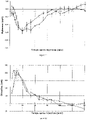
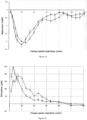
- the injection of human insulin at a dose of 0.125 IU/kg (or 0.09 IU/kg for analogue insulin) is performed subcutaneously in the neck, under the animal's ear at using the Novopen insulin pen fitted with a 31 G needle.
- a drop of blood is taken to determine the blood sugar level using a glucometer.
- Glucose pharmacodynamic curves are then plotted and the time to reach the minimum blood glucose level for each pig is determined and reported as Tmin glucose. The average of the Tmin glucose is then calculated.
- the remaining blood is collected in a dry tube and centrifuged to isolate the serum. Insulin levels in serum samples are measured by the immunoenzymatic Elisa Sandwich method for each pig.
- the pharmacokinetic curves are then plotted. The time to reach the maximum serum insulin concentration for each pig is determined and reported as Tmax insulin. The mean Tmax insulin is then calculated.
- Example Insulin Oligosaccharide Carrier Dose (IU/kg) Number of pigs B1 Aspart - - 0.125 11 B3 human - - 0.125 11
- Example Insulin Oligosaccharide Carrier Dose IU/kg Number of pigs B1 Aspart - - 0.125 16 B6 human 2 Polyanionic compound 1 7.3 mg/mL 0.125 8
- Example Insulin Oligosaccharide Carrier Dose IU/kg Number of pigs B1 Aspart - - 0.125 14 B7 human 2 9.3mM citrate 0.125 12
- Example Insulin Oligosaccharide Carrier Dose IU/kg Number of pigs B2 Lispro - - 0.09 23 89 Lispro 2 9.3mM citrate 0.09 12
- Example Insulin Oligosaccharide Carrier Dose IU/kg Number of pigs B2 Lispro - - 0.09 11 B10 Lispro 2 6mM citrate 0.09 10
- Example Insulin Oligosaccharide Carrier Dose IU/kg Number of pigs B2 Lispro - - 0.09 11 811 Lispro 1 9.3mM citrate 0.09 11
- Example Insulin Oligosaccharide Carrier Dose IU/kg Number of pigs B2 Lispro - - 9 B12 Lispro 1 18.6mM citrate 0.09 11
- Example Insulin Oligosaccharide Carrier Dose IU/kg Number of pigs B2 Lispro - - 0.09 9 B13 Lispro 2 Polyanionic compound 17.3 mg/mL 0.09 11
- Example Insulin Oligosaccharide Carrier Dose IU/kg Number of pigs B2 Lispro - - 0.09 10
- B14 Lispro 2 Polyanionic compound 1 14.6 mg/mL 0.09 11
- Example Insulin Oligosaccharide Carrier Dose IU/kg Number of pigs B2 Lispro - - 0.09 12 B8 Lispro 6 - 0.09 12
- Example Insulin Oligosaccharide Carrier Dose IU/kg Number of pigs B9 Lispro 2 9.3mM citrate 0.09 12 B8 Lispro 6 - 0.09 12
- Example Insulin Oligosaccharide Carrier Dose IU/kg Number of pigs B2 Lispro - - 0.09 12 B15 Lispro 2 to 14.3 mg/mL - 0.09 12
- Example Insulin Oligosaccharide Carrier Dose IU/kg Number of pigs B3 human - - 0.125 10 B96 human 3 - 0.125 9
- Circular dichroism makes it possible to study the secondary and quaternary structure of insulin.
- Insulin monomers organize into dimers and hexamers.
- the hexamer is the most physically and chemically stable form of insulin.
- Insulin lispro exhibits a strong CD signal at 251nm characteristic of the R6 hexameric form (the most stable form).
- the loss of the CD signal at 251 nm is linked to a destabilization of the hexamer (and therefore the first sign of transformation of the hexamer into a dimer).
- EDTA and the EDTA/citrate mixture completely break down the R6 form of insulin lispro( figure 27 ).
- EDTA therefore has a marked destabilizing effect on the hexamer.
- citrate alone, oligosaccharide 2 alone and the oligosaccharide 2/citrate mixture has almost no impact on the CD signal at 251 nm.
- These compounds therefore have almost no impact on the R6 structure of the hexamer and a fortiori on the hexameric structure of insulin, unlike EDTA which destabilizes the hexamer,
- the CD signal at 276 nm (in the absence of m-cresol) is characteristic of the hexamer form of human insulin (hexamer signal around -300 nm, dimer signal between -200 nm and -250 nm and signal monomer below - 200).
- the loss of the CD signal at 276 nm is therefore characteristic of a destabilization of the hexamer into dimers or monomers.
- EDTA and the EDTA/citrate combination have a very marked impact on the hexameric structure of human insulin (complete dissociation of the hexamer into dimers, figure 28 ).
- oligosaccharide 1 has no significant impact on the hexameric structure of human insulin.
- formulations based on oligosaccharide 1 do not dissociate the hexamer from human insulin.
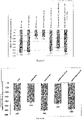
- Human insulin has an isoelectric point of 5.3. At this pH human insulin precipitates. A test demonstrating the formation of a complex of human insulin with the various oligosaccharides or polysaccharides is carried out at the isoelectric point. If an interaction exists, it is possible to solubilize the insulin at its isoelectric point.
- a 200 IU/mL human insulin solution is prepared. Solutions of oligosaccharides or polysaccharides at different concentrations (8, 30 or 100 mg/mL) in water are prepared. An equal volume (50/50) mixture between the insulin solution and the oligosaccharide or polysaccharide solution is carried out to produce a solution containing 100 IU/ML of human insulin and the desired concentration of polysaccharide (4, 15 or 50mg/mL). The pH of the different solutions is adjusted to pH 5.3 by adding 200 mM acetic acid.
- the concentration of oligosaccharide or polysaccharide necessary to solubilize insulin at its isoelectric point can be determined.
- Insulin lispro has an isoelectric point of 5.3. At this pH insulin lispro precipitates. A test demonstrating the formation of a complex of insulin lispro with the various oligosaccharides or polysaccharides is carried out at the isoelectric point. If an interaction exists, it is possible to solubilize the insulin at its isoelectric point.
- the commercial formulation of insulin lispro (Humalog ® ) is dialyzed against 1 mM PO4 buffer (pH 7). After dialysis, the insulin lispro concentration is approximately 90 IU/mL.
- the oligosaccharide or polysaccharide lyophilisate is weighed and dissolved in the insulin lispro solution to produce formulations containing insulin lispro at 90 IU/mL and the oligosaccharide or polysaccharide at the desired concentrations (4, 15 or 50 mg/mL).
- the pH of the different solutions is adjusted to pH 5.3 by adding 200 mM acetic acid.
- the concentration of oligosaccharide or polysaccharide necessary to solubilize insulin at its isoelectric point can be determined. The lower this concentration, the greater the affinity of the oligosaccharide or of the polysaccharide for insulin.
- F1 In order to determine the interactions between the different polysaccharides or oligosaccharides and a model protein such as albumin, a Centricon assay (50kD CutOff membrane) was carried out. A solution of polysaccharide or oligosaccharide at 7.3 mg/mL was diluted one-third in a solution of BSA at 20 mg/mL in PBS (concentration in the mixture: 2.43 mg/mL of polymer, 13, 3 mg/mL albumin and approximately 100mM salt).
Landscapes
- Health & Medical Sciences (AREA)
- Chemical & Material Sciences (AREA)
- Life Sciences & Earth Sciences (AREA)
- Medicinal Chemistry (AREA)
- General Health & Medical Sciences (AREA)
- Pharmacology & Pharmacy (AREA)
- Veterinary Medicine (AREA)
- Engineering & Computer Science (AREA)
- Public Health (AREA)
- Animal Behavior & Ethology (AREA)
- Epidemiology (AREA)
- Chemical Kinetics & Catalysis (AREA)
- Polymers & Plastics (AREA)
- Organic Chemistry (AREA)
- Proteomics, Peptides & Aminoacids (AREA)
- Oil, Petroleum & Natural Gas (AREA)
- General Chemical & Material Sciences (AREA)
- Materials Engineering (AREA)
- Biochemistry (AREA)
- Molecular Biology (AREA)
- Inorganic Chemistry (AREA)
- Dermatology (AREA)
- Diabetes (AREA)
- Endocrinology (AREA)
- Zoology (AREA)
- Gastroenterology & Hepatology (AREA)
- Bioinformatics & Cheminformatics (AREA)
- Immunology (AREA)
- Medicines That Contain Protein Lipid Enzymes And Other Medicines (AREA)
Claims (15)
- Zusammensetzung in wässriger Lösung, umfassend Insulin und mindestens ein Oligosaccharid, dessen durchschnittlicher Polymerisationsgrad zwischen 3 und 6 liegt und dessen Polydispersitätsindex Ip zwischen 1,1 und 2,0 liegt, wobei das Oligosaccharid teilweise substituierten funktionellen Carboxylgruppen aufweist, wobei die unsubstituierten funktionellen Carboxylgruppen salzbildend sind, und ferner umfassend mindestens eine polyanionische Verbindung.
- Zusammensetzung nach Anspruch 1, dadurch gekennzeichnet, dass das Insulin Humaninsulin ist.
- Zusammensetzung nach Anspruch 1, dadurch gekennzeichnet, dass das Insulin ein Analoginsulin ist.
- Zusammensetzung nach einem der vorhergehenden Ansprüche, dadurch gekennzeichnet, dass das Massenverhältnis Oligosaccharid/Insulin zwischen 0,4 und 10 liegt.
- Zusammensetzung nach einem der vorhergehenden Ansprüche, dadurch gekennzeichnet, dass die Konzentration der polyanionischen Verbindung zwischen 1,4 und 35 mg/mL liegt.
- Zusammensetzung nach einem der vorhergehenden Ansprüche, dadurch gekennzeichnet, dass das Oligosaccharid unter den Oligosacchariden der nachstehenden allgemeinen Formel I ausgewählt ist:
 • das Oligosaccharid ein Dextran ist,• F aus der Kopplung zwischen dem Linker R und einer -OH-Funktion des Oligosaccharids entsteht und entweder eine Ester-, Carbamat- oder Etherfunktion ist,• R eine Kette ist, die zwischen 1 und 15 Kohlenstoffatome umfasst, gegebenenfalls verzweigt und/oder ungesättigt ist, die ein oder mehrere Heteroatome wie O, N und/oder S umfasst und mindestens eine Carboxylfunktion aufweist,• Phe ist ein Rest eines Phenylalaninderivats mit der absoluten Konfiguration L oder D, Produkt der Kopplung zwischen dem Amin des Phenylalaninderivats und mindestens einer Säure, die von der R-Gruppe vor der Bindung an Phe getragen wird,• n stellt den molaren Anteil der durch Phe substituierten R dar und liegt zwischen 0,3 und 0,9, vorzugsweise zwischen 0,4 und 0,8, besonders bevorzugt zwischen 0,4 und 0,6,• i stellt den durchschnittlichen molaren Anteil der pro Saccharideinheit getragenen F-R-[Phe]n-Gruppen dar und liegt zwischen 0,5 und 2,5, vorzugsweise zwischen 0,8 und 1,6, vorzugsweise zwischen 1,0 und 1,4, vorzugsweise zwischen 1,0 und 1,2 ;• - wenn R nicht durch Phe substituiert ist, dann sind die Säure oder Säuren der R-Gruppe Kationencarboxylate, vorzugsweise alkalisch wie Na+, K+, Ca2+ oder Mg2+.
 - Zusammensetzung nach einem der vorhergehenden Ansprüche 1 bis 6, dadurch gekennzeichnet, dass die polyanionische Verbindung aus der Gruppe ausgewählt ist, die aus anionischen Molekülen, anionischen Polymeren und Verbindungen besteht, die aus einem Gerüst bestehen, das aus einer diskreten Zahl p zwischen 1 und 8 (1 ≤ p ≤ 8) aus gleichen oder verschiedenen Saccharideinheiten gebildet ist, die durch gleiche oder verschiedene glykosidische Bindungen verknüpft sind, die natürlicherweise Carboxylgruppen tragen oder durch Carboxylgruppen substituiert sind.
- Pharmazeutische Formulierung, umfassend eine Zusammensetzung nach einem der vorhergehenden Ansprüche.
- Verwendung mindestens eines Oligosaccharids mit einem durchschnittlichen Polymerisationsgrad zwischen 3 und 6 und einem Polydispersitätsindex Ip zwischen 1,1 und 2,0 mit einer polyanionischen Verbindung zur Herstellung einer pharmazeutischen Insulinformulierung, die nach der Verabreichung, den Übergang von Insulin in den Blutkreislauf beschleunigt und die Glykämie im Vergleich zu einer oligosaccharidfreien Formulierung allein oder in Mischung mit einer polyanionischen Verbindung schneller senkt.
- Verwendung nach Anspruch 9, dadurch gekennzeichnet, dass das Oligosaccharid unter den Oligosacchariden der nachstehenden allgemeinen Formel I ausgewählt ist:
 • das Oligosaccharid ein Dextran ist,• F aus der Kopplung zwischen dem Linker R und einer -OH-Funktion des Oligosaccharids entsteht und entweder eine Ester-, Carbamat- oder Etherfunktion ist,• R eine Kette ist, die zwischen 1 und 15 Kohlenstoffatome umfasst, gegebenenfalls verzweigt und/oder ungesättigt ist, die ein oder mehrere Heteroatome wie O, N und/oder S umfasst und mindestens eine Carboxylfunktion aufweist,• Phe ist ein Rest eines Phenylalaninderivats mit der absoluten Konfiguration L oder D, Produkt der Kopplung zwischen dem Amin des Phenylalaninderivats und mindestens einer Säure, die von der R-Gruppe vor der Bindung an Phe getragen wird,• n stellt den molaren Anteil der durch Phe substituierten R dar und liegt zwischen 0,3 und 0,9, vorzugsweise zwischen 0,4 und 0,8, besonders bevorzugt zwischen 0,4 und 0,6,• i stellt den durchschnittlichen molaren Anteil der pro Saccharideinheit getragenen F-R-[Phe]n-Gruppen dar und liegt zwischen 0,5 und 2,5, vorzugsweise zwischen 0,8 und 1,6, vorzugsweise zwischen 1,0 und 1,4, vorzugsweise zwischen 1,0 und 1,2 ;• - wenn R nicht durch Phe substituiert ist, dann sind die Säure oder Säuren der R-Gruppe Kationencarboxylate, vorzugsweise alkalisch wie Na+ und K+.
 - Verwendung nach einem der Ansprüche 9 bis 10, dadurch gekennzeichnet, dass die polyanionische Verbindung aus der Gruppe ausgewählt ist, die aus anionischen Molekülen, anionischen Polymeren und Verbindungen besteht, die aus einem Gerüst bestehen, das aus einer diskreten Zahl p zwischen 1 und 8 (1 ≤ p ≤ 8) aus gleichen oder verschiedenen Saccharideinheiten gebildet ist, die durch gleiche oder verschiedene glykosidische Bindungen verknüpft sind, die natürlicherweise Carboxylgruppen tragen oder durch Carboxylgruppen substituiert sind.
- Verfahren zur Herstellung einer Humaninsulinformulierung mit einer Insulinkonzentration zwischen 240 und 3000 µM (40 und 500 UI/mL), deren Wirkungsfrist beim Menschen geringer ist als der der Referenzformulierung bei gleicher Insulinkonzentration in Abwesenheit von Oligosaccharid, dadurch gekennzeichnet, dass es einen Schritt der Zugabe mindestens eines Oligosaccharids zu der Formulierung umfasst, dessen durchschnittlicher Polymerisationsgrad zwischen 3 und 6 liegt und dessen Polydispersitätsindex Ip zwischen 1,1 und 2,0 liegt und das teilweise substituierte funktionelle Carboxylgruppen aufweist, und, dass es ferner einen Schritt der Zugabe mindestens einer polyanionischen Verbindung zu der Formulierung umfasst.
- Verfahren zur Herstellung einer Analoginsulinformulierung mit einer Insulinkonzentration zwischen 240 und 3000 µM (40 und 500 UI/mL), deren Wirkungsfrist beim Menschen geringer ist als der der Referenzformulierung bei gleicher Insulinkonzentration in Abwesenheit von Oligosaccharid, dadurch gekennzeichnet, dass es einen Schritt der Zugabe mindestens eines Oligosaccharids zu der Formulierung umfasst, dessen durchschnittlicher Polymerisationsgrad zwischen 3 und 6 liegt und dessen Polydispersitätsindex Ip zwischen 1,1 und 2,0 liegt und das teilweise substituierte funktionelle Carboxylgruppen aufweist, und, dass es ferner einen Schritt der Zugabe mindestens einer polyanionischen Verbindung zu der Formulierung umfasst.
- Verfahren nach Anspruch 12 oder 13, dadurch gekennzeichnet, dass das Oligosaccharid unter den Oligosacchariden der nachstehenden allgemeinen Formel I ausgewählt ist:
 • das Oligosaccharid ein Dextran ist,• F aus der Kopplung zwischen dem Linker R und einer -OH-Funktion des Oligosaccharids entsteht und entweder eine Ester-, Carbamat- oder Etherfunktion ist,• R eine Kette ist, die zwischen 1 und 15 Kohlenstoffatome umfasst, gegebenenfalls verzweigt und/oder ungesättigt ist, die ein oder mehrere Heteroatome wie O, N und/oder S umfasst und mindestens eine Carboxylfunktion aufweist,• Phe ist ein Rest eines Phenylalaninderivats mit der absoluten Konfiguration L oder D, Produkt der Kopplung zwischen dem Amin des Phenylalaninderivats und mindestens einer Säure, die von der R-Gruppe vor der Bindung an Phe getragen wird,• n stellt den molaren Anteil der durch Phe substituierten R dar und liegt zwischen 0,3 und 0,9, vorzugsweise zwischen 0,4 und 0,8, besonders bevorzugt zwischen 0,4 und 0,6,• i stellt den durchschnittlichen molaren Anteil der pro Saccharideinheit getragenen F-R-[Phe]n-Gruppen dar und liegt zwischen 0,5 und 2,5, vorzugsweise zwischen 0,8 und 1,6, vorzugsweise zwischen 1,0 und 1,4, vorzugsweise zwischen 1,0 und 1,2 ;• - wenn R nicht durch Phe substituiert ist, dann sind die Säure oder Säuren der R-Gruppe Kationencarboxylate, vorzugsweise alkalisch wie Na+ und K+.
 - Verfahren nach einem der Ansprüche 12 bis 13, dadurch gekennzeichnet, dass die polyanionische Verbindung aus der Gruppe ausgewählt ist, die aus anionischen Molekülen, anionischen Polymeren und Verbindungen besteht, die aus einem Gerüst bestehen, das aus einer diskreten Zahl p zwischen 1 und 8 (1 ≤ p ≤ 8) aus gleichen oder verschiedenen Saccharideinheiten gebildet ist, die durch gleiche oder verschiedene glykosidische Bindungen verknüpft sind, die natürlicherweise Carboxylgruppen tragen oder durch Carboxylgruppen substituiert sind.
Applications Claiming Priority (2)
| Application Number | Priority Date | Filing Date | Title |
|---|---|---|---|
| US13/287,793 US20120094902A1 (en) | 2009-03-27 | 2011-11-02 | Fast-acting insulin formulation |
| PCT/FR2012/052543 WO2013064787A1 (fr) | 2011-11-02 | 2012-11-02 | Formulation à action rapide d'insuline comprenant un oligosaccharide |
Publications (2)
| Publication Number | Publication Date |
|---|---|
| EP2773675A1 EP2773675A1 (de) | 2014-09-10 |
| EP2773675B1 true EP2773675B1 (de) | 2023-03-01 |
Family
ID=47297312
Family Applications (1)
| Application Number | Title | Priority Date | Filing Date |
|---|---|---|---|
| EP12797948.2A Active EP2773675B1 (de) | 2011-11-02 | 2012-11-02 | Schnell wirkende insulinformulierung mit einem oligosaccharid |
Country Status (2)
| Country | Link |
|---|---|
| EP (1) | EP2773675B1 (de) |
| WO (1) | WO2013064787A1 (de) |
Families Citing this family (11)
| Publication number | Priority date | Publication date | Assignee | Title |
|---|---|---|---|---|
| US20130231281A1 (en) | 2011-11-02 | 2013-09-05 | Adocia | Rapid acting insulin formulation comprising an oligosaccharide |
| EP2920200A1 (de) * | 2012-11-13 | 2015-09-23 | Adocia | Substituierte anionische verbindungen aus einem rückgrat aus einer diskreten anzahl von saccharideinheiten |
| FR2997952B1 (fr) * | 2012-11-13 | 2014-11-21 | Adocia | Composes anioniques substitues constitues d'un squelette forme d'un nombre discret d'unites saccharidiques |
| EP2919804B1 (de) | 2012-11-13 | 2018-01-31 | Adocia | Schnell wirkende insulinformulierung mit einer anionischen substituierten verbindung |
| FR2997857B1 (fr) * | 2012-11-14 | 2020-11-06 | Adocia | Formulation a action rapide d'insuline comprenant un compose anionique substitue |
| FR3020947B1 (fr) | 2014-05-14 | 2018-08-31 | Adocia | Composition aqueuse comprenant au moins une proteine et un agent solubilisant, sa preparation et ses utilisations |
| US9795678B2 (en) | 2014-05-14 | 2017-10-24 | Adocia | Fast-acting insulin composition comprising a substituted anionic compound and a polyanionic compound |
| FR3020952B1 (fr) * | 2014-05-14 | 2017-09-08 | Adocia | Formulation a action rapide d'insuline comprenant un compose anionique substitue et un compose polyanionique |
| FR3043557B1 (fr) * | 2015-11-16 | 2019-05-31 | Adocia | Composition a action rapide d'insuline comprenant un citrate substitue |
| EP3377038A1 (de) * | 2015-11-16 | 2018-09-26 | Adocia | Rasch wirkende insulinzusammensetzung mit einer substituierten anionischen verbindung und einer polyanionischen verbindung |
| US12178852B2 (en) | 2020-09-30 | 2024-12-31 | Willow Laboratories, Inc. | Insulin formulations and uses in infusion devices |
Family Cites Families (7)
| Publication number | Priority date | Publication date | Assignee | Title |
|---|---|---|---|---|
| FR702316A (fr) | 1929-10-04 | 1931-04-04 | Bosch Robert | Cercle de commande destiné à être fixé sur le volant de direction de voitures |
| FR901478A (fr) | 1943-01-26 | 1945-07-27 | Licentia Gmbh | Procédé d'équilibrage de lignes pupinisées exploitées par courants porteurs |
| US7713929B2 (en) | 2006-04-12 | 2010-05-11 | Biodel Inc. | Rapid acting and long acting insulin combination formulations |
| FR2940802A1 (fr) * | 2008-10-10 | 2010-07-09 | Adocia | Complexe entre l'insuline humaine et un polymere amphiphile et utilisation de ce complexe pour la preparation d'une formulation d'insuline humaine rapide. |
| FR2943538B1 (fr) | 2009-03-27 | 2011-05-20 | Adocia | Formulation a action rapide d'insuline recombinante humaine |
| US20120094902A1 (en) * | 2009-03-27 | 2012-04-19 | Adocia | Fast-acting insulin formulation |
| WO2011098962A2 (fr) * | 2010-02-09 | 2011-08-18 | Adocia | Polysaccharides anioniques fonctionnalisés par au moins deux groupements hydrophobes portés par un spacer au moins trivalent |
-
2012
- 2012-11-02 EP EP12797948.2A patent/EP2773675B1/de active Active
- 2012-11-02 WO PCT/FR2012/052543 patent/WO2013064787A1/fr not_active Ceased
Also Published As
| Publication number | Publication date |
|---|---|
| WO2013064787A1 (fr) | 2013-05-10 |
| EP2773675A1 (de) | 2014-09-10 |
Similar Documents
| Publication | Publication Date | Title |
|---|---|---|
| EP2773675B1 (de) | Schnell wirkende insulinformulierung mit einem oligosaccharid | |
| EP2919804B1 (de) | Schnell wirkende insulinformulierung mit einer anionischen substituierten verbindung | |
| US9492467B2 (en) | Rapid-acting insulin formulation comprising an oligosaccharide | |
| EP2814461B1 (de) | Injektionslösung mit einem ph-wert von 7 mit wenigstens basalinsulin mit einem pi zwischen 5,8 und 8,5 sowie substituierter co-poly(aminosäure) | |
| EP2411037B1 (de) | Schnell wirkende insulinformulierung | |
| EP2741765B9 (de) | Injektionslösung mit mindestens einer art von basalinsulin | |
| JP5654498B2 (ja) | ベンダムスチン環状多糖組成物 | |
| EP2956172B1 (de) | Injektionslösung mit einem ph-wert von 7 mit mindestens einem basalinsulin mit einem isoelektrischen punkt zwischen 5,8 und 8,5 sowie hydrophobierten anionischen polymer | |
| FR2940802A1 (fr) | Complexe entre l'insuline humaine et un polymere amphiphile et utilisation de ce complexe pour la preparation d'une formulation d'insuline humaine rapide. | |
| EP3142686A2 (de) | Schnell wirkende insulinzusammensetzung mit einer substituierten anionischen verbindung und einer polyanionischen verbindung | |
| WO2015173373A1 (fr) | Formulation à action rapide d'insuline comprenant un composé anionique substitué et un composé polyanionique | |
| EP3373953B1 (de) | Schnell wirkende insulinzusammensetzung mit einem substituierten citrat | |
| FR2997857A1 (fr) | Formulation a action rapide d'insuline comprenant un compose anionique substitue | |
| FR2984749A1 (fr) | Solution injectable a ph 7 comprenant au moins une insuline basale dont le pi est compris entre 5,8 et 8,5 en combinaison avec une hormone gastro-intestinale a visee therapeutique |
Legal Events
| Date | Code | Title | Description |
|---|---|---|---|
| PUAI | Public reference made under article 153(3) epc to a published international application that has entered the european phase |
Free format text: ORIGINAL CODE: 0009012 |
|
| 17P | Request for examination filed |
Effective date: 20140505 |
|
| AK | Designated contracting states |
Kind code of ref document: A1 Designated state(s): AL AT BE BG CH CY CZ DE DK EE ES FI FR GB GR HR HU IE IS IT LI LT LU LV MC MK MT NL NO PL PT RO RS SE SI SK SM TR |
|
| DAX | Request for extension of the european patent (deleted) | ||
| RIN1 | Information on inventor provided before grant (corrected) |
Inventor name: SOULA, OLIVIER Inventor name: SOULA, GERARD Inventor name: SOULA, REMI |
|
| RIN1 | Information on inventor provided before grant (corrected) |
Inventor name: SOULA, REMI Inventor name: SOULA, OLIVIER Inventor name: SOULA, GERARD |
|
| STAA | Information on the status of an ep patent application or granted ep patent |
Free format text: STATUS: EXAMINATION IS IN PROGRESS |
|
| 17Q | First examination report despatched |
Effective date: 20170908 |
|
| GRAP | Despatch of communication of intention to grant a patent |
Free format text: ORIGINAL CODE: EPIDOSNIGR1 |
|
| STAA | Information on the status of an ep patent application or granted ep patent |
Free format text: STATUS: GRANT OF PATENT IS INTENDED |
|
| INTG | Intention to grant announced |
Effective date: 20220907 |
|
| RIN1 | Information on inventor provided before grant (corrected) |
Inventor name: SOULA, GERARD Inventor name: SOULA, REMI Inventor name: SOULA, OLIVIER |
|
| GRAS | Grant fee paid |
Free format text: ORIGINAL CODE: EPIDOSNIGR3 |
|
| GRAA | (expected) grant |
Free format text: ORIGINAL CODE: 0009210 |
|
| STAA | Information on the status of an ep patent application or granted ep patent |
Free format text: STATUS: THE PATENT HAS BEEN GRANTED |
|
| AK | Designated contracting states |
Kind code of ref document: B1 Designated state(s): AL AT BE BG CH CY CZ DE DK EE ES FI FR GB GR HR HU IE IS IT LI LT LU LV MC MK MT NL NO PL PT RO RS SE SI SK SM TR |
|
| REG | Reference to a national code |
Ref country code: GB Ref legal event code: FG4D Free format text: NOT ENGLISH |
|
| REG | Reference to a national code |
Ref country code: CH Ref legal event code: EP Ref country code: AT Ref legal event code: REF Ref document number: 1550941 Country of ref document: AT Kind code of ref document: T Effective date: 20230315 |
|
| REG | Reference to a national code |
Ref country code: DE Ref legal event code: R096 Ref document number: 602012079327 Country of ref document: DE |
|
| REG | Reference to a national code |
Ref country code: IE Ref legal event code: FG4D Free format text: LANGUAGE OF EP DOCUMENT: FRENCH |
|
| P01 | Opt-out of the competence of the unified patent court (upc) registered |
Effective date: 20230514 |
|
| REG | Reference to a national code |
Ref country code: LT Ref legal event code: MG9D |
|
| REG | Reference to a national code |
Ref country code: NL Ref legal event code: MP Effective date: 20230301 |
|
| PG25 | Lapsed in a contracting state [announced via postgrant information from national office to epo] |
Ref country code: RS Free format text: LAPSE BECAUSE OF FAILURE TO SUBMIT A TRANSLATION OF THE DESCRIPTION OR TO PAY THE FEE WITHIN THE PRESCRIBED TIME-LIMIT Effective date: 20230301 Ref country code: NO Free format text: LAPSE BECAUSE OF FAILURE TO SUBMIT A TRANSLATION OF THE DESCRIPTION OR TO PAY THE FEE WITHIN THE PRESCRIBED TIME-LIMIT Effective date: 20230601 Ref country code: LV Free format text: LAPSE BECAUSE OF FAILURE TO SUBMIT A TRANSLATION OF THE DESCRIPTION OR TO PAY THE FEE WITHIN THE PRESCRIBED TIME-LIMIT Effective date: 20230301 Ref country code: LT Free format text: LAPSE BECAUSE OF FAILURE TO SUBMIT A TRANSLATION OF THE DESCRIPTION OR TO PAY THE FEE WITHIN THE PRESCRIBED TIME-LIMIT Effective date: 20230301 Ref country code: HR Free format text: LAPSE BECAUSE OF FAILURE TO SUBMIT A TRANSLATION OF THE DESCRIPTION OR TO PAY THE FEE WITHIN THE PRESCRIBED TIME-LIMIT Effective date: 20230301 Ref country code: ES Free format text: LAPSE BECAUSE OF FAILURE TO SUBMIT A TRANSLATION OF THE DESCRIPTION OR TO PAY THE FEE WITHIN THE PRESCRIBED TIME-LIMIT Effective date: 20230301 |
|
| REG | Reference to a national code |
Ref country code: AT Ref legal event code: MK05 Ref document number: 1550941 Country of ref document: AT Kind code of ref document: T Effective date: 20230301 |
|
| PG25 | Lapsed in a contracting state [announced via postgrant information from national office to epo] |
Ref country code: SE Free format text: LAPSE BECAUSE OF FAILURE TO SUBMIT A TRANSLATION OF THE DESCRIPTION OR TO PAY THE FEE WITHIN THE PRESCRIBED TIME-LIMIT Effective date: 20230301 Ref country code: PL Free format text: LAPSE BECAUSE OF FAILURE TO SUBMIT A TRANSLATION OF THE DESCRIPTION OR TO PAY THE FEE WITHIN THE PRESCRIBED TIME-LIMIT Effective date: 20230301 Ref country code: NL Free format text: LAPSE BECAUSE OF FAILURE TO SUBMIT A TRANSLATION OF THE DESCRIPTION OR TO PAY THE FEE WITHIN THE PRESCRIBED TIME-LIMIT Effective date: 20230301 Ref country code: GR Free format text: LAPSE BECAUSE OF FAILURE TO SUBMIT A TRANSLATION OF THE DESCRIPTION OR TO PAY THE FEE WITHIN THE PRESCRIBED TIME-LIMIT Effective date: 20230602 Ref country code: FI Free format text: LAPSE BECAUSE OF FAILURE TO SUBMIT A TRANSLATION OF THE DESCRIPTION OR TO PAY THE FEE WITHIN THE PRESCRIBED TIME-LIMIT Effective date: 20230301 |
|
| PG25 | Lapsed in a contracting state [announced via postgrant information from national office to epo] |
Ref country code: SM Free format text: LAPSE BECAUSE OF FAILURE TO SUBMIT A TRANSLATION OF THE DESCRIPTION OR TO PAY THE FEE WITHIN THE PRESCRIBED TIME-LIMIT Effective date: 20230301 Ref country code: RO Free format text: LAPSE BECAUSE OF FAILURE TO SUBMIT A TRANSLATION OF THE DESCRIPTION OR TO PAY THE FEE WITHIN THE PRESCRIBED TIME-LIMIT Effective date: 20230301 Ref country code: PT Free format text: LAPSE BECAUSE OF FAILURE TO SUBMIT A TRANSLATION OF THE DESCRIPTION OR TO PAY THE FEE WITHIN THE PRESCRIBED TIME-LIMIT Effective date: 20230703 Ref country code: EE Free format text: LAPSE BECAUSE OF FAILURE TO SUBMIT A TRANSLATION OF THE DESCRIPTION OR TO PAY THE FEE WITHIN THE PRESCRIBED TIME-LIMIT Effective date: 20230301 Ref country code: CZ Free format text: LAPSE BECAUSE OF FAILURE TO SUBMIT A TRANSLATION OF THE DESCRIPTION OR TO PAY THE FEE WITHIN THE PRESCRIBED TIME-LIMIT Effective date: 20230301 Ref country code: AT Free format text: LAPSE BECAUSE OF FAILURE TO SUBMIT A TRANSLATION OF THE DESCRIPTION OR TO PAY THE FEE WITHIN THE PRESCRIBED TIME-LIMIT Effective date: 20230301 |
|
| PG25 | Lapsed in a contracting state [announced via postgrant information from national office to epo] |
Ref country code: SK Free format text: LAPSE BECAUSE OF FAILURE TO SUBMIT A TRANSLATION OF THE DESCRIPTION OR TO PAY THE FEE WITHIN THE PRESCRIBED TIME-LIMIT Effective date: 20230301 Ref country code: IS Free format text: LAPSE BECAUSE OF FAILURE TO SUBMIT A TRANSLATION OF THE DESCRIPTION OR TO PAY THE FEE WITHIN THE PRESCRIBED TIME-LIMIT Effective date: 20230701 |
|
| REG | Reference to a national code |
Ref country code: DE Ref legal event code: R097 Ref document number: 602012079327 Country of ref document: DE |
|
| PLBE | No opposition filed within time limit |
Free format text: ORIGINAL CODE: 0009261 |
|
| STAA | Information on the status of an ep patent application or granted ep patent |
Free format text: STATUS: NO OPPOSITION FILED WITHIN TIME LIMIT |
|
| PG25 | Lapsed in a contracting state [announced via postgrant information from national office to epo] |
Ref country code: SI Free format text: LAPSE BECAUSE OF FAILURE TO SUBMIT A TRANSLATION OF THE DESCRIPTION OR TO PAY THE FEE WITHIN THE PRESCRIBED TIME-LIMIT Effective date: 20230301 Ref country code: DK Free format text: LAPSE BECAUSE OF FAILURE TO SUBMIT A TRANSLATION OF THE DESCRIPTION OR TO PAY THE FEE WITHIN THE PRESCRIBED TIME-LIMIT Effective date: 20230301 |
|
| 26N | No opposition filed |
Effective date: 20231204 |
|
| PG25 | Lapsed in a contracting state [announced via postgrant information from national office to epo] |
Ref country code: IT Free format text: LAPSE BECAUSE OF FAILURE TO SUBMIT A TRANSLATION OF THE DESCRIPTION OR TO PAY THE FEE WITHIN THE PRESCRIBED TIME-LIMIT Effective date: 20230301 |
|
| REG | Reference to a national code |
Ref country code: CH Ref legal event code: PL |
|
| PG25 | Lapsed in a contracting state [announced via postgrant information from national office to epo] |
Ref country code: MC Free format text: LAPSE BECAUSE OF FAILURE TO SUBMIT A TRANSLATION OF THE DESCRIPTION OR TO PAY THE FEE WITHIN THE PRESCRIBED TIME-LIMIT Effective date: 20230301 |
|
| PG25 | Lapsed in a contracting state [announced via postgrant information from national office to epo] |
Ref country code: LU Free format text: LAPSE BECAUSE OF NON-PAYMENT OF DUE FEES Effective date: 20231102 |
|
| PG25 | Lapsed in a contracting state [announced via postgrant information from national office to epo] |
Ref country code: CH Free format text: LAPSE BECAUSE OF NON-PAYMENT OF DUE FEES Effective date: 20231130 |
|
| PG25 | Lapsed in a contracting state [announced via postgrant information from national office to epo] |
Ref country code: MC Free format text: LAPSE BECAUSE OF FAILURE TO SUBMIT A TRANSLATION OF THE DESCRIPTION OR TO PAY THE FEE WITHIN THE PRESCRIBED TIME-LIMIT Effective date: 20230301 Ref country code: LU Free format text: LAPSE BECAUSE OF NON-PAYMENT OF DUE FEES Effective date: 20231102 Ref country code: CH Free format text: LAPSE BECAUSE OF NON-PAYMENT OF DUE FEES Effective date: 20231130 |
|
| REG | Reference to a national code |
Ref country code: BE Ref legal event code: MM Effective date: 20231130 |
|
| REG | Reference to a national code |
Ref country code: IE Ref legal event code: MM4A |
|
| PG25 | Lapsed in a contracting state [announced via postgrant information from national office to epo] |
Ref country code: IE Free format text: LAPSE BECAUSE OF NON-PAYMENT OF DUE FEES Effective date: 20231102 |
|
| PG25 | Lapsed in a contracting state [announced via postgrant information from national office to epo] |
Ref country code: BE Free format text: LAPSE BECAUSE OF NON-PAYMENT OF DUE FEES Effective date: 20231130 |
|
| PG25 | Lapsed in a contracting state [announced via postgrant information from national office to epo] |
Ref country code: IE Free format text: LAPSE BECAUSE OF NON-PAYMENT OF DUE FEES Effective date: 20231102 Ref country code: BE Free format text: LAPSE BECAUSE OF NON-PAYMENT OF DUE FEES Effective date: 20231130 |
|
| PG25 | Lapsed in a contracting state [announced via postgrant information from national office to epo] |
Ref country code: BG Free format text: LAPSE BECAUSE OF FAILURE TO SUBMIT A TRANSLATION OF THE DESCRIPTION OR TO PAY THE FEE WITHIN THE PRESCRIBED TIME-LIMIT Effective date: 20230301 |
|
| PG25 | Lapsed in a contracting state [announced via postgrant information from national office to epo] |
Ref country code: BG Free format text: LAPSE BECAUSE OF FAILURE TO SUBMIT A TRANSLATION OF THE DESCRIPTION OR TO PAY THE FEE WITHIN THE PRESCRIBED TIME-LIMIT Effective date: 20230301 |
|
| PGFP | Annual fee paid to national office [announced via postgrant information from national office to epo] |
Ref country code: DE Payment date: 20241111 Year of fee payment: 13 |
|
| PGFP | Annual fee paid to national office [announced via postgrant information from national office to epo] |
Ref country code: GB Payment date: 20241002 Year of fee payment: 13 |
|
| PGFP | Annual fee paid to national office [announced via postgrant information from national office to epo] |
Ref country code: FR Payment date: 20250530 Year of fee payment: 13 |
|
| PG25 | Lapsed in a contracting state [announced via postgrant information from national office to epo] |
Ref country code: CY Free format text: LAPSE BECAUSE OF FAILURE TO SUBMIT A TRANSLATION OF THE DESCRIPTION OR TO PAY THE FEE WITHIN THE PRESCRIBED TIME-LIMIT; INVALID AB INITIO Effective date: 20121102 |
|
| PG25 | Lapsed in a contracting state [announced via postgrant information from national office to epo] |
Ref country code: HU Free format text: LAPSE BECAUSE OF FAILURE TO SUBMIT A TRANSLATION OF THE DESCRIPTION OR TO PAY THE FEE WITHIN THE PRESCRIBED TIME-LIMIT; INVALID AB INITIO Effective date: 20121102 |
|
| PG25 | Lapsed in a contracting state [announced via postgrant information from national office to epo] |
Ref country code: TR Free format text: LAPSE BECAUSE OF FAILURE TO SUBMIT A TRANSLATION OF THE DESCRIPTION OR TO PAY THE FEE WITHIN THE PRESCRIBED TIME-LIMIT Effective date: 20230301 |