EP2774896B1 - Substrat hydroponique de verre expansé - Google Patents
Substrat hydroponique de verre expansé Download PDFInfo
- Publication number
- EP2774896B1 EP2774896B1 EP13275041.5A EP13275041A EP2774896B1 EP 2774896 B1 EP2774896 B1 EP 2774896B1 EP 13275041 A EP13275041 A EP 13275041A EP 2774896 B1 EP2774896 B1 EP 2774896B1
- Authority
- EP
- European Patent Office
- Prior art keywords
- foamed glass
- degrees celsius
- mixture
- degrees fahrenheit
- degrees
- Prior art date
- Legal status (The legal status is an assumption and is not a legal conclusion. Google has not performed a legal analysis and makes no representation as to the accuracy of the status listed.)
- Not-in-force
Links
- 239000011521 glass Substances 0.000 title claims description 92
- 239000000758 substrate Substances 0.000 title claims description 57
- 239000011148 porous material Substances 0.000 claims description 46
- 238000000034 method Methods 0.000 claims description 41
- 239000000203 mixture Substances 0.000 claims description 40
- XLYOFNOQVPJJNP-UHFFFAOYSA-N water Substances O XLYOFNOQVPJJNP-UHFFFAOYSA-N 0.000 claims description 28
- 239000000843 powder Substances 0.000 claims description 20
- 238000005187 foaming Methods 0.000 claims description 18
- 230000008635 plant growth Effects 0.000 claims description 18
- VTYYLEPIZMXCLO-UHFFFAOYSA-L Calcium carbonate Chemical group [Ca+2].[O-]C([O-])=O VTYYLEPIZMXCLO-UHFFFAOYSA-L 0.000 claims description 14
- 239000004088 foaming agent Substances 0.000 claims description 10
- 239000003795 chemical substances by application Substances 0.000 claims description 9
- 238000010304 firing Methods 0.000 claims description 8
- 239000001963 growth medium Substances 0.000 claims description 8
- 229910000019 calcium carbonate Inorganic materials 0.000 claims description 7
- 239000002699 waste material Substances 0.000 claims description 6
- 238000001035 drying Methods 0.000 claims description 5
- 235000019739 Dicalciumphosphate Nutrition 0.000 claims description 4
- 239000001506 calcium phosphate Substances 0.000 claims description 4
- NEFBYIFKOOEVPA-UHFFFAOYSA-K dicalcium phosphate Chemical group [Ca+2].[Ca+2].[O-]P([O-])([O-])=O NEFBYIFKOOEVPA-UHFFFAOYSA-K 0.000 claims description 4
- 229940038472 dicalcium phosphate Drugs 0.000 claims description 4
- 229910000390 dicalcium phosphate Inorganic materials 0.000 claims description 4
- 238000010924 continuous production Methods 0.000 claims description 3
- 238000001816 cooling Methods 0.000 claims description 3
- 238000004090 dissolution Methods 0.000 claims description 3
- 239000011152 fibreglass Substances 0.000 claims description 3
- 239000006179 pH buffering agent Substances 0.000 claims description 3
- 238000005245 sintering Methods 0.000 claims description 3
- 238000010791 quenching Methods 0.000 claims description 2
- 230000000171 quenching effect Effects 0.000 claims description 2
- 239000000463 material Substances 0.000 description 18
- 239000008188 pellet Substances 0.000 description 18
- 239000002689 soil Substances 0.000 description 14
- 238000005516 engineering process Methods 0.000 description 11
- CURLTUGMZLYLDI-UHFFFAOYSA-N Carbon dioxide Chemical compound O=C=O CURLTUGMZLYLDI-UHFFFAOYSA-N 0.000 description 10
- 241000196324 Embryophyta Species 0.000 description 10
- 239000006260 foam Substances 0.000 description 7
- 235000015097 nutrients Nutrition 0.000 description 6
- 230000008569 process Effects 0.000 description 6
- VYPSYNLAJGMNEJ-UHFFFAOYSA-N Silicium dioxide Chemical compound O=[Si]=O VYPSYNLAJGMNEJ-UHFFFAOYSA-N 0.000 description 5
- 239000001569 carbon dioxide Substances 0.000 description 5
- 229910002092 carbon dioxide Inorganic materials 0.000 description 5
- 238000011049 filling Methods 0.000 description 5
- 239000000243 solution Substances 0.000 description 5
- 239000003381 stabilizer Substances 0.000 description 5
- 239000000047 product Substances 0.000 description 4
- 238000005273 aeration Methods 0.000 description 3
- 239000007789 gas Substances 0.000 description 3
- 239000003501 hydroponics Substances 0.000 description 3
- 238000004519 manufacturing process Methods 0.000 description 3
- 239000011159 matrix material Substances 0.000 description 3
- 239000002609 medium Substances 0.000 description 3
- 238000012986 modification Methods 0.000 description 3
- 230000004048 modification Effects 0.000 description 3
- 239000003002 pH adjusting agent Substances 0.000 description 3
- 239000002245 particle Substances 0.000 description 3
- 239000002243 precursor Substances 0.000 description 3
- UQSXHKLRYXJYBZ-UHFFFAOYSA-N Iron oxide Chemical compound [Fe]=O UQSXHKLRYXJYBZ-UHFFFAOYSA-N 0.000 description 2
- GWEVSGVZZGPLCZ-UHFFFAOYSA-N Titan oxide Chemical compound O=[Ti]=O GWEVSGVZZGPLCZ-UHFFFAOYSA-N 0.000 description 2
- 230000009471 action Effects 0.000 description 2
- 239000000654 additive Substances 0.000 description 2
- 238000004873 anchoring Methods 0.000 description 2
- 238000000137 annealing Methods 0.000 description 2
- QVGXLLKOCUKJST-UHFFFAOYSA-N atomic oxygen Chemical compound [O] QVGXLLKOCUKJST-UHFFFAOYSA-N 0.000 description 2
- 239000000292 calcium oxide Substances 0.000 description 2
- ODINCKMPIJJUCX-UHFFFAOYSA-N calcium oxide Inorganic materials [Ca]=O ODINCKMPIJJUCX-UHFFFAOYSA-N 0.000 description 2
- 239000000919 ceramic Substances 0.000 description 2
- 238000009826 distribution Methods 0.000 description 2
- 230000012010 growth Effects 0.000 description 2
- 238000010438 heat treatment Methods 0.000 description 2
- 239000004009 herbicide Substances 0.000 description 2
- 229910052500 inorganic mineral Inorganic materials 0.000 description 2
- 239000011707 mineral Substances 0.000 description 2
- 235000010755 mineral Nutrition 0.000 description 2
- 229910052760 oxygen Inorganic materials 0.000 description 2
- 239000001301 oxygen Substances 0.000 description 2
- 239000003415 peat Substances 0.000 description 2
- 239000010451 perlite Substances 0.000 description 2
- 235000019362 perlite Nutrition 0.000 description 2
- 239000000575 pesticide Substances 0.000 description 2
- 229920000642 polymer Polymers 0.000 description 2
- 239000006064 precursor glass Substances 0.000 description 2
- 230000002786 root growth Effects 0.000 description 2
- 238000005029 sieve analysis Methods 0.000 description 2
- 239000000377 silicon dioxide Substances 0.000 description 2
- 239000005361 soda-lime glass Substances 0.000 description 2
- 229910001220 stainless steel Inorganic materials 0.000 description 2
- 239000010935 stainless steel Substances 0.000 description 2
- 239000000126 substance Substances 0.000 description 2
- BTBUEUYNUDRHOZ-UHFFFAOYSA-N Borate Chemical compound [O-]B([O-])[O-] BTBUEUYNUDRHOZ-UHFFFAOYSA-N 0.000 description 1
- 235000019738 Limestone Nutrition 0.000 description 1
- KKCBUQHMOMHUOY-UHFFFAOYSA-N Na2O Inorganic materials [O-2].[Na+].[Na+] KKCBUQHMOMHUOY-UHFFFAOYSA-N 0.000 description 1
- BPQQTUXANYXVAA-UHFFFAOYSA-N Orthosilicate Chemical compound [O-][Si]([O-])([O-])[O-] BPQQTUXANYXVAA-UHFFFAOYSA-N 0.000 description 1
- 206010033546 Pallor Diseases 0.000 description 1
- 239000004698 Polyethylene Substances 0.000 description 1
- 239000004793 Polystyrene Substances 0.000 description 1
- 229910000831 Steel Inorganic materials 0.000 description 1
- NINIDFKCEFEMDL-UHFFFAOYSA-N Sulfur Chemical compound [S] NINIDFKCEFEMDL-UHFFFAOYSA-N 0.000 description 1
- 230000002378 acidificating effect Effects 0.000 description 1
- 239000012670 alkaline solution Substances 0.000 description 1
- 230000004075 alteration Effects 0.000 description 1
- PNEYBMLMFCGWSK-UHFFFAOYSA-N aluminium oxide Inorganic materials [O-2].[O-2].[O-2].[Al+3].[Al+3] PNEYBMLMFCGWSK-UHFFFAOYSA-N 0.000 description 1
- 238000004458 analytical method Methods 0.000 description 1
- 230000015572 biosynthetic process Effects 0.000 description 1
- 239000005385 borate glass Substances 0.000 description 1
- 239000005388 borosilicate glass Substances 0.000 description 1
- FUFJGUQYACFECW-UHFFFAOYSA-L calcium hydrogenphosphate Chemical compound [Ca+2].OP([O-])([O-])=O FUFJGUQYACFECW-UHFFFAOYSA-L 0.000 description 1
- BRPQOXSCLDDYGP-UHFFFAOYSA-N calcium oxide Chemical compound [O-2].[Ca+2] BRPQOXSCLDDYGP-UHFFFAOYSA-N 0.000 description 1
- 239000000378 calcium silicate Substances 0.000 description 1
- 229910052918 calcium silicate Inorganic materials 0.000 description 1
- OYACROKNLOSFPA-UHFFFAOYSA-N calcium;dioxido(oxo)silane Chemical compound [Ca+2].[O-][Si]([O-])=O OYACROKNLOSFPA-UHFFFAOYSA-N 0.000 description 1
- 150000001768 cations Chemical class 0.000 description 1
- 210000004027 cell Anatomy 0.000 description 1
- 239000004927 clay Substances 0.000 description 1
- 229910052681 coesite Inorganic materials 0.000 description 1
- 239000003086 colorant Substances 0.000 description 1
- 230000007797 corrosion Effects 0.000 description 1
- 238000005260 corrosion Methods 0.000 description 1
- 229910052593 corundum Inorganic materials 0.000 description 1
- 229910052906 cristobalite Inorganic materials 0.000 description 1
- 238000005520 cutting process Methods 0.000 description 1
- 238000000354 decomposition reaction Methods 0.000 description 1
- 230000003247 decreasing effect Effects 0.000 description 1
- 230000002939 deleterious effect Effects 0.000 description 1
- 238000010586 diagram Methods 0.000 description 1
- 229940095079 dicalcium phosphate anhydrous Drugs 0.000 description 1
- 238000009792 diffusion process Methods 0.000 description 1
- 238000011067 equilibration Methods 0.000 description 1
- 230000003090 exacerbative effect Effects 0.000 description 1
- 210000003608 fece Anatomy 0.000 description 1
- 239000003337 fertilizer Substances 0.000 description 1
- 238000001914 filtration Methods 0.000 description 1
- 239000012467 final product Substances 0.000 description 1
- 239000005357 flat glass Substances 0.000 description 1
- 239000012530 fluid Substances 0.000 description 1
- 239000010881 fly ash Substances 0.000 description 1
- 239000011494 foam glass Substances 0.000 description 1
- 230000006870 function Effects 0.000 description 1
- 238000010413 gardening Methods 0.000 description 1
- 230000035784 germination Effects 0.000 description 1
- 239000011491 glass wool Substances 0.000 description 1
- 230000002363 herbicidal effect Effects 0.000 description 1
- 230000002209 hydrophobic effect Effects 0.000 description 1
- 230000005661 hydrophobic surface Effects 0.000 description 1
- 208000006278 hypochromic anemia Diseases 0.000 description 1
- 230000008595 infiltration Effects 0.000 description 1
- 238000001764 infiltration Methods 0.000 description 1
- 239000012784 inorganic fiber Substances 0.000 description 1
- JEIPFZHSYJVQDO-UHFFFAOYSA-N iron(III) oxide Inorganic materials O=[Fe]O[Fe]=O JEIPFZHSYJVQDO-UHFFFAOYSA-N 0.000 description 1
- 238000003973 irrigation Methods 0.000 description 1
- 230000002262 irrigation Effects 0.000 description 1
- 239000006028 limestone Substances 0.000 description 1
- 239000010871 livestock manure Substances 0.000 description 1
- 239000001095 magnesium carbonate Substances 0.000 description 1
- 229910000021 magnesium carbonate Inorganic materials 0.000 description 1
- 235000014380 magnesium carbonate Nutrition 0.000 description 1
- ZLNQQNXFFQJAID-UHFFFAOYSA-L magnesium carbonate Chemical compound [Mg+2].[O-]C([O-])=O ZLNQQNXFFQJAID-UHFFFAOYSA-L 0.000 description 1
- 230000014759 maintenance of location Effects 0.000 description 1
- 239000011490 mineral wool Substances 0.000 description 1
- 238000002156 mixing Methods 0.000 description 1
- 239000006225 natural substrate Substances 0.000 description 1
- 230000007935 neutral effect Effects 0.000 description 1
- 150000002823 nitrates Chemical class 0.000 description 1
- 235000021049 nutrient content Nutrition 0.000 description 1
- 238000005457 optimization Methods 0.000 description 1
- 230000037361 pathway Effects 0.000 description 1
- 239000005365 phosphate glass Substances 0.000 description 1
- -1 polyethylene Polymers 0.000 description 1
- 229920000573 polyethylene Polymers 0.000 description 1
- 229920002223 polystyrene Polymers 0.000 description 1
- 229920002635 polyurethane Polymers 0.000 description 1
- 239000004814 polyurethane Substances 0.000 description 1
- 210000003429 pore cell Anatomy 0.000 description 1
- 239000010817 post-consumer waste Substances 0.000 description 1
- 230000001737 promoting effect Effects 0.000 description 1
- 239000008262 pumice Substances 0.000 description 1
- 239000011819 refractory material Substances 0.000 description 1
- 230000004044 response Effects 0.000 description 1
- 239000004576 sand Substances 0.000 description 1
- 229920006395 saturated elastomer Polymers 0.000 description 1
- 238000000926 separation method Methods 0.000 description 1
- 230000035939 shock Effects 0.000 description 1
- 239000005368 silicate glass Substances 0.000 description 1
- 235000012239 silicon dioxide Nutrition 0.000 description 1
- 239000002364 soil amendment Substances 0.000 description 1
- 239000007787 solid Substances 0.000 description 1
- 238000001179 sorption measurement Methods 0.000 description 1
- 230000000087 stabilizing effect Effects 0.000 description 1
- 239000010959 steel Substances 0.000 description 1
- 229910052682 stishovite Inorganic materials 0.000 description 1
- 229910052717 sulfur Inorganic materials 0.000 description 1
- 239000011593 sulfur Substances 0.000 description 1
- 229910052905 tridymite Inorganic materials 0.000 description 1
- 239000010455 vermiculite Substances 0.000 description 1
- 229910052902 vermiculite Inorganic materials 0.000 description 1
- 235000019354 vermiculite Nutrition 0.000 description 1
- 239000011800 void material Substances 0.000 description 1
- 238000009736 wetting Methods 0.000 description 1
- 229910001845 yogo sapphire Inorganic materials 0.000 description 1
Images




Classifications
-
- A—HUMAN NECESSITIES
- A01—AGRICULTURE; FORESTRY; ANIMAL HUSBANDRY; HUNTING; TRAPPING; FISHING
- A01G—HORTICULTURE; CULTIVATION OF VEGETABLES, FLOWERS, RICE, FRUIT, VINES, HOPS OR SEAWEED; FORESTRY; WATERING
- A01G31/00—Soilless cultivation, e.g. hydroponics
- A01G31/02—Special apparatus therefor
-
- A—HUMAN NECESSITIES
- A01—AGRICULTURE; FORESTRY; ANIMAL HUSBANDRY; HUNTING; TRAPPING; FISHING
- A01G—HORTICULTURE; CULTIVATION OF VEGETABLES, FLOWERS, RICE, FRUIT, VINES, HOPS OR SEAWEED; FORESTRY; WATERING
- A01G24/00—Growth substrates; Culture media; Apparatus or methods therefor
- A01G24/10—Growth substrates; Culture media; Apparatus or methods therefor based on or containing inorganic material
-
- A—HUMAN NECESSITIES
- A01—AGRICULTURE; FORESTRY; ANIMAL HUSBANDRY; HUNTING; TRAPPING; FISHING
- A01G—HORTICULTURE; CULTIVATION OF VEGETABLES, FLOWERS, RICE, FRUIT, VINES, HOPS OR SEAWEED; FORESTRY; WATERING
- A01G24/00—Growth substrates; Culture media; Apparatus or methods therefor
- A01G24/40—Growth substrates; Culture media; Apparatus or methods therefor characterised by their structure
- A01G24/44—Growth substrates; Culture media; Apparatus or methods therefor characterised by their structure in block, mat or sheet form
-
- A—HUMAN NECESSITIES
- A01—AGRICULTURE; FORESTRY; ANIMAL HUSBANDRY; HUNTING; TRAPPING; FISHING
- A01G—HORTICULTURE; CULTIVATION OF VEGETABLES, FLOWERS, RICE, FRUIT, VINES, HOPS OR SEAWEED; FORESTRY; WATERING
- A01G24/00—Growth substrates; Culture media; Apparatus or methods therefor
- A01G24/40—Growth substrates; Culture media; Apparatus or methods therefor characterised by their structure
- A01G24/48—Growth substrates; Culture media; Apparatus or methods therefor characterised by their structure containing foam or presenting a foam structure
-
- C—CHEMISTRY; METALLURGY
- C03—GLASS; MINERAL OR SLAG WOOL
- C03B—MANUFACTURE, SHAPING, OR SUPPLEMENTARY PROCESSES
- C03B19/00—Other methods of shaping glass
- C03B19/06—Other methods of shaping glass by sintering, e.g. by cold isostatic pressing of powders and subsequent sintering, by hot pressing of powders, by sintering slurries or dispersions not undergoing a liquid phase reaction
- C03B19/063—Other methods of shaping glass by sintering, e.g. by cold isostatic pressing of powders and subsequent sintering, by hot pressing of powders, by sintering slurries or dispersions not undergoing a liquid phase reaction by hot-pressing powders
-
- C—CHEMISTRY; METALLURGY
- C03—GLASS; MINERAL OR SLAG WOOL
- C03B—MANUFACTURE, SHAPING, OR SUPPLEMENTARY PROCESSES
- C03B19/00—Other methods of shaping glass
- C03B19/08—Other methods of shaping glass by foaming
-
- C—CHEMISTRY; METALLURGY
- C03—GLASS; MINERAL OR SLAG WOOL
- C03C—CHEMICAL COMPOSITION OF GLASSES, GLAZES OR VITREOUS ENAMELS; SURFACE TREATMENT OF GLASS; SURFACE TREATMENT OF FIBRES OR FILAMENTS MADE FROM GLASS, MINERALS OR SLAGS; JOINING GLASS TO GLASS OR OTHER MATERIALS
- C03C1/00—Ingredients generally applicable to manufacture of glasses, glazes, or vitreous enamels
- C03C1/002—Use of waste materials, e.g. slags
-
- C—CHEMISTRY; METALLURGY
- C03—GLASS; MINERAL OR SLAG WOOL
- C03C—CHEMICAL COMPOSITION OF GLASSES, GLAZES OR VITREOUS ENAMELS; SURFACE TREATMENT OF GLASS; SURFACE TREATMENT OF FIBRES OR FILAMENTS MADE FROM GLASS, MINERALS OR SLAGS; JOINING GLASS TO GLASS OR OTHER MATERIALS
- C03C11/00—Multi-cellular glass ; Porous or hollow glass or glass particles
- C03C11/007—Foam glass, e.g. obtained by incorporating a blowing agent and heating
-
- C—CHEMISTRY; METALLURGY
- C03—GLASS; MINERAL OR SLAG WOOL
- C03C—CHEMICAL COMPOSITION OF GLASSES, GLAZES OR VITREOUS ENAMELS; SURFACE TREATMENT OF GLASS; SURFACE TREATMENT OF FIBRES OR FILAMENTS MADE FROM GLASS, MINERALS OR SLAGS; JOINING GLASS TO GLASS OR OTHER MATERIALS
- C03C12/00—Powdered glass; Bead compositions
-
- C—CHEMISTRY; METALLURGY
- C03—GLASS; MINERAL OR SLAG WOOL
- C03C—CHEMICAL COMPOSITION OF GLASSES, GLAZES OR VITREOUS ENAMELS; SURFACE TREATMENT OF GLASS; SURFACE TREATMENT OF FIBRES OR FILAMENTS MADE FROM GLASS, MINERALS OR SLAGS; JOINING GLASS TO GLASS OR OTHER MATERIALS
- C03C3/00—Glass compositions
- C03C3/04—Glass compositions containing silica
- C03C3/076—Glass compositions containing silica with 40% to 90% silica, by weight
- C03C3/083—Glass compositions containing silica with 40% to 90% silica, by weight containing aluminium oxide or an iron compound
- C03C3/085—Glass compositions containing silica with 40% to 90% silica, by weight containing aluminium oxide or an iron compound containing an oxide of a divalent metal
- C03C3/087—Glass compositions containing silica with 40% to 90% silica, by weight containing aluminium oxide or an iron compound containing an oxide of a divalent metal containing calcium oxide, e.g. common sheet or container glass
-
- C—CHEMISTRY; METALLURGY
- C05—FERTILISERS; MANUFACTURE THEREOF
- C05D—INORGANIC FERTILISERS NOT COVERED BY SUBCLASSES C05B, C05C; FERTILISERS PRODUCING CARBON DIOXIDE
- C05D1/00—Fertilisers containing potassium
-
- C—CHEMISTRY; METALLURGY
- C05—FERTILISERS; MANUFACTURE THEREOF
- C05G—MIXTURES OF FERTILISERS COVERED INDIVIDUALLY BY DIFFERENT SUBCLASSES OF CLASS C05; MIXTURES OF ONE OR MORE FERTILISERS WITH MATERIALS NOT HAVING A SPECIFIC FERTILISING ACTIVITY, e.g. PESTICIDES, SOIL-CONDITIONERS, WETTING AGENTS; FERTILISERS CHARACTERISED BY THEIR FORM
- C05G3/00—Mixtures of one or more fertilisers with additives not having a specially fertilising activity
- C05G3/40—Mixtures of one or more fertilisers with additives not having a specially fertilising activity for affecting fertiliser dosage or release rate; for affecting solubility
- C05G3/44—Mixtures of one or more fertilisers with additives not having a specially fertilising activity for affecting fertiliser dosage or release rate; for affecting solubility for affecting solubility
-
- Y—GENERAL TAGGING OF NEW TECHNOLOGICAL DEVELOPMENTS; GENERAL TAGGING OF CROSS-SECTIONAL TECHNOLOGIES SPANNING OVER SEVERAL SECTIONS OF THE IPC; TECHNICAL SUBJECTS COVERED BY FORMER USPC CROSS-REFERENCE ART COLLECTIONS [XRACs] AND DIGESTS
- Y10—TECHNICAL SUBJECTS COVERED BY FORMER USPC
- Y10T—TECHNICAL SUBJECTS COVERED BY FORMER US CLASSIFICATION
- Y10T428/00—Stock material or miscellaneous articles
- Y10T428/249921—Web or sheet containing structurally defined element or component
Definitions
- the novel technology relates to a method of producing chemically stable foamed glass for use as a plant growth medium.
- Hydroponics is the science of growing plants in a nutrient solution with the mechanical support of an inert medium. Hydroponics is an old art, and a variety of inert media are known as suitable for the germination, rooting and growth of plants.
- substrates include peat, vermiculite, perlite, fly ash, pumice, rock wool, glass wool, organic and inorganic fibers, polymers such as polyurethane, polystyrene, polyethylene, and the like. These substrates have been used for true hydroponics or in quasi-hydroponic environments such as in admixtures with soil.
- the inert medium is either in the form of a contained loose particulate, such as sand, or as a rigid and self-supporting structure that can support growth of the plant.
- the rigid structure has some notable advantages over the loose particulates, in particular the ability to stand alone without a requisite container.
- the loose particulate media tend to offer better pathways for water and gasses to be delivered to and from the root systems.
- the substrates currently known are solids with limited porosity. Some known substrates have attempted to add or increase the porosity of the substrate in order to better provide for gas exchange to the roots.
- One such substrate has been produced in the form of a sponge-like or foraminous foamed polymer body with conduits 1-5 millimeter in nominal diameter, spaced about 1-8 mm apart and extending throughout the substrate. The conduits drain water from the substrate and provide reservoirs of oxygen for the plant roots and at the same time allow substrate to hold some water that may then be available to the roots.
- the porosity of this substrate ranges from between 6 and 53 percent. Soil or the like is deposited on top of the substrate and a seed, cutting or small plant is placed in the soil. With the substrate under the soil layer, over-watering induced problems are prevented, as excess water drains from the substrate, filling the conduits with air and oxygen will be readily available to the roots.
- Natural substrates tend to include soluble mineral residue that dissolves at uncontrolled rates, shifting water pH.
- Man-made substrates likewise may include materials that dissolve over time and at nonlinear rates, shifting pH as they do. Changes in pH can have a drastic and deleterious effects on plant growth. While useful in hydroponic and soil amendment applications, the above substrates are still hampered by a lower than optimal porosity, limited wicking capacity, low capacity for water infiltration and retention, and uncontrolled pH arising from mineral dissolution.
- the present invention provides a method of producing chemically stable foamed glass for use as a plant growth medium, comprising the steps of:
- the present invention provides a method of producing chemically stable foamed glass for use as a plant growth medium.
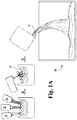
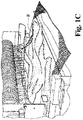
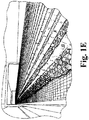
- FIGs. 1A-3 illustrate a lightweight foamed glass substrate 10 defining a plurality of voluminous, interconnecting pores 15 for supporting plant growth.
- the pores 15 typically have diameters ranging from about 0.2 mm to about 2.0 mm.
- the pore walls 17 typically exhibit a crazed or microcracked microstructure 19 to facilitate wicking.
- a ground, milled and/or powdered glass precursor 20, such as recycled waste bottle and/or window glass is mixed with a foaming agent 22 (typically a finely ground non-sulfur based gas evolving material, such as calcium carbonate) to define an admixture 27.
- a foaming agent 22 typically a finely ground non-sulfur based gas evolving material, such as calcium carbonate
- the foaming agent 22 is typically present in amounts between about 1 weight percent and about 3 weight percent and sized in the average range of about 80 to minus 325 mesh (i.e. any particles smaller than this will pass through - typically, the apertures in 80 mesh are between about 150 and about 200 micrometers across and the apertures in -352 mesh are between about 40 and about 60 micrometers across). More typically, the foaming agent has a particle size between about 5 and about 150 microns.
- a pH modifier, such as dicalcium phosphate, 24 is added to the admixture 27, wherein the pH modifier 24 becomes effective when the foamed glass product 10 is used in an aqueous environment.
- the pH modifier 24 is present in amounts between about 1 and 3 weight percent, more typically between about 1 and about 2 weight percent. Additional plant growth nutrient material may be added to the starting mixture to vary or enhance the plant growth characteristic of the final product 10.
- Foamed glass like most ceramics, is naturally hydrophobic. As hydrophobic surfaces are not conducive to wetting and impede capillary action, treatment is typically done to make the pore walls 17 hydrophilic. In one embodiment, the pore walls 17 are coated to form a plurality of microcracks 19 therein. The microcracks 19 supply increased surface area to support wicking. Alternately, or in addition, an agent may be added to further amend the surface properties to make the foamed glass more hydrophilic. Such an agent may be a large divalent cation contributor, such as ZnO, BaO, SrO or the like. The hydrophilic agent is typically added in small amounts, typically less than 1.5 weight percent and more typically in amounts of about 0.1 weight percent.
- the combination is mixed 26, and the resulting dry mixture 27 may then be placed into a mold 28or pressed into a green body and fired without the use of a mold.
- the resulting dry mixture is arrayed into rows 31 of powder mixture 27 for firing and foaming.
- the mixture 27 is arrayed in the form of several rows 31, such as in mounds or piles of mixture typically having a natural angle of repose of about 15 to 50 degrees, although even greater angles to the horizontal can be achieved by compressing the dry mixture 27.
- This arraying of the rows 31 allows increased control, equilibration and optimization of the heating of the powder 27 during firing, reducing hot and cold spots in the furnace as the powder 27 is heated.
- This combing of the powder 27 into typically rows 31 of triangular cross-sections allows heat to be reflected and redirected to keep heating of the rows generally constant.
- the mold 28, if used, is typically a refractory material, such as a steel or ceramic, and is more typically made in the shape of a frustum so as to facilitate easy release of the final foamed glass substrate 10.
- the inside surfaces of the mold 28 are coated with a soft refractory release agent to further facilitate separation of the foam glass substrate 10 from the mold 28.
- the powder 27 is supported by a fiberglass mesh fleece to prevent fines from spilling as the powder 27 is moved in a continuous process via conveyor through a tunnel kiln; the fleece is burned away as the powder 27 sinters.
- the so-loaded mold 28 is heated 30 in a furnace by a continuous foaming process. More typically, the mixture 27 is then heated 30 in order to first dry 32, the sinter 34, fuse 36, soften 38, and foam 40 the mixture 27 and thereby produce a foamed glass substrate 10 having a desired density, pore size and hardness. As the powdered mixture 27 is heated to above the softening point of glass (approximately 566 degrees Celsius (1050 degrees Fahrenheit)) the mixture 27 begins to soften 38, sinter 34, and shrink. The division of the powdered mixture 27 into rows or mounds allows the glass to absorb heat more rapidly and to therefore foam faster by reducing the ability of the foaming glass to insulate itself.
- the calcium carbonate if calcium carbonate has been used as the foaming agent 22, begins to react with some of the silicon dioxide in the glass 20 to produce calcium silicate and evolved carbon dioxide. Carbon dioxide is also evolved by decomposition of any remaining calcium carbonate once the mixture reaches about 838 degrees Celsius (1540 degrees Fahrenheit), above which calcium carbonate breaks down into calcium oxide and carbon dioxide gas. Once the temperature of the mixture 27 reaches about 788 degrees Celsius (1450 degrees Fahrenheit), the glass mixture 27 will have softened sufficiently for the released carbon dioxide to expand and escape through the softened, viscous glass; this escape of carbon dioxide through the softened glass mass is primarily responsible for the formation of cells and pores therein.
- the mixture 27 in the mold 28 is held for a period of time at a peak foaming temperature of between about 788 degrees Celsius (1450 degrees Fahrenheit) and about 871 degrees Celsius (1600 degrees Fahrenheit),.
- each mass of foaming 40 glass originating from one of the discrete rows or mounds, expands until it comes into contact and fuses with its neighbors.
- the fused mass of foaming glass then expands to conform to the shape of the walls of the mold 28, filling all of the corners.
- the shapes and sizes of the initial mounds of mixture are determined with the anticipation that the foaming 40 mixture 27 exactly fills the mold 28.
- the temperature of the furnace is rapidly reduced to halt foaming 40 of the glass.
- the resultant body 10 of foamed glass is removed from the mold 28 and is then air quenched to thermally shock the glass to produce a crazed microstructure 19.
- any skin or crust is typically cut off of the foamed glass substrate 10, which may then be cut or otherwise formed into a variety of desired shapes.
- Pore size is controlled within the range of between about 2.0 mm and 0.2 mm, and is typically controlled such that the interconnected or open porosity may readily accommodate a typical plant root 135 (see FIG. 4 ).
- Substrate density can be controlled from about 0.4g/cc to about 0.26g/cc.
- the bulk density of the crushed foam may be as low as 50% of the polyhedral density.
- the substrate 10 may be either provided as a machined polyhedral shape 10 or, more typically, as a continuous sheet that may be impacted and/or crushed to yield aggregate or pebbles 50 (typically sized to be less than 1 inch in diameter).
- the crushed substrate material 50 may be used to retain water and increase air volume in given soil combinations.
- the polyhedrally shaped substrate bodies 10 are typically sized and shaped as growing media for seeds and immature plants, such as for use in soil or hydroponic systems 140 (see FIGs. 4-6 ).
- the foamed glass substrate material 10 is thus used to improve aeration and water retention in agricultural systems, and the porous polyhedral material 10 also provides a sufficiently spacious path for root growth and attenuation.
- the foamed glass material 10 itself is typically resistant to aqueous corrosion and has minimal impact on solution pH.
- the foamed glass material 10 is doped (in batch stage, prior to foaming) with specific dicalcium phosphate or a like pH stabilizing material 24 which dissolves in water to help stabilize the pH.
- the foamed glass substrate 10 can typically hold between about 1.5 and about 5 times its own weight in water in the plurality of interconnected pores 17.
- Crushed foam bodies 50 may be rapidly made by an alternate method which is described but not claimed. Using soda-lime glass frit or powder as the glass component 22, the processing is similar to that described above but without the annealing step.
- the alternate method employs the same foaming temperature ranges as related above.
- the batch material 27 consists of up to 8 percent by mass limestone, magnesite, or other applicable foaming agent 22, usually less than 2 percent by mass dicalcium phosphate 24, with the balance being a borosilicate, silicate, borate or phosphate glass frit 22.
- the batch 27 is then placed in a typically shallow mold 28, more typically having a configuration of less than 2" batch for every square yard of mold surface.
- the mold 28 is typically then heated to approximately 250°C above the dilatometric softening point for soda-lime glass (or the equivalent viscosity for other glass compositions) and allowed to foam.
- the mold 28 is held at the foaming temperature for less than 30 minutes and then pan quenched, i.e. substantially no annealing is allowed to occur.
- This method typically yields a material 10 of density less than 0.25g/cc, and more typically as low as about 0.03g/cc. This material 10 is then crushed into pebbles 50, with a corresponding lower bulk density as per the above-described method. Material made by this alternate method has similar chemical properties as described above, can accommodate an even larger nutrient content, but has substantially lower strength.
- a batch 27 is prepared as discussed above and pressed into small (typically less than 5mm diameter) pellets.
- the pellets are rapidly heated, such as by passage through a flame source, passage through a rotary furnace, or the like.
- the pellets are heated to about 816 degrees Celsius (1500 degrees Fahrenheit), such as to cause the pellet to expand as a foam particulate without the need for a mold.
- This material yields the weakest, but least dense foam particles.
- the typical density may be as low as 0.02g/cc or as high as 0.2g/cc, or higher.
- the present invention provides a method of producing chemically stable foamed glass for use as a plant growth medium.
- the method yields a foamed glass substrate.
- the foamed glass substrate 10 either in polyhedral body form or crushed product form, may serve as a root system support and an aeration and/or water retention aid.
- the material 10 typically enjoys a void fraction of at least about 80 percent.
- the substrate 10 is typically mechanically mixed with as little as 15% by volume soil or soil mixture and this new mixture will still generate solution chemistry dominated by soil.
- the polyhedral product 10 typically functions as a supporting substrate for both soil based and hydroponic applications.
- the polyhedral substrate 10 may be tailored to be compatible with mildly acidic, neutral, or mildly alkaline solution pH.
- the pore network 15 is compatible with root propagation through the material 10.
- the pore network typically has surface adhesion or adsorption properties such that chemical additives 51, such as plant growth nutrients, herbicides, pesticides or combinations thereof, may be physically adsorbed thereonto for later release. Typically, these additives are added in small amounts, such as a few weight percent (0.5 1, 2, 5, or the like) of the substrate product 10.
- the present invention provides a method of producing chemically stable foamed glass for use as a plant growth medium.
- the method yields a foamed glass substrate, wherein the foamed glass substrate includes at least about 65 volume percent interconnected pores.
- the foamed glass substrate 10 typically has a porosity in the range of between about sixty-five and about eighty-five percent.
- Air holding capacity is typically between about forty and about fifty-five percent.
- Water holding capacity typically ranges from between about twenty and about thirty-five percent.
- Porosity is measured during the production process using a parameter testing protocol. Bulk density and pH are also measured during production, with the results providing active feedback for a control loop.
- the pore size is between about 0.2 mm and about 2.0 mm in diameter, typically with a relatively tight pore size distribution.
- the finished substrate 10 is typically processed through a series of conveyors and crushing equipment to yield a desired size spread of pellets 50.
- the precursor glass material is typically recycled or post-consumer waste glass, such as plate, window and/or bottle glass.
- the glass is ground or milled to a fine mesh profile of minus 107 microns.
- a typical sieve analysis of the precursor glass is given as Table 1, and a compositional analysis of the glass is given as Table 2.
- FIGs. 4 and 5 illustrate embodiments of the novel technology which are described but not claimed, namely hydroponic systems 40, 55 for growing plants.
- a hydroponic system 40 is disclosed wherein a substrate block 10 is partially immersed in a fluid medium 42, such as water or an aqueous nutrient solution. Roots 35 extend downwardly into the top of the substrate block 10 through the interconnected open pores 15. Nutrient solution 42 is carried upwardly into the block 10 via capillary action through the open pores.
- FIG. 6 illustrates another embodiment of the present novel technology which is described but not claimed, namely a system 155 including foamed glass pebbles or pellets 50 prepared as detailed above and used in a soil-pellet mixture 157 into which plant roots 135 may extend.
- the mixture 157 may, in addition to the pellets 50, include soil, clay, peat moss, nitrates, fertilizer, manure or the like and mixtures thereof.
- the pellets 50 may be used in place of perlite in soil admixtures.
- the pellets 50 contribute by picking up, holding, and slowly releasing water, as well as by providing a network of 'anchors' for the roots 135 to extend into and through.
- a plant growth support substrate 10 having a pore network 15 and pH control agent 24 embedded therein is produced from a precursor batch of about 1.25 weight percent calcium carbonate, about 1.25 weight percent dicalcium phosphate anhydrous, about 0.2 weight percent iron oxide colorant, and about 97 weight percent recycled post-consumer glass ground or milled to minus 107 microns, are mixed together.
- the resulting mixture 27 is placed into a stainless steel mold 28 having inside dimensions of 4.25 inches by 4 inches by 8.25 inches.
- the mold 28 is covered with a one-half inch stainless steel plate.
- the mold 28 with the mixture 27 therein is fired 30 in a tunnel kiln having a plurality of zones with a travel rate of about 10 inches per minute and a residence time in each zone of about 9 minutes.
- the first zone typically has a temperature of about between about 93 degrees Celsius (200 degrees Fahrenheit) and about 260 degrees Celsius (500 degrees Fahrenheit), more typically between about 204 degrees Celsius (400 degrees Fahrenheit) and about 232 degrees Celsius (450 degrees Fahrenheit), and still more typically about 107 degrees Celsius (225 degrees Fahrenheit), wherein drying 32 of the mixture 27 is accomplished.
- Zones 2-4 have temperatures increasing from about 704 degrees Celsius (1300 degrees Fahrenheit) to about 816 degrees Celsius (1500 degrees Fahrenheit), and sintering 34 is accomplished therein.
- Foaming 40 occurs primarily in zones 4 and 5, with zone 5 having a temperature of about 860 degrees Celsius (1580 degrees Fahrenheit).
- zone 6 temperature about 854 degrees Celsius (1570 degrees Fahrenheit), foaming 40 is finalized and the resultant soft foamed body 42 is cured 44.
- cooling begins as the temperature is decreased to about 760 degrees Celsius (1400 degrees Fahrenheit).
- the foamed body 42 is air quenched 46 to produce the desired crazed microstructure 19.
- the cooledblock of foamed glass 10 is removed from the mold 28, and the outer layer of crust is removed (such as with a band saw) to expose the open porosity.
- the substrate 10 is further cooled and quenched until it is approximately at room temperature.
- the resulting block typically has a density of about fourteen pounds per cubic foot and a pore size distribution ranging from about 0.5 to 2 mm.
- the resulting block has open, interconnected pore cells.
Landscapes
- Chemical & Material Sciences (AREA)
- Life Sciences & Earth Sciences (AREA)
- Organic Chemistry (AREA)
- Engineering & Computer Science (AREA)
- Materials Engineering (AREA)
- Chemical Kinetics & Catalysis (AREA)
- General Chemical & Material Sciences (AREA)
- Geochemistry & Mineralogy (AREA)
- Environmental Sciences (AREA)
- Inorganic Chemistry (AREA)
- Manufacturing & Machinery (AREA)
- Pest Control & Pesticides (AREA)
- Dispersion Chemistry (AREA)
- Glass Compositions (AREA)
- Hydroponics (AREA)
Claims (11)
- Procédé de production de verre expansé chimiquement stable destiné à être utilisé en tant que milieu de croissance de plantes, comprenant les étapes de :a) combinaison d'un agent d'expansion, d'un agent d'ajustement du pH et de déchets de verre particulaires pour former un mélange comprenant d'environ 1 pour cent en poids à environ 5 pour cent en poids d'agent d'expansion et d'environ 1 pour cent en poids à environ 3 pour cent en poids d'agent d'ajustement du pH, le reste étant des déchets de verre particulaires ;b) séchage du mélange à des températures comprises entre environ 204 degrés Celsius (400 degrés Fahrenheit) et environ 232 degrés Celsius (450 degrés Fahrenheit) et ensuite disposition du mélange sec résultant en rangées de mélange en poudre pour cuisson et expansion ;c) après séchage, frittage du mélange à des températures comprises entre environ 704 degrés Celsius (1300 degrés Fahrenheit) et environ 816 degrés Celsius (1500 degrés Fahrenheit) ;d) expansion du mélange à des températures comprises entre environ 788 degrés Celsius (1450 degrés Fahrenheit) et environ 871 degrés Celsius (1600 degrés Fahrenheit) pour produire un corps en verre expansé tendre ;e) durcissement du corps en verre expansé tendre à des températures comprises entre environ 849 degrés Celsius (1560 degrés Fahrenheit) et environ 860 degrés Celsius (1580 degrés Fahrenheit) ;f) refroidissement du corps en verre expansé tendre à des températures comprises entre environ 760 degrés Celsius (1400 degrés Fahrenheit) et environ 843 degrés Celsius (1550 degrés Fahrenheit) ; etg) immédiatement après f), trempe du corps en verre expansé adouci avec une circulation d'air à température ambiante pour produire un substrat en verre expansé ;dans lequel le substrat en verre expansé comprend au moins environ 65 pour cent en volume de pores interconnectés ;
dans lequel les pores interconnectés ont des diamètres compris entre environ 0,2 mm et environ 2 mm ;
dans lequel les parois des pores interconnectés ont une microstructure craquelée ; et
dans lequel les pores interconnectés comprennent un agent tampon de pH disponible pour la dissolution en milieu aqueux ;
dans lequel le mélange sec est sous la forme d'une poudre et
dans lequel la poudre est supportée par une nappe de treillis de fibre de verre pour empêcher les fines de se répandre lorsque la poudre est déplacée dans un processus continu par l'intermédiaire d'un transporteur dans un four tunnel, la nappe étant éliminée par combustion lorsque la poudre est frittée. - Procédé selon la revendication 1 dans lequel le substrat en verre expansé est fourni soit sous une forme polyédrique usinée soit sous forme d'une feuille continue qui peut être écrasée et/ou concassée pour produire un agrégat ou des boulettes.
- Procédé selon la revendication 1 ou la revendication 2 dans lequel le substrat en verre expansé a une capacité de rétention d'air d'au moins environ 40 pour cent en volume et dans lequel le substrat en verre expansé a une capacité de rétention d'eau d'au moins environ 20 pour cent en volume.
- Procédé selon l'une quelconque des revendications 1 à 3, le procédé comprenant en outre :h) le concassage du substrat en verre expansé pour produire une pluralité de boulettes de verre expansé.
- Procédé selon l'une quelconque des revendications 1 à 4, dans lequel le substrat en verre expansé est une plaque de verre expansé caractérisée par une porosité ouverte d'environ 80 pour cent et caractérisée par une taille caractéristique des pores généralement comprise entre environ 0,2 millimètre et environ 2 millimètres.
- Procédé selon l'une quelconque des revendications 1 à 5 dans lequel l'agent tampon de pH est le phosphate dicalcique.
- Procédé selon l'une quelconque des revendications 1 à 6 dans lequel le mélange est placé dans un moule.
- Procédé selon l'une quelconque des revendications 1 à 7 dans lequel le mélange est disposé en amas ou tas de mélange.
- Procédé selon la revendication 8 dans lequel le mélange est fourni en amas ou tas de mélange ayant un angle de talus naturel d'environ 15 à 50 degrés par rapport à l'horizontale.
- Procédé selon l'une quelconque des revendications 1 à 9 dans lequel les rangées ont une section transversale triangulaire.
- Procédé selon l'une quelconque des revendications 1 à 10 dans lequel l'agent d'expansion est le carbonate de calcium.
Applications Claiming Priority (1)
| Application Number | Priority Date | Filing Date | Title |
|---|---|---|---|
| US13/774,038 US20140237896A1 (en) | 2013-02-22 | 2013-02-22 | Foamed glass hydroponic substrate |
Publications (2)
| Publication Number | Publication Date |
|---|---|
| EP2774896A1 EP2774896A1 (fr) | 2014-09-10 |
| EP2774896B1 true EP2774896B1 (fr) | 2017-07-19 |
Family
ID=47827108
Family Applications (1)
| Application Number | Title | Priority Date | Filing Date |
|---|---|---|---|
| EP13275041.5A Not-in-force EP2774896B1 (fr) | 2013-02-22 | 2013-02-25 | Substrat hydroponique de verre expansé |
Country Status (3)
| Country | Link |
|---|---|
| US (2) | US20140237896A1 (fr) |
| EP (1) | EP2774896B1 (fr) |
| CA (1) | CA2807849A1 (fr) |
Cited By (2)
| Publication number | Priority date | Publication date | Assignee | Title |
|---|---|---|---|---|
| US11338244B1 (en) | 2018-04-23 | 2022-05-24 | Anua International LLC | Multi-stage treatment system and methods for removal of target vapor compounds from contaminated air streams |
| US11351501B2 (en) | 2018-04-23 | 2022-06-07 | Anua International LLC | Multi-stage treatment system and methods for removal of target vapor compounds from contaminated air streams |
Families Citing this family (5)
| Publication number | Priority date | Publication date | Assignee | Title |
|---|---|---|---|---|
| WO2018151117A1 (fr) * | 2017-02-17 | 2018-08-23 | Agc株式会社 | Plaque de verre poreuse pour culture de plantes, appareil de culture de plantes et procédé de culture de plantes |
| US20220372720A1 (en) * | 2019-12-12 | 2022-11-24 | Aero Aggregates Of North America, Llc | Ultra-lightweight foamed glass aggregates for resiliency planning projects |
| US20220145228A1 (en) * | 2020-11-10 | 2022-05-12 | GlassWRX, LLC | Method for high durability engineered cellular magmatic microbial habitat and articles thereof |
| CN114196097B (zh) * | 2022-01-29 | 2023-06-30 | 金田农汇有限公司 | 一种用于水耕种植的再生木制海绵及其合成方法 |
| JP7765796B2 (ja) * | 2023-05-17 | 2025-11-07 | 株式会社アクトシリカ | 植物成長材及びその製造方法 |
Family Cites Families (4)
| Publication number | Priority date | Publication date | Assignee | Title |
|---|---|---|---|---|
| JP2003522299A (ja) * | 2000-02-10 | 2003-07-22 | テトロニクス リミテッド | 微細粉末を製造するためのプラズマアーク反応器 |
| US9974249B2 (en) * | 2006-02-10 | 2018-05-22 | W. Gene Ramsey | Hybrid composite hydroponic substrate system |
| US20080034653A1 (en) * | 2006-02-10 | 2008-02-14 | Ramsey W G | Hybrid composite hydroponic substrate system |
| US7739833B2 (en) * | 2006-02-10 | 2010-06-22 | Ramsey W Gene | Foamed vitroeous materials for agricultural applications |
-
2013
- 2013-02-22 US US13/774,038 patent/US20140237896A1/en not_active Abandoned
- 2013-02-25 CA CA 2807849 patent/CA2807849A1/fr not_active Abandoned
- 2013-02-25 EP EP13275041.5A patent/EP2774896B1/fr not_active Not-in-force
-
2015
- 2015-08-21 US US14/832,456 patent/US20160044881A1/en not_active Abandoned
Cited By (2)
| Publication number | Priority date | Publication date | Assignee | Title |
|---|---|---|---|---|
| US11338244B1 (en) | 2018-04-23 | 2022-05-24 | Anua International LLC | Multi-stage treatment system and methods for removal of target vapor compounds from contaminated air streams |
| US11351501B2 (en) | 2018-04-23 | 2022-06-07 | Anua International LLC | Multi-stage treatment system and methods for removal of target vapor compounds from contaminated air streams |
Also Published As
| Publication number | Publication date |
|---|---|
| US20140237896A1 (en) | 2014-08-28 |
| EP2774896A1 (fr) | 2014-09-10 |
| CA2807849A1 (fr) | 2014-08-22 |
| US20160044881A1 (en) | 2016-02-18 |
Similar Documents
| Publication | Publication Date | Title |
|---|---|---|
| US7739833B2 (en) | Foamed vitroeous materials for agricultural applications | |
| US9974249B2 (en) | Hybrid composite hydroponic substrate system | |
| US20080034653A1 (en) | Hybrid composite hydroponic substrate system | |
| EP2774896B1 (fr) | Substrat hydroponique de verre expansé | |
| US12071259B2 (en) | Foamed glass composite material and a method using the same | |
| US20150336846A1 (en) | Foamed glass composite material and a method for using the same | |
| KR20140006777A (ko) | 다공질 세라믹스 소결체 | |
| US12043413B2 (en) | Foamed glass composite material | |
| US20160097170A1 (en) | Foamed glass composite arrestor beds and methods for making and using the same | |
| JP2000092978A (ja) | 無土壌植栽用セラミックブロック及びその使用方法 | |
| JP3479053B2 (ja) | 植物生育ボード | |
| CN106116499A (zh) | 珍珠岩轻质通孔陶粒 | |
| JP2002153119A (ja) | 緑化用基盤及び植栽方法 | |
| JP2002171851A (ja) | 溶液栽培用の培地 | |
| JPH11103702A (ja) | 多孔質セラミック培地材 | |
| JP2003070344A (ja) | 植栽ブロック | |
| JP2003210033A (ja) | 緑化用基盤への植栽方法 | |
| JP2024078470A (ja) | ハイドロボール及びその製造方法 | |
| JP2003070358A (ja) | 立体花壇用植栽ブロック | |
| JP2023074381A (ja) | 焼結多孔質体の製造方法及び焼結多孔質体 | |
| JP2016082882A (ja) | プランター及びそれを用いた植物の育成方法 |
Legal Events
| Date | Code | Title | Description |
|---|---|---|---|
| PUAI | Public reference made under article 153(3) epc to a published international application that has entered the european phase |
Free format text: ORIGINAL CODE: 0009012 |
|
| 17P | Request for examination filed |
Effective date: 20130225 |
|
| AK | Designated contracting states |
Kind code of ref document: A1 Designated state(s): AL AT BE BG CH CY CZ DE DK EE ES FI FR GB GR HR HU IE IS IT LI LT LU LV MC MK MT NL NO PL PT RO RS SE SI SK SM TR |
|
| AX | Request for extension of the european patent |
Extension state: BA ME |
|
| R17P | Request for examination filed (corrected) |
Effective date: 20150310 |
|
| RBV | Designated contracting states (corrected) |
Designated state(s): AL AT BE BG CH CY CZ DE DK EE ES FI FR GB GR HR HU IE IS IT LI LT LU LV MC MK MT NL NO PL PT RO RS SE SI SK SM TR |
|
| 17Q | First examination report despatched |
Effective date: 20160422 |
|
| GRAP | Despatch of communication of intention to grant a patent |
Free format text: ORIGINAL CODE: EPIDOSNIGR1 |
|
| INTG | Intention to grant announced |
Effective date: 20170120 |
|
| GRAS | Grant fee paid |
Free format text: ORIGINAL CODE: EPIDOSNIGR3 |
|
| GRAA | (expected) grant |
Free format text: ORIGINAL CODE: 0009210 |
|
| RAP1 | Party data changed (applicant data changed or rights of an application transferred) |
Owner name: GROWSTONE, INC. |
|
| AK | Designated contracting states |
Kind code of ref document: B1 Designated state(s): AL AT BE BG CH CY CZ DE DK EE ES FI FR GB GR HR HU IE IS IT LI LT LU LV MC MK MT NL NO PL PT RO RS SE SI SK SM TR |
|
| REG | Reference to a national code |
Ref country code: GB Ref legal event code: FG4D |
|
| REG | Reference to a national code |
Ref country code: CH Ref legal event code: EP |
|
| REG | Reference to a national code |
Ref country code: IE Ref legal event code: FG4D |
|
| REG | Reference to a national code |
Ref country code: AT Ref legal event code: REF Ref document number: 910212 Country of ref document: AT Kind code of ref document: T Effective date: 20170815 |
|
| REG | Reference to a national code |
Ref country code: DE Ref legal event code: R096 Ref document number: 602013023670 Country of ref document: DE |
|
| REG | Reference to a national code |
Ref country code: NL Ref legal event code: FP |
|
| REG | Reference to a national code |
Ref country code: LT Ref legal event code: MG4D |
|
| REG | Reference to a national code |
Ref country code: AT Ref legal event code: MK05 Ref document number: 910212 Country of ref document: AT Kind code of ref document: T Effective date: 20170719 |
|
| PG25 | Lapsed in a contracting state [announced via postgrant information from national office to epo] |
Ref country code: FI Free format text: LAPSE BECAUSE OF FAILURE TO SUBMIT A TRANSLATION OF THE DESCRIPTION OR TO PAY THE FEE WITHIN THE PRESCRIBED TIME-LIMIT Effective date: 20170719 Ref country code: SE Free format text: LAPSE BECAUSE OF FAILURE TO SUBMIT A TRANSLATION OF THE DESCRIPTION OR TO PAY THE FEE WITHIN THE PRESCRIBED TIME-LIMIT Effective date: 20170719 Ref country code: AT Free format text: LAPSE BECAUSE OF FAILURE TO SUBMIT A TRANSLATION OF THE DESCRIPTION OR TO PAY THE FEE WITHIN THE PRESCRIBED TIME-LIMIT Effective date: 20170719 Ref country code: NO Free format text: LAPSE BECAUSE OF FAILURE TO SUBMIT A TRANSLATION OF THE DESCRIPTION OR TO PAY THE FEE WITHIN THE PRESCRIBED TIME-LIMIT Effective date: 20171019 Ref country code: HR Free format text: LAPSE BECAUSE OF FAILURE TO SUBMIT A TRANSLATION OF THE DESCRIPTION OR TO PAY THE FEE WITHIN THE PRESCRIBED TIME-LIMIT Effective date: 20170719 Ref country code: LT Free format text: LAPSE BECAUSE OF FAILURE TO SUBMIT A TRANSLATION OF THE DESCRIPTION OR TO PAY THE FEE WITHIN THE PRESCRIBED TIME-LIMIT Effective date: 20170719 |
|
| PG25 | Lapsed in a contracting state [announced via postgrant information from national office to epo] |
Ref country code: ES Free format text: LAPSE BECAUSE OF FAILURE TO SUBMIT A TRANSLATION OF THE DESCRIPTION OR TO PAY THE FEE WITHIN THE PRESCRIBED TIME-LIMIT Effective date: 20170719 Ref country code: LV Free format text: LAPSE BECAUSE OF FAILURE TO SUBMIT A TRANSLATION OF THE DESCRIPTION OR TO PAY THE FEE WITHIN THE PRESCRIBED TIME-LIMIT Effective date: 20170719 Ref country code: IS Free format text: LAPSE BECAUSE OF FAILURE TO SUBMIT A TRANSLATION OF THE DESCRIPTION OR TO PAY THE FEE WITHIN THE PRESCRIBED TIME-LIMIT Effective date: 20171119 Ref country code: PL Free format text: LAPSE BECAUSE OF FAILURE TO SUBMIT A TRANSLATION OF THE DESCRIPTION OR TO PAY THE FEE WITHIN THE PRESCRIBED TIME-LIMIT Effective date: 20170719 Ref country code: RS Free format text: LAPSE BECAUSE OF FAILURE TO SUBMIT A TRANSLATION OF THE DESCRIPTION OR TO PAY THE FEE WITHIN THE PRESCRIBED TIME-LIMIT Effective date: 20170719 Ref country code: BG Free format text: LAPSE BECAUSE OF FAILURE TO SUBMIT A TRANSLATION OF THE DESCRIPTION OR TO PAY THE FEE WITHIN THE PRESCRIBED TIME-LIMIT Effective date: 20171019 Ref country code: GR Free format text: LAPSE BECAUSE OF FAILURE TO SUBMIT A TRANSLATION OF THE DESCRIPTION OR TO PAY THE FEE WITHIN THE PRESCRIBED TIME-LIMIT Effective date: 20171020 |
|
| REG | Reference to a national code |
Ref country code: DE Ref legal event code: R097 Ref document number: 602013023670 Country of ref document: DE |
|
| PG25 | Lapsed in a contracting state [announced via postgrant information from national office to epo] |
Ref country code: RO Free format text: LAPSE BECAUSE OF FAILURE TO SUBMIT A TRANSLATION OF THE DESCRIPTION OR TO PAY THE FEE WITHIN THE PRESCRIBED TIME-LIMIT Effective date: 20170719 Ref country code: CZ Free format text: LAPSE BECAUSE OF FAILURE TO SUBMIT A TRANSLATION OF THE DESCRIPTION OR TO PAY THE FEE WITHIN THE PRESCRIBED TIME-LIMIT Effective date: 20170719 Ref country code: DK Free format text: LAPSE BECAUSE OF FAILURE TO SUBMIT A TRANSLATION OF THE DESCRIPTION OR TO PAY THE FEE WITHIN THE PRESCRIBED TIME-LIMIT Effective date: 20170719 |
|
| PLBE | No opposition filed within time limit |
Free format text: ORIGINAL CODE: 0009261 |
|
| STAA | Information on the status of an ep patent application or granted ep patent |
Free format text: STATUS: NO OPPOSITION FILED WITHIN TIME LIMIT |
|
| PG25 | Lapsed in a contracting state [announced via postgrant information from national office to epo] |
Ref country code: SK Free format text: LAPSE BECAUSE OF FAILURE TO SUBMIT A TRANSLATION OF THE DESCRIPTION OR TO PAY THE FEE WITHIN THE PRESCRIBED TIME-LIMIT Effective date: 20170719 Ref country code: IT Free format text: LAPSE BECAUSE OF FAILURE TO SUBMIT A TRANSLATION OF THE DESCRIPTION OR TO PAY THE FEE WITHIN THE PRESCRIBED TIME-LIMIT Effective date: 20170719 Ref country code: EE Free format text: LAPSE BECAUSE OF FAILURE TO SUBMIT A TRANSLATION OF THE DESCRIPTION OR TO PAY THE FEE WITHIN THE PRESCRIBED TIME-LIMIT Effective date: 20170719 Ref country code: SM Free format text: LAPSE BECAUSE OF FAILURE TO SUBMIT A TRANSLATION OF THE DESCRIPTION OR TO PAY THE FEE WITHIN THE PRESCRIBED TIME-LIMIT Effective date: 20170719 |
|
| 26N | No opposition filed |
Effective date: 20180420 |
|
| PG25 | Lapsed in a contracting state [announced via postgrant information from national office to epo] |
Ref country code: SI Free format text: LAPSE BECAUSE OF FAILURE TO SUBMIT A TRANSLATION OF THE DESCRIPTION OR TO PAY THE FEE WITHIN THE PRESCRIBED TIME-LIMIT Effective date: 20170719 |
|
| REG | Reference to a national code |
Ref country code: DE Ref legal event code: R119 Ref document number: 602013023670 Country of ref document: DE |
|
| REG | Reference to a national code |
Ref country code: CH Ref legal event code: PL |
|
| PG25 | Lapsed in a contracting state [announced via postgrant information from national office to epo] |
Ref country code: MC Free format text: LAPSE BECAUSE OF FAILURE TO SUBMIT A TRANSLATION OF THE DESCRIPTION OR TO PAY THE FEE WITHIN THE PRESCRIBED TIME-LIMIT Effective date: 20170719 |
|
| REG | Reference to a national code |
Ref country code: NL Ref legal event code: MM Effective date: 20180301 |
|
| GBPC | Gb: european patent ceased through non-payment of renewal fee |
Effective date: 20180225 |
|
| REG | Reference to a national code |
Ref country code: IE Ref legal event code: MM4A |
|
| REG | Reference to a national code |
Ref country code: BE Ref legal event code: MM Effective date: 20180228 |
|
| PG25 | Lapsed in a contracting state [announced via postgrant information from national office to epo] |
Ref country code: LI Free format text: LAPSE BECAUSE OF NON-PAYMENT OF DUE FEES Effective date: 20180228 Ref country code: LU Free format text: LAPSE BECAUSE OF NON-PAYMENT OF DUE FEES Effective date: 20180225 Ref country code: CH Free format text: LAPSE BECAUSE OF NON-PAYMENT OF DUE FEES Effective date: 20180228 |
|
| REG | Reference to a national code |
Ref country code: FR Ref legal event code: ST Effective date: 20181031 |
|
| REG | Reference to a national code |
Ref country code: DE Ref legal event code: R073 Ref document number: 602013023670 Country of ref document: DE |
|
| PG25 | Lapsed in a contracting state [announced via postgrant information from national office to epo] |
Ref country code: NL Free format text: LAPSE BECAUSE OF NON-PAYMENT OF DUE FEES Effective date: 20180301 |
|
| REG | Reference to a national code |
Ref country code: DE Ref legal event code: R074 Ref document number: 602013023670 Country of ref document: DE |
|
| PG25 | Lapsed in a contracting state [announced via postgrant information from national office to epo] |
Ref country code: DE Free format text: LAPSE BECAUSE OF NON-PAYMENT OF DUE FEES Effective date: 20180901 Ref country code: IE Free format text: LAPSE BECAUSE OF NON-PAYMENT OF DUE FEES Effective date: 20180225 |
|
| REG | Reference to a national code |
Ref country code: DE Ref legal event code: R074 Ref document number: 602013023670 Country of ref document: DE |
|
| PG25 | Lapsed in a contracting state [announced via postgrant information from national office to epo] |
Ref country code: GB Free format text: LAPSE BECAUSE OF NON-PAYMENT OF DUE FEES Effective date: 20180225 Ref country code: FR Free format text: LAPSE BECAUSE OF NON-PAYMENT OF DUE FEES Effective date: 20180228 Ref country code: BE Free format text: LAPSE BECAUSE OF NON-PAYMENT OF DUE FEES Effective date: 20180228 |
|
| PG25 | Lapsed in a contracting state [announced via postgrant information from national office to epo] |
Ref country code: DE Free format text: LAPSE BECAUSE OF NON-PAYMENT OF DUE FEES Effective date: 20180901 Ref country code: FR Free format text: LAPSE BECAUSE OF NON-PAYMENT OF DUE FEES Effective date: 20180228 |
|
| PGFP | Annual fee paid to national office [announced via postgrant information from national office to epo] |
Ref country code: FR Payment date: 20181213 Year of fee payment: 7 Ref country code: DE Payment date: 20181218 Year of fee payment: 6 |
|
| PGRI | Patent reinstated in contracting state [announced from national office to epo] |
Ref country code: FR Effective date: 20190319 Ref country code: DE Effective date: 20190130 |
|
| REG | Reference to a national code |
Ref country code: DE Ref legal event code: R119 Ref document number: 602013023670 Country of ref document: DE |
|
| PG25 | Lapsed in a contracting state [announced via postgrant information from national office to epo] |
Ref country code: MT Free format text: LAPSE BECAUSE OF NON-PAYMENT OF DUE FEES Effective date: 20180225 |
|
| PG25 | Lapsed in a contracting state [announced via postgrant information from national office to epo] |
Ref country code: TR Free format text: LAPSE BECAUSE OF FAILURE TO SUBMIT A TRANSLATION OF THE DESCRIPTION OR TO PAY THE FEE WITHIN THE PRESCRIBED TIME-LIMIT Effective date: 20170719 |
|
| PG25 | Lapsed in a contracting state [announced via postgrant information from national office to epo] |
Ref country code: PT Free format text: LAPSE BECAUSE OF FAILURE TO SUBMIT A TRANSLATION OF THE DESCRIPTION OR TO PAY THE FEE WITHIN THE PRESCRIBED TIME-LIMIT Effective date: 20170719 Ref country code: HU Free format text: LAPSE BECAUSE OF FAILURE TO SUBMIT A TRANSLATION OF THE DESCRIPTION OR TO PAY THE FEE WITHIN THE PRESCRIBED TIME-LIMIT; INVALID AB INITIO Effective date: 20130225 |
|
| PG25 | Lapsed in a contracting state [announced via postgrant information from national office to epo] |
Ref country code: MK Free format text: LAPSE BECAUSE OF NON-PAYMENT OF DUE FEES Effective date: 20170719 Ref country code: CY Free format text: LAPSE BECAUSE OF FAILURE TO SUBMIT A TRANSLATION OF THE DESCRIPTION OR TO PAY THE FEE WITHIN THE PRESCRIBED TIME-LIMIT Effective date: 20170719 Ref country code: DE Free format text: LAPSE BECAUSE OF NON-PAYMENT OF DUE FEES Effective date: 20190903 |
|
| PG25 | Lapsed in a contracting state [announced via postgrant information from national office to epo] |
Ref country code: AL Free format text: LAPSE BECAUSE OF FAILURE TO SUBMIT A TRANSLATION OF THE DESCRIPTION OR TO PAY THE FEE WITHIN THE PRESCRIBED TIME-LIMIT Effective date: 20170719 |
|
| PG25 | Lapsed in a contracting state [announced via postgrant information from national office to epo] |
Ref country code: FR Free format text: LAPSE BECAUSE OF NON-PAYMENT OF DUE FEES Effective date: 20200229 |