EP2776366B1 - Verfahren zur herstellung von wasserstoffperoxid - Google Patents
Verfahren zur herstellung von wasserstoffperoxid Download PDFInfo
- Publication number
- EP2776366B1 EP2776366B1 EP12781124.8A EP12781124A EP2776366B1 EP 2776366 B1 EP2776366 B1 EP 2776366B1 EP 12781124 A EP12781124 A EP 12781124A EP 2776366 B1 EP2776366 B1 EP 2776366B1
- Authority
- EP
- European Patent Office
- Prior art keywords
- gas
- oxidation
- process according
- vacuum
- working solution
- Prior art date
- Legal status (The legal status is an assumption and is not a legal conclusion. Google has not performed a legal analysis and makes no representation as to the accuracy of the status listed.)
- Active
Links
Images
Classifications
-
- C—CHEMISTRY; METALLURGY
- C01—INORGANIC CHEMISTRY
- C01B—NON-METALLIC ELEMENTS; COMPOUNDS THEREOF; METALLOIDS OR COMPOUNDS THEREOF NOT COVERED BY SUBCLASS C01C
- C01B15/00—Peroxides; Peroxyhydrates; Peroxyacids or salts thereof; Superoxides; Ozonides
- C01B15/01—Hydrogen peroxide
- C01B15/022—Preparation from organic compounds
- C01B15/023—Preparation from organic compounds by the alkyl-anthraquinone process
Definitions
- the present invention relates to a process for the manufacture of hydrogen peroxide by the anthraquinone process.
- the anthraquinone process typically comprises the cyclic reduction, oxidation and extraction of a solution containing an anthraquinone derivative.
- This solution containing the anthraquinone derivative is generally known in the art as "working solution” and it typically comprises a suitable inert solvent, typically an organic solvent, or mixtures thereof.
- the working solution further comprises at least one anthraquinone derivative, which is hydrogenated into its corresponding anthrahydroquinone derivative and reoxidized in the corresponding anthraquinone derivative during the cyclic anthraquinone process.
- the anthraquinone derivative is reduced to the corresponding anthrahydroquinone derivative, usually by catalytic hydrogenation.
- the hydrogenated working solution which is to be freed from the catalyst before, is oxidized, typically by gassing with oxygen or an oxygen containing gas mixture.
- the anthrahydroquinone derivative is oxidized into the corresponding anthraquinone derivative, whereby hydrogen peroxide is obtained.
- the working solution containing the oxidized anthraquinone derivative and the hydrogen peroxide is extracted to remove the hydrogen peroxide and is recycled to be reused in the reduction step.
- the oxidation step of the anthraquinone process is known in the art as both energy and solvent consuming.
- the oxidation gas has to be fed into the reactor with sufficient overpressure.
- the oxidation off gas obtained from the reactor, after sufficient contacting the working solution, is typically still under significant overpressure when leaving the oxidation reactor. Further, typically high amounts of solvents are still present in the oxidation off gas.
- US 2003/0165422 A1 suggests feeding the oxidation off gas as a propellant gas in one or more gas jets (gas ejectors) in order to recover the energy present in the off gas, which is still under pressure.
- the process for the production of hydrogen peroxide by the anthraquinone process comprises the additional step of demisting oxidation off gas in order to obtain a demisted oxidation off gas, which is still under overpressure and can be advantageously used as propellant gas to be fed into a gas ejector.
- the vacuum produced by the gas ejector can be advantageously used, preferably in one or more process steps of the anthraquinone process.
- the present invention therefore relates to a continuous process for the production of hydrogen peroxide by the anthraquinone process, comprising the steps of (i) hydrogenating an organic working solution containing one or more anthraquinone derivatives in the presence of a heterogeneous catalyst to form a hydrogenated working solution, (ii) oxidizing the hydrogenated working solution by introducing an oxygen-containing oxidizing gas at an overpressure into an oxidation reactor, and contacting the oxidizing gas with the hydrogenated working solution to form an oxidized working solution, whereby hydrogen peroxide is formed, (iii) withdrawing oxidation off gas from the oxidation reactor, and (iv) recovering the hydrogen peroxide from the oxidized working solution, which process comprises the steps of (v) subjecting the oxidation off gas leaving the oxidation reactor, which has an excess pressure over the atmospheric pressure, to a demisting treatment to obtain a demisted oxidation off gas, and (vi) feeding the demisted oxidation off gas as propellant gas
- Suitable working solutions typically comprise a solvent which dissolves the anthraquinone derivative and the anthrahydroquinone derivative used, or a mixture of solvent, e.g. wherein one solvent dissolves the anthraquinone derivative and one solvent dissolves the anthrahydroquinone derivative used.
- Suitable anthraquinone derivatives which can be converted into the corresponding anthrahydroquinone derivative and reversibly oxidized in the corresponding anthraquinone derivative are known, in particular alkyl anthraquinones.
- 2-alkyl anthraquinones Preferably used are 2-alkyl anthraquinones, the alkyl group being more preferably a linear or branched C 2 -C 6 alkyl group.
- Suitable anthraquinone derivatives are disclosed in US 6,153,169 .
- the hydrogenation step (i) is known in the art and is typically conducted in the presence of a heterogeneous catalyst.
- the anthraquinone derivative is hydrogenated, e.g. by hydrogen gas, into the corresponding anthrahydroquinone derivative.
- Suitable process parameters and catalysts are known in the art.
- the hydrogenated working solution obtained in step (i) is subjected to oxidation by introducing an oxygen-containing oxidizing gas, typically air or air enriched in oxygen.
- the oxidizing gas is fed into the oxidation reactor with an overpressure, relative to the pressure in the reactor.
- the overpressure is typically at least 200 mbar, preferably at least 400 mbar, in particular in the range of 0.5 bar to 5 bar, relative to the pressure in the reactor.
- the oxidizing gas is fed into the oxidation reactor, which is suitably constructed in order to provide sufficient contacting of the oxidizing gas with the hydrogenated working solution, to form an oxidized working solution.
- the pressure in the oxidation reactor is typically at least about 500 mbar, preferably at least about 1 bar, in particular in the range of about 2 bar to about 15 bar, above atmospheric pressure.
- the oxidizing gas which is reduced in its oxygen content, is withdrawn from the oxidation reactor in step (iii) of the process according to the present invention as oxidation off gas. Due to the pressure drops across the reactor, the overpressure of the oxidation off gas is less than the overpressure of the oxidizing gas fed into the reactor.
- the excess pressure of the oxidation off gas is still in the range of about 0.5 to about 15 bar preferably 1 bar to 10 bar in particular about 1,5 bar to about 8 bar over the atmospheric pressure.
- the oxidized working solution is typically withdrawn from the oxidation reactor, and the hydrogen peroxide formed is recovered as known in the art in step (iv) of the process of the present invention.
- the oxidation off gas leaving the oxidation reactor is subjected in step (v) to a demisting treatment to obtain a demisted oxidation off gas.
- Demisting treatment means removal of liquid droplets entrained in the oxidation off gas.
- the oxidation off gas withdrawn from oxidation reactors has typically a liquid content in the form of droplets of about 300 to 2000 mg/m 3 .
- typically at least 50 %, more preferably at least 80 %, in particular at least 95 % of the liquid content in the form of droplets entrained in the oxidation off gas are removed.
- the liquid content of the demisted oxidation off gas is below 1000 mg/m 3 , more preferable below 400 mg/m 3 , in particular below 100 mg/m 3 , e.g. below 20 mg/m 3 , and preferably in the range of 150 to 1000 mg/m 3 , more preferable in the range of 60 to 400 mg/m 3 , in particular in the range of 15 to 100 mg/m 3 .
- Suitable devices for removal of liquid droplets from gases are known in the art as demisters or droplet separators.
- Demisting devices suitable for the present invention are known cyclone like devices or devices known as demisters.
- Demisters are known in the art as devices typically fitted with mesh type coalescers, vane packs or similar structures intended to aggregate the mist into droplets that are heavy enough to separate from the gas stream. Suitable devices are commercially available e.g. mist eliminator type HE"PLUS"2450EFR, obtainable by MECS, Inc.
- a combination of a demister and a cyclone is used, more preferably the demister is installed in the oxidation reactor, and the cyclone is installed downstream the reactor.
- the demister can also be installed outside the reactor ; a condenser can be installed upstream the cyclone to enhance the separation of organics.
- the demisted oxidation off gas is fed in step (vi) as propellant gas into a gas ejector.
- Gas ejectors which are also are termed in the art as jet pumps, gas injectors, steam ejectors or thermocompressors, are known pump-like devices. These devices use the Venturi effect of a converging-diverging nozzle to convert the pressure energy of a motive fluid to velocity energy which creates a low pressure zone that draws in and entrains a suction fluid. After passing through the throat of the ejector, the mixed fluid expands and the velocity is reduced which results in recompressing the mixed fluids by converting velocity energy back into pressure energy.
- the entrained suction fluid may be a gas, a liquid, a slurry or dust - laden gas stream.
- the vacuum produced by the gas ejector fed with the demisted oxidation off gas can advantageously be used in the process for producing hydrogen peroxide, where a pressure below atmospheric pressure is needed.
- a vacuum of about 50 mbar to about 900 mbar (absolute) is produced.
- the vacuum is used to withdraw solvent vapors from a storage tank, e.g. tanks for solvent, for drying the working solution, for distillation processes, e.g. in distillation columns for purification of hydrogen peroxide, and/or for producing the vacuum for withdrawing ventilation gases from an atmospheric pressure oxidation reactor.
- the mixture of the oxidation off gas used as propellant gas and the suction gas withdrawn can be subsequently passed to the waste-gas purifier. Suitable waste-gas purifiers are known in the art.
- a vacuum of 200 mbar to 900 mbar (absolute) is sufficient.
- a vacuum within the range of 10-300 mbar (absolute), in particular 20-100 mbar (absolute) is sufficient, which can be prepared by the gas ejector fed with the demisted oxidation off gas.
- a vacuum generally in the range of 20-200 mbar, in particular 50-150 mbar is sufficient and may be provided by the gas ejector.
- the demisted oxidation off gas ejected from the gas ejector which is mixed with suction gas is preferably fed into a waste-gas treatment section.
- the waste-gas treatment section preferably comprises an adsorption stage in order to remove organics from the gas mixture of the propellant gas and withdrawn gases.
- the adsorption comprises feeding the gas mixtures through a bed of adsorbent material, preferably activated carbon or zeolite, in order to free said mixture from organic constituents.
- the solvent freed gas may be discharged or recycled for further use in the process of the present invention.
- a plant for the production of hydrogen peroxide by the anthraquinone process which is suitable for conducting the process according to the present invention.
- the plant comprises an oxidizing reactor with a demister installed inside or outside the reactor, more preferably the plant additionally comprises a cyclone, and optionally a condenser, installed downstream the oxidation reactor.
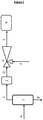
- Figure 1 shows a schematic representation of a preferred process of the present invention.
- oxidizing gas A is fed into oxidation reactor 1.
- Oxidized working solution B is withdrawn from the oxidation reactor 1.
- Oxidation off gas C which is still under excess pressure over atmospheric pressure, is withdrawn from the oxidation reactor 1 and fed into a demister 2.
- the demisted oxidation off gas D obtained from demister 2 is used as propellant gas for a gas ejector 3.
- the gas ejector produces a vacuum by withdrawing suction gas F. This vacuum can be used in the process for manufacturing hydrogen peroxide, in particular for withdrawing solvent vapors from storage tanks, drying the working solution, running a distillation column or withdrawing ventilation gases from atmospheric pressure oxidation reactors.
- waste-gas treatment section 4 which preferably comprises adsorption steps in order to free the gas from residual organic constituents.
- the process according to the present invention enables the efficient use of the excess pressure of the oxidation off gas by elimination of the entrained droplets of the working solution, before feeding the gas into a gas ejector, prior to the final purification step.
- the gas ejector can be operated in a more efficient and reliable way.
- the vacuum obtained can be used at various points in the overall process in order to reduce the total energy consumption in a process for preparing hydrogen peroxide.
- the oxidation off gas obtained from the oxidation reactor having an absolute pressure of about 7 bar abs, is used as propellant gas for a commercially available gas ejector.
- the vacuum obtained from the gas ejector is used to keep the pressure in a reactor containing organic solvents below atmospheric pressure.
- the oxidation off gas, before entering the ejector, is passed through a demister installed inside the oxidizer. Without prior demisting treatment, the test system had to be repeatedly switched off due to malfunction of the gas ejector.
- the test plant can be continuously operated without malfunctions of the gas ejector.
- the off gas, before entering the ejector, is first passed through a demister installed inside the oxidizer.
- the so obtained off gas subsequently is cooled down in a heat exchanger and the condensed droplets are separated in a cyclone.
- Part of the off gas is fed to two commercial ejectors to keep an extraction tower and two vessels under vacuum, so that no organic emission is possible.
- the combined demister and cyclone treatment allows the test system to run steadily at rather stable and constant vacuum without any maintenance intervention.
Landscapes
- Chemical & Material Sciences (AREA)
- Organic Chemistry (AREA)
- Inorganic Chemistry (AREA)
- Organic Low-Molecular-Weight Compounds And Preparation Thereof (AREA)
- Catalysts (AREA)
Claims (14)
- Kontinuierliches Verfahren zur Herstellung von Wasserstoffperoxid durch das Anthrachinonverfahren, umfassend die Schritte:(i) Hydrieren einer organischen Arbeitslösung, die ein oder mehrere Anthrachinonderivate enthält, in Gegenwart eines heterogenen Katalysators, um eine hydrierte Arbeitslösung zu bilden,(ii) Oxidieren der hydrierten Arbeitslösung durch Einführen eines sauerstoffhaltigen oxidierenden Gases unter einem Überdruck in einen Oxidationsreaktor und Inkontaktbringen des oxidierenden Gases mit der hydrierten Arbeitslösung, um eine oxidierte Arbeitslösung zu bilden, wodurch Wasserstoffperoxid gebildet wird,(iii) Abziehen von Oxidationsabgas aus dem Oxidationsreaktor und(iv) Gewinnen des Wasserstoffperoxids aus der oxidierten Arbeitslösung, dadurch gekennzeichnet, dass das Verfahren die Schritte umfasst:(v) Unterwerfen des Oxidationsabgases, das den Oxidationsreaktor verlässt, das einen Überdruck gegenüber dem Atmosphärendruck aufweist, an eine Entnebelungsbehandlung, um ein entnebeltes Oxidationsabgas zu erhalten, und(vi) Zuführen des entnebelten Oxidationsabgases als Treibgas zu einem Gasejektor zum Erzeugen eines Unterdrucks.
- Verfahren gemäß Anspruch 1, wobei der Überdruck des oxidierenden Gases, das dem Oxidationsreaktor zugeführt wird, gegenüber dem Druck in dem Reaktor wenigstens 200 mbar beträgt, vorzugsweise wenigstens 400 mbar.
- Verfahren gemäß Anspruch 2, wobei der Überdruck des oxidierenden Gases, das dem Oxidationsreaktor zugeführt wird, in dem Bereich von 0,5 bar bis 5 bar liegt.
- Verfahren gemäß Anspruch 1, wobei das Oxidationsabgas, das den Oxidationsreaktor verlässt, einen Überdruck in dem Bereich von 1 bar bis 10 bar gegenüber dem Atmosphärendruck aufweist.
- Verfahren gemäß einem der vorstehenden Ansprüche, ferner umfassend den Schritt des Entfernens organischer Stoffe aus dem Gemisch von Treibgas und abgezogenen Gasen, das an dem Auslass des Gasejektors erhalten wird.
- Verfahren gemäß Anspruch 5, wobei das Entfernen organischer Stoffe durchgeführt wird, indem das Gemisch von Treibgas und abgezogenen Gasen, das an dem Auslass des Gasejektors erhalten wird, durch ein Bett eines adsorbierenden Materials geleitet und das Gemisch von organischen Bestandteilen befreit wird.
- Verfahren gemäß Anspruch 6, wobei das Bett von absorbierendem Material Aktivkohle oder ein Zeolith ist.
- Verfahren gemäß einem der vorstehenden Ansprüche, umfassend Zuführen des entnebelten Oxidationsabgases zu einem Gasejektor zum Abziehen von Lösungsmitteldämpfen aus Lagertanks.
- Verfahren gemäß einem der vorstehenden Ansprüche, umfassend Zuführen des entnebelten Oxidationsabgases zu einem Gasejektor zum Erzeugen eines Unterdrucks zum Trocknen der Arbeitslösung.
- Verfahren gemäß einem der vorstehenden Ansprüche, umfassend Zuführen des entnebelten Oxidationsabgases zu einem Gasejektor zum Erzeugen eines Unterdrucks für eine Destillationskolonne.
- Verfahren gemäß einem der vorstehenden Ansprüche, umfassend Zuführen des entnebelten Oxidationsabgases zu einem Gasejektor zum Erzeugen des Unterdrucks zum Abziehen von Ventilatorgasen aus Atmosphärendruck-Oxidationsreaktoren.
- Verfahren gemäß einem der vorstehenden Ansprüche, umfassend Zuführen eines ersten Teils des Oxidationsabgases zu einem ersten Gasejektor zum Erzeugen eines Unterdrucks zum Abziehen von Lösungsmitteldämpfen aus Lagertanks und Zuführen eines zweiten Teils und/oder eines dritten Teils und/oder eines vierten Teils des entnebelten Oxidationsabgases zu einem zweiten und/oder dritten und/oder vierten Gasejektor zum Erzeugen eines Unterdrucks zum Trocknen der Arbeitslösung und/oder zum Erzeugen eines Unterdrucks für eine Destillationskolonne und/oder zum Erzeugen eines Unterdrucks zum Abziehen von Ventilatorgasen aus Atmosphärendruck-Oxidationsreaktoren.
- Verfahren gemäß einem der vorstehenden Ansprüche unter Verwendung einer Kombination eines Entneblers und eines Zyklons.
- Verfahren gemäß einem der vorstehenden Ansprüche, wobei der Entnebler in dem Oxidationsreaktor eingebaut ist und der Zyklon dem Reaktor nachgelagert eingebaut ist.
Priority Applications (1)
| Application Number | Priority Date | Filing Date | Title |
|---|---|---|---|
| EP12781124.8A EP2776366B1 (de) | 2011-11-07 | 2012-11-07 | Verfahren zur herstellung von wasserstoffperoxid |
Applications Claiming Priority (3)
| Application Number | Priority Date | Filing Date | Title |
|---|---|---|---|
| EP11188044.9A EP2589570A1 (en) | 2011-11-07 | 2011-11-07 | Process for the manufacture of hydrogen peroxide |
| PCT/EP2012/072052 WO2013068417A1 (en) | 2011-11-07 | 2012-11-07 | Process for the manufacture of hydrogen peroxide |
| EP12781124.8A EP2776366B1 (de) | 2011-11-07 | 2012-11-07 | Verfahren zur herstellung von wasserstoffperoxid |
Publications (2)
| Publication Number | Publication Date |
|---|---|
| EP2776366A1 EP2776366A1 (de) | 2014-09-17 |
| EP2776366B1 true EP2776366B1 (de) | 2019-02-13 |
Family
ID=47137743
Family Applications (2)
| Application Number | Title | Priority Date | Filing Date |
|---|---|---|---|
| EP11188044.9A Withdrawn EP2589570A1 (en) | 2011-11-07 | 2011-11-07 | Process for the manufacture of hydrogen peroxide |
| EP12781124.8A Active EP2776366B1 (de) | 2011-11-07 | 2012-11-07 | Verfahren zur herstellung von wasserstoffperoxid |
Family Applications Before (1)
| Application Number | Title | Priority Date | Filing Date |
|---|---|---|---|
| EP11188044.9A Withdrawn EP2589570A1 (en) | 2011-11-07 | 2011-11-07 | Process for the manufacture of hydrogen peroxide |
Country Status (7)
| Country | Link |
|---|---|
| US (1) | US9056773B2 (de) |
| EP (2) | EP2589570A1 (de) |
| KR (1) | KR101961979B1 (de) |
| BR (1) | BR102012028529B1 (de) |
| CA (1) | CA2856189C (de) |
| ES (1) | ES2721661T3 (de) |
| WO (1) | WO2013068417A1 (de) |
Families Citing this family (2)
| Publication number | Priority date | Publication date | Assignee | Title |
|---|---|---|---|---|
| CN104401944A (zh) * | 2014-10-29 | 2015-03-11 | 广西田东达盛化工科技有限公司 | 一种高纯双氧水的制备工艺 |
| CN111717895A (zh) * | 2019-03-22 | 2020-09-29 | 中国石油化工股份有限公司 | 蒽醌法生产过氧化氢的逆流氧化装置和方法 |
Citations (2)
| Publication number | Priority date | Publication date | Assignee | Title |
|---|---|---|---|---|
| US20030165422A1 (en) | 2002-02-21 | 2003-09-04 | Bernhard Maurer | Process for the production of hydrogen peroxide |
| CN102008862A (zh) | 2010-09-20 | 2011-04-13 | 上海安赐机械设备有限公司 | 一种双氧水生产过程中尾气芳烃的回收装置及回收方法 |
Family Cites Families (7)
| Publication number | Priority date | Publication date | Assignee | Title |
|---|---|---|---|---|
| JPS6081499A (ja) * | 1983-10-11 | 1985-05-09 | Sakou Giken:Kk | 蒸気エゼクタ− |
| US4485084A (en) | 1984-02-24 | 1984-11-27 | Fmc Corporation | Hydrogen peroxide process |
| FI82920C (fi) | 1989-09-22 | 1995-04-04 | Kemira Oy | Foerfarande foer framstaellning av vaeteperoxid |
| US6322756B1 (en) * | 1996-12-31 | 2001-11-27 | Advanced Technology And Materials, Inc. | Effluent gas stream treatment system having utility for oxidation treatment of semiconductor manufacturing effluent gases |
| DE19816297A1 (de) | 1998-04-11 | 1999-10-21 | Degussa | Verfahren zur Herstellung von Wasserstoffperoxid und Reaktionsträger zu seiner Durchführung |
| DE10248159A1 (de) * | 2002-10-16 | 2004-04-29 | Degussa Ag | Verfahren zur kontinuierlichen Hydrierung |
| US8650876B2 (en) * | 2010-03-18 | 2014-02-18 | Chemtreat, Inc. | Method and device to remove hydrogen sulfide from steam condensate in a geothermal power generating unit |
-
2011
- 2011-11-07 EP EP11188044.9A patent/EP2589570A1/en not_active Withdrawn
-
2012
- 2012-11-07 BR BR102012028529-0A patent/BR102012028529B1/pt active IP Right Grant
- 2012-11-07 ES ES12781124T patent/ES2721661T3/es active Active
- 2012-11-07 EP EP12781124.8A patent/EP2776366B1/de active Active
- 2012-11-07 US US14/355,589 patent/US9056773B2/en active Active
- 2012-11-07 WO PCT/EP2012/072052 patent/WO2013068417A1/en not_active Ceased
- 2012-11-07 KR KR1020147014893A patent/KR101961979B1/ko not_active Expired - Fee Related
- 2012-11-07 CA CA2856189A patent/CA2856189C/en active Active
Patent Citations (2)
| Publication number | Priority date | Publication date | Assignee | Title |
|---|---|---|---|---|
| US20030165422A1 (en) | 2002-02-21 | 2003-09-04 | Bernhard Maurer | Process for the production of hydrogen peroxide |
| CN102008862A (zh) | 2010-09-20 | 2011-04-13 | 上海安赐机械设备有限公司 | 一种双氧水生产过程中尾气芳烃的回收装置及回收方法 |
Non-Patent Citations (3)
| Title |
|---|
| "Encyclopedia of Chemical Processing and Design", vol. 61, 1997, article MCKETTA ET AL.: "Vacuum Systems, Fundamentals", pages: 7 - 13, XP055655220 |
| "Gas Cyclones and Swirl Tubes Principles, Design and Operation second edition", 2008, SPRINGER, ISBN: 978-3-540-74694-2, article HOFFMANN ET AL.: "Demisting Cyclones", pages: 287 - 326, XP055655228 |
| "Troubleshooting Process Operations 4th edition", 2009, article "Chapter 21 Vapor-Liquid Separation", pages: 429 - 438, XP055655240 |
Also Published As
| Publication number | Publication date |
|---|---|
| ES2721661T3 (es) | 2019-08-02 |
| BR102012028529B1 (pt) | 2021-02-09 |
| US9056773B2 (en) | 2015-06-16 |
| CA2856189C (en) | 2021-08-10 |
| WO2013068417A1 (en) | 2013-05-16 |
| US20140255295A1 (en) | 2014-09-11 |
| EP2589570A1 (en) | 2013-05-08 |
| KR101961979B1 (ko) | 2019-03-25 |
| CA2856189A1 (en) | 2013-05-16 |
| EP2776366A1 (de) | 2014-09-17 |
| KR20140095081A (ko) | 2014-07-31 |
| BR102012028529A2 (pt) | 2014-12-23 |
Similar Documents
| Publication | Publication Date | Title |
|---|---|---|
| KR101858190B1 (ko) | 아산화질소 함유 기체 혼합물로부터 아산화질소의 회수 및 정제공정 | |
| TWI895425B (zh) | 藉由蒽醌法生產過氧化氫的裝置及方法 | |
| CA2477086C (en) | Process for the production of hydrogen peroxide | |
| EP2776366B1 (de) | Verfahren zur herstellung von wasserstoffperoxid | |
| CN115108881A (zh) | 用于制备苯乙烯和环氧丙烷的集成方法和装置 | |
| JP2018135230A (ja) | アントラキノン法による過酸化水素製造方法及び製造システム | |
| CN111253229B (zh) | 甲醛吡啶双氧水联产方法 | |
| US4675420A (en) | Generation of reduced pressure in apparatuses in the preparation of phthalic anhydride and maleic anhydride | |
| US8846980B2 (en) | Process for the production of an alkyl hydroperoxide | |
| CN114247267B (zh) | 一种膜分离回收dmc合成尾气中co的方法及系统 | |
| RU2852724C2 (ru) | Комплексная установка и комплексный способ производства оксида пропилена | |
| US20240228450A1 (en) | An integrated plant and an integrated process for making propene oxide | |
| KR20240005739A (ko) | Ao 프로세스에 대해 최적화된 증기 네트워크 | |
| PL208465B1 (pl) | Sposób otrzymywania nadtlenku wodoru metodą antrachinonową |
Legal Events
| Date | Code | Title | Description |
|---|---|---|---|
| PUAI | Public reference made under article 153(3) epc to a published international application that has entered the european phase |
Free format text: ORIGINAL CODE: 0009012 |
|
| 17P | Request for examination filed |
Effective date: 20140610 |
|
| AK | Designated contracting states |
Kind code of ref document: A1 Designated state(s): AL AT BE BG CH CY CZ DE DK EE ES FI FR GB GR HR HU IE IS IT LI LT LU LV MC MK MT NL NO PL PT RO RS SE SI SK SM TR |
|
| RIN1 | Information on inventor provided before grant (corrected) |
Inventor name: WILLSON, ANDREW |
|
| DAX | Request for extension of the european patent (deleted) | ||
| STAA | Information on the status of an ep patent application or granted ep patent |
Free format text: STATUS: EXAMINATION IS IN PROGRESS |
|
| 17Q | First examination report despatched |
Effective date: 20170905 |
|
| GRAP | Despatch of communication of intention to grant a patent |
Free format text: ORIGINAL CODE: EPIDOSNIGR1 |
|
| STAA | Information on the status of an ep patent application or granted ep patent |
Free format text: STATUS: GRANT OF PATENT IS INTENDED |
|
| INTG | Intention to grant announced |
Effective date: 20180919 |
|
| GRAS | Grant fee paid |
Free format text: ORIGINAL CODE: EPIDOSNIGR3 |
|
| GRAA | (expected) grant |
Free format text: ORIGINAL CODE: 0009210 |
|
| STAA | Information on the status of an ep patent application or granted ep patent |
Free format text: STATUS: THE PATENT HAS BEEN GRANTED |
|
| AK | Designated contracting states |
Kind code of ref document: B1 Designated state(s): AL AT BE BG CH CY CZ DE DK EE ES FI FR GB GR HR HU IE IS IT LI LT LU LV MC MK MT NL NO PL PT RO RS SE SI SK SM TR |
|
| REG | Reference to a national code |
Ref country code: GB Ref legal event code: FG4D |
|
| REG | Reference to a national code |
Ref country code: CH Ref legal event code: EP Ref country code: AT Ref legal event code: REF Ref document number: 1096095 Country of ref document: AT Kind code of ref document: T Effective date: 20190215 |
|
| REG | Reference to a national code |
Ref country code: IE Ref legal event code: FG4D |
|
| REG | Reference to a national code |
Ref country code: DE Ref legal event code: R096 Ref document number: 602012056660 Country of ref document: DE |
|
| REG | Reference to a national code |
Ref country code: NL Ref legal event code: FP |
|
| REG | Reference to a national code |
Ref country code: LT Ref legal event code: MG4D |
|
| PG25 | Lapsed in a contracting state [announced via postgrant information from national office to epo] |
Ref country code: NO Free format text: LAPSE BECAUSE OF FAILURE TO SUBMIT A TRANSLATION OF THE DESCRIPTION OR TO PAY THE FEE WITHIN THE PRESCRIBED TIME-LIMIT Effective date: 20190513 Ref country code: SE Free format text: LAPSE BECAUSE OF FAILURE TO SUBMIT A TRANSLATION OF THE DESCRIPTION OR TO PAY THE FEE WITHIN THE PRESCRIBED TIME-LIMIT Effective date: 20190213 Ref country code: PT Free format text: LAPSE BECAUSE OF FAILURE TO SUBMIT A TRANSLATION OF THE DESCRIPTION OR TO PAY THE FEE WITHIN THE PRESCRIBED TIME-LIMIT Effective date: 20190613 Ref country code: LT Free format text: LAPSE BECAUSE OF FAILURE TO SUBMIT A TRANSLATION OF THE DESCRIPTION OR TO PAY THE FEE WITHIN THE PRESCRIBED TIME-LIMIT Effective date: 20190213 |
|
| REG | Reference to a national code |
Ref country code: ES Ref legal event code: FG2A Ref document number: 2721661 Country of ref document: ES Kind code of ref document: T3 Effective date: 20190802 |
|
| PG25 | Lapsed in a contracting state [announced via postgrant information from national office to epo] |
Ref country code: LV Free format text: LAPSE BECAUSE OF FAILURE TO SUBMIT A TRANSLATION OF THE DESCRIPTION OR TO PAY THE FEE WITHIN THE PRESCRIBED TIME-LIMIT Effective date: 20190213 Ref country code: HR Free format text: LAPSE BECAUSE OF FAILURE TO SUBMIT A TRANSLATION OF THE DESCRIPTION OR TO PAY THE FEE WITHIN THE PRESCRIBED TIME-LIMIT Effective date: 20190213 Ref country code: BG Free format text: LAPSE BECAUSE OF FAILURE TO SUBMIT A TRANSLATION OF THE DESCRIPTION OR TO PAY THE FEE WITHIN THE PRESCRIBED TIME-LIMIT Effective date: 20190513 Ref country code: IS Free format text: LAPSE BECAUSE OF FAILURE TO SUBMIT A TRANSLATION OF THE DESCRIPTION OR TO PAY THE FEE WITHIN THE PRESCRIBED TIME-LIMIT Effective date: 20190613 Ref country code: GR Free format text: LAPSE BECAUSE OF FAILURE TO SUBMIT A TRANSLATION OF THE DESCRIPTION OR TO PAY THE FEE WITHIN THE PRESCRIBED TIME-LIMIT Effective date: 20190514 Ref country code: RS Free format text: LAPSE BECAUSE OF FAILURE TO SUBMIT A TRANSLATION OF THE DESCRIPTION OR TO PAY THE FEE WITHIN THE PRESCRIBED TIME-LIMIT Effective date: 20190213 |
|
| PG25 | Lapsed in a contracting state [announced via postgrant information from national office to epo] |
Ref country code: DK Free format text: LAPSE BECAUSE OF FAILURE TO SUBMIT A TRANSLATION OF THE DESCRIPTION OR TO PAY THE FEE WITHIN THE PRESCRIBED TIME-LIMIT Effective date: 20190213 Ref country code: EE Free format text: LAPSE BECAUSE OF FAILURE TO SUBMIT A TRANSLATION OF THE DESCRIPTION OR TO PAY THE FEE WITHIN THE PRESCRIBED TIME-LIMIT Effective date: 20190213 Ref country code: SK Free format text: LAPSE BECAUSE OF FAILURE TO SUBMIT A TRANSLATION OF THE DESCRIPTION OR TO PAY THE FEE WITHIN THE PRESCRIBED TIME-LIMIT Effective date: 20190213 Ref country code: RO Free format text: LAPSE BECAUSE OF FAILURE TO SUBMIT A TRANSLATION OF THE DESCRIPTION OR TO PAY THE FEE WITHIN THE PRESCRIBED TIME-LIMIT Effective date: 20190213 Ref country code: CZ Free format text: LAPSE BECAUSE OF FAILURE TO SUBMIT A TRANSLATION OF THE DESCRIPTION OR TO PAY THE FEE WITHIN THE PRESCRIBED TIME-LIMIT Effective date: 20190213 Ref country code: AL Free format text: LAPSE BECAUSE OF FAILURE TO SUBMIT A TRANSLATION OF THE DESCRIPTION OR TO PAY THE FEE WITHIN THE PRESCRIBED TIME-LIMIT Effective date: 20190213 |
|
| REG | Reference to a national code |
Ref country code: DE Ref legal event code: R026 Ref document number: 602012056660 Country of ref document: DE |
|
| PLAZ | Examination of admissibility of opposition: despatch of communication + time limit |
Free format text: ORIGINAL CODE: EPIDOSNOPE2 |
|
| PLBI | Opposition filed |
Free format text: ORIGINAL CODE: 0009260 |
|
| PLAB | Opposition data, opponent's data or that of the opponent's representative modified |
Free format text: ORIGINAL CODE: 0009299OPPO |
|
| PLBA | Examination of admissibility of opposition: reply received |
Free format text: ORIGINAL CODE: EPIDOSNOPE4 |
|
| PLAX | Notice of opposition and request to file observation + time limit sent |
Free format text: ORIGINAL CODE: EPIDOSNOBS2 |
|
| PG25 | Lapsed in a contracting state [announced via postgrant information from national office to epo] |
Ref country code: SM Free format text: LAPSE BECAUSE OF FAILURE TO SUBMIT A TRANSLATION OF THE DESCRIPTION OR TO PAY THE FEE WITHIN THE PRESCRIBED TIME-LIMIT Effective date: 20190213 Ref country code: PL Free format text: LAPSE BECAUSE OF FAILURE TO SUBMIT A TRANSLATION OF THE DESCRIPTION OR TO PAY THE FEE WITHIN THE PRESCRIBED TIME-LIMIT Effective date: 20190213 |
|
| 26 | Opposition filed |
Opponent name: EVONIK OPERATIONS GMBH Effective date: 20191111 |
|
| R26 | Opposition filed (corrected) |
Opponent name: EVONIK OPERATIONS GMBH Effective date: 20191111 |
|
| PG25 | Lapsed in a contracting state [announced via postgrant information from national office to epo] |
Ref country code: SI Free format text: LAPSE BECAUSE OF FAILURE TO SUBMIT A TRANSLATION OF THE DESCRIPTION OR TO PAY THE FEE WITHIN THE PRESCRIBED TIME-LIMIT Effective date: 20190213 |
|
| PG25 | Lapsed in a contracting state [announced via postgrant information from national office to epo] |
Ref country code: TR Free format text: LAPSE BECAUSE OF FAILURE TO SUBMIT A TRANSLATION OF THE DESCRIPTION OR TO PAY THE FEE WITHIN THE PRESCRIBED TIME-LIMIT Effective date: 20190213 |
|
| PLBB | Reply of patent proprietor to notice(s) of opposition received |
Free format text: ORIGINAL CODE: EPIDOSNOBS3 |
|
| REG | Reference to a national code |
Ref country code: AT Ref legal event code: UEP Ref document number: 1096095 Country of ref document: AT Kind code of ref document: T Effective date: 20190213 |
|
| REG | Reference to a national code |
Ref country code: CH Ref legal event code: PL |
|
| PG25 | Lapsed in a contracting state [announced via postgrant information from national office to epo] |
Ref country code: LU Free format text: LAPSE BECAUSE OF NON-PAYMENT OF DUE FEES Effective date: 20191107 Ref country code: CH Free format text: LAPSE BECAUSE OF NON-PAYMENT OF DUE FEES Effective date: 20191130 Ref country code: LI Free format text: LAPSE BECAUSE OF NON-PAYMENT OF DUE FEES Effective date: 20191130 Ref country code: MC Free format text: LAPSE BECAUSE OF FAILURE TO SUBMIT A TRANSLATION OF THE DESCRIPTION OR TO PAY THE FEE WITHIN THE PRESCRIBED TIME-LIMIT Effective date: 20190213 |
|
| PG25 | Lapsed in a contracting state [announced via postgrant information from national office to epo] |
Ref country code: FR Free format text: LAPSE BECAUSE OF NON-PAYMENT OF DUE FEES Effective date: 20191130 Ref country code: IE Free format text: LAPSE BECAUSE OF NON-PAYMENT OF DUE FEES Effective date: 20191107 |
|
| PLAB | Opposition data, opponent's data or that of the opponent's representative modified |
Free format text: ORIGINAL CODE: 0009299OPPO |
|
| R26 | Opposition filed (corrected) |
Opponent name: EVONIK OPERATIONS GMBH Effective date: 20191111 |
|
| REG | Reference to a national code |
Ref country code: DE Ref legal event code: R100 Ref document number: 602012056660 Country of ref document: DE |
|
| PLCK | Communication despatched that opposition was rejected |
Free format text: ORIGINAL CODE: EPIDOSNREJ1 |
|
| PLAB | Opposition data, opponent's data or that of the opponent's representative modified |
Free format text: ORIGINAL CODE: 0009299OPPO |
|
| R26 | Opposition filed (corrected) |
Opponent name: EVONIK OPERATIONS GMBH Effective date: 20191111 |
|
| PG25 | Lapsed in a contracting state [announced via postgrant information from national office to epo] |
Ref country code: CY Free format text: LAPSE BECAUSE OF FAILURE TO SUBMIT A TRANSLATION OF THE DESCRIPTION OR TO PAY THE FEE WITHIN THE PRESCRIBED TIME-LIMIT Effective date: 20190213 |
|
| PLBN | Opposition rejected |
Free format text: ORIGINAL CODE: 0009273 |
|
| STAA | Information on the status of an ep patent application or granted ep patent |
Free format text: STATUS: OPPOSITION REJECTED |
|
| PG25 | Lapsed in a contracting state [announced via postgrant information from national office to epo] |
Ref country code: MT Free format text: LAPSE BECAUSE OF FAILURE TO SUBMIT A TRANSLATION OF THE DESCRIPTION OR TO PAY THE FEE WITHIN THE PRESCRIBED TIME-LIMIT Effective date: 20190213 Ref country code: HU Free format text: LAPSE BECAUSE OF FAILURE TO SUBMIT A TRANSLATION OF THE DESCRIPTION OR TO PAY THE FEE WITHIN THE PRESCRIBED TIME-LIMIT; INVALID AB INITIO Effective date: 20121107 |
|
| 27O | Opposition rejected |
Effective date: 20210312 |
|
| PG25 | Lapsed in a contracting state [announced via postgrant information from national office to epo] |
Ref country code: MK Free format text: LAPSE BECAUSE OF FAILURE TO SUBMIT A TRANSLATION OF THE DESCRIPTION OR TO PAY THE FEE WITHIN THE PRESCRIBED TIME-LIMIT Effective date: 20190213 |
|
| P01 | Opt-out of the competence of the unified patent court (upc) registered |
Effective date: 20230624 |
|
| PGFP | Annual fee paid to national office [announced via postgrant information from national office to epo] |
Ref country code: NL Payment date: 20241120 Year of fee payment: 13 |
|
| PGFP | Annual fee paid to national office [announced via postgrant information from national office to epo] |
Ref country code: DE Payment date: 20241119 Year of fee payment: 13 |
|
| PGFP | Annual fee paid to national office [announced via postgrant information from national office to epo] |
Ref country code: FI Payment date: 20241119 Year of fee payment: 13 |
|
| PGFP | Annual fee paid to national office [announced via postgrant information from national office to epo] |
Ref country code: GB Payment date: 20241121 Year of fee payment: 13 |
|
| PGFP | Annual fee paid to national office [announced via postgrant information from national office to epo] |
Ref country code: AT Payment date: 20241118 Year of fee payment: 13 |
|
| PGFP | Annual fee paid to national office [announced via postgrant information from national office to epo] |
Ref country code: IT Payment date: 20241129 Year of fee payment: 13 Ref country code: ES Payment date: 20241213 Year of fee payment: 13 |
|
| PGFP | Annual fee paid to national office [announced via postgrant information from national office to epo] |
Ref country code: BE Payment date: 20251118 Year of fee payment: 14 |