EP2777487A1 - Système d'alerte médicale avec affichage de position des infirmières - Google Patents
Système d'alerte médicale avec affichage de position des infirmières Download PDFInfo
- Publication number
- EP2777487A1 EP2777487A1 EP20140159064 EP14159064A EP2777487A1 EP 2777487 A1 EP2777487 A1 EP 2777487A1 EP 20140159064 EP20140159064 EP 20140159064 EP 14159064 A EP14159064 A EP 14159064A EP 2777487 A1 EP2777487 A1 EP 2777487A1
- Authority
- EP
- European Patent Office
- Prior art keywords
- information
- position information
- alarm
- medical person
- medical
- Prior art date
- Legal status (The legal status is an assumption and is not a legal conclusion. Google has not performed a legal analysis and makes no representation as to the accuracy of the status listed.)
- Ceased
Links
Images


Classifications
-
- G—PHYSICS
- G16—INFORMATION AND COMMUNICATION TECHNOLOGY [ICT] SPECIALLY ADAPTED FOR SPECIFIC APPLICATION FIELDS
- G16H—HEALTHCARE INFORMATICS, i.e. INFORMATION AND COMMUNICATION TECHNOLOGY [ICT] SPECIALLY ADAPTED FOR THE HANDLING OR PROCESSING OF MEDICAL OR HEALTHCARE DATA
- G16H40/00—ICT specially adapted for the management or administration of healthcare resources or facilities; ICT specially adapted for the management or operation of medical equipment or devices
- G16H40/60—ICT specially adapted for the management or administration of healthcare resources or facilities; ICT specially adapted for the management or operation of medical equipment or devices for the operation of medical equipment or devices
- G16H40/67—ICT specially adapted for the management or administration of healthcare resources or facilities; ICT specially adapted for the management or operation of medical equipment or devices for the operation of medical equipment or devices for remote operation
-
- A—HUMAN NECESSITIES
- A61—MEDICAL OR VETERINARY SCIENCE; HYGIENE
- A61B—DIAGNOSIS; SURGERY; IDENTIFICATION
- A61B5/00—Measuring for diagnostic purposes; Identification of persons
- A61B5/0002—Remote monitoring of patients using telemetry, e.g. transmission of vital signals via a communication network
- A61B5/0015—Remote monitoring of patients using telemetry, e.g. transmission of vital signals via a communication network characterised by features of the telemetry system
- A61B5/002—Monitoring the patient using a local or closed circuit, e.g. in a room or building
-
- A—HUMAN NECESSITIES
- A61—MEDICAL OR VETERINARY SCIENCE; HYGIENE
- A61B—DIAGNOSIS; SURGERY; IDENTIFICATION
- A61B5/00—Measuring for diagnostic purposes; Identification of persons
- A61B5/74—Details of notification to user or communication with user or patient; User input means
- A61B5/742—Details of notification to user or communication with user or patient; User input means using visual displays
-
- A—HUMAN NECESSITIES
- A61—MEDICAL OR VETERINARY SCIENCE; HYGIENE
- A61B—DIAGNOSIS; SURGERY; IDENTIFICATION
- A61B5/00—Measuring for diagnostic purposes; Identification of persons
- A61B5/74—Details of notification to user or communication with user or patient; User input means
- A61B5/746—Alarms related to a physiological condition, e.g. details of setting alarm thresholds or avoiding false alarms
-
- G—PHYSICS
- G08—SIGNALLING
- G08B—SIGNALLING SYSTEMS, e.g. PERSONAL CALLING SYSTEMS; ORDER TELEGRAPHS; ALARM SYSTEMS
- G08B25/00—Alarm systems in which the location of the alarm condition is signalled to a central station, e.g. fire or police telegraphic systems
- G08B25/001—Alarm cancelling procedures or alarm forwarding decisions, e.g. based on absence of alarm confirmation
-
- G—PHYSICS
- G08—SIGNALLING
- G08B—SIGNALLING SYSTEMS, e.g. PERSONAL CALLING SYSTEMS; ORDER TELEGRAPHS; ALARM SYSTEMS
- G08B25/00—Alarm systems in which the location of the alarm condition is signalled to a central station, e.g. fire or police telegraphic systems
- G08B25/01—Alarm systems in which the location of the alarm condition is signalled to a central station, e.g. fire or police telegraphic systems characterised by the transmission medium
- G08B25/10—Alarm systems in which the location of the alarm condition is signalled to a central station, e.g. fire or police telegraphic systems characterised by the transmission medium using wireless transmission systems
-
- G—PHYSICS
- G16—INFORMATION AND COMMUNICATION TECHNOLOGY [ICT] SPECIALLY ADAPTED FOR SPECIFIC APPLICATION FIELDS
- G16H—HEALTHCARE INFORMATICS, i.e. INFORMATION AND COMMUNICATION TECHNOLOGY [ICT] SPECIALLY ADAPTED FOR THE HANDLING OR PROCESSING OF MEDICAL OR HEALTHCARE DATA
- G16H40/00—ICT specially adapted for the management or administration of healthcare resources or facilities; ICT specially adapted for the management or operation of medical equipment or devices
- G16H40/20—ICT specially adapted for the management or administration of healthcare resources or facilities; ICT specially adapted for the management or operation of medical equipment or devices for the management or administration of healthcare resources or facilities, e.g. managing hospital staff or surgery rooms
-
- G—PHYSICS
- G06—COMPUTING OR CALCULATING; COUNTING
- G06V—IMAGE OR VIDEO RECOGNITION OR UNDERSTANDING
- G06V40/00—Recognition of biometric, human-related or animal-related patterns in image or video data
- G06V40/10—Human or animal bodies, e.g. vehicle occupants or pedestrians; Body parts, e.g. hands
- G06V40/16—Human faces, e.g. facial parts, sketches or expressions
Definitions
- the present invention relates to a medical alarm system and medical alarm indicator for notifying of alarm information of a patient.
- An alarm apparatus which measures biological information of a patient, which, when an abnormality occurs in the biological information, causes a bedside monitor to generate an alarm signal, and which, based on the alarm signal, outputs an alarm sound to inform of the abnormality.
- an alarm sound is generated, a medical person knows that an abnormality occurs, and rushes to the patient to perform a treatment for the abnormality.
- a medical person is often in charge of a plurality of patients. Therefore, there may arise a case where alarm sounds are output from a plurality of patients at overlapping timings. In such a case, there occur disadvantages such as that notifications by making a single alarm sound cause the sounds to overlap with each other to be hardly heard, and that the levels of the alarm sounds are suppressed by an operation of, for example, reducing the sound volume, and the alarms fail to be noticed.
- a situation may occur where the medical person cannot promptly determine which one of treatments each corresponding to the alarm sounds should be preferentially performed.
- an inefficient situation may occur where two or more medical persons rush in response to the same alarm sound, i.e., to the identical patient.
- JP-A-2011-041769 discloses a biological information monitoring system in which, in order to prevent a situation such as where an alarm is not noticed from occurring, and to ensure safety, alarms are performed by using different independent sounds or displays.
- the present invention may provide a medical alarm system and medical alarm indicator which, in response to generation of alarm information, enable a medical person to perform a treatment on the patient promptly and efficiently.
- the medical alarm system may comprise: a bedside monitor which is configured to transmit alarm information when an abnormality is detected in measured biological information of a patient; a position information measuring device which is configured to transmit medical person position information when position information of a medical person is measured; and an information displaying device which is configured to receive and display the alarm information and the medical person position information, wherein the information displaying device includes an alarm information displaying section and a medical person position information displaying section, and, when receiving the alarm information, the information displaying device displays the alarm information in the alarm information displaying section and the medical person position information in the medical person position information displaying section.
- the position information measuring device may measure the position information of the medical person based on detection of an IC tag carried by the medical person.
- the position information measuring device may measure the position information of the medical person based on face recognition of the medical person.
- the information displaying device may be installed on a corridor side of an inlet of a patient room.
- Each of the alarm information displaying section and the medical person position information displaying section may be a visible displaying unit.
- the medical alarm system may further comprise a central monitor which is connected to a plurality of the bedside monitor through a network, and which is configured to centrally manage states of patients, wherein the alarm information and medical person position information of the patients may be displayed on the central monitor through the network.
- the medical alarm indicator may include a medical person position information displaying section in which position information of a medical person is displayed.
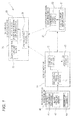
- Fig. 1 illustrates the functional configuration of a medical alarm system 1 of a first embodiment.
- the medical alarm system 1 may include: a biological information displaying device (bedside monitor) 10 which measures biological information of a patient; a position information measuring device 20 which measures position information of a medical person; and an information displaying device (indicator) 30 which displays information measured by the bedside monitor 10 and the position information measuring device 20.
- a biological information displaying device bedside monitor 10 which measures biological information of a patient
- a position information measuring device 20 which measures position information of a medical person
- an information displaying device (indicator) 30 which displays information measured by the bedside monitor 10 and the position information measuring device 20.
- the bedside monitor 10 is a device which, when it is determined that an abnormality occurs in measured biological information of the patient, transmits alarm information, and includes a biological signal measuring section 11, a communicating section 12, and a displaying section (displaying screen) 13.
- the biological signal measuring section 11 measures the value of acquired biological information, and determines whether an abnormality occurs or not. Specifically, a comparing and determining unit disposed in the biological signal measuring section 11 compares the measured value of biological information with a predetermined threshold, and, in the case where the measured value exceeds or falls below the threshold, determines that an abnormality occurs. In the case where, as a result of the determination, it is determined that an abnormality occurs, the section supplies alarm information notifying of it, to the communicating section 12. The biological signal measuring section 11 outputs the measured biological information to the displaying section 13 in real time.
- the communicating section 12 wirelessly transmits the alarm information output from the biological signal measuring section 11, to the information displaying device 30.
- the communicating section 12 wirelessly transmits an abnormality occurrence signal notifying of an occurrence of an abnormality, to the position information measuring device 20.
- the communicating section 12 receives medical person position information which is wirelessly transmitted from the position information measuring device 20, and supplies the received medical person position information to the displaying section 13.
- the displaying section 13 is a displaying screen which displays the biological signal of the patient that is supplied from the biological signal measuring section 11, and may be configured by, for example, a liquid crystal screen.
- the displaying section 13 further displays the alarm information supplied from the biological signal measuring section 11, and the medical person position information supplied from the communicating section 12. The contents of the display will be described later with reference of Fig. 3A .
- a biological signal acquiring unit 40 for measuring biological information of the patient is connected to the bedside monitor 10.
- the biological signal acquiring unit 40 are various sensors such as electrocardiogram electrodes 41, a blood pressure sensor 42, and a respiratory sensor 43.
- the biological information acquired by the biological signal acquiring unit 40 is supplied to the biological signal measuring section 11 of the bedside monitor 10.
- the position information measuring device 20 is a device which, when the position information of a medical person is measured, transmits the medical person position information, and includes a position information sensor 21 and a communicating section 22.
- the position information sensor 21 is a unit for detecting and measuring the position information of a medical person.
- the position information of a medical person can be detected by, for example, measuring individual identification information of an IC tag by RFID (Radio Frequency IDentification). While a medical person carries an IC tag, when the medical person passes through a predetermined gate, the identification information is measured, and the position information of the medical person is acquired.
- the position information sensor 21 supplies the measured position information of the medical person, as the medical person position information to the communicating section 22.
- a camera disposed in a predetermined gate or the like may be used, and the information may be acquired by image processing of recognizing the face of the person.
- the communicating section 22 wirelessly transmits the medical person position information supplied from the position information sensor 21, to the bedside monitor 10 and the information displaying device 30.
- the wireless transmission is performed each time when the medical person position information is sullied from the position information sensor 21.
- the communicating section 22 wirelessly transmits the medical person position information which is detected at this time, to the information displaying device 30.
- the medical person position information which is wirelessly transmitted to the information displaying device 30 may be directly transmitted from the communicating section 22 to the information displaying device 30.
- the information may be transmitted from the communicating section 12 of the bedside monitor 10 to the information displaying device 30.
- the information displaying device 30 is an indicator which displays alarm information and medical person position information, and may include a communicating section 31, an alarm information displaying section 32, and a medical person position information displaying section 33.
- the communicating section 31 receives the alarm information transmitted from the bedside monitor 10, and supplies the received alarm information to the alarm information displaying section 32.
- the communicating section 31 further receives the medical person position information transmitted from the position information measuring device 20, and supplies the received medical person position information to the medical person position information displaying section 33.
- the alarm information displaying section 32 is a displaying section which displays the alarm information supplied from the communicating section 31.
- the alarm information displaying section 32 may visibly display the information by, for example, lighting or blinking an indicator lamp, or changing the color of the indicator lamp.
- the medical person position information displaying section 33 is a displaying section which displays the medical person position information supplied from the communicating section 31.
- the medical person position information displaying section 33 may visibly display the information by, for example, lighting or blinking an indicator lamp, or changing the color of the indicator lamp.
- the information displaying device 30 upon receiving alarm information from the bedside monitor 10, the information displaying device 30 causes the received alarm information to be displayed in the alarm information displaying section 32, and further the medical person position information received from the position information measuring device 20, to be displayed in the medical person position information displaying section 33.
- a technical alarm which occurs in the case of detachment of an electrode, a failure in the attaching state of a sensor, or a high noise level
- a nurse call which is used for notifying of an abnormality by a patient himself or herself, and the like may be included.
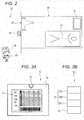
- Fig. 2 schematically illustrates a specific example of installation of the medical alarm system 1.
- the specific example illustrates the case where the medical alarm system 1 is installed in a patient room (private room) 50 where one patient 51 stays.
- the bedside monitor 10, the position information measuring device 20, and the information displaying device 30 are installed in the patient room 50.
- the position information measuring device 20 is installed in the inlet 52 of the patient room 50.
- the position information measuring device 20 is requested to be installed in a position where a medical person entering into or exiting from the patient room 50 can be surely detected.
- the information displaying device 30 is installed on a corridor 53 side of the inlet 52 of the patient room 50.
- the information displaying device 30 is installed in a position where it can be checked easily and surely that an abnormality occurs in the patient 51 in the patient room 50.
- an alarm information notifying that the abnormality occurs in the patient 51 is wirelessly transmitted from the bedside monitor 10 to the information displaying device 30.
- an abnormality occurrence signal notifying of an occurrence of an abnormality is wirelessly transmitted from the bedside monitor 10 to the position information measuring device 20.
- the position information measuring device 20 always detects a medical person entering into or exiting from the patient room 50. Each time when the existence of a medical person entering into or exiting from the patient room 50 is detected, medical person position information notifying that entering into the patient room 50 is performed, or that exiting from the patient room 50 is performed is wirelessly transmitted from the position information measuring device 20 to the information displaying device 30 and the bedside monitor 10.
- the position information measuring device 20 receives the abnormality occurrence signal notifying of an occurrence of an abnormality from the bedside monitor 10
- the medical person position information at the timing of the reception is wirelessly transmitted from the position information measuring device 20 to the information displaying device 30 and the bedside monitor 10.
- the medical person position information which is wirelessly transmitted from the position information measuring device 20 to the information displaying device 30 may be directly transmitted from the position information measuring device 20 to the information displaying device 30, or, after transmitted from the position information measuring device 20 to the bedside monitor 10, the information may be transmitted from the bedside monitor 10 to the information displaying device 30. In the latter case where the information is transmitted from the bedside monitor 10 to the information displaying device 30, the medical person position information may be transmitted together with the alarm information.
- the medical person 54 carries an identification tag (for example, a wireless IC tag) 55 in which individual identification information is recorded.
- the position information measuring device 20 detects the identification tag 55 of a medical person who enters into or exits from the patient room 50.
- medical person position information indicating that a medical person exists in the patient room 50 of the patient 51 in whom an abnormality occurs is wirelessly transmitted from the position information measuring device 20 to the information displaying device 30 and the bedside monitor.
- medical person position information indicating that a medical person does not exist in the patient room 50 of the patient 51 in whom an abnormality occurs is wirelessly transmitted.
- the alarm information transmitted from the bedside monitor 10 when the alarm information is received, the alarm information transmitted from the bedside monitor 10, and the medical person position information transmitted from the position information measuring device 20 are displayed. These pieces of information are displayed with, for example, the light of the indicator lamp.
- the embodiment illustrates the case of a private room. Also in the case where a plurality of patients are in one patient room, i.e., a plurality of bedside monitors 10 are installed in one patient room, alarm information and medical person position information are similarly informed.
- the alarm information is displayed in one of a plurality (in the embodiment, three) of stages in accordance with the emergency of the treatment to be applied to the patient 51 in whom an abnormality of biological information occurs.
- a display region 16 is displayed in blue, and, in the case of an abnormality of medium emergency, the display region 16 is displayed in yellow.
- the display region 16 is displayed in red.
- the alarm information displaying section 32 and the medical person position information displaying section 33 are disposed in the information displaying device 30.
- the displaying sections 32 and 33 have a post-like shape, and are separated from each other by vertical segmentation.
- the alarm information notifying of an abnormality of biological information is displayed in the alarm information displaying section 32.
- the medical person position information displaying section 33 the medical person position information notifying of the existence of a medical person is displayed.
- the alarm information displaying section 32 is divided into a plurality of displaying sections (in the embodiment, three displaying sections 32a, 32b, 32c), and configured so as to perform a display in accordance with the emergency of the treatment to be applied to the patient 51 in whom an abnormality of biological information occurs.
- the displaying section 32c is displayed in blue
- the displaying section 32b is displayed in yellow
- the displaying section 32a is displayed in red.
- the medical person position information displaying section 33 is displayed in different manners depending on whether or not a medical person exists in the patient room of the patient 51 in whom an abnormality of biological information occurs.
- a medical person exists in the patient room of the patient 51 in whom an abnormality of biological information occurs, for example, the lamp is lit, and, in the case where a medical person does not exist, the lamp is not lit.
- the medical person 54 can view the medical person position information (the lighting or not lighting of the indicator lamp) which is displayed in the medical person position information displaying section 33 of the information displaying device 30, and know whether or not another medical person exists in the patient room of the patient 51 in whom the abnormality of biological information occurs, i.e., whether or not response to the occurrence of the abnormality in the patient 51 in whom the abnormality of biological information occurs is performed.
- the medical person position information the lighting or not lighting of the indicator lamp
- the medical person 54 can know that a treatment is not performed on the patient 51 in whom the abnormality of biological information occurs, and promptly rush to the patient 51 in whom the abnormality of biological information occurs.
- the medical person 54 enters into the patient room, the entering is detected by the position information measuring device 20, and the medical person position information displaying section 33 is lit. Then, the medical person 54 operates an alarm cancel button disposed in the bedside monitor 10 to cancel the alarming state.
- both the alarm information indicating the emergency of the treatment, and the medical person position information indicating whether or not a medical person exists in the patient room of the patient in whom an abnormality of biological information occurs are displayed on the information displaying device 30 installed in the inlet 52 of the patient room 50. Therefore, it is possible to promptly and correctly determine whether the medical person must rush to the patient or not. In accordance with the emergency of the alarm, it is possible to promptly and correctly determine the priorities of patients to whom medical persons must rush. Therefore, inefficient situations such as where two or more medical persons rush to the same patient can be avoided.
- the position information of a medical person is measured by detection of the identification tag 55 such as a wireless IC tag, or face recognition of the medical person, and hence it is possible to promptly and correctly measure the position information of the medical person.
- the identification tag 55 such as a wireless IC tag, or face recognition of the medical person
- the information displaying device (indicator) 30 is installed in the inlet 52 (on the corridor side of the inlet 52) of the patient room 50. Therefore, a medical person can easily and correctly know the display contents.
- Fig. 4 illustrates the functional configuration of a medical alarm system 2 of a second embodiment.
- the medical alarm system 2 has a configuration where a central monitor 60 is connected to the bedside monitors 10 through a network 5 (a LAN or the like), and information of the bedside monitors 10 is centrally managed through the network 5 by the central monitor 60.
- the medical alarm system 2 is different in these points from the medical alarm system 1 of the first embodiment.
- components identical with or similar to those of the first embodiment are denoted by the same reference numerals, and their detailed description is omitted.
- the biological information of the corresponding patient which is measured by each of the bedside monitors 10, the alarm information which is output when an abnormality occurs in the biological information of the patient, and the medical person position information which is measured by the position information measuring device 20 are transmitted from the communicating section 12 of the bedside monitor 10 to the central monitor 60 through the network 5.
- the central monitor 60 is a monitor which is connected to the plurality of bedside monitors 10 through the network 5, which centrally manages monitoring of the states of patients, and which is installed in a nurses' station, a waiting room for doctors, or the like. As shown in Fig. 4 , the central monitor 60 may include a communicating section 61 and a displaying section 62.
- the communicating section 61 receives the biological information, alarm information, and medical person position information which are transmitted from the bedside monitors 10, and supplies the received pieces of information to the displaying section 62.
- the displaying section 62 is a displaying screen which displays the information which is supplied from the communicating section 61, and may be configured by, for example, a liquid crystal screen.
- Information of all the bedside monitors 10 connected through the network 5 can be displayed in the displaying section 62, and their display modes can be selected on the side of the central monitor. For example, biological information of a patient of the designated patient room can be displayed, or the patient room from which alarm information is output, the names of the patients in the room, and the like can be displayed.
- Fig. 5 schematically illustrates a specific example of installation of the medical alarm system 2.
- the specific example shows the medical alarm system 2 in which bedside monitors 10a, 10b, ..., 10f in a patient room (ward) 70 where a plurality of patients 51a, 51b, ..., 51f stay are connected to the central monitor 60 in a nurses' station 69 through the network 5.
- the bedside monitors 10a, 10b, ... , 10f, the position information measuring device 20, and the information displaying device 30 are installed.
- the position information measuring device 20 is installed in the inlet 72 of the patient room 70.
- the information displaying device 30 is installed on a corridor 73 side of the inlet 72.
- an alarm information notifying of the abnormality is wirelessly transmitted from the bedside monitor which detects the abnormality, to the information displaying device 30, and transmitted to the central monitor 60 through the network 5.
- an abnormality occurrence signal notifying of an occurrence of an abnormality is wirelessly transmitted from the bedside monitor which detects the abnormality, to the position information measuring device 20.
- the position information measuring device 20 Upon receiving the abnormality occurrence signal notifying that an abnormality occurs from the bedside monitor 10b, the position information measuring device 20 wirelessly transmits medical person position information at the timing of the reception, to the information displaying device 30 and at least the bedside monitor 10b.
- the medical person position information which is transmitted to the bedside monitor 10b is transmitted to the central monitor 60 through the network 5.
- the alarm information transmitted from the bedside monitor 10b, and the medical person position information transmitted from the position information measuring device 20 are displayed on the information displaying device 30.
- the occurrence of an abnormality in the patient 51b of the patient room 70, the emergency of the treatment for the abnormality, and information indicating whether a medical person exists in the patient room 70 or not are displayed in the displaying section 62 of the central monitor 60.
- the displaying section 62 biological information of the patients in the patient room 70 is displayed while dividing the information into respective patient regions.
- the frame of the region where the biological information of the patient 51b from whom an alarm is generated is highlighted by a thick line 63 of a color corresponding to the emergency of the alarm.
- the highlighting by the thick line 63 illustrates the alarm occurrence in the patient 51b.
- the situation where a medical person has rushed to the patient room 70 is indicated by a face mark 68 shown in the region enclosed by the thick line 63.
- a medical person 56 who is in the nurses' station 69 views the information displayed on the central monitor 60, and can determine promptly and correctly from which one of patient rooms alarm information is transmitted, the emergency of the treatment to be applied to the patient 51b in whom an abnormality of biological information occurs, whether a medical person exists in the patient room or not, and the like.
- Fig. 6 illustrates information displayed on the central monitor 60 in the case where, in the patient room 70, alarm information is transmitted at overlapping timings from the patient 51b and the patient 51f.
- Information indicating that an abnormality occurs in the patients 51b and 51f in the patient room 70, the emergencies of treatments for the abnormalities, and whether a medical person is in the patient room 70 or not are displayed in the displaying section 62.
- the outline of the region where the biological information of the patient 51b from whom the alarm is generated is highlighted by the thick line 63 of a color (in the example, yellow) corresponding to the emergency of the alarm.
- the situation where a medical person has rushed to the patient room 70 is indicated by the face mark 68 shown in the region enclosed by the thick line 63.
- the outline of the region where the biological information of the patient 51f from whom the alarm is generated is highlighted by the thick line 163 of a color (in the example, red) corresponding to the emergency of the alarm.
- the situation where a medical person has rushed to the patient room 70 is indicated by the face mark 168 shown in the region enclosed by the thick line 163.
- the alarm information of the one in whom the emergency of the treatment is higher is displayed on the information displaying device 30.
- the emergency of the patient 51b is medium, and that of the patient 51f is significant. Therefore, the alarm information of the patient 51f is displayed on the information displaying device 30.
- An alarm lamp 200 of the central monitor 60 is lit with a color (in the example, red) corresponding to the emergency of the patient 51f.
- the medical person can determine promptly and correctly that alarm information is transmitted from a plurality of patients (patients 51b and 51f), that the priority of the treatment on the patient 51f is higher, and whether or not a medical person exists in the patient room 70 where the patient 51f stays.
- the display mode of the central monitor 60 in the case where alarm information is transmitted from two or more patients as described above may be set so that, in the case where the treatment on the patient 51f in whom an abnormality of biological information occurs is started, the light-off state of the medical person position information displaying section 33 in Fig. 6 is maintained, and the alarm information of the alarm information displaying section 32 is changed to the information of the patient 51b in whom an abnormality of biological information occurs.
- the configuration even when alarm information is transmitted from two or more patients, it is possible to surely prevent treatments to be applied on the patients in whom an abnormality of biological information occurs, from failing to be performed.
- the medical person when a medical person views information displayed on the central monitor 60, or the medical person position information of the information displaying device 30 installed in the inlet of a patient room, the medical person can know whether another medical person has already reached the patient or not. Therefore, it is possible to prevent an inefficient situation where a plurality of medical persons rush to the same patient, from occurring.
- a portable terminal carried by a medical person may be used as the information displaying device 30.
- a bedside monitor may wirelessly transmit alarm information and medical person position information, and the pieces of information may be transmitted to the portable terminal carried by a medical person through a server.
- information which relates to the abnormality occurrence, and which is similar to that on the central monitor 60 illustrated in Fig. 6 is displayed on a displaying screen of the portable terminal.
- the information displaying device when the information displaying device is installed in a place which attracts notice of a medical person (for example, the inlet of a patient room), or when information is displayed on the portable terminal carried by the medical person, it is possible to know easily and promptly whether a medical person is in a place of the patient who generates an alarm. Therefore, a treatment on the patient can be performed promptly and efficiently.
- a medical person for example, the inlet of a patient room
Landscapes
- Health & Medical Sciences (AREA)
- Engineering & Computer Science (AREA)
- Life Sciences & Earth Sciences (AREA)
- Biomedical Technology (AREA)
- Medical Informatics (AREA)
- Public Health (AREA)
- General Health & Medical Sciences (AREA)
- Physics & Mathematics (AREA)
- Business, Economics & Management (AREA)
- Pathology (AREA)
- Biophysics (AREA)
- Veterinary Medicine (AREA)
- Animal Behavior & Ethology (AREA)
- Heart & Thoracic Surgery (AREA)
- Molecular Biology (AREA)
- Surgery (AREA)
- General Business, Economics & Management (AREA)
- Primary Health Care (AREA)
- Epidemiology (AREA)
- Computer Networks & Wireless Communication (AREA)
- General Physics & Mathematics (AREA)
- Emergency Management (AREA)
- Physiology (AREA)
- Measuring And Recording Apparatus For Diagnosis (AREA)
Applications Claiming Priority (1)
| Application Number | Priority Date | Filing Date | Title |
|---|---|---|---|
| JP2013048666A JP6069042B2 (ja) | 2013-03-12 | 2013-03-12 | 医療用警報システムおよび医療警報用インジケータ |
Publications (1)
| Publication Number | Publication Date |
|---|---|
| EP2777487A1 true EP2777487A1 (fr) | 2014-09-17 |
Family
ID=50241222
Family Applications (1)
| Application Number | Title | Priority Date | Filing Date |
|---|---|---|---|
| EP20140159064 Ceased EP2777487A1 (fr) | 2013-03-12 | 2014-03-12 | Système d'alerte médicale avec affichage de position des infirmières |
Country Status (4)
| Country | Link |
|---|---|
| US (1) | US9412259B2 (fr) |
| EP (1) | EP2777487A1 (fr) |
| JP (1) | JP6069042B2 (fr) |
| CN (1) | CN104042188A (fr) |
Families Citing this family (14)
| Publication number | Priority date | Publication date | Assignee | Title |
|---|---|---|---|---|
| CN104434063A (zh) * | 2014-11-24 | 2015-03-25 | 深圳市华宝电子科技有限公司 | 一种远程实时监护系统 |
| US9940435B2 (en) * | 2014-12-15 | 2018-04-10 | General Electric Company | Visualization of a development and escalation of a patient monitor alarm |
| JP6577259B2 (ja) * | 2015-06-19 | 2019-09-18 | 株式会社ケアコム | ナースコールシステム |
| EP3436994B1 (fr) * | 2016-03-30 | 2024-05-08 | Koninklijke Philips N.V. | Identification et localisation de personnel automatisées et suivi de procédure automatisé |
| JP7032868B2 (ja) | 2017-04-28 | 2022-03-09 | パラマウントベッド株式会社 | ベッドシステム |
| JP2019088433A (ja) * | 2017-11-14 | 2019-06-13 | 株式会社Kyowaエンジニアリング・ラボラトリー | 身体情報表示システム |
| CN110136372A (zh) * | 2018-02-09 | 2019-08-16 | 由昉信息科技(上海)有限公司 | 一种护理呼叫系统及其量测方法 |
| JP7339005B2 (ja) | 2019-03-26 | 2023-09-05 | 日本光電工業株式会社 | 生体情報監視システム |
| WO2020243893A1 (fr) * | 2019-06-04 | 2020-12-10 | 深圳迈瑞生物医疗电子股份有限公司 | Système de surveillance central, et terminal de traitement de données et procédé de surveillance associé |
| EP4012417A4 (fr) * | 2019-08-07 | 2023-08-23 | Hitachi High-Tech Corporation | Système d'analyse automatique et procédé de manipulation d'alarme |
| US11424025B2 (en) * | 2019-08-30 | 2022-08-23 | GE Precision Healthcare LLC | Systems and methods for medical device monitoring |
| US12235941B2 (en) | 2019-10-18 | 2025-02-25 | Masimo Corporation | Display layout and interactive objects for patient monitoring |
| CN110859594B (zh) * | 2019-10-24 | 2022-12-30 | 苏州维伟思医疗科技有限公司 | 监护仪的报警方法、装置及其系统 |
| CN110971682A (zh) * | 2019-11-27 | 2020-04-07 | 北京天元创新科技有限公司 | 一种位置信息监控方法、电子设备及存储介质 |
Citations (4)
| Publication number | Priority date | Publication date | Assignee | Title |
|---|---|---|---|---|
| US20060049936A1 (en) * | 2004-08-02 | 2006-03-09 | Collins Williams F Jr | Configurable system for alerting caregivers |
| JP2011041769A (ja) | 2009-08-24 | 2011-03-03 | Nippon Koden Corp | 生体情報監視システム |
| WO2012131546A2 (fr) * | 2011-03-28 | 2012-10-04 | Koninklijke Philips Electronics N.V. | Système et procédé pour apporter un mode famille à des dispositifs de surveillance |
| US20120323090A1 (en) * | 2011-06-20 | 2012-12-20 | Cerner Innovation, Inc. | Ambient sensing of patient discomfort |
Family Cites Families (10)
| Publication number | Priority date | Publication date | Assignee | Title |
|---|---|---|---|---|
| US5561412A (en) | 1993-07-12 | 1996-10-01 | Hill-Rom, Inc. | Patient/nurse call system |
| US5699038A (en) | 1993-07-12 | 1997-12-16 | Hill-Rom, Inc. | Bed status information system for hospital beds |
| US5838223A (en) * | 1993-07-12 | 1998-11-17 | Hill-Rom, Inc. | Patient/nurse call system |
| JP3453644B2 (ja) | 1995-10-13 | 2003-10-06 | 康裕 福井 | 医療用アラーム装置 |
| US7304580B2 (en) * | 2003-12-04 | 2007-12-04 | Hoana Medical, Inc. | Intelligent medical vigilance system |
| US7629890B2 (en) * | 2003-12-04 | 2009-12-08 | Hoana Medical, Inc. | System and methods for intelligent medical vigilance with bed exit detection |
| JP2003310672A (ja) * | 2002-04-18 | 2003-11-05 | Teruya:Kk | 多機能情報モニター端末付き床頭台 |
| JP2007228982A (ja) * | 2006-02-27 | 2007-09-13 | Keakomu:Kk | ナースコール装置 |
| JP5027480B2 (ja) * | 2006-10-31 | 2012-09-19 | アイホン株式会社 | ナースコールシステム |
| EP3605550A1 (fr) | 2009-03-04 | 2020-02-05 | Masimo Corporation | Système de surveillance médicale |
-
2013
- 2013-03-12 JP JP2013048666A patent/JP6069042B2/ja active Active
-
2014
- 2014-03-11 CN CN201410087905.7A patent/CN104042188A/zh active Pending
- 2014-03-11 US US14/204,263 patent/US9412259B2/en active Active
- 2014-03-12 EP EP20140159064 patent/EP2777487A1/fr not_active Ceased
Patent Citations (4)
| Publication number | Priority date | Publication date | Assignee | Title |
|---|---|---|---|---|
| US20060049936A1 (en) * | 2004-08-02 | 2006-03-09 | Collins Williams F Jr | Configurable system for alerting caregivers |
| JP2011041769A (ja) | 2009-08-24 | 2011-03-03 | Nippon Koden Corp | 生体情報監視システム |
| WO2012131546A2 (fr) * | 2011-03-28 | 2012-10-04 | Koninklijke Philips Electronics N.V. | Système et procédé pour apporter un mode famille à des dispositifs de surveillance |
| US20120323090A1 (en) * | 2011-06-20 | 2012-12-20 | Cerner Innovation, Inc. | Ambient sensing of patient discomfort |
Also Published As
| Publication number | Publication date |
|---|---|
| JP6069042B2 (ja) | 2017-01-25 |
| US9412259B2 (en) | 2016-08-09 |
| CN104042188A (zh) | 2014-09-17 |
| US20140266709A1 (en) | 2014-09-18 |
| JP2014171776A (ja) | 2014-09-22 |
Similar Documents
| Publication | Publication Date | Title |
|---|---|---|
| US9412259B2 (en) | Medical alarm system and medical alarm indicator | |
| EP2767225B1 (fr) | Système de surveillance médicale | |
| CN103477340B (zh) | 用于提供监测设备的家庭模式的系统及方法 | |
| US9652960B2 (en) | Device and method for routing a medical alert to a selected staff member | |
| JP4706040B2 (ja) | 生命危機緊急通報システム | |
| CN104994777B (zh) | 用于监测身体机能和/或身体属性的方法和装置 | |
| US9456259B1 (en) | Physiological monitoring system using bluetooth low energy mesh network | |
| US20060152373A1 (en) | Portable pulse monitoring device and method of its operation | |
| KR20080109371A (ko) | 응급 구조구난 시스템 | |
| WO2017010956A1 (fr) | Système de surveillance | |
| KR101708727B1 (ko) | 사람의 생명이 위험한 상태에 있는지를 조기에 검출하기 위한 시스템 | |
| CN109700443A (zh) | 可穿戴设备、紧急呼救系统及方法 | |
| KR20020024083A (ko) | 무선 건강체크기 및 무선 건강체크 방법 | |
| JP2018198009A (ja) | 医療業務支援装置、医療業務支援システム及び医療業務支援方法 | |
| EP0535629A1 (fr) | Système de sauvetage répondant aux événements d'urgence médicale | |
| CN106667457B (zh) | 使用低功率蓝牙网状网络的生理监控系统 | |
| KR101997225B1 (ko) | 노약자 안심케어 시스템 | |
| CN114900806A (zh) | 一种物联网重症监护系统 | |
| KR20180063680A (ko) | 생활보조 모듈 및 이를 이용하는 생활보조 시스템 | |
| CN219461137U (zh) | 床旁监护设备和床旁监护系统 | |
| US20260018043A1 (en) | Portable biometric monitor device for first responders and methods | |
| TW201435819A (zh) | 安全監測裝置及方法 | |
| EP4345787A1 (fr) | Système de surveillance, ampoule utilisée pour le système de surveillance et procédé de surveillance d'une cible | |
| CN118697304A (zh) | 一种人体健康状况监护预警系统及方法 | |
| KR20220020659A (ko) | 인체 신호 감지 측정을 통해 위험 요소 차단을 위한 긴급 조치와 비상 알림 시스템 |
Legal Events
| Date | Code | Title | Description |
|---|---|---|---|
| 17P | Request for examination filed |
Effective date: 20140312 |
|
| AK | Designated contracting states |
Kind code of ref document: A1 Designated state(s): AL AT BE BG CH CY CZ DE DK EE ES FI FR GB GR HR HU IE IS IT LI LT LU LV MC MK MT NL NO PL PT RO RS SE SI SK SM TR |
|
| AX | Request for extension of the european patent |
Extension state: BA ME |
|
| PUAI | Public reference made under article 153(3) epc to a published international application that has entered the european phase |
Free format text: ORIGINAL CODE: 0009012 |
|
| R17P | Request for examination filed (corrected) |
Effective date: 20150316 |
|
| RBV | Designated contracting states (corrected) |
Designated state(s): AL AT BE BG CH CY CZ DE DK EE ES FI FR GB GR HR HU IE IS IT LI LT LU LV MC MK MT NL NO PL PT RO RS SE SI SK SM TR |
|
| STAA | Information on the status of an ep patent application or granted ep patent |
Free format text: STATUS: EXAMINATION IS IN PROGRESS |
|
| 17Q | First examination report despatched |
Effective date: 20170919 |
|
| STAA | Information on the status of an ep patent application or granted ep patent |
Free format text: STATUS: THE APPLICATION HAS BEEN REFUSED |
|
| 18R | Application refused |
Effective date: 20211119 |