EP2778845A2 - Systèmes et procédés pour haptiques dans des environnements vibrants et dispositifs - Google Patents
Systèmes et procédés pour haptiques dans des environnements vibrants et dispositifs Download PDFInfo
- Publication number
- EP2778845A2 EP2778845A2 EP14158123.1A EP14158123A EP2778845A2 EP 2778845 A2 EP2778845 A2 EP 2778845A2 EP 14158123 A EP14158123 A EP 14158123A EP 2778845 A2 EP2778845 A2 EP 2778845A2
- Authority
- EP
- European Patent Office
- Prior art keywords
- haptic
- vibration
- parasitic
- effect
- haptic effect
- Prior art date
- Legal status (The legal status is an assumption and is not a legal conclusion. Google has not performed a legal analysis and makes no representation as to the accuracy of the status listed.)
- Withdrawn
Links
Images




Classifications
-
- G—PHYSICS
- G06—COMPUTING OR CALCULATING; COUNTING
- G06F—ELECTRIC DIGITAL DATA PROCESSING
- G06F3/00—Input arrangements for transferring data to be processed into a form capable of being handled by the computer; Output arrangements for transferring data from processing unit to output unit, e.g. interface arrangements
- G06F3/01—Input arrangements or combined input and output arrangements for interaction between user and computer
- G06F3/016—Input arrangements with force or tactile feedback as computer generated output to the user
-
- G—PHYSICS
- G08—SIGNALLING
- G08B—SIGNALLING SYSTEMS, e.g. PERSONAL CALLING SYSTEMS; ORDER TELEGRAPHS; ALARM SYSTEMS
- G08B6/00—Tactile signalling systems, e.g. tactile personal calling systems
Definitions
- the present invention generally relates to haptic feedback, and more particularly to systems and methods for haptic feedback in vibrating environments and devices.
- Haptic feedback can provide a conduit for electronic devices to communicate information to users. This conduit can be in addition to standard visual or auditory effects.
- the number of devices that include some form of haptic feedback has increased dramatically over the past several years. However, some of these devices already output vibrations, for example, as a byproduct of their regular operation. Further, many devices may be used in a vibrating environment. Either of these may dull or overwhelm haptic effects. Accordingly, there is a need for a device to compensate for these background vibrations.
- Embodiments of the present disclosure include devices featuring haptics in vibrating environments and devices.
- a system according to the present disclosure may comprise: a haptic output device; a processor coupled to the haptic output device, the processor configured to: determine that a haptic effect should be generated; receive a signal associated with a parasitic vibration; determine a haptic effect based in part on the parasitic vibration; and output a haptic signal associated with the haptic effect to the haptic output device.
- One illustrative embodiment of the present disclosure comprises a device that may be used in an environment prone to vibration, for example, a smartphone or other device comprising a haptic output device and a user interface through which the user feels haptic effects.
- a mobile device of the illustrative embodiment may be used in for example, a car, an airplane, a bus, a train, or some other environment that has substantial vibrations. These parasitic vibrations may interfere with the haptic effects output by the illustrative mobile device. For example, a parasitic vibration may mask a vibration output by the haptic output device.
- the illustrative embodiment of the present disclosure comprises systems for compensating for these parasitic vibrations.
- the illustrative embodiment may comprise a data store comprising data associated with the parasitic vibrations. This data store may be local to the mobile device, or accessible via a network connection.
- the illustrative mobile device may receive a signal from the data store. Based on this signal, the illustrative mobile device may determine a haptic effect that is distinguishable from the parasitic vibration.
- This distinguishable haptic effect may comprise one or more of many potential haptic effects.
- the haptic effect may comprise a vibration based effect configured to be felt in spite of the parasitic vibration, e.g. a haptic effect at a different frequency and/or amplitude than the vibration and thus distinguishable from the parasitic vibration.
- the haptic effect may comprise an effect configured to compensate for the parasitic vibrations.
- the haptic effect may comprise a vibration at a frequency and amplitude configured to compensate for, or mask (e.g. "reduce” or "cancel") the parasitic vibration.
- the haptic effect may comprise a skin stretching effect, an electrostatic based effect, or a surface deformation effect.
- the parasitic vibration may have little or no impact on the haptic effect.
- the haptic effect may comprise a non-vibration based effect.
- the haptic effect may comprise an effect configured to control the parasitic vibration.
- the parasitic vibration may be the result of the normal operation of the device.
- the device may for example comprise a motor or other component that outputs the parasitic vibration.
- the haptic effect may comprise controlling the motor or other component to vary the parasitic vibration, and thus output a perceptible haptic effect.
- the mobile or other device may output a haptic effect that the user can perceive despite the parasitic vibration. This may enable the user to use the illustrative device in a vibrating environment, e.g. in a car, train, or airplane.
- the device may be incorporated into the vibrating environment.
- the illustrative device may comprise a touch screen display for use in a car stereo or a touch screen for use in an airplane entertainment system.
- the device may output a haptic effect that is distinguishable from the vibration of the larger system (e.g. the vibration as the car moves over the road or as the airplane experiences turbulence).
- the device may be a device that already includes a vibration, e.g. an electric razor, a kitchen appliance, or piece of industrial equipment.
- the parasitic vibration may be generated by a motor or other component on the device which normally serves a purpose other than for generating haptic effects.
- the haptic effect may be associated with controlling this motor or the like, e.g. briefly stopping or slowing its operation, and thus generating a perceptible haptic effect by stopping or slowing the parasitic vibration.
- Figure 1 is a block diagram of a system for haptics in vibrating environments and devices according to one embodiment of the disclosure.
- the system 100 shown in Figure 1 comprises a device 102.
- Device 102 may comprise one of a variety of handheld devices, such as a mobile phone, a personal digital assistant (PDA), or a handheld navigation system.
- PDA personal digital assistant
- the present disclosure may be implemented in a device that is not portable, for example, in an automobile console, an airplane console, a console for industrial equipment, a household appliance, a gaming console, or other device, whether primarily electronic or not.
- Embodiments of the present disclosure can be implemented in combination with, or may comprise combinations of: digital electronic circuitry, computer hardware, firmware, and software.
- the device 102 shown in Figure 1 comprises a processor 110.
- the processor 110 receives input signals and generates signals for communication, display, and providing haptic feedback.
- the processor 110 includes or is in communication with one or more computer-readable media, such as memory 112, which may comprise random access memory (RAM).
- RAM random access memory
- the processor 110 executes computer-executable program instructions stored in memory 112, such as executing one or more computer programs for messaging or for generating haptic feedback.
- Processor 110 may comprise a microprocessor, a digital signal processor (DSP), an application-specific integrated circuit (ASIC), one or more field programmable gate arrays (FPGAs), or state machines.
- the processor may further comprise a programmable electronic device such as a PLC, a programmable interrupt controller (PIC), a programmable logic device (PLD), a programmable read-only memory (PROM), an electronically programmable read-only memory (EPROM or EEPROM), or other similar devices.
- Memory 112 comprises a computer-readable medium that may store instructions, which, when executed by the processor 110, cause it to perform various steps, such as those described herein.
- Suitable computer-readable media may comprise, but are not limited to, non-transient computer readable media such as, an electronic, optical, magnetic, or other storage or transmission device capable of providing the processor 110 with computer-readable instructions.
- Other examples of media comprise, but are not limited to, a floppy disk, CD-ROM, magnetic disk, memory chip, ROM, RAM, ASIC, configured processor, all optical media, all magnetic tape or other magnetic media, or any other medium from which a computer processor can read.
- various other devices may include or comprise or constitute suitable computer-readable media, such as a router, private or public network, or other transmission device.
- the memory 112 may be internal to or external of the device 102.
- the processor 110, and the processing, described may be in one or more structures, and may be dispersed throughout one or more structures.
- Memory 112 may further comprise a data store comprising data associated with the parasitic vibrations.
- memory 112 may comprise a database of parasitic vibrations associated with various environments, which is accessible by processor 110.
- memory 112 may comprise a database of one or more templates of parasitic vibrations. These templates may comprise data associated with parasitic vibrations in common environments.
- the templates may comprise data associated with vibrations: on an airplane (e.g. in various levels of turbulence), a bus on various types of roads, a car on various types of roads, or another environment associated with background vibrations.
- the device 102 also comprises a user input device 114 in communication with the processor 110.
- the user input device 114 may comprise a touchscreen.
- User input device 114 may sense user interaction as well as the location of the interaction.
- the user input device may comprise a capacitance-based touchscreen.
- user input device 114 may comprise a button, switch, slider, or trackball.
- the device 102 may comprise both a touch screen and an additional user input device 114, or a non-touch sensitive screen and a user input device.
- the device 102 also comprises a display 116.
- Display 116 is in communication with processor 110 and is configured to display output from the processor 110 to the user.
- the device 102 may comprise a liquid crystal display (LCD) disposed beneath the user input device 114.
- the display 116 and user input device 114 may comprise a single, integrated component, such as a touch-screen LCD.
- device 102 may not comprise a display.
- the device 102 also comprises a haptic output device 118, which is in communication with the processor 110 and configured to output a haptic effect.
- the processor 110 outputs a haptic signal to the haptic output device 118, which then outputs a haptic effect based on the haptic signal.
- the processor 110 may output a haptic signal designed to cause the haptic output device 118 to vibrate.
- haptic output device 118 may output a different type of haptic effect.
- haptic output device 118 may be configured to output a haptic effect varying a perceived coefficient of friction of a touch surface.
- haptic output device 118 may provide vibrotactile haptic effects that move user input device 114, or other components of device 102, in a controlled manner.
- Haptic output device 118 may comprise an actuator coupled to a housing of the device 102, and some haptic effects may use multiple actuators in sequence and/or in concert.
- the perceptible coefficient of friction can be varied by vibrating the surface at varying frequencies above a threshold. Different combinations/sequences of variance can be used to simulate other effects.
- haptic output device 118 may comprise an electrostatic actuator, or an actuator configured to modify the shape of one or more components of device 102.
- haptic output device 118 may comprise a device configured to vary a vibration output by a motor or other component on device 102.
- haptic output device 118 may comprise an additional mass to be applied to the motor in order to vary the rotation of that motor and generate a vibration.
- haptic output device 118 may comprise a device configured to vary a structural characteristic of a housing or a mount associated with the motor. This may vary the parasitic vibration in a way that is perceptible to the user of device 102.
- the device 102 also comprises a sensor 120.
- the sensor 120 is configured to detect a parasitic vibration, and transmit a signal associated with the parasitic vibration to the processor 110.
- Sensor 120 may be a component of haptic output device 118.
- haptic output device 118 may comprise a piezoelectric actuator that also serves as a sensor to detect parasitic vibrations.
- sensor 120 may comprise another type of vibration detection device, for example, an accelerometer.
- sensor 120 may comprise a sensor configured to determine the location of device 102.
- sensor 120 may comprise a GPS sensor configured to determine whether the device 102 is currently in an area associated with a specific type of parasitic vibration, e.g. a road, a train, an airplane, or some other location associated with a parasitic vibration.
- Sensor 120 is not a required component of device 102.
- Figure 2A is a diagram illustrating an external view of a system 200 comprising a computing device 201 that comprises a touch-enabled display 202.
- Figure 2B shows a cross-sectional view of device 201.
- Device 201 may be configured similarly to device 102 described above with regard to Figure 1 , though components such as the processor, memory, sensors, and the like are not shown in this view for purposes of clarity.
- device 201 includes a plurality of haptic output devices 218 and an additional haptic output device 222.
- Haptic output device(s) 218-1 may comprise an actuator configured to impart vertical force to display 202, while 218-2 may move display 202 laterally.
- the haptic output devices are coupled directly to the display, but it should be understood that the actuators could be coupled to another touch surface, such as a layer of material on top of display 202.
- Additional actuator 222 may be coupled to a housing containing the components of device 201.
- the area of display 202 corresponds to the touch area, though the principles could be applied to a touch surface completely separate from the display.
- Haptic output devices 218 may each comprise a piezoelectric actuator, while additional actuator 222 may comprise an eccentric rotating mass motor, a linear resonant actuator, or another piezoelectric actuator.
- Actuator 222 can be configured to provide a vibrotactile haptic effect in response to a haptic signal from the processor.
- the vibrotactile haptic effect can be utilized in conjunction with surface-based haptic effects and/or for other purposes.
- Either or both haptic output devices 218-1 and 218-2 can comprise an actuator such as a piezoelectric actuator. Additionally or alternatively, haptic output devices 218-1 and 218-2 may comprise an electromagnetic actuator, an electroactive polymer, a shape memory alloy, a flexible composite piezo actuator (e.g. an actuator comprising a flexible material), electrostatic, and/or magnetostrictive actuators. Additionally, a single actuator 222 is shown, although multiple other haptic output devices can be coupled to the housing of device 201 and/or other actuators 222 may be coupled elsewhere. Alternatively, one or more of the actuators 218-1 and 218-2, or the actuator 222, may be omitted. Device 201 may feature multiple haptic output devices 218-1 / 218-2 coupled to the touch surface at different locations, as well.
- a user may interact with touch enabled display 202. And in response to the user interaction, one or more of the haptic output devices 218-1 / 218-2 may output a haptic effect.
- the mobile device 201 may be used in an area comprising significant parasitic vibrations.
- the haptic effect may be tuned to be perceptible despite the parasitic vibrations.
- the haptic effect may comprise a haptic effect that is clearly distinguishable from the parasitic vibration.
- This effect may comprise, for example, an electrostatic based effect, a skin stretch effect, or a surface deformation effect. Further, this effect may comprise a non-vibration based effect.
- the haptic effect may comprise a vibration based effect.
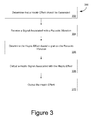
- Figure 3 is a flow chart describing an exemplary embodiment for a method for haptics in vibrating environments or devices.
- the stages in Figure 3 may be implemented in program code that is executed by a processor, for example, the processor in a general purpose computer, a mobile device, or server. These stages may be implemented by a group of processors, for example, a processor on a mobile device and processors on one or more general purpose computers, such as servers.
- the stages below are described with regard to the components of device 102 described above with regard to Figure 1 .
- the method 300 starts at stage 302 when processor 110 determines that a haptic effect should be generated.
- processor 110 may determine that a haptic effect should be generated as an alert associated with some component of the device 102.
- the haptic effect may be associated with the current battery level, the presence of a network or other type of connection, or some other features associated with the operation of the device.
- the haptic effect may be associated with a task or application on the mobile device, for example, the haptic effect may be associated with a GPS application and comprise an indication that the user has arrived at a particular location.
- the haptic effect may comprise an indication that a file has been downloaded, or that some operation or task has been completed.
- processor 110 receives a signal associated with a parasitic vibration.
- the signal may be received from memory 112, which may comprise a database associated with parasitic vibrations.
- memory 112 may comprise a database of one or more templates of parasitic vibrations.
- These templates may comprise data associated with parasitic vibrations in common environments.
- the templates may comprise data associated with vibrations on or in: an airplane (e.g. in various levels of turbulence), a bus on various types of roads, a car on various types of roads, or another environment associated with background vibrations.
- the signal may be received from sensor 120, which is configured to detect the parasitic vibrations.
- Sensor 120 may comprise, for example, an accelerometer.
- sensor 120 may comprise a component of haptic output device 118.
- haptic output device 118 may comprise a piezoelectric element.
- the piezoelectric element may be configured to output a signal associated with the parasitic vibrations of device 102.
- This signal may comprise data such as the magnitude or frequency of the parasitic vibration.
- the signal may be received from a location system (e.g. GPS or AGS) that provides the current location and/or velocity.
- processor 110 may determine the user's current location and data about the vibration based on this information. For example, if processor 110 determines that the user is traveling at above a certain speed on the Interstate, other road or railway, processor 110 may determine that a specific type of corresponding parasitic vibration is likely present.
- processor 110 determines a haptic effect based in part on the parasitic vibration.
- the haptic effect may be a haptic effect configured to compensate for the parasitic vibrations.
- the haptic effect may comprise a vibration based effect configured to be felt in spite of the parasitic vibration, e.g. a haptic effect at a different frequency and/or amplitude than the vibration and thus distinguishable from the parasitic vibration.
- processor 110 may ensure that any haptic effect is not output at a resonant frequency of the parasitic vibration by multiplying the frequency of the parasitic vibration by a fractional value (e.g. 1.3 or 1.7).
- processor 110 may perform a Fast Fourier Transform (FFT) of the parasitic vibration to select frequency components that are not represented or not strongly represented by the parasitic vibration.
- FFT Fast Fourier Transform
- the haptic effect may comprise an effect configured to compensate for the parasitic vibrations in other ways.
- the haptic effect may comprise a vibration at a frequency and amplitude configured to compensate for, mask, interfere with, reduce, or cancel the parasitic vibration.
- the haptic effect may comprise a vibration at substantially the same frequency and amplitude as the parasitic vibration, but offset by 180 degrees, and thus configured to substantially cancel the effect of the parasitic vibration.
- the same or another actuator which supplies the vibration which cancels or attenuates the parasitic vibration may output another haptic effect intended to be sensed as haptic feedback by a user of the device.
- the haptic effect may comprise an effect that is clearly distinguishable from the parasitic vibration and thus the parasitic vibration will have little or no effect on the haptic effect.
- the haptic effect may comprise a skin stretching effect, an electrostatic based effect, or a surface deformation effect.
- the haptic effect may comprise an effect configured to vary the perceived coefficient of friction on the surface of user input device 114.
- the haptic effect may comprise an effect configured to raise or lower a segment of user input device 114 (e.g. create a surface deformation on user input device 114).
- the haptic effect may comprise moving user input device 114, or a component of user input device 114, in a way that is perceptible to the user.
- the haptic effect may comprise an effect that is not associated with vibrations, and is thus perceptible despite the parasitic vibration.
- the parasitic vibration may comprise a vibration associated with the normal operation of the device.
- the device may comprise, an electric razor, a kitchen appliance, or piece of industrial equipment.
- the parasitic vibration may be generated by a motor or other component on the device.
- the haptic effect may be associated with controlling this motor or component, e.g. briefly stopping or slowing its operation, and thus generating a perceptible haptic effect by stopping or slowing the parasitic vibration.
- a housing of the device may comprise a magnetorheological fluid, which changes viscosity when a magnetic field is applied.
- the magnetorheological fluid may comprise a mechanical coupling between the component and the housing or between a part of the housing touched or held by the user and another part of the housing to which the component is mechanically coupled, e.g. mounted.
- a magnetic field may be applied to vary the strength of the parasitic vibration.
- the user may detect this change in the parasitic vibration as a haptic effect.
- the device may comprise one or more (e.g. adjustable) air sacs or shock absorbers that are used to vary the strength of the parasitic vibration and thus output a detectible haptic effect.
- Next processor 110 outputs a haptic signal associated with the haptic effect 308.
- This haptic signal may be a digital or analog signal comprising the data needed for haptic output device 118 to output the haptic effect.
- the haptic signal may be an analog drive signal for a haptic output device, or the haptic signal may be a high-level signal comprising parametric information describing the haptic effect to be output (e.g. a command identifier and associated parameters).
- haptic output device 118 may comprise the internal capability of determining and outputting a haptic effect based on the command identifier and associated parameters.
- haptic output device 118 outputs the haptic effect.
- This haptic effect may comprise a vibration effect, which as described above is configured to be distinguishable from the parasitic effect. Additionally or alternatively, it may comprise a different type of haptic effect, for example, an electrostatic friction effect, a surface deformation effect, or a skin stretch effect, configured to be felt distinctly from the parasitic vibration.
- Figure 4A is an illustration of a system for providing haptics in vibrating environments or devices.
- Figure 4A comprises system 400, which may be mounted inside the housing of a device according to the present disclosure.
- the system comprises a motor 416 connected to a gear 404 via a shaft 402.
- This motor may be configured to perform various tasks.
- motor 416 comprises the motor on a household appliance, such as a blender, coffee grinder, hand mixer, or some other known appliance.
- motor 416 comprises a motor for use in industrial or commercial applications.
- motor 416 may be a motor for use in a drill, saw, sander, or some other industrial tool.
- system 400 further comprises a braking mechanism 406 and brake 408, configured to brake gear 404 or some other part of the motor416 or its drive train or its driven element (not shown).
- a processor determines a haptic effect to be output
- the processor transmits a trigger signal to braking mechanism 406.
- braking mechanism 406 pulls brake 408 against gear 404, thus slowing gear 404 and any co-driven components.
- gear 404 etc. slows, a torque is output on system 400 which may then be imparted on a device incorporating the system 400.
- the intensity of the torque is associated with the braking force applied to gear 404.
- braking mechanism 406 may be configured to apply varying pressures on gear 404 to provide varying levels of torque.
- the processor may determine a weak haptic effect.
- braking mechanism 406 causes the brake 408 to press lightly against the gear 404 to slow it only slightly, thereby outputting a small torque.
- the processor may determine a strong haptic effect.
- braking mechanism 406 causes the brake 408 to press against the gear 404 to rapidly slow it and thereby output a strong torque (e.g. bringing gear 404 etc. to a complete stop in less than a full rotation - although the magnitude of the deceleration is the main reaction torque defining factor, and neither complete stoppage nor a duration of less than one rotation is necessary).
- Gear 404 may be substituted by any other suitable drivetrain component capable of being braked and undergoing the required changes in angular momentum.
- the system shown in Figure 4A may operate differently.
- braking mechanism 406 may not be present.
- electric motor 416 may be configured to output the haptic effect by quickly accelerating gear 404 or a flywheel or another mass coupled to the shaft 402 (not shown in Figure 4A ), and thereby output a torque.
- the system 400 may further comprise an energy store such as a capacitor or battery, configured to store and release energy to allow electric motor 416 to accelerate gear 404 quickly enough to output a torque.
- FIG 4B is an illustration of another system for haptics in vibrating environments or devices.
- system 450 comprises a flywheel 452, moveable weights 454, and track 456.
- Flywheel 452 is configured to be rotated by an electric or other motor or actuator.
- an electric motor associated with one of the devices discussed above with regard to Figure 4A .
- the positions of the moveable weights 454 may be configured for example based on the application of a magnetic field.
- the moveable weights 454 may comprise a material that is responsive to applied magnetic fields, such as iron or some composite materials.
- the moveable weights 454 may comprise magnets.
- a magnetic coil may encircle the flywheel 452 and be activated to draw the moveable weights 454 to the outer edge of the flywheel, or to return the moveable weights 454 to the center of the flywheel.
- the moveable weights 454 may be held at or near a rest position, such as near the center of the flywheel 452 by springs to resist centrifugal forces while the flywheel is spinning. Such springs may then be overpowered by the application of a magnetic field to draw the moveable weights 454 to the edge of the flywheel 452.
- flywheel 452 When the moveable weights 454 move, they change the distribution of mass on the flywheel 452 and thus change the angular momentum of flywheel 452. This change in angular momentum causes flywheel 452 to output a force on the motor that is rotating it.
- the user holding the handheld device that the actuator is associated with may feel this force as a haptic effect.
- this haptic effect may comprise rotating, or torqueing the handheld device in the user's hand.
- track 456 comprises a groove cut along a straight line or other linear guide passing through the center axis of flywheel 452.
- track 456 may comprise a different configuration.
- track 456 may be configured to keep both weights 454 at the center of flywheel 456 when a haptic effect is not being output. But when flywheel 452 receives a trigger signal .from the processor, track 456 may be configured to allow weights 454 to move to the same part of flywheel 452 to provide an eccentric rotating mass. Different numbers of weights may be used; including a single weight in the case of controllably providing an eccentric rotating mass
- system 450 comprises two weights 454 and one track 456.
- a different number of weights and tracks may be used.
- flywheel 452 may comprise three weights, and each weight may comprise its own track.
- the haptic effect may instead be output by modifying a component of the housing in which the electric motor is placed.
- a housing of the device may comprise a magnetorheological fluid, which changes viscosity when a magnetic field is applied.
- a magnetic field may be applied to vary the strength of the parasitic vibration.
- the user may detect this change in the parasitic vibration as a haptic effect.
- the device may comprise one or more air sacs or shock absorbers that are used to vary the strength of the parasitic vibration and thus output a detectible haptic effect.
- FIG. 5 another system for haptics in a vibrating device is shown.
- system 500 which comprises an electric razor 502.
- the electric razor 502 comprises an electric motor, which outputs a parasitic vibration when in operation.
- Electric Razor 502 may implement a system for outputting a haptic effect in a vibrating device in order to provide haptic feedback to the user. This may comprise one of the systems described above with regard to Figures 4A and 4B . Additionally or alternatively it may comprise making other changes to the operation of the electric motor in order to output a perceptible haptic effect.
- This haptic effect may be associated with data associated with Electric Razor 502's operation.
- the haptic effect may be associated with the current battery level of the device, i.e. a strong haptic effect may be associated with a warning that the battery level is low. Additionally or alternatively, the haptic effect(s) may be associated with other operational information, e.g. operating time, device setting (e.g. trimmer length), and/or the temperature of the motor of the device.
- operational information e.g. operating time, device setting (e.g. trimmer length), and/or the temperature of the motor of the device.
- Embodiments of the present disclosure provide numerous advantages over conventional methods of providing haptic feedback. For example, embodiments described herein make haptic effects usable in devices that are prone to vibration. This may be useful for mobile devices that users carry into vibrating environments. Similarly, this may be useful for incorporating haptics into new locations, for example, control systems in cars, airplanes, trains, or buses, or other vibration prone apparatus and environments.
- embodiments of the present disclosure may enable haptics to be incorporated into devices that already output some vibrations. This may enable haptics to be incorporated into industrial applications and also household appliances. This will lead to these devices being more usable, as users will be able to receive information from devices through more than the traditional senses of sight and sound. This will ultimately lead to greater user satisfaction, and more efficient use of these devices.
- configurations may be described as a process that is depicted as a flow diagram or block diagram. Although each may describe the operations as a sequential process, many of the operations can be performed in parallel or concurrently. In addition, the order of the operations may be rearranged. A process may have additional steps not included in the figure.
- examples of the methods may be implemented by hardware, software, firmware, middleware, microcode, hardware description languages, or any combination thereof. When implemented in software, firmware, middleware, or microcode, the program code or code segments to perform the necessary tasks may be stored in a non-transitory computer-readable medium such as a storage medium. Processors may perform the described tasks.
- a computer may comprise a processor or processors.
- the processor comprises or has access to a computer-readable medium, such as a random access memory (RAM) coupled to the processor.
- RAM random access memory
- the processor executes computer-executable program instructions stored in memory, such as executing one or more computer programs including a sensor sampling routine, selection routines, and other routines to perform the methods described above.
- Such processors may comprise a microprocessor, a digital signal processor (DSP), an application-specific integrated circuit (ASIC), field programmable gate arrays (FPGAs), and state machines.
- Such processors may further comprise programmable electronic devices such as PLCs, programmable interrupt controllers (PICs), programmable logic devices (PLDs), programmable read-only memories (PROMs), electronically programmable read-only memories (EPROMs or EEPROMs), or other similar devices.
- Such processors may comprise, or may be in communication with, media, for example tangible computer-readable media, that may store instructions that, when executed by the processor, can cause the processor to perform the steps described herein as carried out, or assisted, by a processor.
- Such computer-readable media may comprise, but are not limited to, all electronic, optical, magnetic, or other storage devices capable of providing a processor, such as the processor in a web server, with computer-readable instructions.
- Other examples of media comprise, but are not limited to, a floppy disk, CD-ROM, magnetic disk, memory chip, ROM, RAM, ASIC, configured processor, all optical media, all magnetic tape or other magnetic media, or any other medium from which a computer processor can read.
- various other devices may include or comprise or provide computer-readable media, such as a router, private or public network, or other transmission device.
- the processor, and the processing, described may be in one or more structures, and may be dispersed through one or more structures.
- the processor may comprise code for carrying out one or more of the methods (or parts of methods) described herein.
Landscapes
- Engineering & Computer Science (AREA)
- General Engineering & Computer Science (AREA)
- Physics & Mathematics (AREA)
- General Physics & Mathematics (AREA)
- Theoretical Computer Science (AREA)
- Human Computer Interaction (AREA)
- User Interface Of Digital Computer (AREA)
Priority Applications (1)
| Application Number | Priority Date | Filing Date | Title |
|---|---|---|---|
| EP19201266.4A EP3608760A1 (fr) | 2013-03-11 | 2014-03-06 | Systèmes et procédés pour retour haptique dans des environnements et dispositifs vibrants |
Applications Claiming Priority (1)
| Application Number | Priority Date | Filing Date | Title |
|---|---|---|---|
| US13/792,337 US9202351B2 (en) | 2013-03-11 | 2013-03-11 | Systems and methods for haptics in vibrating environments and devices |
Related Child Applications (1)
| Application Number | Title | Priority Date | Filing Date |
|---|---|---|---|
| EP19201266.4A Division EP3608760A1 (fr) | 2013-03-11 | 2014-03-06 | Systèmes et procédés pour retour haptique dans des environnements et dispositifs vibrants |
Publications (2)
| Publication Number | Publication Date |
|---|---|
| EP2778845A2 true EP2778845A2 (fr) | 2014-09-17 |
| EP2778845A3 EP2778845A3 (fr) | 2017-04-19 |
Family
ID=50287864
Family Applications (2)
| Application Number | Title | Priority Date | Filing Date |
|---|---|---|---|
| EP19201266.4A Withdrawn EP3608760A1 (fr) | 2013-03-11 | 2014-03-06 | Systèmes et procédés pour retour haptique dans des environnements et dispositifs vibrants |
| EP14158123.1A Withdrawn EP2778845A3 (fr) | 2013-03-11 | 2014-03-06 | Systèmes et procédés pour haptiques dans des environnements vibrants et dispositifs |
Family Applications Before (1)
| Application Number | Title | Priority Date | Filing Date |
|---|---|---|---|
| EP19201266.4A Withdrawn EP3608760A1 (fr) | 2013-03-11 | 2014-03-06 | Systèmes et procédés pour retour haptique dans des environnements et dispositifs vibrants |
Country Status (5)
| Country | Link |
|---|---|
| US (2) | US9202351B2 (fr) |
| EP (2) | EP3608760A1 (fr) |
| JP (2) | JP6463603B2 (fr) |
| KR (1) | KR20140111609A (fr) |
| CN (2) | CN108829240A (fr) |
Cited By (4)
| Publication number | Priority date | Publication date | Assignee | Title |
|---|---|---|---|---|
| EP3208690A1 (fr) * | 2016-02-22 | 2017-08-23 | Immersion Corporation | Évitement de conflit d'effets haptiques |
| US10204493B2 (en) | 2015-09-16 | 2019-02-12 | Immersion Corporation | Haptic feedback in a haptically noisy environment |
| EP3480701A4 (fr) * | 2016-07-08 | 2019-07-17 | Guangdong Oppo Mobile Telecommunications Corp., Ltd | Procédé et dispositif d'indication de charge et terminal associé |
| WO2020131670A1 (fr) * | 2018-12-18 | 2020-06-25 | Immersion Corporation | Systèmes et procédés pour intégrer des effets haptiques environnementaux dans une réalité virtuelle |
Families Citing this family (32)
| Publication number | Priority date | Publication date | Assignee | Title |
|---|---|---|---|---|
| US9335822B2 (en) * | 2012-12-12 | 2016-05-10 | Immersion Corporation | Method and system for providing haptic effects based on haptic context information |
| US9189098B2 (en) | 2013-03-14 | 2015-11-17 | Immersion Corporation | Systems and methods for syncing haptic feedback calls |
| US9939900B2 (en) * | 2013-04-26 | 2018-04-10 | Immersion Corporation | System and method for a haptically-enabled deformable surface |
| US9729730B2 (en) | 2013-07-02 | 2017-08-08 | Immersion Corporation | Systems and methods for perceptual normalization of haptic effects |
| US9443401B2 (en) | 2013-09-06 | 2016-09-13 | Immersion Corporation | Automatic remote sensing and haptic conversion system |
| KR20150074371A (ko) * | 2013-12-24 | 2015-07-02 | 삼성전자주식회사 | 가전기기 및 그 제어 방법 |
| US9244532B2 (en) * | 2013-12-31 | 2016-01-26 | Immersion Corporation | Systems and methods for controlling multiple displays with single controller and haptic enabled user interface |
| US20150195356A1 (en) * | 2014-01-07 | 2015-07-09 | Samsung Electronics Co., Ltd. | Method of providing information by electronic device and electronic device |
| US9430106B1 (en) * | 2014-03-28 | 2016-08-30 | Amazon Technologies, Inc. | Coordinated stylus haptic action |
| US9690381B2 (en) | 2014-08-21 | 2017-06-27 | Immersion Corporation | Systems and methods for shape input and output for a haptically-enabled deformable surface |
| KR101886711B1 (ko) * | 2014-10-02 | 2018-08-09 | 주식회사 씨케이머티리얼즈랩 | 자성 촉각 제공 장치 |
| FR3027126B1 (fr) * | 2014-10-10 | 2017-12-01 | Thales Sa | Systeme d'identification et d'echanges de donnees comportant un dispositif capacitif portable et un ecran tactile capacitif |
| KR101590165B1 (ko) * | 2014-10-15 | 2016-02-15 | 현대모비스 주식회사 | 진동 환경 보상 알고리즘을 적용한 햅틱 피드백 장치 및 방법 |
| US9535550B2 (en) | 2014-11-25 | 2017-01-03 | Immersion Corporation | Systems and methods for deformation-based haptic effects |
| JP6222186B2 (ja) * | 2015-08-11 | 2017-11-01 | コニカミノルタ株式会社 | 操作パネル、およびそれを備えた画像形成装置 |
| JP6493080B2 (ja) * | 2015-08-11 | 2019-04-03 | コニカミノルタ株式会社 | 操作パネル、およびそれを備えた画像形成装置 |
| US9842476B2 (en) | 2015-09-25 | 2017-12-12 | Immersion Corporation | Programmable haptic devices and methods for modifying haptic effects to compensate for audio-haptic interference |
| JP6507984B2 (ja) * | 2015-10-09 | 2019-05-08 | コニカミノルタ株式会社 | 画像形成装置、操作感知覚用振動の制御方法及び制御プログラム |
| JP6591879B2 (ja) * | 2015-11-30 | 2019-10-16 | クラリオン株式会社 | 車両用報知装置および車両用報知方法 |
| JP2017117370A (ja) * | 2015-12-25 | 2017-06-29 | 富士通テン株式会社 | 入力装置および入力装置の制御方法 |
| US9983675B2 (en) | 2016-06-10 | 2018-05-29 | Immersion Corporation | Systems and methods for monitoring insulation integrity for electrostatic friction |
| JP6977312B2 (ja) * | 2016-10-07 | 2021-12-08 | ソニーグループ株式会社 | 情報処理装置、情報処理方法およびプログラム |
| CN118312038A (zh) * | 2017-03-21 | 2024-07-09 | 交互数字Vc控股公司 | 用于增强现实中触觉交互检测和增强的方法和系统 |
| DE102017212011B3 (de) * | 2017-07-13 | 2018-11-22 | Bayerische Motoren Werke Aktiengesellschaft | Anzeigevorrichtung und Kraftfahrzeug mit Anzeigevorrichtung |
| US20190035233A1 (en) * | 2017-07-31 | 2019-01-31 | Motorola Mobility Llc | Adaptive Vibration Noise Reduction |
| EP3662353B1 (fr) * | 2017-07-31 | 2021-07-07 | Keba Ag | Panneau de commande industriel |
| CN108153419B (zh) * | 2017-12-25 | 2021-11-16 | 联想(北京)有限公司 | 一种电子设备和控制方法 |
| EP3553756A1 (fr) * | 2018-04-09 | 2019-10-16 | Primetals Technologies Austria GmbH | Système d'alarme et procédé de déclenchement d'une alarme vibrante |
| CN109302521B (zh) * | 2018-11-23 | 2021-01-22 | Oppo(重庆)智能科技有限公司 | 电子设备和电子设备的跌落控制方法 |
| CN109327623B (zh) * | 2018-11-23 | 2021-02-02 | Oppo(重庆)智能科技有限公司 | 电子设备和电子设备的跌落控制方法 |
| WO2024081016A1 (fr) * | 2022-10-10 | 2024-04-18 | Google Llc | Détection d'environnements haptiques défavorables |
| US20250249925A1 (en) * | 2024-02-02 | 2025-08-07 | Cirrus Logic International Semiconductor Ltd. | Haptic control for automotive environments |
Family Cites Families (21)
| Publication number | Priority date | Publication date | Assignee | Title |
|---|---|---|---|---|
| JP3826835B2 (ja) * | 2002-04-19 | 2006-09-27 | 松下電工株式会社 | 小型電気機器 |
| JP4423478B2 (ja) * | 2004-09-07 | 2010-03-03 | 株式会社国際電気通信基礎技術研究所 | 振動提示装置 |
| US7493814B2 (en) * | 2006-12-22 | 2009-02-24 | The Boeing Company | Vibratory gyroscope with parasitic mode damping |
| US8315652B2 (en) * | 2007-05-18 | 2012-11-20 | Immersion Corporation | Haptically enabled messaging |
| US8621348B2 (en) * | 2007-05-25 | 2013-12-31 | Immersion Corporation | Customizing haptic effects on an end user device |
| US20090259359A1 (en) * | 2008-04-09 | 2009-10-15 | David Michael Whitton | Variable intensity haptic level control based on vehicle conditions |
| WO2010064389A1 (fr) * | 2008-12-04 | 2010-06-10 | 三菱電機株式会社 | Dispositif d’entrée d’affichage |
| US8686952B2 (en) * | 2008-12-23 | 2014-04-01 | Apple Inc. | Multi touch with multi haptics |
| US8378797B2 (en) * | 2009-07-17 | 2013-02-19 | Apple Inc. | Method and apparatus for localization of haptic feedback |
| CN101989139A (zh) * | 2009-08-07 | 2011-03-23 | 介面光电股份有限公司 | 阵列式触觉回馈的触控面板 |
| US8487759B2 (en) * | 2009-09-30 | 2013-07-16 | Apple Inc. | Self adapting haptic device |
| US20110187651A1 (en) * | 2010-02-03 | 2011-08-04 | Honeywell International Inc. | Touch screen having adaptive input parameter |
| US8570161B2 (en) * | 2010-03-16 | 2013-10-29 | Immersion Corporation | Systems and methods for haptic information preview |
| US8405522B2 (en) * | 2010-09-30 | 2013-03-26 | Ford Global Technologies, Llc | Lane departure haptic warning with compensation for road-caused vibration |
| JP2012103852A (ja) * | 2010-11-09 | 2012-05-31 | Tokai Rika Co Ltd | タッチ式入力装置 |
| JP2012176640A (ja) * | 2011-02-25 | 2012-09-13 | Stanley Electric Co Ltd | 車両用入力操作装置 |
| US8547333B2 (en) * | 2011-06-22 | 2013-10-01 | Blackberry Limited | Optical navigation device with haptic feedback |
| US9294612B2 (en) * | 2011-09-27 | 2016-03-22 | Microsoft Technology Licensing, Llc | Adjustable mobile phone settings based on environmental conditions |
| US8711118B2 (en) * | 2012-02-15 | 2014-04-29 | Immersion Corporation | Interactivity model for shared feedback on mobile devices |
| US9880193B2 (en) * | 2012-08-15 | 2018-01-30 | Qualcomm Incorporated | Device driven inertial interference compensation |
| US8896524B2 (en) | 2012-08-24 | 2014-11-25 | Immersion Corporation | Context-dependent haptic confirmation system |
-
2013
- 2013-03-11 US US13/792,337 patent/US9202351B2/en not_active Expired - Fee Related
-
2014
- 2014-03-06 EP EP19201266.4A patent/EP3608760A1/fr not_active Withdrawn
- 2014-03-06 EP EP14158123.1A patent/EP2778845A3/fr not_active Withdrawn
- 2014-03-07 KR KR1020140027012A patent/KR20140111609A/ko not_active Withdrawn
- 2014-03-10 CN CN201810436732.3A patent/CN108829240A/zh active Pending
- 2014-03-10 CN CN201410085709.6A patent/CN104049730B/zh not_active Expired - Fee Related
- 2014-03-10 JP JP2014045863A patent/JP6463603B2/ja not_active Expired - Fee Related
-
2015
- 2015-10-28 US US14/924,785 patent/US9625991B2/en not_active Expired - Fee Related
-
2019
- 2019-01-04 JP JP2019000056A patent/JP2019083035A/ja not_active Withdrawn
Non-Patent Citations (1)
| Title |
|---|
| None |
Cited By (11)
| Publication number | Priority date | Publication date | Assignee | Title |
|---|---|---|---|---|
| US10204493B2 (en) | 2015-09-16 | 2019-02-12 | Immersion Corporation | Haptic feedback in a haptically noisy environment |
| EP3208690A1 (fr) * | 2016-02-22 | 2017-08-23 | Immersion Corporation | Évitement de conflit d'effets haptiques |
| US9881467B2 (en) | 2016-02-22 | 2018-01-30 | Immersion Corporation | Haptic effects conflict avoidance |
| US10102726B2 (en) | 2016-02-22 | 2018-10-16 | Immersion Corporation | Haptic effects conflict avoidance |
| US10380851B2 (en) | 2016-02-22 | 2019-08-13 | Immersion Corporation | Haptic effects conflict avoidance |
| EP3480701A4 (fr) * | 2016-07-08 | 2019-07-17 | Guangdong Oppo Mobile Telecommunications Corp., Ltd | Procédé et dispositif d'indication de charge et terminal associé |
| US10672550B2 (en) | 2016-07-08 | 2020-06-02 | Guangdong Oppo Mobile Telecommunications Corp., Ltd. | State-of-charge indication method, device and terminal |
| US10734146B2 (en) | 2016-07-08 | 2020-08-04 | Guangdong Oppo Mobile Telecommunications Corp., Ltd. | State-of-charge indication method, device and terminal |
| US11335489B2 (en) | 2016-07-08 | 2022-05-17 | Guangdong Oppo Mobile Telecommunications Corp., Ltd. | State-of-charge indication method, device and terminal |
| WO2020131670A1 (fr) * | 2018-12-18 | 2020-06-25 | Immersion Corporation | Systèmes et procédés pour intégrer des effets haptiques environnementaux dans une réalité virtuelle |
| US11294467B2 (en) | 2018-12-18 | 2022-04-05 | Immersion Corporation | Systems and methods for integrating environmental haptics in virtual reality |
Also Published As
| Publication number | Publication date |
|---|---|
| JP2019083035A (ja) | 2019-05-30 |
| CN104049730A (zh) | 2014-09-17 |
| US9202351B2 (en) | 2015-12-01 |
| US20160048210A1 (en) | 2016-02-18 |
| EP3608760A1 (fr) | 2020-02-12 |
| CN108829240A (zh) | 2018-11-16 |
| US9625991B2 (en) | 2017-04-18 |
| JP6463603B2 (ja) | 2019-02-06 |
| JP2014175010A (ja) | 2014-09-22 |
| CN104049730B (zh) | 2018-05-29 |
| EP2778845A3 (fr) | 2017-04-19 |
| US20140253302A1 (en) | 2014-09-11 |
| KR20140111609A (ko) | 2014-09-19 |
Similar Documents
| Publication | Publication Date | Title |
|---|---|---|
| US9625991B2 (en) | Systems and methods for haptics in vibrating environments and devices | |
| JP6656289B2 (ja) | 振動触感フィードバックによる仮想移動止め機構 | |
| EP3257591B1 (fr) | Systèmes et procédés pour un actionneur haptique à profil bas | |
| EP2502215B1 (fr) | Systèmes et procédés pour accroître la largeur de bande haptique dans un dispositif électronique | |
| KR102224434B1 (ko) | 햅틱 변환 수행 시스템 및 방법 | |
| US9983672B2 (en) | Electrostatic haptic actuator and user interface with an electrostatic haptic actuator | |
| JP2014089708A5 (fr) | ||
| JP2010515153A5 (fr) | ||
| US20190187794A1 (en) | Systems and Methods for Pneumatic Pressure Haptic Controllers | |
| US10540012B2 (en) | Input device with an input component moved by an actuator, with mechanical tuning for generating an improved haptic feedback | |
| JP6012498B2 (ja) | 入力装置 | |
| JP2019105969A (ja) | 入力装置 |
Legal Events
| Date | Code | Title | Description |
|---|---|---|---|
| 17P | Request for examination filed |
Effective date: 20140306 |
|
| AK | Designated contracting states |
Kind code of ref document: A2 Designated state(s): AL AT BE BG CH CY CZ DE DK EE ES FI FR GB GR HR HU IE IS IT LI LT LU LV MC MK MT NL NO PL PT RO RS SE SI SK SM TR |
|
| AX | Request for extension of the european patent |
Extension state: BA ME |
|
| PUAI | Public reference made under article 153(3) epc to a published international application that has entered the european phase |
Free format text: ORIGINAL CODE: 0009012 |
|
| RAP1 | Party data changed (applicant data changed or rights of an application transferred) |
Owner name: IMMERSION CORPORATION |
|
| PUAL | Search report despatched |
Free format text: ORIGINAL CODE: 0009013 |
|
| AK | Designated contracting states |
Kind code of ref document: A3 Designated state(s): AL AT BE BG CH CY CZ DE DK EE ES FI FR GB GR HR HU IE IS IT LI LT LU LV MC MK MT NL NO PL PT RO RS SE SI SK SM TR |
|
| AX | Request for extension of the european patent |
Extension state: BA ME |
|
| RIC1 | Information provided on ipc code assigned before grant |
Ipc: G06F 3/01 20060101AFI20170316BHEP |
|
| R17P | Request for examination filed (corrected) |
Effective date: 20171019 |
|
| RBV | Designated contracting states (corrected) |
Designated state(s): AL AT BE BG CH CY CZ DE DK EE ES FI FR GB GR HR HU IE IS IT LI LT LU LV MC MK MT NL NO PL PT RO RS SE SI SK SM TR |
|
| 17Q | First examination report despatched |
Effective date: 20180621 |
|
| GRAP | Despatch of communication of intention to grant a patent |
Free format text: ORIGINAL CODE: EPIDOSNIGR1 |
|
| INTG | Intention to grant announced |
Effective date: 20190528 |
|
| STAA | Information on the status of an ep patent application or granted ep patent |
Free format text: STATUS: THE APPLICATION IS DEEMED TO BE WITHDRAWN |
|
| 18D | Application deemed to be withdrawn |
Effective date: 20191008 |