EP2778873B1 - Système et procédé de commande d'alignement de texte d'éditeur de texte - Google Patents
Système et procédé de commande d'alignement de texte d'éditeur de texte Download PDFInfo
- Publication number
- EP2778873B1 EP2778873B1 EP13159460.8A EP13159460A EP2778873B1 EP 2778873 B1 EP2778873 B1 EP 2778873B1 EP 13159460 A EP13159460 A EP 13159460A EP 2778873 B1 EP2778873 B1 EP 2778873B1
- Authority
- EP
- European Patent Office
- Prior art keywords
- text
- block
- alignment
- control interface
- float
- Prior art date
- Legal status (The legal status is an assumption and is not a legal conclusion. Google has not performed a legal analysis and makes no representation as to the accuracy of the status listed.)
- Active
Links
Images



Classifications
-
- G—PHYSICS
- G06—COMPUTING OR CALCULATING; COUNTING
- G06F—ELECTRIC DIGITAL DATA PROCESSING
- G06F40/00—Handling natural language data
- G06F40/10—Text processing
- G06F40/103—Formatting, i.e. changing of presentation of documents
-
- G—PHYSICS
- G06—COMPUTING OR CALCULATING; COUNTING
- G06F—ELECTRIC DIGITAL DATA PROCESSING
- G06F40/00—Handling natural language data
- G06F40/10—Text processing
- G06F40/166—Editing, e.g. inserting or deleting
-
- G—PHYSICS
- G06—COMPUTING OR CALCULATING; COUNTING
- G06F—ELECTRIC DIGITAL DATA PROCESSING
- G06F40/00—Handling natural language data
- G06F40/10—Text processing
- G06F40/189—Automatic justification
Definitions
- Example embodiments disclosed herein relate generally to text alignment methodologies for electronic devices, such as handheld electronic devices, and more particularly, to systems and methods for modifying the alignment of a block of text based on an alignment control interface.
- Electronic devices such as computers, laptops, ultrabooks, netbooks, tablets, cellular phones, smart phones, personal digital assistants, etc., typically allow a user to input characters into a text editing application, such as a word processor, e-mail application, or HTML editor.
- a text editing application can allow a user to modify the alignment and position of a block of text, such as a sentence, heading, or paragraph. Modifying the alignment or position of text blocks can be a cumbersome task, due to, for example, the position or layout of controls in a text editing application, particularly where a user needs to quickly and efficiently modify the alignment or position of text blocks.
- US published patent application US 2006/0036946 A1 (Radtke et al) 16 February 2006 discloses a floating command object that can be displayed in close proximity to a text object to allow selection of relevant formatting commands.
- US published patent application US 5,760,773 (Berman et al) 2 June 1998 discloses an interface in which command are effectuated by the dragging of action handles.
- the present disclosure relates to an electronic device.
- the electronic device can be a mobile or handheld wireless communication device such as a cellular phone, smart phone, wireless organizer, personal digital assistant, wirelessly enabled notebook computer, tablet, or similar device.
- the electronic device can also be an electronic device without wireless communication capabilities, such as a desktop computer, handheld electronic game device, digital photograph album, digital camera, or other device.
- example embodiments described herein permit the user of an electronic device to modify the alignment and position of text blocks through user-selectable control interfaces placed in proximity to the text blocks.
- indefinite article “a” or “an” in the specification and the claims is meant to include one or more than one of the feature that it introduces, unless otherwise indicated.
- use of the definite article “the,” particularly after a feature has been introduced with the indefinite article, is meant to include one or more than one of the feature to which it refers (unless otherwise indicated).
- a method for an electronic device having an input device and a display comprises displaying, in proximity of the block of text, an alignment control interface after a precondition is met, detecting a dragging motion associated with the alignment control interface, modifying an alignment of the block of text based, at least in part, on the detected dragging motion, detecting an end of the dragging motion, and, displaying, in a predetermined position associated with the alignment of the block of text, the alignment control interface.
- a method for an electronic device having an input device and a display comprises displaying a block of text within a text editing application, displaying, in proximity of the block of text, a float control interface after a precondition is met, detecting a dragging motion associated with the float control interface, modifying a position of the block of text based, at least in part, on the detected dragging motion, detecting an end of the dragging motion, and, displaying, in a predetermined position associated with the position of the block of text, the float control interface.
- an electronic device comprising a display configured to display characters, an input device, a memory storing one or more instructions, and a processor.
- the processor is configured to execute the one or more instructions to perform: displaying, in proximity of the block of text, an alignment control interface after a precondition is met, detecting a dragging motion associated with the alignment control interface, modifying an alignment of the block of text based, at least in part, on the detected dragging motion, detecting an end of the dragging motion, and, displaying, in a predetermined position associated with the alignment of the block of text, the alignment control interface.
- an electronic device comprising a display configured to display characters, an input device, a memory storing one or more instructions, and a processor.
- the processor is configured to execute the one or more instructions to perform: displaying a block of text within a text editing application, displaying, in proximity of the block of text, a float control interface after a precondition is met, detecting a dragging motion associated with the float control interface, modifying a position of the block of text based, at least in part, on the detected dragging motion, detecting an end of the dragging motion, and, displaying, in a predetermined position associated with the position of the block of text, the float control interface.
- example embodiments in addition to those described below, permit, for example, the user of an electronic device to modify the alignment and position of text blocks through the use of control interfaces placed in proximity to the text blocks, without diverting attention and visual focus from the regions of the display in which the text blocks are positioned. This may result in less movement and a higher degree of association between the user's action and the result, while allowing the user's focus to remain on the regions of the display in which the text blocks are positioned, enhancing efficiency, accuracy, and speed of character input and text block modification.
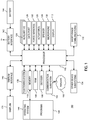
- FIG. 1 is an example block diagram of an electronic device 100, consistent with example embodiments disclosed herein.
- Electronic device 100 includes multiple components, such as a processor 102 that controls the overall operation of electronic device 100. Communication functions, including data and voice communications, are performed through a communication subsystem 104. Data received by electronic device 100 is decompressed and decrypted by a decoder 106. The communication subsystem 104 receives messages from and sends messages to a network 150.
- Network 150 can be any type of network, including, but not limited to, a wired network, a data wireless network, voice wireless network, and dual-mode wireless networks that support both voice and data communications over the same physical base stations.
- Electronic device 100 can be a battery-powered device and include a battery interface 142 for receiving one or more batteries 144.
- electronic device 100 can be a computer, laptop, ultrabook, netbook, or table device, or another device, and such an electronic device can include all or a subset of the components illustrated in Figure 1 .
- the choice of components included in electronic device 100 is not critical to any embodiment.
- Processor 102 is coupled to and can interact with additional subsystems such as a Random Access Memory (RAM) 108; a memory 110, such as a hard drive, CD, DVD, flash memory, or a similar storage device; one or more displays 112; one or more actuators 120; one or more force sensors 122; an auxiliary input/output (I/O) subsystem 124; a data port 126; one or more speakers 128; one or more microphones 130; short-range communications 132; and other device subsystems 134.
- RAM Random Access Memory
- Display 112 is coupled to and controlled by processor 102. Characters, such as text, symbols, images, and other items are displayed on display 112 via processor 102. Characters can be input into the electronic device 100 using a keyboard (not pictured in Figure 1 ), such as a physical keyboard having keys that are mechanically actuated, or a virtual keyboard having keys rendered on display 112.
- a keyboard not pictured in Figure 1
- a physical keyboard having keys that are mechanically actuated such as a physical keyboard having keys that are mechanically actuated, or a virtual keyboard having keys rendered on display 112.
- Processor 102 can also interact with a positioning system 136 for determining the location of electronic device 100.
- the location can be determined in any number of ways, such as by a computer, by a Global Positioning System (GPS) (which can be included in electronic device 100), through a Wi-Fi network, or by having a location entered manually.
- GPS Global Positioning System
- the location can also be determined based on calendar entries.
- electronic device 100 uses a Subscriber Identity Module or a Removable User Identity Module (SIM/RUIM) card 138 inserted into a SIM/RUIM interface 140 for communication with a network, such as network 150.
- SIM/RUIM Removable User Identity Module
- user identification information can be programmed into memory 110.
- Electronic device 100 also includes an operating system 146 and programs 148 that are executed by processor 102 and are typically stored in memory 110 or RAM 108. Additional applications can be loaded onto electronic device 100 through network 150, auxiliary I/O subsystem 124, data port 126, short-range communications subsystem 132, or any other suitable subsystem.
- a received signal such as a text message, an e-mail message, or a web page download is processed by communication subsystem 104. This processed information is then provided to processor 102. Processor 102 processes the received signal for output to display 112, to auxiliary I/O subsystem 124, or a combination of both.
- a user can compose data items, for example e-mail messages, which can be transmitted over network 150 through communication subsystem 104. For voice communications, the overall operation of electronic device 100 is similar.
- Speaker 128 outputs audible information converted from electrical signals
- microphone 130 converts audible information into electrical signals for processing.
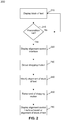
- FIG. 2 is an example flowchart illustrating an example method 200 for modifying the alignment of a block of text based on an alignment control interface, consistent with example embodiments disclosed herein.
- Memory such as memory 108 or RAM 110
- method 200 begins at step 210, where the processor 102 displays a block of text within a text editing application.
- the processor 102 receives an input reflecting placement of a caret in, or near, a block of text within a text editing application.
- a caret refers to a cursor (e.g., a blinking cursor) or other symbol indicating a position for inserting or removing text.
- a block of text refers to a character, word, sentence, heading, paragraph, or other unit or units of text.
- the processor 102 checks whether a precondition is met.
- the processor 102 may check whether, during a specified time period, an input is received reflecting placement of a caret in, or near, a block of text, an input is received changing placement of the caret, a character input is received, and/or an input is detected reflecting selection of an application outside of the text editing application.
- a text editing application can include, for example, a word processor, an e-mail application, or a HTML editor.
- the processor 102 determines that the precondition is met unless any of the above-described instances occur.
- the specified time period can vary in duration; exemplary durations include 300 milliseconds and 500 milliseconds.
- One advantage of implementing such a precondition includes avoidance of a "flicker" effect, in which a component of a user interface is shown and hidden repeatedly, which can have the effect of cluttering the display and/or distracting a user.
- the processor 102 displays an alignment control interface in proximity to the block of text.
- the alignment control interface can be a user-selectable visual element.
- the alignment control interface visually indicates the present alignment of the block of text by, for instance, displaying horizontal lines corresponding to the different alignment options.
- the alignment control interface can be referred to as a "grip" or simply as a "control interface.”
- the alignment control interface can be displayed adjacent to, above, below, or within (e.g., layered in) a block of text.
- the alignment control interface can be positioned horizontally based on the present alignment of the block of text.
- the horizontal position of the alignment control interface can correspond to the left region of the block of text.
- the alignment interface control can be horizontally positioned within the middle and right regions of the block of text, respectively.
- the alignment control interface can be positioned vertically according to the top of the block of text.
- the alignment control interface can appear as shown in the exemplary interfaces 410, 420, and 430, of Figure 4 .
- the processor 102 detects a dragging motion associated with the alignment control interface at step 230.
- a dragging motion can include, for example, a click of the alignment control interface followed by a drag motion, or another action, in which the position of the alignment control interface is incrementally repositioned on the display.
- the alignment control interface is not repositioned on the display until the user completes the click and drag motion described above, or otherwise releases control over the alignment control interface.
- the dragging motion can be executed, for example, through use of a mouse or other mechanical input device, as well as through touch motions (e.g., a swiping motion) on a touch-sensitive display.
- the processor 102 at step 240 modifies the alignment of the block of text based, at least in part, on the dragging motion.
- the processor modifies the alignment of the block of text, in real time, based on the position of the alignment control interface.
- the alignment of the block of text can be based on the position of the alignment control interface relative to the block of text.
- the alignment control interface is dragged horizontally across the display. As the alignment control interface is dragged from left to right or from right to left, the alignment of the block of text is set depending on the horizontal position of the alignment control interface.
- the alignment of the block of text is set to "left aligned.” Conversely, when the horizontal position of the alignment control interface is in the middle or right regions of the block of text, the alignment of the block of text is set to "centered” and "right aligned,” respectively.
- the exemplary interfaces 410, 420, and 430, and exemplary text blocks 415, 425, and 435, as illustrated in Figure 4 can be triggered by dragging the alignment control interface into either one of the edges of the display (e.g., into the margins in a text editing application).
- Various partitions of the block of text into left, middle, and right regions are possible; the choice of a particular partition is not critical to any embodiment.
- the processor 102 detects an end of the dragging motion. After detecting the end of the dragging motion, the processor 102 at step 260 displays the alignment control interface in a predetermined position associated with the alignment of the block of text. If the alignment of the block of text is set to "right aligned," for example, the alignment interface control may be displayed within the right region of the display. Conversely, if the alignment of the block of text is set to "centered” or "left aligned,” the alignment interface control may be displayed within the middle and left regions of the display, respectively. This is further demonstrated by the exemplary interfaces 410, 420, and 430, and exemplary text blocks 415, 425, and 435, as illustrated in Figure 4 . In some embodiments, the alignment control interface animates or "snaps into place" in the appropriate region of the display.
- FIG. 3 is an example flowchart illustrating an example method 300 in accordance with some example embodiments.
- Memory such as memory 108 or RAM 110
- a processor such as processor 102
- the processor 102 displays a block of text within a text editing application.
- the processor 102 receives an input reflecting placement of a caret in, or near, a block of text within a text editing application.
- the processor 102 checks whether a precondition is met.
- the processor 102 can check whether, during a specified time period, an input is received reflecting placement of a caret in, or near, a block of text, an input is received changing placement of the caret, a character input is received, and/or an input is detected reflecting selection of an application outside of the text editing application. In some embodiments, the processor 102 determines that the precondition is met unless any of the above-described instances occur.
- the specified time period can vary in duration; exemplary durations include 300 milliseconds and 500 milliseconds.
- the processor 102 displays a float control interface in proximity of the block of text.
- the alignment control interface can be a user-selectable visual element.
- the float control interface can be displayed adjacent to, above, below, or within (e.g., layered in) a block of text.
- the processor 102 detects a dragging motion associated with the float control interface at step 330.
- a dragging motion can include, for example, a click and drag motion, or another action, in which the position of the float control interface is incrementally repositioned on the display.
- the float control interface is not repositioned on the display until the user completes the click and drag motion described above, or otherwise releases control over the float control interface.
- the dragging motion can be executed, for example, through use of a mouse or other mechanical input device, as well as through touch motions (e.g., a swiping motion) on a touch-sensitive display.
- the processor 102 at step 240 modifies the alignment of the block of text based, at least in part, on the dragging motion.
- the processor modifies the alignment of the block of text, in real time, based on the position of the alignment control interface.
- the block of text can be positioned according to the horizontal position of the float control interface.
- the float control interface is dragged horizontally across the display.
- the position of the block of text is set depending on the horizontal position of the float control interface.
- the block of text is also positioned in the left region of the display.
- the block of text is positioned in the middle and right regions of the display, respectively.
- the processor 102 detects an end of the dragging motion. After detecting the end of the dragging motion, the processor 102 at step 360 displays the float control interface in a predetermined position associated with the position of the block of text. If the block of text is positioned in the left region of the display, for example, the float interface control may be displayed within the left region of the display. Conversely, if the block of text is positioned in the middle or right regions of the display, the float interface control may be displayed within the middle and right regions of the display, respectively. In some embodiments, the float control interface animates or "snaps into place" in the appropriate region of the display.
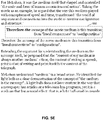
- Figure 4 illustrates example alignments of a block of text and example positions of an alignment control interface, consistent with embodiments disclosed herein.
- Figure 4 includes alignment control interfaces 410, 420, and 430, and text blocks 415, 425, and 435.
- alignment control interface 410 is displayed at the top left of text block 415, which corresponds to the left alignment of text block 415.
- the visual appearance of alignment control interface 410 depicts the left alignment of text block 415.
- alignment control interface 410 is dragged from left to right (or from right to left), the alignment of the text block is also modified.
- Alignment control interface 420 is displayed in the middle of text block 425, which corresponds to the center alignment of text block 425 (also visually depicted in alignment control interface 420).
- alignment control interface 430 is displayed at the top right of text block 435, which corresponds to the right alignment of text block 435 (also visually depicted in alignment control interface 430).
- Figures 5A , 5B , and 5C illustrate example positions of a block of text, consistent with embodiments disclosed herein.
- Figures 5A , 5B , and 5C illustrate various positions of the text block, after the position of the text block has been modified using the methods described in connection with Figure 3 , above.
- text block 510 is positioned as "float center.” In some embodiments, this can also be referred to as a default position.
- text block 520 of Figure 5B is positioned as "float left”
- text block 530 of Figure 5C is positioned as "float right.”
- positioning a text block as "float left” or "float right” can result in neighboring text blocks being repositioned relative to the original text block.
- Figures 5A , 5D , and 5E illustrate additional example positions of a block of text, consistent with embodiments disclosed herein. More specifically, Figures 5A , 5D , and 5E illustrate various positions of the text block, after the position of the text block has been modified using the methods described in connection with Figure 2 , above.
- Text blocks 510, 540, and 550 of Figures 5A , 5D , and 5E are positioned as "float center" or a default position, as described above.
- text block 510 has been set to "left aligned”
- text block 540 has been set to "center aligned”
- text block 550 has been set to "right aligned.”
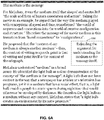
- Figures 6A , 6B , and 6C show example alignments and positions of a block of text, consistent with embodiments disclosed herein.
- Figures 6A , 6B , and 6C illustrate various alignments of the text block, after the alignment of the text block has been modified using the methods described in connection with Figure 2 , above.
- text blocks 610, 620, and 630 of Figures 6A , 6B , and 6C are positioned as "float right" which, as described above, indicates that the neighboring text blocks have been repositioned relative to text blocks 610, 620, and 630.
- text block 610 has been set to "center aligned”
- text block 620 has been set to "left aligned”
- text block 630 has been set to "right aligned.”
- Figures 6A , 6B , and 6C demonstrate the joint use of alignment control and float control on a given block of text.
Landscapes
- Engineering & Computer Science (AREA)
- Theoretical Computer Science (AREA)
- Health & Medical Sciences (AREA)
- Artificial Intelligence (AREA)
- Audiology, Speech & Language Pathology (AREA)
- Computational Linguistics (AREA)
- General Health & Medical Sciences (AREA)
- Physics & Mathematics (AREA)
- General Engineering & Computer Science (AREA)
- General Physics & Mathematics (AREA)
- User Interface Of Digital Computer (AREA)
Claims (11)
- Procédé pour un dispositif électronique (100) ayant un dispositif d'entrée et un dispositif d'affichage (112), le procédé comprenant :afficher un bloc de texte dans une application d'édition de texte ;afficher, à proximité du bloc de texte, une interface de commande d'alignement ou une interface de commande de flottement une fois qu'une précondition est satisfaite ;détecter un mouvement de glissement associé à l'interface de commande d'alignement ou à l'interface de commande de flottement, le mouvement de glissement changeant une position de l'interface de commande d'alignement ou de l'interface de commande de flottement par rapport au bloc de texte ;modifier un alignement ou une position du bloc de texte sur la base, au moins en partie, du mouvement de glissement détecté, la modification de l'alignement du bloc de texte sur la base du mouvement de glissement détecté comprenant la modification de l'alignement du bloc de texte sur la base de la position de l'interface de commande d'alignement par rapport au bloc de texte, et la modification de la position du bloc de texte sur la base du mouvement de glissement détecté comprenant la modification de la position du bloc de texte sur la base de la position de l'interface de commande de flottement par rapport à au dispositif d'affichage ;détecter une fin du mouvement de glissement ; etafficher, dans une position prédéterminée associée à l'alignement ou à la position du bloc de texte, l'interface de commande d'alignement ou l'interface de commande de flottement.
- Procédé selon la revendication 1, dans lequel la précondition est satisfaite, sauf si, pendant une période de temps prédéterminée, l'une des opérations suivantes se produit :recevoir une entrée reflétant le placement d'un signe d'intercalage dans un bloc de texte ;recevoir une entrée reflétant le repositionnement du signe d'intercalage ;recevoir une entrée de caractère ; oudétecter une entrée reflétant la sélection d'une application en dehors de l'application d'édition de texte.
- Procédé selon la revendication 2, dans lequel la période de temps prédéterminée est de 300 millisecondes.
- Procédé selon l'une quelconque des revendications précédentes, dans lequel la modification de l'alignement du bloc de texte comprend le réglage de l'alignement du bloc de texte pour être aligné à gauche, centré ou aligné à droite.
- Procédé selon l'une quelconque des revendications précédentes, dans lequel la modification de la position du bloc de texte comprend le réglage du bloc de texte pour être en flottement à gauche, en flottement au centre ou en flottement à droite.
- Programme d'ordinateur qui, lorsqu'il est exécuté par au moins un processeur d'un dispositif électronique (100) ayant un dispositif d'entrée et un dispositif d'affichage (112), est configuré pour réaliser le procédé selon l'une quelconque des revendications 1 à 5.
- Dispositif électronique (100) comprenant :un dispositif d'affichage (112), configuré pour afficher des caractères ;un dispositif d'entrée ;une mémoire (110) stockant une ou plusieurs instructions ; etun processeur (102) configuré pour exécuter la ou les instructions afin de réaliser des opérations comprenant :afficher un bloc de texte dans une application d'édition de texte ;afficher, à proximité du bloc de texte, une interface de commande d'alignement ou une interface de commande de flottement une fois qu'une précondition est satisfaite ;détecter un mouvement de glissement associé à l'interface de commande d'alignement ou à l'interface de commande de flottement, le mouvement de glissement changeant une position de l'interface de commande d'alignement ou de l'interface de commande de flottement par rapport au bloc de texte ;modifier un alignement ou une position du bloc de texte sur la base, au moins en partie, du mouvement de glissement détecté, la modification de l'alignement du bloc de texte sur la base du mouvement de glissement détecté comprenant la modification de l'alignement du bloc de texte sur la base de la position de l'interface de commande d'alignement par rapport au bloc de texte, et la modification de la position du bloc de texte sur la base du mouvement de glissement détecté comprenant la modification de la position du bloc de texte sur la base de la position de l'interface de commande de flottement par rapport au dispositif d'affichage ;détecter une fin du mouvement de glissement ; etafficher, dans une position prédéterminée associée à l'alignement ou à la position du bloc de texte, l'interface de commande d'alignement ou l'interface de commande de flottement.
- Dispositif électronique selon la revendication 7, dans lequel la précondition est satisfaite, sauf si, pendant une période de temps prédéterminée, l'une des opérations suivantes se produit :recevoir une entrée reflétant le placement d'un signe d'intercalage dans un bloc de texte ;recevoir une entrée reflétant le repositionnement du signe d'intercalage ;recevoir une entrée de caractère ; oudétecter une entrée reflétant la sélection d'une application en dehors de l'application d'édition de texte.
- Dispositif électronique selon la revendication 8, dans lequel la période de temps prédéterminée est de 300 millisecondes.
- Dispositif électronique selon l'une quelconque des revendications 7 à 9, dans lequel la modification de l'alignement du bloc de texte comprend le réglage de l'alignement du bloc de texte pour être aligné à gauche, centré ou aligné à droite.
- Dispositif électronique selon l'une quelconque des revendications 7 à 10, dans lequel la modification de la position du bloc de texte comprend le réglage du bloc de texte pour être en flottement à gauche, en flottement au centre ou en flottement à droite.
Priority Applications (1)
| Application Number | Priority Date | Filing Date | Title |
|---|---|---|---|
| EP13159460.8A EP2778873B1 (fr) | 2013-03-15 | 2013-03-15 | Système et procédé de commande d'alignement de texte d'éditeur de texte |
Applications Claiming Priority (1)
| Application Number | Priority Date | Filing Date | Title |
|---|---|---|---|
| EP13159460.8A EP2778873B1 (fr) | 2013-03-15 | 2013-03-15 | Système et procédé de commande d'alignement de texte d'éditeur de texte |
Publications (2)
| Publication Number | Publication Date |
|---|---|
| EP2778873A1 EP2778873A1 (fr) | 2014-09-17 |
| EP2778873B1 true EP2778873B1 (fr) | 2019-10-16 |
Family
ID=47900849
Family Applications (1)
| Application Number | Title | Priority Date | Filing Date |
|---|---|---|---|
| EP13159460.8A Active EP2778873B1 (fr) | 2013-03-15 | 2013-03-15 | Système et procédé de commande d'alignement de texte d'éditeur de texte |
Country Status (1)
| Country | Link |
|---|---|
| EP (1) | EP2778873B1 (fr) |
Families Citing this family (1)
| Publication number | Priority date | Publication date | Assignee | Title |
|---|---|---|---|---|
| CN115098205B (zh) * | 2022-06-17 | 2024-07-16 | 来也科技(北京)有限公司 | 基于rpa和ai实现ia的流程编辑界面的控制方法 |
Family Cites Families (6)
| Publication number | Priority date | Publication date | Assignee | Title |
|---|---|---|---|---|
| US5867144A (en) * | 1991-11-19 | 1999-02-02 | Microsoft Corporation | Method and system for the direct manipulation of information, including non-default drag and drop operation |
| US5760773A (en) * | 1995-01-06 | 1998-06-02 | Microsoft Corporation | Methods and apparatus for interacting with data objects using action handles |
| US7895531B2 (en) * | 2004-08-16 | 2011-02-22 | Microsoft Corporation | Floating command object |
| US8201109B2 (en) * | 2008-03-04 | 2012-06-12 | Apple Inc. | Methods and graphical user interfaces for editing on a portable multifunction device |
| US8117556B2 (en) * | 2008-03-31 | 2012-02-14 | Vistaprint Technologies Limited | Target-alignment-and-drop control for editing electronic documents |
| KR101842457B1 (ko) * | 2011-03-09 | 2018-03-27 | 엘지전자 주식회사 | 이동 단말기 및 그의 텍스트 커서 운용방법 |
-
2013
- 2013-03-15 EP EP13159460.8A patent/EP2778873B1/fr active Active
Non-Patent Citations (1)
| Title |
|---|
| None * |
Also Published As
| Publication number | Publication date |
|---|---|
| EP2778873A1 (fr) | 2014-09-17 |
Similar Documents
| Publication | Publication Date | Title |
|---|---|---|
| US9086731B2 (en) | Device, method, and storage medium storing program | |
| EP3110113B1 (fr) | Dispositif de terminal d'utilisateur et son procédé de contrôle | |
| US9519397B2 (en) | Data display method and apparatus | |
| EP2787465B1 (fr) | Procédé de transmission de messages cachés et son dispositif électronique | |
| EP2924553A1 (fr) | Procédé et système de commande du déplacement d'un curseur dans un dispositif électronique | |
| US9874994B2 (en) | Device, method and program for icon and/or folder management | |
| US10180780B2 (en) | Portable electronic device including touch-sensitive display and method of controlling selection of information | |
| KR101952177B1 (ko) | 이동 단말기 및 그것의 제어 방법 | |
| EP2940976B1 (fr) | Dispositif de communication et procédé de réception et de présentation d'entrée et de rétroaction | |
| JP2018535462A (ja) | タッチヒートマップ | |
| KR102311268B1 (ko) | 입력 필드의 이동 방법 및 장치 | |
| KR101688150B1 (ko) | 이동단말기 및 그의 멀티터치를 이용한 객체 표시 제어 방법 | |
| EP2728456A2 (fr) | Procédé et appareil de commande de fond d'écran virtuel de l'invention | |
| JP6625312B2 (ja) | タッチ情報認識方法及び電子装置 | |
| EP2857950A2 (fr) | Détermination adaptative d'affichage d'informations | |
| US10429946B2 (en) | Electronic device and method for rendering secondary characters | |
| US9176940B2 (en) | System and method for text editor text alignment control | |
| WO2015181830A1 (fr) | Interface de commutation de compte d'utilisateur | |
| US8406752B2 (en) | Mobile terminal and controlling method thereof | |
| EP2778873A1 (fr) | Système et procédé de commande d'alignement de texte d'éditeur de texte | |
| EP2669779B1 (fr) | Dispositif électronique portable incluant un écran tactile et son procédé de commande | |
| EP3477458B1 (fr) | Dispositif électronique et procédé de fourniture de touches sélectionnables d'un clavier | |
| KR20130097371A (ko) | 이동 단말기 및 그 제어 방법, 이를 위한 기록 매체 | |
| EP2804086A1 (fr) | Dispositif électronique et son procédé de commande | |
| KR20150017887A (ko) | 이동 단말기 및 이의 제어 방법 |
Legal Events
| Date | Code | Title | Description |
|---|---|---|---|
| PUAI | Public reference made under article 153(3) epc to a published international application that has entered the european phase |
Free format text: ORIGINAL CODE: 0009012 |
|
| 17P | Request for examination filed |
Effective date: 20130315 |
|
| AK | Designated contracting states |
Kind code of ref document: A1 Designated state(s): AL AT BE BG CH CY CZ DE DK EE ES FI FR GB GR HR HU IE IS IT LI LT LU LV MC MK MT NL NO PL PT RO RS SE SI SK SM TR |
|
| AX | Request for extension of the european patent |
Extension state: BA ME |
|
| STAA | Information on the status of an ep patent application or granted ep patent |
Free format text: STATUS: EXAMINATION IS IN PROGRESS |
|
| 17Q | First examination report despatched |
Effective date: 20170825 |
|
| GRAP | Despatch of communication of intention to grant a patent |
Free format text: ORIGINAL CODE: EPIDOSNIGR1 |
|
| STAA | Information on the status of an ep patent application or granted ep patent |
Free format text: STATUS: GRANT OF PATENT IS INTENDED |
|
| RIC1 | Information provided on ipc code assigned before grant |
Ipc: G06F 17/24 20060101ALI20190325BHEP Ipc: G06F 3/0484 20130101AFI20190325BHEP Ipc: G06F 17/21 20060101ALI20190325BHEP Ipc: G06F 17/25 20060101ALN20190325BHEP |
|
| INTG | Intention to grant announced |
Effective date: 20190415 |
|
| RIC1 | Information provided on ipc code assigned before grant |
Ipc: G06F 17/25 20060101ALN20190405BHEP Ipc: G06F 17/21 20060101ALI20190405BHEP Ipc: G06F 3/0484 20130101AFI20190405BHEP Ipc: G06F 17/24 20060101ALI20190405BHEP |
|
| GRAJ | Information related to disapproval of communication of intention to grant by the applicant or resumption of examination proceedings by the epo deleted |
Free format text: ORIGINAL CODE: EPIDOSDIGR1 |
|
| STAA | Information on the status of an ep patent application or granted ep patent |
Free format text: STATUS: EXAMINATION IS IN PROGRESS |
|
| GRAR | Information related to intention to grant a patent recorded |
Free format text: ORIGINAL CODE: EPIDOSNIGR71 |
|
| GRAS | Grant fee paid |
Free format text: ORIGINAL CODE: EPIDOSNIGR3 |
|
| STAA | Information on the status of an ep patent application or granted ep patent |
Free format text: STATUS: GRANT OF PATENT IS INTENDED |
|
| GRAA | (expected) grant |
Free format text: ORIGINAL CODE: 0009210 |
|
| STAA | Information on the status of an ep patent application or granted ep patent |
Free format text: STATUS: THE PATENT HAS BEEN GRANTED |
|
| INTC | Intention to grant announced (deleted) | ||
| RIC1 | Information provided on ipc code assigned before grant |
Ipc: G06F 3/0484 20130101AFI20190827BHEP Ipc: G06F 17/25 20060101ALN20190827BHEP Ipc: G06F 17/21 20060101ALI20190827BHEP Ipc: G06F 17/24 20060101ALI20190827BHEP |
|
| RIC1 | Information provided on ipc code assigned before grant |
Ipc: G06F 3/0484 20130101AFI20190905BHEP Ipc: G06F 17/24 20060101ALI20190905BHEP Ipc: G06F 17/25 20060101ALN20190905BHEP Ipc: G06F 17/21 20060101ALI20190905BHEP |
|
| AK | Designated contracting states |
Kind code of ref document: B1 Designated state(s): AL AT BE BG CH CY CZ DE DK EE ES FI FR GB GR HR HU IE IS IT LI LT LU LV MC MK MT NL NO PL PT RO RS SE SI SK SM TR |
|
| INTG | Intention to grant announced |
Effective date: 20190909 |
|
| REG | Reference to a national code |
Ref country code: GB Ref legal event code: FG4D |
|
| REG | Reference to a national code |
Ref country code: DE Ref legal event code: R096 Ref document number: 602013061703 Country of ref document: DE Ref country code: CH Ref legal event code: EP |
|
| REG | Reference to a national code |
Ref country code: IE Ref legal event code: FG4D |
|
| REG | Reference to a national code |
Ref country code: AT Ref legal event code: REF Ref document number: 1191930 Country of ref document: AT Kind code of ref document: T Effective date: 20191115 |
|
| REG | Reference to a national code |
Ref country code: NL Ref legal event code: MP Effective date: 20191016 |
|
| REG | Reference to a national code |
Ref country code: LT Ref legal event code: MG4D |
|
| REG | Reference to a national code |
Ref country code: AT Ref legal event code: MK05 Ref document number: 1191930 Country of ref document: AT Kind code of ref document: T Effective date: 20191016 |
|
| PG25 | Lapsed in a contracting state [announced via postgrant information from national office to epo] |
Ref country code: LT Free format text: LAPSE BECAUSE OF FAILURE TO SUBMIT A TRANSLATION OF THE DESCRIPTION OR TO PAY THE FEE WITHIN THE PRESCRIBED TIME-LIMIT Effective date: 20191016 Ref country code: NL Free format text: LAPSE BECAUSE OF FAILURE TO SUBMIT A TRANSLATION OF THE DESCRIPTION OR TO PAY THE FEE WITHIN THE PRESCRIBED TIME-LIMIT Effective date: 20191016 Ref country code: BG Free format text: LAPSE BECAUSE OF FAILURE TO SUBMIT A TRANSLATION OF THE DESCRIPTION OR TO PAY THE FEE WITHIN THE PRESCRIBED TIME-LIMIT Effective date: 20200116 Ref country code: SE Free format text: LAPSE BECAUSE OF FAILURE TO SUBMIT A TRANSLATION OF THE DESCRIPTION OR TO PAY THE FEE WITHIN THE PRESCRIBED TIME-LIMIT Effective date: 20191016 Ref country code: FI Free format text: LAPSE BECAUSE OF FAILURE TO SUBMIT A TRANSLATION OF THE DESCRIPTION OR TO PAY THE FEE WITHIN THE PRESCRIBED TIME-LIMIT Effective date: 20191016 Ref country code: PT Free format text: LAPSE BECAUSE OF FAILURE TO SUBMIT A TRANSLATION OF THE DESCRIPTION OR TO PAY THE FEE WITHIN THE PRESCRIBED TIME-LIMIT Effective date: 20200217 Ref country code: AT Free format text: LAPSE BECAUSE OF FAILURE TO SUBMIT A TRANSLATION OF THE DESCRIPTION OR TO PAY THE FEE WITHIN THE PRESCRIBED TIME-LIMIT Effective date: 20191016 Ref country code: LV Free format text: LAPSE BECAUSE OF FAILURE TO SUBMIT A TRANSLATION OF THE DESCRIPTION OR TO PAY THE FEE WITHIN THE PRESCRIBED TIME-LIMIT Effective date: 20191016 Ref country code: ES Free format text: LAPSE BECAUSE OF FAILURE TO SUBMIT A TRANSLATION OF THE DESCRIPTION OR TO PAY THE FEE WITHIN THE PRESCRIBED TIME-LIMIT Effective date: 20191016 Ref country code: NO Free format text: LAPSE BECAUSE OF FAILURE TO SUBMIT A TRANSLATION OF THE DESCRIPTION OR TO PAY THE FEE WITHIN THE PRESCRIBED TIME-LIMIT Effective date: 20200116 Ref country code: GR Free format text: LAPSE BECAUSE OF FAILURE TO SUBMIT A TRANSLATION OF THE DESCRIPTION OR TO PAY THE FEE WITHIN THE PRESCRIBED TIME-LIMIT Effective date: 20200117 Ref country code: PL Free format text: LAPSE BECAUSE OF FAILURE TO SUBMIT A TRANSLATION OF THE DESCRIPTION OR TO PAY THE FEE WITHIN THE PRESCRIBED TIME-LIMIT Effective date: 20191016 |
|
| PG25 | Lapsed in a contracting state [announced via postgrant information from national office to epo] |
Ref country code: RS Free format text: LAPSE BECAUSE OF FAILURE TO SUBMIT A TRANSLATION OF THE DESCRIPTION OR TO PAY THE FEE WITHIN THE PRESCRIBED TIME-LIMIT Effective date: 20191016 Ref country code: HR Free format text: LAPSE BECAUSE OF FAILURE TO SUBMIT A TRANSLATION OF THE DESCRIPTION OR TO PAY THE FEE WITHIN THE PRESCRIBED TIME-LIMIT Effective date: 20191016 Ref country code: IS Free format text: LAPSE BECAUSE OF FAILURE TO SUBMIT A TRANSLATION OF THE DESCRIPTION OR TO PAY THE FEE WITHIN THE PRESCRIBED TIME-LIMIT Effective date: 20200224 |
|
| PG25 | Lapsed in a contracting state [announced via postgrant information from national office to epo] |
Ref country code: AL Free format text: LAPSE BECAUSE OF FAILURE TO SUBMIT A TRANSLATION OF THE DESCRIPTION OR TO PAY THE FEE WITHIN THE PRESCRIBED TIME-LIMIT Effective date: 20191016 |
|
| REG | Reference to a national code |
Ref country code: DE Ref legal event code: R097 Ref document number: 602013061703 Country of ref document: DE |
|
| PG2D | Information on lapse in contracting state deleted |
Ref country code: IS |
|
| PG25 | Lapsed in a contracting state [announced via postgrant information from national office to epo] |
Ref country code: RO Free format text: LAPSE BECAUSE OF FAILURE TO SUBMIT A TRANSLATION OF THE DESCRIPTION OR TO PAY THE FEE WITHIN THE PRESCRIBED TIME-LIMIT Effective date: 20191016 Ref country code: CZ Free format text: LAPSE BECAUSE OF FAILURE TO SUBMIT A TRANSLATION OF THE DESCRIPTION OR TO PAY THE FEE WITHIN THE PRESCRIBED TIME-LIMIT Effective date: 20191016 Ref country code: EE Free format text: LAPSE BECAUSE OF FAILURE TO SUBMIT A TRANSLATION OF THE DESCRIPTION OR TO PAY THE FEE WITHIN THE PRESCRIBED TIME-LIMIT Effective date: 20191016 Ref country code: DK Free format text: LAPSE BECAUSE OF FAILURE TO SUBMIT A TRANSLATION OF THE DESCRIPTION OR TO PAY THE FEE WITHIN THE PRESCRIBED TIME-LIMIT Effective date: 20191016 Ref country code: IS Free format text: LAPSE BECAUSE OF FAILURE TO SUBMIT A TRANSLATION OF THE DESCRIPTION OR TO PAY THE FEE WITHIN THE PRESCRIBED TIME-LIMIT Effective date: 20200216 |
|
| PLBE | No opposition filed within time limit |
Free format text: ORIGINAL CODE: 0009261 |
|
| STAA | Information on the status of an ep patent application or granted ep patent |
Free format text: STATUS: NO OPPOSITION FILED WITHIN TIME LIMIT |
|
| PG25 | Lapsed in a contracting state [announced via postgrant information from national office to epo] |
Ref country code: SM Free format text: LAPSE BECAUSE OF FAILURE TO SUBMIT A TRANSLATION OF THE DESCRIPTION OR TO PAY THE FEE WITHIN THE PRESCRIBED TIME-LIMIT Effective date: 20191016 Ref country code: SK Free format text: LAPSE BECAUSE OF FAILURE TO SUBMIT A TRANSLATION OF THE DESCRIPTION OR TO PAY THE FEE WITHIN THE PRESCRIBED TIME-LIMIT Effective date: 20191016 Ref country code: IT Free format text: LAPSE BECAUSE OF FAILURE TO SUBMIT A TRANSLATION OF THE DESCRIPTION OR TO PAY THE FEE WITHIN THE PRESCRIBED TIME-LIMIT Effective date: 20191016 |
|
| 26N | No opposition filed |
Effective date: 20200717 |
|
| PG25 | Lapsed in a contracting state [announced via postgrant information from national office to epo] |
Ref country code: MC Free format text: LAPSE BECAUSE OF FAILURE TO SUBMIT A TRANSLATION OF THE DESCRIPTION OR TO PAY THE FEE WITHIN THE PRESCRIBED TIME-LIMIT Effective date: 20191016 |
|
| REG | Reference to a national code |
Ref country code: CH Ref legal event code: PL |
|
| PG25 | Lapsed in a contracting state [announced via postgrant information from national office to epo] |
Ref country code: SI Free format text: LAPSE BECAUSE OF FAILURE TO SUBMIT A TRANSLATION OF THE DESCRIPTION OR TO PAY THE FEE WITHIN THE PRESCRIBED TIME-LIMIT Effective date: 20191016 |
|
| REG | Reference to a national code |
Ref country code: BE Ref legal event code: MM Effective date: 20200331 |
|
| PG25 | Lapsed in a contracting state [announced via postgrant information from national office to epo] |
Ref country code: LU Free format text: LAPSE BECAUSE OF NON-PAYMENT OF DUE FEES Effective date: 20200315 |
|
| PG25 | Lapsed in a contracting state [announced via postgrant information from national office to epo] |
Ref country code: CH Free format text: LAPSE BECAUSE OF NON-PAYMENT OF DUE FEES Effective date: 20200331 Ref country code: IE Free format text: LAPSE BECAUSE OF NON-PAYMENT OF DUE FEES Effective date: 20200315 Ref country code: LI Free format text: LAPSE BECAUSE OF NON-PAYMENT OF DUE FEES Effective date: 20200331 |
|
| PG25 | Lapsed in a contracting state [announced via postgrant information from national office to epo] |
Ref country code: BE Free format text: LAPSE BECAUSE OF NON-PAYMENT OF DUE FEES Effective date: 20200331 |
|
| PG25 | Lapsed in a contracting state [announced via postgrant information from national office to epo] |
Ref country code: TR Free format text: LAPSE BECAUSE OF FAILURE TO SUBMIT A TRANSLATION OF THE DESCRIPTION OR TO PAY THE FEE WITHIN THE PRESCRIBED TIME-LIMIT Effective date: 20191016 Ref country code: MT Free format text: LAPSE BECAUSE OF FAILURE TO SUBMIT A TRANSLATION OF THE DESCRIPTION OR TO PAY THE FEE WITHIN THE PRESCRIBED TIME-LIMIT Effective date: 20191016 Ref country code: CY Free format text: LAPSE BECAUSE OF FAILURE TO SUBMIT A TRANSLATION OF THE DESCRIPTION OR TO PAY THE FEE WITHIN THE PRESCRIBED TIME-LIMIT Effective date: 20191016 |
|
| PG25 | Lapsed in a contracting state [announced via postgrant information from national office to epo] |
Ref country code: MK Free format text: LAPSE BECAUSE OF FAILURE TO SUBMIT A TRANSLATION OF THE DESCRIPTION OR TO PAY THE FEE WITHIN THE PRESCRIBED TIME-LIMIT Effective date: 20191016 |
|
| REG | Reference to a national code |
Ref country code: DE Ref legal event code: R081 Ref document number: 602013061703 Country of ref document: DE Owner name: MALIKIE INNOVATIONS LTD., IE Free format text: FORMER OWNER: BLACKBERRY LIMITED, WATERLOO, ONTARIO, CA |
|
| REG | Reference to a national code |
Ref country code: GB Ref legal event code: 732E Free format text: REGISTERED BETWEEN 20240620 AND 20240627 |
|
| PGFP | Annual fee paid to national office [announced via postgrant information from national office to epo] |
Ref country code: GB Payment date: 20260319 Year of fee payment: 14 |
|
| PGFP | Annual fee paid to national office [announced via postgrant information from national office to epo] |
Ref country code: DE Payment date: 20260320 Year of fee payment: 14 |
|
| PGFP | Annual fee paid to national office [announced via postgrant information from national office to epo] |
Ref country code: FR Payment date: 20260323 Year of fee payment: 14 |