EP2779593A1 - Hochleistungsfähige Verwaltung von DNS-Datenverkehr - Google Patents
Hochleistungsfähige Verwaltung von DNS-Datenverkehr Download PDFInfo
- Publication number
- EP2779593A1 EP2779593A1 EP14160024.7A EP14160024A EP2779593A1 EP 2779593 A1 EP2779593 A1 EP 2779593A1 EP 14160024 A EP14160024 A EP 14160024A EP 2779593 A1 EP2779593 A1 EP 2779593A1
- Authority
- EP
- European Patent Office
- Prior art keywords
- traffic management
- domain name
- dns
- answer
- resource record
- Prior art date
- Legal status (The legal status is an assumption and is not a legal conclusion. Google has not performed a legal analysis and makes no representation as to the accuracy of the status listed.)
- Withdrawn
Links
Images




Classifications
-
- H—ELECTRICITY
- H04—ELECTRIC COMMUNICATION TECHNIQUE
- H04L—TRANSMISSION OF DIGITAL INFORMATION, e.g. TELEGRAPHIC COMMUNICATION
- H04L61/00—Network arrangements, protocols or services for addressing or naming
- H04L61/45—Network directories; Name-to-address mapping
- H04L61/4552—Lookup mechanisms between a plurality of directories; Synchronisation of directories, e.g. metadirectories
-
- H—ELECTRICITY
- H04—ELECTRIC COMMUNICATION TECHNIQUE
- H04L—TRANSMISSION OF DIGITAL INFORMATION, e.g. TELEGRAPHIC COMMUNICATION
- H04L47/00—Traffic control in data switching networks
- H04L47/10—Flow control; Congestion control
-
- H—ELECTRICITY
- H04—ELECTRIC COMMUNICATION TECHNIQUE
- H04L—TRANSMISSION OF DIGITAL INFORMATION, e.g. TELEGRAPHIC COMMUNICATION
- H04L61/00—Network arrangements, protocols or services for addressing or naming
- H04L61/45—Network directories; Name-to-address mapping
- H04L61/4505—Network directories; Name-to-address mapping using standardised directories; using standardised directory access protocols
- H04L61/4511—Network directories; Name-to-address mapping using standardised directories; using standardised directory access protocols using domain name system [DNS]
Definitions
- This invention relates to network traffic management, and more particularly, to providing high speed responses to DNS queries that can provide more than one answer depending on traffic management criteria.
- DNS Domain Name System
- IP Internet Protocol
- the user's request is then sent to the authoritative DNS server, which responds with the IP address corresponding to the domain name.
- the authoritative DNS server which responds with the IP address corresponding to the domain name.
- a DNS reply is issued to the requestor, and that reply contains the IP address of a server, or other resource, corresponding to the requested domain name.
- the requestor's computer / browser can connect to the server hosting the web site associated with the requested domain name.
- DNS traffic management relates to the selection, from among more than one choice for a given domain name, of a set of resource records to provide to the requestor in response to a DNS query.
- a domain name e.g., example.com
- server associated with it e.g., an East coast web server that has IP addresses 192.0.2.1 and 192.0.2.2 and a West coast web server that has IP address 203.0.113.1
- an authoritative DNS server which supports traffic management receives a DNS query for the IP addresses associated with the domain name "example.com,” it chooses and then returns one of the two answers (i.e., it returns either 192.0.2.1 and 192.0.2.2 or it returns 203.0.113.1 in this example). This choice is made according to the traffic management rules, criteria, or requirements specified for that domain name.
- the DNS can be used to store information other than IP addresses. For instance, it is possible to associate a domain name with a text value using TXT records. Each request includes both the type of information that should be returned ("A" for IPv4 addresses or "TXT" for generic text) and the domain name. The response will include an answer consisting of all resource records of the specified type associated with the given domain name.
- the traffic management described applies to all resource records types.
- any other processing that slows down the response time to DNS queries is also detrimental.
- security processing such as encrypting or digitally signing responses to DNS queries, is computation intensive and time consuming.
- This disclosure provides embodiments of methods, systems, and articles of manufacturer for managing network traffic.
- Various embodiments of the methods, systems, and articles of manufacturer may perform operations including receiving a domain name and resource record type from a requestor and searching a table, using the domain name and resource record type as a search key, for traffic management rules.
- the traffic management rules specify the value of a variable that affects the answer contained in the response.
- the next operations include determining a value for the variable based on the received request that affects the traffic management rule; searching the traffic management rules found in the first operation, using the value for the variable as a search key, for an answer corresponding to the domain name; and providing the answer to the requestor.
- Various embodiments may also include means, steps, algorithms, and operations for also expressing a DNS traffic management rule as a row in the table, or for expressing a set of DNS traffic management rules as a plurality of rows in the table.
- Other variants also search the table, using the domain name as a search key and using a rule type as a search key, for a second traffic management rule - that is, the outcome of the first traffic management rule is a second traffic management rule.
- Still other variants may search the table for a plurality of resource records corresponding to the domain name; and provide the plurality of resource records to the requestor.
- One variant may include searching for IP addresses ("A" records).
- Another variant may include searching for text ("TXT" records).
- Yet other variants may search the table, using the value for the variable as a search key, for information corresponding to the domain name in addition to the IP address, and provide the information to the requestor.
- an answer may be an IP address ("A" resource record type) or text (“TXT” resource record type).
- information in addition to the answer such as a corresponding digital signature, may be stored, looked up, and returned with the answer.
- Embodiments consistent with the invention may express the DNS traffic management requirements or rules for each zone as rows within a set of data tables or lookup tables, and the set of data tables may be deployed in each instance of the resolution server at each resolution site.
- Embodiments consistent with the invention provide a significant performance advantage over existing DNS traffic management techniques in that they greatly reduce the computation workload of the resolution server when responding to a DNS query. This is because instead of executing traffic management code, logic, or scripts, the transaction involves looking up or searching for the relevant table rows that correspond to the traffic management criteria of the domain name specified by the DNS query.
- FIG. 1 illustrates a conventional system 100 for processing DNS queries with DNS traffic management.
- a user 110 may use a client computer 120, which may be running a browser (not shown), to submit a DNS query 125, (which specifies a domain name, e.g., example.com, and a resource record type "A" for IP address), to a DNS resolution server 130.
- a DNS query 125 which specifies a domain name, e.g., example.com, and a resource record type "A" for IP address
- the DNS resolution server 130 Upon receiving the DNS query 125, the DNS resolution server 130 attempts to look up or search for a corresponding answer (usually containing an IP address) 160 to return to the client computer 120 of the user 110. If there is only one corresponding answer (not shown), then the DNS resolution server 130 can find and return it using a table lookup indexed by the domain name specified in the DNS query 125. If, on the other hand, there are more than one corresponding answers, then the DNS resolution server 130 must implement DNS traffic management functionality to choose the proper answer.
- a corresponding answer usually containing an IP address
- the DNS resolution server 130 may first perform a table lookup indexed by the domain name 135 and resource record type specified in the DNS query 125, and instead of finding a single answer, may find a traffic management indicator 140, which indicates that traffic management processing must be performed to find the correct answer 160 to return from among the more-than-one possible answers associated with the domain name and resource record type 135.
- some conventional DNS resolution servers 130 themselves perform the traffic management rules execution 145 to determine the proper answer 160 to return. This approach has the drawback of slowing down and tying up the processing resources of the DNS resolution server 130 as it executes traffic management code or scripts, retarding its ability to service new DNS queries that are continually arriving from a multitude of clients/requestors. Instead of performing the traffic management rules execution 145 themselves, some conventional DNS resolution servers 130 direct a traffic management rules script server 150 to perform the traffic management rules execution 145', as indicated by the dashed arrows to and from the traffic management rules script server 150.
- the traffic management rules execution 145/145' involves carrying out various traffic management techniques and algorithms to choose which one of the multiple answers to return.
- these techniques and algorithms are typically implemented as computer-executable code or a computer-executable script (or the like) that determines the state or value of one or more variable or factor (such as the geographic location of the requesting computer 120, the time of day, the value of a random number, etc.) and then chooses an answer to return based on the state or value of the one or more variable in relation to predetermined traffic management criteria.
- the traffic management choice of which answer to return for a domain name request or query 125 typically depends on factors or variables such as:
- example.com has three servers associated with it-two servers located on the East coast of the U.S. (East coast server number 1 having IP address 192.0.2.1, and East coast server number 2 having IP address 192.0.2.2) and one server located on the West coast (West coast server having IP address 203.0.113.1). Further consider that the registrant of "example.com” desires to manage the traffic to their website, (which is hosted by all three servers), such that:
- these traffic management rules may be conventionally implemented by a script 300 that is executed each time a DNS query 125 for the domain name "example.com" is received by the DNS resolution server 130.
- the script 300 may be executed by the DNS resolution server 130 itself, or by the traffic management rules script server 150. But either way, the script 300 that determines which one of the multiple answers to return is run or executed dynamically for each domain name request in a query 125, and execution of the script 300 can significantly delay the response to the requesting computer 120.
- the more complex the traffic management rules are the longer and more complex the script 300 will be, and the longer it will take to execute.
- FIG. 3A is described in further detail below.
- the DNS resolution server 130 may also optionally implement domain name security extensions (DNSSEC), as represented by the dashed-line shapes.
- DNSSEC works by digitally signing the records which constitute the answer 160 (e.g. the IP address of the server) using public-key cryptography, and thus the DNS resolution server 130 may execute DNSSEC signing logic 155, using DNSSEC private keys 157, either to create the digital signature of the answer 160 returned from its internal traffic management rules execution 145 or to create the digital signature of the answer 160 returned from the traffic management rules execution 145' executed by the external traffic management rules script server 150.
- DNSSEC digital signing logic 155 is processing intensive and has the negative effect of slowing down and tying up the processing resources of the DNS resolution server 130; again retarding its ability to service new DNS queries that are continually arriving from a multitude of clients/requestors.
- the DNS resolution server 130 After identifying or choosing the correct answer 160 for a queried domain name 135 according to its traffic management criteria, and after optionally digitally signing the answer 160 using DNSSEC private keys 157, the DNS resolution server 130 returns the answer 160 to the requesting client computer 120, which uses it to connect to a server (or other network resource) associated with the domain name 135.
- the DNS resolution server 130 may return as an answer 160 to the requesting client computer 120 an A record or an AAAA record containing the IP address, and/or an RRSIG record with the corresponding DNSSEC signature.
- FIG. 2 illustrates an exemplary system 200 for processing DNS queries with improved DNS traffic management, consistent with the principles of the invention.
- a user 110 may use a client computer 120, which may be running a browser (not shown) to submit a DNS query 125, (which specifies a domain name and resource record type 135, e.g., "A records" for example.com), to a DNS resolution server 230.
- DNS query 125 which specifies a domain name and resource record type 135, e.g., "A records" for example.com
- the DNS resolution server 230 Upon receiving the DNS query 125, the DNS resolution server 230 attempts to look up or search for a corresponding IP address/answer 160 to return to the client computer 120 of the user 110. In various embodiments, the domain name and resource record type 135 contained in the query 125 are used as a search key for this look up. If there is only one corresponding answer (not shown), then the DNS resolution server 230 can find and return it using a table look up indexed by the domain name and resource record type 135 specified in the DNS query 125.
- the DNS resolution server 230 may find an indicator 240, such as a link, pointer or lookup key, directing that traffic management must be performed to find the correct answer 160 to return from among the more-than-one possible answers associated with the domain name 135 and resource record type.
- an indicator 240 such as a link, pointer or lookup key
- the DNS resolution server 230 does not execute traffic management code/scripts and does not offload the traffic management code/script computations to another server, but instead performs additional table lookup(s) or search(es) to find the correct answer 160 to return from among the more-than-one possible answers.
- the tables are designed to return the proper answer according to the traffic management rules associated with the domain name 135 and resource record type. Table lookups are relatively fast, require few processing resources and little processing time. Accordingly, the DNS resolution server 230 does not suffer the drawbacks of the DNS resolution server 130 shown in FIG. 1 . And in addition to faster DNS query responses, DNS resolution server 230 is also less vulnerable to denial-of-service (DOS) attacks than DNS resolution server 130, in part because it responds faster, and with less processor usage, to DNS queries.
- DOS denial-of-service
- the traffic management rules for resolving a given domain name 135 and resource record type are expressed as a series of rows in a traffic management table(s) 245 - ensuring there is a row to cover every possible scenario.
- the traffic management rules for resolving a given zone e.g., all the domain names handled by the DNS resolution server 230
- the traffic management rules for resolving a given zone are expressed in the traffic management table(s) 245, so that all domain name queries are processed the same way.
- the DNS resolution server 230 may find an indicator 240, such as a link, search key, or pointer or the like, directed to a row(s) in the traffic management table(s) 245 that represents traffic management functionality, where that row, in turn, may include the desired answer 160 or another link, pointer, index, search key etc. that enables the lookup of another row in the traffic management table(s) 245, which implements additional traffic management functionality.
- the traffic management table(s) 245 is designed to ensure that the lookup or search process is directed through a set or series of rows that cover every possible traffic management scenario and eventually leads to an answer 160 or other definitive response to the requesting client computer 120, in accordance with DNS standards.
- the only traffic-management-related computation done by the DNS resolution server 230 is to fetch and/or determine the current value of any variables that are used as criteria for traffic management functionality decisions, which variables may be used or represented as search indexes for table lookups in some embodiments. Examples of such variables include the geographic location of the requestor (e.g., of the client computer 120), the value of a random number used for weighted load balancing decisions, the operational (up) or non-operational (down) status of a web site server, etc.
- the DNS resolution server 230 is able to search for and find or identify the appropriate answer by looking up the appropriate row(s) in the traffic management table(s) 245 in turn.
- Various embodiments of this approach may have no practical limits on supporting the complexity of traffic management rules for each domain name owner 255, as more complex traffic management rules merely result on more rows in each table to cover every possible look up scenario.
- the DNS resolution server 230 includes a domain name owner interface 250 that allows a domain name owner 255 to configure the traffic management rules that will apply to their domain name and that are represented in the traffic management table(s) 245.
- the domain name owner 255 may provide or input traffic management rules in the form of a script or other executable or interpretable code or pseudocode, (e.g., as shown in FIG. 3A ), and the domain name owner interface 250 may translate the script or code into corresponding entries in the traffic management table(s) 245.
- domain name owner interface 250 may provide a graphical user interface that allows the domain name owner 255 to enter and specify their servers (or other resources) and their requirements for traffic management in a more natural language format, similar to that shown in paragraph 0024 above, which the interface 250 translates into corresponding entries in the traffic management table(s) 245.
- the traffic management table(s) 245 may include the digital signature associated with each answer 160 returned from the traffic management table lookup or search.
- the DNSSEC digital signature for each may be precomputed at table setup time, and then stored and looked up as needed for each DNS query 125 in the same manner as each answer 160 is looked up.
- DNSSEC digital signatures may be pre-computed offline on another computing system, there is no need to distribute private DNSSEC keys 157 to a DNS resolution server 230 to generate a valid digital signature and chain of trust on a per-request basis.
- this application is somewhat related to a co-pending application entitled "Systems and Methods for Pre-Signing of DNSSEC Enabled Zones into Record Sets" by Ramakant Pandrangi and David Blacka, having Attorney Docket No. 11569.0211; U.S. Application No. 14/092,528 ; and a filing date of 27 November 2013; and which is hereby incorporated by reference in its entirety.
- the domain name owner interface 250 may be moved to a different computing system that is not a DNS resolution server.
- the traffic management table(s) 245 for a zone may be configured offline with the input from various domain name owners having domains in the zone, and then the traffic management table(s) 245 may be deployed to each operational instance of a DNS resolution server 230 at the resolution site.
- the traffic management rules may be contained in a fast data structure that provides performance advantages over executing code or a script, other than the lookup table(s) described in the exemplary embodiments.
- the functionality described throughout this application may be implemented by a cloud.
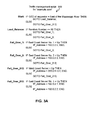
- FIG. 3A is an example of a conventional traffic management script 300 that implements traffic management rules.
- the script 300 may be executed by a conventional DNS resolution server 130 or a conventional traffic rules script server 150 each time the domain name associated with the script 300 is queried.
- the script 300 implements the traffic management rules for the following example of traffic management requirements: the domain name "example.com” has three servers associated with it-two servers located on the East coast of the U.S. (East coast server number 1 having IP address 192.0.2.1, and East coast server number 2 having IP address 192.0.2.2) and one server located on the West coast (West coast server having IP address 203.0.113.1). Further the registrant of "example.com” (e.g., the domain name owner 255 for "example.com”) desires to manage the traffic to their website such that:
- FIG. 3B is an example of a set of traffic management tables, consistent with the principles of the invention, which are related to the script 300 of FIG. 3A .
- the traffic management tables of FIG. 3B may correspond to the traffic management table(s) 245 shown in FIG. 2 .
- FIG. 3B provides four examples of traffic management tables for the domain name "example.com": a GEO rule table 310, a load balance rule table 320, and two examples of fail over rule tables 330 and 340, where fail over rule table 340 is the same as fail over rule table 330, but with an additional column 355 that provides additional information (digital signature information in this example) along with the final IP address.
- the rules tables of FIG. 3B represent the traffic management script 300 of FIG. 3A as lookup tables.
- the GEO rule table 310 corresponds to the section of script code labeled "START" in FIG. 3A .
- the DNS resolution server may perform an initial table lookup or search of domain name 135 "example.com” and resource record type "A” and discover the traffic management indicator 240, which indicates that additional traffic-management-rule lookup(s) or search(es) are required (as opposed to discovering an answer as would be the case for a domain name having a single answer (e.g., a single IP address) and/or no traffic management functionality).
- the DNS resolution server 230 next finds a table indexed by the domain name "example.com” and resource record type "A" in the first and second columns-in the example shown in FIG. 3B , the DNS resolution server finds the GEO rule table 310, which contains "example.com” in both rows 315 and 316 of the first column 311, resource record type "A” in the second column 317, and the rule type "GEO” in the rule type column 313. Triggered by the rule type of "GEO” in column 313, the DNS resolution server 230 then determines whether the requesting client computer 120 is located in the East (column 312, row 315) or the West (column 312, row 316).
- the DNS resolution server 230 may make this determination by extracting the IP address of the requesting client computer 120 from the DNS query 125 and matching that IP address with its geographic location via a geographic lookup table, via a web service that returns a geographic location when given an IP address, or via some other means as are commonly known in the art.
- the DNS resolution server 230 matches with or looks up row 315 (because column 312, row 315 contains "East”) to try to find an answer in row 315 of the Answer Or Next Rule Type column 314. If, on the other hand, the requesting client computer 120 is located in the West, then the DNS resolution server 230 matches with or looks up row 316 (because column 312, row 316 contains "West”) to try to find an answer in row 316 of the Answer Or Next Rule Type column 314.
- neither row 315 nor row 316 of column 314 contains an answer because there are other traffic management rules to resolve in addition to GEO.
- a load balancing rule must be carried out, as corresponds to section of script code labeled "LOAD_BALANCE" in FIG. 3A .
- a fail over rule must be carried out, as corresponds to section of script code labeled "FAIL_OVER_212" in FIG. 3A .
- the DNS resolution server 230 then generates a random number from 1-100 to apply against the "Query %" (column 325). If the number is from 1-80, then it matches the 80% row (column 325, row 327) and if it is from 81-100 then it matches the 20% row (column 325, row 328).
- load balance table row 327 is matched or looked up, then the DNS resolution server 230 tries to find an answer in the Answer Or Next Rule Type column 326 of row 327. If, on the other hand, load balance table row 328 is matched or looked up, then the DNS resolution server 230 tries to find an answer in the Answer Or Next Rule Type column 326 of row 328.
- neither row 327 nor row 328 of column 326 contains an answer because there are other traffic management rules to resolve in addition to load balancing.
- a fail over rule for East server 1 must be carried out, as corresponds to the section of script code labeled "FAIL_OVER_1" in FIG. 3A .
- a fail over rule for East server 2 must be carried out, as corresponds to section of script code labeled "FAIL_OVER_2" in FIG. 3A .
- the DNS resolution server 230 then ascertains the status of the East No. 1 server. If the East No. 1 server is "Up,” then the lookup matches the "East No. 1 Up” row (column 333, row 335) or if the East No. 1 server is "Down,” then the lookup matches the "East No. 1 Down” row (column 333, row 336).
- DNS resolution server 230 considers the Answer or Next Rule Type column 334 to find out what to do next.
- matching row 335 of column 334 contains an answer of "192.0.2.1,” which is the IP address of the East coast server no. 1, and because this is indeed an IP address and not another rule indicator or pointer, the DNS resolution server 230 returns the IP address "192.0.2.1" as the answer 160 to the DNS query 125.
- the DNS resolution server 230 may similarly navigate other paths through tables 310, 320, and 330 to arrive at either of the other two possible IP addresses ("192.0.2.2" at column 334, rows 337, 342, or "203.0.113.1” at column 334, row 339) in accordance with the variables and the traffic management rules and criteria shown in FIG. 3A .
- the traffic management tables, and the information returned by the DNS resolution server 230 in response to the DNS query 125 is fully DNS compliant.
- the IP Address or Next Rule Type column 334 may contain a DNS resource record corresponding to the IP address (e.g., an A resource record or an AAAA resource record) or a pointer thereto, such that the DNS resolution server 230 returns the resource record per standard DNS requirements and procedures.
- additional tables may be used to return additional, non-IP-address information in response to the DNS query 125, such as DNSSEC information that goes along with an IP address.
- a table such as fail over rule table 350 may be used in place of fail over rule table 330.
- the fail over rule table 350 includes in column 355 the DNSSEC digital signature that corresponds to each answer in column 354, and the DNS resolution server 230 may look up and return to the requestor the additional information in column 355 along with the answer in column 354. Note that for conciseness and clarity, the "R Record Type" column and the "FailOver 213" rows of the fail over rule table 350 have been left off Fig. 3B .
- FIG. 4 is another example of a set of traffic management tables, consistent with the principles of the invention.
- the traffic management tables of FIG. 4 may correspond to the traffic management table(s) 245 shown in FIG. 2 .
- FIG. 4 there are three examples of traffic management tables for the domain name "example.com": a load balance rule table 410, a resource record table 420, and a resource record signature table 430.
- domain name owner 255 for the domain name "example.com” has two different data centers: an East coast data center comprising two servers with the IP addresses "192.0.2.1” and “192.0.2.2” and a West coast data center comprising two servers with the IP addresses "203.0.113.2” and "203.0.113.3.” Further, domain name owner 255 wants to load balance their web site traffic across the two data centers with 60% of their DNS requests handled by the East coast data center and 40% handled by their West coast data center.
- the load balance rules table 410 includes a domain name column 411 (in this case containing only the domain name "example.com” in both rows), a site column 412 containing the label for each of the data centers (East in row 416, and West in row 417), a rule type column 413 containing the traffic management rule label (in this example, only the "load balance" rule is illustrated), a Query % column 414 specifying the percentage of DNS queries 125 to send to each data center, and a variant ID column 415 specifying a search key or link used to look up another table/row in the traffic management rules tables.
- the DNS resolution server may perform an initial lookup of the domain name and resource record type 135 "example.com” and “A” to search for and find a table or rows indexed by the domain name "example.com” in the first column 411 and resource record type "A” in the second column 418-in the example shown in FIG. 4 , the DNS resolution server finds the load balance rule table 410, which contains "example.com” and “A” in both rows 416 and 417 of the first column 411 and second column 418 and the rule type "Load Balance” in the rule type column 413.
- the DNS resolution server 230 then generates a random number from 1-100 to apply against the "Query %" column 414. If the random number is from 1-60, then the lookup matches the 60% row (column 414, row 416) and if it is from 61-100 then it matches the 40% row (column 414, row 417).
- the resource record table 420 defines the one or more answers associated with each 'Variant ID' for the DNS zone being queried. Because this is a resource record table (as opposed to another rules table that would trigger further search processing), the DNS resolution server 230 returns as IP address 160 the two IP addresses of "203.0.113.2" and "203.0.113.3" that are listed in the two matching rows 427 and 428, column 423. As is known in the DNS art, a DNS query 125 may be answered with address resource records indicating more than one IP addresses, and there are various mechanisms for the browser on the client computer 120 to choose which one to use.
- the DNS resolution server 230 may also look up RRSIG records to return with the answer. As shown in the example of FIG. 4 , each of the domain name to IP address lookups defined in the load balance rules table 410 and the resource record table 420 are digitally signed according to DNSSEC standards beforehand to create corresponding RRSIG records, and the RRSIG records are maintained in the separate RRSIG table 430. Continuing the above example, the DNS resolution server 230 would look up row 435 of RRSIG table 430 based on the match of the Variant ID "212" in column 431, and return the appropriate RRSIG record and/or Digest of IP Address Record Set from row 435, columns 432 and 433.
- precomputing and storing the DNSSEC digital signatures in the rule tables obviates the need to distribute private DNSSEC keys to the DNS resolution server 230.
- the DNS resolution server 230 is able to search for and find the appropriate IP address and verify a valid DNSSEC signature and chain of trust by looking up the appropriate rows in the above tables in turn.
- FIG. 5 is a flow chart of an exemplary process 500 for high performance implementation of DNS traffic management rules, consistent with embodiments of the invention.
- process 500 may be performed by software executing on a general purpose computing system (which may include one or more processors or one or more computing subsystems), by a hardware-only system, or by a system that is a hybrid of the two.
- process 500 may be implemented by a processor or purpose-designed hardware that is included in the DNS resolution server 230 of FIG. 2 .
- process 500 begins with receiving a domain name and resource record type from a requestor (stage 510).
- the domain name and resource record type may be part of a DNS query, such as the DNS query 125 from the browser of the client computer 120, as described with respect to FIG. 2 .
- process 500 looks up or searches for a traffic management rule in a table that is indexed using the domain name and resource record type. In other words, this embodiment uses the domain name and resource record type as a composite search index to find the traffic management rule.
- the table may be a traffic management table 245 as described with respect to FIG. 2 and/or a rule table 310, 320, 330, or 350 as described with respect to FIG. 3B and/or a rule table 410, 420, or 430 as described with respect to FIG. 4 .
- Process 500 next determines a value for a variable specified by the traffic management rule (stage 530).
- the variable may be a geographical location or the IP address of the requestor, for example, similar to that described above with respect to the GEO rule table 310 of FIG. 3B .
- the variable may be a random number, or other load balancing variable, that is used to direct queries to specific servers associated with the domain name according to specified weighted load balancing criteria (e.g., percentages), for example, similar to that described above with respect to the load balance rule table 320 of FIG. 3B , or similar to that described above with respect to the load balance rule table 410 of FIG. 4 .
- weighted load balancing criteria e.g., percentages
- the variable may be an operational (e.g., "up') or nonoperational (e.g., "down") status of a server associated with the domain name, for example, similar to that described above with respect to the fail over rule tables 330 and 350 of FIG. 3B .
- the variable may be the time of day, the latency associated with transactions to specific servers associated with the domain name, the monetary cost of using the services of specific IP addresses associated with the domain name, or the current loading or current available capacity of a server associated with the domain name, or any other factor that affects the selection, according to traffic management criteria, from among more than one choice of an answer to return in response to a DNS query.
- process 500 may determine the value for a variable specified by the traffic management rule by accessing a data store or database that holds information reflecting the current or recent status of the servers or other resources associated with a domain name, where the IP addresses of those servers or other resources are stored in traffic management table(s) (e.g. 245) in association with the traffic management rule.
- the data store or database may be updated periodically by the servers or other resources associated with a domain name.
- a DNS resolution server or an associated auxiliary server may periodically actively obtain the variable information from the servers or other resources associated with a domain name.
- stage 540 process 500 looks up or searches for an answer corresponding to the domain name, resource record type, and value for the variable determined in stage 530.
- stage 540 may be implemented by using the domain name, resource record type, and variable value as keys or indexes to identify one or more rows in a traffic management rules table(s) (e.g., the traffic management table(s) 245 of FIG. 2 ) that contain a matching domain name, resource record type, and value for the variable, wherein the one or more rows includes a column containing the answer or a reference to the answer.
- a traffic management rules table(s) e.g., the traffic management table(s) 245 of FIG. 2
- the one or more rows includes a column containing the answer or a reference to the answer.
- Various embodiments may implement this stage in a manner similar to that described above with respect to the load balance rule table 410 and the resource record table 420 of FIG. 4 , or in a manner similar to that described above with respect to the fail over rule tables 330
- process 500 provides the answer to the requestor from whom the domain name and resource record type was received in stage 510, such as, for example, the client computer 120 that sent the DNS query 125 of FIG. 2 .
- the answer may be in the form of, or included with, a DNS resource record, such as an A resource record or an AAAA resource record.
- stage 500 is presented for conciseness and clarity of explanation, and that stages may be added to, deleted from, reordered, or modified within process 500 without departing from the principles of the invention.
- a stage may be added before stage 510 to express or convert DNS traffic rules, requirements, code, or script language as rows in the table, such that there is a row to cover all of the possible traffic management outcomes.
- stage 540 may be modified to look up either an answer, if that is contained in a table row, or to look up a succeeding traffic management rule(s) and then iterate stages 530 and 540 to evaluate the succeeding traffic management rule(s) until an answer is found.
- stages 540 and 550 may be modified to look up and provide more than one IP addresses that are the output of traffic management rules, for example, in a manner similar to that described above with respect to load balance rule table 410 and the resource record table 420 of FIG. 4 .
- stages 540 and 550 may be modified to look up and provide other information in addition to the answer corresponding to the domain name, such as, for example, a DNSSEC digital signature for the answer in a manner similar to that described above with respect to fail over rule table 350 of FIG. 3B and/or RRSIG table 430 of FIG. 4 .
- Other variations are possible.
- FIG. 6 is a block diagram of an exemplary computing system or data processing system 600 that may be used to implement embodiments consistent with the invention. Other components and/or arrangements may also be used.
- computing system 600 may be used to implement, either partially or fully, various components of FIG. 2 , such as the DNS resolution server 230 and/or the domain name owner interface 250.
- computing system 600 may be used to implement, either partially or fully, process 500 of FIG. 5 , among other things.
- Computing system 600 includes a number of components, such as a central processing unit (CPU) 605, a memory 610, an input/output (I/O) device(s) 625, and a nonvolatile storage device 620.
- System 600 can be implemented in various ways.
- an implementation as an integrated platform such as a server, workstation, personal computer, laptop, smart phone, etc.
- components 605, 610, 620, and 625 may connect and communicate through a local data bus and may access a database 630 (implemented, for example, as a separate database system) via an external I/O connection.
- I/O component(s) 625 may connect to external devices through a direct communication link (e.g., a hardwired or local wifi connection), through a network, such as a local area network (LAN) or a wide area network (WAN), and/or through other suitable connections.
- a direct communication link e.g., a hardwired or local wifi connection
- LAN local area network
- WAN wide area network
- System 600 may be standalone or it may be a subsystem of a larger system.
- CPU 605 may be one or more known processors or processing devices, such as a microprocessor from the CoreTM 2 family manufactured by the IntelTM Corporation of Santa Clara, CA or a microprocessor from the AthlonTM family manufactured by the AMDTM Corporation of Sunnyvale, CA.
- Memory 610 may be one or more fast storage devices configured to store instructions and information used by CPU 605 to perform certain operations, functions, methods, and processes related to embodiments of the present invention.
- Storage 620 may be a volatile or non-volatile, magnetic, semiconductor, tape, optical, or other type of storage device or computer-readable medium, including devices such as CDs and DVDs, meant for long-term storage.
- memory 610 contains one or more programs or subprograms 615 loaded from storage 620 or from a remote system (not shown) that, when executed by CPU 605, perform various operations, procedures, processes, or methods consistent with the present invention.
- CPU 605 may execute one or more programs located remotely from system 600.
- system 600 may access one or more remote programs via network 635 that, when executed, perform functions and processes related to embodiments of the present invention.
- memory 610 may include a program(s) 615 for processing DNS queries via table lookups that represent DNS traffic management rules and criteria, and/or a program 615 that implements at least a portion of process 500 of FIG. 5 .
- memory 610 may also include other programs, applications, or data that implement other methods and processes that provide ancillary functionality to the invention.
- memory 610 may include programs or data used to access, receive, transmit, gather, organize, store, and/or generate invention-related data, such as variable status data, traffic management rule data, IP address data, geographical location data, time of day data, server latency data, server cost data, server status and load data, etc.
- Memory 610 may be also be configured with other programs (not shown) unrelated to the invention and/or an operating system (not shown) that performs several functions well known in the art when executed by CPU 605.
- the operating system may be Microsoft WindowsTM, UnixTM, LinuxTM, an Apple ComputersTM operating system, Personal Digital Assistant operating system such as Microsoft CETM, or other operating system.
- Microsoft WindowsTM UnixTM
- LinuxTM an Apple ComputersTM operating system
- Microsoft CETM Personal Digital Assistant operating system
- the choice of operating system, and even to the use of an operating system, is not critical to the invention.
- I/O device(s) 625 may comprise one or more input/output devices that allow data to be received and/or transmitted by system 600.
- I/O device 625 may include one or more input devices, such as a keyboard, touch screen, mouse, and the like, that enable data to be input from a user.
- I/O device 525 may include one or more output devices, such as a display screen, CRT monitor, LCD monitor, plasma display, printer, speaker devices, and the like, that enable data to be output or presented to a user.
- I/O device 625 may also include one or more digital and/or analog communication input/output devices that allow computing system 600 to communicate, for example, digitally, with other machines and devices. Other configurations and/or numbers of input and/or output devices may be incorporated in I/O device 625.
- system 600 is connected to a network 635 (such as the Internet, a private network, a virtual private network, or other network), which may in turn be connected to various systems and computing machines (not shown), such as servers, personal computers, laptop computers, client devices (e.g., the client computer 120), etc.
- network 635 such as the Internet, a private network, a virtual private network, or other network
- system 600 may input data from external machines and devices and output data to external machines and devices via network 635.
- database 630 is a standalone database external to system 600. In other embodiments, database 630 may be hosted by system 600. In various embodiments, database 630 may manage and store data used to implement systems and methods consistent with the invention. For example, database 630 may manage and store data structures that implement traffic management tables 245, rules tables 310, 320, 330, or 350 and/or tables 410, 420, and/or 430, etc. and/or status variables that are evaluated against criteria specified by traffic management rules.
- Database 630 may comprise one or more databases that store information and are accessed and/or managed through system 600.
- database 630 may be an OracleTM database, a SybaseTM database, or other relational database.
- Systems and methods consistent with the invention are not limited to separate data structures or databases, or even to the use of a formal database or data structure.
Landscapes
- Engineering & Computer Science (AREA)
- Computer Networks & Wireless Communication (AREA)
- Signal Processing (AREA)
- Data Exchanges In Wide-Area Networks (AREA)
Applications Claiming Priority (1)
| Application Number | Priority Date | Filing Date | Title |
|---|---|---|---|
| US13/839,554 US9197487B2 (en) | 2013-03-15 | 2013-03-15 | High performance DNS traffic management |
Publications (1)
| Publication Number | Publication Date |
|---|---|
| EP2779593A1 true EP2779593A1 (de) | 2014-09-17 |
Family
ID=50473004
Family Applications (1)
| Application Number | Title | Priority Date | Filing Date |
|---|---|---|---|
| EP14160024.7A Withdrawn EP2779593A1 (de) | 2013-03-15 | 2014-03-14 | Hochleistungsfähige Verwaltung von DNS-Datenverkehr |
Country Status (4)
| Country | Link |
|---|---|
| US (2) | US9197487B2 (de) |
| EP (1) | EP2779593A1 (de) |
| JP (1) | JP2014183586A (de) |
| IL (1) | IL231445A0 (de) |
Cited By (1)
| Publication number | Priority date | Publication date | Assignee | Title |
|---|---|---|---|---|
| EP3166284A1 (de) * | 2015-10-28 | 2017-05-10 | Saguna Networks Ltd. | Verfahren, schaltungen, vorrichtungen, systeme und zugehörige computerausführbarer code zur bereitstellung von bedingter domainnamenauflösung |
Families Citing this family (30)
| Publication number | Priority date | Publication date | Assignee | Title |
|---|---|---|---|---|
| US9497224B2 (en) | 2011-08-09 | 2016-11-15 | CloudPassage, Inc. | Systems and methods for implementing computer security |
| US8412945B2 (en) | 2011-08-09 | 2013-04-02 | CloudPassage, Inc. | Systems and methods for implementing security in a cloud computing environment |
| US10270755B2 (en) | 2011-10-03 | 2019-04-23 | Verisign, Inc. | Authenticated name resolution |
| KR20150140325A (ko) | 2013-04-10 | 2015-12-15 | 일루미오, 아이엔씨. | 로지컬 다차원 레벨 기반 정책 모델을 이용한 분산 네트워크 관리 시스템 |
| US9882919B2 (en) | 2013-04-10 | 2018-01-30 | Illumio, Inc. | Distributed network security using a logical multi-dimensional label-based policy model |
| CN103365695B (zh) * | 2013-07-31 | 2017-04-26 | 广州市动景计算机科技有限公司 | 加快子资源加载速度的方法和装置 |
| US9380019B2 (en) * | 2013-08-26 | 2016-06-28 | Verisign, Inc. | Command performance monitoring |
| US20160043989A1 (en) * | 2014-08-06 | 2016-02-11 | Go Daddy Operating Company, LLC | Search engine optimization of domain names and websites |
| WO2016057704A2 (en) * | 2014-10-07 | 2016-04-14 | Interdigital Patent Holdings, Inc. | Supporting internet protocol (ip) clients in an information centric network (icn) |
| US9372994B1 (en) | 2014-12-13 | 2016-06-21 | Security Scorecard, Inc. | Entity IP mapping |
| US9967232B1 (en) * | 2015-02-09 | 2018-05-08 | Amazon Technologies, Inc. | Network traffic management system using customer policy settings |
| US10033699B2 (en) | 2015-05-08 | 2018-07-24 | Cloudflare, Inc. | Transparent DNSSEC-signing proxy |
| US9954840B2 (en) | 2015-05-08 | 2018-04-24 | Cloudflare, Inc. | Generating a negative answer to a domain name system query that indicates resource records as existing for the domain name regardless of whether those resource records actually exist for the domain name |
| US9894041B2 (en) * | 2015-09-25 | 2018-02-13 | Microsoft Technology Licensing, Llc | Secure domain name resolution in computer networks |
| US10791085B2 (en) | 2015-11-12 | 2020-09-29 | Verisign, Inc. | Techniques for directing a domain name service (DNS) resolution process |
| US10361931B2 (en) | 2016-06-30 | 2019-07-23 | At&T Intellectual Property I, L.P. | Methods and apparatus to identify an internet domain to which an encrypted network communication is targeted |
| US10412186B2 (en) * | 2016-08-18 | 2019-09-10 | Level 3 Communications, Llc | Front-end optimization in a content delivery network (CDN) |
| US10999240B1 (en) | 2016-08-31 | 2021-05-04 | Verisign, Inc. | Client controlled domain name service (DNS) resolution |
| US10904211B2 (en) | 2017-01-21 | 2021-01-26 | Verisign, Inc. | Systems, devices, and methods for generating a domain name using a user interface |
| US10686821B2 (en) * | 2017-11-28 | 2020-06-16 | Sap Se | Analysis of mobile applications |
| WO2019213427A1 (en) * | 2018-05-04 | 2019-11-07 | Laibson Benjamin William | Emulation of cloud computing service regions |
| RU2726879C2 (ru) * | 2018-12-28 | 2020-07-16 | Акционерное общество "Лаборатория Касперского" | Система и способ подключения протокола безопасного разрешения DNS |
| US11249985B2 (en) | 2019-06-15 | 2022-02-15 | Facebook, Inc. | Scalable, secure, efficient, and adaptable distributed digital ledger transaction network |
| US11405204B2 (en) * | 2019-06-15 | 2022-08-02 | Meta Platforms, Inc | Scalable, secure, efficient, and adaptable distributed digital ledger transaction network |
| US11126593B2 (en) | 2019-06-15 | 2021-09-21 | Facebook, Inc. | Scalable, secure, efficient, and adaptable distributed digital ledger transaction network |
| US11249947B2 (en) | 2019-06-15 | 2022-02-15 | Facebook, Inc. | Distributed digital ledger transaction network for flexible, lazy deletion of data stored within an authenticated data structure |
| CN110636150B (zh) * | 2019-10-24 | 2023-04-18 | 北京小米移动软件有限公司 | 域名解析方法、域名解析装置及存储介质 |
| US11743325B1 (en) * | 2019-11-29 | 2023-08-29 | Amazon Technologies, Inc. | Centralized load balancing of resources in cloud edge locations embedded in telecommunications networks |
| US11153265B1 (en) * | 2020-12-09 | 2021-10-19 | Cloudflare, Inc. | Decoupling of IP address bindings and use in a distributed cloud computing network |
| CN113596194B (zh) * | 2021-08-02 | 2023-07-21 | 牙木科技股份有限公司 | 一种用于dns流量分类标定的方法和dns服务器 |
Citations (3)
| Publication number | Priority date | Publication date | Assignee | Title |
|---|---|---|---|---|
| US6154777A (en) * | 1996-07-01 | 2000-11-28 | Sun Microsystems, Inc. | System for context-dependent name resolution |
| US20080222306A1 (en) * | 2007-03-09 | 2008-09-11 | Dharmesh N Bhakta | System and Method for Accessing Multiple Addresses Per Domain Name Using Networked Repository |
| WO2012062382A1 (en) * | 2010-11-10 | 2012-05-18 | Nec Europe Ltd. | A method for accessing content in networks and a corresponding system |
Family Cites Families (38)
| Publication number | Priority date | Publication date | Assignee | Title |
|---|---|---|---|---|
| US6665702B1 (en) * | 1998-07-15 | 2003-12-16 | Radware Ltd. | Load balancing |
| WO2000052594A2 (en) | 1999-03-03 | 2000-09-08 | Ultradns, Inc. | Scalable and efficient domain name resolution |
| US7814180B2 (en) | 2000-07-13 | 2010-10-12 | Infoblox, Inc. | Domain name service server |
| US7574499B1 (en) | 2000-07-19 | 2009-08-11 | Akamai Technologies, Inc. | Global traffic management system using IP anycast routing and dynamic load-balancing |
| US7343399B2 (en) | 2001-06-25 | 2008-03-11 | Nortel Networks Limited | Apparatus and method for managing internet resource requests |
| US7136922B2 (en) | 2002-10-15 | 2006-11-14 | Akamai Technologies, Inc. | Method and system for providing on-demand content delivery for an origin server |
| US7620732B2 (en) * | 2003-11-18 | 2009-11-17 | Kabushiki Kaisha Toshiba | Apparatus for and method of setting communication path |
| US7444371B2 (en) | 2004-03-11 | 2008-10-28 | At&T Intellectual Property Ii, L.P. | Method and apparatus for limiting reuse of domain name system response information |
| TWI234373B (en) * | 2004-03-23 | 2005-06-11 | Realtek Semiconductor Corp | Method and apparatus for routing data packets |
| JP4151661B2 (ja) | 2005-02-28 | 2008-09-17 | 村田機械株式会社 | 通信装置及びプログラム |
| US7926108B2 (en) * | 2005-11-23 | 2011-04-12 | Trend Micro Incorporated | SMTP network security processing in a transparent relay in a computer network |
| US9094257B2 (en) | 2006-06-30 | 2015-07-28 | Centurylink Intellectual Property Llc | System and method for selecting a content delivery network |
| US7991899B2 (en) * | 2006-09-12 | 2011-08-02 | Morgan Stanley | Systems and methods for establishing rules for communication with a host |
| CN100502367C (zh) * | 2007-04-04 | 2009-06-17 | 华为技术有限公司 | 保存域名系统记录的方法、装置 |
| US20090172192A1 (en) * | 2007-12-28 | 2009-07-02 | Christian Michael F | Mapless Global Traffic Load Balancing Via Anycast |
| US8284780B2 (en) * | 2008-01-14 | 2012-10-09 | At&T Intellectual Property I, L.P. | Adaptive edge-implemented traffic policy in a data processing network |
| US10027688B2 (en) * | 2008-08-11 | 2018-07-17 | Damballa, Inc. | Method and system for detecting malicious and/or botnet-related domain names |
| US20120143982A1 (en) | 2008-12-26 | 2012-06-07 | Telefonaktiebolaget L M Ericsson (Publ) | Methods and Communications Node for Routing Communications Using a Bi-Level Addressing Scheme |
| US20100223364A1 (en) | 2009-02-27 | 2010-09-02 | Yottaa Inc | System and method for network traffic management and load balancing |
| WO2010102084A2 (en) * | 2009-03-05 | 2010-09-10 | Coach Wei | System and method for performance acceleration, data protection, disaster recovery and on-demand scaling of computer applications |
| US8503459B2 (en) | 2009-05-05 | 2013-08-06 | Citrix Systems, Inc | Systems and methods for providing a multi-core architecture for an acceleration appliance |
| US8977705B2 (en) * | 2009-07-27 | 2015-03-10 | Verisign, Inc. | Method and system for data logging and analysis |
| US8380870B2 (en) * | 2009-08-05 | 2013-02-19 | Verisign, Inc. | Method and system for filtering of network traffic |
| WO2011038359A2 (en) | 2009-09-26 | 2011-03-31 | Cisco Technology, Inc. | Providing services at a communication network edge |
| EP2510453B1 (de) | 2009-12-07 | 2016-10-12 | Coach Wei | Webseiten-leistungsoptimierung und internetverkehr-verarbeitung |
| CN103314566B (zh) | 2010-11-05 | 2017-05-03 | 思杰系统有限公司 | 用于管理域名系统安全(dnssec)的系统和方法 |
| US8762506B2 (en) | 2010-12-30 | 2014-06-24 | Verisign, Inc | Method and system for partitioning recursive name servers |
| US9059884B2 (en) | 2011-01-20 | 2015-06-16 | Openwave Mobility, Inc. | Routing of IP traffic directed at domain names using DNS redirection |
| US20120198065A1 (en) | 2011-02-01 | 2012-08-02 | Chih-Hsing Sung | Method of Accessing a Cloud Service and Related Device |
| US9811599B2 (en) | 2011-03-14 | 2017-11-07 | Verisign, Inc. | Methods and systems for providing content provider-specified URL keyword navigation |
| WO2012131287A1 (en) | 2011-04-01 | 2012-10-04 | British Telecommunications Plc. | Selection of service nodes for provision of services |
| US8990356B2 (en) | 2011-10-03 | 2015-03-24 | Verisign, Inc. | Adaptive name resolution |
| US9578586B2 (en) | 2012-01-11 | 2017-02-21 | Saguna Networks Ltd. | Methods circuits devices systems and associated computer executable code for providing data connectivity between a mobile communication device communicatively coupled to a mobile communication network and a third party data source |
| US9106700B2 (en) | 2012-09-06 | 2015-08-11 | Amazon Technologies, Inc. | Risk aware domain name service |
| US9130970B2 (en) | 2012-11-26 | 2015-09-08 | Go Daddy Operating Company, LLC | Systems for accelerating content delivery via DNS overriding |
| US9384208B2 (en) * | 2013-01-22 | 2016-07-05 | Go Daddy Operating Company, LLC | Configuring a cached website file removal using a pulled data list |
| US9961110B2 (en) | 2013-03-15 | 2018-05-01 | Verisign, Inc. | Systems and methods for pre-signing of DNSSEC enabled zones into record sets |
| US9900281B2 (en) | 2014-04-14 | 2018-02-20 | Verisign, Inc. | Computer-implemented method, apparatus, and computer-readable medium for processing named entity queries using a cached functionality in a domain name system |
-
2013
- 2013-03-15 US US13/839,554 patent/US9197487B2/en active Active
-
2014
- 2014-03-11 IL IL231445A patent/IL231445A0/en unknown
- 2014-03-14 JP JP2014051473A patent/JP2014183586A/ja active Pending
- 2014-03-14 EP EP14160024.7A patent/EP2779593A1/de not_active Withdrawn
-
2015
- 2015-11-23 US US14/948,916 patent/US10084746B2/en active Active
Patent Citations (3)
| Publication number | Priority date | Publication date | Assignee | Title |
|---|---|---|---|---|
| US6154777A (en) * | 1996-07-01 | 2000-11-28 | Sun Microsystems, Inc. | System for context-dependent name resolution |
| US20080222306A1 (en) * | 2007-03-09 | 2008-09-11 | Dharmesh N Bhakta | System and Method for Accessing Multiple Addresses Per Domain Name Using Networked Repository |
| WO2012062382A1 (en) * | 2010-11-10 | 2012-05-18 | Nec Europe Ltd. | A method for accessing content in networks and a corresponding system |
Non-Patent Citations (3)
| Title |
|---|
| CONTAVALLI W VAN DER GAAST GOOGLE S LEACH NAME COM D RODDEN NEUSTAR C: "Client IP information in DNS requests; draft-vandergaast-edns-client-ip-01.txt", CLIENT IP INFORMATION IN DNS REQUESTS; DRAFT-VANDERGAAST-EDNS-CLIENT-IP-01.TXT, INTERNET ENGINEERING TASK FORCE, IETF; STANDARDWORKINGDRAFT, INTERNET SOCIETY (ISOC) 4, RUE DES FALAISES CH- 1205 GENEVA, SWITZERLAND, no. 1, 21 May 2010 (2010-05-21), pages 1 - 23, XP015068632 * |
| JACOBS ARIEL: "http - What does a DNS request look like? - Server Fault", 22 August 2010 (2010-08-22), pages 1 - 3, XP055120489, Retrieved from the Internet <URL:http://serverfault.com/questions/173187/what-does-a-dns-request-look-like> [retrieved on 20140527] * |
| NICHOLAS C ZAKAS: "How content delivery networks (CDNs) work", 29 November 2011 (2011-11-29), pages 1 - 5, XP055501476, Retrieved from the Internet <URL:https://humanwhocodes.com/blog/2011/11/29/how-content-delivery-networks-cdns-work/> [retrieved on 20180822] * |
Cited By (1)
| Publication number | Priority date | Publication date | Assignee | Title |
|---|---|---|---|---|
| EP3166284A1 (de) * | 2015-10-28 | 2017-05-10 | Saguna Networks Ltd. | Verfahren, schaltungen, vorrichtungen, systeme und zugehörige computerausführbarer code zur bereitstellung von bedingter domainnamenauflösung |
Also Published As
| Publication number | Publication date |
|---|---|
| IL231445A0 (en) | 2014-08-31 |
| JP2014183586A (ja) | 2014-09-29 |
| US20140280305A1 (en) | 2014-09-18 |
| US9197487B2 (en) | 2015-11-24 |
| US10084746B2 (en) | 2018-09-25 |
| US20160080312A1 (en) | 2016-03-17 |
Similar Documents
| Publication | Publication Date | Title |
|---|---|---|
| US10084746B2 (en) | High performance DNS traffic management | |
| CN105959433B (zh) | 一种域名解析方法及其域名解析系统 | |
| US10735277B2 (en) | System, method and computer program product for serving an application from a custom subdomain | |
| US10838916B2 (en) | Access control for unprotected data storage system endpoints | |
| CN108370391B (zh) | 用于虚拟网络的共享多租户域名系统(dns)服务器 | |
| AU2016280163B2 (en) | Managing dynamic IP address assignments | |
| US10044702B2 (en) | Cross instance user authentication architecture | |
| EP3537689B1 (de) | Verwendung von in verschiedenen verzeichnissen gespeicherten berechtigungsnachweisen für den zugang zu einem gemeinsamen endpunkt | |
| US8800011B2 (en) | Validating pointer records in a domain name system (DNS) service | |
| US11016814B2 (en) | Selection of ranked service instances in a service infrastructure | |
| US20120254996A1 (en) | Dns resolution, policies, and views for large volume systems | |
| US20210377332A1 (en) | Service worker configured to serve multiple single page applications | |
| JP2014182828A (ja) | レコード・セットへのdnssec対応ゾーンの事前署名のためのシステムおよび方法 | |
| US10958580B2 (en) | System and method of performing load balancing over an overlay network |
Legal Events
| Date | Code | Title | Description |
|---|---|---|---|
| 17P | Request for examination filed |
Effective date: 20140314 |
|
| AK | Designated contracting states |
Kind code of ref document: A1 Designated state(s): AL AT BE BG CH CY CZ DE DK EE ES FI FR GB GR HR HU IE IS IT LI LT LU LV MC MK MT NL NO PL PT RO RS SE SI SK SM TR |
|
| AX | Request for extension of the european patent |
Extension state: BA ME |
|
| PUAI | Public reference made under article 153(3) epc to a published international application that has entered the european phase |
Free format text: ORIGINAL CODE: 0009012 |
|
| R17P | Request for examination filed (corrected) |
Effective date: 20150317 |
|
| RBV | Designated contracting states (corrected) |
Designated state(s): AL AT BE BG CH CY CZ DE DK EE ES FI FR GB GR HR HU IE IS IT LI LT LU LV MC MK MT NL NO PL PT RO RS SE SI SK SM TR |
|
| STAA | Information on the status of an ep patent application or granted ep patent |
Free format text: STATUS: EXAMINATION IS IN PROGRESS |
|
| 17Q | First examination report despatched |
Effective date: 20180828 |
|
| STAA | Information on the status of an ep patent application or granted ep patent |
Free format text: STATUS: THE APPLICATION IS DEEMED TO BE WITHDRAWN |
|
| 18D | Application deemed to be withdrawn |
Effective date: 20190108 |