EP2779663A2 - Système et procédé pour adapter la livraison de contenu - Google Patents
Système et procédé pour adapter la livraison de contenu Download PDFInfo
- Publication number
- EP2779663A2 EP2779663A2 EP20140158869 EP14158869A EP2779663A2 EP 2779663 A2 EP2779663 A2 EP 2779663A2 EP 20140158869 EP20140158869 EP 20140158869 EP 14158869 A EP14158869 A EP 14158869A EP 2779663 A2 EP2779663 A2 EP 2779663A2
- Authority
- EP
- European Patent Office
- Prior art keywords
- content
- title
- content title
- requested
- local
- Prior art date
- Legal status (The legal status is an assumption and is not a legal conclusion. Google has not performed a legal analysis and makes no representation as to the accuracy of the status listed.)
- Ceased
Links
Images


Classifications
-
- H—ELECTRICITY
- H04—ELECTRIC COMMUNICATION TECHNIQUE
- H04L—TRANSMISSION OF DIGITAL INFORMATION, e.g. TELEGRAPHIC COMMUNICATION
- H04L65/00—Network arrangements, protocols or services for supporting real-time applications in data packet communication
- H04L65/60—Network streaming of media packets
-
- H—ELECTRICITY
- H04—ELECTRIC COMMUNICATION TECHNIQUE
- H04N—PICTORIAL COMMUNICATION, e.g. TELEVISION
- H04N21/00—Selective content distribution, e.g. interactive television or video on demand [VOD]
- H04N21/20—Servers specifically adapted for the distribution of content, e.g. VOD servers; Operations thereof
- H04N21/21—Server components or server architectures
- H04N21/222—Secondary servers, e.g. proxy server, cable television Head-end
- H04N21/2225—Local VOD servers
-
- H—ELECTRICITY
- H04—ELECTRIC COMMUNICATION TECHNIQUE
- H04N—PICTORIAL COMMUNICATION, e.g. TELEVISION
- H04N21/00—Selective content distribution, e.g. interactive television or video on demand [VOD]
- H04N21/20—Servers specifically adapted for the distribution of content, e.g. VOD servers; Operations thereof
- H04N21/23—Processing of content or additional data; Elementary server operations; Server middleware
- H04N21/234—Processing of video elementary streams, e.g. splicing of video streams or manipulating encoded video stream scene graphs
- H04N21/2343—Processing of video elementary streams, e.g. splicing of video streams or manipulating encoded video stream scene graphs involving reformatting operations of video signals for distribution or compliance with end-user requests or end-user device requirements
- H04N21/234309—Processing of video elementary streams, e.g. splicing of video streams or manipulating encoded video stream scene graphs involving reformatting operations of video signals for distribution or compliance with end-user requests or end-user device requirements by transcoding between formats or standards, e.g. from MPEG-2 to MPEG-4 or from Quicktime to Realvideo
-
- H—ELECTRICITY
- H04—ELECTRIC COMMUNICATION TECHNIQUE
- H04N—PICTORIAL COMMUNICATION, e.g. TELEVISION
- H04N21/00—Selective content distribution, e.g. interactive television or video on demand [VOD]
- H04N21/20—Servers specifically adapted for the distribution of content, e.g. VOD servers; Operations thereof
- H04N21/23—Processing of content or additional data; Elementary server operations; Server middleware
- H04N21/239—Interfacing the upstream path of the transmission network, e.g. prioritizing client content requests
- H04N21/2393—Interfacing the upstream path of the transmission network, e.g. prioritizing client content requests involving handling client requests
-
- H—ELECTRICITY
- H04—ELECTRIC COMMUNICATION TECHNIQUE
- H04N—PICTORIAL COMMUNICATION, e.g. TELEVISION
- H04N21/00—Selective content distribution, e.g. interactive television or video on demand [VOD]
- H04N21/20—Servers specifically adapted for the distribution of content, e.g. VOD servers; Operations thereof
- H04N21/25—Management operations performed by the server for facilitating the content distribution or administrating data related to end-users or client devices, e.g. end-user or client device authentication, learning user preferences for recommending movies
- H04N21/258—Client or end-user data management, e.g. managing client capabilities, user preferences or demographics, processing of multiple end-users preferences to derive collaborative data
- H04N21/25808—Management of client data
-
- H—ELECTRICITY
- H04—ELECTRIC COMMUNICATION TECHNIQUE
- H04N—PICTORIAL COMMUNICATION, e.g. TELEVISION
- H04N21/00—Selective content distribution, e.g. interactive television or video on demand [VOD]
- H04N21/20—Servers specifically adapted for the distribution of content, e.g. VOD servers; Operations thereof
- H04N21/25—Management operations performed by the server for facilitating the content distribution or administrating data related to end-users or client devices, e.g. end-user or client device authentication, learning user preferences for recommending movies
- H04N21/258—Client or end-user data management, e.g. managing client capabilities, user preferences or demographics, processing of multiple end-users preferences to derive collaborative data
- H04N21/25866—Management of end-user data
- H04N21/25891—Management of end-user data being end-user preferences
Definitions
- the invention relates to the field of communication networks such as content delivery networks (CDNs) and, more particularly but not exclusively, to a mechanism for opportunistically provisioning content server libraries.
- CDNs content delivery networks
- a content delivery network may be implemented as a plurality of geographically dispersed real or virtual servers, data centers and the like linked via a public or private network, where each of the servers or data centers provides provides content to geographically proximate clients.
- a CDN may improve end-to-end content delivery to end-users by caching popular content closer to such users, by balancing server or data center loads, by transporting content between servers or data centers according to optimized content service protocols and the like.
- CDN's presently serve many different types of static and dynamic content, including web objects (text, graphics, URLs and scripts), downloadable objects (media files, software, documents), applications (e-commerce, portals), live streaming media, on-demand streaming media, and social networks.
- present CDN implementations do not adequately address delivery of bandwidth-intense content to user communities having many different types of client devices, such as client devices associated with differing content presentation capabilities, differing processor or memory resources, differing encoder/decoder protocols, differing communication or transport protocols and the like.
- a method comprises receiving a client request for a content title not stored in a local content library; streaming the requested content title toward the client from a remote content library including the requested content title; and if the request conforms to a business rule, performing a batch-based transcoding of the requested content title for subsequent storage in at least one other local content library.
- Various embodiments utilize content ratings, content popularity and/or other business rules or criteria to proactively acquire, transcode (if necessary), and store content for multiple devices and (optionally) at multiple bit rates or formats in response to an initial content request.
- content provided to a requesting client or subscriber may be pre-staged for other clients or subscribers such that repeated, "on-the-fly" encoding of such content is avoided.
- FIG. 1 depicts a high level block diagram of a content distribution network (CDN) according to various embodiments.
- the content distribution network 100 of FIG. 1 contemplates a plurality of local content storage/distribution elements (110-130) that receive content from one or more remote content libraries (140) under the control of various content management, processing and distribution systems or functions (150-190).
- the local content storage/distribution elements and/or remote content libraries are included within a Federated CDN.
- each of a plurality of local content servers 110 operates to store content within a respective local library 120 (or plurality of local libraries/databases), and transmit content toward one or more client devices within a respective group of client devices 130 via a local distribution means or network.
- the content transmitted toward a client device may comprise content from a local library or content from a source remote with respect to the local content server 110.
- the local content servers 110, local content libraries 120 and client devices 130 may comprise any type of content servers and client devices suitable for performing the various functions described herein.
- the client devices 130 may comprise set-top boxes (STB), home or mobile computing devices (e.g., desktop computers, laptop computers, tablet computers and so on), smart phones and the like. Interaction between the local content server 110 and client devices 130 may be supported using any suitable local distribution means, such as known with respect to satellite networks, optical networks, hybrid fiber/coaxial networks, wireless networks, wireline networks and so on. As such, in various embodiments, the specific type of local content servers 110 and/or client devices 130 comprise those compatible with the local distribution means employed.
- the local content libraries 120 may comprise any type of content library suitable for performing the various functions described herein.
- the local content libraries 120 may be implemented as functions within the local content servers 110, implemented as functions external to the local content servers 110 or any combination thereof.
- the local content libraries may comprise one or more bulk memory devices, a storage area network (SAN), Object Store (e.g., Simple Storage Service (S3) provided by Amazon Inc.) or some other means for storing content as is known.
- SAN storage area network
- Object Store e.g., Simple Storage Service (S3) provided by Amazon Inc.
- the local content servers 110 may comprise network enabled computer servers operable to interact with the local content library 120, operable to interact with the local client devices 130 via the local distribution means or network, and operable to interact with remote content management resources via one or more access or core networks 105 as will be described in more detail below.
- the local content servers 110 may receive content from various remote libraries 140 or other content management resources for local storage and subsequent distribution.
- the local content servers 110 may also receive streaming content for immediate or contemporaneous distribution to one or more client devices 130.
- Various embodiments contemplate local content servers 110 supporting unicast streams, multicast streams and so on.
- a local or primary library 120 includes numerous titles but not every possible title.
- One or more remote or secondary libraries 140/120 store the remainder of the titles.
- all the titles are distributed among a plurality of primary libraries.
- each library includes common titles in a primary title pool and respective portions of the remaining titles in secondary title pools.
- Content is distributed to the local content servers 110 from any of a number of remote content sources or libraries, such as a main content library 140-ML, other content libraries 140-OL, third-party content libraries 140-3PL and other local content libraries 120 (i.e., content libraries 120 associated with other local content servers 110).
- remote content sources or libraries such as a main content library 140-ML, other content libraries 140-OL, third-party content libraries 140-3PL and other local content libraries 120 (i.e., content libraries 120 associated with other local content servers 110).
- the distribution of such content is controlled by various content distribution and management functions, as described herein.
- Content to be distributed may also require transcoding one or more times to enable presentation of the content on different types of client devices (i.e., client devices with different capabilities in terms of processing power, memory, video format and so on). For example, if client-requested content is not available from the library associated with the local content server, then the content must be retrieved from a remote content server or library. If the content retrieved from the remote content server or library is not in the format appropriate to the requesting client, then the content must be transcoded into the format appropriate to the requesting client.
- the content management and distribution functions utilize content ratings, content popularity and/or various other business rules to proactively acquire, transcode (if necessary), and store content for multiple devices and (optionally) at multiple bit rates or formats in response to an initial content request.
- content provided to a requesting client or subscriber may be pre-staged for other clients or subscribers such that repeated on-the-fly encoding of such content is avoided.
- Transcoding a requested content title is performed according to any of a plurality of video stream formats (e.g., MPEG2, MPEG4, H.261 and the like) and/or any of a plurality of video stream bitrates.
- the various formats and bitrates may be selected according to the capabilities of client devices (e.g., smart phone, STB and the like), the capability or types of transport networks used (e.g., 3G, 4G, FiOS, Hybrid fibre coax), the desired quality of content streams (e.g., High Definition video, Standard Definition video and the like) as well as other factors.
- the video stream format used by the transcoder is selected in accordance with any of a client device capability, transport network capability and desired quality of content stream associated with the remote content library or other local content library.
- a group of content management and distribution functions 101 is depicted as interacting with the various remote libraries 140 as well as the various local content servers 110 to implement the various embodiments described herein. It is noted that the various content management and distribution functions 101 may be implemented using one or more servers, management systems, computers and so on. Thus, while depicted and described herein as being implemented in a single element or device, in various embodiments the content management and distribution functions 101 may be implemented within a single device or system, across a plurality of devices or systems and so on to implement thereby the various embodiments.
- the content management and distribution functions 101 are depicted as comprising a library interface 150-L, a content server interface 150-CS, a content manager 160, a work flow engine 170-WF, a ratings engine 170-RE, one or more real-time transcoders 180-RT, one or more batch-based transcoders 180-BB and a rules database 190.
- the various content management distribution functions will be described with respect to the various figures
- the library interface 150-L serves as an interface mechanism supporting communication between various content management distribution functions 101 and the libraries 140.
- the content server interface 150-CS serves as an interface mechanism supporting communication between various content management distribution functions 101 and the local content servers 110.
- Various communication protocols, technical details and the like associated with such communication are known to those skilled in the art and omitted herein for simplicity.
- the content manager 160 interacts with various content management and distribution functions 101, local content servers 110 and the like to provision content in the various libraries, perform load balancing as appropriate among the various libraries and content servers, interact with a network management system (NMS) or other service provider management system to adjust various parameters of the content distribution network (CDN).
- NMS network management system
- CDN content distribution network
- the content manager 160 interacts with the rules database 190 to ensure that the data associated with content title ratings, content title importance and other business rules or criteria associated with content titles is properly maintained. It is noted that the rules database 190 may also be used to store other and general data, such as identification of which content titles are stored in which libraries, network performance performance data, congestion data and the like and so on.
- the workflow engine 170-WS interacts with various content management distribution functions 101 to organize the flow of content between libraries, content servers and clients, as well the various transcoders described herein.
- the ratings engine 170-RE interacts with various content management distribution functions 101 (and, optionally, third-party rating sources) to acquire ratings information associated with content.
- ratings information comprises information suitable for use in determining which content types or content titles are or will be more popular than other content types or content titles.
- rules pertaining to popularity or importance of content titles are stored within the rules database 190.
- Content rating may be derived from many factors, including whether the content is a newly released or old movie or other program, whether the content has received critical acclaim from professional reviewers (e.g., websites, newspapers and the like), whether the content has received critical acclaim from peer reviewers (e.g., individual or crowd-sourced reviews), whether or not the content is appropriate for certain audiences, whether or not the content is seasonal in nature, whether or not the content is geographically or otherwise specific in its appeal to viewers and so on.
- professional reviewers e.g., websites, newspapers and the like
- peer reviewers e.g., individual or crowd-sourced reviews
- Content rating may also be derived from user or subscriber feedback provided directly by asking users to rate content or equating new content with previously rated content.
- Content rating may also be derived indirectly from the user or subscriber interaction with the content distribution system, such as by tracking content requests, determining whether a content title was viewed in whole (higher rating) or in part (lower rating), what parts of the content were skipped and so on.
- a client requests a holiday-related content title that is not located in the local library associated with the client.
- the workflow engine is invoked to find the content title in another library and process the content title in real time as appropriate to enable presentation by the requesting client.
- Such real-time processing may comprise transcoding or other processing for adapting the format, bit rate, resolution or other parameters associated with the requested content title. This processing is performed in real time so that the requesting client may quickly receive the requested content title.
- further processing is performed upon the requested content title.
- This further processing may also comprise transcoding or other processing for adapting the format, bit rate, resolution or other parameters associated with the requested content title.
- This further processing may be used to generate multiple content streams and/or content files for storage at libraries. This further processing may be performed in real time, in an batch-mode (offline or non-real time), or in some combination of real-time and batch-mode processing.
- business rules, criteria and other information is utilized by various elements within the present embodiments to determine which content titles may be transcoded from an initial video format to one or more other video formats, such as for subsequent distribution client devices of different capabilities, or via transport networks of different capabilities.
- a content title may be selected for transcoding and storage at various libraries if a number of requests for the content title, a rate at which the content title is requested or a ranking of that title exceeds a threshold level.
- content titles associated with "newly available" movies, special events and the like may also be prioritized and/or stored in multiple libraries such that the general user experience is improved.
- content titles may be transcoded and stored at specific local libraries where the transport infrastructure supporting content streaming to proximate clients is frequently congested or simply insufficient.
- content titles may be transcoded for storage at multiple libraries and/or otherwise prioritized prior to an event likely to cause a surge of interest in the content title, such as an upcoming promotional or discounted program, a new release of the content title, a change in pricing tier associated with the content title and the like.
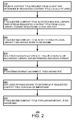
- FIG. 2 depicts a flow diagram of a method according to one embodiment. Specifically, FIG. 2 depicts a flow diagram of a method 204 processing client requests for content titles.
- a content title request is received from a client at a local content server 110 and a determination is made as to whether the requested content title is stored in the local library 120 associated with the local content server 110. This determination may be made by the local content server 110, the content manager 160 or some other functional element within the content management system (CMS). For purposes of simplicity, it will be assumed that this and other CMS processes/determinations are invoked by or with the content manager 160.
- CMS content management system
- the CMS determines that the requested content is locally available, then at step 220 the local content server 110 streams the requested content title from the local library 130 toward the requesting client, and the method exits.
- the CMS determines that the requested content is not locally available, then at step 230 the CMS instructs that the work flow engine (WFE) 170-WF to provide the requested content title to the requesting client via some other mechanism.
- WFE work flow engine
- the WFE 170-WF cooperates with various functional elements and databases associated with the CMS to find the requested content title in a remote or secondary library, and to determine whether the found content title is encoded in a format appropriate to the requesting client.
- the WFE 170-WF causes the unencoded or improperly coded found requested content title to be forwarded or streamed to a real time encoder or transcoder (RTE) 180-RT for encoding into a format suitable for use by the client.
- RTE real time encoder or transcoder
- the WFE 170-WF cooperates with the Ratings Engine (RE) 170-RE to determine if one or more rules or decision matrices indicate that the requested content title is popular, important or of sufficient interest to other clients that it should be encoded/transcoded in one or more other video formats and stored in the corresponding local library 120 or other local libraries in anticipation of future requests for the content title from other clients.
- Popularity may be determined according to client demand, "best seller" lists, third party rankings and so on.
- the WSE 170-WF causes the found requested content title to be forwarded or streamed to a batch-based encoder or transcoder (BBE) 180-BB for encoding into one or more formats suitable for use by other clients.
- BBE batch-based encoder or transcoder
- the specific formats used by the batch-based encoder or transcoder 180-BB for encoding or transcoding may be determined with respect to expected requesting client device capabilities, general client device capabilities, default capabilities such as predefined low bit rate, high bit rate or minimum bit rate formats, standard definition, high definition and so on.
- transcoding may be perfomred according to any of a plurality of video stream formats (e.g., MPEG2, MPEG4, H.261 and the like) and/or any of a plurality of video stream bitrates.
- the various formats and bitrates may be selected according to the capabilities of client devices (e.g., smart phone, STB and the like), the types of transport networks used (e.g., 3G, 4G, FiOS, Hybrid fibre coax), the desired quality of content streams (e.g., High Definition video, Standard Definition video and the like) as well as other factors.
- client devices e.g., smart phone, STB and the like
- types of transport networks used e.g., 3G, 4G, FiOS, Hybrid fibre coax
- the desired quality of content streams e.g., High Definition video, Standard Definition video and the like
- Batch-based transcoding may be performed in a hierarchical manner to provide a single encoding format for use by client devices having differing capabilities. Encoding to multiple formats may be performed in parallel or individually.
- capabilities associated with the real time transcoders 180-RT and batch-based transcoders 180-BB may be combined to perform one or more content title transcoding processes on a real-time basis.
- a real-time transcoder is used as described above with respect to step 160 to provide an encoded content stream suitable for use by the requesting client.
- This encoded content stream may be provided via one of the real-time transcoders or batch-based transcoders.
- additional available real-time transcoders are opportunistically used to perform the batch-based transcoding functions described above with respect to step 270.
- FIG. 3 depicts a high-level block diagram of a computer suitable for use in performing functions described herein.
- computer 300 includes a processor element 303 (e.g., a central processing unit (CPU) and/or other suitable processor(s)), a memory 304 (e.g., random access memory (RAM), read only memory (ROM), and the like), a cooperating module/process 305, and various input/output devices 306 (e.g., a user input device (such as a keyboard, a keypad, a mouse, and the like), a user output device (such as a display, a speaker, and the like), an input port, an output port, a receiver, a transmitter, and storage devices (e.g., a tape drive, a floppy drive, a hard disk drive, a compact disk drive, and the like)).
- processor element 303 e.g., a central processing unit (CPU) and/or other suitable processor(s)
- memory 304 e.g., random access memory (RAM), read only memory (ROM), and the like
- cooperating module/process 305 e.g
- cooperating process 305 can be loaded into memory 304 and executed by processor 303 to implement the functions as discussed herein.
- cooperating process 305 (including associated data structures) can be stored on a computer readable storage medium, e.g., RAM memory, magnetic or optical drive or diskette, and the like.
- computer 300 depicted in FIG. 3 provides a general architecture and functionality suitable for implementing functional elements described herein or portions of the functional elements described herein.
Landscapes
- Engineering & Computer Science (AREA)
- Multimedia (AREA)
- Signal Processing (AREA)
- Databases & Information Systems (AREA)
- Computer Graphics (AREA)
- Computer Networks & Wireless Communication (AREA)
- Information Transfer Between Computers (AREA)
- Two-Way Televisions, Distribution Of Moving Picture Or The Like (AREA)
Applications Claiming Priority (1)
| Application Number | Priority Date | Filing Date | Title |
|---|---|---|---|
| US13/803,372 US10051024B2 (en) | 2013-03-14 | 2013-03-14 | System and method for adapting content delivery |
Publications (2)
| Publication Number | Publication Date |
|---|---|
| EP2779663A2 true EP2779663A2 (fr) | 2014-09-17 |
| EP2779663A3 EP2779663A3 (fr) | 2015-06-03 |
Family
ID=50442327
Family Applications (1)
| Application Number | Title | Priority Date | Filing Date |
|---|---|---|---|
| EP14158869.9A Ceased EP2779663A3 (fr) | 2013-03-14 | 2014-03-11 | Système et procédé pour adapter la livraison de contenu |
Country Status (2)
| Country | Link |
|---|---|
| US (1) | US10051024B2 (fr) |
| EP (1) | EP2779663A3 (fr) |
Families Citing this family (3)
| Publication number | Priority date | Publication date | Assignee | Title |
|---|---|---|---|---|
| CN103870340B (zh) * | 2014-03-06 | 2017-11-07 | 华为技术有限公司 | 流计算系统中的数据处理方法、控制节点及流计算系统 |
| US10599609B1 (en) * | 2015-03-31 | 2020-03-24 | EMC IP Holding Company LLC | Method and system for elastic, distributed transcoding |
| CN110830535B (zh) * | 2018-08-10 | 2021-03-02 | 网宿科技股份有限公司 | 一种超热文件的处理方法、负载均衡设备及下载服务器 |
Citations (1)
| Publication number | Priority date | Publication date | Assignee | Title |
|---|---|---|---|---|
| US20120191805A1 (en) * | 2011-01-26 | 2012-07-26 | Openwave Systems Inc. | Method and transcoding proxy for transcoding a media stream that is delivered to an end-user device over a communications network |
Family Cites Families (13)
| Publication number | Priority date | Publication date | Assignee | Title |
|---|---|---|---|---|
| US20050028191A1 (en) * | 1999-08-17 | 2005-02-03 | Sullivan Gary E. | Content control system |
| US7155475B2 (en) | 2002-02-15 | 2006-12-26 | Sony Corporation | System, method, and computer program product for media publishing request processing |
| US9123048B2 (en) * | 2006-10-20 | 2015-09-01 | Yahoo! Inc. | Systems and methods for receiving and sponsoring media content |
| US8356039B2 (en) * | 2006-12-21 | 2013-01-15 | Yahoo! Inc. | Providing multiple media items to a consumer via a simplified consumer interaction |
| US8938765B2 (en) * | 2006-12-22 | 2015-01-20 | Time Warner Cable Enterprises Llc | Methods, apparatus and user interface for providing content on demand |
| US8010536B2 (en) * | 2007-11-20 | 2011-08-30 | Samsung Electronics Co., Ltd. | Combination of collaborative filtering and cliprank for personalized media content recommendation |
| US9473812B2 (en) * | 2008-09-10 | 2016-10-18 | Imagine Communications Corp. | System and method for delivering content |
| CA2755774C (fr) * | 2009-03-19 | 2015-01-06 | Azuki Systems, Inc. | Procede de diffusion modulable de contenus en continu et en direct pour des audiences mobiles |
| US8458362B2 (en) * | 2010-09-30 | 2013-06-04 | Comcast Cable Communications, Llc | Delivering content in multiple formats |
| US9680896B2 (en) * | 2011-01-14 | 2017-06-13 | Blackberry Limited | Mobile media content delivery |
| US9088804B2 (en) * | 2011-08-25 | 2015-07-21 | Ustream, Inc. | On-demand selection of transcoding formats for multimedia broadcast streams |
| US9432704B2 (en) * | 2011-11-06 | 2016-08-30 | Akamai Technologies Inc. | Segmented parallel encoding with frame-aware, variable-size chunking |
| US9088634B1 (en) * | 2012-05-07 | 2015-07-21 | Amazon Technologies, Inc. | Dynamic media transcoding at network edge |
-
2013
- 2013-03-14 US US13/803,372 patent/US10051024B2/en active Active
-
2014
- 2014-03-11 EP EP14158869.9A patent/EP2779663A3/fr not_active Ceased
Patent Citations (1)
| Publication number | Priority date | Publication date | Assignee | Title |
|---|---|---|---|---|
| US20120191805A1 (en) * | 2011-01-26 | 2012-07-26 | Openwave Systems Inc. | Method and transcoding proxy for transcoding a media stream that is delivered to an end-user device over a communications network |
Also Published As
| Publication number | Publication date |
|---|---|
| US20140280744A1 (en) | 2014-09-18 |
| US10051024B2 (en) | 2018-08-14 |
| EP2779663A3 (fr) | 2015-06-03 |
Similar Documents
| Publication | Publication Date | Title |
|---|---|---|
| US10616301B2 (en) | Request-based encoding for streaming content portions | |
| US10764623B2 (en) | Method and system for media adaption | |
| US12335033B2 (en) | Server selected variable bitrate streaming | |
| US9332051B2 (en) | Media manifest file generation for adaptive streaming cost management | |
| US8543660B2 (en) | Systems and methods for bridging and managing media content associated with separate media content networks | |
| US12132943B2 (en) | Enhanced service compatibility with clients | |
| US10917653B2 (en) | Accelerated re-encoding of video for video delivery | |
| US20160316244A1 (en) | Program and device class entitlements in a media platform | |
| US12439119B2 (en) | Identification of elements in a group for dynamic element replacement | |
| US11765421B2 (en) | Client based storage of remote element resolutions | |
| US20220060532A1 (en) | Method for transmitting resources and electronic device | |
| US20230247105A1 (en) | Methods and systems for content delivery using server push | |
| US10051024B2 (en) | System and method for adapting content delivery | |
| US20240106882A1 (en) | Methods and systems for packaging and sending content |
Legal Events
| Date | Code | Title | Description |
|---|---|---|---|
| 17P | Request for examination filed |
Effective date: 20140311 |
|
| AK | Designated contracting states |
Kind code of ref document: A2 Designated state(s): AL AT BE BG CH CY CZ DE DK EE ES FI FR GB GR HR HU IE IS IT LI LT LU LV MC MK MT NL NO PL PT RO RS SE SI SK SM TR |
|
| AX | Request for extension of the european patent |
Extension state: BA ME |
|
| PUAI | Public reference made under article 153(3) epc to a published international application that has entered the european phase |
Free format text: ORIGINAL CODE: 0009012 |
|
| PUAL | Search report despatched |
Free format text: ORIGINAL CODE: 0009013 |
|
| AK | Designated contracting states |
Kind code of ref document: A3 Designated state(s): AL AT BE BG CH CY CZ DE DK EE ES FI FR GB GR HR HU IE IS IT LI LT LU LV MC MK MT NL NO PL PT RO RS SE SI SK SM TR |
|
| AX | Request for extension of the european patent |
Extension state: BA ME |
|
| RIC1 | Information provided on ipc code assigned before grant |
Ipc: H04N 21/2343 20110101ALI20150430BHEP Ipc: H04N 21/2225 20110101ALI20150430BHEP Ipc: H04N 21/258 20110101ALI20150430BHEP Ipc: H04L 29/06 20060101ALI20150430BHEP Ipc: H04N 21/239 20110101AFI20150430BHEP |
|
| R17P | Request for examination filed (corrected) |
Effective date: 20151203 |
|
| RBV | Designated contracting states (corrected) |
Designated state(s): AL AT BE BG CH CY CZ DE DK EE ES FI FR GB GR HR HU IE IS IT LI LT LU LV MC MK MT NL NO PL PT RO RS SE SI SK SM TR |
|
| STAA | Information on the status of an ep patent application or granted ep patent |
Free format text: STATUS: EXAMINATION IS IN PROGRESS |
|
| 17Q | First examination report despatched |
Effective date: 20161111 |
|
| STAA | Information on the status of an ep patent application or granted ep patent |
Free format text: STATUS: THE APPLICATION HAS BEEN REFUSED |
|
| 18R | Application refused |
Effective date: 20210608 |