EP2780480B1 - Minisondes gamma-pna pour un marquage fluorescent - Google Patents
Minisondes gamma-pna pour un marquage fluorescent Download PDFInfo
- Publication number
- EP2780480B1 EP2780480B1 EP12849889.6A EP12849889A EP2780480B1 EP 2780480 B1 EP2780480 B1 EP 2780480B1 EP 12849889 A EP12849889 A EP 12849889A EP 2780480 B1 EP2780480 B1 EP 2780480B1
- Authority
- EP
- European Patent Office
- Prior art keywords
- γpna
- pna
- miniprobe
- domain
- chimeric
- Prior art date
- Legal status (The legal status is an assumption and is not a legal conclusion. Google has not performed a legal analysis and makes no representation as to the accuracy of the status listed.)
- Active
Links
- 0 *C(CN(CC(O)=O)C(CN(C=C(C(N1)=O)C#C*)C1=O)=O)NP Chemical compound *C(CN(CC(O)=O)C(CN(C=C(C(N1)=O)C#C*)C1=O)=O)NP 0.000 description 1
Images


Classifications
-
- C—CHEMISTRY; METALLURGY
- C12—BIOCHEMISTRY; BEER; SPIRITS; WINE; VINEGAR; MICROBIOLOGY; ENZYMOLOGY; MUTATION OR GENETIC ENGINEERING
- C12Q—MEASURING OR TESTING PROCESSES INVOLVING ENZYMES, NUCLEIC ACIDS OR MICROORGANISMS; COMPOSITIONS OR TEST PAPERS THEREFOR; PROCESSES OF PREPARING SUCH COMPOSITIONS; CONDITION-RESPONSIVE CONTROL IN MICROBIOLOGICAL OR ENZYMOLOGICAL PROCESSES
- C12Q1/00—Measuring or testing processes involving enzymes, nucleic acids or microorganisms; Compositions therefor; Processes of preparing such compositions
- C12Q1/68—Measuring or testing processes involving enzymes, nucleic acids or microorganisms; Compositions therefor; Processes of preparing such compositions involving nucleic acids
- C12Q1/6813—Hybridisation assays
- C12Q1/6816—Hybridisation assays characterised by the detection means
- C12Q1/6825—Nucleic acid detection involving sensors
-
- G—PHYSICS
- G01—MEASURING; TESTING
- G01N—INVESTIGATING OR ANALYSING MATERIALS BY DETERMINING THEIR CHEMICAL OR PHYSICAL PROPERTIES
- G01N33/00—Investigating or analysing materials by specific methods not covered by groups G01N1/00 - G01N31/00
- G01N33/48—Biological material, e.g. blood, urine; Haemocytometers
- G01N33/50—Chemical analysis of biological material, e.g. blood, urine; Testing involving biospecific ligand binding methods; Immunological testing
- G01N33/53—Immunoassay; Biospecific binding assay; Materials therefor
- G01N33/531—Production of immunochemical test materials
- G01N33/532—Production of labelled immunochemicals
- G01N33/533—Production of labelled immunochemicals with fluorescent label
-
- C—CHEMISTRY; METALLURGY
- C12—BIOCHEMISTRY; BEER; SPIRITS; WINE; VINEGAR; MICROBIOLOGY; ENZYMOLOGY; MUTATION OR GENETIC ENGINEERING
- C12N—MICROORGANISMS OR ENZYMES; COMPOSITIONS THEREOF; PROPAGATING, PRESERVING, OR MAINTAINING MICROORGANISMS; MUTATION OR GENETIC ENGINEERING; CULTURE MEDIA
- C12N15/00—Mutation or genetic engineering; DNA or RNA concerning genetic engineering, vectors, e.g. plasmids, or their isolation, preparation or purification; Use of hosts therefor
- C12N15/09—Recombinant DNA-technology
- C12N15/11—DNA or RNA fragments; Modified forms thereof; Non-coding nucleic acids having a biological activity
- C12N15/113—Non-coding nucleic acids modulating the expression of genes, e.g. antisense oligonucleotides; Antisense DNA or RNA; Triplex- forming oligonucleotides; Catalytic nucleic acids, e.g. ribozymes; Nucleic acids used in co-suppression or gene silencing
-
- C—CHEMISTRY; METALLURGY
- C12—BIOCHEMISTRY; BEER; SPIRITS; WINE; VINEGAR; MICROBIOLOGY; ENZYMOLOGY; MUTATION OR GENETIC ENGINEERING
- C12Q—MEASURING OR TESTING PROCESSES INVOLVING ENZYMES, NUCLEIC ACIDS OR MICROORGANISMS; COMPOSITIONS OR TEST PAPERS THEREFOR; PROCESSES OF PREPARING SUCH COMPOSITIONS; CONDITION-RESPONSIVE CONTROL IN MICROBIOLOGICAL OR ENZYMOLOGICAL PROCESSES
- C12Q1/00—Measuring or testing processes involving enzymes, nucleic acids or microorganisms; Compositions therefor; Processes of preparing such compositions
- C12Q1/68—Measuring or testing processes involving enzymes, nucleic acids or microorganisms; Compositions therefor; Processes of preparing such compositions involving nucleic acids
- C12Q1/6813—Hybridisation assays
- C12Q1/6816—Hybridisation assays characterised by the detection means
-
- C—CHEMISTRY; METALLURGY
- C12—BIOCHEMISTRY; BEER; SPIRITS; WINE; VINEGAR; MICROBIOLOGY; ENZYMOLOGY; MUTATION OR GENETIC ENGINEERING
- C12N—MICROORGANISMS OR ENZYMES; COMPOSITIONS THEREOF; PROPAGATING, PRESERVING, OR MAINTAINING MICROORGANISMS; MUTATION OR GENETIC ENGINEERING; CULTURE MEDIA
- C12N2310/00—Structure or type of the nucleic acid
- C12N2310/30—Chemical structure
- C12N2310/31—Chemical structure of the backbone
- C12N2310/318—Chemical structure of the backbone where the PO2 is completely replaced, e.g. MMI or formacetal
- C12N2310/3181—Peptide nucleic acid, PNA
-
- C—CHEMISTRY; METALLURGY
- C12—BIOCHEMISTRY; BEER; SPIRITS; WINE; VINEGAR; MICROBIOLOGY; ENZYMOLOGY; MUTATION OR GENETIC ENGINEERING
- C12N—MICROORGANISMS OR ENZYMES; COMPOSITIONS THEREOF; PROPAGATING, PRESERVING, OR MAINTAINING MICROORGANISMS; MUTATION OR GENETIC ENGINEERING; CULTURE MEDIA
- C12N2320/00—Applications; Uses
- C12N2320/10—Applications; Uses in screening processes
Definitions
- Telomeric DNA is found at the extreme ends of chromosomes in humans and most other organisms. See Blackburn, E. H. and J.W. Szostak, Annu. Rev. Biochem 1984, 53, 164-94 and Cech, T. R. Angew. Chem. Int. Ed. 2000, 39, 35-43 . Telomeres are characterized by a repeat sequence motif which in humans is 5'-TTAGGG-3. This sequence is repeated tens or even hundreds of times through each end of the double-stranded region of the chromosome and beyond, into a single-stranded extension on the 3'-terminus at each end.
- telomeres naturally become shorter with each round of cell division until a critical threshold is reached, after which cellular growth arrest (senescence) occurs.
- Critically short telomeres have been implicated in a range of aging-related diseases.
- maintenance of stable telomere lengths is a hallmark of cancer cells. See Lansdorp, P. M., EMBO J. 2009, 28, 2532-40
- telomeres Given the great interest in telomere biology, methods that permit analysis of the integrity and length of telomeres are widely used in research and diagnostic medicine.
- One such method involves the in situ hybridization of a fluorescent PNA probe to the telomere. See Baerlocher, G. M., et al., Cytometry 2002, 47, 89-99 , and Lansdorp, P. M., et al., Hum. Mol. Gen. 1996, 5, 685-91 .
- the conventional PNA probe is 18 nucleobases (18-mer) in length and is complementary to three contiguous repeats of the human telomere sequence.
- a fluorescent dye such as Cy3 is attached to the PNA N -terminus, which permits imaging of the telomeres via fluorescence microscopy and quantitative analysis by flow cytometry.
- telomere shortening Fewer fluorescently labeled PNA probes are able to hybridize to the telomere, however, as telomeres become shorter or are damaged. As a result, the fluorescent signal observed becomes weaker which hampers intracellular visualization of telomeres and their quantitative analysis under biological conditions that promote telomere shortening.
- yPNAs gamma-PNAs
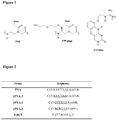
- Ly and coworkers exhibit a helical pre-organization and improved water solubility compared with standard PNA. See Figure 1 below and Yeh, J. I., et al., J. Am. Chem. Soc. 2010, 132, 10717-27 , and Sahu, B., et. al., J. Org. Chem. 2011, 76, 5614-27 . Further, the following documents relates to the scientific filed of the present invention; WO 2008/081451 discloses a non-invasive method of analyzing a genetic material of a fetus by measuring telomere length of a transcervical specimen obtained from a pregnant woman.
- Rapireddy et al. J. Am. Chem. Soc. 2007, 129, 15596-15600 discloses that conformationally preorganized ⁇ -peptide nucleic acid (y-PNA) containing an acridine moiety covalently linked at the C-terminus can invade mixed-sequence B-DNA in a sequence-specific manner.
- Englund et al. Organic Letters 2005, 16, 3465-3467 discloses a new strategy for attaching side chains to the PNA backbone such that fluorophores can be covalently attached, and demonstrates the functionality of a rudimentary PNA-based biosensor where fluorescent intensity increases upon binding to fully complementary DNA.
- Biochemistry 2006, 45, 13304-13311 developed a methodology based on labeled hybridization probes and fluorescence resonance energy transfer (FRET) to map lang-range distances within full-length human telomerase RNA (hTR).
- FRET fluorescence resonance energy transfer
- WO 2011/028494 discloses a method for label-free sensing of PNA-DNA complexes using nanoprobes. The method was used for detection of pathogens based on specific signature sequences unique to the pathogens.
- a ⁇ PNA probe comprising a two-domain chimeric ⁇ PNA oligomer comprising: (i) a first domain containing between 4-10 PNA monomers that induces a right-handed twist, with at least one of the PNA monomers being a ⁇ PNA monomer; and (ii) a second domain that comprises at least four PNA monomers that induces a left-handed twist, with at least one of the PNA monomers being a ⁇ PNA monomer, wherein the domain with the right-handed twist comprises a sequence that is complementary to the sequence of a target DNA.
- kits for detecting a telomeric DNA in a cell sample comprising at least two receptacles, (A) one of which receptacles contains a ⁇ PNA miniprobe that hybridizes with the telomeric DNA, and (B) another of which receptacles contains a diluent suitable for hybridization, wherein the ⁇ PNA miniprobe consists of six, nine or twelve PNA monomers.
- Yet another aspect of the invention relates to a method for detecting telomeric DNA in a cell sample, comprising:
- the invention relates to a method for detecting telomeric DNA in a cell sample, comprising:
- telomeric DNA denotes a DNA-oligonucleotide that is characterized by the presence of a 5'-TTAGGG-3' sequence repeated from thirteen times to several thousand times. See Capper, R. et al Genes Devel. 2007, 21, 2495-2508 and Calado, R.; Young, N. F1000 Med. Rep. 2012, 4:8 .
- hybridization or “hybridizing” refer to the process of establishing a non-covalent, sequence-specific interaction between two or more complementary strands of a DNA, between complementary strands consisting of a DNA and a RNA, a DNA and a PNA, a RNA and a PNA, or non-covalent, sequence-specific interactions between two PNA strands.
- a disadvantage of the conventional 18-mer PNA probe is its inability to effectively hybridize to short telomere sequences often present in diseased or aging cells. This results in a decrease in the intensity of the fluorescent signal and limits the utility of fluorescently labeled 18-mers as probes for the detection and visualization of a telomeric DNA or RNA in a cell sample.
- PNAs Backbone-modified peptide nucleic acids
- RMP ⁇ -PNA peptide nucleic acids
- the present invention provides a category of shorter ⁇ - PNA probes that are especially effective at detecting telomeric DNA.
- the category of " ⁇ - PNA probe” includes PNA oligomers having at least one ⁇ - PNA monomer and at least one detectable label.
- the ⁇ - PNA probe can have one domain or two domains, where a "domain” refers to a PNA oligomer that has a specific sequence and at least one ⁇ PNA monomer. When two domains are present in a ⁇ - PNA probe, both domains can have the same sequence or each domain can have a different sequence.
- a detectable label can be covalently attached to an end PNA mnonomer or an internal PNA monomer of a single domain or multiple detectable labels, such as fluorescent dyes can be attached within a single domain.
- the detectable label can be attached to an end or internal PNA monomer in the first domain or the second domain.
- the ⁇ - PNA probe category of the invention includes (1) ⁇ - PNA miniprobes and (2) chimeric ⁇ - PNA probes.
- a ⁇ - PNA miniprobe is a PNA oligomer having a single domain and at least one detectable label. The domain can have six PNA monomers, nine PNA monomers, or twelve PNA monomers and at least one of the monomers is a ⁇ - PNA moiety.
- the sequences of the ⁇ - PNA miniprobes are designed to be complementary to the sequence 5'-TTAGGG-3' that repeats in a telomere.
- ⁇ - PNA miniprobes having six, nine and twelve monomers, therefore, bind to one, one and a half (1.5) and two contiguous repeats, respectively, of a telomere.
- a "chimeric ⁇ - PNA probe,” is a PNA oligomer that has two domains which are connected end-to-end and a detectable label.
- the first and second domains of the chimeric ⁇ - PNA probe contain PNA monomers of opposing chirality and each domain has at least ⁇ - PNA monomer.
- the chimeric ⁇ - PNA probe has a first domain having right-handed PNA monomers while the second domain has left-handed PNA monomers.
- the sequence of the first domain is complementary to the sequence of a target telomere, while the sequence of the second domain is not complementary to the sequence of the telomere.
- telomeric DNA For detecting telomeric DNA with the chimeric ⁇ - PNA probes an equimolar mixture is used in which approximately one half of the probes have a fluorescent label in the first domain. The remaining probes have a fluorescent label in the second domain.
- equimolar mixture denotes a mixture having equal moles of the two chimeric ⁇ -PNA probes.
- the invention contemplates methods for using the ⁇ - PNA miniprobes or the chimeric ⁇ - PNA probes to detect telomeric DNA in a cell sample or from a cell sample.
- the ⁇ - PNA miniprobes or chimeric ⁇ - PNA probes can be packaged in a kit for detecting telomeric DNA.
- a kit for detecting telomeric DNA Such a kit would contain a known amount of the ⁇ - PNA miniprobes or an equimolar mixture of the chimeric ⁇ - PNA probes and a diluent as further described below.
- the kit will comprise at least two receptacles.
- One receptacle will contain a ⁇ PNA miniprobe or the chimeric ⁇ - PNA probes while the other receptacle will contain an appropriate diluent, for instance a diluent that promotes denaturation of the telomeric DNA and hybridization of the ⁇ PNA miniprobe or chimeric ⁇ - PNA probes to telomeric DNA.
- the ⁇ PNA miniprobe may be provided as a lyophilized powder or as a buffered solution.
- the amount of ⁇ PNA miniprobe present in the receptacle can vary from an amount sufficient for single use to amounts necessary for multiple uses.
- the amount of the ⁇ PNA miniprobe will be from about 0.01 ⁇ g to about 100 ⁇ g, such as about 0.1 ⁇ g. 1 ⁇ g, 5 ⁇ g, 10 ⁇ g, 20 ⁇ g, 30 ⁇ g, 40 ⁇ g, 50 ⁇ g, 60 ⁇ g, 70 ⁇ g, 80 ⁇ g, 90 ⁇ g, or 100 ⁇ g.
- the diluent supplied in the kit can be water, buffer, a mixture of buffer and one or more reducing agents and a denaturant such as a solution of sodium chloride.
- Suitable buffers include TRIS, HEPES, PIPES, phosphate buffer and acetate buffer.
- the buffers may contain one or more reducing agents.
- Exemplary reducing agents include without limitation tris(2-carboxyethyl)phosphine (TCEP), ⁇ -mercaptoethanol, thionein, dithiothreitol (DTT).
- the kit may optionally contain a washing solution for removing unhybridized probe or remnants of free dye that can contribute to the background signal.
- Dyes typically conjugated to the ⁇ PNA miniprobes or chimeric ⁇ PNA probes described above are Cy3, Cy5, Cy7, Cy3B, Cy3.5, Cy5.5, coumarin, acridine derivatives, eosin derivatives and fluorescein.
- Other detectable groups, such as gold or silver nanoparticles that can be detected by electron microscopy can also be used as detectable labels.
- the dye can be attached to a N-terminal or a C-terminal PNA monomer, to a N-terminal or a C-terminal ⁇ PNA monomer, an internal PNA monomer, or an internal ⁇ PNA monomer of the y PNA miniprobe.
- a linker for example, a -CH 2 -(O-CH 2 -CH 2 ) n -X linker
- substituent R is selected from -O(C 1 -C 10 ) alkyl, -O(C 3 -C 14 ) aryl, or a halogen, such as chlorine, bromine, iodine or fluorine.
- alkyl denotes straight, branched chain, or cyclic hydrocarbyl groups including from 1 to about 20 carbon atoms.
- an alkyl can have from 1 to 10 carbon atoms or 1 to 5 carbon atoms.
- Exemplary alkyl includes straight chain alkyl groups such as methyl, ethyl, propyl, butyl, pentyl, hexyl, heptyl, octyl, nonyl, decyl, undecyl, dodecyl, and the like, and also includes branched chain isomers of straight chain alkyl groups, for example without limitation, -CH(CH 3 ) 2 , -CH(CH 3 )(CH 2 CH 3 ), -CH(CH 2 CH 3 ) 2 , - C(CH 3 ) 3 , -C(CH 2 CH 3 ) 3 , -CH 2 CH(CH 3 ) 2 , -CH 2 CH(CH 3 )(CH 2 CHCH 2
- aryl alone or in combination refers to an aromatic monocyclic or bicyclic ring system such as phenyl or naphthyl.
- each ⁇ -PNA miniprobe may be supplied in a separate receptacle or alternatively, appropriate amounts of both ⁇ -PNA miniprobes can be combined and placed in a single receptacle.
- a kit also will contain a receptacle for the diluent as well as other agents, for example, reducing agents denaturing agents and washing solutions that necessary for labeling telomeric DNA.
- telomere shortening of telomeres is a hallmark of several diseases in humans.
- a malfunction in telomere maintenance genes, such as due to a mutation in the gene is one reason why telomeres are abruptly shortened in cells.
- Such a decrease in telomere length results in the onset of several genetically related conditions, exemplary of which without limitation are Dyskeratosis congenita, familial aplastic anemia, familial idiopathic pulmonary fibrosis, Hoyeraal-Hreiderasson syndrome, myelodysplastic syndrome, Revesz syndrome and Coats plus syndrome.
- Short telomeres are associated with a high risk and a poor prognosis for treatment of the following diseases - pulmonary fibrosis, aplastic anemia, liver disease and fibrosis, various types of cancer, cadiovascular disease, osteoporosis and osteoarthritis, Barrett's esophagus and ulcerative colitis (precursor to cancer) and immune and inflammatory diseases.
- telomere damage Chemical and environmental factors as well as stress are known to cause damage to telomeres. For instance, exposure to chemical and environmental toxins, oxidative stress due to an increase in the intracellular levels of free radicals are known to damage telomeres and trigger associated pathological conditions.
- diseases and conditions associated with damaged telomeres include without limitation genetic disorders associated with mutations in DNA repair genes, for example, Werner syndrome, gene disorders from exposure to the environmental toxins hexavalent chromium and arsenic, as well as disorders related to poor diet, stress and lack of exercise are some of the pathological conditions that are linked to telomere damage.
- ⁇ - PNA miniprobes and chimeric ⁇ - PNA probes of the invention are suitable for detecting short and damaged telomeres in a cell sample.
- a fluorescently labeled ⁇ - PNA miniprobe having 12 PNA monomers (12-mer) was synthesized as described below.
- This ⁇ -PNA miniprobe consisted of two repeating six residue units, each having a sequence which is complementary to human telomeric DNA.
- the fluorescent label used for this study was Cy3, which was covalently conjugated at the N-terminus of the ⁇ - PNA miniprobe as illustrated in Figure 2 (see probe identified as ⁇ PNA-1).
- Figure 2 provides the sequences of four ⁇ - PNA miniprobes according to the present disclosure. Groups underlined in these sequences correspond to PNA monomers having a mini-PEG group as the ⁇ - carbon substituent.
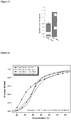
- Ex-vivo hybridization studies using of the ⁇ - PNA miniprobes (yPNA-1) and two model telomeric DNAs, Telo-2 having two contiguous six residue repeat units and Telo-4 having four contiguous six residue repeat units have illustrated the formation of stable heteroduplex structures with melting temperatures (T m ) greater than 75 °C. See Figure 3 . As illustrated by the melting temperature curves, the Telo-4/Cy3-PNA-1 hybrid has a higher melting temperature than the Telo-2/Cy3-PNA-1 hybrid indicating that the former hybrid has higher thermal stability than the latter hybrid.
- ⁇ - PNA miniprobes to label telomeres within cells was explored using fixed osteosarcoma cells.
- Cy3-labeled ⁇ PNA-1 a 12-mer
- Cy3-labeled 18-mer PNA probe was used as a control in this study.
- Cy3- ⁇ PNA-1 was more efficient at labeling telomeres on most of the chromosomes within the cell sample.
- the conventional Cy3-labeled 18-mer PNA probe labeled fewer telomeres. See Figure 4 .
- the present inventors used fluorescent microscopy to quantify the fraction of chromosomes in a cell sample that have not been labeled by a ⁇ - PNA miniprobe of the present disclosure.
- the percent of chromosomes having signal-free (unlabeled) ends after labeling with a ⁇ - PNA miniprobe was compared to the percent of chromosomes having signal-free ends after labeling with a conventional 18-mer PNA probe.
- Cy3- ⁇ PNA-1 is 45% less likely to fail at hybridizing and staining telomeres than the conventional fluorescently labeled PNA 18-mer used as a control.
- ⁇ PNA miniprobes are more efficient at labeling shorter telomeres than the conventional fluorescently labeled 18-mer PNA probe. This permits the ⁇ PNA miniprobes of the invention to be used as diagnostic biomarker for detecting the risk for the onset or progression of age related diseases and cancer.
- the shorter length of the ⁇ PNA miniprobes as compared to a conventional 18-mer PNA probe permits a greater number of the former to bind to a telomeric DNA.
- a telomere labeled using a ⁇ PNA miniprobe is brighter than a telomere labeled using the conventional 18-mer PNA probes.
- fluorescent measurement studies by the inventors showed that 50% more fluorescent dye was delivered to the telomere using a ⁇ PNA miniprobe than the conventional fluorescently labeled 18-mer PNA.
- telomere repeats For example, three 12-mer ⁇ PNA miniprobes will hybridize to 6 telomere repeats, whereas only two conventional 18-mer PNA probes will hybridize to the same length of telomeric DNA. If it is assumed that the fluorescence quantum yield of the dye is the same for both types of probe, 50% greater signal should be observed for the ⁇ PNA miniprobe. For shorter 6mers and/or internally labeled ⁇ PNA miniprobes, even more dyes/telomere repeat will be delivered, leading to even brighter signals. The greater concentration of dye resulted in brighter fluorescence which helps to obtain a better image of the telomere and a more accurate quantitative measurement of telomere length and damage.
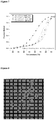
- Brightness of telomere labeling can be further increased by increasing the number of ⁇ PNA miniprobes hybridizing to a telomeric DNA. This was shown by synthesizing a six residue ⁇ PNA miniprobe (yPNA-2). As illustrated in Figure 6 , UV melting curves demonstrated that yPNA-2 hybridizes to each of the four model telomeric DNA targets, Telo-1, Telo-2, Telo-3 and Telo-4 having one, two, three and four repeat units respectively with differing affinities. Hybridization of the ⁇ PNA miniprobe to telomeric DNA was cooperative as reflected by an increase in the steepness of the melting point curve as the number of repeat units in the telomere increased from one to four. See Figure 6 .
- cooperativity of hybridization and the term “cooperativity” refer to a special case of allostery involving hybridization of two DNA strands, hybridization of a DNA to an RNA, hybridization of a DNA to a PNA (modified or unmodified), hybridization of an RNA to a PNA (modified or unmodified), or hybridization of PNA strands such that hybridization of a first PNA molecule, such as a ⁇ PNA miniprobe or a chimeric ⁇ PNA probe to telomeric DNA promotes hybridization of subsequent PNA molecules to the DNA.
- a first PNA molecule such as a ⁇ PNA miniprobe or a chimeric ⁇ PNA probe to telomeric DNA promotes hybridization of subsequent PNA molecules to the DNA.
- Figure 6 showed that the curve representative of hybridization between a ⁇ PNA miniprobe and a telomeric DNA having two six residue repeats had a steeper central or transition region that the curve associated with the hybridization of a ⁇ PNA miniprobe to telomeric DNA having a single six residue repeat.
- a further increase in the number of repeat units in the telomeric DNA was expected to enhance cooperativity of hybridization and as illustrated by Figure 6 melting curves for the Telo-3-yPNA-2-Cy3 hybrid and the Telo-4-yPNA-2-Cy3 hybrid had a steeper and more well defined transition or central region that the melting curves for the two repeat hybrid (Telo-2-yPNA-2-Cy3).
- Binding of the ⁇ PNA miniprobe to telomeric DNA was found to increase the thermal stability of the hybrid. For instance, as shown in Figures 6 and 7 , the melting points of ⁇ PNA miniprobe-telomeric DNA hybrids increased as the number of repeat units in the telomeric DNA increased. The present inventors believe this increase in thermal stability to be due to greater end-stacking interactions in the ⁇ PNA miniprobe-telomere hybrid when a large number of ⁇ PNA miniprobes hybridize adjacent to each other on telomeric DNA. Even though the two miniprobes are not covalently linked, in such as hybrid the aromatic base from the end of one probe pi-stack with the aromatic base from the end of the adjacent probe, analogous to base stacking within a continuous helix.
- telomere staining activity for the 6-mer is attributed to be due to lower thermodynamic stability of the hybrid of PNA-2 and telomeric DNA. This lower thermodynamic stability is thought to translate to a greater rate of de-hybridization of the 6-mer, PNA-2 as compared to the longer 12-mer (PNA-1) described above.
- telomere staining activity of the shorter six residue yPNA-2 the present inventors replaced two of the three cytosine bases in yPNA-2 (see Figure 2 ) with a modified cytosine unit termed a "G-clamp," shown in Figure 1 .
- This modified base features a larger pi-stacking surface in addition to an appendage that permits additional hydrogen bonding interactions when paired with guanine, essentially clamping the complementary guanine residue.
- the melting point of a G-clamped Cy3-yPNA-3 miniprobe-Telo-1 hybrid was greater than the melting point of a six residue Cy3-yPNA-2 miniprobe-Telo-1 hybrid.
- telomeres consist of a repeating 6-base sequence
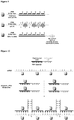
- more copies of the six residue ⁇ PNA miniprobe can bind adjacent to each other on the complementary telomere strand. That is, decreasing the length of the ⁇ -PNA miniprobe to six residues corresponding to a single repeat of the telomere permits three times as many labels, for example a fluorescent dye, to concentrate on the telomere as compared to a labeled conventional 18 mer PNA probe. See Figure 9A
- telomere length a region of telomere length or visualization of damage that has occurred to telomeres in a cell sample.
- the shorter ⁇ -PNA miniprobes also permit the detection of short telomeres that are implicated to play a role in pathological processes, thereby improving the early detection of such diseases.
- the present inventors have tested the ability of a nine ⁇ -PNA miniprobe (9-mer) to detect telomeric DNA.
- a 9-mer hybridizes 1.5 repeat units of a telomere.
- two ⁇ PNA miniprobes having different sequence specificities are to be used for telomere detection according to this methodology.
- the sequences of the two ⁇ PNA miniprobes were designed to permit the miniprobes to hybridize at adjacent positions along a DNA telomere.
- Each ⁇ -PNA miniprobe was functionalized using a different dye, such that one ⁇ -PNA miniprobe contains the donor dye that acts as the light absorber and will donate the absorbed energy to the acceptor dye on the other ⁇ -PNA miniprobe by Forster Resonance Energy Transfer (FRET).
- FRET Forster Resonance Energy Transfer
- the efficiency of FRET decreases as the sixth power of the distance between the donor and acceptor dyes (r -6 ). Accordingly, conventional PNA telomere probes, which are 18 bases in length, will not exhibit efficient FRET in the format depicted in Scheme 1, since the donor and acceptor dyes are approximately 64 ⁇ apart.
- the shorter ⁇ -PNA miniprobe of the invention permits the donor and acceptor dyes to be close to each other. This permits efficient FRET which improves telemore detection.
- FRET based detection was enhanced because of the shorter distance between the donor and acceptor dyes, approximately 32 ⁇ when the 9-mers were used. FRET efficiency was approximately 75% when fluorescein is used as the donor and Cy3 is used as the acceptor.
- the advantage of using FRET in a detection assay of the invention as described above in Scheme 1, is to prevent background fluorescent signal from interfering with telomere detection. Because the acceptor dye in a donor-acceptor FRET pair fluoresces at longer wavelength than the donor dye, any fluorescence due to unhybridized miniprobes will be at the shorter wavelength corresponding to the wavelength at which the donor dye fluoresces. By employing appropriate filters, moreover, unwanted short wavelength fluorescence can be removed so as to permit only the stained telomeres to be imaged. Accordingly, the method eliminates time-consuming washing steps normally associated with fluorescence in situ hybridization (FISH) experiments.
- FISH fluorescence in situ hybridization
- the multiple labels can be covalently attached to a single domain of the ⁇ -PNA miniprobe, as illustrated in Scheme 2.
- each ⁇ -PNA miniprobe will have between one and four dye molecules.
- the dyes will be conjugated to one or both of the end PNA monomers and/or to one or more internal PNA monomers of the ⁇ -PNA miniprobe of the present invention.
- the advantage of conjugating multiple dye molecules to each ⁇ -PNA miniprobe is that each miniprobe delivers more dye to a given length of the telomeric DNA than is possible using a single dye ⁇ -PNA miniprobe.
- a 12-mer ⁇ PNA miniprobe is internally labeled at 3 positions rather than at one position then such a miniprobe will deliver three times more dye than a single dye probe, essentially tripling the brightness of fluorescence as long as self-quenching of the dyes is avoided.
- Conjugation of the dyes to the ⁇ PNA miniprobe will proceed via the functionalization of a cytosine (C), thymine (T), or a uracil (U) nucleobase as reported by Gierlich et al., Org. Lett. 2006, 8, 3639-42 .
- the dye can also be attached to the PNA backbone via backbone functionalization using a mini-PEG group at the ⁇ -carbon of the PNA.
- the concept of conjugating multiple molecules of a single dye to a ⁇ PNA miniprobe can be extended to a FRET based detection system by using alternating donor and acceptor dyes to maximize the FRET signal.
- ⁇ PNA miniprobes can be further expanded to detect hybridization efficiency. Accordingly, as illustrated in Scheme 3, a ⁇ PNA miniprobe will be functionalized with one or more reactive groups (X) at an internal and/or terminal position. After hybridization to a target DNA, such as telomeric DNA, the unbound probe will be removed through the use of standard washing steps. A dye that is functionalized to form a covalent bond to the probe will then be added to the telomeric DNA- ⁇ PNA miniprobe hybrid to cause fluorescent labeling of the telomeric DNA.
- An advantage of this methodology is that a single probe can be used to form the telomeric DNA- ⁇ PNA miniprobe hybrid, but detection can be enhanced by using a variety of dyes to obtain fluorescence in a range of colors.
- fluorescent labeling of the telomere will occur when a fluorogenic compound, for example, a non-fluorescing dye reacts with a functionalized ⁇ PNA miniprobe to form a fluorescent product.
- a fluorogenic compound for example, a non-fluorescing dye reacts with a functionalized ⁇ PNA miniprobe to form a fluorescent product.
- the use of a fluorogenic dye is advantageous since it does not require removal of the unbound dye prior to imaging. The elimination of such washing steps cut down the experimental time making the method cost effective.
- a 3-azido coumarin will be used as the fluorogenic dye and the ⁇ PNA miniprobe used will be functionalized to bear a terminal alkyne group.
- the reactive alkyne group on the ⁇ PNA miniprobe can be attached to the backbone via the miniPEG substituent or alternatively, the reactive alkyne group may be present on a nucleobase.
- the labeling of telomeric DNA according to this methodology is illustrated in Scheme 4, where an alkyne functionalized ⁇ PNA miniprobe will be permitted to contact an azido dye under mild conditions to form a triazole linked dye-yPNA miniprobe product that is fluorescent.
- ⁇ -PNA miniprobes While the description above relates to the use of ⁇ -PNA miniprobes to detect and visualize telomeric DNA, a similar strategy also can be applied for targeting other regions of genomic DNA where repetitive sequence elements are found, such as centromeres or microsatellite DNA, or sequences involved in triplet repeat disorders such as Huntington's disease or Fragile X syndrome.. Moreover, by generating libraries of ⁇ -PNA miniprobes it is possible to extend the technology to detect and image a non-repetitive (mixed) DNA or RNA sequence. The ⁇ PNA miniprobes described above also can be used to detect telomeric RNA (TERRA) via an RNA FISH assay. According to another embodiment of the disclosure, a library of ⁇ PNA miniprobes will be designed such that the individual miniprobes assemble cooperatively on a mixed sequence template, such as an mRNA ( Figure 9B ).
- TERRA telomeric RNA
- ⁇ -PNA miniprobes such as fluorescent nanotags.
- a ⁇ PNA miniprobe based nanostructure would be employed as a nanotag for binding to a DNA scaffold that has a repeating sequence, to which scaffold is covalently conjugated a recognition element such as an antibody, an aptamer or a hybridization probe, as shown in Figure 9C .
- a recognition element such as an antibody, an aptamer or a hybridization probe
- the invention also contemplates chimeric ⁇ -PNA probes for detecting cellular RNA or DNA, such as telomeric DNA.
- the chimeric ⁇ -PNA probes of the invention are designed to improve specificity of hybridization by using two domains that will have ⁇ -PNA monomers of opposite chirality.
- the term "chirality,” here refers to the ability of one or more ⁇ PNA monomers to induce a right-handed or a left-handed twist (helicity) to the ⁇ PNA helix. For instance, an R-configuration ⁇ -minipeg monomer will induce a right-handed helical chirality in a given domain, while the L-enantiomer will induce left-handed helical chirality.
- the present inventors will synthesize a chimeric ⁇ PNA probe having a right-handed domain and a left-handed domain that are attached to each other end-to end.
- the right-handed domain will have a sequence that is complementary to the sequence of a target DNA, such as a telomeric DNA and will contain at least four PNA residues.
- the right-handed domain will contain between 4-10 PNA monomers with at least one of the PNA monomers being a ⁇ -PNA monomer.
- the right-handed domain can contain four PNA monomers, five PNA monomers, six PNA monomers, seven PNA monomers, eight PNA monomer, nine PNA monomers or ten PNA monomers.
- Extending from one end of the right-handed domain is the second domain made exclusively from left-handed PNA monomers.
- the sequence of the left-handed domain will be chosen so as to prevent this domain from hybridizing to the target RNA or DNA, such as a telomeric DNA in a biological sample.
- the left-handed domain will have at least four PNA monomers, for example, between 4-7 PNA monomers.
- the left-handed domain can contain five PNA monomers, six PNA monomers or seven PNA monomers with at least one of the PNA monomers in the left-handed domain being a ⁇ -PNA monomer.
- the right-handed and left-handed domains can be directly attached end-to-end via an amide bond or the two domains are attached using a linker.
- linker refers to a (C 1 -C 10 ) alkylene, a (C 3 -C 14 ) arylene-(C 1 -C 10 ) alkylene, (C 1 -C 10 ) alkylene-O-(C 1 -C 10 ) alkylene, or a (C 1 -C 10 ) alkylene-S-(Ci-Cio) alkylene residue.
- alkylene refers to divalent alkyl and divalent substituted alkyl, respectively.
- alkylene include without limitation, ethylene (-CH 2 -CH 2 -).
- Optionally substituted alkylene refers to alkylene or substituted alkylene.
- Arylene denotes divalent aryl
- substituted arylene refers to divalent substituted aryl
- Optionally substituted arylene refers to arylene or substituted arylene.
- the detection of telomeric DNA using the chimeric ⁇ -PNA probes will proceed by providing an equimolar mixture of two chimeric ⁇ PNA probes.
- the right-handed domain of the second chimeric ⁇ PNA probe will have a sequence that targets a site on the telomeric DNA that is in close proximity to the right-handed domain of the first chimeric ⁇ PNA probe.
- the right-handed domains of the first and second chimeric ⁇ PNA probes can bind adjacent residues of a telomeric DNA.
- the right-handed domains of the first and second chimeric ⁇ PNA probes bind so as to have 0, 1, 2 or 3 unhybridized telomeric DNA residues between the first and second chimeric ⁇ PNA probes.
- the left-handed domain of the second chimeric ⁇ PNA probe will have a sequence that is complementary to the sequence of the left-handed domain of the first chimeric ⁇ PNA probe.
- Hybridization of the two probes to the telomeric DNA will permit their respective left-handed domains to hybridize which provides additional stability to the ternary complex of the chiemric probe with telomeric DNA or a cellular RNA target of interest.
- the advantage of this approach is that it uses few PNA monomers to synthesize each domain of the chimeric ⁇ PNA probe but greatly enhances specificity of hybridization.
- the chimeric ⁇ PNA probe described above thus delineates a new class of fluorescence in-situ hybridization (FISH) reagent.
- FISH fluorescence in-situ hybridization
- two adjacent probes can be functionalized using donor and acceptor dyes for FRET-based detection of telomeres. While the donor or acceptor dyes are shown to be covalently attached to a terminal PNA residue of the chimeric ⁇ PNA probe, these dyes can also be covalently linked tointernal PNA residues.
- Nucleobases such as uracil or cytosine can be used to covalently link the donor - acceptor dyes that form the FRET pair, as shown below, or the donor - acceptor dyes can be covalently linked to the end of the mini-PEG group of a ⁇ PNA.
- the advantage of using a chimeric ⁇ PNA probe for detecting telomeric DNA is that the two dyes are brought in proximity by virtue of the sequences of the first and second chimeric ⁇ PNA probes, so as to permit efficient FRET. Because the donor and acceptor dyes are attached to two separate chimeric ⁇ PNA probes, the binding of a single probe to an off-target site, or the remnants of dye in unhybridized probes will have no effect on the measured FRET signal.
- the methodology of the disclosure can be expanded to include post-hybridization labeling of the RNA or telomeric DNA as illustrated in Figure 12 .
- two chimeric ⁇ PNA probes having different lengths with respect to each other are utilized for detection of telomeric DNA.
- the left-handed domain of a first chimeric ⁇ PNA probe will be significantly longer than the corresponding left-handed domain of a second adjacent chimeric ⁇ PNA probe.
- the result will be an overhang of unhybridized PNA residues in the left-handed domain of the first chimeric ⁇ PNA probe.
- a ⁇ PNA miniprobe a fluorophore such as a quantum dot, phycobiliprotein, a DNA nanotag, an antibody, streptavidin, or an enzyme that is functionalized with a ⁇ PNA miniprobe the sequence of which is complementary to the left-handed domain of the first probe.
- the overhang capture detection methodology described above can be expanded to the tyramide signal amplification strategy. See Speel, E. J., et al., J. Histochem. Cytochem. 1999, 47, 281-88 .
- a ⁇ PNA miniprobe or a chimeric ⁇ PNA probe will be biotinylated and then permitted to hybridize to a telomeric DNA or cellular RNA. Following hybridization unbound probe is washed away. A streptavidin-horseradish peroxidase (HRP) conjugate will then be contacted with the hybrid, followed by washing to remove unbound streptavidin-HRP conjugate and the addition of a dye-tyramide conjugate. Labeling of a telomeric DNA or a cellular RNA proceeds upon the activation of the dye-tyramide conjugate by hydrogen peroxide.
- HRP horseradish peroxidase
- a ⁇ PNA-HRP conjugate can be synthesized and used in place of the biotynylated ⁇ PNA miniprobe or chimeric ⁇ PNA probe mentioned above.
- a ⁇ PNA-HRP conjugate of the present disclosure can be synthesized using a protocol analogous to the one described by Schönhuber, W., et al., Appl. Env. Microbiol. 1997, 63, 3268-73 .
- PNA oligomers were synthesized and purified according to published procedures. For example, see Christensen, L., et al., J. Pept. Sci. 1995, 3, 175-83 . Mini-PEG y PNA monomers were synthesized according to the synthetic protocols described in PCT publication No.WO2012-138955 .
- concentration of a ⁇ -PNA miniprobe or a chimeric ⁇ -PNA probe is 4 ⁇ M.
- Telomeric DNA used as the template is also present at a concentration of 4 ⁇ M.
- the concentrations of ⁇ -PNA miniprobes and DNA targets used in the hybridization studies were designed to ensure that the concentration of 6 base repeat sequences was kept constant at 4 ⁇ M.
- the 12mer miniprobe ⁇ PNA-1 was used at 2 ⁇ M because it has two 6-base repeats, so the concentration of 6 base ⁇ PNA-1 repeats was 4 ⁇ M.
- the 6mer miniprobes yPNA-2 and yPNA-3 were used at 4 ⁇ M because they each have a single 6-base repeat.
- the ⁇ -PNA miniprobes were mixed with 4 ⁇ M Telo-1, 2 ⁇ M Telo-2, 1.3 ⁇ M Telo-3 or 1 ⁇ M Telo-4 for the hybridization study. Melting curves were recorded by monitoring absorbance at 260 nm with heating/cooling ramps of 1 °C/min.
- U2OS human osteosarcoma cells containing a hygromycin resistant gene were obtained from ATCC and cultured in Dulbecco's Modified Eagle Media, 10% Fetal Bovine Serum, 50U/mL of Penicillin, and 50 ⁇ g/mL of Streptomycin. Cells are grown at 37°C, 5% CO 2 , and 5% O 2 under humid conditions.
- telo-FISH Telomere Fluorescent In-situ Hybridization
- the cells were treated with 0.05 ⁇ g/mL colcemid for 16 hours. Cells were subsequently trypsinized, harvested and treated with 75 mM KCl hypotonic buffer for 12 min at 37°C, then fixed and stored in methanol/acetic acid fixing solution (3:1). The fixed cells were dropped onto slides and dried at 70 °C for 3 minutes to spread the chromosomes followed by drying of the cells overnight. The slides were then fixed using 4% formaldehyde to bond the chromosomes to the slides, and treated with 0.1% pepsin in 0.01N HCl for 10 minutes at 37°C.
- the fixation and washing step was repeated.
- the fixed cells were dehydrated by dipping the slides for 5 minutes in a solution of 70%, ethanol, followed by dipping for 5 minutes in 90% ethanol and finally dipping the slide for 5 minutes in 100% ethanol.
- the slide was air dried after dipping the slide in the last ethanol solution.
- the chromosomal DNA samples stained with G-clamp ⁇ PNA 6mer ( ⁇ PNA-3 ) ( Figure 8 ) were treated with 500 ⁇ g/mL RNAse A (Invitrogen) at 37 °C for 10 minutes, rinsed with PBS buffer and then dehydrated again as described above.
- telomere staining and telomere signal free (SFE) chromosome ends a series of nine z-stacked images (0.25 ⁇ m steps) are acquired for each metaphase chromosomal DNA sample and analyzed. This technique allows for rigorous distinction of a telomere that is unlabeled from a telomere that is labeled but out of focus. The number of SFEs per chromosome is calculated for each metaphase chromosomal DNA sample, and the mean and standard error is determined for chromosomes stained with the ⁇ PNA 12mer or the PNA 18mer.
- coumarin was used as the dye (Scheme 6). More specifically, the conjugation of coumarin to uracil was performed by contacting an iodo-ethyne modified uracil with a coumarin azide under Sonogashira coupling conditions to yield a coumarin-functionalized monomer.
- the coumarin-labeled monomer then will be used for the synthesis of a ⁇ -PNA miniprobe or a chimeric ⁇ -PNA probe according to the present invention. See Dragulescu-Andrasi, A. et al J. Am. Chem. Soc. 2006, 128, 10258-67 .
- Table 1 shows the results of a fluorescence intensity study using unmodified internally labeled PNA probes. The residues in bold underlined in Table 1 illustrate the position of the coumarin dye in these sequences.
- Each PNA probe shown in Table 1 contained two coumarin dyes. These PNA probes were hybridized to a complementary DNA.
- the fluorescence intensity of the resultant hybrid was measured and compared to the fluorescence intensity of an equimolar amount of coumarin acid used as a control.
- the position of the labeled monomer within the PNA oligomer does not influence hybridization to DNA, since the relative fluorescence values for each of the PNA-DNA hybrids is about the same.
- the fluorescence of the PNA-DNA duplexes was not quenched due to the two internally-labeled PNA monomers. See Table 1.
Landscapes
- Health & Medical Sciences (AREA)
- Life Sciences & Earth Sciences (AREA)
- Chemical & Material Sciences (AREA)
- Engineering & Computer Science (AREA)
- Immunology (AREA)
- Organic Chemistry (AREA)
- Molecular Biology (AREA)
- Zoology (AREA)
- Wood Science & Technology (AREA)
- Genetics & Genomics (AREA)
- Biomedical Technology (AREA)
- Biotechnology (AREA)
- Proteomics, Peptides & Aminoacids (AREA)
- Microbiology (AREA)
- Physics & Mathematics (AREA)
- Analytical Chemistry (AREA)
- Biochemistry (AREA)
- General Health & Medical Sciences (AREA)
- Bioinformatics & Cheminformatics (AREA)
- General Engineering & Computer Science (AREA)
- Biophysics (AREA)
- Urology & Nephrology (AREA)
- Hematology (AREA)
- Pathology (AREA)
- Food Science & Technology (AREA)
- General Physics & Mathematics (AREA)
- Medicinal Chemistry (AREA)
- Cell Biology (AREA)
- Plant Pathology (AREA)
- Measuring Or Testing Involving Enzymes Or Micro-Organisms (AREA)
Claims (15)
- Trousse pour détecter un ADN télomérique dans un échantillon de cellules, comprenant au moins deux réceptacles, (A) dont un des réceptacles contient une minisonde d'ANPγ qui s'hybride avec l'ADN télomérique, et (B) dont un autre réceptacle contient un diluant adapté à l'hybridation, dans laquelle la minisonde d'ANPγ est constituée par six, neuf ou douze monomères d'ANP.
- Trousse selon la revendication 1, dans laquelle la minisonde d'ANPγ comprend au moins un colorant fluorescent comme une étiquette détectable, facultativement dans laquelle le colorant fluorescent est sélectionné dans le groupe constitué par Cy3, Cy3B, Cy3.5, Cy5, Cy5.5, Cy7, la coumarine, des dérivés de l'acridine, des dérivés de l'éosine et la fluorescéine, et facultativement dans laquelle l'étiquette détectable est attachée à un monomère d'ANP N-terminal ou C-terminal, ou un monomère d'ANPγ N-terminal ou C-terminal de la minisonde d'ANPy, ou une base d'uracil ou de cytosine de monomère d'ANP, ou un monomère d'ANP interne ou un monomère d'ANPγ interne de la minisonde d'ANPy, ou le carbone-y du monomère d'ANPγ.
- Trousse selon la revendication 2, dans laquelle un segment de liaison -CH2-(O-CH2-CH2)n-X est utilisé pour attacher l'étiquette détectable au carbone-y du monomère d'ANPy, dans laquelle X est sélectionné dans le groupe constitué par -NH2-, -CH≡CH-, -COOH et -N3 et n est un nombre entier allant de 1 à 10.
- Trousse selon la revendication 2, dans laquelle la minisonde d'ANPγ comprend 2 colorants fluorescents.
- Procédé pour détecter de l'ADN télomérique dans un échantillon de cellules, comprenant :(a) la mise en contact de l'échantillon avec une ou plusieurs minisondes d'ANPy, chaque minisonde comprenant une étiquette détectable et au moins un monomère d'ANPγ ; et(b) puis l'incubation de l'échantillon pour permettre aux une ou plusieurs minisondes d'ANPγ de lier des positions adjacentes le long de la longueur de l'ADN télomérique dans l'échantillon,dans lequel la minisonde d'ANPγ est constituée par six, neuf ou douze monomères d'ANP.
- Procédé selon la revendication 5, dans lequel l'échantillon est mis en contact avec une première minisonde d'ANPγ comprenant une première étiquette détectable et une deuxième minisonde d'ANPγ comprenant une deuxième étiquette détectable, dans lequel les première et deuxième minisondes d'ANPγ forment une paire donneur-récepteur et l'ADN télomérique dans l'échantillon lie la paire donneur-accepteur.
- Procédé selon la revendication 6, dans lequel la première minisonde d'ANPγ et la deuxième minisonde d'ANPγ ont des séquences différentes, de sorte que les première et deuxième minisondes d'ANPγ lient des positions adjacentes le long du télomère d'ADN.
- Procédé selon la revendication 6, dans lequel les première et deuxième étiquettes détectables sont des colorants fluorescents, facultativement dans lequel le spectre d'émission de la première étiquette détectable chevauche le spectre d'absorption de la deuxième étiquette détectable ou dans lequel la première minisonde d'ANPγ comprenant la première étiquette détectable et la deuxième minisonde d'ANP comprenant la deuxième étiquette détectable forment une paire de transfert d'énergie de résonnance de fluorescence (FRET).
- Sonde d'ANPγ comprenant un oligomère d'ANPγ chimérique à deux domaines comprenant : (i) un premier domaine contenant entre 4 à 10 monomères d'ANP qui induit une torsion à droite, avec au moins un des monomères d'ANP étant un monomère d'ANPγ ; et (ii) un deuxième domaine qui comprend au moins quatre monomères d'ANP qui induit une torsion à gauche, avec au moins un des monomères d'ANP étant un monomère d'ANPy, dans lequel le domaine avec la torsion à droite comprend une séquence qui est complémentaire de la séquence d'un ADN cible.
- Oligomère d'ANPγ chimérique à deux domaines selon la revendication 9, dans lequel les premier et deuxième domaines sont attachés par covalence bout-à-bout pour former une sonde d'ANPγ chimérique.
- Oligomère d'ANPγ chimérique à deux domaines selon la revendication 10, dans lequel la séquence du premier domaine comprend une torsion à droite et est complémentaire d'un ADN télomérique et le deuxième domaine ne s'hybride pas avec de l'ADN télomérique.
- Procédé pour détecter de l'ADN télomérique dans un échantillon de cellule, comprenant :(a) la fourniture d'un mélange équimolaire d'une première sonde d'ANPγ chimérique comprenant une première étiquette détectable et d'une deuxième sonde d'ANPγ chimérique comprenant une deuxième étiquette détectable ;(b) la mise en contact de l'échantillon avec les première et deuxième sondes d'ANPγ chimériques ; et(c) puis l'incubation de l'échantillon de sorte que les première et deuxième sondes d'ANPγ chimériques forment une paire donneur-accepteur et l'ADN télomérique dans l'échantillon lie la paire donneur-accepteur,dans lequel les sondes d'ANPγ chimériques comprennent :(i) un premier domaine contenant entre 4 à 10 monomères d'ANP qui induit une torsion à droite, avec au moins des monomères d'ANP étant un monomère d'ANPy, dans lequel le premier domaine a une séquence qui est complémentaire de la séquence d'un ADN cible ; et(ii) un deuxième domaine qui comprend au moins quatre monomères d'ANP qui induit une torsion à gauche, avec au moins un des monomères d'ANP étant un monomère d'ANPy,dans lequel les premier et deuxième domaines sont liés par covalence bout-à-bout.
- Procédé selon la revendication 12, dans lequel le deuxième domaine de la première sonde d'ANPγ chimérique a une séquence qui est complémentaire de la séquence du deuxième domaine de la deuxième sonde d'ANPγ chimérique.
- Procédé selon la revendication 13, dans lequel la première étiquette détectable est attachée par covalence au deuxième domaine de la première sonde d'ANPγ chimérique et la deuxième étiquette détectable est attachée par covalence au premier domaine de la deuxième sonde d'ANPγ chimérique.
- Oligomère d'ANPγ chimérique à deux domaines selon la revendication 10, comprenant en outre une étiquette détectable.
Applications Claiming Priority (2)
| Application Number | Priority Date | Filing Date | Title |
|---|---|---|---|
| US201161629125P | 2011-11-14 | 2011-11-14 | |
| PCT/US2012/064976 WO2013074601A1 (fr) | 2011-11-14 | 2012-11-14 | Minisondes gamma-pna pour un marquage fluorescent |
Publications (3)
| Publication Number | Publication Date |
|---|---|
| EP2780480A1 EP2780480A1 (fr) | 2014-09-24 |
| EP2780480A4 EP2780480A4 (fr) | 2015-06-10 |
| EP2780480B1 true EP2780480B1 (fr) | 2018-10-03 |
Family
ID=48430104
Family Applications (1)
| Application Number | Title | Priority Date | Filing Date |
|---|---|---|---|
| EP12849889.6A Active EP2780480B1 (fr) | 2011-11-14 | 2012-11-14 | Minisondes gamma-pna pour un marquage fluorescent |
Country Status (4)
| Country | Link |
|---|---|
| US (1) | US9926592B2 (fr) |
| EP (1) | EP2780480B1 (fr) |
| CA (1) | CA2854939A1 (fr) |
| WO (1) | WO2013074601A1 (fr) |
Families Citing this family (11)
| Publication number | Priority date | Publication date | Assignee | Title |
|---|---|---|---|---|
| US9663830B2 (en) | 2012-05-20 | 2017-05-30 | Helixbind | Methods and compositions for the diagnosis of sepsis using gamma peptide nucleic acids |
| WO2014169216A2 (fr) | 2013-04-11 | 2014-10-16 | Carnegie Mellon University | Synthèse de γpna dirigée par une matrice et composés ciblant γpna |
| WO2014169206A2 (fr) | 2013-04-11 | 2014-10-16 | Carnegie Mellon University | Composés à nucléobases divalentes et leurs utilisations |
| WO2016061460A1 (fr) * | 2014-10-17 | 2016-04-21 | Carnegie Mellon University | Dosages améliorés pour la détection de biomolécules basés sur l'amplification du signal par tyramide et des sondes de gamma-pna |
| CN105779620A (zh) * | 2016-04-21 | 2016-07-20 | 金泽明 | 一种使用新型分子信标检测人类端粒dna长度的方法 |
| CN114907272A (zh) | 2016-09-26 | 2022-08-16 | 卡耐基梅隆大学 | 二价核碱基化合物及其用途 |
| CN110832085A (zh) | 2017-04-03 | 2020-02-21 | 海利克斯拜恩德股份有限公司 | 用于鉴定微生物感染的方法和装置 |
| CN108004299B (zh) * | 2017-10-23 | 2021-07-06 | 济南海湾生物工程有限公司 | 一种使用基因组dna测定端粒长度的荧光定量原位杂交(q-fish)方法 |
| JP7373205B2 (ja) * | 2017-12-21 | 2023-11-02 | カーネギー メロン ユニバーシティ | 鋳型指向性の核酸標的化合物 |
| CA3086551A1 (fr) * | 2017-12-21 | 2019-06-27 | Carnegie Mellon University | Ligands bivalents d'acides nucleiques et leurs utilisations |
| CA3174707A1 (fr) | 2020-03-06 | 2021-09-10 | Altratech Limited | Enrichissement ou appauvrissement cible d'arn d'echantillons biologiques |
Family Cites Families (10)
| Publication number | Priority date | Publication date | Assignee | Title |
|---|---|---|---|---|
| WO1997014026A2 (fr) | 1995-10-12 | 1997-04-17 | Dako A/S | Procede de detection de copie multiples d'une sequence recurrente dans une molecule d'acide nucleique |
| US5854033A (en) * | 1995-11-21 | 1998-12-29 | Yale University | Rolling circle replication reporter systems |
| SE506700C2 (sv) * | 1996-05-31 | 1998-02-02 | Mikael Kubista | Sond och förfaranden för analys av nukleinsyra |
| US6632611B2 (en) * | 2001-07-20 | 2003-10-14 | Affymetrix, Inc. | Method of target enrichment and amplification |
| US20050181429A1 (en) | 2003-04-03 | 2005-08-18 | Monaliza Medical Ltd. | Non-invasive prenatal genetic diagnosis using transcervical cells |
| WO2008070058A2 (fr) * | 2006-12-04 | 2008-06-12 | Purdue Research Foundation | Procédé et appareils pour une détection de molécules en utilisant un ensemble de capteurs |
| WO2008081451A2 (fr) | 2007-01-03 | 2008-07-10 | Monaliza Medical Ltd. | Méthode et trousse d'analyse du matériel génétique d'un foetus |
| WO2011028494A2 (fr) | 2009-08-24 | 2011-03-10 | Trustees Of Boston University | Détection sans marqueur de complexes apn-adn à l'aide de nanopores |
| KR101177320B1 (ko) | 2010-02-26 | 2012-09-10 | 문우철 | Y형 프로브 및 이것의 변형형, 및 이를 이용한 dna 마이크로어레이, 키트 및 유전자 분석방법 |
| EP3428287B1 (fr) | 2011-04-08 | 2021-03-24 | Carnegie Mellon University | Acides nucléiques gamma-peptidiques contenant du minipeg conformationnellement préorganisés |
-
2012
- 2012-11-14 US US14/357,874 patent/US9926592B2/en active Active
- 2012-11-14 EP EP12849889.6A patent/EP2780480B1/fr active Active
- 2012-11-14 WO PCT/US2012/064976 patent/WO2013074601A1/fr not_active Ceased
- 2012-11-14 CA CA2854939A patent/CA2854939A1/fr not_active Abandoned
Non-Patent Citations (1)
| Title |
|---|
| None * |
Also Published As
| Publication number | Publication date |
|---|---|
| US9926592B2 (en) | 2018-03-27 |
| WO2013074601A4 (fr) | 2013-07-11 |
| EP2780480A1 (fr) | 2014-09-24 |
| WO2013074601A1 (fr) | 2013-05-23 |
| CA2854939A1 (fr) | 2013-05-23 |
| US20150197793A1 (en) | 2015-07-16 |
| EP2780480A4 (fr) | 2015-06-10 |
Similar Documents
| Publication | Publication Date | Title |
|---|---|---|
| EP2780480B1 (fr) | Minisondes gamma-pna pour un marquage fluorescent | |
| US6329144B1 (en) | Probe for analysis of target nucleic acids | |
| CN107835809B (zh) | 具有长斯托克斯位移的多次甲基化合物及其作为荧光标记物的用途 | |
| Tan et al. | Molecular beacons: a novel DNA probe for nucleic acid and protein studies | |
| EP0946750B1 (fr) | Procedes, kits et compositions permettant de supprimer la fixation de sondes detectables a des sequences non-cibles d'acide nucleique dans des dosages d'hybridation | |
| US20230235384A1 (en) | Compositions and methods for in situ single cell analysis using enzymatic nucleic acid extension | |
| US20060014191A1 (en) | Analog probe complexes | |
| EP1442142A2 (fr) | Sondes d'acide nucleique et procedes de detection et/ou de quantification d'analytes d'acide nucleique | |
| CN106459001B (zh) | 多次甲基化合物和其作为荧光标记物的用途 | |
| WO2015172058A1 (fr) | Acides nucléiques gamma-peptidiques à hélice à pas de rotation à gauche, leurs procédés de synthèse et utilisations | |
| US20140255917A1 (en) | Polymethine compounds and their use as fluorescent labels | |
| US20060292586A1 (en) | ID-tag complexes, arrays, and methods of use thereof | |
| JP3705975B2 (ja) | ミスマッチ認識分子 | |
| US10428371B2 (en) | Fluorescent labeled single-stranded nucleic acid and use thereof | |
| JP2004277312A (ja) | 蛍光標識ステロイド化合物及びその製造方法 | |
| CN109790542A (zh) | Pna探针 | |
| US20100105028A1 (en) | Probe for detecting nucleic acids | |
| JPH02109999A (ja) | 核酸マルチマーおよびそれを用いた増幅核酸ハイブリダイゼーション分析法 | |
| JP2015104329A (ja) | 核酸プライマー又は核酸プローブの設計方法、およびターゲット配列の検出方法 | |
| JPH11290098A (ja) | 核酸染色剤、それを用いた二本鎖核酸の検出方法及び標的核酸の検出試薬 | |
| JPH10337199A (ja) | 核酸染色剤、それを用いた二本鎖核酸の検出方法及び標的核酸の検出試薬 |
Legal Events
| Date | Code | Title | Description |
|---|---|---|---|
| PUAI | Public reference made under article 153(3) epc to a published international application that has entered the european phase |
Free format text: ORIGINAL CODE: 0009012 |
|
| 17P | Request for examination filed |
Effective date: 20140610 |
|
| AK | Designated contracting states |
Kind code of ref document: A1 Designated state(s): AL AT BE BG CH CY CZ DE DK EE ES FI FR GB GR HR HU IE IS IT LI LT LU LV MC MK MT NL NO PL PT RO RS SE SI SK SM TR |
|
| AX | Request for extension of the european patent |
Extension state: BA ME |
|
| RA4 | Supplementary search report drawn up and despatched (corrected) |
Effective date: 20150513 |
|
| RIC1 | Information provided on ipc code assigned before grant |
Ipc: C12N 15/11 20060101ALI20150507BHEP Ipc: G01N 33/533 20060101ALI20150507BHEP Ipc: C12Q 1/68 20060101AFI20150507BHEP |
|
| 17Q | First examination report despatched |
Effective date: 20160317 |
|
| GRAP | Despatch of communication of intention to grant a patent |
Free format text: ORIGINAL CODE: EPIDOSNIGR1 |
|
| INTG | Intention to grant announced |
Effective date: 20180405 |
|
| GRAS | Grant fee paid |
Free format text: ORIGINAL CODE: EPIDOSNIGR3 |
|
| GRAA | (expected) grant |
Free format text: ORIGINAL CODE: 0009210 |
|
| AK | Designated contracting states |
Kind code of ref document: B1 Designated state(s): AL AT BE BG CH CY CZ DE DK EE ES FI FR GB GR HR HU IE IS IT LI LT LU LV MC MK MT NL NO PL PT RO RS SE SI SK SM TR |
|
| AX | Request for extension of the european patent |
Extension state: BA ME |
|
| RAP1 | Party data changed (applicant data changed or rights of an application transferred) |
Owner name: UNIVERSITY OF PITTSBURGH - OF THE COMMONWEALTH SYS Owner name: CARNEGIE MELLON UNIVERSITY |
|
| REG | Reference to a national code |
Ref country code: GB Ref legal event code: FG4D |
|
| REG | Reference to a national code |
Ref country code: CH Ref legal event code: EP Ref country code: AT Ref legal event code: REF Ref document number: 1048656 Country of ref document: AT Kind code of ref document: T Effective date: 20181015 |
|
| REG | Reference to a national code |
Ref country code: IE Ref legal event code: FG4D Ref country code: DE Ref legal event code: R096 Ref document number: 602012051877 Country of ref document: DE |
|
| REG | Reference to a national code |
Ref country code: NL Ref legal event code: MP Effective date: 20181003 |
|
| REG | Reference to a national code |
Ref country code: LT Ref legal event code: MG4D |
|
| REG | Reference to a national code |
Ref country code: AT Ref legal event code: MK05 Ref document number: 1048656 Country of ref document: AT Kind code of ref document: T Effective date: 20181003 |
|
| PG25 | Lapsed in a contracting state [announced via postgrant information from national office to epo] |
Ref country code: NL Free format text: LAPSE BECAUSE OF FAILURE TO SUBMIT A TRANSLATION OF THE DESCRIPTION OR TO PAY THE FEE WITHIN THE PRESCRIBED TIME-LIMIT Effective date: 20181003 |
|
| PG25 | Lapsed in a contracting state [announced via postgrant information from national office to epo] |
Ref country code: ES Free format text: LAPSE BECAUSE OF FAILURE TO SUBMIT A TRANSLATION OF THE DESCRIPTION OR TO PAY THE FEE WITHIN THE PRESCRIBED TIME-LIMIT Effective date: 20181003 Ref country code: CZ Free format text: LAPSE BECAUSE OF FAILURE TO SUBMIT A TRANSLATION OF THE DESCRIPTION OR TO PAY THE FEE WITHIN THE PRESCRIBED TIME-LIMIT Effective date: 20181003 Ref country code: LV Free format text: LAPSE BECAUSE OF FAILURE TO SUBMIT A TRANSLATION OF THE DESCRIPTION OR TO PAY THE FEE WITHIN THE PRESCRIBED TIME-LIMIT Effective date: 20181003 Ref country code: PL Free format text: LAPSE BECAUSE OF FAILURE TO SUBMIT A TRANSLATION OF THE DESCRIPTION OR TO PAY THE FEE WITHIN THE PRESCRIBED TIME-LIMIT Effective date: 20181003 Ref country code: HR Free format text: LAPSE BECAUSE OF FAILURE TO SUBMIT A TRANSLATION OF THE DESCRIPTION OR TO PAY THE FEE WITHIN THE PRESCRIBED TIME-LIMIT Effective date: 20181003 Ref country code: NO Free format text: LAPSE BECAUSE OF FAILURE TO SUBMIT A TRANSLATION OF THE DESCRIPTION OR TO PAY THE FEE WITHIN THE PRESCRIBED TIME-LIMIT Effective date: 20190103 Ref country code: BG Free format text: LAPSE BECAUSE OF FAILURE TO SUBMIT A TRANSLATION OF THE DESCRIPTION OR TO PAY THE FEE WITHIN THE PRESCRIBED TIME-LIMIT Effective date: 20190103 Ref country code: LT Free format text: LAPSE BECAUSE OF FAILURE TO SUBMIT A TRANSLATION OF THE DESCRIPTION OR TO PAY THE FEE WITHIN THE PRESCRIBED TIME-LIMIT Effective date: 20181003 Ref country code: FI Free format text: LAPSE BECAUSE OF FAILURE TO SUBMIT A TRANSLATION OF THE DESCRIPTION OR TO PAY THE FEE WITHIN THE PRESCRIBED TIME-LIMIT Effective date: 20181003 Ref country code: IS Free format text: LAPSE BECAUSE OF FAILURE TO SUBMIT A TRANSLATION OF THE DESCRIPTION OR TO PAY THE FEE WITHIN THE PRESCRIBED TIME-LIMIT Effective date: 20190203 Ref country code: AT Free format text: LAPSE BECAUSE OF FAILURE TO SUBMIT A TRANSLATION OF THE DESCRIPTION OR TO PAY THE FEE WITHIN THE PRESCRIBED TIME-LIMIT Effective date: 20181003 |
|
| PG25 | Lapsed in a contracting state [announced via postgrant information from national office to epo] |
Ref country code: SE Free format text: LAPSE BECAUSE OF FAILURE TO SUBMIT A TRANSLATION OF THE DESCRIPTION OR TO PAY THE FEE WITHIN THE PRESCRIBED TIME-LIMIT Effective date: 20181003 Ref country code: AL Free format text: LAPSE BECAUSE OF FAILURE TO SUBMIT A TRANSLATION OF THE DESCRIPTION OR TO PAY THE FEE WITHIN THE PRESCRIBED TIME-LIMIT Effective date: 20181003 Ref country code: PT Free format text: LAPSE BECAUSE OF FAILURE TO SUBMIT A TRANSLATION OF THE DESCRIPTION OR TO PAY THE FEE WITHIN THE PRESCRIBED TIME-LIMIT Effective date: 20190203 Ref country code: GR Free format text: LAPSE BECAUSE OF FAILURE TO SUBMIT A TRANSLATION OF THE DESCRIPTION OR TO PAY THE FEE WITHIN THE PRESCRIBED TIME-LIMIT Effective date: 20190104 Ref country code: RS Free format text: LAPSE BECAUSE OF FAILURE TO SUBMIT A TRANSLATION OF THE DESCRIPTION OR TO PAY THE FEE WITHIN THE PRESCRIBED TIME-LIMIT Effective date: 20181003 |
|
| REG | Reference to a national code |
Ref country code: DE Ref legal event code: R119 Ref document number: 602012051877 Country of ref document: DE |
|
| REG | Reference to a national code |
Ref country code: CH Ref legal event code: PL |
|
| PG25 | Lapsed in a contracting state [announced via postgrant information from national office to epo] |
Ref country code: LU Free format text: LAPSE BECAUSE OF NON-PAYMENT OF DUE FEES Effective date: 20181114 Ref country code: IT Free format text: LAPSE BECAUSE OF FAILURE TO SUBMIT A TRANSLATION OF THE DESCRIPTION OR TO PAY THE FEE WITHIN THE PRESCRIBED TIME-LIMIT Effective date: 20181003 Ref country code: DK Free format text: LAPSE BECAUSE OF FAILURE TO SUBMIT A TRANSLATION OF THE DESCRIPTION OR TO PAY THE FEE WITHIN THE PRESCRIBED TIME-LIMIT Effective date: 20181003 |
|
| PLBE | No opposition filed within time limit |
Free format text: ORIGINAL CODE: 0009261 |
|
| STAA | Information on the status of an ep patent application or granted ep patent |
Free format text: STATUS: NO OPPOSITION FILED WITHIN TIME LIMIT |
|
| REG | Reference to a national code |
Ref country code: BE Ref legal event code: MM Effective date: 20181130 |
|
| REG | Reference to a national code |
Ref country code: IE Ref legal event code: MM4A |
|
| PG25 | Lapsed in a contracting state [announced via postgrant information from national office to epo] |
Ref country code: CH Free format text: LAPSE BECAUSE OF NON-PAYMENT OF DUE FEES Effective date: 20181130 Ref country code: SK Free format text: LAPSE BECAUSE OF FAILURE TO SUBMIT A TRANSLATION OF THE DESCRIPTION OR TO PAY THE FEE WITHIN THE PRESCRIBED TIME-LIMIT Effective date: 20181003 Ref country code: MC Free format text: LAPSE BECAUSE OF FAILURE TO SUBMIT A TRANSLATION OF THE DESCRIPTION OR TO PAY THE FEE WITHIN THE PRESCRIBED TIME-LIMIT Effective date: 20181003 Ref country code: LI Free format text: LAPSE BECAUSE OF NON-PAYMENT OF DUE FEES Effective date: 20181130 Ref country code: RO Free format text: LAPSE BECAUSE OF FAILURE TO SUBMIT A TRANSLATION OF THE DESCRIPTION OR TO PAY THE FEE WITHIN THE PRESCRIBED TIME-LIMIT Effective date: 20181003 Ref country code: EE Free format text: LAPSE BECAUSE OF FAILURE TO SUBMIT A TRANSLATION OF THE DESCRIPTION OR TO PAY THE FEE WITHIN THE PRESCRIBED TIME-LIMIT Effective date: 20181003 Ref country code: SM Free format text: LAPSE BECAUSE OF FAILURE TO SUBMIT A TRANSLATION OF THE DESCRIPTION OR TO PAY THE FEE WITHIN THE PRESCRIBED TIME-LIMIT Effective date: 20181003 |
|
| 26N | No opposition filed |
Effective date: 20190704 |
|
| PG25 | Lapsed in a contracting state [announced via postgrant information from national office to epo] |
Ref country code: IE Free format text: LAPSE BECAUSE OF NON-PAYMENT OF DUE FEES Effective date: 20181114 Ref country code: SI Free format text: LAPSE BECAUSE OF FAILURE TO SUBMIT A TRANSLATION OF THE DESCRIPTION OR TO PAY THE FEE WITHIN THE PRESCRIBED TIME-LIMIT Effective date: 20181003 Ref country code: FR Free format text: LAPSE BECAUSE OF NON-PAYMENT OF DUE FEES Effective date: 20181203 Ref country code: DE Free format text: LAPSE BECAUSE OF NON-PAYMENT OF DUE FEES Effective date: 20190601 |
|
| PG25 | Lapsed in a contracting state [announced via postgrant information from national office to epo] |
Ref country code: BE Free format text: LAPSE BECAUSE OF NON-PAYMENT OF DUE FEES Effective date: 20181130 |
|
| PG25 | Lapsed in a contracting state [announced via postgrant information from national office to epo] |
Ref country code: MT Free format text: LAPSE BECAUSE OF NON-PAYMENT OF DUE FEES Effective date: 20181114 |
|
| PG25 | Lapsed in a contracting state [announced via postgrant information from national office to epo] |
Ref country code: TR Free format text: LAPSE BECAUSE OF FAILURE TO SUBMIT A TRANSLATION OF THE DESCRIPTION OR TO PAY THE FEE WITHIN THE PRESCRIBED TIME-LIMIT Effective date: 20181003 |
|
| PG25 | Lapsed in a contracting state [announced via postgrant information from national office to epo] |
Ref country code: MK Free format text: LAPSE BECAUSE OF NON-PAYMENT OF DUE FEES Effective date: 20181003 Ref country code: CY Free format text: LAPSE BECAUSE OF FAILURE TO SUBMIT A TRANSLATION OF THE DESCRIPTION OR TO PAY THE FEE WITHIN THE PRESCRIBED TIME-LIMIT Effective date: 20181003 Ref country code: HU Free format text: LAPSE BECAUSE OF FAILURE TO SUBMIT A TRANSLATION OF THE DESCRIPTION OR TO PAY THE FEE WITHIN THE PRESCRIBED TIME-LIMIT; INVALID AB INITIO Effective date: 20121114 |
|
| PGFP | Annual fee paid to national office [announced via postgrant information from national office to epo] |
Ref country code: GB Payment date: 20220922 Year of fee payment: 11 |
|
| P01 | Opt-out of the competence of the unified patent court (upc) registered |
Effective date: 20230501 |
|
| GBPC | Gb: european patent ceased through non-payment of renewal fee |
Effective date: 20231114 |
|
| PG25 | Lapsed in a contracting state [announced via postgrant information from national office to epo] |
Ref country code: GB Free format text: LAPSE BECAUSE OF NON-PAYMENT OF DUE FEES Effective date: 20231114 |
|
| PG25 | Lapsed in a contracting state [announced via postgrant information from national office to epo] |
Ref country code: GB Free format text: LAPSE BECAUSE OF NON-PAYMENT OF DUE FEES Effective date: 20231114 |