EP2782092A2 - Bildschirmsteuerungsverfahren und elektronische Vorrichtung dafür - Google Patents
Bildschirmsteuerungsverfahren und elektronische Vorrichtung dafür Download PDFInfo
- Publication number
- EP2782092A2 EP2782092A2 EP14159866.4A EP14159866A EP2782092A2 EP 2782092 A2 EP2782092 A2 EP 2782092A2 EP 14159866 A EP14159866 A EP 14159866A EP 2782092 A2 EP2782092 A2 EP 2782092A2
- Authority
- EP
- European Patent Office
- Prior art keywords
- image
- electronic device
- original
- image processing
- brightness
- Prior art date
- Legal status (The legal status is an assumption and is not a legal conclusion. Google has not performed a legal analysis and makes no representation as to the accuracy of the status listed.)
- Ceased
Links
Images





Classifications
-
- G—PHYSICS
- G06—COMPUTING OR CALCULATING; COUNTING
- G06F—ELECTRIC DIGITAL DATA PROCESSING
- G06F3/00—Input arrangements for transferring data to be processed into a form capable of being handled by the computer; Output arrangements for transferring data from processing unit to output unit, e.g. interface arrangements
- G06F3/01—Input arrangements or combined input and output arrangements for interaction between user and computer
- G06F3/048—Interaction techniques based on graphical user interfaces [GUI]
- G06F3/0484—Interaction techniques based on graphical user interfaces [GUI] for the control of specific functions or operations, e.g. selecting or manipulating an object, an image or a displayed text element, setting a parameter value or selecting a range
- G06F3/04842—Selection of displayed objects or displayed text elements
-
- G—PHYSICS
- G09—EDUCATION; CRYPTOGRAPHY; DISPLAY; ADVERTISING; SEALS
- G09G—ARRANGEMENTS OR CIRCUITS FOR CONTROL OF INDICATING DEVICES USING STATIC MEANS TO PRESENT VARIABLE INFORMATION
- G09G5/00—Control arrangements or circuits for visual indicators common to cathode-ray tube indicators and other visual indicators
-
- G—PHYSICS
- G06—COMPUTING OR CALCULATING; COUNTING
- G06F—ELECTRIC DIGITAL DATA PROCESSING
- G06F3/00—Input arrangements for transferring data to be processed into a form capable of being handled by the computer; Output arrangements for transferring data from processing unit to output unit, e.g. interface arrangements
- G06F3/14—Digital output to display device ; Cooperation and interconnection of the display device with other functional units
-
- G—PHYSICS
- G06—COMPUTING OR CALCULATING; COUNTING
- G06T—IMAGE DATA PROCESSING OR GENERATION, IN GENERAL
- G06T7/00—Image analysis
-
- G—PHYSICS
- G09—EDUCATION; CRYPTOGRAPHY; DISPLAY; ADVERTISING; SEALS
- G09G—ARRANGEMENTS OR CIRCUITS FOR CONTROL OF INDICATING DEVICES USING STATIC MEANS TO PRESENT VARIABLE INFORMATION
- G09G5/00—Control arrangements or circuits for visual indicators common to cathode-ray tube indicators and other visual indicators
- G09G5/14—Display of multiple viewports
-
- H—ELECTRICITY
- H04—ELECTRIC COMMUNICATION TECHNIQUE
- H04N—PICTORIAL COMMUNICATION, e.g. TELEVISION
- H04N21/00—Selective content distribution, e.g. interactive television or video on demand [VOD]
- H04N21/40—Client devices specifically adapted for the reception of or interaction with content, e.g. set-top-box [STB]; Operations thereof
- H04N21/41—Structure of client; Structure of client peripherals
- H04N21/422—Input-only peripherals, i.e. input devices connected to specially adapted client devices, e.g. global positioning system [GPS]
- H04N21/4223—Cameras
-
- H—ELECTRICITY
- H04—ELECTRIC COMMUNICATION TECHNIQUE
- H04N—PICTORIAL COMMUNICATION, e.g. TELEVISION
- H04N21/00—Selective content distribution, e.g. interactive television or video on demand [VOD]
- H04N21/40—Client devices specifically adapted for the reception of or interaction with content, e.g. set-top-box [STB]; Operations thereof
- H04N21/47—End-user applications
- H04N21/475—End-user interface for inputting end-user data, e.g. personal identification number [PIN], preference data
- H04N21/4755—End-user interface for inputting end-user data, e.g. personal identification number [PIN], preference data for defining user preferences, e.g. favourite actors or genre
-
- H—ELECTRICITY
- H04—ELECTRIC COMMUNICATION TECHNIQUE
- H04N—PICTORIAL COMMUNICATION, e.g. TELEVISION
- H04N21/00—Selective content distribution, e.g. interactive television or video on demand [VOD]
- H04N21/40—Client devices specifically adapted for the reception of or interaction with content, e.g. set-top-box [STB]; Operations thereof
- H04N21/47—End-user applications
- H04N21/485—End-user interface for client configuration
- H04N21/4858—End-user interface for client configuration for modifying screen layout parameters, e.g. fonts, size of the windows
-
- H—ELECTRICITY
- H04—ELECTRIC COMMUNICATION TECHNIQUE
- H04N—PICTORIAL COMMUNICATION, e.g. TELEVISION
- H04N21/00—Selective content distribution, e.g. interactive television or video on demand [VOD]
- H04N21/60—Network structure or processes for video distribution between server and client or between remote clients; Control signalling between clients, server and network components; Transmission of management data between server and client, e.g. sending from server to client commands for recording incoming content stream; Communication details between server and client
- H04N21/63—Control signaling related to video distribution between client, server and network components; Network processes for video distribution between server and clients or between remote clients, e.g. transmitting basic layer and enhancement layers over different transmission paths, setting up a peer-to-peer communication via Internet between remote STB's; Communication protocols; Addressing
- H04N21/632—Control signaling related to video distribution between client, server and network components; Network processes for video distribution between server and clients or between remote clients, e.g. transmitting basic layer and enhancement layers over different transmission paths, setting up a peer-to-peer communication via Internet between remote STB's; Communication protocols; Addressing using a connection between clients on a wide area network, e.g. setting up a peer-to-peer communication via Internet for retrieving video segments from the hard-disk of other client devices
-
- H—ELECTRICITY
- H04—ELECTRIC COMMUNICATION TECHNIQUE
- H04N—PICTORIAL COMMUNICATION, e.g. TELEVISION
- H04N23/00—Cameras or camera modules comprising electronic image sensors; Control thereof
-
- H—ELECTRICITY
- H04—ELECTRIC COMMUNICATION TECHNIQUE
- H04W—WIRELESS COMMUNICATION NETWORKS
- H04W4/00—Services specially adapted for wireless communication networks; Facilities therefor
- H04W4/80—Services using short range communication, e.g. near-field communication [NFC], radio-frequency identification [RFID] or low energy communication
-
- G—PHYSICS
- G09—EDUCATION; CRYPTOGRAPHY; DISPLAY; ADVERTISING; SEALS
- G09G—ARRANGEMENTS OR CIRCUITS FOR CONTROL OF INDICATING DEVICES USING STATIC MEANS TO PRESENT VARIABLE INFORMATION
- G09G2320/00—Control of display operating conditions
- G09G2320/06—Adjustment of display parameters
- G09G2320/0606—Manual adjustment
-
- G—PHYSICS
- G09—EDUCATION; CRYPTOGRAPHY; DISPLAY; ADVERTISING; SEALS
- G09G—ARRANGEMENTS OR CIRCUITS FOR CONTROL OF INDICATING DEVICES USING STATIC MEANS TO PRESENT VARIABLE INFORMATION
- G09G2340/00—Aspects of display data processing
- G09G2340/14—Solving problems related to the presentation of information to be displayed
Definitions
- the present disclosure relates to a method and apparatus for controlling a screen in an electronic device.
- Multimedia devices which have become necessities of modem life due to ease of carrying, have been developed into multimedia devices, which provide various services such as a voice and video communication service, an information input and output service, and a data transmission and reception service.
- the electronic device has a display and displays state information of the electronic device, characters input by a user, moving pictures, and still pictures on the display. Also, the electronic device may also display moving pictures and still pictures photographed by a camera on the display.
- At least one information displayed on the display of the electronic device is displayed in consideration of a color sense set by a manufacturer of the electronic device. Accordingly, there is a user who wants to change settings to a different color sense except for the color sense set for the display of the electronic device by the manufacturer.
- Another aspect of the present disclosure is to provide an apparatus and method for controlling a screen using an image processing parameter value in an electronic device.
- Another aspect of the present disclosure is to provide an apparatus and method for controlling a screen using an image processing parameter value of an image selected among images to which the image processing parameter value is applied step by step in an electronic device.
- Another aspect of the present disclosure is to provide an apparatus and method for generating a personalization profile using an image processing parameter value in an electronic device.
- Another aspect of the present disclosure is to provide an apparatus and method for sharing a personalization profile in an electronic device.
- a method of controlling a screen in an electronic device includes displaying a plurality of images in which an image processing parameter value is applied to a reference image step by step, selecting any one of the plurality of images, and applying an image processing parameter value for the selected image to a display or a camera.
- a method of controlling a screen in an electronic device includes displaying a plurality of images in which an image processing parameter value is applied to a reference image step by step, selecting any one of the plurality of images, and generating a profile using an image processing parameter value for the selected image.
- a method of controlling a screen in an electronic device includes displaying a plurality of images in which an image processing parameter value is applied to a reference image step by step, selecting any one of the plurality of images, generating a profile using an image processing parameter value for the selected image, and transmitting the profile to a counterpart electronic device connected with the electronic device by wire or wirelessly.
- an electronic device includes at least one processor, at least one memory, and at least one program which is stored in at least the one memory and is configured to be executable by at least the one processor, wherein at least the one processor displays a plurality of images in which an image processing parameter value is applied to a reference image step by step, selects any one of the plurality of images, and applies an image processing parameter value for the selected image to a display or a camera.
- an electronic device includes at least one processor, at least one memory, and at least one program which is stored in at least the one memory and is configured to be executable by at least the one processor, wherein at least the one processor displays a plurality of images in which an image processing parameter value is applied to a reference image step by step, selects any one of the plurality of images, and generates a profile using an image processing parameter value for the selected image.
- an electronic device includes at least one processor, at least one memory, and at least one program which is stored in at least the one memory and is configured to be executable by at least the one processor, wherein at least the one processor displays a plurality of images in which an image processing parameter value is applied to a reference image step by step, selects any one of the plurality of images, generates a profile using an image processing parameter value for the selected image, and transmits the profile to a counterpart electronic device connected with the electronic device by wire or wirelessly.
- the method of controlling a screen in an electronic device comprising: displaying a plurality of images in which an image processing parameter value is applied to a reference image step by step; selecting one of the plurality of images; and generating a profile using an image processing parameter value for the selected image.
- the method is wherein generating the profile comprises storing the profile in a storage device that is wire or wirelessly connected to the electronic device.
- the method of controlling a screen in an electronic device comprising: displaying a plurality of images in which an image processing parameter value is applied to a reference image step by step; selecting one of the plurality of images; generating a profile using an image processing parameter value for the selected image; and transmitting the profile to a counterpart electronic device that is wire or wirelessly connected to the electronic device.
- the electronic device is at least one processor; and at least one memory configured to store at least one program wherein at least the one processor is configured to execute program code of at least the one program to: cause a display to display a plurality of images in which an image processing parameter value is applied to a reference image step by step, select one of the plurality of images, and generate a profile using an image processing parameter value for the selected image.
- the electronic device is wherein at least the one processor is configured to store the profile in a storage device wire or wirelessly connected to the electronic device.
- the electronic device is at least one processor; and at least one memory configured to store at least one program, wherein at least the one processor is configured to execute program code of at least the one program to: cause a display to display a plurality of images in which an image processing parameter value is applied to a reference image step by step, select one of the plurality of images, generate a profile using an image processing parameter value for the selected image, and cause transmission of the profile to a counterpart electronic device that is wire or wirelessly connected to the electronic device.
- FIGURES 1 through 8 discussed below, and the various embodiments used to describe the principles of the present disclosure in this patent document are by way of illustration only and should not be construed in any way to limit the scope of the disclosure. Those skilled in the art will understand that the principles of the present disclosure may be implemented in any suitably arranged system or device. Exemplary embodiments of the present disclosure will be described herein below with reference to the accompanying drawings. In the following description, well-known functions or constructions are not described in detail since they would obscure the disclosure in unnecessary detail.
- the present disclosure relates to a method and apparatus for combining characteristics of images and applying the combined characteristic to a display or a camera in an electronic device.
- the electronic device may be any one of a mobile communication terminal, a Personal Digital Assistant (PDA), a Personal Computer (PC), a laptop, a smart phone, a netbook, a television (TV), a Mobile Internet Device (MID), a Ultra Mobile PC (UMPC), a tablet PC, a navigation device, a smart TV, a digital camera, a refrigerator, a digital watch, and a Moving Picture Experts Group (MPEG) layer 3 (MP3) player, which each of them having a display or a camera.
- PDA Personal Digital Assistant
- PC Personal Computer
- a laptop a smart phone
- TV Television
- MID Mobile Internet Device
- UMPC Ultra Mobile PC
- tablet PC a navigation device
- MPEG Moving Picture Experts Group
- MP3 Moving Picture Experts Group
- FIG. 1 illustrates a block diagram of a configuration of an electronic device according to one embodiment of the present disclosure.
- the electronic device denoted by 100 may include a memory 110, a processor unit 120, an audio processing unit 130, a communication system 140, an Input/Output (I/O) controller 150, a display unit 160, and an input unit 170.
- the memory 110 may be a plurality of memories.
- the memory 110 may include a program storing unit 111 for storing programs for controlling operations of the electronic device 100 and a data storing unit 112 for storing data generated while the programs are executed.
- the data storing unit 112 may store at least one personalization profile.
- the personalization profile may include at least one image processing parameter value for an image displayed on the display unit 160 of the electronic device 100.
- the image processing parameter value may include at least one of a color, contrast, chroma, brightness, sharpness, a gamma, a gray scale, and a color temperature, for an image.
- the program storing unit 111 may include a Graphic User Interface (GUI) program 113, an image processing program 114, and at least one application program 115.
- GUI Graphic User Interface
- the programs included in the program storing unit 111 may be expressed in an instruction set as a set of instructions.
- the GUI program 113 may include at least one software component for providing a UI as graphics on the display unit 160.
- the GUI program 113 may include an instruction for displaying information of an application program driven by a processor 122 on the display unit 160.
- the GUI program 113 may include an instruction for displaying a plurality of images to which an image processing parameter value is applied step by step by the image processing program 114.
- the image processing program 114 may include at least one software component for controlling a screen using an image processing parameter value.
- the image processing program 114 applies an image processing parameter value for an image selected among a plurality of images to which the image processing parameter value is applied step by step to a display or a camera. For one example, as shown in FIG.
- the image processing program 114 applies the brightness value which is applied to the first image 713 to the display or the camera. For another example, as shown in FIG.
- the image processing program 114 may apply the brightness value which is applied to the second image 745 and the gamma value which is applied to the third image 753 to the display or the camera.
- the image processing program 114 may generate a personalization profile using an image processing parameter value. For one example, as shown in FIG. 7A , when the first image 713 is selected, the image processing program 114 may generate a personalization profile which may be applied to the display or the camera, using the brightness value which is applied to the first image 713. For another example, as shown in FIG. 7B , when the second image 745 and the third image 753 are selected, the image processing program 114 may generate a personalization profile which may be applied to the display or the camera, using the brightness value which is applied to the second image 743 and the gamma value which is applied to the third image 753.
- the image processing program 114 may perform a control operation to transmit a personalization profile to a counterpart electronic device.
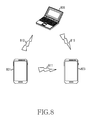
- a first electronic device 801 may transmit a personalization profile to a second electronic device 803 using at least one application program.
- the first electronic device 801 may transmit the personalization profile to the second electronic device 803 through local area wireless communication (Bluetooth, Near Field Communication (NFC), Wireless-Fidelity (Wi-Fi), Wi-Fi Direct, Infrared Data Association (IrDA) communication, etc.) or the communication system 140.
- the first electronic device 801 may transmit a personalization profile to at least one of a server 805 and a cloud server.
- the first electronic device 801 may transmit the personalization profile to at least one of the server 805 and the cloud server through the local area wireless communication (Bluetooth, NFC, Wi-Fi, Wi-Fi Direct, IrDA communication, etc.) or the communication system 140.
- the local area wireless communication Bluetooth, NFC, Wi-Fi, Wi-Fi Direct, IrDA communication, etc.
- the communication system 140 may transmit the personalization profile to at least one of the server 805 and the cloud server through the local area wireless communication (Bluetooth, NFC, Wi-Fi, Wi-Fi Direct, IrDA communication, etc.
- the application program 115 may include a software component for at least one application program installed in the electronic device 100.
- the processor unit 120 may include a memory interface 121, at least one processor 122, and a peripheral interface 123.
- the memory interface 121, at least the one processor 122, and the peripheral interface 123 which are included in the processor unit 120 may be integrated in at least one Integrated Circuit (IC) or be separately implemented.
- IC Integrated Circuit
- the memory interface 121 controls that a component like the processor 122 or the peripheral interface 123 accesses the memory 110.
- the processor 122 provides a variety of multimedia services using at least one software program. Also, the processor 122 executes at least one program stored in the memory 110 and provides a service according to the corresponding program.
- the peripheral interface 123 controls connection among an I/O peripheral of the electronic device 100, the processor 122, and the memory interface 121.
- the audio processing unit 130 provides an audio interface between a user and the electronic device 100 through a speaker 131 and a microphone 132.
- the communication system 140 performs a communication function for voice and data communication.
- the communication system 140 may be classified into a plurality of communication sub-modules which support different communication networks.
- the communication network may be, but is not limited to, any one of a Global System for Mobile communication (GSM) network, an Enhanced Data GSM Environment (EDGE) network, a Code Division Multiple Access (CDMA) network, a W-CDMA network, a Long Term Evolution (LTE) network, an Orthogonal Frequency Division Multiple Access (OFDMA) network, a Wi-Fi network, a Bluetooth network, and a Near Field Communication (NFC) network.
- GSM Global System for Mobile communication
- EDGE Enhanced Data GSM Environment
- CDMA Code Division Multiple Access
- W-CDMA Wideband Code Division Multiple Access
- LTE Long Term Evolution
- OFDMA Orthogonal Frequency Division Multiple Access
- Wi-Fi Wireless Fidelity
- Bluetooth a Bluetooth network
- NFC Near Field Communication
- the I/O controller 150 provides an interface between I/O devices, such as the display device 160 and the input unit 170, and the peripheral interface 124.
- the display unit 160 displays state information of the electronic device 100, characters input by the user, moving pictures, and still pictures.
- the display unit 160 displays information of an application program driven by the processor 122 according to control of the GUI program 113.
- the display unit 160 may display a plurality of images to which an image processing parameter value provided from the image processing program 114 is applied step by step.
- the input unit 170 provides input data generated by selection of the user to the processor unit 120 through the I/O controller 150.
- the input unit 170 includes a keypad including at least one hardware button and a touch screen for sensing touch information.
- the input unit 170 provides touch information such as a touch, touch motion, and touch release which are sensed through the touch screen to the processor 122 through the I/O controller 150.
- FIG. 2 illustrates a block diagram of a detailed configuration of a processor according to one embodiment of the present disclosure.
- the processor 122 may include an image processing controller 200, an application program driving unit 210, and a display controller 220.
- the image processing controller 200 executes the image processing program 11 stored in the program storing unit 111 and controls a screen using an image processing parameter value.
- the image processing controller 200 applies an image processing parameter value for an image selected among a plurality of images to which the image processing parameter value is applied step by step to a display or a camera. For one example, as shown in FIG.
- the image processing controller 200 applies the brightness value which is applied to the first image 713 to the display or the camera. For another example, as shown in FIG.
- the image processing controller 200 may apply the brightness value which is applied to the second image 745 and the gamma value which is applied to the third image 753 to the display or the camera.
- the image processing controller 200 may execute the image processing program 114 and generate a personalization profile using an image processing parameter value. For one example, as shown in FIG. 7A , when the first image 713 is selected, the image processing controller 200 may generate a personalization profile which may be applied to the display or the camera, using the brightness value which is applied to the first image 713. For another example, as shown in FIG. 7B , when the second image 745 and the third image 753 are selected, the image processing controller 200 may generate a personalization profile which may be applied to the display or the camera, using the brightness value which is applied to the second image 743 and the gamma value which is applied to the third image 753.
- the image processing controller 200 may execute the image processing program 114 and transmit a personalization profile to a counterpart electronic device.
- a first electronic device 801 may transmit a personalization profile to a second electronic device 803 using at least one application program.
- the first electronic device 801 may transmit the personalization profile to the second electronic device 803 through local area wireless communication (Bluetooth, NFC, Wi-Fi, Wi-Fi Direct, IrDA communication, etc.) or the communication system 140.
- the first electronic device 801 may transmit a personalization profile to at least one of a server 805 and a cloud server.
- the first electronic device 801 may transmit the personalization profile to at least one of the server 805 and the cloud server through the local area wireless communication (Bluetooth, NFC, Wi-Fi, Wi-Fi Direct, IrDA communication, etc.) or the communication system 140.
- the local area wireless communication Bluetooth, NFC, Wi-Fi, Wi-Fi Direct, IrDA communication, etc.
- the communication system 140 may transmit the personalization profile to at least one of the server 805 and the cloud server through the local area wireless communication (Bluetooth, NFC, Wi-Fi, Wi-Fi Direct, IrDA communication, etc.
- the application program driving unit 210 executes at least one application program 115 stored in the program storing unit 111 and provides a service according to the corresponding application 115.
- the application program driving unit 210 may receive a personalization profile to be transmitted to a counterpart electronic device, from the image processing controller 200.
- the display controller 220 perform a control operation to execute the GUI program 113 stored in the program storing unit 111 and display a UI as graphics on the display unit 160.
- the display controller 220 performs a control operation to display information of an application program driven by the processor 122 on the display unit 160.
- the display controller 220 may perform a control operation to display a plurality of images to which an image processing parameter value is applied step by step by the image processing controller 200 on the display unit 160.
- the electronic device 100 controls a screen using the processor 122 including the image processing controller 200.
- the electronic device 100 may include a separate image processing module for controlling a screen.
- FIG. 3A illustrates a flowchart of a process of controlling a screen using an image processing parameter value in an electronic device according to one embodiment of the present disclosure.
- the electronic device displays a plurality of images to which an image processing parameter value is applied step by step in step 301.
- the image processing parameter value may include at least one of a color, contrast, chroma, brightness, sharpness, a gamma, a gray scale, and a color temperature, for an image. For example, as shown in FIG.
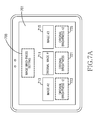
- the electronic device displays an original image 711 whose brightness is not corrected, the first image 713 to which a brightness value in which a first reference value 723 is subtracted from original brightness 721 of the original image 711 is applied, and the second image 715, to which a brightness value in which a second reference value 725 is added to the original brightness 721 of the original image 711 is applied, on a display unit 701.
- the electronic device may display a plurality of images to which a plurality of image processing parameter values are applied step by step. For example, as shown in FIG.
- the electronic device may display an original image 741 whose brightness is not corrected, a first image 743 to which a brightness value in which a first reference value is subtracted from original brightness of the original image 741 is applied, a second image 745 to which a brightness value in which a second reference value is added to the original brightness of the original image 741 is applied, an original image 751 whose gamma is not corrected, a third image 753 to which a gamma value in which a third reference value is subtracted from original gamma of the original image 751 is applied, and a fourth image 755, to which a gamma value in which a fourth reference value is added to the original gamma of the original image 751 is applied, on the display unit 701.
- the electronic device verifies whether one of the plurality of images is selected in step 303. For one example, as shown in FIG. 7A , the electronic device verifies whether any one is selected among the original image 711 whose brightness is not corrected, the first image 713 to which the brightness value in which the first reference value 723 is subtracted from the original brightness 721 of the original image 711 is applied, and the second image 715 to which the brightness value in which the second reference value 725 is added to the original brightness 721 of the original image 711 is applied. Also, the electronic device may verify whether any one of a plurality of images to which a plurality of image processing parameter values are applied step by step is selected.
- the electronic device may verify whether any one is selected among the original image 741 whose brightness which is displayed on the display unit 701 is not corrected, the first image 743 to which the brightness value in which the first reference value is subtracted from the original brightness of the original image 741 is applied, the second image 745 to which the brightness value in which the second reference value is added to the original brightness of the original image 741 is applied, the original image 751 whose gamma is not corrected, the third image 753 to which the gamma value in which the third reference value is subtracted from the original gamma of the original image 751 is applied, and the fourth image 755, to which the gamma value in which the fourth reference value is added to the original gamma of the original image 751 is applied.
- the electronic device applies the image processing parameter value for the selected image to a display or a camera in step 305.
- the electronic device applies the image processing parameter value for the selected image to a display or a camera in step 305.
- the electronic device applies the brightness value which is applied to the first image 713 to the display or the camera.
- the electronic device may apply the brightness value which is applied to the second image 745 and the gamma value which is applied to the third image 753 to the display or the camera.
- the electronic device may generate a personalization profile using an image processing parameter value. For one example, as shown in FIG. 7A , when the first image 713 is selected, the electronic device may generate a personalization profile which may be applied to the display or the camera, using the brightness value which is applied to the first image 713. For another example, as shown in FIG. 7B , when the second image 745 and the third image 753 are selected, the electronic device may generate a personalization profile which may be applied to the display or the camera, using the brightness value which is applied to the second image 743 and the gamma value which is applied to the third image 753.
- the electronic device may share a personalization profile.
- a first electronic device 801 may transmit a personalization profile to a second electronic device 803 using at least one application program.
- the first electronic device 801 may transmit the personalization profile to the second electronic device 803 through local area wireless communication (Bluetooth, NFC, Wi-Fi, Wi-Fi Direct, IrDA communication, etc.) or the communication system 140.
- the first electronic device 801 may transmit a personalization profile to at least one of a server 805 and a cloud server.
- the first electronic device 801 may transmit the personalization profile to at least one of the server 805 and the cloud server through the local area wireless communication (Bluetooth, NFC, Wi-Fi, Wi-Fi Direct, IrDA communication, etc.) or the communication system 140.
- the local area wireless communication Bluetooth, NFC, Wi-Fi, Wi-Fi Direct, IrDA communication, etc.
- the communication system 140 may transmit the personalization profile to at least one of the server 805 and the cloud server through the local area wireless communication (Bluetooth, NFC, Wi-Fi, Wi-Fi Direct, IrDA communication, etc.
- the process of controlling the screen in the electronic device may be configured, as shown in FIG. 3B , as an apparatus for controlling the screen.
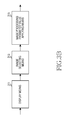
- FIG. 3B illustrates a block diagram of a configuration of an electronic device for controlling a screen using an image processing parameter value according to one embodiment of the present disclosure.
- the electronic device may include a display means, that is, a first means 311 for displaying a plurality of images to which an image processing parameter value is applied step by step, an image selecting means, that is, a second means 313 for selecting an image, and an image processing parameter value applying means, that is, a third means 315 for applying the image processing parameter value to a display or a camera.
- a display means that is, a first means 311 for displaying a plurality of images to which an image processing parameter value is applied step by step
- an image selecting means that is, a second means 313 for selecting an image
- an image processing parameter value applying means that is, a third means 315 for applying the image processing parameter value to a display or a camera.
- the first means 311 displays the plurality of images to which the image processing parameter value is applied step by step.
- the image processing parameter value may include at least one of a color, contrast, chroma, brightness, sharpness, a gamma, a gray scale, and a color temperature, for an image. For example, as shown in FIG.
- the first means 311 displays an original image 711 whose brightness is not corrected, a first image 713 to which a brightness value in which a first reference value 723 is subtracted from original brightness 721 of the original image 711 is applied, and the second image 715, to which a brightness value in which a second reference value 725 is added to the original brightness 721 of the original image 711 is applied, on a display unit 701.
- the first means 311 may display a plurality of images to which a plurality of image processing parameter values are applied step by step. For another example, as shown in FIG.
- the first means 311 may display an original image 741 whose brightness is not corrected, a first image 743 to which a brightness value in which a first reference value is subtracted from original brightness of the original image 741 is applied, a second image 745 to which a brightness value in which a second reference value is added to the original brightness of the original image 741 is applied, an original image 751 whose gamma is not corrected, a third image 753 to which a gamma value in which a third reference value is subtracted from original gamma of the original image 751 is applied, and a fourth image 755, to which a gamma value in which a fourth reference value is added to the original gamma of the original image 751 is applied, on the display unit 701.
- the second means 313 verifies whether one of the plurality of images is selected. For one example, as shown in FIG. 7A , the second means 313 verifies whether any one is selected among the original image 711 whose brightness which is displayed on the display unit 701 is not corrected, the first image 713 to which the brightness value in which the first reference value 723 is subtracted from the original brightness 721 of the original image 711 is applied, and the second image 715 to which the brightness value in which the second reference value 725 is added to the original brightness 721 of the original image 711 is applied. Also, the second means 313 may verify whether any one of a plurality of images to which a plurality of image processing parameter values are applied step by step is selected. For example, as shown in FIG.
- the second means 313 may verify whether any one is selected among the original image 741 whose brightness which is displayed on the display unit 701 is not corrected, the first image 743 to which the brightness value in which the first reference value is subtracted from the original brightness of the original image 741 is applied, the second image 745 to which the brightness value in which the second reference value is added to the original brightness of the original image 741 is applied, the original image 751 whose gamma is not corrected, the third image 753 to which the gamma value in which the third reference value is subtracted from the original gamma of the original image 751 is applied, and the fourth image 755 to which the gamma value in which the fourth reference value is added to the original gamma of the original image 751 is applied.
- the third means 315 applies an image processing parameter value for the selected image to a display or a camera.
- an image processing parameter value for the selected image For one example, as shown in FIG. 7A , when the first image 713 is selected among the original image 711 whose brightness which is displayed on the display unit 701 is not corrected, the first image 713 to which the brightness value in which the first reference value 723 is subtracted from the original brightness 721 of the original image 711 is applied, and the second image 715 to which the brightness value in which the second reference value 725 is added to the original brightness 721 of the original image 711 is applied, the third means 315 applies the brightness value which is applied to the first image 713 to the display or the camera. For another example, as shown in FIG.
- the third means 315 may apply the brightness value which is applied to the second image 745 and the gamma value which is applied to the third image 753 to the display or the camera.
- the electronic device may include a means for generating a personalization profile using an image processing parameter value.
- the means included in the electronic device may generate a personalization profile which may be applied to the display or the camera, using the brightness value which is applied to the first image 713.
- the means included in electronic device may generate a personalization profile which may be applied to the display or the camera, using the brightness value which is applied to the second image 743 and the gamma value which is applied to the third image 753.
- the electronic device may include a means for sharing a personalization profile.
- a first electronic device 801 may transmit a personalization profile to a second electronic device 803 using at least one application program.
- the first electronic device 801 may transmit the personalization profile to the second electronic device 803 through local area wireless communication (Bluetooth, NFC, Wi-Fi, Wi-Fi Direct, IrDA communication, etc.) or the communication system 140.
- the first electronic device 801 may transmit a personalization profile to at least one of a server 805 and a cloud server.
- the first electronic device 801 may transmit the personalization profile to at least one of the server 805 and the cloud server through the local area wireless communication (Bluetooth, NFC, Wi-Fi, Wi-Fi Direct, IrDA communication, etc.) or the communication system 140.
- the local area wireless communication Bluetooth, NFC, Wi-Fi, Wi-Fi Direct, IrDA communication, etc.
- the communication system 140 may transmit the personalization profile to at least one of the server 805 and the cloud server through the local area wireless communication (Bluetooth, NFC, Wi-Fi, Wi-Fi Direct, IrDA communication, etc.
- the electronic device may include a plurality of means for controlling the screen.
- the plurality of means for controlling the screen may be configured as one means.
- FIG. 4 illustrates a flowchart for a process of controlling a screen using an image processing parameter value in an electronic device according to another embodiment of the present disclosure.
- the electronic device verifies whether a personalization profile setting event is generated in step 401.
- the electronic device verifies whether a menu for setting a personalization profile is selected by an operation of a user.
- the personalization profile may include at least one image processing parameter value for an image displayed on a display unit of the electronic device.
- the image processing parameter value may include at least one of a color, contrast, chroma, brightness, sharpness, a gamma, a gray scale, and a color temperature, for an image. If the personalization profile setting event is not generated, the electronic device ends the algorithm of FIG. 4 .
- the electronic device proceeds to step 403 and displays a plurality of images to which an image processing parameter value is applied step by step.
- the electronic device displays an original image 711 whose brightness is not corrected, a first image 713 to which a brightness value in which a first reference value 723 is subtracted from original brightness 721 of the original image 711 is applied, and a second image 715, to which a brightness value in which a second reference value 725 is added to the original brightness 721 of the original image 711 is applied, on a display unit 701.
- the electronic device may display a plurality of images to which a plurality of image processing parameter values are applied step by step.
- the electronic device may display an original image 741 whose brightness is not corrected, a first image 743 to which a brightness value in which a first reference value is subtracted from original brightness of the original image 741 is applied, a second image 745 to which a brightness value in which a second reference value is added to the original brightness of the original image 741 is applied, an original image 751 whose gamma is not corrected, a third image 753 to which a gamma value in which a third reference value is subtracted from original gamma of the original image 751 is applied, and a fourth image 755, to which a gamma value in which a fourth reference value is added to the original gamma of the original image 751 is applied, on the display unit 701.
- the electronic device verifies whether one of the plurality of images is selected in step 405. For example, as shown in FIG. 7A , the electronic device verifies whether any one is selected among the original image 711 whose brightness which is displayed on the display unit 701 is not corrected, the first image 713 to which the brightness value in which the first reference value 723 is subtracted from the original brightness 721 of the original image 711 is applied, and the second image 715 to which the brightness value in which the second reference value 725 is added to the original brightness 721 of the original image 711 is applied. Also, the electronic device may verify whether any one of a plurality of images to which a plurality of image processing parameter values are applied step by step is selected. For example, as shown in FIG.
- the electronic device may verify whether any one is selected among the original image 741 whose brightness which is displayed on the display unit 701 is not corrected, the first image 743 to which the brightness value in which the first reference value is subtracted from the original brightness of the original image 741 is applied, the second image 745 to which the brightness value in which the second reference value is added to the original brightness of the original image 741 is applied, the original image 751 whose gamma is not corrected, the third image 753 to which the gamma value in which the third reference value is subtracted from the original gamma of the original image 751 is applied, and the fourth image 755, to which the gamma value in which the fourth reference value is added to the original gamma of the original image 751 is applied.
- the electronic device proceeds to step 403 and may hold the display of the plurality of images to which the image processing parameter value is applied step by step.
- the electronic device ends the algorithm of FIG. 4 .
- the electronic device proceeds to step 407 and stores the image processing parameter value for the selected image.
- the electronic device stores the brightness value which is applied to the first image 713.
- the electronic device may store the brightness value which is applied to the second image 745 and the gamma value which is applied to the third image 753.
- the electronic device verifies whether personalization profile setting is ended in step 409. For example, the electronic device verifies whether a menu for ending the personalization profile setting is selected by an operation of the user. If the personalization profile setting is not ended, the electronic device proceeds to step 403 and displays a plurality of images to which an image processing parameter value is applied step by step. In addition, when the image is not selected during a reference time, the electronic device may end the algorithm of FIG. 4 .
- the electronic device applies the image processing parameter value for the selected image to a display or a camera in step 411.
- the electronic device applies the brightness value which is applied to the first image 713 to the display or the camera.
- the electronic device may apply the brightness value which is applied to the second image 745 and the gamma value which is applied to the third image 753 to the display or the camera.
- FIG. 5 illustrates a flowchart for a process of generating a personalization profile in an electronic device according to one embodiment of the present disclosure.
- the electronic device verifies whether a personalization profile setting event is generated in step 501.
- the electronic device verifies whether a menu for setting a personalization profile is selected by an operation of a user.
- the personalization profile may include at least one image processing parameter value for an image displayed on a display unit of the electronic device.
- the image processing parameter value may include at least one of a color, contrast, chroma, brightness, sharpness, a gamma, a gray scale, and a color temperature, for an image. If the personalization profile setting event is not generated, the electronic device ends the algorithm of FIG. 5 .
- the electronic device proceeds to step 503 and displays a plurality of images to which an image processing parameter value is applied step by step.
- the electronic device displays an original image 711 whose brightness is not corrected, a first image 713 to which a brightness value in which a first reference value 723 is subtracted from original brightness 721 of the original image 711 is applied, and a second image 715, to which a brightness value in which a second reference value 725 is added to the original brightness 721 of the original image 711 is applied, on a display unit 701.
- the electronic device may display a plurality of images to which a plurality of image processing parameter values are applied step by step.
- the electronic device may display an original image 741 whose brightness is not corrected, a first image 743 to which a brightness value in which a first reference value is subtracted from original brightness of the original image 741 is applied, a second image 745 to which a brightness value in which a second reference value is added to the original brightness of the original image 741 is applied, an original image 751 whose gamma is not corrected, a third image 753 to which a gamma value in which a third reference value is subtracted from original gamma of the original image 751 is applied, and a fourth image 755, to which a gamma value in which a fourth reference value is added to the original gamma of the original image 751 is applied, on the display unit 701.
- the electronic device verifies whether one of the plurality of images is selected in step 505. For example, as shown in FIG. 7A , the electronic device verifies whether any one is selected among the original image 711 whose brightness which is displayed on the display unit 701 is not corrected, the first image 713 to which the brightness value in which the first reference value 723 is subtracted from the original brightness 721 of the original image 711 is applied, and the second image 715 to which the brightness value in which the second reference value 725 is added to the original brightness 721 of the original image 711 is applied. Also, the electronic device may verify whether any one of a plurality of images to which a plurality of image processing parameter values are applied step by step is selected. For example, as shown in FIG.
- the electronic device may verify whether any one is selected among the original image 741 whose brightness which is displayed on the display unit 701 is not corrected, the first image 743 to which the brightness value in which the first reference value is subtracted from the original brightness of the original image 741 is applied, the second image 745 to which the brightness value in which the second reference value is added to the original brightness of the original image 741 is applied, the original image 751 whose gamma is not corrected, the third image 753 to which the gamma value in which the third reference value is subtracted from the original gamma of the original image 751 is applied, and the fourth image 755 to which the gamma value in which the fourth reference value is added to the original gamma of the original image 751 is applied.
- the electronic device proceeds to step 503 and may hold the display of the plurality of images to which the image processing parameter value is applied step by step.
- the electronic device ends the algorithm of FIG. 5 .
- the electronic device proceeds to step 507 and stores the image processing parameter value for the selected image.
- the electronic device stores the brightness value which is applied to the first image 713.
- FIG. 7A when the first image 713 is selected among the original image 711 whose brightness which is displayed on the display unit 701 is not corrected, the first image 713 to which the brightness value in which the first reference value 723 is subtracted from the original brightness 721 of the original image 711 is applied, and the second image 715 to which the brightness value in which the second reference value 725 is added to the original brightness 721 of the original image 711 is applied, the electronic device stores the brightness value which is applied to the first image 713.
- FIG. 7A when the first image 713 is selected among the original image 711 whose brightness which is displayed on the display unit 701 is not corrected, the first image 713 to which the brightness value in which the first reference value 723 is subtracted from the original brightness 721 of the original image 711 is applied, and the second image 715 to which the brightness value in which the second reference value 7
- the electronic device may store the brightness value which is applied to the second image 745 and the gamma value which is applied to the third image 753.
- the electronic device verifies whether personalization profile setting is ended in step 509. For example, the electronic device verifies whether a menu for ending the personalization profile setting is selected by an operation of the user. If the personalization profile setting is not ended, the electronic device proceeds to step 503 and displays a plurality of images to which an image processing parameter value is applied step by step. In addition, when the image is not selected during a reference time, the electronic device may end the algorithm of FIG. 5 .
- the electronic device when the personalization profile setting is ended, the electronic device generates a personalization profile using the image processing parameter value in step 511. For one example, as shown in FIG. 7A , when the first image 713 is selected, the electronic device generates a personalization profile which may be applied to the display or the camera using the brightness value which is applied to the first image 713. For another example, as shown in FIG. 7B , when the second image 745 and the third image 753 are selected, the electronic device may generate a personalization profile which may be applied to the display or the camera using the brightness value which is applied to the second image 745 and the gamma value which is applied to the third image.
- the electronic device may apply the image processing parameter value for the selected image to a display or a camera.
- the electronic device applies the brightness value which is applied to the first image 713 to the display or the camera.
- the electronic device may apply the brightness value which is applied to the second image 745 and the gamma value which is applied to the third image 753 to the display or the camera.
- FIG. 6 illustrates a flowchart for a process of sharing a personalization profile in an electronic device according to one embodiment of the present disclosure.
- the electronic device verifies whether a personalization profile sharing event is generated in step 601. For example, the electronic device verifies whether a menu for sharing a personal profile is selected by an operation of a user. If the personalization profile sharing event is not generated, the electronic device ends the algorithm of FIG. 6 .
- the electronic device displays a personalization profile list in step 603.
- the electronic device displays at least one personalization profile stored by the user.
- the electronic device verifies a personalization profile is selected in step 605. If the personalization profile is not selected, the electronic device holds the display of the personalization profile in step 603. In addition, if the personalization profile is not selected during a reference time, the electronic device my end the algorithm of FIG. 6 .
- an application program for sharing the personalization profile may include at least one application program which may transmit the personalization profile to a counterpart electronic device.
- the electronic device After the application program list for sharing the personalization profile is displayed, the electronic device verifies whether an application program is selected in step 609. If the application program is not selected, the electronic device holds the display of the application program list for sharing the personalization profile in step 607. In addition, if the application program is not selected during a reference time, the electronic device may end the algorithm of FIG. 6 .
- the electronic device transmits the personalization profile in step 611.
- a first electronic device 801 may transmit a personalization profile to a second electronic device 803 using the application program selected in step 609.
- the first electronic device 801 may transmit the personalization profile to a second electronic device 803 through local area wireless communication (Bluetooth, NFC, Wi-Fi, Wi-Fi Direct, IrDA communication, etc.) or a communication system.
- the first electronic device 801 may transmit the personalization profile to at least one of a server 805 and a cloud server.
- the first electronic device 801 may transmit the personalization profile to at least one of the server 805 and the cloud server through the local area wireless communication (Bluetooth, NFC, Wi-Fi, Wi-Fi Direct, IrDA communication, etc.) or the communication system.
- the local area wireless communication Bluetooth, NFC, Wi-Fi, Wi-Fi Direct, IrDA communication, etc.
- the second electronic device 803 may apply the personalization profile transmitted from the first electronic device 801 to a display or a camera.
- second electronic device 803 may receive the personalization profile from the first electronic device 801 through the local area wireless communication (Bluetooth, NFC, Wi-Fi, Wi-Fi Direct, IrDA communication, etc.) or the communication system.
- the second electronic device 803 may apply a personalization profile transmitted from the server 805 or the cloud server to the display or the camera.
- the second electronic device 803 may receive the personalization profile from at least one of the server 805 and the cloud server through the local area wireless communication (Bluetooth, NFC, Wi-Fi, Wi-Fi Direct, IrDA communication, etc.) or the communication system.
- the electronic device may control a color sense of the display or the camera by controlling the screen using the image processing parameter value for the image selected among images to which the image processing parameter value is applied step by step.
Landscapes
- Engineering & Computer Science (AREA)
- Signal Processing (AREA)
- Multimedia (AREA)
- Theoretical Computer Science (AREA)
- General Physics & Mathematics (AREA)
- Physics & Mathematics (AREA)
- Human Computer Interaction (AREA)
- Computer Hardware Design (AREA)
- General Engineering & Computer Science (AREA)
- Computer Vision & Pattern Recognition (AREA)
- Computer Networks & Wireless Communication (AREA)
- Studio Devices (AREA)
- Controls And Circuits For Display Device (AREA)
- Picture Signal Circuits (AREA)
- Image Processing (AREA)
Applications Claiming Priority (1)
| Application Number | Priority Date | Filing Date | Title |
|---|---|---|---|
| KR20130028433A KR20140114098A (ko) | 2013-03-18 | 2013-03-18 | 화면 제어 방법 및 그 전자 장치 |
Publications (2)
| Publication Number | Publication Date |
|---|---|
| EP2782092A2 true EP2782092A2 (de) | 2014-09-24 |
| EP2782092A3 EP2782092A3 (de) | 2014-12-31 |
Family
ID=50486735
Family Applications (1)
| Application Number | Title | Priority Date | Filing Date |
|---|---|---|---|
| EP14159866.4A Ceased EP2782092A3 (de) | 2013-03-18 | 2014-03-14 | Bildschirmsteuerungsverfahren und elektronische Vorrichtung dafür |
Country Status (4)
| Country | Link |
|---|---|
| US (1) | US20140267359A1 (de) |
| EP (1) | EP2782092A3 (de) |
| KR (1) | KR20140114098A (de) |
| CN (1) | CN104063193A (de) |
Families Citing this family (2)
| Publication number | Priority date | Publication date | Assignee | Title |
|---|---|---|---|---|
| KR102321815B1 (ko) | 2015-05-08 | 2021-11-05 | 삼성디스플레이 주식회사 | 표시 장치 및 표시 장치의 구동 방법 |
| CN105700771A (zh) * | 2016-01-13 | 2016-06-22 | 京东方科技集团股份有限公司 | 一种显示设备及其显示方法 |
Family Cites Families (9)
| Publication number | Priority date | Publication date | Assignee | Title |
|---|---|---|---|---|
| US5898436A (en) * | 1997-12-05 | 1999-04-27 | Hewlett-Packard Company | Graphical user interface for digital image editing |
| JP3796422B2 (ja) * | 2001-09-14 | 2006-07-12 | キヤノン株式会社 | 変換データ調整方法、装置およびプログラム |
| JP2007235506A (ja) * | 2006-03-01 | 2007-09-13 | Pioneer Electronic Corp | 画像調整装置および画像調整方法 |
| US20080043031A1 (en) * | 2006-08-15 | 2008-02-21 | Ati Technologies, Inc. | Picture adjustment methods and apparatus for image display device |
| KR101362167B1 (ko) * | 2007-12-31 | 2014-02-13 | 엘지디스플레이 주식회사 | 선호색 보정방법 및 장치와, 그를 이용한 액정 표시장치 |
| US8749574B2 (en) * | 2008-06-06 | 2014-06-10 | Apple Inc. | Method and apparatus for improved color management |
| JP4788748B2 (ja) * | 2008-09-04 | 2011-10-05 | ソニー株式会社 | 映像表示装置、映像表示方法及びシステム |
| CN102668580B (zh) * | 2009-09-25 | 2015-09-02 | 夏普株式会社 | 显示装置、程序及记录有程序的计算机可读取的存储介质 |
| US8457604B2 (en) * | 2009-11-17 | 2013-06-04 | Hewlett-Packard Development Company, L.P. | Apparatus and method for sharing content on a mobile device |
-
2013
- 2013-03-18 KR KR20130028433A patent/KR20140114098A/ko not_active Ceased
-
2014
- 2014-03-14 EP EP14159866.4A patent/EP2782092A3/de not_active Ceased
- 2014-03-18 CN CN201410100675.3A patent/CN104063193A/zh active Pending
- 2014-03-18 US US14/218,728 patent/US20140267359A1/en not_active Abandoned
Non-Patent Citations (1)
| Title |
|---|
| None |
Also Published As
| Publication number | Publication date |
|---|---|
| CN104063193A (zh) | 2014-09-24 |
| US20140267359A1 (en) | 2014-09-18 |
| EP2782092A3 (de) | 2014-12-31 |
| KR20140114098A (ko) | 2014-09-26 |
Similar Documents
| Publication | Publication Date | Title |
|---|---|---|
| US10884692B2 (en) | Electronic device and method for displaying and transmitting images thereof | |
| KR102565847B1 (ko) | 전자 장치 및 전자 장치에서의 디스플레이 제어 방법 | |
| US9888269B2 (en) | Device and method for displaying a video over a network | |
| KR102476290B1 (ko) | 파일 공유 방법 및 이를 구현한 전자 장치 | |
| CN105489194B (zh) | 一种显示图像的方法和装置 | |
| US10492173B2 (en) | Electronic device and method for performing wireless communication of the same | |
| US20170068527A1 (en) | Device control method and apparatus | |
| US9167146B2 (en) | Method of receiving connection information from mobile communication device, computer-readable storage medium having recorded thereon the method, and digital image-capturing apparatus | |
| EP2963889A1 (de) | Verfahren und vorrichtung zur gemeinsamen nutzung von daten einer elektronischen vorrichtung | |
| US20150235366A1 (en) | Method for processing image data and apparatus for the same | |
| EP2779622A1 (de) | Elektronische Vorrichtung und Verfahren zur Bildverarbeitung | |
| US20150242076A1 (en) | Method of editing one or more objects and apparatus for same | |
| KR20170033335A (ko) | 응용프로그램을 공유하기 위한 방법 및 그 전자 장치 | |
| KR20140106159A (ko) | 이미지 처리 방법 및 그 전자 장치 | |
| CN105338403B (zh) | 滤镜处理方法、装置及电子设备 | |
| CN105306802A (zh) | 拍照模式的切换方法及装置 | |
| JP6207146B2 (ja) | 携帯端末機の映像表示制御装置及び方法 | |
| US20170140733A1 (en) | Electronic device and method for displaying content thereof | |
| US20160077659A1 (en) | Method and apparatus for processing display data in electronic device | |
| US20150326839A1 (en) | Electronic device having projector and color correction method thereof | |
| CN105376640B (zh) | 滤镜处理方法、装置及电子设备 | |
| KR102187852B1 (ko) | 전자 장치의 색상 보정 방법 및 장치 | |
| US20140267359A1 (en) | Screen control method and electronic device therefor | |
| EP2955712A1 (de) | Bildverarbeitungsvorrichtung und -verfahren | |
| KR102249745B1 (ko) | 전자 장치 및 이의 제어 방법 |
Legal Events
| Date | Code | Title | Description |
|---|---|---|---|
| PUAI | Public reference made under article 153(3) epc to a published international application that has entered the european phase |
Free format text: ORIGINAL CODE: 0009012 |
|
| 17P | Request for examination filed |
Effective date: 20140314 |
|
| AK | Designated contracting states |
Kind code of ref document: A2 Designated state(s): AL AT BE BG CH CY CZ DE DK EE ES FI FR GB GR HR HU IE IS IT LI LT LU LV MC MK MT NL NO PL PT RO RS SE SI SK SM TR |
|
| AX | Request for extension of the european patent |
Extension state: BA ME |
|
| PUAL | Search report despatched |
Free format text: ORIGINAL CODE: 0009013 |
|
| AK | Designated contracting states |
Kind code of ref document: A3 Designated state(s): AL AT BE BG CH CY CZ DE DK EE ES FI FR GB GR HR HU IE IS IT LI LT LU LV MC MK MT NL NO PL PT RO RS SE SI SK SM TR |
|
| AX | Request for extension of the european patent |
Extension state: BA ME |
|
| RIC1 | Information provided on ipc code assigned before grant |
Ipc: G09G 5/14 20060101ALI20141125BHEP Ipc: H04N 5/00 20110101ALI20141125BHEP Ipc: G09G 5/00 20060101AFI20141125BHEP Ipc: H04N 21/00 20110101ALI20141125BHEP Ipc: H04N 1/00 20060101ALI20141125BHEP |
|
| 17Q | First examination report despatched |
Effective date: 20160715 |
|
| 18R | Application refused |
Effective date: 20180420 |