EP2784792A1 - Matière active pour contre-électrode, procédé de préparation de celle-ci, contre-électrode de cellule solaire utilisant une matière active pour contre-électrode et procédé de préparation de celle-ci - Google Patents
Matière active pour contre-électrode, procédé de préparation de celle-ci, contre-électrode de cellule solaire utilisant une matière active pour contre-électrode et procédé de préparation de celle-ci Download PDFInfo
- Publication number
- EP2784792A1 EP2784792A1 EP11876070.1A EP11876070A EP2784792A1 EP 2784792 A1 EP2784792 A1 EP 2784792A1 EP 11876070 A EP11876070 A EP 11876070A EP 2784792 A1 EP2784792 A1 EP 2784792A1
- Authority
- EP
- European Patent Office
- Prior art keywords
- electrode
- counter
- carbon aerogel
- chloroplatinic acid
- active material
- Prior art date
- Legal status (The legal status is an assumption and is not a legal conclusion. Google has not performed a legal analysis and makes no representation as to the accuracy of the status listed.)
- Withdrawn
Links
- 239000011149 active material Substances 0.000 title claims abstract description 67
- 238000000034 method Methods 0.000 title claims abstract description 18
- 238000002360 preparation method Methods 0.000 title description 8
- 239000004966 Carbon aerogel Substances 0.000 claims abstract description 131
- BASFCYQUMIYNBI-UHFFFAOYSA-N platinum Chemical compound [Pt] BASFCYQUMIYNBI-UHFFFAOYSA-N 0.000 claims abstract description 106
- 229910052697 platinum Inorganic materials 0.000 claims abstract description 53
- 239000000463 material Substances 0.000 claims abstract description 9
- 239000002253 acid Substances 0.000 claims description 78
- 239000000758 substrate Substances 0.000 claims description 23
- 239000000853 adhesive Substances 0.000 claims description 21
- 230000001070 adhesive effect Effects 0.000 claims description 21
- 239000011261 inert gas Substances 0.000 claims description 18
- 238000001132 ultrasonic dispersion Methods 0.000 claims description 16
- 238000001291 vacuum drying Methods 0.000 claims description 15
- 238000001816 cooling Methods 0.000 claims description 13
- IJGRMHOSHXDMSA-UHFFFAOYSA-N Atomic nitrogen Chemical compound N#N IJGRMHOSHXDMSA-UHFFFAOYSA-N 0.000 claims description 12
- 239000000843 powder Substances 0.000 claims description 12
- 229920001343 polytetrafluoroethylene Polymers 0.000 claims description 11
- 239000004810 polytetrafluoroethylene Substances 0.000 claims description 11
- 239000001856 Ethyl cellulose Substances 0.000 claims description 10
- ZZSNKZQZMQGXPY-UHFFFAOYSA-N Ethyl cellulose Chemical compound CCOCC1OC(OC)C(OCC)C(OCC)C1OC1C(O)C(O)C(OC)C(CO)O1 ZZSNKZQZMQGXPY-UHFFFAOYSA-N 0.000 claims description 10
- 229920001249 ethyl cellulose Polymers 0.000 claims description 10
- 235000019325 ethyl cellulose Nutrition 0.000 claims description 10
- 229920003063 hydroxymethyl cellulose Polymers 0.000 claims description 10
- 229940031574 hydroxymethyl cellulose Drugs 0.000 claims description 10
- 229920005569 poly(vinylidene fluoride-co-hexafluoropropylene) Polymers 0.000 claims description 10
- -1 polytetrafluoroethylene Polymers 0.000 claims description 10
- 238000001035 drying Methods 0.000 claims description 8
- 238000001914 filtration Methods 0.000 claims description 8
- 238000010438 heat treatment Methods 0.000 claims description 6
- 238000003801 milling Methods 0.000 claims description 6
- 229910052757 nitrogen Inorganic materials 0.000 claims description 6
- 238000006243 chemical reaction Methods 0.000 abstract description 11
- GWEVSGVZZGPLCZ-UHFFFAOYSA-N Titan oxide Chemical compound O=[Ti]=O GWEVSGVZZGPLCZ-UHFFFAOYSA-N 0.000 description 18
- 238000010531 catalytic reduction reaction Methods 0.000 description 14
- 230000000052 comparative effect Effects 0.000 description 13
- QTBSBXVTEAMEQO-UHFFFAOYSA-N Acetic acid Chemical compound CC(O)=O QTBSBXVTEAMEQO-UHFFFAOYSA-N 0.000 description 12
- KFZMGEQAYNKOFK-UHFFFAOYSA-N Isopropanol Chemical compound CC(C)O KFZMGEQAYNKOFK-UHFFFAOYSA-N 0.000 description 12
- 239000003792 electrolyte Substances 0.000 description 10
- LYCAIKOWRPUZTN-UHFFFAOYSA-N Ethylene glycol Chemical compound OCCO LYCAIKOWRPUZTN-UHFFFAOYSA-N 0.000 description 9
- LFQSCWFLJHTTHZ-UHFFFAOYSA-N Ethanol Chemical compound CCO LFQSCWFLJHTTHZ-UHFFFAOYSA-N 0.000 description 8
- UIIMBOGNXHQVGW-UHFFFAOYSA-M Sodium bicarbonate Chemical compound [Na+].OC([O-])=O UIIMBOGNXHQVGW-UHFFFAOYSA-M 0.000 description 8
- 239000004408 titanium dioxide Substances 0.000 description 8
- LRHPLDYGYMQRHN-UHFFFAOYSA-N N-Butanol Chemical group CCCCO LRHPLDYGYMQRHN-UHFFFAOYSA-N 0.000 description 6
- 230000010757 Reduction Activity Effects 0.000 description 6
- 230000003197 catalytic effect Effects 0.000 description 6
- 238000010345 tape casting Methods 0.000 description 6
- 239000000203 mixture Substances 0.000 description 5
- 239000002105 nanoparticle Substances 0.000 description 5
- OKTJSMMVPCPJKN-UHFFFAOYSA-N Carbon Chemical compound [C] OKTJSMMVPCPJKN-UHFFFAOYSA-N 0.000 description 4
- 239000012065 filter cake Substances 0.000 description 4
- 239000011521 glass Substances 0.000 description 4
- 238000002156 mixing Methods 0.000 description 4
- 229910000030 sodium bicarbonate Inorganic materials 0.000 description 4
- 235000017557 sodium bicarbonate Nutrition 0.000 description 4
- 239000002904 solvent Substances 0.000 description 4
- 229910002621 H2PtCl6 Inorganic materials 0.000 description 3
- 150000004687 hexahydrates Chemical class 0.000 description 3
- 239000003566 sealing material Substances 0.000 description 3
- SECXISVLQFMRJM-UHFFFAOYSA-N N-Methylpyrrolidone Chemical compound CN1CCCC1=O SECXISVLQFMRJM-UHFFFAOYSA-N 0.000 description 2
- XUIMIQQOPSSXEZ-UHFFFAOYSA-N Silicon Chemical compound [Si] XUIMIQQOPSSXEZ-UHFFFAOYSA-N 0.000 description 2
- 238000010521 absorption reaction Methods 0.000 description 2
- 239000000975 dye Substances 0.000 description 2
- 239000000839 emulsion Substances 0.000 description 2
- 238000004519 manufacturing process Methods 0.000 description 2
- 239000004065 semiconductor Substances 0.000 description 2
- 229910052710 silicon Inorganic materials 0.000 description 2
- 239000010703 silicon Substances 0.000 description 2
- 238000004528 spin coating Methods 0.000 description 2
- 229910001220 stainless steel Inorganic materials 0.000 description 2
- 239000010935 stainless steel Substances 0.000 description 2
- XOLBLPGZBRYERU-UHFFFAOYSA-N tin dioxide Chemical compound O=[Sn]=O XOLBLPGZBRYERU-UHFFFAOYSA-N 0.000 description 2
- 229910001887 tin oxide Inorganic materials 0.000 description 2
- 238000001354 calcination Methods 0.000 description 1
- 239000003990 capacitor Substances 0.000 description 1
- 239000000084 colloidal system Substances 0.000 description 1
- 239000002270 dispersing agent Substances 0.000 description 1
- 238000011049 filling Methods 0.000 description 1
- 238000012986 modification Methods 0.000 description 1
- 230000004048 modification Effects 0.000 description 1
- 230000033116 oxidation-reduction process Effects 0.000 description 1
- 238000007639 printing Methods 0.000 description 1
- 238000007789 sealing Methods 0.000 description 1
- 239000000725 suspension Substances 0.000 description 1
Images


Classifications
-
- H—ELECTRICITY
- H01—ELECTRIC ELEMENTS
- H01G—CAPACITORS; CAPACITORS, RECTIFIERS, DETECTORS, SWITCHING DEVICES, LIGHT-SENSITIVE OR TEMPERATURE-SENSITIVE DEVICES OF THE ELECTROLYTIC TYPE
- H01G9/00—Electrolytic capacitors, rectifiers, detectors, switching devices, light-sensitive or temperature-sensitive devices; Processes of their manufacture
- H01G9/20—Light-sensitive devices
- H01G9/2022—Light-sensitive devices characterized by he counter electrode
-
- C—CHEMISTRY; METALLURGY
- C23—COATING METALLIC MATERIAL; COATING MATERIAL WITH METALLIC MATERIAL; CHEMICAL SURFACE TREATMENT; DIFFUSION TREATMENT OF METALLIC MATERIAL; COATING BY VACUUM EVAPORATION, BY SPUTTERING, BY ION IMPLANTATION OR BY CHEMICAL VAPOUR DEPOSITION, IN GENERAL; INHIBITING CORROSION OF METALLIC MATERIAL OR INCRUSTATION IN GENERAL
- C23C—COATING METALLIC MATERIAL; COATING MATERIAL WITH METALLIC MATERIAL; SURFACE TREATMENT OF METALLIC MATERIAL BY DIFFUSION INTO THE SURFACE, BY CHEMICAL CONVERSION OR SUBSTITUTION; COATING BY VACUUM EVAPORATION, BY SPUTTERING, BY ION IMPLANTATION OR BY CHEMICAL VAPOUR DEPOSITION, IN GENERAL
- C23C18/00—Chemical coating by decomposition of either liquid compounds or solutions of the coating forming compounds, without leaving reaction products of surface material in the coating; Contact plating
- C23C18/02—Chemical coating by decomposition of either liquid compounds or solutions of the coating forming compounds, without leaving reaction products of surface material in the coating; Contact plating by thermal decomposition
- C23C18/08—Chemical coating by decomposition of either liquid compounds or solutions of the coating forming compounds, without leaving reaction products of surface material in the coating; Contact plating by thermal decomposition characterised by the deposition of metallic material
-
- H—ELECTRICITY
- H01—ELECTRIC ELEMENTS
- H01G—CAPACITORS; CAPACITORS, RECTIFIERS, DETECTORS, SWITCHING DEVICES, LIGHT-SENSITIVE OR TEMPERATURE-SENSITIVE DEVICES OF THE ELECTROLYTIC TYPE
- H01G9/00—Electrolytic capacitors, rectifiers, detectors, switching devices, light-sensitive or temperature-sensitive devices; Processes of their manufacture
- H01G9/0029—Processes of manufacture
-
- Y—GENERAL TAGGING OF NEW TECHNOLOGICAL DEVELOPMENTS; GENERAL TAGGING OF CROSS-SECTIONAL TECHNOLOGIES SPANNING OVER SEVERAL SECTIONS OF THE IPC; TECHNICAL SUBJECTS COVERED BY FORMER USPC CROSS-REFERENCE ART COLLECTIONS [XRACs] AND DIGESTS
- Y02—TECHNOLOGIES OR APPLICATIONS FOR MITIGATION OR ADAPTATION AGAINST CLIMATE CHANGE
- Y02E—REDUCTION OF GREENHOUSE GAS [GHG] EMISSIONS, RELATED TO ENERGY GENERATION, TRANSMISSION OR DISTRIBUTION
- Y02E10/00—Energy generation through renewable energy sources
- Y02E10/50—Photovoltaic [PV] energy
- Y02E10/542—Dye sensitized solar cells
-
- Y—GENERAL TAGGING OF NEW TECHNOLOGICAL DEVELOPMENTS; GENERAL TAGGING OF CROSS-SECTIONAL TECHNOLOGIES SPANNING OVER SEVERAL SECTIONS OF THE IPC; TECHNICAL SUBJECTS COVERED BY FORMER USPC CROSS-REFERENCE ART COLLECTIONS [XRACs] AND DIGESTS
- Y02—TECHNOLOGIES OR APPLICATIONS FOR MITIGATION OR ADAPTATION AGAINST CLIMATE CHANGE
- Y02P—CLIMATE CHANGE MITIGATION TECHNOLOGIES IN THE PRODUCTION OR PROCESSING OF GOODS
- Y02P70/00—Climate change mitigation technologies in the production process for final industrial or consumer products
- Y02P70/50—Manufacturing or production processes characterised by the final manufactured product
Definitions
- the present invention relates to the field of capacitors, in particular to an active material for counter-electrode, preparation method thereof, solar cell counter-electrode using said active material for counter-electrode and preparation method thereof.
- Solar cells are typically consisted of the following three parts: a dye-absorbed nanocrystalline TiO 2 photoanode (working electrode), an electrolyte comprising I - /I 3 - oxidation-reduction pair, and a counter electrode.
- a counter-electrode is used for collecting electrons from the external circuit of a cell, and for transmitting the electrons rapidly to the electrolyte in a low consuming manner, while catalytically reducing I 3 - in the electrolyte.
- any light that have not been absorbed by the working electrode can be reflected back to the working electrode by means of the counter-electrode for undergoing a second absorption, and the absorption efficiency of the solar cell can thus be enhanced. Therefore, as a counter-electrode of DSSCs, a high catalytic activity, a high carrier transport ability and good stability are necessary.
- porous carbon aerogel and activated carbon have a high specific surface area, which makes more active center available for the catalytic reduction reaction, and thus are suitable for producing the counter-electrode of a dye-sensitized solar cell.
- porous carbon aerogel, activated carbon and the like shows relatively weak catalytic reduction ability on I 3 - , which renders the photoelectric conversion efficiency of the resulting solar cell relatively low.
- An active material for counter-electrode comprising a carbon aerogel and platinum loaded on said carbon aerogel, the mass content of said platinum in said active material for counter-electrode is 1% to 5%.
- a method for preparing an active material for counter-electrode comprising the steps of: step 1: providing a carbon aerogel and a chloroplatinic acid solution, the specific surface area of said carbon aerogel is 200m 2 /g to 1000 m 2 /g; step 2: placing said carbon aerogel into said chloroplatinic acid solution and subjecting the same to ultrasonic dispersion such that said chloroplatinic acid is loaded on the surface of said carbon aerogel, the ratio of said carbon aerogel to said chloroplatinic acid solution is 1g:1000ml to 1g:200ml, and then filtering and drying the thus obtained carbon aerogel loaded with chloroplatinic acid; step 3: heating said carbon aerogel loaded with chloroplatinic acid under the protection of an inert gas to decompose said chloroplatinic acid loaded on said carbon aerogel to platinum, so as to obtain the carbon aerogel loaded with platinum; step 4: milling said carbon aerogel loaded with platinum into powder after cooling to obtain the active material for counter-electrode.
- step 1 the mass concentration of said chloroplatinic acid solution is 3% to 20%.
- step 2 said carbon aerogel is placed into said chloroplatinic acid solution and the same is subjected to ultrasonic dispersion for 2 hours to 10 hours, said carbon aerogel loaded with chloroplatinic acid is subjected to vacuum-drying under 80°C for 12 hours; in step 3, said inert gas is nitrogen, said carbon aerogel loaded with chloroplatinic acid is heated to 300°C to 450°C under the protection of the inert gas and maintained at this temperature for 5 minutes to 30 minutes.
- a solar cell counter-electrode comprising a conductive substrate and an active layer formed on said conductive substrate, the material of said active layer comprises an active material for counter-electrode, said active material for counter-electrode comprises a carbon aerogel and platinum loaded on said carbon aerogel, the mass content of said platinum in said active material for counter-electrode is 1% to 5%.
- the material of said active layer further comprises an adhesive, the mass ratio of said active material for counter-electrode and said adhesive is 1:0.1 to 1:0.2.
- said adhesive is hydroxymethyl cellulose, ethyl cellulose, polyvinylidene fluoride-hexafluoropropylene copolymer or polytetrafluoroethylene.
- a method for preparing a solar cell counter-electrode comprising the steps of : step 1, providing a carbon aerogel and a chloroplatinic acid solution, the specific surface area of said carbon aerogel is 200m 2 /g to 1000 m 2 /g; step 2, placing said carbon aerogel into chloroplatinic acid solution and subjecting the same to ultrasonic dispersion such that chloroplatinic acid is loaded on the surface of said carbon aerogel, the ratio of said carbon aerogel and chloroplatinic acid is 1g:1000ml to 1g: 200mL, and then filtering and drying the obtained carbon aerogel loaded with chloroplatinic acid; step 3, heating said carbon aerogel loaded with chloroplatinic acid under the protection of an inert gas so as to decompose said chloroplatinic acid loaded on said carbon aerogel to platinum, so as to obtain a carbon aerogel loaded with platinum; step 4, milling said carbon aerogel loaded with platinum into powder after cooling to obtain an active material for counter-electrode; step 5, applying said active
- step 1 the mass content of said chloroplatinic acid solution is 3% to 20%; in step 2, said carbon aerogel is placed into said chloroplatinic acid and the same is subjected to ultrasonic dispersion for 2 hours to 10 hours, said carbon aerogel loaded with chloroplatinic acid is subjected to vacuum-drying under 80°Cfor 12 hours; in step 3, said inert gas is nitrogen, said carbon aerogel loaded with chloroplatinic acid is heated to 300°C to 450°C under the protection of the inert gas and maintained at this temperature for 5 minutes to 30minutes.
- step 5 said active material for counter-electrode is mixed with an adhesive before applying it to the surface of a conductive substrate, said adhesive is hydroxymethyl cellulose, ethyl cellulose, polyvinylidene fluoride-hexafluoropropylene copolymer or polytetrafluoroethylene, the mass ratio of said active material for counter-electrode and an adhesive is 1:0.1 to 1:0.2.
- the carbon aerogel has a relatively good electrical conductivity, and has a high specific surface area, which makes more active centers available for the catalytic reduction reaction, and thus improves the overall catalytic activity; platinum is loaded on the carbon aerogel, which said platinum has a relatively stronger catalytic reduction activity on I 3 - , such that the cost is reduced by using a carbon aerogel while the catalytic reduction activity of said active material for counter-electrode on I 3 - is enhanced, and hence the photoelectric conversion efficiency of a solar cell that employs said active material for counter-electrode is improved.
- an active material for counter-electrode comprises a carbon aerogel and platinum loaded on a carbon aerogel, the mass content of said platinum in said active material for counter-electrode is 1% to 5%.
- the specific surface area of the carbon aerogel is 200m 2 /g to 1000 m 2 /g.
- the carbon aerogel has a relatively good electrical conductivity, and has a high specific surface area, which makes more active centers available for the catalytic reduction reaction, and thus improves the overall catalytic activity; platinum is loaded on the carbon aerogel, which said platinum has a relatively stronger catalytic reduction activity on I 3 - , such that the cost is reduced by using a carbon aerogel while the catalytic reduction activity of said active material for counter-electrode on I 3 - is enhanced, and hence the photoelectric conversion efficiency of a solar cell that employs said active material for counter-electrode is improved.
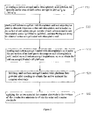
- a method for preparing an active material for counter-electrode of one embodiment comprising the steps of:
- said chloroplatinic acid solution is a solution having a mass concentration of 3% to 20% prepared by dissolving chloroplatinic acid hexahydrate (H 2 PtCl 6 ⁇ 6H 2 O) in a suitable solvent, the pH value of the solution is adjusted to 8.0-9.5, said solvent is n-butanol, ethylene glycol or isopropanol.
- Sodium hydrogen carbonate or acetic acid is added for adjusting the pH value of the solution. If a higher pH is desired for the solution, sodium hydrogen carbonate is added while if a lower pH is desired for the solution, acetic acid is added.
- Step 12 placing said carbon aerogel into said chloroplatinic acid solution and subjecting the same to ultrasonic dispersion such that said chloroplatinic acid is loaded on the surface of said carbon aerogel, the ratio of said carbon aerogel to said chloroplatinic acid solution is 1g:1000ml to 1g:200ml, and then filtering and drying the obtained carbon aerogel loaded with chloroplatinic acid.
- said carbon aerogel is placed into said chloroplatinic acid solution and the same is subjected to ultrasonic dispersion for 2 hours to 10 hours, said carbon aerogel loaded with chloroplatinic acid is subjected to vacuum-drying under 80°C for 12 hours after filtration.
- Step S13 heating said carbon aerogel loaded with chloroplatinic acid under the protection of an inert gas to decompose said chloroplatinic acid loaded on said carbon aerogel to platinum, so as to obtain the carbon aerogel loaded with platinum.
- inert gas is nitrogen
- said carbon aerogel loaded with chloroplatinic acid is heated to 300°C to 450°C under the protection of the inert gas and maintained at this temperature for 5 minutes to 30 minutes.
- Step S14 milling said carbon aerogel loaded with platinum into powder after cooling to obtain the active material for counter-electrode.
- said carbon aerogel loaded with platinum is milled into powder after cooling to room temperature by means of a ball mill.
- the method for preparing said active material for counter-electrode is relatively simple, the thus prepared active material for counter-electrode has a relatively stronger catalytic reduction ability on I 3 - , and hence the photoelectric conversion efficiency of a solar cell that employs said active material for counter-electrode is improved.
- a solar cell counter-electrode of one embodiment comprising a conductive substrate and an active layer formed on said conductive substrate, the material of said active layer comprises an active material for counter-electrode, said active material for counter-electrode comprises a carbon aerogel and platinum loaded on said carbon aerogel, the mass content of said platinum in said active material for counter-electrode is 1% to 5%.
- the specific surface area of said carbon aerogel is 200m 2 /g to 1000 m 2 /g.
- a conductive substrate is a conductive glass or a metallic sheet.
- the active layer has a thickness of 18 ⁇ m to 50 ⁇ m.
- said carbon aerogel has a relatively good electrical conductivity, and has a high specific surface area, which makes more active centers available for the catalytic reduction reaction, and thus improves the overall catalytic activity; platinum is loaded on the carbon aerogel, which said platinum has a relatively stronger catalytic reduction activity on I 3 - , such that the cost is reduced by using a carbon aerogel while the catalytic reduction activity of said active material for counter-electrode on I 3 - is enhanced, and hence the photoelectric conversion efficiency of a solar cell that employs said counter-electrode is improved.
- the material of said active layer further comprises an adhesive, the mass ratio of said active material for counter-electrode and said adhesive is 1:0.1 to 1:0.2.
- Said adhesive is hydroxymethyl cellulose, ethyl cellulose, polyvinylidene fluoride-hexafluoropropylene copolymer or polytetrafluoroethylene.
- said active layer is formed by applying said carbon aerogel loaded with platinum having mixed with an adhesive beforehand on said conductive substrate.
- a method for preparing a solar cell counter-electrode of one embodiment comprising the steps of:
- said chloroplatinic acid solution is a solution having a mass concentration of 3% to 20% prepared by dissolving chloroplatinic acid hexahydrate (H 2 PtCl 6 ⁇ 6H 2 O) in a suitable solvent, the pH value of the solution is adjusted to 8.0-9.5, said solvent is n-butanol, ethylene glycol or isopropanol.
- Sodium hydrogen carbonate or acetic acid is added for adjusting the pH value of the solution. If a higher pH is desired for the solution, sodium hydrogen carbonate is added while if a lower pH is desired for the solution, acetic acid is added.
- Step S22 placing said carbon aerogel into said chloroplatinic acid solution and subjecting the same to ultrasonic dispersion such that chloroplatinic acid is loaded on the surface of said carbon aerogel, the ratio of said carbon aerogel and chloroplatinic acid is 1g:1000ml to 1g: 200mL, and then filtering and drying the thus obtained carbon aerogel loaded with chloroplatinic acid
- said carbon aerogel is placed into said chloroplatinic acid solution and the same is subjected to ultrasonic dispersion for 2 hours to 10 hours, said carbon aerogel loaded with chloroplatinic acid is subjected to vacuum-drying under 80°C for 12 hours after filtration.
- Step S23 heating said carbon aerogel loaded with chloroplatinic acid under the protection of an inert gas so as to decompose said chloroplatinic acid loaded on said carbon aerogel to platinum, so as to obtain a carbon aerogel loaded with platinum
- said inert gas is nitrogen
- carbon aerogel loaded with chloroplatinic acid is heated to 300°C to 450°C under the protection of the inert gas, and maintained at this temperature for 5 minutes to 30 minutes.
- Step S24 milling said carbon aerogel loaded with platinum into powder after cooling to obtain an active material for counter-electrode.
- said carbon aerogel loaded with platinum is milled into powder after cooling to room temperature by means of a ball mill.
- Step S25 applying said active material for counter-electrode to the surface of said conductive substrate to obtain a solar cell counter-electrode.
- an active material for counter-electrode is applied on the surface of the conductive substrate to form an active layer having a thickness of 18 ⁇ m to 50 ⁇ m.
- the active layer further comprises an adhesive, the mass ratio of a carbon aerogel and an adhesive is 1:0.1 to 1:0.2.
- Said adhesive is hydroxymethyl cellulose, ethyl cellulose, polyvinylidene fluoride-hexafluoropropylene copolymer or polytetrafluoroethylene.
- Said adhesive is formed by dissolving hydroxymethyl cellulose in ethanol, dissolving ethyl cellulose in ethanol, dissolving polyvinylidene fluoride-hexafluoropropylene copolymer in N-methyl pyrrolidone, forming polytetrafluoroethylene into a suspension emulsion using ethanol as the dispersing agent.
- the mass concentration of hydroxymethyl cellulose, ethyl cellulose, polyvinylidene fluoride-hexafluoropropylene copolymer is 2%
- the mass concentration of polytetrafluoroethylene is 6%.
- the active material for counter-electrode and the adhesive are mixed at a mass ratio of 1:0.1 to 1:0.2, the mixture is applied over the surface of the conductive substrate by means of knife coating after being stirred evenly, followed by vacuum-drying at 50°C for 10 hours to obtain the solar cell counter-electrode.
- the method for preparing said solar cell counter-electrode is relatively simple, the thus prepared active material for counter-electrode has a relatively stronger catalytic reduction ability on I 3 - , and hence the photoelectric conversion efficiency of a solar cell that employs said active material for counter-electrode is improved.
- a titanium dioxide photoanode is made superposing with the counter-electrode, followed by filling with electrolyte after sealing, by which a solar cell is assembled.
- the titanium dioxide photoanode is prepared as follows: applying the nano-sized titanium dioxide colloid over the conductive substrate by way of knife coating or printing, followed by calcination at an elevated temperature, and then immersing the titanium dioxide photoanode into a dye solution for 24 hours to absorb photosensitive dyes.
- 1g of a carbon aerogel was placed into 200mL of 3% (in mass concentration) chloroplatinic acid solution in isopropanol, the specific surface area of the carbon aerogel is 200m 2 /g, the pH value of the solution was adjusted to 9, and the solution was subjected to ultrasonic dispersion for 10 hours, and then filtered, the filter cake was subjected to vacuum-drying under 80°C for 12 hours. It was then placed into a tubular furnace, and was heated to 80°C under the protection of N 2 , and maintained at this temperature for 20 minutes, so that the chloroplatinic acid was decomposed to platinum, and was then milled into powder after cooling to room temperature.
- Ethyl cellulose was dissolved in ethanol, followed by addition of the thus prepared carbon aerogel loaded with platinum, in which the mass ratio of the carbon aerogel and ethyl cellulose is 1:0.1. After mixing evenly, the mixture was applied over the surface of the fluorine-doped tin oxide (FTO) conductive glass by means of knife coating, which was then subjected to vacuum-drying at 50°C for 10 hours, to obtain an active layer having a thickness of 18 ⁇ m.
- FTO fluorine-doped tin oxide
- figure 3 shows schematically the structure of a solar cell thus prepared, in which the solar cell 100 comprises a counter-electrode 10, a photoanode 30, a sealing material 50, a porous semiconductor film 70 and an electrolyte 90.
- the counter-electrode comprises a conductive substrate 12 and an active layer 14 formed on the conductive substrate 12.
- the conductive substrate 12 comprises a substrate 122 and a conductive film 124 applied over the substrate 122.
- the photoanode 30 comprises a substrate 32 and a conductive film 34 applied over the substrate 32.
- the photoanode 30 and the counter-electrode 10 are alternatively arranged and parallel to each other.
- the porous semiconductor film 70 is provided at one side of the photoanode 30 proximal to the counter-electrode 10.
- the sealing material 50 is provided at the edge of the photoanode 30 and the counter-electrode 10 to seal the photoanode 30 and the counter-electrode 10.
- the electrolyte 90 is accommodated in an enclosure space defined by the photoanode 30, the counter-electrode 10 and the sealing material 50.
- 1g of a carbon aerogel was placed into 500mL of 5% (in mass concentration) chloroplatinic acid solution in isopropanol, the specific surface area of the carbon aerogel is 450m 2 /g, the pH value of the solution was adjusted to 9.5, and the solution was subjected to ultrasonic dispersion for 8 hours, and then filtered, the filter cake was subjected to vacuum-drying under 80°C for 12 hours. It was then placed into a tubular furnace, and was heated to 400°C under the protection of N 2 , and maintained at this temperature for 20 minutes, so that the chloroplatinic acid was decomposed to platinum, and then milled into powder after cooling to room temperature.
- Hydroxymethyl cellulose was dissolved in n-butanol, followed by addition of the thus prepared carbon aerogel loaded with platinum, in which the mass ratio of the carbon aerogel and hydroxymethyl cellulose is 1:0.15. After mixing evenly, the mixture was applied over the surface of the fluorine-doped tin oxide (FTO) conductive glass by means of knife coating, which was then subjected to vacuum-drying at 50°C for 10 hours, to obtain an active layer having a thickness of 15 ⁇ m.
- FTO fluorine-doped tin oxide
- 1g of a carbon aerogel was placed into 1000mL of 10% (mass concentration) chloroplatinic acid solution in isopropanol, the specific surface area of the carbon aerogel is 1000m 2 /g, the pH value of the solution was adjusted to 8, and the solution was subjected to ultrasonic dispersion for 5 hours, and then filtered, the filter cake was subjected to vacuum-drying under 80°C for 10 hours. It was then placed into a tubular furnace, and was heated to 300°C under the protection of N 2 , and maintained at this temperature for 30 minutes, so that the chloroplatinic acid was decomposed to platinum, and then milled into powder after cooling to room temperature.
- Polyvinylidene fluoride-hexafluoropropylene copolymer was dissolved in N-methylpyrrolidone, followed by addition of the thus prepared carbon aerogel loaded with platinum, in which the mass ratio of the carbon aerogel and polyvinylidene fluoride-hexafluoropropylene copolymer is 1:0.1. After mixing evenly, the mixture was applied over the surface of a stainless steel metallic sheet by means of knife coating, which was then subjected to vacuum-drying at 50°C for 10 hours, to obtain an active layer having a thickness of 35 ⁇ m.
- 1g of a carbon aerogel was placed into 800mL of 20% (mass concentration) chloroplatinic acid solution in ethylene glycol, the specific surface area of the carbon aerogel is 600m 2 /g, the pH value of the solution was adjusted to 8.5, and the solution was subjected to ultrasonic dispersion for 2 hours, and then filtered, the filter cake was subjected to vacuum-drying under 80°C for 10 hours. It was then placed into a tubular furnace, and was heated to 450°C under the protection of N 2 , and maintained at this temperature for 5 minutes, so that the chloroplatinic acid was decomposed to platinum, and then milled into powder after cooling to room temperature.
- the thus prepared carbon aerogel loaded with platinum was added into the emulsion of polytetrafluoroethylene (PTFE), in which the mass ratio of the polytetrafluoroethylene and the carbon aerogel is 1:0.2. After mixing evenly, the mixture was applied over the surface of a stainless steel metallic sheet by means of knife coating, which was then subjected to vacuum-drying at 50°C for 10 hours, to obtain an active layer having a thickness of 50 ⁇ m.
- PTFE polytetrafluoroethylene
- the solar cell prepared in comparative example 1 and the solar cell prepared in Example 1 are about the same, the difference lies in: the carbon aerogel of the counter-electrode of comparative example 1 is not loaded with platinum.
- the solar cell prepared in comparative example 2 and the solar cell prepared in Example 1 are about the same, the difference lies in: in comparative example 2, the counter-electrode was prepared as follows: chloroplatinic acid hexahydrate (H 2 PtCl 6 ⁇ 6H 2 O) was dissolved in isopropanol and formed into a solution having a mass concentration of 3%; then by means of spin coating, chloroplatinic acid was spin-coated on the clean surface of a conductive glass, which was then dried at 40°C, and subjected to spin-coating and drying again after drying, and the processes were repeated four times.
- chloroplatinic acid hexahydrate H 2 PtCl 6 ⁇ 6H 2 O
- figure 4 shows the current density-voltage characteristic curves of the solar cells prepared in Example 1, comparative example 1 and comparative example 2.
- Table 1 shows the photovoltaic performance data of the solar cells prepared in Examples 1-4 and comparative examples 1-2. From figure 4 and table 1, it is apparent that as the counter-electrode prepared using a carbon aerogel loaded with platinum of the present invention is assembled into a solar cell, the photovoltaic performance data thus obtained from the solar cells is closed to or even superior to the solar cells prepared using a platinum-plated electrode while the performance is significantly higher than a carbon aerogel counter-electrode without loaded with platinum.
- the materials for a carbon aerogel come from a variety of sources and of low prices.
Landscapes
- Engineering & Computer Science (AREA)
- Power Engineering (AREA)
- Chemical & Material Sciences (AREA)
- Microelectronics & Electronic Packaging (AREA)
- General Chemical & Material Sciences (AREA)
- Thermal Sciences (AREA)
- Physics & Mathematics (AREA)
- Chemical Kinetics & Catalysis (AREA)
- Materials Engineering (AREA)
- Mechanical Engineering (AREA)
- Metallurgy (AREA)
- Organic Chemistry (AREA)
- Manufacturing & Machinery (AREA)
- Hybrid Cells (AREA)
Applications Claiming Priority (1)
| Application Number | Priority Date | Filing Date | Title |
|---|---|---|---|
| PCT/CN2011/082752 WO2013075303A1 (fr) | 2011-11-23 | 2011-11-23 | Matière active pour contre-électrode, procédé de préparation de celle-ci, contre-électrode de cellule solaire utilisant une matière active pour contre-électrode et procédé de préparation de celle-ci |
Publications (2)
| Publication Number | Publication Date |
|---|---|
| EP2784792A1 true EP2784792A1 (fr) | 2014-10-01 |
| EP2784792A4 EP2784792A4 (fr) | 2015-07-22 |
Family
ID=48469005
Family Applications (1)
| Application Number | Title | Priority Date | Filing Date |
|---|---|---|---|
| EP11876070.1A Withdrawn EP2784792A4 (fr) | 2011-11-23 | 2011-11-23 | Matière active pour contre-électrode, procédé de préparation de celle-ci, contre-électrode de cellule solaire utilisant une matière active pour contre-électrode et procédé de préparation de celle-ci |
Country Status (5)
| Country | Link |
|---|---|
| US (1) | US20140332066A1 (fr) |
| EP (1) | EP2784792A4 (fr) |
| JP (1) | JP2015502046A (fr) |
| CN (1) | CN103918049A (fr) |
| WO (1) | WO2013075303A1 (fr) |
Families Citing this family (1)
| Publication number | Priority date | Publication date | Assignee | Title |
|---|---|---|---|---|
| CN112735829B (zh) * | 2020-12-16 | 2022-08-19 | 佛山市祖盈新材料实业有限公司 | 一种Ni-Co合金修饰氮掺杂碳气凝胶的太阳能电池电极材料 |
Family Cites Families (11)
| Publication number | Priority date | Publication date | Assignee | Title |
|---|---|---|---|---|
| JP2006504508A (ja) * | 2001-12-27 | 2006-02-09 | エアロジェル・コンポジット・リミテッド・ライアビリティ・カンパニー | エアロジェル及び金属組成物 |
| JP4334960B2 (ja) * | 2002-10-11 | 2009-09-30 | 株式会社豊田中央研究所 | 炭素電極並びにこれを備える電極及び色素増感型太陽電池 |
| US20040141908A1 (en) * | 2002-12-20 | 2004-07-22 | Hara Hiroaki S. | Aerogel and metallic composites |
| US8035185B2 (en) * | 2003-03-26 | 2011-10-11 | Sony Corporation | Electrode, method of making same, photoelectric transfer element, method of manufacturing same, electronic device and method of manufacturing same |
| JP2005216772A (ja) * | 2004-01-30 | 2005-08-11 | Nissan Motor Co Ltd | 電極触媒、該触媒を用いた触媒担持電極およびmea |
| KR20080006735A (ko) * | 2006-07-13 | 2008-01-17 | 삼성전자주식회사 | 촉매 담지 탄소나노튜브를 이용한 태양전지 및 그 제조방법 |
| JP2008123860A (ja) * | 2006-11-13 | 2008-05-29 | Hitachi Maxell Ltd | 金属酸化物担持カーボン及びそれを用いた燃料電池用電極 |
| CN101628234A (zh) * | 2008-07-18 | 2010-01-20 | 赢创德固赛有限责任公司 | 催化剂的改进生产方法 |
| CN101562077B (zh) * | 2009-05-11 | 2011-05-04 | 湘潭大学 | 一种用于染料敏化太阳能电池的炭气凝胶复合对电极及其制备方法 |
| CN101740784B (zh) * | 2009-12-21 | 2013-05-08 | 北京化工大学 | 一种燃料电池用铂/碳气凝胶催化剂及其制备方法 |
| CN101770870A (zh) * | 2010-03-24 | 2010-07-07 | 大连理工大学 | 一种用于染料敏化太阳能电池的低成本对电极 |
-
2011
- 2011-11-23 WO PCT/CN2011/082752 patent/WO2013075303A1/fr not_active Ceased
- 2011-11-23 JP JP2014542658A patent/JP2015502046A/ja active Pending
- 2011-11-23 EP EP11876070.1A patent/EP2784792A4/fr not_active Withdrawn
- 2011-11-23 CN CN201180074536.2A patent/CN103918049A/zh active Pending
- 2011-11-23 US US14/360,295 patent/US20140332066A1/en not_active Abandoned
Also Published As
| Publication number | Publication date |
|---|---|
| JP2015502046A (ja) | 2015-01-19 |
| WO2013075303A1 (fr) | 2013-05-30 |
| CN103918049A (zh) | 2014-07-09 |
| US20140332066A1 (en) | 2014-11-13 |
| EP2784792A4 (fr) | 2015-07-22 |
Similar Documents
| Publication | Publication Date | Title |
|---|---|---|
| EP2897144B1 (fr) | Module cellule solaire photosensibilisé et son procédé de production | |
| EP1494246B1 (fr) | Electrolyte solide, convertisseur photoelectrique et procede pour produire celui-ci | |
| EP2421084A1 (fr) | Cellule solaire à colorant et module de cellule solaire à colorant | |
| KR101146673B1 (ko) | 염료감응 태양전지용 전극, 그 제조방법 및 이를 이용한 염료감응 태양전지 | |
| TWI396778B (zh) | 鐵酸鋅薄膜及其製備方法與運用 | |
| KR20180024975A (ko) | 질소가 도핑된 그래핀의 제조 방법, 이에 의하여 제조된 질소가 도핑된 그래핀, 및 이를 포함하는 염료감응 태양전지용 상대 전극, 염료감응 태양전지 | |
| EP2894129A1 (fr) | Synthèse à pot unique de nanoparticules TiO2 à dopage de Nb2O5 | |
| TWI449236B (zh) | 膠態電解液、其製法及其染料敏化太陽能電池 | |
| KR101088676B1 (ko) | 요오드화피롤리디니움계 이온성 액체를 포함한 염료감응 태양전지용 전해질 용액, 이를 포함하는 염료감응 태양전지 및 염료감응 태양전지의 제조방법 | |
| KR101794988B1 (ko) | 페로브스카이트 광흡수층 제조방법 및 이를 적용한 태양전지 제조방법 | |
| TWI450403B (zh) | 染料敏化太陽電池及其製造方法 | |
| KR101054470B1 (ko) | 염료감응 태양전지용 전해질 및 이를 이용한 염료감응 태양전지 | |
| KR101406427B1 (ko) | 우수한 촉매활성도와 전기전도도를 갖는 염료 감응형 태양전지용 전도성 고분자-탄소 복합체 전극과 이를 이용한 염료 감응형 태양전지 및 이들의 제조방법 | |
| CN101013728A (zh) | 用于光电池的使用了载体催化剂的反电极 | |
| JP4379865B2 (ja) | 光電極およびその製造方法、並びにこれを用いた太陽電池 | |
| EP2784792A1 (fr) | Matière active pour contre-électrode, procédé de préparation de celle-ci, contre-électrode de cellule solaire utilisant une matière active pour contre-électrode et procédé de préparation de celle-ci | |
| KR101088675B1 (ko) | 요오드화피리디니움계 이온성 액체를 포함한 염료감응 태양전지용 전해질 용액, 이를 포함하는 염료감응 태양전지 및 염료감응 태양전지의 제조방법 | |
| KR20090123197A (ko) | 에르븀 이온 및 이테르븀 이온이 도핑된 이산화티탄 분말의제조방법 및 이를 산란층으로 적용한 염료감응 태양전지 | |
| Arakawa et al. | Efficiency improvement of dye-sensitized solar cell by light confined effect | |
| KR101417646B1 (ko) | 염료감응형 태양전지 및 그 제조방법 | |
| JP2007115602A (ja) | 色素増感型太陽電池用二酸化チタン分散体 | |
| KR101366390B1 (ko) | 태양전지 카본블랙을 포함하는 전극 페이스트의 제조방법, 그 페이스트, 그 페이스트를 이용한 전극의 제조방법, 그 전극 및 그 전극을 포함하는 태양전지 | |
| KR101170818B1 (ko) | 염료 감응형 태양전지의 광전극 및 그 제조방법 | |
| KR101321693B1 (ko) | 염료감응 태양전지 전극 페이스트의 제조방법, 그 페이스트, 그 페이스트를 이용한 전극의 제조방법, 그 전극 및 그 전극을 포함하는 염료감응 태양전지 | |
| KR101451013B1 (ko) | 흡광효율이 우수한 염료감응 태양전지의 제조방법 및 그 태양전지 |
Legal Events
| Date | Code | Title | Description |
|---|---|---|---|
| PUAI | Public reference made under article 153(3) epc to a published international application that has entered the european phase |
Free format text: ORIGINAL CODE: 0009012 |
|
| 17P | Request for examination filed |
Effective date: 20140514 |
|
| AK | Designated contracting states |
Kind code of ref document: A1 Designated state(s): AL AT BE BG CH CY CZ DE DK EE ES FI FR GB GR HR HU IE IS IT LI LT LU LV MC MK MT NL NO PL PT RO RS SE SI SK SM TR |
|
| DAX | Request for extension of the european patent (deleted) | ||
| RA4 | Supplementary search report drawn up and despatched (corrected) |
Effective date: 20150618 |
|
| RIC1 | Information provided on ipc code assigned before grant |
Ipc: H01G 9/042 20060101AFI20150612BHEP Ipc: H01G 9/00 20060101ALN20150612BHEP Ipc: H01G 9/20 20060101ALI20150612BHEP Ipc: H01M 14/00 20060101ALI20150612BHEP Ipc: C23C 18/08 20060101ALN20150612BHEP |
|
| STAA | Information on the status of an ep patent application or granted ep patent |
Free format text: STATUS: THE APPLICATION IS DEEMED TO BE WITHDRAWN |
|
| 18D | Application deemed to be withdrawn |
Effective date: 20160119 |