EP2786771A2 - Procédé de fabrication d'un implant fonctionnalisé et implant fonctionnalisé - Google Patents
Procédé de fabrication d'un implant fonctionnalisé et implant fonctionnalisé Download PDFInfo
- Publication number
- EP2786771A2 EP2786771A2 EP14157250.3A EP14157250A EP2786771A2 EP 2786771 A2 EP2786771 A2 EP 2786771A2 EP 14157250 A EP14157250 A EP 14157250A EP 2786771 A2 EP2786771 A2 EP 2786771A2
- Authority
- EP
- European Patent Office
- Prior art keywords
- implant
- calcium
- layer
- titanium
- ceramic
- Prior art date
- Legal status (The legal status is an assumption and is not a legal conclusion. Google has not performed a legal analysis and makes no representation as to the accuracy of the status listed.)
- Granted
Links
Images


Classifications
-
- A—HUMAN NECESSITIES
- A61—MEDICAL OR VETERINARY SCIENCE; HYGIENE
- A61C—DENTISTRY; APPARATUS OR METHODS FOR ORAL OR DENTAL HYGIENE
- A61C8/00—Means to be fixed to the jaw-bone for consolidating natural teeth or for fixing dental prostheses thereon; Dental implants; Implanting tools
- A61C8/0012—Means to be fixed to the jaw-bone for consolidating natural teeth or for fixing dental prostheses thereon; Dental implants; Implanting tools characterised by the material or composition, e.g. ceramics, surface layer, metal alloy
- A61C8/0013—Means to be fixed to the jaw-bone for consolidating natural teeth or for fixing dental prostheses thereon; Dental implants; Implanting tools characterised by the material or composition, e.g. ceramics, surface layer, metal alloy with a surface layer, coating
- A61C8/0015—Means to be fixed to the jaw-bone for consolidating natural teeth or for fixing dental prostheses thereon; Dental implants; Implanting tools characterised by the material or composition, e.g. ceramics, surface layer, metal alloy with a surface layer, coating being a conversion layer, e.g. oxide layer
-
- A—HUMAN NECESSITIES
- A61—MEDICAL OR VETERINARY SCIENCE; HYGIENE
- A61K—PREPARATIONS FOR MEDICAL, DENTAL OR TOILETRY PURPOSES
- A61K6/00—Preparations for dentistry
- A61K6/80—Preparations for artificial teeth, for filling teeth or for capping teeth
- A61K6/802—Preparations for artificial teeth, for filling teeth or for capping teeth comprising ceramics
- A61K6/816—Preparations for artificial teeth, for filling teeth or for capping teeth comprising ceramics comprising titanium oxide
-
- A—HUMAN NECESSITIES
- A61—MEDICAL OR VETERINARY SCIENCE; HYGIENE
- A61K—PREPARATIONS FOR MEDICAL, DENTAL OR TOILETRY PURPOSES
- A61K6/00—Preparations for dentistry
- A61K6/80—Preparations for artificial teeth, for filling teeth or for capping teeth
- A61K6/802—Preparations for artificial teeth, for filling teeth or for capping teeth comprising ceramics
- A61K6/818—Preparations for artificial teeth, for filling teeth or for capping teeth comprising ceramics comprising zirconium oxide
-
- A—HUMAN NECESSITIES
- A61—MEDICAL OR VETERINARY SCIENCE; HYGIENE
- A61K—PREPARATIONS FOR MEDICAL, DENTAL OR TOILETRY PURPOSES
- A61K6/00—Preparations for dentistry
- A61K6/80—Preparations for artificial teeth, for filling teeth or for capping teeth
- A61K6/84—Preparations for artificial teeth, for filling teeth or for capping teeth comprising metals or alloys
-
- A—HUMAN NECESSITIES
- A61—MEDICAL OR VETERINARY SCIENCE; HYGIENE
- A61K—PREPARATIONS FOR MEDICAL, DENTAL OR TOILETRY PURPOSES
- A61K6/00—Preparations for dentistry
- A61K6/80—Preparations for artificial teeth, for filling teeth or for capping teeth
- A61K6/849—Preparations for artificial teeth, for filling teeth or for capping teeth comprising inorganic cements
- A61K6/864—Phosphate cements
-
- A—HUMAN NECESSITIES
- A61—MEDICAL OR VETERINARY SCIENCE; HYGIENE
- A61L—METHODS OR APPARATUS FOR STERILISING MATERIALS OR OBJECTS IN GENERAL; DISINFECTION, STERILISATION OR DEODORISATION OF AIR; CHEMICAL ASPECTS OF BANDAGES, DRESSINGS, ABSORBENT PADS OR SURGICAL ARTICLES; MATERIALS FOR BANDAGES, DRESSINGS, ABSORBENT PADS OR SURGICAL ARTICLES
- A61L27/00—Materials for grafts or prostheses or for coating grafts or prostheses
- A61L27/02—Inorganic materials
- A61L27/04—Metals or alloys
-
- A—HUMAN NECESSITIES
- A61—MEDICAL OR VETERINARY SCIENCE; HYGIENE
- A61L—METHODS OR APPARATUS FOR STERILISING MATERIALS OR OBJECTS IN GENERAL; DISINFECTION, STERILISATION OR DEODORISATION OF AIR; CHEMICAL ASPECTS OF BANDAGES, DRESSINGS, ABSORBENT PADS OR SURGICAL ARTICLES; MATERIALS FOR BANDAGES, DRESSINGS, ABSORBENT PADS OR SURGICAL ARTICLES
- A61L27/00—Materials for grafts or prostheses or for coating grafts or prostheses
- A61L27/02—Inorganic materials
- A61L27/10—Ceramics or glasses
-
- A—HUMAN NECESSITIES
- A61—MEDICAL OR VETERINARY SCIENCE; HYGIENE
- A61L—METHODS OR APPARATUS FOR STERILISING MATERIALS OR OBJECTS IN GENERAL; DISINFECTION, STERILISATION OR DEODORISATION OF AIR; CHEMICAL ASPECTS OF BANDAGES, DRESSINGS, ABSORBENT PADS OR SURGICAL ARTICLES; MATERIALS FOR BANDAGES, DRESSINGS, ABSORBENT PADS OR SURGICAL ARTICLES
- A61L27/00—Materials for grafts or prostheses or for coating grafts or prostheses
- A61L27/28—Materials for coating prostheses
- A61L27/30—Inorganic materials
-
- A—HUMAN NECESSITIES
- A61—MEDICAL OR VETERINARY SCIENCE; HYGIENE
- A61L—METHODS OR APPARATUS FOR STERILISING MATERIALS OR OBJECTS IN GENERAL; DISINFECTION, STERILISATION OR DEODORISATION OF AIR; CHEMICAL ASPECTS OF BANDAGES, DRESSINGS, ABSORBENT PADS OR SURGICAL ARTICLES; MATERIALS FOR BANDAGES, DRESSINGS, ABSORBENT PADS OR SURGICAL ARTICLES
- A61L27/00—Materials for grafts or prostheses or for coating grafts or prostheses
- A61L27/50—Materials characterised by their function or physical properties, e.g. injectable or lubricating compositions, shape-memory materials, surface modified materials
-
- C—CHEMISTRY; METALLURGY
- C23—COATING METALLIC MATERIAL; COATING MATERIAL WITH METALLIC MATERIAL; CHEMICAL SURFACE TREATMENT; DIFFUSION TREATMENT OF METALLIC MATERIAL; COATING BY VACUUM EVAPORATION, BY SPUTTERING, BY ION IMPLANTATION OR BY CHEMICAL VAPOUR DEPOSITION, IN GENERAL; INHIBITING CORROSION OF METALLIC MATERIAL OR INCRUSTATION IN GENERAL
- C23C—COATING METALLIC MATERIAL; COATING MATERIAL WITH METALLIC MATERIAL; SURFACE TREATMENT OF METALLIC MATERIAL BY DIFFUSION INTO THE SURFACE, BY CHEMICAL CONVERSION OR SUBSTITUTION; COATING BY VACUUM EVAPORATION, BY SPUTTERING, BY ION IMPLANTATION OR BY CHEMICAL VAPOUR DEPOSITION, IN GENERAL
- C23C4/00—Coating by spraying the coating material in the molten state, e.g. by flame, plasma or electric discharge
- C23C4/12—Coating by spraying the coating material in the molten state, e.g. by flame, plasma or electric discharge characterised by the method of spraying
- C23C4/134—Plasma spraying
-
- A—HUMAN NECESSITIES
- A61—MEDICAL OR VETERINARY SCIENCE; HYGIENE
- A61F—FILTERS IMPLANTABLE INTO BLOOD VESSELS; PROSTHESES; DEVICES PROVIDING PATENCY TO, OR PREVENTING COLLAPSING OF, TUBULAR STRUCTURES OF THE BODY, e.g. STENTS; ORTHOPAEDIC, NURSING OR CONTRACEPTIVE DEVICES; FOMENTATION; TREATMENT OR PROTECTION OF EYES OR EARS; BANDAGES, DRESSINGS OR ABSORBENT PADS; FIRST-AID KITS
- A61F2310/00—Prostheses classified in A61F2/28 or A61F2/30 - A61F2/44 being constructed from or coated with a particular material
- A61F2310/00389—The prosthesis being coated or covered with a particular material
- A61F2310/00592—Coating or prosthesis-covering structure made of ceramics or of ceramic-like compounds
- A61F2310/00598—Coating or prosthesis-covering structure made of compounds based on metal oxides or hydroxides
- A61F2310/00616—Coating made of titanium oxide or hydroxides
-
- A—HUMAN NECESSITIES
- A61—MEDICAL OR VETERINARY SCIENCE; HYGIENE
- A61F—FILTERS IMPLANTABLE INTO BLOOD VESSELS; PROSTHESES; DEVICES PROVIDING PATENCY TO, OR PREVENTING COLLAPSING OF, TUBULAR STRUCTURES OF THE BODY, e.g. STENTS; ORTHOPAEDIC, NURSING OR CONTRACEPTIVE DEVICES; FOMENTATION; TREATMENT OR PROTECTION OF EYES OR EARS; BANDAGES, DRESSINGS OR ABSORBENT PADS; FIRST-AID KITS
- A61F2310/00—Prostheses classified in A61F2/28 or A61F2/30 - A61F2/44 being constructed from or coated with a particular material
- A61F2310/00389—The prosthesis being coated or covered with a particular material
- A61F2310/00592—Coating or prosthesis-covering structure made of ceramics or of ceramic-like compounds
- A61F2310/00598—Coating or prosthesis-covering structure made of compounds based on metal oxides or hydroxides
- A61F2310/00634—Coating made of zirconium oxide or hydroxides
-
- A—HUMAN NECESSITIES
- A61—MEDICAL OR VETERINARY SCIENCE; HYGIENE
- A61L—METHODS OR APPARATUS FOR STERILISING MATERIALS OR OBJECTS IN GENERAL; DISINFECTION, STERILISATION OR DEODORISATION OF AIR; CHEMICAL ASPECTS OF BANDAGES, DRESSINGS, ABSORBENT PADS OR SURGICAL ARTICLES; MATERIALS FOR BANDAGES, DRESSINGS, ABSORBENT PADS OR SURGICAL ARTICLES
- A61L2400/00—Materials characterised by their function or physical properties
- A61L2400/18—Modification of implant surfaces in order to improve biocompatibility, cell growth, fixation of biomolecules, e.g. plasma treatment
-
- A—HUMAN NECESSITIES
- A61—MEDICAL OR VETERINARY SCIENCE; HYGIENE
- A61L—METHODS OR APPARATUS FOR STERILISING MATERIALS OR OBJECTS IN GENERAL; DISINFECTION, STERILISATION OR DEODORISATION OF AIR; CHEMICAL ASPECTS OF BANDAGES, DRESSINGS, ABSORBENT PADS OR SURGICAL ARTICLES; MATERIALS FOR BANDAGES, DRESSINGS, ABSORBENT PADS OR SURGICAL ARTICLES
- A61L2420/00—Materials or methods for coatings medical devices
- A61L2420/02—Methods for coating medical devices
-
- A—HUMAN NECESSITIES
- A61—MEDICAL OR VETERINARY SCIENCE; HYGIENE
- A61L—METHODS OR APPARATUS FOR STERILISING MATERIALS OR OBJECTS IN GENERAL; DISINFECTION, STERILISATION OR DEODORISATION OF AIR; CHEMICAL ASPECTS OF BANDAGES, DRESSINGS, ABSORBENT PADS OR SURGICAL ARTICLES; MATERIALS FOR BANDAGES, DRESSINGS, ABSORBENT PADS OR SURGICAL ARTICLES
- A61L2430/00—Materials or treatment for tissue regeneration
- A61L2430/12—Materials or treatment for tissue regeneration for dental implants or prostheses
Definitions
- the invention relates to a method for producing a functionalized implant, in particular a dental implant, as well as a functionalized implant.
- Titanium has a high mechanical strength and is also characterized by its excellent biocompatibility.
- the disadvantage of this material is that it takes a long time until a firm connection between the bone and the implant is obtained, so the implant is ingrown.
- Implants of the type described above have a metallic surface, so that they do not represent the optimal solution for dental reasons for aesthetic reasons, since the coloration differs significantly from the natural colors of the tooth or the gum.
- the neck of the implant can be exposed as a result of the retraction of the gums, so that the metallic implant material at this point shines through dark, which is cosmetically unacceptable.
- implants are increasingly used in the dental field, which are constructed of a ceramic substrate as a base body. These ceramic implant materials also have high strength and biocompatibility.
- integration of the implant into the bone is more difficult compared to a titanium material implant. This is mainly due to the lack of osteoconductive properties that would facilitate the growth of osteoblasts on the surface. Therefore, the cell adhesion processes are impaired, and there is loosening of the implants used due to insufficient bony connection of the implant surface with the bone. This lack of adhesion can at best be slightly improved by the additional introduction of bone cement. In addition, the adhesion of bone cements to ceramic materials compared to titanium materials is significantly reduced.
- WO 2009/036845 A1 A method for depositing a titanium alloy on a ceramic substrate is known.
- the titanium alloy is applied to the ceramic substrate by means of plasma spraying, so that at least satisfactory adhesive tensile strengths are achieved.
- the ceramic implant required for this purpose has a corresponding roughness, which allows the adhesion of the sprayed titanium.
- the pretreatment of the ceramic material is necessary to guarantee the desired adhesive tensile strength.
- the object of the invention is to provide an improved method for the production of a functionalized implant, which allows the fast, non-positive biologization of an implant surface.
- the object is achieved according to the invention by a method for producing a functionalized implant, in particular a dental implant, with the steps of providing a substrate for the implant and applying a coating which contains at least one of the following materials for functionalization: zirconium, titanium, zirconium or titanium alloy, zirconium or titanium oxide, calcium phosphate, calcium titanate or calcium zirconate.
- a functionalized implant in particular a dental implant, can thus be produced in a simpler manner, the required adhesive tensile strengths nevertheless being achieved.
- the method is simplified in that the substrate does not have to be pretreated (in particular not roughened) before the coating or application of the coating. However, roughening can be performed to improve the adhesive strength.
- the substrate may be made of a ceramic material made of an ATZ ceramic or zirconia-dominated ceramics with a small addition of yttria, or whose main component is alumina, wherein This ceramic is reinforced by Zirkonoxidzu orders (ZTA ceramic).
- a substrate may be provided which consists of metal.
- a functionalization of the implant in particular the surface of the implant is achieved, wherein the functionalization is in particular a biologization.
- Such functionalized implants have a microporous and macroporous surface that is also biocompatible with bone tissue.
- the highly porous surface improves the storage or colonization by cells, which in turn accelerates the implant's ingrowth process.
- the functionalization / biologization of the implant surface is improved by the coating providing a large free surface leading to rapid and complete wetting of the implant surface with body fluid, for example blood. In this way, the wettability of the surface, which is an essential factor for the biological activity, is significantly improved.
- the calcium ions present in the coating also stimulate the growth of the cells, thus improving implant ingrowth.
- the zirconium or titanium layer or zirconium or titanium alloy is applied by means of a PVD process.
- a first biologization of the implant is achieved.
- the application of the layer with this method is advantageous since it is carried out at relatively low substrate temperatures. This ensures that the properties of the coating and of the ceramic substrate are not changed during the coating process.
- the PVD process guarantees that an adherent layer is achieved because the intrinsic energy of the layer-forming particles is high enough.
- the substrate temperature in the PVD process is typically ⁇ 250 ° C, in particular ⁇ 200 ° C.
- the layer thickness achieved in this way is about 50 to 150 nm, in particular 80 to 100 nm.
- the zirconium or titanium layer or zirconium or titanium alloy to the substrate by means of a CVD method.
- the prevailing temperatures are much higher than in the PVD process, so that it may possibly lead to property changes of the composite and in particular the ceramic material / base material.
- the calcium phosphate layer is applied to the implant by means of an electrochemical process.
- the calcium phosphate layer used may in particular be prhite.
- Bruschite is a particularly preferred calcium phosphate compound, as felthite occurs in natural bone and is therefore able to stimulate the body in the short term for its own bone synthesis. This speeds up the bony ingrowth of implants, especially in the primary phase.
- the application of the calcium phosphate layer by means of the electrochemical process ensures that a microcrystalline, highly porous and bioactive calcium phosphate layer is formed on the substrate.
- the electrochemical application of the calcium phosphate which is carried out at low temperature, ensures a higher porosity of the calcium phosphate layer while avoiding thermally induced structural changes of the base material or the composite of previously applied layers with this or with each other.
- the electrochemical process is carried out by an electrolysis, as by means of an electrolytic bath complete coverage of porous substrate surfaces and complicated substrate geometries is possible.
- the coated substrate is placed in a sodium hydroxide solution. Insertion into the sodium hydroxide solution improves the osteoconductive properties of the implant because the zirconium or titanium layer or alloy reacts to form zirconia or titania. By inserting the coated implant into the sodium hydroxide solution, the zirconium or titanium layers are converted into highly porous and highly hydrophilic zirconium oxide or titanium oxide layers.
- the sodium hydroxide solution is a 0.2-10 molar, in particular 0.5-5 molar, solution.
- a previous calcium phosphate coating of the implant which is carried out after the deposition of the thin, dense zirconium or titanium layer, has the consequence that when inserting the implant in the sodium hydroxide solution form highly porous and highly hydrophilic calcium titanate or calcium zirconate layers.
- the calcium zirconate layer is produced by spraying calcium zirconate powder.
- This offers the advantage that the resulting coating is applied to the substrate in a single process step, wherein the spraying of the calcium zirconate powder is accomplished by a plasma spray method (under vacuum or atmospheric), by high speed flame spraying or by a cold gas spraying method, the high porosity of the resulting Guarantee coating.
- the calcium titanate layer is produced by spraying on a calcium titanate powder.
- a process step is likewise saved by directly spraying on the calcium titanate layer which forms.
- the two-part manufacturing process of the previous coating with titanium or zirconium or a zirconium or titanium alloy and subsequent coating with calcium phosphate by means of an electrochemical process is replaced by a process step. This is particularly suitable for implants that have different requirements than those implants that are manufactured according to the aforementioned procedure.
- the calcium titanate powder can be applied to the substrate, for example by means of a plasma spray process (under vacuum or atmospheric), by high-speed flame spraying or by a cold gas spraying process.
- a plasma spray process under vacuum or atmospheric
- high-speed flame spraying or by a cold gas spraying process.
- the calcium titanate or. Calcium zirconate layers is prepared by PVD deposition of calcium titanate or calcium zirconate.
- This embodiment provides an efficient and alternative way of providing an implant with a calcium titanate coating.
- the calcium titanate is applied to the substrate by means of magnetron sputtering.
- the thus produced coating of the substrate in turn has the high porosity, which is necessary for an implant which is intended to grow together quickly with the bone.
- a functionalized implant in particular a dental implant, with a functionalized, adherent Coating comprising at least zirconium, titanium, an alloy with these materials, zirconium or titanium oxide, a calcium phosphate layer or a calcium titanate or calcium zirconate layer for functionalizing the implant.
- a functionalized, adherent Coating comprising at least zirconium, titanium, an alloy with these materials, zirconium or titanium oxide, a calcium phosphate layer or a calcium titanate or calcium zirconate layer for functionalizing the implant.
- the substrate may be an oxide ceramic substrate or a metal substrate.
- the coating by means of a zirconium or titanium layer according to the aforementioned method already represents a functionalization of the implant, since the wettability of the surface and thus the biological activity is increased.
- the coating of this type has a thickness of 50 to 150 nm.
- a functionalized coating which contains a highly porous calcium phosphate layer, in particular Bruschit layer.
- a functionalized implant with such a coating has the advantage that the ingrowth behavior of the functionalized implant is considerably improved, since bone growth is accelerated and improved on account of a calcium phosphate layer (bruschite) which corresponds to the early stages of bone mineralization in terms of structure and composition.
- This bioactive effect in the body is due to the release of calcium and phosphate ions from the creschite, which are metabolized by the bone-forming cells and thus stimulate the formation of the body's own bone tissue on the implant surface.
- the highly porous calcium phosphate layer can only be achieved by a coating process that does not destroy the high porosity of the calcium phosphate layer that forms, as is the case with electrochemical layer deposition.
- a functionalized coating has a highly porous, microcrystalline and bioactive calcium phosphate layer that reaches a thickness of 10 to 30 microns.
- a functionalized coating which has at least highly porous calcium titanate or calcium zirconate phases.
- These highly porous calcium titanate or calcium zirconate phases are characterized by a needle-shaped crystalline habit, wherein the calcium titanate or calcium zirconate crystals are arranged like a fleece. This is a great free Surface created that has a high capillary effect, so that the wetting of the implant surface can be done faster and more complete. This significantly increases the osteoconductive property of the functionalized implant.
- a first embodiment relates to a functionalized dental implant having a substrate made of an oxide-ceramic material, wherein the oxide-ceramic material is, for example, a ZTA ceramic (Zircona Toughened Alumina).
- a ZTA ceramic Zircona Toughened Alumina
- Such a ceramic is characterized in that the main component is aluminum oxide, wherein zirconium oxide additives are provided for reinforcement.
- This substrate is provided for functionalization / biologization with a titanium layer and a calcium phosphate layer, wherein both layers are subsequently converted in a chemical process into a highly porous calcium titanate layer.
- An implant produced in this way is in the SEM image in FIG. 1 shown.
- the substrate is initially provided directly, that is without pretreatment, with a titanium layer.
- the titanium layer is applied to the surface of the substrate by means of a PVD process.
- the implant is still applied a calcium phosphate layer.
- This calcium phosphate layer due to its micro- and macroporosity, is particularly well-suited to accelerate the ingrowth of the implant into the bone.
- the release of calcium and phosphate ions from the calcium phosphate layer promotes osteointegration, creating a fast and strong bond between the implant and the biosystem.
- the calcium phosphate layer is applied to the substrate with a titanium layer coated thereon, so that a thin, bioactive calcium phosphate layer is formed.
- the calcium phosphate is preferably applied to the conductive surface of the titanium layer by means of an electrochemical process.
- an electrolysis or an electrolytic bath is suitable.
- Bruschite is particularly suitable as calcium phosphate, since it is already naturally present in the bone and is able to stimulate the body for its own bone synthesis in the short term, thus accelerating the bony ingrowth of implants, especially in the primary phase. As the implant progresses, the more soluble components of the calcium phosphate layer are then converted into the body's less soluble hydroxyapatite.
- the implant By coating the implant with the calcium phosphate layer by means of an electrochemical process, in particular by electrolysis, it comes to the surface of the implant for the precipitation of calcium phosphate from the locally supersaturated electrolyte, so that a microcrystalline, highly porous and bioactive calcium phosphate layer on the surface formed. Thanks to the electrolytic bath, it is also possible to achieve complete coverage of porous implant surfaces and complicated geometries. Further, thanks to the electrochemical process, the porosity given by the substrate is not reduced, unlike plasmaspray coating. Due to the layer deposition at low temperatures, when the calcium phosphate layer is applied by means of the electrochemical method, structural and property changes of the ceramic base material do not occur. Thanks to the electrochemical deposition of the bioactive calcium phosphate layers under approximately physiological conditions, a completely new surface quality of the implant is achieved.
- the calcium phosphate layer thus applied to the implant reacts in a NaOH solution with the underlying titanium layer in such a way that the two phases convert to calcium titanate.
- the calcium titanate layer has acicular crystallites which are arranged like a nonwoven. As a result, a large free surface is created, which gives the implant surface a high capillary action. This leads to a rapid and complete wetting of the implant surface with body fluid (especially blood), whereby the biological activity is increased again. This surface texture is good in FIG. 1 to recognize.
- the implant shown has been exposed to a 5 molar sodium hydroxide solution at 50 ° C. for 24 hours. Subsequently, the implant was watered and annealed for 1 hour at 600 ° C to obtain the surface shown.
- the calcium titanate layer according to the invention elute the growth of the cells stimulating calcium ions, so that an ingrowth of the implant is accelerated into the environment. Furthermore, due to the highly porous morphology of the calcium titanate layer, the adhesion of cells is favored, which in turn accelerates the waxing process accordingly.
- Fig. 12 is an SEM image of an implant treated similarly to that of the first embodiment, but with no calcium phosphate layer has been applied.
- the implant shown is a substrate made of a ZTA ceramic, which has been coated analogously to the first embodiment with a titanium layer by means of a PVD process.
- the implant produced in this way has been processed with a sodium hydroxide solution so that titanium ions present on the surface react to give titanium dioxide, whereby the osteoconductive properties of the surface are again considerably improved.
- the improvement of the osteoconductive properties is due to the high porosity resulting from the introduction into the sodium hydroxide solution.
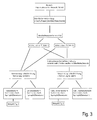
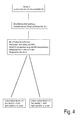
- FIG. 1 and 2 shown embodiments can be found in the first part overview FIG. 3 again.
- a substrate may be used for an implant consisting of an oxide-ceramic material which is a zirconia-dominated ceramics with a small addition of yttria.
- substrates can be used which consist of a pure or mixed oxide ceramic.
- a surface of the substrate may be present, the nature of which is unfavorable for the colonization of cells, the surface may be abraded. This means that a roughening of the surface takes place, wherein this is preferably accomplished by blasting with precious corundum.
- the rough surface can also be made by blasting with other particles, such as glass beads or hydroxyapatite, as well as by acid etching with HF or mixed acids, or by a combination of etching and blasting.
- the roughening by particle beams is to be preferred, however, because this is on the one hand cheaper and on the other production technology easier to implement; the residue-free removal of acid residues is a complex process.
- the roughening processes all have in common that the substrate surface has an enlarged contact surface with the bone, whereby the adhesion, in particular the mechanical adhesion, of further coating constituents is improved.
- a calcium titanate layer is applied directly to the implant surface.
- a PVD method which is called magnetron sputtering.
- magnetron sputtering By means of this method, it is possible to obtain directly the forming layer, wherein the large free, highly porous surface, which allows the capillary action and the rapid and complete wetting of the implant surface is achieved directly.
- a calcium zirconate layer can be applied.
- Further alternative embodiments can be achieved by applying the calcium titanate or zirconate to the substrate by means of a plasma spray method.
- the performed plasma spray process can be carried out in vacuo or under atmospheric conditions.
- the calcium titanate or zirconate is introduced as a powder into a plasma flame, melted and accelerated toward the substrate, where it deposits on its surface as a highly porous layer.
- a substrate material in particular in these embodiments, both ceramics and metals in question.
- the coating can also be applied as an alternative to the above plasma spray method also by high-speed flame spraying or by cold gas spraying.
- the described embodiments all have in common that a highly porous and highly hydrophilic or wetting implant surface is formed.
- the embodiments according to the invention have in common microprocous, highly hydrophilic implant surfaces which arise, on the one hand, in that very thin but dense metallic titanium or zirconium base layers are deposited on ceramic implants and converted into highly porous titanium or zirconium oxide layers in NaOH, on the other hand in that thin creschite is deposited on the metal layers by electrochemical deposition before the NaOH treatment. In the latter case, the conversion takes place in the NaOH bath to calcium titanate or calcium zirconate layers. Thereafter, the annealing is carried out at 600 ° C to improve the adhesion.
- spray coating plasma spraying, HVOF, cold gas spraying
- calcium titanates and zirconates in the form of white, microrough, highly porous layers on both ceramic and metallic implants.
Landscapes
- Health & Medical Sciences (AREA)
- Chemical & Material Sciences (AREA)
- Oral & Maxillofacial Surgery (AREA)
- Epidemiology (AREA)
- Veterinary Medicine (AREA)
- Public Health (AREA)
- General Health & Medical Sciences (AREA)
- Animal Behavior & Ethology (AREA)
- Life Sciences & Earth Sciences (AREA)
- Engineering & Computer Science (AREA)
- Dermatology (AREA)
- Medicinal Chemistry (AREA)
- Transplantation (AREA)
- Inorganic Chemistry (AREA)
- Ceramic Engineering (AREA)
- Plasma & Fusion (AREA)
- Plastic & Reconstructive Surgery (AREA)
- Physics & Mathematics (AREA)
- Materials Engineering (AREA)
- Chemical Kinetics & Catalysis (AREA)
- Organic Chemistry (AREA)
- Mechanical Engineering (AREA)
- Metallurgy (AREA)
- Orthopedic Medicine & Surgery (AREA)
- Dentistry (AREA)
- Materials For Medical Uses (AREA)
- Dental Prosthetics (AREA)
- Dental Preparations (AREA)
- Prostheses (AREA)
Priority Applications (1)
| Application Number | Priority Date | Filing Date | Title |
|---|---|---|---|
| EP16165110.4A EP3072534B1 (fr) | 2013-03-11 | 2014-02-28 | Procédé de fabrication d'un implant fonctionnalisé et implant fonctionnalisé |
Applications Claiming Priority (1)
| Application Number | Priority Date | Filing Date | Title |
|---|---|---|---|
| DE102013102370.3A DE102013102370A1 (de) | 2013-03-11 | 2013-03-11 | Verfahren zur Herstellung eines funktionalisierten Implantats sowie funktionalisiertes Implantat |
Related Child Applications (2)
| Application Number | Title | Priority Date | Filing Date |
|---|---|---|---|
| EP16165110.4A Division EP3072534B1 (fr) | 2013-03-11 | 2014-02-28 | Procédé de fabrication d'un implant fonctionnalisé et implant fonctionnalisé |
| EP16165110.4A Division-Into EP3072534B1 (fr) | 2013-03-11 | 2014-02-28 | Procédé de fabrication d'un implant fonctionnalisé et implant fonctionnalisé |
Publications (3)
| Publication Number | Publication Date |
|---|---|
| EP2786771A2 true EP2786771A2 (fr) | 2014-10-08 |
| EP2786771A3 EP2786771A3 (fr) | 2015-10-14 |
| EP2786771B1 EP2786771B1 (fr) | 2017-12-06 |
Family
ID=50193298
Family Applications (2)
| Application Number | Title | Priority Date | Filing Date |
|---|---|---|---|
| EP14157250.3A Active EP2786771B1 (fr) | 2013-03-11 | 2014-02-28 | Procédé de fabrication d'un implant fonctionnalisé et implant fonctionnalisé |
| EP16165110.4A Active EP3072534B1 (fr) | 2013-03-11 | 2014-02-28 | Procédé de fabrication d'un implant fonctionnalisé et implant fonctionnalisé |
Family Applications After (1)
| Application Number | Title | Priority Date | Filing Date |
|---|---|---|---|
| EP16165110.4A Active EP3072534B1 (fr) | 2013-03-11 | 2014-02-28 | Procédé de fabrication d'un implant fonctionnalisé et implant fonctionnalisé |
Country Status (3)
| Country | Link |
|---|---|
| US (1) | US9119687B2 (fr) |
| EP (2) | EP2786771B1 (fr) |
| DE (1) | DE102013102370A1 (fr) |
Cited By (1)
| Publication number | Priority date | Publication date | Assignee | Title |
|---|---|---|---|---|
| WO2016192702A3 (fr) * | 2015-06-03 | 2017-01-26 | Universität Rostock | Corps façonnés contenant du titanate de calcium piézo-actif, procédé de fabrication et d'excitation de ces corps, et utilisation de titanate de calcium piézo-actif sous forme de corps façonné piézo-électrique ou comme constituant de corps façonnés piézo-électriques |
Families Citing this family (7)
| Publication number | Priority date | Publication date | Assignee | Title |
|---|---|---|---|---|
| DE102016218601A1 (de) * | 2015-09-29 | 2017-03-30 | Ceramtec Gmbh | Thermisch gespritzte Keramikschichten |
| EP3178463A1 (fr) | 2015-12-07 | 2017-06-14 | WDT-Wolz-Dental-Technik GmbH | Procede de fabrication d'un corps en ceramique, en particulier une ebauche dentaire en ceramique, presentant des caracteristiques physiques de degre d'empreinte reglables cible dans l'espace |
| DE102015017002A1 (de) * | 2015-12-29 | 2017-06-29 | Dcm Dental Creativ Management Gmbh | Konditionierung der Oberfläche von Dentalkomponenten |
| WO2017180782A1 (fr) * | 2016-04-12 | 2017-10-19 | EdMiDent, LLC | Système de fixation |
| DE112017004063B4 (de) | 2016-08-12 | 2022-06-02 | Istanbul Teknik Universitesi | Verfahren zur Herstellung einer Dickbeschichtung mit schichtweisem Aufbau |
| WO2018168963A1 (fr) * | 2017-03-15 | 2018-09-20 | キヤノンオプトロン株式会社 | Film hydrophile de dépôt en phase vapeur et matériau de dépôt en phase vapeur |
| CN117482294B (zh) * | 2023-11-03 | 2025-12-16 | 吉林大学 | 一种仿生抗排异的多孔钛合金植入物及其制备方法与应用 |
Citations (1)
| Publication number | Priority date | Publication date | Assignee | Title |
|---|---|---|---|---|
| WO2009036845A2 (fr) | 2007-09-13 | 2009-03-26 | Deru Gmbh | Élément endoprothétique |
Family Cites Families (15)
| Publication number | Priority date | Publication date | Assignee | Title |
|---|---|---|---|---|
| JPH0557012A (ja) * | 1991-09-04 | 1993-03-09 | Advance Co Ltd | 複合インプラント |
| CA2073781A1 (fr) * | 1992-07-13 | 1994-01-14 | Morteza Shirkhanzadeh | Procede de formation de revetements bioactifs composes sur les implants |
| AU6639194A (en) * | 1993-04-23 | 1994-11-21 | Etex Corporation | Method of coating medical devices and devices coated thereby |
| DE4431862C2 (de) * | 1994-09-07 | 1997-12-11 | Dot Duennschicht Und Oberflaec | Verfahren zur Beschichtung von Metall- und Keramikoberflächen mit Hydroxylapatit |
| DE19755536A1 (de) * | 1997-12-13 | 1999-06-17 | Ceramtec Ag | Hüftgelenkspfanne |
| GB0122002D0 (en) * | 2001-09-11 | 2001-10-31 | Benoist Girard Sas | Acetabular cup |
| US7458991B2 (en) * | 2002-02-08 | 2008-12-02 | Howmedica Osteonics Corp. | Porous metallic scaffold for tissue ingrowth |
| SE522749C2 (sv) * | 2002-03-04 | 2004-03-02 | Cerbio Tech Ab | Ytbeläggningsförfarande, ytbelagd anordning och biokompatibel ytbeläggning |
| EP1358859A1 (fr) * | 2002-04-29 | 2003-11-05 | Politecnico Di Milano | Prothèses osseuses avec surface multicouche |
| US20080011613A1 (en) * | 2004-07-21 | 2008-01-17 | Rizhi Wang | Method of electrolytically depositing a pharmaceutical coating onto a conductive osteal implant |
| GB0422666D0 (en) * | 2004-10-12 | 2004-11-10 | Benoist Girard Sas | Prosthetic acetabular cups |
| CN100430099C (zh) * | 2005-12-23 | 2008-11-05 | 中国科学院金属研究所 | 一种钛或钛合金表面生物活性涂层及其制备方法 |
| GB0702577D0 (en) * | 2007-02-09 | 2007-03-21 | Ucl Business Plc | An article and a method of surface treatment of an article |
| US7806693B2 (en) * | 2007-04-23 | 2010-10-05 | Nobel Biocare Services Ag | Dental implant |
| SI23420A (sl) * | 2010-07-22 | 2012-01-31 | Institut "Jožef Stefan" | Kostni vsadki z večslojno prevleko in postopek njihove priprave |
-
2013
- 2013-03-11 DE DE102013102370.3A patent/DE102013102370A1/de not_active Withdrawn
-
2014
- 2014-02-28 EP EP14157250.3A patent/EP2786771B1/fr active Active
- 2014-02-28 EP EP16165110.4A patent/EP3072534B1/fr active Active
- 2014-03-07 US US14/200,539 patent/US9119687B2/en active Active
Patent Citations (1)
| Publication number | Priority date | Publication date | Assignee | Title |
|---|---|---|---|---|
| WO2009036845A2 (fr) | 2007-09-13 | 2009-03-26 | Deru Gmbh | Élément endoprothétique |
Cited By (1)
| Publication number | Priority date | Publication date | Assignee | Title |
|---|---|---|---|---|
| WO2016192702A3 (fr) * | 2015-06-03 | 2017-01-26 | Universität Rostock | Corps façonnés contenant du titanate de calcium piézo-actif, procédé de fabrication et d'excitation de ces corps, et utilisation de titanate de calcium piézo-actif sous forme de corps façonné piézo-électrique ou comme constituant de corps façonnés piézo-électriques |
Also Published As
| Publication number | Publication date |
|---|---|
| DE102013102370A1 (de) | 2014-09-11 |
| EP3072534A1 (fr) | 2016-09-28 |
| EP2786771B1 (fr) | 2017-12-06 |
| US20140255874A1 (en) | 2014-09-11 |
| EP2786771A3 (fr) | 2015-10-14 |
| US9119687B2 (en) | 2015-09-01 |
| EP3072534B1 (fr) | 2018-05-23 |
Similar Documents
| Publication | Publication Date | Title |
|---|---|---|
| EP3072534B1 (fr) | Procédé de fabrication d'un implant fonctionnalisé et implant fonctionnalisé | |
| EP0207088B1 (fr) | Procede pour fabriquer des materiaux de remplacement des os implantables | |
| EP0774982B1 (fr) | Procede d'electrodeposition de couches d'hydroxyapatite | |
| EP3178464B1 (fr) | Procédé de fabrication d'une ébauche d'implant | |
| DE69716505T2 (de) | Implantatwerkstoff und Verfahren zu seiner Herstellung | |
| EP0447744B1 (fr) | Procédé pour fabriquer des surfaces ostéointégrantes d'implants du squelette aussi bien qu'un implant du squelette | |
| WO1986006617A1 (fr) | Revetement d'un corps d'implant | |
| DE102008042603A1 (de) | Implantat sowie Verfahren zur Herstellung einer degradationshemmenden Schicht auf einer Körperoberfläche eines Implantats | |
| EP1264606B1 (fr) | Revêtements d'apatite pour substrats métalliques, procédés de fabrication, et utilisation | |
| JPH0148774B2 (fr) | ||
| CN111218677A (zh) | 在可降解医用锌合金表面制备生物活性钙-磷涂层的方法 | |
| EP1888139B1 (fr) | Implant dentaire et procede de fabrication | |
| WO2011026938A1 (fr) | Implants de métal revêtus de façon bioactive et procédé pour leur fabrication | |
| DE60301796T2 (de) | Osteointegrierende grenzfläche für implantierbare prothese und methode zu deren herstellung | |
| EP1972298A1 (fr) | Revêtement biocompatible ayant la couleur des dents d'implants dentaires | |
| EP2439183B1 (fr) | Corps en céramique monolithique avec une zone superficielle en oxyde mixte et une surface métallique, son procédé de fabrication et d'utilisation | |
| DE102009016554A1 (de) | Medizinisches Implantat mit einer Oberflächenschicht und Verfahren zur Herstellung der Implantatoberfläche | |
| DE4032570A1 (de) | Verfahren zum herstellen von implantaten | |
| EP2077124B1 (fr) | Couche superficielle biocompatible | |
| DE202019105040U1 (de) | Zweiteiliges Zahn-Kieferimplantat | |
| EP1293219A1 (fr) | Produit biomédical ayant un substrat comprenant un alliage à base de nickel et titane et un revêtement comprenant du phosphate de calcium | |
| DE10158302A1 (de) | Beschichtung von implantierbaren Metallkörpern mit bioaktiven Materialien | |
| DE19944970C1 (de) | Verfahren zur Herstellung eines Implantats oder Substrats mit biokompatibler Oberfläche | |
| WO1983003346A1 (fr) | Protheses et procede de fabrication de zones biologiquement inertes de protheses ou parties de protheses composees de materiaux biologiquement actifs | |
| EP1891989A1 (fr) | Methode de préparation d'un revêtement résistant à la dégradation pour des substrats à base de titane |
Legal Events
| Date | Code | Title | Description |
|---|---|---|---|
| PUAI | Public reference made under article 153(3) epc to a published international application that has entered the european phase |
Free format text: ORIGINAL CODE: 0009012 |
|
| 17P | Request for examination filed |
Effective date: 20140228 |
|
| AK | Designated contracting states |
Kind code of ref document: A2 Designated state(s): AL AT BE BG CH CY CZ DE DK EE ES FI FR GB GR HR HU IE IS IT LI LT LU LV MC MK MT NL NO PL PT RO RS SE SI SK SM TR |
|
| AX | Request for extension of the european patent |
Extension state: BA ME |
|
| PUAL | Search report despatched |
Free format text: ORIGINAL CODE: 0009013 |
|
| AK | Designated contracting states |
Kind code of ref document: A3 Designated state(s): AL AT BE BG CH CY CZ DE DK EE ES FI FR GB GR HR HU IE IS IT LI LT LU LV MC MK MT NL NO PL PT RO RS SE SI SK SM TR |
|
| AX | Request for extension of the european patent |
Extension state: BA ME |
|
| RIC1 | Information provided on ipc code assigned before grant |
Ipc: A61L 27/50 20060101ALI20150908BHEP Ipc: A61L 27/10 20060101ALI20150908BHEP Ipc: A61L 27/04 20060101AFI20150908BHEP Ipc: A61L 27/30 20060101ALI20150908BHEP |
|
| R17P | Request for examination filed (corrected) |
Effective date: 20160413 |
|
| RBV | Designated contracting states (corrected) |
Designated state(s): AL AT BE BG CH CY CZ DE DK EE ES FI FR GB GR HR HU IE IS IT LI LT LU LV MC MK MT NL NO PL PT RO RS SE SI SK SM TR |
|
| GRAP | Despatch of communication of intention to grant a patent |
Free format text: ORIGINAL CODE: EPIDOSNIGR1 |
|
| INTG | Intention to grant announced |
Effective date: 20170721 |
|
| GRAS | Grant fee paid |
Free format text: ORIGINAL CODE: EPIDOSNIGR3 |
|
| GRAA | (expected) grant |
Free format text: ORIGINAL CODE: 0009210 |
|
| AK | Designated contracting states |
Kind code of ref document: B1 Designated state(s): AL AT BE BG CH CY CZ DE DK EE ES FI FR GB GR HR HU IE IS IT LI LT LU LV MC MK MT NL NO PL PT RO RS SE SI SK SM TR |
|
| REG | Reference to a national code |
Ref country code: GB Ref legal event code: FG4D Free format text: NOT ENGLISH |
|
| REG | Reference to a national code |
Ref country code: AT Ref legal event code: REF Ref document number: 951804 Country of ref document: AT Kind code of ref document: T Effective date: 20171215 Ref country code: CH Ref legal event code: EP |
|
| REG | Reference to a national code |
Ref country code: IE Ref legal event code: FG4D Free format text: LANGUAGE OF EP DOCUMENT: GERMAN |
|
| REG | Reference to a national code |
Ref country code: DE Ref legal event code: R096 Ref document number: 502014006450 Country of ref document: DE |
|
| REG | Reference to a national code |
Ref country code: CH Ref legal event code: NV Representative=s name: BUGNION S.A., CH |
|
| REG | Reference to a national code |
Ref country code: FR Ref legal event code: PLFP Year of fee payment: 5 |
|
| REG | Reference to a national code |
Ref country code: NL Ref legal event code: MP Effective date: 20171206 |
|
| REG | Reference to a national code |
Ref country code: LT Ref legal event code: MG4D |
|
| PG25 | Lapsed in a contracting state [announced via postgrant information from national office to epo] |
Ref country code: ES Free format text: LAPSE BECAUSE OF FAILURE TO SUBMIT A TRANSLATION OF THE DESCRIPTION OR TO PAY THE FEE WITHIN THE PRESCRIBED TIME-LIMIT Effective date: 20171206 Ref country code: LT Free format text: LAPSE BECAUSE OF FAILURE TO SUBMIT A TRANSLATION OF THE DESCRIPTION OR TO PAY THE FEE WITHIN THE PRESCRIBED TIME-LIMIT Effective date: 20171206 Ref country code: SE Free format text: LAPSE BECAUSE OF FAILURE TO SUBMIT A TRANSLATION OF THE DESCRIPTION OR TO PAY THE FEE WITHIN THE PRESCRIBED TIME-LIMIT Effective date: 20171206 Ref country code: FI Free format text: LAPSE BECAUSE OF FAILURE TO SUBMIT A TRANSLATION OF THE DESCRIPTION OR TO PAY THE FEE WITHIN THE PRESCRIBED TIME-LIMIT Effective date: 20171206 Ref country code: NO Free format text: LAPSE BECAUSE OF FAILURE TO SUBMIT A TRANSLATION OF THE DESCRIPTION OR TO PAY THE FEE WITHIN THE PRESCRIBED TIME-LIMIT Effective date: 20180306 |
|
| PG25 | Lapsed in a contracting state [announced via postgrant information from national office to epo] |
Ref country code: BG Free format text: LAPSE BECAUSE OF FAILURE TO SUBMIT A TRANSLATION OF THE DESCRIPTION OR TO PAY THE FEE WITHIN THE PRESCRIBED TIME-LIMIT Effective date: 20180306 Ref country code: HR Free format text: LAPSE BECAUSE OF FAILURE TO SUBMIT A TRANSLATION OF THE DESCRIPTION OR TO PAY THE FEE WITHIN THE PRESCRIBED TIME-LIMIT Effective date: 20171206 Ref country code: LV Free format text: LAPSE BECAUSE OF FAILURE TO SUBMIT A TRANSLATION OF THE DESCRIPTION OR TO PAY THE FEE WITHIN THE PRESCRIBED TIME-LIMIT Effective date: 20171206 Ref country code: GR Free format text: LAPSE BECAUSE OF FAILURE TO SUBMIT A TRANSLATION OF THE DESCRIPTION OR TO PAY THE FEE WITHIN THE PRESCRIBED TIME-LIMIT Effective date: 20180307 Ref country code: RS Free format text: LAPSE BECAUSE OF FAILURE TO SUBMIT A TRANSLATION OF THE DESCRIPTION OR TO PAY THE FEE WITHIN THE PRESCRIBED TIME-LIMIT Effective date: 20171206 |
|
| PG25 | Lapsed in a contracting state [announced via postgrant information from national office to epo] |
Ref country code: NL Free format text: LAPSE BECAUSE OF FAILURE TO SUBMIT A TRANSLATION OF THE DESCRIPTION OR TO PAY THE FEE WITHIN THE PRESCRIBED TIME-LIMIT Effective date: 20171206 |
|
| PG25 | Lapsed in a contracting state [announced via postgrant information from national office to epo] |
Ref country code: EE Free format text: LAPSE BECAUSE OF FAILURE TO SUBMIT A TRANSLATION OF THE DESCRIPTION OR TO PAY THE FEE WITHIN THE PRESCRIBED TIME-LIMIT Effective date: 20171206 Ref country code: SK Free format text: LAPSE BECAUSE OF FAILURE TO SUBMIT A TRANSLATION OF THE DESCRIPTION OR TO PAY THE FEE WITHIN THE PRESCRIBED TIME-LIMIT Effective date: 20171206 Ref country code: CZ Free format text: LAPSE BECAUSE OF FAILURE TO SUBMIT A TRANSLATION OF THE DESCRIPTION OR TO PAY THE FEE WITHIN THE PRESCRIBED TIME-LIMIT Effective date: 20171206 |
|
| PG25 | Lapsed in a contracting state [announced via postgrant information from national office to epo] |
Ref country code: PL Free format text: LAPSE BECAUSE OF FAILURE TO SUBMIT A TRANSLATION OF THE DESCRIPTION OR TO PAY THE FEE WITHIN THE PRESCRIBED TIME-LIMIT Effective date: 20171206 Ref country code: SM Free format text: LAPSE BECAUSE OF FAILURE TO SUBMIT A TRANSLATION OF THE DESCRIPTION OR TO PAY THE FEE WITHIN THE PRESCRIBED TIME-LIMIT Effective date: 20171206 Ref country code: RO Free format text: LAPSE BECAUSE OF FAILURE TO SUBMIT A TRANSLATION OF THE DESCRIPTION OR TO PAY THE FEE WITHIN THE PRESCRIBED TIME-LIMIT Effective date: 20171206 Ref country code: IT Free format text: LAPSE BECAUSE OF FAILURE TO SUBMIT A TRANSLATION OF THE DESCRIPTION OR TO PAY THE FEE WITHIN THE PRESCRIBED TIME-LIMIT Effective date: 20171206 |
|
| REG | Reference to a national code |
Ref country code: DE Ref legal event code: R097 Ref document number: 502014006450 Country of ref document: DE |
|
| PG25 | Lapsed in a contracting state [announced via postgrant information from national office to epo] |
Ref country code: MC Free format text: LAPSE BECAUSE OF FAILURE TO SUBMIT A TRANSLATION OF THE DESCRIPTION OR TO PAY THE FEE WITHIN THE PRESCRIBED TIME-LIMIT Effective date: 20171206 Ref country code: MT Free format text: LAPSE BECAUSE OF FAILURE TO SUBMIT A TRANSLATION OF THE DESCRIPTION OR TO PAY THE FEE WITHIN THE PRESCRIBED TIME-LIMIT Effective date: 20171206 |
|
| PLBE | No opposition filed within time limit |
Free format text: ORIGINAL CODE: 0009261 |
|
| STAA | Information on the status of an ep patent application or granted ep patent |
Free format text: STATUS: NO OPPOSITION FILED WITHIN TIME LIMIT |
|
| 26N | No opposition filed |
Effective date: 20180907 |
|
| REG | Reference to a national code |
Ref country code: IE Ref legal event code: MM4A |
|
| REG | Reference to a national code |
Ref country code: BE Ref legal event code: MM Effective date: 20180228 |
|
| PG25 | Lapsed in a contracting state [announced via postgrant information from national office to epo] |
Ref country code: DK Free format text: LAPSE BECAUSE OF FAILURE TO SUBMIT A TRANSLATION OF THE DESCRIPTION OR TO PAY THE FEE WITHIN THE PRESCRIBED TIME-LIMIT Effective date: 20171206 Ref country code: SI Free format text: LAPSE BECAUSE OF FAILURE TO SUBMIT A TRANSLATION OF THE DESCRIPTION OR TO PAY THE FEE WITHIN THE PRESCRIBED TIME-LIMIT Effective date: 20171206 Ref country code: LU Free format text: LAPSE BECAUSE OF NON-PAYMENT OF DUE FEES Effective date: 20180228 |
|
| PG25 | Lapsed in a contracting state [announced via postgrant information from national office to epo] |
Ref country code: IE Free format text: LAPSE BECAUSE OF NON-PAYMENT OF DUE FEES Effective date: 20180228 |
|
| PG25 | Lapsed in a contracting state [announced via postgrant information from national office to epo] |
Ref country code: BE Free format text: LAPSE BECAUSE OF NON-PAYMENT OF DUE FEES Effective date: 20180228 |
|
| PG25 | Lapsed in a contracting state [announced via postgrant information from national office to epo] |
Ref country code: TR Free format text: LAPSE BECAUSE OF FAILURE TO SUBMIT A TRANSLATION OF THE DESCRIPTION OR TO PAY THE FEE WITHIN THE PRESCRIBED TIME-LIMIT Effective date: 20171206 |
|
| PG25 | Lapsed in a contracting state [announced via postgrant information from national office to epo] |
Ref country code: HU Free format text: LAPSE BECAUSE OF FAILURE TO SUBMIT A TRANSLATION OF THE DESCRIPTION OR TO PAY THE FEE WITHIN THE PRESCRIBED TIME-LIMIT; INVALID AB INITIO Effective date: 20140228 Ref country code: PT Free format text: LAPSE BECAUSE OF FAILURE TO SUBMIT A TRANSLATION OF THE DESCRIPTION OR TO PAY THE FEE WITHIN THE PRESCRIBED TIME-LIMIT Effective date: 20171206 |
|
| PG25 | Lapsed in a contracting state [announced via postgrant information from national office to epo] |
Ref country code: MK Free format text: LAPSE BECAUSE OF NON-PAYMENT OF DUE FEES Effective date: 20171206 Ref country code: CY Free format text: LAPSE BECAUSE OF FAILURE TO SUBMIT A TRANSLATION OF THE DESCRIPTION OR TO PAY THE FEE WITHIN THE PRESCRIBED TIME-LIMIT Effective date: 20171206 |
|
| PG25 | Lapsed in a contracting state [announced via postgrant information from national office to epo] |
Ref country code: AL Free format text: LAPSE BECAUSE OF FAILURE TO SUBMIT A TRANSLATION OF THE DESCRIPTION OR TO PAY THE FEE WITHIN THE PRESCRIBED TIME-LIMIT Effective date: 20171206 Ref country code: IS Free format text: LAPSE BECAUSE OF FAILURE TO SUBMIT A TRANSLATION OF THE DESCRIPTION OR TO PAY THE FEE WITHIN THE PRESCRIBED TIME-LIMIT Effective date: 20180406 |
|
| P01 | Opt-out of the competence of the unified patent court (upc) registered |
Effective date: 20230515 |
|
| PGFP | Annual fee paid to national office [announced via postgrant information from national office to epo] |
Ref country code: CH Payment date: 20250301 Year of fee payment: 12 |
|
| REG | Reference to a national code |
Ref country code: CH Ref legal event code: U11 Free format text: ST27 STATUS EVENT CODE: U-0-0-U10-U11 (AS PROVIDED BY THE NATIONAL OFFICE) Effective date: 20260301 |
|
| PGFP | Annual fee paid to national office [announced via postgrant information from national office to epo] |
Ref country code: GB Payment date: 20260219 Year of fee payment: 13 |
|
| PGFP | Annual fee paid to national office [announced via postgrant information from national office to epo] |
Ref country code: DE Payment date: 20260121 Year of fee payment: 13 |
|
| PGFP | Annual fee paid to national office [announced via postgrant information from national office to epo] |
Ref country code: AT Payment date: 20260219 Year of fee payment: 13 |
|
| PGFP | Annual fee paid to national office [announced via postgrant information from national office to epo] |
Ref country code: FR Payment date: 20260218 Year of fee payment: 13 |