EP2787657A2 - Support de signalisation pour la sélection d'antennes au moyen de listes et de masques de sous-ensemble - Google Patents
Support de signalisation pour la sélection d'antennes au moyen de listes et de masques de sous-ensemble Download PDFInfo
- Publication number
- EP2787657A2 EP2787657A2 EP14166347.6A EP14166347A EP2787657A2 EP 2787657 A2 EP2787657 A2 EP 2787657A2 EP 14166347 A EP14166347 A EP 14166347A EP 2787657 A2 EP2787657 A2 EP 2787657A2
- Authority
- EP
- European Patent Office
- Prior art keywords
- antenna
- subset list
- antenna subset
- virtual
- mobile phone
- Prior art date
- Legal status (The legal status is an assumption and is not a legal conclusion. Google has not performed a legal analysis and makes no representation as to the accuracy of the status listed.)
- Granted
Links
Images



Classifications
-
- H—ELECTRICITY
- H04—ELECTRIC COMMUNICATION TECHNIQUE
- H04B—TRANSMISSION
- H04B7/00—Radio transmission systems, i.e. using radiation field
- H04B7/02—Diversity systems; Multi-antenna system, i.e. transmission or reception using multiple antennas
- H04B7/04—Diversity systems; Multi-antenna system, i.e. transmission or reception using multiple antennas using two or more spaced independent antennas
- H04B7/06—Diversity systems; Multi-antenna system, i.e. transmission or reception using multiple antennas using two or more spaced independent antennas at the transmitting station
- H04B7/0613—Diversity systems; Multi-antenna system, i.e. transmission or reception using multiple antennas using two or more spaced independent antennas at the transmitting station using simultaneous transmission
- H04B7/0615—Diversity systems; Multi-antenna system, i.e. transmission or reception using multiple antennas using two or more spaced independent antennas at the transmitting station using simultaneous transmission of weighted versions of same signal
- H04B7/0619—Diversity systems; Multi-antenna system, i.e. transmission or reception using multiple antennas using two or more spaced independent antennas at the transmitting station using simultaneous transmission of weighted versions of same signal using feedback from receiving side
-
- H—ELECTRICITY
- H04—ELECTRIC COMMUNICATION TECHNIQUE
- H04B—TRANSMISSION
- H04B7/00—Radio transmission systems, i.e. using radiation field
- H04B7/02—Diversity systems; Multi-antenna system, i.e. transmission or reception using multiple antennas
- H04B7/04—Diversity systems; Multi-antenna system, i.e. transmission or reception using multiple antennas using two or more spaced independent antennas
- H04B7/06—Diversity systems; Multi-antenna system, i.e. transmission or reception using multiple antennas using two or more spaced independent antennas at the transmitting station
- H04B7/0602—Diversity systems; Multi-antenna system, i.e. transmission or reception using multiple antennas using two or more spaced independent antennas at the transmitting station using antenna switching
- H04B7/0608—Antenna selection according to transmission parameters
- H04B7/061—Antenna selection according to transmission parameters using feedback from receiving side
-
- H—ELECTRICITY
- H04—ELECTRIC COMMUNICATION TECHNIQUE
- H04B—TRANSMISSION
- H04B7/00—Radio transmission systems, i.e. using radiation field
- H04B7/02—Diversity systems; Multi-antenna system, i.e. transmission or reception using multiple antennas
- H04B7/022—Site diversity; Macro-diversity
- H04B7/024—Co-operative use of antennas of several sites, e.g. in co-ordinated multipoint or co-operative multiple-input multiple-output [MIMO] systems
-
- H—ELECTRICITY
- H04—ELECTRIC COMMUNICATION TECHNIQUE
- H04B—TRANSMISSION
- H04B7/00—Radio transmission systems, i.e. using radiation field
- H04B7/02—Diversity systems; Multi-antenna system, i.e. transmission or reception using multiple antennas
- H04B7/04—Diversity systems; Multi-antenna system, i.e. transmission or reception using multiple antennas using two or more spaced independent antennas
- H04B7/06—Diversity systems; Multi-antenna system, i.e. transmission or reception using multiple antennas using two or more spaced independent antennas at the transmitting station
- H04B7/0686—Hybrid systems, i.e. switching and simultaneous transmission
- H04B7/0691—Hybrid systems, i.e. switching and simultaneous transmission using subgroups of transmit antennas
-
- H—ELECTRICITY
- H04—ELECTRIC COMMUNICATION TECHNIQUE
- H04W—WIRELESS COMMUNICATION NETWORKS
- H04W72/00—Local resource management
- H04W72/20—Control channels or signalling for resource management
-
- H—ELECTRICITY
- H04—ELECTRIC COMMUNICATION TECHNIQUE
- H04B—TRANSMISSION
- H04B7/00—Radio transmission systems, i.e. using radiation field
- H04B7/02—Diversity systems; Multi-antenna system, i.e. transmission or reception using multiple antennas
- H04B7/04—Diversity systems; Multi-antenna system, i.e. transmission or reception using multiple antennas using two or more spaced independent antennas
- H04B7/06—Diversity systems; Multi-antenna system, i.e. transmission or reception using multiple antennas using two or more spaced independent antennas at the transmitting station
- H04B7/0613—Diversity systems; Multi-antenna system, i.e. transmission or reception using multiple antennas using two or more spaced independent antennas at the transmitting station using simultaneous transmission
- H04B7/0615—Diversity systems; Multi-antenna system, i.e. transmission or reception using multiple antennas using two or more spaced independent antennas at the transmitting station using simultaneous transmission of weighted versions of same signal
- H04B7/0619—Diversity systems; Multi-antenna system, i.e. transmission or reception using multiple antennas using two or more spaced independent antennas at the transmitting station using simultaneous transmission of weighted versions of same signal using feedback from receiving side
- H04B7/0636—Feedback format
- H04B7/0639—Using selective indices, e.g. of a codebook, e.g. pre-distortion matrix index [PMI] or for beam selection
-
- H—ELECTRICITY
- H04—ELECTRIC COMMUNICATION TECHNIQUE
- H04B—TRANSMISSION
- H04B7/00—Radio transmission systems, i.e. using radiation field
- H04B7/02—Diversity systems; Multi-antenna system, i.e. transmission or reception using multiple antennas
- H04B7/10—Polarisation diversity; Directional diversity
-
- H—ELECTRICITY
- H04—ELECTRIC COMMUNICATION TECHNIQUE
- H04W—WIRELESS COMMUNICATION NETWORKS
- H04W72/00—Local resource management
- H04W72/12—Wireless traffic scheduling
-
- H—ELECTRICITY
- H04—ELECTRIC COMMUNICATION TECHNIQUE
- H04W—WIRELESS COMMUNICATION NETWORKS
- H04W88/00—Devices specially adapted for wireless communication networks, e.g. terminals, base stations or access point devices
- H04W88/02—Terminal devices
Definitions
- the present invention relates in general to the signaling needed to enable a mobile phone to have at least partial control over which antenna (s) within a coverage area of at least one base station and under control of a scheduling unit are to be used for transmissions to the mobile phone.
- the base station can obtain information from an uplink transmission and then estimate the direction a mobile phone is moving and use that information to select the appropriate antenna(s) which should be used for future transmissions to that mobile phone.
- the documents include:
- antenna selection is not in itself a new concept.
- the mobile phone itself had at least partial control over which antenna(s) from the antenna configuration associated with the base station should be used for transmissions.
- this capability would be desirable because the mobile phone itself has the best knowledge of its interference environment, which it can monitor, rather than having the base station estimate/predict the mobile phone's interference environment.
- the concept of a mobile phone being served by antenna(s) from one base station corresponding to a single cell has been changing such that a cell may now consist of multiple antennas distributed throughout a coverage region and connected to one or more base stations. In this scenario, the antennas that communicate to the mobile phone need to be determined, and the corresponding signaling also needs to be devised.
- a mobile phone is described herein that has control (or at least partial control) over which antenna(s) in at least one base station should be used for transmissions.
- the mobile phone performs the following steps: (1) receives an antenna subset list (from the scheduling unit) which identifies a configuration of virtual antennas that is associated with the base station(s); (2) uses the antenna subset list to select which virtual antenna(s) should be used for transmissions; and (3) sends an antenna selection signal (to the scheduling unit) which contains information that instructs/requests the base station(s)/scheduling unit to use the selected virtual antenna(s) for transmissions.
- FIGURE 1 there is shown a block diagram of a communication system 100 including a base station 102 (connected to a scheduling unit 104) and a mobile phone 106 (UE 106) which signal one another so that the mobile phone 106 has at least partial control over which virtual antenna(s) within an configuration of virtual antennas 110 associated with the base station 102 is/are to be used for subsequent transmissions to the mobile phone 106.
- the configuration of virtual antennas is denoted as the antenna configuration and represents the mapping of signals to physical antenna elements.
- the scheduling unit 104 is shown connected to the base station 102, however, the scheduling unit could also be incorporated within the base station 102. For clarity, the description that is provided herein does not discuss components/details associated with the base station 102 and the mobile phone 106 that are well known in the industry and are not needed to understand the present invention.
- the mobile phone 106 includes a processor 112 and a memory 114 which has instructions stored therein that are accessible and able to be processed by the processor 112 to facilitate the following (see method 200 in FIG. 2 ): (1) obtain an antenna subset list 116 (e.g., from scheduling unit 104) which identifies the configuration of virtual antennas 110 within the base station 102 (see step 202 in FIG. 2 ); (2) use the antenna subset list 116 to select one or more virtual antenna(s) associated with the configuration of virtual antennas 110 which should be used for subsequent transmissions (see step 204 in FIG.
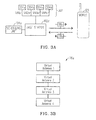
- FIGURES 3A-3B there are illustrated two drawings which are used to help explain how when the mobile phone 106 obtains a concurrent antenna subset list 116a it is able to select one or more antenna(s) from a diversity antenna configuration 302 associated with the base station 102a that should be used for transmissions.
- the exemplary single base station 102a shown is connected to the scheduling unit 104a and uses four virtual antennas VA1a, VA2a, VA3a and VA4a to map a data signal to four diversity antennas 304a, 304b, 304c and 304d for transmission to the mobile phone 106.
- the base station 102a (in conjunction with the scheduling unit 104a) also transmits the concurrent antenna subset list 116a to the mobile station 106 (see step 202 in FIG. 2 ).
- the concurrent antenna subset list 116a is configured in a manner where it indicates that configuration of virtual antennas 302 contains four diversity antennas 304a, 304b, 304c and 304d.
- the mobile phone 106 Upon receiving the concurrent antenna subset list 116a, the mobile phone 106 knows that it can select any combination of one or more of the four virtual antenna(s) VA1a, VA2a, VA3a and/or VA4a associated with the base station 102a that should be used for transmissions (see step 204 in FIG. 2 ). To make this selection, the mobile phone 106 could measure a pilot signal which is assumed to be associated with each transmit antenna 304a, 304b, 304c and/or 304d and then make a decision as to which virtual antenna(s) VA1a, VA2a, VA3a and/or VA4a should be used for further transmission.
- the mobile phone 106 sends an antenna selection list 118a which contains information instructing/requesting the scheduling unit 104a to use the selected virtual antenna(s) VA1a and VA4a (for example) for future transmissions (see step 206 in FIG. 2 ).
- the mobile phone 106 could send the antenna selection signal 118a as part of the feed-back for a link adaptation process for the high-speed downlink packet-data access (HSPDA) mode in a Wideband Code Division Mode Access (WCDMA) communication network 100.
- HSPDA high-speed downlink packet-data access
- WCDMA Wideband Code Division Mode Access
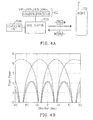
- FIGURES 4A-4C there are illustrated three drawings which are used to help explain how when the mobile phone 106 obtains a mutually exclusive antenna subset list 116b it is able to select one virtual antenna (i.e. beam) from a fixed-beam antenna configuration 402 associated with the base station 102b that should be used for transmissions.
- the exemplary single base station 102b is connected to scheduling unit 104b and uses four virtual antennas VA1b, VA2b, VA3b and VA4b to map a data signal to four antennas 404a, 404b, 404c and 404d within the fixed-beam antenna configuration 402 for transmission to the mobile phone 106.
- FIGURE 4B The beam pattern for an exemplary 120° sector covered by the four-beam, fixed-beam antenna configuration 402 is shown in FIGURE 4B .
- scheduling unit 104b instructs the base station 102b to transmit the mutually exclusive antenna subset list 116b to the mobile station 106 (see step 202 in FIG. 2 ).
- the mutually exclusive antenna subset list 116b is configured in a manner where it indicates that the configuration of virtual antennas 402 is a four-beam, fixed-beam antenna configuration 402.
- the mobile phone 106 Upon receiving the mutually exclusive antenna subset list 116b, the mobile phone 106 knows that it can select only one of the virtual antennas VA1, VA2, VA3 or VA4 associated with the base station 102b from which to receive transmissions (see step 204 in FIG. 2 ). After making this selection, the mobile phone 106 sends the antenna selection signal 118b which contains information instructing/requesting the scheduling unit 104b to use the selected virtual antenna VA2b (for example) for future transmissions (see step 206 in FIG. 2 ).
- the mutually exclusive antenna subset list 116b (shown in FIGURE 4C ) is different than the concurrent antenna subset list 116a (shown in FIGURE 3B ). This was done to indicate how particular configurations of virtual antennas may be identified by using different types of signaling in accordance with the present invention.
- the mobile phone 106 is allowed to choose one or more of the four virtual antennas VA1a, VA2a, VA3a and VA4a from which to receive a transmission and this is indicated by the vertically-linked antenna subset list 116a (see FIGURE 3B ).
- the mobile phone 106 is allowed to choose only one of the four virtual antennas VA1b, VA2b, VA3b or VA4b from which to receive a transmission and this is indicated by the horizontally-linked antenna subset list 116b (see FIGURE 4C ).
- the vertical dimension is used to represent where a set of virtual antennas can be transmitted at the same time (i.e. concurrent transmission), while the horizontal dimension is used to represent where only one virtual antenna can be used at a time to transmit (i.e. mutually exclusive transmission).
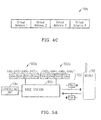
- FIGURES 5A-5C there are illustrated three drawings which are used to help explain how when the mobile phone 106 obtains a concurrently combined antenna subset list 116c it is able to select one or more virtual antenna(s) from the configuration of virtual antennas 502 that is comprised of the two separate fixed-beam antenna configurations 502a and 502b that should be used for transmissions.
- the fixed-beam antenna configuration 502a is made up of antenna elements which have horizontal polarization.
- the fixed-beam antenna configuration 502b is made up of antenna elements with vertical polarization. Both antenna configurations 502a and 502b are associated with the base station 102c.
- the exemplary single base station 102c is connected to scheduling unit 104c which uses eight virtual antennas VA1c, VA2c...VA8c to map a data signal to eight antennas 504a, 504b...504h within the dual-polarized fixed-beam antenna configuration 502 for transmission to the mobile phone 106.
- the beam pattern for an exemplary 120° dual-polarized fixed beamformer antenna array 502 is shown in FIGURE 5B .
- the beam patterns represented by dashed lines correspond to the beams from the horizontally polarized beamformer 502a, while the beam patterns represented by the solid lines correspond to the beams from the vertically polarized beamformer 502b.
- the base station 102c together with the scheduling unit 104c transmits the concurrently combined antenna subset list 116c to the mobile station 106 (see step 202 in FIG. 2 ).
- the concurrently combined antenna subset list 116c is configured in a manner where it indicates that the configuration of virtual antennas 502 within the base station 102c includes the fixed-beam antenna configuration 502a and the fixed-beam antenna configuration 502b.
- the mobile phone 106 Upon receiving the concurrently combined antenna subset list 116c, the mobile phone 106 knows that it can select up to one virtual antenna VA1c, VA2c ... VA8c from each fixed-beam antenna configurations 502a and 502b from which to receive transmissions (see step 204 in FIG. 2 ).
- the mobile phone 106 can select virtual antenna VA2c from the fixed-beam (horizontal polarization) antenna configuration 502a.
- the mobile phone 106 can select virtual antennas VA3c and VA8c from both the fixed-beam antenna configurations 502a and 502b.
- the mobile phone 106 sends an antenna selection signal 118c which contains information instructing/requesting the scheduling unit 104c to use the selected antenna(s) VA3c and VA8c (for example) for future transmissions (see step 206 in FIG. 2 ).
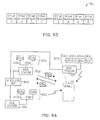
- FIGURES 5A , 5B and 5C show how a first antenna subset list and a second antenna subset list can be combined to represent the concurrent combination of a first configuration of virtual antennas VA1c, VA3c, VA5c and VA7c and a second configuration of virtual antennas VA2c, VA4c, VA6c and VA8c.
- This concurrent combination allows virtual antennas to be selected from the first configuration of virtual antennas and/or the second configuration of virtual antennas.
- the two configurations of virtual antennas VA1c, VA2c...VA8c into a mutually exclusive combination, so that one antenna can be selected from either the first configuration of virtual antennas VA1c, VA3c, VA5c and VA7c or the second configuration of virtual antennas VA2c, VA4c, VA6c and VA8c.
- the antenna list 116c' for this mutually exclusive combination is shown in FIGURE 5D .
- the mobile phone 106 may select one virtual antenna from the first configuration of virtual antennas VA1c, VA3c, VA5c or VA7c or from the second configuration of virtual antennas VA2c, VA4c, VA6c or VA8c, but not from both configurations of virtual antennas.
- FIGURES 6A-6B there are illustrated two drawings which are used to help explain how when the mobile phone 106 obtains a concurrently combined antenna subset list 116d it is able to select one or more antenna(s) from the distributed configurations of virtual antennas 602a, 602b and 602c associated with a base station 102d, 102e and 102f, respectively, that should be used for transmissions.
- the exemplary base stations 102d, 102e and 102f are connected to the scheduling unit 104d and use eight virtual antennas VA1d, VA2d, ..., VA8d to map a data signal to two antennas 604a and 604b (within a diversity antenna configuration 602a), four antennas 604c, 604d, 604e and 604f (within a fixed-beam antenna configuration 602b) and two antennas 604g and 604h (within a diversity antenna configuration 602c).
- the scheduling unit 104d could, alternatively, be contained within one of the base stations (e.g.
- the scheduling unit 104d transmits a concurrently combined antenna subset list 116d to the mobile station 106 (see step 202 in FIG. 2 ).
- the concurrently combined antenna subset list 116d is configured in a manner where it is indicates that there is a diversity antenna configuration 602a with two virtual antennas VA1d and VA2d, a fixed-beam antenna configuration 602b with four virtual antennas VA3d, VA4d, VA5d and VA6d and a diversity antenna configuration 602c with two virtual antennas VA7d and VA8d, all associated with the scheduling unit 104d.
- the mobile phone 106 Upon receiving the concurrently combined antenna subset list 116d, the mobile phone 106 knows it can select virtual antenna VA1d and/or virtual antenna VA2d and/or one of virtual antennas VA3d, VA4d, VA5d and VA6d and/or virtual antenna VA7d and/or virtual antenna VA8d from which to receive a transmission (see step 204 in FIG. 2 ). After making this selection, the mobile phone 106 sends an antenna selection signal 118d which contains information instructing/requesting the scheduling unit 104d to use the selected antenna(s) VA3d and VA8d (for example) for future transmissions (see step 206 in FIG. 2 ).
- the antenna subset lists 116 can be communicated to the mobile phone 106, for example, during the setup period when the mobile phone 106 establishes communication with the base station 102 (e.g., base stations 102a, 102b, 102c, 102d, 102e, and 102f) and scheduling unit 104 (e.g., scheduling units 104a, 104b, 104c and 104d).
- This signaling may also occur during a procedure such as a handover to another cell or between different sets of configurations of virtual antennas.
- the base station 102 can also signal information about the structure of the pilot channels for the specific antennas to enable the mobile phone 106 to make channel estimations for demodulation and to report channel quality information back to the base station 102.
- the base station 102 does not need to transmit the antenna subset list 116 to the mobile phone 106.
- the mobile phone 106 can store a number of antenna subset lists 116 along with some mapping information. In this way, the relevant antenna subset list 116 can be made readily available if the mobile phone 106 knows its current position within a communication network 100 by using for example a global positioning system (GPS).
- GPS global positioning system
- the mobile phone 106 can build the antenna subset list 116 over time as the mobile phone 106 encounters transmissions from the virtual antennas in configuration(s) of virtual antennas of a particular base station 102. In this case, the mobile phone 106 may also need to store additional information such as the cell identification number of the encountered antenna while constructing the antenna subset list 116.
- the scheduling unit 104 could use an antenna subset mask to prevent one or more of the antennas identified in the antenna subset list 116 from being available to be selected by the mobile phone 106.
- the scheduling unit 104 may want to prevent certain antenna(s) from being selected by the mobile phone 102, if the scheduling unit 104 knows that the antenna subset list 116 represents a coverage area that is larger than that which can be seen by the mobile phone 106.
- the scheduling unit 104 can use an antenna subset mask 120, which is a list of the same size as the antenna subset list 116, but it also specifies those antennas that are available to the mobile phone 106 (see FIGURE 7 ).
- the only virtual antennas (i.e. beams) which can be selected by the mobile phone 106 are virtual antennas ⁇ 3, 4, 5 ⁇ .
- the use of the antenna subset mask 120 makes for a more efficient use of the virtual antennas which are identified in the antenna subset list 116.
- Another advantage of using the antenna subset mask 120 is that it can reduce the feedback requirements on the mobile phone 106 in reporting the channel quality to the base station 102.
- the mobile phone 106 would only need to transmit channel quality reports for virtual antennas ⁇ 3, 4, 5 ⁇ rather than the full set of virtual antennas ⁇ 1, 2, ... 8).
- the antenna subset mask may also indicate the priority of antennas that the mobile phone 106 should choose in selecting the antenna(s) for future transmissions.
- the antenna subset mask 130 shown in FIGURE 8 indicates this particular feature by incorporating weighted values instead of binary ones and zeros. Weight values of zero indicate that the corresponding virtual antennas VA1c, VA2c, VA6c, VA7c and VA8c should not be used, while higher weight values give priority to virtual antennas VA3c, VA4c and VA5c. Thus, the priority for this configuration of virtual antennas, from highest to lowest, is given by the virtual antennas ⁇ 3, 4, 5 ⁇ as shown by the antenna subset mask 130.
- the mobile phone 106 can itself create the antenna subset mask 120 for instance after measuring the signal strengths which accurately reflects both the propagation from the antenna to the mobile phone 106 as well as the effects of intra-cell or inter-cell interference. And, if the mobile phone 106 has interference cancellation capabilities then it could create the antenna subset mask 120 after it makes its signal-to-interference-plus-noise (SINR) measurements.
- SINR signal-to-interference-plus-noise
- the mobile phone 106 creates the antenna subset mask 120 it may communicate the antenna subset mask 120 to the base station 102 and/or scheduling unit 104.
- the communication of the antenna subset mask 120 to and from the base station 102/scheduling unit 104 may occur at a rate that is different than the rate required for communicating the antenna subset list 116.
- the antenna subset list 116 may be communicated during the call setup or handover while the antenna subset mask 120 is communicated periodically or as it changes.
- the present invention was discussed in the situation where all of the antennas (virtual antennas) belong to a single scheduling unit 104.
- the antennas (virtual antennas) from other scheduling unit(s) may become visible to the mobile phone 106.
- a new antenna subset list and new antenna subset mask could be created for these new antennas (virtual antennas) to facilitate the negotiation as to which virtual antennas/beams should be used for handover with neighboring cells. This could be performed in different ways as follows:
- the mobile phone 106 has control (or at least partial control) over which virtual antenna(s) associated with the base station 102 are to be used for transmissions to the mobile phone 106. For instance, if the mobile phone 106 is able to select the transmit antennas in a base station 102 then this could lead to significant improvements in performance for multi-antennas schemes like the HSPDA scheme which transmits by using the same number of data streams and transmit antennas. Also, when multi-antenna transmission (even without using link adaptation) is coupled with antennas having orthogonal polarizations, it has been empirically found that the propagation of one polarization may be dominant when compared to the other polarization.
- the mobile phone 106 instructed the base station 102 to transmit using the antenna(s) with the stronger polarization. Moreover, in a beamforming system it may be preferable if the mobile phone 106 determines which antennas/beams are to be used for transmission since the mobile phone 106 already has to determine and report other channel quality indicator (CQI) parameters. In other words, it would be advantageous if the mobile phone 106 also reported which antenna/beam should be used for transmission rather than relying on the base station 102 to make this determination. In this case, the advantage is that the mobile phone 106 can make CQI measurements on the same antennas/beams that will be used for demodulation and thus avoid any mismatches that can occur when transmitting from a separate sector antenna.
- CQI channel quality indicator
Landscapes
- Engineering & Computer Science (AREA)
- Computer Networks & Wireless Communication (AREA)
- Signal Processing (AREA)
- Mobile Radio Communication Systems (AREA)
Priority Applications (2)
| Application Number | Priority Date | Filing Date | Title |
|---|---|---|---|
| EP21183090.6A EP3926854A1 (fr) | 2005-10-06 | 2006-10-05 | Support de signalisation pour la sélection d'antennes au moyen de listes et de masques de sous-ensemble |
| PL14166347T PL2787657T3 (pl) | 2005-10-06 | 2006-10-05 | Obsługa sygnalizacji dla wyboru anteny z zastosowaniem list podzbiorów i masek podzbiorów |
Applications Claiming Priority (5)
| Application Number | Priority Date | Filing Date | Title |
|---|---|---|---|
| US72400805P | 2005-10-06 | 2005-10-06 | |
| US11/538,535 US8068872B2 (en) | 2005-10-06 | 2006-10-04 | Signaling support for antenna selection using subset lists and subset masks |
| EP11169221.6A EP2365645B1 (fr) | 2005-10-06 | 2006-10-05 | Support de signalisation pour la sélection d'antenne au moyen de sous-ensemble des listes et sous-ensemble de masques |
| EP06799843A EP1932253A4 (fr) | 2005-10-06 | 2006-10-05 | Support de signalisation permettant une selection d'antenne fondee sur des listes de sous-ensembles et sur des marques de sous-ensembles |
| PCT/SE2006/050383 WO2007040456A2 (fr) | 2005-10-06 | 2006-10-05 | Support de signalisation permettant une selection d'antenne fondee sur des listes de sous-ensembles et sur des marques de sous-ensembles |
Related Parent Applications (2)
| Application Number | Title | Priority Date | Filing Date |
|---|---|---|---|
| EP11169221.6A Division EP2365645B1 (fr) | 2005-10-06 | 2006-10-05 | Support de signalisation pour la sélection d'antenne au moyen de sous-ensemble des listes et sous-ensemble de masques |
| EP06799843A Division EP1932253A4 (fr) | 2005-10-06 | 2006-10-05 | Support de signalisation permettant une selection d'antenne fondee sur des listes de sous-ensembles et sur des marques de sous-ensembles |
Related Child Applications (2)
| Application Number | Title | Priority Date | Filing Date |
|---|---|---|---|
| EP21183090.6A Division EP3926854A1 (fr) | 2005-10-06 | 2006-10-05 | Support de signalisation pour la sélection d'antennes au moyen de listes et de masques de sous-ensemble |
| EP21183090.6A Division-Into EP3926854A1 (fr) | 2005-10-06 | 2006-10-05 | Support de signalisation pour la sélection d'antennes au moyen de listes et de masques de sous-ensemble |
Publications (3)
| Publication Number | Publication Date |
|---|---|
| EP2787657A2 true EP2787657A2 (fr) | 2014-10-08 |
| EP2787657A3 EP2787657A3 (fr) | 2015-01-14 |
| EP2787657B1 EP2787657B1 (fr) | 2021-08-25 |
Family
ID=37907495
Family Applications (4)
| Application Number | Title | Priority Date | Filing Date |
|---|---|---|---|
| EP14166347.6A Active EP2787657B1 (fr) | 2005-10-06 | 2006-10-05 | Support de signalisation pour la sélection d'antennes au moyen de listes et de masques de sous-ensemble |
| EP11169221.6A Active EP2365645B1 (fr) | 2005-10-06 | 2006-10-05 | Support de signalisation pour la sélection d'antenne au moyen de sous-ensemble des listes et sous-ensemble de masques |
| EP06799843A Withdrawn EP1932253A4 (fr) | 2005-10-06 | 2006-10-05 | Support de signalisation permettant une selection d'antenne fondee sur des listes de sous-ensembles et sur des marques de sous-ensembles |
| EP21183090.6A Withdrawn EP3926854A1 (fr) | 2005-10-06 | 2006-10-05 | Support de signalisation pour la sélection d'antennes au moyen de listes et de masques de sous-ensemble |
Family Applications After (3)
| Application Number | Title | Priority Date | Filing Date |
|---|---|---|---|
| EP11169221.6A Active EP2365645B1 (fr) | 2005-10-06 | 2006-10-05 | Support de signalisation pour la sélection d'antenne au moyen de sous-ensemble des listes et sous-ensemble de masques |
| EP06799843A Withdrawn EP1932253A4 (fr) | 2005-10-06 | 2006-10-05 | Support de signalisation permettant une selection d'antenne fondee sur des listes de sous-ensembles et sur des marques de sous-ensembles |
| EP21183090.6A Withdrawn EP3926854A1 (fr) | 2005-10-06 | 2006-10-05 | Support de signalisation pour la sélection d'antennes au moyen de listes et de masques de sous-ensemble |
Country Status (9)
| Country | Link |
|---|---|
| US (4) | US8068872B2 (fr) |
| EP (4) | EP2787657B1 (fr) |
| JP (1) | JP4950205B2 (fr) |
| CN (1) | CN101278499B (fr) |
| BR (1) | BRPI0616838A2 (fr) |
| ES (1) | ES2891723T3 (fr) |
| HU (1) | HUE057006T2 (fr) |
| PL (1) | PL2787657T3 (fr) |
| WO (1) | WO2007040456A2 (fr) |
Families Citing this family (39)
| Publication number | Priority date | Publication date | Assignee | Title |
|---|---|---|---|---|
| US7844232B2 (en) * | 2005-05-25 | 2010-11-30 | Research In Motion Limited | Joint space-time optimum filters (JSTOF) with at least one antenna, at least one channel, and joint filter weight and CIR estimation |
| US8068872B2 (en) | 2005-10-06 | 2011-11-29 | Telefonaktiebolaget Lm Ericsson (Publ) | Signaling support for antenna selection using subset lists and subset masks |
| WO2007043459A1 (fr) * | 2005-10-07 | 2007-04-19 | Nec Corporation | Système de communication radio mimo et procédé utilisant une pluralité de stations de base et de stations mobiles |
| KR101106372B1 (ko) | 2006-11-06 | 2012-01-18 | 콸콤 인코포레이티드 | 무선 통신 시스템에서 계층 치환을 이용한 mimo 전송을 위한 방법 및 장치 |
| US8824420B2 (en) * | 2007-03-22 | 2014-09-02 | Mitsubishi Electric Research Laboratories, Inc. | Method and system for generating antenna selection signals in OFDM tranceivers with fewer RF chains than antennas in MIMO wireless networks |
| CN101370241B (zh) * | 2007-08-19 | 2015-01-14 | 上海贝尔股份有限公司 | 用于消除多个移动站所接收信号之间干扰的方法及装置 |
| US8538335B2 (en) * | 2007-12-07 | 2013-09-17 | Samsung Electronics Co., Ltd | Physical broadcast channel (PBCH) transmission for reliable detection of antenna configuration |
| US8135359B2 (en) * | 2008-01-04 | 2012-03-13 | Nokia Corporation | Method and apparatus for conveying antenna configuration information |
| BRPI0906165B1 (pt) * | 2008-02-04 | 2020-03-31 | Nokia Technologies Oy | Método e aparelho para transportar a informação de configuração de antena através de máscara |
| US8458558B2 (en) * | 2008-04-30 | 2013-06-04 | Motorola Mobility Llc | Multi-antenna configuration signaling in wireless communication system |
| JP5256955B2 (ja) * | 2008-09-12 | 2013-08-07 | 富士通株式会社 | 制御方法、通信特性制御方法、基地局装置、及び移動局装置 |
| CN101729131B (zh) * | 2008-11-03 | 2014-06-04 | 夏普株式会社 | 无线通信系统及预编码方法 |
| CN101764635B (zh) * | 2008-12-24 | 2013-04-17 | 中国移动通信集团公司 | 信号联合处理系统及其信号检测、确定发送信号的方法 |
| EP2437406A4 (fr) * | 2009-05-26 | 2014-12-31 | Lg Electronics Inc | Procédé et appareil permettant l'acquisition d'informations d'antenne dans un système de communications sans fil |
| US20100304773A1 (en) * | 2009-05-27 | 2010-12-02 | Ramprashad Sean A | Method for selective antenna activation and per antenna or antenna group power assignments in cooperative signaling wireless mimo systems |
| CN101997650B (zh) * | 2009-08-28 | 2014-07-30 | 华为技术有限公司 | 多天线系统数据信号的发射方法、装置和系统 |
| US8224314B2 (en) * | 2009-10-07 | 2012-07-17 | Telefonaktiebolaget L M Ericsson (Publ) | Reduced-complexity coordinated multipoint reception |
| JP2011097155A (ja) * | 2009-10-27 | 2011-05-12 | Nec Corp | 無線通信システム、および無線通信システムの制御方法 |
| CN102056220B (zh) * | 2009-10-28 | 2014-02-19 | 华为技术有限公司 | 实现信道测量的方法及装置 |
| KR101498079B1 (ko) * | 2010-03-04 | 2015-03-03 | 엘지전자 주식회사 | 분산 안테나 시스템에서의 신호 송수신 장치 |
| CN102195692A (zh) * | 2010-03-18 | 2011-09-21 | 中兴通讯股份有限公司 | 一种选择双极化阵列天线的方法及装置 |
| EP2567467A2 (fr) * | 2010-05-04 | 2013-03-13 | Celeno Communications Ltd. | Système et procédé de rétroaction se rapportant à l'état de canal dans des systèmes à entrées-sorties multiples multiutilisateurs |
| US8548511B2 (en) * | 2010-06-21 | 2013-10-01 | Qualcomm Incorporated | Energy saving mode with maintained number of advertised transmit antennas |
| US8478190B2 (en) | 2011-05-02 | 2013-07-02 | Motorola Mobility Llc | Multi-cell coordinated transmissions in wireless communication network |
| WO2013047924A1 (fr) * | 2011-09-29 | 2013-04-04 | Hankuk University Of Foreign Studies Research And Industry-University Cooperation Foundation | Formation de faisceau pour des communications sans fil |
| GB2498767A (en) | 2012-01-27 | 2013-07-31 | Renesas Mobile Corp | Identifying a specific antenna port using a CRC masking encoding scheme |
| US9397738B2 (en) | 2012-05-17 | 2016-07-19 | Qualcomm Incorporated | Codebook and feedback design for high order MIMO |
| EP2883321A1 (fr) * | 2012-08-09 | 2015-06-17 | Telefonaktiebolaget L M Ericsson (Publ) | Commande de liaison micro-onde |
| JP6212121B2 (ja) * | 2012-08-31 | 2017-10-11 | エルジー エレクトロニクス インコーポレイティド | 無線通信システムにおけるアンテナ仮想化方法及び装置 |
| KR20150066525A (ko) * | 2012-08-31 | 2015-06-16 | 엘지전자 주식회사 | 무선 통신 시스템에서 안테나 가상화 방법 및 장치 |
| EP2843998B1 (fr) | 2013-08-30 | 2020-04-15 | Swisscom AG | Procédé pour un système de communication cellulaire et système de communication doté d'une station de base virtuelle |
| WO2016001951A1 (fr) | 2014-07-02 | 2016-01-07 | ソフトバンク株式会社 | Dispositif de contrôle de transmission, et programme |
| TR201810572T4 (tr) | 2015-03-06 | 2018-08-27 | Ericsson Telefon Ab L M | Bir anten düzeneği kullanarak huzme oluşturma. |
| KR102109918B1 (ko) * | 2015-06-15 | 2020-05-12 | 삼성전자주식회사 | 무선 통신 시스템에서 안테나 어레이를 사용한 빔포밍 장치 및 방법 |
| BR112018002363B1 (pt) * | 2015-08-31 | 2022-05-03 | Kimberly-Clark Worldwide, Inc | Compósito elástico e artigo absorvente incluindo o mesmo |
| US10700762B2 (en) | 2016-05-04 | 2020-06-30 | Telefonaktiebolaget Lm Ericsson (Publ) | Beam forming using an antenna arrangement |
| US10432276B2 (en) * | 2016-09-29 | 2019-10-01 | Intel IP Corporation | Wireless link control and recovery using positional data |
| CN107273158B (zh) * | 2017-06-08 | 2021-10-26 | 广东美的暖通设备有限公司 | 程序升级方法及装置、主机、从机和多联机空调系统 |
| EP3918722A1 (fr) * | 2019-01-29 | 2021-12-08 | Telefonaktiebolaget LM Ericsson (publ) | Génération d'un ensemble de faisceaux |
Citations (1)
| Publication number | Priority date | Publication date | Assignee | Title |
|---|---|---|---|---|
| US6421543B1 (en) | 1996-01-29 | 2002-07-16 | Ericsson Inc. | Cellular radiotelephone base stations and methods using selected multiple diversity reception |
Family Cites Families (34)
| Publication number | Priority date | Publication date | Assignee | Title |
|---|---|---|---|---|
| JPH10126831A (ja) * | 1996-10-18 | 1998-05-15 | Mitsubishi Electric Corp | チャネル切替方法およびチャネル切替システム |
| JPH1155177A (ja) * | 1997-06-04 | 1999-02-26 | Toshiba Corp | 無線通信システム、端末装置及び基地局装置 |
| NL1006980C2 (nl) * | 1997-09-09 | 1999-03-10 | Hollandse Signaalapparaten Bv | Antennesysteem. |
| US6208858B1 (en) | 1998-07-21 | 2001-03-27 | Qualcomm Incorporated | System and method for reducing call dropping rates in a multi-beam communication system |
| US6609012B1 (en) * | 1998-08-24 | 2003-08-19 | Telefonaktiebolaget Lm Ericsson | Mobile terminal initiated and assisted antenna selection |
| JP2000114846A (ja) * | 1998-10-06 | 2000-04-21 | Toshiba Corp | 指向性アンテナ選択システム、指向性アンテナ選択方法、指向性アンテナ基地局、及び無線端末 |
| US6968022B1 (en) * | 1999-09-23 | 2005-11-22 | Princeton University | Method and apparatus for scheduling switched multibeam antennas in a multiple access environment |
| US7039441B1 (en) | 1999-10-19 | 2006-05-02 | Kathrein-Werke Kg | High speed fixed wireless voice/data systems and methods |
| US6804312B1 (en) * | 2000-01-11 | 2004-10-12 | At&T Corp. | Methods and systems for spatial processing |
| DE60021772T2 (de) * | 2000-04-07 | 2006-04-20 | Nokia Corp. | Verfahren und vorrichtung zur übertragung mit mehreren antennen |
| US7233810B2 (en) * | 2000-08-03 | 2007-06-19 | Infineon Technologies Ag | Dynamically reconfigurable universal transmitter system |
| WO2002087107A1 (fr) * | 2001-04-25 | 2002-10-31 | Koninklijke Philips Electronics N.V. | Systeme de radiocommunication |
| US7155192B2 (en) * | 2001-09-25 | 2006-12-26 | At&T Corp. | Multi-antenna/multi-receiver array diversity system |
| WO2003073629A1 (fr) | 2002-02-22 | 2003-09-04 | Global Locate, Inc. | Procede et dispositif pour corriger un oscillateur dans un appareil radio capable de localisation |
| KR100547882B1 (ko) * | 2002-02-26 | 2006-02-01 | 삼성전자주식회사 | 안테나 선택 다이버시티를 지원하는 이동통신시스템에서순방향 채널 상태 정보를 송수신하는 방법 및 장치 |
| US7043274B2 (en) | 2002-06-28 | 2006-05-09 | Interdigital Technology Corporation | System for efficiently providing coverage of a sectorized cell for common and dedicated channels utilizing beam forming and sweeping |
| AU2003268474A1 (en) * | 2002-09-06 | 2004-03-29 | The Boeing Company | System and method for managing communications with mobile platforms operating within a predefined geographic area |
| US6816115B1 (en) * | 2003-01-31 | 2004-11-09 | Bbnt Solutions Llc | Systems and methods for antenna selection in an ad-hoc wireless network |
| WO2005011047A2 (fr) | 2003-04-09 | 2005-02-03 | Mano Dorsey Judd | Technologie d'antenne virtuelle (vat) et applications |
| EP1615365A4 (fr) * | 2003-06-30 | 2011-05-11 | Fujitsu Ltd | Systeme de transmission a entrees multiples et sorties multiples |
| EP1507427A1 (fr) * | 2003-08-11 | 2005-02-16 | Alcatel | Sélection de faisceau dans un système de télécommunication cellulaire sans fil |
| JP3977795B2 (ja) * | 2003-10-23 | 2007-09-19 | 株式会社東芝 | ダイバーシチアンテナ装置およびダイバーシチアンテナ制御方法 |
| JP2005142866A (ja) * | 2003-11-06 | 2005-06-02 | Matsushita Electric Ind Co Ltd | アンテナ選択ダイバーシチ装置及び受信方法 |
| EP1562306A1 (fr) | 2004-02-09 | 2005-08-10 | Alcatel | Sélection de faisceaux rapide avec mode de macrodiversité |
| SE0400370D0 (sv) * | 2004-02-13 | 2004-02-13 | Ericsson Telefon Ab L M | Adaptive MIMO architecture |
| US7327983B2 (en) * | 2004-06-25 | 2008-02-05 | Mitsubishi Electric Research Laboratories, Inc. | RF-based antenna selection in MIMO systems |
| US7693529B2 (en) * | 2004-07-09 | 2010-04-06 | Alcatel-Lucent Usa Inc. | Method of scheduling for mobile stations in wireless communication networks |
| US8270512B2 (en) * | 2004-08-12 | 2012-09-18 | Interdigital Technology Corporation | Method and apparatus for subcarrier and antenna selection in MIMO-OFDM system |
| US7656842B2 (en) * | 2004-09-30 | 2010-02-02 | Motorola, Inc. | Method and apparatus for MIMO transmission optimized for successive cancellation receivers |
| KR100706634B1 (ko) | 2004-11-12 | 2007-04-11 | 한국전자통신연구원 | 성능이 향상된 다중 안테나 시스템 |
| US8068550B2 (en) * | 2005-01-28 | 2011-11-29 | Broadcom Corporation | Initiation of a MIMO communication |
| US8483200B2 (en) * | 2005-04-07 | 2013-07-09 | Interdigital Technology Corporation | Method and apparatus for antenna mapping selection in MIMO-OFDM wireless networks |
| CA2620067C (fr) | 2005-08-22 | 2012-08-21 | Qualcomm Incorporated | Procede et dispositif pour selectionner des antennes virtuelles |
| US8068872B2 (en) | 2005-10-06 | 2011-11-29 | Telefonaktiebolaget Lm Ericsson (Publ) | Signaling support for antenna selection using subset lists and subset masks |
-
2006
- 2006-10-04 US US11/538,535 patent/US8068872B2/en active Active
- 2006-10-05 ES ES14166347T patent/ES2891723T3/es active Active
- 2006-10-05 HU HUE14166347A patent/HUE057006T2/hu unknown
- 2006-10-05 EP EP14166347.6A patent/EP2787657B1/fr active Active
- 2006-10-05 JP JP2008534500A patent/JP4950205B2/ja active Active
- 2006-10-05 EP EP11169221.6A patent/EP2365645B1/fr active Active
- 2006-10-05 WO PCT/SE2006/050383 patent/WO2007040456A2/fr not_active Ceased
- 2006-10-05 PL PL14166347T patent/PL2787657T3/pl unknown
- 2006-10-05 EP EP06799843A patent/EP1932253A4/fr not_active Withdrawn
- 2006-10-05 EP EP21183090.6A patent/EP3926854A1/fr not_active Withdrawn
- 2006-10-05 CN CN2006800367527A patent/CN101278499B/zh active Active
- 2006-10-05 BR BRPI0616838-8A patent/BRPI0616838A2/pt not_active IP Right Cessation
-
2011
- 2011-11-09 US US13/292,738 patent/US8897834B2/en active Active
-
2014
- 2014-11-21 US US14/550,223 patent/US9397731B2/en active Active
-
2016
- 2016-07-15 US US15/211,157 patent/US10014923B2/en active Active
Patent Citations (1)
| Publication number | Priority date | Publication date | Assignee | Title |
|---|---|---|---|---|
| US6421543B1 (en) | 1996-01-29 | 2002-07-16 | Ericsson Inc. | Cellular radiotelephone base stations and methods using selected multiple diversity reception |
Non-Patent Citations (3)
| Title |
|---|
| D. GORE; A. PAULRAJ: "Statistical antenna subset selection with space-time coding", IEEE TRANS. ON SIGNAL PROCESSING, vol. 50, October 2002 (2002-10-01), pages 2580 - 8 |
| D. GORE; R. HEATH; A. PAULRAJ: "Statistical antenna selection for spatial multiplexing systems", PROC. IEEE INT. CONF., ON COMMUNICATIONS, 2002, pages 450 - 454, XP010589535, DOI: doi:10.1109/ICC.2002.996894 |
| R. NARASIMHAM: "Spatial multiplexing with transmit antenna and constellation selection for correlated MIMO fading channels", IEEE TRANS. ON SIGNAL PROCESSING, vol. 51, no. 11, November 2003 (2003-11-01), pages 2829 - 38, XP011102799, DOI: doi:10.1109/TSP.2003.818205 |
Also Published As
| Publication number | Publication date |
|---|---|
| US20160329944A1 (en) | 2016-11-10 |
| ES2891723T3 (es) | 2022-01-31 |
| EP3926854A1 (fr) | 2021-12-22 |
| EP1932253A2 (fr) | 2008-06-18 |
| JP2009512272A (ja) | 2009-03-19 |
| US20070135161A1 (en) | 2007-06-14 |
| WO2007040456A9 (fr) | 2008-05-08 |
| EP2787657A3 (fr) | 2015-01-14 |
| EP2787657B1 (fr) | 2021-08-25 |
| BRPI0616838A2 (pt) | 2011-07-05 |
| US9397731B2 (en) | 2016-07-19 |
| US20120058767A1 (en) | 2012-03-08 |
| EP2365645B1 (fr) | 2014-04-30 |
| US20150080005A1 (en) | 2015-03-19 |
| EP2365645A3 (fr) | 2012-04-18 |
| JP4950205B2 (ja) | 2012-06-13 |
| HK1125506A1 (en) | 2009-08-07 |
| HUE057006T2 (hu) | 2022-04-28 |
| PL2787657T3 (pl) | 2022-01-24 |
| WO2007040456A2 (fr) | 2007-04-12 |
| WO2007040456A3 (fr) | 2007-05-31 |
| US8068872B2 (en) | 2011-11-29 |
| EP2365645A2 (fr) | 2011-09-14 |
| US10014923B2 (en) | 2018-07-03 |
| EP1932253A4 (fr) | 2011-08-03 |
| CN101278499A (zh) | 2008-10-01 |
| US8897834B2 (en) | 2014-11-25 |
| CN101278499B (zh) | 2011-12-14 |
Similar Documents
| Publication | Publication Date | Title |
|---|---|---|
| EP2787657B1 (fr) | Support de signalisation pour la sélection d'antennes au moyen de listes et de masques de sous-ensemble | |
| US11330457B2 (en) | Method for beam management with beam indication in wireless communication systems with beamforming | |
| US10284263B2 (en) | Methods for operating wireless electronic devices in coordinated multipoint transmission networks | |
| EP3479494B1 (fr) | Système et procédé pour une diversité de formation de faisceau hybride | |
| EP2679058B1 (fr) | Configuration de la distribution de puissance dans les zones de coopération de réseaux de communications cellulaires | |
| EP1958348B1 (fr) | Dispositif point a multipoint pour communication avec plusieurs unites de telecommunication | |
| JP2010068496A (ja) | 通信特性制御方法、パイロット制御方法、基地局装置、及び移動局装置 | |
| WO2018020881A1 (fr) | Dispositif terminal, station de base, procédé et support d'enregistrement | |
| TWI422177B (zh) | 使用智慧天線以建立回程網路之方法及系統 | |
| EP1562306A1 (fr) | Sélection de faisceaux rapide avec mode de macrodiversité | |
| AU2006349035B2 (en) | MIMO mode selection at handover | |
| US20080160992A1 (en) | Handset transmit antenna diversity in mobile satellite systems | |
| TWI513106B (zh) | 無線通訊節點、固定位置之無線通訊節點及建立無線蜂巢式連結之方法 | |
| JP6888663B2 (ja) | 端末装置、基地局、方法及び記録媒体 | |
| EP2387832B1 (fr) | Transmission de premières et deuxièmes informations de qualité de canal entre deux éléments de réseau | |
| JPWO2008072336A1 (ja) | 多入力多出力通信のためのアンテナを選択する制御装置 | |
| KR101997822B1 (ko) | 다중셀 협력통신 시스템에서 협력적 신호 전송 방법 | |
| KR101742428B1 (ko) | Bdma 시스템에서 단말에 대한 빔섹터를 결정하는 방법 및 bdma 시스템에서 단말에 대한 이동성 지원 방법 | |
| HK1125506B (en) | Mobile phone, base station, communication system and method | |
| KR102791052B1 (ko) | 방향성 빔을 추적하는 장치 및 방법 | |
| WO2010061302A2 (fr) | Configuration d’antenne pour formation de faisceau coopératif |
Legal Events
| Date | Code | Title | Description |
|---|---|---|---|
| PUAI | Public reference made under article 153(3) epc to a published international application that has entered the european phase |
Free format text: ORIGINAL CODE: 0009012 |
|
| 17P | Request for examination filed |
Effective date: 20140429 |
|
| AC | Divisional application: reference to earlier application |
Ref document number: 1932253 Country of ref document: EP Kind code of ref document: P Ref document number: 2365645 Country of ref document: EP Kind code of ref document: P |
|
| AK | Designated contracting states |
Kind code of ref document: A2 Designated state(s): AT BE BG CH CY CZ DE DK EE ES FI FR GB GR HU IE IS IT LI LT LU LV MC NL PL PT RO SE SI SK TR |
|
| RAP1 | Party data changed (applicant data changed or rights of an application transferred) |
Owner name: OPTIS CELLULAR TECHNOLOGY, LLC |
|
| PUAL | Search report despatched |
Free format text: ORIGINAL CODE: 0009013 |
|
| RIN1 | Information on inventor provided before grant (corrected) |
Inventor name: KARLSSON, JONAS B. Inventor name: MOLNAR, KARL J. Inventor name: KRASNY, LEONID Inventor name: GRANT, STEPHEN Inventor name: ZANGI, KAMBIZ |
|
| AK | Designated contracting states |
Kind code of ref document: A3 Designated state(s): AT BE BG CH CY CZ DE DK EE ES FI FR GB GR HU IE IS IT LI LT LU LV MC NL PL PT RO SE SI SK TR |
|
| RIC1 | Information provided on ipc code assigned before grant |
Ipc: H04W 88/02 20090101ALN20141210BHEP Ipc: H04B 7/10 20060101ALN20141210BHEP Ipc: H04B 7/06 20060101AFI20141210BHEP Ipc: H04W 72/12 20090101ALN20141210BHEP Ipc: H04B 7/02 20060101ALI20141210BHEP |
|
| R17P | Request for examination filed (corrected) |
Effective date: 20150710 |
|
| RBV | Designated contracting states (corrected) |
Designated state(s): AT BE BG CH CY CZ DE DK EE ES FI FR GB GR HU IE IS IT LI LT LU LV MC NL PL PT RO SE SI SK TR |
|
| STAA | Information on the status of an ep patent application or granted ep patent |
Free format text: STATUS: EXAMINATION IS IN PROGRESS |
|
| 17Q | First examination report despatched |
Effective date: 20171023 |
|
| RIC1 | Information provided on ipc code assigned before grant |
Ipc: H04W 72/12 20090101ALN20210211BHEP Ipc: H04W 88/02 20090101ALN20210211BHEP Ipc: H04B 7/10 20170101ALN20210211BHEP Ipc: H04B 7/06 20060101AFI20210211BHEP Ipc: H04B 7/024 20170101ALI20210211BHEP |
|
| GRAP | Despatch of communication of intention to grant a patent |
Free format text: ORIGINAL CODE: EPIDOSNIGR1 |
|
| STAA | Information on the status of an ep patent application or granted ep patent |
Free format text: STATUS: GRANT OF PATENT IS INTENDED |
|
| RIC1 | Information provided on ipc code assigned before grant |
Ipc: H04B 7/024 20170101ALI20210302BHEP Ipc: H04B 7/10 20170101ALN20210302BHEP Ipc: H04B 7/06 20060101AFI20210302BHEP Ipc: H04W 88/02 20090101ALN20210302BHEP Ipc: H04W 72/12 20090101ALN20210302BHEP |
|
| INTG | Intention to grant announced |
Effective date: 20210319 |
|
| GRAS | Grant fee paid |
Free format text: ORIGINAL CODE: EPIDOSNIGR3 |
|
| GRAA | (expected) grant |
Free format text: ORIGINAL CODE: 0009210 |
|
| STAA | Information on the status of an ep patent application or granted ep patent |
Free format text: STATUS: THE PATENT HAS BEEN GRANTED |
|
| AC | Divisional application: reference to earlier application |
Ref document number: 1932253 Country of ref document: EP Kind code of ref document: P Ref document number: 2365645 Country of ref document: EP Kind code of ref document: P |
|
| AK | Designated contracting states |
Kind code of ref document: B1 Designated state(s): AT BE BG CH CY CZ DE DK EE ES FI FR GB GR HU IE IS IT LI LT LU LV MC NL PL PT RO SE SI SK TR |
|
| REG | Reference to a national code |
Ref country code: GB Ref legal event code: FG4D |
|
| REG | Reference to a national code |
Ref country code: CH Ref legal event code: EP |
|
| REG | Reference to a national code |
Ref country code: NL Ref legal event code: FP |
|
| REG | Reference to a national code |
Ref country code: DE Ref legal event code: R096 Ref document number: 602006060166 Country of ref document: DE |
|
| REG | Reference to a national code |
Ref country code: SE Ref legal event code: TRGR |
|
| REG | Reference to a national code |
Ref country code: IE Ref legal event code: FG4D Ref country code: AT Ref legal event code: REF Ref document number: 1424871 Country of ref document: AT Kind code of ref document: T Effective date: 20210915 |
|
| REG | Reference to a national code |
Ref country code: FI Ref legal event code: FGE |
|
| REG | Reference to a national code |
Ref country code: LT Ref legal event code: MG9D |
|
| REG | Reference to a national code |
Ref country code: AT Ref legal event code: MK05 Ref document number: 1424871 Country of ref document: AT Kind code of ref document: T Effective date: 20210825 |
|
| PG25 | Lapsed in a contracting state [announced via postgrant information from national office to epo] |
Ref country code: BG Free format text: LAPSE BECAUSE OF FAILURE TO SUBMIT A TRANSLATION OF THE DESCRIPTION OR TO PAY THE FEE WITHIN THE PRESCRIBED TIME-LIMIT Effective date: 20211125 Ref country code: AT Free format text: LAPSE BECAUSE OF FAILURE TO SUBMIT A TRANSLATION OF THE DESCRIPTION OR TO PAY THE FEE WITHIN THE PRESCRIBED TIME-LIMIT Effective date: 20210825 Ref country code: LT Free format text: LAPSE BECAUSE OF FAILURE TO SUBMIT A TRANSLATION OF THE DESCRIPTION OR TO PAY THE FEE WITHIN THE PRESCRIBED TIME-LIMIT Effective date: 20210825 Ref country code: PT Free format text: LAPSE BECAUSE OF FAILURE TO SUBMIT A TRANSLATION OF THE DESCRIPTION OR TO PAY THE FEE WITHIN THE PRESCRIBED TIME-LIMIT Effective date: 20211227 |
|
| REG | Reference to a national code |
Ref country code: ES Ref legal event code: FG2A Ref document number: 2891723 Country of ref document: ES Kind code of ref document: T3 Effective date: 20220131 |
|
| PG25 | Lapsed in a contracting state [announced via postgrant information from national office to epo] |
Ref country code: LV Free format text: LAPSE BECAUSE OF FAILURE TO SUBMIT A TRANSLATION OF THE DESCRIPTION OR TO PAY THE FEE WITHIN THE PRESCRIBED TIME-LIMIT Effective date: 20210825 Ref country code: GR Free format text: LAPSE BECAUSE OF FAILURE TO SUBMIT A TRANSLATION OF THE DESCRIPTION OR TO PAY THE FEE WITHIN THE PRESCRIBED TIME-LIMIT Effective date: 20211126 |
|
| REG | Reference to a national code |
Ref country code: HU Ref legal event code: AG4A Ref document number: E057006 Country of ref document: HU |
|
| PG25 | Lapsed in a contracting state [announced via postgrant information from national office to epo] |
Ref country code: DK Free format text: LAPSE BECAUSE OF FAILURE TO SUBMIT A TRANSLATION OF THE DESCRIPTION OR TO PAY THE FEE WITHIN THE PRESCRIBED TIME-LIMIT Effective date: 20210825 |
|
| REG | Reference to a national code |
Ref country code: DE Ref legal event code: R097 Ref document number: 602006060166 Country of ref document: DE |
|
| PG25 | Lapsed in a contracting state [announced via postgrant information from national office to epo] |
Ref country code: SK Free format text: LAPSE BECAUSE OF FAILURE TO SUBMIT A TRANSLATION OF THE DESCRIPTION OR TO PAY THE FEE WITHIN THE PRESCRIBED TIME-LIMIT Effective date: 20210825 Ref country code: RO Free format text: LAPSE BECAUSE OF FAILURE TO SUBMIT A TRANSLATION OF THE DESCRIPTION OR TO PAY THE FEE WITHIN THE PRESCRIBED TIME-LIMIT Effective date: 20210825 Ref country code: EE Free format text: LAPSE BECAUSE OF FAILURE TO SUBMIT A TRANSLATION OF THE DESCRIPTION OR TO PAY THE FEE WITHIN THE PRESCRIBED TIME-LIMIT Effective date: 20210825 |
|
| PG25 | Lapsed in a contracting state [announced via postgrant information from national office to epo] |
Ref country code: MC Free format text: LAPSE BECAUSE OF FAILURE TO SUBMIT A TRANSLATION OF THE DESCRIPTION OR TO PAY THE FEE WITHIN THE PRESCRIBED TIME-LIMIT Effective date: 20210825 |
|
| PLBE | No opposition filed within time limit |
Free format text: ORIGINAL CODE: 0009261 |
|
| STAA | Information on the status of an ep patent application or granted ep patent |
Free format text: STATUS: NO OPPOSITION FILED WITHIN TIME LIMIT |
|
| PG25 | Lapsed in a contracting state [announced via postgrant information from national office to epo] |
Ref country code: LU Free format text: LAPSE BECAUSE OF NON-PAYMENT OF DUE FEES Effective date: 20211005 |
|
| 26N | No opposition filed |
Effective date: 20220527 |
|
| PG25 | Lapsed in a contracting state [announced via postgrant information from national office to epo] |
Ref country code: SI Free format text: LAPSE BECAUSE OF FAILURE TO SUBMIT A TRANSLATION OF THE DESCRIPTION OR TO PAY THE FEE WITHIN THE PRESCRIBED TIME-LIMIT Effective date: 20210825 |
|
| PG25 | Lapsed in a contracting state [announced via postgrant information from national office to epo] |
Ref country code: IE Free format text: LAPSE BECAUSE OF NON-PAYMENT OF DUE FEES Effective date: 20211005 |
|
| PG25 | Lapsed in a contracting state [announced via postgrant information from national office to epo] |
Ref country code: CY Free format text: LAPSE BECAUSE OF FAILURE TO SUBMIT A TRANSLATION OF THE DESCRIPTION OR TO PAY THE FEE WITHIN THE PRESCRIBED TIME-LIMIT Effective date: 20210825 |
|
| P01 | Opt-out of the competence of the unified patent court (upc) registered |
Effective date: 20230523 |
|
| PGFP | Annual fee paid to national office [announced via postgrant information from national office to epo] |
Ref country code: PL Payment date: 20250926 Year of fee payment: 20 |
|
| PGFP | Annual fee paid to national office [announced via postgrant information from national office to epo] |
Ref country code: CZ Payment date: 20250926 Year of fee payment: 20 |
|
| REG | Reference to a national code |
Ref country code: CH Ref legal event code: U11 Free format text: ST27 STATUS EVENT CODE: U-0-0-U10-U11 (AS PROVIDED BY THE NATIONAL OFFICE) Effective date: 20251101 |
|
| PGFP | Annual fee paid to national office [announced via postgrant information from national office to epo] |
Ref country code: HU Payment date: 20251006 Year of fee payment: 20 |
|
| PGFP | Annual fee paid to national office [announced via postgrant information from national office to epo] |
Ref country code: NL Payment date: 20251024 Year of fee payment: 20 |
|
| PG25 | Lapsed in a contracting state [announced via postgrant information from national office to epo] |
Ref country code: TR Free format text: LAPSE BECAUSE OF FAILURE TO SUBMIT A TRANSLATION OF THE DESCRIPTION OR TO PAY THE FEE WITHIN THE PRESCRIBED TIME-LIMIT Effective date: 20210825 |
|
| PGFP | Annual fee paid to national office [announced via postgrant information from national office to epo] |
Ref country code: DE Payment date: 20251028 Year of fee payment: 20 |
|
| PGFP | Annual fee paid to national office [announced via postgrant information from national office to epo] |
Ref country code: GB Payment date: 20251023 Year of fee payment: 20 |
|
| PGFP | Annual fee paid to national office [announced via postgrant information from national office to epo] |
Ref country code: FI Payment date: 20251024 Year of fee payment: 20 Ref country code: IT Payment date: 20251022 Year of fee payment: 20 |
|
| PGFP | Annual fee paid to national office [announced via postgrant information from national office to epo] |
Ref country code: FR Payment date: 20251027 Year of fee payment: 20 |
|
| PGFP | Annual fee paid to national office [announced via postgrant information from national office to epo] |
Ref country code: BE Payment date: 20251024 Year of fee payment: 20 |
|
| PGFP | Annual fee paid to national office [announced via postgrant information from national office to epo] |
Ref country code: CH Payment date: 20251101 Year of fee payment: 20 Ref country code: SE Payment date: 20251024 Year of fee payment: 20 |
|
| PGFP | Annual fee paid to national office [announced via postgrant information from national office to epo] |
Ref country code: ES Payment date: 20251118 Year of fee payment: 20 |