EP2787672B1 - Abwärtsstreckenkommunikation mit Wiederholungsübertragung - Google Patents
Abwärtsstreckenkommunikation mit Wiederholungsübertragung Download PDFInfo
- Publication number
- EP2787672B1 EP2787672B1 EP13305449.4A EP13305449A EP2787672B1 EP 2787672 B1 EP2787672 B1 EP 2787672B1 EP 13305449 A EP13305449 A EP 13305449A EP 2787672 B1 EP2787672 B1 EP 2787672B1
- Authority
- EP
- European Patent Office
- Prior art keywords
- index
- channels
- transmissions
- repeated
- user equipment
- Prior art date
- Legal status (The legal status is an assumption and is not a legal conclusion. Google has not performed a legal analysis and makes no representation as to the accuracy of the status listed.)
- Active
Links
Images
Classifications
-
- H—ELECTRICITY
- H04—ELECTRIC COMMUNICATION TECHNIQUE
- H04L—TRANSMISSION OF DIGITAL INFORMATION, e.g. TELEGRAPHIC COMMUNICATION
- H04L1/00—Arrangements for detecting or preventing errors in the information received
- H04L1/0001—Systems modifying transmission characteristics according to link quality, e.g. power backoff
- H04L1/0009—Systems modifying transmission characteristics according to link quality, e.g. power backoff by adapting the channel coding
- H04L1/001—Systems modifying transmission characteristics according to link quality, e.g. power backoff by adapting the channel coding applied to control information
-
- H—ELECTRICITY
- H04—ELECTRIC COMMUNICATION TECHNIQUE
- H04L—TRANSMISSION OF DIGITAL INFORMATION, e.g. TELEGRAPHIC COMMUNICATION
- H04L1/00—Arrangements for detecting or preventing errors in the information received
- H04L1/004—Arrangements for detecting or preventing errors in the information received by using forward error control
- H04L1/0072—Error control for data other than payload data, e.g. control data
-
- H—ELECTRICITY
- H04—ELECTRIC COMMUNICATION TECHNIQUE
- H04L—TRANSMISSION OF DIGITAL INFORMATION, e.g. TELEGRAPHIC COMMUNICATION
- H04L1/00—Arrangements for detecting or preventing errors in the information received
- H04L1/004—Arrangements for detecting or preventing errors in the information received by using forward error control
- H04L1/0075—Transmission of coding parameters to receiver
-
- H—ELECTRICITY
- H04—ELECTRIC COMMUNICATION TECHNIQUE
- H04L—TRANSMISSION OF DIGITAL INFORMATION, e.g. TELEGRAPHIC COMMUNICATION
- H04L1/00—Arrangements for detecting or preventing errors in the information received
- H04L1/08—Arrangements for detecting or preventing errors in the information received by repeating transmission, e.g. Verdan system
Definitions
- the present invention relates to wireless telecommunications methods, a computer program product and network nodes.
- Wireless telecommunications systems are known.
- radio coverage is provided to user equipment, for example, mobile phones, by areas known as cells.
- a base station is located in each cell to provide the radio coverage.
- User equipment in each cell receives information and data from the base station and transmits information and data to the base station.
- Information and data transmitted by the base station to the user equipment occurs on channels of radio carriers known as downlink channels.
- Information and data transmitted by user equipment to the base station occurs on channels of radio carriers known as uplink channels.
- US 2012/0004002 A1 discloses a technique to avoid interference between RACH and channels other than RACH even if a base station apparatus having a relatively large coverage is provided.
- a terminal apparatus adjusts a format of RACH and a length of guard time transmitted from a base station apparatus based on a configuration number broadcast through the broadcast channel to prevent interference between RACH and PUSCH and so forth.
- New Postcom "Proposals on downlink coverage enhancement for low-cost MTC", 3GPP draft; R1-130194 discloses that repetition presents potential problems for PDCCH and PDSCH, but is more ideal and impacts less on PBCH/PSS/SSS and that therefore it is proposed that repetition should be considered based on each physical channel.
- a wireless telecommunication network base station method as claimed in claim 1.
- the first aspect recognizes that an increasing problem with the deployment of user equipment is that they can become deployed in areas suffering from high attenuation. This high attenuation can cause the user equipment to be unable to decode downlink configuration information, which is essential for being able to access appropriate downlink traffic. This means that when deployed in these areas of high attenuation, the user equipment is effectively unable to receive traffic from the base station.
- the first aspect also recognizes that existing standards fail to provide an adequate technique for providing this downlink configuration information in high attenuation deployments, which means that user equipment implementing those standards are unable to communicate with the network during such deployment.
- the first aspect further recognizes that whilst this is inconvenient for some user equipment when located in these high attenuation areas, coverage is restored when the user equipment moves to a lower attenuation area but that there is an emerging class of user equipment (such as machine type communication devices such as, for example, smart meters) which are immobile once installed; for those user equipment no network coverage is provided.
- an emerging class of user equipment such as machine type communication devices such as, for example, smart meters
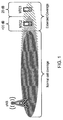
- Figure 1 shows the coverage of a cell which consists of the existing (termed as 'normal') coverage and the targeted coverage extension (due to MTC located at the cell edge and in a basement). For those MTC devices in the normal coverage, no additional coverage enhancement is required. For those MTC devices in the extended coverage region as shown Figure 1 , not all MTC devices require as much as 20 dB coverage extension. Some MTC devices (e.g. MTC 2 located in the region shaded in Figure 1 ) will require coverage extension that is less than 20 dB and hence a message to/from these devices would require less repetitions compared to a MTC device in the 20 dB region.
- MTC 2 located in the region shaded in Figure 1
- MTC1 requires a 20 dB improvement and MTC2 requires a 13 dB coverage improvement, so the number of repetitions for MTC2 is 4 times less than that of MTC1.
- the amount of resource saving from using less than the maximum number of repetitions for MTC2 is significant since the maximum number of repetitions is large (i.e. in the hundreds), thereby improving spectral efficiency significantly.
- providing different levels of coverage extension for MTC devices is desirable.
- different channels will experience different levels of attenuation and so will require different numbers of repetitions in each coverage extension region.
- a base station method may comprise the step of encoding an index.
- the index may be encoded on a first downlink channel between the base station and user equipment.
- the index may identify a number of times that transmissions are repeated on one or more other channels between the base station and the user equipment. This provides an efficient and reliable technique for controlling and identifying the number of times that transmissions are repeated by other channels in order to extend their coverage. In other words, by utilizing a particular index, a desired amount of repetition can be made in order to achieve a desired amount of coverage extension.
- the index identifies a number of times that transmissions are repeated by each of the at least one other channel. Accordingly, the index may identify how many times the transmissions are repeated by each of the other channels in order to achieve a desired level of coverage. In this way, a single index may identify the repetitions used by each of a number of different channels, which reduces the amount of signalling overhead required to provide this information separately for each of the different channels.
- the index identifies that transmissions are repeated a different number of times by each of the at least one other channel. Accordingly, a single index may identify that transmissions are repeated differing numbers of times on each of the other channels. That is to say that the number of repetitions on the first channel may be a first value, whilst the number of repetitions on the second channel may be a second value, where the first and second values differ. Again, this enables a detailed set of different numbers of repetitions to be communicated in an efficient manner through the transmission of a single index.
- the index comprises one of a plurality of values, each value identifying a different number of times that that transmissions are repeated by the at least one other channel. Accordingly, the index may comprise different values, each different value being associated with a different set of repetitions to be made by each of the other channels. For example, a first value of the index may indicate one set of repetitions to be made by the channels, whilst another value may indicate a different set of repetitions to be made by each of the other channels. In one embodiment, each value is associated with a desired level of coverage, each value identifying a set of repetitions for the channels intended to provide reliable communication between the base station and user equipment when experiencing that level of coverage.
- one value of the index may indicate a coverage extension of X dB and the index, when encoded with that value, indicates the number of repetitions required for each of the channels in order to achieve an extended coverage of X dB.
- the index when encoded with that value, indicates the number of repetitions required for each of the channels in order to achieve an extended coverage of X dB.
- the set of repetitions for each of the channels associated with that value of the index is intended to provide reliable communications between the user equipment and the base station with an extended coverage of YdB.
- the other channels comprise at least one data channel and at least one control channel and the index identifies that transmissions are repeated a different number of times by each of the at least one data channel and the at least one control channel. Accordingly, the number of repetitions for both control channels and data channels may be specified using the index. It will be appreciated that the number of repetitions will typically differ.
- the index identifies that transmissions are repeated on at least one of a downlink and an uplink. Accordingly, the index may specify the number of repetitions performed on either or both uplink and downlink. In one embodiment, the numbers of repetitions on downlink and uplink may be one of the same and different.
- the index identifies a first number of repetitions for use in uplink transmissions for a first period and at least one subsequent number of repetitions for use in uplink transmission for at least one subsequent period. Accordingly, the index may identify an initial number of repetitions to be used in uplink, but also identify other numbers of repetitions to be used subsequently in uplink.
- the index identifies a first number of repetitions for use in a first attempted RACH procedure and at least one subsequent number of repetitions for use in at least one subsequent attempted RACH procedure. Accordingly, the index may identify an initial number of repetitions to be used on initiating a RACH procedure, but also specify other numbers of repetitions to be used should the RACH procedure fail.
- the method comprises selecting the index to serve different user equipment. Accordingly, different indexes may be used for different user equipment, which maybe located in different coverage areas.
- the method comprises selecting and encoding the index with another of the plurality of values. Accordingly, the value of the index may change dynamically in response to changing conditions.
- the step of selecting comprises selecting the index with another of the plurality of values in response to a request to change the value from user equipment.
- the user equipment may indicate to the base station that it wishes to change the value of the index.
- the base station may assess whether such a change is permitted and, if so, may select the requested value of the index.
- the method comprises transmitting channels with repetitions indicated by the index.
- the method comprises decoding received channels with repetitions indicated by the index.
- the first downlink channel comprises a physical broadcast channel.
- the other channels comprise at least one of Physical Downlink Control Channel, Physical Downlink Shared Channel, Physical Uplink Control Channel, Physical Uplink Shared Channel and Physical Random Access Channel.
- a default value of the index is utilised.
- a wireless telecommunication network base station as claimed in claim 11.
- the index identifies a number of times that transmissions are repeated by each of the at least one other channel.
- the index identifies that transmissions are repeated a different number of times by each of the at least one other channel.
- the index comprises one of a plurality of values, each value identifying a different number of times that that transmissions are repeated by the at least one other channel.
- the other channels comprise at least one data channel and at least one control channel and the index identifies that transmissions are repeated a different number of times by each of the at least one data channel and the at least one control channel.
- the index identifies that transmissions are repeated on at least one of a downlink and an uplink.
- the numbers of repetitions on downlink and uplink may be one of the same and different.
- the index identifies a first number of repetitions for use in uplink transmissions for a first period and at least one subsequent number of repetitions for use in uplink transmission for at least one subsequent period.
- the index identifies a first number of repetitions for use in a first attempted RACH procedure and at least one subsequent number of repetitions for use in at least one subsequent attempted RACH procedure.
- the base station comprises selecting logic operable to select the index to serve different user equipment.
- the selecting logic is operable to select and the encoding logic is operable to encode the index with another of the plurality of values.
- the selecting logic is operable to select the index with another of the plurality of values in response to a request to change the value from user equipment.
- the base station comprises transmission logic operable to transmit channels with repetitions indicated by the index.
- the base station comprises decoding logic operable to decode received channels with repetitions indicated by the index.
- the first downlink channel comprises a physical broadcast channel.
- the other channels comprise at least one of Physical Downlink Control Channel, Physical Downlink Shared Channel, Physical Uplink Control Channel, Physical Uplink Shared Channel and Physical Random Access Channel.
- a default value of the index is utilised.
- a wireless telecommunication network user equipment method as claimed in claim 12.
- the index identifies a number of times that transmissions are repeated by each of the at least one other channel.
- the index identifies that transmissions are repeated a different number of times by each of the at least one other channel.
- the index comprises one of a plurality of values, each value identifying a different number of times that that transmissions are repeated by the at least one other channel.
- the other channels comprise at least one data channel and at least one control channel and the index identifies that transmissions are repeated a different number of times by each of the at least one data channel and the at least one control channel.
- the index identifies that transmissions are repeated on at least one of a downlink and an uplink.
- the numbers of repetitions on downlink and uplink may be one of the same and different.
- the index identifies a first number of repetitions for use in uplink transmissions for a first period and at least one subsequent number of repetitions for use in uplink transmission for at least one subsequent period.
- the index identifies a first number of repetitions for use in a first attempted RACH procedure and at least one subsequent number of repetitions for use in at least one subsequent attempted RACH procedure.
- the method comprises decoding the index with another of the plurality of values.
- the method comprises transmitting a request to change the value of the index.
- the method comprises transmitting channels with repetitions indicated by the index.
- the method comprises decoding received channels with repetitions indicated by the index.
- the first downlink channel comprises a physical broadcast channel.
- the other channels comprise at least one of Physical Downlink Control Channel, Physical Downlink Shared Channel, Physical Uplink Control Channel, Physical Uplink Shared Channel and Physical Random Access Channel.
- a default value of the index is utilised.
- a wireless telecommunication network user equipment as claimed in claim 13.
- the index identifies a number of times that transmissions are repeated by each of the at least one other channel.
- the index identifies that transmissions are repeated a different number of times by each of the at least one other channel.
- the index comprises one of a plurality of values, each value identifying a different number of times that that transmissions are repeated by the at least one other channel.
- the other channels comprise at least one data channel and at least one control channel and the index identifies that transmissions are repeated a different number of times by each of the at least one data channel and the at least one control channel.
- the index identifies that transmissions are repeated on at least one of a downlink and an uplink.
- the numbers of repetitions on downlink and uplink may be one of the same and different.
- the index identifies a first number of repetitions for use in uplink transmissions for a first period and at least one subsequent number of repetitions for use in uplink transmission for at least one subsequent period.
- the index identifies a first number of repetitions for use in a first attempted RACH procedure and at least one subsequent number of repetitions for use in at least one subsequent attempted RACH procedure.
- the decoding logic is operable to decode the index with another of the plurality of values.
- the user equipment comprises transmission logic operable to transmit a request to change the value of the index.
- the transmission logic is operable to transmit channels with repetitions indicated by the index.
- the decoding logic is operable to decode received channels with repetitions indicated by the index.
- the first downlink channel comprises a physical broadcast channel.
- the other channels comprise at least one of Physical Downlink Control Channel, Physical Downlink Shared Channel, Physical Uplink Control Channel, Physical Uplink Shared Channel and Physical Random Access Channel.
- a default value of the index is utilised.
- a computer program product operable, when executed on a computer, to perform the method steps of the first or the third aspect.
- Embodiments recognise that in the absence of increasing the transmit power, the simplest method of extending the coverage is to perform repetition of the physical channels.
- Embodiments introduce a repetition (or coverage) index, where each index points to a specific repetition characteristic.
- a repetition characteristic gives typically the amount of repetition for all the physical channels except for the primary and secondary synchronization signals (PSS/ SSS) and physical broadcast channel (PBCH).
- PSS/ SSS primary and secondary synchronization signals
- PBCH physical broadcast channel
- the repetition index is typically broadcast on a broadcast channel. This broadcasted repetition index indicates the amount of repetition to be used on multiple channels, the aim being to provide sufficient repetition for an intended coverage level.
- the repetition index may indicate a first number of repetitions for a control channel and a second number of repetitions for a data channel.
- a default value of the repetition index may be assumed.
- the number of repetitions performed on the PBCH need not match the repetition characteristic of any of the channels indicated by the repetition index.
- the PBCH maybe configured for coverage extension of 20dB, whilst the channels whose repetition levels are indicated by the repetition index may be configured for coverage extension of only 16dB. This can be used, for example, when a base station (eNB) repeats the PBCH such that all MTC devices in a coverage hole of up to 20 dB can attach to it (but not all MTC devices can connect to it).
- eNB base station
- the eNB may wish to phase its services to the MTC devices by first serving MTC devices up to a 10 dB coverage extension, followed by those at 16 dB and then those at 20 dB. This can be accomplished by setting the maximum repetition index according to the intended coverage level.
- a default repetition index is used as the maximum repetition index.
- An example of a default repetition index is the highest repetition index (i.e. corresponding to the largest coverage extension of 20 dB).
- the uplink channels and downlink channels use different repetition indices. That is, the uplink channels may have a repetition characteristic that has a different targeted coverage to that of the downlink. This embodiment may be useful if the uplink and downlink radio have very different characteristics or if the uplink and downlink are served by different nodes (e.g. the uplink is served by a small cell whilst the downlink is served by a macro cell).
- the repetition index can be changed whilst the MTC device is connected. This is useful if the MTC device has a more favourable coverage than that broadcast by the eNB and hence the MTC device may request (e.g. during a radio resource connect (RRC) Connection) to change the repetition index to one that has fewer number of repetitions in the physical channel.
- RRC radio resource connect
- the eNB may choose not to obey the MTC device's request to change its repetition characteristic (e.g. the eNB may wish to change the power spectral density instead).
- the eNB may change the (uplink) repetition index if it deemed that the MTC device can benefit from such a change.
- the change to the repetition index can be done via RRC signalling.
- Table 1 shows an example of the repetition index values and their corresponding repetition characteristics for some downlink channels. Each repetition characteristics (indicated by a repetition index) would give the amount of repetitions required for each downlink physical channel. Each repetition index would correspond to approximately a required coverage extension. Table 1: Repetition index and characteristic for downlink physical channels Repetition Index Amount of Repetition Coverage Ext (dB) (for information only-not explicitly indicated by the repetition index) PDCCH PDSCH 0 1 1 0 1 3 4 10 2 12 14 16 3 29 34 20
- Table 2 shows an example of the repetition index values and their corresponding repetition characteristics for uplink channels.
- Each repetition characteristic gives the amount of repetition required for each uplink physical channel.
- PRACH physical random access channel
- Table 2 Repetition index and characteristics for uplink physical channels Repetition Index Am ount of Repetition Coverage Ext (dB) (for information only - not explicitly indicated by the repetition index) PUCCH PUSCH PRACH 1st 2nd 3rd 0 1 1 N/A N/A N/A 0 1 3 10 2 4 8 10 2 9 40 8 16 32 16 3 23 100 20 40 80 20
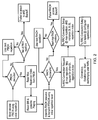
- Figure 2 is a flow chart illustrating the procedure followed to connect an MTC device to an eNB.
- the eNB sets its repetition index to 2 (corresponding to a 16 dB coverage extension).
- This repetition index is sent using the PBCH.
- Different levels of repetitions can be used for PBCH to target different levels of coverage.
- the level of repetitions used on the PBCH is summarized in Table 3.
- the PBCH is repeated for the level required for 16 dB of coverage extension which in this example is six times. It will be appreciated that the repetition level for PBCH need not correspond to the maximum repetition index.
- Table 3 PBCH repetition PBCH Repetition Coverage Ext (dB) 1 0 2 10 6 16 15 20
- MTC1 and MTC2 are in an 8 dB and an 18 dB coverage hole, respectively.
- steps are performed:
- MTC2 attempts to blind decode the PBCH assuming a 6x repetition but fails to decode the PBCH. MTC2 then tries the next repetition level, i.e. 15x, in which case it will fail. Having reached the maximum possible repetition level on PBCH, MTC2 failed to attach to the eNB and would retry at another time (hoping that the eNB would increase its coverage).
- MTC1 attempts to decode the SIBs using 12x and 14x repetitions on the Physical Downlink Control Channel (PDCCH) and Physical Downlink Shared Channel (PDSCH) respectively as per repetition index of 2 (see Table 1). From the SIB it extracts the set of RACH resource where it can perform repetition of its PRACH.
- PDCH Physical Downlink Control Channel
- PDSCH Physical Downlink Shared Channel
- MTC1 transmits its PRACH with 8x repetitions. It fails the PRACH process after failing to receive any response from the network. It then uses the next level of repetition at 16 ⁇ , in which case it successfully gets a response from the network.
- the RAR (Random Access Response) carried by the PDSCH is repeated 14x, which corresponds to the max repetition index.
- MTC1 proceeds to send a RRC Connection Request.
- RRC Connection Request In the RRC Connection Request, it indicates that it prefers a downlink repetition index of 1 (since it is in a coverage hole less than 10 dB but more than 0 dB).
- the RRC Connection Request is sent using the Physical Uplink Shared Channel (PUSCH) which is repeated 40x.
- PUSCH Physical Uplink Shared Channel
- the eNB response with a RRC Connection Setup message indicating that it can accept the UE repetition index of 1.
- the eNB indicates that the UE uses an uplink repetition index of 1.
- the RRC Connection Setup message is repeated 14x, i.e. corresponding to the max repetition index, since at this point the UE still have not got the OK to decode the PDSCH using repetition index of 1 (i.e. 4x)
- MTC1 sends its RRC Connection Setup Complete message to the eNB using PUSCH using 10 ⁇ repetitions, which corresponds to repetition index of 1.
- the exchanges of messages would therefore use repetition characteristic corresponding to repetition index 1 in the uplink and downlink.
- the downlink repetition index and uplink repetition index need not be the same.
- the requested downlink repetition index from the UE may be sent using a different RRC message, e.g. it can be sent using the RRC Connection Setup Complete message.
- This method allows different level of coverage extension to be managed by the eNB by using a maximum repetition index. Furthermore it can fine tune the coverage on a per MTC device basis.
- Allowing different level of coverage improves the spectral efficiency compared to a single level of coverage extension.
- program storage devices e.g., digital data storage media, which are machine or computer readable and encode machine-executable or computer-executable programs of instructions, wherein said instructions perform some or all of the steps of said above-described methods.
- the program storage devices may be, e.g., digital memories, magnetic storage media such as a magnetic disks and magnetic tapes, hard drives, or optically readable digital data storage media.
- the embodiments are also intended to cover computers programmed to perform said steps of the above-described methods.
- processors may be provided through the use of dedicated hardware as well as hardware capable of executing software in association with appropriate software.
- the functions may be provided by a single dedicated processor, by a single shared processor, or by a plurality of individual processors, some of which may be shared.
- processor or “controller” or “logic” should not be construed to refer exclusively to hardware capable of executing software, and may implicitly include, without limitation, digital signal processor (DSP) hardware, network processor, application specific integrated circuit (ASIC), field programmable gate array (FPGA), read only memory (ROM) for storing software, random access memory (RAM), and non volatile storage. Other hardware, conventional and/or custom, may also be included.
- DSP digital signal processor
- ASIC application specific integrated circuit
- FPGA field programmable gate array
- ROM read only memory
- RAM random access memory
- any switches shown in the Figures are conceptual only. Their function may be carried out through the operation of program logic, through dedicated logic, through the interaction of program control and dedicated logic, or even manually, the particular technique being selectable by the implementer as more specifically understood from the context.
- any block diagrams herein represent conceptual views of illustrative circuitry embodying the principles of the invention.
- any flow charts, flow diagrams, state transition diagrams, pseudo code, and the like represent various processes which may be substantially represented in computer readable medium and so executed by a computer or processor, whether or not such computer or processor is explicitly shown.
Landscapes
- Engineering & Computer Science (AREA)
- Computer Networks & Wireless Communication (AREA)
- Signal Processing (AREA)
- Quality & Reliability (AREA)
- Mobile Radio Communication Systems (AREA)
Claims (14)
- Verfahren für eine drahtlose Telekommunikationsnetz-Basisstation (eNB), umfassend:das Codieren eines Indexes auf einem ersten Downlink-Kanal zwischen besagter Basisstation und einem Benutzergerät (MTC1, MTC2), wobei der Index eine Anzahl von Malen angibt, wie oft Übertragungen von einer Vielzahl weiterer Kanäle zwischen besagter Basisstation und dem Benutzergerät wiederholt werden, wobei besagter Index eine Anzahl von Malen angibt, wie oft besagte Übertragungen von einem jeden aus besagter Vielzahl weiterer Kanäle wiederholt werden.
- Verfahren nach Anspruch 1, wobei besagter Index angibt, dass Übertragungen von einem jeden aus der Vielzahl weiterer Kanäle eine verschiedene Anzahl von Malen wiederholt werden.
- Das Verfahren nach einem jeglichen der vorgenannten Ansprüche, wobei besagter Index einen aus einer Vielzahl von Werten umfasst, wobei jeder Wert eine verschiedene Anzahl von Malen angibt, wie oft besagte Übertragungen von besagter Vielzahl weiterer Kanäle wiederholt werden.
- Das Verfahren nach einem jeglichen der vorgenannten Ansprüche, wobei besagte weitere Kanäle mindestens einen Datenkanal und mindestens einen Steuerkanal umfassen und besagter Index angibt, dass die Übertragungen von einem jeden besagten, mindestens einen Datenkanal und mindestens einen Steuerkanal verschieden oft wiederholt werden.
- Das Verfahren nach einem jeglichen der vorgenannten Ansprüche, wobei besagter Index angibt, dass die Übertragungen mindestens entweder auf einem Downlink-Kanal oder auf einem Uplink-Kanal wiederholt werden.
- Das Verfahren nach einem jeglichen der vorgenannten Anspruche, wobei besagter Index eine erste Anzahl von Wiederholungen für die Anwendung in Uplink-Übertragungen für einen ersten Zeitraum und mindestens eine darauffolgende Anzahl von Wiederholungen für die Anwendung in Uplink-Übertragungen für mindestens einen darauffolgenden Zeitraum angibt.
- Das Verfahren nach einem jeglichen der vorgenannten Ansprüche, wobei besagter Index eine erste Anzahl von Wiederholungen für die Anwendung in einem zuerst versuchten RACH-Verfahren und mindestens eine darauffolgende Anzahl von Wiederholungen für die Anwendung in mindestens einem darauffolgend versuchten RACH-Verfahren angibt.
- Das Verfahren nach einem beliebigen der vorstehenden Ansprüche, umfassend:das Auswählen besagten Indexes für das Bedienen verschiedener Benutzergeräte.
- Das Verfahren nach einem beliebigen der vorstehenden Ansprüche, umfassend:Das Auswählen und Codieren besagten Indexes mit einem weiteren aus besagter Vielzahl von Werten.
- Das Verfahren nach Anspruch 10, wobei besagter Auswahlschritt das Auswählen besagten Indexes mit einem weiteren aus besagter Vielzahl von Werten in Reaktion auf eine Anfrage zur Änderung besagten Werts seitens eines Benutzergeräts umfasst.
- Basisstation eines drahtlosen Telekommunikationsnetzes, umfassend:das Codieren einer Logik, die ausgelegt ist für das Codieren eines Indexes auf einem ersten Downlink-Kanal zwischen besagter Basisstation und einem Benutzergerät, wobei der Index eine Anzahl von Malen angibt, wie oft Übertragungen von einer Vielzahl weiterer Kanäle zwischen besagter Basisstation und dem Benutzergerät wiederholt werden, wobei besagter Index eine Anzahl von Malen angibt, wie oft besagte Übertragungen von einem jeden aus besagter Vielzahl weiterer Kanäle wiederholt werden.
- Verfahren für ein Benutzergerät eines drahtlosen Telekommunikationsnetzes, umfassend:das Decodieren eines Indexes auf einem ersten Downlink-Kanal zwischen einer Basisstation und besagtem Benutzergerät, wobei der Index eine Anzahl von Malen angibt, wie oft Übertragungen von einer Vielzahl weiterer Kanäle zwischen besagter Basisstation und besagtem Benutzergerät wiederholt werden, wobei besagter Index eine Anzahl von Malen angibt, wie oft besagte Übertragungen von einem jeden aus besagter Vielzahl weiterer Kanäle wiederholt werden.
- Benutzergerät eines drahtlosen Telekommunikationsnetzes, umfassend:Decodierungslogik, ausgelegt für das Decodieren eines Indexes auf einem ersten Downlink-Kanal zwischen einer Basisstation und besagtem Benutzergerät, wobei der Index eine Anzahl von Malen angibt, wie oft Übertragungen von einer Vielzahl weiterer Kanäle zwischen besagter Basisstation und besagtem Benutzergerät wiederholt werden, wobei besagter Index eine Anzahl von Malen angibt, wie oft besagte Übertragungen von einem jeden aus besagter Vielzahl weiterer Kanäle wiederholt werden.
- Computerprogramm-Produkt, dafür ausgelegt, um bei dessen Ausführung auf einem Computer die Verfahrensschritte gemäß einem beliebigen der Ansprüche 1 bis 10 oder 12 auszuführen.
Priority Applications (6)
| Application Number | Priority Date | Filing Date | Title |
|---|---|---|---|
| EP13305449.4A EP2787672B1 (de) | 2013-04-05 | 2013-04-05 | Abwärtsstreckenkommunikation mit Wiederholungsübertragung |
| CN201480028894.3A CN105393478B (zh) | 2013-04-05 | 2014-03-12 | 一种用于通信的方法、基站、用户设备以及计算机可读存储介质 |
| KR1020157031557A KR101780886B1 (ko) | 2013-04-05 | 2014-03-12 | 반복 송신들을 갖는 다운링크 통신 |
| PCT/EP2014/000663 WO2014161631A1 (en) | 2013-04-05 | 2014-03-12 | Downlink communication with repetition transmissions |
| JP2016505725A JP6513633B2 (ja) | 2013-04-05 | 2014-03-12 | ダウンリンク通信 |
| TW103109904A TW201503751A (zh) | 2013-04-05 | 2014-03-17 | 下行鏈路通訊 |
Applications Claiming Priority (1)
| Application Number | Priority Date | Filing Date | Title |
|---|---|---|---|
| EP13305449.4A EP2787672B1 (de) | 2013-04-05 | 2013-04-05 | Abwärtsstreckenkommunikation mit Wiederholungsübertragung |
Publications (2)
| Publication Number | Publication Date |
|---|---|
| EP2787672A1 EP2787672A1 (de) | 2014-10-08 |
| EP2787672B1 true EP2787672B1 (de) | 2016-08-10 |
Family
ID=48193230
Family Applications (1)
| Application Number | Title | Priority Date | Filing Date |
|---|---|---|---|
| EP13305449.4A Active EP2787672B1 (de) | 2013-04-05 | 2013-04-05 | Abwärtsstreckenkommunikation mit Wiederholungsübertragung |
Country Status (6)
| Country | Link |
|---|---|
| EP (1) | EP2787672B1 (de) |
| JP (1) | JP6513633B2 (de) |
| KR (1) | KR101780886B1 (de) |
| CN (1) | CN105393478B (de) |
| TW (1) | TW201503751A (de) |
| WO (1) | WO2014161631A1 (de) |
Families Citing this family (18)
| Publication number | Priority date | Publication date | Assignee | Title |
|---|---|---|---|---|
| CN104348580A (zh) * | 2013-08-06 | 2015-02-11 | 夏普株式会社 | 下行物理信道的发送和接收方法以及基站和用户设备 |
| EP2835923B1 (de) | 2013-08-07 | 2017-06-21 | Alcatel Lucent | Benutzergerät und Verfahren zur CQI Rückmeldung mit Interferenz unterdrückungsfähigem Empfänger |
| US9439084B2 (en) * | 2014-03-24 | 2016-09-06 | Intel Corporation | Techniques and configurations associated with operation of an evolved node B at multiple coverage enhancement levels |
| EP3128693A4 (de) * | 2014-04-23 | 2017-03-01 | Huawei Technologies Co., Ltd. | Datenübertragungsverfahren und -vorrichtung |
| WO2016114626A1 (ko) * | 2015-01-16 | 2016-07-21 | 엘지전자 주식회사 | 기계타입통신을 지원하는 무선접속시스템에서 공용 제어 메시지를 송수신하는 방법 및 장치 |
| EP3051894B1 (de) * | 2015-01-30 | 2017-10-11 | Alcatel Lucent | Verringerung eines signalisierungsaufwands für maschinentypkommunikationen (mtc) |
| US10448382B2 (en) | 2015-01-30 | 2019-10-15 | Sony Corporation | Telecommunications apparatus and method |
| EP3051728A1 (de) * | 2015-01-30 | 2016-08-03 | Alcatel Lucent | Verfahren zur bereitstellung einer wiederholungsrate |
| US9918344B2 (en) * | 2015-04-09 | 2018-03-13 | Intel IP Corporation | Random access procedure for enhanced coverage support |
| HUE049649T2 (hu) * | 2015-05-15 | 2020-09-28 | Ericsson Telefon Ab L M | Kommunikációs transzport blokk vezetéknélküli hálózatokban |
| CN107211455B (zh) * | 2015-05-28 | 2020-10-30 | 广州配天通信技术有限公司 | 一种寻呼方法及基站、核心网设备、用户设备 |
| CN109803389A (zh) * | 2017-11-17 | 2019-05-24 | 展讯通信(上海)有限公司 | 空闲态控制资源集的配置方法、装置及基站 |
| US11019504B2 (en) * | 2018-04-04 | 2021-05-25 | Qualcomm Incorporated | On-demand coverage extended broadcast signal |
| US11411672B2 (en) | 2019-09-03 | 2022-08-09 | Electronics And Telecommunication Research Institute | Method and apparatus for data transmission in wireless communication system |
| WO2022025038A1 (ja) * | 2020-07-30 | 2022-02-03 | シャープ株式会社 | 端末装置、基地局装置、および、通信方法 |
| JP2022025801A (ja) * | 2020-07-30 | 2022-02-10 | シャープ株式会社 | 端末装置、基地局装置、および、通信方法 |
| KR20220015839A (ko) | 2020-07-31 | 2022-02-08 | 삼성전자주식회사 | 무선 협력 통신 시스템에서 제어 정보 송수신 방법 및 장치 |
| US12495413B2 (en) * | 2021-01-14 | 2025-12-09 | Samsung Electronics Co., Ltd. | Method and apparatus for transmission of uplink channels |
Family Cites Families (7)
| Publication number | Priority date | Publication date | Assignee | Title |
|---|---|---|---|---|
| JPH11355854A (ja) * | 1998-06-10 | 1999-12-24 | Matsushita Electric Ind Co Ltd | デジタルデータ送受信方法、デジタルデータの送受信に用いられる基地局装置、およびデジタルデータの送受信に用いられる移動体端末装置 |
| MX2010001480A (es) * | 2007-08-10 | 2010-03-01 | Panasonic Corp | Dispositivo terminal y dispositivo de estacion base. |
| CN101883423B (zh) * | 2009-05-07 | 2012-07-04 | 电信科学技术研究院 | 一种确定终端的位置信息的方法、系统和装置 |
| CN102045644B (zh) * | 2009-10-22 | 2013-12-25 | 电信科学技术研究院 | 一种物理下行控制信道的覆盖处理方法及设备 |
| US8929306B2 (en) * | 2010-05-26 | 2015-01-06 | Lg Electronics Inc. | NAS-based signaling protocol for overload protection of random access in massive machine type communication |
| KR20120041932A (ko) * | 2010-10-22 | 2012-05-03 | 한국전자통신연구원 | 랜덤 액세스 자원 할당을 위한 기지국의 통신 방법 및 랜덤 액세스 자원 할당을 이용한 단말의 통신 방법 및 그 장치 |
| US9094987B2 (en) * | 2011-09-26 | 2015-07-28 | Electronics And Telecommunications Research Institute | Method for generating random access signal of machine type communication device using narrow bandwidth |
-
2013
- 2013-04-05 EP EP13305449.4A patent/EP2787672B1/de active Active
-
2014
- 2014-03-12 KR KR1020157031557A patent/KR101780886B1/ko active Active
- 2014-03-12 WO PCT/EP2014/000663 patent/WO2014161631A1/en not_active Ceased
- 2014-03-12 JP JP2016505725A patent/JP6513633B2/ja active Active
- 2014-03-12 CN CN201480028894.3A patent/CN105393478B/zh active Active
- 2014-03-17 TW TW103109904A patent/TW201503751A/zh unknown
Also Published As
| Publication number | Publication date |
|---|---|
| CN105393478A (zh) | 2016-03-09 |
| CN105393478B (zh) | 2019-06-07 |
| TW201503751A (zh) | 2015-01-16 |
| KR20150140332A (ko) | 2015-12-15 |
| WO2014161631A1 (en) | 2014-10-09 |
| JP2016518059A (ja) | 2016-06-20 |
| EP2787672A1 (de) | 2014-10-08 |
| JP6513633B2 (ja) | 2019-05-15 |
| KR101780886B1 (ko) | 2017-09-21 |
Similar Documents
| Publication | Publication Date | Title |
|---|---|---|
| EP2787672B1 (de) | Abwärtsstreckenkommunikation mit Wiederholungsübertragung | |
| US20220361117A1 (en) | Beam Failure Report | |
| CN103222329B (zh) | 移动终端、基站和其中的方法 | |
| EP2903195B1 (de) | Kommunikationstechniken mit einem Wiederholungsplan in einem vergrösserten Versorgungsgebiet | |
| US9596660B2 (en) | Method for transmitting and receiving random access preamble and device therefor | |
| EP2787671B1 (de) | Abwärtsstreckenkommunikation mit Wiederholungsübertragung | |
| US11917659B2 (en) | Telecommunications apparatus and methods including selecting a TBS based on an indicated maximum TBS | |
| US11729815B2 (en) | Random-access procedure | |
| EP3753147B1 (de) | Verfahren und vorrichtungen zur ratenanpassung während der initialisierung eines benutzergeräts | |
| US11405915B2 (en) | Adaptation of the number of NR PDCCH candidates | |
| US20150358914A1 (en) | Bs and ue, and power control methods used in the same | |
| EP3429281A1 (de) | Leistungssteuerungsverfahren und -vorrichtung | |
| EP3785473B1 (de) | Indexierung eines synchronisationssignalblocks | |
| EP3883319A1 (de) | Drahtloskommunikationsverfahren, endgerätevorrichtung und netzwerkvorrichtung | |
| CN113840341B (zh) | 通信的方法、通信装置 | |
| KR102849325B1 (ko) | 전력 제어 파라미터 표시 | |
| EP2557863B1 (de) | Verfahren, Vorrichtung und Computerprogramm für einen mobilen Sender-Empfänger und für einen Basisstations-Sender-Empfänger | |
| KR20250055160A (ko) | 기지국 에너지 세이빙을 적용하는 무선 통신 시스템의 간섭 제어 방법 및 장치 | |
| WO2026035177A1 (en) | Subband full duplex (sbfd) aware user equipment (ue) for subband full duplex |
Legal Events
| Date | Code | Title | Description |
|---|---|---|---|
| PUAI | Public reference made under article 153(3) epc to a published international application that has entered the european phase |
Free format text: ORIGINAL CODE: 0009012 |
|
| 17P | Request for examination filed |
Effective date: 20140604 |
|
| AK | Designated contracting states |
Kind code of ref document: A1 Designated state(s): AL AT BE BG CH CY CZ DE DK EE ES FI FR GB GR HR HU IE IS IT LI LT LU LV MC MK MT NL NO PL PT RO RS SE SI SK SM TR |
|
| AX | Request for extension of the european patent |
Extension state: BA ME |
|
| RBV | Designated contracting states (corrected) |
Designated state(s): AL AT BE BG CH CY CZ DE DK EE ES FI FR GB GR HR HU IE IS IT LI LT LU LV MC MK MT NL NO PL PT RO RS SE SI SK SM TR |
|
| GRAP | Despatch of communication of intention to grant a patent |
Free format text: ORIGINAL CODE: EPIDOSNIGR1 |
|
| INTG | Intention to grant announced |
Effective date: 20160308 |
|
| GRAS | Grant fee paid |
Free format text: ORIGINAL CODE: EPIDOSNIGR3 |
|
| GRAA | (expected) grant |
Free format text: ORIGINAL CODE: 0009210 |
|
| AK | Designated contracting states |
Kind code of ref document: B1 Designated state(s): AL AT BE BG CH CY CZ DE DK EE ES FI FR GB GR HR HU IE IS IT LI LT LU LV MC MK MT NL NO PL PT RO RS SE SI SK SM TR |
|
| REG | Reference to a national code |
Ref country code: GB Ref legal event code: FG4D |
|
| REG | Reference to a national code |
Ref country code: CH Ref legal event code: EP Ref country code: AT Ref legal event code: REF Ref document number: 819893 Country of ref document: AT Kind code of ref document: T Effective date: 20160815 |
|
| REG | Reference to a national code |
Ref country code: IE Ref legal event code: FG4D |
|
| REG | Reference to a national code |
Ref country code: DE Ref legal event code: R096 Ref document number: 602013010255 Country of ref document: DE |
|
| REG | Reference to a national code |
Ref country code: LT Ref legal event code: MG4D |
|
| REG | Reference to a national code |
Ref country code: NL Ref legal event code: MP Effective date: 20160810 |
|
| REG | Reference to a national code |
Ref country code: AT Ref legal event code: MK05 Ref document number: 819893 Country of ref document: AT Kind code of ref document: T Effective date: 20160810 |
|
| PG25 | Lapsed in a contracting state [announced via postgrant information from national office to epo] |
Ref country code: IS Free format text: LAPSE BECAUSE OF FAILURE TO SUBMIT A TRANSLATION OF THE DESCRIPTION OR TO PAY THE FEE WITHIN THE PRESCRIBED TIME-LIMIT Effective date: 20161210 Ref country code: LT Free format text: LAPSE BECAUSE OF FAILURE TO SUBMIT A TRANSLATION OF THE DESCRIPTION OR TO PAY THE FEE WITHIN THE PRESCRIBED TIME-LIMIT Effective date: 20160810 Ref country code: NO Free format text: LAPSE BECAUSE OF FAILURE TO SUBMIT A TRANSLATION OF THE DESCRIPTION OR TO PAY THE FEE WITHIN THE PRESCRIBED TIME-LIMIT Effective date: 20161110 Ref country code: NL Free format text: LAPSE BECAUSE OF FAILURE TO SUBMIT A TRANSLATION OF THE DESCRIPTION OR TO PAY THE FEE WITHIN THE PRESCRIBED TIME-LIMIT Effective date: 20160810 Ref country code: HR Free format text: LAPSE BECAUSE OF FAILURE TO SUBMIT A TRANSLATION OF THE DESCRIPTION OR TO PAY THE FEE WITHIN THE PRESCRIBED TIME-LIMIT Effective date: 20160810 Ref country code: IT Free format text: LAPSE BECAUSE OF FAILURE TO SUBMIT A TRANSLATION OF THE DESCRIPTION OR TO PAY THE FEE WITHIN THE PRESCRIBED TIME-LIMIT Effective date: 20160810 Ref country code: RS Free format text: LAPSE BECAUSE OF FAILURE TO SUBMIT A TRANSLATION OF THE DESCRIPTION OR TO PAY THE FEE WITHIN THE PRESCRIBED TIME-LIMIT Effective date: 20160810 Ref country code: FI Free format text: LAPSE BECAUSE OF FAILURE TO SUBMIT A TRANSLATION OF THE DESCRIPTION OR TO PAY THE FEE WITHIN THE PRESCRIBED TIME-LIMIT Effective date: 20160810 |
|
| PG25 | Lapsed in a contracting state [announced via postgrant information from national office to epo] |
Ref country code: SE Free format text: LAPSE BECAUSE OF FAILURE TO SUBMIT A TRANSLATION OF THE DESCRIPTION OR TO PAY THE FEE WITHIN THE PRESCRIBED TIME-LIMIT Effective date: 20160810 Ref country code: AT Free format text: LAPSE BECAUSE OF FAILURE TO SUBMIT A TRANSLATION OF THE DESCRIPTION OR TO PAY THE FEE WITHIN THE PRESCRIBED TIME-LIMIT Effective date: 20160810 Ref country code: LV Free format text: LAPSE BECAUSE OF FAILURE TO SUBMIT A TRANSLATION OF THE DESCRIPTION OR TO PAY THE FEE WITHIN THE PRESCRIBED TIME-LIMIT Effective date: 20160810 Ref country code: ES Free format text: LAPSE BECAUSE OF FAILURE TO SUBMIT A TRANSLATION OF THE DESCRIPTION OR TO PAY THE FEE WITHIN THE PRESCRIBED TIME-LIMIT Effective date: 20160810 Ref country code: PL Free format text: LAPSE BECAUSE OF FAILURE TO SUBMIT A TRANSLATION OF THE DESCRIPTION OR TO PAY THE FEE WITHIN THE PRESCRIBED TIME-LIMIT Effective date: 20160810 Ref country code: PT Free format text: LAPSE BECAUSE OF FAILURE TO SUBMIT A TRANSLATION OF THE DESCRIPTION OR TO PAY THE FEE WITHIN THE PRESCRIBED TIME-LIMIT Effective date: 20161212 Ref country code: GR Free format text: LAPSE BECAUSE OF FAILURE TO SUBMIT A TRANSLATION OF THE DESCRIPTION OR TO PAY THE FEE WITHIN THE PRESCRIBED TIME-LIMIT Effective date: 20161111 |
|
| REG | Reference to a national code |
Ref country code: FR Ref legal event code: PLFP Year of fee payment: 5 |
|
| PG25 | Lapsed in a contracting state [announced via postgrant information from national office to epo] |
Ref country code: RO Free format text: LAPSE BECAUSE OF FAILURE TO SUBMIT A TRANSLATION OF THE DESCRIPTION OR TO PAY THE FEE WITHIN THE PRESCRIBED TIME-LIMIT Effective date: 20160810 Ref country code: EE Free format text: LAPSE BECAUSE OF FAILURE TO SUBMIT A TRANSLATION OF THE DESCRIPTION OR TO PAY THE FEE WITHIN THE PRESCRIBED TIME-LIMIT Effective date: 20160810 |
|
| REG | Reference to a national code |
Ref country code: DE Ref legal event code: R097 Ref document number: 602013010255 Country of ref document: DE |
|
| PG25 | Lapsed in a contracting state [announced via postgrant information from national office to epo] |
Ref country code: CZ Free format text: LAPSE BECAUSE OF FAILURE TO SUBMIT A TRANSLATION OF THE DESCRIPTION OR TO PAY THE FEE WITHIN THE PRESCRIBED TIME-LIMIT Effective date: 20160810 Ref country code: SK Free format text: LAPSE BECAUSE OF FAILURE TO SUBMIT A TRANSLATION OF THE DESCRIPTION OR TO PAY THE FEE WITHIN THE PRESCRIBED TIME-LIMIT Effective date: 20160810 Ref country code: BE Free format text: LAPSE BECAUSE OF FAILURE TO SUBMIT A TRANSLATION OF THE DESCRIPTION OR TO PAY THE FEE WITHIN THE PRESCRIBED TIME-LIMIT Effective date: 20160810 Ref country code: DK Free format text: LAPSE BECAUSE OF FAILURE TO SUBMIT A TRANSLATION OF THE DESCRIPTION OR TO PAY THE FEE WITHIN THE PRESCRIBED TIME-LIMIT Effective date: 20160810 Ref country code: SM Free format text: LAPSE BECAUSE OF FAILURE TO SUBMIT A TRANSLATION OF THE DESCRIPTION OR TO PAY THE FEE WITHIN THE PRESCRIBED TIME-LIMIT Effective date: 20160810 Ref country code: BG Free format text: LAPSE BECAUSE OF FAILURE TO SUBMIT A TRANSLATION OF THE DESCRIPTION OR TO PAY THE FEE WITHIN THE PRESCRIBED TIME-LIMIT Effective date: 20161110 |
|
| PLBE | No opposition filed within time limit |
Free format text: ORIGINAL CODE: 0009261 |
|
| STAA | Information on the status of an ep patent application or granted ep patent |
Free format text: STATUS: NO OPPOSITION FILED WITHIN TIME LIMIT |
|
| 26N | No opposition filed |
Effective date: 20170511 |
|
| PG25 | Lapsed in a contracting state [announced via postgrant information from national office to epo] |
Ref country code: SI Free format text: LAPSE BECAUSE OF FAILURE TO SUBMIT A TRANSLATION OF THE DESCRIPTION OR TO PAY THE FEE WITHIN THE PRESCRIBED TIME-LIMIT Effective date: 20160810 |
|
| REG | Reference to a national code |
Ref country code: CH Ref legal event code: PL |
|
| REG | Reference to a national code |
Ref country code: IE Ref legal event code: MM4A |
|
| PG25 | Lapsed in a contracting state [announced via postgrant information from national office to epo] |
Ref country code: MC Free format text: LAPSE BECAUSE OF FAILURE TO SUBMIT A TRANSLATION OF THE DESCRIPTION OR TO PAY THE FEE WITHIN THE PRESCRIBED TIME-LIMIT Effective date: 20160810 |
|
| PG25 | Lapsed in a contracting state [announced via postgrant information from national office to epo] |
Ref country code: LI Free format text: LAPSE BECAUSE OF NON-PAYMENT OF DUE FEES Effective date: 20170430 Ref country code: LU Free format text: LAPSE BECAUSE OF NON-PAYMENT OF DUE FEES Effective date: 20170405 Ref country code: CH Free format text: LAPSE BECAUSE OF NON-PAYMENT OF DUE FEES Effective date: 20170430 |
|
| REG | Reference to a national code |
Ref country code: FR Ref legal event code: PLFP Year of fee payment: 6 |
|
| PG25 | Lapsed in a contracting state [announced via postgrant information from national office to epo] |
Ref country code: IE Free format text: LAPSE BECAUSE OF NON-PAYMENT OF DUE FEES Effective date: 20170405 |
|
| PG25 | Lapsed in a contracting state [announced via postgrant information from national office to epo] |
Ref country code: MT Free format text: LAPSE BECAUSE OF NON-PAYMENT OF DUE FEES Effective date: 20170405 |
|
| PG25 | Lapsed in a contracting state [announced via postgrant information from national office to epo] |
Ref country code: AL Free format text: LAPSE BECAUSE OF FAILURE TO SUBMIT A TRANSLATION OF THE DESCRIPTION OR TO PAY THE FEE WITHIN THE PRESCRIBED TIME-LIMIT Effective date: 20160810 |
|
| PG25 | Lapsed in a contracting state [announced via postgrant information from national office to epo] |
Ref country code: HU Free format text: LAPSE BECAUSE OF FAILURE TO SUBMIT A TRANSLATION OF THE DESCRIPTION OR TO PAY THE FEE WITHIN THE PRESCRIBED TIME-LIMIT; INVALID AB INITIO Effective date: 20130405 |
|
| PG25 | Lapsed in a contracting state [announced via postgrant information from national office to epo] |
Ref country code: CY Free format text: LAPSE BECAUSE OF FAILURE TO SUBMIT A TRANSLATION OF THE DESCRIPTION OR TO PAY THE FEE WITHIN THE PRESCRIBED TIME-LIMIT Effective date: 20160810 |
|
| PG25 | Lapsed in a contracting state [announced via postgrant information from national office to epo] |
Ref country code: MK Free format text: LAPSE BECAUSE OF FAILURE TO SUBMIT A TRANSLATION OF THE DESCRIPTION OR TO PAY THE FEE WITHIN THE PRESCRIBED TIME-LIMIT Effective date: 20160810 |
|
| PG25 | Lapsed in a contracting state [announced via postgrant information from national office to epo] |
Ref country code: TR Free format text: LAPSE BECAUSE OF FAILURE TO SUBMIT A TRANSLATION OF THE DESCRIPTION OR TO PAY THE FEE WITHIN THE PRESCRIBED TIME-LIMIT Effective date: 20160810 |
|
| PGFP | Annual fee paid to national office [announced via postgrant information from national office to epo] |
Ref country code: DE Payment date: 20250305 Year of fee payment: 13 |
|
| PGFP | Annual fee paid to national office [announced via postgrant information from national office to epo] |
Ref country code: GB Payment date: 20260312 Year of fee payment: 14 |
|
| PGFP | Annual fee paid to national office [announced via postgrant information from national office to epo] |
Ref country code: FR Payment date: 20260309 Year of fee payment: 14 |