EP2787687A1 - Interception de paquets et horodatage d'estimation des erreurs dans des protocoles de mesure active - Google Patents
Interception de paquets et horodatage d'estimation des erreurs dans des protocoles de mesure active Download PDFInfo
- Publication number
- EP2787687A1 EP2787687A1 EP14159119.8A EP14159119A EP2787687A1 EP 2787687 A1 EP2787687 A1 EP 2787687A1 EP 14159119 A EP14159119 A EP 14159119A EP 2787687 A1 EP2787687 A1 EP 2787687A1
- Authority
- EP
- European Patent Office
- Prior art keywords
- packet
- error estimation
- network device
- timestamp
- module
- Prior art date
- Legal status (The legal status is an assumption and is not a legal conclusion. Google has not performed a legal analysis and makes no representation as to the accuracy of the status listed.)
- Withdrawn
Links
- 238000005259 measurement Methods 0.000 title claims abstract description 93
- 238000012360 testing method Methods 0.000 claims abstract description 85
- 238000000034 method Methods 0.000 claims abstract description 48
- 230000004044 response Effects 0.000 claims description 8
- 230000001934 delay Effects 0.000 description 17
- 238000010586 diagram Methods 0.000 description 9
- 238000003860 storage Methods 0.000 description 8
- 230000007246 mechanism Effects 0.000 description 7
- 238000013459 approach Methods 0.000 description 5
- 230000006855 networking Effects 0.000 description 5
- 238000004891 communication Methods 0.000 description 4
- 230000008878 coupling Effects 0.000 description 3
- 238000010168 coupling process Methods 0.000 description 3
- 238000005859 coupling reaction Methods 0.000 description 3
- 230000009467 reduction Effects 0.000 description 3
- 230000005540 biological transmission Effects 0.000 description 2
- 230000008859 change Effects 0.000 description 2
- 238000001914 filtration Methods 0.000 description 2
- 230000006872 improvement Effects 0.000 description 2
- 239000000463 material Substances 0.000 description 2
- 230000004048 modification Effects 0.000 description 2
- 238000012986 modification Methods 0.000 description 2
- 230000003287 optical effect Effects 0.000 description 2
- 230000006978 adaptation Effects 0.000 description 1
- 230000002776 aggregation Effects 0.000 description 1
- 238000004220 aggregation Methods 0.000 description 1
- 230000004075 alteration Effects 0.000 description 1
- 230000006399 behavior Effects 0.000 description 1
- 230000008901 benefit Effects 0.000 description 1
- 239000000872 buffer Substances 0.000 description 1
- 238000013500 data storage Methods 0.000 description 1
- 230000006870 function Effects 0.000 description 1
- 230000010354 integration Effects 0.000 description 1
- 239000000696 magnetic material Substances 0.000 description 1
- 238000007726 management method Methods 0.000 description 1
- 238000004519 manufacturing process Methods 0.000 description 1
- 239000012782 phase change material Substances 0.000 description 1
- 230000008569 process Effects 0.000 description 1
- 238000012545 processing Methods 0.000 description 1
- 230000000644 propagated effect Effects 0.000 description 1
- 239000004065 semiconductor Substances 0.000 description 1
- 238000000638 solvent extraction Methods 0.000 description 1
- 230000003068 static effect Effects 0.000 description 1
- 239000011232 storage material Substances 0.000 description 1
Images


Classifications
-
- H—ELECTRICITY
- H04—ELECTRIC COMMUNICATION TECHNIQUE
- H04L—TRANSMISSION OF DIGITAL INFORMATION, e.g. TELEGRAPHIC COMMUNICATION
- H04L43/00—Arrangements for monitoring or testing data switching networks
- H04L43/08—Monitoring or testing based on specific metrics, e.g. QoS, energy consumption or environmental parameters
- H04L43/0852—Delays
-
- H—ELECTRICITY
- H04—ELECTRIC COMMUNICATION TECHNIQUE
- H04L—TRANSMISSION OF DIGITAL INFORMATION, e.g. TELEGRAPHIC COMMUNICATION
- H04L43/00—Arrangements for monitoring or testing data switching networks
- H04L43/10—Active monitoring, e.g. heartbeat, ping or trace-route
- H04L43/106—Active monitoring, e.g. heartbeat, ping or trace-route using time related information in packets, e.g. by adding timestamps
-
- H—ELECTRICITY
- H04—ELECTRIC COMMUNICATION TECHNIQUE
- H04L—TRANSMISSION OF DIGITAL INFORMATION, e.g. TELEGRAPHIC COMMUNICATION
- H04L43/00—Arrangements for monitoring or testing data switching networks
- H04L43/50—Testing arrangements
-
- H—ELECTRICITY
- H04—ELECTRIC COMMUNICATION TECHNIQUE
- H04L—TRANSMISSION OF DIGITAL INFORMATION, e.g. TELEGRAPHIC COMMUNICATION
- H04L43/00—Arrangements for monitoring or testing data switching networks
- H04L43/02—Capturing of monitoring data
- H04L43/028—Capturing of monitoring data by filtering
-
- H—ELECTRICITY
- H04—ELECTRIC COMMUNICATION TECHNIQUE
- H04L—TRANSMISSION OF DIGITAL INFORMATION, e.g. TELEGRAPHIC COMMUNICATION
- H04L43/00—Arrangements for monitoring or testing data switching networks
- H04L43/04—Processing captured monitoring data, e.g. for logfile generation
-
- H—ELECTRICITY
- H04—ELECTRIC COMMUNICATION TECHNIQUE
- H04L—TRANSMISSION OF DIGITAL INFORMATION, e.g. TELEGRAPHIC COMMUNICATION
- H04L43/00—Arrangements for monitoring or testing data switching networks
- H04L43/08—Monitoring or testing based on specific metrics, e.g. QoS, energy consumption or environmental parameters
- H04L43/0823—Errors, e.g. transmission errors
- H04L43/0829—Packet loss
- H04L43/0835—One way packet loss
-
- H—ELECTRICITY
- H04—ELECTRIC COMMUNICATION TECHNIQUE
- H04L—TRANSMISSION OF DIGITAL INFORMATION, e.g. TELEGRAPHIC COMMUNICATION
- H04L43/00—Arrangements for monitoring or testing data switching networks
- H04L43/08—Monitoring or testing based on specific metrics, e.g. QoS, energy consumption or environmental parameters
- H04L43/0823—Errors, e.g. transmission errors
- H04L43/0829—Packet loss
- H04L43/0841—Round trip packet loss
-
- H—ELECTRICITY
- H04—ELECTRIC COMMUNICATION TECHNIQUE
- H04L—TRANSMISSION OF DIGITAL INFORMATION, e.g. TELEGRAPHIC COMMUNICATION
- H04L43/00—Arrangements for monitoring or testing data switching networks
- H04L43/08—Monitoring or testing based on specific metrics, e.g. QoS, energy consumption or environmental parameters
- H04L43/0852—Delays
- H04L43/0858—One way delays
-
- H—ELECTRICITY
- H04—ELECTRIC COMMUNICATION TECHNIQUE
- H04L—TRANSMISSION OF DIGITAL INFORMATION, e.g. TELEGRAPHIC COMMUNICATION
- H04L43/00—Arrangements for monitoring or testing data switching networks
- H04L43/08—Monitoring or testing based on specific metrics, e.g. QoS, energy consumption or environmental parameters
- H04L43/0852—Delays
- H04L43/0864—Round trip delays
Definitions
- Embodiments of the invention relate to the field of networking; and more specifically, to performance measurement in networking.
- the ability to measure or monitor such metrics may be used to help debug problems, understand the source of problems, or improve network performance.
- the ability to measure or monitor such metrics may be used to help evaluate levels of service and/or to help ensure compliance with service-level agreements (SLAs).
- SLAs service-level agreements
- OWAMP One-Way Active Measurement Protocol
- RFC 4656 OWAMP may be used to measure unidirectional or one-way metrics/characteristics, such as one-way delay and one-way loss, between two network devices. The measurement may be in either direction between the two network devices.
- TWAMP Two-Way Active Measurement Protocol
- TWAMP is based on OWAMP.
- TWAMP may be used to measure two-way or round-trip metrics/characteristics, such as two-way delay and round-trip loss, between two network devices.
- These protocols may be used to measure or characterize the behavior of mobile broadband networks, IP networks, and other networks at a given point in time.
- Both OWAMP and TWAMP rely on software calculated timestamps in packets transmitted between the two network devices over a link in order to make the measurements.
- the software calculated timestamps should be calculated at precisely the time that the packets are transmitted on and/or received from the link.
- the times that the packets are transmitted on and/or received from the links may differ from the software calculated timestamps. The difference may be due in part to various combinations of factors, such as, for example, the particular architectures of the network devices, the software used in the network devices, the particular data plane configuration, and the like. By way of example, in some cases the difference in such times may be on the order of a few to tens of milliseconds. Such differences may tend to limit the accuracy of the measurements available from these protocols.
- a method in a network device is disclosed.
- the method is one of estimating a time delay between when a software timestamp is generated for an active measurement protocol test packet and when the active measurement protocol test packet is transmitted from the network device onto a link.
- the method includes steps of generating an error estimation packet, generating a software timestamp for the error estimation packet, and transmitting the error estimation packet toward a network interface.
- the method also includes steps of intercepting the error estimation packet before it is transmitted from the network device onto the link, and generating an interception timestamp for the error estimation packet in response to intercepting the error estimation packet.
- the method also includes a step of estimating the time delay based on a difference between the interception timestamp and the software timestamp.
- this method may help to allow estimating the time delay which may be used to improve the accuracy of metrics calculated with the active measurement protocol.
- a network device is disclosed.
- the network device is operable to be deployed in a network and coupled with another network device by a link.
- the network device is operable to estimate a time delay between when a software timestamp is generated for an active measurement protocol test packet and when the active measurement protocol test packet is transmitted from the network device onto a link.
- the network device includes a network interface and an error estimation packet generation module that is operable to generate an error estimation packet.
- the network device also includes a software timestamp generation module that is operable to generate a software timestamp for the error estimation packet.
- the network device further includes a packet interceptor module that is operable to intercept the error estimation packet before it is transmitted from the network interface onto the link.
- An interception timestamp generation module of the network device is operable to generate an interception timestamp for the error estimation packet in response to the interception of the error estimation packet.
- the network device also includes an error estimation module that is operable to estimate the time delay based on a difference between the interception timestamp and the software timestamp.
- the network device may use the estimated time delay to improve the accuracy of active measurement protocol metrics.
- a method in a TWAMP sender network device is disclosed.
- the method is one of estimating a time delay between when a software timestamp is generated for a TWAMP test packet and when the TWAMP test packet is transmitted from the TWAMP sender network device onto a link.
- the method includes steps of generating an error estimation packet, generating a software timestamp for the error estimation packet, and transmitting the error estimation packet toward a network interface.
- the method also includes capturing the error estimation packet before it is transmitted from the network device onto the link with a packet capture module selected from a pcap module and a WinPcap module.
- the method also includes generating an interception timestamp for the error estimation packet in response to intercepting the error estimation packet.
- the method further includes estimating the time delay based on a difference between the interception timestamp and the software timestamp.
- the method allows the time delay to be estimated and the estimated time delay may help to improve the accuracy of metrics calculated by TWAMP.
- a TWAMP sender network device is disclosed.
- the TWAMP sender network device is operable to be deployed in a network and coupled with a TWAMP reflector network device by a link.
- the TWAMP sender network device is operable to estimate a time delay between when a software timestamp is generated for a TWAMP test packet and when the TWAMP test packet is transmitted from the TWAMP sender network device onto a link.
- the TWAMP sender network device includes a network interface and an error estimation packet generation module that is operable to generate an error estimation packet.
- the TWAMP sender network device also includes a software timestamp generation module that is operable to generate a software timestamp for the error estimation packet.
- the TWAMP sender network device further includes a packet capture module selected from a pcap module and a WinPcap module, the packed capture module operable to capture the error estimation packet before it is transmitted from the network interface onto the link.
- the TWAMP sender network device includes an interception timestamp generation module that is operable to generate an interception timestamp for the error estimation packet in response to the interception of the error estimation packet.
- the TWAMP sender network device also includes an error estimation module that is operable to estimate the delay based at least in part on a difference between the interception timestamp and the software timestamp.
- estimated delay may help to improve the accuracy of metrics calculated by the TWAMP sender network device.
- FIG. 1 is a block diagram of an embodiment of an active measurement protocol system 100 suitable for implementing embodiments.
- the active measurement protocol system includes a first network device 101 and a second network device 102.
- the first network device and the second network device are operable to be coupled by a link 103.
- the active measurement protocol system is a TWAMP system
- the first network device is a sender device
- the second network device is a reflector device.
- the active measurement protocol system is an OWAMP system
- the first network device is a session sender network device
- the second network device is a session receiver network device.
- the first network device 101 includes a first active measurement protocol module 104 that is operable to perform an active measurement protocol.
- the first active measurement protocol module may be a TWAMP module.
- the first active measurement protocol module may be an OWAMP module.
- the first active measurement protocol module includes a first test packet generation module 105 that is operable to generate test packets.
- the first active measurement protocol module also includes a first timestamp generation module 106 that is operable to generate timestamps (e.g., in a conventional way used in TWAMP or OWAMP).
- the first active measurement protocol module is coupled with, or otherwise in communication with, a first network interface 107.
- the first active measurement protocol module may transmit generated test packets having generated timestamps to the first network interface and then onto the link 103. As shown, test packets 112 having the timestamps may be transmitted to the second network device over the link.
- the timestamp generation module may also generate timestamps for test packets received from the link and provided to the first active measurement protocol module.
- the second network device 102 includes a second active measurement protocol module 108 that is operable to perform the active measurement protocol.
- the second active measurement protocol module may be a TWAMP module.
- the second active measurement protocol module may be an OWAMP module.
- the second active measurement protocol module includes a second test packet generation module 109 that is operable to generate test packets.
- the second active measurement protocol module also includes a second timestamp generation module 110 that is operable to generate timestamps.
- the second active measurement protocol module is coupled with, or otherwise in communication with, a second network interface 111.
- the timestamp generation module may generate timestamps for test packets received from the link and provided to the second active measurement protocol module.
- the second active measurement protocol module may include the test packet generation module 109 to generate test packets.
- the second active measurement protocol module may include generated timestamps in the generated test packets and transmit them toward the second interface and then onto the link.
- the first and second active measurement protocol modules may perform an active measurement test in which test packets are exchanged between the active measurement protocol modules. As shown, test packets 113 may be transmitted to the first network device over the link.
- the timestamps calculated by the active measurement protocol modules and/or the timestamp generation modules should be calculated at precisely the time that the packets are transmitted on and/or received from the link.
- the times that the packets are transmitted on and/or received from the links may differ from the times when the timestamps are calculated. Simply put, it may take some time for packets to be transferred between the network interfaces and the active measurement protocol modules and/or the timestamp generation modules.
- such delays may be due to various factors, such as, for example, times needed to pass through protocol stacks, times needed to process the packets, times the packets are held in queues or buffers, and other hardware and/or software delays.
- the particular delays may vary from one network device to another depending on various factors, such as, for example, the particular architectures of the network devices, the particular software used in the network devices, and the like. Moreover, the particular delays typically vary over time, such as, for example, due to instantaneous loads, instantaneous or changing conditions within the network devices, and the like. As a result, often fixed or static estimates of the delays do not provide the needed accuracy. In some cases the delays may be on the order of a few to tens of milliseconds. Such delays generally tend to limit the accuracy of the active measurement protocols. Moreover, improvements in the accuracy of these active measurement protocols are generally becoming more important over time due in part to higher data rates, more traffic, and the like.
- the first network device 101 includes an embodiment of a first error estimation system 114.
- the second network device 102 includes an embodiment of a second error estimation system 115.
- the first and second error estimation systems may be operable to estimate the differences between the times when the packets are transmitted on and/or received from the links and the times when the timestamps are calculated.
- such estimates may help to improve the accuracy of the active measurement protocols.
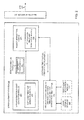
- Figure 2 is a block diagram of an embodiment of an error estimation system 220 that is operable to estimate a time delay between when a software timestamp is generated for an active measurement protocol test packet and when the active measurement protocol test packet is transmitted from a network device onto a link 224.
- the error estimation system of Figure 2 may be included in either of the network devices of Figure 1 .
- the error estimation system may be included in similar or different network devices.
- the network devices of Figure 1 may include similar or different error estimation systems.
- the illustrated error estimation system includes an error estimation packet generation module 221.
- the error estimation packet generation module 221 is operable to generate an error estimation packet that is useful for error estimation.
- the error estimation packet generation module may generate an error estimation shadow packet at around the same time as an active measurement protocol test packet so that the error estimation shadow packet "shadows" the active measurement protocol test packet.
- the error estimation packet may be sent substantially concurrently with the active measurement protocol test packet, immediately or very soon before the active measurement protocol test packet, or immediately or very soon after the active measurement protocol test packet.
- multiple error estimation packets may be sent at multiple such times.
- the error estimation shadow packet is generated at around the same time as the active measurement protocol test packet they should both reflect approximately the same delays due to instantaneous loads, network conditions, and the like.
- the error estimation packet generation module includes a timestamp generation module 222.
- the timestamp generation module may generate a software timestamp (ts) using an approach similar to, or the same as, that used in TWAMP and/or OWAMP.
- the timestamp generation module may generate the software timestamp (ts) at the same level in a software protocol stack as a timestamp generation module used in TWAMP or OWAMP.
- the generated timestamp (ts) may be included in the error estimation packet.
- the error estimation packet 230 having the generated software timestamp (ts) 231 may be transmitted from the error estimation system toward a network interface 223 and/or a network link 224.
- a packet interceptor module 225 may capture or otherwise intercept the error estimation packet having the generated software timestamp (ts) before it is transmitted onto the link 224.
- the packet interceptor module may intercept the error estimation packet just prior to and/or substantially close to the time when it would be transmitted onto the link, although this is not required.
- the closer the time of capture to the time that the error estimation packet would be transmitted onto the link the greater the reduction in the error and/or the greater the improvement in the active measurement protocol accuracy.
- the packet interceptor module may intercept the error estimation packet anytime between the software timestamp generation and the time when the error estimation packet would be transmitted onto the link to provide some of this benefit. The error estimation packet may not actually be transmitted on the link.
- the packet interceptor module may include a packet capture module.
- suitable packet capture modules include, but are not limited to, pcap in the libpcap library of Unix and/or Linux, and WinPcap in Windows® from Microsoft Corporation. Pcap is commonly used for packet capturing and filtering in Unix and Linux.
- Pcap is commonly used for packet capturing and filtering in Unix and Linux.
- a pcap enabled TWAMP session sender (PSender) and a pcap enabled session reflector (PReflector) may both set up pcap at the start of a session.
- the pcap may be configured to use as a key the IP address src and src port.
- the pcap_setup_capture(pcap_interface) may start listening on the specified interface.
- the pcap_update_capture(src_addr, src_port) may set the filter expression to be used for filtering the packets: src $ ⁇ src_addr ⁇ and src port $ ⁇ src_port ⁇ , where src_addr is the local IP address and src_port is the local port.
- the packet interceptor module may include a media access controller (MAC) that is operable to capture a packet (e.g., having a trigger to capture the packet).
- MAC media access controller
- any other module or mechanism that is operable to intercept the error estimation packet between the software timestamp generation and the time when it would be transmitted onto the link may potentially be used.
- the error estimation packet may have a tag, or other feature to distinguish it from an active measurement protocol test packet, to help allow the packet interceptor module to know to intercept it.
- the packet interceptor module 225 includes an interception timestamp generation module 226.
- the interception timestamp generation module is operable to generate an interception timestamp (ti) at substantially the time when the error estimation packet is intercepted.
- the packet interceptor module may provide the timestamp (ts) and the interception timestamp (ti) to an error estimation module 227.
- the error estimation module may be operable to determine the difference between the interception timestamp (ti) and the software timestamp (ts). For example, the error estimation module may subtract the software timestamp (ts) from the interception timestamp (ti).
- this difference in time may represent an error estimate. This error estimate may help to estimate or quantify the difference between the time when an active measurement protocol test packet is initially time stamped in software and the time when that test packet is transmitted onto the link.
- the error estimate may be stored in error estimate storage 228 for future use (e.g., in increasing the accuracy of the active measurement protocol).
- the error estimate may be stored along with a sequence number of an active measurement protocol test packet until a corresponding reflected test packet is returned (e.g., in TWAMP) and then the error estimate may be used along with an error estimate in the reflected test packet to increase the accuracy of the active measurement protocol.
- the sequence number of the reflected active measurement protocol test packet may be used to locate the stored/preserved error estimate.
- Either the error estimation packet may have the same sequence number as the active measurement protocol test packet, or it may be implicitly understood that the error estimation packet corresponds to the sequence number as the active measurement protocol test packet.
- the error estimate may be stored and used for a certain period of time while the delays are expected to stay the same and then refreshed when needed (e.g., when the instantaneous loads and/or conditions in the network device change and/or the delays otherwise change).
- the error estimate may be provided to an active measurement protocol test packet generation module 229 (e.g., the test packet generation module 105 or 109).
- the test packet generation module may include the error estimate in an active measurement protocol test packet.
- the error estimate may be included in an error estimate, or sender error estimate field, of a TWAMP packet.
- Figure 3 is a block flow diagram of an embodiment of a method 340 of estimating a time delay between when a software timestamp is generated for an active measurement protocol test packet and when the active measurement protocol test packet is transmitted from a network device onto a link.
- the method of Figure 3 may be performed by and/or within either one of the network devices of Figure 1 and/or within the error estimation system of Figure 2 .
- the method of Figure 2 may be performed by similar or different network devices or error estimation systems.
- the network devices of Figure 1 and/or the error estimation system of Figure 2 may perform similar or different methods than that of Figure 3 .
- the method includes generating an error estimation packet, at block 341.
- the error estimation packet may be generated immediately before, or immediately after, generating the active measurement protocol test packet.
- a software timestamp is generated for the error estimation packet, at block 342.
- the method includes transmitting the error estimation packet toward the network interface, at block 343.
- the method includes intercepting the error estimation packet before it is transmitted from the network device onto the link, at block 344.
- intercepting the error estimation packet may include capturing the error estimation packet with a packet capture module. Examples of suitable packet capture modules include, but are not limited to, pcap modules and WinPcap modules.
- the error estimation packet may be intercepted with a media access controller (MAC), or any other suitable mechanism for intercepting the error estimation packet at a time very close to when it would be transmitted onto the link.
- the method includes generating an interception timestamp for the error estimation packet after intercepting the error estimation packet, at block 345.
- the method includes estimating the time delay based on a difference between the interception timestamp and the software timestamp, at block 346.
- the estimated time delay may be used to estimate a metric in a TWAMP protocol and/or an OWAMP protocol.
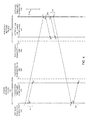
- Figure 4 illustrates an embodiment of how packet interception and interception timestamps may be used in a TWAMP protocol. Time is plotted increasing from the top to the bottom in the illustration. Six vertical lines are used to show relative times when various events take place within a sender network device 401 and a reflector network device 402. The sender and reflector network devices are coupled by a network 403.
- TWAMP uses four different software-generated timestamps T1, T2, T3, and T4 to calculate two-way or round-trip measurements between the sender network device and a reflector network device.
- a first (leftmost) vertical line 451 represents times when software timestamps are generated in the sender network device 401.
- a sixth (right most) vertical line 456 represents times when software timestamps are generated in the reflector network device 402.
- T1 is a software timestamp generated when a TWAMP test packet is generated in the sender network device.
- T2 is a software timestamp generated when the TWAMP test packet is processed by software in the reflector network device.
- T3 is a software timestamp generated when a TWAMP reflected test packet is generated in the reflector network device.
- T4 is a software timestamp generated when the TWAMP reflected test packet is processed by software in the sender network device.
- the difference T2-T1 represents an estimate of the forward one-way delay.
- the difference T4-T3 represents an estimate of the reverse one-way delay.
- a third (dashed) vertical line 453 represents times when outbound packets are actually transmitted out of the sender network device onto the link and times when inbound packets are actually received at the sender network device from the link.
- a fourth (dashed) vertical line 454 represents times when inbound packets are actually received at the reflector network device from the link and times when outbound packets are actually transmitted out of the reflector network device onto the link.
- error estimation packets may be used to estimate these delays between the software timestamp generation and the actual appearance of the packets on the links.
- four error estimation packets may be used in TWAMP.
- two timestamps may be used. Namely, these two timestamps include a software timestamp (ts) and a packet interception timestamp (ti).
- a second vertical line 452 represents times when interception timestamps are generated in the sender network device after the error estimation packets have been intercepted near the time they would be transmitted on the link.
- a fifth vertical line 455 represents times when interception timestamps are generated in the reflector network device after the error estimation packets have been intercepted near the time they would be transmitted on the link.
- Each of these four error estimation packets and/or each of these four pairs of software and interception timestamps may be used to generate a corresponding error estimate (E).
- the sender network device may use a first error estimation packet around the time when the TWAMP test packet is generated and timestamped (e.g., at around the time of the timestamp T1).
- a first software timestamp ts1 may be generated when the first error estimation packet is generated in the sender network device.
- the first software timestamp may be generated with an approach similar to or the same as that used to generate the software timestamps in TWAMP and/or OWAMP.
- a first interception timestamp (ti1) may be generated after the first error estimation packet has been intercepted within the sender network device.
- the first error estimation packet may be captured by a packet capture module, intercepted by a MAC, or intercepted by any other mechanism known in the arts for intercepting a packet between the time when the first software timestamp (ts1) is generated and when the first error estimation packet would be sent out on the link at the third dashed line 453.
- a difference between the first interception timestamp (ti1) and the first software timestamp (ts1) represents a first error estimate (E1).
- the first error estimation packet is shown to be generated and timestamped after the test packet is timestamped at T1.
- the first error estimation packet may be generated and timestamped before the test packet is timestamped at T1.
- the first error estimate (E1) may optionally be included in the test packet (e.g., in a sender error estimate field of the test packet) that is sent to the reflector network element. Subsequently, the first error estimate (E1) may be returned in the sender error estimate field of the reflected test packet and thereafter extracted and used for error reduction.
- the first error estimate (E1) may instead be stored or otherwise preserved locally, for example, along with a sequence identifier of the corresponding test packet.
- two error estimation packets may be generated and timestamped both right before and right after the test packet is timestamped at T1, and then the differences between the software and interception timestamps may be averaged, which may tend to help improve accuracy in estimating the delay.
- the reflector network device may use a second error estimation packet around the time when the TWAMP test packet is timestamped by software in the reflector network device (e.g., at around the time of the timestamp T2).
- a second software timestamp ts2 may be generated when the second error estimation packet is generated in the reflector network device.
- the second software timestamp (ts2) may be generated with an approach similar to or the same as that used to generate the software timestamps in TWAMP and/or OWAMP.
- a second interception timestamp (ti2) may be generated after the second error estimation packet has been intercepted within the reflector network device.
- the second error estimation packet may be captured by a packet capture module, intercepted by a MAC, or intercepted by any other mechanism known in the arts for intercepting a packet between the time when the second software timestamp (ts1) is generated and when the second error estimation packet would be sent out on the link at the fourth dashed line 454.
- a difference between the second interception timestamp (ti2) and the second software timestamp (ts2) represents a second error estimate (E2).
- the reflector network device may use a third error estimation packet around the time when the TWAMP reflected test packet is generated and timestamped by software in the reflector network device (e.g., at around the time of the timestamp T3).
- a third software timestamp ts3 may be generated when the third error estimation packet is generated in the reflector network device.
- the third software timestamp (ts3) may be generated with an approach similar to or the same as that used to generate the software timestamps in TWAMP and/or OWAMP.
- a third interception timestamp (ti3) may be generated after the third error estimation packet has been intercepted within the reflector network device.
- the third error estimation packet may be captured by a packet capture module, intercepted by a MAC, or intercepted by any other mechanism known in the arts for intercepting a packet between the time when the third software timestamp (ts3) is generated and when the third error estimation packet would be sent out on the link at the fourth dashed line 454.
- a difference between the third interception timestamp (ti3) and the third software timestamp (ts3) represents a third error estimate (E3).
- both the second error estimate (E2) and the third error estimate (E3) are used, although this is not required. In another embodiment, only either one, but not both, of the second error estimate (E2) and third error estimate (E3) may be used.
- the second and third error estimation packets are typically generated and timestamped at relatively close points in time and generally should have relatively similar delays. In such embodiments, only one of the second and third error estimates may be measured and it may be used as an estimate of both of the delays.
- an error estimation packet may be used periodically (e.g., at fixed intervals, not necessarily relative to the timestamps T2 or T3, etc.) and the most current version of the error estimate may be used for both E2 and E3.
- the second error estimate (E2), the third error estimate (E3), the sum of the second error estimate (E2) and the third error estimate (E3), or an average of the second error estimate (E2) and the third error estimate (E3) may be returned in the reflected test packet (e.g., in the error estimate field of the reflected test packet).
- the sender network device may be operable to extract the error estimate(s) from the reflected test packet and use it/them for error estimation and/or to improve the accuracy of measured metrics.
- the sender network device may use a fourth error estimation packet around the time when the TWAMP reflected test packet is timestamped by software within the sender network device (e.g., at around the time of the timestamp T4).
- a fourth software timestamp ts4 may be generated when the fourth error estimation packet is generated in the sender network device.
- the fourth software timestamp may be generated with an approach similar to or the same as that used to generate the software timestamps in TWAMP and/or OWAMP.
- a fourth interception timestamp (ti4) may be generated after the fourth error estimation packet has been intercepted within the sender network device.
- the fourth error estimation packet may be captured by a packet capture module, intercepted by a MAC, or intercepted by any other mechanism known in the arts for intercepting a packet between the time when the fourth software timestamp (ts4) is generated and when the fourth error estimation packet would be sent out on the link at the third dashed line 453.
- a difference between the fourth interception timestamp (ti4) and the fourth software timestamp (ts4) represents a fourth error estimate (E4).
- the first error estimate (E1) may optionally be reused for the fourth error estimate (E4).
- an error estimation system as disclosed herein may be operable to use an error estimate obtained from an error estimation packet (e.g., a difference between an interception timestamp (ti) and a software timestamp (ts) obtained from an error estimation packet) as an estimate of a delay that would have been experienced by a test packet.
- an error estimate obtained from an error estimation packet e.g., a difference between an interception timestamp (ti) and a software timestamp (ts) obtained from an error estimation packet
- the first error estimate E1 may be used to estimate the delay between the first timestamp T1 and the time when the test packet would have appeared on the link.
- one or more of these error estimates may be used to improve an accuracy of a metric measured by TWAMP, OWAMP, or another active measurement protocol.
- the forward one-way delay in some embodiments, may be calculated by using any of Equation 1, Equation 2, or Equation 3, as follows: T ⁇ 2 - E ⁇ 2 - T ⁇ 1 + E ⁇ 1 T ⁇ 2 - E ⁇ 3 - T ⁇ 1 + E ⁇ 1 T ⁇ 2 - E ⁇ 2 + E ⁇ 3 / 2 - T ⁇ 1 + E ⁇ 1
- the reverse one-way delay in some embodiments, may be calculated by using any of Equation 4, Equation 5, or Equation 6, as follows: T ⁇ 4 - E ⁇ 4 - T ⁇ 3 + E ⁇ 3 T ⁇ 4 - E ⁇ 4 - T ⁇ 3 + E ⁇ 2 T ⁇ 4 - E ⁇ 4 - T ⁇ 3 + E ⁇ 2 + E ⁇ 3 / 2
- the two-way delay in some embodiments, may be calculated by using any of Equation 7 or Equation 8 as follows: T ⁇ 4 - E ⁇ 4 - T ⁇ 1 + E ⁇ 1 T ⁇ 4 - E ⁇ 1 - T ⁇ 1 + E ⁇ 1
- incorporating such error estimates may tend to help improve the accuracy of the active measurement protocol metrics.
- errors in forward and/or reverse one-way delays may be reduced from on the order of a few to tens of milliseconds to on the order of tens of microseconds, although the scope of the invention is not limited in this respect.
- one or more error estimation packets may be used to estimate a delay which may be used for error reduction.
- Embodiments of the invention may be performed by and/or within network devices.
- a network device e.g., a router, switch, bridge
- Some network devices are "multiple services network devices” that provide support for multiple networking functions (e.g., routing, bridging, switching, Layer 2 aggregation, session border control, Quality of Service, and/or subscriber management), and/or provide support for multiple application services (e.g., data, voice, and video).
- Subscriber end stations e.g., servers, workstations, laptops, netbooks, palm tops, mobile phones, smartphones, multimedia phones, Voice Over Internet Protocol (VOIP) phones, user equipment, terminals, portable media players, GPS units, gaming systems, set-top boxes access content/services provided over the Internet and/or content/services provided on virtual private networks (VPNs) overlaid on (e.g., tunneled through) the Internet.
- VOIP Voice Over Internet Protocol
- VPNs virtual private networks
- the content and/or services are typically provided by one or more end stations (e.g., server end stations) belonging to a service or content provider or end stations participating in a peer to peer service, and may include, for example, public webpages (e.g., free content, store fronts, search services), private webpages (e.g., username/password accessed webpages providing email services), and/or corporate networks over VPNs.
- end stations e.g., server end stations
- subscriber end stations are coupled (e.g., through customer premise equipment coupled to an access network (wired or wirelessly)) to edge network devices, which are coupled (e.g., through one or more core network devices) to other edge network devices, which are coupled to other end stations (e.g., server end stations).
- Network devices are commonly separated into a control plane and a data plane (sometimes referred to as a forwarding plane or a media plane).
- the control plane typically determines how data (e.g., packets) is to be routed (e.g., the next hop for the data and the outgoing port for that data), and the data plane is in charge of forwarding that data.
- the control plane typically includes one or more routing protocols that communicate with other network devices to exchange routes and select those routes based on one or more routing metrics. Routes and adjacencies are stored in one or more routing structures (e.g., Routing Information Base (RIB), Label Information Base (LIB), one or more adjacency structures) on the control plane.
- routing structures e.g., Routing Information Base (RIB), Label Information Base (LIB), one or more adjacency structures
- the control plane programs the data plane with information (e.g., adjacency and route information) based on the routing structure(s). For example, the control plane programs the adjacency and route information into one or more forwarding structures (e.g., Forwarding Information Base (FIB), Label Forwarding Information Base (LFIB), and one or more adjacency structures) on the data plane.
- the data plane uses these forwarding and adjacency structures when forwarding traffic.
- the network device can store one or more bridging tables that are used to forward data based on the layer 2 information in this data.
- a network device typically includes a set of one or more line cards, a set of one or more control cards, and optionally a set of one or more service cards (sometimes referred to as resource cards). These cards are coupled together through one or more mechanisms (e.g., a first full mesh coupling the line cards and a second full mesh coupling all of the cards).
- the set of line cards make up the data plane, while the set of control cards provide the control plane and exchange packets with external network device through the line cards.
- the set of service cards can provide specialized processing (e.g., Layer 4 to Layer 7 services (e.g., firewall, IPsec, IDS, P2P), VoIP Session Border Controller, Mobile Wireless Gateways (GGSN, Evolved Packet System (EPS) Gateway)).
- Layer 4 to Layer 7 services e.g., firewall, IPsec, IDS, P2P
- VoIP Session Border Controller e.g., IPsec, IDS, P2P
- GGSN Mobile Wireless Gateways
- EPS
- references in the specification to "one embodiment,” “an embodiment,” “an example embodiment,” etc., indicate that the embodiment described may include a particular feature, structure, or characteristic, but every embodiment may not necessarily include the particular feature, structure, or characteristic. Moreover, such phrases are not necessarily referring to the same embodiment. Further, when a particular feature, structure, or characteristic is described in connection with an embodiment, it is submitted that it is within the knowledge of one skilled in the art to affect such feature, structure, or characteristic in connection with other embodiments whether or not explicitly described.
- Coupled is used to indicate that two or more elements, which may or may not be in direct physical or electrical contact with each other, co-operate or interact with each other.
- Connected is used to indicate the establishment of communication between two or more elements that are coupled with each other.
- Different embodiments of the invention may be implemented using different combinations of software, firmware, and/or hardware.
- the techniques shown in the figures can be implemented using code and data stored and executed on one or more electronic devices (e.g., an end station, a network element).
- Such electronic devices store and communicate (internally and/or with other electronic devices over a network) code and data using computer-readable media, such as tangible, non-transitory computer-readable storage media and non-tangible transitory computer-readable communication or transmission media.
- tangible, non-transitory computer-readable storage media include, but are not limited to, magnetic disks, optical disks, random access memory (RAM), such as static-RAM (SRAM) and dynamic-RAM (DRAM), read only memory (ROM), such as programmable ROM (PROM), erasable-and-programmable ROM (EPROM), and electrically-erasable-and-programmable ROM (EEPROM), flash memory devices, phase-change memory, and the like.
- RAM random access memory
- SRAM static-RAM
- DRAM dynamic-RAM
- ROM read only memory
- PROM programmable ROM
- EPROM erasable-and-programmable ROM
- EEPROM electrically-erasable-and-programmable ROM
- flash memory devices phase-change memory, and the like.
- the tangible storage media may include one or more solid-state or tangible physical materials, such as, for example, a semiconductor material, a phase change material, a magnetic material, a data storage material, etc.
- Embodiments pertain to an article of manufacture that includes a tangible non-transitory computer-readable storage media storing a sequence of instructions that if executed by a machine (e.g., a network element, switch, router, end station, host, computer system, or electronic device having at least one microprocessor) causes or results in the machine performing one or more operations or methods disclosed herein.
- a machine e.g., a network element, switch, router, end station, host, computer system, or electronic device having at least one microprocessor
- a few representative examples of non-tangible transitory computer-readable transmission media include, but are not limited to, electrical, optical, acoustical or other form of propagated signals - such as carrier waves, infrared signals, and digital signals.
- such electronic devices typically include a set of one or more processors coupled to one or more other components, such as one or more storage devices (non-transitory machine-readable storage media), user input/output devices (e.g., a keyboard, a touchscreen, and/or a display), and network connections.
- the coupling of the set of processors and other components is typically through one or more busses and bridges (also termed as bus controllers).
- bus controllers also termed as bus controllers
Landscapes
- Engineering & Computer Science (AREA)
- Computer Networks & Wireless Communication (AREA)
- Signal Processing (AREA)
- Environmental & Geological Engineering (AREA)
- Health & Medical Sciences (AREA)
- Cardiology (AREA)
- General Health & Medical Sciences (AREA)
- Data Exchanges In Wide-Area Networks (AREA)
Applications Claiming Priority (1)
| Application Number | Priority Date | Filing Date | Title |
|---|---|---|---|
| US13/857,825 US9001687B2 (en) | 2013-04-05 | 2013-04-05 | Packet interception and timestamping for error estimation in active measurement protocols |
Publications (1)
| Publication Number | Publication Date |
|---|---|
| EP2787687A1 true EP2787687A1 (fr) | 2014-10-08 |
Family
ID=50287888
Family Applications (1)
| Application Number | Title | Priority Date | Filing Date |
|---|---|---|---|
| EP14159119.8A Withdrawn EP2787687A1 (fr) | 2013-04-05 | 2014-03-12 | Interception de paquets et horodatage d'estimation des erreurs dans des protocoles de mesure active |
Country Status (2)
| Country | Link |
|---|---|
| US (1) | US9001687B2 (fr) |
| EP (1) | EP2787687A1 (fr) |
Cited By (4)
| Publication number | Priority date | Publication date | Assignee | Title |
|---|---|---|---|---|
| CN107465565A (zh) * | 2016-06-06 | 2017-12-12 | 中兴通讯股份有限公司 | 链路测试方法和装置及系统 |
| CN108886478A (zh) * | 2016-05-11 | 2018-11-23 | Oppo广东移动通信有限公司 | 通信方法和通信设备 |
| WO2019129688A1 (fr) * | 2017-12-27 | 2019-07-04 | Telecom Italia S.P.A. | Mesure de performance aller-retour dans un réseau de communication à commutation de paquets |
| EP4149058A4 (fr) * | 2020-06-02 | 2023-10-25 | Huawei Technologies Co., Ltd. | Procédé, appareil, dispositif et système de mesure de performance de réseau, et support de stockage |
Families Citing this family (14)
| Publication number | Priority date | Publication date | Assignee | Title |
|---|---|---|---|---|
| US8675485B2 (en) * | 2004-12-14 | 2014-03-18 | Aspen Networks, Inc. | Reliable ISP access cloud state detection method and apparatus |
| US9306830B2 (en) * | 2013-01-30 | 2016-04-05 | Accedian Networks Inc. | Layer-3 performance monitoring sectionalization |
| US10169171B2 (en) * | 2013-05-13 | 2019-01-01 | Nxp Usa, Inc. | Method and apparatus for enabling temporal alignment of debug information |
| US10613958B2 (en) | 2018-03-12 | 2020-04-07 | Spirent Communications, Inc. | Secure method for managing a virtual test platform |
| US10848372B2 (en) | 2018-03-12 | 2020-11-24 | Spirent Communications, Inc. | Scalability, fault tolerance and fault management for TWAMP with a large number of test sessions |
| US10693729B2 (en) | 2018-03-12 | 2020-06-23 | Spirent Communications, Inc. | Acceleration of node configuration for TWAMP with a large number of test sessions |
| US10841196B2 (en) * | 2018-03-26 | 2020-11-17 | Spirent Communications, Inc. | Key performance indicators (KPI) for tracking and correcting problems for a network-under-test |
| CN109818781A (zh) * | 2018-12-30 | 2019-05-28 | 国网天津市电力公司电力科学研究院 | 基于数据截获和spark的配网运行评价方法及系统 |
| JP7222260B2 (ja) * | 2019-02-07 | 2023-02-15 | 日本電信電話株式会社 | 試験装置 |
| CN115580558B (zh) * | 2021-06-17 | 2025-04-25 | 中国移动通信集团有限公司 | 基于twamp协议的链路时延测量方法及装置 |
| US11483229B1 (en) * | 2021-06-30 | 2022-10-25 | Juniper Networks, Inc. | Detection of network measurement inaccuracies |
| US11757751B2 (en) | 2021-06-30 | 2023-09-12 | Juniper Networks, Inc. | Detection of network measurement inaccuracies |
| US12609880B2 (en) * | 2022-02-27 | 2026-04-21 | Arris Enterprises Llc | Integrated network evaluation troubleshooting tool |
| US12438799B2 (en) | 2022-04-22 | 2025-10-07 | Spirent Communications, Inc. | One way latency estimation without clock synchronization |
Citations (1)
| Publication number | Priority date | Publication date | Assignee | Title |
|---|---|---|---|---|
| WO2001088667A2 (fr) * | 2000-05-18 | 2001-11-22 | Brix Networks, Inc. | Procede et systeme d'estimation de delai de logiciel non deterministe destines a des systemes de reseau de donnees par paquets |
Family Cites Families (5)
| Publication number | Priority date | Publication date | Assignee | Title |
|---|---|---|---|---|
| US7035210B2 (en) * | 2001-07-12 | 2006-04-25 | Telefonaktiebolaget Lm Ericsson (Publ) | Media stream delay monitoring for node |
| US8064356B1 (en) * | 2005-01-11 | 2011-11-22 | Verizon Services Corp. | System and methods for measuring network performance |
| US7733794B2 (en) * | 2005-06-17 | 2010-06-08 | Alcatel Lucent | Performance monitoring of frame transmission in data network OAM protocols |
| US9571406B2 (en) * | 2011-10-25 | 2017-02-14 | Vmware, Inc. | Network congestion management based on communication delay |
| US8711708B2 (en) * | 2012-07-24 | 2014-04-29 | Accedian Networks Inc. | Automatic setup of reflector instances |
-
2013
- 2013-04-05 US US13/857,825 patent/US9001687B2/en active Active
-
2014
- 2014-03-12 EP EP14159119.8A patent/EP2787687A1/fr not_active Withdrawn
Patent Citations (1)
| Publication number | Priority date | Publication date | Assignee | Title |
|---|---|---|---|---|
| WO2001088667A2 (fr) * | 2000-05-18 | 2001-11-22 | Brix Networks, Inc. | Procede et systeme d'estimation de delai de logiciel non deterministe destines a des systemes de reseau de donnees par paquets |
Non-Patent Citations (4)
| Title |
|---|
| BARBARA STAEHLE ET AL: "Measuring one-way delay in wireless mesh networks", PROCEEDINGS OF THE 4TH ACM WORKSHOP ON PERFORMANCE MONITORING AND MEASUREMENT OF HETEROGENEOUS WIRELESS AND WIRED NETWORKS, PM2HW2N '09, 1 January 2009 (2009-01-01), New York, New York, USA, pages 31 - 38, XP055135810, ISBN: 978-1-60-558621-2, DOI: 10.1145/1641913.1641918 * |
| HEDAYAT BRIX NETWORKS R KRZANOWSKI VERIZON A MORTON AT&T LABS K YUM JUNIPER NETWORKS J BABIARZ NORTEL NETWORKS K: "A Two-Way Active Measurement Protocol (TWAMP); rfc5357.txt", A TWO-WAY ACTIVE MEASUREMENT PROTOCOL (TWAMP); RFC5357.TXT, INTERNET ENGINEERING TASK FORCE, IETF; STANDARD, INTERNET SOCIETY (ISOC) 4, RUE DES FALAISES CH- 1205 GENEVA, SWITZERLAND, 1 October 2008 (2008-10-01), XP015060332 * |
| SHALUNOV B TEITELBAUM A KARP J BOOTE M ZEKAUSKAS INTERNET2 S: "A One-way Active Measurement Protocol (OWAMP); rfc4656.txt", 20060901, 1 September 2006 (2006-09-01), XP015047408, ISSN: 0000-0003 * |
| STEPHEN DONNELLY ET AL: "Passive Calibration of an Active Measurement System", 1 May 2001 (2001-05-01), XP055136038, Retrieved from the Internet <URL:http://wand.net.nz/pubs/10/pdf/calibration.pdf> [retrieved on 20140822] * |
Cited By (11)
| Publication number | Priority date | Publication date | Assignee | Title |
|---|---|---|---|---|
| CN108886478A (zh) * | 2016-05-11 | 2018-11-23 | Oppo广东移动通信有限公司 | 通信方法和通信设备 |
| EP3422636A4 (fr) * | 2016-05-11 | 2019-01-16 | Guangdong Oppo Mobile Telecommunications Corp., Ltd. | Procédé de communication et dispositif de communication |
| US10931555B2 (en) | 2016-05-11 | 2021-02-23 | Guangdong Oppo Mobile Telecommunications Corp., Ltd. | Communication method and communication device for acquiring latency |
| CN108886478B (zh) * | 2016-05-11 | 2022-02-25 | Oppo广东移动通信有限公司 | 通信方法和通信设备 |
| CN107465565A (zh) * | 2016-06-06 | 2017-12-12 | 中兴通讯股份有限公司 | 链路测试方法和装置及系统 |
| CN107465565B (zh) * | 2016-06-06 | 2019-08-30 | 中兴通讯股份有限公司 | 链路测试方法和装置及系统 |
| WO2019129688A1 (fr) * | 2017-12-27 | 2019-07-04 | Telecom Italia S.P.A. | Mesure de performance aller-retour dans un réseau de communication à commutation de paquets |
| US12003398B2 (en) | 2017-12-27 | 2024-06-04 | Telecom Italia S.P.A. | Round-trip performance measurement in a packet-switched communication network |
| EP4149058A4 (fr) * | 2020-06-02 | 2023-10-25 | Huawei Technologies Co., Ltd. | Procédé, appareil, dispositif et système de mesure de performance de réseau, et support de stockage |
| US12598124B2 (en) | 2020-06-02 | 2026-04-07 | Huawei Technologies Co., Ltd. | Network performance measurement method, apparatus, device, and system, and storage medium |
| EP4686164A3 (fr) * | 2020-06-02 | 2026-04-08 | Huawei Technologies Co., Ltd. | Procédé, appareil, dispositif et système de mesure de performance de réseau, et support de stockage |
Also Published As
| Publication number | Publication date |
|---|---|
| US20140301215A1 (en) | 2014-10-09 |
| US9001687B2 (en) | 2015-04-07 |
Similar Documents
| Publication | Publication Date | Title |
|---|---|---|
| US9001687B2 (en) | Packet interception and timestamping for error estimation in active measurement protocols | |
| EP3832953B1 (fr) | Système, procédé, et appareil permettant d'évaluer un temps aller-retour | |
| EP3745652B1 (fr) | Protocole de mesure actif bidirectionnel amélioré | |
| EP3110073B1 (fr) | Appareil permettant de mettre en oeuvre un protocole twam | |
| EP3295612B1 (fr) | Gestion de performances de liaison montante | |
| Haq et al. | Measuring and improving the reliability of wide-area cloud paths | |
| US9503384B1 (en) | Estimating network capacity and network bandwidth without server instrumentation | |
| EP4120654A1 (fr) | Sondage spécifique à une application de réseau étendu défini par logiciel adaptable | |
| US20170063699A1 (en) | Method and apparatus for configuring multi-paths using segment list | |
| KR102007548B1 (ko) | 네트워크 측정 트리거들을 사용하는 서비스 보장 | |
| WO2017211169A1 (fr) | Procédé, appareil et système de test de liaison | |
| EP2681871B1 (fr) | Test de débit en service dans des architectures à routeurs/commutateurs distribués | |
| US10673991B2 (en) | Method and system for the scheduling of packets in a bundling scenario based on TCP tunnels and native TCP information | |
| Kocak et al. | Performance measurement of IP networks using two-way active measurement protocol | |
| US11606273B1 (en) | Monitoring server performance using server processing time | |
| US10608913B2 (en) | Methods, systems, and computer readable media for conducting and validating network route convergence testing | |
| JP6051891B2 (ja) | 通信状況測定装置及びプログラム | |
| JP2015023463A (ja) | パケット解析装置、パケット解析方法、及びパケット解析プログラム | |
| Zinner et al. | Using concurrent multipath transmission for transport virtualization: analyzing path selection | |
| Sultanov et al. | Simulation technique for available bandwidth estimation | |
| JP2013232851A (ja) | 可用帯域測定装置及び方法及びプログラム | |
| TW201114220A (en) | Time recovery method and network emulation system using thereof |
Legal Events
| Date | Code | Title | Description |
|---|---|---|---|
| PUAI | Public reference made under article 153(3) epc to a published international application that has entered the european phase |
Free format text: ORIGINAL CODE: 0009012 |
|
| 17P | Request for examination filed |
Effective date: 20140312 |
|
| AK | Designated contracting states |
Kind code of ref document: A1 Designated state(s): AL AT BE BG CH CY CZ DE DK EE ES FI FR GB GR HR HU IE IS IT LI LT LU LV MC MK MT NL NO PL PT RO RS SE SI SK SM TR |
|
| AX | Request for extension of the european patent |
Extension state: BA ME |
|
| R17P | Request for examination filed (corrected) |
Effective date: 20150326 |
|
| RBV | Designated contracting states (corrected) |
Designated state(s): AL AT BE BG CH CY CZ DE DK EE ES FI FR GB GR HR HU IE IS IT LI LT LU LV MC MK MT NL NO PL PT RO RS SE SI SK SM TR |
|
| STAA | Information on the status of an ep patent application or granted ep patent |
Free format text: STATUS: THE APPLICATION HAS BEEN WITHDRAWN |
|
| 18W | Application withdrawn |
Effective date: 20160329 |