EP2792302A1 - Olfaktorische Mittel zur Diagnose und Behandlung von depressiver Stimmung - Google Patents
Olfaktorische Mittel zur Diagnose und Behandlung von depressiver Stimmung Download PDFInfo
- Publication number
- EP2792302A1 EP2792302A1 EP13305499.9A EP13305499A EP2792302A1 EP 2792302 A1 EP2792302 A1 EP 2792302A1 EP 13305499 A EP13305499 A EP 13305499A EP 2792302 A1 EP2792302 A1 EP 2792302A1
- Authority
- EP
- European Patent Office
- Prior art keywords
- odorants
- composition
- treatment
- subject
- application
- Prior art date
- Legal status (The legal status is an assumption and is not a legal conclusion. Google has not performed a legal analysis and makes no representation as to the accuracy of the status listed.)
- Withdrawn
Links
- 206010012374 Depressed mood Diseases 0.000 title claims abstract description 43
- 238000003745 diagnosis Methods 0.000 title claims description 22
- 239000000203 mixture Substances 0.000 claims abstract description 378
- 239000003205 fragrance Substances 0.000 claims abstract description 224
- 208000020016 psychiatric disease Diseases 0.000 claims abstract description 96
- 230000007423 decrease Effects 0.000 claims abstract description 5
- 239000005973 Carvone Substances 0.000 claims description 71
- 238000012360 testing method Methods 0.000 claims description 55
- 150000001875 compounds Chemical class 0.000 claims description 53
- MLFHJEHSLIIPHL-UHFFFAOYSA-N isoamyl acetate Chemical compound CC(C)CCOC(C)=O MLFHJEHSLIIPHL-UHFFFAOYSA-N 0.000 claims description 46
- RRAFCDWBNXTKKO-UHFFFAOYSA-N eugenol Chemical compound COC1=CC(CC=C)=CC=C1O RRAFCDWBNXTKKO-UHFFFAOYSA-N 0.000 claims description 40
- 239000001074 1-methoxy-4-[(E)-prop-1-enyl]benzene Substances 0.000 claims description 31
- RUVINXPYWBROJD-UHFFFAOYSA-N para-methoxyphenyl Natural products COC1=CC=C(C=CC)C=C1 RUVINXPYWBROJD-UHFFFAOYSA-N 0.000 claims description 31
- RUVINXPYWBROJD-ONEGZZNKSA-N trans-anethole Chemical compound COC1=CC=C(\C=C\C)C=C1 RUVINXPYWBROJD-ONEGZZNKSA-N 0.000 claims description 31
- 208000024714 major depressive disease Diseases 0.000 claims description 29
- 230000004044 response Effects 0.000 claims description 25
- 238000001514 detection method Methods 0.000 claims description 23
- 229940117955 isoamyl acetate Drugs 0.000 claims description 23
- NPBVQXIMTZKSBA-UHFFFAOYSA-N Chavibetol Natural products COC1=CC=C(CC=C)C=C1O NPBVQXIMTZKSBA-UHFFFAOYSA-N 0.000 claims description 20
- 239000005770 Eugenol Substances 0.000 claims description 20
- UVMRYBDEERADNV-UHFFFAOYSA-N Pseudoeugenol Natural products COC1=CC(C(C)=C)=CC=C1O UVMRYBDEERADNV-UHFFFAOYSA-N 0.000 claims description 20
- 229960002217 eugenol Drugs 0.000 claims description 20
- WRMNZCZEMHIOCP-UHFFFAOYSA-N 2-phenylethanol Chemical compound OCCC1=CC=CC=C1 WRMNZCZEMHIOCP-UHFFFAOYSA-N 0.000 claims description 14
- 238000001727 in vivo Methods 0.000 claims description 13
- 240000005561 Musa balbisiana Species 0.000 claims description 11
- 235000018290 Musa x paradisiaca Nutrition 0.000 claims description 11
- 229940124834 selective serotonin reuptake inhibitor Drugs 0.000 claims description 11
- 239000012896 selective serotonin reuptake inhibitor Substances 0.000 claims description 11
- 235000016639 Syzygium aromaticum Nutrition 0.000 claims description 10
- 244000223014 Syzygium aromaticum Species 0.000 claims description 10
- 235000014749 Mentha crispa Nutrition 0.000 claims description 9
- 244000078639 Mentha spicata Species 0.000 claims description 9
- 240000009023 Myrrhis odorata Species 0.000 claims description 9
- 235000007265 Myrrhis odorata Nutrition 0.000 claims description 9
- 235000012550 Pimpinella anisum Nutrition 0.000 claims description 9
- 230000000723 chemosensory effect Effects 0.000 claims description 7
- 230000001965 increasing effect Effects 0.000 claims description 7
- 230000009467 reduction Effects 0.000 claims description 6
- QZAYGJVTTNCVMB-UHFFFAOYSA-N serotonin Chemical compound C1=C(O)C=C2C(CCN)=CNC2=C1 QZAYGJVTTNCVMB-UHFFFAOYSA-N 0.000 claims description 6
- XMGQYMWWDOXHJM-JTQLQIEISA-N (+)-α-limonene Chemical compound CC(=C)[C@@H]1CCC(C)=CC1 XMGQYMWWDOXHJM-JTQLQIEISA-N 0.000 claims description 5
- XMGQYMWWDOXHJM-SNVBAGLBSA-N (-)-α-limonene Chemical compound CC(=C)[C@H]1CCC(C)=CC1 XMGQYMWWDOXHJM-SNVBAGLBSA-N 0.000 claims description 5
- 244000223760 Cinnamomum zeylanicum Species 0.000 claims description 5
- 235000017803 cinnamon Nutrition 0.000 claims description 5
- 230000006735 deficit Effects 0.000 claims description 5
- 238000013207 serial dilution Methods 0.000 claims description 5
- GLZPCOQZEFWAFX-UHFFFAOYSA-N Geraniol Chemical compound CC(C)=CCCC(C)=CCO GLZPCOQZEFWAFX-UHFFFAOYSA-N 0.000 claims description 4
- 241000220317 Rosa Species 0.000 claims description 4
- 244000299461 Theobroma cacao Species 0.000 claims description 4
- CDOSHBSSFJOMGT-UHFFFAOYSA-N linalool Chemical compound CC(C)=CCCC(C)(O)C=C CDOSHBSSFJOMGT-UHFFFAOYSA-N 0.000 claims description 4
- 235000009046 Convallaria majalis Nutrition 0.000 claims description 3
- 244000068485 Convallaria majalis Species 0.000 claims description 3
- 244000004281 Eucalyptus maculata Species 0.000 claims description 3
- 235000006679 Mentha X verticillata Nutrition 0.000 claims description 3
- 235000002899 Mentha suaveolens Nutrition 0.000 claims description 3
- 235000001636 Mentha x rotundifolia Nutrition 0.000 claims description 3
- 241000779819 Syncarpia glomulifera Species 0.000 claims description 3
- 239000002767 noradrenalin uptake inhibitor Substances 0.000 claims description 3
- 239000001739 pinus spp. Substances 0.000 claims description 3
- 229940076279 serotonin Drugs 0.000 claims description 3
- 239000003772 serotonin uptake inhibitor Substances 0.000 claims description 3
- 229940036248 turpentine Drugs 0.000 claims description 3
- NOOLISFMXDJSKH-UTLUCORTSA-N (+)-Neomenthol Chemical compound CC(C)[C@@H]1CC[C@@H](C)C[C@@H]1O NOOLISFMXDJSKH-UTLUCORTSA-N 0.000 claims description 2
- 239000001490 (3R)-3,7-dimethylocta-1,6-dien-3-ol Substances 0.000 claims description 2
- CDOSHBSSFJOMGT-JTQLQIEISA-N (R)-linalool Natural products CC(C)=CCC[C@@](C)(O)C=C CDOSHBSSFJOMGT-JTQLQIEISA-N 0.000 claims description 2
- MIDXCONKKJTLDX-UHFFFAOYSA-N 3,5-dimethylcyclopentane-1,2-dione Chemical compound CC1CC(C)C(=O)C1=O MIDXCONKKJTLDX-UHFFFAOYSA-N 0.000 claims description 2
- 241000251468 Actinopterygii Species 0.000 claims description 2
- 235000001674 Agaricus brunnescens Nutrition 0.000 claims description 2
- 244000291564 Allium cepa Species 0.000 claims description 2
- 235000002732 Allium cepa var. cepa Nutrition 0.000 claims description 2
- 240000002234 Allium sativum Species 0.000 claims description 2
- 244000144730 Amygdalus persica Species 0.000 claims description 2
- 244000099147 Ananas comosus Species 0.000 claims description 2
- 235000007119 Ananas comosus Nutrition 0.000 claims description 2
- 244000025254 Cannabis sativa Species 0.000 claims description 2
- 235000005979 Citrus limon Nutrition 0.000 claims description 2
- 244000131522 Citrus pyriformis Species 0.000 claims description 2
- 240000000560 Citrus x paradisi Species 0.000 claims description 2
- 235000013162 Cocos nucifera Nutrition 0.000 claims description 2
- 244000060011 Cocos nucifera Species 0.000 claims description 2
- 240000007154 Coffea arabica Species 0.000 claims description 2
- 235000016795 Cola Nutrition 0.000 claims description 2
- 241001634499 Cola Species 0.000 claims description 2
- 235000011824 Cola pachycarpa Nutrition 0.000 claims description 2
- 244000241257 Cucumis melo Species 0.000 claims description 2
- 235000015510 Cucumis melo subsp melo Nutrition 0.000 claims description 2
- NOOLISFMXDJSKH-UHFFFAOYSA-N DL-menthol Natural products CC(C)C1CCC(C)CC1O NOOLISFMXDJSKH-UHFFFAOYSA-N 0.000 claims description 2
- WEEGYLXZBRQIMU-UHFFFAOYSA-N Eucalyptol Chemical compound C1CC2CCC1(C)OC2(C)C WEEGYLXZBRQIMU-UHFFFAOYSA-N 0.000 claims description 2
- 239000005792 Geraniol Substances 0.000 claims description 2
- GLZPCOQZEFWAFX-YFHOEESVSA-N Geraniol Natural products CC(C)=CCC\C(C)=C/CO GLZPCOQZEFWAFX-YFHOEESVSA-N 0.000 claims description 2
- 240000004670 Glycyrrhiza echinata Species 0.000 claims description 2
- 235000001453 Glycyrrhiza echinata Nutrition 0.000 claims description 2
- 235000006200 Glycyrrhiza glabra Nutrition 0.000 claims description 2
- 235000017382 Glycyrrhiza lepidota Nutrition 0.000 claims description 2
- 244000165082 Lavanda vera Species 0.000 claims description 2
- 235000010663 Lavandula angustifolia Nutrition 0.000 claims description 2
- 241000220225 Malus Species 0.000 claims description 2
- 235000011430 Malus pumila Nutrition 0.000 claims description 2
- 235000015103 Malus silvestris Nutrition 0.000 claims description 2
- 244000246386 Mentha pulegium Species 0.000 claims description 2
- 235000016257 Mentha pulegium Nutrition 0.000 claims description 2
- 235000004357 Mentha x piperita Nutrition 0.000 claims description 2
- 235000006040 Prunus persica var persica Nutrition 0.000 claims description 2
- 235000014443 Pyrus communis Nutrition 0.000 claims description 2
- 240000001987 Pyrus communis Species 0.000 claims description 2
- 240000007651 Rubus glaucus Species 0.000 claims description 2
- 235000011034 Rubus glaucus Nutrition 0.000 claims description 2
- 235000009122 Rubus idaeus Nutrition 0.000 claims description 2
- 235000004338 Syringa vulgaris Nutrition 0.000 claims description 2
- 244000297179 Syringa vulgaris Species 0.000 claims description 2
- 235000009470 Theobroma cacao Nutrition 0.000 claims description 2
- 235000009499 Vanilla fragrans Nutrition 0.000 claims description 2
- 244000263375 Vanilla tahitensis Species 0.000 claims description 2
- 235000012036 Vanilla tahitensis Nutrition 0.000 claims description 2
- 235000006886 Zingiber officinale Nutrition 0.000 claims description 2
- 244000273928 Zingiber officinale Species 0.000 claims description 2
- FJJCIZWZNKZHII-UHFFFAOYSA-N [4,6-bis(cyanoamino)-1,3,5-triazin-2-yl]cyanamide Chemical compound N#CNC1=NC(NC#N)=NC(NC#N)=N1 FJJCIZWZNKZHII-UHFFFAOYSA-N 0.000 claims description 2
- 235000013736 caramel Nutrition 0.000 claims description 2
- 235000019219 chocolate Nutrition 0.000 claims description 2
- 229960005233 cineole Drugs 0.000 claims description 2
- RFFOTVCVTJUTAD-UHFFFAOYSA-N cineole Natural products C1CC2(C)CCC1(C(C)C)O2 RFFOTVCVTJUTAD-UHFFFAOYSA-N 0.000 claims description 2
- 235000016213 coffee Nutrition 0.000 claims description 2
- 235000013353 coffee beverage Nutrition 0.000 claims description 2
- 125000002485 formyl group Chemical class [H]C(*)=O 0.000 claims description 2
- 235000004611 garlic Nutrition 0.000 claims description 2
- 229940113087 geraniol Drugs 0.000 claims description 2
- 235000008397 ginger Nutrition 0.000 claims description 2
- 235000012907 honey Nutrition 0.000 claims description 2
- 235000001050 hortel pimenta Nutrition 0.000 claims description 2
- 239000001102 lavandula vera Substances 0.000 claims description 2
- 235000018219 lavender Nutrition 0.000 claims description 2
- 239000010985 leather Substances 0.000 claims description 2
- 229940010454 licorice Drugs 0.000 claims description 2
- 229930007744 linalool Natural products 0.000 claims description 2
- 229940041616 menthol Drugs 0.000 claims description 2
- 235000011803 sesame oil Nutrition 0.000 claims description 2
- 239000008159 sesame oil Substances 0.000 claims description 2
- 235000020994 smoked meat Nutrition 0.000 claims description 2
- 235000013555 soy sauce Nutrition 0.000 claims description 2
- 240000000662 Anethum graveolens Species 0.000 claims 1
- 230000036651 mood Effects 0.000 abstract description 37
- 235000019645 odor Nutrition 0.000 description 75
- ULDHMXUKGWMISQ-UHFFFAOYSA-N carvone Chemical compound CC(=C)C1CC=C(C)C(=O)C1 ULDHMXUKGWMISQ-UHFFFAOYSA-N 0.000 description 46
- MFYSYFVPBJMHGN-UHFFFAOYSA-N Cortisone Natural products O=C1CCC2(C)C3C(=O)CC(C)(C(CC4)(O)C(=O)CO)C4C3CCC2=C1 MFYSYFVPBJMHGN-UHFFFAOYSA-N 0.000 description 33
- 241000699670 Mus sp. Species 0.000 description 32
- 241000124008 Mammalia Species 0.000 description 31
- 239000000935 antidepressant agent Substances 0.000 description 20
- 230000001430 anti-depressive effect Effects 0.000 description 17
- 239000003981 vehicle Substances 0.000 description 17
- 229940005513 antidepressants Drugs 0.000 description 16
- 239000000126 substance Substances 0.000 description 16
- XLYOFNOQVPJJNP-UHFFFAOYSA-N water Substances O XLYOFNOQVPJJNP-UHFFFAOYSA-N 0.000 description 16
- 208000020401 Depressive disease Diseases 0.000 description 15
- LRHPLDYGYMQRHN-UHFFFAOYSA-N N-Butanol Chemical compound CCCCO LRHPLDYGYMQRHN-UHFFFAOYSA-N 0.000 description 14
- 230000001684 chronic effect Effects 0.000 description 14
- RTHCYVBBDHJXIQ-MRXNPFEDSA-N (R)-fluoxetine Chemical compound O([C@H](CCNC)C=1C=CC=CC=1)C1=CC=C(C(F)(F)F)C=C1 RTHCYVBBDHJXIQ-MRXNPFEDSA-N 0.000 description 13
- 229960002464 fluoxetine Drugs 0.000 description 13
- 230000035943 smell Effects 0.000 description 12
- 241000282412 Homo Species 0.000 description 11
- 230000003370 grooming effect Effects 0.000 description 11
- OMFXVFTZEKFJBZ-UHFFFAOYSA-N Corticosterone Natural products O=C1CCC2(C)C3C(O)CC(C)(C(CC4)C(=O)CO)C4C3CCC2=C1 OMFXVFTZEKFJBZ-UHFFFAOYSA-N 0.000 description 10
- OMFXVFTZEKFJBZ-HJTSIMOOSA-N corticosterone Chemical compound O=C1CC[C@]2(C)[C@H]3[C@@H](O)C[C@](C)([C@H](CC4)C(=O)CO)[C@@H]4[C@@H]3CCC2=C1 OMFXVFTZEKFJBZ-HJTSIMOOSA-N 0.000 description 10
- 230000008786 sensory perception of smell Effects 0.000 description 9
- 239000002904 solvent Substances 0.000 description 9
- 241000125205 Anethum Species 0.000 description 8
- 241000699666 Mus <mouse, genus> Species 0.000 description 8
- 238000010790 dilution Methods 0.000 description 8
- 239000012895 dilution Substances 0.000 description 8
- 239000000243 solution Substances 0.000 description 8
- 241001465754 Metazoa Species 0.000 description 7
- 230000019771 cognition Effects 0.000 description 7
- 238000000034 method Methods 0.000 description 7
- 230000008447 perception Effects 0.000 description 7
- 230000035945 sensitivity Effects 0.000 description 7
- DNIAPMSPPWPWGF-UHFFFAOYSA-N Propylene glycol Chemical compound CC(O)CO DNIAPMSPPWPWGF-UHFFFAOYSA-N 0.000 description 6
- 239000002480 mineral oil Substances 0.000 description 5
- 235000010446 mineral oil Nutrition 0.000 description 5
- 210000002569 neuron Anatomy 0.000 description 5
- 241000894007 species Species 0.000 description 5
- 230000000153 supplemental effect Effects 0.000 description 5
- 206010054089 Depressive symptom Diseases 0.000 description 4
- RTHCYVBBDHJXIQ-UHFFFAOYSA-N N-methyl-3-phenyl-3-[4-(trifluoromethyl)phenoxy]propan-1-amine Chemical compound C=1C=CC=CC=1C(CCNC)OC1=CC=C(C(F)(F)F)C=C1 RTHCYVBBDHJXIQ-UHFFFAOYSA-N 0.000 description 4
- 230000003247 decreasing effect Effects 0.000 description 4
- 230000007267 depressive like behavior Effects 0.000 description 4
- 230000000994 depressogenic effect Effects 0.000 description 4
- 239000003651 drinking water Substances 0.000 description 4
- 235000020188 drinking water Nutrition 0.000 description 4
- 230000002209 hydrophobic effect Effects 0.000 description 4
- 239000004615 ingredient Substances 0.000 description 4
- XMGQYMWWDOXHJM-UHFFFAOYSA-N limonene Chemical compound CC(=C)C1CCC(C)=CC1 XMGQYMWWDOXHJM-UHFFFAOYSA-N 0.000 description 4
- 229940035613 prozac Drugs 0.000 description 4
- 208000024891 symptom Diseases 0.000 description 4
- 208000019022 Mood disease Diseases 0.000 description 3
- CZMRCDWAGMRECN-UGDNZRGBSA-N Sucrose Chemical compound O[C@H]1[C@H](O)[C@@H](CO)O[C@@]1(CO)O[C@@H]1[C@H](O)[C@@H](O)[C@H](O)[C@@H](CO)O1 CZMRCDWAGMRECN-UGDNZRGBSA-N 0.000 description 3
- 229930006000 Sucrose Natural products 0.000 description 3
- 230000002745 absorbent Effects 0.000 description 3
- 239000002250 absorbent Substances 0.000 description 3
- 238000010171 animal model Methods 0.000 description 3
- 238000011109 contamination Methods 0.000 description 3
- 230000002596 correlated effect Effects 0.000 description 3
- 238000010586 diagram Methods 0.000 description 3
- 238000011156 evaluation Methods 0.000 description 3
- 208000011736 mal de Debarquement Diseases 0.000 description 3
- 239000000463 material Substances 0.000 description 3
- 238000012346 open field test Methods 0.000 description 3
- 238000005070 sampling Methods 0.000 description 3
- 239000005720 sucrose Substances 0.000 description 3
- 239000004698 Polyethylene Substances 0.000 description 2
- 241000283984 Rodentia Species 0.000 description 2
- 230000004075 alteration Effects 0.000 description 2
- 230000003542 behavioural effect Effects 0.000 description 2
- 230000000694 effects Effects 0.000 description 2
- 238000002474 experimental method Methods 0.000 description 2
- 239000000796 flavoring agent Substances 0.000 description 2
- 235000019634 flavors Nutrition 0.000 description 2
- 230000006870 function Effects 0.000 description 2
- 235000021472 generally recognized as safe Nutrition 0.000 description 2
- 238000013095 identification testing Methods 0.000 description 2
- 229940087305 limonene Drugs 0.000 description 2
- 235000001510 limonene Nutrition 0.000 description 2
- 239000007788 liquid Substances 0.000 description 2
- 238000004519 manufacturing process Methods 0.000 description 2
- 238000012544 monitoring process Methods 0.000 description 2
- 230000009965 odorless effect Effects 0.000 description 2
- 239000002304 perfume Substances 0.000 description 2
- 229940067107 phenylethyl alcohol Drugs 0.000 description 2
- -1 polyethylene Polymers 0.000 description 2
- 229920000573 polyethylene Polymers 0.000 description 2
- 238000011160 research Methods 0.000 description 2
- QQJLHRRUATVHED-UHFFFAOYSA-N tramazoline Chemical compound N1CCN=C1NC1=CC=CC2=C1CCCC2 QQJLHRRUATVHED-UHFFFAOYSA-N 0.000 description 2
- 229960001262 tramazoline Drugs 0.000 description 2
- 208000019901 Anxiety disease Diseases 0.000 description 1
- 238000011740 C57BL/6 mouse Methods 0.000 description 1
- 208000012898 Olfaction disease Diseases 0.000 description 1
- 102000001708 Protein Isoforms Human genes 0.000 description 1
- 108010029485 Protein Isoforms Proteins 0.000 description 1
- 208000028552 Treatment-Resistant Depressive disease Diseases 0.000 description 1
- 238000005273 aeration Methods 0.000 description 1
- 230000006399 behavior Effects 0.000 description 1
- 238000009227 behaviour therapy Methods 0.000 description 1
- 230000008901 benefit Effects 0.000 description 1
- 239000011230 binding agent Substances 0.000 description 1
- 230000000295 complement effect Effects 0.000 description 1
- 229940026255 cortalone Drugs 0.000 description 1
- 239000002537 cosmetic Substances 0.000 description 1
- 239000006071 cream Substances 0.000 description 1
- 230000003001 depressive effect Effects 0.000 description 1
- 208000037265 diseases, disorders, signs and symptoms Diseases 0.000 description 1
- 208000035475 disorder Diseases 0.000 description 1
- 230000010491 emotional process Effects 0.000 description 1
- 238000013401 experimental design Methods 0.000 description 1
- 235000013305 food Nutrition 0.000 description 1
- 238000012048 forced swim test Methods 0.000 description 1
- 239000003862 glucocorticoid Substances 0.000 description 1
- 230000021061 grooming behavior Effects 0.000 description 1
- 230000009808 hippocampal neurogenesis Effects 0.000 description 1
- 239000012478 homogenous sample Substances 0.000 description 1
- 238000003364 immunohistochemistry Methods 0.000 description 1
- 230000001939 inductive effect Effects 0.000 description 1
- 239000003094 microcapsule Substances 0.000 description 1
- 238000010172 mouse model Methods 0.000 description 1
- 230000000079 pharmacotherapeutic effect Effects 0.000 description 1
- OIGNJSKKLXVSLS-VWUMJDOOSA-N prednisolone Chemical compound O=C1C=C[C@]2(C)[C@H]3[C@@H](O)C[C@](C)([C@@](CC4)(O)C(=O)CO)[C@@H]4[C@@H]3CCC2=C1 OIGNJSKKLXVSLS-VWUMJDOOSA-N 0.000 description 1
- ULWHHBHJGPPBCO-UHFFFAOYSA-N propane-1,1-diol Chemical compound CCC(O)O ULWHHBHJGPPBCO-UHFFFAOYSA-N 0.000 description 1
- 238000006748 scratching Methods 0.000 description 1
- 230000002393 scratching effect Effects 0.000 description 1
- 238000000926 separation method Methods 0.000 description 1
- 229940037128 systemic glucocorticoids Drugs 0.000 description 1
Images




Classifications
-
- A—HUMAN NECESSITIES
- A61—MEDICAL OR VETERINARY SCIENCE; HYGIENE
- A61B—DIAGNOSIS; SURGERY; IDENTIFICATION
- A61B5/00—Measuring for diagnostic purposes; Identification of persons
- A61B5/40—Detecting, measuring or recording for evaluating the nervous system
- A61B5/4005—Detecting, measuring or recording for evaluating the nervous system for evaluating the sensory system
- A61B5/4011—Evaluating olfaction, i.e. sense of smell
-
- A—HUMAN NECESSITIES
- A61—MEDICAL OR VETERINARY SCIENCE; HYGIENE
- A61B—DIAGNOSIS; SURGERY; IDENTIFICATION
- A61B5/00—Measuring for diagnostic purposes; Identification of persons
- A61B5/16—Devices for psychotechnics; Testing reaction times ; Devices for evaluating the psychological state
- A61B5/165—Evaluating the state of mind, e.g. depression, anxiety
-
- A—HUMAN NECESSITIES
- A61—MEDICAL OR VETERINARY SCIENCE; HYGIENE
- A61P—SPECIFIC THERAPEUTIC ACTIVITY OF CHEMICAL COMPOUNDS OR MEDICINAL PREPARATIONS
- A61P25/00—Drugs for disorders of the nervous system
- A61P25/18—Antipsychotics, i.e. neuroleptics; Drugs for mania or schizophrenia
-
- A—HUMAN NECESSITIES
- A61—MEDICAL OR VETERINARY SCIENCE; HYGIENE
- A61P—SPECIFIC THERAPEUTIC ACTIVITY OF CHEMICAL COMPOUNDS OR MEDICINAL PREPARATIONS
- A61P25/00—Drugs for disorders of the nervous system
- A61P25/24—Antidepressants
Definitions
- the application relates to olfactory means, more particularly to mixtures of odorants.
- the means of the application are notably useful in the diagnosis and in the treatment of psychiatric disorders or diseases involving mood disturbance, more particularly mood depression.
- SSRI Serotonin Reuptake Inhibitors
- SNRI Noradrenalin Reuptake Inhibitors
- Olfactory perception in subjects with varying degrees of depressive symptoms (depressive symptoms ranging from score zero to score nine according to the BECK DEPRESSION INVENTORY® scoring system).
- Olfactory perception included olfactory sensitivity and olfactory discrimination capacity.
- Olfactory sensitivity and olfactory discrimination capacity were measured using the odor threshold test and the odor discrimination test, respectively, which are described in Hummel et al. 1997 (Chem. Senses 22: 39-52 ). Said tests use pen-like odor dispensing devices, i.e., sniffing sticks, containing and releasing pure odorants.
- the odor threshold test uses serial dilutions of n-butanol to record the dilution at which the subject starts discerning the odorant.
- the odor discrimination test is performed by presenting to the subject three sniffing sticks each containing one odorant. Two of the three sticks contain the same odorant (e.g., isoamylacetate (banana scent)), while the third stick contains a different odorant (e.g., anethol (aneth scent)).
- the task of the subject is to identify the stick that has a different smell. Pollatos et al. 2007 observes that the degree of depressive symptoms negatively correlates with the odor detection threshold value (olfactory sensitivity), while olfactory discrimination is not related to the degree of depressive symptoms.
- the inventors demonstrate that, contrary to what could be expected or inferred from the prior art, olfactory discrimination is significantly reduced in depressed subjects.
- the loss in olfactory discrimination capacity is observed by submitting the depressed subject to mixtures containing at least two different odorants.
- the means of the application are notably useful in the field of psychiatric disorders involving mood disturbances, more particularly psychiatric disorders involving mood depression, such as depressive disorders, depressions, depressive disorders, major depressive episode(s) and Major Depressive Disorders (MDD).
- mood disturbances more particularly psychiatric disorders involving mood depression, such as depressive disorders, depressions, depressive disorders, major depressive episode(s) and Major Depressive Disorders (MDD).
- MDD Major Depressive Disorders
- the means of the application comprise at least one mixture of odorants or at least one composition comprising odorants in mixture.
- Said odorants consist of at least two different odorants, more particularly of two different odorants.
- the means of the application more particularly comprise the functional association of at least two different mixtures or compositions of the application.
- the odorants are the same in each mixture or composition that belongs to the same functional association, but at least one of said at least two mixtures or compositions contains said odorants in (a) proportion(s) that differ(s) from the other mixture(s) or composition(s) of the same functional association.
- a reduction in the capacity to identify within at least one functional association the at least one mixture or composition, which contains the odorants at different proportion(s) compared to the other mixture(s) or composition(s) of the said at least one functional association is indicative of, or positively correlates with, a diagnosis of psychiatric disorder involving mood disturbance, more particularly mood depression. More particularly, the reduction in said capacity is indicative of, or positively correlates with the severity of the psychiatric disease and/or with non-response (or resistance) to antidepressant treatment.
- the means of the application further comprise the collection of at least two (different) functional associations of the application, as well as kits comprising at least mixture or composition of the application, or at least two different mixtures or compositions of the application, or least one functional association of the application, or at least two different functional associations of the application.
- the application also relates to the biotechnological or medical applications of the means of the application, notably in the field of the diagnosis and/or treatment of psychiatric disorders involving mood disturbances, more particularly psychiatric disorders involving mood depression.
- FIG. 1 diagrammatic representation of an experimental design.
- CORT corticosterone
- IHC immunohistochemistry
- first bar (on the top) vehicle
- penultimate bar (in the middle) CORT
- last bar (at the bottom) CORT, followed by CORT + fluoxetine (FLX or flx).
- C57BL /6 male mice from Taconic Farms, Inc. (Tornbjergvej 40, DK-4623 Lille Skensved, Denmark) were administered corticosterone (CORT, 5 mg/kg/day in drinking water) for one month, to induce an anxiety/depression-like state. Depression-like behavior was checked by the splash test, the open field test, elevated plus maze and novelty suppressed feeding.
- mice were put on a chronic fluoxetine regimen (FLX: 5 mg/kg/day in drinking water, with CORT, 5 mg/kg/day, named CORT+FLX mice) [ cf . last bar of the diagram], while 8 mice continued to receive corticosterone chronically (named CORT mice) [ cf . penultimate bar of the diagram]. Moreover, 8 control mice received the vehicle only (named VEHICLE mice) [ cf . first bar of the diagram].
- Figure 2 Mice are trained in olfactometers to discriminate between 2 odorants: a positive stimulus (S+) and a negative stimulus (S-).
- the olfactometer cage contains an odorant sampling port to inject odorants inside the cage, and a water delivery tube to reward partially water-deprived animals (0) and (1). Cages are ventilated for fast odorant removal.
- S+ odorant is injected through the sampling port, the mouse should go to the water delivery tube and hit it, resulting in water reward (Correct answer: (2), left panel). If the mouse does not hit the water delivery tube it will not be rewarded (Error: miss).
- S-odorant is injected into the cage, the mouse should not hit the water delivery tube (Correct answer: (2), right panel) since it will not be rewarded (Error: false alarm).
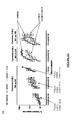
- FIG. 4A and 4B Effects of chronic CORT and CORT+fluoxetine administration on olfactory discrimination ( Figure 4A ) and olfactory detection ( Figure 4B ). Results are expressed as the mean ⁇ SEM of correct response (a) or detection thresholds (-log 10 of odorant dilution). *: P ⁇ 0.05, **: P ⁇ 0.01.
- Figures 5A and 5B Scatter plot between depressive state (latency to groom [ Figure 5A ] and number of grooming sessions [ Figure 5B ] in the splash test) and olfactory detection.
- said psychiatric disorders or diseases notably encompass depressive disorders and depression, more particularly depressive episode(s), major depressive episode(s) and Major Depressive Disorders (MDD).
- depressive disorders and depression more particularly depressive episode(s), major depressive episode(s) and Major Depressive Disorders (MDD).
- MDD Major Depressive Disorders
- psychiatric disorder In the application, the terms "psychiatric disorder”, “psychiatric disease”, “mood disturbance”, “mood depression”, “depressive disorder”, “depression”, “major depressive episode” and “Major Depressive Disorder” have their respective ordinary meanings in the field.
- DSM Diagnostic and Statistical Manual of Mental Disorders
- BDI BECK DEPRESSION INVENTORY®
- BDI-II edition published in 1996 ( Beck, A.T., Steer, R.A., & Brown, G.K. 1996, Manual for the Beck Depression Inventory-II. San Antonio, TX: The Psychological Corporation, U.S.A .).
- the application shows that said loss in olfactory discrimination capacity is observed by submitting the subject to mixtures containing at least two different odorants, more particularly to mixtures containing said at least two different odorants in different proportions.
- the application demonstrates that a subject affected by a psychiatric disorder or disease involving mood disturbance, more particularly mood depression, has a lower capacity to discriminate a mixture, which contains at least two different odorants in a certain proportion, from a mixture, which contains the same at least two different odorants but in a different proportion.
- the application further demonstrates that said loss in olfactory discrimination capacity is not restored by standard SSRI/SNRI treatment, such as fluoxetine treatment (PROZAC®).
- Figure 4A illustrates this demonstration.
- the application also provides a demonstration, which relates to the olfactory detection capacity, i.e., the threshold concentration at which a subject stops or starts detecting one (mono-)odorant (the threshold test is performed by serial dilution of a single odorant, which is not mixed with any other odorant).
- the olfactory detection capacity is decreased in a subject affected by a psychiatric disorder or disease involving mood disturbance, more particularly mood depression, but is restored by standard SSRI/SNRI treatment, such as fluoxetine treatment (PROZAC®).
- Figure 4B illustrates this demonstration.
- the demonstration of the application notably stems from the fact that the inventors have overcome a prejudice in the art, more particularly concerning olfactory discrimination capacity ( cf . background section), and from the conception and reduction to practice of an improved olfactory discrimination test, which involves mixtures comprising at least two different odorants in different proportions.
- the means of the application have the further advantage of being non-invasive means.
- the application therefore relates to a mixture of odorants and to a composition comprising odorants in mixture.
- Said odorants consists of at least two different odorants, more particularly of two different odorants.
- Said two, or at least two, odorants may be in, in mixture with, a (pharmaceutically-acceptable) vehicle, more particularly a vehicle, which is perceived to be odorless by mammals, or by at least one mammal race or species, advantageously at least by humans ( i.e., no odor and no scent perceived by olfactory cognition).
- said vehicle does not alter the odor or scent emitted by each of said two, or of said at least two, odorants.
- said vehicle is structurally suitable for homogeneously mixing said two, or said at least two odorants, together, such as e.g., a solvent, a cream or a paste.
- said vehicle is a solvent.
- said vehicle is an odorless liquid solvent, such as water, mineral oil or propylene glycol.
- a mixture or composition of the application can be comprised on or in a device or instrument for dispensing odor or scent, more particularly for olfactory testing.
- the application therefore relates to a device or instrument for dispensing odor or scent, more particularly for olfactory testing, which comprises a mixture or composition of the application.
- the device or instrument of the application comprises a structure for dispensing the odor(s), scent(s) or smell(s) emitted by the mixture or composition of the application, which is comprised in or on said device or instrument. More particularly, the structure of the device or instrument of the application is adapted, or especially adapted, to sniffing or smelling by a mammal, more particularly to active sniffing or smelling by a mammal. More particularly, the structure of the device or instrument of the application is adapted, or especially adapted, to allow for a mammal to [actively] sniff or smell the odor(s), scent(s) or smell(s) emitted by said mixture or composition.
- the term "mammal” means any mammal, more particularly a non-human mammal, such as a rodent (more particularly a mouse), or a human, still more particularly a diseased non-human mammal or a diseased human, even still more particularly a diseased non-human mammal or a diseased human affected by or suspected of being affected by a psychiatric disorder or disease involving mood disturbance, more particularly mood depression.
- the term "mammal” means a human, more particularly a diseased human, still more particularly a diseased human affected by or suspected of being affected by a psychiatric disorder or disease involving mood disturbance, more particularly mood depression.
- the olfactory device or instrument of the application is an odor dispensing device for assessing nasal chemosensory performance. It can function as a fully extra-nasal or extra-nostril device or instrument, or as a (partially) intra-nasal or intra-nostril device or instrument.
- Devices or instruments for dispensing odor or scent, more particularly for olfactory testing are available to the person of ordinary skill in the art. They include the olfactory devices or instruments that are used in:
- the olfactory devices or instruments that are used in tests such as the UPSIT and the CC-SIT test comprise a plurality of cards or booklet pages, which each contain one odorant (or a control substance) embedded therein, e.g., by microencapsulation with a binder.
- the odorant is released by scratching a surface of the card or page.
- the olfactory devices or instruments that are used in tests such as the CCCRC test comprise a plurality of bottles or jars, e.g., of polyethylene bottles, which each contain one odorant (or a control substance), e.g., an odorant in liquid form.
- the bottle or jar is generally provided with a pop-up spout that fits to one or both nostrils and dispenses the odorant to the sniffing user.
- the olfactory devices or instruments that are used in tests such as the SNIFFIN' STICKSTM test comprise a plurality of capped felt-tip pens, which each contain one odorant (or a control substance) in a reservoir or absorbent material that is associated with the felt tip of the pen.
- the pen is de-capped to place the felt tip at a few centimeters from the nostrils ( e.g., at about 2 cm), and to smell or sniff the odorant dispensed through the felt tip.
- examples of an olfactory device or instrument of the application comprise any structure, which can function as a reservoir for odorants and as a dispenser of said odorants, such as:
- the structure of the device is adapted to, or especially adapted to, the assessment of nasal chemosensory performance, more particularly the assessment of nasal chemosensory performance of a human.
- An odorant is any substance or compound that emits an odor or scent, or any substance or compound that has a distinctive smell.
- An odor, scent or smell is the odor, scent or smell that is consciously perceived by a mammal by smelling or sniffing though the nostril(s) (olfactory cognition).
- an odorant is a substance or compound, which is identifiable (by olfactory cognition) by said mammal, more particularly by the human population to which the odorant is intended, more particularly by a human.
- An odorant can be a substance or compound, which is volatile and/or hydrophobic, advantageously volatile and hydrophobic.
- an odorant is a substance or compound, which is generally recognized as safe to mammals, more particularly to humans.
- an odorant is a compound, more particularly a monomolecular compound.
- each of said at least two odorants is a monomolecular compound, more particularly a monomolecular compound, which is identifiable by a human by olfaction cognition, still more particularly a monomolecular compound, which is volatile, hydrophobic and identifiable by a human by olfaction cognition, even still more particularly a monomolecular compound, which is volatile, hydrophobic, identifiable by a human by olfaction cognition and generally recognized as safe to humans.
- odorants means odorants, which emit different odors or scents.
- an odorant is different from another odorant if it emits an odor or scent that is different or perceived to be different from said other odorant.
- an odorant is different from another odorant if the majority of a representative number of normosmic healthy mammals belonging to the same mammal race or species perceives that they emit different odors or scents.
- an odorant is different from another odorant if more than 40% of a representative number of normosmic healthy mammals belonging to the same mammal race or species perceive that they emit different odors or scents.
- said percentage is more than 45%, more particularly more than 50%, more particularly more than 55%, more particularly more than 60%, more particularly more than 65%.
- a representative number of normosmic healthy mammals belonging to the same mammal race or species can be determined by the person of ordinary skill in the art depending on the mammal race or species being tested. Such a number generally is more than 10, more particularly more than 20.
- each of said at least two odorants is a monomolecular compound emitting an odor or scent (as perceived by a healthy normosmic human) selected from the group consisting of anise, apple, banana, caramel, chocolate, cinnamon, clove, cocoa, coconut, coffee, cola, dill, eucalyptus, fish, flower, honey, garlic, ginger, grapefruit, grass, lavender, leather, lemon, lilac, lily of the valley, licorice, melon, mint, mushroom, onion, orange, peach, pear, peppermint, pineapple, rose, spearmint, turpentine, raspberry, sesame oil, smoked meat, soy sauce and vanilla.
- an odor or scent selected from the group consisting of anise, apple, banana, caramel, chocolate, cinnamon, clove, cocoa, coconut, coffee, cola, dill, eucalyptus, fish, flower, honey, garlic, ginger, grapefruit, grass, lavender, leather, lemon, lilac, lily
- each of said at least two odorants is a monomolecular compound emitting an odor or scent (as perceived by a healthy normosmic human) selected from the group consisting of anise, banana, clove, dill and spearmint.
- Examples of monomolecular compounds emitting such an odor or scent comprise:
- Arctander atlas Arctander S. "Perfume and flavor chemicals: (aroma chemicals)", Allured Publishing Corporation, Carol Stream IL, 1994 ).
- each of said at least two odorants is a monomolecular compound selected from the group consisting of R-carvone, S-carvone, isoamylacetate, anethol and eugenol.
- each of said at least two odorants, or each of said two odorants are different from each other.
- each of said at least two odorants, or each of said two odorants are different from each other.
- said at least two odorants, or said two odorants are contained in mixture and in any proportion that the person of ordinary skill in the art finds appropriate.
- said at least two odorants, or said two odorants are contained in the mixture or composition of the application in a proportion ranging from 1:1 to 1:5, more particularly in a proportion ranging from 1:1.5 to 1:4, for example in a proportion of 1:1.5, 1:2, 1:2.5, 1:3, 1:3.5 or 1:4.
- a "X:Y" proportion means X part(s) of one of said at least two, or of said two, odorants for Y part(s) of the other of said at least two, or of said two, odorants (X and Y can identical or different).
- Said part values are volume parts or weight parts, more particularly volume parts.
- said at least two odorants, or said two odorants are contained in the mixture or composition of the application in a proportion ranging from 0.8% / 0.2% to 0.2% / 0.8% to 0.2% / 0.8%, more particularly in a proportion ranging from 0.6% / 0.4% to 0.4% / 0.6%, for example in a proportion of 0.8% / 0.2%, 0.6% / 0.4%, 0.4% / 0.6% or 0.2% / 0.8%.
- a proportion of "X% / Y%" means X% of one of said at least two, or of said two, odorants and Y% of the other of said at least two, or of said two, odorants.
- a % value of an odorant is the volume or weight, more particularly the volume, of said odorant expressed with respect to the total volume or weight of the mixture in said mixture, more particularly to the total volume of said mixture.
- said at least two odorants, or said two odorants are contained in the mixture or composition of the application in a proportion ranging from 8/2 to 2/8, more particularly in a proportion ranging from 6/4 to 4/6, for example in a proportion of 8/2, 6/4, 4/6 or 2/8.
- a proportion of "X/Y" means a concentration of X of one of said at least two, or of said two, odorants and a concentration of Y of the other of said at least two, or of said two, odorants.
- concentrations X and Y are expressed in the same unit, for example in volume/volume percent, in volume/weight percent or in weight/weight percent, more particularly in volume/volume percent, and are expressed with respect to the total volume or weight of the mixture in said mixture, more particularly to the total volume of said mixture.
- the application relates to the functional association of several (different) mixtures or compositions of the application for sequential use.
- Each of said several mixtures can be (separately) comprised in or on a device or instrument for dispensing odor or scent as above-described (and as below-illustrated).
- said several (different) mixtures or compositions are (and remain) distinct or separate from each other.
- they when they are contained in or on a device or instrument for dispensing odor or scent, they are not mixed together.
- they are not contained in the same device or instrument.
- each of said several mixtures or compositions is separately contained in an odor dispensing device for assessing nasal chemosensory performance as above-described (and as below-illustrated).
- the odorants are the same in each mixture or composition that belongs to the same functional association, i.e., they are the same substances or compounds.
- At least one of said several mixtures or compositions contains said odorants in a proportion that differs from the other mixture(s) or composition(s) of the same functional association.
- the application relates to a functional association, which comprises:
- the concentration of at least one odorant in said at least one first mixture or composition is different from its proportion in said at least one second mixture or composition.
- the respective concentrations of the (at least two) odorants in said at least one first mixture or composition are different from their respective concentrations in said at least one second mixture or composition.
- said at least one first composition and said at least one second composition are for sequential use, more particularly for sequential use in the detection of olfactory discrimination impairment in a human, more particularly in a diseased human.
- a functional association of the application may comprise any number of mixtures or compositions of the application that the person of ordinary skill in the art may find appropriate.
- a functional association of the application may comprise two or three mixtures or compositions of the application.
- a functional association of the application comprises two or three mixtures or compositions of the application, which are distinct or separate from each other, wherein the odorants of said two or three mixtures or compositions are the same but are contained in one of said two or three mixtures or compositions in a proportion that differs from the remaining one or two mixtures or compositions.
- said remaining two mixtures or compositions can be identical, i.e ., duplicate.
- the difference in proportions within the same functional association is sufficient to be distinguishable by a healthy normosmic human.
- the at least one mixture or composition, which contains said odorants in a proportion that differs from the other mixture(s) or composition(s) of the same association is consciously perceived (olfactory cognition) as emitting an odor or scent that is different from the odor or scent emitted by the other mixture(s) or composition(s) of the association.
- a functional association of the application comprises (at least) two mixtures or compositions of the application, which are distinct or separate from each other, wherein the odorants of each of said (at least) two mixtures or compositions are the same two or the same at least two odorants, and wherein one of said two, or of said at least two, odorants is contained in one of said (at least) two mixtures or compositions in a 8/2 proportion, whereas the other of said two, or of said at least two, odorants is contained in the other of said (at least) two mixtures or compositions in a 2/8 proportion.
- a functional association of the application comprises (at least) two mixtures or compositions of the application, which are distinct or separate from each other, wherein the odorants of each of said (at least) two mixtures or compositions are the same two or the same at least two odorants, and wherein one of said two, or of said at least two, odorants is contained in one of said (at least) two mixtures or compositions in a 6/4 proportion, whereas the other of said two, or of said at least two, odorants is contained in the other of said (at least) two mixtures or compositions in a 4/6 proportion.
- a functional association of the application comprises (at least) two mixtures or compositions of the application, which are distinct or separate from each other, wherein the odorants of each of said (at least) two mixtures or compositions are R-carvone and S-carvone in mixture, and wherein one of said (at least) two mixtures or compositions contain R-carvone and S-carvone in a 8/2 proportion, whereas the other of said (at least) two mixtures or compositions contain R-carvone and S-carvone in a 2/8 proportion.
- a functional association of the application comprises (at least) two mixtures or compositions of the application, which are distinct or separate from each other, wherein the odorants of each of said (at least) two mixtures or compositions are isoamylacetate and anethol in mixture, and wherein one of said (at least) two mixtures or compositions contain isoamylacetate and anethol in a 8/2 proportion, whereas the other of said (at least) two mixtures or compositions contain isoamylacetate and anethol in a 2/8 proportion.
- a functional association of the application comprises (at least) two mixtures or compositions of the application, which are distinct or separate from each other, wherein the odorants of each of said (at least) two mixtures or compositions are anethol and eugenol in mixture, and wherein one of said two (at least) mixtures or compositions contain anethol and eugenol in a 8/2 proportion, whereas the other of said (at least) two mixtures or compositions contain anethol and eugenol in a 2/8 proportion.
- the application also relates to a kit comprising at least one functional association of the application.
- the application further relates to the collection of at least two (different) functional associations of the application for sequential use, more particularly to a kit comprising at least two functional associations of the application.
- Said at least two (different) functional associations of the application are (and remain) distinct or separate from each other.
- the odorants of each of said at least two (different) functional associations can be the same compounds or different compounds.
- the proportions at which they are contained in each of said at least two (different) functional associations can be the same proportions or different proportions.
- the (at least two) odorants of said at least one first and second mixtures or compositions can be different from the (at least) two odorants of said at least one third and fourth mixtures or compositions.
- the (at least two) odorants of said at least one first and second mixtures or compositions can be the same compounds as the (at least) two odorants of said at least one third and fourth mixtures or compositions, but in different proportions.
- kits of the application comprises at least one (first) functional association of the application, wherein the odorants are in 8/2 and 2/8 proportions, and at least one other (second) functional association, which comprises the same odorants as said first functional association but in different proportions, e.g., in 6/4 and 4/6 proportions.
- kits of the application comprises at least one (first) functional association of the application, wherein the odorants are in 8/2 and 2/8 proportions, and at least one other (second) functional association, which comprises different odorants as said first functional association at the same or in different proportions, e.g., in 8/2 and 2/8 proportions or in 6/4 and 4/6 proportions.
- a kit of the application comprises
- a kit of the application comprises:
- a kit of the application comprises:
- a kit of the application comprises:
- a mixture or composition of the application enables measuring the olfactory capacity of a mammal, more particularly the olfactory discrimination capacity of a mammal, more particularly detecting and/or measuring olfactory discrimination impairment in a mammal.
- said mammal is a diseased mammal.
- said mammal is a human, notably a diseased human, more particularly a diseased human affected by or suspected of being affected by a psychiatric disorder or disease involving mood disturbance, more particularly mood depression.
- the several mixtures or compositions of a functional association of the application can be sequentially placed in smelling or sniffing contact with said mammal.
- the experimenter, laboratory technician or physician records whether said mammal succeeds in identifying, within the mixtures or compositions of the same association, the at least one mixture or composition that contains the (two, or at least two) odorants in a proportion that differs from the other mixture(s) or composition(s).
- said sequential smelling or sniffing is advantageously performed under conditions that prevent or avoid olfaction contamination.
- said sequential smelling or sniffing is advantageously performed in a room where aeration is sufficient to prevent or avoid olfaction contamination, and according to a time sequence, which prevents or avoids olfaction contamination from one mixture or composition to the next mixture or composition.
- said smelling or sniffing can be repeated with the same and/or with another functional association of the application.
- a mixture or composition of the application can be further functionally associated with, or a kit of the application can further comprise any other additional element, such as at least one additional means, device, instrument, composition, substance or compound, that the person of ordinary skill in the art finds appropriate to measure olfactory capacity, more particularly to detect and/or measure olfactory impairment.
- said additional element can be means for measuring the olfactory detection threshold of a mammal or human, more particularly a diseased mammal or human.
- Means for measuring olfactory detection threshold can for example comprise a plurality of compositions, wherein each composition of said plurality contains only one odorant, and wherein all the compositions of said plurality contains the same one odorant and form a serial dilution of said same one odorant.
- Said odorant can be as defined above.
- said odorant can be n-butanol or 2-phenylethanol. Please see Hummel et al. 1997, Chem. Senses 22: 39-52 .
- the application relates to the medical or biotechnological applications of at least one product of the application, i.e., at least one mixture or composition of the application, more specifically of at least one functional association, collection or kit of the application.
- Said applications comprise particularly methods and uses.
- a method or use of the application comprises the smelling or sniffing of at least one mixture or composition of the application, more particularly the sequential smelling or sniffing of at least two different mixtures or compositions of the application, more particularly the sequential smelling or sniffing of at least two different mixtures or compositions that belong to the same functional association as above-described (and below illustrated), more particularly of mixtures or compositions that belong to at least two different functional associations as above-described (and below) illustrated.
- said smelling or sniffing can be active smelling or sniffing.
- a method or use of the application may notably comprise:
- said smelling or sniffing allows for determining and/or measuring the olfactory capacity, more particularly the olfactory discrimination capacity, of the smelling or sniffing subj ect.
- a subject affected by a psychiatric disorder or disease involving mood disturbance, more particularly mood depression has a lower capacity to discriminate a mixture, which contains at least two different odorants in a certain proportion, from a mixture, which contains the same at least two different odorants but in a different proportion, i.e., has a lower capacity to discriminate between two mixtures or compositions that belong to the same functional association of the application.
- the capacity of discriminating between mixtures of the same functional association is indicative of, or positively correlates with, the olfactory capacity, more particularly the olfactory discrimination capacity of said subject.
- Another example is the following example:
- a method or use of the application is advantageously performed in a subject in need thereof.
- Said subject is a mammal as above described, more particularly a human, still more particularly a diseased human, still more particularly a diseased human affected by or suspected of being affected by a psychiatric disorder or disease involving mood disturbance, more particularly mood depression.
- said subject is at a stage where he/she does not show the symptoms of a severe stage of psychiatric disorder or disease involving mood disturbance, more particularly mood depression.
- said subject does not show or does not have severe depression. More particularly, the subject may show minimal, mild or moderate depression, more particularly minimal or mild depression.
- said subject may score less than 29 (moderate, mild or minimal depression), more particularly less than 20 (mild or minimal depression), still more particularly less than 14 (minimal depression).
- Said applications notably comprise the use of said at least one product of the application in the diagnosis, more particularly in the in vivo diagnosis of a psychiatric disorder or disease involving mood disturbance, more particularly mood depression.
- said use in the ( in vivo) diagnosis of a psychiatric disorder or disease involving mood disturbance, more particularly mood depression further comprises determining whether said subject has a reduced olfactory capacity, more particularly a reduced olfactory discrimination capacity, compared to a healthy and normosmic control subject.
- a reduced olfactory capacity, more particularly a reduced olfactory discrimination capacity is indicative of a psychiatric disorder or disease involving mood disturbance, more particularly mood depression.
- the extent of reduction of olfactory capacity, more particularly of olfactory discrimination capacity is indicative of, or positively correlates with, the severity of mood disturbance, more particularly of mood depression, in said subject.
- Said applications notably comprise the use of said at least one product of the application to determine or measure the severity of a psychiatric disorder or disease that involves mood disturbance, more particularly depression.
- Said applications more particularly comprise the use of said at least one product of the application in the diagnosis, more particularly the in vivo diagnosis of the severity of a psychiatric disorder or disease that involves mood disturbance, more particularly mood depression.
- said use in determining and/or measuring the severity of a psychiatric disorder or disease that involves mood disturbance, more particularly mood depression, and/or said use in the ( in vivo) diagnosis of the severity of a psychiatric disorder or disease that involves mood disturbance, more particularly mood depression further comprise(s) determining and/or measuring the extent of reduction in olfactory discrimination capacity of said subject. The higher said extent the higher said severity.
- Said applications notably comprise the use of said at least one product of the application in the treatment of a psychiatric disorder or disease involving mood disturbance, more particularly mood depression.
- said use in the treatment of a psychiatric disorder or disease involving mood disturbance, more particularly mood depression further comprises selecting a treatment, more particular an antidepressant treatment, which increases the olfactory capacity, more particularly the olfactory discrimination capacity, of said subject, and administering said selected treatment (or antidepressant treatment) to said subject.
- said use in the treatment of a psychiatric disorder or disease involving mood disturbance, more particularly mood depression further comprises modifying and/or adjusting the nature and/or dosage of the treatment given or applied to the patient so as to increase the olfactory capacity, more particularly the olfactory discrimination capacity, of said subject.
- Said applications notably comprise the use of said at least one product of the application in determining and/or measuring and/or monitoring the efficiency of a treatment that is intended for treating a psychiatric disorder or disease involving mood disturbance, more particularly depression. More particularly, said applications notably comprise the use of said at least one product of the application in the diagnosis, more particularly the in vivo diagnosis, of response or non-response (or resistance) to a treatment that is intended for treating a psychiatric disorder or disease involving mood disturbance, more particularly mood depression.
- said use in the ( in vivo) diagnosis of response or non-response (or resistance) to a treatment that is intended for treating a psychiatric disorder or disease involving mood disturbance, more particularly mood depression further comprises submitting a subject, who has received said treatment, to said sequential smelling or sniffing, and determining whether said treatment increases or decreases the olfactory discrimination capacity of said subject.
- An increased olfactory discrimination capacity is indicative of response to said treatment.
- a reduced or unmodified (e.g., non-significantly different) olfactory discrimination capacity is indicative of non-response (or resistance) to said treatment.
- said use in the ( in vivo) diagnosis of response or non-response (or resistance) to a treatment that is intended for treating a psychiatric disorder or disease involving mood disturbance, more particularly mood depression further comprises:
- Said subject can be diagnosed to be non-responsive (or resistant) to said candidate antidepressant treatment if said olfactory capacity, more particularly said olfactory discrimination capacity, is not increased. Said subject can be diagnosed to be responsive to said candidate antidepressant treatment if said olfactory capacity, more particularly said olfactory discrimination capacity, is increased.
- Said treatment can e.g., be a pharmaco-therapeutic treatment, e.g., a treatment comprising the administration of at least one Selective Serotonin Reuptake Inhibitor (SSRI) and/or at least one Serotonin and Noradrenalin Reuptake Inhibitor (SNRI), for example the administration of PROZAC®.
- SSRI Selective Serotonin Reuptake Inhibitor
- SNRI Noradrenalin Reuptake Inhibitor
- said treatment can be a treatment comprising the administration of electroshock(s), e.g., electroconvulsivotherapy
- Said applications notably comprise the use of said at least one product of the application to measure the olfactory capacity, more particularly the olfactory discrimination capacity of a subj ect.
- Said applications notably comprise the use of said at least one product of the application to identify a treatment suitable for (or useful in) treating a psychiatric disorder or disease that involves mood disturbance, more particularly mood depression.
- Said use may comprise:
- said subject may advantageously be a non-human mammal, more particularly a rodent, such as a mouse.
- the application also relates to a method of manufacturing a device useful in or for the diagnosis or the treatment of a psychiatric disorder or disease that involves mood disturbance, more particularly depression, which comprises:
- the application also relates to the device obtainable by, or obtained by said method of manufacture.
- HPA hypothalamo-pituitary-adrenal
- MDD Major Depressive Disorder
- the model involves chronic administration of a low dose of corticosterone in mice, inducing a high anxiety- and depressive-like behavioral state that are both reversed by antidepressant treatment and are associated with an enhancement of adult hippocampal neurogenesis.
- mice from Taconic Farms, Inc. (Tornbjergvej 40, DK-4623 Lille Skensved, Denmark) were administered corticosterone (CORT, 5 mg/kg/day in drinking water) for one month, to induce an anxiety/depression-like state. Depression-like behavior was checked by the splash test, the open field test, elevated plus maze and novelty suppressed feeding.
- mice 29 of these mice were put on a chronic fluoxetine regimen (FLX: 5 mg/kg/day in drinking water, with CORT, 5 mg/kg/day, named CORT+FLX mice), as previously described ( David et al. 2009, Neuron 62(4): 479-493 , including Supplemental Data ), while 8 mice continued to receive corticosterone chronically (named CORT mice) [ cf . Figure 1 ]. Moreover, 8 control mice received the vehicle only (named VEHICLE mice) [ cf . Figure 1 ].
- Depression related changes include decreased self care, a behavior that can be evaluated by the splash test ( David et al. 2009, Neuron 62(4): 479-493 , including Supplemental Data ). This test consists in squirting 200 microliters of a 10% sucrose solution on the mouse back. The grooming latency, frequency and duration are then recorded. About 90% of C57BL/6 mice demonstrate depression-related signs in response to chronic corticosterone.
- Odorants All odorants are monomolecular compounds from Sigma-Aldrich (Sigma-Aldrich Chemie S.a.r.l.; L'Isle d'Abeau Chesnes; 38297 Saint-Quentin Fallavier; France), dissolved in water or mineral oil as indicated below.
- Odorant mixture discrimination tasks Mice were trained to distinguish between 0.1% carvone + (S+) and carvone - (S-) diluted in mineral oil (simple discrimination task). Then, olfactory discrimination performance was determined for two carvone mixture tasks (difficult discrimination task) as follows:
- Odorant detection threshold Mice were trained in the olfactometer to detect successively descending decimal concentrations of n-butanol (S+) diluted in water. Each concentration was tested daily in 8 blocks of 20 trials. In each session, water served as the S-. Mice were given one to two sessions per day (morning, afternoon) with one decimal dilution of the odorant per session. A maximum of 16 blocks per day was allowed (2 sessions of 8 blocks). The session stopped at the criterion performance achievement ( ⁇ 90 % of correct response in the block). If the criterion performance was not achieved in two successive sessions with the same odorant dilution, the preceding dilution was considered as the detection threshold.
- S+ n-butanol
- mice that were administered the chronic treatment with CORT showed a significantly increased latency to groom compared to animals that received the vehicle (116.1 ⁇ 17.9 vs 29.1 ⁇ 7.5 s, P ⁇ 0.001) [ cf . Figure 3A ].
- grooming duration was decreased in CORT-treated mice (43.7 ⁇ 5.5 vs 80.5 ⁇ 8.5, P ⁇ 0.05) [ cf . Figure 3B ] as well as grooming frequency (2.8 ⁇ 0.3 vs 5.9 ⁇ 0.7, P ⁇ 0.05) [ cf . Figure 3C ].
- a 2-month fluoxetine treatment (18 mg/kg/day) was able to decrease grooming latency (26.6 ⁇ 4.1 s, P ⁇ 0.001 vs CORT-treated) [ cf . Figure 3A ] and increase grooming duration (92.2 ⁇ 8.9, P ⁇ 0.05 vs CORT-treated) [ cf .
- mice showed depression-related symptoms in response to chronic corticosterone when tested in other standardized behavioral tests of depression (open field test, elevated plus maze and novelty suppressed feeding, tail suspended test, forced swim test, data not shown).
- chronic fluoxetine administration in CORT-treated mice reversed these symptoms.
- Odorants are considered safe and are used in food and cosmetic products.
- test can easily be implemented in humans ( cf . example 2 below).
- the data obtained in the animal model ( cf . example 1) allowed us to propose an olfactory test for major depression in humans, based on the discrimination of mixtures of at least two odorants, more particularly on the discrimination of mixtures of at least two monomolecular odorants.
- mixtures include ( cf . example 1 above):
- Odorants can for example be presented in sniffing sticks, such as described in Hummel et al. 1997 (Chem. Senses 22: 39-52 ) and commercialized as SNIFFIN' STICKSTM by Burghardt Messtechnik GmbH (Tinsdaler Weg 175, D-2280 Wedel, Germany), e.g., (4mL) sniffing sticks containing the odorant mixture in a solvent, such as 2 phenyl ethanol.
- the mixture discrimination test can optionally be associated with the detection threshold test (odorant perception test e.g., with n-butanol or phenylethylalcohol; cf. Hummel et al. 1997, Chem. Senses 22: 39-52 ; cf.
- two sticks contain the same odorant mixture (e.g., a mixture of carvone + and of carvone - at 8/2 proportion in a solvent such as 2 phenyl ethanol) and the third tick contains a different associated odorant mixture (e.g., a mixture of carvone + and of carvone - at 2/8 proportion in the same solvent).
- the subject is requested to indicate the stick which smells different.
- two sticks can be presented to the subject: one stick contains the solvent and the other stick contains a dilution of n-butanol or phenylethylalcohol (in increasing concentrations, e.g., in increasing 2-fold concentrations, e.g., starting from 0.4 % vol/vol in propylene glycol).
- the mixture discrimination test can be implemented on a population of humans diagnosed with Major Depressive Disorder (MDD), more particularly on:
- the mixture discrimination capacity of this population can be compared to the discrimination capacity of healthy humans, more particularly of normosmic healthy humans.
- the mixture discrimination test is useful for assessing the degree of depression and the response/resistance to antidepressant drugs. This test can optionally be associated with the detection threshold test, and is notably useful:
Landscapes
- Health & Medical Sciences (AREA)
- Life Sciences & Earth Sciences (AREA)
- Engineering & Computer Science (AREA)
- Psychiatry (AREA)
- Biomedical Technology (AREA)
- Veterinary Medicine (AREA)
- Public Health (AREA)
- General Health & Medical Sciences (AREA)
- Animal Behavior & Ethology (AREA)
- Surgery (AREA)
- Physics & Mathematics (AREA)
- Molecular Biology (AREA)
- Medical Informatics (AREA)
- Heart & Thoracic Surgery (AREA)
- Pathology (AREA)
- Biophysics (AREA)
- Neurosurgery (AREA)
- Neurology (AREA)
- Bioinformatics & Cheminformatics (AREA)
- Psychology (AREA)
- Child & Adolescent Psychology (AREA)
- Social Psychology (AREA)
- Hospice & Palliative Care (AREA)
- Educational Technology (AREA)
- Physiology (AREA)
- Developmental Disabilities (AREA)
- Pharmacology & Pharmacy (AREA)
- Nuclear Medicine, Radiotherapy & Molecular Imaging (AREA)
- Organic Chemistry (AREA)
- General Chemical & Material Sciences (AREA)
- Chemical Kinetics & Catalysis (AREA)
- Medicinal Chemistry (AREA)
- Chemical & Material Sciences (AREA)
- Pain & Pain Management (AREA)
- Acyclic And Carbocyclic Compounds In Medicinal Compositions (AREA)
- Medicinal Preparation (AREA)
- Measurement Of The Respiration, Hearing Ability, Form, And Blood Characteristics Of Living Organisms (AREA)
- Medicines Containing Antibodies Or Antigens For Use As Internal Diagnostic Agents (AREA)
- Pharmaceuticals Containing Other Organic And Inorganic Compounds (AREA)
Priority Applications (8)
| Application Number | Priority Date | Filing Date | Title |
|---|---|---|---|
| EP13305499.9A EP2792302A1 (de) | 2013-04-17 | 2013-04-17 | Olfaktorische Mittel zur Diagnose und Behandlung von depressiver Stimmung |
| CA2907972A CA2907972A1 (en) | 2013-04-17 | 2014-04-10 | Olfactory means useful in the diagnosis and treatment of mood depression |
| EP14716816.5A EP2986224A1 (de) | 2013-04-17 | 2014-04-10 | Olfaktorische vorrichtung zur diagnose und behandlung von depressiver stimmung |
| JP2016508099A JP6554460B2 (ja) | 2013-04-17 | 2014-04-10 | 気分消沈の診断及び治療に有用な嗅覚的手段 |
| US14/784,226 US20160073944A1 (en) | 2013-04-17 | 2014-04-10 | Olfactory means useful in the diagnosis and treatment of mood depression |
| PCT/EP2014/057277 WO2014170206A1 (en) | 2013-04-17 | 2014-04-10 | Olfactory means useful in the diagnosis and treatment of mood depression |
| JP2018227278A JP6890573B2 (ja) | 2013-04-17 | 2018-12-04 | 気分消沈の診断及び治療に有用な嗅覚的手段 |
| US16/748,709 US11504049B2 (en) | 2013-04-17 | 2020-01-21 | Olfactory means useful in the diagnosis and treatment of mood depression |
Applications Claiming Priority (1)
| Application Number | Priority Date | Filing Date | Title |
|---|---|---|---|
| EP13305499.9A EP2792302A1 (de) | 2013-04-17 | 2013-04-17 | Olfaktorische Mittel zur Diagnose und Behandlung von depressiver Stimmung |
Publications (1)
| Publication Number | Publication Date |
|---|---|
| EP2792302A1 true EP2792302A1 (de) | 2014-10-22 |
Family
ID=48190439
Family Applications (2)
| Application Number | Title | Priority Date | Filing Date |
|---|---|---|---|
| EP13305499.9A Withdrawn EP2792302A1 (de) | 2013-04-17 | 2013-04-17 | Olfaktorische Mittel zur Diagnose und Behandlung von depressiver Stimmung |
| EP14716816.5A Withdrawn EP2986224A1 (de) | 2013-04-17 | 2014-04-10 | Olfaktorische vorrichtung zur diagnose und behandlung von depressiver stimmung |
Family Applications After (1)
| Application Number | Title | Priority Date | Filing Date |
|---|---|---|---|
| EP14716816.5A Withdrawn EP2986224A1 (de) | 2013-04-17 | 2014-04-10 | Olfaktorische vorrichtung zur diagnose und behandlung von depressiver stimmung |
Country Status (5)
| Country | Link |
|---|---|
| US (2) | US20160073944A1 (de) |
| EP (2) | EP2792302A1 (de) |
| JP (2) | JP6554460B2 (de) |
| CA (1) | CA2907972A1 (de) |
| WO (1) | WO2014170206A1 (de) |
Cited By (3)
| Publication number | Priority date | Publication date | Assignee | Title |
|---|---|---|---|---|
| WO2019010172A1 (en) | 2017-07-03 | 2019-01-10 | The Rockefeller University | COMPOSITIONS AND METHODS FOR UNIVERSAL CLINICAL TEST FOR OLFACTORY DYSFUNCTION |
| CN113826583A (zh) * | 2021-09-14 | 2021-12-24 | 中国辐射防护研究院 | 一种辐射致抑郁大鼠动物模型的建立方法 |
| CN114350831A (zh) * | 2020-10-12 | 2022-04-15 | 谱尼测试集团上海有限公司 | 用于可可粉中可可源性成分检测的引物探针及方法 |
Families Citing this family (6)
| Publication number | Priority date | Publication date | Assignee | Title |
|---|---|---|---|---|
| EP3245944A1 (de) | 2016-05-20 | 2017-11-22 | Institut Pasteur | Olfaktorische mittel zur diagnose von neurologischen komplikationen einer nervensysteminfektion |
| CA3070711C (en) | 2017-07-27 | 2023-09-19 | Locus Ip Company, Llc | Compositions for enhancing bioavailability of pharmaceuticals, supplements and ingested substances |
| JP2022544228A (ja) | 2019-08-10 | 2022-10-17 | ローカス アイピー カンパニー リミテッド ライアビリティ カンパニー | 中枢神経系への治療用化合物の嗅覚送達 |
| WO2021188992A1 (en) * | 2020-03-19 | 2021-09-23 | New York University | Odor comparator |
| WO2022104016A1 (en) * | 2020-11-13 | 2022-05-19 | Google Llc | Machine-learned models for sensory property prediction |
| WO2025145055A1 (en) * | 2023-12-29 | 2025-07-03 | University Of Kansas | Olfactory diagnostic compositions and kits, and methods of making and using the same |
Family Cites Families (3)
| Publication number | Priority date | Publication date | Assignee | Title |
|---|---|---|---|---|
| US5380765A (en) * | 1992-09-30 | 1995-01-10 | Hirsch; Alan R. | Chemosensory olfactory assay for psychiatric disorders |
| US5565148A (en) * | 1995-03-16 | 1996-10-15 | Minnesota Mining And Manufacturing Company | Device for selectively providing a multiplicity of aromas |
| JP5536272B1 (ja) * | 2013-12-25 | 2014-07-02 | 大樹 軍場 | 生体情報生成方法、生体情報生成プログラム及び生体情報生成装置 |
-
2013
- 2013-04-17 EP EP13305499.9A patent/EP2792302A1/de not_active Withdrawn
-
2014
- 2014-04-10 WO PCT/EP2014/057277 patent/WO2014170206A1/en not_active Ceased
- 2014-04-10 US US14/784,226 patent/US20160073944A1/en not_active Abandoned
- 2014-04-10 CA CA2907972A patent/CA2907972A1/en not_active Abandoned
- 2014-04-10 EP EP14716816.5A patent/EP2986224A1/de not_active Withdrawn
- 2014-04-10 JP JP2016508099A patent/JP6554460B2/ja not_active Expired - Fee Related
-
2018
- 2018-12-04 JP JP2018227278A patent/JP6890573B2/ja not_active Expired - Fee Related
-
2020
- 2020-01-21 US US16/748,709 patent/US11504049B2/en active Active
Non-Patent Citations (29)
| Title |
|---|
| "Diagnostic and Statistical Manual of Mental Disorders", AMERICAN PSYCHIATRIC ASSOCIATION |
| "DMS-IV", July 2000 |
| "DSM", 2013 |
| "Manual for the Beck Depression Inventory-II", 1996, THE PSYCHOLOGICAL CORPORATION |
| "The Diagnostic and Statistical Manual of Mental Disorders", AMERICAN PSYCHIATRIC ASSOCIATION |
| ARCTANDER S.: "Arctander atlas", 1994, ALLURED PUBLISHING CORPORATION, article "Perfume and flavor chemicals: (aroma chemicals" |
| ARCTANDER S.: "Perfume and flavor chemicals: (aroma chemicals", 1994, ALLURED PUBLISHING CORPORATION |
| ATANASOVA B ET AL: "Olfactory anhedonia and negative olfactory alliesthesia in depressed patients", PSYCHIATRY RESEARCH, ELSEVIER IRELAND LTD, IE, vol. 176, no. 2-3, 30 April 2010 (2010-04-30), pages 190 - 196, XP026977528, ISSN: 0165-1781, [retrieved on 20100306] * |
| BECK, A.T.; STEER, R.A.; BROWN, G.K.: "Manual for the Beck Depression Inventory-11", 1996, THE PSYCHOLOGICAL CORPORATION |
| CAIN ET AL., LARYNGOSCOPE, vol. 98, 1988, pages 83 - 88 |
| CAIN, EAR NOSE THROAT J., vol. 68, no. 316, 1989, pages 322 - 328 |
| DAVID ET AL., NEURON, vol. 62, no. 4, 2009, pages 479 - 493 |
| DOTY ET AL., LARYNGOSCOPE, vol. 106, 1996, pages 353 - 356 |
| DOTY ET AL., LARYNGOSCOPE, vol. 94, 1984, pages 176 - 178 |
| DOTY ET AL., PHYSIOL. BEHAV., vol. 32, 1984, pages 489 - 502 |
| HUMMEL ET AL., ANN. OTOL. RHINO AND LARYNGOL., vol. 110, 2001, pages 976 - 981 |
| HUMMEL ET AL., ANN. OTOL. RHINOL. AND LARYNGOL., vol. 110, 2001, pages 976 - 981 |
| HUMMEL ET AL., CHEM. SENSES, vol. 22, 1997, pages 39 - 52 |
| HUMMEL ET AL., EUR. ARCH. OTORHINOLARYNGOL., vol. 364, no. 3, 2007, pages 237 - 243 |
| KOBAL ET AL., EUR. ARCH. OTORHINOLARYNGOL., vol. 257, 2000, pages 205 - 211 |
| KOBAL ET AL., RHINOLOGY, vol. 34, 1996, pages 222 - 226 |
| LAING D G ET AL: "Quality and intensity of binary odor mixtures", PHYSIOLOGY AND BEHAVIOR, ELSEVIER SCIENCE LTD., OXFORD, GB, vol. 33, no. 2, 1 August 1984 (1984-08-01), pages 309 - 319, XP024533693, ISSN: 0031-9384, [retrieved on 19840801], DOI: 10.1016/0031-9384(84)90118-5 * |
| LASKARIS N A ET AL: "Understanding and characterizing Olfactory responses [A manifold learning approach based on optical recordings]", IEEE ENGINEERING IN MEDICINE AND BIOLOGY MAGAZINE, IEEE SERVICE CENTER, PISACATAWAY, NJ, US, vol. 27, no. 2, 1 March 2008 (2008-03-01), pages 69 - 79, XP011205622, ISSN: 0739-5175 * |
| LAZARINI ET AL., PLOSONE, vol. 4, no. 9, 2009, pages 7017 |
| LOMBION-POUTHIER S ET AL: "Odor perception in patients with mood disorders", JOURNAL OF AFFECTIVE DISORDERS, ELSEVIER BIOCHEMICAL PRESS, AMSTERDAM, NL, vol. 90, no. 2-3, 27 December 2005 (2005-12-27), pages 187 - 191, XP024997351, ISSN: 0165-0327, [retrieved on 20060201], DOI: 10.1016/J.JAD.2005.11.012 * |
| NEGOIAS ET AL., NEUROSCIENCE, vol. 169, no. 1, 2010, pages 415 - 421 |
| ODORDB DATABASE, Retrieved from the Internet <URL:http://senselab.med.yale.edu/odordb/eavObList.aspx?db=5&cl=l> |
| PAUSE ET AL., JOURNAL OF PSYCHIATRIC RESEARCH, vol. 35, 2001, pages 271 - 277 |
| POLLATOS ET AL., JOURNAL OF AFFECTIVE DISORDERS, vol. 102, 2007, pages 101 - 108 |
Cited By (6)
| Publication number | Priority date | Publication date | Assignee | Title |
|---|---|---|---|---|
| WO2019010172A1 (en) | 2017-07-03 | 2019-01-10 | The Rockefeller University | COMPOSITIONS AND METHODS FOR UNIVERSAL CLINICAL TEST FOR OLFACTORY DYSFUNCTION |
| EP3648613A4 (de) * | 2017-07-03 | 2021-03-31 | The Rockefeller University | Zusammensetzungen und verfahren für einen universellen klinischen test für olfaktorische funktionsstörungen |
| US12364429B2 (en) | 2017-07-03 | 2025-07-22 | The Rockefeller University | Compositions and methods for a universal clinical test for olfactory dysfunction |
| EP4635407A3 (de) * | 2017-07-03 | 2026-01-07 | The Rockefeller University | Zusammensetzungen und verfahren für einen universellen klinischen test auf olfaktorische dysfunktion |
| CN114350831A (zh) * | 2020-10-12 | 2022-04-15 | 谱尼测试集团上海有限公司 | 用于可可粉中可可源性成分检测的引物探针及方法 |
| CN113826583A (zh) * | 2021-09-14 | 2021-12-24 | 中国辐射防护研究院 | 一种辐射致抑郁大鼠动物模型的建立方法 |
Also Published As
| Publication number | Publication date |
|---|---|
| JP6554460B2 (ja) | 2019-07-31 |
| US11504049B2 (en) | 2022-11-22 |
| US20200155055A1 (en) | 2020-05-21 |
| JP6890573B2 (ja) | 2021-06-18 |
| US20160073944A1 (en) | 2016-03-17 |
| WO2014170206A1 (en) | 2014-10-23 |
| JP2016518362A (ja) | 2016-06-23 |
| CA2907972A1 (en) | 2014-10-23 |
| JP2019058717A (ja) | 2019-04-18 |
| EP2986224A1 (de) | 2016-02-24 |
Similar Documents
| Publication | Publication Date | Title |
|---|---|---|
| US11504049B2 (en) | Olfactory means useful in the diagnosis and treatment of mood depression | |
| Zhang et al. | Anxiolytic effect of essential oils and their constituents: a review | |
| Calvi et al. | The scent of emotions: A systematic review of human intra‐and interspecific chemical communication of emotions | |
| Zawilska et al. | Spice/K2 drugs–more than innocent substitutes for marijuana | |
| Souto-Maior et al. | Anxiolytic-like effects of inhaled linalool oxide in experimental mouse anxiety models | |
| Cracknell et al. | A double-blind placebo-controlled study into the efficacy of a homeopathic remedy for fear of firework noises in the dog (Canis familiaris) | |
| Kanezaki et al. | Effect of cigarette smoking on cough reflex induced by TRPV1 and TRPA1 stimulations | |
| Arts et al. | Local effects in the respiratory tract: relevance of subjectively measured irritation for setting occupational exposure limits | |
| Doty et al. | Trigeminal chemosensation | |
| Seo et al. | Influence of binasal and uninasal inhalations of essential oil of Abies koreana twigs on electroencephalographic activity of human | |
| Bilici | Synthetic cannabinoids | |
| KR102297693B1 (ko) | 후각 검사용 키트 | |
| Dougnon et al. | Role of ascaridole and p-cymene in the sleep-promoting effects of Dysphania ambrosioides essential oil via the GABAergic system in a ddY mouse inhalation model | |
| Arts et al. | An analysis of human response to the irritancy of acetone vapors | |
| Leopold et al. | Physiology of olfaction | |
| Wise et al. | Stimulus selection for intranasal sensory isolation: eugenol is an irritant | |
| Kumar et al. | Ameliorative effect of curcumin on altered expression of CACNA1A and GABRD in the pathogenesis of FeCl3-induced epilepsy | |
| Hamamura et al. | Behavioral effects of continuously administered bergamot essential oil on mice with partial sciatic nerve ligation | |
| Fride et al. | Behavioral methods in cannabinoid research | |
| Mahmut et al. | Changes in olfactory function after immersive exposure to odorants | |
| Frasnelli et al. | Ortho-and retronasal presentation of olfactory stimuli modulates odor percepts | |
| dos Santos et al. | Social separation and diazepam withdrawal increase anxiety in the elevated plus-maze and serotonin turnover in the median raphe and hippocampus | |
| Hacquemand et al. | Comparative fear-related behaviors to predator odors (TMT and natural fox feces) before and after intranasal ZnSO4 treatment in mice | |
| Ueno et al. | Increased anxiety-related behavior in mice following β-citronellol inhalation | |
| Davis | The investigation of human scent from epileptic patients for the identification of a biomarker for epileptic seizures |
Legal Events
| Date | Code | Title | Description |
|---|---|---|---|
| PUAI | Public reference made under article 153(3) epc to a published international application that has entered the european phase |
Free format text: ORIGINAL CODE: 0009012 |
|
| 17P | Request for examination filed |
Effective date: 20130417 |
|
| AK | Designated contracting states |
Kind code of ref document: A1 Designated state(s): AL AT BE BG CH CY CZ DE DK EE ES FI FR GB GR HR HU IE IS IT LI LT LU LV MC MK MT NL NO PL PT RO RS SE SI SK SM TR |
|
| AX | Request for extension of the european patent |
Extension state: BA ME |
|
| STAA | Information on the status of an ep patent application or granted ep patent |
Free format text: STATUS: THE APPLICATION IS DEEMED TO BE WITHDRAWN |
|
| 18D | Application deemed to be withdrawn |
Effective date: 20150423 |