EP2796496B1 - Composition de résine thermoplastique et son procédé de production - Google Patents
Composition de résine thermoplastique et son procédé de production Download PDFInfo
- Publication number
- EP2796496B1 EP2796496B1 EP12860505.2A EP12860505A EP2796496B1 EP 2796496 B1 EP2796496 B1 EP 2796496B1 EP 12860505 A EP12860505 A EP 12860505A EP 2796496 B1 EP2796496 B1 EP 2796496B1
- Authority
- EP
- European Patent Office
- Prior art keywords
- resin
- mass
- compatibilizer
- polyamide
- polyamide resin
- Prior art date
- Legal status (The legal status is an assumption and is not a legal conclusion. Google has not performed a legal analysis and makes no representation as to the accuracy of the status listed.)
- Active
Links
Images





Classifications
-
- C—CHEMISTRY; METALLURGY
- C08—ORGANIC MACROMOLECULAR COMPOUNDS; THEIR PREPARATION OR CHEMICAL WORKING-UP; COMPOSITIONS BASED THEREON
- C08L—COMPOSITIONS OF MACROMOLECULAR COMPOUNDS
- C08L23/00—Compositions of homopolymers or copolymers of unsaturated aliphatic hydrocarbons having only one carbon-to-carbon double bond; Compositions of derivatives of such polymers
- C08L23/02—Compositions of homopolymers or copolymers of unsaturated aliphatic hydrocarbons having only one carbon-to-carbon double bond; Compositions of derivatives of such polymers not modified by chemical after-treatment
-
- C—CHEMISTRY; METALLURGY
- C08—ORGANIC MACROMOLECULAR COMPOUNDS; THEIR PREPARATION OR CHEMICAL WORKING-UP; COMPOSITIONS BASED THEREON
- C08L—COMPOSITIONS OF MACROMOLECULAR COMPOUNDS
- C08L23/00—Compositions of homopolymers or copolymers of unsaturated aliphatic hydrocarbons having only one carbon-to-carbon double bond; Compositions of derivatives of such polymers
- C08L23/02—Compositions of homopolymers or copolymers of unsaturated aliphatic hydrocarbons having only one carbon-to-carbon double bond; Compositions of derivatives of such polymers not modified by chemical after-treatment
- C08L23/10—Homopolymers or copolymers of propene
- C08L23/12—Polypropene
-
- C—CHEMISTRY; METALLURGY
- C08—ORGANIC MACROMOLECULAR COMPOUNDS; THEIR PREPARATION OR CHEMICAL WORKING-UP; COMPOSITIONS BASED THEREON
- C08L—COMPOSITIONS OF MACROMOLECULAR COMPOUNDS
- C08L77/00—Compositions of polyamides obtained by reactions forming a carboxylic amide link in the main chain; Compositions of derivatives of such polymers
- C08L77/02—Polyamides derived from omega-amino carboxylic acids or from lactams thereof
-
- C—CHEMISTRY; METALLURGY
- C08—ORGANIC MACROMOLECULAR COMPOUNDS; THEIR PREPARATION OR CHEMICAL WORKING-UP; COMPOSITIONS BASED THEREON
- C08L—COMPOSITIONS OF MACROMOLECULAR COMPOUNDS
- C08L77/00—Compositions of polyamides obtained by reactions forming a carboxylic amide link in the main chain; Compositions of derivatives of such polymers
- C08L77/06—Polyamides derived from polyamines and polycarboxylic acids
-
- C—CHEMISTRY; METALLURGY
- C08—ORGANIC MACROMOLECULAR COMPOUNDS; THEIR PREPARATION OR CHEMICAL WORKING-UP; COMPOSITIONS BASED THEREON
- C08L—COMPOSITIONS OF MACROMOLECULAR COMPOUNDS
- C08L77/00—Compositions of polyamides obtained by reactions forming a carboxylic amide link in the main chain; Compositions of derivatives of such polymers
Definitions
- the present invention relates to a thermoplastic resin composition and a production method thereof. More specifically, the invention relates to a thermoplastic resin composition that is excellent in impact strength as well as rigidity, and to a production method thereof.
- Patent Literatures 1 to 4 Conventionally, a polymer blend (including a polymer alloy) formed by mixing resins having different polarities to modify characteristics of the resins has been actively examined (see, for example, Patent Literatures 1 to 4).
- Interior automotive components and exterior automotive components particularly require high mechanical properties, and indispensably need compatibility between impact strength and rigidity (flexural modulus).
- US5216075 (A ) describes moldable multi-phase polyblends having excellent impact properties which comprise blends of a polyamide, a thermoplastic copolymer of an alpha , beta -unsaturated carboxylic acid and a monovinyl aromatic monomer, and an anhydride-functionalized elastomer.
- JPH04202247 (A ) describes that 3-60 vol.% thermoplastic elastomer having a tensile strength of 10-450 kg/cm 2 (e.g. an ethylene-propylene copolymer rubber) and a thermoplastic polymer having a bending modulus (23°C) of 10000kg/cm 2 or higher (e. g. PS having a number-average mol. wt. of 3000-500000) as a subdomain are melt mixed to give a domain wherein the elastomer having a mean diameter of 0.2-20 ⁇ m and the polymer having a mean diameter of 0.001-3 ⁇ m are dispersed in each other in separate phases without dissolving each other on a molecular level.
- PE thermo
- JPH04183733 (A ) discloses a composition for high stiffness parts obtained by blending 100 pts. wt. composition consisting of (A) 98-50 pts. wt. polypropylene resin, preferably a polypropylene which is subjected to graft modification with an unsaturated carboxylic acid (derivative) or a crystalline polypropylene containing the above-mentioned modified resin at an amount of ⁇ 2wt.% and (B) 2-50 pts. wt.
- elastomer composition consisting of B1: elastomer, preferably one or more kind of elastomer selected form ethylene-alpha-olefin copolymer rubber, hydrogenated diene rubber and their modification products with an unsaturated carboxylic acid (derivative) and B2: a clay mineral-modified polyamide with (C) ⁇ 15 pts. wt. to ⁇ 70 pts. wt. inorganic filler.
- B1 elastomer, preferably one or more kind of elastomer selected form ethylene-alpha-olefin copolymer rubber, hydrogenated diene rubber and their modification products with an unsaturated carboxylic acid (derivative)
- B2 a clay mineral-modified polyamide with (C) ⁇ 15 pts. wt. to ⁇ 70 pts. wt. inorganic filler.
- JPH0496957 mentions 100 pts. wt. total amounts of mixing (A) 98-30 wt.% modified polypropylene prepared by at least partially subjecting a crystalline polypropylene to graft modification with an unsaturated carboxylic acid and (B) 2-70 wt.% reinforced elastomer composition comprising (B1: 40-95 wt.% modified elastomer prepared by at least partially subjecting ethylene alpha-olefin copolymer rubber and/or styrene-based hydrogenated rubber to graft modification with an unsaturated carboxylic acid (derivative) and B2: 60-5 wt.% polyamide modified with clay minerals) with (C) 1-15 pts. wt. inorganic filler.
- JPS6389550 (A ) discloses an impact resistant polymeric composition comprising 1-95% wt of a polyamide, 1-95% wt of a polyolefin and 1-50% wt of an elastomer, at least one of the polyolefin and elastomer being grafted with an acid compound; a process for the preparation thereof by melt-mixing; a selectively hydrogenated block copolymer grafted with an acid compound and with a polyolefin and a process for the preparation thereof by melt-mixing.
- An object of the present invention is to provide a thermoplastic resin composition that is excellent in impact strength as well as rigidity.
- thermoplastic resin composition as defined in claim 1 and formed by mixing a polyolefin resin, a polyamide resin, and a compatibilizer.
- thermoplastic resin composition According to the production method of a thermoplastic resin composition, it is possible to easily obtain a thermoplastic resin composition that is excellent in impact strength as well as rigidity.
- the ⁇ -olefin is an unsaturated hydrocarbon compound having carbon atoms of 3 to 20, and example thereof include propylene, 1-butene, 1-pentene, 1-hexene, 1-heptene, 3-methyl-1-butene, 4-methyl-1-pentene, and the like.
- the polyolefin resin may be used singly or in combination of two or more types thereof.
- the polyolefin resin may be a mixture consisting of the polymers described above.
- the weight average molecular weight by gel permeation chromatography in terms of polystyrene for the polyolefin resin is not particularly limited.
- the weight average molecular weight is preferably in a range from 10,000 to 500,000, more preferably from 100,000 to 450,000, and further preferably from 200,000 to 400,000.
- the polyolefin resin is a polyolefin which does not have an affinity with the polyamide resin and does not have a reactive group that reacts with the polyamide resin either.
- the polyolefin resin is different from a polyolefin-based component as the compatibilizer to be described below.
- the polyamide resin is a polymer having a chain-like skeleton formed by polymerizing multiple monomers via an amide bond (-NH-CO-).
- Examples of a monomer constituting the polyamide resin include an amino acid such as aminocaproic acid, aminoundecanoic acid, aminododecanoic acid, and p -aminomethylbenzoic acid; a lactam such as ⁇ -caprolactam, undecanelactam, and ⁇ -lauryllactam; and the like. These compounds may be used singly or in combination of two or more types thereof.
- dicarboxylic acid used as the monomer examples include an aliphatic dicarboxylic acid such as oxalic acid, malonic acid, succinic acid, glutaric acid, adipic acid, pimelic acid, suberic acid, azelaic acid, sebacic acid, undecanedioic acid, dodecanedioic acid, brasylic acid, tetradecanedioic acid, pentadecanedioic acid, and octadecanedioic acid; an alicyclic dicarboxylic acid such as cyclohexanedicarboxylic acid; an aromatic dicarboxylic acid such as phthalic acid, terephthalic acid, isophthalic acid, and napthalenedicarboxylic acid; and the like. These compounds may be used singly or in combination of two or more types thereof.
- the polyamide resin is preferably a polyamide resin which includes an amide bond-containing unit having 11 carbon atoms in the main chain. Specifically, it is preferable that the polyamide resin include a structural unit derived from a monomer having 11 carbon atoms. It is particularly preferable that the polyamide resin is a polymer which is produced using 11-aminoundecanoic acid or undecanelactam as a monomer (hereinafter may be referred to as "PA11-based resin (polyamide 11-based resin)"). Since 11-aminoundecanoic acid is a monomer obtained from castor oil, 11-aminoundecanoic acid is desirable from the viewpoint of environmental protection (particularly from the viewpoint of carbon neutral).
- the content of the structural unit derived from a monomer having 11 carbon atoms in the PAll-based resin is preferably 50% or more with respect to the total structural units. Specifically, the content of a structural unit derived from a monomer having less than 11 carbon atoms and/or a structural unit derived from a monomer having 12 or more carbon atoms in the PA11-based resin may be less than 50% with respect to the total structural units.
- the PAll-based resin may include only the structural unit derived from a monomer having 11 carbon atoms. Specifically, the PA11-based resin may be polyamide 11 (PA11).
- the polyamide may be used singly or in combination of two or more types thereof.
- a content of the other polyamide may be less than 40% by mass with respect to 100% by mass of a total of the polyamide resin.
- the polyamide resin preferably has a structure in which half or more (50% or more) of the carbon atoms contained in the main chain form a chain-like skeleton. Specifically, when the polyamide resin includes an aromatic skeleton, it is preferable that less than half (less than 50%) of the carbon atoms in the main chain form the aromatic skeleton.
- the compatibilizer is a modified elastomer in which a reactive group that reacts with the polyamide resin is substituted to an elastomer.
- the elastomer is a thermoplastic elastomer in general.
- the elastomer of the invention is an olefin-based thermoplastic elastomer.
- a thermoplastic elastomer is a styrene-based thermoplastic elastomer.
- an olefin-based thermoplastic elastomer examples include a copolymer of an ⁇ -olefin such as ethylene, propylene, 1-butene, 1-pentene, and 1-octene. Particularly, a polymer of an ⁇ -olefin having carbon atoms of 3 to 8 and ethylene or propylene, namely, a polymer of an ⁇ -olefin having carbon atoms of 3 to 8 and ethylene, and a polymer of an ⁇ -olefin having carbon atoms of 4 to 8 and propylene are preferable.
- An example of an olefin-based thermoplastic resin includes ethylene propylene copolymer (EPR).
- the olefin-based thermoplastic elastomer of the invention is selected from an ethylene 1-butene copolymer (EBR), an ethylene 1-pentene copolymer, an ethylene 1-octene copolymer (EOR), a propylene 1-butene copolymer (PBR), a propylene 1-pentene copolymer, and a propylene 1-octene copolymer (POR).
- EBR ethylene 1-butene copolymer
- EOR ethylene 1-octene copolymer
- PBR propylene 1-butene copolymer
- POR propylene 1-pentene copolymer
- POR propylene 1-octene copolymer
- styrene-based thermoplastic elastomer examples include a block copolymer of styrene-based compound and a diene compound, a hydrogenated polymer thereof, and the like.
- styrene-based compound examples include styrene; an alkyl styrene such as ⁇ -methyl styrene, p -methyl styrene and p -t-butyl styrene; p -methoxy styrene, vinyl naphthalene, and the like.
- diene compound examples include butadiene, isoprene, piperylene, methyl pentadiene, phenyl butadiene, 3,4-dimethyl-1,3-hexadiene, 4,5-diethyl-1,3-octadiene, and the like.
- Examples of the reactive group that can react with the polyamide resin include an acid anhydride group (-CO-O-OC-), a carboxyl group (-COOH), an epoxy group (-C 2 O (i.e., a three-membered ring structure consisting of two carbon atoms and one oxygen atom)), an oxazoline group (-C 3 H 4 NO), an isocyanate group (-NCO), and the like.
- the reactive group may be added to the elastomer using an arbitrary known method.
- the reactive group is particularly preferably an acid anhydride group.
- a monomer for introducing an acid anhydride group include an acid anhydride such as maleic anhydride, phthalic anhydride, itaconic anhydride, succinic anhydride, glutaric anhydride, adipic anhydride, citraconic anhydride, tetrahydrophthalic anhydride, and butenylsuccinic anhydride.
- maleic anhydride, phthalic anhydride, and itaconic anhydride are preferable, and maleic anhydride is particularly preferable.
- These monomers may be used singly or in combination of two or more types thereof.
- the acid group content in the modified elastomer is not particularly limited.
- modified elastomer used as the compatibilizer according to the present invention include an anhydrous maleic acid-modified olefin-based thermoplastic elastomer such as anyhydrous maleic acid-modified EBR.
- modified elastomer include anhydrous maleic acid-modified EPR and an anhydrous maleic acid-modified styrene-based thermoplastic elastomer such as anhydrous maleic acid-modified SEBS.
- Anhydrous maleic acid-modified EBR is preferable.
- the compatibilizer according to the present invention may be used singly or in combination of two or more types thereof.
- the weight average molecular weight by gel permeation chromatography in terms of polystyrene for the compatibilizer is not particularly limited.
- the weight average molecular weight is preferably in a range from 10,000 to 500,000, more preferably from 20,000 to 500,000, and further preferably from 30,000 to 300,000.
- thermoplastic resin composition of the present invention has a resin phase separated structure which is observed with an electron microscope.
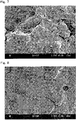
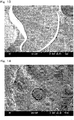
- the resin phase separated structure has a continuous phase (1), a dispersed phase (2) that is dispersed in the continuous phase (1), and a dispersed subdomain (3) in the dispersed phase (2) (see Fig. 1 ).
- the continuous phase of the resin phase separated structure may have a dispersed phase that does not include the dispersed subdomain (3) therein.
- the continuous phase has only one type generally.
- the continuous phase is formed of the polyolefin resin or its derivatives.
- the dispersed phase is substantially formed of the polvamide resin.
- the dispersed phase (but, excluding the dispersed subdomain region) would be formed of the polyolefin resin.
- the continous phase is substantially formed of the polyolefin resin and the dispersed phase is substantially formed of the polyamide resin.
- a composition of the dispersed subdomain in the dispersed phase are not clear, but it is supposed that the dispersed subdomain is substantially formed of at least one of the polyolefin resin, the polyamide resin, the compatibilizer, and a reaction product of the compatibilizer and the resin component.
- thermoplastic resin composition of the present invention Content ratios of a component derived from the polyolefin resin, a component derived from the polyamide resin, and a component derived from the compatibilizer in the thermoplastic resin composition of the present invention are as defined in claim 1.
- the continuous phase is formed of a polyolefin resin
- the following content ratios are present or preferable.
- a content ratio of a component derived from the polyolefin resin is in a range from 35% to 90% by mass, preferably from 35% to 85% by mass, and more preferably from 35% to 80% by mass with respect to 100% by mass of a total of the polyolefin resin, the polyamide resin, and the compatibilizer.
- a content ratio of a component derived from the compatibilizer is in a range from 1% to 50% by mass, preferably from 3% to 40% by mass, and more preferably from 5% to 30% by mass with respect to 100% by mass of a total of the polyolefin resin, the polyamide resin, and the compatibilizer.
- PA11, PA12, PA6, PA610, PA1010, PAMXD6, or PA10T is used as the polyamide resin
- the following content ratios are preferable.
- PA11 is used as the polyamide resin
- its content ratio is preferably in a range from 1% to 55% by mass, more preferably from 10% to 55% by mass, and further preferably from 15% to 55% by mass with respect to 100% by mass of a total of the polyolefin resin, the polyamide resin, and the compatibilizer.
- PA12 is used as the polyamide resin
- its content ratio is preferably in a range from 1% to 25% by mass, more preferably from 5% to 25% by mass, and further preferably from 10% to 25% with respect to 100% by mass of a total of the polyolefin resin, the polyamide resin, and the compatibilizer.
- PA6 polyamide resin
- its content ratio is preferably in a range from 1% to 25% by mass, more preferably from 5% to 25% by mass, and further preferably from 10% to 25% with respect to 100% by mass of a total of the polyolefin resin, the polyamide resin, and the compatibilizer.
- PA610 is used as the polyamide resin
- its content ratio is preferably in a range from 1% to 40% by mass, more preferably from 5% to 40% by mass, and further preferably from 10% to 40% with respect to 100% by mass of a total of the polyolefin resin, the polyamide resin, and the compatibilizer.
- PA1010 is used as the polyamide resin
- its content ratio is preferably in a range from 1% to 55% by mass, more preferably from 5% to 55% by mass, and further preferably from 10% to 55% with respect to 100% by mass of a total of the polyolefin resin, the polyamide resin, and the compatibilizer.
- PA10T polyamide resin
- its content ratio is preferably in a range from 1% to 45% by mass, more preferably from 5% to 45% by mass, and further preferably from 10% to 45% with respect to 100% by mass of a total of the polyolefin resin, the polyamide resin, and the compatibilizer.
- polyamide resins other than the above-described polyamide resins their content ratios are preferably in a range from 1% to 55% by mass, more preferably from 1% to 40% by mass, and further preferably from 1% to 25% with respect to 100% by mass of a total of the polyolefin resin, the polyamide resin, and the compatibilizer.
- the continuous phase would be formed of a polyamide resin
- the following content ratios would be preferable.
- a content ratio of a component derived from the polyolefin resin would preferably be in a range from 1% to 20% by mass, more preferably from 1% to 15% by mass, and further preferably from 1% to 10% by mass with respect to 100% by mass of a total of the polyolefin resin, the polyamide resin, and the compatibilizer.
- a content ratio of a component derived from the polyamide resin would preferably be in a range from 70% to 90% by mass, more preferably from 75% to 90% by mass, and further preferably from 80% to 90% by mass with respect to 100% by mass of a total of the polyolefin resin, the polyamide resin, and the compatibilizer.
- a content ratio of a component derived from the compatibilizer would preferably be in a range from 1% to 50% by mass, more preferably from 3% to 40% by mass, and further preferably from 5% to 30% by mass with respect to 100% by mass of a total of the polyolefin resin, the polyamide resin, and the compatibilizer.
- An average diameter (average particle diameter) of the dispersed phase is preferably 10,000 nm or smaller, more preferably in a range from 50 to 8,000 nm, and further preferably from 100 to 4,000 nm.
- the average diameter of the dispersed phase can be measured based on images obtained using an electron microscope or the like.
- An average diameter (average particle diameter) of the dispersed subdomain is in a range from 5 to 1,200 nm, preferably from 5 to 1,000 nm, more preferably from 5 to 600 nm, further preferably from 10 to 400 nm, and particularly from 15 to 350 nm.
- the average diameter of the dispersed subdomain can be measured based on images obtained using an electron microscope or the like.
- thermoplastic resin composition of the present invention is obtained by molten blending a polyolefin resin, a polyamide resin, and a compatibilizer.
- the "molten blending" will be described in detail with reference to a production method of the thermoplastic resin composition below.
- the mixing process is a step of molten blending a polyolefin resin, and a mixed resin obtained by mixing a polyamide resin and a compatibilizer.
- the function of the compatibilizer can be more effectively. It is considered that a situation in which the compatibilizer is independently dispersed in the polyolefin resin without achieving its function can be suppressed by mixing the compatibilizer with the polyamide resin (dispersion phase or continuous phase) in advance.
- the mixed resin may be obtained by molten blending the polyamide resin and the compatibilizer using a mixing device such as an extruder (e.g., single-screw extruder or twin-screw extruder), a kneader, and a mixer (e.g., high-speed flow mixer, puddle mixer, or ribbon mixer). These mixing devices may be used either alone or in combination. In the case of using two or more mixing devices, the mixing devices may be operated continuously, or may be operated batch type.
- the polyamide resin and the compatibilizer may be mixed at a time, or may be mixed while adding the polyamide resin or the compatibilizer in parts (multi-step addition).
- the mixing temperature employed when molten blending the polyamide resin and the compatibilizer is not particularly limited.
- the mixing temperature may be appropriately adjusted corresponding to the type of each component. It is particularly preferable to mix the polyamide resin and the compatibilizer in a state in which each compound is melted.
- the mixing temperature is specifically in a range from 190°C to 350°C, preferably from 200°C to 330°C, and more preferably 205°C to 310°C.
- the mixing temperature employed in the mixing process is not particularly limited as long as the components can be molten blended.
- the mixing temperature may be appropriately adjusted corresponding to the type of each component. It is particularly preferable to mix the components in a state in which the thermoplastic resin is melted.
- the mixing temperature is specifically in a range from 190°C to 350°C, preferably from 200°C to 300°C, and more preferably 205°C to 260°C.
- the mixing process may be implemented by (1) molten blending the polyolefin resin with the mixed resin that is solidified by pelletization or the like in advance, or (2) molten blending the polyamide resin and the compatibilizer on the upstream side using a multi-step addition-type mixing device or the like, and adding the polyolefin resin on the downstream side within the device to mix the polyolefin resin and a melt-mixture (mixed resin) of the polyamide resin and the compatibilizer.
- Mixing ratios of the polyolefin resin, the polyamide resin, and the compatibilizer in the production method of the thermoplastic resin composition in the present invention is not particularly limited.
- a mixing ratio of the polyolefin resin is preferably in a range from 35% to 90% by mass, more preferably from 35% to 85% by mass, and further preferably from 35% to 80% by mass with respect to 100% by mass of a total of the polyolefin resin, the polyamide resin, and the compatibilizer.
- a mixing ratio of the compatibilizer is preferably in a range from 1% to 50% by mass, more preferably from 3% to 40% by mass, and further preferably from 5% to 30% by mass with respect to 100% by mass of a total of the polyolefin resin, the polyamide resin, and the compatibilizer.
- PA11, PA12, PA6, PA610, PA1010, PAMXD6, or PA10T is used as the polyamide resin
- the following mixing ratios are preferable.
- PA11 is used as the polyamide resin
- its mixing ratio is preferably in a range from 1% to 55% by mass, more preferably from 10% to 55% by mass, and further preferably from 15% to 55% by mass with respect to 100% by mass of a total of the polyolefin resin, the polyamide resin, and the compatibilizer.
- PA12 is used as the polyamide resin
- its mixing ratio is preferably in a range from 1% to 25% by mass, more preferably from 5% to 25% by mass, and further preferably from 10% to 25% with respect to 100% by mass of a total of the polyolefin resin, the polyamide resin, and the compatibilizer.
- PA610 is used as the polyamide resin
- its mixing ratio is preferably in a range from 1% to 40% by mass, more preferably from 5% to 40% by mass, and further preferably from 10% to 40% with respect to 100% by mass of a total of the polyolefin resin, the polyamide resin, and the compatibilizer.
- PA1010 is used as the polyamide resin
- its mixing ratio is preferably in a range from 1% to 55% by mass, more preferably from 5% to 55% by mass, and further preferably from 10% to 55% with respect to 100% by mass of a total of the polyolefin resin, the polyamide resin, and the compatibilizer.
- PAMXD6 is used as the polyamide resin
- its mixing ratio is preferably in a range from 1% to 40% by mass, more preferably from 5% to 40% by mass, and further preferably from 10% to 40% with respect to 100% by mass of a total of the polyolefin resin, the polyamide resin, and the compatibilizer.
- PA10T is used as the polyamide resin
- its mixing ratio is preferably in a range from 1% to 45% by mass, more preferably from 5% to 45% by mass, and further preferably from 10% to 45% with respect to 100% by mass of a total of the polyolefin resin, the polyamide resin, and the compatibilizer.
- their mixing ratios are preferably in a range from 1% to 55% by mass, more preferably from 1% to 40% by mass, and further preferably from 1% to 25% with respect to 100% by mass of a total of the polyolefin resin, the polyamide resin, and the compatibilizer.
- the continuous phase is formed using a polyamide resin
- the following mixing ratios are preferable.
- a mixing ratio of the polyolefin resin is preferably in a range from 1% to 20% by mass, more preferably from 1% to 15% by mass, and further preferably from 1% to 10% by mass with respect to 100% by mass of a total of the polyolefin resin, the polyamide resin, and the compatibilizer.
- a mixing ratio of the polyamide resin is preferably in a range from 70% to 90% by mass, more preferably from 75% to 90% by mass, and further preferably from 80% to 90% by mass with respect to 100% by mass of a total of the polyolefin resin, the polyamide resin, and the compatibilizer.
- a mixing ratio of the compatibilizer is preferably in a range from 1% to 50% by mass, more preferably from 3% to 40% by mass, and further preferably from 5% to 30% by mass with respect to 100% by mass of a total of the polyolefin resin, the polyamide resin, and the compatibilizer.
- thermoplastic resin composition of the present invention may contain components other than the polyolefin resin, the polyamide resin, and the compatibilizer within a range that does not impede the object of the invention.
- the other components include thermoplastic resins other than the above-described ones, a flame retardant, a flame retardant aid, fillers, a coloring agent, an antibacterial agent, an anti-static agent, and the like. These components may be used singly or in combination of two or more types thereof.
- thermoplastic resins examples include a polyester-based resin such as polybutylene terephthalate, polyethylene terephthalate, polycarbonate, polybutylene succinate, polyethylene succinate and poly lactic acid; and the like.
- the flame retardant examples include a halogen-based flame retardant such as a halogenated aromatic compound; a phosphorus-based flame retardant such as a nitrogen-containing phosphate compound and a phosphate ester; a nitrogen-based flame retardant such as guanidine, triazine, melamine, and derivatives thereof; an inorganic flame retardant such as a metal hydroxide; a boron-based flame retardant; a silicone-based flame retardant; a sulfur-based flame retardant; a red phosphorus-based flame retardant; and the like.
- a halogen-based flame retardant such as a halogenated aromatic compound
- a phosphorus-based flame retardant such as a nitrogen-containing phosphate compound and a phosphate ester
- a nitrogen-based flame retardant such as guanidine, triazine, melamine, and derivatives thereof
- an inorganic flame retardant such as a metal hydroxide
- Examples of the flame retardant aid include various antimony compounds, metal compounds containing zinc, metal compounds containing bismuth, magnesium hydroxide, clayey silicates, and the like.
- the fillers include glass components including a glass fiber, glass beads, a glass flake, and the like; silica; an inorganic fiber such as a glass fiber, an alumina fiber, and a carbon fiber; graphite; a silicic acid compound such as calcium silicate, aluminum silicate, kaolin, talc, and clay; a metal oxide such as iron oxide, titanium oxide, zinc oxide, antimony oxide, and alumina; a carbonate or sulfate of a metal such as calcium, magnesium, and zinc; an organic fiber such as an aromatic polyester fiber, an aromatic polyamide fiber, a fluoric resin fiber, a polyimide fiber, and a vegetable fiber; and the like.
- silica silica
- an inorganic fiber such as a glass fiber, an alumina fiber, and a carbon fiber
- graphite such as calcium silicate, aluminum silicate, kaolin, talc, and clay
- a metal oxide such as iron oxide, titanium oxide, zinc oxide, antimony oxide, and
- Examples of the colorant include pigments and dyes.
- thermoplastic resin composition of the present invention may be formed using an optional method.
- the shape, size, thickness, and the like of the resulting formed article are not particularly limited. Application use thereof is not particularly limited.
- the molded article is used as an exterior material, an interior material, or a structural material for automobiles, rail vehicles, ships, airplanes, and the like. Examples of the automotive materials include an automotive exterior material, an automotive interior material, an automotive structural material, an engine room part, and the like.
- the formed article may also be used as an interior material, an exterior material, and a structural material used for buildings, furniture, and the like.
- the formed article may be used as a door mounting material, a door structural material, a furniture (e.g., desk, chair, shelf, or chest of drawers) mounting/structural material, and the like.
- the formed article may also be used as a package, a container (e.g., tray), a protective member, a partition member, and the like.
- the formed article may also be used as a housing and a structural member of home appliances (e.g., flat TV, refrigerator, washing machine, cleaner, mobile phone, portable game machine, and notebook-sized personal computer).
- Example 1 (i.e. reference example)
- Anhydrous maleic acid-modified EPR "Tafmer MP0620" (MFR 0. 3 g/10 min. at 230°C) manufactured by Mitsui Chemicals Inc. was used as a compatibilizer (C).
- Each pellet thereof was dry-blended so as to have a mixing ratio as listed in Table 1.
- An extruded mixed resin was then cut using a pelletizer so as to prepare a mixed resin pellet.
- thermoplastic resin composition pellet for Example 1 was put into a hopper of an injection molding machine (40-ton injection molding machine) manufactured by Nissei Plastic Ind., Co., Ltd., to prepare a test piece for evaluation under conditions of a set temperature at 210°C and a mold temperature at 60°C.
- Test pieces for evaluation obtained in Examples 1 to 11 of the above section [1] were subjected to measurement in accordance with JIS K7111-1 for Charpy impact strength. Results thereof were shown in Tables 2 and 3.
- Charpy impact strength the impact was measured by an edgewise test method at a temperature of 23°C with a test piece having notch (type A).
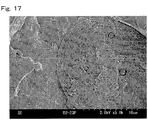
- a fracture surface of each test piece according to Examples 1 to 11 and Comparative Examples 1 to 3 provided for the measurement of Charpy impact strength in the above section (1) was etched with oxygen plasma at 100 W for 1 minute and then coated with osmium. After that, a field-emission scanning electron microscope manufactured by JEOL Ltd. was used for obsevation to check a resin phase separated structure. Results thereof were shown in Tables 2 and 3.
- the flexural modulus was measured by supporting each of test pieces at two points (radius of curvature: 5 mm) with a distance L of 64 mm therebetween while applying a load at a speed of 2 mm/min from an action point (radius of curvature: 5 mm) positioned in the middle of the two points.
- Anhydrous maleic acid-modified EBR "Tafmer MH7020" (MFR 1.5 g/10 min. at 230°C) manufactured by Mitsui Chemicals Inc. was used as a compatibilizer (C).
- Each pellet thereof was dry-blended so as to have a mixing ratio as listed in Table 4.
- thermoplastic resin composition pellet for Example 12 was put into a hopper of an injection molding machine (40-ton injection molding machine) manufactured by Nissei Plastic Ind., Co., Ltd., to prepare a test piece for evaluation under conditions of a set temperature at 210°C and a mold temperature at 60°C.
- Anhydrous maleic acid-modified EBR "Tafmer MH7020” (MFR 1.5 g/10 min. at 230°C) manufactured by Mitsui Chemicals Inc. was used as a compatibilizer (C).
- Each pellet thereof was dry-blended so as to have a mixing ratio as listed in Table 4.
- An extruded mixed resin was then cut using a pelletizer so as to prepare a mixed resin pellet.
- thermoplastic resin composition pellet for Example 13 was put into a hopper of an injection molding machine (40-ton injection molding machine) manufactured by Nissei Plastic Ind., Co., Ltd., to prepare a test piece for evaluation under conditions of a set temperature at 260°C and a mold temperature at 60°C.
- Anhydrous maleic acid-modified EBR "Tafmer MH7020" (MFR 1.5 g/10 min. at 230°C) manufactured by Mitsui Chemicals Inc. was used as a compatibilizer (C).
- thermoplastic resin composition pellet for Example 14 was put into a hopper of an injection molding machine (40-ton injection molding machine) manufactured by Nissei Plastic Ind., Co., Ltd., to prepare a test piece for evaluation under conditions of a set temperature at 235°C and a mold temperature at 60°C.
- a pellet of a thermoplastic resin composition for Example 15 was produced in the same manner as that in Example 14 except that each pellet was dry-blended so as to have a mixing ratio as listed in Table 4. Then, injection molding was carried out in the same manner as that in Example 14 to prepare a test piece for Example 15.
- Anhydrous maleic acid-modified EBR "Tafmer MH7020" (MFR 1.5 g/10 min. at 230°C) manufactured by Mitsui Chemicals Inc. was used as a compatibilizer (C).
- thermoplastic resin composition pellet for Example 16 was put into a hopper of an injection molding machine (40-ton injection molding machine) manufactured by Nissei Plastic Ind., Co., Ltd., to prepare a test piece for evaluation under conditions of a set temperature at 250°C and a mold temperature at 60°C.
- thermoplastic resin compositions for Examples 17 and 18 were produced in the same manner as that in Example 16 except that each pellet was dry-blended so as to have a mixing ratio as listed in Table 4. Then, injection molding was carried out in the same manner as that in Example 16 to prepare test pieces for Example 17 and 18.
- Anhydrous maleic acid-modified EBR "Tafmer MH7020" (MFR 1.5 g/10 min. at 230°C) manufactured by Mitsui Chemicals Inc. was used as a compatibilizer (C).
- thermoplastic resin composition pellet for Example 19 was put into a hopper of an injection molding machine (40-ton injection molding machine) manufactured by Nissei Plastic Ind., Co., Ltd., to prepare a test piece for evaluation under conditions of a set temperature at 265°C and a mold temperature at 90°C.
- a pellet of a thermoplastic resin composition for Example 20 was produced in the same manner as that in Example 19 except that each pellet was dry-blended so as to have a mixing ratio as listed in Table 4. Then, injection molding was carried out in the same manner as that in Example 19 to prepare a test piece for Example 20.
- Anhydrous maleic acid-modified EBR "Tafmer MH7020" (MFR 1.5 g/10 min. at 230°C) manufactured by Mitsui Chemicals Inc. was used as a compatibilizer (C).
- thermoplastic resin composition pellet for Example 21 was put into a hopper of an injection molding machine (40-ton injection molding machine) manufactured by Nissei Plastic Ind., Co., Ltd., to prepare a test piece for evaluation under conditions of a set temperature at 310°C and a mold temperature at 90°C.
- thermoplastic resin composition (Examples 12 to 21)
- Test pieces for evaluation obtained in Examples 12 to 21 of the above section [4] were subjected to measurement of Charpy impact strength, observation of morphology, and measurement of flexural modulus in the same manner as those in the above section [2]. Results thereof were shown in Table 4 and Figs. 5 to 17 .
- the resin phase separated structures in the test pieces from Examples 12 to 21 applying various polyamide resins include a continuous phase and a dispersed phase and additionally a dispersed subdomain having an average diameter of 10 to 1,200 nm in the dispersed phase (that is, a salami structure).
- test pieces of Examples 12 to 21 had flexural moduli of 1,230 to 1,930 MPa, and Charpy impact strengths of 1.0 to 8.6 kJ/m 2 , and that Examples 12 to 21 were excellent in impact strength as well as rigidity.
Landscapes
- Chemical & Material Sciences (AREA)
- Health & Medical Sciences (AREA)
- Chemical Kinetics & Catalysis (AREA)
- Medicinal Chemistry (AREA)
- Polymers & Plastics (AREA)
- Organic Chemistry (AREA)
- Compositions Of Macromolecular Compounds (AREA)
Claims (4)
- Composition de résine thermoplastique formée par mélange d'une résine de polyoléfine, d'une résine de polyamide, et d'un agent de compatibilité, caractérisée en ce que
ledit agent de compatibilité est un élastomère modifié dans lequel un groupe réactif qui réagit avec ladite résine de polyamide est substitué en un élastomère,
ledit élastomère est un élastomère thermoplastique à base d'oléfine choisi dans le groupe constitué par un copolymère d'éthylène et de 1-butène (EBR), un copolymère d'éthylène et de 1-pentène, un copolymère d'éthylène et de 1-octène (EOR), un copolymère de propylène et de 1-butène (PBR), un copolymère de propylène et de 1-pentène, et un copolymère de propylène et de 1-octène (POR),
pour 100 % en masse du total de ladite résine de polyoléfine, de ladite résine de polyamide, et dudit agent de compatibilité,
la teneur en un composant dérivé de ladite résine de polyoléfine est située dans la plage allant de 35 % à 90 % en masse, et
la teneur en un composant dérivé dudit agent de compatibilité est située dans la plage allant de 1 % à 50 % en masse,
ladite composition de résine thermoplastique a une structure séparée de la phase de résine qui est observée au microscope électronique,
ladite structure séparée de la phase de résine a une phase continue, une phase dispersée qui est dispersée dans ladite phase continue, et un sous-domaine dispersé dans ladite phase dispersée, et
le diamètre moyen dudit sous-domaine dispersé est situé dans la plage allant de 5 à 1200 nm,
ladite phase continue est formée de ladite résine de polyoléfine, et
ladite phase dispersée est formée de ladite résine de polyamide. - Composition de résine thermoplastique selon la revendication 1, dans laquelle
pour 100 % en masse du total de ladite résine de polyoléfine, de ladite résine de polyamide, et dudit agent de compatibilité,
la teneur en le composant dérivé de ladite résine de polyoléfine est située dans la plage allant de 35 % à 80 % en masse, et
la teneur en le composant dérivé dudit agent de compatibilité est située dans la plage allant de 1 % à 50 % en masse. - Composition de résine thermoplastique selon la revendication 1, dans laquelle
ledit élastomère est un copolymère d'éthylène et de 1-butène (EBR), un copolymère d'éthylène et de 1-pentène, ou un copolymère d'éthylène et de 1-octène (EOR), et
ladite résine de polyamide est le polyamide 11 (PA11). - Composition de résine thermoplastique selon la revendication 3, dans laquelle
pour 100 % en masse du total de ladite résine de polyoléfine, de ladite résine de polyamide, et dudit agent de compatibilité,
la teneur en le composant dérivé de ladite résine de polyoléfine est située dans la plage allant de 35 % à 85 % en masse.
Applications Claiming Priority (2)
| Application Number | Priority Date | Filing Date | Title |
|---|---|---|---|
| JP2011282234 | 2011-12-22 | ||
| PCT/JP2012/083369 WO2013094764A1 (fr) | 2011-12-22 | 2012-12-21 | Composition de résine thermoplastique et son procédé de production |
Publications (3)
| Publication Number | Publication Date |
|---|---|
| EP2796496A1 EP2796496A1 (fr) | 2014-10-29 |
| EP2796496A4 EP2796496A4 (fr) | 2015-06-17 |
| EP2796496B1 true EP2796496B1 (fr) | 2018-11-07 |
Family
ID=51584425
Family Applications (1)
| Application Number | Title | Priority Date | Filing Date |
|---|---|---|---|
| EP12860505.2A Active EP2796496B1 (fr) | 2011-12-22 | 2012-12-21 | Composition de résine thermoplastique et son procédé de production |
Country Status (2)
| Country | Link |
|---|---|
| EP (1) | EP2796496B1 (fr) |
| ES (1) | ES2704148T3 (fr) |
Families Citing this family (9)
| Publication number | Priority date | Publication date | Assignee | Title |
|---|---|---|---|---|
| CN108291061B (zh) * | 2015-12-01 | 2021-10-22 | 丰田纺织株式会社 | 改性剂和其使用方法、改性剂的制造方法以及添加材料用载体 |
| JP6512288B2 (ja) * | 2015-12-01 | 2019-05-15 | トヨタ紡織株式会社 | 成形体の製造方法 |
| JP6384507B2 (ja) | 2016-03-31 | 2018-09-05 | トヨタ紡織株式会社 | エネルギー吸収体 |
| CN108779300B (zh) * | 2016-03-31 | 2020-06-02 | 丰田纺织株式会社 | 热塑性树脂组合物、其制造方法和成型体 |
| RU2744216C2 (ru) * | 2016-07-28 | 2021-03-03 | Тойота Босоку Кабусики Кайся | Композиция термопластичной смолы, способ ее производства и формованное изделие |
| CN110177826A (zh) * | 2017-01-30 | 2019-08-27 | 丰田纺织株式会社 | 改性剂和其使用方法、改性剂的制造方法以及添加材料用载体 |
| BR112019015862A2 (pt) | 2017-03-16 | 2020-04-14 | Toyota Boshoku Kk | folha de resina termoplástica, folha laminada e objeto moldado |
| JP7136088B2 (ja) * | 2017-04-19 | 2022-09-13 | トヨタ紡織株式会社 | 熱可塑性樹脂組成物、成形体及びその製造方法 |
| EP3848419A4 (fr) * | 2018-09-07 | 2022-06-01 | Kuraray Co., Ltd. | Composition de résine thermoplastique |
Family Cites Families (1)
| Publication number | Priority date | Publication date | Assignee | Title |
|---|---|---|---|---|
| US5216075A (en) * | 1990-05-04 | 1993-06-01 | Arco Chemical Technology, L.P. | Impact resistant polyblends of polyamides, acid copolymers and anhydride functionalized elastomers |
-
2012
- 2012-12-21 ES ES12860505T patent/ES2704148T3/es active Active
- 2012-12-21 EP EP12860505.2A patent/EP2796496B1/fr active Active
Non-Patent Citations (1)
| Title |
|---|
| None * |
Also Published As
| Publication number | Publication date |
|---|---|
| EP2796496A1 (fr) | 2014-10-29 |
| EP2796496A4 (fr) | 2015-06-17 |
| ES2704148T3 (es) | 2019-03-14 |
Similar Documents
| Publication | Publication Date | Title |
|---|---|---|
| EP2796497B1 (fr) | Composition de résine thermoplastique, son procédé de production et corps moulé | |
| US9353251B2 (en) | Thermoplastic resin composition and method for producing same | |
| EP2796496B1 (fr) | Composition de résine thermoplastique et son procédé de production | |
| EP2864419B1 (fr) | Composition de résine | |
| JP6266715B2 (ja) | 熱可塑性樹脂組成物及びその製造方法 | |
| JP2013147645A5 (fr) | ||
| JP6916459B2 (ja) | 樹脂組成物 | |
| EP3438182B1 (fr) | Procédé d'ajustement de diamètre de dispersion et composition de résine thermoplastique | |
| EP3438181B1 (fr) | Composition de résine thermoplastique et corps moulé | |
| JP7677996B2 (ja) | 熱可塑性樹脂組成物およびその製造方法 |
Legal Events
| Date | Code | Title | Description |
|---|---|---|---|
| PUAI | Public reference made under article 153(3) epc to a published international application that has entered the european phase |
Free format text: ORIGINAL CODE: 0009012 |
|
| 17P | Request for examination filed |
Effective date: 20140717 |
|
| AK | Designated contracting states |
Kind code of ref document: A1 Designated state(s): AL AT BE BG CH CY CZ DE DK EE ES FI FR GB GR HR HU IE IS IT LI LT LU LV MC MK MT NL NO PL PT RO RS SE SI SK SM TR |
|
| DAX | Request for extension of the european patent (deleted) | ||
| RA4 | Supplementary search report drawn up and despatched (corrected) |
Effective date: 20150518 |
|
| RIC1 | Information provided on ipc code assigned before grant |
Ipc: C08L 77/06 20060101ALI20150511BHEP Ipc: C08L 23/02 20060101AFI20150511BHEP Ipc: C08L 77/02 20060101ALI20150511BHEP Ipc: C08L 23/12 20060101ALI20150511BHEP Ipc: C08L 77/00 20060101ALI20150511BHEP |
|
| 17Q | First examination report despatched |
Effective date: 20171127 |
|
| GRAP | Despatch of communication of intention to grant a patent |
Free format text: ORIGINAL CODE: EPIDOSNIGR1 |
|
| INTG | Intention to grant announced |
Effective date: 20180531 |
|
| GRAS | Grant fee paid |
Free format text: ORIGINAL CODE: EPIDOSNIGR3 |
|
| GRAA | (expected) grant |
Free format text: ORIGINAL CODE: 0009210 |
|
| AK | Designated contracting states |
Kind code of ref document: B1 Designated state(s): AL AT BE BG CH CY CZ DE DK EE ES FI FR GB GR HR HU IE IS IT LI LT LU LV MC MK MT NL NO PL PT RO RS SE SI SK SM TR |
|
| REG | Reference to a national code |
Ref country code: GB Ref legal event code: FG4D |
|
| REG | Reference to a national code |
Ref country code: CH Ref legal event code: EP Ref country code: AT Ref legal event code: REF Ref document number: 1062020 Country of ref document: AT Kind code of ref document: T Effective date: 20181115 |
|
| REG | Reference to a national code |
Ref country code: IE Ref legal event code: FG4D |
|
| REG | Reference to a national code |
Ref country code: DE Ref legal event code: R096 Ref document number: 602012053322 Country of ref document: DE |
|
| REG | Reference to a national code |
Ref country code: CH Ref legal event code: NV Representative=s name: NOVAGRAAF INTERNATIONAL SA, CH |
|
| REG | Reference to a national code |
Ref country code: NL Ref legal event code: FP |
|
| REG | Reference to a national code |
Ref country code: ES Ref legal event code: FG2A Ref document number: 2704148 Country of ref document: ES Kind code of ref document: T3 Effective date: 20190314 |
|
| REG | Reference to a national code |
Ref country code: LT Ref legal event code: MG4D |
|
| REG | Reference to a national code |
Ref country code: AT Ref legal event code: MK05 Ref document number: 1062020 Country of ref document: AT Kind code of ref document: T Effective date: 20181107 |
|
| PG25 | Lapsed in a contracting state [announced via postgrant information from national office to epo] |
Ref country code: FI Free format text: LAPSE BECAUSE OF FAILURE TO SUBMIT A TRANSLATION OF THE DESCRIPTION OR TO PAY THE FEE WITHIN THE PRESCRIBED TIME-LIMIT Effective date: 20181107 Ref country code: LT Free format text: LAPSE BECAUSE OF FAILURE TO SUBMIT A TRANSLATION OF THE DESCRIPTION OR TO PAY THE FEE WITHIN THE PRESCRIBED TIME-LIMIT Effective date: 20181107 Ref country code: BG Free format text: LAPSE BECAUSE OF FAILURE TO SUBMIT A TRANSLATION OF THE DESCRIPTION OR TO PAY THE FEE WITHIN THE PRESCRIBED TIME-LIMIT Effective date: 20190207 Ref country code: HR Free format text: LAPSE BECAUSE OF FAILURE TO SUBMIT A TRANSLATION OF THE DESCRIPTION OR TO PAY THE FEE WITHIN THE PRESCRIBED TIME-LIMIT Effective date: 20181107 Ref country code: LV Free format text: LAPSE BECAUSE OF FAILURE TO SUBMIT A TRANSLATION OF THE DESCRIPTION OR TO PAY THE FEE WITHIN THE PRESCRIBED TIME-LIMIT Effective date: 20181107 Ref country code: AT Free format text: LAPSE BECAUSE OF FAILURE TO SUBMIT A TRANSLATION OF THE DESCRIPTION OR TO PAY THE FEE WITHIN THE PRESCRIBED TIME-LIMIT Effective date: 20181107 Ref country code: IS Free format text: LAPSE BECAUSE OF FAILURE TO SUBMIT A TRANSLATION OF THE DESCRIPTION OR TO PAY THE FEE WITHIN THE PRESCRIBED TIME-LIMIT Effective date: 20190307 Ref country code: NO Free format text: LAPSE BECAUSE OF FAILURE TO SUBMIT A TRANSLATION OF THE DESCRIPTION OR TO PAY THE FEE WITHIN THE PRESCRIBED TIME-LIMIT Effective date: 20190207 |
|
| PG25 | Lapsed in a contracting state [announced via postgrant information from national office to epo] |
Ref country code: GR Free format text: LAPSE BECAUSE OF FAILURE TO SUBMIT A TRANSLATION OF THE DESCRIPTION OR TO PAY THE FEE WITHIN THE PRESCRIBED TIME-LIMIT Effective date: 20190208 Ref country code: PT Free format text: LAPSE BECAUSE OF FAILURE TO SUBMIT A TRANSLATION OF THE DESCRIPTION OR TO PAY THE FEE WITHIN THE PRESCRIBED TIME-LIMIT Effective date: 20190307 Ref country code: RS Free format text: LAPSE BECAUSE OF FAILURE TO SUBMIT A TRANSLATION OF THE DESCRIPTION OR TO PAY THE FEE WITHIN THE PRESCRIBED TIME-LIMIT Effective date: 20181107 Ref country code: AL Free format text: LAPSE BECAUSE OF FAILURE TO SUBMIT A TRANSLATION OF THE DESCRIPTION OR TO PAY THE FEE WITHIN THE PRESCRIBED TIME-LIMIT Effective date: 20181107 Ref country code: SE Free format text: LAPSE BECAUSE OF FAILURE TO SUBMIT A TRANSLATION OF THE DESCRIPTION OR TO PAY THE FEE WITHIN THE PRESCRIBED TIME-LIMIT Effective date: 20181107 |
|
| PG25 | Lapsed in a contracting state [announced via postgrant information from national office to epo] |
Ref country code: PL Free format text: LAPSE BECAUSE OF FAILURE TO SUBMIT A TRANSLATION OF THE DESCRIPTION OR TO PAY THE FEE WITHIN THE PRESCRIBED TIME-LIMIT Effective date: 20181107 Ref country code: CZ Free format text: LAPSE BECAUSE OF FAILURE TO SUBMIT A TRANSLATION OF THE DESCRIPTION OR TO PAY THE FEE WITHIN THE PRESCRIBED TIME-LIMIT Effective date: 20181107 Ref country code: DK Free format text: LAPSE BECAUSE OF FAILURE TO SUBMIT A TRANSLATION OF THE DESCRIPTION OR TO PAY THE FEE WITHIN THE PRESCRIBED TIME-LIMIT Effective date: 20181107 |
|
| REG | Reference to a national code |
Ref country code: DE Ref legal event code: R097 Ref document number: 602012053322 Country of ref document: DE |
|
| PG25 | Lapsed in a contracting state [announced via postgrant information from national office to epo] |
Ref country code: MC Free format text: LAPSE BECAUSE OF FAILURE TO SUBMIT A TRANSLATION OF THE DESCRIPTION OR TO PAY THE FEE WITHIN THE PRESCRIBED TIME-LIMIT Effective date: 20181107 Ref country code: LU Free format text: LAPSE BECAUSE OF NON-PAYMENT OF DUE FEES Effective date: 20181221 Ref country code: SK Free format text: LAPSE BECAUSE OF FAILURE TO SUBMIT A TRANSLATION OF THE DESCRIPTION OR TO PAY THE FEE WITHIN THE PRESCRIBED TIME-LIMIT Effective date: 20181107 Ref country code: SM Free format text: LAPSE BECAUSE OF FAILURE TO SUBMIT A TRANSLATION OF THE DESCRIPTION OR TO PAY THE FEE WITHIN THE PRESCRIBED TIME-LIMIT Effective date: 20181107 Ref country code: EE Free format text: LAPSE BECAUSE OF FAILURE TO SUBMIT A TRANSLATION OF THE DESCRIPTION OR TO PAY THE FEE WITHIN THE PRESCRIBED TIME-LIMIT Effective date: 20181107 Ref country code: RO Free format text: LAPSE BECAUSE OF FAILURE TO SUBMIT A TRANSLATION OF THE DESCRIPTION OR TO PAY THE FEE WITHIN THE PRESCRIBED TIME-LIMIT Effective date: 20181107 |
|
| PLBE | No opposition filed within time limit |
Free format text: ORIGINAL CODE: 0009261 |
|
| STAA | Information on the status of an ep patent application or granted ep patent |
Free format text: STATUS: NO OPPOSITION FILED WITHIN TIME LIMIT |
|
| REG | Reference to a national code |
Ref country code: IE Ref legal event code: MM4A |
|
| REG | Reference to a national code |
Ref country code: BE Ref legal event code: MM Effective date: 20181231 |
|
| 26N | No opposition filed |
Effective date: 20190808 |
|
| PG25 | Lapsed in a contracting state [announced via postgrant information from national office to epo] |
Ref country code: SI Free format text: LAPSE BECAUSE OF FAILURE TO SUBMIT A TRANSLATION OF THE DESCRIPTION OR TO PAY THE FEE WITHIN THE PRESCRIBED TIME-LIMIT Effective date: 20181107 Ref country code: IE Free format text: LAPSE BECAUSE OF NON-PAYMENT OF DUE FEES Effective date: 20181221 |
|
| PG25 | Lapsed in a contracting state [announced via postgrant information from national office to epo] |
Ref country code: BE Free format text: LAPSE BECAUSE OF NON-PAYMENT OF DUE FEES Effective date: 20181231 |
|
| PG25 | Lapsed in a contracting state [announced via postgrant information from national office to epo] |
Ref country code: MT Free format text: LAPSE BECAUSE OF NON-PAYMENT OF DUE FEES Effective date: 20181221 |
|
| PG25 | Lapsed in a contracting state [announced via postgrant information from national office to epo] |
Ref country code: TR Free format text: LAPSE BECAUSE OF FAILURE TO SUBMIT A TRANSLATION OF THE DESCRIPTION OR TO PAY THE FEE WITHIN THE PRESCRIBED TIME-LIMIT Effective date: 20181107 |
|
| PG25 | Lapsed in a contracting state [announced via postgrant information from national office to epo] |
Ref country code: MK Free format text: LAPSE BECAUSE OF NON-PAYMENT OF DUE FEES Effective date: 20181107 Ref country code: CY Free format text: LAPSE BECAUSE OF FAILURE TO SUBMIT A TRANSLATION OF THE DESCRIPTION OR TO PAY THE FEE WITHIN THE PRESCRIBED TIME-LIMIT Effective date: 20181107 Ref country code: HU Free format text: LAPSE BECAUSE OF FAILURE TO SUBMIT A TRANSLATION OF THE DESCRIPTION OR TO PAY THE FEE WITHIN THE PRESCRIBED TIME-LIMIT; INVALID AB INITIO Effective date: 20121221 |
|
| PGFP | Annual fee paid to national office [announced via postgrant information from national office to epo] |
Ref country code: NL Payment date: 20251112 Year of fee payment: 14 |
|
| REG | Reference to a national code |
Ref country code: CH Ref legal event code: U11 Free format text: ST27 STATUS EVENT CODE: U-0-0-U10-U11 (AS PROVIDED BY THE NATIONAL OFFICE) Effective date: 20260101 |
|
| PGFP | Annual fee paid to national office [announced via postgrant information from national office to epo] |
Ref country code: DE Payment date: 20251028 Year of fee payment: 14 |
|
| PGFP | Annual fee paid to national office [announced via postgrant information from national office to epo] |
Ref country code: GB Payment date: 20251030 Year of fee payment: 14 |
|
| PGFP | Annual fee paid to national office [announced via postgrant information from national office to epo] |
Ref country code: IT Payment date: 20251121 Year of fee payment: 14 |
|
| PGFP | Annual fee paid to national office [announced via postgrant information from national office to epo] |
Ref country code: FR Payment date: 20251117 Year of fee payment: 14 |
|
| PGFP | Annual fee paid to national office [announced via postgrant information from national office to epo] |
Ref country code: ES Payment date: 20260108 Year of fee payment: 14 |
|
| PGFP | Annual fee paid to national office [announced via postgrant information from national office to epo] |
Ref country code: CH Payment date: 20260101 Year of fee payment: 14 |