EP2797010A2 - System und Verfahren zur verteilten Interaktionsmedienspeicherung und -wiederauffindung - Google Patents
System und Verfahren zur verteilten Interaktionsmedienspeicherung und -wiederauffindung Download PDFInfo
- Publication number
- EP2797010A2 EP2797010A2 EP13198481.7A EP13198481A EP2797010A2 EP 2797010 A2 EP2797010 A2 EP 2797010A2 EP 13198481 A EP13198481 A EP 13198481A EP 2797010 A2 EP2797010 A2 EP 2797010A2
- Authority
- EP
- European Patent Office
- Prior art keywords
- storage
- interaction
- endpoints
- interactions
- temporary storage
- Prior art date
- Legal status (The legal status is an assumption and is not a legal conclusion. Google has not performed a legal analysis and makes no representation as to the accuracy of the status listed.)
- Withdrawn
Links
Images
Classifications
-
- G—PHYSICS
- G06—COMPUTING OR CALCULATING; COUNTING
- G06F—ELECTRIC DIGITAL DATA PROCESSING
- G06F16/00—Information retrieval; Database structures therefor; File system structures therefor
- G06F16/20—Information retrieval; Database structures therefor; File system structures therefor of structured data, e.g. relational data
- G06F16/23—Updating
- G06F16/2365—Ensuring data consistency and integrity
Definitions
- the present invention is of a method and system for capturing, distributing, and retrieving intercepted audio, video, and messaging interactions captured across a computer network.
- the purpose of the present invention to enable the heterogeneous, distributed storage of interaction elements in a mechanism that enables regulatory and policy compliance for hosting service providers serving regulated organizations.
- short-term interaction recording solutions may leverage direct attached standard operating system file system architectures (e.g. EXT3, NTFS, etc.), long-term interaction-recording solutions may leverage binary large object (BLOB) database storage solutions with very large database, indexing, and search capabilities (VLDB) (e.g. EMC Atmos and Amazon S3).
- BLOB binary large object
- VLDB search capabilities
- interaction recording storage location may be distributed and heterogeneous in nature, the same applies for the sources of the interaction recordings.
- the source media for those hosted interaction recordings may originate from a wide variety of network locations, especially when an international mobile operator network is considered.
- the present invention is directed to a method for distributed storage and retrieval of interactions, the method comprising: registering a plurality of temporary storage endpoints and a plurality of permanent storage endpoints with a storage manager; capturing one of the interactions in one of the temporary storage endpoints; determining one of the plurality of permanent storage endpoints to which the captured interaction should be transferred; transferring the interaction to the determined one of the plurality of permanent storage endpoints; and maintaining a location of the transferred interaction and making the transferred interaction available for retrieval and analysis.
- the invention is further directed to a system for implementing such a method.
- Interactions can be recorded utilizing a number of different technology strategies, which can be summarily categorized into two approaches.
- the interaction can either be recorded by the subscriber (or the subscriber's organization) or it may also be recorded by the subscriber's service provider (e.g. a mobile network operator, hosted telephony service provider, enterprise service, a government law enforcement agency, etc.), on behalf of the subscriber.
- the subscriber's service provider e.g. a mobile network operator, hosted telephony service provider, enterprise service, a government law enforcement agency, etc.
- the choice of whether the interaction is recorded by a subscriber or a service provider is driven by economic as well as technical factors.
- MNO mobile network operator
- the party that records the interaction is irrelevant to where the recorded interaction resides for long-term storage and archival reasons. Indeed, regulatory concerns may dictate a different location for the recorded interaction from the location where it is accessed for long-term archival. For example, while it may be more accessible and efficient to record mobile telephony conversations within a MNO, those telephony conversations may have to reside in the principal business location of a subscriber.
- a communication service provider provides communication interaction transmission and reception services to subscribers via a pre-existing service delivery platform.
- Those subscribers have a requirement to record those interactions in a service platform that has accessible and efficient access to the interactions that need to be recorded. That is typically accomplished by leveraging a Recording System, which is responsible for selectively intercepting interactions (e.g. audio, video, messaging, etc.) within a communication network.
- a Recording System which is responsible for selectively intercepting interactions (e.g. audio, video, messaging, etc.) within a communication network.
- U.S. Patent 7,548,609 “Process for Scalable Conversation Recording," whose disclosure is hereby incorporated by reference in its entirety into the present disclosure.
- Temporary Storage temporary storage location
- Permanent Storage permanent archive storage location
- the events, which drive the transference from Temporary Storage to Permanent Storage, may be related to the completion or closure of the interaction itself (e.g. the telephony call ends) or may be time-driven (e.g. transfer the recorded interaction after a selected duration of time).
- Temporary Storage Endpoint It is one aspect of the present invention to define and create a Temporary Storage Endpoint, which facilitates the temporary storage of an interaction at the point of capture.
- the Temporary Storage Endpoint exposes the stored interaction using a standards based, normalized application-programming interface (API). That API abstracts the underlying storage technology being leveraged to store the temporary interaction to a physical, machine readable and writeable storage medium.
- API application-programming interface
- That Permanent Storage Endpoint exposes access to various permanent storage devices by defining a plurality of Storage Paths.
- Storage Paths represent an abstract representation of a physical, machine readable and writeable storage medium.
- those Storage Paths and the actual Permanent Storage Endpoint expose stored interactions using a standards-based, normalized API, enabling a level of abstraction of the underlying storage architecture.
- the Storage Manager also acts a trustworthy registration authority of both Temporary Storage Endpoints and Permanent Storage Endpoints, ensuring a trusted relationship between Temporary Storage Endpoints and Permanent Storage Endpoints.
- the Storage Manager also has a defined Storage Policy that declaratively identifies, based upon a variety of criteria, including, but not limited to, metadata about the stored interaction or participants in the interaction, a policy for the location of a recorded interaction.
- analytic services can be exposed by either Temporary Storage Endpoints or Permanent Storage Endpoints for the purposes of analyzing the contents of the stored interactions as a distributed service, enabling expeditious retrieval.
- the preferred embodiment of the invention involves the following components: an interaction Recording System, a Storage Manager, a plurality of Temporary Storage Endpoints, a plurality of Permanent Storage Endpoints, and a Presentation Portal.
- the Recording System is responsible for the interception of interactions, based upon policy, and general surveillance of a plurality of communicating parties participating in an interaction.
- the first process is Registration, where the Temporary Storage Endpoints and Permanent Storage Endpoints register with the Storage Manager and persist configuration and authentication details.
- the second process is Capture, where Temporary Storage Endpoints are leveraged to capture and encode particular interactions.
- the third process is Transference, where interactions are transferred, based upon a configurable policy, between Temporary Storage Endpoints and Permanent Storage Endpoints.
- the fourth process is Retrieval and Analytics, where interactions are presented for expeditious retrieval and analytics (e.g.
- the fifth process is Maintenance, where interactions may be deleted or further offloaded for long-term archival and record retention requirements.
- a dynamic policy is constructed to define a mapping between a Temporary Storage Endpoint and the actual storage medium appropriate for the capture of a recording. That Temporary Storage Endpoint is assigned a resource locator.
- the Recording System now can initiate and communicate with the Storage Manager and can identify a Temporary Storage Endpoint when defining, creating, closing, or destroying a recorded interaction or performing any other related transaction. That locator is used by the Storage Manager to identify and manage the stored interaction during subsequent processes defined in the invention. Modification of that dynamic policy can result in the deletion of a map between a Temporary Storage Endpoint and the actual storage medium.
- Registration for Permanent Storage Endpoints is the process in which a Permanent Storage Endpoint registers configuration and authenticates access with a Storage Manager. That registration process identifies a Permanent Storage Endpoint as ready and available to receive interactions during the Transference process.
- the Permanent Storage Endpoint may optionally present a certificate of authenticity that may be optionally verified by the Storage Manager to ensure that only authorized Permanent Storage Endpoints can register for utilization.
- Permanent Storage Endpoints may optionally deregister their availability from the Storage Manager. Before that deregistration activity is committed, the Storage Manager first validates whether any interactions are stored within the Permanent Storage Endpoint in question. If interactions are identified as being stored and accessible on the Permanent Storage Endpoint in question, the Storage Manager discontinues the process. Either the operator of the system, the user of that process and activity, or other actor must transfer the recorded interactions from the Permanent Storage Endpoint to another Permanent Storage Endpoint before deregistration can occur.
- the goal of the Registration (and correlative deregistration) process is to identify all the Temporary Storage Endpoints and Permanent Storage Endpoints that will participate in subsequent processes. That identification process also yields the security benefit of authenticating and monitoring the reliability of the components.
- the Storage Manager performs that authentication and monitoring action.
- Temporary Storage Endpoints and Permanent Storage Endpoints are pluralities in that system. There is no limit on the number of those endpoints that can be involved in that distributed storage strategy. There is also no guarantee that Temporary Storage Endpoints or Permanent Storage Endpoints may exist on the same LAN, WAN, or Internet domain. Indeed, the only guarantee is that all endpoints and the Storage Manager have accessibility to other endpoints through a communication network where required to achieve steps in the processes defined. There is also no guarantee about the reliability or consistency of a communication link between the components in question, which is important when considering the Transference process.
- the Recording System deposits a captured interaction in storage medium exposed by a Temporary Storage Endpoint.
- the Temporary Storage Endpoint and the Recording System share a database that identifies which interactions are being captured.
- that database platform is the actual file system of the storage medium itself (e.g. NTFS, EXT3) although it is conceivable that other database platforms can be leveraged.
- the Recording System continuously provides update events on the Capture process to the Storage Manager, including, but not limited to, the creation, closure, and destruction of an interaction.
- Those events minimally contain the resource locator of the captured interaction within a Temporary Storage Endpoint.
- those events also contain metadata about the interaction, such as the duration of the interaction or the participating parties.
- Those update events are optionally leveraged by the Storage Manager to initiate the Transference process, although a time-based event can be used as well (e.g. trigger Transference after some configurable period of time has passed since closure of an interaction).
- Transference is the process of moving captured interactions from a Temporary Storage Endpoint to a Permanent Storage Endpoint.
- a policy driven event as defined during the Capture process, triggers the need to invoke the Transference process within the Storage Manager.
- the Storage Manager inspects the policy driven event and based upon policy definable criteria, identifies a Permanent Storage Endpoint and subordinate Storage Path suitable for the captured interaction.
- the Storage Manager then instructs the Temporary Storage Endpoint to transfer the captured interaction to the identified Permanent Storage Endpoint. That process operates asynchronously, and as the process of Transference occurs, the Storage Manager is continuously updated as to the success or failure of the Transference transaction.
- the interaction may be stored in a further defined failure location, a Quarantine storage path.
- a Permanent Storage Endpoint receives the interaction, compares a computable hash of the captured interaction to a similarly computed hash (e.g. Secure Hash Algorithm-2 (SHA2), Message Digest Algorithm 5 (MD5), etc.) available at the Permanent Storage Endpoint to ensure successful transfer, and then deposits the interaction into a defined Storage Path. The Permanent Storage Endpoint then notifies the Storage Manager that successful Transference has occurred.
- SHA2 Secure Hash Algorithm-2
- MD5 Message Digest Algorithm 5
- subscribers access a storage agnostic computing platform to retrieve captured interactions.
- subscribers are not presented with any knowledge of where the captured interaction resides and have no requirement to have knowledge of where an interaction resides.
- Internet is used to generally designate the global, linked web of millions of networks, which is used to connect computers all over the world. That includes, but is not limited to all intranet, private Internet and virtual private Internet networks.
- Storage Device or “Storage Endpoint” is used to generally designate a machine readable storage device, which includes, but is not limited to, network attached storage (NAS) devices, storage area network (SAN) devices, Internet Small Computer System Interface (iSCSI) devices, Network File System (NFS) mounts, Distributed File System (DFS) mounts, direct attached storage (DAS) devices, magnetic tape storage solutions, a Random Access Memory (RAM) storage solution, or digital optical tape.
- NAS network attached storage
- SAN storage area network
- iSCSI Internet Small Computer System Interface
- NFS Network File System
- DFS Distributed File System
- DAS direct attached storage
- RAM Random Access Memory
- Endpoint generally designates a network service that is connected to the Internet.
- Interaction refers to a captured, recorded record of a transaction or interaction that while typically is between two human beings may also represent an interaction between a human being and a machine (e.g. voicemail) or a machine with another machine (e.g. a trunked carrier backbone where two session border controllers are interconnected).
- a machine e.g. voicemail
- a machine with another machine e.g. a trunked carrier backbone where two session border controllers are interconnected.
- Application Programming Interface refers to a machine accessible service, which can be invoked across the Internet, which enables a machine to interact with another machine in an automated fashion.
- Example implementations of Application Programming Interface includes, but are not limited to, Simple Object Access Protocol (SOAP), Representational State Transfer (REST), Remote Method Invocation (RMI), Common Object Request Broker Architecture (CORBA), Distributed Common Object Model (DCOM), Microsoft .NET Remoting, and Javascript Object Notation (JSON) over Websocket. That enablement may occur in the form of a remote procedure call (RPC) or may also be a local procedure call (LPC).
- RPC Remote procedure call
- LPC local procedure call
- database and “database platform” include, but are not limited to, relational database platforms such as Microsoft SQL Server, Oracle Database, character delimited flat files, object database such as MongoDB, indexed sequential access method (ISAM) databases, BerkeleyDB, Btrieve, and other similar database technologies.
- the terms can also refer to the inherent metadata model of a file system such as Microsoft New Technology File System (NTFS), the Linux Extended File System (EXT, EXT2, EXT3, EXT4), the Hierarchical File System (HFS), or journal file systems (e.g. HFS+).
- NTFS Microsoft New Technology File System
- EXT Linux Extended File System
- EXT2 EXT2, EXT3, EXT4
- HFS Hierarchical File System
- journal file systems e.g. HFS+
- hash refers to a hashing function, which is an algorithm, or subroutine, that maps large data sets of variable length to smaller data sets of a fixed length, with a preference to referential transparency.
- the specific hash algorithm refers to subroutines including, but not limited to, MD5 or SHA2.
- portal refers to an Internet accessible service that is consumed in a client-server or peer-to-peer methodology.
- portal technologies include a Microsoft IIS hosted website, a Java J2EE hosted website, or a rich client solution which consumes remote procedure call APIs over a network (e.g. SOAP).
- subscriber refers to a user who wishes to access that storage system for the purpose of retrieving, manipulating, annotating, analyzing, summarizing and commenting upon a recorded interaction.
- a subscriber may be a human being or a machine. For example, a machine that periodically downloads or copies recorded interactions for the purpose of archival from that storage system would be considered a subscriber.
- tenant refers to a collection of subscribers.
- any messaging especially related to remote procedure invocation over an API, may or may not involve intermediaries, proxies, other routers, or other network elements which do not affect the net result of the orchestrated service.
- Interaction recording is a critical business process required by several regulatory processes as well as being critical in business process improvement. Communication interactions often traverse multiple heterogeneous networks and need to be captured in those networks, yet stored for long-term utility in a variety of locations that are variably defined by business policy.
- the purpose of the present invention is to define a network neutral, flexible, storage architecture that abstracts the storage architecture from the presentation and retrieval of recorded interactions and enables central policy control of the storage of recorded interactions.
- Permanent Storage Endpoints and Temporary Storage Endpoints are represented as Hypertext Transfer Protocol (HTTP) over Transport Layer Security (TLS) (HTTP/S) Uniform Resource Locators (URLs).
- HTTP Hypertext Transfer Protocol
- TLS Transport Layer Security
- HTTP/S Uniform Resource Locators
- URLs provide a standard based, firewall neutral, secure, representational state transfer (REST) application-programming interface (API) which abstracts the underlying storage method.
- REST representational state transfer
- API application-programming interface
- the Storage Manager is also communicated with over a HTTP/S transport to provide transport security.
- IP packet switched Internet protocol
- traffic shaping, quality of service improving network elements are leveraged to provide a high level of service connectivity between endpoints, although that is not required or guaranteed.
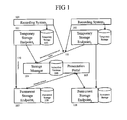
- FIG. 1 is a block diagram of an interaction recording storage and retrieval strategy that enables policy driven interaction recording storage and retrieval. There are multiple components with different responsibilities.
- the first is the Temporary Storage Endpoint 101 which, through an exposed API, enables other components to: (1) enumerate recorded interactions stored in Temporary Storage 103, (2) calculate the hash of a recorded interaction, (3) access recorded interactions that may be in progress for the purpose of live monitoring of the interaction, (4) get available metadata about an interaction, and (5) finally attempt (in the preferred embodiment, in a queued fashion) to push recorded interactions to another endpoint.
- other methods or actions may be exposed for the purposes of monitoring and instrumentation.
- recorded interactions are identified by a unique ID (e.g. a globally unique identifier (GUID) or an incrementing integer value).
- GUID globally unique identifier
- requests with all endpoints, the Storage Manager, and other components, including Temporary Storage Endpoints may include a reference to the recorded interaction. That reference is an encrypted version of the unique ID associated with a recorded interaction.
- the encryption method can vary, but in the preferred embodiment of the invention, the Advanced Encryption Standard (AES) with 256 bit keys (AES-256, Rijndael) is used.
- a plurality of Temporary Storage Endpoints can be provisioned for use, which is illustrated by the second Temporary Storage Endpoint 102.
- the rationalization for such a plurality is the need to support multiple Recording Systems 109 that may be recording in heterogeneous, disparate locations or security domains. Different Recording Systems may also be recording different interaction types (e.g. audio, video, messaging, etc.) with different network elements (e.g. session border controllers, soft switches, etc.). That being said, in the preferred embodiment of the current invention, Recording Systems can optionally share Temporary Storage and Temporary Storage Endpoints.
- the Recording System 109 is also required to provide metadata updates that must contain information about the location, within temporary storage, as exposed by a Temporary Storage Endpoint 101 to the Storage Manager 104. Those updates would, for example, indicate when an interaction has started (interaction creation) or when an interaction has completed. By that very action, the Storage Manager is made aware of location specific details. There is an assumption of bidirectional connectivity between a Storage Manager and a Temporary Storage Endpoint. That location is presented as a URL, which implies a specific transport and accessibility mechanism over a network, such as the Internet.
- the Temporary Storage Endpoint 101 sends updates about the Transference process to the Storage Manager 104. That further provides an indication to the Storage Manager of when a Transference process has begun, completed, or failed. If the process of Transference fails, Temporary Storage Endpoints may, in the preferred embodiment of the invention, choose to Quarantine those recorded interactions.
- the storage medium for Quarantine may not be the same as temporary storage.
- the second component is the Storage Manager 104.
- the Storage Manager catalogs a list of interactions recorded, which is stored in the Subscriber Database 106. Those interaction records contain metadata about the interaction recorded. For example, in the preferred embodiment of the present, an interaction could be a telephony interaction, where metadata would include the calling and called telephone numbers, as well as the duration of the captured interaction.
- an interaction record should contain the location of a captured interaction, either in progress or immediately after completion of the interaction, and should be accessible via a Temporary Storage Endpoint or for long-term storage and archival be available on a Permanent Storage Endpoint.
- the Storage Manager is responsible for consistently maintaining the location of a recorded interaction.
- the Subscriber Database 106 also maintains a mapping between subscribers of the recording system and Permanent Storage Endpoints 107. That is done to ensure that in a multiple subscriber, multiple tenant system, storage can be isolated between different subscribers and tenants for security. That flexible policy management ensures that interaction record storage for a particular subscriber can be highly customized.
- Those recorded interactions are then available, regardless of their location within a Temporary Storage Endpoint 101 or a Permanent Storage Endpoint 107 to be accessible by a user wishing to manipulate them through the Presentation Portal 105.
- the Presentation Portal authenticates a subscriber and based upon a requested retrieval, manipulation, or summarization of an interaction recording, requests the recorded interaction from Temporary Storage Endpoint 101 or Permanent Storage Endpoint 107.
- the Presentation Portal proxies the interaction recording stored to the subscriber.
- Another alternative, which provides end-to-end optimization, is to also redirect the request directly to the HTTP service of either Permanent Storage Endpoints or Temporary Storage Endpoints.
- the Presentation Portal 105 is exposed as a web-accessible, human accessible service over the Internet. It also provides application-programming interfaces (APIs) for machine accessibility and automatic archival and analytical functions.
- APIs application-programming interfaces
- Permanent Storage Endpoints 107 provide a HTTP REST interface to the permanent storage of a recorded interaction.
- Permanent Storage Endpoints leverage the facilities of the file system to provide a catalog of available interactions stored at a particular Permanent Storage facility 109.
- a Storage Manager manages a plurality of Permanent Storage Endpoints, which is indicated by the second Permanent Storage Endpoint illustrated 108.
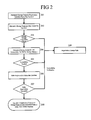
- a Permanent Storage Endpoint 107 registers itself with a Storage Manager through a validation process referred to as Registration. Registration enables a Storage Manager to be presented as an available location to store recorded interactions.
- the process of Registration is started by an operator of the storage system 201.
- An operator defined URL is defined and entered into the Registration process 202. That URL is pre-determined to be network accessible from the Storage Manager.
- the Registration process then ensures that it can successfully access the Storage Manager 203. In the preferred embodiment of the current invention, that is accomplished by executing a REST method on the Storage Manager.
- the Storage Manager then in turn ensures reverse accessibility by executing a similar REST method on the presented URL representing a Permanent Storage Endpoint 204. Accessibility is therefore verified 205.
- a series of Paths which represent physical Permanent Storage mounts, are then passed to the Storage Manager 206. If those steps succeed, the Permanent Storage Endpoint and corresponding Paths are now available for utilization 207. The operator can then therefore manually or automatically assign the resources identified by a Permanent Storage Endpoint to subscribers or tenants 208. That mapping is stored in the Subscriber Database. If those validation steps fail, the process is discontinued 209.
- Those Paths in the preferred embodiment of the current invention, can be mapped to individual subscribers or tenants within the Subscriber Database. If that entire validation process succeeds, a path, and its corresponding Permanent Storage Endpoint are now accessible to store interaction recordings.
- no recorded interactions locations, stored in the Subscriber Database can refer to the Permanent Storage Endpoint being deregistered.
- Permanent Storage Endpoints 107 also provide distributed services. Those distributed services are best located due to their perceived and potential network proximity to Permanent Storage 109.
- those distributed services include, but are not limited to, the encryption of recorded interactions, the ability to provide speech, text, or image analytics on a recorded interaction, and finally archival services (for example the ability to provide simple file transfer services (FTP)).
- FTP file transfer services
- a plurality of Permanent Storage Endpoints can be applied in the present system. That is due to the fact that those functional components may have to be tailored to accommodate a varying degree of subscriber requirements, such as the ability to store recorded interactions within varying security domains, network locations, or Internet facilities.
Landscapes
- Engineering & Computer Science (AREA)
- Theoretical Computer Science (AREA)
- Computer Security & Cryptography (AREA)
- Data Mining & Analysis (AREA)
- Databases & Information Systems (AREA)
- Physics & Mathematics (AREA)
- General Engineering & Computer Science (AREA)
- General Physics & Mathematics (AREA)
- Information Retrieval, Db Structures And Fs Structures Therefor (AREA)
- Computer And Data Communications (AREA)
- Telephonic Communication Services (AREA)
Applications Claiming Priority (1)
| Application Number | Priority Date | Filing Date | Title |
|---|---|---|---|
| US13/867,394 US20140317061A1 (en) | 2013-04-22 | 2013-04-22 | System and method for distributed interaction media storage and retrieval |
Publications (2)
| Publication Number | Publication Date |
|---|---|
| EP2797010A2 true EP2797010A2 (de) | 2014-10-29 |
| EP2797010A3 EP2797010A3 (de) | 2014-11-26 |
Family
ID=49949438
Family Applications (1)
| Application Number | Title | Priority Date | Filing Date |
|---|---|---|---|
| EP13198481.7A Withdrawn EP2797010A3 (de) | 2013-04-22 | 2013-12-19 | System und Verfahren zur verteilten Interaktionsmedienspeicherung und -wiederauffindung |
Country Status (2)
| Country | Link |
|---|---|
| US (1) | US20140317061A1 (de) |
| EP (1) | EP2797010A3 (de) |
Families Citing this family (10)
| Publication number | Priority date | Publication date | Assignee | Title |
|---|---|---|---|---|
| US8960326B2 (en) * | 2004-10-28 | 2015-02-24 | Danny T. Williams | Formation dip geo-steering method |
| US9118809B2 (en) | 2013-10-11 | 2015-08-25 | Edifire LLC | Methods and systems for multi-factor authentication in secure media-based conferencing |
| US9118654B2 (en) * | 2013-10-11 | 2015-08-25 | Edifire LLC | Methods and systems for compliance monitoring in secure media-based conferencing |
| US9167098B1 (en) | 2014-09-29 | 2015-10-20 | Edifire LLC | Dynamic conference session re-routing in secure media-based conferencing |
| US9137187B1 (en) | 2014-09-29 | 2015-09-15 | Edifire LLC | Dynamic conference session state management in secure media-based conferencing |
| US9131112B1 (en) | 2014-09-29 | 2015-09-08 | Edifire LLC | Dynamic signaling and resource allocation in secure media-based conferencing |
| US9282130B1 (en) | 2014-09-29 | 2016-03-08 | Edifire LLC | Dynamic media negotiation in secure media-based conferencing |
| US20210365576A1 (en) * | 2020-05-19 | 2021-11-25 | T-Mobile Usa, Inc. | Multistage database security |
| CN113242450A (zh) * | 2021-04-27 | 2021-08-10 | 上海淇玥信息技术有限公司 | 一种基于微服务的分布式视频处理方法、装置和电子设备 |
| US11681805B1 (en) | 2022-05-26 | 2023-06-20 | Morgan Stanley Services Group Inc. | System for analytic data memorialization, data science, and validation |
Citations (1)
| Publication number | Priority date | Publication date | Assignee | Title |
|---|---|---|---|---|
| US7548609B2 (en) | 2006-09-07 | 2009-06-16 | Cti Group (Holding), Inc. | Process for scalable conversation recording |
Family Cites Families (5)
| Publication number | Priority date | Publication date | Assignee | Title |
|---|---|---|---|---|
| US7100005B2 (en) * | 2003-06-17 | 2006-08-29 | Agilent Technologies, Inc. | Record storage and retrieval solution |
| US7702730B2 (en) * | 2004-09-03 | 2010-04-20 | Open Text Corporation | Systems and methods for collaboration |
| US8693672B2 (en) * | 2005-05-03 | 2014-04-08 | Grape Technology Group, Inc. | Technique for effectively assisting a user during an information assistance call |
| US8930496B2 (en) * | 2005-12-19 | 2015-01-06 | Commvault Systems, Inc. | Systems and methods of unified reconstruction in storage systems |
| US20120203639A1 (en) * | 2011-02-08 | 2012-08-09 | Cbs Interactive, Inc. | Targeting offers to users of a web site |
-
2013
- 2013-04-22 US US13/867,394 patent/US20140317061A1/en not_active Abandoned
- 2013-12-19 EP EP13198481.7A patent/EP2797010A3/de not_active Withdrawn
Patent Citations (1)
| Publication number | Priority date | Publication date | Assignee | Title |
|---|---|---|---|---|
| US7548609B2 (en) | 2006-09-07 | 2009-06-16 | Cti Group (Holding), Inc. | Process for scalable conversation recording |
Also Published As
| Publication number | Publication date |
|---|---|
| US20140317061A1 (en) | 2014-10-23 |
| EP2797010A3 (de) | 2014-11-26 |
Similar Documents
| Publication | Publication Date | Title |
|---|---|---|
| EP2797010A2 (de) | System und Verfahren zur verteilten Interaktionsmedienspeicherung und -wiederauffindung | |
| US12452310B2 (en) | Synthetic request injection for real-time cloud security posture management | |
| US10887279B2 (en) | Scalable cloud hosted metadata service | |
| RU2531569C2 (ru) | Защищенное и конфиденциальное хранение и обработка резервных копий для доверенных сервисов вычисления и данных | |
| US12210488B2 (en) | Distributed data system with document management and access control | |
| JP2022529967A (ja) | ブロックチェーン・ネットワークからのデータの抽出 | |
| US11256815B2 (en) | Object storage system with secure object replication | |
| KR102267132B1 (ko) | 문서 관리와 액세스 제어가 있는 분산형 데이터 시스템 | |
| US8938547B1 (en) | Method and system for data usage accounting in a computing device | |
| US10230690B2 (en) | Digital media content distribution blocking | |
| US11868508B2 (en) | Computer system and device for controlling use of secure media recordings | |
| Farina et al. | Overview of the forensic investigation of cloud services | |
| CN103118138B (zh) | 一种基于云服务的消息队列流处理方法 | |
| US11418327B2 (en) | Automatic provisioning of key material rotation information to services | |
| US11487631B2 (en) | Data refresh in a replication environment | |
| JP2019533233A (ja) | メディア記憶 | |
| US12598060B2 (en) | Distributed encryption key allocation | |
| US11818087B1 (en) | User-to-user messaging-based software troubleshooting tool | |
| JP2024500373A (ja) | 出版-購読型システムにおける鍵ローテーション | |
| US11354653B2 (en) | Systems and methods for using distributed ledger micro reporting tools | |
| US12373587B2 (en) | Maintaining data security in a multi-tenant microservice environment | |
| CN116886758B (zh) | 云存储信息安全管理方法、装置、系统及存储介质 | |
| US8615548B1 (en) | System and method for deferred data downloading | |
| US20190075151A1 (en) | Facility for initiating automatic exchange of file(s) between mobile devices | |
| US12547482B1 (en) | Cloud-based actions service for a data intake and query system |
Legal Events
| Date | Code | Title | Description |
|---|---|---|---|
| PUAL | Search report despatched |
Free format text: ORIGINAL CODE: 0009013 |
|
| PUAI | Public reference made under article 153(3) epc to a published international application that has entered the european phase |
Free format text: ORIGINAL CODE: 0009012 |
|
| 17P | Request for examination filed |
Effective date: 20131219 |
|
| AK | Designated contracting states |
Kind code of ref document: A2 Designated state(s): AL AT BE BG CH CY CZ DE DK EE ES FI FR GB GR HR HU IE IS IT LI LT LU LV MC MK MT NL NO PL PT RO RS SE SI SK SM TR |
|
| AX | Request for extension of the european patent |
Extension state: BA ME |
|
| AK | Designated contracting states |
Kind code of ref document: A3 Designated state(s): AL AT BE BG CH CY CZ DE DK EE ES FI FR GB GR HR HU IE IS IT LI LT LU LV MC MK MT NL NO PL PT RO RS SE SI SK SM TR |
|
| AX | Request for extension of the european patent |
Extension state: BA ME |
|
| RIC1 | Information provided on ipc code assigned before grant |
Ipc: G06Q 30/02 20120101ALI20141021BHEP Ipc: G06F 17/30 20060101AFI20141021BHEP |
|
| R17P | Request for examination filed (corrected) |
Effective date: 20150526 |
|
| RBV | Designated contracting states (corrected) |
Designated state(s): AL AT BE BG CH CY CZ DE DK EE ES FI FR GB GR HR HU IE IS IT LI LT LU LV MC MK MT NL NO PL PT RO RS SE SI SK SM TR |
|
| 17Q | First examination report despatched |
Effective date: 20160901 |
|
| STAA | Information on the status of an ep patent application or granted ep patent |
Free format text: STATUS: EXAMINATION IS IN PROGRESS |
|
| STAA | Information on the status of an ep patent application or granted ep patent |
Free format text: STATUS: THE APPLICATION IS DEEMED TO BE WITHDRAWN |
|
| 18D | Application deemed to be withdrawn |
Effective date: 20170112 |