EP2799236B1 - Mehrschichtige folie für eine schmuckform, polyurethanharz und verfahren zur herstellung eines schmuckformkörpers - Google Patents
Mehrschichtige folie für eine schmuckform, polyurethanharz und verfahren zur herstellung eines schmuckformkörpers Download PDFInfo
- Publication number
- EP2799236B1 EP2799236B1 EP12861270.2A EP12861270A EP2799236B1 EP 2799236 B1 EP2799236 B1 EP 2799236B1 EP 12861270 A EP12861270 A EP 12861270A EP 2799236 B1 EP2799236 B1 EP 2799236B1
- Authority
- EP
- European Patent Office
- Prior art keywords
- polyurethane resin
- group
- multilayer film
- molding
- protective layer
- Prior art date
- Legal status (The legal status is an assumption and is not a legal conclusion. Google has not performed a legal analysis and makes no representation as to the accuracy of the status listed.)
- Active
Links
Images
Classifications
-
- C—CHEMISTRY; METALLURGY
- C09—DYES; PAINTS; POLISHES; NATURAL RESINS; ADHESIVES; COMPOSITIONS NOT OTHERWISE PROVIDED FOR; APPLICATIONS OF MATERIALS NOT OTHERWISE PROVIDED FOR
- C09J—ADHESIVES; NON-MECHANICAL ASPECTS OF ADHESIVE PROCESSES IN GENERAL; ADHESIVE PROCESSES NOT PROVIDED FOR ELSEWHERE; USE OF MATERIALS AS ADHESIVES
- C09J7/00—Adhesives in the form of films or foils
- C09J7/20—Adhesives in the form of films or foils characterised by their carriers
- C09J7/22—Plastics; Metallised plastics
- C09J7/25—Plastics; Metallised plastics based on macromolecular compounds obtained otherwise than by reactions involving only carbon-to-carbon unsaturated bonds
-
- B—PERFORMING OPERATIONS; TRANSPORTING
- B32—LAYERED PRODUCTS
- B32B—LAYERED PRODUCTS, i.e. PRODUCTS BUILT-UP OF STRATA OF FLAT OR NON-FLAT, e.g. CELLULAR OR HONEYCOMB, FORM
- B32B27/00—Layered products comprising a layer of synthetic resin
- B32B27/40—Layered products comprising a layer of synthetic resin comprising polyurethanes
-
- B—PERFORMING OPERATIONS; TRANSPORTING
- B32—LAYERED PRODUCTS
- B32B—LAYERED PRODUCTS, i.e. PRODUCTS BUILT-UP OF STRATA OF FLAT OR NON-FLAT, e.g. CELLULAR OR HONEYCOMB, FORM
- B32B33/00—Layered products characterised by particular properties or particular surface features, e.g. particular surface coatings; Layered products designed for particular purposes not covered by another single class
-
- B—PERFORMING OPERATIONS; TRANSPORTING
- B32—LAYERED PRODUCTS
- B32B—LAYERED PRODUCTS, i.e. PRODUCTS BUILT-UP OF STRATA OF FLAT OR NON-FLAT, e.g. CELLULAR OR HONEYCOMB, FORM
- B32B37/00—Methods or apparatus for laminating, e.g. by curing or by ultrasonic bonding
- B32B37/12—Methods or apparatus for laminating, e.g. by curing or by ultrasonic bonding characterised by using adhesives
-
- B—PERFORMING OPERATIONS; TRANSPORTING
- B32—LAYERED PRODUCTS
- B32B—LAYERED PRODUCTS, i.e. PRODUCTS BUILT-UP OF STRATA OF FLAT OR NON-FLAT, e.g. CELLULAR OR HONEYCOMB, FORM
- B32B7/00—Layered products characterised by the relation between layers; Layered products characterised by the relative orientation of features between layers, or by the relative values of a measurable parameter between layers, i.e. products comprising layers having different physical, chemical or physicochemical properties; Layered products characterised by the interconnection of layers
- B32B7/04—Interconnection of layers
- B32B7/12—Interconnection of layers using interposed adhesives or interposed materials with bonding properties
-
- C—CHEMISTRY; METALLURGY
- C08—ORGANIC MACROMOLECULAR COMPOUNDS; THEIR PREPARATION OR CHEMICAL WORKING-UP; COMPOSITIONS BASED THEREON
- C08G—MACROMOLECULAR COMPOUNDS OBTAINED OTHERWISE THAN BY REACTIONS ONLY INVOLVING UNSATURATED CARBON-TO-CARBON BONDS
- C08G18/00—Polymeric products of isocyanates or isothiocyanates
- C08G18/06—Polymeric products of isocyanates or isothiocyanates with compounds having active hydrogen
- C08G18/08—Processes
- C08G18/0804—Manufacture of polymers containing ionic or ionogenic groups
- C08G18/0819—Manufacture of polymers containing ionic or ionogenic groups containing anionic or anionogenic groups
- C08G18/0823—Manufacture of polymers containing ionic or ionogenic groups containing anionic or anionogenic groups containing carboxylate salt groups or groups forming them
-
- C—CHEMISTRY; METALLURGY
- C08—ORGANIC MACROMOLECULAR COMPOUNDS; THEIR PREPARATION OR CHEMICAL WORKING-UP; COMPOSITIONS BASED THEREON
- C08G—MACROMOLECULAR COMPOUNDS OBTAINED OTHERWISE THAN BY REACTIONS ONLY INVOLVING UNSATURATED CARBON-TO-CARBON BONDS
- C08G18/00—Polymeric products of isocyanates or isothiocyanates
- C08G18/06—Polymeric products of isocyanates or isothiocyanates with compounds having active hydrogen
- C08G18/28—Polymeric products of isocyanates or isothiocyanates with compounds having active hydrogen characterised by the compounds used containing active hydrogen
- C08G18/40—High-molecular-weight compounds
- C08G18/42—Polycondensates having carboxylic or carbonic ester groups in the main chain
- C08G18/44—Polycarbonates
-
- C—CHEMISTRY; METALLURGY
- C08—ORGANIC MACROMOLECULAR COMPOUNDS; THEIR PREPARATION OR CHEMICAL WORKING-UP; COMPOSITIONS BASED THEREON
- C08G—MACROMOLECULAR COMPOUNDS OBTAINED OTHERWISE THAN BY REACTIONS ONLY INVOLVING UNSATURATED CARBON-TO-CARBON BONDS
- C08G18/00—Polymeric products of isocyanates or isothiocyanates
- C08G18/06—Polymeric products of isocyanates or isothiocyanates with compounds having active hydrogen
- C08G18/28—Polymeric products of isocyanates or isothiocyanates with compounds having active hydrogen characterised by the compounds used containing active hydrogen
- C08G18/65—Low-molecular-weight compounds having active hydrogen with high-molecular-weight compounds having active hydrogen
- C08G18/66—Compounds of groups C08G18/42, C08G18/48, or C08G18/52
- C08G18/6633—Compounds of group C08G18/42
- C08G18/6637—Compounds of group C08G18/42 with compounds of group C08G18/32 or polyamines of C08G18/38
- C08G18/664—Compounds of group C08G18/42 with compounds of group C08G18/32 or polyamines of C08G18/38 with compounds of group C08G18/3203
-
- C—CHEMISTRY; METALLURGY
- C08—ORGANIC MACROMOLECULAR COMPOUNDS; THEIR PREPARATION OR CHEMICAL WORKING-UP; COMPOSITIONS BASED THEREON
- C08G—MACROMOLECULAR COMPOUNDS OBTAINED OTHERWISE THAN BY REACTIONS ONLY INVOLVING UNSATURATED CARBON-TO-CARBON BONDS
- C08G18/00—Polymeric products of isocyanates or isothiocyanates
- C08G18/06—Polymeric products of isocyanates or isothiocyanates with compounds having active hydrogen
- C08G18/70—Polymeric products of isocyanates or isothiocyanates with compounds having active hydrogen characterised by the isocyanates or isothiocyanates used
- C08G18/72—Polyisocyanates or polyisothiocyanates
- C08G18/74—Polyisocyanates or polyisothiocyanates cyclic
- C08G18/75—Polyisocyanates or polyisothiocyanates cyclic cycloaliphatic
- C08G18/751—Polyisocyanates or polyisothiocyanates cyclic cycloaliphatic containing only one cycloaliphatic ring
- C08G18/752—Polyisocyanates or polyisothiocyanates cyclic cycloaliphatic containing only one cycloaliphatic ring containing at least one isocyanate or isothiocyanate group linked to the cycloaliphatic ring by means of an aliphatic group
- C08G18/753—Polyisocyanates or polyisothiocyanates cyclic cycloaliphatic containing only one cycloaliphatic ring containing at least one isocyanate or isothiocyanate group linked to the cycloaliphatic ring by means of an aliphatic group containing one isocyanate or isothiocyanate group linked to the cycloaliphatic ring by means of an aliphatic group having a primary carbon atom next to the isocyanate or isothiocyanate group
- C08G18/755—Polyisocyanates or polyisothiocyanates cyclic cycloaliphatic containing only one cycloaliphatic ring containing at least one isocyanate or isothiocyanate group linked to the cycloaliphatic ring by means of an aliphatic group containing one isocyanate or isothiocyanate group linked to the cycloaliphatic ring by means of an aliphatic group having a primary carbon atom next to the isocyanate or isothiocyanate group and at least one isocyanate or isothiocyanate group linked to a secondary carbon atom of the cycloaliphatic ring, e.g. isophorone diisocyanate
-
- C—CHEMISTRY; METALLURGY
- C09—DYES; PAINTS; POLISHES; NATURAL RESINS; ADHESIVES; COMPOSITIONS NOT OTHERWISE PROVIDED FOR; APPLICATIONS OF MATERIALS NOT OTHERWISE PROVIDED FOR
- C09J—ADHESIVES; NON-MECHANICAL ASPECTS OF ADHESIVE PROCESSES IN GENERAL; ADHESIVE PROCESSES NOT PROVIDED FOR ELSEWHERE; USE OF MATERIALS AS ADHESIVES
- C09J7/00—Adhesives in the form of films or foils
- C09J7/20—Adhesives in the form of films or foils characterised by their carriers
- C09J7/22—Plastics; Metallised plastics
- C09J7/25—Plastics; Metallised plastics based on macromolecular compounds obtained otherwise than by reactions involving only carbon-to-carbon unsaturated bonds
- C09J7/255—Polyesters
-
- B—PERFORMING OPERATIONS; TRANSPORTING
- B32—LAYERED PRODUCTS
- B32B—LAYERED PRODUCTS, i.e. PRODUCTS BUILT-UP OF STRATA OF FLAT OR NON-FLAT, e.g. CELLULAR OR HONEYCOMB, FORM
- B32B2451/00—Decorative or ornamental articles
-
- C—CHEMISTRY; METALLURGY
- C08—ORGANIC MACROMOLECULAR COMPOUNDS; THEIR PREPARATION OR CHEMICAL WORKING-UP; COMPOSITIONS BASED THEREON
- C08G—MACROMOLECULAR COMPOUNDS OBTAINED OTHERWISE THAN BY REACTIONS ONLY INVOLVING UNSATURATED CARBON-TO-CARBON BONDS
- C08G18/00—Polymeric products of isocyanates or isothiocyanates
- C08G18/06—Polymeric products of isocyanates or isothiocyanates with compounds having active hydrogen
- C08G18/08—Processes
- C08G18/10—Prepolymer processes involving reaction of isocyanates or isothiocyanates with compounds having active hydrogen in a first reaction step
- C08G18/12—Prepolymer processes involving reaction of isocyanates or isothiocyanates with compounds having active hydrogen in a first reaction step using two or more compounds having active hydrogen in the first polymerisation step
-
- C—CHEMISTRY; METALLURGY
- C08—ORGANIC MACROMOLECULAR COMPOUNDS; THEIR PREPARATION OR CHEMICAL WORKING-UP; COMPOSITIONS BASED THEREON
- C08G—MACROMOLECULAR COMPOUNDS OBTAINED OTHERWISE THAN BY REACTIONS ONLY INVOLVING UNSATURATED CARBON-TO-CARBON BONDS
- C08G18/00—Polymeric products of isocyanates or isothiocyanates
- C08G18/06—Polymeric products of isocyanates or isothiocyanates with compounds having active hydrogen
- C08G18/28—Polymeric products of isocyanates or isothiocyanates with compounds having active hydrogen characterised by the compounds used containing active hydrogen
- C08G18/2805—Compounds having only one group containing active hydrogen
- C08G18/288—Compounds containing at least one heteroatom other than oxygen or nitrogen
- C08G18/289—Compounds containing at least one heteroatom other than oxygen or nitrogen containing silicon
-
- C—CHEMISTRY; METALLURGY
- C08—ORGANIC MACROMOLECULAR COMPOUNDS; THEIR PREPARATION OR CHEMICAL WORKING-UP; COMPOSITIONS BASED THEREON
- C08G—MACROMOLECULAR COMPOUNDS OBTAINED OTHERWISE THAN BY REACTIONS ONLY INVOLVING UNSATURATED CARBON-TO-CARBON BONDS
- C08G18/00—Polymeric products of isocyanates or isothiocyanates
- C08G18/06—Polymeric products of isocyanates or isothiocyanates with compounds having active hydrogen
- C08G18/28—Polymeric products of isocyanates or isothiocyanates with compounds having active hydrogen characterised by the compounds used containing active hydrogen
- C08G18/30—Low-molecular-weight compounds
- C08G18/32—Polyhydroxy compounds; Polyamines; Hydroxyamines
- C08G18/3203—Polyhydroxy compounds
- C08G18/3206—Polyhydroxy compounds aliphatic
-
- C—CHEMISTRY; METALLURGY
- C08—ORGANIC MACROMOLECULAR COMPOUNDS; THEIR PREPARATION OR CHEMICAL WORKING-UP; COMPOSITIONS BASED THEREON
- C08G—MACROMOLECULAR COMPOUNDS OBTAINED OTHERWISE THAN BY REACTIONS ONLY INVOLVING UNSATURATED CARBON-TO-CARBON BONDS
- C08G18/00—Polymeric products of isocyanates or isothiocyanates
- C08G18/06—Polymeric products of isocyanates or isothiocyanates with compounds having active hydrogen
- C08G18/28—Polymeric products of isocyanates or isothiocyanates with compounds having active hydrogen characterised by the compounds used containing active hydrogen
- C08G18/30—Low-molecular-weight compounds
- C08G18/32—Polyhydroxy compounds; Polyamines; Hydroxyamines
- C08G18/3225—Polyamines
- C08G18/3228—Polyamines acyclic
-
- C—CHEMISTRY; METALLURGY
- C08—ORGANIC MACROMOLECULAR COMPOUNDS; THEIR PREPARATION OR CHEMICAL WORKING-UP; COMPOSITIONS BASED THEREON
- C08G—MACROMOLECULAR COMPOUNDS OBTAINED OTHERWISE THAN BY REACTIONS ONLY INVOLVING UNSATURATED CARBON-TO-CARBON BONDS
- C08G18/00—Polymeric products of isocyanates or isothiocyanates
- C08G18/06—Polymeric products of isocyanates or isothiocyanates with compounds having active hydrogen
- C08G18/28—Polymeric products of isocyanates or isothiocyanates with compounds having active hydrogen characterised by the compounds used containing active hydrogen
- C08G18/30—Low-molecular-weight compounds
- C08G18/38—Low-molecular-weight compounds having heteroatoms other than oxygen
- C08G18/3893—Low-molecular-weight compounds having heteroatoms other than oxygen containing silicon
-
- C—CHEMISTRY; METALLURGY
- C08—ORGANIC MACROMOLECULAR COMPOUNDS; THEIR PREPARATION OR CHEMICAL WORKING-UP; COMPOSITIONS BASED THEREON
- C08G—MACROMOLECULAR COMPOUNDS OBTAINED OTHERWISE THAN BY REACTIONS ONLY INVOLVING UNSATURATED CARBON-TO-CARBON BONDS
- C08G18/00—Polymeric products of isocyanates or isothiocyanates
- C08G18/06—Polymeric products of isocyanates or isothiocyanates with compounds having active hydrogen
- C08G18/70—Polymeric products of isocyanates or isothiocyanates with compounds having active hydrogen characterised by the isocyanates or isothiocyanates used
- C08G18/72—Polyisocyanates or polyisothiocyanates
- C08G18/74—Polyisocyanates or polyisothiocyanates cyclic
- C08G18/75—Polyisocyanates or polyisothiocyanates cyclic cycloaliphatic
- C08G18/758—Polyisocyanates or polyisothiocyanates cyclic cycloaliphatic containing two or more cycloaliphatic rings
-
- C—CHEMISTRY; METALLURGY
- C09—DYES; PAINTS; POLISHES; NATURAL RESINS; ADHESIVES; COMPOSITIONS NOT OTHERWISE PROVIDED FOR; APPLICATIONS OF MATERIALS NOT OTHERWISE PROVIDED FOR
- C09D—COATING COMPOSITIONS, e.g. PAINTS, VARNISHES OR LACQUERS; FILLING PASTES; CHEMICAL PAINT OR INK REMOVERS; INKS; CORRECTING FLUIDS; WOODSTAINS; PASTES OR SOLIDS FOR COLOURING OR PRINTING; USE OF MATERIALS THEREFOR
- C09D175/00—Coating compositions based on polyureas or polyurethanes; Coating compositions based on derivatives of such polymers
- C09D175/04—Polyurethanes
- C09D175/06—Polyurethanes from polyesters
-
- C—CHEMISTRY; METALLURGY
- C09—DYES; PAINTS; POLISHES; NATURAL RESINS; ADHESIVES; COMPOSITIONS NOT OTHERWISE PROVIDED FOR; APPLICATIONS OF MATERIALS NOT OTHERWISE PROVIDED FOR
- C09J—ADHESIVES; NON-MECHANICAL ASPECTS OF ADHESIVE PROCESSES IN GENERAL; ADHESIVE PROCESSES NOT PROVIDED FOR ELSEWHERE; USE OF MATERIALS AS ADHESIVES
- C09J2203/00—Applications of adhesives in processes or use of adhesives in the form of films or foils
- C09J2203/306—Applications of adhesives in processes or use of adhesives in the form of films or foils for protecting painted surfaces, e.g. of cars
-
- C—CHEMISTRY; METALLURGY
- C09—DYES; PAINTS; POLISHES; NATURAL RESINS; ADHESIVES; COMPOSITIONS NOT OTHERWISE PROVIDED FOR; APPLICATIONS OF MATERIALS NOT OTHERWISE PROVIDED FOR
- C09J—ADHESIVES; NON-MECHANICAL ASPECTS OF ADHESIVE PROCESSES IN GENERAL; ADHESIVE PROCESSES NOT PROVIDED FOR ELSEWHERE; USE OF MATERIALS AS ADHESIVES
- C09J2301/00—Additional features of adhesives in the form of films or foils
- C09J2301/10—Additional features of adhesives in the form of films or foils characterized by the structural features of the adhesive tape or sheet
- C09J2301/12—Additional features of adhesives in the form of films or foils characterized by the structural features of the adhesive tape or sheet by the arrangement of layers
- C09J2301/122—Additional features of adhesives in the form of films or foils characterized by the structural features of the adhesive tape or sheet by the arrangement of layers the adhesive layer being present only on one side of the carrier, e.g. single-sided adhesive tape
-
- C—CHEMISTRY; METALLURGY
- C09—DYES; PAINTS; POLISHES; NATURAL RESINS; ADHESIVES; COMPOSITIONS NOT OTHERWISE PROVIDED FOR; APPLICATIONS OF MATERIALS NOT OTHERWISE PROVIDED FOR
- C09J—ADHESIVES; NON-MECHANICAL ASPECTS OF ADHESIVE PROCESSES IN GENERAL; ADHESIVE PROCESSES NOT PROVIDED FOR ELSEWHERE; USE OF MATERIALS AS ADHESIVES
- C09J2301/00—Additional features of adhesives in the form of films or foils
- C09J2301/10—Additional features of adhesives in the form of films or foils characterized by the structural features of the adhesive tape or sheet
- C09J2301/16—Additional features of adhesives in the form of films or foils characterized by the structural features of the adhesive tape or sheet by the structure of the carrier layer
- C09J2301/162—Additional features of adhesives in the form of films or foils characterized by the structural features of the adhesive tape or sheet by the structure of the carrier layer the carrier being a laminate constituted by plastic layers only
-
- C—CHEMISTRY; METALLURGY
- C09—DYES; PAINTS; POLISHES; NATURAL RESINS; ADHESIVES; COMPOSITIONS NOT OTHERWISE PROVIDED FOR; APPLICATIONS OF MATERIALS NOT OTHERWISE PROVIDED FOR
- C09J—ADHESIVES; NON-MECHANICAL ASPECTS OF ADHESIVE PROCESSES IN GENERAL; ADHESIVE PROCESSES NOT PROVIDED FOR ELSEWHERE; USE OF MATERIALS AS ADHESIVES
- C09J2467/00—Presence of polyester
- C09J2467/001—Presence of polyester in the barrier layer
-
- C—CHEMISTRY; METALLURGY
- C09—DYES; PAINTS; POLISHES; NATURAL RESINS; ADHESIVES; COMPOSITIONS NOT OTHERWISE PROVIDED FOR; APPLICATIONS OF MATERIALS NOT OTHERWISE PROVIDED FOR
- C09J—ADHESIVES; NON-MECHANICAL ASPECTS OF ADHESIVE PROCESSES IN GENERAL; ADHESIVE PROCESSES NOT PROVIDED FOR ELSEWHERE; USE OF MATERIALS AS ADHESIVES
- C09J2475/00—Presence of polyurethane
-
- C—CHEMISTRY; METALLURGY
- C09—DYES; PAINTS; POLISHES; NATURAL RESINS; ADHESIVES; COMPOSITIONS NOT OTHERWISE PROVIDED FOR; APPLICATIONS OF MATERIALS NOT OTHERWISE PROVIDED FOR
- C09J—ADHESIVES; NON-MECHANICAL ASPECTS OF ADHESIVE PROCESSES IN GENERAL; ADHESIVE PROCESSES NOT PROVIDED FOR ELSEWHERE; USE OF MATERIALS AS ADHESIVES
- C09J2475/00—Presence of polyurethane
- C09J2475/001—Presence of polyurethane in the barrier layer
-
- Y—GENERAL TAGGING OF NEW TECHNOLOGICAL DEVELOPMENTS; GENERAL TAGGING OF CROSS-SECTIONAL TECHNOLOGIES SPANNING OVER SEVERAL SECTIONS OF THE IPC; TECHNICAL SUBJECTS COVERED BY FORMER USPC CROSS-REFERENCE ART COLLECTIONS [XRACs] AND DIGESTS
- Y10—TECHNICAL SUBJECTS COVERED BY FORMER USPC
- Y10T—TECHNICAL SUBJECTS COVERED BY FORMER US CLASSIFICATION
- Y10T156/00—Adhesive bonding and miscellaneous chemical manufacture
- Y10T156/10—Methods of surface bonding and/or assembly therefor
-
- Y—GENERAL TAGGING OF NEW TECHNOLOGICAL DEVELOPMENTS; GENERAL TAGGING OF CROSS-SECTIONAL TECHNOLOGIES SPANNING OVER SEVERAL SECTIONS OF THE IPC; TECHNICAL SUBJECTS COVERED BY FORMER USPC CROSS-REFERENCE ART COLLECTIONS [XRACs] AND DIGESTS
- Y10—TECHNICAL SUBJECTS COVERED BY FORMER USPC
- Y10T—TECHNICAL SUBJECTS COVERED BY FORMER US CLASSIFICATION
- Y10T428/00—Stock material or miscellaneous articles
- Y10T428/28—Web or sheet containing structurally defined element or component and having an adhesive outermost layer
- Y10T428/2848—Three or more layers
Definitions
- the present invention relates to a multilayer film for decorative molding used when providing film decoration for decorable objects used in automobile parts, electrical appliances and the like, more specifically a multilayer film for decorative molding which exhibits a good mold-conformability to decorable objects, even those with deep-draws and other complicated shapes, during decorative molding, and scratch mark resistance, and a polyurethane resin used therefor, as well as a method for producing a decorative molded body.
- the protective layer of a multilayer film for decorative molding used in a film-based decorating method plays an important role in the decoration of a molded product, and, as such, needs to possess durability [for instance, anti-scratching properties (scratch resistance), weather resistance, chemical resistance and water resistance].
- mold-conformability during decorative molding is essential because of the large size and complex shape of molded products. Namely, to decorate a molded product using a film-based decorating method, it is necessary that the whole surface from top to bottom be covered in one go even if the molded product is large in size. Similarly, when a complex shape is involved, the multilayer film for decorative molding needs to fit the whole surface by deforming to the shape of every peak and trough.
- the protective layer of a multilayer film for decorative molding needs particularly to have scratch resistance and, as part of a multilayer film for decorative molding, mold-conformability during decorative molding, and there are growing calls for those characteristics.
- a moldable film that mainly comprises urethane resin and is designed to be cured by heat curing alone as described in patent document 3 has also been proposed.
- the method described in patent documents 1 and 2 has a problem in that its productivity is low because it needs to, after bonding a multilayer film for decorative molding to the decorable object, run an extra step of irradiating it with an energy ray using a UV lamp to cure the protective layer.
- the method described in patent document 3 also has a problem in that it cannot simultaneously achieve the scratch resistance of the protective layer and its mold-conformability during decorative molding despite both being essential properties.
- the present invention aims to provide a high-productivity multilayer film for decorative molding that features a protective layer having both good stretchability, as suited for film-based decorative molding, and good scratch resistance.
- the present invention adopts the film configurations described in [1] to [19] below.
- the multilayer film for decorative molding of the present invention is excellent in mold-conformability during decorative molding and, in addition, only needs the heat generated during the molding process to have the curing of the protective layer sufficiently progress and be completed, its use makes it possible to obtain a decorative molded body having high productivity, as well as good mold-conformability during decorative molding and durability (e.g. scratch resistance, weather resistance, chemical resistance and water resistance).
- a multilayer film for decorative molding which has a multilayer structure wherein a protective layer, a color layer and an adhesive layer are arranged in this order, with a molding film inserted between either of the adjoining pairs of layers or placed on the surface of the protective layer located on the opposite side to the color layer, whose protective layer contains a polyurethane resin (U) formed at least from an active hydrogen component (A) and an organic isocyanate component (B) and having a polycarbonate skeleton with an alicyclic hydrocarbon group, and which satisfies condition (1)
- the polyurethane resin (U) is a polyurethane resin (U1) that has an alkoxysilyl group and/or a silanol group in a molecule.
- condition (2) [The protective layer contains a compound (X) that has a glycidyl ether group, and an alkoxysilyl group and/or a silanol group, and the polyurethane resin (U) is a polyurethane resin (U
- the sequential order of the color layer and adhesive layer can be any of the options (i) to (iii) listed below.
- the list shows the decorable object in brackets to clearly illustrate the configurational aspects of the embodiments of the present invention despite the fact that it is not included in the multilayer film for decorative molding of the present invention.
- Decorating a decorable object using such a multilayer film for decorative molding makes it possible to reduce the number of steps in the formation of a decorative layer compared to a decorating method based on conventional spray-coating, which involves multi-stage steps, thus improving the production efficiency of molded products having a decorative layer. This, in turn, makes it possible to lower the cost.
- Such a multilayer film for decorative molding features a protective layer that satisfies condition (1) and/or condition (2) as specified above, the heat generated during the molding process alone is enough to have the curing of its protective layer proceed, and this increases productivity by eliminating the need for a separate energy ray irradiation step. It also exhibits good scratch resistance and good mold-conformability during decorative molding.
- the use of such a multilayer film for decorative molding therefore, makes it possible to obtain a decorative molded body with good external appearance.
- thermoplastic resin such as polyolefin, polyester, polyvinyl chloride, poly(rneta-)acrylate, polyamide, polyester amide, polyether, polystyrene, polyether ester and polycarbonate. It does not matter whether it is an unstretched film, uniaxially stretched film or biaxially stretched film.
- the molding film of a multilayer film for decorative molding not become detached from the adjoining layers during handling or decorative molding.
- the multilayer film for decorative molding takes configuration (i) above, it is necessary that, in addition to preventing the molding film from being detached from the protective layer at the interface between them during handling or decorative molding as described above, the molding film be peeled and removed after decorative molding is completed. In this case, therefore, it is preferable that, in addition to maintaining contact with the protective layer before and during decorative molding, the protective layer-side surface of the molding film bet releasable from the protective layer after decorative molding. Though these are mutually exclusive characteristics, it is possible to adjust them appropriately by combining a contact relaxing method and a contact tightening method as described below.
- Examples of a contact relaxing method include the use of a composite film produced by applying a layer made of a material with low affinity for the protective layer, such as polyolefin, to one side of the molding film (protective layer-side surface) by coextrusion or laminating and coating of the molding film with a mold releasing agent to obtain a composite film.
- Examples of a contact tightening method include the provision of a corona treatment on one side of the molding film (protective layer-side surface).
- the molding film is embedded in the decorative layer so that there is no need for its two surfaces to have releasability with respect to the adjoining layers, with the only requirement being close contact. It therefore suffices to provide an adequate level of contact using a method such as the surface coating of the molding film with an adhesive to turn it into a composite film or a surface modification of the molding film through corona treatment, etc.
- the thickness of the molding film be 50 to 500 ⁇ m, more preferably 75 to 200 ⁇ m, in consideration of, among other things, the post-molding rupture strength and shape retainability of the decorative layer.
- this thickness may be determined by measuring each layer using a micrometer and performing a calculation upon completion of its forming in accordance with JIS C 2151:2006 . If the molding film is already laminated with a decorative layer, its thickness can be measured by observing the cross section using a differential interference microscope, laser microscope, electron microscope, or the like.
- the protective layer of a multilayer film for decorative molding constitutes the outermost layer. It is therefore preferable that, in addition to being a resin that leaves intact the mold-conformability during decorative molding of the multilayer film for decorative molding, it be provided with transparency, glossiness and other esthetic design characteristics, as well as abrasion resistance, impact resistance, water resistance, chemical resistance, weather resistance and other coat characteristics. With layers located on the nearer side to the decorable object than the protective layer when a multilayer film for decorative molding becomes part of a decorative molded body, i.e.
- a protective layer that contains a polyurethane resin (U) formed at least from an active hydrogen component (A) and an organic isocyanate component (B) and having a polycarbonate skeleton with an alicyclic hydrocarbon group may be used.
- a polyurethane resin having a polycarbonate skeleton with an alicyclic hydrocarbon group provides high crystallinity and helps obtain scratch resistance and esthetic design characteristics, as well as making it possible to secure mold-conformability during decorative molding.
- such a polyurethane resin (U) be a polyurethane resin formed from an active hydrogen component (A) that contains a polycarbonate polyol (a1) having an alicyclic hydrocarbon group with preferably a 4 to 10-membered ring (particularly a 6-membered ring) and an organic isocyanate component (B).
- A active hydrogen component
- B organic isocyanate component
- Examples of a polycarbonate polyol (a1) having an alicyclic hydrocarbon group include a polycarbonate polyol produced by having alicyclic multivalent (di- to trivalent or above) alcohols with a carbon number of 6 to 20 or a mixture of these and one or more acyclic multivalent (di- to trivalent or above) alcohols with a carbon number of 2 to 20 (preferably alkylene diols having an alkylene group with a carbon number of 6 to 10, more preferably 6 to 9) undergo a dealcoholization condensation reaction with a low molecule carbonate compound (e.g.
- a compound name accompanied by an alphanumerical symbol, such as "a polycarbonate polyol (a1) having an alicyclic hydrocarbon group” may just be denoted by alphanumerical symbol, such as "(a1)”.
- Examples of an alicyclic multivalent (di- to trivalent or above) alcohol with a carbon number of 6 to 20 include 1,2-cyclobutanediol, 2,2,4,4,-tetramethyl-1,3-cyclobutanediol, 1,2-or 1,3-cyclopentanediol, 3-methyl- 1,2-cyclopentanediol, 1,2-, 1,3-or 1,4-cyclohexanediol, 4-methyl- 1,2-cyclohexanediol, 1,2-, 1,3-or 1,4-cyclohexanedimethanol, 1,1'-bicyclohexane-1,1'-diol, 1,1'-bicyclohexane-2,2'-diol, 1,1'-bicyclohexane-4,4'-diol, a hydrogenated bisphenol A, hydrogenated bisphenol F, 1,2-or 1,3-cycloheptanediol, 1,2-, 1,4-or
- 1,4-cyclohexanediol and cyclohexanedimethanol are preferred from the viewpoint of the scratch resistance and mold-conformability of the protective layer obtained.
- Examples of an acyclic multivalent (di- to trivalent or above) alcohol with a carbon number of 2 to 20 include ethylene glycol, 1,2-or 1,3-propylene glycol, diethylene glycol, triethylene glycol, dipropylene glycol, 1,2-, 1,3-, 2,3-or 1,4-butanediol, 3-methyl-1,2-butanediol, 1,2-, 1,4-, 1,5-or 2,4-pentanediol, 2-or 3-methyl-l,5-pentanediol, 2-or 3-methyl-4,5-pentanediol, 2,3-dimethyl trimethylene glycol, 2,2,4-trimethyl-1,3-pentanediol, 1,4-, 1,5-, 1,6-or 2,5-hexanediol, 1,7-heptanediol, 2-or 3-methyl-1,6-hexanediol, 2-, 3-or 4-methyl-1,7-heptanedio
- a linear diol with a carbon number of 3 to 6 (1,3-propylene glycol, 1,4-butanediol, 1,5-pentanediol, and 1,6-hexanediol) is preferred from the viewpoint of the scratch resistance and mold-conformability of the protective layer obtained.
- polycarbonate polyols (a1) having an alicyclic hydrocarbon group a polycarbonate diol using alicyclic multivalent (di- to trivalent or above) alcohols with a carbon number of 6 to 20 and divalent alcohols as acyclic multivalent (di- to trivalent or above) alcohols with a carbon number of 2 to 20 to be used as needed, as specified above, are preferred from the viewpoint of mold-conformability.
- the range of the number average molecular weight (hereinafter abbreviated as "Mn") of a polycarbonate polyol (a1) having an alicyclic hydrocarbon group is preferably 500 to 5,000, more preferably 600 to 3,000 , particularly 750 to 2,000 , from the viewpoint of the mold-conformability of the protective layer obtained.
- Mn may be measured using gel permeation chromatography, for instance, under the following conditions.
- the content of the alicyclic hydrocarbon group attributed to a polycarbonate polyol (a1) having an alicyclic hydrocarbon group in the polyurethane resin (U) be 1 to 30 mass%, more preferably 5 to 25 mass% , particularly 10 to 20 mass% , relative to the combined mass of the active hydrogen component (A) and the organic isocyanate component (B) from the viewpoint of the scratch resistance and esthetic design characteristics of the protective layer.
- any other polyols used to conventionally produce polyurethane may be used as part of the active hydrogen component (A).
- a polymer polyol (a2) with an Mn of 500 or more other than (a1), a polyol containing a carboxyl group and a salt thereof (a3), a chain extender (a4), and a reaction terminator (a5) may be used as part of the active hydrogen component (A).
- Examples of a polymer polyol (a2) with an Mn of 500 or more other than (a1) include a polymer polyol used to conventionally produce polyurethane, e.g. a polyester polyol (a21) and a polyether polyol (a22).
- polyester polyol (a21) examples include an aliphatic polycarbonate polyol not having an alicyclic hydrocarbon group (a211), a dehydration condensation-type polyester polyol (a212), a polylactone polyol (a213) and the like.
- Examples of an aliphatic polycarbonate polyol not having an alicyclic hydrocarbon group (a211) include a polycarbonate polyol produced by having one or a mixture of two or more acyclic multivalent (di- to trivalent or above) alcohols with a carbon number of 2 to 20 as specified above undergo a dealcoholization condensation reaction with a low molecule carbonate compound (e.g. a dialkyl carbonate having an alkyl group with a carbon number of 1 to 6, an alkylene carbonate having an alkylene group with a carbon number of 2 to 6, a diaryl carbonate having an aryl group with a carbon number of 6 to 9) and the like.
- a low molecule carbonate compound e.g. a dialkyl carbonate having an alkyl group with a carbon number of 1 to 6, an alkylene carbonate having an alkylene group with a carbon number of 2 to 6, a diaryl carbonate having an aryl group with a carbon number of 6 to 9 and the like.
- an aliphatic polycarbonate polyol not having an alicyclic hydrocarbon group (a211) include a polyhexamethylene carbonate diol, polypentamethylene carbonate diol, polytetramethylene carbonate diol poly(tetramethylene/hexamethylene) carbonate diol (e.g. a diol obtained by having 1,4-butanediol and 1,6-hexanediol undergo a dealcoholization condensation reaction with a dialkyl carbonate) and the like.
- Examples of a dehydration condensation-type polyester polyol (a212) include a polyester polyol formed from alicyclic multivalent (di- to trivalent or above) alcohols with a carbon number of 6 to 20 as specified above, and/or acyclic multivalent (di- to trivalent or above) alcohols with a carbon number of 2 to 20 as specified above, and a multivalent carboxylic acid with a carbon number of 2 to 10, or an ester-forming derivative thereof.
- Examples of a multivalent carboxylic acid with a carbon number of 2 to 10, or an ester-forming derivative thereof, suitable for use in the formation of a dehydration condensation-type polyester polyol (a212) include an aliphatic dicarboxylic acid (e.g. succinic acid, adipic acid, azelaic acid, sebacic acid, fumaric acid and maleic acid), an alicyclic dicarboxylic acid (e.g. dimer acid), an aromatic dicarboxylic acid (e.g. terephthalic acid, isophthalic acid and phthalic acid), a trivalent or higher polycarboxylic acid (e.g. trimellitic acid and pyromellitic acid), an anhydride thereof (e.g.
- an aliphatic dicarboxylic acid e.g. succinic acid, adipic acid, azelaic acid, sebacic acid, fumaric acid and maleic acid
- an alicyclic dicarboxylic acid
- succinic anhydride maleic anhydride, phthalic anhydride and trimellitic anhydride
- an acid halide thereof e.g. adipic acid dichloride
- a low molecular weight alkyl ester thereof e.g. dimethyl succinate and phthalic acid dimethyl
- a dehydration condensation-type polyester polyol examples include polyethylene adipate diol, polybutylene adipate diol, polyhexamethylene adipate diol, polyhexamethylene isophthalate diol, polyneopenthylene adipate diol, polyethylene propylene adipate diol, polyethylene butylene adipate diol, polybutylene hexamethylene adipate diol, polydiethylene adipate diol, poly(polytetramethylene ether) adipate diol, poly(3-methyl-pentylene adipate) diol, polyethylene azelate diol, polyethylene sebacate diol, polybutylene azelate diol, polybutylene sebacate diol, polyneopenthylene terephthalate diol and the like.
- Examples of a polylactone polyol (a213) include a lactonic polyadduct of an alicyclic multivalent (di- to trivalent or above) alcohol with a carbon number of 6 to 20 as specified above and/or an acyclic multivalent (di- to trivalent or above) alcohol with a carbon number of 2 to 20 as specified above and the like, with lactones with a carbon number of 4 to 12 (for instance ⁇ -butyrolactone, ⁇ -valerolactone and ⁇ -caprolactone) and the like among those suited to this purpose.
- lactones with a carbon number of 4 to 12 for instance ⁇ -butyrolactone, ⁇ -valerolactone and ⁇ -caprolactone
- polylactone polyol examples include polycaprolactone diol, polyvalerolactone diol, polycaprolactone triol and the like.
- Examples of a polyether polyol (a22) include an aliphatic polyether polyol (a221) and an aromatic polyether polyol (a222).
- Examples of an aliphatic polyether polyol (a221) include a polyoxy ethylene polyol [for instance, polyethylene glycol], polyoxy propylene polyol [for instance, polypropylene glycol], polyoxy ethylene/propylene polyol, polyoxy tetramethylene glycol and the like.
- an aromatic polyether polyol examples include an ethylene oxide (hereinafter abbreviated as "EO") adduct of bisphenol A [for instance, a 2-mole EO adduct of bisphenol A, a 4-mole EO adduct of bisphenol A, a 6-mole EO adduct of bisphenol A, an 8-mole EO adduct of bisphenol A, a 10-mole EO adduct of bisphenol A, or a 20-mole EO adduct of bisphenol A], and an propylene oxide (hereinafter abbreviated as "PO”) adduct of bisphenol A [for instance, a 2-mole PO adduct of bisphenol A, a 3-mole PO adduct of bisphenol A, or a 5-mole PO adduct of bisphenol A], and other bisphenol-skeletoned polyols, as well as an EO or PO adduct of resorcin.
- EO ethylene oxide
- the Mn of (a2) is preferably 500 to 5,000, more preferably 600 to 4,000 - particularly 700 to 3,000, from the viewpoint of the scratch resistance and mold-confonnability of the protective layer.
- an aliphatic polycarbonate polyol (a211) not having an alicyclic hydrocarbon group is preferred from the viewpoint of the weather resistance, water resistance, chemical resistance, scratch resistance and mold-conformability of the protective layer, with a polycarbonate polyol produced by having one or a mixture of two or more linear diols with a carbon number of 3 to 6 (1,3-propylene glycol, 1,4-butanediol, 1,5-pentanediol, and 1,6-hexanediol) undergo a dealcoholization condensation reaction with a low molecule carbonate compound as specified above more preferred.
- Examples of a polyol containing a carboxyl group and a salt thereof (a3) include a dialkylol alkane acid with a carbon number of 6 to 24 [for instance, 2,2-dimethylol propionic acid (hereinafter abbreviated as "DMPA"), 2,2-dimethylol butane acid, 2,2-dimethylol heptane acid, or 2,2-dimethylol octanoic acid] and the like and a salt thereof.
- Possible types of such a salt include an ammonium salt and an amine salt [for instance, a salt of a primary amine with a carbon number of 1 to 12 (primary monoamine, e.g.
- methyl amine, ethyl amine, propyl amine and octyl amine a salt of secondary monoamine (e.g. dimethyl amine, diethyl amine and dibutylamine) or a salt of tertiary monoamine (e.g. trimethyl amine, triethyl amine, triethanol amine, N-methyl diethanol amine, N,N-dimethyl ethanol amine and some other aliphatic tertiary monoamine)], and two or more of them may also be used in combination.
- secondary monoamine e.g. dimethyl amine, diethyl amine and dibutylamine
- tertiary monoamine e.g. trimethyl amine, triethyl amine, triethanol amine, N-methyl diethanol amine, N,N-dimethyl ethanol amine and some other aliphatic tertiary monoamine
- Such salts are particular advantageously used when producing a polyurethane resin (U) as a water dispersion as described later, and, of them, those whose constituent basic compound has a boiling point of-40°C to 150°C at atmospheric pressure are preferable from the viewpoint of the water resistance and chemical resistance of the protective layer obtained and the stability of the water dispersion of the urethane resin.
- Specific examples include an ammonium salt, triethyl amine salt, N,N-dimethyl ethanol amine salt and the like.
- Examples of a chain extender (a4) include water, an acyclic multivalent (di- to trivalent or above) alcohol with a carbon number of 2 to 20 as specified above, a low-molecular-weight EO and/or PO adducts of such an acyclic polyhydric alcohol (chemical formula weight or Mn being less than 500), a diamine with a carbon number of 2 to 10 (e.g.
- diethylene triamine triethylene tetramine, tetraethylene pentamine and pentaethylene hexamine
- hydrazine a derivative thereof (e.g. a dibasic acid dihydrazide, such as adipic acid dihydrazide) and the like.
- Examples of a reaction terminator (a5) include a monoalcohol with a carbon number of 1 to 8 (e.g. methanol, ethanol, isopropanol, butanol, cellosolve or "Carbitol”) and a monoamine with a carbon number of 1 to 10 (e.g. monomethyl amine, monoethyl amine, monobutyl amine, dibutyl amine, monooctyl amine, monoethanol amine and diethanol amine).
- a monoalcohol with a carbon number of 1 to 8 e.g. methanol, ethanol, isopropanol, butanol, cellosolve or "Carbitol”
- a monoamine with a carbon number of 1 to 10 e.g. monomethyl amine, monoethyl amine, monobutyl amine, dibutyl amine, monooctyl amine, monoethanol amine and diethanol amine.
- the active hydrogen component (A) may comprise any one or a combination of two or more of (a1) to (a5) and the like.
- any isocyanate compounds used to conventionally produce polyurethane may be used, and these include, among other things, an alicyclic polyisocyanate (b1) with a carbon number of 6 to 18, an aliphatic polyisocyanate (b2) with a carbon number of 4 to 22, an aromatic polyisocyanate with a carbon number of 8 to 26 (b3), an araliphatic polyisocyanate with a carbon number of 10 to 18 (b4), and a modified product of such a polyisocyanate (b5).
- the organic isocyanate component (B) may comprise any one or a combination of two or more of the above.
- Examples of an alicyclic polyisocyanate (b1) with a carbon number of 6 to 18 include isophorone diisocyanate (hereinafter abbreviated as "IPDI”), 4,4-dicyclohexyl methane diisocyanate (hereinafter abbreviated as hydrogenerated “MDI”), cyclohexylene diisocyanate, methyl cyclohexylene diisocyanate, bis(2-isocyanato-ethyl)-4-cyclohexene-1,2-dicarboxylate, 2,5-or 2,6-norbornane diisocyanate and the like.
- IPDI isophorone diisocyanate
- MDI 4,4-dicyclohexyl methane diisocyanate
- cyclohexylene diisocyanate methyl cyclohexylene diisocyanate
- Examples of an aliphatic polyisocyanate (b2) with a carbon number of 4 to 22 include ethylene diisocyanate, tetramethylene diisocyanate, hexamethylene diisocyanate (hereinafter abbreviated as "HDI"), dodeca methylene diisocyanate, 1,6,11-undecane triisocyanate, 2,2,4-trimethyl hexamethylene diisocyanate, lysine diisocyanate, 2,6-diisocyanato-methyl caproate, bis(2-isocyanato-ethyl) fumarate, bis(2-isocyanato-ethyl) carbonate, 2-isocyanato-ethyl-2,6-diisocyanato-hexanoate and the like.
- HDI hexamethylene diisocyanate
- dodeca methylene diisocyanate 1,6,11-undecane triisocyanate
- Examples of an aromatic polyisocyanate with a carbon number of 8 to 26 include 1,3- or 1,4-phenylene diisocyanate, 2,4-or 2,6-tolylene diisocyanate (hereinafter abbreviated as "TDI”), crude TDI, 4,4'-or 2,4'-diphenyl methane diisocyanate (hereinafter abbreviated as "MDI”), crude MDI, polyaryl polyisocyanate, 4,4'-diisocyanato--biphenyl, 3,3'-dimethyl-4,4'-diisocyanato--biphenyl, 3,3'-dimethyl-4,4'-diisocyanato--diphenyl methane, 1,5-naphthylene diisocyanate, 4,4',4"-triphenyl methane triisocyanate, m- or p-isocyanato-phenylsulfonyl isocyanate,
- Examples of an araliphatic polyisocyanate (b4) with a carbon number of 10 to 18 include m-or p-xylylene diisocyanate ⁇ , ⁇ , ⁇ ', ⁇ '-tetramethyl xylylene diisocyanate and the like.
- Examples of a modified product (b5) of polyisocyanate (b1) to (b4) include a modified product of polyisocyanate containing a urethane group, carbodiimide group, allophanate group, urea group, biuret group, urethodione group, urethoimine group, isocyanurate group, or oxazolidone group (with a normal free isocyanate group content of 8 to 33 mass%, preferably 10 to 30 mass%, particularly 12 to 29 mass%).
- Specific examples include a modified MDI (e.g.
- a urethane-modified MDI carbodiimide-modified MDI, and: trihydrocarbyl phosphate-modified MDI), urethane-modified TDI, biuret-modified HDI, isocyanurate-modified HDI, and isocyanurate modified IPDI.
- an alicyclic polyisocyanate (b1) with a carbon number of 6 to 18 and an aliphatic polyisocyanate (b2) with a carbon number of 4 to 22 are preferred from the viewpoint of the weather resistance of the protective layer obtained, with an alicyclic diisocyanate with a carbon number of 6 to 18 and an aliphatic diisocyanate with a carbon number of 4 to 22 further preferred, particularly IPDI, hydrogenated MDI, HDI and a mixture thereof and more particularly IPDI, a hydrogenated MIDI and a mixture thereof. Of these, a hydrogenated MDI is most preferred.
- the combined concentration of the urethane groups and urea groups present in the polyurethane resin (U) be 1.0 to 6.0m mol/g, more preferably 1.5 to 5.0m mol/g, particularly 2.0 to 4.0m mol/g, according to the weight of (U).
- the Mn of the polyurethane resin (U) be 10,000 to 1,000,000, more preferably 10,000 to 500,000 , particularly 10,000 to 200,000 , and most preferably 10,000 to 100,000.
- the melting temperature of the polyurethane resin (U) be 50 to 280°C, more preferably 60 to 200°C , particularly 80 to 160°C.
- the melting temperature of the polyurethane resin (U) is the temperature at which the melt mass flow rate becomes 10g/10 minutes as measured at a load of 2.16kg under JIS K 7210: 1999 (a test method for melt mass flow rates of plastics - thermoplastic plastics) using a "Melt Indexer Model I" manufactured by Tester Sangyo Co. Ltd. as melt mass flow rate measurement equipment.
- condition (1) and/or condition (2) below be satisfied.
- Examples of a method to produce a polyurethane resin (U) having an alkoxysilyl group and/or a silanol group in each molecule as specified in condition (1) include a method that lets a polyurethane resin (U2) having an amino group , or a carboxyl group and/or a salt thereof, and a compound (X) having a glycidyl ether group , and an alkoxysilyl group and/or a silanol group in the molecule react with each other (1-1) and a method that lets a polyurethane resin having an isocyanate group and a compound (Y) having an amino group , and alkoxysilyl group and/or a silanol group in the molecule react with each other (1-2).
- Examples of a compound (X) used in method (1-1) include a glycidoxyalkyl trialkoxysilane with a carbon number of 7 to 20, a glycidoxyalkyl (alkyl) dialkoxysilane with a carbon number of 7 to 20, a glycidoxyalkyl (dialkyl) alkoxysilane with a carbon number of 7 to 20, and a hydrolysate thereof (a compound having a silanol group derived from any of the aforementioned compounds by converting an alkoxy group contained therein to a hydroxyl group).
- the monoamine having a ketimine bond described above contains at least one amino group and at least one ketimine bond in a molecule.
- the ketone is a ketone having a boiling point of 120°C or less, such as acetone, diethyl ketone, methyl ethyl ketone, methyl propyl ketone, methyl isopropyl ketone methyl isobutyl ketone and the like.
- Examples of a method to obtain a carboxyl group and/or a salt thereof of a polyurethane resin (U2) having an amino group, or a carboxyl group and/or a salt thereof, used in method (1-1) include a method based on the use of a polyol containing a carboxyl group and a salt thereof (a3) as part of the active hydrogen component (A) during the production of a urethane resin.
- the temperature, duration and other conditions for the reaction between a glycidyl ether group and an amino group, or a carboxyl group and/or a salt thereof, may be on par with those usually applied to these groups.
- Examples of a compound (Y) used in method (1-2) include an aminoalkyl trialkoxysilane with a carbon number of 4 to 20, aminoalkyl (alkyl) dialkoxysilane with a carbon number of 4 to 20, aminoalkyl (dialkyl) alkoxysilane with a carbon number of 4 to 20 and a hydrolysate thereof (a compound having a silanol group derived from any of the aforementioned compounds by converting an alkoxy group contained therein to a hydroxyl group).
- Specific examples include 3-aminopropyl triethoxysilane, 3-aminopropyl trimethoxysilane, N-2-(aminoethyl)-3-aminopropyl triethoxysilane, N-2-(aminoethyl)-3-aminopropyl trimethoxysilane, N-2-(aminoethyl)-3-aminopropyl methyl dimethoxy silane, and a hydrolysate thereof (a compound having a silanol group derived from any of the aforementioned compounds by converting an alkoxy group contained therein to a hydroxyl group). All types of compound (Y) may be used singly or in combination of two or more.
- Examples of a method to produce a polyurethane resin having an isocyanate group used in method (1-2) include a method based on the introduction of terminal isocyanate groups by making the molar quantity of isocyanate groups excessive with respect to active hydrogens (e.g. hydroxyl groups and amino groups) that react with isocyanate groups during the reaction between the active hydrogen component (A) and the organic isocyanate component (B).
- active hydrogens e.g. hydroxyl groups and amino groups
- the polyurethane resin (U) is a polyurethane resin (U1) having an alkoxysilyl group and/or a silanol group in each molecule, a protective layer excellent in water resistance, chemical resistance and scratch resistance can be obtained as a result of excellent mold-conformability prior to heating etc. as part of decorative molding and the crosslinking of alkoxysilyl groups and/or silanol groups and the resulting formation of a crosslinked structure during heating etc. as part of decorative molding.
- a compound (X) used in method (1-1) may be used as a compound (X) having a glycidyl ether group , and an alkoxysilyl group and/or a silanol group, as specified under condition (2).
- a polyurethane resin (U2) having an amino group, or a carboxyl group and/or a salt thereof, used in method (1-1) may be used as a polyurethane resin (U2) having an amino group, or a carboxyl group and/or a salt thereof, as specified under condition (2).
- the amount of the carboxyl group and a salt thereof in the polyurethane resin is equal to or greater than the number of moles of the glycidyl ether group contained in the compound (X) from the viewpoint of reactivity with the compound (X), while it is also preferable that the amount of the carboxyl group and a salt thereof in the polyurethane resin is suited to make their content in the polyurethane resin 1.3m mol/g or less after the reaction with the compound (X) from the viewpoint of water resistance and chemical resistance.
- the content of the carboxyl group in the polyurethane resin may be calculated from the acid value as measured using the method described in JIS K 0070: 1992 (potentiometric titration method) when the residue obtained by heat-drying 3 to 10g of the polyurethane resin (U) at 130°C for 45 minutes is, after rinsing, heat-dried at 130°C for 45 minutes again and dissolved in dimethyl formamide.
- the amount of the amino group in the polyurethane resin is equal to or greater than the number of moles of the glycidyl ether group contained in the compound (X) from the viewpoint of reactivity with the compound (X), while it is also preferable that the amount of the amino group in the polyurethane resin is suited to make its content in the polyurethane resin (U) 0.35m mol/g or less after the reaction with the compound (X) from the viewpoint of water resistance and chemical resistance.
- Examples of a method to let the protective layer contain a compound (X) to satisfy condition (2) include a method based on the use of a polyurethane resin composition produced by mixing a polyurethane resin (U2) having an amino group, or a carboxyl group and/or a salt thereof, and a compound (X) in advance and a method based on the mixing of a polyurethane resin (U2) and a compound (X) during the production of the multilayer film for decorative molding.
- the temperature, duration and other conditions for the reaction between a glycidyl ether group and an amino group, or a carboxyl group and/or a salt thereof, may be on par with those usually applied to these groups.
- the protective layer is made to contain a compound (X), a protective layer excellent in water resistance, chemical resistance and scratch resistance can be obtained as a result of excellent mold-conformability prior to heating etc. as part of decorative molding and a reaction between the glycidyl ether group contained in the compound (X) and the amino group, or a carboxyl group and/or a salt thereof, contained in the polyurethane resin (U2), as well as the crosslinking of alkoxysilyl groups and/or silanol groups introduced into the polyurethane resin by the compound (X) and the resulting formation of a crosslinked structure in the process of the above reaction during heating etc. as part of decorative molding.
- the amount of (X) and/or (Y) used is an amount that makes the combined mass fraction of Si atoms attributed to the alkoxysilyl group and/or the silanol group contained in (X) and/or (Y) 0.05 to 2.0 mass%, more preferably 0.1 to 1.5 mass% , particularly 0.2 to 1.0 mass%, relative to the combined mass of (A) and (B).
- polyurethane resin (U) is amenable to use as a solvent solution or water dispersion from the viewpoint of coatability during the formation of the multilayer film for decorative molding.
- any known technique may be used as the method to prepare a solvent solution or water dispersion of the polyurethane resin (U).
- Examples of a solvent solution preparation method include a technique designed to let the ingredients react in a solvent and a technique designed to dissolve a polyurethane resin (U) in a solvent after having it undergo a reaction under solventless conditions.
- Examples of a solvent include a generally known organic solvent, such as a solvent based on a ketone with a carbon number of 3 to 10 (e.g. acetone, methyl ethyl ketone, and methyl isobutyl ketone), a solvent based on an ester with a carbon number of 2 to 10 (e.g. ethyl acetate, butyl acetate or ⁇ -butyrolactone), a solvent based on an ether with a carbon number of 4 to 10 (e.g. tetrahydrofuran and diethylene glycol dimethyl ether), a solvent based on an amide with a carbon number of 3 to 10 (e.g.
- a solvent based on a ketone with a carbon number of 3 to 10 e.g. acetone, methyl ethyl ketone, and methyl isobutyl ketone
- a solvent based on an ester with a carbon number of 2 to 10 e
- N,N-dimethyl formamide, N,N-dimethyl acetamide, N-methyl- 2-pyrolidone, and N-methyl caprolactam a solvent based on an alcohol with a carbon number of 1 to 8 (e.g. methanol, ethanol, isopropyl alcohol and octanol), and a solvent based on a hydrocarbon with a carbon number of 4 to 10 (e.g. n-butane, cyclohexane, toluene, and xylene).
- a polar solvent with a boiling point of 100°C or less such as acetone, methyl ethyl ketone, ethyl acetate, tetrahydrofuran and isopropyl alcohol, from the viewpoint of the solubility of the polyurethane resin (U) and its dryability during the production of a protective layer.
- Examples of a preparation method for a water dispersion include a prepolymer mixing method as described in Japanese Unexamined Patent Publication (Kokai) No. 2004-2732 , Official Gazette, and a method designed to form a dead polymer of a urethane resin and disperse it in water as described in International Publication WO 2010/122599 .
- a polyolcontaining a carboxyl group and a salt thereof (a3) is used as part of the active hydrogen component (A) from the viewpoint of dispersion stability, as well as the water resistance and chemical resistance of the resin.
- the content of the carboxyl group and a salt thereof attributed to a polyolcontaining a carboxyl group and a salt thereof (a3) present in the polyurethane resin (U), in the case of obtaining an aqueous dispersion is preferably 0.05 to 1.3m mol/g, more preferably 0.1 to 1.1m mol/g , particularly 0.15 to 0.90m mol/g - relative to the combined mass of the active hydrogen component (A) and the organic isocyanate component (B) from the viewpoint of dispersion stability, as well as the water resistance and chemical resistance of the protective layer obtained.
- the polyurethane resin (U) in the case of obtaining an aqueous dispersion is a polyurethane resin (U1) having an alkoxysilyl group and/or a silanol group in each molecule as described above
- the use of a polyolcontaining a carboxyl group and a salt thereof (a3) as part of the active hydrogen component (A) for preparing (U1) makes it possible to introduce a carboxyl group and a salt thereof into (U1).
- the polyurethane resin (U) in the case of obtaining an aqueous dispersion is a carboxyl group and a salt thereof-variety of a polyurethane resin (U2) having an amino group, or a carboxyl group and/or a salt thereof
- the carboxyl group and a salt thereof introduced to confer dispersion stability on this polyurethane resin also contributes to the reaction with a compound (X) having a glycidyl ether group , and an alkoxysilyl group and/or a silanol group, as described above.
- Examples of a method to form a protective layer using a polyurethane resin (U) include the following:
- a solvent solution of a polyurethane resin (U) or a water dispersion of a polyurethane resin (U) can be used to form a polycarbonate-based polyurethane layer by thinly and uniformly coating a molding film with it using a generally known coating method (e.g. bar coating, roll coating, gravure coating, curtain coating, spray coating and silk screen printing) and having it undergo a reaction inside a hot air oven.
- a generally known coating method e.g. bar coating, roll coating, gravure coating, curtain coating, spray coating and silk screen printing
- a protective layer formed from a polyurethane resin (U) in this manner may contain resins other than a polyurethane resin (U), including, for instance, an acrylic-based polyurethane, polyether-based polyurethane, and polyester-based polyurethane.
- a protective layer may also contain a curing accelerator, binding agent, surface adjustor, pigment, dye, plasticizer, ultraviolet absorber, photostabilizer, and the like, as needed. It is preferable that the total content of resins other than a polycarbonate-based polyurethane resin and additives in the protective layer is 15 mass% or less, more preferably 10 mass% or less, relative to the total mass of the polyurethane resin (U) as reference. If resins other than a polycarbonate-based polyurethane resin are contained by a greater amount than the above range, there is a risk that the requisite performance of a protective layer may not be obtained.
- the thickness of the protective layer is preferably 10 to 70 ⁇ m, more preferably, 20 to 50 ⁇ m. If the thickness is 10 ⁇ m or more as preferred, it is easier to confer coat characteristics. If the thickness is 70 ⁇ m or less as preferred, it is easier to form a color layer over it as this is a moderate thickness consistent with a flat surface. During the production process of the multilayer film for decorative molding, this thickness may be determined by measuring each layer using a micrometer and performing a calculation upon completion of its forming in accordance with JIS C 2151:2006 . If the molding film is already laminated with a decorative layer, its thickness can be measured by observing the cross section using a differential interference microscope, laser microscope, electron microscope, or the like.
- the color layer used for a multilayer film for decorative molding there are no specific limitations on the color layer used for a multilayer film for decorative molding as long as it is capable of conferring an intended color, texture and the like on the decorable object to be decorated and having concealability upon being molded as part of the decorative molded body. It may, for instance, be a colored resin layer, prepared by mixing a binder resin with a pigment and dye, or a thin metal film layer. A colored resin layer prepared by mixing a binder resin and pigment is more preferable from the viewpoint of ease of color adjustment and good mold-conformability during decorative molding.
- the binder resin to be used for a colored resin layer may be a thermosetting resin, thermoplastic resin or light curing resin.
- a thermosetting resin include an unsaturated polyester resin, phenol resin, epoxy resin, acrylic resin, urethane resin, melamine resin, urea resin and polycarbonate resin.
- a thermoplastic resin include a polyethylene resin, polypropylene resin, polycarbonate resin, acrylic resin and polystyrol resin.
- a light curing resin include a urethane acrylate resin, polyester acrylate resin, unsaturated polyester resin, silicone acrylate resin and epoxy acrylate resin. It is possible to use one or more of the above blended with a photopolymerization initiator and the like as needed.
- these resins may also be blended with a curing agent, curing accelerator, binding agent, surface adjustor, plasticizer, ultraviolet absorber, photostabilizer and other additives, as needed.
- a resin may be a copolymer or a mixture of different kinds of resins
- a thermosetting resin may be advantageously used as it is easy to handle and cheap with good heat resistance. From the viewpoint of mold-conformability during decorative molding, it is particularly desirable to use a resin mixture containing a urethane resin and acrylic resin as a binder resin.
- Both inorganic and organic pigments can be used. Examples include aluminum powder, carbon black, titanium dioxide, mica, phthalocyanine green and dioxazine violet. Such pigments may be used singly or as a mixture of two or more. The concentration of a pigment may be adjusted within a range that does not impair the effect of the present invention.
- the thickness of the color layer is preferably 15 to 50 ⁇ m and more preferably 20 to 40 ⁇ m. If the thickness is 15 ⁇ m or more as preferred, it is easier to obtain a color layer with an intended color tone. If the thickness is 50 ⁇ m or less as preferred, it is easier to form an adhesive layer over it as this is a moderate thickness consistent with a flat surface. During the production process of the multilayer film for decorative molding, this thickness may be determined by measuring each layer using a micrometer and performing a calculation upon completion of its forming in accordance with JIS C 2151:2006. If the molding film is already laminated with a decorative layer, its thickness can be measured by observing the cross section using a differential interference microscope, laser microscope, electron microscope, or the like.
- a multilayer film for decorative molding On top of a molding film and a color layer, a multilayer film for decorative molding also features an adhesive layer.
- the presence of an adhesive layer makes it possible to stretch the multilayer film for decorative molding during the molding process, while, at the same time, providing bonding to the decorable object.
- an adhesive include an acrylic adhesive, urethane-based adhesive, polyester-based adhesive and olefin-based adhesive.
- the thickness of the adhesive layer is preferably 5 to 50 ⁇ m and more preferably 10 to 40 ⁇ m. If the thickness is 5 ⁇ m or more as preferred, it is easier to provide bonding to the decorable object.
- the thickness is 50 ⁇ m or less as preferred, a good appearance can be obtained as this is a moderate thickness consistent with a flat surface. Usually, this thickness can be measured using a micrometer in accordance with JIS C 2151: 2006. If the decorative layer is already laminated with the molding film, it is possible to measure the thickness of the adhesive layer by observing the cross section using a differential interference microscope, laser microscope, electron microscope, or the like.
- thermoforming method capable of decorating a decorable object with a three-dimensional shape, including, among other things, vacuum molding and air-pressure forming.
- a thermoforming method designed to bond the multilayer film for decorative molding onto the decorable object by heating it to a temperature equal to or greater than the softening point of the constituent layer of the decorative layer with the highest softening point under reduced pressure conditions and bringing its adhesive layer into contact with the surface of the decorable object.
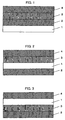
- a molding film 1 a dry laminate of a 100 ⁇ m-thick unstretched polyethylene terephthalate film (manufactured by Toray Industries, Inc., FL10), coated with a urethane-based adhesive (TR-7233, manufactured by Shin-Nakamura Chemical Co., Ltd.) to a post-drying thickness of 0.5 ⁇ m using a bar coater, and a 40 ⁇ m-thick unstretched polypropylene film (manufactured by Mitsui Chemicals Tohcello Inc., SC) was used.
- a urethane-based adhesive TR-7233, manufactured by Shin-Nakamura Chemical Co., Ltd.
- the molding film was coated with a water dispersion of a polyurethane resin (U1-1) as described above to a thickness equivalent to a post-drying thickness of 40 ⁇ m on the unstretched polypropylene film side using an applicator and then dried at 80°C for 10 minutes, with a protective layer 2 formed in the process.
- the protective layer 2 formed on the molding film 1 was coated with a paint (manufactured by Nippon Bee Chemical, R2325) for forming a color layer 3 to a thickness equivalent to a post-drying thickness of 40 ⁇ m using an applicator and then dried at 80°C for 10 minutes, with a color layer 3 formed in the process.
- the color layer 3 formed on the protective layer 2, itself formed on the molding film 1 was coated with a paint (manufactured by Toyobo Co., Ltd., M-28) for forming an adhesive layer 4 to a thickness equivalent to a post-drying thickness of 20 ⁇ m using an applicator and then dried at 80°C for 10 minutes, with an adhesive layer 4 formed in the process.
- a paint manufactured by Toyobo Co., Ltd., M-28
- a protective layer 2 was formed on the molding film 1 using the same method as working example 1, except that a 100 ⁇ m-thick unstretched polyethylene terephthalate film (manufactured by Toray Industries, Inc., FL10) was just used as the molding film 1.
- a color layer 3 was then formed using the same method as working example 1, except that the color layer 3 was formed on the side of the molding film 1 opposite to the protective layer 2.
- an adhesive layer 4 was formed on the color layer 3 using the same method as working example 1. In this manner, a multilayer film for decorative molding as illustrated in Fig. 2 was obtained.
- a color layer 3 was formed on the molding film 1 using the same molding film 1 as working example 2 and under the same color layer coating conditions as working example 2.
- a protective layer 2 was then formed on the color layer 3, itself formed on the molding film 1, under the same coating conditions as working example 1.
- an adhesive layer 4 was formed using the same method as working example 1, except that the adhesive layer 4 was formed on the molding film 1 on the side opposite to the protective layer 2, which had been formed on the color layer 3, itself formed on the molding film 1. In this manner, a multilayer film for decorative molding as illustrated in Fig. 3 was obtained.
- a water dispersion of a polyurethane resin (U1-2) having a silanol group in each molecule was obtained in the same manner as working example 1, except that the types and amounts used of the input materials were changed to those specified in Table 1.
- a multilayer film for decorative molding was then obtained using the same method as working example 1, except that the polyurethane resin (U1-2) was used.
- the reaction product was taken out and, after being squeezed flat using a compression press heated to 180°C, cut using an angular pelletizer [manufactured by Horai Co., Ltd.], with a polyurethane resin obtained as a result.
- 289 parts of the obtained polyurethane resin, 14 parts of 25 mass% aqueous ammonia as a neutralization agent and 660.5 parts of water were placed in a temperature-controllable pressure-resistant vessel and subjected to a dispersion treatment at 150°C and 12,000 ⁇ m for 3 minutes using a Clearmix dispersing machine [manufactured by M Techniqute Co. Ltd.], with a water dispersion of a polyurethane resin obtained.
- a water dispersion containing one of the polyurethane resins (U2-3) to (U2-5) having a carboxyl group and a salt thereof in each molecule and 3-glycidoxy propyl silane triol was obtained in the same manner as working example 4, except that the types and amounts used of the input materials were changed to those specified in Table 1.
- a multilayer film for decorative molding was then obtained using the same method as working example 1, except that a water dispersion containing one of the polyurethane resins (U2-3) to (U2-5) having a carboxyl group and a salt thereof in each molecule and 3-glycidoxy propyl silane triol was used.
- a water dispersion containing a polyurethane resin (U2'-1) having a carboxyl group and a salt thereof in each molecule and 3-glycidoxy propyl silane triol was obtained in the same manner as working example 6,except that the types and amounts used of the input materials were changed to those specified in Table 1.
- a multilayer film for decorative molding was then obtained using the same method as working example 1, except that a water dispersion containing a polyurethane resin (U2'-1) having a carboxyl group and a salt thereof in each molecule and 3-glycidoxy propyl silane triol was used.
- a water dispersion of a polyurethane resin (U2'-2) having a carboxyl group and a salt thereof in each molecule was obtained in the same manner as working example 6, except that the types and amounts used of the input materials were changed to those specified in Table 1 and that a compound (X) was not added.
- a multilayer film for decorative molding was then obtained using the same method as working example 1, except that a water dispersion of the polyurethane resin (U2'-2) was used.
- a multilayer film for decorative molding was obtained using the same method as working example 2, except that the methyl ethyl ketone solution containing a polyurethane resin (U2-6) containing a carboxyl group in each molecule and 3-glycidoxy propyl trimethoxysilane as obtained in working example 10 was used.
- a multilayer film for decorative molding was obtained using the same method as working example 3, except that the methyl ethyl ketone solution containing a polyurethane resin (U2-6) containing a carboxyl group in each molecule and 3-glycidoxy propyl trimethoxysilane as obtained in working example 10 was used.
- a methyl ethyl ketone solution containing one of the polyurethane resins (U2-7) to (U2-16) having a carboxyl group in each molecule and 3-glycidoxy propyl trimethoxysilane or 3-glycidoxy propyl methyl dimethoxy silane was obtained in the same manner as working example 8, except that the types and amounts used of the input materials were changed to those specified in Table 2.
- a multilayer film for decorative molding was then obtained using the same method as working example 1, except that a methyl ethyl ketone solution containing one of the polyurethane resins (U2-7) to (U2-16) having a carboxyl group in each molecule and 3-glycidoxy propyl trimethoxysilane or 3-glycidoxy propyl methyl dimethoxy silane was used.
- a methyl ethyl ketone solution containing a polyurethane resin (U2'-3) having a carboxyl group in each molecule and 3-glycidoxy propyl trimethoxysilane was obtained in the same manner as working example 8, except that the types and amounts used of the input materials were changed to those specified in Table 2.
- a multilayer film for decorative molding was then obtained using the same method as working example 1, except that a methyl ethyl ketone solution containing a polyurethane resin (U2'-3) having a carboxyl group in each molecule and 3-glycidoxy propyl trimethoxysilane was used.
- a methyl ethyl ketone solution containing a polyurethane resin (U2'-4) having a carboxyl group in each molecule was obtained in the same manner as working example 8, except that the types and amounts used of the input materials were changed to those specified in Table 2 and that a compound (X) was not added.
- a multilayer film for decorative molding was then obtained using the same method as working example 1, except that a polyurethane resin (U2'-4) was used.
- a molding film [a dry laminate of a 100 ⁇ m-thick unstretched polyethylene terephthalate film (manufactured by Toray Industries, Inc., FL10), coated with a urethane-based adhesive (TR-7233, manufactured by Shin-Nakamura Chemical Co., Ltd.) to a post-drying thickness of 0.5 ⁇ m using a bar coater, and a 40 ⁇ m-thick unstretched polypropylene film (manufactured by Mitsui Chemicals Tohcello Inc., SC)] was coated with the sample to a thickness equivalent to a post-drying thickness of 40 ⁇ m using an applicator and dried at 80°C for 10 minutes, and a dried film of a polyurethane resin or polyurethane resin composition was obtained as a result.
- a urethane-based adhesive TR-7233, manufactured by Shin-Nakamura Chemical Co., Ltd.
- the dried film of a polyurethane resin or polyurethane resin composition was cut into a piece 10 mm wide and 50 mm long for use as a test specimen, which was then set on a tensile tester (manufactured by Shimazu, 100kNG) in such a manner that the tensile chucks are 20mm apart and subjected to a tensile test at a tension speed of 200mm/min. More specifically, the tensile test took place in a thermostatic oven set to a temperature of 100°C after preheating the specimen for 60 seconds therein, and the percentage elongation (%) of the specimen at the rupture point was measured. The larger the rupture elongation, the more a film excels in mold-conformability when used as the protective layer of a multilayer film for decorative molding.
- a molding film [a dry laminate of a 100 ⁇ m-thick unstretched polyethylene terephthalate film (manufactured by Toray Industries, Inc., FL10), coated with a urethane-based adhesive (TR-7233, manufactured by Shin-Nakamura Chemical Co., Ltd.) to a post-drying thickness of 0.5 ⁇ m using a bar coater, and a 40 ⁇ m-thick unstretched polypropylene film (manufactured by Mitsui Chemicals Tohcello Inc., SC)] was coated with the sample to a thickness equivalent to a post-drying thickness of 40 ⁇ m using an applicator and dried at 90°C for 10 minutes, and a dried film of a polyurethane resin or polyurethane resin composition was obtained as a result.
- a urethane-based adhesive TR-7233, manufactured by Shin-Nakamura Chemical Co., Ltd.
- a steel plate was coated with the sample to a thickness equivalent to a post-drying thickness of 40 ⁇ m using an applicator and dried at 90°C for 10 minutes, and a test specimen having a side covered with a dried film of a polyurethane resin or polyurethane resin composition was obtained as a result.
- a drop of deionized water was then applied to the dried film surface, and the application site was covered with a 5cm diameter petri dish to prevent the drop from evaporating. After the test piece was left to stand at 25°C for 24 hours, the drop was removed by absorbing it with cloth, and the appearance of the dried film was evaluated by visual observation using the criteria below. The less change in appearance the dried film exhibits after the test, the more the dried film excels in water resistance when used as the protective layer of a multilayer film for decorative molding.
- a steel plate was coated with the sample to a thickness equivalent to a post-drying thickness of 40 ⁇ m using an applicator and dried at 90°C for 10 minutes, and a test specimen having a side covered with a dried film of a polyurethane resin or polyurethane resin composition was obtained as a result.
- a drop of an aqueous solution of 0.1N sodium hydroxide was then applied to the dried film surface, and the application site was covered with a 5cm diameter petri dish to prevent the drop from evaporating. After the test piece was left to stand at 25°C for 24 hours, the drop was removed by absorbing it with cloth, and the appearance of the dried film was evaluated by visual observation using the criteria below. The less change in appearance the dried film exhibits after the test, the more the dried film excels in chemical resistance when used as the protective layer of a multilayer film for decorative molding.
- a decorative molded body was prepared by setting a multilayer film for decorative molding on the decorable object in such a manner that the adhesive layer-side of the film faces the largest face of the object and then molding it using a TOM molding machine (manufactured by Fu-se Vacuum Forming, Ltd., NGF0406-T) under the following conditions:
- condition A and condition B Two draw ratio conditions, condition A and condition B, were implemented for the decorating film by adjusting the depth of the box-shaped recess of the TOM molding machine. More specifically, conditions A and B were 15mm and 85mm, respectively, in terms of the distance from the position of the set film to the floor of the box-shaped recess.
- a plate-shaped resin molding measuring 250mm long ⁇ 100mm wide ⁇ 3mm thick, made of a polyolefin resin (TSOP GP6BS, manufactured by Prime Polymer Co., Ltd.), was used.
- the protective layer-side scratch resistance of the decorative molded body was evaluated in accordance with JIS K 5600-5-5: 2008. With working examples 2,3,11 and 12, however, the protective layer-side scratch resistance of the decorative molded body was evaluated without peeling the molding film. More specifically, evaluations took place under the following conditions:
- the multilayer film for decorative molding of the present invention can be advantageously used when decorating automobile parts and electrical appliances, but applications are not limited thereto. Namely, it can also be advantageously applied to other fields, such as IT equipment, including mobile phones, notebook computers and the like, where, as well as scratch resistance, durability and other functionalities, esthetic design characteristics are required.
Landscapes
- Chemical & Material Sciences (AREA)
- Organic Chemistry (AREA)
- Chemical Kinetics & Catalysis (AREA)
- Polymers & Plastics (AREA)
- Health & Medical Sciences (AREA)
- Medicinal Chemistry (AREA)
- Engineering & Computer Science (AREA)
- Wood Science & Technology (AREA)
- Materials Engineering (AREA)
- Life Sciences & Earth Sciences (AREA)
- Manufacturing & Machinery (AREA)
- Laminated Bodies (AREA)
- Polyurethanes Or Polyureas (AREA)
Claims (19)
- Mehrschichtige Folie zur dekorativen Formung, die eine mehrschichtige Struktur aufweist, welche eine Schutzschicht, eine Farbschicht und eine Klebeschicht, die in dieser Reihenfolge angeordnet sind, umfasst, wobei eine Formungsfolie zwischen entweder den angrenzenden Paaren von Schichten oder auf der gegenüberliegenden Oberfläche der Schutzschicht zur Farbschicht angeordnet ist, dadurch gekennzeichnet, dass die Schutzschicht ein Polyurethanharz (U) enthält, das aus mindestens einer aktiven Wasserstoffkomponente (A) und einer organischen Isocyanatkomponente (B) gebildet ist und ein Polycarbonatskelett mit einer alicyclischen Kohlenwasserstoffgruppe aufweist, und dass die Bedingung (1) und/oder die Bedingung (2) erfüllt ist:Bedingung (1): das Polyurethanharz (U) ist ein Polyurethanharz (U1), das eine Alkoxysilylgruppe und/oder eine Silanolgruppe in einem Molekül aufweist,Bedingung (2): die Schutzschicht enthält eine Verbindung (X), die eine Glycidyletherruppe und eine Alkoxysilylgruppe und/oder Silanolgruppe aufweist, und das Polyurethanharz (U) ist ein Polyurethanharz (U2), das eine Aminogruppe oder eine Carboxylgruppe und/oder ein Salz davon aufweist.
- Mehrschichtige Folie zur dekorativen Formung nach Anspruch 1, wobei die aktive Wasserstoffkomponente (A) ein Polycarbonatpolyol (a1) enthält, das eine alicyclische Kohlenwasserstoffgruppe aufweist.
- Mehrschichtige Folie zur dekorativen Formung nach Anspruch 2, wobei das Zahlenmittel des Molekulargewichts von dem Polycarbonatpolyol (a1) 500 bis 5000 beträgt und der Masseanteil der alicyclischen Kohlenwasserstoffgruppe, die in dem Polycarbonatpolyol (a1) enthalten ist, 1 bis 30 Masse-% in Bezug auf die kombinierte Masse von der aktiven Wasserstoffkomponente (A) und der organischen Isocyanatkomponente (B) beträgt.
- Mehrschichtige Folie zur dekorativen Formung nach einem der Ansprüche 1 bis 3, wobei der kombinierte Masseanteil von den Si-Atomen, die der Alkoxysilylgruppe und/oder der Silanolgruppe zuzuschreiben sind, welche in dem Polyurethanharz (U) enthalten sind, und den Si-Atomen, die der Alkoxysilylgruppe und/oder der Silanolgruppe zuzuschreiben sind, welche in der Verbindung (X) enthalten sind, 0,05 bis 2,0 Masse-% in Bezug auf die kombinierte Masse von der aktiven Wasserstoffkomponente (A) und der organischen Isocyanatkomponente (B) beträgt.
- Mehrschichtige Folie zur dekorativen Formung nach einem der Ansprüche 1 bis 4, wobei die organische Isocyanatkomponente (B) ein alicyclisches Polyisocyanat (b1) mit einer Kohlenstoffzahl von 6 bis 18 und/oder ein aliphatisches Polyisocyanat (b2) mit einer Kohlenstoffzahl von 4 bis 22 umfasst.
- Mehrschichtige Folie zur dekorativen Formung nach einem der Ansprüche 1 bis 4, wobei die organische Isocyanatkomponente (B) Isophorondiisocyanat und/oder 4,4-Dicyclohexylmethandiisocyanat umfasst.
- Polyurethanharz für eine mehrschichtige Folie zur dekorativen Formung, das aus mindestens einer aktiven Wasserstoffkomponente (A) und einer organischen Isocyanatkomponente (B) gebildet ist und ein Polycarbonatskelett mit einer alicyclischen Kohlenwasserstoffgruppe aufweist und eine Alkoxysilylgruppe und/oder eine Silanolgruppe aufweist.
- Polyurethanharz nach Anspruch 7, wobei die aktive Wasserstoffkomponente (A) ein Polycarbonatpolyol (a1) enthält, das eine alicyclische Kohlenwasserstoffgruppe aufweist.
- Polyurethanharz nach Anspruch 8, wobei das Zahlenmittel des Molekulargewichts von dem Polycarbonatpolyol (a1) 500 bis 5000 beträgt und der Masseanteil der alicyclischen Kohlenwasserstoffgruppe, die in dem Polycarbonatpolyol (a1) enthalten ist, 1 bis 30 Masse-% in Bezug auf die kombinierte Masse von der aktiven Wasserstoffkomponente (A) und der organischen Isocyanatkomponente (B) beträgt.
- Polyurethanharz nach einem der Ansprüche 7 bis 9, wobei der Masseanteil von den Si-Atomen, die der Alkoxysilylgruppe und/oder der Silanolgruppe zuzuschreiben sind, welche in einem Polyurethanharz (U1) enthalten sind, 0,05 bis 2,0 Masse-% in Bezug auf die kombinierte Masse von der aktiven Wasserstoffkomponente (A) und der organischen Isocyanat-komponente (B) beträgt.
- Polyurethanharz nach einem der Ansprüche 7 bis 10, wobei die organische Isocyanatkomponente (B) ein alicyclisches Polyisocyanat (b1) mit einer Kohlenstoffzahl von 6 bis 18 und/oder ein aliphatisches Polyisocyanat (b2) mit einer Kohlenstoffzahl von 4 bis 22 umfasst.
- Polyurethanharz nach einem der Ansprüche 7 bis 10, wobei die organische Isocyanatkomponente (B) Isophorondiisocyanat und/oder 4,4-Dicyclohexyl-methandiisocyanat umfasst.
- Polyurethanharzzusammensetzung für eine mehrschichtige Folie zur dekorativen Formung, die aus mindestens einer aktiven Wasserstoffkomponente (A) und einer organischen Isocyanatkomponente (B) gebildet ist, ein Polycarbonatskelett mit einer alicyclischen Kohlenwasserstoffgruppe aufweist, ein Polyurethanharz (U2) enthält, das eine Aminogruppe oder eine Carboxylgruppe und/oder ein Salz davon aufweist, und eine Verbindung (X) enthält, die eine Glycidyletherruppe und eine Alkoxysilylgruppe und/oder eine Silanolgruppe aufweist.
- Polyurethanharzzusammensetzung nach Anspruch 13, wobei die aktive Wasserstoffkomponente (A) ein Polycarbonatpolyol (a1) aufweist, das eine alicyclische Kohlenwasserstoffgruppe aufweist.
- Polyurethanharzzusammensetzung nach Anspruch 14, wobei das Zahlenmittel des Molekulargewichts von dem Polycarbonatpolyol (a1) 500 bis 5000 beträgt und der Masseanteil der alicyclischen Kohlenwasserstoffgruppe, die in dem Polycarbonatpolyol (a1) enthalten ist, 1 bis 30 Masse-% in Bezug auf die kombinierte Masse von der aktiven Wasserstoffkomponente (A) und der organischen Isocyanatkomponente (B) beträgt.
- Polyurethanharzzusammensetzung nach einem der Ansprüche 13 bis 15, wobei der Masseanteil von den Si-Atomen, die der Alkoxysilylgruppe und/oder der Silanolgruppe zuzuschreiben sind, welche in der Verbbindung (X) enthalten sind, 0,05 bis 2,0 Masse-% in Bezug auf die kombinierte Masse von der aktiven Wasserstoffkomponente (A) und der organischen Isocyanatkomponente (B) beträgt.
- Polyurethanharzzusammensetzung nach einem der Ansprüche 13 bis 16, wobei die organische Isocyanatkomponente (B) ein alicyclisches Polyisocyanat (b1) mit einer Kohlenstoffzahl von 6 bis 18 und/oder ein aliphatisches Polyisocyanat (b2) mit einer Kohlenstoffzahl von 4 bis 22 umfasst.
- Polyurethanharzzusammensetzung nach einem der Ansprüche 13 bis 16, wobei die organische Isocyanatkomponente (B) Isophorondiisocyanat und/oder 4,4-Dicyclohexylmethandiisocyanat umfasst.
- Verfahren zum Herstellen eines dekorativen Formkörpers durch das Binden einer mehrschichtigen Folie zur dekorativen Formung auf ein dekorierbares Objekt, dadurch gekennzeichnet, dass die mehrschichtige Folie zur dekorativen Formung eine mehrschichtige Struktur aufweist, welche eine Schutzschicht, eine Farbschicht und eine Klebeschicht, die in dieser Reihenfolge angeordnet sind, umfasst, wobei eine Formungsfolie zwischen entweder den angrenzenden Paaren von Schichten oder auf der gegenüberliegenden Oberfläche der Schutzschicht zur Farbschicht angeordnet ist, und dass die Schutzschicht ein Polyurethanharz (U) enthält, das aus mindestens einer aktiven Wasserstoffkomponente (A) und einer organischen Isocyanatkomponente (B) gebildet ist und ein Polycarbonatskelett mit einer alicyclischen Kohlenwasserstoffgruppe aufweist, und dass die Bedingung (1) und/oder die Bedingung (2) erfüllt ist:Bedingung (1): das Polyurethanharz (U) weist eine Alkoxysilylgruppe und/oder eine Silanolgruppe in einem Molekül auf,Bedingung (2): die Schutzschicht enthält eine Verbindung (X), die eine Glycidyletherruppe und eine Alkoxysilylgruppe und/oder Silanolgruppe aufweist, und das Polyurethanharz (U) weist eine Carboxylgruppe und/oder ein Salz davon auf.
Applications Claiming Priority (2)
| Application Number | Priority Date | Filing Date | Title |
|---|---|---|---|
| JP2011288235 | 2011-12-28 | ||
| PCT/JP2012/083384 WO2013099829A1 (ja) | 2011-12-28 | 2012-12-25 | 加飾成形用積層フィルム、ポリウレタン樹脂および加飾成形体の製造方法 |
Publications (3)
| Publication Number | Publication Date |
|---|---|
| EP2799236A1 EP2799236A1 (de) | 2014-11-05 |
| EP2799236A4 EP2799236A4 (de) | 2015-08-19 |
| EP2799236B1 true EP2799236B1 (de) | 2016-11-09 |
Family
ID=48697314
Family Applications (1)
| Application Number | Title | Priority Date | Filing Date |
|---|---|---|---|
| EP12861270.2A Active EP2799236B1 (de) | 2011-12-28 | 2012-12-25 | Mehrschichtige folie für eine schmuckform, polyurethanharz und verfahren zur herstellung eines schmuckformkörpers |
Country Status (8)
| Country | Link |
|---|---|
| US (2) | US20140295181A1 (de) |
| EP (1) | EP2799236B1 (de) |
| JP (1) | JP5314216B1 (de) |
| KR (1) | KR102070467B1 (de) |
| CN (1) | CN103998241B (de) |
| MX (1) | MX2014007157A (de) |
| RU (1) | RU2617478C1 (de) |
| WO (1) | WO2013099829A1 (de) |
Families Citing this family (22)
| Publication number | Priority date | Publication date | Assignee | Title |
|---|---|---|---|---|
| US10981371B2 (en) | 2008-01-19 | 2021-04-20 | Entrotech, Inc. | Protected graphics and related methods |
| JP2013151666A (ja) * | 2011-12-28 | 2013-08-08 | Sanyo Chem Ind Ltd | ポリウレタン樹脂 |
| JP6219557B2 (ja) * | 2012-05-16 | 2017-10-25 | スリーエム イノベイティブ プロパティズ カンパニー | 装飾シート及び構造体 |
| WO2014196516A1 (ja) * | 2013-06-04 | 2014-12-11 | 東レ株式会社 | 装飾成形用フィルムおよび装飾成形体 |
| JP6129681B2 (ja) * | 2013-08-09 | 2017-05-17 | 旭化成株式会社 | ポリカーボネートジオール、熱可塑性ポリウレタン、コーティング組成物及び塗膜 |
| EP2848404B1 (de) * | 2013-09-13 | 2017-11-29 | Faurecia Innenraum Systeme GmbH | Rollladen und lagerfach mit besagtem rollladen |
| JP6537248B2 (ja) * | 2014-10-31 | 2019-07-03 | 株式会社康井精機 | 機能性物質薄膜素材の製造方法並びに機能性物質薄膜素材およびその積層体 |
| JP5821102B1 (ja) | 2015-01-29 | 2015-11-24 | 株式会社プロト技研 | 熱硬化性樹脂成形品及びその製造方法 |
| EP3426710B1 (de) * | 2016-03-10 | 2022-09-28 | Momentive Performance Materials Inc. | Feuchtigkeitshärtendes silyliertes harz aus polycarbonatdiol und beschichtung, dichtungsmittel und haftzusammensetzungen damit |
| WO2018044883A1 (en) * | 2016-08-29 | 2018-03-08 | Invista North America S.A R.L. | Multifunctional polyamine-based compounds |
| WO2018057379A1 (en) | 2016-09-20 | 2018-03-29 | Aero Advanced Paint Technology, Inc. | Paint film appliques with reduced defects, articles, and methods |
| CN110234707B (zh) * | 2017-03-17 | 2021-10-08 | 株式会社Lg化学 | 热塑性聚氨酯膜及其制备方法 |
| JP6423947B2 (ja) * | 2017-12-21 | 2018-11-14 | 日本ペイント・オートモーティブコーティングス株式会社 | 3次元成型品加飾用積層フィルムのクリヤー塗膜層形成用塗料組成物 |
| WO2020167757A1 (en) * | 2019-02-15 | 2020-08-20 | Avery Dennison Corporation | Polyurethane synthesis |
| KR102788734B1 (ko) * | 2019-07-02 | 2025-04-01 | 산요가세이고교 가부시키가이샤 | 복층 필름 |
| JP7369559B2 (ja) * | 2019-07-30 | 2023-10-26 | トヨタ自動車株式会社 | 3次元成型品加飾用積層フィルム |
| JP2021020414A (ja) * | 2019-07-30 | 2021-02-18 | トヨタ車体株式会社 | 3次元成型品加飾用積層フィルム |
| KR102097617B1 (ko) * | 2019-09-18 | 2020-04-10 | 주식회사 영우 | 곡면부에 대한 접착성이 우수한 데코레이션 필름 |
| CN110698622A (zh) * | 2019-10-12 | 2020-01-17 | 北京长润化工有限公司 | 酮亚胺潜伏固化剂和具有其的反应型聚氨酯热熔胶及应用 |
| JP2021088147A (ja) * | 2019-12-05 | 2021-06-10 | スリーエム イノベイティブ プロパティズ カンパニー | 装飾フィルム及びそれを用いた装飾物品、並びに表面保護組成物 |
| JP6868083B1 (ja) * | 2019-12-06 | 2021-05-12 | 日本マタイ株式会社 | 多層フィルム |
| TWI757148B (zh) * | 2019-12-13 | 2022-03-01 | 詮達化學股份有限公司 | 一種具有高拉伸強度的熱可塑性聚氨酯、其製備配方及製造方法 |
Family Cites Families (24)
| Publication number | Priority date | Publication date | Assignee | Title |
|---|---|---|---|---|
| SU1111880A1 (ru) * | 1983-01-26 | 1984-09-07 | Институт химии высокомолекулярных соединений АН УССР | Декоративный пленочный материал |
| JPH024736A (ja) * | 1988-06-22 | 1990-01-09 | Hitachi Maxell Ltd | ポリカーボネートポリオール、芳香族ポリカーボネートポリウレタン樹脂、コーティング材、キャストフィルム、磁気記録媒体 |
| JP4712199B2 (ja) * | 2001-02-02 | 2011-06-29 | 中国塗料株式会社 | 帯電防止用塗料組成物、その被膜および帯電防止方法 |
| JP2002226755A (ja) * | 2001-02-06 | 2002-08-14 | Daicel Chem Ind Ltd | 印刷インキ組成物 |
| JP4712217B2 (ja) * | 2001-04-26 | 2011-06-29 | 中国塗料株式会社 | 帯電防止用塗料組成物、その被膜および帯電防止方法 |
| JP3926635B2 (ja) | 2002-01-24 | 2007-06-06 | 三菱レイヨン株式会社 | 転写シート |
| JP4179008B2 (ja) | 2002-03-28 | 2008-11-12 | Dic株式会社 | ポリウレタンエマルジョンの製造法 |
| JP3984924B2 (ja) | 2003-03-31 | 2007-10-03 | 日本ビー・ケミカル株式会社 | メタル調積層フィルム及びそれを用いた加飾成形体 |
| US7238745B2 (en) * | 2003-12-15 | 2007-07-03 | Bayer Materialscience Llc | Aqueous polyurethane/urea dispersions containing alkoxysilane groups |
| EP1728622A4 (de) * | 2004-03-25 | 2011-06-29 | Mitsubishi Plastics Inc | Laminate mit gassperreigenschaft |
| JP2006021531A (ja) * | 2004-06-11 | 2006-01-26 | Mitsubishi Chem Mkv Co | 積層体 |
| US8524838B2 (en) * | 2004-09-21 | 2013-09-03 | Showa Denko K.K. | Heat-curable urethane resin composition |
| TW200643059A (en) * | 2005-04-06 | 2006-12-16 | Showa Denko Kk | Polymer of polycarbonate diol having an alicyclic structure and production process thereof |
| CN101193749B (zh) * | 2005-06-14 | 2011-08-31 | 旭硝子株式会社 | 含氟树脂多层层叠体 |
| US20090176103A1 (en) * | 2006-04-13 | 2009-07-09 | Takashi Arai | Gas Barrier Film |
| JP4799282B2 (ja) * | 2006-06-09 | 2011-10-26 | コニシ株式会社 | シリル化ウレタン系水性組成物 |
| JP2009235257A (ja) * | 2008-03-27 | 2009-10-15 | Konishi Co Ltd | 水性シリル化ウレタン系樹脂組成物 |
| WO2009144980A1 (ja) * | 2008-05-26 | 2009-12-03 | Dic株式会社 | コーティング剤及びその製造方法 |
| CN102089342B (zh) * | 2008-07-11 | 2013-04-10 | 宇部兴产株式会社 | 水性聚氨酯树脂分散体、其制造方法及含有所述分散体的涂料组合物 |
| JP2010105385A (ja) * | 2008-09-30 | 2010-05-13 | Toyoda Gosei Co Ltd | 化粧シート及び化粧成形品 |
| JP4480186B2 (ja) * | 2009-01-19 | 2010-06-16 | 大日本印刷株式会社 | 転写シート |
| CN102405243B (zh) * | 2009-04-22 | 2014-01-15 | 三洋化成工业株式会社 | 聚氨酯树脂水分散体 |
| JP5662651B2 (ja) * | 2009-05-01 | 2015-02-04 | スリーエム イノベイティブ プロパティズ カンパニー | 表面保護フィルム及びそれを備える多層フィルム |
| US8758896B2 (en) * | 2010-07-02 | 2014-06-24 | Kansai Paint Co., Ltd. | Method for forming multilayer coating film |
-
2012
- 2012-12-25 EP EP12861270.2A patent/EP2799236B1/de active Active
- 2012-12-25 CN CN201280061801.8A patent/CN103998241B/zh active Active
- 2012-12-25 WO PCT/JP2012/083384 patent/WO2013099829A1/ja not_active Ceased
- 2012-12-25 MX MX2014007157A patent/MX2014007157A/es unknown
- 2012-12-25 US US14/362,277 patent/US20140295181A1/en not_active Abandoned
- 2012-12-25 RU RU2014123712A patent/RU2617478C1/ru not_active IP Right Cessation
- 2012-12-25 JP JP2013506374A patent/JP5314216B1/ja not_active Expired - Fee Related
- 2012-12-25 KR KR1020147014632A patent/KR102070467B1/ko not_active Expired - Fee Related
-
2017
- 2017-04-05 US US15/479,436 patent/US10000667B2/en active Active
Also Published As
| Publication number | Publication date |
|---|---|
| EP2799236A4 (de) | 2015-08-19 |
| KR20140110846A (ko) | 2014-09-17 |
| WO2013099829A1 (ja) | 2013-07-04 |
| US10000667B2 (en) | 2018-06-19 |
| EP2799236A1 (de) | 2014-11-05 |
| CN103998241A (zh) | 2014-08-20 |
| US20140295181A1 (en) | 2014-10-02 |
| KR102070467B1 (ko) | 2020-01-29 |
| US20170204298A1 (en) | 2017-07-20 |
| MX2014007157A (es) | 2014-11-26 |
| CN103998241B (zh) | 2016-11-09 |
| RU2617478C1 (ru) | 2017-04-25 |
| JP5314216B1 (ja) | 2013-10-16 |
| JPWO2013099829A1 (ja) | 2015-05-07 |
Similar Documents
| Publication | Publication Date | Title |
|---|---|---|
| EP2799236B1 (de) | Mehrschichtige folie für eine schmuckform, polyurethanharz und verfahren zur herstellung eines schmuckformkörpers | |
| CN102317386B (zh) | 水性涂料组合物及形成多层涂膜的方法 | |
| JP5399079B2 (ja) | 水性の多成分系、その製造法およびその使用 | |
| EP3429763A1 (de) | Mehrlagige beschichtungen und verfahren zur herstellung davon | |
| CN104684953A (zh) | 包括聚氨酯层和结构体的装饰片材 | |
| CN102026808A (zh) | 漆膜复合物及其制备和使用方法 | |
| CN1789350B (zh) | 氨基树脂水分散体以及热固性水性涂料组合物 | |
| KR20110119694A (ko) | 백킹 필름을 위한 2-성분 폴리우레탄 도료 | |
| CN114521209B (zh) | 低温固化涂料组合物 | |
| WO2005121209A1 (ja) | ポリエステル樹脂及び熱硬化性水性塗料組成物 | |
| EP1482014B1 (de) | Verfahren zur Bildung eines Beschichtungsfilms und beschichteter Gegenstand | |
| JP2016000770A (ja) | ベース塗料組成物 | |
| JP2003342344A (ja) | ポリウレタン樹脂 | |
| JP2024068052A (ja) | 積層体、及び包装体 | |
| KR20170130566A (ko) | 수계 코팅 조성물, 및 관련 제품 및 공정 | |
| JP2023144899A (ja) | 包装材、及びその製造方法 | |
| WO2002057332A1 (en) | Resin composition, sheet obtained therefrom, process for producing sheet, and formed object | |
| JP2019059864A (ja) | 水性ポリウレタン樹脂分散体及びその使用 | |
| JP2019059863A (ja) | 水性ポリウレタン樹脂分散体及びその使用 | |
| JP2004154625A (ja) | 塗装方法 | |
| JP2017177653A (ja) | 積層フィルム | |
| JP4600386B2 (ja) | 複層塗膜、複層塗膜の塗装方法、及び複層塗膜で塗装された自動車 | |
| KR101786329B1 (ko) | 내스크래치성이 향상된 가죽질감을 구현하는 2 코트 도료 조성물 및 이를 이용한 도막 형성 방법 | |
| JP2017061136A (ja) | 成形用積層フィルム | |
| JP2015223765A (ja) | 成型体の修復方法 |
Legal Events
| Date | Code | Title | Description |
|---|---|---|---|
| PUAI | Public reference made under article 153(3) epc to a published international application that has entered the european phase |
Free format text: ORIGINAL CODE: 0009012 |
|
| 17P | Request for examination filed |
Effective date: 20140530 |
|
| AK | Designated contracting states |
Kind code of ref document: A1 Designated state(s): AL AT BE BG CH CY CZ DE DK EE ES FI FR GB GR HR HU IE IS IT LI LT LU LV MC MK MT NL NO PL PT RO RS SE SI SK SM TR |
|
| DAX | Request for extension of the european patent (deleted) | ||
| RA4 | Supplementary search report drawn up and despatched (corrected) |
Effective date: 20150721 |
|
| RIC1 | Information provided on ipc code assigned before grant |
Ipc: C08G 18/32 20060101ALI20150715BHEP Ipc: B32B 27/40 20060101AFI20150715BHEP Ipc: C08G 18/44 20060101ALI20150715BHEP Ipc: C09D 175/06 20060101ALI20150715BHEP Ipc: C08G 18/75 20060101ALI20150715BHEP Ipc: C08G 18/08 20060101ALI20150715BHEP Ipc: C08G 18/12 20060101ALI20150715BHEP Ipc: C08G 18/66 20060101ALI20150715BHEP |
|
| GRAP | Despatch of communication of intention to grant a patent |
Free format text: ORIGINAL CODE: EPIDOSNIGR1 |
|
| GRAJ | Information related to disapproval of communication of intention to grant by the applicant or resumption of examination proceedings by the epo deleted |
Free format text: ORIGINAL CODE: EPIDOSDIGR1 |
|
| GRAP | Despatch of communication of intention to grant a patent |
Free format text: ORIGINAL CODE: EPIDOSNIGR1 |
|
| INTG | Intention to grant announced |
Effective date: 20160418 |
|
| INTG | Intention to grant announced |
Effective date: 20160428 |
|
| GRAS | Grant fee paid |
Free format text: ORIGINAL CODE: EPIDOSNIGR3 |
|
| GRAA | (expected) grant |
Free format text: ORIGINAL CODE: 0009210 |
|
| RAP1 | Party data changed (applicant data changed or rights of an application transferred) |
Owner name: TORAY INDUSTRIES, INC. Owner name: SANYO CHEMICAL INDUSTRIES, LTD. |
|
| AK | Designated contracting states |
Kind code of ref document: B1 Designated state(s): AL AT BE BG CH CY CZ DE DK EE ES FI FR GB GR HR HU IE IS IT LI LT LU LV MC MK MT NL NO PL PT RO RS SE SI SK SM TR |
|
| REG | Reference to a national code |
Ref country code: GB Ref legal event code: FG4D |
|
| REG | Reference to a national code |
Ref country code: AT Ref legal event code: REF Ref document number: 843522 Country of ref document: AT Kind code of ref document: T Effective date: 20161115 Ref country code: CH Ref legal event code: EP |
|
| REG | Reference to a national code |
Ref country code: IE Ref legal event code: FG4D |
|
| REG | Reference to a national code |
Ref country code: FR Ref legal event code: PLFP Year of fee payment: 5 |
|
| REG | Reference to a national code |
Ref country code: DE Ref legal event code: R096 Ref document number: 602012025300 Country of ref document: DE |
|
| PG25 | Lapsed in a contracting state [announced via postgrant information from national office to epo] |
Ref country code: LV Free format text: LAPSE BECAUSE OF FAILURE TO SUBMIT A TRANSLATION OF THE DESCRIPTION OR TO PAY THE FEE WITHIN THE PRESCRIBED TIME-LIMIT Effective date: 20161109 |
|
| REG | Reference to a national code |
Ref country code: LT Ref legal event code: MG4D |
|
| REG | Reference to a national code |
Ref country code: NL Ref legal event code: MP Effective date: 20161109 |
|
| REG | Reference to a national code |
Ref country code: AT Ref legal event code: MK05 Ref document number: 843522 Country of ref document: AT Kind code of ref document: T Effective date: 20161109 |
|
| PG25 | Lapsed in a contracting state [announced via postgrant information from national office to epo] |
Ref country code: NO Free format text: LAPSE BECAUSE OF FAILURE TO SUBMIT A TRANSLATION OF THE DESCRIPTION OR TO PAY THE FEE WITHIN THE PRESCRIBED TIME-LIMIT Effective date: 20170209 Ref country code: NL Free format text: LAPSE BECAUSE OF FAILURE TO SUBMIT A TRANSLATION OF THE DESCRIPTION OR TO PAY THE FEE WITHIN THE PRESCRIBED TIME-LIMIT Effective date: 20161109 Ref country code: LT Free format text: LAPSE BECAUSE OF FAILURE TO SUBMIT A TRANSLATION OF THE DESCRIPTION OR TO PAY THE FEE WITHIN THE PRESCRIBED TIME-LIMIT Effective date: 20161109 Ref country code: GR Free format text: LAPSE BECAUSE OF FAILURE TO SUBMIT A TRANSLATION OF THE DESCRIPTION OR TO PAY THE FEE WITHIN THE PRESCRIBED TIME-LIMIT Effective date: 20170210 Ref country code: SE Free format text: LAPSE BECAUSE OF FAILURE TO SUBMIT A TRANSLATION OF THE DESCRIPTION OR TO PAY THE FEE WITHIN THE PRESCRIBED TIME-LIMIT Effective date: 20161109 |
|
| PG25 | Lapsed in a contracting state [announced via postgrant information from national office to epo] |
Ref country code: IS Free format text: LAPSE BECAUSE OF FAILURE TO SUBMIT A TRANSLATION OF THE DESCRIPTION OR TO PAY THE FEE WITHIN THE PRESCRIBED TIME-LIMIT Effective date: 20170309 Ref country code: BE Free format text: LAPSE BECAUSE OF NON-PAYMENT OF DUE FEES Effective date: 20161231 Ref country code: PL Free format text: LAPSE BECAUSE OF FAILURE TO SUBMIT A TRANSLATION OF THE DESCRIPTION OR TO PAY THE FEE WITHIN THE PRESCRIBED TIME-LIMIT Effective date: 20161109 Ref country code: HR Free format text: LAPSE BECAUSE OF FAILURE TO SUBMIT A TRANSLATION OF THE DESCRIPTION OR TO PAY THE FEE WITHIN THE PRESCRIBED TIME-LIMIT Effective date: 20161109 Ref country code: FI Free format text: LAPSE BECAUSE OF FAILURE TO SUBMIT A TRANSLATION OF THE DESCRIPTION OR TO PAY THE FEE WITHIN THE PRESCRIBED TIME-LIMIT Effective date: 20161109 Ref country code: AT Free format text: LAPSE BECAUSE OF FAILURE TO SUBMIT A TRANSLATION OF THE DESCRIPTION OR TO PAY THE FEE WITHIN THE PRESCRIBED TIME-LIMIT Effective date: 20161109 Ref country code: ES Free format text: LAPSE BECAUSE OF FAILURE TO SUBMIT A TRANSLATION OF THE DESCRIPTION OR TO PAY THE FEE WITHIN THE PRESCRIBED TIME-LIMIT Effective date: 20161109 Ref country code: RS Free format text: LAPSE BECAUSE OF FAILURE TO SUBMIT A TRANSLATION OF THE DESCRIPTION OR TO PAY THE FEE WITHIN THE PRESCRIBED TIME-LIMIT Effective date: 20161109 Ref country code: PT Free format text: LAPSE BECAUSE OF FAILURE TO SUBMIT A TRANSLATION OF THE DESCRIPTION OR TO PAY THE FEE WITHIN THE PRESCRIBED TIME-LIMIT Effective date: 20170309 |
|
| PG25 | Lapsed in a contracting state [announced via postgrant information from national office to epo] |
Ref country code: DK Free format text: LAPSE BECAUSE OF FAILURE TO SUBMIT A TRANSLATION OF THE DESCRIPTION OR TO PAY THE FEE WITHIN THE PRESCRIBED TIME-LIMIT Effective date: 20161109 Ref country code: EE Free format text: LAPSE BECAUSE OF FAILURE TO SUBMIT A TRANSLATION OF THE DESCRIPTION OR TO PAY THE FEE WITHIN THE PRESCRIBED TIME-LIMIT Effective date: 20161109 Ref country code: SK Free format text: LAPSE BECAUSE OF FAILURE TO SUBMIT A TRANSLATION OF THE DESCRIPTION OR TO PAY THE FEE WITHIN THE PRESCRIBED TIME-LIMIT Effective date: 20161109 Ref country code: RO Free format text: LAPSE BECAUSE OF FAILURE TO SUBMIT A TRANSLATION OF THE DESCRIPTION OR TO PAY THE FEE WITHIN THE PRESCRIBED TIME-LIMIT Effective date: 20161109 Ref country code: CZ Free format text: LAPSE BECAUSE OF FAILURE TO SUBMIT A TRANSLATION OF THE DESCRIPTION OR TO PAY THE FEE WITHIN THE PRESCRIBED TIME-LIMIT Effective date: 20161109 |
|
| REG | Reference to a national code |
Ref country code: CH Ref legal event code: PL |
|
| REG | Reference to a national code |
Ref country code: DE Ref legal event code: R097 Ref document number: 602012025300 Country of ref document: DE |
|
| PG25 | Lapsed in a contracting state [announced via postgrant information from national office to epo] |
Ref country code: SM Free format text: LAPSE BECAUSE OF FAILURE TO SUBMIT A TRANSLATION OF THE DESCRIPTION OR TO PAY THE FEE WITHIN THE PRESCRIBED TIME-LIMIT Effective date: 20161109 Ref country code: BG Free format text: LAPSE BECAUSE OF FAILURE TO SUBMIT A TRANSLATION OF THE DESCRIPTION OR TO PAY THE FEE WITHIN THE PRESCRIBED TIME-LIMIT Effective date: 20170209 Ref country code: BE Free format text: LAPSE BECAUSE OF FAILURE TO SUBMIT A TRANSLATION OF THE DESCRIPTION OR TO PAY THE FEE WITHIN THE PRESCRIBED TIME-LIMIT Effective date: 20161109 |
|
| PLBE | No opposition filed within time limit |
Free format text: ORIGINAL CODE: 0009261 |
|
| STAA | Information on the status of an ep patent application or granted ep patent |
Free format text: STATUS: NO OPPOSITION FILED WITHIN TIME LIMIT |
|
| PG25 | Lapsed in a contracting state [announced via postgrant information from national office to epo] |
Ref country code: MC Free format text: LAPSE BECAUSE OF FAILURE TO SUBMIT A TRANSLATION OF THE DESCRIPTION OR TO PAY THE FEE WITHIN THE PRESCRIBED TIME-LIMIT Effective date: 20161109 |
|
| REG | Reference to a national code |
Ref country code: IE Ref legal event code: MM4A |
|
| 26N | No opposition filed |
Effective date: 20170810 |
|
| PG25 | Lapsed in a contracting state [announced via postgrant information from national office to epo] |
Ref country code: LU Free format text: LAPSE BECAUSE OF NON-PAYMENT OF DUE FEES Effective date: 20161225 Ref country code: LI Free format text: LAPSE BECAUSE OF NON-PAYMENT OF DUE FEES Effective date: 20161231 Ref country code: CH Free format text: LAPSE BECAUSE OF NON-PAYMENT OF DUE FEES Effective date: 20161231 |
|
| PG25 | Lapsed in a contracting state [announced via postgrant information from national office to epo] |
Ref country code: SI Free format text: LAPSE BECAUSE OF FAILURE TO SUBMIT A TRANSLATION OF THE DESCRIPTION OR TO PAY THE FEE WITHIN THE PRESCRIBED TIME-LIMIT Effective date: 20161109 Ref country code: IE Free format text: LAPSE BECAUSE OF NON-PAYMENT OF DUE FEES Effective date: 20161225 |
|
| REG | Reference to a national code |
Ref country code: FR Ref legal event code: PLFP Year of fee payment: 6 |
|
| PG25 | Lapsed in a contracting state [announced via postgrant information from national office to epo] |
Ref country code: HU Free format text: LAPSE BECAUSE OF FAILURE TO SUBMIT A TRANSLATION OF THE DESCRIPTION OR TO PAY THE FEE WITHIN THE PRESCRIBED TIME-LIMIT; INVALID AB INITIO Effective date: 20121225 |
|
| PG25 | Lapsed in a contracting state [announced via postgrant information from national office to epo] |
Ref country code: MK Free format text: LAPSE BECAUSE OF FAILURE TO SUBMIT A TRANSLATION OF THE DESCRIPTION OR TO PAY THE FEE WITHIN THE PRESCRIBED TIME-LIMIT Effective date: 20161109 Ref country code: CY Free format text: LAPSE BECAUSE OF FAILURE TO SUBMIT A TRANSLATION OF THE DESCRIPTION OR TO PAY THE FEE WITHIN THE PRESCRIBED TIME-LIMIT Effective date: 20161109 |
|
| PG25 | Lapsed in a contracting state [announced via postgrant information from national office to epo] |
Ref country code: MT Free format text: LAPSE BECAUSE OF NON-PAYMENT OF DUE FEES Effective date: 20161225 |
|
| PG25 | Lapsed in a contracting state [announced via postgrant information from national office to epo] |
Ref country code: TR Free format text: LAPSE BECAUSE OF FAILURE TO SUBMIT A TRANSLATION OF THE DESCRIPTION OR TO PAY THE FEE WITHIN THE PRESCRIBED TIME-LIMIT Effective date: 20161109 |
|
| PGFP | Annual fee paid to national office [announced via postgrant information from national office to epo] |
Ref country code: ES Payment date: 20190201 Year of fee payment: 10 |
|
| PG25 | Lapsed in a contracting state [announced via postgrant information from national office to epo] |
Ref country code: AL Free format text: LAPSE BECAUSE OF FAILURE TO SUBMIT A TRANSLATION OF THE DESCRIPTION OR TO PAY THE FEE WITHIN THE PRESCRIBED TIME-LIMIT Effective date: 20161109 |
|
| PG25 | Lapsed in a contracting state [announced via postgrant information from national office to epo] |
Ref country code: IT Free format text: LAPSE BECAUSE OF NON-PAYMENT OF DUE FEES Effective date: 20191225 |
|
| P01 | Opt-out of the competence of the unified patent court (upc) registered |
Effective date: 20230515 |
|
| PGFP | Annual fee paid to national office [announced via postgrant information from national office to epo] |
Ref country code: DE Payment date: 20241029 Year of fee payment: 13 |
|
| PGFP | Annual fee paid to national office [announced via postgrant information from national office to epo] |
Ref country code: GB Payment date: 20241031 Year of fee payment: 13 |
|
| PGFP | Annual fee paid to national office [announced via postgrant information from national office to epo] |
Ref country code: FR Payment date: 20241111 Year of fee payment: 13 |